Tag: no-latest

  • How an addictive gas station drug found allies in Trump’s cabinet

    How an addictive gas station drug found allies in Trump’s cabinet

    For years, federal health officials have warned about the risks associated with a supplement derived from the leaves of kratom trees that adherents say can kill pain or boost energy. Sold in gas stations across America, kratom has been linked to liver toxicity, seizures and thousands of deaths.

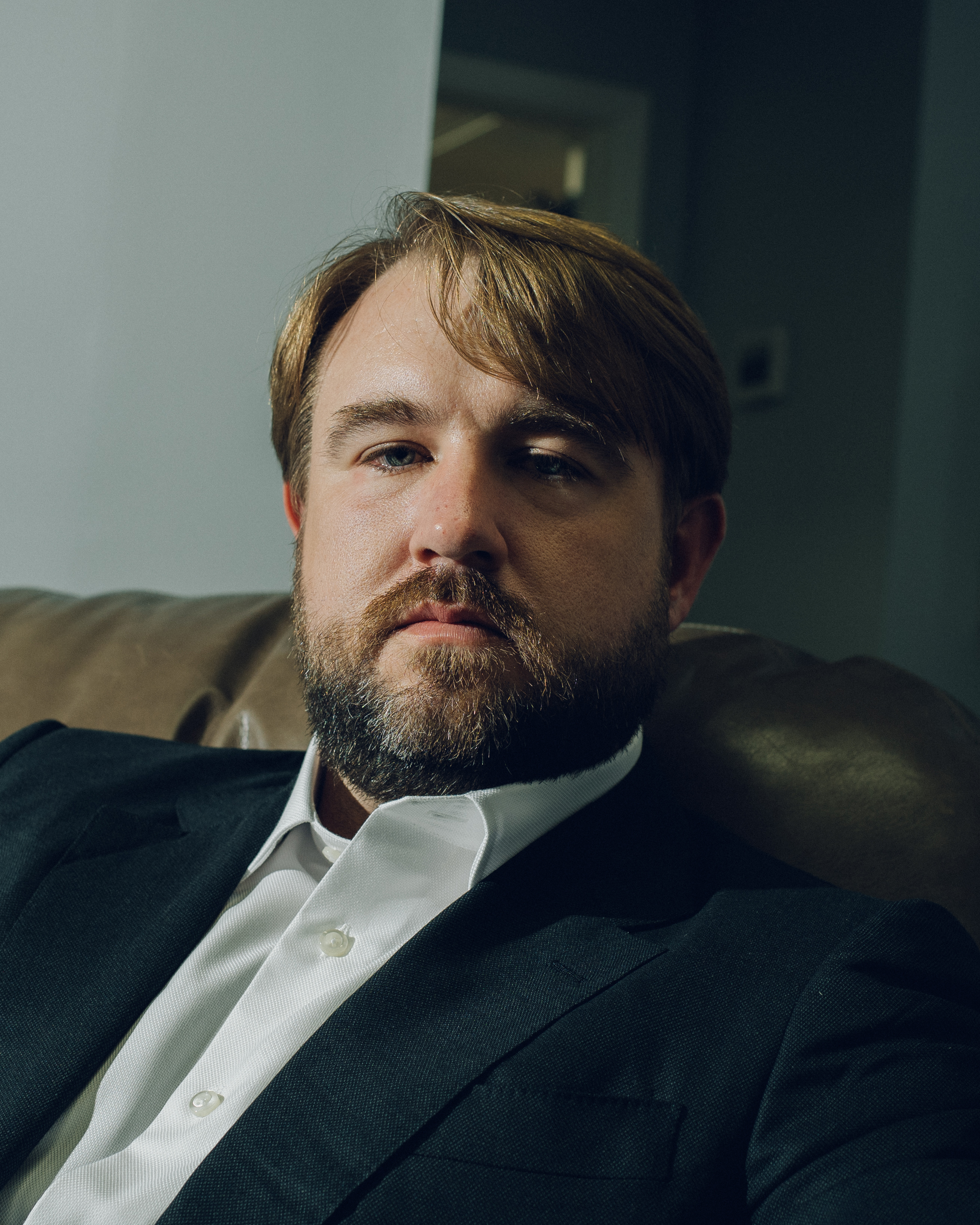
    Powerful figures close to President Donald Trump, including Homeland Security Secretary Markwayne Mullin, pushed to downplay those concerns.

    Mullin, until recently a Republican senator from Oklahoma, played a key role in a sprawling influence campaign spearheaded by the kratom industry that courted Health Secretary Robert F. Kennedy Jr. and Vice President JD Vance, among others in the Trump administration, an investigation by The New York Times found.

    Only when he was nominated by Trump in March to lead the Homeland Security Department did it become clear that Mullin had a financial connection to the supplement. In a disclosure statement, he listed an investment worth as much as $1 million in a kratom company, Botanic Tonics, that could benefit from the changes he has sought.

    The company’s founder, Jerry W. Ross — who had been an energy executive in Mullin’s home state before pleading guilty to a financial crime — is a leading player in the influence campaign that was devised to benefit kratom at the expense of its rivals in the marketplace.

    The kratom campaign underscores how corporations in the growing wellness industry can gain traction in Trump’s government by casting risky products as aligned with the administration’s Make America Healthy Again, or MAHA, agenda championed by Kennedy, who has sometimes prioritized unproven remedies over science.

    In July, while still a senator, Mullin showed up at a Food and Drug Administration news conference and endorsed proposed federal restrictions on more powerful synthetic supplements that compete with kratom for shelf space. In explaining his position, Mullin pointed to a history of addiction in his family, though health experts say kratom products have also been shown to be addictive.

    His disclosure form did not indicate when he acquired his stake in Botanic Tonics, but he has not filed paperwork to indicate that he has divested from it.

    The Homeland Security Department did not answer questions about the investment. In a statement, the department said that Mullin “follows all ethics and conflict of interest standards and has not lobbied for any individual or company.”
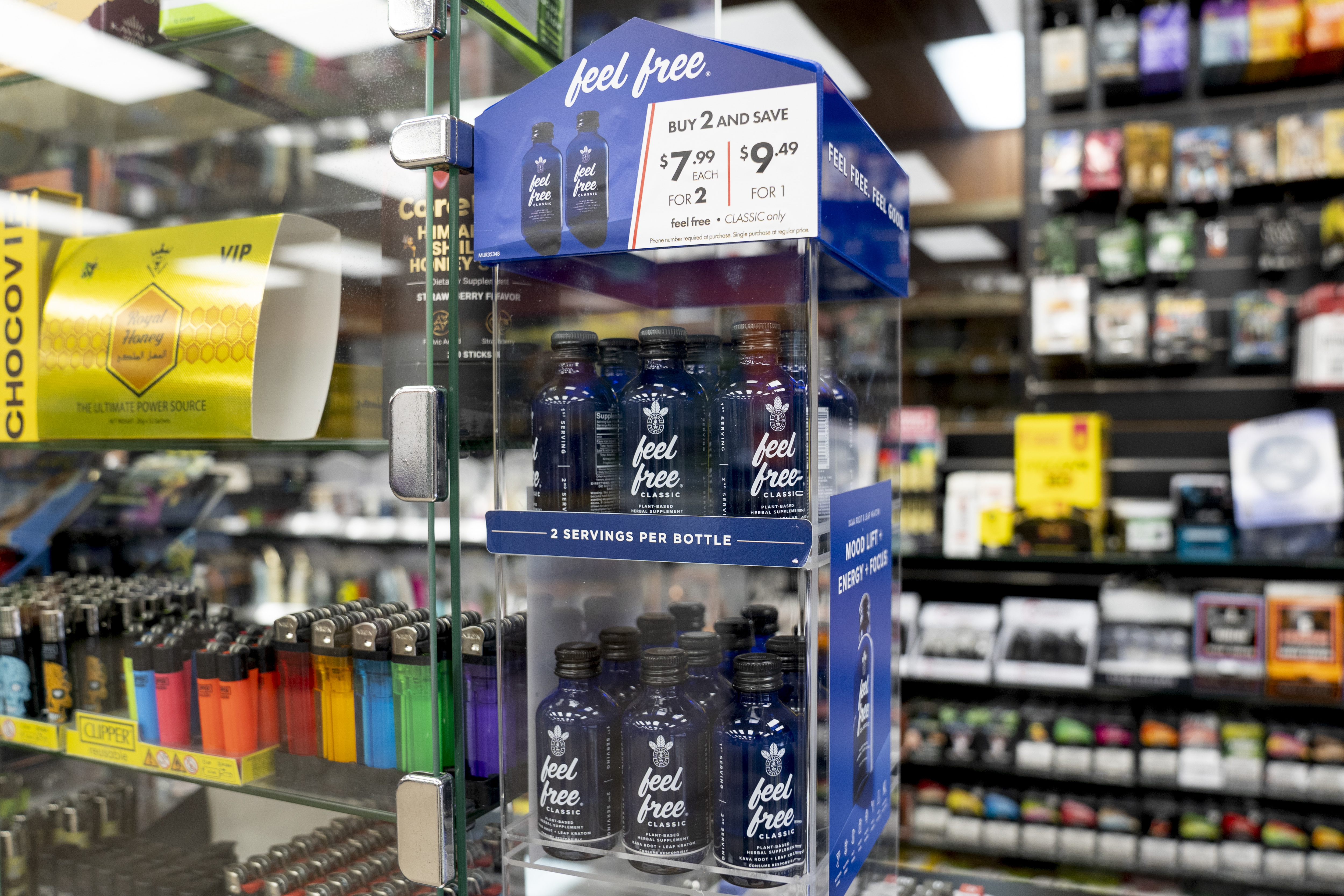
    Bottles of Feel Free, a kratom product produced by Botanic Tonics, displayed at a smoke shop in Oklahoma City, May 27, 2026. With support from Markwayne Mullin and Robert F. Kennedy Jr., the kratom industry is pursuing a potentially lucrative policy. (Nick Oxford/The New York Times)NICK OXFORD

    The restrictions that Mullin supported on the synthetic products would have been a boon to Ross’ company and others in the kratom industry, which market their supplements as safer and more natural. The kratom companies used donations and lobbyists to push for the crackdown.

    “It’s not pay to play. It’s pay to have conversations. It’s pay to have a chance at the table,” Ryan Niddel, CEO of Diversified Botanics, another kratom company involved in the effort, said in an interview with the Times. “And anybody that considers any of the lobbying work or any of the governmental work that goes on being different than that, I think has their head buried in the sand at this point.

    “I mean, that is the world that we live in.”

    The Times’ investigation — drawn from campaign finance data, lobbying disclosures, court filings, private correspondence and dozens of interviews — found the following:

    • Ross ramped up his donations to Kennedy’s defunct presidential campaign after Trump chose him to be health secretary. Ross privately boasted that he was “working on a plan for Bobby.”
    • The FDA in 2025 deleted links on its kratom webpage that detailed a then-pending legal case against Ross’ company, Botanic Tonics, after his allies pushed for the change.
    • Botanic Tonics had been sued by the federal government for illegally selling kratom products that were not proven safe, which the company disputed. But in December, the Justice Department suddenly moved to drop the case — which the company celebrated as a sign of the federal government’s receptiveness to kratom.
    • Kennedy, as health secretary, called the governor of Ohio to try to head off a state ban on kratom in the fall of 2025. Months later, Botanic Tonics donated $1 million to a political committee associated with Kennedy.
    • Ross, joined by influential lobbyist Ches McDowell, used donations to secure a private audience with Vance to lobby him about the benefits of kratom and to urge the ban on the synthetic products.

    Kush Desai, a spokesperson for the White House, suggested the administration was not swayed by the influence campaign, even though Trump recently made comments about needing to address the matter.

    “The only guiding factor behind the Trump administration’s healthcare policymaking is gold standard science,” he said in a statement. The administration, he added, was working “to get this critical matter correct and ensure the health and safety of Americans.”

    The Health and Human Services Department and Kennedy did not respond to requests for comment, nor did Ross.

    The administration’s receptiveness to kratom comes as Trump has also expressed a willingness to loosen rules covering other drugs backed by influence campaigns, including cannabis and psychedelics. The permissive posture stands in contrast to Trump’s baseless skepticism about highly regulated and widely used medications like Tylenol and vaccines.

    “It’s looking like we have a coin-operated drug policy that basically responds to whoever will give money,” said Kevin Sabet, who worked on drug policy under Republican and Democratic presidents. “And it threatens public health and safety because it’s going around the scientific process in favor of donors and influencers.”

    A rising scourge

    Long used medicinally in Southeast Asia, the leaves of the kratom tree contain a compound called mitragynine that interacts with the brain’s opioid receptors in a manner said to produce mild pain relief and — depending on its preparation — either sedation or energy and focus.

    Kratom started gaining popularity in the United States in the early 2010s as the opioid addiction epidemic raged. With doctors tightening access to powerful prescription painkillers such as OxyContin, users spread the word that kratom — initially sold as a bitter-tasting powder — could produce a similar effect.

    Devotees promoted it as a way to kick opioid addiction or to replace alcohol. But as reports of negative effects started rolling in, the government tried to take action.

    Under the Obama administration, the Drug Enforcement Administration described kratom as “a drug and chemical of concern,” and moved to greatly restrict access by classifying it as a Schedule I drug. Doing so would have defined it as having no medicinal value, making it illegal to sell.

    The proposal was withdrawn weeks later amid backlash from the fledgling industry, kratom users and members of Congress.

    Another proposal to restrict access during the first Trump administration was also pulled after lobbying by an industry trade group, over the objection of Scott Gottlieb, the FDA commissioner at the time.

    Kratom took off, appearing on the shelves of convenience stores and vape shops as tablets, drinks and gummies. The products varied in strength, and the concentration of active ingredients on the labels was not always accurate. They could be purchased in many states without age verification.

    From 2020 through 2024, kratom was found in the system of more than 5,200 people who died of drug overdoses, according to data from the Centers for Disease Control and Prevention based on death certificates and other official reports. Though kratom was often found in combination with other drugs, one study determined that those using kratom carried a sixfold increase in the risk of overdose death.

    Wyatt Wheeler, 27, was pursuing a master’s degree in business at Texas Christian University. He died of an overdose in October 2022, six weeks after he started taking a kratom extract, according to his mother, Patti Wheeler.

    An autopsy report issued by a county medical examiner in Fort Worth found that the cause of the overdose was the “combined toxic effects” of the active compound in kratom, along with a prescribed antidepressant and antihistamines.

    Patti Wheeler has become an anti-kratom activist, producing a documentary about the drug’s harms and pushing for state and federal restrictions.

    She says the industry has used its influence to thwart safeguards.

    If the federal government had effectively banned kratom earlier, Wheeler said in an interview, many overdose deaths could have been avoided.

    “My son would be alive,” she said.

    Feel free

    It was in this profitable but unregulated landscape that Ross set out to take the kratom industry mainstream.

    It was a fresh start for Ross after his stint in federal prison.

    Formerly a prominent energy executive in Oklahoma named Jerry D. Cash, he was an admitted heavy drinker who was charged on three occasions with driving under the influence from 2001 through 2008.

    In 2010, he pleaded guilty to a federal charge related to concealing his diversion of $10 million from oil and gas companies he ran.

    He was released from prison in the fall of 2013, after serving less than three years of a nine-year sentence. He was ordered to participate in substance abuse treatment and to abstain from intoxicants including alcohol, which he has said he previously used to cope with social anxiety.

    Eventually, he said later on a podcast, he began to experiment with other “social lubricants” — both legal and illegal — in search of a healthier alternative. By the time he created Botanic Tonics in 2020 with a base of operations in the Tulsa area, he had changed his name. The company began selling a roughly shot-size beverage called Feel Free containing kratom and another supplement called kava.

    Business boomed as Feel Free and competing products were embraced by skeptics of mainstream medicine who would become the core of the MAHA movement.

    Feel Free came to be sold at more than 24,000 retailers. Through a company, Ross would eventually pay more than $30 million for an 11,000-square-foot home in Malibu, California, overlooking the Pacific Ocean.

    Still, serious challenges loomed for the kratom business.

    In late 2023 a more powerful synthetic product emerged, featuring elevated levels of a psychoactive compound that is also found in lower levels in natural kratom. It is called 7-OH, or 7-hydroxymitragynine.

    Government and legal scrutiny of both kratom and 7-OH began mounting. While some states passed industry-endorsed laws regulating kratom, others enacted restrictions or even banned it and 7-OH entirely.

    Users also began suing.

    A class-action lawsuit filed in 2023 asserted that Botanic Tonics targeted recovering alcoholics with advertising casting Feel Free as a healthy, safe and sober alternative. The suit claimed that, to the contrary, the tonic had the “potential to be highly addictive.”

    The lead plaintiff in the suit was a recovering alcoholic in California. He spent $3,000 a month on Feel Free, according to the suit. (They retail for about $10 a bottle.) It said he “could no longer function without Feel Free and suffered severe withdrawal symptoms when he attempted to stop,” eventually turning back to alcohol “in an effort to cope with the worsening symptoms of his Feel Free addiction.”

    To settle the class action, Ross last year signed an agreement under which Botanic Tonics would pay $8.75 million and include warnings on Feel Free labels about how kratom “can become habit-forming and cause serious adverse health effects.”
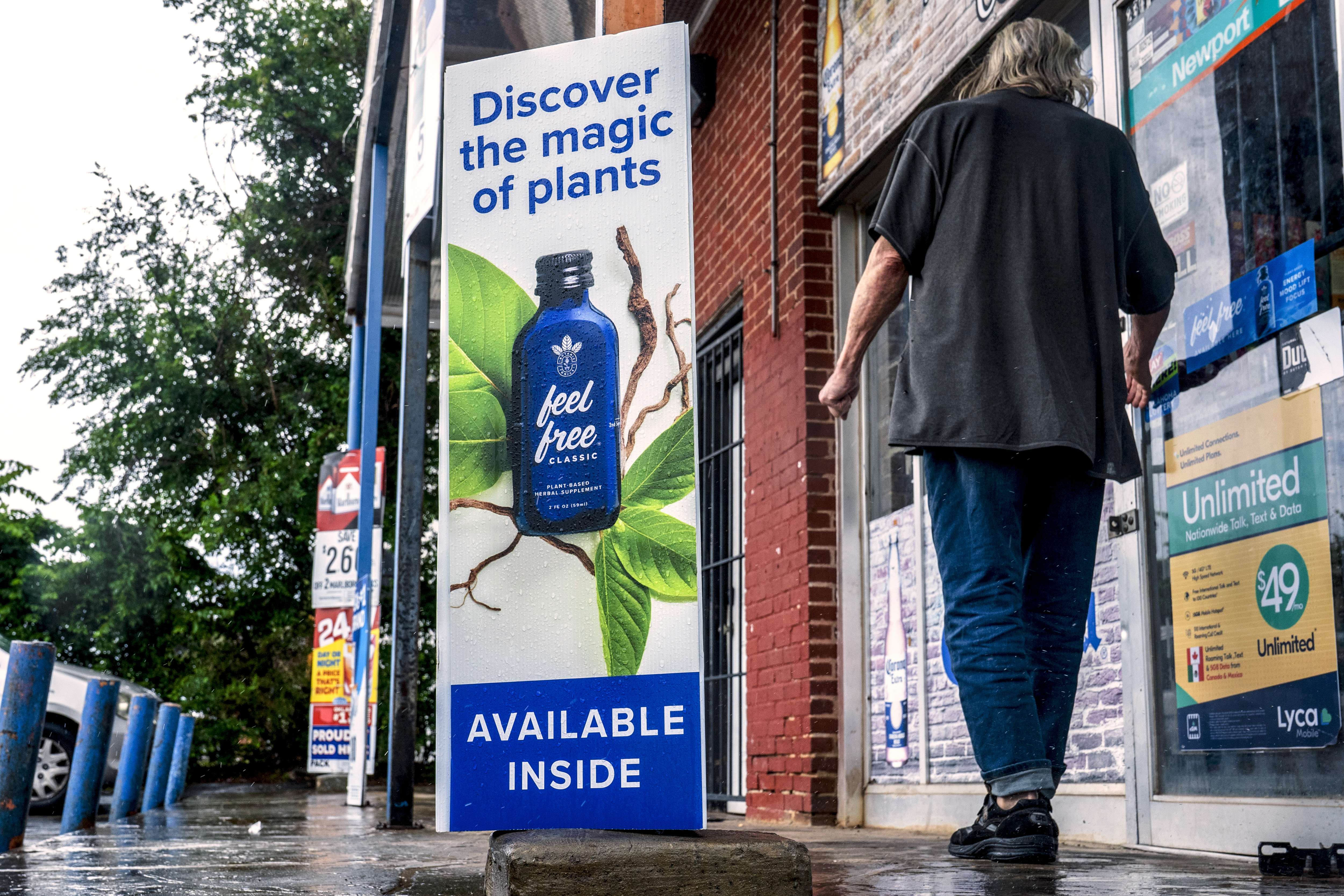
    A sign advertising Feel Free, a kratom product produced by Botanic Tonics, outside a convenience store in Oklahoma City, May 27, 2026. With support from Markwayne Mullin and Robert F. Kennedy Jr., the kratom industry is pursuing a potentially lucrative policy. With support from Markwayne Mullin and Robert F. Kennedy Jr., the kratom industry is pursuing a potentially lucrative policy. (Nick Oxford/The New York Times)NICK OXFORD

    The FDA would eventually receive more than 965 kratom-related reports of harm, including 264 resulting in death. The self-reported claims detailed instances of vomiting, paranoia and drug withdrawal.

    In 2023, FDA inspectors visited Botanic Tonics’ warehouse in suburban Tulsa. They reported their findings to the Justice Department, which went to court to seize 250,000 bottles of Feel Free and other kratom supplements.

    In court filings, prosecutors cited “serious safety concerns,” saying kratom had been linked to “addiction” and “liver toxicity.” They accused Botanic Tonics of engaging in illegal interstate trade of an unapproved substance.

    On a podcast released in 2024, Ross indicated that he planned a campaign to differentiate between natural kratom and other versions.

    “We’re going to be coming out of the chute asking for separate regulation for whole leaf kratom,” he said.

    Calling a governor

    Trump’s election — and his appointment of Kennedy as health secretary days later — created an ideal environment for such a campaign.

    To others working on the issue, Ross highlighted his relationship with Kennedy, indicating that he was planning to enlist the incoming secretary in efforts to influence the administration, according to one associate.

    In the weeks around the inauguration, Ross donated nearly $162,000 to Kennedy’s defunct presidential campaign, exceeding by many times his total federal political giving to that point.

    Ross was not the only kratom entrepreneur jockeying for position.

    A newly formed group called Botanicals for Better Health and Wellness, which is linked to a rival kratom supplement maker, retained the firm of Jeff Miller, a leading Trump fundraiser, to lobby the FDA, Congress and the White House. The new group donated $50,000 to the incoming president’s inaugural committee, for which Miller was finance chair.

    Miller and the group did not respond to requests for comment.

    Shortly after the inauguration, another rival firm, Diversified Botanics, which produces the popular kratom brand MIT45, hired a lobbyist who worked on Trump’s first presidential campaign and transition. The lobbyist helped arrange meetings with members of Congress and officials from the FDA and the health department for Diversified’s CEO, Niddel.

    Niddel said he wanted to explain to government officials how his company’s products differed from those featuring 7-OH.

    “We got to get in front of this,” Niddel said he recalled thinking. “It’s going to destroy the kratom industry, because an uninformed consumer or an uninformed legislator — it’s all being lumped in together.”

    Vince Sanders, founder and president of CBD American Shaman, which helped popularize 7-OH, said the kratom industry is targeting businesses like his for financial reasons, not because of moral or safety concerns.

    “We’ve devastated the industry,” Sanders said. “When 7-OH came in and people tried it, they learned very quickly that it was vastly superior. I mean, this is like going from a horse and buggy to an automobile.”

    Sanders’ company received a letter from the FDA last year accusing it of illegally marketing 7-OH products. It recently agreed to halt sales in Missouri to settle a lawsuit brought by the state attorney general. The suit accused the company of peddling “deadly opioids,” though the company did not acknowledge liability.

    Sanders believes that kratom lobbying has “demonized” his side of the industry.

    Mullin used his connections in Trump’s orbit to help the other side.

    Starting while he was in the Senate and continuing after he became homeland security secretary, Mullin urged officials in the health department to remove language from the FDA website warning of kratom’s harms, according to four people familiar with his efforts who were not authorized to discuss them.

    For the kratom industry, the warnings on the FDA website were no small concern. Industry representatives said they feared state officials were taking their cues from the agency in deciding whether to pursue bans or other restrictions.

    Records obtained by the Times show that the FDA was asked to remove from its kratom webpage links that took readers to enforcement actions against Ross’ kratom company and others.

    By the end of 2025, the FDA had removed the links.

    Other requested changes were not enacted, including one asking the agency to remove a warning “not to use kratom because of the risk of serious adverse events, including liver toxicity, seizures and substance use disorder.”

    Emily Hilliard, a health department spokesperson, declined to comment on the website changes, but said the agency is “solely focused on serving the American people, not advancing industry interests.”

    Mullin went public with his involvement in July.

    In a notable move, he joined Kennedy and Dr. Marty Makary, then the FDA commissioner, at a news briefing to announce that the agency was moving to effectively end the legal sale of synthetic 7-OH products.

    In a comment that was later highlighted by a group backed by Ross, Makary said at the briefing that “we’re not targeting the kratom leaf.”

    Mullin added that companies selling 7-OH were exploiting a loophole in FDA regulations to cause harm to consumers.

    “It’s legal, but it’s an addiction that’s ruining lives,” he said.

    Kennedy referred to his own past struggles with addiction at the news briefing. Weeks later, he pushed Ohio to adopt a policy that would have protected the kratom industry.

    Gov. Mike DeWine, a Republican, had announced a plan in August to designate all kratom products as illegal drugs. But Kennedy asked DeWine to crack down instead only on synthetic 7-OH — and not kratom leaf products. The health secretary had hoped to see states align with the federal effort, said Dan Tierney, a spokesperson for the governor.

    DeWine soon dropped the push to ban kratom and moved forward with an emergency prohibition against 7-OH. After a review, though, his office said it was moving ahead with a broader kratom crackdown.

    ‘People are asking for it’

    Having powerful people in Trump’s Cabinet vouching for kratom was not enough for Ross. He actively joined the effort to kneecap his competition.

    His allies launched an opaque company to position natural kratom products as safer than synthetic alternatives.

    They gave the company a name, Stop Gas Station Heroin, that made synthetics sound especially dangerous. The company hired the firm of the lobbyist McDowell, who had been introduced to Ross as a well-connected Trump insider.

    McDowell, who is close to the president’s elder sons, also employs a nephew of Kennedy and the son of Trump’s 2024 campaign co-manager Chris LaCivita.

    Stop Gas Station Heroin has paid McDowell’s firm, Checkmate Government Relations, at least $600,000, according to lobbying records.

    McDowell’s firm has pushed for tougher enforcement against the rival synthetic products in meetings with congressional offices and Kennedy’s health department.

    All the while, Botanic Tonics had been awaiting a ruling on its own battle with the federal government.

    In December, a federal judge denied the company’s motion to dismiss the FDA lawsuit accusing it of unlawfully selling kratom.

    Then, less than two weeks later, federal prosecutors moved to drop the case, as reported by The Kansas City Star. They told the judge that the seized supplements had expired and that the Trump administration had “determined it would not be a prudent use of government resources to sustain this action.”

    In a statement praising the decision, the company said the dismissal “reflects a maturing regulatory landscape” in which federal agencies increasingly recognize the differences between natural kratom leaf and the synthetic products.

    Justin A. Lollman, a lawyer for the company, told the Times in a statement that even during the lawsuit, the government “never sought to restrict Botanic Tonics’ continued manufacture and sale of Feel Free.” The company has sold more than 130 million servings of Feel Free, he added.

    In February, after the dismissal, Ross donated a total of $443,000 to the Republican National Committee in connection with a fundraising dinner headlined by Vance in New York.

    Before the dinner, Ross, accompanied by McDowell, secured a private meeting with Vance. Ross used the access to promote the benefits of natural kratom and urge the Trump administration, and particularly the DEA, to clamp down on 7-OH, according to two people briefed on the meeting who were not authorized to discuss it.

    McDowell’s firm did not respond to a request for comment.

    Over the next two months, Botanic Tonics donated $1 million to MAHA PAC, which is associated with Kennedy. The money from Botanic Tonics accounted for about 44% of all the funds raised by the political action committee between the beginning of last year and the end of April.

    The PAC did not respond to a request for comment.

    It is not clear whether the administration will approve the emergency ban of 7-OH that Ross and his allies have sought.

    But during a briefing in the Oval Office about maternal healthcare last month, Trump made a stray comment indicating the issue had reached his desk, even as his administration was grappling with higher-profile priorities including a war with Iran.

    “We’re looking very seriously at natural 7-OH and getting that approved,” Trump said.

    The statement left even industry insiders divided on whether he was siding with natural kratom or synthetic 7-OH, or taking another position altogether.

    Whatever his stance, Trump left the impression that he had heard from influential figures on the matter, adding that “we’re looking to see if we can do something there.

    “A lot of people are asking for it.”

    This article originally appeared in The New York Times.

  • Letters to the Editor | June 16, 2026

    Letters to the Editor | June 16, 2026

    Student-teacher ratio

    My response to the recent article about allegations of grade inflation, based on my experience as a teacher in Philadelphia public schools, is that the number of children in the classroom with one teacher matters. With a limit of 30 to 33 children assigned to a classroom with only one teacher working without an assistant, there is often not the possibility of meeting the academic needs of students who struggle to learn, even when they show up regularly. Without another adult in the classroom to help address the learning remediation and the behavioral needs of some students, classroom lessons, even when well planned, are affected by the variety of learning abilities of students in that one classroom. Situations arise that require the attention of a capable adult, while the regular classroom teacher continues the lesson with the rest of the class.

    It would be interesting to compare student performance in schools that can afford to have fewer than 30 students in a classroom with our Philadelphia city public schools. Some suburban public schools have the resources to keep class size closer to the low to mid-20s. The ratio of teachers to the number of students matters. That is why special education class sizes are deliberately kept small. And reducing class size in our city schools would require paying for many more teachers — or hiring assistants to help in the regular classrooms.

    Mary A. McKenna, Philadelphia

    Welcome Center windfall

    Last week, City Council passed a bill authorizing Philadelphia’s Parks and Recreation Department to lease the newly renovated Welcome Center at FDR Park to the Fairmount Park Conservancy for a term of up to 26 years, for “nominal” rent and with no apparent financial benefit to the city except savings on maintenance costs.

    According to a recent analysis, the average cost of Philadelphia retail rentals was about $20 per square foot. Based on that figure, even conservative estimates put the value of such a lease in the eight figures. Fairmount Park Conservancy is a nonprofit, which means the city will likely not even see tax revenue from the concessions and events the conservancy plans to operate there.

    Parks and Recreation has funding issues. In passing this bill, City Council seems to have missed an opportunity to create an ongoing revenue stream through a request for proposals to qualified concession managers.

    Emily Bell, Devon

    EV chargers

    Installing 800 electric vehicle chargers is a good start, but as the shift to electric accelerates, the city should have higher aspirations. Why not consider changes to the building codes that would set goals for obvious locations like parking garages and new construction? It should be feasible to equip 20% of garage spaces in about three years and 50% within about eight years. In addition, any new construction should be designed to accommodate EVs. Deliberately phasing this in over a decade would ensure we aren’t constantly behind the curve.

    Frederick Jones, Philadelphia

    Walk-off interview

    Donald Trump, after abruptly walking off during a Meet the Press interview with NBC White House correspondent Kristen Welker, said he is willing to reschedule the interview. Past behavior suggests he is more likely to push NBC to fire Welker. This most distinguished correspondent must not be added to the list of those struck down by the president.

    Joel Chinitz, Philadelphia

    Join the conversation: Send letters to letters@inquirer.com. Limit length to 150 words and include home address and day and evening phone number. Letters run in The Inquirer six days a week on the editorial pages and online.

  • Horoscopes: Tuesday, June 16, 2026

    ARIES (March 21-April 19). You’re using your powers for something genuinely beneficial. Sometimes it feels like you’re maneuvering through this, but that’s because experience has taught you what no theoretical knowledge ever could. You know the moves that actually work.

    TAURUS (April 20-May 20). Priorities will be revealed today, perhaps unintentionally. The things people make space for become apparent. What gets the care, maintenance and attention reflects what matters most. Looking honestly at the scene will expose what’s been neglected or unresolved.

    GEMINI (May 21-June 21). Listen up today for the golden echo. The good you’ve sent outward returns amplified and beautifully timed. You may not even remember these old efforts, but it’s beautiful to feel them finally produce resonant rewards.

    CANCER (June 22-July 22). Don’t underestimate how deeply clutter affects the nervous system. Constant visual noise competes for attention and creates background stress. All it will take is clearing one surface to change your mood and restore a sense of capability and calm.

    LEO (July 23-Aug. 22). It’s a quid pro quo situation between you and life today — not transactional so much as mutual and balanced. This is not always the case. Life obligates itself to no one, so days like this are something to savor.

    VIRGO (Aug. 23-Sept. 22). Your kindness is felt — not in the moments when you mean to be or are supposed to be kind, but in the moments when you don’t have to be kind at all and yet you are.

    LIBRA (Sept. 23-Oct. 23). Your goal is simple, to elevate the room and brighten people’s hearts. Achieving the goal is trickier because everyone wants something different. But don’t overthink it. Go with what excites you, and you’ll be contagious.

    SCORPIO (Oct. 24-Nov. 21). There’s someone you like a whole lot. You would go just about anywhere with that person because it’s the company, not the location that really matters. Maybe it’s not always easy with this person, but it will be now.

    SAGITTARIUS (Nov. 22-Dec. 21). You hesitate to make agreements, not out of withholding but out of honor. The world needs more like you — people who don’t give their word unless they believe they can stand by it, defend and make good on it.

    CAPRICORN (Dec. 22-Jan. 19). Your personal goals can be as small as a cake pop. That’s what makes life manageable and sweet. The group goals need to be as big as a cake, so when it’s baked you can cut and serve.

    AQUARIUS (Jan. 20-Feb. 18). You have one version of your future in your sites, but any change you make now, however small, could change everything. Stay open and don’t underestimate the power of small adjustments. They can drastically alter the destination.

    PISCES (Feb. 19-March 20). Today brings exchanges of mutual benefit. How do you know this will be the case? You ask questions and really listen to the answers. You share your needs openly without worrying about appearing too vulnerable. You are, after all, among friends.

    TODAY’S BIRTHDAY (June 16). It’s your Golden Apple Year. Like the fruit of the Hesperides, guarded by nymphs, you will enjoy the rare rewards that are the harvest of your labor in this year rich in blessings, beauty and treasured achievement. More highlights: A luxurious purchase improves daily life. Romance grows through teamwork and shared ambition. You’ll become known for something specific, useful and strangely glamorous. Virgo and Sagittarius adore you. Your lucky numbers are: 11, 4, 49, 3 and 16.

  • Dear Abby | Additional dinner invitation upsets birthday girl

    DEAR ABBY: I invited a friend, “Sybil,” to dinner at a fine dining, special occasion restaurant to celebrate her birthday. About a month before, I called to say I had also asked someone else to join us, as it was also her birthday. I thought the three of us would have fun, as we rarely go to fine dining establishments.

    I was the host, so I said that I would pay for all of us. Sybil said she wouldn’t go unless I “uninvited” the third person! A week after I refused to do that, I received an email saying “leave me alone” after I’d unsuccessfully tried to phone and set up an alternative date to celebrate, but at a less expensive restaurant. I could not afford to host two fine dining nights out.

    That was five months ago. Now what? I won’t apologize for including another person at a dinner party I was hosting, but I am willing to move on. It took a mutual friend to explain to me why I got the “leave me alone” email. It never occurred to me that I could be wrong. I don’t think I was. Do you?

    — GOOD INTENTIONS IN CALIFORNIA

    DEAR GOOD INTENTIONS: It might have been better form to have asked Sybil if she would mind your including another birthday girl at the dinner before you did it, but not having done that was insufficient reason to excommunicate you. I do not think you owe her an apology. On the contrary, she owes you one for overreacting the way she did.

    ** ** **

    DEAR ABBY: Three years ago, I found out that the man who raised me wasn’t my biological father. I suspected it for many years and asked my mother about it twice. She angrily denied it both times. The man who raised me was definitely my dad. He passed away in 1989. I recently found out that he knew of my parentage all my life.

    Through a cousin, I found my DNA profile. I reached out to my biological father in 2020. We met twice and have a cordial relationship. I sent him and his wife a Christmas card, which he acknowledged with a phone call. He says that he’s so glad I reached out to him. I also call him around his birthday but do not send a card.

    Is it weird for me to acknowledge Father’s Day with him? I have just been letting it pass by. He wasn’t a dad to me, but we all know he’s my father (as does his one other daughter). For whatever reason, I want to send him a card. Or should I call? Maybe this is a “me” thing. I’d like your advice.

    — WONDERING IN WISCONSIN

    DEAR WONDERING: I can understand why, having lost the man you always regarded as your father, you feel a desire to have a father figure in your life. Why not ask your biological father how he feels about a card and a call and what he would prefer?

  • The researcher who didn’t want to know

    The researcher who didn’t want to know

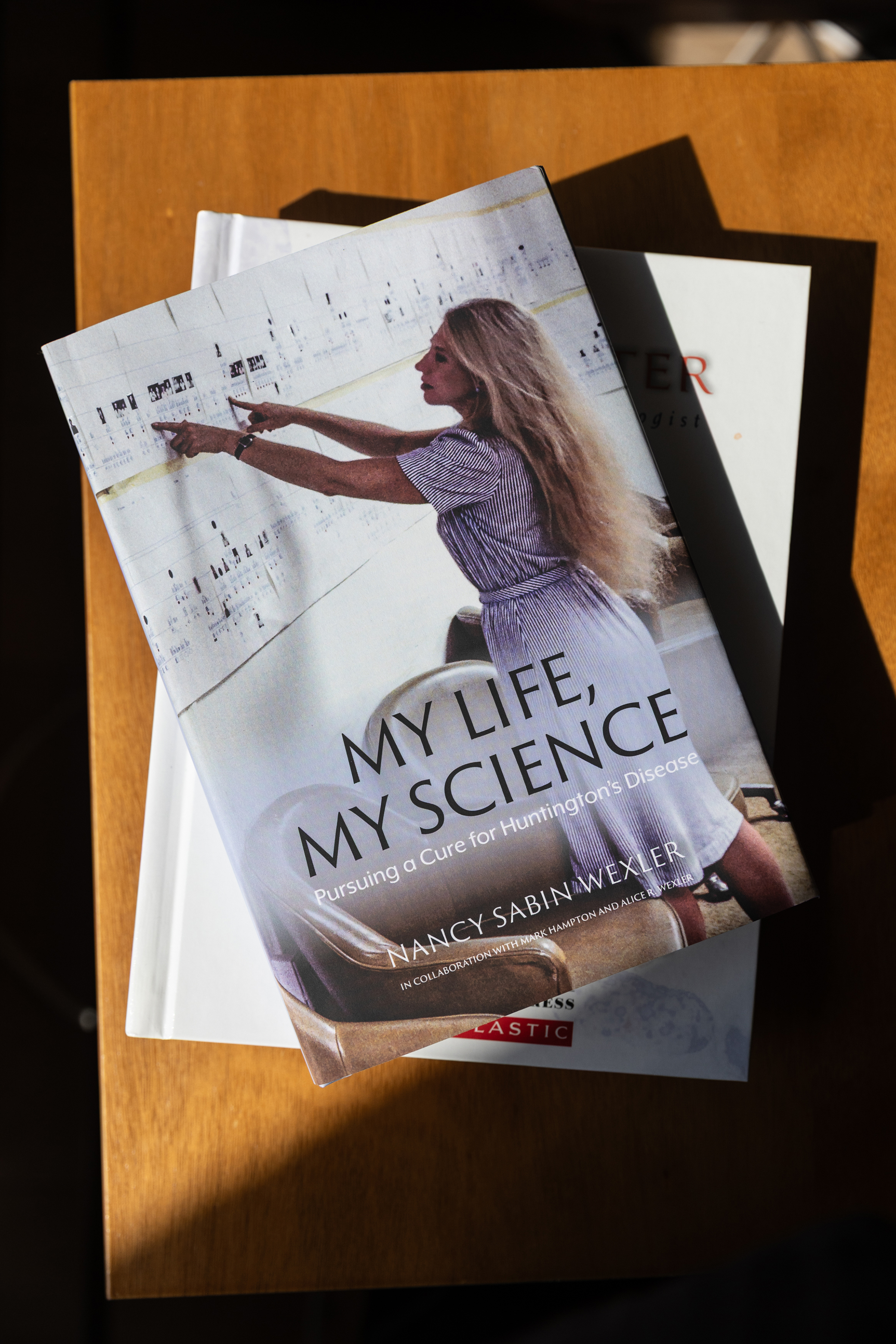
    On my second visit with Nancy Wexler at her Manhattan apartment, she had a gift for me. It was a copy of her newly published memoir, My Life, My Science: Pursuing a Cure for Huntington’s Disease.

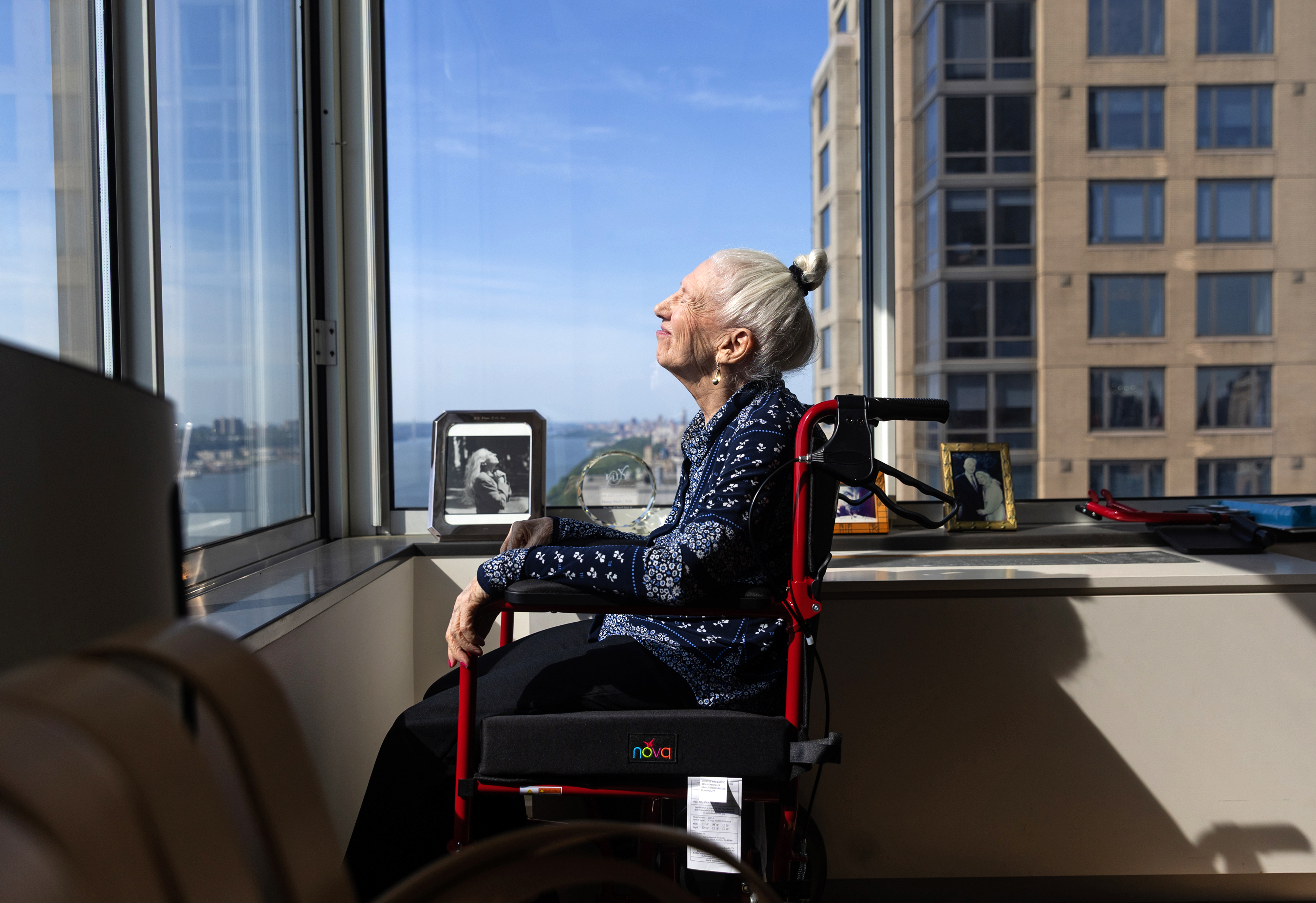
    It had been signed with a stamp of her signature — she isn’t able to sign it herself. Nor could she rise from her brown faux-leather recliner to greet me — she can’t get up unassisted. Speaking requires effort. She can manage at most a few badly slurred words or phrases or, with great difficulty, a short sentence.

    On that bright windy afternoon, Nancy and her sister, Alice Wexler, sat side by side in recliners, their backs to windows that offered a stunning view of the Hudson River far below. Alice lives in California, but she visits Nancy every other month.

    At age 80, Nancy Wexler has Huntington’s disease, a dreaded brain disease that destroys a person’s ability to control movements. There is no treatment. There is no cure.

    The disease is inherited: Nancy’s grandfather, three uncles, and mother had it. Alice, however, does not: If a parent has Huntington’s, each child has a 50% chance of getting it. Their mother attempted suicide, a path that others with the disease have chosen, but ultimately died from Huntington’s.

    Nancy is not just any Huntington’s disease patient. For decades, she led a research effort in a remote area of Venezuela that found the gene responsible for Huntington’s. That work yielded a blood test that enable at-risk people to find out if they are destined to get the disease. In honor of this work, Nancy has garnered numerous accolades and prizes, including a Lasker award, among the most prestigious in science. She devoted her life to understanding what it’s like to be at risk for Huntington’s disease, what it’s like to have it.

    What she did not know, though, was that she would get it herself. After helping lead the crucial research that allowed those at risk to find out if they would contract this terrible disease, Nancy chose not to be tested.

    Now that the disease has progressed long past the point where she can keep contributing to the fight against Huntington’s, it is natural to wonder: How would her life and research have been different had she made the other choice? If your fate is sealed, is it better or worse to know?

    Nancy Wexler can no longer sign her own name or get up unassisted.Jackie Molloy

    Huntington’s disease was first described in a paper published in 1872 by an American doctor, George Huntington. It affects an estimated 41,000 people in the United States. Symptoms start slowly, with clumsiness or a stumbling walk; patients are often thought to be drunk as they stagger down a street. As years go by, patients become plagued by constant involuntary movements.

    Huntington described the misery in unsparing detail: “If the patient attempt to protrude the tongue it is accomplished with a great deal of difficulty and uncertainty,” he wrote. “The hands are kept rolling — first the palms upward, and then the backs. The shoulders are shrugged, and the feet and legs kept in perpetual motion; the toes are turned in, and then everted; one foot is thrown across the other, and then suddenly withdrawn, and, in short, every conceivable attitude and expression is assumed, and so varied and irregular are the motions gone through with, that a complete description of them would be impossible.”

    Patients and family members, Huntington added, spoke of the disease “with a kind of horror.”

    Nancy’s acquaintance with that horror began in 1968. After graduating from Radcliffe College, she was in Europe on Fulbright fellowship when she was called home to learn her mother had the disease.

    She had grown up in luxury in Pacific Palisades, Calif. — her father, Milton Wexler, was a psychoanalyst to Hollywood stars. Her mother, Leonore, had a master’s degree in zoology from Columbia University and a teaching certificate, but did not work. She did, however, have a secret that she kept from her children and even from her husband: Leonore’s father had Huntington’s disease.

    Leonore didn’t mention it even when her three brothers — Nancy’s uncles — started exhibiting the telltale signs: clumsiness, a stumbling walk, sudden jerky movements.

    Nancy Wexler’s memoir, “My Life, My Science” on a table in her apartment.Jackie Molloy

    When his wife’s slide into the disease could no longer be denied, Milton called both sisters home and sat them down in his bedroom. The 50-50 chance now hung over both of them, too. He gave them some advice they never forgot: Don’t waste your life.

    Alice decided to ignore Huntington’s and her own risk. “I didn’t want to have anything to do with it,” she told me. She became a historian.

    Nancy had a different reaction. She would make Huntington’s the focus of her life, getting a Ph.D. in clinical psychology from the University of Michigan. Her thesis subject: the experiences of people with Huntington’s, and of those at risk for getting it. She thought of that choice as a way of coping with her situation. She wrote that it was a version of something the American Psychiatric Association called implosion theory — “a technique used in behavior therapy where the client is flooded with experiences believed to be relevant to the client’s fear.”

    “I could talk about Huntington’s without seeming selfish and whiny,” she explained. “I could talk about how people felt in the context of helping them.”

    Nancy’s father started a chapter of the Committee to Combat Huntington’s Disease, or CCHD, which later became the Huntington’s Disease Foundation. Its express goal was to find the Huntington’s disease gene and search for a cure. Nancy started a chapter in Michigan and also worked with her father in California.

    Her first job, at age 29, was at the New School for Social Research in New York where she continued her studies of Huntington’s sufferers and those at risk. But she never told her academic colleagues about her own risk. Her work, she later wrote, “taught me how a genetic condition such as HD can shape the ways people see and react to you.”

    She added: “I also learned the high emotional costs of keeping it hidden.”

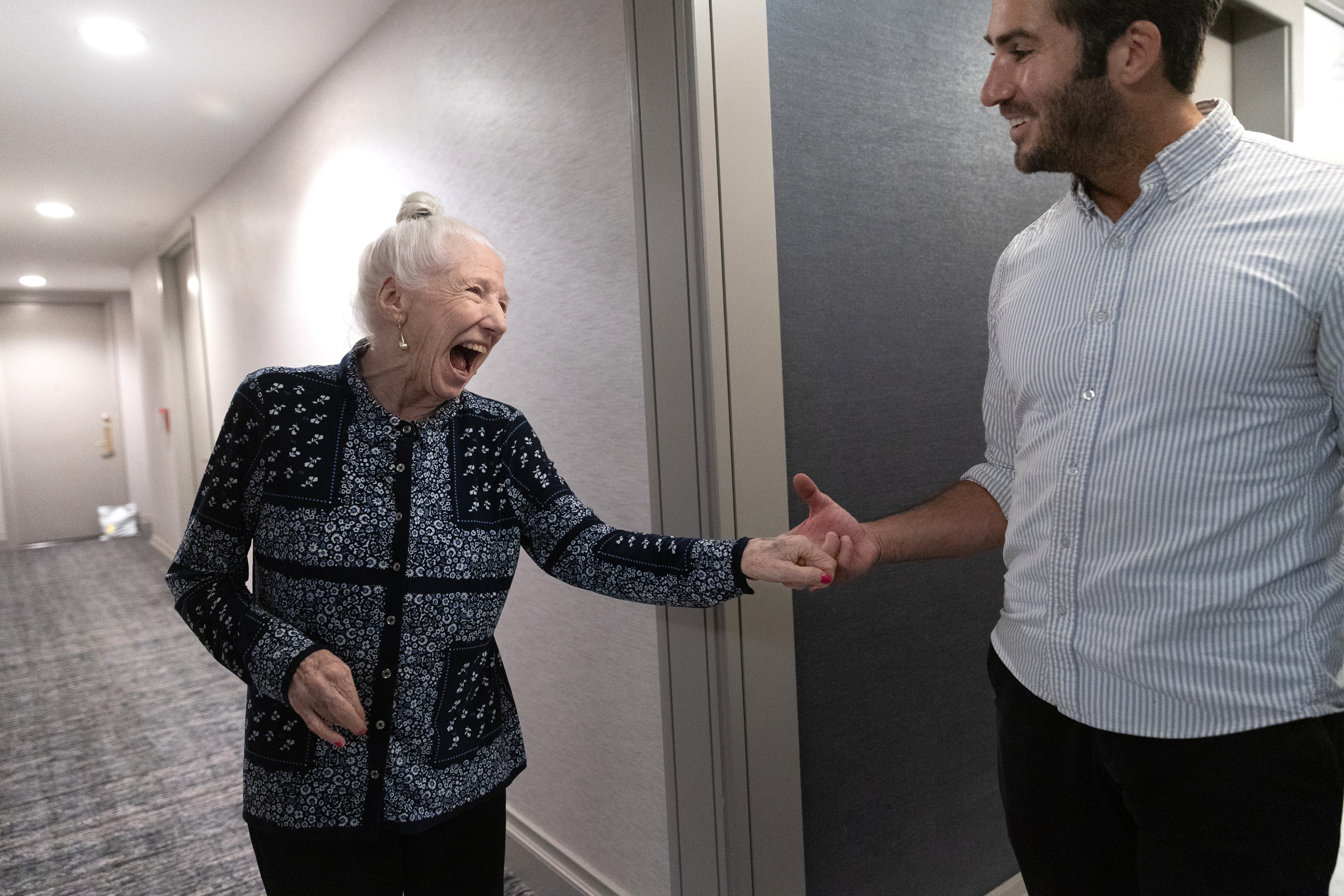
    Nancy Wexler works with her physical therapist, Sean Conroy, who visits three times a week.Jackie Molloy

    On frequent trips to California, Nancy was also helping her father lead the Huntington Disease Foundation. The group’s gatherings couldn’t be further from the staid scientific meetings that are the main staple of academic life. There were no traditional talks, no slides. Instead, Nancy and her father invited creative scientists — who may or may not have ever thought about Huntington’s before — to brainstorm about ways to find the gene, scrawling their ideas on a whiteboard. The meetings always included a Huntington’s patient, or the family member of a patient, so the scientists could understand what was a stake.

    Back in New York, as part of her social science work, Nancy held hearings with Huntington’s disease families and people who worked with them, including social workers, neurologists, insurance representatives, police, teachers, nurses and other public officials.

    What she heard was all too familiar. She had, she wrote, experienced almost everything the families had told her: “the stigma and silence surrounding Huntington’s; the ignorance of most doctors about the disease, including about the hereditary pattern; the denial on the part of family members who knew about the disease but refused to discuss it; the fear and anxiety suffered by those at risk waiting for years to see if symptoms would emerge; the anxiety that should a predictive test be developed, it could reveal future onset but do nothing to forestall or prevent it; the divisions within families over how to respond to the illness; the sense of belonging to a tainted lineage; the shame and embarrassment about relatives with the symptoms; the tremendous financial burden of care; and the sense that there was nowhere to go for help.”

    As part of her research, Nancy asked people who had Huntington’s in their families whether they would have a test for the gene if one were developed. Two-thirds said yes.

    Nancy thought she’d want to be tested too.

    Nancy Wexler’s walker has visual laser cues, multiple wheels, and weights to keep steady. Jackie Molloy

    The search for the gene began in earnest in 1980, focusing on three communities around Lake Maracaibo, Venezuela, that had the greatest prevalence of Huntington’s disease in the world. The researchers traced the disease there to one woman, Maria Conception, who lived in the area early in the 19th century. Maria apparently had Huntington’s disease, and passed it on to generations of descendants who called it El Mal.

    Huntington’s was so feared that the residents of those communities had been isolated and ostracized. They ended up intermarrying, increasing the likelihood that the gene would be passed on.

    Nancy led the research team, returning to Venezuela regularly for 22 years and collecting more than 4,000 blood samples from Venezuelans. She cared deeply for them, and even helped establish a nursing home for Huntington’s patients.

    Three years after the gene search in Venezuela began, that question — would you want to be tested? — was no longer hypothetical. The researchers found a marker, like a flag on DNA, that was present only when someone had the Huntington’s gene. It wasn’t the actual gene — that would come later — but it could be used to tell people if they had the gene.

    The decision to be tested, though, turned out to be a more difficult one than it might seem. Is it better to know you are doomed, or to hope you are not?

    In Nancy’s doctoral thesis, she had cautioned that when a test became available, many who thought they’d want it would change their minds. She hadn’t realized that she would be one of them.

    Huntington’s is one of just a handful of diseases — others include early onset Alzheimer’s, as well as some prion diseases — in which a positive genetic test takes away all hope of escaping your fate. With other genetic diseases, a test can only signal a likelihood, not a certainty, that a person will get the disease. In both cases, people often opt not to be tested. In colon cancer, for example, a recent national study found that only 3.7% of those with a mutation that increases risk actually had the genetic test.

    The phenomenon of avoidance is so common that IVF clinics offer a special test to couples at risk for a hereditary disease: examining each embryo for the disease gene and implanting only those that don’t have it, without informing the prospective parents about the result.

    In her book, Nancy explains that she had been too cavalier about the idea of testing before there was actually a test.

    “I realized I hadn’t thought through all the ramifications, both psychological and social, of what a positive test might mean in my life,” Nancy wrote, adding: “I wasn’t sure I could live with the foreknowledge that one day the dreaded symptoms would emerge. I preferred to meet the devil when he was on my doorstep.”

    Alice had a similar reason for declining the test. “How would I live with a positive test result?” she asked herself. “I thought the idea of ambiguity, uncertainty, was kind of appealing. I thought I could live with that.”

    And, she told me, “once you have that knowledge you can’t take it back.”

    In 1996, after Nancy’s research effort helped find the gene, Alice began noticing little abnormal movements in her sister.

    Nancy was just 51, two years younger than her mother had been when a police officer saw her weaving as she walked down a street and accused her of being drunk.

    But Nancy denied anything was wrong. She had an active life; she felt fine. She met her partner, Herbert Pardes, a psychiatrist and executive vice-chair of New York-Presbyterian Hospital, late but had a happy relationship. (He died in 2024.)

    Yet friends and colleagues started asking Nancy if she had Huntington’s, watching her closely. She was furious and upset. How dare they try to diagnose her? They weren’t her doctors.

    Nonetheless, Nancy was startled to see herself in videos making sudden jerky movements. She hadn’t realized she was doing that.

    She worried about impulsive behavior — telling Alice that she couldn’t seem to stop buying things she couldn’t afford. (Impulsivity is a hallmark of Huntington’s.)

    By 2015 she had lost a lot of weight, as is typical in Huntington’s, because of the constant involuntary movement. And she was unsteady when she walked.

    Finally, in 2019, there was a clinical trial of an experimental Huntington’s drug. Nancy wanted to participate — but she would have to have a Huntington’s diagnosis to do so.

    She asked a neurologist, Linda Lewis, to tell her the truth. Did she have Huntington’s?

    “Yes, Nancy, you do,” Lewis said.

    She was too old for the trial, but the researchers were willing to make an exception for her. Before she could start taking the drug, the trial was halted: It was making people worse.

    There remains no treatment for Huntington’s disease.

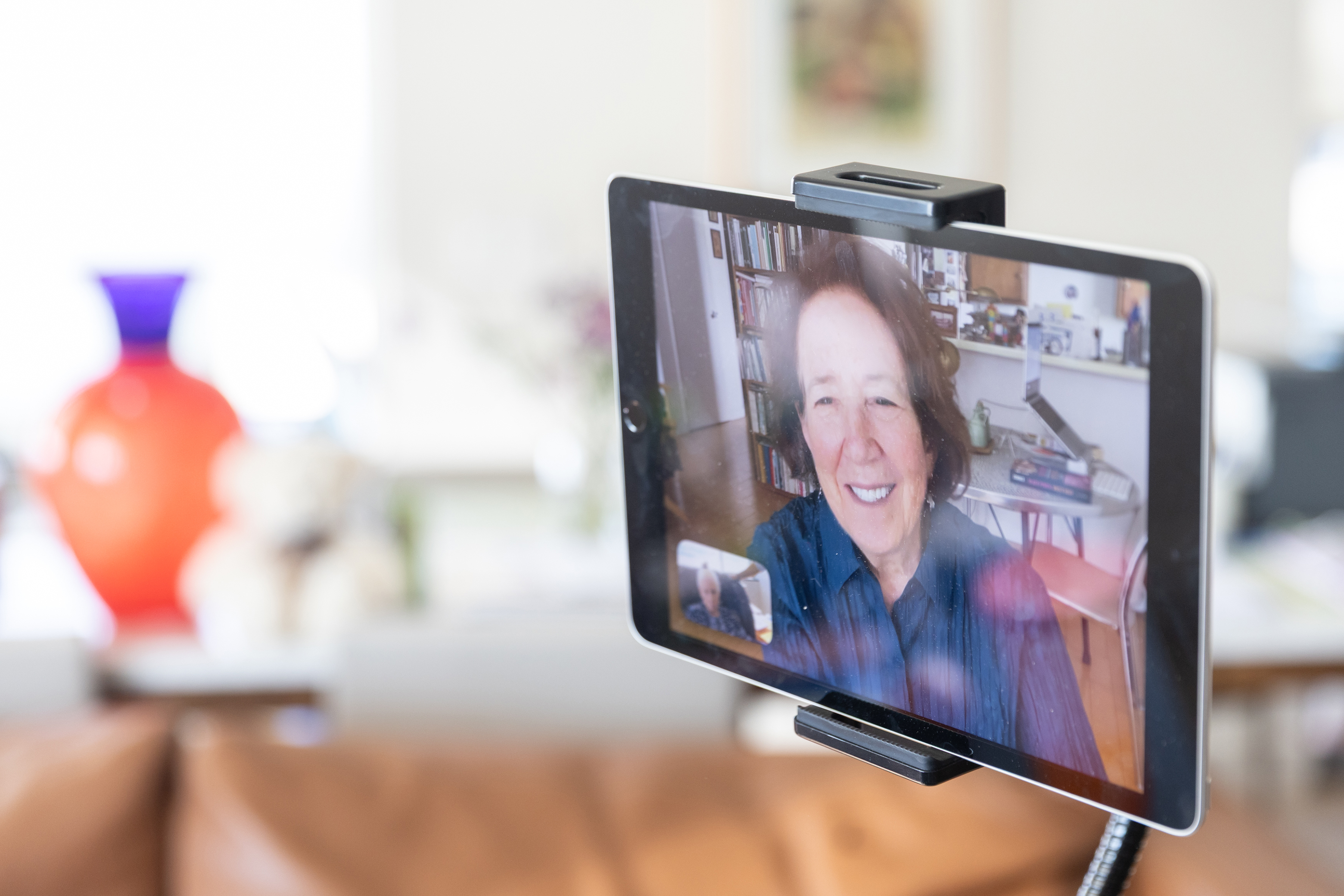
    Nancy Wexler has a video chat with her sister, Alice, who does not have Huntington’s.Jackie Molloy

    Now, in retrospect, I asked Nancy and Alice, would it have been better to have had had the test?

    The answer, for each, is a resounding no. Neither lives a life of regret.

    As Alice sees it, testing does not resolve the big questions. “While the test was marketed as a choice between certainty and uncertainty, for me it always seemed more a choice between one form of uncertainty — will I get Huntington’s? And another — when will I get Huntington’s?” she said.

    After all that uncertainty, Alice escaped the family disease. I asked whether she felt survivor’s guilt. “More than guilt, I feel the injustice of it,” she replied. “How unfair it is that she has Huntington’s and I don’t. Just cruel arbitrary luck of the draw.”

    The only reason she might have wanted to be tested, Alice said, was so that, if she did not have the gene, she could have biological children. She had not wanted to take a chance on passing the gene on to another generation. But she was in her mid-40s when a test was available — too late for her.

    Nancy’s answer was briefer, but succinct: “The predictive test would not have helped. It would have been too threatening,” she said, struggling to get the words out.

    Nancy, too, longed for children. She tried the in vitro fertilization method that allowed her to avoid knowing if any embryos were affected. But she did not succeed in having a baby.

    Now, being cared for by full-time assistants, confined to her apartment, unable to feed or bathe herself, robbed of her charismatic personality by her struggles to speak, I asked what life is like for her.

    “It’s not so scary,” Nancy replied.

    This article originally appeared in The New York Times.
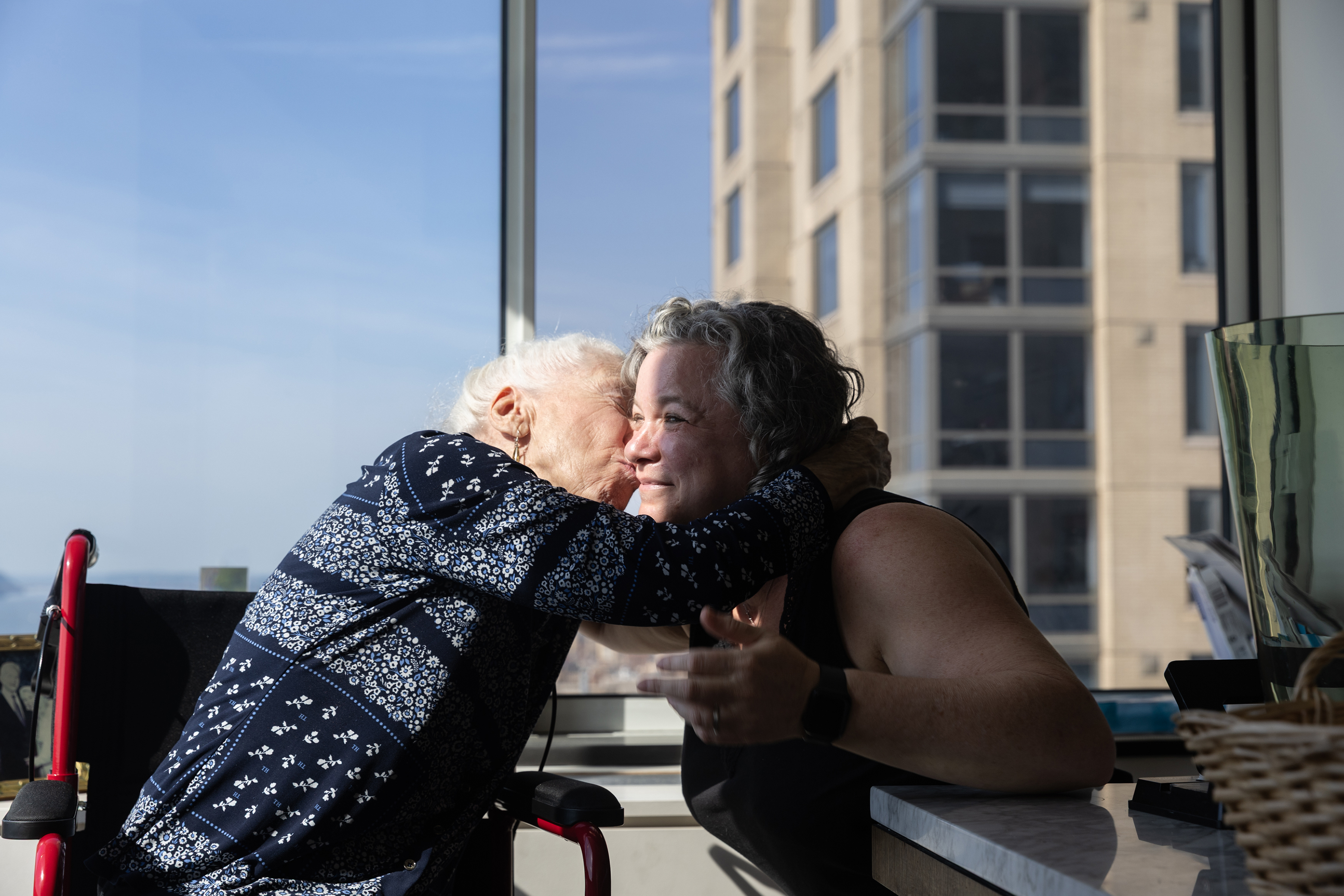
    Nancy Wexler embraces her colleague and close friend, Julie Porter.Jackie Molloy
  • Kennedy orders woman to stay in hantavirus quarantine, despite CDC recommendation

    A cruise ship passenger who was exposed to hantavirus in early May is still being held at a quarantine facility in Nebraska, against her wishes and against the recommendation of a medical review from the Centers for Disease Control and Prevention.

    On Monday, Health Secretary Robert F. Kennedy Jr., a staunch proponent of medical freedom, signed an order to continue quarantining Angela Perryman, 47, even though others who had been held at the facility have, since May 31, been allowed to return to their homes if they wished to do so.

    In a telephone interview with the New York Times, Perryman, who has tested negative for the virus and says she has not had any symptoms, expressed anger and frustration. She said she learned of Kennedy’s decision when a copy of his order was slipped under the door to her room.

    After a hearing to dispute her quarantine order, Michael Bell, the CDC’s quarantine medical reviewer, recommended Thursday that Perryman be allowed to return home for the remainder of her 42-day quarantine, with remote symptom monitoring once daily and access to 24-hour help “in the event she develops symptoms.”

    “In my professional judgment, this less restrictive alternative is adequate to protect public health,” Bell wrote in the review.

    “This is the final proof that there is no check and balance on a basically indefinite detention under the public health law,” Perryman said.

    The Department of Health and Human Services declined to comment.

    Perryman is one of 18 passengers who were on a cruise ship that became the center of a hantavirus outbreak that killed three people, sickened several others, and unnerved people around the world. They were flown back to the United States on May 11 and quarantined at the National Quarantine Unit in Omaha, Neb.

    The passengers were initially set to return to their own states, but were then ordered to remain in Omaha at least until May 31. Perryman publicly challenged the order.

    “I think this is obvious malice and retaliation,” she said Monday.

    Some passengers were allowed to quarantine at home until June 22, or 42 days, provided local health officials committed to having a law enforcement or community health worker monitor them. Perryman is one of 10 passengers still in Omaha, she said, but the only one being held against her will.

    Perryman lives in Florida part of the time and wished to quarantine there. But Florida refused to comply with the administration’s requirements, according to Steven Hyman, Perryman’s lawyer.

    But now, the order by Kennedy to keep Perryman in Omaha “flies in the face of the findings of the medical reviewer,” Hyman said.

    At the Omaha facility, officials take Perryman’s temperature twice a day and provide her with food on request. She can also request access to a rooftop for about an hour each day, under the watch of armed guards.

    “They’re polite and they’re not using physical violence against me, but otherwise it’s a prison,” she said.

    This article originally appeared in the New York Times.

  • California Gov. Gavin Newsom says Trump’s Justice Department is investigating him and his wife

    Federal agents have questioned friends and associates of Gov. Gavin Newsom of California and his wife, Newsom said Monday in a video in which he accused President Donald Trump of using the Justice Department to punish a political enemy.

    The full scope of any investigation remains unclear. But Newsom’s aides say part of the federal investigation appears to focus on his wife, Jennifer Siebel Newsom. Former employees of the governor and people affiliated with his wife’s nonprofit groups are among those who have been questioned by agents, according to the governor’s office.

    A person familiar with the matter confirmed that multiple federal investigations were underway related to the governor, including one looking at his wife’s finances. But the person disputed Newsom’s assertion that the investigations were politically motivated and said they had been initiated by federal law enforcement officials in California, not launched by officials in Washington. The person spoke on condition of anonymity because they were not authorized to discuss it publicly.

    Newsom, a Democrat, described the investigation as a fishing expedition in which federal agents had started sifting through “years and years of random documents” and knocking on the doors of family friends and associates of the Newsoms to try to find evidence of an unspecified crime.

    “Donald Trump isn’t just coming after me because of my mean tweets,” Newsom said in the video. “He’s coming after me because I am considering running for president.” He added, “To get me, he’s coming after my wife.”

    Several people associated with the Newsoms have been contacted by federal agents in the past week, according to the governor’s office. Newsom’s aides believe the agents have also subpoenaed banking records but said they had seen no written evidence of that.

    An FBI spokesperson and a Justice Department spokesperson declined to comment. A White House official referred all questions to the Justice Department.

    Siebel Newsom, who calls herself California’s first partner, is a documentary filmmaker whose work focuses on the social impacts of sexism. She founded a nonprofit organization called the Representation Project that advocates for gender equity, in part by developing educational materials based on her documentaries.

    Siebel Newsom also owns a film-production company called Girls Club Entertainment. It is listed as a contractor of the Representation Project on the nonprofit’s tax returns. Tax records show that the Representation Project makes annual payments to Girls Club Entertainment. In 2024, the nonprofit paid Girls Club Entertainment $161,250 for film production work.

    Siebel Newsom is also a co-founder of the California Partners Project, a nonprofit that works to get more women onto corporate boards, address the gender pay gap, and make technology safer for children. Some of the donors that support the California Partners Project are groups with business before the state government.

    For years, critics have raised the possibility of self-dealing, but no public evidence of wrongdoing by any of the entities tied to Siebel Newsom has surfaced, and it remains unclear what precise issues and actions investigators have been asking questions about.

    Newsom has reported soliciting $4.3 million in donations to the California Partners Project since 2020, according to disclosures filed with the state’s ethics agency. That includes $1.8 million from a Native American tribe that has an agreement with the state to operate a casino in Sonoma County. In California, public officials must disclose donations to charities that are made at the official’s request.

    Another nonprofit group with ties to Newsom is called the California Protocol Foundation. Its board includes some of Newsom’s top advisers during his time as governor and previously as the mayor of San Francisco. The foundation pays for initiatives that the governor says he does not want state taxpayers to cover, including his travel overseas for conferences and other meetings.

    Newsom’s office said the investigation is a fresh attempt to smear him after the federal prosecution of his former chief of staff revealed no misconduct by the governor. The former chief of staff, Dana Williamson, pleaded guilty last month to three felonies in a corruption case.

    One of the crimes Williamson pleaded guilty to was lying to the FBI about information she had access to while working in Newsom’s office. In her plea agreement, Williamson said she gave her former business partner confidential information about state litigation that involved one of their clients and then lied about it when questioned by the FBI.

    The agreement does not name the client, but details in the indictment align with a sex-discrimination lawsuit that California regulators filed in 2021 against video game maker Activision Blizzard. The company had been a client of Williamson’s consulting business before she joined Newsom’s office. In 2022, Newsom fired the state lawyer leading the suit against Activision, prompting complaints that he was interfering.

    When Williamson was indicted last year, her attorney said that federal agents first approached her during the Biden administration. She was working for Newsom at the time, and the agents asked her if she would cooperate in an investigation of the governor. She replied that she had no information to give them because she had never witnessed any criminal conduct by Newsom.

    Earlier this year, Newsom’s office responded to questions from Trump’s Justice Department about his 2022 termination of the lawyer involved in the Activision lawsuit, according to a spokesperson for Newsom. Then the communication from federal officials ceased, the spokesperson said.

    The latest inquiries into associates of Newsom and Siebel Newsom began around the time Trump said that he planned to nominate Todd Blanche as attorney general, according to the governor’s office.

    Blanche had previously defended Trump in three of the four criminal cases he was facing.

    Nominated to be the No. 2 official at the Justice Department at the beginning of Trump’s second term, Blanche — now the acting attorney general — has pursued prosecutions of Trump’s perceived enemies. He also signed an agreement granting the president and his companies immunity from audits of past tax returns to settle a $10 billion lawsuit the president brought against his own government earlier this year.

    Newsom has been highly critical of Blanche’s nomination to the top Justice Department position, recently calling Blanche “the guy covering up the Epstein Files” and saying he “gave Trump and his family a lifetime pass to commit tax crimes.”

    (END OPTIONAL TRIM.)

    Newsom, in his video address, mentioned that Trump had called for his arrest last year, and he said he was proud to join the “hit list” of people standing up to the president. He accused Trump of “selling the presidency” for golf course approvals, cryptocurrencies and a private jet, and pledged to continue calling out what he saw as corruption from the White House.

    “You can subpoena my records. You can investigate me. You can harass me,” Newsom said. “Put my name on every and any enemies list you have, but leave my wife and family out of your personal vendetta.”

    This article originally appeared in The New York Times.
  • Singer Oliver Tree is said to have died in collision of helicopters in Brazil

    Two helicopters collided Sunday in Rio de Janeiro, killing all six people on board, authorities in Brazil said.

    Among those believed to have died in the collision is American musician Oliver Tree, whose name was on the flight manifest, according to the Associated Press as well as a police official with knowledge of the matter who spoke on the condition of anonymity because the investigation is still open.

    In a statement, the Military Fire Department of the State of Rio de Janeiro said it responded to a call around 9 a.m. Sunday for a collision involving two aircraft in the southwest zone of Rio.

    According to the agency, the helicopters collided in midair and crashed into the parking lot of a car dealership where electric vehicles were parked, setting off a fire involving at least 20 cars.

    The agency did not identify the victims of the crash, and it was not immediately clear what caused the collision.

    Tree, 32, had performed in Argentina this month as part of his world tour, the AP reported.

    On Saturday, Tree posted a video to his Instagram account in which he appeared to be playing soccer in Brazil.

    Tree, a musician from Santa Cruz, Calif., was recognized for his distinctive bowl cut and retro fashion along with his contributions to electronic music.

    He is best known for his songs “Life Goes On,” “Miss You,” and “Alien Boy.” He has more than 11 million monthly listeners on Spotify.

    Representatives for Tree did not immediately respond to requests for comment.

    This article originally appeared in the New York Times.

  • Iran and U.S. reach an initial deal to end the war and open the Strait of Hormuz but challenges remain

    DUBAI, United Arab Emirates — The United States and Iran reached an initial agreement Monday that would extend their shaky ceasefire and lead to the reopening of the Strait of Hormuz, but significant challenges remain to ending the war, including whether Israel will continue its offensive in Lebanon.

    Details of the deal have not been made public. The U.S. said it was signed electronically on Sunday but that it will not be implemented until a formal signing. Pakistani Prime Minister Shehbaz Sharif, a key mediator, said that will happen Friday in Geneva. Even if the strait — a crucial waterway for the world’s oil and natural gas — fully opens then, it will likely take months for the global energy crisis sparked by its closure to ease.

    Israel joined the U.S. in launching the war on Feb. 28, but it is not party to the deal. The Israeli defense minister said Monday that the country would not withdraw from land seized in Lebanon, where Israel is fighting the Iranian-backed Hezbollah militant group.

    A spokesperson in Prime Minister Benjamin Netanyahu’s office said Israel will continue to defend itself against any threat to its security. That alone could scuttle the deal, since Iran has insisted any agreement to end the war include an end to the fighting in Lebanon.

    The agreement also faces other major challenges. It gives just 60 days to decide what to do about Iran’s stockpile of highly enriched uranium and its nuclear program — which the U.S. and Israel worry could be used to build an atomic weapon, despite Tehran’s insistence that the program is peaceful. It took years for Iran and world powers to negotiate a 2015 agreement to rein in Tehran’s nuclear program.

    President Donald Trump unilaterally withdrew the U.S. from that accord in his first term, setting the stage for the tensions that culminated in the current war, which has killed thousands across the Middle East, including the top leaders of Iran’s theocracy, and raised the prices of fuel, food, and other basic goods far beyond the region.

    The Strait of Hormuz won’t open until the deal is signed

    Early in the war, Iranian attacks on ships brought traffic in the Strait of Hormuz — through which a fifth of the world’s oil and natural gas passed before the conflict — to a near standstill. Trump implemented a blockade in response.

    Iran’s deputy foreign minister, Kazem Gharibabadi, said Iran would not start implementing the agreement until after the signing ceremony. The U.S. military said the blockade will remain in place “pending execution” of the deal.

    “Do not attempt to cross until explicit direction is given,” it said Monday in an advisory to merchant ships.

    Trump, who faced pressure to end the war ahead of congressional midterm elections in November, said that “a lot of great things are going to happen in the Middle East right now.”

    “Very importantly, the oil is plummeting down, and the stock market is shooting up like a rocket today,” he said Monday at the G7 summit in France.

    While the agreement provides for the “immediate” opening of the strait and lifting of the blockade, the process will take time because there are mines in the strait, and ships are unwilling to risk traversing it, according to a senior U.S. official who spoke to reporters on condition of anonymity to discuss outlines of the agreement.

    Details remain scant but expected soon

    A second senior U.S. official told reporters that details of the agreement would be released within the next two days.

    The memorandum of understanding includes the possibility of releasing Iran’s frozen funds, easing sanctions, and creating a $300 billion fund to rebuild Iran — all of which would be tied to Iran meeting benchmarks, the official said.

    The officials said technical talks would begin on Friday after the signing ceremony and that Vice President JD Vance would lead negotiations for the U.S.

    Israel says it won’t withdraw from Lebanon

    The success of the deal rests at least partially on what happens between Israel and Hezbollah in Lebanon. Israel’s bombing of Beirut’s southern suburbs on Sunday nearly derailed the negotiations, and a previous attack led Iran to fire on Israel and Israel to fire back.

    Defense Minister Israel Katz said Israel plans to stay “indefinitely” in land it holds in Lebanon, Syria, and the Gaza Strip. He also threatened that if Iran attacks Israel over its strikes in Lebanon, Israel will strike Iran with “great force.”

    Asked where Israel stands on the deal, David Mencer, a spokesperson in Netanyahu’s office, told the Associated Press that Israel and the U.S. remain fully aligned on preventing Iran from obtaining nuclear weapons. But he added that Israel will not tolerate attacks from Hezbollah on its territory.

    Israel and the U.S. began the war apparently in lockstep, but the war has created deep fractures in that close relationship, with Trump eager to end a conflict that is deeply unpopular with the American public and Netanyahu intent on destroying Hezbollah. Trump appears to have grown increasingly frustrated with the Israeli leader, even occasionally publicly insulting him, including telling the New York Times on Sunday that he was a “very difficult guy.”

    Many Lebanese travel to check on homes

    In a sign of the deal’s fragility, the Lebanese army called on residents not to rush to return to border villages, saying they should follow military instructions because of the danger of “Israeli violations and aggression.”

    Many Lebanese who had fled following Israeli evacuation orders and intense fighting were heading south, however, to check on their homes. Celine Fayad, driving south, said she will test how far she could go. Her village, Aitaroun, is along the border with Israel. It was among the first to be occupied and lies in ruins.

    “We were expecting to return,” she said. “Thanks to Iran.”

    Ali Haidar was among the first to return to Nabatiyeh, the southern city at the heart of the latest Israeli military operations, where many central buildings have been reduced to dust.

    “This used to be our home, our childhood home where we have all of our memories. This is where we grew up. Now it’s gone,” Haidar said. “We will return to rubble and sand. It’s better than being displaced.”

    Hezbollah, meanwhile, credited Iran with a “major achievement” in reaching the agreement, which it said could lead to “the full liberation of our land, the return of our prisoners to their homeland and families,” and reconstruction of war-devastated areas.

    Along with praising the deal, the militant group said it was committed to resisting Israel “until full withdrawal is achieved.”

    World leaders welcome the deal

    Despite the uncertainties, world leaders from Europe to China welcomed the agreement. French President Emmanuel Macron, who is hosting Trump and other world leaders at a Group of Seven summit this week, said France and other Western partners are “ready to take action very quickly” to help restore normal shipping traffic in the strait once the U.S. and Iran agree to such a mission.

    Others have expressed caution that the deal remains tentative. Luxembourg’s foreign minister, Xavier Bettel, noted: “It’s a long time till Friday.”

  • Lawmakers fight to stop the Trump administration’s dismantling of a $386M ocean observatory project

    SEATTLE — A group of Democratic senators and one Republican, as well as two Democratic House committees, sent letters Monday to the National Science Foundation asking it to reverse course on its plan to dismantle a sprawling ocean monitoring network, with House lawmakers going further and accusing the agency of acting illegally.

    The Ocean Observatories Initiative is a network of more than 900 ocean sensors built at a cost of $386 million. Over the last decade it has tracked ocean circulation, marine ecosystems, climate change, and extreme weather, producing data freely available to the public and informing more than 500 scientific publications. The project was slated to run another 15 to 20 years.

    The National Science Foundation had directed the removal of most of the system’s instruments from waters off Oregon, Washington, Alaska, North Carolina, and Greenland by 2027 — a decision scientists said came with no warning and no scientific review. The independent federal agency, which was established by Congress, described the move not as a cancellation but as a “descoping” aligned with a strategy to prioritize “evolving scientific priorities and emerging technologies.” The Trump administration’s proposed 2026 budget had included a 55% cut to the agency.

    “Supreme stupidity”

    “It just seems like this is supreme stupidity and a violation of the fundamental distribution of powers in our Constitution,” Democratic Sen. Jeff Merkley of Oregon told the Associated Press. “This program is authorized, it’s funded, and for the administration to shut it down without direction from Congress violates that vision in which the people’s representatives decide what’s done and funded, and the executive branch executes that vision.”

    Merkley and Republican Sen. Lisa Murkowski of Alaska co-led the letter, which was also signed by Democratic Sens. Edward Markey and Elizabeth Warren of Massachusetts, Tammy Baldwin of Wisconsin, Patty Murray and Maria Cantwell of Washington, Sheldon Whitehouse of Rhode Island, Chris Van Hollen of Maryland, and Ron Wyden of Oregon. It urged the National Science Foundation, or NSF, to halt the dismantling of the Ocean Observatories Initiative and conduct a thorough review, including consultation with the marine science community, before any further action is taken.

    “Eliminating most of this complex ocean monitoring system threatens the safety of our coastal communities while undermining our nation’s ability to monitor coastal environments, marine currents, and extreme weather events,” the senators wrote.

    In a sharper rebuke, Democrats from the House Science, Space, and Technology Committee and the House Natural Resources Committee sent a joint letter demanding the agency “cease this expensive, destructive, and — crucially — illegal action at once.” The letter was led by Reps. Zoe Lofgren and Jared Huffman of California, the top Democrats on their respective committees, and was signed by 23 Democratic members from each panel.

    In a June 3 statement, the NSF said its decision drew in part on a 2025 National Academies report on the future of ocean science. “NSF remains committed to ocean science and will continue working with the scientific community on high-priority research objectives,” it wrote.

    Cuts seen as sign of broader retreat

    The ocean observatory cuts are part of a broader retreat from environmental and climate-related science under President Donald Trump’s Republican administration, which has moved to scale back research programs, reduce staffing at agencies including the National Oceanic and Atmospheric Administration and the Environmental Protection Agency, and ease emissions regulations.

    Federal appropriations law requires the NSF to notify the House and Senate Appropriations Committees at least 30 days in advance of any planned decommissioning of agency-owned facilities or assets valued at more than $2.5 million. The House letter said no such notification had been transmitted.

    Merkley said he learned of the dismantling through news reports.

    “It was like the alarm bells just went off,” he said. “None of us knew about this, and there didn’t appear to have been any consultation or any scientific commission or stakeholders that were leading to this.”

    Merkley said his office is still confirming whether formal notification was given, but he added: “If there was no notification, this would appear to be illegal.”

    He and Murkowski planned to file legislation Monday that would prohibit the NSF from spending federal funds to decommission instruments until a thorough review has been completed.

    Pulling buoy off Oregon coast

    Scientists are scheduled to begin pulling the first buoy off the Oregon coast on Tuesday.

    In their letter, the senators cited the approaching El Niño — a periodic Pacific warming that disrupts weather patterns and supercharges marine heat waves — as evidence the cuts are particularly ill timed.

    “The loss of this deep-water observation system would threaten our ability to prepare for and monitor future El Niño events,” they wrote, warning coastal communities, fishermen, and emergency responders would be left without crucial information.

    “Instead of paying for the valuable insights that can be gleaned from the 10-years-and-counting continuous monitoring, taxpayers are now paying for research vessels to span the ocean dredging up hundreds of pieces of instrumentation. This is pathetic,” the House letter states. “In a time of strained resources, the NSF is wasting time and money to destroy its own scientific infrastructure.”