Tag: no-latest

  • Trump delays his own national intelligence nominee, fueling tension with fellow Republicans

    WASHINGTON — President Donald Trump on Wednesday derailed the confirmation process of his own nominee to head the nation’s intelligence agencies, an extraordinary move that upended Senate efforts to renew a crucial surveillance program and fueled fresh tensions with fellow Republicans on Capitol Hill.

    In an overnight social media post from the Group of Seven summit in France, Trump declared he was delaying the nomination of federal prosecutor Jay Clayton as director of national intelligence just hours ahead of his scheduled hearing, despite bipartisan praise for the nominee and Republican efforts to speed him through the confirmation process.

    Senate Intelligence Committee Chairman Tom Cotton (R., Ark.) said Republicans would go ahead with the Clayton hearing anyway, “unless the president directs him not to appear or withdraws his nomination.” But later he postponed the hearing, saying it was “regrettable” that Trump had directed Clayton not to appear.

    “Mr. Clayton is a patriot and a highly qualified nominee, as the president has said repeatedly,” Cotton said. “While today’s hearing is now unfortunately postponed, I look forward to proceeding with his confirmation in the near future.”

    Trump’s attempt to delay Clayton makes it more likely that his temporary pick for the intelligence job, top housing official Bill Pulte, will take over when outgoing director Tulsi Gabbard leaves office on Friday. Republicans and Democrats in Congress have sharply criticized Pulte, a Trump loyalist who has no known national security experience and has used his current administration perch to target perceived adversaries of the president.

    Trump has defended Pulte, calling him “fair” and “talented” in his social media post. Speaking to reporters in France, Trump called the speedy process to get Clayton formally installed a “rush act by the Democrats.”

    “Why are they afraid of this guy? They’re so afraid of him,” Trump said, referring to Pulte. “They’ll do anything not to have Pulte go in there.”

    Caught in the middle is the renewal of Section 702 of the Foreign Intelligence Surveillance Act, or FISA, bipartisan legislation that aims to prevent terrorist attacks by monitoring the communications of targeted foreigners located outside the United States. Democrats had said they would not provide the necessary votes to pass the bill unless Pulte’s temporary appointment was withdrawn. The current surveillance authority expired last week.

    Further complicating matters, Trump said in his social media post that he would not sign the FISA renewal without his legislation to require proof of citizenship for all voters — which does not have enough votes to pass the Senate — and that he does not want to remove Clayton from his current position as U.S. attorney for the Southern District of New York until his replacement, James McDonald, is approved.

    Trump’s post sent Senate Republicans scrambling, and it was unclear if and when Clayton’s nomination would move forward.

    “We’ll just have to take it a day at a time until we get more clarity on what the White House position is on this,” Senate Majority Leader John Thune (R., S.D.) told reporters Wednesday morning. He said he didn’t know why Trump was holding up the effort.

    “Good question,” he said.

    Escalating tensions between White House and Capitol Hill

    Virginia Sen. Mark Warner, the top Democrat on the Senate Intelligence Committee, called Trump’s move an “extraordinary display of dysfunction from a president who seems determined to turn America’s national security into a political bargaining chip.”

    “The biggest obstacle to resolving these issues has not been Senate Democrats or Senate Republicans,” Warner said. “It has been the chaos and confusion coming from the White House itself.”

    It was just the latest in a series of standoffs between Trump and Senate Republicans this year.

    A funding bill for Trump’s immigration agencies was delayed several weeks when Republicans revolted over a $1.776 billion “anti-weaponization” fund and a $1 billion security request for the White House, including his new ballroom. The bill passed after acting Attorney General Todd Blanche said the settlement would not move forward, and GOP leaders decided to drop the security money from the bill.

    Trump then appointed Pulte as interim intelligence director just as the FISA renewal was moving toward passage, upsetting bipartisan talks. Republicans urged the White House to pull the appointment, to no avail.

    Republican Sen. Thom Tillis of North Carolina said that Trump’s recent moves are “undermining the results he wants.”

    “Jay Clayton was on the brink of having a very good hearing and probably getting some Democrat support, and now we’re in a posture to where it may be the reason that 702 doesn’t get reauthorized,” Tillis said. “That’s a mistake.”

    Tillis called Pulte a “sycophant” to Trump.

    “How could anybody think he was going to be a credible choice?” he asked.

    Democrats say Trump is distracting from other issues

    Democrats say that Trump is undermining Americans’ safety as he makes demands of the Senate and tries to put loyal allies in national security positions.

    Pulte’s appointment “should send a shiver down the spine of every American,” said Democratic Sen. Elissa Slotkin of Michigan, a former CIA analyst and national security official. “The only thing more dangerous than letting FISA lapse is putting Bill Pulte at the head of 17 intelligence agencies.”

    Sen. Angus King, an independent from Maine, said he may have supported Clayton, with whom he met on Tuesday. “It’s unfortunate because he nominated this guy,” King said of Trump.

    Sen. Patty Murray (D., Wash.) said she thinks Trump is also trying to divert attention from the war in Iran.

    Murray said Clayton was on track to be confirmed because “most Democrats felt that allowing Pulte to go in office was a really bad idea, and most Republicans agreed.”

    Consequences for FISA’s lapse

    National security officials across both major political parties have for years described Section 702 as vital for gathering intelligence that can disrupt terrorist attacks and espionage operations, though some lawmakers and civil liberties advocates have raised concerns over the government’s use of information about Americans that is incidentally collected through the program.

    A court order from March certified that the program could continue for an additional 12 months, though it is possible that communications companies could challenge the government’s authority to force them to cooperate and share data.

    Trump’s delay of Clayton “shows he has no interest in getting FISA done,” Senate Democratic leader Chuck Schumer (D., N.Y.) said.
  • Scheffler is chasing a career Grand Slam at the U.S. Open. It’s not what motivates him

    SOUTHAMPTON, N.Y. — The comparisons with Tiger Woods began a few years ago when Scottie Scheffler started to separate himself by miles over the rest of golf with alarming control of his shots from tee-to-green that resulted in big wins and a No. 1 ranking for more than three straight years.

    The next comparison could come this week.

    Not since Woods has anyone completed the career Grand Slam in his first attempt, at least not in the modern era that dates to 1960 when it became a thing in professional golf.

    Woods took only 35 days between his epic 15-shot victory in the 2000 U.S. Open at Pebble Beach and his eight-shot victory in the British Open at St. Andrews.

    Scheffler reached the cusp of the career slam when he overwhelmed yet another field at the British Open at Royal Portrush. Now comes the U.S. Open, the major he has played more than any other, and a Shinnecock Hills test that will be new to him.

    Does he want to win? Without question. Does he need to? That goes a little deeper with Scheffler, who cares more about the process than the result.

    “For me, would it be a dream to win the U.S. Open? Of course,” Scheffler said Tuesday. “But at the end of the day, the Grand Slam has never been a motivating factor for me. I always just wanted to be the best version of myself, and that got me this far.”

    It brought him two Masters titles in 2022 and 2024, the PGA Championship and British Open last year, all of them without drama when he walked up to the 18th green.

    “So when it comes to this golf tournament, I’m going to step on the first tee and remind myself I’ve done everything I possibly could in order to play well, and now it’s just a matter of going out there and trying to execute and going back to enjoying the competition versus feeling like you have to win for some reason,” he said.

    He didn’t go as deep as he did at Portrush last year, when he delivered a remarkable soliloquy asking why he wants to win so badly when the joy lasts only a few minutes.

    But it’s clear he relishes the challenge, and Shinnecock figures to be every bit of that.

    Tuesday brought more wind, this time from a different direction, and there’s really no escaping it. Part of the genius of this William Flynn design are three sections of holes that form a triangle, ensuring players face a different wind for each of them.

    The USGA has done its part to make sure it doesn’t get out of control, keeping the course as green and hydrated as possible in anticipation of a windy week.

    “I think it’s the best championship test in the country,” said Rory McIlroy, who last year at the Masters became only the sixth player to win the career Grand Slam. “I think it tests all aspects of the game — driving, iron play, you need to have your wits about you on the greens. It’s a lot of strategy, thoughtfulness.

    “Look, it’s a golf course where it can turn very quickly. You get a day like [Monday] with a lot of wind and dry, clear conditions like this, and I think we’re just going to have to be mindful of that as the week goes on.”

    McIlroy and Scheffler were at Shinnecock on the same day June 1 for a sneak preview, both noticing wider fairways, even though McIlroy was the only one of them who was in the 2018 U.S. Open at Shinnecock, just not for long. He shot 80 the first day, 70 the next and was on his way home.

    Adam Scott has his own love-hate relationship with Shinnecock. It’s among his favorite courses in the world, so much that he plays it often in social settings — he once set the course record of 63 in one such round — but missed the cut in the U.S. Open in 2004 and 2018.

    “I still love the golf course,” Scott said, who is playing his 100th consecutive major this week. “I think it’s as good as any test we have at the U.S. Open.”

    He has played 15 U.S. Open courses during the streak.

    This is the ninth U.S. Open for Scheffler — two of them as an amateur — with his closest call in 2022 at The Country Club, where he finished one shot behind Matt Fitzpatrick.

    But he is the favorite, as is the case at every tournament he plays, even though this year has been one in which he has similar numbers except for the trophies he has accumulated. His only victory was his first start of the year, The American Express in the California desert.

    There were three straight runner-up finishes, including the Masters. He had an astonishing run of 18 consecutive top 10s end at Riviera in February. His worst result was a tie for 24th at Bay Hill.

    But that one win was five months ago.

    “I’d say I feel like I’ve been close most of the year,” Scheffler said. “I feel like I just haven’t been as sharp as I needed to be. I think the margins in this game are so small. For me to be winning a lot of tournaments, you’ve got to just be really, really sharp.”

    One week at Shinnecock can change that. And then for Scheffler, it would be on to the next one.

  • Ancient teeth from Siberia rewrite the plague’s timeline, dating back to over 5,500 years ago

    NEW YORK — Scientists have found the oldest known evidence of the plague, which sparked deadly outbreaks dating back about 5,500 years ago — some 200 years earlier than previously thought.

    The disease has sickened humans for thousands of years and wiped out a significant chunk of Europe’s population in the 14th century during what’s known as the Black Death. Though rare, the plague is still around today and is treated with antibiotics.

    “To understand our own history, we believe that understanding the history of plague is extremely important,” said study co-author Eske Willerslev, an evolutionary geneticist with the University of Copenhagen in Denmark.

    Willerslev and other researchers looked for traces of plague-causing bacteria in remains from four cemeteries near Siberia’s Lake Baikal. They found remnants of plague DNA in teeth from 18 ancient hunter-gatherers.

    Dating the carbon in the bones revealed that the plague triggered two outbreaks, with the first cases detected around 5,500 years ago.

    The team found that the prehistoric plague developed in stages and infected several small families. It likely spread from marmots — large native rodents — when people ate their raw organs or touched infected hides during butchery. The disease also traveled between people through coughing and sneezing, the authors said.

    Many of those who died were young children aged 8 to 11. Three young girls were buried side by side, two of whom were likely cousins. An aunt and nephew were found together, but her niece was in a different shared grave, according to the study published Wednesday in the journal Nature.

    “People were around to bury the dead who knew who these people were when they were alive. And that’s a really human element to all of the scientific work,” said study co-author Ruairidh Macleod, who studies ancient DNA at the University of Oxford.

    Kids may have been at greater risk because their immune systems weren’t as strong, researchers said.

    The presence of multiple victims suggests that the prehistoric plague was capable of causing both individual cases and outbreaks, said geneticist Aida Andrades Valtueña with the Max Planck Institute for Evolutionary Anthropology. She had no role in the study.

    Researchers found that this type of ancient plague evolved long before bubonic plague, which was responsible for the Black Death that struck medieval Europe. But there’s evidence that earlier plagues were just as deadly. The disease decimated not only crowded cities, but also small, nomadic hunter-gatherer groups.

    Knowing this can help us “understand the steps that the bacterium took to become the deadly pathogen we know today, and that can provide clues on how pathogens may emerge in the future,” Andrades Valtueña said in an email.

  • Archaeologists find musket balls and fort linked to the Battle of Bunker Hill

    BOSTON — Generations of Boston families played and picnicked on the grassy, sloping lawns of the Bunker Hill Monument.

    Musket balls and other artifacts from one of the American Revolution’s most consequential battles were buried just below their feet the whole time.

    Inspired by a centuries-old map, archaeologists have been digging in the park that sits on the site where American patriots hastily constructed an earthen fort to slow advancing British forces at what became known as the Battle of Bunker Hill.

    Ground-penetrating radar identified potential locations for the fort in Boston’s Charlestown section. Soon after digging the first trench, the team led by Joe Bagley, the city of Boston’s archaeologist, found definitive signs of a ditch constructed hours before the battle on June 17, 1775, one of the first of the American Revolution.

    “The part that’s really crazy to me is that we get to stand in the same ditch,” said Bagley, standing over one of the two dig sites, where soil is removed about 4 inches at a time, put in buckets and filtered through screens. Any items found are bagged up and identified.

    Tea cups and wig curlers

    So far, the dig has uncovered musket balls and parts of a musket from the battle. They also found objects likely left behind by British troops who occupied the area after the battle — including tea cups, tobacco pipes, sleeve buttons, and a wig curler. There were nearly 150 combatants who died there but no human remains have been found, though a forensic archaeologist is on site to identify any bones.

    “Everything about the ditch is from 1775. You’ve got musket balls, gun flints. It’s what you would expect to see,” Bagley said. “It’s pretty powerful because these things are being dropped in the middle of the battle.”

    The start of the American Revolution is often associated with the Battle of Lexington and Concord, skirmishes fought on April 19, 1775. But many scholars cite Bunker Hill and June 17 as the war’s first significant battle.

    Historic battle

    Rebels intended to hold off a possible British attack by fortifying Bunker Hill, a 110-foot-high slope in Charlestown across the Charles River from British-occupied Boston. But for reasons still unclear, they instead took a position on a smaller and more vulnerable ridge known as Breed’s Hill, where most of the fighting took place.

    The battle ended with the rebels in retreat, but not before the British had sustained more than 1,000 casualties. Bunker Hill is often portrayed as an American victory, since the British failed to win decisively and it served to galvanize the colonies against the British.

    Today, a 221-foot white obelisk atop Breed’s Hill memorializes the battle.

    On Wednesday, a church service in Charlestown will be followed by a procession that makes its way to the Bunker Hill Monument. A remembrance ceremony will be held there that includes a wreath-laying, moment of silence and musket firing demonstration. The dig also ends Wednesday.

    Musket balls tell stories

    At the dig site, Joel Bohy, a battlefield archaeologist who specializes in identifying American Revolution weaponry, marveled at what had been pulled from the dirt. One volunteer held in her hand two jagged stones — the gray one was an English gun flint while a beige one was a French gun flint. When the trigger on the musket was pulled, flint struck the steel, producing sparks that ignited the gunpowder.

    They also found eight marble-sized musket balls from both sides in the battle. The markings and shape of some bullets showed they had been fired from a distance but didn’t hit anyone. If they had, the balls would have been deformed.

    “You can see the ramrod mark from when the soldier rammed it down. You can the little ring on the top where it was pushed down,” Bohy said, adding that “marks on the edge of the ball” show that it had been fired.

    Where was the fort?

    Using pick axes and shovels, more than 1,000 provincials and residents dug through the night to construct a ditch that was 3 feet deep and over 6 feet wide. They shoveled the soil in front of the ditch to make a 6-foot-high wall or parapet that reached 150 feet long on each of the four sides.

    A map drawn by Henry Pelham two months after the battle showed a square redoubt on Breed’s Hill. But it wasn’t until the dig that anyone had confirmed the shape in the map was accurate. Previous digs in the 1990s had found items related to the battle and some evidence of the ditches.

    “If you come to the site, we have the monument, we have a lot of maps on display, and the landscape is beautiful. But you can’t really see the fort, the fortifications that were built,” Bagley said. “Very little of what’s here visibly is from 1775. So, this trench is the reason why all of this is here.”

    History comes alive

    Beyond locating the fort, the dig also provides visitors a chance to hold “a piece of the battle in their hand,” Bohy said. “In a way, it makes the history more dimensional when you look at these objects from the battle itself.”

    Several tourists from Colorado stopped by to watch the dig. One visitor, Greg Nockleby, who had spent a week in Boston learning about American history, said watching the archaeologists at work was a “wonderful surprise.”

    “A live dig happening right now to uncover our nation’s history is amazing,” he said. “To see that there has been people here who have died for our freedom and our nation is very immersive.”

  • There’s a bit of good news for coral reefs

    There’s a bit of good news for coral reefs

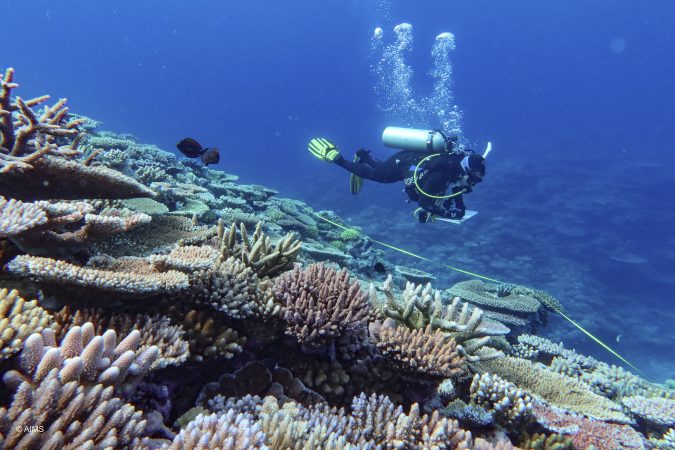
    NAIROBI, Kenya — As spiking ocean temperatures are devastating reefs around the world, a handful of scientists have found a reason for cautious optimism. They’ve used artificial intelligence to detect sheltered pockets where cool currents, reduced exposure to sunlight, and locations outside cyclone paths mean corals are more likely to survive.

    The study, led by the Wildlife Conservation Society and presented on Tuesday at the Our Ocean Conference in Mombasa, Kenya, is currently undergoing peer review for publication in the journal Environmental Research Letters.

    Five scientists identified 42 factors that create the conditions for the coral havens, called refugia, and then ran those through a program with nearly 38,000 human observations of coral cover and composition gathered over 65 years. The program identified more than 5,800 square miles of climate-resilient ocean in 72 countries.

    The work found three times as many refugia as a landmark 2018 assessment known as the 50 Reefs Study, the first paper to systematically identify areas around the globe where coral might still be saved. Scientists and environmentalists said the new assessment offered a more nuanced picture of the state of the world’s reefs and could help fine tune conservation priorities.

    “This study sharpens decades of work on reef resilience to climate change,” said David Obura, a former chairperson of IPBES, the global intergovernmental scientific panel on biodiversity, who was not involved in the new research. “It focuses attention on the critical question: Will climate refuges comprise 10%, 1%, or even less of the former extent of coral reefs?”

    Coral reefs are crucial ecosystems. They nurture an estimated quarter of ocean species at some point during their life cycles, supporting fish that provide protein for millions of people and protecting coastlines from storms.

    They are also vulnerable to bleaching, which occurs when heat causes corals to lose the algae they need to survive. Bleached corals can recover, but if the water they live in stays too hot for too long, they die.

    “Every tenth of a degree warming drives reefs to the limit,” Obura said.

    According to Australian researchers who study ocean heat, the demise of the Great Barrier Reef could occur within a generation unless humanity acts with far more urgency to rein in climate change. A study published in 2025 found that virtually all the corals in the Atlantic Ocean will stop growing and could succumb to erosion by the end of the century if global temperatures continue to rise.

    The newly identified refugia are not evenly spread around the world. More than half are in five countries: the Bahamas, Cuba, Australia, Indonesia, and the Philippines. Others cluster around small islands in places like Vanuatu, American Samoa, Christmas Island, and the Chagos Archipelago.

    These havens can protect coral from the effects of warming, but their concentration makes them vulnerable to other threats like overfishing and pollution. Although most are found in nominally protected zones, lack of funding means many of those areas are only “paper parks” lacking practical protections.

    The research is expected to fuel a central conservation debate: How much funding should go to protect refugia, some of which may eventually fail as the oceans heat further; how much into restoration work; and how much into halting greenhouse emissions and pollution?

    Despite warnings from scientists and pledges from world leaders, countries are burning more fossil fuels than ever and greenhouse gas emissions continue to rise.

    Traditionally, reef research has focused on areas that have avoided the worst overheating. Such reefs are usually dominated by large branching corals like Acropora, an expansive genus incorporating species like the staghorn and the flamethrower; or plating corals like Montipora, whose delicate whorls spiral out from a central stem. Globally, their numbers are crashing.

    But the new research broadened the focus to corals that could also resist and recover: the helmet-shaped towers of the Porites lutea or the luminous ridges and bumps of Echinopora. Coral communities dominated by fast-growing weedy varieties, such as the lime and flamingo pink Pocillopora, are also often more resilient.

    They will need to be. Subsurface conditions across the tropical Pacific are already significantly warmer than average, according to the World Meteorological Organization. And, an El Nino weather pattern that recently formed in the Pacific could exacerbate those hot conditions.

    “It’s not to say the maps are perfect, but they are better than starting with nothing,” said Joseph Maina, an associate professor at Macquarie University in Sydney, who helped coordinate the data analysis. “Governments shouldn’t use the maps blindly, but get their own experts to look here first.”

    This article originally appeared in the New York Times.

  • Why the stress building on California’s faults could result in a major quake

    Why the stress building on California’s faults could result in a major quake

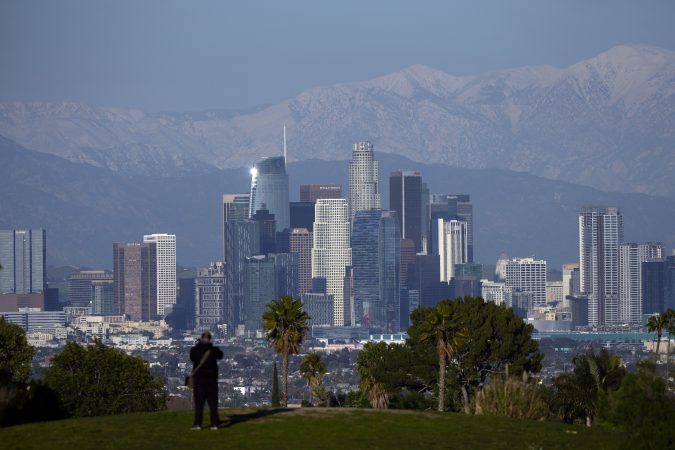
    California is no stranger to earthquakes, but the Los Angeles area may be at an increased risk of a more substantial quake in the years ahead.

    A recent study in the journal Advancing Earth and Space Sciences found seismic stress is accumulating on key faults near the greater Los Angeles metro area, in some sections reaching peak levels. And the findings reveal what researchers are calling an “earthquake gate” lurking just northeast of the city.

    While swarms of smaller quakes have rattled Los Angeles over the past century and a half, the last devastating quake to strike the city was on Jan. 9, 1857. Known as the Fort Tejon quake, the violent magnitude-7.9 tremor ruptured a 225-mile stretch on the southern part of the San Andreas Fault.

    But that portion of the fault has since remained largely dormant, with stress continuing to build elsewhere along the fault, as well along the neighboring San Jacinto Fault.

    Researchers analyzed 1,000 years of paleoseismic data, or a reconstruction of past tectonic activity. They found that stress along multiple portions of the faults is the highest it has been in at least a millennium, including along the Mojave South segment of the San Andreas Fault and the San Jacinto Bernardino segment of the San Jacinto fault.

    The San Andreas and San Jacinto fault systems are the largest in California, and run parallel to each other east of Los Angeles. They meet at a point called Cajon Pass, an “earthquake gate” of sorts.

    “The simplest way to think about an earthquake gate is a junction in a road network,” Liliane Burkhard, the study’s lead author, said in an email. “Most of the time, traffic follows one road and stops when it hits the junction. But under certain conditions, it can cross over and continue down a second road, covering much more ground. At Cajon Pass, the San Andreas and San Jacinto faults approach each other closely but do not directly connect at the surface.”

    That means seismic activity on one fault can cross the pass and affect the other.

    “Whether a rupture on one fault crosses over to the other appears to depend on how similarly stressed the two systems are at the time,” wrote Burkhard, who is also a researcher at the University of Bern in Switzerland. “When their stresses rise together in concert (not necessarily at the same level), the gate tends to open and the rupture can propagate across both faults. When their stress levels are mismatched, the rupture tends to stop at the junction.”

    During the 1857 Fort Tejon quake, the rupture did not cross Cajon Pass. But Burkhard referenced the 1812 Wrightwood earthquake, which ruptured both faults. Now, concern is increasing that a similar event could unfold again.

    “Right now, both systems are highly stressed and their levels are converging, which makes the current situation worth paying attention to,” Burkhard cautioned.

    Both the San Andreas and San Jacinto are “strike-slip” faults, with segments of the Earth’s crust sliding horizontally. Others may be “normal,” “reverse,” or “thrust” faults; the last of these is the most effective at producing tsunamis.

    While a significant quake may be overdue, the extent of any future rupture, and subsequent quake magnitude, is impossible to predict. But the researchers’ findings indicate that, when one fault ruptures, both will.

    “The stress conditions we model suggest that a joint rupture of both systems is likely and maybe more than at any point in the past millennium, which is the more important and less well-understood dimension of the hazard,” Burkhard said.

    The tricky part about predicting earthquakes is that there’s no magic stress threshold that results in a quake.

    “You can think of it less like a light switch and more like a pressure gauge that has historically tended to trigger in a certain range,” Burkhard said. “What we can say with confidence is that current stress levels are at or above the high end of those ranges, which tells us that the system is in a state we have not seen in the past 1,000 years.”

    But is 1,000 years of data enough to draw conclusions?

    Harold Tobin, the director of the Pacific Northwest Seismic Network and a professor at the University of Washington, says yes.

    “I think this 1,000-year simulation spans enough time to support a meaningful and useful conclusion,” Tobin, who was not involved in the recent study, said in an email. “[The] record is really short in North America, so paleoseismic evidence — geologic sleuthing — has to be used. The thousand-year paleoseismic record for the Southern California San Andreas and other faults that they use in this study (the “MRM”) is already a phenomenal achievement. … [It’s] enough to capture quite a few earthquake recurrence cycles on the relevant segments of the San Andreas fault system.”

    So when might the next big quake occur? Tobin said the complex nature of California’s fault systems makes for limited predictability.

    “Major quakes on major fault systems tend toward some degree of periodic recurrence, but that’s variable,” he wrote. “For example, evidence tends to favor more regular periodicity of recurrence for the truly giant subduction zone earthquakes, or for very straight, geometrically simple faults (an example is the Alpine Fault in New Zealand).”

    But in Southern California, he said, the complex of interacting faults “may exhibit a more chaotic recurrence pattern.”

  • Russia’s war in Ukraine comes back into Trump’s focus with no end in sight

    President Donald Trump met with Ukrainian President Volodymyr Zelensky at the Group of Seven summit in France on Tuesday and expressed exasperation as Russia’s war in Ukraine crept back into Washington’s focus with no end in sight.

    “It’s sort of the same thing,” Trump told reporters at the summit. “They just keep going fighting, losing soldiers. They lose so many soldiers.”

    “Not since World War II has anything like this happened,” Trump said, before invoking his exaggerated claims as a global peacemaker.

    “I settled eight wars,” he said. “This was the one I told you was going to be the easiest to settle, but they just, there’s a lot of dislike between the two leaders.”

    During his campaign, Trump said he would end the war within 24 hours. In France on Tuesday, he voiced unhappiness with the number of deaths but said that the United States is ultimately not affected.

    “We have nothing do with it,” he said. “We sell weapons to them. … The European Union pays us full price for weapons. … This has no impact on us other than we sell weapons. We’re thousands of miles away.”

    For four months, the conflict largely dropped off the White House agenda as Trump and his team focused on their own war against Iran.

    Trump meetings with Zelensky on Tuesday followed a call with Russian President Vladimir Putin on Sunday. Trump urged Putin to make a deal but said there was little sign of one. “I don’t like to see 25,000 young people die every month. They go to this front and get blown up.”

    He added, “The whole thing is ridiculous.”

    Zelensky, who attended the summit at the invitation of French President Emmanuel Macron, is hoping to reengage Trump, and European leaders have urged the president to break the impasse by hosting direct talks between Zelensky and Putin in the United States.

    Ukraine officially opened negotiations with Brussels this week over its bid for European Union membership. That step marks the start of a long and complex path in Ukraine’s ambition to join the EU, a process that Kyiv has urged the bloc to fast-track.

    Zelensky is expected to join leaders of the EU’s 27 nations at a summit in Brussels on Thursday.

    Since U.S.-led negotiations to end the Ukraine war fell by the wayside in recent months, Zelensky has been pushing to revive talks with a more prominent role for his European backers, led by France, Germany, and Britain.

    Some European nations have conveyed that they are willing to engage with Moscow in negotiations, while also warning of new Russia sanctions and sending military aid to Ukraine.

    At the summit, Zelensky also briefed G7 leaders on the damage to the Kyiv Pechersk Lavra church complex, one of the holiest sites in Eastern Orthodoxy, which caught fire last week following a Russian airstrike, according to local officials.

    The briefing came amid a broader escalation in the war. Ukraine has knocked out key Russian energy facilities, causing fuel shortages across multiple regions, while Kyiv and other Ukrainian cities have endured some of the war’s deadliest missile and drone strikes.

    The United Nations reported last week that at least 274 civilians were killed and nearly 1,800 injured in Ukraine in May, more than in any month since April 2022.

    Zelensky promised retaliation after visiting the church complex Monday. On Tuesday, Moscow officials reported shooting down dozens of Ukrainian drones approaching the capital. Ukraine also hit a key oil refinery in Kapotnya in the Moscow region, setting of a major fire.

    The extent of the damage was unclear, but the facility supplies up to 40% of the capital’s gasoline needs and about 50% of its diesel and could compound fuel shortages already affecting multiple Russian regions.

    Several of Russia’s largest gas stations are rationing fuel sales following months of sustained damage to major refineries that process crude oil, local media reported Tuesday.

    Zelensky is also hoping to step up pressure on Putin to hold direct, face-to-face talks, which have not occurred since Russia’s invasion began in 2022.

    Putin and other senior Russian officials, however, have dismissed such talks as pointless unless Zelensky is prepared to sign a final deal meeting Russia’s maximalist demands. They have also invited him to Moscow, which Zelensky has rejected, accusing Russia of “playing games” and insisting that any meeting take place in a neutral country.

    During their phone call Sunday, Putin congratulated Trump on his 80th birthday, according to the Kremlin.

    Trump called for an end to the war in Ukraine, and the two leaders agreed that U.S. envoys Steve Witkoff and Jared Kushner would visit Russia again in the near future.

    Putin had repeatedly offered help mediating between the United States and Iran given the close cooperation Moscow forged with Tehran in recent years, but Trump rebuffed those offers, telling Putin he should focus on resolving his own war.

    The recent deal to end the war against Iran could hinder Russia’s efforts to shore up its wartime budget, which has partly benefited from disruptions to Middle Eastern fuel supplies. In March, the Trump administration temporarily lifted sanctions on Russian oil exports seeking to keep global fuel prices in check.

    On Tuesday, during a bilateral meeting with the president of the United Arab Emirates, Trump appeared to suggest the U.S. could let the sanctions waiver lapse when it expires on Wednesday, though he stopped short of giving a timeline.

    “Soon, we’ll be able to do that because the oil is now flowing,” Trump said when asked whether the U.S. planned to tighten sanctions on Russia. “We took sanctions off because obviously we’re not looking to impede the oil, but we’re in a position to do that soon.”

  • Is it bad to sleep with my pet?

    Is it bad to sleep with my pet?

    Q: I let my dog sleep in bed with me, but some of my friends say it’s unhygienic and possibly bad for my sleep. Is it?

    A: When Shelby Harris, a sleep psychologist in New York City, starts working with patients who are having trouble sleeping, she always asks if they have pets. “The first thing they say to me is: ‘I have a dog. You’re going to tell me not to sleep with the dog,’” she said.

    That’s not necessarily the case, Harris said. Some people experience great joy from sleeping with their pets, and not everyone suffers from sleep disruptions. But if the pet is the source of the problem, Harris said, that’s good for everyone to know.

    In an online survey of about 2,000 U.S. adults published in 2022, nearly half said that they slept in the same bed as their pet. If you’re one of them but are not sure whether you ought to be, here are some things to consider.

    Pets can sometimes transmit disease.

    Pets can expose us to a variety of bugs and germs, like ticks, fleas, parasites, and bacteria, said Josh Daniels, a veterinarian and microbiologist at Colorado State University’s veterinary school. Having them in the bed only increases your exposure, he said. And in some cases, they can make us sick.

    In 1991, for instance, an 81-year-old woman was hospitalized in Finland with a fever and signs of a bacterial skin infection in her leg. Scientists reported that she had an ulcer between her toes, and was infected with a type of bacteria commonly found in the mouths of dogs and cats. She regularly slept with her cat, who had a habit of licking her feet and toes. Another case, published in 2000, described a 69-year-old man who had slept with his dog before and after hip surgeries and developed an infection around the surgical site. The bacterium was a type found in the mouths of cats and dogs and transmitted through bites and scratches. There have also been reports of dog owners who caught plague, which can be transmitted by fleas, after sleeping with their pets.

    Such cases are rare, however. And unless you’re susceptible to infection or have a weakened immune system, the risk of actually getting sick from sleeping with a pet is generally low, said Bruno Chomel, a professor emeritus at the University of California, Davis, Weill School of Veterinary Medicine.

    Ticks and fleas are the most common bugs people are exposed to when sharing a bed with a pet, Daniels said, so be sure to use flea and tick prevention methods as recommended by a veterinarian. Ticks can transmit Lyme disease and other serious illnesses.

    Routine deworming will also kill common and potentially dangerous intestinal parasites, such as roundworm.

    If your pet recently came from a shelter, or is a puppy or kitten, watch out for skin problems like ringworm, which spreads easily through touch, said Daniels (who sleeps with his dog).

    When deciding whether to sleep with a pet, Chomel said, it comes down to your appetite for the risk of getting sick — it’s small, he said, but real.

    Your sleep may suffer (though you may not notice).

    There isn’t much research on how sharing a bed with a pet affects sleep, said Brittany Lancaster, an assistant professor of clinical psychology at Mississippi State University. But a few limited studies suggest that sleeping with a pet can make sleep worse, she said.

    In a study published in 2017, for instance, 40 dog owners (mostly women) wore activity monitors while sleeping for seven nights. The researchers found that when the dog was on the bed, the participants slept less efficiently than when the dog was in the room but not on the bed.

    Some evidence suggests that people may not know they’re being disturbed. In a 2020 study of 12 women who slept with their dogs, researchers saw that the dogs disrupted their owners’ sleep, but the participants rarely reported those disruptions afterward. Scientists have also found that some people perceive their pets as being beneficial to their sleep.

    Douglas Wallace, a sleep physician and clinical neurology professor at the University of Miami Miller School of Medicine, has noticed this in his own research and in his clinic.

    He theorized that the emotional support of sleeping with a pet might somehow outweigh any negative effects the pet has on sleep quality.

    Pets offer wellness benefits that may improve sleep, Wallace said. Owners who walk their dogs every morning get regular exercise and may have to wake up at the same time every day, both of which promote good sleep.

    If you think sharing a bed with a pet is interfering with your sleep, Harris recommended taking the animal out of bed for a few nights and seeing if you notice a difference. If you don’t, “I’m fine with it being there,” she said.

    Lancaster, on the other hand, prefers a more conservative approach: “I do not sleep with my cats, if that tells you anything,” she said.

    This article originally appeared in The New York Times.

  • DOJ urges appeals court to let Trump build ballroom, citing failed UFC attack

    DOJ urges appeals court to let Trump build ballroom, citing failed UFC attack

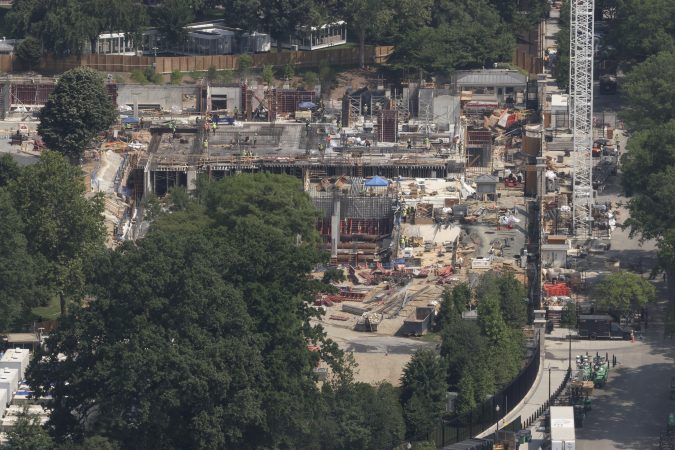
    The Justice Department is asking a federal appeals court to let President Donald Trump continue building his planned White House ballroom, arguing that a thwarted attack on Trump’s recent Ultimate Fighting Championship event proves the need for the facility.

    Brett Shumate, an assistant attorney general, urged a panel at the U.S. Court of Appeals for D.C. to lift a lower court’s order blocking much of the construction on the 90,000-square-foot ballroom, contending that the project’s security features are needed to protect the president. As evidence, Shumate cited the foiled threat against the UFC event on the White House grounds over the weekend. Authorities have said they intercepted and stopped plans to fly explosives-laden drones over attendees and gun down people who fled.

    “This latest assassination plot against President Trump and dignitaries at the White House demonstrates the compelling need for the East Wing Project, with a Ballroom designed to defend against just such attacks,” Shumate wrote in a letter filed Tuesday and made public early Wednesday.

    Shumate argued that the ballroom’s planned “Drone Port and Sniper Nests” would have been able to “destroy any effort” to attack the UFC event, and that the ballroom’s “mass and height” would provide a shield for the White House.

    U.S. District Judge Richard Leon ordered a halt to aboveground construction on the project in April, saying that the administration failed to demonstrate that the ballroom needed to be completed immediately for national security reasons. The three-judge appeals panel previously stayed Leon’s order while it considers the administration’s appeal, allowing construction to continue in the interim. Administration officials have said they expect the project to take at least two more years.

    The Justice Department has previously argued that other threats to the president, such as a shooting at the White House correspondents’ dinner, prove why the space is needed.

    Those arguments did not sway Leon, an appointee of President George W. Bush, who has kept his order in place. Two of three judges hearing the administration’s appeal — Bradley Garcia, a Biden appointee, and Patricia Ann Millett, an Obama appointee — appeared skeptical of the Justice Department’s arguments about Trump’s authority to build the ballroom in a court hearing this month.

    The National Trust for Historic Preservation, which sued to halt the ballroom’s construction, has previously said it would continue its legal challenge despite the Justice Department’s past demands.

    The shooting at the correspondents dinner was an “awful event” but did not change the legal reality that the Constitution and federal law require Trump to get Congress’s approval for the project, the trust said in April. The nonprofit, which is authorized by Congress to protect federal buildings, has pushed back sharply against the Justice Department’s contention that the lawsuit endangers the president.

    The Washington Post reported Tuesday that contractors’ internal estimates for the cost of the ballroom had risen to $600 million, with half paid by taxpayers. The White House put the cost at $200 million last year and said it would be paid by private donors.

  • Letters to the Editor | June 17, 2026

    Perfection cost billions

    President Donald Trump insisted upon a perfect resolution to the war he started against Iran. He no doubt was ignorant of the aphorism “perfect is the enemy of good.” Barack Obama‘s administration labored for two years to obtain a “good” but not perfect agreement with Iran’s leadership. It guaranteed multiple unscheduled inspections of Iranian nuclear facilities to assure the world that Iran was not enriching its limited supply of uranium to “weapons grade.” More importantly the Iranians agreed to never “build, develop, or acquire” nuclear weapons. Today, our government will be most fortunate if the Iranians will allow reinstatement of the terms of its 2015 agreement. An incompetent Trump, already humiliated by Iran’s leadership, talked tough but is going to bend the knee and write the ayatollah a big check for $350 billion (for the families of the women and schoolchildren our missiles killed plus funds to rebuild Iranian infrastructure) to get Iran to agree, for a second time, to terms that John Kerry and others negotiated in 2015. If the $350 billion is paid it will exceed by 875 times what the Obama government returned to the Iranians. Any way one looks at it, the con artist who came to Washington claiming to be a superior negotiator and “dealmaker” has shown himself to be a deal-breaker and a corrupt loser after wasting $50 billion to prosecute an illegal war. His insistence upon what only he could define as “perfect” has been an impeachable travesty.

    David Kahn, Boca Raton, Fla.

    Challenge fraud claims

    I ask Sens. John Fetterman and Dave McCormick to challenge President Donald Trump’s repeated claims of election fraud and his threats to our election integrity.

    Even before his first election, Trump refused to say whether he would accept the election results unless he won. He has repeatedly made false claims of fraud, without any evidence of these claims. Multiple lawsuits to challenge election results that favor his opponents have failed. He encouraged a violent insurrection to remain in office.

    Recently, he refused to provide evidence for his fraud claims, stating that the evidence was obvious. He is clearly covering up the fact that no such evidence exists, that these claims are self-serving fabrications. His crude denigrations of those who insist on the truth reveals his desperation.

    Trump is using these claims to justify limiting our voting rights. Please stop this tyrannical power grab. Don’t be a party to the end of our republic.

    Mark Schenker, Blue Bell

    Join the conversation: Send letters to letters@inquirer.com. Limit length to 150 words and include home address and day and evening phone number. Letters run in The Inquirer six days a week on the editorial pages and online.