Tag: no-latest

  • In defiant speech, Pezeshkian calls out Trump and says Iran will fight ‘until our last breath’

    In defiant speech, Pezeshkian calls out Trump and says Iran will fight ‘until our last breath’

    UNITED NATIONS — Iran’s president said Wednesday that his people have been “victims of terrorism” by the United States, delivering a rare wartime speech at the U.N. General Assembly a day after President Donald Trump said he may “annihilate” the Islamic Republic if a deal isn’t reached soon to end the nearly seven-month war.

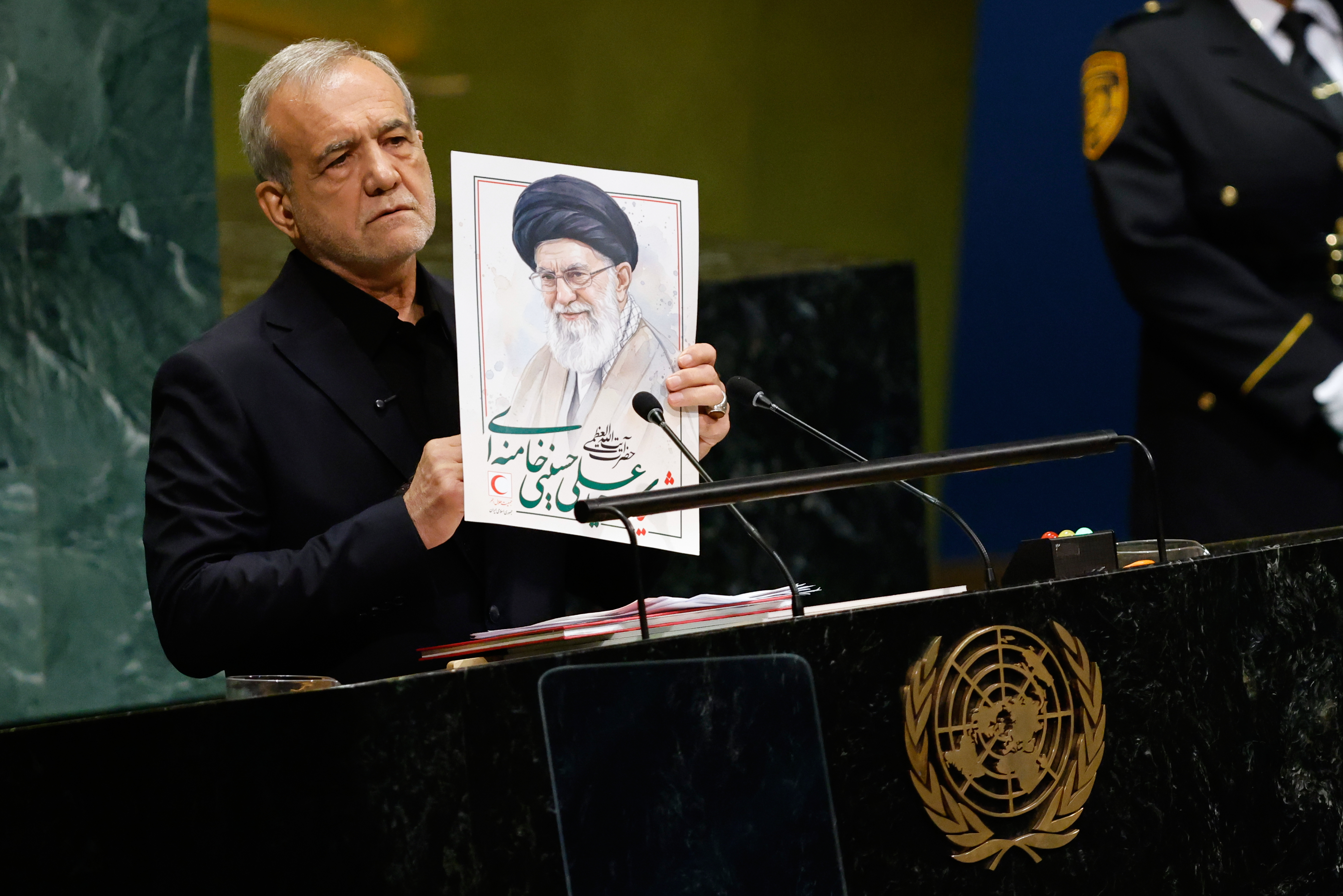
    The defiant speech by President Masoud Pezeshkian marked a striking instance of a foreign leader addressing the world body while their country is at war with the host nation. While defending his country, Pezeshkian held up large photos of the late Supreme Leader Ali Khamenei and the more than 150 Iranian schoolchildren killed in the first days of the war.

    “We have only defended ourselves. We are not terrorists,” Pezeshkian said at the General Assembly. “Our innocent people have been the targets of cowardly attacks and aggressions imposed upon our country. And we defended ourselves with utmost strength. America and Israel attacked us.”

    He added of the United States: “Yes they did hit us, but we did not bend the knee.” Toward the end of his speech, Pezeshkian called out Trump by name.

    “It must be understood by Mr. Trump and those who seek to bully us that we are ready for dialogue and diplomacy and negotiations without accepting the language of force,” he said.

    Shortly after, both U.S. and Israeli officials blasted the speech, saying that it was hypocritical for the Islamic Republic to present itself as the victims of the world.

    U.S. Secretary of State Marco Rubio told reporters: “I don’t know what standing Iran has to lecture anyone on human rights or the international system when they habitually violate it.”

    A busy 24 hours for U.S.-Iran relations

    Arriving in New York under heavy security and scrutiny, Pezeshkian — who, within Iran’s political landscape, is considered a moderate politician — addressed world leaders a day after Trump used the same stage to mull whether to massively escalate a war that has already spiraled out of control.

    “I have a big decision to make,” Trump said in his wide-ranging address Tuesday. “Will a deal be made with Iran that lets them rebuild and create a far greater country than it ever was before, maybe one of the greatest in the Middle East or even the world. Or do I annihilate the Islamic Republic and do it quickly, never giving them a chance to kill and destroy people and countries again?”

    Hours after those stunning threats, Trump told reporters that his chief envoys, Steve Witkoff and Jared Kushner, met for about three hours with the Iranian officials on the sidelines of the annual gathering. But he offered few details about how the discussions transpired or the substance of the exchange.

    “It was a very good meeting,” Trump said. The president later added that the Iranian officials were “not the highest level, but it’s something.” Also on Tuesday, Rubio said Trump is open to meeting with Pezeshkian while he’s in New York.

    But Tehran downplayed Tuesday’s unscheduled exchange, which were the first indirect talks between U.S. and Iranian officials since a June ceasefire unraveled. Esmail Baghaei, an Iranian Foreign Ministry spokesperson, maintained the country’s negotiating position in talks with U.S. officials, demanding that Washington end its blockade of Iranian ports and release frozen Iranian assets.

    Baghaei said the talks — conducted indirectly through Qatari mediators — were “not anything new.”

    Rubio echoed that sentiment Wednesday, saying that “it was a continuation of conversations that have occurred in the past.”

    “If there’s an opportunity to exchange ideas and messages, we will. And that’s what largely yesterday was — it was positive in that regard,” he said. “But ultimately, I don’t want to mischaracterize this as a major breakthrough.”

    More than a year of negotiations have taken place

    Pezeshkian’s address elaborated on where Tehran stands as more than a year of start-stop negotiations between the two longtime adversaries have failed to produce a sustainable solution. His speech came as intermittent attacks continued in the Strait of Hormuz off Iran’s coast, where commercial shipping remained below prewar levels.

    His address last year came months after the 12-day Israel-Iran war that saw the assassination of many of the Islamic Republic’s highest military and political leaders and once again broke down weeks of negotiations with the United States.

    “Ladies and gentlemen, you all bore witness that this past June, my country was subjected to a savage aggression and flagrant contravention of the most elementary principles of international law,” Pezeshkian said at the time.

  • Harvey Weinstein is sentenced to 15 years in prison for 2006 sex crime in New York

    Harvey Weinstein is sentenced to 15 years in prison for 2006 sex crime in New York

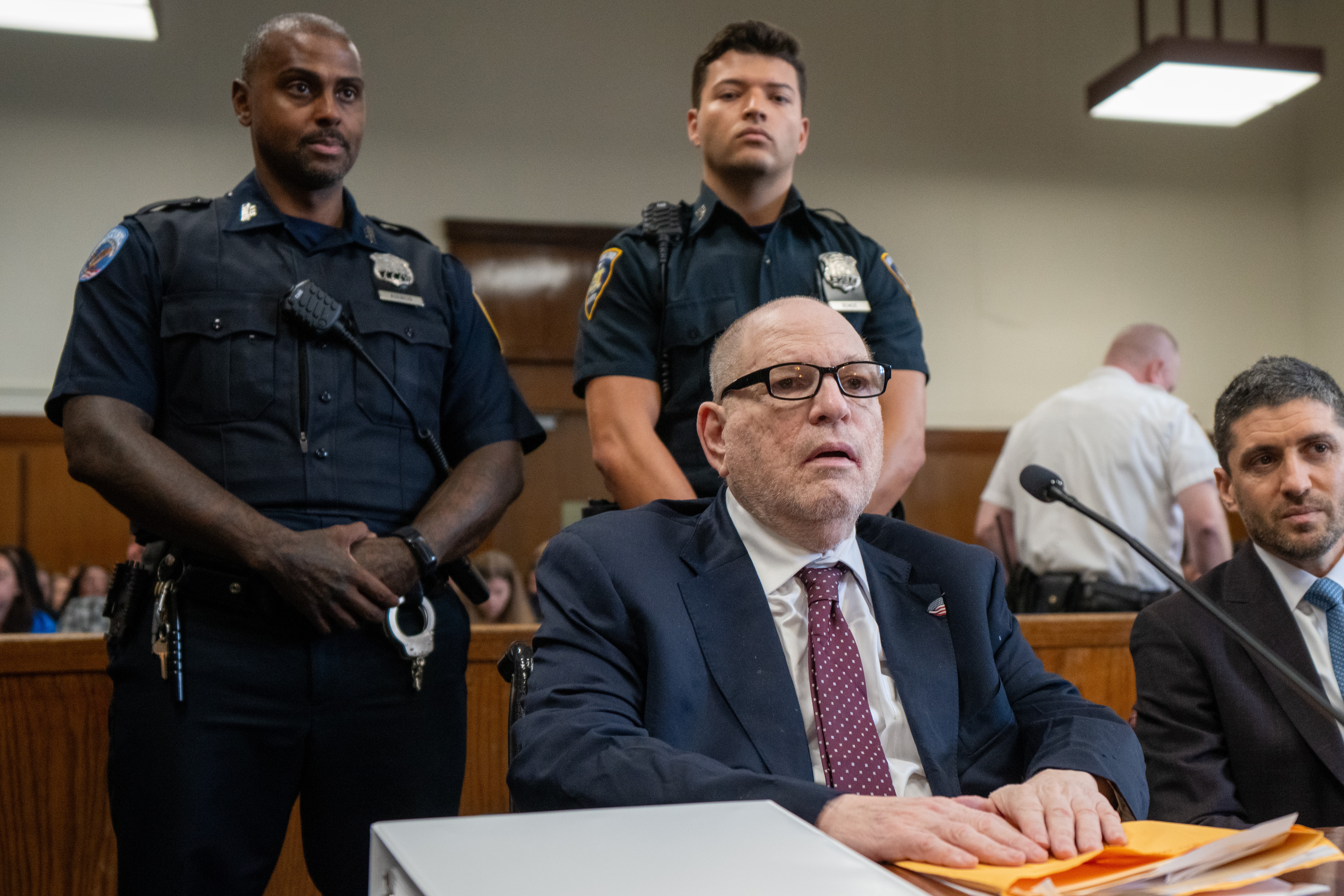
    NEW YORK — Harvey Weinstein, the disgraced movie mogul, was sentenced in Manhattan to 15 years in prison Wednesday for a felony sex crime in another #MeToo reckoning.

    Weinstein’s sentencing for sexually assaulting one-time TV production assistant Miriam Haley followed a legal odyssey spanning more than six years. His 2020 conviction was overturned by New York’s highest court. A second jury found Weinstein guilty again at a retrial last year.

    Once among the most powerful figures in the entertainment industry, Weinstein was an Oscar-winning producer whose hits included Shakespeare in Love, Pulp Fiction and Chocolat. But his downfall came quickly after sexual assault allegations in 2017 set off the #MeToo movement.

    Weinstein, 74, is expected to appeal and maintains that he never raped or sexually assaulted anyone. He is now likely to remain behind bars well into his 80s. Seated in a wheelchair, he was quickly moved out of the courtroom after the sentencing, while some of his accusers hugged and brushed away tears.

    Weinstein and his victim both spoke in court

    Weinstein faced up to 25 years in prison for sexually assaulting Haley at his Manhattan apartment in 2006. He has already served more than six years as his case cycled through the criminal justice system. Haley gave her account of the assault at two trials, and again addressed the court Wednesday.

    “Having been sexually assaulted by Harvey Weinstein has had a devastating effect on my life and sense of security that may never go away. Making the decision to speak up will have me looking over my shoulder for years to come,” Haley said.

    “It’s a life sentence for me,” she added.

    Minutes later, Weinstein apologized while reiterating his innocence.

    “Reflecting on all that has happened since 2017 has helped me recognize how my past conduct has negatively affected others. I live with many regrets and sincerely apologize to anyone I have affected with my actions,” he said.

    Some of his accusers who were in court shook their heads while he spoke.

    Weinstein is the face of MeToo, judge says

    Judge Curtis Farber said Weinstein was once a king in the movie industry, “but recognition for these achievements will pale in comparison to what you did.”

    He said Weinstein is now known as “a sexual predator, the literal face of the MeToo movement.”

    The judge said Weinstein treated women as “mere objects to be played with and discarded” and still hasn’t accepted responsibility, portraying himself as a victim during jailhouse interviews.

    Haley afterward said she was happy with the sentence, while saying it’s clear that Weinstein has not acknowledged what he did. “I think he still feels entitled, and that’s part of the problem,” she said.

    Haley’s lawyer, the famed victims’ rights attorney Gloria Allred, rejected any suggestion that Weinstein’s sentencing means the MeToo era is over.

    “Women are empowered in a way they have never been before,” she said.

    Why Weinstein is being sentenced a second time

    Weinstein was originally sentenced to 23 years in prison after a jury convicted him of assaulting Haley and raping an aspiring actress, Jessica Mann, in 2013.

    Tried for a second time last year, he was again convicted of a first-degree criminal sex act for assaulting Haley, who has also gone by the name Mimi Haleyi. In a messy split verdict, the jury acquitted him of forcibly performing oral sex on another woman, Kaja Sokola, and could not reach a verdict on a rape charge involving Mann.

    After another retrial ended in a hung jury in May, Manhattan prosecutors dropped the rape charge rather than pursue a fourth trial after Mann said she could not bear to testify again.

    Weinstein’s health issues pushed the defense to ask for leniency

    Defense lawyer Jacob Kaplan wanted three more years on top of the six years Weinstein already served, saying a longer sentence would make it more likely that Weinstein dies in prison.

    Weinstein has been in the hospital six times since 2025, Kaplan said, while dealing with blood cancer, congestive heart failure, and kidney issues.

    Weinstein is also awaiting resentencing in a separate rape case in Los Angeles. A California appeals court upheld the 2022 conviction but threw out his original 16-year sentence because the judge had considered his New York convictions — that were later thrown out — as an aggravating factor.

    After shuffling between state prison, where he tested positive for COVID-19 early in the pandemic, and New York City’s notorious Rikers Island complex, Weinstein has been housed at a medical unit for inmates at Bellevue Hospital in Manhattan.

    Haley describes the assault that led to Weinstein’s conviction

    Haley, 49, is a former entertainment producer now working in advertising.

    She said she met Weinstein through a mutual connection and worked briefly as a production assistant on Project Runway, a reality competition show that he produced.

    Haley said she accepted an invitation to visit Weinstein’s apartment and after chatting briefly, he lunged to kiss her, she testified. She said she rebuffed him, but he grabbed her, forcibly backed her into a bedroom and sexually assaulted her, ignoring her pleas to stop.

    She recalled Weinstein asking, “Don’t you think we’re much closer now?” after either the alleged assault or a subsequent occasion when she says she had unwanted, but not forced, sex with him.

    She also recalled telling him after the second encounter, “You know you can’t keep doing this.”

    The Associated Press does not typically identify people who say they are victims of sexual assault unless they grant permission, which Haley, Sokola and Mann have done.

  • Economic frustration tests Trump’s standing with rural voters, new AP-KFF poll finds

    Economic frustration tests Trump’s standing with rural voters, new AP-KFF poll finds

    WASHINGTON — About half of rural American voters believe the economy is worse off now than when President Donald Trump returned to office, according to a new survey that points to economic frustration among a key group that has backed Trump and other Republicans in recent elections.

    The Associated Press, in partnership with KFF, polled more than 2,000 rural registered voters and found broadly negative views of the national and local economies, including among many Republicans. The costs of groceries, gas and healthcare rank as top pain points for the rural voters, who were surveyed over two weeks starting in mid-August. And a larger share than among voters overall say they are worried about being able to afford groceries or gas.

    At the same time, about half of rural voters approve of Trump’s job performance, more than among U.S. adults overall in separate AP-NORC polling.

    The findings suggest that many rural voters haven’t turned on Trump but that they also largely don’t think he has delivered the economic renaissance he promised on the campaign trail.

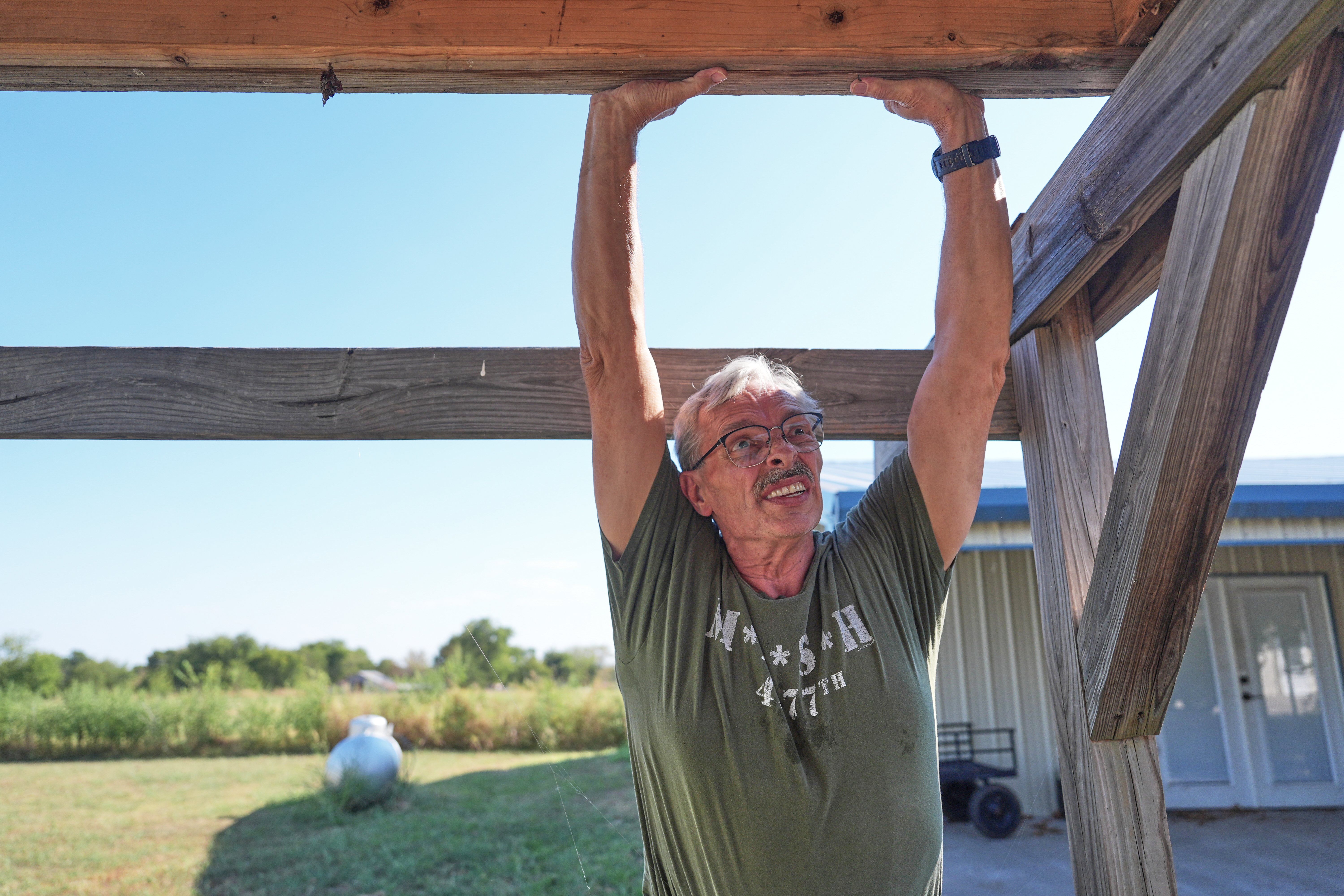
    Ed Westrick, a registered Republican and veteran, rates Trump’s job performance as “mediocre, middle-of-the-road.” Westrick, who lives in rural Texas, isn’t sure he will cast a midterm ballot, a troubling sign for Republicans in a key state in their fight to keep control of Congress.

    Rural Americans skew Republican and historically have been an instrumental group of voters for Trump. The survey reveals that while rural voters seem unlikely to support Democrats on a large scale, Trump and the Republican Party could face challenges with them in November.

    Rural voters are deeply unhappy about the economy

    As the election approaches, only about 4 in 10 rural voters approve of Trump’s performance on the economy. They rate him similarly on his handling of the Iran war, an entanglement that has proved expensive for the U.S. and increased oil and gas prices. And rural voters rank pocketbook concerns and fraud in government programs higher among the things they want to hear about from politicians than other perennial issues, such as gun policy and abortion.

    Westrick, 59, is a technical trainer in the electronics industry and has seen an increase in business in part because he works with defense contractors, but he said he’s concerned about the cost of living.

    “I hear the politicians talk about making groceries more affordable and making healthcare more affordable, but yet none of them are addressing the issues,” Westrick said.

    In the poll, about three-quarters of rural voters rated the cost of living in their communities as “only fair” or “poor” — a 25 percentage point rise from a similar question asked in a KFF-Washington Post survey in 2017. Rural Americans, who have consistently lower wages than those who live in suburban and metro areas, have been hurting economically for decades, according to Tim Slack, a professor of sociology at Louisiana State University and co-author of the book “Rural and Small-Town America.”

    “Many folks are connecting the cost-of-living crisis to many of the Trump administration’s policy choices: the war in Iran, tariffs, trade wars,” he said. “None of those things are going to bring down prices at the pump or the local Walmart.”

    “Trump promised to lower prices on Day 1, and instead the cost of living’s continued to climb. And that’s especially painful in rural America,” Slack said, adding that he expects many working-class Republicans to skip voting in November.

    Rural Republicans do have a brighter economic perspective than rural Democrats or independents, particularly about the U.S. as a whole, according to the survey. About 6 in 10 rural Republican voters say Trump has improved the national economy, compared with only about 2 in 10 independents and fewer than 1 in 10 Democrats.

    But only 45% of rural Republican voters say Trump has made their local economies better off. About 1 in 4 said there are fewer good-paying jobs where they live than five years ago.

    In Michigan, 37-year-old independent voter Brittainy Sosebee said she isn’t sure if she will vote in the state’s midterm election, which includes a tight Senate race seen as crucial to the Democratic Party’s push to win back a majority. Sosebee voted for Trump in 2016 and Democratic candidate Joe Biden in 2020; she didn’t vote in 2024.

    Sosebee, who lives in St. Johns, a small town just north of Lansing, said she used to have extra money to take a vacation or buy a new pair of jeans without worrying. Now, she scrutinizes every expense, cringing at the rising cost of fresh produce when she shops for her three children.

    “We hunt, so we have a lot of venison and things like that, so we don’t have to buy meat from the grocery store, but it’s still crippling,” she said.

    Healthcare policies go unnoticed

    The AP-KFF poll found that rural voters overall don’t perceive much positive impact from the Trump administration’s healthcare policies even as they have been a top priority for Republican leaders, who have promoted efforts to lower drug costs and touted a $50 billion rural health program.

    Only 17% of the voters said the Trump administration’s healthcare policies have had a “positive impact” on their healthcare costs, while 41% said they’ve had “no impact” and another 41% said they’ve had a “negative impact.”

    Sitting on her front porch in Woolwich, Maine, 71-year-old Democrat Kathleen Hanning sipped a chai tea latte in the sun and recalled how she stopped voting for Republican Sen. Susan Collins in 2020.

    Collins and Trump are “intertwined,” Hanning said. “She is not independently voting on what’s best for Maine.”

    Hanning, a retired federal worker, said she hadn’t paid much attention to the health policies in Trump’s signature tax breaks and spending cuts bill passed last year. The law reduces federal Medicaid spending by roughly $900 billion over a decade but also includes billions of dollars for the Rural Health Transformation Program, which it created.

    A year after the law’s passage, more than 8 in 10 rural voters said they’d heard either “a little” or “nothing at all” about the health fund. About 60% said they had heard nothing, according to the survey.

    Rather than transforming, Hanning said, “hospitals up here in Maine are consolidating.” She travels an hour to see a specialist and noted that mothers will now have to drive farther for care because the hospital in nearby Damariscotta announced it would soon close its labor and delivery center.

    Nine in 10 rural voters said it was “extremely” or “very” important for candidates to talk about healthcare costs, with more than half saying it’s “extremely important.” Mirroring the general population, rural voters ranked healthcare costs and gas prices as top economic worries.

    Rural Republican voters still trust the GOP more

    When asked for the political party they trusted to do a better job handling issues such as the cost of healthcare or the cost of living, rural voters tended to side with their own party. The finding signals that Democratic candidates are more likely to benefit from rural Republicans staying home this November than from them voting across party lines in large numbers.

    Republicans are more ambivalent about their party’s ability to handle key healthcare issues, compared with Democrats. About 8 in 10 Democratic voters say they trust the Democrats to address healthcare costs, while closer to 6 in 10 Republican voters say the same of the Republicans.

    In Manassas, Georgia, a tiny town about an hour’s drive inland from Savannah, Republican voter Wanda Rogers feels the Trump administration is doing the best it can to clean up what she sees as an economic mess that Democrats left behind when they lost power.

    “I kind of think people think like I do, that he knows what needs to be done,” she said. “It’s just taking them a while to get it there.”

    Still, the 66-year-old said, “gas prices, they’re eating me alive right now.” She said she has stopped traveling to the beach because it has become too expensive.

    Pamela Shaw, an independent voter who lives in a rural area near Asheville, North Carolina, said she sees the impact of rising costs in her community.

    “When hamburger is over $7 a pound and steak is $15 or more a pound, a lot of people are not able to buy some of the things that they are used to buying,” the 59-year-old said in an interview.

    Trump’s rural standing has slipped

    Trump remains relatively popular among rural voters in the AP-KFF poll, with 48% approval — substantially higher than in a July AP-NORC poll of U.S. adults overall, in which only a third approved of his performance. But he’s also down slightly, from 56% approval, among rural voters, based on a similar question asked in the earlier KFF-Washington Post survey.

    This year’s competitive elections feature key Senate races in states including Ohio, Michigan and Maine, all of which have large rural populations. In close races, Democrats may have a chance to “show up and give a message that rural people might find appealing,” said Nicholas Jacobs, a political scientist at Colby College and co-author of the book “The Rural Voter.”

    “But it’s nothing more and it’s nothing less than that — an opportunity,” Jacobs said. “And time and time again, Democrats have shown a certain proclivity for not seizing that opportunity.”

    Many rural voters don’t think the major parties or the president respect people like them. About half, 48%, of rural voters say the GOP respects people like them “a lot” or “some,” while 45% of rural voters say this about Trump and 37% say this about the Democratic Party.

    On a recent Thursday, registered Republican Nate Lawrence answered his phone after paying $57 to fill up his Chevy Equinox in New Concord, Ohio, a village of fewer than 3,000 people about an hour’s drive east of Columbus.

    Lawrence, a middle-school English teacher, said the candidates should be talking about spending power: “I need to be able to go to the store and feed my family on what I make as a teacher,” Lawrence said. “I should be able to pay for a house on a teacher’s salary.”

    Lawrence has voted for Trump in the past but didn’t in 2024. For Ohio’s Senate race, Lawrence said he is torn and not sure whether to pick Democrat Sherrod Brown or Republican Jon Husted.

    Still, even if the politicians say they will lower prices, Lawrence said, he won’t believe them.

    “Trump said that, and it didn’t happen,” he said.
  • In court filing defending media ban, White House says access is a ‘privilege’

    In court filing defending media ban, White House says access is a ‘privilege’

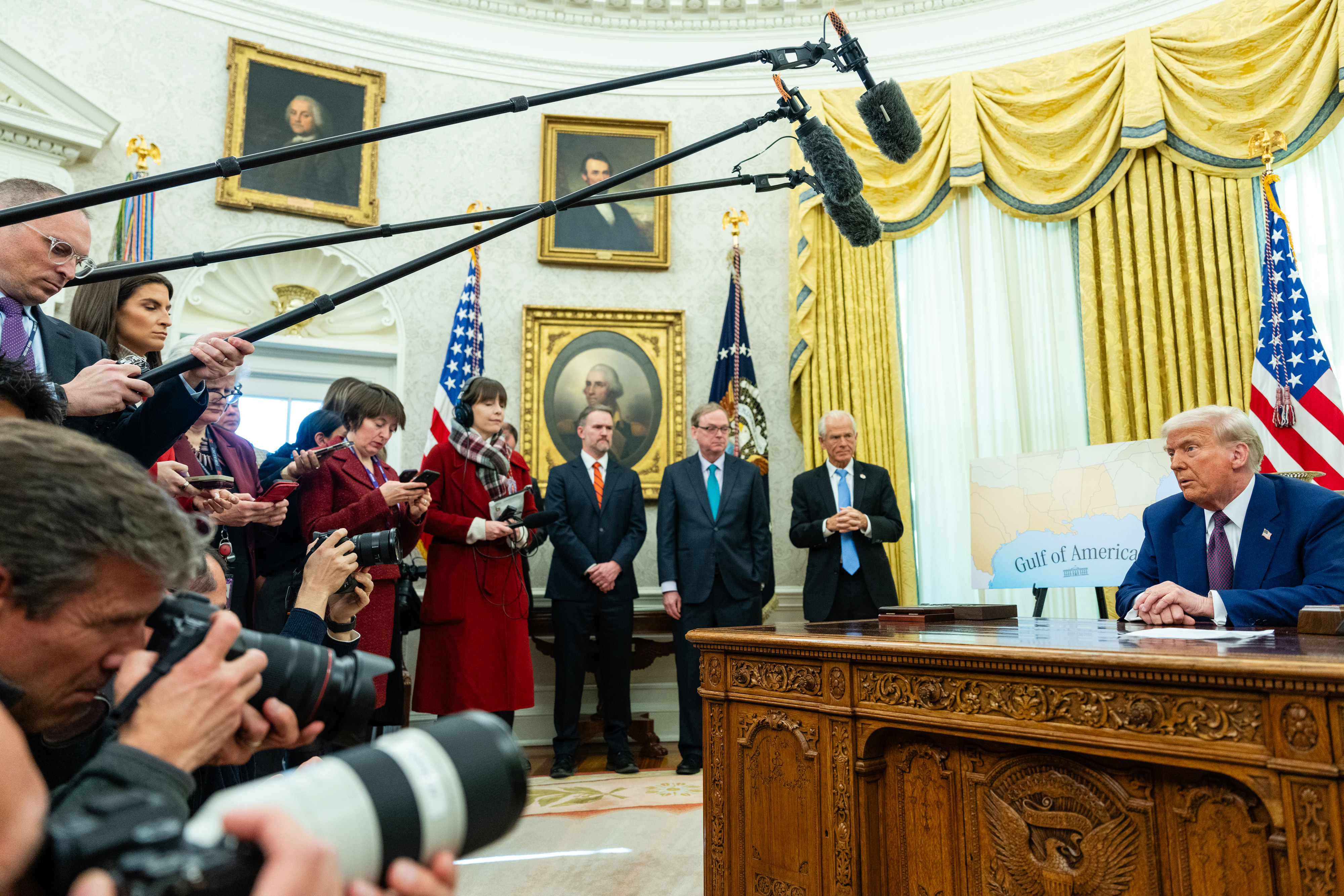
    White House officials said in a court filing Tuesday that President Donald Trump had determined that CNN, MS NOW and Politico had breached standards of conduct, leading to their expulsion from the grounds of the White House.

    The alleged violations, said the filing, include “trafficking in verifiable falsehoods about national security and other issues, and publishing sensitive or classified information.”

    “Access to the White House is a privilege — not a right,” reads the filing, which argues that Trump’s action against the three news outlets does not violate the First Amendment and aligns with a long history of presidents favoring some journalists over others.

    The filing, furthermore, claims that the White House’s denial of access is a preliminary matter and that the outlets have until Friday to contest the decision.

    The clash began last Friday, when Trump announced on Truth Social, the platform that he owns, that he would ban the three outlets, saying they “shouldn’t be able to constantly write or report FICTION and LIES.” On Saturday morning, journalists from CNN, MS NOW and Politico were denied access to the White House grounds and had their press passes confiscated.

    By Monday morning, the news organizations had sued, arguing that the president’s ban “brazenly discriminates based on editorial viewpoint,” and was an affront to their First Amendment rights. They said that the move had blindsided its targets, depriving the outlets of the warning that any such drastic action required. They “received zero advance notice that the president would ban a news organization from the White House if he dislikes its coverage,” according to the complaint.

    U.S. District Judge Timothy J. Kelly, who was nominated in 2017 by Trump, will hold an emergency hearing Wednesday to consider the media outlets’ request for a temporary court order undoing the access ban.

    The government filing Tuesday night included copies of letters sent earlier in the day to each banned news outlet. In addition to accusing the organizations of failing to meet standards of conduct, the letters identified specific stories that allegedly either spread falsehoods or threatened national security. The letter to CNN, for example, cited a January 2026 story that “disclosed ‘top-secret’ construction details related to the East Wing bunker,” the letter reads.

    One of MS NOW’s alleged infractions, according to a White House letter, was a June 2026 story claiming “a source said that President Trump ‘underestimated the willingness of Iran to resume conflict.’” Politico is accused of publishing a “document detailing funding for the White House ballroom containing intricate descriptions of how the Secret Service would invest in security improvements,” according to a White House letter.

    In 2018, Kelly ruled against Trump in another media access case. Trump had expelled CNN reporter Jim Acosta from the White House grounds. But Kelly ordered his credentials restored, saying Trump hadn’t given Acosta enough notice to challenge the action.

    Other news organizations have responded to the ban with acts of support and solidarity. The consortium of five TV networks that covers the president as the so-called TV pool — ABC News, CBS News, NBC News, Fox News and CNN — suspended its immersive coverage of Trump, and some news outlets temporarily withheld publication of photos of Trump’s events.

    This article originally appeared in The New York Times.

  • Trump-backed Missouri congressional map returns to the Supreme Court for the third time

    Trump-backed Missouri congressional map returns to the Supreme Court for the third time

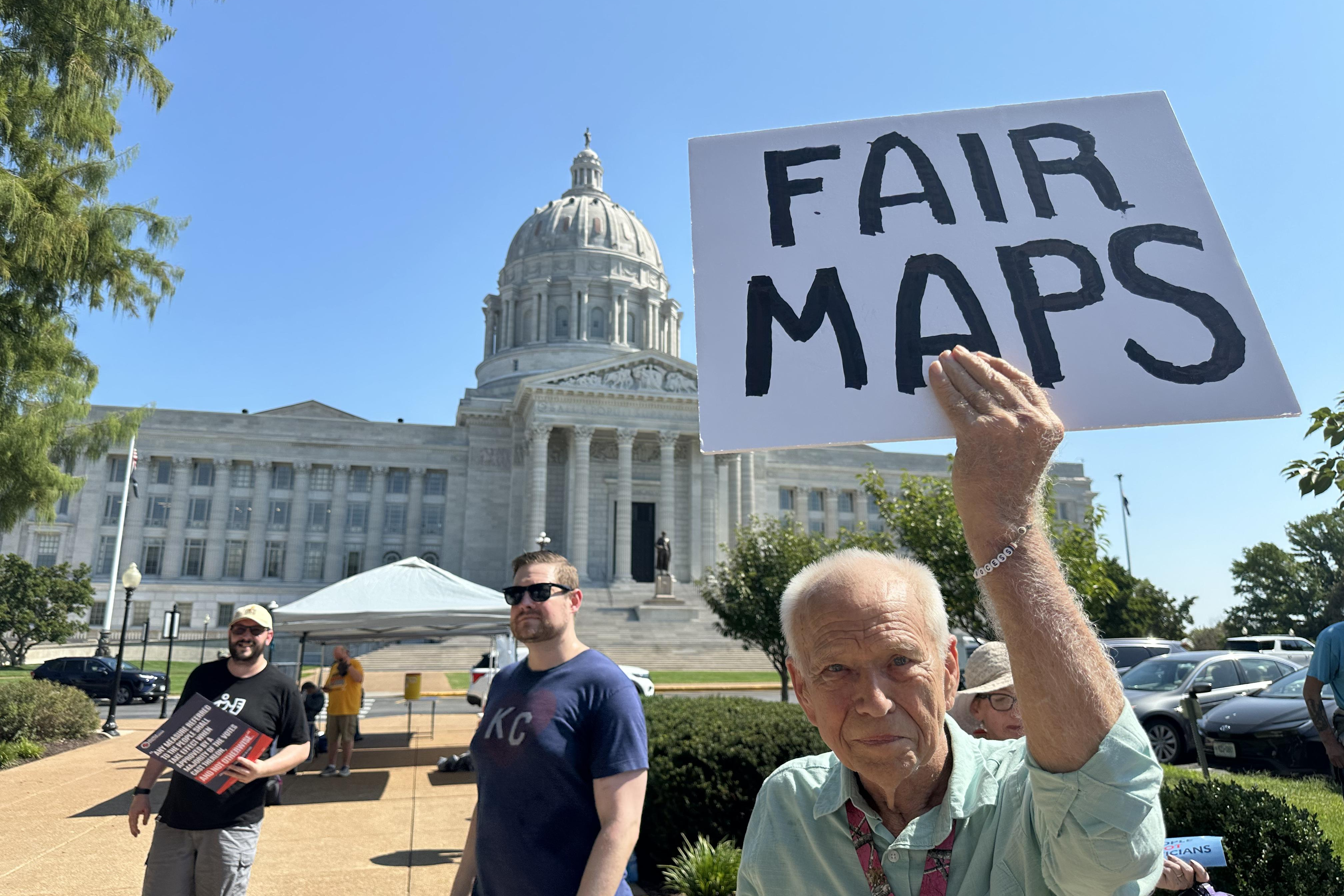
    WASHINGTON — The fight over Missouri’s congressional map returned to the U.S. Supreme Court for a third time late Tuesday, after an appeals court ordered the revival of new districts backed by President Donald Trump.

    The new map was drawn to help Republicans gain a U.S. House seat in the pivotal midterm elections, which will determine control of Congress. The Supreme Court has twice blocked efforts to use it in November.

    The latest emergency appeal comes after an unusual federal appeals court ruling that ordered a last-minute return to a GOP-friendly map even after the Supreme Court halted such a move.

    The justices had left in place a Missouri Supreme Court decision requiring the state to use its previous map. The state court ruled that the new districts could not take effect unless voters approved them in a statewide referendum.

    The U.S. Supreme Court gave supporters of the new map until midday Wednesday to respond to the latest appeal.

    The dispute has caused confusion for over a million potential voters who could be shuffled among districts. Absentee voting already is underway in Missouri using districts adopted in 2022, after the last census.

    The new congressional map backed by Trump significantly reshapes a Kansas City-based district held by Democratic Rep. Emanuel Cleaver. Republicans hope the map could help them win seven of the state’s eight House seats — one more than they currently hold.

    Missouri’s redistricting battle has been the longest and most complex among roughly a dozen states that sought to change their U.S. House districts over the past year. Districts are usually redrawn at the start of each decade, after a census. But Trump spurred a spate of mid-decade redistricting last year when he urged Republican-led states to redraw districts to gain an edge in the midterm.

  • Sen. Bernie Sanders unveils bill to ban artificial superintelligence and create Department of AI

    Sen. Bernie Sanders unveils bill to ban artificial superintelligence and create Department of AI

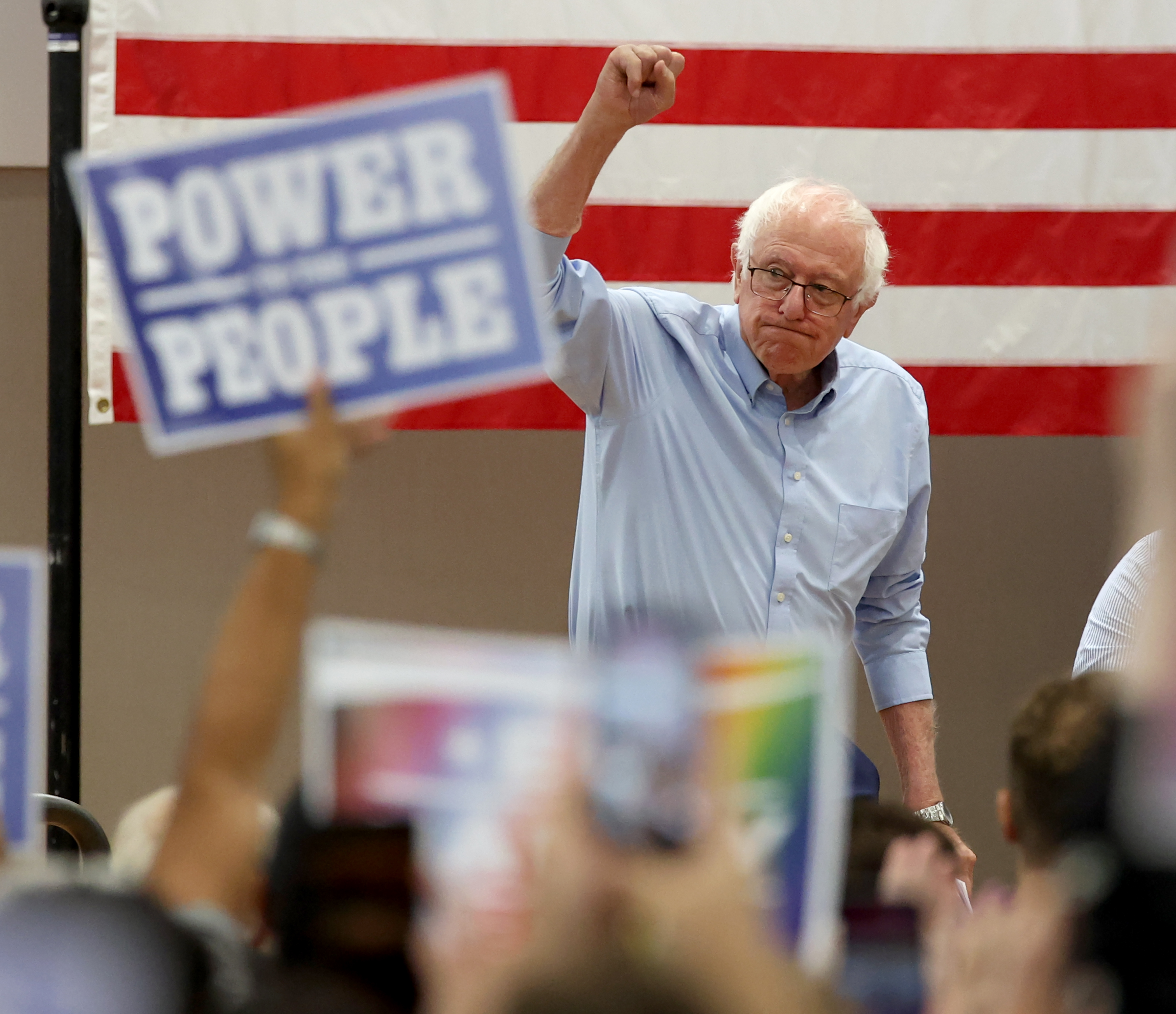
    Washington — Two leading progressive lawmakers, Sen. Bernie Sanders and Rep. Greg Casar, are unveiling legislation Wednesday that would ban artificial superintelligence and create a federal agency to oversee advanced AI as some of the industry’s own leaders urge Congress to impose guardrails on the advancing technology.

    The bill, provided first to The Associated Press, would also pause advanced AI development until guidelines are implemented while creating the Department of Artificial Intelligence. Multiple employees at leading AI companies are endorsing the bill.

    “It doesn’t take a genius to say, ‘slow it down,’” Sanders, I-Vt., said in an interview with AP. “Do we really want to develop a super intelligence that when it becomes smarter than human beings could act independently of human control? I don’t think we do.”

    Congress has so far done little to rein in the AI industry even as some of its most prominent leaders warn about potentially catastrophic risks. President Donald Trump has resisted recent calls for greater government oversight, putting him at odds with tech leaders including Anthropic’s Dario Amodei, OpenAI’s Sam Altman and xAI’s Elon Musk.

    The bill aims to dramatically slow down AI development

    The legislation would permanently prohibit artificial superintelligence, which it defines as a system that exceeds human cognitive ability or has sufficient capabilities to plan and execute the destruction or disempowerment of humanity.

    It would temporarily pause development of the most advanced AI systems until new federal safety rules are established by a new Department of Artificial Intelligence. Advanced AI systems would then need federal approval before they could be deployed. Violations could carry significant penalties, including up to 20 years in prison in some cases.

    A number of current employees at AI companies and experts signed on in support of the bill, according to a statement shared with AP.

    Juan Felipe Cerón Uribe, a researcher in OpenAI’s Safety Systems, said in a statement supporting the bill that “superintelligence could either go extremely right or extremely wrong” and that “we shouldn’t be playing such games.”

    Swante Scholz, a software engineer at Google DeepMind who said he was not speaking on behalf of his employer, said on the current path of development, the “most likely outcome is an existential catastrophe for humanity.”

    “A ban on superintelligence development would be a positive change for the foreseeable future,” Scholz said in a statement.

    The bill faces long odds but draws a line in a growing fight

    The bill from Sanders and Casar faces long odds in the Republican-controlled Congress, where lawmakers have struggled to coalesce around even less sweeping AI regulations.

    But it offers a window into how the progressive wing of the Democratic Party is approaching AI regulation ahead of November’s midterms and a 2028 presidential campaign in which the technology is expected to be an increasingly prominent issue. Casar, a Democrat from Texas, is the chair of the Congressional Progressive Caucus.

    Potential 2028 presidential candidates have rushed in recent weeks to release proposals showing they’re taking the issue seriously. Maryland Democratic Gov. Wes Moore announced a plan to regulate AI on Tuesday, while California Democratic Gov. Gavin Newsom signed an executive order to accelerate implementation of a California law that calls for independent oversight of AI companies last week.

    Sanders, a two-time presidential candidate who is now 85, has especially focused on the issue in recent months. In June, he introduced legislation to create a sovereign wealth fund financed through a one-time tax on the stock of the largest AI companies. Last week, he hosted colleagues for a briefing with experts and also attended a conference focused on the issue alongside Republicans, including former White House adviser Steve Bannon.

    The debate over AI regulations has scrambled political alliances both in Washington and for voters across the country.

    Americans have grown more concerned about the environmental impacts of artificial intelligence over the last year, according to a recent poll from The Associated Press-NORC Center for Public Affairs Research and the Energy Policy Institute at the University of Chicago.

    The survey data say about half, 53%, of Americans are “extremely” or “very” concerned about artificial intelligence’s environmental impacts. That is up from 41% last year. Democrats are driving much of the increase in environmental concern, but the poll also reveals broader worries about the local impact of data centers, which power AI and cloud computing.

    Trump has shown little interest in curbing AI risks

    While some industry leaders have called for new safeguards, Trump has pushed in the opposite direction. On Tuesday, Trump told the United Nations General Assembly that artificial intelligence will be renamed “super intelligence.”

    “I think Trump has very little understanding of what this issue is about,” Sanders said. “I think he’s mainly concerned about the economic implications of a slowdown.”

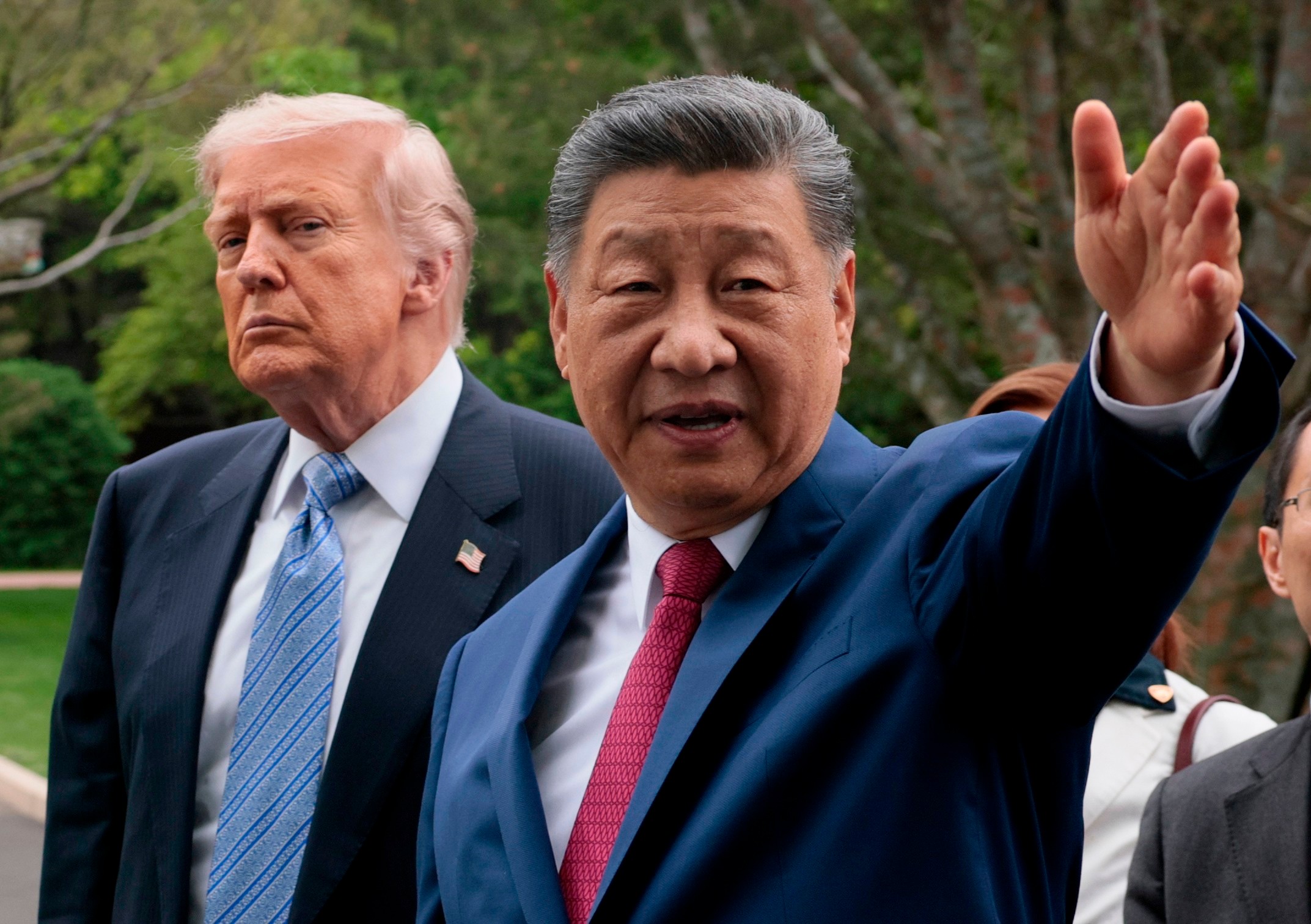
    AI safety is expected to be a central part of talks between Trump and China’s Xi Jinping at the White House this week as the countries compete for dominance in the sector. The prospect of slowing development in the United States while China continues on has also been one of the central arguments against sweeping restrictions.

    Sanders argued that avoiding the most dangerous forms of AI would ultimately require cooperation between the two countries, comparing the challenge to nuclear arms control during the Cold War.

    “Ronald Reagan, arch-conservative, was smart enough to understand that he had to sit down with Gorbachev, a communist, and work out a nuclear treaty that protected humanity,” Sanders said. “I think we can do that again now.”

  • What endlessly searching for a job can do to your mind

    What endlessly searching for a job can do to your mind

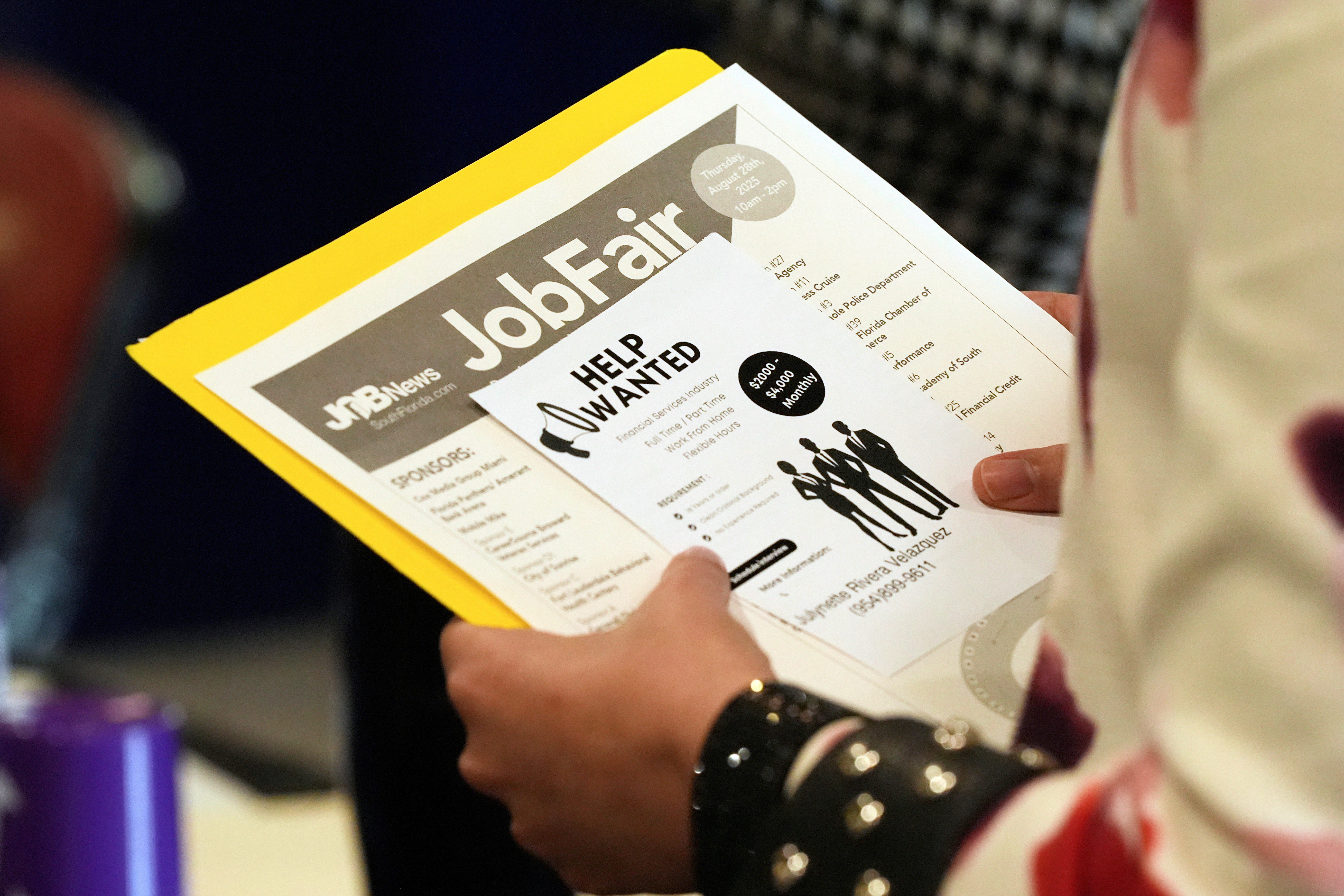
    A prolonged job search doesn’t just sap job seekers of time, money and energy — for many, the hunt takes a devastating toll on their mental health.

    Although unemployment rates in the United States have been historically low, the Bureau of Labor Statistics reports that more than a quarter of jobless people qualify as “long-term unemployed,” meaning they have been hunting for 27 weeks or more.

    And unfortunately for many out-of-work Americans, that probably isn’t changing any time soon. For every open role in 2026 there are twice as many applicants as there would be for similar roles in 2022, according to a recent study from LinkedIn Research. All of this is contributing to an overwhelming sense of discouragement among job seekers — and many of them are struggling to hold on to hope.

    Contemplating the ‘black hole’

    Mythili Sampathkumar, a 44-year-old writing and communications professional, has spent months polishing her résumé, filling out forms, and preparing cover letters. But she said she hasn’t been landing the sort of interviews that might lead to a full-time job.

    “You’re just talking to a black hole,” she said. “You feel like you’re floating in space, untethered from the spacecraft.”

    In the current job market, the problem often doesn’t have anything to do with the merits of a particular applicant, said Washington-based career counselor Amanda Langer. But still, every rejection or nonanswer can be taken as a personal referendum on your skills and worth, she said.

    “A prolonged job search isn’t simply a logistical challenge,” she said. “It erodes a person’s confidence over time and their sense of agency, along with their financial security, obviously.”

    Studies show unemployment is linked to the development of mental disorders, including anxiety and depression. Long-term job seekers describe heightened stress and exhaustion, which can make the everyday work of a job hunt feel even more burdensome, said Mindy Shoss, professor of industrial and organizational psychology at the University of Central Florida.

    “Ghost job” postings, AI interviewers, and a lack of in-person connection do little to help. So much of a person’s sense of self comes from their profession, their work, and how they spend their days, Shoss said. Watching résumés and cover letters disappear into a hiring portal does little to replenish that same well.

    Getting off the screen

    Because long-term joblessness can exacerbate underlying mental health conditions and even lead to some people developing serious problems, support from mental health professionals is key, and sometimes required.

    A peer group of other jobseekers can also help normalize the difficulty of a long-term job hunt and restore some optimism, Langer said. “Sometimes having that feedback from others helps people realize and have those ‘aha!’ moments of ‘OK, I look at this person and this person is super great, really skilled and really qualified, but they’re having a hard time too.’”

    Sampathkumar started working with a career coach, which she said has been hugely helpful. She also launched a personal newsletter and has been limiting the time she spends on LinkedIn and other social media.

    “There is no one to actually be angry at, right?” she said. “It’s a weird frustration. Whatever is happening is happening.”

  • ‘Toxic multitasking’ is breaking your brain. Here’s how to take control.

    ‘Toxic multitasking’ is breaking your brain. Here’s how to take control.

    In our busy, always-on world, multitasking — performing several tasks or engaging in more than one activity concurrently — has become a default setting. At work and at play, our focus is increasingly given to more than one thing at a time: checking emails during a Zoom meeting, scrolling Instagram while watching television, switching browser tabs, or responding to notifications while engaged in deep or focused work.

    “Toxic multitasking is the illusion of productivity,” says Sandi Chapman, the chief director at the Center for BrainHealth and a professor of psychology at the University of Texas at Dallas. “Multitasking is often seen as a sign of high productivity. Unfortunately, your brain experiences it as a performance bottleneck. We think we’re getting two complex things done at once, but our brains simply aren’t wired for it.”

    Not all forms of multitasking are unhealthy, but multitasking can, and often does, turn into problematic behavior that can become addictive, and that has a real effect on how our brain and nervous system function.

    Toxic multitasking is the norm, but that doesn’t make it normal

    “Today, more and more people are doing multiple things at the same time, double- and triple-booked on meetings,” says Ashish Kothari, founder and CEO of Happiness Squad, a consulting group focused on employee engagement. Although it may give the appearance and feeling of productivity, multitasking that is characterized by constant “context switching” is detrimental without breaks.

    “When you switch between tasks, your brain doesn’t instantly reset,” Chapman says. “It burns through your mental energy. Your brain works harder and produces less.” She compares multitasking to trying to read two books at once. “You don’t absorb twice as much information from reading both at the same time. Instead, you simply keep losing your place in both.”

    This way of working doesn’t stop at work. The urge to multitask continues outside of business hours, permeating our nonwork time. “We’re on phones all the time,” Kothari says. “We might be watching TV and doing something else. As a result our sleep is affected and, combined, creates a heavy toxic effect on our holistic well-being, physically, emotionally, mentally, and spiritually.”

    Digital multitasking, such as looking at more than one entertainment device at a time (e.g., watching TV while scrolling on TikTok), has a particularly strong negative effect on our attention — and, ironically, on our ability to multitask. “These types of inputs actually reduce your ability to handle multiple inputs at once,” says neuroscientist Kay Linker.

    Linker distinguishes between good multitasking and bad, pointing out that multitasking can be beneficial when used correctly. “Once a task becomes automatic, it is transferred to a different part of the brain, allowing for parallel processing,” she says. Examples of this include listening to a podcast or book while taking a walk or calling a friend while commuting to work, in contrast to what Linker calls “task switching, which drains your control and focus.”

    The effects of toxic multitasking are real, and so are the drivers

    There are consequences to all this multitasking, and the effects can be serious, affecting performance at work and creating a high degree of exhaustion, stress, and burnout that leads to the inability to think clearly, i.e., brain fog. There are also emotional and interpersonal repercussions, including irritability, a reduced ability to connect with others, a shallow or insincere affect, and a loss in satisfaction at work and life.

    Chapman says that toxic multitasking is a natural extension of American hustle culture. “There’s pressure on us, both professionally and personally, to prioritize output and quantity over quality,” she says. The pressures of expectation, driven by technology, have created a constant hunger for productivity, in which we feel the need to always be on and to give our attention away to social media and smartphones.

    “We have become dopamine addicts,” says Kothari, who adds that the pace at which we’re expected to take in and respond to information is “putting us in a constant fight-flight-freeze mode, wanting us to keep taking action and feeling like we can’t stop.”

    Because toxic multitasking has been so normalized, you may not even be aware of how much you’re engaging in it, but there are clear signs that it has become a problem. “Usually, the first symptom of toxic multitasking is emotional strain,” Chapman says. “If a quick question from a co-worker makes you want to snap, that’s often a sign your brain is overwhelmed from constant distractions or overload.”

    There are other ways to determine whether multitasking is a problem, and Kothari recommends using these assessments to identify an attention problem:

    Do you know how often you pick up your phone? Counting the number of times you pick up your phone during the day provides a data point to quantify a digital multitasking habit. “Most people pick their phone up over 150 times a day,” Kothari says. “It’s a clear indicator that we have lost our ability to focus.”

    Are you addicted to dopamine? To determine whether the problem is a dopamine addiction, set a timer and sit quietly while doing nothing. Doing so will tell you how long you can go without being distracted.

    Is your wearable telling you to cool it? “If you wear an Oura ring or another wearable,” Kothari says, “look at the amount of time you spent in a high-stress zone.”

    How to break a toxic multitasking habit

    It can be difficult to wrest back control of your time and attention in a world full of distractions, but here are some ways to exert power over technology and the pressure to appear productive:

    Try meditation. Kothari calls meditation and other mindfulness practices “foundational” to increasing focus and our ability to stay in the moment.

    Practice single-tasking. Linker recommends improving your attention span by engaging in a single task such as writing or reading for a sustained period, which she defines as an hour or more.

    Design your environment for success. Silencing notifications, closing unnecessary browser windows, and keeping your phone out of sight and out of reach will help deepen your focus. “Keeping a scratch pad on your desk lets you quickly log random errands or stray thoughts on paper without interrupting your workflow,” Chapman says.

    Use technology that cuts off a digital multitasking habit. To address the overuse of smartphones, Kothari recommends the Brick device. “It’s a tile that you can use to turn off all apps or even access to your phone completely.”

    Recalibrate norms at the office to encourage deep work. In workplaces where multitasking makes it impossible to get things done well, or even at all, Kothari says, “set norms for focused, deep work time where all of your notifications are off and your colleagues commit to not disturbing you.”

    Take regular brain breaks. Giving your brain a break by taking a short walk, going outside, stretching or simply sitting quietly for a few minutes will restore your mental energy and attention span — and prevent late-afternoon crashes. “A break is not switching from your laptop to your phone,” Chapman says. “A true brain break means stepping away from screens altogether.”

    Engage in one form of entertainment at a time. “Limiting concurrent device usage and social media short-form videos will improve the … assault this type of entertainment has on our ability to focus,” Linker says.

    Make a deliberate choice. Chapman says that reclaiming our attention spans is entirely in our control but that it requires making the deliberate choice to stop multitasking and start single-tasking. “With this one simple change, many people notice an immediate improvement in their focus, mental energy, and productivity,” she says.

  • Letters to the Editor | Sept. 23, 2026

    Letters to the Editor | Sept. 23, 2026

    Legacy betrayed

    I am in my eighth decade of life, and for those of my generation, John F. Kennedy’s emergence was a defining moment, as was the terrible day we learned of his assassination. The Kennedy Center for the Performing Arts became a fitting memorial to a president and first lady who believed the arts were essential to the soul of a nation. That is why Robert F. Kennedy Jr.’s association with the dismantling of that institution is especially painful.

    Whatever one thinks of his political views or his tenure as secretary of the U.S. Department of Health and Human Services, this betrayal strikes at something deeply connected to his uncle’s legacy and to the family name he inherited.

    Someday, the history of the Kennedy family and its impact on America, with all its glory and all its suffering, will be written. When it is, RFK Jr.’s impact on both the health and the cultural life of the nation will be part of that history. Succeeding generations of Kennedys will live with the shadow his actions have cast over the family legacy, and that is profoundly sad.

    Marguerite Sexton, Philadelphia, middlesistermag@gmail.com

    Canceled over criticism

    I don’t understand why if you criticize the Israeli government’s actions in Gaza you are canceled for being antisemitic. You’re not considered anti-Buddhism if you criticize the Chinese government or anti-Orthodox Christianity if you criticize Russia’s actions in Ukraine. Why is it that you can’t criticize Israel?

    Julio Casiano Jr., Philadelphia

    Historic treasure

    As The Inquirer recently reported, no one has ever nominated the Academy of Natural Sciences building for historic protection. If it is sold unprotected, Philadelphia will have lost it by default, not by decision.

    I lead a small K-8 school in Southwest Philadelphia. In less than a year, the city has reopened three public buildings within a mile of us: Paschalville Library, Kingsessing Recreation Center, and, last month, Myers Recreation Center, a 148-year-old former orphanage that took nine years and $27 million to bring back. Slow, expensive, and worth it. Children are in those buildings today.

    The Academy is private; Drexel owns it. But a historic nomination is how the public gets a say in a private building. It won’t reopen the museum, but it will buy time to imagine the next civic use. The Preservation Alliance, or Drexel itself, should file one before the sale. A dinosaur hall is civic infrastructure, too.

    Brandon McNeice, head of school, Cornerstone Christian Academy, Philadelphia

    Fading liberties

    President Donald Trump’s decision to ban several news outlets from access to the White House is a further erosion of our civil liberties. The administration’s ongoing attempt to limit the ability of journalists to report the news reflects the trend toward a totalitarian state in which the only news available comes from the administration itself. And this administration has been notorious for presenting lies and deception, some of which are obviously disconnected from reality.

    Trump’s aspiration to control all aspects of our government must not be allowed to continue. Not only is this a strategy of personal enrichment (he has made $2 billion since his second inauguration), it denies the individual freedoms our nation was founded on.

    We need a president who upholds the rule of law and our American values, not a king who governs solely out of self-interest.

    Mark Schenker, Blue Bell

    Traffic enforcement

    Daniel Pearson’s recent Shackamon column was shocking. It called for a huge increase in police traffic enforcement. So is automated traffic enforcement now not enough? The city already tickets practically every vehicle that moves or is parked, so how much more would you like? Again, if there were best-practice engineering and enforcement, streets would be safer, and few tickets would be issued. Do you realize how many different types of tickets can be issued in Philadelphia now, and how many go out? It is staggering, but you want more? Why not address engineering?

    James Sikorski Jr., Wapwallopen, Pa.

    . . .

    Amazingly, the New Jersey Department of Transportation thinks putting up some signs, clearing some brush, and adding additional guardrails are going to reduce fatalities on Route 55.

    Perhaps it would be better if some time was spent verifying the real cause: the people driving on the road. It doesn’t take a rocket scientist to understand that speeding (I’ve seen drivers regularly going as much as 20 mph over the limit) and weaving in and out of traffic are the main causes. Add in tailgating by those who are doing five miles over the limit, and you have a recipe for accidents.

    The highway needs greater enforcement presence to calm traffic.

    Joe Palma, Swedesboro

    Survivor’s plea

    President Donald Trump is set to host Chinese leader Xi Jinping at the White House later this week for a crucial summit.

    Born and raised in China, I immigrated to the U.S. in 2008. I cannot return to China, and more sadly, I was unable to visit my parents before their passing 10 years ago. Why? Because I practice the spiritual meditation practice called Falun Gong.

    In July 1999, the brutal persecution against Falun Gong was launched by the Chinese Communist Party (CCP). At the time, I was a doctoral candidate at China’s prestigious Tsinghua University. For refusing to renounce my beliefs, I was arrested and then imprisoned for a total of five years in a slave labor camp.

    Like many who have been arrested, I was subject to brainwashing, constant surveillance, humiliation, beatings, 30 days of sleep deprivation, and almost a year of physical isolation.

    Falun Gong is the largest group the CCP has been trying to eliminate. In 2019, the independent China Tribunal concluded that Falun Gong practitioners are subjected to forced organ removal to supply China’s transplant industry.

    I sincerely hope President Trump will address the persecution with Xi during the summit.

    William Huang, Wynnewood

    Join the conversation: Send letters to letters@inquirer.com. Limit length to 150 words and include home address and day and evening phone number. Letters run in The Inquirer six days a week on the editorial pages and online.

  • Horoscopes: Wednesday, Sept. 23, 2026

    Horoscopes: Wednesday, Sept. 23, 2026

    ARIES (March 21-April 19). You think you’re doing what everyone does, but actually, there’s something special and unique about your particular way. Today, someone notices and asks, “How did you do that?”

    TAURUS (April 20-May 20). New circumstances can make your body react as though you are in danger. It’s useful chemistry when it keeps you safe, but not so much when it makes ordinary problems feel like emergencies. You’re learning to work with your responses.

    GEMINI (May 21-June 21). So many outcomes depend on luck that you’re really motivated by endeavors with outcomes dependent on effort. Practicing an instrument, tending a garden, showing up for a friendship — it’s really heartening when you get what you put in.

    CANCER (June 22-July 22). Like the sun after a beautiful sunset, someone has gone from view while leaving color behind. You still feel their effect in your thoughts. Whether you meet again or not, the relationship was real, and it changed the way you see things.

    LEO (July 23-Aug. 22). There’s something you wish you could learn quickly. Here’s a hack: Start with the intention of teaching it to someone else soon. You’ll pay closer attention, remember more and spend extra time on the parts that stump you.

    VIRGO (Aug. 23-Sept. 22). Like the sinking sun under a beautiful sunset, someone has colored the sky of your mind before disappearing. But the sun will rise again, and so will your relationship. The connection is somehow both illusory and real.

    LIBRA (Sept. 23-Oct. 23). Today’s stars offer you a warning not to judge people’s knowledge by how confident they sound. A shy, awkward or hesitant person may know a great deal. A loud, commanding person may know very little.

    SCORPIO (Oct. 24-Nov. 21). The people you want to impress have your full attention because they are still a bit of a mystery. Familiar people may get the shorthand. Today, a new detail gives you a better question to ask and a reason to listen.

    SAGITTARIUS (Nov. 22-Dec. 21). Other people’s approval can feel rewarding because acceptance can feel safe. Even so, your own approval matters more. You’ll be mindful not to change too much of yourself or give too much away in exchange for the gold star.

    CAPRICORN (Dec. 22-Jan. 19). You would not call a dishwasher broken because it cannot bake a cake; baking is not its job. In the same way, a relationship may be working exactly as it is built to work, while still being unable to give you the particular thing you want.

    AQUARIUS (Jan. 20-Feb. 18). You’ll treat other people’s attention as the precious resource it is. It’s a piece of their day they can never get back, and you’re sure to give them the kind of attention, care or entertainment that ensures they wouldn’t want to.

    PISCES (Feb. 19-March 20). You can miss a person and still know the arrangement did not work. Missing someone does not prove you should go back, forgive them or make grand decisions. It means you were close. It won’t always feel so sharp.

    TODAY’S BIRTHDAY (Sept. 23). What worked once will earn another round in this your Year of the Encore. People need your talent and they’ll ask you to share it again and again, often with a larger audience or a better reward. More highlights: You’ll return to a place you loved. Admirers come out of the woodwork. You’ll be in the room where decisions get made and your influence can change lives. Leo and Libra adore you. Your lucky numbers are: 10, 6, 19, 33 and 14.