Tag: no-latest

  • Trump signs agreement between U.S., Denmark, and Greenland to bolster Arctic security

    Trump signs agreement between U.S., Denmark, and Greenland to bolster Arctic security

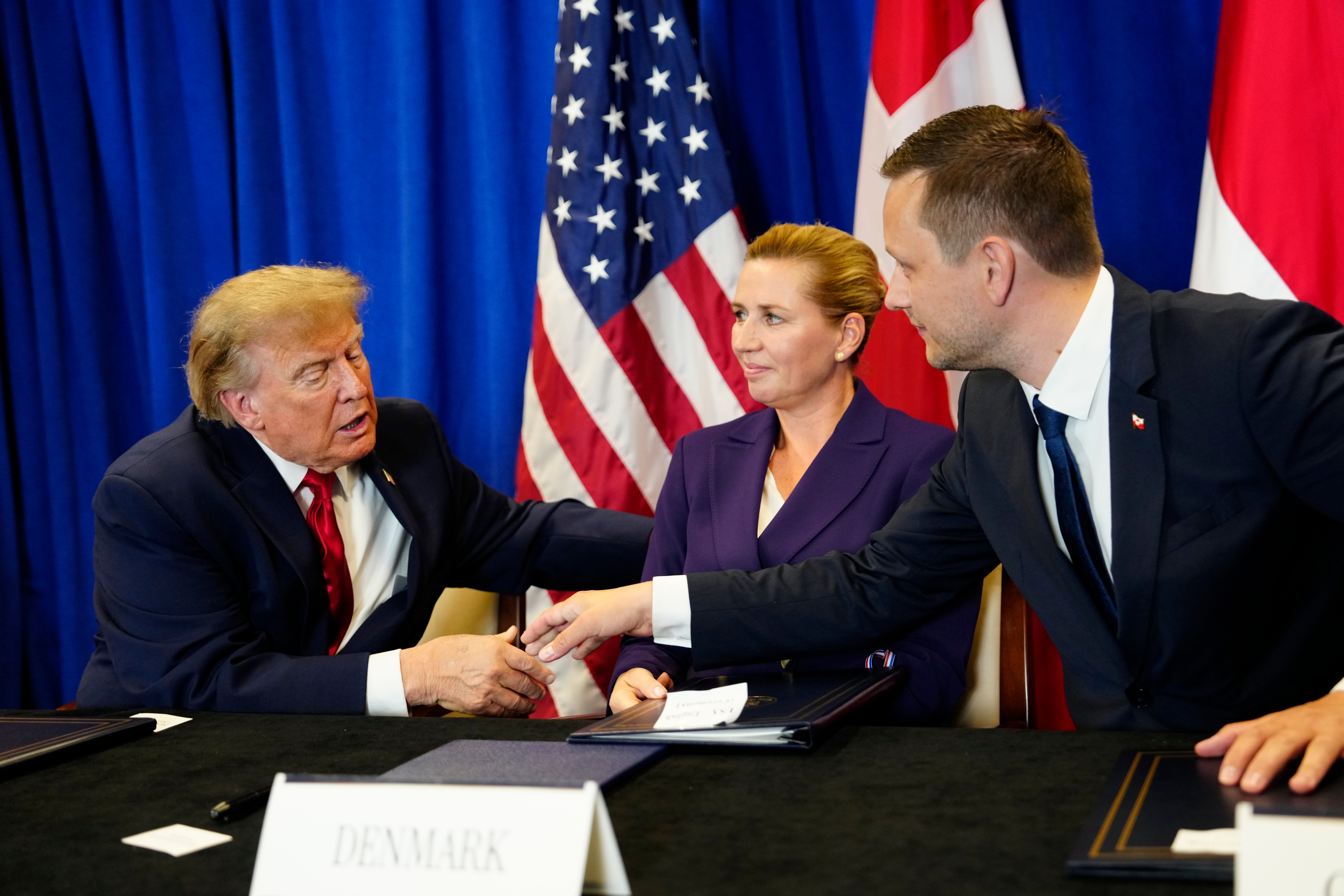
    UNITED NATIONS — President Donald Trump has signed an agreement with Denmark and Greenland aimed at strengthening Arctic and North Atlantic security, easing tensions over his repeated calls for Greenland to become part of the United States.

    The signing Tuesday on the sidelines of the U.N. General Assembly in New York comes days after Trump announced the deal to bolster U.S. military presence on the vast, icy island but keep it under Danish control. The governments provided few details of the agreement before the signing.

    “This is tremendous for Europe and for the United States and for everybody,” Trump said just before the agreement was signed. “And for Greenland, it’s going to be incredible.”

    For months, Trump has expressed his desire for Greenland to become part of the United States and issued threats to seize the semiautonomous territory from Denmark, a NATO ally. On Tuesday, he did not respond to questions about whether a U.S. acquisition of Greenland was off the table.

    U.S. has had a presence in Greenland for many years

    Officials from the U.S., Greenland, and Denmark negotiated for months behind the scenes, searching for solutions to address some of Trump’s security concerns about the mineral-rich island.

    Trump’s designs on Greenland strained relations within NATO, with Danish Prime Minister Mette Frederiksen warning a U.S. takeover would amount to the end of the Atlantic alliance.

    The standoff unsettled many of Greenland’s roughly 56,000 people and drove a wedge between the U.S. and Denmark and its European Union partners, who stepped up security exercises on and monetary support for the island.

    Trade and hopes for a resource grab have all factored into concerns about Greenland’s future: About two-thirds of its territory sits inside the Arctic Circle, where melting sea ice has opened additional shipping routes

    The United States was prominent in Greenland for decades but, since 1945, the U.S. military presence in Greenland has decreased from thousands of soldiers on 17 bases and installations to roughly 200 soldiers on the remote Pituffik Space Base in the northwest. The base supports missile warning, missile defense, and space surveillance operations for the U.S. and NATO.

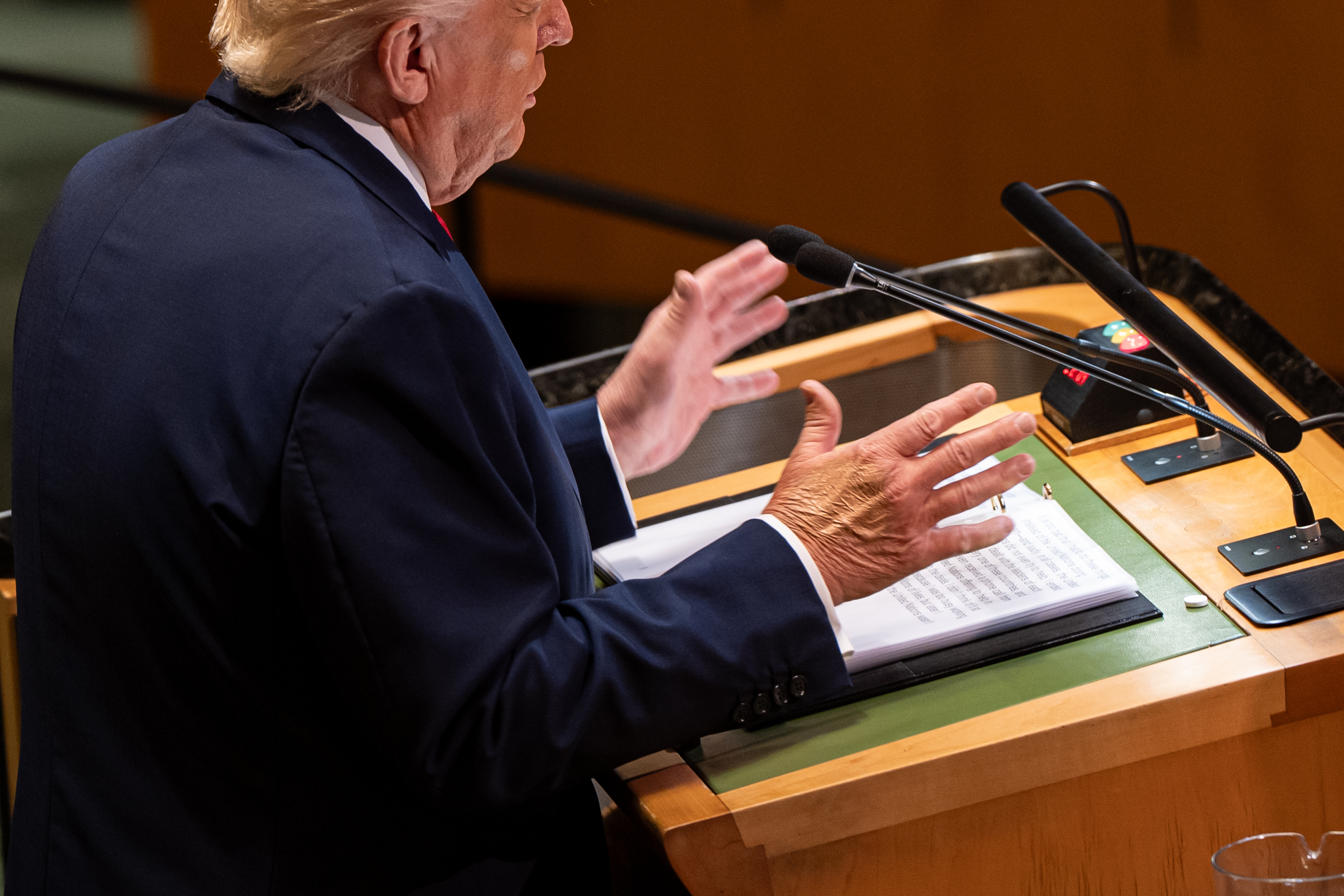
    Addressing the United Nations General Assembly on Tuesday morning, Trump provided a small window into details of the deal.

    “We will immediately begin the process of developing a large military presence in the appropriate locations,” he said, including “building two very major military bases.”

    Denmark’s parliament approved a bill last year to allow U.S. military bases on Danish soil, widening a 2023 military agreement made with the Biden administration that gave U.S. troops broad access to air bases in Denmark.

    Trump previously insisted the U.S. needed to “take Greenland,” to prevent Russia or China from doing the same. Though Trump said he would rather “make a deal” for the territory, he added: “one way or the other, we’re going to have Greenland.”

    All parties present the agreement as a positive move

    Mikkel Runge Olesen, a senior researcher at the Danish Institute of International Studies, said Greenland and Denmark come away from the deal with the possibility of “ending the crisis without compromising on sovereignty,” while the U.S. gets a “somewhat more favorable” deal than under the existing defense treaty.

    But relations overall between the U.S., Denmark, and Greenland “are likely to be haunted by this long after Trump leaves office, and the crisis is likely to have significant and lasting negative impact on trans-Atlantic relations more generally,” he said. “The lost trust will take decades to rebuild.”

    Frederiksen said Tuesday that the deal being signed was a “deal that can last forever,” labeling it as good for the U.S., Greenland, Denmark, and the broader NATO alliance.

    “Mr. President, you have been very clear: You don’t want adversaries to come too close,” she said. “I fully agree.”

    Jens-Frederik Nielsen, Greenland’s prime minister, called it “a win-win-win agreement.”

    “Your security is our security, and our security is your security,” he said Tuesday.

  • Man shot and detained by ICE hospitalized for partial paralysis, attorney says

    Man shot and detained by ICE hospitalized for partial paralysis, attorney says

    The Venezuelan man shot by an immigration officer in Austin over the weekend was taken to a hospital late Monday after experiencing paralysis on the left side of his body, his lawyer said.

    Attorney Kate Lincoln-Goldfinch also has filed a lawsuit in Texas asking a federal court to order the immediate release of Wilber Garcés Pérez from U.S. Immigration and Customs Enforcement detention and halt his potential deportation to Venezuela. U.S. District Judge Orlando L. Garcia scheduled an in-person hearing for Sept. 30 and ordered that Garcés be present, according to court records.

    Garcés had been transferred from a local hospital to a federal detention facility four hours after he was shot by an ICE officer on Sunday, despite having a bullet still lodged in his back, Lincoln-Goldfinch said. She said doctors chose not to remove it because the bullet was too close to his spine but argued it was reckless to release him from the hospital that quickly.

    Garcés, a 28-year-old delivery driver, told reporters on Monday by cell phone that he remained in pain and had spent the night sleeping on the floor in the South Texas ICE Processing Center in Pearsall, about 130 miles southwest of Austin. His attorney said on social media that he was taken to another hospital late Monday after complaining of paralysis.

    Rep. Joaquin Castro (D., Texas) said Tuesday that Garcés had been discharged and returned to the Pearsall facility. Castro said he and another lawmaker plan to visit Garcés on Wednesday to demand his release.

    “It is nothing more than a prison,” he said of the detention facility. “None of this should have ever happened.”

    Department of Homeland Security officials have not responded to questions about the shooting or the claims from Garcés and Lincoln-Goldfinch about his medical care and the events that led to the shooting. Earlier Monday, DHS said Garcés was in stable condition and in federal custody “pending removal” from the country. The agency said he is subject to a final deportation order.

    Garcés’s supporters are calling on DHS to release any video footage of the incident and are demanding an independent investigation.

    Garcés worked as a DoorDash driver and was making a delivery Sunday when an unmarked black truck operated by ICE sideswiped his car, Lincoln-Goldfinch said. After he attempted to make a U-turn to find a place to pull over, the ICE vehicle struck his car again before an officer shot him, she said.

    Lincoln-Goldfinch has said that Garcés is the main provider for his young family. He has a young son with a disability and is responsible for the costs of his treatments.

    In the lawsuit seeking his release, Lincoln-Goldfinch and attorney Kristin Etter argued that Garcés should be allowed to apply for a U visa for crime victims because he is a “victim of a violent crime, namely, being shot by a federal officer.” Deporting him would violate his constitutional right to due process, the attorneys said.

    Congress members and his attorneys have also expressed fear for Garcés’ health in the ICE detention facility, alleging he may need surgery and requires further evaluation.

    Garcés alleges that an ICE officer shot him in the torso at 12:56 p.m. on Sunday, in an intersection in Austin, according to court records his attorneys filed on his behalf. Hours later, he was discharged to ICE custody, his attorneys wrote, “with the bullet still lodged in his body.”

    He was then “forced to sleep on a cement floor” until around 4 a.m. Monday, when ICE transported him to the Pearsall facility, according to the records.

    After he spoke to the media that day, ICE revoked Garcés’s communication privileges and moved him from the infirmary into “an isolated room with a flat, nonadjustable bed,” Lincoln-Goldfinch said in a statement.

    Around 5 p.m. Monday, she said Garcés became unable to move his left arm and was taken back to the hospital. During the transfer, she said ICE handled him “roughly, despite his gunshot injury,” placing him in handcuffs and shackling his ankles.

    DHS did not immediately respond to a request for comment about those claims.

    Lincoln-Goldfinch said that the gunshot fractured Garcés’s clavicle and that he is suffering “significant swelling and pain,” and wearing a sling. At the hospital, she said, doctors gave him intravenous morphine for pain.

    Garcés entered the country legally seeking asylum, Lincoln-Goldfinch said. An immigration judge issued him a final removal order after he missed a hearing. Lincoln-Goldfinch said officials sent a notice advising him of his upcoming court date to an old address.

    The Associated Press reported Tuesday that more than 100 Democratic lawmakers are calling on Homeland Security officials to cease any efforts to interfere with a comprehensive investigation into the shooting.

    The lawmakers said in their letter to DHS Secretary Markwayne Mullin and acting ICE Director David Venturella they are deeply concerned ICE is attempting to swiftly deport Garcéss to impede an independent investigation.

    “Mr. Garcés Perez is a key witness to this shooting, and given ICE’s history of obscuring the facts in similar investigations, he must not be removed,” the lawmakers wrote.

    They said Garcés and the ICE agent who shot him must remain in Texas until a thorough investigation is complete.

    The Democratic lawmakers called on DHS officials to respond by next Monday on why agents used deadly force, whether they followed policy requiring them to render medical aid, and whether ICE will release all bodycam footage.

  • Weird and wonderful, the Lucas Museum lands in LA

    Weird and wonderful, the Lucas Museum lands in LA

    LOS ANGELES — From scruffy Exposition Park in South Los Angeles, there is no missing the new Lucas Museum of Narrative Art.

    It hovers like a spaceship on the skyline, at the park’s edge, snow white and ginormous. Its billowy, aerodynamic curves and swoops, capped by tufts of greenery, spill down to lavish gardens on what had been the site of a gated asphalt parking lot.

    Design-wise, the museum’s galleries seem an afterthought, its circulation a puzzle. But this is one you won’t want to miss. Both surgically somber and proudly over the top, the Lucas is a weird kind of wonderful and an instant city landmark. It opened to the public Tuesday.

    The 300,000-square-foot goliath was designed by prominent Chinese architect Ma Yansong and built to house the art collection of Star Wars filmmaker George Lucas and his wife, businessperson Mellody Hobson. The couple have picked up the project’s no-expense-spared tab: more than $1 billion.

    That whopping sum has paid for more than 80,000 square feet of black-box exhibition space on the building’s fourth floor, where Luke Skywalker’s X-34 Landspeeder from Tatooine now idles in a Star Wars display.

    Bridge-of-a-cruise-ship-style viewing ports at either end of the exhibition floor, and another in between, add pizazz and a respite from the gallery crawl.

    Other rooms are devoted to Norman Rockwell paintings, manga art, motherhood, and love, among various folksy themes.

    There are two state-of-the-art movie theaters, along with a shop and a cafe tucked into the building’s cinched podium. The roof, which has a restaurant, is a landscaped aerie of colorful plantings, winding paths, and sweeping vistas. A separate pavilion contains a library with arts and crafts furnishings, of all things, and a student center. A yellow Naboo N-1 Starfighter dangles from its lobby ceiling.

    An artisan of biomorphic megastructures, Ma, who founded MAD Architects in Beijing, made his bones designing showstoppers including the Harbin Opera House in China and the Ordos Museum in the Gobi Desert. The Lucas Museum is his first major American cultural commission. Its arrival, across the street from the University of Southern California campus, where Lucas studied film, seems like destiny.

    Lucas acquired his first work of art, a V.T. Hamlin Alley Oop comic, for a song in the 1970s. Over the decades his collection ballooned to include more than 40,000 works by famous comic artists and graphic novelists; film production designers and anime fabulists; golden-age American magazine illustrators and figurative painters of the 20th century such as Frida Kahlo and Thomas Hart Benton.

    These were artists after Lucas’ own heart, naturally — fellow populists, visual virtuosos, and storytellers. Lucas came to believe modern art museums shortchanged or ignored them.

    So he decided to build a cathedral to kindred spirits. He and Hobson first floated the idea to the Presidio in San Francisco in 2010. City officials there rejoiced at the prospect. But when the Presidio’s trustees balked, Lucas and Hobson looked to Chicago, Hobson’s hometown, hiring Ma to design a museum for a lakefront site.

    Ma came up with a volcano-shaped design rising from the flat plains of the Windy City, which ran aground after a Chicago nonprofit parks preservation group sued, tying the project up in the courts.

    After a second pass fizzled in the Bay Area, this time for a site on Treasure Island, Lucas and Hobson turned to Los Angeles.

    By destiny I didn’t just mean that Lucas is synonymous with Hollywood. I mean that Los Angeles is also home to the Getty, the Huntington, the Norton Simon, the Hammer, and the Broad. Vanity museums, some of the most memorable on the planet, have been a big part of what makes the city’s cultural landscape so lively, diverse, and deep.

    These institutions belong to a strain of American entrepreneurial individualism that has also given us the Barnes Foundation in Philadelphia, Donald Judd’s Marfa spaces in Texas, and the Guggenheim in New York — go-it-alone ventures founded on contrarian principles. The Guggenheim proselytized the mystic healing powers of Wassily Kandinsky, Bach organ chorales, and incense.

    The Lucas joins that company.

    Its architectural goal was a blockbuster with contours inspired by trees and clouds, so as to blend into and anchor the edge of Exposition Park, alongside giants like Memorial Coliseum. The exterior is clad in 1,271 school-bus-size, hand-finished, fiberglass-reinforced polymer panels, combined like puzzle pieces, manufactured by a shipbuilding company in the Bay Area. Ma’s pièce de résistance is the museum’s central plaza: a four-story-high, 185-foot-wide arching gateway and oculus linking the neighborhood with Exposition Park.

    A curator told me he has heard people compare the building to a sneaker. I’ve heard Angelenos talk about a mountain suddenly rising in South LA, and, of course, an Imperial Star Destroyer. It’s as svelte as an F1 car.

    It is now the second museum to arrive this year and shake up the city’s architectural geography. Like the new Los Angeles County Museum of Art, the Lucas also has civic ambitions. Tickets are $25, but anyone younger than 18 and/or living in the museum’s ZIP code, many of them low-income Angelenos, can enter free.

    Footpaths and garden crossings, where that gated surface parking lot had been, aim to knit the area’s streets and sidewalks.

    We’ll see how well those green spaces will be maintained, how open those neighborhood connections remain.

    But it’s a safe bet that millions of children raised on their phones — who couldn’t care less about the definition of narrative art — will embrace the museum.

    They’ll whoosh up and down the tubular glass elevators, run under the hanging gardens and across lawns devised by Mia Lehrer’s landscape team at Studio-MLA.

    And be wowed by Ma’s architecture.

    Who knows, some of them may even be inspired to put down those phones and pick up a pencil to draw.

    This article originally appeared in the New York Times.

  • Bush and Cornyn leave out Paxton as they raise cash for Senate candidates

    Bush and Cornyn leave out Paxton as they raise cash for Senate candidates

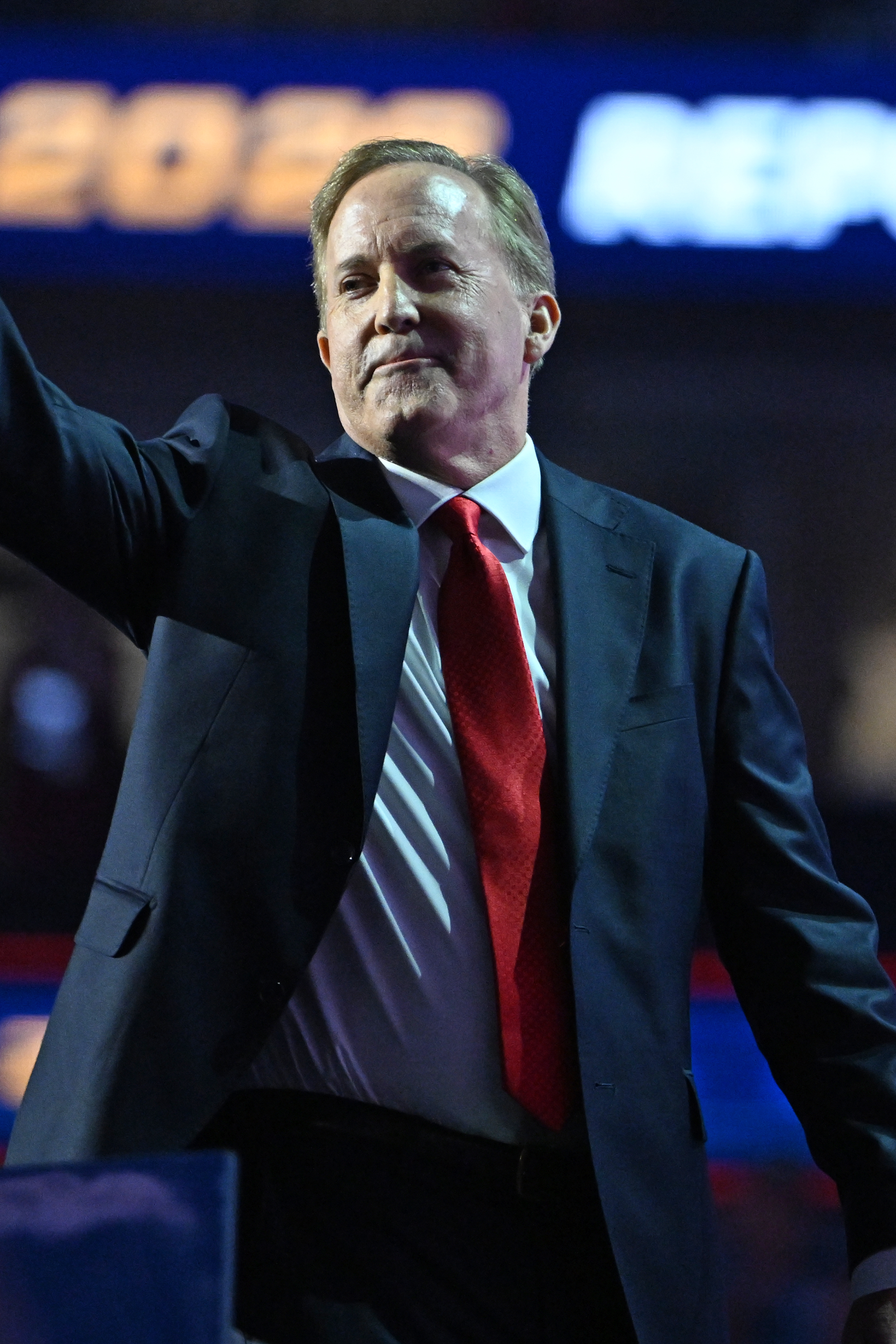
    Former President George W. Bush and Sen. John Cornyn, two top Texas Republicans, are rallying conservative donors behind the party’s Senate candidates — except for the one running in their own state, Ken Paxton.

    Cornyn hosted a fundraiser Monday evening in Dallas for six Republican nominees in battleground states, according to an invitation to the event that was obtained by the New York Times. Bush, listed on the invitation as a “special guest,” was attending the event, his spokesperson confirmed.

    The event benefits Maintain the Majority, a new joint fundraising committee supporting the Senate candidates, who are defending Republican-held seats in Maine, Ohio, Alaska, and Iowa and looking to flip seats in Michigan and New Hampshire.

    But Paxton, the Republican nominee in Texas, who defeated Cornyn in a costly and bitter primary, was not included. His campaign declined to comment on the fundraiser.

    The fundraising omission of Paxton is another escalation in the standoff between old-guard Bush Republicans and the fiery insurgent wing represented by the party’s Senate nominee, Paxton, President Donald Trump, and their allies.

    And it comes as the parties battle for cash and advertising time in the Texas Senate race, one of this year’s top contests. Paxton has badly trailed his Democratic opponent, James Talarico, in campaign fundraising, but super political action committees tied to Trump and Senate Republicans have come to Paxton’s aid, reserving more than $80 million in outside advertising in Texas.

    Paxton, the state attorney general, has long been a polarizing figure among Texas Republicans. He was impeached by the Republican-dominated Texas House on corruption charges in 2023, though he was acquitted in the state Senate, and he pushed to oust Republican lawmakers and judges who disagreed with him in his party’s primaries in 2024.

    This year, Cornyn and establishment Republican donors spent more than $130 million on advertising backing the senator and bashing Paxton in their contentious primary. (Bush chipped in $5,000 for Cornyn.) In the months since, Cornyn has continually criticized Paxton’s character and campaign.

    “Paxton’s a poor campaigner,” Cornyn told the Texas Tribune in August. “He’s lazy and doesn’t raise money. And he basically is not offering a very compelling case for his election. He’s making this harder than it needs to be.” (Paxton countered the attacks, saying on Fox News’ The Sunday Briefing that “John Cornyn doesn’t know my schedule. He doesn’t know how many hours I’m putting in every day, 18 hours a day.” )

    The fundraiser comes as long-simmering tensions between Bush- and Trump-era Texas factions burst to the surface.

    Last week, Karl Rove, Bush’s former senior adviser, announced that he would not vote for Bo French, the Republican nominee for the Texas state agency that regulates oil and gas, because of a racist social media post by French. Paxton declined to condemn French’s post, and Trump posted on Truth Social that Rove was a “stone-cold loser.”

    Paxton has attacked Rove in the past, including in an interview with conservative pundit Tucker Carlson in 2023.

    Paxton has also gone head-to-head with a scion of the Bush dynasty, soundly defeating Bush’s nephew, George P. Bush, in the 2022 Republican primary for Texas attorney general. And Paxton has long criticized Cornyn for his willingness to work with Democrats on bipartisan legislation.

    The host committee of the Monday fundraiser included paragons of the Bush-era Republican Party like Harriet Miers, Bush’s onetime nominee for the U.S. Supreme Court; former Sen. Kay Bailey Hutchison; and Republican megadonor Harlan Crow.

    One of the candidates the event seeks to support is John E. Sununu, the Republican nominee for Senate in New Hampshire. His father, also named John Sununu, served as the White House chief of staff for Bush’s father, George H.W. Bush. Contributions ranging between $1,000 and $61,500 were required for entry, according to the invitation.

    Some of the donors invited to the event on Monday have also contributed to Paxton’s campaign.

    The gathering and the new fundraising committee will benefit Sens. Susan Collins of Maine, Jon Husted of Ohio, and Dan Sullivan of Alaska, who are defending their seats in competitive general-election races, as well as three other Senate candidates: Sununu, Rep. Ashley Hinson of Iowa, and former Rep. Mike Rogers of Michigan.

    Two Republican Senate nominees in states that Trump won in 2024, Michael Whatley of North Carolina and Mike Collins of Georgia, are also not part of the fundraising effort. Democrats have shown strength in polls in those states.

    Collins “appreciates the support of Sen. Cornyn and President Bush,” said Blake Kernen, a spokesperson for Collins’ campaign. Representatives for the other candidates did not immediately respond to requests for comment.

    This article originally appeared in the New York Times.

  • Trump’s plan to militarize proposed arch raises new legal, safety concerns

    Trump’s plan to militarize proposed arch raises new legal, safety concerns

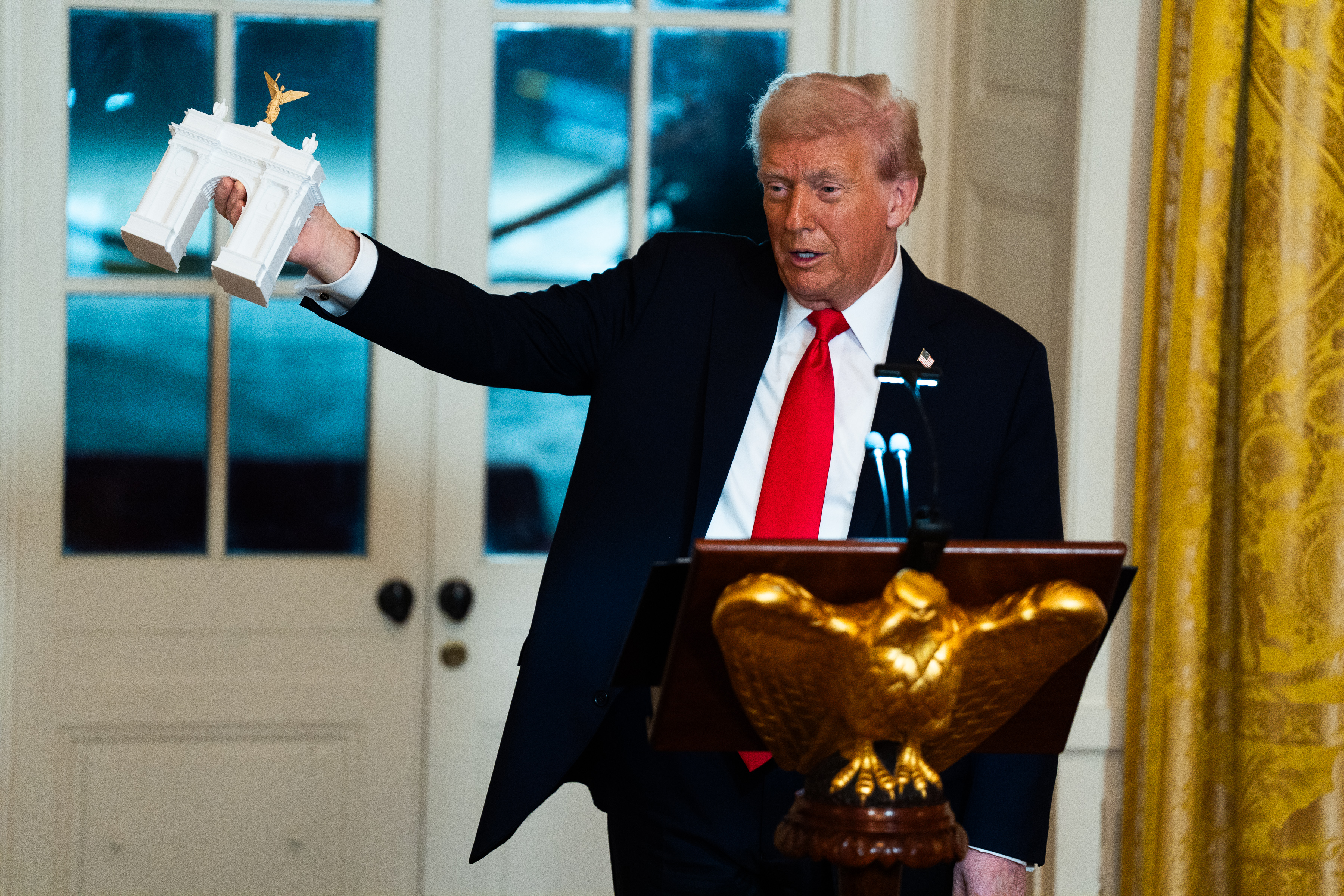
    President Donald Trump’s push to convert his planned triumphal arch near Arlington National Cemetery into a military complex has complicated a required federal review process and raised new legal and safety concerns.

    Trump unveiled his new national security rationale Sunday in a post on Truth Social, saying that the 250-foot-tall arch project — which he has framed for nearly a year as a tourist attraction — will now house drones, snipers, and ammunition. The president said he was making the change at the request of the U.S. military.

    Critics of the plan saw echoes of Trump’s shifting security case for the White House ballroom, which the administration has used to defend that project in court. But while presidents have historically had some leeway to revamp the White House grounds, the arch would stand on federal parkland more than a mile away, where Congress has set stricter rules for construction.

    “There is nothing that authorizes or justifies a massive arch, even if Trump tries to disguise it as a military facility,” said Rep. Jared Huffman of California, the top Democrat on a House committee that oversees federal parkland. “This is cartoonishly illegal, but he’s obviously trying to find a way to do it anyway.”

    Aviation experts warned Monday that using drones at the planned arch site — Memorial Circle, a roundabout near Reagan National Airport — could pose risks in the airport’s crowded airspace.

    “Anything you add to the airspace complicates the airspace and increases the operational risk,” said Tom Lintner, a former safety official at the Federal Aviation Administration (FAA).

    Other military and safety experts have questioned the implications of storing ammunition in the middle of a heavily used traffic circle and whether tourists could still enter the arch as previously planned.

    Historic preservationists participating in a required federal review process said they could not move forward until the administration clarifies Trump’s plans for the arch. Administration officials last week had asked Washington’s and Virginia’s preservation offices to agree to a memorandum of agreement (MOA) by Monday as part of that process, and they invited other preservationists to participate.

    “This MOA is DOA,” Charles Birnbaum of the Cultural Landscape Foundation wrote in an email to the administration on Monday. An official for Washington’s historic preservation office also wrote in an email that the office needed clarity on Trump’s post. Both emails were shared with the Washington Post.

    Administration officials have declined to offer further details about Trump’s plans to convert the arch to a military complex. They have previously said that they will not begin construction on the arch until they have received “all necessary approvals.”

    But Trump has pushed his deputies to expedite the arch and other construction projects, particularly in the wake of a Supreme Court ruling on Aug. 31 that let him continue building his ballroom, according to two people who spoke on the condition of anonymity to discuss private conversations. The ruling did not decide the merits of the case.

    Spokespeople for the White House and Pentagon said on Monday that they had no additional information to provide beyond the president’s social media post. A defense official, speaking on the condition of anonymity because of the sensitivity of the issue, said it was not clear if U.S. Northern Command, which oversees domestic military operations, has been asked to develop any related plans.

    Military officials with Joint Task Force-National Capital Region, which oversees military operations to protect D.C., did not respond to requests for comment on Monday. Spokespeople for the Interior Department and the National Park Service also did not respond to questions about the project. The Federal Aviation Administration referred questions to the White House.

    Until Sunday, the Trump administration had largely portrayed the arch as a prominent tourist attraction. Architectural plans posted by the National Park Service last month include a “ticket booth,” a “family restroom,” and other features atypical of any active military complex.

    Interior Secretary Doug Burgum mentioned that the arch would also offer a “military observation deck” in a social media post earlier this month.

    The administration had already faced safety questions, in part because the 250-foot-tall structure would sit directly in National Airport flight paths. Aviation safety there has garnered significant attention since a 2025 collision between an Army helicopter and an American Airlines regional jet near the airport that killed 67 people.

    On Friday, the FAA said it had determined that the arch would not pose a hazard to aircraft, including at National Airport. That finding preceded Trump’s announcement about drones, whose type and frequency of use remain unclear.

    In its final study on the arch, the FAA said the proposed structure should feature “a nonstandard eternal flame” to make it noticeable to pilots. It also said the arch should be continuously floodlighted by searchlight projectors around its base.

    Jeff Guzzetti, a former FAA and National Transportation Safety Board accident investigator, said having drones in the flight path of National would worsen the airport’s congestion problem.

    “Even not knowing how often these things are going to be used, it would certainly increase the risk of a collision with a commercial airliner,” Guzzetti said.

    Michael McCormick, coordinator of the Air Traffic Management program at Embry-Riddle Aeronautical University, said he expected the FAA would need to conduct another study.

    “Whatever the drones are, no matter what, the FAA would have to approve their flight because it’s civilian airspace,” McCormick said. “It cannot be a unilateral decision by the Pentagon.”

  • Fat Bear Week opens for Alaska’s heavyweight crown. Can Chunk, the 1,200-pound champ, win again?

    Fat Bear Week opens for Alaska’s heavyweight crown. Can Chunk, the 1,200-pound champ, win again?

    ANCHORAGE, Alaska — After a summer spent packing away sockeye salmon, Alaska’s heftiest brown bears are ready to throw their weight around.

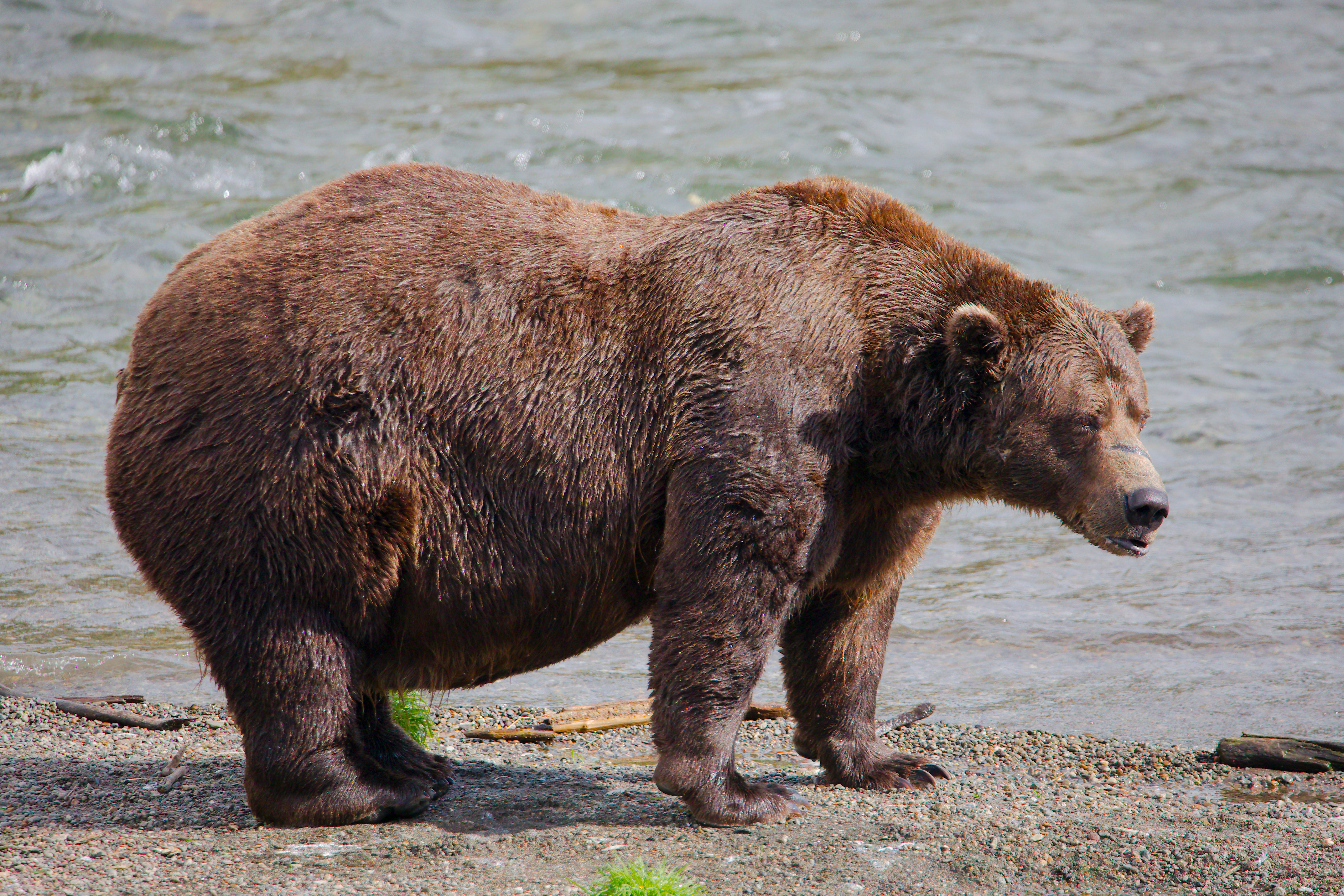
    Online voting began Tuesday for Fat Bear Week, the annual contest that pits the rotund residents of Katmai National Park and Preserve against each other for the title of most oversized ursine.

    Last year’s winner, Chunk — known officially as Bear 32 — is hungry for a repeat. Chunk’s weight in 2025 was estimated at 1,200 pounds, which gave him a narrow victory. This year he’s back and facing corpulent competition like Gully — aka Bear 903 — the offspring of two-time champion Grazer.

    The contest, which is in its 12th year, celebrates the resilience of the 2,200 brown bears that live in the preserve on the Alaska Peninsula, which extends from the state’s southwest corner toward the Aleutian Islands. The animals gorge on the abundant salmon that return to the Brooks River, sometimes chomping the fish in midair as they make their way upstream to spawn.

    The event this year features 16 bears facing off in a single-elimination, bracket-style tournament. All voting is done online at www.fatbearweek.org, with the winner declared Sept. 29. The public can watch the bears on explore.org’s livestream cameras before deciding on their favorite.

    “Fat bears are successful bears,” the nonprofit’s website says. They gorge on salmon starting in late June in order to accumulate fat reserves to prepare for winter hibernation, when they do not eat or drink and lose one-third of their body weight.

    Adult male brown bears typically weigh 600 to 900 pounds (about 270 to 410 kilograms) in midsummer. By the time they are ready to hibernate after feasting on migrating and spawning salmon — each eats as many as 30 fish per day — large males can weigh well over 1,000 pounds (454 kilograms). Females are about one-third smaller.

    Voters in the online contest can review before-and-after photos of the bears, lean at the start of summer and fattened at the end. The bears are not actually weighed — imagine that process — and some fans choose their favorite based on their looks or backstory.

    To be featured in the contest, the bears must frequent the area around the river.

    The live cameras at Brooks Falls captured the moments in 2024 when mother bear 128 Grazer ‘s cub slipped over the waterfall and floated into the fishing spot occupied by Chunk, who attacked and injured the cub. Grazer fought Chunk, but the cub ultimately died. After the dramatic fight, voting fans handed Grazer a victory over Chunk. Then Chunk returned in 2025 to take the title.

    Fat Bear Week was started in 2014 as an interactive way to inform the public about brown bears, the coastal cousins of grizzlies.

  • Trump returns to UN at a moment of anxiety about Iran, AI and the future of world body itself

    Trump returns to UN at a moment of anxiety about Iran, AI and the future of world body itself

    NEW YORK — President Donald Trump is set to address the U.N. General Assembly on Tuesday at a tumultuous moment for the world — and for his presidency.

    The global economy has been shaken by his decision to launch a war against Iran. Anxiety about the social impact being wrought by artificial intelligence is surging. And questions linger about the future of the United Nations itself with Trump’s scaling back U.S. financial support for the United Nations.

    After his speech to the annual gathering of world leaders, Trump is expected to hold talks with new British Prime Minister Andy Burnham, Japanese Prime Minister Sanae Takaichi and a more informal meeting with Venezuela’s acting President Delcy Rodríguez, according to the White House.

    He’s also set to meet with leaders and senior officials from Gulf Cooperation Council nations — Bahrain, Kuwait, Oman, Qatar, Saudi Arabia, and United Arab Emirates — to discuss the way ahead with the war in Iran and growing concern about recent Iran-backed rebel attacks on Saudi Arabia.

    The visit to the U.N. comes when Trump’s foreign policy approach — particularly his decision to start a war with Iran — has become a drag on his fellow Republicans’ hopes of retaining control of both chambers of Congress during the coming midterm elections. Nevertheless, administration officials signaled Trump will make the case in his address that the world is better off for his leadership.

    “We expect the president will highlight how he has and his administration have confronted complex problems head-on around the world,” Ambassador Mike Waltz, Trump’s chief envoy to the international body, told reporters.

    Waltz also suggested that Trump might revisit some of his long-held criticism of the United Nations. The president has criticized the body as being ineffectual on issues of war and peace, has claimed the organization is perpetuating a “con job” by emphasizing the need to address global warming, and has asserted the U.N. has promoted the “invasion” of migrants into Europe.

    Iran war to loom large

    In last year’s address at the U.N., Trump claimed the U.S. had “demolished” Iran’s nuclear capabilities after he ordered the June 2025 bombardment of three key facilities.

    He returns to the General Assembly nearing the seven-month mark of a new war against Iran that he insists is necessary to address a nuclear threat posed by Iran.

    The war has grown more complicated even though strikes by the United States and Israel have killed much of Iran’s top leadership and destroyed its air force and navy, while a U.S. blockade of Iranian oil has left Tehran in economic shambles.

    The passage of oil from other Gulf countries through the Strait of Hormuz has improved in recent weeks with the help of the U.S. Navy helping guide commercial vessels through the narrow waterway. Still, the flow of oil is significantly below pre-war levels. And Brent crude continues to hover around $100 per barrel, up from about the $70 range in the weeks before the start of the war.

    But the energy market continues to be spooked. Saudi Arabia earlier this month shuttered a key pipeline that acted as a relief valve for oil blocked in the Gulf. The kingdom made the move after the pipeline came under attack by Iran-backed militants in Iraq.

    At the same time, territorial grabs by the Yemen-based Houthi rebels, another Iranian-backed group, near the Bab al-Mandab Strait has now made it treacherous for oil carriers to use that Red Sea shipping lane.

    Majed al-Ansari, chief spokesman for the Qatari Foreign Ministry, said Monday that Qatar and other mediators are trying to penetrate a “deep deficit of trust” between the U.S. and Iran and get the sides back to negotiations.

    “What we’re trying to say is that, ‘Listen, this will end at the negotiating table,” said al-Ansari, speaking at the Concordia Annual Summit, a global affairs forum taking place during the U.N.’s high-level week. “Either we sign a deal now or sign a deal 10 months away. The only difference is the number of dead and destruction that we see.”

    The administration will sign a Greenland deal

    At last year’s General Assembly, Trump touted his record as a peacemaker and claimed that “everyone says that I should get the Nobel Peace Prize” for his administration’s efforts mediating several conflicts around the globe.

    This year, his administration is set to sign an agreement on the sidelines of the General Assembly with Danish and Greenlandic leaders that aims to set the pathway for the expansion of the U.S. military’s footprint on Greenland.

    The deal, announced last week, came together after Trump repeatedly threatened to “take over” Greenland, a territory of NATO-ally Denmark, by military force if necessary.

    Under the deal, Greenland remains Denmark’s territory. “I’m looking forward to the meeting tomorrow. I think we have reached a good agreement,” Prime Minister Mette Frederiksen told Danish broadcaster TV2 Denmark.

    Trump’s frustration with Russia-Ukraine war mounts

    The president could also touch on Russia’s continuing war against Ukraine during the address — a conflict that during his 2024 campaign he predicted would be resolved on Day One of his second term.

    The president has routinely expressed frustration about the conflict. He hasn’t obscured that his patience is being tested by Ukraine’s targeting of Russia’s diesel refineries — an issue that’s added to oil markets’ volatility — and Russia’s targeting of Ukraine’s energy grid.

    Trump last week asserted that he got the two sides to agree to not target each other’s energy infrastructure. Ukrainian President Volodymyr Zelenskyy said he was willing to go along with Trump’s plan if Russia abided by it. Russia said it could only go along with Trump’s energy truce proposal if Western energy sanctions on Moscow were lifted first.

    The two sides have continued carrying out strikes on refineries and other energy infrastructure. Trump on Monday, before departing for New York, expressed his frustration with targeting of energy infrastructure.

    “Russia has unfortunately lost control of its Diesel Oil Industry due to its War with Ukraine,” Trump posted on social media. He added, “This ridiculous and never ending War with Ukraine must be ended.”

    Trump to hold critical talks with UK, Japan and Venezuela leaders

    The president is set to hold his first face-to-face meeting with Burnham, the center-left Labour Party leader who became prime minister in July.

    With elevated oil prices dragging the British economy, he may also be eager to discuss ways to fully reopen the Strait of Hormuz. He announced on Monday that he would send a Royal Air Force plane to the Mideast to help Saudi Arabia repel attacks from Houthi rebels. The plane will refuel Saudi planes during defensive missions.

    Trump’s meeting with Japan’s Takaichi comes as he prepares to welcome Chinese President Xi Jinping later this week to Washington for a state visit.

    The historically complicated Japan-China relationship became even more fraught after Takaichi said last year that Japan’s military could intervene if China were to take action against Taiwan, a semi-autonomous island democracy that Beijing considers its own territory. The tensions have spilled over into the China-Japan economic relationship.

    Trump’s engagement with Rodriguez, Venezuela’s interim president, will be the first meeting between the two leaders since Trump in January ordered a U.S. military operation to capture then-President Nicolás Maduro and swept him off to New York City to face federal narco-terrorism and drug trafficking charges. Maduro’s lawyers have objected to the U.S. military action that snatched him from power.

  • Lindsay Clancy’s attorney asks judge to investigate the lone juror who wanted to convict her

    Lindsay Clancy’s attorney asks judge to investigate the lone juror who wanted to convict her

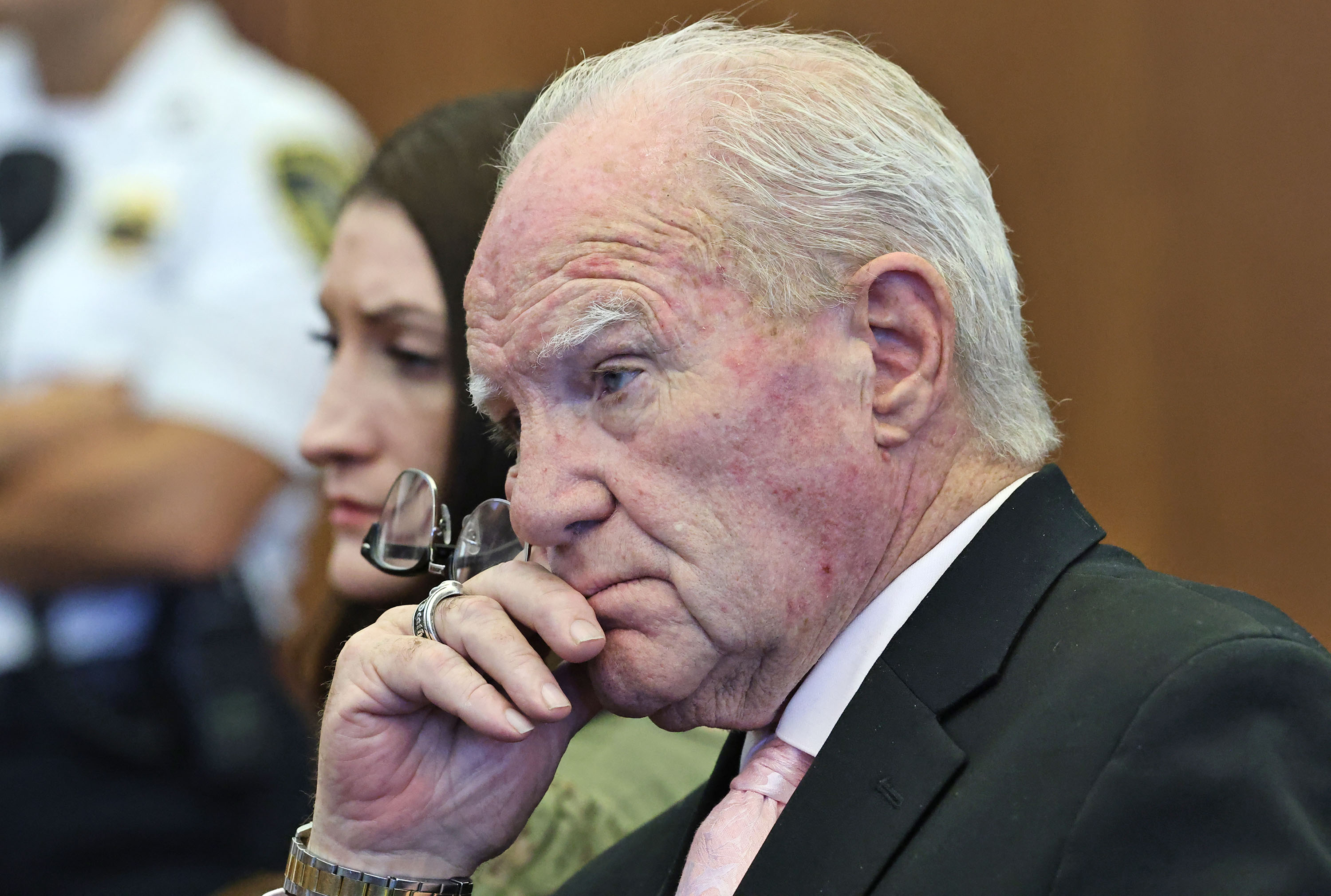
    BOSTON — A lawyer for Lindsay Clancy is asking a judge to investigate the conduct of the lone juror who wanted to convict the Massachusetts mother of murder in the deaths of her three young children.

    In a motion filed Friday but made public Monday, Clancy’s lawyer asked the court to question juror Michael Desronvil about his alleged use of a cellphone during deliberations, his truthfulness on a questionnaire that prospective jurors filled out before the trial began, and his truthfulness when jurors were questioned by the judge a day before the trial ended.

    Among other things, lawyer Kevin Reddington asked the court to obtain a record of any calls or texts Desronvil made between 8 a.m. and 4:30 p.m. on each day the jury deliberated. Phone use during deliberations is prohibited in the state.

    The judge declared a mistrial Sept. 4 after the jury insisted it couldn’t reach a unanimous verdict, despite days of trying. Eleven of 12 jurors were ready to clear Clancy of criminal responsibility, with the majority feeling that she was in the grip of a rare condition called postpartum psychosis when she strangled her kids.

    But Desronvil sided with the prosecutors, who had argued that Clancy knew what she was doing.

    Desronvil hasn’t been accused of any wrongdoing in connection with his service on the jury, though some other jurors complained that he was inflexible in his opinion that Clancy was guilty. In a statement released by his lawyer last week, Desronvil said he “didn’t have any doubts.”

    Prosecutors have yet to say whether they plan on putting Clancy on trial again. She remains charged with murder and is in a psychiatric hospital until her case is resolved.

    In another motion on Monday, another lawyer for Clancy, Martin Weinberg, asked the judge to take the unusual step of dismissing the criminal case, rather than putting on a new trial, on the grounds that a mistrial shouldn’t have been declared in the first place.

    Weinberg argued that the judge should have replaced Desronvil with an alternate during the deliberations after the jury foreperson complained he was refusing to listen to the law on reasonable doubt.

    “Contrary to the court’s stated belief at the time, it did have viable choices other than declaring a mistrial,” Weinberg wrote.

    A spokesperson for Plymouth County District Attorney Timothy Cruz would not comment on the motions.

    At the trial, jurors heard from psychologists and clinicians who treated Clancy for several months before the killings, when she was suffering from worsening mental health problems that emerged after the birth of her youngest child. She was released from a psychiatric hospital less than three weeks before she killed her children.

  • What to know about COVID vaccines — and whether you need one this fall

    What to know about COVID vaccines — and whether you need one this fall

    If you haven’t given much thought to COVID-19 lately, that’s understandable. The impact of the coronavirus has “substantially diminished” since the early pandemic years, said William Schaffner, a professor of infectious diseases at the Vanderbilt University Medical Center. As a result, “people are perhaps less attentive to COVID.”

    That’s probably due in part to the fact that most people have had some prior protective exposure to COVID-19, either through vaccination, infection or both. But COVID-19 “hasn’t gone away,” said Schaffner. “It’s still apt to produce serious illness.”

    Previous years have seen increases of COVID-19 activity in late summer as well as winter, and cases are starting to ramp up this year, especially in certain parts of the country, said Thomas Russo, chief of infectious disease in the department of medicine at the Jacobs School of Medicine and Biomedical Sciences at the University at Buffalo. “COVID-19 is certainly coming,” he said.

    Vaccination remains the best way to decrease the likelihood of severe outcomes from the virus, as well as protect those around you who might be at higher risk.

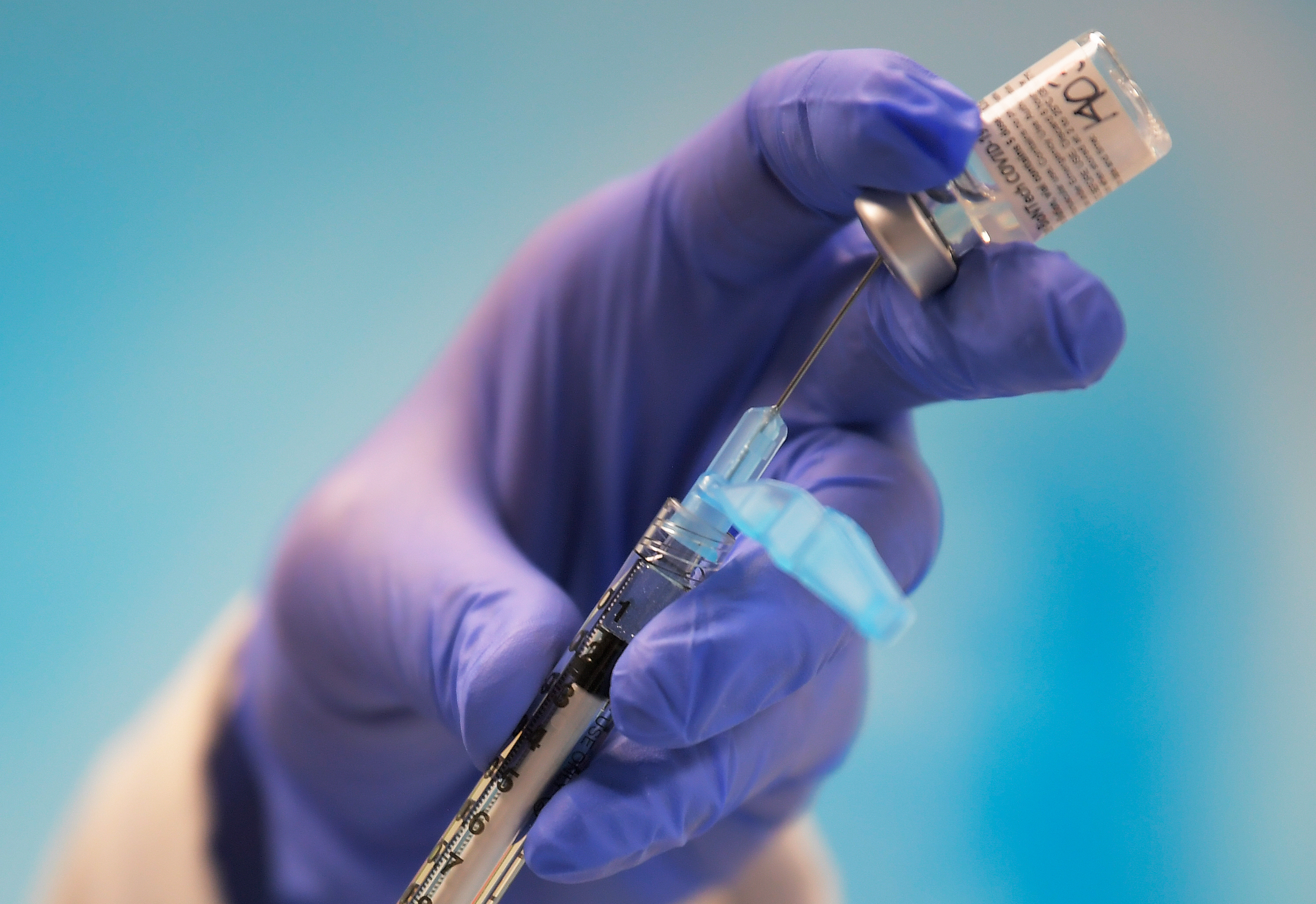
    In late August, the Food and Drug Administration approved updated COVID-19 vaccine formulations that target the variants currently circulating around the country. But there hasn’t been new federal guidance this year on who should get the vaccine. Last year’s recommendations have been thrown into legal limbo after a federal judge ruled that Health Secretary Robert F. Kennedy Jr. improperly reconstituted an influential advisory panel. Instead, major medical groups have banded together to release their own recommendations.

    Here, answers to questions you may have about getting the COVID-19 vaccine this year.

    Who should get a COVID shot

    The FDA approved the updated COVID-19 vaccines for people with at least one underlying condition placing them at higher risk for severe COVID-19 — such as people with cancer, a chronic disease (like diabetes or HIV) or a weakened immune system — as well as all adults age 65 and older.

    This differs from what major medical societies have said previously and are now recommending. The American Academy of Pediatrics, the American Academy of Family Physicians and the American College of Obstetricians and Gynecologists suggest the vaccines for most people, including healthy adults ages 18 to 64 and healthy children ages 2 to 18, if their parents want them to get one.

    While many experts stress that anyone can and should get a COVID-19 vaccine, “the risk of developing severe disease is variable depending on the individual,” said Russo, meaning vaccination is especially critical for higher risk groups. Those include people age 65 and older, children under 2 years old, children between the ages of 2 and 18 years in certain high-risk groups, people with underlying conditions and those who are immunocompromised, and pregnant women.

    What healthy people should know

    If you’re an adult under 65 and don’t have an underlying health condition, you may think you don’t need an updated COVID-19 vaccine. But healthy people can still be hospitalized because of COVID-19 or have severe outcomes. “The other thing that the vaccine does is it helps prevent long COVID, and that could be a devastating problem,” said John Swartzberg, a clinical professor emeritus in the division of infectious diseases and vaccinology at the University of California’s School of Public Health.

    A healthy person may also live, work or be around someone at high risk of severe disease. “Getting vaccination would be beneficial because you’re less likely to be infected, or if you do get infected, you’re going to shed lower levels of the virus,” said Russo, “so you’ll be indirectly protecting those individuals.”

    Schaffner added that medical professional societies will continue to recommend comprehensive COVID-19 vaccination for nearly everyone, including adults age 19 to 64 who are otherwise healthy. “Vaccine acceptance of both COVID and flu vaccines slipped last year, and we are hoping to reverse that trend this year.”

    How effective is the updated vaccine?

    The FDA recommended that the newest formulation target the XFG variant, which currently has the widest circulation.

    As for how effective this newest formulation will be? “We never really know how well it’s going to perform until it’s been used by millions and millions of people,” said Schaffner. However, preliminary data suggests it should be “very active” against this XFG strain, noted Swartzberg.

    Like the flu shot, COVID-19 vaccines are updated annually after monitoring of the circulating variants in the United States. While there’s no guarantee you won’t get sick at all, you can feel reassured that the vaccine helps prevent severe disease, said Schaffner.

    A study published in JAMA last year found that the 2024-2025 vaccine formulation offered 45.1% effectiveness against emergency department visits and 57.5% effectiveness against hospitalization or death.

    More recently, a study on the effectiveness of the 2025-2026 COVID-19 vaccines found that the Pfizer and Moderna vaccines provided between 48.3% and 59.3% protection against hospitalization for adults over age 65.

    In addition to reducing the severity of COVID-19 infection, the vaccine may prevent you from getting infected. That same 2025 JAMA study found that the 2024-2025 COVID-19 vaccine provided 44.7% protection against infection four weeks after vaccination. This was similar to the level of protection provided by the previous formulation, the authors said.

    The best time to get a COVID shot

    It takes a week or two to develop maximum antibody levels from a COVID-19 booster, said Russo, and a little longer if you’ve never been vaccinated before. “Ideally, you want to get that close to the winter respiratory virus season when we see a lot of cases and your likelihood of getting infected increases,” he said.

    Medical experts generally recommend COVID-19 vaccination toward the end of September and during October. “Then the protection will be sufficient to stretch out through most of the winter,” said Schaffner.

    It’s safe to get your annual flu vaccine at the same time as your COVID-19 shot.

    Where you can get a COVID-19 vaccine

    “Year in and year out, the substantial majority of COVID vaccines have been given out in pharmacies,” said Schaffner. Doctor’s offices or health clinics can also supply COVID-19 vaccines, though you might want to confirm that your provider has them in stock, he said.

    Children, however, are “somewhat of a unique case,” noted Russo, “because depending on the age of the child and the state, the pharmacist can’t vaccinate them.” Some states have age restrictions for COVID-19 vaccines: Maine, for example, allows pharmacists to vaccinate anyone ages 3 and up against COVID-19, while you must be at least 18 to get a COVID-19 vaccine from a pharmacist in Iowa.

    If your child can’t get vaccinated at a pharmacy, you may need to ask their pediatrician.

    Many insurers have indicated that they will continue to cover COVID-19 vaccinations, said Schaffner, though check with your insurance provider to be sure. You can also use the HHS.gov Health Center Finder to look up federally funded health centers near you that don’t require insurance and may offer sliding fees based on income. However, there have been questions about when COVID shots will be available that are typically offered through a federal program providing vaccines to children who are uninsured, underinsured or on Medicaid.

    Like last year, “there will be confusion about who ought to receive COVID vaccines this fall” and whether they will be covered by your health insurance company, said Schaffner. “That was the case last year, and we hope that it will work that way again this fall and winter.”

  • Ro Khanna is the left’s busiest midterm surrogate. Can he raise his own profile, too?

    Ro Khanna is the left’s busiest midterm surrogate. Can he raise his own profile, too?

    Rep. Ro Khanna of California leaned forward in a patterned armchair as a rooster crowed outside, listening as a group of farmers in rural Sharpsville, Pennsylvania, told him that Democrats came across as inauthentic and insincere.

    “Don’t promise the farm and not come up with it,” said Joe McCann, who grows hay and raises pigs. “And don’t lie to people. I can take anything, but if someone’s standing there physically lying to me and blowing smoke up my butt, that’s not going to cut it.”

    Khanna agreed, fretting that his party had for too long “looked down” on blue-collar voters. Then he quipped: “How do you think I’m doing? Lying?” McCann, 78, said he didn’t think so.

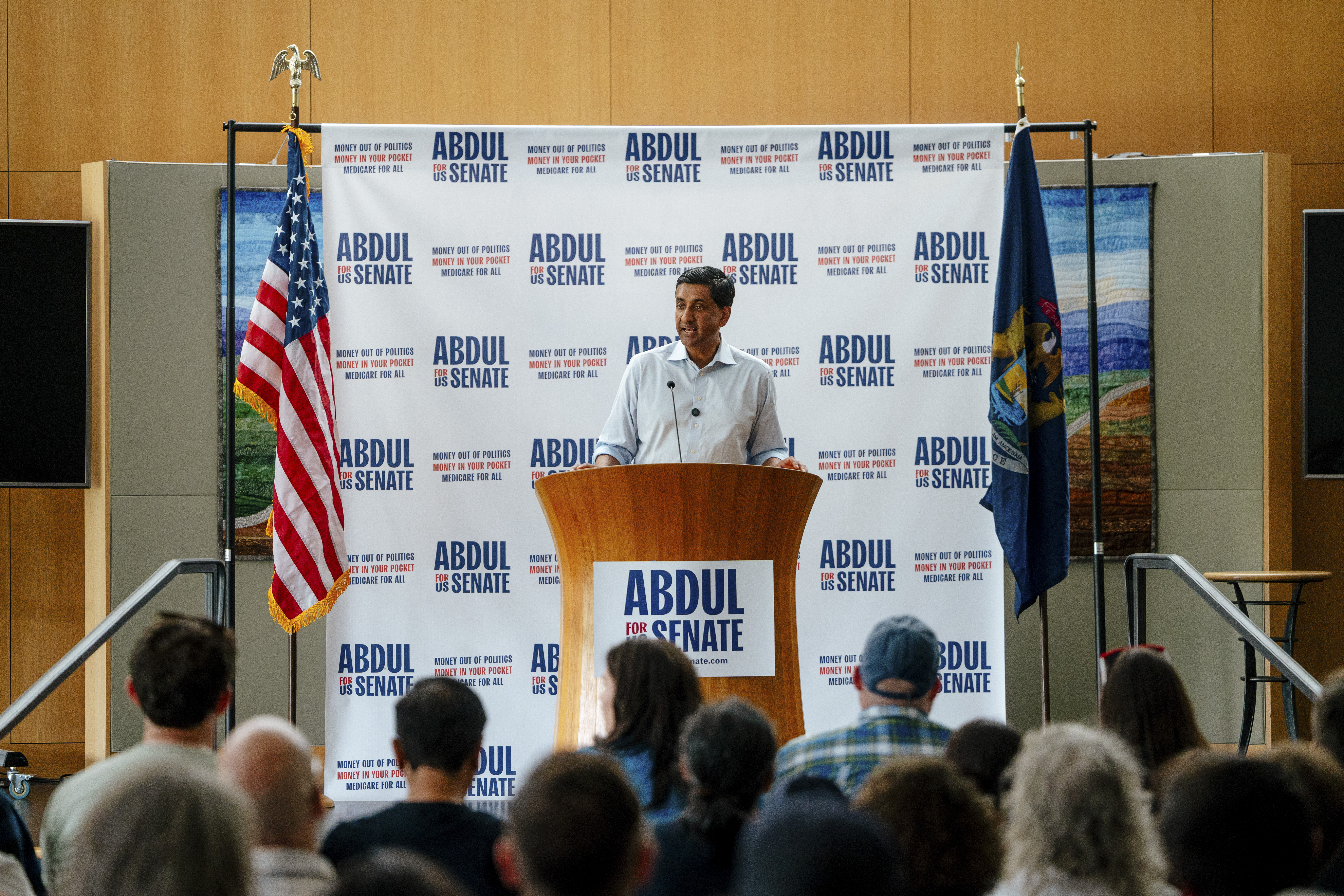
    Khanna, D-Calif., has emerged as one of the most prolific surrogates of the 2026 cycle. He has endorsed more than 70 candidates for seats in the House, Senate and state legislatures, positioning himself on the front lines of a burgeoning progressive movement as discontent with the status quo has propelled a series of left-wing candidates to primary victories.

    But there was another reason for his vigorous political itinerary this campaign season: a possible presidential run in 2028. He wants to see the left’s power grow within the Democratic Party. He wants its policy prescriptions, such as universal healthcare and taxing the rich, to shape the conversation about who the party’s nominee for president should be.

    And he knows that none of that is likely to happen if the left bombs in November.

    A little 2026, and a little 2028

    Despite their major wins in primaries this season, progressives’ ability to sway the general electorate in competitive races remains untested. A new poll released by The New York Times and Siena University on Sept. 15 found that a slight majority of voters disliked socialism.

    In Khanna’s view, the only way the movement can change that perception is if it figures out how to talk to the working class.

    Khanna, born outside Philadelphia to immigrants from India, has been preparing for his political future out in the open. In the past two months, he has taken many of the steps of an early presidential candidate.

    He held a town hall with Latino voters in Nevada. He told the Democratic National Committee in a searing speech that the party needed to turn its back on corporate interests and military aid to Israel. He also ventured abroad, leading a congressional trip to the Vatican to discuss safeguards against artificial intelligence with Pope Leo XIV and visiting the West Bank, where he was detained by armed Israeli settlers.

    Icons of the progressive movement, such as Sen. Bernie Sanders of Vermont and Rep. Alexandria Ocasio-Cortez of New York, have been choosier with their high-profile endorsements this year. Khanna is lesser known, and has work to do to change that. The eagerness can occasionally backfire; he has expressed regret for his endorsement of Graham Platner, the Maine Democrat who withdrew his Senate bid in July after a woman accused him of rape.

    “He’s hustling,” said Bill Hyers, a progressive strategist who worked with two House candidates — Kat Abughazaleh in Illinois and Chris Rabb in Pennsylvania — whom Khanna endorsed in primaries this spring. Rabb won. Abughazaleh lost.

    Added Hyers: “He’s just been out there really working hard and he’s the only person on the left I have seen where there’s no doubt he’s running.”

    Over five days in Pennsylvania in July, Khanna, who grew up outside Philadelphia in suburban Bucks County, rallied for two House candidates whose primary victories in May stood out as early triumphs for the progressive movement. Their very different districts illustrated both the advantages and challenges facing the progressive left this fall.

    In Philadelphia, Khanna talked about liberal priorities like “Medicare for All” with Rabb, a democratic socialist who is virtually assured of victory in November in his deep-blue district. In a battleground district in Allentown, Khanna discussed tariffs and job losses with union factory workers to help the candidacy of Bob Brooks, a firefighter and labor leader who faces a more difficult path to victory in November against Rep. Ryan Mackenzie, a Republican.

    On behalf of both candidates, Khanna offered a similar pitch: The wealth and technological innovation of his high-income Silicon Valley district should be shared more widely. His agenda of “new economic patriotism,” he said, would spread technology jobs among Midwestern states and redistribute profits through a wealth tax.

    “If we just are running on centrist mush that is put out by ChatGPT, bland and inoffensive, we’re not going to win,” Khanna told a reporter in the SUV he was riding in for the Pennsylvania swing. “It has to be a transformative vision.”

    Khanna was generally well-received by an electorate in Pennsylvania that has soured on Republicans and seems increasingly willing to give Democrats another chance. But he also encountered the enduring skepticism of voters who see their leaders as having failed them.

    “He comes across very progressive with his plans, but I don’t know that he’ll be able to carry them through,” said McCann, after Khanna’s conversation in Sharpsville. “This area that I live in right now is a depressed area — and anybody that gives anybody around here a vision of hope is the person they’re leaning toward. They just have that vision of hope that this might happen, and it never does.”

    In an interview, Khanna said he planned to decide about 2028 between Thanksgiving and Christmas, after talking to his family and determining how viable he could be in battleground states.

    His trip across Pennsylvania was intended in part to assess that. A progressive contender for president, Khanna said, would have to “do well in the Black South” and “do well in states like Pennsylvania.”

    He said he was also forging bonds in southern states, including in South Carolina, where his partnership with Rep. Jim Clyburn and his daughter Jennifer Clyburn connects students at historically Black colleges and universities with scholarships from tech companies.

    Khanna has recruited alumni of both progressive and establishment campaigns. He is being advised by Ron Klain, the chief of staff to former President Joe Biden, and has enlisted longtime advisers to Sanders such as Julian Mulvey and Jeff Weaver, according to a person familiar with the partnerships who requested anonymity to describe internal staffing issues.

    The road ahead, plus AOC

    A dismal progressive showing in November could instantly set back Khanna’s fortunes. So could something else: Ocasio-Cortez. If Ocasio-Cortez, the breakout star of the left, runs for president, she would appeal to the same liberal constituency as Khanna but with an enormous head start in popularity.

    Khanna called Ocasio-Cortez an “extraordinary talent,” and dismissed the idea that she is a rival.

    “I have a tremendous amount of respect and admiration for her,” he said, adding, “I have genuinely never discussed what she wants to do in the future.”

    Khanna said he talked with Ocasio-Cortez occasionally in the halls of the Capitol. He communicates more frequently with Sanders, speaking with him on the phone about AI and answering the senator’s queries about the chances of California voters passing a tax on billionaires this fall.

    Khanna readily acknowledged that he lacked the political “star power” of his left-wing compatriots. “I’m not delusional,” he said.

    His speeches are also a little heavy on policy and light on the kind of soaring rhetoric that voters often look for in a president.

    That was the case in Pennsylvania, but he also tested catchphrases such as “economic patriotism,” and retail politicking seemed to come easily enough for him. One particular line, when he argued that President Donald Trump had not followed through on a simple promise — to replenish sand that had washed away along Lake Erie — got a good response from voters.

    “I’ve seen a lot of clips of him online — I thought he was much more charismatic in person,” said Gideon Tsoutsouris, a college student in Pittsburgh.

    Khanna portrayed his low profile as an asset, noting that other successful candidates — including former Presidents Jimmy Carter and Bill Clinton — began their bids as long shots. It’s an advantage, he said, “to go meet people and interact without the entourage.”

    Khanna, a multimillionaire, likewise dismissed potential criticism of his wealth, which largely stems from his wife’s father, the founder of an automotive company.

    “I tell people my own story of growing up middle-class in Bucks County, taking out loans for law school in my 20s, having forbearance and massive credit card debt,” Khanna said. “I think people will see that I had a middle-class life and even economic challenges.”

    Hyers, the progressive strategist, said Khanna would likely face criticism for his long-standing relationships with the tech industry.

    “The perception in a lot of the circles that I run in is, ‘How much money has he taken from the bad guys?’” Hyers said. (Khanna has since broken ties with many wealthy tech executives and called for taxing them more heavily.)

    When Khanna’s tour rolled into Pittsburgh, he hopped around town, chatting with union leaders who are faculty members at a local university, nurses fighting for a labor contract and a group of college students.

    Before addressing the students, he spoke with two groups protesting his visit on nearby street corners: the pro-Israel Beacon Coalition and the pro-business Americans for Prosperity, a creation of the conservative Koch family. One of the AFP protesters urged him to reject socialism.

    The moment illustrated another challenge that Khanna would face in a presidential primary. He may be too progressive for moderates, and not progressive enough for some on the fractious left.

    “I don’t believe the government should take over the means of production,” Khanna told the protesters. But, he added, many young people were turning to socialism “because they can’t afford rent, they don’t have a good job. They lost the American dream.”

    This article originally appeared in The New York Times.