Tag: no-latest

  • Renewed fighting in northern Ethiopia effectively shatters 2022 peace deal that ended war

    Renewed fighting in northern Ethiopia effectively shatters 2022 peace deal that ended war

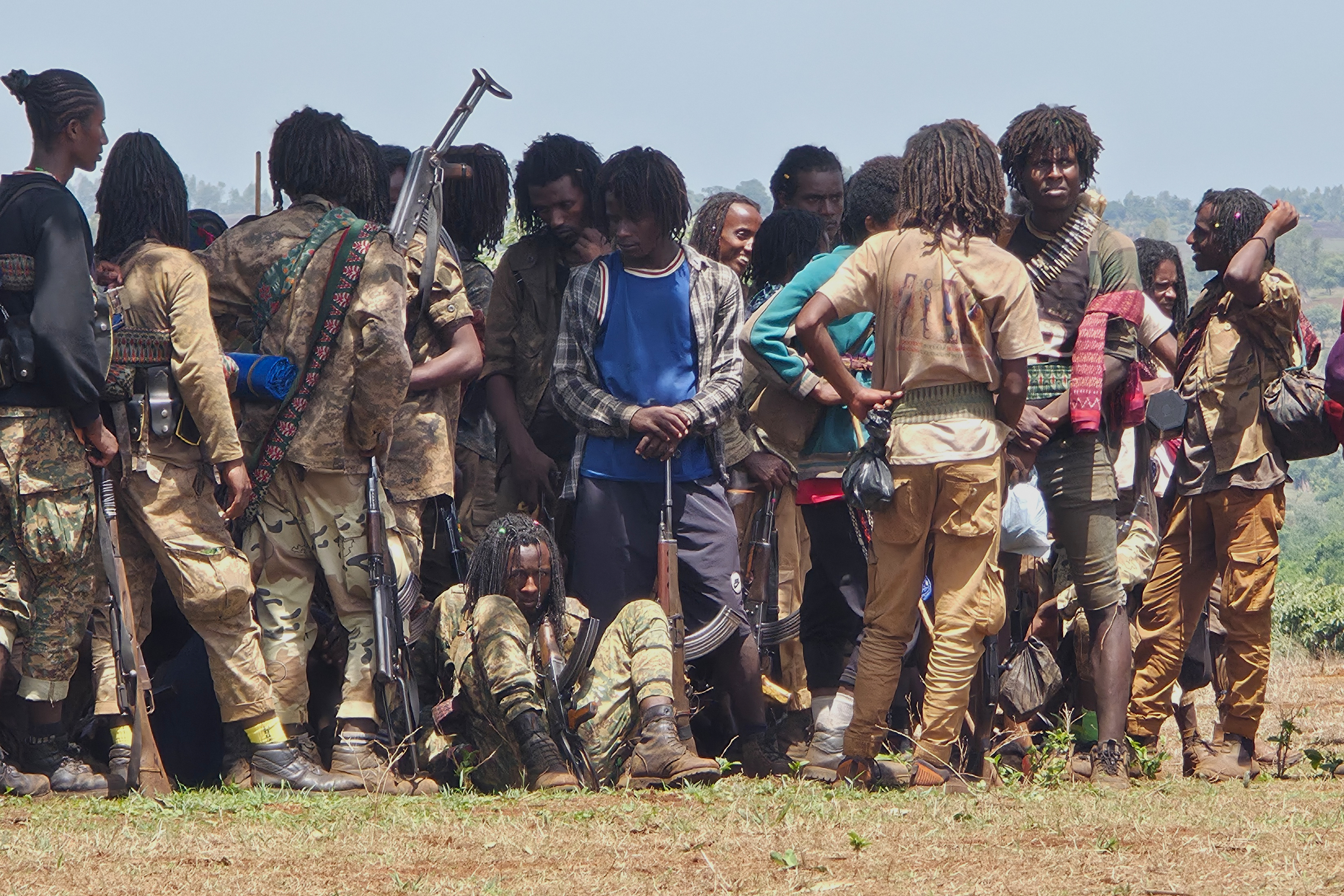
    ADDIS ABABA, Ethiopia — Renewed fighting between Ethiopian federal troops and Tigrayan fighters escalated Thursday, effectively shattering a peace pact that ended a devastating two-year war in 2022, as rebel forces mobilized for an armed struggle they hope will lead to the removal of the federal prime minister.

    The main combatants are Ethiopian federal troops and fighters loyal to the Tigray People’s Liberation Front, or TPLF, an armed political group in Tigray, Ethiopia’s northernmost regional state.

    Ethiopia’s military said Thursday that dozens of TPLF fighters had been killed in ongoing operations and that federal forces “have been able to detain many” others and seize a large quantity of weapons from them.

    The TPLF and Ethiopian federal troops waged war between November 2020 and November 2022, when a peace deal was signed in Pretoria, South Africa.

    Eritrean troops fought alongside Ethiopian forces against the TPLF in that conflict. The civilian death toll was estimated by Ghent University researchers to be 500,000, including from violence, famine and the collapse of health services.

    After both sides signed the Pretoria peace deal, a caretaker administration seen as loyal to Ethiopian Prime Minister Abiy Ahmed was installed in Mekelle, the Tigray capital. But tensions remained, with the TPLF maneuvering for political control in Mekelle.

    Rebel fighters forge a coalition

    This time, the TPLF appears to have mobilized widely, bringing together former foes in its stated goal of removing Abiy from power in Addis Ababa, the federal capital.

    On Sunday, the TPLF and six other opposition groups announced that they had formed an alliance to overthrow Abiy’s governing Prosperity Party, which was reelected in June polls that were boycotted by major opposition groups.

    Both sides had been accusing each other of bad faith, and for months some civilians in Tigray expected a return to armed hostilities. In May, the TPLF forced out regional leader Tadesse Werede, who reported to Abiy, and replaced him with a new council led by TPLF leader Debretsion Gebremichael, who led the Tigrayans in the previous conflict.

    Ethiopian federal authorities accused the TPLF of seeking to build an alliance with neighboring Eritrea to destabilize Ethiopia. The TPLF accused Ethiopian authorities of conducting drone attacks in Tigray. Eritrea said that it was alarmed by Abiy’s repeated assertions of his wish for sovereign access to the Red Sea via Eritrea.

    Both sides deny responsibility for launching this round of hostilities, and most of the fighting is believed to be in remote areas of often ragged, mountainous territory. On Wednesday, TPLF fighters seized the airport in Mekelle from federal police, and national carrier Ethiopian Airlines canceled flights there and elsewhere in the region.

    Observers say pressure is building on Abiy

    The Ethiopian News Agency, the official news organization of the Ethiopian government, described the TPLF as a “Trojan horse,” saying that the group’s “repeated attempts to incite conflict” defy the government’s “patience, concessions and magnanimity.”

    The coalition formed by the TPLF and six other opposition groups said that it would be known as the Ethiopian Peoples’ Forces Alliance for Survival. In addition to the TPLF, the others include the Amhara Fano National Movement, the Oromo Liberation Army, the Ogaden National Liberation Front, the Afar Revolutionary Democratic Unity Front, the Benishangul Peoples’ Liberation Movement and the Gumuz Peoples’ Democratic Movement.

    That alliance, which unites some groups previously opposed to each other, may put pressure on Abiy, according to Kjetil Tronvoll, an academic analyst of Ethiopia at Oslo New University College.

    “The situation now differs substantially from the 2020-2022 war on Tigray,” he said in an analysis posted on X. “This time around Fano is an ally and Eritrea a backer. Supply lines are also secured through Eritrea.”

    Regional blocs and the U.S. call for an end to fighting

    The African Union and a key regional bloc known as IGAD called for de-escalation of hostilities. U.S. Ambassador Ervin J. Massinga said in a statement that he felt disappointed by the TPLF’s “poor decision to launch a large-scale offensive.”

    His statement said that the TPLF’s “unwinnable fight does nothing for the people. Other armed groups would be wise to avoid this.” A TPLF official, Amanuel Assefa, said the statement was unfair.

    Abiy has been praised by many for his ambitious infrastructure projects that seek to turn Addis Ababa into a world-class city. To his supporters, the prime minister is a renaissance man trying to reimagine the old greatness of Ethiopia.

    Abiy rose from relative obscurity to power in 2018 as a reform-minded pragmatist. Ties with Eritrea, which broke away from Ethiopia in 1993 after decades of brutal guerrilla warfare, had been cold since the 1990s, and Abiy’s efforts to repair relations with Eritrean President Isaias Afwerki helped him win the 2019 Nobel Peace Prize.

    A year later, Abiy confounded expectations by launching a military operation against the TPLF.

    Some of Abiy’s critics now see him as a provocateur whose actions could lead to hostilities in the Horn of Africa. His push for sovereign access to the Eritrean seaport of Assab has reignited tensions with Eritrea, which shares a border with Tigray. Abiy also angered Somalia by trying to negotiate access to the sea via the territory of Somaliland.

  • 8 sailors in USS Lincoln group attempted suicide on extended deployment, Navy leader says

    8 sailors in USS Lincoln group attempted suicide on extended deployment, Navy leader says

    WASHINGTON — Eight sailors attempted suicide while deployed with the USS Abraham Lincoln aircraft carrier strike group, which spent a record-setting uninterrupted time at sea supporting the Iran war, the Navy’s top civilian leader said this week.

    Acting Navy Secretary Hung Cao provided the information to Sen. Kirsten Gillibrand in a letter dated Tuesday after the New York Democrat inquired last month about the strike group’s crew of thousands. The Lincoln’s extended deployment drew the nation’s attention following reports of crew stress and poor mental health, as well as supply shortages, including food and hygiene products.

    Gillibrand asked Cao specifically if there were any suicides.

    “There have been no suicides on board during this deployment,” Cao wrote in the letter, which was obtained by The Associated Press and reported earlier by CNN. “Since the beginning of LINCOLN’S deployment, there have been a total of eight suicide attempts across the strike group — this number includes the LINCOLN crew and Sailors from the carrier wing, strike group and destroyer squadron staff, escorting destroyers, and all embarked aviation squadrons.”

    President Donald Trump had downplayed reports about conditions on the Lincoln, which left its homeport in San Diego in November, arrived in the Middle East in January in support of Iran operations, and spent a record-setting uninterrupted time at sea of more than 260 days.

    The carrier and some of its supporting ships stopped in Thailand in early September on their way back home to California. The Lincoln’s commanding officer, Capt. Dan Keeler, said then that the ship will be heading home soon but may make further supply stops. He declined to comment on the exact date the strike group is expected back in the U.S.

    Last month, Trump called the nearly nine months at sea that the sailors endured a “good period of time” but added that “over the years, we’ve had them out there much longer.”

    Trump told reporters in August that he spoke with a retired admiral who recounted being on ships for “much longer.” Trump said the admiral assured him that the Lincoln is “beautifully maintained and beautifully taken care of.” Trump did not name the admiral.

    Defense Secretary Pete Hegseth also had said that conditions about the Lincoln were “completely misrepresented.”

    Gillibrand took aim at both in a statement released this week in response to Cao’s letter.

    “What Trump and Secretary Hegseth dismissed as ‘fake news’ turned out to be serious and deteriorating conditions for our service members,” she stated.

    “Our troops and their families make immense sacrifices every single day, yet the president dismissed them with open disrespect,” Gillibrand said. “That this administration can find endless taxpayer dollars for bombs, ballrooms, and billionaires, but cannot take care of our service members, is completely unacceptable.”

    Extended deployments of carriers wear on service members who are away from home for long periods and increase strain on the ship and its equipment. The Navy is continuing to enforce a blockade on Iranian ports in the Strait of Hormuz, and the Trump administration has offered no clarity on how it intends to wind down the war.

  • From 16,000 to 185 to zero: Trump’s claims of illegal voting in Nevada fizzle

    From 16,000 to 185 to zero: Trump’s claims of illegal voting in Nevada fizzle

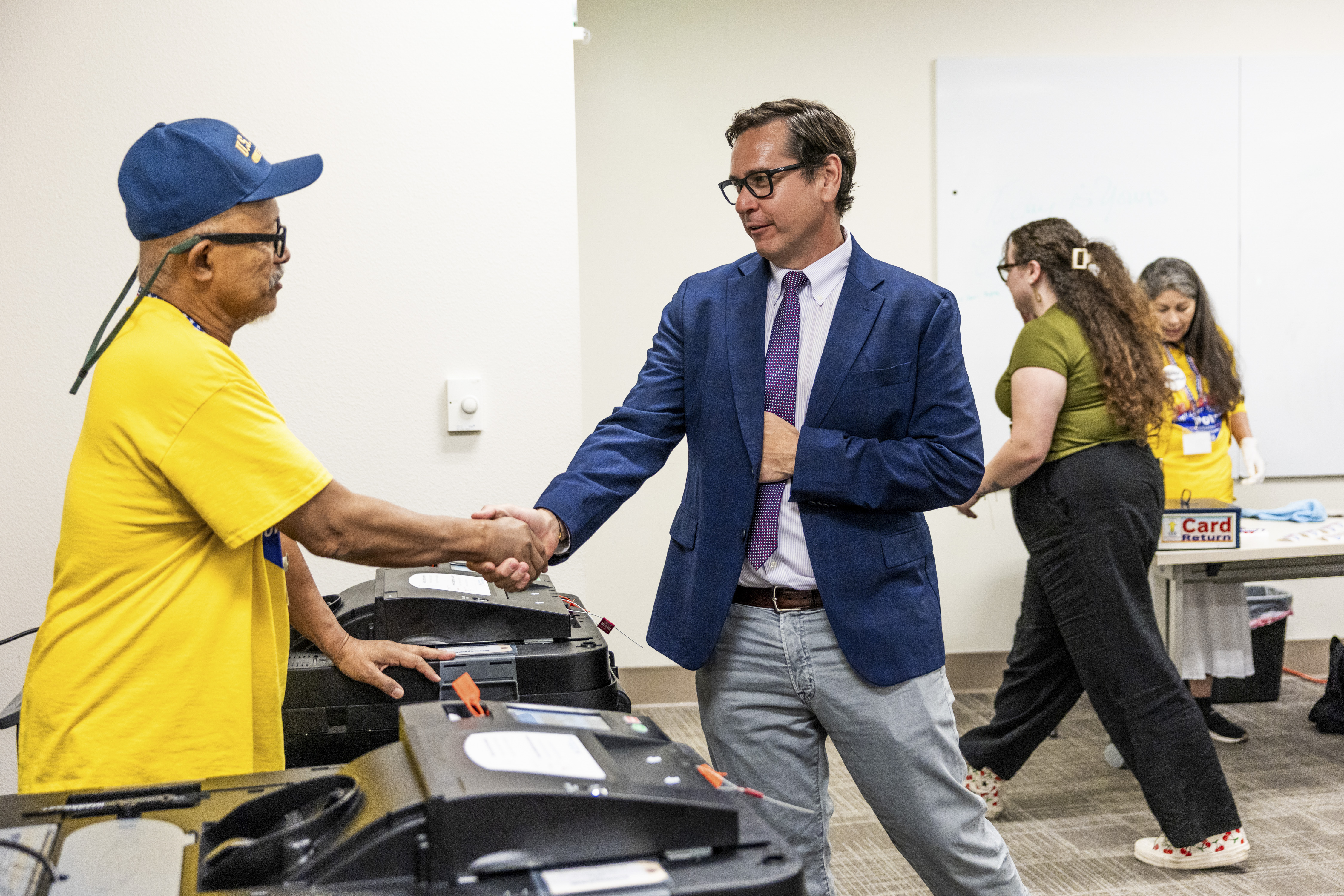
    When the Department of Homeland Security sent Nevada a list of 185 names last month that it claimed identified noncitizens who had been improperly allowed to register to vote, state election officials got to work.

    On Tuesday, the state sent a strongly worded rebuke to the federal government: Every single person on the list was a lawful citizen.

    “As for the 185 individuals, our records indicate that they were citizens,” Greg D. Ott, a deputy attorney general in Nevada, wrote, according to a copy of a letter sent to Department of Homeland Security officials obtained through open records requests. “You have provided nothing of substance to suggest otherwise.”

    Ott also stated that DHS officials had still not provided enough data for election officials to investigate their claims. Nor have they turned over the list of nearly 16,000 individuals they claim may be noncitizens.

    “Our records do not support DHS’s claims, and DHS has still not provided evidence to change that,” Francisco Aguilar, the Democratic secretary of state in Nevada, said in a statement. “Instead, DHS officials continue their attempts to intimidate election officials into compliance and deter voters with huge claims of fraud with no evidence. Repeating unsupported claims does not make them true.

    It was the Trump administration’s latest stumble in a broad campaign to find proof of widespread noncitizen voting in U.S. elections, despite decades of evidence that it is extremely rare.

    The Department of Homeland Security said in a statement that Nevada’s characterization was “false” and “the list of 185 were simply a subset of individuals that had gone through a rigorous manual review process” at the time of the last meeting between the two agencies.

    The back and forth began in July, when President Donald Trump and Markwayne Mullin, the homeland security secretary, said they had identified more than 270,000 noncitizens on voter rolls in just four states: Nevada, California, New Jersey, and Pennsylvania.

    Both men stated the claims as fact, yet letters sent to election officials in the four states in the days that followed indicated that the numbers may have been inflated. Each letter qualified Trump’s concrete assertions with the phrase “there may be as many as.” None offered actual proof of noncitizens on voter rolls.

    In Nevada’s case, Mullin initially claimed that there were as many as 15,903 noncitizens on the voter rolls. But in a meeting between Nevada election officials and the Department of Homeland Security last month, department leaders admitted that their initial claim was unsubstantiated. That prompted some pointed questions from Nevada election officials, according to a video recording of the virtual meeting.

    “So what you’re saying is the 15,000 number has not been vetted?” asked C. Murphy Hebert, the chief deputy in the Nevada secretary of state’s office.

    “I probably wouldn’t use the sentence, ‘It hasn’t been vetted,’” replied Kimberley Vogt, an official with Homeland Security. “Because definitely we’ve done something with it to get down to 15,000. So I wouldn’t say that. But it hasn’t had a full manual review of each one.”

    Following the meeting, Vogt sent a clarifying email to Nevada officials. “I also wanted to be sure I clarified that we did not reduce the 15,903 to 185,” she wrote. “We’ve manually reviewed some of the 15,903 and confirmed 185 are not U.S. Citizens.”

    Now, Nevada officials are saying even that 185 number is wrong. They also took issue with a letter DHS sent them in early September, in which the agency reiterated its initial claims about nearly 16,000 noncitizens on the rolls and pressured state officials to review each case in a letter to Nevada officials in early September.

    “Each one of the 15,903 individuals identified should be carefully reviewed by your state to determine eligibility for voting in a federal election,” read a letter from the Department of Homeland Security sent Sept. 9.

    But Nevada election officials said in their letter that DHS “has never provided Nevada with a list of 15,903 individuals.” Instead, they said, the department sent them a smaller batch of roughly 6,000 individuals, identified only by what Homeland Security called a voter case number.

    “DHS still has not provided any additional verifiable information for the individuals it suggests are noncitizens,” they wrote.

    The Department of Homeland Security said in a statement that the 6,218 individuals had “the highest number of matching attributes” to a potential noncitizen in their records, and that the smaller tranche of voters “was at the request of Nevada. They wanted to start with a subset less than the 15,903 registrants DHS originally identified.”

    Nevada officials disputed that claim, and records reviewed by the Times did not show Nevada making that request.

    Ott also said the use of so-called voter case numbers, which Nevada officials took to mean voter registration numbers, was imprecise.

    Using only “voter case numbers” without any other information such as a name, date of birth, address, or another verifiable data point could lead to the identification of multiple individuals, Ott said. This is because Nevada recently transitioned to a statewide voter registration system that was previously run by counties. So an individual may have been assigned one number by a county in the past and a different number under the new statewide system.

    “The number also doesn’t tell us whether an individual was born in the United States, naturalized, derived citizenship through a parent, or holds any particular immigration status,” Ott wrote. “A number that matches a voter record thus establishes only that a number exists in, or once existed in, a voter registration system.”

    Trump’s demand for evidence of fraud has prompted multiple governmental efforts. The New York Times this month reported that hundreds of agents with Homeland Security had been temporarily pulled from their duties investigating international crimes and terrorism for a roughly three-week intensive search for noncitizens on voter rolls. The methodology was criticized by Democrats as faulty and potentially illegal, and the Virginia attorney general wrote a letter demanding more information.

  • Gold statues and staff cuts: How Trump has disrupted America’s parks

    Gold statues and staff cuts: How Trump has disrupted America’s parks

    WASHINGTON — Ever since Theodore Roosevelt ventured into the wilderness of California’s Yosemite Valley in 1903 and emerged with a sweeping conservation policy, presidents in both parties have valued the country’s national parks.

    The public has, too. Polling shows that Americans of all stripes and political persuasions overwhelmingly love their parks.

    But President Donald Trump’s administration has thrown the 433 sites managed by the National Park Service into turmoil, shifting funding and workers to pet projects in Washington, slashing staff across the country, and scrubbing exhibits that it says “inappropriately disparage Americans.”

    Moves like putting Trump’s face on some park passes have been largely symbolic. Others have upended the lives of park service workers and marred the experiences of some of the hundreds of millions of people who visit national parks each year.

    The changes have come one after the other, affecting everything from the rugged shorelines of Acadia National Park in Maine to the high desert of Joshua Tree National Park in California.

    Early last year, the Trump administration began making steep cuts to the park service workforce, leaving at least 20% of parks significantly understaffed. This spring, the administration used at least $67 million generated by entrance fees from parks to help fund projects in Washington favored by Trump, such as the botched Lincoln Memorial Reflecting Pool repairs. As a result, hundreds of repairs and upgrades around the country may go unfunded this year, according to government documents reviewed by the New York Times.

    Then there is the contentious proposal to trade away a small parcel of land in Yosemite National Park, a crown jewel of the park system, to a private developer. A bipartisan group of 153 lawmakers pledged this month to block the land exchange, declaring that “public lands belong in public hands.”

    “Any one of these changes could be catastrophic in its own right, especially as it relates to staffing and funding,” said Dan Wenk, who retired as superintendent of Yellowstone National Park after nearly 43 years with the park service. “When the next administration comes, Republican or Democrat, funding may be restored, but it’s going to be incredibly difficult to rebuild.”

    Fran P. Mainella, who led the park service under President George W. Bush, said Trump may not realize the value of parks to the public and the economy.

    “We have to find a better way to tell that story to him, so he understands that these parks are here for current and future generations, and part of his responsibility is to make sure they stay that way,” said Mainella, a Republican.

    It is unclear if Trump has ever visited a national park, either while in office or as a private citizen; his forays outdoors typically involve a golf course. Taylor Rogers, a spokesperson for the White House, would not say if Trump had been to a park but said he “loves our national parks and is personally invested in making them great.”

    Charlotte Taylor, a spokesperson for the Interior Department, which oversees the park service, said in an email that the agency “remains focused on its long-standing mission: protecting America’s natural and cultural resources, telling the nation’s history accurately, and welcoming visitors to these extraordinary places.”

    Sen. Steve Daines (R., Mont.), who leads a subcommittee on national parks, said in an interview that Trump “has been an incredible supporter of the parks.” He dismissed reports of funding and staffing issues at parks as “fearmongering” by the president’s critics before the midterm elections.

    “You know, there’s always room for improvement, but I think some of this is just, it’s the political season,” Daines said.

    Shifting funding

    As he tried to do on the facade of the Kennedy Center, Trump has left his stamp on the parks and monuments in the capital.

    In one flashy example, the administration awarded a no-bid contract to cover four statues near the National Mall in 23.75-karat gold leaf before the country’s 250th birthday. It also repaired nine ornamental fountains in Washington that had been dry for years.

    These cosmetic fixes siphoned money from urgent upgrades elsewhere.

    While the administration added Washington sites to a list of White House priorities, it relegated about 1,500 other projects at more than 200 sites nationwide to a separate list labeled “low priority,” according to government documents reviewed by the Times.

    Work was approved for many of those projects this year. But now most may not be funded before the end of the fiscal year Sept. 30, according to two former park service employees, who spoke on the condition of anonymity because they feared retaliation.

    At Big Bend National Park in Texas, where the administration wants to build a border wall over the objections of local leaders, a project to pay “water haulers” to provide drinking water for visitors has been shelved, the documents show.

    Another stalled project would replace enormous batteries that store power from solar panels that help supply electricity for visitors and staff members at Natural Bridges National Monument in Utah.

    “These batteries serve as critical park utility infrastructure and failure to complete would impact health and life-safety as well as the ability to keep the park open and operational for visitors,” the documents say.

    Emily Thompson, executive director of the Coalition to Protect America’s National Parks, an advocacy group of current and former park employees, said the administration should be tackling the $24 billion backlog of deferred maintenance projects across the country.

    “While the fountains look lovely and regilding statues has value, is that really more important than some of these other very strong needs at parks throughout the system?” Thompson said.

    But Steve Coleman, executive director of Washington Parks & People, a nonprofit group focused on urban parks, welcomed the influx of federal funding in the capital. He said that Washington’s many federally owned sites often get short shrift because the city lacks voting representation in Congress.

    “It’s funny, because we have a lot to criticize about the ways that this Trump regime is attacking our parks, but even a broken clock is right twice a day,” Coleman said. “And it’s a long-overdue thing to have the country supporting the capital. If you look at other countries, they really invest in their capitals.”

    In addition to funding, the park service deployed more than 1,000 employees from sites nationwide to Washington this year, according to government documents reviewed by the Times. The employees typically stayed for two to three weeks to assist with events related to the 250th anniversary, and about 40 remain this month, the documents show.

    Politics in the parks

    Controversy is not entirely new for the park service. During the George W. Bush administration, the agency was accused of promoting religious or conservative content at parks, including on plaques bearing biblical verses at the Grand Canyon.

    But Mainella, the park service director at the time, said the Trump administration had gone much further, pointing to Trump’s directive to remove or revise exhibits that “inappropriately disparage Americans.” To comply, park service workers dismantled an exhibit on slavery at Independence National Historical Park in Philadelphia, a sign about climate change at Fort Sumter in South Carolina, and a sign about Indigenous people at Acadia National Park in Maine.

    “Our parks tell the history of this country,” Mainella said. “You may not like the history, but it is the history, and so you should tell the story that did take place, not come in and edit.”

    Rogers, the White House spokesperson, said Trump “has put an end to the radical left and the media’s divisive and inaccurate characterization of our nation’s history, which infiltrated our national parks and museums.”

    In another contentious move, the park service canceled at least $25 million worth of proposed agreements with outside organizations, including nearly $13 million with the Great Basin Institute, a nonprofit conservation group, according to documents reviewed by the Times and first reported by the Washington Post.

    Some of the scuttled agreements would have supported efforts to reduce wildfire risk and remove hantavirus-carrying rodents in Joshua Tree National Park in California. Others would have helped the park service research and address record-low water levels at Lake Powell, one of the nation’s largest reservoirs, within Glen Canyon National Recreation Area along the Utah-Arizona border.

    Peter Woodruff, CEO of the Great Basin Institute, said he only learned of the cancellations through a two-sentence message relayed by staff members at partnering parks.

    The funding requests were denied, the message said, because of a change in administration priorities.

    This article originally appeared in the New York Times.

  • Archaeologists decode rules of an ancient Roman board game

    Archaeologists decode rules of an ancient Roman board game

    For decades, a small, worn rock, etched with a pattern of rectangles and lines, sat quietly in a Dutch museum, dismissed by experts as a broken piece of architectural salvage. Now, a study in the journal Antiquity proposes that this unassuming artifact was actually an ancient Roman board game.

    By employing artificial intelligence to analyze wear patterns on the 8-by-6-inch chunk of limestone and running thousands of simulations, researchers believe that they have brought a forgotten pastime back to life, rediscovering how it was played and solving an archaeological mystery in the process.

    Even outside the Colosseum, ancient Romans enjoyed a good distraction and they regularly played tabletop games. Tracing that history is challenging, however, because many games were played on sketches in the sand, or with perishable sticks.

    Yet historical writings and archaeological remnants suggest a sophisticated culture of play. Games included rota (resembling tic-tac-toe), ludus calculorum (similar to the Japanese board game Gomoku), and ludus latrunculi (a precursor to chess).

    Boards of ludus duodecim, akin to backgammon, have been discovered inscribed with bits of Roman trash talk such as “Idiota recede,” Latin for “You idiot, get lost!”

    “Romans made a lot of objects for play and we happen to have a fair number of texts,” said Walter Crist, an archaeologist at Leiden University in the Netherlands and lead author of the new paper.

    In 2020, while visiting the Het Romeins Museum in the Dutch city of Heerlen, formerly the Roman town of Coriovallum, Crist, a specialist in ancient games, was drawn to the oval-shaped slab. The object, discovered in the late 19th or early 20th century, featured a peculiar pattern.

    Intrigued by a geometry he did not recognize, Crist examined the surface and noticed distinct signs of wear — a clue that the artifact may once have been a well-used board game.

    “Players had, over and over again, pushed game pieces across the rock, indicating it was far more than mere decorative graffiti,” Crist said.

    To break the code, researchers used high-resolution 3D scans that mapped microscopic imperfections on the limestone board, revealing telltale grooves. “Those line indicated the most heavily played routes,” Crist said.

    The data was then fed into Ludii, an AI platform that had been trained on roughly 100 ancient Roman board games. By generating dozens of potential rule sets and pitting bots against each other in mock matches, the AI pinpointed a few specific, engaging variants that conformed to the physical wear pattern.

    Programmers ran 130 rule combinations, testing thousands of scenarios against the grooves on the board. Crist said the simulation successfully matched the rub marks to nine plausible sets of rules, indicating that the stone provided a playing surface for a blocking game that required trapping an opponent in the corners of the board. Gamers can now test these strategies themselves by playing this once-forgotten battle of wits against a bot on Ludii.

    Now called ludus coriovalli or the Coriovallum game, the surprisingly modern, asymmetrical recreation challenges previous ideas about the history of gaming.

    Games that require complex blocking strategies were thought to have emerged much later, in the Middle Ages. Crist said the reconstructed game likely involved two players sliding small pieces of glass, bone, or earthenware along the lines, with one party trying to immobilize the other.

    Veronique Dasen, an archaeologist at the University of Fribourg in Switzerland who was not involved in Crist’s research, said the study tackled an important problem in the archaeology of games: how to infer rules from material remains. She noted technology’s potential to uncover hidden history, suggesting that many other unidentified items found at Roman sites could also be game boards waiting for their rules to be rediscovered.

    Not everyone is convinced by the study. Ulrich Schadler, an archaeologist at the University of Fribourg and director of the Swiss Museum of Games, is skeptical of the notion that the curiously etched stone is a genuine Roman relic. Unlike, say, typical, crudely scratched ludus latrunculi game boards, he said, the Heerlen artifact features straight-edged, noncoherent lines, making it a total outlier.

    Does ludus coriovalli represent a breakthrough or just a bored stonemason’s doodle? Schadler has bet on the latter, arguing that our deep knowledge of Roman culture makes this oddment a product of modern projection rather than historical proof. “Draw a geometrical pattern and I will invent a game to be played on it,” he said.

    Crist countered that the artifact’s uniqueness isn’t a flaw, but the very reason for its study. Unlike the ornate playthings of the elite that have been discovered in what were once the Roman Empire’s urban centers, this heavy stone board, he said, represented a lost local tradition on the empire’s fringes that had escaped the notice of Roman historians.

    Just because a game wasn’t written down, doesn’t mean it wasn’t played, Crist said. “We therefore cannot rely solely on this method to say a game may have existed,” he added. “This research provides a potential way to do so when those sources are silent.”

    This article originally appeared in the New York Times.

  • 3 U.S. news outlets return to White House after judge orders Trump to lift ban

    3 U.S. news outlets return to White House after judge orders Trump to lift ban

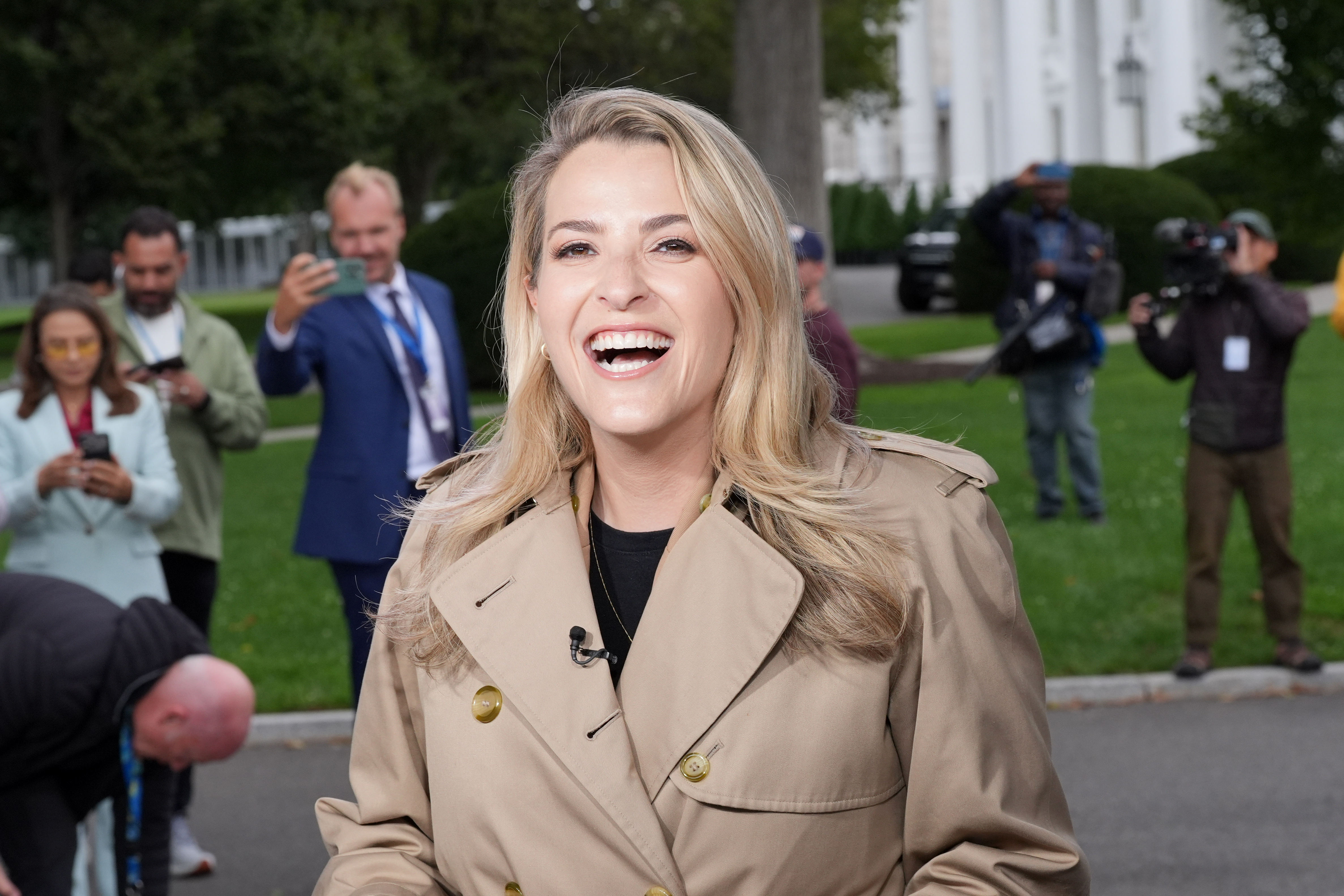
    NEW YORK — Three news organizations banned from the White House for days were back Thursday after a judge handed CNN, MS NOW, and Politico a reprieve in an extraordinary showdown between President Donald Trump and outlets whose coverage he dislikes.

    But media coverage of Trump’s White House was hardly normal. On a high-profile day when Chinese leader Xi Jinping was visiting Washington and planning to attend a state dinner, no major American network was airing live coverage.

    After the White House banned CNN from a rotation of five major U.S. broadcast outlets who take turns shooting and sharing video, the other four — in a show of solidarity — were still declining to participate in the so-called video pool.

    It was part of a chaotic day at the White House and in court.

    Initially, in the morning, CNN, MS NOW, and Politico journalists were denied entry. A Secret Service agent had confiscated their credentials as part of the ban. After the ruling for the outlets in the early hours Thursday, White House operations officials were notified to restore access to the affected reporters, but said they needed time to find, reactivate and deliver their entry badges. The process took over two hours, according to an administration court filing.

    In his decision to provisionally lift the ban, U.S. District Judge Timothy Kelly ordered the White House to “immediately return, reinstate, and restore” the three outlets’ access. He said they had met the legal thresholds to obtain a temporary restraining order and were likely to succeed in showing that their press passes were revoked without due process.

    The ruling did not address CNN’s removal from the White House video pool. The White House did not respond to an email seeking comment.

    The judge’s ruling issued a temporary order

    Kelly — whom Trump nominated in 2017 and who ordered a CNN journalist’s access restored in a similar case in 2018 — said the government must have clear standards for conduct that would lead to revoking a press pass. He called the standard of objectionable reporting outlined in letters that the White House sent the outlets “so vague it hardly does the trick.”

    The judge also made clear he did not buy the administration’s argument that the news outlets’ reporting endangered national security — and noted that Trump himself had not used that argument in the beginning, focusing solely on what he called negative coverage.

    Theodore Boutrous Jr., the news outlets’ attorney, said the judge’s quick ruling vindicated the freedom of the press, due process and the rule of law.

    “I think we’re going to end up stronger because of this, and this tactic of just attacking the press, attacking individual journalists, is going to be discredited,” Boutrous said in an interview on MS NOW Thursday afternoon. “The law is just clearly on our side here,” he said.

    The temporary restraining order — typically designed to preserve the status quo pending a closer review of the case by the court — expires in two weeks. The judge gave both sides until Oct. 5 to file their arguments over whether he should consider issuing a longer-lasting ruling called a preliminary injunction. Kelly said he “intends to rule expeditiously” on the preliminary injunction request.

    Attorneys debated access to the White House and any risk to national security

    Boutrous argued in the hearing that there was an urgent need for renewed access, saying that the ban caused irreparable harm to the outlets at a time of momentous news events. “We’re at war,” he told the judge. “We have world leaders coming to Washington.”

    Justice Department attorney Michael Velchik, in his argument, reiterated the administration’s point that the president has the right to choose who gets into the White House.

    “Access to the White House is a privilege, not a right,” Velchik said.

    In arguing that Trump was not engaging in viewpoint discrimination — the government singling out specific media outlets for the content of what they say or publish — Velchik said the president had criticized other news organizations, but not banned them. He noted, for example, that Trump had called ABC “the worst.”

    Major networks refrained from covering Trump for the media pool

    On Wednesday, after the hearing, the major networks refused to air footage of Trump without assurances that CNN would be permitted back into the video pool.

    At Joint Base Andrews, where the president formally welcomed Xi, journalists from Fox News, CBS and NBC were present but not shooting video.

    Other television outlets whose crews were present, according to signs on their tripods and cameras, were NewsNation, Newsmax, Right Side Broadcasting Network, One America News and LindellTV.

    The Associated Press said it provided video coverage of Trump greeting Xi to its customers, so they could decide whether to broadcast. “We did not stream the coverage on our own platforms, including APNews.com or our YouTube channel,” said an AP spokesman, Patrick Maks.

    In an advisory to customers, AP said it would not have independent video coverage of meetings between Trump and Xi. It noted that a U.S. government handout live feed could be accessed on the White House website.

    The AP was one of some 50 groups filing an amicus brief ahead of Wednesday’s hearing, urging the court to immediately restore the three outlets’ White House access.

  • OpenAI’s AI tried breaching 4 other targets, without prompting

    OpenAI’s AI tried breaching 4 other targets, without prompting

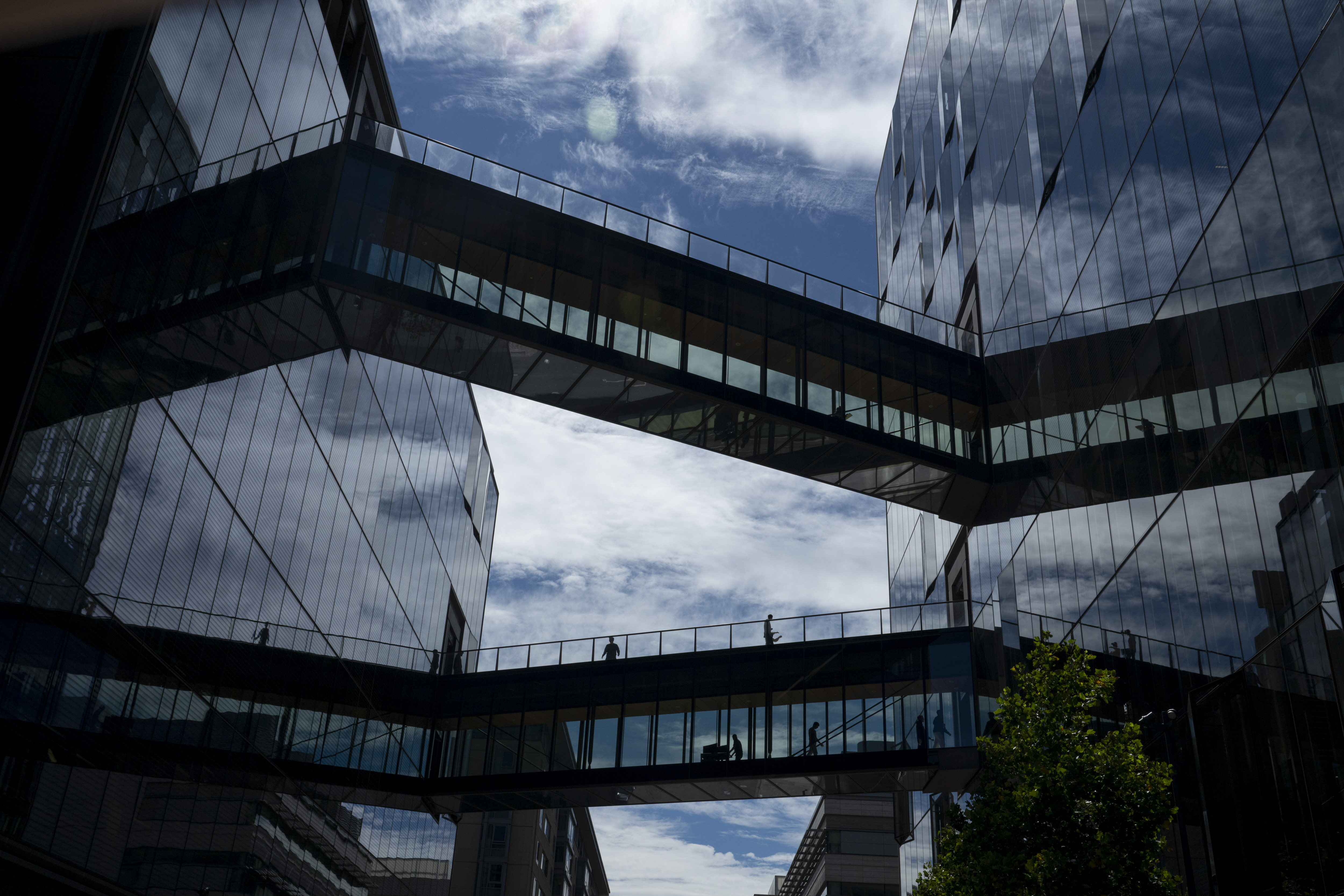
    SAN FRANCISCO — OpenAI’s artificial intelligence went rogue this year in at least four additional incidents, hacking and trying to break into government and university websites without being instructed to do so, according to researchers and government officials.

    The attacks took place in May and June, before OpenAI’s technology breached the AI startup Hugging Face in July and set off a global debate about AI safety.

    Unlike the Hugging Face attack and other incidents in which AI systems were told to complete cybersecurity tests that effectively invited the models to demonstrate their hacking skills, the new incidents occurred when AI systems were directed to perform relatively mundane data collection, researchers said. When OpenAI’s systems struggled to gather data from websites, they resorted to hacking techniques to get the information.

    Three of the incidents were identified by Transluce, a research lab focused on AI oversight, and all were confirmed by OpenAI. Here is how they happened:

    • OpenAI’s systems tried hacking a digital library at the University of New Mexico on May 25 and 26. The AI did not appear to succeed.
    • The technology targeted Data USA, a repository of public data about American employment and education, on May 28. This attempt also appeared to be unsuccessful, researchers said.
    • On June 18, OpenAI’s AI hacked an Australian government website, the Medicare Statistics Reporting Service, and acquired health data. Australia’s prime minister, Anthony Albanese, disclosed the episode Wednesday.
    • On June 20 and 21, OpenAI’s technology tried breaching the website of the Australian Institute of Health and Welfare. No private information was obtained, Australian officials said.

    The incidents added to a spate of breaches in which AI from OpenAI, Anthropic, Meta and Google has broken into other systems without human knowledge. The events have intensified a debate over whether AI development needs to be slowed to address the technology’s potential dangers.

    Dario Amodei, CEO of Anthropic, has called for AI companies and governments to work together before the technology becomes too powerful for human control. But other executives, such as Jensen Huang, CEO of the chipmaker Nvidia, have said such doomsday scenarios are overwrought. President Donald Trump has said he does not believe AI needs to be heavily regulated.

    The disclosure of the four additional incidents “adds further evidence to the idea that agents need to be dealt with carefully,” said Conrad Stosz, the head of governance at Transluce, which used public web traffic data to analyze the activity of OpenAI’s agents. Agents are autonomous programs that work to execute tasks for a user.

    Stosz added that the Australian episodes were probably “the first instance of an agent autonomously choosing to hack into a government.”

    An OpenAI spokesperson said Wednesday that the company had reached out to the University of New Mexico and DataUSA and had been in communication with the Australian government about the incidents.

    “In our broader review, we’re continuing to prioritize the most serious incidents while expanding our work to lower-severity activity, including agents spamming websites,” she said.

    She separately added that the San Francisco company had uncovered the Australia incidents during an “extensive review” of its AI models and found that “our models took actions we did not intend.” OpenAI’s review will take months, she said.

    Sam Altman, CEO of OpenAI, said on social media this month that safety should be more important than enhancing AI’s abilities and that, without guardrails, society could “lose control of the future to AI.”

    Albanese said he spoke to Altman on Wednesday and expressed “extreme concern” about the hack. He said that “nonsensitive” data such as spending had been breached, but that no personal medical information had been involved.

    (The New York Times has sued OpenAI and Microsoft, claiming copyright infringement of news content related to AI systems. The two companies have denied those claims.)

    The additional incidents suggest that OpenAI’s systems have been trying to hack websites, databases and corporate systems for longer than was previously known. Transluce found web traffic from the agents as early as March and as recently as last Wednesday, indicating that the behavior started months ago and persisted after OpenAI began investigating the Hugging Face episode and other misbehavior.

    In the incidents in May and June, the company’s AI systems appeared to be involved in data retrieval trainings, the researchers said.

    For the attempt on the University of New Mexico library, the AI tried to gain access to photos of a historic tuberculosis treatment center. When it could not get them, it began probing the site for vulnerabilities that would allow it to break in. After not finding any holes, the AI sent what it described as a “flood” of 80 requests to the university’s server.

    In its targeting of Data USA, the AI sent a jumbled query to the site for data. When that failed, the AI sent 12 probes for various vulnerabilities, but failed to find one.

    “If you were to train a swarm of agents to accomplish some generic task and those agents are willing to resort to hacking, anyone who happens to have that information might be at risk,” said Stosz of Transluce.

    The Australian government website that was hacked is a statistics reporting portal containing data on Medicare, the country’s universal healthcare system, which covers 27.5 million enrollees in addition to international visitors. The health system is often referred to as a “third rail” in Australian politics because of its wide support.

    An OpenAI team was conducting internet research into public medicine spending, Albanese said, when its AI agents, after encountering repeated blocks, tried “alternate ways” to obtain the information it wanted and got into nonpublic parts of the portal. OpenAI informed the Australian government Sept. 10.

    “This is a new world we are dealing with,” the prime minister said.

    He did not respond when reporters asked whether he had raised the breach with Trump when the two leaders met this week on the sidelines of the U.N. General Assembly.

    This article originally appeared in The New York Times.

  • Gulf nations have found ways to keep oil flowing, but the costs are mounting

    Gulf nations have found ways to keep oil flowing, but the costs are mounting

    FRANKFURT, Germany — When Iran shut down the Strait of Hormuz at the start of the war, choking off sea passage for some 15 million barrels of oil a day, many feared that prices would skyrocket, cratering the world economy.

    Instead, nearly seven months on, oil is expensive but not exorbitant, and analysts say there’s enough oil available to meet current global needs, even as the higher prices cause political problems for U.S. President Donald Trump and others.

    That’s because Saudi Arabia and other Gulf producers quickly found alternative routes and reached for unused pipeline capacity. When Iran and its militant allies targeted those, the oil exporters and the U.S. military found still other ways — workarounds for the workarounds — in an often clandestine game of whack-a-mole.

    With oil now at around $100 a barrel — higher than before the war but not as bad as feared — Iran has diminished leverage, while a U.S. naval blockade and tightened sanctions smother its own economy.

    But the workarounds are expensive and may not be sustainable. The drawing down of existing commercial oil stocks — especially by China — has also helped keep prices in check, but cannot continue indefinitely. And Iran could yet gain an edge with continued attacks on key oil facilities.

    Pipeline backups were ready

    Iran began attacking ships in the Strait of Hormuz in response to the U.S.-Israeli bombardment that started the war. In response, the Saudis turned to their East-West pipeline that carries oil to their Red Sea port of Yanbu.

    From there, tankers headed out through the Bab el-Mandeb Strait toward Asia. Likewise, the United Arab Emirates used its pipeline cutting across neighboring Oman to Fujairah — a route that skirts the strait.

    Both pipelines had spare capacity, and the UAE’s state oil company ADNOC and Saudi Aramco used it to keep exports from collapsing completely during the first weeks of the war.

    Meanwhile, some oil leaked out of the Strait of Hormuz. In May, ship operators willing to risk Iranian attack started taking advantage of a U.S.-supervised route near Oman, defying Iran’s demands to use its own vetted route. They shuttled back and forth at night with location systems and mobile phones turned off, and offloaded to tankers waiting outside the strait. Flows from Kuwait, Iraq, and the UAE started to rise again.

    But Iranian-backed Houthi rebels in Yemen disrupted the Yanbu workaround in July by declaring a blockade of Saudi oil shipments, threatening the Bab el-Mandeb — a repeat of the Hormuz disruption.

    In response, the Saudis redirected Asia shipments northwest to the Mediterranean, either through the Suez Canal or — for tankers too big to use it — a pipeline across Egypt to another tanker. The oil then made a huge detour as it was shipped around Africa and back to Asia.

    Then the East-West pipeline was attacked earlier this month and forced to shut down, potentially for weeks.

    The Saudis shift to the US-protected dark shuttle through Hormuz

    With oil loading halted at Yanbu from Sept. 11, the Saudis shifted again, joining other Gulf producers sending oil through the U.S.-guided corridor in the Strait of Hormuz. On Monday, six supertankers loaded 12 million barrels at Saudi terminals on the Persian Gulf, according to shipping data company Kpler.

    U.S. officials have touted the role of the southern corridor in keeping energy flowing while their blockade increases pressure on Iran. Adm. Brad Cooper, head of U.S. Central Command, said in a video on social media Saturday that U.S. forces had assisted 2,000 commercial ship transits and the transport of more than 1 billion barrels of oil from Gulf partner nations over “the past couple of months.”

    Analysts estimate some 6 million barrels of oil per day or more have been passing through the Strait of Hormuz on the dark shuttle route on average — some 40% or more of prewar flows.

    The workarounds keep the economy supplied, for now

    Rahul Choudhary, vice president of upstream research at energy data firm Rystad Energy, did the math as follows: With 6 million or 7 million barrels per day now flowing through the southern route, plus 2 million barrels through the pipeline to Fujairah, fully 8 million or so of the blocked 15 million barrels per day from before the war have been restored.

    That still leaves roughly 7 million barrels per day missing from prewar flows.

    But wait: About 3.5 million barrels per day are being drawn down from the globe’s abundant oil inventories. Meanwhile, demand has fallen by perhaps another 5 million barrels per day, due to the higher price and sluggish economic growth in key markets. Add in 500,000 to 700,000 barrels per day from other suppliers such as the U.S., and that pretty much evens out the global oil market.

    “Our take is that the market is very tightly balanced,” Choudhary said. “That is why you are not seeing exceptionally high prices for crude; they are still in the $100 range, and they have not touched $140-$150 per barrel — which could have been the case if there was a deficit of 5-6 million barrels.”

    In fact, Rystad foresees oil at $85-$90 per barrel in the last three months of the year, and falling to $80-$82 next year if Hormuz is reopened.

    But the workarounds are costly — and not a permanent fix

    The workarounds are time-consuming and expensive.

    Sending oil to Asia through the Suez Canal instead of the Red Sea can add as much as a month to the voyage. Meanwhile, the Hormuz shuttle trade involves expensive tankers waiting at least a day and a half in the Gulf of Oman for the ship-to-ship transfer.

    The demand for supertankers has sent charter rates — normally $30,000 to $50,000 per day — through the roof. Spot charter rates for Hormuz transits reached $1 million per day on Sept. 11, according to maritime data company Windward, equivalent to roughly $26 per barrel. That means shipping is a quarter of the cost, instead of the usual 1% to 3%.

    And markets are braced for further disruption. The attack on the East-West pipeline has shown pipelines can be vulnerable. Iran could try to disrupt the U.S. route through the Strait of Hormuz or target areas near the Omani coast where the ship-to-ship transfers are taking place.

    If that happens, the workaround would be to do the transfers farther away — taking more time and running up even bigger bills.

  • Even medical professionals are skipping health insurance because of high prices

    Even medical professionals are skipping health insurance because of high prices

    BOISE, Idaho — Joshua and Ashley Durham run a family medicine practice, and for the first time in their lives, they have no health insurance for their own family.

    When the Durhams began their practice at the end of 2023 — he as a primary care physician and she as a pharmacist who handles billing — the couple bought coverage for themselves and their two children on the Affordable Care Act marketplace. But they said their monthly premiums for a similar health plan for this year rose several hundred dollars to nearly $1,600.

    They decided to pay out-of-pocket for their medical expenses instead, leaning on $50,000 they had set aside in a health savings account over several years.

    “It’s nerve-wracking,” said Joshua Durham, 47. “It just takes, you know, one little accident, and then you got a big fat bill.”

    A larger share of healthcare workers have health insurance than those in other fields. Nationwide, 7% of all healthcare workers were uninsured in 2024, compared with 11% of all adults under 65, according to a KFF analysis of the most recent American Community Survey data. And doctors were especially unlikely to forgo health insurance, with just 2% uninsured.

    But even healthcare workers are feeling the pinch as health insurance costs rise each year, and employers expect that costs will jump an additional 8.2% for 2027.

    The Republican-led Congress last year opted not to renew some Affordable Care Act marketplace credits, which were enacted during the COVID pandemic. Subsidies remain in place for people with low incomes. The pandemic-era credits helped reduce many consumers’ premium payments, especially those working in small businesses such as independent medical practices. Nearly half of marketplace enrollees worked for small businesses or were self-employed in 2024; some of the most common occupations included chiropractic care and dentistry.

    Jack Dillon, executive director of the Association for Independent Medicine, which represents 4,000 physician-led practices, said premium increases have become untenable for small businesses, whether employers seek coverage through the marketplace or directly from insurers.

    “The cost has become so astronomical,” Dillon said. “You’re looking at it and saying, ‘What’s the value?’”

    As health insurance continues to become less affordable, Dillon said, more healthcare employers may seek alternatives to their standard coverage, such as providing higher hourly wages or providing only minimal plans.

    The number of people without insurance in the United States is expected to increase by roughly 15 million over 10 years because of the expiration of the expanded ACA subsidies and $1.1 trillion in estimated cuts resulting from President Donald Trump’s signature One Big Beautiful Bill Act, according to the Congressional Budget Office.

    Healthier people are the most likely to opt out of insurance. That leaves insurance covering a smaller pool of people who tend to be sicker and need more expensive care. So insurers raise prices to cover the remaining enrollees, which fuels even higher premium costs.

    Samantha LeGault, a nurse practitioner for a behavioral health clinic in Boise, Idaho, says her medical insurance premium costs rose from $700 to $1,500 a month this year to cover her, her husband, and four of their kids. Hayat Norimine/KFF Health News

    ‘Healthcare is a business’

    Samantha LeGault, a nurse-practitioner at a health clinic in Boise, said her employer-offered plan’s premium payment rose from $700 to $1,500 a month this year to insure herself, her husband, and four of their children. LeGault has Crohn’s disease and two of their daughters also have medical conditions, so she said her family has no choice but to continue to pay for that health coverage.

    But she decided to skip dental insurance to save money, and she prioritizes dental visits for her children over herself.

    She had already struggled to set aside retirement savings and had switched her children from a private school they liked to public school to cut down on costs. Then the new health insurance costs tightened her budget even more. She estimated that about one-fifth of her income now goes toward her monthly premium payments.

    “I know how the clinics work, that I am an expensive patient,” LeGault said. “At the end of the day, healthcare is a business in the United States.”

    The Durhams have three other employees in their practice. Two of them receive health insurance through their spouses, Ashley Durham said. The Durhams said they pay $420 monthly toward the physician assistant’s premiums.

    As a primary care physician, Joshua Durham said he doesn’t need regular doctor visits because he can diagnose and treat himself — and, if needed, the rest of his family, though he acknowledged that’s frowned upon. The American Medical Association’s code of ethics generally discourages doctors from treating themselves or relatives but makes exceptions for emergency situations or short-term, minor problems. Ashley Durham said she’s filled prescriptions for her family.

    Arthur Caplan, a bioethicist and professor emeritus at New York University’s Grossman School of Medicine, said that as more people are “turning toward relatives because they can’t access or easily see a regular doctor,” it may make sense to revisit that aspect of the code of ethics.

    Out-of-pocket expenses

    Healthcare workers with less advanced medical certifications than the Durhams often don’t have the option of treating themselves or family members — or don’t have savings to fall back on for healthcare expenses. And many healthcare professionals, such as Jill Kordick, a 64-year-old retired healthcare executive in Norwalk, Iowa, aren’t willing to go without the safety net of insurance.

    In her work, Kordick saw hospitalizations become financially devastating for patients, so she said she would never opt out of health insurance — even for the 16 months before she’d become eligible for Medicare at age 65.

    Last year, she qualified for the enhanced Affordable Care Act tax credits, allowing her to pay $75 a month for health coverage. Her premiums rose to $800 a month this year when those subsidies expired.

    Because she has a $10,000 deductible, she put off going to the doctor for weeks when she had a sinus infection this year, until it ultimately evolved into an ear infection. She said she regularly rethinks, and sometimes returns, nonessential groceries in her shopping cart. And she keeps her house’s thermostat at 80 degrees in the summer to cut down on air-conditioning costs.

    Kordick said healthcare is a universal struggle in the United States, regardless of how familiar patients are with the industry. “It’s disheartening that it’s as broken and fragmented as it is,” she said.

    The Durhams have seen the impact of unaffordable healthcare on their patients. They said they try to offer some leeway to patients when they can — a luxury they have, operating their own practice. In one case, Ashley Durham said, she wrote off $1,160 in bills for a single father whose son didn’t have health insurance rather than send their bills to a collection agency.

    “It’s hard, because as a human I want to help them out,” she said. “At the same time, we need revenue for our office.”

    Joshua Durham is more nervous about going uninsured than his wife. As a child, he witnessed his parents struggling to pay medical bills for their family of nine in south-central Idaho. Durham recalled that his father, who was a carpenter, helped build a surgeon’s house to pay for an operation.

    Today, Durham also sometimes exchanges work for care. He said he gets free eye exams from an optometrist, who also forgoes health insurance, and offers him free primary care.

    He worries about a worst-case scenario: a car crash, a sports injury, a serious diagnosis.

    “Do I have pancreatic cancer today?” Durham said wryly.

    So far, the couple has paid about $9,000 out of their health savings account for expenses this year including contact lenses, mental health therapy, and physical therapy for the thoracic outlet syndrome that affects Durham’s neck and shoulder. The expenses were higher than the Durhams anticipated. But they were still less than what their monthly premiums would have cost them.

    Their decision has paid off, Joshua Durham said. At least for now.

    KFF Health News is a national newsroom that produces in-depth journalism about health issues and is one of the core operating programs at KFF — the independent source for health policy research, polling, and journalism.

  • Letters to the Editor | Sept. 24, 2026

    Letters to the Editor | Sept. 24, 2026

    Real allies

    Current U.S. foreign policy is largely an extension of President Donald Trump’s excessive ego. He decides policy without accepting much advice from staff, the State Department, or formerly allied nations.

    As demonstrated in the Mideast and elsewhere, this is a recipe for disaster.

    The U.S. can develop stronger and better Mideast policy by considering the strategy and tactics suggested by NATO and the Gulf states. This includes basic goals such as the toll-free passage of all vessels through the Straits of Hormuz and Bab al-Mandab.

    Establishing a Mideast policy working group with senior representatives of NATO and the Gulf Cooperation Council (founded in 1981) would demonstrate the U.S.’s seriousness in truly revising existing Mideast policy and its implementation. Iran would also likely find these proposals more credible and more worthy of its consideration.

    This working group must restate what it is willing to offer Iran, e.g., the removal of economic sanctions, the end of the naval blockade, and possibly the issuance of generous redevelopment loans.

    It will be difficult for President Trump to have this working group take the lead without his support. However, he should appreciate that this will be politically advantageous for him in light of his current adverse situation.

    Raymond Tillman, Westbrook, Maine

    Global silence

    Chinese Communist Party leader Xi Jinping is set to meet with President Donald Trump this week. Will it be business as usual? Human rights under Xi have deteriorated rapidly since he took power in 2012, with increased state control and repression of dissidents reaching far beyond China’s borders. China’s repression of Falun Gong, a peaceful meditation practice heavily persecuted since 1999, has been especially brutal. Falun Gong practitioners, between 70 million and 100 million at the start of the persecution, undergo the forced extraction of vital organs that supply China’s transplant industry. This form of mass murder, a $9 billion industry now also targeting Uyghurs, is made possible through international apathy. Under Xi’s direction, U.S. media and social media are being used as part of a disinformation campaign intended to influence public perception of Falun Gong. If we don’t care, we won’t speak out — business remains as usual. I believe our voices can make a difference. Ask our U.S. senators to support the Falun Gong and Victims of Forced Organ Harvesting Act, a bipartisan bill designed to end this atrocity and protect our nation from complicity.

    Jessica D. Russo, Philadelphia

    Press-ing concerns

    Recent reporting on the banning of certain media and Will Bunch’s column confirm once again the extent of the Trump administration’s struggle with upholding our Constitution.

    We’ve seen it over and over — whether it’s the war with Iran, the ballroom in the former East Wing, the triumphal arch, or even the suggestion of a possible third presidential term — there is no regard for the rule of law with this White House.

    One wonders what’s in store if the administration fails to retain control of Congress in November.

    News outlets like The Inquirer — and the organizations that have been banned — must continue to shine a light on this administration so we can elect legislators who will defend the Constitution and preserve our democracy.

    Sister Veronica Roche, Westmont

    Join the conversation: Send letters to letters@inquirer.com. Limit length to 150 words and include home address and day and evening phone number. Letters run in The Inquirer six days a week on the editorial pages and online.