Tag: no-latest

  • Why recruiters can’t find workers and new grads can’t find jobs (it’s not AI)

    Why recruiters can’t find workers and new grads can’t find jobs (it’s not AI)

    Recent college graduates complain they can’t find entry-level jobs because artificial intelligence is taking over.

    Yet, tech recruiter Matt Walsh and other experts say the growth of AI and the struggle to find entry-level work mask a bigger problem: The United States is facing what’s projected to become the largest labor shortage in its history.

    In sectors such as semiconductor production, the problem isn’t AI or too few jobs, said Walsh, CEO of the Phoenix-based search firm Blue Signal.

    “It’s ridiculous,” he said. “There just aren’t enough people.”

    Economists warn that the worsening labor problem, due in part to a skills shortage and population shifts, will be vast and reach beyond tech.

    It “could hobble the American economy for years to come,” predicts the Georgetown University Center on Education and the Workforce. Lightcast, a labor market data company, calls it “the largest labor shortage the country has ever seen.” JPMorgan Chase warns of a national security risk from “a pervasive talent deficit that constrains the nation’s capacity to build, compete, and protect its interests.”

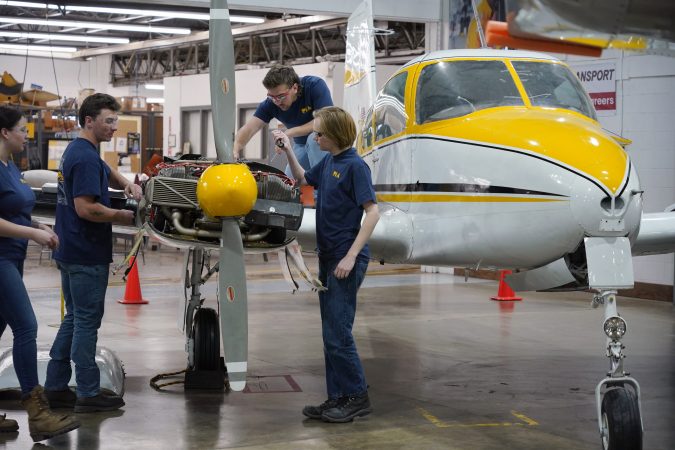
    There will be shortages in the tens or even hundreds of thousands of nurses, physicians, teachers, engineers, pharmacists, mental health counselors, construction workers, and airplane mechanics — jobs AI generally can’t do.

    “All of these people who keep a society functioning are the very people we’re not going to have enough of,” said Ron Hetrick, Lightcast’s principal economist.

    Among the trends that have been leading to this moment: a mismatch between the careers college graduates are pursuing and the jobs employers are struggling to fill. Far fewer students are majoring in healthcare fields than are needed to meet demand, for instance.

    “We have pumped so many young people into business and finance” when what’s really in demand are graduates in other fields, Hetrick said. “It’s like a factory producing these workers like widgets, even though society is saying, ‘We really don’t need them.’ And the factory just keeps pumping them out.”

    But the principal reason for the looming workforce shortages is much more basic. A protracted decline in birth rates is coinciding with a record wave of retirements, data shows.

    From 2024 to 2032, when the last baby boomers sign up for Social Security payments, more than 18 million college-educated workers will leave the labor force while fewer than 14 million enter it, according to the Georgetown center. Meanwhile, even as the number of people with associate and bachelor’s degrees falls, the number of jobs requiring them will grow, the center forecasts.

    That will leave a gap of 4.6 million workers. Lightcast puts the deficit at an even higher 6 million.

    The shortages are already showing up, the U.S. Chamber of Commerce reported. It said that in many industries, even if every worker now unemployed were plugged into an open job, positions would still be left unfilled.

    “We have a crisis in front of us in not preparing people for the world that’s coming,” said Bill Haslam, the Republican former governor of Tennessee and co-chair of the Bipartisan Policy Center’s Commission on the American Workforce.

    The effect of population shifts on the supply of talent, with or without degrees, has been compounded by a drop in the proportion of high school graduates choosing to go to college, a sharply reduced rate of immigration, and a growing number of Americans leaving the workforce altogether because of such issues as lack of childcare, early retirement, incarceration, and substance addiction, according to the Chamber of Commerce.

    College and university enrollment in 2023 was down by nearly 2 million students since its peak in 2010, according to the most recent data available from the U.S. Education Department. The low birth rate since 2010 means the number of college-age Americans is forecast to decline by another 13% through 2041.

    Fewer than half as many people immigrated to the United States last year as the year before, the Census Bureau says, yet 41% of the home health aides increasingly needed to care for the nation’s aging population have historically come from somewhere else, along with a fifth of nursing assistants, dentists, pharmacists, and registered nurses.

    “We’re doing a fantastic job of rolling up the welcome mat and saying, ‘We don’t want you,’” said Brad Hershbein, senior economist and deputy director of research at the W.E. Upjohn Institute for Employment Research.

    The semiconductor industry is among those raising warning flags about the problem of finding workers. It’s projected to grow by nearly 115,000 jobs by 2030, which is 67,000 more than the number of current and projected technicians and engineers, the Semiconductor Industry Association estimates.

    “The semiconductor industry is not alone here,” however, said Erik Hadland, the association’s director of technology policy. “We’re a small part of a much larger issue.”

    State governments have been scrambling to get ahead of the problem. To get college graduates to come or stay and work, some will help them pay off their student loans. A bill under consideration in Minnesota would offer in-state tuition to most public colleges and universities for children of parents who take jobs in that state, waiving the previous requirement that students have graduated from a Minnesota high school after attending for at least three years.

    Several states have combined their higher education and workforce development agencies, including Missouri and Colorado. Connecticut has established both an Office of Workforce Strategy and a Career Pathways Commission. Illinois Gov. JB Pritzker has formed a working group to review that state’s workforce development infrastructure and increase the number of college graduates.

    Some states face shortages that appear more severe than others. South Dakota has just 41 workers for every 100 open jobs, for instance, while California and nine other states have more workers than jobs, the Chamber of Commerce found.

    In Pennsylvania, a study commissioned by the state’s Department of Education has projected that the state needs to increase the number of people with credentials beyond high school by more than 4% to fill a shortage of 218,000 such workers a year by 2032. That will be a significant challenge, considering that college enrollment there has generally been falling.

    Industries in which workers don’t require college degrees are also seeing shortages. Fewer than half as many people are entering the construction trades as are needed, for example, according to Branka Minic, CEO of the Building Talent Foundation, which represents 3,600 employers who are trying to fill that gap.

    “There’s plenty of jobs” in the skilled trades, she said, some starting at $50 an hour. “Show me what college graduates earn that kind of rate.” As for the prospect that AI can fill those largely physical roles, she recalled seeing a poster plastered on an unfinished building. “Finish this, ChatGPT,” it said, mockingly.

    Some savvy workers are figuring it out for themselves.

    Seth Russell’s high school counselor nudged him toward college. Instead he learned welding and now works full-time as a fabricator.

    “I got hired straight out of high school. I have no debt. I’m just making money, paying bills,” said Russell, now 22, who lives in Torrance, Calif. “There’s so many jobs out there.”

    This story about shortages of workers was produced by The Hechinger Report, a nonprofit, independent news organization focused on inequality and innovation in education.

  • Your paycheck is just keeping up with inflation

    Your paycheck is just keeping up with inflation

    American workers’ paychecks are about where they were a year ago, and up 27 cents per hour in today’s dollars since President Donald Trump took office in 2025, because of inflation that has undercut pay increases.

    June’s average hourly wage gain of 3.5% from a year earlier just kept up with inflation of 3.5% over that same yearlong period, according to data released by the Bureau of Labor Statistics on Tuesday.

    Affordability has been playing a big role in how people feel about the economy. When pay doesn’t beat inflation, the political consequences rise.

    “President Trump was elected because people were unhappy with the southern border being open and people were unhappy with the inflation that they had to deal with under President Biden,” said Michael Strain, director of economic policy studies at the right-leaning American Enterprise Institute. He said Americans’ experience in the economy “really does affect their opinion of how presidents are doing, kind of fairly or unfairly.”

    White House spokesperson Kush Desai said in a statement that “President Trump has always been clear about the fact that oil and gas prices — and thus overall inflation — will rapidly drop as soon as the Iran situation is resolved.“ Desai added the administration’s “commonsense agenda of deregulation, tax cuts, and energy abundance” will push wages up.

    Americans’ buying power did grow a little in June over May, as falling gas prices pushed the cost of living down slightly, according to Labor Department statistics released this week. Real average hourly earnings for employees increased 0.8%, the biggest monthly gain in more than a year.

    But that gain comes as cold comfort to the millions of workers whose wages have failed to match it, with prices for many basics like milk and beef climbing steeply this year. Gas prices are also rising again as the U.S.-Iran conflict resumes after the collapse of the short-lived ceasefire.

    “No matter what we see in the averages, there’s going to be a lot of people whose wages are simply not keeping up with inflation,” said Betsey Stevenson, who was the Labor Department’s chief economist from 2010 to 2011 and is now at the University of Michigan. “So they just can’t buy the same bundle of goods that they could have bought a year ago.”

    Many workers holding the same job year after year see raises of around 3%. Some get less. Those people fall behind in an economy running at 3.5% inflation.

    Others who are switching jobs or in a position to demand more from their current bosses are beating inflation. But few workers are moving into new jobs in the current sluggish labor market — with the share of the workforce quitting at the lowest level since 2020, according to recent Labor Department data.

    “What you do get out of that is a lot of people feeling like it’s unfair,” Stevenson said. “And I think that’s coming into an economy where people have been questioning the fairness of the economy for a while.”

    Jessica Newell, 45, earns $80,000 a year as a counselor at a Philadelphia public school, but despite annual salary increases, she is barely surviving, she said. After rent on an apartment she shares with a roommate, groceries, and a $440 monthly student loan payment, she has nothing left and sometimes puts bills on her credit card. Newell currently has less than $1,000 in savings, she said.

    “A lot of the middle class is getting so crushed, and I don’t think anyone cares,” said Newell, who works a second job in the summers to pay the bills. “We don’t have money to live comfortably between paychecks. And there’s no saving for a rainy day emergency. God forbid anything happens to my car.”

    Prices ran low for much of the 2000s and 2010s — increasing about 2% a year or less — so a modest raise kept workers even or a little ahead. That changed after 2021, when inflation spiked to a four-decade high during Biden’s presidency. Inflation cooled by the end of his term, but climbed back up through 2025, reaching 4.2% this May under Trump.

    Those who own appreciating assets, like homes or stocks, tend to be better positioned against inflation, because the value of those assets can rise with prices.

    “Different people are just having very different experiences,” Stevenson said. “That’s ultimately the real problem with inflation. It redistributes in a way that’s kind of random. Who ends up being able to buy more stuff today and who ends up being able to buy less stuff isn’t really based on who worked harder over the last year.”

    Average earnings, measured by what that money can actually buy, are known as “real wages.” They rose slightly during the initial year of Trump’s presidency. Then they dropped this spring as the conflict with Iran drove oil prices higher, nearly erasing the earlier gains. June’s easing of inflation, which stemmed from the ceasefire, allowed real wages to start increasing again. But that upward trajectory could once again reverse depending on how things go with Iran.

    Different states are also experiencing different wage environments. Workers’ earnings in some states are slightly beating inflation, while those in others appear to be losing ground on average.

    Several of the states where workers are falling behind include congressional districts considered toss-ups in the upcoming midterm elections as Republicans try to defend their majority in the House of Representatives.

    In Arizona, for example, Republicans are battling to hold two toss-up seats in a state where many voters feel squeezed by rising costs.

    Barrett Marson, a GOP strategist in Arizona, said it would be a mistake for Republican candidates to overlook Arizonans’ pocketbook pain as November nears. High inflation will be top of mind for voters, he said.

    “If gas spikes again, Republicans are in trouble. It’s just that simple,” Marson said. “People are going to think about their economic situation and vote accordingly, probably up and down the ballot.”

    He added that many would-be GOP voters could be offended by the president’s dismissive comments about inflation caused by the Iran war.

    “The problem with Biden — and now Trump is singing from that same hymn book — is the idea inflation doesn’t matter, [that] ‘you don’t know your finances as well as I know your finances,’” Marson said. “It didn’t work for Biden, and I don’t think it’ll work for Trump or anyone who follows that playbook.”

    Dana Angelos, 51, of South Carolina, was making $20 an hour as a medical biller a few years ago, but then the contractor she worked for shut down. This year she’s been earning about $18 an hour for the same work, even as her living expenses have soared. To manage, Angelos moved to her mother’s property in a rural area, where she can live rent free. She also began supplementing her grocery shopping with donations from food pantries.

    Angelos said Aldi and Walmart used to be affordable for her.

    “But not anymore,” she said. “Everything’s going up but our paychecks.”

  • Letters to the Editor | July 17, 2026

    Taxed out

    I am 80 years old and was living happily on a pension with my wife of almost 50 years. Then I sold my house in Center City in 2020 and bought a house on the edge of the city where we could more easily isolate (it was the height of the pandemic), and where I could unpack my large library (both of us write books and need our library, but writing is not a significant source of income). So I carefully planned what we could afford, assuming that not only would our taxes rise with inflation, but that my pension would, too. In 2024, the city literally doubled our real estate taxes in one year. I had to go back to work full time (at half the salary I commanded 20 years ago), but I count myself lucky to have found work at my age. Who knows how long I’ll be able to keep it up? There is no way I will ever be able to afford to retire, and when I die, my wife will lose half the pension and won’t be able to keep her house.

    With the recent property assessments, is anyone thinking about the bind our elected officials have left seniors? I spent the money to get a professional and objective appraisal, and attempted to appeal this breathtaking tax increase of 100% in one year. No one from the city ever came to look at the house; I suppose they just relied on Zillow.

    Many seniors, who, like me, worked for half a century paying taxes, paying into a retirement plan, and who still vote, must be feeling as I do that nobody cares about seniors. I am a lifelong Democrat, but I see that a Republican in the state House is the only one to propose a bill in either the legislature or City Council to exempt seniors from real estate taxes. Does anyone want to see their parents or grandparents — or one day themselves — in this position? Seniors have earned a retirement, not an eviction.

    Jonathan Fineberg, Philadelphia

    Falsely accused

    All major religions emphasize our responsibility to those in need. “… wherever human beings endure suffering and humiliation. We must always take sides” (Holocaust survivor and Nobel Peace Prize laureate Elie Wiesel). The Quran commands giving out of love to “the poor, needy travelers” (Surah Al-Baqarah 2:177). Jesus is clear about our duty to care for the vulnerable: “So in everything, do to others what you would have them do to you” (Matthew 7:12). Yet when Pope Leo XIV likewise quotes from traditional Catholic Social Teaching and reminds us of our moral obligation to the unprotected, he is accused, even by so-called Catholics, of being a Marxist/communist. Congratulations to Pope Leo XIV, who has now joined such respected figures as Nelson Mandela, the Rev. Dr. Martin Luther King Jr., Franklin D. Roosevelt, John F. Kennedy, and Albert Einstein — each of whom was wrongly accused by conservatives of being a communist.

    Tom Sexton, Philadelphia, tom_sexton@hotmail.com

    Join the conversation: Send letters to letters@inquirer.com. Limit length to 150 words and include home address and day and evening phone number. Letters run in The Inquirer six days a week on the editorial pages and online.

  • Dear Abby | In-laws’ clear favoritism doesn’t bode well for the future

    DEAR ABBY: My husband has a twin brother and a younger brother. After I met his family, it became clear that his parents openly favor his twin, “Kaden.” Based on childhood stories my husband and other family members told me, his parents have spent most of their time, energy and money on Kaden. Previously, it made sense. Kaden had health problems as a child and required extra care. But now, although he’s a healthy adult in his mid-30s, the situation hasn’t changed.

    Some examples: During his speech at our wedding, my father-in-law asked the room to toast to Kaden’s various achievements instead of toasting my husband and me! My in-laws cancel visits to us because Kaden decided to visit them at exactly the same time. They have planned their vacations based on places Kaden thinks they should visit. Speaking to them on the phone is infuriating since most of the conversation is about what’s going on with Kaden.

    I don’t speak to my husband about it often because he gets angry when I bring it up, and their younger brother just shrugs it off as how things have always been. Kaden and his spouse are now trying to have a baby, and my husband is asking that we start trying, too.

    Abby, I’m hesitant. I believe it’s important kids grow up with the love and support of grandparents. But based on their behavior for the last 30 years, I’m afraid that if both of us have children, his parents will continue this favoritism toward Kaden’s family.

    I am anxious about his parents forgetting our kids’ birthdays or not wanting to visit them. I’m loath to put my children into that situation and am considering refusing my husband’s request, whatever it may mean for our relationship. Am I being unreasonable?

    — UNFAVORITE IN THE WEST

    DEAR UNFAVORITE: Because of the degree of dysfunction on your husband’s side of the family, it might be helpful to talk this through during some sessions with a marriage and family therapist. You didn’t mention in your letter whether you want to be a mother. If the answer is yes, it could be time for you and your husband to start — provided he isn’t making the request because he’s trying to keep up with his twin brother.

    Granted, your in-laws may be dreadful grandparents — but there are usually four of them. I would think your parents would be delighted at the prospect of a new grandchild, as would other relatives on your side of the family.

    ** ** **

    DEAR ABBY: I am a lover of words and find great pleasure in them. There are so many different ways to express myself that I try to use as many as possible. It was recently suggested that perhaps I should limit my vocabulary in order not to confuse some within my circle. I would never knowingly want to make anyone feel “less than,” but it breaks my heart a little bit to not use all the wonderful words available to me. Am I being too sensitive?

    — LOVES LANGUAGE IN THE EAST

    DEAR LOVES: Words are meant to help us communicate with each other, not separate us. If the vocabulary you are using is too esoteric for your friends to easily comprehend, do them (and yourself) a favor by using language they can understand when you are with them and save the fancy lingo for people who are more receptive.

  • Horoscopes: Friday, July 17, 2026

    ARIES (March 21-April 19). “Hard work leads to success.” “This is how a good family behaves.” “You have to leave home to make something of yourself.” These are all stories about how the world works, but are they universal truths? Today you’ll challenge a collective narrative.

    TAURUS (April 20-May 20). Someone doesn’t appreciate everything you do for them, but that matters very little to you now. Your generosity is offered as a gift, not a negotiation. Maybe they’ll never “get it,” but your generosity remains a constant pillar of your character.

    GEMINI (May 21-June 21). Since the word “don’t” reinforces the negative and makes people defensive, you focus on the “do” side of things. Keep talking about the desired result. Describe it well and ask for it in as many ways you can think of.

    CANCER (June 22-July 22). One mark of genius is an open mind. Today it’s advantageous to ask questions, even if you think you know the answers. The rewards of continual efforts to clarify the world will make you positively rich.

    LEO (July 23-Aug. 22). Maybe your habits and patterns seem predictable to you, but don’t underestimate the amount of time people actually need to learn one another. The people around you still don’t seem to know what you’ll do next — how exciting.

    VIRGO (Aug. 23-Sept. 22). An apple falls. The moon circles the Earth. Most people see two separate facts. Newton saw a relationship and had an idea. Many of the best ideas are connections between two seemingly unrelated facts. You’ll make one today.

    LIBRA (Sept. 23-Oct. 23). A person who listens well is surprisingly rare. That’s why the attention you give is far more valuable than money, status or other tangible commodities being exchanged today. You’re kind, and you’ll be respected for it.

    SCORPIO (Oct. 24-Nov. 21). You’re a problem solver. When a feeling appears, your instinct is often: What action should I take? But not every uncomfortable feeling requires a project. Sometimes the feeling just wants acknowledgment.

    SAGITTARIUS (Nov. 22-Dec. 21). The more you try to fall asleep, the harder it becomes. And the same can go for waking up. So instead of forcing yourself, think in terms of creating circumstances conducive to the state you desire, or making the incentives compelling and obvious.

    CAPRICORN (Dec. 22-Jan. 19). Reality wraps its arms around you and you hug it right back. Instead of wishing for different circumstances, you work with the ones in front of you. The more complex they are, the more creative you get.

    AQUARIUS (Jan. 20-Feb. 18). When overloaded, the goal is not necessarily to solve everything. The goal is to reduce the sense that you’re carrying 12 things in your head at once. Write everything down then decide the next three things, not the next 30.

    PISCES (Feb. 19-March 20). Does it seem like a relationship exists mostly in the hypothetical? Potential is a possibility, not a promise. Paying attention to what is happening today will be more illuminating than imagining what might happen someday.

    TODAY’S BIRTHDAY (July 17). It’s your Year of the Mosaic. Life comes together piece by piece as though designed and the result is pure art. Your skills, relationships and experiences fit to make things and scenes of beauty. More highlights: Invitations that change your social and professional landscape in desirable ways. Exciting collaborations bring in the money. A family success gives everyone reason to celebrate. Virgo and Pisces adore you. Your lucky numbers are: 14, 32, 7, 19 and 2.

  • Trump uses primetime address to the nation to once again raise doubts about past elections

    Trump uses primetime address to the nation to once again raise doubts about past elections

    WASHINGTON — President Donald Trump used a primetime address to the nation Thursday to once again raise doubts about the results of past elections, reviving a subject he’s long used to make unproven claims and deny his loss in the 2020 election.

    Trump’s fixation on his loss to Democrat Joe Biden six years ago and the long-debunked theories he’s circulated about it are things he still brings up regularly when discussing other subjects. But elevating the deeply political and conspiratorial topics to a presidential primetime address underscores the lengths to which Trump has used his second term to both blow past norms and fixate on old grievances.

    Trump began Thursday night with a stark warning about what he described as flaws in the voting system and said he was releasing previously classified documents related to the 2020 and 2018 elections.

    “America is back and doing really well, but we still have a major challenge that must be urgently addressed, because no country can be great without fair and honest elections,” he said.

    He said all Americans should be assured their elections are free of cheating and interference.

    “Unfortunately, the system we have today falls catastrophically short of that standard,” Trump said.

    Trump used the remarks to justify his push to pass a strict voter ID bill in Congress.

    Primetime presidential addresses are typically reserved for major milestones or nationally significant events.

    Trump last did it in April to speak on the Iran war, a month after it started. He said then that the U.S. would accomplish its objectives “very shortly” and that “the hard part is done, so it should be easy.” The war, however, has dragged on and strikes between the U.S. and Iran have intensified this week.

    Trump also delivered a politically charged primetime speech in December in which he sought to blame the challenging economic climate on Democrats.

    Some networks did not air it live

    At least some TV networks said Thursday they would not carry the speech live but would air it on their streaming services. ABC, NBC and CNN decided not to air the remarks live but to carry them in full on their streaming services and break into network coverage as needed.

    CBS said it was “airing a special report” during the address, but it wasn’t clear if the network would carry it live.

    Trump called out the media outlets for not carrying it live and accused them of being “part of a plot.”

    Networks typically but don’t always choose to carry presidential addresses to the nation live. In 2022, when then-President Joe Biden delivered a primetime address full of warnings about Donald Trump and his adherents’ “extreme ideology,” the networks did not carry it live.

    In 2014, the major networks chose to stick with their primetime programming instead of airing an address by then-President Barack Obama on his plans for immigration reform.

    White House press secretary Karoline Leavitt on Thursday afternoon seemed to be still trying to persuade networks to carry the remarks live, saying, “I think that the mainstream media should air the president’s speech and allow the American people to draw their own conclusions from it.”

    Raising questions about the midterms

    Democrats warned that Trump was trying to revive false claims of past stolen elections in order to delegitimize the 2026 midterm elections, in which Trump’s Republican Party is facing headwinds.

    “Trump is going to use a primetime address to stoke misleading claims about our elections in order to justify interfering in our midterms. It’s on all of us to follow the facts and not accept his constant stream of misdirections and lies,” Virginia Democratic Sen. Mark Warner said in a statement on X.

    “Trump is again trying to drum up baseless election conspiracies ahead of the November elections,” New Jersey Democratic Sen. Andy Kim said in a post on X. “Americans are tired of endless war, skyrocketing gas prices, and a president that isn’t looking out for them. Voters will make their voices heard, whether Trump wants them to or not.”

    Leavitt didn’t answer a question Thursday about whether Trump would accept the results of the midterms, though Vice President JD Vance told reporters on Capitol Hill a day earlier that “of course we’re gonna support the results of the midterm elections.”

    Vance bristled Wednesday when asked if he’d encourage Trump in his Thursday remarks to stay focused on November’s midterm elections rather than relitigate past elections. “‘The unfounded claims,’” Vance said, repeating the reporter’s language. “You’re basically assuming an answer in the very question that you ask.”

    “The president is going to talk about a number of things tomorrow night. I’m obviously not going to get ahead of his remarks,” Vance said. “But we can talk about a number of the American people’s problems. We can solve a number of the American people’s problems.”

    Before he began speaking about elections, Trump started his speech by ticking through a long list of what he said were his administration’s accomplishments — including cutting drug prices.

  • Texas flash floods leaves at least 2 dead in region devastated a year ago

    Texas flash floods leaves at least 2 dead in region devastated a year ago

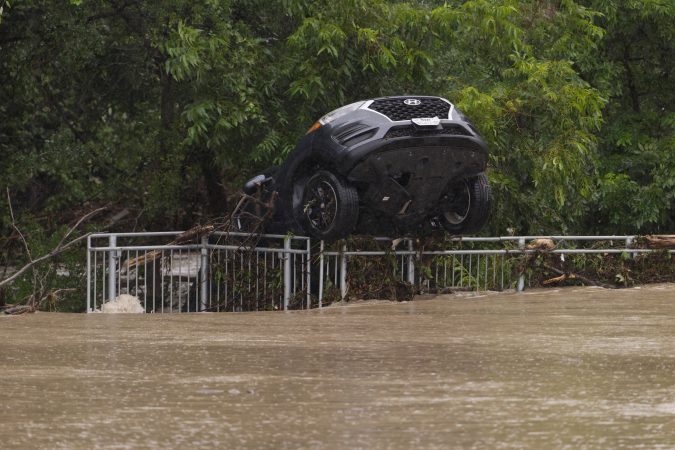
    UVALDE, Texas — Catastrophic flash floods in Texas have killed two people and forced hundreds of rescues in areas still reeling from devastating floods a year ago, Gov. Greg Abbott said Thursday.

    Rescuers aboard boats and helicopters have saved more than 200 people, including stranded drivers and people trapped in homes, Abbott said.

    The governor said the hardest-hit areas are expecting more rain into Friday and are not out of danger yet, with some rivers expected to reach historic levels.

    After days of pounding rain, the National Weather Service said a “large and deadly flood wave” barreled down the same river wrecked by flash floods last summer when two dozen children and counselors were killed at Camp Mystic.

    Much like last year, the floods came in the middle of the night. But this time some residents in the Texas Hill Country said they received more warnings.

    Forecasters urgently warned, “Move to higher ground now!” as rivers rose hour by hour, turning them into fast-moving seas of white water. Some spots of the Guadalupe River rose by more than 30 feet.

    The governor said more than 1,300 first responders were deployed.

    As much as 28 inches of rain fell over the past three days in Uvalde County, which was spared from the worst flooding a year ago, the weather service said Thursday. Other areas saw roughly a foot of rain with more expected going into Friday.

    “This is hopefully the last real batch of rain,” said Jason Runyen, a meteorologist with the weather service.

    Victim in Texas floods was swept away

    While authorities have not released the name of the person who died, Jennie Steward said the body of her husband, 65-year-old John Mark Steward, of Kerrville, was found Thursday.

    She was visiting her parents when a neighbor called overnight, saying her husband was missing after water had risen to the door of their mobile home, which stood about 8 feet off the ground.

    The entire home was swept off the platform and floated down Goat Creek on the Guadalupe River, she said.

    “It’s really hard that I wasn’t there with him,” she said. The two were married three years ago and last spoke by phone Wednesday to celebrate their anniversary.

    Hill Country residents say they were better prepared for floods

    The unfolding crisis brought back haunting memories of last summer’s unimaginable Hill Country floods that killed more than 100 people over the July Fourth holiday.

    “It’s crazy happening two times in one year,” said Josiah Rodriguez, who awoke to the sound of heavy rain around 2 a.m. Thursday in Kerrville. He navigated flooded roads to help evacuate relatives.

    “Last year there was no warning of it,” he said. “It just kind of happened overnight and it took everyone by surprise. This year, a lot more alerts have gone into place, a lot more safety measures.”

    Residents said they were caught off guard a year ago and didn’t receive any warning when floods overtopped the Guadalupe. Some local leaders were criticized for not acting quickly.

    The storms and flooding this time threatened multiple counties close to the Mexico border and in the Hill Country near San Antonio. Roughly 6 million residents across Texas were under a flood watch this week, and some were expected to remain in effect through Friday evening.

    Several agencies sent rescue helicopters to the flood zone, including Travis County in the state capital of Austin.

    “My understanding is people were mostly trapped in trees and on rooftops,” said Travis County Judge Andy Brown, who said one caller warned 10 people were trapped on a barn roof.

    Residents rush animals and campers to higher ground

    At a wild animal rescue, Katie Buck evacuated several dozen animals to higher ground in the dark Thursday as the normally dry Lazy Creek overflowed. She had to quickly grab a porcupine despite having no gloves.

    She got all of the animals to safety, but flooding destroyed several enclosures at the Buck Wild Animal Rescue and Wildlife Rehab near Ingram in Kerr County.

    “We were just starting to get back on our feet again,” Buck said. “To have to go through this again is just devastating.”

    Residents at an RV park in Comfort moved their trailers as sirens sounded, said manager Duke Earwood.

    Water rose over the hoods of vehicles parked near the river at the Comfort RV Resort. Markers showed the flooding already matched last July’s big flood.

    “Too familiar for sure, and too soon,” Earwood said.

    Uvalde residents isolated by floodwaters

    Floodwaters also overran the city of Uvalde overnight, cutting off most outside routes. The Leona River, normally dry most of the year, filled streets with water.

    “People really can’t get anywhere,” said Carmen Rodriguez, who nervously watched water engulf her neighborhood as a helicopter roared overhead. “We have a place to go, but all the streets are closed.”

    Rodriguez said authorities seemed to be well prepared, ordering mandatory evacuations and notifying people directly.

    Texas Game Wardens rescued close to 150 people by the afternoon, according to a Texas Parks and Wildlife Department spokesperson. Video released by the agency showed crews hoisting children from a house surrounded with water into a helicopter.

    Flooding hasn’t reached last year’s deadly high

    So far, the heavily swollen Guadalupe has remained below the record levels reached in 2025. Gauges showed it rose by more than 30 feet in some spots over just a few hours.

    Close to Camp Mystic, which hasn’t reopened since last year’s tragedy, the Guadalupe near Hunt reached about 20.5 feet, which is enough to cause flooding, according to U.S. Geological Survey and National Water Prediction Service data.

    In Kerr County, where summer camps dot the river’s shores, the sheriff’s office said all campers were safe. Several camps said the children were staying inside, with one camp reporting normal flooding.

    Towns still rebuilding are hit by new floods

    While the water didn’t rise as high as a year ago in Ingram, Mayor Claud Jordan believes this round of flooding was more widespread in his city. “The rural part of Ingram, all the roads are just trashed,” he said.

    “There are a bunch of businesses that haven’t reopened from last year,” Jordan said. “This doesn’t help.”

    The Hill Country is especially prone to flash floods because the area’s signature limestone is covered by just a thin layer of soil. During heavy rains, water can quickly shoot downhill before filling the narrow river basins.

  • NYC sightseeing helicopter likely hit birds before its fatal plunge into Hudson River, report shows

    NYC sightseeing helicopter likely hit birds before its fatal plunge into Hudson River, report shows

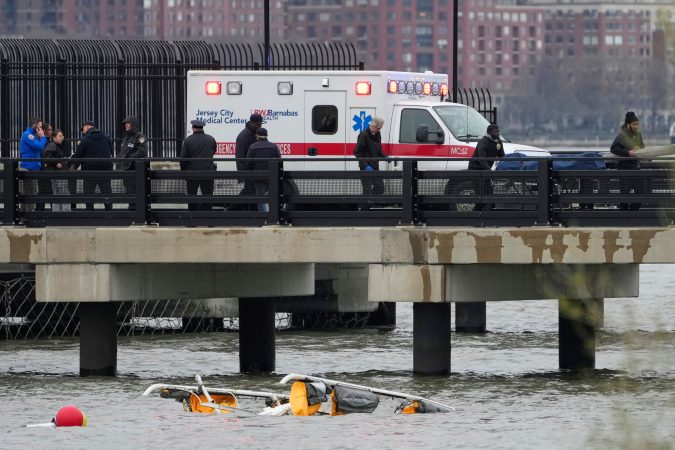
    The remains of several geese were found on a New York City sightseeing helicopter that crashed into the Hudson River last year and killed 6 people, investigators said Thursday, strong suggestions that multiple bird strikes contributed to the tragedy.

    Reports from the National Transportation Safety Board were not final and do not identify a definitive cause of the crash. But they describe evidence that supports bird strikes before the helicopter plummeted into the river on April 10, 2025.

    The Federal Aviation Administration has said that helicopters are especially vulnerable to bird strikes because they fly at low altitudes. Strikes can be devastating.

    “It seems pretty clear to me that the breakup of that helicopter was precipitated by several bird strikes,” said aviation safety expert Jeff Guzzetti, a former federal crash investigator, who read the key findings. “Not just one but several — and birds of a different feather.”

    He noted damage to the aircraft’s horizontal stabilizer, a key part of the helicopter.

    “Without it, the helicopter could become very unstable and difficult to fly,” Guzzetti said.

    The victims of last year’s accident included a Siemens business executive from Spain, his family and the pilot, Seankese Johnson, 36, a U.S. Navy veteran who received his commercial license in 2023.

    Passengers Agustin Escobar, 49; his wife, Mercè Camprubí Montal, 39; and their three children, Victor, 4; Mercedes, 8; and Agustin, 10, all died.

    The crash renewed safety concerns about the popular sightseeing flights and prompted New Jersey’s governor to ask for additional restrictions on nonessential helicopter flights.

    Remains of several geese were found on the helicopter’s rotors and left horizontal stabilizer. One witness told the NTSB that just minutes before the crash a large flock of geese took flight in the area.

    “The geese were big and there were many of them. When the helicopter went bang, I immediately thought it was a bird strike,” the witness told NTSB investigators.

    The Smithsonian Institution’s Feather Identification Lab identified remains from different breeds of geese on the wreckage, including a female Canada goose, which can average nearly 8 pounds.

    Guzzetti said it’s reasonable to conclude “the pilot is not culpable here.”

    “Birds are everywhere, and pilots have limitations with their eyesight,” he said.

    The report, however, noted that a control panel switch to turn on pulsing lights to help deter birds was missing. The tour company’s former chief pilot said the light system was not mandatory during daylight rides, according to investigators.

    The NTSB has investigated 24 helicopter bird-strike crashes in the past 25 years, including three fatal ones. Helicopter pilots are encouraged to try to avoid areas where birds are known to be present and fly slower to minimize the potential damage from an impact.

    The “Miracle on the Hudson” highlighted the danger of bird strikes when a US Airways jet hit a flock of birds and lost power in both engines shortly after takeoff in 2009. Pilot Chesley “Sully” Sullenberger was hailed as a hero after he landed the powerless plane in the Hudson River and all 155 people on board were rescued.

    In last year’s crash, the helicopter took off from a downtown heliport that afternoon and flew north along the Manhattan skyline before heading south toward the Statue of Liberty. Less than 18 minutes into the flight, parts of the aircraft were seen tumbling into the water.

    Rescue boats circled the submerged aircraft within minutes of impact and recovered the bodies from the water. Later recovery crews hoisted the mangled Bell 206L-4 helicopter out of the river for investigators to examine.

    New York Helicopter Tours shut down after the crash, and the FAA issued an emergency order to ground all the company’s flights after learning it had fired its operations director minutes after he had agreed to suspend flights during the investigation.

    The FAA said at the time that it suspected the firing was retaliation for a safety decision.

  • U.S. expands attacks on Iran, which calls Strait of Hormuz a ‘red line’ as it retaliates

    U.S. expands attacks on Iran, which calls Strait of Hormuz a ‘red line’ as it retaliates

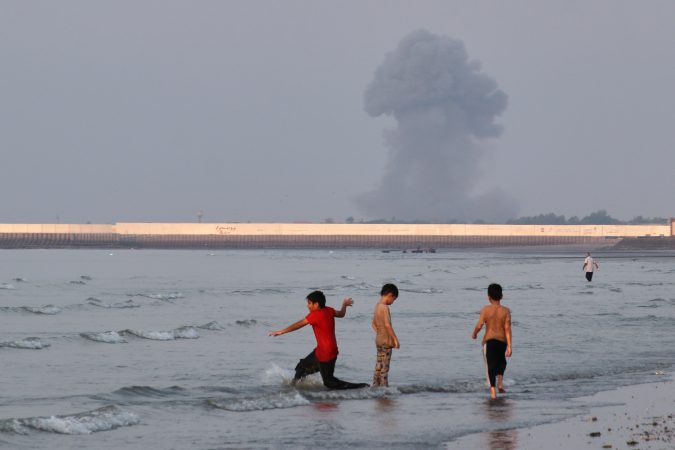
    DUBAI, United Arab Emirates — The United States intensified its strikes against Iran on Thursday, hitting targets farther north and firing into a ship the U.S. accused of trying to break its naval blockade on the Islamic Republic. Iran retaliated by launching missiles and drones at U.S. allies in the region, and warned its attacks may escalate.

    The interim ceasefire agreed to last month has collapsed, and the region has endured days of back-and-forth attacks by the U.S. and Iran as they battle for control of the Strait of Hormuz. Iranian officials say U.S. strikes have killed more than 35 people and wounded over 300 others.

    For the first time in this latest round of violence, strikes also reached into areas around Iran’s capital, Tehran, showing a widening set of targets for the Americans. The U.S. launched a second wave of strikes late Thursday, saying it was aiming to “further degrade” Iran’s military capabilities.

    When the U.S. and Israel launched the war on Iran on Feb. 28, Tehran effectively closed the strait to shipping traffic, a move that sent the price of oil soaring and gave Iran major leverage in negotiations.

    Col. Ebrahim Zolfaghari, a spokesperson for the Iranian military’s Khatam al-Anbiya Central Headquarters, threatened that Iran could launch widespread attacks on “all the infrastructure in the region” if the U.S. acts on President Donald Trump‘s repeated warnings that America could hit Iranian bridges and power plants.

    “Under no circumstances and in no way will we allow America, as a foreign and extraregional country, to interfere in the Strait of Hormuz,” he added. “This is Iran’s invincible red line.”

    Both the U.S. and Iran launch attacks as blockade is reimposed

    Iranian state media said the U.S. strikes Thursday hit around Tehran and Semnan province, home to Iran’s ballistic missile production and space program. State media also reported strikes around the provinces of Hamedan, Hormozgan, Khuzestan, Lorestan, Markazi, and Sistan and Baluchestan, as well as on Iran’s Qeshm island, near the Strait of Hormuz.

    Seven people were wounded in a U.S. strike that hit the Allah-Akbar Hill residential neighborhood in the port city of Bandar Abbas, according to Iranian state media. Two more people were wounded in a U.S. attack on the Bandar Abbas railway junction station, state media said.

    And just west of Bandar Abbas, witnesses reported that two bridges were struck in a U.S. attack, killing two people and wounding four others, state media said.

    An attack on Greater Tunb Island targeted Iranian defense and missile sites, U.S. Central Command said.

    Greater Tunb Island is one of three small rocky islands that sit at the confluence of the Persian Gulf and the strait. The islands — seized in 1971 by Iran from what would become the United Arab Emirates — help the Islamic Republic exert significant control over the strait.

    The U.S. military also said it disabled a Curacao-flagged oil tanker as it sailed toward Iran’s main oil export terminal, firing a missile after the ship “ignored multiple warnings.”

    Another American strike Wednesday targeted a barracks for Iran’s 388th Mechanized Infantry Brigade, which operates tanks and armored vehicles, in Sistan and Baluchestan province, Iranian state television reported. The report said seven were killed in the attack, including conscripts and career soldiers.

    Iran retaliated Thursday with missile and drone attacks on Bahrain, Jordan and Kuwait, authorities in those countries home to U.S. forces said. There was no immediate acknowledgment of damage or casualties from the attacks.

    Iraqi Prime Minister Ali al-Zaidi condemned an overnight drone attack in Iraq’s semiautonomous northern Kurdish region. The drone, which authorities said had been intercepted, came during his trip to the U.S. in which he said Iraq would work to disarm non-state armed groups, including those backed by Iran.

    A drone separately targeted a tanker Thursday in the Persian Gulf off the coast of Basra in southern Iraq, the state-run INA news agency reported. No casualties were reported.

    Trump says a peace deal is still possible

    The latest round of fighting is focused on the Strait of Hormuz, as Iran attacks ships using a U.S.-controlled route through the vital waterway.

    Week-to-week cargo shipments through the strait dropped by almost a quarter at the beginning of the month, according to Maritime data firm Lloyd’s List Intelligence. And that was before the recent surge in tit-for-tat attacks.

    Given the risks, some oil shippers are transiting the strait with their location devices turned off, but many are just staying put, Lloyd’s said Thursday. A growing amount of the region’s energy is being shipped through pipelines, but not nearly enough to offset the decline in shipping through the strait.

    The U.S. has threatened to reopen the strait by force, but experts say that would require a much bigger armada if not tens of thousands of ground troops.

    The price for Brent crude oil, the international standard, traded above $85 a barrel on Thursday, more than 15% higher than the price before the war, but still well below the nearly $120 reached at the height of the conflict.

    Rising prices pose a particular challenge to Trump and his Republican Party, which hopes to retain control of Congress in elections in November.

    The U.S. reimposed a naval blockade on Iranian ports Wednesday.

    “They don’t like what we’re doing, and they do want to settle. We’ll find out whether or not we settle with them, or we just finish it off,” Trump said Wednesday at the U.S. Army War College in Carlisle, Pa.

    Pakistan’s Foreign Ministry on Thursday said efforts were still underway to bring the U.S. and Tehran to the negotiating table but acknowledged that was becoming increasingly difficult.

    Trump said on social media that Tehran made a goodwill gesture by releasing an American citizen wrongly detained in Iran since 2024. He did not release further details. Human rights lawyer Jared Genser released a statement identifying the detainee as his client Dena Karari, a U.S.-Iranian citizen who runs a nonprofit and was charged with espionage.

    Iran did not immediately acknowledge the release, and her case was not publicly known, as sometimes happens with detentions in the Islamic Republic.

  • Trump’s teleprompter operator on unpaid leave for alleged prediction market bets on Trump speeches

    Trump’s teleprompter operator on unpaid leave for alleged prediction market bets on Trump speeches

    ATLANTA — President Donald Trump’s teleprompter operator is on unpaid leave after reports that he used his inside knowledge to make bets about the president’s speeches on the online prediction market Kalshi, the White House said Thursday.

    The firm’s enforcement chief said Kalshi contacted federal regulators about bets allegedly made about what the president would say in public addresses.

    White House press secretary Karoline Leavitt said the president is aware of the situation, which she described as “unfortunate” and “a disgrace.”

    “The White House has extremely strict ethical guidelines with respect to issues like this,” Leavitt told reporters, saying the aide is on unpaid leave.

    ABC News reported Thursday that Gabriel Perez, who has been operating Trump’s teleprompter since 2016, used his inside knowledge to win more than $100,000 betting on what the president would say in big speeches, including the State of the Union address earlier this year.

    Robert Denault, Kalshi’s lawyer and head of enforcement, said on X that the “Kalshi surveillance team promptly flagged, investigated and referred these trades” to the U.S. Commodity Futures Trading Commission that has regulatory authority over such matters.

    His statement did not name Perez.

    “We have been assisting regulators on this matter and provided all evidence that we collected, as we do with any referral,” Denault added.

    ABC based its report on multiple sources who have knowledge of the matter but spoke on condition of anonymity to discuss the details.

    The ABC report described suspicious activity on Kalshi’s “Mentions” market, in which users can place bets on what phrases and specific words might be used in public speeches. Kalshi recently began requiring users to disclose their place of employment, and the platform’s policy prohibits betting based on information that users gain because of their job.

    Attention on members of the administration profiting from the presidency has reached all the way to Trump himself.

    On Thursday, his media company announced it would charge for special high-speed access to Truth Social posts, including possibly his own affecting national security and financial markets.

    In his most recent financial disclosures, Trump reported making $1.2 billion from his crypto businesses in 2025, raking in profits while his investors suffered losses in marketplaces that Trump has sought to shield from tighter federal regulation.

    Trump got more than $500 million from his World Liberty Financial business selling new crypto products, including “governance tokens,” according to the required annual disclosure report with the Office of Government Ethics. It also showed another crypto business, CIC Digital LLC, took in more than $600 million from sales of souvenir-type “meme” coins stamped with his face. Both the tokens and the coins have plunged in value since the sales.

    The president has also profited from merchandising deals and high-dollar political and official events at his properties, significantly increasing his net worth since returning to power.

    Trump’s aides have stood by his personal and family business practices.

    “The president is abiding by all conflict-of-interest laws that are applicable to the president,” Leavitt said earlier this year. It’s “absurd for anyone to insinuate that this president is profiting off of the presidency.”