Tag: no-latest

  • Wendell Berry, writer who extolled America’s agrarian past, dies at 92

    Wendell Berry, writer who extolled America’s agrarian past, dies at 92

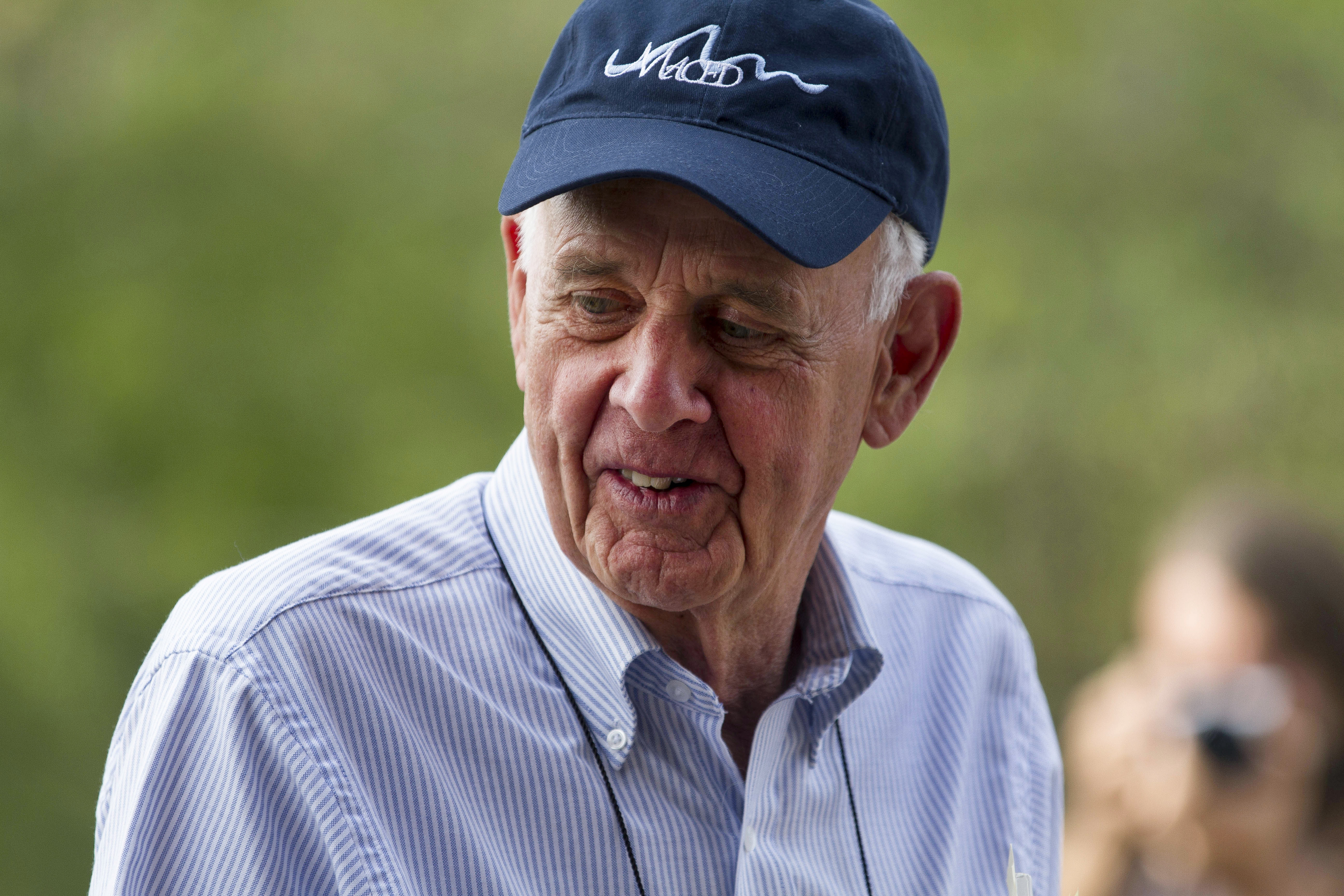
    Wendell Berry, a Kentucky farmer who plowed his fields behind Belgian draft horses and wrote lyrical poems, novels, and essays — mostly in pencil and without electric light — that explored his elegiac visions of the life and death of agrarian America, died Monday at his home in Port Royal, Ky. He was 92.

    His daughter, Mary Berry, confirmed the death.

    Lanky and rawboned in middle age, with melancholy eyes, a jutting chin, and a widow’s peak reminiscent of Lincoln’s, Wendell Berry wrote more than 50 volumes of poetry, fiction, and argument that championed small family farms, the environment, local foods, and interdependent communities, and railed against chemicals, most technologies, agribusiness, and distant government.

    “The national economy that is really run for the benefit of a very few people is preying upon and slowly destroying local communities everywhere,” Mr. Berry told Sierra magazine in 1990. “Everything we produce in rural America makes more money for other people than it does for those who produce it. We’re destroying rural America.”

    Mr. Berry was once hailed by author and historian Page Smith as “a prophetic American voice of our day.” He never became a household name but, as his oeuvre grew over a half-century, advocates of agrarian and ecological causes embraced his work as an eloquent, if sometimes didactic, expression of their own hopes. Some critics likened his landed exhortations to those of Henry David Thoreau or Thomas Jefferson.

    Toward the end of his long fight for agrarian justice, waged from a cabin in the backwoods of Kentucky, Mr. Berry was showered with honors, including the National Humanities Medal, the nation’s highest award for humanitarian services, presented by President Barack Obama at the White House in 2011, “for his achievements as a poet, novelist, farmer, and conservationist.”

    Raised on a farm in north-central Kentucky, he studied English at the University of Kentucky and writing at Stanford with the environmentalist-novelist Wallace Stegner, traveled in Italy, and landed in New York, intending to write and teach. He married, had two children, and taught for two years at New York University.

    But at 30, he confronted in himself a deep need to return to his roots — specifically, to an old two-room cabin on the Kentucky River at Port Royal, in Henry County, where his ancestors had lived since 1803. The cabin had been built in the 1920s by a great-uncle. He had known the place all his life; indeed, had visited it often as a boy and spent a summer there with his wife, Tanya.

    “In the life we lived that summer, we represented to ourselves what we wanted — and it was not the headlong pilgrimage after money and comfort and prestige,” he recalled in an essay titled for its inspirational setting, “The Long-Legged House.”

    In 1964, the couple resolved to stay and work the land. Nearby, they bought a 125-acre farm, called Lanes Landing, and started raising sheep, corn, and grain crops, and planted gardens for their own table. Mr. Berry also initiated a 20-year teaching association at the University of Kentucky, in Lexington.

    Returning to his home as a place to write for the rest of his life was a way to insure, to himself, that he would always be bound by the truth, Mr. Berry said in a phone interview in 2018 for this obituary.

    “It made a permanent connection between me and my native place, and with its landscape,” he said. “The landscape was there to check me if I was wrong. I could never go away and make up stuff at cocktail parties about the backwoods of Kentucky. I worked with people here in all walks of life and learned from them. It’s been a very rich experience.”

    He rebuilt the Long-Legged House and began writing there about sustainable agriculture and the culture of life on small farms and in farming towns — polemics about how such places were vital to individual liberties and why they were rapidly disappearing from a landscape increasingly afflicted with topsoil erosion, polluted water, and toxic chemicals.

    Over the next half-century, he wrote with a pencil or pen on paper during daylight hours. His farmhouse had electricity, but he refused to use electric lights at the Long-Legged House, where he wrote, because, he said, the power was supplied by strip-mined coal. His wife critiqued his work and typed his manuscripts on an old Royal standard. He refused to have a television set, or a computer after they came along.

    Mr. Berry first won national attention with The Unsettling of America: Culture & Agriculture (1977), a manifesto to save small farms from big business and a government bent on agricultural efficiencies that, he said, were destroying the land and a way of life. The book launched the modern movement for sustainable farming and became a conservationist classic.

    “The concentration of farmland into larger and larger holdings and fewer and fewer hands — with the consequent increase in overhead, debt, and dependence on machines — is a matter of complex significance, and its agricultural significance cannot be disentangled from its cultural significance,” Mr. Berry wrote.

    In a review for the New York Times, farmer-poet Donald Hall hailed its “worldview that derives its premises from the experience of working on the land.” Its author, Hall added, “argues with careful logic for the recovery of lost land, for the return of the small farmer to the countryside, the small farmer expropriated by the army of agribusiness.”

    Mr. Berry elaborated on this theme in The Gift of Good Land (1981) and Home Economics (1987), essay collections that described organic farming techniques in America and abroad. They argued that “industrial values” were killing family farms and threatening American society as a whole.

    (END OPTIONAL TRIM.)

    Marshaling fiction to his cause, Mr. Berry wrote more than a dozen novels and volumes of short stories. He invented a Kentucky town, Port William, as a setting for generations of lives interwoven in tales of murder, alcoholism, marital discord, and remembrance against subtexts of fading agrarian life. Some critics called his fiction moralistic and short on plot and character development.

    Others found his novels moving. The Memory of Old Jack (1974), the recollections of a 92-year-old farmer on his last day of life, was “magnificent,” English scholar Joan Joffe Hall wrote in the New Republic, saying it “makes us grieve that these rhythms of work and speech are lost to us.”

    As a poet, Mr. Berry produced some 30 volumes of collected verses, starting with The Broken Ground (1964). His “Sparrow,” in its entirety, was typically economical:

    A sparrow is

    his hunger organized.

    Filled, he flies

    before he knows he’s going to,

    And he dies by the

    same movement filled

    with himself, he goes

    by the eye-quick

    reflex of his flesh

    out of sight,

    leaving his perfect

    absence without a thought.

    “The quiet but sure and melodious voice of Wendell Berry makes The Broken Ground an immediate pleasure,” poet and critic Robert Pack wrote in a review for the Times. “He is essentially elegiac, ranging from praise to requiem; throughout his poems there broods a reverential hush.”

    Farmers caught in an economic squeeze regarded Mr. Berry’s ideas as naive. So did Charles Barnhart, a dean at the University of Kentucky’s college of agriculture.

    “What Wendell is talking about is a primitive agriculture,” Barnhart told the Times in 1988. “It’s a nice way of life if you have a rich father and you’re a tenured member of the faculty at a university. But I don’t see a great proportion of the American public returning to farms. And I don’t see it as an industry that would ever be capable of feeding 225 million people.”

    Still, Mr. Berry won a wide following. “It’s a movement on the way up, and Wendell’s influence in it is pervasive,” Ron Kroese, director of the Land Stewardship Project in Stillwater, Minn., told the Times in 1988. “Wendell Berry has been the contemporary conscience of American agriculture.”

    Wendell Erdman Berry was born in Louisville, Ky., on Aug. 5, 1934, the first of four children of John Marshall Berry, a lawyer and tobacco farmer in Port Royal, and Virginia (Erdman) Berry. The families of both parents had farmed in the county for more than five generations.

    Like his siblings — John Jr., Mary Jo, and Martha — Wendell Berry helped work the farm. He learned from a grandfather how to harness and drive a team of mules. He was a melancholy boy. But in childhood retreats to the Long-Legged House, he found peace and solitude and read Walden, Thoreau’s reflections on two years in a woodland cabin in Concord, Mass.

    A rebellious teenager, Mr. Berry was sent to Millersburg Military Institute, a boarding school near Lexington. He hated it. “The highest aim,” he recalled, “was to produce a perfectly obedient, militarist, puritanical moron who could play football.”

    At the University of Kentucky, he earned a bachelor’s degree in 1956 and a master’s in 1957.

    Mr. Berry and Tanya Amyx were married in 1957. In addition to his wife and daughter, he is survived by a son, Pryor Berry, known as “Den”; two sisters, Mary Jo Berry and Martha Baxter; five grandchildren; and four great-grandchildren.

    In recent years, still living and writing in Port Royal, Wendell Berry also joined nonviolent protests against mountaintop-removal coal mining, coal-fired power plants, and the death penalty.

    Besides the humanities medal, Mr. Berry received more than 30 awards, including the Sewanee Review’s Allen Tate Poetry Prize in 2014 and the Ivan Sandrof Lifetime Achievement Award of the National Book Critics Circle in 2016. He was the subject of a 2016 documentary, Look & See: A Portrait of Wendell Berry, directed by Laura Dunn and Jef Sewell.

    “His writing has sometimes been called radical, but he thinks of himself as a conservative, conserving what is most human in our landscapes and ourselves,” journalist and artist Paul Trachtman wrote in a 2005 Smithsonian magazine profile of Mr. Berry.

    “You know,” the story quoted Mr. Berry as saying, “if you subtracted the Gospels and the Constitution and the Declaration of Independence from my work, there wouldn’t be very much left.”

    This article originally appeared in the New York Times.
  • U.S. strikes Iran and Tehran fires back as hostilities flare again

    U.S. strikes Iran and Tehran fires back as hostilities flare again

    WASHINGTON — The U.S. military hit targets in Iran on Tuesday and Tehran fired missiles and drones in response as hostilities flare once again in an intermittent war that has lasted more than six months. One U.S. strike hit a home hosting a wedding, killing two people and wounding dozens, local officials said.

    The U.S. strikes followed others on Sunday that abruptly ended a month without military action and threatened to fully reignite a conflict that has spiked global oil prices and posed political problems for Republicans in November’s midterm congressional elections. The renewed fighting comes after President Donald Trump had appeared to pivot toward trying to bend Iran to his will through economic sanctions.

    “If the failed Nation of Iran retaliates for this very justified attack, they will be hit again at a much harder and higher level, but it will not be the biggest attack of them all, that is waiting in the wings,” Trump warned on social media.

    U.S. Central Command said the latest strikes were in response to Tehran trying to attack commercial ships and American forces in the Middle East. Trump offered an additional explanation, telling Fox News in a phone call that U.S. forces struck Iran’s radars.

    “They tried to rebuild their radar because they can’t see anything,” Trump told Fox. “We waited until it was almost built and then we hit it.”

    Iranian state media reported that the U.S. had bombed civilian sites along Iran’s southern coast and hit a civilian airport. A U.S. strike hit a home where a wedding ceremony was being held in Kuhestak in southern Iran, killing two people and wounding at least 50 others, Ahmad Nafisi, Hormozgan Province’s deputy governor, told Iranian state television in a phone call. Red Crescent rescue officials in the province said the death toll had risen to four, including a child.

    U.S. Central Command did not immediately respond to an email seeking comment on those reports.

    Iran’s military warns of ‘devastating blows’

    Iran’s Armed Forces General Staff and its joint military command said the armed forces would deliver what they described as “crushing and devastating blows” against the United States. The state-run IRNA news agency cited a statement by Iran’s paramilitary Revolutionary Guard, which warned that the attacks have only strengthened the Islamic Republic’s resolve and tightened Iran’s effective closure of the Strait of Hormuz, through which 20% of the world’s oil normally flows.

    Explosions were reported across several southern Iranian coastal areas, including the port city of Bandar Abbas that is home to naval and air force facilities as well as Qeshm Island in the Strait of Hormuz. Witnesses in Bandar Abbas told the Associated Press that the explosions were stronger than those on Sunday and said they saw smoke rising from the eastern part of the city on the strait.

    Iranian state television said U.S. strikes hit a fishmeal factory on Qeshm Island and several civilian sites in Hormozgan province. It said a fishing pier and a Ports and Maritime Organization tower in Sirik were among the locations struck.

    State TV also reported that the U.S. military struck the civilian Jiroft Airport in central Iran’s Kerman province, saying a projectile struck an area outside the runway and caused no casualties or damage to airport infrastructure.

    The U.S. and Iran are both seeking control over the Strait of Hormuz, a narrow waterway off Iran’s coast that is a vital oil shipping corridor. Tehran effectively closed it after the war began.

    Oil prices have moved sharply higher this week with renewed clashes between Iran and the United States. Crude, already up about 7% this week, continued to rise following the strikes on Tuesday.

    The price of crude has jumped more than 50% this year and it’s dragged the cost of gasoline upward with it. The cost for a gallon of regular gasoline in the U.S. ticked higher again overnight to $4.10, according to AAA. Last year at this time, a gallon cost $3.19.

    Strikes have renewed after Iran said it would stick to a ceasefire deal if the U.S. did the same

    Before military action began again, the Trump administration had argued that hitting the right economic target in a campaign of financial isolation would get Tehran to its breaking point. Now, strikes are renewing even as U.S. stockpiles of advanced interceptors have been diminishing and the war has been unpopular among many Americans.

    A return to open conflict would be dangerous for the region, where Iran has targeted U.S. military bases and infrastructure in Gulf countries since the war began.

    Iranian President Masoud Pezeshkian said earlier Tuesday before the latest strikes that the Islamic Republic is ready to return to the interim ceasefire deal reached with the U.S. in June if Washington does the same.

    “If the U.S. returns to its commitments in the memorandum of understanding, the Islamic Republic of Iran will immediately reciprocate,” Iranian state media cited Pezeshkian as saying at the Shanghai Cooperation Organization summit in Kyrgyzstan.

    The June interim deal called for an immediate ceasefire and started a 60-day period for negotiations aimed at reaching a wider agreement, but crumbled soon afterward.

    In the previous strikes on Sunday, U.S. Central Command said its forces struck Iranian rocket launchers that would launch sea mines into the strait.

    Iran responded to Sunday’s attacks by launching missiles at U.S. sites in Jordan, which were intercepted, while the United Arab Emirates said it stopped an Iranian drone over its waters. Trump acknowledged Monday that more strikes might be necessary.

    The American military in recent days has cast the renewed fighting as limited, though Trump had acknowledged Monday that more strikes might be necessary.

    U.S. Central Command said Monday on X that its attacks on Iranian targets on Sunday were narrowly focused.

    “U.S. forces took limited, precise action against IRGC minelaying forces posing an imminent threat in the Strait of Hormuz,” U.S. Central Command said. “In essence, Iran created the threat and the U.S. military eliminated it to protect civilian mariners, commercial shipping, and the free flow of global commerce.”

    Central Command reiterated Tuesday that its attacks followed Iranian aggression against commercial vessels and American troops in the region.

  • College student steps into traffic, is killed after losing immigration status

    College student steps into traffic, is killed after losing immigration status

    A Haitian immigrant who had grown increasingly distraught after losing his protection from deportation and being outfitted with an ankle monitor was run over and killed Monday in what his family believes was a suicide.

    Pierre Damas Bel, 20, parked on the shoulder of Interstate 70 in Springfield, Ohio, some time before 8:45 a.m., got out of his vehicle and walked into westbound traffic, the Ohio State Highway Patrol said. He was hit by a tractor-trailer and pronounced dead at the scene.

    Like an estimated 350,000 Haitian immigrants, Bel had recently lost temporary protected status, which is given to people fleeing nations experiencing disaster. He had a pending asylum claim but had been summoned to an Immigration and Customs Enforcement office after the Supreme Court allowed the Trump administration to proceed with canceling the status for Haitian recipients. Federal immigration agents placed an electronic monitoring device on his ankle, which is one way the agency tracks immigrants it is seeking to remove from the country.

    “He felt like he was treated like an animal,” his father, Pierres Ronal Bel, 40, recounted in a handwritten statement.

    Ohio authorities said they are investigating the crash.

    The Department of Homeland Security declined to comment on the circumstances of Bel’s death while the investigation is ongoing. The Trump administration has been calling Haitian immigrants into ICE offices to be equipped with ankle monitors and has sent two deportation flights to Haiti since temporary protected status was canceled for people from the troubled Caribbean nation. Advocates for the immigrants say the U.S. government is sending people back to a country where criminal gangs are responsible for massacres, kidnappings, and extortion.

    Haitian leaders in Springfield and beyond said Bel’s death is symptomatic of the extreme stress many immigrants are under as they fear being detained and sent back.

    “These policies are what caused his untimely death,” said Guerline Jozef of the Haitian Bridge Alliance, a nonprofit that provides legal and humanitarian aid to migrants.

    Bel came to the U.S. in 2024 to reunite with his parents, who had fled Haiti three years before. ICE said its records show he entered through CBP One, the mobile app the Biden administration established for immigrants to enter the country at a port of entry and request asylum.

    The family was granted temporary protected status, purchased a home in Springfield and settled into life in the U.S. Bel dreamed of studying medicine and graduated from high school in May with honors and as a proud member of the Junior Reserve Officer Training Corps (JROTC), his father said. He was the eldest of three siblings, and his family described him as smart and responsible.

    The young man’s Instagram account is full of photos of himself smiling in his JROTC uniform and displaying his diploma and various academic awards.

    Bel wanted to continue life as a cadet in the program but was distressed by what transpired after temporary protected status was canceled for Haitians. His father said he couldn’t play soccer as he had for years because of the weight of the tracker. Classmates bullied him and made cruel remarks. He begged federal immigration officers to remove the bracelet, his father said, but they refused.

    “I came to this country to pursue my education. I didn’t come here to commit a crime or hurt anyone,” he wrote on Instagram in late July. “Yet now I’m walking through the streets of the United States with a GPS monitor on my leg, carrying a feeling of shame and humiliation that I never imagined I would experience.”

    Then on Friday, his JROTC class instructor handed students their uniforms, which resemble those of the U.S. armed forces, but did not give one to Bel. His father said the college student concluded it was because of the device strapped around his ankle.

    “He came home that day feeling very bad,” Pierres Ronal Bel said through an interpreter.

    The younger Bel’s next asylum court hearing was scheduled for October. He did not want to return to his home country because he was afraid of the rampant violence, according to Vilés Dorsainvil, executive director of the Haitian Support Center in Springfield, which is supporting the family.

    On Monday morning, he left his family’s home and placed a video call to his father at 8:03 a.m.

    “‘I’m not feeling OK,’” Pierres Ronal Bel recalled his son stating. “I told him to come so that we can talk.”

    Hours later, he said police officers arrived at his door to report that his son “threw himself under a truck.”

    Community leaders consoled Bel’s parents at their home Monday evening. His solemn father gave interviews with reporters, and his mother wailed from an upstairs room. Residents have been banding together to support Haitian neighbors and call for an end to ICE’s enforcement campaign against them.

    Carl Ruby, a pastor who leads a Springfield congregation and advocates for Haitian immigrants, said he was struggling to make sense of the younger Bel’s untimely death.

    “I know that I’m a pastor and I’m supposed to be forgiving,” he said. “But right now as I sit with a broken family, I’m crying out to God for righteous judgment in those who made this happen.”

    If you or someone you know needs help, visit 988lifeline.org or call or text the Suicide & Crisis Lifeline at 988.

  • Flash flooding causes major damage to the Grand Canyon’s critical water pipeline

    Flash flooding causes major damage to the Grand Canyon’s critical water pipeline

    WASHINGTON — The sole pipeline that supplies water for millions of Grand Canyon visitors was badly damaged by weekend flash flooding, setting up a tricky repair scenario and upending a yearslong construction project to upgrade the line laid over terrain so rugged helicopters are often required to make basic fixes.

    “We anticipate miles of the pipeline being destroyed,” Grand Canyon Deputy Superintendent Brian Drapeaux said, but a full survey of the devastation wouldn’t be completed until Tuesday at the earliest.

    From flyovers, park officials estimate that roughly 40% of the pipeline endured damage. The long-term implications to the park’s infrastructure, visitors, and year-round residents weren’t immediately clear. The 12.5-mile-long Transcanyon Waterline has endured dozens of breaks in recent years. A more than $200 million repair and replacement project was well underway when the floods hit.

    At least two people died in the floods, and one person remained missing Monday night after rescuers saved some 80 people over the weekend, officials said. The park halted overnight accommodations, and officials said significant water reductions are needed — short showers, turning off the tap while brushing teeth, and flushing toilets selectively to protect the limited stored water on the South Rim, where most visitors go.

    “They have got to keep law enforcement going, they have to keep rescue operations going, backcountry operations, park admin going, the clinic, and the campground,” said longtime river runner and Grand Canyon hiker Tom Martin. “In the past, the park has hauled water” in tanker trucks.

    Even routine repairs can be tricky

    The pipeline, which was finished in the 1970s, has broken more than 85 times since 2010. It moves water from one side of the canyon, down to its base, across a bridge and back up the other side of the rough landscape. Any effort to fix a break from rock falls or flash floods is time-consuming, precarious, and costly, so addressing the latest damage will be complicated.

    The pipeline upgrade project, which began in 2023, took more than a decade to design, consider, and fund. It involves installing helicopter pads, building water treatment facilities, and replacing several miles of pipeline. The project also sought to move the water intake for the pipeline farther down the canyon to Bright Angel Creek. That would place it closer to Phantom Ranch, a popular lodge at the base of the canyon. An evaluation of the project in 2018 said key infrastructure for the intake would be outside of areas likely to flood.

    Basic decisions were complicated. For example, the original pipe was aluminum, which is lighter and easier to move into the steep canyon but is susceptible to breaking. Engineers picked a flex-steel material to balance weight with durability.

    Frequent breaks cause water restrictions

    Even routine pipeline breaks force water restrictions. In 2016, a hotel on the canyon’s rim that offers luxury dining and boasts about its history hosting presidents was forced to reduce dishwashing and use paper plates and plastic utensils.

    In 1995, a 28-day repair effort on the pipeline required officials to truck in water.

    The park had water conservation measures in place even before the latest bout of flooding and damage.

    The flooding has forced parts of the park to close and additional flooding was possible Monday, according to the National Park Service.

    “Consider changing your plans if you were going to hike, boat, or paddleboard to a slot canyon or normally dry wash. If you do still decide to recreate, check in at a nearby visitor center or ranger station,” a notice on the park website said.

    Officials said previously that the repair and replacement project would ensure that the park will be able to meet its water supply needs for the next 50 years or more. The park had roughly 4.4 million visitors last year.

    When the original pipeline was nearing completion in the 1960s, more than a foot of rain fell, flooding the inner canyon. That rare, historic flood caused 40% of the project to be destroyed, officials said.

  • U.N. report finds Syria was building a nuclear reactor in Deir el-Zour under former President Assad

    U.N. report finds Syria was building a nuclear reactor in Deir el-Zour under former President Assad

    VIENNA — Syria was constructing a nuclear reactor in Deir el-Zour under the leadership of ousted former President Bashar Assad, according to a U.N. report seen Tuesday by the Associated Press.

    Inspectors with the U.N. nuclear watchdog visited several sites in Syria in August and carried out verification work that confirmed the existence of a long-suspected nuclear site, according to the confidential report circulated to member states.

    Based on this visit, the International Atomic Energy Agency reported that it is “able to establish that the former Syrian authorities had failed to report nuclear material, facilities, and activities as required under the NPT Safeguards Agreement.”

    This information included a nuclear reactor under construction in Deir el-Zour, a fuel fabrication plant, and another site used for fuel storage during the rule of Assad.

    Under Assad, Syria was believed to have operated an extensive undeclared nuclear program that included a nuclear reactor built by North Korea in eastern Deir el-Zour province. Following Assad’s ouster, the new government agreed to give IAEA inspectors access to suspected former nuclear sites.

    The site in Deir el-Zour only became public knowledge after Israel launched airstrikes in 2007 that destroyed the facility. Syria later leveled the site and never responded fully to the IAEA’s questions about it. Israel is believed to have its own undeclared atomic weapons program that makes it the only country in the Mideast with nuclear bombs.

    Israel neither confirms nor denies having atomic weapons.

    The IAEA took samples at the site in 2024 and reported last year that they contained uranium particles.

    The new Syrian authorities have also expressed an interest in developing a civilian nuclear energy program and said any nuclear material found in the country would remain in Syria’s custody under international safeguards.

    The IAEA reported Tuesday that its inspectors visited the Deir el-Zour site on Aug. 29 “to monitor progress on the excavation work.”

    “Based on observations made at the location, the Agency confirms that the cooling infrastructure which has now been uncovered is consistent with that of a nuclear reactor.”

    In its confidential report, the IAEA said three locations were “functionally related” to the Deir el-Zour site. One was related to “conversion and/or fuel fabrication activities,” another was for “temporary storage of construction material,” and another was for the “temporary storage of construction materials being transferred to/from” the site, as well as for “planned reprocessing activities.”

    During the visit to Syria, IAEA Director General Rafael Grossi and a team of senior inspectors also visited a previously undeclared site in the country.

    Syria notified the agency of the site’s existence in a July 17 letter and invited the IAEA “to cooperate with the Syrian authorities in the inspection and verification of the site and of any nuclear material to be potentially found.”

    The IAEA said in its report that this new site contained “natural uranium metal in the form of fuel rods with cladding.” The agency verified the material and confirmed “the presence of around 73 tonnes of natural uranium metal.” The agency reported that “all of this nuclear material is currently subject to Agency containment and surveillance measures.”

  • Drones helped find people after Nepal floods but the search inside hydropower tunnels is a challenge

    Drones helped find people after Nepal floods but the search inside hydropower tunnels is a challenge

    KATHMANDU, Nepal — Drone pilot Manish Maharjan has helped rescue teams in Nepal find people missing after last week’s catastrophic floods, sometimes using speakers mounted on the devices to call out to or play music for those stranded on hillsides.

    But the search for hundreds of workers believed to be trapped in power plant tunnels — now a major focus of rescue operations — presents an entirely different challenge, he said.

    “We found tunnels were filled with mud like toothpaste in a tube,” Maharjan said. “There was no hollow or empty space inside.”

    Maharjan, who is also a filmmaker, joined the Nepal Army’s rescue efforts a day after the Aug. 26 flash floods, which have killed more than 1,000 people and left thousands missing in Nepal and Tibet.

    “We used microphone speakers to call out to them. In some places, we even played songs and then waited for a response,” Maharjan said. “That worked in a few cases and helped us locate people.”

    The torrent of water unleashed after a glacial collapse caused widespread damage to critical infrastructure, including roads, buildings, bridges, and hydropower plants — in the latest sign of the growing risks across the rapidly warming Himalayas. At least 900 workers are still missing from 12 hydropower projects buried under mud and debris. About 500 of them are believed to be trapped inside power plant tunnels.

    Some workers in the tunnels managed to call for help when the disaster struck, according to Mohan Kumar Dangi, president of the Independent Power Producers’ Association. But it was unclear whether rescuers have had any contact with the trapped workers since the initial calls for help.

    As time slips away, rescuers are finding it increasingly difficult to locate these missing people.

    Maharjan, who has been operating thermal drones in the tunnels, said the searches were challenging because of their difficult access and the absence of any empty space.

    “I can only fly drones in tunnels that are long and straight,” he said. “Once there are bends, turns, or zigzags, it becomes much harder to operate and search effectively.”

    At the Rasuwagadhi hydropower project on Monday, Maharjan managed to send a drone to search deep inside and all the way to the end of the tunnel but found no sign of any life.

    “We checked repeatedly but it was filled with mud and debris,” he said. “Looking at it, I could only imagine the force of the flood.”

  • House passes short-term funding bill to avoid a shutdown before the election

    House passes short-term funding bill to avoid a shutdown before the election

    WASHINGTON — The House passed a short-term measure Tuesday to fund the federal government into early December, a move designed to avoid a chaotic shutdown as lawmakers campaign for reelection.

    Lawmakers needed to act before the fiscal year concludes at the end of September to avoid a funding lapse. They were determined not to bump up against that deadline during the campaign season following this past year’s historic shutdowns.

    The House passed the bill by a vote of 370-48. The Senate has already overwhelmingly approved the measure, so it now moves to President Donald Trump’s desk for his signature.

    “It gives the nation and our constituents certainty, certainty that the government will remain open, certainty that our service members will be paid,” said Rep. Tom Cole, the Republican chairperson of the House Appropriations Committee.

    A record 43-day shutdown occurred last fall when the two parties disagreed on renewing an expiring tax credit that lowers the cost of health coverage obtained through Affordable Care Act marketplaces. Then came the shutdown of the Department of Homeland Security, which lasted 76 days before lawmakers agreed to fund much of the department but not its immigration enforcement operations.

    Lawmakers were wary of a repeat before voters go to the polls. They also blamed the other party for the recent impasses.

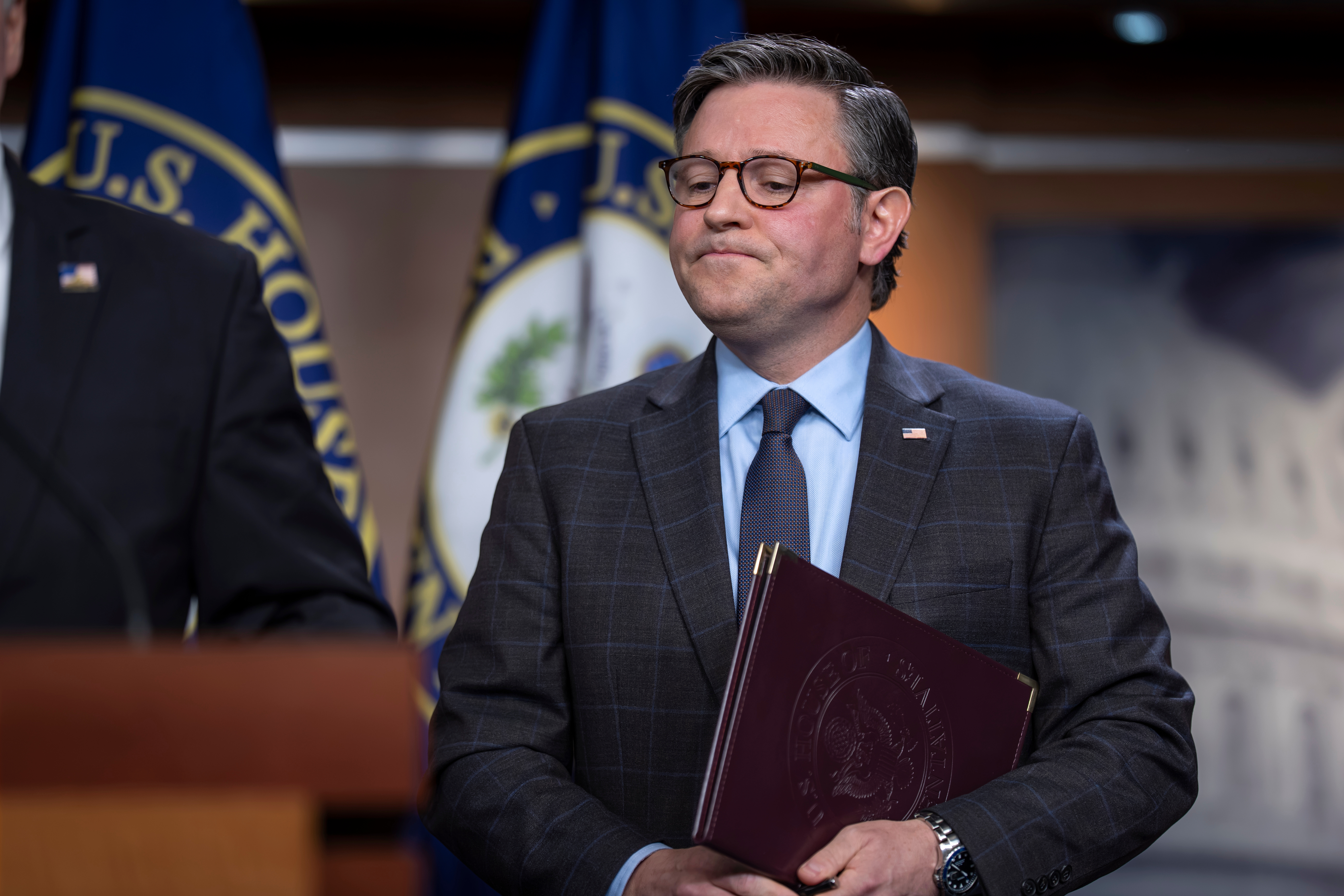
    “We’re going to avoid the threat of another Democratic shutdown,” House Speaker Mike Johnson told reporters in advance of the vote.

    Rep. Rosa DeLauro, the lead Democrat on the House Appropriations Committee, encouraged her Democratic colleagues to vote for the measure during a closed-door meeting Tuesday morning.

    She said the bill was much improved from the product that passed the House earlier this summer on a mostly party-line basis. For example, she said it prevents the Department of Homeland Security from transferring funds to the Border Patrol, and it delays a proposed rule that would give political appointees in the Trump administration more authority to stop federal grants from going out for programs they view as not in line with the president’s agenda. Those changes were made when the Senate approved its version of the bill.

    Democrats fear the administration will use the proposed regulation on grants to steer money away from Democratic-led states. DeLauro called the delay an important first step, but said more must be done to block the policy from taking effect.

    “Whether a community receives disaster relief should not depend on who they voted for in the last election,” DeLauro said.

    The short-term measure funds federal agencies generally at current levels through Dec. 11. It will give lawmakers more time to find compromise on a full-year measure, though that will likely be quite difficult.

    Republicans are seeking hundreds of billions of dollars in additional spending for the military while cutting most nondefense programs. Democrats say that’s a non-starter and insist on a bipartisan approach that treats domestic programs with parity.

  • How the Pentagon is getting into the Venezuelan oil business under Trump

    How the Pentagon is getting into the Venezuelan oil business under Trump

    WASHINGTON — As the U.S. government faced shortcomings in the country’s weapons manufacturing, the Pentagon set up a new office that would make investments to help boost defense industrial production.

    That effort, which began in 2022 during the Biden administration, is now taking a sharp turn with the Pentagon’s involvement in an oil production deal between the United States and Venezuela that President Donald Trump announced on Friday.

    The Pentagon’s little-known Office of Strategic Capital, which reports to the deputy defense secretary, is the leading U.S. government entity in forming a partnership with a private oil producer whose founder, Alejandro Betancourt López, is a powerful and polarizing figure in international commerce.

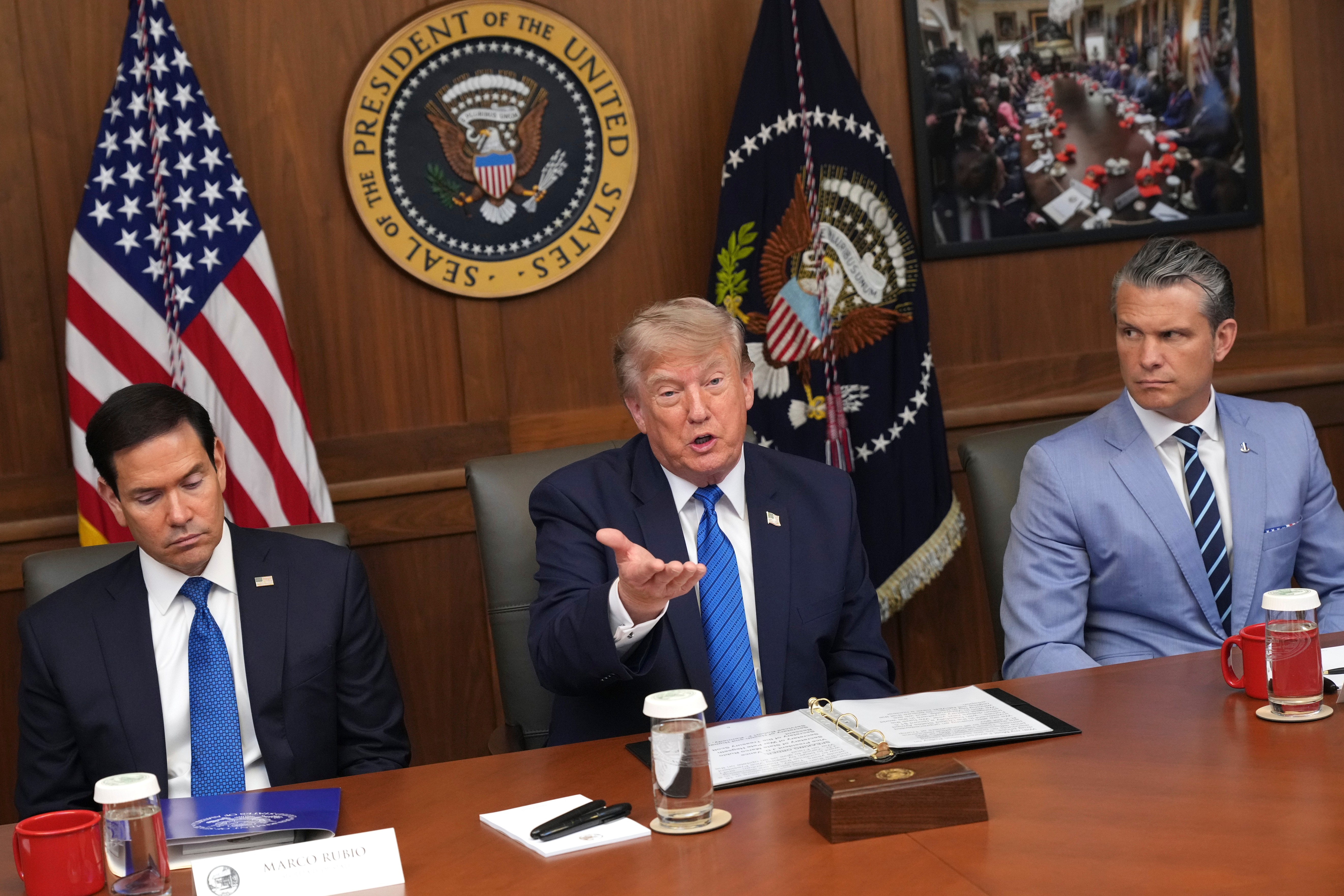
    Trump said Pete Hegseth, the defense secretary, and Marco Rubio, the secretary of state and White House national security adviser, reached the agreement with the Venezuelan government on securing billions of barrels of oil reserves “through a partnership with private business.”

    The deal would give the U.S. government the option to take up to a 35% stake in the parent company of Betancourt’s firm, North American Blue Energy Partners. This would come in the form of a financial instrument known as a warrant, plus preferential access to much of the oil that the company produces.

    Warrants would give the government the right to buy shares in the oil company at a predetermined price. The value of warrants, which can be bought and sold, fluctuates based on the value of the company that issued them.

    In this case, the warrants would be what are known as penny warrants, according to two people familiar with the deal, meaning they could be converted into shares for very little money, often just 1 cent.

    Typically, companies issue warrants in exchange for something of value. During the coronavirus pandemic, for example, the federal government bailed out U.S. airlines with more than $50 billion in grants and loans to help the companies pay employees and cover other costs. In return, the Treasury Department received warrants from roughly a dozen airlines, most of which it later sold to private investors.

    In this case, the deal would come “all at zero cost to the United States,” the White House said in a statement Monday night. The federal government’s partnership and seal of approval could make it easier for the company to raise money from private investors and also shield it from legal scrutiny or political upheaval in Venezuela.

    In a statement, Betancourt said the deal would unleash Venezuela’s potential “to the great benefit of both Venezuelans and Americans.”

    During the Biden administration, the Office of Strategic Capital made loans to private companies to bolster strategic industrial production in the United States, and asked for repayment of the loans with interest at below-market federal rates. In the Trump administration, the office has typically asked companies to give it warrants as well as repay the loans.

    The office falls under Stephen A. Feinberg, the deputy secretary of defense. Feinberg, a billionaire businessperson and political appointee under Trump, has been tasked with trying to help rejuvenate the U.S. defense industrial base. Feinberg approves the office’s deals.

    The office was founded under the previous defense secretary, Lloyd Austin. At that time, in 2022, U.S. officials were concerned about the fact that critical items for certain weapons systems were made in China. They were also grappling with weaknesses in arms production exposed by Russia’s war against Ukraine and global supply chain problems exposed by the pandemic.

    Those issues have become even more acute, given the drawdown of U.S. weapons stockpiles during the war against Iran that Trump and Israel started six months ago.

    The office’s initial $1 billion loan authority has ballooned to $100 billion, largely because of a boost from Trump’s major domestic policy legislation that Congress passed in July 2025.

    The director of the office is now David Lorch, who worked at Cerberus Capital Management, the private equity firm cofounded by Feinberg. In November, the month Lorch started his job, the office announced a loan of $620 million to Vulcan Elements and one of $80 million to ReElement Technologies to increase domestic magnet production and “significantly bolster U.S. critical minerals supply chains.” The office said it would get warrants from those companies.

    That kind of financing would help the United States decrease its dependency on Chinese manufacturing. But Vulcan Elements has financial ties to the president’s oldest son, Donald Trump Jr., which prompted Democratic senators to criticize the arrangement. Peter Navarro, a White House aide and friend of the younger Trump, requested the financing, ProPublica reported.

    By July, the other company, ReElement Technologies, a rare earths firm, had withdrawn from the loan process because it was struggling to meet federal due diligence standards, Reuters reported.

    On Saturday, the chief Pentagon spokesperson, Sean Parnell, said in a statement that the office “does not take equity stakes in private companies.” The White House’s statement on Monday about the deal contradicts Parnell’s assertion.

    In addition to receiving warrants, the federal government would be guaranteed 20% of the oil that Betancourt’s company produces “at production cost,” according to the White House, meaning at a favorable price. The State Department would also have right of first refusal to buy the remaining 80% of the company’s output.

    That would put the State Department in an unusual role since it is oil companies and other traders who typically buy and sell oil. Any decision to buy oil to refill U.S. government stockpiles would require authorization, including from Congress, and typically be handled by the Energy Department.

    In any case, it would most likely take years for new projects in Venezuela to generate meaningful amounts of oil.

    Betancourt, the U.S. government’s partner, received no-bid oil contracts in Venezuela many years ago. He has been under investigation in Spain and Switzerland on accusations of money laundering and tax fraud. He usually lives in Britain and was barred from foreign travel by the British government while he was in that country because of an extradition agreement with Switzerland, where prosecutors had issued an arrest warrant.

    However, Rubio wanted to get Betancourt to Venezuela to work on oil deals and production, and the State Department in recent months pressed the Swiss and British governments to ease up on him, said a person with knowledge of that effort.

    “Mr. Betancourt has never been charged with a crime in any jurisdiction,” Sara Chouraqui, general counsel for North American Blue Energy Partners, said in a statement Saturday.

    This article originally appeared in the New York Times.

  • Germany blames Russia for last month’s attempted drone attack at Leipzig airport

    Germany blames Russia for last month’s attempted drone attack at Leipzig airport

    BERLIN — The German government on Tuesday blamed Russia for an attempted attack at Leipzig/Halle Airport last month using a drone laden with explosives, and announced that it would shut down a Russian consulate among other measures.

    The drone was found near a Ukrainian plane on Aug. 4 and the device was defused. German officials said at the time that the incident posed a new level of danger.

    Moscow has been widely accused by Western officials of running a campaign of sabotage and disruption with the aim of undermining support for Ukraine and destabilizing European nations.

    Minister says evidence points to a familiar pattern

    German Interior Minister Alexander Dobrindt said authorities found elements such as the drone configuration, components, explosives, and detonator that are “known to us from other Russian hybrid operations and its war against Ukraine.” He said the device pointed to “a high degree of technical expertise” and painstaking planning, but carrying out the plan appears to have been left to “low-level” agents.

    Dobrindt told reporters that intelligence points to “people being involved who acted on behalf of Russian state entities,” though he didn’t specify which ones. “Taken together, the police investigations, the pattern, and intelligence findings prove a Russian responsibility for the attempted attack at Leipzig airport.”

    Germany will shut a Russian consulate

    Foreign Minister Johann Wadephul said that “with the attempted attack in Leipzig, the Russian leadership decided deliberately to do significant damage again to our already massively burdened bilateral relationship.” He said the Russian consulate in Bonn will be closed effective Sept. 18 and the contract under which the Russian House cultural center in Berlin is operated will be rescinded.

    Germany will propose the addition of more people from Russia to European Union sanctions lists “in the context of hybrid attacks,” step up entry controls for people from Russia, and increase “pressure on the shadow fleet,” a reference to tankers suspected of shipping Russian oil in violation of international sanctions, Wadephul said. The EU has sanctioned hundreds of “shadow fleet” ships.

    The Russian ambassador was summoned to the Foreign Ministry in Berlin.

    Russian Foreign Ministry spokesperson Maria Zakharova said there would be a “fitting response” to the planned closures, Russian state news agency Tass reported.

    She rejected claims of Russian involvement in the attempted drone attack, calling them a “far-fetched and contrived pretext” for Berlin to escalate tensions and arguing that “as usual, no convincing or serious evidence has been presented whatsoever.”

    Around 200 incidents blamed on Russia

    Leipzig/Halle is a major hub for international freight and for providing support to Ukraine. The planes that regularly use it include Ukrainian Antonov transport aircraft.

    It is also home to NATO’s Strategic Airlift International Solution, or SALIS, which is currently operational almost every day in delivering equipment to NATO battle groups along its eastern flank from Finland to Romania and supporting EU and alliance nation missions.

    In 2024, an incendiary device ignited at a logistics center at the airport and set fire to a freight container before it could be loaded onto a cargo plane, part of a plot that Western security officials suspect was organized by Russian intelligence.

    The Associated Press has tracked around 200 incidents of sabotage and malign activity across Europe blamed on Russia by Western officials since the invasion of Ukraine.

    That includes organizing plots to set fire to warehouses, launching drones and trying to kill enemies abroad as well as stealing defense technology and carrying out cyberattacks on critical European infrastructure.

    In May, Russian President Vladimir Putin responded to the AP findings and said Moscow is not waging a sabotage campaign against Europe. He demanded that AP “name one proven fact.”

    Russia has faced many packages of EU sanctions

    The EU has slapped almost two dozen packages of sanctions on Russia over its war in Ukraine, targeting roughly 3,000 people and entities. EU foreign ministers will meet in Ireland Wednesday.

    European allies rallied around Germany after Tuesday’s announcement. NATO Secretary-General Mark Rutte said in a post on X that he had spoken with Chancellor Friedrich Merz and “NATO stands in full solidarity with Germany after the Russian hybrid attack in Leipzig.”

    In mid-August, the German Cabinet approved plans to give the country’s intelligence services broader powers for actions such as disabling sabotage and hacking attempts. The planned reform, which had been in the works for months, still requires parliamentary approval.

    Hours before Tuesday’s German statement, Polish Prime Minister Donald Tusk, who has frequently warned that Russia is carrying out a campaign of sabotage against NATO countries, said Poland has been targeted by new acts of sabotage including arson within the past “dozens of hours.”

    He spoke the day after a fire broke out at WB Electronics, which the Polish government has described as Europe’s biggest drone manufacturer.

    Prosecutors said Monday they launched an investigation based on suspicions of the “participation of foreign intelligence activities against the Republic of Poland,” without elaborating on what country might be responsible. They said the fire in Skarżysko-Kamienna destroyed warehouse facilities and caused damage estimated at at least 15 million zlotys ($4 million).

  • Russian finance minister, invited by Trump, draws objections at G20 meeting

    Russian finance minister, invited by Trump, draws objections at G20 meeting

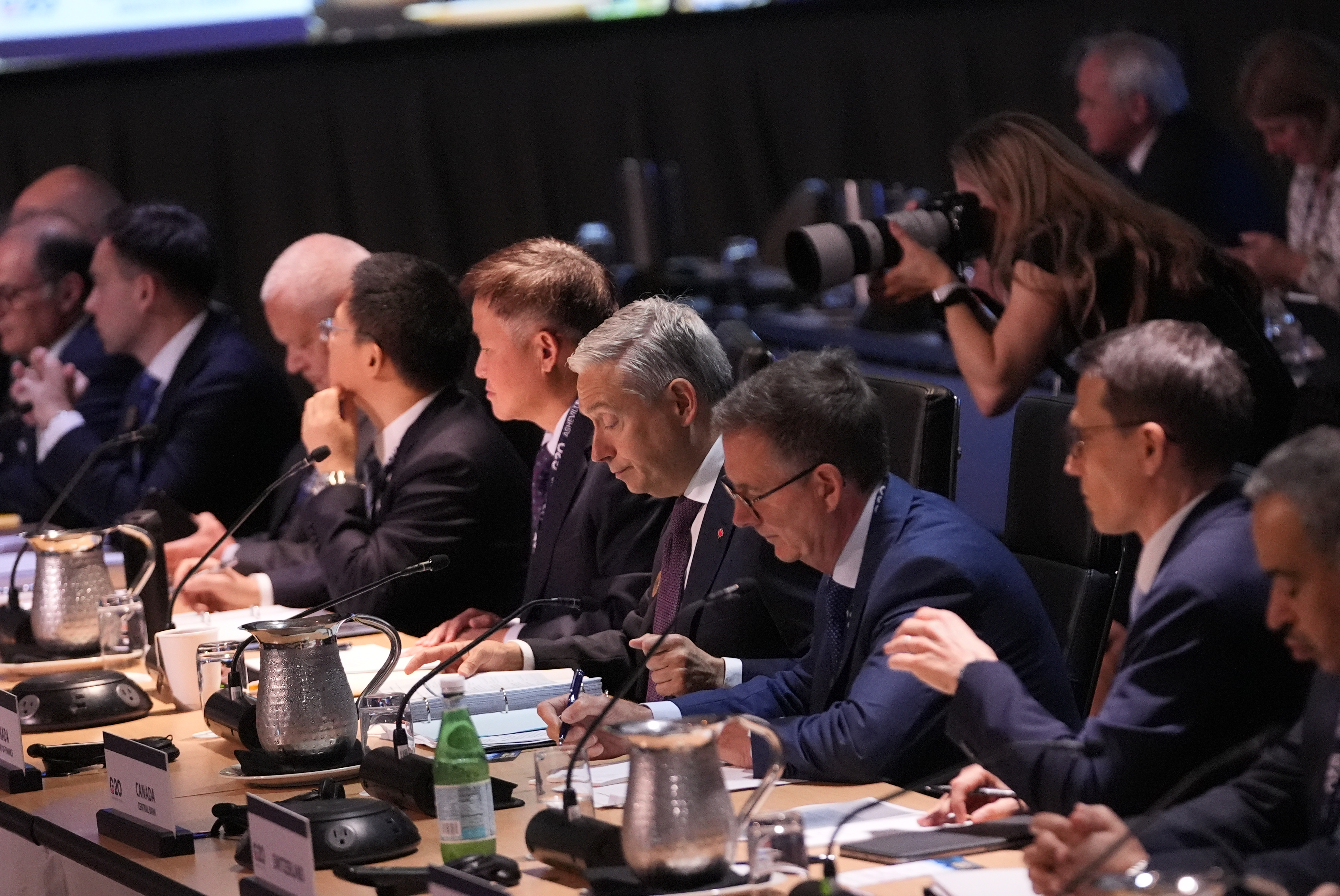
    ASHEVILLE, N.C. — The appearance of Russia’s finance minister at a G20 meeting, his first in person since Moscow’s full-scale invasion of Ukraine, sparked protests Monday from European participants.

    Anton Siluanov and leaders of the Russian central bank were invited to the meeting of the G20 finance ministers and central bankers by the Trump administration.

    Moscow targeted civilian infrastructure in Ukrainian cities with ballistic missiles and drones on Monday for the fifth day in a row. European governments, opposed to Russia’s attempt to redraw the continent’s borders by force, have given Kyiv more than $250 billion in financial and military support since the February 2022 invasion.

    “I find the signal sent ​by ​receiving the ⁠Russian finance minister here quite troubling,” German Finance Minister Lars Klingbeil ​told reporters in Asheville. “I ​would ⁠have wanted greater clarity from the American side that he ⁠should ​not be received ​here as a normal guest.”

    President Donald Trump defended the invitation Monday.

    “We’re going to see what happens, but we like getting along with everybody,” Trump said told reporters in the Oval Office. “One of the reasons that I’m so successful, I get along with everybody.”

    Erin Browne, the Treasury undersecretary for international affairs, said the delegation was invited because Russia is a member of the G20.

    “It’s important to have dialogue even during times of conflict,” she told the Washington Post. Asked about the Europeans’ concerns, she said: “We’ve had constructive dialogue around the table in the plenary session.”

    Treasury Secretary Scott Bessent said he would reemphasize Trump’s peace plan for Ukraine during his meeting with Siluanov.

    Siluanov’s most recent previous appearance at a G20 meeting, by video link in April 2022, prompted several Western finance ministers to walk out in protest.

    Russia was expelled from the Group of Eight of most industrialized nations — subsequently, the G7 — after it illegally annexed Ukraine’s Crimean Peninsula in 2014, but it remains a member of the G20.

    European officials demanded Monday that Siluanov be excluded from the family photo, the traditional group picture of the leaders. It was taken without him.

    Siluanov’s appearance comes less than a week after CIA Director John Ratcliffe made a rare unannounced trip to Moscow. He warned Russia against ramping up its war against Ukraine, according to a person familiar with the matter.

    A Russian drone attack on a munitions depot in the Bucha district of Ukraine on Friday, three days after Ratcliffe’s visit to Moscow, triggered an explosion that killed 38 people.

    “People are dying every ​day,” Klingbeil said. “We have just seen another ​escalation in the attacks. … You cannot simply return to normality.”

    Russian drone incursions into neighboring European Union and NATO countries and sabotage attacks have rattled security on the continent. German Chancellor Friedrich Merz said Sunday his government was preparing a response to an attempted armed drone attack on Leipzig/Halle Airport this month that analysts and some governments say appears to have been the work of Russia.

    Former senior German security officials say the attack appeared to be part of a significant uptick in hybrid warfare by Moscow that has targeted weapons plants and other facilities in Europe supplying Ukraine as it seeks to sap Western support.

    Bessent planned to rally his foreign counterparts to focus on economic growth to beat back rising global debt and to encourage countries to sever economic ties with Iran as part of the administration’s Operation Economic Outcast.

    In sessions on Monday, participants discussed the global economic landscape, trade imbalances, and opportunities for growth, Browne told reporters. Several noted the risks to the global economy posed by Iran’s closure of the Strait of Hormuz, a major chokepoint for the world’s oil supply, in response to U.S.-Israeli attacks.

    “It remains our ultimate objective to ensure that Iran never acquires a nuclear weapon,” she said. “Doing so will reduce long-term economic and market volatility.”

    The administration also invited several American CEOs, including Goldman Sachs CEO David Solomon and JPMorgan CEO Jamie Dimon, to the meeting to connect public officials with private sector leaders.