Tag: no-latest

  • Trump continues overhaul of White House grounds with new Rose Garden statues

    Trump continues overhaul of White House grounds with new Rose Garden statues

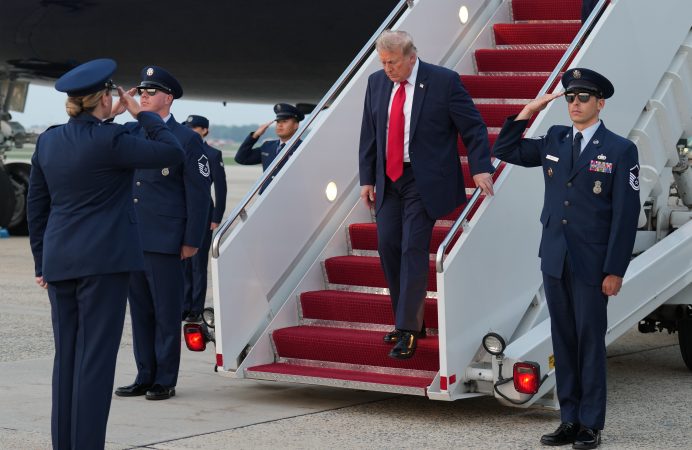
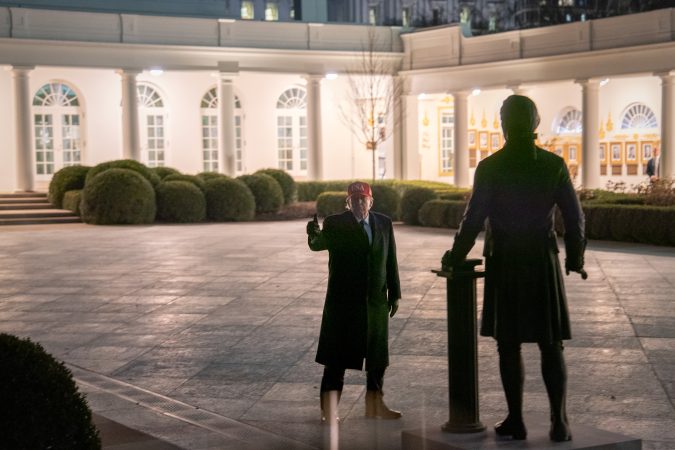
    President Donald Trump installed a statue of Thomas Jefferson in the Rose Garden in mid-July, according to two people who spoke on the condition of anonymity to describe the yet-to-be-announced move — continuing Trump’s effort to remake the White House and Washington.

    The bronze, life-size statue depicts the nation’s third president seated with a draft of the Declaration of Independence. It was sculpted by George Lundeen, who told the Washington Post that he received a congratulatory call from Trump this month.

    “I just wanted to thank you. The sculpture looks really beautiful,” Trump told Lundeen, in audio that Lundeen shared with the Post.

    The piece brings to five the number of sculptures Trump has installed in the Rose Garden, joining George Washington, Benjamin Franklin, and Alexander Hamilton, as well as a sculpture called Freedom’s Charge, which honors Revolutionary War soldiers. The Franklin, Hamilton, and Freedom’s Charge sculptures are on loan from Harlan Crow, a conservative art collector and political donor who had installed them on his Old Parkland corporate campus in Dallas, a spokesperson for Crow confirmed. The White House has not previously disclosed where the statues originated, saying only that they were on loan from “generous private American patriots.”

    The White House declined to comment on Crow’s loan of the statues. A spokesperson wrote in a statement that the president is pushing “to beautify and honor our Nation’s Capital during America’s historic 250 anniversary celebrations.”

    Trump on July 19 posted a flurry of messages related to his Washington renovation projects to Truth Social, including photos of cleaned-up statues outside of the White House and Union Station. He has spent years calling for more statues that recognize prominent Americans, particularly the nation’s Founding Fathers, past U.S. presidents, and other figures that Trump says deserve special recognition.

    “The President enjoys showcasing American Excellence and those Americans who exemplify excellence,” Rodney Mims Cook Jr., a designer and Trump appointee who chairs the Commission of Fine Arts, wrote in a text message.

    “I think he’s spot-on after the billions in Patrimony we destroyed after George Floyd died,” he added, referring to damage done to monuments during protests that followed Floyd’s killing in 2020. Trump responded by issuing executive orders calling for existing statues to be protected, the damaged statues to be restored, and new ones to be constructed. He also required that federally commissioned statues of historic figures be lifelike or realistic — and specifically barred abstract or modernist representations.

    “These statues are silent teachers in solid form of stone and metal,” Trump wrote in one of his 2020 orders. “They preserve the memory of our American story and stir in us a spirit of responsibility for the chapters yet unwritten.”

    Some art critics argue that Trump’s emphasis on memorializing specific people, rather than commissioning abstract works that evoke broader themes and feelings, is a lost opportunity.

    “All told, the statues dating to his second term are of negligible artistic value,” Maxwell Anderson, the former president of the Association of Art Museum Directors, wrote in an email. Anderson also drew comparisons between Trump’s preferences and what he said were similar practices by dictators who led North Korea and the Soviet Union.

    “President Trump’s embrace of an official classicizing style in art and architecture finds its closest equivalent in authoritarian regimes,” Anderson wrote.

    The sculptures have given Trump an unusually direct way to reshape the White House grounds and the broader capital city — albeit with moves that can be more easily reversed than his construction projects, such as his White House ballroom addition. Trump has planned an expansive sculpture garden in West Potomac Park, where he hopes to feature 250 “American heroes,” ranging from athletes such as Muhammad Ali and Kobe Bryant to Canadian TV host Alex Trebek. The president is also overseeing the cleaning and renovation of existing statues in parks across Washington, and he has celebrated the regilding of several statues near the Lincoln Memorial.

    He has also sought to restore some controversial statues to even greater prominence.

    Trump has overseen a new statuary exhibition in downtown Washington featuring a statue of Caesar Rodney, a signer of the Declaration of Independence, that was removed from public view in Delaware during protests in 2020 after criticism of Rodney’s role as an enslaver.

    Trump in March also installed the recreation of a Christopher Columbus statue that was torn down in Baltimore in 2020 on the White House grounds.

    The president has long said he was troubled by efforts to tear down and remove statues honoring Rodney, Columbus, and other historical figures, repeatedly broaching the topic in public remarks during his first term.

    “I like the idea of building new statues to people, to great people, people that have done something. And I think that’s OK,” Trump said in June 2020. “But you don’t want to take away our heritage, and our history and the beauty.”

    Two people who spoke on the condition of anonymity to discuss private conversations said Trump — who has faced his own share of protests — has in the past privately said he identified with figures such as Columbus, who was hailed for centuries as a great explorer before his role in colonization and enslavement made him controversial.

    Several satiric statues have appeared around Washington mocking Trump before being swiftly removed.

    Lundeen, who sculpted the Jefferson statue and whose work is displayed in museums, on campuses, and in capitals throughout the country, has also sculpted Trump himself. Last year, he met the president when installing a 7-foot bronze behemoth at his golf club in West Palm Beach. In the sculpture, Trump holds a MAGA hat in one hand. His other is raised in a fist, inspired by his “fight, fight, fight” stance following the assassination attempt in Butler, Pa.

    In the run-up to the country’s 250th anniversary, Lundeen said his friend Steven Barber, a filmmaker, facilitated communication with the administration in the hopes of getting one of his Jefferson statues to the White House.

    Lundeen, who has worked with his brother Mark to sculpt prominent statues, such as three Apollo 11 crew members for the Kennedy Space Center to celebrate the 50th anniversary of the first human moon landing, said he was delighted to receive the thank-you voicemail from Trump, which the president left on July 4.

    “When you’re a farm boy from the middle of Nebraska, it’s kind of neat to get a call from the president,” said Lundeen, 77. “You get a call like that, and you don’t know if it is one of your buddies playing a trick on you. If it’s a hoax, it’s a really good one.”

    The White House did not immediately respond to questions about Trump’s call to Lundeen. The New York Post first reported plans to install the Jefferson statue in the Rose Garden.

    The arrival of Lundeen’s Jefferson statue follows Trump’s decision to take a George Washington statue that was displayed at the Washington Monument and place it in the Rose Garden last year. The Hamilton and Franklin statues subsequently arrived in the Rose Garden in March, on loan from Crow.

    “Unbelievable statues,” Trump told reporters that month as he walked through the Rose Garden. He has also shown off the Rose Garden statues to foreign dignitaries and U.S. lawmakers.

    Freedom’s Charge — a sculpture by Chas Fagan, whom Trump appointed to the Commission of Fine Arts during his first term, and is on loan from Crow — also now sits in the Rose Garden. The sculpture features two life-size figures of American soldiers who fought during the Revolutionary War.

    Crow, a billionaire real estate mogul who has donated to a wide array of Republican politicians and been linked to conservative figures such as Supreme Court Justice Clarence Thomas, had previously distanced himself from Trump. In a lengthy piece in the Atlantic in 2023, Crow said he had self-diagnosed with “Trump Derangement Syndrome,” and he supported Trump’s rival Nikki Haley in the 2024 presidential campaign.

    Crow’s collection of outdoor sculptures in Dallas — which included a portion he once dubbed “The Garden of Evil” — drew national attention in 2023 for Crow’s selection of deposed dictators and other tyrants.


  • His doctor’s prescription for his unbearable pain seemed absurd. It worked.

    His doctor’s prescription for his unbearable pain seemed absurd. It worked.

    The burning sensation started near the top of Gregory Maassen’s left arm. It quickly spread to his upper back and chest, and within a month, his whole body was burning — from his ears to his feet.

    Maassen, 51 at the time, spent most days in bed but struggled to sleep. He visited doctors who administered tests, including blood draws and an endoscopy, but none could pinpoint his medical condition. One doctor, Maassen said, thought the pain was due to mental illness.

    He got sicker and sicker over a few months. He feared he was going to die.

    More than a year after his symptoms began, Maassen was losing hope of ever identifying his medical condition when he found Ahmet Hoke, a neurologist in Baltimore.

    After a quick look at Maassen’s symptoms, Hoke correctly diagnosed him. The recovery plan Hoke gave Maassen in the following months changed Maassen’s life and unexpectedly led him to a therapy that became his passion: cycling.

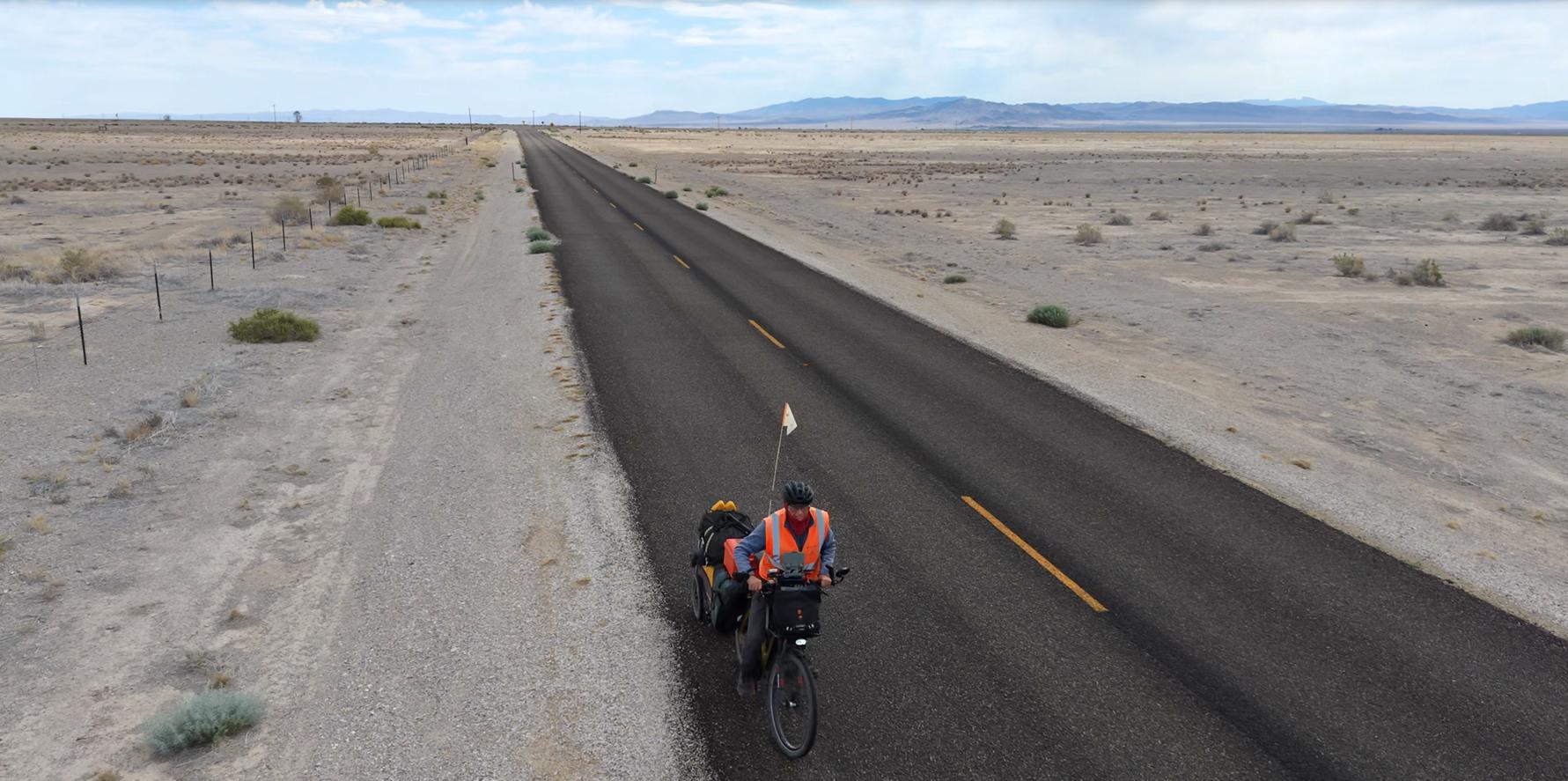
    Gregory Maassen biking near Duchesne, Utah, in June.

    After considering Maassen’s sudden and severe symptoms, Hoke diagnosed Maassen with small-fiber sensory neuropathy, a rare type of peripheral neuropathy that damages small nerve fibers. Since nerve conduction tests examine large nerve fibers, Hoke said, Maassen’s condition can sometimes go undiagnosed. While the likelihood of neuropathy increases with age, Hoke said about 0.1 percent of neuropathy cases match Maassen’s.

    A skin biopsy in April 2019 confirmed Maassen’s condition. Many factors can contribute to neuropathy, including diabetes, chemotherapy, and autoimmune disorders, but Maassen said he believes he developed it from tick bites.

    Hoke, who works for Johns Hopkins Medicine, prescribed Maassen medicine to manage his pain, including a gabapentinoid to treat nerve pain and an antidepressant that can also help with nerve pain. Maassen was relieved, but he was skeptical of Hoke’s other treatment plan: exercise.

    Gregory Maassen rode into Texas in April.

    “Are you out of your mind?” Maassen recalled thinking. He was so tired and sore that moving through daily life was difficult. He could hardly imagine exercising.

    Exercise can regenerate nerve fibers and improve chronic pain for some neuropathy patients, Hoke said. Maassen, who left his contractor job with the U.S. Agency for International Development because of his illness, said he had no other hope.

    He tried swimming and hiking but said the workouts were too demanding. He joined a biking group near his home in Northwest Washington that mostly consisted of 60- and 70-year-olds, thinking their pace would be moderate. But Maassen couldn’t keep up.

    Gregory Maassen biked along the Mississippi River on his way to Los Angeles.

    Some of the bikers were riding electric bicycles, which Maassen had not seen before. E-bikes come with a battery and a motor that can make cycling less taxing and reduce resistance on hills, but bikers still get exercise by pedaling, balancing, and steering. Maassen thought he found the perfect solution.

    Still, after buying an e-bike in September 2019, Maassen felt exhausted on his first few rides around his neighborhood in North Cleveland Park and to-and-from local parks. But he said exercising improved his mood, so he kept returning to his e-bike. After a few weeks, his pain began to subside. His body felt better the more he rode.

    “I never had a day that I said, ‘Oh no, I have to do it again,’” Maassen said.

    Gregory Maassen biked in South Florida in March.

    Maassen started an e-bike group in the D.C. area in December 2019 called E-bike Lovers.

    He had cycled thousands of miles and stopped taking his pain medication by the time he had a more ambitious idea in 2021: He would e-bike from D.C. to San Francisco over four months in 2022 by riding along the Lincoln Highway. Meanwhile, he would fundraise money for neuropathy research.

    Even Hoke, who typically advises his neuropathy patients to walk, lift light weights or do Pilates, told the Post that he thought Maassen was “nuts.”

    Gregory Maassen biking in Baker, Nevada, in June.

    Maassen rode his e-bike with a nearly 80-pound trailer attached that included a tent, clothes for camping, an orange safety vest, a drone, a camera, an electric toothbrush, and jars of creamy peanut butter. He biked through snow, pouring rain, and heavy winds. He passed deserts, cornfields, and mountains. Each day, he tracked down outlets to charge his bike.

    After traversing about 4,685 miles — about 65 miles per day — he had raised more than $179,000 from people he met along his route, other neuropathy patients, neurologists, family members, and friends, he said.

    This year in March, Maassen started another cross-country bike ride traversing about 7,250 miles. He departed from West Palm Beach, Fla., and was expected to finish in Los Angeles on Tuesday morning. He has raised more than $31,500 for Johns Hopkins Medicine’s neuropathy center.

    Gregory Maassen biked in Nevada in June.

    “I haven’t had a day in 2022, and also this year, that I say, ‘Well, do I really need to do this?’” Maassen said.

    With the money Maassen is raising, Hoke said he’s working to develop medicine that will hopefully regenerate nerves as effectively as exercise for neuropathy patients.

    Maassen, 59, said this will be his last cross-country bike trip, but he’ll find other ways to support neuropathy research. He promised his wife, Janet, that he would spend more time with her and their cat, Queenie.

    “That doesn’t mean that I will stop cycling,” Maassen said.

    Gregory Maassen biking in Texas in April.
  • Trump says he will impose 50 percent tariffs on Canadian goods in 30 days

    Trump says he will impose 50 percent tariffs on Canadian goods in 30 days

    President Donald Trump announced Monday that he will impose 50 percent tariffs on most Canadian goods effective in 30 days unless Canada drops what the administration called “discriminatory” trade barriers against U.S. products.

    The move comes one day after Trump threatened to impose tariffs in retaliation for wildfires in Ontario that sent thick smoke pouring into the United States late last week. After watching Sunday’s World Cup final alongside Canadian Prime Minister Mark Carney, Trump told reporters that the subject had come up.

    “Our air has been poisoned. Have a good relationship with Mark Carney, but you know we got to stop the fires up there. If we can help them, we’ll help them. But maybe they should pay us some damages or something, or we should do some tariffs,” the president said Sunday.

    On Monday, however, a senior administration official said the president’s latest tariff action was unrelated to his irritation over the wildfires. Instead, the official said, the president was acting in response to Canada’s retaliation for emergency tariffs Trump imposed in April 2025, when U.S. alcohol was removed from Canadian store shelves. The administration has also complained about Canadian limits on auto imports and dairy products.

    Monday’s action relies on a never-before-used provision of a 1930 trade law, which provides for tariffs of up to 50 percent against countries that discriminate against U.S. goods. The 30-day delay provides time for the two nations to resolve the dispute before tariffs take effect.

    If the tariffs do take effect, they will apply to most Canadian goods, including those that qualify for duty-free treatment under the United States-Mexico-Canada Agreement that Trump negotiated during his first term. Energy, potash fertilizer, critical minerals, fish and products covered by existing national security tariffs will be exempt, said the administration official, who briefed reporters under ground rules that did not allow them to be identified.

    That would probably hit consumers with higher prices ahead of the Nov. 3 midterm elections, exacerbating the administration’s political challenges with affordability, said Ed Gresser, vice president of the Progressive Policy Institute in D.C. and a former U.S. trade official.

    “If you as a family or you as a business were hoping for some relief this fall, you’re not going to get it. Things are going to get more expensive,” Gresser said.

    But it’s not clear that will ever happen. “The fact that it’s delayed 30 days makes me think it’s a negotiating tactic,” said Ryan Majerus, a partner at King & Spalding, who served in the U.S. Trade Representative’s Office during the first Trump administration. “It seems like leverage.”

    The administration has been negotiating revisions in USMCA, which the president hailed upon signing in 2020 as the “fairest, most balanced, and beneficial trade agreement we have ever signed.” Talks with Mexico have been proceeding apace, but negotiations with Canada have yet to begin.

    Jamieson Greer, the president’s chief trade negotiator, has made no secret of the administration’s irritation with the Canadian government. The impact of the Canadian wildfires has only aggravated the situation.

    Though the administration denied any link between Monday’s tariff announcement and the fires, the president has asked for potential measures that he can take in retaliation, the administration official said.

    Greer is scheduled to visit Mexico City starting Wednesday to continue talks with Mexico.

    Riley Beggin contributed to this report.

  • Lebanon’s president will meet with Trump in Washington to push for Israeli troop withdrawal

    Lebanon’s president will meet with Trump in Washington to push for Israeli troop withdrawal

    BEIRUT — Lebanon’s president will meet with U.S. President Donald Trump on Tuesday to wrap up a four-day visit to Washington, in a bid to bring about long-term calm in the war-torn country after months of war between Israel and the Iran-backed Hezbollah militant group.

    Joseph Aoun’s landmark meeting with Trump comes as Lebanon and Israel continue to hold rare direct talks mediated by Washington. Lebanon hopes they will result in Israeli troops withdrawing from large swaths of southern Lebanon that they currently occupy, and for the Lebanese military to receive support to assert full control in areas where Hezbollah militants had held sway.

    Lebanon and Israel announced a “framework agreement” on June 26, setting a plan for Israeli forces to withdraw from southern Lebanon as well as the disarmament of Hezbollah, which for decades had a strong presence in the area. It also lays out steps toward an eventual peace agreement between both countries, which have never held formal diplomatic ties and have been nominally in a state of war for nearly 80 years after Israel’s establishment.

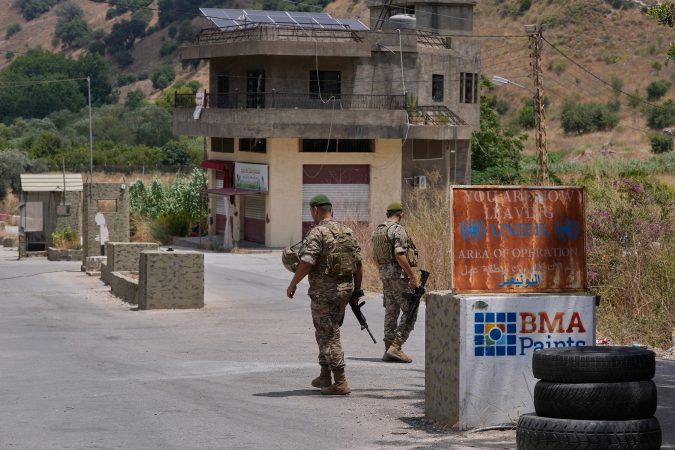
    The U.S. State Department announced Monday that operations in three villages deemed part of a “pilot zone” had begun, without giving details on what that entailed. Two of the three villages, Froun and Srifa, are not under Israeli military control and the Lebanese army is present there, while Israeli forces are in part of Zawtar al-Gharbieh.

    The Lebanese army in a statement said it was preparing for Israel to withdraw from Zawtar al-Gharbieh and that it had begun deploying troops to the area Tuesday. The Israeli military said it “will adjust its force posture in one of the pilot areas in order to enable the Lebanese Armed Forces to carry out their mission,” without specifying the location.

    An Israeli military official, speaking on condition of anonymity in accordance with military guidelines said Tuesday that the withdrawal had not yet begun.

    Village mayor waiting for safety to be confirmed

    Abed Ezzeldine, Mayor of Zawtar al-Gharbieh said that they are waiting for the Lebanese military to tell him whether its safe for residents to check on their homes after they fully deploy and patrol the area. He is concerned about the safety of his village given that the Israeli military is still present in another village next door, while Israeli strikes continue nearby.

    “The villages are intertwined, so we don’t feel safe because the Israelis are present there, they’re on our borders and are not very far from us,” Ezzeldine told The Associated Press, who said Zawtar al-Gharbieh is uninhabitable.

    “Once the army gives us permission to enter Zawtar al-Gharbieh, we as civilians will go in, but only to check it out and see how things are and then we will leave,” he said. “We can’t stay because the infrastructure is completely damaged and houses have been leveled. They (the Israelis) have bulldozed the roads.”

    Rubio says US will continue to support framework agreement

    Aoun met with Secretary of State Marco Rubio on Sunday, who said Washington will continue to endorse the Lebanese agreement and support the agreement’s full implementation. Rubio described the meeting as “very positive” and warned that Lebanon will “never be fully at peace” as long as the Hezbollah issue is not resolved.

    “How do you replace Hezbollah? You defeat and replace them with a government that is strong enough to be the sole force of arms in the country,” Rubio said after the meeting. Skeptics in Lebanon fear that a military confrontation with Hezbollah could lead to a civil war, as government officials have also urged for investment into the country’s battered infrastructure to empower the weakened state, which Rubio echoed.

    “This is not just about military stuff,” he added. ”This is about how can we attract more U.S. and international investment into Lebanon.”

    The Lebanese military last week increased its presence in some of the areas expected to be included in the pilot zone, including the three villages, with troops patrolling and setting up checkpoints. Though recent talks in Rome have signaled that the agreement’s implementation will begin soon, Israeli troops have not withdrawn from the areas under control.

    Israeli officials, meanwhile, have said they plan to keep forces long term in a “security zone” in southern Lebanon.

    Hezbollah has dismissed the direct talks brokered by the United States and instead backed Washington’s talks with their key ally and patron Iran to end their war, which also includes ending the war in Lebanon as a condition to bring back calm.

    Lebanon’s government came to power on a reformist platform in early 2025, vowing to disarm all non-state groups including Hezbollah. It blames Hezbollah for dragging the country into another war with Israel in March when the militant group fired several rockets toward northern Israel after the U.S. and Israel attacked Iran.

    Beirut’s leadership, however, has condemned Israel’s subsequent ground invasion and massive aerial campaign in the country, which killed over 4,000 people and displaced 1.2 million others. While grappling with stark political opposition from Hezbollah and allies within the deeply divided country, Lebanon’s leadership insists that Israeli withdrawal and international financial support for Lebanon’s cash-strapped army is crucial for a sustainable security solution.

  • The Pentagon, sinking billions into Iran, is quickly running short on cash

    The Pentagon, sinking billions into Iran, is quickly running short on cash

    The Pentagon faces an urgent budget shortfall caused largely by the war in Iran, with some critical lines of funding set to run out within weeks even as President Donald Trump escalates the conflict with Tehran, according to lawmakers and current and former U.S. officials.

    The funding crunch is already leading the Pentagon to limit training and maintenance that help maintain military readiness, according to four current and former officials, speaking on the condition of anonymity to candidly describe the budget constraints.

    And the collapsed ceasefire with Iran could further strain the military’s budget: After four U.S. service members died during more than a week of intensified fighting, officials in Washington signaled they were preparing for a wider conflict.

    The White House has asked Congress for an immediate infusion of $67 billion to help cover the costs of the war, but lawmakers are gridlocked over how to proceed. The House plans to leave Washington on Thursday for a month-long recess, leaving any deal on military funding weeks away at the earliest.

    “Everybody needs to look at this situation and get rid of the complacency that they have,” Rep. Pat Harrigan (North Carolina), a Republican member of the House Armed Services Committee, said in an interview.

    The Pentagon did not respond to a request for comment.

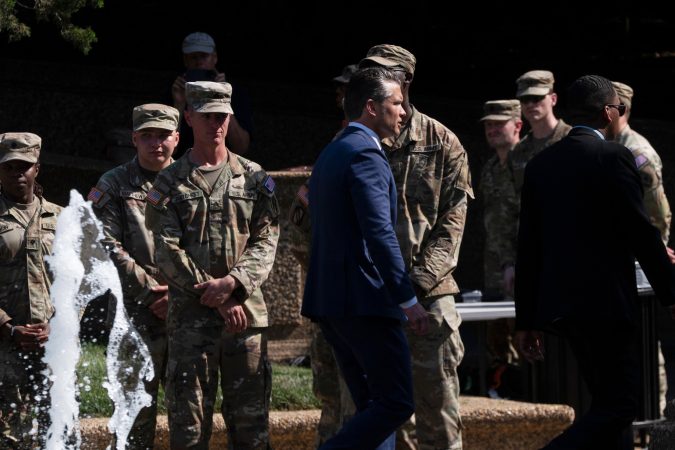
    On Tuesday, Defense Secretary Pete Hegseth and Joint Chiefs Chairman Gen. Dan Caine are scheduled to make their case for the money before the Senate Appropriations Committee — the first public hearing centered on the package. They last appeared on Capitol Hill in May, before a tenuous ceasefire broke down.

    White House budget director Russell Vought is also set to address Republican lawmakers Tuesday morning. Unless Congress acts, multiple current and former officials said the military will quickly be forced to make even more painful trade-offs.

    Trump launched the airstrike campaign in late February, repeatedly saying it would end within weeks. The conflict has instead lasted for months as Iran has closed the Strait of Hormuz — a vital waterway for the oil and fertilizer trade — and caused turmoil in the global economy.

    Vought told lawmakers last month that the war had so far cost about $30 billion, but some independent analysts say the price tag is likely much higher. The White House estimate does not include the cost of rebuilding U.S. bases in the Middle East damaged by Iranian strikes.

    The conflict has put unexpected stress on the Navy and Air Force, which have deployed aircraft and warships to the Middle East. Parts of the 2026 budget covering ongoing military operations for both services are on track to run out by the end of this month, according to two congressional aides, speaking on the condition of anonymity to candidly describe a sensitive budget situation.

    To bridge the gap until the 2027 fiscal year begins on Oct. 1, the Pentagon is already moving money around. Military exercises and trainings that help keep units prepared for combat are being limited or canceled, the four current and former officials said. The budget for equipment and facility and maintenance is also being drained to cover the shortfalls, the officials said.

    In recent weeks, the Pentagon has asked Congress for permission to reallocate $4.3 billion from trainings and weapons purchases to address more urgent priorities, according to a document reviewed by The Washington Post. Congress has yet to act on that request.

    A Trump administration official said the White House budget office was working to move some funding to the Pentagon’s operations and maintenance accounts. Doing so would come at the cost of other key programs, the person said, without offering further specifics. NBC News previously reported on some of the military’s budget constraints.

    Meanwhile, House Republicans are crafting a package using a complicated tool known as reconciliation to try to speed some money through Congress. The House is expected to vote this week on a framework that would authorize $73 billion in fresh defense spending, slightly more than the White House request.

    But that strategy faces significant hurdles in the Senate, where Majority Leader John Thune (R-South Dakota) has cast doubt on its prospects.

    Democrats have mostly said they oppose any new funding for the Iran conflict as part of a legislative blockade of major defense bills while the administration pursues a war that has drawn bipartisan objections. Even lawmakers open to additional funding — including some Republicans — have expressed frustration at the Pentagon’s delays in communicating with Congress.

    When Hegseth testified before the House panel on defense spending in April, committee leaders urged him to provide information on the war’s costs as soon as possible. The Pentagon later missed the panel’s deadline and has since failed to share requested details for weeks, including the number of precision weapons the military has in its inventories after burning through thousands of munitions in Iran, according to lawmakers and congressional aides.

    “We need to know what we’re purchasing and why we’re purchasing it,” Rep. Betty McCollum of Minnesota, the top Democrat on the panel, said in an interview.

    Hegseth has at times dismissed concerns about munitions shortages, telling CBS in an interview last month that U.S. stockpiles were “great, and they’re only getting stronger.”

    In private, Pentagon officials have expressed far greater anxiety, according to current and former officials, arguing that the military desperately needs more money to restock munitions needed to deter U.S. adversaries like Russia and China.

    After receiving a private briefing from top Pentagon officials, McCollum said replenishing these weapons was clearly a top administration priority and that Pentagon officials other than Hegseth were “very concerned” that lawmakers were not receiving the information they needed to make decisions on additional funding.

    This year’s defense budget is about $1 trillion including $150 billion in one-time funding Congress approved last year for a range of military priorities, from advanced weapons systems to energizing the U.S. defense industry. The Trump administration has requested $1.5 trillion for 2027, a massive increase that has sparked a fierce debate on Capitol Hill.

    Some lawmakers in both parties have shown discomfort with the total, due to concerns about adding to the $39 trillion national debt and financing an unpopular war. A recent Washington Post-Ipsos poll found that only 28 percent of Americans say the war has been worth fighting, compared with 68 percent who say it was not — on par with the worst assessments of the war in Afghanistan.

    Work on spending bills has been stalled in the Senate because of a stand-off among appropriators. Democrats have refused to support any fiscal year 2027 funding until a deal is reached on overall spending levels, as they oppose the hike in defense spending put forward by Republicans.

    Unexpected absences on the Senate Appropriations Committee have further complicated Republican efforts to begin some work on spending measures. Sen. Mitch McConnell (R-Kentucky), who chairs the panel on defense spending, has missed votes for a month while recovering from an injury. And Sen. Lindsey Graham (R-South Carolina), another member of the panel, died suddenly last week from what a medical examiner preliminarily ruled an aortic dissection.

    Harrigan, the North Carolina Republican, mostly faulted Democrats for the broader budget impasse but acknowledged that his party also deserves some blame.

    “There’s no question,” Harrigan said, “that every portion of those responsible for bringing the defense budget across the finish line — to include the Pentagon — are complicit.”

  • Iranian official meets mediators in Pakistan as Iran and US keep up attacks

    Iranian official meets mediators in Pakistan as Iran and US keep up attacks

    ISLAMABAD — An Iranian official began meetings Tuesday with mediators in Pakistan as diplomats sought to salvage the collapsed interim deal between Iran and the United States, even as both countries continued to launch attacks for a 10th day of renewed fighting.

    The visit by Iran’s Interior Minister Eskandar Momeni comes as Pakistan has intensified diplomatic efforts in recent days to resuscitate the deal. However, it remains unclear just what new arrangement could be reached to end the fighting.

    Iran attacked a tanker in the Strait of Hormuz early Tuesday, forcing its crew to abandon the ship, while the United States conducted yet another round of airstrikes targeting the Islamic Republic.

    The 10 consecutive nights of U.S. airstrikes haven’t compelled Tehran to loosen its grip on the strait, through which about a fifth of all crude oil and natural gas traded once passed in peacetime.

    The interim deal signed last month that was meant to end the fighting has crumbled. Shipping through the Strait of Hormuz has largely stalled. And as fighting intensifies, both sides have targeted civilian infrastructure relied on by millions of people.

    “Iran and groups supportive of Iran may target other U.S. interests overseas or at locations associated with the United States and Americans throughout the world,” the U.S. State Department said in a new warning to Americans.

    The escalation has pushed oil prices higher in recent weeks. Benchmark Brent crude traded Tuesday at nearly $90 a barrel and regular gasoline in the U.S. climbed to an average of $4 a gallon, keeping pressure on Americans’ wallets ahead of midterm elections this fall.

    President Donald Trump took to social media on Monday to warn that “Every time Iran kills an American Soldier they will pay for that killing many times over!”

    Iranian official begins meetings in Pakistan

    Momeni met Pakistan’s army chief Field Marshal Asim Munir, according to two officials who spoke on condition of anonymity to discuss the closed-door negotiations. Momeni later met Prime Minister Shehbaz Sharif.

    Pakistan’s political leadership and Munir, who serves as both the chief of army staff and defense forces, have played a key role in brokering last month’s interim agreement between the United States and Iran. Islamabad has been working to persuade both sides to return to the negotiating table to resolve outstanding issues under the June memorandum of understanding.

    Authorities did not immediately release details of the meeting, which came as Tehran continued its attacks on Gulf Arab allies of the U.S.

    On Sunday, U.S. Secretary of State Marco Rubio told reporters that the U.S. is still open to negotiating with Iran but that “it has to be real.” It remains unclear whether Tehran will offer anything that Trump would consider “real.”

    US strikes come as ships attacked

    The U.S. military’s Central Command said Tuesday it targeted “Iranian military command centers, maritime capabilities, missile and drone launch sites and air defense systems.” It released more footage of bombings that targeted sites in Iran.

    “American forces remain postured and prepared to hold Iran accountable for unwarranted aggression toward civilian mariners seeking to freely and openly transit the strait,” the command said.

    Iranian state media reported that explosions were heard in Fars, Hormozgan, Ilam, Kerman and Sistan and Baluchistan provinces.

    However, traffic through the strait has slowed to a crawl during the latest violence. Lloyd’s List Intelligence said only three ships transited the strait on Sunday.

    The British military’s United Kingdom Maritime Trade Operations center said a tanker came under attack early Tuesday in the strait off Oman, forcing the crew to abandon the vessel.

    Iran’s paramilitary Revolutionary Guard claimed the attack, as well as two other attacks on ships Monday in the waterway.

    The route around Oman has been the one the U.S. military has encouraged ships to travel to avoid Iran’s control. The UKMTO separately reported Tuesday that another previously unknown attack on a ship took place early the previous day.

    Iran strikes US allies around the region

    Tehran also hit U.S.-allied countries throughout the Middle East. Jordan military’s said Tuesday that Iran targeted it with five drones and three missiles, all of which were shot down. Bahrain sounded its missile alert sirens Tuesday afternoon as another Iranian barrage targeted the island kingdom, which is home to the U.S. Navy’s 5th Fleet.

    In Kuwait, its Electricity, Water and Renewable Energy Ministry said that Tehran had struck desalination and power plants for a fourth straight day on Monday night. Authorities said the attacks sparked fires and caused damage.

    Some 90% of Kuwait’s drinking water comes from desalination, making the attacks a matter of life and death for the tiny nation.

    U.S. strikes have been hitting electrical equipment in Iran as well, and Iranian officials also have said Americans targeted water facilities.

  • 5 mosquito-fighting methods that work and 4 that don’t

    Layering on the bug spray might be the first thing that comes to mind when you think about avoiding itchy mosquito bites and the diseases that can come with them. But that’s far from the only tactic that mosquito experts use to minimize bites.

    For starters, Eva Buckner, an assistant professor and state extension specialist at the UF/IFAS Florida Medical Entomology Laboratory, recommends taking a step back and considering the source of the bugs, especially if you live in a home with a yard, deck, or other outdoor areas. Your No. 1 move, she said, is to clear the pockets of water that might be luring the bugs to your space in the first place.

    From there, she recommends a variety of products to repel the biting adults — some of which you might already have at home.

    Remove standing water and set traps

    “Mosquito eggs require water to hatch, and the larval stage is aquatic,” Buckner said. Walking around your home once a week and dumping even the smallest amounts of standing water — for example, in plant pot saucers, dog pools, tarps, or garbage can lids with indentations — can eliminate mosquito larvae and cut down on the habitat necessary for adult mosquitoes to breed, she said. A chat with your neighbors to make sure they’re doing the same can also go a long way toward reducing the number of biting adults that end up in your vicinity.

    If there’s a source of standing water near your home that you can’t or don’t want to remove, such as a bird fountain or pond, Buckner suggests tossing in mosquito bits (granules) or mosquito dunks (doughnut-shaped disks) once a month. These contain Bacillus thuringiensis israelensis, or Bti, a bacteria that can kill developing mosquito larvae without harming other wildlife.

    You can also make a DIY mosquito trap by filling a dark bucket with water and some leaves, and popping in a mosquito dunk. Female mosquitoes will be drawn to the bucket to lay their eggs, but the Bti will ensure they never hatch.

    Use EPA-registered repellent sprays, wipes, gels, and lotions

    The same active ingredients that repel mosquitoes in EPA-registered bug sprays can be found in other topical formats such as lotions, gels, and wipes — and to similar effect, said Buckner.

    “I like using products that contain DEET, which I know may not be everyone’s favorite ingredient because it can be a little oily-feeling and may damage plastics,” Buckner said, such as eyeglass frames, watch faces, and synthetic clothing, but “it is the absolute gold standard for preventing mosquito and tick bites.”

    If you’re looking for another option, she recommends products containing the following EPA-approved ingredients for this purpose: picaridin, a synthetic chemical mimicking compounds in black pepper plants; oil of lemon eucalyptus (OLE); para-menthane-diol, the active compound in OLE that can be synthesized in a lab; or IR3535, a synthetic compound similar to a natural amino acid.

    Among the above choices, the best format is just a matter of personal preference, Buckner said.

    Try permethrin-treated clothing

    Loose-fitting long-sleeve shirts and pants are a great defense against mosquitoes because “they create an effective barrier between you and the mosquito proboscis,” or its tubelike mouthpart, Buckner said. If you’re wearing tighter-fitted clothing, it may pierce right through it.

    To make it less likely that a mosquito approaches you in the first place, you could also wear clothing that’s been treated with permethrin, a synthetic insecticide that mimics a repelling compound naturally found in chrysanthemums, Buckner said. (It can also ward off ticks.)

    You can buy clothing that’s been pretreated with permethrin, or if you want to save some money, you could buy a 0.5% permethrin spray and spritz down a couple articles you own.

    Buckner emphasized following the package instructions when using any at-home permethrin product. It’s important to wait until treated clothing is dry before wearing it and to avoid using permethrin directly on your skin as it can be severely irritating.

    Permethrin is generally safe for dogs but can be highly toxic for cats. However, once a spray has dried onto clothes, it should be fine. Just make sure to use caution.

    Buy spatial and clip-on emanators

    These devices create a bubble of protection by slowly releasing an invisible, odorless vapor containing a mosquito-deterring ingredient. The key is to look for ones that have the chemical actives metofluthrin, transfluthrin or d-allethrin, Buckner said. Thermacell and Off! make several versions, including tabletop and patio lanterns — which can create a protective cloud spanning the surrounding 15- to 20-foot space — as well as smaller battery-powered devices and clip-ons you can take or wear on the go.

    Spatial emanators, also called spatial repellents, are most effective in still, non-windy conditions, Buckner noted, when the chemical cloud is less likely to be dispersed or blown away. Unless you’re holding or wearing a clip-on emanator, it’s also best to stay close to the emanating device, she added. The farther away you move, the less coverage you’ll receive.

    Set up a box or oscillating fan

    If you’ll be staying in one place for a while, for instance having dinner in your backyard or hanging out on the porch, it’s worth setting a big box or oscillating fan nearby, whether on a table or the ground.

    “Mosquitoes aren’t super strong fliers,” Buckner said.

    The breeze created by a fan set on high speed can make it tricky for mosquitoes to fly near you and land, or may even physically push them away from you, she explained. (If you’re already using a spatial emanator, however, it’s best not to involve a fan, too, as the extra airflow could blow away the protective scent cloud.)

    Repellent products to skip

    Combining any number of the above repellents will give you a supercharged dose of protection.

    What won’t help, however, is opting for the below products and tactics, which Buckner said aren’t proven, effective mosquito solutions:

    • Candles, wristbands, clip-ons, and topical repellents using botanical oils like citronella, geranium and peppermint. While these plant oils do have repellent properties, they evaporate rapidly, making them poor substitutes for EPA-registered repellents. (Different from these raw oils, the EPA-registered oil of lemon eucalyptus is an extract that’s been chemically refined to increase the concentration of the bug-repelling compound within it.)
    • Bug zappers, which use light to attract bugs and then electrocute them. “They might kill some mosquitoes, but they’re also going to kill any other insect or arthropod that is attracted to light,” Buckner said, “so they can have a lot of non-target effects.”
    • Mosquito-repelling plants. “For essential oils to have repellent properties, they have to be extracted from the plant and then concentrated by up to 10 or 20 percent,” Buckner said. So a plant that’s still in the ground won’t reliably ward off bugs.
    • A bat box. “Bats want to eat something that offers a high caloric intake, so they’re more likely to go for a big, juicy moth vs. a scrawny mosquito,” Buckner says. “I love bats and want to support their conservation — but they’re just not going to be your solution for mosquito control.”
  • Letters to the Editor | July 21, 2026

    Letters to the Editor | July 21, 2026

    Smoke and mirrors

    More than 100 million Americans were under some form of smoke warning last week when Fearless Leader took to the airwaves to blow smoke at voters about his imaginary victory against Joe Biden in the 2020 presidential election. No apology for his “drill, baby, drill” policies, which play their part in creating the conditions that produce this hideous climate change. As for the election fraud allegations he repeats endlessly without proof, I am puzzled why his baseless claims are given any space, ink, or airtime. He is a seriously disturbed individual whose reckless claims are dangerously deployed for no other purpose but to place him in the news frame every day, and to give many readers a sense of competence he certainly does not deserve.

    Michael J. Cummings, Philadelphia

    Data center fallout

    States don’t need to ban data centers; they just need to enact legislation that, first, requires any commercial or industrial facility above a certain size to also build a sustainable energy-generating plant that will completely power the facility. Second, no water can be used for cooling the facility. This will either stop construction of these data centers or force an evolution in technology, which will benefit everybody.

    Also of concern: Taiwan manufactures over 90% of the world’s most advanced, high-end computer chips. This production is overwhelmingly dominated by a single company, the Taiwan Semiconductor Manufacturing Co. Overall, Taiwan accounts for about 60% of all global semiconductor manufacturing capacity. If (or more likely when) China invades Taiwan, it will then control the global supply of these chips. Why this is not a top priority national security issue for this country has baffled me for years.

    Andrew Benton, Flourtown

    Off-base

    What I love about Marcus Hayes’ writing is that he doesn’t pull punches. But, boy, did he in one of last week’s columns.

    No, Zach Wheeler is not “weird.” He is gobsmackingly entitled. First, he complains about the pitching rule that does not allow him to play in the All-Star Game. (Sorry, but a rule is a rule.) Then, he’s asked to participate after all, for whatever reason escapes me, but does it even matter? Clearly. They disrespected him. Oh, boo-hoo.

    And Bryce Harper? How on God’s green earth can he also get a pass? He literally said the word FanDuel in the video he was asked to record. I personally have lost all respect for him. Being disingenuous is not “weird.”

    I’m sorry, but he’s way off base, pun intended.

    Ted Schmiechen, Philadelphia

    Council theater

    A recent article in The Inquirer indicated how several City Council members are probing the increased assessments on thousands of Philadelphia properties. How did City Hall think it was a good idea to raise property taxes at the same time the president’s policies cost the average family hundreds or thousands of dollars a year in increased food and gas costs? Many Philadelphians are seeing increases of thousands of dollars in additional property taxes — something that should never happen all at once. Council can do something positive by lowering the millage rate, which is the tax rate expressed as tax dollars per thousand dollars of assessed value. This rate is set by Council, so unless you see some brave City Council member put forth that idea, Council’s efforts are just window dressing.

    Charles Brennan, Philadelphia

    Join the conversation: Send letters to letters@inquirer.com. Limit length to 150 words and include home address and day and evening phone number. Letters run in The Inquirer six days a week on the editorial pages and online.

  • Dear Abby | Relatives weigh wedding gift for undeserving nephew

    DEAR ABBY: Our nephew “Conrad” is engaged to be married soon. For several reasons, we are unable to attend the wedding. Under normal circumstances, I wouldn’t hesitate to send a generous gift as I have for our other nieces and nephews. However, Conrad is not normal. He doesn’t speak to me, my husband or our children, two of whom are his age. We have never done anything to offend him, as far as I know, and it’s not just our family. He also ignores other specific family members.

    Conrad’s mother describes him as “the kindest” and “most loving” person. However, we have never seen that side of him. We have witnessed only narcissism and rudeness. He speaks only to those he thinks elevate his status or make him look good in some way. If, according to Conrad, we do not exist, are we still obligated to send a wedding gift?

    — INVISIBLE IN THE SOUTHERN PLAINS

    DEAR INVISIBLE: Are you certain you will receive a wedding invitation from this nephew? Technically, if you don’t attend, you’re not required to give him anything. However, in light of the fact that you have been generous to your other nieces and nephews, it might be more diplomatic to send a less expensive token gift to mollify his parents.

    ** ** **

    DEAR ABBY: I have been married for 10 years. For the first three years, I tried to get closer to my in-laws but was told I wasn’t welcome. I knew they didn’t like me, but I tried my hardest to win them over because family is important to me. In the end, I was asked to leave their house. My husband was on my side, but I realized I couldn’t separate him from his family. So, for seven years he’s had the support of his family and mine.

    One of his siblings is now sick, and it’s looking grim. I do not feel my presence is required at the funeral as no one in his family likes me. Am I wrong? Anytime I run into his family, they are confrontational.

    — STAYING AWAY IN ILLINOIS

    DEAR STAYING AWAY: Ask your husband if he would like your emotional support at his sibling’s funeral. Bear in mind that funerals do not bring out the best in some people, and your in-laws will be no exception. Then do as your husband requests but have a quick getaway plan in place in case you need to leave.

    ** ** **

    DEAR ABBY: Two of our children are planning a European vacation with their families. My wife is upset because they didn’t invite her and stated bluntly that she’s not welcome to join them. How can we convince her not to take their decision personally?

    — MAYBE NEXT TIME IN MASSACHUSETTS

    DEAR MAYBE: Surely your wife is mature enough to understand that when a young family takes a trip, she should not expect to be automatically included? They are entitled to some time to make memories together. If she insists on taking it personally, there is nothing you can do to convince her, so let her sulk it out.

  • Horoscopes: Tuesday, July 21, 2026

    ARIES (March 21-April 19). The path ahead is obscured by a haze of uncertainty. As it goes with foggy conditions, the safest way is to let go of your own time frame and go with the larger one in play. Pause and wait for the weather to change, as it always does.

    TAURUS (April 20-May 20). Today is less about whether you get the prize and more about what the pursuit reveals about you. Your goals say something about what matters to you, but what’s even more telling is how hard you go after them.

    GEMINI (May 21-June 21). No two people live in the exact same reality. Even twins can have vastly different interpretations of the world. You’ll encounter a perspective very different from yours. Another person’s worldview becomes a window into experiences you’ve never had.

    CANCER (June 22-July 22). The good parts of a job don’t seem to make the bad parts worthwhile, but don’t worry. The balance is about to shift. Someday you’ll look back at this with affection. Hard-earned rewards have a way of redeeming the struggle.

    LEO (July 23-Aug. 22). You’re always looking for the goodness in people, and they’ll show it to you time and again today. It’s nice to know you’re not the only one looking out for the ones who need it. When compassionate people join forces, problems get solved.

    VIRGO (Aug. 23-Sept. 22). With all that’s going on in the world, you may wonder if “collective healing” is really possible, but you don’t have to believe in it to know that one person’s choices can improve what’s around them. You’re that one person today.

    LIBRA (Sept. 23-Oct. 23). You’re often the person who figures things out, keeps going, adapts and solves problems. It’s a pattern that runs through multiple areas of your life. Today, you’ll be reminded of this foundational force of your identity.

    SCORPIO (Oct. 24-Nov. 21). While many are comfortable broadcasting every thought these days, that’s not your style. You’re feeling even more protective of your privacy than usual. Ironically, the less you reveal, the more curious people become about what you’re up to.

    SAGITTARIUS (Nov. 22-Dec. 21). Someone will try to sell you a shortcut, an upgrade or a miracle solution. Maybe it’s legitimate, maybe not. Either way, today rewards the proven approach. Stick with what works. Vinegar. Baking soda. Exercise. Sunshine. You know the drill.

    CAPRICORN (Dec. 22-Jan. 19). Some people are so focused on their own immediate needs that they don’t notice the demands they’re placing on others. This is a good time to strengthen your boundaries and protect your attention from other people’s priorities. Your productivity depends on it.

    AQUARIUS (Jan. 20-Feb. 18). Achievement will depend on the success of three missions. First, a quest for understanding. Second, the pursuit of greater understanding. Third, a relentless drive toward deeper, wider and more comprehensive understanding. You’ll notice a theme.

    PISCES (Feb. 19-March 20). Tell people what you think is going to happen. Later, when it happens, you’ll be glad there’s a record that you saw it coming. It will be a thrill to see your private intuition become an observable reality.

    TODAY’S BIRTHDAY (July 21). It’s your Year of Naming Your Own Price. You get to decide what the work is worth, what’s affordable to you energetically, emotionally and financially, and which costs won’t pay. The result is more time to do what you love. More highlights: A relationship provides you with the sweet security you’ve longed for. Three instances of big, great news. A way of having fun you can repeat, scale and share. Aquarius and Taurus adore you. Your lucky numbers are: 19, 10, 5, 11 and 8.