BUNIA, Congo — The death toll in Congo’s Ebola outbreak has risen to at least 930, the country’s Ministry of Health said on Monday, with 37 new deaths reported in a 24-hour span Friday into Saturday, one of the highest totals.
The deaths were recorded out of the 2,344 cases confirmed as of Saturday, the health ministry said.
The Ebola outbreak that was declared in eastern Congo on May 15 is the fastest-growing Ebola outbreak on record. The Bundibugyo virus responsible for the outbreak is less common than others that cause Ebola disease, and there is no approved vaccine or treatment.
Ebola is highly contagious and can be transmitted to people from wild animals. It spreads in the human population through contact with bodily fluids such as vomit, blood, or semen, and with contaminated surfaces and materials such as bedding and clothing. The disease is rare but severe and often fatal.
The surge in deaths comes as safety fears have restricted the response in the worst-affected province of Ituri. A total of five provinces have been affected, all in the eastern region where rebel violence is rampant.
At least 12 attacks — mostly fueled by skepticism and rumors — have been recorded against health facilities and teams since the outbreak was declared in mid-May, authorities said Saturday. Many health workers meanwhile have walked off their jobs as they protest lack of payment.
At least 36 health workers infected with the virus have died.
The World Health Organization last week expressed concerns that 80% of new Ebola cases were emerging from unknown chains of transmission, a sign the outbreak is spreading faster than health officials can track despite an expanding response.
In the more than two months since the outbreak started, it recorded an average increase of about 272 cases and 111 deaths per week, according to data from Congo’s Health Ministry. The data also show that the weekly increases accelerated over time, particularly in July, when both reported cases and deaths rose more rapidly than in the earlier weeks.
The ministry’s latest update said that 724 patients are currently in isolation and in hospitals, and that it is intensifying response efforts in affected health zones.
“Patient care and support capacities are consolidating, with 22 new recoveries recorded in 24 hours,” the ministry said.
In the week leading up to the Iranian attack Friday that killed two U.S. soldiers and left one service member missing in Jordan, Iran carried out three other strikes against U.S. forces in the country.
Those attacks injured dozens of U.S. service members and damaged several helicopters, according to several U.S. officials, who spoke on the condition of anonymity to discuss operational matters.
But the Pentagon did not disclose the earlier strikes, nor the casualties and damage they inflicted.
The episode is the latest example during the Iran conflict of the tension between what the Pentagon says is the need for operational security and the government’s obligation to inform the public about the conduct of the war.
In statements after airstrikes against Iranian military sites last week, U.S. Central Command said it was retaliating for Iran’s attacks against commercial ships transiting the Strait of Hormuz, never mentioning Iran’s strikes on bases in the region, including in Jordan.
Central Command is not required to release information about injured service members, especially when they quickly return to duty, a U.S. military official said.
Moreover, another U.S. military official added, why would the Pentagon divulge information that could help Iran zero in on its deadly ballistic missiles and drone attacks in Jordan and other bases in the Middle East where thousands of U.S. troops are stationed?
Central Command has also stopped announcing how many sites in Iran it hits each day for the same reason, U.S. officials say.
In the days since the collapse of a fragile truce, the Pentagon has provided little information about the U.S. military strategy after nearly five months of war. The last major Pentagon briefing on the war was in early May.
In the past several months, the Trump administration has failed to disclose how the Iran war has drained U.S. supplies of critical, costly weapons, and how Iran retained and rebuilt substantial missile capabilities.
The subject of American casualties in the war is similarly sensitive. The deaths of two Army soldiers in Jordan on Friday and another service member in northern Iraq bring to 17 the total number of U.S. military personnel killed since the United States and Israel launched attacks on Iran on Feb. 28.
The Pentagon’s casualty reporting protocols call for publicly identifying deceased service members only after 24 hours have passed since next of kin were notified. The names of troops wounded in action are not typically released.
In a statement on Saturday, Central Command said four U.S. service members wounded in Friday’s attack were taken to Jordanian hospitals and had been discharged. More U.S. troops received minor injuries and had returned to duty, the statement said, but it did not specify how many.
And the statement did not mention service members injured in the three previous attacks in Jordan last week.
In a brief phone call with NewsNation, President Donald Trump said the troops died “in service of our country” and reiterated the war’s primary goal of “never allowing Iran to have a nuclear weapon.”
Defense Secretary Pete Hegseth said on social media on Saturday that the loss of the two U.S. soldiers would stiffen American resolve.
More than 400 U.S. service members have been injured in the Iran conflict, according to Central Command. The Pentagon had periodically reported the total number of service members injured and returned to duty since early in the war, but it has stopped updating the overall figure in recent weeks.
In previous administrations, the Pentagon usually delayed providing any details on injured service members until family notifications were completed. During the Biden administration, the Pentagon typically reported the number of service members injured in attacks by Iran-backed militias on U.S. bases in Syria and Iraq.
More than 1,700 Iranian civilians have died in the war, according to estimates.
School closures have spiked 35 percent across the country over the past four years, propelled by a shrinking youth population and the end of covid-19 relief funds that had propped up education funding in some places.
For the fourth year in a row, the number of school closures rose nationally last year, according to data from the National Center for Education Statistics released last week. Districts closed more than 1,000 schools in 2025-26, compared with 755 in 2021-22. And more closures are planned, including districts in Houston, Philadelphia, Pittsburgh and Broward County in Florida.
“We call it the big shrink,” said Marguerite Roza, who tracks school funding as director of Georgetown University’s Edunomics Lab. “Enrollment at public schools is declining, partly because there are fewer kids in the U.S.”
Public school closures temporarily slowed during the pandemic as administrators focused on dealing with the fallout from covid and tapped relief funds to balance their budgets. But now that the funds have run out, experts say administrators often must close schools to deal with reduced enrollment, which in turn reduces the amount of money they receive from states.
Nationally, federal projections indicate public school enrollment has already started to decline from its peak in 2019 and will continue to do so in coming years. From 2019 to 2031, schools were projected to lose nearly 4 million students. And those estimates were made before the Trump administration made changes to sharply curb immigration, further reducing the number of kids at some schools.
Some districts are also coping with population shifts, as families move to the suburbs or other parts of the country.
In addition, Roza noted that families in some parts of the country, such as Florida, have enrolled their children in private schools, taking advantage of taxpayer-funded vouchers and scholarship programs offered in a growing number of states, or charter schools, which are publicly funded but generally operate with some degree of autonomy.
All that means more closures, sometimes year after year. School administrators acknowledge that the moves can be hard on students, families and neighborhoods.
“It’s very difficult,” said Philadelphia Superintendent Tony B. Watlington Sr. “Public schools have always been anchors of communities.”
The Philadelphia district said schools have 70,000 more seats than are needed because of enrollment declines, and many of its aging school buildings need repairs.
In May, Philadelphia’s school board voted to close 17 schools, rejecting a recommendation to cut even more. Students, teachers and others rallied before the meeting to try to stop the closures.
To ease the burden on families, Watlington said Philadelphia decided to gradually close campuses over the next decade to give students time to graduate from their current schools. The district also created a transition office to help families affected by the changes.
“We know how hard and how difficult this is for our families,” he said.
Watlington said the district hopes to attract more students from other local schools by improving its academic performance and modernizing 169 remaining buildings.
In Florida, Broward County Public Schools, north of Miami, closed one elementary school last year. The school district voted in January to close six more ahead of the 2026-27 school year and plans to identify additional schools to close or repurpose in the future. In May, the superintendent said he didn’t want to scare the public but thought the district might have to close more than 10 additional schools in 2027-28. The school district said it considered factors including declining enrollment and the operating costs for the buildings when deciding which facilities to shutter.
The Houston Independent School District’s board of managers decided in February to move forward with a plan to close a dozen schools, despite protests from parents and community members. And Pittsburgh Public Schools voted in May to close 12 schools.
Researchers said they expect more school closures in coming years because of declining enrollment.
Sofoklis Goulas, an economist who has studied declining school enrollment and school closures, said it is hard to make precise predictions because of changing immigration patterns and other issues.
One notable factor, he said, is that some students appear to have disappeared from school data in recent years, perhaps due to increases in home schooling or private microschools that are not fully tracked by the government.
“The unaccounted-for student is the most worrisome,” said Goulas, a senior researcher at Foundry10, an education research organization based in Seattle. “We know little about them.”
Meanwhile, many teachers and others have expressed frustration with the closures.
“There is just an overall lack of funding in our public education system,” said Mary Kusler of the National Education Association, the nation’s largest union, representing 3 million educators.
Kusler said efforts to cut taxes in many states have reduced the money available for local schools and made it hard to keep up with inflation.
She also pointed to efforts to expand vouchers and scholarship programs, which help families pay for private schools. Supporters contend those programs create needed competition and provide more options for parents, especially in areas where public schools have struggled. But Kusler argued it also ultimately reduces the pool of money for traditional public schools, which still serve most students.
“There is only so much money to go around,” she said.
NEW YORK — U.S. gas prices jumped to an average of $4 a gallon again Monday as the U.S. and Iran launched more attacks.
According to motor club federation AAA, the national average for a gallon of regular gasoline is now back to $4. The average price a year ago was $3.14 a gallon.
The price is a national average, meaning drivers in some states have been paying well over $4 a gallon for a while now, while others pay less. Prices vary between states due to factors ranging from nearby supply to differing tax rates.
People around the world are also dealing with high gas prices as a result of the war.
Gas prices first went over $4 a gallon on average at the end of March. They dipped below that in mid-June and continued to fall as crude oil prices eased when the U.S. and Iran reached an interim deal. Even then, President Donald Trump expressed frustration that gas prices weren’t falling as quickly as oil prices.
Affordability is likely to be a key issue for voters in the U.S. midterm elections, and higher gas and oil prices can help push up prices for groceries and other goods.
One year after the Trump administration announced that dozens of health insurers had signed a six-part pledge promising to reduce barriers to doctor-recommended care, some insurers now say they won’t implement all the promised initiatives.
Meanwhile, patients, their advocates, and clinicians say little has improved.
“It has never been this bad for patients,” said U.S. Rep. Greg Murphy (R., N.C.), a physician who co-chairs the GOP Doctors Caucus.
The overarching intent of the June 2025 pledge was to improve a controversial process called prior authorization, which regularly requires patients or someone on their medical team to seek approval from insurers before proceeding with treatment.
According to AHIP, the health insurance industry trade group, health plans have eliminated 6.5 million prior authorizations for patients — equal to an 11% reduction — since the announcement.
But critics remain skeptical. Sally Nix, a patient advocate who has a chronic disease, described the voluntary pledge as “performative.” And Murphy, who participated in the news conference with Health and Human Services Secretary Robert F. Kennedy Jr. announcing the pledge last year, said it has “no teeth.”
Voluntary insurer pledges rarely make things better for patients, said Sabrina Corlette, a research professor at the Center on Health Insurance Reforms at Georgetown University.
“In the absence of clear rules, policies, standards, and mandates,” she said, insurance companies are “going to do what makes sense for them to do financially.”
The Department of Health and Human Services did not respond to questions for this report. It isn’t clear how, or whether, the Trump administration is holding insurers accountable.
‘Zero faith’
Prior authorization — sometimes called preauthorization or precertification — has been around for decades. The insurance industry has long argued that the practice, which varies by company, helps control costs, reduces waste and fraud, and prevents potential harm to patients. It’s regularly invoked for a huge swath of services, ranging from low-cost urgent care to expensive cancer treatment.
“Prior authorization is a vital patient safeguard,” said Chris Bond, a spokesperson for AHIP.
The 2024 killing of UnitedHealthcare CEO Brian Thompson sparked a national groundswell of anger about insurance denials, with patients and doctors becoming increasingly vocal about the tactics they say insurance companies use to boost profits at the expense of care.
Prior authorization reform is one of the rare healthcare issues Democrats and Republicans tend to agree on. On July 15, the House Ways and Means Committee unanimously advanced a bill that would force Medicare Advantage plans to provide to the federal government a list of all items and services that are subject to prior authorization, and to report data about denials and grievances, among other requirements.
Last year’s industry pledge was organized as a direct response to public anger, Mehmet Oz, administrator of the Centers for Medicare and Medicaid Services, said when it was announced. “There’s violence in the streets over these issues,” he said.
“Americans are upset about it,” Oz said, later adding, “I’m looking forward to seeing the results.”
Mike Gartner, founder of Health Access Innovation, an organization that helps patients overturn insurance denials, said he doubts that insurance companies are changing their policies in meaningful ways. The 11% reduction in prior authorization cited by AHIP “hides a lot of nuance,” Gartner said.
Patients who need the costliest services, such as cancer treatment, are still being disproportionately denied access to doctor-recommended care, he said.
AHIP said its data included reductions in prior authorization for medical services, not prescription medicines. The trade group didn’t provide details explaining which services have been dropped from prior authorization or how those reductions differ across individual insurers.
Last year, Oz said the federal government would be “evaluating progress” toward the pledge and “driving accountability,” and he foreshadowed “public dashboards.” But no such dashboards exist, and federal officials did not respond to questions about how they’re holding companies accountable.
Murphy, the North Carolina congressman, said he has “zero faith” in the industry policing itself.
He didn’t believe insurance companies then, he said, “and I don’t believe them now.”
Shortly after Betsy Adler’s daughter Coco was born with a serious heart defect, she started receiving estimates showing her family could owe thousands of dollars in out-of-network costs.Justin Young
‘At war’ with an insurer
In February, days after Betsy Adler and Justin Young’s daughter Coco was born with a serious heart defect, the Stillwater, Minn., family received paperwork showing they were racking up out-of-network costs.
During Adler’s pregnancy, the family had switched insurers, moving to Medica, which is based in Minnetonka, Minn., and one of many insurers that initially signed the industry pledge. Adler said she’d checked with her employer’s human resources department and on Medica’s website to make sure her maternal-fetal specialists and hospital were in-network before their new health plan went into effect earlier this year.
But then, the insurance company started processing some claims as out-of-network. By mid-March, the family had accrued more than $4,000 in out-of-network charges, on top of more than $3,000 for in-network bills. And the bills kept coming.
When Adler, a psychotherapist, called to figure out what was going on, she said, an insurance company representative said she hadn’t submitted a referral from her primary care provider beforehand. Attempts to fix the problem went nowhere. At one point, Adler said, Medica required her to visit a clinic she’d never been to before to obtain a referral. But she said a Medica representative told her the referral was never received, because the insurer’s fax machine was down.
“I have a critically ill child,” Adler remembered thinking shortly after Coco was discharged from the cardiovascular intensive care unit. “I can either spend my emotional energy at war with Medica, or I can let it go and just enjoy my time with my daughter.”
Medica spokesperson Greg Bury said he wouldn’t discuss the case, citing patient privacy rules. In an emailed statement, he wrote the company is “committed to working with her to ensure she understands what is covered under her benefits and our responsibilities.”
One of six specific promises all insurers made when they signed the pledge was to honor a 90-day grace period when patients switch insurance plans, starting Jan. 1 of this year. Often called “continuity of care,” this grace period allows patients to temporarily continue receiving services and medications that were authorized under a previous insurer.
But that applies only in some circumstances, Georgetown’s Corlette said. The wording of the pledge suggests that insurance companies aren’t obligated to honor another company’s network parameters. When Adler and Young switched insurers, for example, Medica was not obligated to cover the cost of out-of-network providers as if they were in-network, even though they were in-network under the family’s old plan.
Adler and Young switched insurance companies again when Coco was a month old, to avoid accruing more out-of-network costs.
Sally Nix with her service dog, Jon Snow, at home in Statesville, N.C. Nix, a patient advocate, recently had her health insurer process, then later deny, a claim for injections to relieve her chronic nerve pain. She’s skeptical about industry promises to reform the health insurance denial process.Logan Cyrus / For KFF Health News
Denial after approval
The percentages cited by AHIP don’t tell the whole story, said Nix, the patient advocate. Insurers are “not including the data for the loopholes they create,” she said.
For example, nothing in the pledge prevents insurance companies from retroactively denying payment, even when care is preapproved. “Patients are going to see a lot more retroactive denials,” said Nix, who recently had her insurer process, then later deny, a claim for injections to relieve her nerve pain.
Something similar recently happened to Jocelyn Austin, 49, of Amherst, N.Y. Over the course of nearly 20 years, she developed an addiction to sleeping and anxiety pills prescribed to her by a doctor. Last year, she spent weeks at an inpatient treatment center for substance abuse. Her insurer, Independent Health, had approved the admission. Austin said she has been substance-free since her discharge.
But the facility sent her a bill for more than $12,000 in December showing her insurer had not paid for the treatment she received, according to documents Austin shared with KFF Health News. This was in addition to the $10,000 she paid at the beginning of her treatment to satisfy her out-of-network deductible. The approval letters from Independent Health had specified that “authorization is not a guarantee of claim payment.”
Frank Sava, a spokesperson for Independent Health, said a denial was issued and upheld in this case because the services provided “were inconsistent with the care that was authorized” and “the medical record did not sufficiently support what was billed.” He said those findings were reviewed and confirmed by an outside consultant.
An explanation of benefits issued by the insurer last summer indicated the “provider,” not the patient, was responsible for the cost of her treatment. And yet the treatment facility has continued to pressure her for payment, she said.
Austin, who has not paid her outstanding bill, said insurance companies “should be held accountable.”
‘Significant work ahead’
Another one of the six commitments insurers made last year was to adopt new technology that would standardize the electronic submission of prior authorization requests. During the news conference announcing the pledge last summer, Chris Klomp, the director of Medicare and a deputy CMS administrator, said more than 50% of prior authorizations are still paper-based and processed by phone or fax machine.
In April, AHIP released an update related to that technology initiative, explaining that participating insurers would adopt the new standards on a rolling basis. Health insurers agreed to implement the pledge’s various commitments by predetermined deadlines, and this initiative is scheduled to be operational by Jan. 1, 2027. But eight insurers that initially signed the pledge last year didn’t sign the technology update when it was announced in April, AHIP told KFF Health News.
Those insurers are Alignment Health Plan, EmblemHealth, HealthFirst, Independent Health, Medica, MVP Health Care, Point32Health, and SummaCare. Their beneficiaries span the country, from California to New York. None of those eight insurers agreed to interviews for this report, but most sent KFF Health News emailed statements indicating that they remain committed to prior authorization reform.
AHIP’s approach to continuity of care “would have required the transfer of confidential member health information through a non-standardized process involving third-party participation,” wrote Jerry Slowey, a spokesperson for Alignment Health, which offers Medicare Advantage policies in Arizona, California, Nevada, North Carolina, and Texas. “We do not believe that level of data sharing was contemplated in the original commitment.”
Bury, the spokesperson for Medica, which covers beneficiaries in Iowa, Kansas, Minnesota, Missouri, Nebraska, North Dakota, Oklahoma, South Dakota, and Wisconsin, said the company “supports the goal of these standardization efforts.” But the April update “raised a significant technical and operational hurdle that we are not able to commit to at this time,” he said.
Alex Gomez, a spokesperson for EmblemHealth, said in late June the company “will sign onto the commitment” after KFF Health News posed questions about why it had not endorsed the April update.
“We anticipate more plans will be added over the coming months,” said Bond, the AHIP spokesperson. Health plans are “working continuously to implement their commitments to simplify and improve the experience.” He acknowledged that “there is still significant work ahead.”
The original pledge also included a promise that insurance companies would enhance transparency and use “clear, easy-to-understand explanations” when communicating to patients — something they were already supposed to be doing under the Affordable Care Act.
Yet companies still regularly neglect to explain why care has been denied, and their communications often contain “inconsistent and contradictory information,” said Gartner, of Health Access Innovation. He and Murphy also said they suspect insurance companies are increasingly using artificial intelligence to generate denials.
“They craft the pathways to basically deny things immediately with the hope that people will give up,” Murphy said.
The congressman said he wishes President Donald Trump would sign executive orders addressing some of these issues. “The problem is the insurance industry is the strongest lobby in this town.”
Do you have an experience with prior authorization you’d like to share? Click here to tell KFF Health News your story.
KFF Health News is a national newsroom that produces in-depth journalism about health issues and is one of the core operating programs at KFF — the independent source for health policy research, polling, and journalism.
It was predictable, in the wake of victories by democratic socialist candidates throughout America, that a tsunami of red-baiting smears and falsehoods would quickly follow. But among the most outrageous were allegations made in Michael A. Livingston’s July 13 letter to the editor that democratic socialists, like textbook Marxists, advocate the “confiscation of wealth and class struggle.” This is a blatant, cynical lie. In reality, leaders of the movement call only for major, commonsense reforms like a national healthcare system, free daycare, a minimum wage increase, and increased taxes on the wealthy, all of which would benefit desperately struggling Americans.
Shame on the writer for trying to perpetrate such reactionary — and familiar — propaganda. And shame on The Inquirer for publishing such letters.
I have been a registered Democrat for approximately 55 years. Among my many “fors” as a Democrat, I am for universal healthcare, the end of forever wars, increased climate control, restricting the ownership of automatic weapons, and the separation of powers. I want the restoration of the Voting Rights Act. I do not need to provide a passport each time I vote. I’m still me, no matter how many times the president wants to know. President Donald Trump doesn’t vote in person. Should he?
If you want to learn about what a Democrat believes, go to the Democratic 2020 party platform. Democrats are not of the same stripe as socialists, but we share some of the same positions in my “fors,” and for that, Mr. Rayca thinks they will be unelectable for the midterms. Most Democrats hold moderate views, neither too far to the left nor too far to the right. Because some democratic socialist candidates won several primaries, Donald Trump labels us all as socialists and communists. Should we be calling everyone in the Republican Party fascists and Nazis based upon the actions of a racist “narcissistic sociopath”? George Conway’s words, not mine.
I am not wooed by the siren song of socialism, but I would never be swayed by the entreaties of a convicted criminal. For all those who continue to listen to his pleas for continued support under the scurrilous guise of purchasing merchandise and investing in his companies to enrich his family, shame on you.
Estelle Samberg, Warminster
Attack on the endangered
On July 10, the Trump administration finalized a rule that removes the long-standing regulatory definition of “harm” from the Endangered Species Act. This is the most monstrous attack ever on our nation’s most vulnerable species. For decades, that definition recognized that wildlife can be harmed not only through direct physical violence, but also when habitat destruction prevents animals from feeding, breeding, sheltering, or raising their young. Destroying an animal’s habitat is harmful.
Removing habitat destruction from the definition of harm will make it easier for reckless development to proceed in places that endangered and threatened species need to survive. Habitat loss is the No. 1 cause of extinction. When you remove habitat protections, you remove the Endangered Species Act’s most important safeguard. Habitat conservation is the cornerstone of wildlife conservation. Eliminating protection for the habitats of threatened and endangered species pushes them to extinction. This is a monstrous decision.
Stan Kotala,Altoona
Addiction exploited
Regarding the recent article about FanDuel sending a personalized message from Bryce Harper to a problem gambler, the conclusion is now inescapable: legalized sports betting harms the integrity of the game. Yet, losing an American pastime is nothing compared to the hidden human cost — the raw suffering inflicted on our families, friends, and neighbors.
Who is to blame? Our state lawmakers — even those from Philly — cynically claim that government-promoted gambling is the only way to fund public transit, our schools, and care for our elderly. They forget that the values we apply to spending public dollars should be the exact same values we use to raise public revenue. We deserve leaders who don’t actively exploit the vulnerable among us — that’s a democratic value we can all get behind.
Paul Boni,Philadelphia
History repeats
It’s 1979 all over again. Oil prices have spiked, and the United States, the world’s mightiest military power and most dominant economic engine, is being held hostage by an isolated regime thousands of miles away. Older Americans remember the long lines at gas stations and the live updates on broadcast television showing the occupied American Embassy in Tehran. A daring military rescue attempt was organized by special forces in the Iranian desert. The mission was called off after several mechanical problems plagued the helicopters. As they were preparing to return, an aircraft collided with one of the helicopters and exploded. Eight Americans were killed. In 1980, voters expressed their disgust for this incompetence. The incumbent party was swept out the door in a landslide. May it be so in 2026.
Alex Pearson,Merion
Another wake-up call
The tragic shooting that left multiple teenagers injured and a man dead is yet another devastating wake-up call for Philadelphia. While law enforcement investigates what happened, the rest of us must confront a more difficult question: Have we become too accustomed to these headlines?
This is not just a Philadelphia problem. So far in 2026, the United States has already experienced more than 200 mass shootings. Behind every statistic are lives forever changed, families left grieving, and neighborhoods struggling to heal. When these tragedies become a predictable part of the daily news cycle, we risk becoming numb to the value of every human life.
Restoring public safety requires effective policing, but enforcement alone cannot solve a crisis rooted in broken relationships, hopelessness, and violence. Lasting progress also depends on strong families, engaged communities, quality education, positive mentors, and a renewed commitment to teaching respect, responsibility, and compassion.
We must never accept gun violence as the price of living in a major American city. Philadelphia — and our nation — owes the next generation communities where character is strengthened, opportunity is expanded, and every life is valued.
Farid Ahmad,Philadelphia
Differing viewpoints
Regarding Jonathan Zimmerman’s column about the importance of exposing students to differing perspectives on U.S. history: While I agree it is useful to share differences of opinions with our students, I believe it is a mistake to, in any way, suggest that there is such a thing as an “alternative truth,” or that people can choose what they like to think when it is not subject to interpretation because facts are available.
There is no alternative truth to the fact that George Washington was an enslaver. There is no alternative truth to the fact that Joe Biden won the 2020 election.
Different countries can have varying opinions of why we dropped the bombs in Hiroshima and Nagasaki, but it is extremely disturbing to think there was another reason other than convincing the Japanese to end a horrific war. If this isn’t the truth, the American people are certainly entitled to know what it is.
Alexis Gerard Finger,Bala Cynwyd
For Pete’s sake
Regarding Pete Hegseth’s plan to test the testosterone levels of troops: While it’s unclear how his screening program will apply to female service members, Hegseth’s focus on testosterone is a thinly veiled message to women in the military: “Grow testes or get out.” What’s next, mandatory testing for the presence of a Y chromosome?
Jay Lynch,Pittsburgh
Join the conversation: Send letters to letters@inquirer.com. Limit length to 150 words and include home address and day and evening phone number. Letters run in The Inquirer six days a week on the editorial pages and online.
ARIES (March 21-April 19). The main tension today is between your desire to lead and your awareness that collaboration often brings about the best result — often, but not always. And what about today? You’ll figure out how to take initiative without needing complete control.
TAURUS (April 20-May 20). Yes, your values differ from those of many around you. They may even conflict with what the group is collectively trying to accomplish. Even so, practical and logistical realities require participation. You’ll make it work while remaining true to what matters most.
GEMINI (May 21-June 21). Being heard isn’t the same as being understood. Some conversations generate attention. Others create connection. You’ll know the difference by how you feel afterward. One leaves you energized. The other leaves you feeling strangely alone.
CANCER (June 22-July 22). Like schools of fish and flocks of birds behaving as a single creature, there is a group mind influencing your scene on levels that feel practically primordial. But your need to express and assert your individuality will be stronger today.
LEO (July 23-Aug. 22). You are quickly becoming a favorite of those with knowledge to impart. What you learn will apply in many areas of life, sometimes as metaphor, sometimes as a lesson with immediate applications.
VIRGO (Aug. 23-Sept. 22). Not everyone will understand your vision immediately, and that’s perfectly normal. New ideas often need time before they make sense to other people. The challenge isn’t convincing everyone. It’s staying on purpose without becoming dependent on approval.
LIBRA (Sept. 23-Oct. 23). You’ll have fresh ideas about who should be doing what. As you look at the division of labor, you’ll get a clearer sense of what belongs on your plate and what works better as a group effort. A few responsibilities are ready to change hands.
SCORPIO (Oct. 24-Nov. 21). The golden question today: How do I express myself fully without forgetting that I’m part of something larger? The line between personal glory and collective good will reveal itself, and you will walk it with the grace of a veteran tightrope artist.
SAGITTARIUS (Nov. 22-Dec. 21). You’re getting noticed, which is nice. Still, the more interesting question is what you want to do with that attention. For now, the answer can wait. Simply notice which doors begin to open.
CAPRICORN (Dec. 22-Jan. 19). Your beliefs are evolving. Stay curious enough to let new information add nuance to the picture. What you learn now may not change your mind so much as broaden the context around it.
AQUARIUS (Jan. 20-Feb. 18). You’re gravitating toward certain people and steering clear of others. Fair enough. Just don’t become so selective that you overlook an unexpected ally. Useful insight will come from an unlikely source.
PISCES (Feb. 19-March 20). The gears don’t automatically run smoothly. They have to be fitted. You turn the machinery on and notice where it rubs, where the timing is off, where the shapes miss connection. It’s the fine tuning that makes it work.
TODAY’S BIRTHDAY (July 20). It’s your Year of the Carousel, in which familiar themes return and enjoyment is no longer a reward for finishing the work — it’s part of the experience. You’re being carried in a beautiful spectacle of music and lights. More highlights: A hobby becomes a talent and an income stream. Close relationships glow with warmth, tenderness and just plain fun. You’ll sign a contract that protects and funds you. Libra and Pisces adore you. Your lucky numbers are: 7, 22, 16, 3 and 9.
DEAR ABBY: I’m 56 years old and have been married for 12 years. I don’t want to drive an hour and a half to spend time with my husband’s grandbabies. I have done that on many occasions and choose not to do it anymore. I’m not into babies — or children, for that matter. He continues to ask me to go and can’t understand why I don’t want to. I have no problem with him going (I encourage him to go), but he won’t let up on me, and it’s driving me away. Am I wrong to prefer not to go?
— CHILD-FREE IN CALIFORNIA
DEAR CHILD-FREE: Has it occurred to you that your husband may not want to drive an hour and a half to visit the “grandbabies” any more than you do? He may need you for backup. Sometimes in a marriage, we do things for our partner that may not be our favorite pastime, but we do it for love. You should not have to make that pilgrimage every time your husband does, but the nice thing to do would be to accompany him more times than not. And do it with a smile.
** ** **
DEAR ABBY: My husband is serving a life sentence, with the possibility of parole. He turned himself in a year and a half ago for a crime that happened 15 years ago. I met someone seven months ago. This man is involved in his church and has a ministry in which he feeds the homeless. I’m not sure at this point what our future holds. I feel so guilty at times. Please help. Any advice would be greatly appreciated.
— CONFLICTED IN GEORGIA
DEAR CONFLICTED: This is something I think you should discuss with your incarcerated husband. When you do, explain that you don’t think you can live like a widow, possibly for decades. Decide together how you should proceed. However, please remember you have been involved with this new person for a relatively short time, and there is no guarantee that your relationship will become permanent.
** ** **
DEAR ABBY: Our friend “Leo” married a girl who treats him poorly. She degrades him in front of people about his finances, weight, looks, etc. They have been married only a couple of years and have no kids. Leo is a great person, and his mental health is getting beaten down daily. Should we say something to him? We want him to know we would support him if he wanted to divorce her. He has limited family — his friends are family.
— STEPPING UP IN IDAHO
DEAR STEPPING UP: Because you and Leo’s other friends believe he is being abused, I see no reason to remain silent and pretend it isn’t happening. An intervention may be called for, as well as an opportunity to reinforce the message that you are all there for him regardless of what he chooses to do about his marriage.
WASHINGTON — Vice President JD Vance and his wife, second lady Usha Vance, on Sunday announced the birth of their fourth child, the first born to a sitting vice president in more than 150 years.
Born Sunday, Alec Neel Vance joins older siblings Ewan, 9; Vivek, 6; and Mirabel, 4.
Vance announced the birth on social media with a statement signed by him and his wife.
“We are excited to announce that our baby boy, Alec Neel Vance, was born this morning. Usha and the baby are happy and healthy, and our kids are overjoyed to meet their little brother,” the statement said.
They thanked doctors and staff at the Walter Reed National Military Medical Center and with the White House medical team.
The Republican vice president’s growing family is in keeping with his passionate advocacy for Americans to have more children. He has also suggested that the 2025 killing of conservative activist Charlie Kirk, who was his friend, factored into the decision to have another child.
Vance, a former U.S. Marine, repeatedly expressed alarm about declining birth rates in America as he launched his political career in 2021 with a bid for a U.S. Senate seat from Ohio. As vice president, he said in Washington at the 2025 March for Life anti-abortion rally, “I want more babies in the United States of America.”
The vice president, who’s 41, has been accompanied on overseas trips by Usha Vance, 40, and their children, with the kids often pajama-clad as they board Air Force Two for the overnight flights.
Usha Vance, the daughter of immigrants from India, had already been the subject of some public fascination because of her husband. Her pregnancy, which was announced in January, amplified that spotlight since it is rare for occupants of the United States’ highest public offices to add to their families while serving.
The last time a sitting vice president became a new father was in the 1800s.
Schuyler Colfax and his second wife, Ellen Wade, had a son, Schuyler Colfax III, in 1870 when Colfax was serving as vice president, according to the White House Historical Association. Decades before that, John C. Calhoun and his wife, Floride Bonneau, had a son, William, in 1829 when Calhoun was vice president, the association said.
The newest addition to Vance’s family was part of a recent mini baby boom among top members of President Donald Trump’s administration. White House deputy chief of staff Stephen Miller’s wife, Katie Miller, recently gave birth to the couple’s fourth child, and White House press secretary Karoline Leavitt had her second child with her husband, Nicholas Riccio, in May.
Usha Vance recently came under scrutiny after the New York Times’ fashion critic called attention to the stomach-hugging, coral maternity dress she wore for a Father’s Day episode of Storytime with the Second Lady, a video podcast she launched during the pregnancy.
The Times wrote that the attention that Vance, Miller, and Leavitt had put on their pregnancies offered “an image of idealized womanhood that gives literal shape to the pronatalist movement,” which encourages couples to have as many children as possible to counter declining birth rates.
The second lady responded on social media, writing, “Now that we know the political significance of my $8.75 coral maternity dress from Old Navy, can’t wait to hear what the New York Times has to say about my elastic-waistband pants and compression socks! In the meantime, enjoy my pregnancy fashion (or lack thereof) and a good story with your kids on Storytime with the Second Lady.” She later shared the receipt for the dress, and her husband applauded her frugality.
“She bought a $50 dress for $8.75. America: meet your next director of the federal budget!” the vice president wrote on social media.
JD Vance has said it was Kirk’s widow, Erika Kirk, telling them that she wished she’d had more than two children with her husband before he was assassinated last September in Utah that led him and the second lady to decide to grow their family. Usha Vance, a former attorney who once clerked for Supreme Court Chief Justice John Roberts, concurred — in part.
“It was very powerful, what (Erika) said about her own family, and certainly very moving to both of us. I think I had already started to open my mind to the possibility,” Usha Vance said during a joint interview with her husband for CBS Sunday Morning that aired in June. “I wouldn’t say that this was, for me in any way, the decisive factor. But it came in the middle of a conversation that we were already having.”
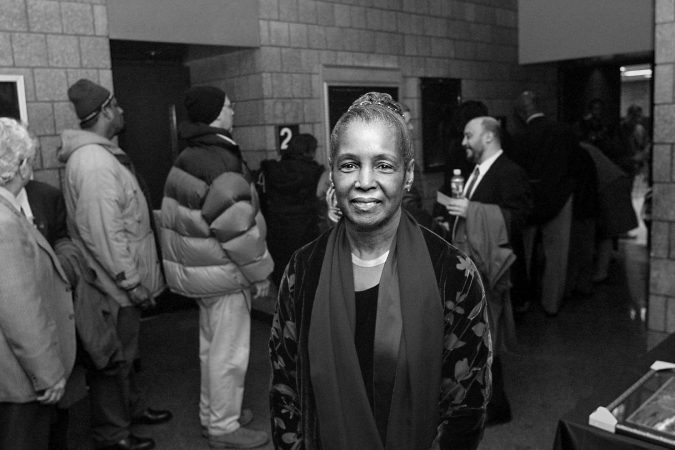
Lillian Roberts, a crusading labor leader hailed as a “tiger” — and briefly jailed — during her fiery tenure at the nation’s largest municipal workers union, which now represents more than 150,000 nurses, pothole fillers, zookeepers, and other New York City employees, died July 9 in Manhattan. She was 98.
Her death, at a nursing facility, was from cardiac arrest, said Ivan Smith, her sister’s son, whom Ms. Roberts raised as her own after her sister’s death.
Starting in the 1960s, Ms. Roberts established a reputation as a firebrand, working for — and, eventually, as a de facto partner of — Victor H. Gotbaum, the notoriously combative executive director of District Council 37.
The district council — part of the American Federation of State, County and Municipal Employees, or AFSCME — has long been considered the nation’s most powerful public employees union, representing more than 1,000 job titles and nearly a third of the city’s municipal workers.
Rising to prominence at a time when labor leadership was dominated by white men, Ms. Roberts, a Black woman, spent nearly 14 years as the associate director of District Council 37, which roughly quadrupled in membership during that period. Her biggest coup was unionizing 20,000 workers at the city’s public hospitals, in what the New York Times later called one of the largest organizing drives in American history.
After a lengthy absence, she returned to District Council 37 as executive director in 2002, when she was 74, and served for 12 years.
“I always felt that I had a job to do,” she said in an interview for the 2005 reference book Black Women in America. “It transcends whether I am male or female.”
She added: “I never thought about not doing the job and not being aggressive.”
In her quieter moments, she came across as the “embodiment of serenity,” the Times observed in 2002. But Ms. Roberts was often pugnacious.
In 1968, she spent two weeks behind bars after leading a strike against three New York state mental hospitals, thus violating the state’s Public Employees’ Fair Employment Act, or Taylor Law, which bans public sector strikes. In the 1970s, she decried Mayor Abraham D. Beame’s plans to shutter several public hospitals, insisting that city residents would die as a result.
“When Lillian’s angry, she can really blow her head off at people — those from her own side of the table as well as the other,” Deputy Mayor Basil A. Paterson, the city’s chief labor negotiator, told the Times in 1978. “But never in a meeting — she will always take them into another room to let them have it.”
Lillian Davis was born Jan. 2, 1928, in Chicago, the second of five children of Henry Davis, a janitor and barber, and Lillian (Henry) Davis.
The couple, who were transplants from rural Mississippi, struggled to survive during the Great Depression, and Lillian spent hours over a washboard helping her mother keep the household running.
“I never really had a childhood,” she was quoted as saying in Black Women in America. “I had to be an old lady at a very young age.”
An honors student in high school, she earned a scholarship to the University of Illinois Urbana-Champaign. But unable to afford room and board, she dropped out after less than two years.
“I was so angry at society that here I was on welfare,” she recalled. “I did not want welfare, I was humiliated by it, and they were doing absolutely nothing to get me out of that situation.”
Instead of receiving a diploma, she became the first Black nurse’s aide at the University of Chicago’s hospital, although she lacked the money to go on to nursing school. She remained in the aide job for more than a decade, eventually becoming active with her AFSCME local as a shop steward and secretary.
She was taken under the wing of Gotbaum, then in charge of the Chicago district council of the AFSCME, who “noticed that I was aggressive, that I was responsible,” Ms. Roberts later said. In 1965, she followed Gotbaum to New York when he took over District Council 37.
Ms. Roberts burnished her credentials as a labor hero by flouting Gov. Nelson A. Rockefeller and the Taylor Law during the 1968 hospital strikes. On her way into the 19th-century Civil Jail on West 37th Street, she was greeted with the chant, “Rocky in, Roberts out!”
Sentenced to a month in jail, she was released after two weeks following a public outcry.
In 1981, Ms. Roberts became the first Black woman to be appointed New York state labor commissioner, then known as the industrial commissioner, and she fought for improving workplace safety, for fair wages and for stronger unemployment insurance programs. After resigning in 1987, she joined the private sector as an executive at a health management organization.
In addition to Smith, Ms. Roberts is survived by his brothers, Carl and Ralonzo Smith, whom she also raised as sons after her sister’s death. Her marriages to William Roberts and Enoch Jenkins ended in divorce.
When she returned in 2002 to lead District Council 37, the union had “Cinderella-like, suffered through its own midnight,” the Times observed, “and turned into a squalid outfit in which officials embezzled millions of dollars and stuffed ballot boxes.”
In essence, the Times wrote, she was coming back as a “fairy godmother.” But it was not all magic wands and glass slippers. Ms. Roberts clashed with the union’s board, as well as with Mayor Michael Bloomberg, a conflict that included sharp-tongued attacks over planned city layoffs in 2011.
“The relationship between the mayor and Roberts,” the Times noted that year, “is far worse than that between previous mayors and leaders of District Council 37.”
But she remained in her post until 2014, when she retired at 86. “This union,” she once said, “was my life’s work.”