Tag: no-latest

  • Republicans don’t want to go there again on Trump’s 2020 election fraud claims

    Republicans don’t want to go there again on Trump’s 2020 election fraud claims

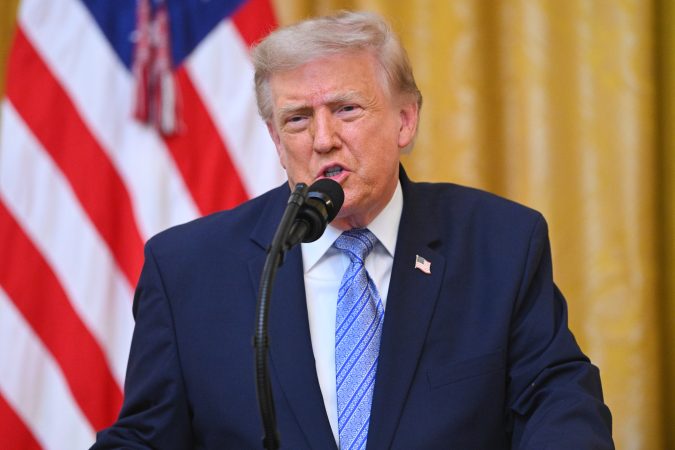
    For weeks, President Donald Trump had privately floated the idea of delivering a televised address to detail claims of foreign interference and purported election fraud — “shocking” new discoveries, he’d go on to say, that had been covered up by the so-called “Deep State” and should be a central focus of elected officials.

    Advisers initially steered him away from the idea for a primetime address, but it was quickly resurrected. Dozens of cabinet members and close aides gathered to watch his speech in the East Room on Thursday, dutifully standing and applauding when he finished. The next morning, Trump bragged about the “great reviews” and “big audience” for the address.

    But outside of the president’s list of frequently dialed contacts and the clips assembled of White House-aligned influencers praising his speech, the primetime address failed to galvanize conservatives, with some publicly questioning his focus on 2020 as the midterms approach. Republicans fighting to maintain congressional control this fall largely sidestepped the message.

    By the weekend, the White House-aligned commentators and members of Congress who had pushed the Trump team’s talking points about the speech had seemingly moved on. The muted response underscored a broader political reality: Many Republicans facing voters this fall have shown little interest in making Trump’s renewed focus on the 2020 election central to their campaigns as they head into a midterm complicated by the president’s weak standing with independent voters.

    As Trump’s favorite cable network Fox News largely ignored the address Friday morning, former Republican National Committee chair Michael Whatley, the Trump-endorsed GOP nominee for Senate in battleground North Carolina, held a 34-minute campaign event largely focused on public safety.

    ‘We’re going to talk about the economy and what I’m going to do to make sure everybody makes more and keeps more. We’re going to talk about our military and our national security,” Whatley said. “But the number one issue that we want to talk about in this election cycle, that we need to talk about in this election cycle, is keeping our kids and our communities safe.”

    Asked by a reporter afterward about Trump’s latest messaging, Whatley, who has previously boosted some of Trump’s 2020 election fraud claims, said he is a “big proponent of election integrity,” and of the signature election legislation Trump has pressed Congress to pass.

    Whatley predicted that his race will be “decided within a percentage point,” though he has consistently trailed former Democratic Gov. Roy Cooper in polling by much more than that. He is fighting to succeed retiring Sen. Thom Tillis, a moderate Republican who has had a turbulent relationship with Trump and regularly asserts his independence from the president.

    The “clear and simple” explanation for why most Republican candidates aren’t clamoring to talk about the 2020 election is that voters are focused elsewhere, said Paul Shumaker, a veteran Republican strategist and longtime political adviser to Tillis, who declined to comment directly on Trump’s speech.

    “If candidates are not talking about the economy, if candidates are not talking about affordability, if they’re not talking about how they’re going to make people’s lives at home cheaper and less expensive, then they’re not talking about the issues that voters care about,” he said.

    Democrats seized on the address, which Trump promoted as revealing “really big news,” to accuse the president of laying the groundwork to challenge election results if Republicans lose this fall. Some of Trump’s own hard-right allies, meanwhile, complained the speech amounted to little more than rhetoric, lacking a concrete plan to hold anyone accountable for the purported fraud.

    Trump had initially wanted to give the televised address a few weeks earlier, in late June, according to two people with knowledge of White House deliberations about the speech, but advisers managed to put it off. As an alternative idea — and to avoid a primetime address — the president’s team also mulled the idea of presenting the declassified information to reporters during a White House briefing to be held soon after press secretary Karoline Leavitt returned to work late last month.

    Ultimately, Trump got his way.

    Briefings with Trump on the new material continued into last week. Administration officials, in consultation with some outside Trump allies, reexamined old FBI files and other records dating back to the first Trump administration. But the documents later posted to the White House website largely reflected information that was publicly known and still did not prove foreign countries had hijacked votes or that election officials in the United States conspired to rig the 2020 election against Trump.

    Matthew Bartlett, who served as a State Department appointee in Trump’s first term and is now a Republican public affairs strategist, described Trump’s Thursday speech as “mess,” and said the lack of new evidence undercut Trump’s broader effort to pressure Republicans into passing the Save America Act, “which he has oddly weaponized against his own party.” He said many Republicans seem to be thankful Trump’s message didn’t successfully break through.

    The pervasive sentiment afterward, Bartlett said, seems to be, “If the president makes outrageous claims about an election and no one is listening, did it even happen?”

    Two Republicans opposed to Trump’s Save America Act, Tillis and Sen. Lisa Murkowski (R., Alaska), indicated in interviews afterward that Trump’s speech did not change their position. Senate Republican leadership has long maintained the legislation does not have the votes to pass, but Trump has continued to lambast senators for not doing so.

    Sen. John Cornyn (R., Texas), a co-sponsor of the Save America Act who is retiring after losing his primary election this spring to a Trump-backed challenger, was similarly dismissive. “There wasn’t a whole lot new” in Trump’s speech, he said Friday at the Aspen Security Forum. Foreign adversaries have long tried to “sow discord” and influence American elections, Cornyn said, “but the bottom line is none of this would have changed the outcome.”

    “We have 109 days until the midterm elections, and I don’t understand talking about what happened six years ago in light of these upcoming elections,” Cornyn said.

    The speech also fell short with Trump’s hard-right supporters who wanted a more aggressive response.

    Former Trump adviser Stephen K. Bannon, who hosts the popular MAGA War Room show, said the president’s focus on passing his election bill is no longer enough, arguing the legislation could not take effect before the midterms even if Congress passed it immediately. He said arrests should be made in connection with the “cover-up” of alleged election fraud in 2020, and that Trump should issue a “national security emergency executive order.”

    “It’s too late for the Save America Act,” Bannon said Friday. After Homeland Security Secretary Markwayne Mullin gave a news conference Friday following up on Trump’s claims from his speech about large numbers of illegal immigrants on voter rolls, Bannon told his listeners that he was “decidedly unimpressed” and didn’t hear “any sense of urgency or any real action plan.”

    Prominent right-wing ally Laura Loomer questioned on social media as Trump spoke whether any of the information he was sharing was new.

    The White House did not respond to a request for comment.

    Americans continue to give Trump largely negative reviews on his job performance, as they have for months, according to a recent Washington Post-Ipsos poll. Trump’s renewed focus on his 2020 election loss comes as polls continue to register voters’ frustration with his handling of the economy and the Iran war.

    And while Republicans are not losing by a wide margin on a hypothetical midterm ballot, despite Trump’s deep unpopularity, Republican voters currently aren’t as energized to turn up at the polls, the survey found.

    Democrats are 10 points more likely to be certain to vote this year than Republicans, compared with their two-point edge in 2018.
  • Senators demand ICE answers and body cameras after 2 fatal shootings in Maine and Texas

    Senators demand ICE answers and body cameras after 2 fatal shootings in Maine and Texas

    WASHINGTON — Dozens of Democratic U.S. senators and the Independent senator from Maine pushed for more details Monday from Immigration and Customs Enforcement about the agency’s vetting practices for new agents and how officers conduct vehicle pursuits, even as they demanded that body cameras be swiftly rolled out to all officers.

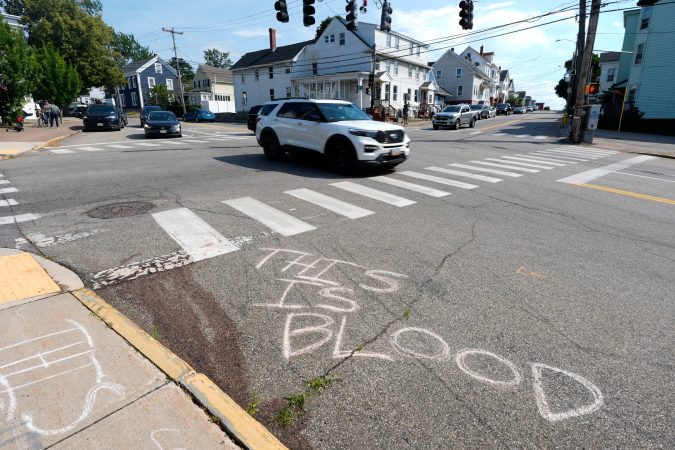
    The demands came in a letter spearheaded by Maine’s Independent Sen. Angus King, signed by 38 Democratic senators, and sent to the Department of Homeland Security, which oversees ICE. The demands follow two deadly shootings in which ICE officers shot and killed immigrants in Houston and Maine.

    The Associated Press reported last week that the ICE officer in Maine who opened fire and killed a man from Colombia had a history of violent behavior toward family members that was detailed in family court records.

    The officer’s first ex-wife, Ashley Brouillette, told AP he was physically violent with her, including once throwing boiling water at her while she was holding their child.

    His second ex-wife, Lucinda Brouillette, sent a statement over the weekend alleging “a persistent pattern of abuse, intimidation, manipulation, fear, and control.”

    “Throughout our marriage and in the years that followed, I have feared for a long time that his anger, aggression, and escalating behavior would eventually result in severe, life threatening violence, and I often believed I would be the one on the receiving end of it,” she wrote.

    Hundreds of pages of family court documents describe their turbulent marriage, and the years after. Lucinda Brouillette told the court he had stalked and harassed her and physically and verbally abused his daughter, according to multiple requests for temporary protection orders. Brouillette tackled his teenage daughter and smashed spaghetti in her hair, and during another outburst, he dragged his daughter around the house as she cried, she said.

    “Dave needs counseling or something for his PTSD & depression,” she wrote in an application for a temporary protective order on behalf of his teenage daughter, which a judge granted in 2021.

    In court filings, David Brouillette said that his second ex-wife had slandered him.

    Multiple family members told the AP the government should have never given him a gun, badge, and the authority to patrol city streets as the Trump administration ramps up its mass deportation agenda.

    The senators’ letter on Monday listed new measures to increase accountability at the agency, including transparency about whether ICE considers records from family court of domestic violence or abuse when vetting new recruits.

    “We remain supportive of removing dangerous convicted criminals from our communities, but this goal can and must be achieved without endangering these very communities in the process. By no stretch could either of the victims in Texas and Maine be characterized as ‘the worst of the worst,’ making these tragic deaths even more egregious,” the senators wrote. “The American people deserve clarity and accountability.”

    They said ICE should immediately start wearing uniforms or vests that clearly identify them as “ICE” instead of the more generic “POLICE” or “POLICE ICE.” Civil rights groups and advocates have often criticized ICE for not wearing uniforms or clear identification on their ballistics vests identifying them as deportation officers.

    Senators also demanded to know what changes were being made to how officers conduct traffic stops and vehicle pursuits.

    The shootings in Maine and Houston both involved ICE officers shooting at people who were in vehicles at the time. In the wake of the Maine shooting, Homeland Security temporarily stopped officers from conducting vehicle stops except in specific situations. But just a day later, after fierce criticism from some MAGA supporters, President Donald Trump said on social media that traffic stops should continue.

    Homeland Security said last week that it was adding new training in crowd-control measures, high-risk vehicle stops, live-fire exercises, and medical training, in response to what they called coordinated attacks against their officers and ICE facilities.

  • As defaults on student loans surge, millions are trying to get their lives back on track

    As defaults on student loans surge, millions are trying to get their lives back on track

    Life after college did not go as Ashley Dreahn planned.

    After starting out as a teacher, she went back to school — and took out more loans — in hopes of landing a higher-paying job in the chemical processing industry. It never materialized, and then came Hurricane Harvey, a job loss, and a car breakdown. By 2022, she was so broke she filed for bankruptcy.

    She found work at a Texas prison and was rebuilding her life, saving up for weight-loss surgery, when this spring she heard from a credit-monitoring service. The student loans she thought had been discharged in bankruptcy had ballooned to $94,298 with interest, and she had to start making payments. She was in default.

    “I absolutely broke down,” said Dreahn, 40.

    Across the country, the number of borrowers with defaulted student loans jumped by more than 4.2 million from April 2025 to March 2026, according to an Associated Press analysis. The surge includes many who went off track in 2024, when loan payments started coming due again after a pandemic-era freeze.

    Hundreds of thousands more are months behind on payments, and another surge in defaults could be on the way. Millions of borrowers are facing higher monthly payments as the government dismantles its most affordable income-driven repayment option, the SAVE plan, one of several changes the Education Department says are intended to simplify a fragmented system.

    Borrowers enter default after missing payments for nine months, and the consequences can upend lives. Default hurts credit ratings and can lead to the debt being sent to collections.

    “I am seeing despair and outrage and despondency and just a very wide mix of pretty extreme emotions, the likes of which I have not seen before,” said Alan Collinge, the founder of Student Loan Justice and the author of The Student Loan Scam.

    The federal government can garnish wages and Social Security payments from borrowers in default, but the Trump administration in January walked back plans to begin collections on their loans. A Moody’s Analytics report this spring said garnishments are likely to begin within the next year, warning of “an additional headwind in an increasingly fragile economy.”

    Taking out student loans was all too easy

    Dreahn enrolled at Texas Woman’s University in 2004 as the first in her family to go to college. She cobbled together jobs, babysitting and working at a call center and an automotive shop. But she still needed to borrow heavily.

    “There was one point where they were like, ‘If you don’t come up with the money, we’re dropping you from your classes,’” said Dreahn, who earned a degree in history with an emphasis on education and social studies. “And it was, ‘OK, what do I need to sign?’”

    She said no one explained what taking out loans truly meant.

    “You just kind of trust these advisers and trust these financial aid people that this is what you’re supposed to do,” Dreahn said.

    While teaching, she took out more student loans to earn a pair of associate degrees from a public community college in Texas. She received a job offer at a chemical refinery, but it was rescinded because she was over the weight limit for the company’s safety equipment.

    She filed for bankruptcy in 2022 in hopes that it would “erase everything.” She checked her online credit report afterward. For each student loan, the report read: “Nice! You’ve paid off 100% of this loan.” The message is sometimes shared with borrowers when student loans are consolidated or transferred to new companies — even when the person still owes money.

    Student loans are rarely discharged in bankruptcy. Borrowers must prove the loans pose an “undue hardship.” The process is cumbersome, and few qualify, advocates say.

    But Dreahn didn’t know any of that.

    “I was so relieved, like, ‘OK, now I can start life over,’” she said. “‘I can save some money.’”

    She started working last year as a supervisor at a prison in Huntsville, about 70 miles north of Houston, and was living in an RV park to save money when she received the default notice.

    “I just feel like, where is that light at the end of the tunnel now that I thought I had?” Dreahn said.

    The wave of defaults started after pandemic

    As a pandemic relief measure, the federal government allowed borrowers to suspend student loan payments until 2023, and President Joe Biden’s administration then provided a one-year grace period. That ended in fall 2024, allowing loans to enter into default after nine months of missed payments.

    A surge in defaults followed, and today around 9.5 million borrowers — over 1 in 5 — are in default, including those whose loans were well past due before the pandemic, according to the AP analysis. The previous record for borrowers in default had been 8 million in December 2019.

    There are also 870,000 borrowers with loans between 181 and 270 days late, on the edge of default, according to federal data.

    Meanwhile, 33% of borrowers at for-profit schools nationally were at least 90 days late on payments, more than twice the rate of borrowers at public schools, additional federal data shows.

    Most private colleges that offer traditional degrees are nonprofit. For-profit colleges generally offer career-focused degrees and credentials and often serve students of color. Career Education Colleges and Universities, an association of private trade schools, has created a task force to reach out to students about the importance of loan repayment, said Jason Altmire, the group’s president and CEO.

    “We take it seriously,” he said.

    Borrowers struggle to make sense of changes

    Some borrowers are so overwhelmed by their debt and changes to the federal student loan system that they’ve stopped paying.

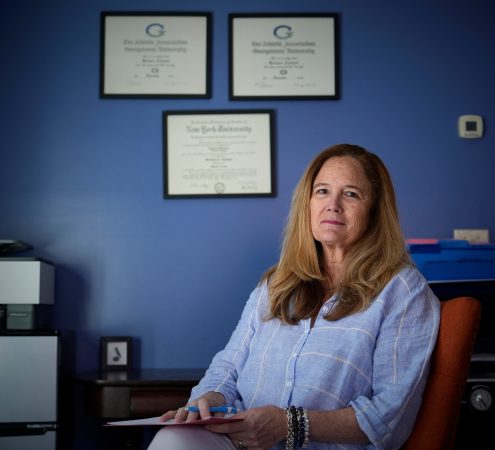
    Barbara Howaniec, a 63-year-old psychiatric nurse-practitioner from Auburn, Maine, already has defaulted. She borrowed around $62,000 for her master’s degree from New York University, graduating in 2001. But after two decades of payments, she still owes around $67,000 with interest. She had put her loans in deferment for short stints while her children were young, unaware that interest would continue to accumulate.

    Howaniec had hoped to have her loan forgiven after 25 years under an income-based repayment plan. But then came a letter saying the repayment schedule had changed and she owed 355 more payments. By the time she finished paying, she would be 91.

    She made call after call, but she said the advice varied by whoever picked up the phone. Last year, as she paid for her own children’s college, she quit paying her own loans.

    “I had already paid what I had borrowed. I’m like, no, I’m not going to pay anymore,” Howaniec said. As a self-employed person, she said she doesn’t have to worry about the government garnishing her wages.

    Shannon Khan, a 46-year-old mental health worker from Webster, Texas, hasn’t paid her student loan for two months as she investigates her options.

    She did not have to pay anything while enrolled in SAVE, but she was moved last fall to another income-driven repayment plan, with a required monthly payment of $847. She thought she was close to having her remaining balance forgiven, but she recently learned her payment will jump to $1,683 a month — an amount her loan servicer said she will need to pay for nearly a decade.

    She has spent hours on the phone trying to get answers.

    “It’s just a bunch of chaos and confusion,” Khan said.

    Some hunt pathways out of default

    Dreahn had never been entirely clear how much she was borrowing when she was a student. As an adult, the process remained opaque. She had multiple loans transferred to different loan servicers. And then her loans were deferred when she went back to school.

    “It’s a huge, huge mess,” Dreahn said. “It’s almost like it just gets sold off and you’re just lost in the system somewhere until you figure out that, ‘Oh, they want $700 this month. What?’”

    Now in default, she hopes she might one day qualify for Public Service Loan Forgiveness. It requires borrowers to make 10 years of payments while working at a nonprofit or for the government.

    “I’m trying to figure out: One, how I’m going to make it work. And two, what do I give up?” Dreahn said. ”How do I manage buying groceries as well as making sure the bills are covered and this payment never gets missed?”

    Lately, she thinks back on the chemical processing plant job she almost got.

    “That was a six-figure career that I lost due to my weight,” she said, her voice breaking. “The money that I’m trying to save now that was going to be for surgery is going to be paid to student loans instead.”

  • Cut the number of choices you make each day. Your brain will thank you

    Cut the number of choices you make each day. Your brain will thank you

    Jeans that fit perfectly. The ideal Netflix show for a Tuesday night. Your one and only soulmate. Modern life promises that with enough options, you will happily find the best of everything.

    But behavioral scientists say the increasing flood of choices — whether it comes to shopping, social lives, or relationships — is doing the opposite.

    The idea that more choice is better is baked into Western culture, but research shows that having more options can make people anxious, indecisive and, paradoxically, less happy with what they pick, said Barry Schwartz, an emeritus psychology professor at Swarthmore University and author of The Paradox of Choice.

    “There have been hundreds of studies showing that there can be too much of a good thing,” Schwartz said.

    To minimize the mental noise, he said, limit the number of choices you make, and your brain will thank you for it.

    More is often more confusing

    Schwartz offered several examples of cases where more options left people worse off.

    In the case of Medicare Part D prescription drug plans, people in states with more choices were less likely to choose any of them, he said. The same goes for 401(k) investments. The more options a company had, the less likely employees were to sign up, even when the employer offered matching money.

    Less consequential choices are no different. Schwartz pointed to one often-cited study that showed shoppers at a gourmet grocery store bought more jars of artisanal jam when they were presented with six flavors rather than with a wider array of 24. In a follow-up study, students were more likely to complete an extra-credit assignment when they were given six topics to choose from instead of 30.

    Schwartz’s research expanded on those findings to learn the emotional responses to this phenomenon.

    “Instead of being liberated by all this choice, you’re paralyzed,” he said. “You can do anything, and you can’t figure out which of those many things to do.”

    People also often end up making worse decisions since more options suggest more potentially bad outcomes, he said. And once someone finally decides from all the possibilities, they may be less satisfied with even a good choice because they fear there was a better alternative.

    Schwartz said the satisfaction problem is especially acute for people whose aim is to get the best, whom psychologists call maximizers.

    “People who are maximizers especially suffer from the proliferation of options,” he said. “Only the best will do.”

    The tendency isn’t true for all people in all situations, Schwartz noted. Car buffs will gladly dive into the details of nearly unlimited choice when buying a new one.

    “But you don’t feel that way when it comes to buying jam,” he said.

    The brain doesn’t like making decisions

    Daniel Willingham, a psychology professor and neuroscience researcher at the University of Virginia, said the phenomenon occurs because the brain is designed to save people from having to think.

    Problem-solving requires more energy than relying on memory, a fact that has roots in evolutionary survival mode, Willingham said. When faced with a goal, whether it be an immediate need like responding to a threat or something longer term like finding shelter, the mind first searches for what’s worked before. The problem-solving part of the brain only kicks in afterward.

    “Another way to put it is that if you’re thinking, things are not going well,” he said.

    That explains why sometimes people move through parts of their day on autopilot, he said. Throughout the day, people are confronted with hundreds of situations where they could do something different, but they almost always take the same route to work.

    Schwartz said the proliferation of choices also has become tangled with identity in the social media age, where everyone can easily compare their choices to others.

    “When all you’ve got to choose from is Lee’s and Levi’s, nobody expects the jeans they buy to fit perfectly,” he said. “When there are 2,000 options, well, now, dammit, you do expect your jeans to fit perfectly.”

    Limit your choices and move on

    David Epstein said that after researching his book, Inside the Box: How Constraints Make Us Better, he began to shift away from his maximalist tendencies. Now, he limits his opportunities for making choices, such as when he bought 10 of the same well-fitting T-shirts in different colors.

    He was following the example of Herbert Simon, a psychologist and 1978 Nobel laureate in economics, who had three sets of clothes and ate nearly the same thing every day. Simon introduced the term “satisficing,” a combination of satisfying and sufficing that means setting good-enough criteria for decisions and moving on.

    Epstein sets satisficing rules for himself when shopping online by first focusing on the purpose of the purchase.

    “When I find one that does that, I’m buying it, instead of reading all the reviews and getting sucked into, ‘Well, this one has all these other features.’”

    Willingham and Schwartz suggested farming out some decisions. If you’re looking for a new phone, find a friend who is happy with theirs and buy that one.

    For larger decisions like financial planning, you’ll be happier if you rely on someone else’s professional expertise, Willingham said.

    “If you’re thinking, ‘Well, I’m a clever guy, I can figure that out,’ I think 9 times out of 10, you’re fooling yourself,” he said.

    Schwartz acknowledged that for people who have trouble making decisions, changing is difficult. But it’s worth it.

    “What happens over time is you find it easier to make decisions, you end up more satisfied with the decisions you make, and all of a sudden, you’ve got an extra two hours in every day,” he said.

  • Trump says Qatari-gifted AF1 to be ‘maxed out’ following questions of security

    Trump says Qatari-gifted AF1 to be ‘maxed out’ following questions of security

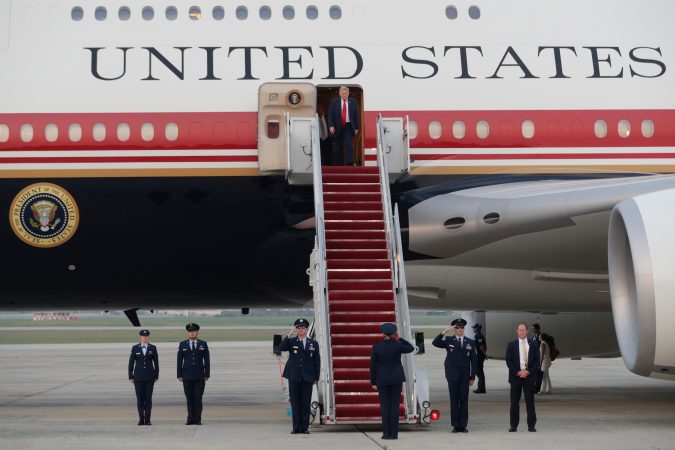
    President Donald Trump said Sunday that the new Qatari-gifted Air Force One will be sent to be “maxed out,” amid questions about the jet’s security technology. Trump will stop flying on the jet and return to an older plane while those upgrades take place over about one month, the White House said Monday.

    “It has a lot of capability, but as I understand it, in about a month or so, they’re going to send it to have it be maxed out,” he said speaking in front of the aircraft at Joint Base Andrews in Maryland. It is unclear what exact upgrades Trump was referring to.

    “The new Air Force One is perfectly safe for the President’s travels, but will receive additional upgrades and enhancements in the fall which will take approximately one month to complete,” Karoline Leavitt said in a statement on Monday.

    “During that time, the President will fly on the old Air Force One,” she said.

    The new plane is a Boeing 747-800 worth $400 million and was donated by Qatar in an unusual deal between the U.S. and Qatari governments, which raised ethical, legal, and national security concerns at the time it was donated and accepted by the Pentagon last summer. The Air Force said in May that the aircraft — now with a dark blue, red, and gold paint scheme — had undergone modification and flight testing.

    After the accelerated modification process, Trump began flying on the new jet this month.

    The Air Force previously told the Washington Post that it “coordinated closely with appropriate government entities to ensure all functional mission requirements were strictly met for transporting the President.”

    The FBI opened an investigation of the New York Times, issuing subpoenas to several reporters, after the outlet published reporting citing sources who said the aircraft lacked some of the defensive countermeasures previous planes had, including advanced antimissile capabilities. The Times reported that a senior FBI official contacted Times journalists before the article was published to caution against doing so, citing national security concerns. The official also asked for the journalists’ sources, which they refused to provide.

    Trump arrived at the NATO summit in Turkey earlier this month on the gifted jet but, in a surprise switch, did not use that plane when he left.

    Trump denied then that security concerns prompted the change but suggested that Iran could have tried to attack the plane. Reporters flying with the president were asked to close their window blinds as they departed Ankara.

    “They asked you to close your windows; they probably feel that way [about possible threats]. They didn’t ask me to close mine, but if they did, I would’ve done it,” Trump said.

    The Qatari jet is meant to serve as a bridge between the older, roughly 35-year-old Air Force One planes and two new Boeing 747s that the company is retrofitting for $3.9 billion. Features will include antimissile defense systems, electronic anti-hacking protection, and advanced communications systems to use with the Pentagon.

    Nearly a decade of delays have meant that the new planes may not be ready by the time Trump’s second term ends. And costs have increased to an estimated $5.6 billion, an overrun for which Boeing is on the hook, according to the Government Accountability Office.

    The inside of the gifted jet has largely been kept the same as the design meant for the Qatari royal family, with cream-and-tan leather seating on the decks, photos showed. The Qatari plane is expected to be gifted to Trump’s presidential library at the end of his term.

  • I’m a podiatrist. Here’s what I really think about flip-flops | Expert Opinion

    I’m a podiatrist. Here’s what I really think about flip-flops | Expert Opinion

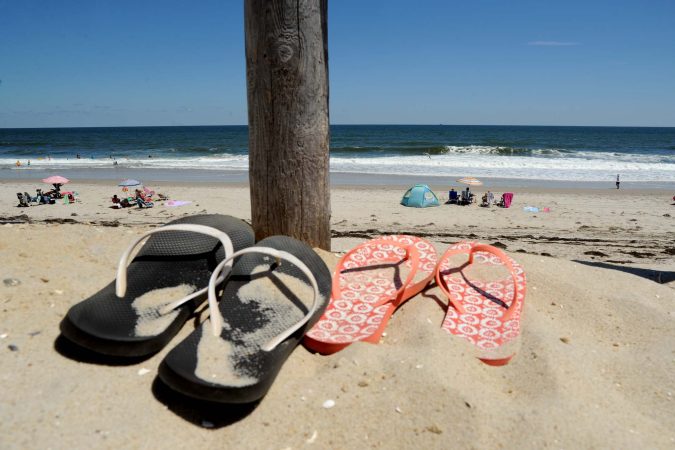
    Q. How bad are flip-flops, really? Am I inflicting lasting damage on my feet every time I wear them?

    A. Flip-flops must be the most vilified form of footwear. Each summer, the media are filled with stories about how bad they are for your feet. According to some experts, wearing flip-flops will cause acute injuries, such as sprains, or contribute to more insidious injuries, such as plantar fasciitis. Some even claim they can contribute to hammertoes and bunions.

    While it is reasonable to be cautious about flip-flop use for those who may be vulnerable to lower-extremity conditions, are they really that bad for everyone? And should you never slip on a pair if you care about your foot health? The answer I give my patients might surprise you.

    As a podiatrist in Minnesota, my clinic is slowest in late winter and becomes busier as we transition to spring and summer. Coincidently, some people also start to wear flip-flops around this time. It would be easy to assume a cause-and-effect relationship for the flip-flop wearers and their foot pain, but that is an incomplete picture.

    A winter spent in more structured shoes combined with the tendency to be more sedentary can essentially decondition your feet, so when you start to become more active and wear less supportive shoes, your feet might hurt as they adjust to the greater demands you’re putting on them. This reduced capacity is often high on the list of potential causes of foot pain whether wearing flip-flops or not.

    It is true that the risk of falling is higher in flip-flops, but this risk applies to all shoes that do not secure well to the foot such as high heels, mules, clogs, or even poorly fitting shoes.

    Additionally, there is no evidence in the research that flip-flops increase the risk of heel pain or toe alignment changes in people with healthy feet any more than other types of footwear. Heel pain, hammertoes, and bunions are common in the general population, even in those who have never worn flip-flops. Many factors contribute to these foot concerns including genetics, lifestyle, and biomechanical imbalances.

    As a general rule of thumb, I caution anyone with poor balance, osteoarthritis, rheumatoid arthritis, a history of lower-extremity surgery, diabetes, lower-extremity swelling, peripheral neuropathy, peripheral vascular disease, neurodegenerative conditions, or gait abnormalities to avoid not just flip-flops but any footwear that does not strap securely to the foot including at the heel. People with these conditions are more likely to fall or worsen existing issues when wearing unsupportive footwear.

    Even if you don’t have any of the health concerns listed above, remember that flip-flops are really made for walking on flat, dry surfaces only. That’s because you are more likely to fall if you are on a wet surface and subsequently injure yourself if your footwear is not secured to your feet.

    If you’re wondering what footwear is best for avoiding foot conditions, the answer is that there’s no one single type. Each of the shoes that we own uniquely alters how our feet function and affects how we move. Therefore, it’s best to have multiple types of comfortable footwear options with varying degrees of cushioning, support, and fit characteristics to allow your feet to maintain their strength, mobility, and adaptability.

    Flip-flops place more demand on the muscles and joints of the feet than conventional shoes, and that can be a good thing. Having a capacity to wear footwear with little to no support is an important part of long-term foot health. If you don’t have any of the health issues that I previously mentioned, this capacity can be built by transitioning to flip-flops gradually at the beginning of the season, wearing them for short periods of time in the beginning to give your feet a chance to adjust. Doing targeted foot-strengthening exercises as part of a fitness routine can also help.

    An often-overlooked benefit of flip-flops (and more broadly, sandals) is that they let our feet spread out more than shoes typically do. This is one of the reasons people find flip-flops comfortable. It is very common for people to develop foot pain due to poorly fitting shoes. In fact, a 2018 study showed that up to 72% of people wore shoes that did not fit properly and there was also an association with improper shoe fit and foot pain.

    All shoes affect our lower extremities in ways that can be potentially beneficial or detrimental. Telling healthy people to avoid certain types of footwear is like telling people to avoid the sun. Sure, too much exposure to either can be bad, but some exposure is beneficial and even necessary for our overall health. Having a variety of comfortable footwear options is a good strategy to maintain foot health — and for many people, that strategy can include flip-flops.

    Paul Langer is a sports medicine podiatrist practicing with Twin Cities Orthopedics in Minnesota and an adjunct clinical faculty at the University of Minnesota Medical School. He is also the author of “Great Feet for Life.”

  • State Dept. again deems Cuba a threat amid talk of U.S. push for regime change

    State Dept. again deems Cuba a threat amid talk of U.S. push for regime change

    The Trump administration issued a report on Monday alleging that a multi-decade Cuban influence campaign in the United States has had “remarkable success” in infiltrating “the highest reaches of the U.S. government,” backing “left-wing terrorism on American soil” and turning “America against itself.”

    The 100-page report, released by the State Department and titled “Cuba: The Capital of 21st Century Communism,” summarizes decades of Cold War-era subversion plots by the impoverished Caribbean island that coincided with years of unsuccessful covert U.S. efforts to decapitate its communist government.

    The report also makes pointed claims against left-wing American groups, listing the Democratic Socialists of America, a rising activist organization that backs a number of Democratic lawmakers, under a section about “front groups and fellow travelers.” It suggests that Cuba has influenced recent political upheavals in the U.S., including “the George Floyd riots and the rise of antifa,” referencing the protests that began after Floyd’s killing and a loosely knit movement of far-left activists who militantly oppose fascism.

    The threat posed by Cuba is described in far more dire terms than those employed by U.S. intelligence officials and State Department diplomats over several decades, reviving speculation that the Trump administration is establishing a pretext for overthrowing the communist government in Havana, a longtime goal of Secretary of State Marco Rubio.

    “From its earliest years in power, the Cuban regime has believed that its own survival and strategic interests were inextricably linked to the advance of the revolutionary left inside the United States,” the report says. “The Cubans trained and armed tens of thousands of left-wing guerrillas, oversaw violent insurgencies that plunged multiple continents into chaos, and backed deadly extremist attacks across the United States.”

    The reference is apparently to Cuban support for left-wing revolutions in Latin America and Africa, largely in the 1970s and early 1980s. During that period, at the behest of the Soviet Union, then its primary backer, Havana sent its military forces to Angola and Ethiopia to support Moscow-favored Marxist groups.

    The report’s publication drew support from some Republican lawmakers. Rubio has already emerged as the de facto head of U.S. policy toward Venezuela, another socialist Latin American state, after a U.S. military operation in January to arrest its president, President Nicolás Maduro.

    “Cuba is next!” Rep. Carlos A. Gimenez (R., Fla.) wrote on X.

    The ominous words of the report stand in contrast to the way President Donald Trump has talked about the economically devastated island, which has been under a 60-year U.S. economic embargo and a six-month-long U.S. naval oil blockade as its national electricity grid has repeatedly gone dark in this summer’s sweltering heat. Trump told reporters last month that Cuba had “sort of collapsed” and that he would “handle” it as soon as his government moves on from the war in Iran.

    “As soon as that’s done, on our way back, we’ll just make a little brief stop,” he said, without spelling out a plan.

    While the State Department report acknowledges Cuba’s troubled economic situation, it attempts to bring modern-day relevance to its revolutionary origin story.

    “The Cubans devoted themselves to recruiting, cultivating and mobilizing a global coalition of activists, intellectuals, and political groups around this cause, building a sprawling revolutionary network that shaped a disproportionate share of America’s most famous and influential extremist movements, from the Black Panthers and the Weather Underground through to antifa,” the report says. “Today, that network continues to maintain ties to powerful leftist nonprofits, anti-ICE collectives, socialist groups, and Marxist militant organizations across the United States.”

    The report goes into great detail about the history of alleged Cuban plots against the U.S., often referring to now-defunct left-wing groups that saw their height of relevance more than 50 years ago.

    It contains some new allegations, including what it describes as a plan by a Cuban activist group to target U.S. military sites and immigration detention facilities if the U.S. moves toward military conflict, citing a document that states the plan was to “make it politically and materially costly for the U.S. government to wage war on Cuba.”

    The State Department said the activist group, the National Network on Cuba, is a key counterpart of the Havana-based Cuban Institute of Friendship with the Peoples (ICAP) — an “international solidarity” group founded in 1960. The U.S. government announced sanctions on ICAP last month, alleging that it supported “Cuban intelligence and counterintelligence activities.”

    The report also alleges Cuban support for the Democratic Socialists of America, a political movement that has seen such members as New York Mayor Zohran Mamdani assume positions of influence in the Democratic Party. The report states that while the democratic socialists are an organic group, they have traveled to Cuba in delegations that were linked to ICAP and other groups recently sanctioned by the State Department.

    Rubio, the son of Cuban immigrants to the U.S. who left before the 1958 revolution, has campaigned against the communist government in Havana since his time as a senator. Since becoming leader of the State Department last year, he has overseen an expansion of the sanctions policy targeting Cuba, a move that critics said would worsen the island’s economic crisis.

    Rubio last week hosted a ministerial event at the State Department during which he sought to rally support for what he described a resurgence of “far-left political terrorism.” At that event, he told the assembled foreign officials that Cuba’s “sprawling intelligence and ideological network helped to build the far left in our country and in our hemisphere.”

  • Yemen’s Iranian-backed Houthis say they will block Saudi shipping at Red Sea gateway

    CAIRO — Yemen’s Iranian-backed Houthi rebels on Monday announced they are imposing a maritime embargo against Saudi Arabia in retaliation for a blockade on Yemen and a recent attack on Sanaa International Airport, threatening another vital waterway for global shipping and raising fears of renewed conflict.

    A Houthi military spokesperson, Yahya Saree, said in a video statement that the maritime ban against Saudi Arabia will be effective immediately, describing it as an “equation of ‘an eye for an eye.’”

    There were few details on how the embargo might work, but the deputy head of the Houthi media office, Nasruddin Amer, said on X that the Bab al-Mandeb strait will be closed to the Saudis in response to what he called the kingdom’s “unjust blockade on Yemenis for over 10 years.”

    Bab el-Mandeb, at the southern tip of the Arabian Peninsula, is the gateway to the Red Sea through which around 12% of the world’s trade usually passes. A fourth of global container trade transits through the 20-mile-wide strait to and from the Suez Canal.

    The Houthis earlier demonstrated their ability to disrupt shipping there when they targeted ships for months over the Israel-Hamas war in Gaza, with over 100 vessels attacked. It is unclear whether the Houthis will resume that level of attack against neighboring Saudi Arabia.

    There was no immediate response from Saudi Arabia. The kingdom already faced pressure as it uses its East-West Pipeline to the Red Sea as an alternative to the Strait of Hormuz, which remains in the grip that Iran imposed shortly after the U.S. and Israel attacked it on Feb. 28. The Saudis have been sending millions of barrels of crude oil a day through the pipeline.

    Saudi Arabia leads a coalition against the Houthis and imposed an air and sea blockade on Yemen in 2015. Yemen’s civil war began in 2014 when the rebels seized the capital, Sanaa, and much of northern Yemen and forced the government into exile. A truce was reached in 2022.

    That truce has been threatened in recent days after the Houthis said the Saudis struck the Sanaa airport in an attempt to affect a flight carrying Houthi leaders back from Iran, where they attended the funeral of Supreme Leader Ayatollah Ali Khamenei. The plane landed safely at another airport.

    The Houthis then launched missiles and drones at Saudi Arabia’s Abha International Airport in the most significant confrontation in years.

    By allowing a direct international flight to land without the approval of the Saudi-led coalition, the Houthis sought to establish a new reality in which they could independently make decisions over Yemen’s airspace, experts told the AP.

    “We affirm the right of our great people to respond to the blockade with a blockade,” Saree emphasized on Monday, adding that Houthis are prepared to confront “any foolish act committed by the reckless Saudi enemy … with a comprehensive and decisive escalation.”

    Houthi-run Al Masirah TV broadcast footage of hundreds of supporters gathering in the city of Ibb, south of Sanaa, to back the embargo against Saudi Arabia. Similar rallies were held in the governorates of Saada, Marib, Hajjah, and Taiz.

    The Houthis are a crucial part of Iran’s so-called “Axis of Resistance,” which also includes militant groups in Lebanon, Iraq, and the Palestinian territories.

    The rebels have had a large stockpile of drones, but several Houthi members previously told the AP that the stockpile is running low after its attacks during the Israel-Hamas war. The Iran war has further impeded the flow of weapons, said the members, who at the time spoke on condition of anonymity because they weren’t authorized to talk to the media.

    The U.S. and Israel responded to the Houthis’ earlier attacks on shipping with a punishing air campaign across Houthi-held areas in Yemen until a deal that saw the rebels stop their assaults.

    Disrupting transit through the Bab al-Mandeb forces shipping firms to route vessels around the Cape of Good Hope off South Africa, significantly increasing costs. The U.S. government in the past has said going around the cape would add about 2,700 miles to the journey from Saudi Arabia to the U.S.

  • Ex-soldier started a fire and fired a pellet gun outside a New York federal building, FBI says

    Ex-soldier started a fire and fired a pellet gun outside a New York federal building, FBI says

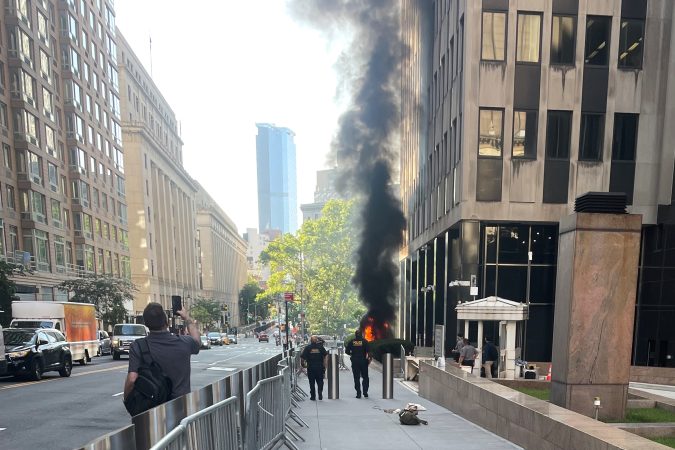
    NEW YORK — A former U.S. Army soldier set off fireworks, lit a fire, and fired a pellet gun in front of a New York building housing an immigration court and other government offices Monday morning, an FBI official said.

    Andrew Arrabaca, who was a mechanic on Patriot missile systems, is in custody and has been interviewed, said James Barnacle, assistant director in charge of the FBI’s New York field office. No charges have been announced yet against Arrabaca, and it was not immediately clear if he has a lawyer.

    “Mr. Arrabaca was looking to injure people and harm people,” Barnacle said at a news conference.

    Arrabaca was tackled by a security officer and taken into custody about 8:20 a.m. as flames erupted outside an entrance to the building at 26 Federal Plaza, which has become a focal point for demonstrations against the immigration policies of President Donald Trump’s administration.

    Barnacle said Arrabaca, 43, “came armed with bad intentions” and had various weapons, including a pellet gun, knives, axes, a hammer, and a machete. Arrabaca fired five to seven pellets from an airsoft rifle toward the building, he said.

    “He is an anti-American, anti-government extremist,” Barnacle said.

    He said Arrabaca had a cart with “anti-ICE literature” on it and “yelled derogatory terms” toward Immigration and Customs Enforcement as he was being arrested. New York City Police Commissioner Jessica Tisch said Arrabaca had a sign affixed to his cart that read “ICE off our streets” and was wearing a military style helmet.

    “In that post-arrest interview, he did say he was targeting the building and he was OK if he hurt or killed people going in and out of the building, whether they were federal employees or civilians,” Barnacle said.

    Barnacle said three people had minor injuries: one civilian and two government employees. DHS said a bystander was grazed by the fireworks, and the security officer who tackled the person sustained minor injuries, the agency said. The New York Fire Department said one person was transported to the hospital, but their injuries weren’t life-threatening.

    Barnacle said the civilian who was injured was an immigrant who had a hearing Monday.

    “What occurred outside 26 Federal Plaza this morning was deeply disturbing,” New York Mayor Zohran Mamdani said on social media. “I’m relieved no one was seriously injured and that a suspect is in custody.”

    Mamdani said his team was in touch with police and will support the federal investigation. The FBI said its New York Joint Terrorism Task Force was investigating.

    The building houses several government offices — including the New York office of the FBI — and the immigration court where agents have carried out chaotic and sometimes violent arrests in the hallway as migrants leave hearings.

    Videos and photos from the scene showed a fire with a plume of smoke on the sidewalk outside the building, as well as officers restraining a person and taking them away.

  • FDA retracts test result but still links Taylor Farms lettuce to cyclosporiasis

    FDA retracts test result but still links Taylor Farms lettuce to cyclosporiasis

    The Food and Drug Administration said Sunday that a laboratory finding showing cyclospora contamination in a sample of shredded iceberg lettuce supplied by Taylor Farms de Mexico was a false positive.

    But the agency did not back away from its conclusion that the company remains linked to a multistate outbreak of cyclosporiasis through its traceback investigation.

    “It does not mean they are walking it back,” Susan Mayne, a former head of the FDA’s center on food safety that oversees outbreak investigations, said in a text message Monday. “Absence of evidence (of a positive test result) is never evidence of absence.”

    Numerous outbreaks are solved on the basis of basic disease detective work, talking to people who have fallen ill, tracing back what they ate, and finding connections among others who were infected. Laboratory tests are one part of a wider investigative analysis.

    The FDA said laboratory experts reanalyzed the sample and determined that the initial result “does not represent true amplification and should be considered a false positive.” The agency said there are currently no confirmed positive product samples for cyclospora.

    Cyclospora is detected by running chemical reactions that double the amount of DNA in a sample until there is a noticeable signal, said Don Schaffner, a food scientist at Rutgers. Detecting a parasite after just a few tests points to a strong presence, but that conclusion weakens as more and more tests are run — one potential source of false positives, he said.

    “If you have a sample that, let’s say, has no cyclospora DNA, but you run enough reactions,” he said, “you’ll eventually amplify noise — stuff that’s not real — and it’ll turn into something that’s real.”

    The updated laboratory finding — that the FDA did not find the parasite in a particular lettuce sample — does not change the rest of the agency’s investigation. The sample that the FDA tested was not part of the original recall; the evidence around the recall is based on epidemiological and traceback determination linking the outbreak to Taylor Farms-supplied iceberg lettuce.

    The top line of the notice on the FDA website continues to say: “Do not eat recalled iceberg lettuce from Taylor Farms de Mexico.” It says the FDA’s investigation is ongoing.

    In a statement late Sunday, Taylor Farms spokesperson Mindi Mayhew said the company had “completed a voluntary recall of iceberg from central Mexico.” She said the recalled product was limited to iceberg lettuce grown and processed in central Mexico.

    All other Taylor Farms products, including all Taylor Farms-brand products available for purchase, are not involved in the recall, she said. “We are committed to working with public health authorities as the ongoing outbreak investigation continues.”

    Taylor Farms announced Friday that it was initiating a recall hours after it said it was voluntarily removing iceberg lettuce sourced from central Mexico from the U.S. market.

    Unlike a voluntary product hold or removal, a recall requires a company to actively notify customers and work to recover affected products from commerce, making it a broader and more costly response.

    Late Friday, Taylor Farms de Mexico published a detailed 27-state recall list covering all iceberg lettuce sourced from central Mexico and distributed from June 29 through July 16. The products — many of them bulk food service packages — had “best if used by dates” extending to Aug. 3.