Tag: no-latest

  • U.K. lawmakers vote down bill to allow assisted dying in England and Wales

    U.K. lawmakers vote down bill to allow assisted dying in England and Wales

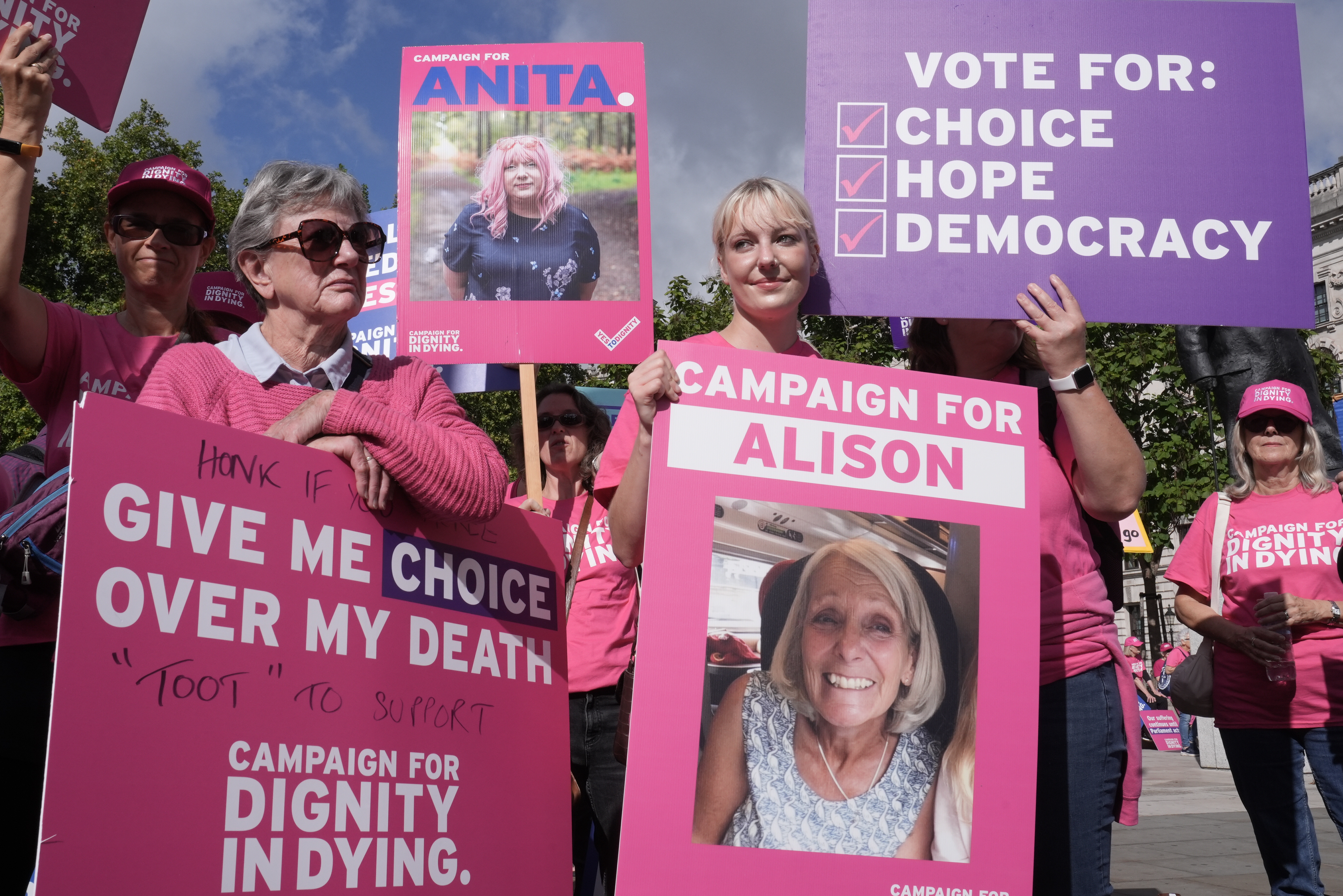
    LONDON — U.K. lawmakers on Friday voted down legislation to allow terminally ill adults in England and Wales to choose to end their lives.

    Following an impassioned four-hour debate in the elected House of Commons, the Terminally Ill Adults (End of Life) Bill was rejected 286 to 270. The outcome was somewhat surprising given that an almost identical bill had passed last year with a margin of 23 votes.

    The vote brings an end to a two-year debate in Parliament about assisted dying, during which the House of Commons had backed assisted dying on two previous occasions. Their backing wasn’t enough for it to become law because it was effectively filibustered by unelected lawmakers in the House of Lords.

    Back in the House of Commons on Friday, the bill had proposed allowing adults in England and Wales who have fewer than six months to live to apply for an assisted death subject to the approval of two doctors and an expert panel.

    Many individual lawmakers relayed their own stories both in favor of and against the proposal. The government took a neutral stance, meaning lawmakers voted according to their consciences rather than along party lines.

    One lawmaker who was among those to oppose the bill, having previously backed it, spoke about how “nightmares” prompted her to switch sides. Janet Daby said she dreamed of “dying and death” because she had not been “entirely comfortable” with her former position.

    The new U.K. leader, Prime Minister Andy Burnham, didn’t vote because he said he didn’t want to “unduly influence the debate.”

    Opponents branded the bill unsafe and unworkable, citing concerns around potential coercion of vulnerable people and a lack of safeguards for those with disabilities.

    Lawmaker and cancer surgeon Zubir Ahmed also noted uncertainty around a doctor’s prognosis.

    “I have to be honest with you,” he said. “When I am asked to prognosticate as to whether someone has six months to live or not, I am as often wrong as I am right.”

    The leader of Catholics in England and Wales, Archbishop Richard Moth, called the bill “wrong in principle” and “deeply flawed. The Church of England’s Archbishop of Canterbury, Sarah Mullally, also objected to the bill.

    Medical colleges, including the Royal College of Psychiatrists, had raised “serious concerns” about the bill, saying there were “too many unanswered questions about the safeguarding of people with mental illness.”

    Proponents of ” assisted dying ” — sometimes referred to as “assisted suicide” — had hoped it would mark the biggest change to social policy in the U.K. since abortion was partially legalized in 1967. The intention was to put an end to the practice of those near the end of their lives going to other countries, such as Switzerland, for an assisted death.

    Lauren Edwards, who reintroduced the bill to the House of Commons, said the rejection was “heartbreaking” but expressed hope that the issue will win parliamentary approval in the future.

    “Assisted dying will come in this country, as it is already doing all across the world, but not soon enough,” she said. “Parliament has dropped the ball today. It will be picked up again as it must be, because the law as it stands is simply too cruel and too unjust to be allowed to stand.”

    Other countries where assisted dying is legal include Australia, Belgium, and Spain, with regulations on qualifying criteria varying by jurisdiction.

  • For the 25th time, New York marks a shattering loss

    For the 25th time, New York marks a shattering loss

    Gordon M. Aamoth Jr.

    Edelmiro Abad.

    Marie Rose Abad.

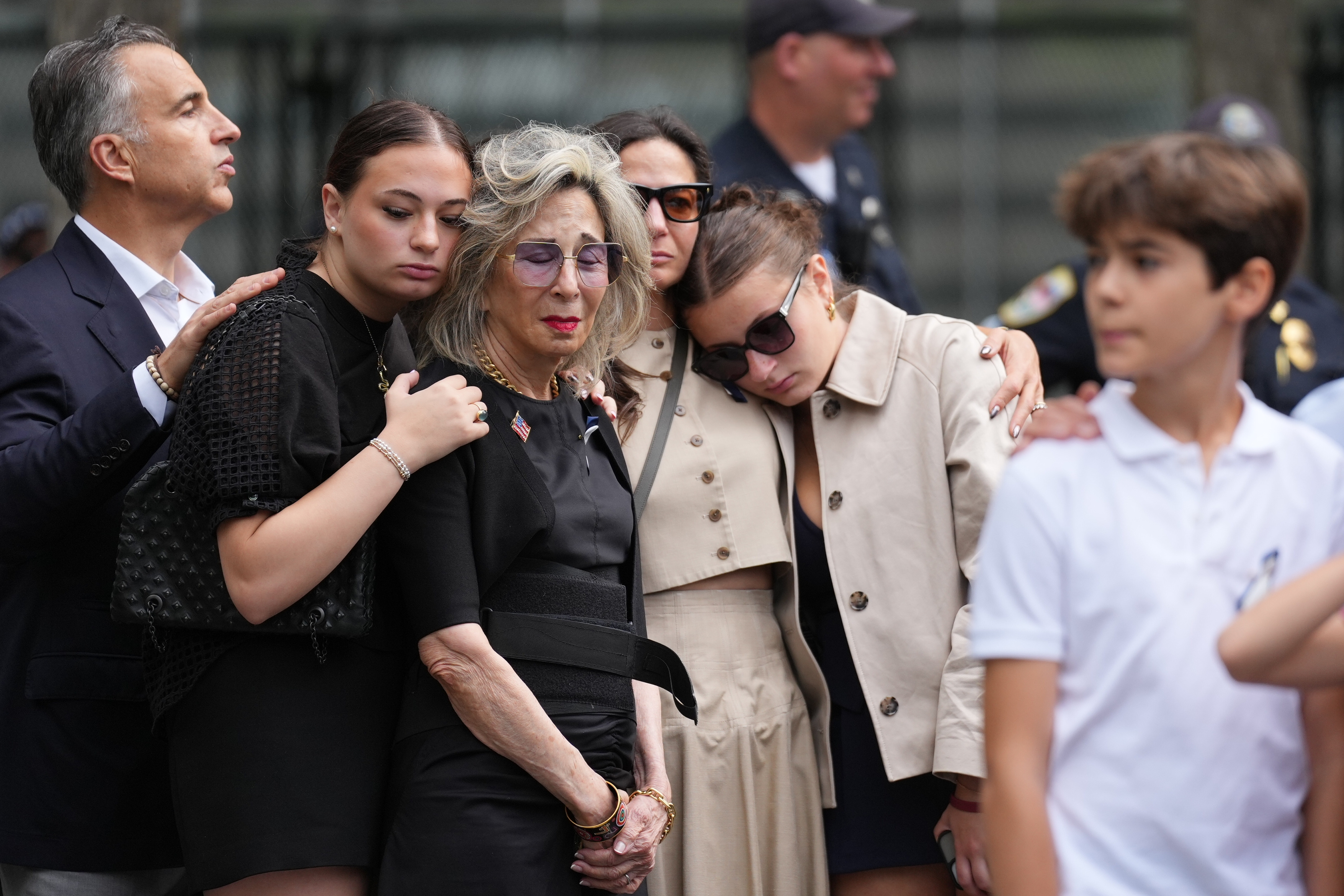
    A quarter-century after the terrorist attacks that shook New York City and the world — an ashen morning followed by years of grief and repair, rebuilding and war — dignitaries and mourners gathered once again in Lower Manhattan to read aloud the names of those killed when hijackers crashed airplanes into the World Trade Center and sent the twin towers crumbling to the ground.

    Milton G. Bustillo. Thomas M. Butler. Patrick Dennis Byrne.

    The ceremony on Friday took place beneath a canopy of swamp white oak trees between the two memorial pools where the towers once stood. The pools were designed to appear bottomless, and their cascading waters lent a whispering backdrop to the morning. Relatives held aloft photos of the dead, forever young, as children on the podium spoke directly to grandparents, aunts, and uncles they had never met.

    “My dad always talks about how wonderful you were,” one girl said after naming a lost relative. She is among the 100 million Americans born since that day.

    Some people used their turns at the microphone to criticize the federal government for continuing to work with Saudi Arabia in the years since the Sept. 11 attacks. Family members of those who died have sought to hold the kingdom responsible in federal court, claiming that its government provided support for the hijackers.

    Among them was Terry Strada, an official with 9/11 Families United, whose husband was killed in the attack. Her organization has tried for years to pursue legal action against the Saudi government. The kingdom has denied involvement.

    “It has been one betrayal after another,” Strada said from the podium. She urged the assembled elected officials to “stand with survivors, stand with Americans.”

    Later, a nephew of Lisa Marie Terry, who died in the attack, accused “the deep state” of hiding the truth. He called on President Donald Trump to “release the unredacted files that implicate Saudi Arabia, while what’s left of the victims’ families are still alive to see it.”

    Four living former presidents, from Bill Clinton to Joseph R. Biden Jr., stood silently nearby. Zohran Mamdani, the city’s first Muslim mayor, was also in attendance, despite a petition signed by thousands of people, including victims’ family members, urging him to stay away. He was joined by former Mayors Bill de Blasio, Michael Bloomberg, and — awkwardly — Rudolph Giuliani, who was in office on Sept. 11 and earlier this week said that Mamdani’s presence at the ceremony “offends me.”

    Mamdani nonetheless approached Giuliani at the ceremony. The two men shook hands, and Giuliani’s position seemed to have softened. Cameras captured him apparently telling Mamdani: “I’ll pray for you. It’s a really hard job.”

    Gov. Kathy Hochul was there, as was Gov. Mikie Sherrill of New Jersey and former Gov. George E. Pataki of New York, who had also called on Mamdani to skip the event.

    Vice President JD Vance stood in for Trump, who instead attended a ceremony at the Pentagon. In his remarks, the president talked about how Sept. 11 had changed America.

    “Twenty-five years after the attacks, we know the world will never return to the way it was at that dawn on that beautiful, peaceful Tuesday morning, 2001,” Trump said, “before the towers fell, before the Pentagon was hit, before the specter of evil, and this horrible, horrible evil came crashing into our lives.”

    In New York, as is custom, there were no speeches from elected officials, putting all the focus on the families. The names of the victims read on Friday included the six killed in the 1993 World Trade Center bombing.

    Uniformed firefighters present and past — many older now, grayer — gathered at the ceremony, at churches and, later, in the city’s barrooms, to raise glasses to their 343 fallen brothers.

    The effects of Sept. 11 played out for months, years. The Fire Department would go on to be further gutted by mass retirements of high-ranking officers. The Police Department lost 23 officers that day, and was reshaped by the introduction of new tactics, units, and equipment to fight terrorism.

    The day is a reminder of how the attacks’ long shadow has reached into many corners of life in the U.S. and beyond.

    The U.S.-led global war on terrorism included invasions of Iraq and Afghanistan — the latter Washington’s longest war — and detentions and harsh interrogation of terror suspects in an international network of secret CIA prisons. The U.S. found and killed al-Qaeda leader Osama bin Laden in Pakistan in 2011, but the accused 9/11 mastermind Khalid Sheikh Mohammed still awaits a trial 23 years after his capture.

    The attacks changed U.S. air travel, led to the creation of the Department of Homeland Security, prompted new federal surveillance and intelligence-gathering powers and banking regulations and generated ongoing debate over the balance between security and freedom.

    Sept. 11 engendered a culture of individual vigilance summed up by the slogan, ” If you see something, say something,” while a wave of patriotism propelled some Americans to join the military, fire departments and police forces.

    On Friday, there were the traditional six moments of silence, marked with the tolling of a bell: one for each of the towers struck, one for each building’s collapse, and two for the plane crashes at the Pentagon and in Shanksville, Pa.

    A seventh moment of silence was added this year to commemorate those who had died of Sept. 11-related illnesses. Mamdani’s administration this week released more than 170,000 pages of previously withheld city records about the air quality around ground zero after the attacks. The documents seem to suggest that New Yorkers were encouraged to return to the area before it was safe to do so.

    The mournful wail of bagpipes — a fixture at hundreds of Sept. 11 funerals — rang out at the start of the memorial. Elsewhere in the plaza, Yo-Yo Ma played his cello softly behind the reading of the names.

    Information from the Associated Press was used in this article.

  • More than 500,000 Russian troops killed in Ukraine, UK defense chief says

    More than 500,000 Russian troops killed in Ukraine, UK defense chief says

    KYIV, Ukraine — More than half a million Russian troops have been killed in Ukraine since the start of Moscow’s full-scale invasion in February 2022, a senior British defense official said Friday.

    The dead are part of 1.5 million Russian casualties in Ukraine, Air Chief Marshall Sir Richard Knighton, chief of the U.K’s Defense Staff, said.

    The U.K. figures roughly coincide with those published by the Ukrainian military. There was no immediate comment from Russian officials.

    Moscow’s bigger army is struggling to make headway on the battlefield. Western officials and analysts say the Russian rate of advance has slowed significantly this year.

    Russia’s armed forces have also lost an “enormous” amount of military materiel, Knighton told reporters. That includes more than 10,000 armored and protected vehicles, close to 3,000 air defense and artillery systems, and over 370 aircraft and helicopters, Knighton said.

    He didn’t say what Ukraine’s losses were.

    Neither Moscow nor Kyiv give regular updates on their battlefield losses.

    Russian drones target Kyiv gas stations

    Russian drones targeted roadside gas stations in Kyiv for a second straight day Friday, as Moscow broadened its air war in what Ukrainian officials say is an effort to rattle civilians.

    The attacks struck two Ukrnafta gas stations, killing two people and wounding six at one of them, the prosecutor’s office said.

    Russian strikes on urban gas stations have intensified in recent months, mostly in regions near the front line in eastern and southern Ukraine. It is part of a campaign to disrupt civilian life and weaken morale that has also included attacks on food distribution hubs, sporadically leaving some supermarket shelves bare in the Ukrainian capital.

    “Russia is systematically attacking places where it knows people will be spending their time going about their daily lives, seeking to maximize casualties, spread fear, and put pressure on Ukrainian society,” Foreign Minister Andrii Sybiha said on X late Thursday.

    Authorities have urged residents not to linger near gas stations and other exposed infrastructure during air raid alerts.

    Ukraine is urgently trying to improve its air defenses as Russia’s invasion stretches into its fifth year, and on Thursday won pledges of more support from Canada.

    Russian shopping mall strikes kill 5 in central Ukraine

    Pavlohrad, a city in central Ukraine, observed an official day of mourning Friday for five residents killed near shopping malls in broad daylight by Russian drones the previous day.

    The attack also wounded 67 people, Sybiha said on X.

    In the southern city of Zaporizhzhia, a 32-year-old woman and her 10-year-old son were wounded in an overnight Russian drone attack, Ukraine’s State Emergency Service said. The drones struck a nine-story apartment block and a shopping mall, it said.

    Efforts to put out the blazes were slowed by the constant threat of repeat strikes, forcing firefighters to stop working and take shelter, it added.

    In Dnipro, a city in central Ukraine, a Russian daylight attack Friday wounded 12 people, according to local officials.

    Russia says it stopped 777 Ukrainian drones

    Ukraine, meanwhile, has extended its own long-range drone campaign deep into Russia, straining air defenses across its bigger neighbor’s vast territory. On Thursday, its military reported hitting a refinery more than 1,800 miles away in Siberia as Kyiv tries to hurt Russia’s vital oil sector. Its strikes have caused fuel shortages in Russia, one of the world’s biggest energy producers.

    Russia’s oil product exports hit record lows in August, and Moscow is importing fuel from South Korea and India, the Center for Research on Energy and Clean Air said in a report.

    “Ukrainian strikes on Russia’s refining capacity have turned tables on the world’s once largest oil product exporter to see them start importing fuels, with imports surging to a record 172,000 metric tons (189,600 tons) in August — more than seven times the previous monthly high,” the Finland-registered nonprofit said Thursday.

    Ukraine launched a major barrage overnight from Thursday to Friday, with the Russian Defense Ministry saying air defenses intercepted 777 Ukrainian drones over 16 Russian regions, as well as occupied Crimea and the waters of the Azov and the Caspian seas.

    Two people were killed and three others wounded overnight in a Ukrainian drone attack on the Tula region south of Moscow, local officials said Friday.

    A Ukrainian drone strike during the night started a fire at the Saratov oil refinery in southwestern Russia, Russian independent online outlet Astra said Friday. Kyiv has repeatedly targeted that refinery, which was last hit in early August.

    Major online retailer Ozon said its logistics facility in the same city was struck and set ablaze by a Ukrainian drone, though no casualties were reported. Ozon is a competitor to Wildberries, whose facilities Ukraine has also targeted.

    Ukrainian President Volodymyr Zelensky said long-range strikes overnight hit eight Russian regions, including a business and an oil industry facility in the Saratov region.

    The attacks were “aimed at reducing Russia’s capacity to wage war,” he said on X Friday.

  • Isao Harimoto, Hiroshima survivor and a baseball star in Japan, dies at 86

    Isao Harimoto, Hiroshima survivor and a baseball star in Japan, dies at 86

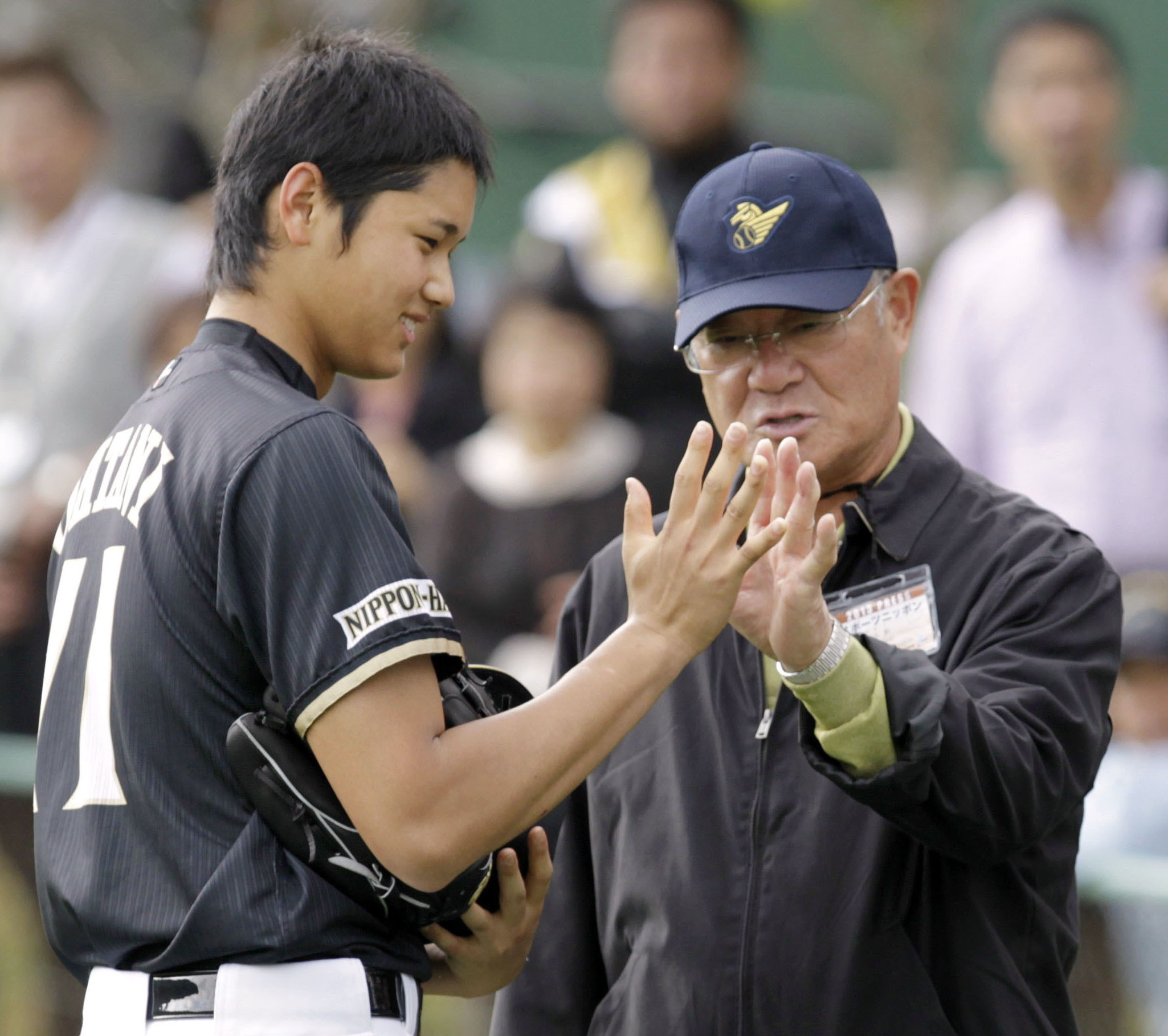
    Isao Harimoto, who survived the Hiroshima atomic bombing as a child and went on to have more hits than anyone else in the history of Japanese baseball, died Wednesday in Tokyo. He was 86.

    His death, in a hospital, was announced by the Meikyukai, or the Golden Players Club, one of Japan’s baseball halls of fame. No cause was given.

    Mr. Harimoto earned the nickname Hit Machine for collecting a record 3,085 of them in a long career than stretched from the late 1950s to the early ’80s. He won seven league batting titles.

    He was the only player to collect 3,000 hits in Japan. (Ichiro Suzuki had 4,367, but more than 3,000 came after he moved to the American major leagues.)

    But Mr. Harimoto was far from a slap hitter; 504 of those hits were home runs, putting him seventh on the all-time list for Japan. He also stole 319 bases, won an MVP award, and was an 18-time All Star.

    After his time as a player, he became an outspoken commentator on the game.

    Isao Harimoto was born on June 19, 1940, in Hiroshima, Japan, to Korean parents who had emigrated the year before. His Korean name was Jang Hun. His mother, Pak Sun Bun, was a cook and his father, Jang Sang Jeong, sold scrap metal and various secondhand items from a cart.

    Harimoto was 5 when the atomic bomb was dropped on the city, about a mile and a half from where he lived. “There was a flash and an enormous roar,” he told the Chugoku Shimbun newspaper in 2011. “The next thing I knew, my mother was shielding me and my sister, three years older, with her body, though her back was covered in blood due to flying shards of glass.”

    The event was not frequently discussed in his home. “My mother wanted to forget; I think she wanted to completely erase her memories of that day,” he told the Mainichi, a Japanese English-language newspaper, in 2020. He lost a sister, Jang Jeom Ja, in the bombing, and his mother burned all photographs of her, he said. He himself did not discuss the cataclysm publicly until well after his baseball career.

    He was proud of his Korean heritage despite being bullied for it as a child and facing prejudice during his career.

    “A lot of ethnic Koreans in Japan assimilate into Japanese society,” said Robert Whiting, author of You Gotta Have Wa (1989), the definitive book in English about Japanese baseball. “Harimoto did not. He talked about the fact that his mother never spoke Japanese in the house, and he was very proud of that fact.”

    Mr. Harimoto was also critical of other athletes in Japan with Korean backgrounds who hid their ethnicity. Only late in life did he become a Japanese citizen.

    He burned his right hand in an accident as a young child, an event that contributed to his becoming a left-handed hitter when he took up baseball in fifth grade. Despite his talent, he lost a few chances at places on top high school teams because of a reputation as a troublemaker, deserved or not.

    In 1958, he visited South Korea for the first time with a team of Korean Japanese high school students. He met his grandparents and later said he truly connected with his Korean roots for the first time.

    His rigorous, disciplined approach to batting, and an ability to consistently hit up the middle, soon brought him to the top leagues. In 1959, playing with the Tokyo-based Toei Flyers, he hit .275, good enough to be named rookie of the year. He got much better over the next two seasons, hitting .302, and then .336. He played left field, and fielding was not his strong suit, but as a hitter, he performed strongly and consistently for two decades.

    Many of the teams he played on were not among the elite in the Japan leagues. He was part of a Japan Series-winning team only once, in 1962, when his Flyers beat the Hanshin Tigers in seven games. That was also the year he was named the Pacific League’s most valuable player. (The Flyers adopted their current name, the Nippon Ham Fighters, during his time with the team.)

    Mr. Harimoto’s most spectacular season was 1970, when he hit .383 with 34 home runs and 100 RBI, all career highs.

    He was a large player by the Japan leagues’ standards at the time, listed at 5 foot 11 and 187 pounds. And he was not afraid of players, American or Japanese, who were bigger still. “If there was a brawl on the field, he was always in the middle of it,” Whiting said. “He was a scary guy; no one wanted to fight him. He wasn’t afraid to show his temper and challenge people on the field.”

    Despite Mr. Harimoto’s batting success, he never could shake a reputation in Japan for being a bit of a bad boy. He enjoyed a drink and was involved in a few fights.

    He moved on to the Yomiuri Giants in 1976 and the Lotte Orions in 1980. He retired after the 1981 season at 41.

    After his playing days were over, Harimoto became a commentator on the game with a reputation for saying what he thought. “He didn’t seem to have a filter,” Whiting said. “He was very protective of the Japanese game and critical of players who went to the States to play, thinking they should be loyal to the Japan leagues.”

    Harimoto worked for the Korea Baseball Organization and helped establish that country’s national league in 1982, though he later split with the group over slights he believed he received.

    Speaking out against nuclear weapons was also a big part of his later life. “Which is more important: protecting human lives or holding on to nuclear weapons?” he asked in the Chugoku Shimbun in 2011. “These two things are poles apart. It’s inhuman to permit the existence of weapons that can annihilate people in an instant, when they’re just trying their best to live.”

    This article originally appeared in the New York Times.

  • Prosecutor leading probe into Trump foes resigns, vows investigation will continue

    Prosecutor leading probe into Trump foes resigns, vows investigation will continue

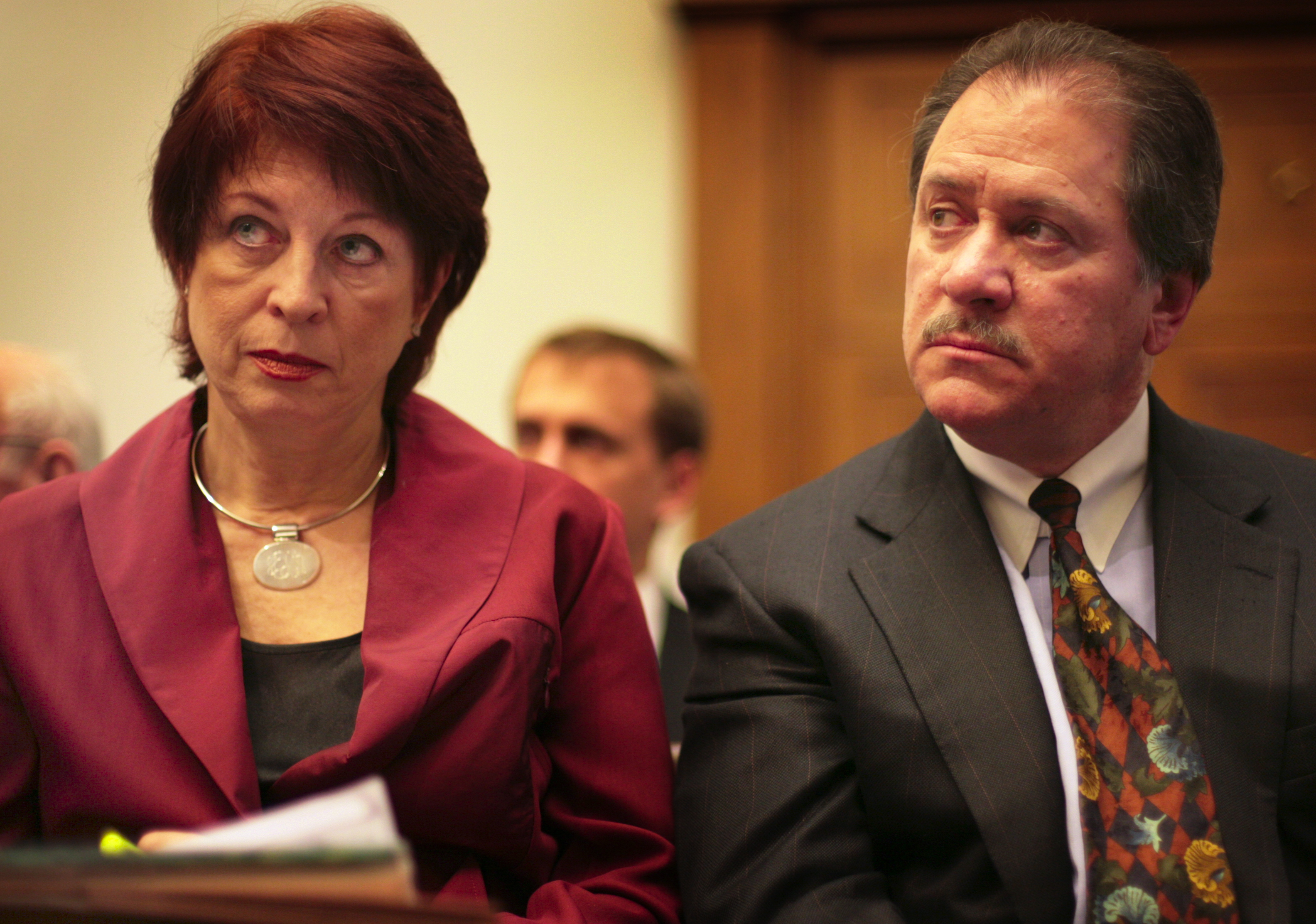
    The top prosecutor leading a wide-ranging conspiracy investigation into President Donald Trump’s political foes resigned Thursday afternoon.

    Joseph diGenova — a Trump loyalist who has pushed a baseless theory that the FBI was out to get Trump during his 2016 campaign — told the Washington Post that he has submitted his resignation papers to Attorney General Todd Blanche amid disagreements over the pace of the investigation.

    He did not elaborate on what specific disagreements led to his sudden departure at what appears to still be an early stage of the high-profile investigation.

    DiGenova’s wife, Victoria Toensing, an attorney who was brought in as part of the prosecution team alongside him, was expected to resign Friday, diGenova added.

    “It was a privilege and an honor to serve the [Justice] Department and president,” diGenova said in a brief interview, noting that the probe would continue after his departure.

    DiGenova’s departure comes as the Trump administration has put pressure on the Justice Department to prosecute the president’s political foes. Trump repeatedly expressed frustration with former Attorney General Pam Bondi’s pace — and limited success — in overseeing efforts to target his rivals.

    The president fired Bondi in April.

    DiGenova added Thursday evening in a text that he believed there was evidence to build cases in the conspiracy probe, but said “time was needed to build those cases” and “people differ on how long that should take.”

    ABC News first reported on his resignation. The Justice Department did not immediately respond to a request for comment. Toensing confirmed that she would be resigning, but declined to comment further.

    DiGenova, a former U.S. attorney for the District of Columbia, has suggested without evidence that an FBI investigation into potential ties between Russia and the 2016 Trump campaign was a hoax perpetrated to keep Trump from becoming president. He was tapped in April to lead the conspiracy investigation, among the biggest and most legally complicated that the Justice Department is pursuing as part of Trump’s vow to prosecute his political enemies.

    The investigation, which is based in Florida, hinges on an unusual and untested legal theory: that previous administrations conspired for years to violate Trump’s rights through a series of investigations, beginning with the Obama administration’s scrutiny of ties between Russia and the 2016 Trump campaign.

    The probe is looking in part at the decade-old actions of former Obama administration officials, including former director of national intelligence James R. Clapper Jr. and former CIA director John Brennan, who played significant roles in investigating the possible Russia ties.

    So far, prosecutors have issued a flurry of subpoenas but have not issued any indictments, according to people familiar with the probe, speaking on the condition of anonymity to discuss an ongoing investigation.

    DiGenova, 81, was U.S. attorney during the Reagan administration and later served as a lawyer for the Trump campaign. He was brought into the Justice Department this year specifically to work on the sprawling conspiracy investigation in Florida, landing the job after publicly lobbying for it.

    In an interview this summer on the podcast of former Trump lawyer Rudy Giuliani, diGenova claimed that Trump’s decision to fire Bondi was at least in part tied to a lack of progress on the investigation into Brennan as part of the conspiracy probe.

    “The president was ripping mad about the fact that there was no progress on the lawfare investigation in Miami,” diGenova said. He was hired weeks after Bondi’s firing.

    DiGenova took over the investigation from a career national security prosecutor in South Florida, Maria Medetis Long, who left the case after expressing discomfort with its direction, the Post previously reported.

    While diGenova headed the operations of the probe itself, it falls under the broad jurisdiction of Jason Reding Quiñones, the Senate-confirmed prosecutor who runs the U.S. attorney’s office in South Florida. DiGenova said he expects Quiñones to continue pushing forward with the inquiry.

    “I am sure he will continue the investigation vigorously,” he said.

  • Trial remains elusive for purported mastermind accused of plotting 9/11 attacks

    Trial remains elusive for purported mastermind accused of plotting 9/11 attacks

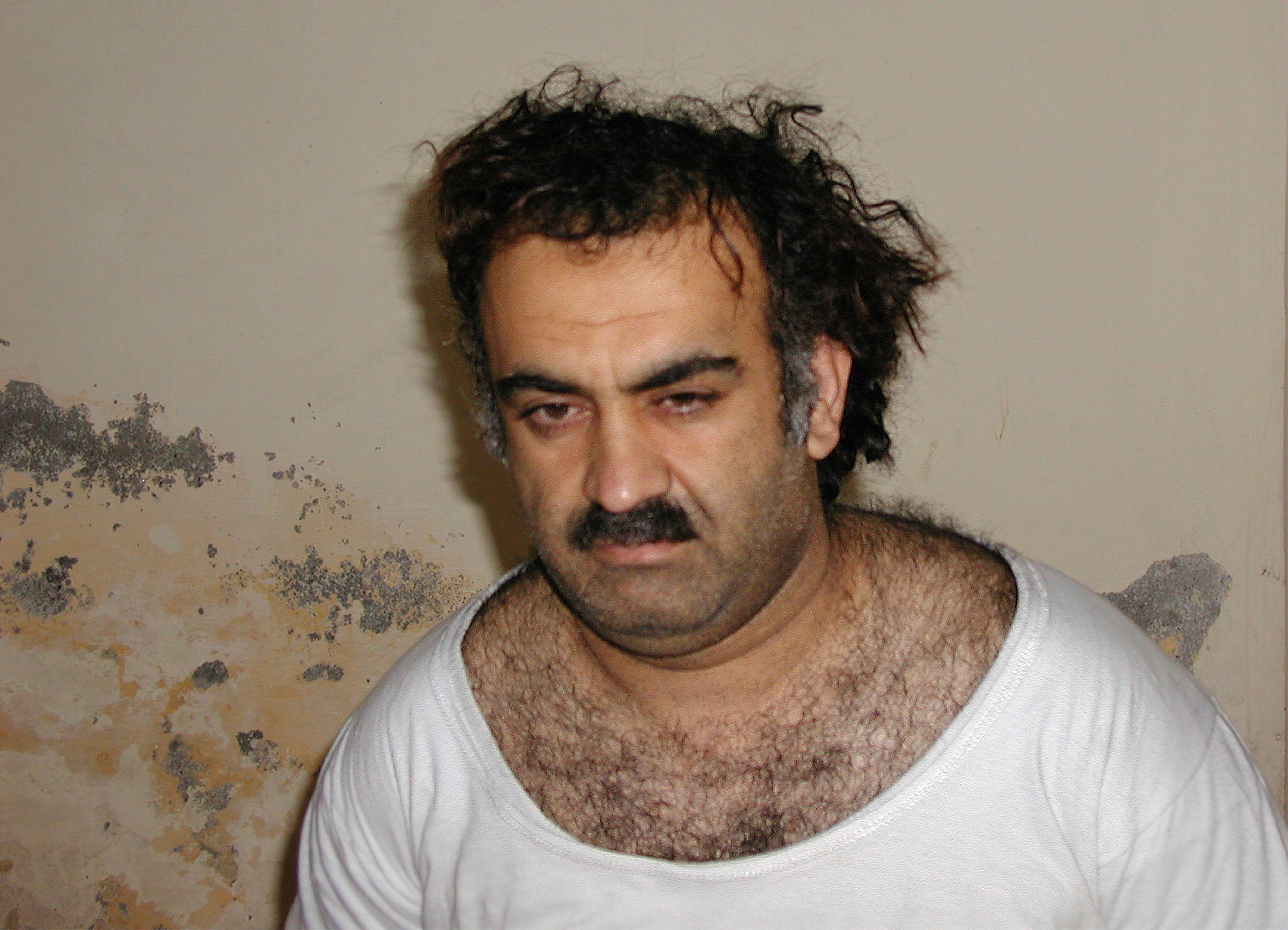
    NEW YORK — Two decades after U.S. authorities locked Khalid Sheikh Mohammed away at a military detention center in Cuba, the purported mastermind of the Sept. 11 attacks sometimes seems barely any closer to being put on trial than the day he arrived.

    A judge recently set a 2028 date for Mohammed to finally be tried before a military tribunal, but some lawyers predict it will never happen — not that year or any other year. They say the maze of legal issues that arose because Mohammed was tortured following his 2003 capture in Pakistan is too twisted to ever be straightened out.

    A fleeting bid to put him on trial in a civilian court in New York City was shouted down years ago over security concerns.

    A plea agreement that would have kept Mohammed imprisoned for life, but spared him from a possible execution, began to collapse shortly after it was announced in 2024, and finally died for good last year.

    “It’s all contaminated by politics and the lack of accountability on torture,” said Joshua Dratel, an attorney who played a part in assuring that Mohammed has proper legal representation.

    In late August, the U.S. military judge who set a June 5, 2028, trial date for Mohammed and three others charged in the Sept. 11 attacks ruled that prosecutors could not use an alleged confession he made to the FBI in 2007. Those statements were deemed tainted because Mohammed was subjected to “enhanced interrogation techniques” overseas, including the simulated drowning technique called waterboarding.

    While the ruling was a blow to the prosecution, the U.S. government decided not to appeal, in part because doing so could have further delayed a possible trial.

    Meanwhile, Mohammed remains jailed in Guantanamo Bay, where he was brought on Sept. 5, 2006, following more than three years in secret prisons in other countries.

    Victims’ families still hope a trial will happen

    Terry Strada, whose husband, Tom, died at the World Trade Center on Sept. 11, said that she and other people who lost family members still hope a trial will someday happen.

    “We very much want to see this come to an end at some point. We do want to see justice served. It’s just as important as 25 years ago,” she said.

    But Strada, the national chair of the group 9/11 Families United, also said she would rather have Mohammed rot at Guantanamo Bay indefinitely than get behind a resolution that would involve dropping the death penalty as a possibility. Strada said she worries that if Mohammed is not executed, future U.S. leaders might someday be tempted to swap him for Americans held prisoner elsewhere in the world.

    The death penalty, she said, “fits the crime and it would prevent that from ever happening. And that’s important to me.”

    Mohammed was captured in Pakistan in 2003, accused of developing and directing the 9/11 attacks, as a leader of the Islamic militant group al-Qaeda. Some of the delays in his legal proceedings have stemmed from his treatment after he fell into U.S. control. A U.S. Senate report pointed to his extended torture in CIA custody, including 183 sessions of waterboarding.

    Plans for a civilian trial were dropped

    For a time in 2009, it seemed Mohammed was headed to New York after then-Attorney General Eric Holder announced plans to try him and four other men charged in the Sept. 11 attacks in a Manhattan courthouse just blocks from the World Trade Center site.

    Then-President Barack Obama, who had pledged to close the Guantanamo detention center, said Mohammed would face “the most exacting demands of justice.”

    Almost immediately, opposition arose. Some critics predicted Mohammed would use a trial as a platform to spread hateful views of America and its allies. Others cited security concerns, saying it could again make New York a terrorist target. Former New York City Mayor Rudy Giuliani, a Republican, called the plan unwise and said it showed “a lack of concern for the rights of the public.”

    Plans for a civilian trial were dropped.

    “It was a charade in many respects,” Dratel said.

    The military tribunal system, he said, has proven itself to be a worse solution, unable to function efficiently, without a proper structure, and without fidelity to federal courts.

    “Each time you reach an impasse, no one knows what to do,” he said.

    David Raskin, a Washington lawyer now in private practice who would have led the government’s prosecution of Mohammed in New York if it hadn’t been abandoned, said in an essay published in the Washington Post on Wednesday that he is confident a civilian trial would have ended with a conviction. The military commissions, on the other hand, “became a defense lawyer’s dream,” beset by “endless litigation over their legality and procedures.”

    “I predict there will never be a completed military commission trial for Mohammed and the other Sept. 11 defendants,” he said.

  • CIA releases intelligence sent to White House before Sept. 11

    CIA releases intelligence sent to White House before Sept. 11

    WASHINGTON — Tucked at the end of a Sept. 10, 1998, intelligence report sent to President Bill Clinton’s White House was a warning about al-Qaida that more than a quarter-century later seems prescient.

    Al-Qaida, a CIA analyst wrote, “may fly an explosive-packed airplane into a U.S. city.”

    On Friday, the 25th anniversary of the Sept. 11, 2001, terrorist attacks, the CIA released 69 never-before-seen presidential intelligence briefs detailing what it had discovered about Osama bin Laden and al-Qaida in the run-up to the day.

    The release, according to agency officials, is their largest focused on the Sept. 11 attacks. The intelligence analyses that were sent directly to the president and senior policymakers are among the agency’s most closely guarded documents, and the CIA’s standard practice is to release them only after about 40 years, to ensure no sources are compromised and minimize any potential tension with allies.

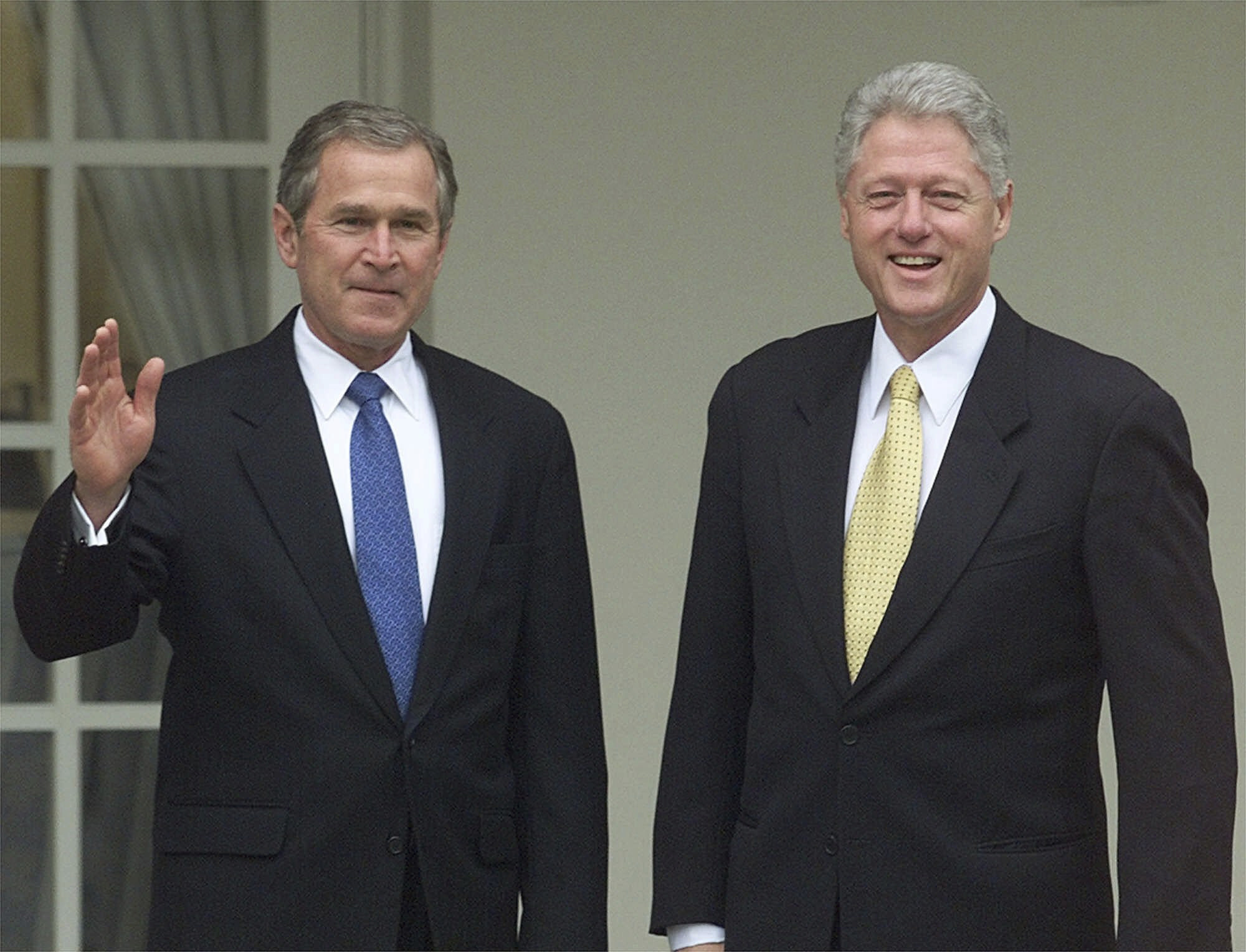
    The documents do not appear to contain major new revelations, and they remain redacted to obscure the sources of the information. But the briefings provide details of what the CIA was telling Presidents Clinton and George W. Bush in the months and years before the attacks, along with an intelligence report provided in the early morning hours of Sept. 12.

    The documents released Friday reinforce the central findings of the National Commission on Terrorist Attacks Upon the United States and its 2004 report: U.S. intelligence agencies warned about al-Qaida consistently but failed to understand the scale of the attack the group had in mind.

    John Ratcliffe, the CIA director, said the documents were being released to honor the memory of those killed on Sept. 11, along with the CIA officers who subsequently gave their lives.

    “Twenty-five years ago, the 9/11 attacks struck a blow to our nation, but they did not break us,” Ratcliffe said. “Generations of CIA officers have since dedicated their careers to securing justice for our fallen Americans and ensuring al-Qaida would never again harm our country.”

    Still, the documents demonstrate that the CIA repeatedly brought to Bush and Clinton the threat posed by bin Laden to directly attack the United States.

    In a briefing Thursday, CIA analysts said that before Sept. 11, terrorist threats were not a primary focus to collect intelligence on, and reporting on bin Laden and al-Qaida was limited. Reading the old reports, the analysts said, it was clear that the agency knew al-Qaida wanted to attack America. But what that would look like, intelligence officials said, was not clear, with a large amount of noise obscuring the clues.

    Working through the newly released documents, dating from Feb. 13, 1998, to Sept. 12, 2001, various strands of threat intelligence rise to the surface and then disappear. The 1998 intelligence about the explosive-laden plane, for example, does not make another prominent appearance in the warnings given to the White House.

    The CIA analysts said it was rare that the agency could follow the full story arc of a threat or plot. Various threats come and go from the agency’s warnings.

    Part of the problem was finding ways to provide effective warnings, said a senior CIA official, who spoke on the condition that their name not be used, in keeping with the agency’s practice. As the CIA wrote more presidential-level reports on al-Qaida, there were concerns about “warning fatigue,” the CIA official said.

    A senior CIA counterterrorism analyst said collection from human sources before the attacks was “not fantastic.” The overall collection on al-Qaida, CIA officials said, was spotty.

    A small group of intelligence analysts worked on terrorism threats. But it was nothing like the priority it became on Sept. 12, 2001. As a result, there was a steady drumbeat of warnings, yet almost all were frustratingly vague.

    The idea that the intelligence community was aware of plotting around explosive-laden planes in September 1998 has been known. The commission mentions a report circulating about al-Qaida’s interest in using an airplane with explosives aboard to attack the United States, but it did not say the report reached the president.

    Bush and Clinton told the commission they understood the threat of al-Qaida, although the final report concluded that “we do not believe they fully understood just how many people al-Qaida might kill, and how soon it might do it.”

    The CIA released one document from after the fact, a “situation report” for the president sent to the White House at 4 a.m. on Sept. 12. Such updates are supposed to be factual, with minimal analysis. And despite the gravity of what happened on that day 25 years ago, the analysts wrote in their usual detached style.

    Before the attack, analysts wrote regularly about the threat, but the CIA officials acknowledged that their warnings did not capture the scope of what al-Qaida had in mind. That was in part because the reporting was not there. But the commission said this also resulted from a failure of imagination.

    The senior CIA counterterrorism analyst said the agency since Sept. 11 had come a long way and was better at “thinking outside the box.” The lesson of Sept. 11, she said, was that intelligence agencies had to think more creatively.

    Those intelligence failures, as well as the others identified by the commission such as a lack of information sharing between the CIA and FBI, led to a reorganization of the federal government’s national security structure. The Department of Homeland Security was created, bringing together various law enforcement agencies, as was the Office of the Director of National Intelligence, which works to improve collaboration among the FBI, the CIA, and other spy agencies and set analytical standards.

    The postattack reviews also changed how intelligence reports were written. The documents released Friday reflect the earlier era. Today, intelligence reports are peppered with assessments of analysts’ “confidence level,” how well-sourced a particular conclusion is. Although it is clear from the old reports that the CIA had high confidence in al-Qaida’s goal to strike the United States, and doubts about the specifics of various plots, that assessment was not made explicit for policymakers.

    Two members of the commission were allowed to review the presidential daily briefs from the time leading up to the attacks, but the agency fought against distributing them more widely. Two briefs were released amid pressure from the commission and the public.

    Jamie Gorelick, a commission member who reviewed the presidential daily briefs, said the summary of the documents that she co-wrote informed the commission’s work, although the commission was not allowed to release or quote the documents.

    These presidential briefs “are consistent with the commission’s assessment of the preattack intelligence,” said Gorelick, who served as deputy attorney general in the Clinton administration.

    Still, even if the underlying material has been well understood, the newly released documents are likely to be closely examined by historians of the intelligence agency.

    A July 1998 document, given to Clinton five weeks before al-Qaida attacked two embassies in Africa, outlined the group’s intent to attack America. That document tracked the warning repeated years later in the Aug. 6, 2001, presidential briefing released by the government under pressure from the 9/11 Commission.

    That 1998 report cited four “questionable sources” but said al-Qaida’s ambitions to strike the United States were “plausible,” given bin Laden’s comments.

    A document from Aug. 3, 1999, discussed the possibility that the intelligence being collected on al-Qaida could be a deception. That document was generated in response to questions from senior Clinton administration officials. The analysis noted that because so many potential targets came up in intelligence collection, al-Qaida could have been engaged in “a deliberate effort to mislead us.”

    “The diverse targets mentioned in the reporting, combined with a high incidence of Bin Ladin-related walk-ins, suggest a deliberate effort to mislead us,” the CIA wrote, using the government’s spelling for bin Laden.

    The commission also highlighted the intelligence community’s worries about deception, noting that Defense Secretary Donald Rumsfeld had leaned into the theory that al-Qaida was spreading misinformation that it intended to attack.

    A presidential intelligence document from July 24, 2001, appeared to describe the lull that the commission outlined in its report. The document reported that for the second time in two weeks, “an expected imminent Bin Ladin-sponsored terrorist operation has been postponed, but preparations for other near-term attacks may still be in train.”

    The intelligence report noted suspicious activity among individuals who had received a cryptic message the previous month. At the time, the collection was fuzzy. After the fact, the report looks like a missed warning.

    The last document release by the agency before the Sept. 11 attacks came on Aug. 28, 2001. That document in some ways read like a follow-up to the Aug. 6 report, potentially explaining why no attack had occurred despite the earlier warning.

    The report insisted that al-Qaida remained a threat, though it made no mention of attacks on the homeland or attacks with planes. Instead, the presidential note mentioned “assassination, kidnapping, the use of rockets, mortars and other longer-range weapons, as well as crude chemical or biological attacks.”

    The intelligence report also discussed how Qaida operations could be delayed or disrupted.

    In a final note that foreshadowed how bin Laden would ultimately be found nearly a decade later, the Aug. 28 report concluded that “inexperienced couriers or suicide bombers also make mistakes that expose plot details.”

    This article originally appeared in the New York Times.
  • The Houthi advance in Yemen raises concerns about a key shipping choke point

    The Houthi advance in Yemen raises concerns about a key shipping choke point

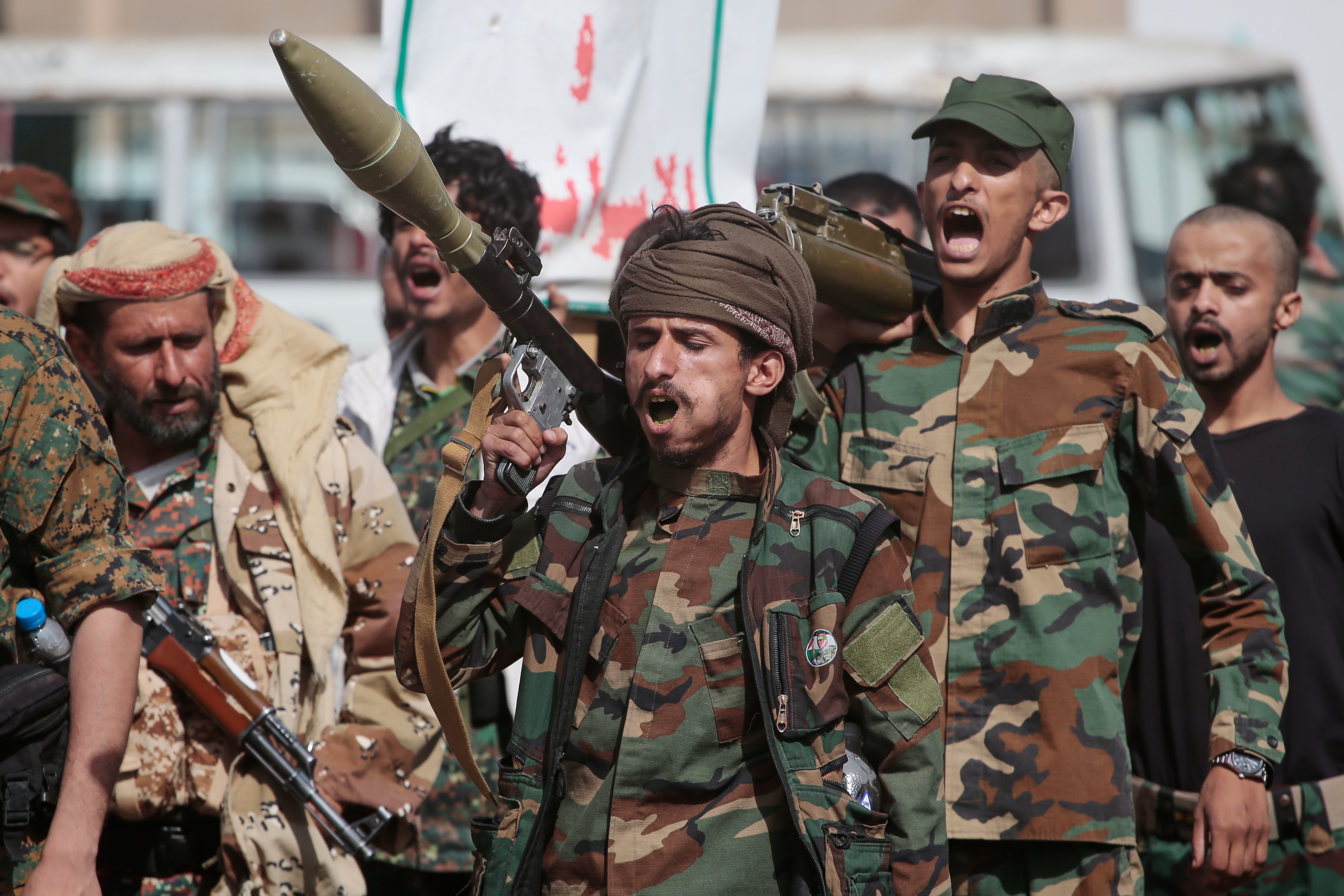
    FRANKFURT, Germany — The capture of the Red Sea port of Mokha and a strategic island by Iran-backed Houthi rebels in Yemen brings their forces to the heart of a key choke point for the global economy: the Bab el-Mandeb Strait leading out of the Red Sea.

    The Houthis took Mokha on Thursday and on Friday captured Mayun, also known as Perim, off Yemen’s coast, two officials said, in a swift advance that extends their reach near one of the world’s key commercial lanes.

    The strait had been a vital route for crude oil supplies from Saudi Arabia to Asia after shipping through the Strait of Hormuz was restricted due to threat of Iranian attack — until Houthi targeting of Saudi tankers largely ended that safety valve.

    The Houthi advance is focusing renewed attention on the Bab el-Mandeb Strait and further risks to shipping there, despite efforts by the Houthis to reassure shipowners that vessels other than those covered by their embargo on Saudi-linked shipping remain safe.

    Bab el-Mandeb was key workaround for Saudi oil exports

    The Strait of Hormuz was long the main highway for Saudi oil. But when Iran choked off most ship traffic at the Strait of Hormuz, the Saudis ramped up shipments through a pipeline running across the desert to Yanbu on the Red Sea.

    Oil loaded on tankers in Yanbu could head out of the Red Sea through the Bab el-Mandeb Strait and then east to Asia. That helped the Saudis maintain a share of their exports to customers there.

    The Red Sea route helped keep global oil prices in check, along with other improvised alternatives. In recent weeks the U.S. military has guided tankers through the Strait of Hormuz in defiance of Iranian demands that ships pass through a vetting lane near the Iranian coastline. And the United Arab Emirates has used a pipeline to Fujairah on the Gulf of Oman to skirt the Strait of Hormuz.

    Houthi attacks on shipping through the Bab el-Mandeb Strait started in late 2023 over Israel’s war in Gaza, leading many companies to abandon the route because of safety concerns. Traffic overall remains down some 60% from levels before then, although it remains a key freight route for goods moving between Asia and Europe.

    Alternate routes helped restore much of Middle East oil flows

    In August, alternative routes helped restore some two-thirds of the roughly 15 million barrels that transited Hormuz before the war. That took some of the economic pressure off the U.S. amid politically sensitive higher gas prices ahead of the midterm elections.

    However, Houthi threats have weighed heavily on Saudi oil exports in the Red Sea. In August, Red Sea oil loadings fell from 3.8 million barrels per day to 2.2 million barrels per day, according to the International Energy Agency. Overall, Saudi supply fell 2.3 million barrels per day to 6 million barrels, the lowest in three decades, according to the IEA.

    By now, “Saudi shipping has largely routed away from this risk anyway,” said Richard Meade, editor-in-chief of Lloyd’s List.

    While the Houthi advance “doesn’t change the immediate risk profile” because Saudi and Israeli shipping is already high risk, it does raise the question of whether the Houthis, who have insisted that other shipping is safe, will expand their threats if they face further attack, Meade said.

    “It puts the Houthis in a strong position to take further control if they want to,” he said.

    Meanwhile, increased attacks on shipping in the Strait of Hormuz this week have put use of the U.S. route on hold. Iran said it attacked 10 ships there Wednesday after the U.S hit five Iranian tankers.

    Suez Canal is a workaround for the workaround

    With the Houthis threatening Bab el-Mandeb, Saudi tankers have turned northwest instead of southeast from Yanbu and headed for the Suez Canal.

    Tankers that are too big to pass through the canal have offloaded oil at Ain Sokhna in Egypt to a pipeline to Sidi Kerir on the Mediterranean coast, where the oil is picked up by tanker. Some 70% of Yanbu crude exports are now heading that way, either by pipeline or by tanker, according to Lloyd’s.

    That, however, is a time-consuming and expensive workaround for customers in Asia, since ships must then transit the Mediterranean, pass the Strait of Gibraltar and sail around the Cape of Good Hope at the southern tip of Africa. The Suez route enables the Saudis to redirect as much as 3 million barrels per day.

    But that more than doubles transit time to an Asian destination like South Korea, from 24 days to 54 days, according to senior research analyst Victoria Grabenwöger at energy data firm Kpler.

    That adds to the cost, given that tankers cost tens of thousands of dollars per day to charter even in normal times, while prices have risen in some cases above $100,000 per day during the current global energy turmoil.

  • ‘You know what happens if you don’t vote’: 7 takeaways from the GOP convention

    ‘You know what happens if you don’t vote’: 7 takeaways from the GOP convention

    Vice President JD Vance was billed as the headliner of the second night of the Republican convention, but President Donald Trump stole the show.

    With a hug and a handshake, Vance exited stage right after his speech as Trump returned to the place he likes most — center stage — to make his final pitch of the convention to keep Republicans in power.

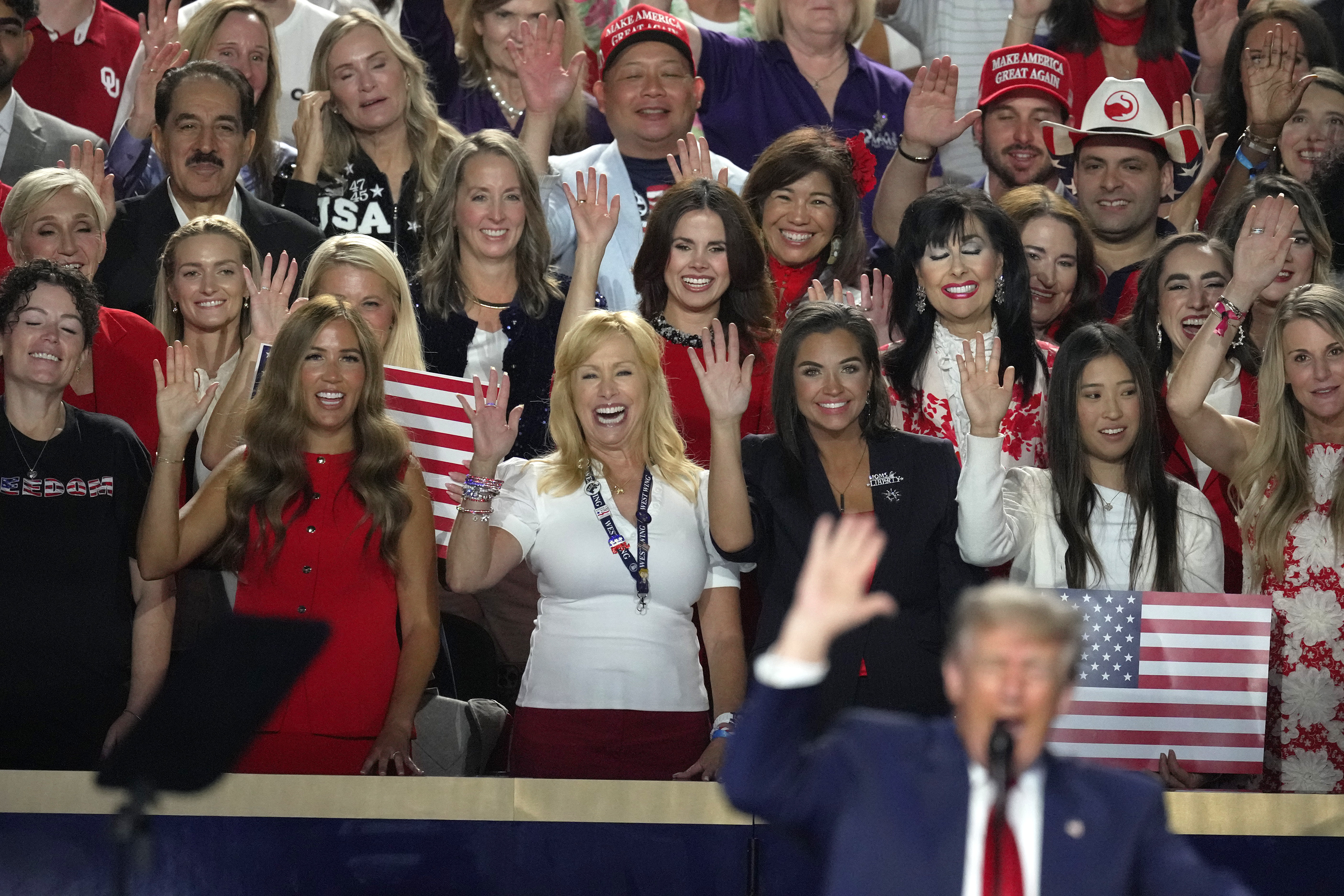
    At one point Trump asked attendees to raise their right hands and pledge to him that he would vote with their family and friends. Dutifully, they did.

    “You know what happens if you don’t vote?” Trump said. “You go to hell.”

    The two-day rally in Dallas came as Trump’s approval has sagged below 40% and Republicans fear losing control of both the House and Senate. Republicans hoped the gathering would help energize a base beleaguered by high prices and the Iran war to turn out in droves. But the two days of red meat tossed from the stage seemed unlikely to satiate independent voters whose support has flagged.

    Here are seven takeaways from the convention:

    Vance makes his 2026 (and 2028) pitch

    Vance arrived in Dallas widely considered the front-runner in the 2028 Republican presidential primary. His speech offered some early clues about how he might approach a campaign.

    Vance focused on restoring the primacy of the traditional nuclear American family, a theme he has championed in the administration. He did not mention the war in Iran, an operation he has defended publicly but raised concerns about privately. But he issued a plea for conservatives not to abandon the White House over policy.

    “Do not throw the baby out with the bathwater,” he urged.

    Vance speaks in a far more scripted political style than Trump. He caught fire with the crowd when he snapped back at a protester who interrupted his remarks by waving Palestinian and Mexican flags. “My friend, if you love Mexico so much, get your a— over there,” he said.

    But he failed to sustain the kind of enthusiasm that Trump commanded either night. Nor did he win anything beyond perfunctory praise from the president, who quickly ushered him off the stage.

    As the balloons fell, it was the president alone, along with a tenor singing. Trump is not giving up his crown quite yet.

    Trump throws an affordability Hail Mary

    Trump has called affordability — a top buzzword for Democrats this year — a “hoax.” In his speech Wednesday night, the president claimed that prices are on their way down. At the same time, he rolled out an audacious plan to address people’s concerns about costs: a massive cash giveaway.

    He branded his dubious and detail-free plan to send $5,000 to every American adult a “Trump Dividend.”

    But Trump was virtually the only one talking about it.

    A day later, the splashy $1 trillion-plus plan barely made a ripple on the convention stage.

    The president’s own son, Donald Trump Jr., didn’t so much as mention it.

    Neither did the speaker of the House.

    Neither did the vice president.

    Only Trump did.

    If the president wants the dangled cash to be a major factor in the midterms, the rest of the Republican Party didn’t use the rest of the convention to sell it.

    Republicans have a new rogues’ gallery of liberal villains

    Forget about Nancy Pelosi.

    In Dallas, Republicans made clear that the former House speaker has been dethroned from her decades-long position as the party’s favorite political villain.

    Speaker after speaker assailed Hasan Piker, a leftist online streamer, and Abdul El-Sayed, the Democratic Senate nominee in Michigan, for pushing what they described as an extreme and anti-American agenda. Their images, including Piker’s naked torso, were broadcast on the jumbotron over the stadium. Even Rep. Alexandria Ocasio-Cortez of New York, who is a frequent target of the right, got less airtime.

    At one point, Speaker Mike Johnson outlined the new rogues’ gallery of liberals — “Hasan Piker and Bernie Sanders and AOC and Abdul El-Sayed and Zohran Mamdani” — while casting the rest of the Democratic Party as squishes who would succumb to them.

    In their attacks on Piker and El-Sayed, several convention speakers embraced anti-Muslim rhetoric, including a promise popular among conservative activists to “ban Shariah law.”

    “We must stand and defeat the Islamists,” Sen. Ted Cruz of Texas said in his speech.

    GOP frames the election as common sense versus crazy

    Republicans know that Trump is unpopular. They are banking on making Democrats unpopular, too — or at least unappealing and unelectable.

    Over and over, speakers cast Democrats as out of the mainstream, frequently calling them socialists, communists, and even worse. At times they stretched the truth. Democratic socialists might have won a number of Democratic primary victories since 2024, but no serious figure in the party is promoting communism.

    “You guys are going to trigger the commies,” Donald Trump Jr., the president’s son, said at one point as the crowd chanted “USA! USA! USA!”

    Vance, in the closing of his speech, summed up the message so many had delivered before him over two days: “It’s about the party of common sense beating the party of the crazies.”

    Texas is a 2026 battleground

    Six months ago, when it first emerged that Republicans were likely to pick Dallas for this convention, it was unclear whether Texas would wind up as a top midterm battleground.

    It’s clear now.

    A parade of speakers — from the president on down — used their precious time onstage to talk about Texas’ razor-close Senate race. They sought to boost Ken Paxton, the Texas attorney general (even as Trump mocked his sartorial choices on back-to-back nights), and tear down James Talarico, the Democratic nominee. On the eve of the convention, Trump’s super political action committee had reserved $10 million in ads to help Paxton.

    “Tala-freako maybe tops the list,” Vance said of Trump’s nickname for Talarico.

    But it wasn’t just the Senate race. Republicans gerrymandered the state in 2025 to create as many as five new safely Republican House seats. But Republicans running in several of those seats appeared at the convention, seeking a boost in regions that Trump won handily.

    Was it must-see TV? Early signs suggest no

    Trump has long been known as a master of the television audience. Not this time. An average of 2.5 million people tuned in to watch his Wednesday night speech on Fox News, one of the few major TV networks that aired the remarks in full, according to preliminary figures from Nielsen. That was an average primetime audience for the network, based on the most recent quarterly statistics, and below the usual viewership for programs at that time.

    In other words, no Trump bump.

    To be fair, the president’s programming faced some steep competition. The first game of the National Football League season was on at the same time as his speech. The season’s second game was on Thursday during Vance’s and Trump’s speeches.

    Republicans make their bid to buck history

    Parties in power traditionally attempt to expand their appeal in midterm elections through targeted outreach to independent voters. That was not the strategy charted by Trump and his allies in Dallas.

    Only a handful of speakers offered any kind of outreach to moderate voters. (One of those exceptions was Rep. Mike Lawler of New York.) Far more focused their remarks on stoking fears of Shariah, transgender athletes, and Democratic candidates who were repeatedly described as communists. Again and again, Trump begged his supporters to “pretend” that he would be on the ballot — an attempt to get enough of them out to prevent the usual losses for the party in power.

    Trump and his allies are staking their chances on their ability to drive their own voters to the polls. At the top of the list are Trump loyalists who typically skip midterm elections.

    This article originally appeared in the New York Times.
  • Trump’s grand midterm convention finale: ‘I’m a little bit tired of politics’

    Trump’s grand midterm convention finale: ‘I’m a little bit tired of politics’

    DALLAS — In 2024, President Donald Trump accepted the Republican presidential nomination by promising to “lead America back to the summit of human achievement and greatness.”

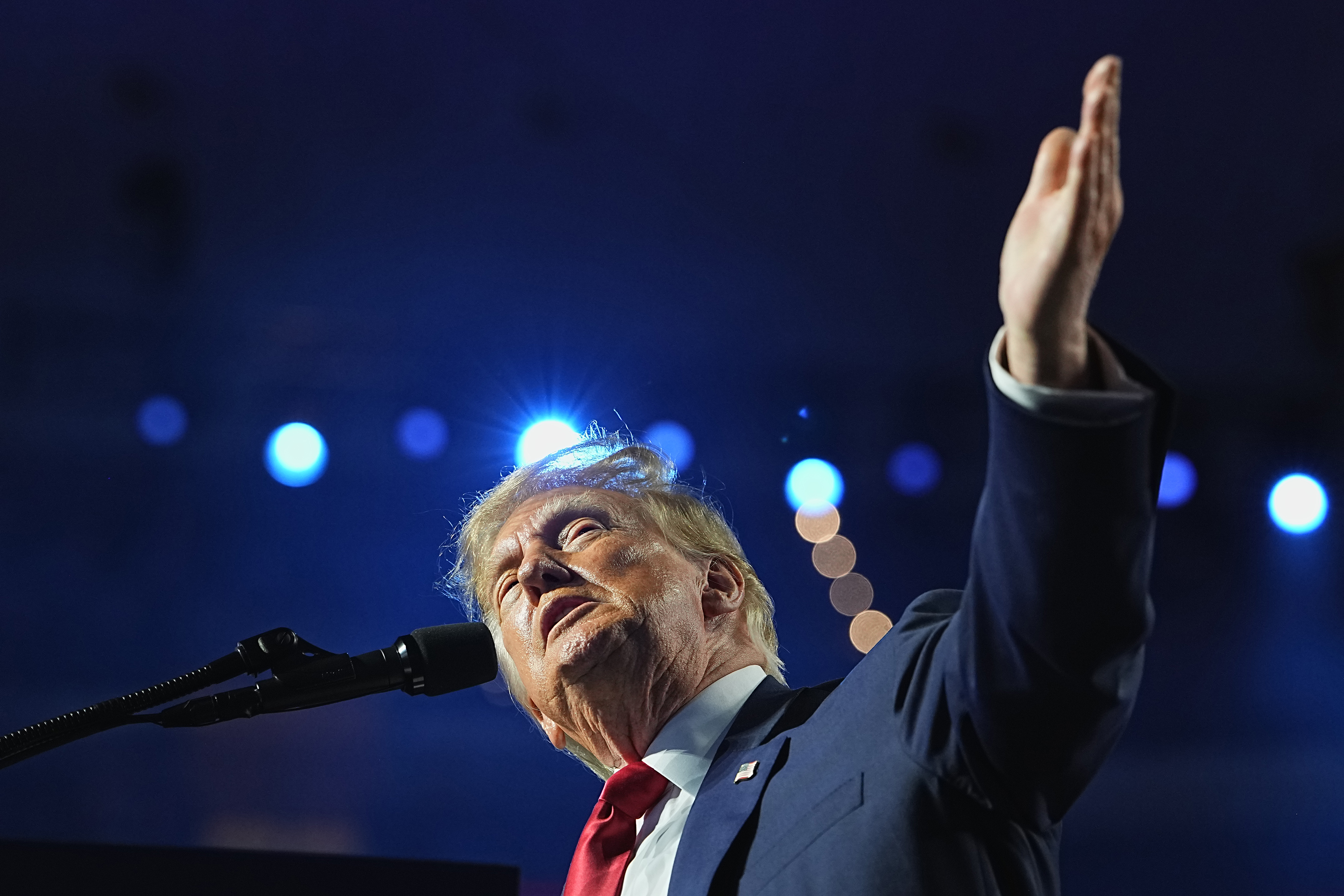
    In 2026, he closed out an unusual midterm convention organized in his honor by saying he was a little bored of politics. He seemed more interested in telling supporters to swear on something holy — which seemed to be himself — that they would go out and vote for Republican candidates in November.

    “Please raise your right hand,” Trump instructed a rowdy crowd of thousands inside a Dallas arena on Thursday evening. Many of them complied. “I pledge to the greatest president in the history of the United States that loves us so much he can’t even breathe that I will go out with my family, my friends, I will do it any way — I don’t care if I’m registered or not, I’m going to try and cheat like hell, like they do.” (Trump usually frowns on election fraud.)

    He added: “I am going to go out, and I’m going to get my friends, my family, and we are going to vote on November 3.”

    Speaking for a grand total of nearly 2 1/2 hours over two days in Texas, Trump made it very clear, onstage and in interviews, that he would be relying on the strength of his political brand to see his party through what appear to be daunting midterm elections. He would not be straying much from his comfort zone to help vulnerable Republicans. In fact, the president said Thursday evening, he was kind of over this.

    “We’re going to have a good time listening to music,” Trump said, name-checking Christopher Macchio, an opera singer who closed out the evening. “I’m getting a little bit tired of politics now.”

    Before taking the stage for the second night in Dallas, Trump was asked by Laura Ingraham of Fox News whether he intended to campaign harder than he ever had before.

    “No,” he replied bluntly. Asked by Ingraham whether or not he thought his legacy was on the line ahead of the midterm elections — “Isn’t this just as important, Mr. President?” — Trump seemed almost blasé about the possibility of Republicans losing one or both chambers of Congress. “I’ll block all their bad stuff for two years. It won’t be the same, but I’ll be a blocker, what can I tell you?”

    The whole spectacle was a window into the mindset of Trump and his advisers, who point to recent history as proof that he is capable of beating long odds through brashness, sheer will and an intense connection with his supporters. That relationship is unmatched in modern politics. During his own speech, Vice President JD Vance, the perceived front-runner for the 2028 Republican nomination, asked the crowd to chant his name because it felt “pretty cool.”

    Trump does not have to make such requests. But instead of focusing his energy on Republicans in difficult races — some of whom skipped the event completely — he directed the focus back to himself while he was in Texas. He pleaded with voters to engage in make-believe, and to “please pretend” that he was the one on the November ballot. That exercise might work against him in competitive races where the war with Iran is unpopular and where voters feel that their worries about the prices of gas and groceries are being ignored.

    He put a new twist on an old tactic by offering free money — $5,000 to every American adult — if Republicans keep control of Congress. On his first night in Dallas, he asked voters for patience: The war with Iran, he assured supporters, “will be over very shortly after the election.” All of these promises and pleas amounted to a maximalist, midterm-era version of the “in two weeks” rhetorical tool he relies on when he is under pressure, to vow that something good will happen a few news cycles down the road.

    “Food prices and almost every other item are rapidly going down,” Trump told the crowd Wednesday. “And by the way, oil will be going down as soon as we win the war with Iran, which is taking place right now. We’ll win it. We’re winning it. We control the Hormuz Strait. I think we should call the Hormuz Strait, we should call it the Trump Strait.”

    At moments, Trump almost seemed to be in conversation with himself about his endorsement style, which, in one crucial race at least, has featured a mix of insults and shrugging. On both nights, he defended the disparaging way he has talked about the appearance and character of Ken Paxton, the Texas attorney general running for a Senate seat after Trump directed primary voters to oust Sen. John Cornyn. Those voters complied and put an otherwise reliable seat into play.

    “I said, ‘I don’t really like the way he looks. I don’t like it,’” Trump said of Paxton on Wednesday. “But you know what I do like? He was the greatest attorney general in the history of Texas.”

    By Thursday, he was basically saying to hell with it: “You better do me a big, the biggest favor you’ve ever done me,” Trump told supporters as Paxton watched from the sidelines and smiled through what was at least his third humiliation ritual of the Texas event. “You’ve got to do this for me. You’ve got to pretend I’m on the ticket.”

    Again and again, Trump turned to other priorities, the most pressing of which seemed to be the crowd size in Dallas. There is a reason that political conventions are not held during the midterms. This expensive, two-day event, designed as a tribute to Trump, functioned more like a temperature check, and there were moments when interest seemed lukewarm. Rows of seats in the American Airlines Center stayed empty throughout the affair. Endangered Republicans, sensing a brush fire rather than a lit torch brightening the way forward, steered clear.

    “No empty seats! Fake news,” Trump exclaimed Thursday, spending about three minutes affirming that the busy arena was packed when it wasn’t.

    And so it went on in that vein in Texas, with little new except for a promise of free money, a pledge of allegiance gimmick, and a few glimpses of an 80-year-old president pondering a future in which he is not firmly in control.

    “I want you to remember me in four or five years when this country’s rocketing,” Trump said Wednesday, somewhere near the beginning of a meandering and nearly two-hour speech. “Remember, I’m the one that got it started.”

    By the time he was ready to depart Dallas, he didn’t seem too interested in the particulars of the future, the strength of Republican candidates or the validity of his promises. He suggested to his devoted supporters that he might be “standing with you one of these days.” But for now, he just wanted to chill out and listen to music. He sped through the last lines of a speech finale he knows by heart after a decade at the center of national politics.

    “I just want to say, we will make America great again,” Trump said dutifully. “We will make it greater than ever before.”

    Then the tenor took the stage. Red, blue, white and gold balloons began to fall from the ceiling. The president swayed to the music, lost in the moment.

    This article originally appeared in The New York Times.