Tag: no-latest

  • Horoscopes: Saturday, Sept. 26, 2026

    Horoscopes: Saturday, Sept. 26, 2026

    ARIES (March 21-April 19). You’ve recently been pushing yourself to do the hard thing, only to discover that not only does doing hard things make you better, stronger and smarter, but it makes you braver too. Your self-definition is expanding.

    TAURUS (April 20-May 20). You don’t have all the ingredients, but start anyway. Look at what is already available. Whatever is on hand is enough to make progress: enough money for the smaller version, enough time for a first step, enough skill to begin.

    GEMINI (May 21-June 21). One question keeps coming back because you feel like you need an answer before you can move on. Ask. A friend, expert or coworker has the detail you’re missing, or at least a clue that gets you one step further.

    CANCER (June 22-July 22). You have been the person who remembers, arranges, checks in and gets things done. When another person offers to help, be sure to give them a real job. You will have less to manage, and they will feel good knowing you trust them.

    LEO (July 23-Aug. 22). Put more emphasis on what’s already going well: the friend who always makes you laugh, the skill people pay for, the project you like returning to. Focusing there is more fun and it’s also more productive. Keep going with what makes you proud.

    VIRGO (Aug. 23-Sept. 22). People have an easier time because of you, and it feels good to recognize it, even if you don’t always get the acknowledgment you deserve for it. Seeing that you’ve made a difference is the most satisfying feeling.

    LIBRA (Sept. 23-Oct. 23). You often make room for everyone else’s needs and forget that you also require things such as attention, sustenance, work that’s meaningful to you and joy! A fair arrangement includes something good for you as well.

    SCORPIO (Oct. 24-Nov. 21). An old problem that’s been taking up room in your mind is moving out. As it fades into the distance, you may feel that even though it wasn’t completely resolved, it didn’t have to be to become unimportant to you.

    SAGITTARIUS (Nov. 22-Dec. 21). It so happens that the thing that didn’t work out brought you a blessing in disguise. You’ll have a lot of fun with a fresh start, trying something new or testing a different idea. There’s a cheaper, easier way to get the result you wanted.

    CAPRICORN (Dec. 22-Jan. 19). People come to you with questions. Take your time. Process what they really mean and need — and more importantly, what helping will cost you. A thoughtful answer saves you from creating extra work or drama for yourself.

    AQUARIUS (Jan. 20-Feb. 18). Show up where people gather around something you already enjoy. You like people who understand the reference, laugh at the same strange detail and keep the conversation moving. A chat leads to a new friend or an invitation.

    PISCES (Feb. 19-March 20). Because you approach people compassion-first, you’re open to a fuller picture of who they are and even how it must feel to be them right now. No wonder you put together social scenes, groups and teams that really benefit all.

    TODAY’S BIRTHDAY (Sept. 26). In your Passion Fire Year, you are pulled by feelings beyond logic and duty to pursuits you once would have deemed ridiculous. Heart ablaze, old fears burn off, paths are illuminated and relationships spark. More highlights: You’ll travel many miles to make a deal. You’ll be early to a trend and reap many benefits, including financial. Fresh habits give you the energy to enjoy your big plans. Taurus and Sagittarius adore you. Your lucky numbers are: 5, 17, 33, 12 and 35.


  • Kitty Lunn, who expanded the boundaries of dance, dies at 76

    Kitty Lunn, who expanded the boundaries of dance, dies at 76

    In 1987, months before she was to perform in her first Broadway production, Kitty Lunn, an actor and former ballet dancer, was on her way to a date when she slipped on a patch of ice and tumbled down a flight of marble steps.

    The fall shattered vertebrae and damaged her spinal cord. She spent the next three years in acute care, undergoing a series of major surgeries. Dancing again seemed impossible.

    “I couldn’t point my toes. I couldn’t hold my stomach in,” Ms. Lunn recalled in a 2020 interview. “Never mind that I couldn’t stand up.”

    Yet when Andrew Macmillan, her date that fateful night, asked what was stopping her from dancing again, Ms. Lunn said something that surprised even her: “The answer to that question was fear.”

    In 1995, Ms. Lunn went on to serve as a founder and artistic director of Infinity Dance Theater, devoted to breaking down barriers in dance by training and mounting performances featuring dancers both with and without disabilities. She died on Aug. 18 at her home in Manhattan. She was 76.

    The cause was cardiovascular disease, a representative from Infinity Dance said.

    Ms. Lunn performed in hundreds of productions with the company, translating principles of ballet and modern dance into movements designed for dancers with a variety of physical disabilities, and using a lightweight, nimble wheelchair modified by Macmillan, whom she married after her long hospital stay. (She signed her name Kitty Lunn-Macmillan, but maintained Kitty Lunn as her professional name.)

    She performed around the world, including at the first Cultural Paralympiad, a showcase of the talents and experiences of people with disabilities held at the 1996 Paralympic Games in Atlanta. She also performed at the Kennedy Center in Washington in 2000 and 2004. Among the notables who trained with Infinity was Alice Sheppard, the dancer, choreographer, and founder of the disability arts ensemble Kinetic Light.

    “Without my chair, I’m really an invalid,” Ms. Lunn once said. “I never refer to myself as wheelchair-bound — that sounds like I’m in chains. I’d rather describe myself as a dancer who sits down a lot.”

    Kitty Morrison was born on Aug. 5, 1950, in New Orleans, the youngest of three children of Hugh Morrison Jr., who owned an insurance agency with his brother, and Beatrice (McClung) Morrison, a real estate agent and interior decorator.

    Her fascination with dance started at 8, when her grandmother took her to see The Red Shoes — the heralded 1948 British ballet film starring Moira Shearer.

    “I looked up at that beautiful redheaded ballerina, and I wanted to be her,” she told the website Stance on Dance in 2019.

    By her midteens she was dancing principal roles with a regional New Orleans ballet company, which led to a scholarship to the Washington School of Ballet, where she studied with renowned teacher Mary Day and ballet master Edward Caton. Along the way, she also performed in classics like Swan Lake and Giselle.

    She was drawn to ballet roles that required a degree of acting, and eventually decided to pursue a career as an actor. At 20, she moved to New York and studied at the Neighborhood Playhouse School of the Theater, where Diane Keaton and Eli Wallach had trained.

    In 1984, Ms. Lunn took a job as a radio producer at WABC while waiting for her big break in acting; she finally earned a role with Frank Langella’s Sherlock Holmes in Sherlock’s Last Case on Broadway. Then came her accident. “Two seconds and one piece of ice,” she recalled in a 2018 video interview with National Geographic, “and my whole world changed.”

    During her years in the hospital, Macmillan’s suggestion that she might dance again initially seemed absurd. “I was a noodle,” she recalled in a 2009 interview with the Brooklyn Rail. “I couldn’t sit up by myself, wash myself, feed myself or anything.”

    But after seeing an American Ballet Theater production of Pyotr Ilyich Tchaikovsky’s The Sleeping Beauty, the “movie in my mind led me to believe it would be possible,” she told the New York Times in 1997.

    Ms. Lunn worked with Shaw Bronner, a physical therapist and former dancer, five days a week, five hours a day for five years, she told the Brooklyn Rail. By the early 1990s, she felt ready to embark on her reimagined dance career.

    Even so, “no one would let me take a class,” she recalled in a 2020 interview with John Jay College of Criminal Justice in Manhattan, where she had earned a degree in legal studies in 1995. She went to one studio armed with a copy of the Americans with Disabilities Act, and insisted that it was against the law to bar her admittance.

    “I was told that if anyone complained, I would have to leave,” she said. “My response was simple. I said, ‘I can promise you that I will not run into anyone, but I cannot promise you that they will not run into me.’”

    She appeared as a guest artist in a performance featuring dancers in wheelchairs in Cleveland, and eventually started Infinity with dance veterans Robert Koval, Christopher Nelson, and Spider Duncan Christopher.

    In doing so, she adapted traditional ballet movements, as well as those pioneered by dance luminaries like Martha Graham, to be executed from a seated position, using the arms, head, and core to perform actions typically involving the legs.

    “I started transposing the technique of classical ballet,” she said. “When you transpose music into a different key,” she added, “you’re not losing any of the notes.”

    A review of a 2001 performance in Manhattan by the magazine New York Dance Fax noted that she “sensitively and dynamically danced with her wheelchair spins and gorgeous torso extensions,” praising her “rolling movements on the floor around the chair, reflecting her feelings about her disability and changed life.”

    In a review of the same show in the Times, critic Jack Anderson described Ms. Lunn’s artful gyrations to the music of jazz trumpeter Don Cherry: “While Burke J. Wilmore’s lighting created the illusion of a snowfall, Ms. Lunn slipped on and off the chair, tilting it, tipping it over and responding to its presence as if it had a personality all its own.”

    She is survived by a brother, Randy Morrison, and a stepson, Ross Macmillan. Her husband, an actor and television and radio news anchor, died in 2016.

    This article originally appeared in the New York Times.

  • Tasia Fortune’s hanging was ‘staged’ after her death in a drug dispute, Mississippi police say

    Tasia Fortune’s hanging was ‘staged’ after her death in a drug dispute, Mississippi police say

    JACKSON, Miss. — Tasia Fortune was apparently killed in a drug dispute before her body was hung in a tree in a “staged” lynching behind an abandoned home in the Mississippi capital this summer, a detective testified Friday.

    Fortune was killed in a disagreement about drugs, and she fought hard with her attackers before she was killed, Jackson police Detective Samuel Dukes told the court. Citing the medical examiner’s opinion, he also said the hanging was “staged.”

    Fortune was Black, and the Aug. 3 discovery of her hanging body stoked fear and drew widespread attention because the scene recalled actual lynchings in the Southern state, which has a long and troubled history of racial violence.

    Authorities haven’t disclosed the exact cause of Fortune’s death or said why they think her body was hanged afterward, but they ruled it a homicide and arrested two men, both of them also Black, on murder charges. They also issued an arrest warrant for an unnamed third person.

    Outside court, Fortune’s mother, Christy Spivey, told reporters that she had been aware that her daughter died before her body was hanged.

    “What bothered me was they said Tasia fought for her life. I know she did. I know my daughter,” Spivey said.

    The hearing was meant to determine whether there is sufficient evidence to send the case against the first man arrested, Jarques Ratliff, to a grand jury for a possible indictment. It will resume Sept. 30.

    Ratliff, 51, was arrested in mid-September and has pleaded not guilty. He remains jailed without bond. Police arrested a second defendant, 25-year-old Earnest Lloyd Jr., this week.

    During Friday’s hearing, Ratliff blurted out in court that he and Fortune were friends.

    “It sounded sincere. Tasia had a lot of friends,” Spivey said later. ”I hope if he is innocent that he can prove he’s innocent. We don’t want any innocent people going to jail.”

    Ratliff’s stepdaughter, Lashuna Jones, was among her father’s supporters at court.

    “He didn’t do it, and I’m behind him,” she said.

    Spivey has said her daughter, who had four children, struggled with homelessness in recent years, and that she wasn’t sure where Fortune was living at the time of her death. She said Fortune had talked about starting a cleaning business and was trying to get her life in order.

  • For Trump and Xi, a warm farewell and unfinished business

    For Trump and Xi, a warm farewell and unfinished business

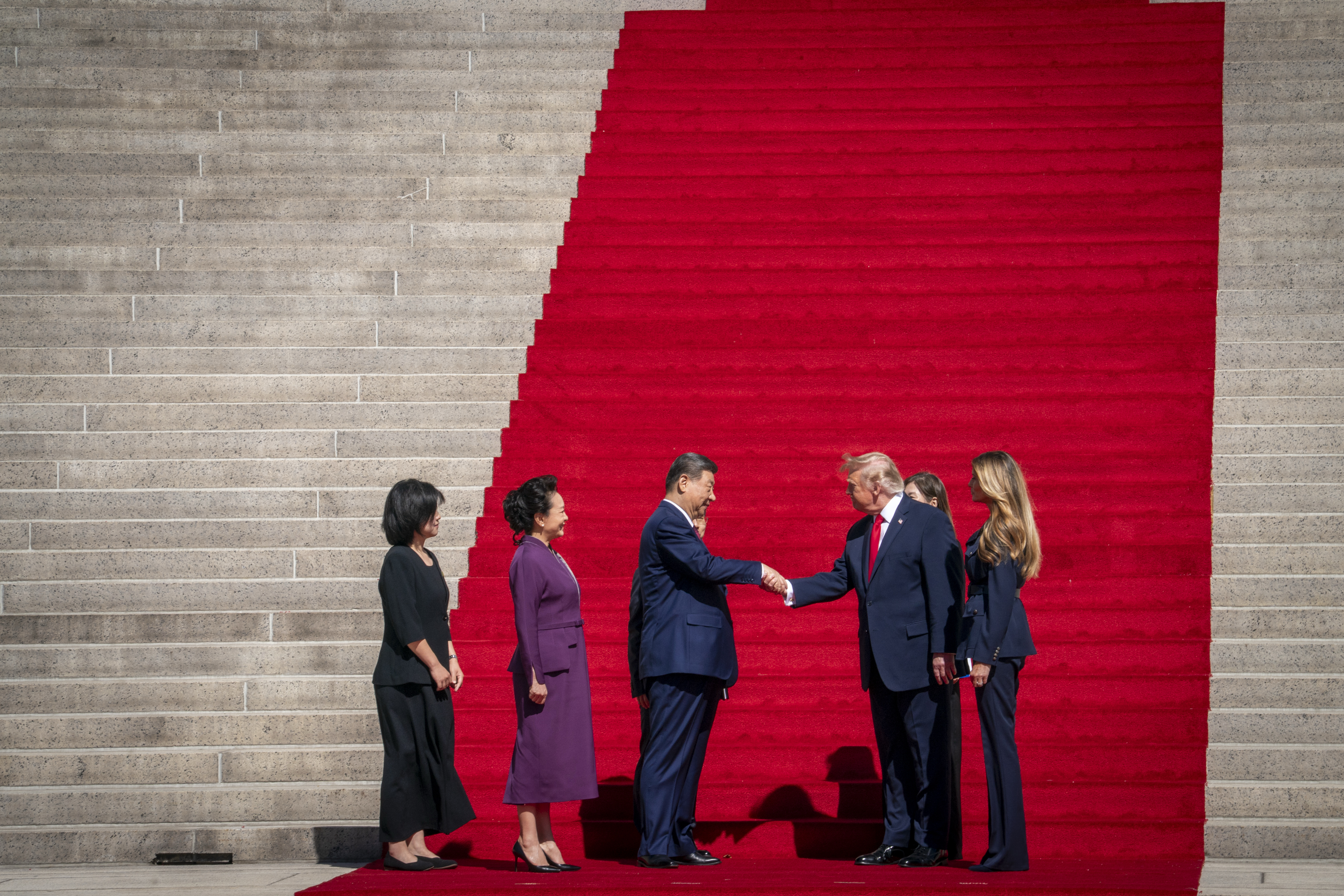
    President Donald Trump showed off the Constitution, the Bill of Rights, and the Declaration of Independence to Chinese President Xi Jinping on Friday, as the two leaders wrapped up a state visit to Washington with friendly gestures but few apparent breakthroughs other than a promise to see each other twice more this year.

    “We’ve made great strides, very positive for both countries,” Trump said over tea Friday before setting out for the National Archives, embracing what he said was a warm personal relationship with Xi.

    He later said that “everything” had been discussed, including the war in Iran, and that the outcome of the summit would be “great for the farmers.”

    Xi focused more on the relationship between the two countries than on his personal chemistry with Trump, continuing a difference that was evident on the meeting’s first day.

    “The president and I are like two people that are charting the course for the great ship of China-U. S. relations,” Xi said. He said that Trump and he had agreed to build a relationship of “strategic stability on the basis of respect, fairness, and reciprocity. So, from this, one can see that the prospects for this relationship will get brighter.”

    He praised his host in terms that were sure to appeal to the U.S. leader, who gained fame early in his career by running hotels and whose family remains invested in the resort business.

    “Everything is done to the highest order of perfection, and there is thought in every little detail, and it’s greatly appreciated,” Xi said.

    After tea, the leaders and their wives toured the National Archives to see the foundational documents of the United States to commemorate America’s 250th birthday year.

    Under a different president, the gesture — parading the authoritarian leader of a communist country in front of the key artifacts that guarantee U.S. democracy — might have been seen as aggressive. Trump, however, offered a genial tour to his guest, and if he commented about democracy, it wasn’t audible to the cameras, which were back in operation after a court order ended Trump’s effort to ban three news organizations from covering him.

    “We’re just comparing. Ours goes 250 years. Which is great, and we’re proud of it. But theirs goes 6,000 years. So there’s a little difference between 6,000 and 250. But we’re very proud of our 250,” Trump said.

    Xi and other Chinese leaders often have focused on their country’s thousands of years of history as a way of emphasizing that they can outlast pressure from Washington — although modern China’s communist government dates to 1949.

    Trump, who Thursday praised Xi’s knowledge of stone and particularly granite, declared his admiration for the rotunda of the National Archives building, which was completed in 1935.

    “This is a great building. Great building,” Trump said. “This is when they built it properly.”

    Trump fought with the news media during the course of the summit after his effort to bar CNN, MS NOW, and Politico from the White House. On Thursday, the White House video pool, which television networks share, remained out of commission as the networks awaited assurances that CNN would be allowed access. That drew complaints from Trump that the press was missing “made for television” moments of the summit.

    By Friday, however, the TV pool was back, and in the end Trump said that he was happy with how the trip had played in the media.

    “We appreciate the fair coverage. It’s been very fair. We appreciate it,” he said.

    The two leaders confirmed plans to meet again in November in China and in December in Miami, making for four face-to-face encounters over the course of 2026.

    The rapid pace of meetings may ease the pressure off any one summit to produce a breakthrough, even as both sides continue to discuss Taiwan, whether to regulate artificial intelligence, and the complex and thorny economic relationship between the two superpowers.

  • White House network TV pool resumes operations after a dayslong ban of news outlets from grounds

    White House network TV pool resumes operations after a dayslong ban of news outlets from grounds

    The U.S. network video pool for the White House was back in operation Friday, for the first time since President Donald Trump banned three news outlets in an extraordinary showdown over media access.

    At noon on CNN, viewers could see Trump and President Xi Jinping touring the National Archives, along with Melania Trump and Peng Liyuan, Xi’s wife. The banner along the bottom of the screen read: “Trump and China’s Xi Visit National Archives.” It was a routine report from a state visit — but for the fact that CNN had not aired live video of Trump in several days.

    “As of now, all systems are go,” said a person familiar with the pool, speaking on condition of anonymity because of the fluidity of the situation.

    The pool consists of five major U.S. broadcast outlets that take turns shooting and sharing video. When the White House banned CNN — which belongs to the pool — from White House grounds, along with MS NOW and Politico, the other four pool providers declined to participate in a show of solidarity.

    A judge temporarily struck down the ban in an overnight ruling early Thursday, but his ruling didn’t directly address the pool. The networks continued to refrain from covering Trump as part of the pool, even as reporters from all three outlets were allowed back in the White House.

    CNN was not commenting directly on Friday, referring instead to its editorial coverage. But Brian Stelter, the network’s media analyst, posted on X that CNN had a pool assignment at the National Archives event and that the White House had approved the network’s credentials.

  • Ukraine weighs legalizing pornography to raise tax revenue and buy drones

    Ukraine weighs legalizing pornography to raise tax revenue and buy drones

    KYIV — For years, Ukraine’s huge but illegal porn industry has operated in the shadows. Law enforcement generally looked the other way, while some officials abused their power to extort bribes from people found to be skirting the law.

    Then, two years into Russia’s full-scale invasion, the federal tax authorities discovered that nearly 8,000 Ukrainian OnlyFans creators had made more than $131 million during 2023 alone.

    Now, with Ukraine facing giant military expenses and a $27 billion budget gap, lawmakers are moving to decriminalize pornography — a momentous step for a country long stained by a reputation for exploiting and exporting women as sex workers.

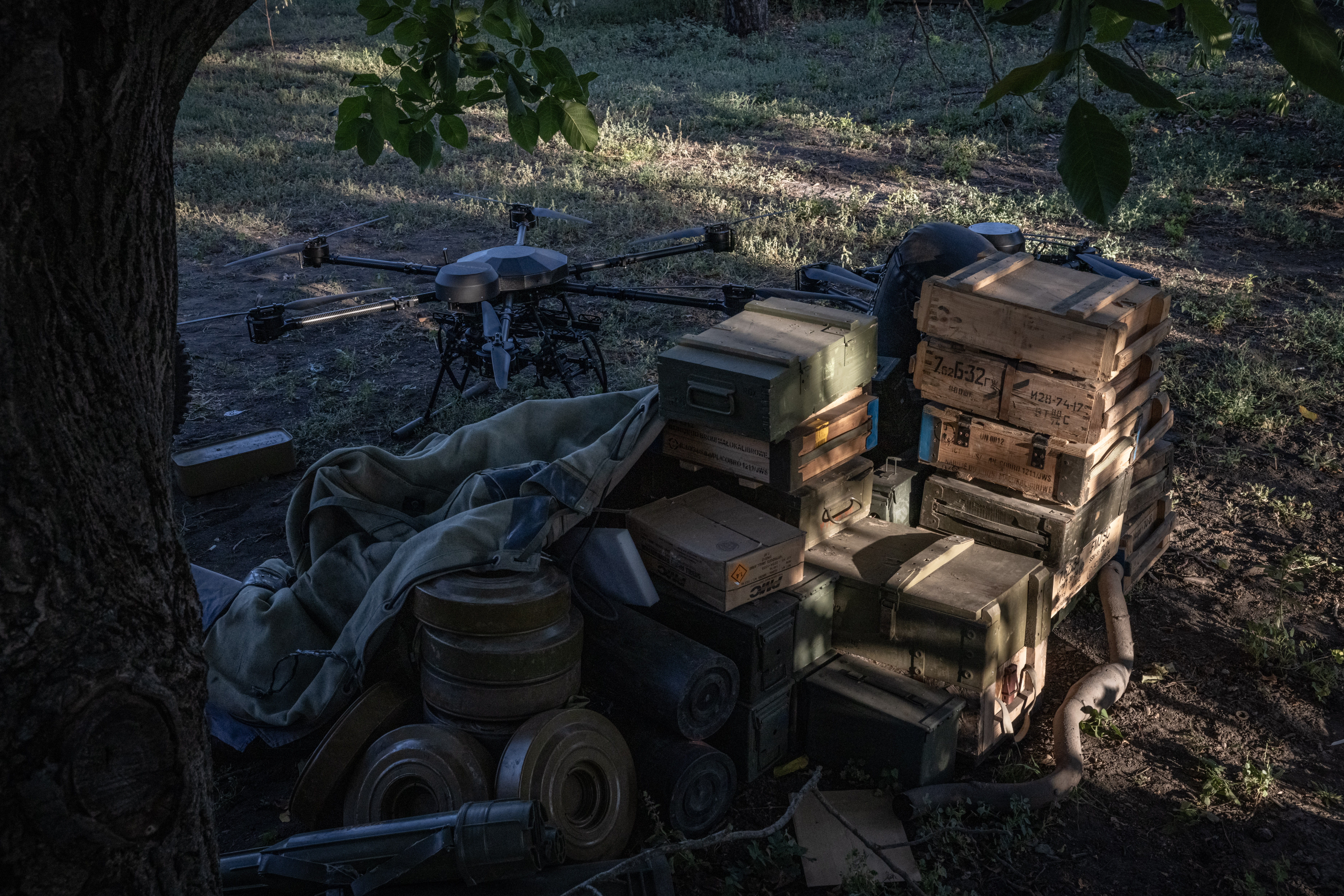
    The legalization of porn is expected to generate roughly $25 million in tax revenue that Yaroslav Zhelezniak, a co-author of the bill in the Ukrainian parliament, said would be enough to purchase 30,000 drones for the war effort.

    “Ask yourself … who benefits,” Zhelezniak said in a speech during the first reading of the bill in July. “Unfortunately, it’s not the Ukrainian state budget. And we can’t use that money to increase funding or raise salaries for our defenders; all that money remains in the shadow economy.”

    He added, “I believe we are already mature enough as a nation to acknowledge that sex exists.”

    Raising money on the backs of adult-content creators, however, is a fraught proposal in Ukraine, where the women’s protest group Femen rose to worldwide fame by demonstrating topless to decry sexual exploitation and patriarchal authoritarianism.

    Critics of the bill fear that it could undermine public morality, as well as increase the risk of human trafficking and child sexual abuse.

    Former Ukrainian prime minister Yulia Tymoshenko has criticized the bill in parliament, raising concerns about child abuse and arguing that the law could turn Ukraine into a “pornographic hub.”

    The All-Ukrainian Council of Churches and Religious Organizations, meanwhile, has called for the bill to be withdrawn and has issued a statement saying it poses significant harm to the morals and health of Ukrainian society.

    A push by the Ukrainian government to lay claim to tax revenue instigated the legalization campaign after creators suddenly found themselves under pressure to pay back taxes, though doing so could be an admission that they broke the law by making porn.

    Svitlana Dvornikova, who has 1 million subscribers on OnlyFans, said she received a letter from tax authorities demanding that she pay up — which she did, by filing about $900,000 in taxes retroactively even as she suspected a trap.

    Sure enough, last year the police raided her home, as well as the home of her elderly parents, looking for phones, laptops, video equipment — anything that could prove that she was involved in the illicit production of pornography.

    Dvornikova is now facing a criminal case.

    “We paid these taxes with one eye open, suspecting it might end badly,” she said in a phone interview. “I wanted to support my country, give more money to the war, to our soldiers — we really thought this would contribute something.”

    Dvornikova estimates that the taxes she filed alone could finance 100 new military pickup trucks or 2,000 drones.

    Following her encounter with the police, Dvornikova launched a petition to legalize pornography, which has since garnered more than 25,000 signatures. Her petition triggered the formulation of the bill, which passed its first reading by a vote of 231-8 with three abstentions, and is now awaiting its second reading.

    Oksana, the head of management at OFM Models, an agency that manages adult-content creators in Ukraine and abroad, told the Washington Post that since the bill’s first reading, the number of women contacting her agency to apply for work had doubled.

    Oksana, who spoke on the condition that she be identified only by first name because of the risk of criminal prosecution, said decriminalization would empower, not exploit, women in the industry.

    “Women were waiting for a signal from the state; this is the moment when the state finally saw these women as taxpayers rather than criminals,” she said. “Adoption would mean one simple thing: The fear would disappear. Women would be able to work openly with lawyers and banks and defend their rights.”

    Meanwhile, however, more women are under legal pressure.

    The number of criminal cases under Article 301, the law that bans pornography, has increased in recent years, according to Ukrainian media reports.

    In the first six months of 2025 alone, 2,368 criminal proceedings related to pornography were opened in Ukraine.

    In May, police chiefs in three regions were exposed in a massive corruption scandal and arrested on suspicion of accepting bribes to provide “protection” to two dozen webcam and adult-content studios. According to investigators, the police chiefs demanded $20,000 per month in bribes from each studio.

    The threat of arrest and coercion hangs over every woman, Oksana said.

    “Anyone who finds out about her work gains leverage over her,” she said. “Their biggest fear isn’t even about money. It’s that their families will find out about their work. … As long as it remains in the code, most women simply stay in the shadows.”

    For years, Dvornikova said, she traveled from her frontline town to luxury villas in Europe so she could work, operating in disguise, under a pseudonym. She said she lived in constant fear of police harassment and blackmail.

    “If we end up legalizing this, it means we can work calmly, make money properly and pay taxes to the state — that’s what it means to us,” she said. “We want to do our duty, like a gentleman, as they say.”

    But if legalization doesn’t happen, Dvornikova says, she will probably have to leave the country for good. Her criminal case has been paused as the bill proceeds.

    Another creator, Anastasia, 29, also received a letter from the tax authorities. Anastasia said she has been working in the industry for three years, has a young son, and wants to stay out of the limelight. So far, by keeping her earnings modest, she said, she has managed to avoid any harassment from the authorities.

    “The tax authorities are primarily interested in those who are making serious money: The more you earn, the more attention you attract,” she said. “What matters most to me is that a model is treated with respect and seen as a person, rather than simply as a tool for making money.”

    “This all genuinely made me angry because it’s simply unfair,” she said. “They don’t want to legalize it, but they want you to pay taxes.”

    Supporters of legalization say that it will protect women, not encourage abuse.

    “Human trafficking is based on coercion: A person is deceived; their documents are taken away,” Oksana said. “The modern creator economy is completely different. An adult woman verifies her identity and age on the platform and determines her own boundaries.”

  • Stuck on the battlefield, Russia wages ‘total war’ on Ukraine’s economy

    Stuck on the battlefield, Russia wages ‘total war’ on Ukraine’s economy

    KYIV, Ukraine — The war of attrition between Russia and Ukraine is expanding to encompass both countries’ economies.

    Military targeting officers are operating as economists in reverse. Increasingly, the objectives of missile and drone strikes are declining output, lost jobs, and logistical bottlenecks.

    Ukrainian officials are calling the current Russian campaign “total war” for its focus on economic impact, rather than on narrower goals like battlefield gains or infrastructure damage. While Moscow has targeted commercial assets throughout the war, its assaults have grown significantly in scale.

    The intensifying Russian bombardment has followed Ukraine’s own effort to damage the Russian economy. Kyiv has used its expanding arsenal of domestically made drones to fire on Russia’s oil industry, its most valuable sector, while also targeting Russian e-commerce companies.

    Russia has shifted its focus to economic warfare as its advances have largely stalled on the battlefield. “In a war of attrition, the economy becomes the prime target,” said Orysia Lutsevych, head of Ukraine Forum at Chatham House, a London-based research group.

    Moscow is seeking, Lutsevych said, to raise the cost to Europe of sustaining Ukraine’s war effort. The growing bill provides fodder for far-right parties in countries like Britain, France, and Germany that oppose giving aid to Ukraine.

    Last month, President Volodymyr Zelensky told European allies that Ukraine needed $27 billion to plug a budget shortfall, after the European Union had already finalized a loan of more than $100 billion earlier this year.

    The economic damage from Russia’s campaign will reach about $10 billion by the end of the year, Ukraine’s economy ministry has estimated. Much of the cost is indirect, in lost sales, disrupted workdays, and logistical snarls.

    The European Bank for Reconstruction and Development on Thursday lowered its previous expectation of 2.2% economic growth this year in Ukraine to 1.5%. Some economists have said that Ukraine might end the year with zero growth.

    Growth is also sluggish in Russia, where the Kremlin is struggling to fund the war’s ever-increasing costs. The Russian federal budget deficit reached $68 billion by the end of August, compared with the $44.5 billion planned for the entire year. On Thursday, Russia’s Finance Ministry said it would need to raise taxes to finance next year’s budget, following a major increase introduced the previous year.

    Long-range Ukrainian attacks have opened cracks in the semblance of normal life that the Russian government has tried hard to preserve in cities far from the border with Ukraine. The strikes against oil refineries have led to fuel shortages and long lines at gas stations. Attacks on the warehouses of Russia’s two largest online retailers disrupted logistics and left many small businesses without inventory.

    In the other direction, Moscow has waged a broad assault on Ukrainian exports and consumer spending. Attacks on warehouses have removed goods from shelves. Strikes on ports, locomotives, border crossings, and ships at sea have crimped exports. In recent days, Russia has expanded its strikes to internet infrastructure, disrupting service for some 100,000 households.

    Russia changed its tactics in late August, increasing the number of daytime hours that major Ukrainian cities are under air alerts. Some retail businesses close during attacks, lowering sales.

    The all-day strikes are bringing the economy close to a “standstill” as people spend so much time in bomb shelters, said Tymofiy Mylovanov, a former economy minister who is now president of the Kyiv School of Economics. The university is planning a new addition that will be built entirely underground, for student safety.

    Dimitar Bogov, chief economist of the European reconstruction bank, said labor shortages and the increased bombardments meant that Ukraine was entering “its most difficult period of the war.” While spending power among the population remains strong, he said, people “are not able to spend.”

    Ukraine’s economy contracted by about 20% in the first year of the all-out invasion, which began in February 2022, but it has grown since then.

    An important area of growth is defense technology, which more than doubled in 2024. More recent figures are not available because Ukraine has classified economic statistics related to defense industries, which are targets of the Russian military.

    Business is also growing in solar and wind power, providing electricity from small, numerous, and widespread sources, making the grid less vulnerable to missile strikes.

    While Ukrainian exports of steel, iron ore, and grain have dropped by about a third during the war, rising foreign aid has compensated for those losses. The inflow and outflow of foreign currency has remained positive, with central bank reserves growing from $29.1 billion before the invasion to $48.7 billion now.

    The latest barrages, however, are shifting the balance. A new Russian targeting system has been effective at hitting locomotives, even when they are rolling, cutting into Ukrainian exports. Ukraine, which had about 1,800 locomotives before the war, has lost about 500. It is now losing one a day on average.

    Russia has timed its attacks for their seasonal effects. It hit grain silos in the summertime to knock out storage before and during the harvest. The European Union is rushing mobile grain silos to Ukraine, but lost sales are expected to cause farmers to default on loans, with likely knock-on effects in the banking sector.

    Maintaining consumer spending, partly driven by high military salaries, is a key challenge. Ukraine is not at risk of hunger, but rather a slumping economy, with a lower tax base to fund the war.

    A Kyiv-based wine distributor illustrates the difficulties. The company, Good Wine, operates a flagship outlet in the capital and stores around Ukraine. It has contracts with about 1,000 wineries around the world. Logistics are an ever-intensifying headache.

    The company’s main warehouse in Kyiv was hit in tank crossfire at the start of the war. In total, 1.6 million bottles shattered in the explosions and fire. The owners gave away scorched but intact bottles, and rebuilt.

    This year, the warehouse was hit again in a Russian long-range strike. Two other company warehouses and a commercial kitchen were also hit. No employees were killed, but about $9 million in inventory, including a collection of rare vintages, was lost.

    Many Ukrainian companies are rethinking logistics. Broadly, the options are just-in-time delivery, distributed storage, or going underground.

    Models for warehouses buried about 20 feet deep that would be impervious to most munitions are under consideration. A Ukrainian company has designed an underground data center.

    At least three Ukrainian companies offer custom bunkers to individuals and businesses. One, Bunkerok, founded in 2023, is now installing about 170 a year. Another emerging bunker maker is called Hobbit House.

    Good Wine is leaning toward distributed storage so that no single strike can upend its business model, said Dmytro Krymsky, a co-founder.

    “Every day the war goes on, everything becomes more expensive,” he said. “It’s really hard to run a business in Ukraine.”

    This article originally appeared in the New York Times.

  • Netanyahu is said to have been warned about Hamas attack before Oct. 7

    Netanyahu is said to have been warned about Hamas attack before Oct. 7

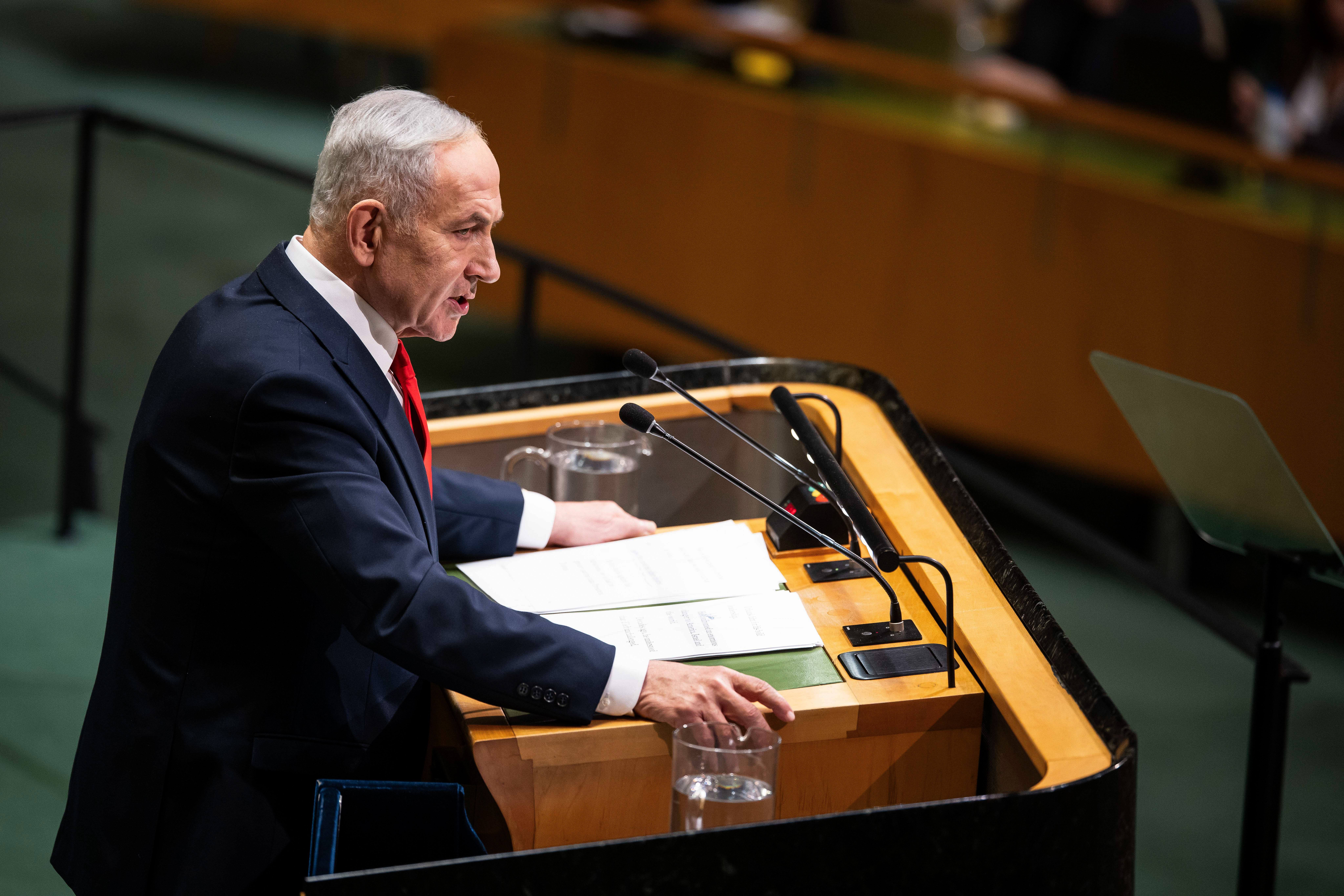
    As Israelis prepare to vote next month, the question of who bears responsibility for failing to prevent the Hamas-led attack of Oct. 7, 2023, has become a dominant issue in one of Israel’s most consequential campaigns in history.

    Prime Minister Benjamin Netanyahu, seeking an unprecedented seventh term, has placed the blame on national security officials, while his critics have said he must personally answer for the failures. When Haaretz, an Israeli newspaper, reported earlier this month that Sheikh Mohammed Bin Zayed, president of the United Arab Emirates, had given Netanyahu a secret warning that Hamas was planning a major attack, the question took on even greater urgency.

    Netanyahu has denied the report.

    But a person who said they had spoken with Sheikh Mohammed and another person who said they had been briefed by someone on the call between the two leaders told the New York Times that the Emirati leader had secretly reported to Netanyahu that Hamas was considering a major attack.

    The warning from the Emirati leader, however, never reached the leaders of Israel’s security establishment, according to five former senior Israeli officials. Netanyahu gathered his security chiefs days later, on Oct. 1, 2023, for a meeting about the situation in the Gaza Strip, and never mentioned the warning, according to minutes of the meeting reviewed by the Times.

    Instead, he told them that the goal should be to maintain calm in Gaza, and he pushed back when some security officials said that Israel should consider military strikes against senior Hamas leaders in Gaza who were overseeing attacks against Israelis in the West Bank, the minutes show.

    At the meeting, details of which have not been previously reported, Netanyahu said that any Israeli action in Gaza might sabotage the prospect of Saudi Arabia establishing diplomatic relations with Israel — a deal the Israeli prime minister believed was imminent.

    Sheikh Mohammed had called Netanyahu in late September to tell him that, based on information he had received, Hamas was planning to launch an attack, according to the two people who said they had spoken with someone on the call. One of those people said the information was not specific about whether Hamas was planning to launch rockets into Israel or preparing for a ground invasion over the border. The original sources of the intelligence that Sheikh Mohammed passed to Netanyahu are unclear, and it is also unclear whether other issues were discussed on their call.

    The warning, though vague, proved to be correct. Days later, thousands of Hamas fighters and their allies launched an invasion over the Gaza border into southern Israel, killing about 1,200 people and taking some 250 more hostage in the deadliest attack on Israel in the country’s history.

    After the Haaretz report, Netanyahu denied in a statement that he had ever received a phone call warning from Sheikh Mohammed and said that if any intelligence came from the Emiratis it was passed to Israel through intelligence channels.

    The Emirati Foreign Ministry and Netanyahu’s office did not respond to requests for comment.

    But Sheikh Mohammed mentioned his September 2023 phone call with Netanyahu months later in a discussion with William Burns, the CIA director at the time, according to a person familiar with that discussion. Sheikh Mohammed told Burns that, during the phone call, he had spoken to Netanyahu about a looming threat of violence in the West Bank or Gaza carried out by Hamas.

    All of the people the New York Times spoke to insisted on anonymity to divulge details of sensitive discussions.

    Netanyahu was not the only Israeli leader to overlook warning signs in the lead-up to the Hamas-led attack Oct. 7, 2023. Israeli security leaders repeatedly downplayed other signs that Hamas was gearing up for an assault, which were abundant at the time.

    The Israeli military even obtained a Hamas battle plan in 2022, but military leaders dismissed it as unrealistic. The plan, which the military gave the code name “Jericho Wall,” turned out to be the blueprint for the Oct. 7 attacks.

    In the years before the attacks, Israeli military and intelligence officials had concluded that Hamas was incapable of carrying out a major attack on Israel, and that Yahya Sinwar, the group’s leader in Gaza, was more interested in governing the enclave than fighting another war with Israel.

    Netanyahu thought that Israel had deterred Hamas from waging war, according to an Israeli state ombudsperson report about government decision-making before the October attack. He instructed Israeli military and intelligence bodies to pursue a policy of “postponing conflicts” and “preserving Hamas as an effective, restrained, and restraining governing authority,” the report said.

    The phone call and the warning from Sheikh Mohammed are not mentioned in any of the internal investigations conducted by the military, intelligence agencies, or other entities into the causes of the severe Israeli security failures leading up to and including Oct. 7, according to the five former senior Israeli officials. The five officials were involved in the assessments, which have not been released in full.

    Late next month, Israelis will vote in their first national election since the Oct. 7 attacks, and the race for parliamentary seats in the highly polarized country is shaping up to be extremely tight. Not only is Netanyahu’s political future at stake, but many Israelis also see the election as fateful for the future of their shaken country.

    The Haaretz report punched a hole in Netanyahu’s argument that Israel’s military and intelligence services were to blame for the intelligence failures leading to the Oct. 7 attacks. He and his allies have blocked efforts by Israeli lawmakers to set up a state commission of inquiry into the security breakdowns that preceded the attacks, saying it would not uncover the truth.

    Earlier this month, Netanyahu’s opponents in the campaign issued a joint statement saying that the Haaretz report about the September 2023 warning “joins a series of revelations concerning Netanyahu’s failures” and “once again underscores why Netanyahu is fighting for his life — to thwart the establishment of a state commission of inquiry and to thwart revealing the truth to the Israeli public.”

    This article originally appeared in the New York Times.

  • France to send soldiers to Saudi Arabia to help secure energy sites

    France to send soldiers to Saudi Arabia to help secure energy sites

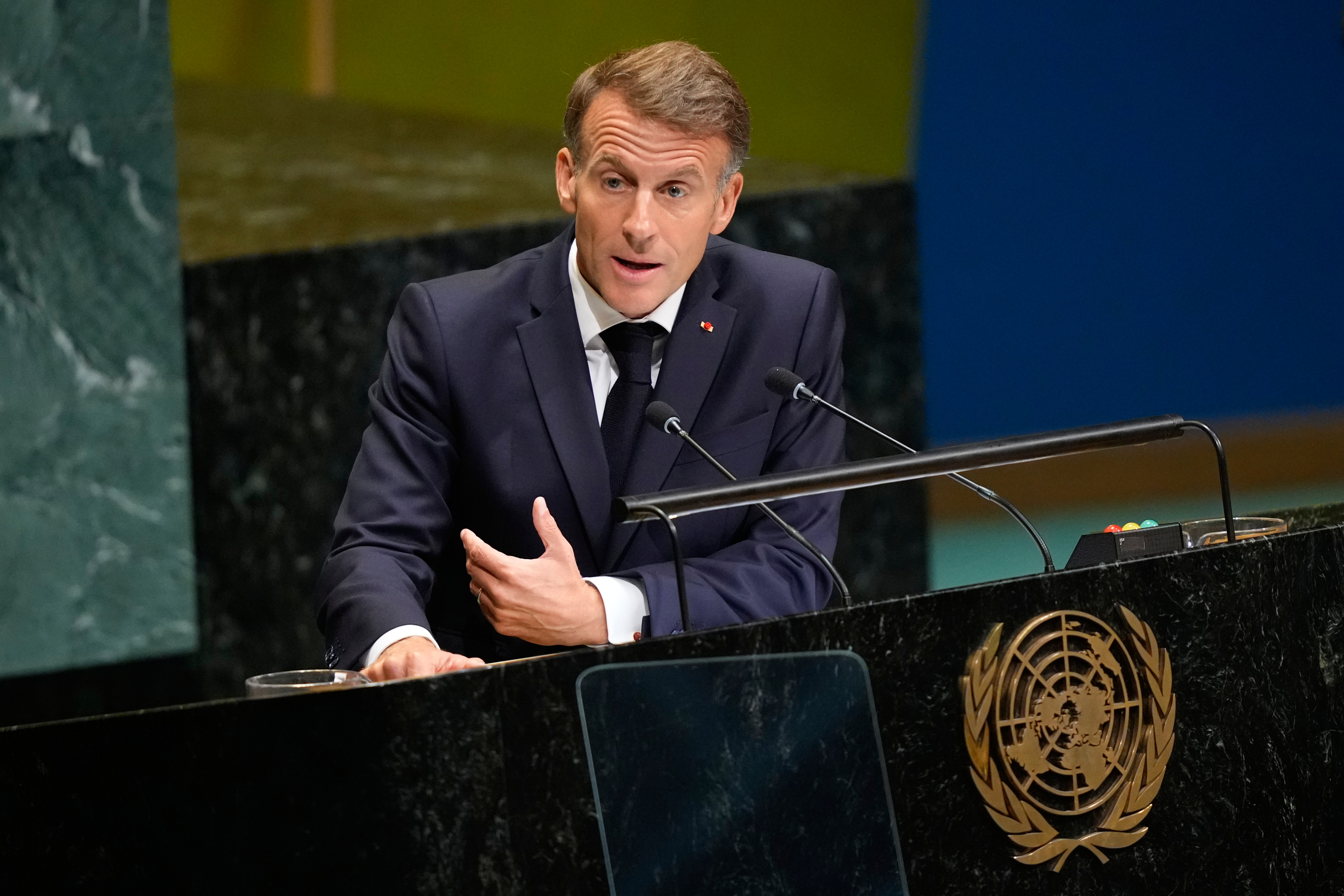
    France will send troops and other military assets to Saudi Arabia to help protect critical energy sites along the Red Sea that have come under fire from the Iran-backed Houthi militia in Yemen, the French president said Thursday.

    France will send “soldiers, radars, and defense systems” to help secure energy infrastructure in the coastal city of Yanbu, according to an agreement the two countries sealed Thursday, President Emmanuel Macron said in an interview on public broadcaster France 2. “Not to engage in any conflicts but to protect this site,” Macron said.

    He did not rule out the possibility that additional military assistance might be provided as the situation evolves.

    Macron framed the move as one part of efforts that France is making to ensure energy security and fight for lower gas prices at home amid the war started by the United States and Israel with Iran more than six months ago. That conflict has left the Strait of Hormuz, a key international waterway for oil and gas, effectively blockaded.

    In recent weeks, the Iran-allied Houthi militia has repeatedly attacked Saudi Arabia, threatening its ability to export oil from Red Sea ports. The French president’s pledge came after what appeared to be one of the largest such attacks since the long-running conflict spiraled back into war.

    The Saudi-led military coalition in Yemen said Thursday that it had shot down six ballistic missiles aimed at Yanbu and Taif, another Saudi city. Saudi authorities issued alerts Thursday warning of potential attacks in cities across the kingdom.

    For more than a decade, Yemen’s civil war has pitted the Houthis, a Shiite Muslim group aligned with Iran, against the internationally recognized government backed by Saudi Arabia. A truce was reached in 2022, but the conflict recently reignited, opening a second front in the Middle East after the United States and Israel attacked Iran. The Houthis have accused the Saudis of launching hundreds of strikes in the renewed fighting.

    The Houthis captured the strategic port of Mokha from the Saudi-backed government earlier this month, giving them control of Yemen’s west coast and the Bab el-Mandeb Strait, which connects the Red Sea to the Gulf of Aden, a route that Saudi Arabia has relied on to move oil while the Strait of Hormuz is choked.

    This article originally appeared in the New York Times.

  • Iran proposes a deal to reopen the Strait of Hormuz in 7 days if the U.S. meets its conditions

    Iran proposes a deal to reopen the Strait of Hormuz in 7 days if the U.S. meets its conditions

    Iran has offered to reopen the Strait of Hormuz and resume talks on its nuclear program in seven days if the United States lifts its naval blockade of Iranian ports, waives sanctions on Iranian oil sales, and observes a ceasefire that would include Lebanon.

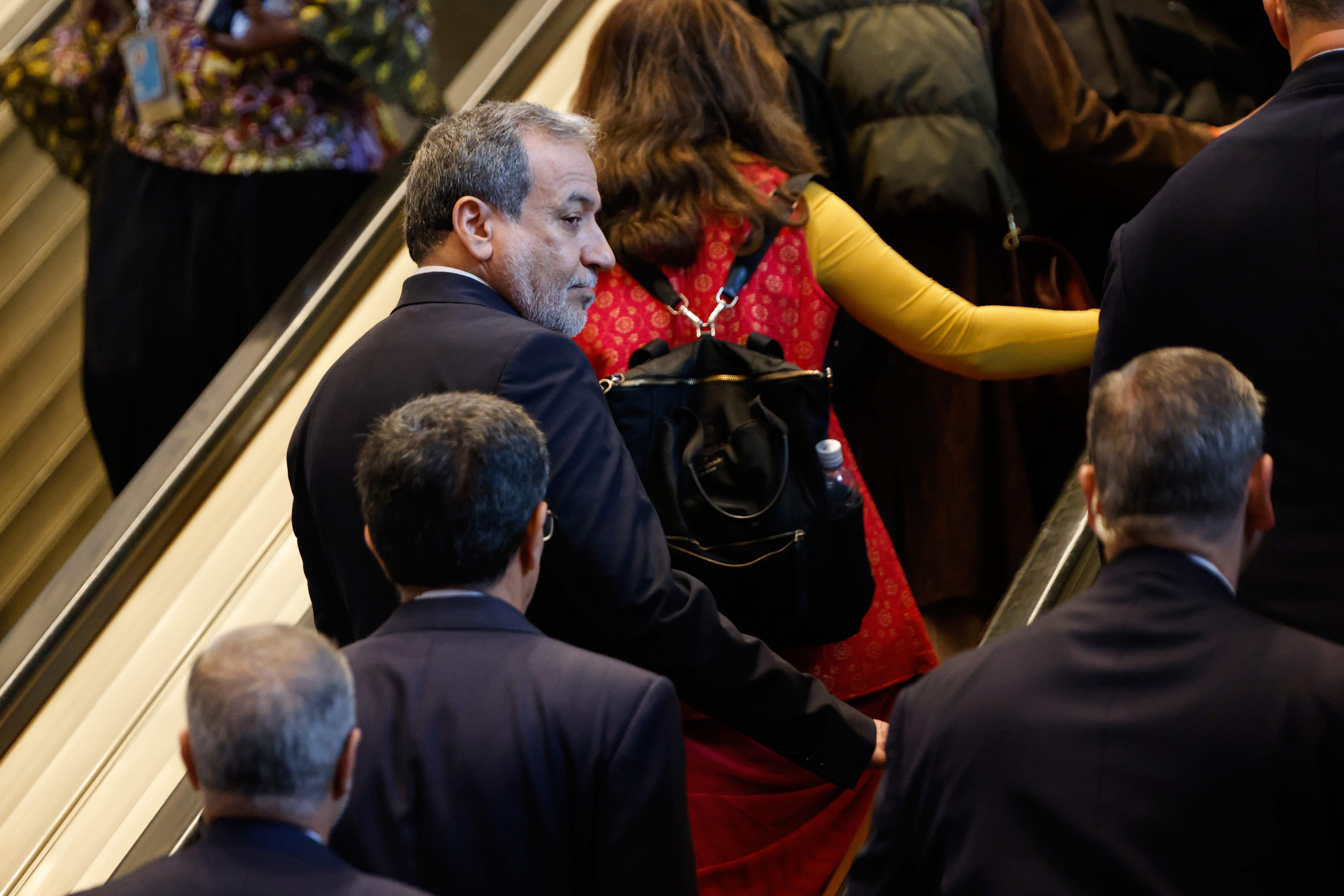
    Iran’s Foreign Minister Abbas Araghchi detailed the proposal in a private gathering on Thursday on the sidelines of the U.N. General Assembly in New York, according to one attendee.

    Trita Parsi, executive vice president of the Quincy Institute think tank, said Araghchi suggested that a speedy agreement would help U.S. President Donald Trump ahead of November’s midterm elections. The arrangement would also relieve enormous economic pressure on Tehran as the U.S. piles on additional sanctions.

    Iran’s disruption of the strait — through which a fifth of the world’s traded oil and gas transited before the war — has emerged as its main point of leverage. The effects have been felt far beyond the Middle East.

    There was no immediate comment from Iran’s U.N. mission or other Iranian officials. A person familiar with the matter, speaking on condition of anonymity to discuss private deliberations, told the Associated Press that Saudi Arabia was skeptical of the latest push for a deal.

    The White House said Friday that U.S. officials are having positive and constructive conversations with mediators on the Iran war. In response to questions from the Associated Press, it said the U.S. is facilitating significant oil exports through the Strait of Hormuz.

    Proposal resembles a June deal that quickly crumbled

    The proposal, conveyed to the U.S. by mediators, strongly resembles the so-called Memorandum of Understanding reached in June, but with an accelerated timetable. The earlier agreement, which called for a 60-day interim period, quickly collapsed as Iran resumed attacks on shipping in the strait.

    Trump has said he is in no rush to reach a deal, even as high oil prices fuel inflation. On the Iranian side, there are questions as to whether the hard-liners who dominate the security forces would accept compromises championed by moderates like President Masoud Pezeshkian.

    “If Trump calculates this arrangement is worthwhile and can bring political benefit before the midterms and reduce gas prices, perhaps we’ll see flexibility not seen in previous weeks,” Parsi said. But he noted “deep suspicion,” especially around the prospect of Iran merely buying time to ship out more of its oil and ease its economic pain.

    Other signs of renewed diplomacy

    In the latest sign of diplomatic movement, Pezeshkian hosted the prime minister of Qatar early Friday. Qatar has been a key mediator, including during hours of indirect Iran-U. S. talks at the U.N. this week.

    It was not clear how long Pezeshkian and Araghchi would stay in the U.S. after Pezeshkian addressed the annual U.N. gathering of world leaders on Wednesday, ending his speech by saying Iran remained open to diplomacy.

    U.S. Secretary of State Marco Rubio, on the same day, said, “If there’s an opportunity to exchange ideas and messages, we will.”

    After multiple failed attempts at a deal, however, suspicion is high on both sides. The U.S. and Israel have attacked Iran twice while it was engaged in nuclear talks, and the U.S. and Iran accuse each other of having swiftly violated the June agreement.

    “The Iranians already know that the chances of this not being accepted by Trump are much higher than the opposite,” Hamidreza Azizi, senior Iran analyst at the International Crisis Group think tank, wrote on X.

    “They want to show that they were ready for diplomacy and that it was the United States that, for the third time, decided to attack in the middle of a diplomatic track — something that people within (Iran’s) strategic community have been anticipating over the past few days.”

    It’s unclear if the proposal would include the Yemen conflict

    The proposal would include Lebanon, where Israel and the Iran-backed Hezbollah have been mostly observing a ceasefire. It’s not clear, however, if it would include the revived conflict between Yemen’s Iran-backed Houthi rebels and Saudi Arabia, which has put even more pressure on global markets.

    Iran appears to think the Houthis’ newly enhanced ability to threaten the Bab el-Mandeb strait on the Red Sea — another trade chokepoint on the other side of the Arabian Peninsula — could push Trump to make a deal.

    Maj. Gen. Yahya Rahim Safavi, a military adviser to Iran’s new supreme leader, told state television that the Americans “face a new problem called the Bab el-Mandeb Strait.”

    He added: “I think the process that is unfolding is in our favor, and the Americans will be forced to accept Iran’s conditions.”

    With the Houthis’ latest surge in attacks, Saudi Arabia was skeptical of Araghchi’s latest push for a deal with the U.S., according to the person familiar with the matter.

    The kingdom, along with other Gulf states, had advocated over the summer for a return to negotiations, saying they could live with an agreement that gave Iran a temporary role in managing the Strait of Hormuz, the person said.

    But the Saudi calculations changed as the Houthis seized Yemen’s strategic Red Sea coast from pro-government forces and a vital Saudi pipeline came under attack.

    Earlier this month, Gulf leaders planned to gather in Oman to discuss an emerging agreement between Oman and Iran on the Strait of Hormuz, which runs between the two countries. But the meeting was canceled after Saudi Arabia called for amendments, only some of which were accepted by Iran, the person said.

    Iran’s leadership has shown signs of divisions

    Iran’s leaders have sought to project unity, but some hard-liners want to continue or escalate the war to secure bigger U.S. concessions and have criticized Pezeshkian and Araghchi’s diplomatic steps this week.

    Firebrand lawmaker Ebrahim Rezaei wrote on X that merely meeting with “the aggressor enemy” showed weakness. Iran’s Assembly of Experts, a panel of Shiite clerics who appoint the supreme leader, said, “There is no path other than resistance.”

    The head of Iran’s powerful Revolutionary Guard, Brig. Gen. Ahmad Vahidi, highlighted the U.N. speech by “the esteemed president” while focusing on Pezeshkian’s comments that Iran doesn’t fear war.

    Iran’s parliament speaker, Mohammad Bagher Qalibaf, who served as chief negotiator in earlier talks with the United States, provided a rare public acknowledgment of the internal divide.

    “There is a view that speaks of war but offers no prospect or mechanism for bringing it to a powerful conclusion,” he wrote on social media. “At the opposite end is a current that makes the error of underestimating national capabilities.”

    He added: “The first error keeps the country in a state of permanent crisis, while the second hands national resources and dignity over to the enemy.”