Tag: no-latest

  • A pillar of environmental enforcement is targeted by Trump and Musk’s AI company

    A pillar of environmental enforcement is targeted by Trump and Musk’s AI company

    WASHINGTON — Right-leaning legal activists along with Elon Musk ‘s artificial intelligence company have brought sweeping challenges against a cornerstone of legal enforcement in the United States: the right of private groups, people, and local governments to sue over violations of many major laws.

    Their argument, supported by the Trump administration, is that the Constitution reserves tremendous power for the president and federal agencies to decide how — or whether at all — to enforce federal law. They contend Congress should never have handed that power to others through so-called citizen suits that are part of environmental, campaign finance, and certain other laws.

    Environmentalists say it would be devastating to lose this essential, decades-old tool that is used to impose fines and halt lawbreaking by bad actors. Citizen suits, for example, have extracted millions from heavily polluting oil and gas operations, and ensured that lead pipes in Flint, Mich., would be removed after its water crisis.

    Legal experts say four pending federal cases — one of them filed last week — are moving forward at a time when the conservative majority on the Supreme Court gives opponents of citizen suits a greater chance than ever of success. The hard part for those opponents now is winning early federal cases and creating disagreement between the country’s appeals courts, which may help convince the Supreme Court the issue is important enough for a nationwide ruling.

    Back in 2000, a Supreme Court opinion opened the door for that possibility.

    “Many of us who worked in this area have been waiting basically 26 years for this shoe to drop,” said Richard Lazarus, a Harvard professor with decades of experience in environmental law.

    A more inviting Supreme Court could take up the issue

    Lazarus was referring to former moderate Justice Anthony Kennedy’s comments in a Clean Water Act case that citizen suits raised “difficult and fundamental” questions about whether they improperly dilute executive power. The late conservative Justice Antonin Scalia wrote in a dissenting opinion in the same case that citizen suits turn “over to private citizens the function of enforcing the law.” He avoided explicitly saying they were constitutional.

    “The court is more like Scalia’s court since he died than it ever was when he was there,” said Lazarus.

    He observed that those who lost cases where Scalia dissented are rushing back to today’s court hoping for a more favorable result.

    The critical issue for citizen suits is who — the government or private citizens — collects fines and has control. A person filing a citizen suit must tell the government ahead of time. The government can stop the suit if it sufficiently pursues the case itself, but its options are limited and the person suing can stay involved. Citizen suits can force compliance with the law and result in fines, which go to the U.S. Treasury.

    Prominent law firms, companies push against citizen suits

    Efforts to increase presidential power and limit who can sue have grown in recent years. They gained vital federal support this summer.

    That’s when the Pacific Legal Foundation, a right-leaning organization with recent Supreme Court success, chose a routine citizen suit in Tennessee federal court for a broader constitutional challenge.

    They signed on as attorneys for Springfield, a town of roughly 19,000 north of Nashville, that was in the early stages of fighting allegations brought by Tennessee Riverkeeper that it had let too much sewage flow from its treatment plant into a nearby creek, violating the Clean Water Act.

    It was the thirty-first citizen suit Tennessee Riverkeeper had filed under the Clean Water Act since 2010. Pacific Legal argued this was part of the problem — a private group of unelected activists had repeatedly forced others to expend resources defending themselves.

    It’s better when “the government is the one wielding the power because the government remains accountable to the people,” said Sean Radomski, a Pacific Legal Foundation attorney on the case.

    Radomski isn’t targeting every lawsuit a person can bring under federal law — he takes exception to those where fines go to the Treasury and where he says people are improperly taking on the government’s powers. Civil rights lawsuits, for example, where damages are paid directly to those wronged, wouldn’t be touched. Nor would many procedural challenges.

    Musk’s AI company also getting into the fight

    Elon Musk-led xAI argued many similar points in its ongoing bid to rid itself of the NAACP’s lawsuit accusing it of operating dozens of gas turbines near Memphis to power a data center without first getting permits. The civil rights group told a Mississippi federal court that the turbines are a pollution threat to those who lived nearby, many of whom are Black. One of their demands was to halt the gas turbines until the company complied with the law.

    The Trump administration intervened in support of Musk’s company, arguing that turning off the power to artificial intelligence that supports the Department of Defense would harm national security. Because the Trump administration wants the suit dismissed, the NAACP shouldn’t be allowed to proceed with it — prudent enforcement requires balancing interests, including national security, the DOJ said.

    Laura Thoms, director of enforcement at Earthjustice, which is representing the NAACP, said the government traditionally gets involved in cases to enforce the law, not to argue that it doesn’t matter if the law is broken.

    “This administration has determined that the company should be allowed to continue to pollute and that therefore, they should have the unilateral and unreviewable authority to veto our citizen suit,” she said.

    Changing the law would have profound consequences

    Citizen suits were written into foundational environmental laws because Congress understood that the federal government had limited resources to go after polluters and that the politics of some cases could be dicey — the government sometimes is the polluter. That’s why outside groups are necessary to fulfill the law’s purpose, according to Lazarus.

    Some argue that dynamic is especially important now. The Trump administration has slashed air and water protections and promoted fossil fuels. They’ve also constrained enforcement that could slow energy projects to only the most extreme cases, such as an “imminent and substantial threat to human health,” according to a federal guidance memo. Environmentalists say citizen suits are vital for filling the enforcement gap this administration created.

    Leaner budgets in many states make the problem worse.

    Thoms said the potential for corruption could increase, too — the president could unilaterally waive laws to benefit friends.

    She said that those who live in states with strong protections may be fine if citizen suits end, but other areas will be “sacrifice zones” where citizens have few options to fight pollution in their backyard. And the unprotected are more often poor and majority-minority communities.

    Many experts are skeptical of the challengers’ claims of a powerful president that gets to unilaterally shape enforcement even outside of criminal law. They argue the country’s history is rife with examples of that task falling to private individuals, too — a contention the challengers reject.

    David Adelman, a law professor at the University of Texas at Austin School of Law, said before the current conservative majority on the Supreme Court, he would have thought there was a close to zero percent chance the challenges would succeed.

    “But this court has been so protective of the executive branch’s complete control of implementation of federal law,” he said, “that it’s not implausible that something like this could prevail.”

  • Senators head for the exits without meeting Trump’s demands for voting bill

    Senators head for the exits without meeting Trump’s demands for voting bill

    WASHINGTON — Senators headed for the exits in the predawn hours Saturday, ending for now a crushing standoff over President Donald Trump’s demands that they stay in session to pass a strict proof-of-citizenship voting bill before the summer recess.

    While they wrapped up many key priorities in the overnight votes, advancing Trump’s SAVE America Act was not among them.

    Instead, Republican senators who had brought the chamber to a standstill spoke to Trump late in the evening about an alternative plan: They would try again to approve elements of the voting bill as part of a broader GOP budget package to fund the Iran war and replenish the Pentagon when they return to work in September.

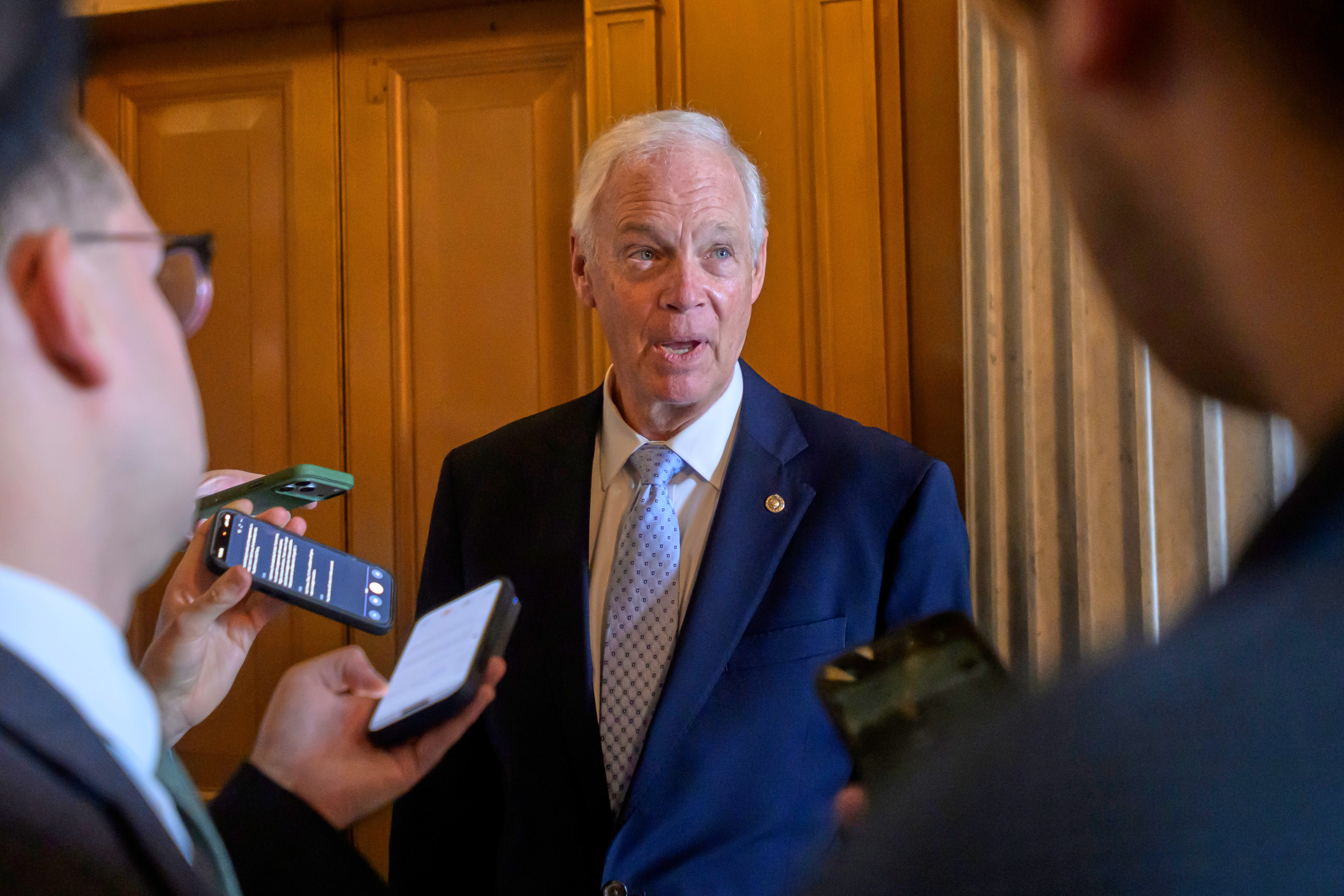
    “Obviously, with the president at his direction, this is what he wants to do,” said Sen. Ron Johnson of Wisconsin, the GOP budget committee chairperson, flanked by Sens. Mike Lee (R., Utah) and Rick Scott (R., Fla.) after their phone call with the president.

    The sudden wind-down after weeks of Trump ramping up his demands shows just how deeply the president is able to reach into the halls of Congress to set the agenda or disrupt it, the executive directing the affairs of the legislative branch. While Trump is often seen as a de facto speaker of the House, he is trying his hand at mastering the Senate.

    Trump had poked and prodded Senate Majority Leader John Thune for weeks to pass the SAVE America Act, a bill that does not have enough support from the Republicans who hold majority power, let alone the Democrats whose votes would be needed to advance it in the Senate.

    The president has gone so far as to insist the Senate abandon its filibuster rules to jam the SAVE America Act past the 60-vote threshold that is typically needed to advance legislation in the chamber — something Thune and most senators have no interest in doing.

    “John’s trying. He’s trying hard. I really believe that. But if he doesn’t get there, it would be unfortunate,” Trump said in an interview with Punchbowl News that posted Friday.

    Trump’s pressure couldn’t overcome Thune’s reality

    Thune himself has worked to carefully balance the often unusual demands of the president with the political reality of his slim GOP majority. Republicans are down one vote with the prolonged absence of Sen. Mitch McConnell of Kentucky, the former leader, who said this week he was released from a rehabilitation center and is recovering at home.

    “I think everybody’s, for the most part, on the same page,” Thune (R., S.D.) said about the trio’s call with Trump, adding that eventually the Senate would have to tackle another budget bill.

    During a daylong session that dragged for nearly 20 hours, Thune successfully powered through a lengthy list of other Trump priorities. Senators confirmed the president’s pick of Todd Blanche as the attorney general, passed a sweeping Russian sanctions package to aid Ukraine, and approved a bipartisan package to fund the government into December in an early step toward avoiding a government shutdown.

    The Republicans also tried to push forward a slimmer voting bill that would require people to show IDs before casting ballots for federal elections. It failed to advance, largely on a party-line vote with Democrats opposed.

    But the failure to make progress on the SAVE America Act had erupted as an online crusade for Trump’s allies in Congress, amplified by activists urging them on.

    Led by Lee, a growing group of senators was refusing to adjourn for the summer break without passing Trump’s priority voting bill.

    At dinnertime, Thune gathered all the Republican senators for a meeting as the standoff deepened at the Capitol. There was no immediate way forward for the SAVE America Act or the broader budget bill. Thune encouraged the trio of senators to talk to the president, which they did, before regrouping back at Thune’s office.

    “We had about a two-hour conference meeting trying to figure out, you know, what we need to do to, to come to an agreement, to accomplish what the president wanted,” Johnson said. “Then we had discussion with the president, he agrees.”

    Lee acknowledged he was disappointed by the outcome, but said he understood the political reality of the situation.

    “We are not in a position right now where we have the wherewithal to pass it,” Lee told reporters at the Capitol, after the three senators emerged from Thune’s office following their call with Trump.

    Near daybreak, when the Senate did call for the vote to adjourn, Lee and others objected with hearty nos.

    On the simple voice vote, the ayes had it, and the motion to adjourn was adopted.

  • Senate passes bill to avert government shutdown before midterm elections

    Senate passes bill to avert government shutdown before midterm elections

    The Senate overwhelmingly approved a measure early Saturday to fund the government through Dec. 11 and temporarily block the White House from giving political appointees more control over federal grants.

    The 90-6 vote came after Republican leaders worked for hours through the night to reach an agreement that would allow them to vote on multiple priorities before leaving town for the five-week August recess.

    Just 6 senators — Bill Cassidy (R., La.), Tim Kaine (D., Va.), Ed Markey (D., Mass.), Rand Paul (R., Ky.), Bernie Sanders (I., Vt.) and Elizabeth Warren (D., Mass.) — opposed the funding measure, which would avoid a politically perilous shutdown ahead of the Nov. 3 midterm elections. But it still must be approved by the Republican-controlled House, where the appetite for rebuking the White House on grant funding was unclear.

    The bill, like a similar House measure passed last month, would fund the government past a Sept. 30 deadline. The Senate bill also would finance a number of requests from the White House, including funds for housing and nutrition programs. And it would extend expiring authorization for veterans’ healthcare programs.

    But the big difference between the House and Senate bills is the Senate’s decision to include a provision regarding federal grants. That provision would temporarily block the White House budget office from adopting a rule change to give political appointees more power over discretionary grant funding, diminishing the power of independent peer reviewers.

    Proposed in May, the rule change would require political appointees to review grants before they are awarded to ensure they advance the president’s priorities and do not support projects the administration opposes, including those that “fund, promote, encourage, subsidize, or facilitate” diversity, equity, and inclusion principles or “deny the biological reality of … the sex binary.” It also would give agencies the power to end grants at any time.

    Trump administration officials say the rule would add needed oversight to federal grant-making, ensuring federal funds aren’t wasted or misused. But Senate Appropriations Committee Chairperson Susan Collins (R., Maine) said it has the “potential to politicize grants and harm small, rural communities, families, and biomedical research.”

    Collins and Sen. Patty Murray (Wash.), the lead Democratic appropriator, worked together to craft the bipartisan Senate measure. House lawmakers could take it up after they return from recess at the end of August.

    If the provisions added by the Senate draw backlash, however, lawmakers could quickly find themselves in a rush to negotiate a compromise before the government runs out of funding on Sept. 30.

    Senate Republicans also initially hoped to hold a vote on a separate $150 billion budget framework to help fund the Iran war and impose new restrictions on voting ahead of the midterm elections, but Republicans scrapped that plan late Friday night.

    Republicans grappled during a two-hour closed-door meeting Friday night with whether to take up the budget framework, with which several Republicans had expressed concerns.

    A small group of Republicans spoke with Trump after the meeting and agreed to push off the vote until September, according to Sen. Ron Johnson (R., Wis.), the chairperson of the Senate Budget Committee.

    “We’re in total agreement,” Johnson told reporters. “There was no argument about it.”

    The Senate also agreed early Saturday morning to vote in September on legislation to regulate college sports led by Sens. Ted Cruz (R., Texas) and Maria Cantwell (D., Wash.). The back-and-forth over whether to vote on the bill before leaving for recess was one of several interlocking issues that kept the Senate in session late into the night.

    Senate Democrats blocked a bill during the early Saturday vote series that would require voters to show photo identification. Senate Republicans held a procedural vote on the measure in lieu of voting on the Save America Act, a more expansive bill that would impose stricter election rules which President Donald Trump had demanded the Senate pass before leaving Washington. Senate Majority Leader John Thune (R., S.D.) has said repeatedly that the Save America Act does not have enough support to pass.

    The decision to postpone the vote on the budget resolution came hours after Republicans unveiled the $150 billion spending framework, which was significantly larger than a $95 billion plan approved last month by the House. Johnson said Senate leaders intend to spend only about $105 billion.

    The smaller number tracks closely with the House package. Both would allot $60 billion to the Pentagon, which faces an urgent budget shortfall caused largely by the war with Iran, and $13 billion for intelligence needs related to the war. They also would provide $12 billion for farmers struggling to keep pace with inflation.

    Senate Republicans will seek to use up to $20 billion for election-related measures, Johnson told the Washington Post. That’s twice the amount provided in the House package. Republicans hope to use that money to pass some parts of the Save America Act, although it’s unclear how much of it would be allowed under reconciliation, the special process Republicans would use to pass the bill without Democratic votes.

    The delay in considering the measure will give Republicans time to revise their plan and win over skeptical senators.

    Sen. Thom Tillis (R., N.C.) has said he will not support a package that included elements of the Save America Act. Sens. Susan Collins (R., Maine) and Lisa Murkowski (R., Alaska) also signaled opposition to the budget resolution, while Sen. Bill Cassidy (R., La.) complained about the lack of budget cuts to cover the cost of the new spending and avoid adding to the nation’s $39.9 trillion debt.

    Sen. Roger Wicker (R., Miss.), the chairpersons of the Senate Armed Services Committee, and other Republicans, meanwhile, have called for increasing the amount of funding for the Pentagon.

    The budget framework is the first step in the reconciliation process, which would allow Republicans to evade a Democratic filibuster and move the bill with a simple majority instead of 60 votes. But both chambers must approve identical budget frameworks to set funding levels before beginning work on the actual legislation — and time is running out before the midterms.

    The Senate is set to recess until Sept. 14 and is scheduled to be in session for only three weeks before recessing again. Congress already faces a towering agenda during those weeks.

  • Pentagon strips security clearance from former Air Force secretary

    Pentagon strips security clearance from former Air Force secretary

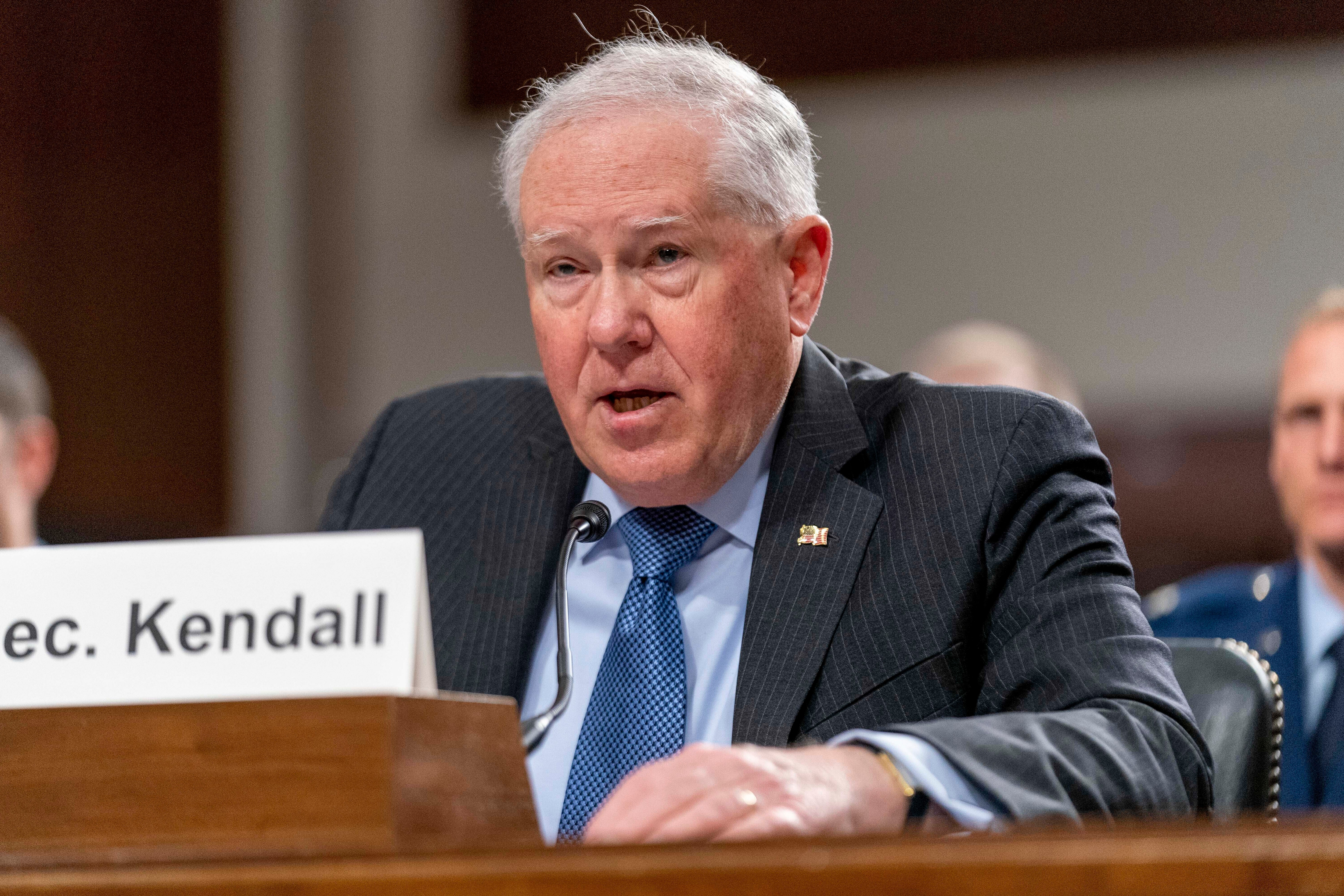
    The Trump administration has revoked the security clearance of Frank Kendall, who served as Air Force secretary under President Joe Biden, accusing him of disclosing classified information about Air Force One to the media.

    Kendall has recently been quoted in the New York Times and the Wall Street Journal, in stories scrutinizing the security features of the Boeing 747 gifted by Qatar, the plane President Donald Trump is using as his official presidential aircraft.

    Kendall told the Times that he was “surprised to see this plane used outside the U.S.,” given how speedily it was modified after the Qatari royal family gave it to the United States. To the Journal, Kendall expressed skepticism that the plane had been “maxed out” with security features, as Trump has said it would be.

    In an X post Friday night, Pentagon spokesperson Sean Parnell said Kendall was being stripped of access to classified information and his ability to hold any sensitive position following “unauthorized disclosure of classified information regarding Air Force One’s capabilities.”

    “Safeguarding classified information is a non-negotiable duty. Those who violate that trust forfeit the privilege of access and any role requiring it,” Parnell wrote.

    Kendall could not immediately be reached for comment Saturday. The former Air Force chief, who also served in the Defense Department during the Obama administration, told the Journal he was “mystified” by the revocation of his security clearance.

    “I’ve been extremely careful to not say anything that could be classified, and as far as I know I have not said anything classified,” Kendall said, adding that so far he had not been told what classified information he had supposedly revealed.

    The luxury airplane gifted by Qatar has raised ethical, legal, and security concerns since Trump announced the unusual arrangement last year. Fresh questions about the new Air Force One’s security arose last month after Trump switched jets at the last minute for part of his travel back from the NATO summit in Turkey.

    Trump denied that security concerns were behind the switch of planes for the first leg of his trip — but also suggested that Iran could have tried to attack his plane, saying he was “number one on their list” of people to assassinate.

    The White House said last month that Trump would tentatively return to flying on an older Air Force One while the Qatari-gifted jet received unspecified “additional upgrades and enhancements” that would take about a month to complete.

  • For some families, the answer to the housing crisis is in the backyard

    For some families, the answer to the housing crisis is in the backyard

    A boom in state policies legalizing backyard housing construction is allowing some families to build multigenerational compounds for grandparents, parents, and grandchildren to all live together on the same property.

    Twenty-four states have passed laws meant to enable construction of “accessory dwelling units,” or ADUs: separate housing units attached to or located nearby existing homes. The ADUs might be converted basements, over-the-garage apartments or, frequently, small homes built in backyards. In the past two years alone, 11 states have passed laws allowing ADUs at any single-family home, according to New York University’s Furman Center, plus many more state and local laws are meant to reduce barriers to ADU construction.

    Pennsylvania lawmakers are currently considering legislation that would allow homeowners to create ADUs in places that are zoned for single-family houses without having to get special permission. The bill passed the state House in June and is now before a state Senate committee.

    While many ADUs are used as rental housing, it’s nearly as common to use ADUs for multigenerational living — often elderly parents moving into their own small home on their adult children’s property, or adult children living in their parents’ yard or above a parents’ garage instead of moving away.

    California has led the charge on legalizing ADUs, passing a string of laws over the past decade. Several surveys in the state consistently show that about 3 in 10 ADU owners have a family member living in the unit, while about 4 in 10 rent them to strangers.

    As soon as Massachusetts moved to prevent cities from restricting ADUs in 2024, Joel and Oreon Mode — who live on the outskirts of Boston — pitched the idea of building one to their son Carter and his wife, Zoe. What if the Modes built a 900-square-foot house in their backyard and moved into the new home, then sold the big house where Carter had grown up to Carter and Zoe at a steep discount?

    The Modes would have a single-story place as they got older, instead of their current home where they have to go upstairs to their bedroom. Their 33-year-old son, who had just had a baby, would get to move out of his nearby apartment into a single-family home at a price he could afford. And the Modes would have more time with their granddaughter.

    “Our home … would have gone on the market for about $1 million, which is stupid. It’s just idiotic,” Joel, 67, a special-education teacher, said in an interview. “Selfishly, we’ve got this lovely little granddaughter who we’re gaga over, and we’re very close with Carter and Zoe, and we didn’t like the idea that they would be two hours away,” where they would need to go far from Boston to find a home they could afford.

    Carter and Zoe eagerly agreed. The family all share a property now in Sudbury, Mass. Oreon, 67, recently retired from her job as a project manager and has time to care for her granddaughter, which means Carter and Zoe don’t pay for daycare either. “I’ve had my friends go: ‘Aren’t you going to get on each other’s nerves?’” Oreon said. “Yeah, probably, but that’s family. That’s what family does.”

    Christopher Lee, the lead designer at the company that built the Modes’ new backyard home, said his firm’s homes cost between $200,000 and $600,000 to build, with most running about $300,000 for a two-bedroom house.

    “When we started, it was almost all aging parents moving into people’s backyards,” he said. Lately, he’s started seeing more instances where the younger generation is living in the ADU, often people who were priced out of buying a house when prices surged during the pandemic.

    “We’re starting to see people using ADUs as starter homes,” Lee said. “We’ve done a handful now where it’s adult children moving into their parents’ backyard and they’re building a house for them and maybe a spouse and firstborn child. … There’s been some level of acceptance that high prices are here to stay. People are moving on.”

    Dohyung Kim, an urban planning professor at Cal Poly Pomona, pointed out that ADUs have been marketed as multigenerational housing long before the recent boom in policies aimed at using these small homes to ease the nationwide housing crunch. After all, the additions have long been called “granny flats” or “mother-in-law suites,” implying relatives moving in. (The homebuilder Lennar, which declined to comment for this piece, calls theirs “next gen,” in a nod toward adult children living at their parents’ homes.)

    Zoning rules that only permit one house on a lot made it illegal to build ADUs in much of America for decades, Kim said, and still exist. Often, he said, the towns that passed those rules object to the idea of the ADUs being used as rental housing as opposed to for family members.

    “Many people build ADUs and use it as a granny flat. But at the same time, many people built ADUs and rented it out,” Kim said. “The tenants used to be more likely to be low-income people of color. Historically, many cities did not want to see that happen.”

    Lindsey Fitzgerald, a sales representative for Coca-Cola, moved into an ADU on her mother’s property in Billerica, Mass., with her boyfriend and child. “When I got pregnant, my mom told us that she would be our childcare while we worked. This made all the sense to build this ADU,” she said. “It’s the cheapest way to build or buy a house right now. The market is so crazy that this is what made sense for our family.”

    Fitzgerald said that she can look right through her window into her mom’s house; her toddler son delights in going between the two homes. “As my mom gets older, then I’m also here for her to help her,” she added.

    Fitzgerald’s mother, Linda Dahl, was already used to having something of a family compound: Dahl’s sister lives in the other half of her split-level home, and her adult son lives with her in the main house.

    Dahl said, with a laugh, that her son wants her to put another ADU in her yard so that he can live there instead. “I probably could.”

    Contractor David Giacomin, who works in Maryland, said that nine times out of 10, when he builds ADUs the owner is planning for family to live in them — usually elderly parents, or sometimes adult children. Giacomin used to own a Maryland yoga studio, but he started casting about at age 50 for a new business idea when it shut down during the pandemic.

    His business has boomed thanks to a state law requiring all localities to permit ADUs by this fall, including in Rockville and Gaithersburg, cities that formerly banned most ADUs. But other requirements, like mandates to install fire-suppression sprinklers, make it much more costly to build them than he thinks it has to be — and most homeowners struggle to get a mortgage to build one.

    “If you put a pencil to it, you’d have to charge so much to get your money back in a reasonable time, that it just doesn’t make sense to have it as a rental,” Giacomin said. He thinks that’s why he’s mostly building for families.

    One of his clients, Anne Lao, plans to move into one on her daughter’s property in Silver Spring, Md., next month. Lao and her husband moved from California to live just 10 minutes away from their daughter, but since the death of Lao’s husband, Lao’s daughter encouraged her to be even closer. Lao, 70, wasn’t thrilled at the idea of living in an addition, but she agreed to live in a unit at the end of the driveway, where a detached garage used to be.

    “When I’m getting older, and if I need help, it’s just very convenient to be right next to them,” Lao said. “It just gives you a little bit more privacy and independence. They have their privacy also.”

    She looks forward to seeing her 9- and 10-year-old grandchildren nonstop. “I’m sure I’m going to have visitors every day.”

    The rise in ADUs has opened some people up to the idea who might not have considered intergenerational living before, said Wayne State University urban planning professor Kami Pothukuchi.

    “For immigrant groups that have a tradition of living in intergenerational households, where older parents will live with their adult married daughters or sons and their families, that has been common and is still common and really has nothing to do with ADUs,” Pothukuchi said. “But where ADUs are legal — that is certainly something that you’re seeing a lot more, within American families that don’t have this as their immediate tradition of living intergenerationally.”

    It’s hard to quantify just how common these family compounds are, she said, because so many ADUs, such as basements and garages, are converted into separate living spaces without permits. “If it’s unpermitted, it’s not counted.”

    Because some ADUs are counted as part of the main house and some are counted as their own household in the U.S. Census, it’s hard to parse out a trend in multigenerational households in federal data.

    David Garcia, who works on housing policy at Berkeley’s Terner Center for Housing Innovation, said he hopes future research will provide greater clarity.

    “Part of the challenge with ADUs is we want them to do a lot of things,“ he said. ”We want them to stabilize families. We want them to create more housing stock. But it’s hard for us to know exactly how much of those goals ADUs are fulfilling without better data.”

    Inquirer staff writer Michaelle Bond contributed to this article.

  • Horoscopes: Saturday, Aug. 8, 2026

    ARIES (March 21-April 19). Not having all the answers is great because it gives others a turn. Today you’ll need more collaboration than independence. Relying on others is a process. You can go slow and test things along the way.

    TAURUS (April 20-May 20). People follow you. They’ll follow you in the dark. They’ll follow you into foreign territory. They’ll follow you because they want the adventure and the safety at the same time. You’re fun that way. You’ve earned a reputation for both.

    GEMINI (May 21-June 21). A gift will find its way to you through an indirect route. Why ask questions? Receive it. You don’t have to think “everything happens for a reason” to accept that things are indeed happening and we either make the most of that or not.

    CANCER (June 22-July 22). Every change has both positive and negative effects, depending on who’s calling the score. Since you don’t yet know how this might turn out, why not trust that the current timing is for the best?

    LEO (July 23-Aug. 22). It’s just a bunch of loveliness today: people who make you laugh, a route without obstacle and an instinct for investing the best of your energy in what pays you back with enjoyment and experience.

    VIRGO (Aug. 23-Sept. 22). Yes, you’re bending to make a situation work, which is only wise. The same tactic is used by the willow, the snow leopard and the river itself. It’s the wild intelligence of evolution to bend instead of break.

    LIBRA (Sept. 23-Oct. 23). The right company doesn’t ask you to become someone else. It expands your sense of who you are. Someone is bringing out a version of you that could easily become your favorite. And you have the time to find out.

    SCORPIO (Oct. 24-Nov. 21). You have yet to try all the ways of calming mental chatter. Walking, gardening, knitting, washing dishes, playing music, prayer, drawing, fishing — these and countless other activities can fall under the category of “meditation”.

    SAGITTARIUS (Nov. 22-Dec. 21). Three people can ask you the same question in different ways, but they’re all asking the same thing: “What do you want to do?” Once you answer, people stop guessing and life starts happening at a faster pace.

    CAPRICORN (Dec. 22-Jan. 19). Goal posts on opposite sides of the field? But of course. When your goal opposes theirs, it’s a clear skirmish. But what if the goal posts are just a little to the side? Then the game gets more complex and, frankly, today, a little weird.

    AQUARIUS (Jan. 20-Feb. 18). You’ll take things apart to see how they work. A conversation gets replayed. An old assumption comes off first. Then another. Before long, you’re holding the little piece that was making the whole thing rattle.

    PISCES (Feb. 19-March 20). It’s easy to believe we’re kind until someone inconveniences us. It’s easy to believe we’re brave until something feels risky. Today brings one of those ordinary moments that settles the question.

    TODAY’S BIRTHDAY (AUG. 8). It’s your Year of Invitations, where you have all of them you need and want. Some are social, some professional and many beckon you to fun and lucrative opportunities, emotional realms and personal success. More highlights: You’ll create atmospheres where everyone can do their best work. You’ll stand where the greats have stood and take on admired characteristics. You’ll adjust habits in a way that makes you stronger and richer. Pisces and Taurus adore you. Your lucky numbers are: 45, 31, 18, 8 and 12.

  • Dear Abby | Illness, mom’s passing and time have increased isolation

    DEAR ABBY: I have a chronic illness and have been on a long-term leave of absence from my job for two years now. I have always surrounded myself with good people and have been blessed with great friends and family. When I was diagnosed, everyone was supportive. There were many platitudes, not the least of which was the ole standby, “Let me know if you need anything.” I have never asked anyone for anything, soldiering on and refusing to be a burden.

    My mom recently passed, and I’m struggling. Now, for the first time, I need actual face time. I’m extremely lonely, and all I would like is an occasional lunch or a quick diet soda with a friend. But, Abby, no one calls or responds to any of my messages. I didn’t know there was a time limit on “let me know if you need anything.” I know others out there understand what I’m going through, and I wonder if you have any words of encouragement.

    — NOT ALWAYS SUNNY IN UTAH

    DEAR NOT ALWAYS SUNNY: Please accept my sympathy for the loss of your mother. It’s shameful that your old friends and co-workers have conveniently forgotten that they offered to help you after your diagnosis. However, because they apparently have, you will have to do something about your feelings of isolation and loneliness on your own. My first thought is to reach out to a support group (in person or online) for the illness you have. The second would be to contact your religious adviser if you have one. Another (depending on your mobility) would be to volunteer some of your free time to a cause you believe in or become a foster for shelter animals.

    Finally, rather than waiting for your phone to ring, consider going out and having an occasional lunch or soft drink so you are exposed to other people rather than sitting alone at home and becoming increasingly depressed.

    ** ** **

    DEAR ABBY: My son and daughter-in-law think it’s OK to have cameras on me and my husband when we watch their children. It has been going on for six years, and I’m uncomfortable babysitting them while being recorded.

    I know my son and his wife watch the footage, because comments have been made about what we have discussed while babysitting. I’m tired of sucking it up and allowing this. This would mean that I probably wouldn’t get to see my grandchildren anymore. What should I do?

    — HATE BEING FILMED IN THE MIDWEST

    DEAR HATE BEING FILMED: Are the cameras running all the time, or just when you are babysitting? If they are on all the time, then you are not being singled out. Because you find the idea of your son and daughter-in-law listening in on what you thought were private conversations, perhaps you should start doing the babysitting at your home instead of theirs. However, if that isn’t viable, you may either have to bite the bullet and accept the status quo or remove babysitting from the equation.

  • A Russian retail giant’s warehouse burns after Ukraine’s latest long-range drone attack

    A Russian retail giant’s warehouse burns after Ukraine’s latest long-range drone attack

    Ukrainian long-range drones hit a warehouse of Russia’s biggest online retailer in the Ural Mountains, more than 1,200 miles from the two countries’ border, local officials and the company said Friday.

    Ukraine has regularly hit targets in the distant Urals this year and has even struck a Russian oil refinery in western Siberia, nearly 1,550 miles from the border. The attacks are examples of how Kyiv has used drone innovation as a key part of its response to the invasion by its much bigger enemy more than four years ago.

    Its successes have drawn international interest and drone cooperation agreements with nine countries, with further deals being negotiated with 15 other countries, according to Kyiv officials.

    Wildberries said its warehouse in Yekaterinburg, Russia’s fourth-largest city, was set ablaze by the attack. Most merchandise wasn’t damaged, the company said, unlike at some of the more than a dozen other Wildberries depots struck by Ukraine in recent weeks that have burned down.

    The regional governor, Denis Pasler, said three drones hit the warehouse’s roof. Artyom Zhoga, the Kremlin’s representative in the region, said that 800 people were evacuated from the warehouse and nobody was hurt.

    Kyiv is trying to rattle the Russian public and the Kremlin with the attacks.

    Russian President Vladimir Putin chaired a meeting Friday of the country’s Security Council. He said in televised opening remarks that the meeting would focus on additional measures to “strengthen … protection of infrastructure facilities” but gave no further details.

    Ukraine presses on with plans for new weapons

    Ukrainian President Volodymyr Zelensky is pushing for his country to keep up the pace of technological development, especially in air defense systems to help stop Russian ballistic missiles that are exploiting Ukraine’s shortage of American-made Patriot interceptor missiles and battering civilian areas.

    A joint European anti-ballistic development program is already underway, Zelensky said late Thursday, with 10 countries engaged in developing an anti-ballistic shield. Europe is concerned about Moscow’s ambitions on the continent beyond Ukraine.

    “Ukraine is capable of producing its (anti-ballistic) missile and launcher, while our partners will provide the necessary components and critical elements — radars, sensors, and everything else required,” Zelensky said on social media. “An anti-ballistic program of our own — one that is truly large-scale — will greatly benefit everyone in Europe.”

    At the same time, Ukraine is working on manufacturing its own ballistic missiles to use against Russia. “The tests have shown strong potential. We need to turn this into a real weapon,” Zelensky said.

    Defenders are under pressure in eastern Ukraine

    Ukrainian front-line defenses in eastern regions, meanwhile, remain under strain as Russia’s bigger army looks for a breakthrough after months of minimal advances that Western analysts and officials say have had a high cost for Moscow in troop casualties.

    Ukraine has been evacuating children from Kramatorsk, one of the four eastern Donetsk region cities that make up the Ukrainian so-called Fortress Belt. The line of four large and heavily defended cities, about 30 miles long, has been key to denying Moscow its goal of seizing Ukraine’s industrial heartland.

    The head of the Donetsk region’s regional military administration, Vadym Filashkin, said Friday that more than 800 people, including 91 children, were evacuated over the previous 24 hours.

    Ukraine has been deploying midrange strike drones to disrupt Russia’s supply lines and slow its advance.

    Zelensky said that the recently appointed commander-in-chief of the Ukrainian armed forces, Maj. Gen. Mykhailo Drapatyi, reported to him Friday about the military situation in Donetsk.

    He said in a social media post that they reached “an understanding of how to strengthen” Ukraine’s defenses there but gave no details.

    Russia and Ukraine sustain nightly drone attacks

    Russia’s air defenses downed 203 Ukrainian drones from late Thursday through early Friday, the Defense Ministry in Moscow said.

    Over the past week, the Russian military struck 31 bulk cargo vessels and three tugboats that operated “in the interests of the Ukrainian armed forces,” it said.

    It added that late Thursday two ships were hit by Geran-4 drones in the Black Sea east and southeast of Odesa and one was struck in the Ukrainian port of Chornomorsk.

    In other attacks, the ministry said that the military hit a facility assembling long-range drones in Okhtyrka in the Sumy region on Thursday. It also released a video of a train purportedly carrying military equipment struck by a Geran drone and then an Iskander ballistic missile near Vyshneve in the Dnipropetrovsk region.

    Meanwhile, Russia attacked Ukraine with 147 long-range strike drones overnight, according to the Ukrainian air force.

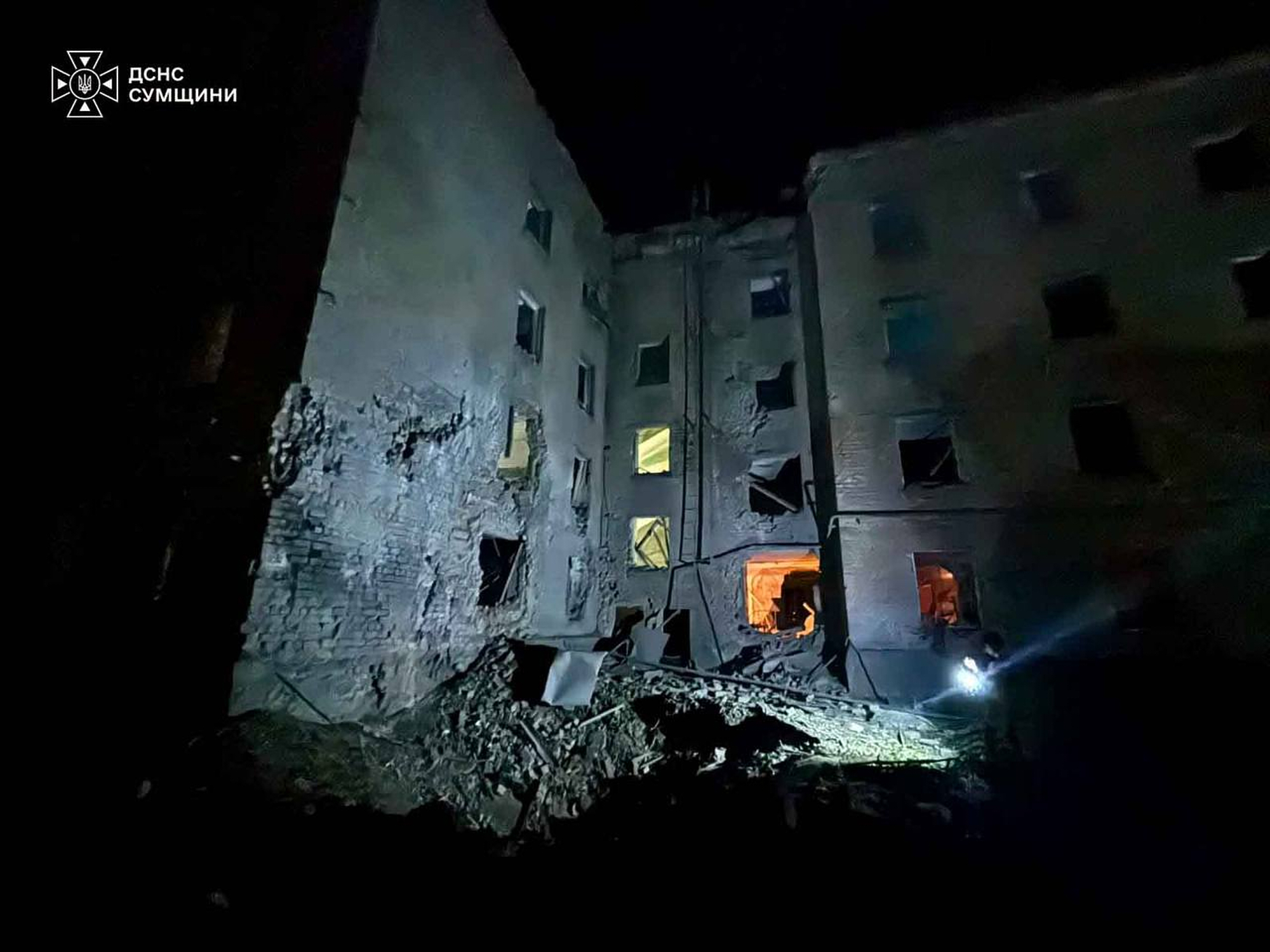
    In Ukraine’s northern Sumy region, a Russian drone struck a busy market Friday morning, wounding 10 people, authorities said.

    Russia also launched glide bombs and drones of various types at the regional capital, according to the head of regional administration, Oleh Hryhorov.

    The attack targeted residential buildings, transport, and infrastructure, wounding two people, he said.

  • 2 soldiers killed in Lebanon in the first Israeli deaths since June truce with Hezbollah

    2 soldiers killed in Lebanon in the first Israeli deaths since June truce with Hezbollah

    BEIRUT — Two Israeli soldiers were killed in an explosion in southern Lebanon, Israel’s military said Thursday, the first Israeli deaths since a shaky truce between Israel and the Lebanese militant group Hezbollah began nearly two months ago.

    Four other soldiers were seriously wounded, the military said. An Israeli military official, who spoke on condition of anonymity in accordance with the army’s policy, said that “an explosion was detonated” when the soldiers entered a site in the village of Majdal Zoun and that the nature of the explosive was under review.

    Israeli media reported the two deaths a day earlier.

    The Israeli army launched strikes Wednesday in southern Lebanon in response to what it described as Hezbollah’s violation of the ceasefire and called on residents of the village of Mansouri to flee — the first such warning Israel has issued in Lebanon for weeks.

    Lebanon’s Health Ministry said one person was killed and 12 wounded in an Israeli strike in the town of Tebnine Wednesday and another eight wounded in overnight strikes on the village of Burj al-Shemali. Artillery shelling also targeted the areas of Mansouri and Majdal Zoun, the state-run National News Agency said.

    There was no statement from the Iran-backed Hezbollah.

    The latest Israel-Hezbollah war erupted on March 2, when Hezbollah fired rockets across the border two days after the U.S. and Israel launched their attacks on Iran. More than 4,000 people have been killed by Israeli strikes in Lebanon since then, including hundreds of civilians. About 40 soldiers and three civilians — including a military contractor — have been killed on the Israeli side.

    A precarious truce between Israel and Hezbollah has largely held since June 20, but Israeli forces have continued to occupy swaths of southern Lebanon and to carry out periodic airstrikes and shelling.

    The U.N. peacekeeping force in southern Lebanon known as UNIFIL said it had recorded 113 projectiles launched by the Israeli military on Wednesday, the highest number recorded since June 21.

    The latest escalation came as Lebanese and Israeli negotiators met in Rome to discuss implementation of a June 26 deal reached between Israel and the Lebanese government under which Israeli forces are supposed to withdraw from areas they occupy in southern Lebanon and allow the Lebanese army to take control, in exchange for Hezbollah’s disarmament.

    Hezbollah has refused to disarm and opposed the direct Lebanon-Israel talks. It was not a party to the deal. The group has accused the Lebanese government of making too many concessions without guaranteeing an Israeli withdrawal.

    Wednesday’s talks ended early due to the escalation on the ground, but resumed on Thursday.

    The talks in Rome have focused on implementation of “pilot zones” where Israeli forces would withdraw and the Lebanese army would take control. Implementation began last month with an initial pilot zone in an area that wasn’t occupied by Israeli forces but had previously sustained Israeli fire.

    The Lebanese army entered the town of Zawtar al-Gharbieh and some civilians returned, although many came only to find their homes destroyed and left again.

    A diplomat familiar with the negotiations who spoke on condition of anonymity because they were not authorized to comment publicly said earlier this week that Lebanon had asked for the next pilot zone to be either in the town of Khiam or Bint Jbeil. Both areas saw heavy fighting in the latest Israel-Hezbollah war and are currently occupied by Israeli forces.

    But U.S. Ambassador to Lebanon Michel Issa suggested ahead of the three-day talks that no new pilot zones would be immediately implemented, saying that “moving too quickly risks jeopardizing the very civilians this process is meant to protect.”

  • Student kills at least 7 people at a high school and a home outside Bangkok, officials say

    Student kills at least 7 people at a high school and a home outside Bangkok, officials say

    NONTHABURI, Thailand — A student opened fire at a high school outside Bangkok on Friday, killing at least five people and wounding more than 20, according to authorities, who said he also appeared to have killed his two grandparents at the family home earlier in the morning.

    The 14-year-old shooter took his own life at the school, officials said.

    Five school staff members, including teachers and administrators, died in the shooting around 10 a.m. at Debsirin Nonthaburi School in Nonthaburi province northwest of Bangkok, Deputy Interior Minister Polapee Suwunchwee said at the scene.

    The boy also killed his grandparents at the home he shared with them prior to the school shooting, Polapee said.

    Bangyai Hospital, about 3 miles from the school, said 23 people were wounded, of whom 10 were in critical condition, with most suffering gunshot wounds. Earlier reports gave conflicting casualty numbers.

    A witness said students hid inside a classroom while they heard gunshots from another building before police officers knocked on the door and cleared a way for them to leave the building.

    Amporn Niamfuang, who owns a restaurant 160 feet from the school, said there was the sound of a single gunshot and then a pause.

    “And then there were multiple continuous shots,” Amporn said, recalling the narrow road outside the restaurant filling with fleeing students. “Students were running scared and pouring onto the street. Young girls were holding each other’s hands and crying. I went inside to hide.”

    Prime Minister Anutin Charnvirakul, speaking after touring the school, confirmed reports that the shooter was 14 and had killed himself. He said the student had shown signs of stress connected to school.

    The gun, described by police as small and compact, was legally registered to the student’s grandfather, he said.

    About an hour after the shooting, people stood outside comforting one another as police and first responders walked around the co-educational state school, which has an enrollment of about 3,000 students ranging from 12 to 18 years old.

    All classes will be suspended from Monday through Friday, and school staff have been instructed to work from home during that time, the school said.

    Police find grandparents dead at family home

    After the shooting, police went to the student’s home and found both grandparents dead of apparent gunshot wounds, regional police Commander Wattana Yeejeen said.

    The student appeared to have shot them before attending school as normal. He waited until classes started and began shooting inside his classroom before walking out and firing more shots, police spokesperson Trairong Piwpan said.

    The boy fired more than 20 shots and police found he still had 30 rounds after shooting himself, he said.

    Several family members, including his uncle and sisters of the grandfather who were at the family home while police investigated, said he usually kept to himself and was a good student.

    The family members said they were unaware of any troubles he faced at home or school.

    Thailand has high rate of gun owners

    Thailand has one of the highest rates of gun ownership in Asia, second only to Pakistan and far surpassing its other Southeast Asian neighbors.

    Data collected in 2017 by the groups Small Arms Survey and GunPolicy.org in their last extensive international study found civilian gun ownership in Thailand was about 15.1 guns per 100 people, compared with less than one per 100 in neighboring Malaysia.

    Thailand had 3.49 deaths by firearms per 100,000 people, according to 2023 statistics published by World Population Review. That puts it well behind parts of Latin America and the Caribbean, but relatively high in Asia. Only the Philippines is higher in Southeast Asia.

    In February, a 17-year-old stole a gun from police and opened fire at a public high school in southern Thailand, briefly taking people hostage in a two-hour attack that killed one person and injured two others.

    A 14-year-old boy was accused of a 2023 shooting at a major Bangkok shopping mall.