Tag: no-latest

  • White House drafting order on vaccines, autism despite pollsters’ warnings

    White House drafting order on vaccines, autism despite pollsters’ warnings

    White House officials are drafting an executive order focused on the childhood vaccine schedule and autism, according to four people familiar with the matter. The order would continue to spotlight a divisive issue that Republican pollsters have warned carries political risk ahead of November’s midterm elections and would follow the confirmation of a new CDC director who has promised to uphold the scientific integrity of the agency.

    The aim is to focus on the vaccine schedule, research around autism, and parental choice, according to three people familiar with the matter, who like others spoke on the condition of anonymity to share internal deliberations. Further details and timing of the order remain unclear, and it is subject to change.

    The effort underscores President Donald Trump’s determination to elevate vaccine policy within the administration even as a federal judge has halted Health Secretary Robert F. Kennedy Jr.’s sweeping overhaul on this front, including changes to the childhood immunization schedule.

    The development also comes after a federal advisory committee on autism last month released a draft update to a federal strategic plan that sets priorities for autism research and serves as a blueprint for federal research funding.

    In a statement Thursday, White House spokesperson Kush Desai said, “President Trump has been clear: America must have the best childhood vaccine schedule in the world.”

    He added: “The Administration remains steadfastly committed to delivering on this presidential priority with Gold Standard Science for the countless parents whose questions and concerns about vaccinations have been ignored or mocked.”

    Trump has questioned whether the number of childhood vaccines can cause autism, despite decades of research finding no link. At a Cabinet meeting last week, Trump asked Kennedy for an update on autism research.

    “We will have an answer for you,” Kennedy replied.

    Kennedy, the founder of a prominent anti-vaccine group, has long disparaged vaccines and argued they have not been properly studied, including during an appearance on CNN last weekend. The comments have alarmed medical experts who say commonly administered shots are safe and effective.

    In recent months, Kennedy has publicly leaned into his health department’s quest to improve food and drug pricing instead of vaccines. But behind the scenes, Kennedy’s allies are continuing work to reshape the federal apparatus guiding vaccines, including crafting studies to research a wide range of vaccine-related questions, including whether routine immunizations are linked to autism, autoimmune disorders, and other medical conditions.

    After a federal judge halted the Department of Health and Human Services’ reduction of immunizations in the childhood schedule, the Trump administration released an executive order in late May directing the health department to realign the schedule with those of other developed countries that recommend fewer shots. It was not immediately clear how the new executive order would differ from the earlier directive.

    ‘It’s a personal issue for him’

    Trump last year announced moves that he said would combat the rise of autism in the United States. The president in September warned pregnant mothers against taking Tylenol and touted the potential of leucovorin as an autism treatment.

    “I told them … we have to find out” the causes of the condition, Trump said, flanked by Kennedy and other administration officials at the White House.

    The warnings from Trump and U.S. health officials on acetaminophen, the active ingredient in Tylenol and hundreds of other medications, represented a major shift in public health guidance. Research has yet to bear out the president’s claims on Tylenol and leucovorin.

    Trump has privately questioned why his administration has yet to release new recommendations on vaccines and urged his deputies to move faster, according to two people who spoke on the condition of anonymity to describe internal discussions. The Wall Street Journal first reported that Trump was pushing to prioritize the study of vaccines and autism.

    “It’s a personal issue for him,” said one of the people, an administration official with knowledge of Trump’s comments. Trump has repeatedly invoked his own theories on the rise in autism, shaped by conversations with friends and advocates. Trump has previously said that he and his wife, first lady Melania Trump, deliberately spaced out childhood vaccines for their 20-year-old son, Barron.

    Trump has repeatedly pressed Kennedy on his agency’s autism efforts in public cabinet meetings, including five minutes of back-and-forth during an October meeting.

    “I’m addressing it the best I can as a nondoctor, but I’m a man of common sense,” Trump said then.

    ‘Never betray the science’

    On Wednesday, the Senate confirmed Erica Schwartz to helm the Centers for Disease Control and Prevention, which makes recommendations on vaccines.

    The CDC has been without a permanent leader for most of Trump’s second term. Susan Monarez, who served in the role for less than a month, told senators she was fired last year after Kennedy pressured her to support changes to the childhood vaccine schedule.

    During her confirmation hearing, Schwartz was repeatedly pressed by senators on whether she would defend the CDC’s scientific integrity if political directives conflicted with the evidence. She pledged that she would “never betray the science” but stopped short of saying she would publicly oppose Kennedy if he directed the agency to take actions she believed were unsupported by scientific evidence.

    Schwartz said she had not reviewed a CDC webpage that suggests a connection between childhood vaccines and autism, and declined to say whether it should be removed. She said, however, that the existing medical evidence does not support a link.

    In July, the Interagency Autism Coordinating Committee released a 336-page draft strategic plan. Some advocates say the draft from the federal autism advisory committee shifts the field toward investigating autism as a result of medical injury, despite decades of research showing that autism is primarily rooted in genetics and early brain development. Although the plan does not explicitly identify vaccines as a cause of autism, critics say references to a potential “exposure or biological event” that might lead to autism echoes the framework long advanced by Kennedy and others who have promoted the debunked claim that vaccines cause autism.

    The autism advisory committee was reconstituted earlier this year by Kennedy, who appointed members who have echoed his controversial views and advocated for unproven treatments.

    The draft strategic plan “doesn’t mention or describe the cause of medical injury, but we can read between the lines,” said Alison Singer, president of the Autism Science Foundation. “The President and the HHS Secretary have been very vocal in the past about their belief that vaccines cause autism, as have several public members of the new federal IACC in their past statements, despite overwhelming scientific evidence to the contrary.”

    Singer said the concern is less about what the draft says than the research agenda it establishes.

    Current research suggests that autism is largely written into our biology. Scientists have identified hundreds of genetic variants that collectively shape the developing brain. The evidence now points more clearly in one direction: Autism begins before birth and is not caused by vaccines or any single environmental factor. Vaccines are the one environmental factor that have been studied most extensively, she said, and large studies across multiple countries have found no evidence that they cause autism.

    But an executive order linking childhood vaccines to autism could be viewed as providing “backup ammunition and another legal document,” one administration official said on background, to revisit vaccine-related research in a final version of the strategic plan.

    Kennedy was slated to visit the Atlanta-based CDC on Friday, where he was to participate in a ceremony marking the first anniversary of a gunman spraying hundreds of bullets at the agency’s headquarters. Investigators said the gunman appeared motivated by distrust of coronavirus vaccines.


  • Beloved author Benjamin Alire Sáenz, first Latino PEN/Faulkner winner, dies at 71

    Beloved author Benjamin Alire Sáenz, first Latino PEN/Faulkner winner, dies at 71

    NEW YORK — Benjamin Alire Sáenz, an award-winning fiction writer and poet who drew upon his sexuality and his life on the Southern border, has died at age 71. He was the first Latino to win the PEN/Faulkner prize.

    Mr. Sáenz, who produced a story collection that won the PEN/Faulkner prize and a young adult novel that received acclaim from readers and reviewers and condemnation from censors, died last week in El Paso, Texas, after a lengthy illness, according to a spokesperson for Simon & Schuster Children’s Publishing. Additional details were not immediately available.

    Mr. Sáenz, born in Old Picacho, N.M., was an ordained Catholic priest who eventually left the order and came out as gay. His Aristotle and Dante Discover the Secrets of the Universe, the story of two Mexican American boys falling in love, was published in 2012 and received a pair of citations for outstanding LGBTQ+ literature: a Stonewall Honors Book Award and the Lambda Literary Award.

    Hamilton playwright Lin-Manuel Miranda, who narrated the audio edition and helped produce a 2023 film adaptation, wrote in an Instagram post that he was “heartbroken” over Mr. Sáenz’s death.

    “Rest easy, maestro,” Miranda wrote. The movie starred Max Pelayo and Reese Gonzales as the title characters and also featured Eva Longoria.

    The novel’s love story led to its being removed temporarily from a school district in Granbury, Texas, and to bans in Russia and in Belarus.

    Mr. Saenz’s other books included the sequel Aristotle and Dante Dive into the Waters of the World, the poetry collection The Book of What Remains, and such adult novels as In Perfect Light and Names on a Map.

    He received the PEN/Faulkner award in 2013 for Everything Begins & Ends at the Kentucky Club, a story collection set in El Paso, and across the border in Juarez, Mexico. Starting in the 1990s, he taught for decades at the University of Texas at El Paso, where he had received a master’s degree in creative writing. He served as chair of the school’s creative writing department before retiring in 2016.

    Next month, Simon & Schuster will publish When the World Was Happy, which draws in part upon the loss of his niece in 1990 in a Las Cruces, N.M., bowling alley shooting. He was reminded of that tragedy by the 2022 school shooting in Uvalde, Texas.

    “That was when I decided that this was not gonna leave me alone until I wrote about it,” he wrote in an author’s note shared by the publisher. “I wanted to write a book about how people survive and live through something as senseless as this.”

  • Sydney Towle, content creator who documented life with cancer, dies at 26

    Sydney Towle, content creator who documented life with cancer, dies at 26

    Sydney Towle, a social media content creator who projected enduring optimism as she chronicled her life with a rare form of cancer, has died, according to her family. She was 26.

    Ms. Towle was diagnosed with cholangiocarcinoma, an aggressive form of cancer in the bile ducts, in August 2023. Her mother, Elizabeth Morrow, and brother, Austin Towle, posted a video to her TikTok account confirming she died Wednesday.

    “Syd went peacefully last night after an almost three-year long battle with cholangiocarcinoma,” her brother said. “She fought really hard, and we’re so proud of her, and we thank all of you for your support over the years.” Ms. Towle’s mother said they appreciated the messages of support and that “she will not be forgotten.”

    Her family described her as “an endless ray of sunshine” and a friend to many. Sydney Elizabeth Towle was born in Newburyport, Mass., on Nov. 15, 1999, and grew up in Hobe Sound, Fla., according to the New York Times. The newspaper reported that she died at the National Institutes of Health in Bethesda, Md.

    At the time of her diagnosis, Ms. Towle already had a presence on social media where she shared videos from her everyday life. She often posted from the beach and loved the outdoors. She was an avid surfer and runner.

    Once she received the diagnosis at age 23, she began posting her unvarnished reality of the disease and treatment while holding fast to her hobbies, style, and positive attitude. She had over 1 million followers on TikTok alone.

    In a video posted days after she was diagnosed, Ms. Towle said, “I’m in good spirits, I’m smiling. If anything, it just makes me appreciate life more.” That essentially became the ethos that guided her online presence, where she shared videos of herself running, going out with friends, and traveling alongside videos from a hospital bed or at chemotherapy appointments.

    In a column this year advocating for increased funding for research of the rare disease, Ms. Towle’s mother wrote that she had seen her daughter become “a beacon of hope for so many” through her candid online presence. “Thousands of people send her messages, stop her on the street, and leave comments on her videos, describing how her vulnerability has helped them through their own struggles,” Morrow wrote in February.

    Ms. Towle graduated from Dartmouth College in 2022, where she studied government and environmental studies. She worked as a social media manager at Epic Games.

    She had posted on her LinkedIn account about plans to run the 2026 New York City Marathon in November to raise money for the Cholangiocarcinoma Foundation. She had raised more than $10,000 for the nonprofit that advocates for research and provides patients and caregivers with resources.

    “I know it might seem crazy to try to run a marathon with everything going on,” she wrote on the platform months ago. But she noted the importance of hope in her experience with the disease. “Hope keeps us alive, it keeps us going, it makes the impossible seem possible.”

    Ms. Towle is survived by her mother and brother. Her father, Philip Towle, died in 2016.

  • Saudi Arabia, Turkey, and Pakistan have signed a key defense agreement

    Saudi Arabia, Turkey, and Pakistan have signed a key defense agreement

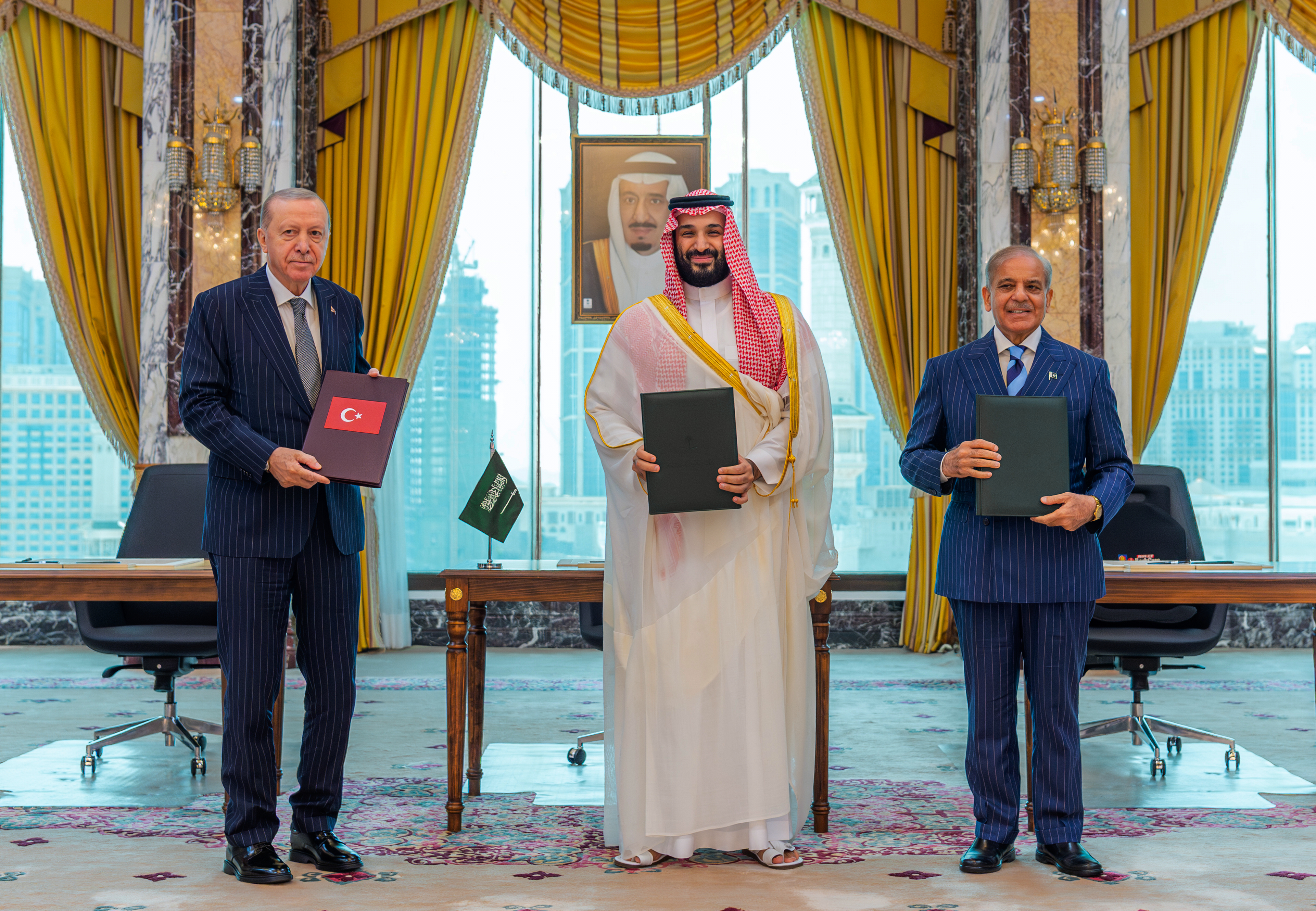
    ANKARA, Turkey — Saudi Arabia, Turkey, and Pakistan signed a defense agreement on Friday that would treat an attack on one as an attack on all three, officials said, solidifying cooperation among the three regional powers at a time of growing security concerns.

    The agreement was signed in the Saudi holy city of Mecca by Saudi Crown Prince Mohammed bin Salman, Turkish President Recep Tayyip Erdogan, and Pakistan’s Prime Minister Shehbaz Sharif, according to statements from all three countries.

    The so-called Mecca Joint Defense Agreement between the three Sunni Muslim-majority states brings together oil-rich Saudi Arabia and nuclear power Pakistan as well as Turkey, which has NATO’s second-largest army and a rapidly growing defense industry. It would increase cooperation and deterrence at a time of increased regional uncertainty and threats from the war in Iran.

    Commitment to joint deterrence

    “The agreement is intended to strengthen collective deterrence against any act of aggression, and stipulates that any armed attack against any one of the three states shall be regarded as an attack against them all,” the statements read.

    “It further provides for the enhancement of all aspects of defense cooperation among the three States,” the statements said.

    Saudi Arabia, whose critical infrastructure and oil facilities have come under attack as part of the war in Iran, has been looking to diversify its defense partnerships.

    In September, Pakistan and Saudi Arabia signed a mutual defense pact that also defines any attack on either nation as an attack on both.

    The agreement also comes amid rising tensions between Turkey and Israel over Gaza and other regional conflicts, including the war in Iran and Lebanon.

    The deal highlights how far relations between Saudi Arabia and Turkey have shifted toward alignment and partnership, after being highly strained just a few years ago, including over the killing of Saudi journalist Jamal Khashoggi in Istanbul by Saudi operatives.

    Iran criticizes the deal

    In Iran, Ebrahim Rezaei, a member of the Iranian Parliament’s National Security and Foreign Policy Commission, criticized the deal on X, saying it would not bring security to Saudi Arabia.

    “The Saudis should know that a paper agreement with Turkey and Pakistan will not bring them security, just as years of one-sided ‘milking’ by the Americans did not bring them security. Change your policies so that you do not have to #BegForSecurity from others,” he wrote.

    Saudi Arabia says deal is not a military axis or religious bloc

    A statement from Saudi Arabia insisted that the agreement does not amount to a military pact and would not affect the kingdom’s existing partnerships.

    “The agreement does not represent any orientation toward building a military axis or sectarian/religious bloc, and it is not linked to nuclear endeavors or an arms race, but rather to building sustainable self-reliant capabilities,” the statement read. “The agreement does not come at the expense of the Kingdom’s strategic and strong relations at the Gulf, Arab, and international levels.”

    Erdogan said the agreement was based on “collective deterrence” and would deepen cooperation in defense, support joint defense industry projects, and bolster efforts to combat terrorism.

    “The agreement, which also reaffirms the right of defense as defined in Article 51 of the UN Charter, targets no country and is open to the participation of all brotherly countries that aim for the peace, prosperity, and stability of our region,” the Turkish president said on X.

    A Turkish government official described the agreement as “purely defensive in nature” and “not against any specific actor.” The deal does not annul or replace any bilateral or multilateral agreements between these states or with other states and organizations, the official said. He spoke on condition of anonymity because he was not authorized to discuss the issue publicly.

    Long‑standing security ties

    Sharif described the agreement as a “historic pact” that would serve as a “shield of peace” for the three countries and the wider Muslim community.

    In a post on X, he also praised Pakistan’s army chief, Field Marshal Asim Munir, saying his “untiring efforts and utmost dedication” had contributed significantly to the agreement.

    In Islamabad, defense analyst Abdullah Khan described the agreement as a natural evolution and formalization of decades of strategic ties among Pakistan, Saudi Arabia, and Turkey, saying a changing regional security environment and the evolving nature of warfare had increased the need for closer cooperation.

    Khan said the pact was “purely defensive” and not directed against any country, with collective deterrence intended to raise the cost of aggression and prevent conflict.

    The analyst said the three countries bring complementary strengths to the arrangement: Pakistan’s military experience and expertise in managing escalation, Saudi Arabia’s economic strength and regional influence, and Turkey’s advanced defense technology and industrial capabilities.

    Abdolreza Davari, an Iranian analyst and former politician, downplayed the risks the new defense pact poses to Tehran as it seeks to assert control over the Strait of Hormuz. Iran has already shown it can stand up to two of the world’s leading military powers, the U.S. and its ally Israel, he said.

    “What difference does it make? Will it be more difficult than the pressure the U.S. and Israel have created on Iran? Is the power of the U.S. and Israel greater or these three countries?” he said in a phone call from Tehran.

    Turkey and Pakistan unlikely to engage in large troop deployment

    Hamish Kinnear, a Middle East analyst for the risk intelligence company Verisk Maplecroft, said Turkey and Pakistan were unlikely to send large numbers of troops to assist Saudi Arabia. The deal was expected to allow deeper coordination in diplomacy, defense production, and technology transfer.

    “Token deployments are possible, but it is doubtful that Ankara and Islamabad want to become heavily involved in an anti-Houthi military operation. Pakistan, which already held a bilateral collective defense pact with Saudi Arabia, has not been a significant partner in anti-Houthi operations so far,” Kinnear said in an emailed note.

    “More likely is increased Ankara-Islamabad-Riyadh coordination on diplomacy, weapons development, and technological transfer, with Saudi capital boosting the defense sectors of Turkey and Pakistan,” he added.

    Ozgur Unluhisarcikli, director of the Ankara office for The German Marshall Fund think tank, said the agreement was the culmination of the countries’ shared concerns over regional fragmentation, civil conflict, and armed nonstate groups.

    “This is a reflection of their growing desire for greater regional stability,” Unluhisarcikli said.

  • Senate confirms Hamilton to lead FEMA and clears more than 70 other Trump nominees

    Senate confirms Hamilton to lead FEMA and clears more than 70 other Trump nominees

    The Senate on Friday confirmed Cameron Hamilton as head of the Federal Emergency Management Agency, returning the former Navy SEAL to the embattled agency he led temporarily last year only to be fired after he publicly opposed eliminating it.

    Hamilton was among a group of 74 nominations approved by the Senate, including President Donald Trump’s pick to lead the Transportation Security Administration, David Cummins, and his choice for ambassador to Brazil, Daniel Perez.

    Upon his swearing in, Hamilton will take over an agency whose future has been uncertain since Trump threatened to get rid of it days into his second term. Hamilton’s nomination signaled that Trump may be moving on from that idea, but his Republican administration is still promising drastic changes in how the government handles disasters.

    Hamilton will have to shepherd that overhaul while stabilizing an agency of more than 20,000 employees recovering from Kristi Noem’s chaotic tenure as Department of Homeland Security secretary, during which FEMA saw mass staff departures, disruptions to grant programs, and delays of disaster aid.

    While her successor, former Oklahoma Sen. Markwayne Mullin, has worked to reverse some of the upheaval, Democrats are accusing Trump of politicizing disaster relief. Trump has approved 80% of disaster requests from Republican governors but only about 60% from Democratic governors, a July analysis by the Associated Press found.

    In his June hearing before a Senate committee, Hamilton pledged to advocate for FEMA and its workforce while promising to ensure FEMA is “objective, is fair and reasonable, follows the law, and is consistent in the approach to how we adjudicate and process claims and requests for disasters.”

    He also maintained that the agency is burdened by bureaucracy and cannot be expected to respond to every disaster. “We would need to strike a new balance to encourage cost reasonableness and cost savings,” he said.

    Hamilton was fired from a temporary role leading FEMA

    Hamilton had limited emergency management experience before Trump named him FEMA’s temporary leader in January 2025. Formerly a critic of the agency, Hamilton has said he came to appreciate FEMA’s mission. His tenure proved short after he broke with Noem and other DHS officials over FEMA’s future.

    “I do not believe it is in the best interest of the American people to eliminate the Federal Emergency Management Agency,” Hamilton told a House panel in May 2025. He was fired the next day.

    His stand drew admiration among some emergency management professionals.

    “It tells you exactly who he is and how he will lead when the pressure is highest and the easy answer is the wrong one,” Pete Gaynor, FEMA administrator in Trump’s first term, said in a statement supporting Hamilton’s confirmation.

    The National Emergency Management Association said it welcomes Hamilton as the FEMA administrator.

    Still, some FEMA staffers have remained wary of Hamilton’s role in controversial decisions last year like canceling a multibillion-dollar resilience grant program.

    FEMA has been an agency under siege

    Hamilton will take over in the middle of a busy summer disaster season that has already brought destructive wildfires and dangerous flooding and as FEMA manages more than 1,000 open disaster declarations. He will be FEMA’s first permanent administrator in Trump’s second term, overseeing an agency eager for stability.

    More than 4,300 employees separated from FEMA in the 2025 budget year, more than 1,500 through voluntary reductions, resulting in a “loss of institutional knowledge and experienced personnel,” according to a Government Accountability Office report.

    Since replacing Noem in March, Mullin has rehired for some eliminated positions and rescinded a rule that any expense greater than $100,000 needed to be approved by the secretary’s office — a requirement that backlogged billions of dollars in disaster aid.

    But DHS has also introduced policies stirring up new controversy. Twenty-five states and the District of Columbia sued the Trump administration last month over new election security requirements in FEMA counterterrorism grants to states.

    The Trump administration and lawmakers are advocating for sweeping changes to federal disaster response. At a meeting of governors last weekend, Mullin called FEMA “bloated.”

    “The biggest reform you’re going to see is more responsibility is going to go back to your states,” Mullin said, with “FEMA there for worst of the worst, not every storm.”

    In May, a Trump-appointed FEMA Review Council recommended major changes to how the federal government supports states, tribes, and territories during disasters. That could speed assistance but might reduce how much and how often FEMA helps. Many of the suggested changes require congressional action.

    Gaynor told the AP he expects that Hamilton will work quickly to make changes within his authority. “I think his biggest priority in general is making the whole recovery system simpler for disaster survivors, for states and locals to navigate, to make it less of mystery, and cut out red tape,” Gaynor said.

    Senate approves 74 nominations, including for airport security

    Other nominees confirmed included Cummins as head of the Transportation Security Administration, an agency also facing persistent challenges, particularly after this year’s record partial government shutdown left TSA employees working for weeks without pay. The funding lapse prompted thousands of officers to call out of work and about 1,100 to quit.

    Cummins is a former senior vice president at the government contractor Serco, which runs air traffic control towers at 60 American airports. He is taking over as the Trump administration seeks to expand private airport screening and cut thousands of TSA jobs.

    The Senate also confirmed Perez, a close friend of Secretary of State Marco Rubio and a former speaker of Florida’s House of Representatives, to be the next U.S. ambassador to Brazil.

    Perez has been central to an ongoing diplomatic dispute between the Trump administration and the government of Brazilian President Luiz Inácio Lula da Silva.

    Earlier this week, the State Department said the Brazilian government’s refusal to accept Perez’s appointment was a main reason for its decision to revoke the visa of Brazil’s ambassador to the United States. International diplomatic protocols demand that host countries approve any foreign ambassadors before they can take their posts.

  • Senate passes sweeping Russia sanctions bill negotiated by the late Sen. Lindsey Graham

    Senate passes sweeping Russia sanctions bill negotiated by the late Sen. Lindsey Graham

    WASHINGTON — The Senate overwhelmingly approved a punishing Russian sanctions package Friday, the result of a yearlong campaign by the late Sen. Lindsey Graham to reinforce U.S. support for Ukraine and try to force President Vladimir Putin’s hand as the grinding war drags on.

    The bipartisan legislation, which passed the Senate 86-11, would penalize countries that continue to buy Russian oil, gas, and other exports, seeking to deprive Putin of revenues fueling the war. It comes after Ukrainian President Volodymyr Zelensky visited the Capitol hours after Graham’s funeral, met with senators from both parties, and watched from the gallery as the Senate took the first procedural votes last week on the sweeping legislation.

    “Today, President Zelensky is watching from Ukraine — and Putin is watching from Moscow,” said Sen. Richard Blumenthal (D., Conn.), who had worked with the late South Carolina senator on the package.

    “I would like to think Lindsey Graham is watching, too,” he said. “Today we say to the people of Ukraine: You are not alone. And today we say to Vladimir Putin: You will not conquer Ukraine.”

    The sweeping show of force from the Senate is the most substantial move yet during President Donald Trump’s second term to shift the dynamic of the more than four-year war, which has now churned longer than World War I. Congress has struggled to ensure U.S. funding and munitions flow to Ukraine, but Trump has given a nod to the sanctions package, putting pressure for the House to take it up for a vote and send it to the White House for his signature.

    Graham and Blumenthal had announced a deal with the White House on the sanctions legislation on July 10 after more than a year of negotiations with the White House. Graham, who had just returned from Ukraine, died suddenly the next day, likely from an aortic tear.

    The bipartisan package that carries Graham’s name allows the president to impose tariffs on the world’s top five purchasers of Russian oil or natural gas, including China and India. It provides exceptions for countries that import less than 15% of their natural gas from Russia and are taking steps to reduce those imports.

    The legislation also includes sanctions on Putin, senior Russian political and military leaders, Russian financial institutions, and Russian energy projects. It would expand U.S. sanctions to target older, reflagged oil tankers that Russia uses to circumvent existing U.S. sanctions on Russian oil and energy revenues.

    Democrats and some Republicans have been wary of giving Trump broad authority to slap tariffs on imports that have spiked prices for goods, worried about inflation and high costs of living for Americans. Those voting against the final package were mostly progressive Democrats.

    The negotiated bill also includes waiver authority for the president, allowing the White House to waive sanctions or restrictions if the president certifies to Congress that the waiver is in the national interest.

    Sen. Darline Graham (R., S.C.), who was appointed by the state’s governor to fill her brother’s seat, said he was determined to bring an end to the Ukraine war, and she was honored to carry on his work. “This legislation hits Putin where it hurts,” she said.

    Bill sends ‘a moral signal’ to Ukraine and its allies

    Zelensky told senators during last week’s private meeting at the Capitol that Ukraine is making gains in the war, but still needs more help from the U.S. He publicly thanked them for the sanctions package and said it would send a “big signal” to Ukraine and its allies of U.S. support.

    Republican Sen. Todd Young of Indiana, who attended the meeting, said the sanctions legislation “is important as a moral signal to a country that is weary and tired, though holding its own.”

    New Hampshire Sen. Jeanne Shaheen, the top Democrat on the Foreign Relations Committee, said advancing the legislation now, ahead of Russia’s own elections, will put pressure on Putin to seriously revisit prospects for a peace deal. And she warned that every time the U.S. backs away from tough actions, Russia ramps up its attacks.

    “If we can’t shut down the funding for the war machine that Russia is using against Ukraine, then they’re going to keep at it,” she said.

    Some say the bill would give Trump too much tariff power

    The Senate defeated an amendment by Republican Sen. Rand Paul of Kentucky and Democratic Sen. Ron Wyden of Oregon that would have removed the new tariff authority for Trump. Paul says it would be too costly for taxpayers, while Wyden and other Democrats say they don’t want to give Trump any new authority to impose tariffs.

    “We’ve got folks who are walking an economic tightrope here in America,” Wyden said.

    Sen. Raphael Warnock (D., Ga.), who had held up passage of the package over the tariff authority, said he received a written commitment from the Trump administration through U.S. Trade Representative Jamieson Greer that ensures guardrails. The tariffs would be lifted once the countries are no longer on the lists of those purchasing Russian oil and gas, or helping to evade sanctions, he said.

    “We should not have to choose between putting a check on Putin’s aggression and putting a check on this president’s tariffs regime,” Warnock said. If Trump “oversteps his power, we will see him in court.”

    Other Democrats say that while they are wary of giving Trump any new powers, they don’t want to jeopardize the help for Ukraine.

    “Weighing that against the boost for Ukraine, I think it’s important to support Ukraine right now,” said Connecticut Sen. Chris Murphy (D., Conn.).

    Package next goes to the House

    The momentum from the Senate is expected to press the House to act swiftly on the Russia sanctions package when lawmakers return to session at the end of the month.

    The House had already passed a separate measure in June that would provide security and reconstruction aid to Ukraine and sanction key segments of the Russian economy.

    That package pushed by Democrats drew bipartisan support from Republicans, overriding objections from GOP leaders who warned the bill would undermine negotiations designed to achieve a comparable but stronger result.

  • More than 50 bodies found improperly stored and decomposing at Chicago funeral home

    More than 50 bodies found improperly stored and decomposing at Chicago funeral home

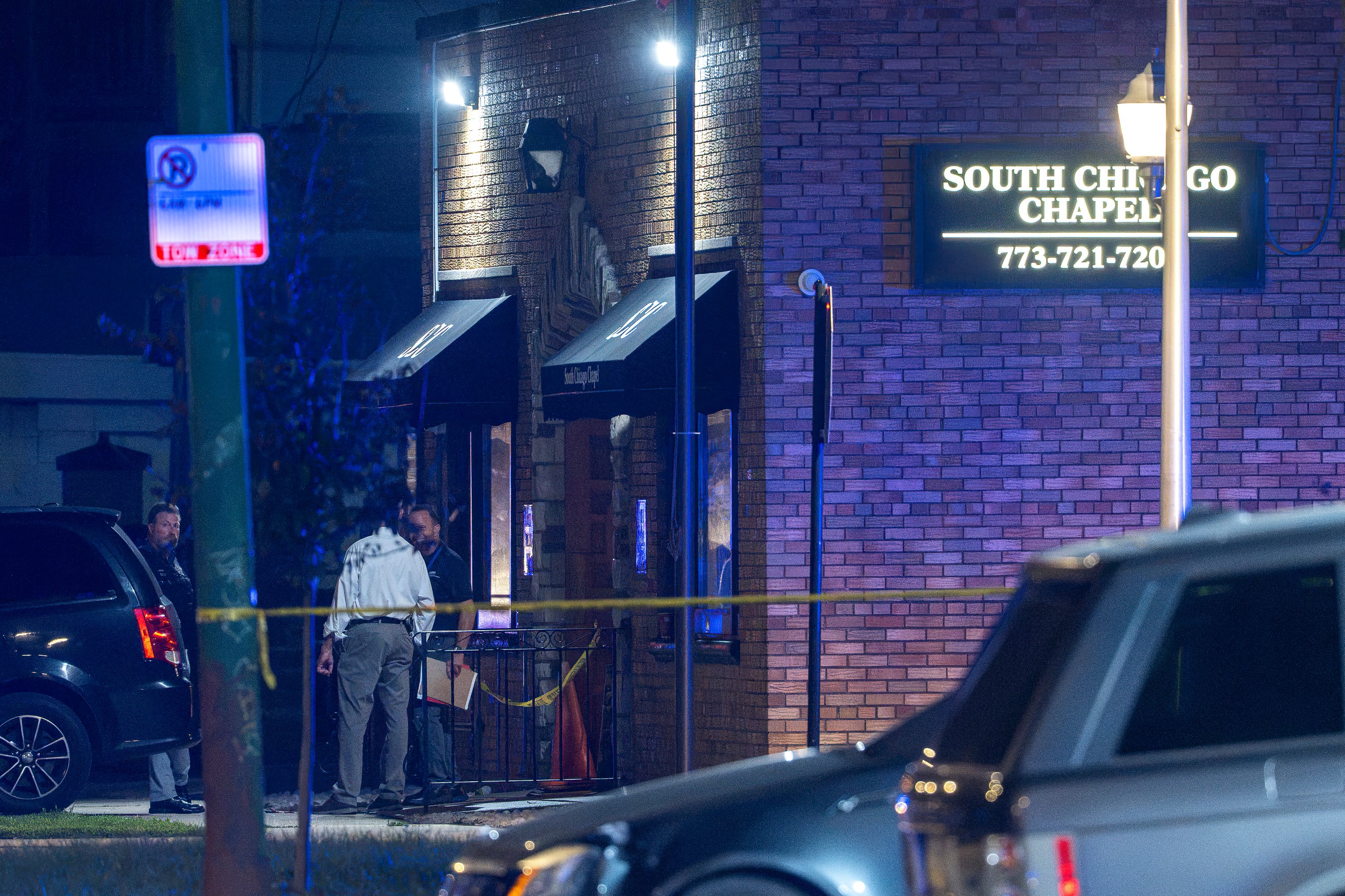
    CHICAGO — More than 50 bodies were found improperly stored and decomposing Thursday at a Chicago funeral home run by a couple who previously operated a crematory that was similarly shut down because of mishandled remains, authorities said.

    Illinois state officials, meanwhile, suspended the license of one of the funeral home’s directors, alleging bodies were being kept in an unrefrigerated area in “deplorable conditions.”

    The Cook County Medical Examiner’s Office said it was notified by state and local officials that bodies were being stored improperly at South Chicago Chapel, and investigators and forensic pathologists were dispatched. The remains were in various states of decomposition, officials said.

    “Staff is assessing the conditions of the remains, searching for documentation regarding identification of the decedents as well as death certificates. This process could take several days to ensure proper disposition,” the medical examiner’s office said in a statement.

    Police said Friday that their preliminary statement on the case incorrectly said that fire department officials declared the scene a hazardous materials incident.

    No arrests have been announced, but city police said detectives are investigating.

    Neighbors told local media outlets that there was a horrible smell coming from the funeral home area.

    Messages for the funeral home were left by phone and through its website Friday.

    State business records show that funeral director Johanna Morgan incorporated South Chicago Chapel Inc. in 2022 and her funeral director’s license was temporarily suspended on Wednesday.

    The state Department of Financial and Professional Regulation said the license suspension was due to “a finding that Respondent’s continued practice is a danger to the public safety, interest, and welfare due to Respondent allowing multiple decedents to be kept in an unrefrigerated area with deplorable conditions including rodent infestation, causing decomposition and maggot infestation of the bodies.”

    The state business records also list Clark X. Morgan as the funeral home’s president. The Department of Financial and Professional Regulation said it revoked the funeral director license of a Clark X. Morgan and fined him $10,000 in 2024 for practicing with an expired license and “unprofessional conduct” that it did not specify.

    State Comptroller Susana Mendoza said Friday that Johanna and Clark Morgan previously ran a crematory in Chicago Heights, south of Chicago, which had its license revoked last year after authorities discovered improperly stored bodies and hundreds of cremated remains that had never been returned to their families.

    Mendoza said many of the bodies at the crematory were stacked on top of each other and not refrigerated.

    “Horrified. Again,” Mendoza said in a statement. “The discovery of decomposing remains waiting to be laid to rest this week at a South Side funeral home is heartbreaking and an abomination. These are people – someone’s mother, father, sister, brother, child, or friend, and they deserve better.”

    Both Johanna and Clark Morgan are listed in Cook County court records as defendants in connection with lawsuits involving Heights Crematory in Chicago Heights, south of Chicago.

    Public records show Johanna and Clark X. Morgan live at the same address in the Chicago suburb of Evergreen Park, and an obituary for Johanna Morgan’s mother lists her husband as Clark. Phone messages were left Friday for numbers listed in public records for Johanna and Clark Morgan, as well as for an attorney listed in records as their business agent.

    South Chicago Chapel’s website says the funeral home is “dedicated to providing compassionate care and personalized services to support families during life’s most challenging moments.”

    The case is the latest in a series of incidents involving mishandled remains over the past three years.

    Last month, police arrested two men in Pueblo, Colo., for allegedly mishandling at least two dozen decomposing bodies and other remains found behind a hidden door in a funeral home.

    That followed the discovery of 18 bodies in various stages of decomposition at a funeral home in Georgia in 2024. In 2023, nearly 200 decomposing bodies were found in a building in Colorado, and another 31 decomposing bodies were discovered at an Indiana funeral home.

  • Cassidy backs Blanche for attorney general, appearing to clear way for confirmation

    Cassidy backs Blanche for attorney general, appearing to clear way for confirmation

    Sen. Bill Cassidy (R., La.) said Friday that he will vote to confirm Todd Blanche as attorney general, giving President Donald Trump’s pick to lead the Justice Department the last expected vote he needs to be approved by the full Senate.

    Cassidy made the announcement on the Senate floor just hours after Sen. Lisa Murkowski of Alaska, another critical GOP vote, said she would oppose Blanche’s nomination. Sen. Susan Collins (R., Maine) announced earlier this week that she would also be voting no.

    But with Cassidy’s support now in hand, the Senate’s Republican leadership is expected to move forward with a vote on Blanche’s confirmation as soon as Friday after weeks in which the acting attorney general’s prospects appeared to be in doubt.

    With all Democrats expected to oppose Blanche and Sen. Mitch McConnell (R., Ky.) absent for health reasons, a no vote by Cassidy would at minimum have forced an embarrassing delay in the full Senate’s confirmation vote.

    Cassidy said Friday he shared concerns raised by Murkowski and Collins over the “politicization” of the Justice Department under Trump and the controversial deal Blanche oversaw this spring to settle Trump’s claims against the IRS, which included a now-scuttled plan for a nearly $1.8 billion fund to compensate people who claim they were victims of political prosecutions.

    But the senator couched his decision to back Blanche, who previously served as Trump’s personal defense lawyer, as a choice between the current nominee and the prospect that Trump could pick someone worse.

    “Mr. Blanche is not perfect, and he will tell you this, but the choice is not between perfection and Mr. Blanche,” Cassidy said. “It is between Mr. Blanche and another acting attorney general who may not run the department effectively under President Trump and who, indeed may not be as good as Mr. Blanche.”

    He added: “I’ll be criticized for this vote. What’s new?”

    The fact that Blanche’s nomination was in doubt at all early Friday and hinging on Cassidy’s vote underscored the growing unease that has emerged in some corners of the president’s party over the Justice Department’s direction.

    It also highlighted the extent to which Trump’s attacks on GOP lawmakers whom he deems insufficiently loyal have prompted an increased willingness among Republicans to buck his demands.

    Cassidy lost his bid for reelection this year after Trump backed his GOP primary rival, Rep. Julia Letlow (R., La.). He has repeatedly criticized the president since then and threatened to vote against administration priorities.

    “I have a history with Mr. Trump, but that history does not matter one bit,” Cassidy said Friday in explaining his vote on Blanche.

    The senator said he came to his decision after weeks of conversation with Blanche and current and former Justice Department officials, including former attorney general William P. Barr. Barr resigned late in Trump’s first term amid disagreements over the president’s false claims that the 2020 election had been stolen.

    Barr, Cassidy said, advised him to back Blanche’s nomination, suggesting that as the lawyer who guided Trump through the criminal prosecutions he faced during his years out of office, Blanche had established a unique trust with the president, which could enable him to talk Trump out of bad decisions.

    “I am realistic that President Trump can be unrelenting,” Cassidy said. “This will be true no matter who the attorney general is. And this is the rationale for having a Senate-confirmed attorney general with more leverage to push back.”

    Since returning to the White House last year, Trump has eroded the Justice Department’s long-standing tradition of independence while demanding it pursue prosecutions of his political enemies and reward his political allies.

    Blanche has overseen many of those efforts serving first as the No. 2 official under then-Attorney General Pam Bondi and then as the department’s acting head after Trump fired Bondi in April. He has defended the president’s “right” to interfere with criminal investigations and his controversial pardons of those who attacked the U.S. Capitol on Jan. 6, 2021.

    Democrats have decried Blanche as a uniquely dangerous nominee who thus far has proved unable or unwilling to talk the president out of decisions that run contrary to the rule of law. As his confirmation battle has worn on, more and more Republicans have expressed similar concerns.

    Earlier this week, Sens. John Cornyn (R., Texas) and Thom Tillis (R., N.C.), two members of the Senate Judiciary Committee, had threatened to kill Blanche’s nomination in committee over reservations they harbored about the out-of-court deal Blanche oversaw to resolve Trump’s lawsuit against the IRS over the leak of his tax returns to the media.

    In addition to the taxpayer-backed payout fund, the deal also provided unusual tax protections to Trump, two of his sons, and their businesses, shielding them from any preexisting tax audits.

    The fund proposal drew immediate bipartisan backlash with Democrats deriding it as a “slush fund” designed to reward Trump’s allies, forcing Blanche to walk back the proposal days after its announcement.

    But Cornyn and Tillis, who are leaving the Senate after this year after tangling with Trump, demanded written assurances from Blanche that the president would not later reverse that decision before they agreed to support him.

    Blanche ultimately relented, issuing statements late Sunday declaring the fund officially dead and clarifying that the deal’s tax provisions protected the Trumps only from past tax audits and would not prevent the IRS from reviewing their finances in the future.

    But critics have questioned whether Blanche’s written pledges hold any legal weight, given they weren’t also signed by Trump and his legal team, and could be ignored by the president at any point.

    Murkowski raised that possibility in her statement announcing her decision to vote against Blanche’s nomination Friday. The only reason the payout fund was now off the table, she said, was because Blanche needed Senate support for his nomination.

    “Once we vote, that will end, and there is no telling what the future holds,” she said, adding later: “The country needs an attorney general who will check the worst impulses of this administration. I hope Mr. Blanche is able to achieve that, if confirmed, but I simply do not have confidence that will be the case.”

    Despite pledging his support for Blanche, Cassidy echoed Murkowski’s concerns. He said Blanche showed “poor judgment” in signing off on Trump’s IRS deal and added that he was “particularly concerned about episodes of apparent lawfare — DOJ bringing suits against political enemies.”

    The Justice Department has, at the president’s demand, launched probes of critics including former FBI director James B. Comey, New York Attorney General Letitia James (D), former CIA director John Brennan, ex-White House aide Cassidy Hutchinson, and Democratic lawmakers who recorded a video this year calling on military service members to resist illegal orders.

    “A never-ending cycle of prosecuting political enemies undermines the rule of law, degrades the public’s trust in our institutions, and makes our politics more extreme when we need to unite to solve the big problems of our time,” Cassidy said.

  • Trump tries new tack against birthright citizenship after Supreme Court snub

    Trump tries new tack against birthright citizenship after Supreme Court snub

    President Donald Trump took another stab at restricting automatic citizenship for people born in the United States after the Supreme Court rejected his earlier attempt.

    In two executive orders signed Thursday, Trump reached for different legal maneuvers to test the limits of the 14th Amendment’s guarantee of birthright citizenship.

    The first order said children would be ineligible if born to “alien enemies,” members of foreign terrorist organizations, or foreign lobbyists. The second order said children of people who fraudulently request tourist visas for the purpose of giving birth in the U.S. would not become citizens.

    Trump harshly criticized the Supreme Court’s June decision reaffirming that the 14th Amendment grants citizenship to nearly everyone born on U.S. soil, including the children of undocumented immigrants, striking down his executive order from the first day of his second term.

    The new orders marked a fresh effort to overcome that setback and deliver on a campaign promise by expanding the categories of people who the administration argues fall outside the constitutional guarantee. Constitutional scholars broadly agree that the president lacks the authority to eliminate birthright citizenship unilaterally.

    “We had a bad decision, very unfair decision,” he told reporters in the Oval Office on Thursday. “Our country suffers because of it, and we’re ending it a different way.”

    The new orders were certain to face legal challenges, and if they survive, would affect far fewer people than the original. An estimated 15 million undocumented immigrants live in the U.S., while only a few thousand people are foreign lobbyists registered with the Justice Department.

    No significant populations of U.S. residents are designated as alien enemies or foreign terrorists, making that provision largely symbolic. The administration faces ongoing litigation over whether it can deport alleged gang members by treating them as alien enemies.

    The second executive order draws on the president’s authority under the Immigration and Nationality Act to control international travel, according to White House Deputy Chief of Staff Stephen Miller, who appeared with Trump at the signing.

    “People come here, pretend to be a tourist, pretend to be a visitor, say they want to go to Disneyland, they want to go visit a monument or go to a national park. But the real reason they’re here is to have a child, to make that child automatic citizen, leave our country and then have a U.S. citizen child,” said Miller, arguing that lying on a visa application amounts to fraud and invalidates the visa.

    There is no official data on “birth tourism.” In 2024, fewer than 10,000 babies were born in the U.S. to people with foreign addresses, out of 3.6 million total live births, according to data from the Centers for Disease Control and Prevention analyzed by the nonpartisan Migration Policy Institute.

    Trump’s initial executive order sought to deny automatic citizenship to children of unauthorized immigrants and foreigners on temporary work, student and tourist visas — a population that some studies found numbers more than 150,000 a year. That order was based on a reinterpretation of the 14th Amendment, which was ratified in 1868 and grants citizenship to those born on U.S. soil who are “subject to the jurisdiction” of the federal government.

    Two coalitions of Democrat-led states and several immigrant rights groups filed more than half a dozen lawsuits against the Trump administration. Those challenges led multiple federal courts to temporarily halt the administration from implementing the citizenship ban.

    A divided Supreme Court upheld birthright citizenship in June in one of the most closely watched cases of the recently concluded term. Writing for the 5-4 majority, Chief Justice John G. Roberts Jr. said the framers of the 14th Amendment intended to extend citizenship to virtually all people born on U.S. soil with limited exceptions for the children of diplomats and others.

    “Citizenship, then and now, was the right to have rights — to freely participate in our political community. The Framers of the Fourteenth Amendment extended that promise to ‘every free-born person in this land,’” Roberts wrote. “We keep that promise today.”

    The Trump administration had argued for a narrower reading of the amendment, saying its language did not apply to people who were here illegally or temporarily because they had not demonstrated the necessary political allegiance to the country.

    The Supreme Court’s ruling marked a major loss for Trump, who had attended the oral arguments at the high court in April, becoming the first sitting president to do so.

    Amanda Frost, an immigration law professor at the University of Virginia, said significant parts of Trump’s new executive orders appear largely unconstitutional and at odds with the Supreme Court’s decision.

    “This is my very clear legal take: He cannot issue an executive order that saying that children of birthright tourism — even if the mother violates immigration law to come to the United States — are not U.S. citizens,” Frost said.

    Likewise, David Bier, an immigration expert at the libertarian Cato Institute, said Trump cannot credibly argue that undocumented immigrants in the U.S. who are declared by his administration as “enemies” of the country are not subject to the jurisdiction of the U.S. government.

    “None of the [Supreme Court] justices adopted the logic that illegal immigration is an invasion or any of those types of thing,” Bier said “None of the conservatives used that line of argumentation.”

    Bier added that the president’s efforts on birthright tourism are “pretty obviously contrary to what the Supreme Court just ruled and are likely to get no further than the prior order did.”

  • ICE will release body camera video only when seen in the agency’s ‘best interests,’ policy says

    ICE will release body camera video only when seen in the agency’s ‘best interests,’ policy says

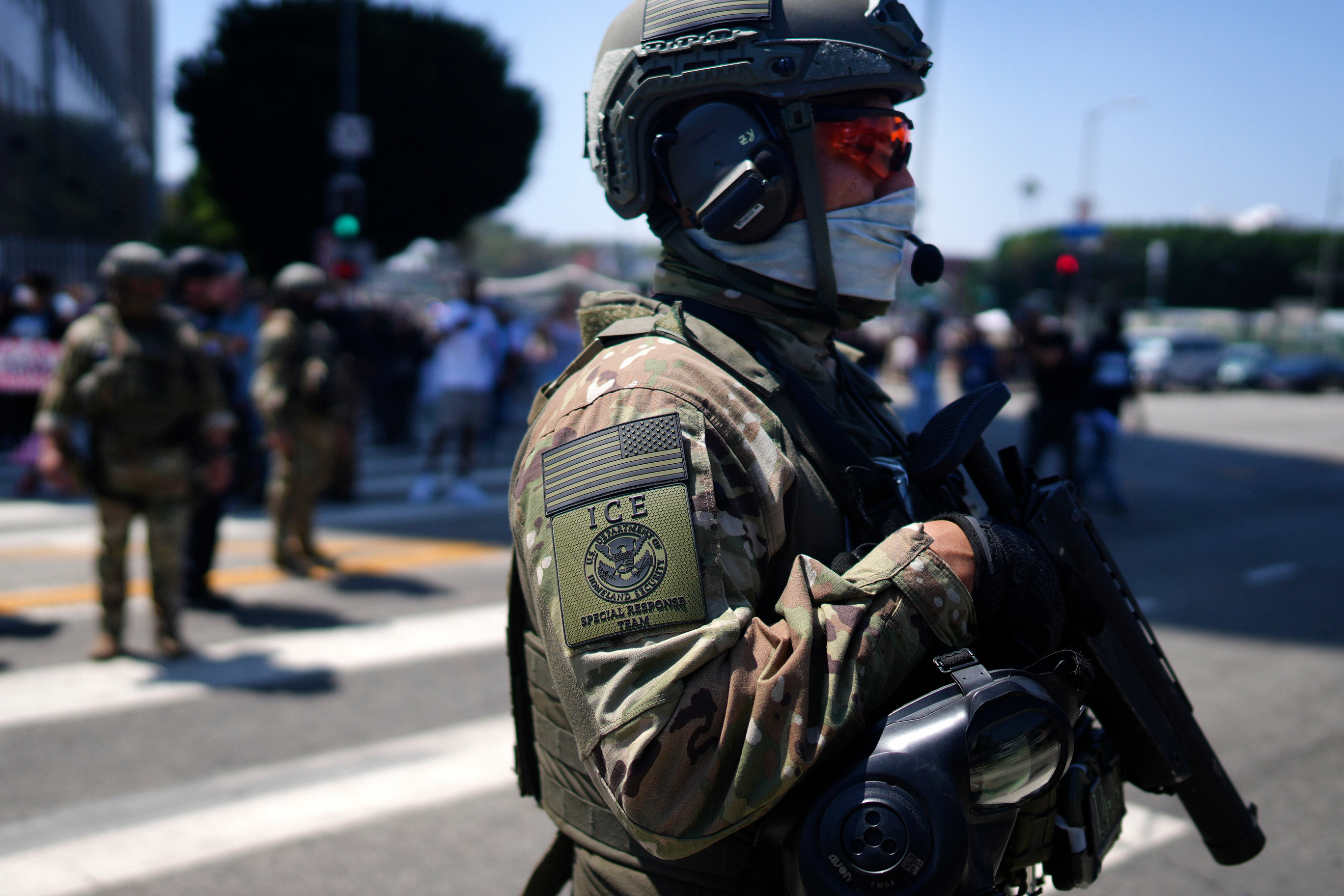
    Immigration and Customs Enforcement is moving to equip officers with body cameras in the next two months but the agency’s policy gives it broad control over what footage will be made public by specifying any releases must be in its “best interests.”

    After years of delays, ICE said its field officers nationwide will have body-worn cameras by the end of September. The rollout comes after recent fatal shootings by officers enforcing President Donald Trump’s immigration crackdown have intensified pressure for accountability that the cameras could provide.

    But the agency’s body-worn camera policy could mean taxpayers who are pitching in tens of millions of dollars to pay for the cameras may be kept in the dark about some high-profile confrontations, at least in their immediate aftermath.

    The policy says ICE will promptly release video of shootings and other encounters in which its agents cause death or serious injury only after determining “it is in the best interests of the agency” to do so. That gives its director discretion to release recordings that reflect well on the agency’s image while working to keep others secret, experts on body camera policies said.

    Such selective releases are routine in some law enforcement agencies but usually not so clearly contemplated in policy, according to professor Christopher Schneider of Brandon University in Canada, a co-author of the new book Police Body-Worn Cameras: Media and the New Discourse of Police Reform.

    “In some ways, ICE is saying the quiet part out loud,” he said. “Body-worn cameras are being used as contemporary image-work tools to present the police to the public in the most favorable way possible.”

    Body camera policy allows withholding some video

    The policy requires officers to activate cameras during routine enforcement activities, including while making arrests, executing search warrants and responding to emergencies.

    After shootings or other serious confrontations, a committee that includes top ICE officials and lawyers will review footage and recommend whether to release it promptly, according to the body camera policy issued in February 2025.

    If the answer is yes, the recording could be released within 72 hours. But if the ICE director finds that “specific and compelling circumstances” justify withholding the video, they have the authority to block or indefinitely delay the release, the policy says.

    The policy does not elaborate on such circumstances, and ICE did not respond to a question from the Associated Press about how it would make such decisions.

    Practices vary widely in the U.S. In Chicago, a police watchdog agency routinely releases body camera video of shootings and other serious use-of-force incidents within 60 days. In Philadelphia, the police department very rarely uses its discretion to release video of specific incidents and has no policy for when to do so.

    Even when footage is released, ICE’s policy will require the redaction of all officers’ identifying features such as their faces, names, and badge numbers to preserve their privacy.

    Schneider, who has studied body cameras since their use began spreading a decade ago, said he does not expect ICE to release footage of fatal shootings like those last month in Houston and Maine.

    He noted ICE’s sister agency, Customs and Border Protection, has not released footage of the January shooting of Alex Pretti in Minneapolis even though it was captured on agents’ cameras. CBP Commissioner Rodney Scott told lawmakers in February that the video and other materials were under investigation and would be made public “when it’s appropriate.”

    ICE says all officers will have cameras by end of September

    ICE spent $30.9 million in July to purchase body camera equipment from Axon, the Arizona-based company that also manufactures Tasers, federal spending records show.

    The spending began one day after the fatal shooting of a 25-year-old motorist in Maine by an ICE officer with a history of violent behavior. Days earlier, another ICE officer shot and killed a homebuilder in Houston who was driving to work.

    Neither shooting was recorded with body cameras. That news angered members of Congress, who had given ICE $20 million to purchase body cameras in a bill passed to end a partial government shutdown on April 30.

    ICE said body cameras have been sent to more than half its field officers and the rest will receive them by the end of September. That timeline pushes back estimates from earlier public statements. Maine Republican Sen. Susan Collins, who backed funding for cameras, said last month that the agency informed her they would be deployed by the end of August. ICE had said earlier that they would be issued by mid-September.

    ICE officers working in the Houston area, where the agency sent more than 800 cameras, are among those who have started training, according to U.S. Rep. Henry Cuellar, a Texas Democrat and member of the House Appropriations Committee.

    At least one member of every arrest team will be required to have a camera, the agency said.

    “I think the American people need to see what that officer sees and hears,” White House border czar Tom Homan said July 19 on CBS News’ Face the Nation. “And if you look at the data, body cameras actually exonerate agents more than they, you know, provide evidence of wrongdoing.”

    Schneider said he expects ICE to release recordings that promote the agency’s mass deportation program by portraying officers as brave and immigrants as dangerous criminals.

    “Much of what law enforcement does is convince the public that we need them and feel safe and they do all this good stuff for us,” he said. “The more bad stuff the public sees, the more angry the public gets. And this causes problems for the police brand.”

    ICE has taken years to adopt body cameras

    ICE began testing body cameras in 2021 during President Joe Biden’s administration and distributed 1,400 devices three years later, saying use would expand as funding became available.

    After returning to office in 2025, President Donald Trump rescinded a Biden order that required federal law enforcement agencies to use body cameras.

    ICE did not buy body cameras even after it received a historic $75 billion infusion in Trump’s signature policy bill in 2025 and began hiring thousands of new officers. The two July purchases from Axon were made through an existing government contract that began in 2023, records show.

    “This is not hard to deploy, but they’ve slow-rolled it,” said Jason Houser, who was ICE chief of staff under Biden and helped implement the agency’s pilot program.

    Houser said the Trump administration should have equipped officers with body cameras when it expanded mass arrests and traffic stops. Doing so only after several shootings and pressure from Congress “is clearly a political response” that will not make officers or the public safer, he said.

    “This doesn’t fix the problem of putting officers in a place where they’re not trained or equipped to carry out the style of operations that the administration is asking them to do,” he said.