Tag: no-latest

  • El-Sayed spoke with Obama as Michigan Democrats look to unite after a bitter Senate primary

    El-Sayed spoke with Obama as Michigan Democrats look to unite after a bitter Senate primary

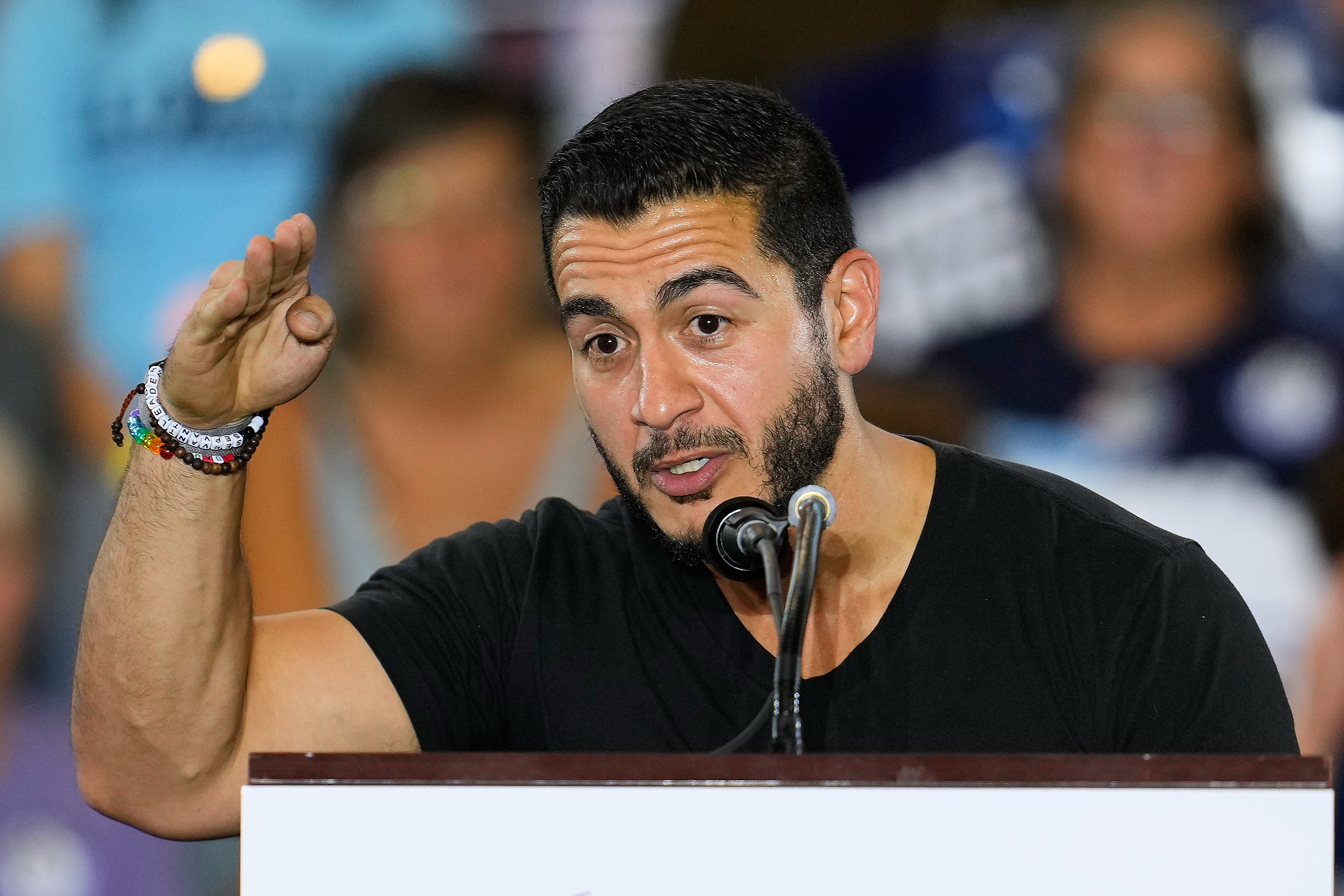
    BRIDGEWATER, N.J. — Abdul El-Sayed, the Democratic nominee for U.S. Senate in Michigan, said Sunday he has spoken with Barack Obama and hopes the former president campaigns with him as the party tries to unite after a bitter primary that exposed deep rifts between its progressive and moderate wings.

    El-Sayed said his Friday conversation with Obama was “really warm and inspiring.” The candidate did not provide details.

    “I was grateful for his advice. It was very warm, very inviting, and I know that he knows the critical role that Michigan is going to play,” El-Sayed told NBC’s Meet the Press.

    Asked if he would like to see Obama come to Michigan to drum up support for Democrats before the midterm elections in November, El-Sayed said he “really” hoped so and that Obama “knows a lot about winning Michigan” after carrying the state in the 2008 and 2012 presidential races.

    An Obama spokesperson confirmed the call.

    The discussion came the same day that a group of Michigan nominees and other notable national Democrats tried to present a united front at a rally in Detroit. The crowd cheered loudest for El-Sayed, a former public health official who last week narrowly beat establishment-backed U.S. Rep. Haley Stevens in a contentious and closely watched primary. A Democratic victory in the fall is crucial to the party’s chances of regaining a Senate majority.

    Democratic Sen. Gary Peters is not seeking reelection in the perennial swing state, which Republican Donald Trump won in 2016 and 2024, while Democrat Joe Biden carried it in 2020.

    El-Sayed faces Republican Mike Rogers, a former congressman who narrowly lost a Senate race to Democrat Elissa Slotkin in 2024 and has tried to capitalize on lingering tensions within the Democratic Party.

    Rogers has released a video message attempting to appeal to Democrats who feel their party may be moving too far to the left with El-Sayed. “You have a home with us,” Rogers says in the video.

    During an interview Sunday with CNN’s State of the Union, El-Sayed acknowledged that “we aired our differences” in the heated primary. But he said the internal divisions are “so much smaller than the similarities that we share.”

    “You’re seeing folks come together,” El-Sayed said, before adding of moderate Democrats, “We might see the world differently. But we also recognize the responsibility to come together.”

  • Many immigrants face deportation without a lawyer at their side in court. This program tries to help

    Many immigrants face deportation without a lawyer at their side in court. This program tries to help

    SACRAMENTO, Calif. — Lawyer Kamalpreet Chohan ran her finger down a list of 57 names of people scheduled to appear during a morning of hearings at the immigration court in California’s capital and pointed out one glaring absence.

    “None of these folks are represented,” she said.

    Chohan is the coordinator of a program that sends volunteer lawyers to immigration courts to assist people without representation and help them navigate the complicated legal system where the stakes are a future in America or deportation.

    Appearing without a lawyer opens up even greater risk under the second Trump administration, with the courts playing a key role in its mass deportation agenda. Courts are increasingly denying asylum, deportation officers have arrested immigrants in court hallways, the administration has packed courtrooms to cut backlogs, and reduced lead time on hearings, prompting people to miss them.

    Data shows that legal representation can be vital to winning in court but many immigrants, unable to pay for a private lawyer or find a pro bono one, navigate the system without an attorney at their side.

    “Folks go into immigration court not knowing what’s happening. They come out not knowing what’s happening. And when there’s an attorney present,” Chohan said, “it’s just so helpful.”

    Immigrants aren’t provided an attorney but legal help makes a difference

    Unlike criminal court, there is no guaranteed lawyer in immigration courts.

    Immigrants have to hire one at a cost of thousands of dollars or hope to get represented by one of the nonprofit organizations assisting low-income immigrants. But waitlists with those organizations are long, and many parts of the country just do not have that many immigration attorneys.

    Of the roughly 3.2 million pending deportation cases currently in U.S. immigration courts, people in 52% of those cases do not have a lawyer, according to an analysis of immigration court data by the Vera Institute of Justice, a think tank.

    A Congressional Research Service study from 2024 found that only 19% of people who did not have a lawyer won asylum or another avenue to stay in the United States. Among those who did have a lawyer, 47% were successful.

    “Having an attorney is just super critical to be able to navigate the system successfully,” said Adriel Orozco of the advocacy group American Immigration Council.

    Chohan said she frequently runs into people who have been scammed by lawyers or people posing as lawyers who take their money but do nothing for their case.

    “I will give him a list of attorneys who are free and we have vetted,” she told one man who said he was scammed. “They have long waitlists but he should still ask.”

    Speaking later to the Associated Press, the man described how he left Guatemala after being threatened by gangs and came to the U.S. in 2024 seeking asylum. Ever since, he said, he has done everything that has been asked of him while he tries to make ends meet, occasionally painting houses. He spent $4,500 on a lawyer who in the end did nothing to help him, he said.

    “He turned out to be a scammer,” said the man, who did not want to be identified for fear of endangering his case. He is worried about what comes next in court after being warned by the judge that he could be deported. “I don’t know what I’m going to do,” he said.

    A nonstop day of consulting with clients

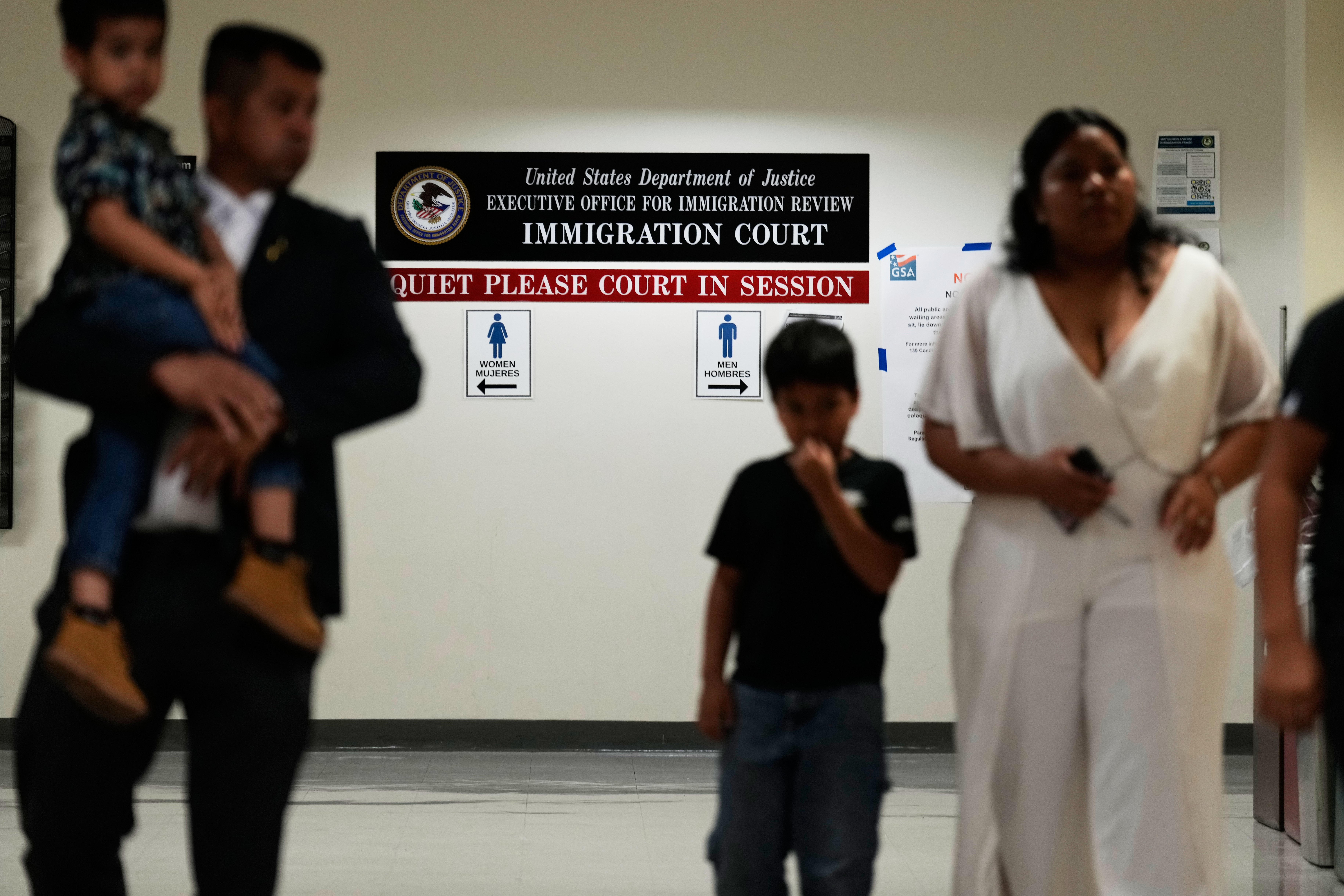
    Outside the Sacramento building where the court is housed is a long line of immigrants waiting for appointments with U.S. Immigration and Customs Enforcement, which is in the same building. Volunteers with a local anti-ICE resistance group stand ready to help.

    Upstairs, two immigration judges are on the bench. One hears the in-depth individual cases of immigrants who are pursuing their claim of asylum.

    The other judge has the master calendar docket, where dozens of immigrants will appear in brief hearings geared to making sure their case is ready to go to the next step.

    Signs taped to the wall remind people not to videotape or record inside the court complex. A security guard makes sure no one loiters in the hallways. Most people clutch stacks of papers documenting their cases.

    After immigrants file into the courtroom for their hearings, Judge Susan Phan introduces Chohan and describes the services her organization offers.

    “You are not required to meet with her but it is a rare opportunity that we have someone volunteering their time,” Phan said before launching into the day’s work.

    The need for a detailed asylum application

    Chohan, who works with the California Immigration Project, starts each hearing in the courtroom. She has a clipboard to take notes, extra copies of forms, and a crate of books for restless children attending court with their parents. She spends the bulk of her time in the waiting room, talking to immigrants after their hearings and scanning their documents to flesh out what else they need.

    Speaking to one young man from Mexico, she asks to see his asylum application, noting that the judge had pointed out that it was not that detailed.

    “Sometimes judges can deny a claim if there isn’t enough detail,” she said through one of the organization’s volunteer translators.

    The organization frequently has clinics to help immigrants fill out their asylum application. Chohan said she will alert him to the next one.

    Another woman holding a stack of documents is there with her son and wanted to make sure her children could come with her if she is deported. Chohan also briefed her on what to expect at her upcoming asylum hearing and said the organization will send her an asylum filing guide.

    Chohan highlighted places on forms where people need to give answers or answer in more detail. It’s OK to write “none” but she advises them to not leave boxes blank.

    Everything submitted in Spanish must be accompanied by a translation into English that must be done by a person, not an automatic online translator. Copies of every single page of a passport must be submitted. Documents must be sent in two weeks before the applicant’s hearing so the judge can review them.

    Over and over, Chohan reminds immigrants to download their receipt showing they paid the $102 asylum application fee so they can submit it to the court.

    Chohan said a lot of these procedures and forms are discussed in court but it happens so fast that, with immigrants listening through a translator, they do not always understand what is happening.

    “A lot of times when they go into court, they’re just happy that they’re out of court and they’re not being arrested,” she said.

    A changing immigration court system

    Chohan has witnessed the upheaval in the immigration courts during Republican President Donald Trump’s second term.

    She was in the court hallways last summer when ICE officers waited to arrest immigrants after their hearings. Earlier this summer she watched as the administration started holding “mega masters,” hearings with dozens of respondents at a time that are meant to clear a backlog but have created chaos.

    Chohan said there are not enough pro bono lawyers in the Sacramento area to help everyone who needs one so the “Attorney of the Day” program is often the next best thing. She believes everyone should have access to a lawyer.

    Until that day, she said, the program “helps bridge that gap.”

  • Inside school investigations frozen under Trump: Racial slurs, sexual harassment, and more

    Inside school investigations frozen under Trump: Racial slurs, sexual harassment, and more

    By the time Black History Month arrived at Chesaning Middle School in central Michigan in 2024, the only Black girl in the fifth grade had already endured a string of racial slurs. On the bus, she was called a “monkey,” she said. Students hurled the n-word at her and said her skin was “burnt like a piece of chicken.”

    Then, apparently inspired by a February lesson about slavery, a white boy asked her, “Hey slave, where are your tools so you can get back to working?”

    School officials told the girl’s mom that they were dealing with the situation, but the harassment continued, the mother and daughter said in an interview. Frustrated and angry, the mother picked up her iPhone one day, searched for “civil rights” and landed on a federal website.

    She found a complaint form and filled it out.

    “She’s being bullied to where she can’t even focus on schoolwork,” the mother wrote. She detailed racial harassment and said her daughter had been mentally and emotionally scarred. “I have to get my child help.”

    Her complaint was forwarded to the Education Department’s Office for Civil Rights, the office responsible for ensuring that students can attend school free of racial harassment and that for decades has investigated discrimination claims in schools across the country. Originally created to enforce the Civil Rights Act of 1964, the office pressured Southern schools to dismantle segregation and later was tasked with investigating discrimination in schools based on sex, disability, and other factors, in addition to race.

    In June 2024, the office launched an investigation of Chesaning Union Schools. By that fall, investigators had documented the allegations of harassment and expressed their concern that the district had failed to properly respond, according to an investigative document obtained by the Washington Post and two people familiar with the situation. In early January 2025, federal officials opened negotiations with the district on an improvement plan that would settle the case.

    What happened next marked a break with decades of federal practice. Instead of resolving such investigations, the Trump administration indefinitely froze them, according to eight current and former employees, who, like others, spoke on the condition of anonymity because they were not authorized to speak about their work publicly. The administration gutted the Office for Civil Rights and prioritized investigations into transgender athletes and other conservative priorities.

    More than three dozen investigations were complete, including this one in Michigan, and at the final stage — negotiations that could have required remedies such as training, better accountability systems, and, in some cases, compensation for students.

    But those agreements were never finalized, school district officials and other people familiar with the matter said. When President Donald Trump’s second term began, there were thousands of pending investigations. In the 18 months since then, the civil rights office has completed only three settlements, known as resolution agreements, involving racial harassment and no agreements regarding sexual harassment or violence, according to the department’s online database. By contrast, in 2024, the office completed 25 resolution agreements related to racial harassment and 47 related to sexual harassment or violence.

    The details of pending investigations are typically cloaked in secrecy. But documents and interviews with current and former officials offer a rare look at allegations that are pending inside the agency.

    Among them: Black students were called the n-word, “monkey,” and other racial slurs. Children from the Middle East were called terrorists. Video of a sexual encounter between students was dropped into a group chat without consent. And a principal was accused of inappropriately touching girls.

    Because of the inaction, there have been no federally mandated protections for students, consequences or accountability for the schools involved.

    “The Department of Education’s role is literally to ensure that students don’t experience discrimination at school so they can access their education. What you have here is the Department of Education saying, ‘We won’t do that,’” said Michael Pillera, who worked for a decade at the Office for Civil Rights.

    In a statement, Assistant Secretary for Civil Rights Kimberly Richey pointed to a backlog of about 19,000 cases inherited from the Biden administration and said that former President Joe Biden had failed students.

    “Any implication that there was a purposeful decision to allow important cases to linger is dishonest,” she said in an emailed statement. “We are utilizing every tool at our disposal to resolve the backlog and return common-sense to our schools.”

    But several current and former staffers said they were barred from working on certain types of cases. One former official, who spoke on the condition of anonymity for fear of reprisals directed at his new employer, said his office was close to wrapping up two cases of serious racial harassment in the final days of the Biden administration only to see the cases ignored after Trump arrived and changed the office’s priorities.

    “There are real people and real lives at the end of these cases,” he said. “There are consequences for people emotionally, educationally. That story has somehow got lost.”

    In response to the Michigan case, Erin H. Walz, an attorney for Chesaning Union Schools, said in an email that the district “categorically denies” the alleged harassment as described by the Post but declined to say what was inaccurate, citing student privacy laws.

    Mike McGough, Chesaning’s superintendent, expressed frustration with the Office for Civil Rights.

    “The diminished capacity of OCR serves neither party,” he said in an interview. “Complainants haven’t been able to get their claims heard. We don’t get to defend ourselves. We would have continued the process and I believe would have reached a fair and equitable resolution.”

    Two months after Trump returned to the White House, the Cleveland office overseeing the Chesaning case was closed. Meanwhile, the racial harassment would only grow worse for one Black girl trying to survive middle school.

    A change in priorities

    The inaction on racial and sexual harassment cases stems from two decisions by the Trump administration: It cut the staff at the Office for Civil Rights by more than half and closed seven of 12 regional offices, overwhelming the remaining staff. (Some workers who were terminated returned following litigation.)

    The administration also has prioritized investigating other types of cases, such as schools that allow transgender girls to compete on girls’ sports teams, antisemitism on college campuses, and colleges that promote race- or gender-based scholarships. Executive orders issued on the day Trump returned to office took aim at diversity, equity, and inclusion programs and policies that help transgender students.

    In 2026, the office reached 31 resolution agreements enforcing Title VI, the federal law that bars discrimination based on race. All of them involved university partnerships with the PhD Project, which sought to recruit Black and Hispanic students to business school. The Education Department said these partnerships discriminated against people of other races.

    Meantime, it was virtually impossible to get the go-ahead for the type of racial and sexual harassment cases that once made up some of the agency’s highest-profile work, several current and former employees said.

    At the start of the Trump administration, work on all civil rights cases was halted, as is typical with a new administration, they said. But while some work was eventually unfrozen, they said cases that were pending from the Biden administration were not. Although staffers are officially allowed to work on new racial and sexual harassment cases, they need approval from headquarters to proceed with them. And that’s difficult if not impossible to get, partly because there is such a backlog, those people said.

    There’s “no point” in working on these racial or sexual harassment cases because they won’t advance, said one of the staffers in the civil rights office who spoke on the condition of anonymity. “My team leader is just like, `No. We’re letting it sit.’”

    That’s what happened in eight cases of racial or sexual harassment examined by the Post. Each case has been ignored for the past 18 months, according to people familiar with the cases.

    In Ludlow, Mass., a draft letter of findings noted widespread reports of racial harassment at the middle school between 2021 and 2024. White students reportedly called Black students the n-word and “monkeys,” remarked negatively on their hair or skin color, and more.

    In January 2025, an attorney with the Office for Civil Rights informed Ludlow Public Schools that the agency had concluded that the district failed to appropriately respond to harassment of one student and had concerns about treatment of others, emails obtained from the district through a public records request show. The parties opened negotiations toward a voluntary agreement that would close the case.

    The district tentatively agreed to take a range of steps including paying tuition for a student who left the district, conducting mandatory trainings for all district employees on racial discrimination law, and retaining a consultant to help the district implement “inclusive policies and procedures.”

    They were close to an agreement on Jan. 21, 2025. Then the government stopped communicating with the district, and the case has been dormant since, people familiar with the case said.

    Becky Bouchard, the district’s legal compliance officer, told the Post that Ludlow has taken some steps on its own, including providing guidance and support to students and staff and addressing concerns “as they arise.” She said the district takes all reports of discrimination and harassment seriously, investigates concerns consistent with law and policy, and is committed to providing students with a “safe, respectful and inclusive” environment.

    There has also been no action since early 2025 in Grand Junction, Colo., where the civil rights office found that two students of Middle Eastern descent were bullied on the playground, in the hallways, and in bathrooms. Other students allegedly called them “camel humpers” and “terrorists,” advised them to “go back to where you’re from,” and said “you’re the reason my sister can’t sleep at night,” an investigation document shows.

    A spokesperson for the school system, Mesa County Valley School District 51, said that not all of the allegations are accurate but declined to specify what she believed to be inaccurate, citing laws that protect student privacy. She said the district aims to make decisions based on all available facts and to ensure the process is “fair for everyone involved.”

    And at Phoenix Union High School in Arizona, an investigation into racial harassment of a pair of Black siblings showed that the academic performance and mental health of one sibling declined, while the other missed class and felt unable to communicate with teachers as a result. Schools may be in violation of the law if they fail to adequately respond to harassment that is so severe that it denies a student’s ability to benefit from their education. It is unclear whether this case was determined to have reached that level of severity.

    Federal officials were negotiating a resolution with the school system in late December 2024 and early January 2025. Then the federal government stopped communicating, a district official said. A spokesperson added, “We remain committed to creating welcoming environments that provide respectful treatment” for all.

    Stalled sexual harassment cases detailed in documents obtained by the Post include allegations that a student in Arizona climbed over a bathroom wall to record other students, then shared the photos and videos with others; that a principal in Texas touched a student in a way that made her uncomfortable, commented on the attractiveness of cheerleading uniforms, and chest-bumped a cheerleader during a football game; and that a Louisiana college student secretly taped himself having sex with a woman and then shared the video with his fraternity brothers.

    In each case, negotiations over resolutions were abruptly curtailed in early 2025 and remain unresolved, according to officials at each school.

    Now the future of the Office for Civil Rights is uncertain.

    The Trump administration announced in June that it would transfer much of the office’s work to the Justice Department, part of its effort to hollow out the Education Department in hopes of eventually shutting it down. Staffers at the Education Department say they have not been told how investigations will be conducted after the change takes effect.

    At the Education Department, the civil rights office is obligated to look into every complaint filed. But at the Justice Department, attorneys pick and choose their cases.

    ‘Hey slave’

    The harassment of the Black girl in Michigan persisted long after the complaint was filed and long after it was shelved, according to the mother and daughter, with mounting educational and emotional consequences.

    The mother’s younger siblings had attended Chesaning schools without experiencing harassment, and her older children did not have problems either, she said. It was different for her youngest.

    It began in fall 2023, when the girl entered the fifth grade, the mother and daughter said in interviews. Many of the allegations are also detailed in an investigative document, and others allegedly occurred after the civil rights office stopped engaging on the case. The mother spoke on the condition of anonymity because of concerns that telling her story could impact her job. She is legally the girl’s guardian and also her godmother, and they refer to each other as mother and daughter.

    Students harassed the girl all over campus, she said: Sometimes she was insulted on the bus. Sometimes students would push her in the hallways and mutter the n-word under their breath. Once, a classmate told her she could not play with her group on the playground because she was Black. Naturally quiet and shy, she didn’t argue back.

    During Black History Month, her class watched a documentary about the civil rights movement. When a protester in the film recounted a racist police officer using the n-word, it seemed to the girl that everyone in class snapped their heads to look at her. The girl asked her teacher for permission to sit in the hallway and begged her mother to let her stay home altogether.

    Both said no.

    “I scooched down in my chair because I didn’t want to be there,” the girl said in an interview.

    She was in line for lunch in the cafeteria when she heard a white boy say “hey slave,” she recalled.

    “Go get digging,” he continued, “I need some cotton.”

    She felt herself starting to cry. The girl went to see the lunch monitor, who told her to go to the office, where she was asked why she didn’t tell the lunch monitor. The school said it would handle the matter, though the mother said officials would not tell her what punishment the boy received.

    McGough, the superintendent, said he could not comment on this specific case due to privacy laws but, in general, cases of persistent harassment are dealt with using significant and progressive discipline.

    Over winter and spring 2024, the mother documented her frustration and complaints in a long Facebook post and in emails sent to school and federal officials and reviewed by the Post.

    In one example, another student called the girl a “Black monkey.” When called out by a school police officer, he defended himself this way: “I said ‘Black monkey,’ but I didn’t say it to her.’” The officer made him apologize, according to an email her mother sent to the federal official investigating the case.

    By fall 2024, the federal investigation was complete. Officials concluded that the district knew about the harassment, according to a draft letter of findings reviewed by the Post.

    The evidence “raises compliance concerns that the District did not consistently take prompt and effective steps to determine if the harassing conduct was occurring, remedy its effects, and prevent recurrence,” the letter said.

    A proposed resolution agreement was sent to the school district in January 2025. It would have required Chesaning to better track incidents of harassment; train teachers, staff, and students about racial harassment; conduct a climate survey to gauge the presence and impact of racial harassment; and provide counseling and tutoring to the girl who was harassed. The agreement also proposed that the district develop a plan so the girl would not be subjected to future harassment.

    But the district and the government never reached an agreement, and the attorney working on the case was laid off from the agency.

    Walz, the district’s attorney, declined to say whether Chesaning has taken any steps to address school climate.

    The harassment continued, and, according to the family, school officials knew it.

    Once, the girl reported use of the n-word to officials in the school office, she said, and they asked her whether she thought that was an accurate word to describe her. When the girl said no, a school official replied, “If you don’t think you’re that, why are you coming down here and complaining about it?” she recalled.

    “They were trying to put the blame on me,” she said.

    In May of this year, the mother found a boxcutter that belonged in the laundry room in her daughter’s room and questioned her about it. The girl confessed that the bullying was too much to handle and that she had considered hurting herself.

    A meeting at the school left the mother unsatisfied that things would improve. She began considering other school districts for eighth grade. The girl is still traumatized, her mother said, and is in counseling.

    For a time, the mother had felt sure the government would address the harassment. She believes the lawyer working on the case cared. “I could hear it in her voice,” she said.

    But it’s been so long since she heard from the lawyer. More than a year since she heard from anyone at the Office for Civil Rights.

    She no longer expects them to help.
  • Russia, Ukraine exchange overnight strikes that leave 7 dead, many injured

    Russia, Ukraine exchange overnight strikes that leave 7 dead, many injured

    KYIV, Ukraine — Russia and Ukraine exchanged strikes overnight that killed civilians and injured many others on both sides, local authorities reported.

    Large-scale Russian missile strikes on Ukrainian cities have become almost routine in recent weeks, with Moscow exploiting Ukraine’s critical shortage of interceptors for the U.S.-made Patriot systems — the sole air defense weapon in its arsenal able to shoot down ballistic missiles.

    In the latest attacks, Ukrainian drones killed five people and injured two dozen others, including a 4-year-old boy, in Russia’s border region of Belgorod, according to the regional administration.

    In Kharkiv, Ukraine’s second-largest city, Russian missiles struck a high-rise apartment block in the Saltivskyi district, killing two people and injuring 13, according to regional head Oleh Syniehubov. Eight more people were injured in Ukraine’s Black Sea port of Odesa after “dozens of missiles and drones” struck the city and surrounding region, according to local administration head Oleh Kiper.

    Ukraine’s President Volodymyr Zelensky has for months lobbied other countries, especially the U.S., to send Ukraine more Patriot systems made scarcer by the Iran war, arguing they are crucial for defending civilians.

    Failing that, Zelensky wants to make Patriot ammunition in Ukraine or get approval from Elon Musk to use his Starlink satellite communications system to guide strikes inside Russia that can hit its missile launchers.

    Meanwhile, Kyiv has kept up long-range drone strikes against Russian energy infrastructure, as well as the country’s largest online retailer, Wildberries, and other targets deep inside Russia, sparking a fuel crisis.

    Russia’s defense ministry on Sunday claimed its overnight strikes hit drone warehouses in the Kharkiv region, as well as fuel depots and stores of other materiel belonging to Ukraine’s armed forces at the port of Odesa.

    It said its forces had shot down 153 Ukrainian drones during the night, including over Russian-occupied Crimea and the Black and Azov seas.

    In Russia’s Belgorod region, authorities said Ukrainian drone strikes damaged 29 apartment blocks and five private houses, as well as administrative buildings and unspecified “commercial facilities.”

    Debris from Ukrainian drones also fell on two enterprises and a private home in the Russian city of Novorossiysk, Mayor Andrey Kravchenko said on Sunday. He did not specify what the commercial sites were. Regional authorities later said falling debris had injured one person, damaged two private houses, and blew out a window in an apartment block.

    A major fuel terminal is located at Novorossiysk that links Kazakhstan’s oil fields to markets around the world, and which has previously been a target for Ukrainian strikes.

    Moldova says blast near Ukraine border caused by drone

    A “powerful explosion” believed to be from a combat drone was reported in the village of Crocmaz, in southeast Moldova near the border with Ukraine, local police said Sunday.

    No one was injured by the impact, which caused a vegetation fire in the Stefan Voda district, police said, adding that “fragments of a combat drone were found at the scene” and would be examined by specialists. Police did not specify the origin of the drone.

    Multiple drones have violated Moldovan airspace since Russia launched its full-scale war in neighboring Ukraine.

    Bulgaria summons Ukrainian ambassador over drone incident

    Bulgaria has summoned Ukraine’s ambassador after a drone entered Bulgarian airspace, the country’s public broadcaster BNT reported on Sunday.

    The drone exploded on Saturday close to an international gas pipeline shortly after crossing the border from Romania. No casualties or damage were reported.

    Bulgaria’s defense ministry said the drone appeared to be the type used by Ukrainian armed forces, and that the incident was likely accidental.

    Ukrainian Foreign Ministry spokesperson Heorhii Tykhyi said the incident was being examined, but that it did not deliberately target Bulgaria. Ukraine and Bulgaria were in “close contact” to clarify what had happened, he added.

    ——

    AP writer Stephen McGrath contributed from Leamington Spa, England.

  • Health officials urge caution for Gulf Coast beachgoers during surge of deadly bacterial infections

    Health officials urge caution for Gulf Coast beachgoers during surge of deadly bacterial infections

    BATON ROUGE, La. — Health officials in Louisiana are urging beachgoers to take precautions during a summertime surge in infections from a flesh-eating bacteria found in coastal waters.

    Louisiana has confirmed nine cases of Vibrio vulnificus infections this year, the state’s health department said last week in a news release. All were hospitalized, and five died. During the same period over the previous decade, Louisiana reported an average of seven cases and one death.

    “Seek medical care immediately if a wound exposed to brackish or salt water becomes red, swollen, painful, warm, or discolored,” officials said in the release. ”Tell the healthcare provider about the water exposure.”

    Gulf is an ideal environment

    Vibrio bacteria thrive in seawater and in the brackish mix of fresh and saltwater found in estuaries and lagoons. Most infections are reported from May to October, and most happen in states along the Gulf Coast. Doctors say the Gulf is an ideal environment with the right amounts of salt and heat to let this organism proliferate.

    The mostly deadly type is Vibrio vulnificus, according to the Centers for Disease Control and Prevention. As many as one in five of those infections are fatal, a much higher rate than other types of Vibrio bacteria.

    Florida, which tends to have more infections than other states, has reported 14 Vibrio vulnificus cases and two deaths so far this year, compared with 33 cases and five deaths for all of last year. Records show more cases in years when Florida is hit by tropical storms and hurricanes.

    Bacteria enters through breaks in the skin

    Some people become infected by eating raw or undercooked shellfish — particularly oysters. But a large percentage fall ill when the person is in ocean or brackish water and the bacteria enter the body through small breaks in the skin.

    Doctors say severe cases are seen more often in elderly patients, people with weakened immune systems, and those with liver disease, diabetes, and certain chronic illnesses.

    Scientists say climate change is helping the germs proliferate and spread northward. A 2023 study found that the northernmost case has been shifting by about 30 miles each year, and that cases overall have been rising.

    Beachgoers can protect themselves

    Vibrio vulnificus can enter the body through unhealed cuts and scrapes, recent piercings and tattoos, and recent surgical incisions. People should immediately wash cuts and scrapes thoroughly with soap and clean running water after coming in contact with coastal waters or raw seafood, the CDC said. They should see a doctor if they start to develop symptoms such as fever, chills, and hot red areas on the skin that start to turn dark and blister.

    Oysters are a particular risk, and there is no way to tell if an oyster is contaminated just by looking at it. People should wash hands with soap and water after handing raw shellfish and wear protective gloves if they have a weakened immune system and are at a higher risk of infection.

    Health officials also offer cooking instructions for clams, mussels, and other shellfish. They recommend throwing away any with open shells before boiling or steaming.

  • Nagasaki marks 81st atomic bomb anniversary as mayor says nuclear deterrence only increases risk

    Nagasaki marks 81st atomic bomb anniversary as mayor says nuclear deterrence only increases risk

    TOKYO — Nagasaki marked on Sunday the 81st anniversary of the U.S. atomic bombing of the southwestern city, as the mayor called nuclear weapons “absolute evil,” denounced growing support for nuclear deterrence, and called on the Japanese government to adhere to its three postwar non-nuclear principles.

    The anniversary coincided with Japanese Prime Minister Sanae Takaichi ‘s government revising the country’s defense policy to further bolster the military’s offensive capability. Speculation has risen about whether Takaichi, who supports nuclear dissuasion, may allow nuclear weapons to be brought into the country, going against the third non-nuclear principle.

    Mayor Shiro Suzuki said that while some countries argue the possession of nuclear weapons helps deter potential attackers, the atomic bombings of Hiroshima and Nagasaki had demonstrated that humans can cross the line.

    “The theory of nuclear deterrence is extremely dangerous and fragile. Nuclear weapons are not a ‘necessary evil’ but an ‘absolute evil,’ and can never coexist with humanity,” Suzuki said. “To all leaders of the nuclear states and nations relying on nuclear deterrence, you must face the reality that the more you rely on nuclear deterrence, the more you increase the risk of a nuclear war.”

    The United States launched the Nagasaki attack on Aug. 9, 1945, killing 70,000 by the end of that year, three days after the bombing of Hiroshima that killed 140,000. Japan surrendered on Aug. 15, 1945, ending World War II and the nearly half-century of aggression across Asia.

    Representatives from more than 90 countries attended the ceremony at the Peace Park on Sunday and observed a moment of silence at 11:02 a.m., the time when a B-29 dropped a plutonium bomb, known as “Fat Man.”

    Suzuki singled out the Japanese government, demanding it uphold Japan’s war-renouncing Constitution, attend the Treaty on the Prohibition of Nuclear Weapons review conference later this year, and stick to the three non-nuclear principles.

    Takaichi supports the first two principles of not possessing and developing nuclear weapons.

    The prime minister, who attended Sunday’s ceremony, reiterated her policy of taking “a realistic and pragmatic approach” toward achieving a world without nuclear weapons. As she did in Hiroshima, Takaichi remained ambiguous about the three non-nuclear principles and only reiterated that Japan currently maintains the policy.

    Takaichi, in her speech at the ceremony, did not mention the Treaty on the Prohibition of Nuclear Weapons, which Tokyo has refused to sign because Japan is under the protection of the U.S. nuclear umbrella.

    She later told reporters that Japan’s policy is to work within the Nuclear Nonproliferation Treaty, and that her government will decide what to do with the treaty based on what’s most effective to ensure the country’s national security and push forward nuclear disarmament.

    Survivors have expressed frustration and criticized the Japanese government’s support for nuclear deterrence for being insincere. Growing concern about Takaichi’s possible easing of the non-nuclear principles has prompted protests by the survivors, or hibakusha, in Hiroshima and Nagasaki.

    The number of survivors has fallen to 91,105, about a quarter of the original number, with their average age exceeding 86. Survivors worry about fading memories, as the youngest of the survivors were too young to clearly recall the attack.

  • Window closes for Ohio GOP to replace Rep. Max Miller on the ballot

    Window closes for Ohio GOP to replace Rep. Max Miller on the ballot

    Rep. Max Miller, the embattled Ohio Republican who faces accusations of domestic violence from his ex-wife, appears almost certain to remain on the ballot in November after a key deadline in the process to replace him passed Saturday.

    Miller, who denies any wrongdoing, has resisted growing calls to drop his bid for a third term and resign from Congress.

    Under Ohio law, the deadline to fill a vacancy for the November general election is Monday at 4 p.m. But there are earlier steps in the process that seemingly would have necessitated Miller withdrawing already.

    Most notably, the leaders of the local Republican parties in all four counties that are part of the district must meet to choose the replacement nominee. The statute requires that the chairperson from the most populous county provide at least two days’ notice to participants to convene the meeting.

    That means Miller would have had to withdraw his candidacy by Saturday to leave enough time for the selection process before Monday’s deadline. He did not.

    A spokesperson for Ohio Secretary of State Frank LaRose (R), who oversees elections in the state, said the office could not confirm that interpretation of the law because of the potential for litigation.

    If Miller were to end his campaign after Monday, his name could still be removed from the ballot until 70 days before the November election — that deadline is Aug. 25 — but there would be no Republican nominee for the office.

    Some Republican officials, fearful of putting a conservative-leaning seat at risk as the GOP fights to hold its narrow House majority, have maneuvered to pressure Miller to drop out of the race. Withdrawing after he won the Republican nomination for Ohio’s 7th Congressional District would have allowed local GOP officials to select a replacement.

    Following their divorce last year, Miller’s ex-wife, Emily Moreno, accused him in court filings of throwing hot water on her from a pan of eggs he had just cooked, once holding a gun to her head, and hurting their daughter, who suffered a fractured collarbone in February. Miller claims his ex-wife fabricated those allegations because she is mentally ill, which she denies.

    Public scrutiny of the abuse accusations increased in recent weeks after Moreno filed for a new restraining order, leading Miller to post a lengthy video statement online in which he blamed a custody battle for souring their relationship and vowed to press ahead with his reelection.

    Last Sunday, Sen. Bernie Moreno (R., Ohio), Emily Moreno’s father, broke months of silence about the situation, calling Miller “a danger” who is unfit to serve in Congress and urging him to step aside.

    That set off a scramble over Miller’s fate. Some Senate colleagues, including Sen. Jon Husted (R., Ohio), and conservative organizations in Ohio joined Moreno to push Miller to end his campaign and resign from Congress.

    But prominent Republicans, including President Donald Trump and House Speaker Mike Johnson (R., La.), have stood by Miller. Most of his GOP colleagues in the House refuse to discuss the allegations against him.

    Privately, Republican campaign officials express little concern about losing Miller’s seat because of the conservative tilt of this area stretching south from the Cleveland suburbs.

    The Washington Post interviewed dozens of voters in the district this week and found that the scandal was barely registering.

    Many were unfamiliar with the accusations against Miller, and even those Republicans who had heard were largely wary of wading into what they considered a family matter and reluctant to abandon the congressman. Only a handful of conservative voters told the Post that they were even open to considering his Democratic opponent, Brian Poindexter.

  • Blanche’s confirmation fight was tough. Being Trump’s AG may be tougher.

    Blanche’s confirmation fight was tough. Being Trump’s AG may be tougher.

    With his bruising confirmation battle behind him, Todd Blanche will soon be sworn in as the Senate-backed head of the Justice Department.

    But the hardest part may be what comes next.

    Blanche, President Donald Trump’s former criminal defense lawyer, will officially assume the title of attorney general and take command of an agency he has led on an acting basis since April.

    But he will do so under competing pressures from a president intent on seeing his enemies put on trial, a federal judiciary increasingly skeptical of those efforts, and a Republican-led Congress harboring growing doubts about Blanche’s ability to say “no” to his boss.

    The Justice Department’s career staff has been ravaged by firings, departures, and low morale over the past year and a half, as its traditional independence from the White House has evaporated. And its to-do list has only grown longer, including stepped-up efforts to prosecute fraud, illegal immigration, and violent crime while pursuing the sweeping, politically charged investigations of foes that the president has demanded.

    Blanche acknowledged those challenges and the difficulty of meeting Trump’s expectations as he spoke to reporters ahead of his confirmation last week.

    “It’s not as if I remain blissfully unaware of what will happen if I am confirmed,” he said. “When President Trump talks about what he expects this department to do to make this country safe, I don’t think the American people should look at that as some sort of threat to me or warning to me. He wants this country to be safe.”

    But as Blanche assumes his new role, now with the imprimatur of Senate backing, walking a tightrope between satisfying Trump and fulfilling an attorney general’s obligations to the rule of law is likely to only grow more perilous.

    Over the next several months, the Justice Department is expected to make a number of charging decisions in sensitive cases of keen interest to the president.

    Prosecutors in Florida have been at work for months on what Trump allies have referred to as a “grand conspiracy” investigation of former Obama- and Biden-era officials, including former CIA director John Brennan, who they say engaged in a long-running scheme to violate the president’s civil rights through efforts to undermine his presidency — allegations Brennan denies.

    Meanwhile, department investigators continue to seek evidence to back Trump’s unproven assertions that the 2020 election was stolen, that there exist broad left-wing conspiracies to oppose his second-term agenda, and that his critics, including former FBI director James B. Comey, deserve to be put in prison.

    Despite concerns raised by lawmakers about Trump’s role in those probes, Blanche has repeatedly defended the president’s “right” to intervene in Justice Department business — a significant departure from long-standing norms.

    “If we have discussions where we have to talk about a case and whether we’re going to charge a case or whether we have charged a case, that’s OK,” Blanche told reporters last week. “I’m not concerned about that.”

    The Senate’s 50-49 vote to confirm Blanche early Saturday came in spite of reservations expressed by some Republicans over the growing politicization of the department under Trump.

    In casting the pivotal votes, Sens. John Cornyn (R., Texas), Thom Tillis (R., N.C.) and Bill Cassidy (R., La.) each said they worried about Blanche’s ability to put the interests of the American people above those of his former client.

    But each said Blanche had provided them with personal assurances that had assuaged their doubts about his ability to effectively counsel Trump when the president’s instincts run contrary to the rule of law.

    “I am realistic that President Trump can be unrelenting,” Cassidy said Friday, but added: “This will be true no matter who the attorney general is. And this is the rationale for having a Senate-confirmed attorney general with more leverage to push back.”

    Yet, even as Blanche was making those promises to the senators last week, Trump continued to pick at some of the very issues that had stoked lawmakers’ concerns.

    He threatened to revive the controversial proposal for a nearly $1.8 billion fund to compensate those who claim they were victims of political prosecutions, casting doubt on Blanche’s pledge to Congress that the fund was officially dead.

    He insisted the U.S. attorney in D.C., Jeanine Pirro, should refile cases that she withdrew against four people previously accused of damaging the Lincoln Memorial Reflecting Pool, even after she determined that there was no evidence to support the charges and that a government contractor was to blame for the damage.

    And, in a letter this week, the White House revived its efforts to oust Lisa Cook from the Federal Reserve Board over unproven allegations of mortgage fraud, despite a Supreme Court ruling in June blocking that move and the fact that the Justice Department has not filed any charges despite months of investigation. Cook has denied any wrongdoing.

    Publicly, Blanche has pointed to the unique relationship he built with Trump while defending him against the four criminal cases he faced in his years out of office, saying it gives him a base of trust from which to advise the president on issues tied to the Justice Department.

    But Blanche has also acknowledged that he can only do so much.

    “President Trump trusts me to give him counsel,” he said during his confirmation hearing in July. “Counsel does not mean a ‘yes man,’ and that’s true in my case like it should be in any attorney general’s.”

    He added, though, that “the Department of Justice, like every single department in the executive, is part of the executive” branch.

    Current and former members of the department’s career workforce have said they, too, once hoped that Blanche could serve as a moderating check on Trump’s most aggressive impulses, only to see those expectations dashed.

    When he was confirmed last year as the Justice Department’s No. 2 official, under then-Attorney General Pam Bondi, Blanche brought to the job experience as a federal prosecutor in Manhattan and, later, as a partner at a prestigious law firm.

    Career officials said they expected that background had instilled in Blanche a recognition of the department’s tradition of independence and respect for the rule of law.

    Their optimism quickly faded, they said, as Blanche publicly embraced Trump’s calls for disruptive change in the department and pursued legally questionable cases against the president’s rivals.

    Behind the scenes, Blanche has at times demonstrated a willingness to gently push back against the president, though not always with success.

    The Washington Post reported last year that he joined Bondi in advocating to save the job of Erik S. Siebert, the former U.S. attorney for the Eastern District of Virginia, who concluded in September that there was insufficient evidence to charge two top Trump targets — former FBI director James B. Comey and New York Attorney General Letitia James — with crimes.

    Trump ousted Siebert anyway, replacing him with Lindsey Halligan, who secured the indictments Trump wanted against both. Those cases were later thrown out by a federal judge who ruled Halligan had been appointed illegally.

    And on Wednesday, as Trump suggested Pirro’s job could be in jeopardy over her decision to withdraw the Reflecting Pool cases, Blanche offered her his full endorsement.

    “Judge Pirro is doing a great job, and our city, Washington, D.C., is a lot safer in no small part to her effort and the prosecutors’ efforts that she works with,” he said.

    Still, Blanche added: “Hypothetically, if the president chose to fire a U.S. attorney, he’s allowed to do that because he’s the president of the United States.”

    The same applies to attorneys general — and Trump’s relationships with those who have previously occupied the role under him have been famously fraught.

    He fired Jeff Sessions two years into his first presidential term, following months of acrimony over Sessions’s decision to recuse himself from the Justice Department’s investigation of Russian interference in the 2016 presidential campaign — a move that cleared the way for the appointment of special counsel Robert S. Mueller III.

    William P. Barr, Trump’s second Senate-confirmed attorney general, resigned after publicly contradicting Trump’s claims about the 2020 election being stolen.

    Trump fired Bondi in April over frustrations with her slow pace and limited success in bringing cases against his adversaries.

    Blanche, speaking to reporters soon after the president chose him to replace her, contemplated that he, too, could one day find himself on the wrong end of Trump’s expectations.

    If that day comes, Blanche said at the time, he would thank the president for the opportunity to serve, adding: “I will say, ‘Thank you very much. I love you, sir.’”

  • Netanyahu rejects Trump-backed Gaza plan for Hamas disarmament, Israeli withdrawal

    Netanyahu rejects Trump-backed Gaza plan for Hamas disarmament, Israeli withdrawal

    TEL AVIV — Israeli Prime Minister Benjamin Netanyahu rejected a U.S.-backed plan Sunday for Hamas to lay down its weapons in Gaza in exchange for Israeli withdrawal from the territory — a proposal President Donald Trump recently touted as a breakthrough toward ending the conflict there.

    Netanyahu, at the start of a government meeting, said that “Israel does not accept the 15-point document” and that an Israeli withdrawal will be carried out only after “genuine disarmament, not fictitious disarmament.” His demands included that the Palestinian militant group give up all weapons: “Heavy weaponry, lighter weaponry, all weaponry,” he said.

    Israel is “talking with the Americans about this issue,” Netanyahu said. “They have ideas, some of which are acceptable to us and some of which are unacceptable, and we know how to stand firm against these things.”

    Hamas said in a statement Sunday that it reaffirms its commitment to the 15-point plan that it agreed on with the Board of Peace, calling on parties to help ensure its implementation. However, the militant group and Israel disagree as to which should come first: Israeli withdrawal or Hamas disarmament.

    “The existence of Israel and the security of all Israeli citizens are not up for negotiation. We stand firm on these interests,” Netanyahu said in his remarks Sunday. “Unlike all those who lecture us, we do what needs to be done for Israel’s security, and we can and know how to stand our ground, even against our best friends when necessary.”

    The Board of Peace, the State Department, and the White House did not immediately respond to requests for comment.

    Netanyahu’s stance on the Hamas deal was another setback for Trump’s efforts to address Middle East conflicts.

    With Trump’s unpopular war on Iran now in its sixth month, comments from Iranian officials Saturday cast further doubt on an end to hostilities that have driven up global oil prices and dragged down the president’s approval ratings.

    Iranian officials on Saturday laid out a list of demands they are seeking from the United States in exchange for reopening the Strait of Hormuz, including withdrawing U.S. forces from the region, paying war damages, and lifting sanctions.

    Former defense secretary Mark Esper told ABC News’s This Week that Iran’s aggressive demands showed that they have been “emboldened” and feeling “confident about their position in the world.”

    However, in an interview with Axios on Sunday, Trump suggested that pressure on Iran was building because of the toll that U.S. strikes and a naval blockade have taken on its economy.

    Trump said the U.S. is “only semi-negotiating” with Tehran and “low-keying it.”

    “We are just watching Iran with its huge inflation and the fact they have no money,” Trump told Axios’ Barak Ravid, “It will work out. It always works out. It’s like a chess game.”

    The Hamas plan was unveiled on July 30 by Trump’s Board of Peace. It gave Hamas and Israel two weeks to agree on a timetable and process for implementing the disarmament of Hamas and the withdrawal of Israeli forces from Gaza.

    There was almost immediate disagreement on the order in which each should happen. Hamas said Israel must end its military campaign in Gaza as a first step; Israel’s position has been the complete disarmament of Hamas and removal of weapons from Gaza as a prerequisite. That disarmament would see Hamas surrender its weapons, which would be held by the National Committee for the Administration of Gaza, run by Palestinian technocrats.

    Trump, in announcing the plan late last month, said on Truth Social that the Board of Peace — a group that was set up in the aftermath of the 2025 deal to release the remaining hostages that Hamas seized during the Oct. 7, 2023, attack on Israel — “reached a HISTORIC agreement for the COMPLETE DISARMAMENT of Hamas and all other armed groups in Gaza.”

    He called it “a monumental step toward lasting PEACE and SECURITY.”

    Israeli Finance Minister Bezalel Smotrich said in a video on X, “There is no Hamas in Gaza, that is the goal of the war, and we are committed to it.” He added that “the IDF cannot withdraw a single millimeter from the Gaza Strip … prior to the disarmament of Hamas.”

    The 15-point plan also “shall create appropriate conditions for a credible pathway towards achieving Palestinian self-determination and statehood,” the framework states.

    But Netanyahu on Sunday reiterated: “As long as I am prime minister, a Palestinian state will not be established.”

  • Pentagon presses defense firms to build weapons as Iran war depletes stocks

    Pentagon presses defense firms to build weapons as Iran war depletes stocks

    The Pentagon is asking the U.S. defense industry to rapidly escalate the production and delivery of weapons, including munitions that are in extreme shortage due to the war with Iran, according to a Defense Department memo obtained by the Washington Post.

    Deputy Defense Secretary Steve Feinberg wrote to industry leaders on Wednesday, saying they had no more than 21 days to submit plans to “drive significantly faster, more aggressive delivery schedules and/or increased production for critical capabilities,” according to the memo, which is previously unreported.

    “Yearslong development cycles are not acceptable,” Feinberg wrote. “We must dramatically accelerate our program schedules and expand our production capacity now.”

    The directive comes as the weapons shortage has been a source of tension between President Donald Trump and the Defense Department, two people familiar with the issue recently told the Washington Post. It is also the latest in a series of actions the Pentagon and the White House have taken to address an issue that may largely remain unsolved until a gridlocked Congress releases additional defense spending, according to industry experts.

    Trump on Thursday said that the United States has “massive amounts” of munitions, posting on Truth Social that “large amounts are being manufactured and shipped to the U.S. as needed.”

    Feinberg’s note comes after efforts by the White House to enlist the defense industry to unlock military funds.

    In late July, legacy defense contractors and Silicon Valley weapons startups were summoned to the White House to meet with Trump’s chief of staff, Susie Wiles, Defense Secretary Pete Hegseth, Office of Management and Budget Director Russell Vought and White House Legislative Affairs Director James Braid, according to three people familiar with the event, who spoke on the condition of anonymity to discuss sensitive matters.

    In the meeting — which included firms such as Lockheed Martin, Northrop Grumman, Boeing, autonomous weapons firm Anduril, and data analytics company Palantir — company executives were asked to directly lobby lawmakers to increase defense spending through congressional reconciliation, the people said. Fox News earlier reported this meeting.

    The Pentagon has in recent months announced several “framework agreements” with the largest U.S. defense contractors and emerging startups to increase its supply of both low-cost munitions and sophisticated air defense weapons, like the Terminal High Altitude Area Defense (THAAD) and Patriot missile interceptors.

    These framework arrangements are legal, nonbinding contracts between the U.S. government and private sector partners that signal the Defense Department’s intent to purchase weapons but rely on congressional funding to become final, industry experts said.

    “They are agreements to agree, and so they’re not contracts,” said Tom Karako, director of the Missile Defense Project at the think-tank Center for Strategic and International Studies. “Almost nothing has been contracted, and that’s the problem.”

    “Working directly with industry leaders to accelerate production is not new. It has been the clear intent of the President and this Secretary from the start,” Pentagon chief spokesperson Sean Parnell said in a statement.

    He added that the Feinberg memo “is real” and “will inform the fiscal year 2028 budget submitted to Congress for funding, and it is entirely consistent with our ongoing push to rebuild the defense industrial base.”

    An empty arsenal

    In the first month of the Iran war alone, the U.S. fired off more than 850 Tomahawk cruise missiles and more than 1,000 Patriot and THAAD interceptors, the Post previously reported. The U.S. also used more than 1,300 of the Army’s tactical ballistic missiles in the initial weeks of fighting.

    As of last week, the global inventory of Patriot missiles has fallen from 2,200 before the war to fewer than 827, and THAAD missiles from 452 to fewer than 278, according to an analysis by CSIS.

    The depleted U.S. stockpile of munitions and defense systems has increased the risk to U.S. service members and forced the White House to back away from escalating attacks, the Post previously reported.

    The Pentagon has made efforts over the past few months to increase its weapons supply. On Aug. 3, the Defense Department announced a framework agreement with Northrop Grumman and Lockheed Martin to increase production of the Patriot Advanced Capability-3 (PAC-3) and THAAD missiles. Last week, the Pentagon awarded Lockheed Martin a contract worth up to $58.6 billion to triple production of PAC-3s by 2030.

    In May, the Pentagon announced several framework agreements with defense tech companies, including Anduril, Castelion, CoAspire, Leidos, and Zone 5, to “aggressively expand” the U.S. military’s strike capabilities and purchase their low-cost missiles. The department in late June also hosted leaders from various Silicon Valley startups, indicating they will be crucial in resupplying the U.S. with weapons.

    Speaking in November at the National War College in Washington, Hegseth outlined his vision to overhaul the Pentagon’s acquisition process in partnership with U.S. industry to ensure it can operate on a wartime footing.

    “American industry and its innovative spirit are begging to be unleashed to solve our most complex and dangerous warfighting problems,” he said. “We need to get out of our own way, out of your way, and enter into real partnership with you rather than overprescribe and decelerate your natural progress.”

    ‘The dilemma’

    The Pentagon has brought in former Silicon Valley business leaders such as former Uber executive Emil Michael to serve as the Defense Department’s under secretary for research and engineering, and to overhaul the defense innovation and procurement process.

    But moving forward with the Pentagon’s framework agreements to purchase weaponry, crucial to Defense Department strategy to expedite acquisition, depend on congressional passage of a $1.15 trillion defense spending bill, which remains deadlocked as Democrats object to massive spending increases.

    “That’s the dilemma, that’s the danger,” Karako said. “This really, really critical thing is in jeopardy because of congressional inability to appropriate.”

    In the memo, Feinberg said the Defense Department is “fundamentally shifting how [it] develops, produces, and fields military capabilities to meet current and future challenges.”

    Feinberg deemed several weapons programs critical and “under consideration for acceleration or increased procurement” during the 2028 fiscal year budget review. It included the Next Generation Interceptor missile defense program, the National Advanced Surface-to-air Missile System, a mobile air defense radar system, an advanced pilot training system, and a space-based system for missile tracking.

    The Feinberg memo tasked “industry leaders” to plan for “accelerated delivery” that would “provide the fastest production schedule to deliver projected orders and increase capacity.”

    It also asked defense firms to “propose specific capital investments and facility expansions … to support the Department’s commitment to higher volume, sustained orders,” Feinberg added.

    “Address how we will collaborate as partners and demonstrate your willingness to put skin in the game,” he wrote.

    Karako said some defense contractors are spending their own money to fund production costs while Congress is in gridlock and framework agreements await approval. But he said that comes with a risk for industry.

    “It’s a little bit of a gamble because they’re sticking their neck out,” he said. “They’re publicly traded companies, and you’re not supposed to really stick your neck out on a promise.”