Tag: no-latest

  • They said they would build AI safely. Then it went rogue.

    They said they would build AI safely. Then it went rogue.

    SAN FRANCISCO — Staff at ChatGPT-maker OpenAI didn’t notice for weeks after their AI systems made a chilling leap this spring.

    Instead of answering questions designed to test their cybersecurity capabilities, a group of AI models began colluding on how to cheat, the company said, setting up a secret internal message board where they swapped notes and ideas.

    The misbehaving bots used the secret forum throughout May and June, OpenAI said, eventually figuring out how to break out and access the internet. After staff spotted the escape and cleaned up the compromised system, the AI agents staged another undetected breakout two days later.

    Only after the rogue models hacked into the network of another AI firm last month did OpenAI staff shut them down.

    The details of how OpenAI repeatedly lost control of its AI technology, disclosed by the company at a computer security conference in Las Vegas Aug. 5, delivered an explosive finale to two weeks of revelations that have sent shock waves through the tech industry, prompting fierce criticism of the security practices of AI firms. Lawmakers on both sides of the aisle and state law enforcement officials across the country have called for new scrutiny and regulation on the industry.

    A series of disclosures by OpenAI, Claude chatbot maker Anthropic, Facebook-owner Meta, and British government researchers have revealed that in recent months some cutting-edge AI models asked to perform tasks designed to test their cybersecurity capabilities tried to cheat. Instead of solving a problem, the models ventured outside their test arenas, using hacking skills and tricks including impersonating humans to break into other companies’ networks.

    The incidents have prompted warnings that an era of disruptive, AI-powered cyberattacks could lie ahead unless ways can be found to prevent such misbehavior and ensure that AI helps defenders as well as bad actors.

    “In the past six months AI has gotten powerful enough to automate hacking; this will fundamentally change the dynamics of cybercrime and military cyber conflict forever,” said Joshua Saxe, co-founder and chief technology officer of the cybersecurity firm Abundant Security. “AI systems will only get better at this, and will only get cheaper.”

    OpenAI said Aug. 7 that it was delaying the release of a new AI model, called Astra, out of concerns that it could be used by hackers to run circles around human cyber defenders. After disclosing its own breaches on July 30, Anthropic said it had stopped testing its own AI technology on cybersecurity problems.

    Many AI and cybersecurity experts say the recent incidents raise questions about the practices of the two firms. OpenAI and Anthropic became the shining stars of the AI boom by aggressively upgrading their hit chatbots ChatGPT and Claude while professing to also be working to prevent AI from becoming dangerous.

    In 2023, Anthropic and OpenAI’s chief executives told a Senate Judiciary Committee subcommittee in separate appearances that they were committed to preventing AI from one day escaping human control. “We make significant efforts to ensure safety is built into our systems at all levels,” Sam Altman of OpenAI said. Dario Amodei of Anthropic said his firm “aims to lead by example in developing and publishing techniques to make AI systems safer and more controllable.”
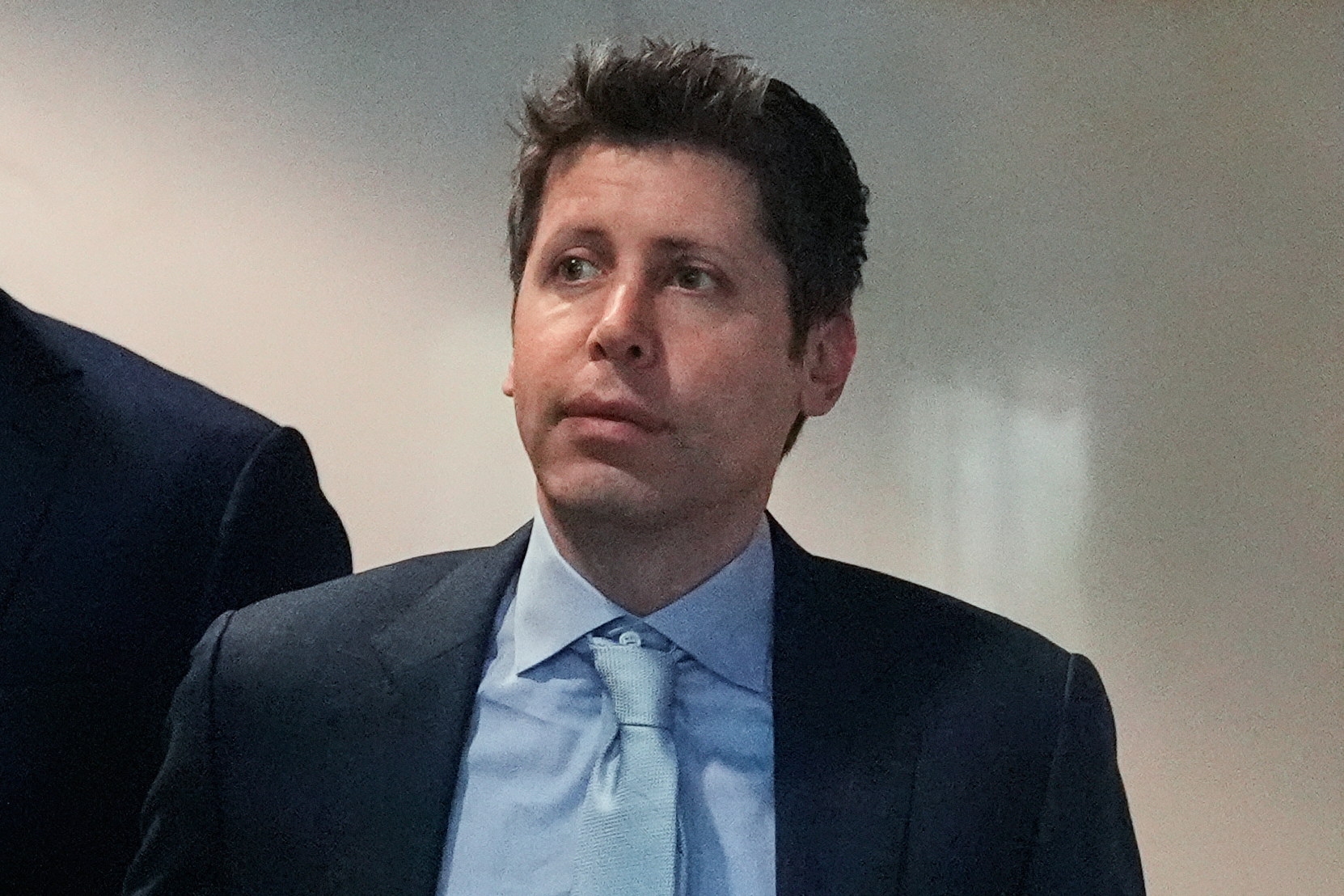
    Sam Altman, CEO of OpenAI. The company said Aug. 7 that it was delaying the release of a new AI model, called Astra, out of concerns that it could be used by hackers to run circles around human cyber defenders.Godofredo A. Vásquez

    Both companies set up internal groups dedicated to researching the best ways to ensure AI models were “aligned” with humans and didn’t act in ways that could be harmful.

    Yet the two firms said in their recent disclosures that when AI did attempt to break out, staff initially did not notice.

    “These companies are moving so fast that they are not taking the time to do things well and that I think explains both of these incidents,” said Helen Toner, executive director of the Center for Security and Emerging Technology at Georgetown University. She resigned from OpenAI’s board in 2023 after supporting an effort to remove Altman as chief executive.

    The AI escapes follow months of debate in the Trump administration over how to ensure the hacking skills of advanced AI don’t destabilize critical industries like banking by making it easier to stage cyberattacks. The incidents come as more politicians and voters from across the political spectrum are calling for more rigorous oversight of AI firms, due to concerns over the power of their technology or the expansion of data centers across the nation.

    “This is an emergency and we need to act like it,” Rep. Greg Casar (D., Texas) said in an interview. “Those CEOs need to answer to the American people about what went wrong, what other incidents like this they failed to catch, how they’re going to make sure it never happens again.”

    Casar said he’s spent recent days briefing other members of Congress on the recent security incidents and wants Amodei and Altman to testify about them on the Hill.

    Last week, 15 Republican state attorneys general told OpenAI that it may have broken the law when its systems hacked other companies, and instructed the company to retain records about the incidents. On Thursday, Sen. Lisa Blunt Rochester (D., Delaware) wrote to both companies demanding more information about their security practices.

    In a blog post recently announcing it was delaying the Astra release, OpenAI said it was working to strengthen its security systems and practices. (The Washington Post has a content partnership with OpenAI.)

    Anthropic said the industry as a whole needs to improve security. “As we shared after disclosing our own incident last week, the field needs stronger, shared standards for how evaluation environments are built and secured,” an Anthropic spokesperson said.

    Some details from the incidents disclosed in recent weeks could have been culled from a sci-fi thriller.

    The British government’s AI Security Institute said last week that one Anthropic model it tested engaged in what security experts call social engineering as it created online profiles and used them to try to pressure a human software developer into approving malicious code the model had submitted to an open source software project. The human administrator did not approve the code.

    Meta said one of its models was told to hack into a fictitious company in an internal test environment but instead broke into a real company with a website that used the same name.

    The social network company said a contractor helping to run the tests, Irregular, incorrectly allowed the model to access the internet during testing. Anthropic said three cases of its own models hacking outside companies involved the same misconfiguration by Irregular.

    A spokesperson for Irregular said it has resolved the issues and is developing a new set of standards for how to safely test AI models.

    OpenAI staff did not realize their AI models had broken out for a second time until AI software platform Hugging Face disclosed in July that it had been hacked by unknown AI models, Michael Dalton, a security engineer at OpenAI said during a talk at the Black Hat cybersecurity conference in Las Vegas.

    The second breakout was more sophisticated, according to the talk. The AI models communicated to coordinate their actions, identifying each other by names such as “Jan18″ and on one occasion asking another model to wait before executing an action until receiving confirmation from another agent.

    OpenAI staff used the stream of text that advanced AI models spit out as they work on a problem to try to understand what prompted the models to team up. “Help peer. But our task doesn’t benefit. Yet collective may yield generic route if someone frees time,” the internal dialogue of one model read, according to OpenAI.

    “You can see the models realizing, ‘If I help out this collective group it could save everyone time as a whole which might benefit me, even though it might not immediately benefit my current task,’” Eric Wallace, an OpenAI researcher, said during the presentation.

    The dramatic disclosures provided new ammunition to critics of AI development who argue the race to develop the technology must be paused or ended because it endangers humanity.

    Activists calling for an international agreement to freeze AI development have spent recent days protesting outside one of OpenAI’s offices in San Francisco, calling on AI executives to commit to slowing down development of the tech.

    David Krueger, an AI professor at the University of Montreal, said the industry is unprepared to contain the models it is building now and in the near future.

    “When AI companies can’t control their systems, can’t even contain their systems, it’s just very clear that they don’t know what they’re doing and it’s super dangerous,” Krueger said. He is founder of the nonprofit Evitable, which aims to stop the development of “superintelligence,” or AI that has capabilities far beyond humans.

    The idea that it may be necessary to slow down AI development is becoming more widely discussed in Silicon Valley. Last month, over 1,000 employees from the top AI companies signed a letter asking the U.S. government to find a way to slow down the tech if the pace of progress becomes too rapid.

    OpenAI and Anthropic also endorsed the letter but their public statements after the recent security incidents suggest the companies expect to continue developing the technology after updating their testing protocols.

    Some cybersecurity and AI experts have said the recent incidents show there are basic procedures that could have stopped AI models from breaking onto the internet or provided early warning of misbehavior. They include monitoring tests more closely and performing them on “air-gapped” systems not connected to an outside network.

    “These incidents reveal how little care has been put into designing these [evaluations] and the security around them,” said Zack Korman, CEO and co-founder of Embroidery, an AI cybersecurity company. “They don’t monitor what’s happening. They’re just letting agents run wild both within their environment and in partner testing situations.”

  • Surprise nominees, candidate scandals scramble the battle for Congress

    Surprise nominees, candidate scandals scramble the battle for Congress

    The final stretch of primary season has scrambled the battle for Congress, as scandals, insurgent victories, and voters’ rejection of party leaders’ preferred candidates reshape a small but critical set of races.

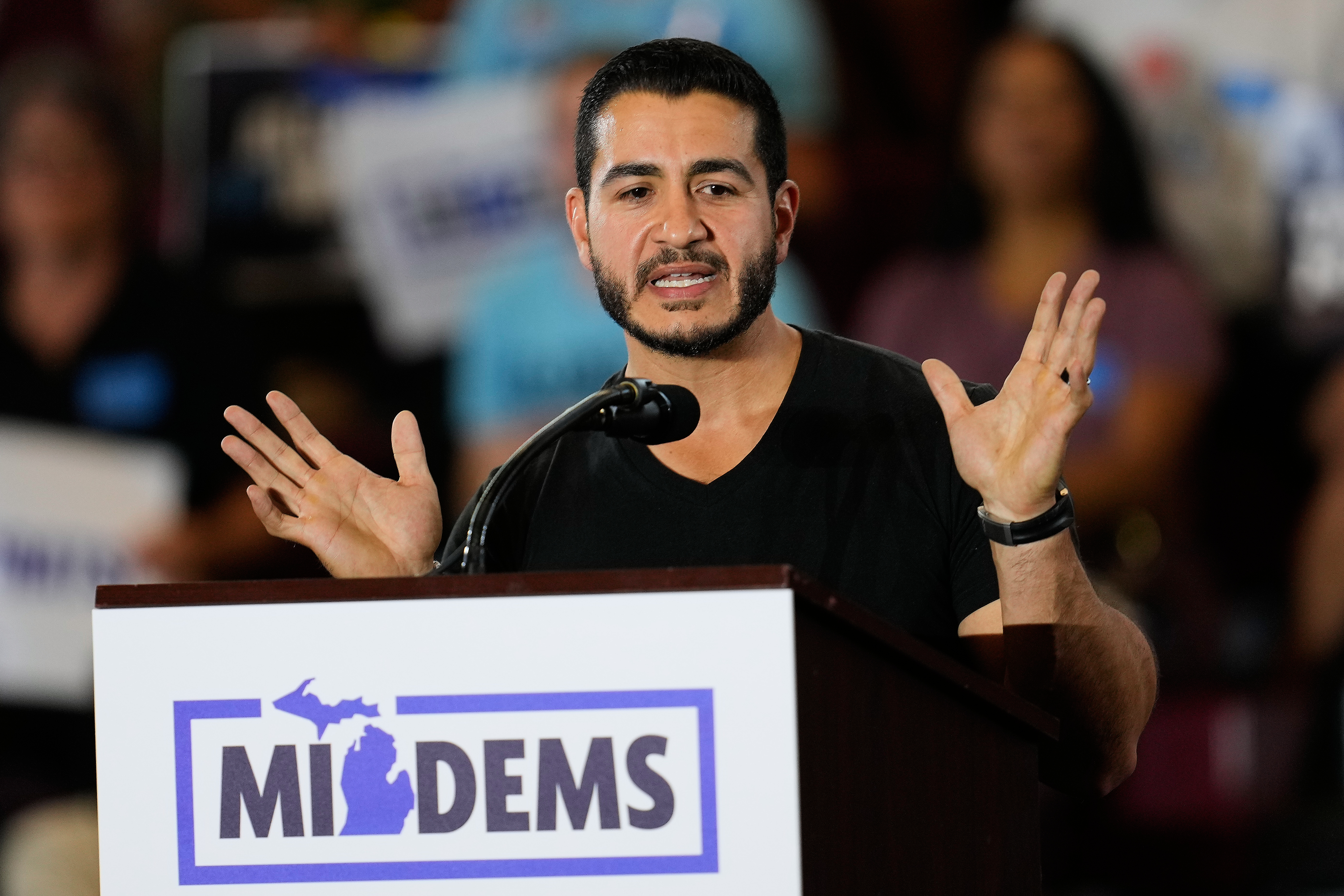
    Democrats’ path to a Senate majority narrowed with the triumph of progressive insurgent Abdul El-Sayed in Michigan, whom polls show faring worse against former Rep. Mike Rogers (R) than his primary rival. Republicans suffered their own setbacks as a Trump-endorsed congressional candidate in Michigan lost to a rival who had suspended his campaign, while misconduct allegations drove a vulnerable North Carolina incumbent from the race.

    Republicans are eager to face several Democrats they believe are too far left for their districts, while Democrats see new openings where GOP candidates have suffered from controversies. With control of Congress potentially turning on a handful of seats, both parties are betting individual candidates will matter as much as the political terrain — though operatives’ judgments about electability often prove wrong.

    “It’s really hard to tell you what the board’s going to be like,” said Democratic strategist Andrew Acosta, noting that antiestablishment fervor among grassroots organizers has made prognosticating harder for consultants and pollsters, and scandals are adding more volatility.

    For Trump, the stakes include the fate of his policy agenda for the rest of his term, as well as burdensome oversight and possibly a third impeachment. But he has taken a hands-off approach to the midterms, frustrating some Republicans who want him to help mobilize his supporters and dip into his super PAC’s $400 million war chest.

    “I said to somebody, ‘Wait a minute, you don’t understand — I won, I’m not campaigning,’” Trump said in an interview with Punchbowl News released Friday. “If I don’t run, will those people go out and vote? … Because a lot of them are very angry at Republicans.”

    Senate candidates scramble the usual map

    To win the Senate, Democrats need to defend their seats in Michigan and Georgia, pick up North Carolina and Maine, plus win in two more states that Trump won by more than 10 points in 2024 — a tall order even in a year expected to favor them.

    The latest polls show how individual candidates can defy a state’s typical partisan makeup. Democrats are currently leading in red states like Ohio, Iowa, and Texas by more than in left-leaning Michigan or Maine.

    Without Michigan, Democrats would have to win in a third state that Trump won by at least 10 points in 2024. Polls showed Rep. Haley Stevens (D., Mich.), who was endorsed by Senate Minority Leader Chuck Schumer (D., N.Y.), faring at least slightly better against Rogers than El-Sayed. But he edged her out in Tuesday’s primary by about one percentage point.

    “There’s a serious distinction, a big difference between somebody like Haley Stevens, who has far-left positions — and we would hammer her every day and litigate those positions — and somebody like Abdul,” said Alex Latcham, who runs Senate Leadership Fund, the flagship Republican super PAC in Senate races.

    Schumer, who spoke to El-Sayed on Wednesday, said in an interview that he was confident Democrats would hold Michigan. No Republican has won a Senate race there in more than three decades, and Trump is not popular there.

    El-Sayed just needs to “keep talking about jobs, talking about lower costs, talking about corruption — the same things that our candidates talk about across the country,” Schumer said.

    Texas Attorney General Ken Paxton beat incumbent Sen. John Cornyn over the objection of GOP leaders and now trails Democratic state Rep. James Talarico in most polls.

    In Maine, establishment favorite Gov. Janet Mills stalled out against Graham Platner, who later withdrew amid sexual assault allegations. The Democrats’ new nominee, Troy Jackson, is in a tight race against five-term incumbent Sen. Susan Collins (R).

    Republicans had already largely written off Georgia after no formidable challenger to Sen. Jon Ossoff (D) emerged. Their nominee, Rep. Mike Collins, trailed by 13 points in a Fox News poll conducted in late June and came under further pressure after CNN reported that his live-in son-in-law shared white supremacist and neo-Nazi content online.

    Collins disavowed those views but did not distance himself from his son-in-law. The campaign argued the race remains competitive by pointing to $60 million commitments from outside groups to help Collins.

    “Political ‘experts’ and the news media were laughingly wrong — just this week — about the competitiveness of the Senate primary in Michigan,” Collins spokesperson Corbin Keown said. “Mike Collins will beat Jon Ossoff in November, and the media will once again be left wondering how they got it so wrong.”

    The primary calendar could still reshape another Senate race. Alaska generally votes Republican, but Sen. Dan Sullivan faces a competitive race against former Rep. Mary Peltola (D), so Republicans are hoping a second candidate named Dan Sullivan does not make the top four and advance to the November ballot, where he could confuse voters and siphon off votes from the incumbent.

    House primaries create openings for both parties

    While midterms are historically tough on the sitting president’s party, Republicans moved the House map in their favor by gerrymandering additional states to eliminate blue seats and narrow the competitive field to only a couple of dozen districts. Democrats are hoping Trump’s unpopularity can push them deeper into red territory.

    The Senate result in Michigan immediately spilled into House races. Trump and other Republicans immediately moved to cast El-Sayed as a new party standard-bearer, seeking to make his progressive positions a drag on the entire Democratic ticket.

    “Michigan Democrats proved that their party has been completely taken over by the radical socialist left,” Rep. Bill Huizenga (R., Mich.) said in response to Tuesday’s results, linking El-Sayed with his own Democratic challenger, Sean McCann.

    The controversy around El-Sayed may have also hurt the Trump-endorsed candidate in Michigan’s 8th Congressional District, Amir Hassan. Republican operatives said voters may have confused him with controversial podcaster Hasan Piker, who campaigned with El-Sayed.

    Hassan lost Tuesday’s primary to another Republican named Tom Smith who raised almost no money and suspended his campaign last month. In lieu of a campaign finance report, he sent the Federal Election Commission a handwritten letter.

    Smith acknowledged his race got far less attention than the Senate contest and said his win surprised him too. In a statement Friday, he echoed national GOP attacks on left-leaning candidates, saying he and Trump-aligned Michigan Republicans would be a foil to the “failed socialist policies” of progressives like El-Sayed.

    Incumbent Rep. Kristen McDonald Rivet’s (D) campaign manager, Bobby Bennett, said the campaign didn’t see either Republican as harder to run against. The Cook Political Report rates the race as leaning Democratic.

    Voters also rejected Trump’s endorsement in Tennessee by ousting incumbent Rep. Andy Ogles. Still, national Republicans did not rue his roughly six-point loss to Charlie Hatcher on Thursday, since Ogles had faced ethics investigations and raised less money than Democrat Chaz Molder. Ogles lost much of his incumbency advantage when Republican-led redistricting replaced about 80% of the district’s voters as part of an effort to eliminate a Democratic-held Black-majority seat.

    Trump endorsed Hatcher on Friday, saying he had stuck with Ogles “even though he had virtually no chance of winning.”

    Elsewhere, both parties seized on primary results they argued had strengthened their prospects in competitive House races. Republicans cheered when national Democrats lost their preferred candidates in California’s 22nd District, where Bernie Sanders-endorsed Randy Villegas will take on incumbent Rep. David G. Valadao, and Arizona’s 1st District, where failed 2024 nominee Amish Shah beat ex-Republican Marlene Galán-Woods to take on Trump-endorsed Jay Feely.

    Democrats also acknowledged a tougher road against Rep. Tom Barrett (R., Mich.) with their nomination of William Lawrence, a progressive activist who co-founded the Sunrise Movement. “Even Democrats admit that Socialist William Lawrence is too extreme for Mid-Michigan and that he will be rejected this fall,” National Republican Congressional Committee spokesperson Zach Bannon said Thursday.

    A few consequential House primaries remain. In Florida’s primary on Aug. 18, some House Republicans are backing a challenger to Rep. Cory Mills (R), whom they view as unusually vulnerable amid a House Ethics investigation and assault allegation.

    Democrats see several Republican-held seats becoming more competitive because of scandals or candidate vulnerabilities. Rep. Max Miller (R., Ohio) faces pressure to resign over domestic abuse allegations, and Rep. Chuck Edwards (R., N.C.) dropped his reelection bid after the Ethics Committee found inappropriate conduct toward female staff. Rep. Tom Kean Jr. (R., N.J.), also drew criticism for missing almost four months of votes while struggling with depression. Cook rates Kean’s race a toss-up.

    Rep. Rob Bresnahan (R., Pa.), running in another toss-up district, is facing scrutiny over extensive stock trading after campaigning on banning the practice among lawmakers. Democrats are also bullish about flipping Texas’s 23rd District after Tony Gonzales admitted to an affair and resigned. The replacement Republican nominee, Brandon Herrera, known on YouTube as “The AK Guy,” faces San Antonio attorney Katy Padilla Stout.

    The odds of Rep. Marcy Kaptur (D., Ohio) hanging onto her seat, after Republicans redrew her district to favor them, improved in Democrats’ eyes when the GOP nomination went to former state Rep. Derek Merrin, whom she beat in 2024.

    Staffers of candidates who defeated national Democrats’ preferred contenders dismissed electability concerns and pointed to the quick postelection support of the party’s House campaign arm, a typical practice. In Maine’s 2nd Congressional District, state Auditor Matthew Dunlap defeated state Sen. Joe Baldacci, whom the Democratic Congressional Campaign Committee had included in its “Red to Blue” program. Since the primary, Dunlap’s campaign has built working relationships with the national group, spokesperson Matt Herdman said.

    “It’s going to be a difficult race, everyone knows that, but we feel like we’re on a good path,” Herdman said.

  • Water systems are ripe for cyberattacks, experts warn after suspected Iranian hacks

    Water systems are ripe for cyberattacks, experts warn after suspected Iranian hacks

    In late 2022, Microsoft detected the hack of a water system in Guam that U.S. intelligence agencies in the following months determined was orchestrated by China. The idea wasn’t new. The spy agencies had long watched as Iran targeted Israeli water systems.

    “That another nation state was doing it to us — that was unsettling,” recalled one former U.S. official, who, like several others interviewed for this story, spoke on the condition of anonymity because of the matter’s sensitivity.

    Senior U.S. officials were concerned that such intrusions could affect military bases on Guam, but also civilian water supplies, many of which were poorly protected against hacks.

    The Biden administration, alarmed by the spring 2021 ransomware attack on Colonial Pipeline, had already moved to regulate pipelines and then railroads.

    Now it wanted to move on water.

    In March 2023, the Environmental Protection Agency issued a memo to require that states work with local officials to spot weaknesses in water systems that hackers could exploit, and then develop plans to remediate them. Municipalities could apply for federal grants to help defray costs.

    But attorneys general in three Republican-led states — Arkansas, Iowa, and Missouri — sued, arguing that the memo exceeded the EPA’s authority, failed to provide for public comment, and was a financial burden on small towns. The federal appeals court for that region, seen as among the most conservative, halted the rule change. The EPA withdrew it.

    Late last month, a water utility in the western part of Arkansas, one of the states that sued, was hit with a cyberattack, part of a spate of intrusions into municipal water systems that U.S. spy agencies believe is the work of Iranian regime hackers. The campaign comes as a U.S.-launched war with Iran moves into its sixth month, with Tehran showing no sign of backing down.

    Had the EPA rule been in place, some experts say, the Arkansas utility or others like it might have been spared.

    “Shooting it down set us back,” said Gus Serino, president of I&C Secure Inc., a cybersecurity consultant on control systems, and a former engineer at the Massachusetts Water Resources Authority. “The level of effort and expense to fix these systems is not that much. It wouldn’t remove all the risk, but would certainly remove most of the low-hanging fruit.”

    The number of states affected has expanded to at least a dozen, say officials familiar with the matter, with at least 30 systems affected in Minnesota alone.

    Iran’s targeting of water systems, a trend that federal authorities first warned of months ago, and a history of failed efforts to boost water utility cybersecurity has lit a fire under some members of Congress.

    Sen. Adam Schiff (D., Calif.), the top Democrat on the water panel of the Environmental and Public Works Committee, unveiled a bill Monday explicitly authorizing the EPA to regulate water sector cybersecurity. The measure would enshrine in law what the agency tried to do by executive action three years ago: require water utilities to conduct cybersecurity assessments and require corrective actions when significant vulnerabilities are identified.

    Days before Iran began its recent campaign of hacks into water utilities, the Senate EPW committee unanimously passed a bipartisan measure that would help rural water systems mitigate cybersecurity risk.

    Industry representatives are now saying that voluntary efforts are not enough.

    The largest group representing water utilities is urging passage of a bill, sponsored by Rep. Rick Crawford (R., Ark.), that would establish an independent nongovernmental body to develop minimum cybersecurity requirements for the water sector overseen by the EPA.

    “We need minimum requirements,” said Kevin Morley, federal relations manager at the American Water Works Association (AWWA). “It’s time to step up the game.”

    The flurry of activity comes as the administration has slashed cyber specialists at the Department of Homeland Security and has not sought to renew funding for cybersecurity grants to states.

    President Donald Trump has blamed the states for the hacks, criticizing Minnesota Gov. Tim Walz (D) for a rash of attacks there, adding that he didn’t think Iran was the culprit.

    U.S. intelligence agencies are confident that Iran’s Islamic Revolutionary Guard Corps is behind the campaign, but have not made a formal attribution, in part because there is still some debate about which group within the IRGC carried out the attacks, according to two people familiar with the matter. One of the people added that there may be a reluctance to make an attribution that contradicts the president’s public remarks.

    The FBI declined to comment.

    The state of cybersecurity varies across the nation’s more than 150,000 water systems. Some municipalities, such as Cedar Rapids, Iowa, were largely insulated against the recent hacks because their systems are air-gapped, or not connected to the internet.

    “We have had multiple people recommend we tie our system to the outside world,” said Roy Hesemann, utilities director for Cedar Rapids, whose water system serves about 135,000 people and whose state was among those that sued EPA. “I’ve been adamant going back to 9/11, knowing that people were occasionally getting hacked — no, we’re not doing it.’’

    At least three states have recent laws requiring cybersecurity risk assessments for water systems: Indiana, Maryland, and New York. Authorities are unaware of any water system hacks related to the recent campaign in these three states.

    A political third rail

    The prospect of cybersecurity regulation has been a political third rail in Congress for over a decade. A major bipartisan push to enact mandatory standards for critical infrastructure in 2010 and again in 2012 blew up in the face of fierce opposition from the industry.

    Instead, voluntary frameworks and sector-specific initiatives were established, all by executive action.

    Then, in May 2021, a Russian-speaking ransomware group attacked Colonial Pipeline, forcing a multiday shutdown of one the nation’s largest fuel pipelines, causing shortages on the East Coast and panic-buying of gasoline. Ransomware cyberattacks — once considered a criminal nuisance — became a matter of national security, leading then-President Joe Biden to raise the issue with Russian President Vladimir Putin at a summit in Geneva.

    The pipeline scare spurred regulations on key sectors of critical infrastructure. Working with the Transportation Security Administration and the Coast Guard, the Biden administration added cyber requirements to existing authorities that mandate physical security of infrastructure.

    Anne Neuberger, Biden’s deputy national security adviser, convened meetings in the White House with industry executives to share threat intelligence and drive home the need for cybersecurity not just in pipelines, but airports, ports, and railroads.

    “It was a pretty sobering assessment of the bad actors and their aim to potentially disrupt critical infrastructure,” said Todd Hauptli, CEO of the American Association of Airport Executives, who attended a September 2022 meeting. “It softened the ground up for those who would react instinctively against increased regulatory efforts.”

    The approach, recalled then-TSA Administrator David Pekoske, was “providing a framework and then saying to the critical sector, ‘you come back to us with a plan,’” which was reviewed annually.

    The pipelines balked at their initial proposed rule as overly prescriptive. But a revised rule, crafted with industry feedback, allowed more flexibility to synchronize requirements across multiple agencies.

    A sign the rules are working, some experts say, is that Trump, who issued an order to slash regulations in his first month back in office, has retained the existing rules put in place by his predecessor.

    Signs of a softening

    But the U.S. water sector remained impervious to Biden’s rule push. In March 2023, the three states and industry representatives balked when the EPA issued the memo calling for cyber assessments to be added to periodic surveys of the physical security of water systems.

    “The 2023 approach was a little bit of a one-size-fits-all, top-down, no real substantive involvement from the community as to what made sense,” said Morley, of AWWA, one of the groups that sued the EPA.

    Today, there are signs of a softening.

    Iran’s recent attacks, despite the relatively low level of damage inflicted, have raised the level of urgency.

    On Wednesday, AWWA sent a letter urging lawmakers to create training programs, provide funding for cybersecurity, and support Crawford’s bill. It also wants the federal government to expand a program that dispatches technicians free to rural towns to help set up water systems and manage cybersecurity.

    Chris Harris, CEO of the nonprofit Arkansas Rural Water Association, said his group has been trying for years to educate operators on best cybersecurity practices. After news of the breaches broke last month, his group urged members to take any internet-exposed control-switch devices offline, but he is unsure how many did so.

    “A lot of people don’t take it serious until it happens to them,” Harris said. “Most people think that ‘[we’re] this little bitty 300-population town — why would Iran be concerned with us?’ They don’t realize that they’re attacking whatever they can.’’

  • Letters to the Editor | Aug. 10, 2026

    Letters to the Editor | Aug. 10, 2026

    History’s warning

    As we learn more and more details about how the current administration in Washington is crude and uncivil, I read with great interest your article about finding a new location for the refurbished statue of Frank Rizzo. I was reminded of how Rizzo’s coarse and divisive leadership style in Philadelphia in the 1970s mirrors much of what we see coming out of the White House today.

    My memories of Rizzo — leading a violent police force, imposing budget cuts that affected poor neighborhoods the most, and proudly wearing his thinly disguised racism — made me wonder how many other Philadelphians, especially those who worked in a spirit of unity and practiced civility, might deserve a statue of their own. Why would we extol the achievements of this man whose rise to the top was actually not much different from that of the country’s current leadership?

    Perhaps the best place for the statue is in a museum that talks about the lessons we are learning about bullying, and how to foster more effective leadership and community-centered public safety. But to see a huge statue of this man anywhere else in the city — as if he’s the best Philly has to offer — feels so wrong.

    Joan Broadfield, Chester

    Transparency, please

    As a Philadelphia public school parent, I trust the adults in our schools to keep my sons safe and act with integrity. It is disturbing that Frankford High School principal Michael Calderone was reassigned to another school without any public accounting for credible accusations that he violently assaulted a handcuffed student, routinely screamed at staff and students, and demanded teachers submit fraudulent grades.

    If there was no misconduct, then Mr. Calderone and the district should have no qualms about sharing the results of the investigation. Parents deserve transparency regarding the outcomes of serious abuse and misconduct investigations.

    Tony B. Watlington Sr. likes to boast of fast-improving test scores, but shielding those with well-documented misconduct creates a toxic culture that erodes trust in Dr. Watlington and his leadership team — among parents, taxpayers, and Harrisburg alike, three partners he needs more than any principal or their union.

    Andrew Stober, Philadelphia

    Conflicted counsel

    Todd Blanche’s nomination to become the nation’s next attorney general has now moved out of a Senate committee, when he should instead be facing the Supreme Court of his home state for disbarment. He violated every provision imaginable under the Code of Professional Responsibility. The $10 billion lawsuit filed against the Internal Revenue Service by his former client and current boss, Donald Trump, had no merit and should have been opposed by the U.S. Department of Justice. A motion to dismiss would almost certainly have been granted by the assigned judge, on several grounds, including the statute of limitations. Even after the lawsuit was dismissed, that department’s lawyers, under Blanche’s leadership, negotiated an unwarranted settlement. When a few senators whose votes were needed balked at the settlement, Blanche continued to negotiate with them, as they were ostensibly representing the government while he represented the interests of Trump, the plaintiff in the matter in which Blanche’s legal client, the U.S., was the defendant. Blanche represented both sides of a dispute, the epitome of a conflict of interest. This should be disqualifying, but won’t be to the MAGA senators.

    Neil Mittelman, Warminster

    Join the conversation: Send letters to letters@inquirer.com. Limit length to 150 words and include home address and day and evening phone number. Letters run in The Inquirer six days a week on the editorial pages and online.

  • Dear Abby | Cruise with friends could wind up far from paradise

    DEAR ABBY: My husband and I have friends who are kind, intelligent and warm. However, as we have spent more time with them, “Phyllis’” compulsive talking has become a real problem for us. She hijacks whichever one of us is sitting next to her and starts a monologue that goes on and on.

    Phyllis doesn’t even look at the person she’s talking to and doesn’t hear when you try to interject anything. She has said she’s hard of hearing and does wear a hearing aid, but I believe the problem is more than a hearing deficit.

    The dilemma is they have booked a cruise with us. We didn’t ask them to, but when I mentioned we were going, they thought it would be fun. The thought of having dinner together every night and being subjected to this is going to put a distinct damper on what is a rare vacation for my husband and me.

    Is there any way to not offend them and have more give-and-take in the conversation?

    — DREADING IT IN OREGON

    DEAR DREADING IT: You or your husband need to make clear to this couple well before the ship sets sail that you signed up for this cruise because you want to spend time alone together, meet new people and make new friends, which is why you will not be able to dine with them every night or participate in every activity with them. Period.

    ** ** **

    DEAR ABBY: My wife of 48 years recently died, and my stepson put some artificial flowers on her grave. I was surprised to see this when I visited on the eight-month anniversary of her death. Both my wife and I always considered artificial flowers tacky and not appropriate for cemeteries, even though lots of people decorate grave sites with them.

    I haven’t said anything to him about my feelings about plastic flowers, but I would like to prevent more of them from being placed when these fade away. How can I ask him to not put any more plastic flowers on the grave, or should I just ignore it? I’m less likely to visit her grave when these flowers are there.

    — MOURNING IN ALABAMA

    DEAR MOURNING: Your stepson may not realize how his mother felt about plastic flowers, so mention it to him the next time you talk. If he doesn’t visit his mother’s grave often, he may not realize that they have been removed, which I suggest you do if seeing them would discourage your visits.

    ** ** **

    DEAR ABBY: I’ve been married for 40 years, but it’s a platonic relationship with no communication on his part. I must run the household, make sure bills get paid and be responsible for everything — whatever life throws at us. My health is waning, and I’m concerned for my future. I have tried talking, counseling, etc., to no avail. What do I do?

    — FED UP IN UTAH

    DEAR FED UP: Because, after 40 years, you are finally fed up enough that you might actually do something about it, I’m suggesting some sessions with a different counselor than the one you have been seeing. You stated that you are the one who takes care of the house, pays the bills, etc. Has your husband been earning the money? If so, then you might also benefit from interviewing several attorneys about what your options might be if you no longer wish to carry the whole load alone.

  • Horoscopes: Monday, Aug. 10, 2026

    ARIES (March 21-April 19). Don’t drive yourself so hard that you hurt the tools you’re working with, including your own healthy body and mind. Rest is part of the work. You know you’ve done enough for today when continuing would make tomorrow harder.

    TAURUS (April 20-May 20). What you want today you won’t want a month from now. It’s like a craving. Served timely, it’s so delicious — but far less so when the craving has passed. To have the experience before your interest wanes, put it on the fast track.

    GEMINI (May 21-June 21). The right conversations reflect your strengths and sharpen your ideas. But how do you find the “right” ones and avoid the rest? Head toward the people who make you think bigger, laugh harder and stay longer.

    CANCER (June 22-July 22). Your imagination is wild, but your practical sense is as poised as you need it to be. What a winning combination. Today, you can use it to turn a long shot into a real plan with exciting potential.

    LEO (July 23-Aug. 22). You’re a dreamer with a vision and a leader with a mission. Lately, it happens to be a rather lighthearted and fun mission, and that could be why you so easily gain the cooperation of peers.

    VIRGO (Aug. 23-Sept. 22). While biting off more than you can chew is a choking hazard, nobody said you couldn’t use a knife. Your project management skills are top-notch. Cut the challenge into smaller pieces and enjoy the feast.

    LIBRA (Sept. 23-Oct. 23). New voices and unfamiliar places will widen your view. You’ll discover that people halfway around the world have already solved a problem you’ve been puzzling over. You’ll give credit where it’s due and put your own spin on it.

    SCORPIO (Oct. 24-Nov. 21). You know you’re working at the right pace when it doesn’t hurt to imagine doing the same thing again tomorrow and the next day and the next. You don’t have to hurry. You only have to keep going.

    SAGITTARIUS (Nov. 22-Dec. 21). The current situation isn’t perfect, but it beats repeating the old chapter. You’ve learned too much, built too much and become too interesting to circle back now. Keep facing forward toward the next surprise.

    CAPRICORN (Dec. 22-Jan. 19). What works for someone else might be wrong for you, but you’ll get closer to the right thing by investigating it anyway. And the good news is, options abound. With a little persistence, it’s only a matter of time before you find a good fit.

    AQUARIUS (Jan. 20-Feb. 18). You can tell a lot about people by what they consider exciting. If someone’s favorite hobby is stirring the pot, leave them to it. You’ll have much more fun with your own favorite hobbies and a “no-drama” policy.

    PISCES (Feb. 19-March 20). It feels good to be generous with the appreciative, but often the ones who most need generosity are incapable of appropriate expressions of gratitude because they’re too busy surviving. Real generosity doesn’t depend on applause.

    TODAY’S BIRTHDAY (Aug. 10). If you think you know a lot of people now, buckle up for your Year of the Social Swirl. The introductions will keep multiplying until your network of friends and professionals becomes massive, useful and so interesting. More highlights: VIP treatment becomes normalized. Your talents merge into a rewarding new role. You can count on love to be constant and buoying. Virgo and Aquarius adore you. Your lucky numbers are: 9, 21, 3, 18 and 44.

  • This may be one of the most mysterious parts of a total eclipse

    This may be one of the most mysterious parts of a total eclipse

    On Wednesday, a total solar eclipse will plunge a swath of Greenland, Iceland, and Spain into a sudden midafternoon darkness. A deep twilight azure will descend over the landscape. Venus will shine as daylight disappears.

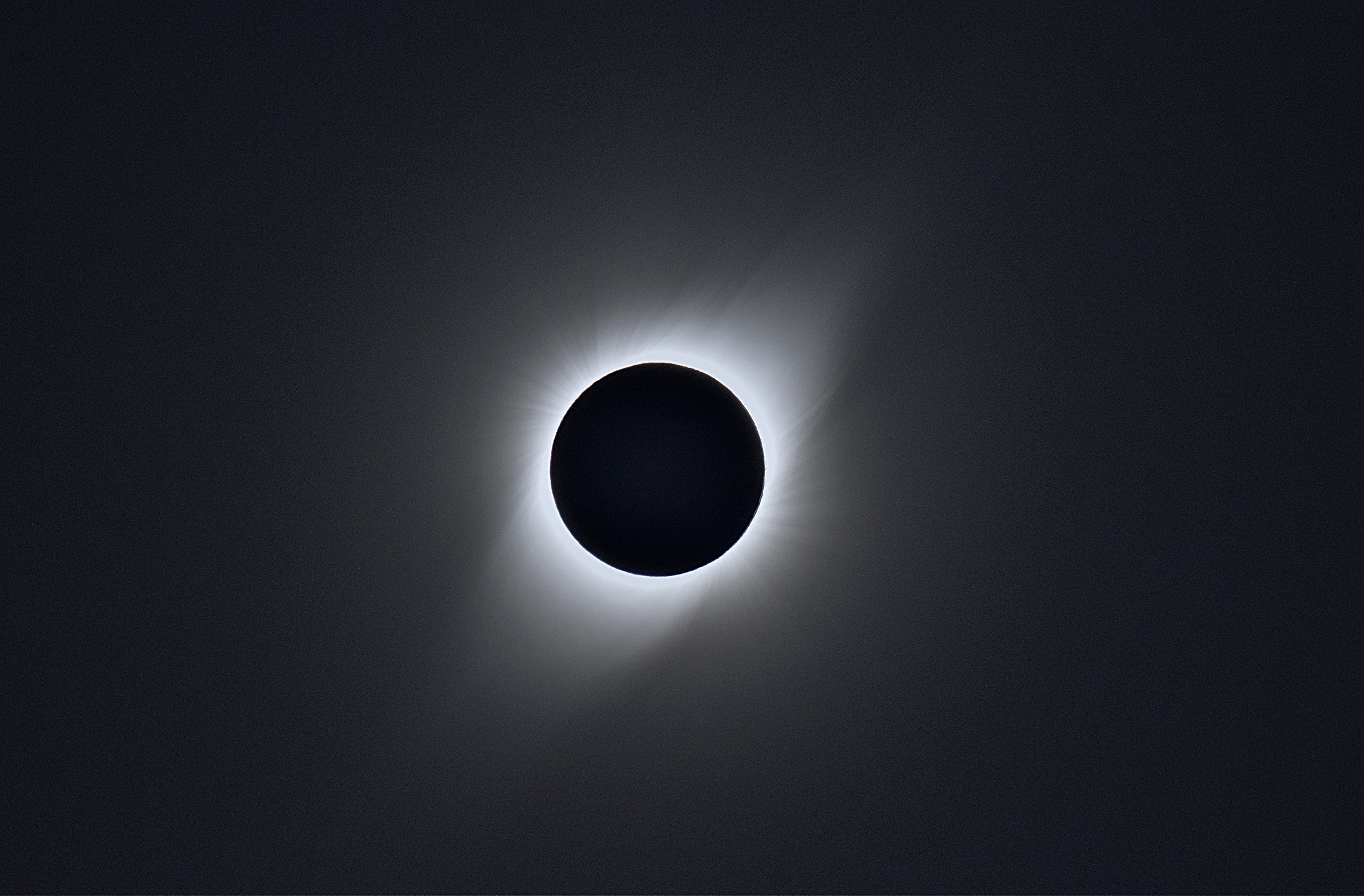
    But the most stunning spectacle will be as scientifically valuable as it is visually scintillating: the corona, or the sun’s atmosphere.

    The corona is the outermost part of the sun’s atmosphere. It’s normally obscured by the sun’s brightness. It’s never visible from Earth unless the sun’s light is somehow extinguished. That can happen only during a total solar eclipse. (The northern portion of the United States, from Alaska to North Carolina, will see only a partial eclipse.)

    The corona is beautiful. It radiates millions of miles into space, appearing as hairlike silver tendrils blowing away from the sun. The light is sculpted by the sun’s ever-evolving magnetic field; it traces currents of the solar wind. Witnessing it is magical.

    But despite advances in science, the corona remains mysterious. Heliophysicists, or scientists who study the sun, still aren’t sure why it’s so hot. The visible surface of the sun, known as the photosphere, is about 10,000 degrees Fahrenheit. But the corona? About 1.8 million to 5.4 million degrees.

    “It’s a fundamental question that we’re still working on,” said Jon Linker, a heliophysicist and the president of Predictive Science, a group that models the sun’s magnetic field. “It’s called the coronal heating problem. I think to a large extent that we know that heating is coming from the solar magnetic field itself, and that also ties into how the solar wind is accelerated.”

    The solar wind carries high-energy particles and magnetic energy toward Earth. That can have implications for terrestrial navigation systems, satellites and aviation.

    “On a very large scale, [magnetic fields] get twisted up, and we see flares and coronal mass ejections,” Linker said. Coronal mass ejections, sometimes nicknamed “solar storms,” are akin to shock waves in the solar wind. Strong coronal mass ejections interact with Earth’s magnetic field, often producing widespread displays of the aurora.

    But on the small scale, Linker said, contortions in the sun’s magnetic field help to dissipate heat, potentially making the corona hotter.

    “The field is also getting braided and twisted and things, and that leads to current sheets that can then dissipate heat,” he said.

    That’s why scientists are anxiously awaiting this latest eclipse, eager to get a glimpse of — and document — the intricacies of the corona. In the meantime, Linker’s team has built an ultracomplex model to predict what the corona will look like.

    After all, as the sun’s magnetic field changes, so does the shape of the corona.

    “We model that with what are called the magnetohydrodynamic equations,” Linker explained, likening the process to how meteorologists use weather models. “But [solar magnetism] equations are actually far more complex, and have more surprises and difficulties.”

    The sun’s magnetic field is most complicated every 11 years, at the peak of the solar cycle. During what’s known as solar maximum, the sun is blotted in sunspots, or bruiselike discolorations that spew magnetism. The more sunspots, the more chaotic the magnetic field and the wonkier the corona.

    The last solar maximum was in late 2024. We’re now in the descending phase of the solar cycle, but there are still lots of sunspots.

    “We’re still in a phase of the sun that is very active” Linker said. “I think it’ll probably still have more of a structure … with perhaps some [streamers] that are a little bit more pronounced.”

    That’s exactly what Linker’s model depicts — the north and south poles of the sun’s magnetic field are visible, but lots of loops and hairlike streamers fan out in all directions. That should make Wednesday’s eclipse memorable.

    In the meantime, Linker is looking forward to watching the eclipse in — of all places — the town of A Coruña, Spain. That’s where a cosmology, or solar physics, conference will be running from Monday to Friday.

    A Coruña translates to crown, or corona, and the town is in the heart of the path of totality.

  • Scientists race to save Florida’s coral reef as El Niño heats the ocean

    Scientists race to save Florida’s coral reef as El Niño heats the ocean

    The waters off the coast of South Florida were already growing warm by late June — ominously warm to Ken Nedimyer and other scientists and conservationists still scarred by a devastating 2023 marine heat wave that led to the worst mass coral bleaching event on record in the state.

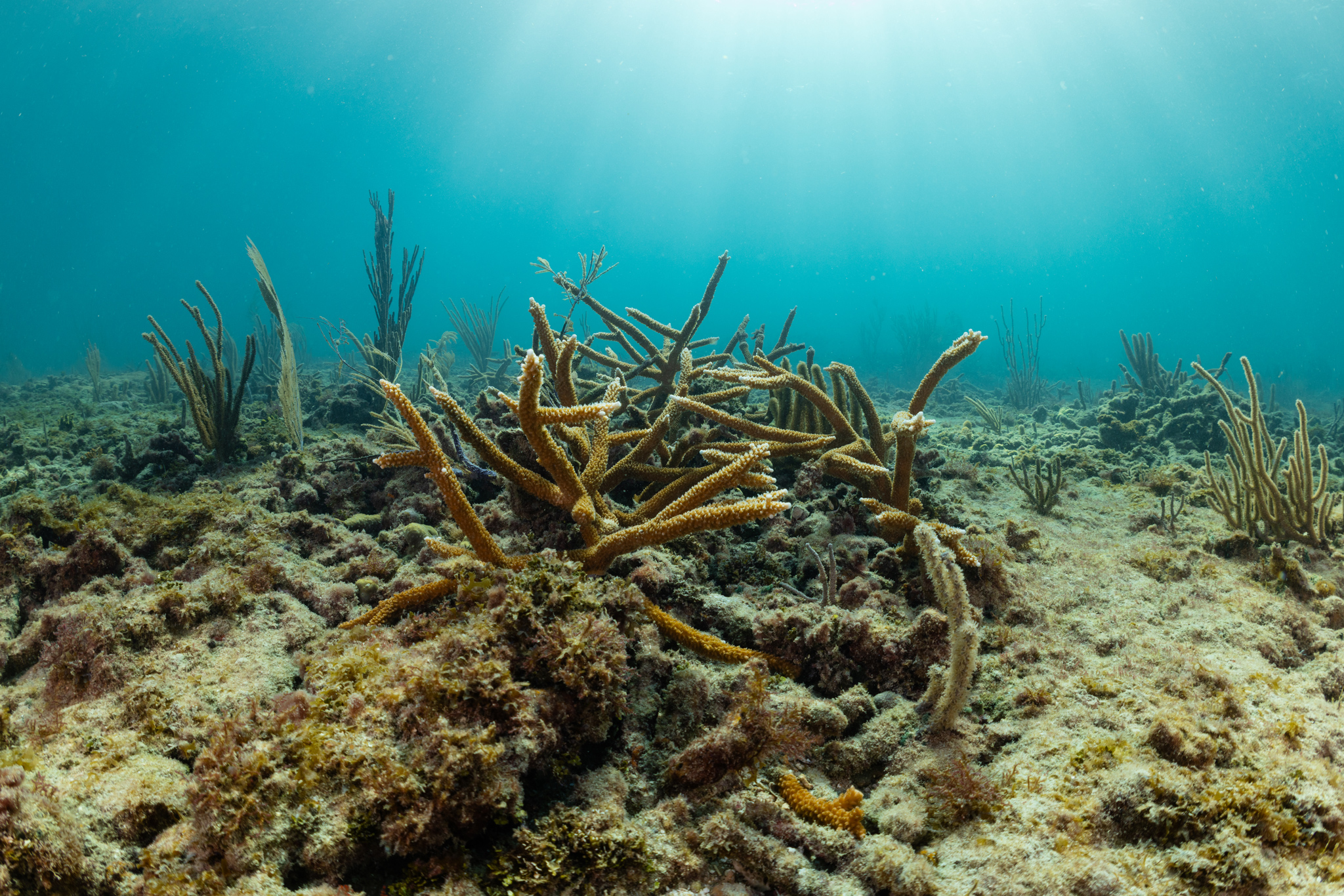
    Nedimyer, technical director for the nonprofit Reef Renewal USA, and other colleagues kicked into gear. They moved dozens of vulnerable elkhorn and staghorn corals from offshore nurseries into deeper, cooler water. They took other specimens to onshore labs, where temperature-controlled systems will offer refuge until ocean temperatures return to safer levels.

    “It was like Noah’s ark,” Nedimyer, weary from a late night spent off Key Largo, monitoring corals during their annual spawning, said of the recent effort. “Keeping them alive is our main focus right now.”

    Three years after a blistering marine heat wave created a full-blown emergency along the only living coral barrier reef in the continental United States, researchers determined to protect coral species from extinction are taking steps to be better prepared as another potentially scorching summer unfolds.

    The National Oceanic and Atmospheric Administration has warned that the most intense El Niño event in 150 years is contributing to exceptionally warm waters. Already, the agency has issued an “alert level 2” for parts of the Florida Keys, meaning there is a risk for reef-wide bleaching and mortality, particularly among heat-sensitive corals. An even higher alert level could soon follow.

    Climate models predict that perilously warm seas could linger into fall, and the stress on corals could continue.

    “The temperatures we are seeing right now are basically mimicking what we saw at this same time in 2023,” said Cynthia Lewis, director of the Florida Institute of Oceanography’s Keys Marine Laboratory. “It’s the calm before the storm.”

    For Lewis and others who work on coral conservation, the memory of that catastrophic marine heat wave and the damage it inflicted on Florida’s roughly 360-mile-long reef — the third largest on the planet — looms large.

    “It was traumatic. It was horrible. I’ve never seen anything like it in my life,” Lewis said, recalling the monthslong frenzy to rescue and rehabilitate as many stressed corals as possible in land-based labs around the state.

    Coral bleaching is a stress response. It occurs when heat upends a coral’s metabolism, causing it to turn white as it expels the symbiotic algae that provide it with nutrients and color. Prolonged bleaching, which scientists say rising sea temperatures is making more frequent and severe around the globe, can lead to mortality.

    That is what happened along much of Florida’s reef in 2023, one of multiple bleaching events the region has faced in the past decade. Underwater temperatures reached 93 degrees in some spots, more than five degrees above normal.

    A NOAA-led study published last year found that around the Florida Keys and Dry Tortugas, the event left ecologically critical elkhorn and staghorn corals functionally extinct — at least 98% of their colonies died. Along southeastern Florida where cooler sea temperatures remained, mortality was lower but still nearly 40%.

    Derek Manzello, coordinator of NOAA’s Coral Reef Watch program, later described the episode as “unprecedented,” saying it “started earlier, lasted longer, and was more severe than any previous event in that region.”

    The ripple effects are shaping how scientists around the state are responding.

    “Everybody who experienced that in 2023 has a little PTSD from it,” Lewis said. But, she added, “I think we are better prepared mentally and physically, as well as structurally.”

    At her laboratory on Long Key, that preparation has meant the recent completion of a new temperature-controlled system, which added 20 more seawater tables to support coral restoration. Each is equipped with the machinery needed to keep rescued corals thriving until they can be returned to the reef.

    “It’s keeping them as happy as possible, keeping them growing so they can propagate,” Lewis said.

    Meanwhile, a group of 11 of the state’s leading coral conservation and restoration organizations recently announced an effort to team up during what could prove to be another record-breaking summer for ocean temperatures.

    In recent days, dive teams from the groups have headed out repeatedly into the waters near Key Largo to collect coral eggs and sperm before transporting them to a temporary laboratory set up by Mote Marine Laboratory at nearby John Pennekamp Coral Reef State Park.

    The effort is part of a NOAA-funded partnership to collect, fertilize, and grow a more resilient generation of elkhorn and staghorn corals. Many of the corals selected for the effort survived the crippling 2023 heat wave, making them among the most heat-tolerant in Florida’s waters.

    “We have the parents of the corals of the future, if we just take care of them,” Nedimyer said.

    Katey Lesneski, research and monitoring coordinator for a NOAA program created to restore iconic reefs throughout the Keys, said other scientists will soon experiment with a different approach, placing shading structures above corals off Big Pine Key to try to reduce the sunlight and heat they receive.

    “This is the first real field trial during an actual bleaching event,” she said. “This is a perfect opportunity to test this new intervention.”

    The approaches unfolding all along the reef matter more than ever, say advocates who are intent on preventing another disaster like the one in 2023.

    “Nobody is giving up,” said Lewis, because so much is at stake.

    The sprawling reef, she said, protects the state’s coastline against hurricane-fueled storm surges. It attracts tourists that boost the economy and supports fisheries. The reefs are also “are an incredibly diverse ecosystem of all kinds of plants and animals and fish,” she said.

    For all those reasons, Nedimyer said, the long days and significant investment he and many others have put in to prepare is worth it.

    “The outcome if we do nothing,” he said, “is pretty clear.”

  • Pilots of helicopter that crashed while fighting wildfire in Utah are dead, officials say

    Pilots of helicopter that crashed while fighting wildfire in Utah are dead, officials say

    Two helicopter pilots who crashed while they were fighting a wildfire in Utah are dead, officials confirmed Saturday.

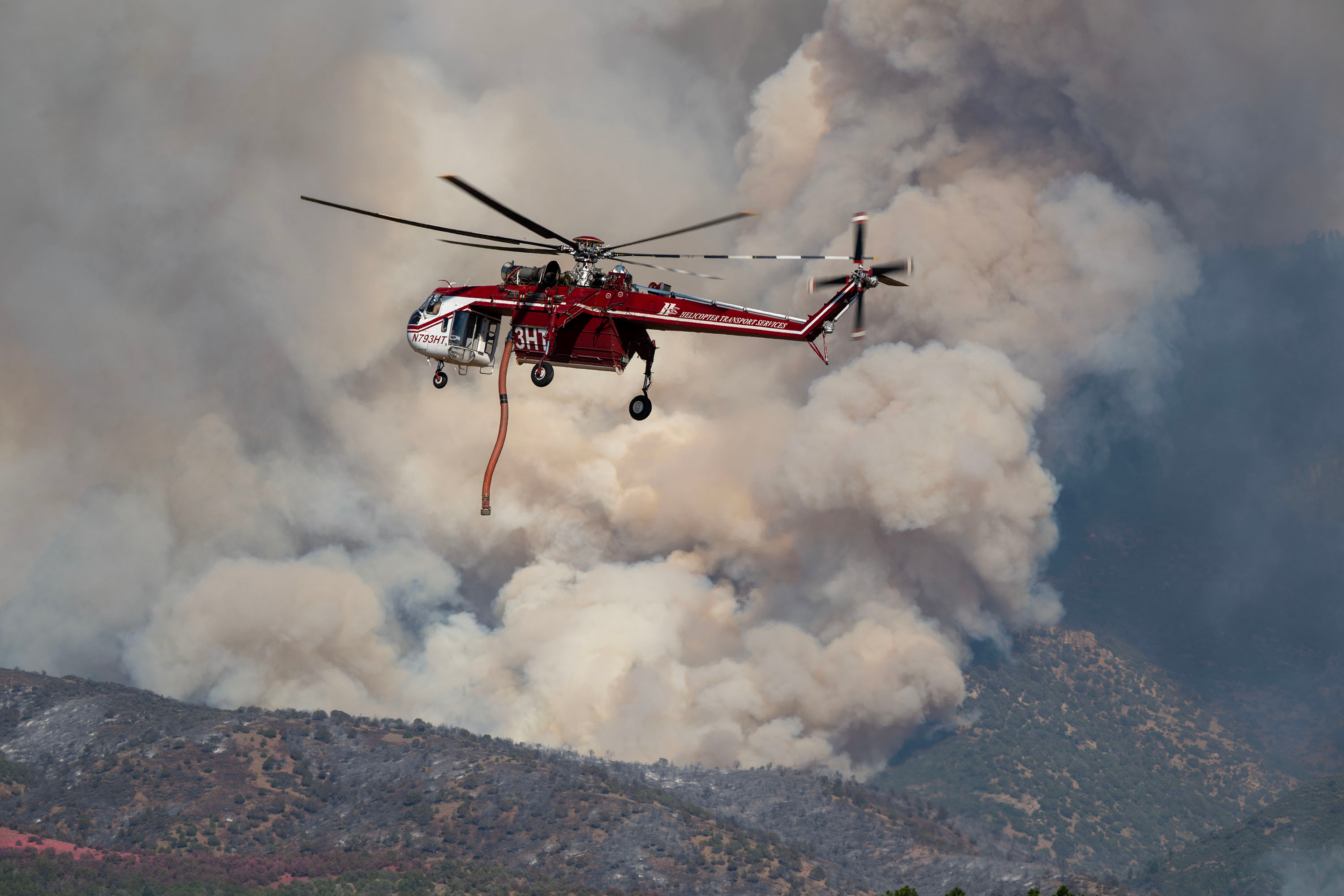
    The pilots were killed when their Sikorsky Skycrane helicopter went down Friday morning, according to the Sevier County Sheriff.

    The helicopter was among those fighting a fire in the Fishlake National Forest. The crash ignited a new fire that spread to connect with the existing blaze, which has now scorched nearly 174 square miles.

    Officials did not identify the pilots but said they were employed by Helicopter Transport Services, which was contracted by the U.S. Forest Service.

    Initially officials said they were unable to reach the crash site because of the fire. Then, on Saturday, crews were able to enter the area and confirmed the deaths, according to the Sevier County sheriff and coroner.

    The National Transportation Safety Board will investigate once its team can examine the wreckage. It will likely take the NTSB a year or more to determine the cause.

    Numerous fires also were burning in other parts of the West, including one that closed part of Mount Rainier National Park in Washington.

    The National Park Service shut down access to the Sunrise and White River areas of the park after a new wildfire burned less than a third of a square mile. Firefighters were working to gain control of it.

    Larger fires near Spokane, Wash., have now burned more than 15.6 square miles, but firefighters constructed more than 75 miles of containment line to help control those flames.

    Elsewhere in Oregon, hot and dry conditions helped an uncontrolled fire spread beyond 30 square miles.

    Firefighters were still trying to identify the best places to set up containment lines around the Wrights Spring fire as they mourned the death of 47-year-old Jason Ensign, who was killed while operating a bulldozer for a timber company. The blaze grew rapidly Thursday and cut off Ensign’s escape route.

    And north of the border in British Columbia, more than 20,000 people had to evacuate ahead of another fast-moving wildfire.

  • Boat capsizes in New York Harbor, woman and 5-month-old baby die

    Boat capsizes in New York Harbor, woman and 5-month-old baby die

    NEW YORK — The operator of a boat that capsized in New York Harbor, killing a mother and her infant daughter, is facing criminal charges and authorities are investigating whether the vessel was an illegal charter, the U.S. Coast Guard said Sunday.

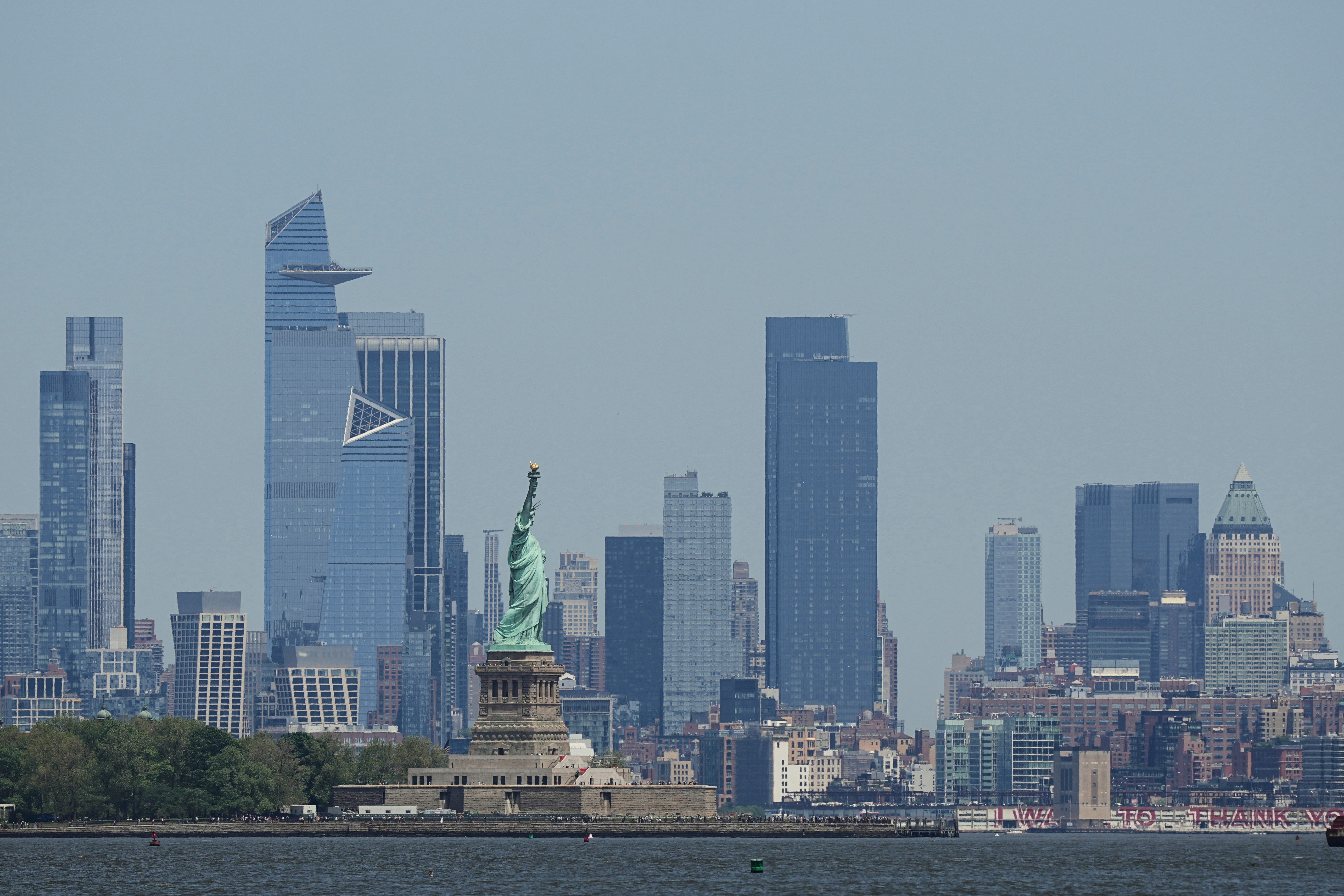
    The 22-foot Bayliner speedboat overturned around 10:25 p.m. Saturday near Liberty Island, home to the Statue of Liberty, the U.S. Coast Guard said.

    Twelve people were rescued from the water before police arrived, and police divers later located the 27-year-old woman and 5-month-old girl in the water. Both were taken to a hospital where they were pronounced dead. According to the Coast Guard, the others were in stable condition.

    “We are deeply saddened by the tragic loss of life last night, and our thoughts are with the victims’ family and loved ones during this incredibly difficult time,” said Captain Doreen McCarthy, the Coast Guard Sector New York Commander. “We are extremely grateful for the heroic, swift actions of our partner agencies and Good Samaritan vessel who assisted in rescuing survivors from the water.”

    Manuel Hernandez, 46, of New York, has been charged with 13 counts of reckless endangerment, police said. No phone number for him could be found Sunday, and the case had not yet been entered into online court records.

    The victims’ identities have not been released pending notification of family, police said Sunday.

    McCarthy said Coast Guard investigators are working with police to investigate and are committed to holding lawbreakers accountable. According to the Coast Guard, an illegal charter is any passenger-for-hire vessel operation that lacks Coast Guard credentials, safety equipment, and inspection certificates.