Tag: no-latest

  • Trump signs executive order calling for spacing out childhood shots

    Trump signs executive order calling for spacing out childhood shots

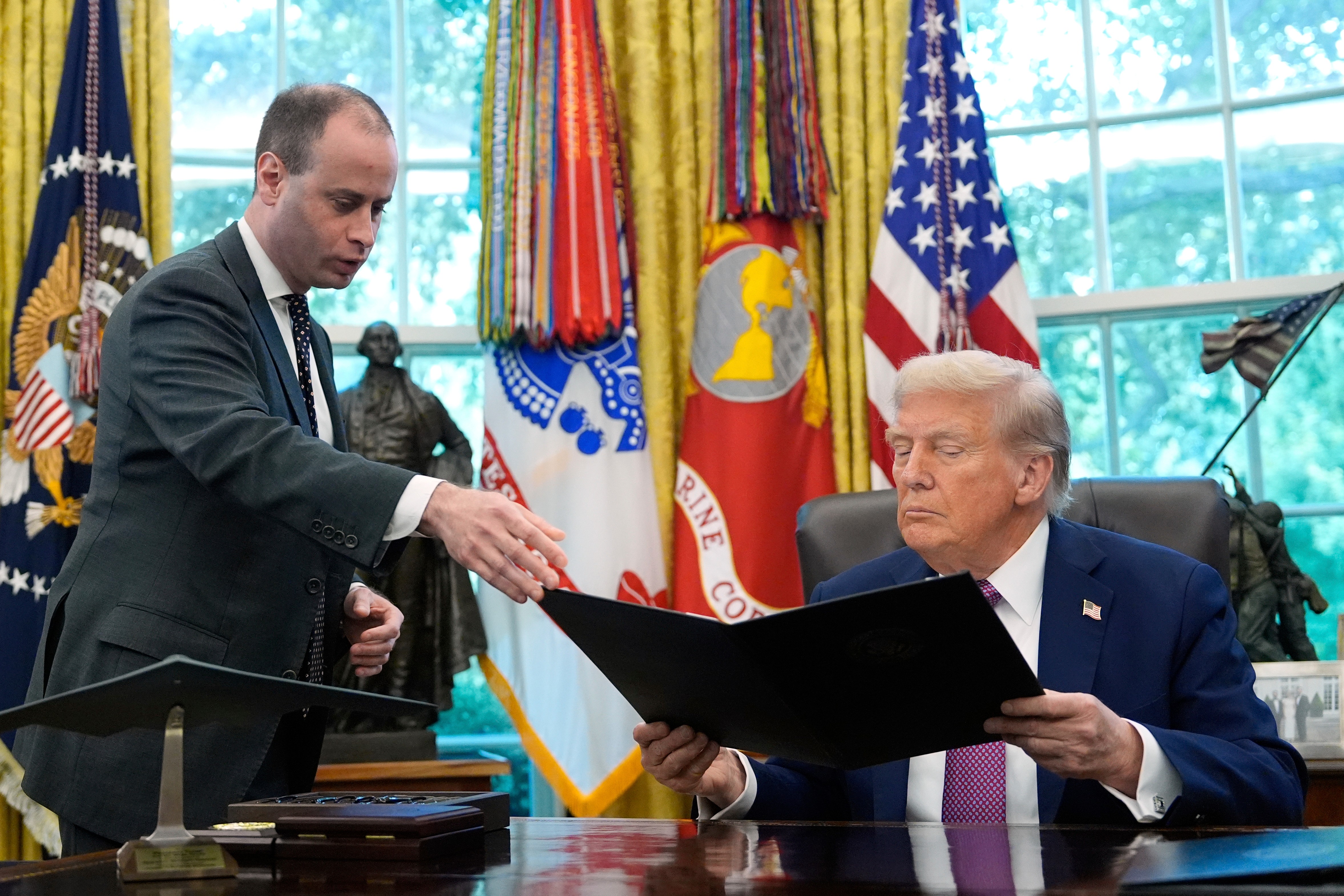
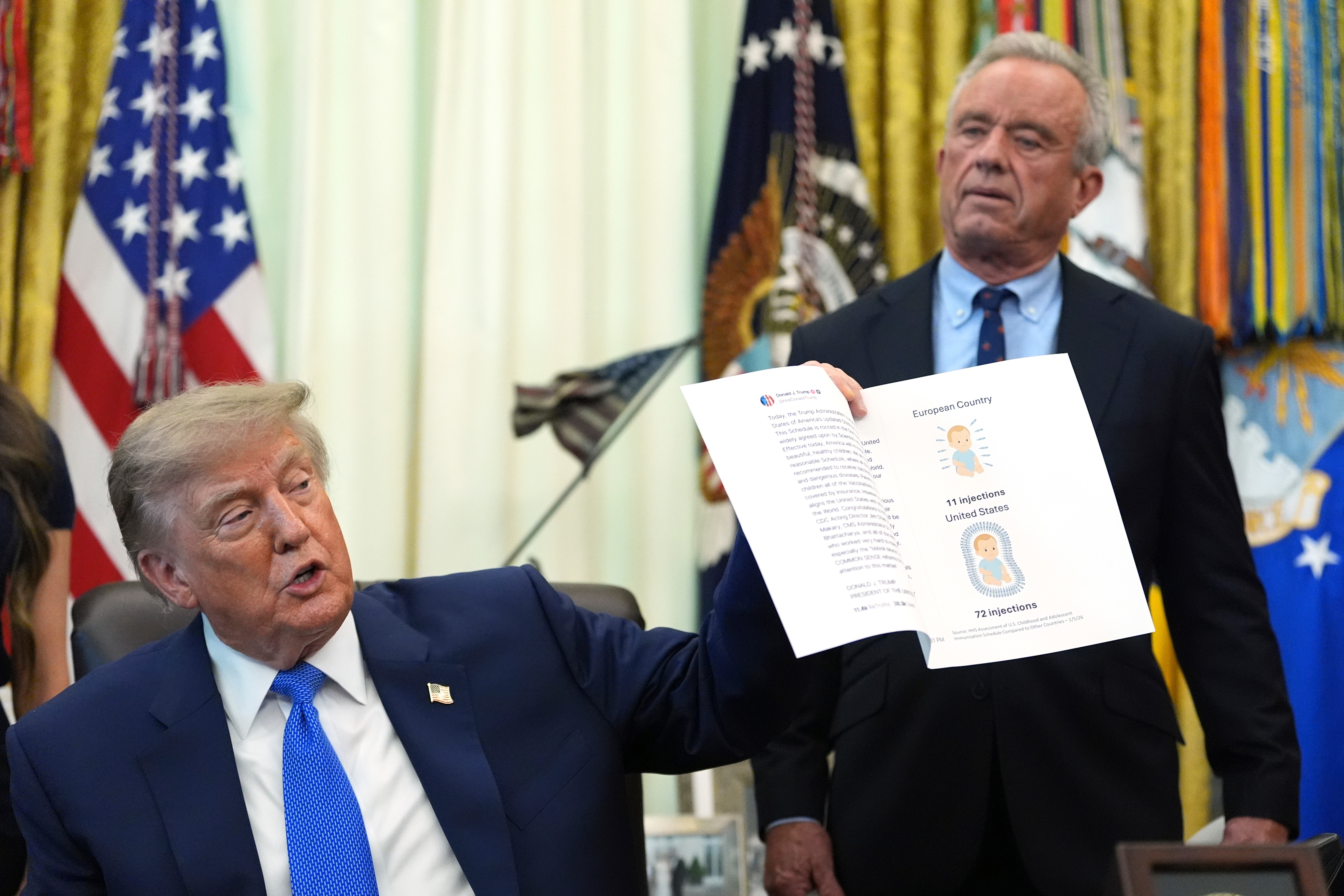
    WASHINGTON — President Donald Trump on Monday signed an executive order calling for revamped childhood vaccine recommendations that promote his long-held but discredited theory that childhood shots should be spaced out into separate medical visits.

    The order advocates separating the measles, mumps and rubella (MMR) vaccine into three different single-disease shots and administering all childhood immunizations at separate appointments whenever possible. It also directs the nation’s health department to improve research on vaccines, which are already extensively studied, and present a plan to offer separate measles, mumps, and rubella vaccines for children, since that is not currently an option in the United States.

    The renewed focus on vaccines marks a departure from the Trump administration’s recent efforts to emphasize less controversial health policies related to healthy eating, drug price negotiations and medical fraud crackdowns ahead of November’s midterm elections.

    Public health experts have raised concerns that spacing out shots as Trump suggests can lead to an increased risk that children become infected with a vaccine-preventable disease before returning for another visit. Childhood vaccines — and how and when to give them in combination — go through rigorous studies, and safety tracking continues for years as the shots are used.

    Trump called the announcement a “major victory for parents rights, religious and constitutional rights, and for the gold standard science.”

    Speaking about the order at the Oval Office on Monday, Trump repeatedly suggested the number or timing of vaccines could play a role in rising rates of autism spectrum disorder, even as scientific consensus and decades of studies have firmly concluded there is no link. The order also includes several changes to the childhood vaccine schedule that his health department has already attempted, but that have been blocked by a federal judge. A White House official who insisted on anonymity to brief reporters said Trump was within his right to provide his own recommendation through the executive order and said the lawsuit blocking the health department’s schedule was a separate issue.

    Dr. Andrew Racine, president of the American Academy of Pediatrics, said the announcement spreads uncertainty, fear and confusion where “there doesn’t need to be any of that.” He disputed Trump’s recommendations and said previous ones should stand.

    “Science about vaccines and their efficacy has not changed,” he said. “The distribution of viruses and other pathogens in our environment has not changed. Children in this country have not changed in the last 48 hours.”

    Sen. Bill Cassidy, the Republican chair of the Senate health committee, slammed the executive order in a social media post, saying vaccines are safe and do not cause autism.

    “I’m a doctor. This executive order is wrong,” the Louisiana senator wrote. “The President does not have the expertise to make these changes.”

    Who is in charge of vaccine policy?

    Even as the order calls for revised vaccine recommendations, states, not the federal government, have the authority to require vaccinations for schoolchildren. The order advises states with school vaccine mandates to consider updating their laws to reflect the administration’s preferred schedule, according to a White House fact sheet.

    Last December, Trump ordered the Department of Health and Human Services to review how peer nations approach vaccine recommendations and consider revising U.S. guidance accordingly. The department responded by cutting the number of vaccines it recommends for every child, a move that has since been blocked in court.

    Changes to federal childhood vaccine recommendations customarily require approval from the director of the Centers for Disease Control and Prevention. The newly Senate-confirmed CDC director, Dr. Erica Schwartz, oversaw policies promoting vaccination of service members while in a leadership position at the U.S. Coast Guard.

    However, public health law expert Lawrence Gostin at Georgetown University said the Supreme Court’s interpretation of Trump’s power may allow him to supersede Schwartz if she does not agree to new recommendations.

    “This is clearly the first test for Dr. Erica Schwartz,” Gostin said in an email. “The President is placing her in an untenable position.”

    Asked on a call with reporters why the president was advocating splitting MMR into three single-disease vaccines, the White House official did not provide any studies supporting the decision. They said that was Trump’s long-held view and that some countries provide individual measles vaccines in certain circumstances.

    Kush Desai, a Trump spokesperson, told The Associated Press that the president is “one of countless parents who have voiced questions and concerns about the combined MMR vaccine” and said the plan to develop single-disease vaccines would “give parents more options on timing and frequency for their children,” ultimately increasing vaccine uptake.

    Studies of babies and toddlers in the U.S. have shown that the use of combination shots for childhood vaccines, rather than single ones, increased the likelihood of completing all recommended vaccinations by the age of 2.

    Announcement follows other Trump administration vaccine actions

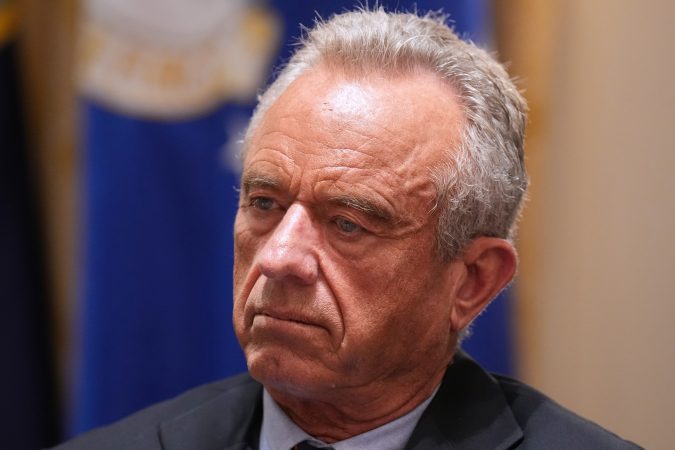
    Health Secretary Robert F. Kennedy Jr., an anti-vaccine activist before he entered politics, set out to overhaul immunization guidance at DHS in the first year of Trump’s term. He fired an entire 17-member vaccine advisory committee, installing replacements who made far more restrictive recommendations that have since been halted by a federal judge. He also personally directed the CDC to abandon its position that vaccines do not cause autism, without supplying any new evidence to support the change.

    Throughout his second term, Trump has been fixated on connecting autism to vaccines. He has recently ramped up pressure on Kennedy to identify the cause of autism, something Kennedy had pledged to do with new research unveiled last year. Trump publicly prodded the health secretary for an update on autism research in a Cabinet meeting last month.

    “How are you doing on the autism research?” Trump asked.

    “We will have an answer for you,” Kennedy said.

    Scientific consensus and decades of studies have firmly concluded there is no link between childhood vaccines and autism. Racine reiterated that point on Monday, noting that the potential link had been studied in “over 40 methodologically well-designed studies in over seven countries involving over 5 million children.”

    “I’m not sure that there is anything that has been as thoroughly looked at as this question,” he said. “And the answer is unequivocally no.”

    In the Oval Office, Kennedy repeated his assertion that he believes an unknown environmental factor is to blame for rising autism diagnoses and said that his department will deliver research findings “as soon as they are ready.”

    Monday’s order comes as students are returning to classrooms around the country and the nation contends with a measles outbreak that experts say could result in the U.S. losing its measles elimination status.

    Doctors have raised concerns that Trump’s falsehoods on vaccines could stoke vaccine hesitancy. Federal data shows U.S. kindergarten vaccination rates have been dropping, with the share of children with exemptions rising to an all-time high in the 2024-25 school year.

  • WHO says Congo’s fast-moving Ebola outbreak started months before it was declared

    WHO says Congo’s fast-moving Ebola outbreak started months before it was declared

    BUNIA, Congo — The fastest-growing Ebola outbreak on record started in February, months before it was officially declared in mid-May, the World Health Organization said Monday as responders in eastern Congo struggle to catch up.

    The WHO regional director for Africa, Mohamed Yakub Janabi, told a news conference that sequencing indicated the outbreak’s start. He said some cases early on were wrongly attributed to other diseases, including malaria and typhoid.

    “So we are chasing the virus, the virus is ahead of us,” Janabi said.

    Thierno Balde, WHO’s incident manager for the Ebola response, said the genetic sequencing was conducted under the leadership of Steve Ahuka, head of the virology department at Congo’s National Institute for Biomedical Research.

    Confirmed cases of Ebola in this outbreak have reached 4,200, including over 1,900 deaths, according to the latest government figures.

    WHO assesses the global risk of spread as low because Ebola does not travel through the air, making it much harder to spread than respiratory viruses. Cases detected outside the affected region have so far been quickly identified and contained without leading to sustained transmission, according to the agency.

    The outbreak declared on May 15 is unlike most previous ones for Ebola because the rare Bundibugyo virus responsible for it has no approved vaccines or treatments. Early testing was conducted for the more common type of Ebola, contributing to delays.

    The outbreak is unfolding in some of the most challenging conditions imaginable, with strikes by some unpaid health workers, threats by rebel groups, anger from long-traumatized communities, and misinformation asserting that Ebola isn’t real. Health teams travel remote, unpaved roads and have reported shortages of protective gear, while a vast population of displaced people struggles to find reliable water sources for washing hands.

    This Ebola outbreak has killed more people at a quicker rate than any other, including the 2014-2016 outbreak in West Africa that is considered the worst on record with over 11,000 deaths out of at least 28,000 cases. That one took about eight months to reach 1,000 deaths.

    Ebola is rare but highly contagious and can be contracted from bodily fluids such as vomit, blood, or semen and from contaminated surfaces and materials such as bedding and clothing. The disease it causes is severe and often fatal.

    Last week, WHO Director-General Tedros Adhanom Ghebreyesu said Ebola is spreading faster than efforts to fight it. New cases are doubling in some hot spots, Tedros said on X after meeting with officials in the capital, Kinshasa.

    Health authorities have said between 60% and 70% of new cases are recorded outside of contacts being monitored, and that the outbreak is spreading at an “alarming” rate.

    Access to healthcare in the region already had been challenged by years of rebel conflict in one of Congo’s most remote and vulnerable areas, near the borders of South Sudan, Uganda, and Rwanda. Now some pregnant women and others are avoiding health centers for fear of the virus, at risk to their lives.

    Several past Ebola outbreaks have also been declared weeks or months late, including the 2014-2016 West Africa outbreak. That outbreak was declared in March 2014, although the first human case later was found to have occurred in December 2013.

  • Zuckerberg spokesperson says his yacht did not hear call for maritime assist

    Zuckerberg spokesperson says his yacht did not hear call for maritime assist

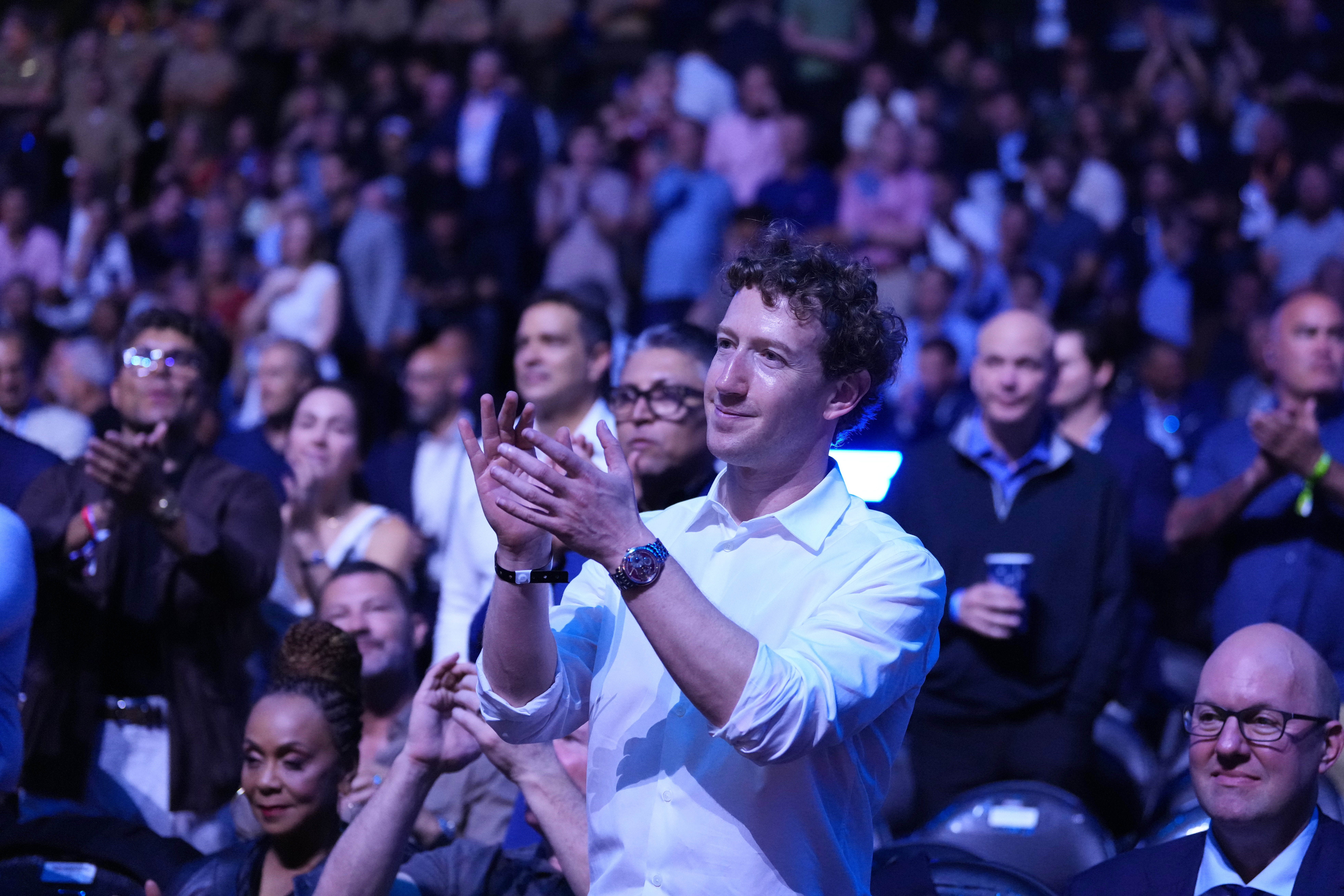
    A yacht owned by Mark Zuckerberg didn’t respond immediately to a call for help from a small skiff that ran out of fuel off the coast of Alaska, but a maritime law expert said Monday the crew may not have been obligated to after the Coast Guard determined the boat wasn’t in distress.

    A spokesperson for the Meta CEO also said the crew didn’t immediately hear the radio call for help and by the time it did, another nearby ship had already rendered assistance.

    The Aug. 3 incident gained attention in recent days after a passenger on the cruise ship posted on social media that the captain had said Zuckerberg’s yacht “refused” to respond.

    The U.S. Coast Guard said the 21-foot Hewescraft vessel first hailed it for assistance at approximately 9:32 p.m., using a radio frequency all boats are expected to monitor. About 25 minutes later, the Coast Guard determined the vessel was not in distress and issued an assistance request. The skiff was able to make it safely to Farragut Bay after the Wilderness Legacy cruise ship towed it there and helped it refuel.

    When another ship is in distress, everyone in the area is obligated to respond as long as doing so doesn’t put their own ship at risk. But maritime law expert Ian Ralby said this situation appears different, and the crew of Zuckerberg’s yacht wouldn’t face that legal obligation.

    “It’s the difference between calling AAA and 911. You need an ambulance on site, that’s a distress call. You need somebody to give you a jump or to tow your car, you call AAA,” said Ralby, who is president of Auxilium Worldwide. It is a big difference in terms of the emergency type, he said. “Both concerning, both needing assistance, but the legal obligations to respond are very different.”

    Zuckerberg and his family were not on the 387-foot Launchpad yacht when this happened, according to his spokesperson.

    “As the Coast Guard noted, the boat was not in distress, and by the time the crew reviewed the Coast Guard contact on a different radio channel from the one they were operating on, the assist was already underway. We’re grateful all parties are safe,” Zuckerberg’s spokesperson Brian Baker said.

    The Alaska Beacon first reported on what happened after Michael Love, who said he was a passenger on the Wilderness Legacy cruise ship, posted on Bluesky on Aug. 5.

    “Our boat rescued a stranded vessel last night and apparently we did that after the Coast Guard radioed Mark Zuckerberg’s yacht — which was closer — and they repeatedly refused to respond. (There was near unanimous booing when the captain announced this),” he said.

    The Coast Guard said in a statement that they determined within half an hour of when the skiff radioed in that the small ship wasn’t in distress. A marine assistance request was broadcast on their behalf, and the Wilderness Legacy responded, reaching the 21-foot vessel about an hour later.

    It’s a little unusual that the Launchpad crew missed the call for help because it is common practice for ships to always be monitoring channel 16 on their radios and keep it as the default frequency. That’s where this call for help was transmitted, but it is also where the Coast Guard would broadcast warnings about any hazards in the area, whether that’s a brewing storm or anything else.

    “The situation was resolved without any harm to life,” said Ralby. ”It does not seem that there was any immediate issue in terms of threat to life of mariners or concerns for the marine environment, which are the two main things that lead to that urgent distress call where all mariners no matter who they are are legally obligated to try and respond.”

  • Alexandria Ocasio-Cortez says she’s freezing her eggs

    Alexandria Ocasio-Cortez says she’s freezing her eggs

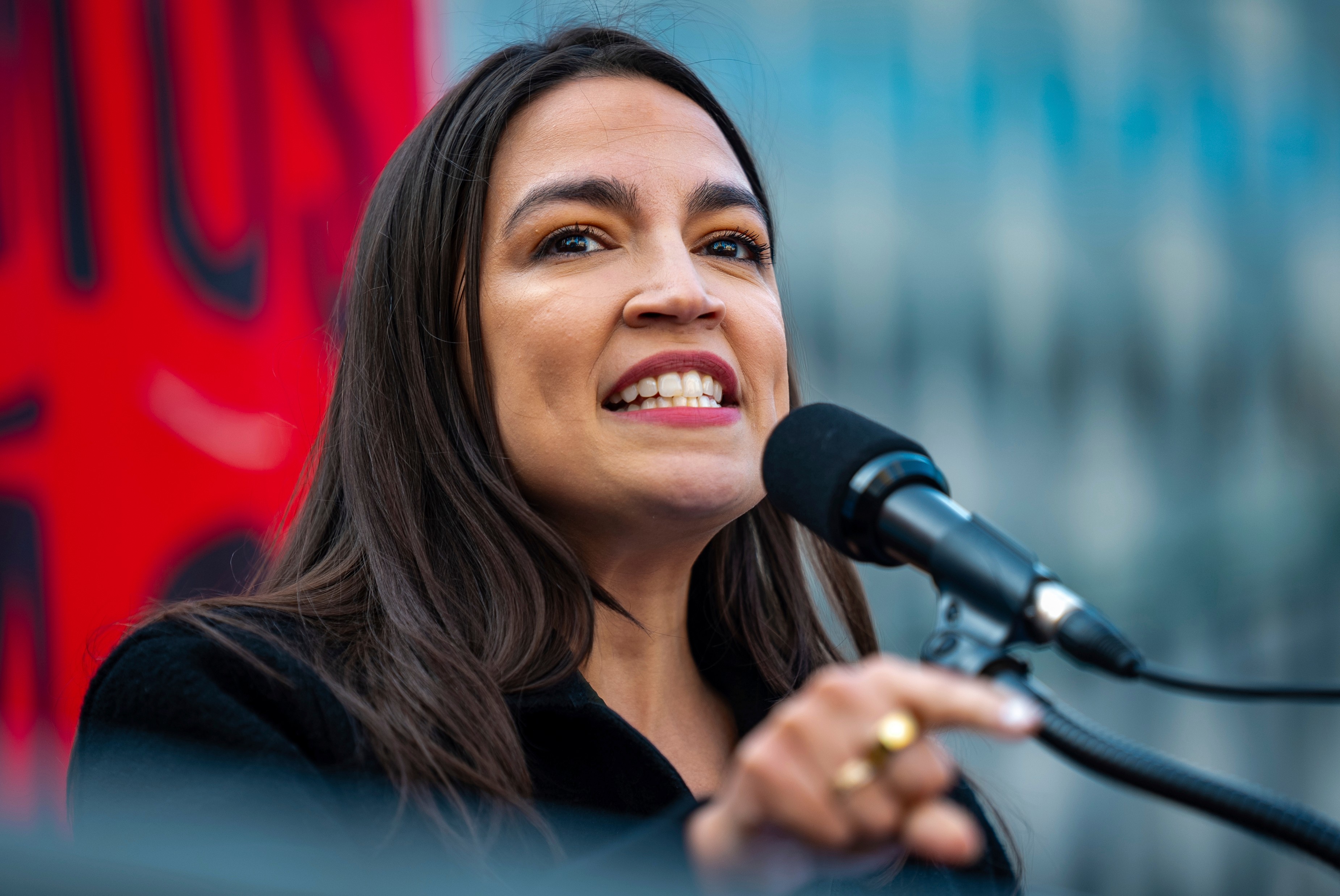
    Rep. Alexandria Ocasio-Cortez (D., N.Y.) made a public video announcement over the weekend about a private matter: The congresswoman is freezing her eggs.

    Ocasio-Cortez, 36, posted a series of videos on social media in which she said this is a decision she made to “feel more in control of my life.” She said she had been weighing the decision and saving up for the pricey fertility procedure, which often isn’t covered by insurance, for a long time.

    The congresswoman said she was going public with her decision against the backdrop of steps by the Trump administration to curtail abortion access and some forms of reproductive care across the country. It also comes amid speculation that she could seek higher office. She said that she was making the egg-freezing decision in a “privileged position” and said that, unlike men, women applying for jobs or running for office face intense scrutiny about when, or if, they will have children.

    “I think it’s important for us as leaders to have these conversations and share these processes, especially for working women across the country, and normalize them,” Ocasio-Cortez said on ABC’s This Week With George Stephanopoulos on Sunday morning.

    Egg freezing is an increasingly popular procedure in which a woman’s eggs are extracted from her body, frozen, and then stored. Those eggs can later be fertilized. The fertilized eggs then grow, and when the embryos are ready, they are transferred into the uterus in the hope that the woman becomes pregnant, according to UCLA Health.

    Women opt to have the procedure for many reasons, including to preserve their eggs and reproductive ability if they are undergoing chemotherapy or other medical treatments that could affect their fertility.

    But many healthy women who are not ready to have children during their biologically prime reproductive years also use the process.

    A 2025 UCLA study found that between 2014 and 2021, there was a sharp increase in the number of planned elective egg-freezing cycles. In that period, women began freezing their eggs at younger ages, with the average age dropping from 36 years in 2014 to 34.9 in 2021.

    The study also landed on the surprising finding that only a small number of women — 5.7% who froze their eggs between 2014 and 2016 — returned to use their eggs in the next five to seven years.

    In her videos, Ocasio-Cortez showed viewers the array of medications she is required to self-administer for the process.

    The medication process typically lasts 10 to 12 days, with women injecting themselves with two or three hormone medications every day, according to Johns Hopkins Medicine. During that time, women will have frequent bloodwork and four to six pelvic ultrasounds.

    Once the eggs have matured, a medical professional will retrieve them in a 20-to-30-minute ultrasound-guided surgical procedure during which the patient is under anesthesia.

    Ocasio-Cortez filmed herself injecting hormones into her abdomen, jokingly telling her viewers: “Don’t be weird about this. Even though I know all of you will be.”

    When it was done, she said it “wasn’t so bad.”

  • Trump nominates loyalist to office that would oversee Reflecting Pool review

    Trump nominates loyalist to office that would oversee Reflecting Pool review

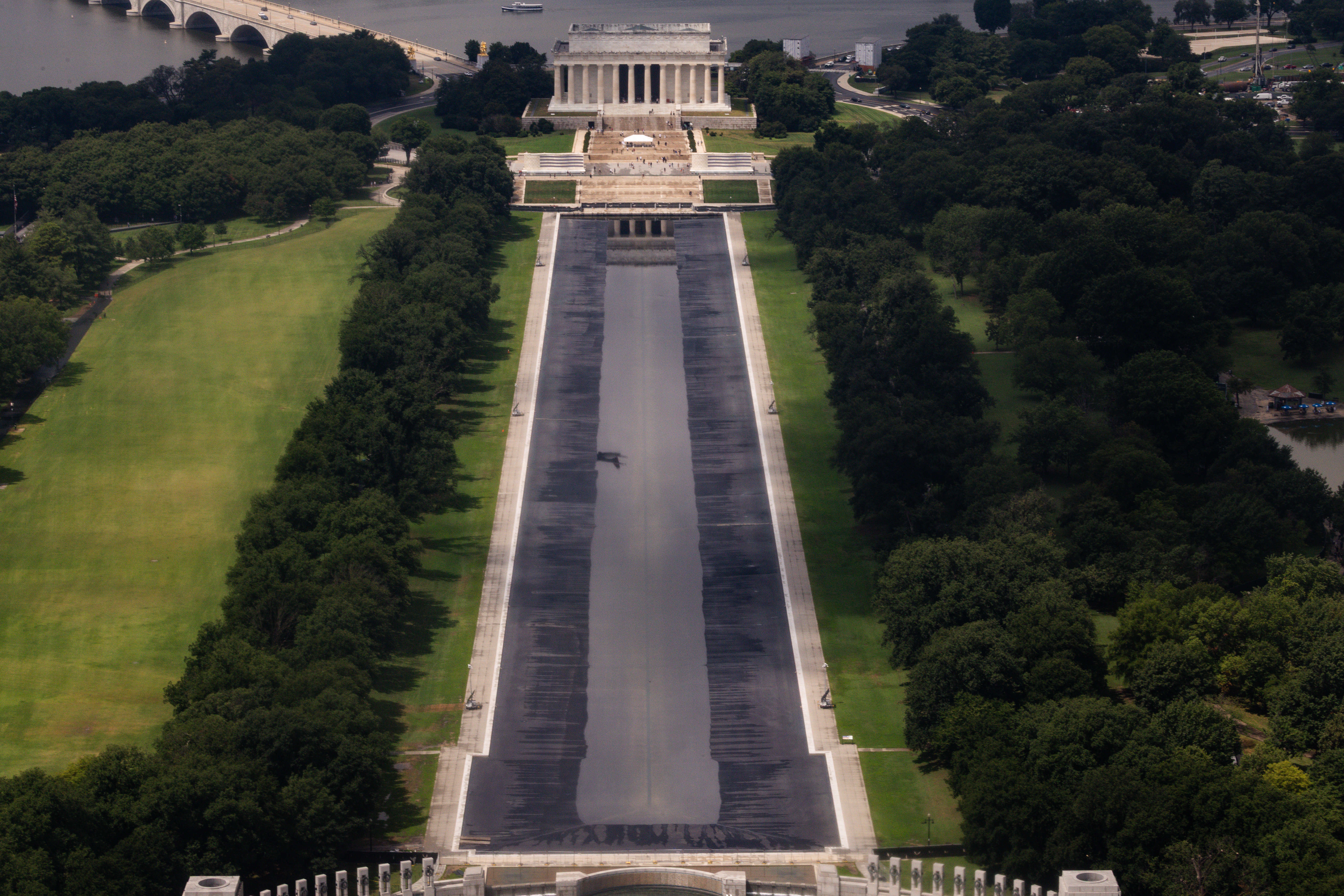
    President Donald Trump nominated Project 2025 author and former political appointee Dennis Kirk to lead the Interior Department’s inspector general office, raising concerns about the independence of the watchdog that has been asked to review the troubled Reflecting Pool renovation.

    Kirk, who was nominated Friday, previously had been working within the office of the inspector general of the intelligence community while serving as an adviser to then-Director of National Intelligence Tulsi Gabbard as of last year. At the time, lawmakers and watchdog advocates raised concerns that his dual roles blurred the lines between Gabbard and the office investigating the use of the Signal messaging app to discuss a pending U.S. military strike.

    The Interior Department’s inspector general’s office recently has been receiving inquiries from Democrats to investigate the troubled Reflecting Pool renovation. Democrats also have sought investigations into senior administration officials’ potential conflicts of interest. One of those officials, Interior Associate Deputy Secretary Karen Budd-Falen, acknowledged in a video that she was involved in changes to grazing policies that benefited ranching businesses such as her family’s, The Washington Post previously reported.

    Rep. Jared Huffman (Calif.), the top Democrat on the House Natural Resources Committee, called Kirk a “fake and fraudulent watchdog” and a “political puppet” who shouldn’t be in the office overseeing ethics and corruption investigations that involve senior administration officials. “It’s no surprise the White House suddenly wants its own man inside the one place that Trump’s cronies still have reason to fear,” Huffman said in a statement.

    A spokesperson for the inspector general’s office declined to comment on Kirk’s role. White House spokesperson Taylor Rogers said in a statement that “Kirk has consistently demonstrated loyalty to the rule of law during his long career within government.” The Interior Department and Kirk did not immediately respond to requests for comment.

    Kirk co-wrote a key section about the federal workforce for Project 2025, the blueprint for Trump’s second term. In the first Trump term, Kirk held senior roles at the Office of Personnel Management and was nominated to serve as chairperson of the Merit Systems Protection Board, though he faced steep opposition from unions that said he lacked experience, and his nomination was withdrawn by President Joe Biden.

    Mark Lee Greenblatt, a former Interior Department inspector general who was fired amid Trump’s purge of inspectors general early last year, called on the Senate to reject Kirk’s nomination. Greenblatt, who was nominated by Trump in his first term, said Kirk’s involvement would damage the credibility of the office’s investigations amid controversy related to recordkeeping and chill whistleblowers’ openness to speaking out.

    “This is a particularly fraught moment with respect to the Interior Department in light of the very public allegations that are flying around regarding the Reflecting Pool and the arch,” Greenblatt said in an interview, referring to the monument Trump wants to build near Arlington National Cemetery. “I would think that the White House and President Trump would want an independent review, an independent actor in that position, because otherwise those reports won’t have credibility.”

    The Center for Western Priorities, a conservation advocacy organization, also condemned Kirk’s role and called on Congress to use its subpoena power to compel records after Politico reported that Interior Department staffers had routinely shredded documents and used disappearing Signal messages.

    “Interior’s watchdog was fired, left vacant for 18 months, and is now hosting one of the architects of Project 2025,” said the center’s executive director, Aaron Weiss. “At least five investigation requests from members of Congress are sitting in that office right now, and its integrity has been compromised.”

  • Trump officials propose new scrutiny of food additives and ingredients

    Trump officials propose new scrutiny of food additives and ingredients

    WASHINGTON — U.S. health officials on Monday proposed a rule change that would require food manufacturers to notify regulators before introducing new ingredients or additives into processed or packaged foods.

    The proposal would change a decades-old policy that advocates have called a regulatory loophole, blaming it for allowing thousands of unvetted ingredients into the U.S. food supply.

    Under the proposed rule from the Food and Drug Administration, companies would have to document and submit their safety findings for new ingredients, giving regulators the opportunity to investigate if they see a potential safety risk. Currently companies can decide for themselves if an ingredient or additive is “generally recognized as safe” and there is no requirement for companies to notify or submit evidence to the FDA, although some do.

    “Shifting to a mandatory notification system closes a decades-old information gap, giving the FDA the comprehensive visibility needed to enhance postmarket safety,” acting FDA Commissioner Kyle Diamantas told reporters on Monday.

    The FDA will take comments on the proposal for 120 days.

    Consumer advocates who have long pushed for changes said FDA’s proposal should require more than giving advance notice about new ingredients.

    “It must also include strong, science-based safety standards and thorough, independent FDA review before chemicals are allowed in our food,” said Melanie Benesh of the nonprofit Environmental Working Group.

    Scrutiny of ultraprocessed food continues, but with few details

    In a separate move, the FDA said it completed work on the federal government’s first-ever definition of ultraprocessed food, but did not release any details or the proposed language. The agency said it has submitted the definition to the White House for further review.

    Health advocates consider an official definition of ultraprocessed food a key step toward bringing greater scrutiny to packaged foods that are blamed for multiple chronic health problems afflicting Americans. A government-backed definition could pave the way for more federal research and, eventually, possible labeling or other restrictions on processed foods.

    Neither of Monday’s announcements is likely to immediately impact American diets, which are packed with fats, sodium, and sugar and are blamed for a host of chronic diseases such as obesity, diabetes, and heart disease. But both initiatives are considered top priorities for Health Secretary Robert F. Kennedy Jr., who entered government vowing to crack down on artificial colors, additives, and other ingredients.

    “These two actions will change how the federal government oversees what’s in our food and how we understand the foods that Americans eat,” Kennedy said at an event Monday at HHS headquarters.

    Ultraprocessed foods are made using industrial processing and additives, colors, preservatives, or other ingredients not found in home kitchens. The foods include sugary cereals, sodas, chips, frozen pizzas, and other grocery items.

    Scientists have been working to define and classify processed foods for well over a decade. But sweeping definitions come with downsides. They can be often applied to foods like whole grain bread, yogurt, and granola that are all highly processed but still considered nutritious. Some recent efforts to define ultraprocessed foods include carve-outs for foods that meet nutrition standards, despite having processed ingredients.

    FDA proposal would bring new insights on additives

    In the U.S., an estimated 10,000 additives are allowed in food, including thickeners, preservatives, and packaging ingredients.

    Consumer advocates have long argued that many of those ingredients have never been properly vetted because of the FDA’s policy allowing manufacturers to certify for themselves that new additives are “generally recognized as safe,” or GRAS.

    FDA’s Diamantas stressed Monday that the new policy would not require all new ingredients to undergo FDA review. He said that type of mandatory review would need to be enacted by Congress to rewrite FDA’s food authorities.

    “What we’re doing is requiring companies that utilize the pathway to notify us of their conclusions so that we have greater visibility into those conclusions and consumers have awareness,” Diamantas said.

    Under the proposal, the FDA would be expected to review new ingredient submission within 180 days. If FDA regulators have safety concerns they could request additional information from manufacturers or request that they delay introducing the ingredient.

    Kennedy said the Trump administration would ask Congress to grant FDA additional powers over food ingredients.

    “Congress needs to give FDA the additional tools it needs to keep pace with the changing food supply and protect the American people,” Kennedy said.

    Rule change in the 1990s created what advocates call a loophole

    Any substance intentionally added to food is supposed to undergo formal review — unless the additive is considered safe. Since the late 1950s, the government recognized that many common ingredients in foods, such as spices and vinegar, were widely consumed and understood to be safe for consumption.

    The FDA policed the GRAS exemption for years, but it took time and resources. Starting in 1997, the FDA began allowing companies to independently determine that a new additive is safe based on publicly available scientific evidence and the consensus of qualified experts.

    However, the list of products deemed GRAS by companies grew to include many synthetic and natural additives, all incorporated into the food supply without independent review.

    The process has created a “secret GRAS loophole,” according to the consumer advocacy group Center for Science in the Public Interest, that “undermines the integrity of our food safety system.”

    Food industry officials contend their internal reviews of additives are as rigorous as the FDA’s own processes.

  • Trump picks longtime aide Will Scharf as new top White House lawyer

    Trump picks longtime aide Will Scharf as new top White House lawyer

    President Donald Trump has named Will Scharf as the next top White House lawyer, replacing David Warrington, who is “going on to the Private Sector,” Trump wrote in a social media post Sunday.

    The change in the office of White House counsel will take place Sept. 1.

    Scharf, currently the White House staff secretary, is perhaps best known as the lawyer frequently standing over Trump’s shoulder in the Oval Office when he signs executive orders and explaining their details.

    Before that, Scharf, 40, was an unsuccessful candidate for Missouri attorney general in 2024, who also worked as one of Trump’s personal lawyers.

    “I know Will well! He previously represented me in numerous cases, including at the Supreme Court, during the Biden Administration’s corrupt and illegal campaign of Weaponization,” Trump wrote on his Truth Social website.

    Trump added that Warrington did “a truly outstanding job” as counsel. The change is the latest example of Trump White House staff — many of whom have had longer tenures than aides in Trump’s first term — increasingly leaving the administration in recent months.

    Before being brought on at the White House, Warrington served as Trump’s campaign general counsel during the 2024 election, after joining Dhillon Law Group, the firm owned by current Assistant Attorney General Harmeet K. Dhillon. There, he represented controversial Trump allies like Michael Flynn and Sebastian Gorka.

    Scharf has also served since last year as the chairperson of the National Capital Planning Commission, a low-profile federal agency charged by Congress with overseeing federal construction projects in the Greater Washington region. In that role, Scharf has expedited several of Trump’s handpicked projects, including the president’s planned White House ballroom, which the commission approved in April.

    Scharf has also sped up the commission’s reviews of Trump’s planned triumphal arch, which is expected to be approved by the commission at its next public meeting in September.

    Trump, who is seeking to complete the projects before he leaves office in January 2029, has cheered the commission’s swift approvals. The commission historically has taken much longer to review significant changes to the White House and new monuments around Washington.

    In his role as the commission’s chairperson, Scharf has also argued that the planned 250-foot-arch and other federal projects should not be subject to a federal law that restricts most construction in Washington to a maximum height of 130 feet, a position echoed by the Trump administration but opposed by historic preservationists.

  • At least 111 dead, buildings collapsed after 7.4-magnitude earthquake shakes western Colombia

    At least 111 dead, buildings collapsed after 7.4-magnitude earthquake shakes western Colombia

    CALI, Colombia — A powerful 7.4 magnitude earthquake struck western Colombia on Monday, killing at least 111 people, damaging hundreds of buildings, and leaving many trapped under debris while their loved ones and rescue workers searched through rubble.

    Colombia’s President Abelardo de la Espriella, who reported the death toll, said at least 87 people were injured and around 1,600 buildings were damaged, including at least 61 that completely collapsed. He declared an emergency to expedite funding for the quake recovery while saying he would visit the disaster zone.

    “We aren’t going to leave people alone. They are in our hearts and we are going to tend to people with our full determination,” he said.

    The epicenter was in San Jose Del Palmar, a community of about 4,800 people in the Choco region about 250 miles west of Bogota, the U.S. Geological Survey said. The quake also was felt in neighboring Ecuador and Panama, though minimal damage was reported there.

    The quake ravaged cities across western Colombia, including Pereira, Quibdo, Cali, and Manizales.

    In the country’s third-largest city, Cali, search teams and civilians picked through the remains of destroyed buildings, passing large pieces of concrete and other rubble down a long line of volunteers. The desperate scene brought memories of the searches still ongoing in neighboring Venezuela weeks after that country was devastated by two powerful earthquakes.

    Most powerful quake recorded in Colombia this century

    Colombia’s Geological Service said Monday’s quake was the strongest recorded in Colombia “in the 21st century,” and that it was followed by 21 less powerful aftershocks.

    Colombia’s Pacific region around the quake’s epicenter lies along the Ring of Fire, the line of seismic faults encircling the Pacific Ocean where most of the world’s earthquakes occur. The Pacific, particularly the Choco region, is one of the poorest regions in the country. Nestled in the dense jungle, much of Choco is only reachable by boat or plane, which may pose a problem for authorities in assessing the wider toll.

    Jorge Moncayo, a 64-year-old taxi driver in Cali, said he saw plumes of dust shoot up across the city as buildings collapsed. Residents and rescue workers were searching the rubble for survivors.

    “My entire house shook. I’ve never lived through such a powerful earthquake,” he said. “We’re thanking God we’re alive.”

    Local authorities said the death toll included at least 40 people who were killed in the Risaralda region, where the hard-hit city of Pereira is located, as well as 27 people in the Valle del Cauca region, where Cali is located, including three children. Authorities also confirmed nine people killed in Choco, two in the Caldas region, and a 73-year-old in the Antioquia region. It was not immediately clear where the other 32 people died.

    Authorities said flights were suspended in the airports of Manizales, Quibdo, Armenia, Cartago, Buenaventura, and Pereira as they assessed damage.

    The earthquakes left many in the Andean nation unnerved after two back-to-back quakes devastated neighboring Venezuela in late June, destroyed hundreds of buildings, and killed more than 5,000 people.

    Little was known about the extent of the damage in Choco, a remote region where officials reported dozens of injured people and damaged buildings but few other details. Phone signals were out in many parts of region’s capital, Quibdo. The town closest to the earthquake’s epicenter, San Jose del Palmar, has no airport, and is located on top of a mountain ridge along a highway linking the cities of Cali and Pereira.

    In Pereira, further south in the coffee-producing mountains of Colombia, photos and videos published by local media showed pieces of the airport ceiling falling down on travelers taking shelter and screaming. In the city, people were shown running through rubble and plumes of dust. Pereira’s mayor, Mauricio Salazar, told a local radio station that more people were trapped under “a massive quantity of collapsed buildings.”

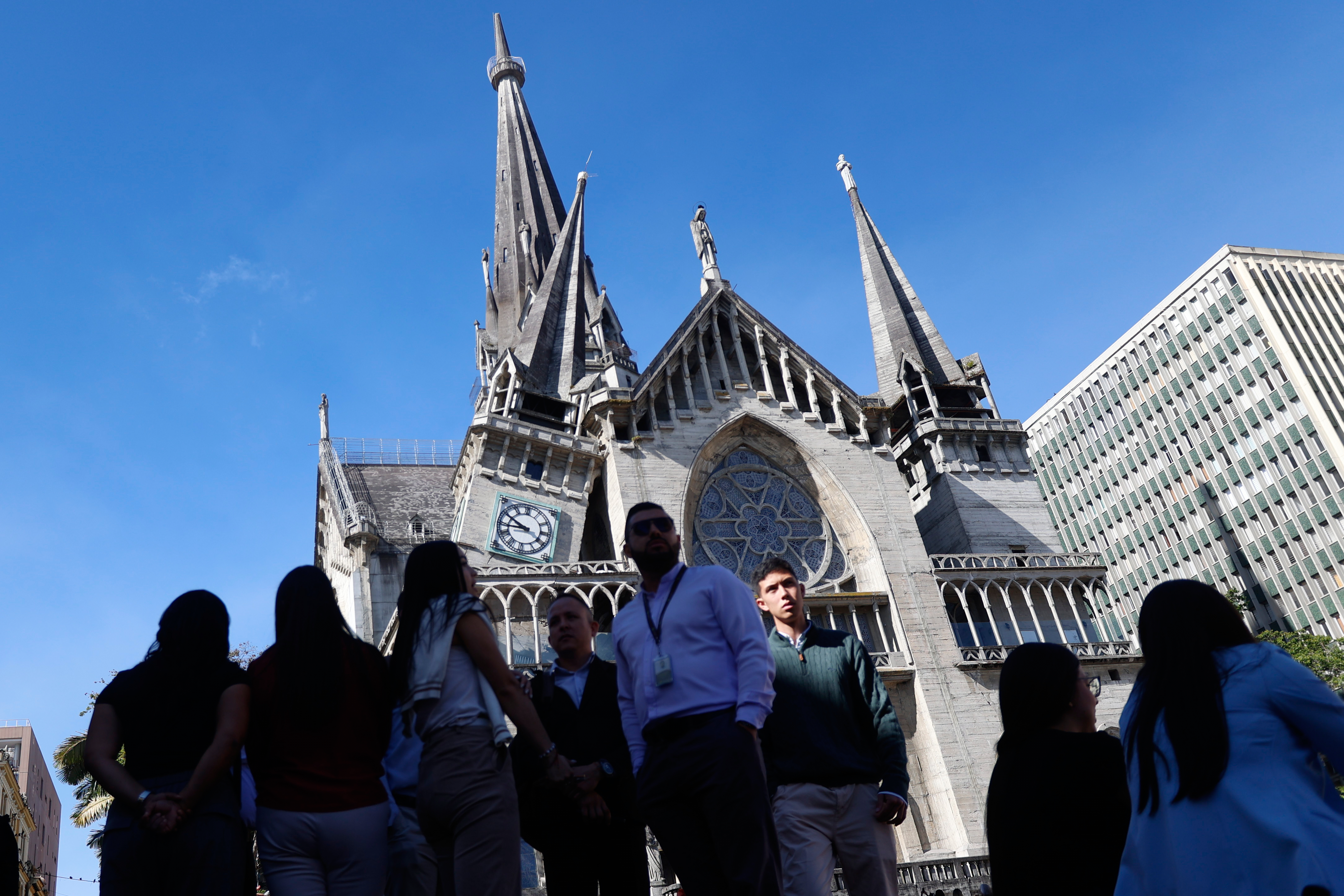
    In nearby Manizales, one of the towers of the neo-Gothic cathedral collapsed and fell on the nave. Mayor Jorge Eduardo Rojas asked residents to stay outside in case of aftershocks.

    In Cali, a city of 2 million people, Mayor Alejandro Eder said that residents were trapped in at least 19 buildings that had collapsed.

    Powerful quakes rare in Colombia, smaller quakes common

    Small earthquakes, known as “temblores,” are common in central and western Colombia, but those above 6.0 magnitude are rare. In 1999, a 6.2 magnitude quake near the city of Armenia killed more than 1,100 people.

    Colombia’s newly inaugurated president said Monday that he had personally taken charge of the government’s response to the emergency.

    “You are not alone. The state is present and taking action,” he said.

    Response to the earthquake presents the first major challenge to de la Espriella, a Trump ally who was sworn in as president over the weekend.

    Messages of support rolled in from leaders across the Americas, including Mexico, Brazil, Ecuador, El Salvador, and the United States.

    “The Trump administration is closely monitoring the large earthquake that struck Colombia and stands ready to support the people of Colombia,” U.S. Secretary of State Marco Rubio wrote in a post on X.

    A number of countries offered aid, and the U.N. deputy spokesperson, Farhan Haq, said, “We stand ready to help as needed.”

  • Washington grapples with a National Guard deployment extended until 2029

    Washington grapples with a National Guard deployment extended until 2029

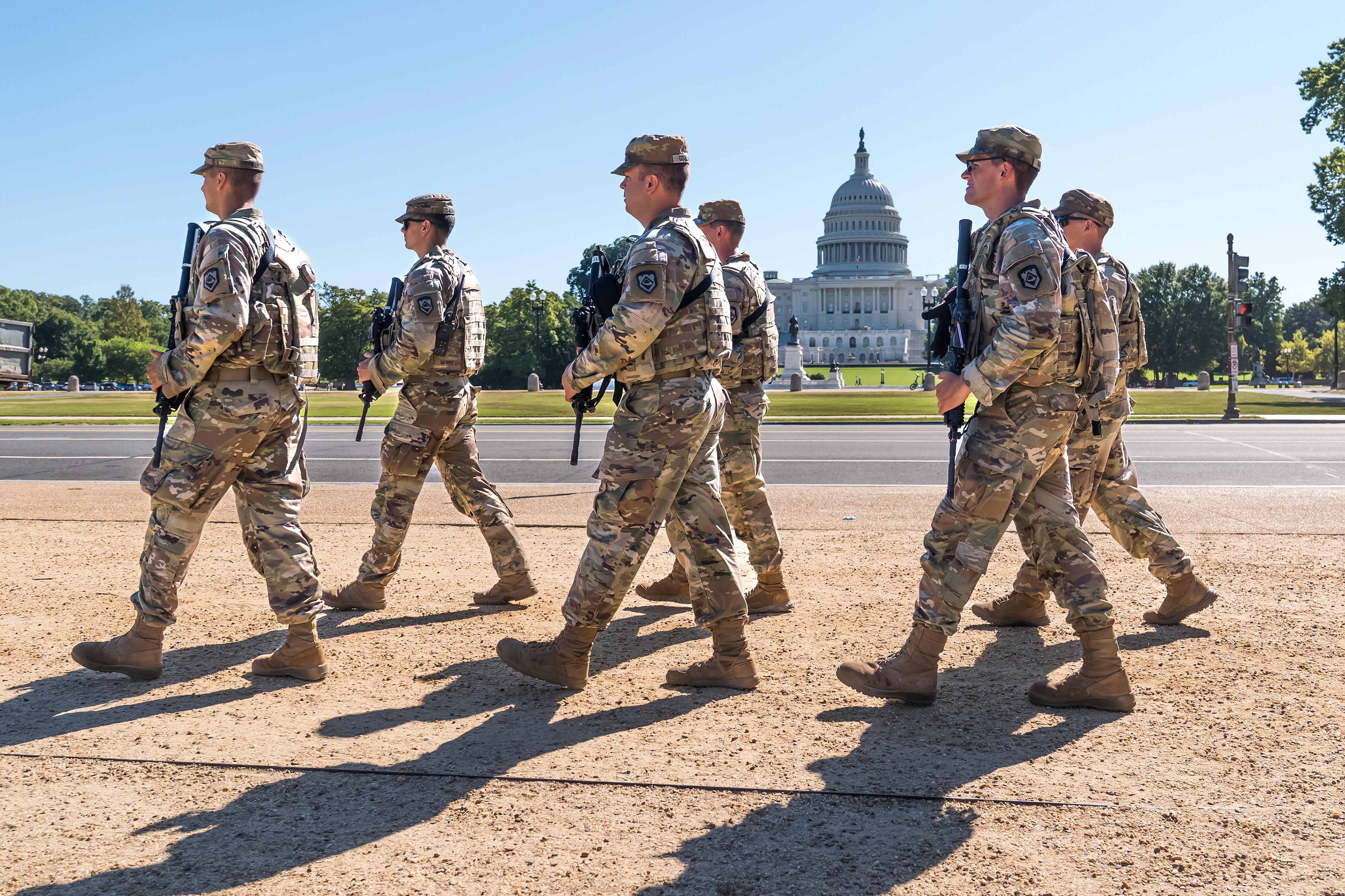
    WASHINGTON — It’s been 12 months since President Donald Trump announced a crime emergency in Washington, pledging to make the city “safe and beautiful” and deploying the National Guard.

    But a mission that seemed temporary has been extended through January 2029. Residents and a new cadre of local officials see in it an unacceptable attempt by the federal government to restrict the heavily Democratic city’s autonomy and, a year in, still question why having troops on the streets of the nation’s capital is necessary.

    “There’s a deep irony that here we are in the capital of the free world, and our president is treating it like a police state,” said Scott Michelman, legal director of the ACLU of the District of Columbia. “D.C. residents have lived with our National Guard troops in our neighborhoods for about a year, despite the absence of any genuine emergency and really any reason for them to be here.”

    The continued deployment will be a major test for a new batch of political candidates expected to take office after the midterms this fall. Residents will look to them to push back on the Republican president’s encroachment into the city’s affairs — although they’re limited in what they can do to counter it.

    Temporary deployment goes on and on

    On Aug. 11, 2025, Trump announced he was launching a federal law enforcement surge in Washington aimed at fighting crime. As of Aug. 4, more than 4,600 military personnel from D.C. and 24 states and territories were still deployed alongside unknown numbers of less visible federal law enforcement officers. Some are expected to be withdrawn toward the end of the summer.

    Small groups of armed guard members have become a routine presence on the streets. They have supported arrest operations but are also seen patrolling tourist areas, such as along the Tidal Basin during the Cherry Blossom Festival and in neighborhoods such as Georgetown where violent crimes are rare. They’ve helped with medical emergencies, snow removal, and beautification projects — initiatives that have received support from some residents.

    Extending the deployment into 2029 will cost about $1.4 billion, the Defense Department estimates. Exact figures on what’s been spent so far are unavailable, but the Congressional Budget Office projected in a report earlier this year the total cost for the first year of the deployment would be around $660 million, based on a monthly troop level of about 2,900, a figure that’s fluctuated throughout the mission.

    “President Trump has transformed D.C. from a crime-ridden city into a safe and beautiful haven for residents and visitors alike,” White House spokesperson Abigail Jackson said in an email.

    Figures released Monday by the U.S. Marshals Service showed over 16,000 arrests have been made since the surge began, including 35 homicide suspects and 3,200 narcotics arrests. Authorities also have seized nearly 2,000 illegal firearms.

    Attorney General Todd Blanche said in a statement that the arrests and weapons seizures “mean safer neighborhoods and lives protected.”

    Crime, which was falling before the surge began, continues to drop. Metropolitan Police Department statistics show overall crime was down 20% through Friday, compared with the same period in 2025. That includes a 32% drop in homicides, from 97 to 66.

    But there’s a debate over how much of that success is owed to Trump’s mission or to yearslong local efforts to chip away at the crime rate.

    What’s certain is locals feel the weight of the deployment and don’t see a clear way to push back against it. National Guard deployments to other cities have been blocked by courts, and a lawsuit challenging the deployment is pending, but critics of the surge aren’t hopeful.

    “The fact that we still have the National Guard walking our streets a year later with no end in sight is really demoralizing,” city council member Brianne K. Nadeau said.

    Autonomy is a top priority for newly elected candidates

    Because Washington is a congressionally established federal district, Trump has much greater influence over the police and D.C. National Guard, which he controls directly, including its commander.

    The Home Rule Act, passed in 1973, allows residents to vote for local leaders, including the mayor and council members. Congress has oversight over the local budget and review authority of all laws passed and the ability to summon district officials to the Capitol routinely to explain themselves. The D.C. delegate to Congress is a nonvoting position.

    The city’s governmental structure under home rule made it easy for Trump to do what he has done, Nadeau said.

    “There isn’t really any political liability for national leaders to mess with D.C. because nobody really cares,” outside of those directly impacted, she said.

    The law enforcement surge played a major role in Democratic primary elections in June, which elevated candidates who have made Washington’s autonomy and statehood top priorities.

    Janeese Lewis George, a democratic socialist who in the overwhelmingly Democratic city is likely to be its next mayor, has already rankled Trump. He threatened to put the city under federal control if she wins.

    Robert White Jr., another pro-statehood candidate, won the Democratic primary for the city’s seat in Congress.

    And while they are hamstrung by the city’s status, both hope they have strategies that can help fight back against the president and the deployment.

    White told the Associated Press he plans to build “an army of residents” and allies to target swing districts and work at “un-electing” people critical of the district and “electing those who do support D.C.”

    The action is similar to one a former D.C. congressional delegate, Walter Fauntroy, successfully pursued in 1972, mobilizing Black voters and allies against a South Carolina Congress member who had long opposed D.C.’s independence.

    “He didn’t deploy that strategy a bunch of times, but it sent a signal to people to lay off of D.C.,” White said.

    The city’s outgoing mayor, Muriel Bowser, avoided the kind of biting rhetoric and personal attacks typical of other high-profile Democratic leaders, despite the unprecedented intervention into her city. A major part of that was to avoid raising Trump’s ire and threaten what independence the city has.

    An emailed statement from Bowser’s office said that despite challenges to its independence the city has progressed in achieving its goals. “The safety and well-being of everyone in our city remains our top priority and protecting home rule remains our North Star,” the statement said.

    “We’re more than monuments and politics,” Bowser said in a 48-second video pinned to her X account.

    She said the city is made up of more than 700,00 taxpaying Americans who serve in the military, run businesses, and raise families and “we don’t have voting representation in Congress. We don’t control the D.C. National Guard, and we don’t have full access to full American democracy.”

    Concerns over troops in the city during elections

    Donna Powell, who is living part time in the city, said she and her husband walk and metro everywhere. “We’re already safe and beautiful,” she said. “We don’t need all these National Guard here.”

    The money could be better spent “on healthcare and food for families that need it.”

    The National Guard deployment has raised concerns among some over what the upcoming midterms and the 2028 presidential election will look like with troops on the streets.

    “The last time this president was supposed to come out of power, Jan. 6 happened,” said Alex Dodds, co-founder of FreeDC, an activist group that has protested the deployment by following and filming National Guard troops in quiet areas of the city far away from crime concerns. ”Imagine if that happens again but this time he has 5,000 troops standing at the ready to be part of that situation. You know, that’s our worry.”
    WASHINGTON — It’s been 12 months since President Donald Trump announced a crime emergency in Washington, pledging to make the city “safe and beautiful” and deploying the National Guard.

    But a mission that seemed temporary has been extended through January 2029. Residents and a new cadre of local officials see in it an unacceptable attempt by the federal government to restrict the heavily Democratic city’s autonomy and, a year in, still question why having troops on the streets of the nation’s capital is necessary.

    “There’s a deep irony that here we are in the capital of the free world, and our president is treating it like a police state,” said Scott Michelman, legal director of the ACLU of the District of Columbia. “D.C. residents have lived with our National Guard troops in our neighborhoods for about a year, despite the absence of any genuine emergency and really any reason for them to be here.”

    The continued deployment will be a major test for a new batch of political candidates expected to take office after the midterms this fall. Residents will look to them to push back on the Republican president’s encroachment into the city’s affairs — although they are limited in what they can do to counter it.

    A temporary deployment goes on and on

    On Aug. 11, 2025, Trump announced that he was launching a federal law enforcement surge in Washington aimed at fighting crime. As of Aug. 4, more than 4,600 military personnel from D.C. and 24 states and territories were still deployed alongside unknown numbers of less visible federal law enforcement officers. Some are expected to be withdrawn toward the end of the summer.

    Small groups of armed guard members have become a routine presence on the streets of Washington. They have supported arrest operations but are also seen patrolling tourist areas, such as along the Tidal Basin during the Cherry Blossom Festival and in neighborhoods such as Georgetown where violent crimes are rare. They have helped with medical emergencies, snow removal and beautification projects — initiatives that have received support from some residents.

    Extending the deployment into 2029 will cost about $1.4 billion, according to a Defense Department estimate.

    “President Trump has transformed D.C. from a crime-ridden city into a safe and beautiful haven for residents and visitors alike,” White House spokeswoman Abigail Jackson said in an email.

    Figures posted to the U.S. attorney’s office for the District of Columbia credit the surge with more than 13,000 arrests.

    Crime, which was falling before the surge began, continues to drop. Metropolitan Police Department statistics show overall crime was down 20% through Aug. 7, compared with the same period in 2025. That includes a 32% drop in homicides, from 97 to 66.

    But there’s a debate over how much of that success is owed to Trump’s mission or to yearslong local efforts to chip away at the crime rate.

    What is certain is that locals feel the weight of the deployment and do not see a clear way to push back against it. National Guard deployments to other cities have been blocked by courts, and a lawsuit challenging the deployment is pending, but critics of the surge are not hopeful.

    “The fact that we still have the National Guard walking our streets a year later with no end in sight is really demoralizing,” city council member Brianne K. Nadeau said.

    Autonomy is a top priority for newly elected candidates

    Because Washington is a congressionally established federal district, Trump has much greater influence over the police and D.C. National Guard, which he controls directly, including its commander.

    The Home Rule Act, passed in 1973, allows residents to vote for local leaders, including the mayor and council members. Congress has oversight over the local budget and review authority of all laws passed and the ability to summon district officials to the Capitol routinely to explain themselves. The D.C. delegate to Congress is a nonvoting position.

    The city’s governmental structure under home rule made it easy for Trump to do what he has done, Nadeau said.

    “There isn’t really any political liability for national leaders to mess with D.C. because nobody really cares,” outside of those directly impacted, she said.

    The law enforcement surge played a major role in Democratic primary elections in June, which elevated candidates who have made Washington’s autonomy and statehood top priorities.

    Janeese Lewis George, a democratic socialist who in the overwhelmingly Democratic city is likely to be its next mayor, has already rankled Trump. He threatened to put the city under federal control if she wins.

    Robert White Jr., another pro-statehood candidate, won the Democratic primary for the city’s seat in Congress.

    And while they are hamstrung by the city’s status, both hope they have strategies that can help fight back against the president and the deployment.

    White told The Associated Press he plans to build “an army of residents” and allies to target swing districts and work at “un-electing” people critical of the district and “electing those who do support D.C.”

    The action is similar to one a former D.C. congressional delegate, Walter Fauntroy, successfully pursued in 1972, mobilizing Black voters and allies against a South Carolina Congress member who had long opposed D.C.’s independence.

    “He didn’t deploy that strategy a bunch of times, but it sent a signal to people to lay off of D.C.,” White said.

    The city’s outgoing mayor, Muriel Bowser, avoided the kind of biting rhetoric and personal attacks typical of other high-profile Democratic leaders, despite the unprecedented intervention into her city. A major part of that was to avoid raising Trump’s ire and threaten what independence the city has.

    An emailed statement from Bowser’s office said that despite challenges to its independence the city has progressed in achieving its goals. “The safety and well-being of everyone in our city remains our top priority and protecting home rule remains our North Star,” the statement said.

    “We’re more than monuments and politics,” Bowser said in a 48-second video pinned to her X account.

    She said the city is made up of more than 700,00 taxpaying Americans who serve in the military, run businesses and raise families and “we don’t have voting representation in Congress. We don’t control the D.C. National Guard, and we don’t have full access to full American democracy.”

    Concerns over troops in the city during elections

    Donna Powell, who is living part time in the city, said she and her husband walk and metro everywhere. “We’re already safe and beautiful,” she said. “We don’t need all these National Guard here.”

    The money could be better spent “on healthcare and food for families that need it.”

    The National Guard deployment has raised concerns among some over what the upcoming midterms and the 2028 presidential election will look like with troops on the streets.

    “The last time this president was supposed to come out of power, Jan. 6 happened,” said Alex Dodds, co-founder of FreeDC, an activist group that has protested the deployment by following and filming National Guard troops in quiet areas of the city far away from crime concerns. ”Imagine if that happens again but this time he has 5,000 troops standing at the ready to be part of that situation. You know, that’s our worry.”
  • Zuckerberg spokesperson says his yacht did not hear call for maritime assist

    Zuckerberg spokesperson says his yacht did not hear call for maritime assist

    The crew of a yacht owned by Mark Zuckerberg did not hear a radio call for a maritime assist from a small skiff that ran out of fuel off the coast of Alaska, and by the time it did, another nearby ship had already rendered assistance, a spokesperson for the Meta CEO said.

    The Alaska Beacon reported that the skiff had issued a call for assistance through the U.S. Coast Guard last week and a nearby small cruise ship, the Wilderness Legacy, towed it into nearby Farragut Bay in Southeast Alaska and refueled it.

    Although it was closer, Zuckerberg’s yacht, called Launchpad, had not responded to the call.

    “I’m on a small-ship Alaska cruise with my son,” Michael Love, a passenger who said he was on the Wilderness Legacy cruise ship, wrote on Bluesky on Aug. 5.

    “Our boat rescued a stranded vessel last night and apparently we did that after the Coast Guard radioed Mark Zuckerberg’s yacht — which was closer — and they repeatedly refused to respond. (There was near unanimous booing when the captain announced this),” he said.

    The Alaska Beacon reported that the spokesperson told them via email on Sunday that the yacht Launchpad did not initially hear the call for assistance.

    “Mark and his family were not on board at the time of the incident. As the Coast Guard noted, the boat was not in distress, and by the time the crew reviewed the Coast Guard contact on a different radio channel from the one they were operating on, the assist was already underway. We’re grateful all parties are safe,” the email to the Alaska Beacon said.