Tag: no-latest

  • Russian attacks kill 10 in Ukraine as Zelensky says Moscow is getting more North Korean missiles

    Russian attacks kill 10 in Ukraine as Zelensky says Moscow is getting more North Korean missiles

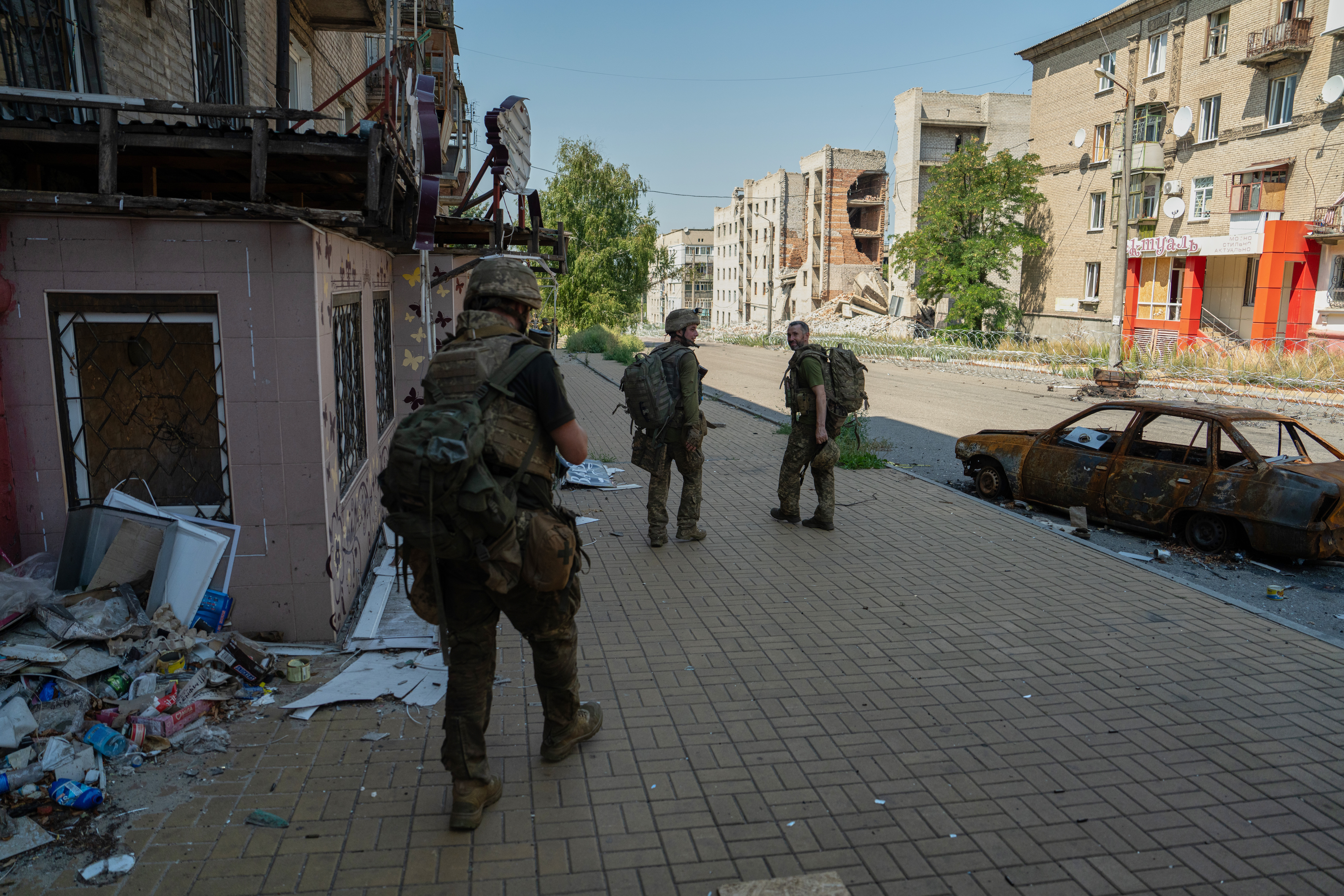
    KYIV, Ukraine — Russia attacked Ukrainian cities with missiles, drones, and glide bombs Tuesday, killing at least 10 civilians, officials said, as President Volodymyr Zelensky said Moscow is getting new military help from North Korea for its more than 4-year-old invasion.

    Zelensky said Russian forces used ballistic missiles supplied by North Korea in an overnight attack on the southeastern city of Zaporizhzhia, where a company said seven workers at its steel plant were killed and 21 injured.

    Three more people, including a 15-year-old boy, were killed by Russian drones and artillery in the central Dnipropetrovsk region, authorities said.

    In addition to the ballistic missiles, North Korea is preparing to deploy more of its troops to Russia, Zelensky said late Monday.

    Russian President Vladimir Putin and North Korean leader Kim Jong Un signed a strategic partnership agreement in 2024, pledging mutual aid if either country faces aggression.

    Kim has sent thousands of troops and huge supplies of weapons to support Putin’s full-scale invasion of Ukraine. Some experts say the engagement with Moscow is helping improve North Korea’s military capabilities, and Zelensky said the battlefield experience would help Pyongyang menace other countries in its region.

    Ukraine says Russia is poised to escalate the war

    Ukraine says Russia is scaling up its production of ballistic missiles, aiming to exploit Kyiv’s critical shortage of Patriot air defense interceptors that can stop them, and claims Moscow is preparing to recruit more troops for a new push on the front line that stretches 775 miles along eastern and southern Ukraine.

    “Every step Russia takes — increasing ballistic missile production, bringing in North Korean equipment, preparing for mobilization — all of this shows that Moscow is preparing not for peace, but for escalation,” Zelensky said on social media.

    In an unusual step, Ukraine’s air force didn’t say in its daily report how many missiles Russia launched overnight. It was not clear whether the omission was deliberate, and Kyiv officials made no immediate comment.

    U.S.-led diplomatic efforts to stop the war have fizzled as Washington grew frustrated with the lack of progress and its attention turned to the Iran war.

    In an indication that Putin is determined to press on with the invasion, Russia’s highest court on Monday ordered that Yabloko, the only political party opposing the war, be excluded from the ballot in the Sept. 18-20 parliamentary election.

    “The Kremlin will not enter serious negotiations or make meaningful compromises on its demands as long as Putin believes that he has a viable military path to achieving his full objectives,” the Institute for the Study of War, a Washington-based think tank, said in an analysis Monday.

    “Ukraine’s Patriot shortages offer Russia an opportunity to cause very serious damage to Ukraine over the coming winter and will therefore contribute to delaying meaningful negotiations and protracting the war,” it said.

    Russia hits the grounds of a Kyiv children’s hospital

    Russian forces also struck parts of the Ukrainian capital, Kyiv, overnight, according to officials. One strike hit the grounds of a children’s hospital, leaving two craters and shattering windows, the State Emergency Service said. Children and medical workers were in bomb shelters and nobody was hurt, it added.

    At another location in Kyiv, a Russian strike started a fire in a warehouse that spread across about nearly 13,000 square feet, according to emergency officials.

    The Russian Defense Ministry said its forces overnight struck “military industrial facilities and transport and logistics centers” in Kyiv and Zaporizhzhia with “ground-based precision weapons.”

    It said in a statement that it hit civilian storage facilities housing drones in Kyiv and a metallurgical plant in Zaporizhzhia.

    Metinvest, a major Ukrainian mining and metals company with operations in Zaporizhzhia, said seven of its steel plant employees died as staff tried to reach shelters after a warning of an incoming ballistic missile.

    The company, which employs tens of thousands of people, said in a statement that the attack damaged its blast furnace and other equipment and forced the plant to shut down.

    Russia targeted Kyiv and Zaporizhzhia with Zircon anti-ship missiles and Iskander ballistic missiles, while launching 120 long-range strike drones across the country, Ukraine’s air force said.

    Russia’s biggest e-commerce company hit again

    Meanwhile, the Russian Defense Ministry said its air defenses overnight intercepted nearly 400 Ukrainian drones over 14 regions and Crimea, the peninsula that Moscow illegally annexed from Kyiv in 2014.

    Russia’s biggest online retailer, Wildberries, said its logistical facilities in the Voronezh region near the Ukrainian border came under attack and caught fire. It added that the fire was extinguished and goods stored there were “largely undamaged.”

    Ukraine has repeatedly struck Wildberries warehouses and Russian oil facilities in what it says is a strategy to compel Putin to negotiate an end to the invasion.

    Ukraine’s General Staff said its forces struck an oil refinery in the city of Orsk in Russia’s Orenburg region near the border with Kazakhstan, about 930 miles from Ukraine, causing a fire.

    The refinery, with an annual processing capacity of about 44 million barrels of crude oil, produces gasoline, diesel, and aviation fuel, among other products. The extent of the damage was being assessed, the military said.

    Meanwhile, Romania’s Ministry of National Defense said its navy destroyed two drones drifting in the Black Sea about 90 nautical miles from the port of Constanta.

    The Gerbera-type drones were neutralized by divers using controlled detonations, and some pieces were recovered, the ministry said, adding that Ukraine said the drones were not theirs.

    U.N. says over 16,000 civilians are being held by Russia

    The United Nations, meanwhile, estimates that more than 16,000 civilians detained by Russia during the war are still being “deprived of their liberty,” with many held incommunicado and on grounds that don’t comply with international law.

    “Widespread and systematic torture and ill-treatment” of both Ukrainian civilian detainees and prisoners of war by Russia are continuing, including sexual violence, said Claudia Fuentes Julio, the U.N. assistant secretary-general for human rights.

    She spoke at an informal meeting of the U.N. Security Council on Monday to spotlight the plight of civilians and soldiers taken following the Russia invasion.

  • House Democrats seek records in dropped Reflecting Pool case against ex-Olympian

    House Democrats seek records in dropped Reflecting Pool case against ex-Olympian

    House Democrats are pushing the Trump administration to release records related to the felony prosecution of a former Olympian who had been accused of damaging the Lincoln Memorial Reflecting Pool, questioning whether prosecutors were misled in an attempt to conceal a “botched” renovation.

    Democrats on the House Judiciary Committee made the move days after a judge granted federal prosecutors’ request to drop a felony charge against David Hearn, attributing the pool damage to faulty installation.

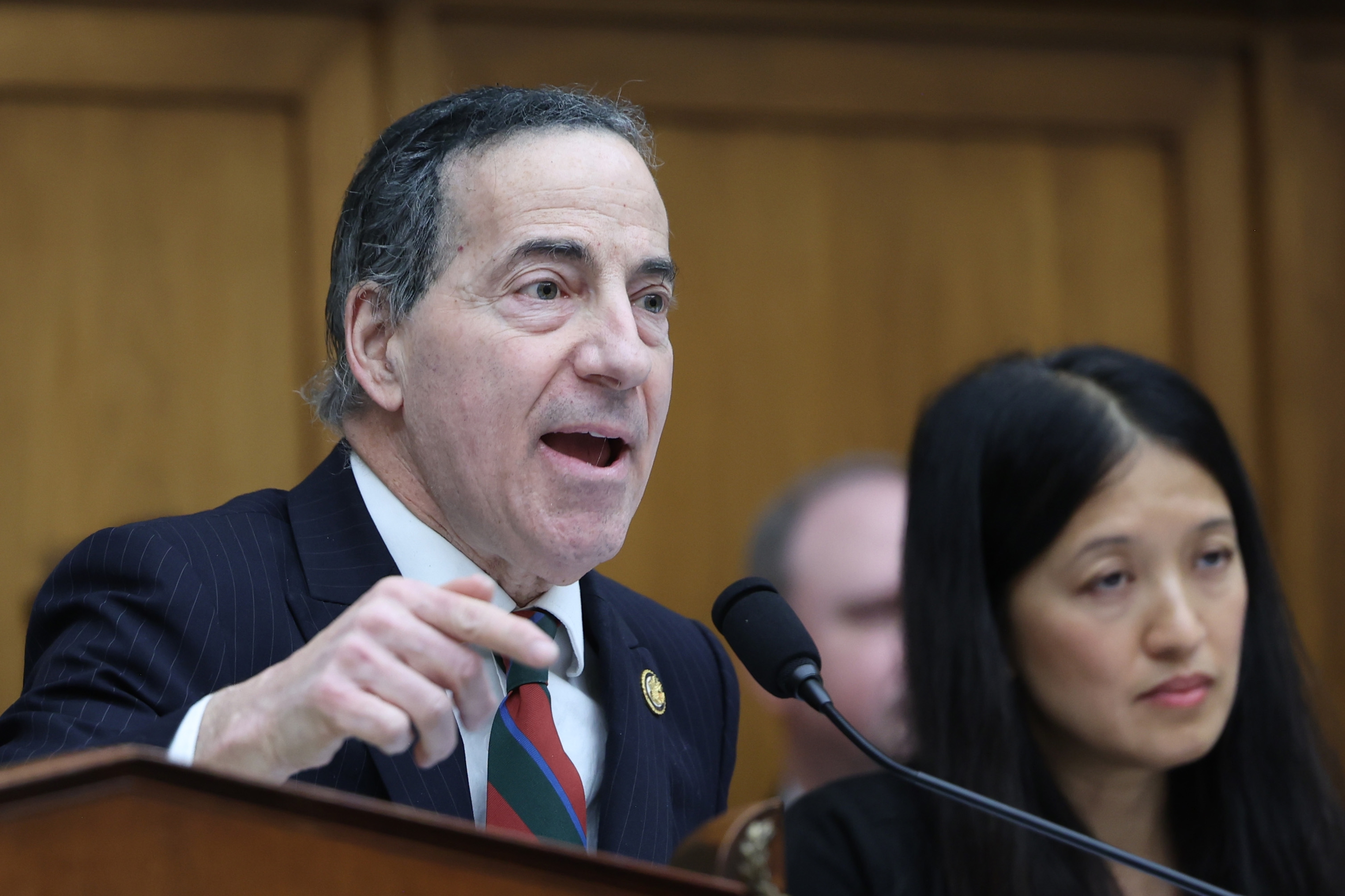
    Rep. Jamie Raskin (D., Md.) sent a letter Tuesday to Interior Secretary Doug Burgum and U.S. Attorney Jeanine Pirro requesting the release of all documents related to the decision to prosecute Hearn and any communications between the agencies and the White House about the case.

    The letter called on the departments to answer whether President Donald Trump exerted pressure to “retaliate against and scapegoat an American citizen.”

    “How did this debacle happen?” wrote Raskin, the top Democrat on the Judiciary Committee. “The conclusion seems inescapable that at least one, if not both, of you have misled the American public about the evidence and used it to corrupt and weaponize our justice system against an innocent 67-year-old American citizen.”

    Pirro’s office maintains it didn’t know about the widespread damage at the Reflecting Pool until after the indictment, accusing the Interior Department of withholding documents indicating the peeling was caused by flawed installation. But Hearn’s attorneys say there’s evidence that they knew of problems before indicting him.

    Raskin is also seeking evidence presented to the grand jury, including transcripts of testimonies.

    Asked for comment on the letter, the White House referred the Washington Post to Trump’s previous Truth Social posts alleging vandalism.

    The Interior Department did not immediately respond to a request for comment.

    “The Department of Justice follows the evidence when determining if crimes have been committed,” the federal agency said in a statement. “We always evaluate any case based on the facts and the law.”

    Raskin’s letter comes after Hearn’s attorneys alleged that prosecutors may have misled jurors to secure an indictment against him. In a filing last week, the attorneys alleged that a key government witness testified that repairs would have been necessary regardless of Hearn’s actions but that prosecutors recalled the witness and “elicited” them to say that damage “attributable to Mr. Hearn” would be more than $1,000.

    The attorneys are asking the judge to ensure federal prosecutors can’t charge Hearn again in the future.

    Pirro, a longtime Trump ally, has faced intense public scrutiny over the decision to prosecute Hearn and others alleged to have damaged the pool and again after abruptly dropping the cases.

    In the letter, Raskin points to Trump’s repeated comments about renovating the Reflecting Pool. Raskin also questioned the noncompetitive process in awarding a contract and referred to reporting from CNN that another company declined the July 4 deadline.

    “President Trump’s ‘highly sophisticated’ and slapdash paint job didn’t even last 100 days, much less a century,” Raskin said.

    Atlantic Industrial Coatings, the contractor, did not immediately respond to requests for comment.

    A Post analysis of satellite imagery and photos and videos taken during the Reflecting Pool renovation found that the basin’s peeling was probably caused by application errors.

    Despite reports of Reflecting Pool renovation failures before June 19, when Hearn touched a piece of the detached liner, Raskin said Trump and Burgum latched on to the claim that vandalism was to blame. Pirro followed with a felony charge against Hearn in July. He was initially charged with a misdemeanor count of destruction of government property.

    The case collapsed the same month. Pirro’s office said in a court filing that the Interior Department did not provide sufficient information ahead of the indictment, including an email from an engineer on June 11 detailing the peeling of the liner.

    “After DOJ’s filing, President Trump went off the deep end of the Reflecting Pool, you might say,” Raskin said in the letter.

    Trump has blasted Pirro for dropping the vandalism charge against Hearn and three others and has continued to blame the former Olympian.

    On Sunday, Trump again accused Hearn of “‘violently’ ripping and tugging at the Pool’s somewhat delicate coating” in a social media post. He conceded that there was “some contractor error” due to the rushed job but that it damaged only a small area.

    Raskin poked jabs at Trump in the letter, referencing “local vandalism crimes,” including the East Wing demolition and the affixing of Trump’s name to the Kennedy Center. A judge later ordered the removal of the name.

    The letter requests that the records in the pool case be shared by Aug. 25.

    In a statement Tuesday, attorneys for Hearn said they “welcome any Congressional oversight that seeks the truth.”

    “As we have stated from the beginning, the indictment of Davey Hearn was a clear miscarriage of justice and an egregious misuse of government power,” Norm Eisen, Mary Dohrmann, and Steve Levin said in the statement. “Our client and the American public deserve the truth, so it won’t happen again.”

  • Kennedy Center must pay over $250,000 to artist who opposed Trump name change

    Kennedy Center must pay over $250,000 to artist who opposed Trump name change

    A judge has ordered the Kennedy Center to pay more than $250,000 to a jazz musician who pulled out of a performance after the venue’s board voted to rename the building for President Donald Trump.

    D.C. Superior Court Judge Tanya Jones Bosier on Monday ordered the center to pay $252,000 in legal fees and costs to lawyers for Chuck Redd, who for years had played at the center’s annual Christmas Eve concert.

    Last year, Redd had been in talks with the venue’s staff to perform but declined to sign a contract. He told the center he chose to bow out because of “the defiant and illegal name change happening to the Kennedy Center.”

    The Kennedy Center sued in March, alleging Redd had breached his contract by withdrawing from the concert. But in June, Jones Bosier tossed the lawsuit, determining that center officials failed to show they had made a legally binding agreement with him.

    The Kennedy Center did not immediately respond to a request for comment.

  • Democratic Arizona Gov. Katie Hobbs chooses former Republican Mayor John Giles as her running mate

    Democratic Arizona Gov. Katie Hobbs chooses former Republican Mayor John Giles as her running mate

    PHOENIX — Democratic Arizona Gov. Katie Hobbs has picked a Republican-turned-independent to be her running mate in a tough reelection campaign, setting up a bipartisan ticket as voters elect the state’s first lieutenant governor.

    Hobbs’ selection Tuesday of John Giles, a former mayor of Mesa, a Phoenix suburb that is Arizona’s third-largest city, is an overture to the Republicans and conservative independents she must win in a state that was once a GOP stronghold. Republicans have expanded their voter registration advantage over Democrats since Hobbs eked out a narrow win over Kari Lake, a fierce ally of President Donald Trump, in 2022.

    Hobbs is considered the most vulnerable Democratic governor in the country. Giles, a registered Republican for decades, changed his party affiliation to independent on May 17 and voted in the Democratic primary last month, according to county voting records.

    The Republican nominee is U.S. Rep. Andy Biggs, who last week picked Sine Kerr, a farmer and Republican former state lawmaker, to be his running mate. Kerr’s rural roots balance Biggs’ base in parts of metro Phoenix.

    In an interview with the Associated Press before Hobbs publicly announced that she had picked Giles, he said he still considers himself to be a conservative and said he stuck around the Republican Party probably longer than he should have in a crusade to save it. “A few months ago, I realized that it was time to give up that crusade,” Giles said.

    Giles led a conservative city for a decade

    Giles, who was Mesa’s mayor from 2014 to 2025, has been a vocal Trump critic and has endorsed Democrats, including Trump’s 2024 rival, then-Vice President Kamala Harris. Giles spoke in favor of Harris at the Democratic National Convention, saying Trump’s policies would hurt Mesa.

    Giles also backed Democrats running against Trump allies, including Hobbs in her 2022 race against Lake and the state’s current U.S. senators, Mark Kelly and Ruben Gallego.

    As mayor, Giles signed a proclamation promoting equal treatment for lesbian, gay, bisexual, and transgender residents in housing and accommodations, a controversial move in the conservative city.

    The Biggs campaign, in anticipation of Hobbs’ announcement, launched a website highlighting Giles’ support for Harris in 2024 and his participation in the Democratic convention. Drew Sexton, a senior adviser in the Biggs campaign, issued a statement early Tuesday saying Hobbs’ selection of Giles “is of no surprise to Arizonans who have been paying attention. As Kamala Harris’ favorite Arizona mayor, Giles is aligned with Hobbs on all the issues that have hurt Arizonans the most over the past four years.”

    Sexton also said Giles “has been an aspiring Democrat since he first voted for Joe Biden in 2020.”

    As a member of the Church of Jesus Christ of Latter-day Saints, Giles can be an ambassador for Hobbs. Church members make up about 6% of the Arizona population. Latter-day Saints, widely known as Mormons, have been a reliably Republican voting bloc for decades, but many have been ambivalent about Trump since his first run for the White House.

    Democrats have been working to woo Latter-day Saints turned off by Trump’s penchant for foul language and demeaning rhetoric toward women and people of color, which clashes with the church’s values of humility, morality, and compassion.

    Biggs is also a member of the church.

    Picking a former Republican as a running mate hones the bipartisan image Hobbs has tried to create, contrasting with Biggs’ background as a far-right congressman and, before that, the state Senate president. But it also risks inflaming tensions on the left.

    In the AP interview, Hobbs said she takes a nonpartisan approach to her work in government. When she was asked whether some supporters might be frustrated because she picked a former Republican as her running mate, she said, “It shouldn’t be a surprise.”

    Both Hobbs and Giles portray Biggs as an extreme partisan. Giles said it’s disingenuous for Biggs to present himself as more of a moderate when he was “unapologetic about being the most conservative person in the roo in any room.”

    Arizona is electing a lieutenant governor for the first time

    Arizona is one of just five states without a lieutenant governor position, along with Maine, New Hampshire, Oregon, and Wyoming.

    That will change in January.

    Voters added the post in 2022 to more clearly define the line of succession. Until then, the secretary of state will continue to serve as the next in line to be governor.

    Gubernatorial succession is especially relevant in Arizona, where five governors since 1975 have entered the office through succession rather than election.

    In fact, of Arizona’s 12 governors over the past 50 years, only one, Republican Doug Ducey, entered and left the office through the typical pathways of being elected and serving out a full term. Among the others, one died, one was impeached and removed, one resigned after being convicted of fraud, and two quit to accept presidential appointments.

  • Colombia searches for over 3,000 missing after a powerful earthquake kills more than 100

    Colombia searches for over 3,000 missing after a powerful earthquake kills more than 100

    PEREIRA, Colombia — Rescue crews and civilians in Colombia painstakingly searched through rubble Tuesday in the hopes of finding survivors trapped under debris after a powerful earthquake left thousands missing in dozens of cities and towns.

    The 7.4 magnitude earthquake that hit western Colombia on Monday wreaked havoc, collapsing buildings, buckling roads, crushing cars, and leaving devastated residents to console each other among the wreckage of their homes. Excavators and heavy machinery cleared heavy chunks of concrete, while buckets of rubble were passed hand-to-hand along a line of volunteers.

    Rescue crews and volunteers picked through flattened concrete buildings in affected cities, searching for signs of life. They raised their hands to call for silence when they thought they heard someone beneath the piles of debris. At least one woman was retrieved — alive — from the rubble.

    Colombian President Abelardo de la Espriella said the earthquake killed at least 181 people and left 2,595 more injured. He said at least 195 remained missing, but civilian-run databases suggest that number could be closer to 4,000.

    Crews race to find survivors

    Authorities said the deaths were concentrated in the cities of Cali, Pereira, Manizales, and Quibdo, but local leaders and families worried about casualties and damage in rural areas, from where very little information has emerged. Aid agencies consider the first 48 to 72 hours crucial for retrieving people alive, though that threshold can be extended if they have access to food and water.

    De la Espriella said more than 1,000 homes were destroyed and yet more damaged.

    Standing near the remains of his brother’s collapsed apartment building in Pereira, Jairo Vargas said he made the 135-mile drive from Medellin, hoping to find him alive.

    “I’m absolutely certain he’s here. Absolutely certain,” Vargas said, adding that his brother’s car was still parked outside. But he fears his sibling did not survive.

    “The debris surrounding my brother is soft,” he said, as heavy machinery rumbled nearby. “It’s possible that it’s protecting him, but we can’t hear any noises anymore. I don’t know. I have little hope.”

    Colombia’s new president faces his first serious challenge

    The earthquake presents the first major test for first-time officeholder de la Espriella, who entered office just days before the natural disaster. The leader, who split the country in recent elections, now seeks to unite Colombia in its disaster response.

    That challenge was particularly notable in Choco, the region at the quake’s epicenter. It is one of Colombia’s poorest and most neglected regions, often beset by warring armed groups. Much of Choco is accessible only by boat, through the jungle, or by airplane.

    Sterling Palacios, a religious and environmental leader in the region, said Choco’s capital and smaller communities along the Atrato River were devastated. Homes were reduced to rubble and aftershocks continued to rumble, terrifying residents who slept in the streets overnight.

    The Colombian Geological Service said it has documented more than 100 less powerful aftershocks since the initial quake.

    “There are towns where people have lost everything, where people have died, where homes have been destroyed,” he said. “We don’t have a full panorama of the damage, but we know it’s been massive.”

    De la Espriella traveled to Quibdo in Choco on Monday night where he announced he was mobilizing “the entire military and police apparatus,” as well as deploying engineers, rescue workers, and search dogs.

    “Choco will never again be the ‘land of the forgotten,’” he said.

    Palacios said the government’s response has so far been “concentrated in the capital,” and that authorities were flying the wounded from Quibdo to hospitals in the city of Medellín.

    The biggest challenge, he said, remains towns in rural areas only reachable by boat — journeys that can take hours or days. That response is also complicated by a toxic slate of armed groups warring for control who, during the COVID-19 pandemic, blocked healthcare workers from traveling to remote areas.

    “It’s a risk and it’s very difficult to predict” what could happen, he said, adding it could take weeks to fully assess the devastation.

    Desperate residents seek news of loved ones

    Families posted information about missing loved ones on citizen-run websites.

    Dana Carolina Zamora posted an image of her missing 60-year-old uncle, Miguel Ángel Zamora, cradling his dog. The farmer was living in a rural area of El Cairo, not far from the quake’s epicenter in San Jose Del Palmar.

    Local authorities said 80% of El Cairo, a town of about 7,000 people, was damaged. Zamora said her uncle lived in a traditional house of sticks and mud.

    “We are afraid. We hope that is not the case, that he is all right and that it is only a communication failure. But we haven’t heard anything from him,” Zamora said.

    The earthquake left many people unnerved after back-to-back quakes devastated neighboring Venezuela in late June, destroying hundreds of buildings and killing more than 6,300 people.

    Mónica Sánchez, who lives in Pereira, one of the worst-hit cities, said when the quake happened a wall collapsed inside her clothing factory. Sánchez and her 12 employees escaped just in time.

    “It was shocking — the city fell down around us,” she said.

    On Tuesday, rescue workers pulled a woman alive from the rubble. Diana Troncoso lay on a stretcher, dusty and scraped up, with her eyes closed. Observers burst into applause as she emerged, but search teams raised their hand to call for quiet so they could continue their search for survivors.

    Pereira and Cali enforced curfews Monday night to prevent looting, and private vehicles were banned from the roads of Pereira so ambulances, police, and rescue workers were able to navigate what’s left of the roads.

    The U.S. State Department has announced it would provide $15.5 million for emergency shelter, food, and other aid. Governments across Latin America have also lined up to help.

    “This has been a tragedy for the whole city, for thousands of families,” Pereira Mayor Mauricio Salazar told local media, his voice quavering. “But here we are, and we will continue forward with the hand of God.”

  • Trump’s plane ruse echoes Clinton’s Pakistan swap, but with press pool at risk

    Trump’s plane ruse echoes Clinton’s Pakistan swap, but with press pool at risk

    When President Bill Clinton deplaned in Islamabad, the sleight of hand became clear.

    A decoy jet with all of the markings of Air Force One touched down in view of the news media, and a Secret Service agent resembling the president emerged. Then, an unmarked plane landed, and the real president disembarked.

    It was March 2000, and Susan Page, a White House reporter covering the trip for USA Today, was one of a small group of people who knew about the ruse.

    Before the India-to-Pakistan flight, White House officials called Page, then the White House Correspondents’ Association president, and summoned her for an off-the-record conversation. There, White House press and security officials explained the operation, informing her of the president’s location and safety measures in place for journalists on the trip, Page said in messages with the Washington Post.

    “They told me about the extraordinary security procedures being taken because of the dangers in flying there, including use of the decoy plane,” she said. “Of course, the dangers threatened the journalists covering the trip as well as President Clinton.”

    Page’s briefing, which has not been previously reported, meant at least one journalist in the traveling press corps knew the president would not be aboard Air Force One.

    More than 25 years later, the White House faced a similar security dilemma — but handled the press very differently.

    On Monday evening, the Post reported on an extraordinary maneuver in which security personnel in Turkey secretly moved President Donald Trump from a plane marked as Air Force One to a smaller, unmarked Air Force plane, using an airport catering truck. The operation, which took place last month, was prompted by a credible Iranian threat to Trump, the Post reported.

    As the swap took place, reporters aboard the decoy plane, who were instructed to lower their window shades, were unaware of the president’s maneuver, according to the Post’s reporting.

    The incident could further degrade the already-fraught rapport between the Trump White House and the press corps, a relationship marked by name-calling, threats, legal restrictions, and lawsuits from Trump.

    Page, now USA Today’s Washington bureau chief, declined to comment on the newly revealed incident but broke a decades-old agreement with the Clinton White House to describe her experience.

    “I haven’t spoken about this episode before, because of the off-the-record ground rules of that discussion,” Page said in a text message. “But since more than a quarter-century has passed — and since the ruse became evident as soon as President Clinton disembarked in Pakistan — I think it’s OK for me to relay it now.”

    Jacqui Heinrich, current president of the WHCA, declined to comment.

    The White House did not respond to a request for comment on the operation’s impact on the journalists aboard the decoy plane.

    “As the President has said recently, there are many enemies of America who have their sights on him, and we use every tool at our disposal to address those threats,” White House Communications Director Steven Cheung previously told the Post.

    The White House press pool consists of a rotating group of journalists who send reports, photos, and footage of the president’s activities for the entire press corps. This formal system has existed since 1937, though the White House first brought in a pooler in 1881 after President James Garfield was shot. Associated Press reporter Franklin Trusdell sat outside of the president’s room, monitoring his breathing and sharing updates with his colleagues.

    The system is designed to ensure that someone from the press is present to observe the president’s movements and activities, giving the public an independent accounting.

    Because the press was seemingly in the dark about the operation, Garrett Graff, a journalist and historian, said that the Post’s reporting describes an event that is probably unprecedented in modern presidential history.

    “That the White House would lie to the press corps in its entirety about where the president is,” he said. “That’s a new Rubicon that’s being crossed.”

    The breach was not merely one of journalistic access, according to Graff. The details of the threat that prompted Trump’s operation are unknown, so it’s impossible to calculate the risks to the press pool. However, the reporters aboard the plane were probably exposed to the very threat that had prompted the extraordinary security measures, Graff said.

    “Knowing that this was a series of actions that the White House and the military took precisely because of a threat that they were deeply worried about, it makes it all the more egregious that the press was kept out of the loop,” he added.

    Former CNN Pentagon correspondent Barbara Starr said that the press fully understands and respects the security requirements of covering the president.

    But, she said, “there will be a level of distrust now that we have not seen before … their own lives were potentially at risk without them even knowing it, without them having the option of making a different choice of how to get home.”

    Politico reporter Megan Messerly was the print pooler on the day of Trump’s trip. “We are wheels up from Ankara as of 8:43 p.m.,” she reported. “We have been advised to keep our window shades in the press cabin closed. See you on the other side.”

    After landing, she wrote that the flight was “uneventful” with “no visitors to the press cabin.”

    Hours later, a reporter peppered Trump with questions about whether there was a security threat to Air Force One that warranted the shades being closed, according to Messerly’s pool report.

    “Well, I have a threat all the time. I’m number one on their list, before you,” Trump responded. “But if I go, you go. Right? Perhaps someday you want to change professions.” Messerly did not respond to a request for comment.

    The disclosure quickly prompted a scramble among White House reporters for more information.

    “We (and no doubt every other newsroom in Washington) are asking the White House and sources for more info,” NBC chief White House correspondent Garrett Haake wrote on X.

    ABC’s Michelle Stoddart, who was the TV pool producer aboard the flight, sent WHCA members additional details on the trip, following the Post’s reporting.

    “Upon arrival to the airport, the events did not seem particularly out of the ordinary to the travel pool,” she wrote. “Our photographer noted that the stairs were quickly pulled away as the press loaded.”

    She said that a photographer seated behind her opened a shade on board and was quickly instructed to close it again by a White House staffer who said it was a “request from Secret Service.”

    One White House reporter, speaking on the condition of anonymity because they weren’t authorized to speak publicly, said that they were outraged to learn about an operation that might have put the press corps in danger.

    “When you sign up to work at the White House, even as a civilian, part of your job is to defend the president,” the reporter said. “That’s not my job. I cover the president. Reporters take risks as part of the job, but not on behalf of the president.”

  • Ukraine’s push to cripple Russia in Crimea is just getting started, drone chief says

    Ukraine’s push to cripple Russia in Crimea is just getting started, drone chief says

    EASTERN UKRAINE — The commander leading Ukraine’s drone war says his country’s recent strikes in Crimea are the first phase of a campaign aimed at rendering the peninsula — illegally annexed by Russia in 2014 — unusable as a staging ground for Russian forces.

    Maj. Robert “Magyar” Brovdi, one of Ukraine’s most prominent commanders among a new generation of soldiers, said his forces could strike seven times more military targets in Crimea if the money pledged by Western allies came faster.

    “Crimea falls within the key conceptual pillars on the path to ending the war,” Brovdi told the Associated Press in an interview.

    Despite that shortfall, Ukraine’s summer campaign in Crimea has already inflicted significant damage: striking rail bridges, oil depots, and power infrastructure to disrupt supply lines and blind Russian air defenses as drones fly in.

    Brovdi said his forces are equipped at just 14% of what they would need to carry out the Crimea campaign at full capacity.

    A firm believer in numbers since his past life running an international grain trading business, Brovdi joined Ukraine’s territorial defense as a volunteer in the war’s opening days. He rose quickly, commanding one of the country’s most effective drone brigades before being tapped to lead a force with no precedent before this war — Ukraine’s Unmanned Systems Forces.

    “It’s not that the production capacity of Ukrainian manufacturers doesn’t allow us to make the necessary quantities” of drones, Brovdi said. “It’s the banal problem of untimely financing, which our partners do allocate, but which moves significantly slower than our plans.”

    A lover of the arts

    A devoted patron of the arts, Brovdi works in an underground command post that resembles a museum, with pieces of Ukrainian art on display, including by renowned painter Maria Prymachenko — each with small placards noting their titles and a QR code linking to more information. “Please don’t touch the sculpture,” reads a sign beneath one piece.

    The artwork sits against a backdrop of dozens of screens streaming live footage from the front, along with real-time data that drives decisions on the battlefield. Soldiers can grab good coffee, pick a book, work out, or rest in sleeping pods — a culture that feels closer to a Silicon Valley office than a war room.

    They work around the clock to try to prevent Crimea from functioning as a staging ground for the Russian military, said Brovdi, whose call sign, Magyar, nods to his ethnic Hungarian roots in Zakarpattia, the western Ukrainian region bordering Hungary.

    He pointed to one sign of progress — in four recent large-scale Russian missile barrages from the peninsula, only five missiles were launched in total, a drop he credited to the systematic destruction of Russian air defenses there. The AP couldn’t independently verify the claim.

    To open that “window” for drones to strike the peninsula without being shot down en masse, his forces destroyed more than 300 air defense assets over recent months — surface-to-air systems, radar stations, electronic warfare equipment.

    The window metaphor sends him into a sidetrack about something personal — he loves sleeping with one open, a pleasure he rarely gets anymore as one of Russia’s most hunted men, who spends most of his time in underground bunkers.

    Forcing Russia out of Crimea

    Much of Russia’s Soviet-era air defense hardware runs on the power grid, which is one of the reasons Crimea’s electrical infrastructure has become a recurring target. Russian soldiers become “blind,” left with just machine guns and rifles, he said. The tactic has also impacted access to power for civilians, and Brovdi said he has twice publicly apologized to Ukrainians living in Crimea for the disruptions.

    Wherever Starlink connectivity reaches across Crimea, his forces can now destroy even the most heavily defended target using an average of just three drones, mixing munitions with different characteristics and warheads depending on what’s being hit. He described the strikes as deliberately calibrated — different munitions for a bridge pier than for a fuel truck or a moving train — and said his forces avoid hitting civilian infrastructure.

    “Creating conditions that make it impossible for any kind of military capability … to remain there will make Crimea uninteresting … as a military staging ground,” he said.

    Ukraine is also working to dismantle Crimea’s role as a naval base — a blow to Russia’s presence near NATO’s borders, he added.

    The campaign’s early results have not been made public, Brovdi said. But roughly two weeks into the offensive that began in late June, he said Ukrainian intelligence indicated Russian authorities had ordered all military commands and security services to relocate off the peninsula, along with a covert order to remove secret archives and artworks. The AP could not independently verify the account.

    Threats from Russia

    Meanwhile, Russia is working to counter Ukraine’s edge. It is installing jamming systems at a scale that will, to some degree, degrade Starlink connectivity, Brovdi said.

    Russia is also building its own satellite communications system to rival Starlink, he said. “This is a risk for the entire planet,” Brovdi said, “because a dictatorship will gain access to information across the whole globe.”

    He also pointed to other threats facing Ukraine. The concentration of jet-powered Shahed drones, which are much harder for Ukraine to shoot down, has increased 2½ times in recent weeks, he said.

    Russia’s military can currently fire a simultaneous salvo of 77 ballistic and cruise missiles, he said, and plans to increase that to 200. That is one of Ukraine’s most vulnerable points, since the country is running short of interceptors for the U.S.-made Patriot — the only system Ukraine has in its arsenal against ballistic missiles — meaning dozens fired by Russia during mass barrages get through and hit their targets.

    “Even if they only manage half of that, it will all be flying at us,” Brovdi said. The only way to bring the number down, he said, is by striking every facility involved in producing those missiles — underscoring the importance of Ukraine’s long-range strikes deep inside Russian territory.

    Ukraine’s plan for Russia’s Wildberries

    Ukraine has increasingly targeted Wildberries, Russia’s largest online marketplace, sometimes described as the country’s answer to Amazon, and Brovdi named it as a target.

    “Wildberries is, first of all, a supply platform — it’s the war’s quartermaster,” he said, noting the company runs a dedicated section selling goods for Russia’s military.

    The Kremlin has denied the site supplies the Russian military and has accused Ukraine of striking civilian targets. Russia regularly attacks Ukrainian logistics and retail facilities.

    At the same time, Brovdi said, the strikes on Wildberries are meant to make ordinary Russians feel the war directly, in hopes the resulting desire to end it could weigh on Russia’s ability to keep fighting.

    Brovdi declined to give a timeline for the Wildberries campaign, saying only that the strikes will continue “until it becomes impossible for it to recover quickly.”

    “Ultimately, Wildberries is, forgive the expression, a consumer gambling addiction,” he said, arguing that losing access to it — like restrictions on social media — creates an intrusion on one’s personal life that most Russians feel.

    “It turned out to be a sensitive sensor of the comfort of Russia’s massive population — people who consider themselves completely untouched by the actions of the aggressor country,” he said.

  • Letters to the Editor | Aug. 11, 2026

    Letters to the Editor | Aug. 11, 2026

    Bogus claims

    It’s time America goes on the offensive regarding Donald Trump’s lies about his winning in 2020 and his unfounded statements about weakness in the security of our elections. He presented little or no evidence to support his claims. Immediately after Trump’s speech, some GOP pols were pushing for the passage of the SAVE America Act, which is a blatant attempt to stop some citizens from voting.

    In Trump’s second term, the FBI’s Foreign Influence Task Force has been shut down, the Office of the Director of National Intelligence has been cut back sharply, and a task force that warned against foreign meddling and the Cybersecurity and Infrastructure Security Agency have been gutted.

    In 2020, Christopher Krebs was fired by President Trump as head of the cybersecurity agency known as CISA after contradicting the president’s baseless claims of widespread election fraud. The same people who perpetuated the lie that the 2020 presidential election was stolen are now embedded in the White House and throughout the federal government.

    I suggest we call our federal and state senators and representatives and demand they publicly denounce Trump’s lies about him winning in 2020 and his baseless allegations of fraud in our elections.

    Steve Clifford, Langhorne, hs12@verizon.net

    Power paradox

    The blindness community has always had a certain degree of smugness, particularly around energy sources. Using mass transit or various forms of power transit, we did not contribute significantly to the use of fossil fuel. We were not the ones going up to the gas station and driving off — polluting all the way. We frequently worked from home and did not clog the highways. We weren’t the ones snarling traffic. Most blind people have some usable vision, but for those of us with next to no vision, we would often turn off the lights and do whatever tasks needed to be done. Then artificial intelligence came along.

    Now there are data centers that use a lot of energy and water. AI tools, such as smart glasses and advanced GPS units, are marketed heavily to blind people. Many blind people have devices that tell them what is in their environment and describe things around them.

    Blind people are beginning to take photos and videos. AI is able to tell them when something is in the center of the photo frame. It’s also easier to get information off the web by using a chatbot. I find that my ability to cook has been enhanced. I can pick up a package from my spice cabinet and have my smart glasses identify the item. The possibility of needing to open the package and smell it to identify it has been eliminated. I can ask my smart glasses about cooking times and proportions. If I need to find something in my apartment, I no longer need to feel around or think about where I might have put something. The smart glasses can help me find the item.

    This has all been very useful to me, yet I still have concerns about data centers and their power and water usage. I sometimes feel guilty about using AI to do many of these tasks. I used to accomplish so much without AI, but now it’s becoming a default. I do have one question for those technology experts out there: With artificial intelligence and quantum computing becoming so much more advanced every day, why don’t we ask these advanced technological wonders to solve their own energy dilemma? Perhaps quantum computing and AI can figure out how they should be empowered. Perhaps the energy and environmental solution to the data center difficulty can be solved by the very technology that requires the data centers.

    David W. Wannop, former music business worker, Philadelphia

    Join the conversation: Send letters to letters@inquirer.com. Limit length to 150 words and include home address and day and evening phone number. Letters run in The Inquirer six days a week on the editorial pages and online.

  • Trump told Ukraine it had no cards. Then Kyiv took the war to Russia

    Trump told Ukraine it had no cards. Then Kyiv took the war to Russia

    The meeting in the Oval Office between U.S. President Donald Trump and Ukrainian President Volodymyr Zelenskyy was a diplomatic car crash.

    “Your country is in big trouble. You’re not winning,” Trump said, dressing down Zelenskyy in front of the world’s media. “You don’t have the cards.”

    The blowup in February 2025, three years into the war, was more than just a heated public exchange: The Ukrainian delegation was asked to leave the White House, and Washington briefly suspended intelligence sharing with Kyiv. In the ensuing months, as Russia made slow but steady gains on the battlefield, Trump warmly welcomed Russian President Vladimir Putin in Alaska and seemed ready to push Ukraine into an unfavorable peace deal, including forcing it to give up territory.

    But even as Zelenskyy sat next to Trump, his forces were preparing an operation that would reveal Ukraine’s ability and ambition to take the war to Russia: Months later, drones smuggled into the country attacked Russian bombers, destroying or damaging planes worth hundreds of millions of dollars.

    Since then, Kyiv has ramped up a campaign of longer-range strikes inside Russia and in areas Moscow has seized, increased production of weapons, targeted Russian air defenses, and hit oil infrastructure and the warehouses of a major retailer in a bid to ensure ordinary Russians feel the impact of the conflict.

    In an embarrassment to Putin, Ukrainian drone strikes sent thick plumes of smoke billowing over St. Petersburg shortly before the opening of an international economic forum in June. Concern over Ukraine’s attacks led Russian authorities to scale down the May 9 military parade commemorating the defeat of Nazi Germany. Strikes on oil refineries have caused a summer fuel crisis.

    By the time Trump and Zelenskyy met at a NATO summit in July, the American president said the Ukrainian leader had “been very effective” in the war. “We’ve actually developed a good relationship,” Trump added.

    But as Ukraine’s strikes have intensified, so have Russia’s — and Kyiv faces major challenges in defending against them because of shortages of American Patriot air defense missiles.

    In the first six months of the year, 1,396 civilians were killed in Ukraine, according to the U.N. Meanwhile, the world body said Russian authorities reported 250 civilians killed in the same period. On Monday, a strike that Ukraine said hit an oil refinery in Russia killed 13 people, according to local officials.

    And while Ukraine’s effort appears to have shifted the narrative about the war in Washington, it’s still not clear if it will be able to push Putin toward the negotiating table.

    Ukraine’s strikes are aimed at undermining the idea that Russia can afford to “just let this roll,” said Jack Watling, a senior research fellow at the London-based RUSI think tank.

    The question of whether it will succeed depends on how much pain Ukraine can exact. “Logically, above a certain threshold, it does work but whether they can reach that threshold is an interesting question” — and one that depends at least partly on factors outside Kyiv’s control, like continued European financial support, he noted.

    Ukraine brings the war to Russia

    While most of Ukraine’s strikes have a range of less than 200 kilometers (125 miles), its longer-range attacks have increased dramatically this year. It launched three times as many of those strikes in July as it did in January, according to data from ACLED, an independent conflict monitor. Repeatedly hitting deep into Russia has forced its military to stretch air defenses over a larger area.

    Many of its strikes have focused on four key categories of targets, according to an Associated Press analysis of hundreds of Ukrainian attacks this year — compiled from statements by Russian officials and state media and the Ukrainian military.

    As the Iran war pushed up energy prices, leading the U.S. to ease sanctions on Russian oil, Kyiv ramped up strikes on oil infrastructure to deny the Kremlin revenue from fuel exports and force shortages on ordinary Russians. It is also striking defense manufacturing to damage Russia’s long-term ability to produce weapons, targeting air defenses to clear a path for its own arms, and hitting retail warehouses to bring the effects to ordinary Russians.

    — As part of the campaign against oil infrastructure, Kyiv said it hit Russia’s largest oil refinery, more than 2,500 kilometers (1,550 miles) from Ukraine.

    — Kyiv has also targeted defense manufacturing centers. It hit a factory making navigation systems multiple times, including with its own Flamingo missile.

    — In July and August, Ukraine struck Wildberries warehouses. Kyiv said the company helps supply the Russian military. Moscow denies that.

    — Many of Ukraine’s strikes on Russian air defenses and radar are around Russian-held Crimea and are often carried out with drones.

    Maj. Robert “Magyar” Brovdi, the commander leading Ukraine’s drone war, told the AP its strikes in Crimea are also aimed at rendering the peninsula unusable as a staging ground for Russian forces.

    Starlink gives Ukraine an advantage — for now

    It’s not always clear if Ukraine’s attacks are effective — and some may have resulted in minimal or no damage. In May and June, Ukraine said it hit several satellite, reconnaissance or signals intelligence facilities in Russia, but satellite images analyzed by AP did not show major damage.

    Still, Ukraine has one advantage that can help it strip back Russian air defenses and make its drone strikes more precise.

    It has access to Elon Musk’s satellite communications service Starlink — which means its operators can control drones in real time in Russian-held Ukrainian territory. Russia has been blocked from using Starlink.

    But Russia is also building its own version of Starlink, and is installing jamming systems that hamper Starlink connectivity, Brovdi said.

    Ukraine is investing heavily in weapons production

    Even before the Oval Office meeting, Ukraine scrambled to invest in new weapons — but that moment was “a real wake-up call,” said a European military official who spoke on condition of anonymity to discuss the front-line situation in detail. It became clear that U.S. support could be stopped “from one day to the next.”

    Ukraine doubled down on production, churning out a growing array of weapons in larger numbers and shortening traditional research and production cycles from decades to years or even months.

    Even so, Ukraine is still not able to produce as many missiles as it needs. It also took Ukraine time to make systems that could target facilities precisely enough that Kyiv felt comfortable using them to strike deep into Russia, Watling said.

    And while Ukraine has begun to resolve navigational issues with its missiles, such as the Flamingo, those weapons are still not as accurate — or as stealthy — as their Western analogues. That often means hundreds of drones must be fired to overwhelm Russian air defenses to allow a missile to get through.

    It’s an expensive and time-consuming way to wage war since only 5% to 9% of what Ukraine fires gets past Russian air defenses, according to Watling.

    But, although Russia’s weapons are more powerful, Zelenskyy suggested at the NATO summit that Putin is “losing the initiative” in the war as Ukraine has moved the fight from the stalled battlefield to the sky.

    Sitting next to Trump at the summit, the Ukrainian leader even cracked a joke, demurring when Trump asked him if he would accept Moscow as a venue for peace talks, as Putin has suggested.

    “There are a lot of Ukrainian drones in the air,” Zelenskyy said. ”It would be dangerous.”

  • In rejecting Trump’s Gaza plan, Netanyahu reprises a balancing act he has mastered

    In rejecting Trump’s Gaza plan, Netanyahu reprises a balancing act he has mastered

    It’s possibly the most important job of any Israeli prime minister: maintain good relations with the United States while pushing back on demands seen as undermining Israel’s security.

    No one has managed the balancing act longer than Prime Minister Benjamin Netanyahu, Israel’s longest-serving leader. But with the Iran war at a stalemate, and U.S. President Donald Trump looking to advance peace efforts elsewhere, Netanyahu’s task is getting harder less than three months away from Israeli elections.

    On Sunday, Netanyahu rejected Trump’s latest plan to advance the stalled ceasefire in Gaza, saying Israel will not withdraw from any of the roughly 60% of the territory it controls until Hamas has been completely disarmed — something the militant group controlling the other 40% has long resisted.

    Netanyahu risks angering Trump, who he has repeatedly said is the greatest friend Israel has ever had in the White House. But even a hint of compromise with Hamas could be fatal for Netanyahu’s reelection in a country deeply traumatized by the Oct. 7, 2023, attack that happened on his watch.

    Trump, meanwhile, is under pressure to deliver on his promise of being a global peacemaker as talks with Iran stall and gas prices stay elevated ahead of U.S. congressional elections in November.

    Netanyahu: No progress on Gaza ceasefire until Hamas disarms

    The Gaza plan announced by Trump last month grew out of his October ceasefire deal, which ended major Israeli military operations there and brought about the release of all remaining hostages but has otherwise largely stalled.

    Under the latest agreement, Hamas would gradually give up its weapons while Israeli forces halt their attacks and begin withdrawing from Gaza. Hamas accepted the deal, even as the group linked the surrender of its heaviest weapons to the creation of a Palestinian state, something Israel’s current government and most of its political class adamantly reject.

    Netanyahu rejected the plan, saying Israel would not retreat from any of its positions in Gaza until Hamas has been completely disarmed. That would leave other elements of the ceasefire, including the deployment of international forces and any reconstruction of the devastated territory, on hold.

    At the same time, the Israeli military seems to have eased off on its strikes on Gaza that have killed over 1,250 people since the ceasefire came into effect, according to Gaza’s Health Ministry.

    Israeli media reported that the authority for carrying out strikes has been limited to the army’s chief of staff, apparently in a quiet gesture toward Trump’s ceasefire efforts. The Israeli military did not respond to a request for comment.

    “We are focused on actions, not rhetoric or politics,” an official with the Board of Peace, the Trump-led entity overseeing the ceasefire, told the Associated Press. “There have been some results on the ground in the last few days,” the official added, including “restraint from strikes” and new Israeli military procedures.

    “There is constructive cooperation behind the scenes and our conversations continue,” the official said, speaking on condition of anonymity because they were not authorized to talk about the ongoing discussions.

    Oct. 7 looms over a tough campaign for reelection

    In his election campaign, Netanyahu has boasted of Israel’s military achievements in the wars that followed the Oct. 7 attack. Israeli forces have seized territory in Gaza, Lebanon and Syria, and launched two major air wars against Iran and its disputed nuclear program.

    But the “total victory” Netanyahu promised in Gaza has yet to materialize. Many Israelis blame him for the security failures that led to the initial attack, as well as previous attempts to contain Hamas that at times included allowing Qatar to deliver suitcases filled with cash to Gaza.

    Netanyahu’s far-right allies, who will likely be crucial to his Likud party’s ability to form a government after the elections, have welcomed his rejection of the Trump plan.

    Trump “wants to see real steps taken toward rehabilitating Gaza, while Netanyahu’s two right-wing partners and the Likud’s faltering election campaign is keeping him from yielding even a millimeter,” wrote Jonathan Lis, the diplomatic correspondent for Israel’s Haaretz newspaper.

    Ghaith al-Omari, a former Palestinian negotiator who is now a senior fellow at the Washington Institute for Near East Policy, said that even if the White House ignores Netanyahu’s rejection of the plan, Trump is still stuck unless he can persuade the Israeli leader to change course.

    Hamas is meanwhile winning the “blame game” by appearing to be the more reasonable of the two sides, he said.

    Trump’s standing in Israel has fallen

    Trump was wildly popular in Israel during his first term, when he lent unprecedented support to Israel’s claims to territory seized in war, including by moving the U.S. Embassy to Jerusalem.

    The trend continued in his second term, as he backed Israel’s actions in Gaza and joined it in bombing Iran. The alliance was particularly beneficial to Netanyahu, whose political future remained uncertain. The prime minister relied on Trump to improve his image at home.

    But the allies’ interests diverged last spring, as Israel pressed for further strikes on Iran and against Hezbollah in Lebanon, while Trump looked to wind down the regional conflict in order to reopen the Strait of Hormuz to ease pressure on the world economy.

    Since then, Trump has said that he would “likely” endorse Netanyahu ahead of the Israeli election but has not yet given his full backing. And while a formal endorsement from a U.S. president still carries weight in Israel, the rift between the two leaders suggests it could also complicate Netanyahu’s campaign.

    “A few months ago, a significant majority of Israelis assumed that when President Trump is making decisions, he’s taking Israeli security interests into account. This is no longer the case,” said Yohanan Plesner, head of the Israel Democracy Institute, a think tank in Jerusalem.

    The closeness between Netanyahu and Trump “used to be an asset,” he said, but not anymore.

    Netanyahu has defied past U.S. presidents

    Netanyahu has a long history of defying U.S. presidents, particularly Democratic ones. During his first term, in the late 1990s, he resisted efforts by President Bill Clinton to resolve the conflict with the Palestinians. He clashed publicly with President Barack Obama over the 2015 nuclear deal with Iran.

    But that approach carries greater risks now, as Israel’s military campaigns have left it increasingly isolated diplomatically and upended its historic support among Democratic voters in the U.S., leaving Trump as one of Israel’s few strong allies.

    Netanyahu’s dependence on Trump is “tremendous,” Plesner said, and voters will punish him if he is seen as mismanaging the key relationship.

    “If Trump will insist on carrying on, I think Netanyahu will have no choice but to tag along rather than take on the president, since he’s left Israel with very few diplomatic cards to maneuver.”