Tag: no-latest

  • Trump’s vaccine order hands some MAHA voters a win. It also gives Democrats an attack line

    Trump’s vaccine order hands some MAHA voters a win. It also gives Democrats an attack line

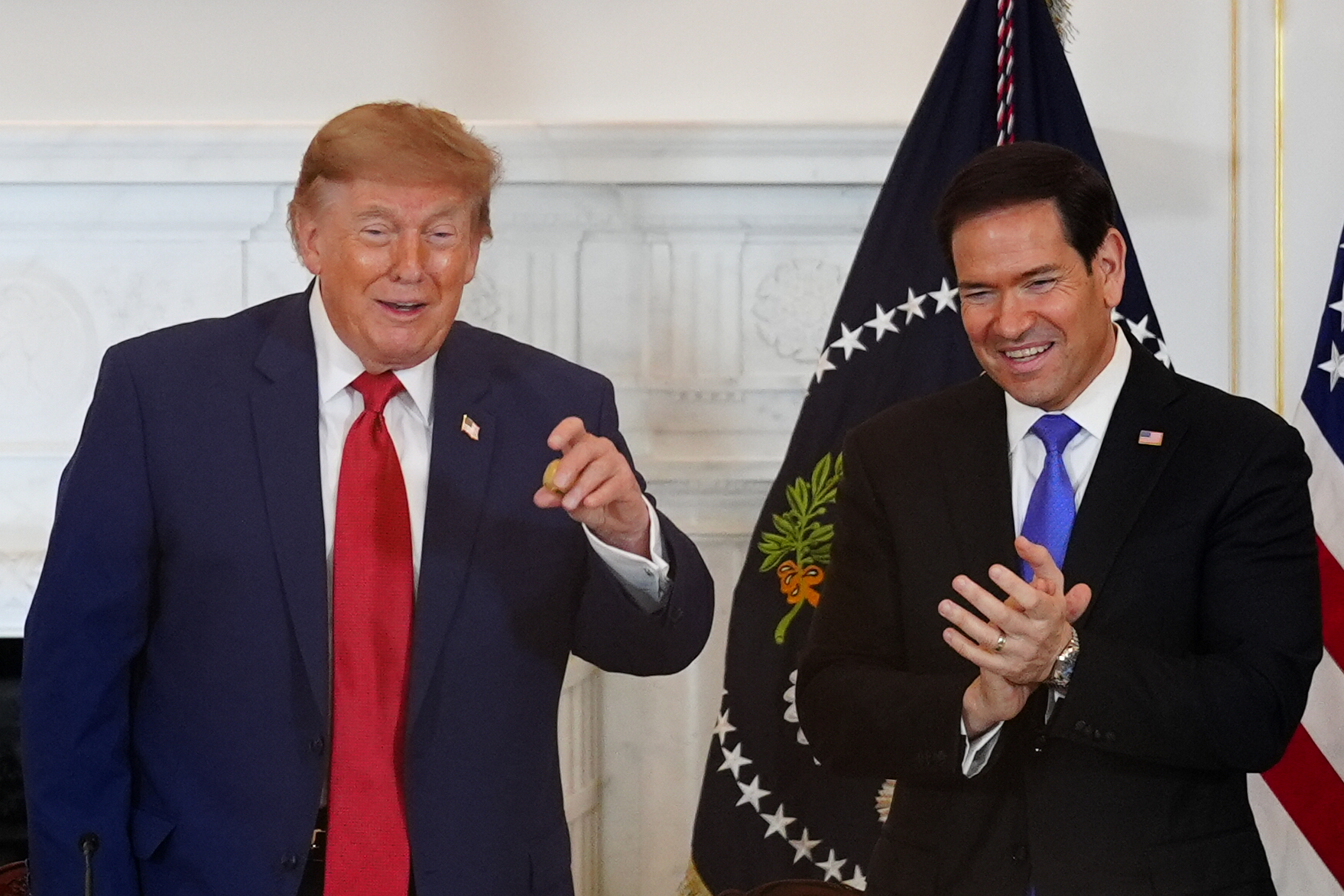
    NEW YORK — President Donald Trump pivoted the nation’s attention back to vaccines this week with an executive order that aims to scale back the childhood immunization schedule and space out shots into separate visits.

    After acting to overhaul the nation’s vaccine policy and guidance, the Trump administration had recently largely stepped back from additional changes to focus on less controversial subjects, raising questions over the political impetus behind and implications of the Republican president’s renewed focus on vaccines.

    For well over a decade, Trump has expressed his view — against medical groups’ guidance — that childhood vaccines should be administered in smaller doses over a long period of time. The executive order sought to bear out that discredited theory.

    While the move could endear Trump to some “Make America Healthy Again” voters who want more flexibility on immunizations, it’s also already attracting attacks designed to hurt Trump’s aligned candidates in November’s midterm elections.

    Jayme Franklin, a 28-year-old conservative activist who appeared with the president to promote his executive order on Monday, said she thinks the action is “going to go a long way” for MAHA mom voters like herself.

    But Shaughnessy Naughton, president of the left-leaning political action committee 314 Action, which aims to elect doctors to office, said she sees the order as “one more data point” in support of Democrats’ cause.

    “Our organization and our candidates are certainly going to hammer that message home — that if you want healthcare that’s accessible and affordable, if you want medical advice that is science-based, we need to have accountability in Washington,” she said.

    Trump has long called for shots spread out in separate visits

    Trump’s doubt in the number and cadence of vaccines dates back at least to 2014, when he posted to social media the disproven claim that combination shots can cause autism and said if he were president he would spread them out.

    While he’s since shown pride in his first-term Operation Warp Speed effort to disseminate COVID-19 vaccines quickly and praised certain other shots like the polio vaccine, he also has repeatedly called for reforming the childhood vaccine schedule. While his administration released an assessment comparing U.S. childhood vaccine schedules to peer nations’, several of his suggestions have come without any new scientific evidence.

    “This is based on what I feel,” Trump said last September when he called for splitting the measles, mumps and rubella, or MMR, vaccine into three single-disease vaccines.

    On Monday, he again pushed for separating the MMR shot into three, ordering the U.S. Department of Health and Human Services to work on developing that option for children, since it doesn’t currently exist in the United States. Public health experts have warned that spacing out shots could increase the risk of infection with a vaccine-preventable disease before a child returns for the next visit.

    Most Americans don’t see reevaluating vaccine safety as a top issue

    Trump’s views have aligned him with Health Secretary Robert F. Kennedy Jr., a longtime anti-vaccine activist before he entered politics.

    The president credits Kennedy’s diverse coalition of MAHA followers — whose priorities range from regulating pesticides to ending vaccine mandates — with helping him win back the White House in 2024.

    Even as the Trump administration has handed several wins to the MAHA coalition, including changing the federal dietary guidelines and loosening restrictions on peptides, some in the movement have grown impatient as their other priorities remain unfinished. It’s unclear whether Trump’s action to loosen vaccine recommendations, an issue some MAHA supporters are passionate about, will be enough to shore up those voters ahead of the midterms.

    Franklin, who runs a conservative magazine, said she had talked with Trump about making vaccine recommendations more flexible at a MAHA roundtable earlier this year. She was pleased when the administration informed her that her requests were coming true.

    “I think it just really shows he loves to hear from everyday Americans on how his policies and his administration affect the lives of people who are raising kids in this country,” she said.

    But political strategists and Trump’s own pollster Tony Fabrizio have warned that efforts to shave down vaccine recommendations may not matter much to most voters this fall.

    Polls show most Americans believe children should be vaccinated to attend school, though Republicans are less likely to see vaccines as important. And as rising prices on things like groceries, gas and healthcare tighten Americans’ budgets, many view the economy as a top issue they care about.

    “Nothing in America matters more than affordability,” pollster Frank Luntz said. “And anytime the administration or Republicans goes off affordability, they’re not talking about what Americans really care about.”

    Whit Ayres, a Republican pollster, said with most Americans viewing vaccines positively, Trump’s announcement “does not strike me as the most persuasive political message.”

    Recent polling from the healthcare research nonprofit KFF suggests that even among MAHA supporters, only 10% rank reevaluating vaccine safety as their top priority for the federal government. Higher-ranking priorities included lowering health costs (42%) and restricting chemical additives in the food supply (21%).

    Democrats are seizing on Trump’s message

    Asked about the timing of the order with the midterms approaching, a White House official who insisted on anonymity to brief reporters said that the move was a longstanding presidential priority and that other health issues voters care about were still being addressed.

    To that effect, on the day Trump signed the order, the Food and Drug Administration announced an effort to require more transparency from food manufacturers about new ingredients or additives in foods — something many in the MAHA movement had been calling for.

    The administration has also touted its efforts to lower drug prices and crack down on federal health program fraud, which it argues will save taxpayers money.

    Still, Democratic candidates, including doctors linked to Naughton’s group 314 Action, seized on Trump’s order in messages to voters this week.

    Richard Pan, a physician running as a Democrat for the U.S. House in Northern California, reposted the American Medical Association’s condemnation of Trump’s vaccine falsehoods, among other fact checks. He told the Associated Press he thinks voters are deciding between electing people who choose not to hold the administration accountable and those who “stand for the science.”

    Annie Andrews, a pediatrician and Democrat running for the U.S. Senate in South Carolina, pleaded with voters not to take health information from Trump in a video posted on Instagram in collaboration with the left-leaning Courier Newsroom.

    “Do whatever you can to help elect scientists up and down the ballot in November, including sending me to the U.S. Senate,” she said to the camera. “I cannot think of a more urgent time for us to have a pediatrician in the room where these conversations are happening.”

  • Trump administration set to spend at least $900 million on White House construction

    Trump administration set to spend at least $900 million on White House construction

    The Trump administration plans to spend at least $900 million for construction projects on the White House grounds, a significantly larger price tag than has been previously reported and one that would be covered primarily by taxpayers, according to records reviewed by the Washington Post.

    Instead of securing money directly from Congress, the records show, the administration has pieced together funding from other agencies and private donors and directed it to a little-known account that typically holds a few million dollars for routine maintenance of the executive mansion.

    Confidential contracts and related planning documents indicate that the administration plans to use money in that account for White House “modernization projects” — the administration’s term for President Donald Trump’s planned overhaul of the property, at the center of which is a gilded East Wing ballroom.

    Together, the records reveal in the greatest detail yet how the Trump administration has sidestepped Congress and shielded visibility into what would become the most expensive overhaul of the White House in more than 80 years.

    A federal appeals court struck a blow to Trump’s plans on Friday, ruling that the administration needed congressional approval to continue building the East Wing ballroom. Trump vowed to appeal the ruling, which applied only to the ballroom, setting up a Supreme Court battle over the limits of his authority to remake the White House.

    “Congress has exclusive authority to regulate the construction and demolition of White House structures,” Judges Patricia A. Millett and Bradley N. Garcia wrote in the accompanying opinion.

    In the past, administrations planning major changes to the White House grounds have done so by submitting budget requests to Congress, receiving appropriations, and directing agencies to seek approvals and hire contractors, according to historians and budget records.

    The Trump administration has not disclosed the total cost of all planned White House construction or shared details about the sources or original intended purposes of most of the money it has assembled. Trump has repeatedly said that the East Wing ballroom project would be covered by private donations.

    The Post previously reported that the projected cost of the East Wing construction alone was $600 million, with half coming from taxpayers. The confidential contracting documents include the costs of upgrades to nearby Lafayette Square, construction of a helipad, a new visitor screening center, and other previously reported projects that would drive the total cost of work on the grounds to at least $927 million.

    The contracts reviewed by the Post leave open the possibility that the work will not move forward as planned and that the money will not be spent. As of the end of June, administration officials had issued orders for over $100 million of work to be paid from the White House maintenance account, budget office records show.

    The White House did not answer questions from the Post about the source of all the funding or the total cost of the planned work, but said the money is being spent in a “manner consistent with” Congress’ original intent.

    “President Trump continues to implement long-overdue and necessary renovations to beautify the People’s House as we celebrate our great Nation’s 250th anniversary of independence,” White House spokesman Davis Ingle said in a statement. “Thanks to the Builder-in-Chief, the White House will be properly glorified and remain in excellent condition for generations to come.”

    The contracts and money for the work are being routed through the Executive Residence, a White House office with fewer than 100 employees that maintains the president’s private home. The office is not subject to rules that require most federal agencies to disclose government records, rendering the contracts confidential.

    The Executive Residence, which employs housekeepers, curators, calligraphers, and carpenters, has not previously managed major construction efforts, experts said. In recent years, Congress has appropriated $2.5 million annually to its maintenance account, known as “White House Repair and Restoration.”

    Since Trump took office, the administration has directed $875 million to that account, public budget records show.

    “That is incredibly unusual,” said Cerin Lindgrensavage, counsel for Protect Democracy, an advocacy group that is suing the Trump administration for allegedly withholding public information about federal spending.

    To assemble funding in that account, the White House budget office authorized a series of transfers from the U.S. Secret Service and the White House Military Office totaling $500 million, planning and budget documents indicate, while an additional $305 million came from private donations. The documents reviewed by the Post show another $70 million directed to that account but do not identify the source.

    Most of the $415 million in Secret Service funding was directed to the account in June after Trump allies on Capitol Hill were unable to pass legislation that would have allocated $400 million toward the East Wing and the visitor screening facility.

    That Secret Service funding was appropriated by Congress in part to recruit and train Secret Service agents, the Post previously reported, raising concerns from members of both parties on Capitol Hill that the administration was improperly using funds.

    After his confirmation hearing in June, Hal Duncan, Trump’s pick to be deputy budget officer, wrote in response to questions from Sen. Gary Peters (D., Mich.) that using the money for White House construction was consistent with the Secret Service’s mission because the project “includes security enhancements related to the East Wing Modernization Project, to include structural hardening.”

    Ingle, the White House spokesman, told the Post that the ballroom itself would be paid for by $400 million in private donations and that it was appropriate for the Secret Service and the White House Military Office to be involved in providing security infrastructure on the campus.

    “Recent events such as the foiled attack on the historic UFC Freedom 250 event at the White House proves exactly why the East Wing Modernization Project is severely needed for large scale events, which include drone proof structures and drone ports among other critical security enhancements,” Ingle said.

    A Secret Service spokesman referred questions to the White House.

    The Constitution reserves for Congress the power to decide how tax dollars should be spent. The White House budget office is permitted to move funds from one account to another, for purposes that are consistent with the original appropriation, but experts said the extent to which the Trump administration has relied on such transfers is unusual.

    “If the executive can do anything they want with appropriated funds, then the executive can do anything they want, period,” said Joe Carlile, who served as an associate director of the Office of Management and Budget during the Biden administration and now runs a firm that analyzes federal appropriations data.

    In scope, Trump’s plans rival those of Franklin D. Roosevelt, who oversaw the completion of the East Wing in 1942. Trump’s vision dwarfs all White House construction projects since, according to Ed Lengel, former chief historian for the White House Historical Association.

    Roosevelt’s successor, Harry S. Truman, carried out what Lengel said was the most extensive overhaul of the private residence of the White House, where the president and his family live. At Truman’s request, Congress approved around $80 million in today’s dollars to refurbish and bolster the structure, which had fallen into disrepair, and established a six-person commission to oversee the work.

    To fund the most recent major White House construction project, in 2009 the Obama administration requested $376 million over multiple years for electrical upgrades and structural repairs to the East and West wings. Congress appropriated money over the next several years to fund the work, and it was largely managed by the General Services Administration, which typically oversees government real estate projects.

    The federal lawsuit now headed to the Supreme Court alleges that the Trump administration illegally circumvented Congress when it demolished the East Wing in December. In response, government lawyers argued that the president is permitted by law to spend funds on “the care, maintenance, repair, alteration, refurnishing, improvement” of the executive mansion.

    The D.C. Circuit court disagreed, upholding a lower court’s decision.

    “Whether or not a massive ballroom should be constructed is for Congress to decide and is not a matter for Executive self-help,” the judges wrote.

  • Close Trump aides — but no cabinet officials — made secret catering truck move

    Close Trump aides — but no cabinet officials — made secret catering truck move

    As President Donald Trump secretly left an Air Force One jet on a catering truck last month in response to a potential Iranian assassination threat in Turkey, he was accompanied by some of his most loyal and longest-serving aides but no cabinet officials.

    Other passengers on the truck included Dan Scavino, the White House deputy chief of staff; Natalie Harp, the president’s executive assistant; and Walt Nauta, the director of Oval Office operations, according to a U.S. official familiar with the operation and corroborating material reviewed by the Washington Post. The official spoke on the condition of anonymity because he was not authorized to talk to the media.

    A few lower-profile aides also were present, but the group did not include Secretary of State Marco Rubio or other officials at the highest level of the government, according to the official and the material. Together, those aboard the catering truck moved under concealment from the legacy Air Force One aircraft to a smaller Air Force C-32A before flying to Britain separately from the White House press corps and senior officials.

    The account adds a new level of understanding to a July 8 operation that was first reported by the Post on Monday and has triggered calls from congressional Democrats for an immediate briefing. White House officials withheld the secret move from journalists traveling with the president that day and for more than a month afterward.

    Among those on the smaller jet was Defense Secretary Pete Hegseth, who boarded the C-32A using external stairs in a manner that made him look like the senior-most official on the flight, the Post reported Monday.

    Scavino, Harp, and Nauta were among an inner circle of supporters who worked for Trump at his Mar-a-Lago estate in Florida during the four years between his presidencies, after many other officials who served in the first Trump White House distanced themselves following his two impeachments and multiple criminal investigations.

    Other senior administration officials, military personnel, Secret Service agents, and journalists remained on the legacy Air Force One plane, which had been deemed too risky for the president’s travel.

    More than a month after the operation and two days after the Post first revealed the ruse involving the military aircraft, the White House has declined to say which administration officials remained on that jumbo jet, which the White House falsely claimed Trump used to leave Turkey.

    In his first public comments about the operation, Trump said the decision for him to take an alternative flight was made by the Secret Service.

    “It’s really just up to Secret Service. I just follow what they like to do,” Trump told reporters at Joint Base Andrews on Tuesday night. “They wanted me to go on a different flight, a different plane, equal safety. … I do what they say.”

    It remains unclear whether all the top administration officials involved were aware they were flying on a different plane than the president or whether they, like the reporters assigned to be in the pool covering him, were kept in the dark.

    When asked Tuesday why it was too dangerous for him to fly on the legacy Air Force One but not the press, Trump asserted that he still faced a greater threat than those on the other plane.

    “The plane that I was on was at greater risk,” Trump said. “Because that would be the plane that I think that they would be more likely to go for.”

    The White House did not provide the media with a list of passengers leaving Turkey — information that it commonly does share. Treasury Secretary Scott Bessent and Rubio were among the officials listed on the manifest on the way to Turkey, where they attended a NATO summit. Other officials on that flight included White House Deputy Chief of Staff Stephen Miller, Communications Director Steven Cheung, deputy national security adviser Michael Needham and staff secretary Will Scharf, who was promoted this week to White House counsel.

    Scavino, Harp, and Nauta did not respond to requests for comment about accompanying Trump on the catering truck and the ensuing flight from Ankara to Britain.

    Scavino has worked for Trump for more than a decade, managing his social media presence and running the White House Presidential Personnel Office. Harp, known as the “human printer,” constantly accompanies Trump with hard copies of emails, news articles, and social media posts. Nauta, a Navy veteran who served as a valet in the first Trump White House, was a key witness in the Justice Department’s probe of Trump’s handling of classified documents at Mar-a-Lago.

    The journalists flying on the old Air Force One were unaware of the operation, though they asked Trump later in the day why staff directed them to keep their windows closed throughout the flight.

    Trump responded that it was “because you’re probably on a dangerous flight because of the sleaze bags that we have to deal with.” Trump said that he has a “threat all the time” against his life and that he is “number one” on Iran’s “list.”

    Democrats have raised concerns that the maneuver left the press and some White House staff unwittingly in harm’s way. They’ve called for the administration to brief Congress on the operation.

    “There has to be a congressional briefing because it involves not just the safety of the president,” Sen. Richard Blumenthal (D., Conn.) said in an interview with CNN.

    “I want to know what precautions were taken to make sure that all of the passengers on that Air Force One, which was judged too dangerous for the president to fly on, what precautions were taken to keep the staff and reporters on that plane safe.”

    Trump told reporters Tuesday that he was not surprised by the Secret Service operation because he faces “a lot of threats that you don’t know about.”

    “Any consequential president has a lot of threats,” he said. “Non-consequential presidents don’t get threatened. And I think that I may be the most consequential.”

  • How utility and tech firms ‘educate’ regulators with big donations, secret retreats

    How utility and tech firms ‘educate’ regulators with big donations, secret retreats

    WEST PALM BEACH, Florida — As a pink-and-gold sunset faded over the waterside Ben Hotel, Republican state utility officials streamed out of a reception where they had been imbibing with executives from the industries they regulate.

    Milling about the coastal glam lobby, one attendee complained about service dogs in the first-class cabin on his flight. A group of men in cowboy hats urged fellow regulators and operatives to join them in continuing the night elsewhere. Another cluster lamented the growing number of local data center bans.

    The industry-funded retreat was not meant to be seen. Handouts said reporters and constituents were not welcome. But their name tags identified the attendees moving through the lobby. Among them were utility commissioners — state officials whose decisions impact electricity bills and determine whether utilities can build power plants and transmission lines.

    As energy-hungry data centers and rising electricity bills have stoked voters’ anger, some elected but obscure utility commissioners are meeting privately with companies whose fortunes they regulate, according to corporate filings and internal emails reviewed by The Washington Post.

    In interviews, commissioners and industry reps said it’s all in the interest of education. But watchdog groups say the industry-funded intermingling is a brazen conflict, as utility and tech companies seek project approvals and elected officials work to keep their seats.

    Last month’s all-expenses-paid West Palm Beach retreat was organized by the Regulators Roundtable, an ideologically conservative group whose membership is recruited from the utility industry, tech firms and right-leaning commissioners who tend to support their plans for rapid growth. Major funders have included Google, NRG Energy, the American Gas Association and the Nuclear Energy Institute, according to documents that the Energy and Policy Institute, a utility watchdog, obtained under public records laws and shared with The Post.

    “These are companies whose profits are directly affected by decisions made by a remarkably small group of regulators,” said Gabriel Straus, a research fellow at the Energy and Policy Institute. “The last thing you want to hear when you are struggling to make ends meet is your utility commissioner is sipping cocktails at a resort with the utility executives raising your rates.”

    The group promises sponsors — several paying $50,000 to be “Inaugural Member Investors” — the chance to “engage directly with these key decision-makers” and provide “insights and expertise that can help steer policy.” Its nonprofit arm flies commissioners to luxury hotels for private meetings with industry representatives, while its political wing contributes directly to campaigns in the 10 states where voters elect these regulators.

    The Regulators Roundtable denied any conflicts of interest.

    Elizabeth Gianini, the group’s president, said the access promised to corporate sponsors is appropriate, because the organization is private and “no official actions by public service and utility commissioners can nor do occur during programming.” She said the involvement of commissioners in raising money from regulated companies and the lack of public access to the gatherings does not violate any laws.

    Gianini declined to provide a full list of companies and trade groups financing the organization. IRS filings show the group is aiming to spend more than $3.7 million over this year and next.

    Founded last year by Gianini and a regulator from Georgia, the Regulators Roundtable is intertwined with GOPAC, one of the Republican Party’s oldest political training and recruiting organizations. It shares GOPAC’s offices in suburban Virginia. And a GOPAC “education” fund provides the Roundtable with administrative support and strategic guidance, according to Gianini, who is also a director at GOPAC.

    The Roundtable hosts a “campaign school” for commissioners at GOPAC’s headquarters that is aimed at honing their political skills and helping them win reelection.

    At the January session, presenters included Americans for Prosperity, the Koch-backed political powerhouse that has helped roll back renewable energy subsidies and climate regulations. Google was there, too, leading a session on using artificial intelligence to improve political communications.

    The involvement of Google, long a leader in promoting clean energy, reflects how the politics of electricity are changing as the company seeks more power plants and commissioners willing to approve them.

    “Google has been a great supporter from the start of our organization,” Gianini wrote in an email connecting Ed Lodge, an Idaho utilities commissioner and honorary chair of the Roundtable Institute, with Google lobbyist Ron Barnes.

    Google is identified in internal emails as a founding sponsor of the Regulators Roundtable, and Barnes serves on the board of the institute, which supports the retreats with industry officials.

    Google said in a statement it only funds and participates in the group’s networking and educational activities, adding it “regularly engages with policymakers to share our responsible approach to energy, infrastructure and data center development. Like many in our industry, we collaborate with third parties to facilitate these conversations with officials across the political spectrum.”

    The Roundtable’s outreach to prospective donors positions the organization as protecting utility-friendly regulators from “radical climate activists,” consumer advocates and other adversaries eager to tap ratepayer frustration to “shift regulatory control.”

    “The need for this group became clear when liberal organizations invested millions to defeat conservative candidates for Corporate Commissioner in Arizona,” Gianini wrote in a March 2025 email to a vice president at Georgia-based electricity giant Southern Company.

    Georgia illustrates the political stakes. Voters ousted two long-serving GOP commissioners there last year, after the commission green-lit six rate increases for Southern Company subsidiary Georgia Power in five years. This fall, Republicans risk losing control of the commission for the first time in three decades. Gianini highlighted the risk that “control of Georgia’s Commission could flip entirely” in a recruiting email to a commissioner from another state.

    Her email to Southern Company took aim at PowerLines, a nonpartisan utility watchdog that tracks rate increases and helps consumers participate in commission proceedings. It warned that such groups “advocating against conservative commissioners” are investing heavily in commission races and argued that energy companies should help build a political counterweight.

    PowerLines officials say it spends no money on races, and the group is focused narrowly on why utility bills are going up.

    Big energy companies “don’t want to upset the relationships they are comfortable with,” said Ari Peskoe, an electricity markets scholar at Harvard University who sits on the PowerLines advisory board. “They don’t want fresh voices on these commissions. It is a risk. It is an unknown that jeopardizes their entire business model.”

    The Roundtable’s fundraising relies in part on utility commissioners cultivating financial support for the organization from companies they regulate during meetings not typically disclosed to constituents.

    Internal emails show Gianini enlisted several commissioners in trying to persuade utilities and industry groups to become “investors.”

    “Michele Wheeler from NextEra needs to be impressed!” she wrote to an Oklahoma regulator before a series of meals with prospective Roundtable sponsors on the sidelines of an industry conference in Santa Fe. “I want to be sure she sits next to you and another commissioner that night.”

    Gianini continued: “I am getting nervous about the ‘noticing requirements’ every state seems to have their own laws and what it means. Does it make it open to the Public and or Press?”

    NextEra, the largest U.S. power utility company, which also touts its commitment to erasing carbon emissions by 2045, did not respond to questions.

    Asked about any potential ethical issues raised by elected regulators and industry officials mixing behind closed doors, Lodge, the Idaho utilities commissioner and honorary chair, wrote in an email to The Post that all of the commissioners involved are expected to abide by their state ethics laws.

    Tommy Tucker, a North Carolina commissioner who disclosed accepting $2,274 of expenses for the institute’s event in Washington, said critics misunderstand the purpose of the gatherings.

    “There is no conflict whatsoever,” he said. “It is educational. You get to meet with other commissioners who are experiencing the same things we are also dealing with data centers.”

    He said conversations have also included how to best deploy wind and solar.

    But some commissioners have voiced reservations after being courted by the group.

    Internal emails show that Alabama Public Service Commissioner Jeremy Oden hesitated over an invitation to a Roundtable gathering in Washington just months before his Republican primary.

    Oden had previously signed on to a Roundtable effort to shield regulated utilities — and the state utility commissions — from a White House-ordered review of policies that foster anticompetitive monopolies.

    About the Washington event, though, Oden wrote to a political consultant: “I would really like to go to this but don’t know if it is a good idea.”

    In the end, he decided against it. “I have never attended one of their events nor phone conversations,” Oden, who lost his reelection bid, said in an email to The Post.

    Josh Byrnes, an Iowa utility commissioner, shows up on the internal invite list for another dinner, this one with “potential investor” Southern Company.

    Byrnes said he had cut off contact with the Roundtable by then, amid scheduling conflicts and his concerns about its political overtones.

    “This is probably something I should not be involved with,” he said in an interview. “People need to do a better job thinking things through when they go to these events. I always ask myself, ‘How would you explain that to a ratepayer?’”

    Many utility and tech companies, however, have appeared enthusiastic about supporting and participating in Roundtable events.

    NRG, which disclosed its $50,000 donation in corporate filings, said it enlisted with the Regulators Roundtable to “ensure that the perspective of competitive suppliers was represented in discussions.”

    The company said in a statement that “NRG regularly engages with regulators, policymakers, and industry stakeholders across the political spectrum to advocate for consumer choice, competitive markets, and reliable, affordable energy.”

    It added that it is “not currently active with the organization,” though Roundtable emails suggest its membership won’t lapse until 2027.

    Southern Company has not reported donating directly to the Regulators Roundtable, but the company did give $25,000 to GOPAC last year, as that organization’s contributions from utilities soared.

    Dominion Energy, Duke Energy and NextEra have also collectively contributed $950,000 to GOPAC since last year. All are seeking regulatory approval for billions of dollars in new power plants, transmission lines and other infrastructure needed to serve surging electricity demand driven by AI data centers — investments expected to generate substantial returns for shareholders.

    “We participate in the political process on behalf of our customers and employees,” Dominion said in a statement. “Our contributions are bipartisan and transparent, and we don’t ask the recipients of our campaign contributions for favors.”

    Duke did not respond to questions.

    GOPAC officials wrote in an email that their support for the Roundtable comes from a separate GOPAC educational fund that does not disclose its donors. They said those donors are not permitted to “earmark” their contributions to be passed through to specific groups or causes. The chief of staff for that GOPAC fund is also identified on tax documents as the Roundtable’s secretary.

    Asked about concerns the funding of GOPAC and the Roundtable with regulated industry money creates a conflict, GOPAC responded: “One person’s concern is another’s enthusiasm for a mission of supporting public service and utility commissioners by giving them access to a broad range of perspectives to boost energy reliability, affordability, modernization and innovation.”

    “We acknowledge there are those who want to halt production, stop permitting, put on hidden fees, and mandate transitions in their drive to discredit the Regulators Roundtable and Regulators Roundtable Institute,” said the GOPAC statement. “Fortunately, most Americans want their elected and appointed leaders to have a wide-ranging and well-informed understanding of the challenges and opportunities before them.”

    The program from a GOPAC energy conference in Nashville last summer offers a glimpse of how it is seeking to influence regulation. Former Trump senior economic adviserSteve Moore pilloried renewable energy incentives and emissions targets, according to a copy of his presentation obtained through a public records request. The documents also show a Texas energy investment firm prepared slides depicting lawmakers who champion aggressive greenhouse gas rules as hapless weaklings getting shoved into a school locker.

    On the sidelines, Roundtable donors NRG and the American Gas Association were joined by several state regulators at a Roundtable dinner.

    Gas association spokeswoman Emily Ellis said the organization “engages with elected officials and regulators at all levels and across the political spectrum to educate them on energy policy issues.”

    The secrecy of the Regulators Roundtable stands in contrast to transparency demands some of its members make of other groups seeking to influence them.

    In Louisiana, utility commissioner Eric Skrmetta is leading an effort to require groups involving themselves in regulatory activities to produce sworn affidavits disclosing all the out-of-state donors of any large national organizations that provide financial support. Critics call it an onerous rule aimed at sidelining local nonprofits with layered funding streams.

    As drafted, the rule does not appear to apply to activities outside commission proceedings.

    So Skrmetta, who did not respond to requests for comment, would not have been required to disclose which donors bankrolled his Regulators Roundtable trip to Washington in January and what was discussed there.

  • Takeaways from the primaries in South Carolina, Wisconsin, Minnesota and Connecticut

    Takeaways from the primaries in South Carolina, Wisconsin, Minnesota and Connecticut

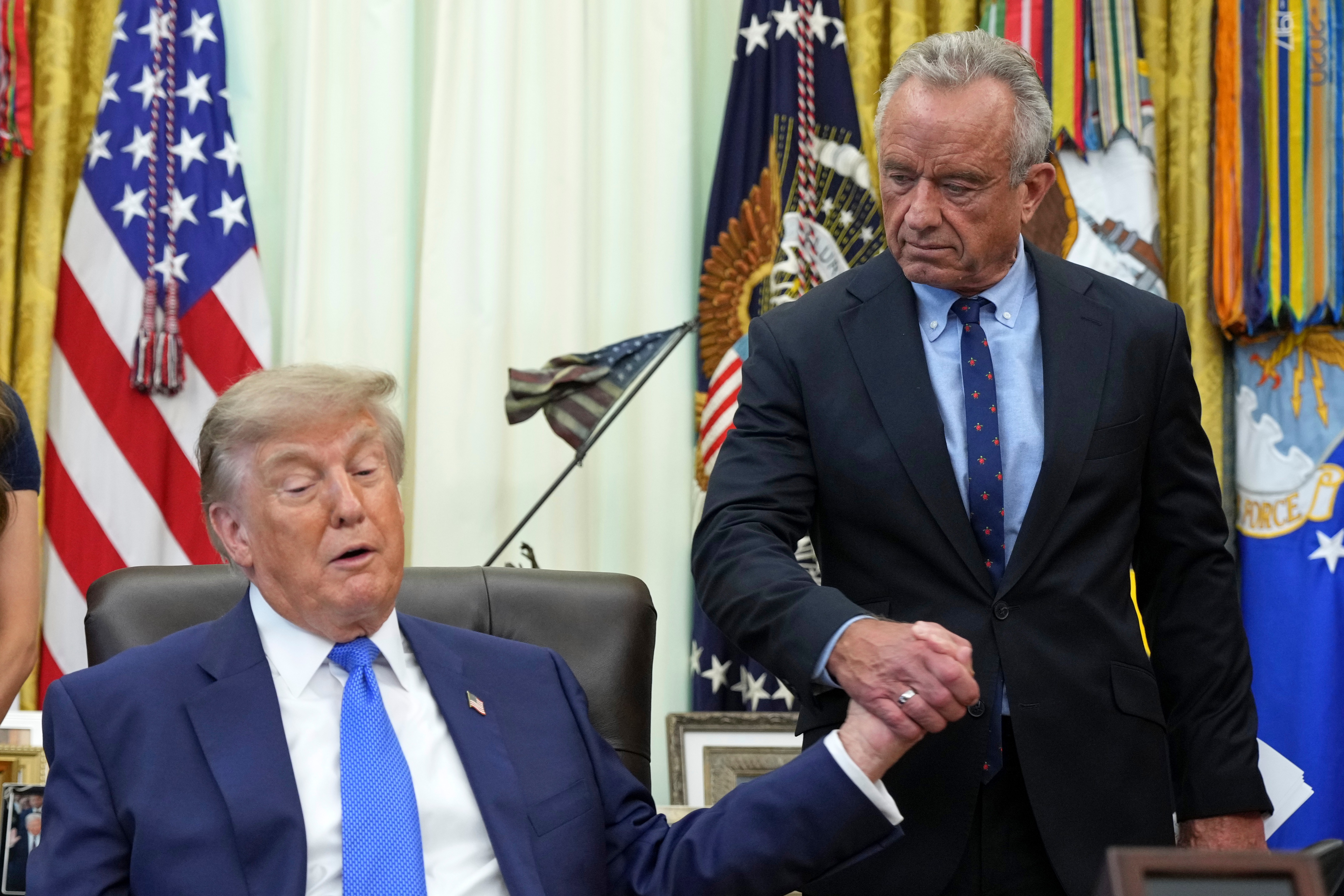
    Progressive Democrats notched another big victory in Tuesday’s Minnesota Senate primary. But a moderate Democrat narrowly won the high-profile governor’s race in Wisconsin, defying expectations of an easy win for the party’s surging democratic socialist wing.

    President Donald Trump, meanwhile, suffered a defeat after the candidate he endorsed for Minnesota governor fell short in the Republican primary.

    Here are five takeaways from Tuesday’s primaries:

    Crowley upsets Hong in Wisconsin governor’s race

    Milwaukee County executive David Crowley defeated Francesca Hong, a State Assembly member and democratic socialist, in the Democratic primary for governor after an unusually unpredictable — and unexpectedly close — primary.

    Crowley initially dropped out last month, saying it was clear he could not win. Lt. Gov. Sara Rodriguez dropped out the following week, citing irregularities with her campaign’s financial reports. Then Crowley returned to the race with the endorsement of Wisconsin Gov. Tony Evers (D). After that, yet another Democrat — Mandela Barnes, a former lieutenant governor — dropped out, further scrambling the race. To add to the confusion, Barnes and Rodriguez remained on the ballot.

    Hong was the latest democratic socialist to catch fire after several other democratic socialists defeated House Democrats in primaries earlier this year. She led in polling in the final weeks of the race but attracted criticism for calling years ago for the cancellation of Thanksgiving, which she described as a holiday “celebrating colonialism.” Evers warned that Hong probably could not defeat Rep. Tom Tiffany, who won the Republican nomination.

    Progressives prevail in Minnesota

    Another progressive, Lt. Gov. Peggy Flanagan, won the Democratic primary for an open Senate seat in Minnesota, defeating a more moderate rival, Rep. Angie Craig. Flanagan had the backing of Sens. Elizabeth Warren (D-Massachusetts) and Bernie Sanders (I-Vermont) and other progressives in Congress. She will face Michele Tafoya, a former sideline reporter for NBC’s “Sunday Night Football” who easily won the Republican nomination.

    Republicans view Flanagan as vulnerable due to the welfare-fraud scandal that rocked the state while Flanagan was in office, and they have expressed enthusiasm that Tafoya could put the seat in play.

    However, no Republican has won a Senate seat in Minnesota since 2002, and Republicans are more optimistic about flipping Democratic-held seats in Michigan, New Hampshire and Georgia than Minnesota. The Cook Political Report, which rates the race as “likely Democratic,” said it would maintain its rating regardless of which Democrat won the nomination.

    Another progressive, Matt Little, won the Democratic primary to succeed Craig in the House. Little, a former state senator and Lakeville mayor, was endorsed by Rep. Greg Casar (D-Texas), the chairman of the Congressional Progressive Caucus, among others.

    Another Democrat falls to a primary challenge

    Luke Bronin, a 47-year-old former Hartford mayor, ousted Rep. John B. Larson, 78, from his House seat representing central Connecticut in the latest generational clash to convulse the Democratic Party.

    Larson is not the only older House Democrat to lose a primary this year. Reps. Al Green (D-Texas), who is 78; Adriano Espaillat (D-New York), who is 71; Diana DeGette (D-Colorado), who is 69; and Shri Thanedar (D-Michigan), who is 71, all lost primaries to younger challengers. (Green lost his seat to another House Democrat, Rep. Christian Menefee, after redistricting reshaped their districts.)

    Unlike some of those races, Larson’s primary did not feature a strong ideological divide. Instead, Bronin campaigned on “energy, urgency and change,” and urged Larson to “pass the torch,” though he did not explicitly criticize Larson as too old.

    Larson, in turn, tried to cast himself as more progressive than Bronin and emphasized his experience representing the solidly Democratic district.

    “It’s not about age, generational change,” Larson said at a recent rally alongside Connecticut Gov. Ned Lamont (D) and labor groups. “This campaign … is about who has the record of delivering in this community.”

    Lamont, 72, who is running for a third term, also faced a younger primary challenger on Tuesday. He prevailed, easily defeating state Rep. Josh Elliott, 41.

    Graham, Norman advance to runoff in South Carolina

    Sen. Lindsey Graham (R-South Carolina) defeated a primary challenger in June, avoiding a runoff by winning a majority of the vote. But his sudden death last month forced South Carolina to hold a second Republican primary, pitting Graham’s sister, Sen. Darline Graham — whom Gov. Henry McMaster named to succeed him — against nine other Republicans.

    Graham won 33 percent of the vote on Tuesday, leading her rivals. But she did not win a majority of the vote, forcing an Aug. 25 runoff. She will face Rep. Ralph Norman, who trailed Graham with 25 percent of the vote.

    Trump endorsed Graham ahead of the primary, giving her an edge in the runoff — but it’s not clear whether it will be enough to defeat Norman.

    Consider what happened in the Republican primary for South Carolina governor. Trump endorsed Lt. Gov. Pamela Evette, who made the June runoff along with Alan Wilson, the state attorney general. When it appeared that Evette might lose to Wilson ahead of the runoff, though, Trump also endorsed Wilson, allowing him to claim victory days later when Wilson won.

    Trump could be more reluctant to back Norman, who endorsed former South Carolina governor Nikki Haley over Trump in 2024 in the presidential primary. It is also unclear whether Rep. Russell Fry — who finished third in the primary — will endorse Norman or Graham.

    Asked Tuesday night whether he would campaign for Graham in South Carolina, Trump told reporters, “I think so.” He added that he also liked “the other people” in the race, without naming them.

    “They’re all Trumpers,” he said.

    Norman told The Washington Post last week that he wasn’t sure Trump would issue a dual endorsement again. “I think people see it for what it is,” Norman said. “Double endorsement, really, is problematic to me.”

    But, he added, “I’d love to have it at any time.”

    Lindell loses primary despite Trump’s endorsement

    Trump endorsed Mike Lindell, the MyPillow chief executive who enthusiastically supported his efforts to overturn the 2020 election results, for governor of Minnesota.

    But Trump’s endorsement wasn’t enough. Lisa Demuth, the state House speaker, defeated Lindell on Tuesday. She will face Sen. Amy Klobuchar, who easily won the Democratic nomination, in November.

    Lindell’s loss was the latest blow to Trump’s endorsement record. The candidates he backed for governor in Georgia and Iowa also lost. So did Rep. Andy Ogles (R-Tennessee) and Amir Hassan, whom Trump backed for an open House seat in Michigan.

    Other Trump picks prevailed on Tuesday.

    Graham led in South Carolina. Tiffany won in Wisconsin. Michael Alfonso won the Republican primary for a House seat in northern Wisconsin that his father-in-law, Transportation Secretary Sean P. Duffy, once represented. And former congressman Jerry L. Carl and state Rep. Rhett Marques won primaries for House seats in Alabama that the state legislature redrew earlier this year following a Supreme Court ruling that weakened the Voting Rights Act.

    Natalie Allison, Matthew Choi and Ben Binday contributed to this report.

  • Letters to the Editor | Aug. 12, 2026

    Letters to the Editor | Aug. 12, 2026

    Fair retirement

    As a retired federal employee, I am proud of my years of public service and the opportunity I had to serve the American people. Like many retirees, I planned my retirement carefully, expecting the benefits I earned to help provide financial security throughout my retirement.

    Unfortunately, retirees under the Federal Employees Retirement System (FERS) do not receive the same full annual cost-of-living adjustments (COLAs) as retirees under the Civil Service Retirement System (CSRS) or many Social Security beneficiaries. During periods of high inflation, that difference can significantly reduce the purchasing power of a retiree’s earned annuity, making it more difficult to keep up with the rising costs of housing, groceries, healthcare, and other everyday necessities.

    The Equal COLA Act (HR 491/S 624) would correct this inequity by providing FERS retirees with the same full annual COLAs received by CSRS retirees. It’s a matter of fairness for the men and women who devoted their careers to serving our nation.

    Bob Downey, Marlton

    ICE success

    Rosemary McDonough from Narberth submitted a letter to the editor that rightfully complimented Luis F. Carrasco’s recent column on immigration. In that letter, she asked an excellent question: If U.S. Immigration and Customs Enforcement were succeeding in arresting the “worst of the worst,” why isn’t this front-page news? The answer to McDonough’s question is clearly not that ICE has been unsuccessful. If anyone chooses to access the ICE website, they would find a section that identifies 27,400 of the “worst” illegal immigrant criminals it has apprehended. There are 3,425 pages (eight per page).

    The answer to her question appears to be that the media is unwilling to cover that side of the ICE situation — preferring to align themselves with the liberal narrative that demonizes the people working so hard to resolve the ponderous immigration situation they created.

    Mark Fenstermaker, Warminster, markfense@gmail.com

    A key omission

    I read Jonathan Zimmerman’s column on the Cheltenham hazing incident and was struck by what was left out. Although I don’t disagree with what Zimmerman said, what he left out is important to fully wrap our heads around this heinous story. Nowhere did Zimmerman mention that we elected as our president a man who stated he could grab a woman’s private parts whenever he wants and was convicted in civil court of sexual assault. Despite that, he was elected twice and is still defended by followers, including many elected officials. Zimmerman’s right: This is who we are. If we want different, we must all fight for the change we want, and not just at one moment of trauma or in one school district.

    Diane Payne, Philadelphia

    Absent honor

    Do we need more proof of our draft-dodger-in-chief’s disdain for the military? More proof is the latest news about U.S. Immigration and Customs Enforcement’s detention and deportation of families of active-duty service members.

    Really? This, after recruiters inform men and women during the enlistment process that their families would enjoy immigration benefits.

    It is beyond outrageous and cruel. And once again it shows that Donald Trump has no regard for our service members. Of all persons, he who dodged the draft is condoning this action.

    “Duty, honor, country” is the motto of the U.S. Military Academy. “… to keep our honor clean” is in the Marine Corps hymn (I served as an officer). I imagine the other military services have similar promises they make to America. Trump and his enablers have no concept of honor, and we Americans and the whole world know it.

    Luis W. Morales, Paoli

    Shared blame

    Now that hearings are underway to look at the crowd control tactics of the police during Pride in June, Police Commissioner Kevin J. Bethel seems to be taking all the heat. His police force, his responsibility. But it would seem there are other players we should be looking at. Mark Squilla is the City Council member for that district. Where was he in the decision-making process over whether or not to close the streets in the Gayborhood? Rue Landau is leading the inquiry over the event. As a member of the LGBTQ+ community, does she not have contacts in the Gayborhood? Did she not consult them? The rest of City Council? Hell, where was Mayor Cherelle L. Parker throughout this? Did anyone reach out to the bar and other business owners for input? I’m not attempting to minimize Commissioner Bethel’s responsibility over his officers. I’m just saying he shouldn’t bear it all.

    Tim Reed, Philadelphia

    RINOs and sheep

    We have to be honest about what happened around the appointment of a permanent U.S. attorney general. Sens. Thom Tillis of North Carolina and John Cornyn of Texas, both of whom will be leaving the Senate, got absolutely nothing in terms of concessions from the White House after threatening to oppose the nominations. In the end, they caved — plain and simple. No one can legitimately say they stood up to President Donald Trump. They merely gave cover to all the vulnerable Republicans in Congress who, for obvious political reasons, were reluctant to vote on the nomination. Tillis and Cornyn, it should be remembered, are first and foremost Republicans in Trump’s Republican Party. As has been the case since Trump was reelected in 2024, Republican leaders doth protest too much. At first, they feign concerns, and then acquiesce when the critical vote comes. Enough said. Please stop insisting Tillis and Cornyn are heroes; they are cowards — RINOs in sheep clothing. They represent what is wrong with politics in the age of MAGA.

    Richard Cherwitz, Austin, Texas

    Pandemic amnesia

    Anthony Fauci, a public health researcher, has served under seven presidents. The current and former president, Donald Trump, awarded him a presidential commendation on the last day of his first term. Today, the 85-year-old Fauci must have full-time security. The secretary of Health and Human Services, Robert F. Kennedy Jr., copied Fauci’s diaries so Republican Kentucky Sen. Rand Paul could distribute them so they would become available to the public. Republican Sen. Ron Johnson of Wisconsin has possession of Fauci’s phone and is investigating its contents.

    As the witch hunt continues, and while the nonscientists on the Republican side of the aisle run a revisionist history of the COVID-19 scourge, there are a few pieces missing. More than one million Americans died of COVID. Many spent their last days and hours on ventilators as their families watched them die through hospital windows. Body bags were sent to freezer trucks in some cities. Some still suffer from the debilitating effects of long COVID. The coronavirus was novel and contagious and deadly. Fauci steered us through this scary time as we all navigated this together. He exercised extreme caution, steered us away from crackpot quick fixes, and with the help of the vaccine, helped us get beyond it. But the crackpots have taken over. Fauci is paying the price. We only have to watch the measles statistics and the scary trip down the produce aisles to recognize that the Trump administration and the U.S. Department of Health and Human Services are putting us all at risk for worse to come.

    Elliott Miller, Bala Cynwyd

    Join the conversation: Send letters to letters@inquirer.com. Limit length to 150 words and include home address and day and evening phone number. Letters run in The Inquirer six days a week on the editorial pages and online.

  • Dear Abby | Daughter’s wedding planning has been hijacked

    DEAR ABBY: My 33-year-old daughter is getting married, and the mothers have taken over her wedding plans. They want more than 200 guests, a full Catholic ceremony, fine wines, a full bar, plated dinner and a live band.

    My daughter wants to please everyone but is not a practicing Catholic. She wants a small, intimate wedding with twinkling lights, a DJ and house wines from the California vineyard venue. Nothing she suggests is acceptable to the mothers, who see the ceremony as a means to impress their friends and business associates.

    I divorced her mom years ago, but I’m still involved in my daughter’s life. How can I advise her to take control of her wedding?

    — DOTING DAD

    DEAR DAD: I tend to agree with you that a bride is entitled to the ceremony she wants, but sometimes there is no clear path to that end. No one will ever convince these moms to back off, and the repercussions of an elopement would be devastating.

    My advice to the bride and groom is to grin and bear it. Let the mothers impress their friends (as long as they are willing to pay for it all), and the relaxation of the honeymoon will be all the sweeter.

    Your daughter can save her more intimate plans for a renewal of vows ceremony held on a milestone anniversary. Obviously, she will want to avoid telling the moms about it until after all the arrangements are in place!

    ** ** **

    DEAR ABBY: Our son, daughter-in-law and only grandchild live 1,400 miles away. We are able to see them only about three times a year. We have a warm, wonderful relationship. When we last visited, I noticed a picture in his room of our grandson, who is a year-and-a-half old, with his babysitter. There are no pictures of us with him in the entire house. I would like our grandson to have pictures of us so he will remember us. Should I say anything?

    — REALLY HURT IN CALIFORNIA

    DEAR HURT: Because you have a warm, wonderful relationship with your son and his family, the lack of photos of you with your grandson is likely not a deliberate slight. The next time you visit, ask them casually why there isn’t one. Then ask one of them to snap some of the three of you and offer to have one framed for them.

    ** ** **

    DEAR ABBY: My parents are retired. They live on a limited income and still support my 31-year-old brother, who lives rent-free in their basement. They told me how expensive their electric bill is becoming, and I asked why they don’t have my brother help with expenses or pay rent? Abby, he makes close to $100,000 a year. They quickly changed the subject, and when I tried to circle back, I was told to drop it.

    How can I help my parents see that what they are doing is hurting them, not helping their adult son?

    — THEIR OTHER SON IN MAINE

    DEAR SON: There is truth to the adage, “You can lead a horse to water, but you can’t make it drink.” Understand that your parents must be deriving some satisfaction from encouraging your brother’s dependency. Your attempt to help them resulted in their becoming defensive, so stop talking to them about it. HOWEVER, you should consider talking to your brother about the fact that the electric bills are now so steep it is causing your parents hardship and suggest he help out. It’s worth a try.

  • Horoscopes: Wednesday, Aug. 12, 2026

    ARIES (March 21-April 19). Your emerging talent: Making ambitious goals doable, or even easy. New Moon Mantra: Big accomplishments are built over time with manageable steps. I keep stacking smart decisions until one day people call it an overnight success.

    TAURUS (April 20-May 20). Your emerging talent: Disarming powerful people with your authenticity. New Moon Mantra: Titles are not inherently impressive. It’s the person who makes the title and not the other way around. I relate easily to those who value what I do.

    GEMINI (May 21-June 21). Your emerging talent: You take a kernel of hope and grow it into something substantial. New Moon Mantra: Life-changing achievements start with little beginnings. I sense the promise in myself and others and keep investing in what works.

    CANCER (June 22-July 22). Your emerging talent: Reading the room. New Moon Mantra: I take a moment to assess the vibes and guess at the wants, needs and interests of the people around me so my conversations, presentations and general way of showing up begin on a strong footing.

    LEO (July 23-Aug. 22). Your emerging talent: Landing on your feet. New Moon Mantra: Wherever life drops me, I find my way. I figure out how to work the scene, stay balanced and keep serving the purposes that are important to me.

    VIRGO (Aug. 23-Sept. 22). Your emerging talent: Sensing and taking your moment. New Moon Mantra: I somehow know when to jump in and I simply trust the instinct and follow through. I’m patient, I’m confident, and I’m always paying attention.

    LIBRA (Sept. 23-Oct. 23). Your emerging talent: Mastering what’s difficult and explaining what’s complicated. New Moon Mantra: I don’t stop asking questions until I understand it so thoroughly that I can explain it over lunch with a napkin and a pen.

    SCORPIO (Oct. 24-Nov. 21). Your emerging talent: Getting to the right question and being bold enough to ask it. New Moon Mantra: With careful observation, relentless curiosity and the patience to pursue an issue until the logic adds up, I get to the bottom of things.

    SAGITTARIUS (Nov. 22-Dec. 21). Your emerging talent: Finding the ethical shortcut. New Moon Mantra: My instinct is for directness and efficiency. I save myself and others from meandering and needless labor. I move with confidence and forge new paths.

    CAPRICORN (Dec. 22-Jan. 19). Your emerging talent: Becoming unforgettable. New Moon Mantra: I turn ordinary things into adventures, do remarkable work and deliver a unique experience. Knowing me is a treat.

    AQUARIUS (Jan. 20-Feb. 18). Your emerging talent: Astounding discernment. New Moon Mantra: I see what’s worth fixing and what’s worth leaving alone. I don’t waste time polishing things that don’t matter. My eye goes straight to the one adjustment that changes everything.

    PISCES (Feb. 19-March 20). Your emerging talent: Envisioning and creating the future. New Moon Mantra: I believe in a better tomorrow. I see things that don’t exist yet. With endless creativity, I find ways of bringing beautiful visions into reality.

    TODAY’S BIRTHDAY (Aug. 12). It’s your Year of the Observatory. There are marvels, solutions and breakthroughs to be drawn into focus. What you learn will make many lives richer, including your own. More highlights: Your interests expand, and you’ll learn cultures, communication styles and operational methods to become masterful in new realms. You gain access Gemini and Capricorn adore you. Your lucky numbers are: 6, 25, 13, 1 and 40.

  • Jackie, the California bald eagle who became an internet sensation, dies after illness

    Jackie, the California bald eagle who became an internet sensation, dies after illness

    BIG BEAR LAKE, Calif. — Jackie, the bald eagle who became an internet sensation and a symbol of the species’ recovery in California, died Monday after being treated for an illness at a veterinary facility, her caretakers announced.

    For more than a decade, nature lovers watched via an online video feed as Jackie and her partner Shadow tended to their nest each year atop trees near Big Bear Lake in the San Bernardino Mountains east of Los Angeles.

    The nonprofit Friends of Big Bear Valley installed the nest camera in 2015 and documented the successes and failures of each breeding season. In 2024, Jackie diligently sat on her eggs for more than 2½ days straight after a winter storm blanketed the nest with snow.

    The Los Angeles County Department of Parks and Recreation’s San Dimas Raptor Rescue team found Jackie on July 17 following reports that the bird had been involved in a fight with two other eagles and was found to be ill.

    Jackie had been receiving medical treatment for three weeks at the Ojai Raptor Center, where she was treated for a variety of ailments including anemia. Despite undergoing a blood transfusion and oxygen therapy, her condition worsened and the center announced the animal’s death Monday.

    “We know this news will be deeply felt by the many thousands of people around the world who have followed her journey, hoped alongside us, prayed for her, and supported the people caring for her,” the center’s statement said. “Our team is heartbroken. It has been an extraordinary privilege to care for her.”

    The California Department of Fish and Wildlife is caring for the remains.

    Among those who enjoyed monitoring Jackie’s nests from afar was biologist Kelly Sorenson, executive director of the Ventana Wildlife Society in central California. While his group was not involved with the Big Bear eagles, he sees their breeding as emblematic of the comeback the species has made in the state over the past decades.

    American bald eagles teetered on the brink of extinction until the pesticide DDT was banned in the 1970s and other protections were established, leading the species to rebound and be removed from the federal endangered list.

    “You want to see a success story like that,” Sorenson said Monday. “Having access to a live cam to see the nesting first hand is very powerful. It brings people in on an emotional level.”

  • Former Syrian President Assad sentenced to death in absentia for war crimes

    Former Syrian President Assad sentenced to death in absentia for war crimes

    DAMASCUS, Syria — A Syrian court on Tuesday sentenced ousted President Bashar Assad and his brother in absentia for murder, torture and crimes against humanity committed before and during the country’s 14-year civil war that left about half a million people dead.

    The verdicts by a court in Damascus are the first against Assad or any members of his inner circle since his family’s five decades in power came to an end 20 months ago. They are mostly symbolic, however, because Assad and his brother Maher fled to Russia, where they received asylum after the Syrian government’s stunning collapse in December 2024.

    Six other former officials were also sentenced to death in absentia. The only former official sentenced to death and in custody is Assad’s maternal cousin Atef Najib, who oversaw a crackdown on dissent that led to an uprising that sparked the civil war. Najib stood inside a cage wearing a prisoner’s uniform as the judge read his sentence aloud, and a crowd gathered outside the heavily guarded courthouse.

    Even though Assad is unlikely to ever face justice, the verdicts will be popular among many Syrians, especially those who have expressed frustration that the new government hasn’t moved with enough speed or strength against Assad-era figures.

    Some human rights groups, though, expressed concerns that the trials were rushed, potentially unfair, and, at the very least, exposed flaws in Syria’s justice system.

    “Bashar Assad used state agencies to commit war crimes and crimes against humanity,” said judge Fakhareddine al-Aryan during a court session that was aired live on state TV — a contrast with Assad-era trials, which were conducted in secret. The verdicts al-Aryan read aloud found Assad and the others guilty of premeditated murder, including against children, as well as other acts of brutality, including torture.

    Al-Aryan said Najib could appeal.

    “Today is the day of justice for all the wounded, martyrs, detainees and Syrians who were forced to leave their country,” said attorney Adnan al-Masalmeh, who represented families of Najib’s victims. “Today marks a victory of right against injustice, a victory of the Syrian people against the ousted regime.”

    Najib is one of the highest-ranking security officials to be put on trial. He is a former army brigadier general who was in charge of political security in Syria’s southern Daraa province.

    During his tenure, more than a dozen teenagers who scrawled anti-government graffiti on a school wall were arrested and tortured. The case became a catalyst for mass protests against the repressive policies of Assad’s security forces.

    The protests were met by a brutal government crackdown in 2011 that spiraled into the civil war that ended with Assad’s ouster in a lightning rebel offensive.

    Some of Najib’s victims were present at the courthouse, including two who were teenagers in 2011 and expressed their opinions to the Associated Press.

    “Today we reached a point where the blood was not wasted,” said Mouawiya Sayasneh, about those who died in the crackdown. Fifteen years later, “there is happiness that Atef Najib was sentenced to death,” he said.

    Another man, Nayef Abazeid, who was detained at the age of 13 in 2011, expressed his satisfaction with the sentence, adding, “Our biggest happiness will be when Bashar Assad is executed.”

    Maher Assad was a former commander of the Syrian military’s 4th Armored Division — which opposition activists have accused of killings, torture, extortion, and drug trafficking, in addition to running its own detention centers.

    “Today’s scenes outside the courthouse reflect 15 years of pain and a justice long denied,” said Hiba Zayadin, Syria researcher at Human Rights Watch. She said the rights group opposes the death penalty in all cases, including this one, because ”it’s cruel and irreversible, especially when a fair trial isn’t guaranteed.”

    She said the appeal process for Najib “needs to meet fair trial standards.” Real accountability for Assad-era crimes depends on Syria building a justice system that lasts, she said.

    The Washington-based Syria Justice and Accountability Center described Tuesday’s conviction of Najib as a “historical step in Syria’s transitional period,” but said it exposed major flaws in the justice system which likely jeopardized his right to a fair trial.

    It said that SJAC’s trial monitoring team attended Najib’s trial and documented multiple issues such as rushed proceedings and witness testimony that did not connect Atef to the crimes he was charged with. SJAC said Najib’s lawyer “lacked the capacity and willingness to meaningfully engage with the case or mount an adequate defense.”