Tag: Montgomery County

  • Merakey USA, a large Montco-based human services provider, is expanding with Ohio acquisition

    Merakey USA, a large Montco-based human services provider, is expanding with Ohio acquisition

    Merakey USA, based in Lafayette Hill, is acquiring Boundless, an Ohio nonprofit that provides services for people with intellectual and developmental disabilities and behavioral health needs, in a deal that leaders of both organizations described this week as a model for their industry.

    “It’s the marriage of two financially stable organizations” that are preparing for turbulence in the human services sector, said Merakey CEO Joseph S. Martz. More typically human services deals happen because one nonprofit needs a financial rescue, as happened with Philadelphia’s Resources for Human Development in 2024.

    Merakey and Boundless planned to announce the news Thursday.

    Martz and the CEO of Boundless, Patrick Maynard, both said the size of the combined organization — more than $1 billion in revenue — would enable it to invest in the systems, technology, training, and workforce development needed to be financially sustainable.

    The deal, expected to close in July, will create an organization that supports 50,000 individuals and families annually in 12 states and employs 11,000 people.
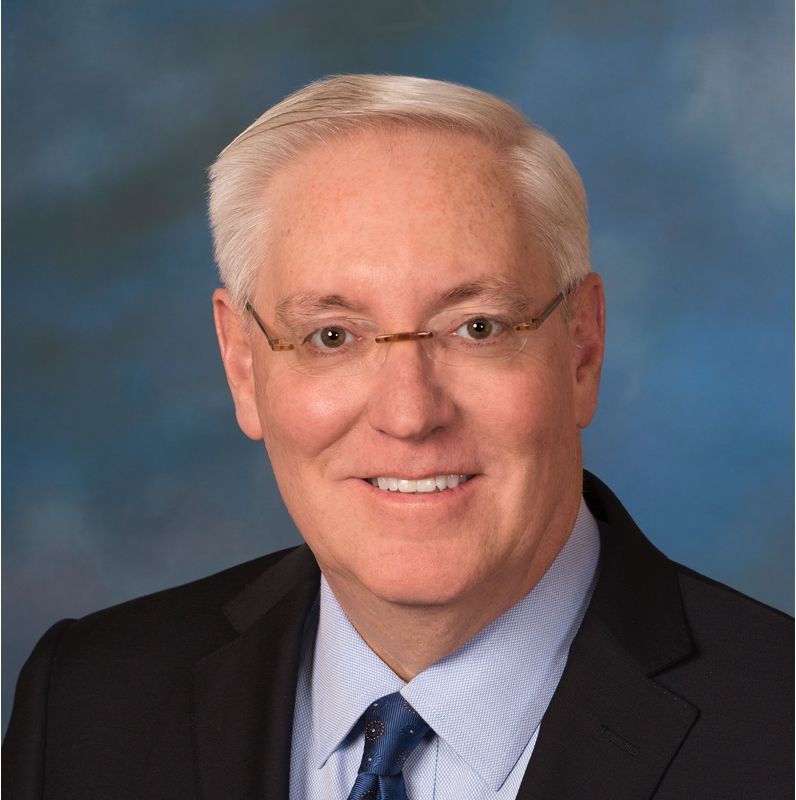
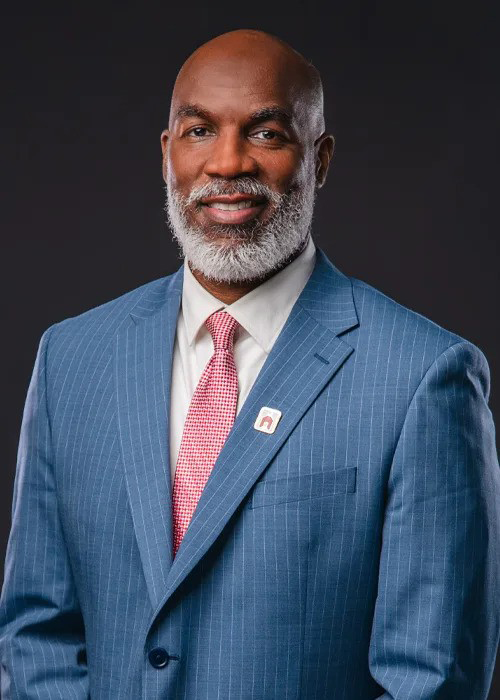
    Joseph S. Martz is CEO of Merakey USA, which is acquiring Boundless, a human services provider based in Columbus, Ohio.Merakey USA

    The executives cited pressures from an expected change in how their organizations get paid. A shift is underway to payment for results rather than for straight volumes of services. Looming cuts to Medicaid over the next decade are also forcing human services providers to rethink how they operate.

    “We’re entering a time when resources are going to be a lot tighter, and I think organizations need to be thinking differently about how they approach that. We’re seeing some other pretty large consolidations,” said Chuck Ingoglia, CEO of the National Council for Mental Wellbeing, a Washington nonprofit advocacy group.

    Origins of the Merakey-Boundless deal

    Stacy DiStefano, CEO of Consulting for Human Services, a Philadelphia-based adviser firm, introduced Martz and Maynard to each other in July 2024.

    That led to a series of conversations about issues the two organizations were spending money to solve and the realization: “Why don’t we just come together and use the combined resources of our organizations to solve that problem,” Martz said.

    Merakey and Boundless had already been growing through acquisitions, though Boundless has grown more dramatically. In the last seven years, the nonprofit made five acquisitions that helped increase its annual revenue to an expected $200 million this year from $20 million, Maynard said.

    “My goal was to create sustainability in a broken system where most of us are living off of Medicaid, which comes nowhere close to providing the resources that cover the costs,” Maynard said.

    Patrick Maynard is CEO of Boundless, a Ohio human services provider that is merging into Merakey USA, of Lafayette Hill.Boundless

    The added scale enabled Boundless to add healthcare and dentistry for its clients, but the Medicaid shortfall for those dental services is $75,000 a month, Maynard said. That kept Maynard looking for even bigger partners, like Merakey.

    Maynard cited Merakey’s expenditure of $18 million for Workday software, a system for human resources and financial management as an example of something Boundless could never afford. At $200 million in annual revenue, Boundless struggled to spend $2 million on a system for electronic health records, he said.

    A new structure

    Merakey, which started as the Northwest Center in the Mount Airy section of Philadelphia in 1969, remains firmly rooted in Pennsylvania. The state is expected to account for more than half its $850 million in revenue for the fiscal year that ends this month, Martz said.

    In 2023, Merakey and Elwyn, a similar nonprofit based in Delaware County, announced a preliminary merger agreement, but a final deal did not happen.

    States where Merakey operates include Indiana, Kentucky, Ohio, Michigan, and Wisconsin. A new division called Boundless Midwest, led by Maynard, will assume responsibility for Merakey’s operations in that region when the deal is done.

    Both boards have approved the transaction, which remains under review by the Ohio Attorney General.

    Martz said he expect Boundless to continue growing though acquisitions and the development of new programs with the support of Merakey.

    “We are going to be a big organization, but it’s really about being a better organization, about the quality of care that we provide,” Martz said. “If you’re not culturally aligned, bigger for bigger sake, just doesn’t make any sense to me.”

  • Former Hatboro daycare worker charged with assault for injuring a child with special needs, police say

    Former Hatboro daycare worker charged with assault for injuring a child with special needs, police say

    A former employee at a Hatboro daycare injured a child with special needs by slamming him, hard, into a chair and, later, onto the floor, Montgomery County prosecutors said Wednesday.

    Thomas Coleman, 42, of Holland, Bucks County, has been charged with endangering the welfare of a child and simple assault in connection with the March 23 incident involving a 4-year-old boy at KinderCare on Warminster Road.

    Coleman remained in custody Wednesday with bail set at $25,000. His attorney, Stephen Jones, did not return a request for comment.

    Coleman had been the subject of two previous investigations of his conduct toward children at KinderCare, according to the affidavit of probable cause for his arrest. Those incidents involved him “putting a kid down on a mat too hard and yelling at students,” the affidavit said.

    Administrators at KinderCare placed Coleman on leave after the earlier incidents, the affidavit said, but they allowed him to return to work after completing training.

    After the latest incident, however, he was fired, the affidavit said.

    KinderCare’s director, Ashley Ross, did not return a request for comment Wednesday.

    Hatboro police learned of the alleged assault when the boy’s parents contacted them in March, the affidavit said.

    The mother said another parent had seen Coleman pick up her son, who is autistic, by his arms and roughly place him in a chair, hitting the boy’s neck on the back of the chair, and then forcefully push the chair into a nearby desk, the affidavit said.

    The boy then got out of his seat and walked to a carpeted area of the room, according to the parent who witnessed the assault. Coleman, appearing frustrated, than grabbed the boy by his chin and slammed him down onto the floor, the parent said.

    When the boy’s mother picked him up from daycare, she said, she noticed scratches and marks on his neck. Coleman told her the injuries were self-inflicted but would not provide more details, the affidavit said.

    Later, the woman had her son examined by a chiropractor, who told her the boy’s hips were out of alignment.

    Coleman is scheduled to appear before a district judge for a preliminary hearing on July 2.

  • Abington schools are reviewing security after a man charged with trying to rape a girl repeatedly entered the high school

    The Abington School District is reviewing security procedures after police charged a 25-year-old man with trying to rape a student who repeatedly let him into Abington Senior High School.

    Police charged Raeem Grange-Allen of Philadelphia on Friday with attempted rape by force and attempted statutory sexual assault, among other charges. The student, a 14-year-old girl, told police she had met Grange-Allen at the high school.

    Grange-Allen initially identified himself as a student and began communicating with the girl through text messages and social media, according to a police affidavit.

    Grange-Allen later asked the girl to let him into the school “and requested she perform oral sex on him behind a stairwell,” according to the affidavit. The girl told police she “saw him or let him into the school approximately three to four times.”

    In a message to families Tuesday, Abington Superintendent Jeffrey Fecher said the girl let Grange-Allen into the high school on two occasions in March, opening a back door during the school day.

    “Video footage shows he was wearing a hoodie and was able to briefly blend in as a student while moving in the hallways,” Fecher said.

    On March 27, Grange-Allen came to the girl’s home in Abington Township, where he held her down and attempted to rape her, according to the police affidavit. The girl screamed, and her mother caught Grange-Allen, according to the affidavit. The girl went to the police the next day.

    Fecher said there were “numerous unresolved questions about this man’s presence in the high school, as well as, where and when he initially encountered the victim.”

    The district is “launching a third-party internal investigation” and reviewing security protocols, Fecher said. While exterior doors are locked throughout the school day, “building occupants always have the ability to open them from the inside for evacuation purposes, as required by law,” he said.

    Fecher said the district would be working with the Montgomery County Department of School Safety “to determine whether additional security measures can be put in place.”

    “We share in the concern and shock that this information causes, and we are committed to addressing it effectively,” Fecher said.

    As of Wednesday, Grange-Allen was being held at the Montgomery County Correctional Facility on $250,000 cash bail.

  • AristaCare at Meadow Springs is keeping patients in-house for a lung procedure that used to require a transfer to a hospital

    AristaCare at Meadow Springs is keeping patients in-house for a lung procedure that used to require a transfer to a hospital

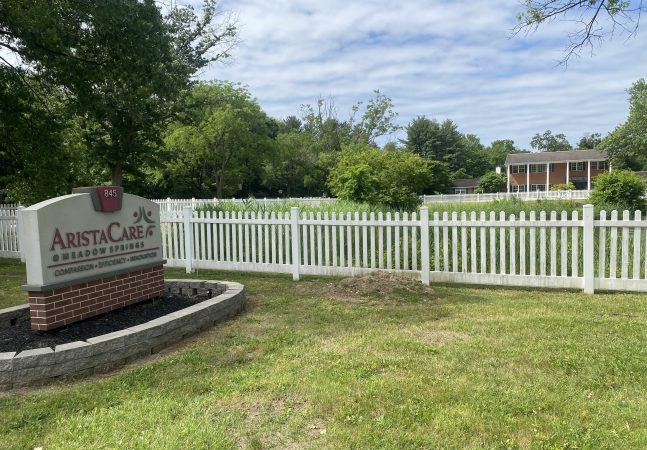
    AristaCare at Meadow Springs, a Plymouth Meeting nursing home that specializes in patients who need ventilators to help them breathe, has started doing a key lung procedure in-house that used to require patients to be transferred to a hospital.

    The effort is part of a broad trend in healthcare to provide more care outside of hospitals, which are the most expensive sites of care.

    Meadow Springs’ goal in doing the lung-clearing procedures in-house is reducing the number of times its residents are hospitalized, the facility’s administrator Rob Nealon said.

    Keeping residents in the facility benefits Meadow Springs financially even though it doesn’t charge for the treatment because it doesn’t lose revenue to hospitals, Nealon said. It’s also better for residents to avoid difficult transitions and long hospital stays, he said.

    The treatment, called a bronchoscopy, uses suction tubing with video to go deep inside a patient’s lungs to clear out secretions and mucus plugs that make it hard for ventilator patients to breath, said Lejoy Mathew, respiratory director for the facility.

    The nursing home with 153 licensed beds has the capacity to care for 72 people on ventilators.

    AristaCare did its first bronchoscopy in February and has done four more since then, Mathew said.

    Patients who are dependent on ventilators often have a chronic respiratory disease, neuromuscular or neurodegenerative diseases, or traumatic brain injuries.

    The company, based in Cranford, N.J., also owns AristaCare at East Falls, another ventilator facility it acquired in 2024, and plans to start doing bronchoscopies there as well. The East Falls facility has 66 beds.

  • The Norristown school board plans to hire Delaware’s Superintendent of the Year

    The Norristown school board plans to hire Delaware’s Superintendent of the Year

    The Norristown school board plans to vote Monday to hire Delaware’s Superintendent of the Year as the district’s next leader.

    The board announced Sunday that it had selected Dorrell Green, the superintendent of the Red Clay Consolidated School District in New Castle County as its pick for superintendent.

    Green is expected to start as superintendent in the Norristown Area School District on July 20, under a five-year term with an initial salary of $270,000, according to an agenda for Monday’s meeting.

    Dorrell Green, the superintendent of the Red Clay Consolidated School District in New Castle County, Del., is to join Norristown Area School District as superintendent on July 20, 2026.Red Clay Consolidated School Dis

    Green’s selection comes after the board, which has a new majority after November’s school board elections, moved this spring to oust Superintendent Christopher Dormer, citing poor test scores. The board has since sparked controversy with other changes, including eliminating its DEI director.

    Throughout the superintendent search process, “our community made it clear that they were seeking a visionary leader who is committed to student achievement, educational excellence, and meaningful engagement with all stakeholders,” the board’s president, Jeremiah Lemke, said in a statement.

    He said Green’s “experience, leadership record, and commitment to serving diverse school communities” set him apart during a search process that was led by a consulting group and attracted 88 applicants.

    Green has worked in public education for more than 25 years, including as a teacher, principal, and assistant superintendent.

    In Red Clay, Delaware’s largest school district with 15,000 students, Green has served as superintendent since 2019. He expanded early childhood education during his tenure there and increased access to advanced course work, according to the Norristown board.

    Before that, Green was the first executive director of the Delaware Department of Education’s Office of Innovation and Improvement, an office created by former Delaware Gov. John Carney to support the state’s neediest schools.

    Green has a bachelor’s degree in elementary education and master’s degree in educational leadership from the University of Delaware. He has a doctoral degree in organizational leadership from Wilmington University.

  • Angelo’s Pizzeria builds toward its opening in South Jersey as its bakery in Montco plans to sell rolls wholesale

    Angelo’s Pizzeria builds toward its opening in South Jersey as its bakery in Montco plans to sell rolls wholesale

    Angelo’s Pizzeria owner Danny DiGiampietro has been pursuing two ambitious goals: reviving a landmark Montgomery County bakery and opening a branch of his Michelin-recommended pizza-and-sandwich operation in South Jersey, where it all began.

    Both projects now appear to be gaining momentum. While Angelo’s vaunted rolls are being baked at the former Conshohocken Italian Bakery property, which DiGiampietro purchased last year, the long-held plans to reopen the bakery’s counter to retail customers remain on hold. DiGiampietro said the building requires additional work, which he declined to specify. “Every time we fix one thing, something else comes up,” he said.

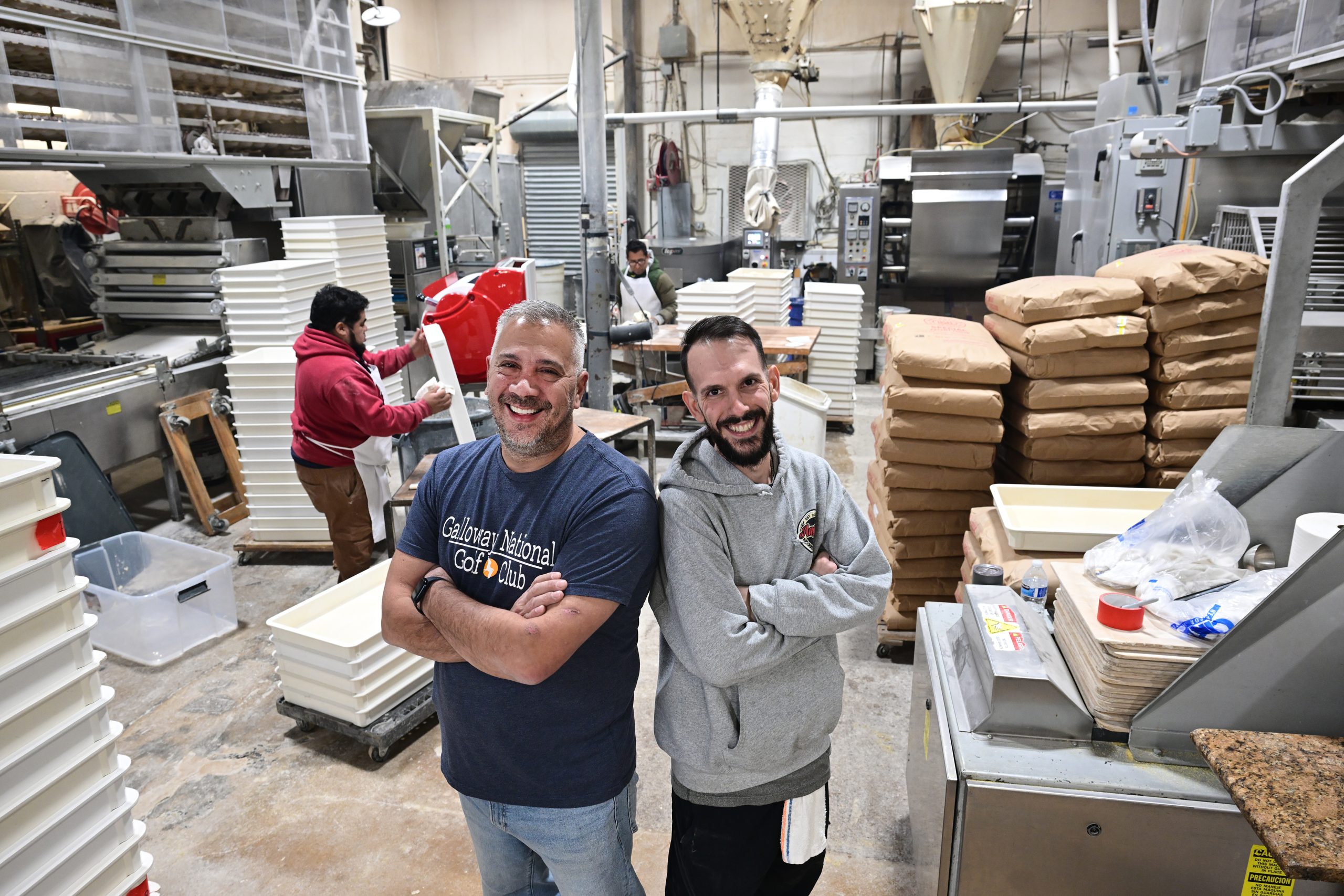
    Danny DiGiampietro (left), owner of Angelo’s Pizzeria, with partner Jared Braunstein at the bakery in Conshohocken in December 2024.Jose F. Moreno / Staff Photographer

    But Angelo’s is moving into wholesale bread production, the backbone of Conshohocken Italian Bakery’s business under the Gambone family for more than a half-century before its 2024 closing.

    A key piece of the puzzle is on the way: a massive Polin oven imported from Italy to give his bakers more flexibility, DiGiampietro said.

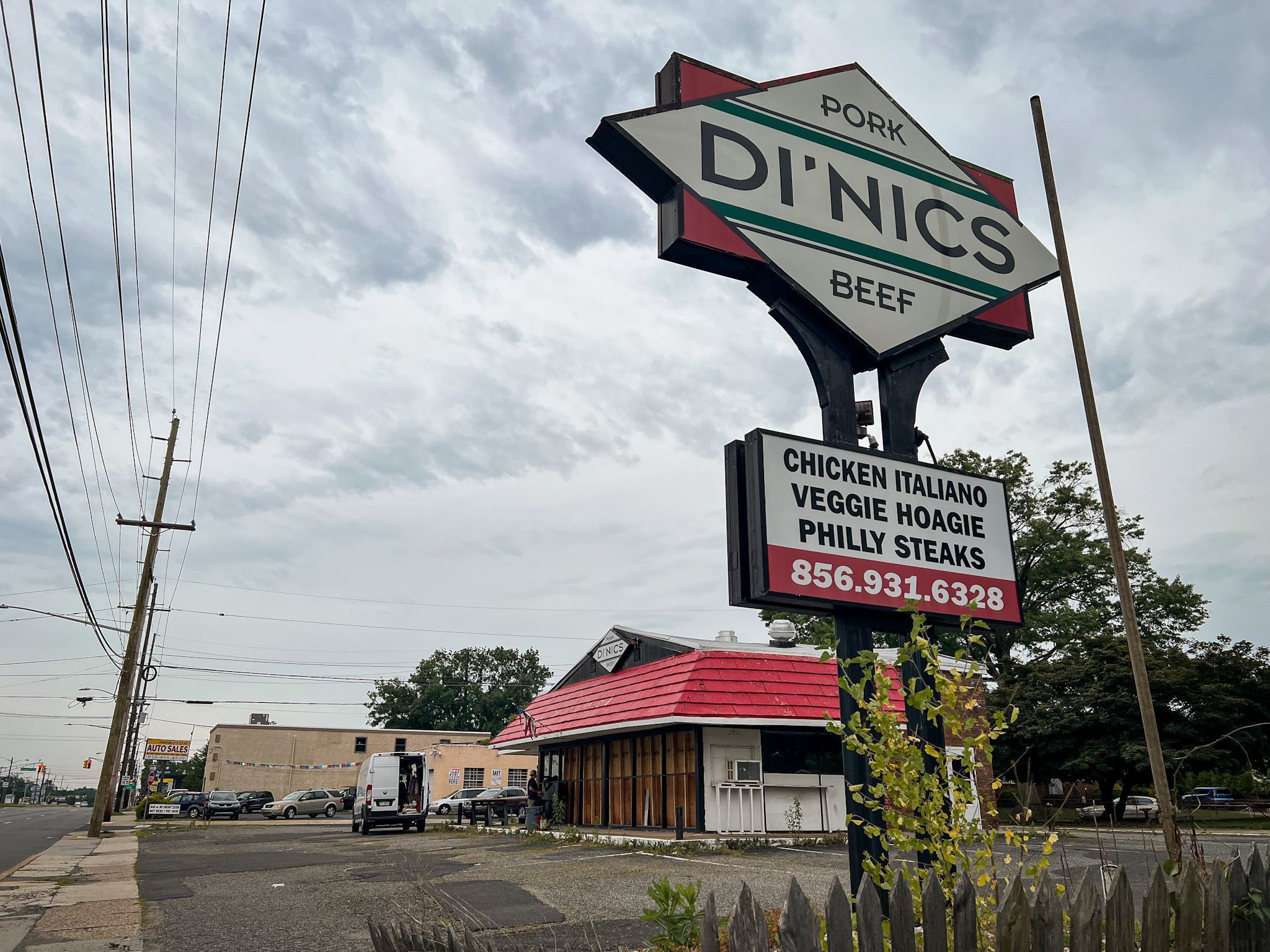
    The future location of Angelo’s Pizzeria in West Collingswood Heights, previously Di’Nics, on June 18, 2026.Michael Klein / Staff

    At “Conshy,” as the Jones Street bakery was known, the Gambone family supplied rolls and bread to hundreds of restaurants and sandwich shops throughout the region. Its closing created a frenzy among customers and competitors.

    DiGiampietro said the new oven will allow bakers to create a line of kaiser rolls, potato rolls, steak rolls, and hoagie rolls. Although he will in effect be selling to his sandwich shop competitors, he likens it to giving shops “the canvas to make their art,” DiGiampietro said. “Everyone’s different.”

    A return to wholesaling was not in the initial plans for DiGiampietro, who owned a bread bakery in South Philadelphia about 20 years ago. “I went bankrupt the first time. So hopefully I don’t go bankrupt again.”

    Meanwhile, demolition and rebuilding are underway at the future Angelo’s Pizzeria location at 310 Black Horse Pike in the West Collingswood Heights neighborhood of Haddon Township, Camden County. The stand-alone building was formerly Di’Nics.

    Crews recently gutted the building, which DiGiampietro hopes to transform into a full-service Angelo’s within the next several months.

    The project will mark his return to New Jersey. DiGiampietro opened his first Angelo’s in Haddonfield in 2013 before closing it in 2018 to focus on the Ninth Street location in South Philadelphia, which opened in 2019 and helped turn Angelo’s into one of the region’s most sought-after pizzeria and cheesesteak shops.

    Since then, Angelo’s has expanded to a second South Philadelphia location at Wolf and Swanson Streets and a counter at Wilmington’s DECO Food Hall. DiGiampietro is also a partner in Uncle Gus’ Steaks at Reading Terminal Market and, with actor Bradley Cooper, at Danny & Coop’s in Manhattan.

    The Angelo’s in West Collingswood Heights, about 10 minutes from the Walt Whitman Bridge, will include table seating as well as a counter overlooking the kitchen. Initially, DiGiampietro wanted more seating. Then he began talking about a takeout-only operation.

    “But people love the show,” he said. “They like to see everything happening.”

    The build-out still requires installation of a pizza oven, walk-in refrigeration, and other equipment. Even so, DiGiampietro believes the compact space can work.

    “We think we can keep a dining room and still fit everything we need in there,” he said. “It’ll be tight, but we work on Ninth Street in basically a submarine, so how much tighter can it get?”

  • A New York man stole the ashes of his ex-boss’ daughter and held them for ransom, Montco DA says

    A New York man stole the ashes of his ex-boss’ daughter and held them for ransom, Montco DA says

    Over a perceived debt of $8,000, a New York man stole an urn containing the ashes of his former employer’s daughter and attempted to hold the remains for ransom, according to Montgomery County prosecutors.

    Nuo Chen, 30, told the victim that if she did not pay him, he would dump the ashes and flee back to his home in Flushing, Queens, according to the affidavit of probable cause for his arrest.

    Chen happened to call the victim while she was being interviewed by Bensalem police about the theft, authorities said, and they were able to set up a meeting at the nail salon she owns under the guise of her paying him the money.

    Officers took Chen into custody June 12, and he was charged with burglary, theft, and related crimes. He remained in custody Thursday with bail set at $50,000.

    Montgomery County Deputy Chief Public Defender Michael Drossner, whose office is representing Chen, declined to comment on the case.

    The victim also declined to comment on the case or speak about her daughter when contacted by a reporter Thursday.

    Investigators say the woman told them Chen broke into her home June 12, using keys he had previously taken while staying there with her.

    Earlier that day, Chen had visited her at the nail salon, arguing with her about money he said she owed him, the affidavit said. During the argument, Chen threatened to “smash things in the store” and pushed the woman.

    She had fired Chen weeks earlier, police said, due to his erratic behavior.

    After the argument at the nail salon, Chen drove to the woman’s home in Willow Grove and was seen on surveillance footage carrying the urn containing her daughter’s ashes, according to the affidavit.

    He called the woman, telling her not to contact the police or she would never see the urn again, the affidavit said.

    Later, after Bensalem arrested Chen outside the nail salon, he admitted that he had entered her home without her permission, using the key he had previously taken, authorities said.

    Chen is scheduled to appear for a preliminary hearing on June 26.

  • Rep. Madeleine Dean says she was blocked from speaking to detainees during oversight visit to Pennsylvania’s largest ICE detention center

    Rep. Madeleine Dean says she was blocked from speaking to detainees during oversight visit to Pennsylvania’s largest ICE detention center

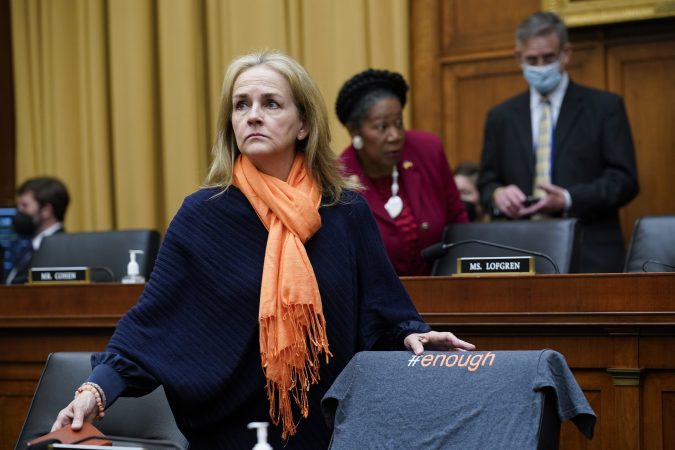
    Three weeks after members of Congress listened to and then publicly shared concerns from inside Pennsylvania’s largest immigrant detention center for the first time, U.S. Rep. Madeleine Dean said she was blocked from speaking with detainees while visiting the same facility on Wednesday.

    Dean (D., Montgomery) said she was given “a relatively complete tour” and gathered information at the Moshannon Valley Processing Center — a 1,900-bed facility in Clearfield County that is the largest of its kind across the entire Northeast.

    But while attempting to speak with detainees, as she has done during other oversight visits, Dean said, she was told that required advance permission from the detainees themselves.

    Dean questioned the credibility of that prohibition — especially, she said, after she had informed the facility of her plans ahead of time, and after two of her colleagues were recently permitted to speak with detainees during a similar, but unannounced, oversight trip.

    “Let’s put it this way, I got a scoop of the BS,” Dean said in an interview.

    The four-term lawmaker’s fact-finding trip came after several weeks of escalating tensions around the conditions facing undocumented immigrants in detention centers such as Moshannon Valley and Delaney Hall in Newark, N.J. Both facilities are privately run by the same company, GEO Group, and have faced allegations of providing inadequate medical care and nutrition while allowing little outside oversight.

    U.S. Reps. Summer Lee and Chris Deluzio, both Pittsburgh-area Democrats, said they heard “real concerns” after emerging from Moshannon Valley on May 28.

    Their roughly two-hour tour and discussion with detainees was the first time any member of Congress had successfully entered the facility since President Donald Trump took office. It also followed reports of both poor medical care and a hunger strike led by detainees to protest the food.

    Lee and Deluzio said women in particular approached them to say they had not received proper prenatal care. At least one told them she had been sexually assaulted at the center. And watching lunches of chicken, rice, and beans being served did not make them less concerned about the quality of the food, the lawmakers said.

    A spokesperson for the Department of Homeland Security, which oversees Immigration and Customs Enforcement, later said that ICE “welcomes congressional oversight” and that it provides all detainees with comprehensive medical care as well as proper meals and living conditions.

    Dean said Moshannon Valley appeared to be clean and spacious during her trip Wednesday. The medical unit was active — unlike a larger facility in Dilley, Texas, that, after she visited earlier this year, she called “inhumane” for its lacking treatment of both adults and children.

    But Dean said she questioned what the facility would have looked like if she had not announced her visit ahead of time, and she was not dissuaded from her position that the facility should be closed.

    “This administration has just so successfully, cancerously dehumanized certain populations that we warehouse them now,” Dean said. “And we allow others to profit from it using our taxpayer dollars.”

    GEO Group referred a request for comment to ICE, which did not immediately respond.

    Dean said she was particularly alarmed that the GEO Group’s contract with ICE, as well as Republican-sponsored federal budget language, appears to incentivize filling detention center beds rather than targeting those charged with violent crimes, as Trump pledged to do. She said a copy of the contract she obtained Wednesday explained GEO Group is paid $10 per individual every day they are detained, up to the first 800 detainees. The cost goes up to $40 per individual per day for every additional person detained, she said.

    “It is so perverse. It says nothing about need, nothing about detaining the worst of the worst,” Dean said. “It says pick up as many people as you can, regardless of what they have done or haven’t done, so that every bed is charging and collecting from U.S. taxpayers to keep these people in that population.”

    With Clearfield County commissioners expected to vote in September on whether to renew the contract with ICE and GEO, Dean said she hopes the commissioners choose not to extend the facility and instead shut it down.

    Lee, who has gone further than other Pennsylvania Democrats by calling for the elimination of ICE entirely, also said last month she hoped the Moshannon Valley facility would close. One of the three Clearfield County commissioners, meanwhile, said he was inappropriately denied entry to the facility and said he does not believe the county should be part of the contract, WJAC reported.

    Shutting down immigrant detention centers, however, is rare and difficult. More than 200 centers hold about 60,000 people, and Trump has been determined to increase capacity rather than reduce it.

    Dean said there were 1,666 individuals detained at Moshannon Valley on Wednesday, which is more than the 1,417 that Deluzio reported on May 28. According to Deluzio, about 1,100 of those were classified as “low security.”

  • More people in Philly and region struggle with insufficient food after Trump cuts: ‘Hunger has never been higher’

    More people in Philly and region struggle with insufficient food after Trump cuts: ‘Hunger has never been higher’

    Shelly Gaither, 51, of Cheltenham, makes sure her three sons, ages 6, 9, and 18, get their meals while she manages with whatever is left over — if anything ever is.

    “Oh, my God, groceries are too expensive,” said Gaither, a former data analyst who suffers from a disability that makes working difficult. She visits a food pantry regularly to make sure her kids eat chicken when they can. Her monthly SNAP (Supplemental Nutrition Assistance Program) benefits were reduced from $400 to $200 earlier this year because of changes to the program under President Donald Trump’s One Big Beautiful Bill Act.

    “I don’t think there’s hope,” she said. “I feel guilty for bringing children into a world that doesn’t want them to exist because the government makes cuts that take away their food and their healthcare.”

    For people like Gaither throughout the United States, levels of food insecurity have seen a “remarkable” rise since the pandemic in 2020, according to a national survey taken earlier this year and released in late May by the Federal Reserve Bank of New York.

    Around 10% of 1,300 heads of households polled in February reported a lack of enough food and said their children were missing meals, according to the survey. Nearly 16% relied on food donations. Among families taking in less than $50,000 a year, almost 20% reported being forced to skip meals or go without.

    In 2020, when the federal government stepped in to help families at the height of the pandemic, just 4% of households reported missing meals, including less than 7% of families earning less than $50,000 a year, according to the survey.

    At that time, temporary supplemental unemployment benefits, expanded SNAP payments, and direct government relief payments helped stave off hunger among Americans. Food insecurity increased after COVID-19 relief expired, according to the Urban Institute.

    But the recent surge in hunger has also been attributed to the sweeping law Trump signed last year, which reduces SNAP benefits and other safety net programs to help pay for his tax cut.

    Findings in the bank’s report also reflect Gaither’s sense of despair, a pessimism about personal finances and the overall economy among people with low incomes. That same group exhibits diminished expectations for finding a job and declining levels of consumer confidence, the survey says.

    (function(){function e(){window.addEventListener(`message`,function(e){if(e.data[`datawrapper-height`]!==void 0){var t=document.querySelectorAll(`iframe`);for(var n in e.data[`datawrapper-height`])for(var r=0,i;i=t[r];r++)if(i.contentWindow===e.source){var a=e.data[`datawrapper-height`][n]+`px`;i.style.height=a}}})}e()})();

    According to the reserve bank’s report, non-white Americans have been especially hard hit. The number of such households that reported missing meals increased from 4% in 2020 to 19% in February. At the same time, the number of non-white people receiving SNAP benefits jumped from 14% to more than 26%.

    Overall, the survey found food insecurity was particularly acute among lower-educated and lower-income households, as well as households with young children. Many families are experiencing financial stress due to the high cost of living, persistent inflation, and high interest rates, even as the stock market has been steadily rising, according to the survey.

    Pantries struggle to keep up with demand

    More people are flocking to food pantries, but they are not equipped to take up the slack of reduced SNAP benefits.

    “Pantries across the state are in perpetual crisis mode,” said Stuart Haniff, CEO of Hunger-Free Pennsylvania in Pittsburgh. Add to that the advent of summer, when kids are no longer receiving free breakfast and lunch at school. “Families must now provide those 60 to 80 meals a month,” Haniff said.

    In Norristown, “immense need” has increased the number of people frequenting Martha’s Choice Marketplace, the largest food pantry in Montgomery County, by 100% since 2022, said Patrick Walsh, director of programs. “And I don’t expect things to get better.”

    Food prices are also up 3.2% this spring over last, according to U.S. Department of Agriculture figures, exacerbating the issue.

    In South Jersey, “we are seeing record numbers at our food distributions,” said Jane Asselta, president and CEO of the Food Bank of South Jersey, in a statement to The Inquirer. “Life is getting harder to afford for more and more people.”

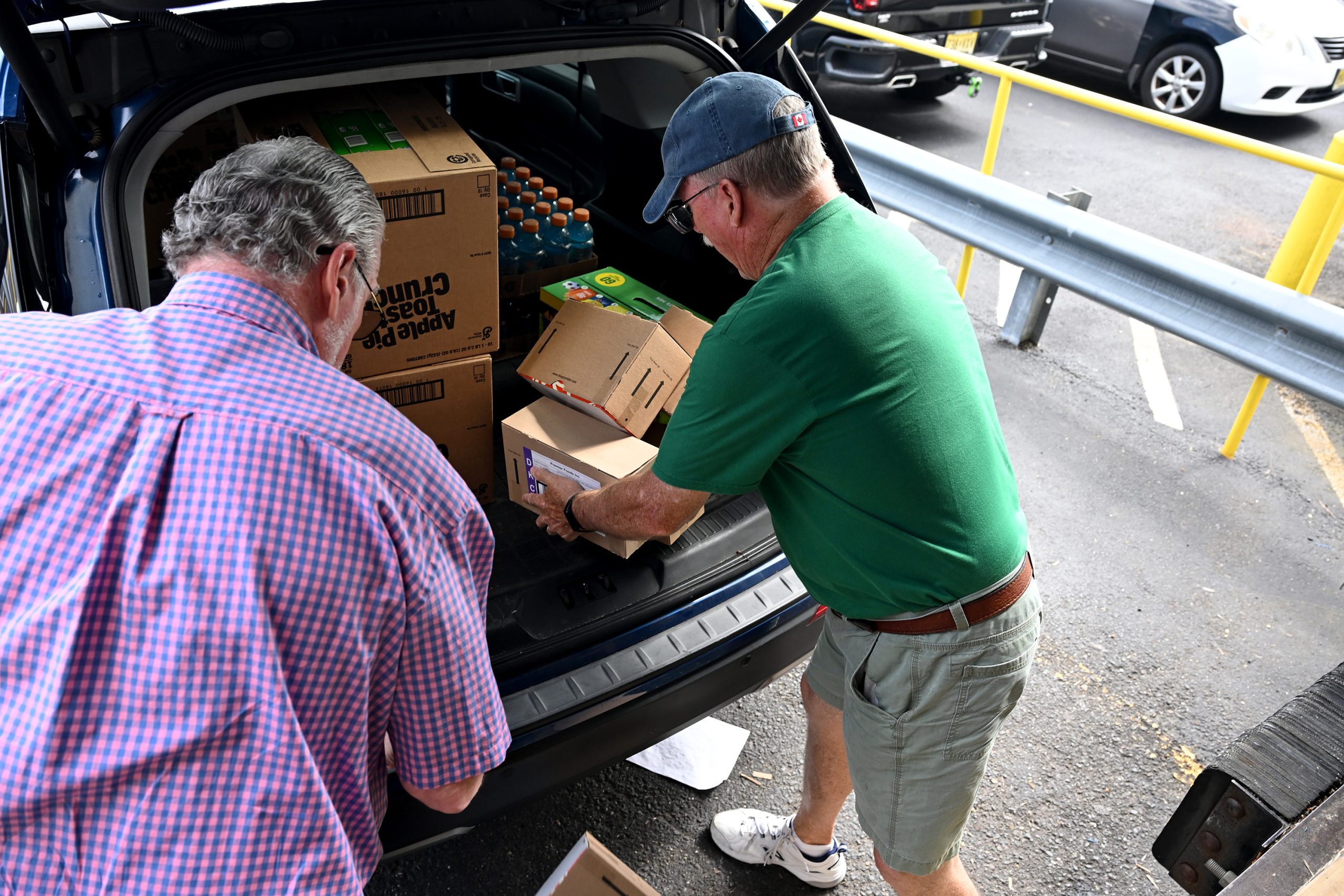
    Matt McDevitt (left) and Michael Hickey load their vehicle at the Food Bank of South Jersey Thursday, June 11, 2026. The men are volunteers at the Temple Lutheran Church in Pennsauken and their food bank is open from 5-6 p.m. every Thursday.Tom Gralish / Staff Photographer

    Asselta said the Federal Reserve Bank’s report “mirrors” what her organization has observed through its network of 300 community partners.

    “Hunger has never been higher,” said Pastor Sonita Johnson, who runs the food pantry at St. John’s Pentecostal Outreach Church in Salem City, Salem County. “Food prices are high, and the lines you see you would not believe — a 50% increase in people just over the last two months.”

    Nationwide, between January 2025 and January 2026, SNAP rolls decreased by more than 4 million people — from 42 million to 38 million — according to USDA figures.

    Between last September and April of this year, nearly 90,000 Pennsylvanians lost SNAP benefits due to new eligibility requirements stipulated by the Trump administration, according to an analysis by the Pennsylvania Department of Human Services (DHS).

    And between December 2025 and last month, more than 32,000 Philadelphians lost benefits, DHS figures show.

    In New Jersey, SNAP participation has fallen by more than 50,000 individuals between March 2025 and March of this year, New Jersey Department of Human Services figures show.

    The Trump administration’s SNAP changes include an expansion of work requirements for people who receive SNAP benefits and increased documentation requirements “designed to make maintaining eligibility increasingly difficult,” according to the Food Research and Action Center (FRAC), the largest anti-hunger lobby in the United States.

    Deputy White House press secretary Anna Kelly said in a statement that Trump signed the changes to strengthen SNAP and to ensure that it is “sustainable for future generations.” She added that Trump was “elected to eliminate runaway spending across the federal government.”

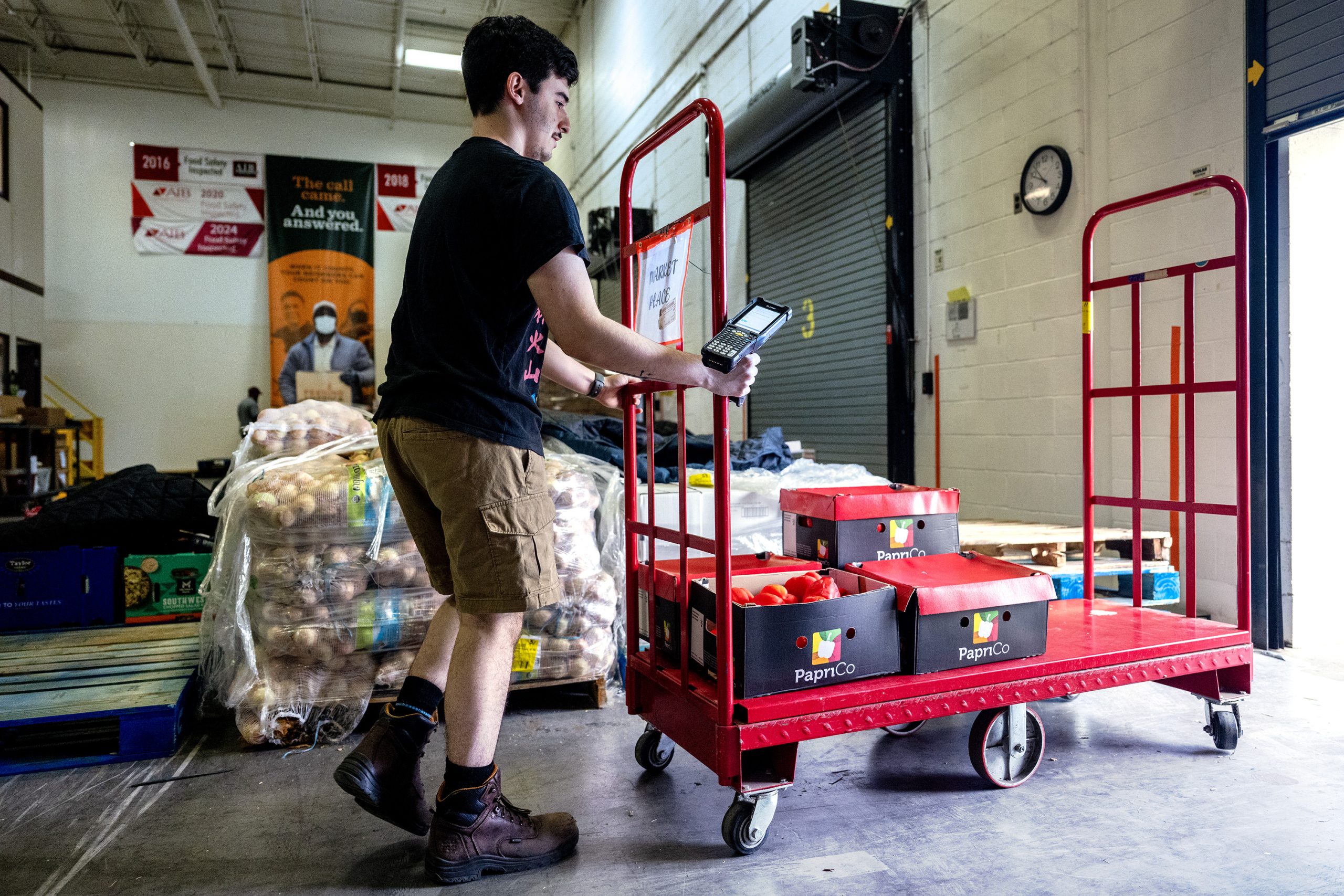
    William Meo works on the loading dock at the Food Bank of South Jersey Thursday, June 11, 2026. Tom Gralish / Staff Photographer

    For people like Shelley Gaither, how her reduced SNAP benefits could be seen as part of “runaway spending” is tough for her to figure, given her needs. To survive this precarious moment, Gaither said, she will do whatever she can.

    “We eat more vegetarian meals and I don’t buy my kids cookies or snacks,” she said. “If I drink enough coffee, maybe I just need one meal a day. This is our existence now. This is how we live.”

  • Main Line Health’s Paoli Hospital will get a new, 108-bed patient tower in a major expansion

    Main Line Health’s Paoli Hospital will get a new, 108-bed patient tower in a major expansion

    Main Line Health is adding a 108-bed patient pavilion to its Paoli Hospital campus as part of a push to expand its capacity in Chester and Montgomery Counties, the nonprofit health system announced Tuesday.

    The building, expected to cost between $220 million and $240 million, is scheduled to open in early 2029. The project will expand Paoli’s capacity by more than 40%.

    Patient rooms will occupy three of five floors. They will be convertible from standard hospital rooms into rooms for intensive care. One floor will be used for diagnostics, such as radiology and perinatal testing. The roof will have a landing pad for helicopters.

    Beyond Paoli, Main Line is adding to its outpatient capacity in Downingtown, where a large facility that has township approval will include surgical care. The health system also has shared an early-stage proposal for outpatient offices in the Collegeville area, while it considers building there what would be its fifth hospital in Philadelphia’s western suburbs.

    “While many communities face declining access to care, Main Line Health is moving forward with optimism, investing in this region’s future and reaffirming our commitment to exceptional care where people live and work,” Main Line CEO Ed Jimenez said in the announcement.

    Paoli hospital currently has 261 licensed beds and employs nearly 1,400 people, according to Main Line. The hospital had 53,000 emergency department visits in the year that ended June 30, 2025. Main Line Health completed its last major expansion of Paoli Hospital in 2009, doubling the facility’s size.

    Like other Philadelphia-area health systems, Main Line has experienced tough times financially since the pandemic, which led to broadly higher costs in healthcare. In the nine months that ended March 31, Main Line had a $214,000 operating profit on $2.1 billion in revenue.

    More Main Line projects

    Separately, about 12 miles west of Paoli Hospital, in Downingtown, Main Line plans to open a large outpatient facility next summer. Main Line Health Downingtown, at the intersection of Lloyd and Manor Avenues, will cost $150 million and include a surgery center and substantial imaging capabilities.

    In central Montgomery County, as well, Main Line recently made a presentation to the Upper Providence Township Board of Supervisors about a major development in an area where the health system has seen substantial growth.

    The long term could see Main Line build a 108-bed hospital, but more immediately it needs to add outpatient office space in the Collegeville area, Main Line said.