Tag: Kensington

  • Pa. measles outbreak is nation’s worst, echoing deadly 1991 Philadelphia epidemic

    Pa. measles outbreak is nation’s worst, echoing deadly 1991 Philadelphia epidemic

    The child gasped for air, sitting alone in front of an upstairs television, near death inside her Northeast Philadelphia home.

    As a measles outbreak ravaged the city, Philadelphia’s deputy health commissioner, Robert Ross, used the home phone to call a judge for a court order to treat the girl. Her family worshiped at Faith Tabernacle Congregation, a fundamentalist Christian church at the center of the outbreak. Many members were refusing all medical care, including vaccinations.

    The 1991 outbreak would eventually sicken 1,400 people across Philadelphia and kill nine children. It spurred the city to pursue the nation’s first and only court-compelled vaccinations. Some parents at Faith Tabernacle were ordered, against their wishes, to vaccinate their children against measles.

    The girl in the house in Northeast Philadelphia was about 9 years old and “minutes, maybe an hour, away from respiratory failure,” Ross recalled. And when he tried to call for medical care, her grandmother tried to block him from the phone.

    The child ended up on a ventilator at St. Christopher’s Hospital for Children and ultimately survived. Her story became a defining moment in the public health response to the state’s last major measles outbreak, part of a nationwide surge between 1989 and 1991 that sickened tens of thousands of people and led to at least 166 deaths.

    Three decades later, Pennsylvania is again contending with the nation’s worst measles outbreak, with more than 1,000 cases and five measles-related deaths reported this year.

    Then and now, the highly contagious disease spread in communities with low vaccination rates, but for different reasons. The 1991 outbreak spread in a community that rejected vaccines — and across a city with limited access to vaccination even for those open to them. Now, vaccines are easier to access — but too many people don’t want them.

    So far, Philadelphia has been spared as measles actively spreads in the region’s western suburbs of Chester County and just beyond in Lancaster County, whose 401 reported cases lead the state.

    Ross and other physicians who treated children in Philadelphia in 1991 lament the return of measles, which tops the list of vaccine-preventable diseases once common during childhood.

    “I would have said there was no chance this would ever happen again,” said Ross, who went on to spend decades as a public health administrator in California. “We were looking forward to decades of measles-free, whooping cough-free, polio-free livelihoods for children.”

    In 1991, parents flocked to vaccine clinics organized around the city. At one event that May, doctors handed out shots to 60 children — with Nerf balls and a DJ on hand to make the medicine go down — in Fishtown and South Kensington, then without full-time pediatricians to routinely provide vaccines. Another vaccination effort immunized 6,000 children over a weekend, with help from the Phillie Phanatic.

    Today, families increasingly are opting out of vaccines, often by taking advantage of religious and philosophical exemptions that provide legal outs from immunizations otherwise required to enter school. And vaccine skeptics once relegated to the fringes of public discourse now are setting the federal health agenda under President Donald Trump.

    Years of declining vaccination rates have left not only children but also many unvaccinated adults vulnerable. Where only children died in 1991, three of five deaths in the current outbreak appear to have occurred in adults.

    “It felt like a more winnable battle in ’90, ’91, than right now,” Ross said.

    ‘You just knew that an outbreak was imminent’

    In the spring of 1989, an R.E.M. concert led to Philadelphia’s first reported cases, involving concertgoers at the Spectrum. The city health department interviewed teenagers exposed at the show, ramped up vaccinations, and braced for the worst.

    Pennsylvania laws requiring vaccinations for school admission were still relatively new — on the books for less than a decade — and federal health officials had only just begun recommending a second dose of measles, mumps, and rubella vaccines for children.

    Tens of thousands of preschoolers had not received even one dose of the MMR vaccine, the Daily News reported when the first cases emerged. Nearly two-thirds of Hispanic toddlers in North Philadelphia had not received the one dose recommended by age 2, The Inquirer noted at the time.

    The virus started spreading: 89 cases were reported in the city in 1989, followed by more than 200 the next year.

    The numbers followed a nationwide trend: By December 1990, measles had infected more than 25,000 people across the country, a 68% increase over the year before.

    At Philadelphia’s children’s hospitals, St. Christopher’s was receiving three to four measles cases a day in city neighborhoods with high poverty and low access to medical care. Children’s Hospital of Philadelphia was handling one to two at its main campus in West Philadelphia, where at least half of preschoolers had received their recommended shots.

    In 1991, officials told The Inquirer that roughly 60% of preschoolers citywide were vaccinated against measles, well below the 95% threshold that scientists now say is necessary to prevent the virus from spreading in a community.

    In part, this reflected access challenges. The federal government had reduced public health funding under President Ronald Reagan, a Republican, as rising poverty contributed to a growing uninsured population. The illicit drug use that defined the crack epidemic also meant some parents neglected to seek medical care for their kids, Ross said. All contributed to “a toxic brew” that kept kids from getting immunized, he said.

    “You just knew that an outbreak was imminent,” Ross said.

    Deaths mount

    In January 1991, Philadelphia recorded its first measles death in 20 years — an unvaccinated 18-month-old who developed pneumonia after contracting measles.

    The next month, two unvaccinated girls involved with Faith Tabernacle died from measles. Church members told the Daily News their views required rejecting medical care: Only God could cure illness. “They effectively had a ban not just on vaccines but on all medical care,” Ross said.
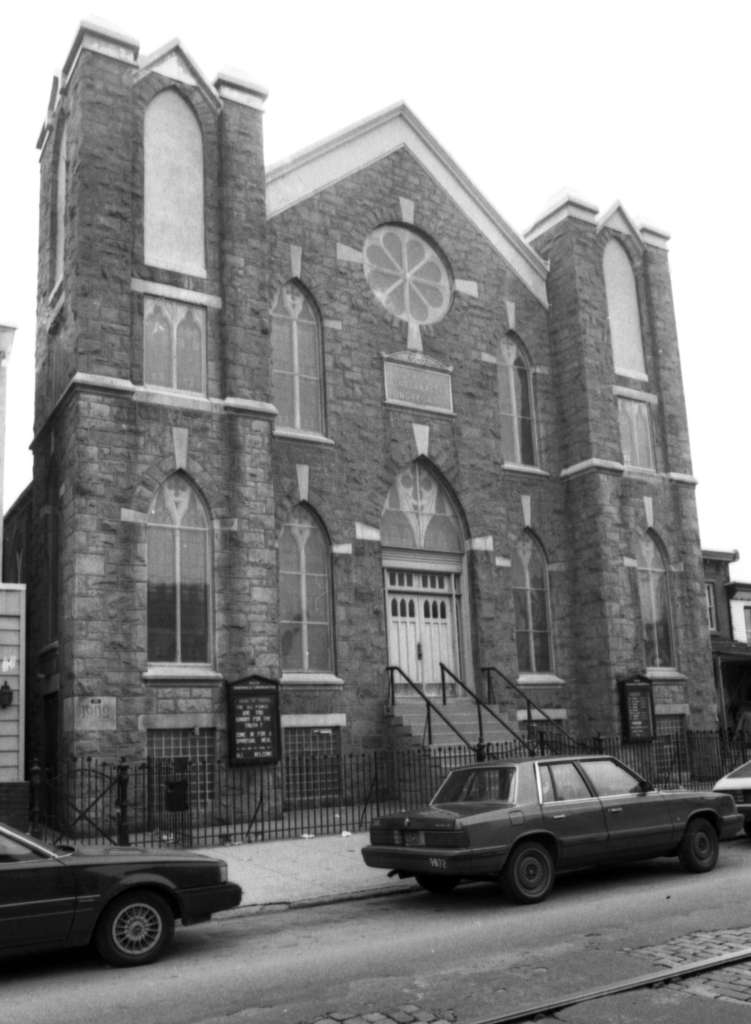
    Faith Tabernacle Church at Fifth and Erie Streets in 1991. Children from the congregation died in a measles outbreak that year.File Photograph

    Some church members refused to call a doctor or visit a hospital even as their children lay dying. Other parents associated with the church, however, did take their children to the hospital as their conditions deteriorated.

    Sarah Long, then an infectious-disease physician at St. Christopher’s, remembers the first child with measles she treated in 1991 — a 2-year-old with a high fever and rapid breathing, characteristic of a case of pneumonia.

    But with a classic case of pneumonia, “the child is hyperalert and anxious,” Long said.

    “These children — they were not able to sit up. Not able to take fluids. They’re just lying there, incapacitated,” she recalled.

    She was stunned by the consequences of a disease avoidable through immunization since the 1960s. “This was a completely preventable problem,” Long said.

    After a third death, of a Cheltenham girl whose family attended the church, Ross and other health department workers grew concerned that phone calls with the church’s members were not producing accurate information.

    With a judge on call to order medical treatment if necessary, Ross and others knocked on congregants’ doors.

    At the house where he discovered the girl gasping for breath upstairs, Ross met eight other children recovering from measles infections, the virus’ characteristic rash fading from their faces.

    Hundreds of children not affiliated with the church also fell ill. Six of the nine children who died were church members.

    Reached by phone, Faith Tabernacle’s pastor said news reports over the years had “misconstrued the truth” about the church’s experience during the outbreak.

    Declining to give his name, and noting that he was not its leader at the time, he said the church supports personal choices about medical care. “We’re not a cult. We present the word. It’s up to the individual,” he said. “We trust the Lord for our healings.”

    ‘We had to resort to it’

    In March 1991, after another child died, several judges upheld a Common Pleas Court ruling that ordered five Faith Tabernacle parents to vaccinate their children. Their parents cried as they brought their children to court for the shots.

    “We had to resort to it,” Ross said. ”We just had nothing else available to us to protect those kids.”

    Such a ruling is unlikely to happen again in the current political landscape, said Paul Offit, a vaccination expert who heads CHOP’s Vaccine Education Center and worked at the hospital during the 1991 outbreak.

    The 1991 court rulings were much more stringent than typical vaccine requirements for schools or employment, Offit said. Under a vaccine mandate, for example, a person might face a penalty for not being vaccinated — like not being able to work a specific job — but can still decline a vaccine.

    Philadelphia courts compelled Faith Tabernacle parents to vaccinate their children — with no way to opt out.

    By the time courts were compelling parents to vaccinate their children, the city’s large-scale vaccine drives helped ensure that few children still lacked immunity to measles, he said.

    The arrival of spring and summer — measles traditionally spreads in the fall and winter — also helped quell the outbreak. So did a wave of media coverage that raised awareness about the virus and spurred many parents to vaccinate.

    Offit published a book, Bad Faith, in 2015 about religious objections to vaccination, including Faith Tabernacle’s experience.

    In 1991, immunization rates came up as shots were made more widely available.

    Now, stricter vaccine mandates for school entry could help reduce measles transmission — but that is politically unviable, Offit said.

    Pennsylvania has some of that nation’s most permissive exemption laws, requiring only that parents indicate a religious or philosophical objection to vaccinations on a form before sending unvaccinated kids to school.

    An Inquirer analysis found a 15% increase in the use of these exemptions in the last two years, reflecting increasing public mistrust in vaccines.

    In the state’s current outbreak, Health Secretary Robert F. Kennedy Jr. has spent years stoking skepticism of the vaccine, although he recently said the MMR vaccine is effective.

    Downplaying the dangers of the state’s measles outbreak, he has accused Pennsylvania Gov. Josh Shapiro, a Democrat, of politicizing the outbreak and said his administration may have “fabricated” the first reports of measles-related deaths.

    Kennedy later acknowledged that one of the deaths was caused by measles. Yet the Centers for Disease Control and Prevention website currently lists two measles-related death across the nation this year, despite Pennsylvania’s reports of five deaths.

    Now local physicians and health systems have limited options to combat anti-vaccination sentiment to increase immunization rates.

    “We have two tools: quarantine and vaccine mandates,” Offit said, “and there’s been an erosion in both because people like RFK Jr. say you can’t trust medical experts. I am worried we’re going to be seeing this for years.”
  • Eagles are headed to London, where Philly has a culinary foothold: Cheesesteaks, citywides, and Beddia’s pizza

    Eagles are headed to London, where Philly has a culinary foothold: Cheesesteaks, citywides, and Beddia’s pizza

    When thousands of Eagles fans arrive in London this week, they will find more than a football stadium temporarily dressed in green.

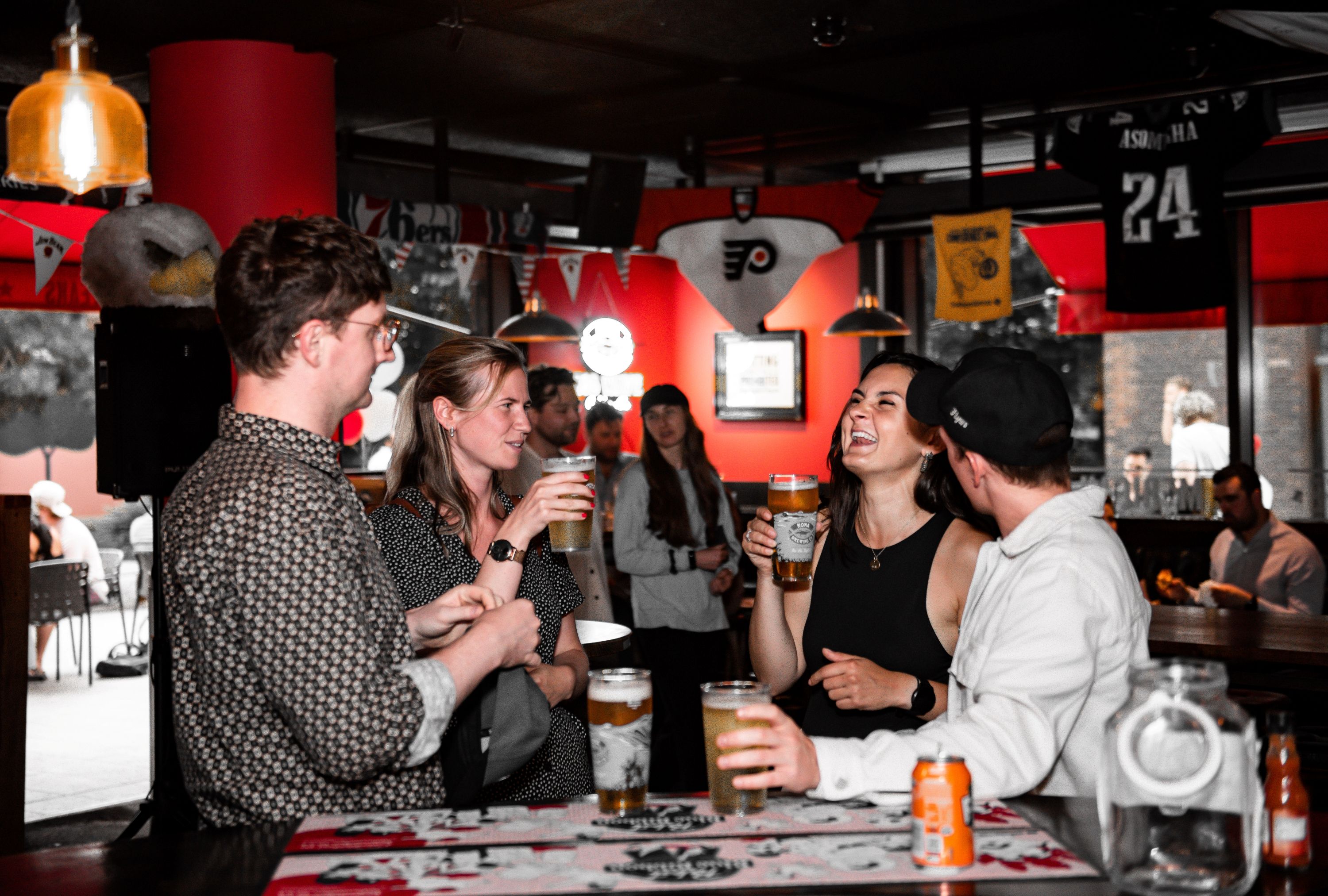
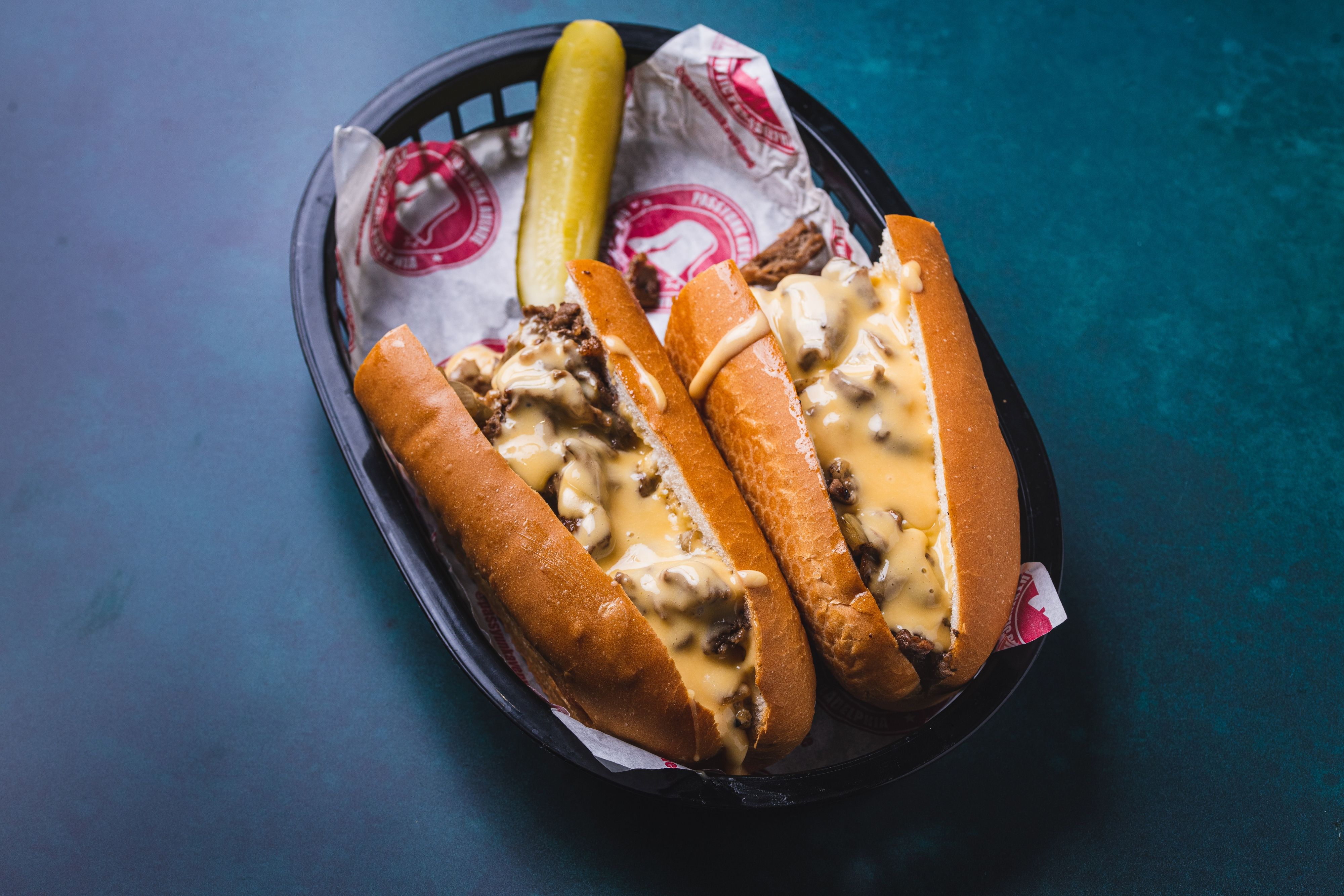
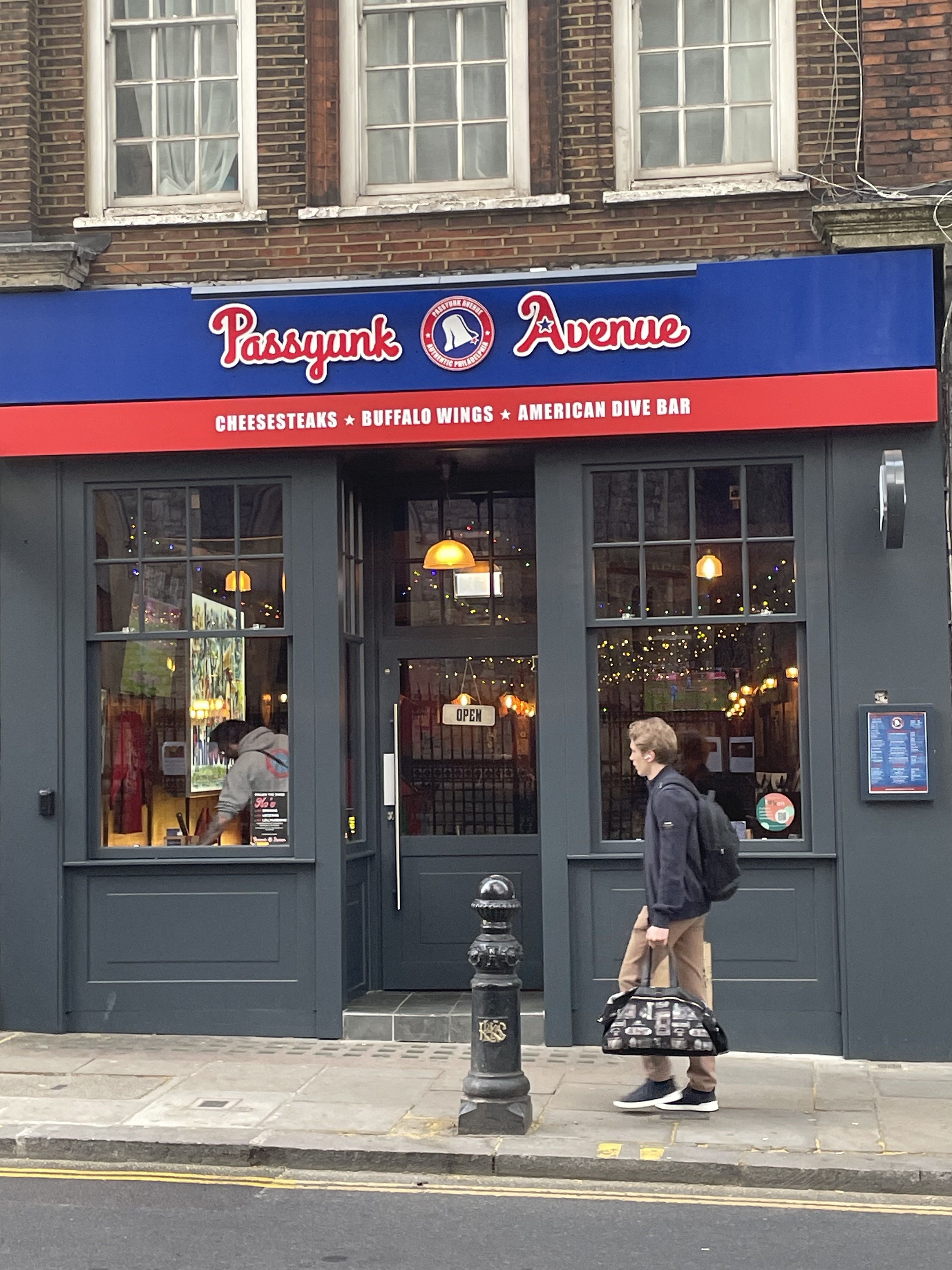
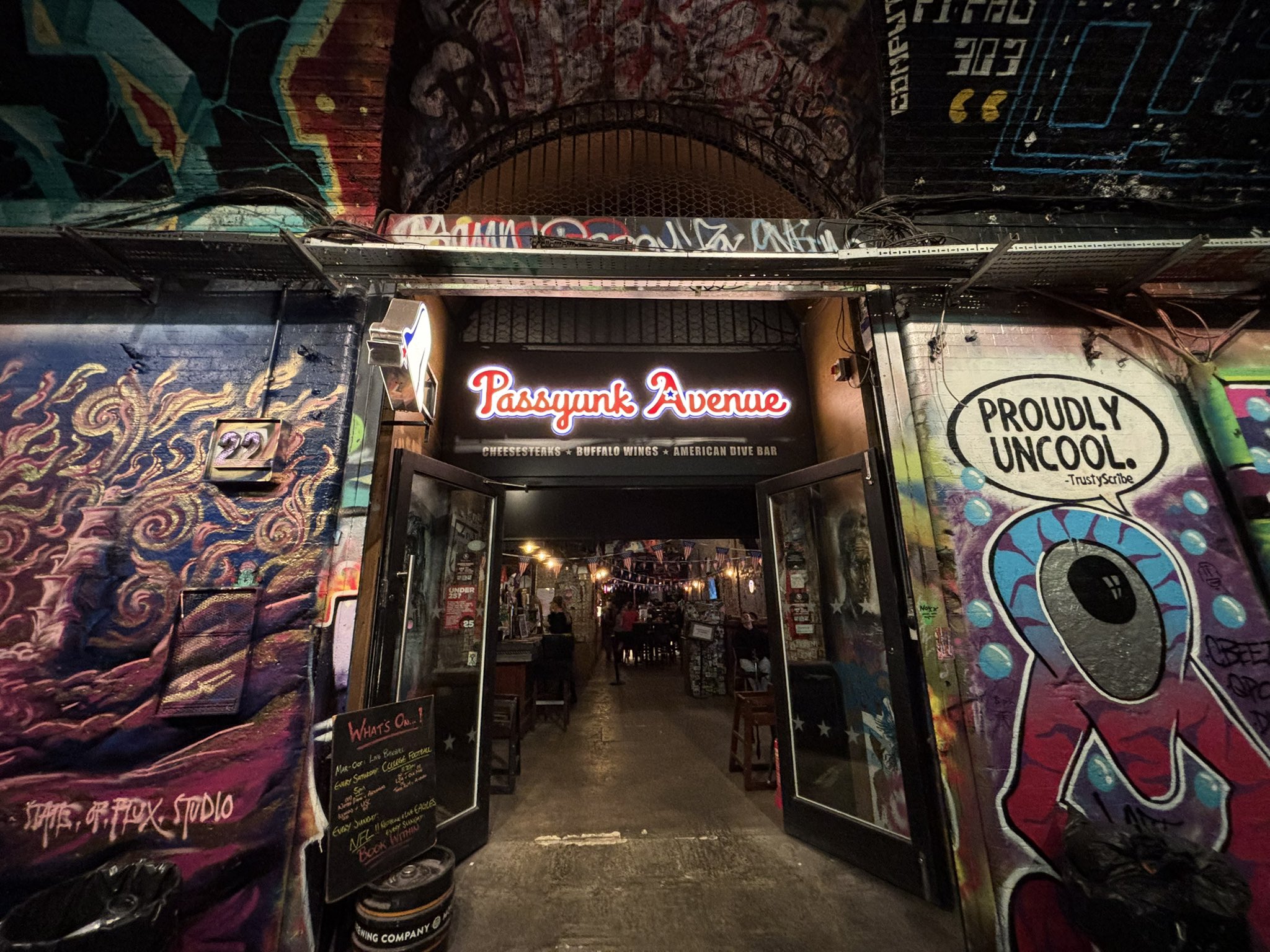
    They will find cheesesteaks made with custom-baked rolls, citywide specials, and a series of Philadelphia-themed dive bars called Passyunk Avenue.

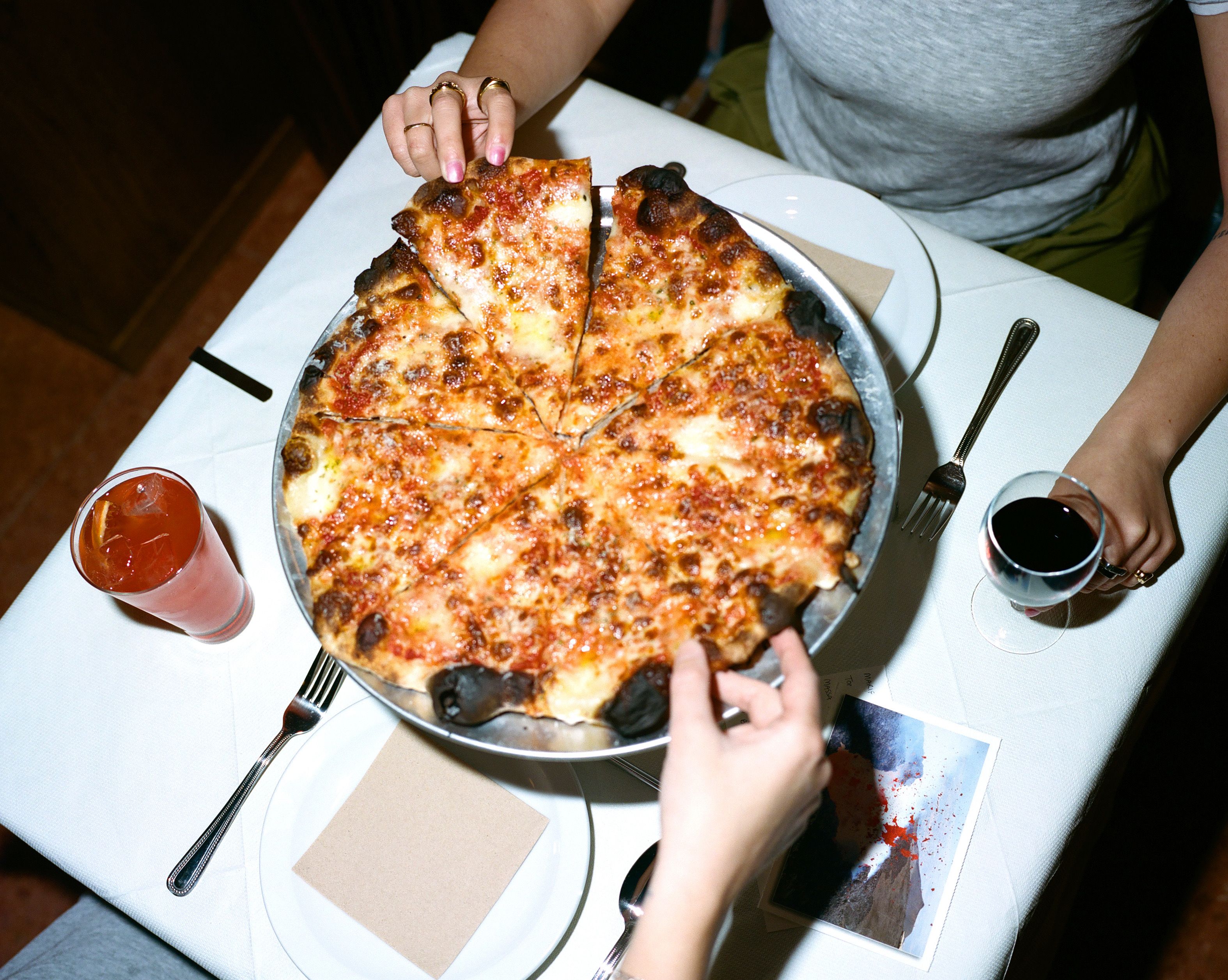
    At the new Bar Etna, they can order pizza created by Joe Beddia, one of Philadelphia’s best-known pizzaioli and a partner in Fishtown’s Michelin-acclaimed Pizzeria Beddia.

    At Bar Etna in London, Joe Beddia is making pizzas that are smaller than those he sells in Fishtown. The tables are smaller, he explains.Joe Hart

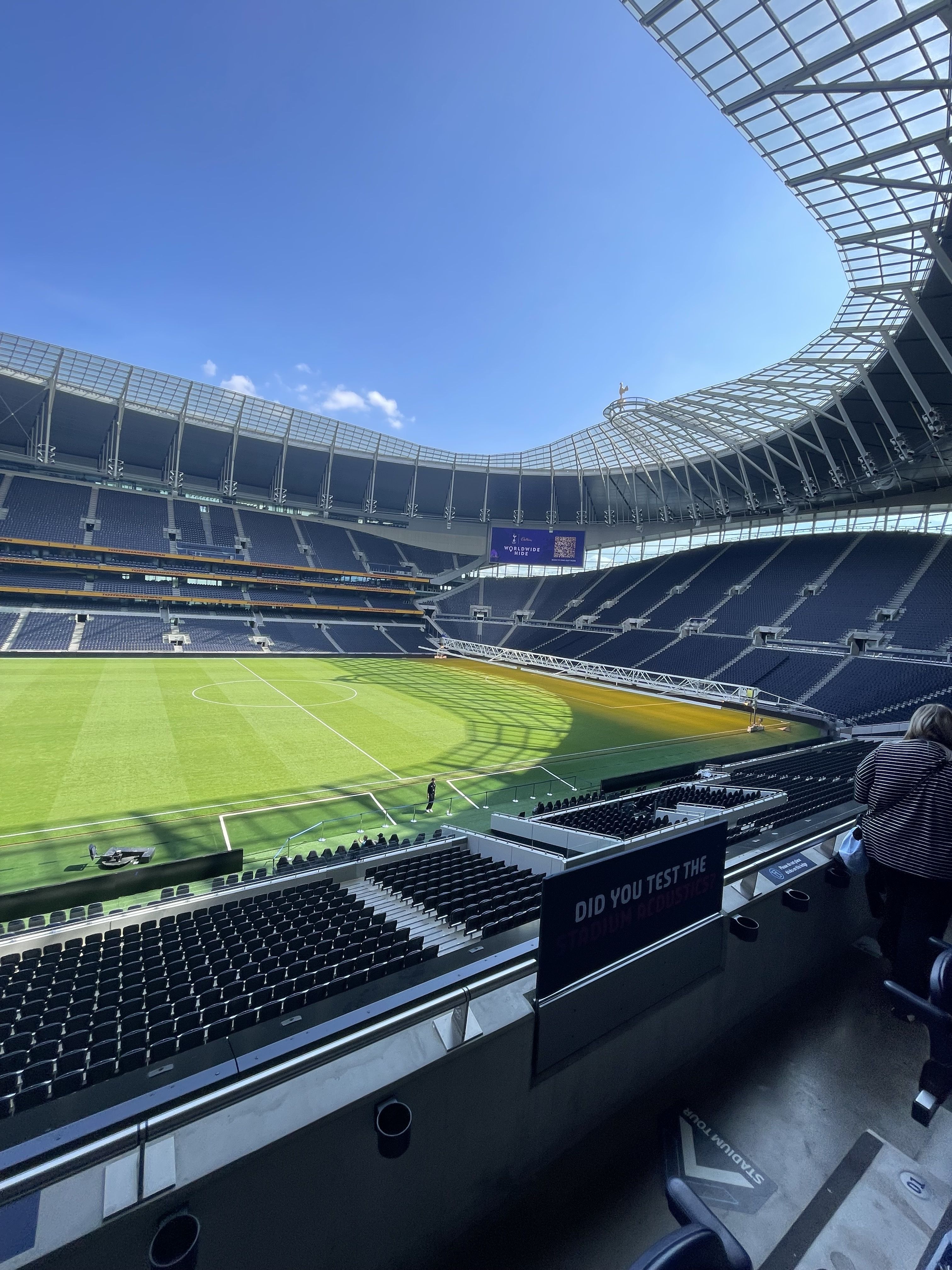
    Sunday’s match, scheduled for 2:30 p.m. at London’s Tottenham Hotspur Stadium (9:30 a.m. in Philadelphia), is officially a home game for the Jacksonville Jaguars. Around it, London will host nearly a week of Philadelphia-themed activity extending well beyond the NFL’s events. It shows a culinary connection between Philadelphia and London that has grown since the Birds last played there in 2018.

    How Philly will this be? Even Wawa is involved.

    Passyunk Avenue plans to party

    The five-bar outfit Passyunk Avenue — founded in 2018 by New Jersey native JP Teti — has organized a three-day Wooderloo Terminal Market in the graffiti-lined tunnels beneath Waterloo Station. Modeled after Reading Terminal Market, the event will feature food vendors, bars, vintage merchandise, and entertainment from Thursday through Saturday.

    Passyunk Avenue’s Battersea location is near the U.S. Embassy in London.Courtesy of Passyunk Avenue

    Passyunk Avenue also will host an Eagles tour of London on a red double-decker bus Saturday, handing out its cheesesteaks near Parliament Square, Trafalgar Square, the Tower of London, and Tower Bridge. The bar will hold a game-day street party Sunday outside its original location in Fitzrovia and a procession through central London on Monday.

    By phone this week, Teti described it as a victory parade, although he said it would proceed regardless of the score.

    Teti, who grew up in Lawrenceville, Mercer County, moved to London in 2008 to oversee Middle Eastern and African operations for Xerox. He had spent a year in England while studying at Cambridge University, an experience that made him determined to build a life outside the United States.

    The restaurant idea began with what he could not find in London.

    A cheesesteak on a custom-baked roll at Passyunk Avenue.Courtesy of Passyunk Avenue

    “Coming from a South Philly Italian American ethnic inheritance, I think about food constantly,” Teti said. “I wondered why, in a city as diverse as London, you couldn’t get hoagies, cheesesteaks, chicken Parms, and so on.”

    He also missed Philadelphia’s neighborhood bars. English pubs fill a similar social role, he said, but lack the particular combination of informality, intimacy, and eccentricity that he associated with such places as McCusker’s Tavern, Oscar’s Tavern, and Ray’s Happy Birthday Bar.

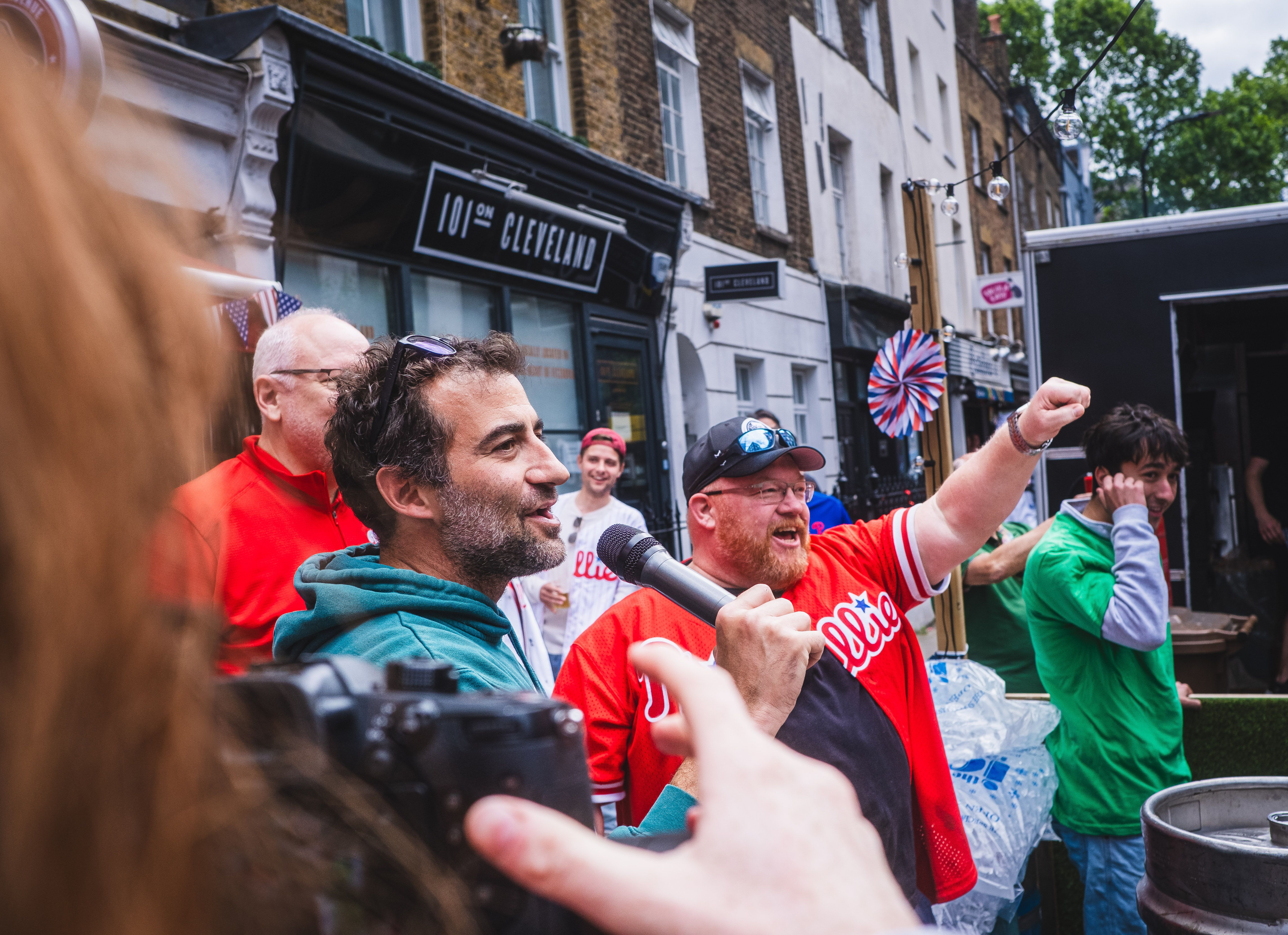
    JP Teti takes the mic outside Passyunk Avenue’s Fitzrovia location during a visit from the Phillies in 2024.Courtesy of Passyunk Avenue

    Teti believed that Europeans were interested in American culture but were usually offered “very general, broad-brush attempts to describe what other people thought Americana was, based on movies and television, rather than what our experience was.”

    Passyunk Avenue, he said, would instead present one specific region, including its food, sports, language, immigrant traditions, and citywide specials.

    The first Passyunk Avenue opened in the Fitzrovia neighborhood in March 2018. Teti now operates bars in Fitzrovia, Waterloo, Battersea, and Kensington, along with Passyunk Play, a game-focused offshoot with batting cages, shuffleboard, pool tables, and a self-serve beer wall. This week, he signed a lease to bring Passyunk Avenue to Amsterdam, where he now lives.

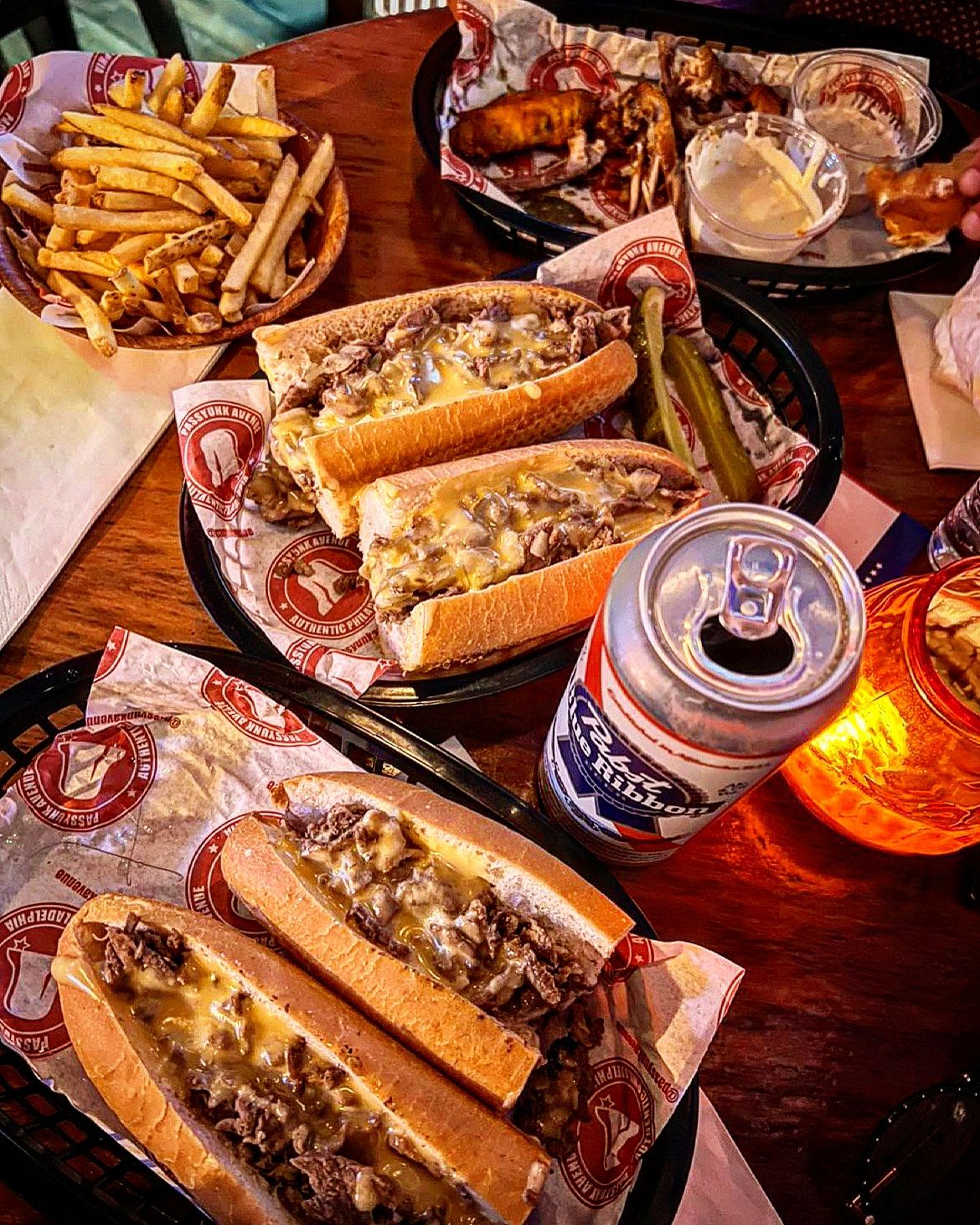
    PBR is the canned beer of choice at the Passyunk Avenue locations in London.Courtesy of Passyunk Avenue

    Although American expatriates became loyal customers, Teti said they were never his primary audience. He built the business for the “Americana-curious Europeans” who might never have visited Philadelphia but were attracted to a detailed, idiosyncratic version of it.

    The Eagles’ 2018 visit, seven months after the first bar opened, heightened the appeal.

    The team asked to hold an event at Passyunk Avenue but could not publicize it because of the NFL’s relationship with another pub operator, he said. Shortly before the event, an NFL security representative arrived and told Teti that the Lombardi Trophy was coming.

    Teti suggested putting it on the backbar. The representative told him that the trophy could not be photographed near alcohol, so Teti cleared the bottles away. “About 25 minutes later, [Eagles tight end] Brent Celek carried the Lombardi Trophy into our first site, put it on the backbar, and became an impromptu bartender,” Teti said. “He served beers for the next 45 minutes.”

    The Kensington location of Passyunk Avenue spells out the dive bar’s name in a familiar font.Michael Klein / Staff

    The restaurant’s growth required Teti to reproduce Philadelphia foods without access to Philadelphia’s supply chain. A London bakery makes the rolls from Passyunk Avenue’s recipe. Its beef once had to be custom-cut by a butcher in the Netherlands because thinly shaved rib eye was not commonly available in Britain. The bars make their own cheese sauce, Buffalo sauce, ranch, and blue cheese dressing.

    Not every Philadelphia staple translated immediately. Roast pork sandwiches, cannoli, and ricotta cheesecake have moved on and off the menu after selling more slowly than cheesesteaks, chicken Parmesan sandwiches, and wings.

    “We don’t give up entirely,” Teti said. “People don’t know what they’re missing.”

    Philly’s Pizzeria Beddia comes to London

    London’s Philadelphia food presence expanded again this spring when Bar Etna opened at 47 Newington Green, a half-hour from Tottenham Stadium. Beddia is a partner with Mike Stampler, a former Philadelphia designer, and British chef and restaurateur Ed McIlroy, whose Four Legs group operates the Plimsoll and Tollington’s fish bar.

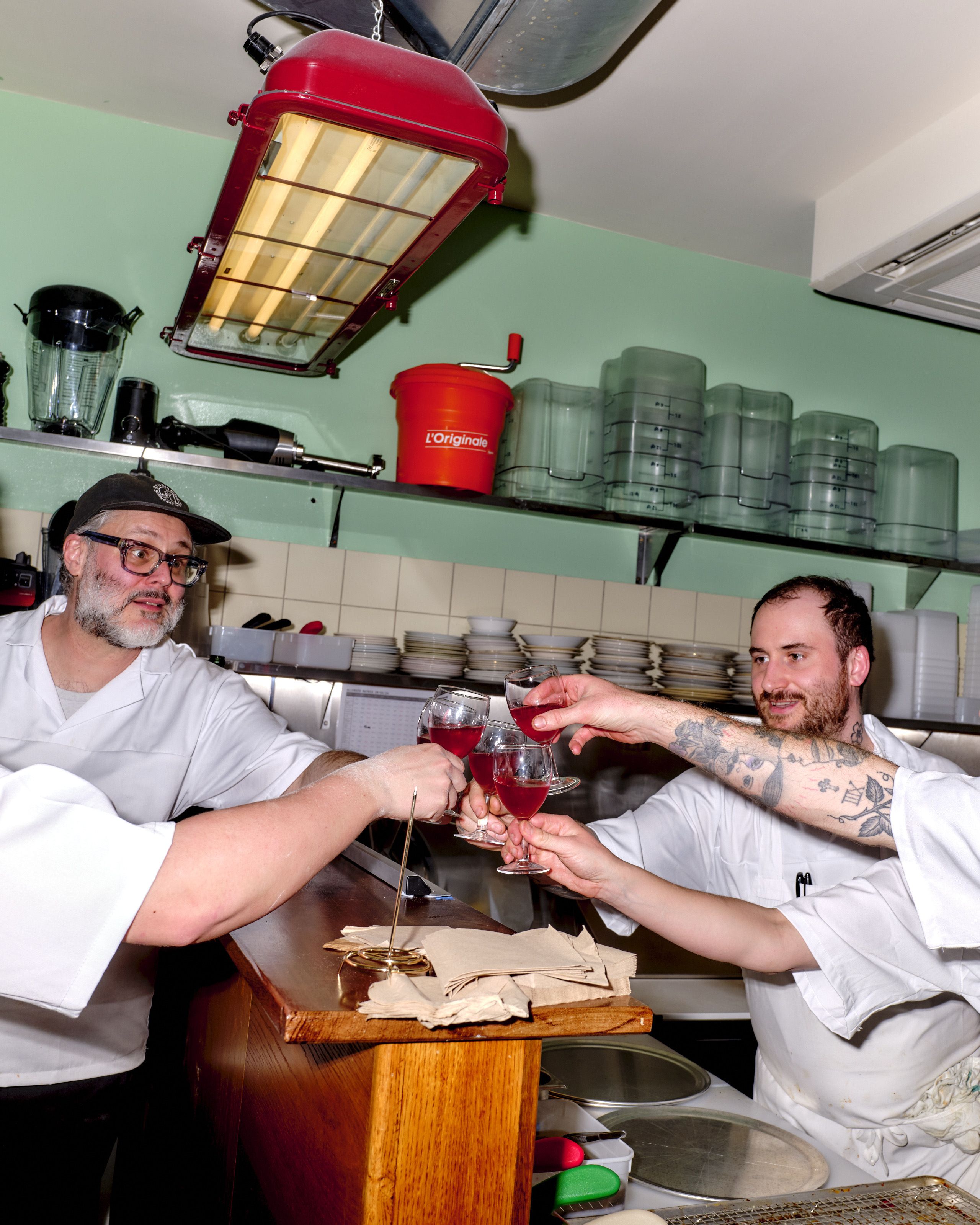
    Joe Beddia (left) with Bar Etna chef Cammy Cochrane in the kitchen.Joe Hart

    Stampler, formerly of the Philadelphia denim company Norman Porter, moved to London about five years ago. He and McIlroy were considering restaurant spaces when they found one in a neighborhood that Beddia said had relatively little pizza.

    “They asked, ‘Do you want to do this with us?’” Beddia said. “I said, ‘Absolutely.’ It was kind of a no-brainer for me.”

    Bar Etna’s pizzas resemble those at Pizzeria Beddia, though they are 14 inches instead of 16 to fit the smaller restaurant and its tables. (Metric apparently is not a thing in the pizza world.) The most popular pizzas have been a plain pie and a cream-based pizza with garlic, Calabrian chilies, and greens. Beddia also specifically developed a spicy curry-flavored pizza inspired by saag paneer.

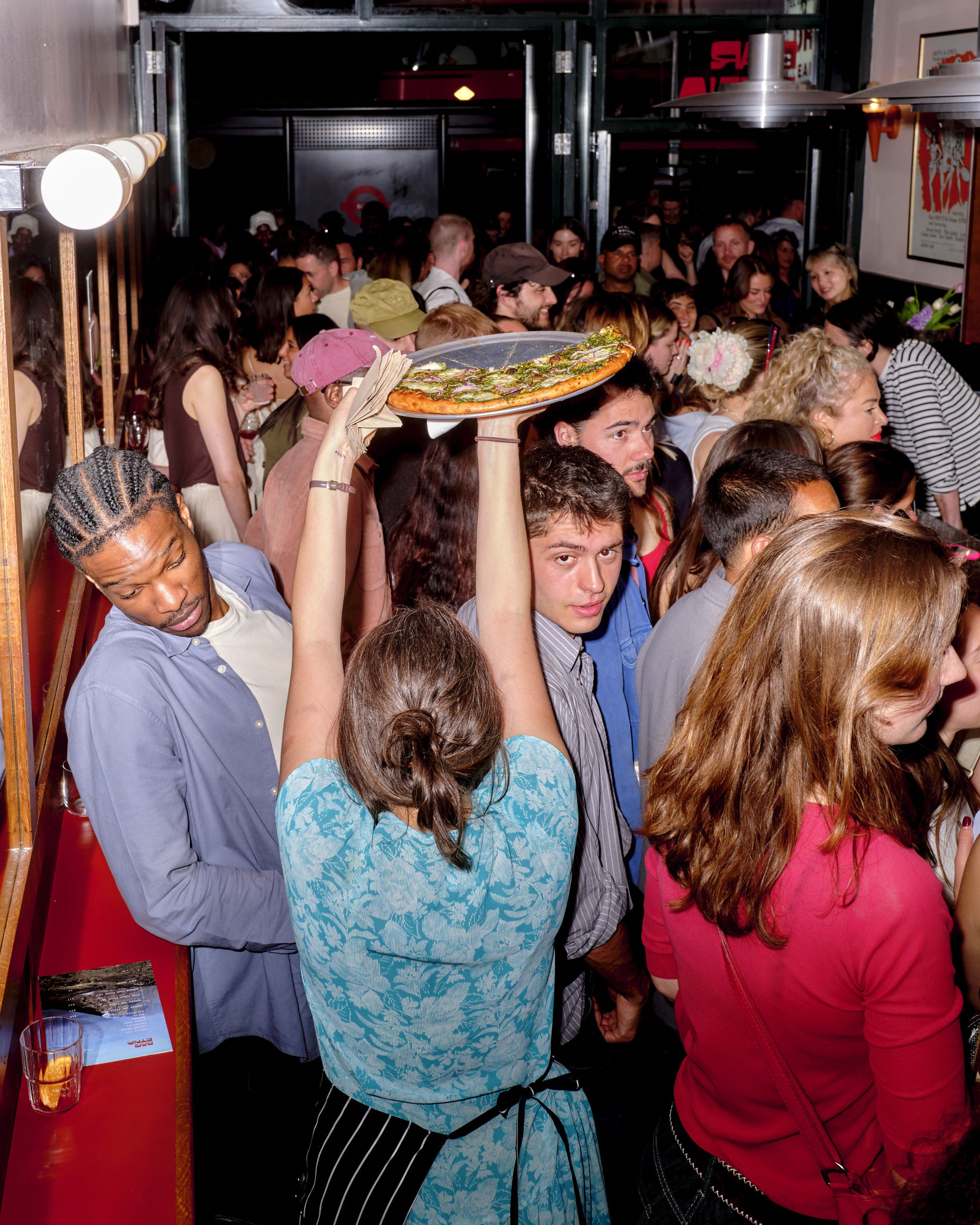
    A pizza is hoisted through the crowd at Bar Etna, which opened in May 2026 in London.Joe Hart

    The dough proved more difficult to transplant. Importing the Utah-made Central Milling flour used in Philadelphia would have been too expensive, so Bar Etna uses British flours from Shipton Mill and Wildfarmed.

    Beddia had less than two weeks between the completion of the kitchen and the restaurant’s opening. He said it took about 12 days of testing to produce dough that met his standards. “It was a nightmare,” Beddia said. “We were down to the last couple of days before we had it.”

    Beddia spent two months in London preparing Bar Etna and plans to return during Eagles week.

    His larger interest is in seeing how the restaurant has settled into a city that he believes is undergoing a pizza revival. London historically offered either mass-market delivery pizza or Neapolitan pies, he said, but has acquired an appetite for the crisper, more structurally firm American style.

    Beddia sees a parallel with Philadelphia, which had deep Italian bakery, pastry, and sandwich traditions but, aside from establishments such as Tacconelli’s, lacked a pizza identity as distinctive as those of New York or New Haven until relatively recently.

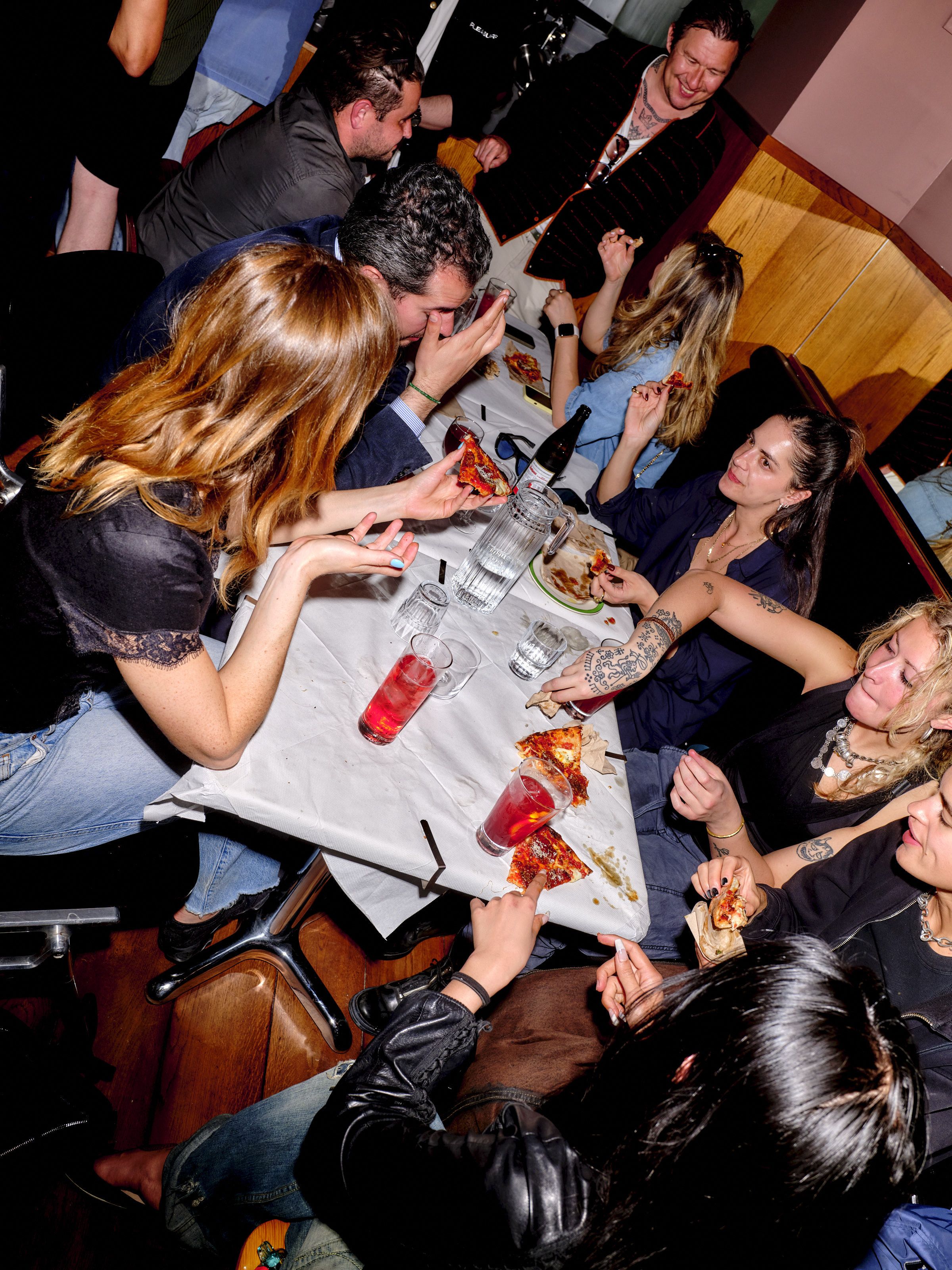
    The pizzas are small at Bar Etna because the tables are small, says Joe Beddia, a partner.Joe Hart

    For Passyunk Avenue’s Teti, the goal is not to suggest that Philadelphia, or the United States, can be reduced to cheesesteaks and football. It is to offer Londoners a specific place and culture rather than another generic American theme. Plus, he said he is more about turning Passyunk Avenue into a global brand.

    “We hope Passyunk Avenue’s presentation of this nostalgic form of America — not necessarily what America is, but perhaps the best of what America has been and could be again — can be a bit of a light in the darkness,” he said.

    Tottenham Hotspur Stadium, configured for soccer, in April 2025.Michael Klein / Staff
  • Philadelphia protesters demanded PPA stop leasing parking spaces to ICE

    Philadelphia protesters demanded PPA stop leasing parking spaces to ICE

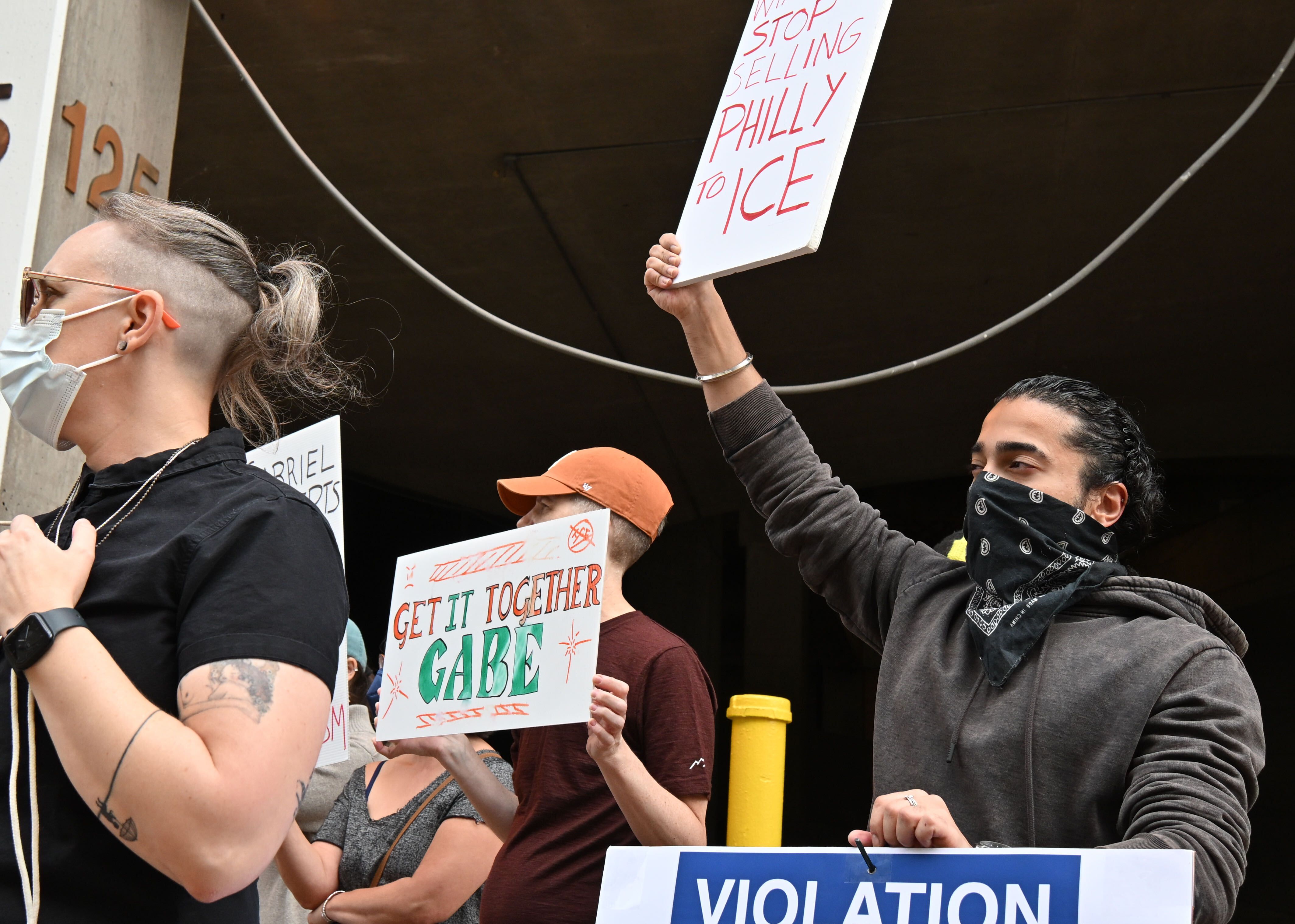
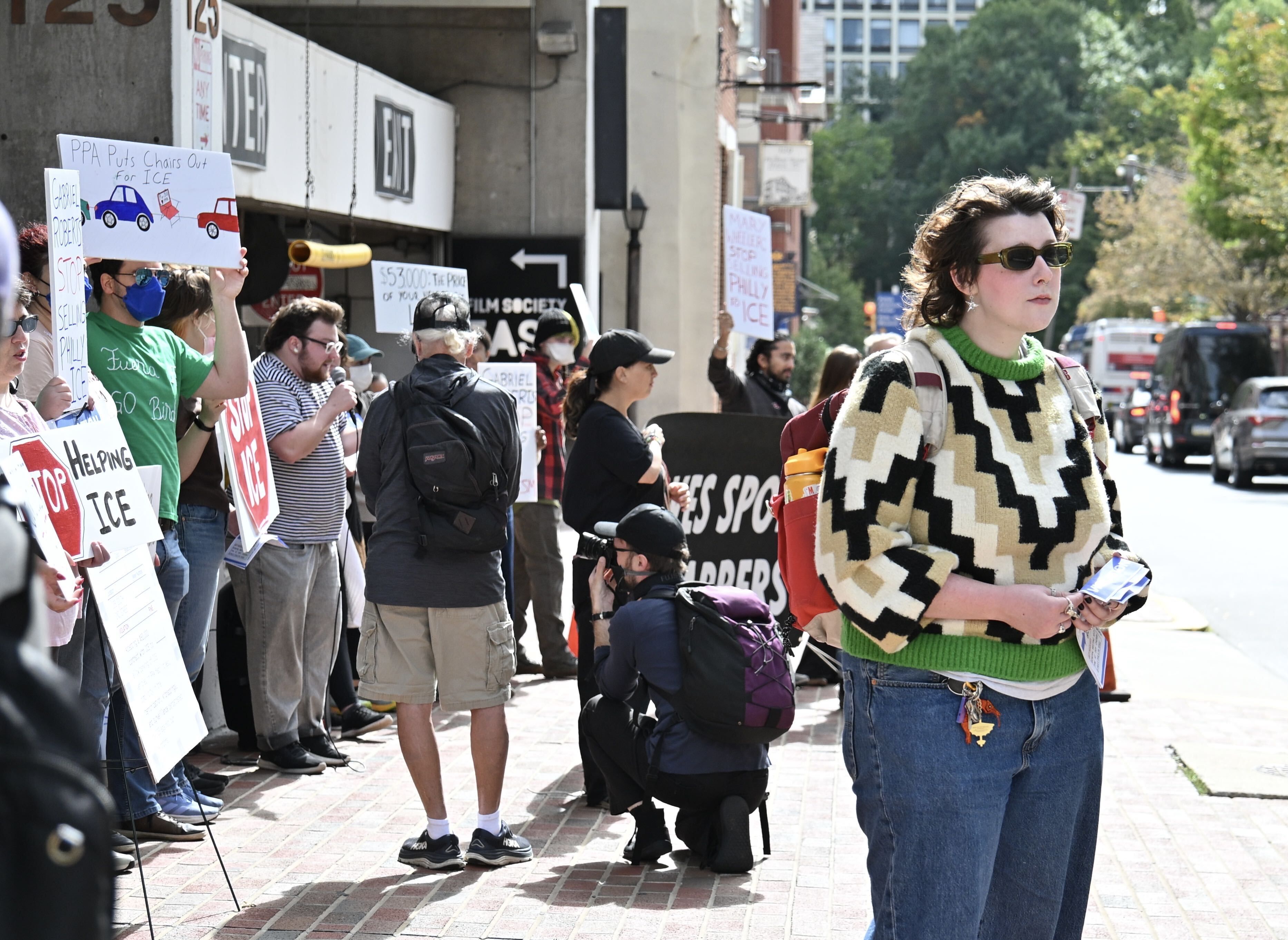
    About two dozen No ICE Philly activists gathered Saturday outside a parking garage in Old City, demanding the Philadelphia Parking Authority end an arrangement with Immigration and Customs Enforcement.

    At issue are 16 parking passes at the federally owned garage on Second Street, which is managed by the PPA. The group sang protest songs, held signs, and passed out informational flyers that resembled oversized PPA parking tickets.

    “Who doesn’t know what these things look like, you know?” said one activist handing out flyers.

    Group organizer Jay Bergen said the rally is meant to pressure the PPA — and to let people know that ICE is using the parking garage.

    “It’s scary that you could be parking downtown, and unbeknownst to you, parking next to an ICE agent,” Bergen said.

    Bergen, a 34-year old pastor at the Germantown Mennonite Church, pointed to public records showing a $53,520 contract that allows “for parking of government vehicles for ICE Homeland Security investigations” at the garage.

    That contract was set to expire at the end of September, but another one, beginning in October and running through at least next September, gives Department of Homeland Security “16 leased parking spaces,” records show. ICE is part of DHS.

    PPA spokesperson Martin O’Rourke declined to comment on the contracts.

    An activist holds “violations” resembling PPA parking tickets to pass out to people, while a crowd gathers to demand the PPA stop leasing parking spaces to ICE.Brett Sholtis

    Bergen said the group opposes ICE for “kidnappings” of immigrants and others, including people who have lived legally in the community for decades. One recent example is a 30-year-old nurse from Delaware County, who was arrested while taking her son to Disneyland.

    Bergen said most people detained by ICE did nothing wrong. Some had minor lapses in paperwork or had been convicted of summary or misdemeanor crimes.

    “Their goal is terror. It’s not public safety in any meaningful way,” Bergen said.

    The local ICE field office did not respond to a request for comment Saturday.

    At the rally, protester Akarsh Balaji said that the amount of money PPA makes on the contracts is “less than what they spend every year on salt to de-ice the streets.”

    Balaji said he’s seen ICE harass his Puerto Rican neighbors in West Kensington. Puerto Ricans are Americans — so is Balaji, who is of Indian ethnicity — but that doesn’t seem to matter, he said.

    “Nobody should have to live in fear, or be told that they’re harmful to society,” Balaji said.

    Balaji said he got involved with the group in February after feeling a need to do something, “and be part of a movement that is so much bigger than I was.”

    No ICE Philly has been active since ICE ramped up activities under the Trump administration last year. In January, protesters blocked vehicle access to a Center City garage used by ICE. In March, nearly a dozen protesters were arrested while blocking the garage.

    “We want to make it as difficult as possible for ICE to do its job,” Bergen said.

    In Philly, ICE has faced obstacles from residents and elected officials. In April, the city adopted some of the nation’s most aggressive polices aimed at restricting ICE. The legislation took effect in July but the federal Department of Justice sued the city over some of its directives.

    Bergen said ICE has changed its tactics since early this year, when its Operation Metro Surge in Minnesota — and the killings, captured on video, of U.S. citizens Renee Nicole Good and Alex Pretti — led to overwhelming public opposition to the agency.

    “But the fear has not gone down. I heard this week about someone whose mother is afraid to go to doctor’s appointments, because she’s afraid ICE might grab her,” Bergen said.

  • Mayor Parker — and her mixed record — reaches 1,000 days in office | Shackamaxon

    Mayor Parker — and her mixed record — reaches 1,000 days in office | Shackamaxon

    This week’s column covers the ongoing Washington West Historical District saga, a 1,000 mayoral days, a City Council member who should retire, and an NFL coach who is a secret urban planning enthusiast.

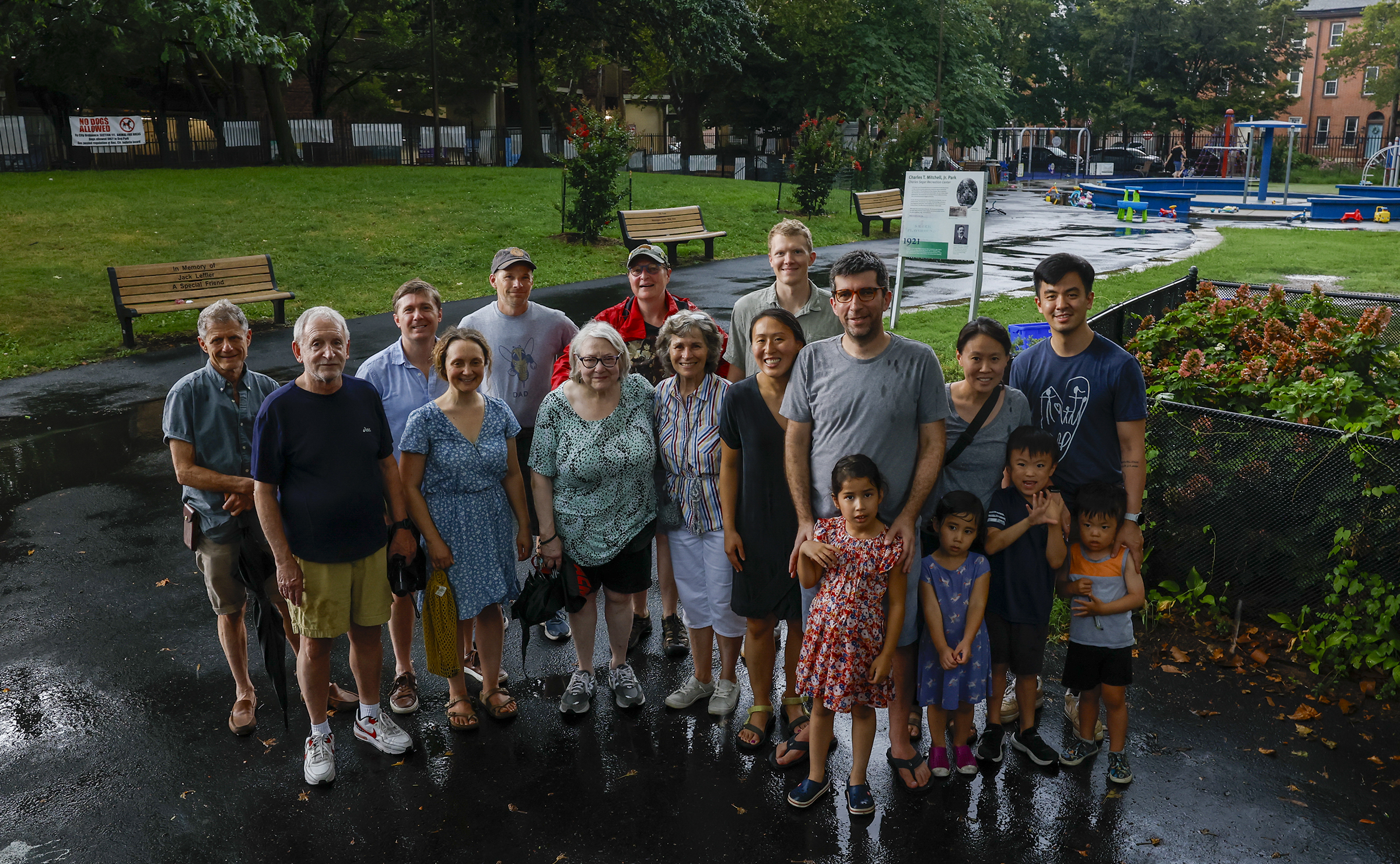
    Members of the Philadelphians for Rational Preservation gather at Seger Park in the Washington Square West neighborhood in July 2025. The group opposes the Washington Square West Historic District designation.Yong Kim / Staff Photographer

    People vs. preservation

    In a City Hall courtroom, lawyers for the city and the preservation alliance sought to defend the designation of the Washington West Historic District against a coalition of homeowners who have claimed the decision has cost them time and money. The outcome could have significant ramifications for such districts across Philadelphia.

    Dan Auerbach, a lawyer for the homeowners, says the district was created without sufficient evidence, and that a historic commissioner’s participation in drafting the document represents a conflict of interest. Attorneys Leonard Reuter and Paul Toner, who represented the defendants, took a different approach.

    When Common Pleas Court Judge Christopher Hall repeatedly asked for evidence, beyond the nomination itself, for the district’s historic significance, Toner replied, “I don’t need to.” The commission’s decision to approve is apparently all that’s required. They also argued that historic designation does not impose significant costs on homeowners.

    Hall seemed to take a skeptical view of these claims. As Auerbach pointed out, most pages of that document simply inventory the existing properties. Often, newly designated homes have no specific justification at all, or just a few words.

    Personally, I also find the dismissal of the real costs imposed on homeowners to be unconvincing. According to evidence supplied by Philadelphians for Rational Preservation, the group that formed in opposition to the district, homeowners who have been added to the district are already seeing adverse impacts. Door and window replacements now require permits, for example, and homeowners must spend considerably more to acquire historically accurate versions. This costs real time and real money.

    If Hall sticks with his initial ruling, which overturned the district designation, it could have serious consequences for the city’s preservation law.

    It may be that this district is simply too large and too broad. The period of significance covers nearly the entire history of Philadelphia, and many of the newly designated buildings are frankly unremarkable. While the city and the preservation alliance may feel the urge to appeal the matter to the Commonwealth Court, my suggestion is that they don’t.

    While I am skeptical of this particular nomination, I do think historic districts have a role to play in our city. Many of them are popular with residents, or have existed for so long that most homeowners were aware of the restrictions before purchasing.

    In the case of Washington West, however, the commission may simply have been too ambitious. The geographic range is just too large, the period of significance too extensive, and the residents themselves too strongly opposed.

    Mayor Cherelle L. Parker at a news conference in September.Jessica Griffin / Staff Photographer

    Mayoral milestone

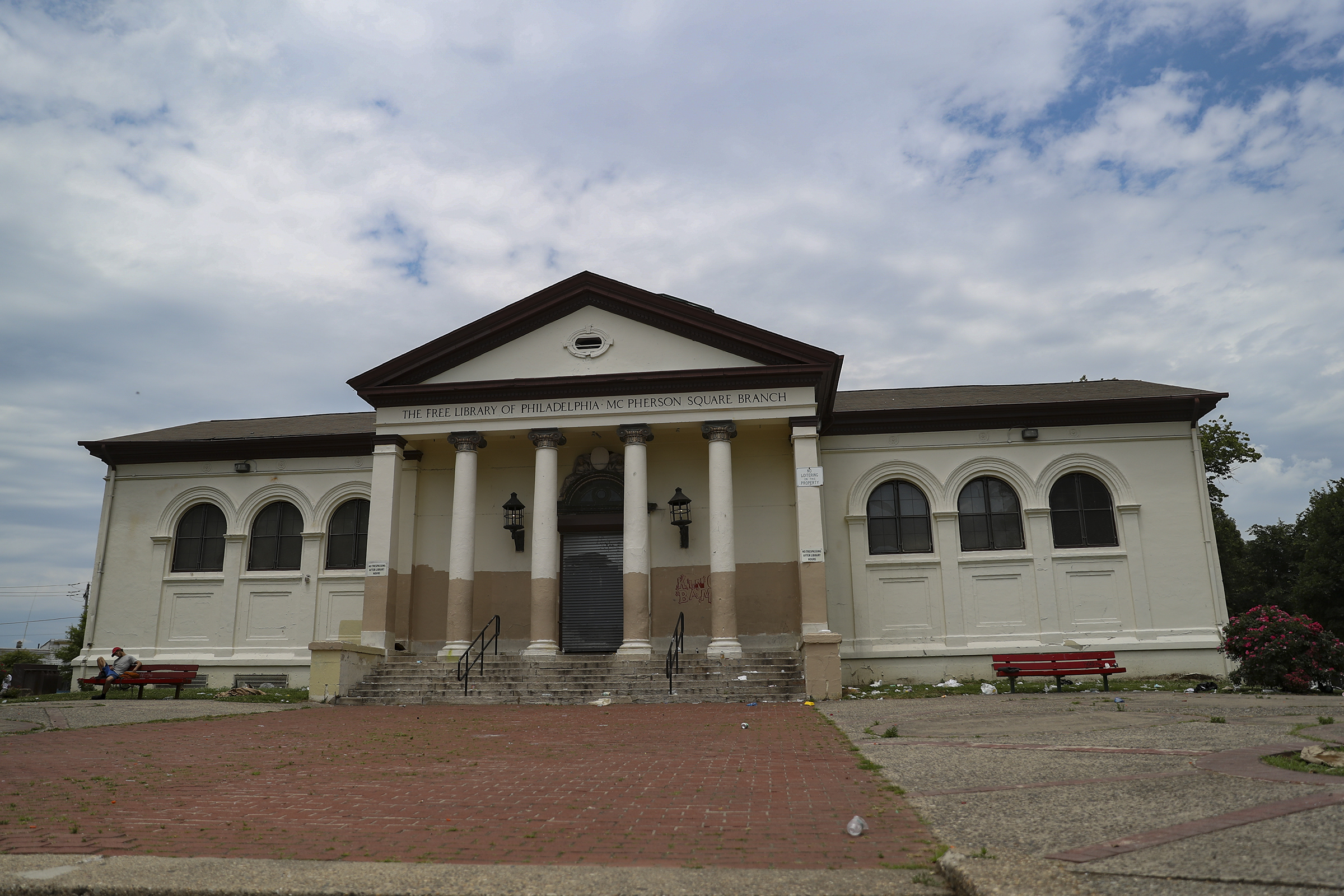
    Mayor Cherelle L. Parker celebrated her 1,000th day in office earlier this week at McPherson Square Library in Kensington, which is set to receive a $21.7 million renovation. Parker has made investing in Kensington a priority in her administration, although some of her priorities have been contested.

    She’s added police patrols to the neighborhood, sought to dismantle the drug market, and increased cleaning and greening efforts. She’s also come under fire from harm reduction advocates for eliminating funding for the nonprofit Prevention Point and city efforts to rein in a network of services built to alleviate the struggles of addiction, which some residents have blamed for the drug market’s continuing presence in their community.

    In many ways, Kensington is a microcosm of Parker’s tenure.

    Her administration has made genuine progress. Violent crime is at historic lows, with decreases in the city’s most dangerous neighborhoods driving the decline. Surveys suggest residents believe the city has gotten cleaner under her leadership. Yet discontent, some legitimate and some not, continues. Parker’s approval rating sits at 44%, a number that is likely high enough for reelection next year, but isn’t strong enough to give her the political capital she needs to take on and win fights with City Council.

    The biggest factors in whether residents approve or disapprove of the mayor seem to be their age and race. Among Philadelphians of color and those older than 45, Parker is popular. For those under 45 and white voters, she’s not.

    It is easy to say this divide is based on style. As Parker herself has said, she’s unapologetic about who she is and where she came from. To residents who may be fans of New York’s Zohran Mamdani, Parker may seem old-fashioned and unexciting. Of course, Mamdani also has a municipal budget of $126 billion at his disposal, while Parker makes do with just $7 billion.

    But a lot of it has to do with substance. Small-business owners have lost a crucial tax exemption; her vaunted ability to work across the aisle has not resulted in sustainable transit funding or enabled the school district to avoid closing 17 schools; and Parker has shied away from the ambitious civic reformer causes embraced by predecessors like Michael Nutter.

    If the mayor intends to reach 2,000 days in office without becoming yet another tired and unpopular chief executive, she’ll have to step up her game.

    Councilmember Curtis Jones Jr. in chambers as City Council meets in December.Tom Gralish / Staff Photographer

    Jonesing to stay

    Fourth District Councilmember Curtis Jones Jr. has had a long and often laudatory career in public service. But it is now time for it to end.

    My Inquirer colleagues have reported that even some of Jones’ closest friends and allies are urging him to consider retiring for real, rather than simply exploiting the city’s notorious Deferred Retirement Option Plan (DROP) program. Jones has only himself and his own statements to blame for his newly precarious position.

    It isn’t just that Jones and his wife are taking hundreds of thousands worth of taxpayer money while avoiding retirement; he also asked to delay a critical infrastructure project for his own political benefit.

    Jones cited his ongoing health issues as justification to The Inquirer, saying he needed the money to pay for treatment. I certainly sympathize with anyone struggling to maintain their health. However, Jones represents a city where the median household income is just over $60,000. At 69 years old, he is also eligible for Medicare.

    Retirement would also give Jones a chance to relax and focus on staying healthy. For his sake and ours, he should listen to his friends.

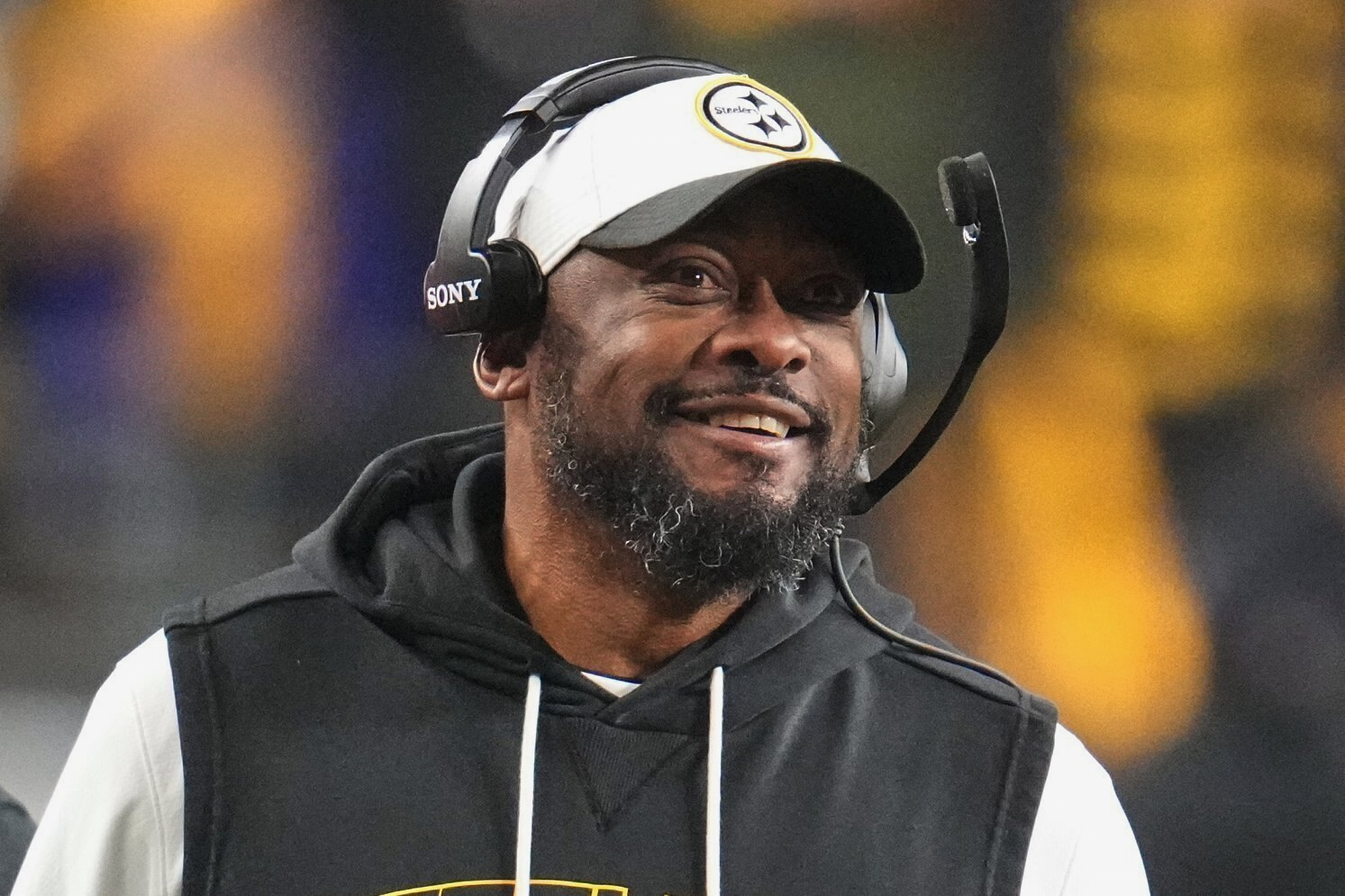
    Pittsburgh Steelers head coach Mike Tomlin stands on the sidelines during the second half of an NFL football game against the Baltimore Ravens in Pittsburgh in January.Gene J. Puskar

    Tomlintown

    When you write frequently about transit and housing, you tend to hear from the small cadre of people who are extraordinarily enthusiastic about these issues. This week, I found out about a surprising member of their ranks: former Pittsburgh Steelers head coach Mike Tomlin.

    Famous for his uncanny resemblance to actor Omar Epps and being the second Black NFL coach to win a Super Bowl, Tomlin used the game Minecraft to build his own fantasy city — a project that took place over a dozen years. He’s now giving the public a tour of his work.

    Tomlin said he wanted densely populated buildings because of his interest in architecture, and went as far as creating interiors for each of his creations. His work is remarkably cognizant of genuine urban questions like lighting and viewsheds.

    Like many gamers, he said his habit helped him “detach from the realities and the pressures of life.” We all need a way to unplug sometimes, but Tomlin’s impressive urban planning side project may have turned him into an unlikely urbanist hero.

  • Kensington Voice newsroom has laid off staff and ceased publication

    Kensington Voice newsroom has laid off staff and ceased publication

    Kensington Voice — the independent, nonprofit newsroom and community hub covering the lower Northeast and North Philadelphia — has ceased publication.

    “Kensington Voice has run out of money needed to pay our staff,” said Jillian Bauer-Reese, cofounder of Kensington Voice in a letter to readers published Monday.

    The outlet’s website, which provided news, guides, community-authored opinions, and neighborhood resources created with community reporting, has been largely dormant for months.

    “We should have shared this update sooner,” Bauer-Reese explained. “We stayed quiet while we worked through what would happen next, and that process has taken much longer than we expected.”

    The hub is working with partners to preserve Kensington Voice’s work and resources, Bauer-Reese said, and to continue any ongoing projects where possible. The small news organization’s archives will stay online. Staff members — the hub employed six to eight journalists at its peak — had been laid off during the weeks and months leading to the announcement.

    Funding for Kensington Voice — which operates with nonprofit status through a fiscal sponsor, Movement Alliance Project — had been a challenge for the last two years, Bauer-Reese wrote on the site.

    “Thank you to everyone who read our work, shared it, trusted us with their time and their stories, corrected us, and helped make Kensington Voice what it has been,” she said.

    News by and for residents

    Serving the neighborhoods of Kensington, Fairhill, Harrowgate, Norris Square, and Port Richmond, Kensington Voice aimed to be something new when it was founded by Bauer-Reese and more than a half-dozen of her journalism students. Its communal reporting on the opioid overdose epidemic, housing, homelessness, poverty, and quality of life considered solutions to issues of inequality that have plagued North Philadelphia communities for decades.

    The seeds of the news outlet took root during the height of the opioid crisis, Bauer-Reese wrote in a 2019 Inquirer op-ed on the paper’s founding.

    As the neighborhood seemed to suffer worse than ever from the grip of drugs and violence, Kensington Voice became an advocate for a community often overlooked — and stigmatized. Like when a 2018 New York Times Magazine story famously referred to the languishing community as the “Walmart of Heroin.”

    “The idea for Kensington Voice came from a hunch I had that in a neighborhood often at the center of our national news media’s drug and addiction journalism, the news and information needs of the community itself weren’t being met,” she had said in 2019.

    A Kensington Voice meet-and-greet in October 2018 at Impact Services. The event brought together community partners to talk about ideas for news coverage of the area.Handout

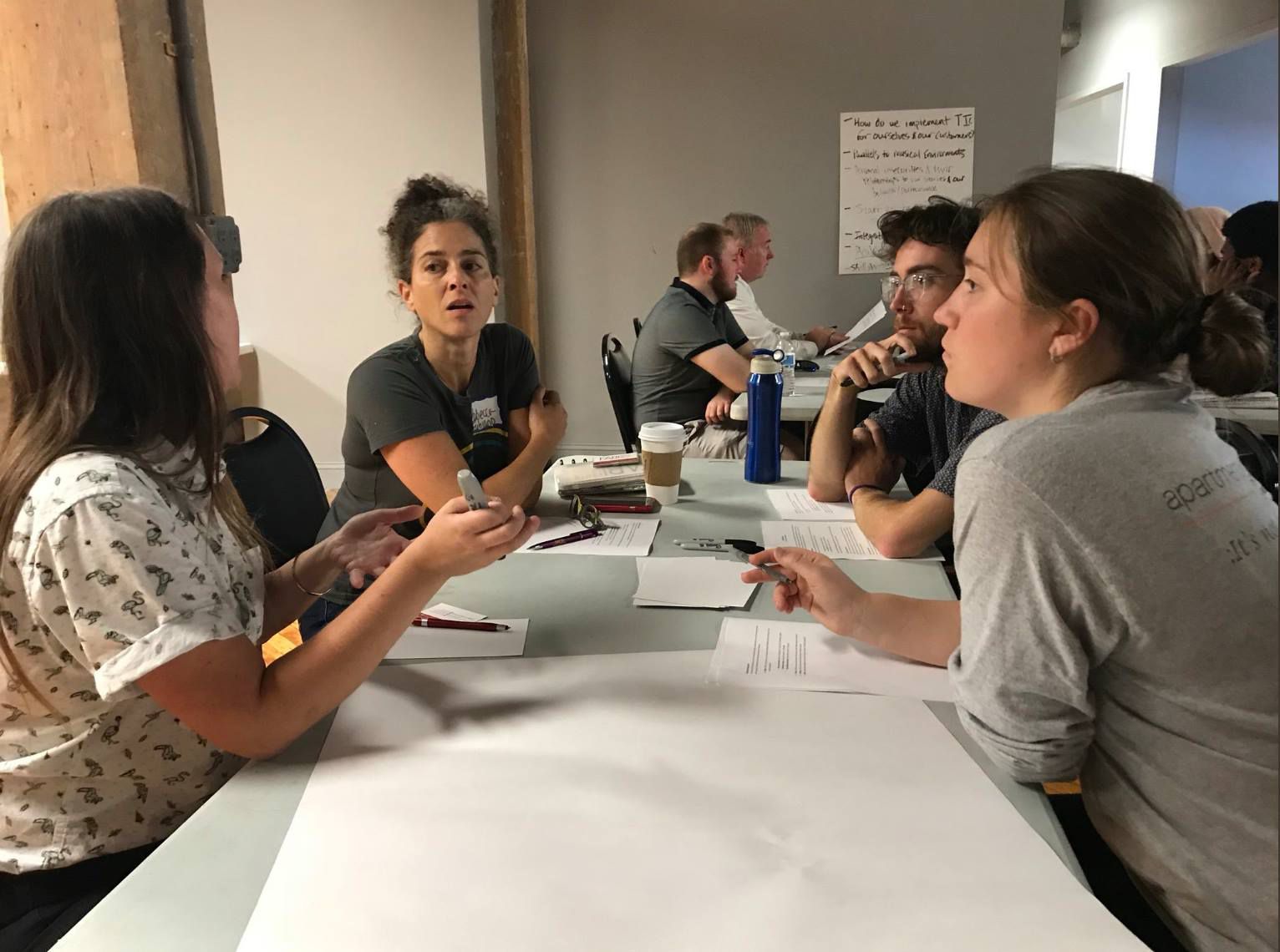
    Within months, Bauer-Reese and her students operated a rotating pop-up community newsroom, run out of libraries, rec centers, and on street corners, and putting community voices foremost. At these pop-up stations, residents submitted story ideas and built storytelling bridges, where the realities and solutions of the community-led reporting. Reporters would meet residents at tables. Some residents published their own stories.

    “The more I work in the community, the more I realize how the work of journalists impacts those who live and work there,” Bauer-Reese said in 2019.

    During the peak of the opioid overdose crisis in Philadelphia in 2022, when more than 1,400 people died in Philadelphia from drugs, the Kensington Voice relied on shoe-leather reporting from the front lines to draw attention to the city’s struggling response.

    The newsroom shared empowering first-person narratives from people in addiction building new lives, young mothers navigating complex support services systems, and the writings and art of gifted local high school students.

    “I look up at that blue sky and wonder how much longer will it be blue until it is filled with smog,” wrote 16-year-old Kensington student Jazielys Serrano in a 2024 poem published through the hub’s Youth Voices Program.

    Amid the challenges of reporting on the largest open-air drug market on the East Coast, Kensington Voice’s coverage received criticism as being too sympathetic to people who use drugs.

    That was the point, Bauer-Reese explained. Flipping the lens so the most vulnerable had a chance to be heard.

    “By being a part of the Kensington community and helping neighbors share their own voices, we hope to shed a new light on this community,” Bauer-Reese said in 2019.

    Fading funding

    Staffed by reporters, photojournalists, and editors at its peak, Kensington Voice began to leak funding as attention slowly began to fade from the neighborhood.

    Before going dormant in the spring, the outlet published reports about medical mobile service bans in Kensington, police brutality, Mayor Cherelle L. Parker’s affordable housing plan, and plans to renovate Kensington’s embattled McPherson Square. The newsroom detailed community members’ heightened anxiety over U.S. Immigration and Customs Enforcement in North Philadelphia. It also published guides helping citizens connect with vital public resources, like information on how to report illegal dumping and abandoned cars, and where to find jobs, housing, and health support.

    The work — and the relationships — will live on, Bauer-Reese wrote.

    “What this community built with Kensington Voice doesn’t end here,” he said.

  • Philly schools are missing thousands of students. District employees are knocking on doors to get them back.

    Philly schools are missing thousands of students. District employees are knocking on doors to get them back.

    The Philadelphia School District is thousands of students under its enrollment projections this school year — and with an important funding deadline looming, Superintendent Tony B. Watlington Sr. is sending officials knocking on doors to drum up business.

    Central office staff and school workers have been asked to fast-track “Enrollment Acceleration,” a new, district-specific program directly engaging families that have left the Philadelphia school system, The Inquirer has learned.

    District staff — up to and including chiefs and assistant superintendents — are fanning out across the city, pounding the pavement to try to connect with reluctant families face-to-face. The door knocking began in the last two weeks.

    The effort is driven by a shrinking student body in district schools and an Oct. 1 deadline to report enrollment — which drives district funding — to the Pennsylvania Department of Education.

    District schools were 4,236 students under their projected enrollment as of Sept. 17, according to internal documents obtained by The Inquirer. District-run alternative programs had 1,051 fewer students than planned.

    The school system had projected 116,898 in district schools by Sept. 17, and 2,757 in alternative schools. Instead, its enrollment was 112,662 in district schools and 1,706 in alternative schools.

    Asked to comment on the enrollment decline, a district spokesperson said it was too early to estimate annual enrollment because the state’s verification process does not conclude until Oct. 30. But, Monique Braxton said, it’s part of a nationwide trend of dwindling public school enrollment.

    “The district’s goal is to get district operated schools as close as possible to that of last year’s number of approximately 116,898 students, such that we can grow our enrollment next school year,” Braxton said in a statement.

    Enrollment is down virtually everywhere in the city.

    Just two of 15 networks did not lose students, according to the Sept. 17 figures — Learning Network 9, a geographic network of elementary and middle schools in Kensington, Bridesburg, Port Richmond, and Frankford, and Learning Network 15, a network of magnet schools across the city.

    Voting with their feet

    Once the 2026-27 school year began Aug. 24, it became quickly clear that there were fewer district students in seats than expected.

    Many factors likely play into the enrollment decline.

    Though academics have generally been improving in the school system — Philadelphia was tops in the nation in its learning rate post-pandemic, according to research out of Harvard and Stanford — the district still struggles, with most students unable to read (33%) or do math (25%) at grade level.

    (Philadelphia charter schools’ performance is slightly worse in reading, 31%, and slightly worse in math, 20%.)

    Also a likely factor is the effect of the school board voting recently to close 17 schools in the next several years. Officials have said they are doing so to improve academic outcomes for all students, amid 70,000 empty seats citywide, a stock of aging buildings and decades of underfunding, and emphasized that in addition to the closings, they plan to spend billions on renovating 169 of the buildings they’re keeping open — though most of that plan is unfunded.

    There are other reasons, too: Some staff say the current political climate has fears of ICE keeping some students out of school. And cyber charter enrollment is growing, with some Philadelphia families choosing the virtual option because of safety fears for their children as the city grapples with a gun violence epidemic.

    “The district is a hard sell for some families,” said one central-office employee who was not authorized to speak about the enrollment decline. “You have a lot of families who have just unfortunately lost faith in a lot of the offerings that we have, and they’re voting with their feet.”

    A full-court press

    Since the surprise decline became apparent when school started, “we’ve been working hard to close the gap,” the employee said.

    At first, schools were directed to reach out themselves via calls and emails to students they expected to enroll but who never showed up. Soon, almost-daily briefings on closing the enrollment gap began, and have continued.

    Next, the administration moved to canvassing events, asking central office employees and school staff to volunteer to go out in pairs into neighborhoods to reach families. Canvassing also includes trips to neighborhood barbershops, laundromats, and corner stores “trying to convince students to return back to the district, rather than remain in whatever other option they decided on.”

    About 75 employees volunteered for the effort, the employee said. It is still ongoing.

    Some schools and departments pushed back against the call to directly appeal to students, with officials they didn’t feel comfortable sending staff into neighborhoods. Others are going out, the employee said.

    The campaign is an extraordinary step, said the employee.

    “I’ve never known an assistant superintendent or anyone going so far as this, being part of canvassing,” said the employee source.

    Much is at stake.

    “Our funding is based on numbers,” the employee said. (Both state and federal funding are tied to enrollment.)

    And the district has generally been shrinking for decades.

    In 1999, just after the first charter schools opened in Pennsylvania, the district enrolled 205,199 students in its schools. By 2025, that number was 113,735. (An additional 64,469 students were enrolled in charters.)

    The district’s enrollment rose once in the last decade: in 2024-25, jumping by 1,841 students to 117,956. Watlington said he believed the next year’s drop happened because of large-scale SEPTA bus route changes at the start of the school year.

    ‘Warm conversations’

    A second employee involved in the recent recruitment efforts said the call to canvass came with surprising urgency.

    “They said, ‘It needs to be done in the next two weeks, because our numbers have to go to the state Oct. 1,’” said the employee, who also asked to not be identified because they were not authorized to speak about the enrollment push.

    The second employee was paired with another volunteer. They received a several-page handout with instructions about how to conduct the visits, and a suggested script.

    “We’re reaching out because we want to make sure your child has a clear plan for school and see how we can support you,” the second employee said.

    Canvassers were told to ask if the family planned to return their children to the district, to begin a “warm conversation” and to help families with information about how to register for district schools. They were told to help address any barriers to registration.

    Teams were told their safety is paramount, asked to not enter homes, and reminded to end a visit if either team member feels unsafe.

    “Remember,” one handout said, “you are there to understand, inform, support and connect — not to convince.”

    The second employee wasn’t especially enthusiastic about canvassing, but felt pressure to do so.

    “What can I say on somebody’s doorstep to get them registered in the school district? Nothing,” the employee said.

    The first employee said they were not having success with families.

    “The houses I’ve been to haven’t been very responsive,” the employee said. “But I’ve been having very cool conversations with neighbors.”

    Many families aren’t home or don’t answer the door, and the employee doesn’t blame them. They could be mistrustful of authorities or people they don’t know or worry about their safety.

    Four people involved in the “come-back-to-the-district” effort said they were skeptical it would help the school system reach its projections.

    “It’s going to yield something, but it’s not going to yield enough to cover up the fact that we’re several thousand away from meeting our projection of 116,000,” the employee said.

  • Mayor Parker marked her 1,000th day in office with a ground-breaking at Kensington’s McPherson Square library

    Mayor Parker marked her 1,000th day in office with a ground-breaking at Kensington’s McPherson Square library

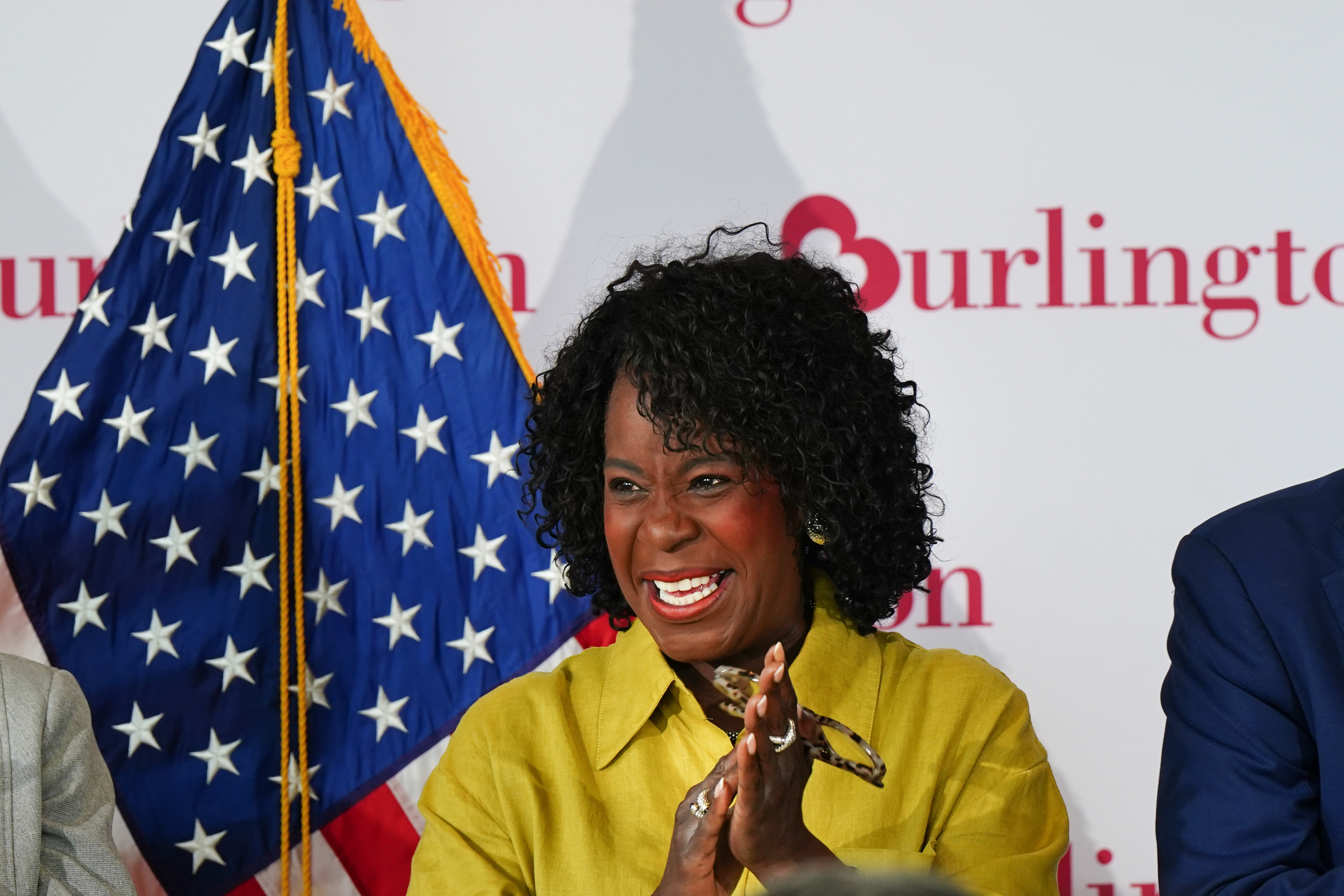
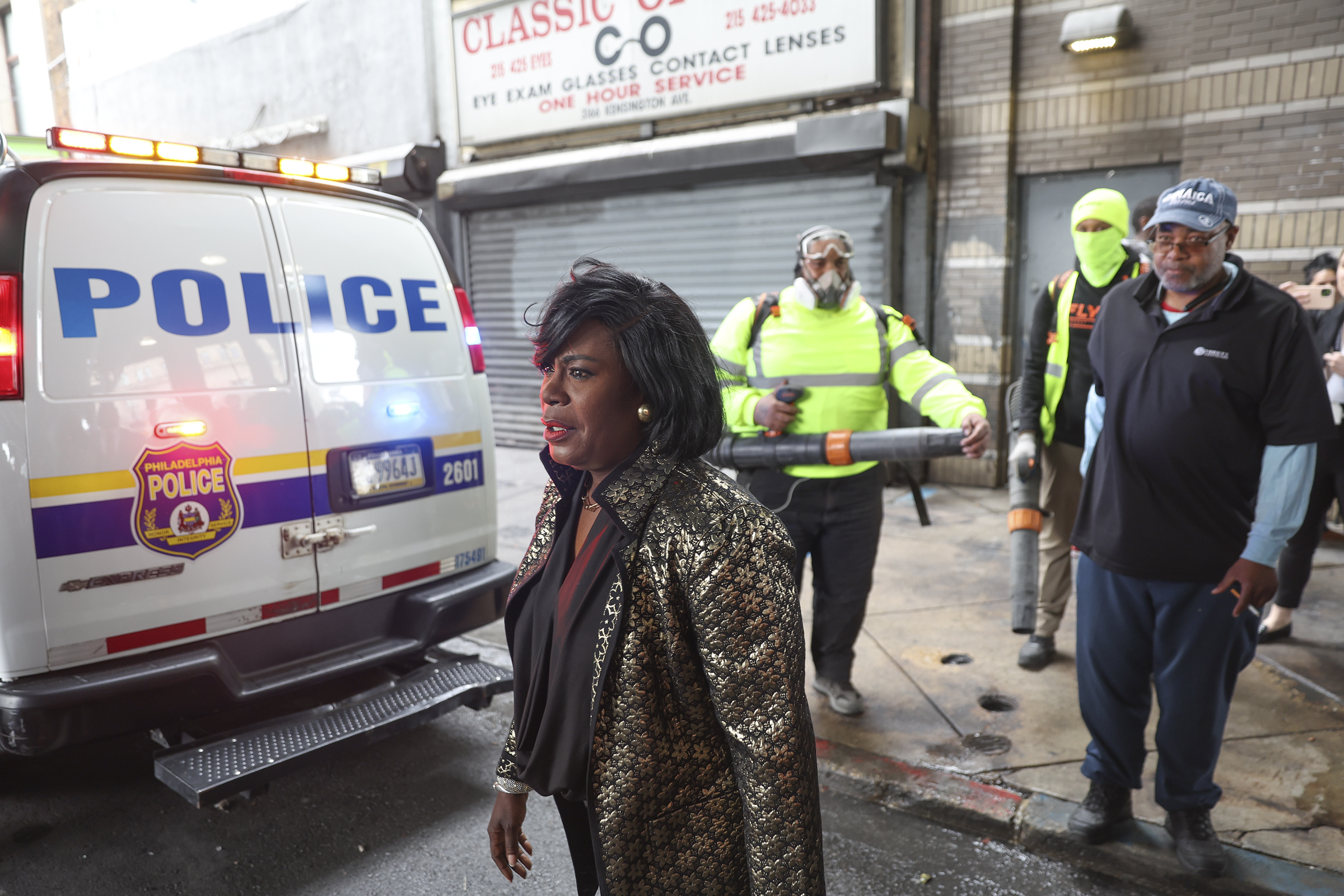
    Mayor Cherelle L. Parker marked her 1,000th day in office by breaking ground on a $21.7 million improvement to the McPherson Square library, a symbol of the Kensington opioid crisis, to send the message that her administration’s “commitment to this community is firm.”

    “The Kensington that I’m standing in today — this is not the Kensington that I walked in January of 2024. Quality of life is improving here,” Parker said at a news conference on Monday.

    Although she did not focus on Kensington while campaigning for mayor in 2023, Parker has, since taking office, embraced the challenge of addressing gun violence and substance abuse in the neighborhood, which has made international headlines, and eradicating what is often referred to as the largest open-air drug market on the East Coast. She rode the El to an event at a Kensington middle school to mark her first 100 days in office.

    The McPherson Square park and library became a highly visible marker of the crisis in the mid-2010s. People in addiction were a constant presence in the six-acre park, near Kensington Avenue and Orleans Street. Library staff learned how to administer Narcan, which reverses overdoses.

    Philadelphia Mayor Cherelle L. Parker exits the Allegheny station before walking along Kensington Avenue on April 11, 2024. Parker took the El to attend an event marking her 100th day in office in the Kensington neighborhood in Philadelphia.Heather Khalifa / Staff Photographer

    Parker ran on a tough-on-crime platform, and her approach to Kensington has featured a mix of police-focused tactics and novel strategies aimed at getting people off the streets and into recovery.

    She cut city funding for syringe exchange services in her first budget, and her election effectively ended the city’s efforts to open a supervised drug consumption site, a priority of former Mayor Jim Kenney. The police department has doubled the number of officers who patrol the area, First Deputy Police Commissioner John Stanford said Monday.

    Parker has also launched a Neighborhood Wellness Court program, which is designed to encourage alleged offenders to choose addiction services and avoid criminal proceedings, and she has launched the Riverview Wellness Village, a 20-acre recovery house in Northeast Philadelphia where more than 200 people live.

    “People are beginning to see that we are at least trying to make a difference, and we are not acting as if we don’t see what’s happening,” Parker said. “We’re looking it straight in the eye and trying to figure out a way to make sure that we are solving a problem.”

    Since Parker took office, the Kensington-based 24th Police District has seen a 48% decrease in violent crime, a 63% decrease in shootings, and a 47% decrease in homicides, Stanford said Monday.

    After peaking in the wake of the onset of the COVID-19 pandemic, rates of violent crime and homicide have fallen across the country. This year, homicides in Philadelphia are on pace for a 60-year low.

    People using drugs are still a common sight in Kensington, and crime rates in the neighborhood remain higher than the city as a whole, a reality Parker readily acknowledges. And her approach has drawn criticism from some harm reduction advocates and public health experts, who contend that heavy-handed policing can be counterproductive to saving the lives of people in addiction.

    But few doubt Parker’s commitment to cleaning up the neighborhood, and the prospect of a revitalization of the dilapidated library, which was built in 1917 with a copper dome and classical columns, could be a potent symbol.

    The renovation of the McPherson Square library is being funded through Rebuild, the parks and recreation center renovation program championed by Kenney and supported by Parker when she was on Council. Rebuild is one of three programs Kenney proposed while pitching the city’s tax on sweetened beverages, which was approved in 2016 and is more commonly known as the soda tax.

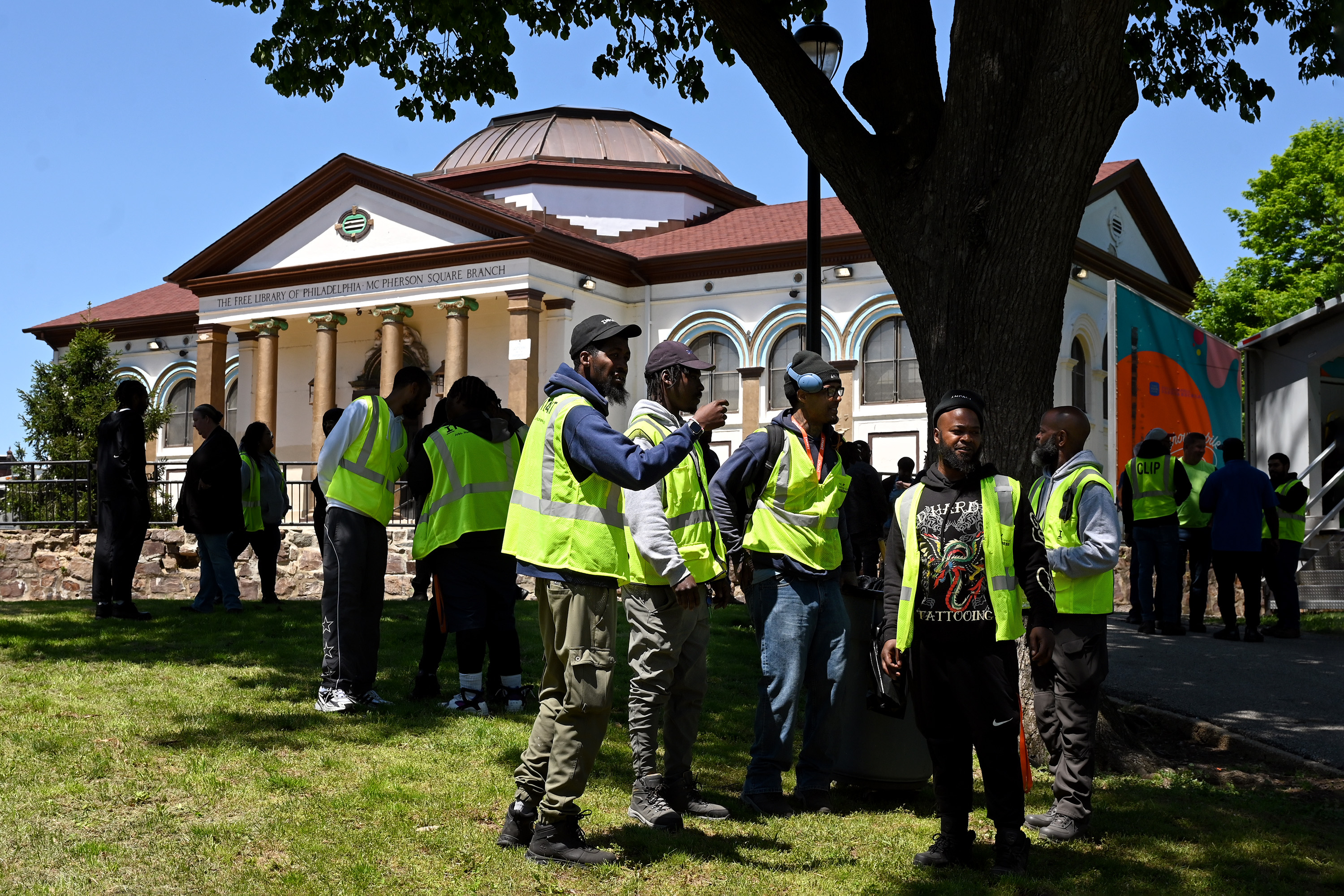
    Workers set out to clean after the Office of Clean and Green Initiatives kicked off the summer edition of the One Philly, United City Citywide Cleaning Program in McPherson Park on May 4.Tom Gralish / Staff Photographer

    The first phase of the library renovation, which included a new roof and a restored dome, was completed in 2025. Parker on Monday broke ground on the second phase, a “full-gut renovation” with “new HVAC, plumbing, electrical, fire alarm, and security systems” and many other improvements, according to the Philadelphia Capital Program Office.

    The project will take two years. In the meantime, the Free Library of Philadelphia will set up a temporary location on Allegheny Avenue, said Kelly Richards, the library’s president and director.

    City Councilmember Quetcy Lozada, whose 7th District includes much of Kensington, said she spoke to Parker about addressing the long-neglected neighborhood’s challenges in 2023, and recalled being “skeptical” that Parker would follow through on her promises as mayor.

    “She made a commitment on that day that if she were to become the mayor of this city, that she would make Kensington and this community a priority,” Lozada said at the new ground-breaking, “and she has stood by that commitment and that promise.”

    Staff writer Anna Orso contributed to this article.

  • How to have a Perfect Philly Day according to Zoe Tanner, the brains behind Loretta’s viral lattes

    How to have a Perfect Philly Day according to Zoe Tanner, the brains behind Loretta’s viral lattes

    Zoe Tanner’s handiwork is immediately recognizable: Cloudlike cold foam puffs flecked with sprinkles that adorn the lattes at Loretta’s, the Society Hill cafe at the epicenter of Philly’s little treat boom.

    When Bloomsday and Green Engine Coffee Co. co-owners Zachary Morris and Kelsey Bush opened Loretta’s at 410 S. Second St. in 2024, its menu of nostalgia-driven pastries — fudgy Cosmic Brownies and flaky pop-tarts, to name a few — was all anyone could talk about. Now, lines snake out of the periwinkle storefront on weekends as customers wait for a taste of Tanner’s seasonal lattes, which have racked up thousands of views on TikTok and Instagram.

    Loretta’s sells about 200 specialty lattes on a busy day, Tanner estimates.

    This September, Tanner spent hours in Loretta’s basement making bite-size uncrustables to top the coffee shop’s PB&J latte, which comes with Concord grape syrup and a peanut butter cold foam. In May, the drink du jour was a black-raspberry-maple concoction topped with a nutty tahini whip and sprinkles shaped like spring flowers. Next month, Tanner is whipping up a banana latte decorated with pretzel rod ghosts. Proceeds from each creation have gone to local charities such as ACCT Philly and the Eagles Autism Foundation.

    “Say what you want about the girls that come in from Instagram, but they’re making a difference by buying a drink,” Tanner said. “That matters to me.”

    Tanner, 31, serves as the operations director of all three of Bush and Morris’ businesses, splitting her days between training staff, managing inventory, and developing latte recipes. Barista-ing at Loretta’s, however, is the best part of her job.

    “I love connecting with people,” said Tanner. “And coffee is so cool because it goes through so many processes to get into your cup, but everyone who touches it is really important, from the grower to the roaster to the barista.”

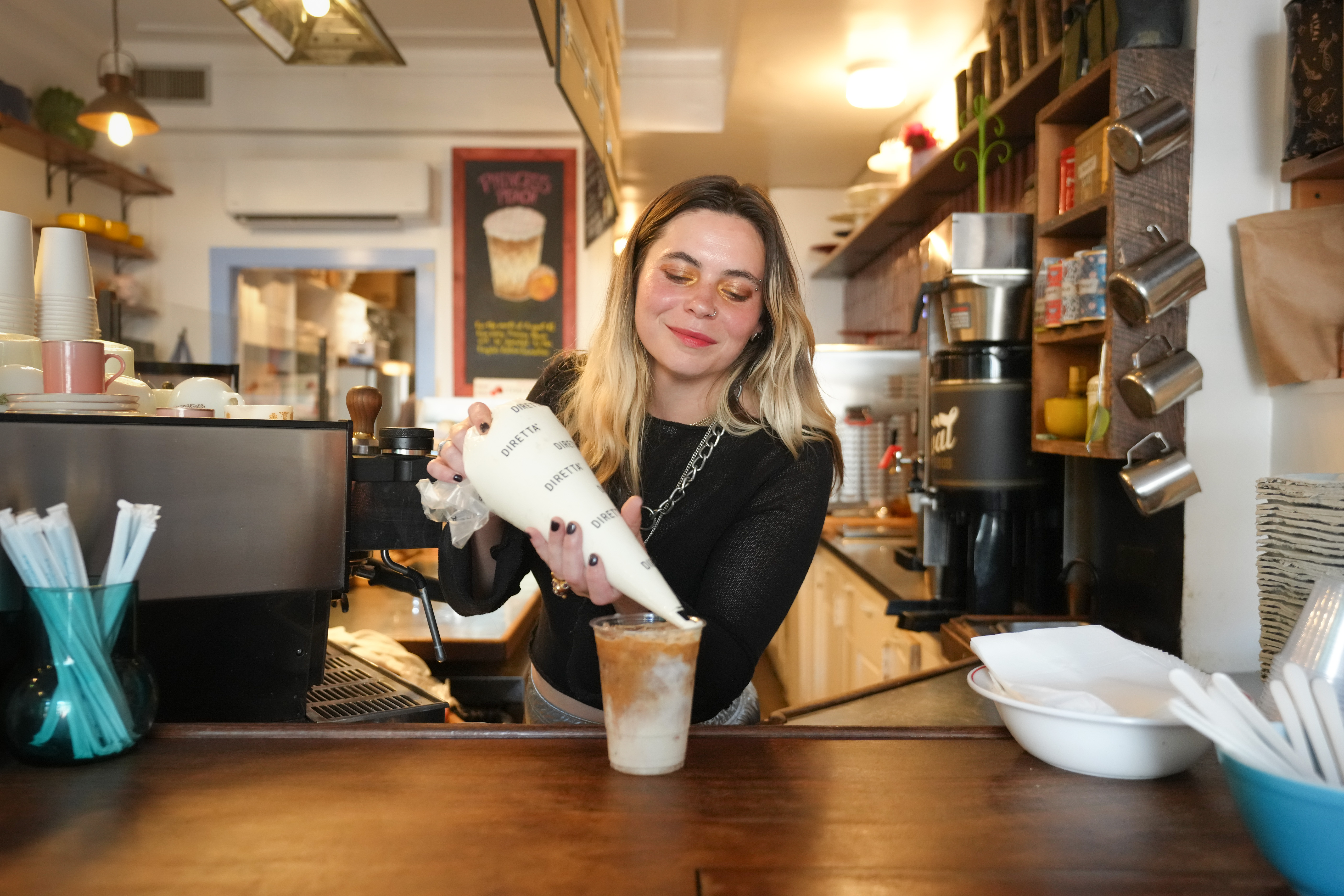
    Zoe Tanner pipes marshmallow whip onto a speciality latte at Loretta’s, a coffee shop in Society Hill.Jessica Griffin / Staff Photographer

    Tanner, who moved to Philly in 2015 from a small town in Maryland, fell into coffee by working at Starbucks while attending the University of Valley Forge. After, she worked her way up from being a barista at La Colombe’s Dilworth Park location to account manager for the local coffee chain, where she was responsible for convincing mom-and-pop shops to use the brand’s products. She started at Loretta’s when they opened.

    The job fuels Tanner’s second career as a self-made musician who writes, records, and mixes all her music. This fall, Tanner will release her fifth album as Mommy Rockstar Bitch, the grunge persona that has helped Tanner find power in her role as the self-proclaimed “mom friend.”

    Tanner said working at Loretta’s keeps her grounded like the novelist Charles Bukowski, who kept his job as a mailman during his early days as a writer. It’s also brought her unexpected fame.

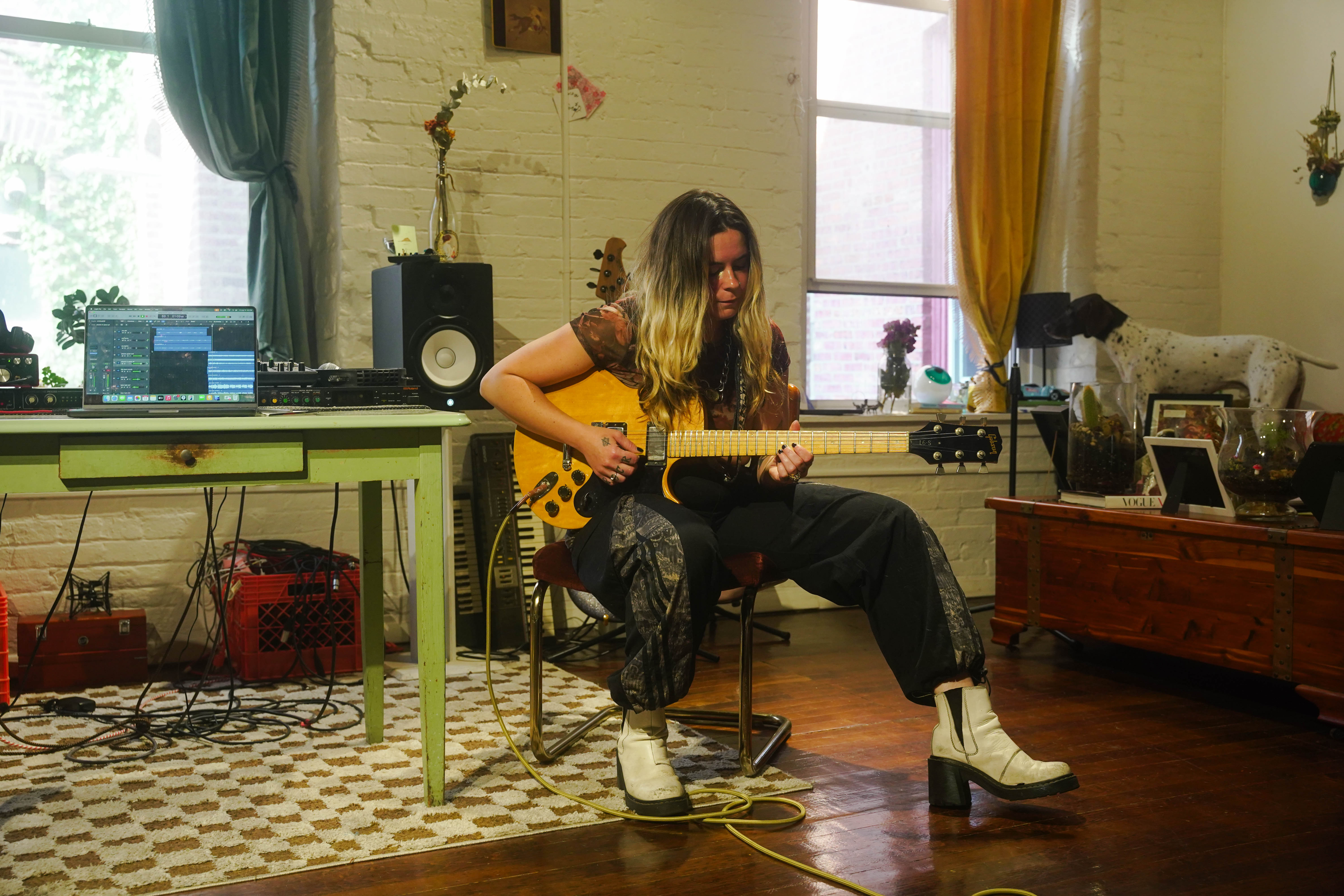
    Zoe Tanner plays guitar in the living room of her apartment in Olde Kensington.Rowan Ohara

    “I was running in Fishtown the other day when a group stopped me and were like, ‘Can we take a picture with you? You’re the Loretta’s girl,’” Tanner said. “Never did I think coffee would be how I build my brand.”

    So, how does Philly’s most famous barista spend a perfect day in the city? It involves sharing human food with her dog, running a half marathon, and mixing music from her home in Olde Kensington.

    5 a.m.

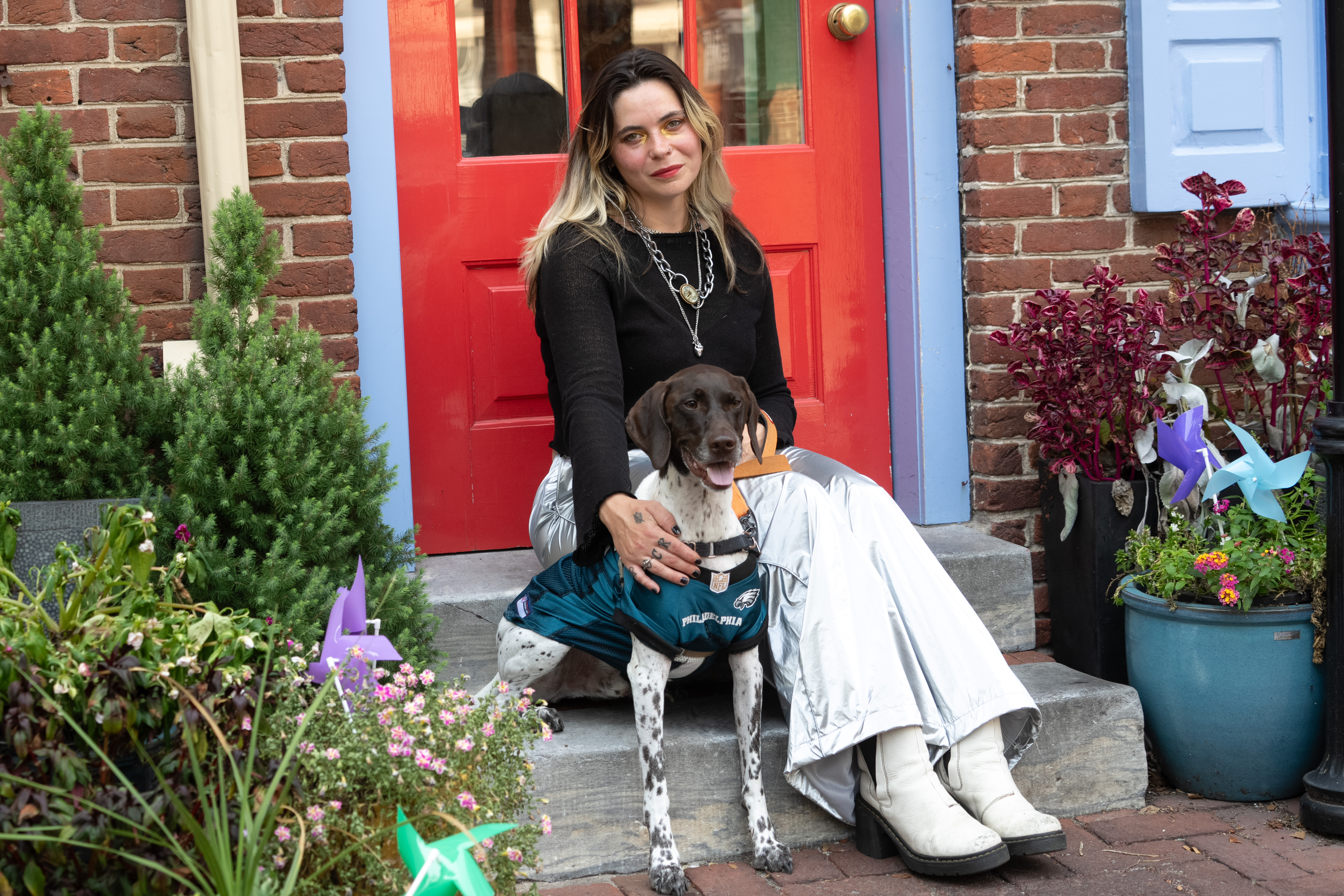
    I generally wake up at 5 a.m. with my dog Barrett — a 6-year-old German shorthaired pointer — barking at me to give him pets. I automatically smile; one of my biggest accomplishments in life is that he’s so well-behaved because GSPs are such a tough breed.

    After a quick morning walk with Barrett, I’ll head to a 6 a.m. Heated Power Strength yoga class at Monarch Yoga in Kensington. I go without having any coffee, which is so unnatural for me, and then when I get out, I feel so awake and alive. The music is also so upbeat and fun for a strength class, but since it’s a yoga studio, [the instructor] still gives us a spiritual concept to focus on.

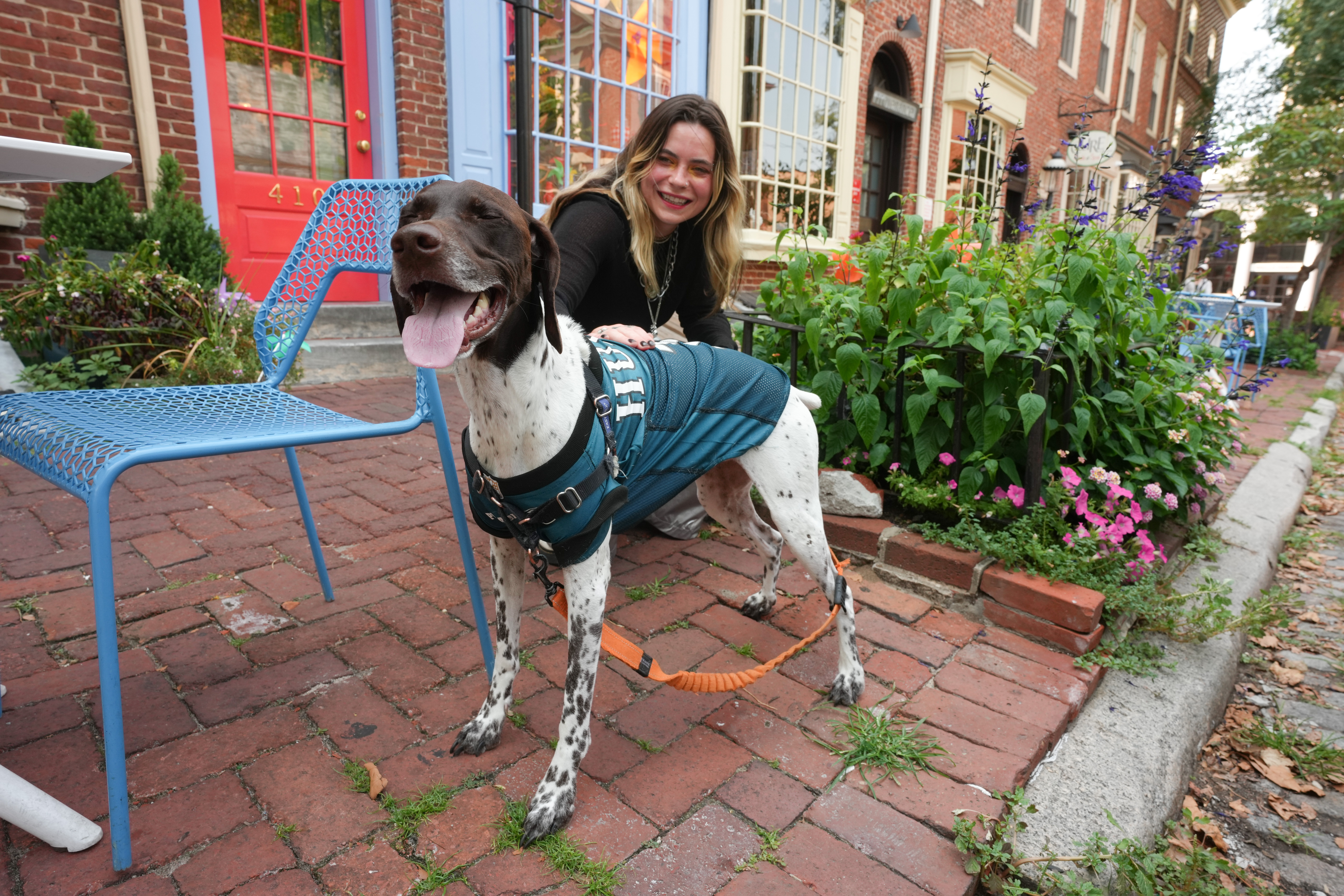
    Tanner likes to share food with Barrett, her 6-year -old German shorthaired pointer. His favorites include banh mi from Ba Le and pizza from Pizzeria Beddia.Jessica Griffin / Staff Photographer

    7:30 a.m.

    Next, I’ll grab Barrett for a long walk that’s mostly about him being the center of attention. People might say that I’m a bad dog mom for this, but I share my food with him.

    I’m not even embarrassed by this because Barrett has good taste: When we go on long runs, we always stop at Ba Le Bakery in South Philly for a lemongrass and beef banh mi, and when we walk down Frankford Avenue, he will literally yank me across the street for Huda Burger. I even gave him a Pizzeria Beddia birthday party. I promise he’s a healthy dog.

    Anyway, on our long walks we will either stop at Rival Brothers Coffee for a short Americano and so Barrett can look out the window, or Càphê Roasters to split a fried chicken sandwich. It’s funny because I used to joke about never wanting to be a regular somewhere, but now I walk into these places and it feels like I’m talking to my siblings. It’s a beautiful way to start my morning.

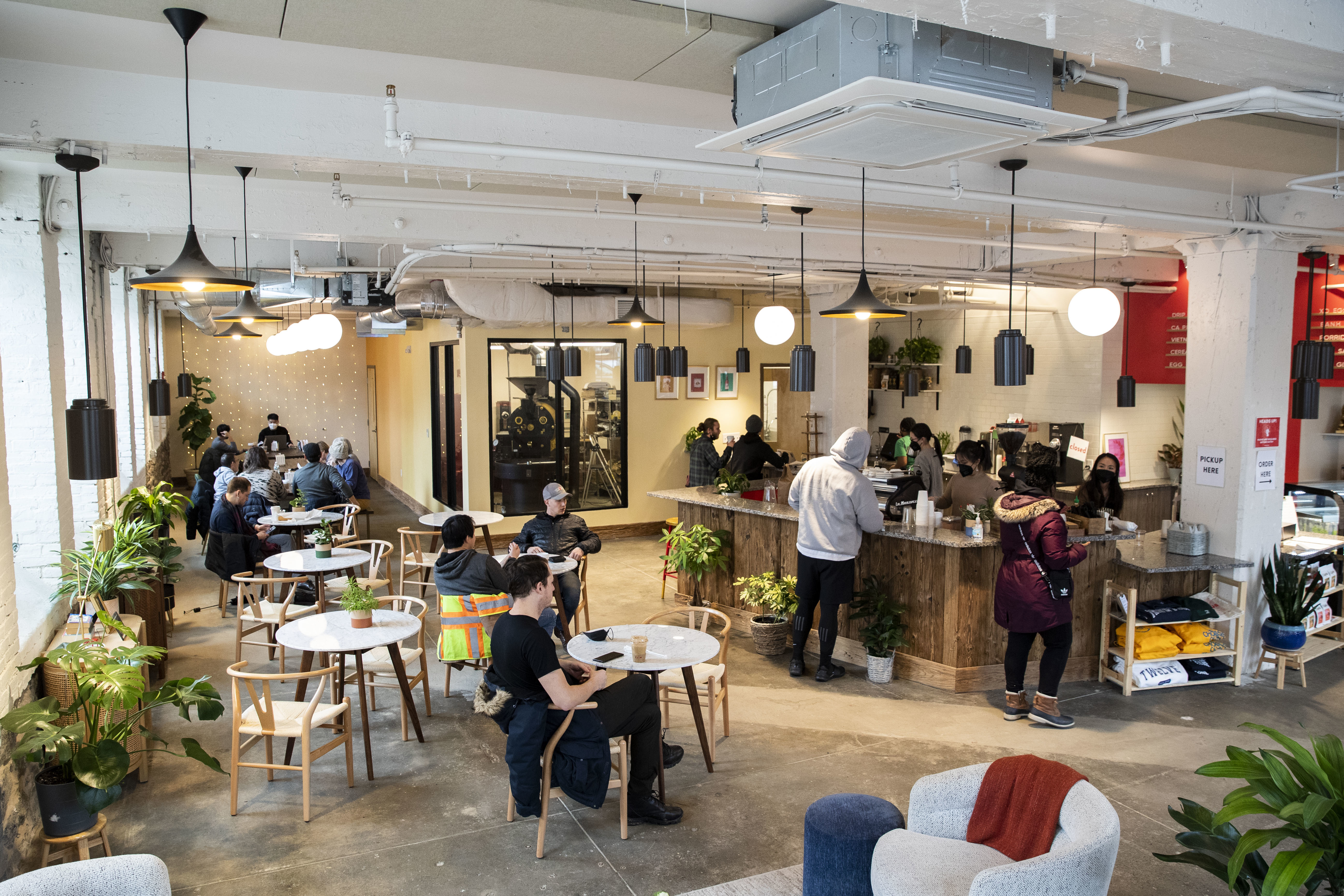
    The inside of Càphê Roasters in Kensington, where Tanner and her dog Barrett are regulars.Monica Herndon / Staff Photographer

    10 a.m.

    After also feeding Barrett real dog food, I head down to Loretta’s to clock in for a shift. On a perfect day, work involves barista-ing a little bit, doing latte research, and filming content for social media.

    All of our specialty lattes involve a specialty syrup and cold foam, and they take about three iterations each to get right. I love it because I feel like I’m in a lab, trying to find the right balance of fun and sweetness without just serving people sugar just because it looks pretty … [Kelsey Bush] and I are both very anti-unicorn frappuccinos.

    As director of operations at Loretta’s, Zoe Tanner says the best parts of her job include working on latte recipes and barisa-ing.Jessica Griffin / Staff Photographer

    At some point, I will stop for lunch. I’m in a protein era right now, so I like to order the Emma, which I equate to Loretta’s version of a chicken Caesar salad wrap. I also love our Rice Krispies Treats. They’re just perfectly done. Packaged Rice Krispies Treats are always so dry.

    2 p.m.

    It is officially time for me to go on a long run — 13.1 miles at minimum because I’m a distance diva.

    My go-to route is river to river: I’ll run from my apartment to Penn Treaty Park, down to the Headhouse Shambles, across South Street to Schuylkill Park, up to the Philadelphia Museum of Art, and back.

    While I’m running, I like to listen to a lot of my raw mixes to get a sense of what needs work, but if I’m trying to have a really blissful run, I’ll listen to Dean Blunt or Sade. If you run by the river and put on Sade, you’ll feel like the hottest person in the universe. Trust.

    Tanner likes to run along the Schuylkill River, the Delaware River, and through Penn Treaty Park.TYGER WILLIAMS / Staff Photographer

    I also like to think of my runs as quests. I will deliberately only bring my phone and headphones so I’m forced to stop for the things I need to keep going, like a snack or electrolytes. It’s fun because it helps me get to know the city better, even after more than a decade. … I think people get tired of Philly because they don’t chew down on it enough.

    Running this way has also made me a public bathroom expert because peeing, of course, is always part of the quests. My hot tip: Never count out a Whole Foods.

    6 p.m.

    After my run, I like to get dinner and drinks with my friends.

    Our go-to is Monk’s Cafe, which I recently learned might be haunted? I typically order the Thai curry mussels, a saison, and fries.

    I know there’s a lot of discourse about Monk’s having the best fries, but I want to make clear that I do NOT play that game. Fries come in all shapes and sizes, and they’re all good. I would never body shame a fry. It’s like trying to say a basketball player is more athletic than a football player. How could you?

    A pot of mussels in Thai curry broth at Monk’s Cafe.Craig LaBan

    If we want to have a less chill night, my friends and I will go to Johnny Brenda’s — I had my first ever legal drink there, and they make a great steak. For a more chill night, we like to eat at Phở 75. I want my pho with dark meat chicken and all the fixings — jalapeños, bean sprouts, cilantro, sriracha, hoisin. Barrett, of course, will probably have a piece of the chicken.

    9 p.m.

    I like to end my day with music, either by practicing with my band or mixing my album, which reminds me a lot of coming up with drinks for Loretta’s since both start with me asking the same question: What can I do to make this thing pop?

    Sound mixing is so similar to food and beverage because it’s very easy to sense when you’ve done too much and need to pull back. Things often taste and sound the best when they’re at their most natural.


    This interview has been edited for length and clarity.

  • PSSA scores are still missing in Philly, but the district won’t go test optional – school board roundup

    PSSA scores are still missing in Philly, but the district won’t go test optional – school board roundup

    Leo Stober, an eighth grader at Science Leadership Academy Middle School, is frustrated. He’s thinking about applying to selective Philadelphia School District high schools, but the process is now stymied by what officials said was a delay in the release of state test scores.

    So Leo sat in front of the Philadelphia school board Thursday night to air his concerns.

    Not having access to scores “is quite frankly disrespectful, not only to the students, but also to the teachers,” Leo said.

    Students are anxious to hear how their 2026 PSSA performance will shape the schools open to them, and teachers need the scores “to find which students need extra help on certain assignments,” he said.

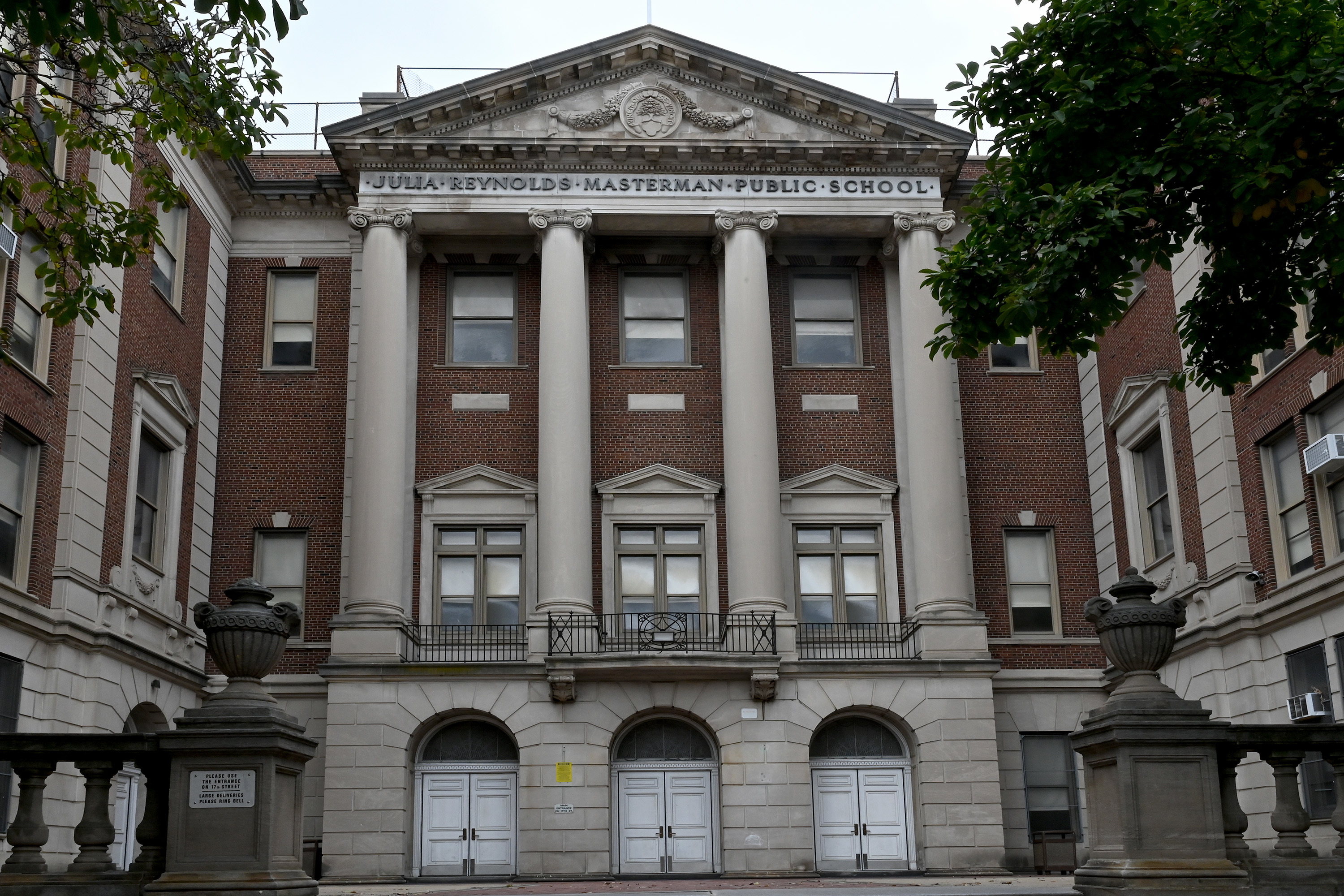
    A student’s test scores determine which schools they’re eligible to apply to: Central and Masterman require scores in the 80th percentile to apply, for instance.

    The district’s school selection process was supposed to open Sept. 8. Superintendent Tony B. Watlington Sr. pushed it back to Oct. 5, blaming the change on the state’s public release of PSSA test results.

    The Pennsylvania Department of Education sent preliminary scores to districts and schools in the spring, as it always does — one charter school official told the school board she received her early test results on June 10.

    But Philadelphia appears to be alone in the state in withholding scores from nearly all of its employees. Watlington, who has placed a high public priority on the district being the fastest-improving large urban district in the U.S., has said the delay ties to PDE pushing back its release of final statewide data to districts.

    Watlington said Thursday night that scores won’t be available when the application window opens in a week and and a half, but said he realizes “that changing the timeline may require families to adjust their plans, and we absolutely appreciate their patience as we work through this.”

    Scores will be available by the time the application window closes, on Nov. 24, Watlington said.

    Central and Masterman are only two of the 37 schools that require scores.

    Scores in the 65th percentile qualify students for Academy at Palumbo, George Washington Carver High School of Engineering and Science, Parkway Center City Middle College, and Northeast High’s International Baccalaureate and magnet programs. Other schools require scores in the 50th percentile or better.

    A student board representative asked Watlington if the shift would cause the district to consider going “test optional” — allowing students to decide whether they want to submit standardized test scores, or withhold them.

    “We’re not going to test optional,” Watlington said. “We will likely continue with what we’re doing.”

    $600,000 for a Kensington High project fix

    In other matters, the board voted unanimously to ratify — formally approve a contract that was already awarded — a $600,000 deal with a firm now charged with monitoring construction work at Kensington High.

    Hunter Roberts Construction Group is providing independent oversight and monitoring of the work at Kensington, which has been plagued with problems.

    Errors on an HVAC project at Kensington caused asbestos damage that forced the district to close the building to students, who had to be moved to a closed middle school in the Northeast, over some neighbors’ objections.

    The contractor “is expected to comply with applicable federal, state, and local laws and regulations, including, but not limited to, legal requirements for the proper abatement and disposal of asbestos and/or any other hazardous material,” the board resolution approving the contract said. Hunter Roberts began work on the project on Aug. 27, according to the documents.

    Last year, the district was criminally charged over its past handling of asbestos at city schools. After a yearslong secret probe, the school board signed off in June 2025 on a deferred prosecution agreement that comes with strict federal scrutiny of its environmental management.

    Philadelphia was the first school district in the U.S. that faced criminal charges for environmental violations.

    Hunter Roberts’ contract on the Kensington project runs through 2028.

    9.5% raises over 3 years for 32BJ

    The board also gave final approval to a contract for 32BJ, the union representing district bus drivers, cleaners, building engineers and tradespeople.

    The pact gives 32BJ’s 2,000 members 9.5% raises over three years. They’ll also get $2,350 in bonuses and 25 paid days off after the birth of a child – the first time parental leave was granted to those workers.

  • Raymond Horsch was convicted of luring a 9-year-old girl to his car in 2009. Now those court records could be destroyed.

    Raymond Horsch was convicted of luring a 9-year-old girl to his car in 2009. Now those court records could be destroyed.

    In 2009, Raymond “R.C.” Horsch — the violent pornographer now linked to seven dead or missing women — was arrested and charged with trying to lure a 9-year-old girl into his green Jeep Wrangler in Kensington.

    “Come here, in my car, sexy girl,” Horsch told the girl, according to an arrest report.

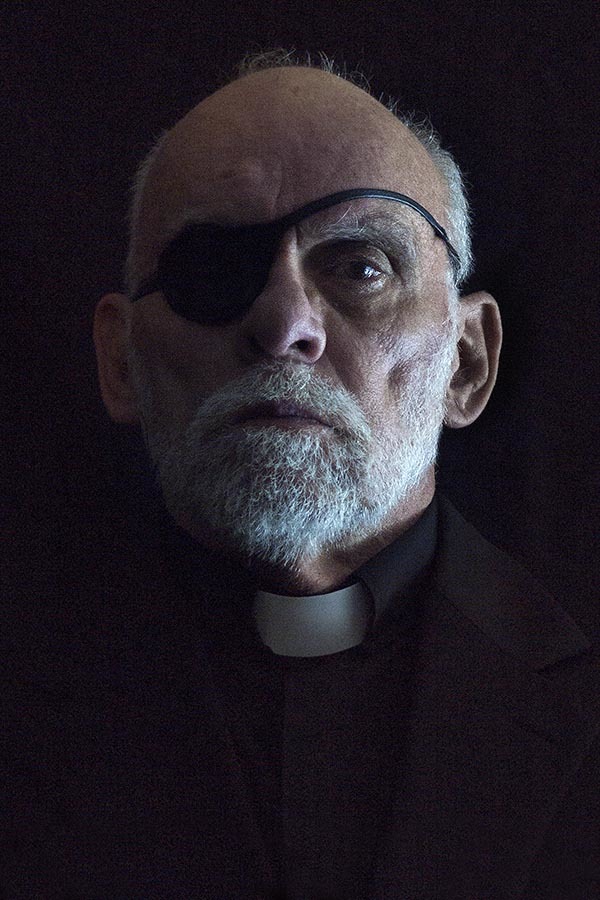
    When police found Horsch circling the neighborhood that March night, officers recovered a pair of high-powered binoculars, a digital camera, a telephoto lens, an eye patch, and a condom from inside his Jeep, the prosecutor on the case said.

    Horsch was convicted of two misdemeanor counts of luring a child into a motor vehicle and corrupting the morals of a minor at a trial in Municipal Court in 2010. He was sentenced to 2½ to 5 years in prison, and would have been required to register as a sex offender under Megan’s Law, said Jill Fertel, the prosecutor who handled the case.

    But Horsch insisted he did nothing wrong, and requested a new trial in Common Pleas Court. Another prosecutor took over the matter.

    The victim and her mother became too afraid to testify in court again, according to two people familiar with the matter. The case fell apart and prosecutors dropped the charges. The original conviction was vacated, and in 2015, Horsch successfully petitioned a Common Pleas Court judge to expunge the case.

    Fertel, in an interview Tuesday, said Horsch — and that outcome — had “haunted her for the last 16 years.”
    Horsch was known to prowl Kensington to recruit women in addiction to appear in his violent pornographic works in exchange for drugs, cash, and a place to stay at his home. But the details of the expunged conviction, which have not been previously reported, indicate Horsch may have also sought underage girls — and suggest that law enforcement was alerted to his troubling behavior nearly two decades ago.

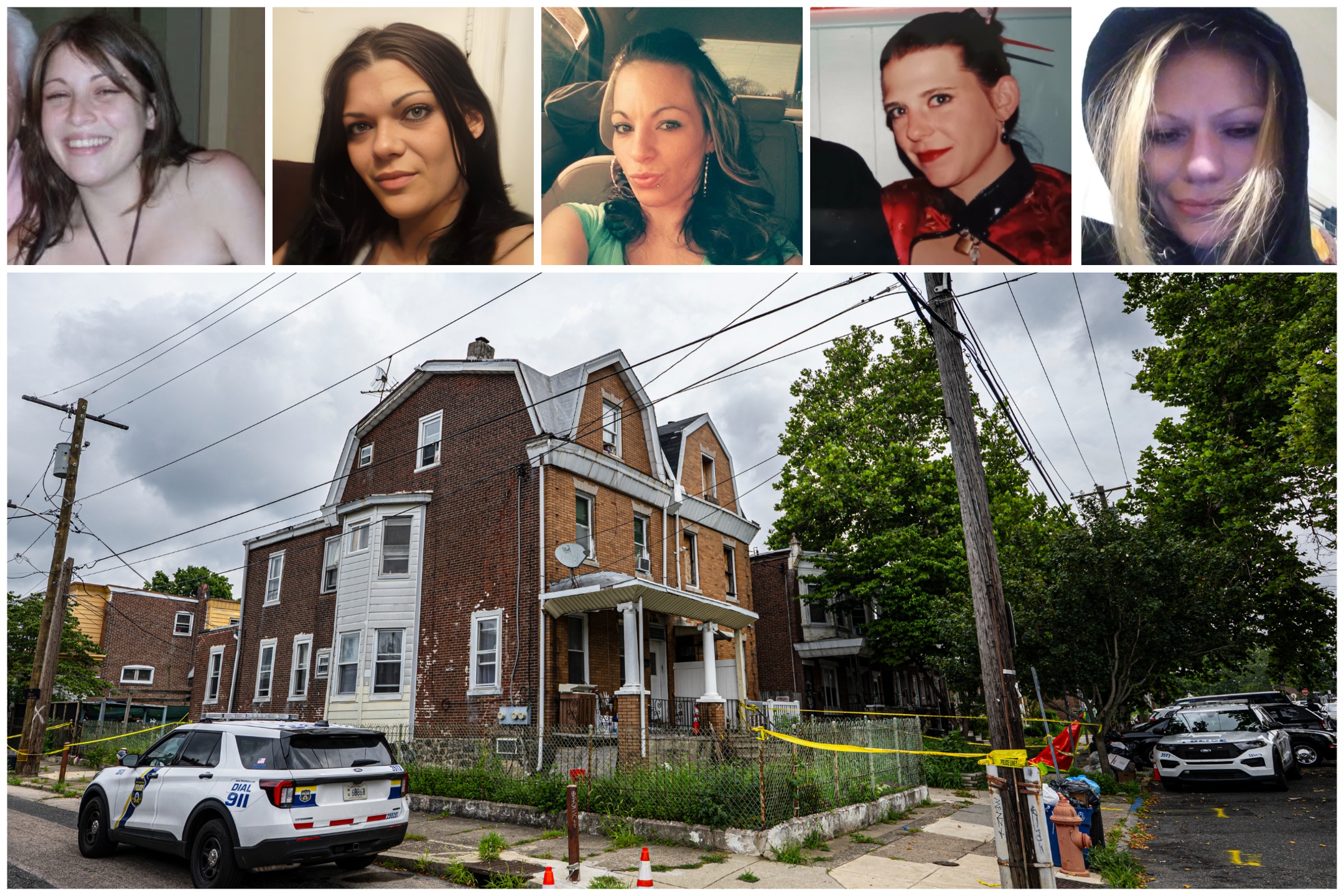
    (Top from left) Gabrielle Amarando, Nicole Fusaro, Maribel Fresses, Amy McHale, and Blair Tonzelli. Nicole Fusaro, Gabrielle Amarando, and Maribel Fresses are presumed dead. Blair Tonzelli and Amy McHale are still missing, but last seen at Horsch’s home.Obtained by The Inquirer

    Now, the court records in the case — the sole known sex crime Horsch is believed to have been charged with — are at risk of being destroyed.

    The records are on file at the Criminal Justice Center, but when The Inquirer sought to review them on Monday, a clerk denied that request.

    Because the case had been expunged, the clerk said, the records should have been destroyed years ago. The filings could not be reviewed, he said, and would ultimately be destroyed in accordance with state law.

    The Inquirer sent a letter Monday night to administrative judges in Philadelphia’s First Judicial District, asking that the records be preserved in the interest of the public, and that they be unsealed because of the ongoing investigation into Horsch’s connection to missing women.

    “Horsch is dead, and this case has extraordinary public interest and news value,” the newspaper wrote. “The filing could hold pieces of information that are irreplaceable and important to the public and the criminal investigation.”

    Fertel — who left the district attorney’s office in 2018 — said there are likely essential records of the case that remain in the court file, including notes of testimony, psychology examinations, and letters from Horsch’s defense lawyer submitted as part of his sentencing hearing.

    She said the sex offenses triggered a sexually violent predator assessment of Horsch, and recalled that the psychologist was “horrified” by Horsch’s pornography and feared he could be violent.

    “This is the only sexual offense he was ever convicted of, that I know of,” Fertel said in an interview Tuesday. “His conduct and his films and video were part of the sentencing. What he was doing [in Kensington] was part of the sentencing. That record is important to have, if we’re to prevent this from happening again.”

    Police said they have so far recovered footage on hard drives inside Horsch’s home that appears to show five women dead — including a video of Horsch filming himself while strangling a woman to death with a zip tie. Two other women, including Horsch’s ex-wife, were last seen at the home but remain missing.

    Luring a child

    Around 7 p.m. on March 20, 2009, the 9-year-old was walking on Ontario Street when Horsch, in a green Jeep, slowed next to her.

    “Yo, come here,” Horsch said, before getting out of his car to approach her and calling her “sexy,” according to the arrest report.

    The girl ran home and told her mother an old man in a green Jeep had asked her to get into his car. The mother ran outside and chased after the Jeep, which circled the block and drove off, the report said. They called police, who responded and found Horsch in his car near the 3200 block of Kensington Avenue, the report said.

    The girl identified Horsch as the man who approached her, the document said.

    Fertel said that during the trial, the victim cried on the stand, at times prompting the judge to leave the bench to comfort her as she testified before Horsch, who was standing just feet away.

    Horsch was released on bail.

    While Horsch was facing those charges in Philadelphia, in July 2009, police responded to his home in Chalfont — where he lived before moving to Olney in 2013 — after a 21-year-old woman called to report a break-in. When officers arrived, they found 455 marijuana plants and two shotguns spread among five partitioned rooms in the basement, according to the Bucks County Courier Times.

    Officers also recovered bondage gear, photographs of bleeding women, and a homemade movie labeled with the word “rape,” the newspaper reported.

    Court records show that the woman who called police later told investigators she struggled with a heroin addiction and had met Horsch while doing sex work in Kensington. (That woman died of an overdose in January 2016 when she relapsed, her mother said in an interview this week.)

    When Horsch returned home that night in July to find police raiding the property, he ran down his tree-lined suburban street, according to the news report.

    He was later arrested and pleaded guilty in federal court to manufacturing drugs and illegal gun possession, and was sentenced to 54 months in prison, plus five years’ probation.

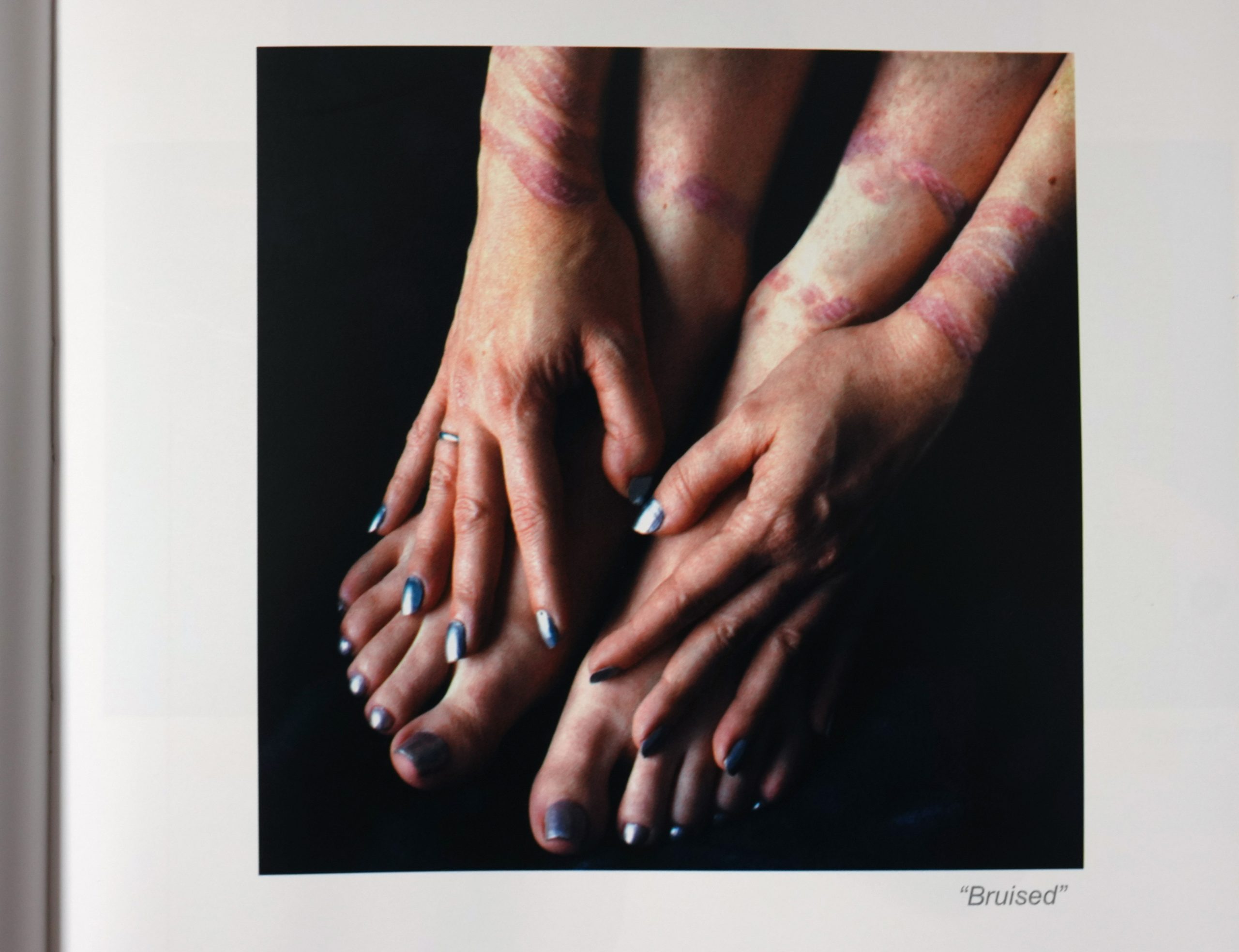
    Ligature marks on the arms of an unidentified woman in Raymond Horsch’s 2003 two-volume photobook “Eroto: To The Prurient Interest.”Obtained by The Inquirer

    Fertel said that, as she prosecuted Horsch in Philadelphia, she learned details of the Bucks County drug raid — including that officers had found disturbing pornography, guns, and explosive materials at his suburban home. That became part of her case, she said, and led her to ask that Horsch be sentenced to the maximum penalty of five to 10 years in prison.

    Common Pleas Court Judge Roger Gordon — who presided over the case — sentenced Horsch to 2½ to 5 years.

    But then Horsch appealed, and the case collapsed after the child and her mother became too scared to testify against him again.

    Fertel said the materials found in Horsch’s home, and the psychologist’s fears of his potential threats to the community, have been seared in her memory ever since.

    “He was able to treat women in this fashion for decades and no one has stepped up to protect them. No one was able to stop him,” Fertel said this week. “Everybody knew about it.”

    A ‘fabricated thing’

    Horsch, who died in May 2025, boasted about his criminal career as a drug manufacturer and document forger. He also spoke openly about how he recruited drug-addicted women in Kensington to appear in his violent pornographic photos and films that featured drug use, overdoses, and staged hangings, drownings, and killings.

    But Horsch vehemently denied ever trying to lure a child into his car. He spoke about it years later, in a 2013 interview with the Rialto Report podcast, and said the 9-year-old girl had lied.

    “It’s just a totally weird, fabricated thing,” he said. “All you have to do is go to the state sex offender list and you won’t find my name there.”

    In his 2003 movie Slaves, Horsch played a semiautobiographical character who, in one scene, described approaching a young girl in a mall. The girl’s mother, Horsch’s character said, then yelled, “Get away from my daughter!”

    “The place froze, literally froze. Time stood still. Every eye was on me, from every direction, hundreds of eyes,” Horsch said in the movie. “And I realized in an instant that, to every single person there, I was a child molester.”

    Raymond “R.C.” Horsch in character for film role, 2014.S. E. Stokowski / Wikimedia

    As Philadelphia police sort through more than one million photos and videos on the hard drives recovered from Horsch’s home on West Chew Avenue in Olney, they have encountered what they believe was staged violence as part of his art — and also photos and a video of what they now believe were real missing women, dead inside Horsch’s home.

    So far, police have identified five women in the footage who they now believe are dead: Maribel Fresses, Gabrielle Amarando, Nicole Fusaro, a 25-year-old woman who has not been identified at the request of her family, and another woman investigators are still working to identify.

    Two other women who were last seen at Horsch’s Olney home — Blair Tonzelli and Amy McHale, his ex-wife — remain missing.

    Police have so far reviewed only about 30% of the materials on the hard drives.

    Fertel said she hopes revelations about the 2009 case will draw more attention to the exploitation of women in Kensington.

    “No one was getting arrested for what Raymond Horsch was doing,” she said. “This is an opportunity for people to recognize that this is wrong and that we can’t let it happen again. We can’t let this happen to more people.”