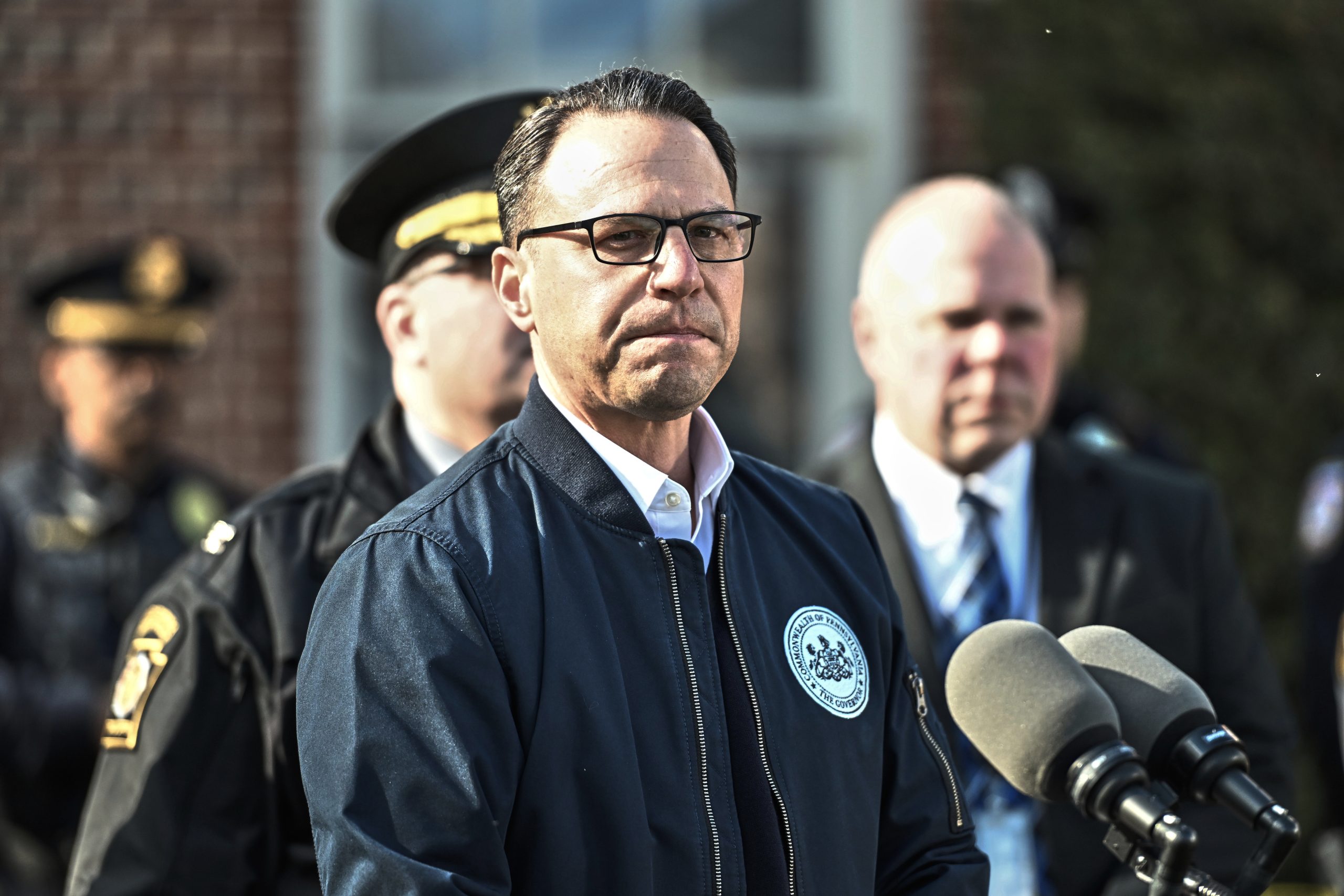
Pennsylvania Secretary of State Al Schmidt stressed that the state was not in violation of any voting regulations in a response letter to a Department of Justice inquiry that threatened criminal charges over suspicions of noncitizen voting.
The letter, sent Monday, pushed back against the Trump administration’s insistence that allowing federal assistance in inspecting voter rolls was the best way to avoid criminal prosecution for “aiding and abetting the violation” of federal voting laws.
The Trump administration’sletter, sent July 7, was addressed to voting officials in all 50 states and requested a reply within the week. Schmidt’s reply made it clear that Pennsylvania would not hand over voter rolls to the federal government and reiterated that voting regulations were followed meticulously.
“I take seriously the obligations under both federal and Pennsylvania law to ensure that only eligible voters have access to the ballot box and to see to it that Pennsylvania’s voter rolls are appropriately maintained and updated,” wrote Schmidt, an appointee of Democratic Gov. Josh Shapiro.
“That means working with the election officials of our 67 counties who are statutorily responsible for voter list maintenance,” Schmidt said. “Be assured that these dedicated local officials, as well as our employees who serve at the Department of State, work tirelessly to ensure that Pennsylvania’s voter rolls are accurately maintained.”
Pennsylvania officials have warned since last year that turning over the voter rolls to the federal government without redactions could put sensitive information at risk.
The DOJ letter comes after President Donald Trump’s long history of spreading voter fraud conspiracy theories and falsely claiming that he won the 2020 election.
“I have seen the most fantastical things on social media, making completely ridiculous allegations that have no basis in fact at all,” Schmidt told CNN in 2020.
In his capacity as Philadelphia city commissioner, Schmidt in 2017 identified a glitch in the Pennsylvania Department of Transportation’s system that had allowed 168 noncitizens to register to vote.
But noncitizen voting does not happen at a rate that would change presidential election results, Schmidt emphasized in a recent interview with VoteBeat.
“One thing that became very clear through that research and all evidence suggests that noncitizens voting in elections in the United States occurs very rarely,” Schmidt said. “It doesn’t mean that it’s not important. Like I said before, every vote is precious, and we want to make sure that we do everything we can to safeguard and strengthen election integrity. But there’s no evidence to suggest that it happens in any widespread way whatsoever.”
While Schmidt’s letter did not grant the Trump administration access to voter rolls, it did link to the state’s most recent voter registration report, which outlines the outcomes of officials’ efforts to keep the rolls accurate.
According to the report, 338,000 voter registrations were canceled in 2025, most of them because the voter died or moved. In around 120 cases, a registration was recalled because an official found the person was ineligible to vote.
“We [Pennsylvania Department of State] have worked closely with the Department of Justice on matters that have led to criminal charges as recently as this year,” Schmidt wrote in reply to the DOJ. “The Department consistently cooperates with our state and federal partners in their investigations to help ensure that only eligible voters are registered and able to cast ballots in our Commonwealth.”
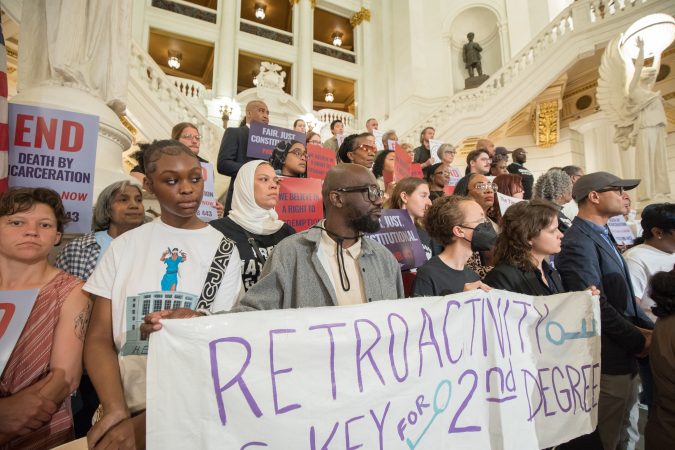
State lawmakers left Harrisburg on Sunday without approving a new sentencing structure for second-degree murder convictions, all but ensuring Pennsylvania will miss a court-imposed deadline to replace a law the state’s highest court struck down as unconstitutional because it barred judges from weighing individual culpability.
The legislature’s failure makes it exceedingly likely that judges across Pennsylvania will soon have to sentence people convicted of second-degree murder without a legislatively enacted sentencing range to guide them. It also sets the stage for what is expected to be years of litigation over the roughly 1,100 people already serving mandatory life-without-parole sentences.
The political stalemate leaves thousands of people — incarcerated Pennsylvanians, victims’ families, and attorneys — waiting to learn what happens next.
“In the absence of a law, there’s going to be a lot of chaos and a lot of confusion,” said Sean Damon, director of strategic partnerships for Straight Ahead, a decarceration advocacy organization.
Gov. Josh Shapiro said Sunday that he agreed with the Supreme Court’s decision striking down the mandatory sentencing law as unconstitutional, but had hoped lawmakers would reach a compromise before leaving Harrisburg.
Shapiro said he spent much of the final two days of session trying to bridge the divide between House Democrats and Senate Republicans. Though no agreement emerged, he said that House procedural maneuvering left a legislative vehicle available should negotiators eventually strike a deal before a July 24 deadline to rewrite thelaw.
“I’d like to see the legislature act on this and not just leave it up to every individual county to act,” Shapiro said.
‘Someone’s going to need to act’
Until the Pennsylvania Supreme Court ruling in March, the state was one of only two that still required life without parole for every second-degree murder conviction — a category of homicide that generally applies to deaths committed during certain felonies, including cases in which a defendant played a role in the crime that led to the death.
In their decision, the justices said courts must consider the facts of each case and the defendant’s culpability before deciding on a punishment.
But the high court stopped short of deciding whether its ruling applies retroactively to people already serving those sentences. And it delayed implementing its decision for 120 days to give lawmakers time to rewrite the law.
Since March, judges across the state have postponed sentencing defendants convicted of second-degree murder while awaiting action from the General Assembly.
That action never came.
Lawmakers adjourned for the summer with 12 days remaining before the Supreme Court’s stay expires and with no realistic path toward a compromise. Republicans and Democrats spent months advancing competing visions for replacing the unconstitutional law but failed to bridge deep disagreements.
Senate Republicans twice approved legislation that would replace the mandatory sentence with a minimum term of 35 years to life, allowing parole eligibility after 35 years — or after 20 years for prisoners at least 70 years old.
House Democrats backed legislation that would cap future second-degree murder sentences at 50 years while allowing many people already serving mandatory life-without-parole sentences to seek parole after 25 years. The proposal, supported by the Philadelphia Bar Association, the Defender Association of Philadelphia, and District Attorney Larry Krasner, never advanced to a vote in the House.
House Majority Leader Matt Bradford (D., Montgomery) said Sunday that Democrats have a legislative path prepared, so when they reach an agreement they can swiftly pass it and send it to Shapiro’s desk.
Asked whether that could happen before July 24 despite no additional voting days currently scheduled, Bradford replied: “We’re hoping to get something accomplished.”
Republican Attorney General Dave Sunday urged lawmakers this weekend to reach an agreement before the deadline, warning that failing to enact a new sentencing law would leave courts without clear guidance and could allow some people now serving life-without-parole sentences to become immediately eligible for release.
“It is dangerously inadequate for the House to allow the deadline to pass without a substantive and realistic proposal that includes sensible sentencing ranges with the option of a life sentence for the most serious offenders and protections for the victims of these horrible crimes,” Sunday said.
Sen. Wayne Langerholc (R., Cambria) voiced similar concerns during a committee meeting Saturday.
“Someone’s going to need to act in the House, or else this risks 1,100 violent offenders being released onto the streets of our commonwealth that we cannot afford to have,” he said.
A ‘free-for-all in the courts’
The Supreme Court cannot create a new sentencing range itself because establishing criminal penalties is the legislature’s responsibility. But advocates say Pennsylvania has already faced a similar situation.
After the U.S. Supreme Court ruled in 2012 that mandatory life-without-parole sentences for juveniles were unconstitutional, Pennsylvania enacted a new sentencing law that applied only to future cases. Four years later, when the high court ruled that decision applied retroactively, judges had to resentence hundreds of incarcerated people without legislative guidance.
Many attorneys expect a similar pattern after July 24. Judges will continue sentencing people convicted of second-degree murder on a case-by-case basis until lawmakers or appellate courts provide clearer direction. At the same time, attorneys representing people already serving mandatory life-without-parole sentences are expected to begin seeking new sentencing hearings.
Because the Pennsylvania Supreme Court did not decide whether the decision applies retroactively, that question is also expected to return to the justices.
“We reasonably believe that if this matter is brought to them [the justices] again, they will mandate mass resentencing,” said Damon, of Straight Ahead.
Some criminal justice advocates argue that individualized sentencing hearings before judges are preferable to replacing one mandatory sentencing scheme with another because judges are better positioned to weigh a person’s role in a crime, rehabilitation while incarcerated, and risk to public safety.
“Even though it will be a free-for-all in the courts,” said Celeste Trusty, a consultant for criminal legal reform organizations and former state legislative affairs director of FAMM, “people serving the now-unconstitutional mandatory life-without-parole sentences would also likely fare better” under individualized resentencing than under the failed bill.
Even so, the absence of a statewide framework is likely to place enormous demands on courts, prosecutors, and public defenders, particularly in Philadelphia, where more than 500 people are serving mandatory life-without-parole sentences for second-degree murder — about half the statewide total.
Keisha Hudson, chief defender of the Defender Association of Philadelphia, estimated each resentencing would require about $40,000 in attorney time, investigators, mitigation specialists, and other resources — roughly $24 million if every potentially eligible Philadelphia case returned to court.
She said defenders are expected to shoulder much of that work but lack the resources to handle the oldest cases, including about 30 that predate the creation of the office’s homicide unit in 1993.
Philadelphia District Attorney Larry Krasner did not respond to an interview request.
HARRISBURG — Pennsylvania’s new $50.8 billion state budget was sprawled across more than 600 pages of legislation and signed into law on Sunday. New data center regulations, education funding, and more were approved in the wide-ranging spending package.
But some of the most pressing issues facing the General Assembly were noticeably absent from the final deal, as Gov. Josh Shapiro and lawmakers in the split legislature were unable to reach a compromise — or did not want to touch the contentious issues until after they are up for election in November, sidelining some of Shapiro’s top budget priorities.
Here’s a look at what is in — and what was left out of — the 2026-27 Pennsylvania state budget.
Pennsylvania took another jump toward filling a multibillion-dollar funding gap between wealthy and poor school districts, after a court found that the state’s old system of funding education was unconstitutional. Since 2024, when the state first implemented new adequacy and tax equity formulas in efforts to fill the $4.5 billion“adequacy gap,” lawmakers have put nearly $1.9 billion toward funding lower-income districts, with plans to fill it by 2032.
“It keeps our promise to our school districts,” said State Rep. Jordan Harris (D., Philadelphia), who serves on the powerful appropriations committee responsible for allocating state dollars, in remarks on the House floor Sunday.
The latest installment of adequacy and tax equity payments — $565 million — will largely go to low-income districts that already have high property taxes. The Philadelphia School District, Pennsylvania’s largest district and the only one in the state that is unable to raise its own revenue, will get $136 million of that funding increase.
Out: Revenue generators
Shapiro proposed generating new revenue streams to help the state fix its multibillion-dollar structural deficit in his last four budget addresses. But the ways he wants to raise that cash have drawn resistance from Senate Republicans, who argue they are not policies that will improve the state’s economic standing — or cannot reach agreement within their caucus on how to address the issues.
Shapiro this year did not get the hefty minimum wage increase he asked for, seeking to raise the hourly rate from $7.25 to $15 — and counting on the higher wage for $80 million in higher income tax revenues. Nor was he able to get the General Assembly, where Democrats control the House and Republicans lead the Senate, to approve adult-use cannabis, which his office estimated would bring in $729.4 million in its first year, largely through licensing. (House Democrats have approved plans for a minimum wage increase and recreational marijuana legalization, but the Senate has not voted on the bills.)
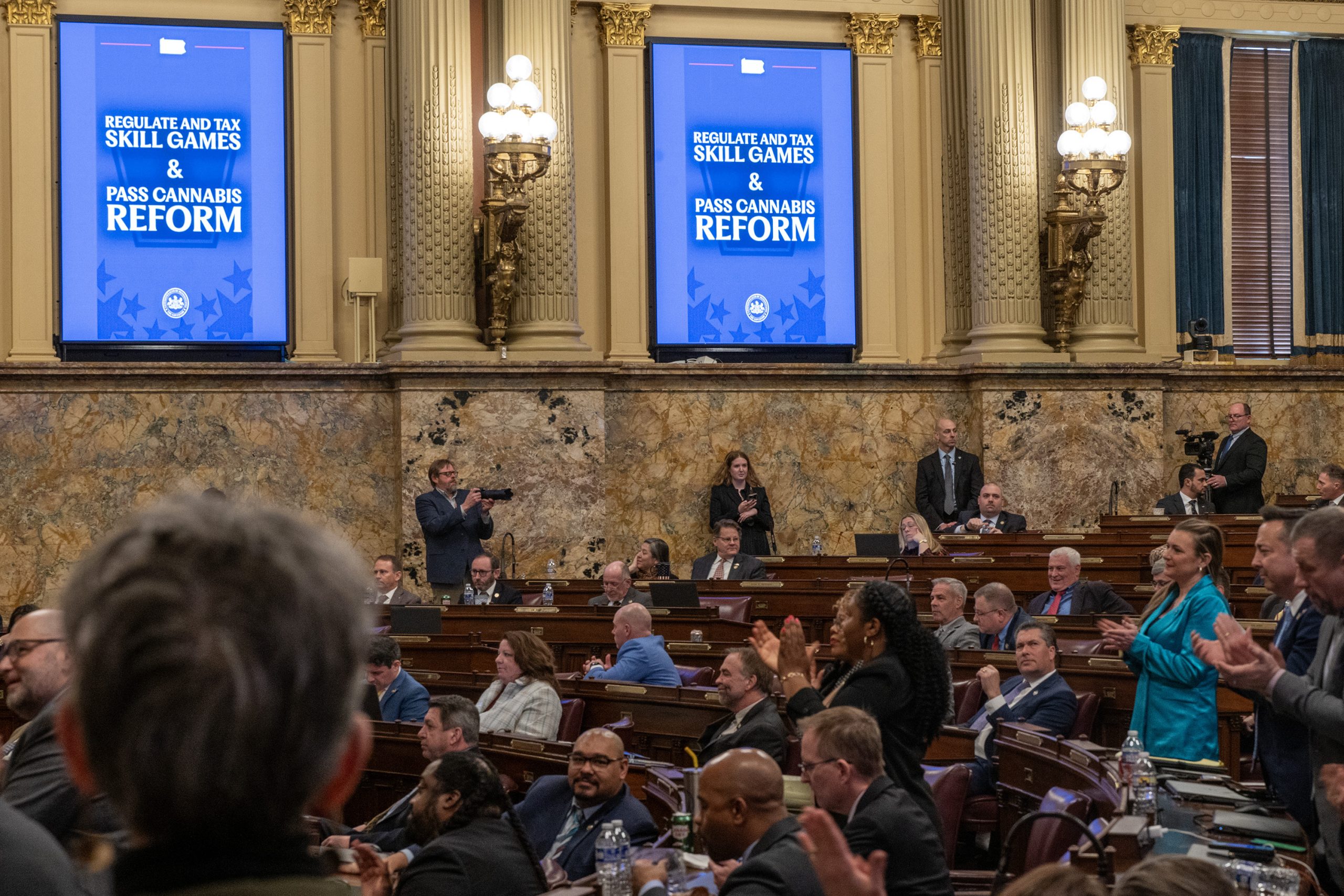
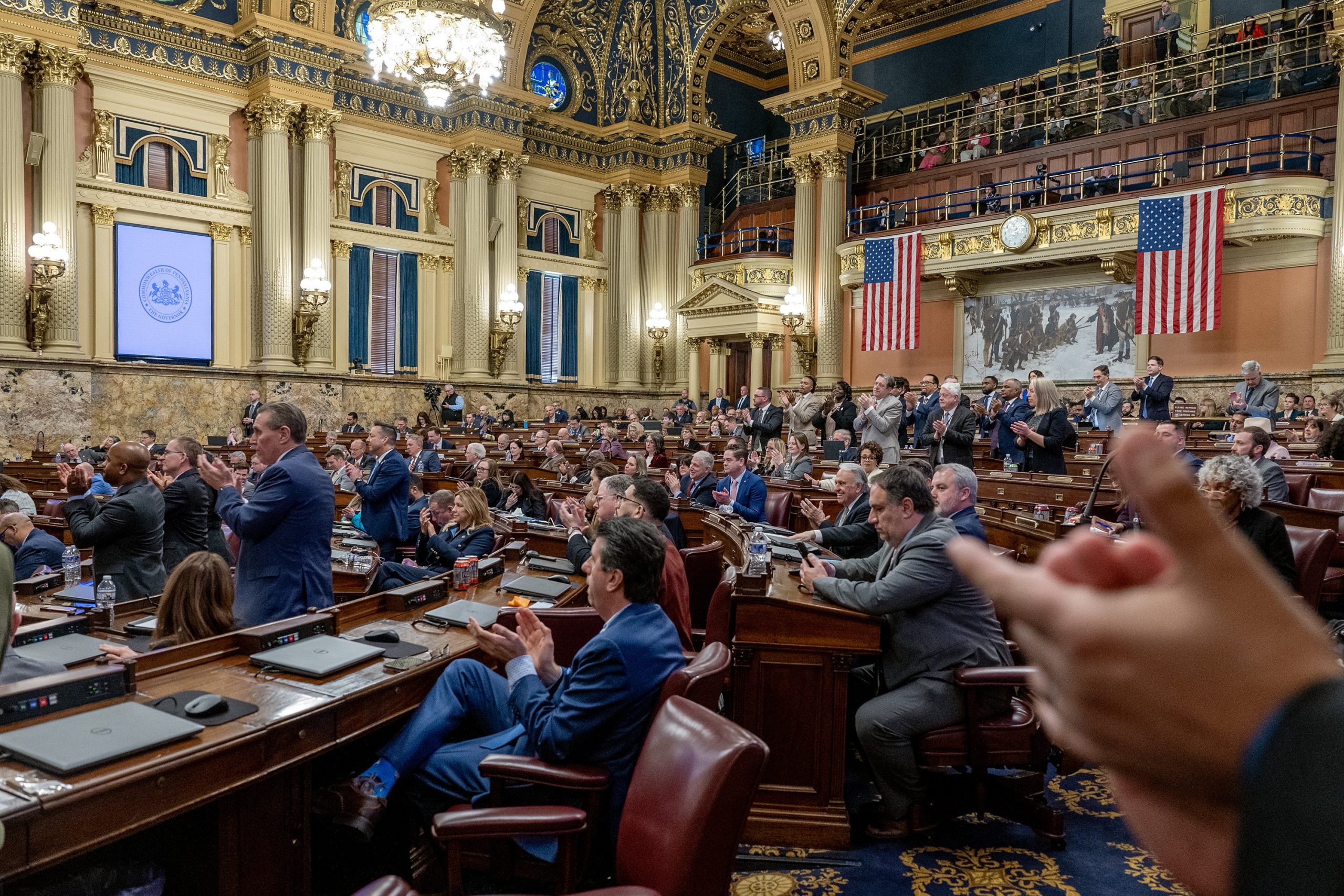
Screen shows skill games and cannabis regulation and reform as Gov. Josh Shapiro makes his annual budget proposal in the state House chamber in Harrisburg Tuesday, Feb. 3, 2026.Tom Gralish / Staff Photographer
Shapiro, in his February budget proposal, also called on the General Assembly to regulate and tax skill games at the same rate as casinos, a move that he has estimated could generate nearly $800 million in revenue in its first year. But any regulation of skill games — slot machine look-alikes that the state Supreme Court ruled last month are a form of gambling — was left out of the budget.
Lawmakers have until October to decide whether skill games will be taxed and regulated, under a grace period in the high court’s ruling. Otherwise, the devices found in many corner stores, gas stations, and bars will become illegal gambling machines. The issue has been the target of more than $8 million in lobbying and $9 million in campaign spending in Harrisburg, mostly funded by one company.
State Senate Majority Leader Joe Pittman (R., Indiana) during a press conference at the Capitol in Harrisburg Feb. 3, 2026.Tom Gralish / Staff Photographer
“We can act within the 120 days; we can act after the 120 days,” Senate Majority Leader Joe Pittman (R., Indiana) said Sunday. “But the choice is now quite simple. These machines are illegal, and in less than 120 days, they will be leaving the marketplace.”
In: Data center reporting requirements
Data centers — which are seeing a boom in Pennsylvania as artificial intelligence usage increases and communities push back on where the centers are being built — will be required to submit information about their energy and water usage.
Beginning next summer, data centers in the state with a peak energy demand greater than 10 megawatts will be required to submit information annually to the Pennsylvania Department of Environmental Protection.
Outlined as part of this year’s fiscal code, those reports will be publicly accessible. Data centers that do not submit information about their resource usage will be fined $10,000 a day.
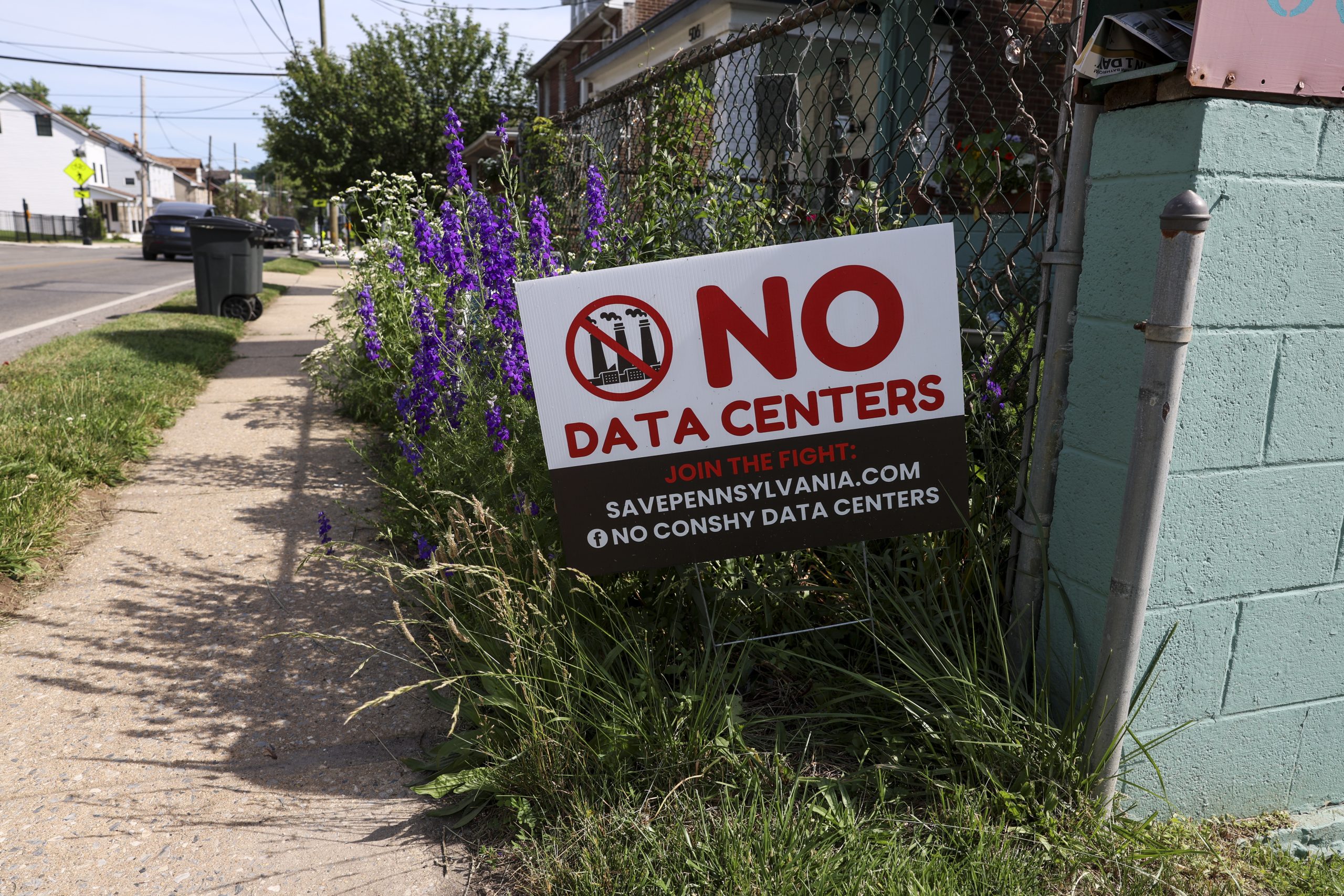
A yard sign protests the proposed data center on New Elm Street near the Closed Cleveland-Cliffs steel mill photographed on Thursday, June 4, 2026 in Conshohocken, Pa.Monica Herndon / Staff Photographer
Out: Data center regulations
A data center regulation bill, which would have limited state benefits for data center developers and was championed by Shapiro, was not included in the final budget deal. The governor called for limiting a sales and use tax exemption and expediting permitting to projects that comply with a set of transparency and environmental standards.
And several other data center regulation efforts that have received bipartisan support in recent weeks were also absent from the final spending package.
Those included efforts to repeal the sales tax exemption afforded to data center developers and attempts to enact a local or statewide moratorium on new data center development.
Both chambers passed language repealing the tax exemption and advanced differing bills to freeze development. One Democratic-sponsored bill would have given municipalities the option to implement a 180-day moratorium on new centers. The other, a Republican-sponsored measure, would allow for local moratoriums of up to 18 months.
In: Compromise
Compromise was the word of the day around the Capitol on Sunday, when the legislature swiftly passed the more than 600-page budget deal hashed out behind closed doors by Shapiro, Pittman, and House Majority Leader Matt Bradford (D., Montgomery) and passed with bipartisan support in both chambers.
The legislative leaders and Shapiro emphasized that they did not get exactly what they wanted in the budget, as a symptom of dealing with divided government. And leaders were proud to have reached the deal less than two weeks after their July 1 deadline, rather than the nearly five months it took to hash out an agreement last year.
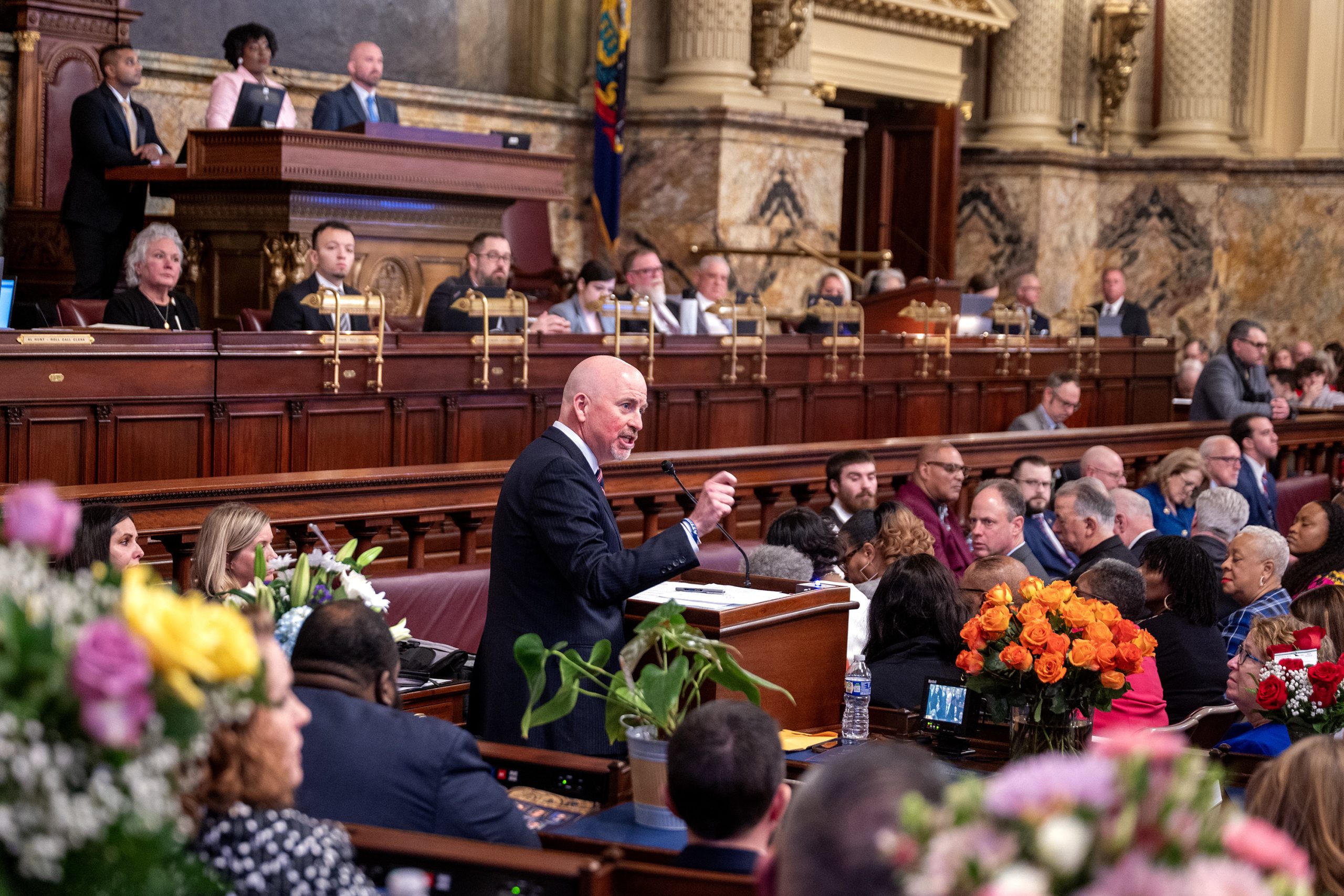
House Majority Leader Matt Bradford (D., Montgomery) speaks on Tuesday, Jan. 7, 2025.Tom Gralish / Staff Photographer
Lawmakers had agreed to work over the weekend to hurriedly approve the budget deal, with members of the Senate coming in on Saturday night to begin advancing parts of the budget deal and the House joining them Sunday afternoon. By 6:15 p.m. Sunday, Shapiro had signed it.
Among the inspirations for the weekend of productivity, Bradford said: making it to the MLB All-Star Game in Philadelphia, for which he had tickets.
Out: Typical budget math
Leaders returned to some old accounting maneuvers to address the state’s multibillion-dollar structural deficit and avoid pulling from the state’s emergency savings account.
They spent down unused and underused dedicated funds, and rolled some of the state’s Medicaid payments totaling $1.3 billion to the next fiscal year, a move lawmakers typically resorted to before the state saw an influx of federal dollars during the COVID-19 pandemic.
Without those delayed payments, the state budget would total closer to $52.1 billion, and several GOP members criticized the total as being disingenuous.
Public school teachers and other state employees who retired before July 1, 2002, will receive a tiered monthly payment based on the date of their retirement. Similarly, police officers and firefighters who retired more than five years ago will receive monthly payments ranging from $50 to $300, depending on how long they have been retired.
Lawmakers from both parties had called for the cost-of-living increase.
Mayor Cherelle L. Parker had asked the General Assembly to close it as part of her own city budget pitch in a move estimated to bring an additional $1.5 million to Philadelphia.
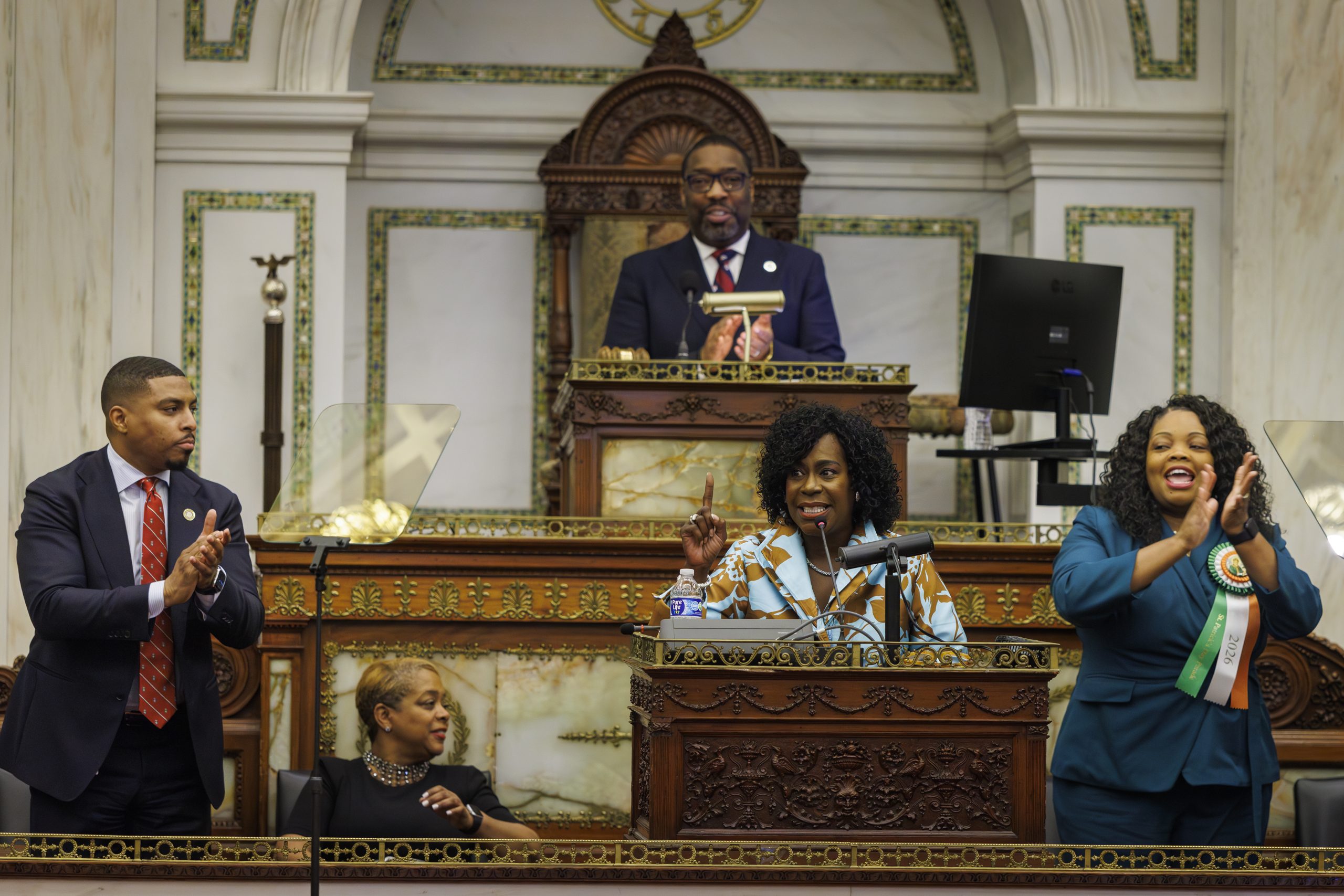
Philadelphia Mayor Cherelle L. Parker is cheered by members of Philadelphia City Council at conclusion of her budget address, Thursday, March 12, 2026.Alejandro A. Alvarez / Staff Photographer
Out: Banning cell phones in schools
Twenty-nine states have bell-to-bell cell phone bans. This year, Pennsylvania will not join them, despite the passage of two separate phone ban bills — one in each chamber of the legislature.
In: Mandatory recess for students K-5
Recess is now law in Pennsylvania.
Another education policy change championed by Shapiro, a mandatory, 30-minute recess for students in kindergarten through fifth grade was established in this year’s budget as a way to improve learning outcomes.
Out: Addressing looming problems — with looming deadlines
Several Pennsylvania funding issues that have gone years without being addressed were left out of the latest budget, some with more pressing deadlines than others.
Lawmakers did not address a need for mass transit funding — which led to last year’s bitter budget stalemate among legislators — but are expected to identify a long-term funding stream for the transit agencies next year when a two-year fail-safe runs out.
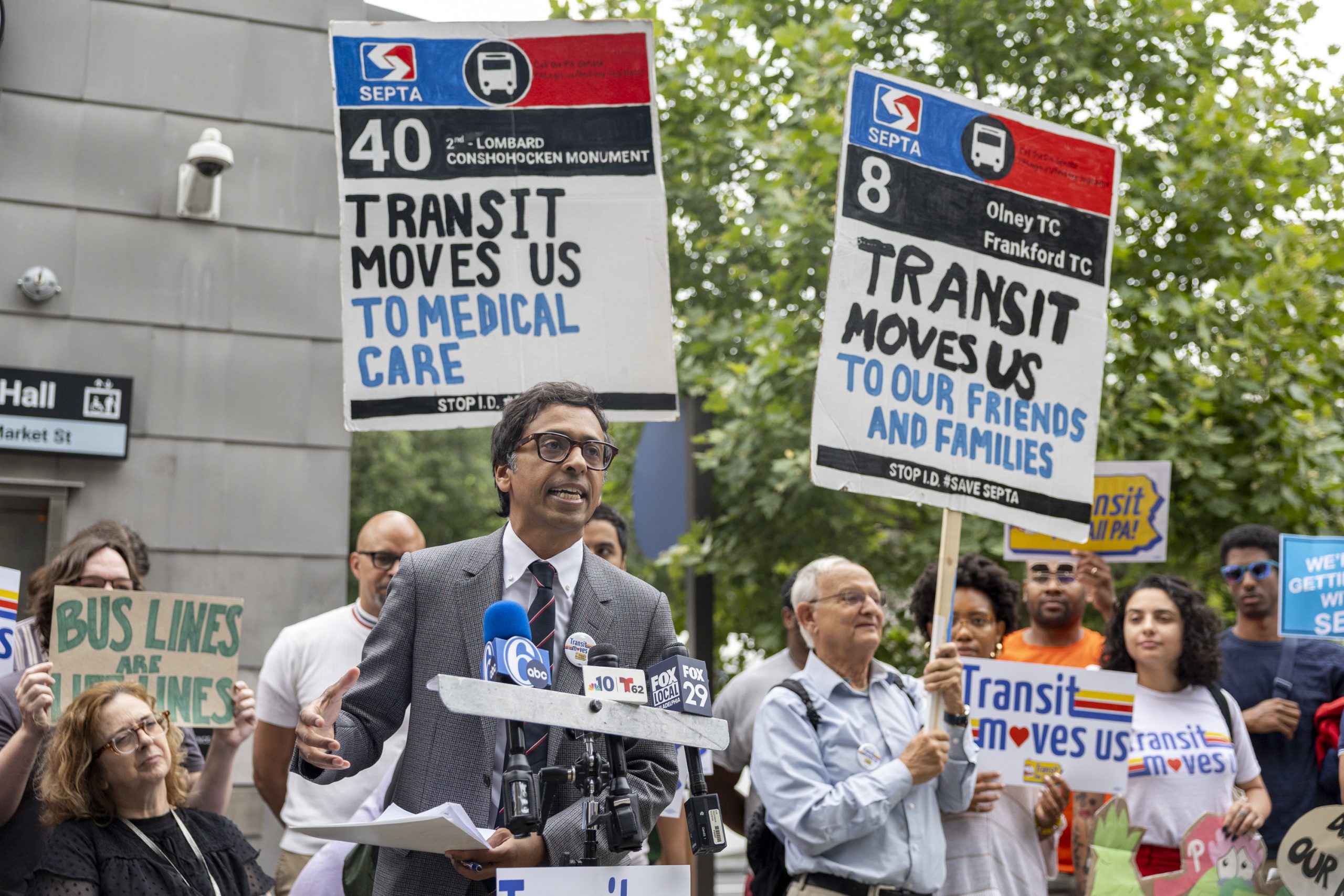
Senator Nikil Saval, speaks at a press conference calling for more SEPTA funding from the state at Independence Hall in Philadelphia, Pa., on Friday, June 26, 2026.Tyger Williams / Staff Photographer
Other local governments and service providers said their needs are more pressing.
The County Commissioners Association of Pennsylvania released an urgent plea after the state budget was signed, noting that counties still have not received the critical mental health funding they need, or a surcharge increase used to fund 911 call systems. Home-health service providers also continued their calls for increased state funding they say is needed, as the industry faces serious staffing issues due to low state reimbursement rates.
Republican and Democratic lawmakers championed the organizations in this budget, making it the largest single-year increase for the critical services in state history, according to the Pennsylvania Coalition to Advance Respect.
“Today marks a turning point for survivors and rape crisis centers across Pennsylvania,” said Joyce Lukima, the organization’s coalition director, in a news release.
Ethan Young is an intern with the Pennsylvania Legislative Correspondents’ Association.
Pennsylvania State University, Temple and the University of Pittsburgh will split $10 million in the state’s first allotment toward performance-based funding under the new budget.
It’s the first time since the legislature passed the new performance-based formula last November that the three so-called state-related universities are receiving the funding in addition to the general appropriation they received last year. The formula considers overall enrollment, graduation rates, number of lower-income students as measured by those receiving federal Pell grants, students receiving degrees in high demand areas, and other factors.
For Penn State, the new funding will amount to a little over $4 million, raising its general education subsidy to $246.1 million, the school said in a news release. The school said it was its first increase in state education funding since 2019.
“This initial investment is an important first step that recognizes the essential role higher education plays in strengthening our commonwealth,” Penn State president Neeli Bendapudi said. “The metrics at the heart of this model align closely with Penn State’s mission and values.”
Temple said it would receive a little over $2 million in performance-based funding, in addition to its $158.2 million general appropriation. The North Philadelphia-based university also is set to receive $500,000 for its “University College,” which helps adult and non-traditional students and lifelong learners pursue degrees. A university spokesperson said the money is for the school’s bachelor of general studies program.
The performance-based funding grew out of a longstanding battle between the legislature and state-affiliated universities over transparency and accountability. State-related universities received hundreds of millions in state funding, yet have a quasi-public status exempting them from much of the state’s open records laws, a fact that has long been criticized by some legislators.
Gov. Josh Shapiro, a Democrat, signed the $50.8 billion budget deal Sunday, applauding leaders from both parties for their work on the issue. He specifically highlighted House Minority Leader Jesse Topper (R., Bedford), who has led the charge to create the new performance-based funding model.
“That’s something that leaders in Harrisburg have talked about for years and years and years, but we came together and we got it done,” Shapiro said during a news conference before signing the budget deal into law.
Meanwhile, the system that oversees Pennsylvania’s 10 universities including West Chester and Cheyney will receive $626.1 million, up about $5 million over last year. The Pennsylvania State System of Higher Education had been seeking a $31 million or a 5% boost in order to roll back a 4.3% tuition increase its board approved last week.
System spokesperson Kevin Hensil said Monday that the tuition increase would stay in place.
In-state students, who make up the vast majority of the system, will pay $8,338 annually, up $344 from $7,994.
The extra $5 million from the legislature, Hensil said, was “due to the expiration of funds related to a transfer workforce development partnership initiative” and would not impact the tuition increase.
The budget also included $78 million for debt relief in the system, but Hensil said that also would not impact the tuition increase.
“We are determining how it will be used, as we have in the past when such money was provided,” he said. “That analysis is underway.”
By the state covering the PASSHE debt, Shapiro said it would enable the state’s 10 state-owned universities to “shift those dollars into more funding for our faculty, more funding for our students, and more funding for our academic programs.”
In addition to West Chester and Cheyney, the other universities in the 83,005-student system include: Commonwealth, East Stroudsburg, Indiana, Kutztown, Lock Haven, Millersville, Penn West, and Shippensburg.
Lincoln University, which also is a state-related school, is not included in the performance-based funding plan, but it received a $1.1 million boost.
Funding for the state’s community colleges was held flat.
HARRISBURG — For the first time in two decades, more money will soon be flowing into the pockets of Pennsylvania’s retired public school teachers, firefighters, police officers and other state employees.
Negotiated as part of this year’s state budget, more than 80,000 retired public sector employees will receive monthly increases to their pension plans as part of a cost-of-living adjustment that advocates have sought for years.
Passing a pension bump has long been an objective of state lawmakers in both parties. And after legislators and Gov. Josh Shapiro approved the spending plan on Sunday, both Democratic and Republican leaders claimedcredit for the pension boost, saying it was a product of their advocacy during negotiations.
Public school teachers and other state employees who retired before July 2, 2001, will receive a tiered monthly payment based on their date of retirement. Similarly, police officers and firefighters who retired more than five years ago will receive additional monthly payments ranging from $50 to $300 dollars depending on how long they have been retired.
In 2001, the state legislature passed Act 9, which gave a pension boost to public sector workers who retired after 2002, but it was not retroactive and does not increase with inflation.
“Nobody gets into public education to become rich, they do it because they have a great love for the educating of our public school students,” said Aaron Chapin, president of the Pennsylvania State Education Association. “We know that when we get into education that we’re not going to retire very wealthy and be millionaires. We understand that. But we also need to make sure that these pensions are keeping up with the cost of living.”
Retired teachers and other former public workers will begin seeing the cost-of-living increase to their pensions this month, while retired police officers and firefighters will see the bump starting next month.
The state’s largest teachers union has advocated for the adjustment for many years. Those efforts included a union-coordinated campaign for teachers who retired before 2001 and did not receive a pension bump to share their stories with lawmakers, through meetings, letters, and media appearances.
Chapin said the former teachers told their representatives “the stories of how challenging this has been for them and their colleagues, whether it was paying the mortgage or the rent, paying the electricity bills, maybe not taking medication that month.”
At a news conference on Sunday evening before signing the $50.8 billion state budget, Shapiro called the pension increase “real money back in people’s pockets.”
Democratic lawmakers in the state House, he said, “made crystal clear that they wanted to stand up and put more money back in the pockets of workers who had given our commonwealth so much.”
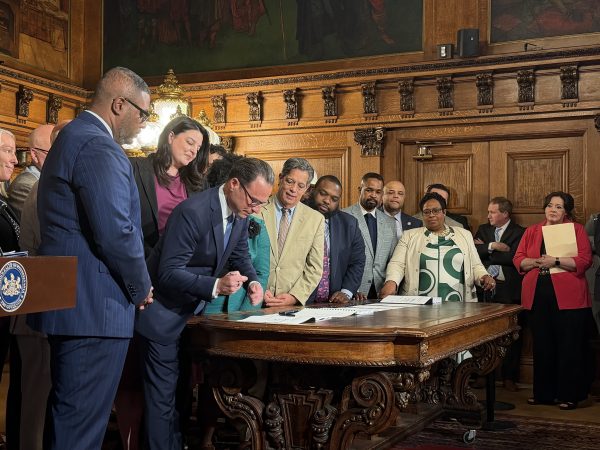
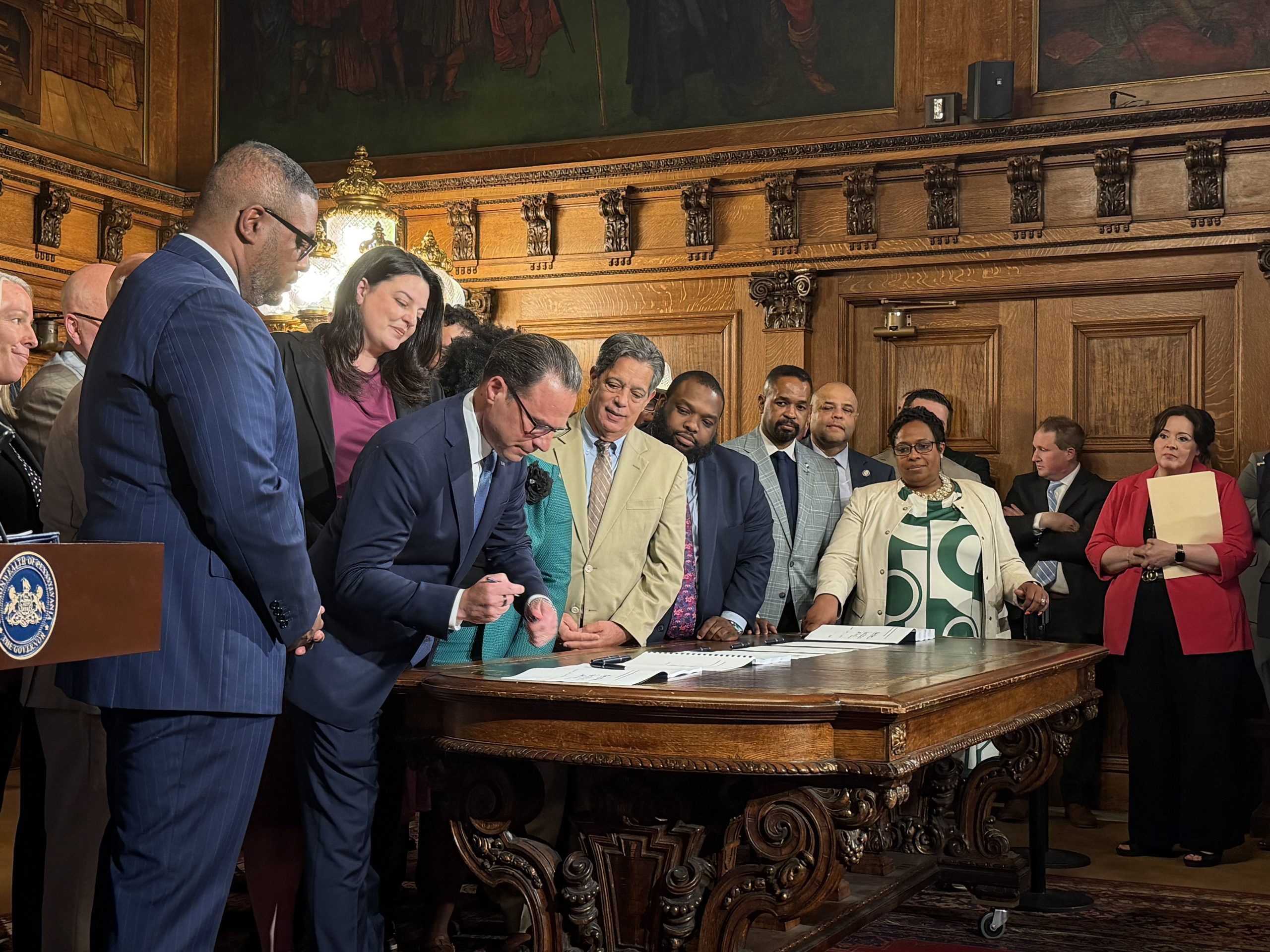
Gov. Josh Shapiro, flanked by fellow state Democrats, signs the 2026-27 Pennsylvania state budget in Harrisburg on Sunday.Gillian McGoldrick / Staff
“It’s definitely something our retirees have said to us for years,” said Kevin Ressler, the secretary of the Pennsylvania Professional Fire Fighters Association. “When you think about what things cost just 10 years ago until now, everything has gone up.”
State legislators last approved a cost-of-living adjustment for police and firefighters in 2002. Since then, inflation has resulted in a 86% price increase, according to the U.S. Bureau of Labor Statistics.
State Sen. Frank Farry (R., Bucks), a volunteer fire chief in Lower Bucks County, said members of both parties felt that it was time to pass the pension increase.
First responders “dedicated decades of work to the community, just like our educators who dedicated decades of work to helping our young people grow and learn,” he added.
While municipalities pay a portion of the pensions for first responders and public school teachers, the state will pay for all costs associated with the pension increase, Farry said. The increase, estimated to cost around $168 million annually, will come from revenue generated from an existing tax on internet gaming, he said.
The state’s Fraternal Order of Police said in a statement that while no adjustment “can fully repay the commitment these men and women made throughout their careers,” the increase “restores a measure of fairness by helping ensure their retirement benefits better reflect today’s economic realities.”
State Sen. Katie Muth (D., Montgomery) said the pension increases are the “high point” of this year’s policy changes negotiated as part of the overall budget deal.
“These are our oldest retirees, many of them living in poverty,” she said. “This is a good moment, but a late moment. This should have been done quite some time ago.”
The average age of retirees eligible for the cost-of-living increase in the state’s main two pension funds is just over 81 and 84 years old, respectively.
The new pension bump, meted out monthly, is not set to automatically increase next year. Lawmakers from both parties have pushed for pensions to increase annually, indexed to inflation.
State Sen. Tracy Pennycuick (R., Montgomery) — who sponsored a bipartisan bill to provide the pension increase to first responders — said that she hopes Harrisburg can now work to pass legislation to provide a yearly cost-of-living adjustment.
“This is sending a very powerful message to young professional firefighters and police officers that we will continue to take care of you with cost-of-living adjustments in retirement,” she added.
Ethan Young is an intern with the Pennsylvania Legislative Correspondents’ Association.
HARRISBURG — Gov. Josh Shapiro signed a $50.8 billion state budget on Sunday following the rushed passage of the overall deal by the General Assembly thatlawmakers said helps address the state’s affordability crisis but delays action on some of the most significant issues before the legislature.
“We managed, as the [vote count] indicates, to find compromise without compromising our core values,” Shapiro said during a news conference Sunday evening, before signing his fourth budget as Pennsylvania’s governor.
The deal was hashed out over weeks in closed-door meetings among top leaders and includes new transparency requirements for data centers, publicly funded housing projects, and public transit agencies. Lawmakers also agreed to a long-sought cost-of-living adjustment totaling approximately $168 million per year for some Pennsylvania retired teachers, police officers, and firefighters — some of whom have not seen an increase to their monthly pension payments in more than 20 years.
Gov. Josh Shapiro, flanked by fellow state Democrats, signs the 2026-27 Pennsylvania state budget in Harrisburg, Pa. on Sunday, July 12, 2026.Gillian McGoldrick / Staff
More education funding, data center requirements
Pennsylvania will have invested nearly $2 billion in new school funding through its adequacy and tax equity formulas since 2024. That’s when lawmakers first employed the new calculations to close a $4 billion “adequacy gap” after a landmark court ruling that found the state was illegally underfunding students in low-income districts. This year’s installment of adequacy funding topped $565 million, as part of an effort to prevent districts from having to raise property taxes on already low-income residents. The additional investment sends $136 million more this year to the School District of Philadelphia.
Legislative leaders failed to agree in the final budget on other issues that have seen broad support in both chambers, such as repealing a sales tax exemption for data center projects, allowing local moratoriums on data center projects, or banning cell phones in K-12 schools. They may revisit the issues during the fall legislative session.
Instead, they approved a new reporting requirement that will force data centers to submit annual reports detailing their water and energy usage. The companies will face a $10,000-a-day fine for failing to submit their reports.
But the budget does not address some of the most pressing issues before the General Assembly, including whether to tax and regulate skill games or allow the more than 70,000 gambling machines in Pennsylvania bars, corner stores and fraternal organizations to become illegal come October. The state has until then to decide how to approach the machines after the state’s Supreme Court last month determined that skill games, which have for years operated in a legal gray area, are slot machines and should be regulated as such. They also punted on finding a long-term funding solution to fund mass transit until next year, when a two-year fail-safe runs out.
The state House chamber as Gov. Josh Shapiro makes his annual budget proposal in Harrisburg Tuesday, Feb. 3, 2026.Tom Gralish / Staff Photographer
Shapiro, a first-term Democrat facing reelection this year, proposed a $53.3 budget in February that for a fourth time emphasized top Democratic initiatives such as raising the state minimum wage to $15 per hour or legalizing recreational marijuana. He also proposed other initiatives, such as a $1 billion critical infrastructure fund to help the state drive out public dollars to build more housing and energy generation, which did not see funding in the final budget deal.
State Sen. Nikil Saval (D., Philadelphia) was among the two Democrats who opposed the state budget, in part because it did not make the ambitious investments needed to address the state’s limited affordable housing stock.
“We cannot defer at this moment,” added Saval, the chair of the Philadelphia delegation in the Senate, in his floor remarks before the vote.
Lawmakers also declined to create any new generators of revenue for Pennsylvania,anddeferred addressing the state’s multibillion dollar structural deficit until future years.
‘Met in the middle’
The overall deal passed with bipartisan support in the GOP-controlled Senate, 44-6, and in the House, where Democrats hold a narrow majority, 167-35.
“We have met in the middle,” said Senate Majority Leader Joe Pittman (R., Indiana). “I am proud of this product, despite what some naysayers may say.”
The 2026-27 budget, which is a 1.4% increase in spending over the prior fiscal year, has no widespread tax increases. It also largely relies on accounting maneuvers like spending down unused or underused dedicated funds to address the structural deficit instead of pulling from the state’s emergency savings account.
One of the accounting moves to balance Pennsylvania’s budget includes delaying two months of payments totaling $1.3 billion to insurance companies that fulfill the state’s ballooning Medicaid programs until the next fiscal year. Without those delayed payments, the budget would total closer to $52.1 billion.
Several GOP House members opposed the budget, arguing it is unbalanced and only postpones tax increases to future years if spending isn’t cut.
State Rep. Brad Roae (R., Crawford), called the final budget a “fake number.” State Rep. Charity Grimm Krupa (R., Fayette) called it “voodoo math.” And State Rep. Marc Anderson (R., York) said the state was “cooking the books.”
But broadly, both Democratic and Republican members called the budget a reasonable compromise, acknowledging that they will have additional work to do in the fall legislative session and during next year’s budget negotiations to balance the state’s finances. During speeches on the Senate floor, several Republican senators quoted The Rolling Stones’ song “You Can’t Always Get What You Want,” emphasizing the second half of the refrain: “You might find you get what you need.”
State Rep. Jordan Harris (D., Philadelphia) also turned to music to represent his position on the budget deal, paraphrasing Anthony Hamilton’s “Do You Feel Me” as a response to his constituents’ concerns about affordability by sending more state dollars to school districts to help them avoid property tax increases and raising monthly pension payments for retirees.
“I am glad to stand today to support it, to let the people of Pennsylvania know, baby, the message is getting through,” Harris added.
Pennsylvania Legislative Correspondents’ Association Intern Ethan Young contributed to this article.
HARRISBURG — Pennsylvania’s top legislative leaders and Gov. Josh Shapiro have reached a $50.8 billion budget deal, more than a week after a new state budget was due at the start of the fiscal year, according to two sources briefed on the closed-door conversations.
Details of the contents of the overall budget deal were not immediately available on Saturday, as lawmakers are expected to begin reviewing the bills in the coming days and a final budget is expected to reach Shapiro’s desk by early next week. The state Senate was scheduled to advance parts of the budget on Saturday evening, and the House was scheduled to do the same on Sunday afternoon.
Though the deal comes more thana week past due, the agreement on the state budget framework among Pennsylvania’s Democratic-controlled House, Republican-led Senate, and Democratic governor marks an improvement from last year’s nearly five-month budget impasse that required school districts, counties, and social service providers to take out expensive loans or close altogether.
Half of the state Senate and all 203 state representatives are up for reelection this year, and many are eager to approve a state budget and return to their districts to campaign. Many of the more contentious issues before the legislators appear to have been kicked to the General Assembly’s fall legislative session or will resurface in budget talks next year, when lawmakers are not scheduled to face voters. Shapiro, too, is up for reelection this year; his Republican challenger is State Treasurer Stacy Garrity.
Pennsylvania’s budget deal was crafted largely in secret over weeks of closed-door meetings involving top legislative staff and leaders including Shapiro, House Majority Leader Matt Bradford (D., Montgomery), and Senate Majority Leader Joe Pittman (R., Indiana).
The overall budget deal presented to the General Assembly will feature a state spending plan, in addition to some policy changes as part of horse-trading of legislative priorities by top leaders.
One major policy change that appeared to be advancing as part of the overall deal on Saturday evening is a bill to allow local municipalities to pass ordinances placing a moratorium on data center development for no longer than 18 months. That bill, Senate Bill 1345, sponsored by Sen. Jarret Coleman (R., Bucks/Lehigh), was scheduled for a committee vote Saturday evening, when amendments to the bill were possible.
Gov. Josh Shapiro arrives on the state House chamber to make his annual budget proposal in Harrisburg Tuesday, Feb. 3, 2026.Tom Gralish / Staff Photographer
Shapiro hinted that a deal was near on Thursday at a news conference in Altoona, saying, “You’re going to see a lot of activity in the Capitol this weekend.”
“We’ve been working hard, really hard, to bring both sides together, to bring togetherDemocrats and Republicans, and I think you’re going to see a result that benefits the good people of Pennsylvania really soon,” Shapiro added.
It was not immediately clear how legislative leaders and Shapiro agreed to fill the state’sbillion-dollar structural deficit without creating any new revenue streams as part of the 2026-27 fiscal year budget. Even if lawmakers did not increase spending this year — which they are expected to do — the state would need to make up $1.2 billion to balance the budget.
The deal’s 1.4% increase over last year’s $50.1 billion budget does not allow much room for new spending, unless other existing programs have been cut.
In new spending, the deal appeared to include an increase to the state’s funding for public education through its adequacy and tax equity formulas, which were designed by lawmakers in 2024 to close a $4 billion “adequacy gap” following a landmark court ruling that found Pennsylvania was illegally underfunding students in low-income districts.
“If the adequacy number was not agreed to, we wouldn’t be having this conversation,” said State Sen. Vincent Hughes (D., Philadelphia), who is the minority chair of the powerful Senate Appropriations Committee, on Friday evening. “I think the adequacy number will be consistent with what the governor proposed.”
Shapiro proposed a $53.2 billion budget in February, which included a $565 million increase to adequacy funding for public schools. He also included new potential revenue generators from taxing and regulating skill games, legalizing recreational marijuana, and increasing the state’s minimum wage to $15 per hour. None of these potential revenue generators appeared to make it into the final deal.
Screens shows skill games and cannabis regulation and reform as Gov. Josh Shapiro makes his annual budget proposal in the state House chamber in Harrisburg Tuesday, Feb. 3, 2026.Tom Gralish / Staff Photographer
The state is on track to bring in $48.9 billion this year in revenue, according to the Pennsylvania Independent Fiscal Office’s latest projections. Pennsylvania also maintains a $7.7 billion Rainy Day Fund that Senate Republicans have tried to prevent the state from tapping into. It is unclear whether lawmakers will agree to access some of the reserve dollars as many Pennsylvanians face an affordability crisis. Tapping into the Rainy Day Fund requires a two-thirds majority vote by both chambers.
The state budget topped $50 billion for the first time last year and has increased by 25% — approximately $10 billion — over a five-year period.
Pennsylvania Legislative Correspondents’ Association intern Ethan Young contributed to this article.
After giving birth to her first child, Jennifer O’Mara sought therapy forpostpartum depression.
But when O’Mara left her Delaware County home to visit her in-laws in North Carolina, her counselor had to cancel a virtual session because she wasn’t licensed to practice outside of Pennsylvania.
“My therapist had always asked me if I was in Pennsylvania before a session started, and there was actually a time where I was not, and we couldn’t meet, and I didn’t understand why,” O’Mara said. “I was confused.”
Unbeknownst to the new mother, Pennsylvania counselors need a separate license for each state they practice in.
O’Mara, a Democrat elected as a state representative in 2018 and a co-chair of the legislature’s Mental Health Caucus, said she’s been working to change that regulation since that canceled therapy session.
Four years later, O’Mara’s efforts are about to pay off under a bill expected to soon go to Gov. Josh Shapiro for his signature.
The legislation would make Pennsylvania the 40th state to join the Interstate Counseling Compact. It enables counselors who are licensed in Pennsylvania to practice in any state that is part of compact.
Pennsylvania will join already participatingstates, including Delaware, New Jersey, Maryland, Ohio, and yes, North Carolina.
The bill only applies to licensed professional counselors, or LPCs. Pennsylvania separately participates in multistate healthcare compacts for psychologists, doctors, nurses, and physical therapists to provide inpatient care or telemedicine across state lines.
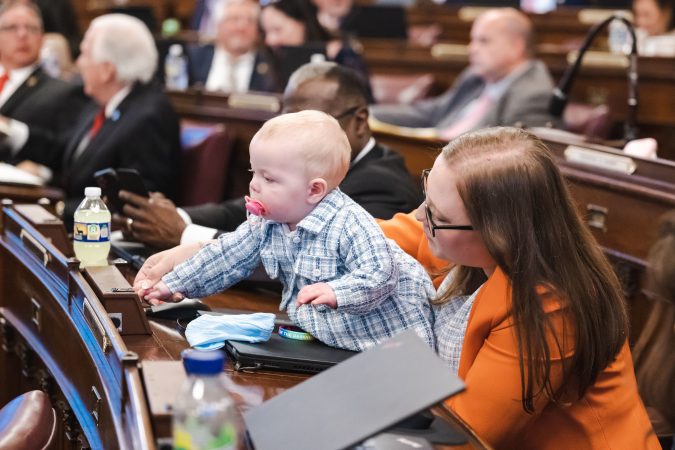
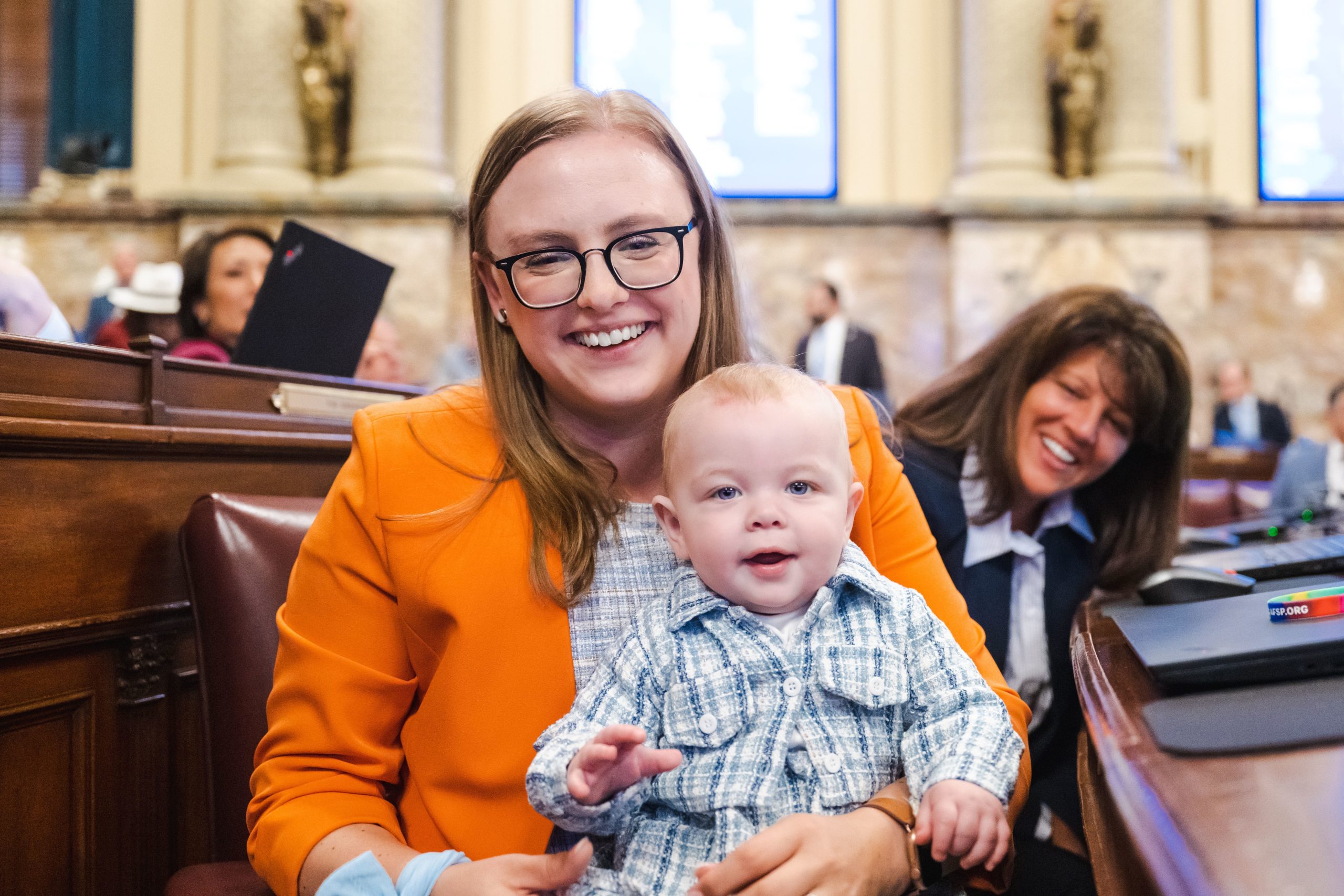
State Rep. Jennifer O’Mara (D., Delaware County) with her daughter, Katherine, now 4, in 2023. O’Mara helped usher the Interstate Counseling Compact bill through the Pennsylvania House in late June. The bill would allow licensed professional counselors (LPCs) to practice across state lines. Courtesy of Jennifer O'Mara
Shapiro plans to sign it
O’Mara helped advance the bill in the House. The Senate had passed it in July 2025 by a 45-5 vote. The House approved it last week by an 188-to-14 vote.
It now goes back to the Senate for a perfunctory, final signature by that chamber’s president before heading to Shapiro’s desk, according to a spokesperson for Sen. Lisa Boscola (D., Lehigh and Northampton), the bill’s prime Senate sponsor.
O’Mara and leaders of the Pennsylvania Counseling Association (PCA), which has about 700 members statewide, said they expect Shapiro to sign the bill into law once it gets to his desk. A spokesperson for Shapiro confirmed on Tuesday that he plans to sign it.
The bill aims to benefit recent high school graduates who want to keep the same therapist but plan to attend college out of state; active duty military members who are deployed outside Pennsylvania; and residents who physically work in New Jersey or Delaware and opt to do sessions during their lunch break, according to O’Mara.
“This feels like a small bill that will make a big difference,” O’Mara said.
Addressing a shortage of counselors
Post-pandemic, the demand for mental health services has increased, and providers have struggled to keep up. The nation is expected to have a shortage of more than 40,000 counselors by 2030, and roughly 62% of Pennsylvania communities lack adequate mental health services, according to the PCA.
The legislation is designed to ease that burden, said Nicole Palman, a counselor at the Main Line Counseling and Wellness Center in Haverford.
“We’ll be able to continue to see clients when they move to New Jersey or when they move to Delaware without having to end care that may have been going on for years,” saidPalman, a PCA member who advocated for the bill.
It’s not always easy to find a new counselor, she noted.
“A lot of people get discouraged,” Palman said. “The process is worse than dating to find a therapist you align with.”
Editor’s note: This story has been updated to clarify that psychologists are included in Pennsylvania’s multistate compacts for health professionals.
Inquirer staff writer Gillian McGoldrick contributed to this article.
A federal judge had some good news this week for Josh Shapiro, governor of Pennsylvania, but not so much for Josh Shapiro, resident of Montgomery County.
Shapiro, as governor, cannot be sued in his official capacity in a dispute over a strip of yard between his and his Abington Township neighbors’ adjoining properties, U.S. District Judge Harvey Bartle III ruled Tuesday.
But Shapiro and his wife, Lori, will still have to face their neighbors in federal court as homeowners, Bartle also determined.
The conflict came into public view in February, when Jeremy and Simone Mock, whose backyard abuts the Shapiros’ lawn in a tree-lined neighborhood near Pennsylvania State University’s Abington campus, sued Shapiro — both as governor and in his individual capacity — and George Bivens, acting Pennsylvania State Police commissioner. The lawsuit alleged the officials were illegally occupying part of the Mocks’ yard to build an eight-foot security fence last summer in what they claimed was an “outrageous abuse of power” that violated their constitutional rights. Bartle dismissed those claims in his ruling Tuesday, in what Shapiro’s administration called a major win.
But while Shapiro and Bivens are immune from the federal lawsuit as state officials, Shapiro as an individual and his wife are not, Bartle’s opinion said.
“We are pleased that the court has dismissed the claims against the office of the governor and the Pennsylvania State Police, and recognize that the allegations against these officials are without merit,” said Rosie Lapowsky, a spokesperson for Shapiro. “The Shapiros are confident that the facts will ultimately show that the Mocks’ remaining claims are meritless and politically motivated and will fail.”
Shapiro’s safety remains a priority for state police, as one of the nation’s most prominent Jewish elected officials. A Delaware County man was arrested Wednesday for threatening to burn down the governor’s residence, state police said.
But the Mocks’ attorney, Wally Zimolong, said the lawsuit at hand is about property rights and due process, and called Bartle’s ruling a “strong decision.”
“Make no mistake about it,” Zimolong said, “a federal court has said that the sitting governor of Pennsylvania can be held liable for damages over constitutional violations.”
The Delaware County lawyer who has represented high-profile Republican officials and candidates, including President Donald Trump, said it is “nonsense” to call the litigation political. Zimolong added that he hopes the Shapiros reconsider and attempt to resolve the case amicably.
The conflict’s origins
The dispute between the Shapiros and Mocks began last summer when, as part of a plan to build a security fence at the Abington house, a surveyor learned that a sliver of yard that the Shapiros had used for over two decades was actually on property belonging to the Mocks.
After the Mocks rejected the Shapiros’ offer to buy the land, court fillings said, Pennsylvania’s first couple invoked a state law that allows a person to gain ownership of a property they have actively used for at least 21 years. The Shapiros have lived in their Montgomery County home for 23 years.
“What followed was an outrageous abuse of power by the sitting Governor of Pennsylvania and its former Attorney General,” the Mocks’February lawsuit said.
(function() { var l = function() { new pym.Parent( ‘shapiroyard__graphic’, ‘https://media.inquirer.com/storage/inquirer/ai2html/shapiroyard/index.html’); }; if(typeof(pym) === ‘undefined’) { var h = document.getElementsByTagName(‘head’)[0], s = document.createElement(‘script’); s.type = ‘text/javascript’; s.src = ‘https://pym.nprapps.org/pym.v1.min.js’; s.onload = l; h.appendChild(s); } else { l(); } })();
A security fence was purchased but never installed, SpotlightPA reported. Instead, contractors hired by the state began planting arborvitae-type trees and other plants on the Mocks’ property. State police also flew drones over the Mocks’ property, threatened to remove healthy trees, and chased away contractors, the Mocks alleged in the suit.
The complaint also accused Shapiro of directing state police to patrol the property, and instructing the Mocks to leave the “security zone.”
The Shapiros’ countersuit in Montgomery County asks a judge to find that they are the “legal and equitable owners” of the area in dispute, having tended to the land that borders their front yard for 23 years. That suit is pending and a judge is expected to rule on preliminary objections filed by Zimolong.
Separately, the Shapiros and state attorneys filed motions asking Bartle to dismiss the federal complaint against them.
This week, the judge partially obliged, finding the stateofficials to be immune from the lawsuit while allowing the case against the Shapiros to proceed.
The judge also refused to freeze the federal case while the lawsuit in Montgomery County plays out, determining that the two cases are different enough to proceed.
“The claims here extend far beyond a disagreement between neighbors over the metes and boundaries of their properties,” Bartle wrote.
A Delaware County man was charged Wednesday after allegedly making threats againstGov. Josh Shapiro during a visit to a state representative’s office, including a threat to “burn down … [Shapiro’s] mansion with him in it,” Pennsylvania State Police said.
Police said the threats occurred when Richard John Franklin, 65, of Brookhaven, visited State Rep. Leanne Krueger’s legislative office in Brookhaven alongside his brotheron Tuesday to dispute and request help with an unanticipated and unpaid tax bill totaling $19, according to the criminal complaint. When a staffer tried to assist Franklin in completing a form to waive the taxes, Franklin “became irate and crumbled up the paper,” police said.
Franklin then began making threats the staffer believed were “threatening, harassing, and antisemitic in nature,” according to the complaint, including: “I guess I’ll pay that Jew. That Jew needs the money more than me” and “I’d like to burn down his [expletive] mansion with him in it.” Police said Franklin repeatedly referred to Shapiro as a “‘Jew’ multiple times in a negative manner.”
State law enforcement officers charged Franklin with felony levels of terroristic threats and ethnic intimidation, in addition to lower-level charges of harassment and disorderly conduct.
Shapiro, a Democrat who is among the most prominent Jewish officials in the country, has faced multiple threats of violence since becoming Pennsylvania’s top executive. In April 2025, a man broke into the state-owned governor’s mansion on the first night of Passover with a hammer and set several firebombs inside while Shapiro and his family were sleeping in a different part of the residence. The man, Cody Balmer, later pleaded guilty to attempted murder and was sentenced to 25 to 50 years in prison.
Pennsylvania Gov. Josh Shapiro pauses during a news conference at the governor’s official residence discussing the alleged arson that forced him, his family and guests to flee in the middle of the night on the Jewish holiday of Passover, Sunday, Apr. 13, 2025, in Harrisburg, Pa.AP Photo/Marc Levy
Early Wednesday, investigators from the state police political violencethreat unit visited Franklin at his Brookhaven home, where he provided conflicting accounts of what occurred at Krueger’s office before ultimately admitting to “calling the Governor a ‘Jew’ in a negative manner” and added that his “brother told him he should not have made the statement,” according to the criminal complaint. Franklin denied making any threats toward Shapiro, but admitted to referring to the previous arson attempt at the governor’s residence during the outburst, police said.
State police said they arrested Franklin without incident.
Franklin’s brother, who witnessed the events at Krueger’s office, disputed the state police account and said his brother never threatened the governor.
Leroy Franklin, 72, of Chester, said his brother visited the state representative’s office seeking information about a tax bill he had received, despite paying his state taxes through an accountant this year.
After the brothers spoke to a staffer who did not have answers for them, Richard Franklin became upset and raised his voice, Leroy Franklin said.
In a phone interview Wednesday, Leroy Franklin recalled his younger brother saying something to the effect of: “I’ve been on disability for 15 years, but I guess the state needs my money more than I do.”
The two were together at Krueger’s office the entire time, Leroy Franklin said, adding that he did not hear his brother use an antisemitic slur. He also disputed that his brother threatened arson.
“Anybody who said he did is lying,” Leroy Franklin said.
Around 2 a.m. Wednesday, Leroy Franklin said, he received a call from his younger brother. Richard Franklin told him that police were at his apartment and he was not sure where they were going to take him, Leroy Franklin recounted.
When the two spoke on the phone again later that morning, Leroy Franklin said, he learned police were taking his brother to jail.
“I don’t know what the heck anyone is talking about,” Leroy Franklin said Wednesday. “This is a bit extreme, to put it mildly.”
Richard Franklin was being held at the Delaware County prison with bail set at $100,000, according to court records. A preliminary hearing is scheduled for July 16, according to court documents. A lawyer for Franklin was not listed on court records.
Franklin is a registered Democrat, Pennsylvania voting records show. He has no prior convictions in Pennsylvania.
Shapiro’s office referred requests for comment about the incident to state police.
In a statement Wednesday, State Police Sgt. Logan Brouse said the agency “takes threats against the lives of public officials seriously,” noting the state police political violence threat unit was created “to address the growing amount of ideologically motivated violence against elected officials.”
The unit was created in May, after a Lebanon County man allegedly posted a “hit list” to social media targeting 20 state Democratic lawmakers. Adam Berryhill, 42, was arrested on May 6, after he was connected to an X account that posted a potential plan to attack the legislators. Some of the lawmakers named on the list said they had not been alerted to the threats against them, prompting state police leaders to update their communication protocols and create the investigations unit.
Krueger (D., Delaware) referred a request for comment to a spokesperson for House Democrats.
Nicole Reigelman, a spokesperson for House Speaker Joanna McClinton (D., Philadelphia), said in a statement that threats of political violence are becoming commonplace, “and every incident must be treated with the seriousness it deserves.”
“Healthy democracies depend on robust debate and respectful disagreement — not threats, intimidation, or violence,“ Reigelman added. ”Political violence has no place in our communities, and Pennsylvanians must unite in condemning it whenever and wherever it occurs.”