Tag: Josh Shapiro

  • Pa. state lawmakers found common ground on this data center policy — but still couldn’t reach a deal

    Pa. state lawmakers found common ground on this data center policy — but still couldn’t reach a deal

    HARRISBURG — Democratic and Republican lawmakers in Pennsylvania’s divided state government rarely agree.

    But this month, there was one issue upon which nearly all of them found common ground: ending tax breaks for data centers.

    Despite the rare consensus as Harrisburg looks to add guardrails to the state’s data center boom, no legislation was passed to end the favorable tax treatment for the projects. After approving the $50.8 billion state budget last week, Pennsylvania’s lawmakers went home for the summer, each blaming the other party for the inaction.

    But new regulations could be coming soon, Gov. Josh Shapiro said.

    The governor — who has adamantly stood by his proposal to condition tax breaks for data center projects based on their compliance with environmental and transparency standards — said he plans to take executive action on regulating Pennsylvania data centers in the coming weeks.

    “I am now exploring everything I can through executive authority since the Senate Republicans refused to act,” Shapiro said Tuesday at an unrelated event in Philadelphia, declining to share details or a timeline for his plans.
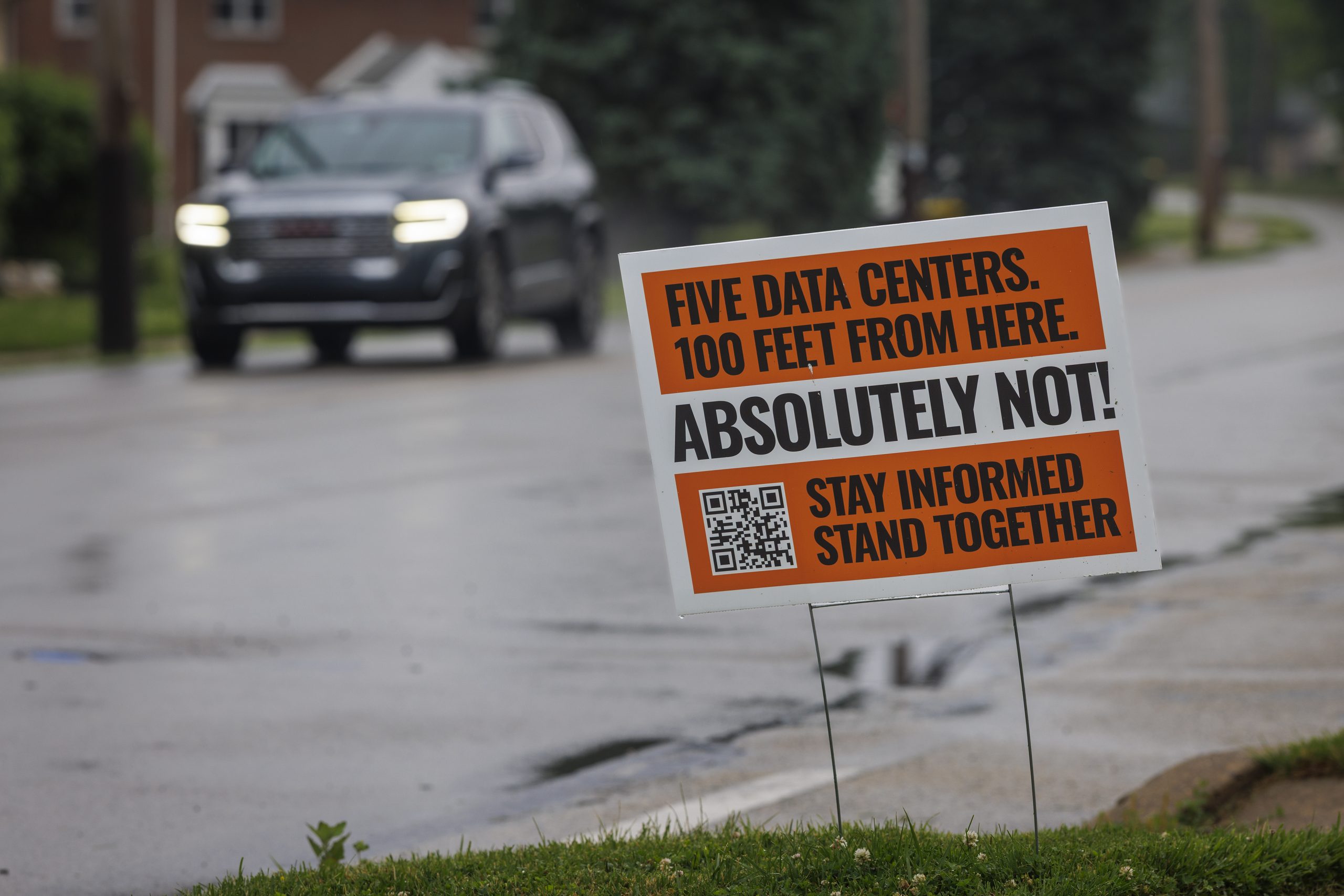
    Lawn sign along Crooked Lane in King of Prussia, Wednesday, May 27, 2026. Some residents are standing in opposition to building a data center in their community.Alejandro A. Alvarez / Staff Photographer

    The state’s current tax incentive for data center development is projected to cost Pennsylvania nearly $2 billion in lost revenue over the next five years.

    The current benefit was approved by the legislature in 2021. Developers who generate a certain dollar value of investment are exempt from the state sales tax rate of 6% for equipment, including materials used to construct the data center building.

    According to a February report from the state, 12 projects currently receive the exemption.

    Proponents of the tax break have said it helps keep Pennsylvania economically competitive. Opponents say such a benefit is no longer necessary for an industry that is expanding rapidly.

    “I am not going to get into hypotheticals,” Shapiro said Tuesday when asked whether he would sign a bill that would eliminate the tax benefit, something industry groups have loudly opposed.
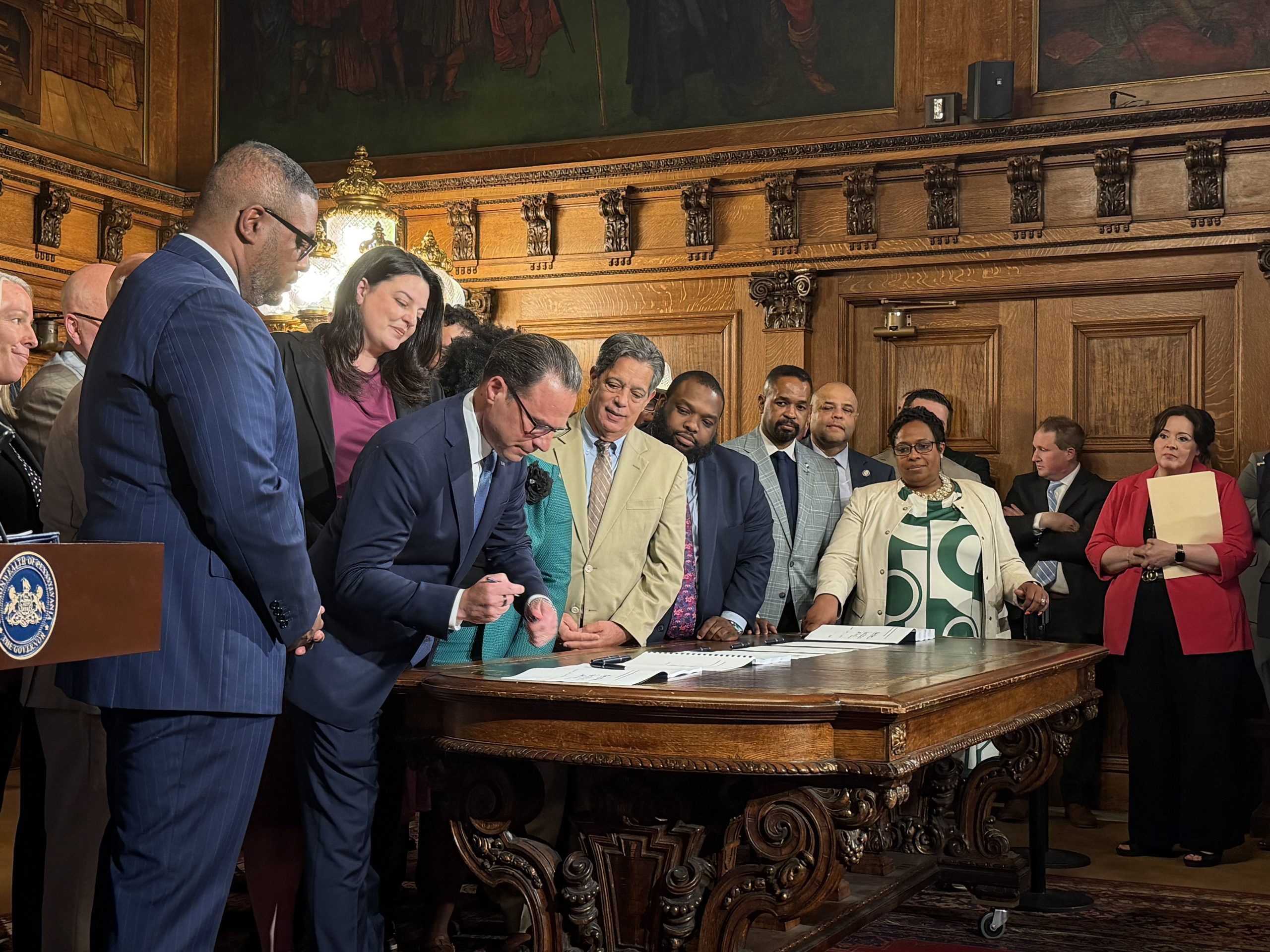
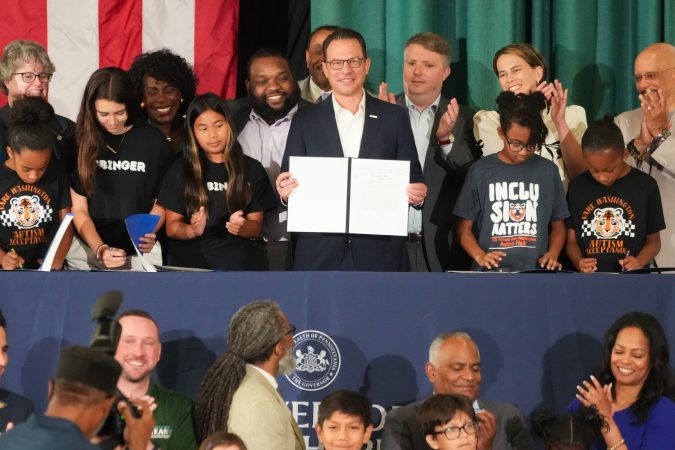
    Gov. Josh Shapiro, flanked by fellow state Democrats, signs the 2026-2027 Pennsylvania state budget in Harrisburg, Pa. on Sunday, July 12, 2026.Gillian McGoldrick / Staff

    Shapiro has championed his proposal for data centers, which incentivizes tax breaks for projects that adhere to a series of requirements. He has not publicly endorsed other data center regulation bills passed by the Democratic-controlled House. The governor’s plan passed the House in June with a vote of 134-68, but was not put up for a vote in the Republican-controlled Senate.

    And as public opinion has soured on data center development, lawmakers in Harrisburg have become more skeptical. This year, all but five Pennsylvania state legislators expressed support for bills that would remove tax breaks for data centers.

    According to an Inquirer review, 197 out of 202 House members voted for a bill that would have repealed the tax benefit. In the Senate, 44 out of 50 members voted in favor of a bill that included a provision to eliminate the tax exemption. The remaining six senators expressed support in interviews for getting rid of the tax break, though they said they voted against the bill because of unrelated provisions included within the legislation, including an expansion of the Educational Improvement Tax Credit Program.

    Though the state’s final budget took no action on the tax exemption, it included a provision requiring data centers with electric outputs larger than 10 megawatts to submit information about their energy and water usage to the state.

    Several other data center regulations that received bipartisan support in recent weeks were also absent from the final spending package, including attempts to enact a local or statewide moratorium on new development.
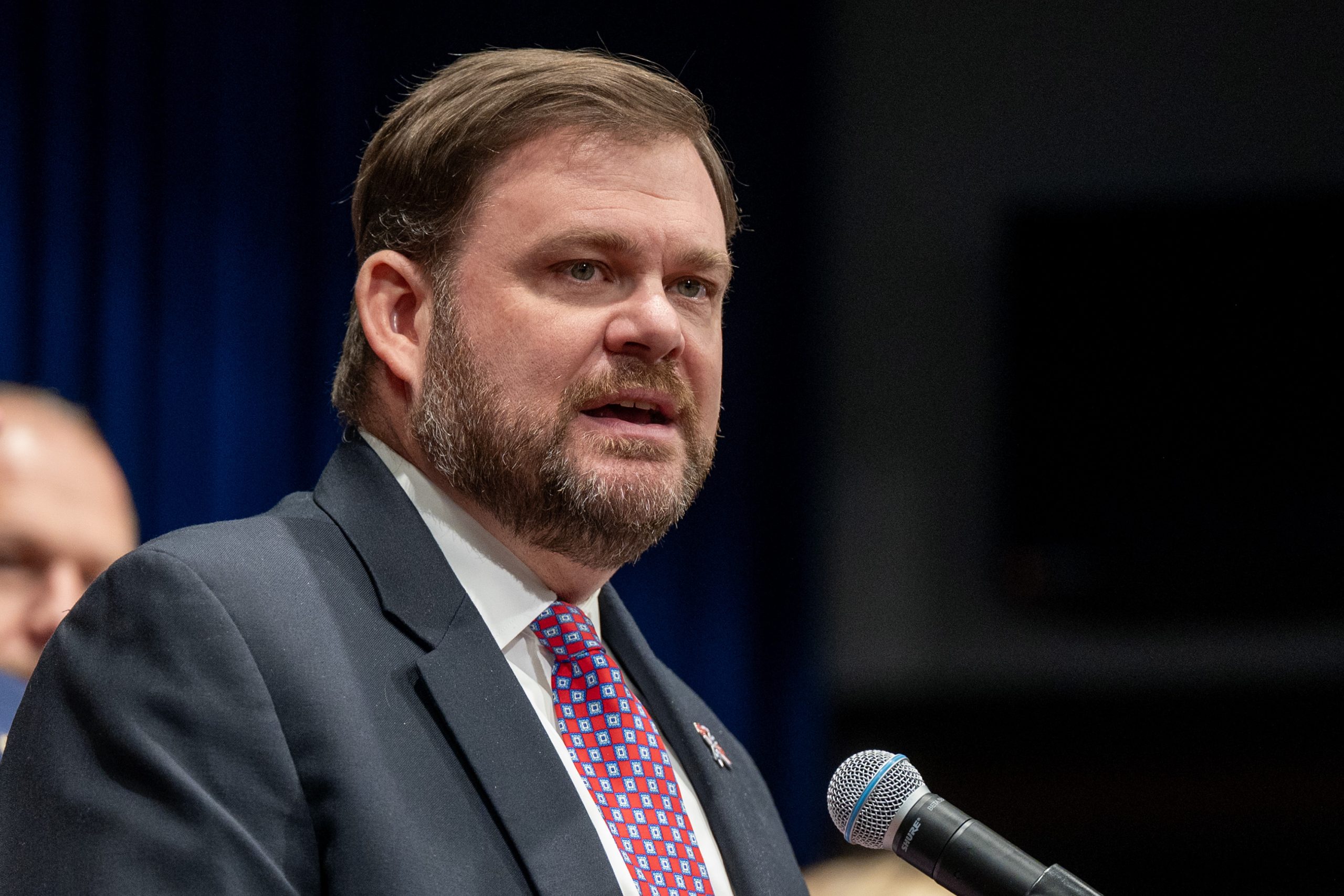
    State Senate Majority Leader Joe Pittman (R., Indiana) during a press conference at the Capitol in Harrisburg Feb. 3, 2026.Tom Gralish / Staff Photographer

    House Democrats and Senate Republicans were quick to blame each other for failing to reach a deal on removing the tax exemption.

    During separate news conferences after the budget passed, Senate Majority Leader Joe Pittman (R., Indiana) and House Majority Leader Matt Bradford (D., Montgomery) each said it was the other party’s fault that a tax benefit repeal was left out.

    Pittman said that Democrats “shredded” a Republican-backed bill into “something that nobody could recognize,” adding in an email that Senate Republicans would also “continue to examine” the proposal backed by Shapiro.

    Bradford, placing the blame on Pittman, said he is “obviously unbelievably disappointed by the Republican leader in the Senate stating that he has no interest in doing anything on data centers,” adding that he was proud of the state House for advancing a number of data center regulation proposals.

    Beth Rementer, a spokesperson for the House Democrats, said in a statement that “Senate Republicans still have an opportunity outside the budget negotiation process to vote on all the bills we passed to hold big tech accountable.”
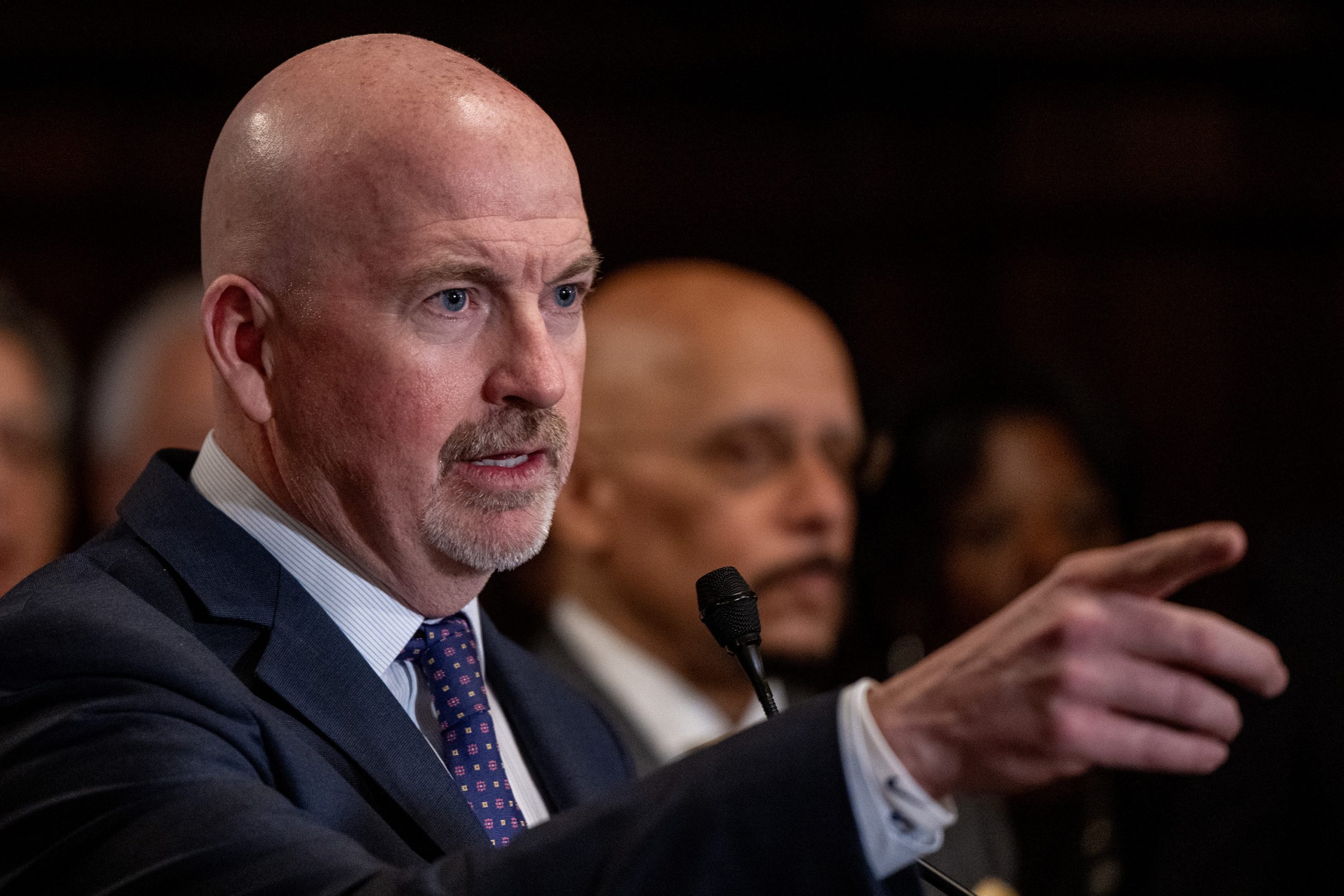
    State Rep. Matt Bradford (D., Montgomery County) during a press conference at the Capitol in Harrisburg Feb. 3, 2026.Tom Gralish / Staff Photographer

    The Pennsylvania Chamber of Business and Industry and the Pittsburgh Building Trades Council lobbied legislators to keep the tax break. In a June memo to state House members, the Pennsylvania chamber wrote that a repeal of the tax benefit “threatens to place Pennsylvania at a competitive disadvantage and sends a troubling signal to current and prospective investors that the Commonwealth is willing to change the rules after the fact.”

    The legislature quietly deferred action on other topics, like funding mass transit and regulating skill games, as part of this year’s budget negotiations. But the data center debate spilled into the public arena.

    In an interview, State Sen. Katie Muth (D., Montgomery) — one of four senators who voted against approving the original tax exemption in 2021 — said she suspected the legislative back-and-forth about the tax break gave lawmakers a chance to record their vote on a hot-button issue among their constituents.

    She said that many legislators who voted to repeal the tax break did so for “show, so everybody can send out mailers.” In addition to Shapiro, half the state Senate and all members of the state House are up for election in November.

    Lawmakers could revisit the topic come fall when they reconvene. And Shapiro said it is on his agenda, too.

    “I think the legislature should have acted,” Shapiro said. “Given the fact that the legislature refuses to act, we’re going to look at our executive authority and determine what the best steps are.”

    Ethan Young is an intern with the Pennsylvania Legislative Correspondents’ Association. He can be reached at ethanmyoung@gmail.com.
  • Let’s stop giving hate a partisan exception. Extremism doesn’t check political affiliation.

    Let’s stop giving hate a partisan exception. Extremism doesn’t check political affiliation.

    The same weekend America turned 250, I also watched a mosque burn in Northeast Philadelphia, a governor threatened with violence he’d already survived, and masked men march past the U.S. Capitol chanting “Reclaim America.”

    None of it happened in the same city or involved the same people — and that is exactly why it matters.

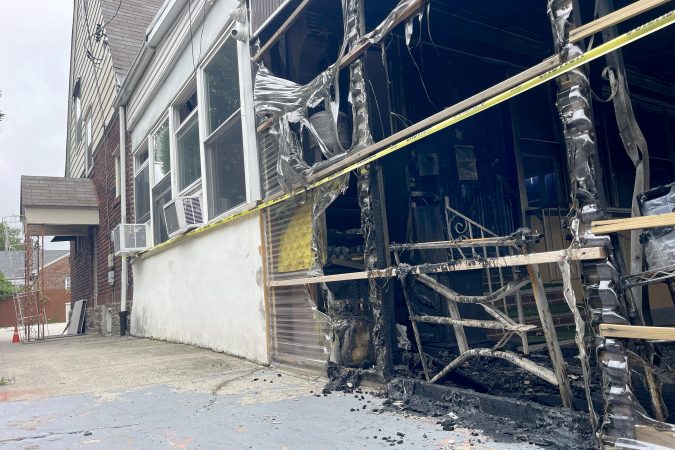
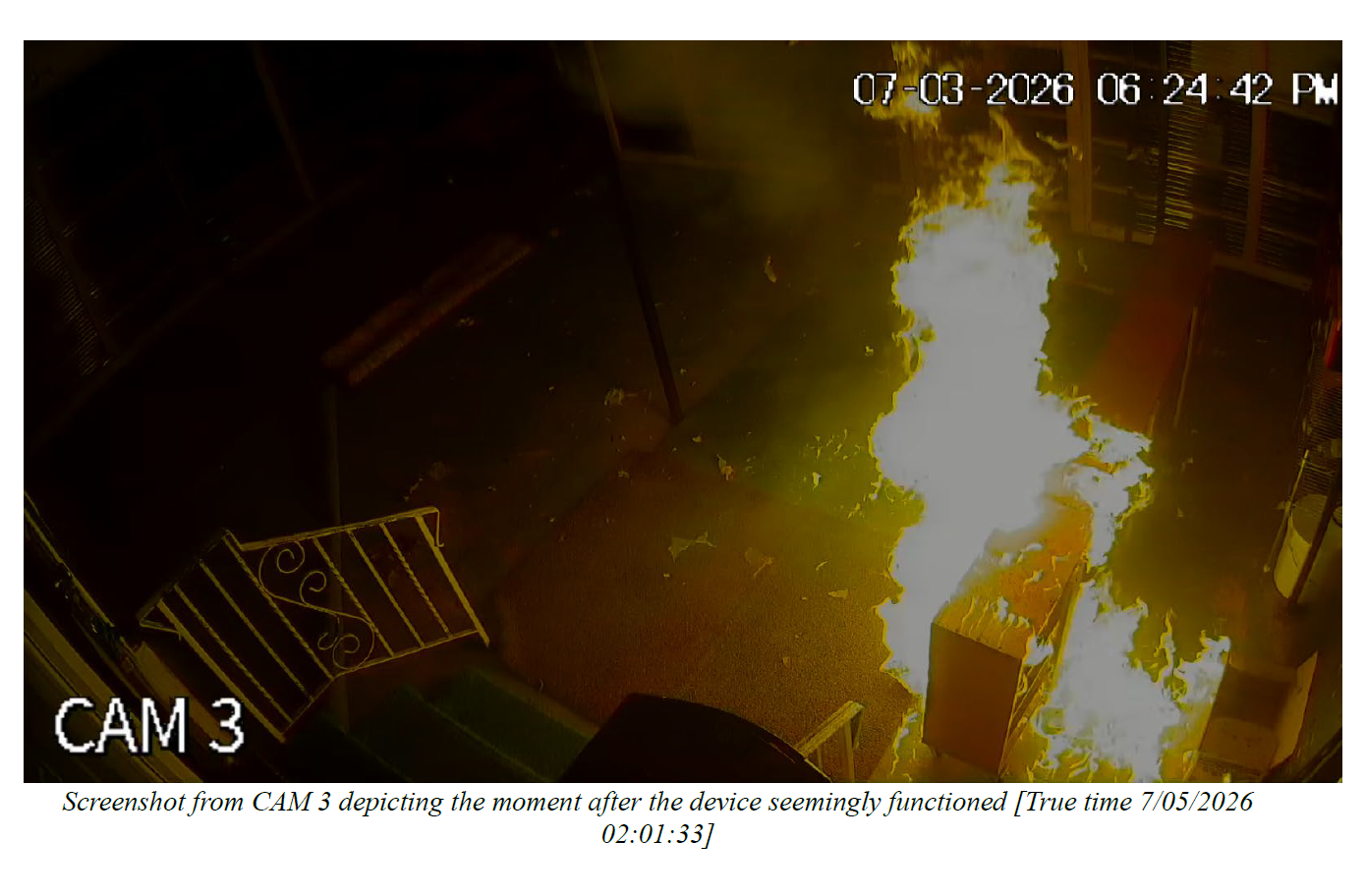
    Someone threw a flaming object into the Northeast Philadelphia Islamic Center. No one was hurt, thankfully, but a community that gathers there to pray was left afraid in a building meant to be a sanctuary. State Sen. Sharif Street called it what it was: “This wasn’t just an arson. This was a hate crime.”

    Image from security video of fire started by an incendiary device on July 5 at the Northeast Philadelphia Islamic Center.U.S. Attorney's Office

    Two days later, in Delaware County, a man walked into a legislator’s office for help with his taxes, used an antisemitic slur while talking about Gov. Josh Shapiro, and threatened to burn down the governor’s mansion again. He called the threat itself “sympathetic,” because Shapiro’s family had already survived a real arson attack in 2025.

    This image provided by Commonwealth Media Services shows damage after a fire at the Pennsylvania governor’s mansion while Democratic Gov. Josh Shapiro and his family slept inside on April 13, 2025, in Harrisburg, Pa.Commonwealth Media Services

    Read that twice. A man was arrested for describing arson against a governor’s family as an act of sympathy.

    That same week, Graham Platner’s Senate campaign in Maine finally collapsed. It wasn’t the Nazi tattoo he’d worn for nearly 20 years. A symbol tied to Nazi concentration camp guards was, on its own, apparently not enough.

    On the National Mall, hundreds of Patriot Front members, a group the Anti-Defamation League calls the most visible white supremacist organization in the country, marched in coordinated uniforms, carrying Confederate flags, chanting about reclaiming a nation they insist belongs to them alone. They did this in broad daylight, on Independence Day, and walked away unbothered.

    It doesn’t have to be this way. Pennsylvania has offered a glimpse of the right response to hate.

    After mailers went out to Upper Bucks County voters attacking a Democratic candidate as the pick of the “corporate, Israel-first Democratic party,” alongside a photo of State Sen. Steve Santarsiero, who is Jewish, with an Israeli flag under his face, he called the language exactly what it was: “an antisemitic trope that falsely implies Jewish Americans are disloyal to the United States.” Republican Attorney General Dave Sunday agreed, as did State Rep. Dan Frankel (D., Allegheny) and State Sen. Judy Schwank (D., Berks), who called the mailers “unacceptable and dangerous.”

    That’s what the response to hate should look like every time, not because it’s convenient, but because antisemitic hate speech is hate speech, and in the end, it is incumbent on all parties and political leaders to speak out.

    Extremism doesn’t wait for permission from a party platform. It shows up as a firebomb thrown into a mosque, a slur hurled at a governor, matching uniforms marching past the Capitol, a hateful symbol that doesn’t disqualify a candidate.

    The only real defense is what happened with the mailer in Bucks County: leaders naming it immediately, without waiting to see who it benefits politically to stay quiet.

    I have spent my career watching people search for the loophole: this hate doesn’t count, this extremist isn’t really one of ours, this symbol was just a tattoo. There is no loophole. Hate doesn’t get a partisan exception, and neither does our responsibility to name it the first time we see it.

    Here is what I’d ask, whatever you believe and whomever you vote for:

    • Condemn it the first time, not the 10th.
    • Refuse the whataboutism. “The other side does it, too” has never made anyone safer.
    • Show up for communities that aren’t yours. A mosque needs the same solidarity a synagogue would after an attack, and vice versa.
    • Report what you see. Silence is how patterns become normal.

    This year marks 250 years of a promise: that all people are created equal.

    That promise doesn’t come with a partisan carve-out. Leaders in Pennsylvania showed us it doesn’t have to. The question is whether we follow that example, or wait for the next arson, slur, or tattoo before it finally matters.

    Andrew Goretsky is the senior regional director for ADL Philadelphia.

  • Shapiro visits Philly to debut $125 million investment in Pennsylvania’s life sciences industry

    Shapiro visits Philly to debut $125 million investment in Pennsylvania’s life sciences industry

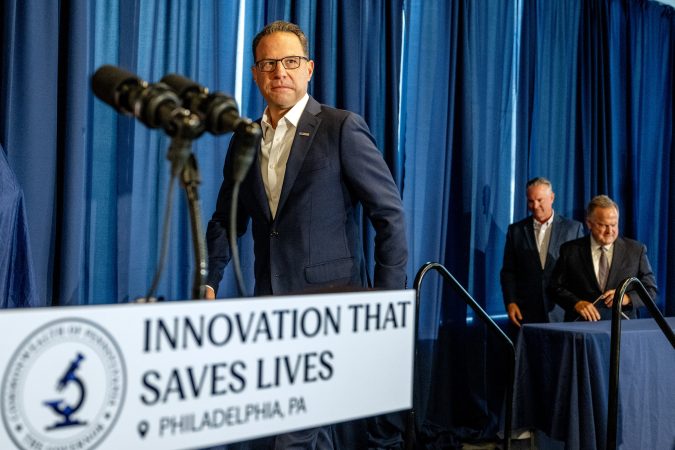
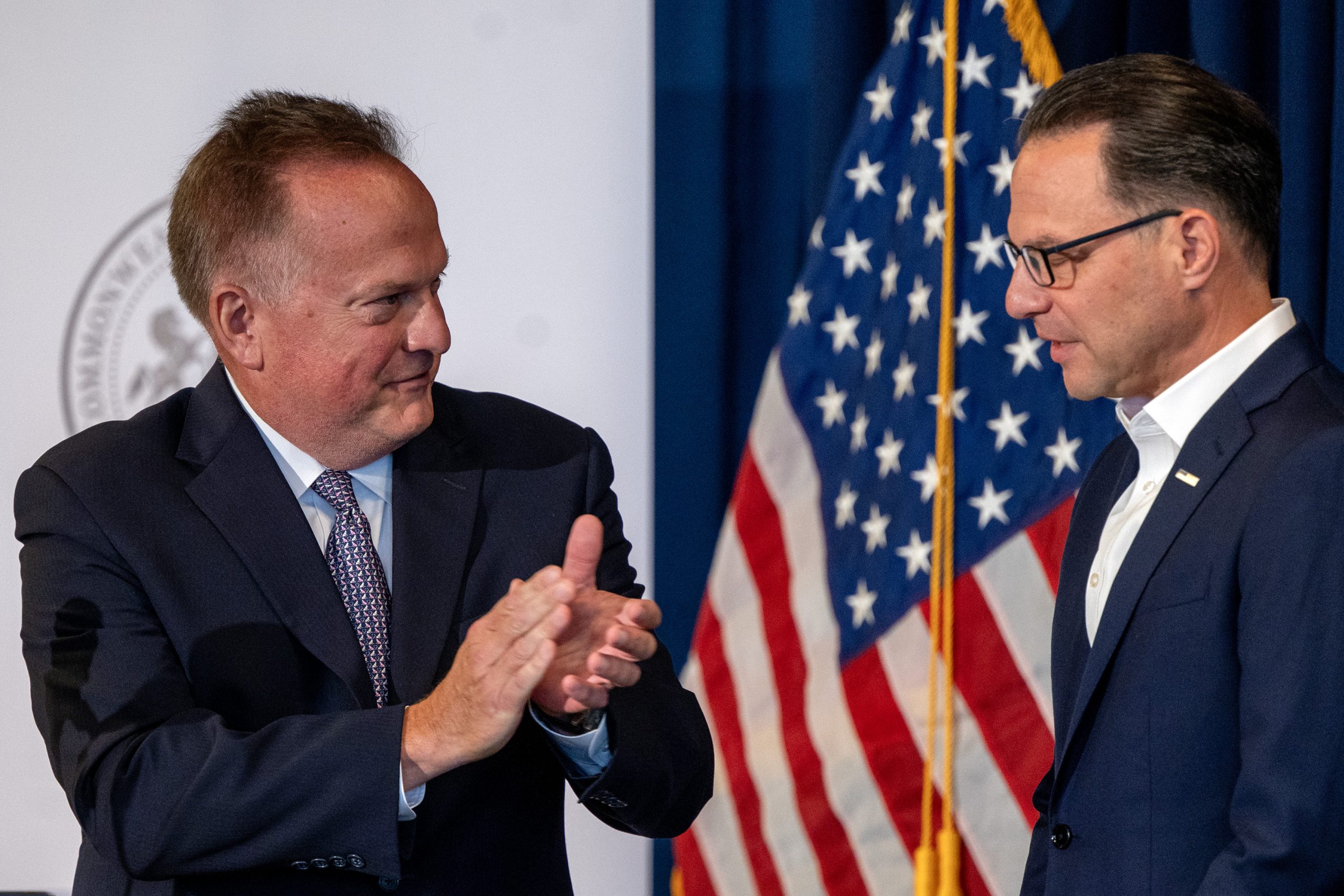
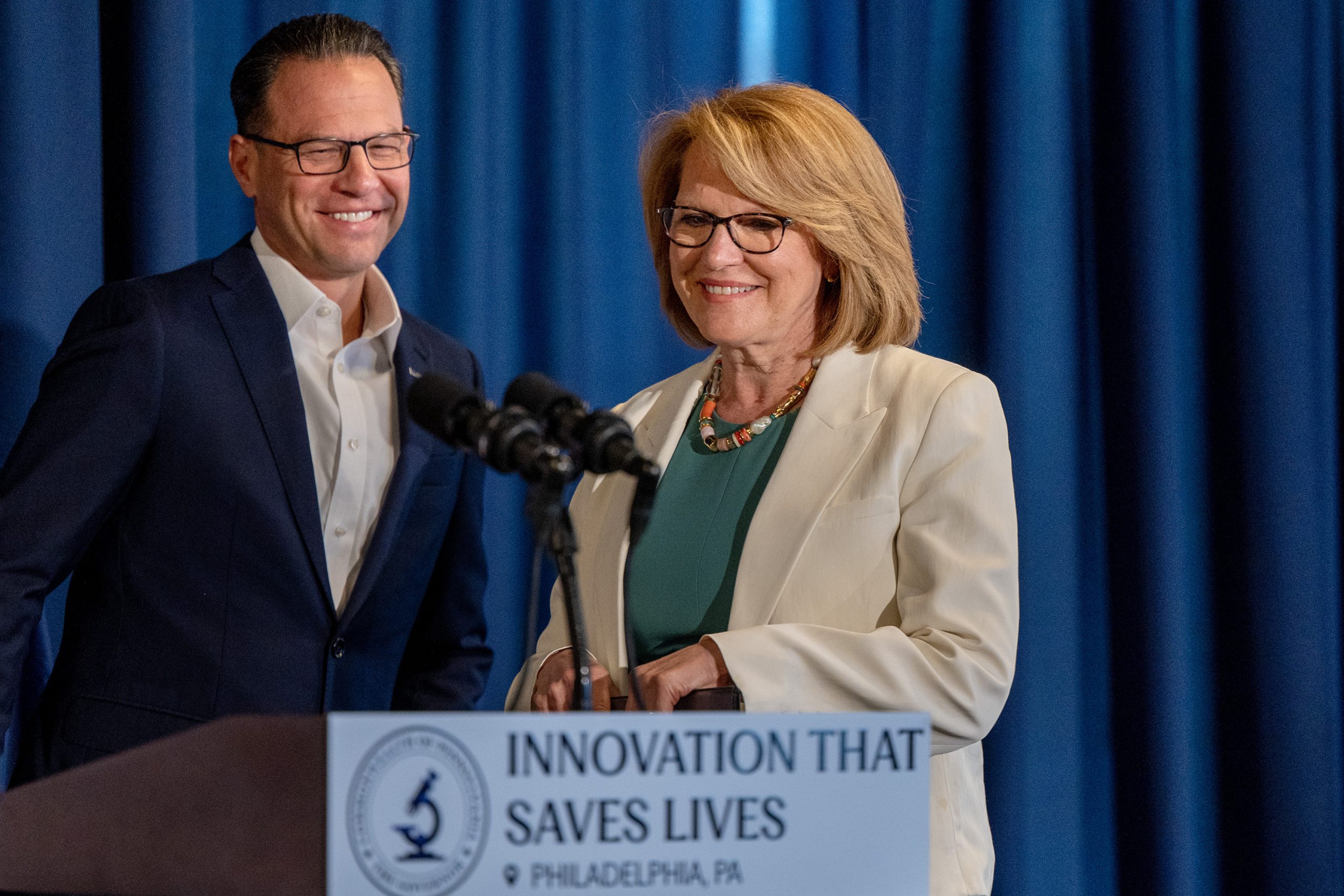
    Gov. Josh Shapiro visited a University City life sciences incubator on Tuesday to celebrate a new $125 million fund aimed at boosting Pennsylvania’s life sciences industry.

    The funding — approved in the $50.8 billion state budget deal reached earlier this month — will go toward developing new talent pipelines, help offset the cost of clinical trials, and expand access to venture-capital funding.

    While Philadelphia has historically trailed other metropolitan areas, like Boston and San Francisco, in attracting life sciences investments — including in the biotechnology and pharmaceutical fields — lawmakers and industry leaders said they hope the new funding will help close the gap. The money will be available for projects across the state.

    “I think you can feel the momentum building all across our commonwealth in the life sciences space,” said Shapiro, who was joined at the B+labs facility by industry leaders and Democratic state lawmakers. “After really not being on the field of competition in the life sciences space for years and years and years, Pennsylvania is not just competing again. Pennsylvania is winning.”

    The new funding comes as some of the nation’s largest life sciences companies have announced their plans to invest billions in Pennsylvania, an accomplishment touted by Shapiro’s administration.

    Johnson & Johnson announced this spring its plans to build a $1 billion cell therapy plant in Montgomery County. And pharmaceutical giant Lilly is expected to break ground on a $3.5 billion manufacturing facility in the Lehigh Valley, set to be fully operational in 2031.

    Chris Molineaux (left) president & CEO of Life Sciences Pennsylvania introduces Gov. Josh Shapiro as he visits B+labs Tuesday, July 21, 2026 to tout a new $125 million program “to expand venture capital access” for Pennsylvania companies investing in life science innovations.Tom Gralish / Staff Photographer

    Shapiro on Tuesday noted Pennsylvania’s potential to be a national hub for the life sciences industry, given the state’s robust research universities, adding that more than 100,000 Pennsylvanians work in the sector.

    The $125 million investment is the state’s most significant in almost three decades and is a “true differentiator,” said Chris Molineaux, the CEO of Life Sciences Pennsylvania, a trade group. Last year, Shapiro called for Harrisburg to invest $30 million in life sciences funding, but the money was not allocated in the final state budget.

    Of the nearly 1,000 businesses in his organization, Molineaux said, more than 400 are small start-ups with fewer than 10 employees, and will benefit from the additional dollars. A vibrant start-up landscape in Pennsylvania, he added, means there is plenty of innovation, but also competition for limited funding.

    “Entrepreneurialism is alive and well in Pennsylvania,” Molineaux said. “But it’s also an extremely fragile community that needs the kind of public policy support, the nurturing, and the financial support.”

    Madeline Bell (right), CEO of Children’s Hospital of Philadelphia joins Gov. Josh Shapiro as he visits B+labs Tuesday, July 21, 2026 to tout a new $125 million program “to expand venture capital access” for Pennsylvania companies investing in life science innovations.Tom Gralish / Staff Photographer

    Children’s Hospital of Philadelphia CEO Madeline Bell told the crowd the story of a baby whose rare metabolic disorder was treated by the hospital’s doctors with a first-of-its-kind custom gene-editing therapy. That type of innovative treatment is made possible through outside funding and support from lawmakers, Bell said, stressing the importance of the state’s new investment.

    “It’s going to make our breakthroughs possible. It is going to get them from the bench to the bedside more quickly,” Bell said.

    The state will finance the program through the sale of insurance premium tax credits to insurance companies.

    Shapiro said the funding is expected to become available in a few weeks and will be disbursed through an application managed by the Pennsylvania Department of Community and Economic Development.

    The program is structured to prioritize projects that address needs specific to Pennsylvania, according to literature provided by the state, and will support projects developed by companies founded by people in historically underrepresented groups that have not always had access to funding.

    “Part of this funding will go to make sure that folks who historically did not get invested, get invested,” said Democratic State Sen. Vincent Hughes, who represents West Philadelphia. “That communities not too far away from here, blocks away from here, get the opportunity to allow their young people and their genius to be realized.”

    Tiny cupcakes offered at B+labs Tuesday, July 21, 2026 as Gov. Josh Shapiro visits to tout a new $125 million program “to expand venture capital access” for Pennsylvania companies investing in life science innovations.Tom Gralish / Staff Photographer

    The program — named Innovate in PA 2.0 — builds on the 2013 Innovate in PA initiative signed into law by then-Gov. Tom Corbett, which offered $100 million in seed funding to technology startups.

    “Innovators, we believe in you. This state believes in you,” Hughes said. “There is a group of people in this commonwealth of Pennsylvania who believe in you, will continue to invest in you, and want to make sure that your dreams of saving lives turn into reality.”

  • The SEPTA special prosecutor in Philly is set to expire this year. Will state lawmakers extend it into Larry Krasner’s third term?

    The SEPTA special prosecutor in Philly is set to expire this year. Will state lawmakers extend it into Larry Krasner’s third term?

    The special prosecutor for crimes on or near SEPTA property will be funded through the end of the year as part of the newly approved state budget, Pennsylvania lawmakers said this week.

    After that, the office’s fate is uncertain.

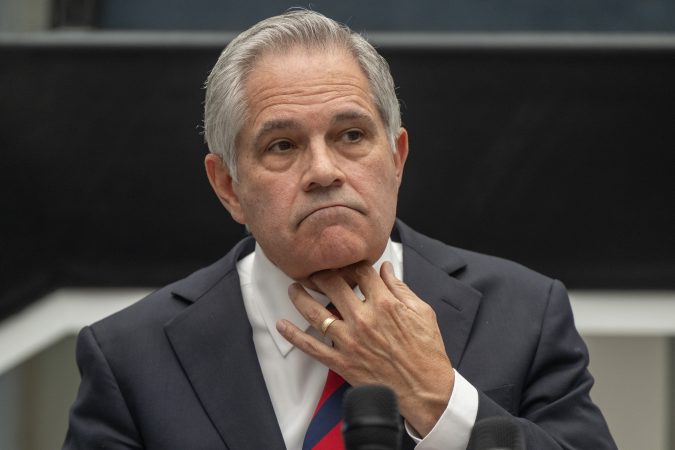
    The controversial position is set to expire in December. It was championed by GOP lawmakers in Harrisburg, who for years have tried to limit Philadelphia District Attorney Larry Krasner’s powers and contended that the position was necessary because Krasner failed to prosecute crimes on the state’s largest transit system.

    Legislators set aside another full year of funding for the office — $1.2 million — but haven’t agreed whether they will extend it further into Krasner’s third term, which began in January.

    Senate Majority Leader Joe Pittman (R., Indiana), the top Republican leader in Pennsylvania’s split legislature, where Democrats narrowly control the state House and Republicans lead the state Senate, said Democratic leaders repeatedly rejected GOP efforts to extend the position as part of the closed-door budget talks.

    Krasner’s office has strongly opposed the law that created the special prosecutor position, calling it a “shocking usurpation of power” that unconstitutionally singled out Philadelphia and stripped an elected officials’ authority.

    He could not be reached for comment Thursday.

    The post has also faced opposition from Philadelphia-area lawmakers who say the effort is an affront to city voters who have reelected Krasner, a progressive prosecutor, three times.

    “This is nothing more than voter suppression and an attempt to circumvent some of the extremely popular criminal justice reforms under this DA,” said Sen. Nikil Saval (D., Philadelphia), who chairs the city’s Senate delegation to Harrisburg.

    Pittman, by contrast, said extending the special prosecutor is a critical component for Senate Republicans to agree to a new long-term funding source for SEPTA, which is approaching another fiscal cliff that could cause service disruptions when the state’s current short-term fix runs out next year.

    Asked about the future of the special prosecutor’s office, House Majority Leader Matt Bradford (D., Montgomery) said at Shapiro’s budget signing earlier this week that he hadn’t “given it much thought.”

    Pennsylvania Attorney General Dave Sunday, a Republican who is tasked with overseeing the office, has lauded the special prosecutor’s work so far.

    He said his office supports extending the position, calling it a “force multiplier” that has been effective in combating violent crimes against both SEPTA employees and riders.

    “Our caseload reflects a range of very serious conduct — including murder and aggravated assaults — and we have secured results through convictions,” he said.

    In one example of that effort, the special prosecutor will oversee the case of a 22-year-old woman charged with simple assault after authorities said she pepper-sprayed and punched a conservative social media influencer during a viral confrontation on a SEPTA bus.

    While legislators approved the special prosecutor’s office in 2023, it has been mired in legal challenges from the district attorney’s office in years since and did not begin taking on cases until last year.

    Some House Democrats supported creating the role in 2023, as part of a state budget deal with the Senate GOP and Democratic Gov. Josh Shapiro, who was critical of Krasner when he served as attorney general.

    Saval said Democrats shouldn’t use the position as a bargaining chip again.

    “House Democrats who voted to suppress the will of Philadelphians should be ashamed of themselves, and should not support other attempts to do so,” Saval added. “This has nothing to do with the essential task at hand, which is to secure funding for mass transit.”

    A spokesperson for Bradford said the House needs to “take a critical look” at whether the SEPTA special prosecutor is necessary. She noted SEPTA’s success in reducing crime and the size of its police force, but said the money used to fund the position may be better spent to reduce fare evasion by replacing gates to full-length ones that cost $40,000 each.

    The funding was approved in the 2026-27 fiscal year budget “in the case of reauthorization,” and would be used to wind down the office, said Beth Rementer, Bradford’s spokesperson. Any unused funds would be returned to the general fund, she said.

    A spokesperson for Shapiro declined to comment on the prosecutor role, but said Senate Republicans “need to do their jobs” to find a long-term funding solution for mass transit.

    The office

    The office is overseen by Special Prosecutor Michael Untermeyer, a former deputy attorney general and real estate investor who ran against Krasner in the 2017 primary.

    Untermeyer did not respond to a request for comment.

    The single lawyer employed by his office is investigating about 15 cases, including charges of homicide, aggravated assault, and robbery, according to a spokesperson for the attorney general’s office. That figure does not include cases the special prosecutor is considering taking on or are still under investigation, the spokesperson said.

    Lawmakers could still choose to extend the position as part of their fall legislative session. It is among the several time-sensitive issues before the General Assembly ahead of the November election, in which Democrats hope to flip control of the state Senate for the first time in decades.

    Krasner’s office has challenged the special prosecutor role from the beginning. His office filed a lawsuit in 2024 in an attempt to nullify the law, but was rebuffed by a 4-3 Commonwealth Court ruling that said legislators had not violated the state constitution in creating the post.

    The office then appealed to the state Supreme Court, which has yet to decide the matter. As the high court heard oral arguments in the case last year, justices cited the Pennsylvania Constitution when suggesting that the legislature had been free to pass such a law, even if it interfered with the duties of an elected county official.

    And lawyers for the attorney general’s office argued that the special prosecutor role did not strip Krasner’s power, but rather offered additional powers to a prosecutor appointed by the attorney general to handle cases involving crimes in and around SEPTA property.

  • Shapiro says Trump’s claims of widespread noncitizen voting are ‘not connected to reality’

    Shapiro says Trump’s claims of widespread noncitizen voting are ‘not connected to reality’

    Gov. Josh Shapiro blasted President Donald Trump Friday morning, a day after the president used a prime-time speech to reignite a series of conspiracy theories about his 2020 election loss that intelligence and voting experts have both warned are based on misrepresentations and falsehoods.

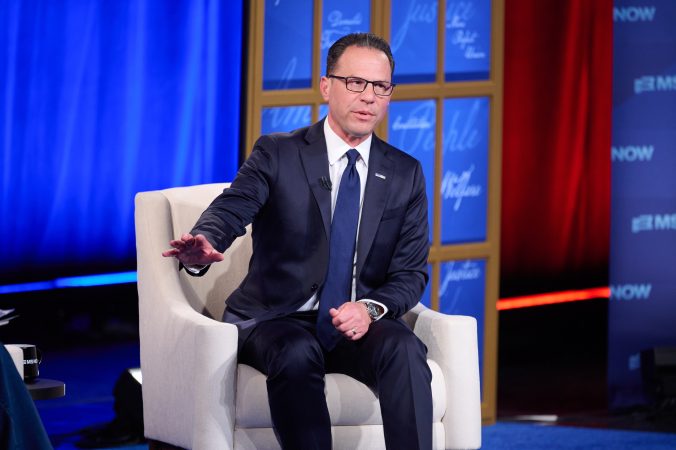
    “It was an unfortunate day for America to have really an unhinged president in the White House spewing a whole bunch of conspiracy theories that are just simply not connected to reality,” Shapiro said on MS NOW’s Morning Joe Friday morning.

    The speech comes less than four months ahead of the November election, which will determine control of Congress and the Pennsylvania governor’s office. As Trump administration looks to usher in sweeping national changes to election administration, Shapiro and other Democrats have promised to continue resisting those efforts.

    Shapiro, a potential Democratic contender for the presidency in 2028, noted his role in battling Trump’s team in court as Pennsylvania attorney general in the aftermath of the 2020 election — which Trump continues to insist he won, without evidence, six years later.

    “I went 43-0,” Shapiro said, calling Trump’s assertions baseless.

    DHS targets Pennsylvania and New Jersey

    While the president did not directly reference Pennsylvania in the speech, the White House did target the state — along with New Jersey, California, and Nevada — in a document it posted online Thursday evening in support of the president’s claims.

    The document claims that the Department of Homeland Security has identified more than 250,000 noncitizens registered to vote spread across the four Democratic-led states, but it provides little explanation of the methodology used.

    Pennsylvania Secretary of State Al Schmidt, a Republican appointed by Shapiro, rejected the allegation in a statement.

    “Pennsylvania follows all state and federal laws when it comes to our elections, and our voter rolls are properly maintained and updated,” Schmidt said in a statement Thursday. “All evidence has shown that noncitizen voting is extremely rare across the country, including in Pennsylvania.”

    The assertions, which Trump said were made in concert with the nation’s top intelligence agency chiefs, are included in memos on the White House homepage that together weave broad allegations of fraud surrounding the 2020 presidential election that remain unproven despite multiple audits and investigations six years later.

    “These disclosures reveal an election system so broken and so vulnerable that no one can possibly defend it. It is not defensible,” Trump said Thursday.

    But none of memos show evidence that would change the outcome of the election and a broad range experts have pointed that some contain information that undercut Trump’s claims.

    The document targeting Pennsylvania and New Jersey is a one-page summary of a Department of Homeland Security investigation, which the White House says identified, a total of 278,000 noncitizens across the country who are registered to vote in federal elections.

    The White House document suggests the number was derived from putting voter files through the federal government’s Systematic Alien Verification for Entitlements (SAVE) tool, which has previously been used to further false claims of widespread voter fraud.

    “While the Department has made clear that we cannot share Pennsylvanians’ private, personal information, we welcome DHS sharing their methodology and list of potential ineligible voters so we can carefully review the validity of their claims,” Schmidt said in the statement.

    The announcement also comes as Pennsylvania and other states have pushed back against requests from the Department of Justice to hand over unredacted voter rolls. Schmidt has argued that sharing the rolls would put voters’ personal information at risk.

    The Trump administration has insisted doing so is the best way to avoid criminal prosecution for “aiding and abetting the violation” of federal voting laws.

    DHS Secretary Markwayne Mullin said 23 states already work with the department to screen for noncitizen voters, in a news conference Friday, and those who continue to resist could face legal consequences.

    States that want to be reimbursed for the cost of running federal elections must implement the department’s requests, he said.

    “We will make sure that we make those states a priority to look at who voted in their states, and hold the election officials accountable,” Mullin said. “If the election officials — once we gave them the information they need to secure their elections — chose not to, then those individuals can also be held accountable by fines, by penalties, and even depending on how far it goes, prison time.”

    But funding from the federal government to run elections “is modest at best and neither reliable nor consistent,” according to the Center for Election Innovation & Research.

    Schmidt, who investigated noncitizen voting in his previous role as Philadelphia’s Republican city commissioner, has repeatedly rebuffed the department’s demands and said it is extremely rare for noncitizens to vote and already prohibited by state law.

    There have been only 77 instances of noncitizens voting in the entire United States between 1999 and 2023, according to an analysis from the Bipartisan Policy Center, and authorities investigated in each instance.

    To vote in Pennsylvania, you must be a U.S. citizen, a resident of the state for 30 days, and 18 years old by Election Day. Registration must be done 15 days prior to an election.

    There are three main ways to register: online, via a paper form handed into a county board of elections, or at PennDot or another state agency. Some people register when obtaining a driver’s license, if eligible, or after a naturalization ceremony.

    But the SAVE system doesn’t always catch up with those changes, said Ben Geffen, a senior attorney at the Public Interest Law Center in Philadelphia who reviews elections. That means, results might show “false positives” that evaporate upon “even a little bit of investigation” into individual circumstances.

    Pennsylvania will be crucial in determining control of the House with four swing districts being targeted by both parties, meaning that the state’s election is likely to fall under the microscope as they repeatedly have since the 2020 election when Trump sought to overturn Joe Biden’s victory.

    “We are prepared here in the Commonwealth of Pennsylvania to once again have a free and fair, safe and secure election,” Shapiro said.

    State audit found only one noncitizen on Pa. voter rolls

    Shapiro said he trusts Schmidt, a Republican, “because we believe here in Pennsylvania the administration of elections is nonpartisan.”

    In 2017, Schmidt, then a Philadelphia city commissioner, identified a glitch in PennDot’s system that had allowed 168 noncitizens to register to vote in the city, and likely a couple hundred statewide.

    The voter rolls were updated in 2018, Geffen said, so none of the glitches would have impacted the 2020 election or any beyond.

    A 2026 audit from Pennsylvania Auditor General Timothy DeFoor, a Republican, found that just one noncitizen was improperly registered to vote at PennDot due to human error. The individual never cast a ballot.

    New Jersey has also fought against the full release of its voter rolls.

    Gov. Mikie Sherrill joined other Democratic governors in calling Trump’s speech “alarming” in a statement issued Thursday.

    “Democratic governors stand ready to fight back against the Trump administration and stop any and all unlawful attacks on every American’s constitutional right to vote,” said the statement from the Democratic Governors Association.

    Sen. Andy Kim, (D., N.J.) referred to Trump’s address as “25 minutes of conspiracy theories from a man who still can’t get over 2020” in a post on X.

    Trump also used the speech, which was not carried live on ABC, NBC, or CNN, to advocate for the SAVE Act, the elections bill that would require people to prove that they are U.S. citizens when registering to vote.

    “Addressing this crisis of election security demands that Congress must pass the SAVE America Act,” Trump said. “How easy is that to do unless you want to cheat?”

    The legislation, which has stalled in Congress, is unpopular among Democrats and even some Republicans. Among the concerns that have been raised from opponents is that it could block married people who take their spouse’s surname from registering to vote because of the mismatch with their birth certificates.

    Sen. Dave McCormick (R., Pa.) urged passage of the bill on social media Thursday, but he did not respond to a question Friday about the Trump administration’s claims about noncitizen voting in Pennsylvania.

    But as November approaches, another Pennsylvania Republican, Philadelphia City Commissioner Seth Bluestein, said voters can be sure their votes will be counted accurately.

    “Prior to every election, we conduct logic and accuracy testing on every piece of equipment that is used for the election,” said Bluestein, the sole Republican on the three-member board that oversees Philadelphia elections.

    “Voters, when they cast their ballots, have a verifiable paper ballot for every single vote that gets cast, and then after the election, we conduct two audits of a random sampling of ballots to verify that they were tabulated accurately,” he said.

  • Doug Mastriano wouldn’t say if he believes all American leaders should be Christian as he’s vetted for an ambassadorship

    Doug Mastriano wouldn’t say if he believes all American leaders should be Christian as he’s vetted for an ambassadorship

    WASHINGTON — Doug Mastriano, the far-right Pennsylvania lawmaker whom President Donald Trump nominated to become the U.S. ambassador to Slovakia, refused to tell senators during his confirmation hearing on Thursday whether he believes all American political leaders should be Christian.

    A key Trump ally during the president’s attempt to overturn the 2020 election, Mastriano also rejected claims that he is a conspiracy theorist who assisted in the Jan. 6, 2021, attack on the U.S. Capitol.

    And while he said he regretted some of his past statements about the Holocaust and his associations with individuals considered antisemitic, he repeatedly pushed back on Democratic senators’ concerns about his fitness for the role.

    “I’ve never been involved in conspiracies,” he said during a heated exchange with U.S. Sen. Tim Kaine (D., Va.), who at different points referred to Mastriano as “gullible” and someone who needs to “look in the mirror a little bit.”

    Trump nominated Mastriano for the ambassadorship in May.

    The Republican state senator from Franklin County is a retired U.S. Army colonel who deployed three times to Afghanistan after 9/11 and previously served in Eastern Europe.

    He was the Republican nominee for Pennsylvania governor in 2022 with Trump’s backing, but he lost to Democrat Josh Shapiro by nearly 15 percentage points. Mastriano’s nomination for the ambassadorship came as his supporters were promoting him as a write-in candidate for governor ahead of the May Republican primary, in which Treasurer Stacy Garrity was unopposed.

    U.S. Sen. Dave McCormick (R., Pa.), who pushed for Mastriano’s nomination and chaired his confirmation hearing during the Senate Foreign Relations Committee hearing Thursday, said Mastriano’s military career made him “highly qualified” for the role.

    “This position needs a leader with strategic judgment, intimate knowledge of NATO’s inner workings, and firsthand experience working alongside our allies with an unwavering commitment to advancing America’s interest,” McCormick said during the hearing. “Doug brings that experience, and I’m confident that he’ll represent the United States with great professionalism and integrity.”

    Mastriano also leaned on his experience, which he said involved planning operations in the Baltic states and fending off Russian aggression. He said he hoped to strengthen America’s relationship with Slovakia and encourage the country to contribute to Ukraine’s defense.

    But Democrats on the committee said they had serious concerns about both Mastriano’s past comments on foreign policy and a range of other issues — including an ideology that has been described as Christian nationalist.

    U.S. Sen. Jacky Rosen (D., Nev.) said Mastriano had spoken often about his Christian identity and his belief that the separation of church and state is a “myth.” Rosen, who is Jewish, asked Mastriano to look her in the eye and say whether all U.S. political leaders should be Christian.

    Mastriano said that he believed “religious liberty applies to every American” and that it was “why our country was founded.” After Rosen said it was “deeply problematic” that he would not say America is a pluralistic nation where leaders do not need to be Christian, Mastriano responded, “I will look you in the eye and repeat even simpler language” — though he did not answer the original question.

    “We are absolutely a pluralistic society and I have worked for non-Christians in the military and the government, and I’ve had them working for me,” Mastriano added.

    Rosen also questioned him about previous comments comparing abortion and his loss to Shapiro in the 2022 Pennsylvania governor’s race to the Holocaust.

    “There was a social media post that I would not post today,” Mastriano said, calling any comparisons to the Holocaust “unwise.”

    Asked about his associations with Andrew Torba, founder of the online platform Gab, which has been used to share extremist and antisemitic views, Mastriano said he “immediately” returned a campaign donation from Torba and cut off advertising on the platform when he learned about the Gab founder’s views.

    “You can denounce your past associations with antisemites. You can point to your support of Israel,” Rosen said. “But for me, I’m not sure that either excuses you or erases your record.”

    U.S. Sen. Jeanne Shaheen (D., N.H.) questioned Mastriano while displaying a giant poster with his picture and a 2018 quote in which he said European Union leaders were “political, diplomatic enemies of the United States of America.”

    She said staff who had interviewed him recently had also quoted him as saying he believed the European Union was a “rising rival comparable to China and that it would eventually create a standing army to challenge the United States.” Visibly frustrated during her questioning, Shaheen said that the EU should be treated as allies, not rivals, and that Mastriano “should absolutely know better.”

    The most contentious exchange came between Mastriano and Kaine, who started by saying that he respected the nominee’s military service and that the nomination brought him “a real sense of sadness.”

    “You’ve associated with antisemites and Holocaust deniers. You’ve associated with 9/11 conspiracy theorists. You’ve made comments about foreign leaders that are not diplomatic in quality. And you and I share a very special day in American history,” Kaine said. “We were both here on Jan. 6, 2021.”

    Mastriano was Trump’s top ally in Pennsylvania as the president contested his 2020 election loss to Democrat Joe Biden. He worked both publicly and privately to contest the vote, and he was near the Capitol on the day that a mob broke in to stop the certification of the results. The Republican lawmaker was not charged with a crime related to any of those activities, which he reminded Kaine about on Thursday.

    “That is incorrect,” he said as Kaine pressed and said he had been at the Capitol to overturn the results. “I was here to hear the president. I was here with my wife to hear the president of the United States speak. We didn’t do anything illegal. We came, we saw, we left.”

    Asked if he would say, now, that Biden had won the election, Mastriano said only that Biden had been certified as the winner — a phrase that other Trump nominees have used in nomination hearings and that Democrats have described as a pre-negotiated script to appease a president who still stands by the fraudulent claims.

    “Conspiracy theorists generally are gullible people. They might have master’s degrees and Ph.D.s, and you’ve got them,” Kaine said to Mastriano, referring to his degree in history.

    “I don’t know what you’re talking about, senator,” Mastriano said, denying that he subscribes to conspiracy theories as the two talked over each other.

    Kaine said Mastriano could claim, if he wanted, that he only held a public hearing on the 2020 election — an event in Gettysburg that helped spread false claims that there was widespread fraud in the election — but he could not erase his record.

    “No, sir, there’s no erasing,” Mastriano said. “Facts are stubborn things.”

  • Poll: 44% of Pennsylvanians say they’re financially worse off now, while a majority oppose AI data centers

    Poll: 44% of Pennsylvanians say they’re financially worse off now, while a majority oppose AI data centers

    Almost half of Pennsylvania voters say they are worse off financially compared with one year ago, while nearly 3 in 4 say they do not want an artificial intelligence data center in their backyard, according to a new poll released Wednesday.

    The Quinnipiac University survey of 895 registered Pennsylvania voters has a 4.3-percentage-point margin of error.

    According to the poll, 44% of Pennsylvania voters believe they are financially worse off than a year ago, as gas prices have fluctuated amid the ongoing war between the United States and Iran. That opinion was politically split, as 64% of Democrats said they are financially worse off now, while 61% of Republican voters polled said they are better off this year than last. Just 34% of respondents said the nation’s economy is excellent or good, while 53% think it is getting worse.

    Meanwhile, 76% Pennsylvania voters said they would oppose data center construction in their communities — a broad swath that includes Democrats, Republicans, and independents.

    Almost half of the voters polled have an unfavorable opinion of artificial intelligence itself.

    “People are really troubled by this new industry,” said Tim Malloy, a polling analyst at Quinnipiac. “It’s about noise, it’s about water, it’s about taxes, and it’s about … not understanding exactly what it is.”

    Quinnipiac’s poll also shows Pennsylvania voters have not been satisfied with the state’s policy responses so far. When asked if they approve of “the way Gov. Josh Shapiro is handling data centers in Pennsylvania,” just 24% of the surveyed voters said they approve. Among the Democrats polled, 40% said they approve.

    The results of the poll, conducted June 9 to 13, come days after Pennsylvania lawmakers and Shapiro approved new regulations on data centers as part of the 2026-27 state budget.

    Starting next summer, data centers will be required to submit information about their energy and water usage to the Pennsylvania Department of Environmental Protection annually. Those reports will be available to the public, and data center operators that do not comply will be fined $10,000 per day.

    But other restrictions on data centers that saw bipartisan support ultimately failed to pass in the budget package and will remain on the table when legislators return this fall.

    Those include an effort championed by Shapiro to limit sales and use tax exemptions benefiting developers, though it would not apply to the $20 billion Amazon project already underway, including a data center in Falls Township.

    Efforts to enact local or statewide moratoriums on data center development were not included in the final state budget, either.

    AI data centers also remain top-of-mind for the voters polled by Quinnipiac, with 76% saying they are following news about them very closely or somewhat closely. The centers ranked among voters’ top issues, with 42% saying they factor into their decision about whom to vote for in the election for governor.

    But other issues — namely the economy and cost of living — top the list, with healthcare just behind.

    Shapiro stays popular

    Shapiro otherwise remains popular among Pennsylvania voters.

    In the poll, 51% of respondents reported having a favorable opinion of Shapiro, and 56% approve of the way he is handling his job as governor.

    “Pennsylvanians agree that Governor Josh Shapiro is delivering results for families, seniors, and businesses all across the Commonwealth by showing up, listening, and getting stuff done,” his campaign said in a statement.

    Gov. Josh Shapiro arrives for the MLB All-Star Game red carpet at Independence National Historical Park on Tuesday, July 14, 2026 in Philadelphia.Monica Herndon / Staff Photographer

    Shapiro, a first-term Democrat, is seeking reelection in November, running against Republican State Treasurer Stacy Garrity. The poll released Wednesday found that 53% of those surveyed would vote for Shapiro, while 40% said they would vote for Garrity. That is a slight change from Quinnipiac’s February poll, when 55% of voters supported Shapiro and 37% said they favored Garrity.

    Garrity, meanwhile, appears to be struggling to gain traction. Just 22% of Pennsylvania voters have a favorable opinion of her, according to the latest poll, while 58% said they have not heard enough about her. Half of the Republicans surveyed said they did not know her well enough to give an opinion.

    More than half of independent voters, 58%, said they would vote for Shapiro in a head-to-head matchup.

    “Usually, it’s not the death knell when not enough people know enough about you, but it sure as heck doesn’t help, and the election’s not that far away,” Malloy said. “Barring some dramatic change in opinion about the current governor, or something that she does or says which just catches fire with people, she’s got a huge uphill climb.”

    Though he has brushed off questions about potential presidential ambitions, insisting he is focused on the state election in November, Shapiro has continued to build a national profile, with media appearances and a book tour.

    Trump approval remains low

    Though he remains strong with the Republican base, only 39% of Pennsylvania voters polled said they would give President Donald Trump a positive job approval. His approval is nearly nonexistent with Democrats at 2%, but even among independents, only 31% rate him well.

    That outlook comes two years after Trump carried Pennsylvania in the 2024 election. He visited the state Wednesday to tout new investments in Pennsylvania’s defense industry.

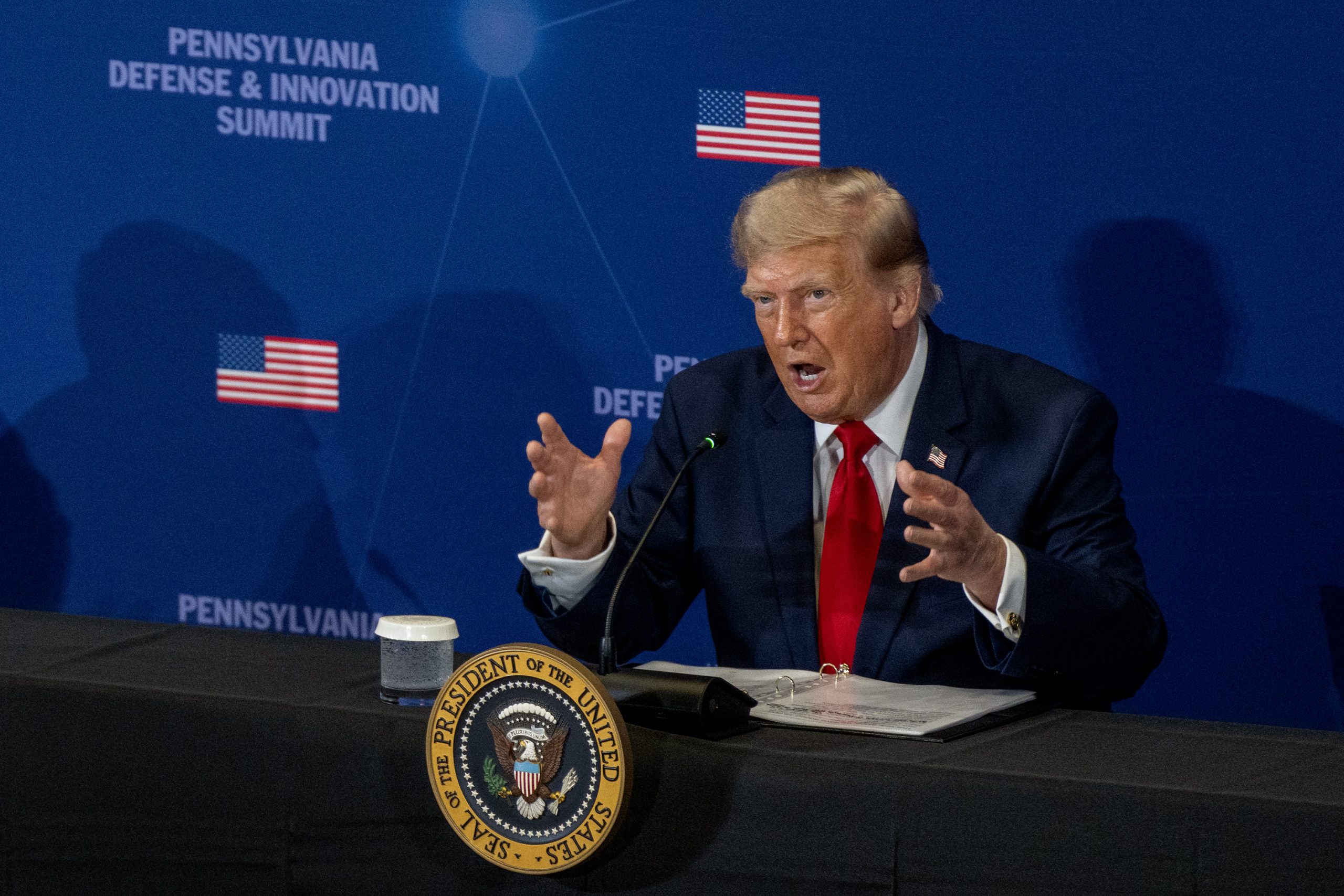
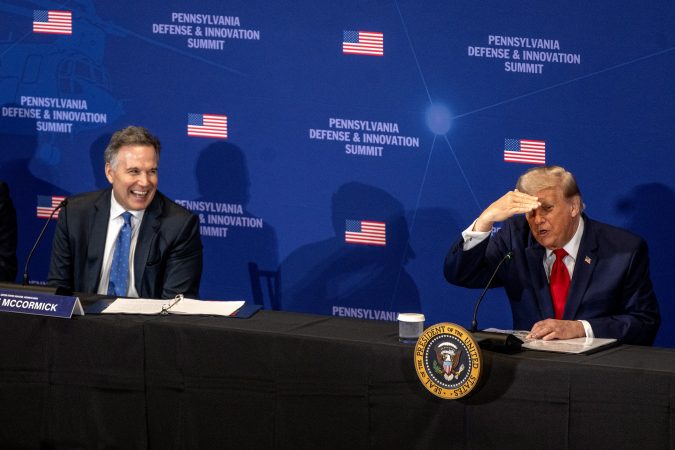
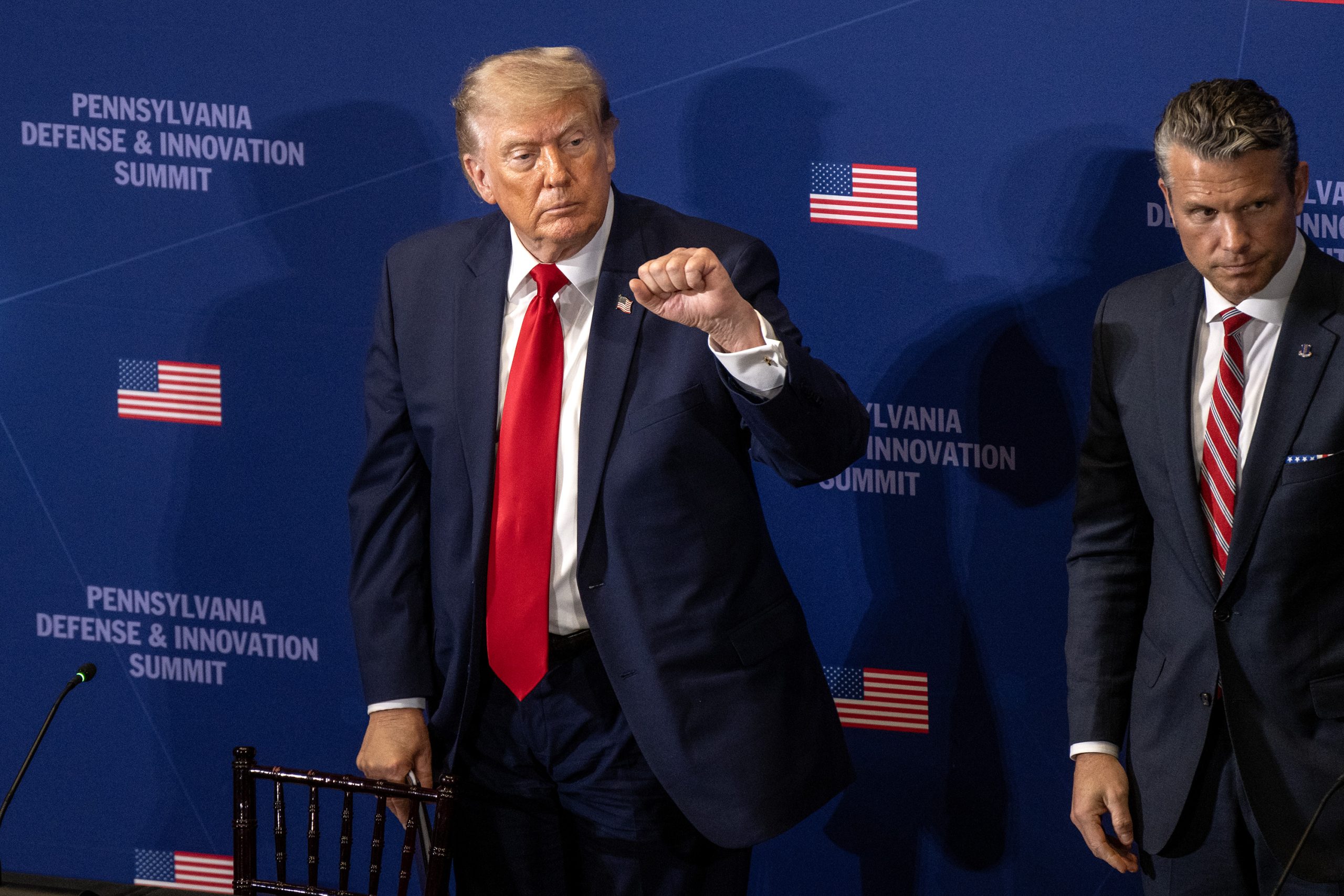
    President Donald Trump appears at a Defense and Innovation Summit hosted by U.S. Sen. Dave McCormick at the US Army War College in Carlisle Wednesday, July 15, 2026.Tom Gralish / Staff Photographer

    In the forthcoming midterm elections, Pennsylvania voters gave Democrats the slight edge — 49% to 43% — as their preference to control the U.S. House of Representatives over the Republican Party.

    The Quinnipiac poll also showed voters are able to distinguish between state level and national concerns, with 53% saying they are very or somewhat satisfied with how things are going in Pennsylvania.

  • Donald Trump hits Josh Shapiro, promotes defense investments in Pa. during industry summit hosted by Dave McCormick

    Donald Trump hits Josh Shapiro, promotes defense investments in Pa. during industry summit hosted by Dave McCormick

    CARLISLE, Pa. — President Donald Trump — as fighting resumes in Iran and his administration’s request for $1.5 trillion in defense funding stalls in Washington — used a Wednesday appearance at a defense industry summit in central Pennsylvania mostly to boast about his perceived foreign and domestic achievements, from the oil business in Venezuela to the National Guard’s security work during Mardi Gras.

    In a 53-minute speech that was set up as a roundtable conversation, Trump occasionally applauded the latest investments in Pennsylvania’s defense manufacturing and research, which was the focus of the two-day Pennsylvania Defense and Innovation Summit organized by U.S. Sen. Dave McCormick (R., Pa.).

    He also acknowledged the setbacks in Iran and the widely recognized need for the country to more quickly build items like submarines and munitions.

    But in his second stop in three weeks in Pennsylvania — and specifically in a Republican-held U.S. House district that is critical to his party keeping control in the midterm elections — Trump also weaved through a wide range of topics.

    That included the prospect that Democratic Gov. Josh Shapiro would defeat his preferred candidate in this year’s Pennsylvania governor’s race, Republican Treasurer Stacy Garrity.

    “This guy Shapiro is totally overrated. I watched him the other night doing a speech, and he does not have what it takes,” Trump said in Carlisle. “Maybe he’ll win, and he’s expected to win, but I hear things about Stacy, and I’m hearing some poll numbers that are very good. But Shapiro is — he doesn’t have what it takes.”

    Shapiro, who also attended the summit, held back from pointedly criticizing Trump’s foreign aggression during his panel, and he left the summit before the president’s appearance.

    While most panelists and convention-goers praised the federal government’s focus on military investment, there was little discussion about specific developments abroad or controversies around Trump’s use of the armed forces.

    Just this week, fighting in Iran resumed after a tentative ceasefire was reached and then fell apart. The U.S. Senate, which had previously voted — in a mostly symbolic gesture — to restrict Trump’s actions in Iran, has meanwhile stalled the president’s defense budget as Democrats attempt to exert more leverage to wind down the conflict.

    “This war continues to be a costly blunder that has only made us worse off than before,” U.S. Sen. Andy Kim, a New Jersey Democrat who served as a diplomat before entering Congress, said on social media this week as Trump continued the war effort.

    The bombing campaign that began in late February has been both unpopular — a Fox News poll in June found 58% think the U.S. made the wrong decision by starting it — and costly, as gas prices have remained elevated and the nation’s arsenal of Tomahawk cruise missiles has depleted. It will take years to replenish the stockpile, according to an analysis by the Center for Strategic and International Studies.

    McCormick, who has supported Trump’s efforts in Iran, said in opening the summit on Tuesday that the gathering came “in a moment as consequential as any moment in American history, and maybe in human history.”

    “President Trump’s vision of peace through strength demands new players and new ways of doing business,” McCormick said. “Such radical new thinking has never been more needed in America’s history, in the history of our military. China, Iran, Russia, North Korea: They all share one objective — a weakened United States. And they’re actively working together toward that end.”

    But Shapiro said he believed the administration’s antagonistic relationship with longtime allies is a risk to national security, though he did not specifically frame his comments around the wars in Iran or Ukraine.

    “Candidly, I get a little bit concerned when our administration pokes their finger in the eye of our allies,” Shapiro said. “That undermines our ability to innovate, and it undermines our ability to be stronger with our national defense and to have a deterrence that is going to protect the American people and protect our interests abroad.”

    McCormick, a U.S. Army veteran and former hedge fund CEO, organized the 1,300-person gathering to bring defense contractors and other companies together with government officials, military leaders, and research institutions.

    As at a similar energy- and technology-focused event last year, McCormick used the event to highlight what he described as about $10 billion worth of investments in the state.

    The list featured several ongoing Philadelphia efforts — including new ship orders at the Hanwha Philly Shipyard that McCormick valued at $1.5 billion, and a 10-year, $2.5 billion agreement to support submarine construction by Rhoads Industries and General Dynamics.

    Day & Zimmermann, a Philadelphia-based and family-owned conglomerate that is one of the Army’s largest ammunition suppliers, also won a $2.3 billion contract to update, operate, and run the Hawthorne Army Depot in Nevada, according to McCormick.

    JPMorgan Chase & Co. chief executive Jamie Dimon, who visited the Navy Yard on Wednesday ahead of the conference, also appeared in Carlisle to discuss $13 million in financing his company is providing to Rhoads’ ongoing project.

    Not all of the announcements are new or immediate — such as a recent $84 million order of heavy dump trucks from Mack Defense, which is part of a five-year, $221.8 million contract signed last year and that Trump touted in Macungie last month.

    Trump called the announcements “a colossal victory for this commonwealth and for the entire nation.”

    “Pennsylvania workers will build the ships, submarines, trucks, weapons and industries that will ensure America remains the strongest and the most powerful nation in the history of the world,” Trump said.

    In between diversions about the 2024 election, COVID-19, and claiming — as he has before during rallies in Pennsylvania — that affordability concerns are “fake,” Trump also addressed the focus of the gathering by stressing the need for a faster buildup of military equipment.

    “We used to make a ship a day, and now we’re a laggard in that department,” he said while asking the submarine construction workers in Philadelphia to pick up the pace. “We do lots of great things, but we’re a laggard there.”

    Like his rally in Lehigh County in June, Trump’s speech on Wednesday was located in a congressional district with one of the most competitive races — both in Pennsylvania and nationally — this year.

    U.S. Rep. Scott Perry, a York County Republican, is seeking an eighth term in the 10th Congressional District, which covers all of Dauphin County and parts of York and Cumberland Counties. Perry narrowly fended off a challenge from former local television anchor Janelle Stelson in 2024 and is facing her again as Democrats invest more into the race.

    As polls show Democrats have some broad momentum in the midterms, a new Pennsylvania poll released Wednesday found 39% of voters in the state approve and 58% disapprove of the president’s job performance.

    The same poll from Quinnipiac University found 40% approve of McCormick’s job performance, 33% disapprove, and 28% had no opinion.

    The event Wednesday and the energy-focused summit in Pittsburgh last July have spotlighted McCormick in rare, high-profile ways for a freshman senator. The former CEO of Bridgewater Associates, one of the world’s largest hedge funds, has also developed a close alliance with Trump in ways that have elevated his political stature.

    “Hopefully we’ll fix some of these societal problems,” Dimon, one of the country’s most powerful executives, said when McCormick asked him onstage what the next decade would look like. “And Secretary of Treasury Dimon will be happy to report to you, will be happy to report to President McCormick.”

    McCormick has not publicly expressed an interest in running for president — though at least one widely expected 2028 contender was in attendance Wednesday at his invitation.

    “Defense is critical to the future growth of this commonwealth,” Shapiro said, while praising McCormick in a bipartisan showing.

    Shapiro spoke emphatically about bolstering the state’s role in the defense industrial base and said he is doing what he can to have the state benefit from defense-related jobs and a federal focus on national security.

    Shapiro also appeared at the conference at the U.S. Army War College in Carlisle earlier in the day. In a panel conversation there, he did not criticize Trump by name as he fully endorsed the summit’s goal of supercharging the defense industry and placing Pennsylvania at the center of the expansion.

    President Donald Trump and Secretary of Defense Pete Hegseth (right) are on stage at a Defense and Innovation Summit hosted by U.S. Sen. Dave McCormick at the US Army War College in Carlisle Wednesday, July 15, 2026.Tom Gralish / Staff Photographer

    Those jobs include about 2,200 at General Dynamics, a global corporation whose Pennsylvania employees work on everything from sonar and artificial intelligence to submarine defensive systems and electronic warfare, the company’s president, Danny Deep, said while sitting alongside Shapiro.

    Deep referenced the governor’s 2024 visit to the General Dynamics munitions manufacturing plant in Scranton, when Shapiro and Ukrainian President Volodymyr Zelensky signed both empty artillery shells and agreements to work together. Because of the demand during Ukraine’s war with Russia, the company has ramped up its monthly munitions production from 14,000 to 50,000 — a move that Deep said was possible only with help from the state.

    “That’s because of this public-private partnership, and that’s what makes Pennsylvania so special,” he said.

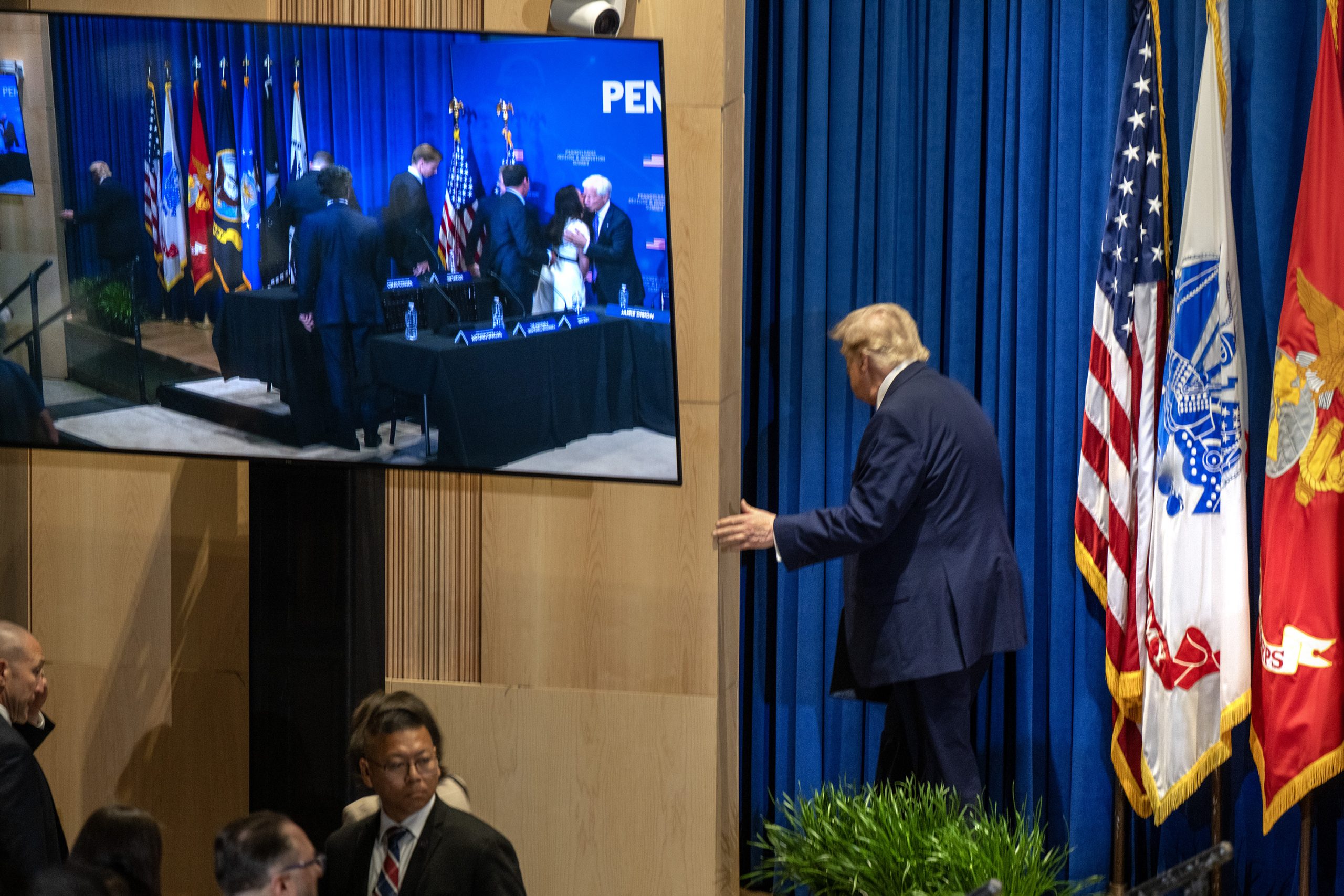
    President Donald Trump leaves the stage at the end of a Defense and Innovation Summit hosted by U.S. Sen. Dave McCormick at the US Army War College in Carlisle Wednesday, July 15, 2026.Tom Gralish / Staff Photographer

    Michael Coulter, president and CEO of Hanwha Defense USA, likewise said on the panel that the cross-party and cross-government support is essential in the company’s continued expansion at the Navy Yard in Philadelphia. The investments announced by McCormick on Wednesday included a federal government order of new ships that was valued at $1.5 billion and supporting more than 2,000 jobs in Philadelphia.

    “We are foot-on-the-throttle to make shipbuilding great again,” Coulter said. “And Pennsylvania’s the heart of that.”

    Staff writer Joseph N. DiStefano contributed to this article.

  • Josh Shapiro has fundraised $50 million since the beginning of last year, his campaign says

    Josh Shapiro has fundraised $50 million since the beginning of last year, his campaign says

    Gov. Josh Shapiro’s teeming campaign war chest continues to grow.

    The first-term Democrat raised a whopping $12 million toward his reelection bid for Pennsylvania governor between April and June, his campaign said Wednesday — bringing his total fundraising to $50 million since January 2025.

    The announcement from Shapiro’s campaign came months ahead of the next financial filing deadline for Pennsylvania candidates, on Sept. 22.

    But the news of the governor’s eye-popping fundraising figures — topping the $10 million he raised between January and March — came the same week that federal elected officials and candidates are required to submit their financial reports.

    Shapiro is widely speculated to be considering a 2028 presidential run, though he has demurred when asked about any presidential ambitions. Several members of Congress, including U.S. Sens. Cory Booker of New Jersey, Mark Kelly of Arizona, and Chris Murphy of Connecticut, and U.S. Reps. Ro Khanna of California and Alexandria Ocasio-Cortez of New York — all of whom were due to file their latest fundraising totals by Wednesday night — are also seen as prospective candidates for the Democratic presidential primary.

    However, federal officials face different limits on the amounts of money they can receive. Individuals can give only $3,500 per candidate per election. In Pennsylvania, state law allows unlimited spending for candidates, and multiple donors have contributed five- and six-figure dollar amounts to Shapiro’s campaign.

    A spokesperson for Shapiro declined to comment on the timing of his fundraising announcement.

    If Shapiro decides to run for higher office, the money he has raised would not follow him. State campaigns are not permitted to transfer money to a presidential run. But his connections could provide a vast network of donors if he pursues the White House.

    Shapiro, who has boasted high popularity ratings in Pennsylvania throughout his term, has also consistently polled well ahead of his Republican gubernatorial opponent, State Treasurer Stacy Garrity.

    Garrity’s campaign did not provide its latest fundraising numbers. Full reports for both Garrity and Shapiro, including who gave the money and how much was spent, will be available in September. In the 2022 Pennsylvania governor’s race, Shapiro spent a historic $73 million to beat Republican State Sen. Doug Mastriano.

    During the last reporting cycle, Shapiro outraised Garrity 10-1 as she struggled to compete with Shapiro’s large donations from across the country. Her campaign has previously emphasized that most of her contributions came from individual Pennsylvanians.

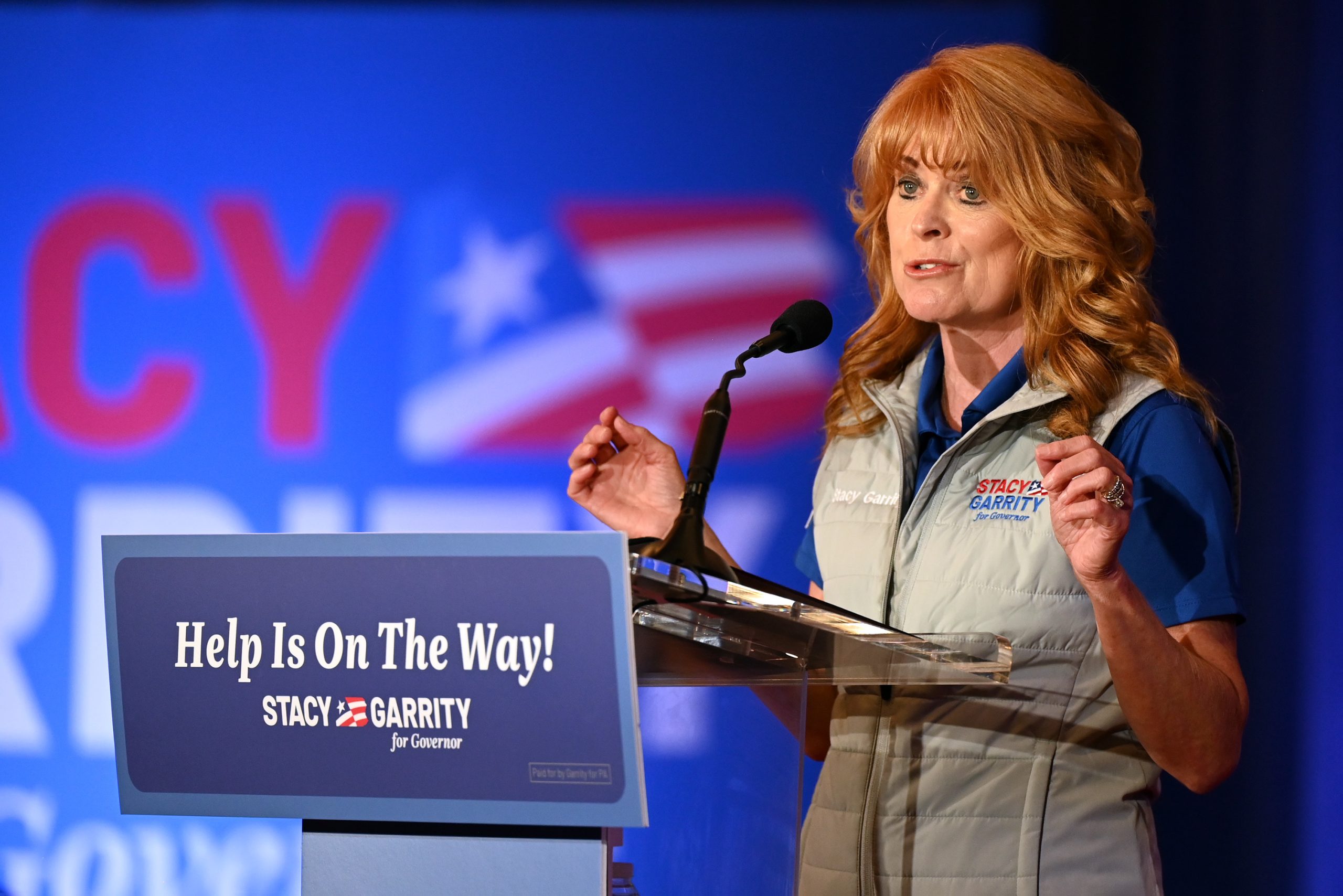
    State Treasurer and Republican candidate for governor Stacy Garrity holds a rally in Bucks County Sept. 25, 2025 at the Newtown Sports & Events Center.Tom Gralish / Staff Photographer

    On Tuesday, Garrity stopped in Philadelphia for an event with Florida Gov. Ron DeSantis at the Union League about issues related to affordability, according to an event flyer. Media were denied entry into the private event.

    Shapiro was also in the city on Tuesday, touting the boost to education funding in the new state budget.

    The governor has repeatedly said his focus is on the November election in Pennsylvania, where he is vying not only for reelection but also to rally enthusiasm down-ballot in efforts to flip control of the state Senate and elect Democrats to four nationally watched congressional seats in attempts to flip the U.S. House.

    Shapiro has taken on a more prominent role in the state’s Democratic Party over the last year. A longtime ally, Larry Hailsham Jr., became the party’s executive director in October 2025, and since then, the governor has continued to invest in the party.

  • Philly schools will get $157 million more in this year’s state budget. Gov. Josh Shapiro came to South Philly to tout the plan.

    Philly schools will get $157 million more in this year’s state budget. Gov. Josh Shapiro came to South Philly to tout the plan.

    Gov. Josh Shapiro on Tuesday visited Vare-Washington Elementary School in South Philadelphia to tout the $678 million in new education funding included in the state budget deal finalized over the weekend.

    The new education funding — including $565 million in “adequacy funding” to aid poorer districts — represented one of the most significant victories the first-term Democratic governor took home from the $50.8 billion state budget deal, which did not address lingering issues such as taxing so-called skill games and long-term funding for SEPTA and other public transit agencies.

    The Philadelphia School District will receive $137 million in adequacy funding and $20 million in other new funding. The district will also be able to compete for a share of $125 million set aside for school facilities projects.

    Philadelphia’s cash-strapped district, which entered this year with a $300 million structural budget deficit, still faces deep challenges. The school board this year approved a facilities plan to close 17 school buildings and renovate 169 more.

    “We’re driving this money out to the schools that need it most — school districts like Philadelphia, Norristown, Pottstown, and Allentown, and others in our region,” Shapiro said. “They were getting shortchanged, and now they’re getting the lion’s share of this new funding.”

    While it broke little new ground, this year’s state budget deal helped avoid another prolonged impasse involving Shapiro, the Democratic House, and the Republican Senate. Last year, lawmakers failed to reach a compromise until 135 days after the July 1 budget deadline, leaving school districts and local governments across the state in limbo for months.

    Lawmakers approved this year’s deal 12 days late.

    “I‘m one of the only governors in the country with a divided legislature, one of the only legislatures that has to negotiate with people on the other side who really have a very different view, who don’t think the way we do about investing in public education,” said Shapiro, who was joined by Mayor Cherelle L. Parker and numerous Philadelphia Democratic lawmakers. “We have all been clear that we would not get up from the table in Harrisburg until we fully funded public education, and we’ve done that.”

    Students applaud speakers at Vare-Washington Elementary School during an assembly highlighting the education investments included in the 2026-27 state budget in Philadelphia, Pa. on July 14, 2026.Jessica Griffin / Staff Photographer

    The new adequacy funding is the third infusion of money resulting from a formula lawmakers adopted in the wake of a 2023 Commonwealth Court ruling that said Pennsylvania’s former method of funding schools, which relied heavily on local property taxes, was unconstitutional.

    The formula calculated that a majority of Pennsylvania schools were underfunded, by a total of $4.5 billion. For the last three years, the state has given those schools an extra $565 million a year, filling about one-third of the gap. The state plans to fully address the shortfall by 2032.

    Advocates for underfunded districts, like Philadelphia’s, have credited the state for sticking with the plan, but have also said the money is flowing too slowly for struggling districts. Meanwhile, Republican lawmakers have challenged the increased funding for poorer districts, saying others are getting shortchanged by the new system.

    Mayor Cherelle L. Parker speaks at Vare-Washington Elementary School to highlight the historic education investments included in the 2026-27 state budget, in Philadelphia, Pa. on July 14, 2026.Jessica Griffin / Staff Photographer

    Philadelphia’s school district, the only one in the state prohibited from raising its own revenue, relies on city and state lawmakers for its funding.

    Parker this year clashed with City Council over how to deliver roughly $50 million to the district to help close a budget gap that threatened to eliminate 340 classroom positions. Council ultimately rejected Parker’s proposal — to levy a $1-per-ride tax on rideshare services like Uber and Lyft — and instead pulled from one-time funding elsewhere in the budget while promising to find a new recurring revenue source for the district.

    “We have limited revenue-generating capacity in the city of Philadelphia,” Parker said Tuesday. “I wish I could tell you, as mayor, that we had all of the money that we needed to address problems, but that is not the case. Our city can’t be successful without a strong partnership from Harrisburg.”

    Parker thanked Shapiro and the city’s delegation to Harrisburg for “keeping your word” and delivering more education funding to Philadelphia from the state.

    Vare-Washington is one of 40 Philly schools included in Parker’s Extended Day/Extended Year initiative, which provides additional programming for students outside normal school hours.

    During her remarks, Parker led the students assembled at the event in several call-and-response chants, including, “Excellence matters — at Vare-Washington!”

    “I want to hear you say, ‘Thank you — Gov. Shapiro!’” Parker said in another chant. “‘Thank you — Harrisburg legislators!’”