Tag: Josh Shapiro

  • Pennsylvania is working to fill a spot in Trump’s ‘Great American State Fair’ as other Democratic-led states boycott

    Pennsylvania is set to have a presence at an upcoming two-week “Great American State Fair” on the National Mall, one of the signature 250th anniversary events hosted by President Donald Trump celebrating America’s founding.

    What that presence will look like for Pennsylvania — the state where the nation’s independence was declared — is still up in the air.

    All 50 states and six U.S. territories are expected to be represented with booths showcasing aspects of their culture and history. Some blue states, however, are opting out of sending their own staff to participate, citing a partisan tilt to the event and the cost to participate.

    Pennsylvania, a quintessential swing state led by Democratic Gov. Josh Shapiro, is still preparing to participate in an exhibit, according to a person familiar with the planning. But state officials have struggled to find a Pennsylvania business that wants to associate with the Trump-affiliated event.

    The Great American State Fair has hit numerous roadblocks in its planning in recent weeks. More than half of the acts announced to perform at a Semiquincentennial concert series withdrew shortly after its announcement over concerns the nation’s birthday planners were politically motivated. Trump then replaced the concert series with a political rally, which he will headline on June 24 and he billed as “A Rally to end all Rallies!” in a Truth Social post.

    Freedom 250, the nonprofit organization behind the 16-day event kicking off June 24, has deemed it a “first-of-its-kind world’s fair” while some Democratic officials have railed against it as a waste of taxpayer money.

    Unlike other states, Pennsylvania’s state government did not commit to sponsoring a booth. But Shapiro’s office has been trying to connect Freedom 250 with organizations and companies that could represent the state, according to federal and state sources familiar with the planning.

    It was not clear what type of Keystone State company or group would fill the gap.

    Freedom 250 was still finalizing plans with several states’ tourism boards, cultural and heritage groups, and other organizations as of Friday — less than two weeks before Trump was scheduled to headline the fair’s “kick-off celebration.”

    The event is set to include remarks by Trump and members of his cabinet, fighter jet flyovers, and a performance of “God Bless the USA” by Lee Greenwood, a staple of Trump’s major campaign events over the years. Each day of the fair from June 25 through July 10 will have a theme — including “land & prosperity,” “military & veterans appreciation day,” “faith, values and inspiration” and “MAHA Monday.”

    At least a half-dozen states have opted not to participate, according to NOTUS and other news outlets.

    “He invited all the states to participate and wants to charge us. Charge us to go down and put something on his exhibit, whatever he’s creating for Freedom 250. It’s just ridiculous,” Democratic Gov. Maura Healey, of Massachusetts, said in a Boston Public Radio interview earlier this month.

    Shapiro — a Democrat who’s also frequently challenged Trump and is widely considered a potential contender in the 2028 race to succeed him — has not similarly criticized the fair. The governor has been involved in other 250-focused events in Pennsylvania, such as the Commonwealth Concert Series that includes concerts in five cities across the state.
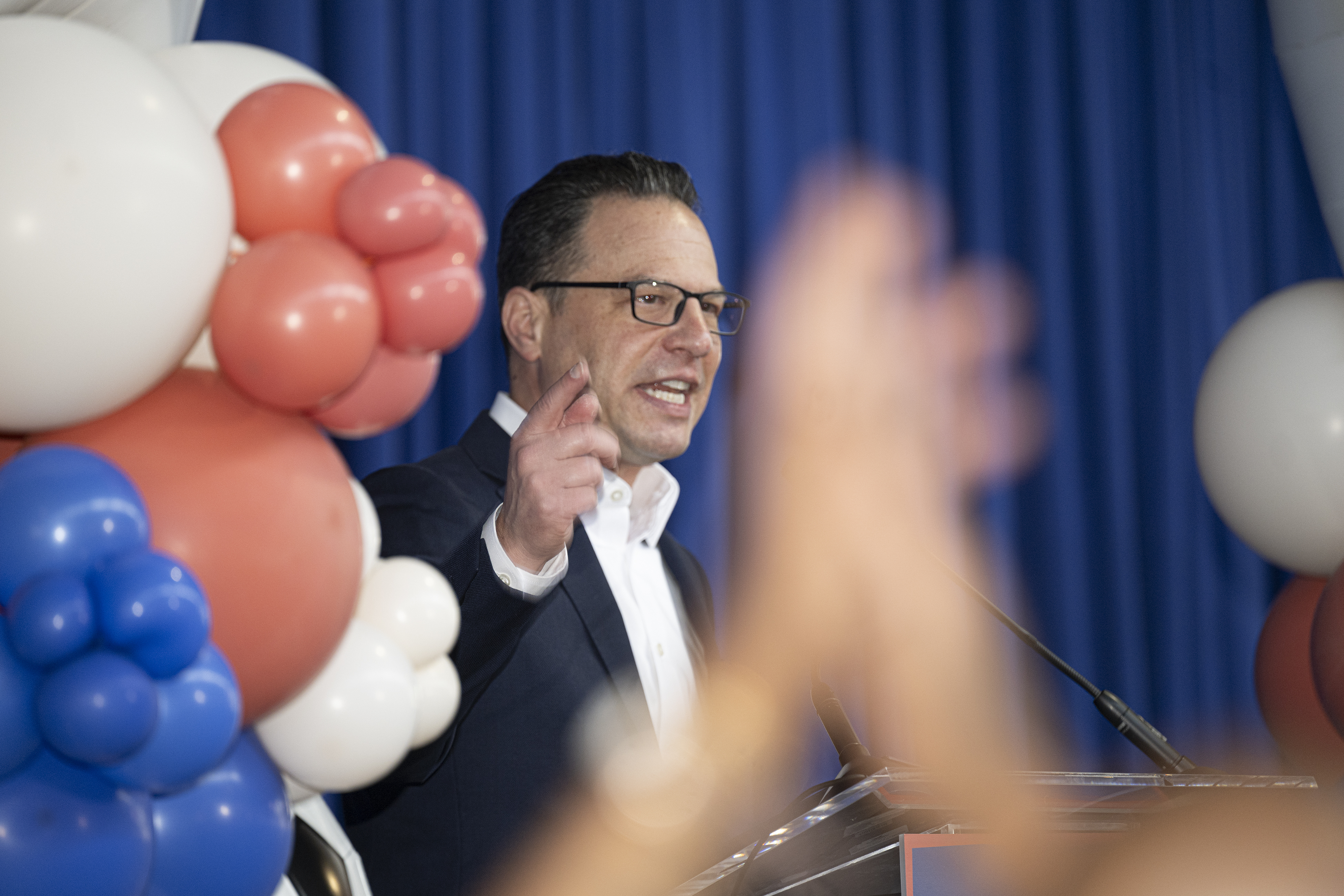
    Pennsylvania Gov. Josh Shapiro speaks during a Visit PA pep rally Tuesday, March 31, 2026, ahead of the nation’s 250th anniversary and other major events in the state. Jose F. Moreno / Staff Photographer

    Freedom 250 has pushed back against the idea that the fair and other anniversary celebrations are partisan.

    “The idea that a president’s presence at America’s 250th birthday is somehow a political act is not a serious argument — and frankly, it is not serious journalism to treat it as one,” Freedom 250 spokesperson Rachel Reisner said. “No one suggested the Biden-Harris administration would have kept the president away from this moment, nor should they have. We proudly welcome President Trump, who has shown genuine enthusiasm for celebrating America and its patriotic traditions, just as we would have welcomed any sitting president. Freedom 250 looks forward to celebrating America together and hosting once-in-a-generation events.”

    The organization has announced several pieces of the program, including “classic state fair” elements like livestock competitions and interactive experiences with companies such as John Deere and Northrop Grumman, the aerospace and defense company.

    It has not detailed the focus of each state’s designated section on the mall.

    An instructional pamphlet directed to state officials explains that every state and territory can “tell its own story” by “presenting a pavilion that reflects their history, culture, and contributions to the nation.” It does not include pricing, though a source familiar with the planning said states or organizations are only responsible for covering the cost to fill the space.

    Some states are sponsoring their exhibits directly through their state agriculture or tourism departments. For example, Arizona and Colorado are planning interactive experiences that highlight their states’ scenic outdoors, and New York’s “I Love NY” tourism campaign will showcase the state’s vacation areas, according to USA Today.

    The Freedom 250 pamphlet suggests other ways states can celebrate the Semiquincentennial — through flags and signage, or “projection experiences” to light up buildings like a state Capitol. It recommends governors issue official proclamations to recognize the moment, as well as foster civic and educational opportunities like student art contests and field trips.

    “The true power of this anniversary will not come from Washington alone,” Freedom 250 CEO Keith Krach wrote to state and local officials in the document. “It will come from you.”
  • Philly’s state lawmakers will still push to close a tax loophole requested by Mayor Parker, as Pa. budget talks move along

    Philly’s state lawmakers will still push to close a tax loophole requested by Mayor Parker, as Pa. budget talks move along

    HARRISBURG — Pennsylvania lawmakers could still deliver additional revenue to Philadelphia, even after City Council last week largely rejected Mayor Cherelle L. Parker’s proposed tax increases for the next fiscal year.

    Philadelphia’s powerful House delegation to Harrisburg will push state lawmakers to close a loophole that allows online sellers to avoid paying Philadelphia’s 2% sales and use tax, its chair, Democratic Rep. Morgan Cephas, said Tuesday, as legislative leaders seek a quick state budget deal in a consequential midterm election year.

    The tax would be exacted on online sellers based outside the city selling goods to Philadelphia customers, including retail giants such as Amazon. Currently, sellers outside the city have to collect only the 6% state sales tax.

    The proposal — estimated to generate an additional $1.5 million for the city — would require authorizing legislation to be passed by the state and signed by Gov. Josh Shapiro.

    When asked about the Philadelphia delegation’s effort to revive one of Parker’s tax proposals — albeit the one that would generate the least revenue for the city — Joe Grace, a spokesperson for Parker, said it is a “technical amendment.”

    That development comes as top lawmakers are in closed-door budget negotiations trying to find additional revenue to close the state’s deficit, where Pennsylvania is expected to spend more than it brings in this fiscal year and in the future, ahead of the constitutionally required June 30 deadline. Legislators often blow past that deadline, with last year’s budget agreement stretching nearly five months after talks stalled over mass transit funding and resurfaced Pennsylvania’s rural-urban divide.

    Here is a look at the status of state budget negotiations, what Philadelphia’s delegation wants in a final budget deal, and the potential sticking points as the deadline draws nearer.

    Talks are ‘further along’ — in a big midterm year

    Senate Majority Leader Joe Pittman (R., Indiana) said in an interview last week that legislators are “a lot further along” in their budget negotiations than they were at this point last year, but still have more to do to rein in spending.

    Other top legislative leaders echoed a similar hope that budget talks will not draw out into another monthslong impasse during the midterm election year in Pennsylvania’s split legislature, where Democrats hope to ride an anticipated blue wave to gain seats in both chambers while Republicans hope to stave it off and maintain control of the state Senate.

    “There’s nothing like a political wave to help politicians focus,” said House Majority Leader Matt Bradford (D., Montgomery) in an interview last week.

    All 203 state representatives and half the Senate are up for reelection this year. Additionally, Shapiro is seeking a second term and is hoping to flex his political muscle to bring Pennsylvania Democratic wins in Congress and at the state level.

    Shapiro proposed a $53.2 billion budget earlier this year, which would be a 6.2% spending increase over last year and would largely rely on the state’s Rainy Day Fund and new revenue streams from skill games and adult-use cannabis to help fill a $4.6 billion budget hole. The state House in April passed Shapiro’s budget as introduced, though the final product will be struck in closed-door meetings involving Pittman, Bradford, and Shapiro. The three negotiators may call on additional leaders to join the budget talks in the state’s tightly divided legislature, where Democrats hold a one-seat majority in the House and Republicans control the Senate with a three-seat majority.

    In previous midterm election years, the electoral pressure has sped up negotiations, as legislators want to bring home results to their constituents before they return to the campaign trail in a year when the governor’s mansion and control of the state House and Senate are on the line.

    ‘An opportunity to regroup with Council and regroup with our mayor’

    Philadelphia’s delegation to Harrisburg, made up of 25 lawmakers representing parts of the state’s most populous city, will take up Parker’s requested sales tax loophole closure, in addition to any other requests from City Council once the city’s budget receives final approval on Thursday, Cephas said.

    “City Council hasn’t finalized their budget just yet. So we are paying close attention as to what is the final product that gets across the finish line, and then we look at it, look at it as an opportunity to regroup with Council and regroup with our mayor to see where we are and where there’s still gaps that would potentially fill,” Cephas added.

    State Rep. Morgan Cephas, who leads the Philadelphia delegation in Harrisburg, attends a get-out-the-vote rally for State Sen. Sharif Street at the Church of Christian Compassion in West Philadelphia Monday, May 18, 2026 on the day before Tuesday’s Democratic primary election for the 3rd Congressional District. Cephas was a candidate for the same seat, but withdrew early in the race.Tom Gralish / Staff Photographer

    As part of several proposals meant to juice revenue from gig economy companies, Parker requested the city’s sales tax loophole be closed in her budget pitch in March.

    Closing the loophole, however, was an easier sell in Harrisburg than Parker’s efforts to raise taxes on city hotels and short-term rentals, which would have also required state legislative approval.

    Last week, sources close to state budget negotiations told The Inquirer there was no interest in raising taxes in Philadelphia as Parker had proposed, even on big tech companies, in an election year. Shortly after, any support appeared to evaporate in City Council for Parker’s proposed taxes on hotels and rideshare services to fund homelessness-prevention programs and help plug the Philadelphia School District’s $300 million structural deficit.

    Shapiro previously said he was uninterested in raising any taxes, and has boasted about cutting taxes in past budgets.

    Shapiro’s office did not immediately respond to a request for comment.

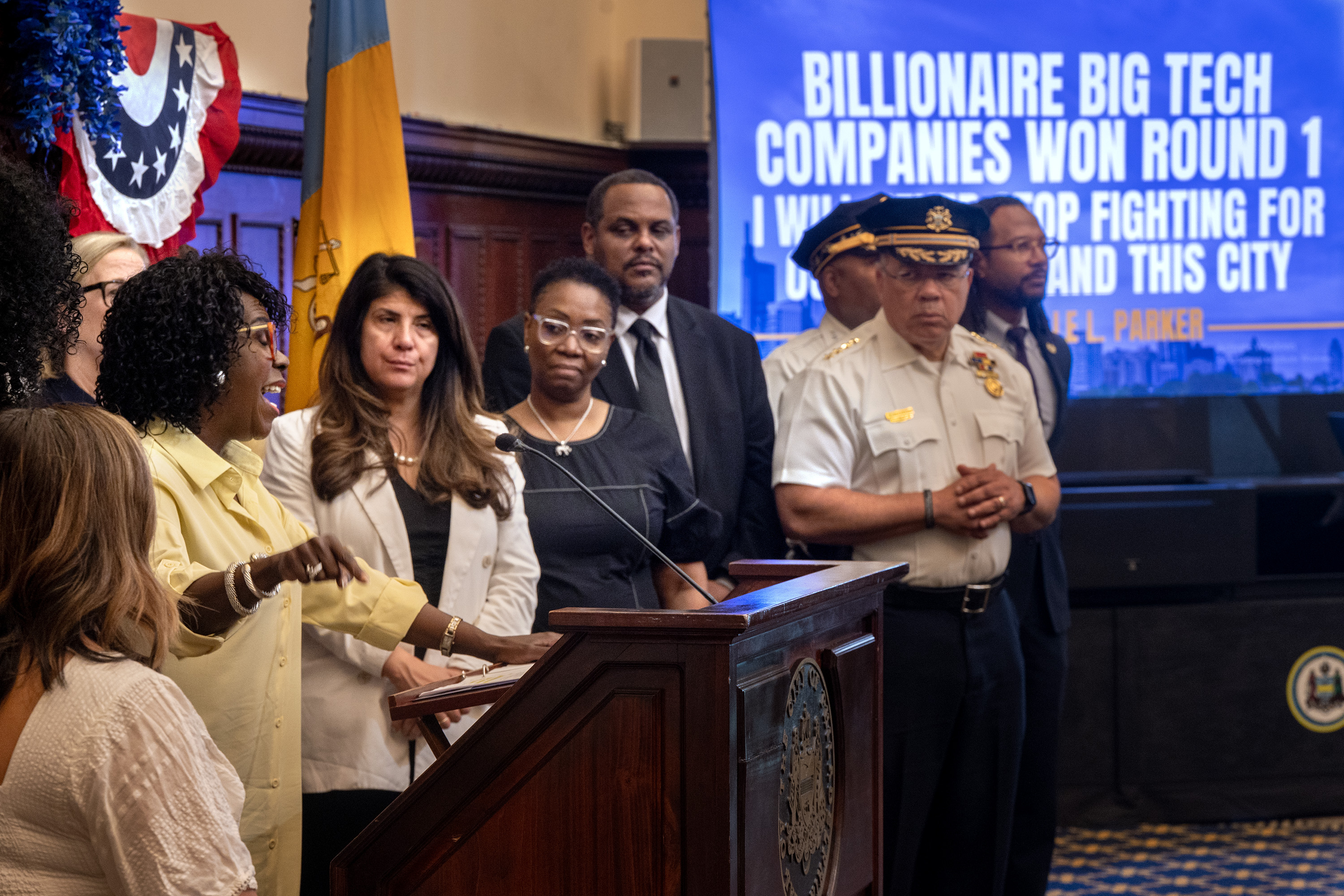
    “Billionaire big tech companies just won round one in this process,” says Mayor Cherelle L. Parker at City Hall Thursday, June 4, 2026 after City Council rejected most of her tax proposals for the city budget.Tom Gralish / Staff Photographer

    Cephas said Philadelphia’s statehouse delegation is also focused on continuing to increase public education funding through the state’s new adequacy formula, expanding a popular student-teacher stipend program, and increasing funding to improve school facilities.

    The delegation — which includes Democratic legislative leaders such as House Speaker Joanna McClinton and House Appropriations Chair Jordan Harris, who are involved in budget talks — will also push to expand a working families tax credit, a childcare tax credit, and an increase to the state minimum wage from its current $7.25 per hour, Cephas said.

    Potential sticking point: Skill games and gaming expansions

    The big unknown in Pennsylvania’s Capitol is whether lawmakers this year will finally address skill games and other gaming expansions in the state as an effort to raise additional revenue.

    Skill games are slot-machine look-alikes that have proliferated around Pennsylvania and, despite coaxing from Shapiro to tax them at a much lesser rate than the hefty 52% levied on slot machines, remain unregulated and untaxed by the state. Shapiro estimated that taxing machines at the same rate as slots would generate $765.9 million in its first year.

    A case is before the state Supreme Court to determine whether the machines found in restaurants, corner stores, and bars are legal — and distinct from other gambling devices.

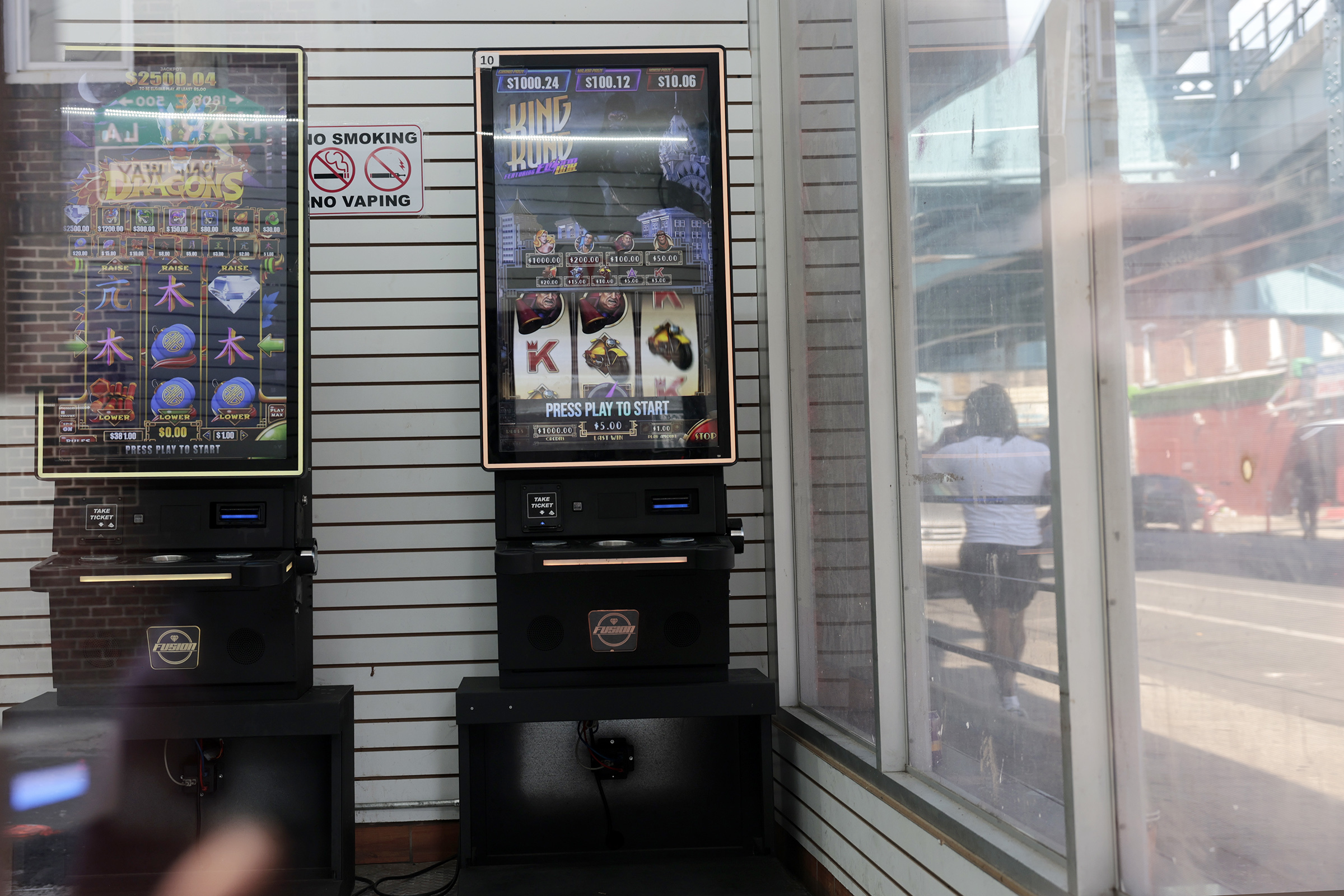
    Skill games can be seen through the door of a mini mart on Kensington Avenue in the Kensington section of Philadelphia on Wednesday, July 30, 2025.Elizabeth Robertson / Staff Photographer

    The deep-pocketed skill games lobby had long been an ally of the Senate GOP until recent years, when Republicans considered a higher-than-desired tax on the industry that the lobbyists claim would hurt small businesses. The relationship eroded further last month when a conservative group tied to the skill games lobby helped fund three unsuccessful primary challenges to Republican state senators.

    Now, top GOP lawmakers say they are awaiting the court ruling before they decide how to tax the devices.

    Another emerging form of gaming that could require state regulation would be prediction markets like Kalshi or Polymarket, which allow users to place bets on the outcome of events, including elections. Pittman said he wants federal lawmakers to regulate the new industry, while House Minority Leader Jesse Topper (R., Bedford) said “it will need to be addressed.”

    “Prediction markets, to me, seem to be a whole new world,” Pittman said last week. “That is something that the federal government really needs to grab onto in a very consistent manner to make sure that you have consistent policy nationwide on that front.”

  • Urban Outfitters plans to hire 1,000 at Navy Yard and new Bucks County facility

    Urban Outfitters plans to hire 1,000 at Navy Yard and new Bucks County facility

    Urban Outfitters Inc., the Philly-founded fashion company, is adding employees and business facilities in the region as it continues to grow.

    The parent company of Urban Outfitters, Anthropologie, Free People, and Nuuly plans to hire more than 1,000 employees in the Philadelphia region over the next seven years. Company cofounder Dick Hayne and Gov. Josh Shapiro gathered at the company’s Navy Yard headquarters Monday to announce the plans.

    At least 450 new positions will be at the Navy Yard headquarters. And at least 600 hires are planned at a new distribution site in Bucks County for clothing rental brand Nuuly, over the five years after that building is completed in 2028.

    “Urban Outfitters was built from the ground up in Philadelphia more than five decades ago — and we are proud that this company is continuing to grow and create jobs all across our Commonwealth,” said Shapiro in a statement on Monday.

    The positions include creative and operational roles across the brands and the parent company, according to Meaghan Condon, Urban’s director of communications and impact.

    The company has just over 2,500 employees based out of the Navy Yard headquarters. That number has grown significantly from 500 in 2004, when Urban announced it was moving its offices there from Center City. The company employs 6,300 across Pennsylvania, including those at its stores and its distribution sites.

    At the time of the move, Urban had five buildings there. Today it has 15.

    The most recent addition is a 117,000-square-foot site at the Navy Yard that houses the photo studios. Redeveloping the space, which Urban started using in the last couple of months, cost about $40 million. Previously, the company’s photos were taken at various headquarters buildings in the Navy Yard or off-site at rented studios in New York.

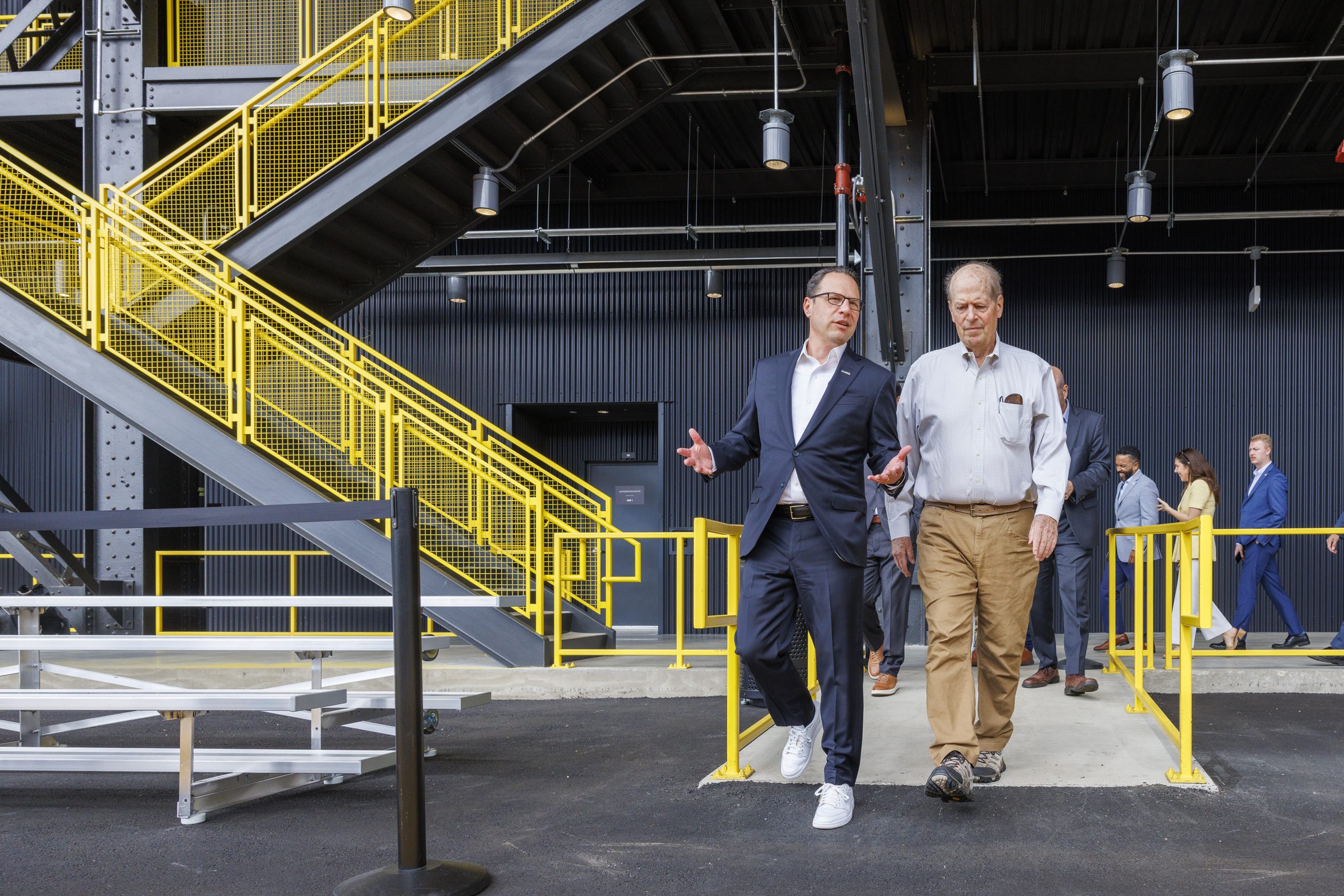
    Gov. Josh Shapiro (left) with Urban Outfitters cofounder and CEO Dick Hayne during an event Monday to announce planned hires in the region.Alejandro A. Alvarez / Staff Photographer

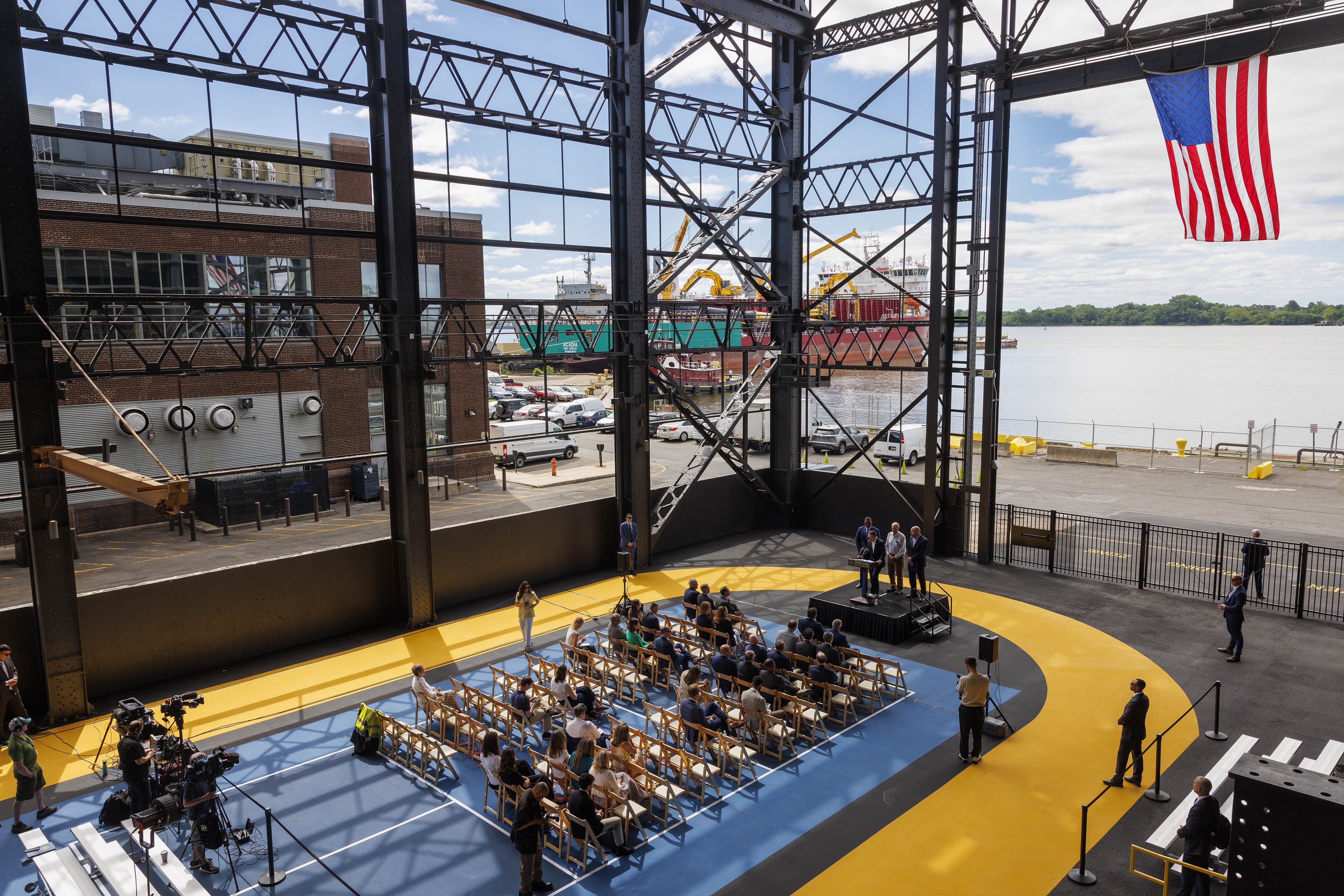
    On Monday, Shapiro and Hayne spoke in the outdoor portion of the new building, which has been partially converted into pickleball courts, to announce the company’s continued growth. An American flag hung above them swaying in the breeze, and airplanes flew overhead periodically to and from the Philadelphia International Airport.

    “When we started, we had a tiny, tiny store,” said Hayne on Monday, recalling the company’s first location near the University of Pennsylvania. “Today, we have over 800 stores across the world, including many in Europe, and our sales have grown extremely rapidly.”

    Hayne said he attributes that growth in part to “the relationship that we’ve had with our governmental agencies, the City of Philadelphia, the Commonwealth of Pennsylvania, and even a little bit with the federal government.”

    Hayne said Urban has invested millions in the state, calling Pennsylvania the company’s home and adding, “we intend to stay here. We have no thought of leaving.”

    The announcement on Monday echoed a similar moment in 2011 when then Mayor Michael A. Nutter, alongside Hayne, announced that Urban would be adding 1,000 jobs at the Navy Yard over the course of three years, and moving into two additional buildings there. The company employed some 1,500 people at the time.

    The new Bucks County facility, which is expected to be completed by early 2028, is for the company’s growing clothing rental subscription business, Nuuly. Launched in 2019, Nuuly had over 450,000 active subscribers as of this spring — over double the amount the brand had in 2023.

    Nuuly has a distribution center in Levittown which opened in 2019, and another in Missouri which opened in 2024.