Tag: Joe Biden

  • Why Trump’s attack on Stars and Stripes was a gut punch | Will Bunch Newsletter

    You’ve probably noticed that many of your favorite TV news anchors are on vacation right now, because the conventional wisdom is that nothing ever happens in August. That conventional wisdom has been wrong since Aug. 24, 79 A.D., when Mount Vesuvius erupted. The calendar has failed to stop natural disasters like Hurricane Katrina (see item below) or human-made ones like Richard Nixon, who resigned on Aug. 9, 1974. I’m going to tempt fate and take some vacation time next week, including a rare newsletter skip. I’ll see you in two weeks. What could possibly go wrong?

    If someone forwarded you this email, sign up for free here.

    Trump’s autocratic assault on Stars and Stripes isn’t just bad. It’s personal.
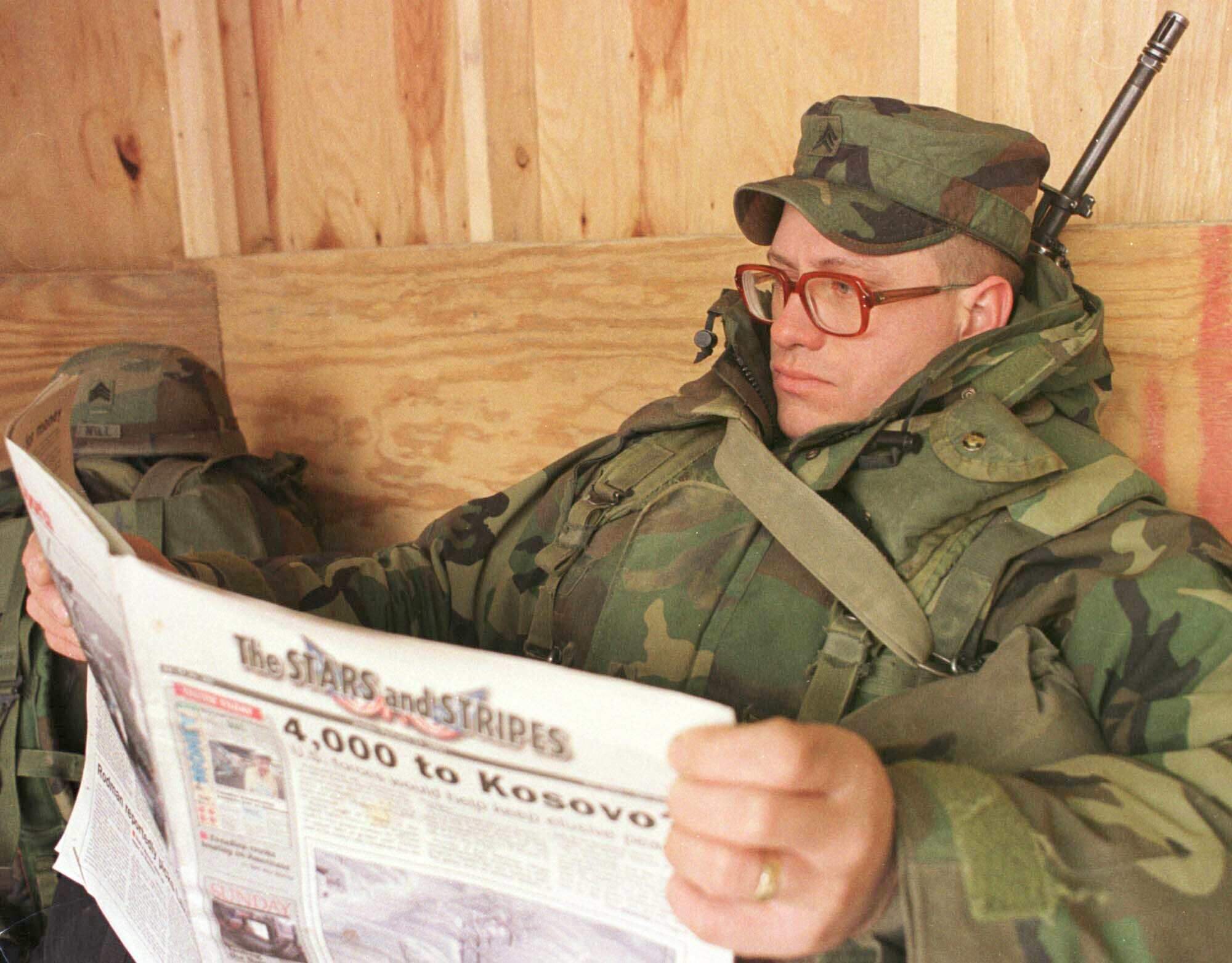
    Sgt. John Hubbuch of Versailles, Ky., one of the members of NATO-led peacekeeping forces in Bosnia, reads a copy of the Stars and Stripes in 1999.AMEL EMRIC

    Less than two months after the U.S. dropped the most powerful weapon humankind had ever invented — the atomic bomb — on the cities of Hiroshima and Nagasaki, the American military arrived in Japan to implement a very different kind of tool in the U.S. arsenal of democracy.

    A free and largely unfettered newspaper.

    The first edition of the Stars and Stripes Pacific newspaper was published from downtown Tokyo on Oct. 3, 1945, when the ink on the Japanese surrender that ended World War II was barely dry. This was the start of a decades-long run when print journalism was still the best way to get information that could be entertaining or essential out to hundreds of thousands of U.S. troops who initially occupied Japan and other Pacific outposts, and later would see combat in Korea and Vietnam.

    Stars and Stripes Pacific — like virtually everything tied to U.S. imperial might after the war — is part of a complicated legacy that overlapped with American censorship of local and outside media in Japan. Yet, U.S. soldiers managed to get their own information from a publication that celebrated the better angels of the First Amendment back home, with coverage of Tokyo’s war-crimes trial and later from the front lines in Korea.

    It was only part of a much grander legacy for Stars and Stripes, which has been the American military’s independent news source tracing all the way back to 1861 and the Slaveholder’s Rebellion.

    Famously, when legendary World War II Gen. George Patton threatened to jail editorial cartoonist Bill Mauldin over a cartoon lampooning him, his superior, Gen. Dwight D. Eisenhower, stopped him. “Stars and Stripes is the soldiers’ newspaper,” Ike reportedly said. “We will not interfere.” Mauldin was awarded a Pulitzer Prize for his wartime cartoons. In 2010, Stars and Stripes reporters exposed the Pentagon’s efforts to slant mainstream media coverage of the war in Afghanistan, and won a George Polk Award.

    That feisty spirit of Stars and Stripes runs deep in my family’s DNA. My maternal grandfather, Thomas Blender, who’d been a photo editor at the Peoria (Ill.) Journal Star before joining the Army, was sent to Tokyo in those early days to work as a top editor of the Pacific publication. I’ve always regretted, after Grandpa Tom died when I was only 11, that I never got to ask him about those days once I’d been infected with the family journalism bug I’d eventually pass on to my own son.

    That must be why it felt like a personal attack last Friday when the Pentagon of Donald Trump and his like-minded “Secretary of War” Pete Hegseth obliterated 155 years of editorial freedom by firing its editor, its publisher — who, seeing the writing on the wall, was about to retire — and its Middle East correspondent. That journalist, Lara Korte, said she was pink-slipped for an interview with CBS News about her reporting on the dreadful conditions for Navy sailors aboard the USS Abraham Lincoln.

    The fuse had already been lit back in January when Hegseth’s Pentagon gutted the regulations regarding the government-funded news organization by stripping language that called for “a free flow of news and information to its readership without news management or censorship.” The new rules, which instead said Stars and Stripes’ journalism “must be consistent with good order and discipline of the military,” were seen as an invitation for censorship. Sean Parnell, the formerly embattled Pennsylvania Republican who is now Hegseth’s chief spokesperson, blasted Stars and Stripes for “woke distractions.”

    Three months later, Jacqueline Smith, the internal editorial watchdog of Stars and Stripes at the Pentagon, criticized military brass for editorial interference and was promptly fired. But the last straw for the outlet came two weeks ago with its aggressive reporting about problems aboard the Lincoln, which spent nine months mostly at sea with dwindling supplies tied to Trump’s ill-advised war on Iran. Journalist Alison Bath reported that sailors’ families were growing deeply concerned about the mental health of the aircraft carrier’s exhausted crew.

    That work epitomized everything that has been good and decent about Stars and Stripes. What the newspaper has shown at its best is that — despite all the contradictions and moral failings of U.S. postwar imperialism — a democratic government can value the press freedom that its armed readers literally died for from Gettysburg to Omaha Beach. That high-minded ideal was a beacon to set us apart from our adversaries in Nazi Germany or Soviet Russia, who never would have permitted the kind of honest coverage Stars and Stripes offered for decades.

    Until America found itself with a government with the same philosophy as 1939 Berlin or 1949 Moscow. Just like his boss, Hegseth has shown nothing but contempt for the notion that his “warfighters” might actually serve to protect Americans’ right to the truth about their own government, including the foibles of his Pentagon.

    On Monday, it came out that the military’s U.S. Central Command told the Intercept that it maintains “a list of people to disregard,” a.k.a. a blacklist. This is the same U.S. Department of Defense — sorry, Pete, that is still its legal name — that also forced out any journalist who wouldn’t sign their integrity away to work in the press room at the Pentagon.

    The firings at Stars and Stripes and the Pentagon’s apparent desire to turn the award-winning newspaper into a Pravda-style propaganda sheet for Hegseth’s testosterone-dosed military feels like a new low on the road toward the utter obliteration of all press freedom.

    Since returning to power last year, Trump and his MAGA minions have waged war against journalists they’ve called “the enemy of the people” — and they’ve done so not through some grand Orwellian censorship edict, but through a mix of billionaire carrots and sticks that have inflicted a thousand small cuts. That means rewards for wealthy allies who buy prominent news organizations (think the Ellison family assuming control of CBS and being on the brink of getting CNN) or neuter them (Jeff Bezos at the Washington Post) — but lawsuits, obstacles, or straight-up bullying for everyone else.

    Another alarming example of the precarious state of the First Amendment came earlier this month when a lawyer for Trump threatened a $5 billion (with a “b”) lawsuit against a left-leaning think tank, the Center for American Progress (CAP), if it didn’t retract a factual report that the Trump regime’s deployments of National Guard troops to U.S. cities have not lowered crime rates.

    The CAP has stood its ground so far, but this reveals the state of play right now. MAGA World has already either bought off or intimidated much of the mainstream media, so now they are hoping they can crush the outliers like Stars and Stripes or CAP, one by one.

    The mission my grandfather was dispatched to Tokyo to carry out after World War II was on the fringe of an idea that came to be known as “soft power” — the now-quaint notion that America could form healthy alliances with the rest of the world through good things like vaccinating children or printing uncensored journalism, instead of dropping bombs. Other organizations meant to show people in oppressed lands that press freedom and democracy are things to fight for — like Radio Free Europe — have been forced to grapple with Trump-ordered cutbacks.

    The right knows exactly what it is doing — that truth and knowledge are kryptonite for its authoritarian project. Increasingly, they are saying the quiet parts out loud. The great Tennessee journalist Phil Williams recently unearthed a sound bite from a white supremacist confab in Rome in which the conversation turned to America’s growing number of news deserts where journalism has all but perished.

    “Local media has been dying all over America, which means that there’s essentially no real way to hold local governments accountable — and they can do whatever they want,” white nationalist Kevin DeAnna told the gathering. “You should be fantasizing about this. This is a good thing.”

    No, it’s not. The government’s bludgeoning of Stars and Stripes has truly — to borrow from a storied military campaign of yesteryear — crossed the Rubicon of no return for its all-out blitzkrieg against the truth. All of us, including the laggards of the mainstream media who continue to pretend this war doesn’t exist, need to fight back with everything we have.

    I never got to know my Grandpa Tom very well, but I know in my soul that this is what he would have wanted.

    Yo, do this!

    • Meep, meep! If timing is really everything, then the half-animated, half-real feature film Coyote vs. Acme, which hits theaters this week, will be the greatest motion picture of all time. The film is based on a 1990 New Yorker essay that imagines Warner Bros. cartoon icon Wile E. Coyote suing the giant Acme Corp. over years of faulty products that literally blew up in his face and ruined his shot at catching the speedy Road Runner. The fact that real-world corporate baloney delayed for several years the release of this film mocking the excesses of runaway capitalism is an unbelievable irony. I’m really looking forward to seeing it.
    • Books, despite their apparent looming extinction, remain a great way to track what humankind is thinking about. This summer, the hot topic is anxiety over AI and the unchecked power of Silicon Valley. In addition to the best-selling Nerd Reich, now there’s the great essayist and Harvard historian Jill Lepore with her new tome, The Rise and Fall of the Artificial State, out today. Lepore’s timely work tracks the rise of authoritarianism run not so much by a tinhorn dictator, but by machines, and how humanity can fight back.

    Ask me anything

    Question: Do PA Dems have a legit chance of freeing us from Joe Pittman’s reign of terror in the state Senate? — Travis (@unraptured.bsky.social) via Bluesky

    Answer: Travis, the answer is absolutely yes. Democrats in the Keystone State have managed to chip away at what once seemed like a permanent GOP majority in the upper chamber at the same time that they’ve recaptured the state House. The current Republican Senate edge is just 27-23, meaning Democrats have to flip only three more GOP seats among November’s 25 contests. Every arrow — Trump’s high disapproval, the popularity of Gov. Josh Shapiro at the top of the ticket, and special-election results like last week’s shocking Democratic House victory in a blood-red district in Western Pennsylvania — points toward a blue tsunami. The Democrats have reportedly targeted three suburban swing districts. The big question for 2027 may be whether Shapiro really wants a Harrisburg trifecta pushing him to the left.

    What you’re saying about …

    OK, last week’s question about Georgia Sen. Jon Ossoff’s pointed comments regarding Donald Trump’s corruption, including an eyebrow-raising mention of ever-present aide Natalie Harp, was kind of a slam dunk for readers of this newsletter. You saw nothing uncivil in the fighting spirit of his remarks, and a surprising number of you echoed back a phrase from my question: “a breath of fresh air.” Wrote Daniel Fleischer: “Jon Ossoff called Trump a ‘crook.’ If anything, that’s a euphemism understating Trump’s criminality.” Added Patricia Eisenberg: “What he said was undeniably true — the President chose this young woman to travel on his escape plane, not one of his cabinet members.”

    📮 This week’s question: It seems like the GOP’s got nothing ahead of the midterms beyond its opposition to what it calls “men playing women’s sports.” It’s kind of pathetic, but it does pose a question for Democrats: Do they strongly embrace transgender rights, or is that risking political defeat in today’s culture wars? I have a strong opinion on this, but what do you think? Please email me your answer and put the exact phrase “transgender politics” in the subject line.

    Backstory on Indiana’s new, outrageous Katrina

    A woman sits inside the City Life Center as she waits for food in Gary, Ind., on Aug. 20, more than a week after a deadly storm passed through the area.Nam Y. Huh

    Exactly 21 years ago today, a tropical storm in the Atlantic Ocean rapidly intensified into a hurricane — Hurricane Katrina — and raced across Florida on a path into the Gulf of Mexico, where it became a Category 5 monster. Still, many of us in 2005 briefly thought the Gulf Coast dodged a bullet when Katrina weakened slightly, and its center struck what looked like only a glancing blow on populated New Orleans. Then, one by one, the city’s levees began to break, and the water rose.

    The death and destruction in Katrina’s wake was covered around the clock on cable TV, yet it took a couple of days for news anchors to articulate what viewers were seeing with their own eyes. The thousands of people who crowded interstate overpasses or were trapped on roofs were almost all Black, and most were desperately poor.

    In These Times wrote the following week that “many Americans were surprised that most of the victims of the New Orleans flood were Black: Their image of the Crescent City had been one of jazz, tasty cuisine and the good-natured excesses of its lively festivals. Where did all those black people come from, they wondered; and where were the white victims?” Katrina triggered some long-overdue conversations about inequality and racism in America, and the inept response from the George W. Bush administration would start his steep decline in public approval. Long before the roughly 1,400 New Orleanians who died in the flooding or chaotic aftermath could be buried, many folks were asking how to prevent this from ever happening again.

    One generation later, it’s happening again.

    It wasn’t a hurricane that struck Gary, Ind., and surrounding communities in the state’s northwest corner exactly two weeks ago on Aug. 11 — just a thunderstorm — but the winds were nearly as intense, snapping trees and downing power lines across the region. Gary’s 67,000 predominantly Black residents hunkered down in the dark nights and blistering hot August days as their refrigerated food went bad, and waited for help. And waited.

    While life returned to normal across the rest of the storm-battered Midwest, the massive outage in the region that includes Gary that began with some 375,000 homes lacking electricity dwindled at a snail’s pace. After two weeks, there were still more than 5,000 families without power and struggling with spoiled food and closed schools and workplaces. There is growing anger among residents who say that Indiana’s heavily Republican power structure and Donald Trump’s federal government feel no sense of urgency to rescue a city that is mostly African American.

    “This isn’t a problem that started with the storm,” the hip-hop star Freddie Gibbs, who grew up in Gary, told MS Now Monday night. “We are a predominantly Black city that tends to get ignored.” It feels like Katrina redux — an island of utter despair in the world’s wealthiest nation, with a government’s inaction bordering on criminal neglect. But there is one big difference: This festering crisis has been mostly ignored by the national media. The tragedy isn’t just our inability to stop the next Katrina, but our inability to care.

    What I wrote on this date in 2022

    One of George Orwell’s greatest passages in 1984 concerns Winston Smith’s job of cutting out old newspaper articles and tossing them into “the memory hole” — inconvenient truths meant to be forgotten by civilization. That’s how it feels now reading news stories from those four years in the early 2020s when Donald Trump was out of power, and America took baby steps back toward normalcy that would later get crushed. On Aug. 25, 2022, I wrote about one of these: Joe Biden’s eventually failed plan to wipe out some $300 billion of the nation’s massive student loan debt. I wrote that “this week will be remembered as one giant leap toward an idea that can change everything — the notion that higher education should be a public good, not the privatized rat race that has demoralized our rising generations.”

    Dive into the memory hole to pull out: “Biden’s big move on student loans only a first step toward making American college great again.”

    Recommended Inquirer reading

    • Look what’s happening out in the streets, got a revolution — and it’s not the one anyone saw coming. Growing public rage against Big Tech — the intrusiveness of artificial intelligence and the noisy, polluting data centers that power it, and increasingly also against omnipresent surveillance cameras — has become the surprise issue of the 2026 midterms. Politicians in both parties are performing backflips to join the bandwagon. Over the weekend, I wrote about how voter anger against Silicon Valley and its billionaires is rapidly reshaping our politics, and what could happen if our broken system fails to deliver radical change.
    • For the first time in recent memory, August has been living up to its reputation as a slow news month (so far), but on the baseball diamond things have really been heating up as kids are drifting back to school. The Phillies’ just-ended nine-game winning streak has electrified a city that’s been having a pretty good summer in spite of everything. The Inquirer’s oft-cynical sports columnist Marcus Hayes even published a list of five reasons to believe the Phils can go deep into October with a reenergized starting lineup, world-class pitching, and improved defense. A stunning turnaround from long-anticipated rookie pitcher Andrew Painter has also been key to the team’s revival in the National League East. It’s an old-fashioned pennant race, and subscribing to The Inquirer is the best way to keep up.

    By submitting your written, visual, and/or audio contributions, you agree to The Inquirer’s Terms of Use, including the grant of rights in Section 10.

  • Is Trump-touted Freedom Fuel from Venezuela? | Will Bunch Newsletter

    What a difference three words can make. For weeks, the American body politic has watched the strange relationship between Donald Trump and his ever-present 35-year-old aide Natalie Harp in a state of puzzled silence. Then, Georgia Democratic Sen. Jon Ossoff spoke at a weekend rally and said that Trump “doesn’t want to do the job” and would rather “build his ballroom and travel with Natalie on their apparently defenseless flying palace.” The floodgates opened — on social media and sites like the Drudge Report and in angry retorts from the White House that only threw gasoline on the controversy. It goes to show what Democrats can accomplish when they’re not afraid to speak the truth.

    If someone forwarded you this email, sign up for free here.

    An expert raises questions about Freedom Fuel and Venezuelan oil

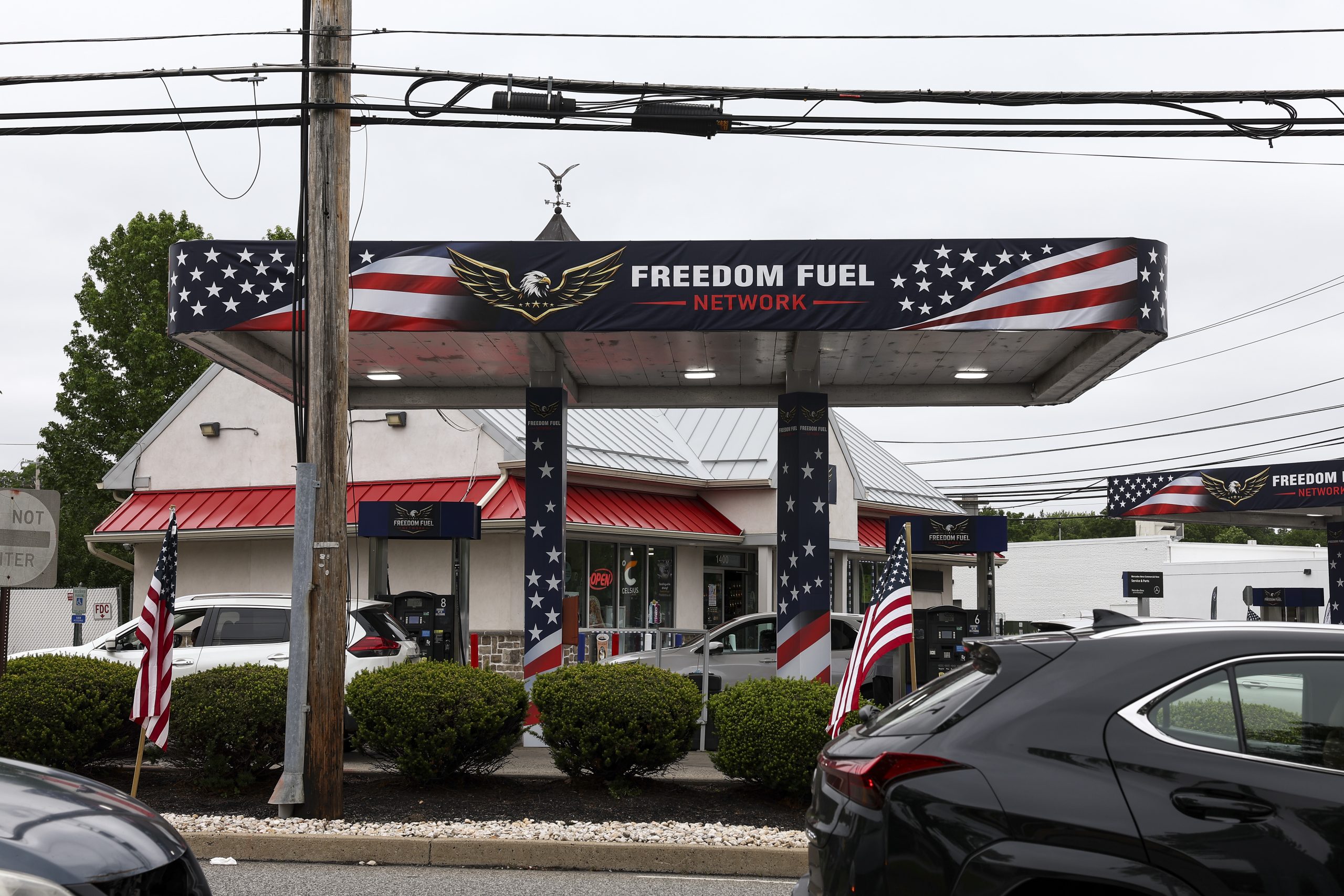
    The Freedom Fuel Network gas station at 1400 Dreshertown Rd. in Dresher last month.

    For a government that seems to be in your face 24 hours a day, the Trump regime has managed to produce more mysteries than Sir Arthur Conan Doyle. Where’s Melania? Why was the president’s butt sticking way out at his last event? But here in Philadelphia, one Donald Trump-linked mystery has confounded motorists for weeks.

    Why is Trump-promoted Freedom Fuel, a web of 29 service stations that popped up out of nowhere this summer, able to continue to sell gas cheaper than its rivals down the street?

    The mostly suburban stations in Southeastern Pennsylvania and South Jersey burst onto the scene with prices at $3.47 a gallon — lower than anything since Trump’s disastrous war of choice against Iran launched in late February — and continue to undercut their competitors by about 10-20 cents per gallon. Experts have said that’s not sustainable, unless the stations are somehow getting their gasoline on the cheap.

    Now a former high-level State Department official in the Barack Obama administration is trying to connect the dots between the Freedom Fuel conundrum and the ongoing questions about millions of barrels of crude oil Trump has bragged that the United States has taken out of Venezuela.

    Jonathan Winer, who recently wrote about Freedom Fuel and Venezuela for the Washington Spectator and discussed his findings on the Court of History podcast, doesn’t connect all the dots, but his research is a reminder of how little the American public knows about the aftermath of the Trump regime’s January assault on Venezuela that captured strongman Nicolás Maduro and installed a friendlier head of state.

    The Inquirer and other outlets have reported extensively on Freedom Fuel stations in Greater Philadelphia, including its ties to pro-Trump Republican ex-mayor of Evesham Township, N.J., Randy Brown, who signed Freedom Fuel’s certificate of formation. Former commodities trader Yoni Gontownik — a major donor to GOP causes and a New Jersey-based pro-Israel political action committee — also signed those papers.

    Trump promoted the launch of Freedom Fuel on his Truth Social feed, but the White House has denied direct involvement in the flag-themed gas stations, and so has the company itself. “Freedom Fuel Network is a privately owned and proudly patriotic company — along with its convenience store operators, haulers, sign companies, and operational partners — that answered President Trump’s call to action to lower prices at the pump,” it proclaims on its website.

    Veterans in tracking the complicated oil market remain baffled. “People can’t mysteriously get fuel at a lower price and continue to offer that,” Winer said on the podcast. “You could, of course, do a very short promotion, but you basically can’t [sustain] it.”

    It may be a total coincidence, but the giant enigma that is Freedom Fuel and its cheap gasoline surfaced at exactly the same time the president boasted about the cheap oil the United States is supposedly getting from the resource-rich South American nation his troops invaded.

    “We’re taking their oil,” Trump proclaimed about Venezuela while in Las Vegas earlier this month. “To the victor belong the spoils.” He added that what America has taken has paid for the brief January war “many, many, many times.” But analysts know next to nothing about what is actually happening to as much as one million barrels of oil that Venezuela produces every day.

    Winer pointed to a couple of common bonds between the efforts to market low-cost gasoline here in Philly and White House efforts to control the flow of Venezuelan oil.

    The first is the role of Jarrod Agen, executive director of the National Energy Dominance Council inside the White House, who posted two photos of himself giving a thumbs-up at a new Freedom Fuel station in Philadelphia when it opened on the July 4 weekend. Both Agen and the president himself insisted that the new gas retailer is proof of what the Trump regime is doing to lower prices at the pump.

    Winer noted that Agen was also a key member of an American team that traveled to Caracas in April, met with the Trump-backed new president, Delcy Rodríguez, and came home bragging of new commodities deals, including in the oil sector.

    The second overlap that Winer points to involves a Texas-based global commodities firm, Mercuria, which announced on May 1 that it had reached a major deal with Venezuela under what it called a “White House-supported initiative.” The announcement featured a photo of a top Mercuria official posing with Agen.

    Mercuria told the Washington Post, which has also investigated Freedom Fuel, that it has no involvement with Freedom Fuel. Yet Gontownik, the trader listed as a backer of Freedom Fuel, was also listed as recently as March in campaign finance reports as an executive with Mercuria. But he also insists that he no longer works for the Texas firm — which has been linked to other Trump-regime commodities initiatives. (The ex-Philly journalist Maureen Tkacik, investigations editor at American Prospect, also raises a lot of questions about the role of Mercuria, Gontownik, and the firm Blue Owl Capital, which Trump invested in earlier this year.)

    It must be stressed again that all of these connections are circumstantial. At the same time, this much cannot be disputed: The American people have not been given the most basic information about the extent of U.S. involvement in the Venezuelan oil trade, how much money is involved, or where all that money is going at a time when the price of crude oil has skyrocketed.

    I could not agree more with Winer’s plea that Congress go after the U.S. Treasury, State, and Energy Departments that are sitting on undisclosed records of U.S.-linked oil transactions — even though realistically that might have to wait until Democrats gain a foothold on Capitol Hill next year. He also called on the media to dig deeper, which is why I wanted to amplify Winer’s early-stage reporting.

    Look, we all want to pay less for gas, which is why motorists have been lining up at Freedom Fuel pumps since the stations opened last month. But most of us don’t want to live in a dying empire where a strongman’s tin soldiers steal a sovereign nation’s buried treasure so that favored insiders can profit. We still have no idea what’s been done in Venezuela in our name, and we need to find out.

    Yo, do this!

    • It’s great that people — especially younger people — are returning to brick-and-mortar movie theaters in the long, hot summer of 2026, but the quality of the releases hasn’t really matched the boffo box-office numbers. That may change starting this weekend with the release of Tony, a movie that could have been titled “Becoming Anthony Bourdain.” The film stars Dominic Sessa playing the future chef, author, and beloved TV traveler as a lanky, awkward 19-year-old, spending a summer on Cape Cod and learning to embrace his love for the kitchen — and humanity. I’m really looking forward to this one.
    • There are two must-read articles out this week from Adam Bonica, a Stanford University professor who specializes in money and politics. The first is his lengthy investigation into dodgy fundraising practices by top Democratic Party committees and leaders, in which endless spam fundraising emails have hit home with susceptible elderly donors, some of whom have drained their life savings. The second is the story behind the story of how both the New York Times and the “Never Trumper” website the Bulwark both chickened out on publishing Bonica’s essential journalism. The cowardice of the elite media in America’s authoritarian moment is beyond disheartening.

    Ask me anything

    Question: Why aren’t more Democrats supporting and campaigning on the 32 hour work week? It seems like a policy that would appeal to working people across the political spectrum. — brown cloud (@milehighdsa.bsky.social) via Bluesky

    Answer: Good question. One political leader, Vermont Sen. Bernie Sanders, has aggressively pushed the 32-hour workweek without a reduction in pay, noting that this would pass the productivity gains of the computer era back to the workers who are being more productive. So, yeah, what’s not to like? It’s certainly true that a lot of Democrats, especially centrists, are heavily dependent on campaign contributions from corporate types who don’t like the idea of a shorter workweek. But I think ultimately, Democratic cowardice on these pro-worker issues goes all the way back to the Ronald Reagan era, and a fear that they’ll be branded by the GOP as the party of “free stuff.” But this isn’t free stuff. We’ve earned it.

    What you’re saying about …

    Last week’s question about how Democrats should view the primary success of leftists such as Michigan Senate hopeful Abdul El-Sayed drew a response that was both robust (despite the summer doldrums) and fairly unanimous. Proposals from the progressive movement like Medicare-for-All and taxing the wealthy, you agreed, are long overdue. Tom Lees noted that the GOP is trying to find the most extreme democratic socialists, but that “the [Rep. Alexandria Ocasio-Cortez] branch which supports ideas similar to European Social Democrats is the group that is getting people excited.” Craig Strimel added that leftist candidates have failed in the past, but “I also believe that we are so far deep in the current fiasco, and so damned close to total collapse of democracy, that we really are in an all-or-nothing situation right now.”

    📮 This week’s question: Georgia Democratic Sen. Jon Ossoff has caused something of a political earthquake with his blunt criticisms of Donald Trump, including a reference to his ever-present young aide Natalie Harp. Has Ossoff crossed a line of incivility that’s a bad look for Dems, or are his criticisms a breath of fresh air? Please email me your answer and put the exact phrase “Ossoff comments” in the subject line.

    Backstory on Jason Arday, casualty in the ‘war on woke’

    Torchbearer Jason Arday carries the Olympic flame on the torch relay leg between Sutton and Merton in London in July 2012.Joe Giddens

    There are two kinds of people in this world. There are normal folks who maybe get a slight whiff of news from the TV or when they boot up their computer, and never heard of a man named Jason Arday. Then there are people who (like me) spend far too much of their day on social media, and now know all about the charismatic Cambridge professor — the youngest Black man to reach those heights in the university’s long history — who came under fire for alleged plagiarism and biographical exaggerations.

    The allegations apparently simmered from the day of Arday’s 2023 appointment, but boiled over in recent weeks. He acknowledged some citation errors in his 2015 doctoral thesis — mistakes that Liverpool John Moores University called “honest and reasonable” — but the allegations kept coming. They were fueled by a Cambridge colleague and self-proclaimed “race realist” who went on British national TV to lambaste Arday as “not smart” and label him as merely a diversity hire.

    The famously not-laid-back British press went wild on the controversy, with literally hundreds of articles about Arday — not just the Fleet Street tabloids, but even the august Times of London, which ran 60 stories. The media frenzy over the young, dreadlocked sociology of education professor didn’t stop when Arday resigned his Cambridge post, saying that “the relentless accusations, speculation and public commentary have taken a profound toll on me and on those I love.” The media frenzy didn’t even stop when Arday was found dead in his home last Friday. He was 41.

    Just one day after Arday’s body was found, Julia Hartley-Brewer, a host on a Rupert Murdoch-owned U.K. TV network, told her audience that Arday “was a liar and a fraud who was rightly exposed for what he really was by academics and journalists who were simply doing their job.”

    I’m sorry, but as a lifelong journalist, I never realized that hounding a professor who wasn’t perfect but was loved by his students to his early death is part of the job. To the contrary, I think that good journalism might involve noting that scores of white professors and authors who’ve been caught and admitted to plagiarism or similar issues have been allowed to apologize and go on with their careers. And that bad journalism might be implying that Arday’s middling issues are some kind of commentary on any and every academic with darker skin — as opposed to researching the systemic racism that leaves a supposedly enlightened school like Cambridge with 0.4% Black professors, in an England that’s 4.2% Black.

    The ghouls who hounded Arday to his death didn’t work in a vacuum. They tapped into a disgusting narrative that way too many journalists and self-appointed public intellectuals are spreading not just in the U.K. and the rest of Europe, but here in the United States. They think the righteous COVID-19-era outcry against police brutality and a grossly unequal society was some kind of mania they’ve branded “Woke 1.0.” Never mind that the police were never defunded in 2020, not even close. The nattering nabobs of anti-wokeness won’t rest until every college classroom or airplane cockpit is made safe for white privilege.

    Let me do my job as an opinion writer and tell you what I think about these mostly aging, mostly white, mostly male pundits who have so little to say about right-wing fascism that’s in power in America and on the rise in Britain and instead desperately cling to their status from the perceived threat of a few Black intellectuals. With key elections approaching on both sides of the pond, they opportunistically saw Arday as their latest chance to stir up white voters and preserve the status quo, even if that means tolerating an authoritarian police state. Now, a once-promising Black professor is a casualty in their glorious “war on woke.” Have they no shame?

    What I wrote on this date in 2020

    As I noted in this space a couple of weeks ago, there’s so much about the peak year of the COVID-19 pandemic that we’ve successfully tried to forget. That includes much about the consequential yet somehow anemic showdown between Donald Trump and Joe Biden, which included their virtual, prepackaged summer conventions. On this date six years ago, I grumpily covered the Democratic National Convention from my couch in Delco and — stop me if this sounds familiar — complained that the party was ducking progressive issues. “If viewers didn’t notice what the Democrats left out in their tightly scripted telethon so focused on Trump’s coronavirus failings and his paranoid style — such as climate change, gun violence, and the other things that young people across America have been marching for — the history books might.”

    Please read the rest: “The future is a no-show at telethon-style DNC.”

    Recommended Inquirer reading

    • I’ve cut back on column writing this month, mainly because I’m working on a long-term investigation that I’m really excited about. In my one piece published this weekend, I took a deeper dive into the stunning reports that winter drone attacks on fishing boats off the coast of Ecuador — with eight sailors missing and presumed dead — were a covert operation by Donald Trump’s CIA. This callous disregard for innocent human life is the latest example of a White House death cult that must be held to account by a new Congress, and eventually by prosecutors.
    • It’s truly remarkable the extent to which public opposition to the data centers that support artificial intelligence, or AI, has gone from near zero to 60 mph (or maybe 80) in a matter of months — especially here in Pennsylvania. With public unrest over these behemoths around their air and noise pollution and impact on electric bills, as well as growing discomfort with AI itself, becoming a key issue in the fall election, The Inquirer has been all over this story. On Tuesday, veteran business columnist Joseph M. DiStefano looked at how major contractors are hoping that demand for new data centers will get them through an otherwise sluggish economy. That might be a pipe dream if municipalities respond to voters by rejecting these proposals, as happened last week with a massive facility planned for suburban King of Prussia. You’re going to want to read The Inquirer’s in-depth coverage of this debate before you vote in November, which means it’s time to finally subscribe. What have you been waiting for?

    By submitting your written, visual, and/or audio contributions, you agree to The Inquirer’s Terms of Use, including the grant of rights in Section 10.
  • Why we’re still fighting over COVID-19 | Will Bunch Newsletter

    Today’s newsletter is all about things I thought I was done writing about: COVID-19, Kamala Harris, and the World Cup. Regarding the latter, FIFA strongman Gianni Infantino walked off the pitch after last month’s final like the hero in Steve Miller’s “Take the Money and Run”: He got the money — an ungodly $15 billion in revenue — thinking he got away. But instead, just like Icarus, Infantino flew too close to the sun. A plan to make even more cash off the world’s greatest sporting event — by selling a share to private investors led by the brother of Donald Trump’s son-in-law — outraged so many folks that the FIFA chief could lose his job. What a shame.

    If someone forwarded you this email, sign up for free here.

    The right can’t shut up about COVID-19 because it needs your outrage against experts

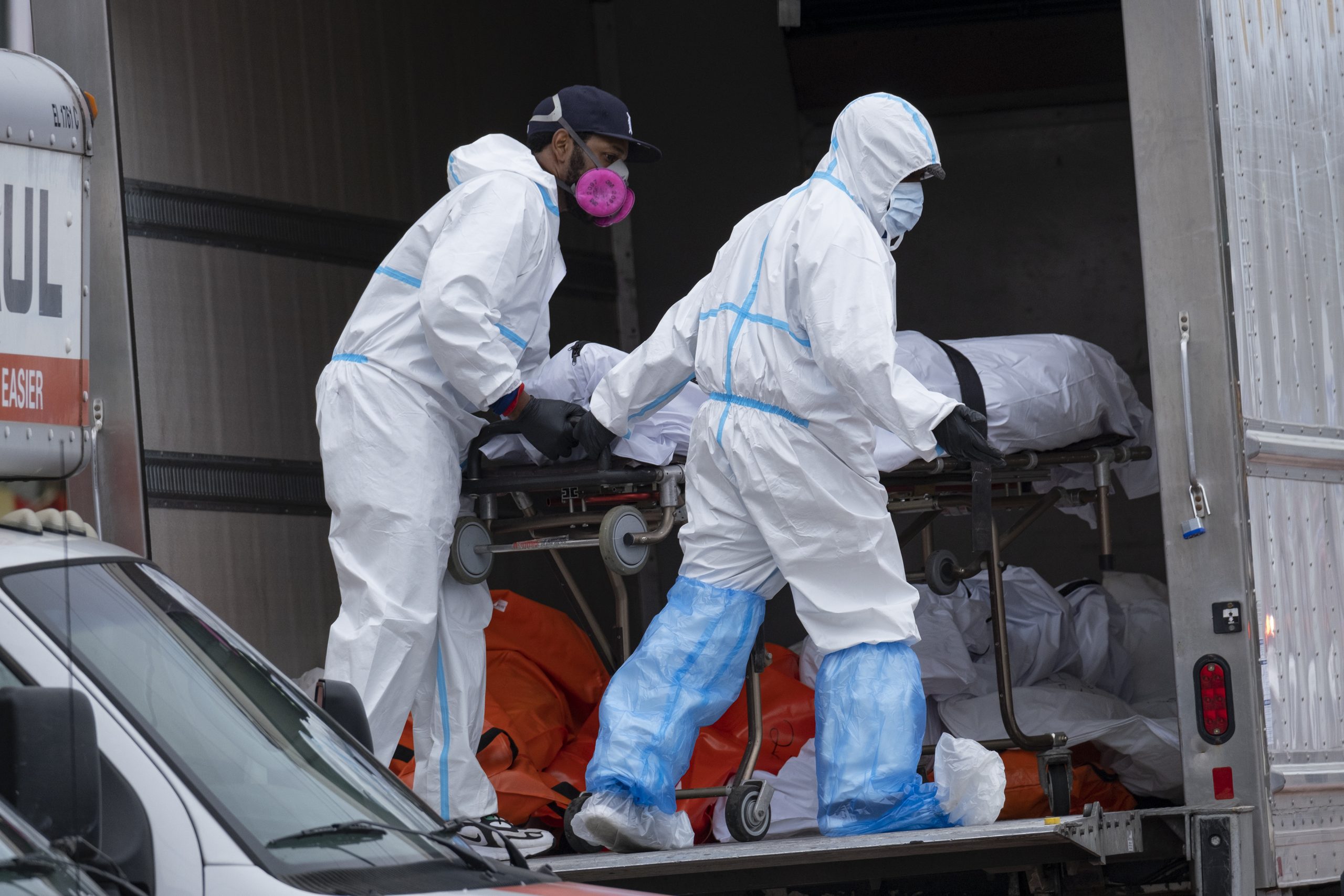
    Workers move bodies to a refrigerated truck from the Andrew T. Cleckley Funeral Home in the Brooklyn borough of New York in April 2020.AP

    Honestly, I thought — and hoped, frankly — that I’d written about the COVID-19 pandemic for the last time by the end of 2021. The issues it raised — about everything from public health preparedness to conspiracy theories — had seemed important enough, but I was more than ready to move on from empty baseball stadiums and masks in the supermarket.

    I thought most folks felt the same way — that we were all eager to put the coronavirus in the rearview mirror. Clearly, I was wrong. The people we call MAGA still can’t stop yelling about it.

    Last week brought the acid flashback of the government’s communicable disease czar when the pandemic erupted in 2020, Anthony Fauci, getting dragged before a U.S. Senate committee in a Joe McCarthy fashion, forced to take the Fifth Amendment to avoid any perjury traps that would satisfy the senators’ mouth-breathing constituents’ raw lust to imprison the 85-year-old public health icon.

    The realization that they weren’t going to send Fauci — who was pardoned for his past actions in January 2025 by outgoing President Joe Biden to protect the good doctor from GOP wrath — up the river led these Republican statesmen to do the only thing left: scream at him.

    “Who the f— do you think you were for doing that?” Ohio Sen. Bernie Moreno yelled at Fauci, even as it’s hard to understand what “that” was, except for working tirelessly to give Americans the best information about a rapidly evolving, deadly pandemic. “It is a total disgrace what you did to this country.”

    The baseless attacks on Fauci by right-wingers — who’ve convinced themselves that the real crisis of 2020-2021 wasn’t the invisible virus that caused the early death of more than 1.2 million Americans, but an authoritarian government (led at the time by Donald Trump, but no matter) making them wear those masks and avoid those baseball games — were both infuriating and unconscionable. Still, maybe because of my aversion to reliving the pandemic, I was going to let the subject slide.

    But then the current government’s top health official, Health and Human Services (HHS) Secretary Robert F. Kennedy Jr., went on CNN to double down on the Trump regime’s Big Lies about what really happened during the COVID years. And like Moreno, RFK Jr. turned the volume up to 11.

    “Anthony Fauci was mismanaging the COVID pandemic and was doing it under the Biden administration. President Trump wanted to end the lockdowns,” Kennedy loudly told CNN’s Dana Bash, inventing a farcical, backward timeline. An agitated RFK Jr. insisted the government’s priority during COVID-19 should not have been saving lives, but “protecting constitutional rights,” yet to make this fiction sound less ridiculous, the HHS chief also had to lie about the extent of the crisis.

    “There were ICUs that were empty all over the country, including in New York, at the height [of the pandemic],” Kennedy insisted.

    This can no longer be ignored. There are two very important points that need to be made here.

    First, when a high-ranking government official tells a lie on national television, this must be debunked immediately. The truth here is that the hospital emergency rooms and intensive care units, especially in New York City but other locales as well, were overwhelmed in the spring of 2020. So were many morgues and funeral homes, which struggled to keep up with the dead.

    “I worked for New York’s largest medical center at the start of the pandemic,” Lucky Tran, a Columbia University scientist, posted on Bluesky. “There were morgue trucks on the streets. They set up emergency medical tents in Central Park. Healthcare worker colleagues died. It is horrific that RFK Jr is on national TV lying that ICUs were empty.”

    Of course, this is just one of a number of lies about the pandemic — that the vaccines released to the public in early 2021 are dangerous (they’re not), that the virus came from a Chinese lab (it almost certainly didn’t) and not animal-to-human contact, and that Fauci led some kind of Watergate-level cover-up (his personal diaries, obtained by the senators, revealed exactly the opposite) — that are matters of faith among the political right.

    Which brings us to the second big thing: Why? Why are all of these petty grievances about inconveniences we experienced six years ago still so gosh-darned important to these yelling people in 2026? Why do they want to send an octogenarian Fauci — a grandson of Italian immigrants whose life was the kind of American dream 20th-century Republicans would have celebrated — to prison?

    The real virus here is anti-intellectualism — a strain that has always existed in American life, as the historian Richard Hofstadter famously wrote in 1964 — that has metastasized from a small, well-contained syndrome to overtaking the entire Republican Party. So-called rural resentment leads angry voters to think people like college professors or doctors in white coats are looking down on them.

    It’s an antisocial worldview that was encouraged from on high by the likes of Big Oil executives who love it when the masses scoff at climate scientists. But the rejection of expertise reached a whole new level in 2020 when doctors like Fauci started telling Americans to wear masks or avoid social gatherings to slow the spread of COVID-19.

    Sure, there were tough calls around issues like how long to close schools, but in real time, health experts were erring on the side of caution — the right thing to do — while shell-shocked regular folks stewed about an assault on their liberty.

    As the revived Fauci controversy continued online this week, Mike Adams, whose website has been accused of spreading medical disinformation, posted Monday on X that getting a COVID-19 vaccine “reveals a twisted and artificial obedience to the falsified appearance of authority. People like that should never be trusted, because they are not in control of their own minds.”

    They believe experts like Fauci don’t want to help you, but control you — welcome to the far right’s Bizarro World.

    But still, why? At the end of the day, these extremists might care somewhat about thwarting climate science or not wearing masks, but the real reason they despise educated experts is because facts shatter the ancient, lie-based hierarchies such as white supremacy, the patriarchy, or homophobia that give meaning to their broken world.

    I think some of the reason they still care so much about Fauci is that the pandemic spring of 2020 also brought the police murder of George Floyd and the subsequent Black Lives Matter marches that shocked many of the communities where they occurred. In their minds, all of it — masks, diversity training, vaccines, calls to “defund the police” — merged into one giant threat.

    Which brings us to: Why now? There’s no question that the lingering resentments of 2020-2021 over both the coronavirus and the Floyd protests were the rage fuel that revived Trump, who looked dead in the water after his failed coup of Jan. 6, 2021. Now, it’s less than 100 days until a new election that could cripple Trump and his MAGA movement. And they are desperately waving the bloody shirt of COVID-19.

    We must never forget the truth about 2020, Fauci, or the necessity of public health in a true democracy. Our anti-science government is seeing rising cases of measles and of the bacteria that causes explosive diarrhea (which has now been linked to two deaths), and God only knows what else is in the pipeline.

    Experts like Fauci aren’t here to tell you how to live your life — just how to not die.

    Yo, do this!

    • I remain fascinated with the hidden history of American reactionary movements, which is coming out of the shadows during the Trump era. I’ve been listening to the audiobook of The Biggest Lie: The Prehistory of American Fascism, 1818-1915 by College of Charleston historian Joseph Kelly, which looks at how the defense of slavery in the antebellum South, Jim Crow, and the early 20th century revival of the Ku Klux Klan all bore the defining characteristics of an American strain of fascism, often for the self-preservation of monied interests. In the same mode, I highly recommend a recent New York Times guest essay, “It Wasn’t a Civil War. It Was the Slaveholders’ Rebellion,” by history writer Anthony Conwright, who argues persuasively that the name most of us have always used to describe the 1861-1865 conflict is actually a whitewash pushed by the South. The piece is a real eye-opener.
    • Did I mention that 2026’s summer of soccer isn’t over? The Philadelphia Union have emerged from the two-month World Cup break with a completely different look from the group that tanked in the first half of the MLS season, with the return of Kai Wagner (from England) and Quinn Sullivan (from injury) and rising young stars Neil Pierre and Cavan Sullivan, Quinn’s brother. They’ll also get a fresh start for a trophy opportunity with the arrival of the Leagues Cup tournament against the best teams of Mexico’s Liga MX. Check out their first match Thursday night at 8 p.m. against traditional powerhouse Cruz Azul, live at Subaru Park in Chester and on Apple TV.

    Ask me anything

    Question: Do you believe the Dems have a chance to take the Senate in November? — Elise (@bnat4.bsky.social) via Bluesky

    Answer: Elise, I’d almost bank on it happening, and here’s why. Since the early months of the Trump 47 presidency, Democrats — who need to gain four seats for a majority — have consistently run double digits ahead of past performance in special elections. That should put seven states in play, with the strongest possible candidates in places like North Carolina (ex-Gov. Roy Cooper), Alaska (ex-Rep. Mary Peltola), and Iowa (Josh Turek). Maine voters will forget the Graham Platner fiasco long before they forget Sen. Susan Collins’ vote to confirm Justice Brett Kavanaugh. Ironically, the battle to hold a Democratic seat in Michigan looks toughest, but likely primary winner Abdul El-Sayed is an excellent campaigner. As Trump’s popularity plummets, there’s even a chance for shockers in places like Florida or with independent candidates in Nebraska or Idaho. For me, the bigger question is whether 51-plus Dems will dump Chuck Schumer as their leader after November. Stay tuned.

    What you’re saying about …

    Many of you had great ideas for a fall Democratic message that’s about more than just “affordability” — the preferred mantra of the party’s consultant class. Many sought to widen the conversation to issues around corruption and inequality. Here are some pithy ones. Roberta Soules wants to “take power away from the large corporations and oligarchs.” Meg Berlin suggested “More Butter. Fewer Guns.” Dane Madsen prefers “Stop the Trump Crime Family,” while Frank Friedman went with an even simpler, “We will be honest with you.” Stephen R. Rourke wrote simply, “Peace, prosperity, and justice for all.”

    📮 This week’s question: CNN is reporting that the Pentagon recently took the highly unconventional step of asking rank-and-file troops for creative new ideas on how “to punish Iran.” But what should be done about this mess? Can the United States simply walk away at this point? Or do big problems like the flow of oil through the Strait of Hormuz or Iran’s nuclear ambitions require a response, and what is that, exactly? Please email me your answer and put the exact phrase “Iran war ideas” in the subject line.

    Backstory: Is Kamala Harris ‘the new Nixon’?

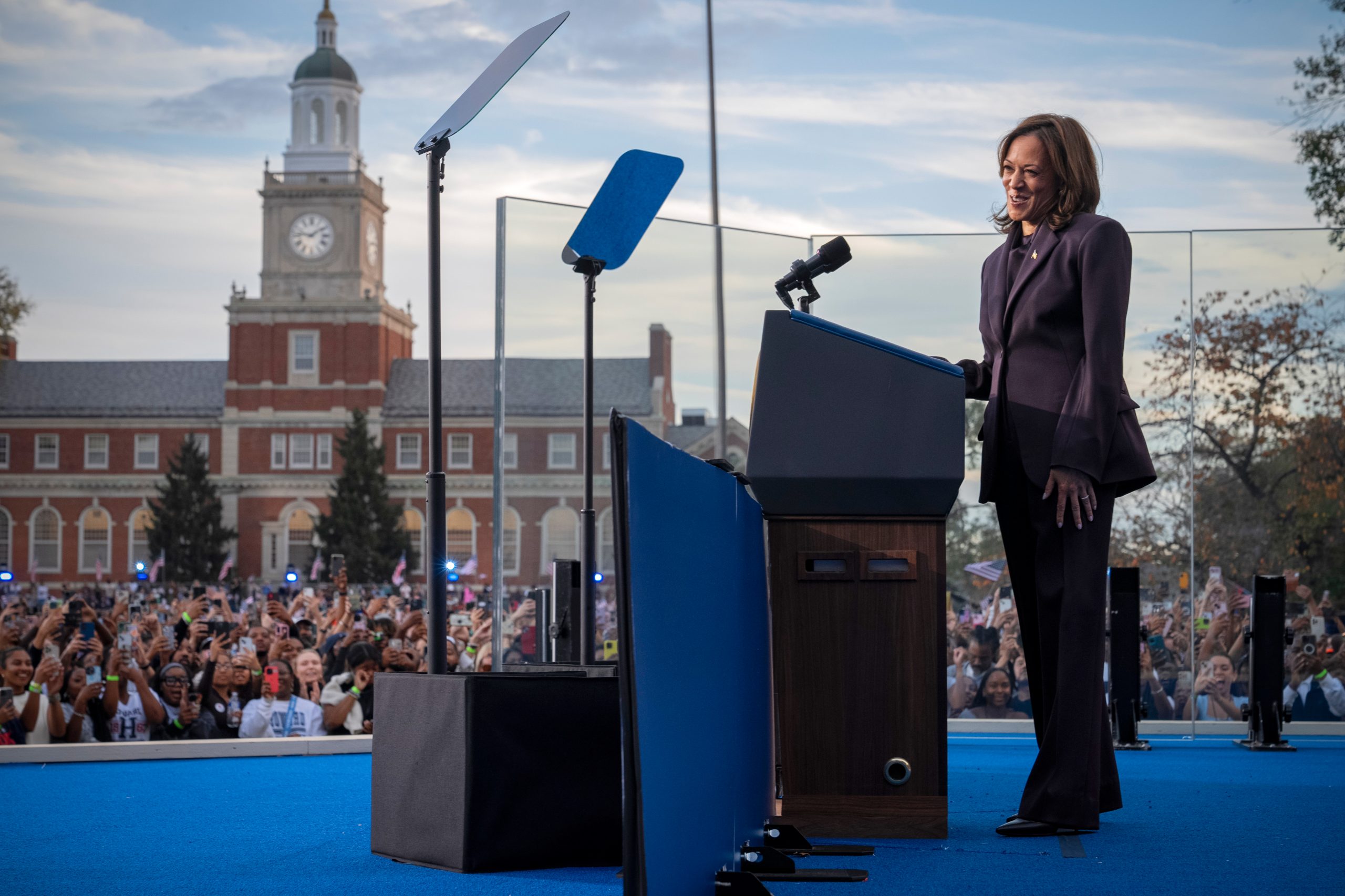
    Democratic presidential nominee Vice President Kamala Harris delivers a concession speech for the 2024 presidential election, Nov. 6, 2024, on the campus of Howard University in Washington. Jacquelyn Martin

    Although it’s true that, as a 5-year-old kindergartner in 1964, I nearly got into a fight with a kid who said he supported Barry Goldwater, the first presidential election I really followed came four years later in 1968. I was probably waiting for the baseball scores when I saw news reports that the GOP front-runner was a “New Nixon,” which made this 9-year-old wonder what was wrong with the old one. Indeed, a Californian who’d lost a presidential election (and a gubernatorial race just two years later) stunned America with the political comeback that made him the 37th president. We’d spend the next six years of Kent State and Watergate learning the kinder, gentler Richard Nixon of 1968 was all a lie.

    It would be a Nixon-level comeback if Kamala Harris were to win the Democratic nomination in 2028, let alone the presidency. Like Tricky Dick, Harris is a child of the Golden State and former vice president to the oldest-ever POTUS at that time (Dwight Eisenhower was 70 when he left office, which was unprecedented before Ronald Reagan, Joe Biden, and now Donald Trump), and a failed nominee, although she was smart enough not to run for governor when she returned home. People forget the brief lightning bolt of excitement when she replaced Biden on top of the 2024 ticket, and so the smart money has been that her moment has passed, as the Democratic base looks for new blood.

    But it feels like the earth has shifted a bit, and the reason can be summed up in two words: South Carolina. Last week, the Democratic National Committee unveiled its list of the first six presidential primary states, and the South Carolina primary tops the list. The same South Carolina where, in 2020, the state’s main Democratic voting bloc — older, center-left, Black members of the middle- or working classes — turned the race around for Biden, the man who then tapped Harris as his veep. The same South Carolina whose Democratic power broker, Rep. James Clyburn, is close to Harris. A state that seems tailor-made for a Harris comeback.

    But the Palmetto State isn’t the only reason to start taking a Harris return seriously. In politics, your weakness is often also your strength, or vice versa. Harris has long been a political chameleon — from tough 2010s prosecutor to a sharp left turn during Trump’s first term that she backpedaled away from in 2024. Today, Harris is feeling the zeitgeist. She is drifting left again, but perhaps more importantly, she understands the desire by core Democrats to support fighters, not milquetoast cowards.

    “They are ruthless,” Harris told the annual gathering of the National Urban League in Nashville on Friday, referring to Republicans. “We need to be ruthless, too” — explaining that Democrats should not be “cruel,” but “uncompromising.” She added: “For example, and I know this is going to be controversial coming from me, in particular, we need to revisit the Electoral College. We need to revisit the point of expanding the court to 13 justices, like we have 13 district courts. We need to revisit, if they so want, statehood for Puerto Rico and D.C.” Harris has also been holding extensive meetings with some of the pro-Palestinian activists who often clashed with her over Israel policy in 2024.

    She’s running? It sure sounds like it.

    To be clear, while I thought in the fall of 2024 that Harris had the potential to become a very good president, and I still do, I’m also very much in the “new blood” camp when I think about 2028. I’d love to see what someone from the progressive Bernie Sanders-Alexandria Ocasio-Cortez wing of the movement could do in wiping away the stain of Trumpism. But establishment Democrats, intentionally or not, have thrown Harris a lifeline with their South Carolina gambit. The coming months will reveal whether this former vice president can be “the new Nixon” of the left.

    What I wrote on this date in 2013

    I was reminded that the 25th anniversary of the 9/11 terror attacks is almost upon us. Expect a lot of what you might call negative nostalgia about that wretched day in 2001, but also the bad times that followed. Do you remember the terror alerts? Many of us thought those would vanish when George W. Bush left the White House, so it was a little jarring when Barack Obama continued the practice, including this major one 13 years ago. I wrote that “the problem with the terror warning of 2013 is not the warning itself but the decade of government baloney that preceded it. Washington needs to acknowledge the reality: If it wants to do a better job of keeping the public safe, it will need to start doing a much, much better job of telling the public the truth.”

    Read the rest: “The U.S. government who cried ‘Wolf!’”

    Recommended Inquirer reading

    • The Trump regime’s cruel campaign against our immigrant neighbors is the biggest story of our time. Last week, I traveled to a tiny borough in Central Pennsylvania, Mount Holly Springs, where a budding partnership with U.S. Immigration and Customs Enforcement has seized 32 immigrants in just four months, and angrily divided a rural community. Pennsylvania’s small towns are becoming the front line of mass deportation. Over the weekend, the immigrant crackdown was central to my essay about the rising death toll that’s attributable to Trump’s misrule, which includes murdered deportees in Guatemala, a woman left by ICE agents to die at a Pittsburgh bus terminal, the latest civilian bombing victims in Iran, and many, many more. It’s a humanitarian crisis that demands our immediate attention.
    • No two people define the world-class journalism that we regularly produce here at The Inquirer more than my longtime friends Wendy Ruderman and Barbara Laker, who could have rested on their laurels after winning the Pulitzer Prize for investigative reporting in 2010. Instead, both are working harder than ever. Ruderman has applied her talent for digging to Philadelphia’s leading industry, healthcare, with remarkable results. Check out her latest exposé about a Main Line psychiatrist who lost her license after a wildly inappropriate affair with a troubled younger client. Laker remains a linchpin of The Inquirer’s investigative unit, and — joined by her colleagues Ryan W. Briggs, Max Marin, and Ellie Rushing — she has been digging into the dark tale of a Philadelphia pornographer and his family’s mysterious ties to two missing women. Investigative reporting is essential to democracy and forging better communities, but it’s costly, time-consuming, and won’t happen without your support. Subscribe to The Inquirer today.

    By submitting your written, visual, and/or audio contributions, you agree to The Inquirer’s Terms of Use, including the grant of rights in Section 10.
  • ‘We’ve moved on’: Chester mayor and environmentalists object to LNG terminal proposal

    ‘We’ve moved on’: Chester mayor and environmentalists object to LNG terminal proposal

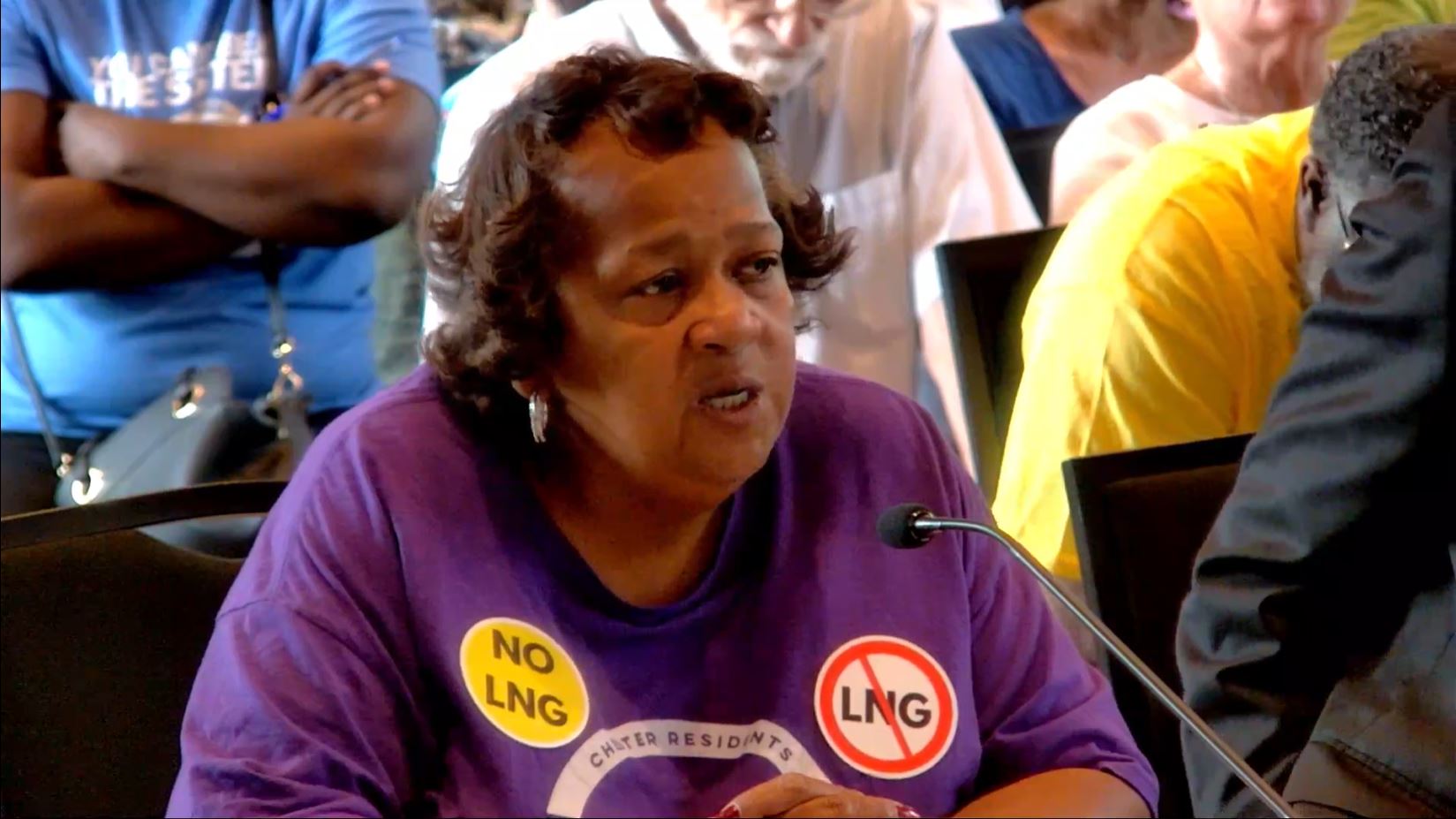
    Chester Mayor Stefan Roots came up with an idea as he waited to testify Wednesday during a Pennsylvania legislative committee hearing on a proposed gas export terminal.

    “I’m introducing a new initiative,” he said, “WMO — we’ve moved on .… This dangerous facility does not belong in a densely populated urban area like Chester. I’m calling on this committee to do the right thing: Protect some of the most vulnerable people in this commonwealth and say no to an LNG terminal in this region.”

    Roots spoke in response to a yearslong plan by Penn LNG to build a liquefied natural gas (LNG) export terminal in Chester or nearby in southeastern Pennsylvania along the Delaware River. The terminal would tap in to an existing pipeline to carry gas from the Marcellus and Utica formations to a site on the river. There, it would be compressed into liquid gas for export and capitalize on soaring global demand for LNG after Russian’s invasion of Ukraine.

    The hearing, held by the Pennsylvania House Environmental & Natural Resource Protection Committee, was stacked with opponents of the plan, saying it would create pollution and be highly dangerous to surrounding communities. Democratic State Rep. Greg Vitale, the committee chair from Delaware County, said proponents, including Franc James, CEO of Penn LNG, and union leaders were invited but declined.

    Penn LNG has not specified a location but has said it plans to develop a new plant to export 1 billion cubic feet per day of gas from the Marcellus Shale to Europe.

    At previous hearings held by Republican State Rep. Martina White, chair of the Philadelphia LNG Export Task Force, proponents spoke of the economic change the facility would bring, including jobs.

    Vitale said he convened Wednesday’s hearing because he feared the project would “proceed under the radar without sufficient public scrutiny.”

    Indeed, the mood Wednesday was strikingly different from past hearings as opponents told legislators an LNG facility would pose serious health, safety, and environmental justice issues.

    What are the plans for the LNG facility?

    In 2024, former President Joe Biden put a pause on LNG export approvals in 2024 to further study the issue. This year President Donald Trump has made reviving fossil fuel energy projects a priority.

    Reuters reported in June that James, the Penn LNG CEO, had met with officials at the White House over the project.

    Penn LNG wants to export 7.2 million tons a year of LNG from a site near Philadelphia to markets in Europe and Asia and is considering several locations other than Chester, such as in Trainer, Marcus Hook, and Eddystone, the news service reported.

    What are the issues regarding an LNG facility?

    Opponents believe such a facility would pose a major threat if there is an explosion or fire in an area already densely populated with people and polluting industrial sites. They noted that Delaware County’s Crozer-Chester Medical Center and Springfield Hospital were closed this year amid a bankruptcy auction.

    If there is a catastrophic explosion, they said, the nearest hospital would be 30 minutes away.

    Tracy Carluccio, an advocate with the nonprofit Delaware Riverkeeper Network, said the area is too densely populated for the facility, emphasizing that a major concern is the lack of a sufficient safety buffer, which the federal government advises for LNG terminals.

    She noted that similar facilities in the South are situated in areas with thousands of acres of buffer. She said a new site in the area would likely be around 100 acres.

    “There is no location within the Delaware River watershed, including the bay all the way down to the ocean, for any LNG facility to be located,” Carluccio said.

    Lauren Minsky, a visiting professor of health studies at Haverford College, said an LNG facility would exacerbate existing public health issues in the region.

    She said southeastern Delaware County has already been given a grade of “F” for particle pollution and a grade of “D” for ozone levels by the American Lung Association.

    She cited 2025 research by Johns Hopkins University showing that high levels of volatile organic compounds have been measured in communities near the fence lines of LNG facilities. She also said there are elevated cancer rates in adults living in the area’s riverfront communities, citing the People’s Cancer Incidence Screening Tool, which calculates average annual cancer incidence rates in Pennsylvania.

    “If we value the health of our families, our friends and neighbors, and throughout the commonwealth, we need to build a different future, one in which we can all thrive,” she said.

    Already industrialized

    Zulene Mayfield, an activist with Chester Residents Concerned for Quality Living, said older residents she knows have suffered heart conditions and cancers that she links to living in an already heavily industrialized area.

    Mayfield is a longtime opponent of the Delaware Valley Resource Recovery Facility owned by Reworld, formerly Covanta. The facility burns trash and converts it to energy.

    She said Chester, rimmed by heavy industry, lacks many things other communities take for granted, such as primary-care physicians or entertainment for children.

    “We are being told that we have to accept other industries” that no other communities want, Mayfield said.

    “I’m sitting here right now trying to contain my rage,” she said. “The jobs are temporary, but death is forever.”