There’s a special place in hell for a cop who leaves a human being lying in the street, and they get run over by a car.
It doesn’t matter who the person is, or if they are under the influence of a substance. It doesn’t matter if they resist. They need to be escorted to safety. If needed, rescue workers or a behavioral health expert should be summoned. No one — and I mean no one — should be left lying in the street.
If the police officer who encountered the 48-year-old pedestrian who wound up lying in the bike lane in the 5500 block of Rising Sun Avenue in the wee hours of Aug. 27 had a shred of humanity left in his soul, that man would still be alive today.
Instead of being a hero and saving that man’s life, the officer talked to the victim as he lay on his back in the roadway, then got into his police cruiser and drove away. Minutes later, the man was fatally injured by a hit-and-run driver. Two unidentified people pulled the man out of the street and contacted authorities.
The same officer who had encountered the man earlier was the first to respond. Did he even try to make up for what happened? Not according to First Deputy Commissioner John Stanford, who said at a news conference on Friday that the officer didn’t administer first aid or file a police report. “That goes against everything that we stand for,” Stanford told reporters. “We talk about empathy. We talk about compassion as an organization, and none of those things were on display.”
The officer, whose name hasn’t been released, has since been placed on administrative leave and is still on the Philadelphia police force.
He shouldn’t be.
His job is to serve and protect. But he lacks the human decency and compassion it takes to do that.
What happened last week reminds me of a similar incident that took place four years ago, which I also wrote about. In that case, Elizabeth Negron had wandered into the middle of Germantown Avenue near Coulter Street around midnight one hot summer night in 2022.
It’s unclear what exactly was going on with her, but clearly something was off. She stood in the roadway and blocked the path of a SEPTA bus as vehicles veered around her in different directions. Soon, a police car arrived. Officers got out of their vehicle and interacted with her briefly before driving off, leaving Negron still in the roadway.
They left her in the street like an old discarded shoe. At one point, Negron can be seen lying on her back. A video, recorded by a nearby business, ends shortly thereafter, leaving viewers to imagine what happened next as a passing car ran her over and then fled the scene.
I’ve had the privilege of meeting and interviewing many incredible police officers over the years. Most are good people both on and off the job. But there are some who forget that the people they encounter out on the streets acting oddly are as human as anyone else. They matter, too.
Negron was loved by her two young daughters, a devoted sister, and others who still mourn and miss her. Her sister, Jackie Martinez, told me she had been scrolling on her phone when she learned someone else had suffered a similar fate. “I’m hanging in there and trying my best to not let it bother me,” she said.
Martinez said she would never just walk by someone in harm’s way. “You put them somewhere safe,” Martinez said. “If you walk away and they end up back in the middle of the street, at least you know that was on them.”
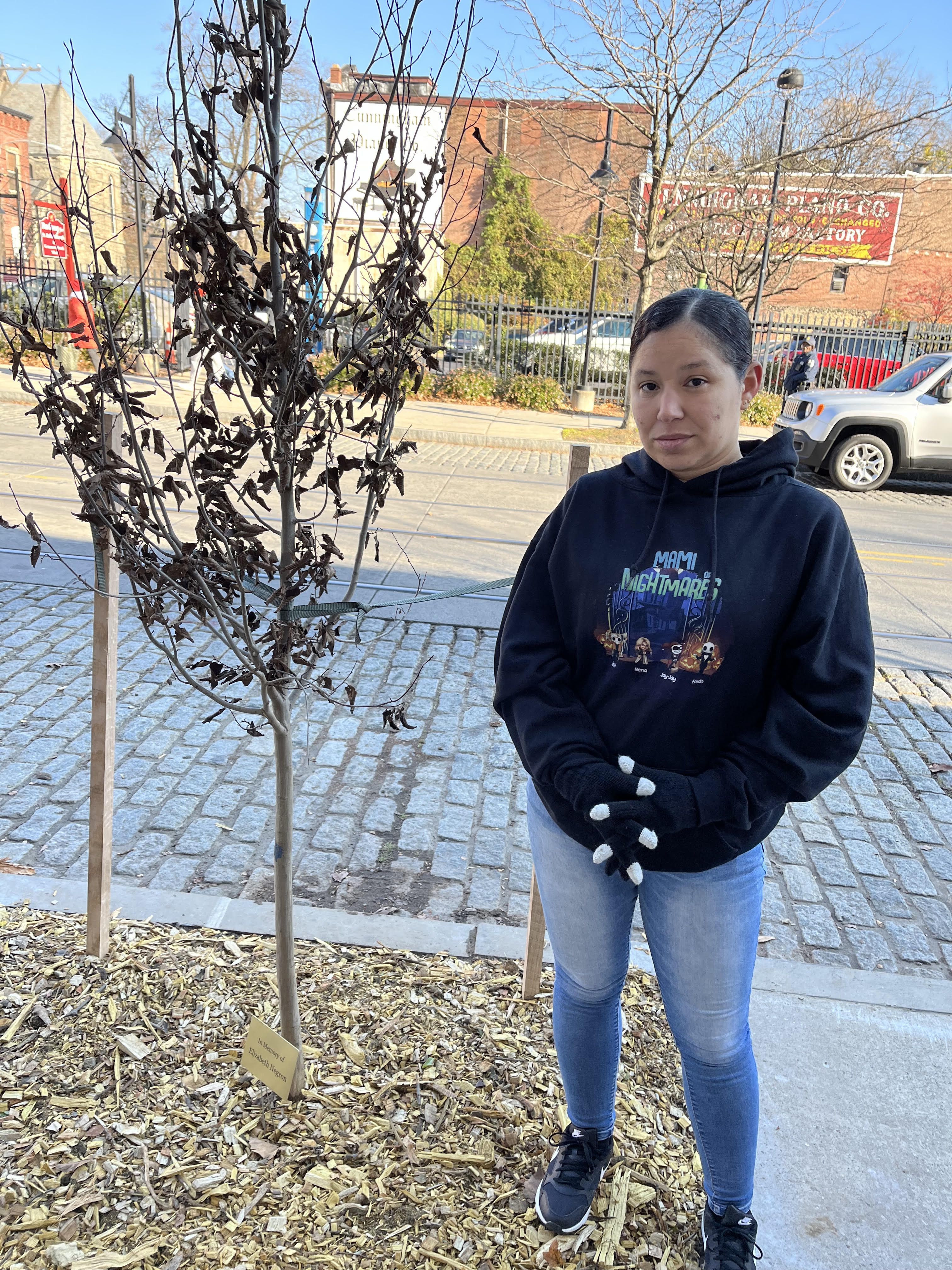
Jackie Martinez poses next to a tree planted in honor of her sister, Elizabeth Negron, who was killed on Germantown Avenue near Coulter Street by a hit-and-run driver in July 2022.Jenice Armstrong
David Fisher, a 29-year veteran of the Philadelphia Police Department and president of the National Black Police Association, agreed, saying, “You don’t leave somebody on the street needing care.”
It’s really that simple. It should be obvious. But apparently it isn’t.
If you spent the summer out of town (or off the grid), you may have missed a busy few months on the restaurant scene. Philadelphia-area newcomers include a Milan-inspired aperitivo bar in Rittenhouse, Japanese barbecue on the Main Line, and two corner bars in Point Breeze.
Here are 12 noteworthy restaurants that opened in the last few months.
Academy Grill (424 S. Bethlehem Pike, Fort Washington): This white-tablecloth restaurant in the former Cantina Feliz near Germantown Academy serves house-made pastas, seafood, steaks, and contemporary American dishes in a polished, decidedly grown-up setting.
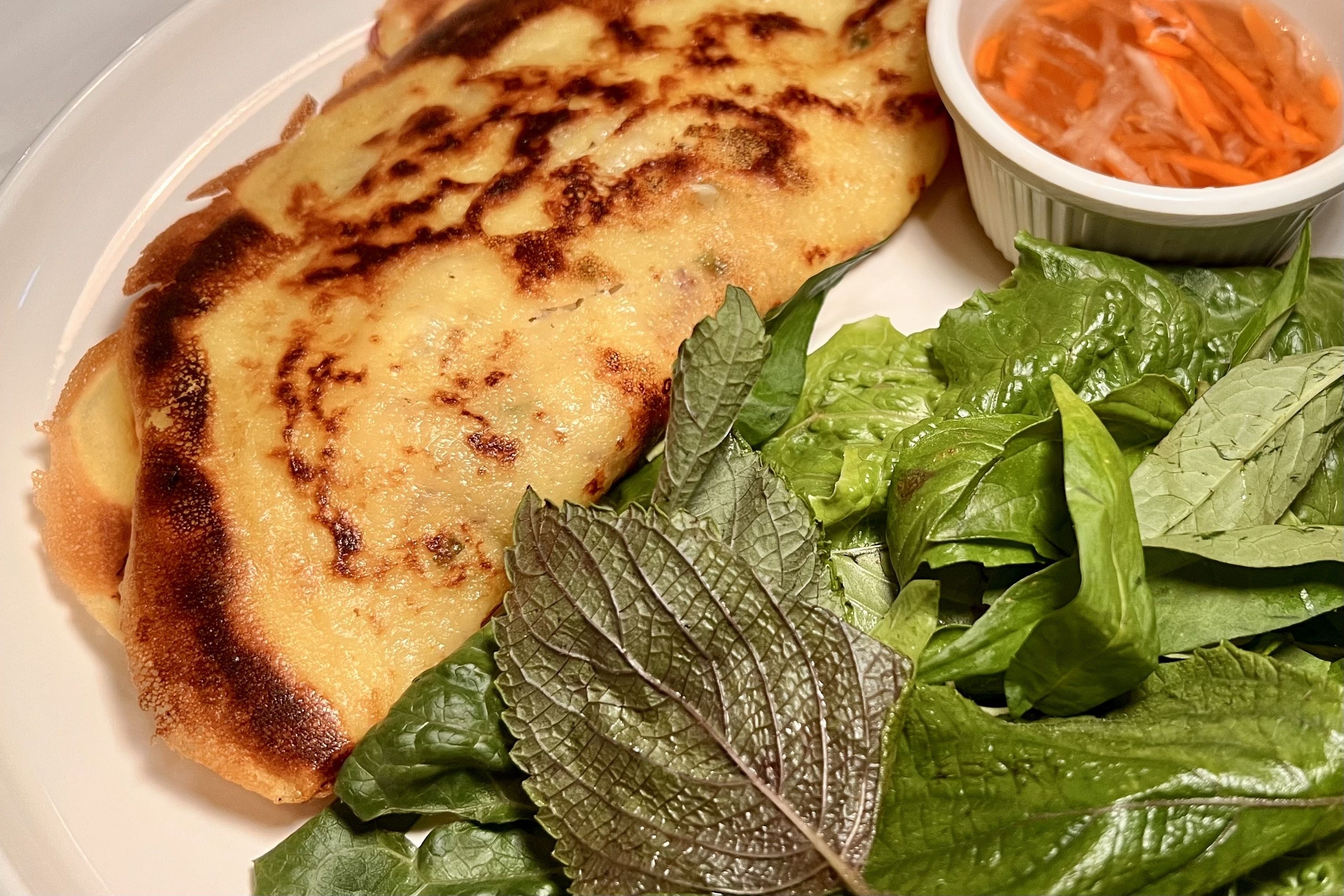
Bánh xèo at Anh Em, 1252 S. 21st St.Michael Klein / Staff
Anh Em (1252 S. 21st St.): Pho, bánh xèo, and 24 local beers meet at Anh Em, a Vietnamese bar-restaurant at 21st and Titan Streets in Point Breeze from Victor Nguyen and Anna Huynh. Nguyen draws on dishes the husband-and-wife team grew up eating, while the 20-seat bar gives the neighborhood spot an unusually deep commitment to locally brewed beer.
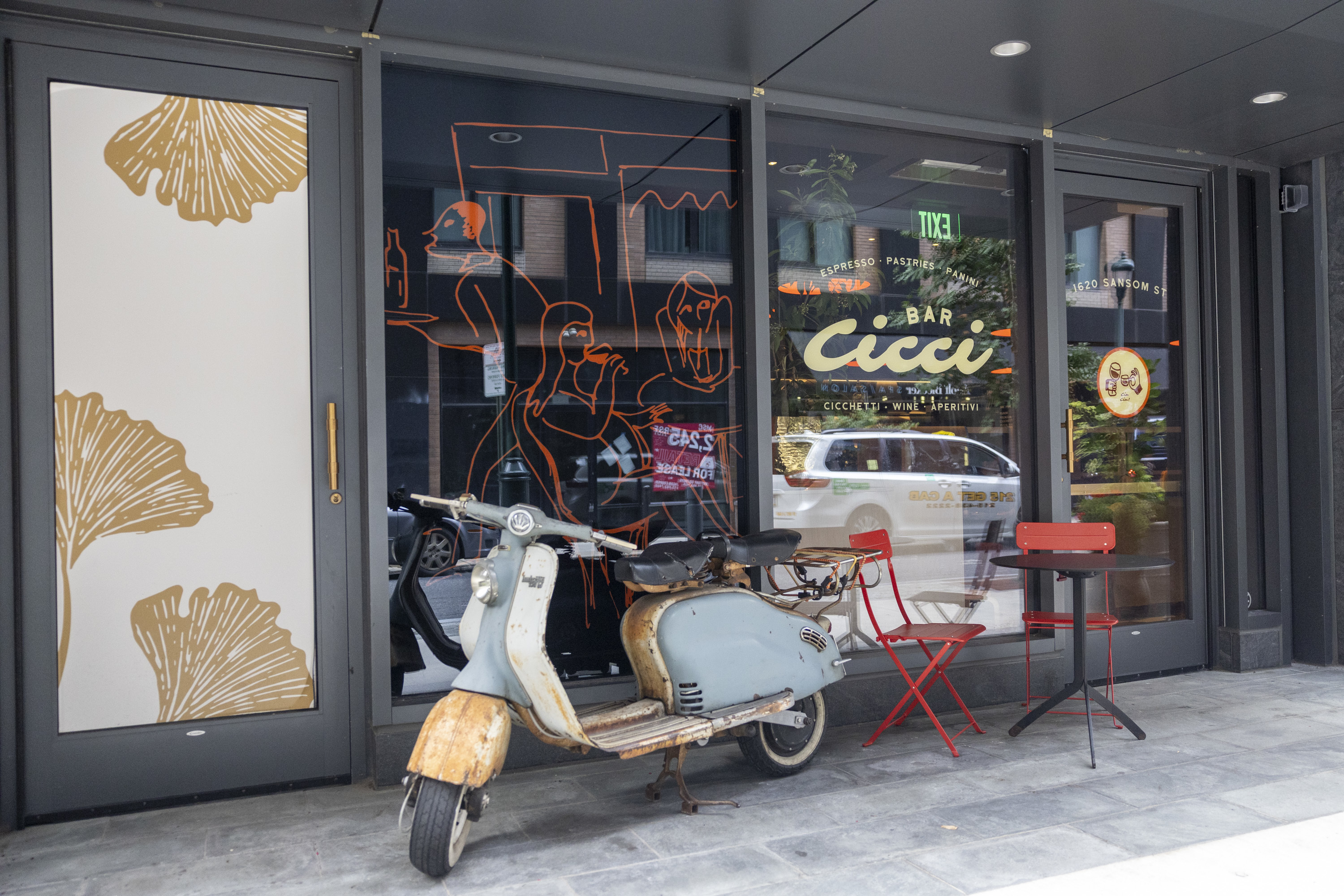
Bar Cicci (1620 Sansom St.): Ellen Yin’s 30-seat, Milan-inspired spot starts with espresso and Italian pastries, moves into sandwiches at lunch, then shifts to spritzes, wine, cicchetti, and small plates at night. The Rittenhouse newcomer is High Street Hospitality’s take on northern Italy’s all-day aperitivo culture.
Bluebird Distilling in Phoenixville.Photos courtesy of Ed Newton
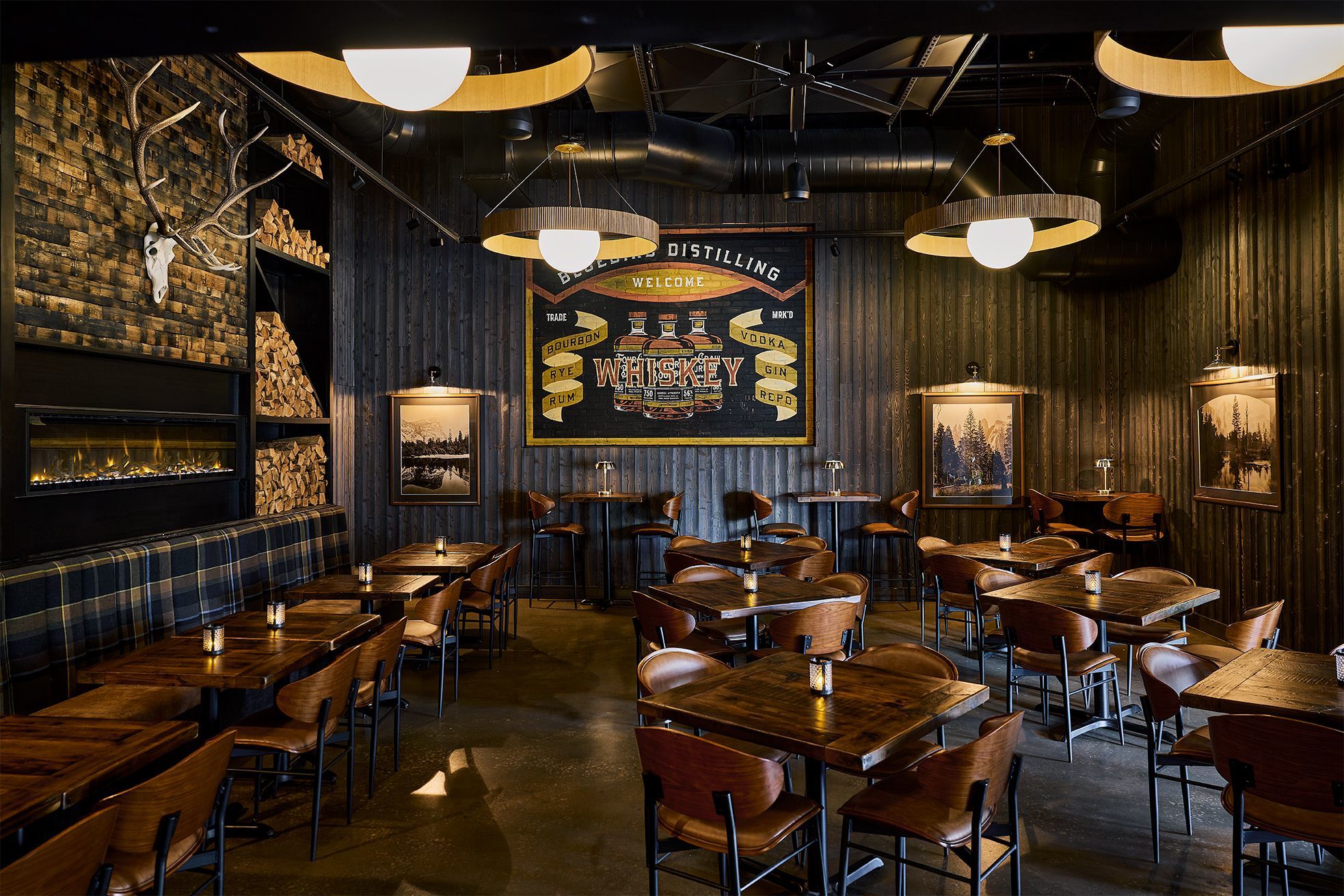
Bluebird Distilling & Dough House (100 Bridge St., Phoenixville): A $2.2 million investment turned Bluebird’s Bridge Street distillery into a full-fledged restaurant. Executive chef Devon Migeot, whose resumé includes Zahav and Laser Wolf, centers the expanded food program on naturally fermented neo-Neapolitan pizzas, house-baked breads, shareable plates, and, naturally, Bluebird cocktails.
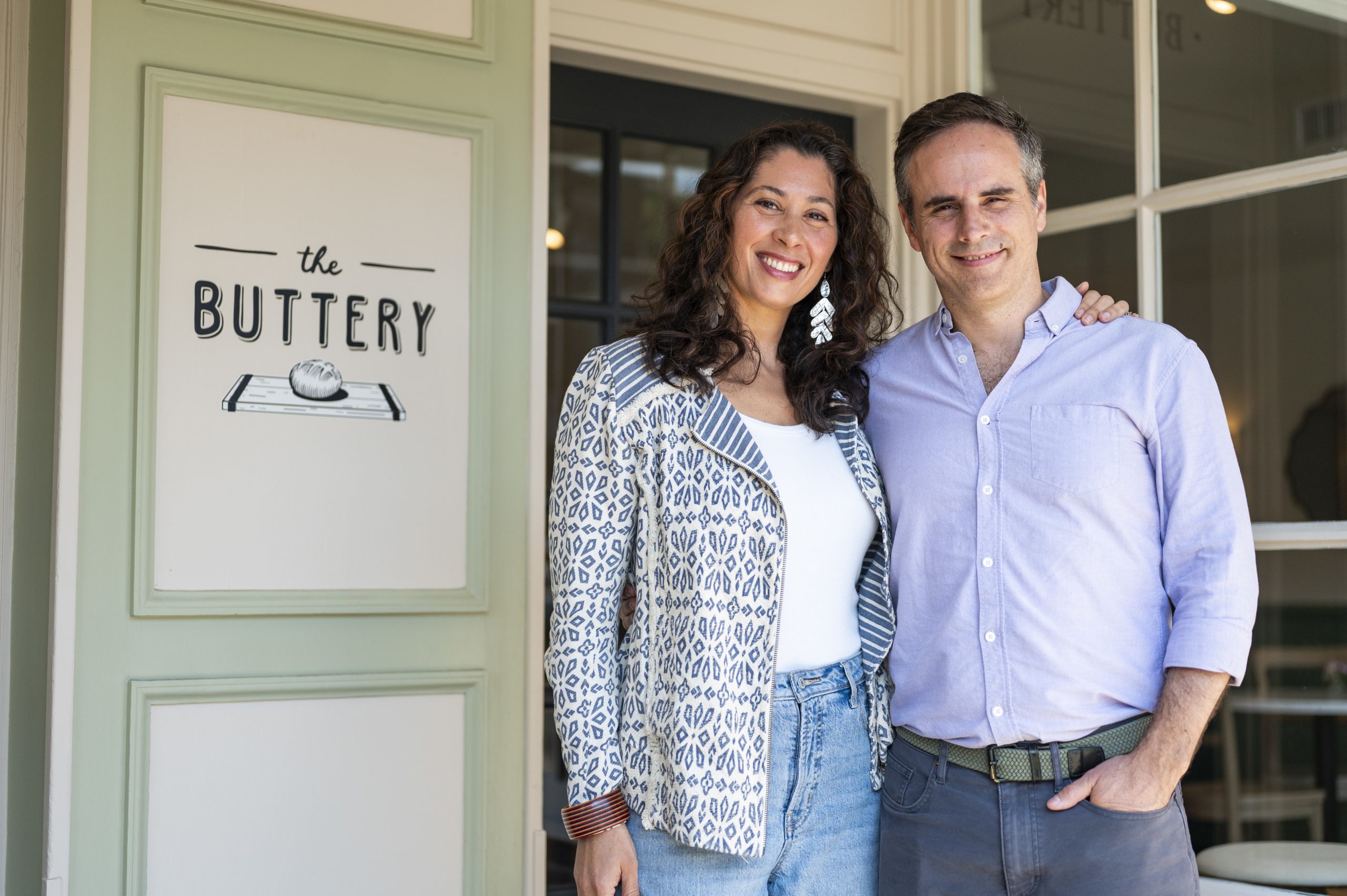
Silenia and John Rhoads, owners of the Buttery in Bryn Mawr.
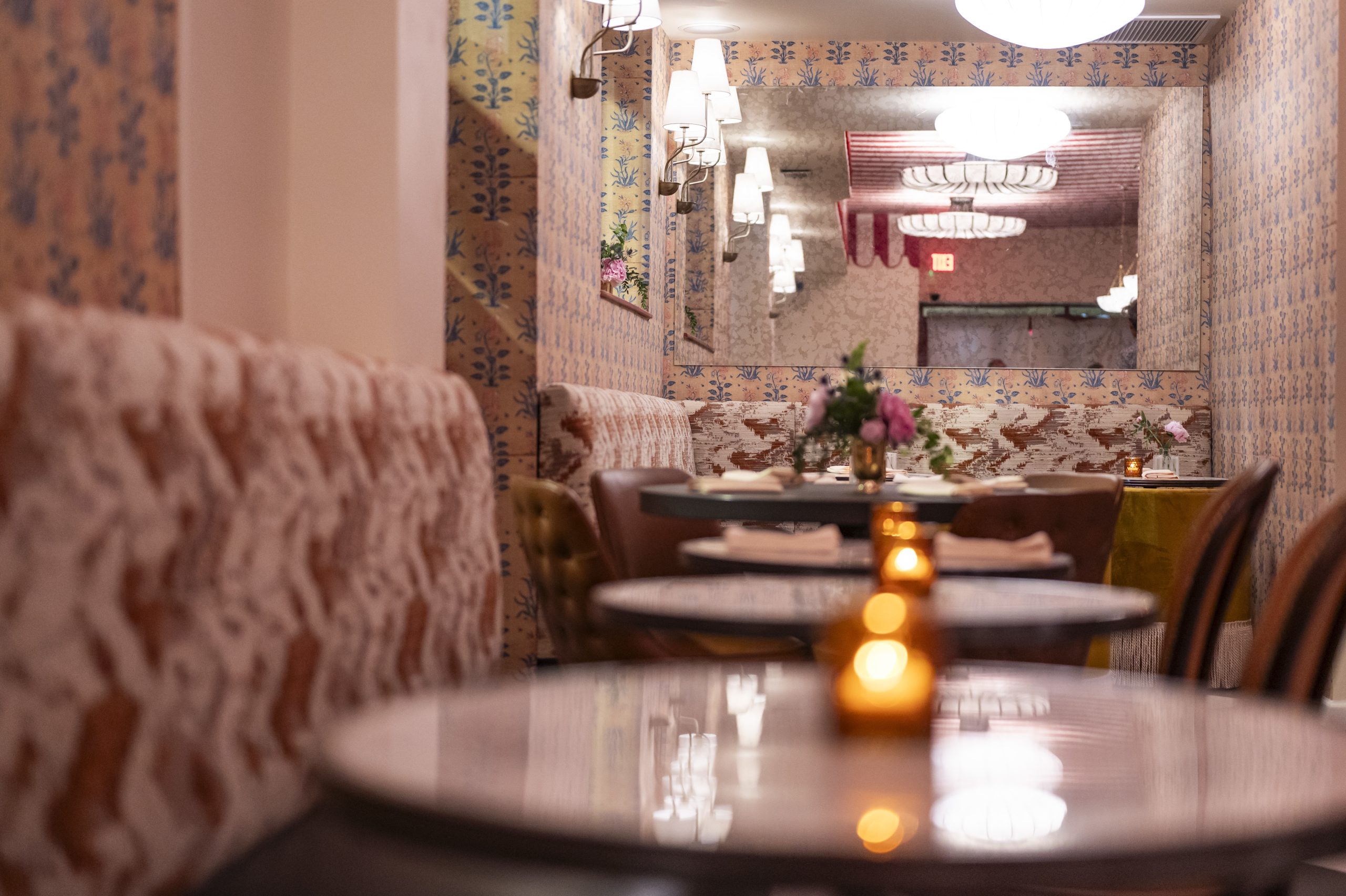
The Buttery (836 W. Lancaster Ave., Bryn Mawr): John and Silenia Rhoads’ third location is an 82-seat bakery-cafe on Lancaster Avenue, where the Malvern-incepted operation’s sourdough breads and house-made pastries share the menu with breakfast dishes, sandwiches, and seasonal fare from its all-day scratch kitchen.
Known Associates at 10th and Spruce Streets.
Known Associates ( 941 Spruce St.): Chef Christopher Kearse’s Washington Square West cocktail bar does not treat the food as an afterthought. The former Varga Bar at 10th and Spruce is a 40-seat room where cocktails accompany a concise, European-influenced menu of a dozen savory dishes.
Lillian’s at 19th and Mifflin Streets.Monica Herndon / Staff Photographer
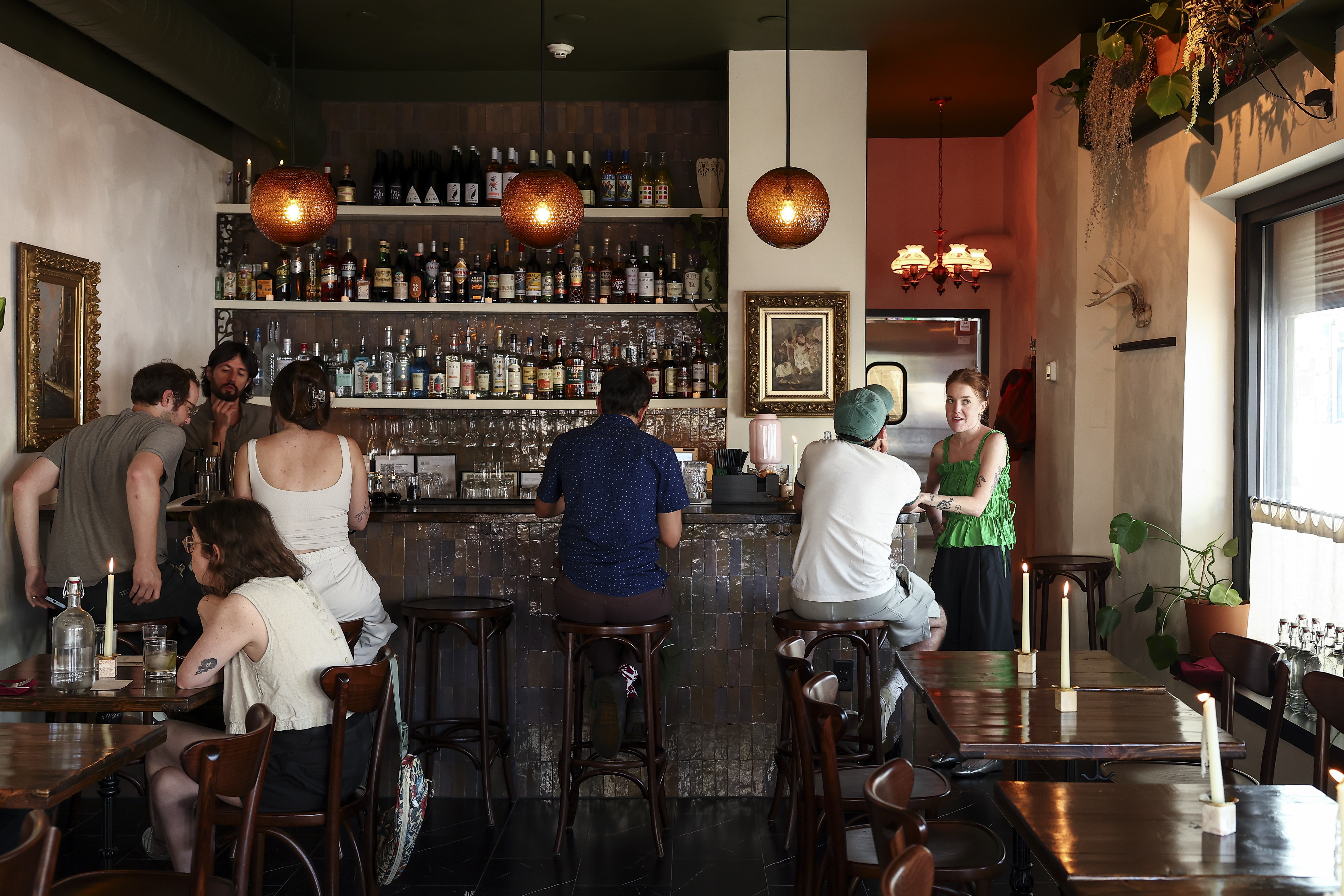
Lillian’s (1900 S. 19th St.): Even the chef isn’t permanent at Sam Ahern’s parlorlike cocktail bar/bistro at 19th and Mifflin Streets, whose kitchen rotates among guest chefs. The residency model gives each cook a temporary restaurant within the restaurant — and gives this Point Breeze newcomer an ever-changing menu.
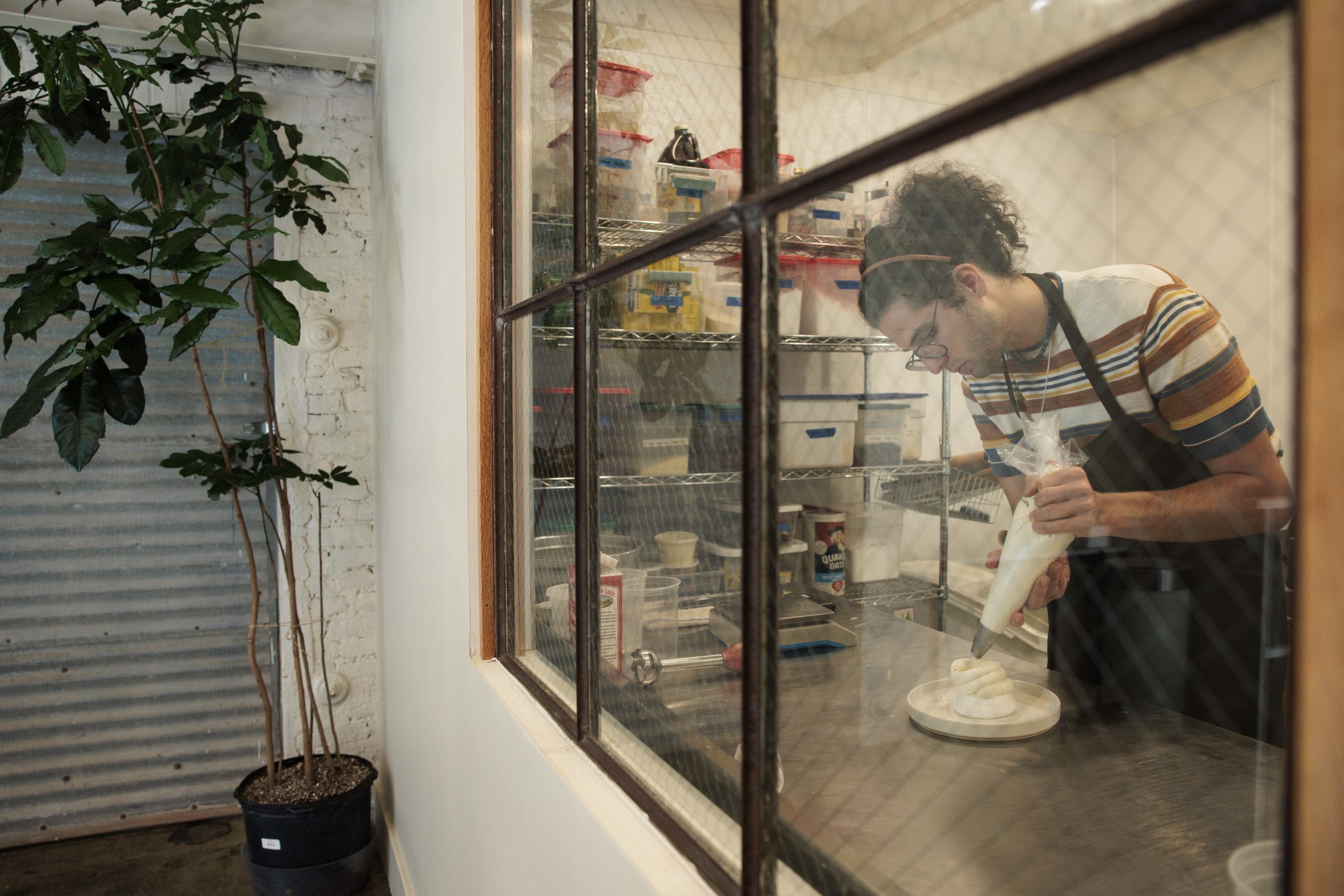
Saif Manna works on a pavlova at Manna Bakery.Monica Herndon / Staff Photographer
Manna Bakery (110 W. Berks St.): Five years and countless farmers market appearances later, Saif Manna’s Temple dorm room project has moved into the former Essen Bakery in Kensington. Manna draws on his Palestinian heritage for Levantine pastries and savory dishes in a comfy cafe setting.
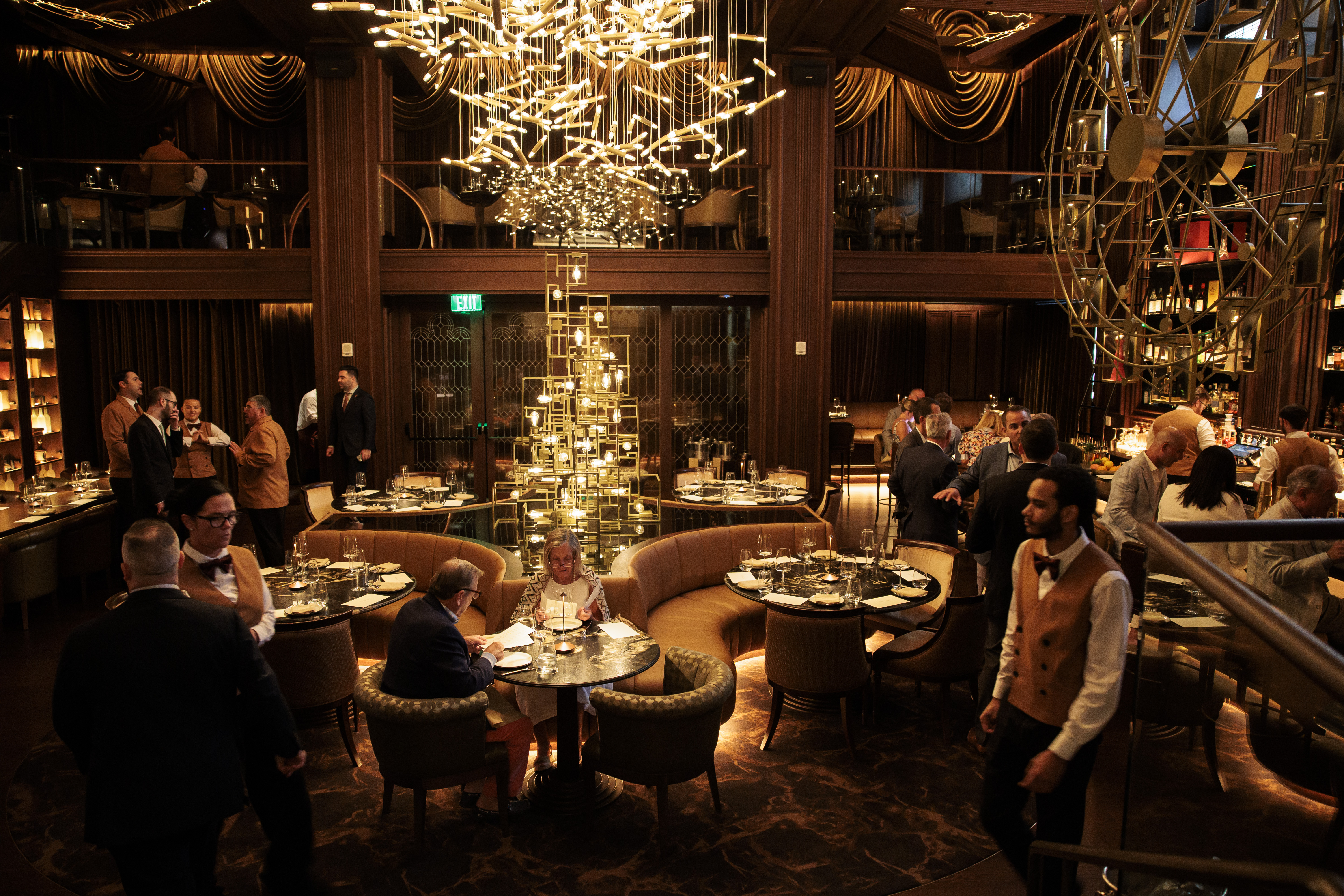
Mr. Edison in the Bellevue Hotel.Monica Herndon / Staff Photographer
Mr. Edison (1400 Walnut St.): There’s a Ferris wheel carrying liquor behind the bar at Mr. Edison, which gives some idea of the production. Veteran restaurateur Jeffrey Chodorow’s Philadelphia debut is a theatrical Bellevue supper club where chef Matt Levin’s cooking shares a two-story room with live music, dramatic lighting, and plenty of visual spectacle.
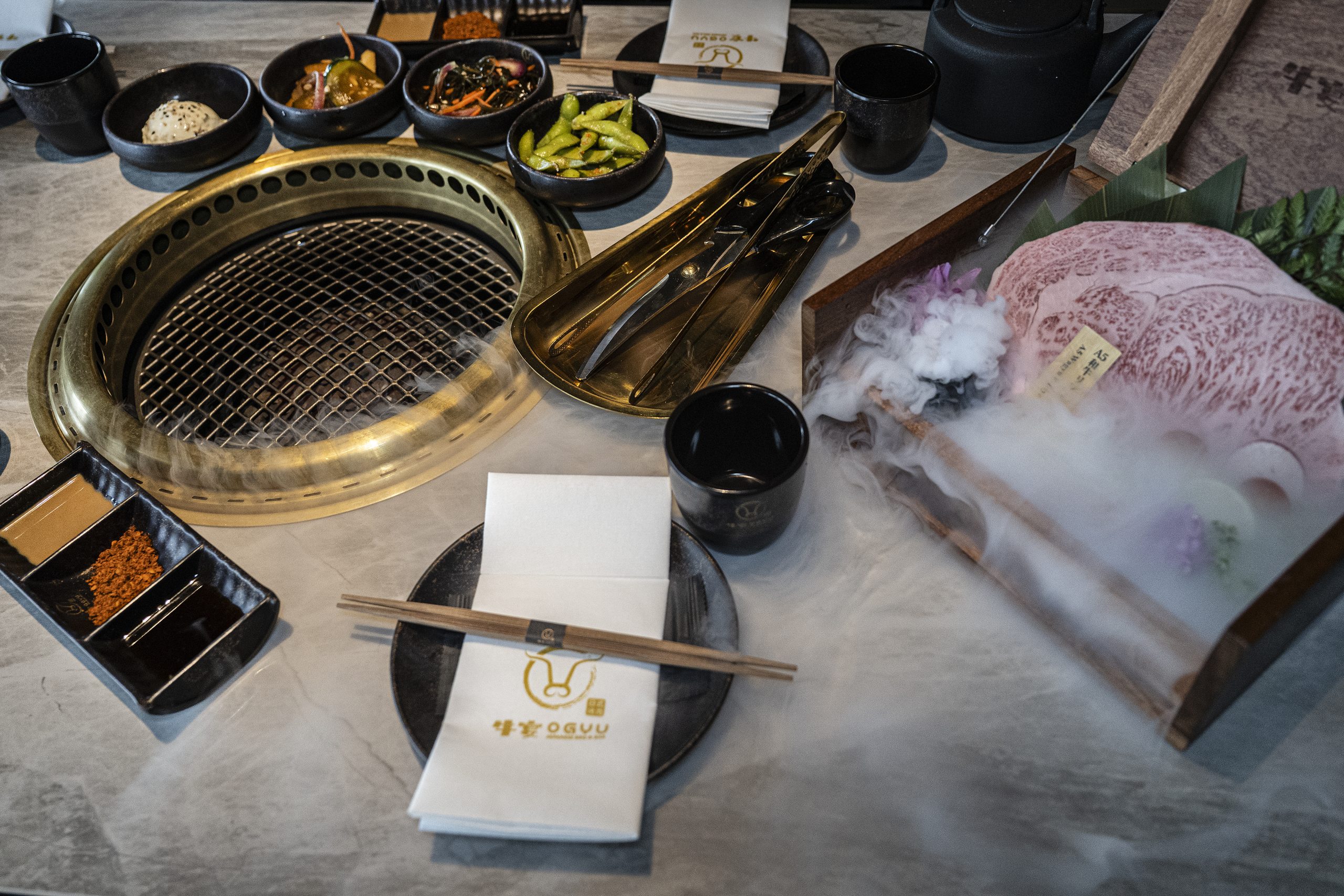
Ogyu Japanese BBQ in Ardmore.
Ogyu Japanese BBQ (60 Greenfield Ave., Ardmore): Sam Li turned Ardmore’s former Iron Hill Brewery into a sprawling yakiniku restaurant built around the grill at each table. Diners cook wagyu and other meats themselves — or enlist a server — choosing among fixed-price packages and à la carte options in a dramatically remodeled space with private dining rooms and a full bar.
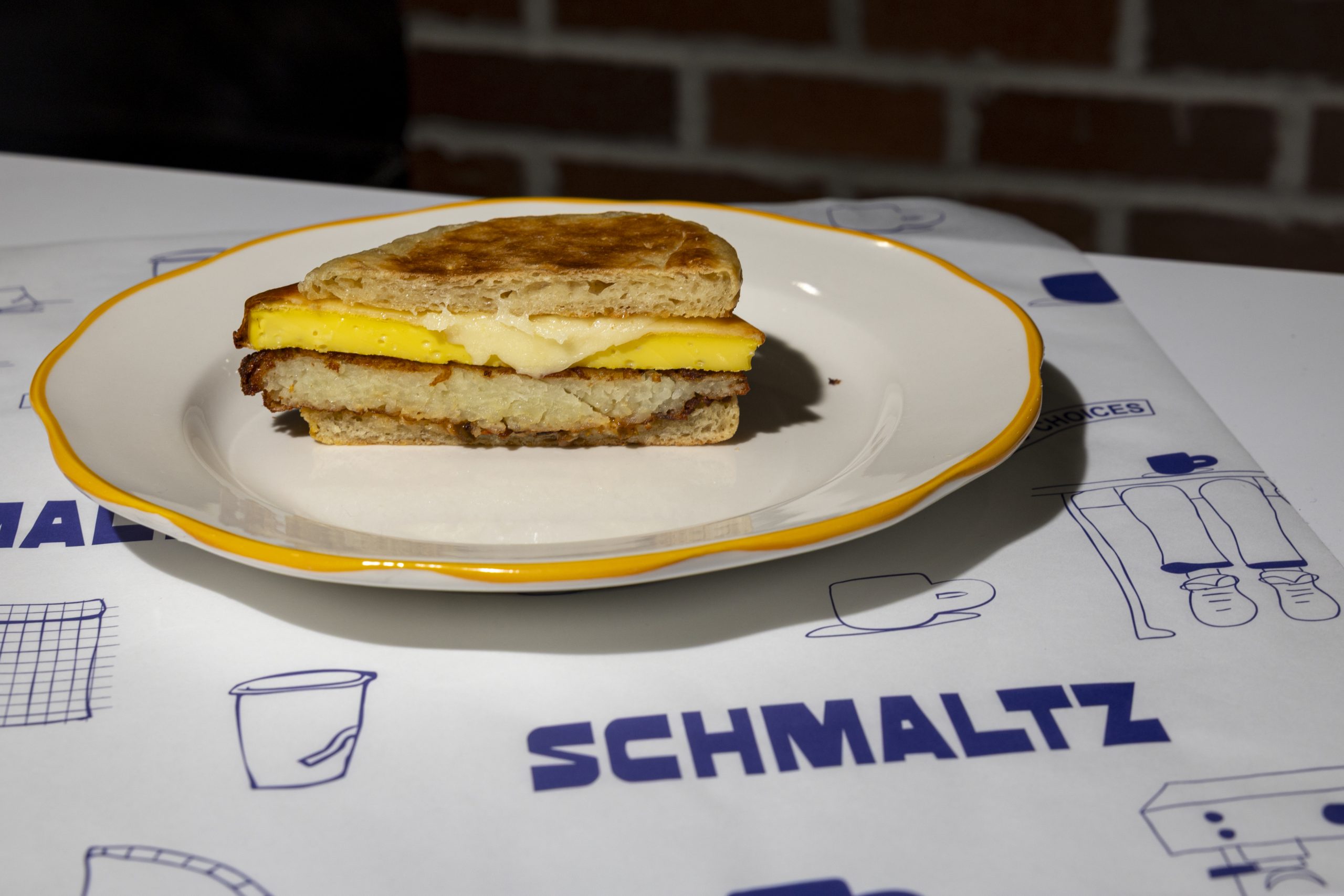
The latke, egg, and cheese sandwich at Schmaltz.
Schmaltz (1300 S. 18th St.): This Jewish-inspired breakfast-and-lunch cafe serves latkes, cheese blintzes, egg sandwiches — and no bagels. Jeremy Asch and Abby Armstrong opened the Point Breeze corner spot with chef Sam Chertock, whose deliberately compact menu includes latke, egg, and cheese sandwiches on house-baked English muffins.
Outdoor dining at Soufiane at the Morris.Elizabeth Robertson / Staff Photographer
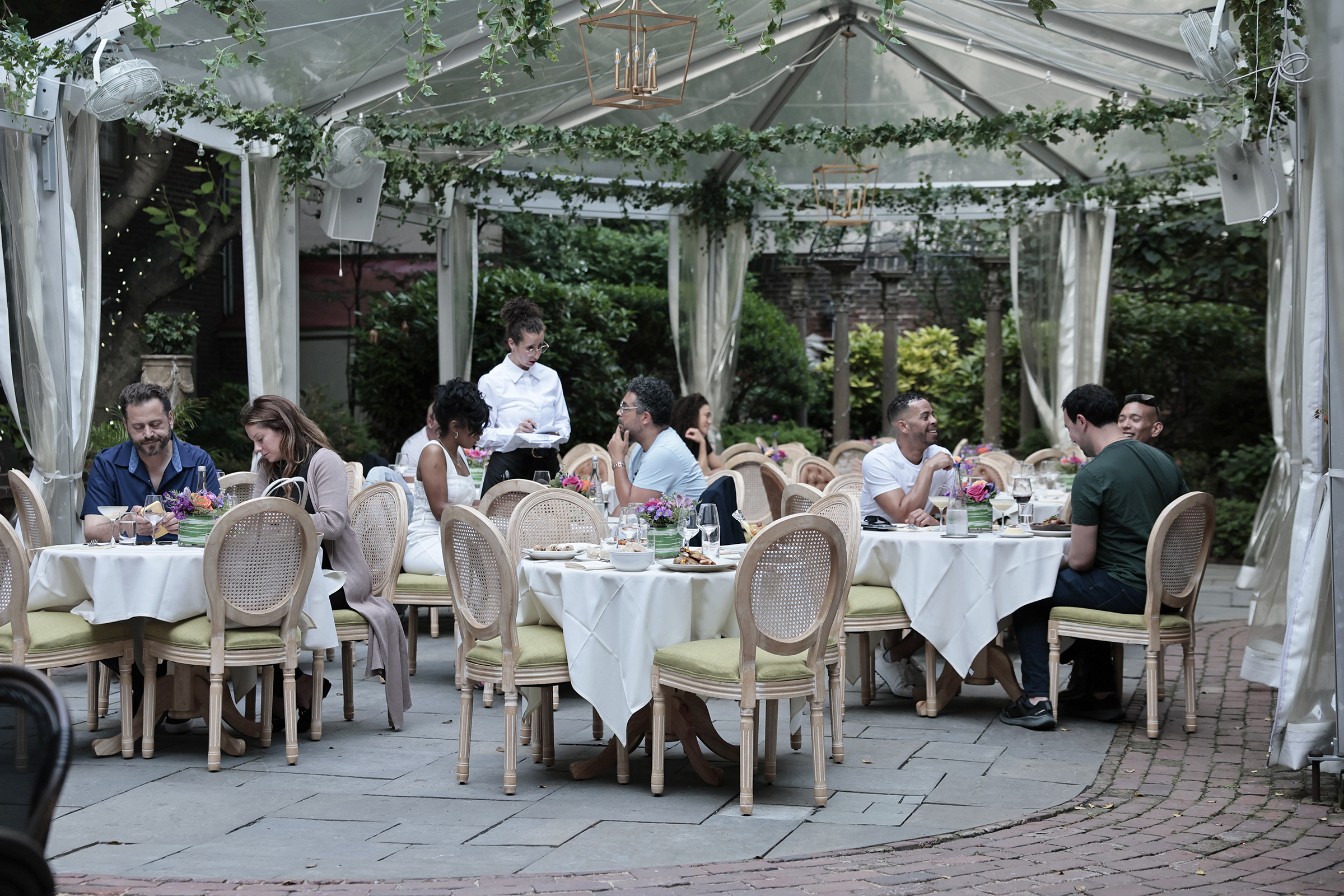
Soufiane at the Morris (225 S. Eighth St.): The 1787 Morris House provides a peaceful backdrop for Soufiane Boutliliss’ French-Moroccan cooking, served in a secluded stone courtyard shaded by magnolias and dogwoods in Washington Square West. This is the second restaurant from the Moroccan-raised Boutliliss and husband Christophe Mathon of Sofi Corner Cafe.
After a summer of nonstop action — the World Cup, Major League Baseball’s All-Star Game, the festivities surrounding the nation’s 250th birthday — things have finally calmed a bit in Philadelphia.
But that doesn’t mean there’s not plenty still to come this fall.
The area will once again host a variety of festivals and markets in the coming weeks and months, celebrating everything from food to the arts and everything in between.
Now entering its fourth year, the festival celebrates Muslim-owned establishments in and around Philly. Last year’s version featured more than 100 vendors and 6,000 attendees.
📅 Sept. 19,📍King of Prussia Mall, 160 N. Gulph Road, King of Prussia, Pa. 19406, 🌐 phillyhalalfoodfest.com
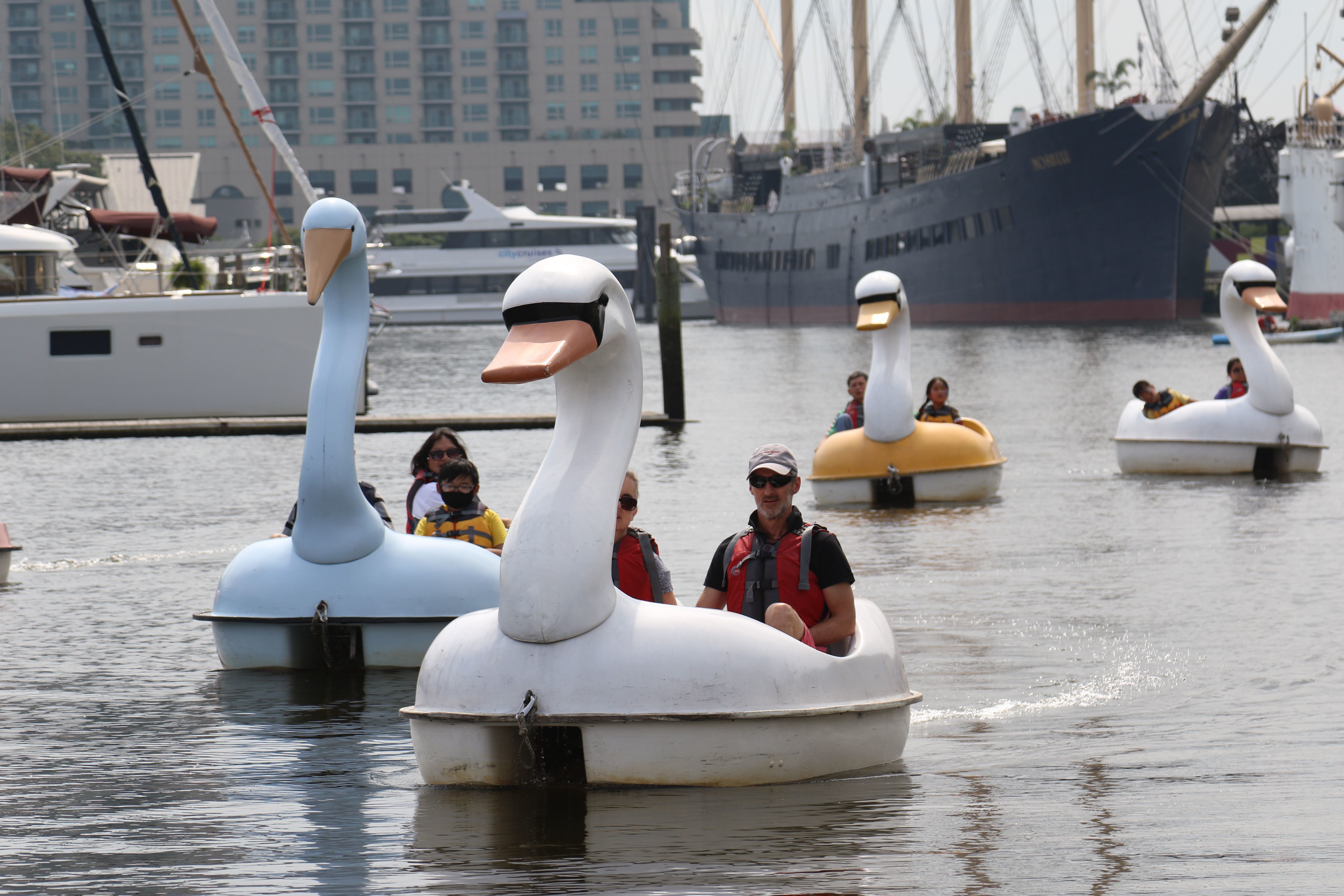
Scene of the swan boats from the 2023 Delaware River Festival held both in Philadelphia and Camden.Partnership for the Delaware Estuary
The event combined two former festivals, the Partnership for the Delaware Estuary’s Coast Day and Alliance for Watershed Education’s River Days Festival. Expect lots of family-friendly activities, from ferry rides and pedal boats to crafts and water-related education. Events take place at both Penn’s Landing on the Pennsylvania side of the river, and Wiggins Park on the New Jersey side.
📅 Sept. 26, 10 a.m. to 4 p.m., 💵 ,📍101 N. Columbus Blvd., Philadelphia, Pa. 19106 and 2 Riverside Dr., Camden, N.J. 08103, 🌐 delawareriverfest.org.
Held at Allens Lane Park, this fourth-annual festival features live performances, food, an art market featuring the work of local vendors — but also the opportunity to make some art yourself, with stations for painting, printmaking, and ceramics.
📅 Oct. 3, 11 a.m. to 4 p.m., 💵 Free,📍601 W. Allens Lane, Philadelphia, Pa. 19119, 🌐 allenslane.org.
First Fridays return to the Cherry Street Pier, complete with artist studio tours, markets, and exhibit openings along the Delaware River. Upcoming dates are Aug. 7, Sept. 4, Oct. 2, Nov. 6, and Dec. 4. Events begin at 4 p.m.
📅 Various dates, 💵 Free,📍121 N. Columbus Blvd, Philadelphia, Pa. 19106, 🌐 cherrystreetpier.com
Since 1987, St. Nicholas of Tolentine Parish has held this annual event dedicated to Italian culture. The day kicks off with a 10:30 a.m. Mass and subsequent neighborhood religious procession, and there’s plenty of live music, Italian food, and family-friendly activities.
This three-day event in and around Philly’s Gayborhood celebrates National Coming Out Day. Things kick off Oct. 9, with a variety of pre-parties and kickoff events. The following day, Oct. 10, is a night of dancing at Voyeur Nightclub, and the festival concludes with a parade on Oct. 11.
📅 Oct. 9-11, times vary, 💵 Prices vary by event,📍Various locations, 🌐 phillygaycalendar.com
The fall market this year celebrates its 10th year at Dilworth Park near Philly’s City Hall. Held over three days in October, this pet-friendly event brings a slew of artists and makers together, from jewelry and photography to glassware and woodwork.
📅 Oct. 9-10 (noon to 8 p.m.) and Oct. 11 (noon to 6 p.m.), 💵 Free,📍1 S. 15th Street, Philadelphia, Pa. 19102, 🌐 madeinphila.com
A day of celebration in honor of one of Pennsylvania’s most iconic foods: the Dutch breakfast meat, scrapple. Reading Terminal Market turns into a scrapple haven, as vendors offer a variety of scrapple-themed items. There’s live entertainment, cooking demonstrations — even a scrapple-sculpting competition (held Oct. 15, the Thursday before the festival).
📅 Oct. 17, 10 a.m.-5 p.m., 💵 Free entry, pay as you go,📍1136 Arch St., Philadelphia, Pa. 19107, 🌐 readingterminalmarket.org
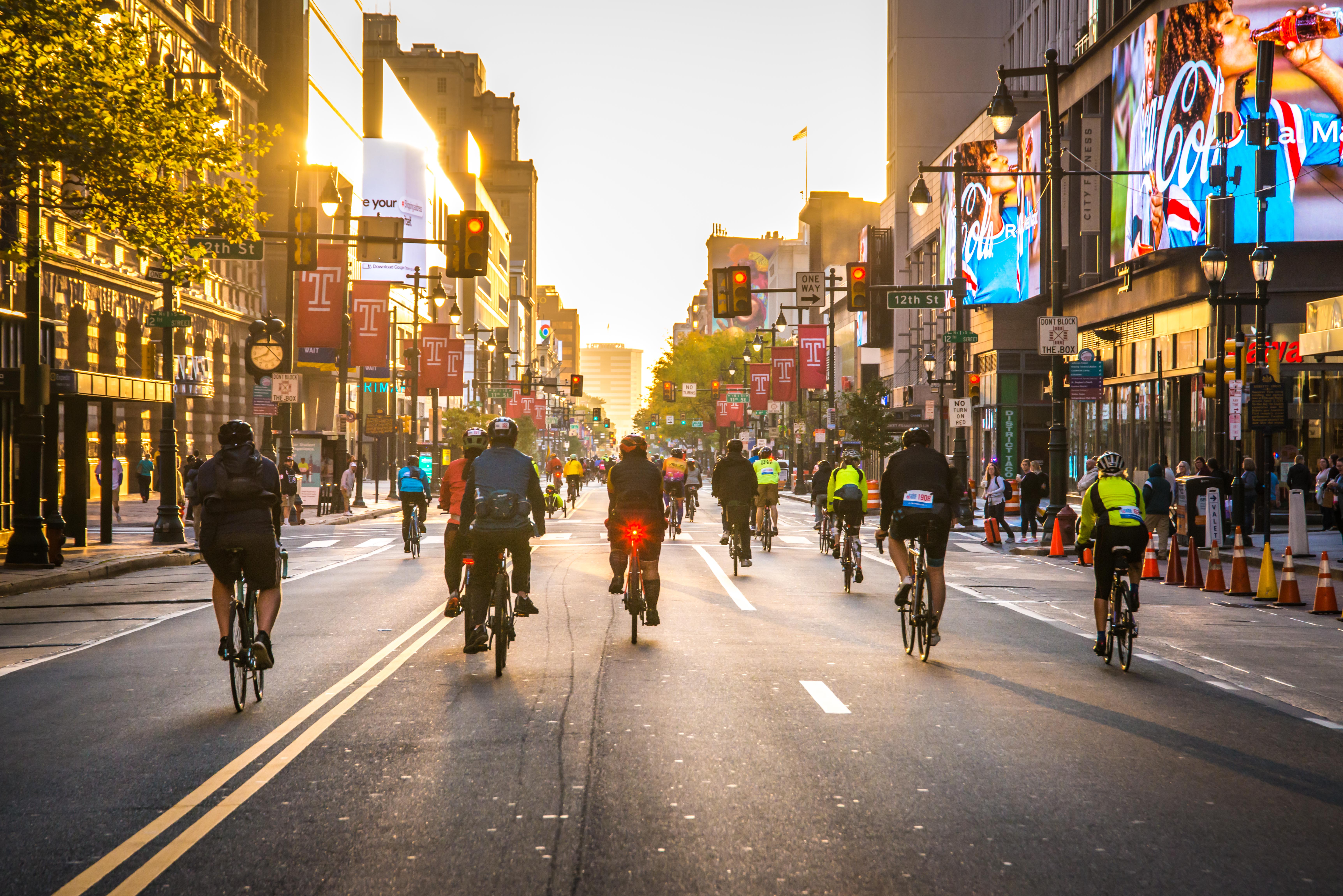
The fifth annual Philly Bike Ride kicks off at the Philadelphia Art Museum on Saturday, Oct. 17.Courtesy of Philly Bike Ride
Now in its fifth year, this annual ride takes cyclists past some of the city’s top landmarks. The 20-mile course is closed to traffic, making it a great event for riders of all ages and experience levels. Afterward, celebrate with food trucks and a beer garden. Registration is required; early-bird prices (through July 12) range from $43 to $200.
There’s live music all day, pumpkin decorating for kids, and a variety of items from local shops, crafters, and artisans. Local vendors will be on hand, with a beer garden from Wissahickon Brewing.
📅 Oct. 17, 11 a.m. to 5 p.m., 💵 Free admission,📍Ridge and Midvale Avenues, Philadelphia, Pa. 19129, 🌐 discovereastfalls.org
Last year’s inaugural event went so well that organizers are running it back. Main Street will be taken over by local artists and vendors, food trucks, live music, and — ahem — a mac and cheese crawl.
The 23rd Street Armory hosts this annual celebration of all things coffee. More than 20 roasters have already been lined up (with more expected soon) for this two-day event that also includes food and live music.
📅 Oct. 17-18, 9 a.m. to 4:30 p.m., 💵 Tickets are $25-$73,📍22 S. 23rd St., Philadelphia, Pa. 19103, 🌐 phillycoffeefestival.com
More than 100 artists, crafters, and vendors are expected at this year’s annual family-friendly festival held at Croft Farm. Mechanical Brewery will have a beer garden, plus there’s free pumpkins, a petting zoo, and live entertainment.
📅 Oct. 18, noon- 4 p.m., 💵 Free entry, pay as you go,📍100 Bortons Mill Rd., Cherry Hill, N.J. 08034, 🌐 chnj.gov
This free event gives visitors a peek behind the scenes of the Community Arts Center in Wallingford. There’s 30 vendors, plus demos and tours, art activities for children, and a pumpkin-painting contest — plus live music. For a full schedule of the day’s events, check out the Community Arts Center website.
The Braid Mill in Germantown hosts this fourth annual fall festival, with food trucks, wine and cocktails, local bands and DJs, and a craft marketplace. Early-bird tickets are available at a steep discount if purchased before Oct. 1.
📅 Oct. 25, noon-5 p.m., 💵 $20 for entry ($12.51 before Oct. 1), pay as you go,📍346 E. Walnut Lane, Philadelphia, PA 19144, 🌐 phillyflannelfest.com
The first-ever Inquirer Food Festival was held last year at the Fillmore in Fishtown. This marks the event’s second year.
The city’s premier food festival returns to the Fillmore this fall, featuring a lengthy lineup of top area restaurants. Sao, Pine Street Grill, and The Bread Room are among the participants already confirmed for this year’s event. There’s also an empanada-making workshop from chef Jezabel Careaga, with music from DJ Na$h, plus the chance to try off-menu dishes.
📅 Nov. 14, 11 a.m. to 6:30 p.m., 💵 Ticket prices vary,📍29 E. Allen St, Philadelphia, Pa. 19123, 🌐 foodfest.inquirer.com
Summer’s not over yet, at least when it comes to music schedules in and around Philadelphia. This is one of the busiest music weeks of the season, with big Bruno Mars and Chris Stapleton tours coming through, and Rufus Del Soul, Wu-Tang Clan, Squeeze, and Demi Lovato down the Shore.
Thursday Aug. 27
Swervedriver
Indie bands with a fuzzy guitar sound that embrace the shoegaze label have proliferated this decade. Swervedriver is among the 1990s originators of the style, and the members of the British band are celebrating the 35th anniversary of their debut album, Raise. 8 p.m., Underground Arts, 1200 Callowhill St., undergroundarts.org
Pinkshift
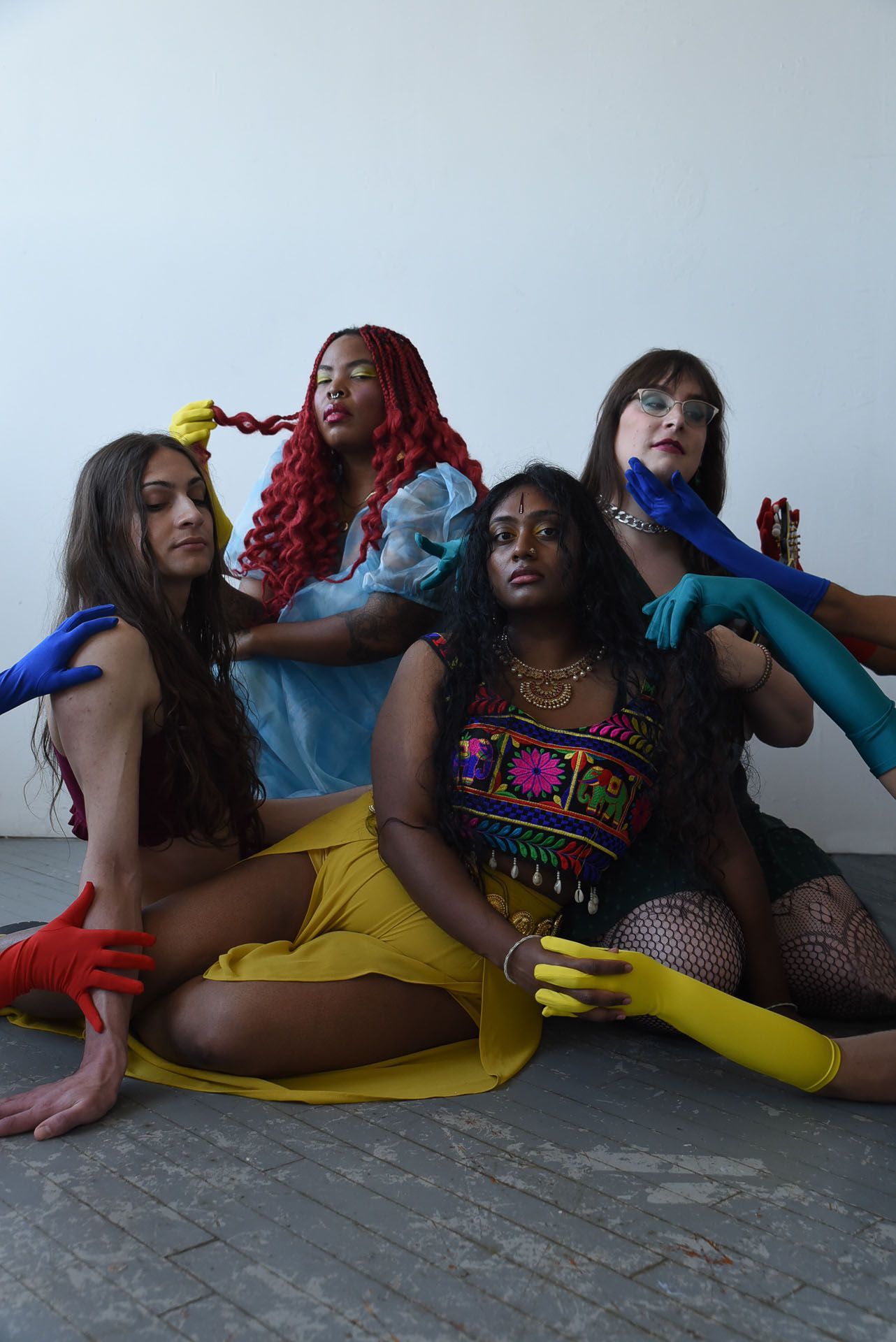
Pinkshift, the hard-hitting Baltimore punk band fronted by Ashrita Kumar, is celebrating an expanded version of their 2021 debut EP Saccharine. Two Philly bands will join them: Kulfi Girls, the foursome fronted by Abi Natesh that mixes hard rock with Indian classical influences, and Nicolle Maroulis’ emo outfit Hit Like a Girl. 8 p.m., Ukie Club, 847 N. Franklin St., 4333Collective.net
Kulfi Girls play the Ukie Club on Thursday, Aug. 27.Philly Music Fest
Good Flying Birds
Three winsome indie pop bands are on this free Live & Local show. Good Flying Birds, whose charming Talulah’s Tape came out in 2025, is a band of Midwesterners, who will be joined by two promising Philly quartets in Smarthearts and Heatloaf. Free. 6 p.m., Spruce Street Harbor Park, 301 S. Christopher Columbus Blvd., 4333Collective.net
Friday Aug. 28
Jerry Garcia Symphonic Celebration
The Grateful Dead guitarist would have turned 84 this month, and his family organized this tour in his honor. Together with the Philly Pops, the lineup includes Jerry Garcia Band veterans Melvin Seals on organ and Jacklyn Branch on vocals, Philly guitarist Tom Hamilton, Phil Lesh’s son Grahame Lesh on bass, drummer John Morgan Kimock, and singer Kanika Moore. 8 p.m., TD Pavilion at Highmark Mann, 5201 Parkside Ave, highmarkmann.org
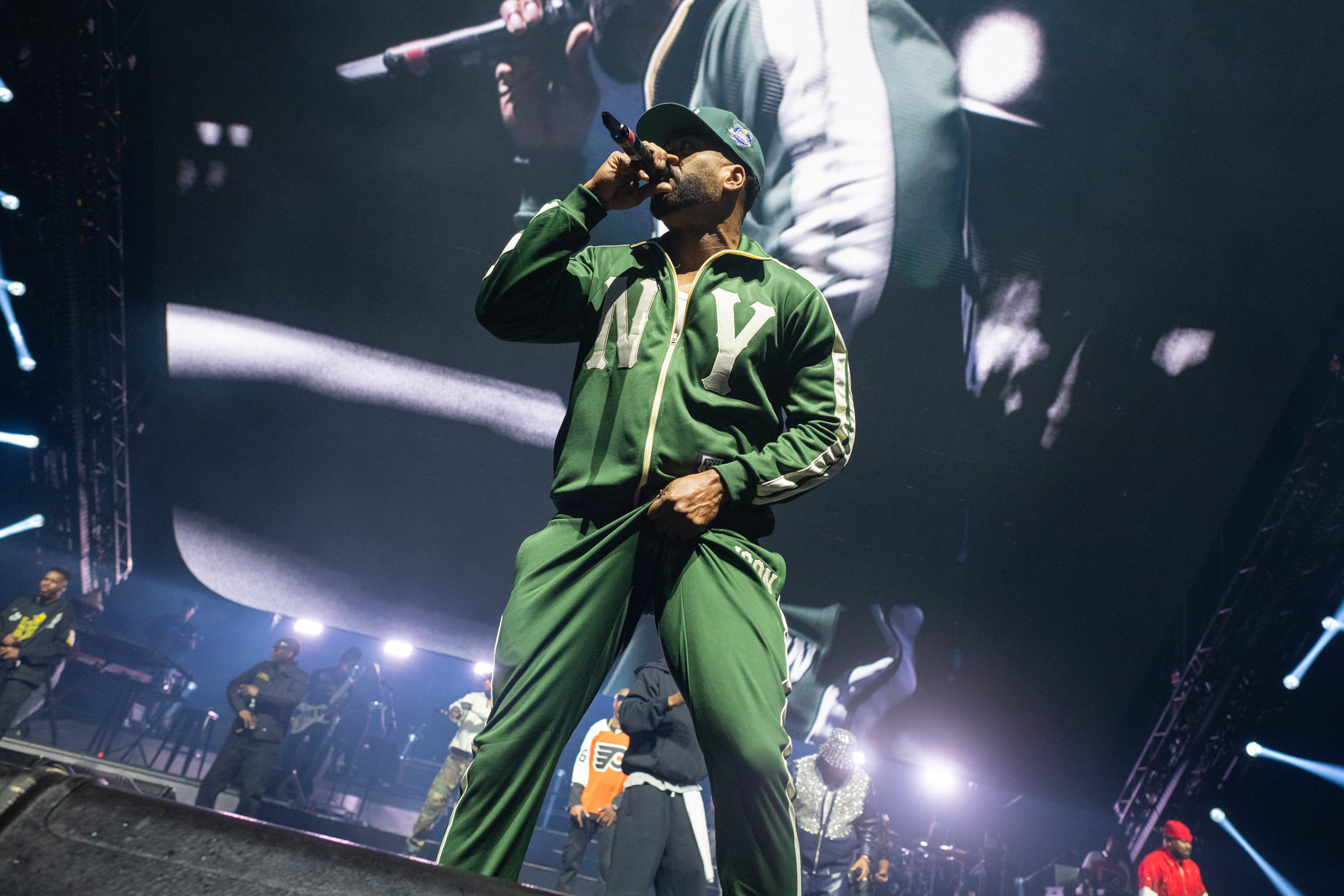
Wu-Tang Clan’s Method Man performs at the Wells Fargo Center in Philadelphia on July 18, 2025. The Staten Island hip-hop crew is in Atlantic City on Friday.Kaiden J. Yu / Staff Photographer
Before the band went on a run with albums like Argybargy in 1980 and Sweets From a Stranger in 1982, Squeeze songsmiths Chris Difford and Glenn Tilbrook wrote Trixies, a song cycle about a nightclub that was never recorded. Now 50 years on, they have released it as a full-length album produced by the band’s bass player, Owen Biddle, who is a former member of The Roots. Adam Ant and Haircut 100 are also on the bill. 8 p.m., Borgata Event Center, One Borgata Way, Atlantic City, borgata.mgmresorts.com
Demi Lovato
Former Disney child actress and pop singer Demi Lovato has pivoted from the punk-pop of the 2022 album Holy F— to return to a more dance pop sound on the new It’s Not That Deep. 8 p.m., Ovation Hall, the Ocean resort, 500 Boardwalk, Atlantic City, theoceanac.com
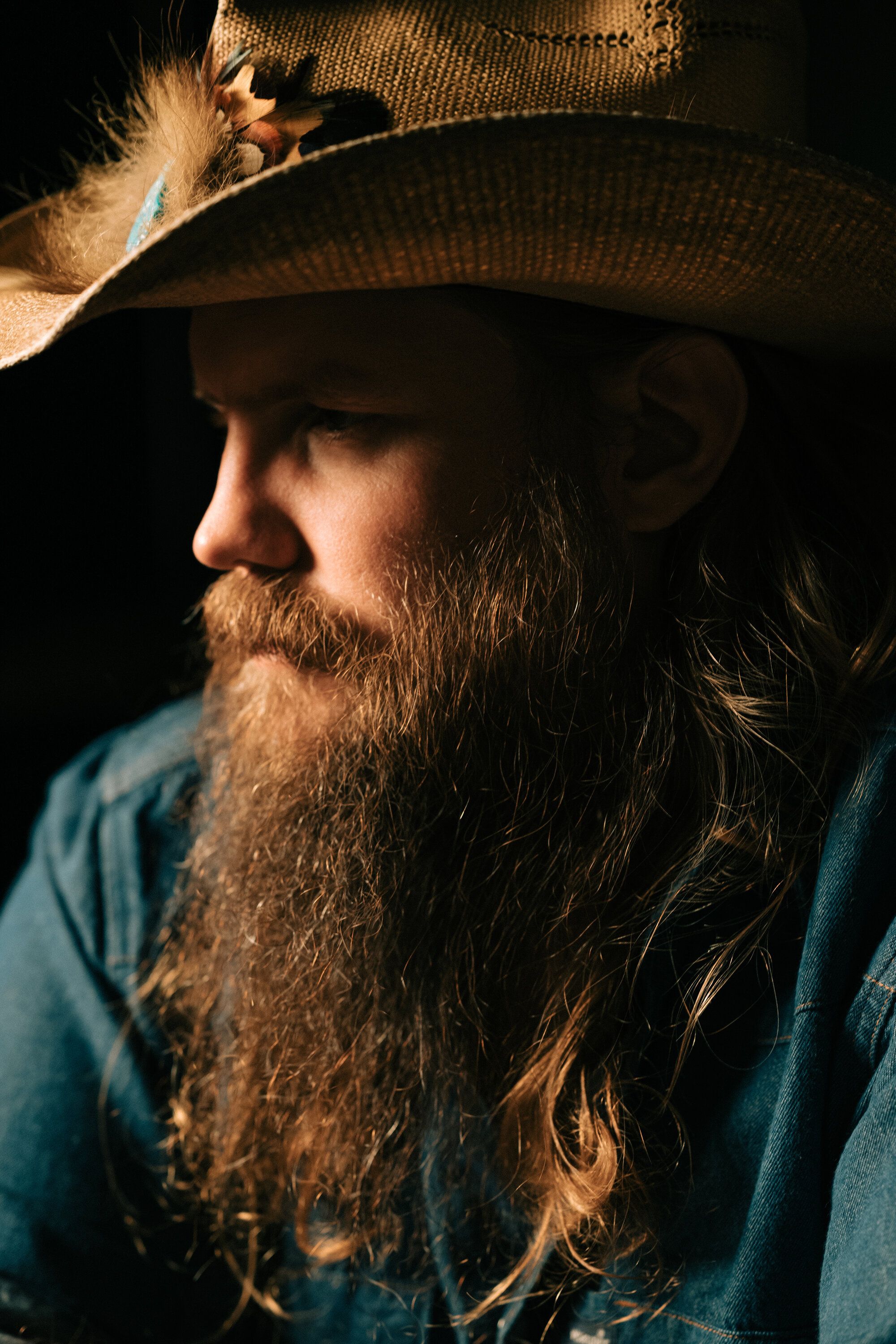
Chris Stapleton brings his All-American Road Show to the Freedom Mortgage Pavilion in Camden for two nights this weekend.Becky Fluke
Friday and Saturday Aug. 28-29
Chris Stapleton
Eleven-time Grammy winner Chris Stapleton has built himself a huge audience with his brand of beardy, rugged country-soul that’s rarely as slick as the manicured Nashville acts he rubs elbows with on the country charts. For this year’s two-night Camden stop on his “All-American Road Show,” he’s supported by North Carolina-born “Sex, Drugs and Country Music” singer Carter Faith. 8 p.m. Freedom Mortgage Pavilion, 1 Harbour Bvld., Camden, freedommortgagepavilion.com
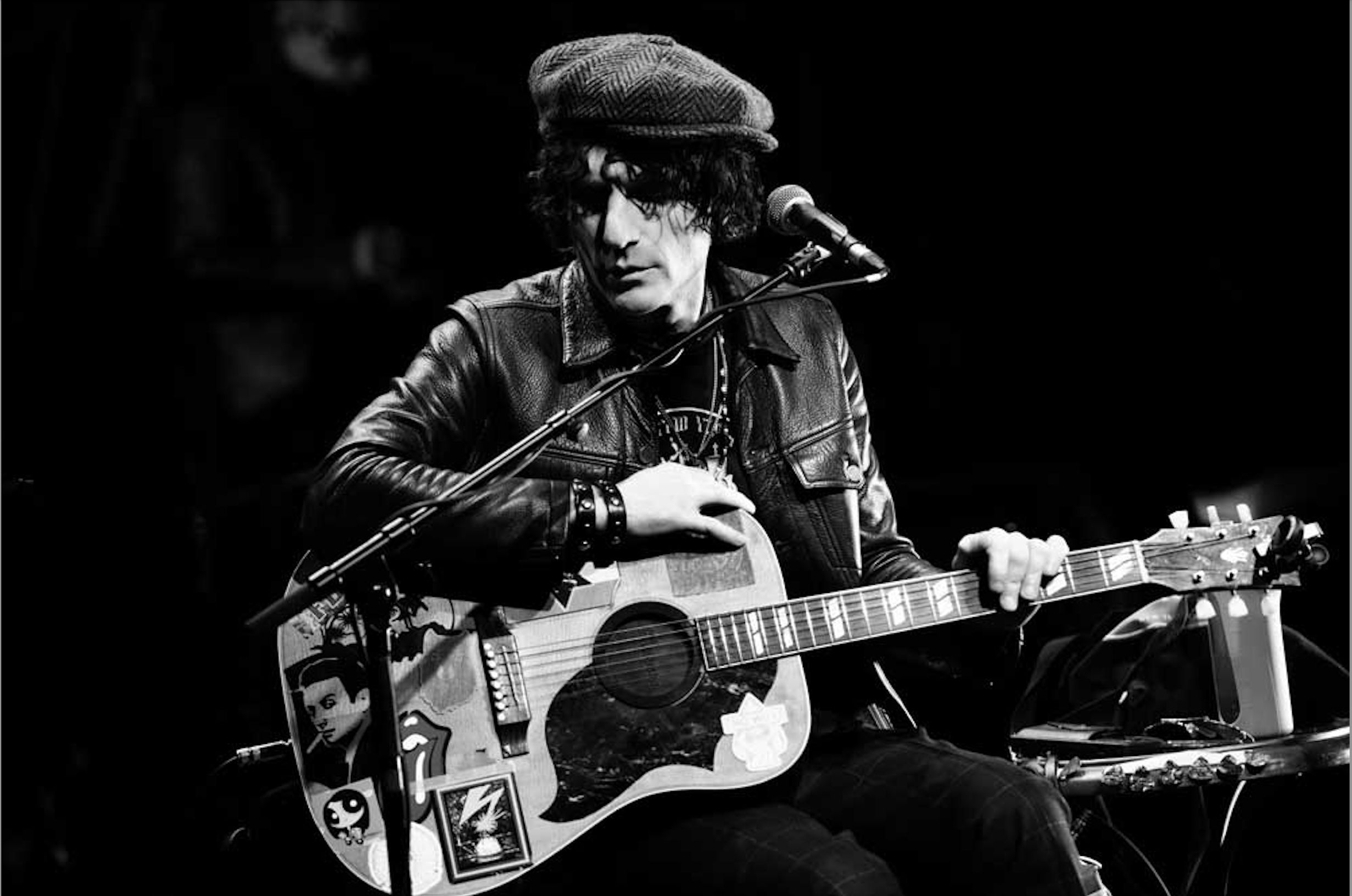
Jesse Malin will headline the Queen Jeans Ball in Wilmington on Saturday, Aug. 29. with Craig Finn and Tommy Stinson opening.Vivian Wang
Saturday Aug. 29
Queen Jeans Ball with Jesse Malin
New York songwriter Jesse Malin has always been a rock and roll true believer, dating back to his hardcore band Heart Attack (which he founded when he was 12). Then came D Generation and nine solo albums, including 2019’s Sunset Kids, which was produced by Lucinda Williams.
In 2023, Malin suffered a rare spinal stroke that left him paralyzed from the waist down. The next year, he was the subject of a tribute that featured Bruce Springsteen and Billie Joe Armstrong, among others. Now, he’s returned to the stage with his Silver Manhattan musical and is back to touring with his band.
Malin is headlining the annual Queen Jeans Ball in Wilmington, which benefits the nonprofit Donate Delaware. Craig Finn of the Hold Steady and Tommy Stinson will also perform and undoubtedly join Malin on stage. 8 p.m., the Queen, 500 N. Market St., Wilmington, thequeenwilmington.com
Australian electronic dance music act Rüfüs Du Sol will perform on the Atlantic City beach on Saturday, Aug. 29.Boaz Kroon
Rüfüs Du Sol
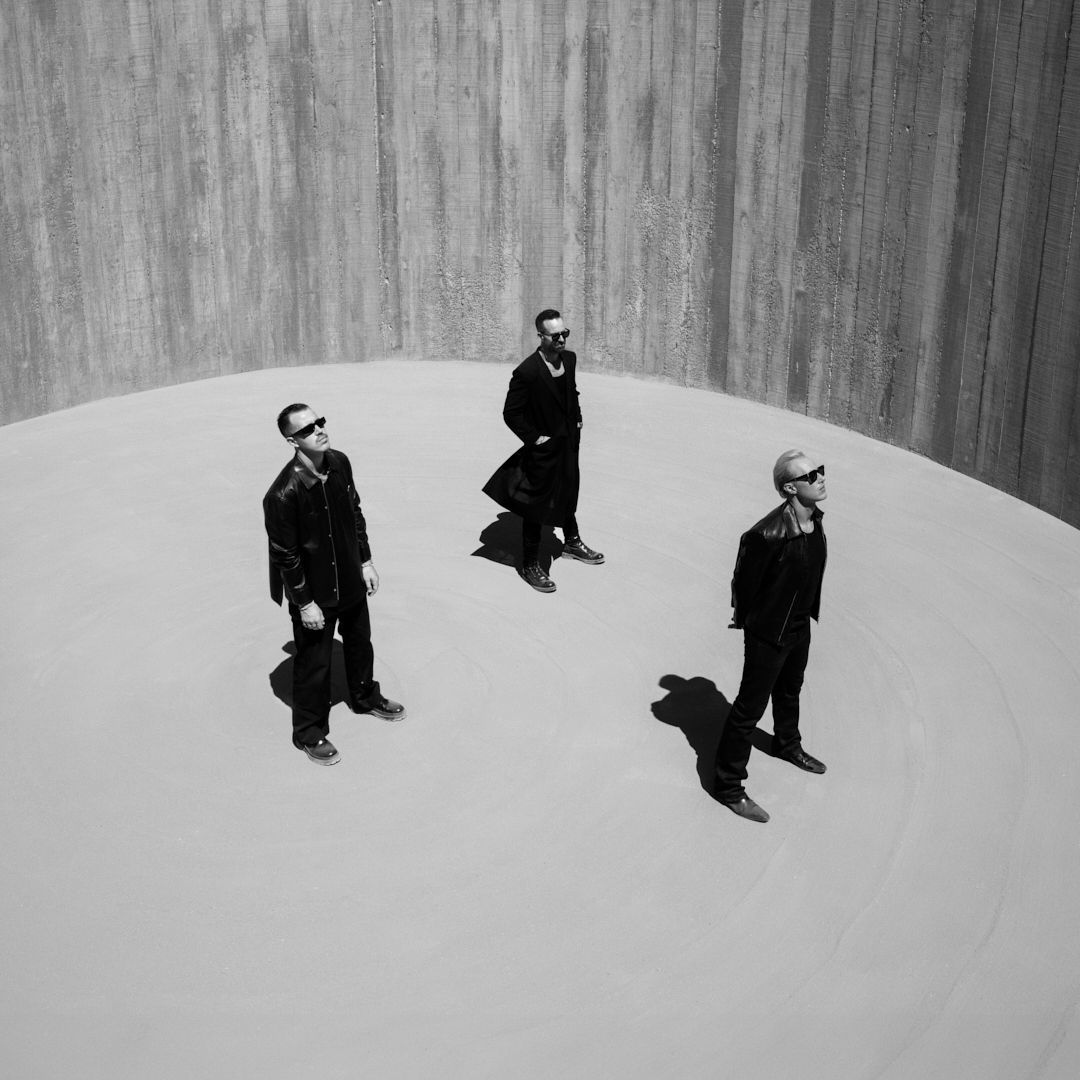
Dance music arrives on the Atlantic City beach with Rüfüs Du Soul, the Australian alt-pop band who mix live instrumentation and electronic beats. The band fronted by singer Tyrone Lindqvist is touring stadiums for its 2024 album Inhale / Exhale. The show marks a return to Live Nation booking toes-in-the-sand shows in tandem with Visit Atlantic City for the first time since 2023. Ben Bohmer opens. visitatlanticcity.com
Zac Brown Band
The official name of this tour is “Love & Fear Tour presented by Margaritaville at Sea.” So it’s safe to say the Georgia country-rock singer who sang the national anthem at the UFC Freedom 250 cage fight at the White House in June, will be giving Jimmy Buffett vibes. His album Love & Fear features Snoop Dogg, Marcus King, and the late great Dolly Parton. Grace Potter, who also plays Free at Noon on Friday, opens. 7 p.m., TD Pavilion at Highmark Mann, 5201 Parkside Ave, highmarkmann.org
Sam Sodomsky is The Bird Calls. He plays Young American Cider in Germantown on Sunday.Jake Fromm
Sunday Aug. 30
Cloud Nothings / Knifeplay
Cleveland-born indie band Cloud Nothings, fronted by now Philly-based guitarist-songwriter Dylan Baldi, released its eighth album, Final Summer, in 2024. Sharp-edged Philly band Knifeplay open. 7 p.m., Ruba Club, 416 Green St., 4333Collective.net
The Bird Calls
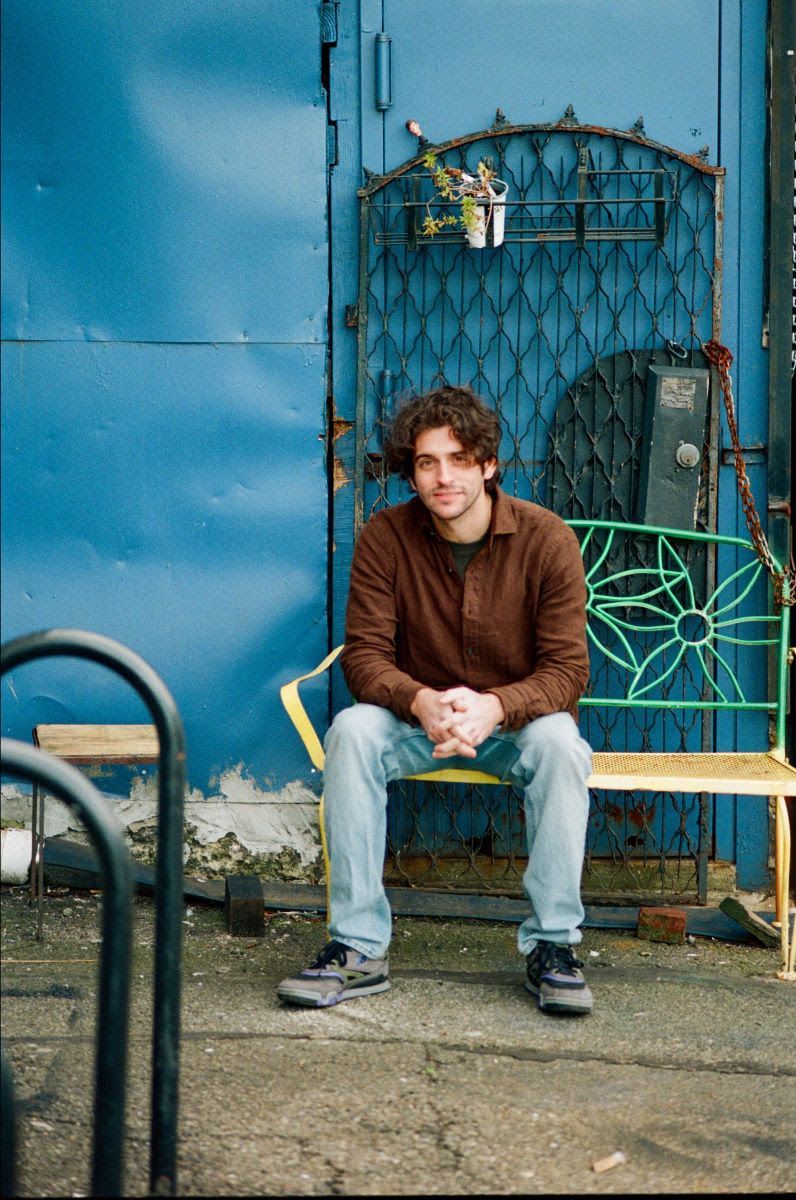
The Bird Calls is Sam Sodomsky, a Brooklyn songwriter raised in Philly whose new album, Take Leave, is due Friday. Sodomsky, also a contributing editor at Pitchfork, makes homespun, open-hearted folk rock about trying to find a place in the world with songs like “Clockwork” and “Ethan Frome” that linger in the imagination. He’s playing a hard cider tasting room in Germantown. Kristin Daelynn and Adeline Hotel open. 7 p.m., Young American, 6350 Germantown Ave., youngamericancider.com
Monday Aug. 31
Arlo Parks
The British singer and poet born Anaïs Oluwatoyin Estelle Marinho vaulted into stardom in the UK with her Collapsed Into Sunbeams debut, which won the prestigious Mercury Prize. Her third album, Ambiguous Desire, is a pleasant soul-searching work shaped by club culture, though it’s more likely to be heard by coffee shop latte sippers than dance floor denizens. 8 p.m., Union Transfer, 1026 Spring Garden St., utphilly.com
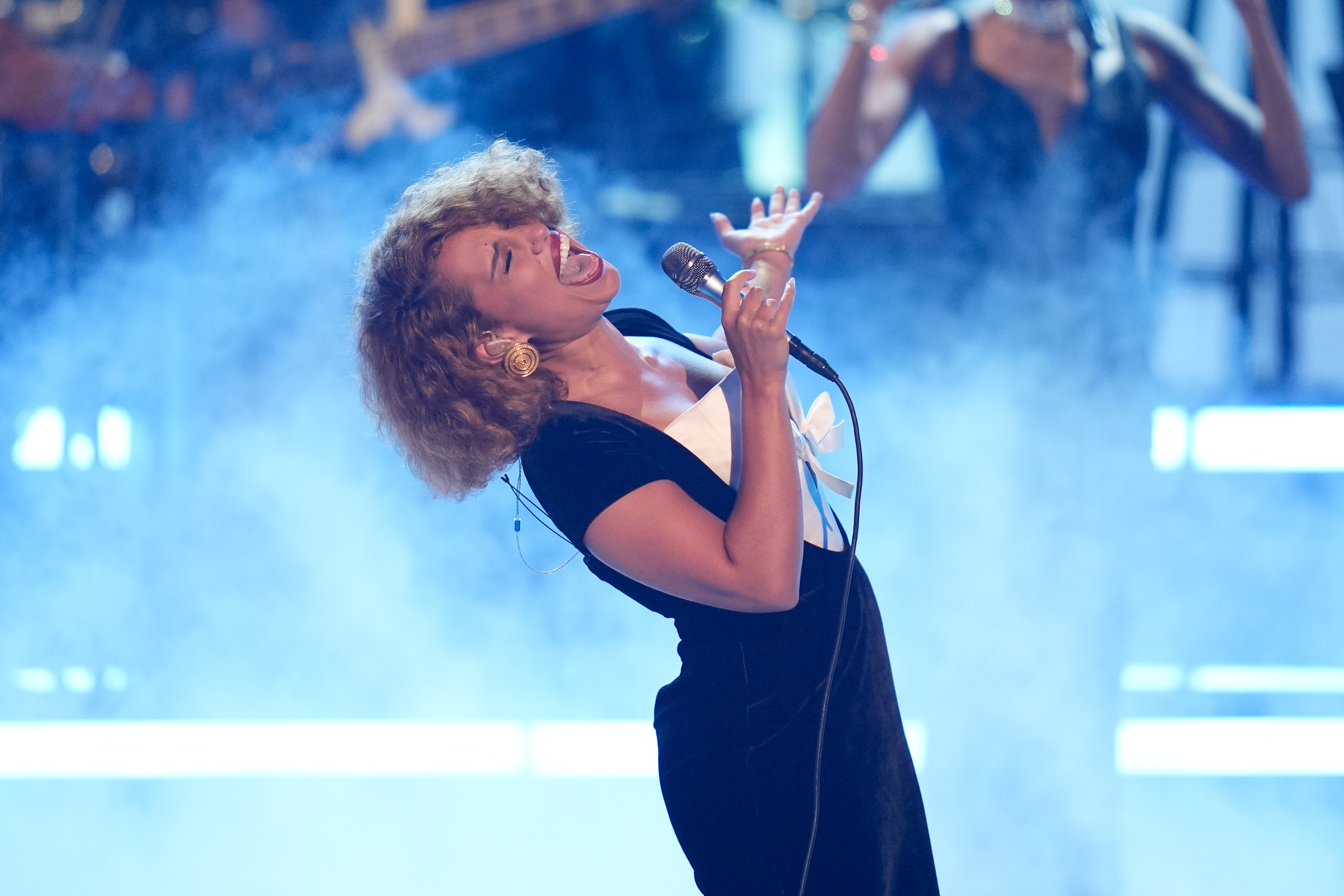
Raye performs at the BET Awards on June 28, 2026, at the Peacock Theater in Los Angeles. She opens for Bruno Mars on Tuesday and Wednesday, Sept. 1 and 2, at the Linc. (AP Photo/John Locher)John Locher
Tuesday and Wednesday Sept. 1-2
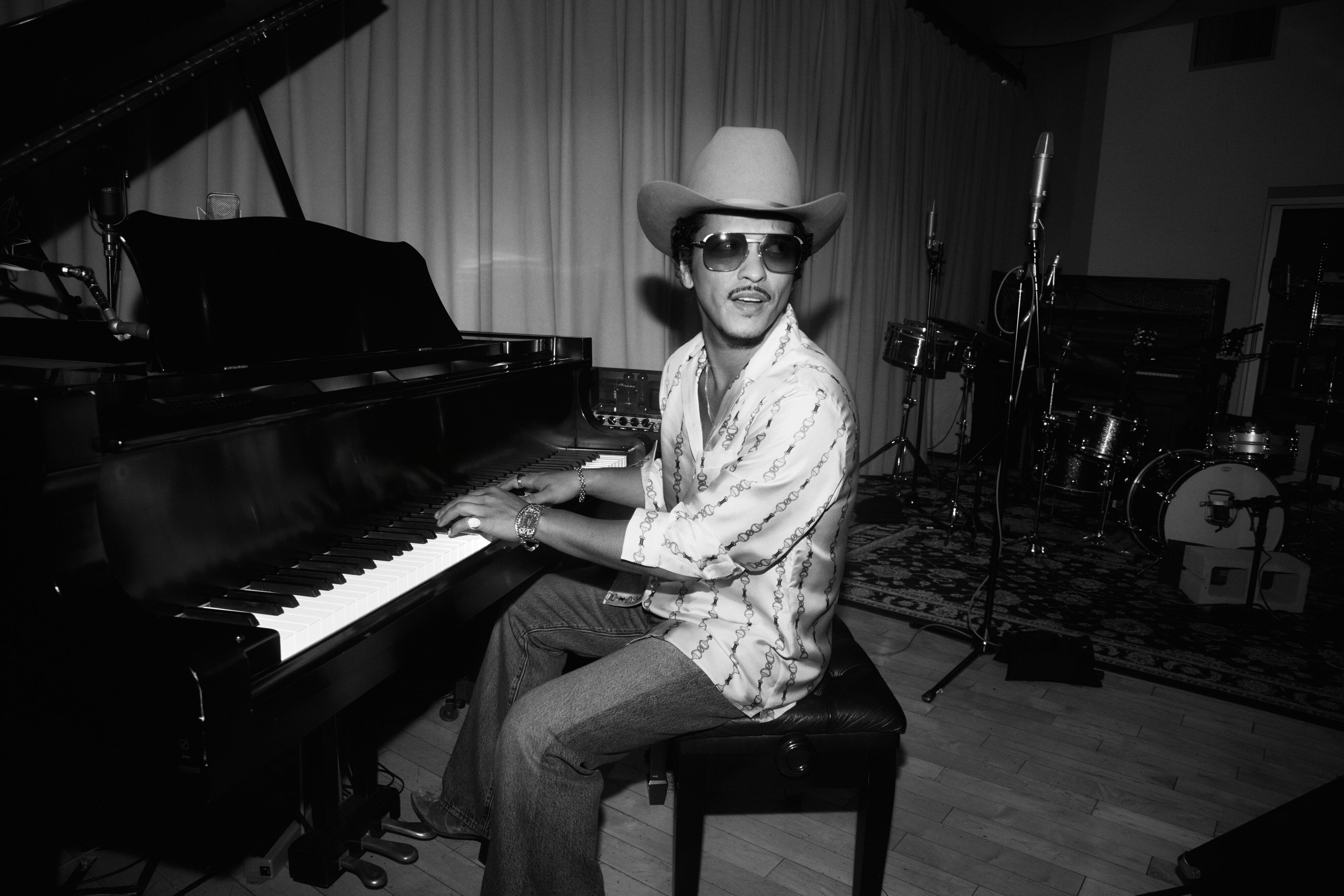
Bruno Mars & Raye
Bruno Mars has been making hits nonstop since his 2010 Doo-Wops & Hooligans debut. His 2024 chart toppers “Die With a Smile” and “APT.” — with Lady Gaga and Rosé, respectively — and this year’s “I Just Might,” from his new album Romantic are the most recent examples. Raye, the British singer who has a knockout stage show, opens. Things get going with DJ Pee. Wee, who is Mars’ Silk Sonic bandmate Anderson .Paak in disguise. Shopper alert: There will be a Bruno Mars x Hello Kitty pop-up at the Fashion District from Aug. 31-Sept. 2. 7 p.m., Lincoln Financial Field, One Lincoln Financial Way, lincolnfinancialfield.com
Philadelphia Navy Yard mechanical engineer Richard James was experimenting with a torsion spring in 1943 when the coil tumbled from his desk and landed on a stack of books.
The spring didn’t just sit there. The top coil flipped over onto the next book. Then the back coil flipped over to the next book. Before he knew it, this newfangled thing was taking the hardcovers like stairs.
Fascinated, James went home and showed the new toy to his wife, Betty.
She was enthralled and named the metal thingamajig a Slinky because of its wavy, stealthy movement.
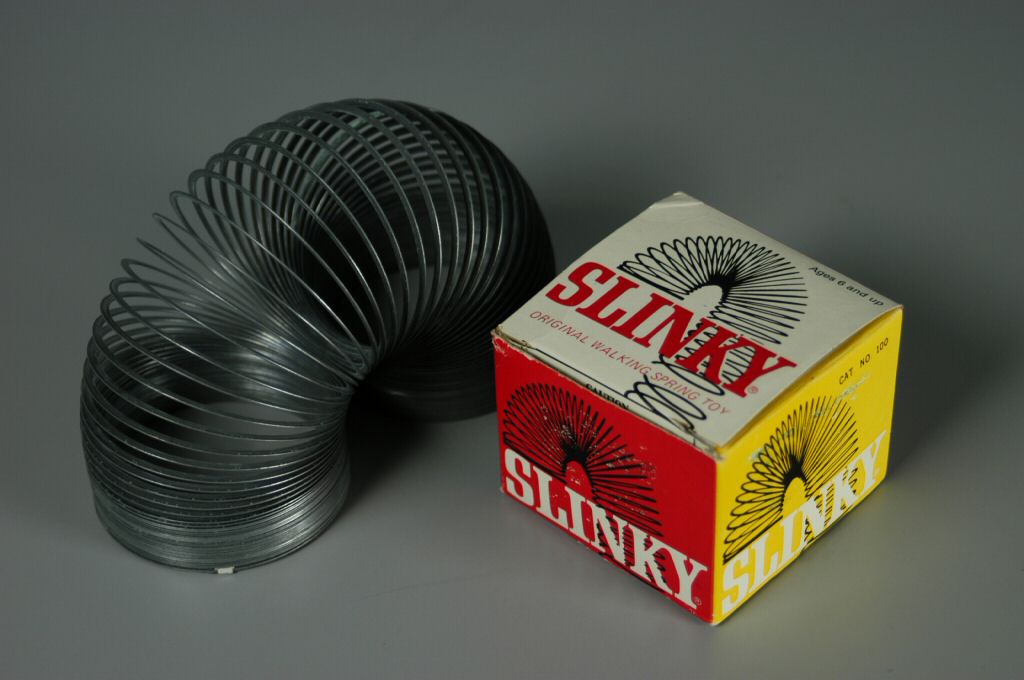
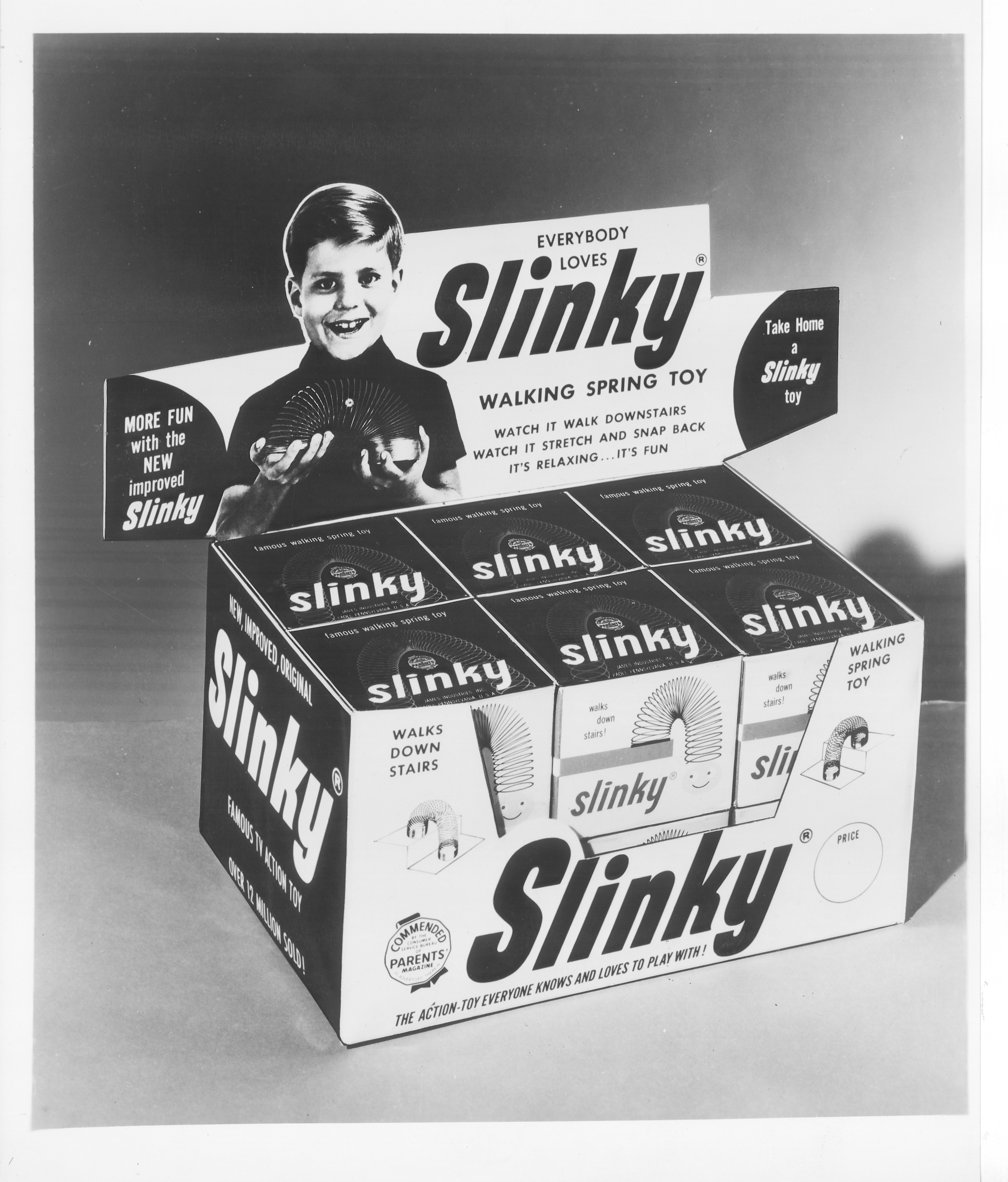
A vintage Slinky display.
James finagled with the metal spring for about two years, perfecting its flip-flop down-the-stack movement. Finally, on Nov. 27, 1945, the Jameses brought 400 Slinkies to Gimbels at Eighth and Market Streets, debuting them to shoppers. The whole lot sold out in 90 minutes for $1 a piece.
A toy craze was born.
This Saturday, the Philadelphia Historic District will host a “Firstival” to fete the Slinky at the American Philosophical Society from 11 a.m. to 1 p.m. The society’s archives house the 1953 study “On Slinky: The Dynamics of a Loose, Heavy Spring” by British mathematician and oceanographer Michael Longuest-Higgens.
Firstivals are weekly day parties celebrating America’s 250th birthday. This week’s Firstival is the 35th.
After the roaring success at Gimbels, Richard James quit his $50-a-week gig at the Navy Yard and founded James Industries, manufacturing Slinkies from a Germantown warehouse. Each Slinky was made from 80 feet of steel on a machine that James invented. It took 10 seconds to make each Slinky.
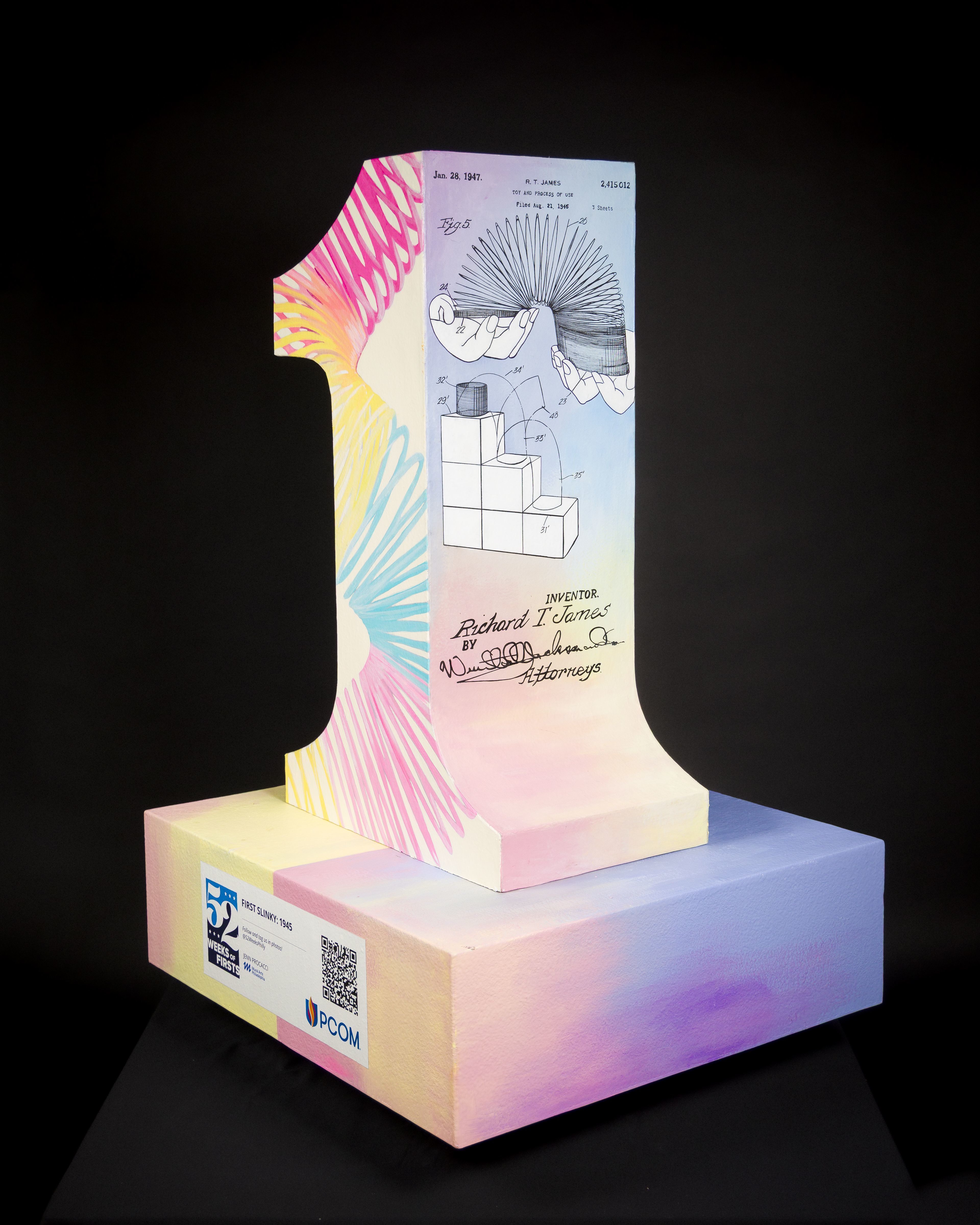
Jen Procacci’s No. 1 features the original blueprints of the Slinky design, commemorating one of America’s most-beloved toys.Jenn Procacci for Colibrà Workshop
Slinkies, considered the first toy craze, predating Cabbage Patch Kids, Tickle Me Elmo, and Beanie Babies, were so popular in the 1940s that Macy’s stopped selling them for a bit because the swarming crowds created a fire hazard.
In the early 1950s, published reports said the Jameses were making more than $1 million a year. James denied those reports in a 1950 Inquirer article but admitted to making “solid profits.” By the end of the decade, the Jameses’ Slinky operation had moved to manufacturing facilities in Clifton Heights and Paoli.
The couple divorced in 1961.
Richard James became a missionary in Bolivia, leaving his wife to manage the business and their six children. Betty James moved her children closer to family in Hollidaysburg, Pa., and commuted to the Philadelphia area for three years before moving the company closer to home in 1964.
In 1962, Betty James launched an aggressive television campaign to build awareness and increase Slinky sales. Songwriters Homer Fesperman and Charles Weagley wrote the unforgettable, now-iconic Slinky jingle.
“It’s Slinky, it’s Slinky. For fun it’s a wonderful toy.
It’s Slinky, it’s Slinky. It’s fun for a girl or a boy.
It’s fun for a girl or boy!”
The Slinky dog became a party trick. People wore Slinky glasses. Plastic Slinkies were introduced to the market.
The Slinky was everywhere.
“During the Vietnam War, soldiers used Slinkies as portable radio antennas,” said Zach Delphais, the public relations manager for Just Play Products, the Bucks County-based brand that owns Slinky today.
Betty James sold Slinky to Michigan-based Poof Industries in 1999.
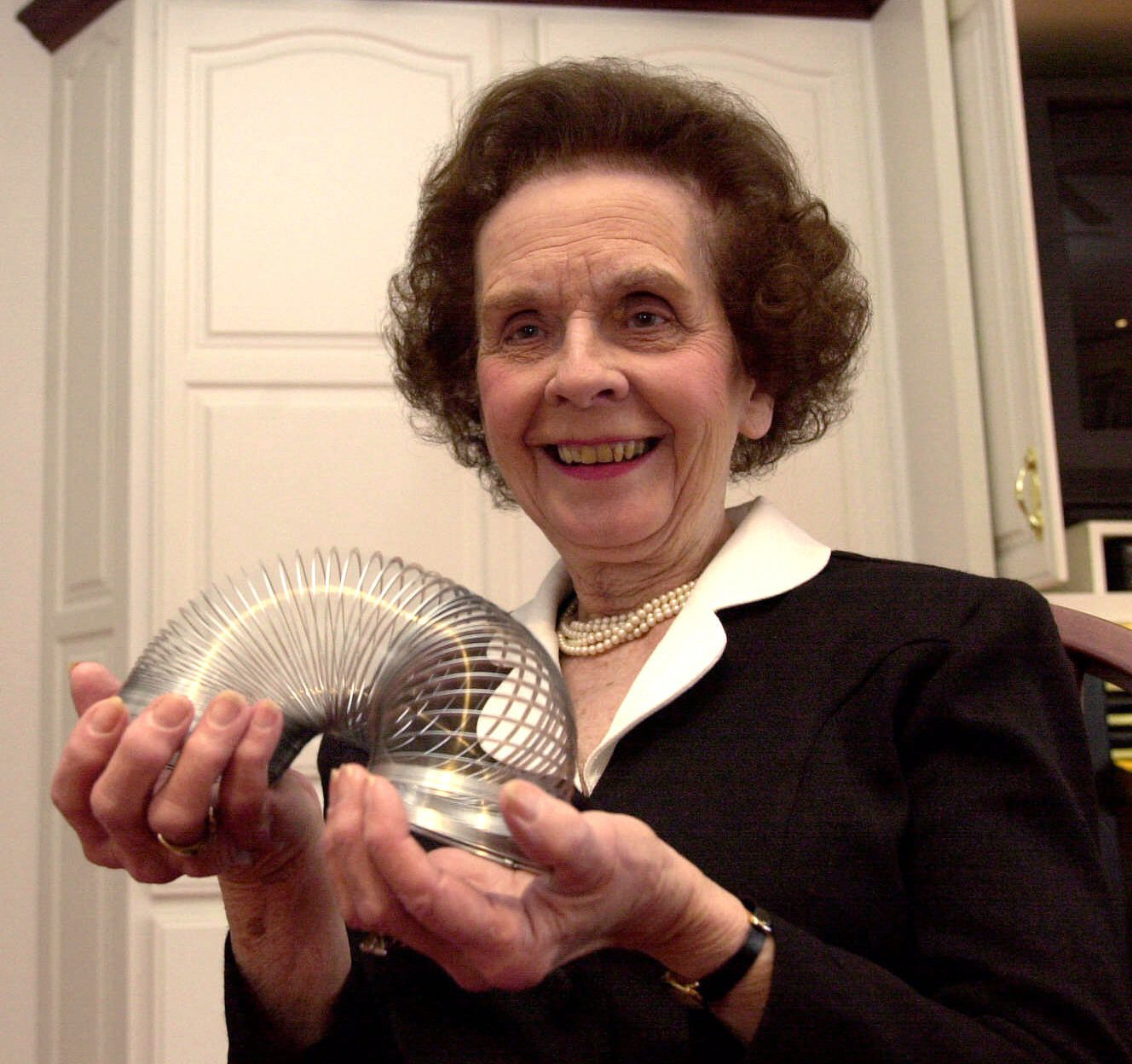
In this Jan. 18, 2001, photo, Betty James, retired president of James Industries, plays with a Slinky. She died in 2008.AP
In 2001, Betty James, then 84, was inducted into the Toy Industry Hall of Fame. At that time, more than 250 million Slinkies had been manufactured from hundreds of thousands of tons of steel.
“Slinky has lasted because it’s simple, it’s iconic, and every generation has connected with it,” Delphais said. “It started right here in Philadelphia. That makes it all the more meaningful.”
This week’s Firstival is Saturday, Aug. 29, from 11 a.m.-1 p.m., at the American Philosophical Society, 104 S. Fifth St.
Several weeks ago, The Inquirer food desk deliberated on declaring a sandwich of the summer, after the New York Times designated Italian piadinas their pick for said title (a phenomenon that seems mostly confined to Brooklyn). Personally, I think the designation is pretty silly. Why?
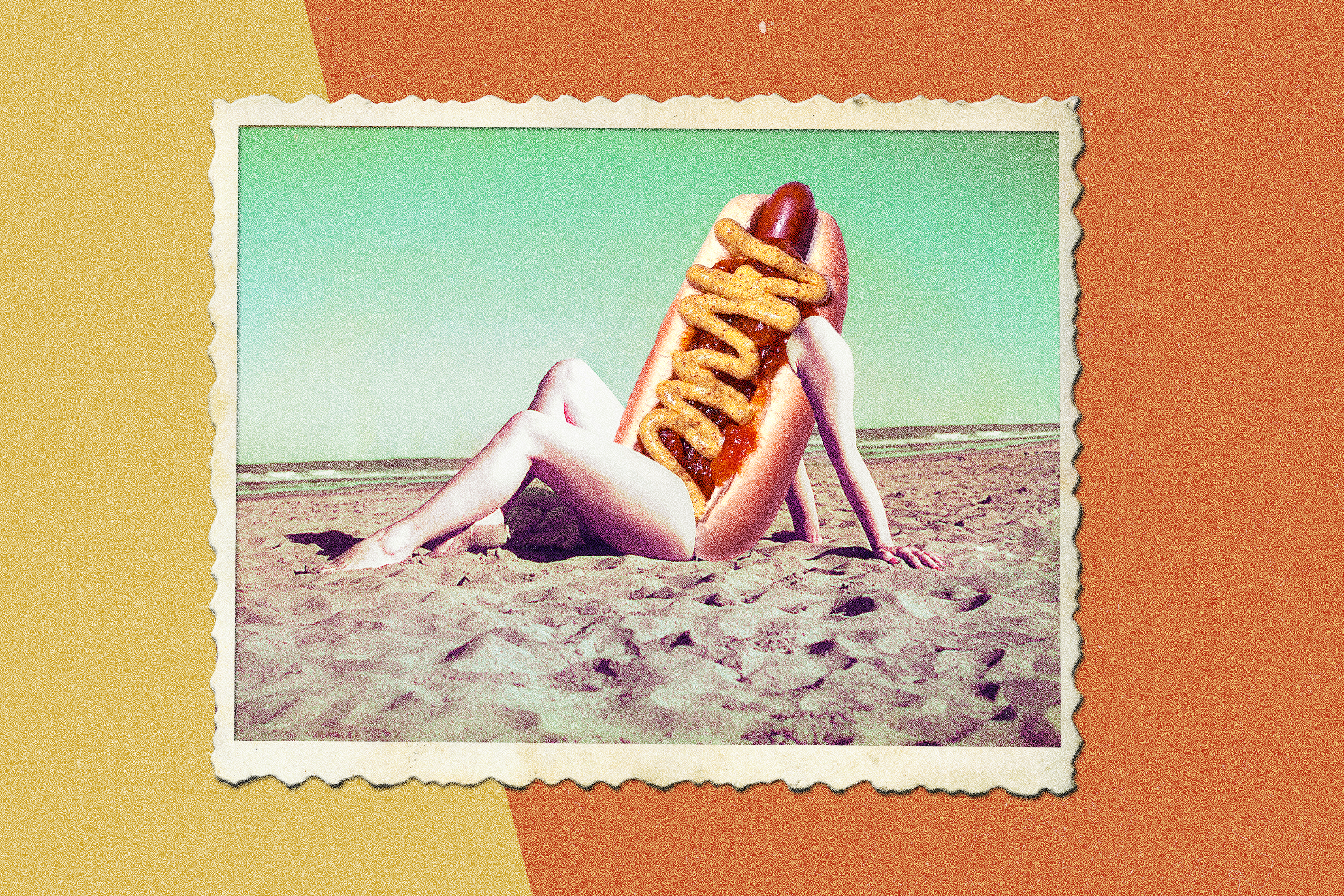
The hot dog is the sandwich of the summer. It always has been, but it’s especially true now.
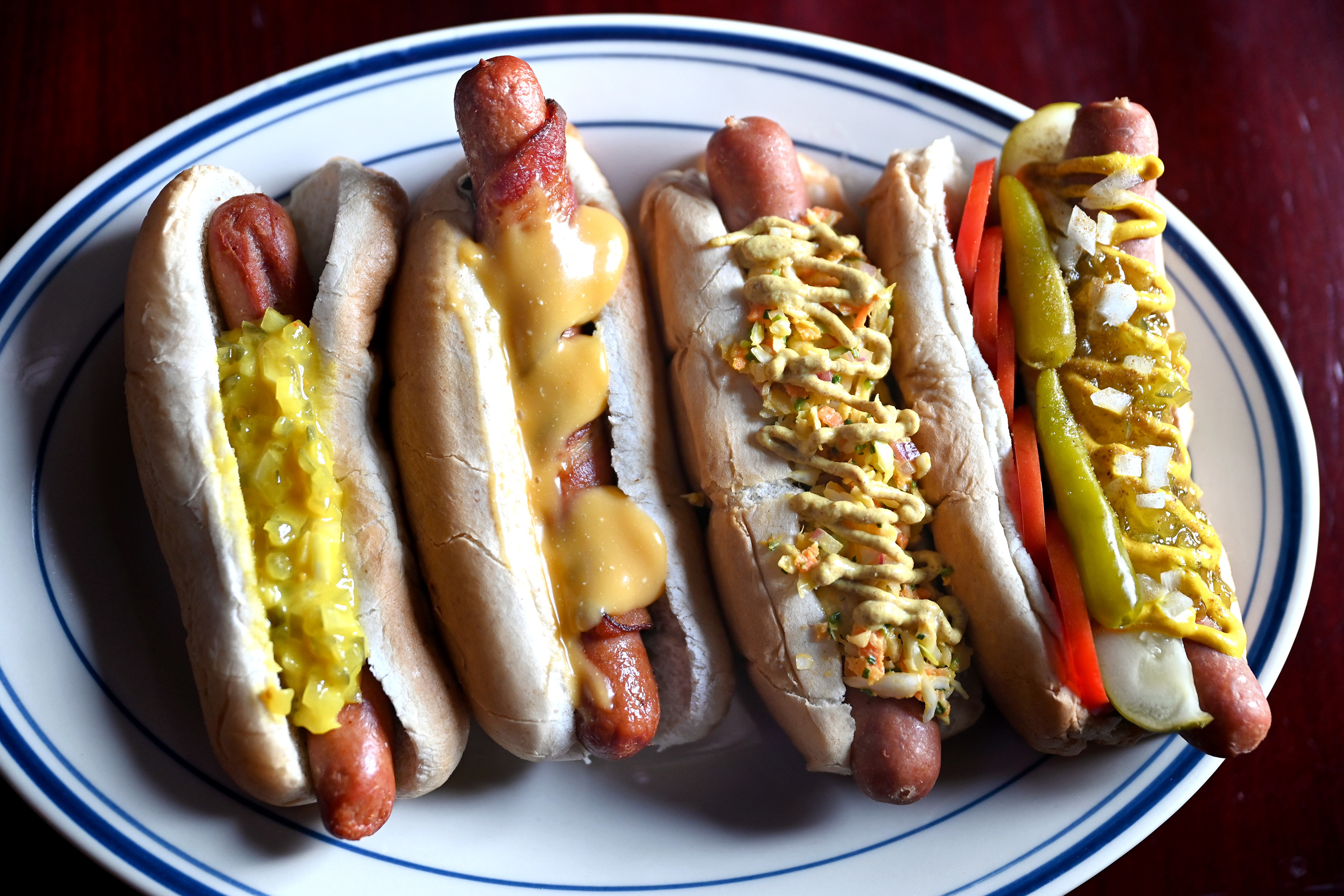
Hot dogs at Royal Tavern’s Dog Days of Summer special, held annually in July. (A few dogs remain on the menu in August.)Tom Gralish / Staff Photographer
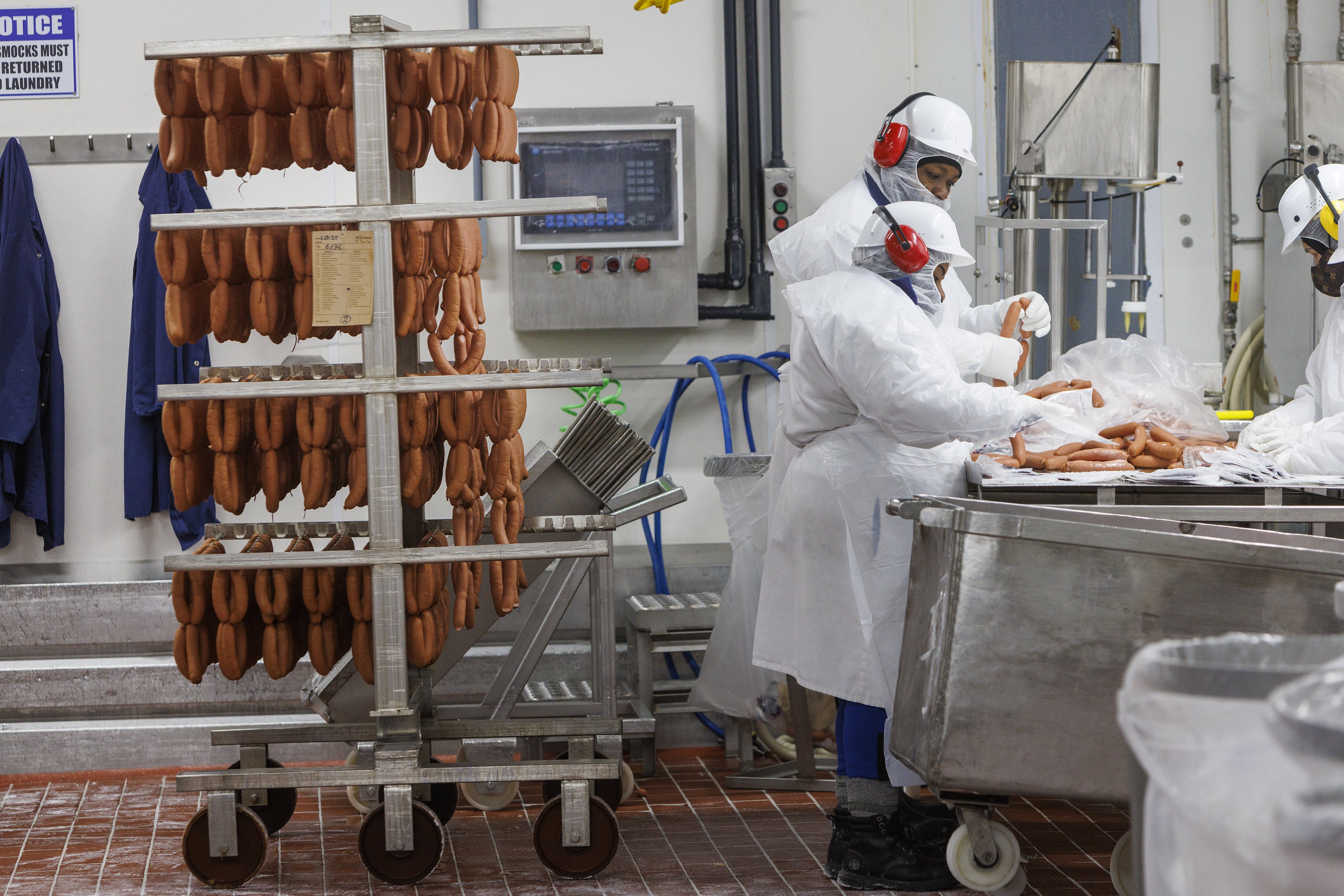
The boom times won’t necessarily end after Labor Day, but, for many people, hot dogs have a season, and it is summer. After all, nearly half of the 100 million hot dogs made annually by Dietz and Watson, Philly’s homegrown deli meat maker, are sold between May and August, according to Lauren Eni Canseco, Dietz’s vice president of brand strategy and fourth-generation family owner.
Food handlers packaging Black Forest Uncured Knockwurst at Dietz and Watson plant Philadelphia in 2025. Dietz and Watson produces and distributes deli meats, cheeses, and other specialty food products.Alejandro A. Alvarez / Staff Photographer
That the hot dog is the sandwich of the summer, here or anywhere, seems so obvious, it almost shouldn’t even need to be verbalized. It’s ballpark food, barbecue food — summer food.
The one major hitch? The enduring, irreconcilable debate over whether a hot dog is a sandwich. This is well-tread ground among hot dog enthusiasts, a subset of civilization that is fiercely opinionated and quite vociferous.
To give both sides of the argument equal air time, I asked several local glizzy authorities — makers, avid consumers, etc. — to weigh in. Is a hot dog a sandwich? Here’s what they said:
Craig LaBan, Inquirer restaurant critic: Technically, yes. As much as a hoagie, or hot roast beef, cheesesteak or cutlet can be a sandwich. You put sausage on a bun and call it a sandwich. Hot dog is a sausage, so …That is not to say hot doggery is the same thing as eating a peanut butter and jelly. … and it’s true hot dogs can absolutely exist on their own — in a pot of beans or Korean Army soup, baked into a croissant, wrapped in a blanket, in which cases they are not a sandwich. So … now that I rethink it, a hot dog is NOT a sandwich, but it can become one.
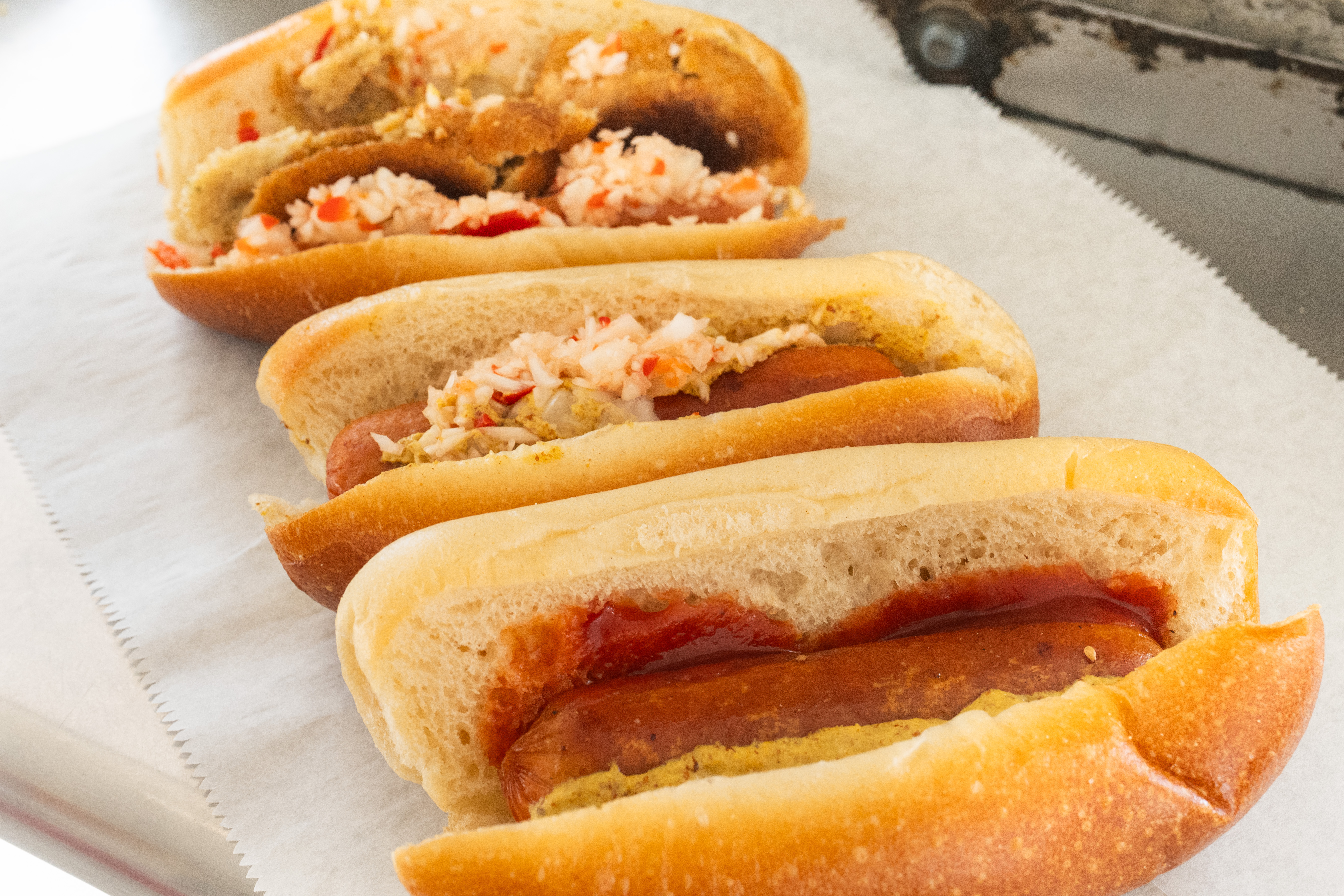
Standard hot dog with ketchup and mustard, hot dog with pepper hash, and hot dog with fish cake and pepper hash at Johnny’s Hots on Aug. 17.Jessica Griffin / Staff Photographer
Chris Barnes, owner of Lucky’s Last Chance: A hot dog is a hot dog! It’s unique and perfect and one of one. Anyone who says otherwise probably also likes ketchup on it.
Jen Zavala, owner of Juana Tamale: Yes, a finger sandwich.
Sandwiches are commonly considered a complete meal. One hot dog is a snack. You need two or three to make a meal.
Sandwiches are usually portable, packable. Something you can put in a Ziploc, bring for lunch, or save for later. This is not a pleasant or regular practice with hot dogs, they are designed to be eaten immediately.
Sandwiches are usually COLD, unless advertised as a “hot sandwich.” Hot dogs are almost NEVER served cold.
Hot dogs and sandwiches are best purchased from different sorts of vendors. You probably wouldn’t want a hoagie from your favorite Center City hot dog lunch cart; and you probably wouldn’t want a hot dog from your favorite Philadelphia deli (I’ve tried) — unless it was Famous 4th Street.
I’ve been painting and writing about hot dogs for almost 20 years. Poring over old articles, menus, going back to the early 1900s. Very rarely, or maybe even never, have I seen a hot dog historically referred to as a sandwich.
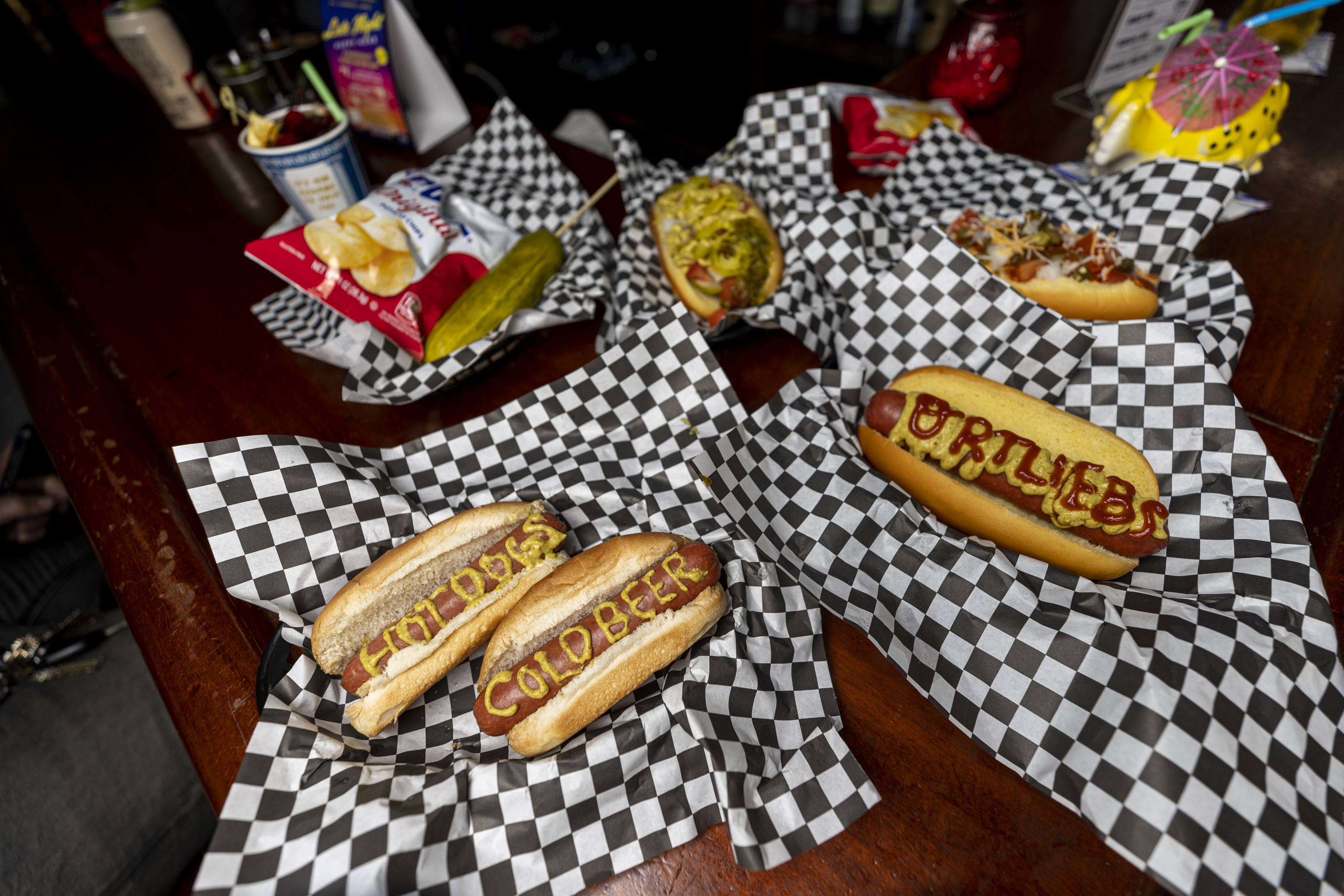
An assortment of classic hot dogs with mustard and ketchup writing at Ortlieb’s in Northern Liberties.Tyger Williams / Staff Photographer
Nic Macri, chef at Royal Tavern: Considering a hot dog is a hot dog without the bun, I am going to say no. I’ll tell you what is not a hot dog — a sausage in a hot dog roll!
Pierre Li Peters, aka @theehotdogsummer: A hot dog is not a sandwich because it’s an entirely different art form. A hot dog is a hot dog, even when it doesn’t look like the classic Nathan’s frank we all imagine. For example, a corn dog could be considered a part of the hot dog family but doesn’t really fit into the sandwich category … The beautiful thing about the hot dog community: It’s not limited in being classified as a sandwich; creativity flourishes due to unique characteristics shaped by the regions that enjoy them.
Lauren Eni Canseco, Dietz & Watson VP: A hot dog CAN be a sandwich, but it can also be an ingredient, an entree, or a snack! If it’s a high-quality, high-protein dog, the possibilities are endless.
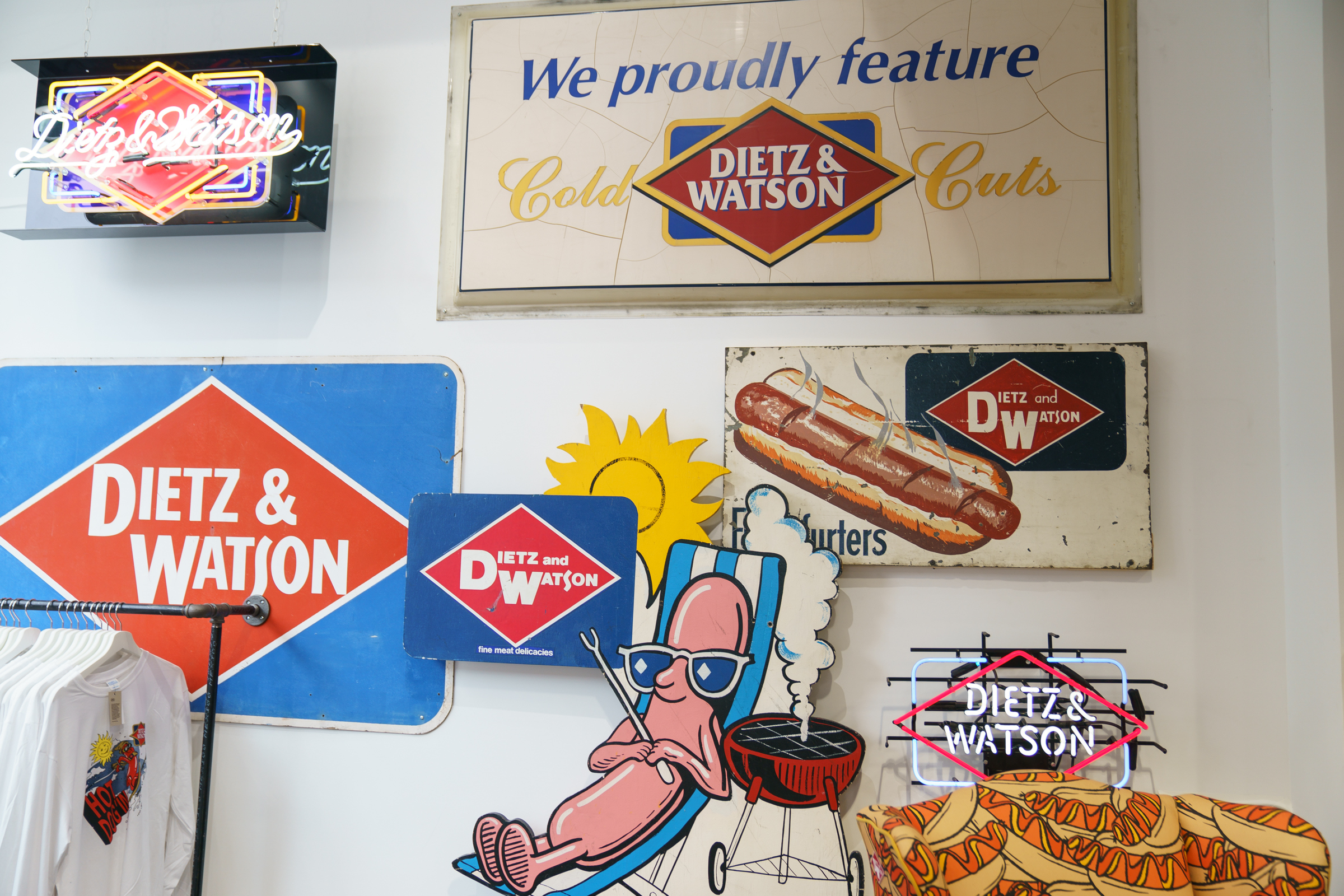
Retro wall decor at Dietz & Watson pop-up store at Fifth and South Streets in 2019.JESSICA GRIFFIN / Staff Photographer
Emilie Dormer, aka @glizzygirliez: In my heart, I don’t consider a hot dog a sandwich. A hot dog feels like its own category entirely. There’s something culturally distinct about it that gets lost when you simply call it a sandwich. That said, if you forced me to place it into one of the traditional food categories, I’d have to admit that yes, structurally, I guess that it probably qualifies as a sandwich. Bread, filling, handheld … the evidence is unfortunately there.
Ralph Stollenwerk, artist and hot dog illustrator: I think a hot dog is as much of a sandwich as a hoagie. Nobody officially calls it a “hoagie sandwich,” [just] as nobody calls it a “hot dog sandwich,” but it is meat held between bread. I’m calling it a sandwich, but I would NEVER call it a sandwich in public.
As for me, I pretty much agree with Stollenwerk. You can quibble with my headline, but the substance of the argument is undeniable: The hot dog is the sandwich of the summer, even if the “sandwich” is silent.
As the afterglow of the world’s largest sports tournament and the country’s formal 250th birthday party in Philadelphia fades, the city is returning to its regularly scheduled programming.
But those months of celebrations came with significant investments into the city: building up the Benjamin Franklin Parkway, hosting Grammy Award-winning stars, renovating Lemon Hill to welcome half a million people, and, of course, the cleaning and maintenance work that made Philadelphia look fresher than it has in years.
SEPTA and the city partnered to landscape and beautify major traffic intersections, sometimes with a new mural provided by Mural Arts Philadelphia. SEPTA stations alsoreceived a much-needed deep clean and graffiti removal, all before and during the summer celebrations.
PHLASH buses got an extra stop to get to Lemon Hill; fans got free rides on the Broad Street Line after World Cup games. And, just as the international fans packed up their bags to head home, it’s time for many of those features to go, too.
But what about all the things staying in Philly? The city is not getting just generational memories and a summer party out of the deal. Here are some of the major legacy projects remaining in Philadelphia for years to come, perhaps even until the tercentennial celebration in 2076.
(function(){function e(){window.addEventListener(`message`,function(e){if(e.data[`datawrapper-height`]!==void 0){var t=document.querySelectorAll(`iframe`);for(var n in e.data[`datawrapper-height`])for(var r=0,i;i=t[r];r++)if(i.contentWindow===e.source){var a=e.data[`datawrapper-height`][n]+`px`;i.style.height=a}}})}e()})();
New mini soccer pitches across Pennsylvania
Location: Throughout Pennsylvania.
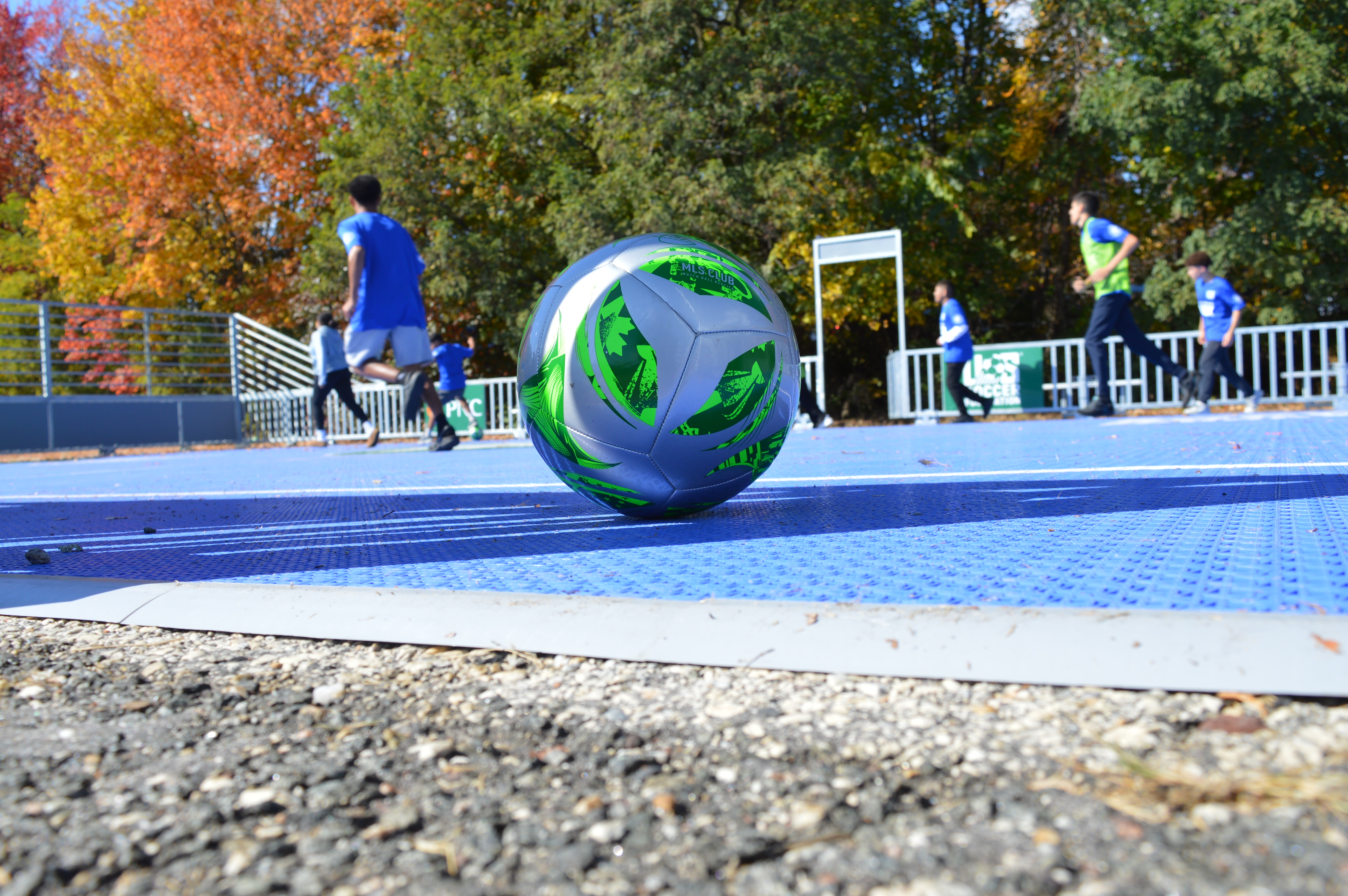
The project: How does the United States grow the next crop of elite soccer players? By making it easier to play soccer starting at a young age. At least 13 mini soccer pitches are being installed at schools, recreation centers, and parks across Pennsylvania.
The first two of Philly’s mini pitches were installed at West Oak Lane’s Building 21 and the Swenson Arts and Technology High School in Northeast Philadelphia. According to the U.S. Soccer Foundation, which is overseeing the project, each mini pitch costs $150,000 to install.
The U.S. Soccer Foundation has committed $2 million to install mini-soccer fields like this one in Northeast Philadelphia ahead of the 2026 FIFA World Cup.Kerith Gabriel
Who is behind it: The city and several nonprofits and private companies are backing this initiative, mostly through a $2 million investment from Philadelphia Soccer 2026, the city’s host committee for the 2026 men’s World Cup. Additional backers include the Philadelphia School District, Independence Blue Cross, and Comcast, among others. The U.S. Soccer Foundation is administering the funds and overseeing the installation of the pitches.
The project: The transformation of Fishtown’s TipTop Playground into two mini, enclosed turf soccer pitches, with additional event space and field lighting for night play. The pitches are now open for kids and adults.
Fishtown’s street soccer park will host leagues, free training clinics, and youth soccer programs. Casual pickup soccer is available outside of scheduled programming, led by Street Soccer USA, the organization that helps run such soccer parks across the country.
Who is behind it: You guessed it: Bank of America and Visa. Street Soccer USA will run programming at the park in collaboration with local groups.
Lemon Hill Park
FIFA President Gianni Infantino, center, will visit Lemon Hill Park on Thursday, April 10 for an operational planning tour of Philadelphia Soccer 2026’s FIFA Fan Festival siteJose F. Moreno / Staff Photographer
Location: Sedgley Drive and North Lemon Hill Drive.
The project: Lemon Hill Park received some updates ahead of hosting the official FIFA Fan Festival, and is now getting a much-needed makeover after 39 days of World Cup festivities. The restoration of the grass is underway, with more permanent amenities soon to be constructed.
Some upgrades are complete:
Other upgrades are coming soon:
Who is behind it: Philadelphia Soccer 2026 is committing $4 million to park upgrades, with help from the city, to repair the grass fields, bring new modern amenities to parts of the park, and outfit the space with new electrical service, provided by Peco, to prepare for future large events.
FDR Park’s Ashburn Field
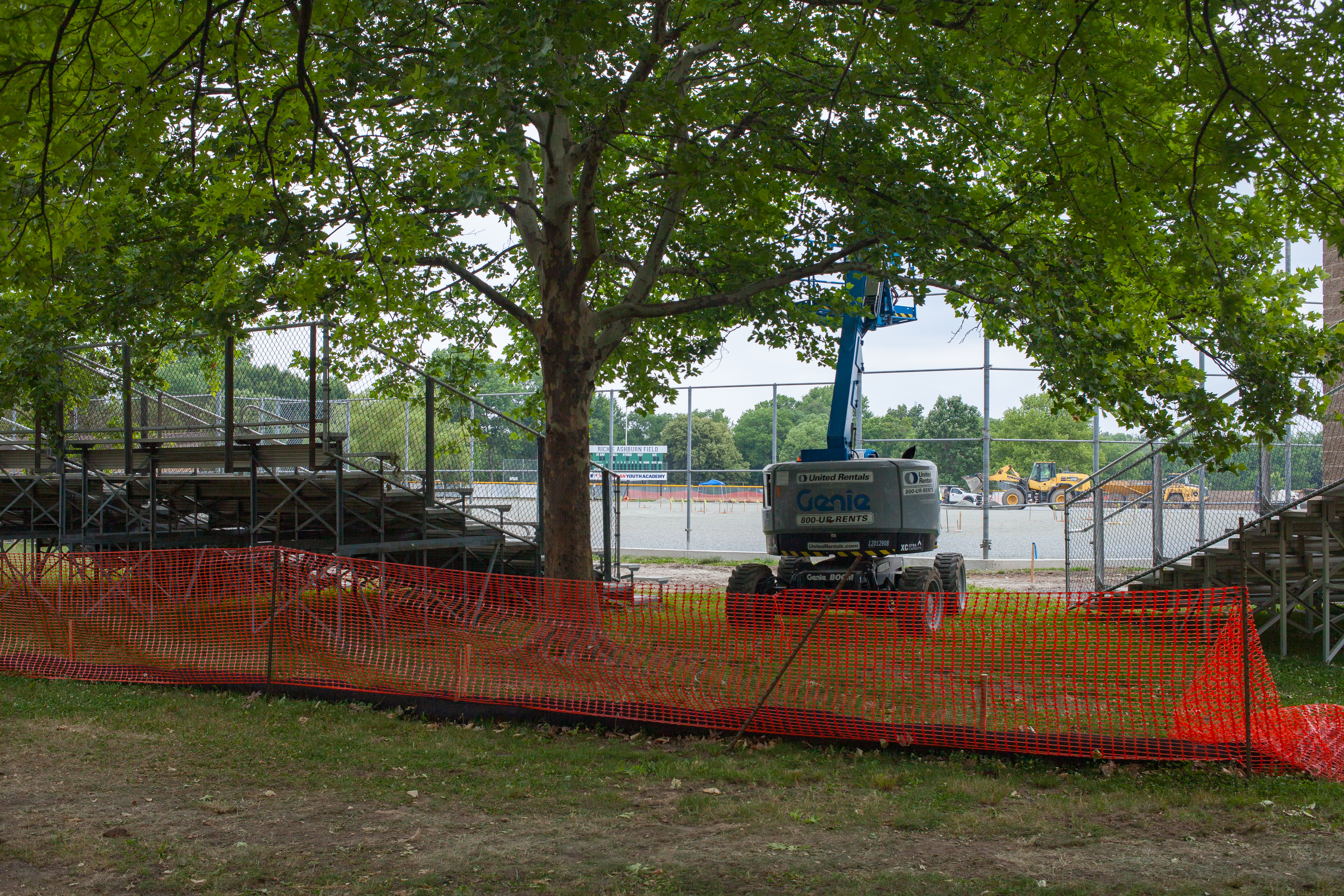
The MLB is renovating Ashburn Field in FDR Park, a city field managed and maintained by the Phillies that hosts a variety of youth baseball programs.
Location: 1500 Pattison Ave.
The project: Ashburn Field at FDR Park has been resurfaced with a new turf field, meant to better handle wet weather conditions. The 135,000-square-foot field was built in 1998, using funds generated from the 1996 MLB All-Star Game in Philadelphia.
Who is behind it: Major League Baseball and the Phillies, as part of a combined investment of more than $5 million in various projects tied to the 2026 MLB All-Star Game, including revitalizing the Negro Leagues Memorial Park and mural at 44th Street and Parkside Avenue in West Philly.
Independence National Historical Park
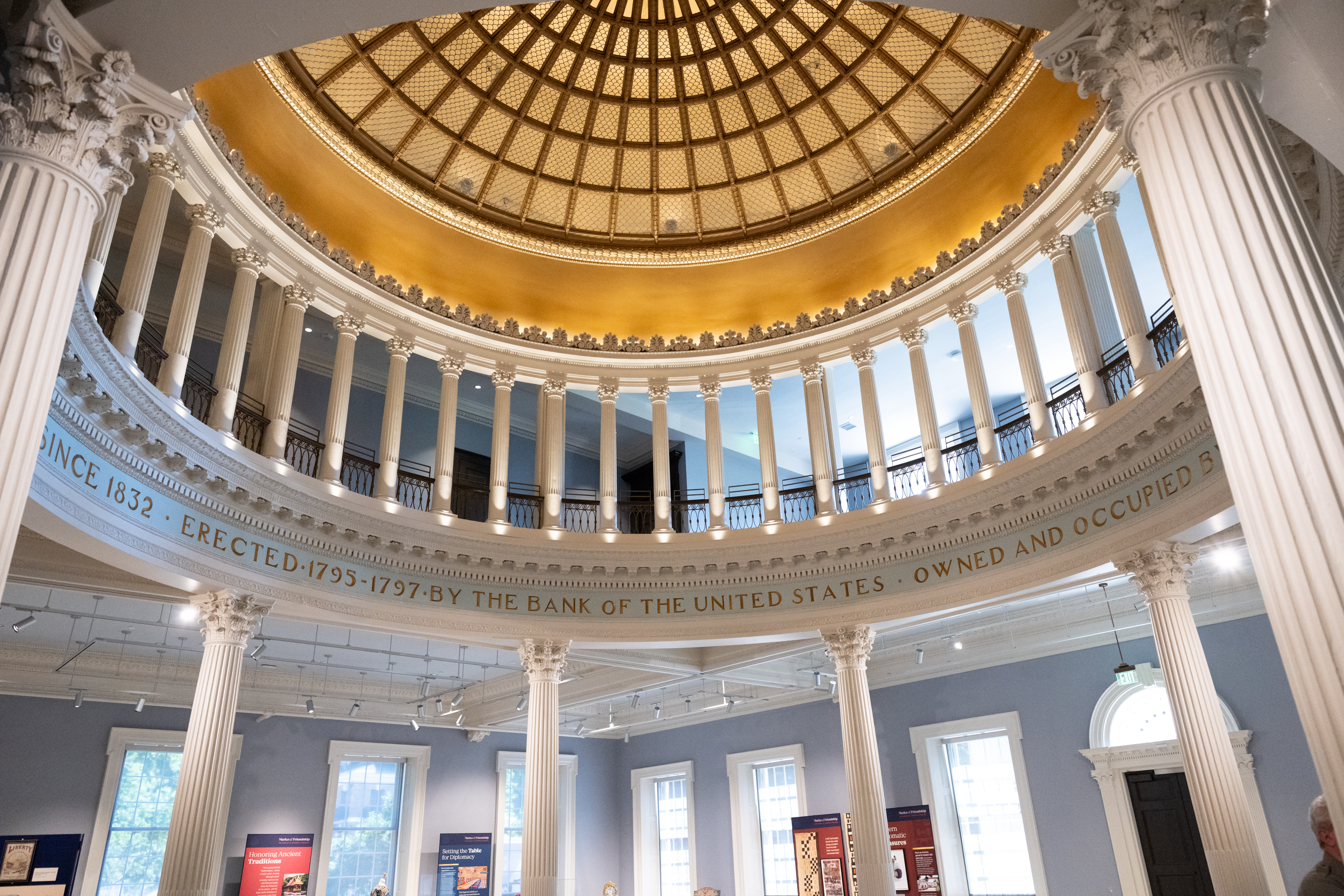
The rotunda inside the First Bank of the United States is pictured on Monday, June 29, 2026 in Philadelphia.Erin Blewett / For The Inquirer
Location: 599 Market St.
The project: Several improvements have already come to Independence National Historical Park and Independence Mall to commemorate the nation’s Semiquincentennial, and more are on the way. They include:
A $3.9 million “Join or Die” sculpture on Independence Mall, inspired by the truncated snake in Benjamin Franklin’s cartoon of the same name. The 46-foot-long granite work is expected to be unveiled this fall.
Beautification and horticultural work. This includes work at the Benjamin Rush Garden at Third and Walnut Streets, which showcases the 1976 Bicentennial Bell, a 10-ton Liberty Bell replica gifted by Queen Elizabeth II.
The reopening of the First Bank of the United States, on Third Street between Walnut and Chestnut Streets. The bank had been closed for 50 years but is now open for visitors thanks to a $43 million renovation.
Who is behind it: Independence Historical Trust, the city, the state, private foundations, philanthropists, and legacy groups.
Germantown Historical Society Visitor Center
Location: 5501 Germantown Ave.
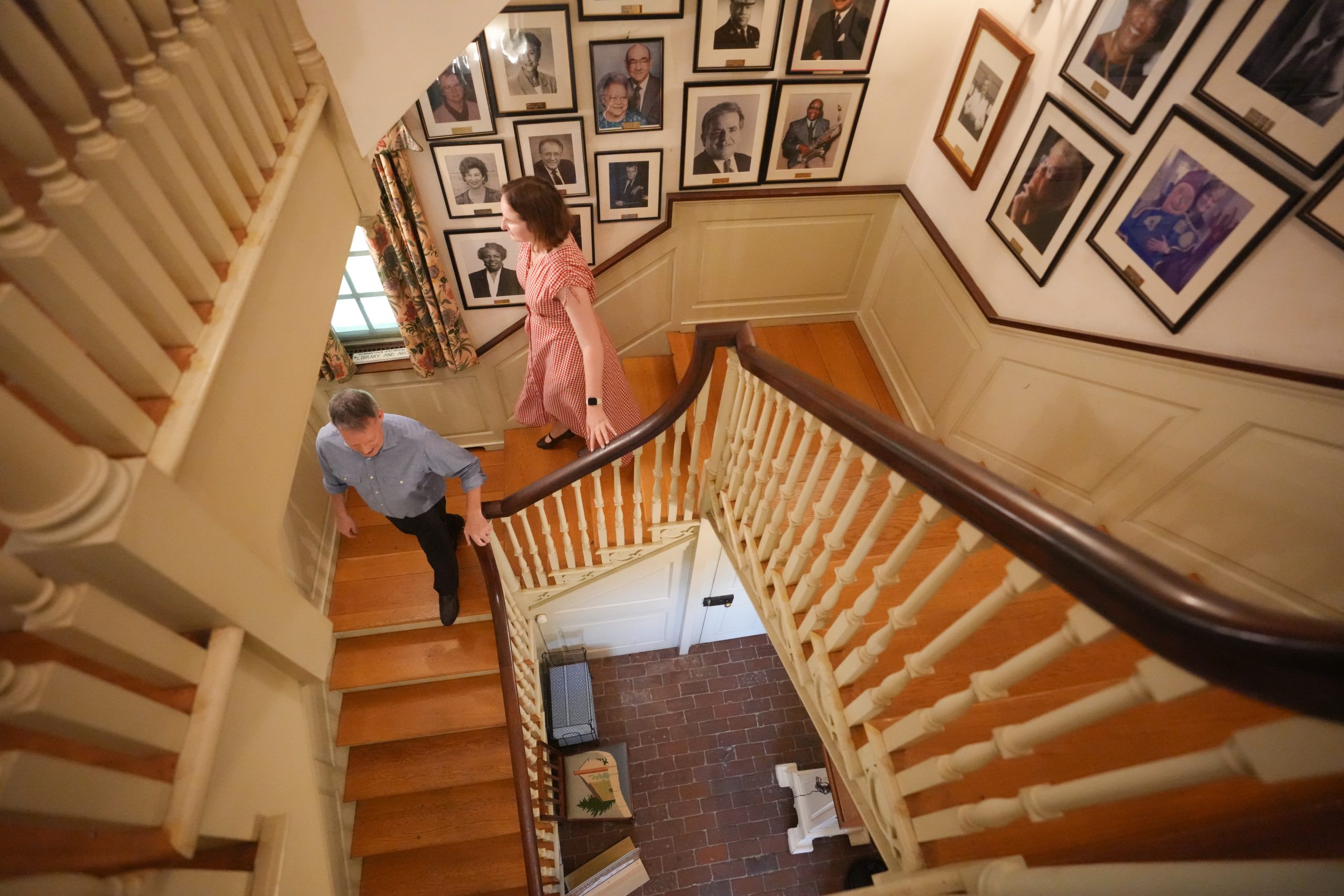
Tuomi Forrest, executive director at the Germantown Historical Society, and Kaila Temple, curator of collections at GHS, at the Germantown Historical Society building located at 5501 Germantown Ave. in Philadelphia, July 21, 2026.Jessica Griffin / Staff Photographer
The project: The Germantown Historical Society has its first visitors center, thanks to a $100,000 renovation of a section of its headquarters. It is modest but will host rotating exhibits, maps and pamphlets, and a gift shop.
Historic Germantown consists of various landmarks and attractions in Northwest Philly, including the Aces Veterans Museum, Awbury Arboretum, and the Germantown White House, where George Washington once lived.
Who is behind it: The Funder Collaborative for the Semiquincentennial, a philanthropic group organized by the Connelly Foundation that donated to many initiatives and projects related to the 250th anniversary celebration.
Growing up, William Bowie measured poverty in cups of water warmed in the microwave for his morning baths at a sink. He lived in the Richard Allen public housing project in the Poplar section of North Philadelphia, raised with his brother by a single mother. Even as a high schooler, he was eager to improve his life’s circumstances, but lacked just about everything he needed to do so except a willingness to work hard.
Three decades later, Bowie is president and CEO of his own nine-figure construction company, a journey that he largely attributes to a Philadelphia-based trade community apprenticeship system, similar to the “Nwa Boy” model that has been practiced in West Africa for centuries.
“I kind of challenged myself,” said Bowie, who’s 42,referring to his mindset when he was embarking on his career. “Why can’t I be the best? And why can’t I open that door for others?”
Bowie’s path is hardly an isolated success story. It is one node in a growing, informal network — from union apprenticeships in Philadelphia to a training cohort in Oakland, Calif. — of programs borrowing the Nwa Boy model’s core promise: a credentialed path from labor to ownership, built on relationships and trust rather than credit scores or venture capital.
As race-conscious funding efforts designed to level the playing field for African Americans are dismantled, that promise is drawing new attention from investors, workforce officials, and Black entrepreneurs looking for an alternative route to generational wealth.
The Nwa Boy system, which has its roots in the communities of the Igbo people in southeastern Nigeria, works this way: An established craftsman or business owner — known as the “Oga,” or master — takes on the training of a young person — known as the “Nwa Boy” (pronounced: nwah), or apprentice — often straight out of secondary school.
The apprentice lives and works closely with the Oga for as long as eight years, learning the nuances, logistics, and administration of their chosen craft.
When the apprenticeship ends, the Oga provides the graduate with a “settlement,” or capital — which often includes giving them money or business space — to launch their own independent businesses. The apprentice then continues the cycle.
The Harvard Business Review has called the Nwa Boy system “a Nigerian model for stakeholder capitalism” in which community, workers, and shared prosperity take precedence over individual shareholder return.
In 1970, at the conclusion of three years of civil war, the Igbo people used the Nwa Boy system to build a multibillion-dollar economy from the ground up. That’s when the Nigerian government seized control of the nation’s financial institutions and gave the equivalent of only about 20 British pounds (or roughly $400 in today’s money) to every Igbo adult, regardless of how much they had in their bank accounts before the conflict.
Today, at a moment when Black Americans are witnessing the erosion of affirmative action and DEI programs through court rulings and presidential executive orders, Bowie and others believe the Nwa Boy system may provide an answer to the question of what happens when the system meant to fix a problem becomes the next thing that needs fixing.
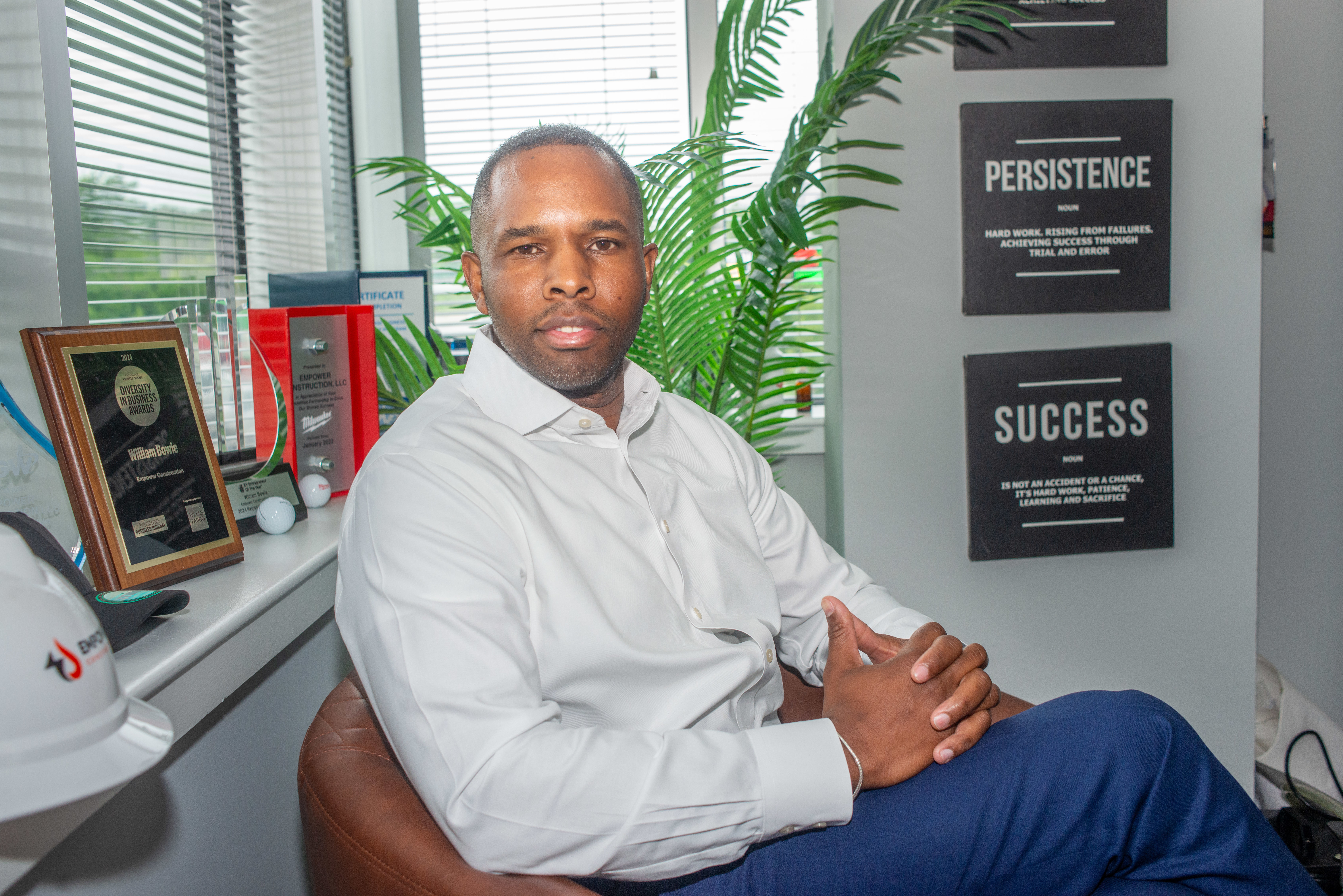
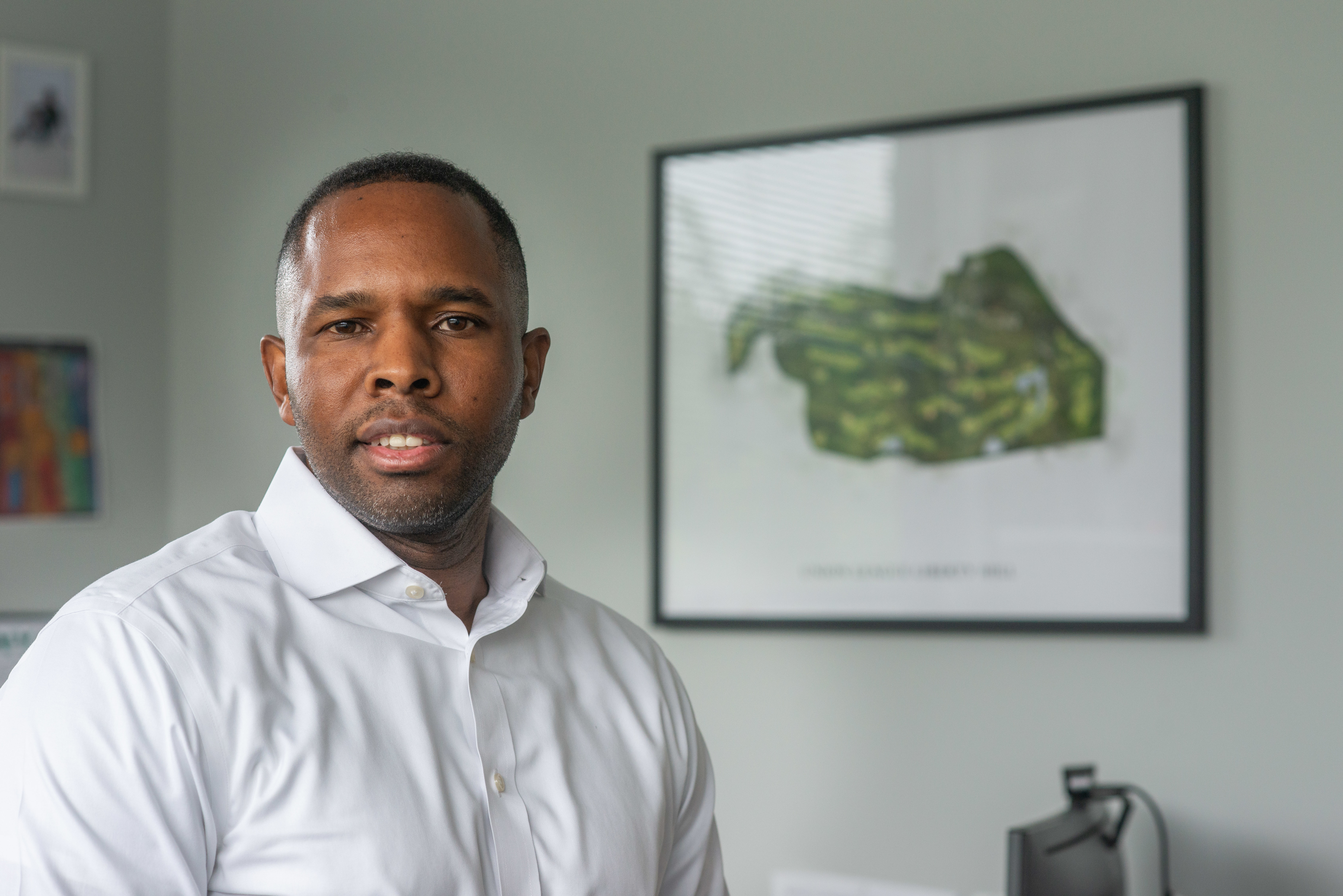
As he was embarking on his career in construction, North Philadelphia native William Bowie said he asked himself, “Why can’t I be the best? And why can’t I open that door for others?”William Thomas Cain / For The Inquirer
The blueprint
While Bowie’s blueprint moves from employment to ownership, it did not happen in a vacuum.
After finishing his first year at Drexel University, Bowie faced a dilemma — he had no way to pay a $6,500 bill to enroll for his sophomore year.
“I tested into a magnet school,” Bowie said. “Academics wasn’t a problem. I was thriving in that environment. It’s just that financially I couldn’t afford it after the first year.”
Bowie was not deterred.
“I looked for a different path,” he said. “I tried to make money to get back into my second year in college.”
In Nigeria, young men had been solving the same problem for generations — not with legislation, but with a handshake that meant more than a contract between an Oga and their apprentice. The pact is simple: The master teaches. The apprentice serves.
In North Philadelphia, though, the syndicate of trust had little that resembled the stalls of Lagos’ Alaba International Market. It had Frank Murray.
Murray, a member of the International Brotherhood of Electrical Workers (IBEW) and a family friend of Bowie’s mother, Margaret, encountered a young man desperate for an opportunity. He told Bowie, “This is where the money is at.”
In the Nwa Boy system, the Oga does not simply teach a trade — he transfers his reputation, his customer network, and at the end of the apprenticeship cycle, his start-up capital. The system does not run on contracts, but on trust enforced by community witnesses.
Murray gave Bowie the same thing — a pathway — and Bowie walked through it. Bowie joined IBEW at 19 years old.
He completed a four-year U.S. Department of Labor-certified apprenticeship in three and a half years, earned $75,000 in his first year, and rose to become the youngest area manager overseeing about $300 million in business.
Bowie says IBEW gave him what the Nwa Boy system has always understood, and American institutions have always struggled to replicate — a means to succeed that required no college degree, no venture capital pitch, and no generational wealth.
‘Financial gravity’
Bowie’s playbook from two decades ago is what many American venture builders and investors are now being forced to consider as the formula for prosperity is being recalibrated. They must confront the brutal reality that even seven-figure salaries are no guarantee for wealth creation.
“A paycheck — even a seven-figure one — is just a stay of execution. It doesn’t detach you from financial gravity,” Brandon Jones, founder and CEO of Gravy Capital, said during a virtual panel in April hosted by Visible Hands VC.
When Bowie applied for capital to launch his company, Empower Construction, he felt the earth tugging at his dreams. Even though he had two decades of industry experience and managed a $300 million book of business, the banks still said no.
What finally opened the door was not a stronger application, but a different messenger.
One of Bowie’s mentors, Daniel K. Fitzpatrick, an executive at Citizens Bank, made a single phone call to his colleagues. A line of credit came through. To Bowie, it was the equivalent of receiving an Oga’s settlement.
Saantis Fenmu Davis, a Philadelphia-based financial literacy educator and founder of Geb Cultural Exchange, said the problem starts earlier than the bank. He said it’s essential that Black Americans are taught how to be producers and investors, and not just consumers. “While higher spending and status-signaling often masquerade as affluence, they represent a fundamental mirage of social capital, which may or may not translate to equity or wealth,” he said.
Saantis Fenmu Davis, a Philadelphia-based financial literacy educator and founder of Geb Cultural Exchange, says consumerism is a “fundamental mirage of social capital.”Courtesy of Saantis Fenmu Davis
Murray did not teach Bowie to consume. He taught him to produce.
Patrick Clancy, president and CEO of the city’s workforce development program, Philadelphia Works, is trying to replicate what Murray did across its programs. Philadelphia Works manages roughly $11 million in apprenticeship funding across skilled trades and emerging sectors including IT, healthcare, and education.
Murray was Bowie’s Philadelphia Works, but the path is not without its shadows.
For every successful apprenticeship program or Nwa Boy story told, there is a possibility of exploitation.
In the Nwa Boy framework in Lagos, Nigeria, some apprentices have reported exploitation at the hands of their masters.
Naboth Nwaikwu spent 20 grueling years navigating three successive apprenticeships before finally being settled. He was an orphan. His first master did not settle him because his aunt and uncle instructed him not to. The same thing happened the second time.
It wasn’t until his third attempt, under the apprenticeship of a friend, that he got his settlement, all of which could not account for the years lost.
Nwaikwu now sells construction accessories for a living at Lagos’ Alaba International Market, and makes enough profit to take apprentices of his own if he wanted to, but told me he refuses to do so because “There is a thin line between unpaid apprenticeship and indentured service. I do not want to be the one to cross it.”
Uyi Samuel Oni, a corporate attorney licensed in Nigeria and trained at the University of Pennsylvania’s Carey Law School, said the covenant must become a contract before it can successfully cross continents. “The Nwa Boy system must avoid negative historical connotations linked to terms such as master,” Oni said.
Uyi Samuel Oni, a corporate attorney licensed in Nigeria and trained at the University of Pennsylvania’s Carey Law School, says the Nwa Boy covenant must become a legally binding contract before it can successfully be used in America.Courtesy of Uyi Samuel Oni
A legally compliant American adaptation, he said, must be a win-win for both parties — not merely vocational or community service, but a binding agreement that protects the apprentice’s right to the capital payout that makes ownership possible.
In Oakland, a program called Built Here has emerged as a 21st-century proxy for the Nwa Boy system.
Onye Ahanotu, a former Harvard engineering research fellow and founding member of Built Here, uses training cohorts to mirror the communal trade apprenticeships of southeastern Nigeria. “We meet every week,” Ahanotu said.
The frequency is intentional. In the Nwa Boy system, the covenant is not a one-time transaction — it is a continuous relationship between master and apprentice, reinforced week by week, skill by skill, until the apprentice is ready to stand alone.
Clancy, of Philadelphia Works, understands that frequency. But he said the barriers that push apprentices out are not about ambition. They are about logistics. Most apprentices who do not complete the program fall offbecause of logistics — literacy gaps, a lack of childcare, transportation difficulties, and rigid drug-testing requirements.
The apprenticeship demands sacrifice.
Bowie was 19 years old and the only African American male in a trade that was overwhelmingly white and male. The culture shock was real. His determination was not given. It was chosen every single day.
Bowie narrated his apprenticeship years as a period of determination and exposure to wealth — not suffering. Once he entered IBEW, his obstacles became opportunities.
Clancy said Philadelphia Works offers pathways into the building trades and is open to second-chance applicants. Prior convictions are not automatic disqualifiers. The door is open. Most people do not know it is there.
At the Philadelphia Navy Yard, Hanwha builds ships. The company needs welders. It cannot find them.
Patrick Clancy, president and CEO of Philadelphia Works, the city’s workforce development program, which offers pathways into the building trades and is open to second-chance applicants.Courtesy of Patrick Clancy
Not because the welders do not exist. Not because the work is not there. Not because the wages are not competitive — apprenticeship wages in the building trades start at $25 per hour and can exceed $100,000 annually with overtime. The positions have gone unfilled for three years, Bowie said, because nobody told the kids in North Philadelphia, West Philadelphia, and Germantown that the door is open.
Bowie knows this the way he knows everything about the trades — from the inside. He gives talks online. He goes into Philadelphia schools. And while he may not have known about the Nwa Boy system when he was an apprentice, he regularly references its principles today.
He stands in front of teenagers the same age he was when the system ran out of road for him and tells them what Murray told him: This is where the money is at.
“In Philadelphia, there’s a shipbuilding company at the Navy Yard,” Bowie said. “They need welders. They can’t find them. And you’re telling me that in the city of Philadelphia, in the communities that we come from, that we can’t find welders?” He paused. “The parents don’t know. The kids don’t know. Nobody’s telling them.”
Clancy is trying to change that. Philadelphia Works is actively pursuing apprenticeship funding for Hanwha’s shipyard — planned cohorts of 20 to 30 apprentices at a time. The infrastructure, funding, and jobs exist. What is missing is the same thing that was missing when Bowie was standing at the edge — someone to point at the door.
Murray pointed. One phone call — and a kid from the Richard Allen Homes became a $100 million CEO. Philadelphia has not yet produced its Frank Murrays at scale.
Bowie is working on it. One conversation — and one handshake — at a time.
Ibe Imo is a Philadelphia-based investigative journalist whose reporting examines technology, power, capital, and the systems that determine who builds wealth and who pays for it. He is a recent graduate of the master of journalism program at Harvard University.
A 70-year-old man was shot and killed in East Germantown on Friday morning, authorities said.
The shooting took place around 8:30 a.m. on the 5900 block of Ogontz Avenue, according to police.
Responding officers took the victim ― whom police did not identify ― to Jefferson Einstein Hospital, where he was pronounced dead shortly after arrival.
A man is in custody and is being questioned by investigators with the homicide unit, police said.
Anyone with information is urged to call the Philadelphia police tip line at 215-686-TIPS (8477).
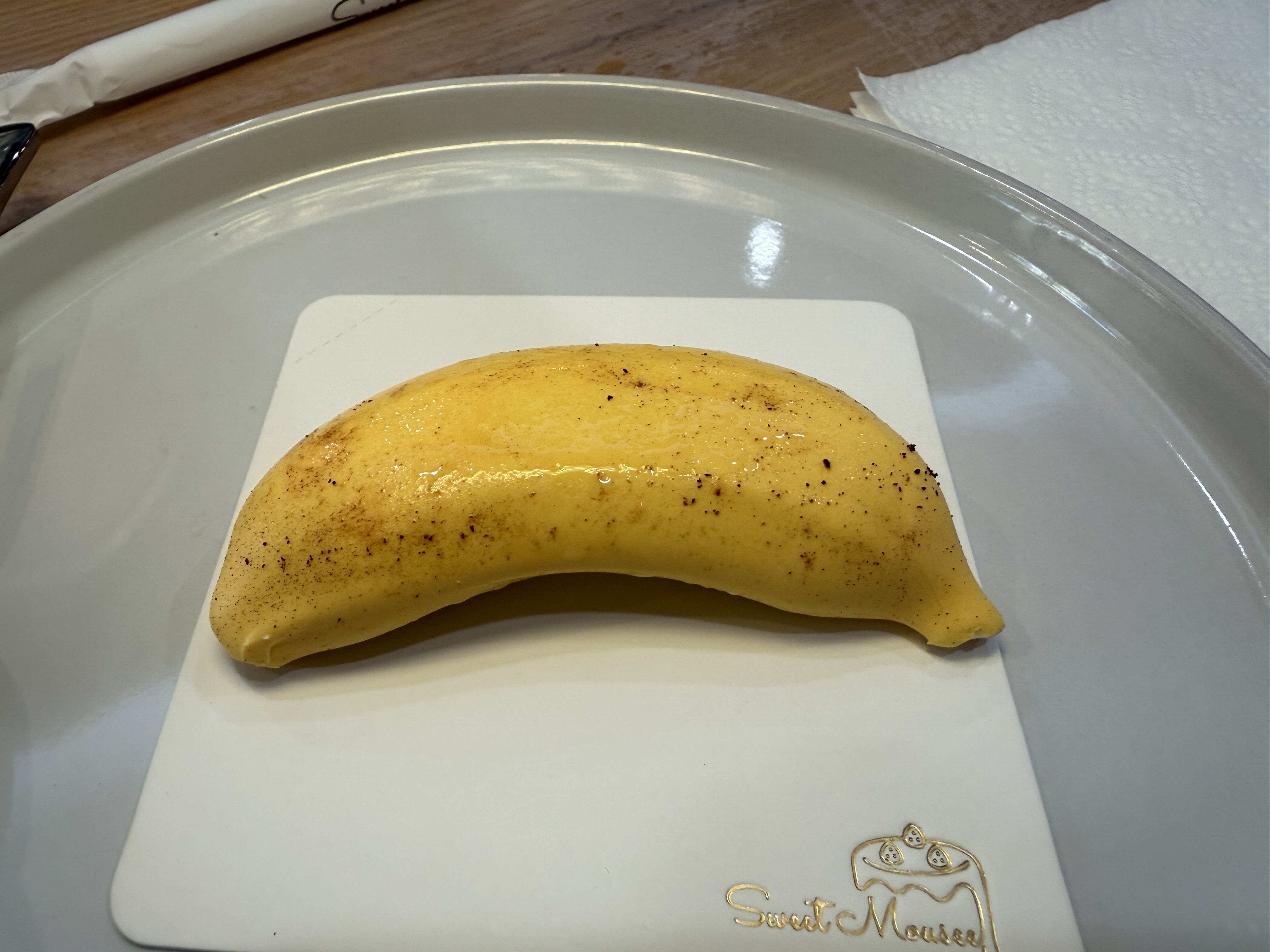
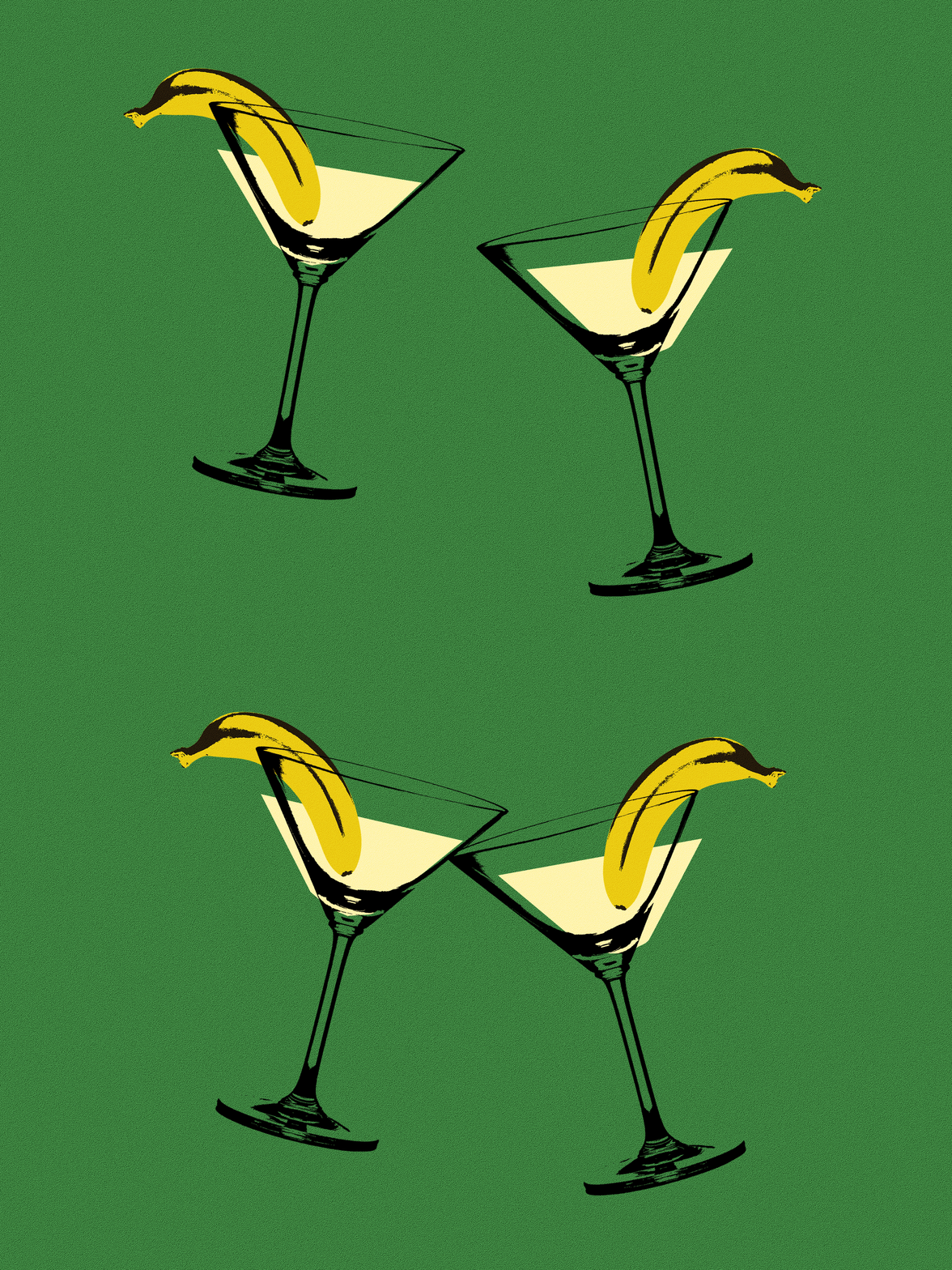
Bananas are trending everywhere, but especially at cocktail bars and cafes, which use fresh bananas, banana liqueur, banana extract, and even banana peel. Kiki Aranita isn’t alone in suggesting it might be “the next pumpkin spice.”
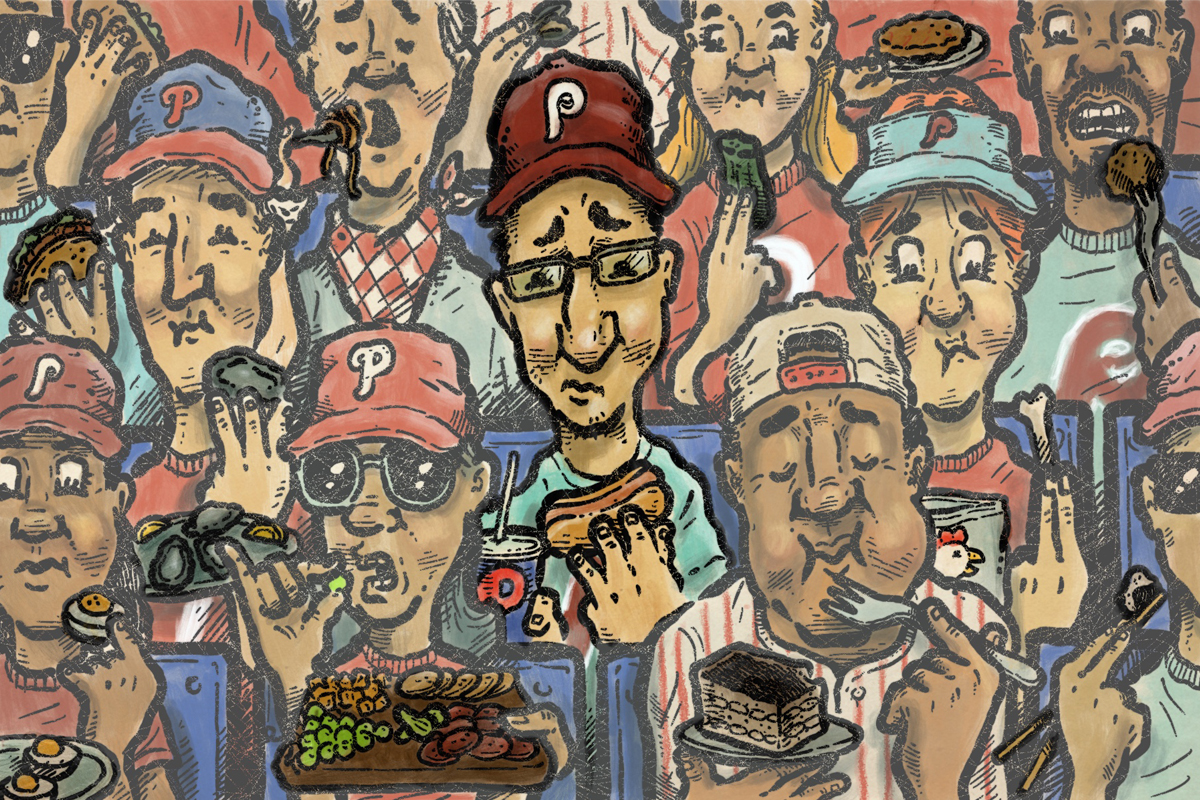
Phillies fans are bringing way more than hoagies and cheesesteaks into Citizens Bank Park. Beatrice Forman winds up and delivers a fun read about the BYO eats you’ll find in the stands. Curried tuna salad, anyone?
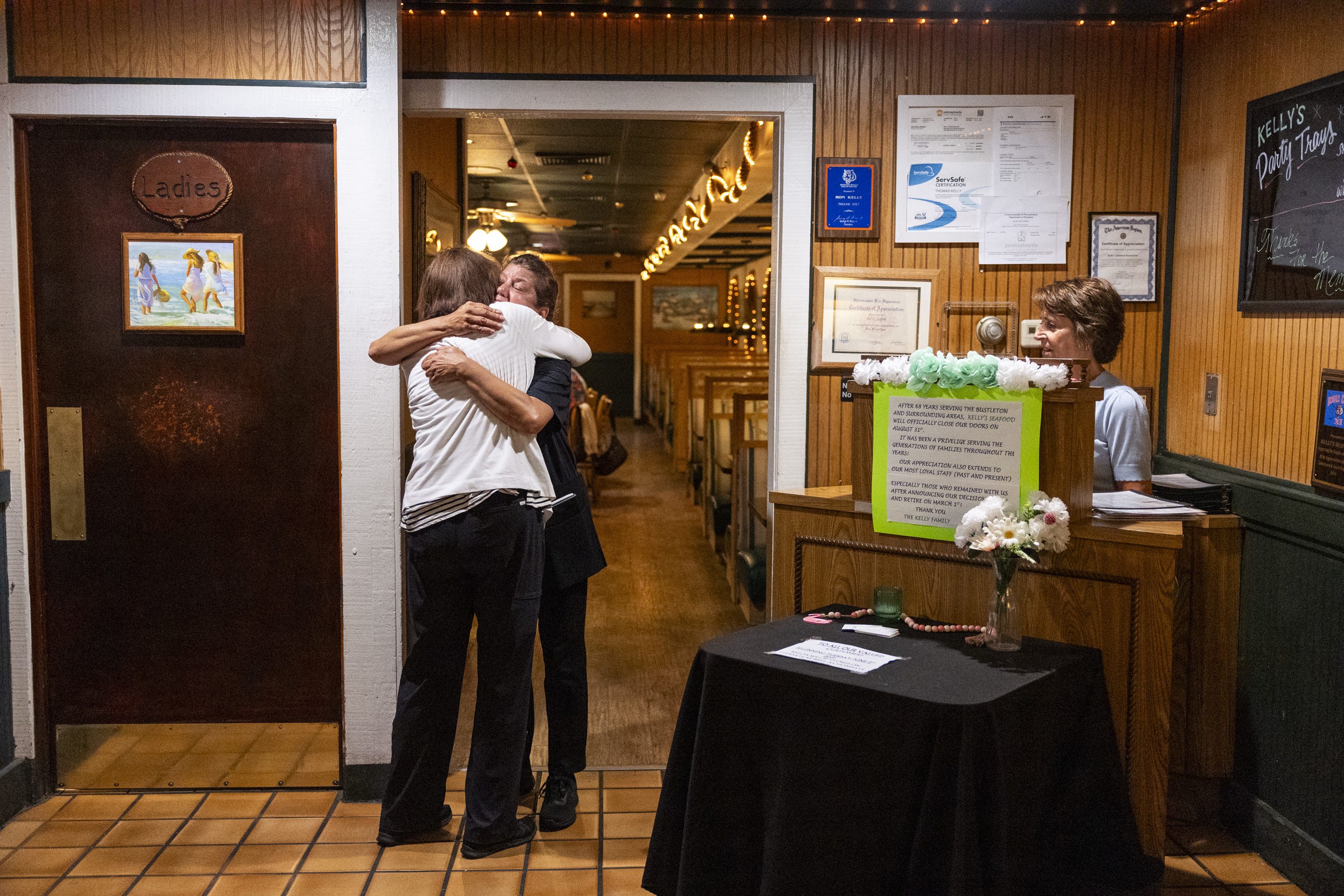
Kelly’s Seafood has been a Northeast Philly fixture, serving generations of families — and plenty of snapper soup. Now, as the family prepares to close, longtime customers are returning for one last meal, stocking their freezers, and saying goodbye.
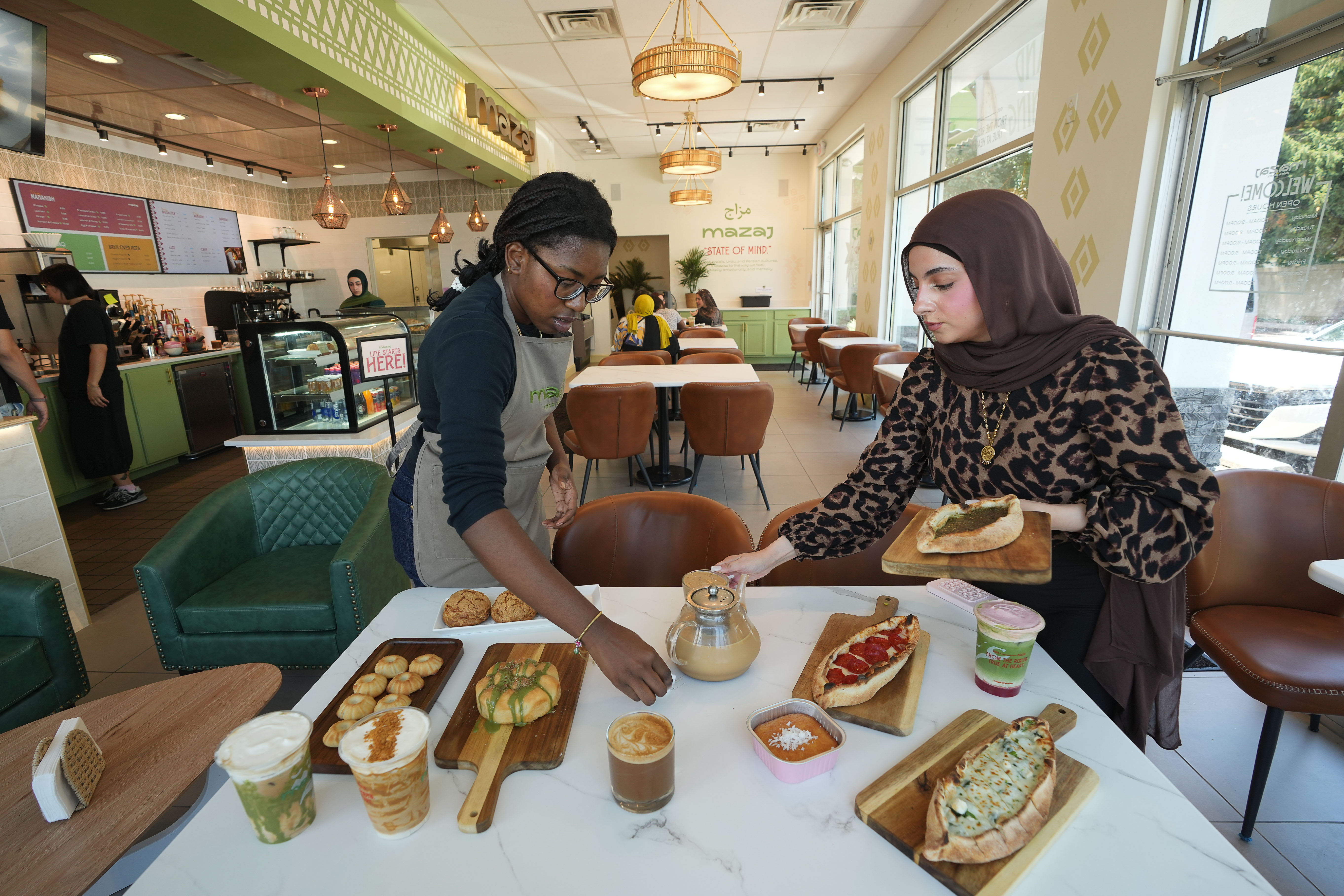
Mazaj, an offshoot of the twin Malooga restaurants, has landed in Willow Grove with Yemeni coffee, Middle Eastern pastries, a drive-through, and a plan to expand.
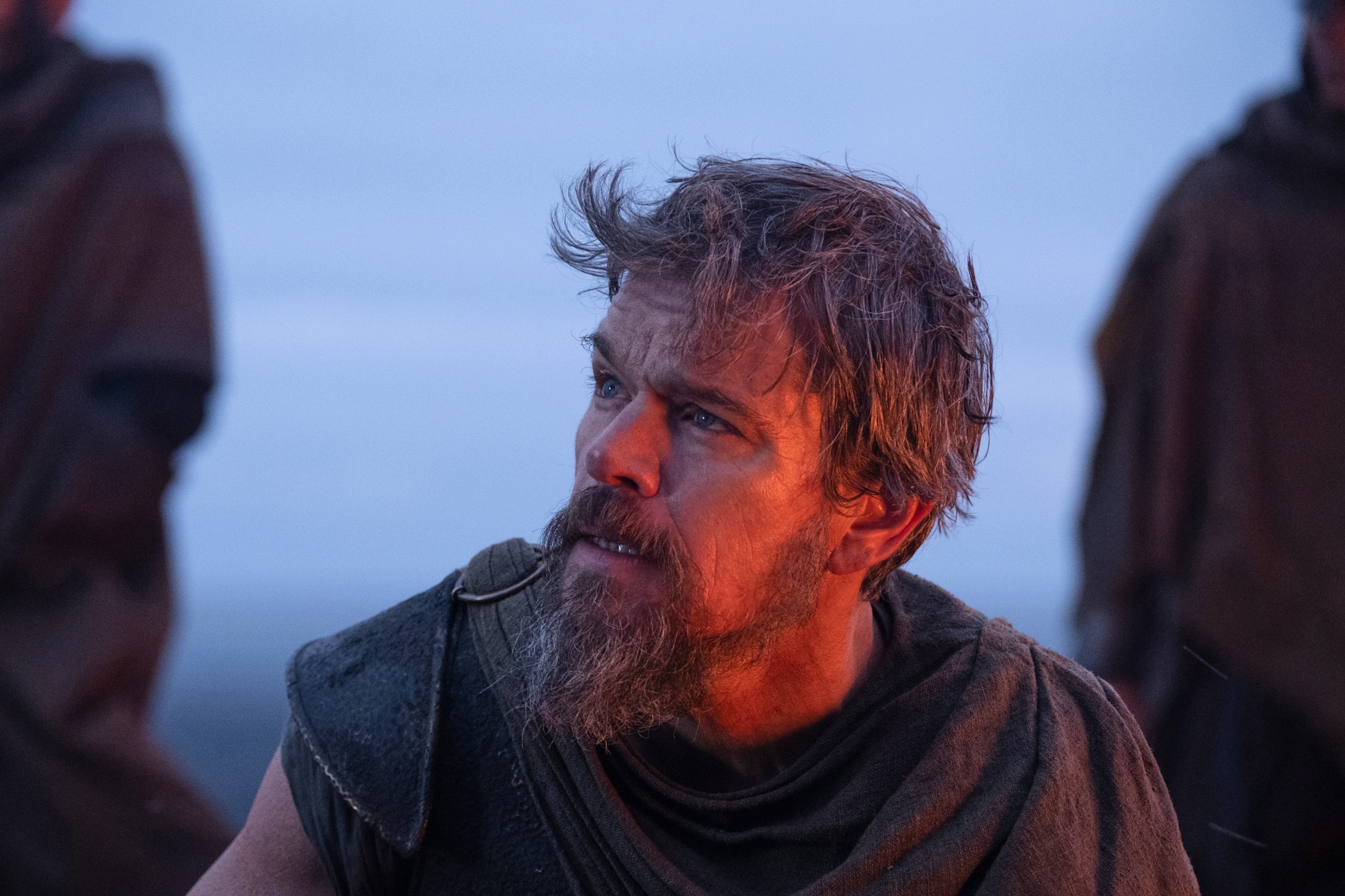
The Odyssey by Christopher Nolan has plenty of monsters, mayhem, and spectacle — but where’s the feast? Kiki Aranita, a classics scholar in her past life, explains what Homer’s heroes would have eaten, and where to embark on your own culinary odyssey around Philly.
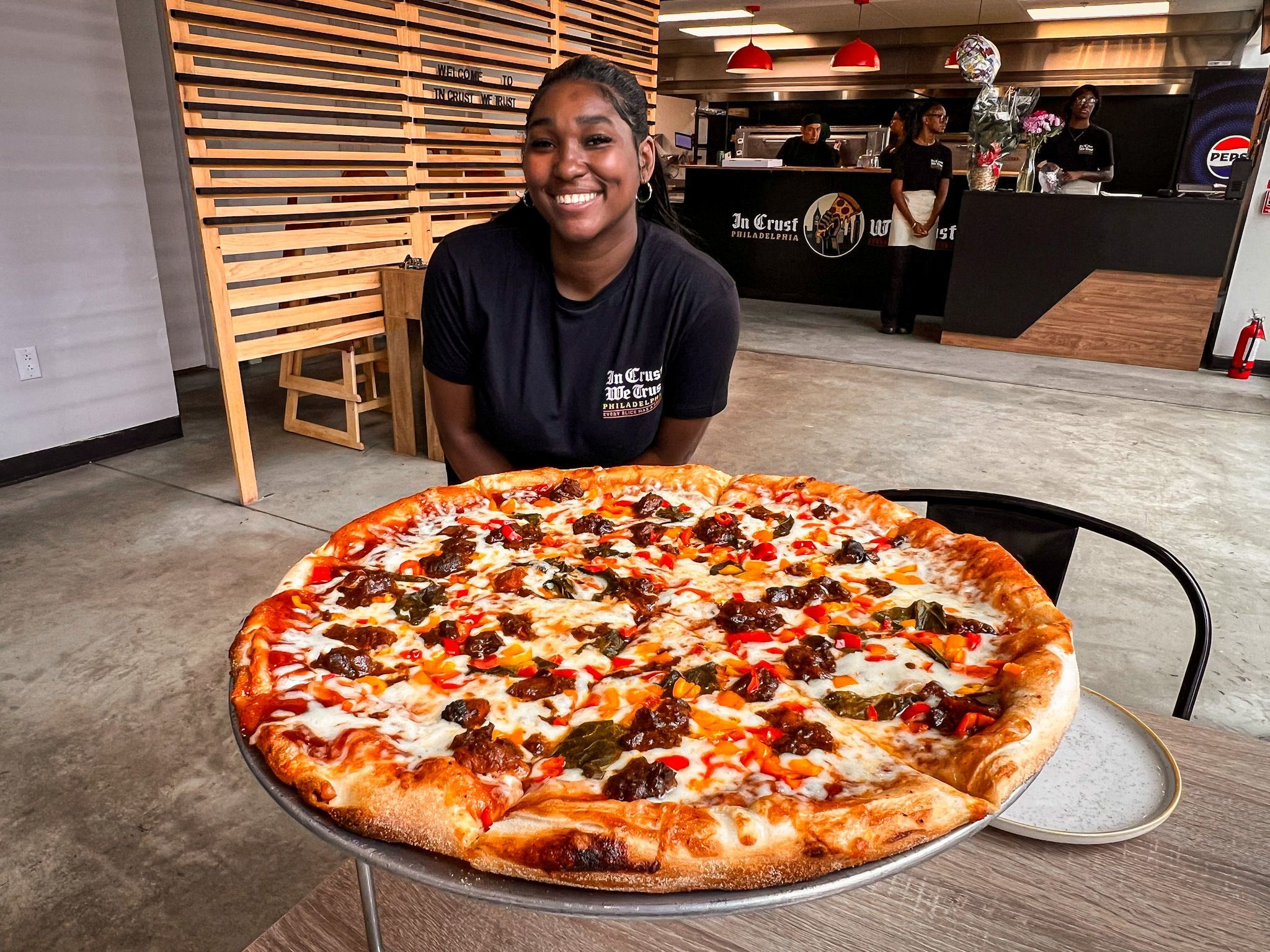
In Crust We Trust has joined the pizza boom now underway in Fishtown. Anyae Wilson-Worley’s pizzeria is offering something none of the others are: a taste of Philly-style Black culture.
In other pizza news: Dave Portnoy, the Barstool Sports founder, visited the Philadelphia area last week to shoot a handful of “One Bite Pizza Reviews,” whose scores in previous years have transformed the fortunes of a neighborhood pizzeria.
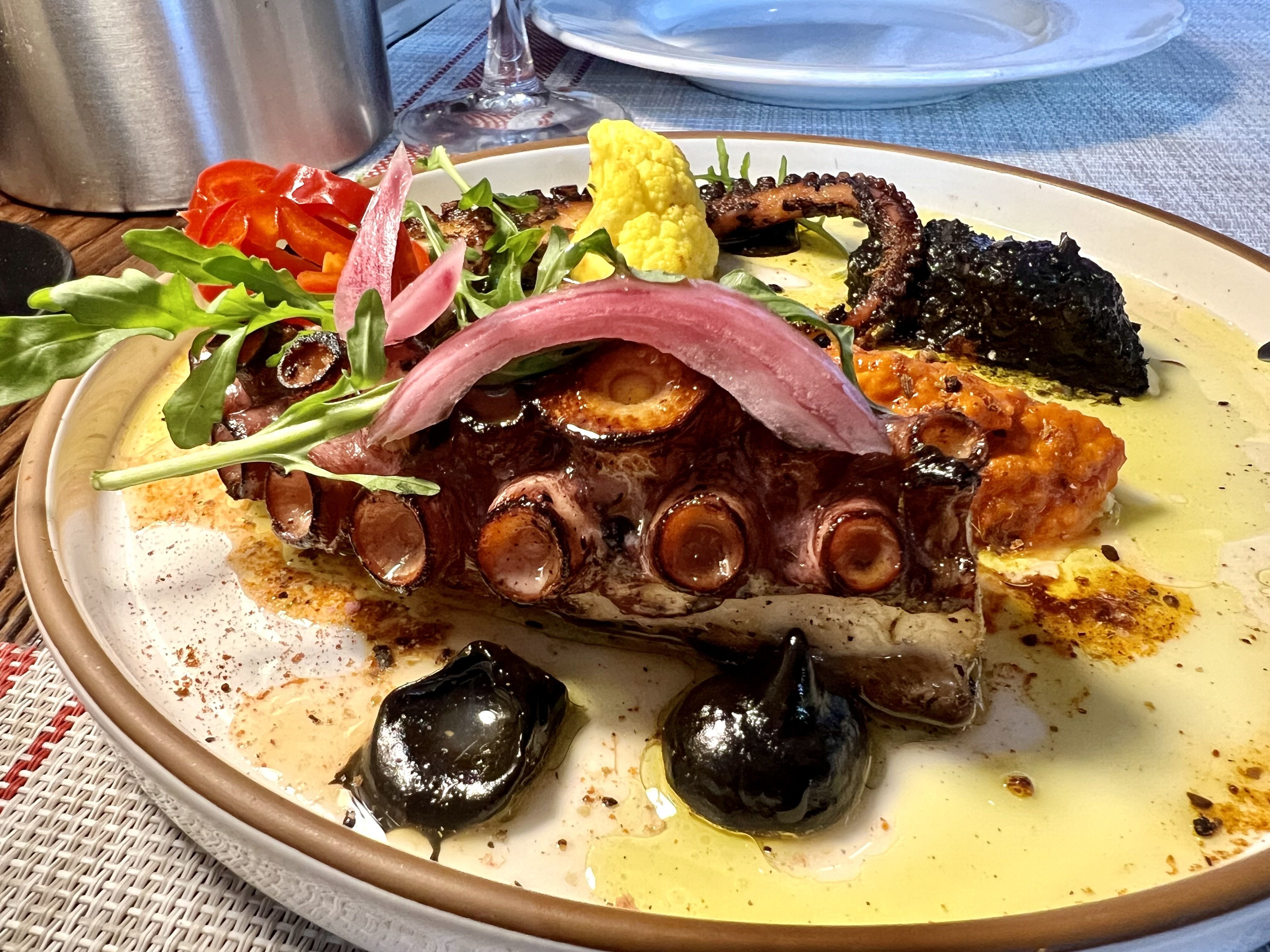
What a joy: Dunking chunks of octopus into the almond romesco and black garlic purée at Stina in West Passyunk. For another treat, writes Hira Qureshi, don’t miss the spanakopita.
Scoop
The Pub in Pennsauken, which sits on 6 acres, is being offered for sale for the first time in 26 years. The steakhouse institution is closed now for summer break, but the owner insists that it will reopen next month — unless a deal is magically struck.
Restaurant report
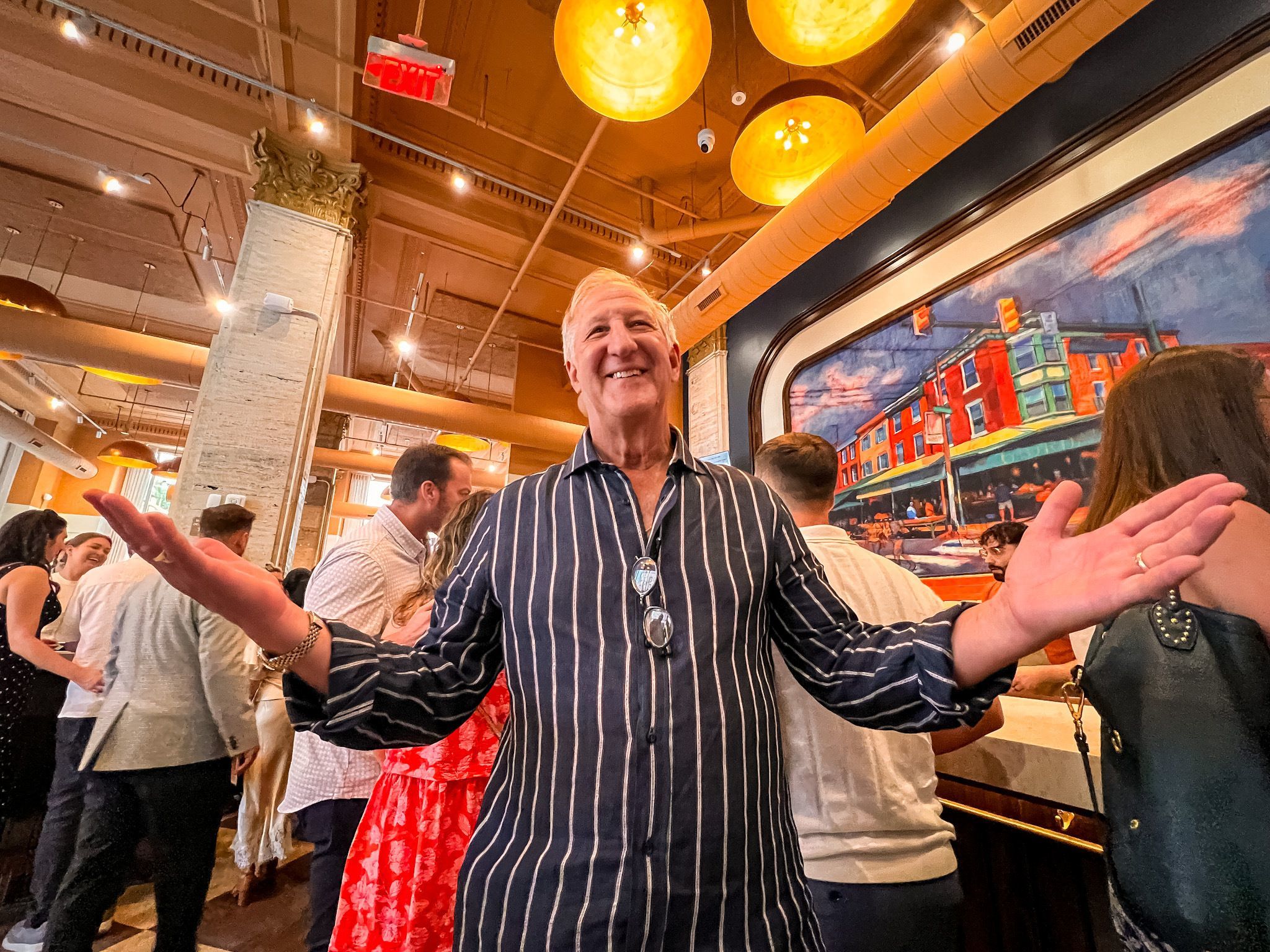
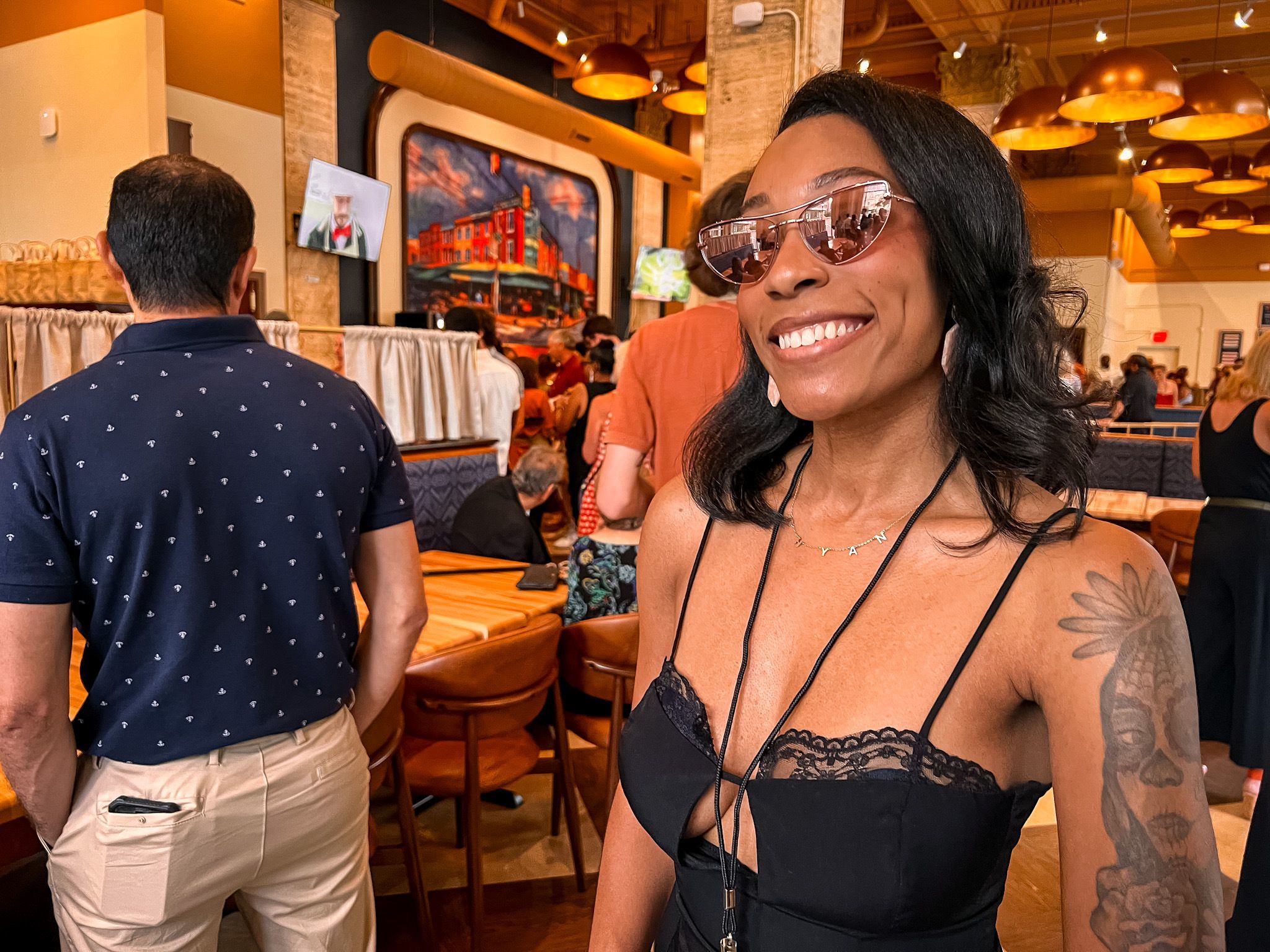
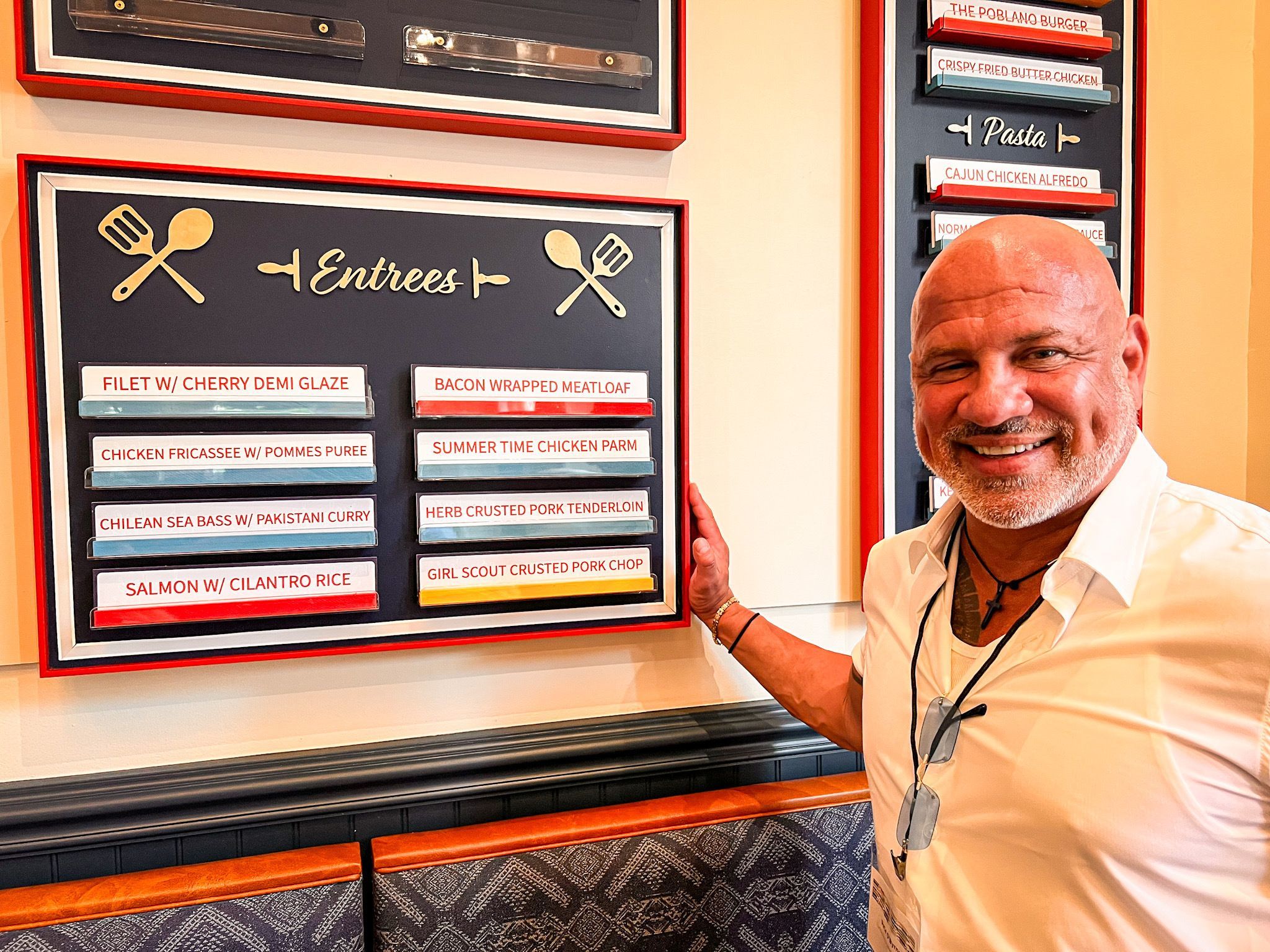
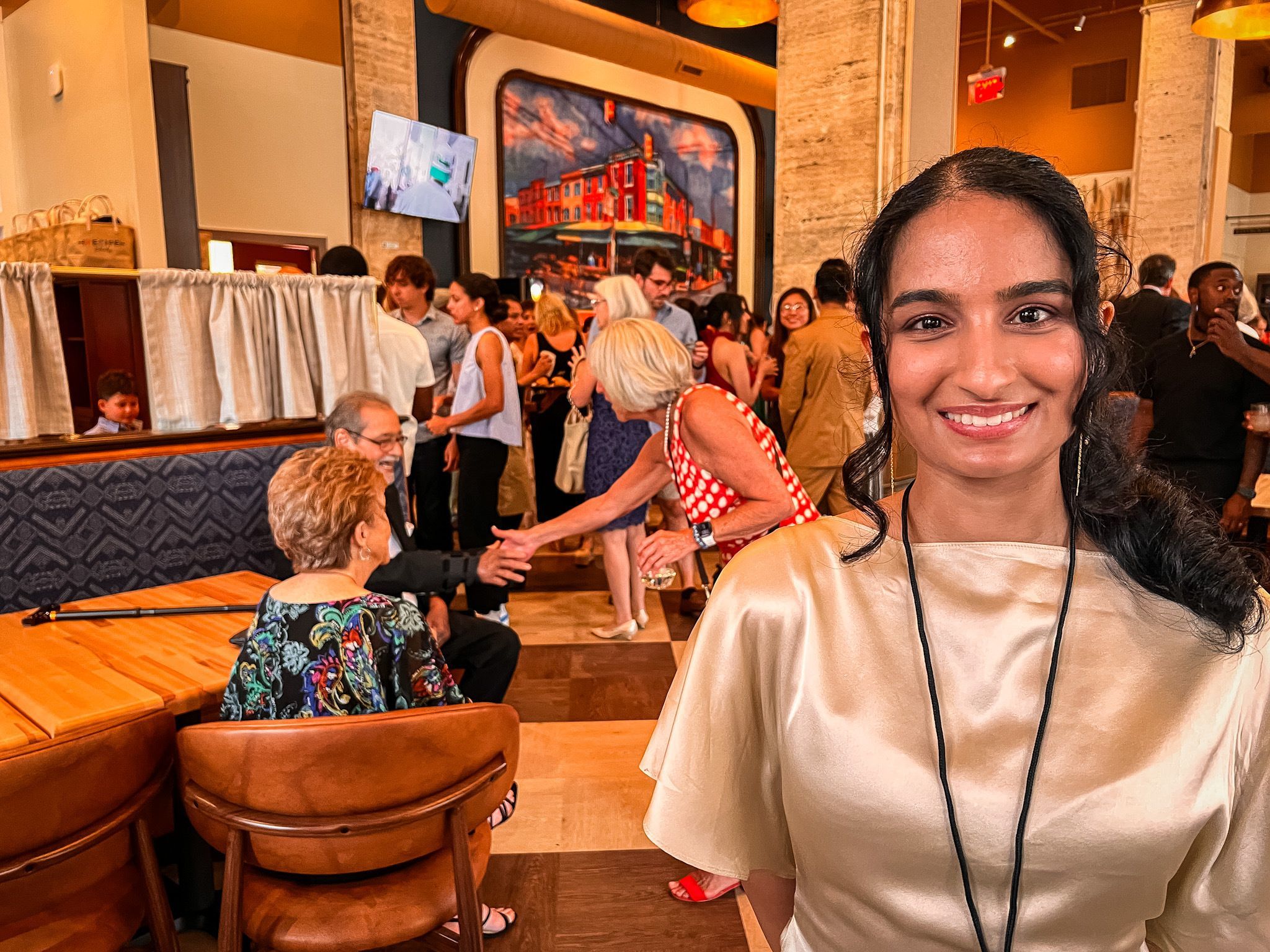
Recipe Philly, whose menu is built around recipes submitted by local home cooks, opens Monday at 1401 Arch St., a splashy, 175-seat redo of the long-ago McDonald’s at Broad and Arch. Funded by retired business executive Ed Baumstein (above), the restaurant will serve lunch and dinner, featuring dishes from 31 cooks who also will appear in a reality TV series now being shopped around.
Among them:
Germantown data analyst Chyan Adams Bentley (above), 30, drew inspiration for her honey-chipotle shrimp tostadas from a rooftop cooking class she took in Guatemala.
Pete O’Byrne (above), 60, of Jeffersonville, contributed a pork chop crusted with Pecorino Romano, panko, and shortbread Girl Scout cookies. “The Girl Scouts are one of my customers,” said O’Byrne, who sells production printers and software. “I know when the truck comes in.”
Nayha Hussain (above), 24, a Spring Garden software engineer who has cooked since age 12, elevated a home-style Pakistani coconut curry with Chilean sea bass. Since Recipe is a 15-minute walk from her place, “it’s my local neighborhood restaurant that has my dish on it,” she said.
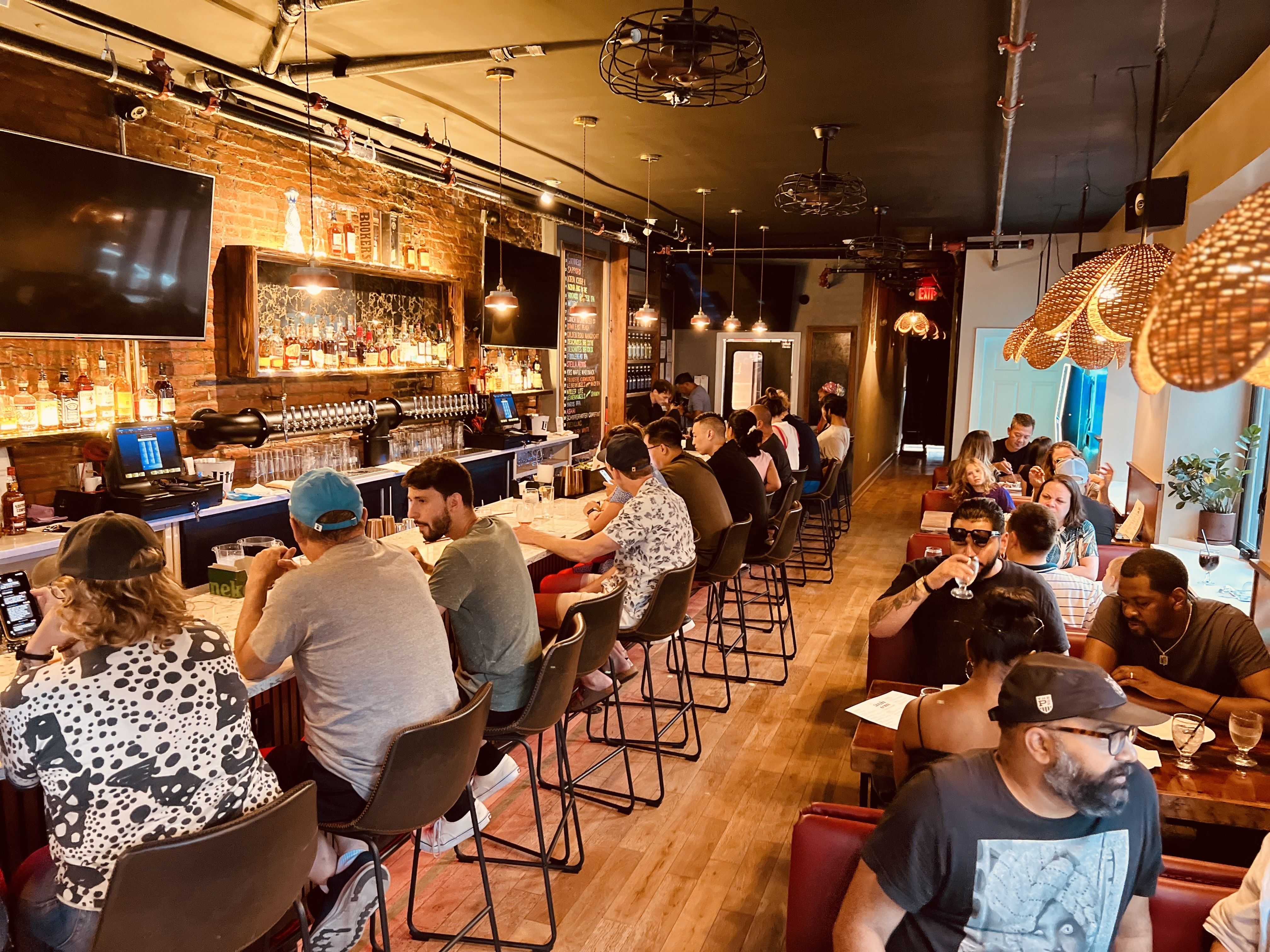
You’ll be hearing a lot about Anh Em, which soft-opened last weekend at 21st and Titan Streets in Point Breeze. Anna Huynh and husband Victor Nguyen are behind the 50-or-so-seater specializing in Vietnamese comfort food, mixing classics with home-style dishes (like crispy bánh xèo, above, and the beef carpaccio dish known as bò tái chanh), inspired by what the couple grew up eating. Chef is Nguyen, who managed Tango and once co-owned a Chinatown bubble-tea shop; he oversees a 20-seat bar pouring local beers from 24 taps, plus cocktails. The couple retained the former Madeira Indian Grill’s exposed brick while adding burgundy booths, light-blue accents, lanterns, and shelving built by Nguyen and their son. Here’s the soft-opening menu.
Anh Em, 1252 S. 21st St. Hours: 4 p.m.-2 a.m. Wednesday-Monday. Closed Tuesday.
Briefly noted
The 2026 Michelin Awards will return to New York City for its ceremony. Reminder that its inspectors are scouring Philadelphia in advance of the December announcements.
Heytea, the expanding Chinese tea shop, enters the Philadelphia market Friday at 1001 Arch St. in Chinatown. Drinks will be buy-one/get-one from Friday-Sunday.
With Ember & Ash still closed after a June 24 fire, chef Scott Calhoun will cook at Cartesian Brewing (1326 E. Passyunk Ave.) from 4-8 p.m. Saturday. Using yakitori grills in the courtyard, Calhoun will serve dishes including octopus “dogs,” a Filet-O-Fish-inspired skate sandwich, ’nduja-stuffed piquillo peppers, and sourdough with romesco, along with Cartesian’s beverages.
Javelin (1811 Fairmount Ave.) will host chef Carlos Wills of Ogawa Sushi & Kappo for a maguro kaitai, or tuna-cutting ceremony, Aug. 18. Starting at 5 p.m., Wills will break down a 250- to 300-pound bluefin tuna for a multicourse tasting ($170 plus tax/tip) including sashimi, nigiri, hand rolls, and tuna marrow with uni and caviar. Richie Tray will serve Cambodian-inspired appetizers and cocktails. Reserve via Toast.
Libertee Grounds (1600 W. Girard Ave.) will host a Cooper DeJean look-alike contest on Aug. 27. Doors/registration at 5 p.m., contest at 6:30 p.m. Signup via Instagram.
❓Pop quiz
Why can red Côtes-du-Rhône wines such as Ogier Artésis remain relatively affordable?
A) Rhône producers are prohibited from aging their wines in pricey oak barrels.
B) Grenache can produce large crops of flavorful grapes even in dry conditions.
C) French law limits the markup on Côtes-du-Rhône wines.
D) The wines are made primarily from surplus Syrah grapes, and this is the source of the expression “Qué Syrah Syrah.”
What do you know about the sale of Ardana in Bucks County? — Cindy S.
The Cristou family announced last week that they’ve sold their Ardana Food & Drink location in Newtown, Bucks County, to Rob LaScala after 3½ years. LaScala tells me that the Ardana name and Cypriot-inspired menu will remain for about two months before he transitions to LaScala’s Fire, his semicasual Italian concept. LaScala, who also owns Chicken or the Egg in Marlton and Beach Haven, is on fire with Fire, as there are nearly a dozen locations now, plus New Jersey expansion plans for Freehold, Bridgewater, and Cherry Hill. The Cristous still retain their Ardana and KC Prime Steakhouse, both in Warrington.
📮 Have a question about food in Philly? Email your questions to me at mklein@inquirer.com for a chance to be featured in my newsletter.
By submitting your written, visual, and/or audio contributions, you agree to The Inquirer’s Terms of Use, including the grant of rights in Section 10.