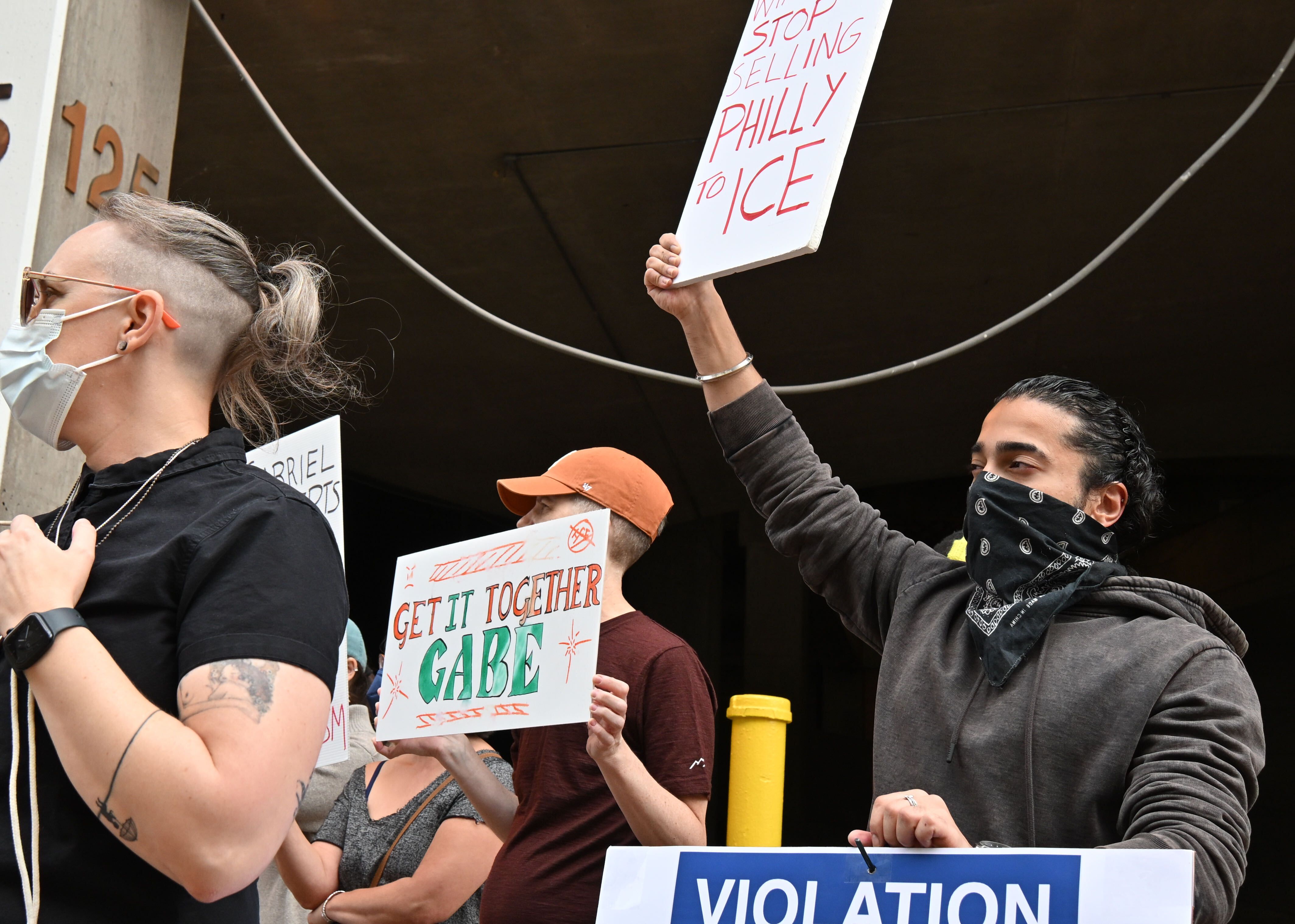
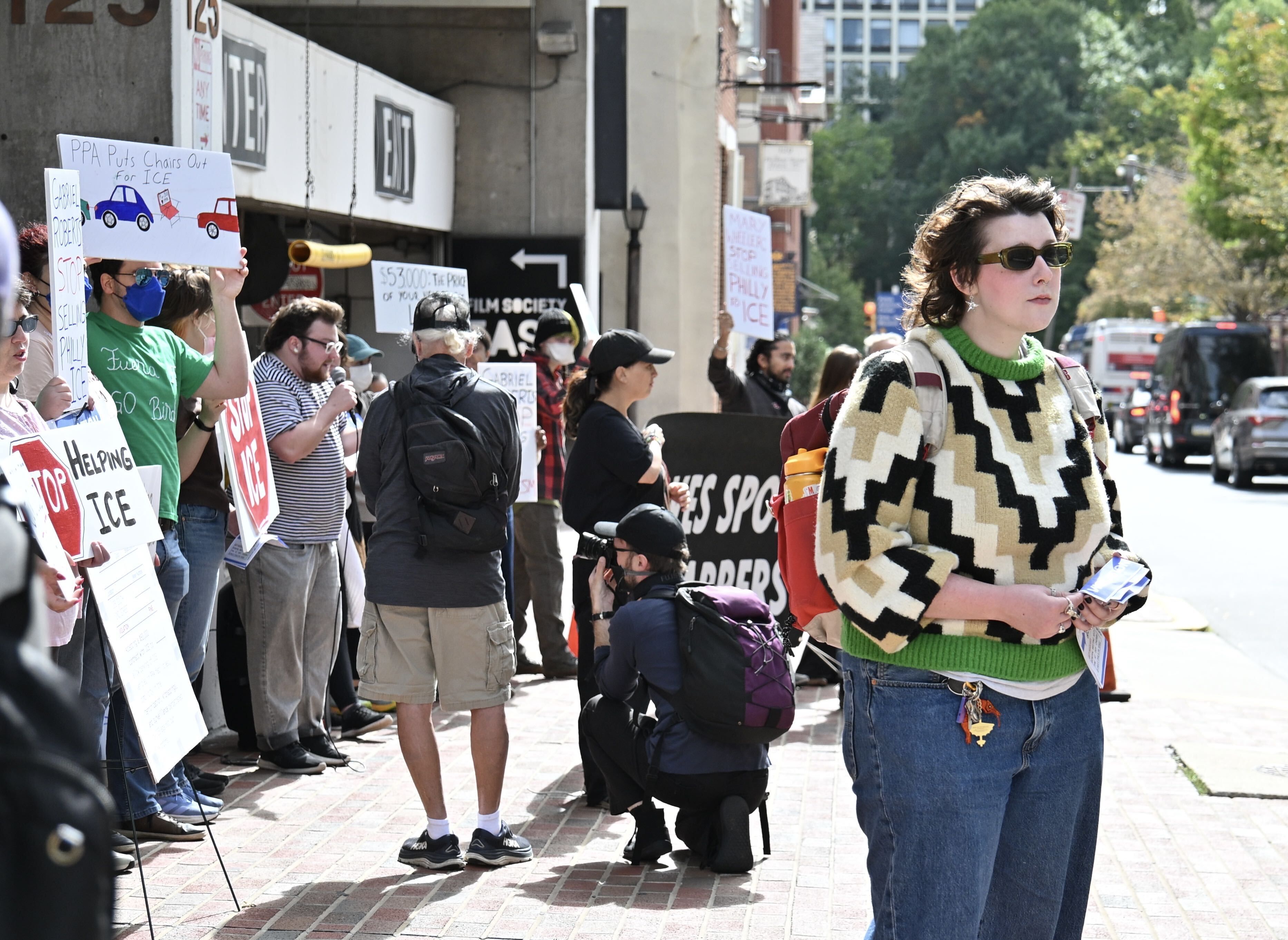
About two dozen No ICE Philly activists gathered Saturday outside a parking garage in Old City, demanding the Philadelphia Parking Authority end an arrangement with Immigration and Customs Enforcement.
At issue are 16 parking passes at the federally owned garage on Second Street, which is managed by the PPA. The group sang protest songs, held signs, and passed out informational flyers that resembled oversized PPA parking tickets.
“Who doesn’t know what these things look like, you know?” said one activist handing out flyers.
Group organizer Jay Bergen said the rally is meant to pressure the PPA — and to let people know that ICE is using the parking garage.
“It’s scary that you could be parking downtown, and unbeknownst to you, parking next to an ICE agent,” Bergen said.
Bergen, a 34-year old pastor at the Germantown Mennonite Church, pointed to public records showing a $53,520 contract that allows “for parking of government vehicles for ICE Homeland Security investigations” at the garage.
That contract was set to expire at the end of September, but another one, beginning in October and running through at least next September, gives Department of Homeland Security “16 leased parking spaces,” records show. ICE is part of DHS.
PPA spokesperson Martin O’Rourke declined to comment on the contracts.
An activist holds “violations” resembling PPA parking tickets to pass out to people, while a crowd gathers to demand the PPA stop leasing parking spaces to ICE.Brett Sholtis
Bergen said the group opposes ICE for “kidnappings” of immigrants and others, including people who have lived legally in the community for decades. One recent example is a 30-year-old nurse from Delaware County, who was arrested while taking her son to Disneyland.
Bergen said most people detained by ICE did nothing wrong. Some had minor lapses in paperwork or had been convicted of summary or misdemeanor crimes.
“Their goal is terror. It’s not public safety in any meaningful way,” Bergen said.
The local ICE field office did not respond to a request for comment Saturday.
At the rally, protester Akarsh Balaji said that the amount of money PPA makes on the contracts is “less than what they spend every year on salt to de-ice the streets.”
Balaji said he’s seen ICE harass his Puerto Rican neighbors in West Kensington. Puerto Ricans are Americans — so is Balaji, who is of Indian ethnicity — but that doesn’t seem to matter, he said.
“Nobody should have to live in fear, or be told that they’re harmful to society,” Balaji said.
Balaji said he got involved with the group in February after feeling a need to do something, “and be part of a movement that is so much bigger than I was.”
“We want to make it as difficult as possible for ICE to do its job,” Bergen said.
In Philly, ICE has faced obstacles from residents and elected officials. In April, the city adopted some of the nation’s most aggressive polices aimed at restricting ICE. The legislation took effect in July but the federal Department of Justice sued the city over some of its directives.
Bergen said ICE has changed its tactics since early this year, when its Operation Metro Surge in Minnesota — and the killings, captured on video, of U.S. citizens Renee Nicole Good and Alex Pretti — led to overwhelming public opposition to the agency.
“But the fear has not gone down. I heard this week about someone whose mother is afraid to go to doctor’s appointments, because she’s afraid ICE might grab her,” Bergen said.
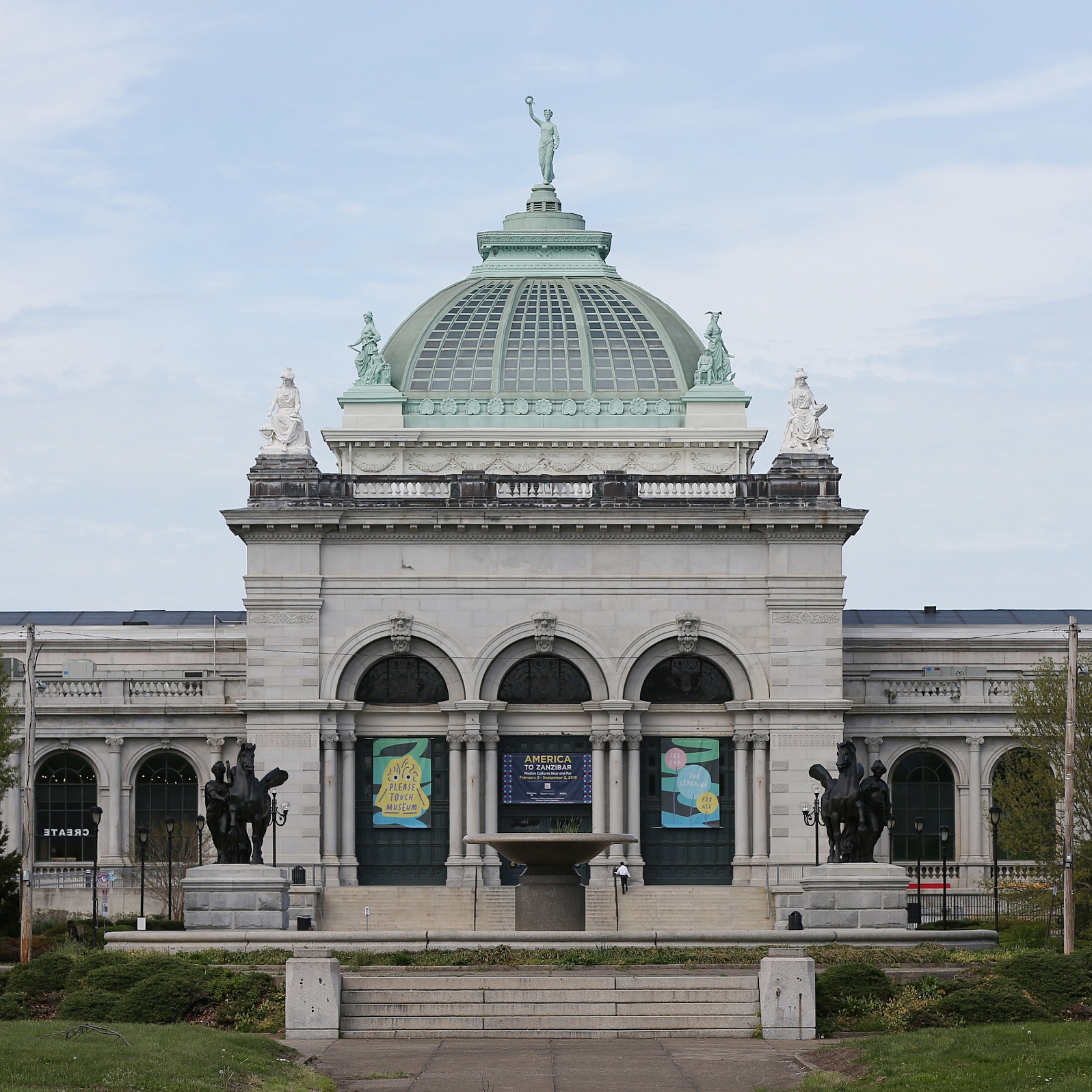
Memorial Hall, which now houses the Please Touch Museum, is pictured in West Fairmount Park in Philadelphia on Tuesday, April 23, 2019. The building is one of the few surviving structures from the 1876 Centennial Exhibition.Tim Tai / Staff Photographer
The Please Touch Museum turns 50 with two days of events for children and their caregivers.
Guests can enjoy toddler sing-alongs, juggling, music, dancing, art-making, story times, and an end-of-day parade on Saturday and Sunday.
While both days are currently sold out, museum organizers are taking walk-ins when possible.
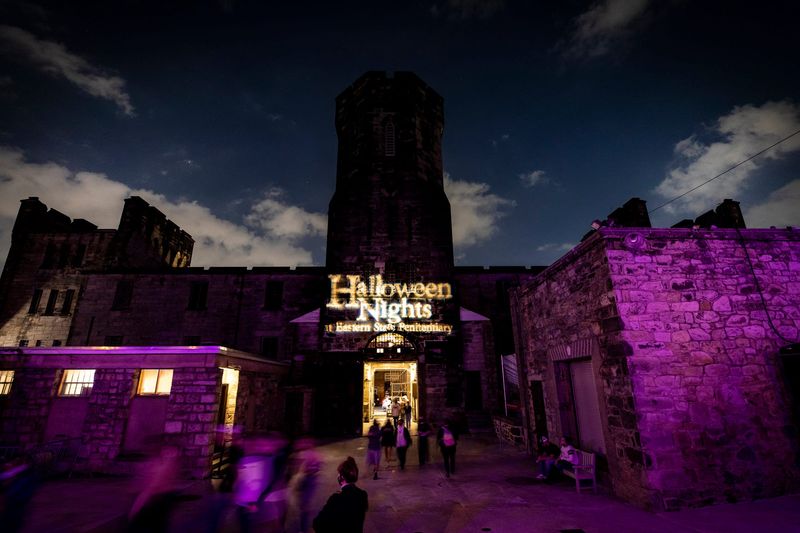
Eastern State Penitentiary hosts Halloween Nights, a festival-like attraction with characters dressed as scary clowns, zombies, vampires and other ghouls — but not prisoners or prison guardsEastern State Penitentiary
🇺🇸 A trip to historical grounds:The Revolutionary Germantown Festival, which marks the devastating loss George Washington endured before retreating to Valley Forge in 1777, is happening this Saturday. The free event will feature living history interpreters, hands-on activities with craftspeople, tours of the Chew House, and other activities.
🎭 A Broadway classic: The Broadway classic, Mamma Mia!, is hitting the stage at the Academy of Music for a limited run. Make your way to the Center City theater before the final curtain call on Sunday.
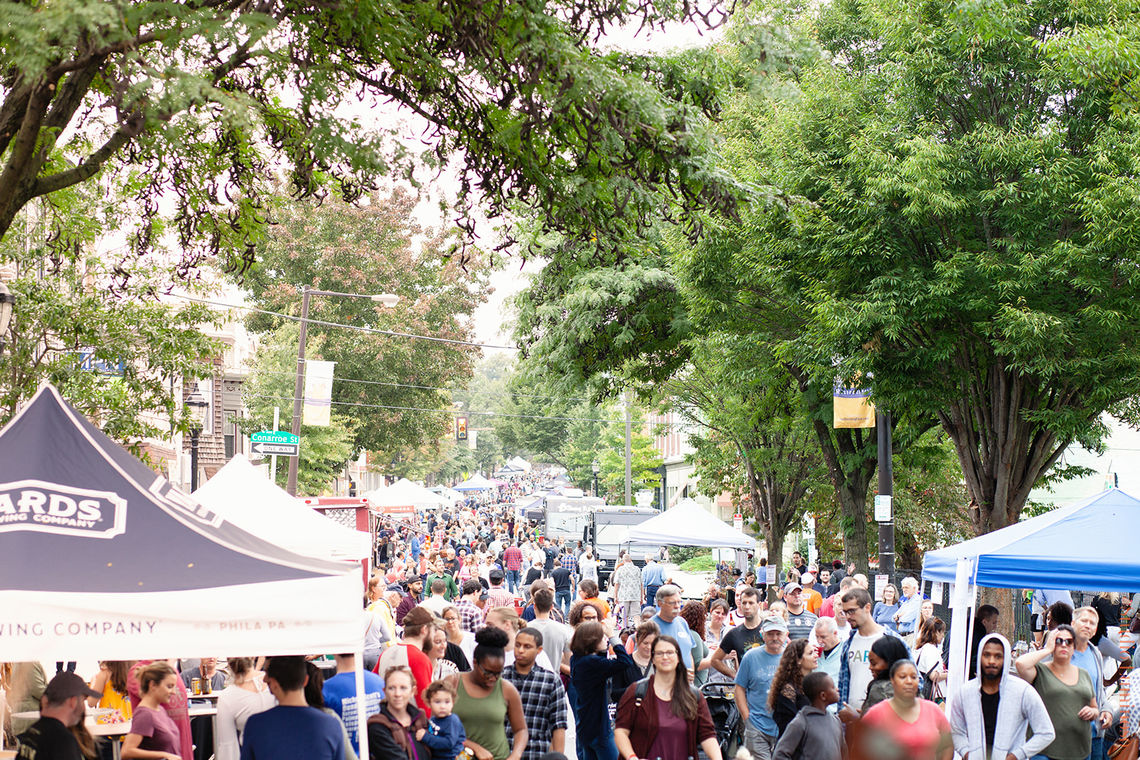
🍺 Celebrate Oktoberfest in Northwest: Head to Roxborough on Saturday for the 14th annual Roxtoberfest street festival. Visitors can enjoy German-themed entertainment, including live music, a stein-holding competition, a scarecrow walk, and more.
👻 Frightening nights: Visit the haunting cell blocks and frightening attractions at Eastern State Penitentiary during Halloween Nights. The month-long experience kicks off Friday, likely giving even the bravest of guests a scare or two.
📅 My calendar picks this week: Philadelphia Regatta Cup, Proximity: A Street Photography Exhibition, In Community Exhibition. Here’s our full list for the week.
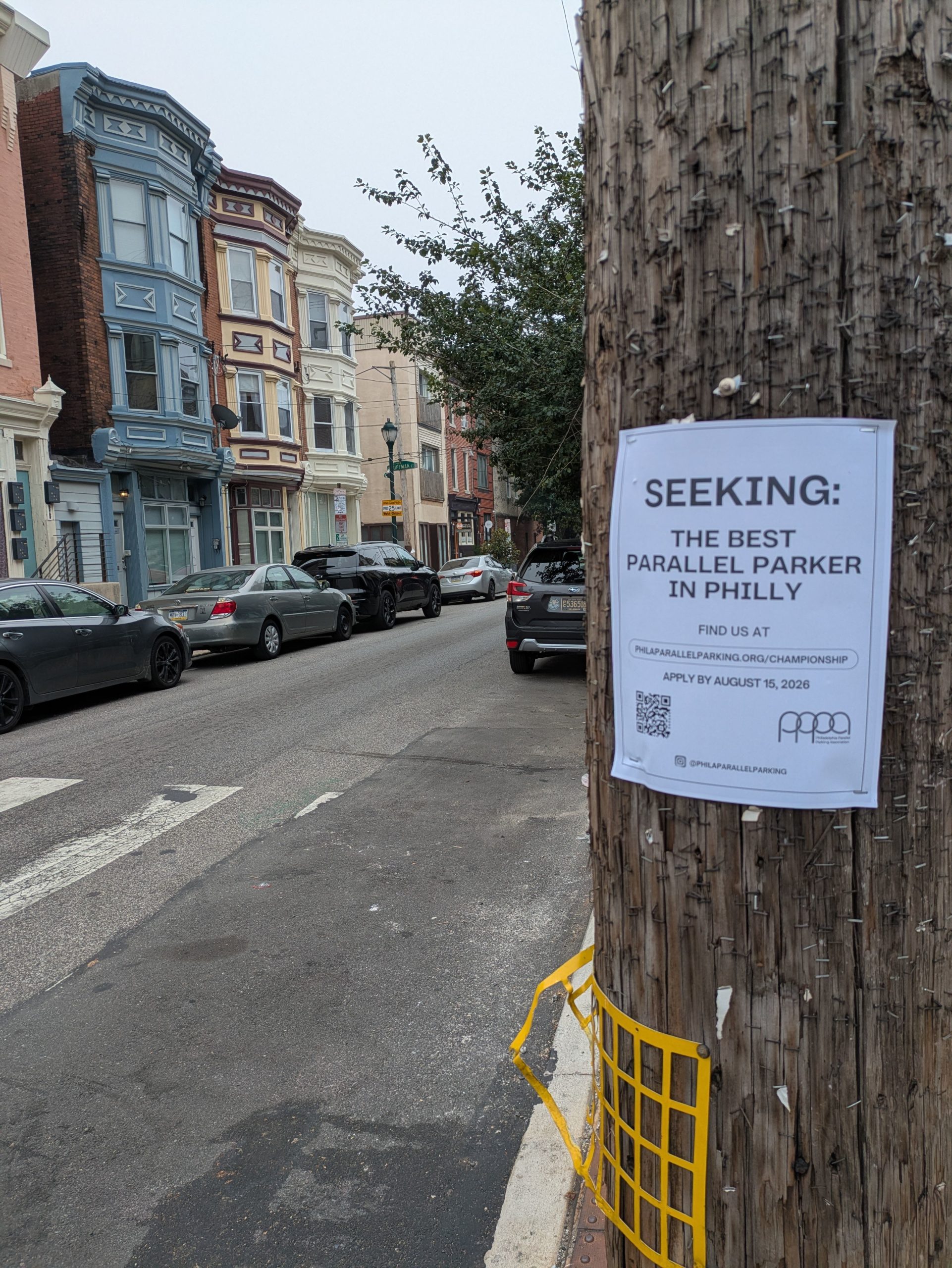
Philadelphia Parallel Parking Association Championship
A sign advertising the 2026 Philadelphia Parallel Parking Association Championship is affixed to a pole across from some fine examples of parallel parking in the city.Courtesy of Adam Wodka
Fifteen competing drivers will test their skills across three events. The first gives drivers a chance to park as close to the curb as possible. The second challenges drivers to navigate a tight squeeze while making the fewest maneuvers. The third will test how well drivers can park under duress.
The free event will take place from 1-4 p.m. on Saturday. It will also be livestreamed for those unable to attend.
Tanelsa Franklin-Phillips outside the Film Society Center, in Philadelphia, Oct. 5, 2025.Jessica Griffin / Staff Photographer
🎥 A reel movie fan’s dream: Experience classic movies in 35mm for the 35th anniversary of the Philadelphia Film Festival and the 25th anniversary of the Philadelphia Film Society. Screenings for REEL October are happening at the Film Society Center and running through Oct. 11.
🎨 Builders and makers: Street art and architecture collide at the 22nd Design Philadelphia Festival starting Thursday. The nearly two-week festival will feature lectures, panel discussions, and installations for emerging and seasoned designers.
🎃 Pumpkin patch at Liberty Point: Make your way to Liberty Point this Saturday for pumpkin picking, carnival games, a photo booth, and other fall-themed activities through Nov. 1.
Staffer picks
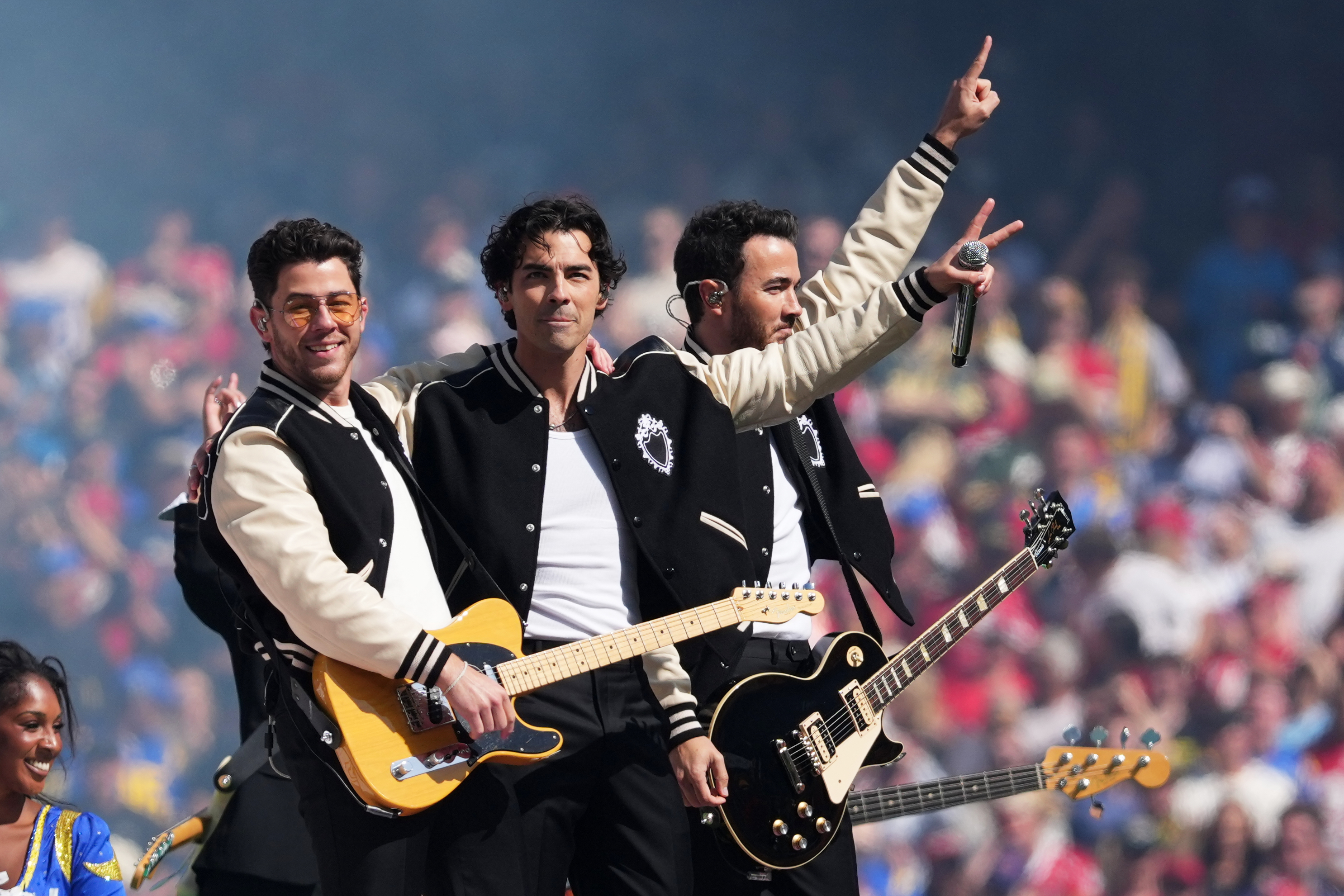
The Jonas Brothers perform during halftime of an NFL football game between the Los Angeles Rams and the San Francisco 49ers, Friday, Sept. 11, 2026, in Melbourne, Australia. (AP Photo/Scott Barbour)Scott Barbour
Here’s a list of the best concerts this weekend.
🎤 Thursday: Rapper Logic will hit the Highmark Mann stage alongside Memphis legend Juicy J and Bay Area native G-Eazy for a supreme rap show.
🎸 Friday: The Jonas Brothers are dropping into South Philly to perform at Xfinity Mobile Arena, with support from singer-songwriter Magnus Ferrell and DJ Deleasa.
🔊 Saturday: South Korean rock band Wave to Earth will grace the Met Philadelphia stage with their lo-fi, indie surf-rock jams as part of their “Pieces Tour.”
🎤 Monday:Stanley Simmons, whose music floats between folk and indie-rock, is set to headline at World Cafe Live on Monday.
❓Pop quiz
Where did the Please Touch Museum originally open its doors?
A) Memorial Hall
B) Academy of Natural Sciences
C) Franklin Institute
D) Parkway Central Library
Here’s the answer to last week’s question: What year was the first Concilio’s Annual Puerto Rican Day Parade in Philadelphia? Answer: 1964
Ask Earl anything
Many of you have questions about each week’s listings, and others about Philly’s arts, culture, and entertainment scene.
I have you covered. Have a question? Email me for a chance to have it answered in an upcoming newsletter.
That’s all folks! Enjoy your weekend, and feel free to sharpen up your parking skills if you feel so inclined. This writer here will certainly appreciate it.
– Earl Hopkins
By submitting your written, visual, and/or audio contributions, you agree to The Inquirer’s Terms of Use, including the grant of rights in Section 10.
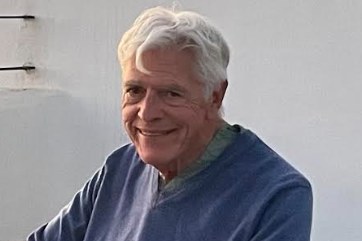
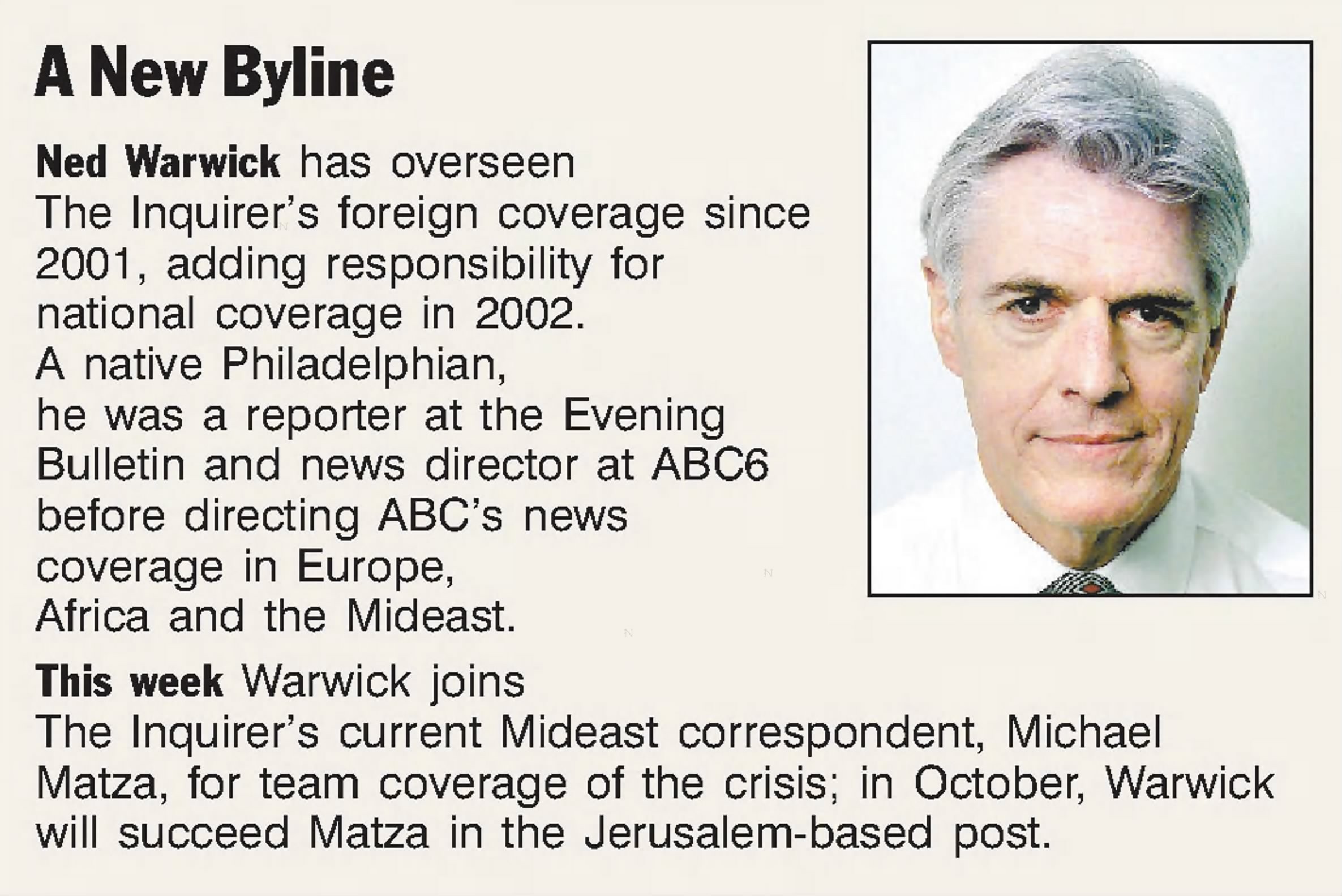
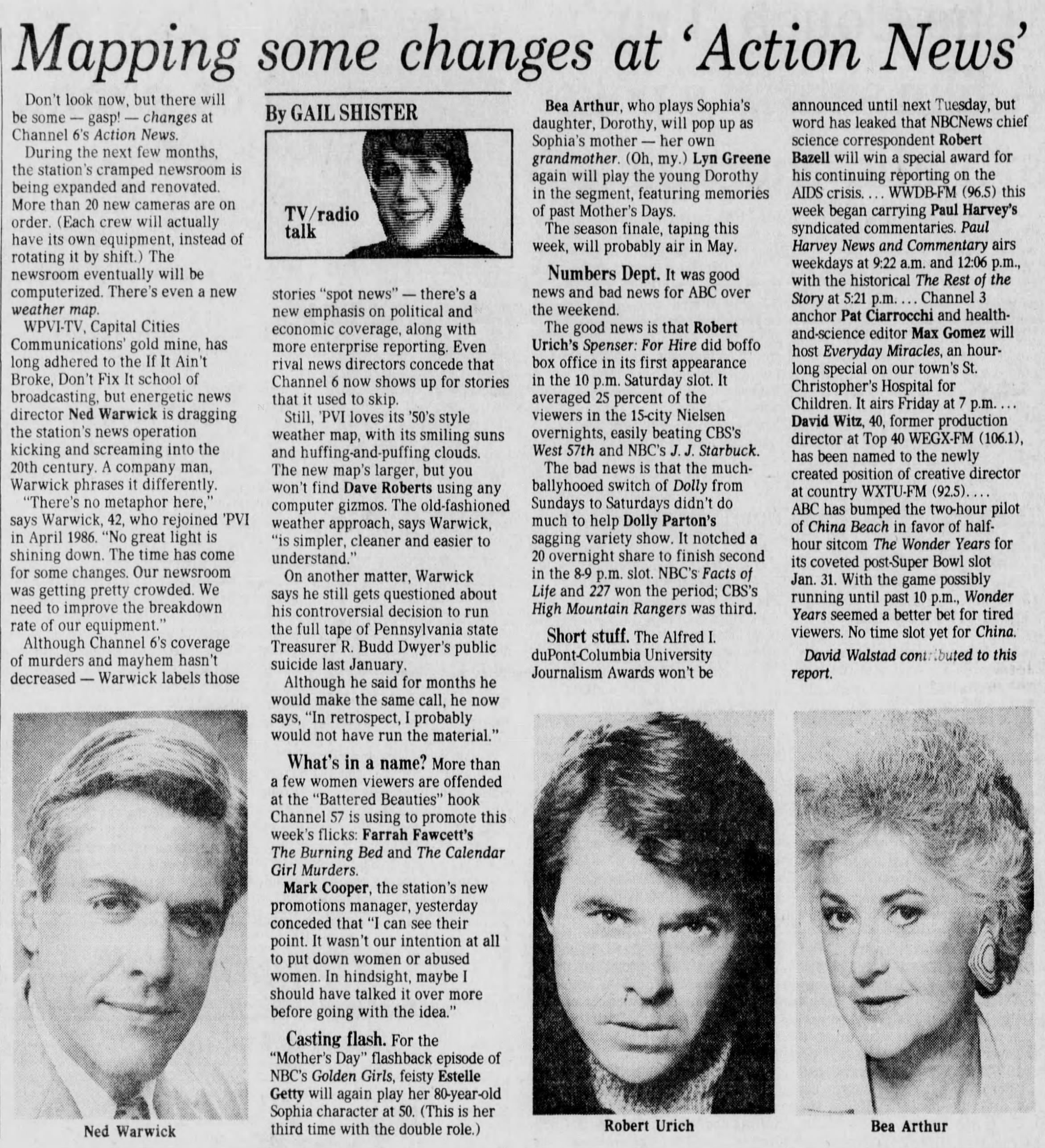
Ned Warwick, 81, of Philadelphia, former foreign correspondent and foreign, national, and Pennsylvania editor for The Inquirer, former news director for WPVI-TV (Channel 6) and international news director for ABC-TV, former reporter at the Bulletin, mentor, sailor, pilot, and die-hard Phillies fan, died Monday, Sept. 14, of complications from Parkinson’s disease at his home near the Philadelphia Museum of Art.
Born in Philadelphia and reared in Germantown and Mount Airy, Mr. Warwick graduated from Chestnut Hill Academy and attended Temple University. He knew he wanted to be a newsman when he was 16, his wife, Joan, said, and he spent much of his free time reading newspapers in the high school library.
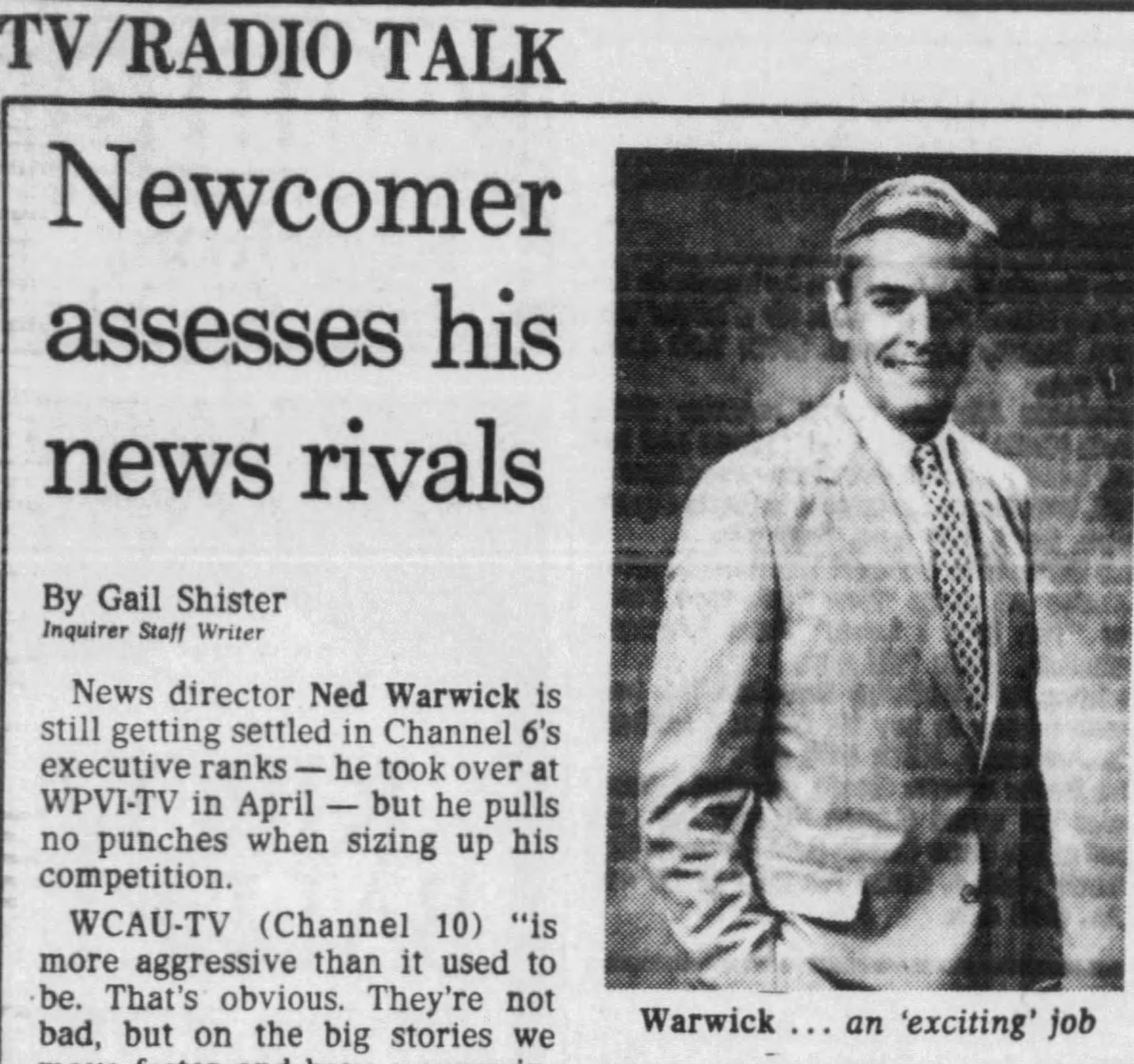
He went on to work as a young city-side reporter for the Bulletin from 1969 to 1974 and a veteran editor and reporter for The Inquirer from 2001 to 2008. For TV, he was a news writer and assignment editor at WPVI from 1975 to 1981, news director at WTVD in Durham, N.C., from 1981 to 1986, and back as news director at WPVI from 1986 to 1990.
Regarding the transition from print to TV work, he told Inquirer TV columnist Gail Shister in 1977: “The TV reporter’s job is more difficult because they have to be journalists and performers. It is in fact easier for a TV reporter to move over to print than vice versa.”
Mr. Warwick became a foreign correspondent for The Inquirer in 2006.Newspapers.com
From 1990 to 1995, Mr. Warwick was based in London as ABC’s director of news operations for Europe, Africa, and the Middle East. He worked with celebrated anchorman Peter Jennings, supervised dozens of other international TV types, and directed coverage of many of the world’s top stories.
Actually, he told The Inquirer as he left for London, he did not expect the job to be much different from covering news in Philadelphia. “You can gather news around the corner or across the border,” he said. “But the essential business of newsgathering still remains the same. You’ve still got to get the story.”
He nearly became the story in 1992 when he got pinned down in a gun battle while traveling in Somalia. “He always wanted to be a newsman and travel the world,” his wife said, “and he did. He loved the news. He loved ABC.”
At The Inquirer, Mr. Warwick was the foreign and national editor for five years and a foreign correspondent in Jerusalem during and after the 2006 Lebanon war. He returned to Philadelphia in 2007 to be deputy business editor and Pennsylvania editor for a year.
The Inquirer covered Mr. Warwick’s return to WPVI-TV in 1986. Newspapers,com
“He was a good listener and could manage a reporter’s needs,” former Inquirer staff writer Miriam Hill said. Former Inquirer staff writer Sally Downey said: “He was a very classy guy.”
In 2006, his byline appeared in The Inquirer over dozens of war zone stories from Gaza City, Bethlehem, Acre, Ramallah, Huwwara, Turmus Aya, and elsewhere in the Middle East. On Oct. 17, 2006, he opened his story from Kafr Qalil with: “The sharp heat of summer lingers on the stony hills of the West Bank, and the pale olives are still ripening on the trees, thirsting for just a little of the fall rains that won’t come for a few more weeks.”
“He was a lyrical writer,” Hill said. Former Inquirer editor William K. Marimow called his style “fluid” and “very solid.”
Mr. Warwick also reported on the royal family from London and reviewed books for The Inquirer. He worked briefly as an editor at large with Bloomberg News after leaving the paper in 2008 and retired in 2010.
Out of the office, Mr. Warwick was a sailor and a pilot. Courtesy of the family
He mentored others wherever he worked and with the Rittenhouse Writers’ Group, and completed a first draft of his own book. “His mind was always crafting a story, seeing a story, or preparing to tell one in a way that made everyone near him want to listen,” said his daughter Katie Bishop.
“No matter what was going on,” said Nathan Gorenstein, a former colleague at The Inquirer, “he was a good human.”
Out of the office, Mr. Warwick was a sailor and a pilot. In 1986, when he was news director at WPVI, Shister asked him whether flying an airplane or directing a newsroom was more challenging. “Clearly,” he said, “if you don’t pay attention in either business, you’re going to crash.”
He cheered openly for the Phillies even during the lean years and continued to follow them closely after becoming ill. “One of the first things he would ask in the morning,” his wife said, “is who won the game.”
Edward Ramsey Warwick was born May 19, 1945. The oldest of three children, he was the great-grandson of former Mayor Charles Warwick. He left Temple and earned a bachelor’s degree in history at the University of the South in Sewanee, Tenn., in 1969.
Mr. Warwick’s local TV work was covered in The Inquirer in 1988. Newspapers.com
He married Polly Price, and they had a daughter, Katie. After a divorce, he married Gayle Roth, and they had daughters Megan and Eliza.
“He always made us feel like having three daughters was his greatest joy in life,” his daughter Megan Osborne said. “He taught us to throw a ball and let us braid his hair.”
After a divorce, he married Joan Hunter, and they enjoyed museums, the theater, and the orchestra. They traveled the world together. He was a longtime runner and a fashionista, and studied Buddhism.
He lived with Parkinson’s disease for eight years. But he refused to quit city living for the suburbs, his wife said, and he never lost his sense of humor and zest for life.
Mr. Warwick was a longtime runner and a fashionista, and studied Buddhism. Courtesy of the family
“Dad was a giant of a man in every sense of the word,” his daughter Eliza said. His wife said: “He never, ever complained. He made me a better person.”
In addition to wife, daughters, and former wives, Mr. Warwick is survived by four grandchildren, a sister, a brother, and other relatives.
A memorial service is to be from noon to 4 p.m. Saturday, Nov. 14, at the Germantown Cricket Club, 411 Manheim St., Philadelphia, Pa. 19144.
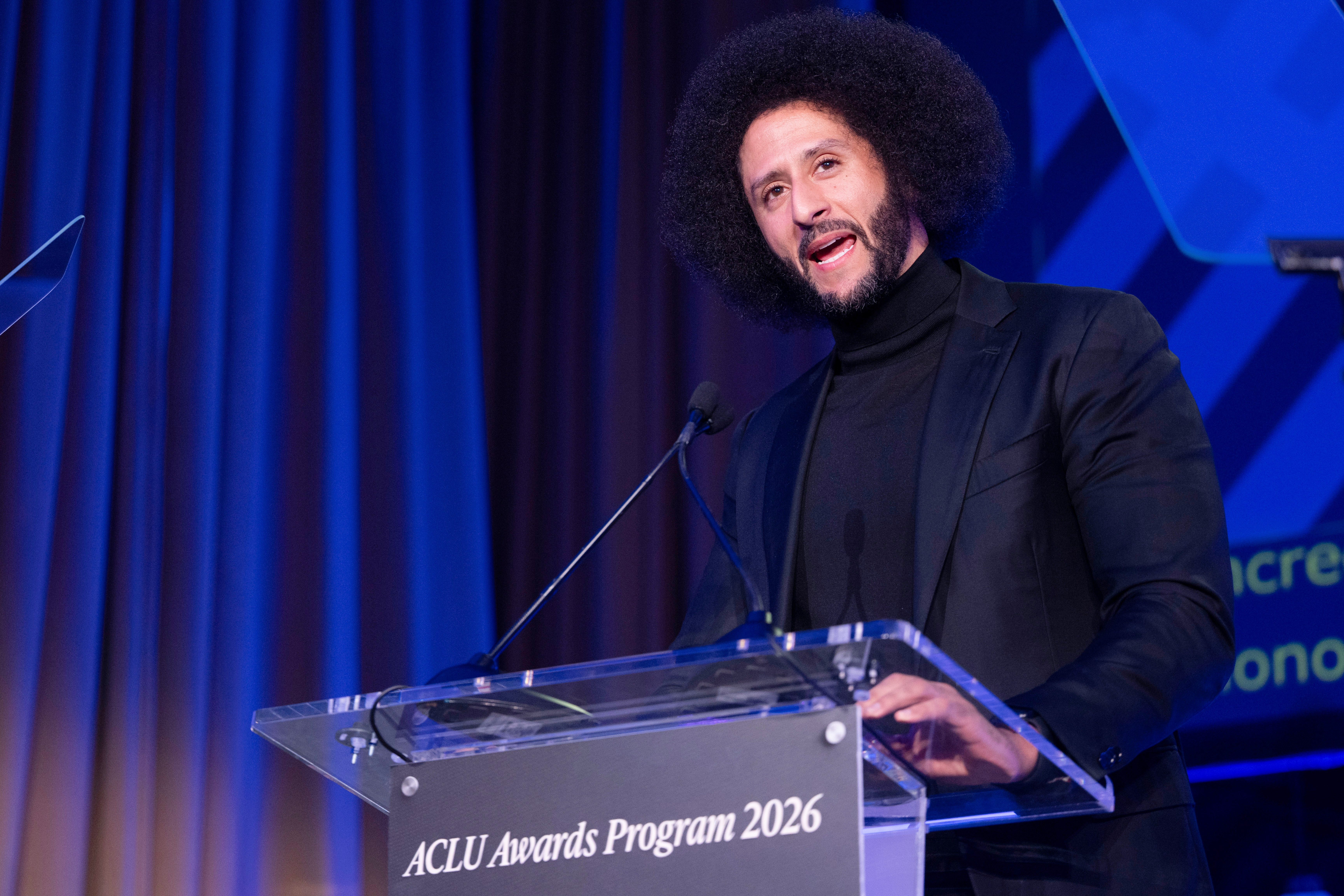
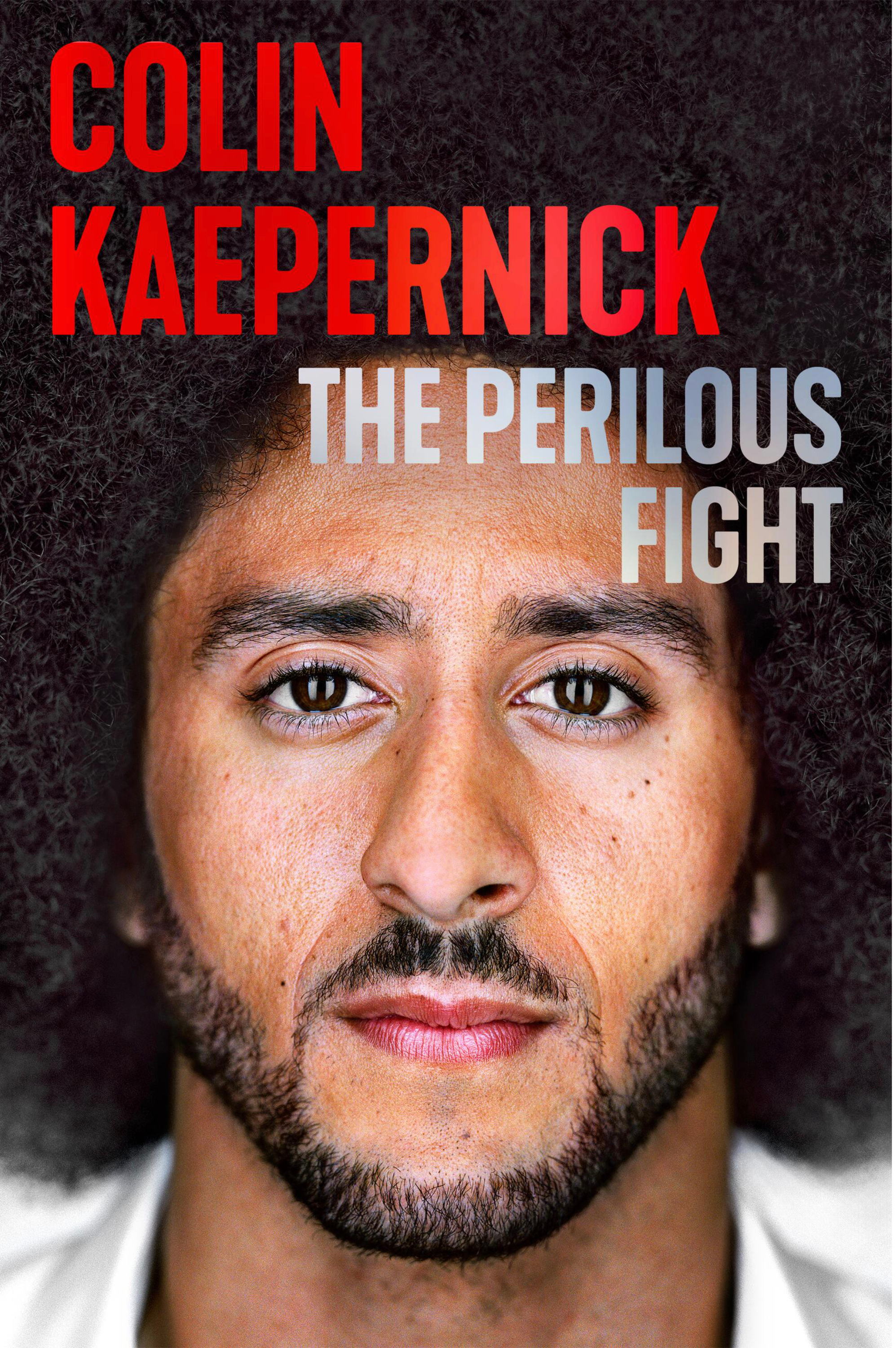
So when Colin Kaepernick’s memoirThe Perilous Fight(Hachette, $32.50) hit bookstores this week, of course the former NFL player would make a local appearance courtesy of Uncle Bobbie’s, right?
Kaepernick’s memoir is a coming-of-age story about a Black child who was adopted into a white family and found his identity through sports.
This cover image released by Legacy Lit shows “The Perilous Fight” by Colin Kaepernick. (Legacy Lit via AP)Uncredited
Football didn’t just become Kaepernick’s refuge, it helped him find his voice, ultimately informing his decision to take a knee in 2016 while the national anthem played at the beginning of a game between San Francisco 49ers and the San Diego Chargers. It was an act of protest against the country’s racial inequities.
The truth is, Kaepernick was scheduled to come through Uncle Bobbie’s on his book tour. Hachette asked the Germantown bookstore to reserve a date. And the bookstore did find a venue big enough to hold Kaepernick’s fans at what would likely have been a sold-out event.
But because of an industry kerfuffle, the Philadelphia stop was canceled as were several of Kaepernick’s other tour stops.
The fault, says Justin Moore, Uncle Bobbie’s general manager, lies squarely in the hands of former NBA player and former Sacramento mayor Kevin Johnson’s nonprofit the National Association of Black Bookstores.
Once Kaepernick signed on with NAB2 — which is also working with actress Tisha Campbell on this week’s release of her memoirThe A Word: A Mother’s Journey Through Autism and Love (HarperCollins, $29.99) — to manage the book tour, the previous agreement with Uncle Bobbie’s and other bookstores was seemingly null and void.
So, the beef isn’t with Kaepernick, it’s with NAB2.
“Although NAB2 was fully aware of the previous arrangements, they nonetheless chose to undermine our collective efforts, forcing us to cancel previously scheduled dates,” Moore wrote in an Instagram post this week. “As a result, multiple bookstores (including Black-owned stores) lost considerable revenue, and wasted valuable resources planning those events.”
Moore didn’t stop there.
“While these circumstances would be disturbing under any circumstances, it is particularly concerning it was created by Mr. Johnson and NAB2, an organization whose expressed mission is to support and uplift Black-owned bookstores.”
Moore learned of the cancellation months ago but made the post earlier this week after customers began asking him if and when Kaepernick was coming to Philly.
NAB2 did not respond to requests for an interview.
The West Coast nonprofit said in a social media post that it “is deeply saddened by Uncle Bobbie’s assertions that the organization engaged in ‘harmful business practices’ that undermine Black-owned bookstores.”
“NAB2 is honored to be partnering with 17 Black owned book stores on Kaepernick’s tour,” the post said.
“True to our mission, it includes many smaller bookstores that have historically been overlooked and excluded from similar events. Further, NAB2 did not ask or advocate that Uncle Bobbie’s, or any other Black-owned bookstore be excluded from Colin Kaepernick’s book tour or prevented from benefiting from it.”
In the meantime, Kaepernick’s signed memoir is available for sale at Uncle Bobbie’s. Whether the book tour will make a stop in the city is still unknown.
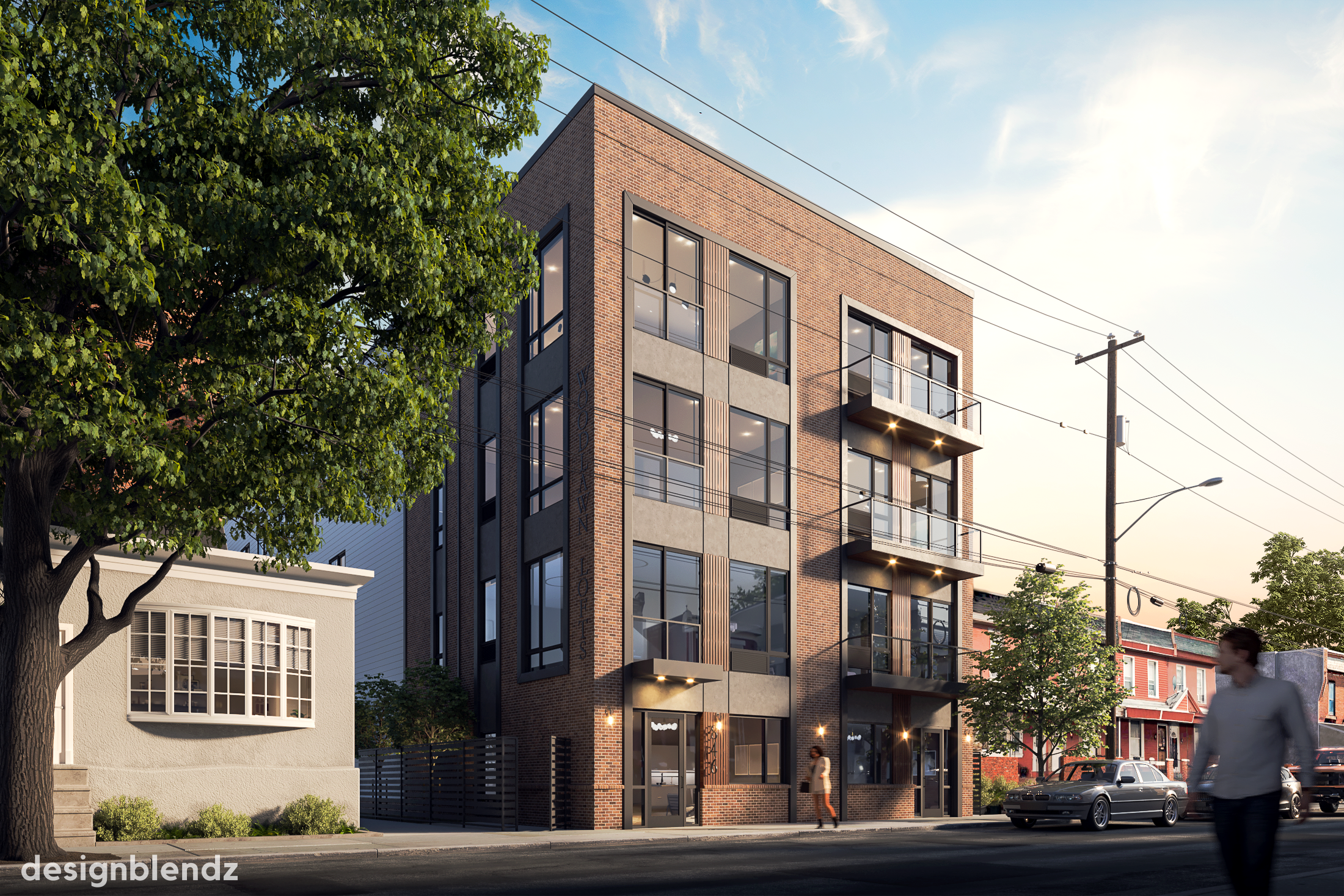
A four-story, 35-unit apartment project is slated for 846 E. Woodlawn St., part of a wave of development proposals in East Germantown after decades of divestment.
Although the neighborhood contains many apartment buildings that date to the early to mid-20th century, development collapsed following the 1950s in the era of white flight and neglect of majority-Black areas by financial institutions.
As a result, the neighborhood has an abundance of inexpensive, vacant land ripe for development under the right conditions. The Woodlawn Street property last sold in 2024 for $205,000.
“A lot of the new development is starting to push that way the past four or five years up in this area,” said Scott Woodruff, chief operating officer with Designblendz, a Philadelphia-based architecture firm that has three projects east of Germantown Avenue.
“We have been seeing an uptick in this neighborhood … with mid-rise multifamily fitting into some of these larger [vacant] lots,” Woodruff said.
A smaller version of the 846 E. Woodlawn St. project was put forward in 2021, but the new version includes four affordable units accessible to those making up to 50% of the area median income or almost $48,000 a year for a two-person household.
That will allow the developer, a Far Rockaway, N.Y.-based LLC, to use a zoning bonus that allows a taller and denser building than would otherwise be permitted, as long as it provides affordable units.
It will also have a green roof, which will allow the developer to use another zoning bonus to add more units.
Rent estimates were not available, but even units not designated as affordable are expected to be priced for moderate-income renters.
“These aren’t meant to be ultra luxury apartments,” Woodruff said.
The project will not include any studio apartments. Twenty-one units will be one-bedrooms, and the other 14 will be two-bedrooms. The apartments that face the street will have balconies.
Woodruff says Designblendz has been seeing developers propose fewer studio apartments in new buildings, especially in neighborhoods that are farther from Center City like East Germantown.
“It’s harder for young people to buy a starter house, so they are staying in apartments longer,” Woodruff said. “More people have been asking for larger bedrooms.”
There will be 12 bicycle parking spaces in the building, and no car storage provided. A 400-square-foot commercial space will front on the street, as the underlying zoning requires. No relief is needed from the Zoning Board of Adjustment to move forward.
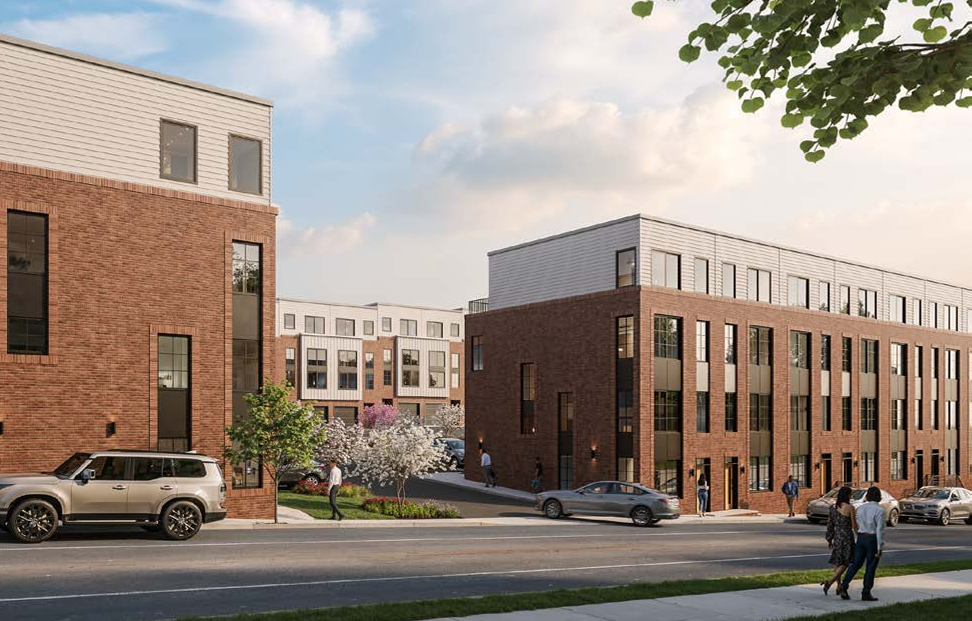
Designblendz also is working on a 34-unit townhouse development to the west of the Woodlawn project, at 610-640 High St., and a mid-rise, 42-unit project to the east at 1635 Church Lane.
Both are from Frankford-based developer Liberty Bell Management.
Liberty Bell Management’s 34-unit townhouse development to the west of the Woodlawn project, at 610-640 High St.DesignBlendz
All three projects would be built on vacant land. The abundance of buildable lots is one reason for developer interest in the area, but Woodruff says resident demand is there, too.
The abundance of trees and park access are appealing as well, Woodruff said.
“The projects we’ve done [in Germantown], they seem to be leasing in those areas so it must be filling a need for people who need housing up there,” Woodruff said.
The little bird of an idea to open a restaurant circled the blue skies of Fred Mogul’s imagination for many years while he was preoccupied with other passions. The first few decades of his career were spent in journalism, working in print and at wire services from Nebraska to Jerusalem, then in public radioas a news reporter, first at WHYY, followed by 18 years at WNYC in New York.
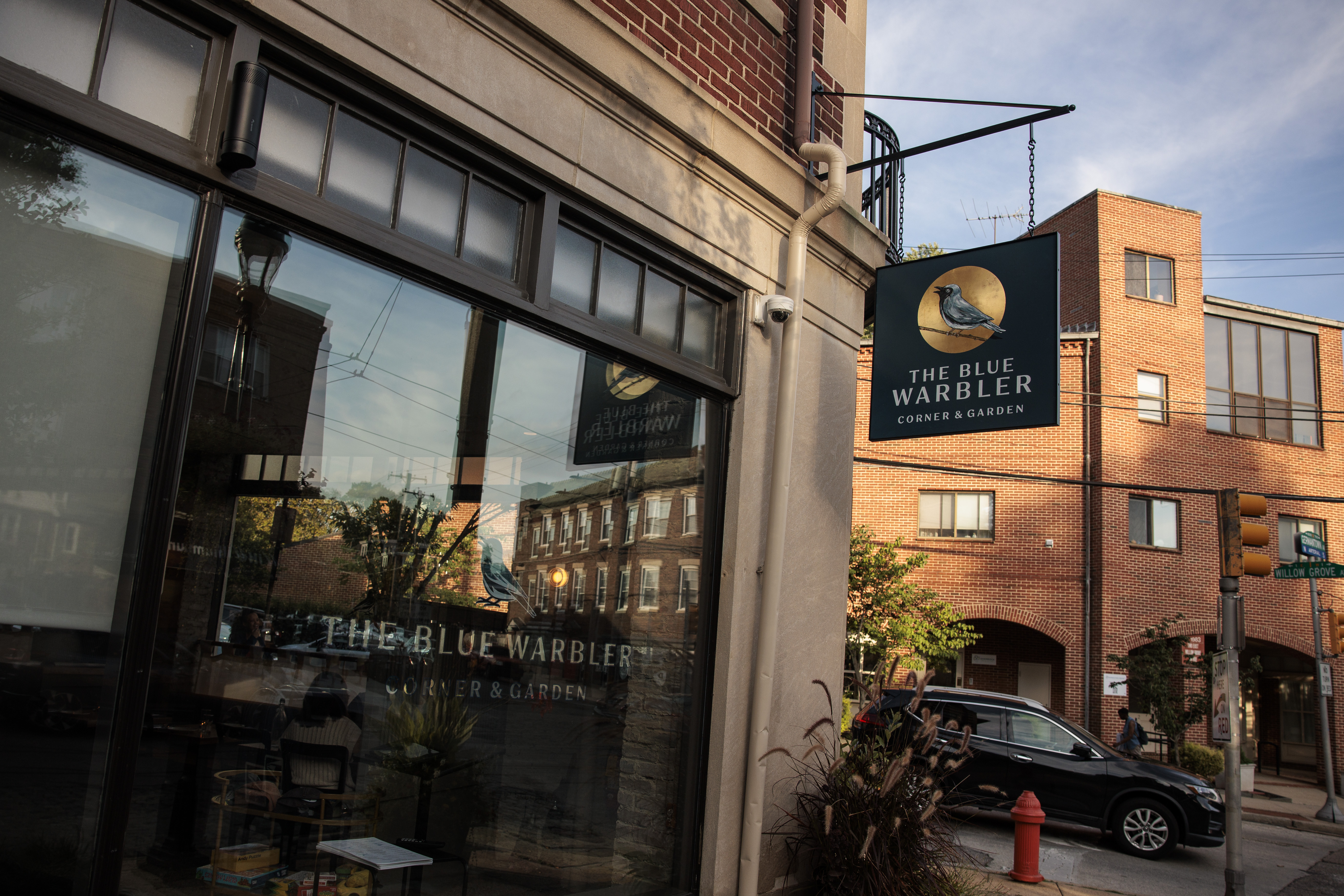
But that little bird persisted, which is how this cheerfully quirky all-day cafe and restaurant in Chestnut Hill — the Blue Warbler — eventually came to be. Having been steeped so long in the perpetual turbulence of the media industry, Mogul was not deterred bythe famously daunting risks of building a restaurant.
“I wanted to do something else for social good and contribute to the world in having a communal gathering place while feeding people,” he said, conjuring a destination that combined the best attributes of a bakery-cafe, a diner, and a local tavern. “But I also want it to be a little surprising, playful, and unpredictable.”
To open such an intriguing place in Chestnut Hill, especially,would absolutely be a good deed. That neighborhood’s chronically underperforming dining scene, despite its abundance of well-to-do residents and quaint retail district lining Germantown Avenue, is such an enduring enigma that the last time I wrote something really nice about a restaurant there was nearly a decade ago when I reviewed Mica, which sadly did not survive the pandemic.
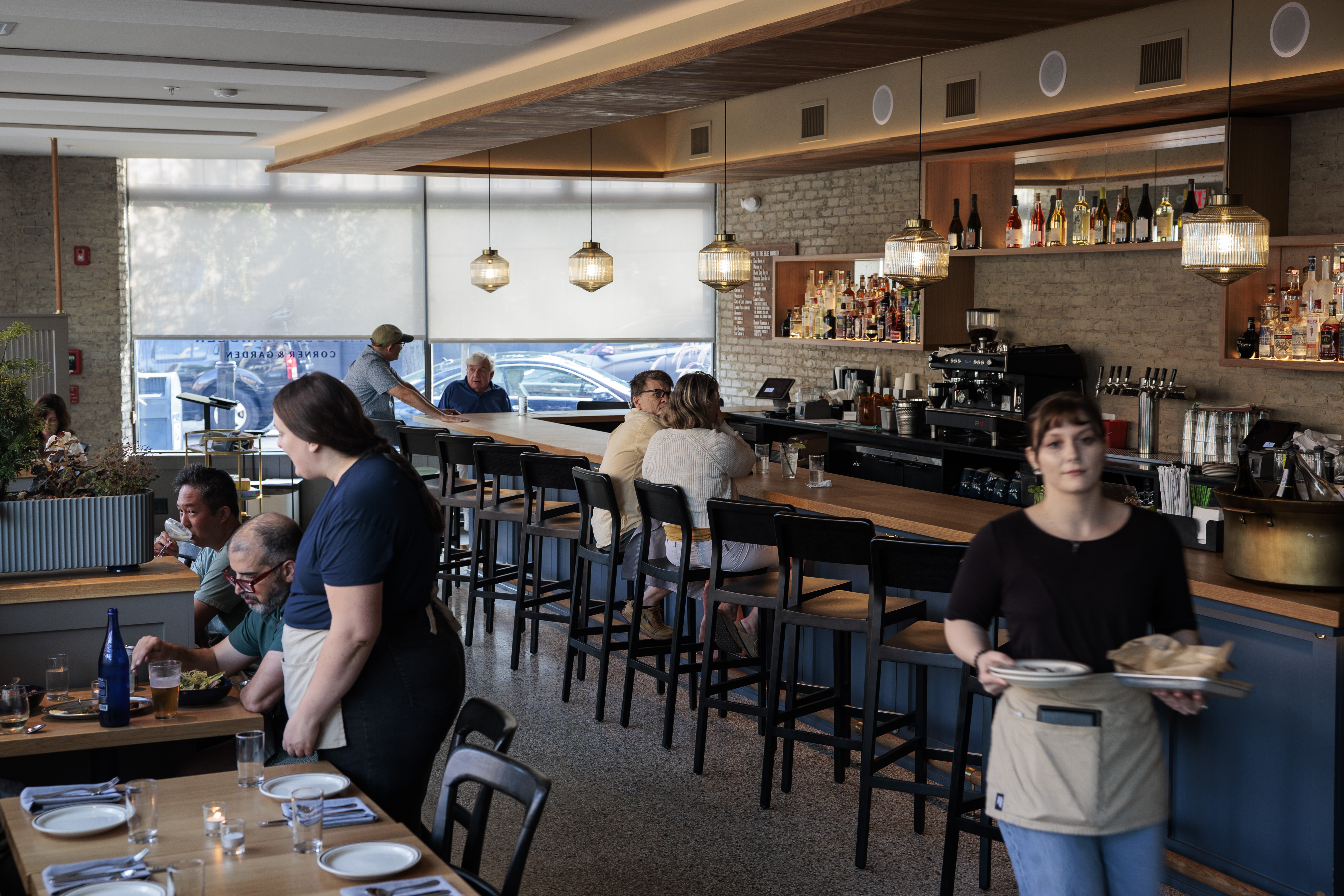
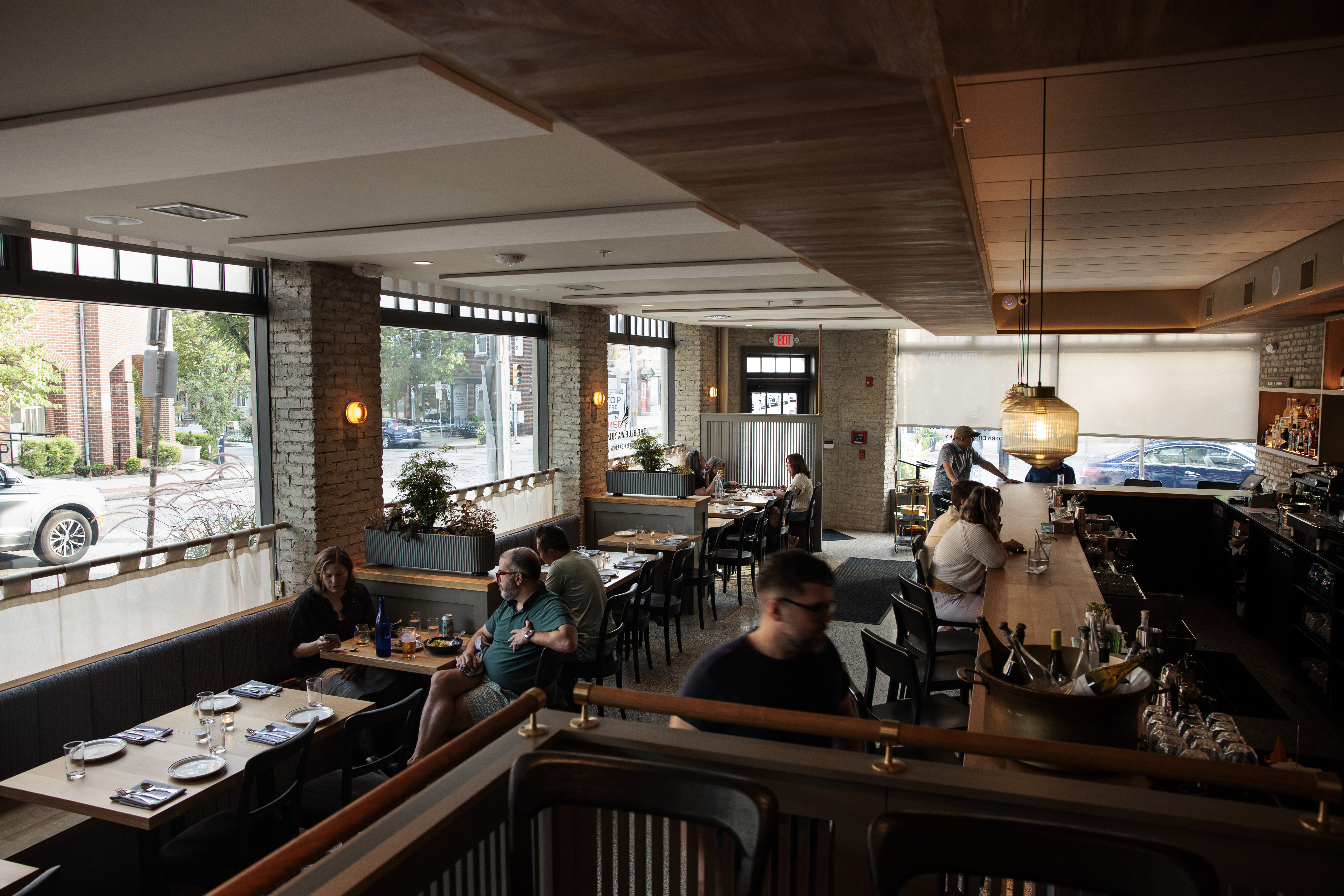
The dining room at the Blue Warbler on Thursday, Sept. 3, 2026 in the Chestnut Hill section of Philadelphia.Monica Herndon / Staff PhotographerThe dining room at the Blue Warbler on Thursday, Sept. 3, 2026 in the Chestnut Hill section of Philadelphia.Monica Herndon / Staff Photographer
But here was Mogul’s vision of the Warbler come to life with such vibrant warmth on a Saturday night, and it was as if this bustling three-month-old newcomer had been ensconced at the corner of Germantown and East Willow Grove Avenues for years.
The slate-blue bar trimmed with white oak was lined with customers sipping Cardamaro spritzes, blushing pink Clover Clubs, and sage gose beer from Germantown’s Attic Brewing Co. Meanwhile, eager diners waited patiently near the front door for their turn in the 71-seat dining room, where comfortable banquettes along the window and a cluster of tables on a raised rear platform create a sense of intimacy within the open space.
As a world-beat soundtrack pulsed with tunes from Brazil, Nigeria, and Afghanistan, the Warbler’s eclectic dinner menu — ranging curiously from Middle Eastern meze to smoked arctic char spread, mushroom kebabs, a tuna melt sandwich, and a faux-meatloaf platter — ultimately landed on the table less chaotically than it reads.
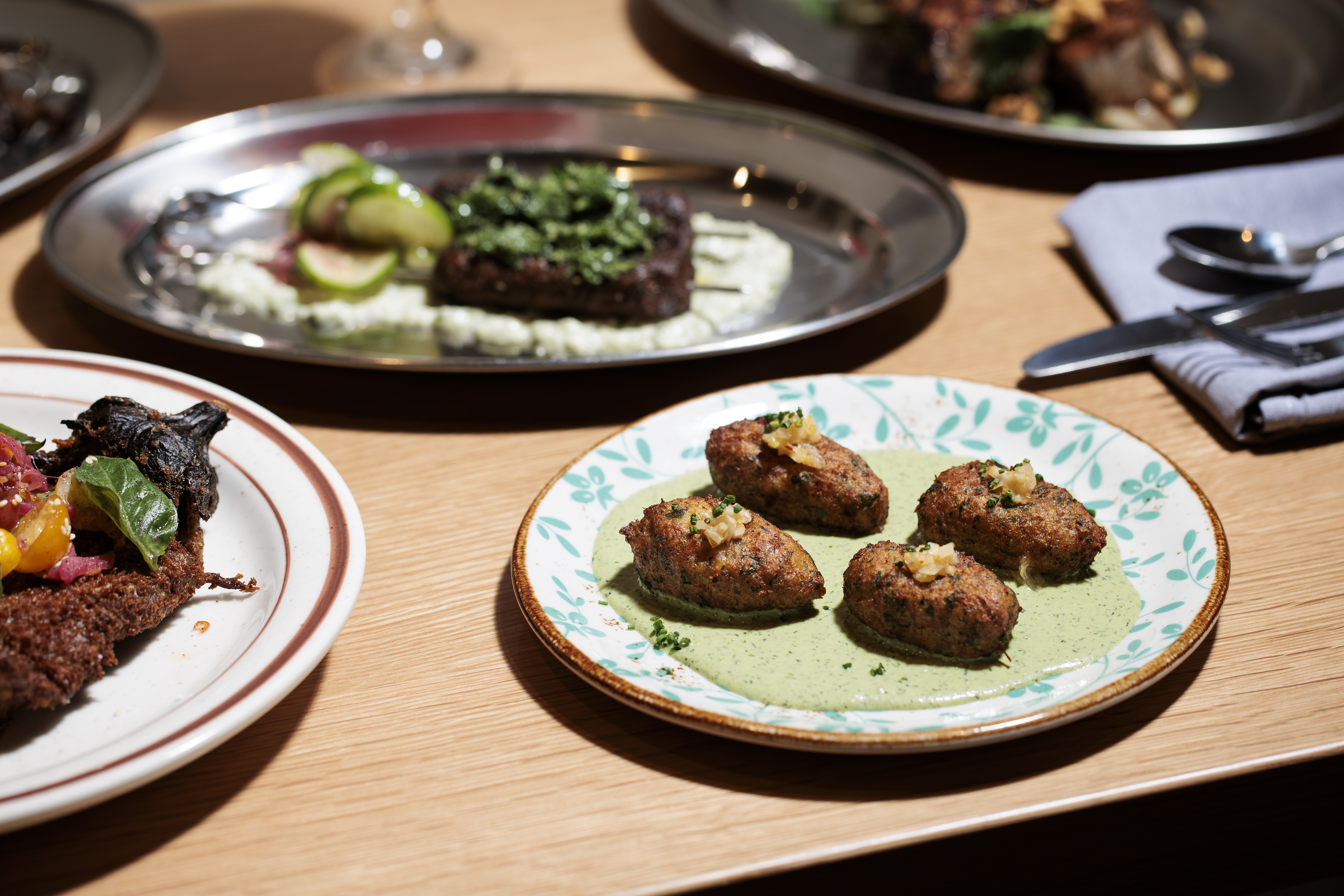
The bacalao, salt cod croquettes with green yogurt and lemon relish at the Blue Warbler.Monica Herndon / Staff Photographer
We swiped rounds of fluffy pita through silky hummus topped with cuminy Moroccan carrots and a spicy-smoky drizzle of harissa crunch. I savored the oceanic tang of warm salt cod fritters against the refreshing coolness of yogurt sauce greened with parsley, dill, and mint.
I’ll admit to the lowest expectations possible for the “meatloaf” made with Impossible meat. But this kitchen, run by chef Daniel Berret (formerly at CO-OP in the Study hotel in University City and Chestnut Hill Brewing Co.), seasoned that loaf nicely with a sweet onion and herb boost, lacquered it with a molasses-ketchup glaze, then added appealing sides of plancha-roasted king oyster mushrooms and fresh-cooked frites with a sriracha mayo dip. It was a comfort winner I’d return for.
Yes, there’s a vaguely retro sensibility to this globe-hopping collection of flavors, as well as the unabashed offering of tofu steaks and wheat meat as entrees in an era when vegetarian cooking has grown into a more vegetable-focused phase. The fact that there is no red meat or poultry on this menu, which does include fish, will be a no go for some.
But as Mogul told my colleague Michael Klein at the Warbler’s opening, he refuses to define this space by “what it lacks” or simply as “that vegetarian place” so much as a neighborhood-centered hub that is inclusive. The handsome dining room and breezy backyard patio are inviting. The service is genuine and outgoing. And the kitchen brings earnestly wrought flavors to everything it makes — including the hand-rolled bagels that anchor much of its daytime cafe menu.
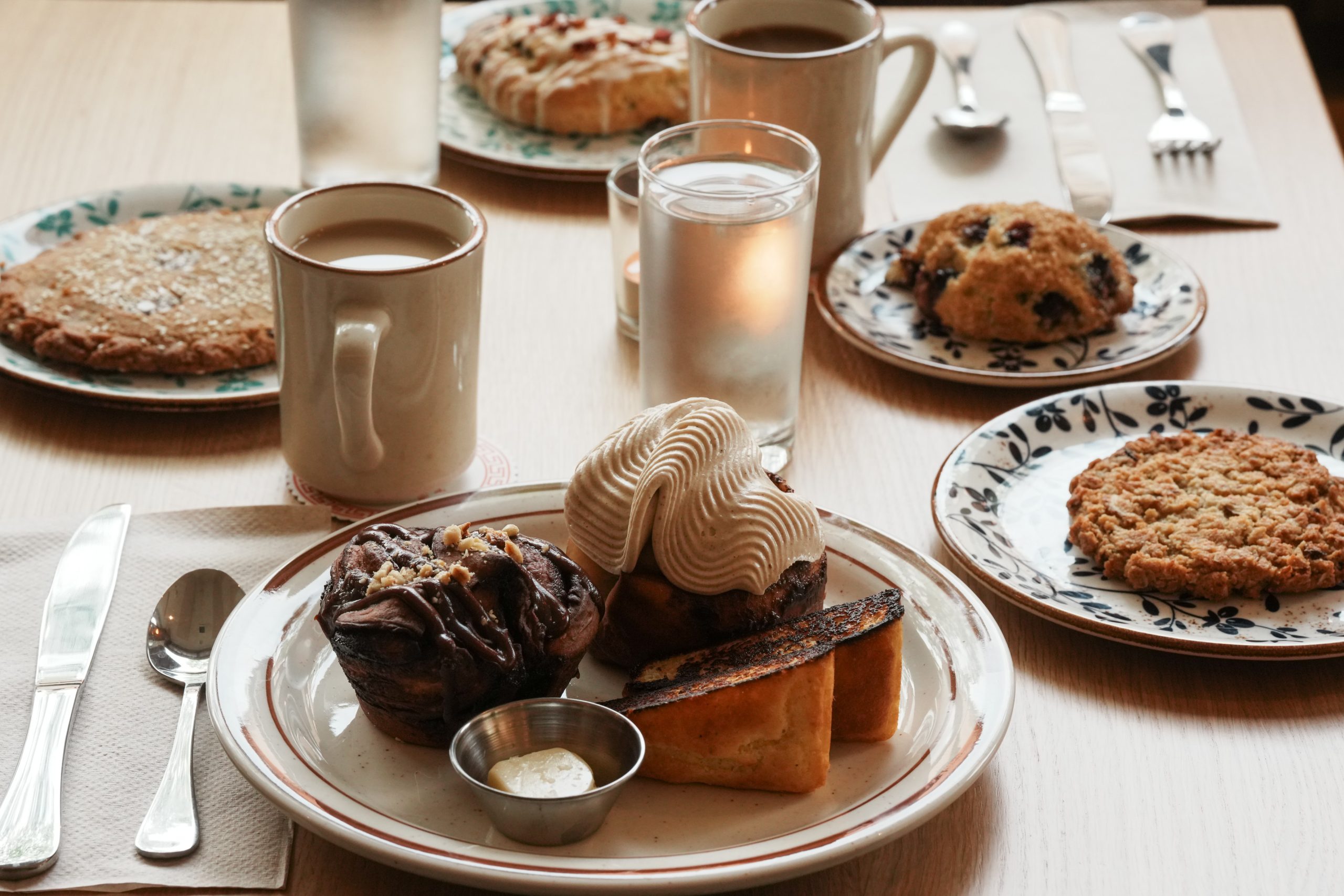
It clearly has the neighborhood’s full attention, as evidenced by the customer who noted that an early version of cinnamon rolls for breakfast was topped with a wave of chai frosting that reminded them of “a Trump combover,” says Mogul. “That image could not be unseen, so we went to DIY schmearing with the frosting in ramekins instead!”
Chocolate hazelnut babka, chai cinnamon roll, and griddled cornbread at the Blue Warbler on June 11. The presentation of the cinnamon roll has since been changed with the frosting served on the side.Jessica Griffin / Staff Photographer
As a restaurant novice, Mogul still has a lot to learn — but he has eagerly embraced input from those with expertise. Just as he turned to Ambit Architecture and In House Studio to tastefully transform the longtime Foster’s Drugstore into its first use as a restaurant (note the salvaged original terrazzo floors and a serious ongoing attempt at soundproofing), he engaged restaurant consultant Arthur Cavaliere to translate his broad vision for the food into workable menus.
It all comes down to execution by Berret and his crew, and for me, the dinner service was the most successful. Aside from the tasty meze nibbles — including salty-sweet haloumi-stuffed dates and a smoky baba ghanoush topped with crispy cornmeal-fried Japanese eggplant — there is an appealing array of grilled skewers to start.
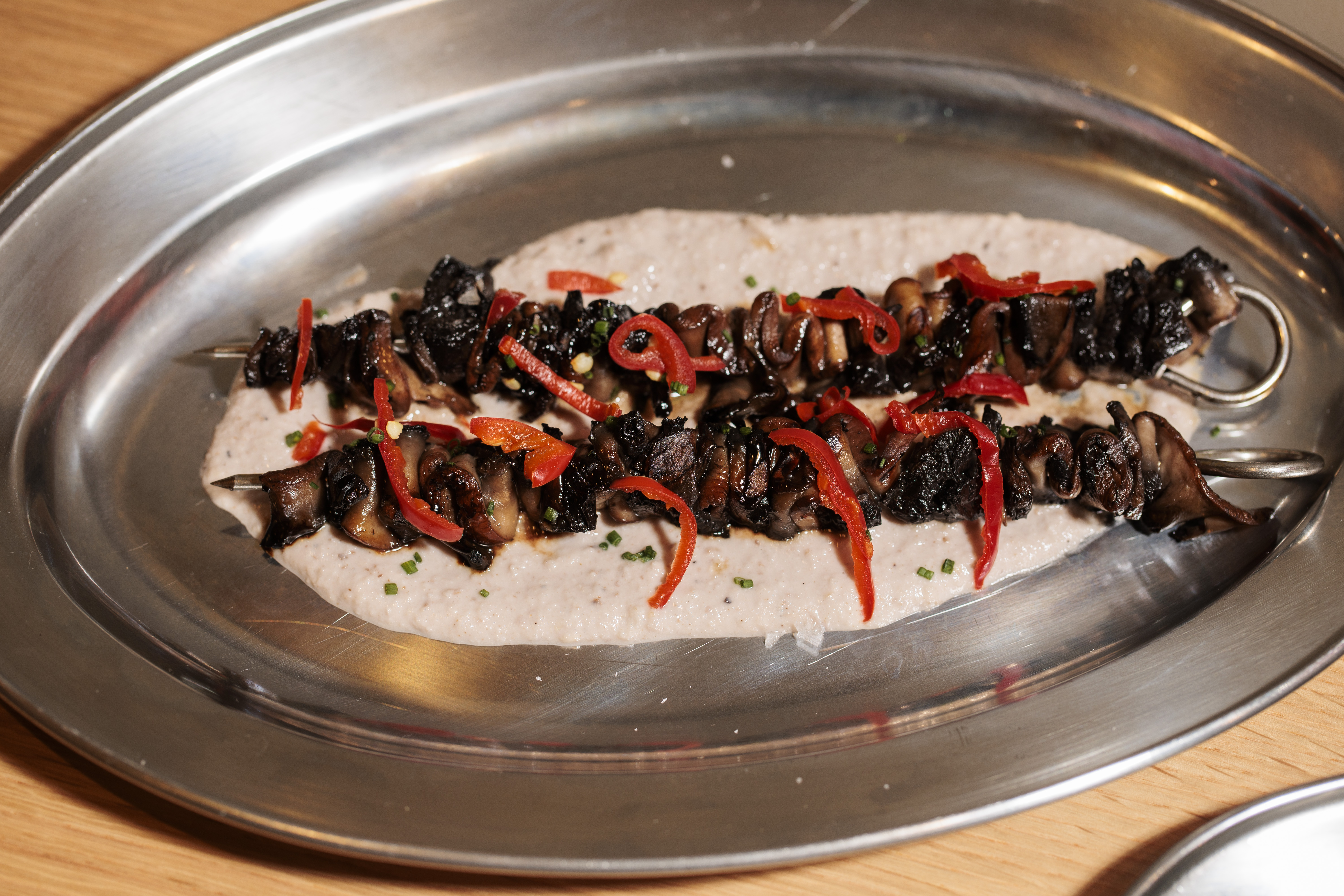
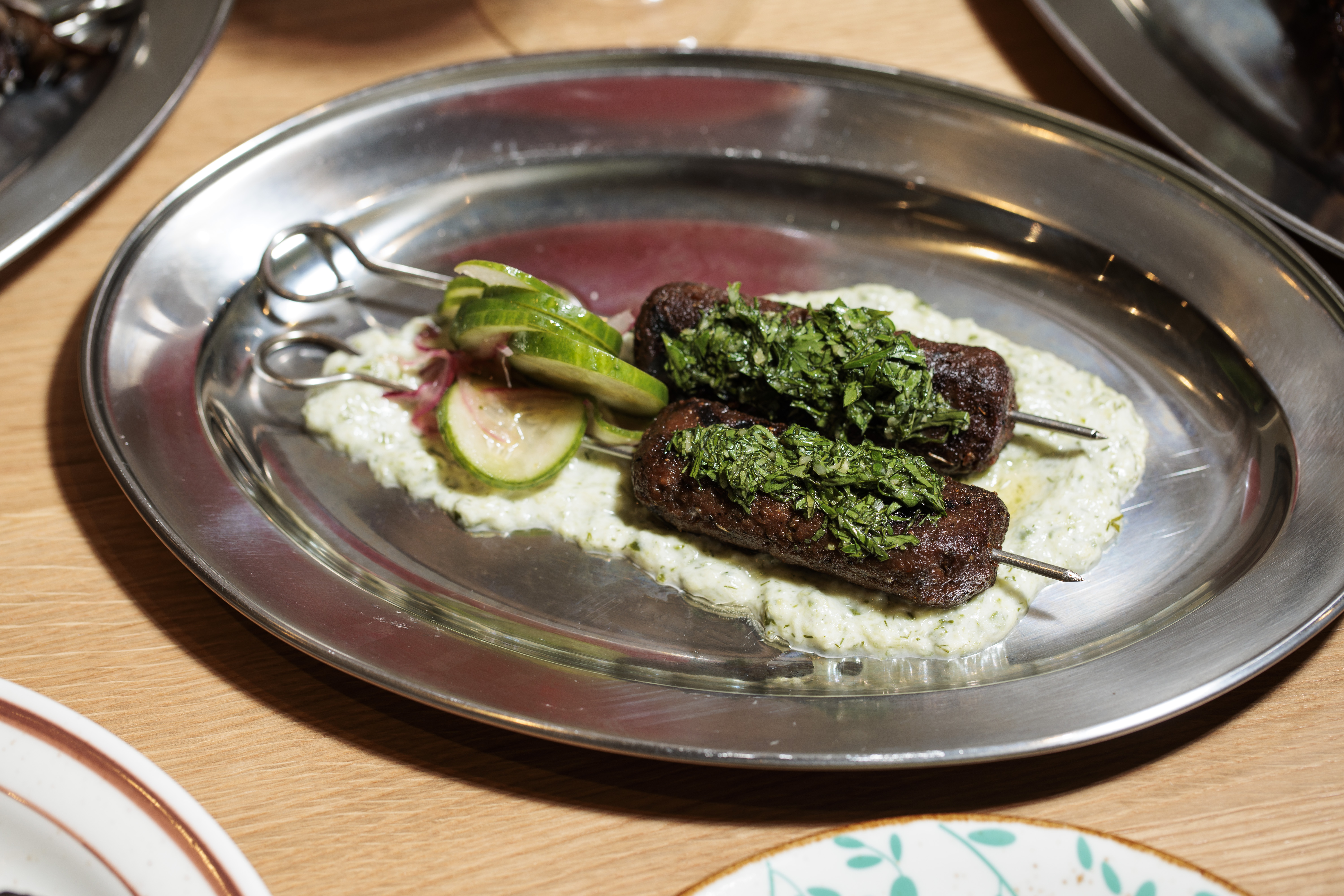
I especially enjoyed the “Chesco” portobello kebab whose long ribbon of mushroom is threaded like an accordion onto the skewer, glazed with date molasses and tamari, then served over a walnut tarator sauce. I also unexpectedly loved another Impossible meat creation: a version of kofta zestily seasoned with onions and garlic in the style of a Balkan ćevapi sausage, garnished with an herbal chimichurri over tzatziki yogurt.
The Chesco skewers at the Blue Warbler on Thursday, Sept. 3, 2026 in the Chestnut Hill section of Philadelphia.Monica Herndon / Staff PhotographerThe Balkan kebab skewers at the Blue Warbler on Thursday, Sept. 3, 2026 in the Chestnut Hill section of Philadelphia.Monica Herndon / Staff Photographer
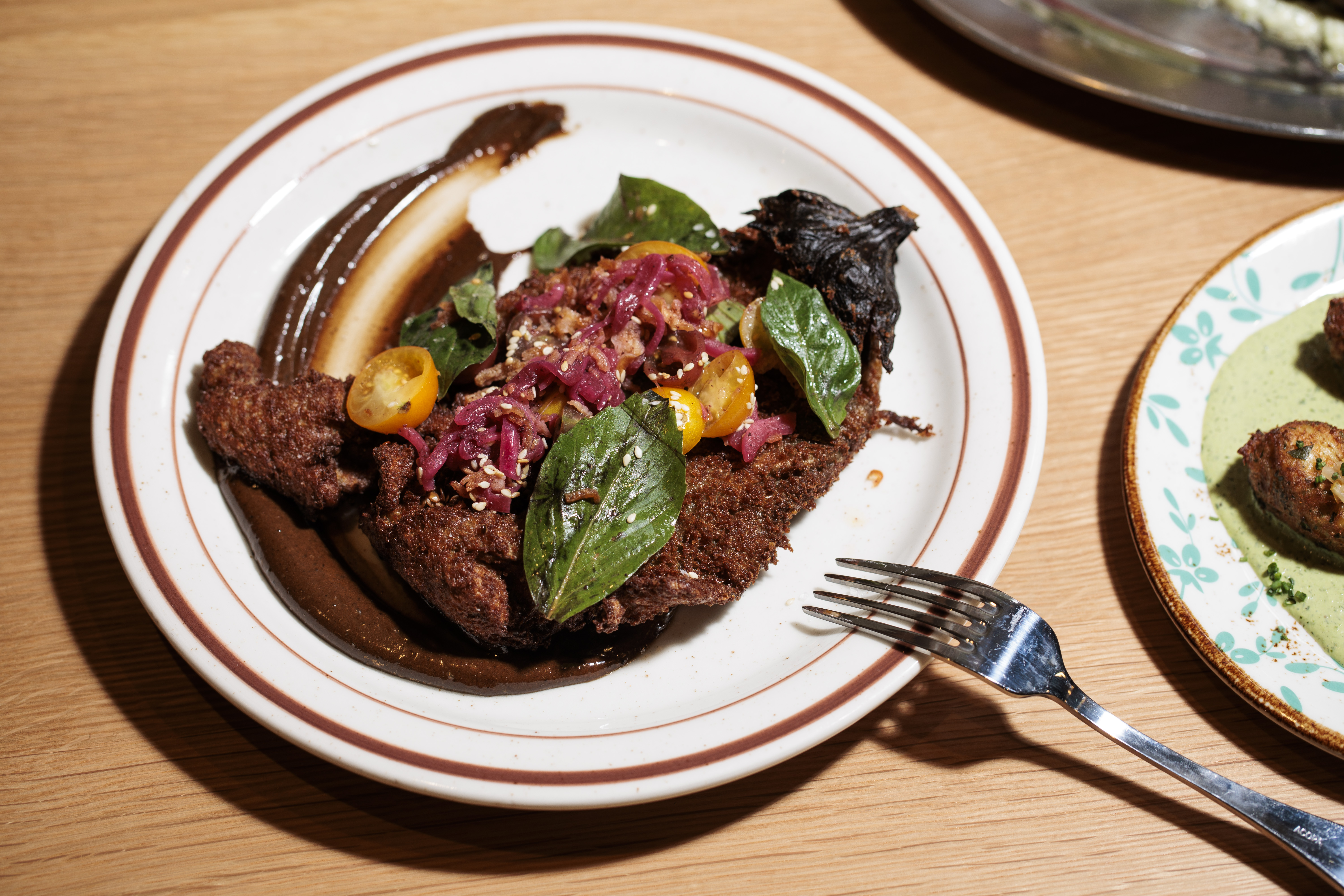
Such mock-meat successes opened my mind to the panko-crusted, lemon-infused tofu steak. It was not bad, especially over a colorful pile of sauteed asparagus and watermelon radish. But it was a bit boring compared to the most satisfying entree here, a whole smoked eggplant that’s deep-fried into a schnitzel, then placed over a black garlic aioli beneath a juicy tumble of fresh heirloom tomatoes tossed with Thai basil, sesame, and tart sumac.
The grilled whole branzino was a perfectly fine option for those craving fish, but it, too, was ultimately less engaging than that eggplant.
The smoked eggplant schnitzel at the Blue Warbler on Thursday, Sept. 3, 2026 in the Chestnut Hill section of Philadelphia.Monica Herndon / Staff Photographer
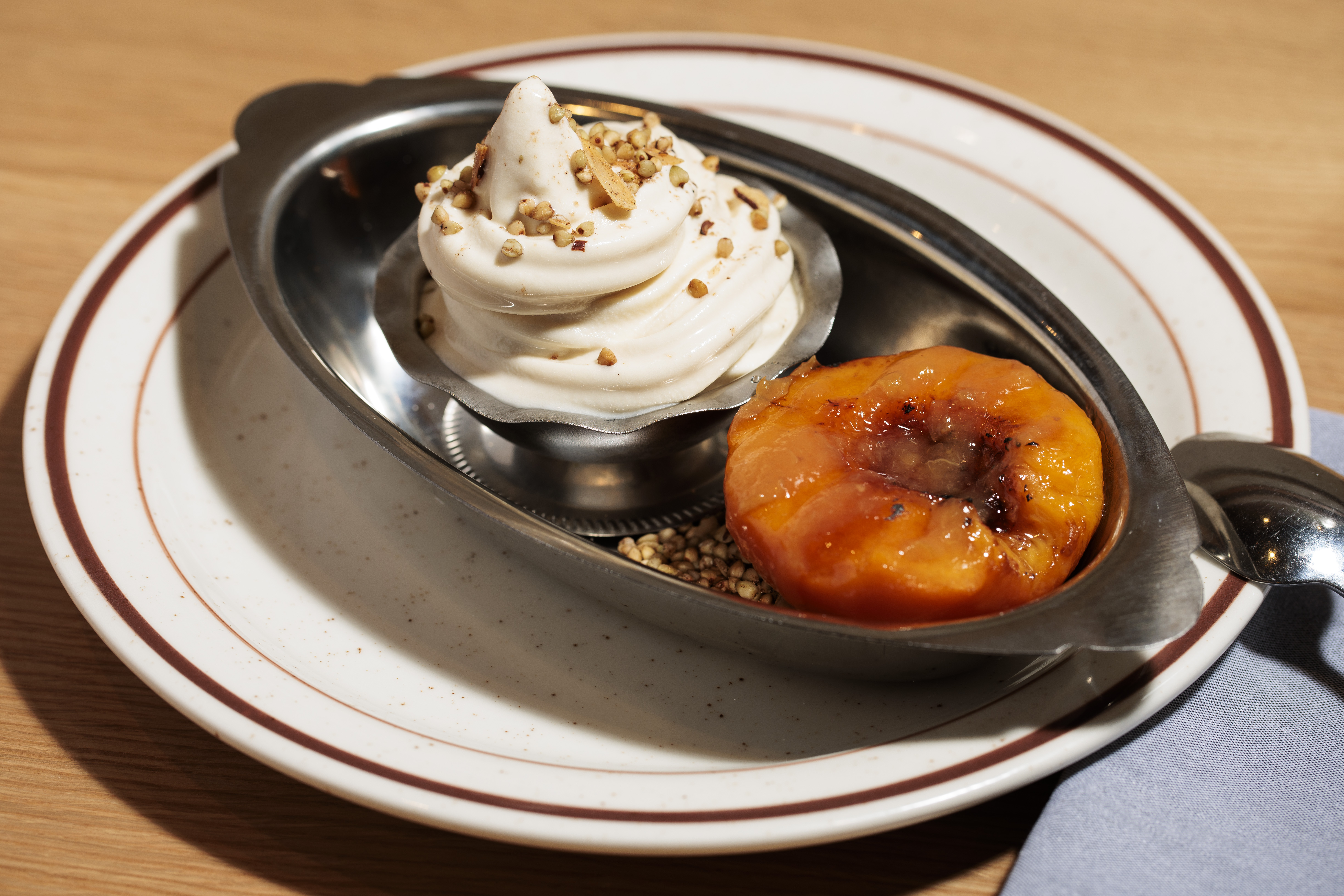
The desserts begin with two solid renditions of crème brûlée, including a classic vanilla custard, stylishly dusted with dried rose petals, and a seasonal variation that has so far ranged from strawberry to matcha and corn. I was most impressed by chef de cuisine Renee Rowlett’s creative deconstruction of a peach crisp into something lighter and more seasonal: A half peach caramelized with demerara sugar was posed over a crunchy mound of brown sugar-toasted almonds and buckwheat groats (a nod to the Ashkenazi Jewish thread woven through the Warbler’s menu) beside creamy maple soft-serve.
The peach crisp at the Blue Warbler on Thursday, Sept. 3, 2026 in the Chestnut Hill section of Philadelphia.Monica Herndon / Staff Photographer
Breakfast, lunch, and brunch are obviously key to the Blue Warbler’s success as an all-day cafe. And while this corner room soaks in the sunshine and exudes a pitch-perfect laid-back aura — I’d happily hang out here and drink that bold Cuban roast brew from Mayorga — our daytime meal was not the layup it should have been.
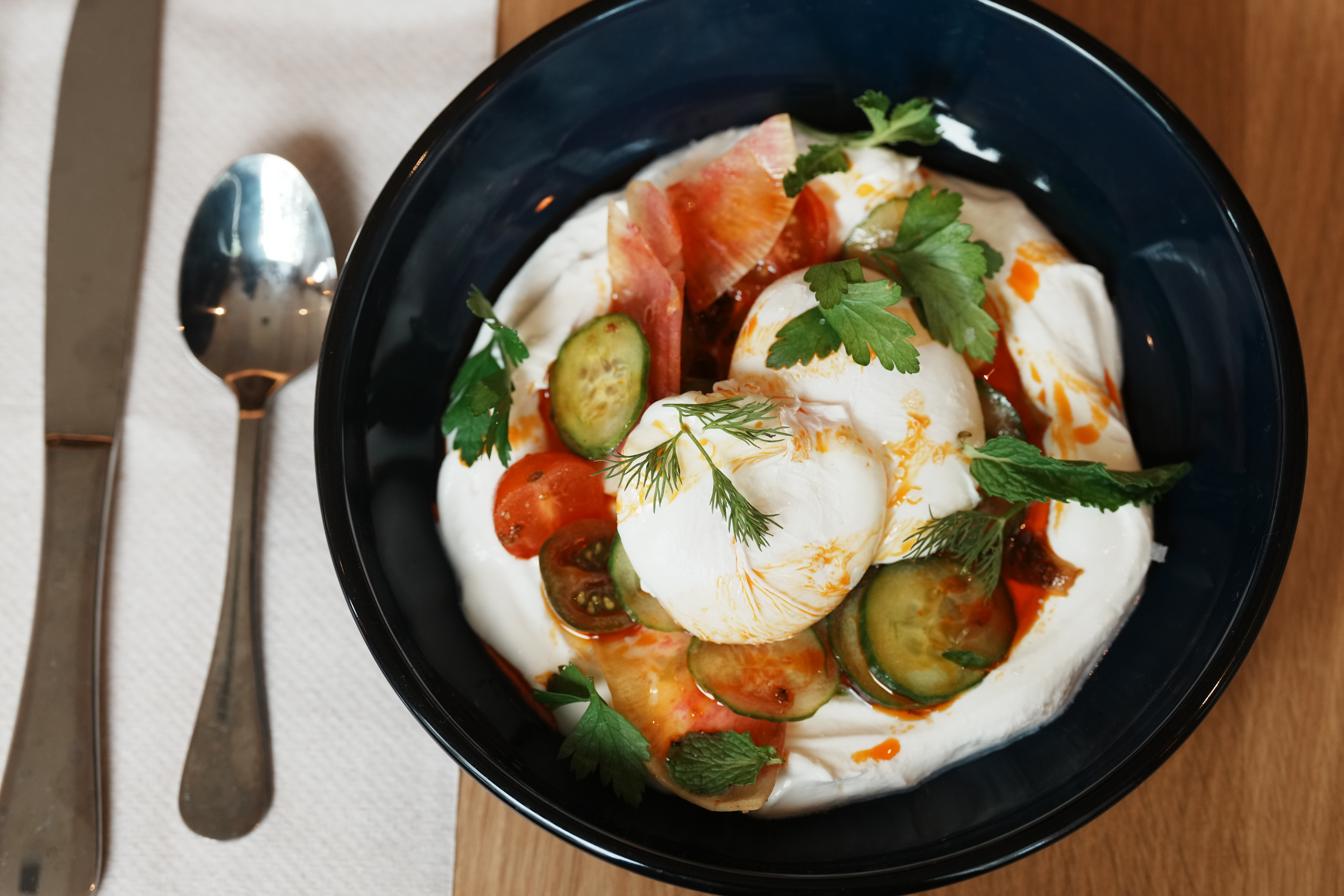
I would have loved my well-cooked omelet with zucchini, onion, peppers, and feta (and especially that side of cuminy tomato shakshuka sauce) but the kitchen forgot to add the zucchini. I’ll never pass up a socca chickpea pancake, but the Warbler’s rendition was unfortunately thick and scorched. The classic American-style pancakes with butterscotch were doughy. The cheddar biscuits were dense. Next time, I’ll definitely try the Turkish breakfast of eggs, tomatoes, and cucumbers over labneh with harissa.
Turkish breakfast at the Blue Warbler, in Philadelphia, June 11, 2026.Jessica Griffin / Staff Photographer
I’ll give the Warbler bonus points for hand-rolling their own bagels, even if the overly fluffy sourdough interior is not my ideal (not to mention the heat bubbles blistering its crust, which should be smooth). It nonetheless worked well enough as a vehicle for a breakfast sandwich stuffed with cheddar, eggs, arugula, and red pepper aioli. I especially liked that bagel hollowed out and stuffed with zesty green herbal tofu purée and tangy red peppadew peppers for the Herbivore sandwich.
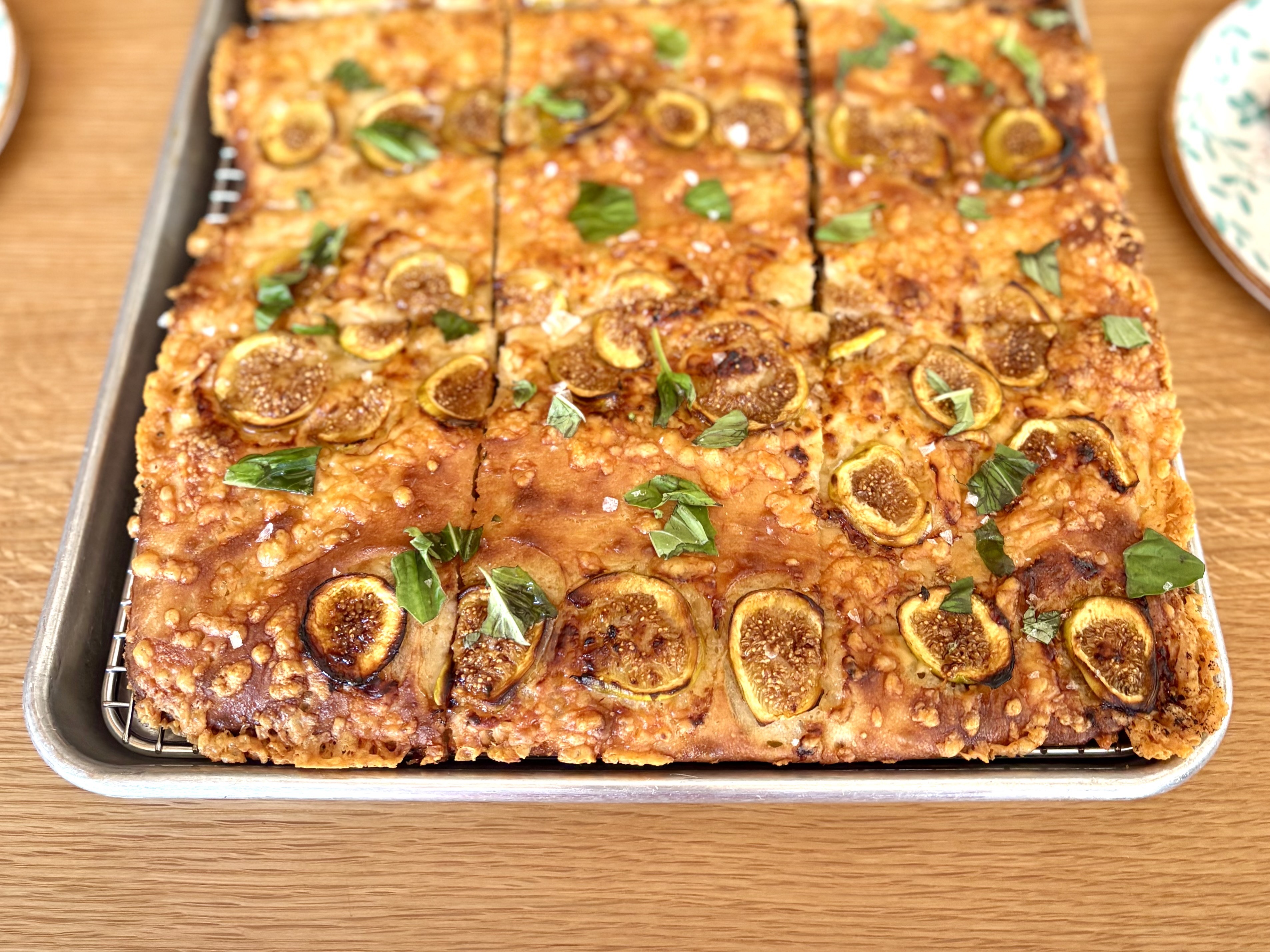
All these flaws can surely be fixed with some tweaks. And considering how well the kitchen infuses seasonal creativity into the grab-and-go items that cycle onto the counter display on the bar throughout the day — from the muffin-shaped herb-and-feta “egg bites” to a fig- and fontina-topped schiacciatta bread still warm from the oven — such modifications are easily within their reach.
Mogul has already been so dialed in to all the details since embarking on making his restaurant dream a reality, I’m hopeful the Warbler will do that soon. There is already so much to appreciate at this promising — and needed — new addition to Chestnut Hill, I’ll look forward to watching it grow.
A schiacciata topped with figs and fontina at the Blue Warbler in Chestnut Hill.Craig LaBan / Staff
Breakfast and lunch 7 a.m. to 2 p.m. Monday through Friday. Dinner 5 to 9 p.m. Sunday, Wednesday, and Thursday, until 10 p.m. Friday and Saturday. Brunch 9 a.m. to 2 p.m. Saturday and Sunday. No dinner Monday or Tuesday.
Main plates, $15-$32 (including sharing platters).
Wheelchair accessible.
About a third of the menu is gluten-free or can be modified.
Menu highlights: Dinner: trio of meze dips; bacalao fritters; haloumi dates; smoked arctic char spread; Balkan and Chesco skewers; eggplant schnitzel; Impossible meatloaf; peach crisp. Breakfast-lunch: omelet; the Herbivore; egg bites; schiacciatta.
Drinks: Fresh and fruity takes on classic cocktails — Clover Club, Mai Tai with fresh orgeat, a pear martini, an amaro spritz, a spicy margarita, and fizzy Sgroppino — are worthwhile, alongside a selection of thoughtful N/A options. Local beers on draft and an international selection of well-priced wines by the glass ensure there’s something for everyone.
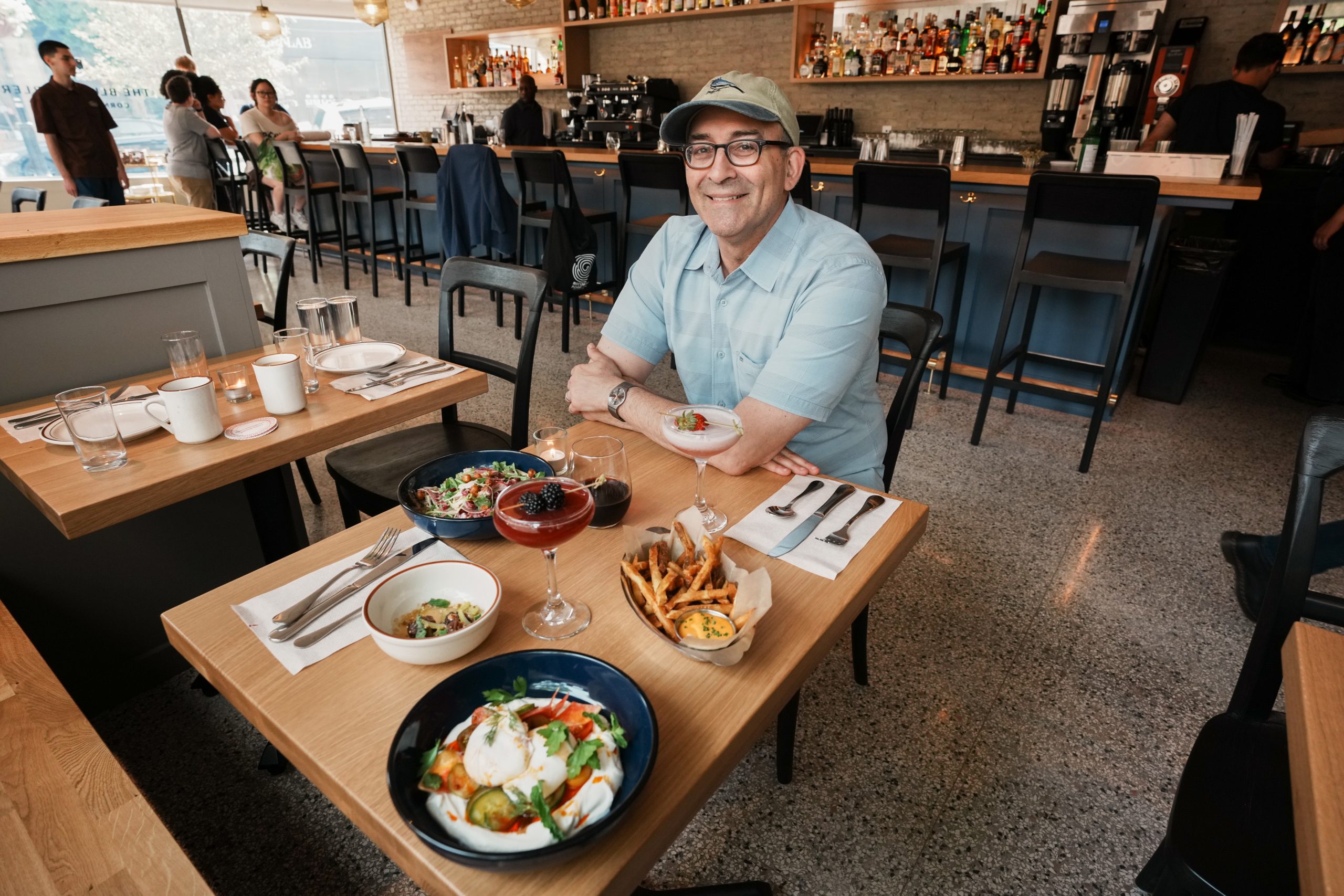
Owner Fred Mogul at the Blue Warbler, in Philadelphia, June 11, 2026.Jessica Griffin / Staff Photographer
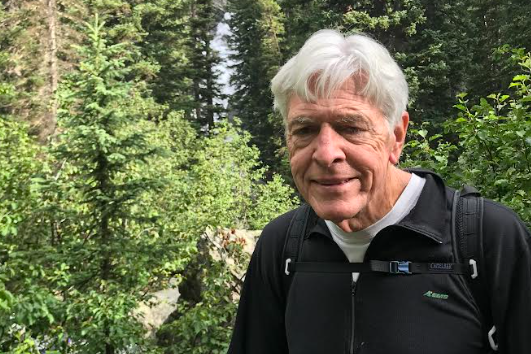
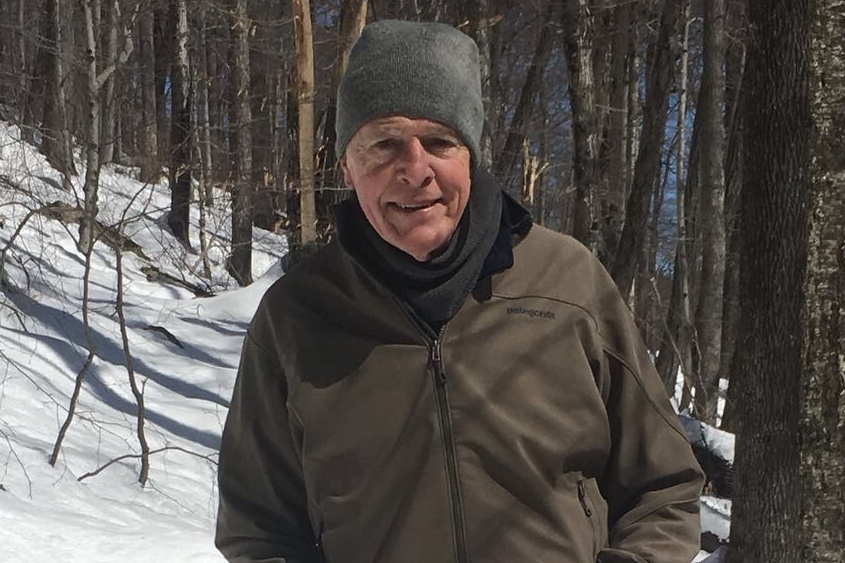
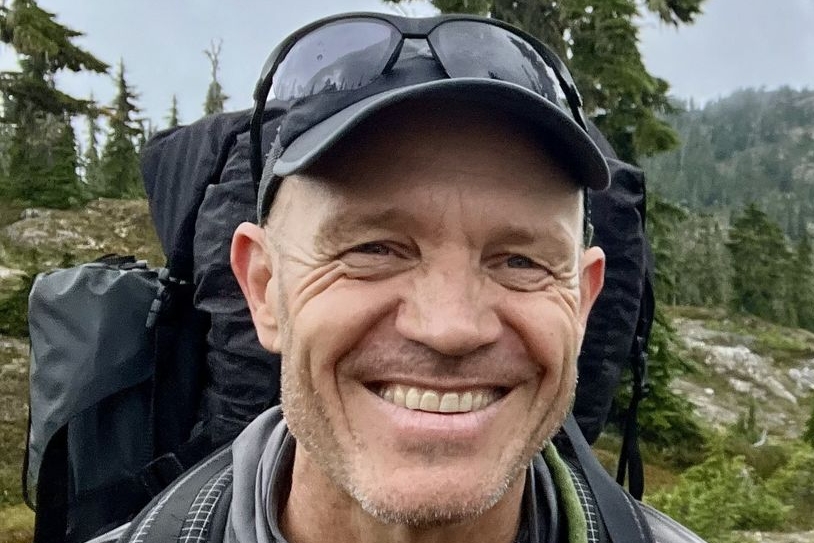
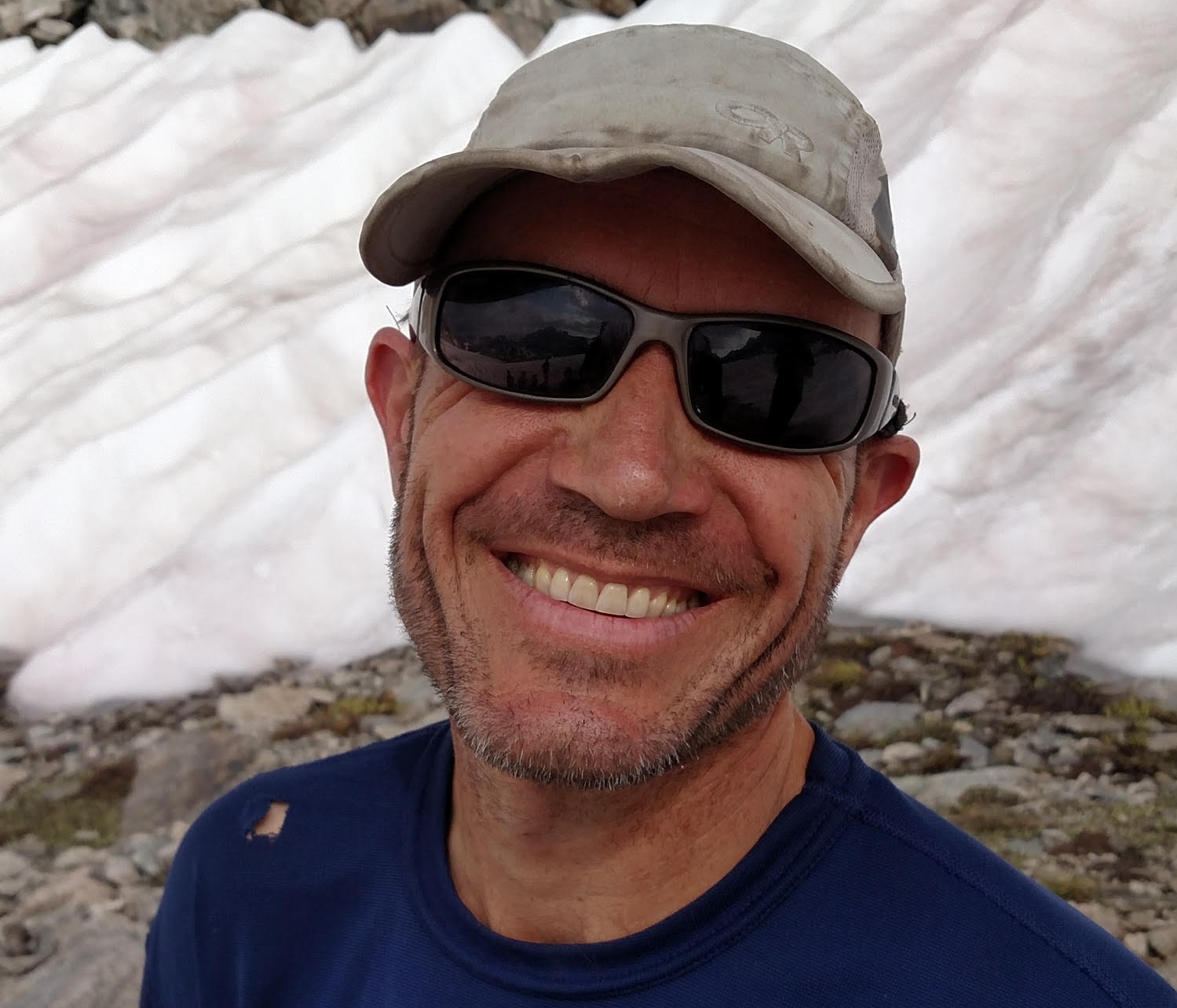
Peter D. Yeomans, 58, of Philadelphia, innovative clinical psychologist at the Corporal Michael J. Crescenz Department of Veterans Affairs Medical Center, founder of Cold Mountain Counseling LLC, worldwide mountaineer and backcountry adventurer, teacher, author, mentor, Quaker, and volunteer, died Friday, Aug. 28, of cardiac arrhythmia at the VA Medical Center in University City.
Dr. Yeomans was an expert in trauma, substance use disorder, moral injury, and spiritually integrated healthcare. He joined the Philadelphia VA Medical Center as a staff psychologist in 2009 and became director of its innovative PTSD outpatient team program in 2019.
He opened his own psychology practice, Cold Mountain Counseling, in 2021 and advised thousands of veterans, fellow backcountry adventurers, and other clients in need across the country. “He was instrumental in the healing process for so many veterans that it is hard to fathom the reach of his influence,” a VA colleague said in a tribute.
R. Tyson Smith, a friend and colleague, said several veterans told him: “Peter Yeomans saved my life.”
At the VA center, in addition to physical and mental ailments, Dr. Yeomans and others innovated a treatment for what are called “moral injuries” from military service. They connected therapists with VA chaplains to link emotional healing with faith rituals, and veterans in the program spoke appreciatively about shifting the guilt and shame of moral failures during war from soldiers in general to society at large.
“These are stories to hear and also for the public to wrestle with,” Dr. Yeomans told The Inquirer in 2019. His wife, Kate O’Shea, said: “He was the most responsible person you could imagine, and he felt he had a responsibility to humanity.”
Outside the medical center, Dr. Yeomans spent weeks at a time hiking, backpacking, packrafting, skiing, rock climbing, and mountain biking around the world. He reached summits in Alaska and Argentina, had to be rescued from a deep crevasse, and worked as a program supervisor and senior field instructor in the 1990s for the National Outdoor Leadership School in Alaska, Wyoming, Arizona, and Utah.
Later, he cofounded the local Wilderness Outdoor Leadership Force for teens in Kensington. Talia Young, a longtime WOLF member, called him “genuine and earnest … and joyful with kids.”
Dr. Yeomans was an avid cyclist.Bicycle Coalition of Greater Philadelphia
Longtime colleague Rob Riman said he was a “consummate adventure partner and wildly inspired guide.” On his website, coldmountaincounseling.com, Dr. Yeomans said: “Many of the fondest memories of my life are from adventures in the mountains.”
He earned a bachelor’s degree in psychology from Harvard University in 1991 and came to Philadelphia from Wyoming in 1997 to be with O’Shea. He earned a master’s degree in psychology from Lesley University in Massachusetts in 2001 and a doctorate in clinical psychology from Drexel University in 2008.
Dr. Yeomans traveled to New Zealand, Rwanda, Burundi, and elsewhere to train other counselors. He worked in state correctional institutions in Philadelphia and Chester, and earlier for the American Red Cross in Germany.
Dr. Yeomans and his wife, Kate, married in 2002 and had many adventures together. Courtesy of the family
He taught classes on moral injuries at Germantown Friends School, the University of Pennsylvania, and elsewhere. Longtime friend William Anninger said: “He was particularly good at creating emotional sharing among men.”
Friend Lila Berman said: “He exuded warmth and care for the people around him, and for the natural environment.”
Peter Douglass Yeomans was born Aug. 27, 1968, in Berkeley, Calif. The family moved to Massachusetts when he started high school, and he graduated from Concord Academy in 1986.
He met Kate O’Shea at an environmental ethics course in Utah in 1996, and they married in 2002 and lived in Germantown. He made her tea in the mornings and left love notes behind when he left the house first. They reared a daughter, Ada, and sons Josiah and Levi, and they all went on memorable adventures in Wissahickon Valley Park, across the country, and around the world.
Dr. Yeomans, rear left on top and fourth from the left on bottom, enjoyed time with his family in the mountains and on stage. Courtesy of the family
“They complemented each other perfectly,” their daughter said. “He taught us how to read a map, find a campsite, and most importantly bake cinnamon rolls in the backcountry.”
Dr. Yeomans was a member of the Bicycle Coalition of Greater Philadelphia, and he rode his bike often from home in Germantown to work in University City. He went to Germantown Friends Meeting, played guitar, sang, and acted in theatrical shows in high school and later with community groups and his family.
He was inclusive and encouraging, his brother, Ben, said, “drawing out capacities in me I wasn’t yet trusting.” His parents, Anne and Tom, said: “It has been a great privilege to have been Peter’s parents.”
His mother-in-law, Margaret O’Shea, praised his “compassion, selflessness, nobility, and grace,” and his father-in-law, Dan O’Shea, said: “When our daughter met Peter she described him as ‘Mr. Perfect.’ Little did we know how perfect.”
“It has been a great privilege to have been Peter’s parents,” his parents said.Courtesy of the family
Kate O’Shea said: “Because of Peter, our world is a kinder, more generous, and more loving place.”
In addition to his wife, children, parents, brother, and in-laws, Dr. Yeomans is survived by other relatives.
A memorial service is to be held at 2 p.m. Saturday, Oct. 3, at Germantown Friends Meeting, 47 W. Coulter St., Philadelphia, Pa. 19144.
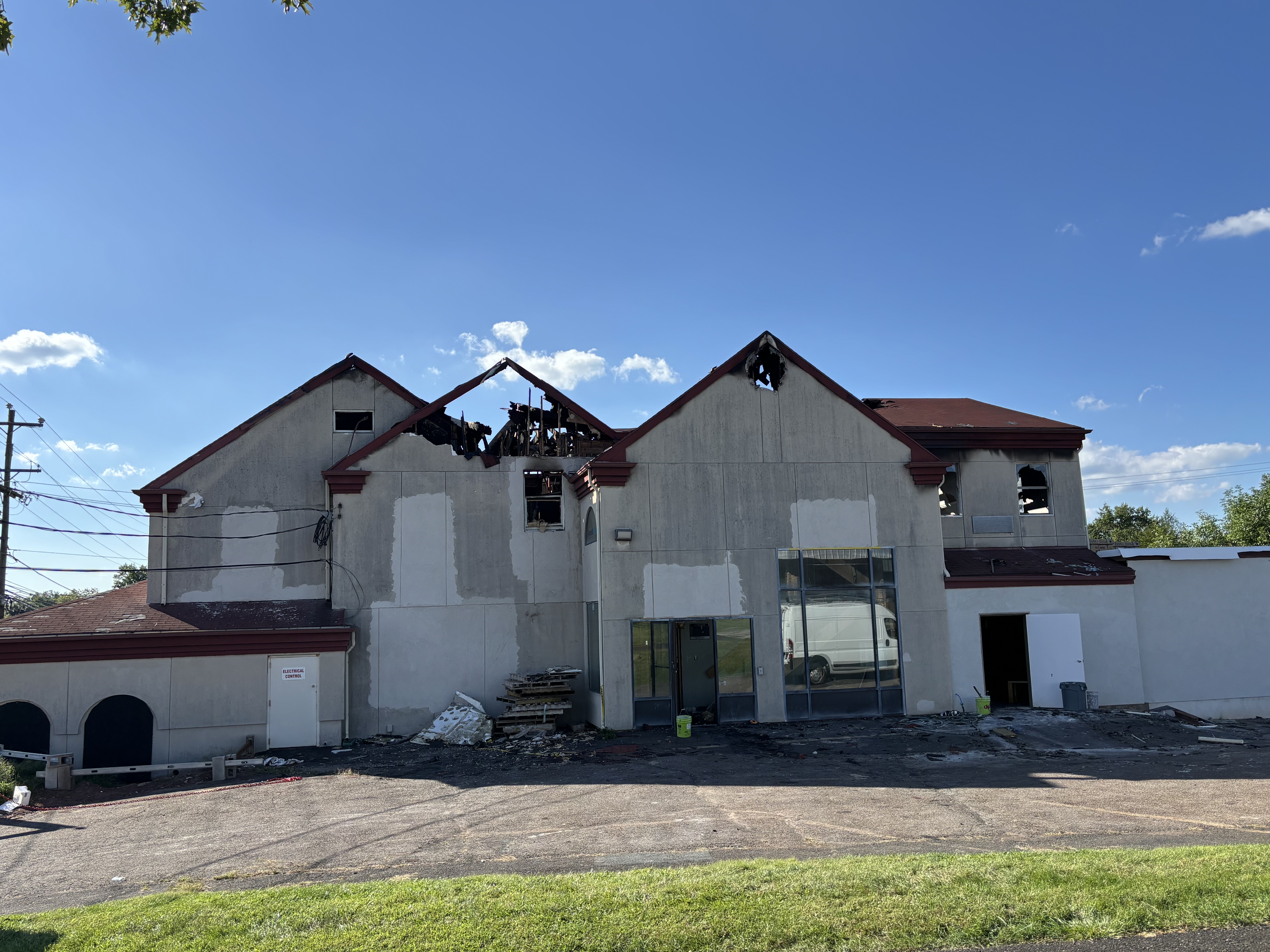
The dining tables were already inside the East Norriton building where the owners of White Yak Restaurant planned a second location when a fire ripped through the roof earlier this month.
Chef-owner Treley Parshingtsang’s husband, a contractor by trade, made the tables by hand. The couple was about six weeks from opening what would have been Montgomery County’s only Tibetan restaurant.
“I have so many packages that my brother shipped all the way from Tibet for the decorations,” she said through tears.
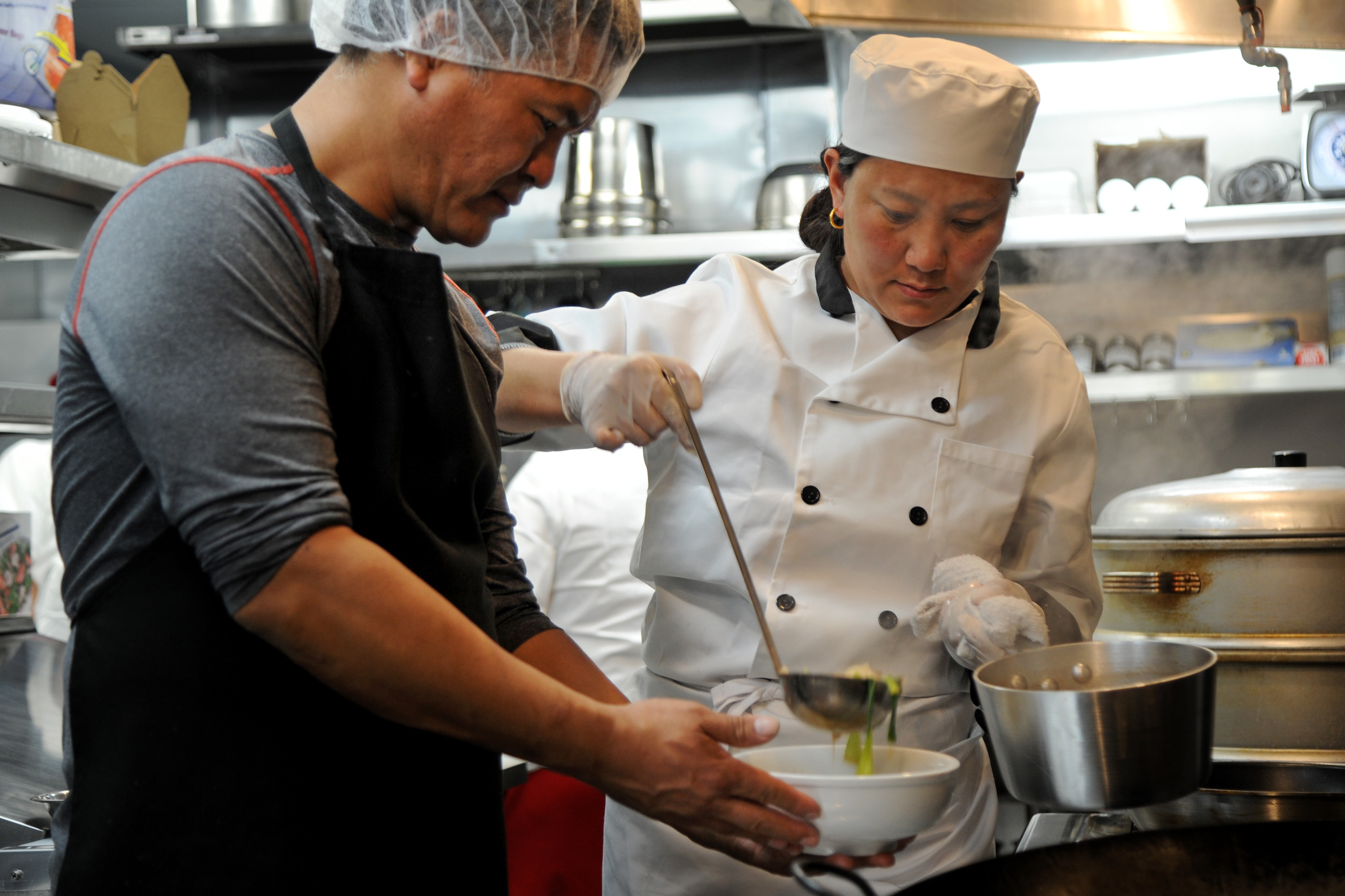
White Yak Restaurant’s Roxborough location has drawn a loyal following and criticalacclaim for its spicy momo dumplings, hand-ripped noodles, and house-made sausage. It’s been a regular on The Inquirer’s 76 best restaurants in the region.
Co-owners Tsering Parshingtsang (left) and Treley Parshingtsang spoon out Thenthuk soup with beef and hand-ripped noodles at White Yak, the Himalayan Tibetan restaurant in Roxborough Nov. 26, 2019.TOM GRALISH / Staff Photographer
Opening the first restaurant, at 6118 Ridge Ave., took six and a half years of work, Parshingtsang said, and her family had been working on the East Norriton location for four. The couple bought the building in 2021, property records show.
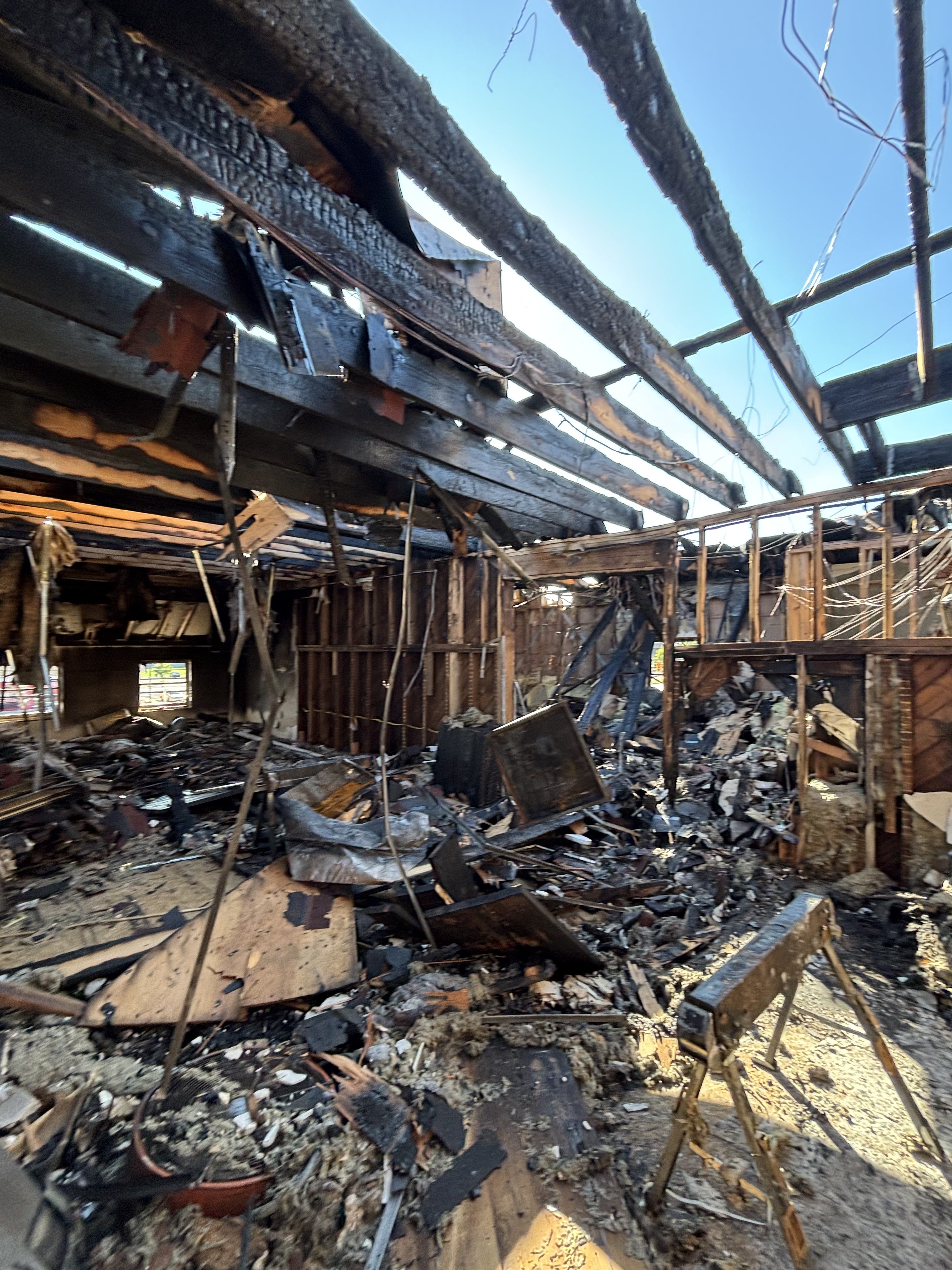
The fire broke out Sept. 5 at the 123 W.Germantown Pike building, White Yak Restaurant wrote on social media last week. Images show flames pouring from the roof of the 6,000-square-foot structure across from Friendly’s.
Though insurance and fire inspectors have surveyed the damage, the cause of the fire is still unknown, Parshingtsang said in an interview. The electricity wasn’t turned on, and the doors were locked.
The top floor of 123 W. Germantown Pike, razed by fire on Sept. 5, 2026.Tsering Parshingtsang
Parshingtsang is hopeful they can save the basement and first floor, but she’s worried about the rain pouring in from the open roof.
“That building is very special for us,” she said. “We have a lot of memories.”
The news drew messages of support, including from Montgomery County Commissioner Neil Makhija.
“[I] was so excited to welcome the White Yak Restaurant,” Makhija wrote on social media. “Their Roxborough restaurant is a favorite for our family.”
It’s too early to tell when White Yak will be ready to resume expansion plans, Parshingtsang said, but her family wrote in a statement on the restaurant’s social media page that they’re determined to move forward: “The building may be gone, but our dream is not.”
This suburban content is produced with support from the Leslie Miller and Richard Worley Foundation and The Lenfest Institute for Journalism. Editorial content is created independently of the project donors. Gifts to support The Inquirer’s high-impact journalism can be made at inquirer.com/donate. A list of Lenfest Institute donors can be found at lenfestinstitute.org/supporters.
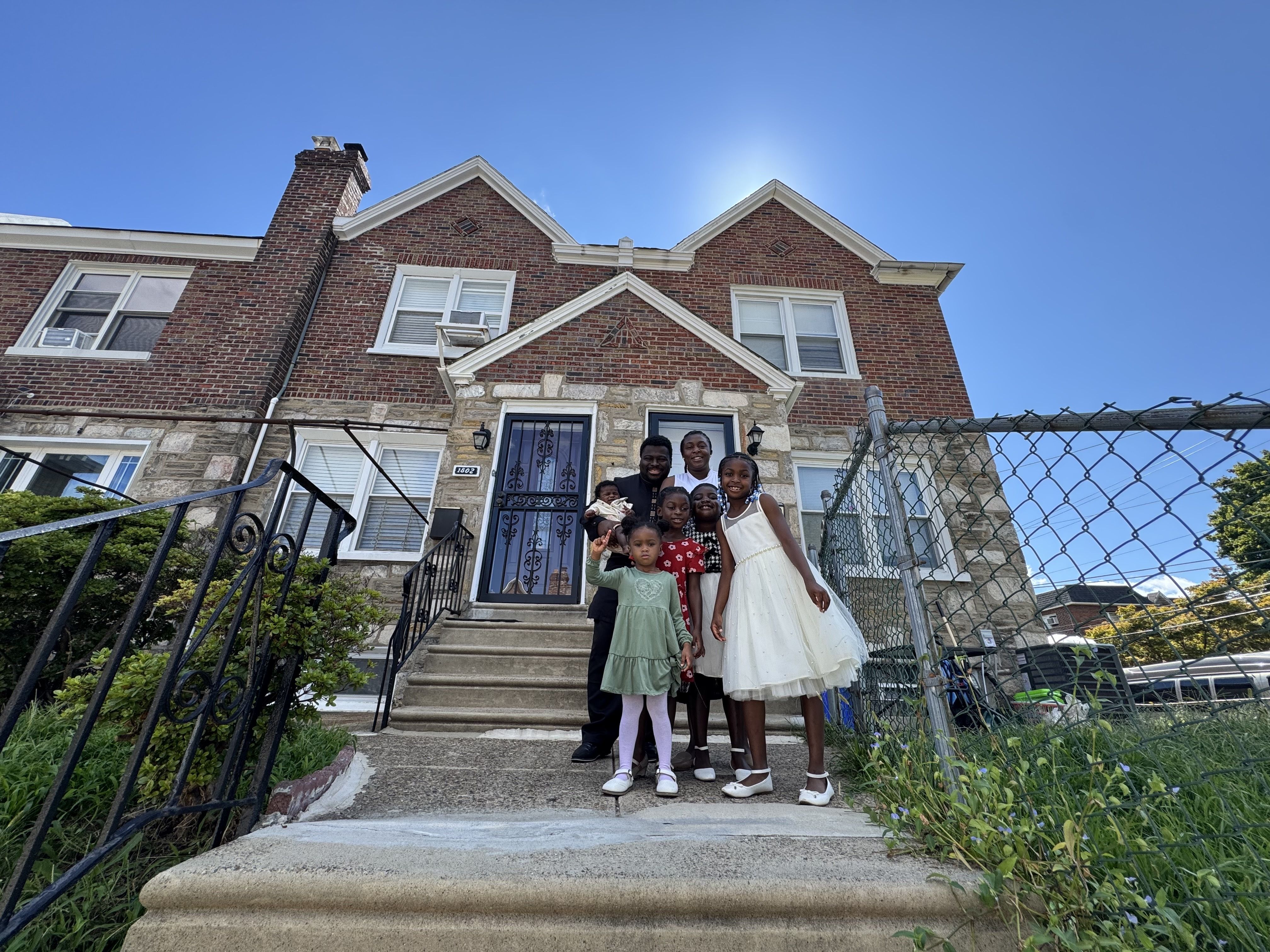
Charmira and Quincy Pilgrim wanted to become homeowners a decade ago when they got married.
But over the years, job losses, jobs that didn’t pay enough, children, unpaid maternity leave, and risingcosts of living made saving for homeownership impossible.
They were finally able to start putting money away late last year. And this spring, they found a $315,000 house they wanted to buy in West Oak Lane. But they were short thousands of dollars for their down payment and closing costs.
What got them and their five children into their new home was a $10,000 first-time homebuyer grant funded by a group of Quakers in Germantown.
“It was a blessing that I ended up getting the grant because money was tight,” said Charmira, a 32-year-old special-education teacher and case manager.
Up-front cost is a common barrier to homeownership for renters in Philadelphia and across the country. Grants for down payments and closing costs can help aspiring homeowners get in the door. Governments, mortgage lenders, and nonprofits are common funders.
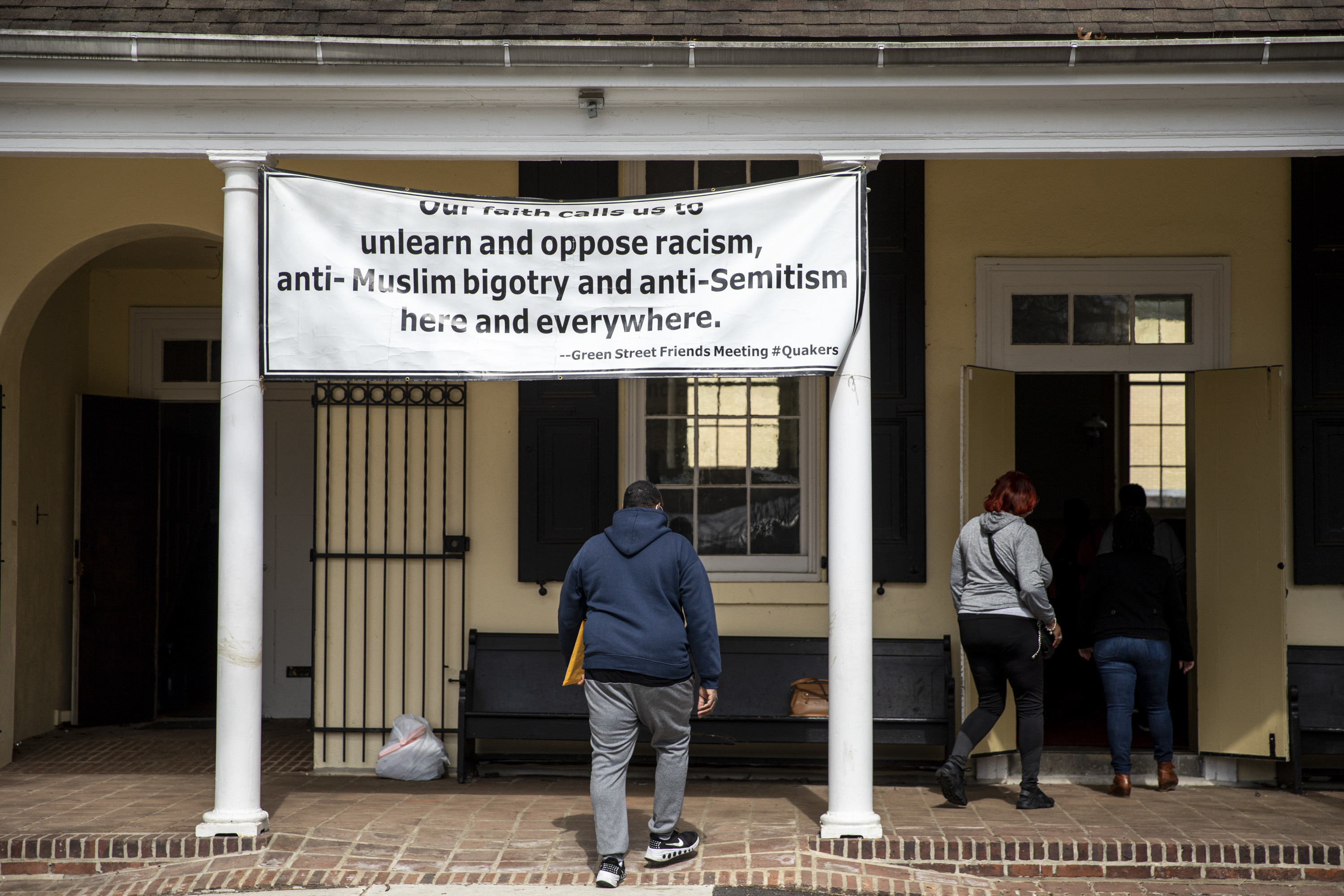
That’s what makes the Pilgrims’ grant stand out. It’s one of five $10,000 grants that Green Street Friends Meeting, a Quaker congregation in Germantown, is funding to help people buy their first homes. It’s part of the congregation’s racial justice plan to redistribute wealth to Black residents in the Germantown area as a form of reparations.
When Green Street announced the homebuyer grants in March, it said it sees reparations as “economic and spiritual repair for the intergenerational harms of slavery, Jim Crow, and their afterlives.” Reparations, it said, are “intended to address the theft and pillaging of Black wealth” for hundreds of years through systemic discrimination.
Lucy Duncan, a member of Green Street, said the homebuyer grants are “a redistribution of wealth that’s about fairness and equity.”
The goal is to keep Black residents from being priced out of their communities and “provide resources to help maintain Black Germantown,” she said.
Rebecca L. Grant, a Black member of Green Street’s reparations committee who has been a Germantown homeowner for 22 years, said the committee wanted to eliminate a hurdle to homeownership and the wealth it can create for Black residents.
“We knew these grants wouldn’t undo generations of discrimination,” Grant said, ”but we thought we could make a difference one family at a time.”
How the homebuyer grants work
To distribute the grants, Green Street partnered with birdSEED, a Washington-based nonprofit that aims to reduce racial wealth gaps in the Washington and Philadelphia areas. As part of its work, the nonprofit helps members of historically disadvantaged communities buy their first homes.
The Quaker congregation contributed funds to birdSEED’s Housing Justice Grant Program and required that its money go to Black homebuyers purchasing in the 19144 or 19138 zip codes.
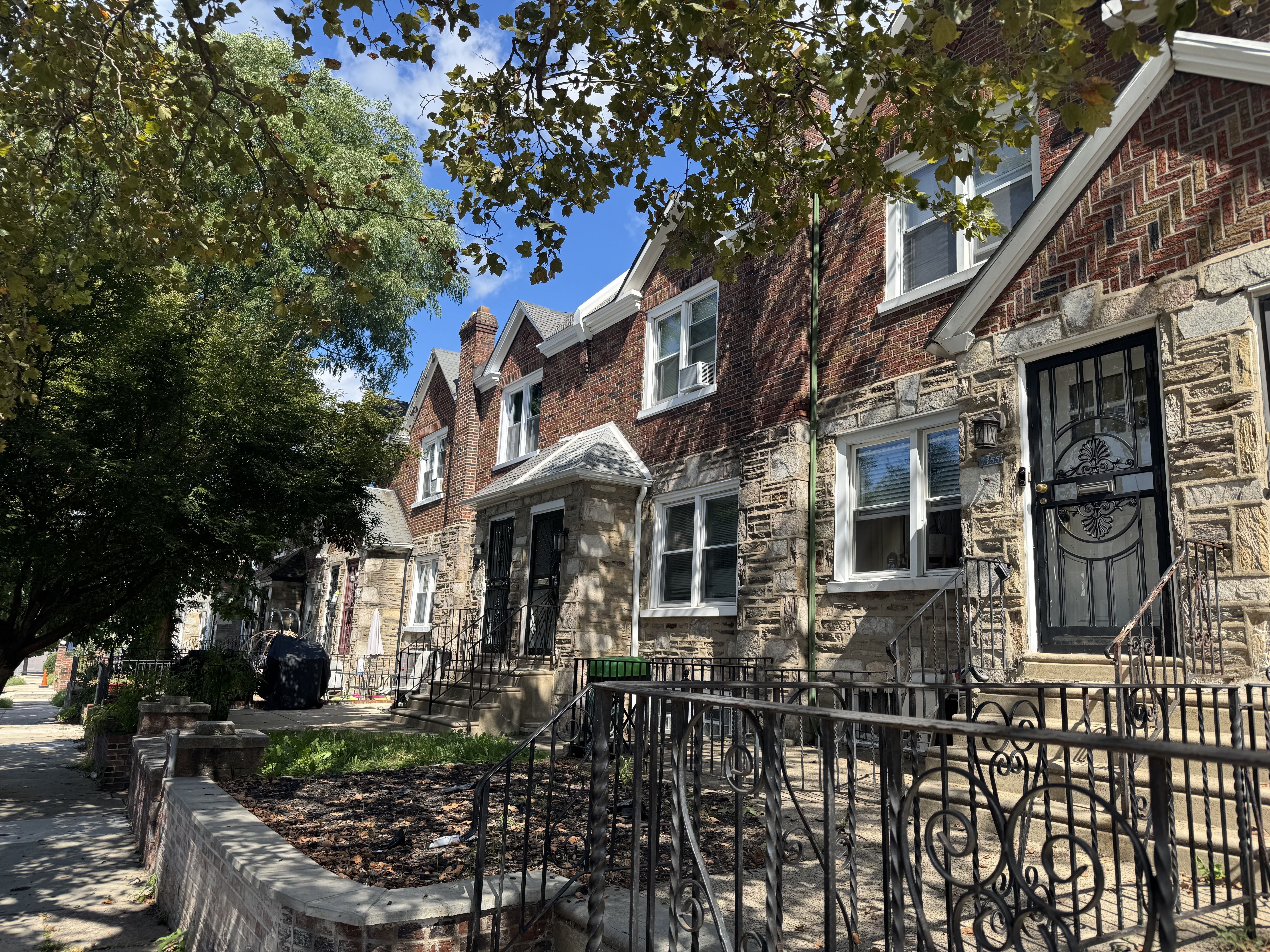
West Oak Lane is one of the communities where homebuyers can use grants from Green Street Friends Meeting to purchase properties.Michaelle Bond / Staff
In the Philadelphia area, birdSEED typically awards grants of between $5,000 and $10,000 for down payments and closing costs. An advisory board reviews applications and interviews top candidates. The board scores applicants based on their readiness to purchase a home and the impact the grant would have, said Leslie Case, birdSEED’s co-executive director.
Candidates need to have lived in the area in which they are buying for at least three years. They cannot have purchased a home before. And their household can make up to $150,000 a year. Preference is given to populations who have historically faced barriers to homeownership.
The nonprofit has awarded about 40 homebuying grants so far in the Philadelphia region, which includes surrounding counties in Pennsylvania and New Jersey.
Maegan Scott, birdSEED’s co-executive director, said the grants funded by Green Street represent “momentum” as the nonprofit seeks to expand its presence in the Philadelphia area.
A majority of the nonprofit’s housing justice grants have gone to first-generation homebuyers. But a common thread ties all applicants together.
“Everyone’s looking for stability,” Scott said. “Everyone is looking ahead to the next generation, the generation after that.”
Green Street’s reparations initiative
In June 2021, Green Street pledged to spend $50,000 a year for 10 years as part of its reparations work, spurred by a moral calling and the realization that the congregation had a large pot of money in unrestricted reserves.
In about a year and a half, clinics to resolve and prevent tangled titles preserved more than $11.3 million in housing wealth for more than 85 families by protecting homes that might otherwise have been lost because of unclear legal ownership, according to Green Street. It was a massive return on the $25,000 the congregation spent on fines and legal services for families who didn’t qualify for free legal help.
Green Street Friends Meeting in Germantown welcomed neighborhood residents to its meetinghouse in April 2022 to get help with tangled titles and estate planning at a legal clinic it hosted.TYGER WILLIAMS / Staff Photographer
Over the last few years, Green Street’s reparations work has included music education for Black youth, funds for Black midwives in Germantown and a new birthing center in Mount Airy, estate planning services, and additional housing support.
“We didn’t want the reparations to just be about acknowledging a painful history,” Grant, the reparations committee member, said. “We want it to be about what we can do now.”
The Pilgrims and one other family have bought homes using Green Street’s grants so far.
Duncan, at Green Street, said that when birdSEED sent her the first pictures of the families, “I almost started to cry.”
“It’s such tangible and long-term impact for these families,” she said. “And hopefully, generational impact.”
A home of their own
Charmira and Quincy Pilgrim closed on their three-bedroom house at the end of May, about a month before their fifth child was born.
The children, the oldest of whom is 8, love playing in the side yard, backyard, and finished basement. Charmira loves to cook, and she now has a big kitchen. The house is close to biological family and church family.
Charmira said being a homeowner “means freedom.” She has started planning future upgrades for her home.
“It feels good to have ownership. It feels good to be in a space I can create a vision for,” she said. “I see this as an opportunity for my kids to have a legacy.”
The story that’s told about Germantown’s downtown is often one of disinvestment, but a small contingent of community stakeholders and business owners are hoping to spin a new yarn.
But forces big and small are working to revitalize the community: Germantown United, the neighborhood’s community development corporation (CDC), recently completed a plan to make Germantown’s business district more walkable. Historic Germantown, the neighborhood’s historical society, in July unveiled its new visitors center that aims to connect Philadelphians and visitors to the area’s deep history. And buzzy storefronts including Uncle Bobbie’s Coffee & Books, Salam Cafe, Weavers Way Co-op, Cupbearer Coffee, and Attic Brewing bring much-needed services and third spaces to the neighborhood.
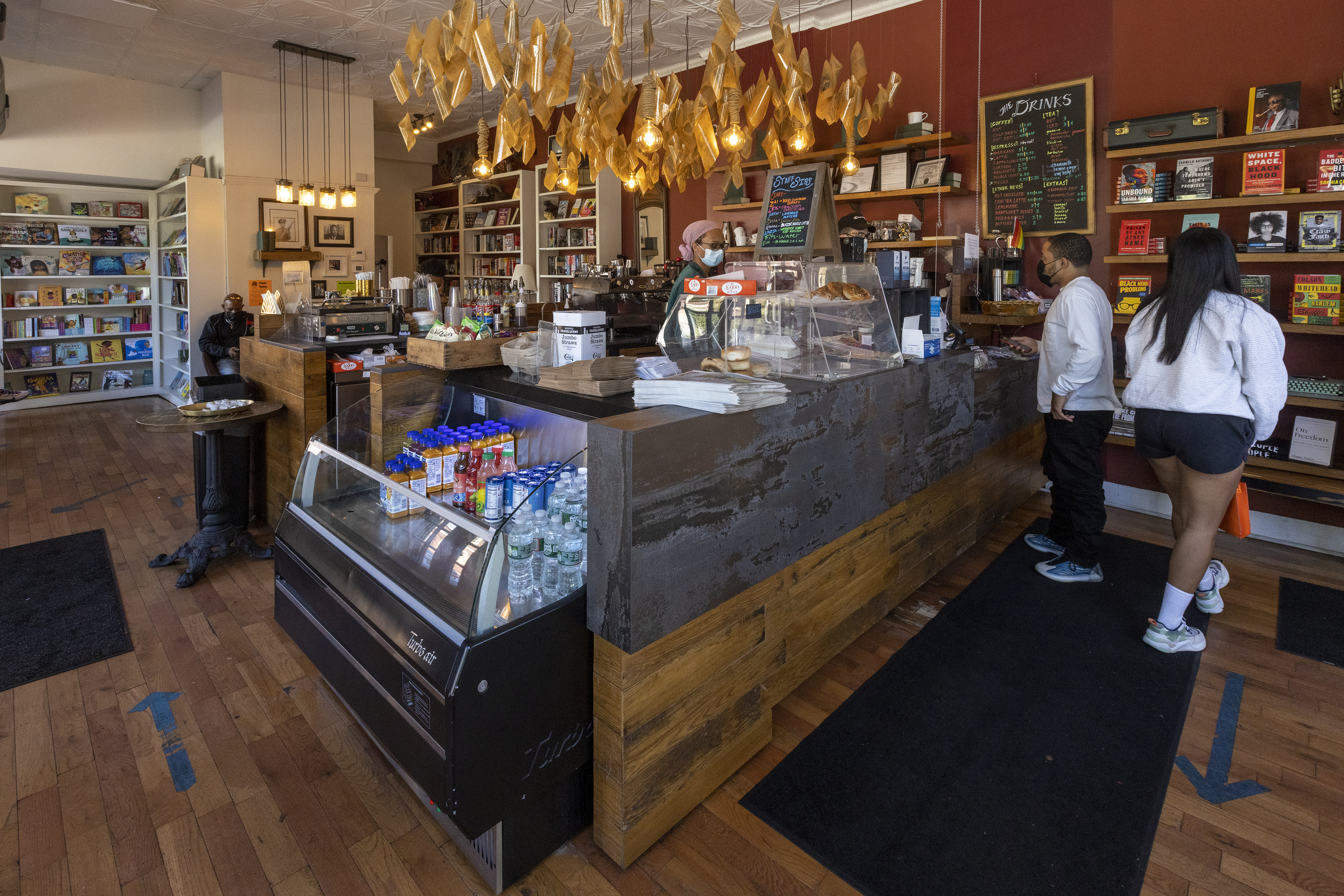
Interior of Uncle Bobbie’s Coffee & Books, 5445 Germantown Ave. Alejandro A. Alvarez / Staff Photographer
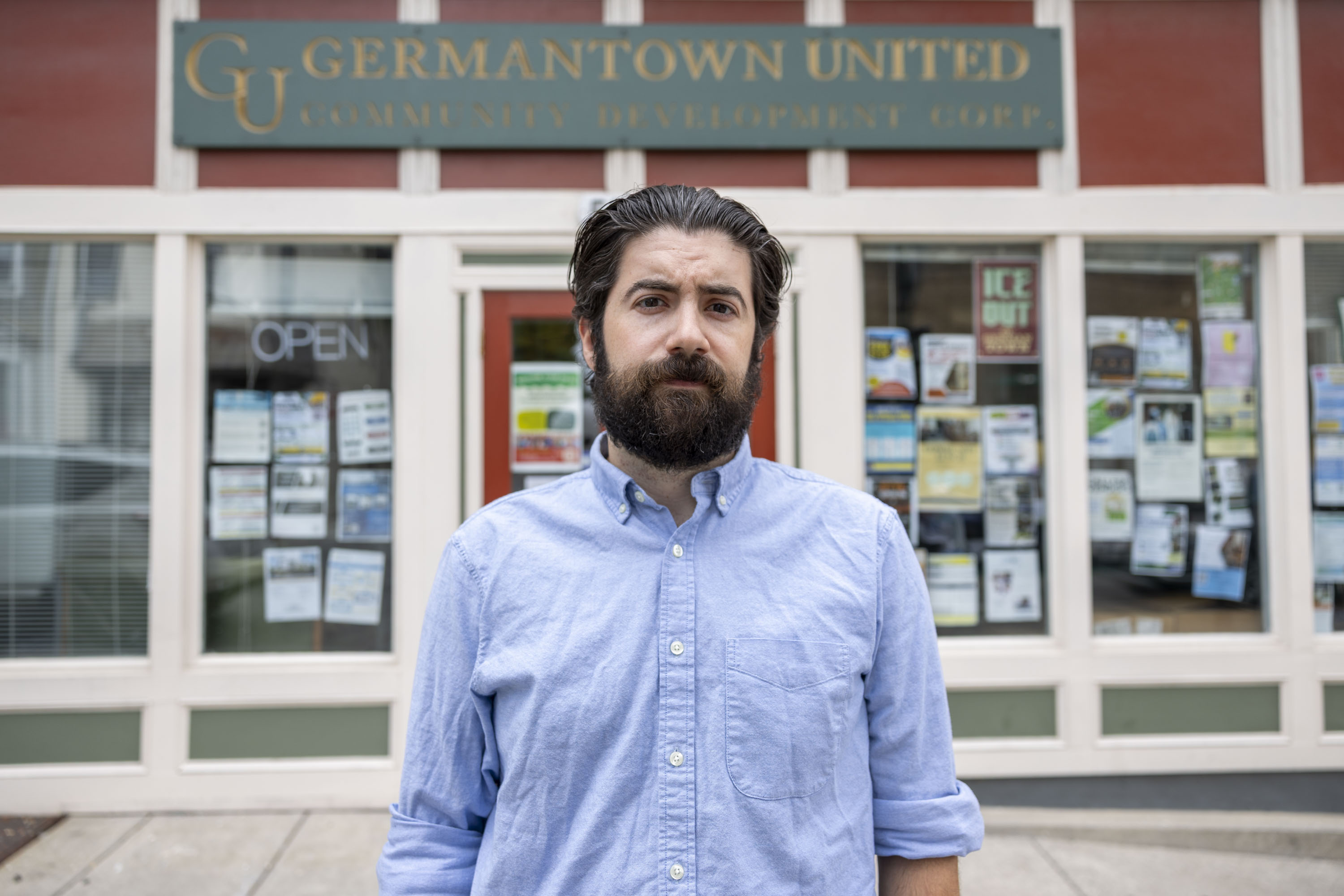
Leo Dillinger IV, the executive director of Germantown United, said new businesses have been reaching out to the CDC, the first step to lifting the business district up, “but with everything, it takes time.”
“We don’t want the corridor to change like a light switch and all of a sudden it’s actively populated with a bunch of businesses that aren’t offering affordable goods and services,” Dillinger said. “That leads into the fears of gentrification and displacement that are a major concern for the Germantown community.”
Connecting corridors in Germantown
While it has the CDC, Germantown lacks a business improvement district to fund and oversee improvements to the area. And with the 2019 disbanding of the Germantown Special Services District, after accusations of mismanagement and misappropriation of funds, the neighborhood lost a body tasked with keeping its main business corridors clean.
“We lack structure in order to have a commercial district that is thriving,” said Patrick Jones, a Germantown resident who has organized community members around efforts to redevelop its public spaces and city-owned large vacant properties. “A lot of us feel as though Germantown is a forgotten community in the 8th Council District.”
Jones said residents would like to see Germantown bring in a selection of sit-down restaurants and middle-class big box stores like Target or Giant. Dillinger said the CDC gets similar feedback.
“Right now if you want to sit down and have a nice meal, you have to go outside of Germantown to do that,” Jones said. The addition of Uncle Bobbie’s and its cafe in 2017 “started moving us in the right direction, but we want to see an actual restaurant in Germantown, and it’s just difficult to do that with the way things are right now.”
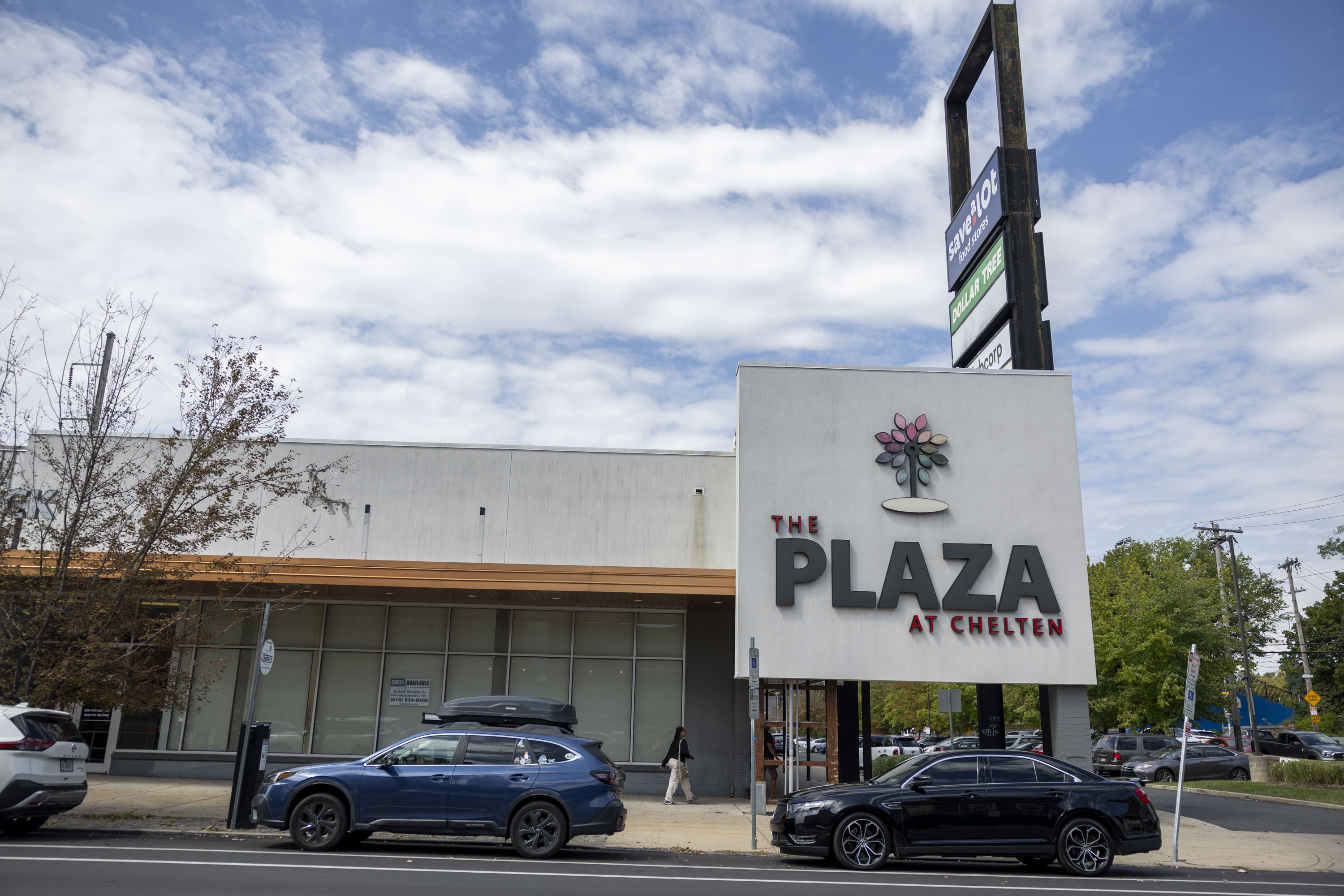
The outside of the Plaza at Chelten in Germantown.Tyger Williams / Staff Photographer
Having more organizational support beyond the CDC might allow that, he says.
“We’re lacking the resources to put attention towards advocating for ourselves,” said Laura Lacy, co-owner of Attic Brewing Co., near Wayne Junction. “You can immediately see the change when you’re driving [out of Germantown]. As you get into Mount Airy, you start to see hanging flower baskets and landscaping on corners and trash cans.”
The neighborhood’s existing business hubs also feel disconnected. That’s an issue that Germantown United is addressing with a five-year plan to better connect West Chelten Avenue, Maplewood Mall, and Market Square for pedestrians. They’re pushing for better overhead lighting, connecting business owners with the Department of Commerce’s business security camera program, and addressing cleanliness and improving greenery.
The plan also includes connecting with absentee landlords to discuss how their properties can better serve the community, Dillinger said. These landlords are at the heart of the problem, locals say.
“There’s just a lot of commercial property owners who don’t care,” Dillinger said. “There are some who do and are invested in their properties and making sure that their tenants succeed. There are also commercial properties that are sitting in a portfolio of developers’ and, as a result, they just start to deteriorate.”
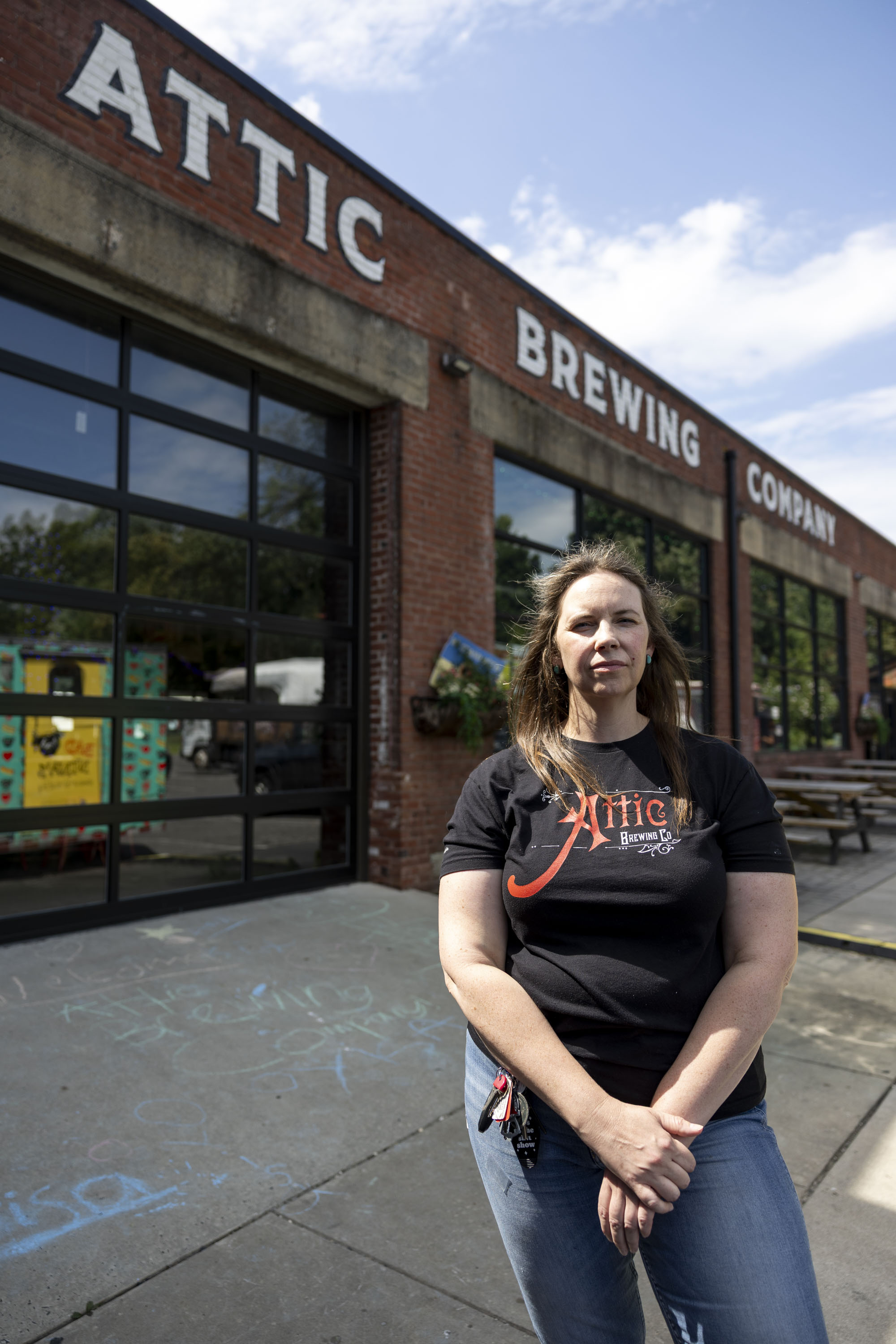
Laura Lacy, co-owner of Attic Brewing Co., outside the business in September.Tyger Williams / Staff Photographer
Street safety is also a major community concern after a spate of hit-and-run fatalities. This is a significant challenge for Attic Brewing, Lacy said.
Its location near Wayne Junction removes it from the commercial heart of the neighborhood, and her landlord’s promises to develop surrounding lots into complementary businesses never panned out. It all amounts to less visibility and awareness of pedestrians in the area.
“We’re talking about the safety of our team members. … We’re talking about the safety of our customers,” Lacy said.
Also of concern are the two vacant lots near Attic, which were part of a development plan years ago, Lacy said. “At what point does the city take it back? At what point does it become like you can’t just let this sit abandoned like this?”
Councilmember Cindy Bass, who represents the area, declined to comment for this story.
Signs of new life
Still, business activity is underway in Germantown.
Indego, Philadelphia’s bike share program, will enter Germantown this fall with 10 to 12 stations.
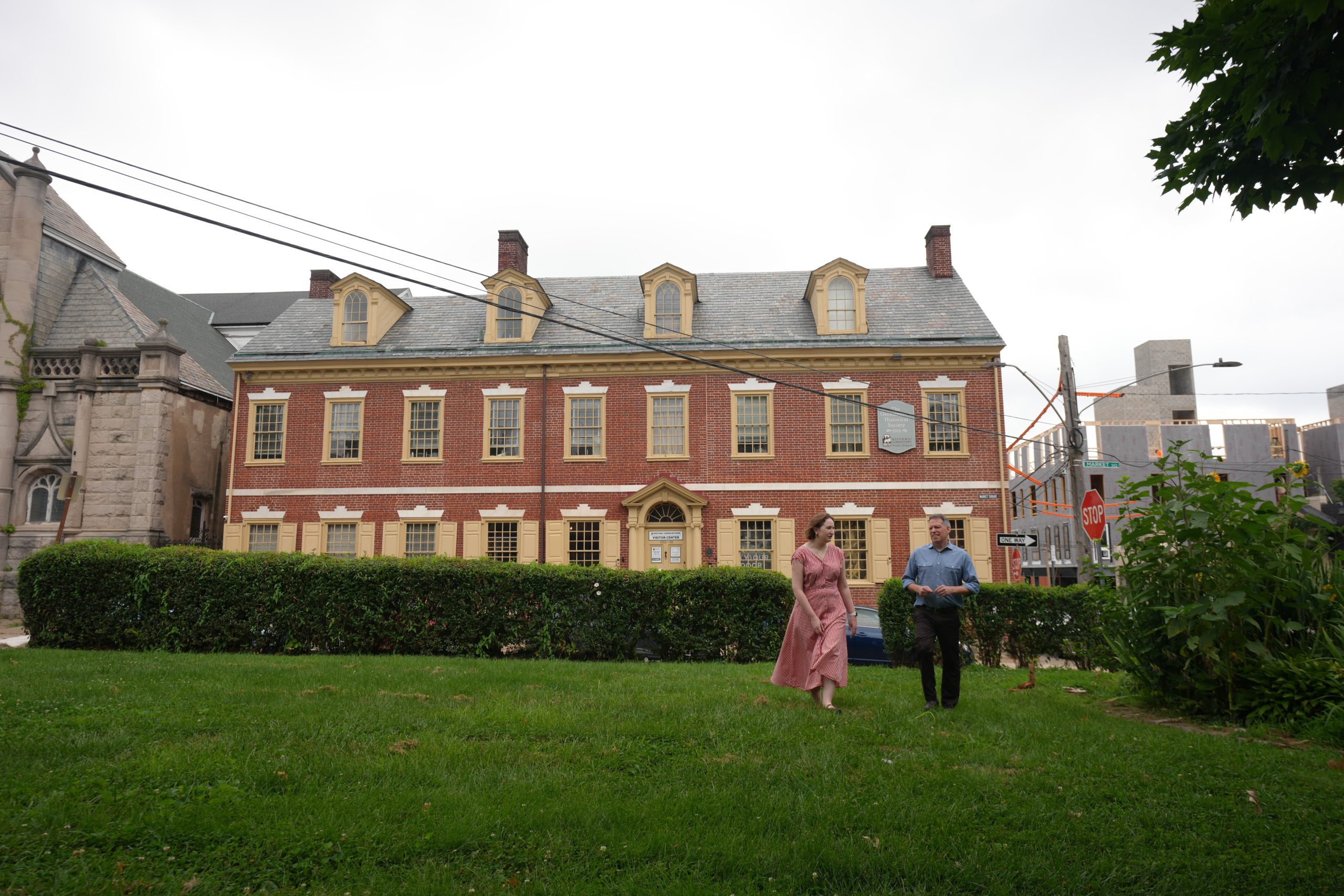
Kaila Temple, curator of collections at Historic Germantown, and Tuomi Forrest, executive director. The new Historic Germantown Visitor Center opened in July.Jessica Griffin / Staff Photographer
Historic Germantown’s Visitor Center opened in July. It’s a jumping-off point to access the neighborhood’s vast cache of historic cultural sites, which drive about 125,000 visits from the public and 25,000 from staff and volunteers annually who spend about $10 million in and around Germantown, according to Tuomi Forrest, Historic Germantown’s executive director.
“Our goal is that people get so interested and excited that they want to come back or expand their visits here,” Forrest said.
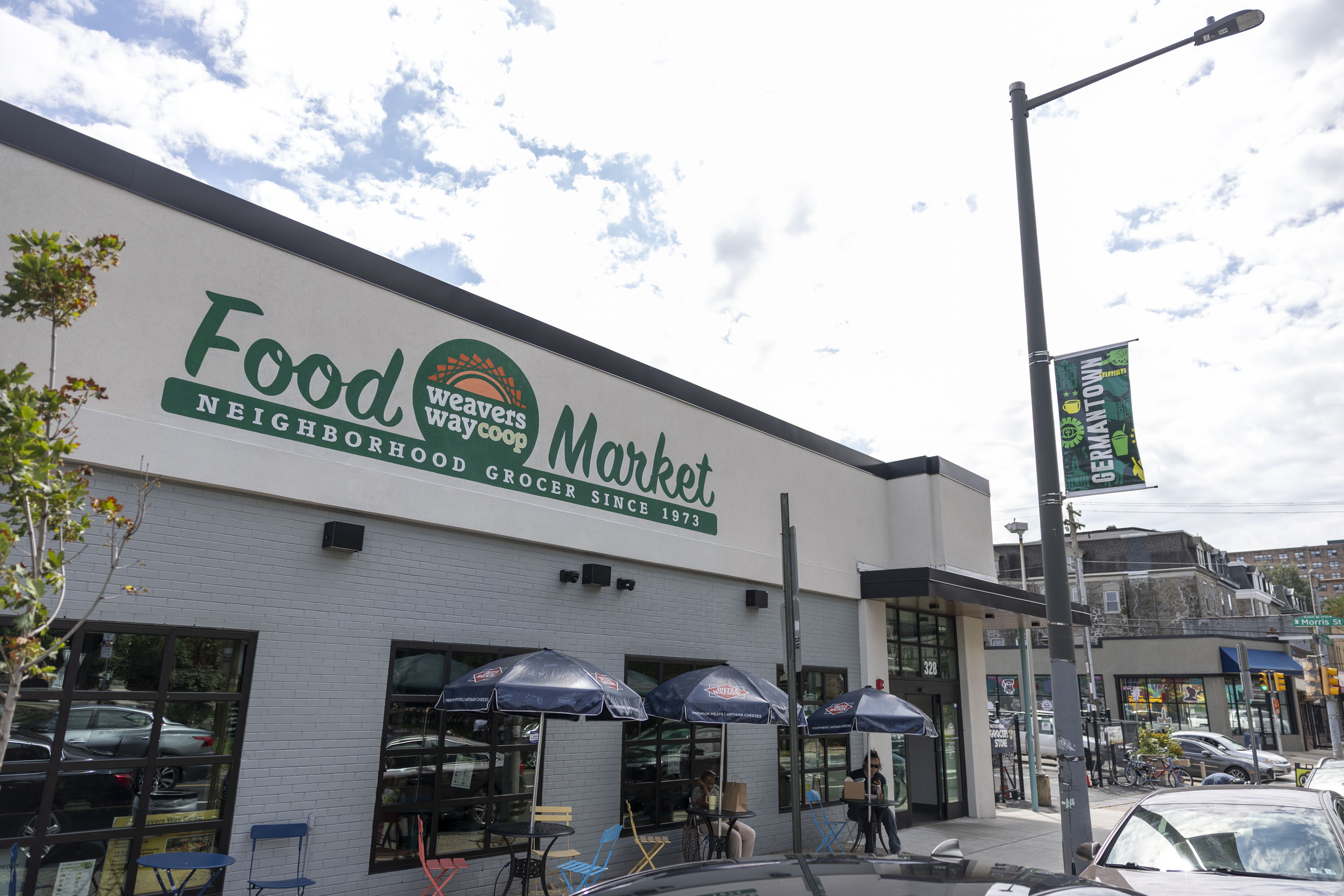
A few new businesses on West Chelten Avenue are invigorating the area. Weavers Way Co-op’s Germantown store, which opened in May 2024, has “exceeded projections since day one, and our membership in Germantown has continued to grow,” said general manager Jon Roesser. The co-op is open to the public, but its roughly 2,400 Germantown members get discounts and other benefits.
The outside of Weavers Way Co-op.Tyger Williams / Staff Photographer
“We bring a lot of foot traffic to the avenue; we have about 1,000 transactions a day,” Roesser said. “That’s 1,000 people a day coming to the corner of Chelten and Morris that previously was exactly zero because the building was abandoned.”
Complementary businesses have popped up nearby, including Cupbearer Coffee, Das Good Cafe, and Nutrition & Herbs Center.
Uncle Bobbie’s Cafe & Books is expanding its neighborhood footprint this fall and moving up Germantown Avenue from its current location at Church Lane into a 3,000-square-foot spot at the intersection of Washington Lane.
“We are excited to be in a position to grow, bring people together, and read great books,” Justin Moore, the bookstore’s general manager, told The Inquirer in April. “Most importantly, we are excited to further and deepen our ties in Germantown as a community hub.”
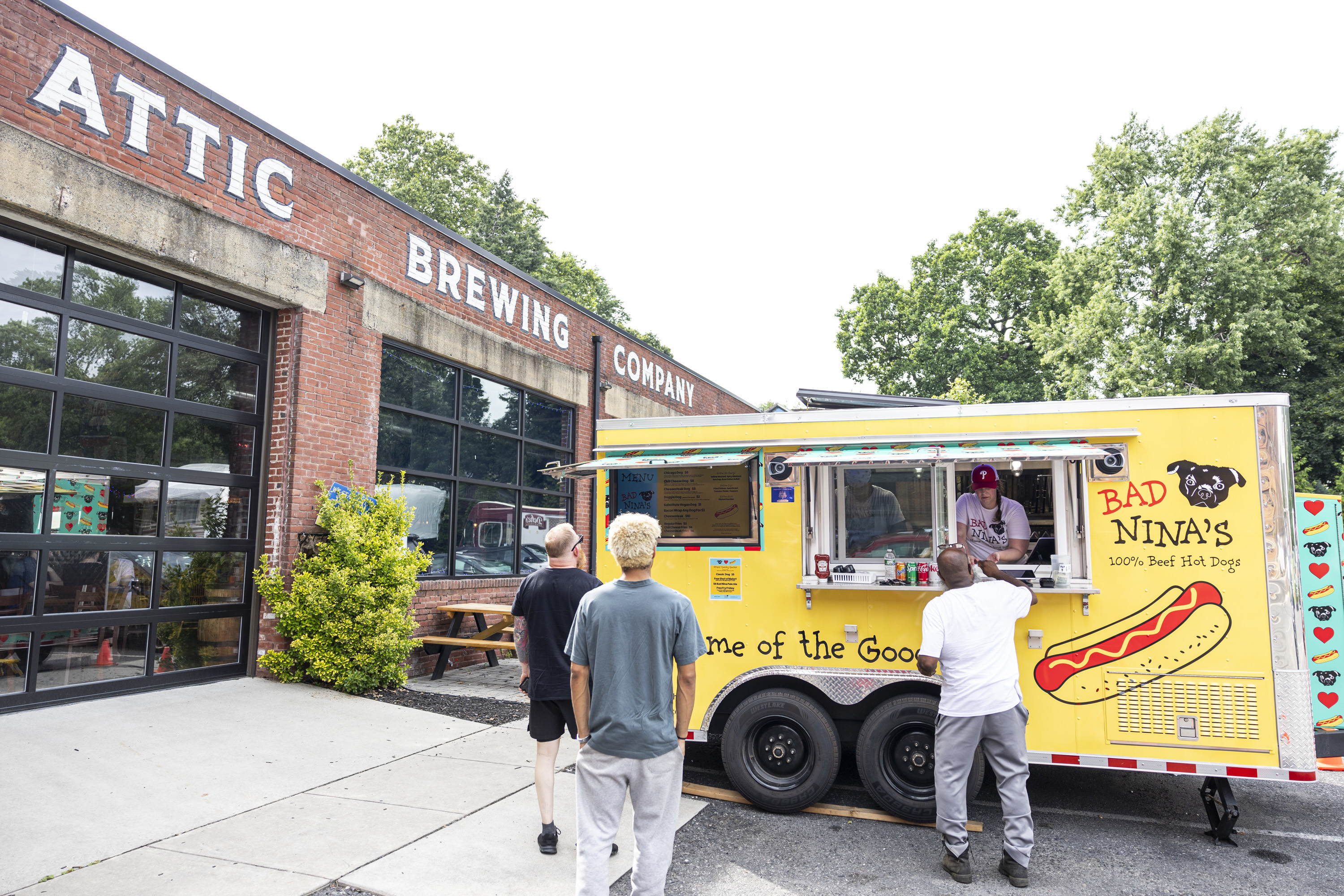
Customers line up to order hot dogs at the grand opening of Bad Nina’s outside Attic Brewing. Lacy said the hot dog stand opened because other companies did not want to bring their food trucks to the brewery.Tyger Williams / Staff Photographer
“One of the best beers in the world is brewed here in Germantown,” Lacy said. At the same time, from a financial standpoint “our business is in the worst spot it’s ever been in in six-and-a-half years.”
Attic needs to “exponentially increase the number of people” coming into the tap room to be viable, Lacy said. Getting other restaurants into the area could help. Lacy said Atticstarted Bad Nina’s gourmet hot dog cart becausefood trucks wouldn’t come to the neighborhood and the area lacks sit-down restaurant options for their patrons.
“We know that our product, our service, our space is one of the best in the city,” she said, so as the business struggles, “we start to wonder if maybe we picked the wrong location.”