While the world is focused on the failures of Donald Trump’s warmongering in Iran and “peacemaking” in Gaza, too little attention is being paid to a potential new Mideast flash point sparked by messianic Israeli settlers on the occupied West Bank.
I have witnessed such settler violence during reporting trips over the years, but it is reaching unprecedented heights (or depths) as Bibi courts right-wing votes before Israeli elections in October.
Far-right extremists are even encouraging Jewish-Arab violence atop the Temple Mount, the most sacred site in Judaism and the third holiest in Islam, which could ignite anti-Israel religious violence and terrorism in the region.
The extremists’ goal — as clearly spelled out in a “Decisive Plan” by current Finance Minister Bezalel Smotrich, who also oversees administration of the West Bank — is to present the Palestinians with three choices: legalized apartheid and repression, massive ethnic cleansing (labeled “voluntary emigration”) from the West Bank, or death if Palestinians resist.
The quibble over language that feeds debate over Israel in the United States — as in whether to call what’s happening in Gaza “genocide” — only distracts from the central problem. When Palestinians are offered nothing — meaning no political future or rights — they have nothing to lose. Unfettered occupation and ethnic cleansing will provoke resistance and terror attacks. It will be untenable in the long run.
What is more likely to happen is a third uprising on the West Bank, followed by massive bloodshed between Palestinians and settlers. It would guarantee a disastrous end to Trump’s Gaza project and to his Abraham Accords, which were meant to advance peace between Israel and Gulf Arab states. Yet, the president is clearly blind to how quickly his Mideast peace efforts are sliding toward disaster.
In desperation, 600 retired Israel Defense Forces generals and colonels, as well as retired intelligence and foreign service officers, recently wrote to Trump urging him to press Bibi to halt the West Bank violence.
I spoke to one of the group’s organizers, Nimrod Novik, a senior adviser to former Prime Minister Shimon Peres, a deeply experienced negotiator and distinguished fellow at the Israel Policy Forum, about his fears for the future if Israel’s policy toward Palestinians doesn’t change.
“What we will see in the West Bank in the next 90 days [before the Israeli election], you haven’t seen ever,” he warned. “The whole ideological right-wing extremist group, helped by the government, fears this is their last opportunity [to advance Smotrich’s goals]. If the Netanyahu government is ousted, the next government would deal harshly with Jewish terrorism.”
President Donald Trump listens as Israel’s Prime Minister Benjamin Netanyahu speaks at President Donald Trump’s Mar-a-Lago club, Dec. 29, 2025, in Palm Beach, Fla.Alex Brandon
I would add a caveat: It isn’t clear how much a coalition of opposition parties, even if they were able to push Bibi out, would change policy toward Palestinians. The two largest opposition parties are against any future Palestinian state alongside Israel. But a new Israeli prime minister would likely try to reassert Israeli army control over army reserve units that support extremist settlers who regularly attack Palestinian civilians. And he might have less patience with radical groups of settler youths who roam unchallenged and even attack Israeli soldiers who try to block their violence.
Novik had a stark warning about what could happen if the violent settlers were allowed to continue their rampage. In certain security circles, he told me, “They think the settlers want to provoke a security crisis, and the West Bank might be the best opportunity.” He believes Jewish settler terrorism will produce revenge-seeking by Palestinians who are defending their families. Israeli security agencies, he added, are worried about a possible effort to provoke large-scale violence on the Temple Mount.
I still recall how a 1982 plot by Jewish religious terrorists to blow up the third holiest mosque in Islam atop the Temple Mount was discovered only at the last minute. “Even if they don’t bomb the mosque,” Novik pointed out, violence could still explode. Only recently, “one thousand Israelis in one day violated the status quo by praying on the mount.”
The status quo between Israel and Arab states, in place since the 1967 war, prohibits such praying, which is also banned by Israel’s rabbinate for religious reasons. Palestinians fear it indicates an imminent takeover of the holy site by Israeli Jews.
And unless a newly elected leadership permits the rebuilding of the West Bank’s Palestinian Authority, the body which technically governed Palestinians, there is no authority to counter Hamas. Bibi did everything he could to destroy and bankrupt the Palestinian Authority. What would happen with a new government is unclear.
What is clear is that Bibi’s tolerance of Jewish terror is leading to a clash in the West Bank, and is aimed at driving the population of Gaza out into the Sinai Desert by keeping two million Palestinians underfed, without schools or medicine, and living in tents.
Even liberal Israelis are still traumatized by Hamas’ Oct. 7, 2023, slaughter, and a new government will still tilt rightward. But a recent Israeli survey by the Israeli Democracy Institute shows that the largest share of respondents — among left, center, and even center-right — said authorities treat violence by Jews against Palestinians in the West Bank too leniently, with perpetrators rarely arrested and hardly ever punished.
Whether or not that poll hints at a particular voter response is also unclear.
However, Trump has a chance to stop his being labeled a complete loser in the Mideast by backing the opposition to Bibi, which may still carry weight with many Israeli voters. Yet no one should rely on Trump’s awakening to reality.
It will be up to Israeli voters to decide whether or not they accept Smotrich’s vision — and the consequences that are bound to follow if they do.
Social media platforms will face a bevy of new restrictions in New Jersey that limit their use of children’s data, restrict algorithmic content recommendations to minors, and block notifications during school hours, among a range of others.
The new restrictions, which are set to take effect in September 2027, flow from legislation Gov. Mikie Sherrill signed Tuesday and are New Jersey’s bid to regulate tech giants the governor said federal policymakers had largely left to their own devices.
“Big tech isn’t just the big tobacco of our era. They are worse. They designed platforms that highjacked our kids’ attention spans,” Sherrill said at a bill signing ceremony in Jersey City. “The typical American teen spends about 35 hours a week, almost a full-time job, on platforms like TikTok, Instagram, and YouTube.”
The restrictions in the New Jersey Kids Code Act would require privacy settings on minors’ social media accounts be set to their strictest mode and would limit platforms’ ability to request minors change those settings.
It would restrict platforms’ use of children’s data to the purposes for which it was collected and bar algorithmic content recommendations unless a minor specifically requests more or less content from a given account or of a specific type.
The restrictions mandate that social media platforms limit the discoverability of children’s accounts, both to adults on their own sites and through search engines.
And the law will bar social media platforms from sending notifications to minors between 8 a.m. and 4 p.m. on school days between Labor Day and Memorial Day and block notifications between 10 p.m. and 6 a.m. at all times of the year.
Assemblywoman Andrea Katz was a chief sponsor on the bill to restrict how social media platforms deliver content to children.Anne-Marie Caruso / New Jersey Monitor
“Half of parents say their children’s mental health has suffered over the past year because of social media,” said bill sponsor Assemblywoman Andrea Katz (D-Burlington). “Nearly half of teenagers say they lose sleep every single night because they feel stuck on these platforms.”
The law permits both parents and the New Jersey attorney general to sue over violations. If they’re victorious, courts could award $5,000 per violation or treble damages — an amount equal to three times the harm suffered — whichever is greater, plus attorney fees.
They can also order punitive damages for reckless or knowing violations and injunctions to bar offending conduct.
Lawmakers on Tuesday described a social media landscape that had sold children’s mental health for engagement and shifted threats that once appeared in physical spaces to digital ones.
“When I was a kid, our parents worried about strangers and who’s talking to us at the park or at the mall,” said bill sponsor Sen. Raj Mukherji (D-Hudson). “Today, we have to worry about who’s DMing them, what algorithms are pushing into our kids’ feeds, and what sensitive information is being collected, used, even sold before they’re old enough to understand what they’re giving away.”
Meta, which operates Facebook, Instagram, and other social media platforms, did not immediately respond to a request for comment.
The state’s higher education office began accepting proposals for the center Tuesday and aims to open it sometime this fall with a $500,000 appropriation from the state’s budget.
Wendell Smallwood Jr. will be by his daughter’s side in her final days after being granted early release from prison.
Gloucester County Superior Court Judge Renard Scott approved a motion to withdraw Smallwood’s guilty plea from last year, on August 7, in order to see his dying daughter, The News Journal reported on Monday.
Mila, Smallwood’s eight-year-old daughter, was diagnosed with diffuse anaplastic Wilms tumor, an aggressive and rare childhood kidney cancer, in 2026. After unsuccessful chemotherapy treatments, she is in palliative care and is expected to live for weeks at most, according to the report.
Smallwood, a former running back with the Eagles, Commanders and Steelers, was sentenced to 18 months in prison last September for a COVID-19-related fraud scheme. He pleaded guilty in December 2024 to charges of felony wire fraud, conspiracy and tax fraud tied to economic relief programs.
In March, he pleaded guilty to second-degree unlawful possession of an assault firearm for possessing an AR-15 rifle in New Jersey. He was sentenced to three years in state prison, concurrent to his federal sentence.
At the time, New Jersey banned the ownership of assault weapons, but a July ruling from the 3rd Circuit Court of Appeals ruled that New Jersey’s ban on assault weapons was unconstitutional. This provided Smallwood legal grounds to withdraw his guilty plea.
Smallwood’s emergency hearing on August 7 ruled that Mila’s severe illness was a notable reason for granting Smallwood’s motion, which could have seen him released as early as Monday.
An I-95 ramp in Northeast Philly is set to close for good next week.
The ramp from Bridge Street to I-95 North is slated to shut down at 8 p.m. on Friday, Aug. 21, the Pennsylvania Department of Transportation announced Monday.
The closure will make way for construction of a new I-95 entrance from Tacony Street and the Delaware Avenue extension, which the agency expects to open in late 2027.
Until then, drivers will be detoured to Tacony Street and State Road/New State Road, where they can get on I-95 North via the Milnor Street ramp.
The rerouting is part of a larger I-95 rehabilitation, which includes nearly $268 million of Northeast Philly improvements, including the reconstruction of the viaduct over Bridge and Tacony Streets.
In addition to the ramp closure, I-95 North drivers will experience a traffic shift from 8 p.m. Aug. 21 to 5 a.m. Aug 22. They will be temporarily rerouted to southbound lanes as northbound reconstruction begins at the Bridge Street Interchange. PennDot expects to complete that project in 2028.
The agency advises drivers in the area to allow for extra time, as backups and delays are expected due to the ramp closure.
The Eagles are grinding their way through the second week of training camp. Some parts of the team have looked good, others remain very much a work in progress. The Philadelphia Inquirer’s Jeff McLane and Jeff Neiburg assess quarterback Jalen Hurts’ play, how some of his targets are faring, and why, regardless of how the offense is coming together, the defense could be elite enough to help the Eagles contend for another title.
00:00 Jalen Hurts’ so-so start to training camp in Sean Mannion’s new offense
14:51 The importance of and questions about the offensive line
26:20 Why this defense could be good enough to position the Eagles for Super Bowl contention
unCovering the Birds is a production of The Philadelphia Inquirer and KYW Newsradio Original Podcasts. Look for new episodes throughout the season.
We’re always looking for mailbag questions! Hit Jeff up on his socials, or drop a question in the comments. Jeff could answer it in a future episode!
A conservative law firm is calling on New Jersey officials to repeal state guidance on parental notification when students question or attempt to change their gender at school.
The Liberty Justice Center, a Texas-based nonprofit that has waged such battles for free around the country, warned New Jersey Attorney General Jen Davenport in a letter Tuesday that keeping the guidance, known as Policy 5756, in place will lead to “federal investigations or lawsuits for the violation of federal civil rights.”
The center also sent letters to attorneys general in New York, Illinois, and Washington, where similar policies are in place. The effort comes a week after the Trump administration threatened two school districts in Maryland and Michigan with sanctions, including pulling their federal funding, if they don’t repeal their policies.
“By withholding information from parents regarding their children, these school districts are violating federal law, not to mention basic morality,” Timothy Snowball, a senior attorney at the center, said in a statement. “Parents have the fundamental right to direct their children’s upbringing, and these attorneys general must comply with federal law or face possible legal action.”
New Jersey’s policy, which the state Department of Education issued in 2018, prohibits the disclosure of a student’s gender identity without their consent unless “a specific and compelling need” obligates school officials to alert parents, such as health and safety concerns or a bias incident.
Several school districts and parents have challenged the policy in court, arguing it interferes with parents’ constitutional right to raise their children as they want. The state’s attorneys have countered that students have a constitutional right to privacy, disclosure risks harm to students whose parents aren’t supportive, and the policy is voluntary guidance districts don’t have to follow. Judges so far have let it stand.
It’s unclear how many of the state’s 600 districts have adopted the state guidance. The group Defending Education, which opposes such policies, estimates 130 districts have done so, but local advocates suspect that’s an undercount, as school boards typically act on state guidance.
Snowball said the U.S. Supreme Court’s March order in a California case known as Mirabelli v. Bonta should spur states with similar policies to reexamine and revoke them.
California’s law requires schools to support a child’s social transitioning and bars alerting parents without the child’s consent. After it was challenged, a trial court issued an injunction that blocked enforcement of the law, an appeals court stayed that injunction, and a split Supreme Court vacated the stay and returned the case to circuit court, saying parents claiming religious exemptions likely will prevail.
The Liberty Justice Center filed a brief supporting parents in the California case.
“The constitutional questions have now been squarely presented, and the legal issues are no longer theoretical. Your office should reevaluate the state’s current position to ensure that New Jersey’s policies and enforcement actions comply with parents’ federally protected rights before further litigation compels that result,” Snowball wrote to Davenport.
Spokespeople for Davenport and the New Jersey Department of Education did not respond to requests for comment.
But Robert Kim, executive director of the Education Law Center, said Davenport and the other attorneys general shouldn’t change course because of the California decision, which was not a final ruling on the case’s merits but instead just a preliminary order issued in response to an emergency application — meaning there were no oral arguments, briefs filed, or extended opinion written.
“It is a very limited window into this emerging area of law,” Kim said.
The Liberty Justice Center’s letter-writing campaign adds “fuel to the fire that’s stemming from this pattern of disturbing behavior by the Trump administration, this fixation to aggressively target a small portion of the student population, the transgender community, for disfavored treatment by the federal government,” Kim said.
Michael Gottesman, founder of the New Jersey Public Education Coalition, also doesn’t think the California decision should sway policymakers here, noting that California’s policy is mandatory while New Jersey’s is voluntary.
The policy’s critics also ignore that the state’s Law Against Discrimination protects people from being forcibly outed, Gottesman added.
“The policy basically sets up a process which recognizes the fact that parents have rights, but students do too,” Gottesman said. “There’s a whole line of cases in the Supreme Court on parents’ rights, but there’s also a whole line of cases in the Supreme Court about students’ privacy rights.”
Opponents have mischaracterized the policy, which balances parental notification with student privacy, said Dillon Reisman, a staff attorney with the American Civil Liberties Union of New Jersey.
“Our state’s policies have never required schools to lie to parents when a parent asks about their student’s gender identity. The policy already recognizes that health and safety concerns or harassment, intimidation, and bullying laws might require schools to affirmatively notify parents of a student’s gender identity if it’s relevant,” Reisman said. “Those are two things that already meet the U.S. Supreme Court standard from Mirabelli v. Bonta.”
Republican lawmakers say they’re hopeful the governor’s new comments expressing support for voter ID legislation could push long-stalled bills toward hearings when the Legislature returns to Trenton in the fall.
“I absolutely think this should be one of the top priorities when we come back into session,” said Sen. Michael Testa (R., Cumberland). “There absolutely needs to be a discussion, and the people of New Jersey deserve that discussion to be had.”
Gov. Mikie Sherrill, a Democrat, said last week during an appearance on News 12 that she would support a voter ID law in New Jersey if legislation reached her desk.
“Certainly if that was the law passed here, I would support that,” she said, responding to a viewer’s question. “I don’t have a problem with voter ID.”
Sherrill’s comments come on the heels of her revealing that thousands of noncitizens were registered to vote via the state Motor Vehicle Commission, and fewer than 400 of them cast ballots. The revelation led to a new round of voter fraud complaints from Republicans in New Jersey and nationwide, while the Trump administration demanded information about the voters in question. Sherrill declined to share that data and has said the state is conducting an independent investigation.
Sen. Parker Space.Hal Brown/ New Jersey Monitor
Sen. Parker Space (R., Sussex) is a sponsor of a bill that would require voters to show identification to cast ballots, including a driver’s license, a Real ID, or a passport, among others, and those without them would have to show utility bills in their name, a mortgage or rental statement, or two pieces of mail from a government agency or utility company. Any voter who does not show these would be subject to a challenge.
Space said he was encouraged by the governor’s remarks that his bill — which has been introduced three times since 2022 but has never advanced to a committee hearing — could finally be posted for a vote.
“Hopefully she stands by her word and we can get the Legislature on board,” he said.
He noted that the issue hasn’t historically been a priority for Democratic legislative leadership, which decides which bills advance.
Assemblyman Gerry Scharfenberger (R., Monmouth) has sponsored the bill in the lower chamber since 2022. He said he proposed legislation with more options for voters besides showing just photo identification because he thought it would get some support from Democratic lawmakers, though he concedes that has not worked so far.
The new voter registration issue, Scharfenberger said, shows the “walls are closing in, as far as the Democrats being able to avoid this issue.”
“There’s no way they can avoid addressing this. If I could be a little bit of a forecaster here, I think the more information they find out about the motor vehicle issue, the more those numbers are going to grow,” he said. “It’s become too much with the public psyche, and I think we’re going to have to address it with solid legislation, and not just token tweaks here or there.”
Testa said he was “pretty shocked” to hear Sherrill’s comments on supporting voter ID, but “pleasantly surprised.”
He’s the co-sponsor of a voter ID bill that would require a voter to show one of four forms of photo ID: a driver’s license, a Real ID, an identification-only card issued by the Motor Vehicle Commission, or a U.S. passport. He said it’s easier to train ballot workers on how to validate just these forms of ID.
Sen. Michael Testa Jr.Anne-Marie Caruso/New Jersey Monitor
“We’ve done everything in this state to be able to allow individuals to vote by mail, to expand the time period for vote by mail, to give people more locations to go vote — and I don’t necessarily have a major problem with any of these modalities for people to vote — but if you’re going to vote on Election Day, you should have a photo ID,” he said.
A spokesman for Senate President Nicholas Scutari (D., Union) did not respond to a request for comment. A spokesperson for Assembly Speaker Craig Coughlin (D., Middlesex) declined to comment.
Thirty-six states have laws requiring voters to show some form of ID at the polls, and eight of those strictly require photo ID.
But voting rights groups say there are decades of studies showing certain communities are less likely to have access to photo ID. Liza Weisberg, supervising attorney of the American Civil Liberties Union of New Jersey, said people who are homeless, young voters, and communities of color are the “most likely to face disenfranchisement.”
She called Sherrill’s comments on voter ID a “moment of concern.” Seven advocacy groups — including the ACLU, New Jersey Institute for Social Justice, and the League of Women Voters — sent Sherrill a letter Friday urging her to reject voter ID legislation outright.
They noted that state law already requires people to provide a driver’s license number or their Social Security number to register to vote.
Weisberg said the recent voter registration news doesn’t justify implementing voter ID, noting the newly registered voters in question represent a “small fraction” of the state’s voters, with an even smaller group actually casting a ballot. Sherrill initially said about 6,600 people who identified themselves as noncitizens at the Motor Vehicle Commission were added to the voter rolls, and later said about 2,000 of them may indeed be citizens. The state has 6.7 million registered voters.
“I really hope that there is not an effort to continue using this event to justify voter suppression efforts that really don’t have anything to do with it,” Weisberg said.
Republicans dismissed arguments that voter ID laws disproportionately burden low-income, elderly, minority, and young voters. They noted multiple reasons people need to show photo ID, like renting a car or applying for food stamps.
Testa called the disenfranchisement argument “very, very pompous,” saying it suggests that voters could be “ill-equipped or too stupid” to obtain a photo ID. Scharfenberger called it “the most racist position I’ve ever heard,” and Space said those arguments “pander to the far left and liberal media.”
The first two days of Eagles training camp practice in South Philadelphia are in the books. The Philadelphia Inquirer’s Jeff McLane and Olivia Reiner check in with key observations and highlight emerging early storylines to kick off unCovering the Birds’ coverage of the 2026 season.
00:00 How Jalen Hurts and the Eagles offense has looked under new coordinator Sean Mannion
15:10 Why the Eagles felt Jalen Carter was worthy of a new contract, and whether he’s worth it
31:21 New segment alert! Jeff’s mailbag!
unCovering the Birds is a production of The Philadelphia Inquirer and KYW Newsradio Original Podcasts. Look for new episodes throughout the season.
We’re always looking for mailbag questions! Hit Jeff up on his socials, or drop a question in the comments. Jeff could answer it in a future episode!
Thousands of homeowners in Philadelphia are not enrolled in city programs like the homestead exemption and the Longtime Owner Occupants Program (LOOP) established to help ease the burden of rising real estate taxes.
“I surround myself with good people, but not everyone is aware of these [tax relief] programs,” said Edgar Ponce, 26, who recently purchased his home in Kensington, one of the neighborhoods where property assessments rose the most.
story continues after advertisement
The Philadelphia Office of Property Assessment conducts reassessments of property values every other year. From 2025 to 2027, properties citywide rose 3%, with certain neighborhoods seeing increases upward of 15%.
Four areas in Philly that saw the largest percentage increases in median assessments were Kensington,Mantua, Grays Ferry, andKingsessing. Each neighborhood borders more gentrified neighborhoods, likeFishtown,University City, andPoint Breeze. While tax revenue helps fund city services like the school district, parks, and the police department, shelling out a few hundred dollars more each year can be costly for some families. Several city-run relief programs, however, can help eligible homeowners save hundreds or thousands of dollars.
“Every time I apply to some type of program, there is always a catch,” said Ponce, who has yet to apply for the homestead exemption. The city could do more to inform people and build trust, he said.
While Philadelphia does conduct outreach, including canvassing, mailers, texts, TV and radio ads, and community events, those efforts do not reach everyone. If you, like Ponce, both own and reside in your home in Philadelphia and want to know what tax relief programs are available to you, The Inquirer is here to help.
We created a tool based on city property data to figure out what tax relief programs Philadelphia homeowners are eligible for. Complete the survey below to see what assistance you can apply for and how much you would save on your real estate taxes.
story continues after advertisement
What is your home address?
Philadelphia primary residential addresses only
Have you lived there for more than 10 years?
Do you live in this property as your primary residence?
Do you meet any of these descriptions?
1. You are aged 65 years or older
2. You are living with a spouse who is aged 65 years or older
3. You are aged 50 years or older, and a widow of someone who reached the age of 65 before passing away
What’s your annual salary? Or if married, what's your combined annual salary?
If anyone else lives in the house, what’s their combined annual salaries?
What is your family size?
Nope! It appears you’re maximizing your savings.
Yes! You may be missing out.
Maybe! You might be able to save more.
To apply for any program, you’ll need your OPA account number. Your number for location is parcel_number.
It appears you’re enrolled in the homestead exemption already, according to July 2026 data, and would not be eligible for other programs this year. In 2027, the homestead exemption will save you: homestead_savings. You should not have to reapply to get the savings unless your property deed was transferred or a co-owner was added.
It appears you are not eligible for any tax relief program right now. However, you may want to check on the Philadelphia Property Search website to see if your property is eligible for any other exemption.
It appears you’re enrolled in the homestead exemption already, according to July 2026 data. In 2027, homestead will save you: homestead_savings. You don’t have to reapply unless changes were made to the deed. Besides the homestead exemption, you may have other choices.
Here’s what you are eligible for:
Homestead
You could save
homestead_savings
It appears you are eligible for the homestead exemption. The program reduces the taxable portion of your property assessment. Starting in 2025, the property’s assessed value is reduced by $100,000.
You may be eligible for the Longtime Owner Occupants Program (LOOP), if you are not already enrolled, because your home’s assessment went up significantly — either 50% from 2026, 75% from 2022, or both. LOOP locks in your property tax at the lower of the two property values.
Keep in mind you cannot enroll in both LOOP and the homestead exemption. If you would like to switch from LOOP to homestead, you’ll need to request your removal at the same time you apply. If you plan to stay in your home for many years, you may consider LOOP over the homestead exemption to prevent future tax hikes, even if you’re required to pay more in the short term.
You might be eligible for this program if you fit the requirements:
Senior Citizen Real Estate Tax Freeze
You could save
???
You may be eligible for the Senior Citizen Real Estate Tax Freeze if you are not already enrolled. The program locks in your property taxes at this year’s amount, preventing future tax hikes, even if your property value or the tax rate increases.
If you met the age, income, and residency requirements at any point between 2018 and 2024, your application gets backdated to the earliest year you first qualified.
Keep in mind, you can be enrolled in both the Senior Citizen Real Estate Tax Freeze and the homestead exemption. Eligible applicant(s) must have a total income of:
It appears you may be eligible for the Low-Income Real Estate Tax Freeze if you are not already enrolled. Under this program, the amount of property tax you pay each year will not increase, even if your property assessment or the tax rate changes.
Keep in mind, you can be enrolled in both the Low-Income Real Estate Tax Freeze and the homestead exemption. Eligible applicant(s) must have a total income of:
In September, the city released a new combined application for its real estate tax assistance programs, where homeowners can fill out one form to see what programs they are eligible for, and submit the applications online directly through the Philadelphia Tax Center, said Kaelyn Anderson with the Philadelphia Department of Revenue.
Despite these efforts, the outreach hasn’t reached everyone, including Ponce of Kensington. “Truthfully I have never received anything in the mail about these programs,” he said.
Methodology
The Inquirer acquired property assessment data for single-family homes in 2022 through 2027 from the City of Philadelphia Office of Property Assessment. The data include the assessed value of properties each year and homestead exemption enrollment in 2027.
The eligibility for the homestead exemption, the senior citizen tax freeze, and the low-Income tax freeze is based on information provided by homeowners in our survey.
To estimate potential savings for homestead, we subtracted the $100,000 exemption from each property’s 2027 assessed value (or the full assessed value if it was below $100,000), then compared the resulting tax bill with what homeowners would pay with no exemption at all. The difference is the amount the homestead exemption program would save homeowners if enrolled.
We used the assessed home value each year to calculate the percentage change in the last year and the last five years to determine eligibility for the LOOP program. The thresholds are 50% from last year or 75% from 2022. Depending on which threshold a property met, its taxable value was capped at either 1.5 times the previous year’s assessed value or 1.75 times the lowest assessed value over the preceding five years.
LOOP savings were calculated by comparing the tax bill under that capped value with the ordinary taxes that the homeowner would have to pay in 2027 if not part of the program. The difference is the amount the LOOP program could save homeowners if they were enrolled.
The Inquirer’s methodology for calculating tax program savings has been reviewed by the city.
Staff Contributors
Design: Yaelle Tang, Jasen Lo and Lizzie Mulvey
Development: Yaelle Tang, Jasen Lo and Levi Jiang
Data: Lizzie Mulvey and Yaelle Tang
Reporting: Lizzie Mulvey and Yaelle Tang
Editing: Stephen Stirling and Sam Morris
Illustration: Thomas Pullin
QA: Lyn Tran, Sandy Vo and Sarah Pham
Social Editing: Esra Erol
Copy Editing: Addam Schwartz
Subscribe to The Philadelphia Inquirer
Our reporting is directly supported by reader subscriptions. If you want more journalism like this story, please subscribe today
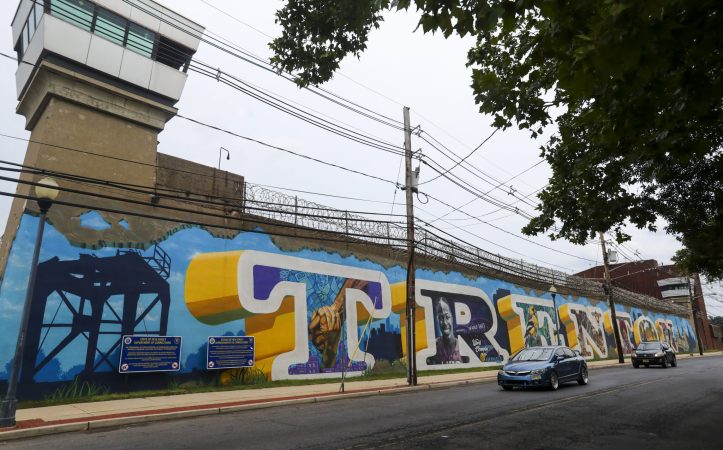
A man incarcerated in a New Jersey prison has sued the state in a bid to block corrections officials from forcing prisoners to surrender personal electronic tablets they purchased to message loved ones, listen to music, and access other digital content.
Alonzo Hill, who has been incarcerated at New Jersey State Prison in Trenton since 1990, filed a civil rights complaint last week asking a federal judge to allow inmates to keep the handheld devices and their content — or require the state to reimburse people what they paid for them.
The dispute comes as the state Department of Corrections switches to a new provider, ViaPath Technologies, to meet the communications needs of the 13,000 people in state custody.
JPay had supplied such services since 2014, with people purchasing tablets and paying one-time fees for content they downloaded for use in their cells and recreation areas. The ViaPath tablets, in contrast, are considered loaners that are provided for free but require users to continuously pay for content in a subscription model. ViaPath users in New Jersey prisons also face high restitution fees for damaging tablets and new limits on tablet use outside of cells.
Inmates bought the JPay tablets and content with the understanding they were “owned property without limitations,” Hill wrote. Yet corrections officials are requiring people to turn them in for disposal or send them home, gave incarcerated people no opportunity to chime in on the changes, and ignored his inquiries and grievances over it, he added.
That’s a violation of the 14th Amendment, which says that no state shall deprive people of property without due process of law, he charged. Hill is director of his prison’s Inmate Legal Association, a nonprofit in which jailhouse lawyers help other incarcerated people with their court filings and disciplinary matters.
“Many inmates utilize these tablets and content (at no additional cost) multiple times each day to relieve stress and anxieties of prison life,” Hill wrote. “State inmates were led to believe that if they didn’t violate JPay’s terms or NJDOC’s rules regarding the e-tablets, the chargers and content, that they could purchase and retain both throughout their sentences.”
He also objected to the “exponential cost increases” he suspects users will face under ViaPath, noting that many inmates make less than $2 a day for prison jobs — and some make nothing, such as those held in disciplinary units.
Corrections officials also have failed to guarantee that family photos downloaded and digital content purchased through JPay will transfer to the new ViaPath tablets, he added. They told people in custody that JPay tablets not sent home or surrendered for disposal will be considered contraband subject to confiscation, with their owners facing discipline, Hill said.
Chris Greeder, a Department of Corrections spokesman, declined to comment on the lawsuit.
But he said in an email that the department, JPay, and ViaPath have “reached an agreement allowing digital assets, including music, emails, photos, and related attachments, to be transferred to the new platform.”
Eight of the state’s nine adult prisons have transitioned to ViaPath since March, with 9,500 people now using the new tablets, Greeder added. New Jersey State Prison’s switch is scheduled for the week of Aug. 10, he said. The department’s contract with JPay was set to expire this Friday, so officials negotiated a 90-day extension so people incarcerated in Trenton can continue using JPay services, he added.
Officials switched vendors because ViaPath offers “a modern communications system” at a lower cost than JPay, Greeder said.
Phone calls, money transfers, electronic messages, and video visits through ViaPath were cheaper than similar services through JPay, according to contracts and price sheets the New Jersey Monitor reviewed in May. It was tough to compare prices for music, movies, games, and such content, though, because those are pay-as-you-go services under ViaPath and outright purchases under JPay.
The Department of Corrections is “committed to providing incarcerated individuals with safe, secure, reliable communication services” that allow them to communicate with family and loved ones, Greeder said in an email.
Critics, though, have accused ViaPath of predatory pricing because of its pricing structure, service fees, and other practices, with people incarcerated in Nevada prisons boycotting use of ViaPath tablets earlier this year. The Virginia-based company also has racked up more than 600 complaints in the past three years with the Better Business Bureau and averages one star (out of five) in 87 reviews on its website, with many people complaining about costs and customer service. (JPay fared only marginally better on the watchdog site, with 368 complaints over the same time period and 27 reviews averaging 1.2 stars.)
Ronald Allen, who’s also incarcerated in Trenton, filed a statement supporting Hill’s lawsuit, voicing an additional concern. He said people make inquiries and file grievances through their JPay tablets, which connect to kiosks in each prison where people download content and communicate both inside and outside the prison via a restricted, surveilled intranet. He has stored all the inquiries and grievances he’s made in the past decade on his JPay tablet, he wrote.
“Without the kiosks, no accurate, reliable records of inquiries or grievances will exist,” Allen wrote.
Greeder said officials are working with the vendors to acquire historical records of inquiries and grievances.
Hill accuses state officials of deliberate indifference and is seeking a court order that would allow inmates to keep their JPay tablets, require the state to transfer all JPay content to the new ViaPath tablets, or reimburse people for content officials can’t or won’t transfer over. People in New Jersey prisons have spent between $1.5 million and $3.2 million each year over the past decade on JPay services, according to data the New Jersey Monitor obtained from the Department of Corrections last spring.
Hill also is asking the judge to appoint an attorney to represent him in court and award damages of $7,500 per defendant.
The lawsuit names as defendants ViaPath Technologies, Gov. Mikie Sherrill, Corrections Commissioner Victoria Kuhn, and New Jersey State Prison administrators Jeffrey Crothers and Douglas Stark.
Spokespeople for Sherrill and ViaPath did not respond to requests for comment.