Tag: free-apple

  • Inside the Philly Police Department’s plan to act like a ‘modern business’: Quality-of-life officers, AI, and video calls

    Inside the Philly Police Department’s plan to act like a ‘modern business’: Quality-of-life officers, AI, and video calls

    Until last year, Philadelphia police detectives wrote search warrants on typewriters. Officers still take incident reports with pen and paper, and hand deliver them to detective bureaus. And when someone reports a minor crime, it can take hours for police to respond — if they do at all.

    To Police Commissioner Kevin Bethel, those details capture something bigger: a department in need of a systems upgrade.

    In a new five-year strategic plan released Thursday, Bethel broke from the tradition of his predecessors by treating the police department and its nearly $900 million budget as a business in need of modernizing — with an eye toward better “customer service” for residents — rather than centering on crime-fighting tactics like commanders of the past.

    “If we’re going to be a modern police department,” he said in an interview this week, “we have to take on some of the structures of a modern business.”

    To him, that involves tackling many of the less glamorous parts of police work: upgrading internal records systems, streamlining police report forms, and expanding training for officers.

    But there are also some flashy — if not eyebrow-raising — initiatives within the 73-page plan: integrating artificial intelligence into 911 calls, allowing residents to report nonemergency crimes via video chat, and creating an internal diversion program for officers who violate low-level department policies.

    Some parts of the plan — built on conversations with more than 200 people in the department, city leadership, and community — would be funded through grants, the department said, while others would need to be approved and funded by City Council, which has been largely amenable to Bethel’s budget requests in recent years.

    The department said the long-term view “allows future needs to be considered through the normal budget process well before they arise.”
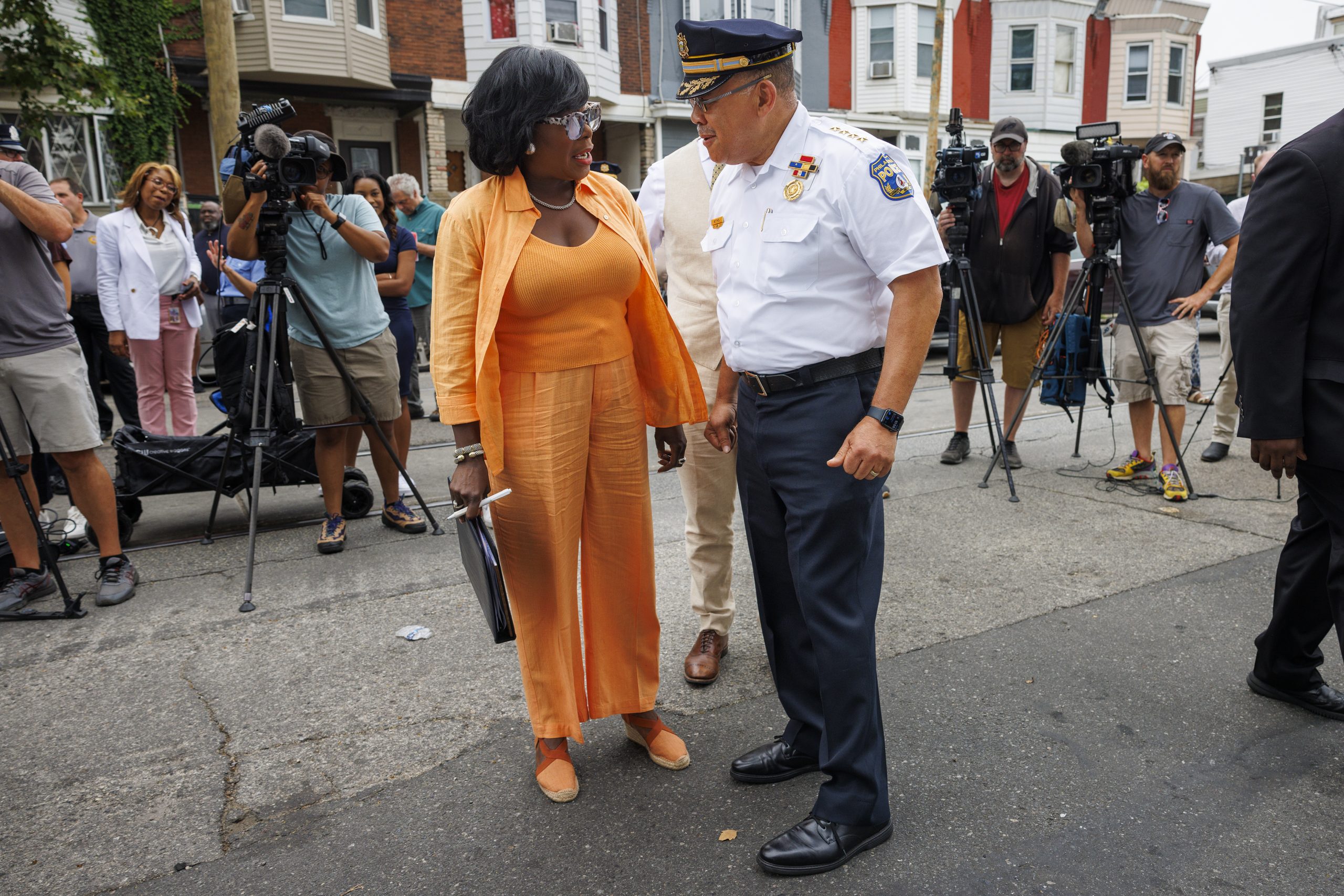
    Philadelphia Mayor Cherelle Parker and Police Commissioner Kevin Bethel speak at a press conference in 2024.Alejandro A. Alvarez / Staff Photographer

    It has been one of Bethel’s signature undertakings since Mayor Cherelle L. Parker appointed him as Philly’s top cop in January 2024, part of a long history of police commissioners and mayors working together to craft long-term public safety plans to guide their administrative goals.

    In 2012, then-Mayor Michael Nutter said the department would focus on confiscating illegal guns, and ramp up overtime to put more cops on the street. And in 2020, amid an unprecedented spike in gun violence, then-Police Commissioner Danielle Outlaw outlined goals to increase the clearance rate for homicides and shootings.

    Bethel’s plan, by contrast, is light on specifics for traditional crime fighting. While it broadly describes strategies like increasing foot patrols on SEPTA and expanding the use of digital forensic evidence in investigations, it does not set targeted reductions in homicides, shootings, or traffic deaths.

    That, he said, was intentional.

    “This plan is really not a crime plan. We have a crime plan. We’ve been covering it for a long time. We know that space of it,” he said. “But we’ve never done anything as an organization with, how do we move into being a modern and forward-thinking, always-evolving organization?”

    Bethel’s plans come as Philadelphia faces a more positive outlook. The city is on track to record the fewest homicides in more than half a century. The homicide and shooting clearance rates have hovered around 98% and 40%, respectively, the highest in decades. And Philadelphia is no longer the poorest big city in America.

    That has likely given Bethel the rare breathing room to look past the crime stats that have defined past administrations and focus instead on the machinery behind them.

    Here are some standout parts of the plan:
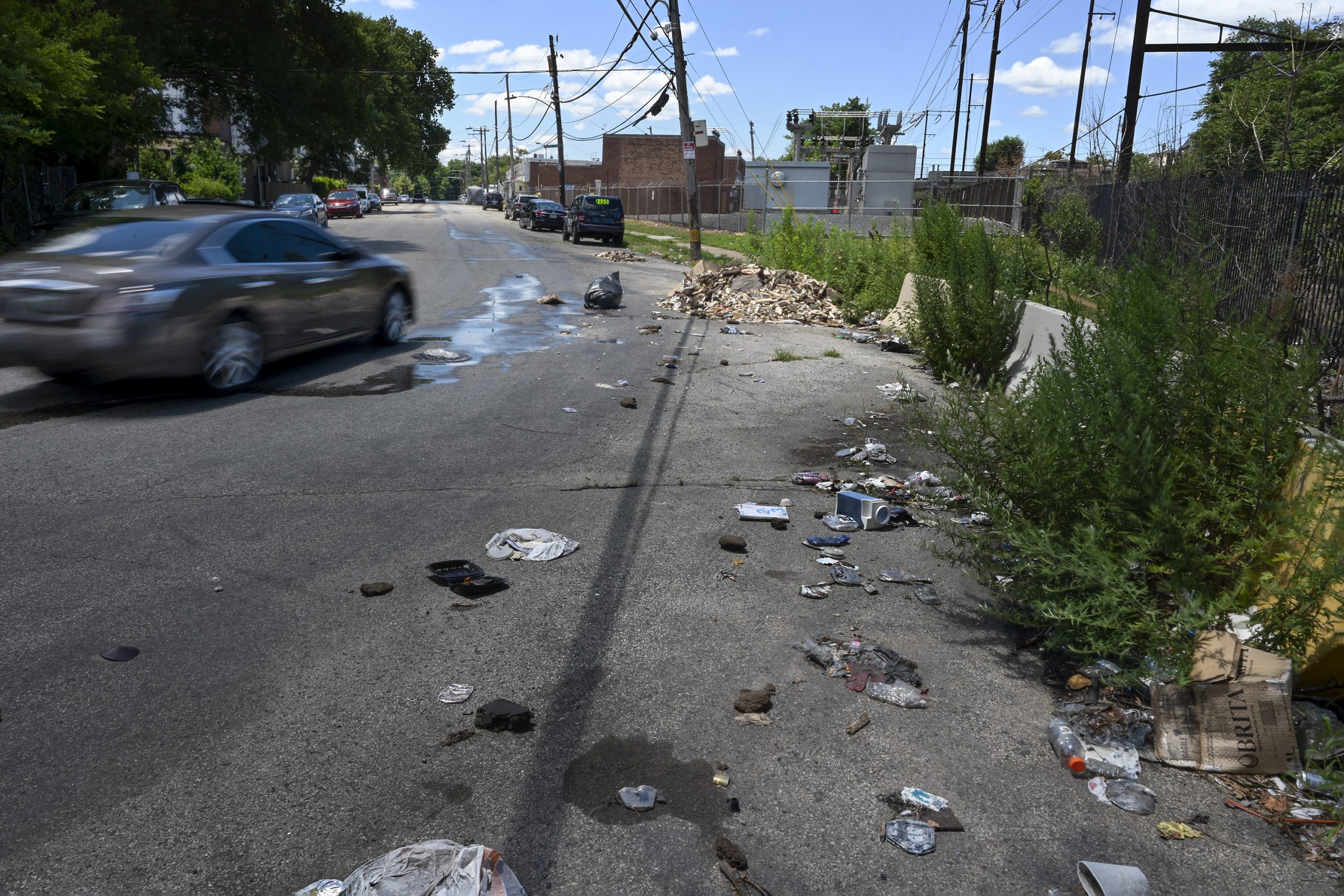
    Illegally dumped trash piles up at South 56th and Hoffman Streets in Kingsessing in this 2024 photo. Residents would now have officers in their police district to specifically help address quality-of-life issues. Tom Gralish / Staff Photographer

    New quality-of-life officers

    Quality-of-life concerns have long dominated community police meetings, Bethel said. So within the next two years, the department plans to install “quality-of-life officers” in every police district to be the point of contact for residents on issues like abandoned cars, illegal dumping, and nuisance businesses.

    Those officers, Bethel said, would be responsible for coordinating calls with other city departments to more quickly resolve problems.

    Report low-level crimes via video call

    One of the biggest issues for the department, Bethel said, is poor “customer service.”

    Officers typically juggle high-priority calls — like shootings and assaults — alongside reports of nonviolent crimes like petty theft, vandalism, or minor car crashes. Because the lower-level offenses are considered less urgent, officer response can sometimes take several hours, leaving residents frustrated.

    Under the new system, he said, people would be able to report low-level crimes online and be provided with a link to a video chat with officers, who could take the report and send a copy to the caller digitally, with no in-person visit needed.

    Filing a report over the phone will still be possible, he said, but for people who want to avoid an emergency call for minor issues, this is a new option.

    The new system could start to roll out within the next year.

    AI-assisted 911 calls

    The department also plans to test 911 call systems that use artificial intelligence to screen calls.

    When people call for help, they will be connected to an emergency dispatcher, with AI listening in the background. Callers who report lower-level crimes, like vandalism or theft, will be transferred to an AI-assisted line and have the option to report the matter online or via video call.

    There will also be a separate, nonemergency phone number that will be answered by an artificial voice. The system will screen for keywords or issues linked to high-priority crimes, like a robbery or shooting, and immediately transfer those calls to a human dispatcher, the department said.

    The hope is this would lead to faster response times and reduce complaints that calls for help have gone unanswered.

    Bethel said the department is still evaluating potential pitfalls, and acknowledged the nuances: “A theft can turn into a robbery, and a robbery can turn into a shooting, a shooting can turn into a murder,” he said.
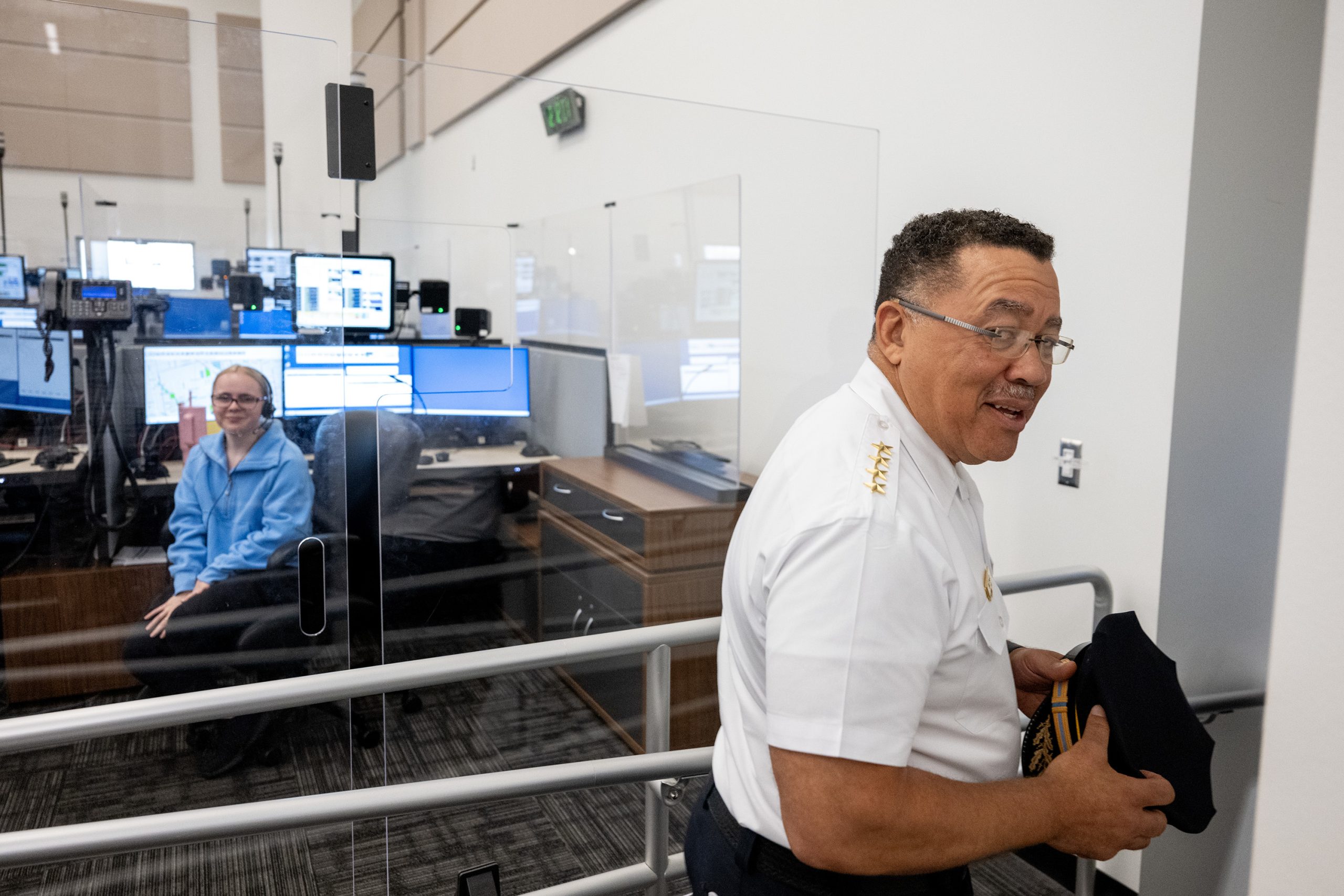
    Police Commissioner Kevin Bethel inside the radio room at PPD headquarters in 2024.Tom Gralish / Staff Photographer

    An internal diversion program

    When city police officers violate department policy, their disciplinary cases are sent to the Police Board of Inquiry, and reprimands can remain on their record and affect future promotions unless appealed and overturned through union arbitration.

    Under a new initiative, officers accused of lower-level violations could go through an internal diversion program that requires them to undergo training and avoids a mark on their record. Among those offenses are sleeping on duty, dismissive behavior, using derogatory or offensive language, or failing to activate body-worn cameras. In the latter case, Bethel said, the diversionary program would not be available for officers with repeated failures to turn cameras on.

    Officers would not be eligible for diversion if they are found to have committed the same offense within the previous six months, or if the offense happened alongside more serious violations ineligible for the program.

    Bethel said the diversion option was developed in coordination with the Citizens Police Oversight Commission with a goal of giving officers “a second chance, but also train them.”

    Expand communication with the public

    The department intends to develop transition plans when captains or commanders leave neighborhood police districts — something community leaders had requested, Bethel said.

    It will also host quarterly community meetings to review data, and develop publicly available dashboards with additional crime, quality-of-life, and other types of data to measure performance.

    By expanding points of contact with the community, Bethel said, “they’re going to hold us accountable.”

  • At Trump-promoted Freedom Fuel gas stations, prices are up and questions linger

    At Trump-promoted Freedom Fuel gas stations, prices are up and questions linger

    Even the Freedom Fuel Network promoted by President Donald Trump isn’t immune to rising gas prices.

    Yet, the Philadelphia-area network of gas stations is expanding anyway, according to the company’s website.

    The enterprise, currently made up of 25 stations spread across the region, garnered national attention earlier this month when it began selling regular gas for $3.47 a gallon — a nod to Trump, and 40 to 50 cents cheaper than other stations.

    Gas station owners suddenly undercut, political observers, and government watchdogs wondered how long the promotion would continue.

    It turns out, not long.

    The Inquirer visited seven Freedom Fuel locations over several days, and while all were still selling gas cheaper than nearby competitors, the deep discounts from earlier were gone.

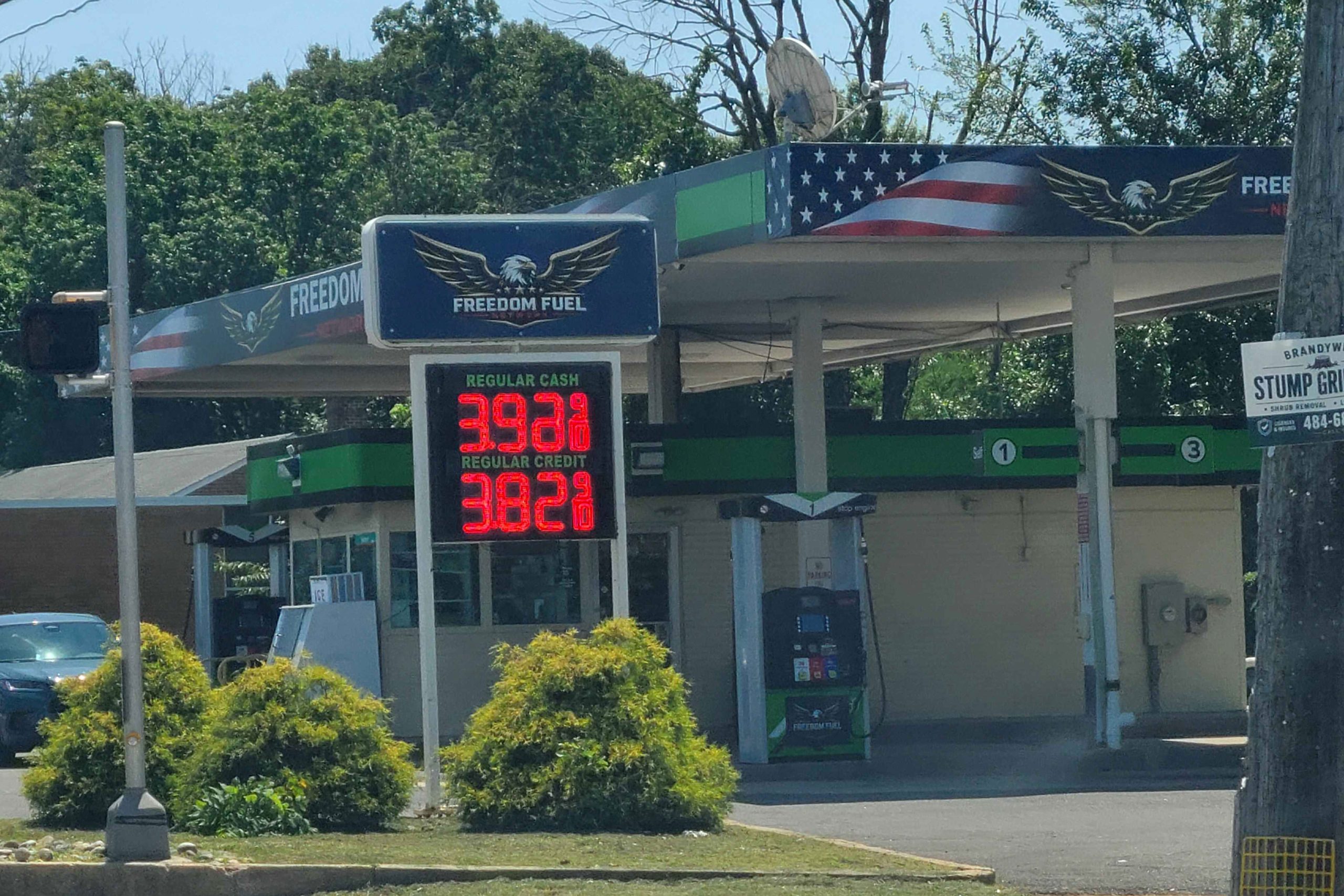
    Gas prices are up everywhere, including the Freedom Fuel Network station on Edgemont Avenue in Brookhaven, Delaware County.Rob Tornoe /

    Three Philadelphia gas stations and two Delaware County locations were among those within the network selling gas at $3.92 a gallon Monday. Near Philadelphia’s Freedom Fuel stations, competitors were charging $3.89 to $4.09 for a gallon of gas. The same was true in South Jersey, where Freedom Fuel stations in Marlton and West Berlin were selling gas around 10 cents a gallon less than their nearby competitors.

    (function(){function e(){window.addEventListener(`message`,function(e){if(e.data[`datawrapper-height`]!==void 0){var t=document.querySelectorAll(`iframe`);for(var n in e.data[`datawrapper-height`])for(var r=0,i;i=t[r];r++)if(i.contentWindow===e.source){var a=e.data[`datawrapper-height`][n]+`px`;i.style.height=a}}})}e()})();

    Selling gasoline is a low-margin business, with owners making just “a few pennies” of profit per gallon sold, according to Eliezer Fich, a finance professor at Drexel University’s LeBow College of Business.

    “They can sustain those losses for a little while, but it becomes unsustainable if you can’t offset that with a convenience store or a car wash,” said Fich.

    Several Freedom Fuel stations visited by Inquirer reporters were small, appeared somewhat rundown, and offered a limited selection of products beyond gas. One location had an inoperable convenience store.

    Fich doesn’t know the specifics of Freedom Fuel. He said independent stations banding together can offer purchasing power with refineries, which can be one route to securing lower fuel costs. But those savings wouldn’t come close to supporting the deep discounts the stations were offering.

    Despite the White House’s involvement in promoting Freedom Fuel, a spokesperson said the company received no government subsidies and did not obtain fuel at a lower cost. The below-market prices would exist “for as long as the company chooses,” the spokesperson said.

    If that’s the case, the business itself was already absorbing dramatic losses before the United States resumed attacks on Iran, leading to a jump in gas prices over the past week.

    The average cost of a gallon of fuel in Philadelphia was $4.17 a gallon Monday, up from $3.95 a gallon last week, according to AAA. Nationally, the average cost of a gallon of gas also jumped back to $4 a gallon, up from $3.14 a gallon compared to last year.

    While questions remain, Freedom Fuel plans to expand

    Little is known about who is taking on the likely losses expected from the promotion.

    Former Evesham Township mayor, Baltimore Ravens assistant coach, and self-proclaimed “proud Trump supporter” Randy Brown, along with former commodities trader Yoni Gontownik, both signed the certificate of formation, first obtained by The Newsground, an investigative news outlet. Neither could be reached for comment.

    Cherry Hill developer Shamikh Kazmi and his brother Syed Kazmi are linked to at least six locations. The brothers, who have been embroiled in at least two lawsuits related to previous gas station ventures, also could not be reached for comment.

    One of Shamikh Kazmi’s businesses was sued as a result of a lengthy trademark dispute with BP America Inc. and BP Products North America Inc. in 2021. That case ended with four deputies with the U.S. Marshals Service seized remaining brand signs in June 2022, according to court documents.

    Also in 2021, the brothers were accused by Petroleum Marketing Group Inc, a fuel distribution company, of stealing thousands of gallons of gas from the company. Petroleum Marketing Group sued the brothers, who were ordered by a federal judge in February to pay $600,000.

    The company has yet to receive payment.

    Still, the people behind Freedom Fuel are looking at expansion.

    “Since launch, drivers have flooded us with one request: bring Freedom Fuel Network to my area,” read the website Monday. “We heard you. Due to overwhelming demand for additional locations, we’re expanding to serve more communities with lower prices at the pump.”

    The website did not give a timeline for when those additional stations could come online and did not respond to a request for comment.

    The Associated Press contributed to this article.

  • Bucks County sheriff’s deputy took naked pics of people in custody and shared them, DA says

    Bucks County sheriff’s deputy took naked pics of people in custody and shared them, DA says

    A Bucks County sheriff’s deputy used his personal cell phone to take naked pictures of two people he encountered as part of his job, including a mentally ill man at whose home he was serving an arrest warrant, prosecutors said Monday.

    Ryan Gaffney, 46, has been charged with official oppression for taking the photos, as well as unsworn falsification to authorities for lying about the photos and attempting to dissuade investigators by sending them doctored screenshots of his phone’s photo library.

    Gaffney, of Feasterville, shared the photos to get “his kicks” with civilian employees at the Bucks County Justice Center, Bucks County District Attorney Joe Khan said at a news conference Monday.

    “Mr. Gaffney’s conduct is a disgrace. It’s an abuse of the trust given to him by the sheriff’s office and by taxpayers,” Khan said. “When a deputy sheriff breaks the law, and lies about it, he erodes the public trust that our law enforcement officers work every day to build.”

    Gaffney was charged via summons, and has not yet been arraigned on the charges, court records show. He was fired from his position with the county sheriff’s office in June, officials said Monday.

    Ryan Gaffney was sworn in as a Bucks County sheriff’s deputy in 2023.Courtesy Bucks County Commissioners

    Gaffney’s attorney, Paul Lang, said Monday that he will “address this case in court, not through one-sided social media posts or press conferences.”

    “Ryan Gaffney deserves due process, not trial by publicity,” Lang said. “These are allegations, not facts, and we look forward to answering them where they belong, in a courtroom.”

    The photo of the first victim was taken Jan. 30, when Gaffney and four other sheriff’s deputies served a warrant at the man’s home in Middletown Township, according to the affidavit of probable cause for his arrest.

    When the deputies arrived, the document said, the man was naked from the waist down, and asked deputies to allow him to put pants on. Before he could do so, Gaffney used his personal cell phone to take a photo of the man’s genitals, according to the affidavit.

    A review of Gaffney’s body-worn camera footage showed that he placed his hand over the camera while taking the surreptitious photo. Other deputies at the scene said they were unaware that Gaffney had taken the photo until later.

    One of those deputies saw Gaffney sharing the photo with female civilian employees at the courthouse, and reported his conduct, the affidavit said. Investigators later learned he had also texted the photo to other contacts in his cell phone.

    Bucks County Sheriff Danny Ceisler said Monday that he reported Gaffney’s conduct to Khan’s office immediately after learning about it.

    The former deputy’s behavior, Ceisler said, “was beyond unacceptable and not in any way representative of the highly professional deputies who serve this county with integrity every day.”

    While investigating the case, county detectives found that Gaffney had taken a photo of another person during a separate arrest in December 2024.

    A photo of that person’s buttocks, taken while he was handcuffed, was shared with 12 people, including other members of the sheriff’s office’s warrant division, the document said.

    While being questioned by investigators, Gaffney denied taking the photographs and signed a sworn affidavit affirming that. Through his attorney, he also provided screenshots of his phone’s photo library that showed the photos were not on the device.

    However, investigators downloaded the contents of Gaffney’s phone, and were able to recover both images, which had been deleted.

    Gaffney was sworn in as a sheriff’s deputy in June 2023.

    Before joining the office, Gaffney served in Iraq with the Air Force in 2005, and as a part-time officer with Penndel Police, according to Bucks County Commissioners.

    Gaffney also works as a part-time officer with Hulmeville Borough Police, one of three members of the police force in the small municipality, and was sworn in there in late 2022, according to a borough newsletter published in January 2023.

    Hulmeville Police Chief John Baran did not respond to a request for comment Monday.

  • Kenneth Houseknecht murdered his 12-year-old Deptford neighbor 38 years ago. A new recording sheds light on the killing.

    Kenneth Houseknecht murdered his 12-year-old Deptford neighbor 38 years ago. A new recording sheds light on the killing.

    Nearly four decades after a 14-year-old boy killed his 12-year-old neighbor by stabbing her 95 times in one of South Jersey’s most infamous crimes, the killer spoke extensively for the first time about that day, according to a newly released recording.

    “I am truly sorry,” Kenneth Houseknecht, now 53, said of the events in April 1988, when he attacked Kim Marie Anderson as she was getting ready for school in her family’s home in Deptford.

    “Years ago, when I first got incarcerated, I didn’t take responsibility at all for what had happened. I was going back and forth between no, it didn’t happen, this is a dream. It couldn’t have happened. It wasn’t me. All I can say is that I am sorry, not only to the Andersons, but to my family.”

    Houseknecht’s comments came during an unusual May 28 hearing in Gloucester County Superior Court.

    After serving 38 years, Houseknecht was seeking a reprieve from a life sentence under a 2022 New Jersey Supreme Court decision that declared mandatory minimum 30-year prison sentences without parole unconstitutional for juvenile offenders.

    The ruling allows juveniles serving lengthy prison sentences to seek a review after 20 years of incarceration. Describing it as “the most gruesome homicide of my time,” Superior Court Judge Kevin T. Smith ultimately affirmed the original sentence, stating that Houseknecht continues to be a danger to the community.

    No media was present during the nearly two-hour hearing. A succinct news release issued by the Gloucester County Prosecutor’s Office confirmed Smith’s ruling.

    However, an audio recording of the proceeding, obtained through an open public records request, offers a compelling window into Houseknecht’s imprisonment since he was a student in junior high school, his family’s pledge of support for his potential release, and the continued anguish and anger of Anderson’s parents, Stephen and Esther.

    In 1991, Houseknecht was sentenced to life in prison, meaning he would have to serve a minimum of 30 years before becoming eligible for parole.

    If Smith ruled in Houseknecht’s favor, he could be released without relying on the discretion and supervision of a parole board.

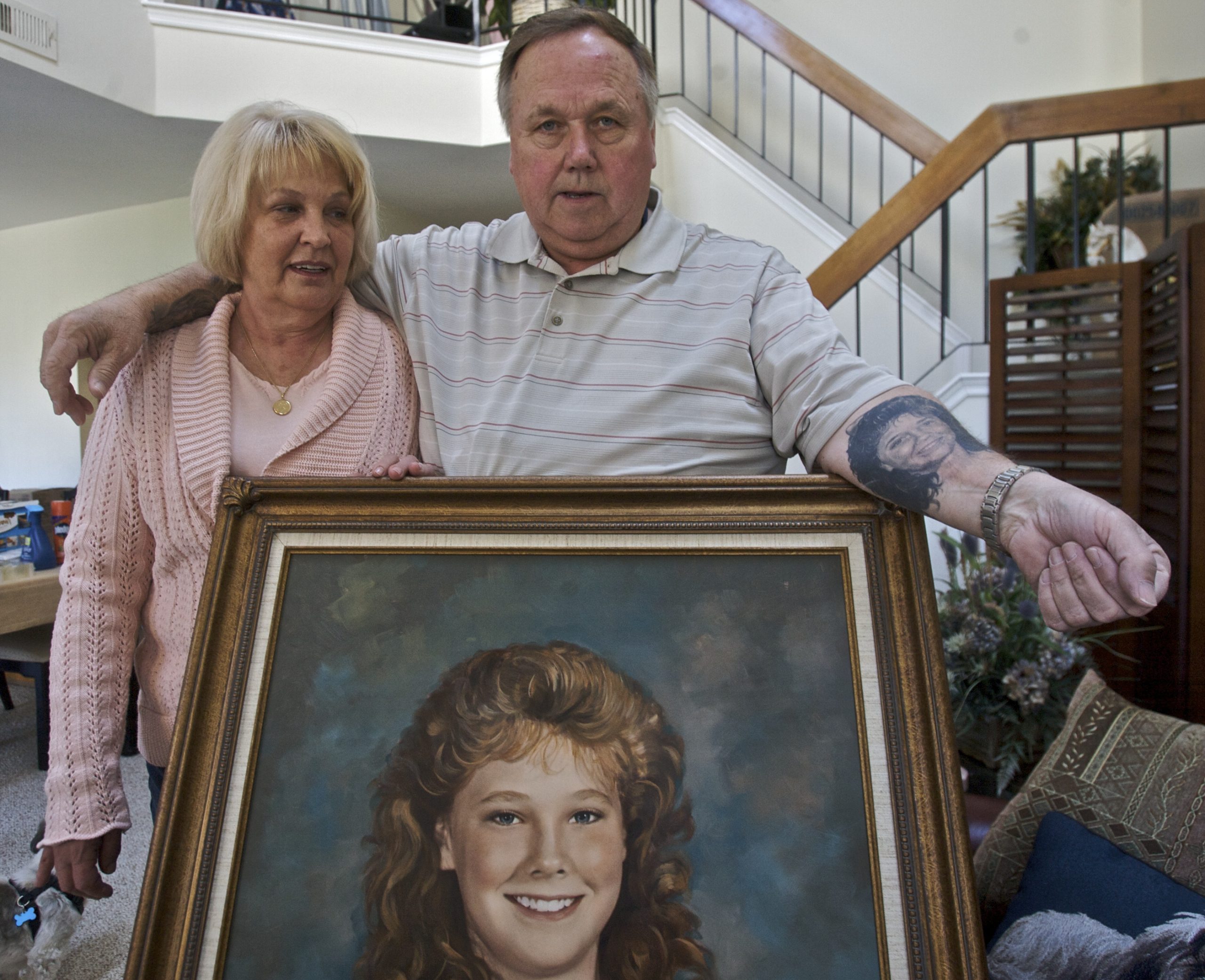
    Twelve-year-old Kim Anderson, seen in a painting in 2009.John Costello / Staff Photographer

    The crime

    In the early morning of April 19, 1988, Kim and another girl were expected for breakfast at a friend’s house across the street before all three girls boarded their bus for school. Esther Anderson would normally be home to see Kim and her brother, Stephen Jr., off to school, but because of an issue at the family’s catering business, she was already at work, assisting her husband.

    Houseknecht was a friend of Stephen Jr., who left the house before his sister because his bus came earlier. Other than the family’s boxer, Bo, Kim was home alone.

    It was supposed to be a simple robbery. Houseknecht owed money to an older friend for pornographic magazines. He didn’t expect anyone to be inside the Anderson home. He had with him a small knife he had stolen from the Ames department store.

    Confronted by Kim, Houseknecht, who was 6 feet tall and weighed 200 pounds, attacked the 5-foot-3, 120-pound seventh grader. He stabbed her nearly 100 times. The ferocity of the assault was so intense that the tip of the knife broke twice, leaving pieces in her head. Houseknecht also beat her repeatedly with a French-style telephone.

    One of Kim’s friends discovered her battered body lying on the floor just inside her bedroom, next to a blood-soaked Cabbage Patch doll.

    Investigators immediately focused on Houseknecht as a suspect. While they were scouring the neighborhood for clues shortly after the murder, he approached them and made a bizarre revelation.

    “You know my fingerprints are all over the house, even in Kim’s room,” he told them, according to sworn statements at the time.

    Investigators also discovered a note on Houseknecht’s bed to the Andersons featuring sexually explicit drawings.

    “This is your daughter’s killer. I hope you know I used gloves. The next one to get it is Mrs. Anderson,” the note read.

    When a judge ordered Houseknecht tried as an adult, Houseknecht pounded furiously on the table, shouting, “Kill me, kill me,” and “I didn’t kill that girl purposely.”

    A jury convicted him of murder following an emotionally charged trial that was moved from Gloucester County to Salem County because of extensive pretrial publicity.

    Over the years, attorneys with the state’s Office of the Public Defender have exhausted most appeals to have his sentence reduced, contending, among other things, that Houseknecht’s lawyers provided ineffective counsel.

    The May hearing before Smith appeared to be the best chance for Houseknecht to be released, barring any potential future parole board decision.

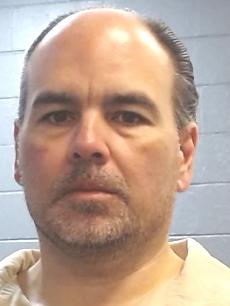
    Kenneth HouseknechtState of New Jersey Department of Corrections

    Houseknecht’s courtroom appearance

    Dressed in an orange prison jumpsuit, Houseknecht stood for most of the 17 minutes he addressed the court, trying to convince the judge that after being in prison since he was a teenager, he was ready to reenter society. At one point, he became emotional and told Smith he would be more comfortable sitting down.

    “It was a robbery that turned tragic,” Houseknecht read from notes. “I had forgotten about somebody being there. I hated that. I hate it today. I fully understand the pain that I caused the Andersons, especially Kim. I know their family can’t be whole.”

    He said he regretted writing the note threatening Esther Anderson, describing it as a “stupid attempt to avert attention” from what he had done.

    He noted that he had since earned his GED certificate, taken college-level courses, and was a model prisoner who helped tutor other inmates.

    “I’ll just end it here with this,” Houseknecht said. “What you see, what you read about me, all that I’ve learned is genuine. I do want to give you my word that I will continue to be the same way on the streets.”

    Houseknecht’s sister, Katrina Andreen, testified on her brother’s behalf via Zoom. An actress who goes by the name Katrina Law, she appears on the show NCIS.

    “It took many years for him and us to figure out why he did what he did, and then even more years to address it properly, which Ken has done,” she read from a statement. At the time of the murder, she was 11 years old and went by the name Joyce Houseknecht.

    A former Miss New Jersey Teen USA pageant winner, Andreen said, “Ken does not shy away from taking full responsibility for his past mistakes and actions. Ken has had almost four decades in prison to think about and reflect on what he did as a troubled 14-year-old, and now, as a grown man, he takes full responsibility and is truly sorry.”

    She said her family was prepared to help her brother transition to a life beyond prison.

    “Our family will be there for Ken every step of the way, offering moral support, encouragement and most importantly, love,” she said. “I look forward to our family being whole again. I ask that we please believe in forgiveness. I ask that we please believe in rehabilitation. I ask that we please believe in second chances, and I ask that we believe in my brother.”

    The Andersons respond ‘it’s just not fair’

    Stephen and Esther Anderson, in 2009, in their Mount Laurel home as they prepare to move. Portraits of their slain 12-year-old daughter, Kim who was murdered 21 years ago hang on the walls of the dinning room and den.John Costello / Staff Photographer

    Over the decades, Stephen Anderson, now 76, has attended numerous court proceedings in support of justice for his daughter. When it was his turn to speak, he chose not to read from a statement. Instead, he spoke extemporaneously about how his family’s life was forever upended on that April morning in 1988.

    He described Houseknecht as a monster who is “not even human to do what he did.” He explained that his wife was not with him in court because she remains fearful of Houseknecht because of the threatening note found on his bed after he killed Kim.

    He was extremely skeptical of Houseknecht’s profession of remorse, calling it a lie.

    “It took him all these years to become remorse, the doctor said he wasn’t, and now all of a sudden he has it because his lawyers are telling him to say it,” Anderson said.

    He said not only is his family fearful of Houseknecht’s release, but the community who remembers the crime is also frightened of the possibility.

    “It’s just not fair that not just my family has to live in fear,” he said. “There are a lot of people still living in Gloucester County, and they are going to be fearful of what they have to face when he gets out.”

    He asked the judge to “see it the right way” and keep Houseknecht behind bars.

    “We’re not gun people, but we’re going to apply for gun permits because we’re scared,” he said.

    Assistant County Prosecutor Michael Mellon argued that the original sentence remains intact. He cited expert opinions that found Houseknecht had failed to accept the reality of what occurred and his role in it.

    He also reminded the court that Kim Anderson never got to experience high school, college, relationships, or a career.

    “Regardless of the outcome here today, no one that can hear my voice should forget Kim Anderson,” he said. “No one in this room, no one that reads this transcript, because Kim matters today, she matters tomorrow, and she matters always.”

    The judge’s ruling: ‘The deep-down demon that brought about this crime’

    Before sharing his opinion, Smith pointed out that while the hearing focused on Houseknecht’s future, Kim would be 51 today if not for that fateful encounter with her neighbor when both were young.

    “We don’t know whether she would be the first woman president,” Smith said. “We don’t know whether she would give birth to the next man on the moon. We don’t know what 12-year-old Kim would have to offer, as 20-year-old Kim, 35-year-old Kim, or 50-year-old Kim. We don’t know that, so we can’t lose sight of the absence of this particular person in this equation.”

    He acknowledged Houseknecht’s positive experiences while in prison and his efforts to better himself, saying he has not “gotten into the unproductive behavior of many of his fellow inmates of just playing cards all day.”

    But he sided with prosecution experts who believe Houseknecht still poses a risk of violence. Smith also noted that an expert had suggested there was a sexual component to the crime, though that was never addressed at trial.

    In affirming the original sentence, Smith said to reduce it and allow Houseknecht to be freed with no supervision, would be derelict on his part.

    Despite having spent decades in prison and his efforts to improve himself, Houseknecht, Smith said, has never addressed the fundamental issues and “the deep-down demon that brought about this crime.”

    Houseknecht remains in custody at the South Woods State Prison in Bridgeton. When he first became eligible for parole in 2018, he refused to cooperate with the hearing process and a hearing was not scheduled.

    Nicole Swiderski, a spokesperson for the New Jersey State Parole Board, said in an email that Houseknecht’s status has not changed.

  • What’s changed at the President’s House with the Trump administration’s new exhibit

    What’s changed at the President’s House with the Trump administration’s new exhibit

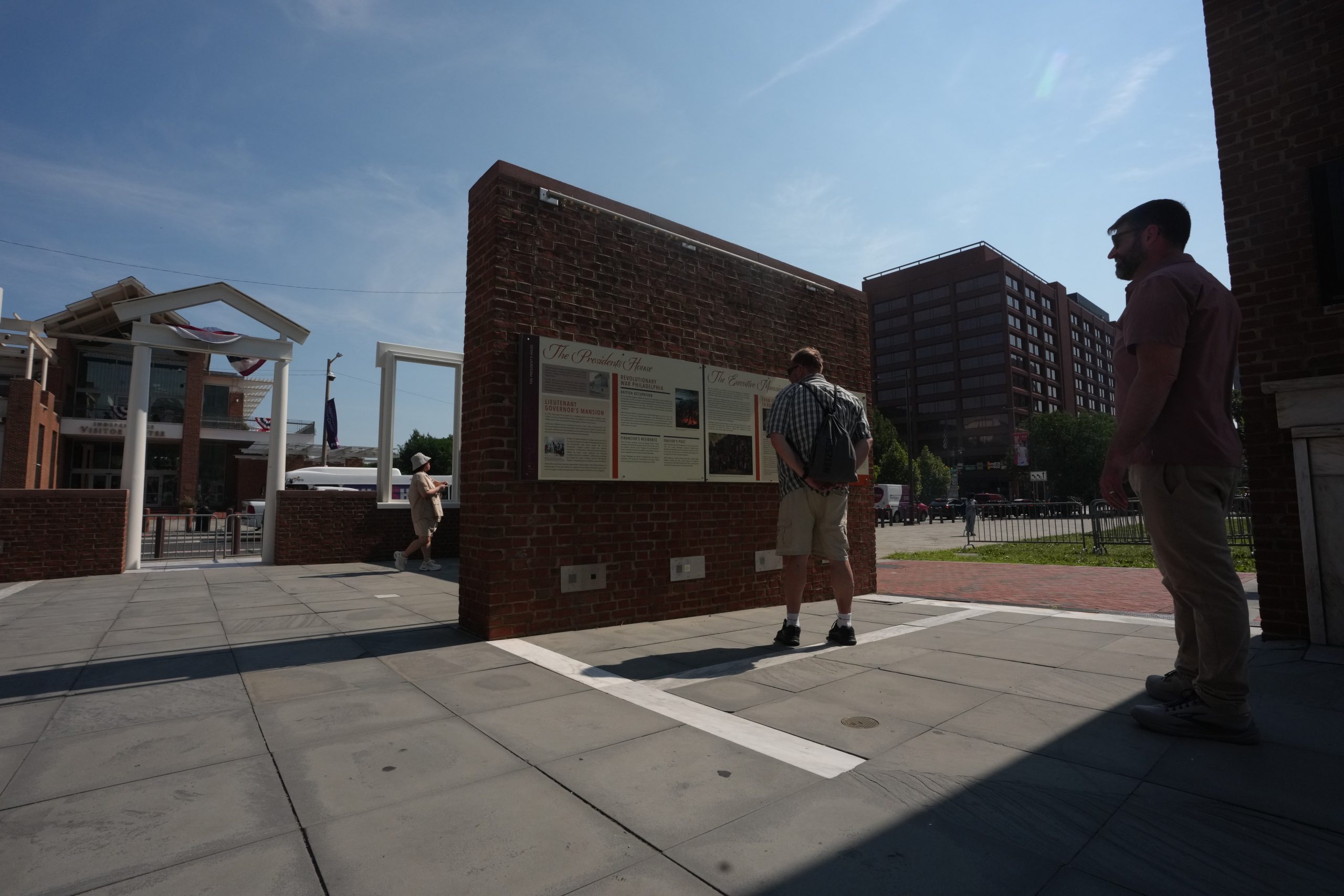
    The National Park Service removed early Wednesday the few panels that remained from the slavery exhibit at the President’s House, and replaced them with new panels.

    The original displays were deemed to “inappropriately disparage Americans past or living” following President Donald Trump’s 2025 executive order on “restoring truth and sanity to American history.”

    The newly installed panels include 11 whose renderings were published on the National Park Service’s website and first reported by The Inquirer in April, as well as smaller panels that weren’t previously made public. Among those are additional references to the nine people George Washington enslaved in his Philadelphia home.

    Historians previously criticized the panels for minimizing the brutality of slavery and whitewashing Washington’s culpability in the institution.

    And according to advocates, the additions don’t change much.

    Telling a blatant lie, such as claiming slavery didn’t exist, would be too easily exposed, said Michael Coard, a founding member of Avenging Our Ancestors, a group that advocated for the development of the site.

    “The best lie is one that has a little bit of truth,” Coard said.

    The new panels make light of slavery, the attorney said, and focus on Washington’s “discomfort” instead of the experience of the nine people the United States‘ first president enslaved in Philadelphia.

    Others criticized the panels for drifting away from the site’s original purpose.

    When the site open in 2010, the city and National Park Service said the President’s House exhibit “pays tribute” and “honors lives of enslaved Africans in presidential household.”

    The Department of Interior said Wednesday the new panels “acknowledge the evils of slavery, including its injustices and hypocrisies, and, by telling the stories of the nine slaves that Washington kept in the President’s House, remind us of their essential humanity.”

    The Inquirer photographed the original panels before their removal and the new panels that were installed this week. Here are the differences in the exhibit.

    What’s gone

    The original exhibit included five screens across the site that played reenactments depicting the daily lives of those enslaved at Washington’s Philadelphia home.

    “The site had to tell the stories that are not often told and share the perspectives of the people who up to now have been nameless and voiceless,” said Rosalyn McPherson, the site’s project director, in the 2010 news release.

    Those screens were turned off.

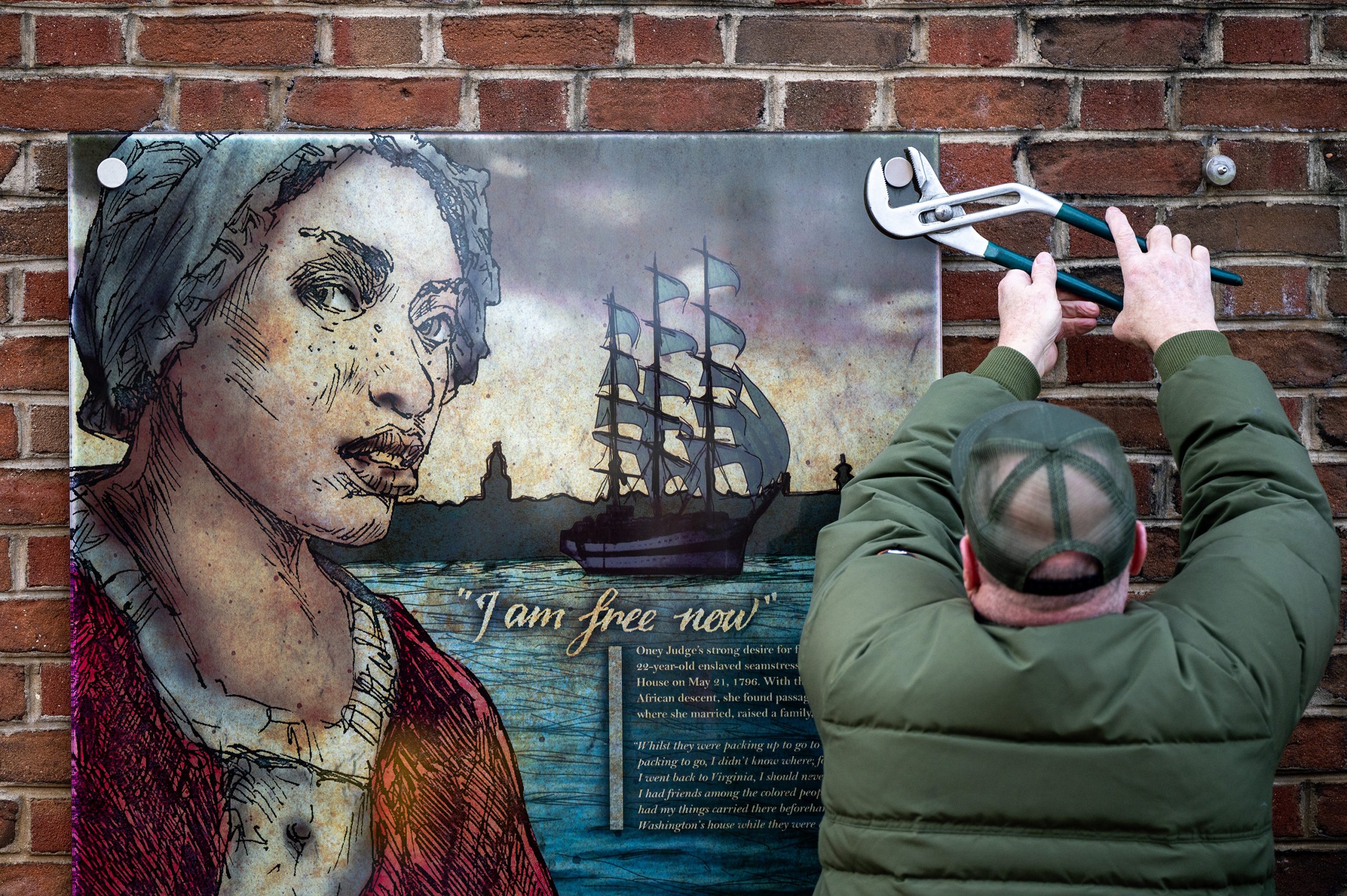
    Also gone are the artistic panels, which included a portrait of Ona Judge, who escaped from slavery at the house, and another about Washington’s signing of the Fugitive Slave Act.

    Workers remove the display of panel for Ona Judge at the President’s House in Independence National Historical Park in January.Tom Gralish / Staff Photographer

    What’s replaced

    The removed panels included information about the suffering of enslaved people.

    A panel titled “The Dirty Business of Slavery” included information about the slave trade, the constitutional compromise to appease slaveholders, the growth of the enslaved population during the presidencies of Washington and John Adams (who also lived at the President’s House), and a timeline of slavery from 1619 and through emancipation.

    Another panel, titled “Life Under Slavery,” discussed the brutality of the notorious institution, resistance efforts, and slavery in Philadelphia.

    It told the story of Absalom Jones and Richard Allen, men who were born into slavery and managed to buy their own freedom.

    “Enslaved people of African descent in the North, deprived of fundamental freedom, endured profoundly difficult lives,” the panel read. ”Controlled by others, their families were always threatened by forced separation, and their work, often exhausting, was nearly always unpaid.”

    Those panels were replaced with ones that include broad descriptions of slavery that do little to unpack the experience of those subjected to it, and focus on the triumph of emancipation.

    The new “Fighting for Freedom” panel discusses the Underground Railroad, quotes Frederick Douglass, Abraham Lincoln’s rise to the presidency, and the Emancipation Proclamation.

    Another panel about “The Constitution and Slavery” begins by stating: “The words ‘slave’ and ‘slavery’ are not in the U.S. Constitution as ratified, nor the word ‘property’ in connection with language alluding to slavery.”

    It discusses “compromises with pro-slavery delegates,” and ends with a section titled “fulfilling the promise” that quotes the Rev. Dr. Martin Luther King Jr.’s “I Have a Dream” speech.

    A panel about “Slavery in the British Colonies” pays homage to Benjamin Franklin and Black abolitionists, and shows the declining numbers of enslaved people in Philadelphia between 1767 and 1847.

    And in a trio of displays called “History Lost & Found,” the Trump administration focuses on how the 2007 archaeological dig of the site worked and discovery of primary sources documents it presents as non-controversial: Washington’s letters and a map of the property.

    Unlike the original panels about the archaeological dig, the new ones have no mention of slavery, the nine people Washington enslaved, or the National Park Service’s initial apprehension about helping to develop the memorial.

    But starkest difference comes in the treatment of slavery at the President’s House itself.

    An original panel included a timeline of the site’s history from the time Indigenous people lived in the area and through the 2002 discovery of slavery at Washington’s household.

    It continued to discuss the collaboration between the city, federal government, and community groups to develop the site.

    The panel’s section on slavery at the house focused on George and Martha Washington ownership of enslaved people, the president’s secret efforts to evade Pennsylvania’s Gradual Abolition Act, and the escapes of Ona Judge and Hercules.

    In contrast, the new panel titled “The Executive Mansion” follows a mention of slavery at the house with a statement that Washington’s views evolved and that he freed his slaves in his will.

    Another new panel that addresses “Presidents Washington and Adams on Slavery” head on says Washington was “caught between his private doubts about slavery and his public responsibilities as president” and privately “often expressed discomfort with the institution.”

    “Slaves living in the President’s House experienced a greater modicum of autonomy than elsewhere in the South such as to explore the city and sometimes even attend the theater, with Washington buying the tickets,” the panel reads.

    On the same wall, a new smaller panels lists the nine people Washington enslaved alongside short bios. The panel tells visitors that Washington “knew and trusted his enslaved house staff,” and repeats that he used to “buy them tickets to the circus and the theater.”

    The wall also includes a smaller panels that briefly tells escape stories of Judge and Hercules, and references Washington’s attempt to recapture them.

    What’s new

    Multiple panels throughout the exhibit share facts about U.S. history, but bear no connection to the site or slavery. These include “Celebrating Independence” and “Throughout the Years,” which denote the nation’s 100, 150, and 200 year celebrations.

    And a series of panels provide a civic lesson about the history, powers, and role of the commander in chief. Another panel discusses “the need for an executive branch.”

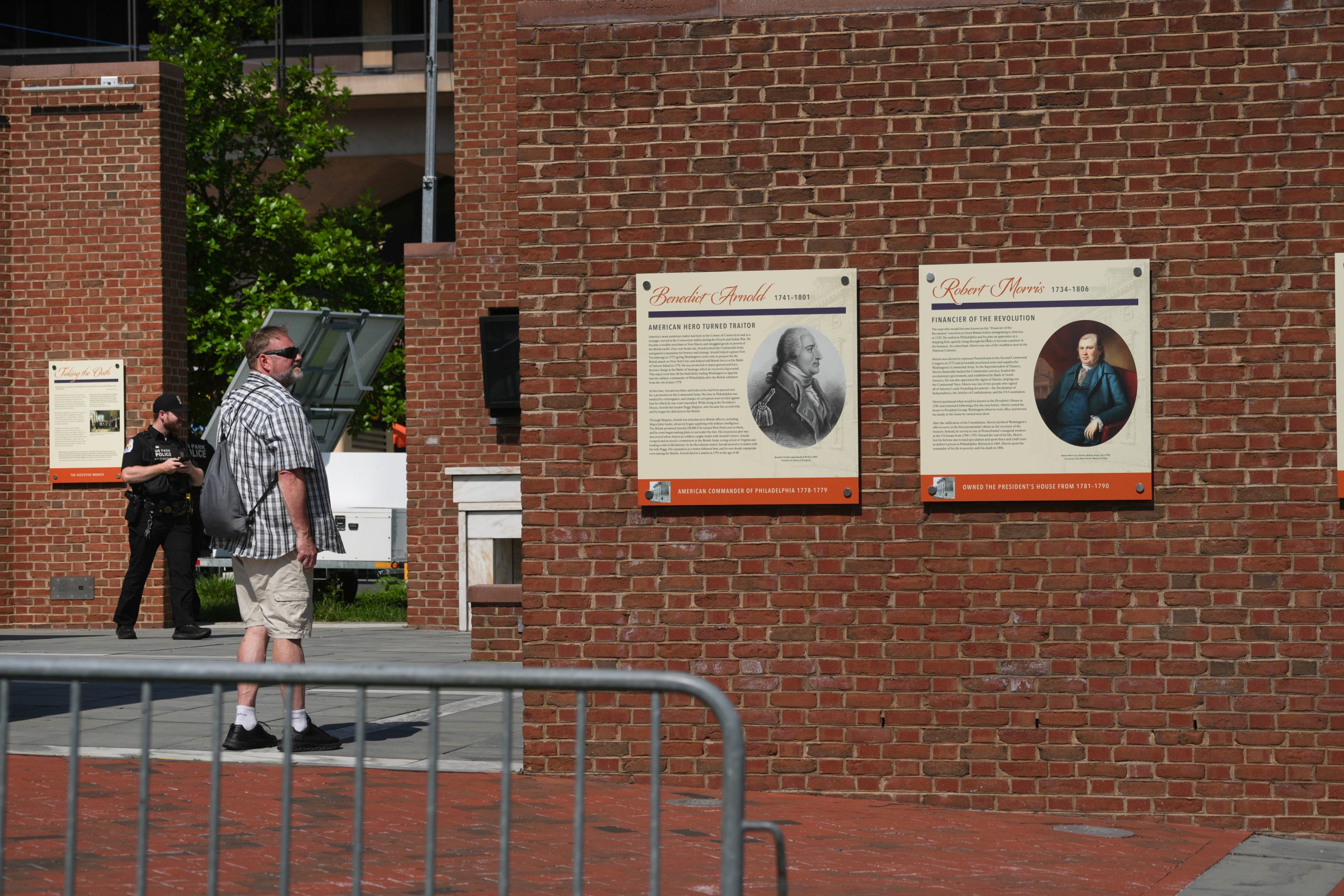
    New panels detail the biographies of George and Martha Washington, John and Abigail Adams, and Benedict Arnold. The biography of William Howe, a British commander who occupied Philadelphia during the Revolutionary War and lived at the President’s House, is also attached to the wall.

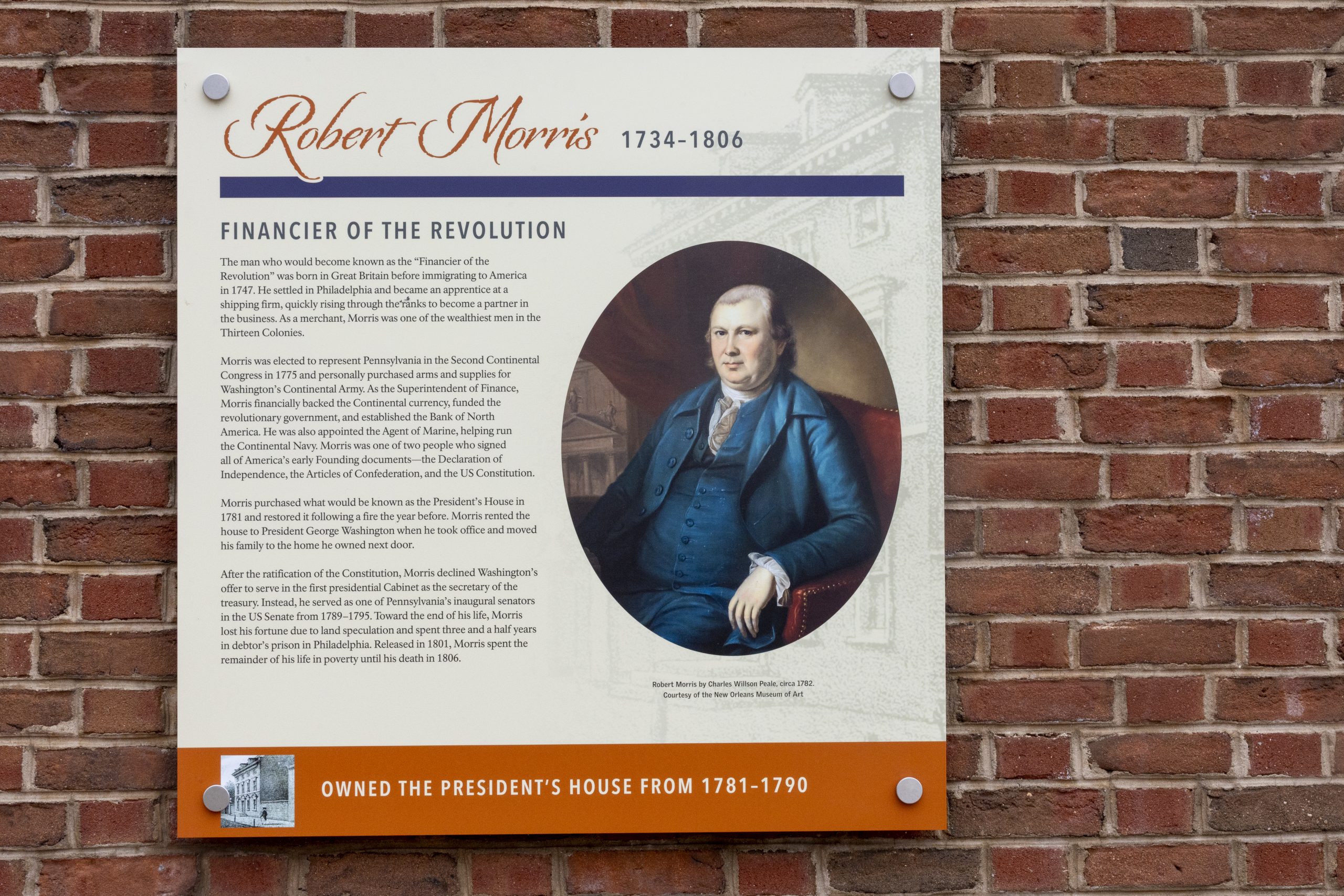
    Finally, the new exhibit pays homage to Robert Morris, known as the “financier of the American revolution” and offered Washington the house as the executive mansion with a panel dedicated to his biography.

    Morris’ ownership of a company that traded slaves is never mentioned.

    A detailed image of one of the new panels installed by the National Park Service at the President’s House this week.Aidan T. Gallo / Staff Photographer
  • Shapiro says Trump’s claims of widespread noncitizen voting are ‘not connected to reality’

    Shapiro says Trump’s claims of widespread noncitizen voting are ‘not connected to reality’

    Gov. Josh Shapiro blasted President Donald Trump Friday morning, a day after the president used a prime-time speech to reignite a series of conspiracy theories about his 2020 election loss that intelligence and voting experts have both warned are based on misrepresentations and falsehoods.

    “It was an unfortunate day for America to have really an unhinged president in the White House spewing a whole bunch of conspiracy theories that are just simply not connected to reality,” Shapiro said on MS NOW’s Morning Joe Friday morning.

    The speech comes less than four months ahead of the November election, which will determine control of Congress and the Pennsylvania governor’s office. As Trump administration looks to usher in sweeping national changes to election administration, Shapiro and other Democrats have promised to continue resisting those efforts.

    Shapiro, a potential Democratic contender for the presidency in 2028, noted his role in battling Trump’s team in court as Pennsylvania attorney general in the aftermath of the 2020 election — which Trump continues to insist he won, without evidence, six years later.

    “I went 43-0,” Shapiro said, calling Trump’s assertions baseless.

    DHS targets Pennsylvania and New Jersey

    While the president did not directly reference Pennsylvania in the speech, the White House did target the state — along with New Jersey, California, and Nevada — in a document it posted online Thursday evening in support of the president’s claims.

    The document claims that the Department of Homeland Security has identified more than 250,000 noncitizens registered to vote spread across the four Democratic-led states, but it provides little explanation of the methodology used.

    Pennsylvania Secretary of State Al Schmidt, a Republican appointed by Shapiro, rejected the allegation in a statement.

    “Pennsylvania follows all state and federal laws when it comes to our elections, and our voter rolls are properly maintained and updated,” Schmidt said in a statement Thursday. “All evidence has shown that noncitizen voting is extremely rare across the country, including in Pennsylvania.”

    The assertions, which Trump said were made in concert with the nation’s top intelligence agency chiefs, are included in memos on the White House homepage that together weave broad allegations of fraud surrounding the 2020 presidential election that remain unproven despite multiple audits and investigations six years later.

    “These disclosures reveal an election system so broken and so vulnerable that no one can possibly defend it. It is not defensible,” Trump said Thursday.

    But none of memos show evidence that would change the outcome of the election and a broad range experts have pointed that some contain information that undercut Trump’s claims.

    The document targeting Pennsylvania and New Jersey is a one-page summary of a Department of Homeland Security investigation, which the White House says identified, a total of 278,000 noncitizens across the country who are registered to vote in federal elections.

    The White House document suggests the number was derived from putting voter files through the federal government’s Systematic Alien Verification for Entitlements (SAVE) tool, which has previously been used to further false claims of widespread voter fraud.

    “While the Department has made clear that we cannot share Pennsylvanians’ private, personal information, we welcome DHS sharing their methodology and list of potential ineligible voters so we can carefully review the validity of their claims,” Schmidt said in the statement.

    The announcement also comes as Pennsylvania and other states have pushed back against requests from the Department of Justice to hand over unredacted voter rolls. Schmidt has argued that sharing the rolls would put voters’ personal information at risk.

    The Trump administration has insisted doing so is the best way to avoid criminal prosecution for “aiding and abetting the violation” of federal voting laws.

    DHS Secretary Markwayne Mullin said 23 states already work with the department to screen for noncitizen voters, in a news conference Friday, and those who continue to resist could face legal consequences.

    States that want to be reimbursed for the cost of running federal elections must implement the department’s requests, he said.

    “We will make sure that we make those states a priority to look at who voted in their states, and hold the election officials accountable,” Mullin said. “If the election officials — once we gave them the information they need to secure their elections — chose not to, then those individuals can also be held accountable by fines, by penalties, and even depending on how far it goes, prison time.”

    But funding from the federal government to run elections “is modest at best and neither reliable nor consistent,” according to the Center for Election Innovation & Research.

    Schmidt, who investigated noncitizen voting in his previous role as Philadelphia’s Republican city commissioner, has repeatedly rebuffed the department’s demands and said it is extremely rare for noncitizens to vote and already prohibited by state law.

    There have been only 77 instances of noncitizens voting in the entire United States between 1999 and 2023, according to an analysis from the Bipartisan Policy Center, and authorities investigated in each instance.

    To vote in Pennsylvania, you must be a U.S. citizen, a resident of the state for 30 days, and 18 years old by Election Day. Registration must be done 15 days prior to an election.

    There are three main ways to register: online, via a paper form handed into a county board of elections, or at PennDot or another state agency. Some people register when obtaining a driver’s license, if eligible, or after a naturalization ceremony.

    But the SAVE system doesn’t always catch up with those changes, said Ben Geffen, a senior attorney at the Public Interest Law Center in Philadelphia who reviews elections. That means, results might show “false positives” that evaporate upon “even a little bit of investigation” into individual circumstances.

    Pennsylvania will be crucial in determining control of the House with four swing districts being targeted by both parties, meaning that the state’s election is likely to fall under the microscope as they repeatedly have since the 2020 election when Trump sought to overturn Joe Biden’s victory.

    “We are prepared here in the Commonwealth of Pennsylvania to once again have a free and fair, safe and secure election,” Shapiro said.

    State audit found only one noncitizen on Pa. voter rolls

    Shapiro said he trusts Schmidt, a Republican, “because we believe here in Pennsylvania the administration of elections is nonpartisan.”

    In 2017, Schmidt, then a Philadelphia city commissioner, identified a glitch in PennDot’s system that had allowed 168 noncitizens to register to vote in the city, and likely a couple hundred statewide.

    The voter rolls were updated in 2018, Geffen said, so none of the glitches would have impacted the 2020 election or any beyond.

    A 2026 audit from Pennsylvania Auditor General Timothy DeFoor, a Republican, found that just one noncitizen was improperly registered to vote at PennDot due to human error. The individual never cast a ballot.

    New Jersey has also fought against the full release of its voter rolls.

    Gov. Mikie Sherrill joined other Democratic governors in calling Trump’s speech “alarming” in a statement issued Thursday.

    “Democratic governors stand ready to fight back against the Trump administration and stop any and all unlawful attacks on every American’s constitutional right to vote,” said the statement from the Democratic Governors Association.

    Sen. Andy Kim, (D., N.J.) referred to Trump’s address as “25 minutes of conspiracy theories from a man who still can’t get over 2020” in a post on X.

    Trump also used the speech, which was not carried live on ABC, NBC, or CNN, to advocate for the SAVE Act, the elections bill that would require people to prove that they are U.S. citizens when registering to vote.

    “Addressing this crisis of election security demands that Congress must pass the SAVE America Act,” Trump said. “How easy is that to do unless you want to cheat?”

    The legislation, which has stalled in Congress, is unpopular among Democrats and even some Republicans. Among the concerns that have been raised from opponents is that it could block married people who take their spouse’s surname from registering to vote because of the mismatch with their birth certificates.

    Sen. Dave McCormick (R., Pa.) urged passage of the bill on social media Thursday, but he did not respond to a question Friday about the Trump administration’s claims about noncitizen voting in Pennsylvania.

    But as November approaches, another Pennsylvania Republican, Philadelphia City Commissioner Seth Bluestein, said voters can be sure their votes will be counted accurately.

    “Prior to every election, we conduct logic and accuracy testing on every piece of equipment that is used for the election,” said Bluestein, the sole Republican on the three-member board that oversees Philadelphia elections.

    “Voters, when they cast their ballots, have a verifiable paper ballot for every single vote that gets cast, and then after the election, we conduct two audits of a random sampling of ballots to verify that they were tabulated accurately,” he said.

  • House Judiciary Committee issues subpoena to Philly DA Larry Krasner, demands immigration records

    House Judiciary Committee issues subpoena to Philly DA Larry Krasner, demands immigration records

    The House Judiciary Committee subpoenaed Philadelphia District Attorney Larry Krasner on Wednesday, ordering him to turn over documents related to his office’s handling of immigration matters and criticizing what it called the prosecutor’s “pro-illegal-alien policies.”

    The Republican-led Congressional committee said in a letter that it sent the subpoena after Krasner, a Democrat, promised but failed to provide materials that were requested in May.

    The committee, in a letter signed by Rep. Jim Jordan (R., Ohio), its chair, accused Krasner of declining to prosecute or under-prosecuting foreign nationals so that they could avoid consequences connected to their immigration status. The committee said it was asserting its authority to try to end sanctuary-city policies in cities including Philadelphia.

    In response, Krasner called the subpoena “yet another step in authoritarian efforts to do dirt in the dark” and to put pressure on state prosecutors.

    “We have always complied with the law and will continue to do that,” Krasner said Wednesday. “That makes us different from [President Donald] Trump, who spends all day, every day, violating the law of the U.S. Constitution ― and morality.“

    Krasner and the House committee have sparred since May, when the panel accused top city law enforcement officials of shielding criminal immigrants through sanctuary policies and demanded that they quickly turn over a trove of related records and correspondence.

    That represented an escalation by Trump-allied Republicans in their criticism of Philadelphia government on rules concerning undocumented residents, particularly around limiting city cooperation with U.S. Immigration and Customs Enforcement.

    In April, City Council approved high-profile “ICE Out” legislation aimed at restricting immigration enforcement in Philadelphia, putting the city at the forefront of local resistance to Trump’s deportation campaign. The Trump administration challenged part of that package of bills, and this month a federal judge ruled that the city could not prevent ICE agents from concealing their identities.

    In May, in letters to Krasner, Police Commissioner Kevin Bethel, and Sheriff Rochelle Bilal, the Judiciary Committee accused each of hindering federal immigration enforcement. Each letter sought up to six years of immigration communications between their agencies and immigration officials and, in the sheriff’s case, with activist groups including No ICE Philly, Juntos, Asian Americans United, and others.

    The Trump administration has clashed with cities and states that embrace sanctuary policies, contending they are hurting Americans and threatening to cut their federal funding. Philadelphia has long been among the targets.

    Krasner had responded by telling the committee, which said it was conducting oversight of state and local jurisdictions that it believes endanger Americans by not assisting immigration agents, that such policing powers belong to the city.

    “The legal errors are unsurprising,” Krasner wrote to Jordan and to Rep. Tom McClintock (R., Calif.), chair of the subcommittee on immigration, noting that neither had passed the bar. “The factual errors are also unsurprising, given your histories of adhering to wholly repudiated, counterfactual and unscientific election denialism, climate change denialism, and the like.”

    Krasner wrote that he needed time to address each of the committee’s allegations and requests, and was working to hire a lawyer who would be in touch soon.

    In July, Krasner wrote the committee and encouraged it to “question me in public so all Americans are able to see who is telling the truth.”

    The committee’s “fear of such a public airing only makes clearer your lack of real purpose and your complicity in peddling lies,” such as, he said, that local and state prosecutors “rather than President Trump’s ill-conceived deportation actions are responsible for criminals going free.”

    Immigrants are far less likely to commit and be arrested for crimes than U.S. citizens, Krasner noted. But the small number of immigrants who commit serious crimes are being deported by ICE before they can stand trial and be sentenced, given “a ‘get out of jail free’ card and a plane ride to another country, a country where they will never face American justice.”

    The committee told Krasner on Wednesday that time to provide the requested records had run out. Its subpoena directs him to turn over the materials by July 29.

    “Although you may disagree about the need to reform federal law to end sanctuary policies … you cannot seriously contend that the committee lacks the authority to do so,” the committee wrote, adding that Congress may amend statutes “to ensure that prosecutors cannot circumvent immigration law and allow aliens to escape accountability for their crimes.”

  • Slavery exhibits at the President’s House have been swapped for the Trump administration’s version

    Slavery exhibits at the President’s House have been swapped for the Trump administration’s version

    President Donald Trump’s administration has installed its own version of history at the President’s House Site, swapping panels on the brutality of slavery at the site for displays that experts say sanitize George Washington’s role as an enslaver.

    The replacement caps a monthslong legal battle over the site on Independence Mall that was the first direct skirmish between Mayor Cherelle L. Parker and the Trump administration.

    The change happened overnight Tuesday into Wednesday, hours after the city hosted MLB All-Star Game events near the site, allowing the government to switch out the displays and shut down the television screens without public scrutiny.

    Roughly a week prior to the changes, park employees installed security cameras near the site, which one worker explained as being for the All-Star Game festivities. The cameras were still present Wednesday.

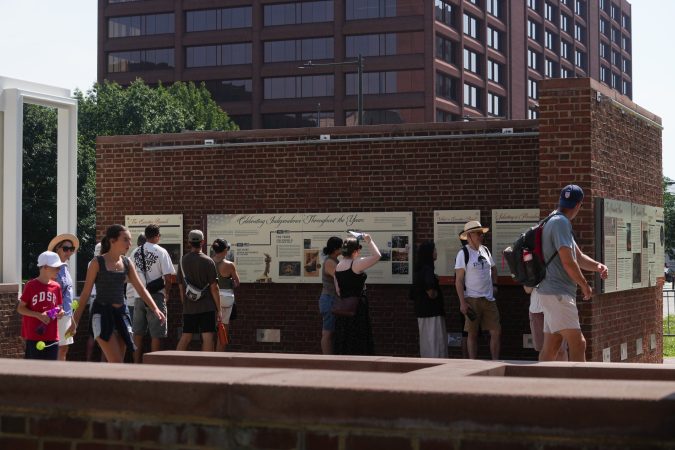
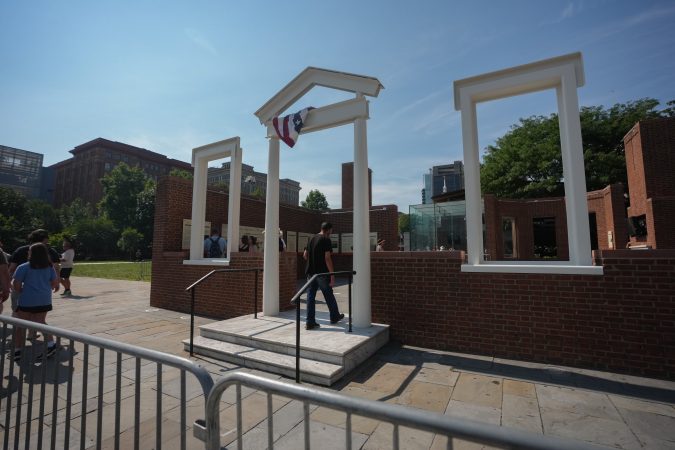
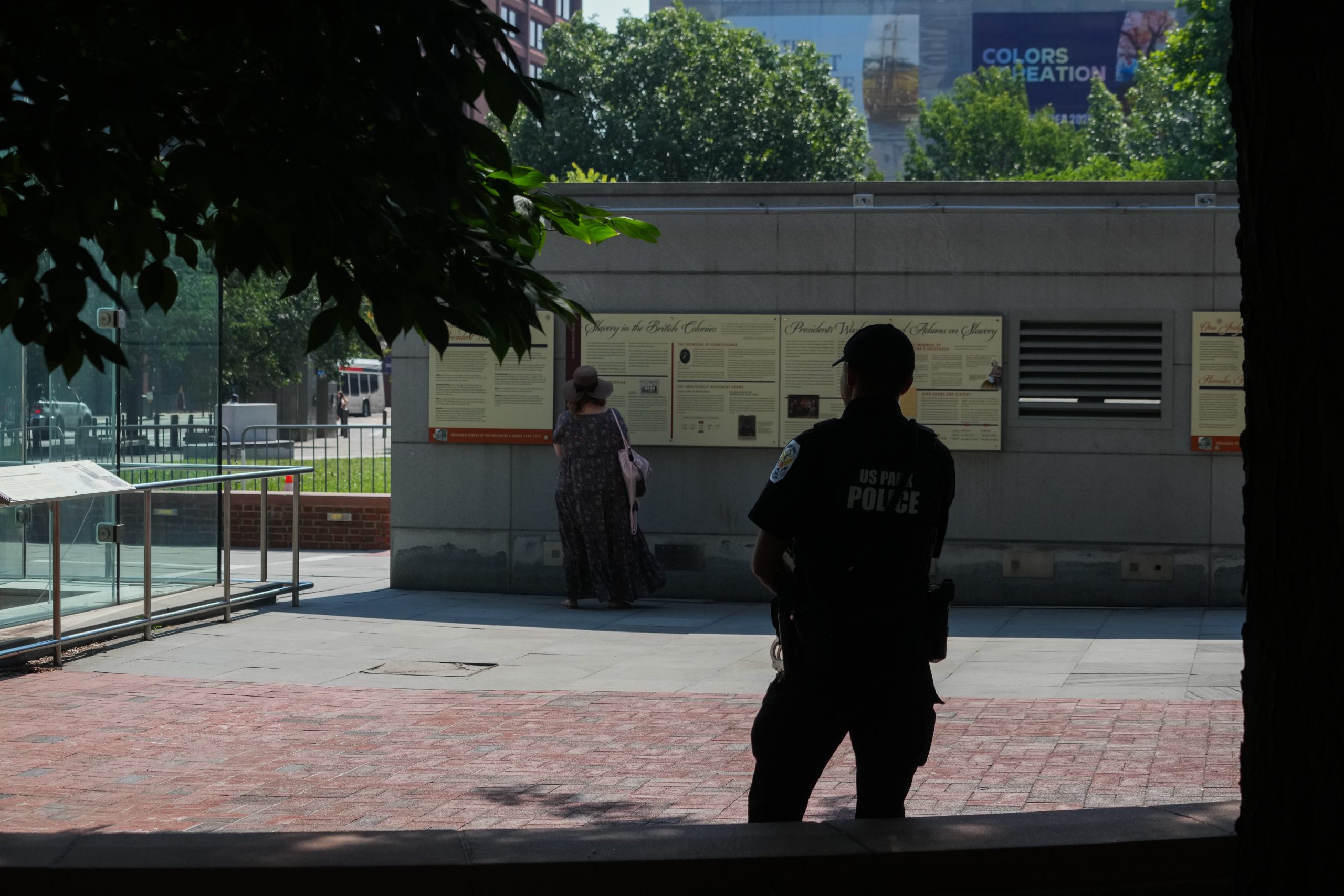
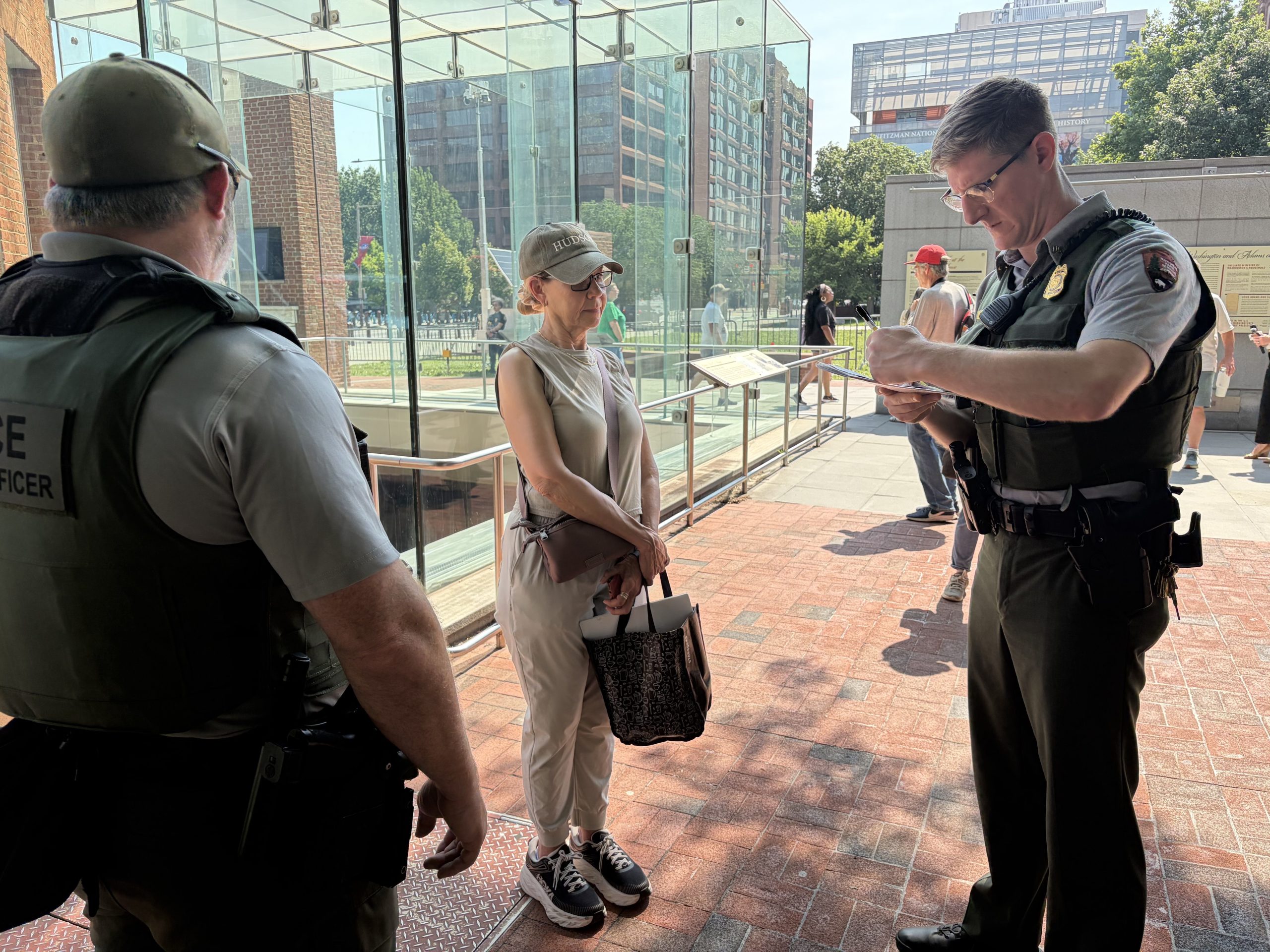
    A U.S. parks police officer and a visitor at the President’s House Site, where new panels have been installed, in Philadelphia, July 15, 2026. Historians and advocates have criticized the panels for minimizing Washington’s role as an enslaver.Jessica Griffin / Staff Photographer

    The overhaul of the President’s House exhibit, which was established to memorialize the nine people Washington enslaved at his Philadelphia residence, comes a little more than a week after the city celebrated the United States’ 250th birthday and tourists from around the world saw an incomplete version as the exhibit hung in limbo.

    On July 3, the U.S. Court of Appeals for the Third Circuit gave the Trump administration the final go-ahead to replace the panels.

    In a statement, Parker said the city intended to seek a rehearing on “serious legal issues” presented in the Third Circuit’s decision and slammed the federal government for installing the panels ”under the cover of darkness.”

    “It was allowed to do this by the decision of the federal court, but that it did so at night shows it understands this action is shameful, that it violates community trust,” Parker said.

    The site now features the 11 panels were proposed by the Trump administration in April, in addition to more than a dozen smaller panels that detail governmental processes, the lives of various historical figures, and a panel dedicated to the escape of Ona Judge and Hercules, two people enslaved by Washington who fled to freedom.

    Though the panels do mention slavery and the people Washington enslaved, the new exhibits mostly offer a broad timeline of U.S. history that significantly strays from the original intent of the President’s House as outlined in the park’s foundation document in 2017: “It would explore the historic context of the site in the context of its ties to slavery and the lives of the enslaved who lived at the site.”

    Visitors to the President’s House Site, where new panels have been installed, in Philadelphia, July 15, 2026. Historians and advocates have criticized the panels for minimizing Washington’s role as an enslaver.Jessica Griffin / Staff Photographer

    The new panels also soften Washington’s role as an enslaver.

    For instance, one display says: “Caught between his private doubts about slavery and his public responsibilities as president, George Washington navigated a nation deeply divided over slavery.”

    “Privately, George Washington often expressed discomfort with the institution and a desire to see it abolished,” the panel continued. “Yet as a Virginia plantation owner, his wealth and livelihood were deeply tied to it.”

    Later in that panel, the Trump administration writes: “Slaves living in the President’s House experienced a greater modicum of autonomy than elsewhere in the South such as to explore the city and sometimes even attend the theater, with Washington buying the tickets.”

    Another panel, titled “Enslaved People at the President’s House,” discusses the lives of each of the nine individuals enslaved by Washington, but reframes Washington’s role.

    “President Washington knew and trusted his enslaved house staff enough to buy them tickets for the circus and theater and to let them venture out into the city’s markets on their own,” the panel says.

    A spokesperson for the Interior Department said in a statement that the “new panels are full of historical context and highlight the momentous events that took place in the President’s House and other sites at Independence National Historical Park.”

    The statement said that the panels “acknowledge the evils of slavery, including its injustice and hypocrisies,” and properly tells the story of the nine individuals enslaved by Washington and the “full story” of U.S. history.

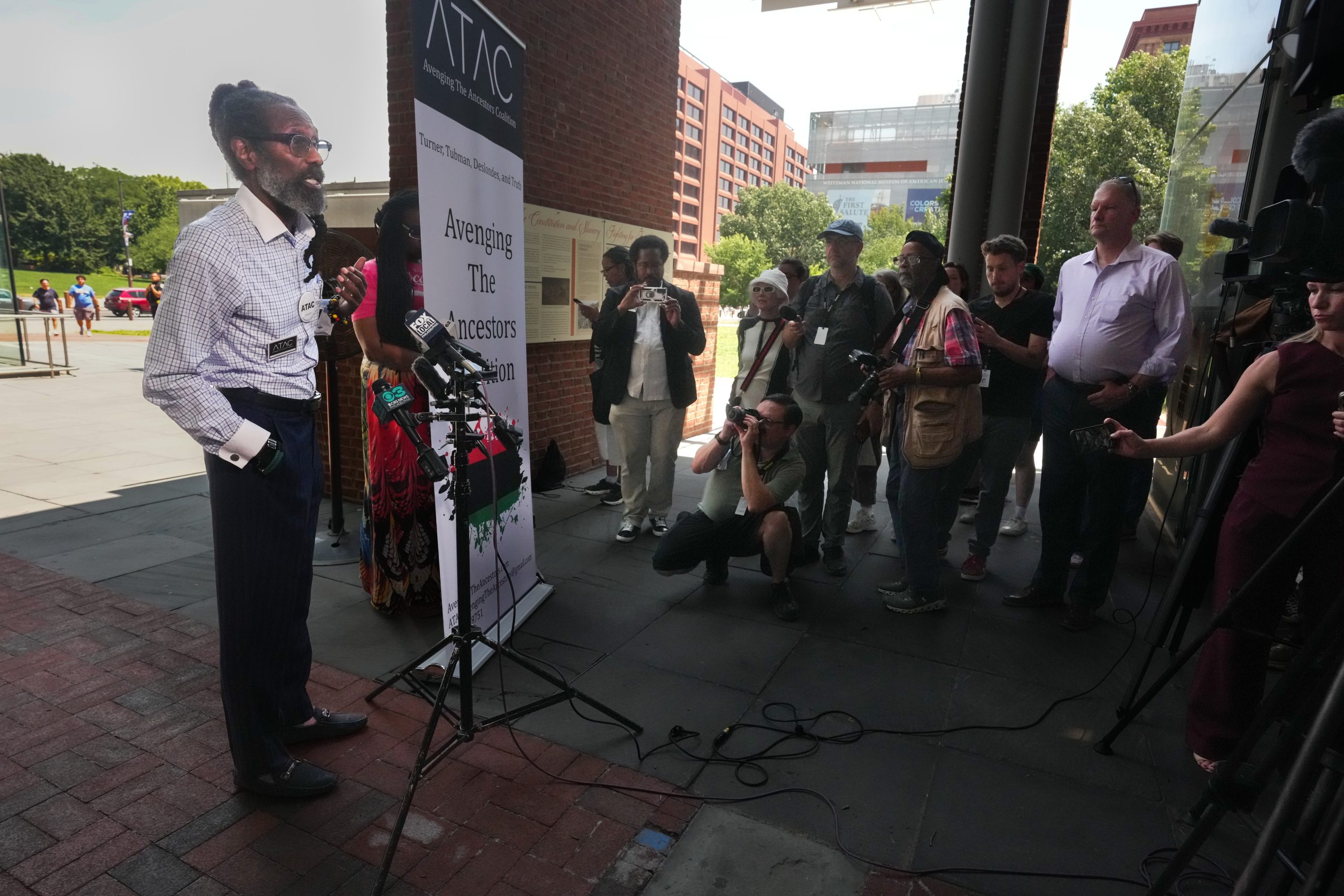
    Michael Coard, leader of Avenging the Ancestors Coalition, a group that has fought to protect the President’s House, said stakeholders were “not surprised — we saw it coming” and were reviewing all possible legal avenues and advocacy options.

    Shortly after noon, Coard and other activists spoke defiantly at the site.

    He called the new panels “a complete whitewashing of American history” and said the few references to existence of slavery are a reminder that “the best lie is one that has a little bit of truth.”

    Lawyer Michael Coard holds a press conference at the President’s House Site, where new panels have been installed, in Philadelphia, July 15, 2026. Historians and advocates have criticized the panels for minimizing Washington’s role as an enslaver.Jessica Griffin / Staff Photographer

    The drastic alterations are a culmination of about a year of turmoil since the Trump administration began scrutinizing the site as part of the president’s executive order to review or remove displays at national parks that “inappropriately disparage Americans past or living.”

    In January, the administration abruptly removed all of the exhibits at the President’s House, provoking a legal battle waged by the City of Philadelphia and nonstop advocacy from stakeholders who helped develop the site in the early 2000s.

    Removals also happened at national parks around the country.

    Sheri Utain, 77, has been coming to the President’s House site since January to read aloud the content of the missing panels. When she arrived Wednesday, she was shocked to learn the exhibit had been replaced overnight.

    “How sneaky is that?” Utain said. “What kind of government is that?”

    Others also continued with their routines, but the response from National Park Service rangers was harsher.

    Sandra Shachar has been posting news articles on the President’s House walls almost every day since January to provide visitors updates on the court battles over the slavery exhibit.

    Sandra Shachar, 72, cited for vandalism at the President’s House Site on July 15, 2026 for attempting to post news articles on the walls.Abraham Gutman

    But Wednesday, the local psychologist was cited for vandalism and ordered to pay a $305 fine.

    “It was something I could do … it feels better than doing nothing,” Shachar said, holding back tears. “Part of free speech and our First Amendment rights is to put up signs. It’s not defacing. It’s not vandalizing.”

    An Interior Department spokesperson said “any vandalism, tampering, destroying, or defacing of cultural or archaeological resources is a federal crime.”

    The installation of the new exhibit marks the end of a phase in the city’s legal battle against Trump’s administration.

    The city sued in January when the slavery exhibit was abruptly dismantled, asking a federal judge to issue an injunction ordering the panels be restored. Judge Cynthia M. Rufe issued a blistering opinion on Presidents’ Day ordering the restoration, comparing the Trump administration’s action to the Ministry of Truth from George Orwell’s 1984 novel.

    The administration installed roughly half of the removed panels before Rufe’s deadline, but left the site’s walls half bare after appealing to the Third Circuit and securing an administrative stay.

    A unanimous Third Circuit three-judge panel — which included Trump, George W. Bush, and Barack Obama appointees — held in June that the city had no rights over the exhibit after having donated the President’s House Site to the National Park Service.

    No changes followed on the ground immediately after the ruling because of litigation in federal court in Boston that challenged the legality of display removals in national parks and historic sites nationwide, leading a district judge to order the Trump administration to restore all removed items.

    Visitors to the President’s House Site, where new panels have been installed, in Philadelphia, July 15, 2026. Historians and advocates have criticized the panels for minimizing Washington’s role as an enslaver.Jessica Griffin / Staff Photographer

    But on July 2, the U.S. Court of Appeals for the Second Circuit stayed that order, clearing any legal obstacles preventing the federal government from installing the new panels.

    In the aftermath of the 250th anniversary celebrations, Parker said, examining the paradoxes of liberty and slavery that existed during the founding of the United States is key.

    “This paradox reveals core questions we still live and struggle with today — how do we share power for the betterment of all people? That is a hard question, and one that President’s House forced us all to consider,” Parker said.

    As activists and the city vow to continue the legal fight, the efforts to educate visitors about the history of the President’s House will also continue.

    Mijuel Johnson, a guide with the Black Journey: African-American Walking Tour of Philadelphia, will lead a tour of the site Thursday.

    “Regardless to what it says on the walls,” Johnson said, “the whole truth is still going to be told.”

  • Wildfire smoke and a Delco junkyard fire raise concerns about Philly air quality amid high temps

    An unpleasant meteorological melange of heat and pollutants is about to envelop the region.

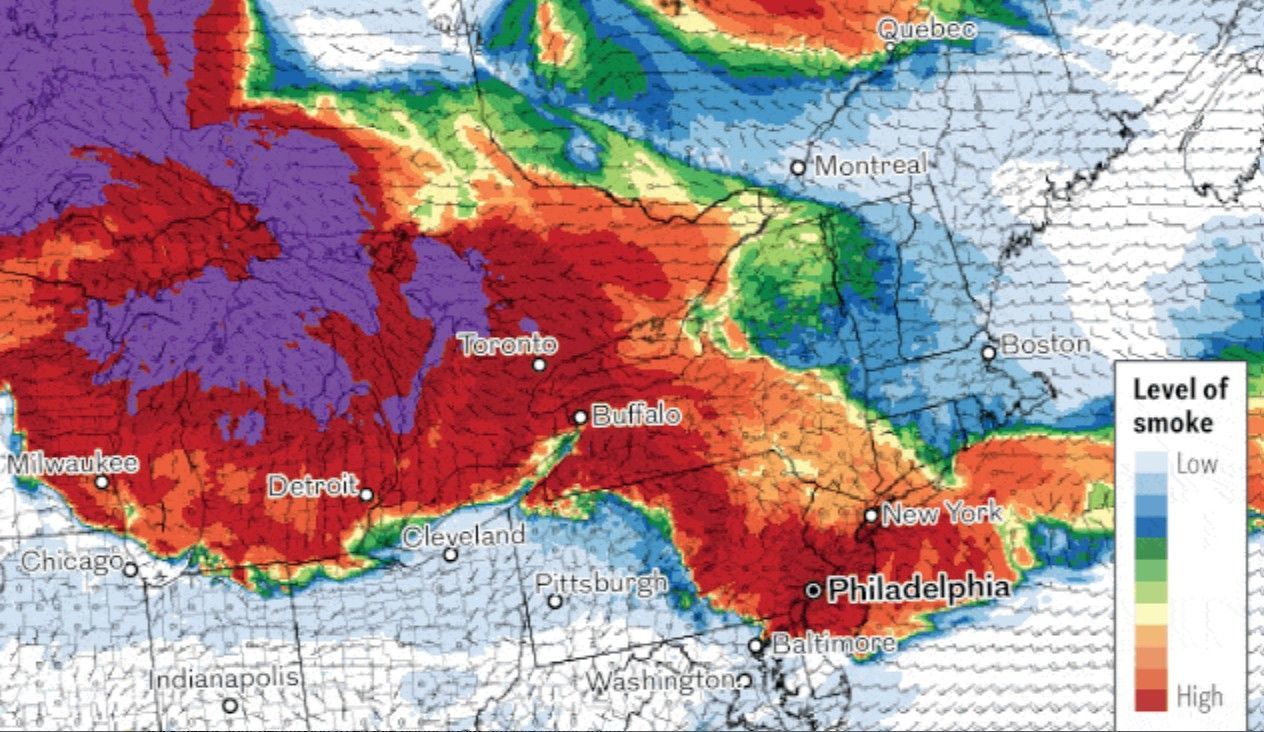
    Continuing high temperatures and high humidity will be met by smoke drifting south from a batch of Canadian wildfires.

    The smoke will bring hazy skies and fine particle pollutants that can irritate lungs and increase health threats to those with asthma and respiratory illnesses.

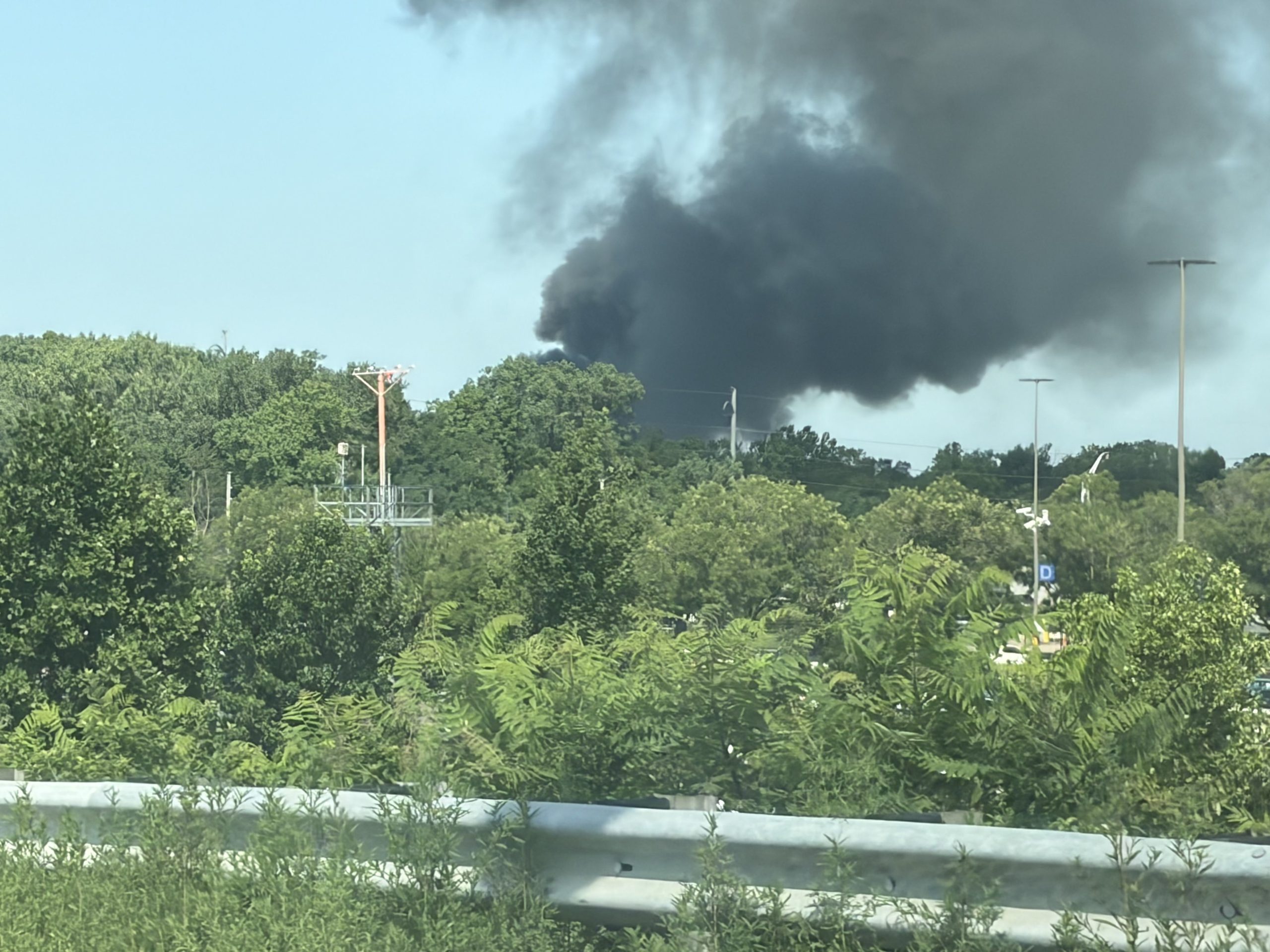
    Additionally, smoke from a large scrapyard fire at EMR’s facility in Darby Township, Delaware County, on Wednesday prompted the Philadelphia Department of Public Health to urge residents to take precautions to avoid exposure. The fire was brought under control by 4 p.m., but smoke was still visible.

    Map by NOAA shows projected smoke from Canadian wildfires in the Philadelphia area on Thursday.National Oceanic and Atmospheric Administration

    The heat

    The National Weather Service has issued an extreme heat warning for Wednesday with heat index values expected up to 107. Thursday’s forecast calls for areas of smoke and mostly sunny, with a high near 96.

    The conditions could worsen ground-level ozone, a pollutant that forms when nitrogen oxides and volatile organics emitted by vehicles, power plants, and industry react in sunlight, especially during hot days.

    Ozone can cause airways to constrict, leading to shortness of breath, and so it can especially affect those with asthma, emphysema, and chronic bronchitis.

    The smoke

    And then there is the smoke that carries PM2.5, a fine particulate matter measuring 2.5 microns or smaller. It is of special concern because the particles are so small — far smaller than the width of a human hair — that they are easily inhalable.

    Health effects can stem from short or long exposure, and can range from aggravation of asthma and other respiratory illnesses to premature death in people with chronic heart or lung diseases. Children and seniors are most vulnerable.

    Philadelphia’s Air Management Services is monitoring for wildfire smoke but has not issued any statements.

    The city launched a real-time network of air quality monitors last year that measure PM2.5 and nitrogen dioxide (NO2), a component of ozone.

    The air quality in Philadelphia at noon Wednesday was listed as moderate, meaning there may be a risk for people unusually sensitive to air pollution.

    The Pennsylvania Department of Environmental Protection has declared a statewide Code Red air quality day for PM2.5 for Thursday due to the wildfire smoke.

    Code Red means that young children, elderly people, and those with respiratory problems, such as asthma, emphysema, and bronchitis, are especially vulnerable and should avoid outdoor activities. Everyone else should reduce prolonged or heavy exertion.

    When we’ll see smoke

    Paul Fitzsimmons, a meteorologist with the National Weather Service in Mount Holly, said smoke from the Canadian wildfires was expected to enter northeast Pennsylvania and northwest New Jersey on Wednesday afternoon. It would then carry into Philly.

    “It’s possible for visibility getting into the range of one or two miles,” Fitzsimmons said. Typically, visibility is about six miles under clear conditions.

    The weather service said the smoke will be closer to the ground and especially acute on Thursday.

    “This is the kind that you’ll be able to smell outside, reducing visibility and potentially causing air quality issues,” the forecasting agency said on social media.

    Smoke from Canadian wildfires has become almost an annual summer ritual.

    Last June, Canadian wildfire smoke brought a milky haze to Philly, prompting an air quality alert. In August 2024, the smoke produced a haze higher in the sky.

    And in June 2023, smoke affected conditions at a Phillies game. Visibility was at two miles.

    (function () {window.addEventListener(‘message’, function (e) { var message = e.data; var els = document.querySelectorAll(‘iframe[src*=”‘ + message.id + ‘”]’); els.forEach(function(el) { el.style.height = message.height + ‘px’; }); }, false); })();

    A public health threat

    Jane Clougherty, a professor of environmental health at Drexel University’s Dornsife School of Public Health, was in Toronto on Wednesday and said she could see a yellow haze.

    “From a scientific standpoint, this increase in the frequency and severity of wildfire smoke absolutely is related to climate change,” Clougherty said.

    The combination of increasing heat and wildfires exacerbated by climate change, she said, is a public health threat.

    Wildfire season is starting earlier and lasting longer, she noted. Scientists are still studying the impact of wildfire smoke beyond just fine particulate matter.

    But Clougherty was also concerned about the scrapyard fire.

    The Philadelphia Office of Emergency Management said it had not detected hazardous substances, and a 4 p.m. email by the office said it would no longer be updating residents. However, it was still recommending that people avoid exposure to the smoke, and avoid going outdoors if possible, close windows and doors, and use fans to recirculate air.

    A view July 15 from I-95 of a large scrapyard fire in Darby, just outside of Philadelphia.Joseph DiStefano

    She said varied materials were burning and could emit volatile organic compounds (VOCs), polycyclic aromatic hydrocarbons (PAHs), and potentially old lead.

    She said those gases can heighten the human body’s adverse reaction to fine particles.

    She believes that nearby residents should leave if possible, despite the shelter-in-place warning and advice to circulate air with fans. She noted that fans do not filter hazardous particles.

    If they cannot leave, she said, she suggests residents use HEPA filters in their air-conditioning or use N95 masks.

  • Bryce Harper responds to controversy over his personal video message to a FanDuel customer with a gambling addiction

    Bryce Harper responds to controversy over his personal video message to a FanDuel customer with a gambling addiction

    Bryce Harper, the Phillies’ All-Star first baseman, said on Monday that he was unknowingly working on behalf of FanDuel when he recorded a personalized video for a man with a gambling addiction who had placed millions of dollars in bets on the site.

    Harper, in a story on his verified Instagram account, wrote that he thought he was just doing a message on the site Cameo — in which celebrities are paid to record videos for fans — but “what happened here went beyond anything I knew about or approved.”

    “I did not know this video would be used for commercial purposes,” Harper wrote. “The request included a short script. I read it in good faith. FanDuel then put its own logo on the video and used it as a gambling promotion. I did not know FanDuel would do this, I did not consent to it, and FanDuel had no right to do it.”

    The Inquirer obtained a copy of the 21-second video from November 2024, which is marked with a blue FanDuel logo and shows Harper offering a greeting to the bettor, Terry Thompson, and Thompson’s son, by name.

    Harper’s statement also said he has no affiliation with FanDuel and that “Contrary to the Inquirer’s suggestion, I did not know that the Cameo video would be used for a FanDuel VIP promotion.”

    However, in the video Harper states that he’s reaching out at the request of Thompson’s VIP manager — “your host Bryttanni at FanDuel.” Harper also posted the Cameo script, which included the same language about FanDuel.

    The Inquirer reported on the video on Thursday. Harper had declined to comment until Monday. His statement came ahead of his planned appearance at Monday night’s 2026 MLB Home Run Derby at Citizens Bank Park.

    Beginning in 2020, Thompson wagered $18.5 million with FanDuel and lost $1.5 million, according to a lawsuit that the Public Health Advocacy Institute filed in March in Common Pleas Court in Philadelphia on behalf of Thompson and against FanDuel and DraftKings, to which Thompson also lost money.

    Harper says he did not know anything about Thompson.

    “Had I known FanDuel’s true intent, I would not have made the video,” Harper wrote on Instagram. “The same is true had I known anything about Terry or his situation, or about any alleged ‘partnership’ between Cameo and FanDuel.”

    On the advice of counsel, Harper wrote, he would not comment further. Harper did not discuss the matter further during a media availability Monday.

    Cameo notes in its terms of service that celebrities are not required to follow a purchaser’s instructions exactly. Harper, however, mostly stuck to a short script that made clear to Thompson that the Thanksgiving message was arranged by the FanDuel host.

    Cameo has not responded to requests for comment.

    FanDuel did not respond Monday to Harper’s Instagram post. Last week the company released a statement:

    “FanDuel is committed to fostering a culture of responsible gaming and protecting our customers. Unlike illegal offshore sportsbooks, FanDuel employees are trained to recognize and flag signs of problem gambling and offer resources and tools, and we continue to review and strengthen our policies to ensure we have the industry’s strongest consumer protection initiatives.”

    The Phillies and Major League Baseball have so far declined to comment on the video.

    The Pennsylvania Gaming Control Board, which regulates casinos, online gambling and sports wagering, said on Friday that it is examining the video, but a spokesman for the board declined to provide details.

    The Inquirer will continue to report on issues related to the growth of gambling addiction — among teens and adults — across Pennsylvania. If you, or someone you know, wants to speak with a reporter, please contact David Gambacorta or William Bender at dgambacorta@inquirer.com and wbender@inquirer.com