Tag: free-apple

  • A Delco nurse has lived legally in the U.S. since childhood. ICE arrested her as she took her 3-year-old son to Disneyland.

    A Delco nurse has lived legally in the U.S. since childhood. ICE arrested her as she took her 3-year-old son to Disneyland.

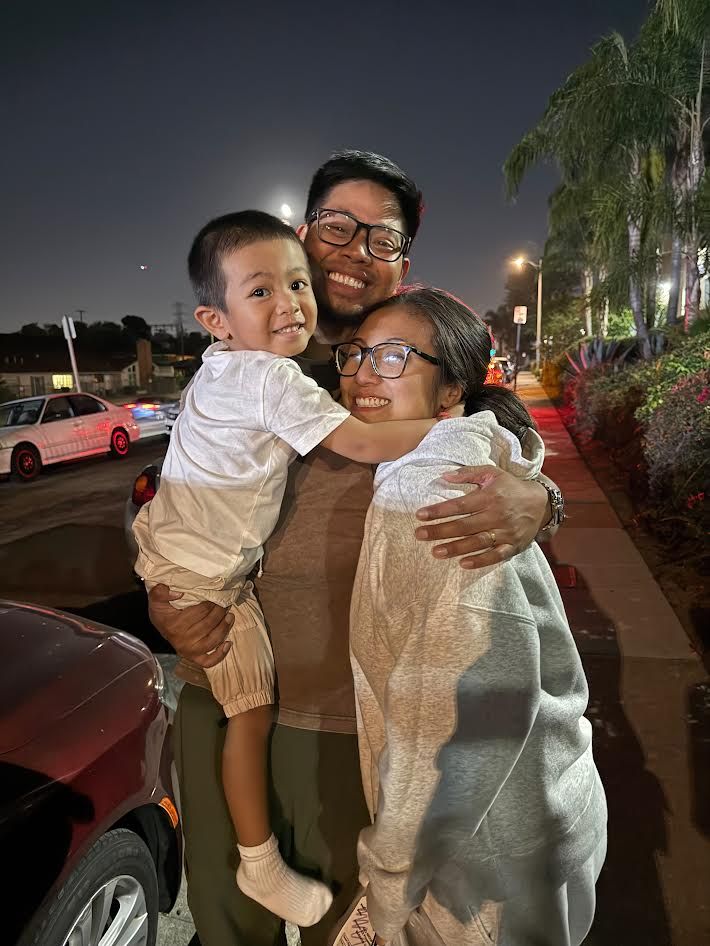
    Delaware County nurse Monica Ryadi and her husband couldn’t wait to take their 3-year-old son to Disneyland, so he could meet his adored Cars movie characters — Lightning McQueen, Tow Mater, and the rest.

    They didn’t get there.

    The family had barely stepped off the plane at Los Angeles International Airport on Sept. 15 when they were surrounded by four or five men in street clothes who said they were ICE agents, flashed a badge, and snapped Ryadi into handcuffs.

    When her husband protested, the officers threatened to arrest him and send their toddler, Luca, to child-protective services, the couple said in court filings. One officer told Ryadi she was here illegally and, “I don’t care if you are the president of the United States or a congresswoman like Ilhan Omar,” court records say.

    Ryadi, 30, said she kept insisting that she was a legal immigrant.

    And that’s true.

    She has lived in the U.S. since she was 9, brought to this country by her parents when they fled religious persecution in Indonesia.

    They entered on legal visas in 2005, and five years later were officially granted what’s called “Withholding of Removal.” That’s where an Immigration Court judge agrees that deporting someone to their homeland could get them hurt or killed.

    It’s similar to asylum, the key difference being the federal government retains the right to deport someone if it can find a third country willing to take them. Withholding does not include a path to citizenship.

    Traditionally, people who gained that relief were left alone.

    Now that’s changed, as the Trump administration takes a new, hard view — seeing those who have Withholding, even those who have lived here for decades, as candidates for deportation. Some immigrants are held in ICE detention for months while the administration tries to find a foreign government to accept them.

    On Tuesday, after 15 days in custody at the Adelanto ICE Processing Center in California, Ryadi was ordered freed by a U.S. magistrate judge. Her husband and son flew to her immediately, and the family reunited that night, at the same Los Angeles hotel they booked when they planned to visit Disneyland.

    “It’s a lot of emotions,” Ryadi said in an interview after her release. “I am still terrified, I’m still living under fear.”

    At the same time, she said, “I can’t stop thinking about the other women that are in there.”
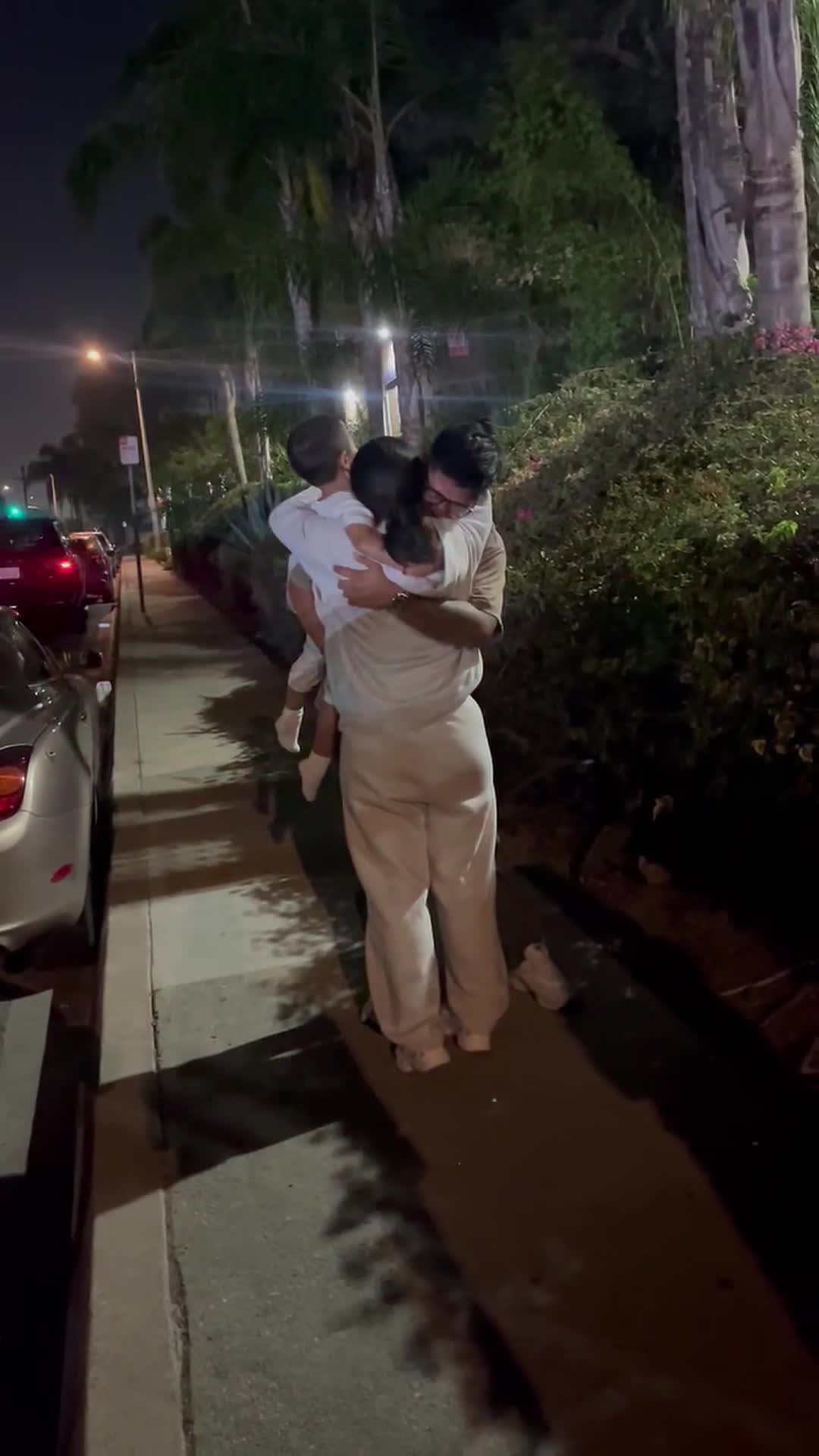
    A Delco nurse arrested by ICE reunites with her family
    Video: A Delco nurse arrested by ICE reunites with her family

    The Department of Homeland Security said in a statement that Ryadi was “an illegal alien” taken into custody “during a targeted enforcement operation at Los Angeles International Airport.”

    DHS said she entered the U.S. legally in 2005 but “overstayed her welcome” in violation of immigration laws. An immigration judge issued a deportation order in 2010, DHS said, but did not note that such an order is a standard part of receiving permission to stay, work, and live in the U.S. under a grant of Withholding of Removal.

    Ryadi’s husband, Steven Sary, 35, said he was overjoyed to be reunited with his wife. “But there’s still work to do,” he said. ”What’s the next step for us? We’re still living in fear.”

    He tried to stay positive and supportive while Ryadi was detained, even at moments when they were both crying on the phone. He told her, “You don’t have to worry about Luca, I’m doing the best I can.”

    The couple has arranged their lives around their son, setting schedules so one parent is always home with him. Ryadi works weekends at Riddle Hospital in Media, while her husband works Monday to Friday as a UPS truck driver.

    The two met when they were children growing up in Philadelphia, and married in 2021.

    Ryadi graduated high school from the Academy at Palumbo in the Bella Vista neighborhood, then earned an associate degree at Philadelphia Community College before obtaining her bachelor’s degree at Ohio University.

    She became a nurse, she said, because she wanted to help people.

    The court order that freed Ryadi came the same day that the Supreme Court ruled the Trump administration could resume the fast deportation of immigrants to countries other than their own.

    The court granted the government’s emergency request to block an appeals court ruling that said the process was unlawful, because immigrants were not given sufficient opportunity to raise safety concerns.

    The Supreme Court said it would hear oral arguments in the case in December, with a final ruling likely next year.
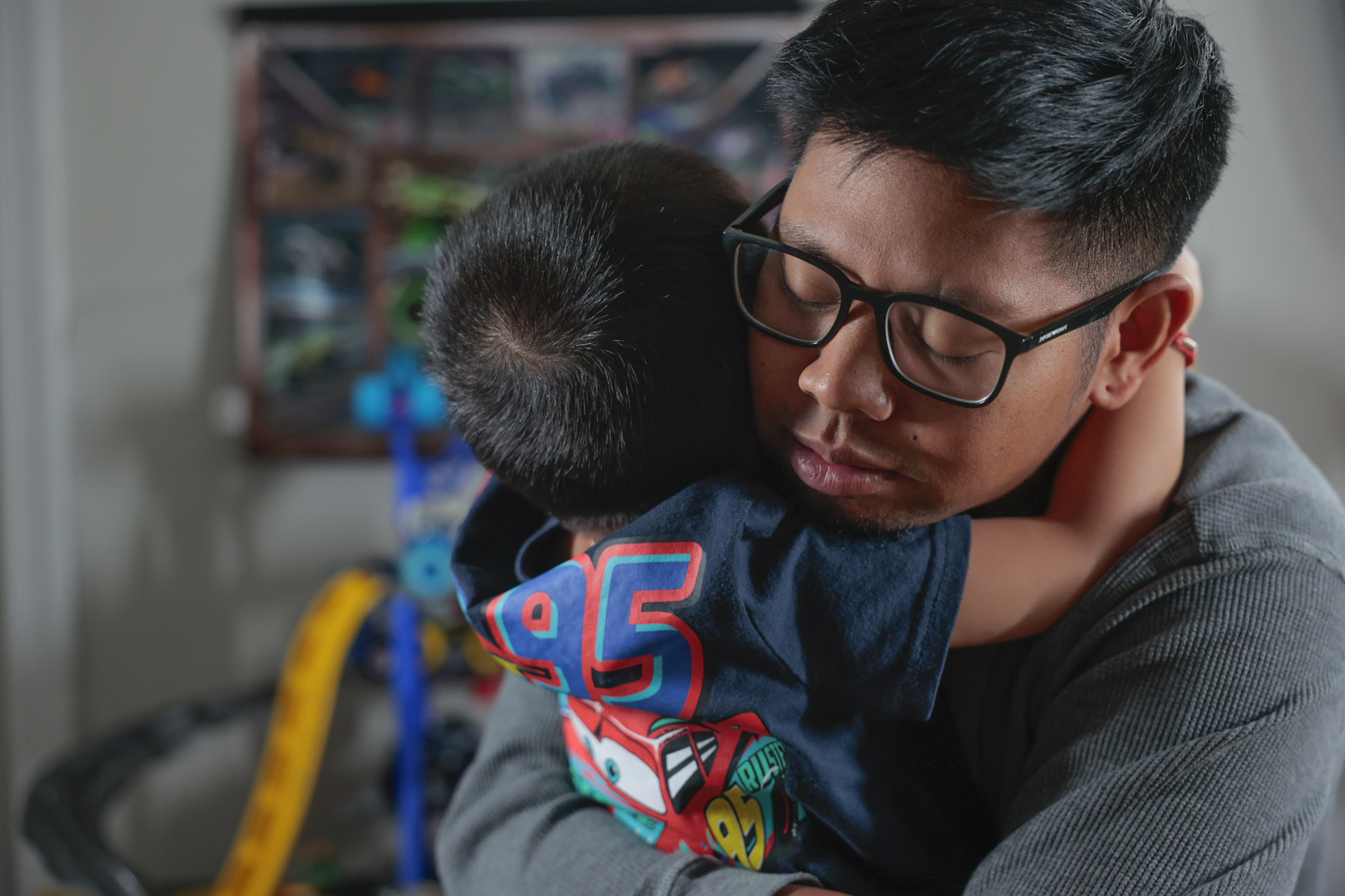
    Steven Sary hugs his 3-year-old son, Luca, at their Delco home, waiting for word on his wife, who at the time was detained in California by ICE. She was detained by ICE agents after getting off a plane in Los Angeles as the family traveled to Disneyland. Steven M. Falk / For The Inquirer

    “What happened to Monica should be treated as an extrajudicial kidnapping,” said Ryadi’s Philadelphia immigration attorney, Eric Rosenfeld, who is handling the case pro bono.

    He noted that Ryadi is a registered nurse, the wife of an American citizen, and the parent of a son who is an American citizen — yet ICE casually told her she would be sent to an undisclosed third country.

    She was never given any type of document or warrant to explain her arrest, he said. Upon release she was fitted with a GPS ankle monitor, and she knows ICE will likely try again to deport her, the attorney said.

    “This is a respite. Not security,” Rosenfeld said.

    As the Trump administration pursues its mass-deportation agenda, the protection offered by Withholding and similar relief “is proving to be very little protection at all,” the American Immigration Council wrote. “The Trump administration is trying to ship them out wherever it can — and keep them locked up in the meantime.”

    A Philadelphia man who was arrested in July remains in detention, despite having lived legally for almost 20 years.

    Mamadou Fadel Cherif of West Oak Lane was granted protection from potential political violence in his native Guinea. Now the administration wants to deport him to Ghana.

    Ryadi’s arrest added to the steadily growing number of immigrants taken into custody at American airports. The Philadelphia advocacy organization Asian Americans United estimates more than 20 people have been arrested at Philadelphia International Airport or while seeking to fly there since July 12.

    To receive Withholding of Removal, applicants must prove they were persecuted in the past or that their lives would be threatened in the future, that their home government harmed or will harm them — or failed to control others who might do so.

    When that relief is granted, the immigration judge also enters a deportation order, then tells the government it cannot deport the person to their homeland. In that way the removal is “withheld.”

    “We were planning to have an amazing trip with the family,” Sary said, “to see Cars Land with our son. But that changed.”
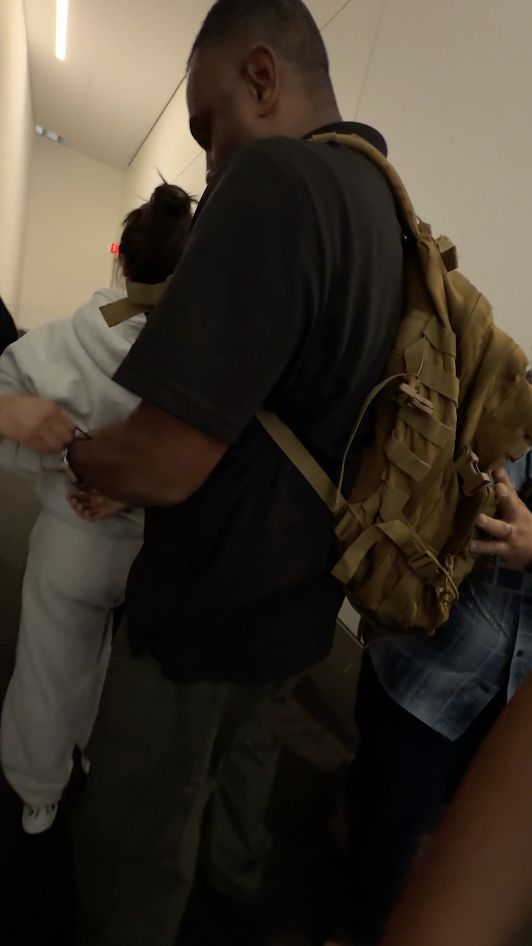
    This image shows Delaware County nurse Monica Ryadi, left, in white, being arrested by ICE agents at Los Angeles International Airport on Sept. 15. She and her husband were taking their 3-year-old son to visit Disneyland.Courtesy of the family

    “It felt like I was kidnapped,” Ryadi said. “I kept saying, ‘I’m legal, I’m a legal immigrant.’”

    She grew up in the United States with government permission, has work authorization, a Real ID, and a Social Security number. She pays taxes. Yet she was chained wrist, ankle and waist like a criminal, she said.

    Ryadi wonders if the ICE operation against her began in Philadelphia. As her family waited to board the plane, she said, a woman in a black jacket approached and made small talk.

    The woman didn’t have luggage, Ryadi said, and she didn’t get on the flight. Instead, she walked away to talk to a man who also did not appear to be a passenger.

    When Ryadi was released from the Adelanto detention center, 90 miles northeast of Los Angeles, immigrant-aid volunteers gave her a ride all the way to the city.

    There she flew into the arms of her husband and son.

    “I’m so happy to see you!” she cried.

    At the hotel, the family saw people decked out in Disney attire, coming back from the theme park. Young Luca asked if they could go.

    On Wednesday his parents took him to Cars Land.
  • Philly sheriff’s office reneges on court-supervision deal, tells judge it found $20 million in city money

    Philly sheriff’s office reneges on court-supervision deal, tells judge it found $20 million in city money

    A top aide to Philadelphia Sheriff Rochelle Bilal revealed in court that an internal audit had recently uncovered $20 million in undisbursed money — including tax revenue and utility payments that should have gone into city coffers.

    The stunning disclosure of misplaced sheriff-sale proceeds — which amount to more than half the office’s annual budget — came during a two-day hearing as Bilal and her staff sought to back out of a judge’s plan to appoint an independent supervisor to monitor the office’s troubled process.

    That tentative deal, struck after an August hearing before Common Pleas Court Judge Paula Patrick, was meant to resolve years of delays in issuing deeds and distributing sale proceeds.

    But Patrick, supervisor of the court’s commerce division, ordered Bilal and her deputies back into her courtroom on Wednesday after the sheriff’s office reneged on the agreement.

    The judge insisted that Bilal be in the room before the hearing began.

    “You need to have your client here,” the judge told Jonathan Rardin, a lawyer the city retained to represent Bilal. “She needs to be here to get started.”

    Bilal then walked in and took a seat behind the defense table without speaking.

    Steven Wakefield, a new deputy undersheriff hired in June to streamline the office’s property auctions, testified Wednesday morning that he had already fixed many of the operational issues that had caused the backlog.

    Under questioning from the judge, Wakefield also detailed the discovery that “checks had not been written” for some $20 million in sales proceeds, including uncollected property taxes and water bills that are meant to be recouped through sheriff sales.

    “A lot of that was money that was supposed to go to the city,” Wakefield said.

    The money was found during an audit that so far has gone only as far back as August 2025. Wakefield did not provide an explanation for why the money had remained in the sheriff’s office, but said it was recently transferred to the city.

    New procedures in the office allow executive staff to track when checks are written, he said.

    “We have much more robust information,” Wakefield said.

    Patrick appeared stunned by the revelation.

    “Twenty million dollars is a lot of money,” the judge said. Wakefield agreed.

    Patrick also questioned why Wakefield had not included that information in the records she had ordered the sheriff’s office to produce over the summer, including a list of every sheriff sale since Bilal took office in 2020 and how the money was distributed.

    On Wednesday afternoon, Bilal took the stand for the first time, testifying that she had not known about the backlog of unprocessed deeds until “2024 or 2025,” when she started receiving emails from real estate agents and City Council members about deeds not being recorded.

    “It was like Spidey senses. I’m getting more than one,” Bilal said of the emails. “Then every week.”

    The Inquirer first reported on the problem in July 2024, based on an analysis of city property records. Bilal’s staff initially denied there was a deed backlog, then weeks later said they would take corrective action. Yet the delays continued, and in some cases got worse, with banks, real estate agents, and investors saying as recently as May 2026 they have waited more than a year after auctions to receive their deeds.

    Bilal has repeatedly provided inaccurate information about sheriff sales and her office’s finances, including telling City Council in April that post-auction delays had been resolved.

    But under oath in court, Bilal said she agreed with Rardin’s assessment that the sheriff’s office had not been fulfilling its obligations until recently.

    “That’s what I’m starting to find out, yes,” Bilal said.

    While Bilal campaigned as a reformer in 2019, she testified she had only a rudimentary understanding of what the job entailed when she took office. She said she spent an extended amount of time interviewing staff to “figure out what the sheriff’s office actually does.”

    Now more than halfway into her second term, Bilal blamed the ongoing problems on chronic underfunding from City Hall, poor decisions by managers under her, antiquated technology, and staffers who struggled to handle the new office software that went live in 2024.

    Bilal’s testimony continued Thursday morning. Asked whether she would permit an outside compliance examiner to come into the office, she refused to answer the question.

    “We are in compliance,” Bilal said. “We got control of this.”

    A deal collapses

    This week’s hearing was not supposed to happen.

    Judge Patrick, frustrated with an onslaught of litigation over sheriff sales, ordered the August hearing at which Bilal’s staff was required to demonstrate why a “special master” or someone with similar expertise in real estate should not be brought in to temporarily oversee the auctions.

    That hearing was cut short after Bilal’s staff said it would allow the monitoring and report back to the court in six months. “It’s better that we come together, and make an agreement,” Bilal told reporters at the time.

    But Daniel Bernheim, the lawyer representing plaintiff JSB Property Group, whose March lawsuit over deed delays triggered the legal showdown, said in an interview Tuesday that Bilal’s legal team went silent after Patrick submitted a draft of a stipulated order that called for appointing a team to evaluate the office’s practices.

    Bernheim said Rardin then told him he could not reach “the key decision makers” in the office.

    “The ‘key decision maker,’” Bernheim said, “is the sheriff.”

    Then, Bernheim said, the sheriff’s office submitted what he described as “ludicrous” changes to Patrick’s proposal, including, according to Bernheim: requiring 48 hours’ notice for the independent supervisor to interview any sheriff’s office employee; removing the word comprehensive before review; and automatically terminating the supervision after six months regardless of the results.

    What happened?

    It is unclear why the sheriff’s office changed direction.

    Bilal did not respond to questions Wednesday during a break in the court proceedings. Standing near the defense table, she pointed her phone at an Inquirer reporter’s face and appeared to take a photograph. Her staff then formed a barricade around her.

    On Tuesday, Rardin submitted a memo arguing that Patrick had overstepped her authority. He wrote that the 2003 consent order at the center of the case — which requires the sheriff to issue deeds within 40 days from settlement — does not apply to Bilal because it had been brought against a previous sheriff, John Green, who was later imprisoned on federal bribery charges.

    Even if the order did apply to Bilal, Rardin wrote, the court’s legal authority was limited to holding her in contempt, not “open-ended structural oversight.”

    On the stand Wednesday, Wakefield told Patrick that sheriff-sale proceeds are now being distributed and deeds issued within weeks of settlement. He said the office has reorganized its workforce and is crafting new regulations for auctioning properties that will remain in place for future sheriffs.

    “I have personally signed hundreds and hundreds of deeds,” Wakefield said.

    Much of Wakefield’s and Bilal’s testimony over two days involved past practices in the sheriff’s office, as they guided attorneys through reams of financial and personnel records.

    At one point, Bernheim questioned why a sworn deputy sergeant was needed to, in Wakefield’s term, “babysit” staffers in the real estate division to make sure they were doing their jobs.

    “If we could trust everyone to do their job 100%,” Wakefield said, “we wouldn’t be here today.”

    “Amen to that,” Patrick responded.

    At the conclusion of the hearing Thursday, the judge said would take the new testimony under advisement and issue a ruling shortly.

  • New Jersey Lt. Gov. Dale Caldwell resigns after investigation found sexual harassment and other wrongdoing

    New Jersey Lt. Gov. Dale Caldwell resigns after investigation found sexual harassment and other wrongdoing

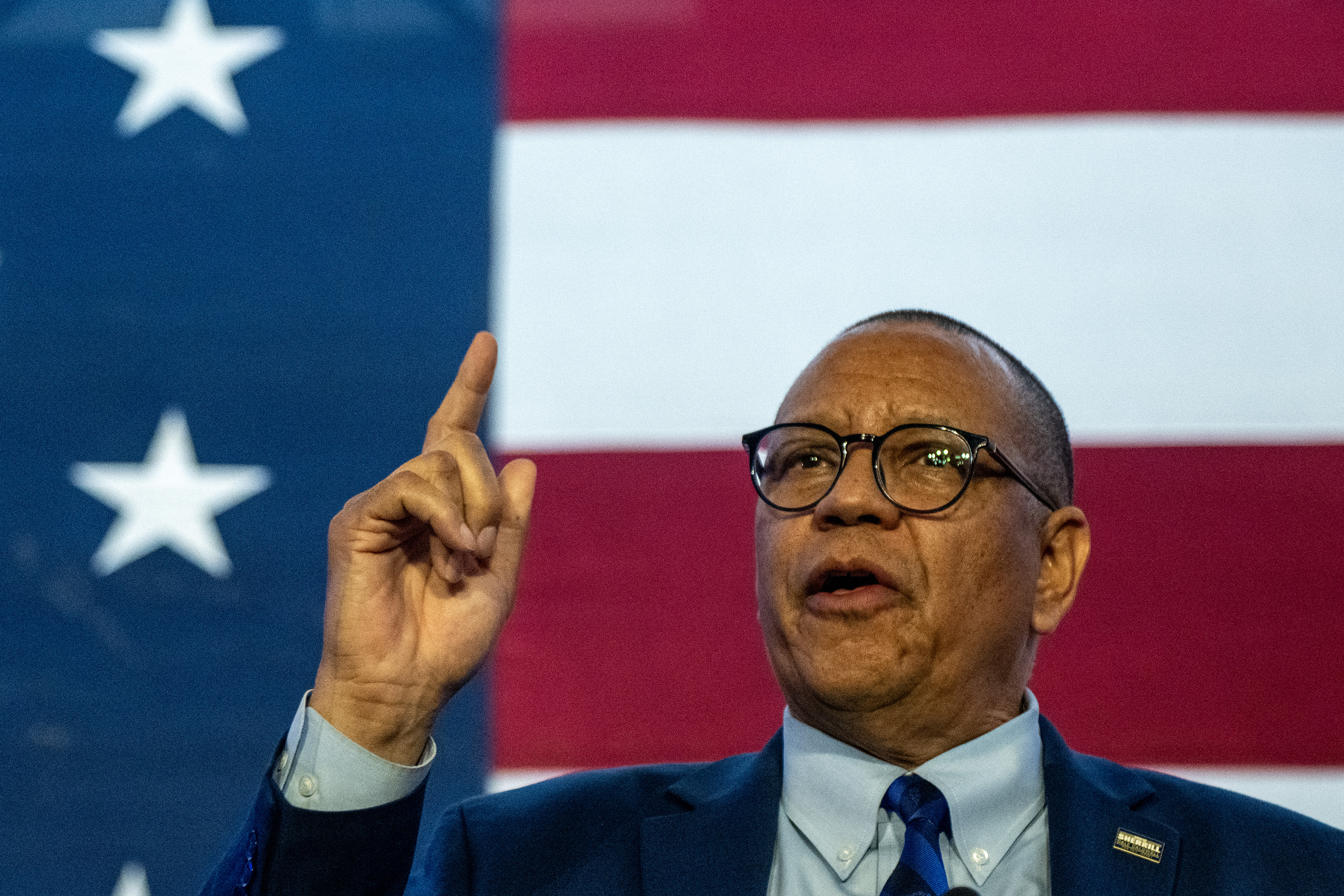
    New Jersey Lt. Gov. Dale Caldwell has resigned after investigators found “credible evidence” of sexual harassment and other wrongdoing.

    Gov. Mikie Sherrill announced his resignation at a news conference Friday afternoon after calling for him to step down while releasing the investigative report Thursday evening.

    “His decision will allow us to move forward with important work serving the people of our state,” said Sherrill, who was inaugurated with Caldwell by her side in January.

    “I will move swiftly and thoughtfully in choosing a new lieutenant governor who will represent my administration and the people of New Jersey with honor and integrity.”

    The governor released a 61-page report from a monthlong investigation conducted by an outside law firm late Thursday afternoon. The report said Caldwell made inappropriate comments to women and violated ethics rules. Caldwell, a minister, is the former president of Centenary University.

    Sherrill called for him to resign by Friday, but it was unclear whether he would listen. Caldwell denied the investigation’s findings through his attorney, who argued Caldwell was not given an opportunity to meaningfully address the accusations in the report or provide his own witnesses.

    Sherrill emphasized Friday that she wanted to “make sure everyone was treated fairly and justly” and called the investigation thorough and impartial.

    “After I received the report and the facts were clear, I took action right away,” Sherrill said, in what may have been a nod to earlier criticism that she didn’t confirm the investigation while it was underway. “Let me be clear: all credible allegations of misconduct must be fully investigated and addressed. In my administration, we are committed to doing what is right, not what is politically expedient.”

    The investigation found Caldwell hit on a female staffer’s friend, and when she turned him down, he told the staffer that ambitious women like them needed a man in a position to help them, “but you young women are looking for young sperm.”

    Caldwell denied making the comments, “but we did not find his denial credible,” the report said.

    Replacing Caldwell

    Sherrill did not have the power to fire Caldwell, so his resignation prevents potential impeachment proceedings in Trenton. The governor has 45 days to pick his replacement.

    In the meantime, New Jersey Senate President Nicholas Scutari will lead the state in her absence. Sherrill traveled to campaign for Democrats in congressional races in other states earlier in the summer, leaving Caldwell in charge. But she stopped after the investigation became public knowledge.

    Sherrill said she spoke to Caldwell on Thursday and texted with him on Friday, and that he resigned to let her administration continue with its agenda amid “all of the attacks from the federal government on affordability, voting rights.”

    Caldwell’s attorney, Thomas Calcagni, said in a statement late Friday that his client continues to dispute the allegations in the report and would be exploring “all legal remedies” to contest its findings.

    “We continue to forcefully challenge the report. Dr. Caldwell’s resignation, submitted to put an end to the targeted campaign to discredit his character, does not in any way diminish our outrage concerning the investigative process and its specious findings,” Calcagni said.

    As fragments of the allegations leaked out over the weeks, some of Caldwell’s friends and allies shared messages of support about his character and record of service. And while he did not speak publicly as news of the investigation surfaced, a May letter he wrote to the ethics commission forcefully denying the claims — and alleging racism — was leaked to media.

    On Friday, a group of self-described Black “faith, civic, and community leaders” commended his decision to resign.

    “By choosing to step down and ending this controversy, he has put the interests of the people of New Jersey and the work of our state ahead of himself,” the group said in a statement, which included U.S. Rep. Bonnie Watson Coleman (D., Mercer), New Jersey Democratic Committee Chair LeRoy Jones, among others.

    Democratic state legislators remained largely quiet before Caldwell announced his resignation, but many were relieved to see Caldwell step down.

    Assemblymember Anthony Angelozzi, a Burlington County Democrat, said he was “appalled” with the findings of the report.

    “The idea of using your government position for personal benefit and harassing women, as someone who has staff members who are female and a daughter, I wouldn’t want to put any woman in a compromised position like that,” he said.

    Assemblymember Balivir Singh floated another Burlington County Democrat, State Sen. Troy Singleton, as an ideal replacement for Caldwell.

    “You look for a person with integrity … and I would think my senator is the best,” Singh said.

    As lieutenant governor, Caldwell served a dual role as the state’s top election official. With his resignation less than 40 days before the midterm election, Sherrill appointed Acting Comptroller Shirley Emehelu to serve as secretary of state on an acting basis.

    “For months at this point, the Department of State team has been hard at work preparing for the upcoming elections in partnership with local and county election officials. I will make sure their work proceeds as planned,” Emehelu said.

    The investigation into Caldwell was conducted by former Attorney General Christopher Porrino — who worked under former Republican Gov. Chris Christie — and his law firm. The probe had been going on since at least May.

    Road crews had begun removing Caldwell’s name from state signs on I-95 as of Friday, but the scandal is still likely to dominate New Jersey politics for the foreseeable future.

    Christine Giordano Hanlon, chair of the New Jersey GOP, called Sherrill’s handling of the investigation a “failure.”

    “Caldwell’s resignation is not accountability for everything that happened before it,” she said. “There are many more questions that will need to be answered.”

    ‘Long-term concerning behavior’ outlined in report

    Sherrill said the report “lays out a pattern and practice of long-term concerning behavior.” She said her decision shows the “culture change” she has pushed for in Trenton.

    “What was so important to me was to make sure that if there are substantiated claims of sexual harassment and ethics violations, that I, as the leader of the government, handle that,” she said.

    “There has been a culture in Trenton, probably since the birth of our nation, to sweep this under the rug,” she said. “You can speak to numerous people who’ve worked in the statehouse for decades who felt this day would never come, that allegations would never be taken seriously, action would never be taken, and victims would just have to either quit their job or move on.”

    According to the report, less than a month after being spoken to and given training on workplace conduct and ethics, and four days after he was told about the investigation, Caldwell tried to get a promotion for a state employee he was dating.

    Caldwell’s attorney said the lieutenant governor forwarded the employee’s resume and did not disclose the two had a personal relationship.

    The report also details comments Caldwell allegedly made about wanting a “first lady.” One staffer said he asked her to find him someone and another recalled him suggesting that he would need a wife in order to run for governor and to let him know if she comes across someone suitable. Caldwell admitted to making comments to staffers about wanting a “first lady” but said he wasn’t serious and other people in the office made similar kinds of jokes, the report said.

    He also repeatedly made comments about staffers having “executive appearance,” which came across to some staffers as a judgment on women’s physical attractiveness. Caldwell said the term was about how both men and women carry themselves, not physical appearance, the report said.

    Caldwell repeatedly brought personal guests to ticketed events without clearing it with the ethics officer and without paying for the extra tickets, a practice that continued even after warnings, attending an ethics training, and being told about the investigation, the report said. His attorney said when Caldwell “learned that reimbursement was appropriate in one particular situation, he reimbursed $175 for the event.”

    He was also accused of providing his business card to women he wanted to date, but he said in his May letter that he gives his business card to more men than women.

    “I have never asked anyone out on a date, ‘hit on,’ or pursued anyone romantically while conducting official business as Lieutenant Governor and Secretary of State,” he said at the time.

    Staff writers Susan K. Livio, Sarah Nicell, and Lacey Latch contributed reporting.

  • A huge ICE detention center in Pa. could be sold to the federal government, losing local oversight

    A huge ICE detention center in Pa. could be sold to the federal government, losing local oversight

    Big change could be coming to a giant ICE detention center in central Pennsylvania, but not the kind that advocates have demanded at a facility facing federal complaints for medical neglect and assaults against detainees.

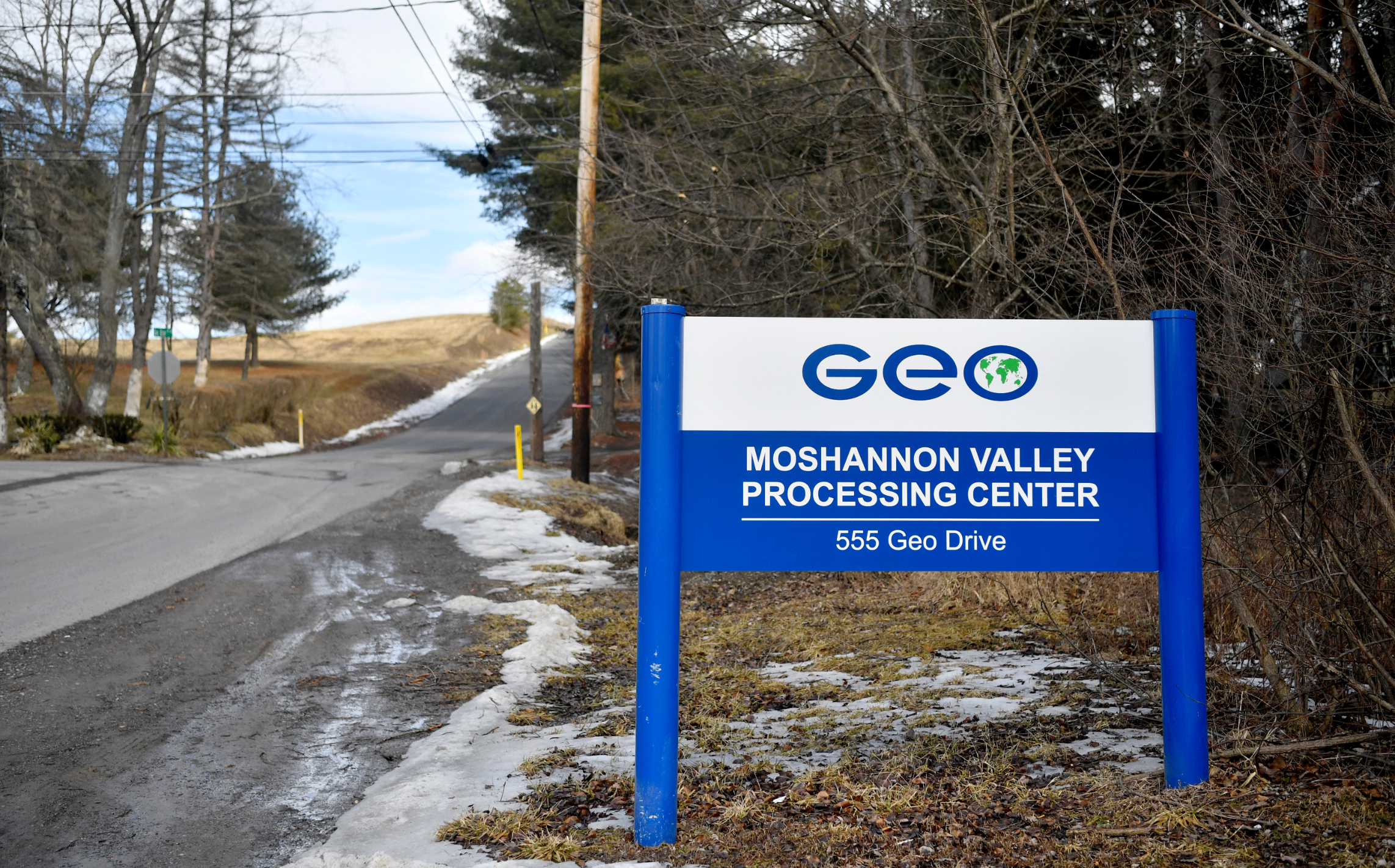
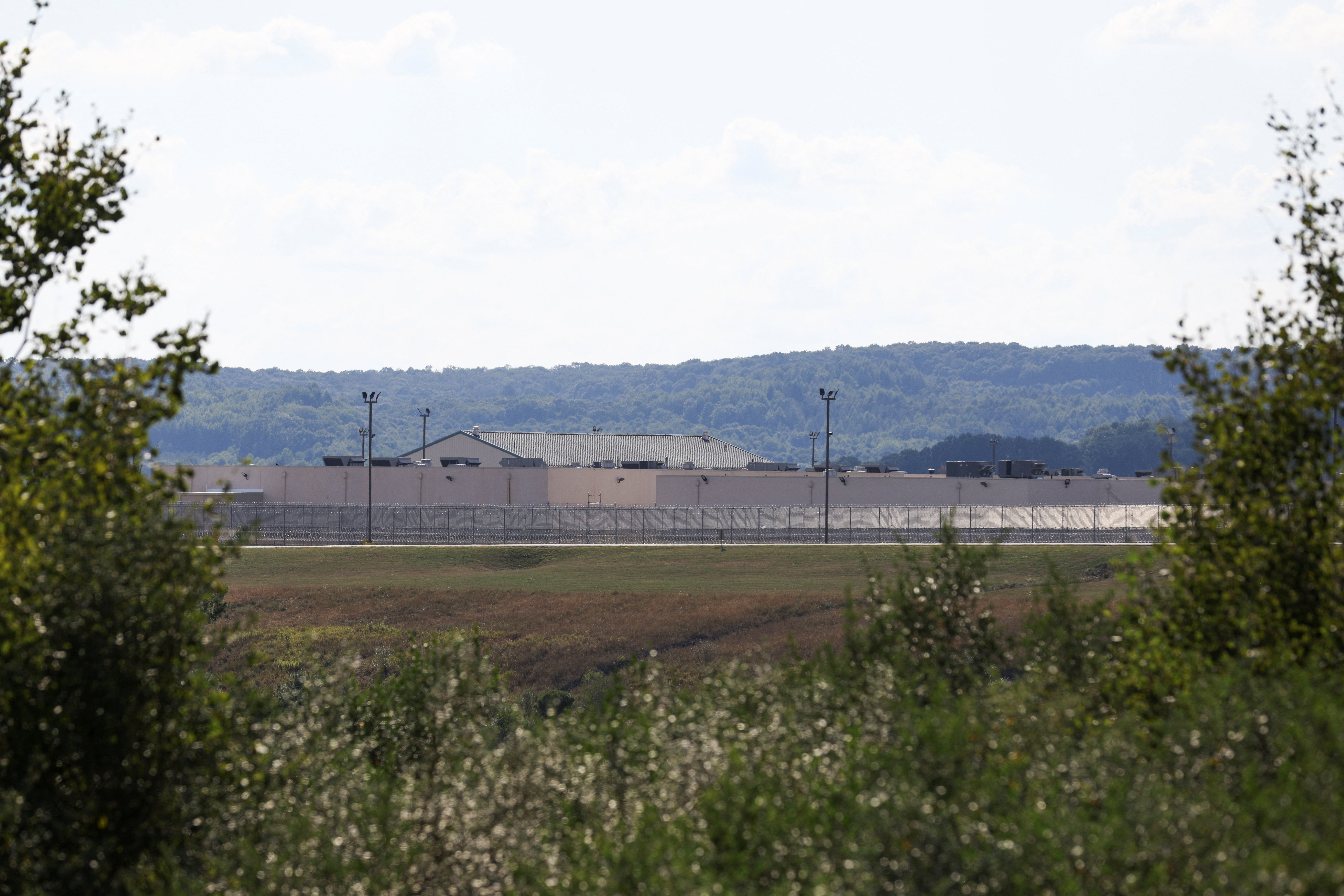
    There are signs the Moshannon Valley Processing Center could end up being sold to the federal government, a move critics fear could insulate the center from some state regulation.

    In the meantime, county officials approved a controversial extension of the current operating contract Tuesday, ensuring the largest detention center in the northeastern United States can run unimpeded for at least the next six months.

    The contract between Clearfield County and Florida-based GEO Group, the for-profit owner of the 1,876-bed facility, was set to expire at the end of September. But Republican Commissioners Tim Winters and John Sobel voted 2-1 against Democratic Commissioner Dave Glass to extend GEO Group and ICE’s contract to operate the Moshannon center.

    The vote came at a contentious meeting at which speakers from the audience mostly voiced opposition, questioning why the county had become entangled in federal immigration policy and doubting the true worth and use of the $100,000 payment.

    “Blood money!” one person shouted after the vote.

    Clearfield’s vote took place as President Donald Trump’s administration quietly mounts a takeover of private detention centers like Moshannon, as it is called, to expand bed capacity to support its mass-deportation goals.

    Some local officials and immigration advocates think Moshannon may be next to be sold. In a statement, the Department of Homeland Security said ICE does not discuss potential facility acquisitions.

    “The long-term solicitation process remains ongoing,” a spokesperson said.

    Federal ownership could insulate the properties from compliance with certain local and state laws, important to the Trump administration when other expansion plans, like turning empty warehouses into detention centers, bogged down amid community and legal opposition.

    Moshannon is a common destination of those arrested for immigration violations in Pennsylvania. An unannounced congressional oversight visit in May found that of the 1,417 adults detained there, roughly 78% lacked serious criminal charges or convictions of violent behavior — a contrast to Trump and his allies’ arguments for increased detention.

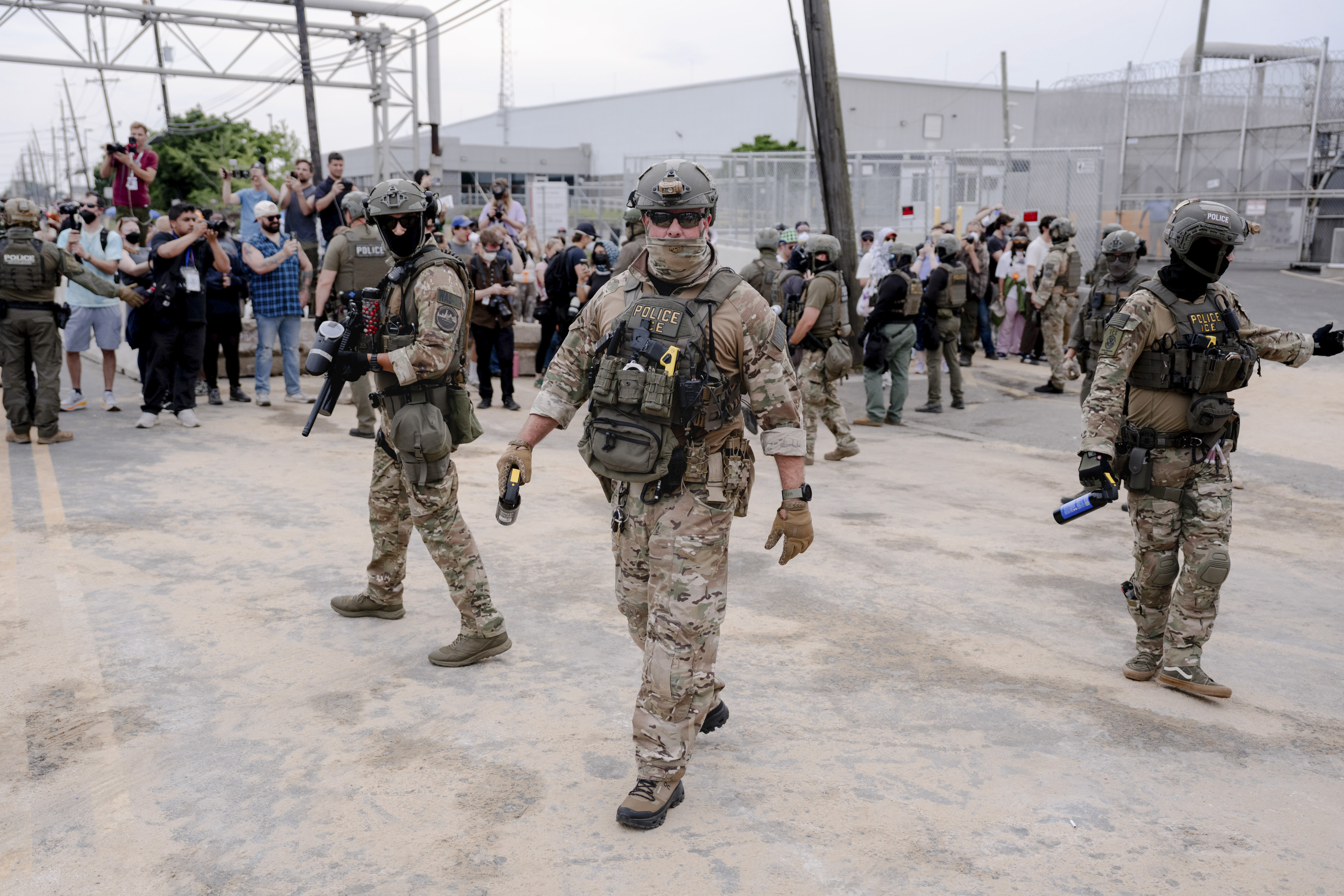
    ICE agents outside the Delaney Hall migrant detention center in Newark, N.J., in June.LEXI PARRA

    Trump’s push for mass detention and deportation

    Congress voted in July 2025 to allocate $45 billion to the Department of Homeland Security for immigration detention, more than a decade’s worth of typical funding. At the time, Trump immigration officials touted the funding as a way to treat deportation “like a business,” with acting ICE director Todd Lyons saying he wants to see the deportation system run “like [Amazon] Prime, but with human beings.”

    DHS, which oversees U.S. Immigration and Customs Enforcement, went on to spend millions on reopening shuttered prisons, allocated $1.2 billion to house thousands in tents on a Texas military base, and attempted to convert nearly a dozen warehouses across the country into mega detention centers to the tune of $1 billion.

    However, in June, ICE made plans to offload seven of those warehouses, totaling $700 million, by giving them to other agencies or selling them outright, according to the New York Times.

    A warehouse purchased by DHS to house an ICE detention center in Surprise. Caitlin O'Hara

    With a near-record 65,000 people in detention, ICE’s latest push has been to buy established private detention centers and build more facilities alongside them, as seen with the summer sale of four private detention centers owned by CoreCivic, the nation’s other large private prison owner, to ICE.

    GEO Group’s founder and executive chairman, George Foley, said in a May earnings call that the private prison company was “engaged in an active process for the sale” of several facilities to ICE. Foley acknowledged Democratic-led states were considering more active oversight in detention centers, saying, “I think the logical solution to much of that is federal ownership of the facilities.”

    CoreCivic and GEO Group reported a combined $1.4 billion in quarterly revenue this spring, not including the closed or potential sales of detention facilities.

    GEO Group did not respond to a request for comment.

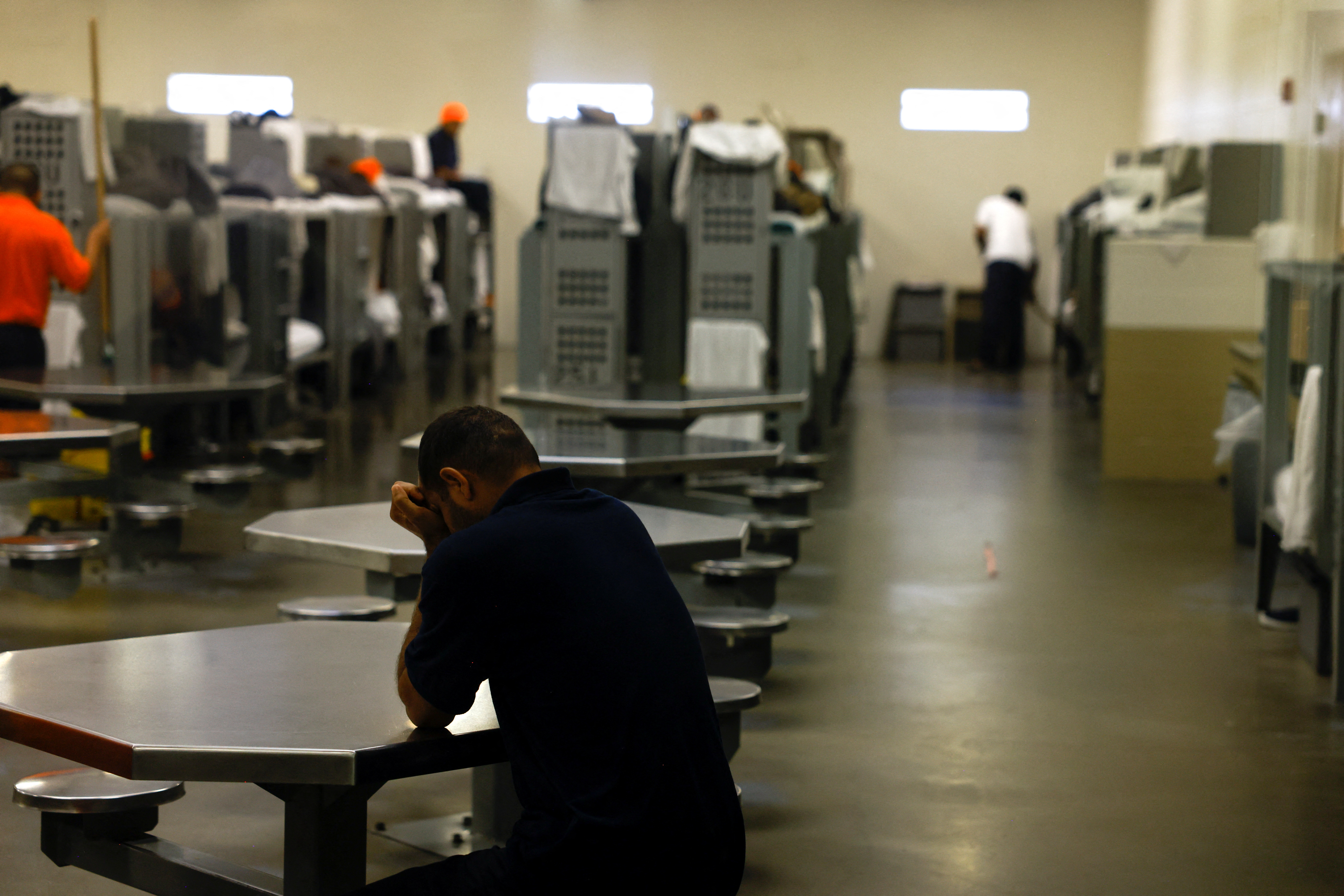
    A detainee sits behind glass in a common area at the Moshannon Valley Processing Center in 2023.REUTERS / Quinn Glabicki

    The potential sale of Moshannon to ICE

    GEO Group has not officially stated its intention to sell Moshannon to ICE. But recent ICE contract bid requests and local dealings with the center’s warden are leading local officials and immigration advocates to suspect a sale.

    Earlier this month, ICE requested 10-year contract bids for “turnkey” detention facilities across the country, including in the Philadelphia area. Moshannon is the only private facility in the region that fits that criteria, said Jasmine Rivera, executive director of the Pennsylvania Immigration Coalition, which had called on county commissioners to deny a contract extension.

    Rivera said the proposal requests include provisions that could lead to the sale of private detention centers to ICE, similar to its dealings with CoreCivic. GEO Group and ICE’s contract extension “is a stopgap measure” so the parties have “the time to finish the land assessment in the sale of Moshannon,” Rivera said.

    In a Sept. 8 Clearfield County commissioners meeting, Glass told the public he directly asked Moshannon warden Leonard Oddo earlier this year whether the Clearfield detention center could be sold to ICE. Oddo said no, according to Glass. In the first week of September, the commissioner e-mailed Oddo the same question, to which Oddo responded, “‘I’ll have to refer you to GEO corporate on that,’” Glass said.

    “I took that as kind of a red flag that there may be some kind of a sale,” Glass said at the meeting.

    Moshannon Valley Processing Center, an ICE detention facility operated by the Geo Group, where migrants are housed, in Philipsburg, Pennsylvania, U.S., August 24, 2025. REUTERS/Quinn GlabickiREUTERS

    What it means for Pennsylvania residents

    Having Moshannon fall under federal ownership would mean many of the tax benefits Clearfield County receives for serving as a middleman would cease, Glass said.

    “Whatever you think about the facility, having that facility sold to the federal government and losing the tax base on that would be a huge blow,” he said.

    Clearfield commissioners have no say in approving the sale if GEO Group and ICE agree to terms.

    Due to a now-reversed order that banned federal agencies from contracting with private prisons, GEO Group is contracted through Clearfield County, meaning ICE funding — around $5 million monthly — flows through Clearfield to GEO Group for operating the detention center. Clearfield collects a $200,000 administration fee for its intermediary role.

    The county also receives $688,000 in annual property taxes from the facility, and GEO employs 400 people there. However, Rivera noted ICE still owes more than $230,000 in unpaid medical services provided by regional EMS providers — a debt U.S. Sen. John Fetterman (D., Pa.) has urged ICE to repay.

    Winters, who voted to extend the contract, said that current federal immigration policy was “not working,” but that losing a seat at the table with ICE and GEO would leave Clearfield County worse off.

    Voting “no” on the contract extension would have eliminated “our communication and our ability to investigate claims,” he said. “Our oversight ability is very small, but we still have it.”

    For Rivera, any sale is concerning because ICE could ignore Pennsylvania lawmakers’ attempts to protect public health, environmental and zoning standards, and the safety of those detained, she said.

    Even if the commissioners had denied the contract extension, ICE would have continued operating without a contractual federal agreement, Winters said, as it did with CoreCivic in New Mexico last year after its contract with Torrance County expired.

    The newly extended contract will allow ICE to continue paying GEO Group for operating Moshannon through Clearfield County until mid-March 2027. At that point, GEO Group and ICE could approach the county with a new contract, or, as advocates and some local officials fear, federal ownership could come into play.

  • Wonderland Pier showing signs of collapse; Ferris wheel will be ‘torched’ and cut into pieces, developer says.

    Wonderland Pier showing signs of collapse; Ferris wheel will be ‘torched’ and cut into pieces, developer says.

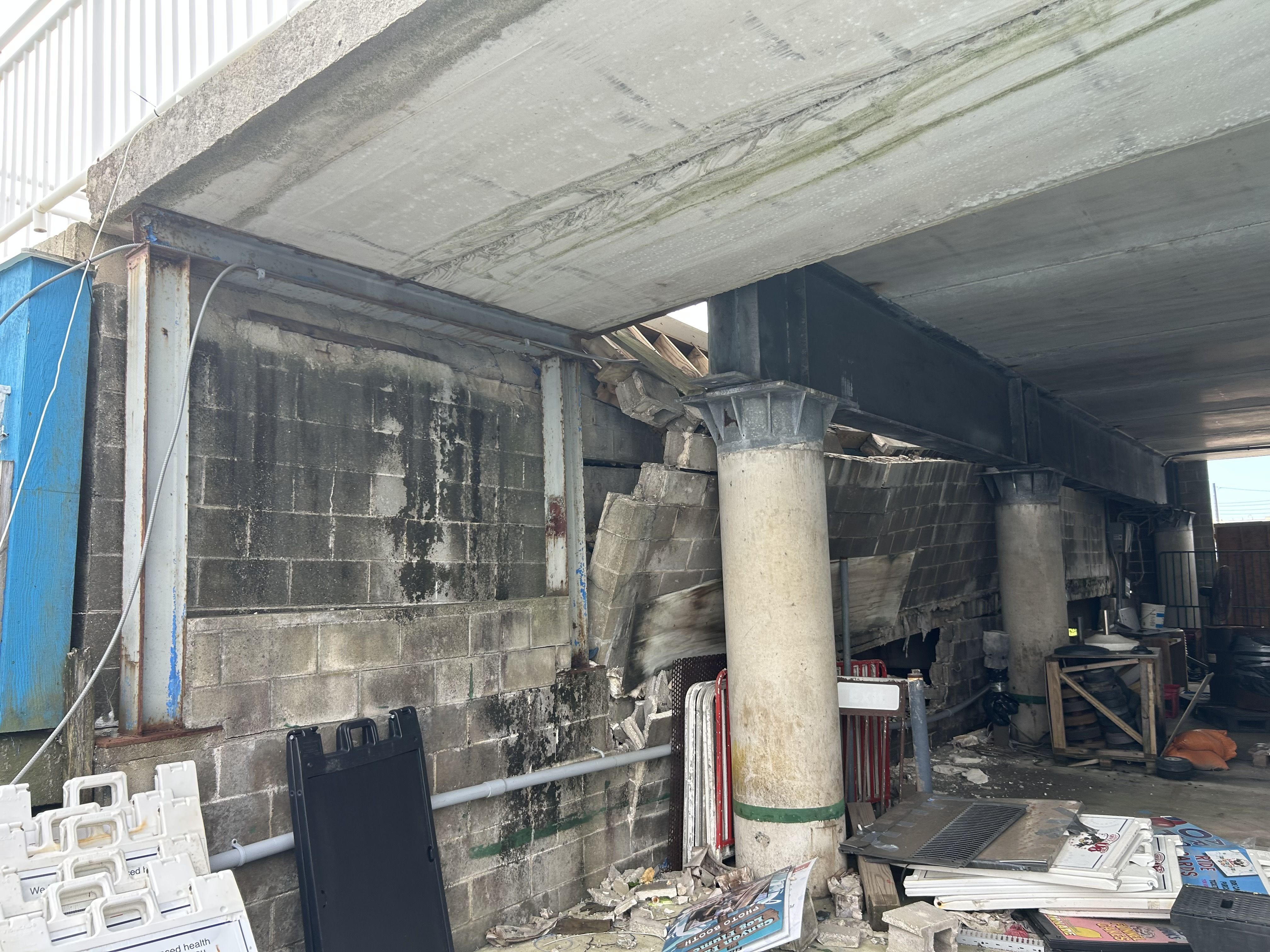
    The wall under the decking of Wonderland Pier is caving in and showing signs of collapse, say owner Eustace Mita and Ocean City inspectors.

    Ocean City has sent Mita a “Notice of Unsafe Structure,” along with a request for an engineer’s report and a plan of corrective action, city spokesperson Doug Bergen said.

    “It’s an emergent condition,” Bergen said. The wall is toward the rear of the structure and is “not anywhere near where the public would walk by,” he said.

    The decking is caving in on the landlocked Wonderland Pier in Ocean City, prompting Ocean City to issue a notice of unsafe structure. The city says the cinder-block wall below one of the decks toward the rear of the property is unstable.Courtesy Eustace Mita

    “The city’s only involvement is with the cinderblock wall that’s caved in and falling over,” he said.

    Mita, meanwhile, was sounding the alarm that the conditions of the pier and the iconic Ferris wheel were dire.

    He said Monday that he was consulting engineers and that the Ferris wheel would need to be “literally torched” and cut into pieces to be taken down.

    “It’s going to take a long time and a lot of engineering,” he said.

    “The original plan was to dismantle the Ferris wheel and reassemble it,” Mita said.

    However, the steel company that dismantled the Morey’s Piers Ferris wheel for refurbishing told Mita that would not be possible for the Wonderland Ferris wheel.

    Mita said “even the bolts that hold it together” are beyond dismantling, permanently welded in place, “because of the conditions of being oceanfront, and non-operable for so long.”

    The Giant Wheel Ferris wheel and Raiders (right) interactive maze with tunnels, bridges, and slides.on the final day for the beloved Wonderland Pier in Ocean City Sunday, Oct. 13, 2024.Tom Gralish / Staff Photographer

    Mita is negotiating with Ocean City to build a hotel on the site, which was declared “in need of rehabilitation,” in part because of the deterioration of the pier.

    While Mita used the condition of the pier to justify a designation that would allow him to build the hotel without zoning changes, community members have contended that, as the owner, Mita was responsible for allowing the pier to deteriorate.

    The amusement pier, owned for decades by the family of Mayor Jay Gillian, closed for good in October 2024. Despite community opposition, City Council approved the rehabilitation designation in June, triggering ongoing negotiations over Mita’s project.

    A rendering of the proposed new Icona in Wonderland Resort, to be built on the site of the old Wonderland Pier. The proposal for a 252-room resort includes saving the iconic Ferris Wheel and carousel.Courtesy Icona Resorts

    His original plan for a seven-story hotel included preserving the Ferris wheel and the historic carousel, in addition to several other kiddie rides. He said Monday he was still trying to save the carousel.

    Mita said he would try to “limit the damage as best we can” to the pier.

    “We can’t make repairs because it’s imploding,” he said.

    Eustace Mita talks about the construction of this beachfront Achristavest home on 116th Street in Stone Harbor on Tuesday, August 18, 2026.Vernon Ogrodnek / For The Inquirer

    Mita told the Ocean City Sentinel last week his latest design proposal called for the hotel to be set back from both the Plaza Place neighborhood at the rear of the property and the boardwalk in front.

    He described a hotel that gets higher toward its center, with a public plaza in front, and a building that will be about 23 feet higher at the rear border than the 50-foot high log flume that is currently there. “It will have a beautiful plaza, which will be open to the public and will have firepits and the like,” he told the Sentinel. “That’s really where we’re at.”

    The old Wonderland Pier site on the boardwalk in Ocean City, N.J. as seen from Wayne Avenue on Jan. 6, 2026. The beloved amusement pier shut down in October 2024. A developer wants to build a luxury hotel. A report put the cost of repairing the Ferris wheel, Carousel and log flume at as much as $6.5 million.Amy S. Rosenberg / staff
  • Equipment outages grounded flights into Philly airport and caused long delays

    Equipment outages grounded flights into Philly airport and caused long delays

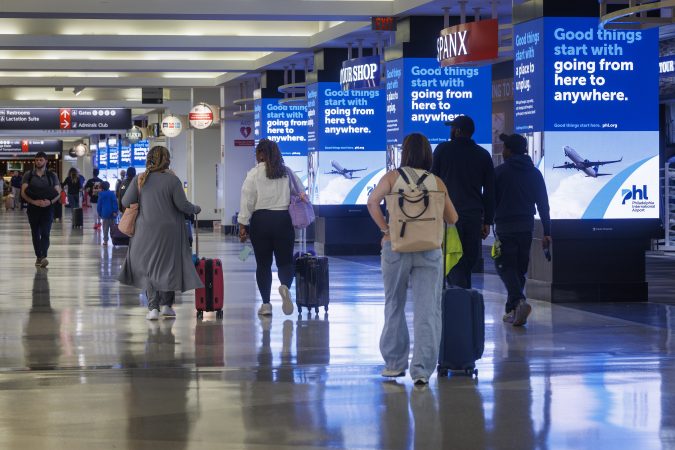
    Flights into Philadelphia International Airport were grounded for much of the day Monday due to a stop instituted by the Federal Aviation Administration that impacted hundreds of flights in the Northeast in the wake of equipment outages.

    Incoming flights were briefly allowed to resume at one point, but were again halted a short time later, according to the FAA’s airspace system status. The ground stop was again lifted at about 5 p.m. Monday.

    As of late Monday afternoon, PHL had experienced about 400 delays and 200 cancellations, according to data from flight tracking website FlightAware. Some airlines were allowing their customers to change flights without fees. The FAA advised travelers to check the status of their flights with their airline before heading to the airport.

    On Monday night, arrivals and departures at Philadelphia were still delayed by an average of at least two hours, according to Flighty, the popular flight-tracking app.

    During the stops, FAA said planes departing from a U.S. airport and heading to PHL should remain on the ground. At times, flights at John F. Kennedy International Airport, LaGuardia Airport, Newark Liberty International Airport, and Bergen County’s Teterboro Airport were also affected.

    The ground stop came after a circuit failed at an air traffic control tower in Philadelphia, and officials found that a line from a backup system was cut at a construction site in New Jersey, FAA Administrator Bryan Bedford said. The technical problems happened at the same FAA facility in Philadelphia that caused numerous disruptions at Newark Liberty International Airport in spring 2025.

    “Unfortunately, that circuit failed today,” Bedford said at a Monday news conference. “And when it went to flip into the backup, we discovered that the backup fiber had a break, and that fiber break is probably 13 hours to repair.”

    Bedford described the break as “massive,” and said it consisted of about 600 feet of fiber line somewhere between New Brunswick and Newark. It was not immediately clear when the break in the fiber line for the backup occurred, he said.

    Verizon said contractors had dug up and cut the cable that runs along the Amtrak rail line in New Jersey. The company said in a statement that its technicians were racing to get the cable fixed.

    Transportation Secretary Sean Duffy said the ground stop showed the need for more funding to modernize infrastructure.

    “This is not shocking to us,” Duffy said. “It’s an old system that we’re stuck working with.”

    The FAA on Monday also began testing a new computer system that uses AI to help predict schedule conflicts and weather issues, but it did not appear to be linked to the outage because it was only being tested in the Washington, D.C., area.

    Inquirer staff writer Robert Moran contributed to this article, which also contains information from the Associated Press.

  • Police find more photos of women who appear dead in pornographer R.C. Horsch’s home, bringing the number of missing to 7

    Police find more photos of women who appear dead in pornographer R.C. Horsch’s home, bringing the number of missing to 7

    Police have recovered images they believe show two additional women dead inside the residence of the late Raymond “R.C.” Horsch, officials said Wednesday — bringing the total number of dead or missing women linked to the violent pornographer’s Olney twin home to seven.

    The discovery marked the latest turn in a sprawling local and federal investigation into the drug, sex, and porn operation Horsch ran out of his home. Horsch left behind a digital archive of more than a million photos and videos that detectives now believe shows a mix of real and staged violence — as well as potential killings.

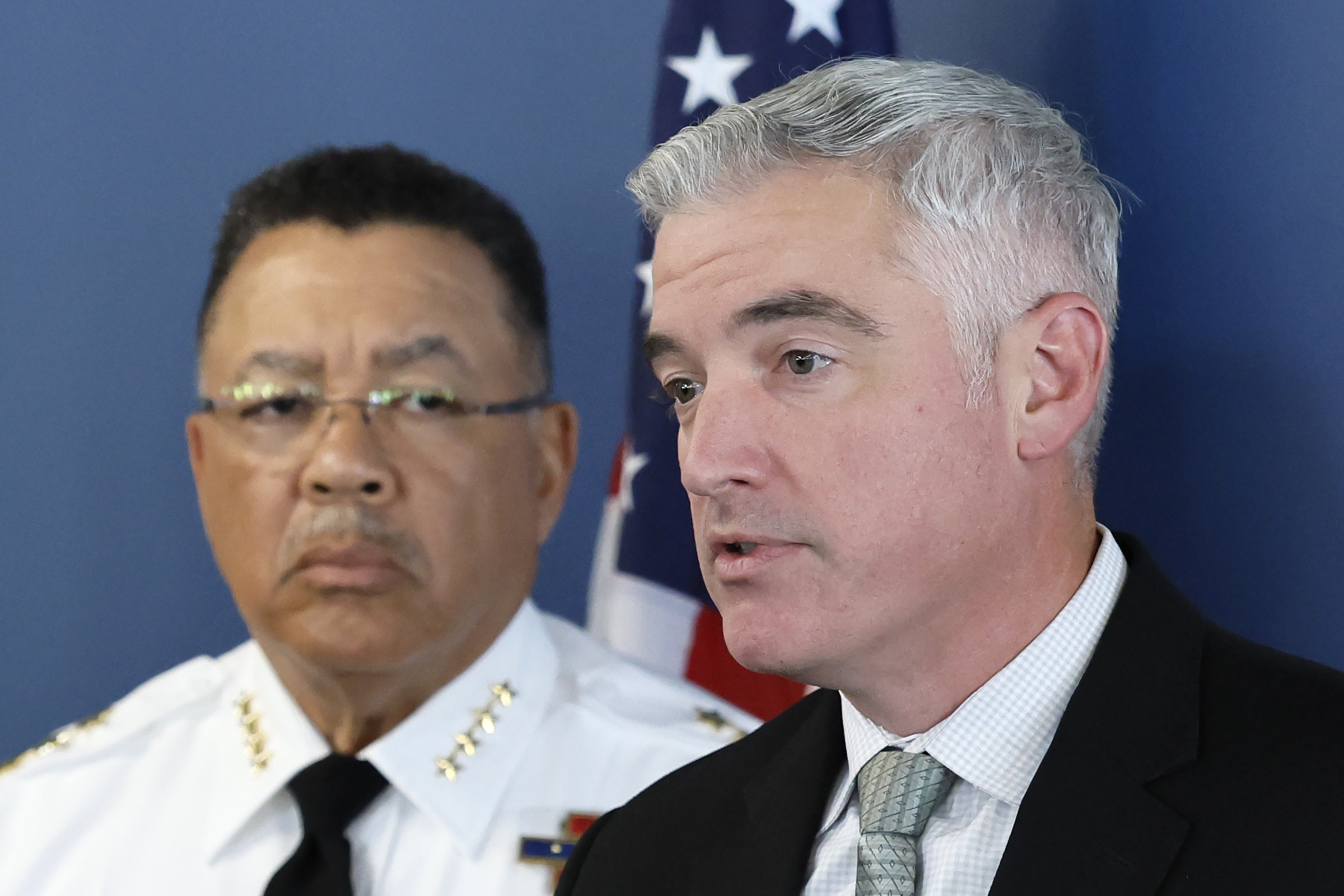
    During a news conference Wednesday, Deputy Police Commissioner Frank Vanore said investigators recovered photos that showed a 25-year-old woman unconscious, with visible injuries, inside the Chew Avenue home where Horsch and his son, Eugene, lived for decades.

    The woman, who was from Philadelphia, had not been reported missing, police said. Vanore declined to identify her at the request of her family.

    Detectives also recovered images showing another woman lifeless with injuries. Investigators have not yet been able to identify her, Vanore said, but she appeared to be in her mid-20s.

    Nicole Fusaro was reported missing in 2018 when she was 27. Police believe she was killed by Raymond “R.C.” Horsch in his Chew Avenue home.Courtesy of Jonathan Hallo

    Vanore also confirmed that police recovered a video that appeared to show Horsch strangling a woman. Horsch used two cameras — one mounted in the room, and another that he held — to film the assault, he said. In the video, he said, the woman used drugs before Horsch gave her money and handcuffed her to the bed. He was naked and tightened a zip tie around her neck until she became unconscious, Vanore said.

    That woman has been identified by a family member as Nicole Fusaro, who went missing in 2018 at the age of 27.

    Police last month also announced they recovered images that appeared to show two women dead inside the home: Maribel Fresses, who was 27 when she was reported missing in February 2018, and Gabrielle Amarando, who went missing in September 2012 at the age of 22.

    Vanore said the metadata of those images shows both were photographed in 2017.

    Police have not recovered any human remains.

    Gabrielle Amarando, (left) missing since 2012 and Maribel Fresses, 27, reported missing in 2018. Police believe they were killed inside the Olney home.Obtained by The Inquirer

    Horsch died last year at age 82 of lung issues.

    Special Agent Wayne Jacobs, of the FBI in Philadelphia, said federal agents have been assisting city homicide detectives in downloading and sorting through the excessive amount of digital evidence. So far, he said, they have reviewed about 30% of the existing materials.

    “The objective here is thoroughness, not simply speed,” he said.

    Vanore said investigators have identified 58 people in the images and videos they have reviewed. Of those, five women appeared to be dead.

    There are 10 other women who subsequently died of an overdose elsewhere, he said. Police have interviewed 16 people who are still alive, he said. They are still working to track down 25 others.

    The investigation has been protracted, in part because Horsch spent decades producing pornography that often focused on the brutalization of women in addiction — producing photos and videos for books, movies, and his website that featured women in various staged scenarios, including being drowned, shot, and strangled.

    “Some of this is playacting, and some of it we believe could be real,” Vanore said. “But we’re not there yet. We don’t want to end our investigation before it even — we’re not even in the middle of it. There’s a lot more to unpack.”

    Police Commissioner Kevin Bethel (left) looks on as Ryan Gallagher, of the forensics lab, speaks Wednesday.Elizabeth Robertson / Staff Photographer

    Police Commissioner Kevin Bethel also counseled patience. A large team of detectives, he said, was diligently and carefully reviewing the materials and working to ensure any identified victims and their families are handled with care.

    “We have a duty to those families who are all concerned about whether their loved one lost their lives in that house, or maybe somewhere else,” he said. “And so we’re going to take the time, we’re going to put the effort in. We’re going to do all the things that we have at our disposal.”

    Police started searching the home of Raymond Horsch, and his son Eugene, at 417 Chew Ave. in June. Jose F. Moreno / Staff Photographer

    Police will search the home again

    Police started looking into Horsch and his son, Eugene, in June, after a car stop near Independence Hall.

    A U.S. park ranger encountered Eugene Horsch and a woman inside his black BMW on June 19, police said. When the officers questioned them, the woman produced a fake ID in the name of Blair Tonzelli, a woman who had been missing since 2023. Police searched the car and found two guns, drugs, a cattle prod, and a phony federal drug enforcement badge.

    Local and federal law enforcement spent weeks searching the home on Chew Avenue and found additional drugs and weapons, as well as a basement holding vats of mysterious fluids and a 55-gallon drum leading to a water line.

    Police also recovered five urns containing cremated remains. Ryan Gallagher, the police department’s assistant director of forensics, said authorities now believe those urns hold the ashes of Raymond Horsch, his sister, and a friend. Investigators are still working to identify the other two, he said.

    Tests for DNA and of the chemicals in the basement remain ongoing.

    FBI Philadelphia Special Agent in Charge Wayne Jacobs (center) looks to Deputy Police Commissioner Frank Vanore (left) during a press conference, regarding the Raymond “RC” Horsch case, at the Philadelphia Police Headquarters on Wednesday, September 16, 2026.Elizabeth Robertson / Staff Photographer

    The case expanded when investigators learned Raymond Horsch’s ex-wife, Amy McHale, had been reported missing in 2016, and was also last seen at the home.

    Police then excavated the yard of the home in search of physical evidence linked to the missing women.

    Vanore said investigators have not recovered any digital evidence as to the whereabouts of Tonzelli or McHale.

    Eugene Horsch, 44, remains in federal custody on drug and gun charges. Vanore said investigators have not found evidence that connects him to the dead or missing women.

    Bethel said police intend to return to the Chew Avenue home in the coming weeks to recover additional materials, and will meet with neighbors.

    Staff writer Barbara Laker contributed to this article.

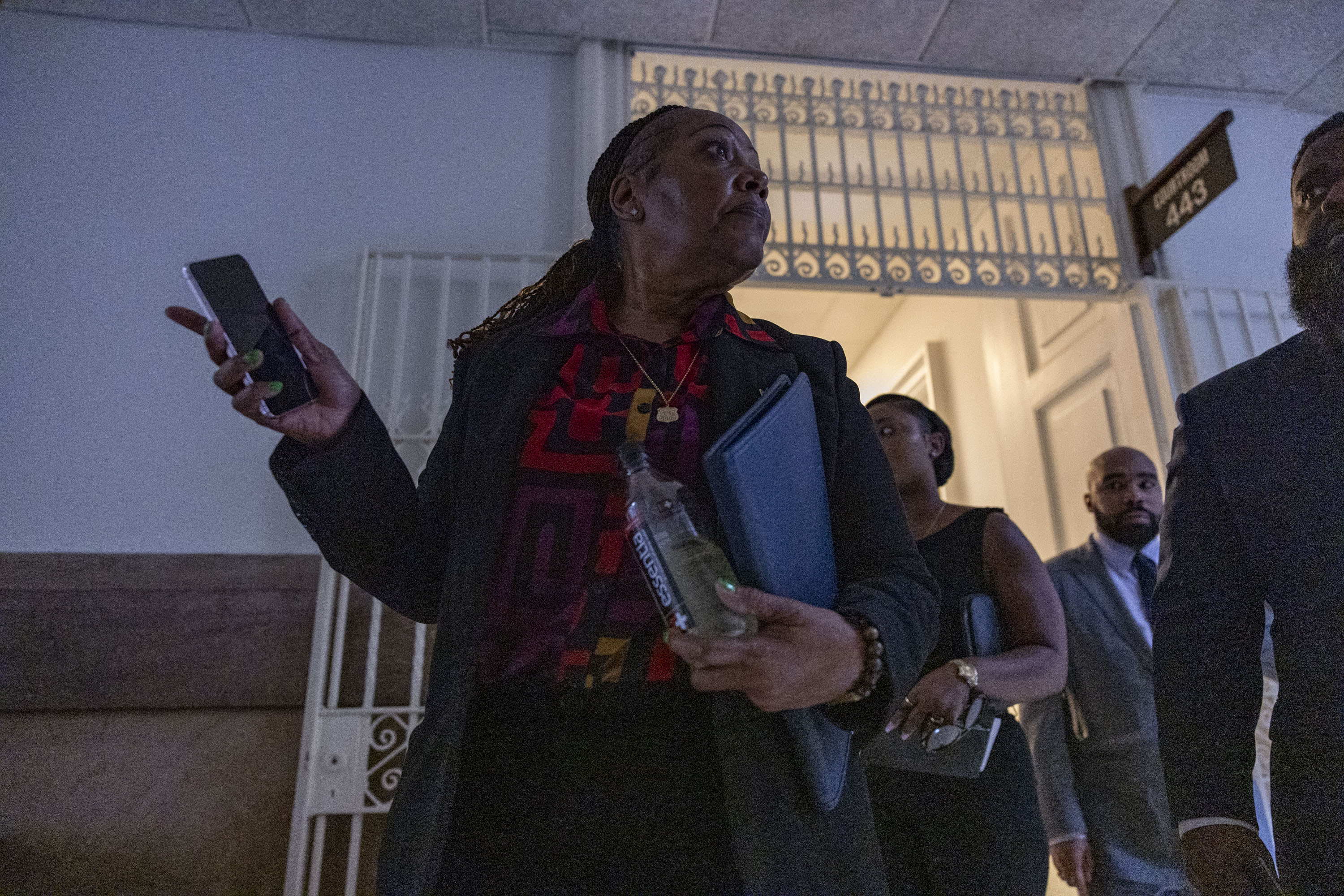
  • A federal judge believes DA Larry Krasner may have broken the law, and he referred the case to the U.S. Attorney’s Office

    A federal judge believes DA Larry Krasner may have broken the law, and he referred the case to the U.S. Attorney’s Office

    A federal judge said Tuesday that District Attorney Larry Krasner may have broken the law while overseeing a contentious post-conviction case, and he said he referred the matter to the U.S. Attorney’s Office to investigate whether Krasner should be charged with crimes including conspiracy or obstruction of justice.

    U.S. District Judge Paul S. Diamond made those stunning statements in a memorandum in which he also ruled that Krasner and one of his top supervisors, Matthew Stiegler, could no longer participate in the case — a matter in which a man is seeking to have his murder conviction overturned.

    Diamond wrote that over the last several months, as he conducted hearings to learn more about how attorneys in the district attorney’s office handled that case, testimony from some of Krasner’s staffers revealed actions by Krasner and Stiegler that Diamond called “troubling,” “disturbing” — and potentially illegal.

    Those actions, he wrote, included pressuring other staffers to take steps to protect Stiegler and blame one of his subordinates, urging staffers to lie to Diamond in court, and threatening “consequences” for those who did not follow Krasner’s orders.

    “I have thus reluctantly concluded that Philadelphia’s highest law enforcement official and one of his top assistants may have violated the law,” Diamond wrote. “In these circumstances, with the issuance of this Memorandum, I refer the DAO, Mr. Krasner, and Stiegler to this District’s United States Attorney’s Office for investigation and other appropriate action.”

    In a statement Tuesday, Krasner said, “I respectfully and vigorously disagree” with Diamond’s findings, adding: “I look forward to appealing to the higher court as soon as the law allows.” He said he could not comment further because the case is pending.

    Stiegler did not respond to a request for comment. A spokesperson for the U.S. Attorney’s Office declined to comment. That office would have to determine whether to open an investigation or file charges. Diamond, as a judge, cannot do so himself.

    The filing was the latest explosive development in the case, which is centered on Dennis Johnson’s 2009 conviction for second-degree murder. Johnson has been fighting to have that conviction overturned, and the matter before Diamond began years ago as a routine petition in federal court.

    But in recent months, the case has led to a series of unusual revelations about the inner workings of the district attorney’s office as various lawyers have worked on aspects of the case. And it comes as Krasner’s office has faced increasing scrutiny over the way it has acted in other murder appeals — including a forceful opinion from the Pennsylvania Supreme Court, which said Krasner’s office had misled judges so frequently and flagrantly in such matters that state prosecutors must now review instances when his office says a conviction should be overturned.

    Diamond, in his filing Tuesday, said the assertions in his courtroom — made primarily by members of Krasner’s staff — were not only proof of significant internal disagreements about Johnson’s case, but also “evidence of possible criminal wrongdoing by Mr. Krasner and Stiegler.”

    Contentious internal discussions

    The origins of the controversy began to take shape in 2022.

    That year, after the district attorney’s office had spent years opposing Johnson’s bid for freedom, then-Assistant District Attorney Jaclyn Mason filed a brief changing course.

    In her filing, Mason agreed with Johnson’s lawyers that his trial counsel had been ineffective. She also said the office had discovered additional problems with the case while reviewing it again, and she recommended that Johnson’s conviction be overturned.

    A federal magistrate — relying on Mason’s brief — agreed, but Diamond was the judge with the power to accept or reject the recommendations. And this spring, he scheduled an evidentiary hearing to evaluate some of the evidence before deciding how to proceed.

    That led to a series of contentious developments within the district attorney’s office, prosecutors have since testified.

    First, Mason’s supervisors in the law division reviewed her brief and found a series of what they called “material misstatements.” They decided they needed to try to withdraw Mason’s filing and apologize to Diamond for the mistakes.

    They asked Mason to sign on to the filing with them, but she declined and resigned instead. She has since said she filed her brief only because Stiegler pressured her to do so, and she thought her supervisors, in preparing an apology, were angling to make her a scapegoat on Stiegler’s behalf.

    During testimony before Diamond in recent months, her supervisors said that was not true. But the supervisors — Katherine Ernst, Steven Wildberger, David Napiorski, and Peter Andrews — said Stiegler and, eventually, Krasner did try to persuade them to direct blame toward Mason.

    Potential crimes?

    In the supervisors’ telling, Stiegler asked them to review every case Mason had handled to find other errors in her work. That way, Stiegler suggested, Mason could be painted before Diamond as a “rogue” prosecutor who was routinely making mistakes in problematic filings.

    Krasner echoed that potential course of action, and even described it as a “good idea,” the supervisors testified.

    Diamond said those actions were “troubling.” He wrote that Krasner “did not simply learn of the Stiegler proposal; he urged the Law Division supervisors — who serve at Mr. Krasner’s pleasure — to implement it and to present a false narrative to the Court.”

    And Stiegler, he said, was “urging the DAO to present the Court with a false account to shield himself.” Diamond said that he found all of Stiegler’s testimony “contradictory, evasive, or outright dishonest” and that Stiegler may have committed perjury while on the stand.

    In addition, Diamond said, as internal discussions continued about how to proceed in the case, Krasner repeatedly rejected requests by the law division supervisors to refer it to the attorney general’s office. The supervisors generally agreed that was the appropriate course because the inner-office drama surrounding the matter was hampering their ability to handle it properly.

    But Krasner, they testified, was vehemently opposed — in part because of his disdain for people who worked in the attorney general’s office. And during some meetings, they said, Krasner said he wanted to “protect the office”; expressed opposition to telling Diamond about the referral deliberations; and said they would face “consequences” if they did so, which they took to mean being fired.

    Diamond, in his memorandum, said such a threat “could amount to obstruction of justice.” And he said the efforts by Krasner and Stiegler to present a false narrative to the court “might amount to conspiracy.”

    It was not immediately clear Tuesday if federal prosecutors would agree with Diamond’s assessment, or if they would seek to empanel a grand jury to evaluate it.

    Johnson’s petition, meanwhile, remains on hold. Diamond said the district attorney’s office could continue to handle the case moving forward, but it was not clear who might do so.

    All of the law division supervisors have already recused themselves, and Diamond said Tuesday that neither Krasner nor Stiegler could have any role in the matter. He also said he also would not allow an outside attorney selected by Krasner to handle the matter on his behalf.

  • Temple terminates $55 million gift from school’s largest donor amid federal investigation into his company

    Temple terminates $55 million gift from school’s largest donor amid federal investigation into his company

    Temple University will terminate a $55 million gift — the largest donation in the school’s history — from alumnus Christopher M. Barnett, whose company is under federal criminal investigation over allegations of money laundering, wire fraud, and other crimes.

    Barnett, a behavioral healthcare business leader whose company, ABA Centers of America, provides services to children with autism, has resigned from Temple’s board of trustees, Temple president John Fry said Tuesday.

    The gift, largely intended for Temple’s College of Public Health, was announced with much fanfare last October, but none of the payments had yet been made to Temple under the gift agreement schedule, Fry said.

    The decision to terminate the gift was mutual, Fry said, and came as Barnett is “recovering from a life-threatening medical event.” Particularly difficult was that the federal allegations concern healthcare fraud and the gift was intended for the public health college, the president said.

    “We have to think about our values,” Fry said in an interview Tuesday. “We have to think about our reputation. Given the nature of the allegations, we felt that the best thing to do was to separate ourselves from this … as painful as that is.”

    Fry said that he became aware of the allegations Thursday from recently unsealed court documents in the case and that Temple reached out to Barnett, who resigned from the board Saturday. Temple decided to announce its intention to terminate the gift after the board of trustees got a briefing on Monday, Fry said.

    The College of Public Health will no longer bear Barnett’s name, nor will the dean’s title in the College of Liberal Arts or an “essential needs hub” that Temple recently opened on campus to help improve student success, Fry said.

    Barnett has not been charged. He “strenuously denies” the allegations and intends to “vigorously defend” against them, Fry and Mitchell L. Morgan, chair of the board of trustees, said in a message to the campus community, but the university “believes the actions outlined here are necessary.”

    “After careful deliberation we believe that moving forward with the gift would not be in the best interest of Temple,” Fry and Morgan said.

    Barnett’s company did not immediately respond to a request for comment Tuesday.

    What federal investigators are looking at

    Federal investigators in December obtained a search warrant for Barnett’s Microsoft accounts, as well as those of other company executives, court records show. The warrant application, unsealed in July in federal court in New Hampshire, says evidence suggests ABA Centers of America billed insurance companies for unnecessary treatments and falsified records to justify the higher reimbursement.

    The federal investigation and documents were reported last week by Behavioral Health Business, an industry publication.

    The warrant was the second a federal judge in New Hampshire approved last year as part of the investigation by the Department of Health and Human Services’ Office of Inspector General.

    Investigators allege that Barnett executed the scheme through a web of interlinked companies he founded, including ABA Centers of America, ICBD Holdings, and Exact Billing Solutions. His archived biography on ICBD Holdings’ website, which was removed in recent days, said Barnett is “actively involved” in the companies and served as the chairman of ABA Centers of America.

    The company misrepresented the location in which services took place to get the higher reimbursement costs, investigators said, and “billed for services that did not qualify as legitimate medical treatment, such as when a client is napping or watching television,” according to the affidavit accompanying the warrant request.

    ABA Centers of America was a “giant billing mill,” one former employee told federal investigators, according to court records. ABA has affiliated companies providing services in Pennsylvania, including in the Philadelphia area, and New Jersey.

    Barnett, who has no medical training, personally set minimum hours of treatment for patients and gave bonuses to employees who billed according to those goals, emails obtained by investigators show.

    The fraudulently obtained payments funded Barnett’s “lavish lifestyle,” which included a fleet of rare cars, a lease for a $20 million waterfront home in Fort Lauderdale, Fla., and a $9.95 million private jet decked out with Hermès goods, according to court records.

    A brochure for the private jet Christopher Barnett purchased using funds ABA Centers of America fraudulently obtained, according to federal investigators.Court records

    The autism-services provider also faces multiple civil lawsuits, including a suit over allegations of inflated billing practices in Florida. A federal judge overseeing that case said last month that if evidence produced in the litigation corroborates the allegations, “ABA Centers have engaged in criminal conduct.”

    Historic contribution and its impact on Temple

    Barnett’s historic contribution to Temple was announced last October, less than a year after Fry became president of the university. Barnett met with Fry before Fry took the helm at Temple in November 2024, the president said, and Barnett joined the Temple board in May 2025.

    About $20 million of Barnett’s gift was targeted for an autism center at the public health college. Fry said Tuesday that initiative now would have to be “rethought.” The essential needs hub will continue, and Fry said he will seek another donor to support it.

    Barnett had made other, smaller gifts previously, Fry said, and Temple will be reviewing those. He did not elaborate.

    When announcing the gift, Barnett told The Inquirer how he initially had been rejected by Temple but bought a plane ticket and showed up unannounced at the office of the director of transfer admissions, waiting hours until she finally agreed to see him.

    “I said I need you to take a chance on me, and if you do that, I promise you I will graduate with a 4.0 and I’ll be a prominent alum and I’ll give back to the university,” Barnett said in an interview last October.

    Barnett’s gift surpassed the $27.5 million given by philanthropists Sidney and Caroline Kimmel earlier that year. That gift now stands again as Temple’s official record.

    “I believe in Temple University,” Barnett, who has homes in Fort Lauderdale and Philadelphia, said in October. “Temple took a chance on me when the odds were uncertain. And it helped shape who I am and what I’ve been able to do for my communities.”

    Temple officials on Tuesday indicated Barnett was continuing to think about Temple.

    “Mr. Barnett has expressed a desire to avoid any negative impact on Temple and, in keeping with such desire, has cooperated with the university through this difficult process,” Fry and Morgan said.

    Fry acknowledged the loss of the gift would be disappointing to students, faculty, staff, and alumni at the public health college. And it is a gut punch to the university at a time when the school has been making cuts to close a budget deficit and dealing with enrollment declines.

    “This is clearly a setback,” Fry said.

    But he noted that even without Barnett’s gift, the university experienced the biggest fundraising year in its history in fiscal 2026, taking in $159 million.

    “This action does not diminish the philanthropic momentum and strength of Temple,” Fry and Morgan wrote in the campus message.

    The university will look at its practices for accepting gifts, Fry said.

    “We will go back and we’ll scrutinize ourselves over this, and, if there are practices we need to tighten up, we’ll tighten up those practices,” he said.

  • Burlington Stores is moving its headquarters to Philadelphia

    Burlington Stores is moving its headquarters to Philadelphia

    Burlington Stores, the discount retailer named for its longtime South Jersey home, is spending millions on new corporate offices in Philadelphia, marking the first time in decades the city has welcomed the headquarters of a Fortune 500 company.

    The company is buying 3151 Market St., a more than 400,000-square-foot office building in Brandywine Realty Trust’s $3.5 billion Schuylkill Yards development in University City, for an undisclosed sum.

    In all, Burlington plans to spend $370 million on the move, and is set to receive another $30 million in state grants. The city is also providing a $7 million forgivable loan, a job-creation tax credit, and a $1 million investment that will give Burlington workers free SEPTA passes for a year.

    Burlington eventually plans to relocate 1,500 employees from New Jersey to the new Philly headquarters, a spokesperson said, and hire another 500. The company has no plans for layoffs.

    They plan to gradually move employees by team. The moves will begin no earlier than late 2028.

    Pennsylvania Gov. Josh Shapiro called the move “one of the largest corporate relocations ever in the commonwealth,” at an event Thursday in the lobby of Burlington’s new headquarters.

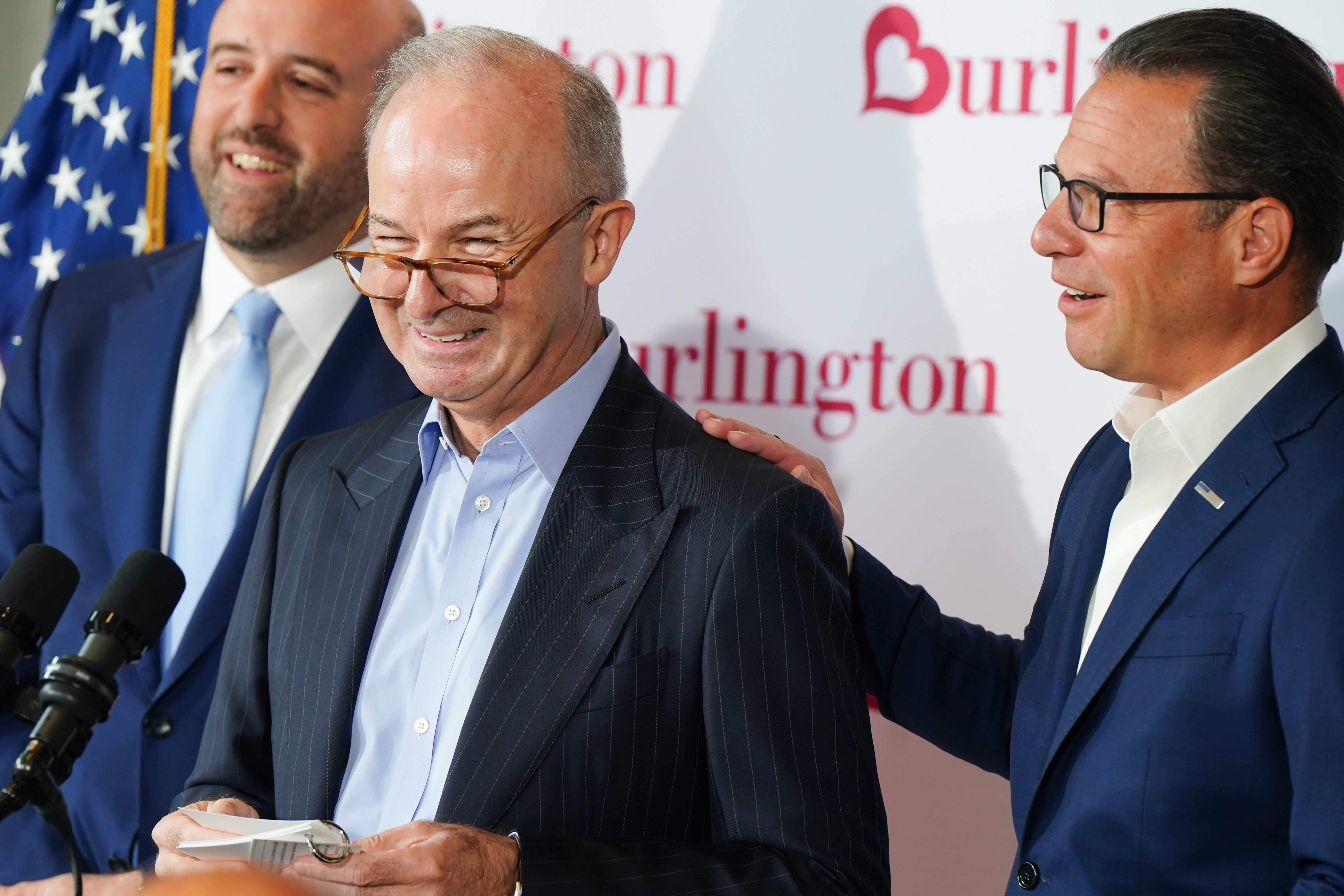
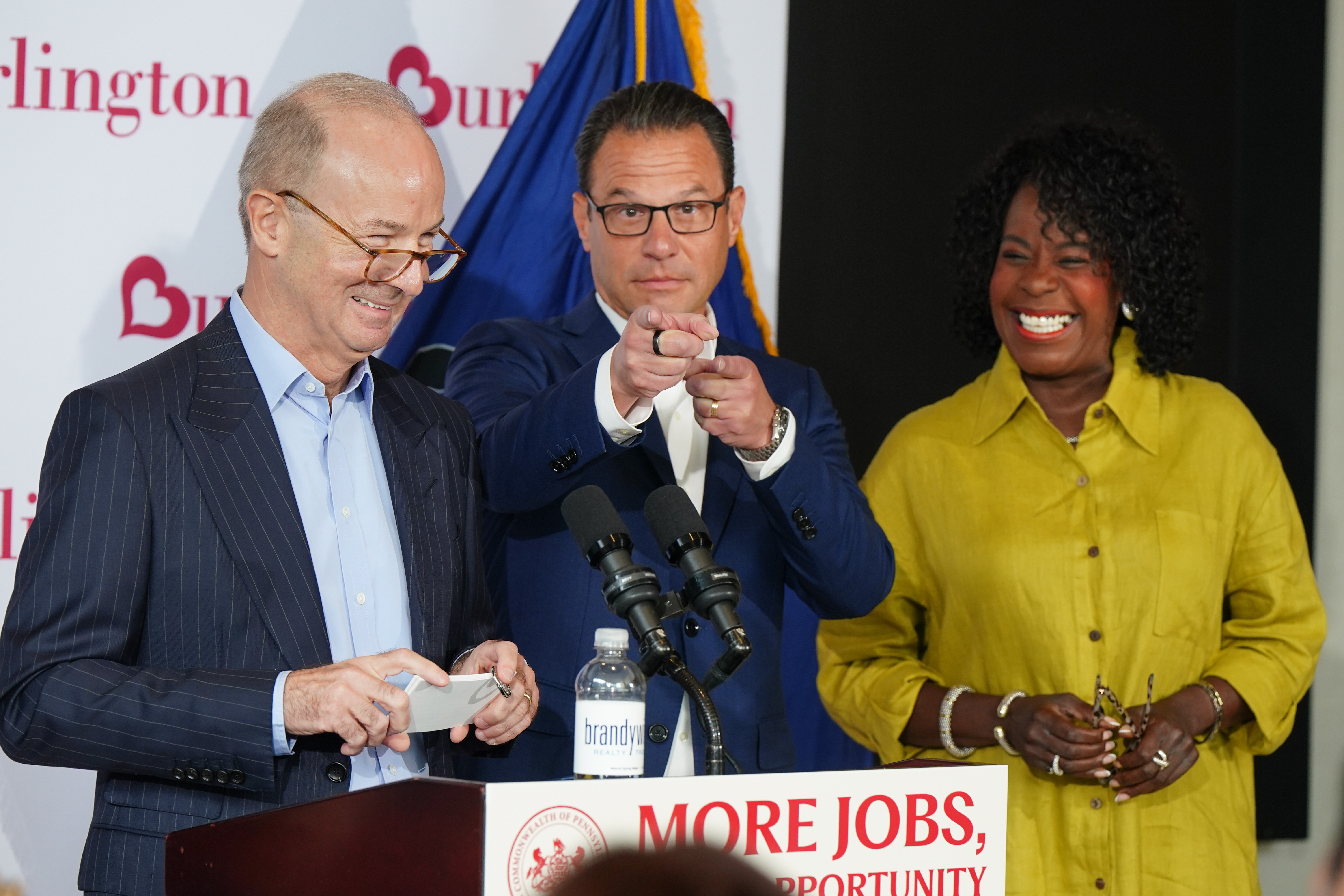
    Burlington CEO Michael O’Sullivan, Gov. Josh Shapiro, and Mayor Cherelle L. Parker announce the retailer’s forthcoming move to Philadelphia.Jessica Griffin / Staff Photographer

    “It’s going to put West Philly and our growing downtown district on the map as a premier spot for some of the largest companies in the world,” said the governor, who announced the news Thursday alongside Mayor Cherelle L. Parker, Burlington CEO Michael O’Sullivan, Brandywine Realty Trust CEO Jerry Sweeney, and other state and local officials.

    Burlington will join Comcast and Aramark, currently the only two Fortune 500 companies headquartered in Philadelphia.

    Philly’s gain comes at a loss for New Jersey: Burlington has been based in its namesake Burlington Township for more than half a century. It opened its first store there in 1972.

    New Jersey Gov. Mikie Sherrill’s office said in a statement that they were “disappointed by Burlington’s decision to relocate its headquarters.” But “the company will continue to maintain a significant presence and thousands of jobs here in New Jersey.”

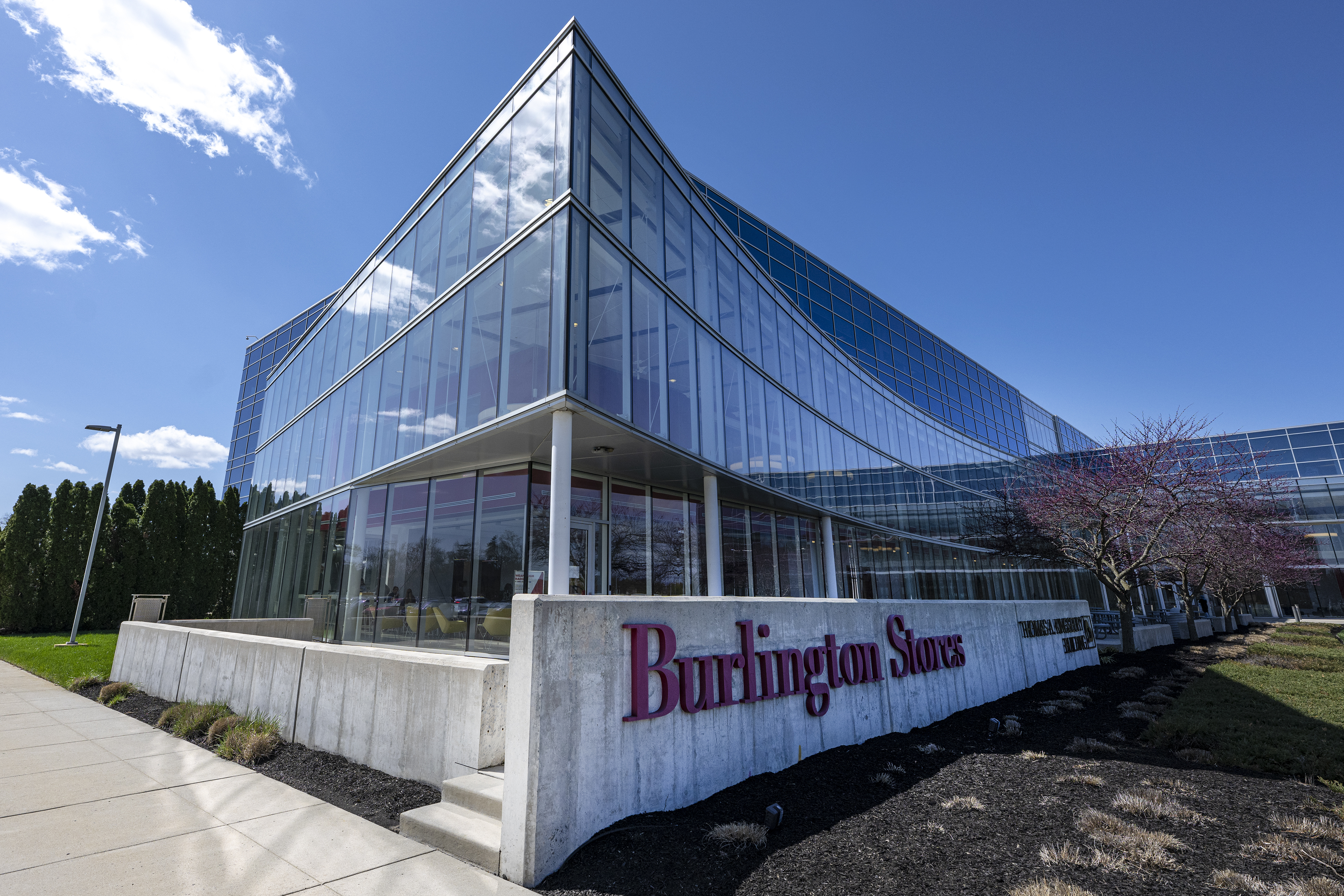
    Burlington Stores headquarters in Burlington, N.J., as seen in 2025.Jose F. Moreno / Staff Photographer

    About 4,700 people worked at Burlington’s corporate campus and warehouses in Burlington County as of last year, with 2,100 people employed in Philly-area stores. A company spokesperson said Thursday that the company employs 8,000 across New Jersey.

    As for its current headquarters on U.S. Route 130 North, Burlington intends to have it rezoned for warehouse space and turn some of the property into farmland. The company plans to keep its New Jersey warehouse and distribution centers in Burlington, Edgewater Park, Florence, and Logan Township.

    Burlington’s move is the latest win for Parker and Shapiro, who is up for reelection in November, as well as the governor’s Department of Community and Economic Development (DCED). Earlier this week, Shapiro’s administration announced $50 million in state grants and loans to help fund the yogurt company Chobani’s expansion into Allentown.

    “This is another day in what’s been just a monster week,” DCED Secretary Rick Siger said. “It’s another proof point of Pennsylvania’s strength as a business destination.”

    Burlington’s new home base will be part of Schuylkill Yards, a 14-acre project that Brandywine has undertaken with Drexel University. Its developers initially planned for the complex to include luxury housing, public space, and offices and labs.

    “What we’ve seen today is what can happen through a public-private partnership when leaders have a shared vision, a dedication to cause, and an unwavering commitment to the exciting future we can create by working together,” said Sweeney, Brandywine’s CEO, on Thursday.

    (function() { var l = function() { new pym.Parent( ‘burlington-move__graphic’, ‘https://media.inquirer.com/storage/inquirer/ai2html/burlington-move/index.html’); }; if(typeof(pym) === ‘undefined’) { var h = document.getElementsByTagName(‘head’)[0], s = document.createElement(‘script’); s.type = ‘text/javascript’; s.src = ‘https://pym.nprapps.org/pym.v1.min.js’; s.onload = l; h.appendChild(s); } else { l(); } })();

    Burlington was initially drawn to Philly because of the city’s history and culture, including its food scene, artistic institutions, and sports fandom, according to O’Sullivan. But the CEO said conversations with Shapiro and Parker “pushed this decision over the line.”

    “We found the vision that they laid out for the city and the state hugely compelling,” he said. “We were very impressed by their clear priorities and their focus on getting stuff done around economic development, education and training, public transportation, public safety, and fiscal responsibility.”

    Burlington has been expanding in recent years as more consumers, including higher-income shoppers, flock to discount retailers.

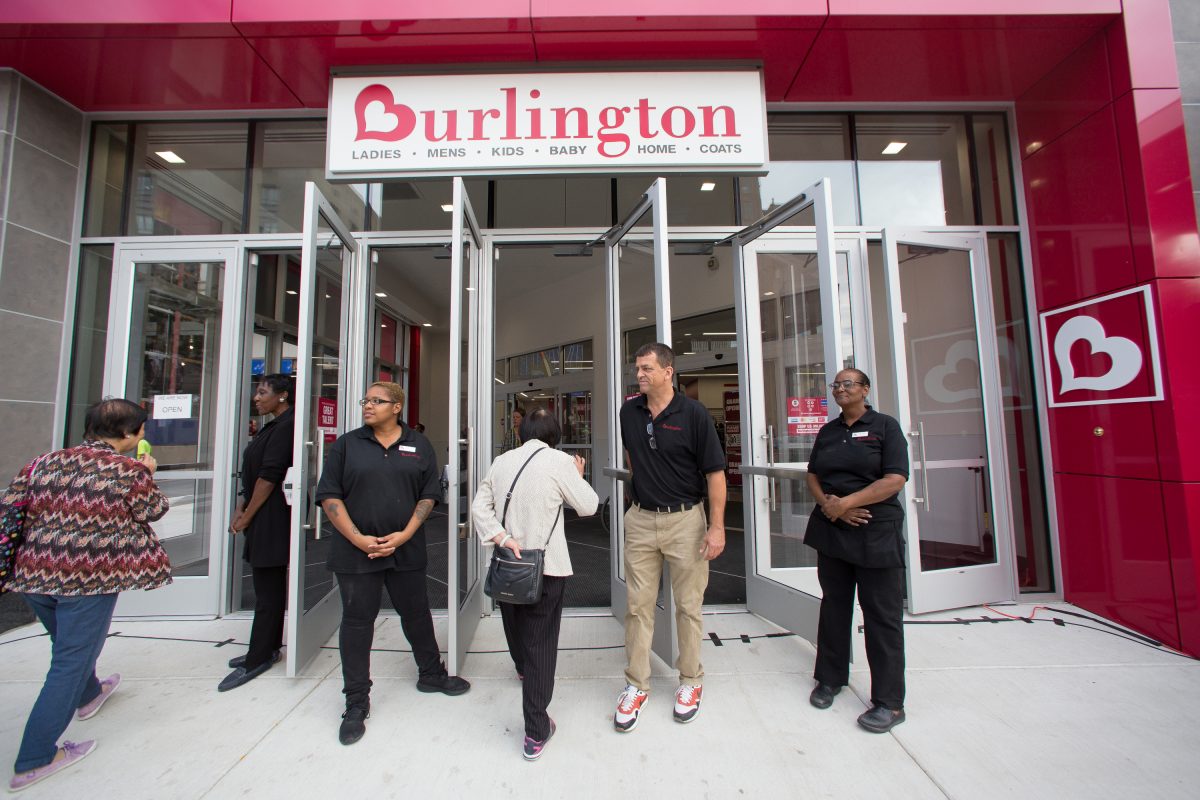
    Shoppers and employees at the Burlington Store at 833 Market St. in Philadelphia in 2018.Jessica Griffin / Staff Photographer

    As of August, the company operated 1,300 stores in 47 states, including eight in Philadelphia and dozens across the region. By the end of the year, the company plans to open another 115 stores and hire 5,000 more employees, O’Sullivan said Thursday.

    The chain’s growth has paid off, with a 21% increase in net income and a 9% jump in sales last year.

    In an earnings call, O’Sullivan attributed those numbers to the company’s tariff response, which included inventory reductions, price increases on certain items, and an aggressive cutting of expenses.

    Burlington has continued to report strong earnings in the first half of 2026, with a boost from $55 million in tariff refunds. O’Sullivan has said the company plans to put that money toward more markdowns for customers.

    Shapiro and Parker both said they had shopped at Burlington, with Shapiro patronizing the Jenkintown store and Parker frequenting the location at the former Cheltenham Mall in Wyncote.

    O’Sullivan said with a laugh: “The mayor and the governor got my full attention when they independently confirmed that they both exclusively wear clothes from Burlington.”