WASHINGTON — Pennsylvania is not participating in President Donald Trump’s Great American State Fair, which kicked off Wednesday, after state leaders failed to find a company willing to represent it at one of the hallmark 250th anniversary events in Washington that some say have become overly partisan.
Pennsylvania’s state government, like those in some other Democratic-led states, had already chosen to not sponsor a booth at the 16-day fair. Gov. Josh Shapiro’s office had still been trying to connect Freedom 250, the nonprofit behind the fair, with organizations and companies that could represent the state, according to federal and state sources familiar with the planning.
“Unfortunately, due to the high cost to taxpayers and not being able to secure PA businesses to sponsor the booth, Pennsylvania will not be a participant in the Great American State Fair,” the Pennsylvania Department of Economic and Community Development said in a statement.
The fair, being held at the National Mall to celebrate the nation’s 250th anniversary, was originally planned to feature a pavilion dedicated to each state and territory.
But as tourists visited Thursday on the fair’s first full day, there were no signs of the commonwealth where American democracy was born 250 years ago.
Almost every other state was showcased — with most sending state or local government staff and tourism boards to host educational or interactive exhibits.
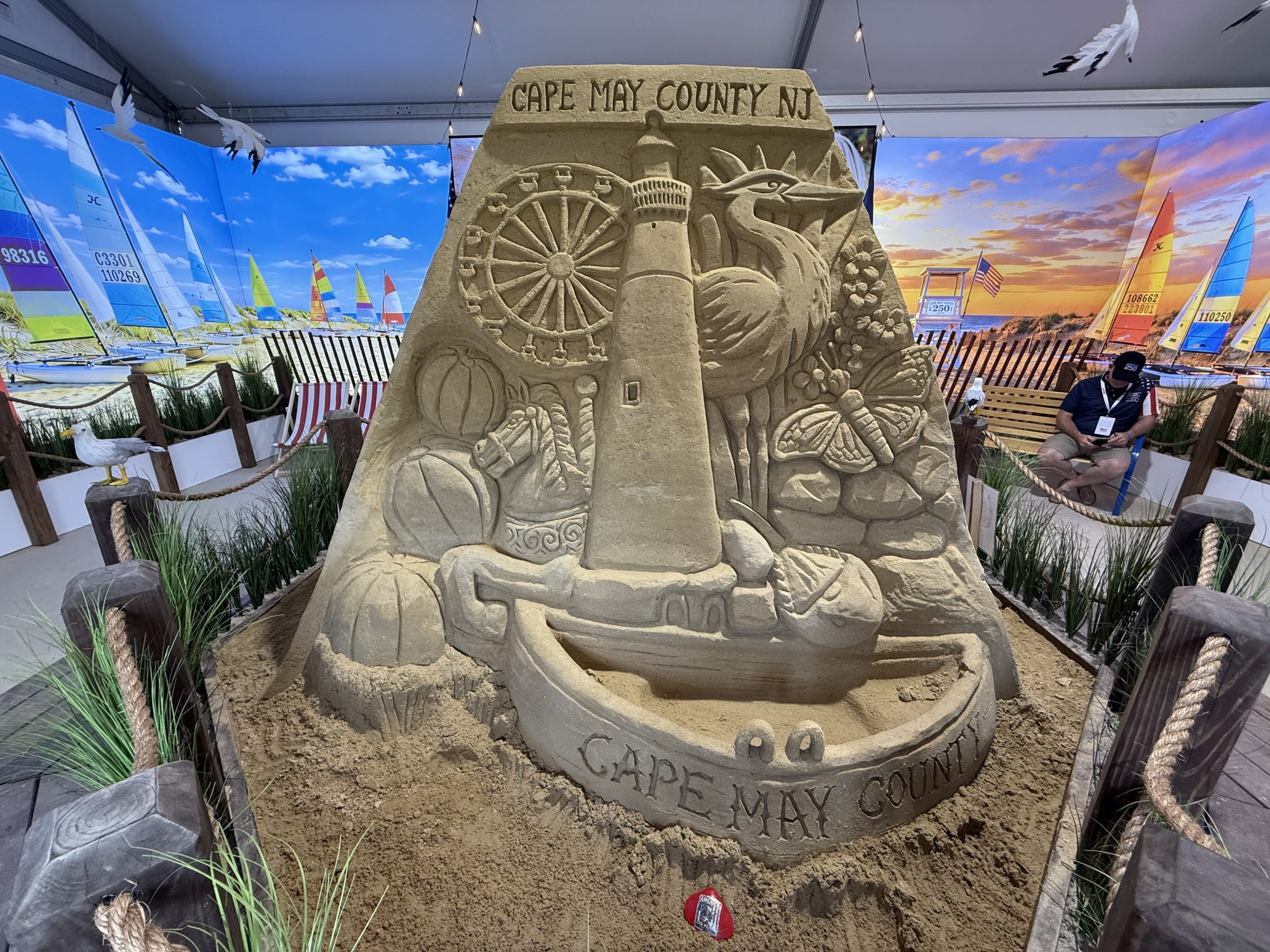
Cape May County, a Republican stronghold that is representing New Jersey after the state government declined to participate, featured an 8-ton sand sculpture that a sculptor from Wildwood took 4½ days to create.
An 8-ton sand sculpture promotes Cape May at New Jersey’s pavilion at the Great American State Fair, in Washington, D.C. The pavilion was sponsored by Cape May County, a Republican stronghold that chose to represent New Jersey after the state government declined to participate.Sam Janesch / Staff
Maryland’s state tourism department handed out information about its vacation hot spots. Staff in the Lone Star State’s pavilion greeted tourists with a cheerful “Welcome to Texas” and offered an interactive space flight exhibit, a replica of the Alamo, and an Austin City Limits music display.
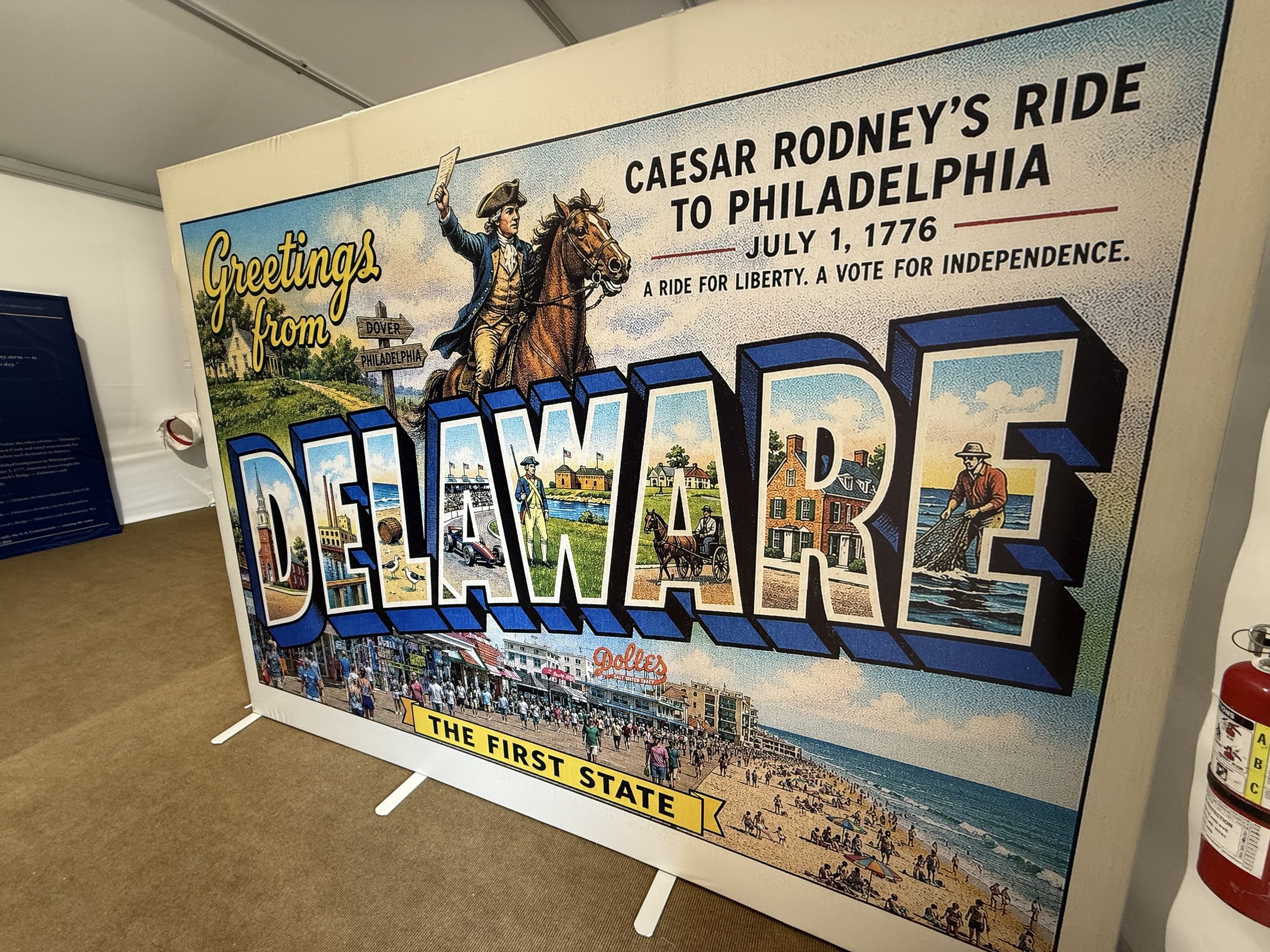
Delaware highlighted Founding Father Caesar Rodney’s ride to cast the decisive vote for independence in Philadelphia.
Delaware’s pavilion at The Great American State Fair highlights Caesar Rodney’s ride to cast the deciding vote for independence. Sam Janesch / Staff
Pennsylvania joined seven other Democratic-led states — Connecticut, Illinois, Maine, Massachusetts, North Carolina, Oregon, and Washington — in declining to participate.
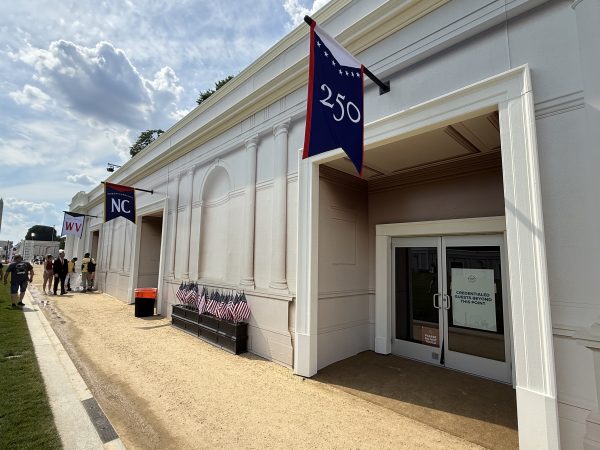
Some of those states had flags outside the pavilions where they would have been located. A few chairs and a sign with the state’s name were also inside.
But in the booth where, according to an interactive map, Pennsylvania’s location was supposed to be, a flag reading just “250″ was outside and the room was blocked off for the fair’s staff.
As recently as this month, Pennsylvania was still seeking companies to represent it, but Rosie Lapowsky, Shapiro’s spokesperson, confirmed Thursday that the state had given up that effort.
“None were interested,” Shapiro said to the New Republic in a story that first reported Pennsylvania’s lack of participation. “It reflects this sad state of affairs that we find ourselves in — that the president has politicized this to a degree that businesses don’t want to participate.”
Trump’s presence has increasingly hung over events tied to the 250th anniversary in the nation’s capital, with the president planning to hold a political rally on the Fourth of July as part of the long-planned fireworks celebrations. It has made the decision to participate by entertainers and states alike more politically fraught.
“Freedom 250 is a nonpartisan organization, full stop — and our track record of collaboration across red, blue, and purple states speaks for itself,” Freedom 250 spokesperson Rachel Reisner said in a statement earlier this month. She did not respond to a request for comment Thursday about Pennsylvania’s lack of involvement or Shapiro’s comments.
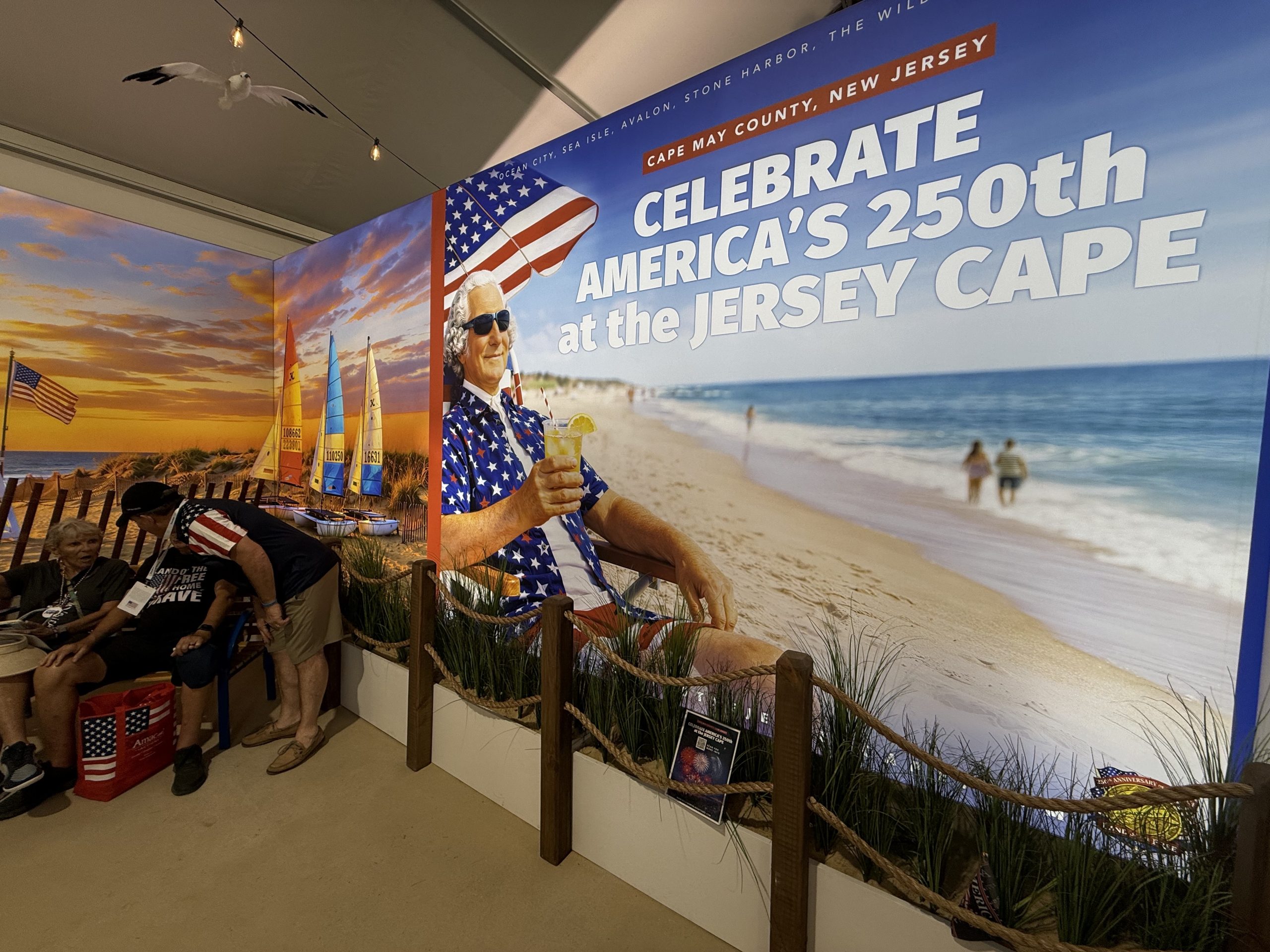
Cape May represents New Jersey at the Great American State Fair Thursday, June 25, 2026, in Washington, D.C.Sam Janesch / Staff
In New Jersey’s pavilion, visitors were met with not just the sand sculpture but also a new three-minute video highlighting Cape May County and a giant image of George Washington lounging at the beach with a cold drink.
County administrator Kevin Lare said it took a significant amount of work — and at least $150,000 from the county’s tourism budget — to pull it all together in recent weeks. It is worth it, he said, to highlight the county in the hopes of bolstering its largest economic engine — tourism.
“It’s a once-in-a-250-year event,” Lare said. “It’s not something the county will do every year at this level. It’s a celebration of our country, and our board of commissioners still believe we live in the greatest nation in the world. They’re happy to be a part of it.”
Staff writer Gillian McGoldrick contributed to this article.
Georgette Luna planned her Father’s Day weekend down to a T, splurging $3,000 on three tickets to the Friday World Cup match in Philadelphia. The Fishtown resident, her husband, and her father — who traveled from New York — would go to Reading Terminal Market, she thought, barhop to mingle with fans before the game, and then head to the stadium early to tailgate before seeing Brazil take on Haiti.
She had purchased the tickets on the third-party ticket resale platform StubHub last fall, but the seller she bought the tickets from never transferred them. She called StubHub frequently in the months, weeks, and finally days leading up to the match, wondering when the transfer would go through.
Every time, a StubHub representative said her “tickets would transfer to her on the day of the game,” Luna said. But by Friday, the group — who could not wait to see Brazil play, since their favored Chileans did not qualify for the World Cup — never made it into the stadium.
“We’re standing outside the stadium and obviously everybody is in full celebration, and here we are, supposed to be living this World Cup moment together for the first time, and there’s just this feeling of disappointment,” Luna said.
As the World Cup takes over the country, people across U.S. host cities have shared the same story: Fans in Atlanta, Boston, Dallas, Houston, New Jersey, Seattle, and, of course, Philadelphia arrived at stadiums hoping their tickets would be transferred to no avail, with most facing issues with StubHub. Other reports indicate fans are having similar issues on SeatGeek.
StubHub, for one, blames FIFA’s tech infrastructure and the rollout of a new mobile phone app weeks before the tournament for why tickets have not been transferring on time. FIFA has urged fans not to buy tickets on third-party platforms, saying it “may result in issues, including the inability to cancel or accept transfers,” as well as a higher risk of fake or invalid tickets.
But fans who lost out on a generational moment are more interested in how platforms like StubHub plan to resolve these issues.
Stephanie Fred of Bristol and her 9-year-old son, Levi, are heartbroken after their tickets to the Monday France vs. Iraq game never materialized, even as they stood outside the stadium. To make matters worse, Levi, a soccer player himself, had been trying to see his favorite player, French superstar Kylian Mbappé.
Mbappé scored two goals, tyingfor the second-most goals scored by a player in men’sWorld Cup history. Fred’s son could hear the cheers from outside the stadium. He broke down into tears that did not stop even later that night, she said.
During Philadelphia’s first World Cup game, between Ecuador and Ivory Coast, Jayden Quezada, 17, and his parents came to Philadelphia from Bensalem, hoping for an Ecuadorian victory. But they were turned away. The night before the game, the trio had spent $4,350 to get three tickets through the TickPick app after seeing a social media advertisement. By the time they arrived at the stadium, the tickets still had not been transferred to their FIFA app.
“They have been the biggest fans since before I was born, and they don’t get to go to Ecuador often because of work,” Quezada said. He said they would try to get a refund, but missing the game was “really sad because we were looking forward to feeling the Ecuadorian pride.”
For that game, a line of more than 50 fans waited for help with their failed tickets. Monica Rojas, 22, and her friend Jose Avil, both Spanish speakers, were confused about what to do after the ticket office explained the problem with their ticket in English. The pair had driven two hours from New York, after having bought tickets on StubHub for $2,000, including parking. After a FIFA volunteer interpreter intervened, the pair found out their tickets had been refunded.
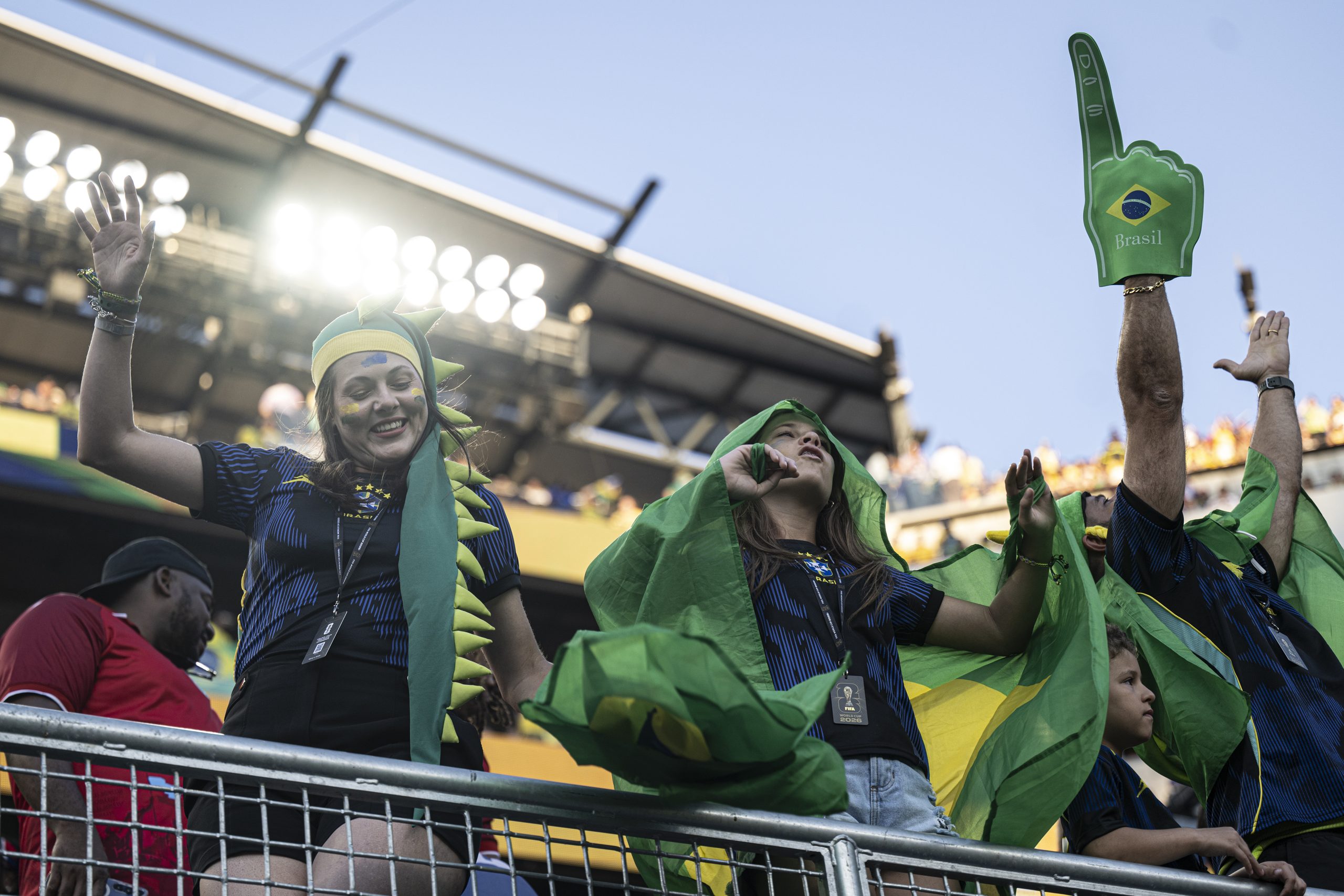
Brazilian fans cheers before a FIFA World Cup Group C soccer match between Brazil and Haiti at Lincoln Financial Field on Friday, June 19, 2026, in Philadelphia.Jose F. Moreno / Staff Photographer
StubHub blames FIFA
StubHub is aware that fans are not receiving the tickets that they bought, and a company representative blamed FIFA.
“The issues fans have experienced at this World Cup are largely driven by performance problems with the event organizer’s own ticketing infrastructure, which has created transfer failures across all resale platforms,” a StubHub spokesperson said.
StubHub said the launch of a new FIFA app right before the World Cup began has led to delays, failed transfers, and access issues that have affected all resale platforms, not just StubHub.
The ticket reseller also said sellers are required to fulfill their ticket orders or they face financial penalties and bans from the platform.
Bad actors on resale platforms can engage in a practice called “speculative ticketing,” where buyers will list a ticket that they do not yet own on StubHub and other platforms, in the hope that they will find a cheaper ticket later and recover profit, said Scott Friedman, owner of the Ticket Talk Network podcast and an industry veteran who is helping to sue StubHub on behalf of 160 buyers and sellers who said company practices harmed them.
StubHub does offer a “FanProtect Guarantee‚” a promise the company will find replacement tickets or refund the order when a ticket does not transfer. But the policy repeatedly states that resolving these issues falls under StubHub’s “sole discretion.”
StubHub ticket protection measures can look like replacement tickets, a full refund, or a voucher worth 120% of the value of the tickets. During the World Cup, the company said, it is prioritizing replacement tickets so fans can get to a match.
France forward Kylian Mbappé sprints for a pass against Iraq during the first half of a FIFA World Cup Group I soccer match Monday, June 22, 2026, at Lincoln Financial Field in Philadelphia.Jose F. Moreno / Staff Photographer
Refunds can’t replace a once-in-a-lifetime moment
All of this leads to confusion, and eventually disappointment, when the tickets never show, Luna said. As she and her family, hanging their heads low, took a depressing train ride home from the stadium last week, Luna continued to try to get answers.
Finally, on Monday, she said, she received word StubHub would refund her June 19 match tickets and gift her similar tickets to the July 4 match in Philadelphia, which she said she would accept. But, later, Luna was told she would only receive replacement tickets.
“Is this a wonderful outcome? For sure, but my father and I would have been happy with the perfect weekend that we had planned for ourselves as it was,” Luna said. “While they’re doing right by us, there are so many people who aren’t getting this result.”
Fred’s family got word Tuesday that StubHub would provide them with tickets to France vs. Norway in Boston on Friday. Fred does not mind the drive as long as Levi can achieve his dream of seeing Mbappé play.
“We don’t get this type of opportunity from where we come from,” Fred said. “Being able to provide a World Cup experience for our kids just means the world to us, and having that be ripped away from us, it was just so hard to process.”
A former Delaware County woman tied to an extremist group known as the Zizians has been charged with killing her parents, execution-style, inside their Chester Heights home in December 2022.
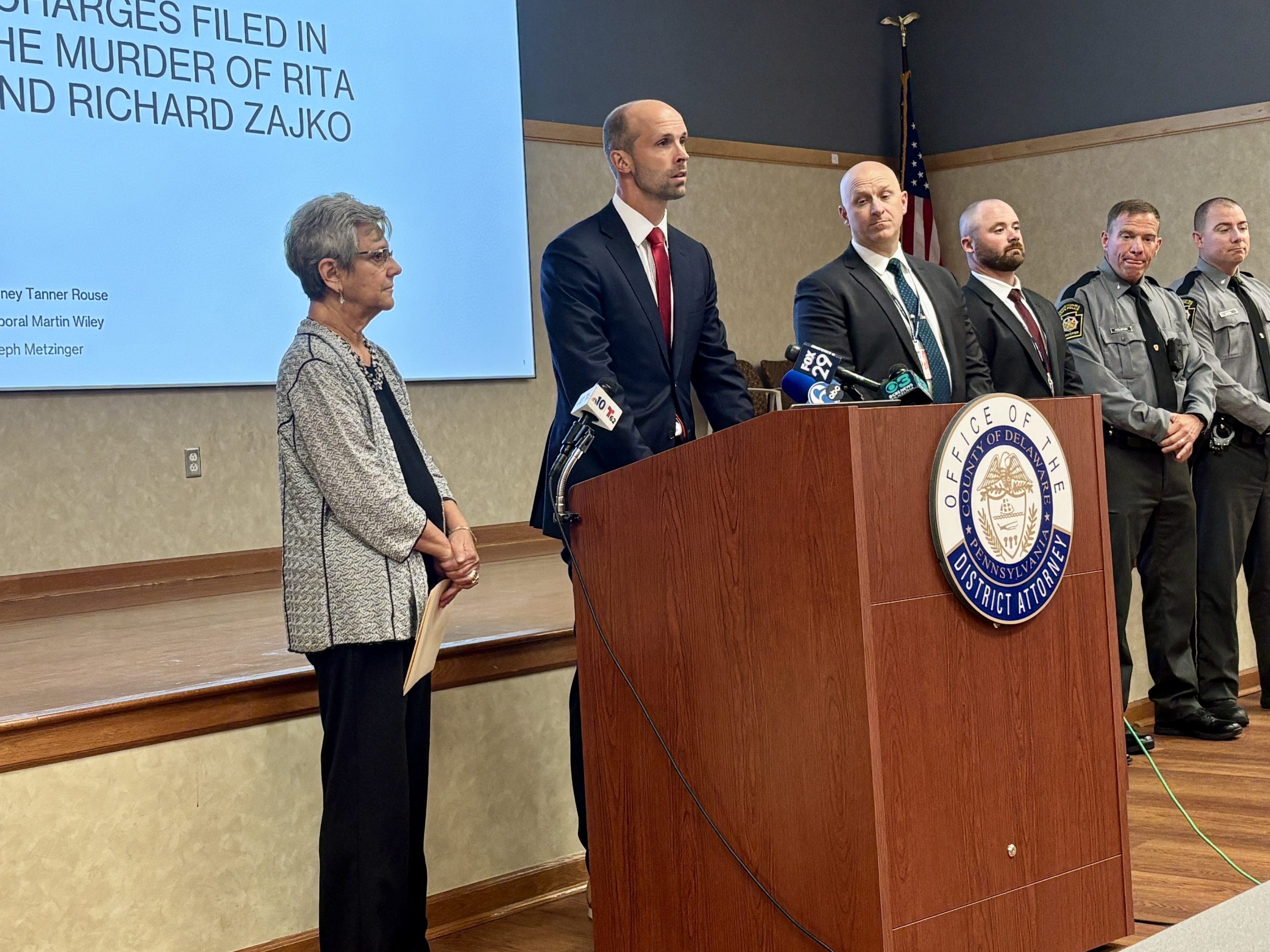
Michelle Zajko, 33, has long been a person of interest in the slayings of her parents, Richard and Rita Zajko. After years of investigation, Delaware County District Attorney Tanner Rouse filed first-degree murder charges Wednesday and accused her of shooting the couple on her 30th birthday.
New information obtained in the last few months, including ballistics evidence and an extensive download of text messages and other data from Zajko’s cell phone, allowed prosecutors to piece together the case against her, according to the affidavit of probable cause for her arrest.
Rouse, in announcing the charges Wednesday, said he believes that while Zajko planned and carried out the killings, she likely did not act alone. The investigation is continuing, he said.
Building the case against her, he said, took years of skilled and disciplined police work as investigators interviewed dozens of people and connected threads of information in several states.
“I want to emphasize — I cannot stress this enough — this is just about as exhaustive of an investigation that I’ve been a part of in my 16 years as an attorney,” Rouse said. “We don’t have a smoking gun. It is piece after piece after piece of evidence that has been collected painstakingly over many years.”
Investigators say Zajko, an alumna of Cardinal O’Hara High School and Cabrini University, drove to her childhood home on Highland Circle in Chester Heights with a plan to kill her parents. She shot them both in the head, leaving their bodies for police to find days later, after a concerned friend reported they had missed an appointment to care for Rita Zajko’s elderly mother.
The motive for the killings remains unclear.
Rita and Richard Zajko, seen here in a 1993 family portrait.Courtesy Rosanne Zajko
Zajko told friends she had a difficult relationship with her mother, and accused her of years of emotional abuse. In online writings, Zajko said her mother criticized her constantly, arguing with her over religion and her desire to be vegan.
That strained relationship was detailed in the final text messages Zajko sent her father days before authorities say she killed him, according to the affidavit.
“Every time I interact with mom in a nonsuperficial way she spends the time insulting a life she knows nothing about, makes assumptions that imdoing nothing, etc,” Zajko wrote, the document said. “Itsuncalled for. I don’t want to speak to someone who treats me like that.”
But Rita Zajko, just nine hours before she was killed, attempted to reconcile with her daughter, sending her a happy birthday text and apologizing for whatever she had done to alienate her, according to the affidavit.
On Wednesday, Rosanne Zajko, the wife of Richard Zajko’s brother, stood alongside the prosecutor as he announced the charges against her niece. Losing her brother- and sister-in-law, she said, was “like the lights going out of our lives.”
“We don’t know yet if the trial will begin to heal the void in our lives and the ache in our hearts,” she said. “But we do know that the detectives, the DA’s office, and we, the family, have done everything possible to achieve justice for Rick and Rita.”
Delaware County District Attorney Tanner Rouse announces murder charges Wednesday against Michelle Zajko. Zajko’s aunt, Rosanne (left) spoke briefly about the impact the killings has had on her family.Vinny Vella / Staff
Michelle Zajko, for her part, has said she had been unjustly accused.
In a sprawling, handwritten letter sent to The Inquirer and other news outlets last year, Zajko insisted she did not kill her parents. Rosanne Zajko said Michelle Zajko told her at the couple’s funeral in January 2023 that she had not killed her parents, but said she knew who did. She would not name the killer, her aunt said.
“I’m viscerally reminded of the witch hunts, of the Satanic Panic, of the mob that burned Joan of Arc at the stake, and of the mob that ripped apart Hippolyta,” Michelle Zajko said in the letter, written in a jail cell in Maryland, where she is awaiting trial on trespassing, gun, and drug charges. “The papers are lying. … I did not murder my parents.”
Sources familiar with the investigation say it is possible that, as an only child, Zajko may have expected to inherit her parents’ substantial estate. The value of the estate has not been made public, but the sources, who spoke on the condition of anonymity to discuss an ongoing case, say it is worth several million dollars.
A person close to Zajko said she had contacted an attorney in the weeks after her parents were killed to discuss how she could access her parents’ estate.
Zajko remains in custody in western Maryland with two other members of the Zizians, including the cultlike group’s leader, Jack “Ziz” LaSota, who identifies as female.
Zajko is also charged with illegally supplying the guns used by other members of the Zizians in a fatal shootout with a U.S. Border Patrol agent weeks before her arrest in Maryland.
In her letter from jail, Zajko said she and her friends were innocent of all criminal charges they face. She said they were being targeted by other members of the Bay Area tech community seeking to discredit them.
Members of the Zizians — a group whose philosophy encourages making decisions through reason and logic, rather than emotion — are connected to six killings across the country, authorities say. Prosecutors have denounced the group as extremists and accused them of using violence when their worldview is challenged.
For years, the deaths of Richard and Rita Zajko remained the only ones tied to the Zizians that remained unsolved.
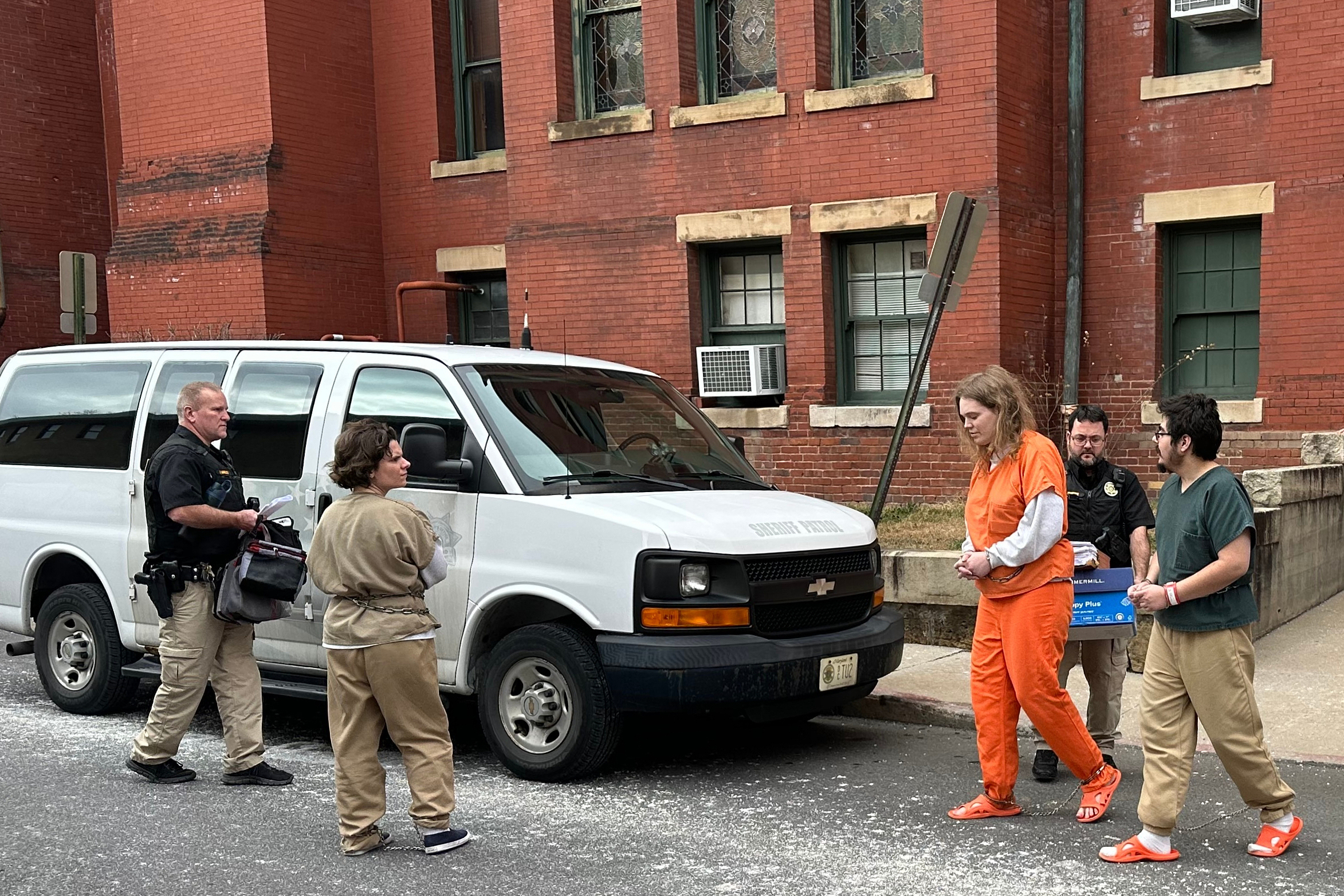
Deputies escort Michelle Zajko, left, Daniel Blank, right, and Jack LaSota, in orange, from the Allegany County Courthouse in Cumberland, Md. in January.Mark Scolforo
Almost immediately after the killings, investigators in Delaware County learned that Zajko had been at her parents’ home on the night they were shot — a neighbor’s Ring security camera recorded someone screaming “Mom!” shortly before police believe the fatal shots were fired.
The couple were found in their daughter’s childhood bedroom, which had remained virtually unchanged since she had moved out of the house decades earlier, the affidavit said.
The gun used to kill the couple was the same caliber as, and a similar model to, one Zajko had purchased in Vermont weeks earlier, investigators said. She was labeled a person of interest in the case as a consequence. But authorities said there was not enough evidence to prove she had committed the crime.
That changed this week, prosecutors said.
When investigators spoke with Zajko at her home in Vermont after her parents’ killings, she showed them a different type of ammunition from the kind found at the Chester Heights home, the affidavit said. However, while serving a subsequent search warrant there, detectives found cartridges that were an exact match — and that they said Zajko had hidden from them.
Initially, forensic investigators said they were unable to determine if the shell casings found near Rita and Richard Zajko’s bodies had been fired from their daughter’s gun. But late last fall, other casings found near trees behind Michelle Zajko’s home in Vermont, which she had used for target practice, had been fired by the same gun that killed her parents, authorities said.
Another crucial piece of evidence, investigators said, was a list found on Zajko’s cell phone titled “There are so many things we f— up” that detailed missteps, including not taking shell casings from the homicide scene, according to the affidavit.
The murder charges mark an unexpected turn for Zajko, whom friends and loved ones described as an ambitious, accomplished young woman with a keen interest in science. In her early 20s, Zajko pursued a career in bioinformatics and conducted research at Children’s Hospital of Philadelphia with colleagues from the University of Pennsylvania.
At the same time, Zajko became immersed in the Zizianmovement through online message boards, and met some of the group’s members while interning with NASA in California.
The Chester Heights, Delaware County home where Richard and Rita Zajko were murdered on New Years Eve 2022.Jesse Bunch / Staff
In 2021, partly in reaction to the COVID-19 pandemic, Zajko abandoned her scientific research and moved to rural Vermont, where she lived with other Zizians and grew close to LaSota, the group’s leader.
Zajko, in her prison letter, said that she rejects the characterization of LaSota as her “leader” and that the group does not refer to themselves as Zizians. Instead, she said that she and LaSota are close friends, and that she loves LaSota “infinitely more than I could ever express.”
Investigators now believe that Zajko, LaSota, and Daniel Blank, another Zizian, traveled to Chester Heights together on the day Zajko’s parents were killed, and intentionally left their cell phones in Vermont to prevent authorities from tracking their movements, according to the affidavit.
The three made that trip a second time weeks later, in January 2023, so Zajko could attend her parents’ funeral in Marple Township. Pennsylvania State Police troopers investigating her parents’ killings briefly detained Zajko and Blank at a hotel where they were staying in Chester.
LaSota, however, refused to answer the troopers’ questions, was charged with obstruction of justice, and remained in custody in Delaware County for months before being released on unsecured bail.
LaSota did not show up for subsequent hearings, and a bench warrant for her arrest was still active when Maryland State Police took her into custody last year alongside Zajko and Blank.
As Zajko awaits trial in both cases, Rouse, the prosecutor, said her crimes “go beyond comprehension and circumstance.”
“This is a child who killed her parents, who walked into her childhood home, took her mother to her childhood playroom, and executed her,” Rouse said. “There aren’t words or emotions that can capture it.”
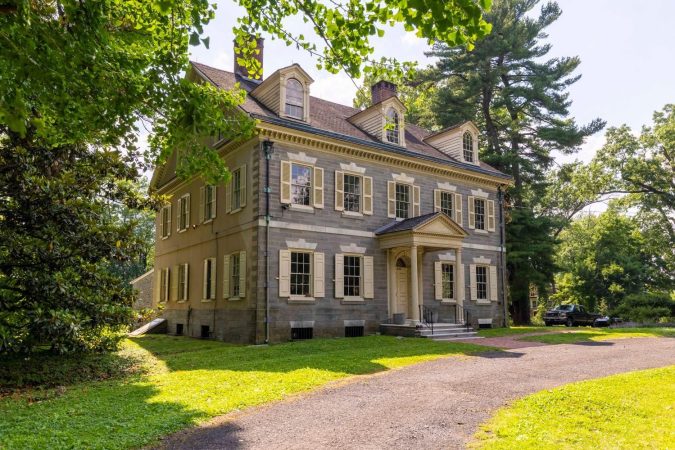
Built at the end of the 18th century on the site of a major Revolutionary War battle in Philadelphia, Upsala mansion was listed on the National Register of Historic Places in 1972.
The early Federal-style estate nestled on the border of Germantown and Mount Airy is listed at $995,000 and comes with nine bedrooms, 10 fireplaces, 15 parking spaces, and a 70-page easement agreement with a peculiar caveat — once a year, the owner must permit “a re-enactment of portions of the Battle of Germantown” on their front lawn.
“The battle reenactment is actually written into the deed. That is something any future owner of the property would be obligated to allow to happen,” said current owner Alex Aberle, who’s also a real estate agent and the property’s listing agent.
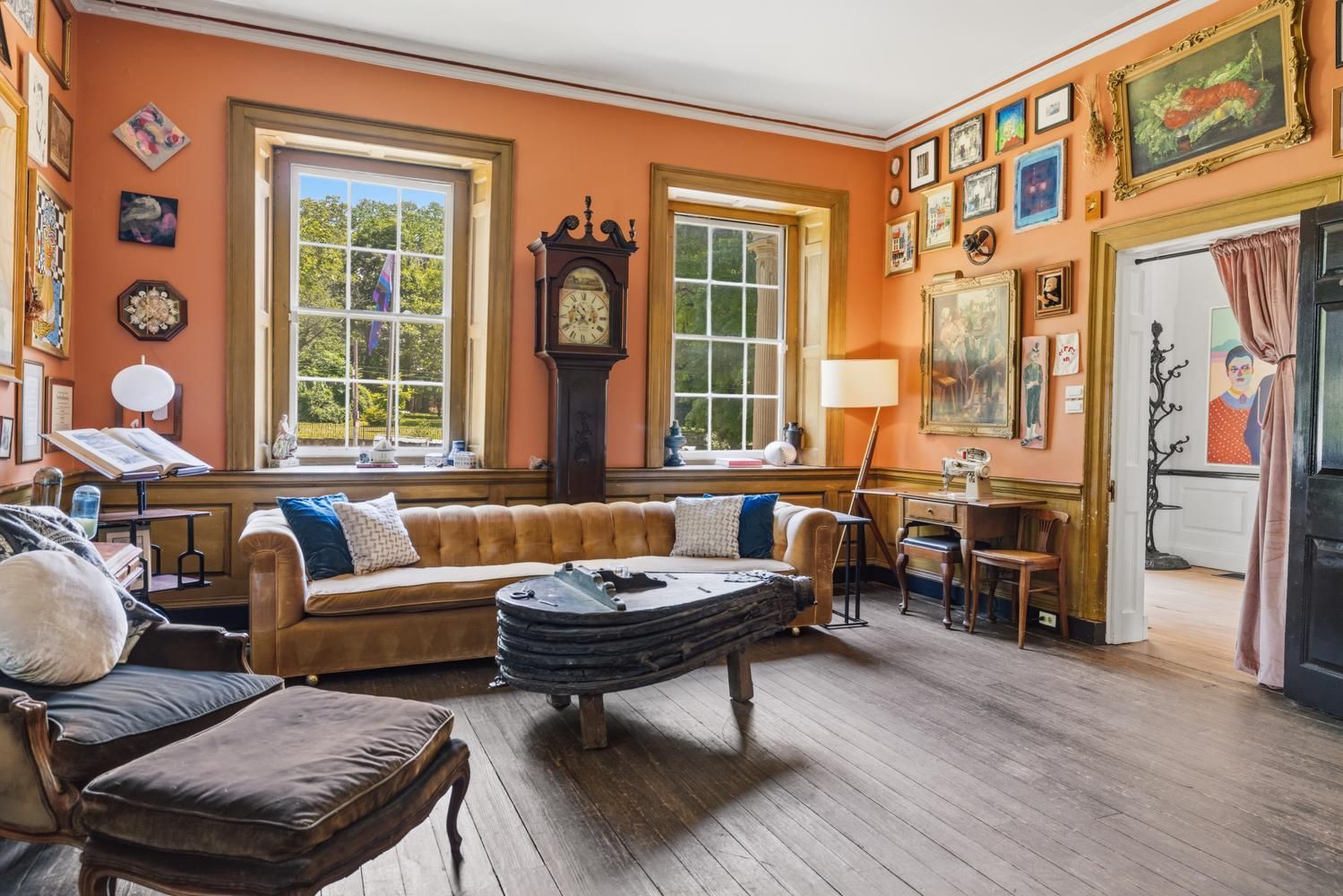
A living room in Upsala mansion, an early Federal-style building on the 6400 block of Germantown Avenue.Courtesy of Alex Aberle
The easement was put in place by the National Trust for Historic Preservation when Aberle and his ex purchased the mansion on the 6400 block of Germantown Avenue in 2017 and became Upsala’s first private owners since it was converted into a historic house museum in the 1940s.
As part of the Revolutionary Germantown Festival — which commemorates the 1777 Battle of Germantown — battle reenactments were held for decades on the lawns of Upsala and Cliveden, a National Historic Trust site and mansion across the street from Upsala.
Though the mansion was built in 1798, two decades after the battle that sought to liberate Philadelphia from British control, the property served as the staging ground for the Continental Army during the Revolutionary War fight.
Aberle said he loved having the reenactments in his front yard, but Cliveden and the sites of Historic Germantown, which host the festival, haven’t held a reenactment there since 2019.
Carolyn Wallace, education director at Cliveden, said prior to the pandemic, organizers were reevaluating tactical demonstrations as part of the October festival in light of ongoing gun violence in the U.S. In 2020, organizers underwent a community engagement project called “Considering Re-enactments,” which sought to answer the question: “Is this still the best way to tell stories of the American Revolution?”
“We found it was a mixed bag so we shifted more towards living history,” she said. “We still have military personnel (reenactors), but we have not done tactical demonstrations in a number of years, though I can’t say we won’t do them again.”
And if they do, the easement still stands.
“That runs with the land — for me and for everyone else for years to come, and hopefully, forever,” Aberle said.
Built for John Johnson III, a fourth-generation descendent of the Janesen family, who were early Germantown settlers, Upsala stayed in the family until the 1940s, when it was seized due to financial issues.
Preservationists worked to save the property from demolition and from the mid-1940s until the early 2000s, it was a historic house museum before it was closed due to dwindling attendance and revenue.
The National Trust for Historic Preservation became Upsala’s owner in 2005 and Cliveden Inc., a co-stewardship organization of the National Trust, became its steward. After years of public engagement to find a new steward or use for Upsala, they put the 2.45-acre property up for sale in 2016.
Aberle and his ex, Violette Levy, beat out eight other offers by purchasing it for $550,000 cash — $51,000 more than the asking price.
They spent years doing extensive renovations like putting in central air, replacing the boiler, fixing the plumbing, and decorating.
“When we bought it, the walls were mostly varying shades of yellow and cream and now there’s no yellow left, I’m happy to report,” Aberle said.
They documented their journey on Instagram, where followers left comments about the memories they’d made at Upsala — from attending weddings there to attending a concert by the Hooters in the 1980s organized by one of the estate’s caretakers.
“I loved hearing all those stories because that’s the kind of thing you don’t see in books,” Aberle said. “It’s super special because it only comes organically.”
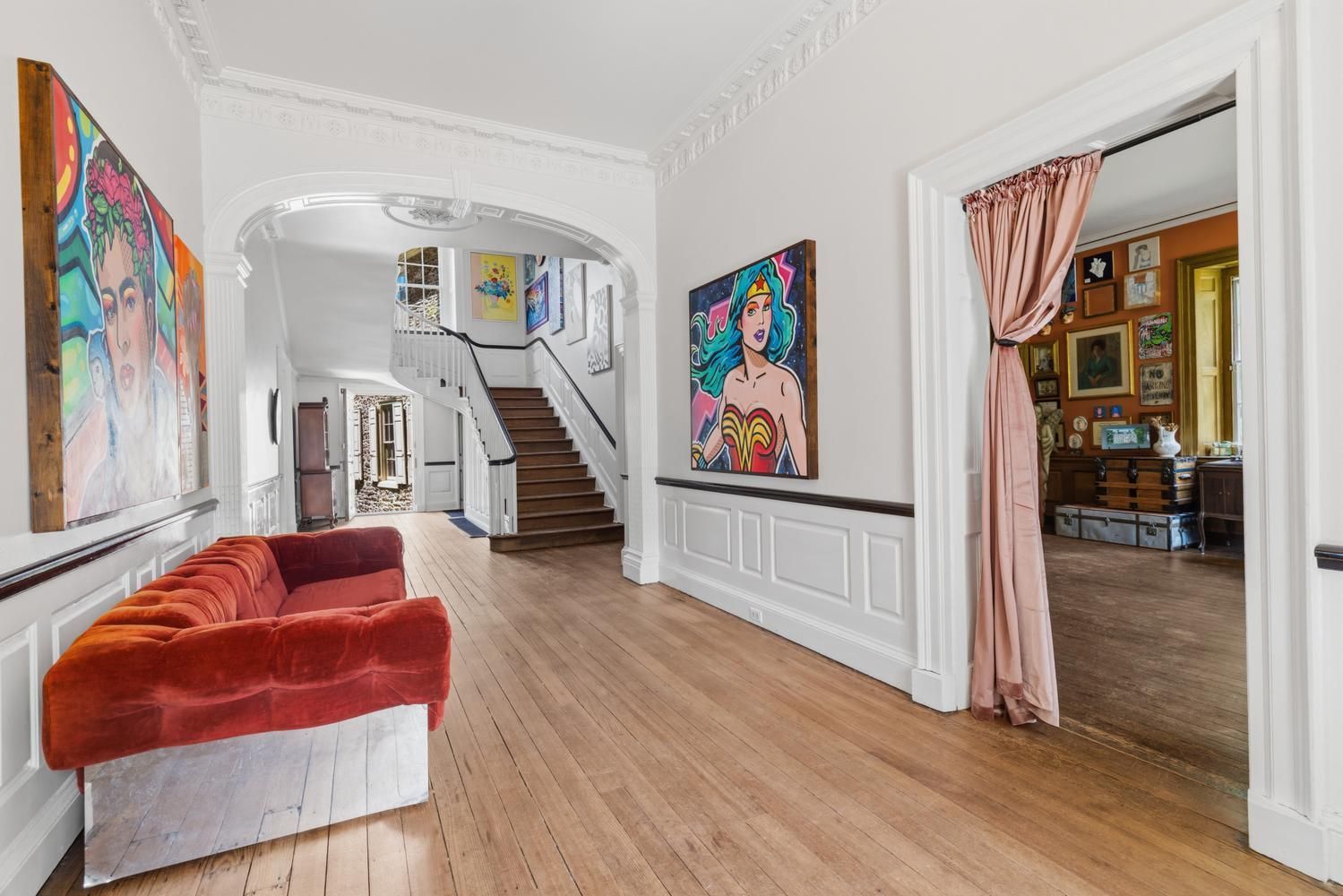
View of a hallway inside of Upsala mansion.Courtesy of Alex Aberle
Aberle said he never had any intention of selling Upsala, but when his relationship with Levy ended and he became the sole owner of the home, it didn’t “really make sense to stay there as just one.”
“It’s definitely a family house and that was always sort of my dream for the house,” he said.
Aberle estimated that a little more than half of the mansion has been renovated. The back part of the house, where he’d planned to fix up the kitchen and put in a mother-in-law suite, is still in need of work, he said.
“My relationship didn’t last quite as long as my project did so the space is ready for someone else to come in and finish it for their family,” he said.
But another aspect of Aberle’s life did blossom because of Upsala. When he and his ex bought the mansion, it was listed by Louise D’Alessandro, a founding partner of Elfant Wissahickon Realtors. They invited her and others from the company to the first reenactment on Upsala’s front lawn after they took ownership of the property and within a year, Aberle left the real estate company where he worked and went to work for Elfant Wissahickon, where he remains.
Aberle said he’s fallen in love with the Germantown and Mount Airy neighborhoods and is only moving just around the corner from Upsala, so he plans to make himself available for any questions from future potential owners.
“The easement is really not as scary as the 70-page document might lead you to believe. I do mean it from the bottom of my heart. I spent nine years dealing with this document and working with this trust … and my plan is to make myself completely available to facilitate transition,” he said.
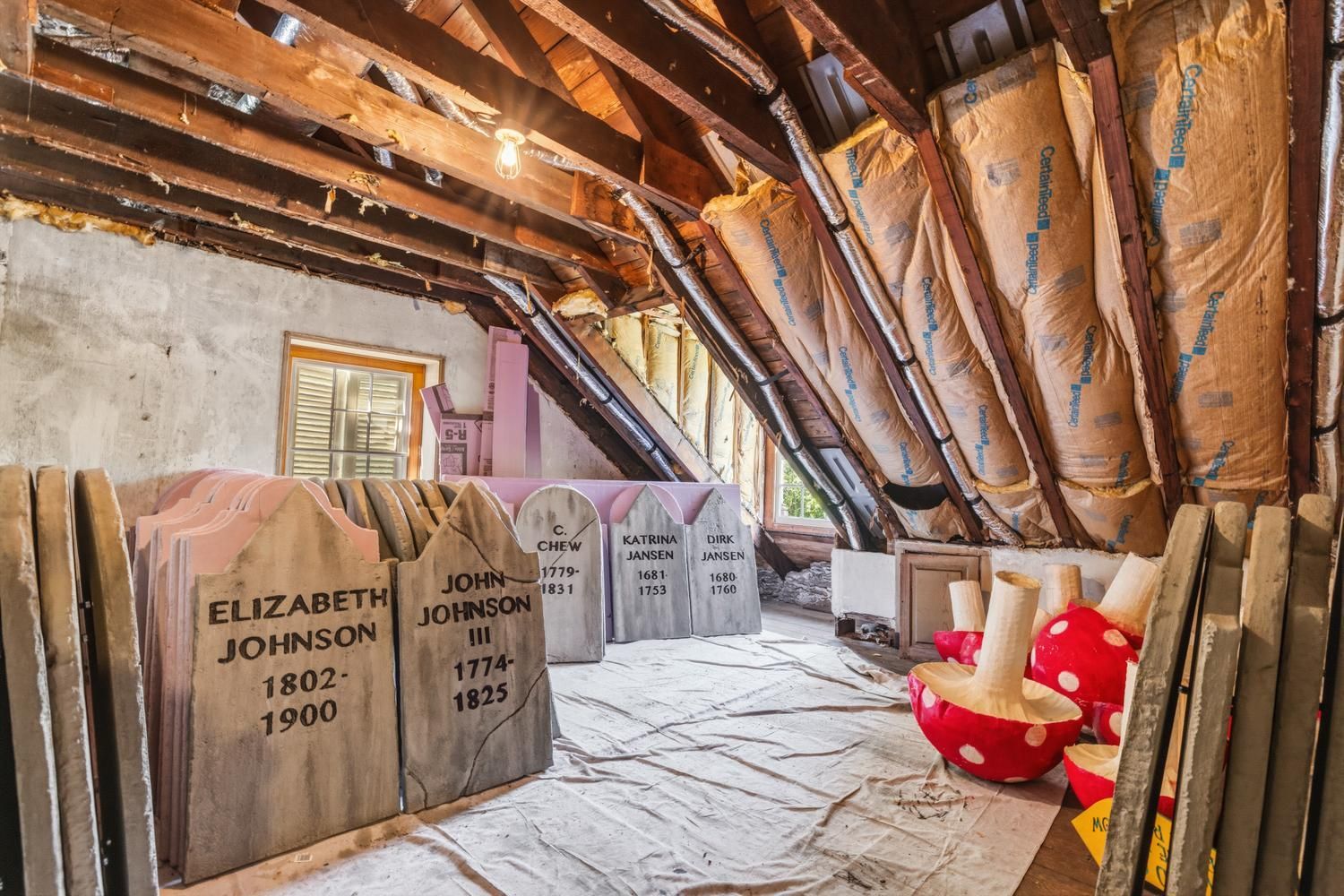
Halloween decorations, including tombstones that have the names and dates of people who once lived in or near Upsala, are stored in the attic of the property and will be sold with it.Courtesy of Alex Aberle
And if you’re wondering about the listing photo that shows an attic room filled with tombstones and giant mushrooms, not to worry, those are Halloween decorations. The mushrooms are from an Alice and Wonderland-themed Halloween they did one year and the gravestones have historically-accurate names and dates on them of people who lived and died in and around Upsala.
“We set those up for a few years and added more folks each year,” Aberle said of the tombstones. “I’m leaving them in hopes someone else will carry on the tradition.”
He’s excited to see who will become Upsala’s next owner and what they will do with the historic property.
“I think the most important thing, for me, is it’s someone who will love this place as much as I do and have the desire to take care of it and love it,” Aberle said. “That’s what it deserves.”
For more information on Upsala, including the entire easement agreement, visit upsalamansion.com.
President Donald Trump’s administration sued Philadelphia and some of its top officials Thursday over a new ordinance that bars law enforcement officers from concealing their identities and effectively bans federal immigration agents from wearing masks.
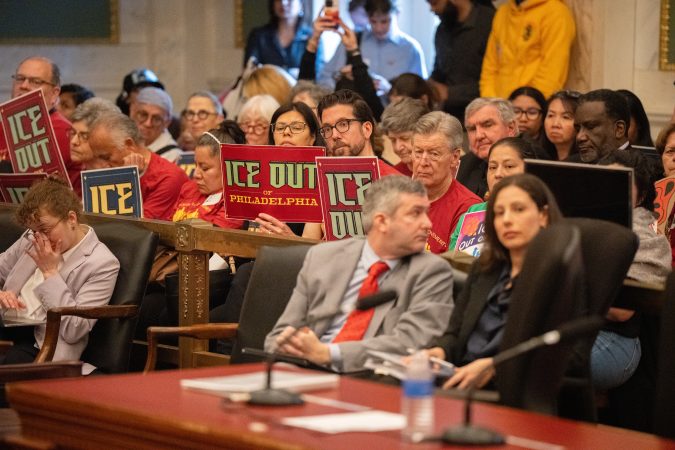
The law, part of City Council’s recently adopted “ICE Out” package of legislation imposing some of the nation’s toughest local restrictions on immigration agents, is “blatantly unconstitutional,” the lawsuit said.
“Such an ordinance also undermines the principles of federalism that underlie our entire constitutional order by seeking to prevent effective federal law enforcement within Philadelphia,” according to the complaint.
The ordinance makes it a crime for any law enforcement officer, including Immigration and Customs Enforcement agents, to wear face coverings or conceal personal identifiers like badges and nameplates while carrying out their official duties in the city, and it requires officers to identify themselves. It also prohibits the use of unmarked vehicles.
The bill includes exceptions allowing officers to wear masks in certain circumstances, such as medical emergencies or SWAT operations.
An officerwho violates the ordinance could be prosecuted, and risks up to 90 days in jail plus a fine.
The suit, filed in the Eastern District of Pennsylvania, names as defendants the city, Mayor Cherelle L. Parker, District Attorney Larry Krasner, and City Solicitor Renee Garcia. It asks a federal judge to find the bills unconstitutional, warning that federal agents could suffer irreparable harm if the policy remains in place.
“Protecting officers’ personal identities is particularly important during high-risk enforcement operations involving individuals with violent criminal history, gang affiliations, transnational criminal organizations, and known or suspected terrorists,” the suit says.
The lawsuit marks the Trump administration’s most significant action targeting Philadelphia’s immigrant-friendly policies to date.
“Today we regrettably had to sue the birthplace of this great Nation,” Associate Attorney General Stanley Woodward said in a statement. “But we will not sit by while Philadelphia flagrantly violates our Constitution, seeking to criminally punish our Nation’s law enforcement heroes merely for doing their job.”
Philadelphia has long been known as a sanctuary city primarily because it does not comply with ICE-issued detainers, in which federal agents ask local jails to facilitate the arrest of undocumented immigrants in their custody.
But Parker has largely avoided direct confrontation with the White House over the issue, a reversal from the combative stance of her predecessor, former Mayor Jim Kenney.
Parker’s supporters credit her with careful, crafty management of the city’s relationship with Trump, noting Philadelphia has been spared from the surges of federal agents the president has sent to other cities. But immigration advocates say Parker has backed away from a fight at a time when strong action is most needed.
The tension surfaced when Parker decided to let the mask bill became law without her signature, after Garcia warned the mayor that the provisions might not be legally enforceable.
Council members, however, wanted to take a more proactive stance against Trump’s nationwide deportation campaign. And they seem to have gotten his attention.
Councilmember Kendra Brooks, who coauthored the “ICE Out” package, said she “will not back down from this fight.”
“Philadelphia doesn’t like bullies. And we certainly don’t like masked PPD officers or ICE agents terrorizing our neighbors,” Brooks said in a statement. “The people of this city expected our leaders to fight back against Trump’s invasion. That’s what we did when we passed ICE Out.”
Brooks noted that the lawsuit cites the Parker administration’s publicly aired concerns about the bill, and said other jurisdictions targeted by Trump after they passed legislation restraining ICE have not had to deal with that dynamic.
“Other lawsuits aren’t dealing with the City’s own words about the laws being used against them,” Brooks said.
The Parker administration declined to comment.
The Pennsylvania Immigration Coalition condemned the lawsuit as a political effort to undermine local policies that keep families safe, strengthen public trust, and ensure city resources serve Philadelphians.
“Once again the Trump administration is using the courts to wage a political campaign against immigrant communities, instead of addressing the real needs of our country,” coalition executive director Jasmine Rivera said in a statement. “Pennsylvanians have been clear, they do not want more immigration enforcement and detention centers, they want affordable education, healthcare, and housing.”
Councilmember Rue Landau, the legislation’s other coauthor, criticized Trump for “targeting Philadelphia because our city dared to stand up and say that masked federal agents should not be able to operate in our communities and target our vulnerable neighbors without accountability.”
‘We will arrest you’
In addition to banning officers from concealing their identities, the “ICE Out” package, which in April passed Council with a veto-proof supermajority, prohibits federal immigration agencies from staging raids on city-owned property, bans discrimination on the basis of citizenship status, and prohibits the city from engaging in most forms of information-sharing with ICE.
The legislation also codified some of Philadelphia’s long-standing sanctuary city policies that had been established only through executive order — most notably a ban on city jails honoring ICE detainers not accompanied by judicial warrants.
Parker did not sign the bill after Garcia expressed concern about the ban’s “significant legal and operational challenges,” the suit notes. The mayor’s signature would signal the Parker administration’s intent to enforce the requirement, the solicitor said, and would send an inaccurate signal that the prohibition was enforceable.
While Parker might have attempted to distance herself from the requirement by not signing the bill, the lawsuit quotes Krasner threatening federal agents with prosecution.
“We will arrest you. We will put handcuffs on you. We will close those cuffs. We will put you in a cell,” Krasner said in January. “We will do everything in our power to convict you and we will make sure you serve your entire sentence because Donald Trump has no power whatsoever to pardon you.”
Larry Krasner shown here during a press conference at City Hall to announce a package of bills aimed at pushing back against ICE enforcement in Philadelphia, January 27, 2026.Jessica Griffin / Staff Photographer
Philly case could have national stakes
The complaint makes clear that by bringing this lawsuit, the Department of Justice is not closing the door on challenges to other ICE Out ordinances.
Around the country, more and more Democratic-led communities are attempting to regulate what ICE can and cannot do within their jurisdictions. And doing so with the support of immigrant communities.
“In all the ways that ICE agents terrorize and violate the rights of our community, masked kidnappings are ones we consistently see and hear about,” said Erika Guadalupe Núñez, executive director of Juntos, the South- Philadelphia-based immigrant advocacy organization.
She said, however, that “we’re part of a strong local movement organized to fight back, and we all embody the spirit of this city, we will not back down easily.”
In March, the Montgomery County Board of Commissioners passed a resolution that restricted the agency from using county property or resources for civil investigations.
Issues around masks and identification have been particularly contentious.
Activists in Philadelphia and elsewhere say ICE arrests often look like kidnappings or muggings, where men in ordinary clothes, with no visible identification, suddenly descend on their target. The people being arrested may think they are being attacked by criminals.
Several states, including New Jersey and New York, have passed laws to ban law enforcement officers, including ICE, from wearing facial coverings while on duty.
In April, the U.S. Court of Appeals for the Ninth Circuit upheld a lower court’s injunction on a California law that required federal agents to “visibly display identification.” The unanimous three-judge panel ruled that the requirement violated the Constitution’s supremacy clause, which bars the states from regulating federal government activities.
New Jersey Gov. Mikie Sherrill signed bills in March that essentially banned ICE agents and police from wearing masks on the job, drawing pushback from Republican lawmakers. The Trump administration sued New Jersey in federal court in April, and the New Jersey Monitor and others reported that ICE agents continued to cover their faces during recent clashes with demonstrators outside the Delaney Hall immigrant detention center in Newark.
The Trump administration says federal immigration officers wear face coverings to protect themselves and their families from anti-ICE activists who may seek to identify and harm them. Assaults and death threats are on the rise, the administration said.
The city does not have a right to dictate the content of the panels, the court found.
The judges further found that the federal government’s proposed replacement panels, which historians say whitewash Washington’s role in slavery, “are full of historical context.”
The proposed panels “highlight the momentous events that took place in the President’s House and the other sites at Independence National Historical Park,” Judge Thomas M. Hardiman, a President George W. Bush appointee, wrote in the opinion. “They acknowledge the evil of slavery, including its injustices and hypocrisies, and, by telling the story of the nine slaves that Washington kept in the President’s House, remind us of their essential humanity.”
It was not immediately clear what would happen next at the site. The federal government did not immediately outline its next steps, and there are conflicting court rulings over the Trump administration’s push to remove displays from national parks that “inappropriately disparage Americans past or living.”
But the ruling does bring to a close a chapter in the President’s House litigation, the first courtroom clash between Trump and Mayor Cherelle L. Parker’s administration. Any further review of the injunction is at the discretion of the three judges, the full Third Circuit, or the Supreme Court and is not guaranteed.
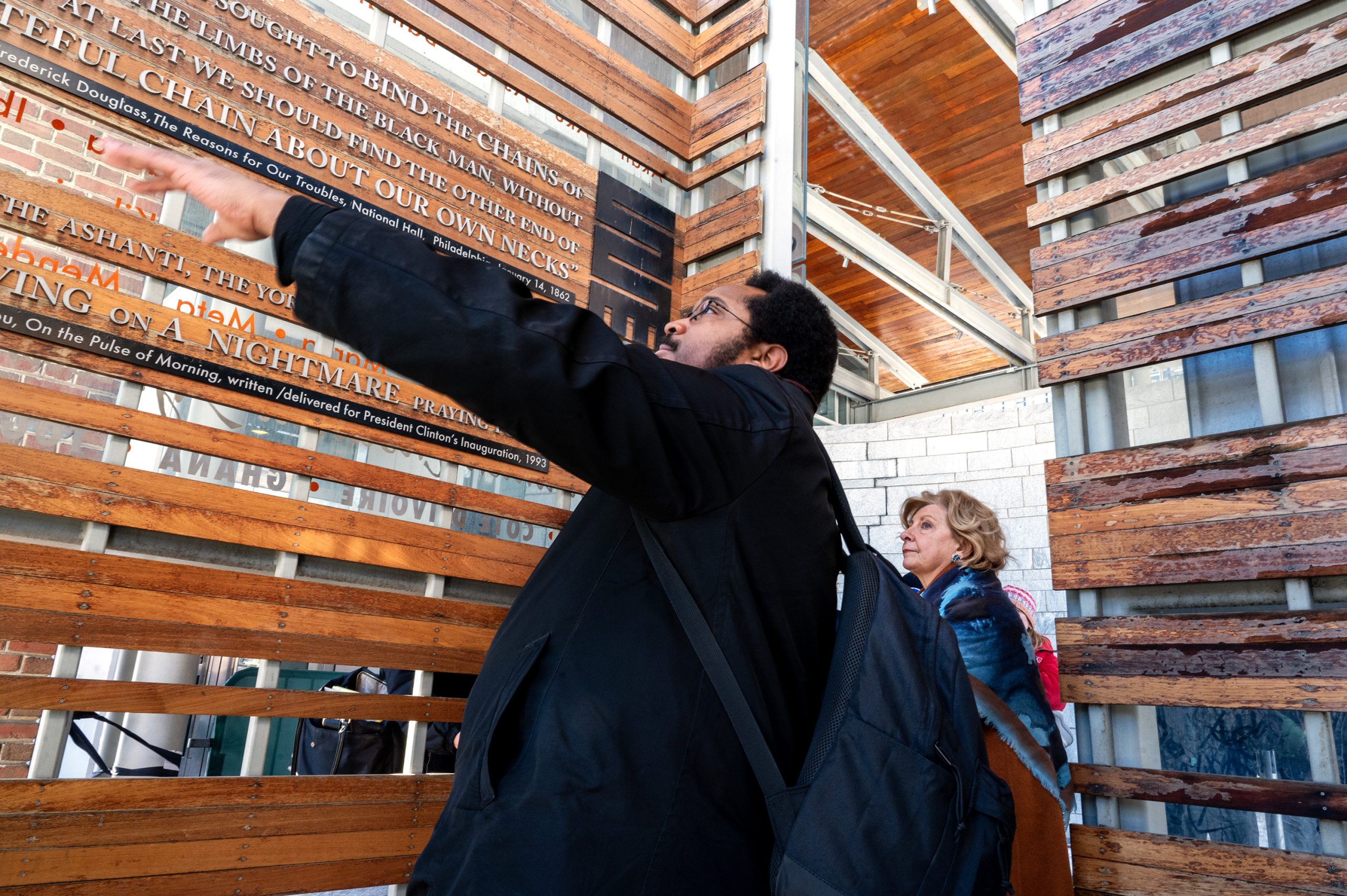
Mijuel Johnson, a guide with The Black Journey: African-American Walking Tour of Philadelphia, leads District Court Judge Cynthia Rufe (right) as she visits the President’s House in Independence National Historical Park in February.Tom Gralish / Staff Photographer
The city was unable to convince the Third Circuit panel it has joint decision-making power with the federal government over the entirety of Independence National Historical Park because of the local ownership of Independence Hall.
Philadelphia has standing to argue in court that the federal government violated the contract signed when the city donated the President’s House to the National Park Service, Hardiman wrote. The agreement included a guarantee the federal agency would maintain the site.
But the city had to prove it could win based on that argument to keep the injunction alive, and the judges disagreed.
“The duty to ‘maintain’ is better understood as a general management obligation that accompanies ownership, not a promise that the exhibits will forever remain in place regardless of the owner’s wishes,” the opinion said.
The city’s claim that the removal was “arbitrary and capricious” under the Administrative Procedure Act also did not find purchase. The federal law allows challenges only to “final” agency actions, but the newly proposed panels show the January removal was not the Trump administration’s “last word on the matter,” the opinion said.
Avenging the Ancestors Coalition, one of the advocacy groups leading efforts to protect the President’s House, said in a statement that the group was disappointed by the decision but would persevere. The coalition was consulting its legal team to consider potential next steps.
“This is definitely not the end of this fight, nor does it diminish the importance of ensuring that the full truth of our nation’s history is preserved and presented accurately,” the organization said.
In a video statement Thursday, Parker said, “I will pursue every legal action possible in efforts to reverse this decision.”
A spokesperson for the U.S. Department of the Interior simply said: “Trust in Trump.”
Debate over history
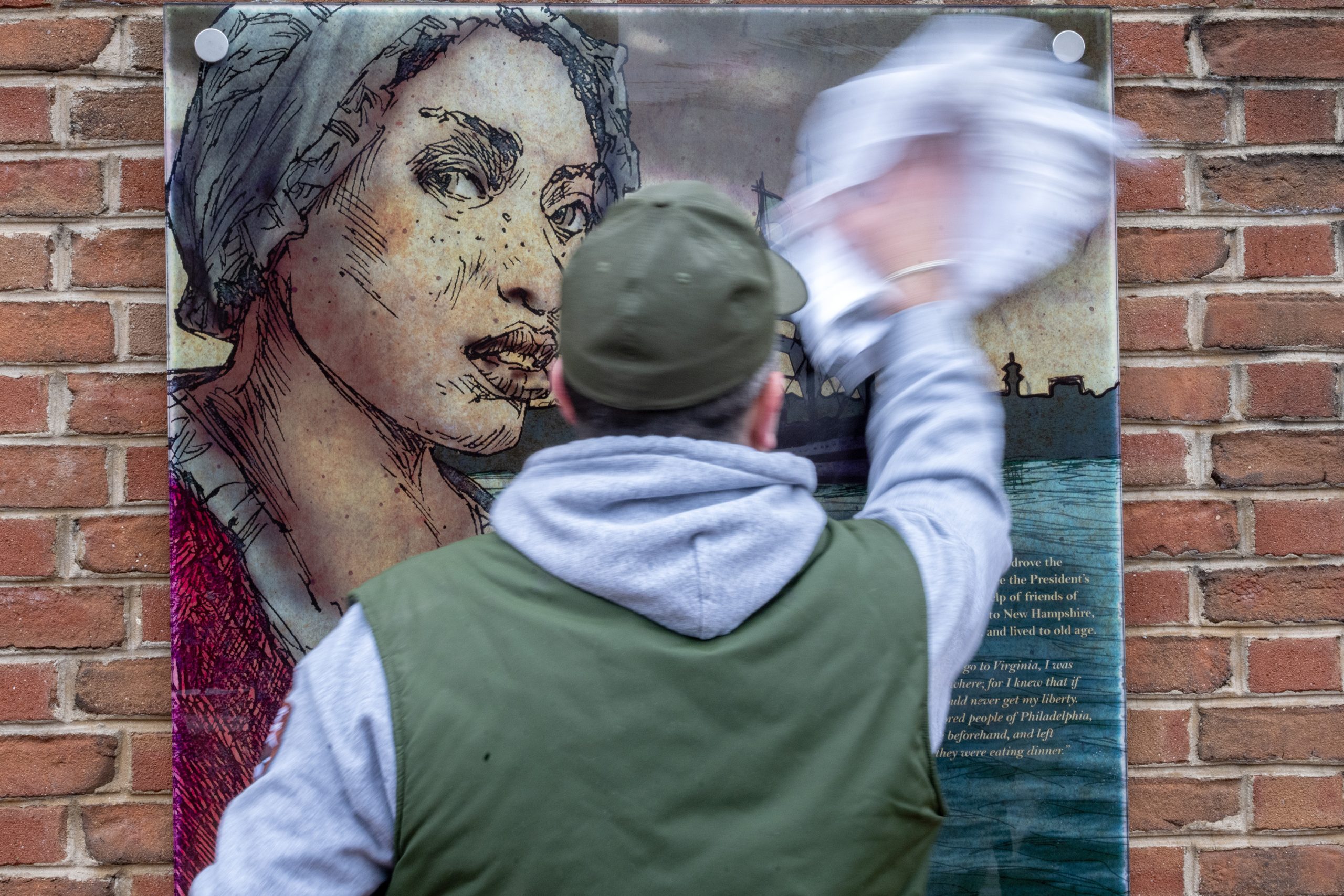
A worker cleans the glass on the panel for Oney Judge after re-hanging it at the President’s House in Independence National Historical Park in February.Tom Gralish / Staff Photographer
The ruling is an inflection point in the tumultuous legal saga over whether the federal government has power to determine which version of U.S. history is displayed for public viewing — an issue even more salient ahead of the country’s 250th birthday on July Fourth.
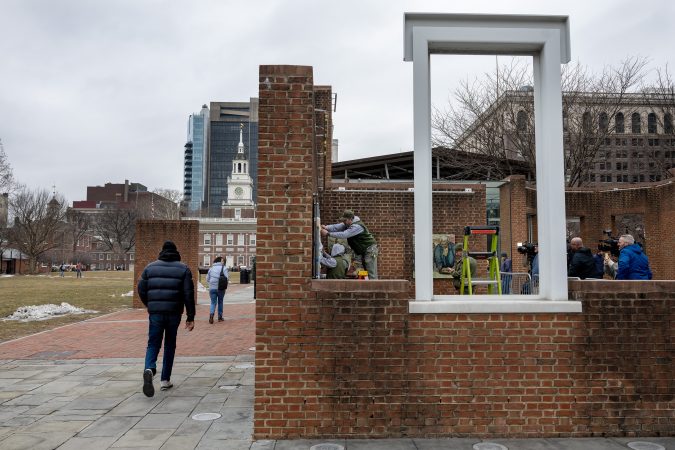
The Trump administration ordered the removal of the President’s House exhibits in January after almost a year of scrutiny of the site. Months later, the government offered its own vision for how those panels would be replaced, quietly uploading them to the National Park Service website in April.
An Inquirer review of the panels found that the federal government had softened Washington’s role as an enslaver.
For instance, one proposed panel argues the people who were enslaved at the President’s House “experienced a greater modicum of autonomy than elsewhere in the South such as to explore the city and sometimes even attend the theater, with Washington buying the tickets.”
Historians argued the original panels were accurate, well-researched, and site-specific. The development of the site in the early 2000s was the product of collaboration across various disciplines including historians, artists, architects, and advocates.
But Thursday’s ruling says the Trump administration’s proposed displays offer a nuanced view on Washington’s and John Adams’ roles in or opinions on slavery, adequately highlight the stories of the nine people enslaved at the President’s House, thoroughly acknowledge the horrors and brutality of slavery, and uplift key figures in Black history.
“One panel … explains that Washington ‘often expressed discomfort with the institution and a desire to see it abolished,’ but, ‘as a Virginia plantation owner, his wealth and livelihood were deeply tied to it,’“ Hardiman wrote. ”Other panels provide an even broader overview of slavery and the struggle to extirpate it.”
The ruling landed just less than three weeks before the 250th anniversary celebrations, and one day before Juneteenth. Attorneys for the federal government said the new panels had been manufactured and were ready to be installed.
U.S. Rep. Brendan Boyle (D., Philadelphia), whose district includes Independence Park, said in a statement that Thursday’s ruling highlighted the urgency of passing his Protecting American History Act, which would shield historical displays at the park from government censorship.
“Just a block away from where our nation was founded, Donald Trump is choosing the path of tyrants who rewrite history instead of learning from it,” Boyle said. “As we approach America’s 250th anniversary, we must tell the full truth of our nation’s history — the good and the bad.”
The administration has appealed to the U.S. Court of Appeals for the First Circuit.
There is not a prescriptive way to resolve such conflicting rulings, which is why some legal scholars argue against so-called universal injunctions, in which one district judge’s ruling affects the entire country. The Supreme Court signaled its discomfort with those types of orders last year.
Conflicting rulings have become more prevalent during Trump’s tenure, as his administration has issued drastic measures that take immediate effect, said Michael Foreman, a professor at Penn State Dickinson Law.
Which order ends up prevailing will depend on whether the Massachusetts ruling is stayed, or if the issue escalates to the Supreme Court.
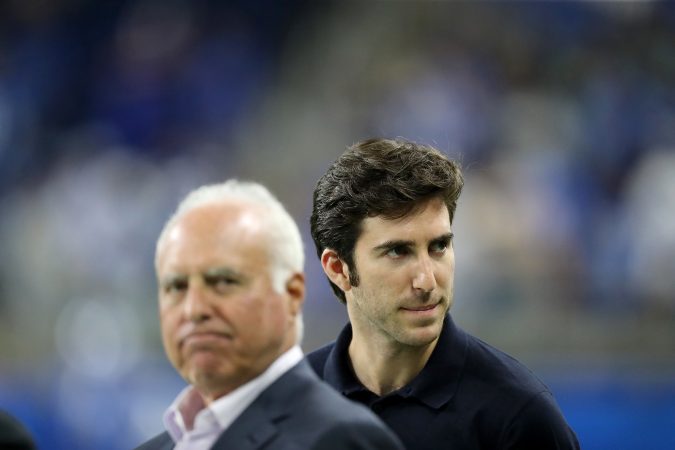
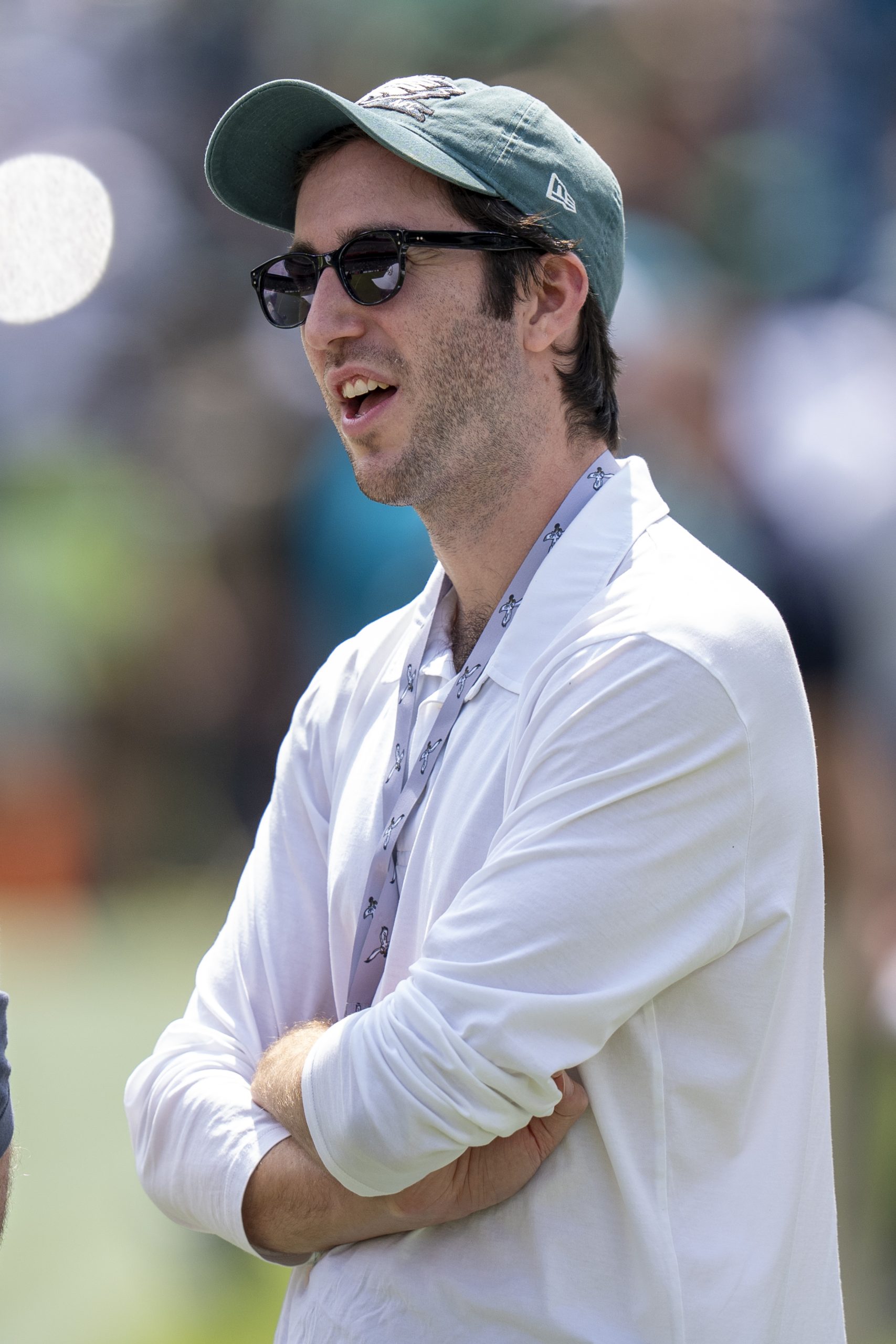
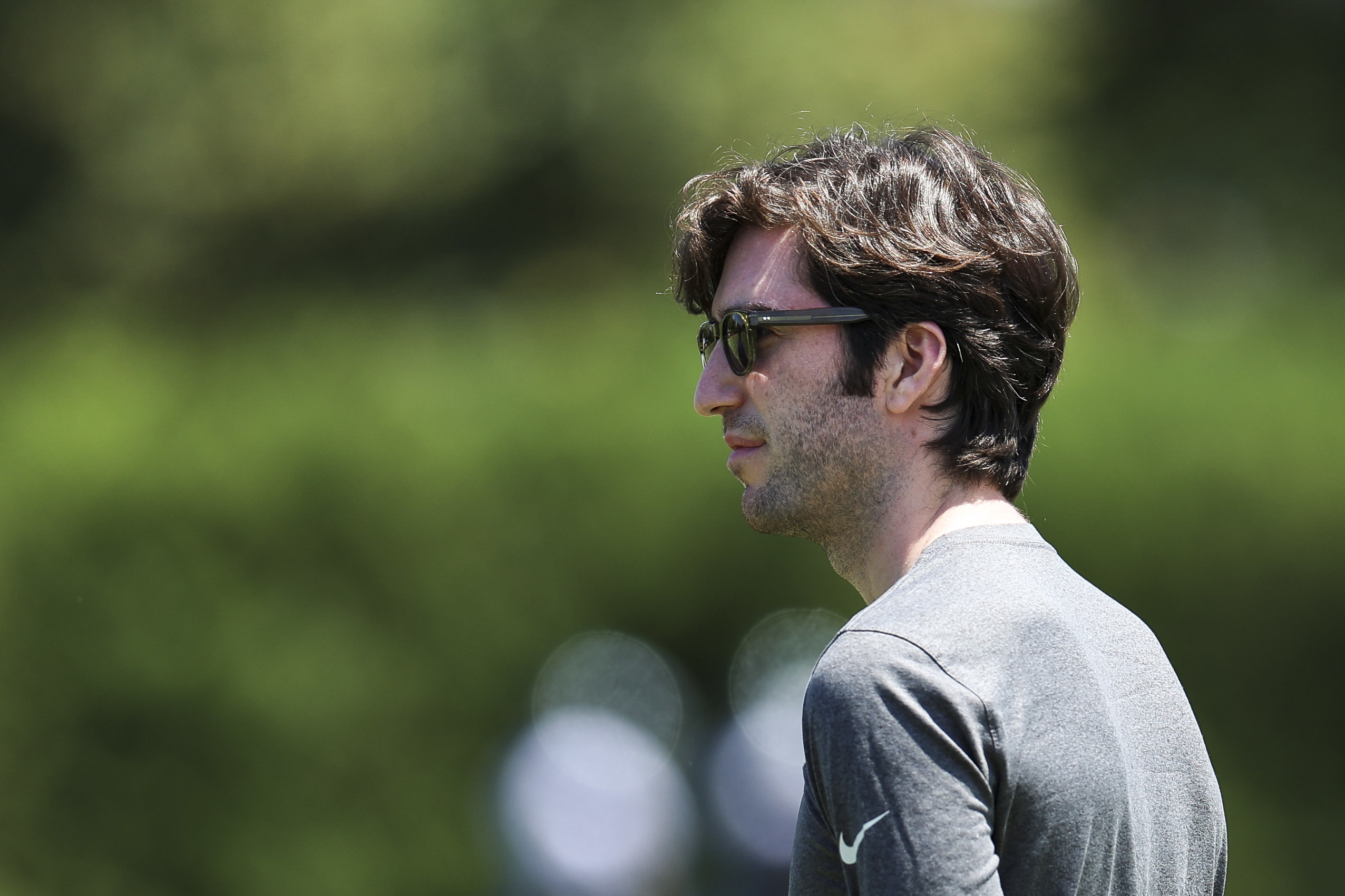
Julian Lurie wanted to push the Eagles beyond their normalities. Two years into his nebulously titled role in “business and football operations strategy,” the owner’s son had immersed himself in all facets of the team, but he had taken particular interest in — and authority over — original content and social media.
For NFL teams’ multimedia departments, schedule release day is their Super Bowl, and the Eagles’ creators had come up with a concept that was off-color by team standards. There would be censored curse words and jokes made at the expense of opponents.
Lurie loved the idea — which called for passionate Eagles fans to undergo psychological evaluations — and saw it as cutting edge. But a few senior leaders weren’t comfortable with the swearing and ridicule and liked it even less after watching the first cut. Lurie still advocated for the video, but he listened to counterarguments, and edits were made.
“There was a compromise,” a senior leader told The Inquirer.
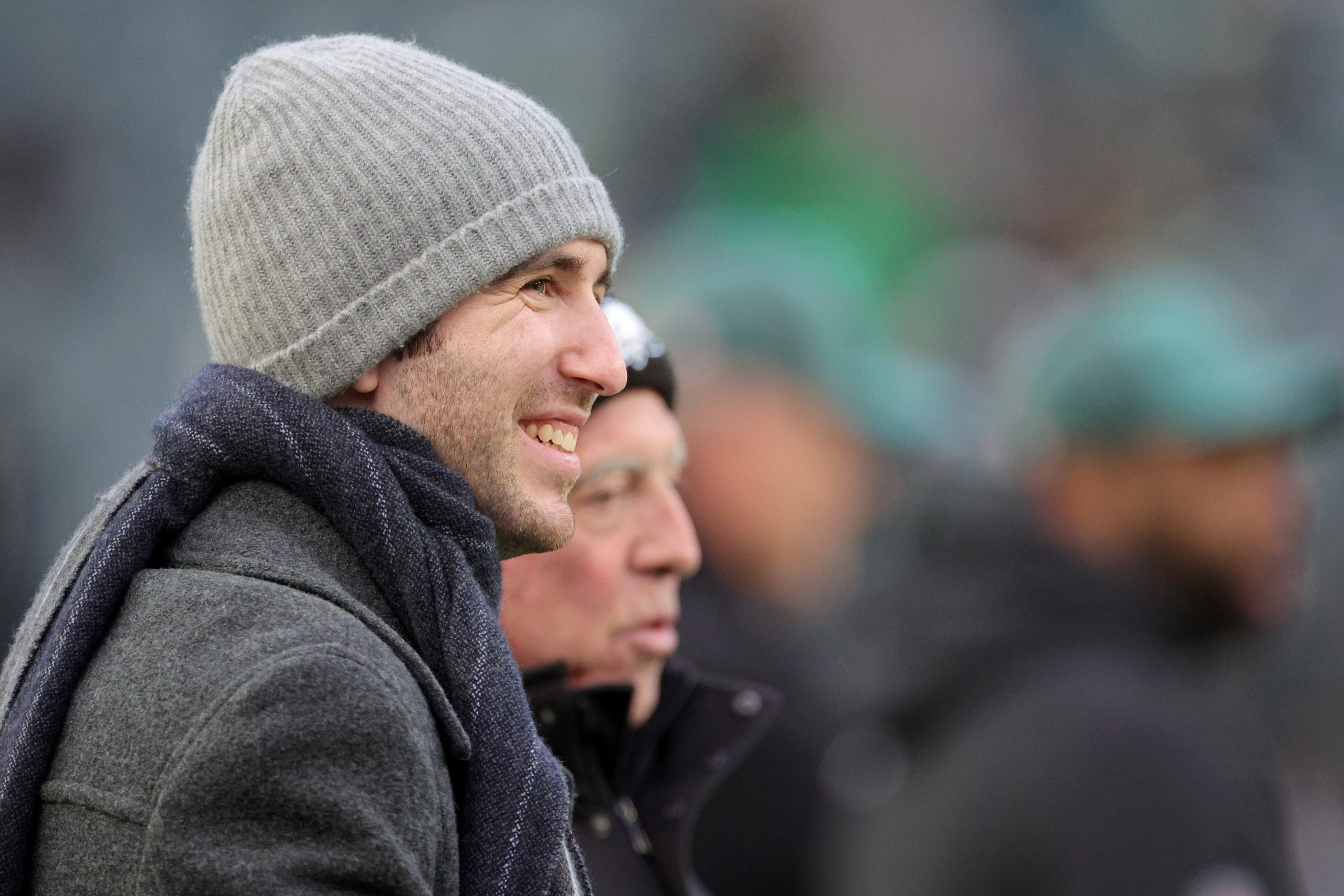
Julian Lurie’s title with the Eagles is “business and football operations strategy.”Chris Szagola
Obscenities and insults were taken out — but not all of them. Asked how Lurie could hold that much sway without having an official executive role, a high-ranking team source gave the following explanation:
“His last name.”
Lurie is not just Eagles owner Jeffrey Lurie’s only son, he is his successor. And while that reality has caused occasional challenges since he took a formal role in the family business four years ago — and as management navigates his increasing influence — many key figures within the organization believe the younger Lurie already has been an asset.
“He is really smart. He’s very creative. He’s very empathetic,” an Eagles source said. “He’s really good at putting himself in other people’s shoes. He’s fair, and he listens and is making a real attempt to understand everything about the organization.”
The Inquirer spent the last several months talking with nearly two dozen Eagles sources, past and present, as well as other NFL sources familiar with the team’s inner workings, about the 31-year-old Lurie. Many sources requested and were granted anonymity because they were not authorized to speak publicly on the subject or felt they couldn’t speak freely if named.
The Eagles declined interview requests for the Luries and other key members of the organization for this story.
The interviews with sources revealed Julian’s already considerable prominence. They also depicted an intense but thoughtful young man who was born not only into great privilege, but with a shared civic passion for the football team his father bought in 1994, the year before Julian was born.
“If I lived in Philadelphia and I was an Eagles fan, I would feel really good about him as a steward of the franchise in the future,” a team source said. “I really do think he cares about the team and the city and the players.”
To prepare for his eventual birthright, Julian has delved into the nuts and bolts of operations. From affairs as expansive as spending on the business and football sides to matters as minute as the strains of grass on the practice fields, he has asked the “why” behind the “what.”
His 74-year-old father remains chairman and CEO and has said he has no plans of ceding control, even if he now spends less time in Philadelphia than previously. But Julian has been a part of decision-making for some time now, which may come as a surprise to outsiders who know next to nothing about the Eagles’ future owner.
Inside the Jefferson Health Training Complex, his standing — if not his title — is clear.
“I didn’t even know he had one,” an Eagles staffer said about the younger Lurie’s job description. “To everyone here, he’s an owner.”
And as an owner, Julian can sit in on every high-level meeting. On the business side, it might be about the exploration of a new stadium concept or corporate sponsorships. On the football side, he may be present for team meetings or sit-downs on free agency and the draft. And he’s often in the building.
Jeffrey Lurie has final say and still exerts control when it comes to major decisions. But he has longtime direct reports in team president Don Smolenski and general manager Howie Roseman, whom he has empowered. The same applies to sixth-year coach Nick Sirianni.
In his first few years with the Eagles, Julian might have sat in the corner and said nothing. But as his understanding of the team has grown, so has his voice. Like his father, he is a questioner.
“He likes to ask the opinions of people,” a high-ranking team source said of the younger Lurie. “Some people here don’t like to be questioned. But he’s a smart guy, and he doesn’t think he has all the answers. He’s willing to change his mind.
“He says, ‘I’m not right all the time, but I want people to be real and be honest with me.’”
The initial ambiguity about his role and his relatively speedy inclusion into decision-making, however, led to an adjustment period and occasional bumps in the road. The biggest sticking point, according to several sources close to the situation, was over the budget.
“When you add another dynamic to that, there’s always growing pains,” a team source said, “but not to the point where relationships have suffered.”
The Eagles have been one of the most successful NFL franchises over the last decade, having won two Super Bowls and gone to the playoffs in eight of the last 10 seasons. Smolenski, who has overseen business operations since 2012, and Roseman, who was given full authority over football in 2016, have built a robust enterprise.
That growth has mirrored the increase in wins. But there has been some bloat, and Julian took it upon himself to examine the Eagles’ expenditures. Some of that was for his own knowledge in preparation for when he succeeds his father.
But the Harvard graduate also wanted to explore more efficient ways to allocate spending, team sources said. “Honest conversations” were had, according to one source close to the situation, and Julian eventually came to appreciate much of the existing process. He also was credited with making suggestions that contributed to on-field success.
“From where he’s started to now,” a team source said, “it’s like night and day.”
His more significant contributions have come in presiding over fan-facing parts of the franchise, like original content and image and likeness. Julian spent two years working for Overtime, a sports media company based in New York, before joining the Eagles. And before that, he was a member of the NFL’s Junior Rotational Program, a two-year undergraduate internship.
His bosses at both outlets said Julian was serious-minded, hardworking, and brought zero entitlement to the job.
“He’s quiet, but he has a sense of humor and he laughs, and he’s willing to use that constructively,” former Overtime CEO Dan Porter said. “It’s not like he fits hardcore into some archetype like that. He’s honestly just a young person wanting to add value and learn in the world.
“And he also just happens to, a) be really smart, and, b) his dad owns the Eagles.”
Jeffrey Lurie is widely considered one of the NFL’s best owners after his three-plus decades in the league. His son will have big shoes to fill when the time comes. Julian is an outside-the-box thinker like his father, but he also wants to bring a younger sensibility to the Eagles — as he did with the schedule release video — sources close to him said.
He’s also become the more visible Lurie at team headquarters. But the elder Lurie, who spends most of his time at his West Palm Beach, Fla., estate, said his absences aren’t representative of a loosening of the reins.
“Maybe I still have a lot of gray hair, but I am probably more involved than ever, ironically,” Jeffrey Lurie said in March. He added, “It’s not that it’s behind the scenes. It’s very overt. But I will talk to my executives more often and probably with more intensity because I have a son that’s growing and learning everything.
“And, so, he can both watch how focused and intense I am still and yet, at the same time, learn from all the executives we have.”
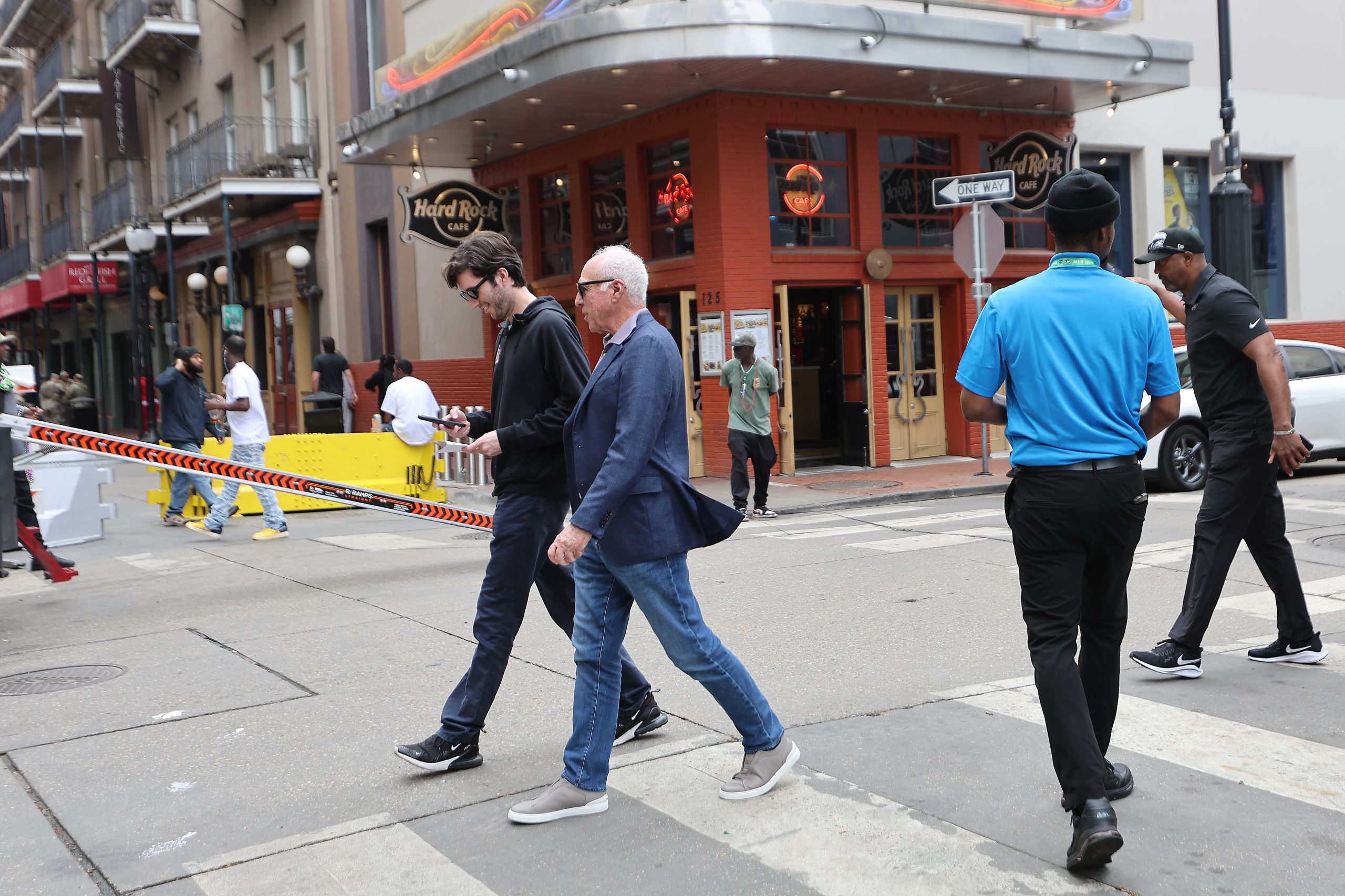
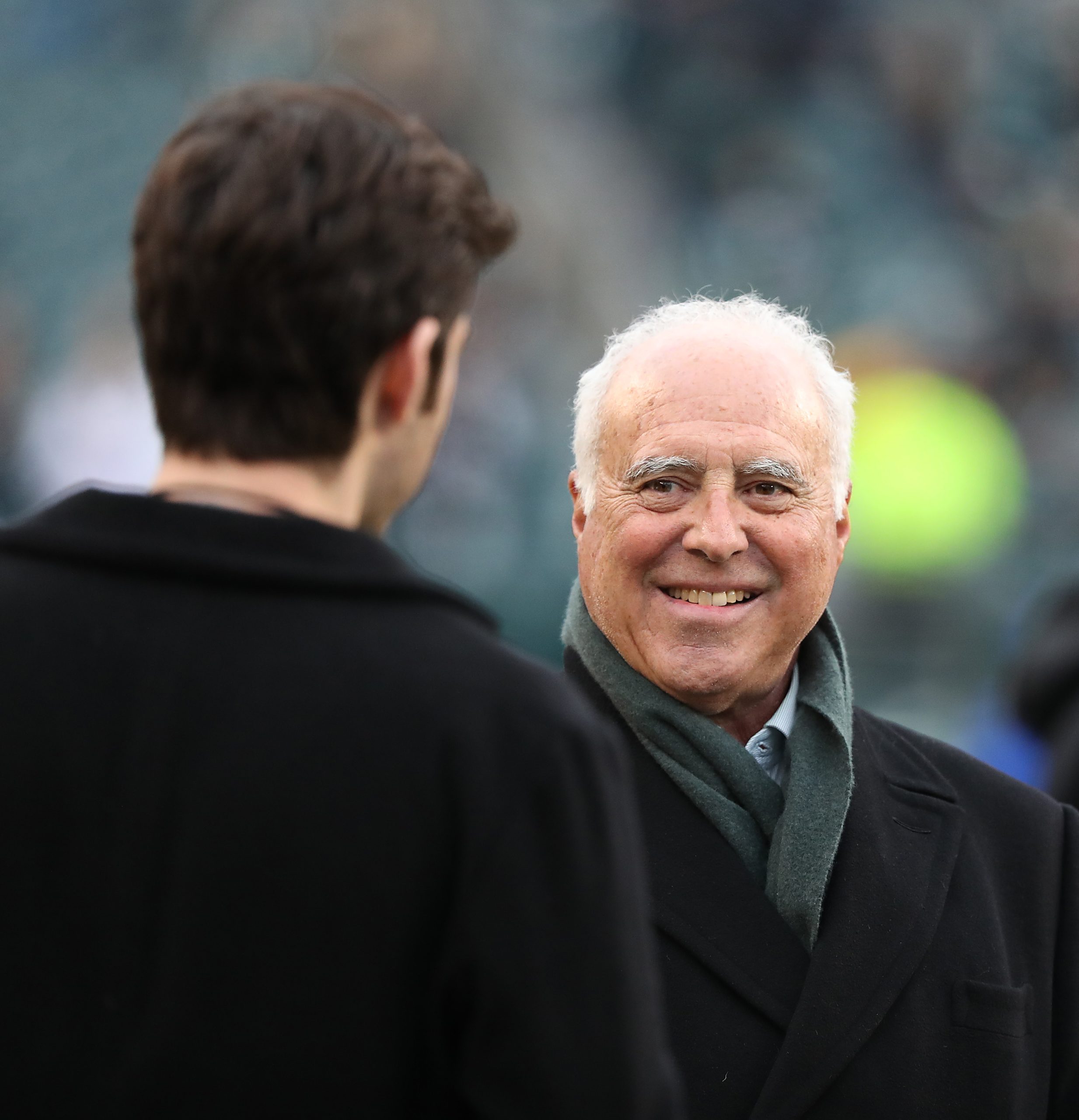
Julian Lurie (left) and his father, Eagles owner Jeffrey Lurie (right), walk across Bourbon Street during Super Bowl week in 2025.David Maialetti / Staff Photographer
Be a learner
Jeffrey said he has no plans to retire soon. When he talks about his good health in private, he often mentions his mother, Nancy Lurie Marks, who recently turned 99. But that hasn’t stopped some team leaders from wondering about a timeline regarding Julian’s succession.
“There’s no timeline, but I love the way it’s been going,” Lurie said three months ago at the league meetings in Phoenix. “He’s quite involved in the business operations, the football operations, philanthropic operations, marketing. He’s getting a great, great sort of feel for everything, and that’s the best way to do it.
“It’s not to speed it up.”
NFL owners recently approved succession plans for two teams. Last year, the Colts transferred Jim Irsay’s ownership to his three daughters following his death. And in March, the league affirmed the plan for Raiders owner Mark Davis, who doesn’t have children, to give a minority owner, Michael Meldman, the option to purchase a majority stake.
NFL ownership has long been a family enterprise. More than half the league’s 32 teams remain under family control, with prominent last names like the Rooneys, Maras, and Hunts having owned prosperous franchises for 60-plus years.
There also have been family-run teams that haven’t thrived or experienced generational decline.
The 49ers have not been one of them. Team owner Jed York, like Julian Lurie, was brought into the fold of his family’s franchise in his mid-20s. As “special projects manager,” he worked in every department of the 49ers and recalled that one of his first stints was in the equipment room, where he helped sew players’ names on jerseys.
By age 30, York had become CEO. While his Ohio-based parents, John and Denise York, remained principal owners until 2024, he effectively ran the organization.
“It was Undercover Boss without the undercover part,” York said.
He said his transition to power happened organically.
“I think the organization sort of accepted it and sort of dictated when it was going to happen more so than me or my parents,” York said in an interview with The Inquirer. “Like, it just became clear when people started coming to me for answers and not necessarily waiting until my parents came out from Ohio to be able to make decisions and move forward.”
Jeffrey may not be in Philadelphia as often, but he still returns for games, favorite events like the draft, and various other days. He was present for most of the workouts that were open to reporters this spring — at a much higher rate than last season.
Either way, team employees still look at the elder Lurie as being the boss.
“Julian is here every day, so we do see him more,” a team source said. “But Jeffrey is still viewed as the owner.”
Julian’s office at “the Jeff” is situated near his father’s and Smolenski’s. That is by design. Among senior leaders, he spends most of his time with Smolenski. But he has conversations with many staff members, even if he is described as naturally introverted.
He’ll drop into any office, not necessarily with a purpose, but just to chat, often about every staffer’s favorite team. Some sources consider his way with people one of his strengths.
“You got to be a learner,” said Porter, who recently stepped down as Overtime’s CEO. “You have to understand that as soon as I am the CEO, I’m in a bubble. I only know what the people who talk to me tell me, right? You [have to] make people feel seen and heard because you want them to give their all to an organization.
“But you also don’t want your experience of the company to be in a very small echo chamber.”
So while Smolenski continues to make final decisions on the nonfootball side, Julian will gather intel on his own. That might include talking to facility manager Chris DeBellis about operations at Lincoln Financial Field or vice president of grounds Tony Leonard about how to install heaters under the practice surfaces so they no longer freeze.
The Eagles’ practice facility, previously known as the NovaCare Complex, is undergoing renovations with an expansion of the training room and eventually the locker room. Julian has been a part of planning, but he’s also explored other possible changes like a full-length indoor field.
Many of his inquiries have been about the Eagles’ expenses.
“I don’t see what he’s been doing as any different to anyone whose dad said, ‘Here are the keys. Go in there. See what you think,’” a team source said. “This is going to be his team someday. He wants to understand how it works from a fundamental level.”
Julian Lurie has a way with people, some of his colleagues say.Monica Herndon / Staff Photographer
Productive conversations
While it’s unclear if Julian’s budget analysis was a Jeffrey directive or not, some staffers felt the team’s accounting could have benefited from a fresh set of eyes. In some cases, spending was cut. It could have been something sizable like the budget for food and beverage or something less significant like the number of hats ordered for employees.
The money often was then redistributed into other resources, such as the facility expansion. But other sources for revenue were explored as well, like selling naming rights to the cafeteria.
“I don’t think the goal was necessarily to cut costs. I think it was to understand what we’re spending on,” a team source said. “NFL teams — we’re not perfect in our spending. Things can get distorted over time. They can get out of whack. I think it’s healthy to evaluate that.”
The Eagles are always looking to be prudent. Jeffrey has long entrusted his lieutenants with fiscal responsibilities. But his son’s increased involvement and “probably being more into the bottom line,” according to one source, faced resistance from some staffers.
“The easiest way to impact the bottom line is by cutting expenses. And that is great in the short term, and you definitely improve margin,” an NFL source familiar with the Eagles said. “But if you have unlimited resources and the business is successful on the field, off the field, is that really a common-sense approach?”
Some of the excess could have been people. For instance, why have X number of full-time employees in the ticket office when it’s mostly a seasonal job? Did the Eagles really need to send as many staffers to the Senior Bowl and the NFL combine as they had for years?
On the football side, the Eagles have had considerable growth. That’s not exclusive to them among teams in the booming and hypercompetitive NFL. But Roseman has constructed a multifaceted operation that has depth in many departments.
Julian’s new oversight meant that staffing and salaries were questioned, like having three highly paid senior advisers in personnel when the Eagles brought back former Jets general manager Joe Douglas last year.
But Roseman’s modus operandi has been to have a deep bench in case there are departures. When former senior adviser Dave Caldwell left for the University of Florida in December, Douglas already was in the fold. Just recently, he was promoted to senior vice president of player personnel.
Last month, assistant general manager Alec Halaby stepped away from the Eagles, and the well-regarded Adam Berry was promoted into his position. Two years prior, vice president of football administration Jake Rosenberg left the Eagles, and Roseman had Bryce Johnston waiting in the wings to manage the salary cap.
Rosenberg sought other opportunities after seemingly reaching his ceiling with the team, but some Eagles sources wondered if his exit was precipitated by Julian’s deconstruction. The Atlanta Falcons poached Johnston in May. His replacement, Grant Reiter, is a relative unknown with far less experience.
Two sources compared staff reductions to playing Jenga.
“If there’s a high headcount, it’s hard to pull it apart and say, ‘This is responsible for this, this is responsible for that,’” one of the sources said. “You never know which thing you pull is going to be the thing that causes it to fall down.”
Rosenberg declined to comment. Johnston didn’t respond to an interview request.
It’s hard to argue with Roseman’s approach, considering the Eagles’ success, which has come with multiple head coaches and starting quarterbacks. Roseman hasn’t been perfect, of course, but Jeffrey Lurie has given him ample room to take big swings and make corrections when there are misses.
Julian made inquiries based partly on the Eagles’ staffing vs. other organizations. There was an acclimation phase with some give and take, and ultimately an understanding of Roseman’s process that has improved over time, team sources said.
“I think they have a productive relationship,” one source said. “I think they can walk into each other’s office and have productive conversations.”
The Eagles’ largest expense is on player contracts. There’s a salary cap, but no team has spent more on their roster over the last decade. According to Jeffrey Lurie, that aggressive mindset won’t change.
“This is where the emotional part probably gets in the way. I can’t help myself,” Lurie said in March. “Try to have every edge you can and willing to spend the cash. And I think we have a chance to win multiple more Super Bowls. There’s nothing I want more than that third Lombardi.”
Jeffrey remains integral to Roseman’s major roster decisions. After years together, the two can communicate in shorthand. The general manager still has his direct line to the owner, and their process is “overall, similar,” a team source said. There’s just now an additional layer.
“When it comes down to final decisions, I still feel like that’s totally Jeffrey,” a team source said. “But Julian has been a part of all of it.”
“Julian is here every day, so we do see him more,” a team source said. “But Jeffrey is still viewed as the owner.”David Maialetti / Staff Photographer
Roll up sleeves
When Jeffrey Lurie purchased the Eagles in May 1994, he was 42 and a longtime New England Patriots fan. He had tried to buy his boyhood team just the year before. But the Hollywood executive, who had worked for his family’s movie theater company, shifted his attention to the franchise located roughly 300 miles south of his native Boston.
Jeffrey and then-wife Christina Weiss Lurie, married for two years, arrived in Philly with daughter Milena when he bought the team. Julian was born the following year. When Jeffrey was first publicly asked about his son in March 2022, he focused on Julian’s inherited passion for the Eagles.
“Obviously, he grew up in the family that owns the team,” Jeffrey said then. “He’s an avid Philadelphia sports fan. He loves the Eagles, loves the NFL. He really has a great feel for many aspects of the sport.
“He’s going to have so much more going into it than I ever did if he chooses to want to someday own and run the team.”
Jeffrey had exposed his son to various aspects of the family business for years, but in January 2021, he had him participate in interviews for a new head coach. Julian handled questions related to analytics.
While it might have seemed peculiar at the time that he would be involved despite not having a formal role with the Eagles, associates describe Julian as an “analytical thinker.” At the league’s junior program, he rotated through four groups focused on strategy and development.
Grace Senko, currently vice president of media strategy and business development at the NFL, was one of Julian’s managers. They worked closely on the league’s licensing of media rights and spent time tracking performance in the burgeoning digital streaming of games. It sometimes was menial work.
“There was a lot of nights the two of us were here, the only people working to pull together very large amounts of data,” Senko said. “Because of how much we were pulling in together, we made a lot of mistakes. And Julian — he has a lot of integrity. If something is wrong or he makes a mistake, he owns it. … He is willing to roll up his sleeves.”
After the completion of the two-year rotation, Julian went to Overtime, a media company that says it “builds disruptive” content “at the next generation of sports fans and athletes.” The company is perhaps best known for Overtime Elite, its developmental basketball league for high school-age players. Porter, the former Overtime CEO and a Philly native, heard through an intermediary that Lurie was interested in his startup.
“Julian’s very intense, but he’s also very reserved,” Porter said. “He’s just very deliberate. And so, in our first conversation, I was like, ‘Oh, he’s clearly extremely smart and very, very focused, but he’s not that kind of person in an interview who’s going to, like, talk for 10 minutes straight.’”
Julian reported to Porter as senior manager of business strategy. He focused on analytics and helped create, for instance, a free-to-play app that took aspects of betting apps and was designed for consumers under 21, Porter said.
All told, Julian spent four years working in New York. Senko, who also had gone through the NFL’s junior program, said she worked with other family heirs and that Julian, like many who had connections, overcompensated to avoid claims of nepotism.
Porter said Julian was unassuming at Overtime’s Brooklyn office.
“He’s got a different burden, maybe, than most people,” Porter said. “He’s a serious guy, but he’s not unfriendly. Smiles. He’s just serious about his job. He was integrated in the culture. He wasn’t like some weird guy in the corner. He was a part of the company.”
Julian was in some ways shielded by his protective parents. When The Inquirer did a feature on Weiss Lurie in 2010, the names of her children were withheld from the story at her request.
Milena and Julian attended the Shipley School in Bryn Mawr. One teacher, in a school website post, recalled a junior-senior football rivalry game in which Julian and other seniors wore fake bushy mustaches like then-Eagles coach Andy Reid as Jeffrey watched from the sideline.
When Julian attended Harvard to study philosophy, he watched Eagles games at the Baseball Tavern, a local bar whose owner had been a fan of new coach Chip Kelly. Julian might have been among the progeny of one-percenters who went to the elite university, but he didn’t carry himself that way, a fellow student said.
“You’re around a lot of kids from billionaire families that are out of touch and act like their s— don’t stink,” a former Harvard classmate, who asked not to be named, said. “That wasn’t Julian. That card never got played.”
Dan Porter, Julian Lurie’s supervisor at Overtime, said: “He’s a serious guy, but he’s not unfriendly. Smiles. He’s just serious about his job.”David Maialetti / Staff Photographer
Going to the Eagles
Julian’s destiny was different from most, though. In early 2022, he decided to leave Overtime for an official post in the family business.
“One day he just called me and he said, ‘Thanks, it’s been amazing. It’s time to move on. I’m going to the Eagles,’” Porter said. “And I was like, ‘Yeah, of course.’”
Julian already had been spotted at offseason NFL events like the Senior Bowl in Mobile, Ala., that January, but the Eagles didn’t announce his role until June of that year. His listed title, which reads more like a department — “business and football operations strategy” — reflected the duality of his position as he went about learning both arms of the organization.
It took Julian some time to find his footing, team sources said. He initially latched onto the decade-older Halaby, a fellow Harvard graduate who oversaw the analytics department at the time. It was a natural entry point considering his mindset and experience.
But Julian also took an active interest and lead in Eagles media content. He began to flourish.
“He’d come in, sit in the corner, not say anything, so a few people felt uncomfortable,” a team source said. “But the more that he got comfortable, the more he got involved, he started to throw out ideas and people saw it.”
Julian oversaw promotional videos that captured the local zeitgeist. He heard quarterback Jalen Hurts use the phrase, “It’s a Philly thing,” and made that a rallying cry for the 2023 playoffs. And he was behind the “Yo” hype video ahead of the 2024 opener in Brazil.
He has become, in some ways, the point person for the Eagles’ social media team.
“He wants it to be a really good fan experience. He wants people to enjoy using the Eagles app or seeing their posts on Instagram,” a source close to Lurie said. “Social media is a big part of an NFL footprint these days. It’s how a lot of fans connect with the team.”
He is, after all, one of them. Porter, also an Eagles fan, said he knows not to text Julian after losses. Like his father, Julian also has a passion for football. Last season when the Eagles played the Packers at historic Lambeau Field, he opted to watch from the bleachers rather than in a suite with team executives.
“He wanted to experience the game from that vantage point,” a team source said.
Julian watches a lot of games and has an interest in all its intricacies. He’s a part of strategic meetings when it comes to personnel and scheme. He might ask why a certain draft prospect has a red flag for character concerns, for example, or why the Eagles have made certain schematic choices, sources who have been in those meetings said.
Julian has a keen eye for X’s and O’s and he will query coaches. He often does his own research and he comes prepared, a team source said.
“It’s never like, ‘I have answers,’” a coach said. “It’s like, ‘I want to understand this.’”
During interviews with offensive coordinator candidates this offseason, Julian handled questions pertaining to player performance. His father has allowed him to sit in on head coach interviews dating back to 2016, knowing how important that responsibility is for an owner.
But for some in the organization who have been around since Julian was young and may have viewed him through that lens, there was apprehension about his presence. Although most have appreciated his development, a few believe he’s overstepped at times.
“There’s growth that still needs to occur,” a source said.
Not only does Julian have to balance his increasing involvement with any perception that he’s meddlesome, but he also has to walk the delicate line between his long-term goals and the shorter-term thinking of current leaders.
There is a generational strain that can exist in succession plans. York said he had a mentor in Patriots president Jonathan Kraft, son of owner Robert Kraft, who has been his father’s right-hand man since 1994. York said he has spoken to Julian on occasion and wants to be a sounding board for him, like Kraft was for him.
“I know there aren’t many people in these positions that can help you think through, ‘Well, how do you tell your dad or your mom that you want to do something a little different than they did, and do it in a way that’s respectful?’” York, 46, said. “How do you handle those things?
“How do you see something as a younger person in the NFL that you want to take the league in a different direction than … a bunch of guys that are in their 60s or 70s or 80s?”
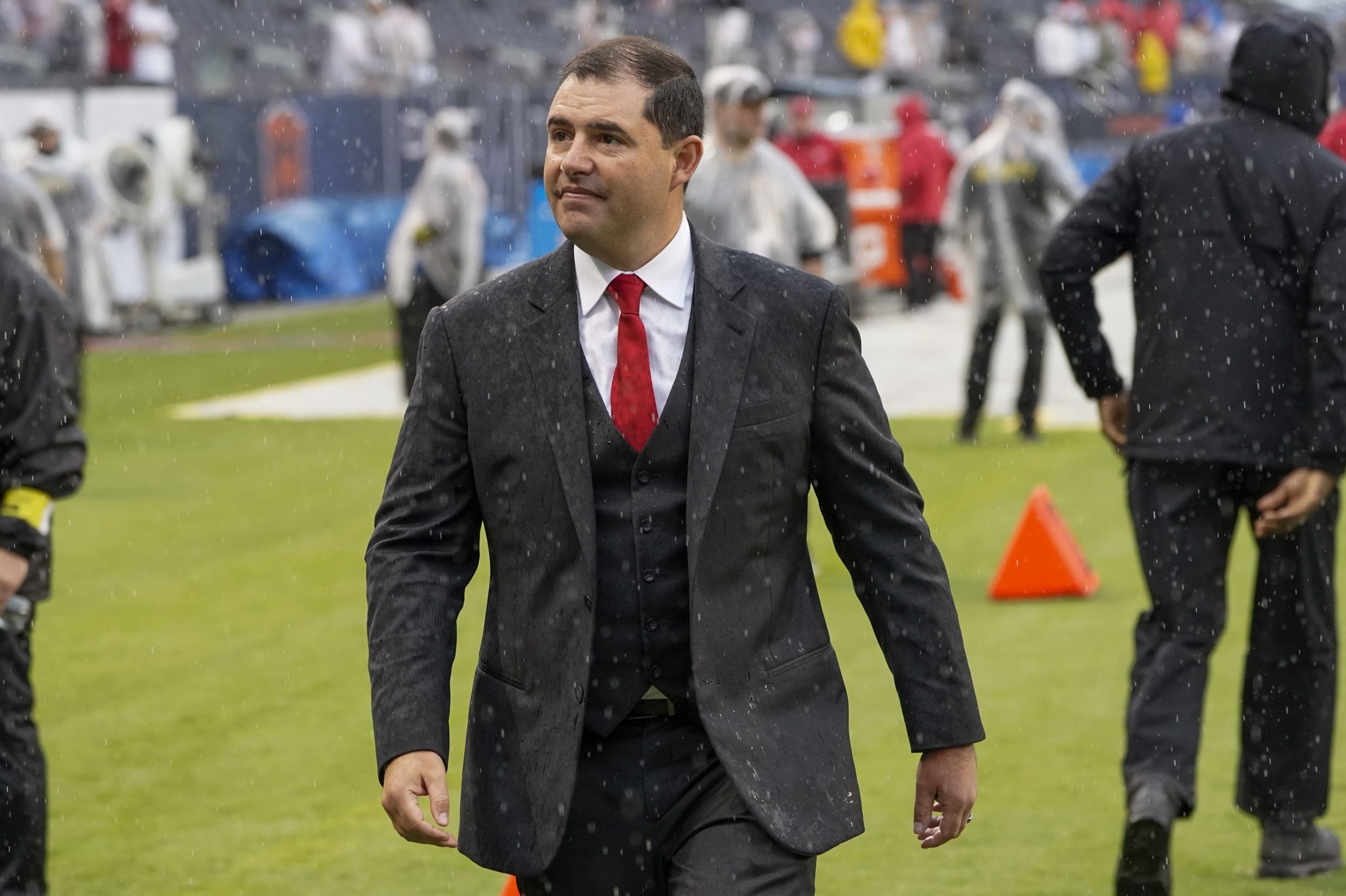
San Francisco 49ers owner Jed York, an example of a family generational transfer of power that has succeeded, already has a good relationship with Julian Lurie. Charles Rex Arbogast / AP
Own path
Julian, like his father, is willing to push boundaries to gain advantages. Jeffrey likes having different perspectives in a senior leadership team that now includes his son. Jeffrey still mostly defers to Smolenski and Roseman in major decisions. He often just wants to see the finished product.
But Julian has been more hands-on than his father when it comes to details, for instance examining the blueprints of the practice facility expansion into the former NovaCare rehab center.
“He has a mindset for how he wants to lead and that’s going to be different in some ways,” a team source said. “He’s not trying to be exactly like his father because that’s not entirely his personality. He is his own person.”
Julian is a foodie and avid golfer like his father, but he does not flout his privilege, those who have observed him say. He might have the second-best parking spot at the “Jeff,” but he doesn’t ask for police escorts or special accommodations on game days, sources said.
He may engage in “casual conversation” with players before or after games, a veteran said, but he isn’t overly chummy. That is in part deliberate. He knows his limitations. But it’s also Julian being true to himself. He’s not as outgoing as his father.
“You can’t read Julian as well,” a team source said.
That can make more unsure members of the organization at times uneasy. Many value his brevity.
“I think he has a very kind of quiet confidence around him and when he says things they have a lot of weight to them,” Senko said, “because he’s not one of those people that just like speaks to be heard. He speaks when he has something important to say.”
His voice carries weight because he’s viewed as an owner, even if he’s not yet the Eagles’ principal owner. Some senior leaders expect Julian to eventually have an executive role in the front office.
The 59-year-old Smolenski could stay aboard until the next stadium deal is in place. There are other internal candidates to succeed him, like former Eagles player Connor Barwin, who currently is head of football development and strategy.
It doesn’t matter what title Julian is given. He already is involved at a senior level. And while the Eagles have absorbed his inclusion — and won a Super Bowl in the process — there is some question of the future as Julian advances.
“It remains to be seen how that goes,” a team source said.
If he were to become president, would he, like Smolenski, stay exclusively on the business side? Would he cross over into football, like predecessor Joe Banner did during his roughly 20-year tenure? Would the title matter?
Jeffrey signs off on all major football decisions. He has, on rare occasion, pushed for his preferences in the draft, sometimes with great results (e.g. Hurts), sometimes not (J.J. Arcega-Whiteside). But he has by and large delegated to Roseman.
For years, Jeffrey and his general manager standing together on the sideline before games or at practices conveyed their abiding partnership. They still strike that image, but Julian might also be in the picture, or alone with his father.
Few Eagles sources expect the dynamic at the top to change as long as the Eagles keep winning. Jeffrey has given the 50-year-old Roseman as much autonomy as any general manager. But if that power were to be curtailed, the two-time NFL executive of the year would have obvious options elsewhere if he wanted to leave.
“We’ve been successful. We’ve done things the right way. Sometimes maybe not in the most traditional way,” a team source said. “But as long as Jeffrey’s in charge and likes the direction of the team, he’s going to think, ‘If it’s not broke, we don’t need to fix it.’”
And Jeffrey has no apparent plans of abdicating his power. There may be some uncertainty about how often he’ll be in Philly once work is completed on a yacht he is having built near his Florida home, but he has been more present this spring, team sources said.
“If you want to live a long time, I was always told don’t ever retire and keep that intensity going,” Lurie said in March. “I love owning the Eagles. I love trying to make us even better in every way and that’s what I’m focused on.
“That’s why my energy’s high.”
But Julian, as the NFL-approved heir, remains only a heartbeat away from the throne.
There will be no Succession-like maneuvering for future control among family members. Weiss Lurie stepped down as director of the Eagles Charitable Foundation in 2019 — seven years after the Luries’ divorce — although she remains a minority owner. Jeffrey married Tina Lurie in 2013, but she has no official role in the organization, nor does the 32-year-old Milena.
Few, if any, within the franchise believe it will suffer the decline that can occur when families bequeath assets. Julian himself is unmarried and without children.
His devotion, for the time being, is to the Eagles.
“I respect the way he’s grinding and going about it,” York said. “It is not easy to be in his position, in his situation, especially with how successful his father has been. He’s trying to make his own path, and he’s working as hard as he can, and I respect the heck out of that.”
His ownership is written, if not his future. But Julian continues to show maturation. In the Eagles’ most recent schedule release, senior leaders again didn’t like the direction of the video. Alternative ideas were offered, one of which Lurie agreed was better.
“He is open to listening,” a team source said, “open to evolving.”
There was cursing from players in the video that wasn’t bleeped out, but it generally was wholesome entertainment. It wasn’t as inoffensive as the 2023 version that predated the controversial psych evaluation concept, though.
The 2023 video featured an Eagles employee listed directly above Julian, deep into the staff directory, and the only one other than the leader of “business and football operations strategy” to work in his own department:
“Director of joy” — mini goldendoodle and team pet — Reggie White Lurie.
HARRISBURG — So-called skill games, the slot machine look-alikes that have proliferated by the tens of thousands around Pennsylvania bars and corner stores, are slot machine devices and should be regulated as such, the state’s highest court ruled Monday.
The Pennsylvania Supreme Court ruling clears the way for widespread taxation and regulation by the state, as well as limits on where the machines are available, as a majority of justices ruled that both gambling law and the criminal code apply to the machines.
The majority recognized that the ruling could cause a “potential disturbance” for “business owners and other good-faith participants in the industry,” so the ruling will take effect after a 120-day “safe harbor” period. And if lawmakers in Harrisburg disagree with the opinion, the General Assembly “remains free at any time to take whatever legislative action it may deem appropriate.”
Pennsylvania’s gambling industry is highly regulated and taxed. If state law is unchanged after the 120-day waiting period, the estimated 70,000 skill game machines available across the state would need to be regulated and confined to specific locations like casinos that have the proper licenses.
Chief Justice Debra Todd and Justice Daniel McCaffery, both Democrats, joined the opinion in full, while Republican Justices Sallie Updyke Mundy and Kevin Brobson concurred with most of the majority’s reasoning but wrote a short dissent.
“Because chance predominates both the player’s eligibility for winnings and the magnitude of those winnings, the [skill games] device is a gambling device,” Donohue wrote.
Justice Kevin Dougherty, a Philadelphia Democrat, sat out the long-awaited decision.
Skill game operators have evaded taxation and regulation for more than a decade, operating in a legal gray area after lower courts ruled that the machines require a level of skill not necessary to play games of chance like slot machines.
The most influential player in the skill games industry, Georgia-based operator Pace-O-Matic, has asked the state on multiple occasions to regulate and tax the machines — but at a rate much lower than slot machines, arguing that their technology helps small businesses with small margins stay afloat as prices rise.
In a statement, Pace-O-Matic said it was disappointed by Monday’s ruling, which it said would have “far-reaching consequences” on Pennsylvania’s small businesses and fraternal organizations.
“[Small businesses] are now potentially left facing an impossible choice: cease operating these games and lose an important source of revenue, or endure a legislative solution that could bring excessive regulation and crippling taxation, which will force them to cease operating these games and lose an important source of revenue,” a spokesperson for Pace-O-Matic added.
Gov. Josh Shapiro, a first-term Democrat, has proposed regulating and taxing skill games at 52% — the same rate currently levied on slot machines and most other games of chance. He estimated taxing and regulating the machines could bring in $765.9 million for the state in new revenue in its first year, as part of his $53.2 billion February budget pitch.
Lawmakers have been waiting for the state Supreme Court to rule whether the machines are legally slot machines or not, as the split legislature considers whether to and how much to tax them as a way to create a much-needed new revenue stream.
Top legislators and Shapiro have convened over the last few weeks in closed-door meetings to finalize a state budget deal ahead of a June 30 deadline. Now, with the decision in hand, Senate President Pro Tempore Kim Ward (R., Westmoreland) and Majority Leader Joe Pittman (R., Indiana) said in a statement they believe gaming reform is a “critical piece of resolving this year’s budget.”
In Philadelphia, City Council banned skill games in 2023 over concerns that they attract crime, but a lower court blocked enforcement of the ban while several cases worked their way to the state Supreme Court.
A Philadelphia jury ordered Pace-O-Matic to pay $15.3 million last year to the estate of Ashokkumar Patel, a Hazleton store clerk killed during a 2020 robbery. And a Philadelphia store clerk shot last year during an armed robbery of Philly Market in Frankford, Ahmedine Maham, sued Banilla Gaming, a North Carolina-based skills game manufacturer, for enticing his assailants.
At the end of the 120-day waiting period, the machines will be subject to regulations like slot machines and restricted to specific locations licensed to house slot machines — unless lawmakers decide to change the law.
Pace-O-Matic, in its statement Monday, urged lawmakers to approve bipartisan proposals backed by rural GOP members and Philadelphia Democrats that would charge a $500 fee per skill game machine and would not restrict the machines to licensed slot machine locations, such as casinos.
In a statement, Pennsylvania Attorney General Dave Sunday, a Republican, praised the Supreme Court’s decision as a “significant victory for consumers, taxpayers, and the rule of law.”
“The Supreme Court recognized what our office has argued from the beginning — these machines operate as gambling devices and cannot legally exist without the same oversight, regulation and accountability as other forms of legalized gaming in the commonwealth,“ Sunday added. ”Pennsylvanians deserve protections that ensure games are fair, transparent and operated within the bounds of the law.”
Bucks County prosecutors on Monday said they had resolved the case of the last teenager arrested during an anti-ICE protest in Quakertown that turned violent.
The 16-year-old girl was scheduled to stand trial Monday on misdemeanor charges of resisting arrest and disorderly conduct, as well as a summary offense of obstructing traffic, according to her lawyer. Instead, prosecutors said, she agreed to enter into a diversion program in exchange for the dismissal and expungement of the charges.
The girl’s lawyer, Ed Angelo, said the agreement includes 20 hours of community service, among other things, to be completed over a 90-day period. “She is a wonderful young lady who, I think, exercised great courage,” both during the protest and throughout her criminal case, he said.
The agreement closes the last outstanding case among five Quakertown Community High School students arrested after a February demonstration against ICE escalated into a physical confrontation with the borough’s police chief and manager, Scott McElree.
The teens’ arrests sparked months of public debate over the melee, which was captured on camera by onlookers whose videos circulated widely online. One video showed McElree, who was dressed in plain clothes, grappling with a boy on the sidewalk. Another captured 72-year-old McElree placing a girl in a chokehold.
Following the confrontation, Bucks County officials said McElree had sought medical care for injuries that included fractured ribs. He also took worker’s compensation leave for several weeks before returning to work in May. And a panel of area police chiefs later cleared McElree of wrongdoing following a review of the case.
The teens were each initially charged with aggravated assault as well as misdemeanor offenses. But on Monday, the Bucks County District Attorney’s Office said in a statement that after reviewing evidence in the case — including “video footage obtained after the initial filing of the charges” — prosecutors had dismissed the aggravated assault charges because they “were unsupported by the evidence as a whole.”
Over the last few months, prosecutors have struck diversion-program deals with the other teens that are “designed to meet the needs of each juvenile,” according to their statement.
The 16-year-old girl, who was 15 at the time of her arrest, had been the only teen whose case remained unresolved.
“She should never have been charged,” Angelo, her lawyer, said.
Angelo had previously sought to have the case dismissed outright, arguing that the allegations relied heavily on secondhand accounts and that his client had done nothing wrong.
The district attorney’s office also said Monday that it continues to investigate the conduct of Quakertown police during the protest.
That investigation began a day after the demonstration, when prosecutors were tasked with independently reviewing the department’s response. In its statement, the office said county detectives had spent the last four months gathering evidence, including video footage submitted by members of the public.
Now that all five of the teens’ cases have been resolved, prosecutors said investigators are working with defense lawyers to secure voluntary interviews with the teenagers so they can provide their accounts of what occurred.
The office did not provide a timeline for completing the investigation but said it intends to move “expeditiously” toward its conclusion.
When Ecuadorian soccer content creator Leandro de Vera, aka DonFutbol, tied his country’s flag around the neck of the Rocky statue at the top of the Philadelphia Museum of Art’s steps, he was unaware of the butterfly effect he had set in motion.
De Vera inadvertently triggered the “Rocky statue curse” — a jinx that comes into effect when a team’s fans dress the boxer in an opposing team’s gear — at an Ecuadorian fan celebration at the Art Museum on Saturday.
Earlier that day, two Ecuadorian journalists from Guayaquil’s Radio Diblu had warned fans not to put flags or jerseys on the statue.
“The people of Philadelphia say doing that doesn’t bring good luck and can make a team lose,” reporter Carlos Morales said Saturday, standing by the Rocky statue at the base of the Art Museum.
“The recommendation is to take a picture, put your flag next to it, but don’t put anything on him,” reporter Nico Rivera added.
In the past, multiple NFL fan bases have dressed the statue in their team’s colors prior to a matchup with the Eagles. Most went on to see their team lose. Most notably, Vikings fans wrapped a purple towel around Rocky’s waist before being blown out 38-7 in the 2017 NFC Championship. The Patriots, 49ers, and Commanders have fallen to the same jinx.
Philadelphia sports magic strikes again 🥊
The moment Ecuador fans put their shirt on Rocky, the outcome was inevitable 🫣 pic.twitter.com/IeqYaICygy
— CBS Sports Golazo ⚽️ (@CBSSportsGolazo) June 15, 2026
Ecuador was no exception. On Sunday, to kick off World Cup play in Philadelphia, Ecuador was defeated by Ivory Coast, 1-0, at Lincoln Financial Field, renamed Philadelphia Stadium for the World Cup. Ivory Coast’s single goal came in the 90th minute. Meanwhile, Ecuador could not catch a break. The team hit the post three times — becoming just the fourth team in World Cup history to do so and go on to lose.
Perhaps it was the emotion, naivete, or the fact that de Vera was standing on the Rocky statue at the top of the steps, rather than the bottom. But his excitement was apparent when he climbed the statue, screaming: “Friends, we are here in Philadelphia, Pennsylvania. Rocky is from Ecuador — Rocky Zambrano,” he proclaimed in Spanish, baptizing the Philly icon with a common Ecuadorian last name.
Ecuadorian soccer fans attend a flag waving event at the Philadelphia Museum of Art steps along the Benjamin Franklin Parkway, ahead of their first round World Cup match against the Ivory Coast, on Saturday, June 13, 2026.Yong Kim / Staff Photographer
Ecuadorian Instagram commenters reacted in horror, letting the content creator know of the bad omen he had cast upon their team.
“Friends, it’s amazing how much I’ve been insulted for putting the flag on Rocky,” said de Vera in Spanish in a video posted to social media. “I look at my direct messages, and they’re dragging my mamita [mother] through the mud.”
After Ecuador lost, the hate worsened. One fan even approached de Vera to take a photograph with him just to caption it: “with the most insulted person in Ecuador.”
“It’s been tough since the game ended,” de Vera told The Inquirer in Spanish.
De Vera’s own superstitiousness has made the entire situation harder to deal with. He commonly wears different-colored socks to send his team good luck, and it hurt him personally not to have known about the curse ahead of time. If he had, he would have never touched the statue.
“I was just excited, and there was so much going on I didn’t even realize people were screaming ‘no’ to me until much later,” he said.
De Vera meant no disrespect to his team or to Rocky, he said. He just wanted to bring both Philly and Ecuadorian cultures together, hence giving the fictional boxer a temporary Ecuadorian last name.
“I saw the first movie, but by the time he was done climbing the stairs, I was so out of breath I couldn’t watch the other movies,” de Vera said jokingly. “Let’s wait until the World Cup ends and I will watch the rest. I owe it to the city.”
A young Ecuadorian soccer fan sits under the Ecuadorian flag during a flag waving event at the Philadelphia Museum of Art steps along the Benjamin Franklin Parkway, ahead of Ecuador’s first round World Cup match against the Ivory Coast on Saturday, June 13, 2026.Yong Kim / Staff Photographer
‘I think I messed up’
De Vera wasn’t alone in taking the blame.
Colombian social media star Beta Mejía, who is dating Ecuadorian influencer Alejandra Jaramillo, was also in the hot seat after videos of him doing the same went viral. As he wrapped the flag around the statue’s shoulders, shouts of “No” from Ecuadorian fans familiar with the curse rained down the museum steps.
Beta Mejía 🇪🇨 protagonizó un curioso momento en Filadelfia 🥊 al intentar colocar una bandera ecuatoriana sobre la famosa estatua de Rocky, pero su acción fue detenida de inmediato con un contundente “¡No, no, no!” 😅. pic.twitter.com/EZax5oWb0p
— ÚLTIMA HORA ECUADOR (@UltimaHoraEC_) June 14, 2026
“Parse, I think I messed up,” Mejía said in Spanish on a video Sunday before the match. “God, it’s me again, your favorite soldier; I didn’t know, I really didn’t know.”
Mejía blamed his actions on an act of kindness, saying he was trying to help a fan who had passed him the flag. After the backlash, he looked to reverse the bad luck. On video, Mejía lit four candles, praying for God to bless the Ecuadorian players with his blood.
“Fear nothing,” Mejía said, ending his video quoting Ecuadorian player Niño Moi (Moisés Caicedo) and rooting for the team to win.
Ecuadorian soccer fan Freddy Baquelo cheers during a flag waving event at the Philadelphia Museum of Art steps along the Benjamin Franklin Parkway, ahead of their first round World Cup match against the Ivory Coast on Saturday, June 13, 2026.Yong Kim / Staff Photographer
Along with de Vera and Mejía, another fan dressed Rocky, attaching a custom Rocky jersey to the statue. He explained his rationale on an Instagram post:
“This is my good luck charm,” Gigio Benavides Peralta wrote. “Traveling for more than 26 hours, more than 5000km from Loja Ecuador to fulfill my promise to put the T-shirt on Rocky. For if I did that, Ecuador would win the World Cup… Let’s go Ecuador.. thanks to @maconsport and my Aunt Odi who helped me make the shirt.”
Despite the supposed Rocky curse, many Ecuadorians on social media seemed to think the bad omen did not come from the shirt or flags, but rather from having the president at the match.
Ecuadorian President Daniel Noboa left the small South American country on June 11 for a four-day U.S. diplomatic trip meant to build bilateral relationships with the United States. He was captured at the game by FIFA cameras, shocking many Ecuadorians.
In a post-match video posted by Ecuador TV, Noboa was recorded leaving the stadium with his cabinet and a band of security guards.
Ecuadorian fans are heard in the background booing him, surrounding his convoy, calling him “salado” (an Ecuadorian word for someone with or who brings bad luck), and shouting that he “came for a vacation.”
Philadelphians react — and also blame Hard Rock Cafe ‘takeover’
Meanwhile, Philadelphia fans are having a bit of fun with the whole ordeal.
“Attention all teams visiting Philly, if you put your jersey on the Rocky Statue the ghost of Adrian will direct all of your shots towards a goalpost,” one wrote on X. “She and Paulie haunt the Linc, it’s a thing.”
As one fan pointed out on social media, Ecuador may have been jinxed by its fans flocking to the Market Street Hard Rock Cafe — just as Commanders fans did before their team’s 55-23 loss to the Eagles in the 2025 NFC Championship.
"Philadelphia has a cursed Hard Rock Cafe" is honestly just fun world building. Love this development. https://t.co/u5GN2objpJ
— one dozen rats at a keyboard (@PanasonicDX4500) June 15, 2026
A Commanders fan known as Tailgate Ted proudly proclaimed that his fan base had taken over the chain outpost prior to the 2025 conference championship game. At the time, the video received mass ridicule from the Philadelphia faithful, including Phillies second baseman Bryson Stott, as the restaurant has little cultural significance to the city.
“Oh no the Philly Hard Rock has fallen. Maybe next they will take over Applebees,” one Eagles fan wrote at the time.
On Saturday, Ecuador will face Curaçao in Kansas City before playing Germany in New York on June 25. De Valera is hoping to enact the Rocky curse again — this time for his benefit.
“We are not out of the World Cup; Argentina once lost [their first match] and still won the World Cup,” de Valera said. “But now that I know, I am going to buy a Germany flag for Rocky ahead of the game.”
Ecuadorian soccer fans wave their flags ahead of their first round World Cup match against the Ivory Coast during a flag waving event at the Philadelphia Museum of Art steps along the Benjamin Franklin Parkway on Saturday, June 13, 2026.Yong Kim / Staff Photographer