Tag: free-apple

  • In a major shift, Gov. Josh Shapiro restricts data center development in Pennsylvania

    In a major shift, Gov. Josh Shapiro restricts data center development in Pennsylvania

    HARRISBURG — Gov. Josh Shapiro signed a sweeping executive order on Tuesday dramatically restricting data center development in Pennsylvania, marking a major shift from his initial embrace of the increasingly unpopular projects.

    Shapiro, a first-term Democrat running for reelection and a rumored 2028 presidential contender, had been an early champion of data center development in the state, including a $20 billion commitment from Amazon to build at least two data centers in Bucks and Luzerne Counties.

    Now he is taking a hard-line stance against the burgeoning data center industry he once courted, as proposed projects draw increasing bipartisan backlash across Pennsylvania.

    The far-reaching executive order does not include a moratorium on data center development. However, the order requires local approval for projects to receive state permits, which in effect may block many developments from moving forward.

    Shapiro used his executive powers Tuesday to push through his previously proposed Governor’s Responsible Infrastructure Development standards, which were initially pitched as voluntary incentives for data center developers to receive tax breaks, but failed to receive support from the GOP-controlled state Senate. All projects will be required to follow GRID’s environmental, economic, and transparency requirements in order to move forward.

    “I have no other choice than but to take this executive action to protect the good people of Pennsylvania from these predatory developers and from these projects that would negatively impact our communities,” Shapiro said after signing the order.

    Shapiro’s order also:

    • Removes all data center developments, including those by Amazon, from the fast-track permitting program, and no data centers will be considered for the program moving forward.
    • Requires data center projects to sign legally binding agreements to certain transparency and environmental requirements in GRID, such as water conservation standards and early and transparent public notification of proposed projects ahead of key local approvals. Companies must follow GRID guidelines to access the state’s existing sales tax break for data centers.
    • Prohibits any state agency from signing a nondisclosure agreement related to a data center project.
    • Instructs the Pennsylvania Department of Environmental Protection to publish a publicly accessible map of current permitting information for all proposed data center projects.
    • Mandates that the projects bring their own electricity generation and pay all costs associated with increased energy usage.
    • Requires a community-benefit agreement that includes promises to hire and train local employees, as well as developer investments in schools or infrastructure.
    • Underscores Pennsylvania’s unique state constitutional rights to clean air, pure water, and environmental preservation — a focus of many residents who oppose data center projects.

    ‘On notice’

    Pennsylvania has become a top target for data center projects, due to its key placement near some of the nation’s largest metropolitan areas, its energy production potential, and its vast rural areas.

    But data centers have become increasingly unpopular in the year since Shapiro championed the Amazon deal as one promising that the future of artificial intelligence “is going to run right here through the Commonwealth of Pennsylvania.”

    In a June poll conducted by Quinnipiac University, 76% of registered Pennsylvania voters said they would oppose a data center in their communities. Only 24% of voters said they approve how Shapiro is handling data centers in Pennsylvania, including 40% of Democrats — a drop from his 51% overall favorability in the same poll.

    His past support for data centers emerged as a potential liability to his reelection campaign and his 2028 prospects.
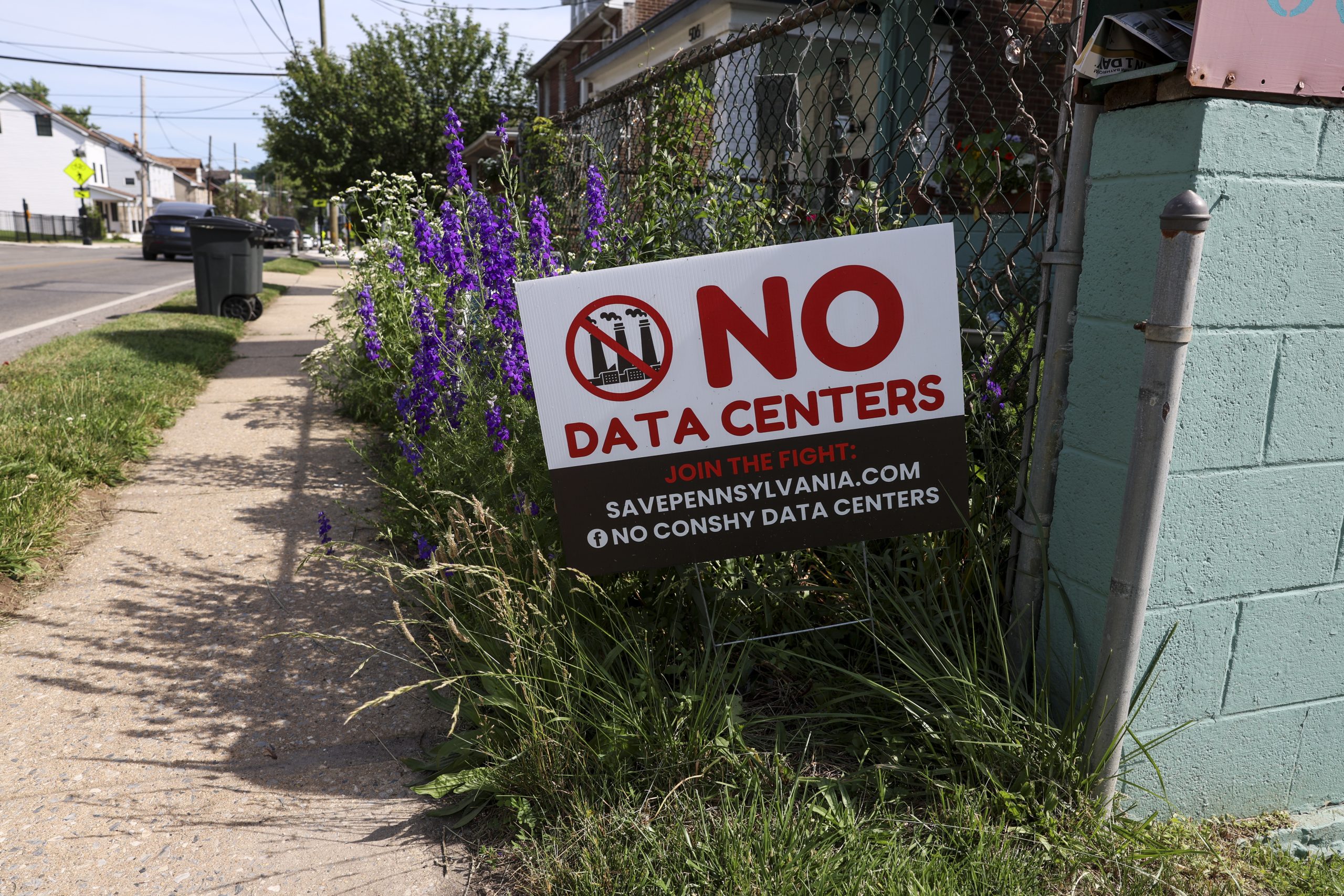
    A yard sign protests the proposed data center on New Elm Street near the Closed Cleveland-Cliffs steel mill photographed on Thursday, June 4, 2026 in Conshohocken, Pa.Monica Herndon / Staff Photographer

    Shapiro delivered remarks in Harrisburg before signing the order, touching on his visit to Archbald, a rural town in Northeastern Pennsylvania set for widespread data center development. The governor also outlined his opposition to controversial projects in Shapiro’s home county, Montgomery County, that he had recently denounced.

    “Archbald and Montco are just two examples of dozens of communities being overrun and overwhelmed by developers who don’t give a damn about us and think they can have their way,” Shapiro said. “Today, I’m formally putting them on notice.”

    Shapiro took specific issue with the more than 100 speculative projects across the state, which include some from real estate developers who are seeking building approvals without determining or disclosing the company for which they would be storing the data.

    The Data Center Coalition — the leading data center group representing Amazon, Microsoft, and other top developers — said in a statement that distinguishing between real, company-led projects and proposals is important and that rules should not be “changed midstream” for “verified and responsible data center projects.”

    “Companies have made plans, communities have prepared for economic opportunities, and workers are ready to build the next generation of digital infrastructure right here in Pennsylvania,” said Dan Diorio, the executive vice president for state policy and government affairs at the Data Center Coalition.

    Diorio previously told The Inquirer that Shapiro’s GRID standards were “extensive” compared with the 37 other states that offer sales tax exemptions.

    Shapiro’s administration appeared prepared to face legal challenges from the deep pockets of the data center industry or property developers. The order includes a severability clause, something not traditionally used in executive orders, that says if any parts of the order are “held to be invalid,” the rest of the order still stands.

    Shapiro has previously said his position on data centers has evolved. But his order Tuesday is perhaps his most dramatic shift: He has gone from consulting Amazon and the data center industry on his GRID principles earlier this year to pulling the tech giant and others from the state’s fast-track permitting program and requiring community-benefits agreements for the projects to move forward.

    Gov. Josh Shapiro signs an executive order restricting data centers in Pennsylvania during a ceremony in the Capitol in Harrisburg, Pa., Tuesday August 18, 2026.Kalim A. Bhatti / For The Inquirer

    The Amazon projects currently underway in Pennsylvania have already passed through the first phase of permitting, and will be required like all other projects to follow the requirements moving forward, a spokesperson for Shapiro said.

    An Amazon spokesperson did not respond to a request for comment Tuesday.

    There are six data center projects under construction in Pennsylvania, and 10 have received at least one state-level permit approval, Shapiro’s office previously told The Inquirer.

    Shapiro and the General Assembly have been under pressure by anti-data center activists to enact guardrails on the massive projects, with many arguing that Pennsylvania moved too quickly and sacrificed the state’s safety in favor of Big Tech. Pennsylvania lawmakers nearly unanimously supported ending the sales tax exemption for the projects, but failed to implement a measure during the spring legislative session.

    At the news conference Tuesday, Shapiro invited representatives from the Pennsylvania Association of Township Supervisors — the main group representing the local governments at the forefront of pushing for data center restrictions — in addition to advocacy groups including the Pennsylvania Utility Law Project and the National Resources Defense Council. The groups praised Shapiro’s plan.

    Though Shapiro’s order was widely lauded by Democratic state lawmakers and environmental groups, it was met with criticism from some of his detractors, including his Republican challenger for governor in November, Treasurer Stacy Garrity.

    Garrity’s first TV ad featured Shapiro’s support for data centers, and on Tuesday she said in a statement that Shapiro is “trying to gaslight the people of Pennsylvania into not believing what they’ve seen with their own eyes for the past 13 months.” (Garrity’s position on data centers has also changed since the June 2025 announcement, which she lauded at the time; she has since said Pennsylvania needs to put a “pause” on all data center development.)

    Megan McDonough, the state director for advocacy organization Food and Water Watch, said in a statement that “Shapiro knows that he’s been acting out of accordance with what Pennsylvanians actually need,” but that the order falls short.

    “Shapiro is feeling our heat because Pennsylvanians have made it impossible for him to ignore us,” she said. “The only solution to addressing AI data centers’ many woes is by placing a mandatory moratorium on all new data center development.”


  • Will Donald Trump and national Republicans help Stacy Garrity’s campaign from falling flat against Josh Shapiro?

    Will Donald Trump and national Republicans help Stacy Garrity’s campaign from falling flat against Josh Shapiro?

    Seated behind his desk in the Oval Office earlier this month, President Donald Trump spoke directly to the camera in front of him. He turned to his right and looked up at the Pennsylvania Republican who, as he had indicated just a few weeks earlier, might very well lose her race for governor this fall.

    “I think you can win,” he said this time, extending his hand to Stacy Garrity. It was a change in tune for Trump, who last month at an event in Pennsylvania said Garrity’s opponent, Democratic Gov. Josh Shapiro, was “expected to” and might win.

    The president’s confidence in Garrity — and whether his support will extend beyond a handshake and a 17-second video with her at the White House — has become a critical question in the final stretch of the Pennsylvania governor’s race.

    Down in the polls and lagging behind Shapiro’s unprecedented fundraising, Garrity has cultivated the president’s support and the potential boost, both financially and in Republican enthusiasm, that could come with it.

    It is a risky strategy for a swing-state candidate whose party holds the White House, and particularly as polls show Trump becoming increasingly unpopular. Shapiro and his allies have enthusiastically promoted instances when Garrity, the twice-elected state treasurer, has leaned into Trump’s agenda and brand of politics.

    But with less than three months before Election Day, it is not clear to what extent Trump or other key national Republicans will pitch in on her campaign.

    State Treasurer and Republican candidate for governor Stacy Garrity holds a rally in Bucks County at the Newtown Sports & Events Center in this 2025 photo. Tom Gralish / Staff Photographer

    Trump has not yet stumped in any significant way for Garrity in Pennsylvania, a swing state where he was a near-constant presence during his winning 2024 campaign. And he has not lent his vast political resources — including a Trump-aligned super PAC flush with $400 million — to Garrity or other Republican candidates as his party faces tough campaigns across the country in the midterm elections that will determine control of Congress.

    Several gubernatorial races around the country are considered competitive, a reality that also pits Garrity against GOP nominees who polling suggests have better shots of success. The same circumstances have doomed the most recent other Trump-endorsed Pennsylvania Republican nominees for governor — former State Sen. Scott Wagner in 2018 and State Sen. Doug Mastriano in 2022 — who never ended up with national support and lost by double digits.

    Campaigns typically heat up after Labor Day, and there is still time for Garrity’s national allies to converge to boost her. But observers say the political reality is also evident.

    “The president kind of looks toward two things,” said Samuel Chen, an Allentown-based Republican strategist who is not affiliated with Garrity and who previously worked for Tom Corbett, Pennsylvania’s most recent GOP governor.

    “One is loyalty to him. Garrity has been loyal, but has not necessarily been as vocal as some others have. The other side of it is he likes winners. He wants to endorse people who win,” Chen said. “Everyone in Trump’s orbit knows that Garrity has a very uphill climb.”

    Not supporting ‘lost causes’?

    The level of involvement from groups like the Republican Governors Association has been a key indicator of whether the party believes its nominee has a chance at winning recent gubernatorial elections in Pennsylvania.

    The RGA is made up of GOP governors who collectively support one another’s agendas and campaigns. Democratic governors have a similar alliance.

    In 2010 — the last time a Republican won the governor’s mansion in Harrisburg — the group was the largest donor to then-Attorney General Corbett’s gubernatorial campaign, giving him $6 million starting in August of that year. Four years later and helmed by then-New Jersey Gov. Chris Christie, the RGA was once again Corbett’s biggest donor. It donated more than $5.8 million as Corbett became the first sitting Pennsylvania governor in decades to lose a reelection bid. Christie, preparing to run for president in 2016, stumped with Corbett multiple times.

    The picture was starkly different in 2018 and 2022, when Republican voters nominated two candidates closely associated with Trump. Neither Wagner’s campaign against Democratic Gov. Tom Wolf nor Mastriano’s campaign against Shapiro ever became highly competitive — and the RGA and other national groups decided to sit out.

    “We’re watching Pennsylvania very closely,” Arizona Gov. Doug Ducey, then the chair of the RGA, said in September 2022. He added that the group would not support “lost causes” or “landslides.”

    The RGA would spend nothing in the state that year, even with Mastriano and former Trump lawyer Jenna Ellis pleading for assistance. Shapiro went on to trounce Mastriano by nearly 15 percentage points.

    This year, RGA chair and Montana Gov. Greg Gianforte has not publicly weighed in on Garrity’s chances since issuing a brief, generic statement congratulating her after her unchallenged primary in May.

    And the competitive landscape Republicans are facing across the country may mean Pennsylvania’s GOP nominee once again gets the short end of the stick. The RGA did not respond to requests for comment.

    Even with Pennsylvania’s status as a preeminent swing state that went for Trump two years ago, there are nearly a dozen more competitive gubernatorial races across the country this fall, according to the Cook Political Report, a nonpartisan group that provides election analysis.

    Georgia, Iowa, Nevada, Ohio, and Wisconsin — some of which voted overwhelmingly for Trump just two years ago — are all considered toss-ups. Four other states with Democratic governors — Oregon, Arizona, Michigan, and Kansas — are also considered more competitive than Pennsylvania, which is ranked as “solid Democratic,” according to Cook, despite Republicans like Garrity and Trump having won statewide two years ago.

    The RGA, according to its most recent filing with the Federal Election Commission, had less than $1.7 million in its RGA Right Direction super PAC after spending about $16 million so far in the current election cycle.

    Its recent spending has focused on Iowa, where Democrats are attempting to capture the governor’s office for the first time in two decades, and Kansas, where the RGA launched an ad this month.

    “There’s always competition for limited resources,” Charlie Gerow, a longtime Harrisburg-based Republican strategist who also ran for governor in 2022, said of the intraparty competition for donors. “There’s only so much campaign funding to go around as everybody’s trying to get a piece of it.”

    Trump hosted a fundraiser for Garrity in March at his Mar-a-Lago estate in Florida. He has also visited Pennsylvania twice this summer, though not for events specifically with Garrity — and in one in case he did not mention her among a list of candidates he was supporting.

    In July, Shapiro’s campaign announced he had raised $50 million since January 2025. The next financial filing deadline for statewide candidates is in September, but as of the last reporting cycle, he had outraised Garrity 10-1.

    President Donald Trump brings U.S. Rep. Ryan Mackenzie (right) to the stage as he holds an event in Mackenzie’s Lehigh Valley district at Mack Trucks in Macungie Tuesday, June 23, 2026.Tom Gralish / Staff Photographer

    But Matthew Beynon, a spokesperson for Garrity’s campaign, said she “does not expect, nor does she need, to go dollar-for-dollar with Josh Shapiro.” Instead, he said, she “just needs the resources to prosecute her case against Josh Shapiro … and she is on pace to be able to do so.”

    Garrity looks forward to “continued support” from the RGA, he said.

    Other national attention on Pennsylvania

    After Mastriano’s disastrous performance in 2022, Republicans coalesced around Garrity — whose 3.5 million votes in 2024 were the most ever for a statewide candidate in Pennsylvania — as their best shot at defeating Shapiro.

    But in the year since she received the party’s endorsement, Garrity has barely moved the needle. A Quinnipiac University poll in July found Shapiro leading Garrity 53% to 40% among registered Pennsylvania voters. Trump saw even lower scores: Just 39% of those polled approved of the president’s job performance.

    A poll from a Republican-leaning firm promoted by Garrity showed her down, 50% to 43%.

    Across Pennsylvania, she has also competed for attention and resources as her party prioritizes other major election battles this fall.

    Four Republican-held congressional districts — based in Bucks County, the Lehigh Valley, Scranton, and Harrisburg — are seeing a rush of national attention and money as their outcomes could decide control of the narrowly divided U.S. House.

    Shapiro has also invested heavily in trying to flip the state Senate to Democratic control for the first time in three decades, putting Republicans further on their heels. The $3.3 million that Shapiro committed to the effort is more than Garrity has raised in her entire campaign.

    Pennsylvania Gov. Josh Shapiro addresses the audience during a rally for Democratic congressional candidate Bob Brooks at the United Steelworkers Union Hall in Bethlehem, Pa. on Sunday, July 26, 2026.David Maialetti / Staff Photographer

    On the other side of the aisle, Pennsylvania’s top elected Republican — U.S. Sen. Dave McCormick — has endorsed Garrity but has not appeared to join in her public campaign efforts so far. A Trump ally and former hedge fund leader, McCormick has raised millions since his election in 2024, and political action committees associated with him have donated to other PACs working to elect Pennsylvania Republicans in Congress.

    McCormick has hosted events and campaigned for Garrity, and he “will keep doing everything he can to help her win,” said Mike DeVanney, a spokesperson for the senator.

    “He believes she demonstrates the kind of leadership we need and the kind that President Trump and many others have recognized as one that can move our commonwealth forward,” DeVanney said.

    Gerow said McCormick undoubtedly could help Garrity down the stretch.

    “He’s a prolific fundraiser. He has the connections, and he has the personality to raise large amounts of money. And he can be very, very helpful with the Garrity campaign if he weighs in with full weight,” Gerow said.

    Garrity’s campaign said McCormick has been an “incredible supporter,” including with his early endorsement and connections to supporters.

    Shapiro has also cultivated across-the-aisle relationships with some Pennsylvania Republicans who would be expected to promote Garrity.

    In an April interview with Punchbowl News, U.S. Rep. Brian Fitzpatrick, a Bucks County Republican running for reelection in the nationally watched 1st Congressional District, said he thought Shapiro would win his reelection contest and should run for president, adding: “I think Josh is very, very smart.”

    And during his 2022 run, Shapiro collected endorsements from other prominent Republicans, including Jim Schultz, a former Trump White House lawyer, and former Republican U.S. Rep. Charlie Dent.

    The final stretch

    Though the November election is less than three months away, that is still plenty of time in politics. Most ad spending does not start until September, and ground game efforts — door knocking, phone banking, and get-out-the-vote campaigns — get underway in the fall.

    Winning Pennsylvania is a priority for Trump in the midterms, and Garrity’s campaign said she is “grateful” for his continued support.

    On the state level, James Markley, a spokesperson for the Pennsylvania GOP, said the party is “fully invested” in helping Garrity beat Shapiro. Those efforts include training “thousands” of volunteers and working on education programs around early voting and casting mail-in ballots.

    “The more Pennsylvania voters learn about Stacy Garrity, the more they love her,” he said in a statement. “The more Pennsylvania voters learn about Josh Shapiro, they realize he has no record to stand on.”

    Gerow said Garrity’s challenge, with limited funds compared with Shapiro, is whether she has enough money to get her message out.

    “The major concern for her immediately is to be able to tell her story,” Gerow said. “She doesn’t have the resources to tell that story effectively right now, and she has a great story.”

    Buttons for State Treasurer Stacy Garrity and President Trump are left on a table following a VIP reception before a Garrity rally in Bucks County Thursday, Sept. 25, 2025. Tom Gralish / Staff Photographer

    Throughout her campaign, Garrity has hammered Shapiro on several issues she said reveal his lack of transparency as a public official. She has held roundtable discussions blasting Shapiro for his early embrace of data centers, a position he has since distanced himself from after calling for new guidelines for their development. Her campaign released a video series online that questions his handling of criminal investigations. And she has repeatedly insisted that Shapiro, who is widely rumored to be running for president in 2028, is “more interested in Pennsylvania Avenue than helping Pennsylvania families.”

    Samantha Reposa, a spokesperson for Shapiro’s campaign, disputed Garrity’s framing and emphasized that she has stood in lockstep with Trump on most of his positions.

    “Garrity is now running to be nothing more than a rubber stamp for Trump and his agenda that’s hurting Pennsylvania families — and we will continue to hold her accountable,” Reposa said.

    A new ad from Shapiro’s campaign paints her as “100% MAGA,” highlighting her support for Trump’s tariffs.

    Given Garrity’s fundraising deficit, Chen said, he would advise her to focus on meeting individual people in the community, if he were running her campaign.

    “Forget the GOP dinners. Start going to fairs. Start going to places that Republicans don’t show up. Start retail politics, and start introducing yourself to the state outside of Donald Trump, outside of modern Republicanism,” he said. “Tell the state what you’ve done for them and what you would do differently [as governor].”

    Staff writer Joe Yerardi contributed to this article.

  • Edwin López Cornejo prayed for another year to see his daughter grow up. He died in ICE custody.

    Edwin López Cornejo prayed for another year to see his daughter grow up. He died in ICE custody.

    Half a year into fatherhood, Edwin Jeovanny López Cornejo found the sight of his daughter, Ashley, revitalizing after a long day at work.

    It was 2014. López Cornejo, an immigrant from El Salvador, had been working at a packaging company in South Plainfield, N.J., for about seven years. He came to the United States in 2007, filed an asylum claim, and received employee authorization from the federal government after being deported the year prior, according to court documents.

    As he would often do in the years that followed, he took to Facebook to express his gratitude to God and his love for his daughter.

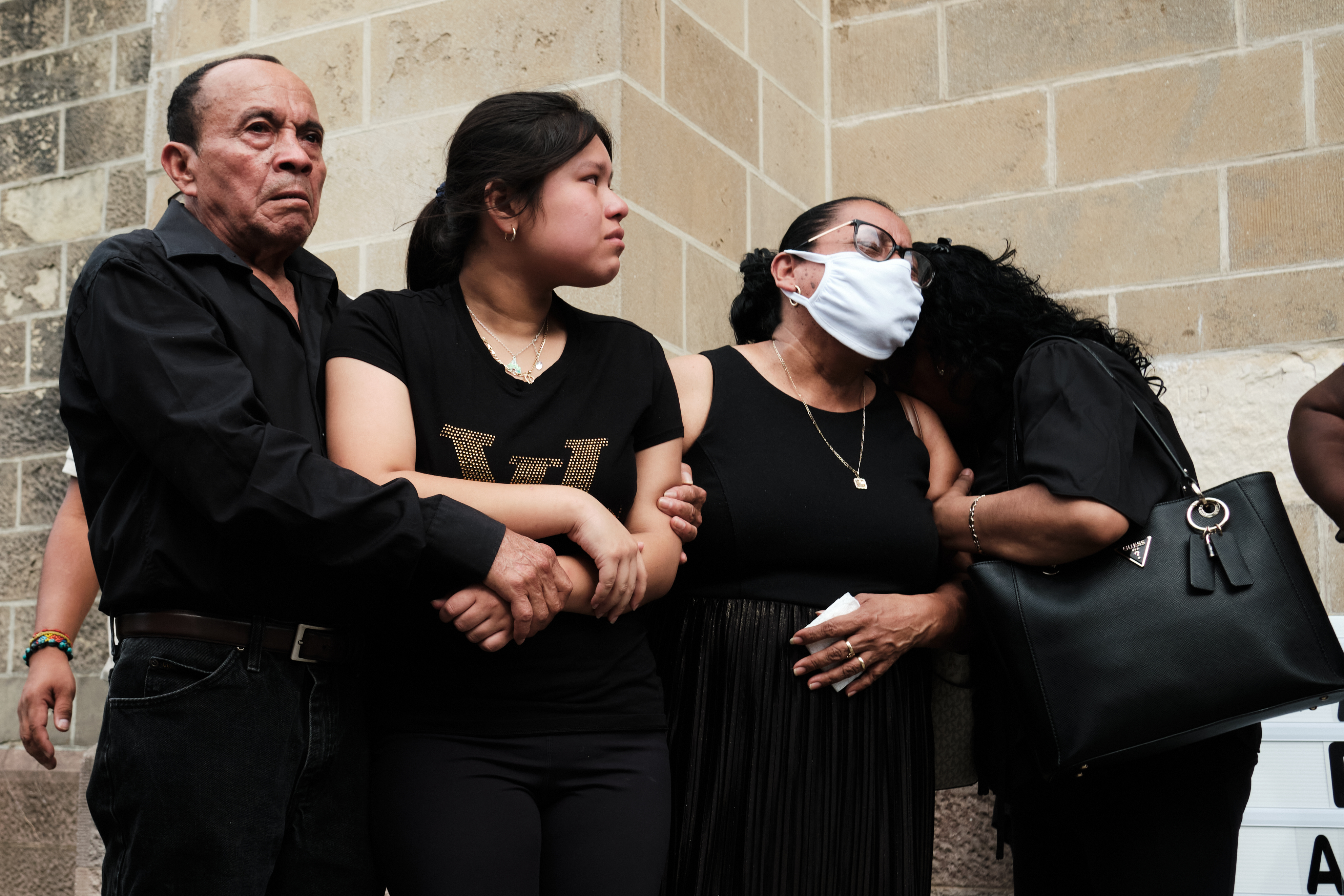
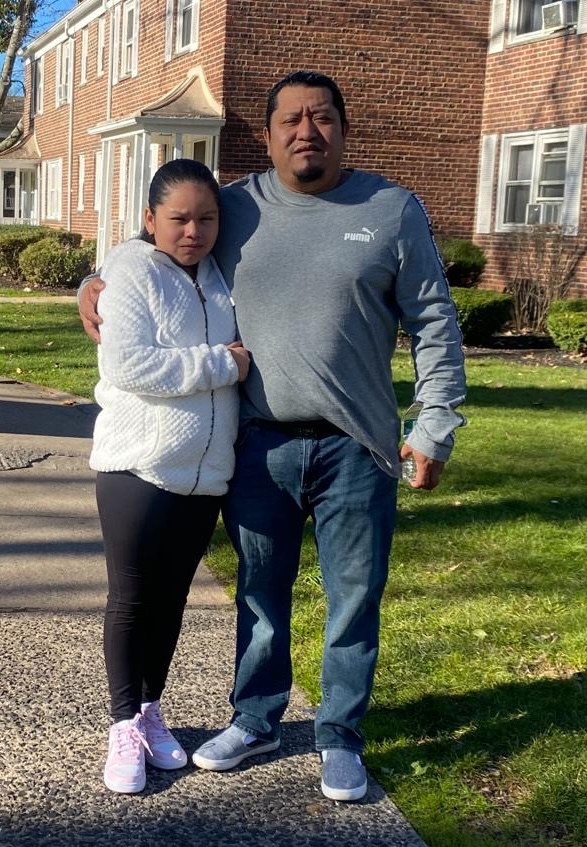
    This past Friday, Ashley Lopéz, now 12, wore all black. She stood between her paternal grandparents as they held each other and wept at her father’s wake at Crescent Avenue Presbyterian Church in Plainfield.

    López Cornejo had died in ICE custody just under a week earlier at the age of 39 after experiencing what the federal agency called a medical emergency at Delaney Hall, an ICE detention center in Newark run by the private company GEO Group.

    Ashley has barely been speaking. Or eating. And she does not want to be around people, María Cornejo, her paternal grandmother, told The Inquirer in an interview on Monday, speaking in Spanish.

    Letters of support submitted to the court after his June arrest, remarks from his family, and more than a decade of public Facebook posts written in Spanish paint the picture of a father who deeply loved his daughter.

    Twelve years ago, Lopéz Cornejo and his then-girlfriend were expecting twins, but the boy died in the fifth month of pregnancy, Cornejo said.

    “She is the only child he had. You should have seen him when she was born. That man was the most joyful man with his daughter in his arms,” Cornejo said. “It was his first time being a father, and he wouldn’t even sleep so he could watch her sleep and make sure she was OK.”

    López Cornejo was unable to see his daughter at Delaney Hall. He had been there for about six weeks.

    Delaney Hall has been the site of high-profile political clashes representing the national conflict between Trump’s supporters and immigrant rights advocates. The detention center serves a critical role for the president’s mass deportation agenda, and complaints of poor and unsanitary conditions have sparked continuous protests, uproar from Democratic lawmakers, and a reported hunger strike inside, which the Trump administration denied happened.

    In December, a 41-year-old Haitian national named Jean Wilson Brutus died one day after entering Delaney Hall, and U.S. Rep. Rob Menendez (D., N.J.) recently said another person died at the hospital after a potential seizure at the facility earlier this summer. Nationally, at least 23 fatalities in ICE custody have been reported this year as the rate has increased during Trump’s second term.

    López Cornejo’s asylum claim was still pending — 19 years after he filed it — when ICE agents arrested him, according to a habeas corpus petition challenging his detention.

    An undated photo of Edwin López Cornejo and his daughter, Ashley, in a pool.Courtesy family of Edwin López Cornejo

    Around 9 a.m. June 18, López Cornejo headed out to pick up his car from a towing company, where it had been taken for being parked for too long, his mother recounted Monday. She urged him to take a taxi and avoid walking, given a heightened fear of running into ICE in the community.

    She said goodbye, unaware it would be the last time she would hug her son.

    Lopéz Cornejo ended up walking because roads were closed.

    Masked agents stopped him and asked for his ID. When he produced his Salvadorian identification, they put him in an unmarked vehicle with two other people who had already been detained, his lawyer Ingrid Echeverria recounted in the habeas corpus petition.

    Cornejo said her son called her from inside Delaney Hall that evening. The first question he asked was about Ashley.

    According to his family and court documents, he took medicine for diabetes, epilepsy, and high blood pressure. Interruption of his strict medication schedule carries the risk of breakthrough seizures and associated harm, according to the petition. That July 24 court document did not accuse ICE of denying him his medication but expressed concern over potential medical risks if he was transferred to another facility, as the agency at one point planned.

    On. Aug. 1, Cornejo got a call from University Hospital in Newark. The person on the phone told her that her son’s heart was not beating by the time he arrived, after he collapsed at Delaney Hall. ICE has not released an official cause of death, but U.S. Sen. Andy Kim (D., N.J.) said it was a heart attack and cardiac arrest. Days after his death, Kim and fellow New Jersey Democratic U.S. Sen. Cory Booker put forward legislation that would require the shuttering of Delaney Hall.

    New Jersey Attorney General Jennifer Davenport said last week that her office was launching a civil rights investigation into Delaney Hall, citing reports of “alarming conditions” and recent deaths.

    Sen. Andy Kim (D., N.J.) stands between federal agents and demonstrators in an attempt to prevent a clash outside the Delaney Hall migrant detention center in Newark, N.J., on May 25.DAKOTA SANTIAGO

    In response to López Cornejo’s death, ICE put out a statement saying that everyone in ICE detention gets proper, around-the-clock medical care, and that López Cornejo “was seen by medical professionals.”

    His family doesn’t buy it. They blame ICE for detaining him and accuse the agency of failing to provide him proper medical care. Danilo López, his brother, said at a news conference that his brother told him over the phone that he had to fill out a form to just get Tylenol at Delaney Hall and it could be days before he received it, a claim ICE did not directly address when asked.

    “He lived a normal life and worked normally while taking his medicine and with a proper diet, working more than eight hours a day, and had no problem,” Cornejo said in the interview.

    Just days after her father died, Ashley López said at a news conference: “On the same day, we were both dead. The only difference was his heart stopped beating. I am going to grow up without a father.”

    Family members of Edwin López Cornejo including (from left) his mother Maria Cornejo, daughter, Ashley, and his former wife, attend a news conference on Tuesday, Aug. 4, 2026, in Highland Park, N.J. Yuki Iwamura

    ‘The true love of my life’

    On his daughter’s first birthday, López Cornejo wrote on Facebook that Ashley gave him “one more reason to live.”

    “I want to tell you that when I learned you were going to be born it felt like it would be forever before I had you in my arms,” he wrote. “I will never forget the first day that I changed you and gave you a feeding bottle. Wow my girl, those moments I will never forget and now you are turning one. Wow how the time passes.”

    An undated photo of Edwin López Cornejo with his daughter, Ashley.Courtesy family of Edwin López Cornejo

    On her third birthday, he called her “the true love of my life,” and said she motivated him to be strong and keep moving forward.

    “I would be willing to give my life for yours,” he wrote.

    On his own birthday, he often thanked God for another year of life. And as a birthday wish, he asked for another year to see his daughter grow.

    Ashley, a U.S. citizen, was born in New Jersey, according to the petition, which includes her birth certificate and public school records to support his lawyer’s argument that López Cornejo has community ties. The documents show she received a certificate of achievement for math at 9 years old “for demonstrating fluency of division” in less than six seconds. And shortly after she turned 10, she was crowned “Art Leader of the Week.”

    Ashley lived with her dad half the week, but he picked her up from school every day, and she would run into his arms to greet him, Cornejo said. He took pride in her success in school.

    “He would tell her, ‘I want you to be a doctor so you can cure me one day,’” she said.

    Family members of Edwin López Cornejo arrive at an Aug. 4 news conference in Highland Park, N.J.AP Photo/Yuki Iwamura

    A hard worker

    López Cornejo started working in construction just three weeks before his detention after the warehouse he worked at changed locations, his mother said.

    Court documents show he worked at UpperClass Warehouse in South Plainfield from March 2021 until this May, and he previously worked multiple restaurant jobs in New Jersey. He paid taxes to the state of New Jersey and the federal government.

    Jesse Fischbein, vice president of finance at Just Packaging, where López Cornejo worked from 2007 to 2015, said in a letter of support attached to the petition filed with the court last month that he “truly was a company-first employee, who didn’t believe that the workday was simply 7 AM to 3:30 PM.”

    “He was punctual, always pitching in to help other employees when his tasks were completed, and always asked management if there was more to be done,” Fischbein wrote.

    People detained inside Delaney Hall stand at windows in Newark, N.J., as demonstrators gather outside on May 28, 2026. The protests were fueled by reports of detainees staging a hunger strike over the conditions of their confinement.TODD HEISLER

    But Fischbein said there was one thing López Cornejo would always be better at than his job: being a father.

    “From what I know about him outside of work — he is a father, and that is the job he excels at more than any function he performs for my company,” Fischbein said.

    A coworker-turned-friend, Juan Zavala, said in another letter of support that López Cornejo had “earned the respect of everyone around him” through kindness, compassion, respect, and honesty.

    “He is a loving, responsible, and caring parent who is deeply involved with his daughter’s life and always puts her well-being first. It is very clear that his family means everything to him,” Zavala wrote.

    One of the ways López Cornejo expressed himself to his loved ones was by sharing links to music on Facebook. He dedicated love songs to his daughter and others, he shared reflections during the pandemic with a Christian worship song, and he said the music video for “Pose” by Daddy Yankee — the singer known for the hit song “Gasolina” — inspired him to learn to dance reggaeton.

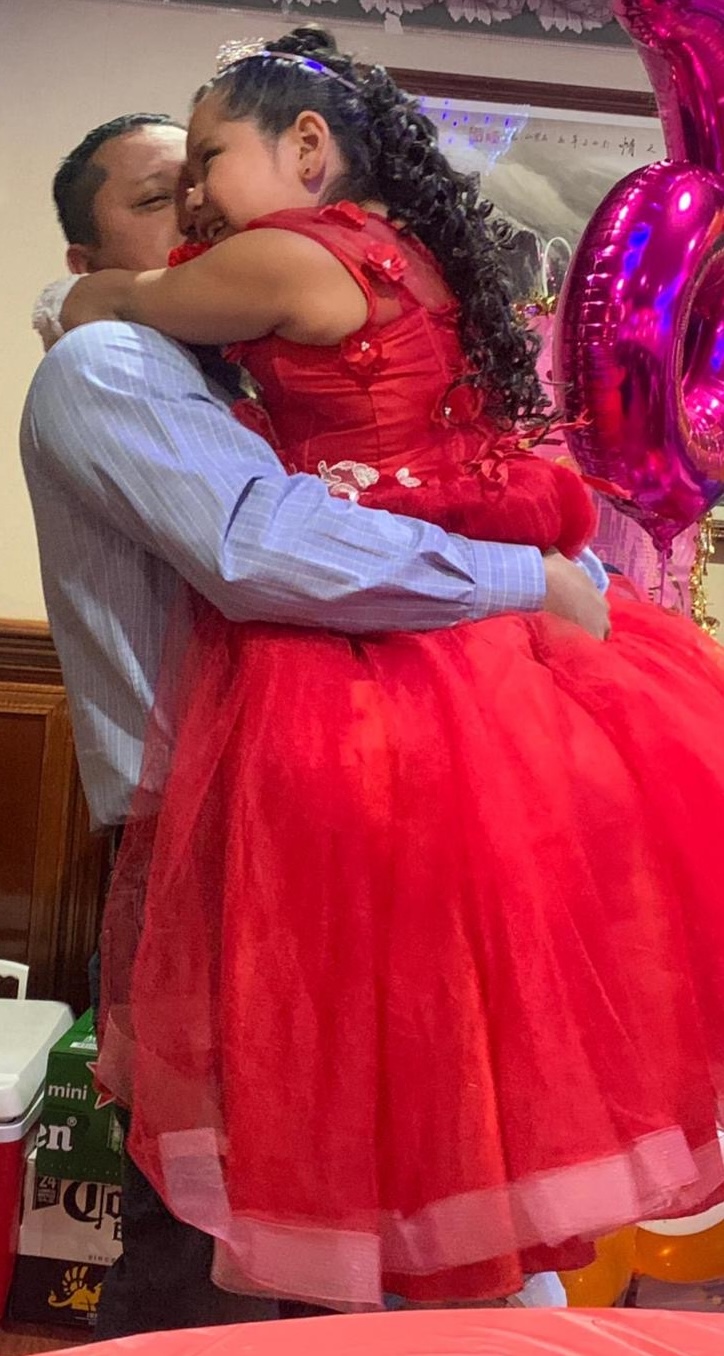
    López Cornejo and Ashley dreamed about dancing together at her quinceañera, a celebration for her 15th birthday.

    “He just wanted to dance the waltz with his little girl, and they so looked forward to that party,” Cornejo said, crying. “Now my little girl won’t have her dad.”

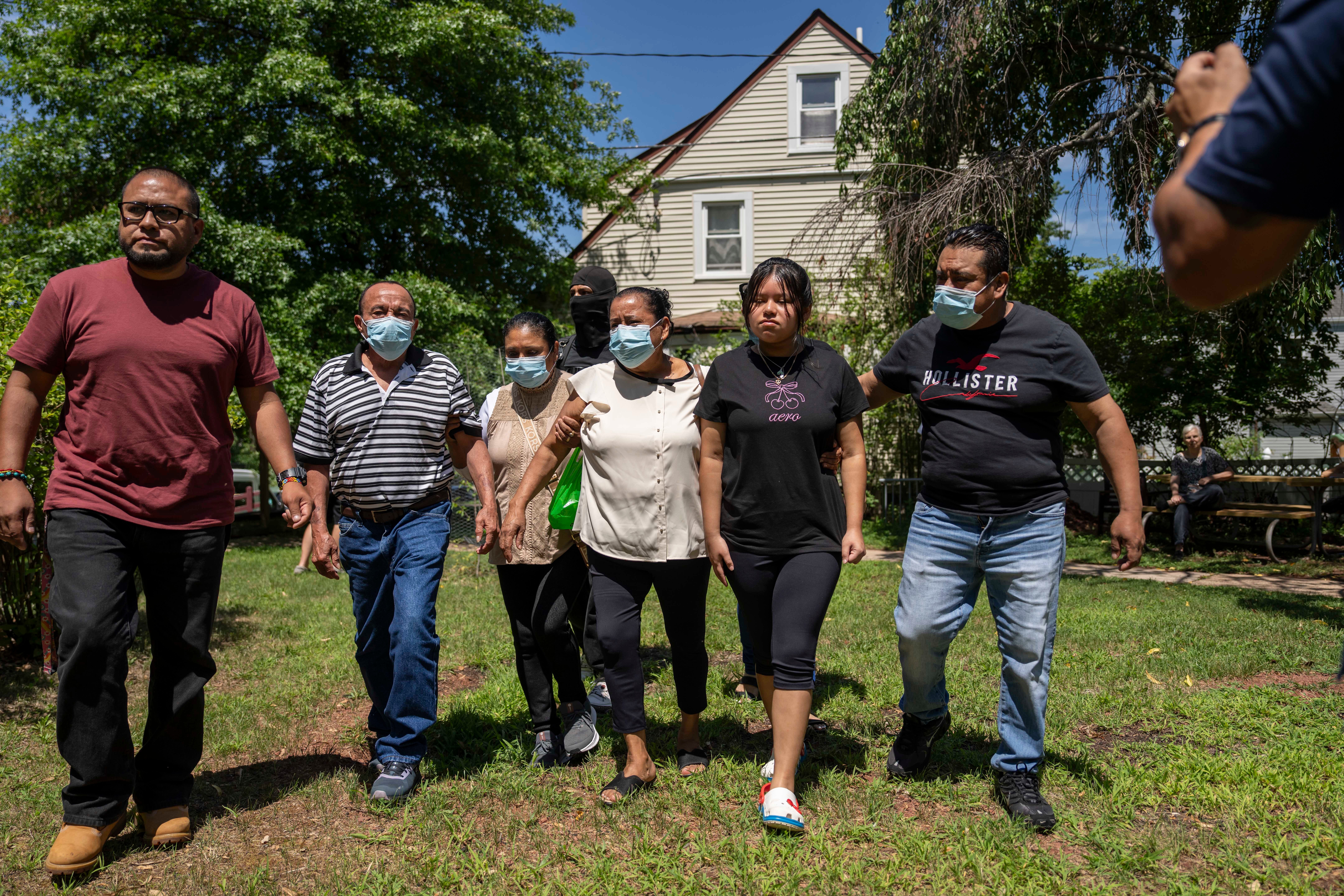
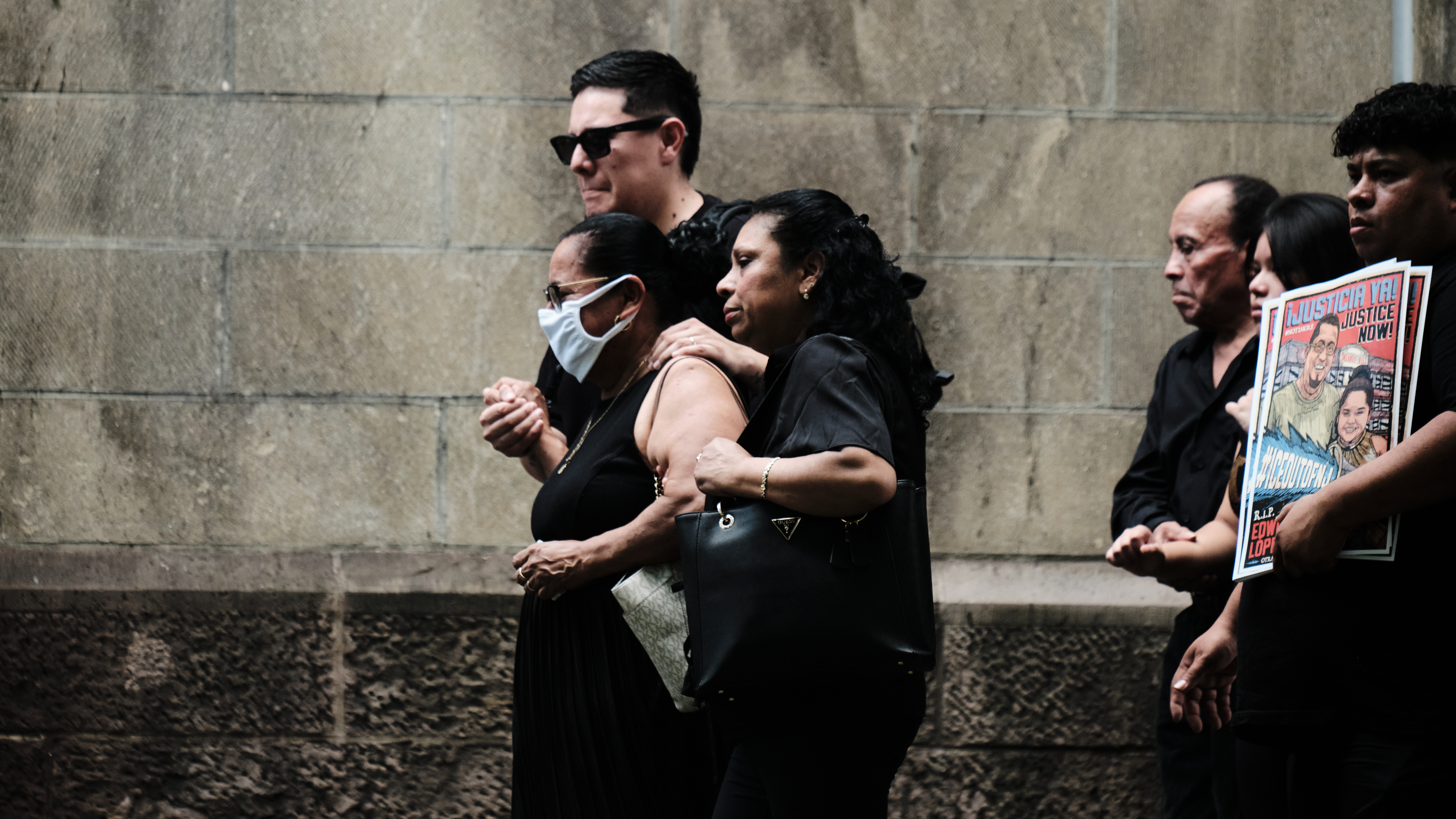
    Family members walk to the church side entrance during the wake of Edwin López Cornejo, after his death in ICE custody in New Jersey on Aug. 7 in Plainfield N.J.Max Blease / For The Inquirer

    ‘Profoundly difficult consequences’

    In the July 24 petition, his lawyer called on ICE to explain why he was detained, and consider either his immediate release or a hearing in front of an immigration judge.

    His lawyer said that he was served with documents in English he could not read, and that he did not have a criminal record and always showed up for his court dates.

    His friends and family described him in similar terms in letters of support submitted to the court last month.

    Kelvin E. Urquilla Flores, who met López Corneja at Just Packaging nearly 20 years ago, described him as “a peace-loving, law-abiding individual” who is “an asset to this country and to his community.”

    Edgar Fabián Guaman, who said he had known López Cornejo for almost two decades, said that his family friend did not present a risk to the community — but instead improves the well-being of those around him.

    “I respectfully express that a possible separation of Mr. López Cornejo from his family unit would have profoundly difficult consequences for his daughter and his mother, who depend on his presence, support, and emotional stability,” Guaman wrote.

    An undated photo of Edwin López Cornejo and his daughter, Ashley.Courtesy family of Edwin López Cornejo

    Through his Facebook posts, López Cornejo shared a deep appreciation for his parents. In May 2016, he thanked God for giving him “an exemplary mother,” whom he also described as a “second mother” to his own daughter.

    “Maybe I’m not the perfect son, but I try to behave at your level, mother,” he wrote. “I know you gave me the greatest gift, life, and I will never be able to repay you, mother.”

    The last post that shows up on López Cornejo’s Facebook page was a message directed to God and his daughter on her 12th birthday last November.

    Staff writer Abraham Gutman contributed to this article.

  • A Philly entrepreneur allegedly scammed NFL athletes, everyday investors out of more than $5 million

    A Philly entrepreneur allegedly scammed NFL athletes, everyday investors out of more than $5 million

    Hours before Mohamed Coulibaly was found dead in his Gloucester County home, one of his alleged victims said, the 23-year-old entrepreneur had been desperately seeking a $75,000 loan.

    A recent Barron’s investigation alleged Coulibaly defrauded three former NFL players out of $1 million in an e-commerce scheme involving fake Shopify stores. Now others who invested in the venture or lent Coulibaly money were blowing up his phone. They wanted to know if Jalen Carter and several former members of the Eagles, including Nakobe Dean and Terrell Edmunds, were even real clients, a claim Coulibaly made on promotional materials.

    Above all, these people wanted their money back.

    The morning of his death, July 31, Coulibaly solicited money from a New York man, who agreed to speak with The Inquirer on the condition of anonymity to protect his family’s privacy. He is one of at least 10 people, including the three former NFL players, alleging Coulibaly scammed them out of more than $5 million through phony investments over the last year.

    Coulibaly, who lived in Mullica Hill, a section of Harrison Township, promised to send a Lamborghini, two gold Rolexes, and a signed Lionel Messi cleat as collateral for what was to be a weeklong loan.

    Coulibaly still owed the man $1 million for a bridge loan due in March. Yet he insisted the additional loan somehow would make it possible to return the initial money owed. His alleged victim said he figured he could only gain from the arrangement — if the collateral proved to be real.

    But a driver — not in a Lamborghini — arrived at his doorstep with two fake watches, an unauthenticated signed cleat, along with an insurance card and a bill of sale for the promised luxe car, according to the man.

    The man called off the loan.

    “[Coulibaly] then started to cry hysterical on the phone,” the victim said. “He said, ‘I’ve lost it all, please help me here, please help me here.’”

    Coulibaly was found dead later that day.

    Mohamed Coulibaly attends Milan Fashion Week on Jan. 19 in Milan, Italy.Dave Benett/Getty Images

    The Gloucester County Prosecutor’s Office is leading the investigation into Coulibaly’s death and declined to comment. No charges have been filed in connection to the alleged scams Coulibaly is accused of spearheading.

    Coulibaly’s death has only added a layer of uncertainty for his allegedly defrauded clients, who now believe they were unwitting participants in a Ponzi scheme. New so-called investments went toward paying off other clients. But the chain could not be sustained.

    “In terms of his death, it sounds rather brash or harsh, but the only reason I’m upset for his passing is that he’s not able to go to jail and suffer,” the bridge loan investor said.

    The Inquirer spoke with four victims, all but one of whom asked to remain anonymous citing lingering shame, privacy concerns, and, in one case, safety considerations. They provided alleged contracts Coulibaly gave them, text messages, screenshots of their purported Shopify store sales, and a whistleblower report sent to federal and Pennsylvania financial regulators.

    In hindsight, the business always seemed too good to be true. The young entrepreneur convinced them they could rake in millions each month selling vacuums, printers, desktop humidifiers, and silicone trays on Shopify, an e-commerce platform similar to Amazon.

    At first, investors said they had no reason to question Vent Motion LLC, also known as Motion Venture. Shopify alerted the victims to a steady stream of sales through their phone apps.

    But at least two Shopify stores victims bought into were fake, full of transactions a Barron’s analysis suggests are also a sham. Shopify did not respond to requests for comment.

    The alleged victims say Coulibaly lured them in by highlighting purported investor relationships with wealthy and connected people. His pitch deck listed several former members of the Eagles and the NBA as clients. Representatives for the current and former Eagles declined to comment or could not be reached.

    “A selling point [Coulibaly] gave me was, ‘Hey, we only have about 90 to 100 people in this,’ insinuating you can make it behind the velvet rope because everybody involved is celebrities or athletes, and this is just a venture they do,” said another of the defrauded investors, requesting anonymity because family and friends do not know about the scam.

    Yet as more victims have found one another in the wake of Coulibaly’s death, it has become clearer the scheme was not limited to targeting NFL players.

    It involved everyday investors from Arizona, Pennsylvania, and New York who now want to know if any of it was real.

    A ‘magnetic’ man with the digital footprint of a business phenom

    Coulibaly knew how to sell the image of a successful entrepreneur.

    He was a guest on numerous podcasts and featured in publications such as Disrupt Magazine, Business Insider Africa, and the Source in recent years; some of the pieces have no author byline, making it unclear if they were paid content.

    His story always hit the same beats: Coulibaly was a professional soccer player. He made $4 million reselling rare sneakers before he turned 21. His success was largely attributed to “building connections” with athletes and influencers. Grinding was the key to success.

    But much of that was embellished.

    A database for American high school sports coverage noted Coulibaly played soccer for Roxborough High School.

    Coulibaly said he began his professional career with the New York Red Bulls soccer team, but a spokesperson said Coulibaly never had a contract.

    A friend from Coulibaly’s days at Temple University said the sneaker venture Heatkickcity was also a scam that swindled students out of thousands. He asked not to be named out of safety concerns, saying Coulibaly often touted relationships with gang-affiliated people.

    While Coulibaly told publications he was born in Mali, West Africa, and immigrated to the United States at a young age, while in college, he often intimated that he was a trust fund child and that his parents worked for the French government, the Temple friend said.

    He added that may have helped induce so many of their peers to pay a $1,200 membership for monthly access to rare sneakers that ultimately never came.

    “He’d be like, ‘It’s stuck in shipping,’ or ‘my assistant forgot to order them,’ or ‘my assistant’s slacking,’ and then he would just keep on extending it, extending it,” said the friend. “If you questioned him in any way, shape, or form about the product that you paid for, then he would switch to angry mode.”

    The friend eventually got his money back after pressuring him for weeks but said Coulibaly continued his self-proclaimed pursuit of becoming a billionaire.

    “He scammed his best friends,” the friend said. “Nobody was off-limits.”

    Coulibaly’s next venture was fashion line Motion Apparelz. It was profiled in Forbes last year, where the author describes Coulibaly’s energy as “magnetic.” In the piece, Coulibaly name-drops artist friends, including rapper YG, who was later listed as an investor in Motion Venture promotional materials.

    Rapper YG performs at the Coachella Music & Arts Festival in 2019.Amy Harris

    YG’s agent could not be reached for comment.

    Outside of the glowing profiles, a now-defunct Instagram account also detailed a lavish lifestyle full of run-ins with celebrities, boat jaunts on luxury yachts with city skylines in the background, and snapshots of Coulibaly in or in front of private planes. Often, Coulibaly could be seen wearing gold watches, what appear to be Van Cleef & Arpels bracelets, and diamond-studded chains.

    Coulibaly’s digital footprint set the stage for an even bigger business pitch.

    A business promising exorbitant returns

    When it came to Vent Motion LLC, Coulibaly told clients he operated “factories in China and India with a combined team of 125 full-time employees,” according to a pitch deck he showed investors that was obtained by The Inquirer.

    This allowed stores to operate without keeping any inventory and reducing overhead — a model known as drop-shipping.

    The savings from eliminating the middlemen, he said, could then be reinvested into artificial intelligence-driven ads and “influencer amplification” to drum up more customers. Coulibaly’s company would set up and manage the Shopify stores on behalf of investors, pushing out additional advertising or swapping out products if sales slowed.

    Clients would be charged a 20% to 25% service fee for that work, and even so, Coulibaly dangled extraordinary returns for those who joined the venture.

    One Shopify store that began with a $550,000 investment in January 2024 had allegedly generated $2 million in revenue in April and a whopping $23 million in July of that year. By August, this particular store had generated a total of $84 million in revenue, according to the company’s unsubstantiated pitch deck.

    Further sweetening the deal was an initial investment “protection” guarantee if their store did not generate profit within six months.

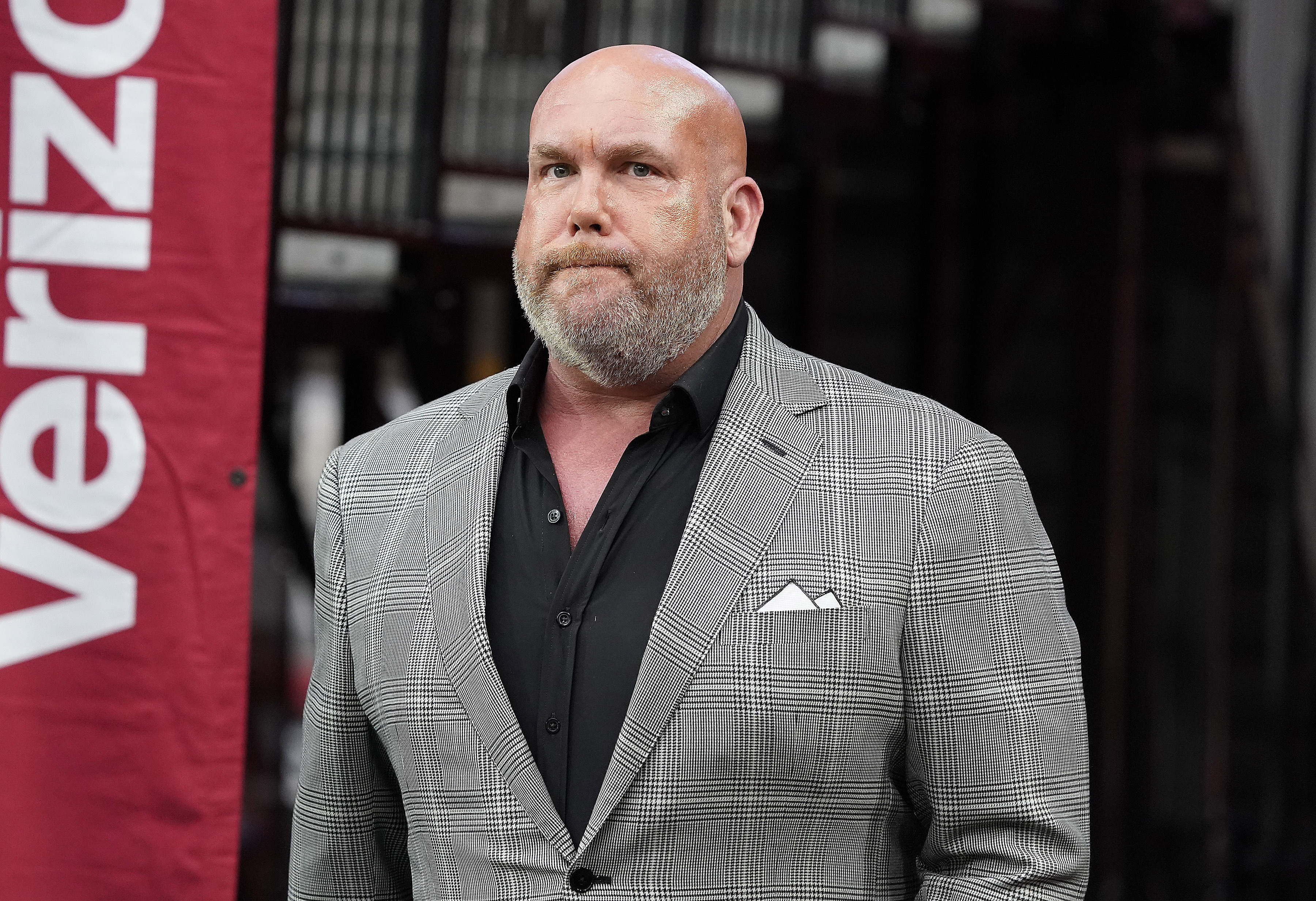
    Former Arizona Cardinals General Manager Steve Keim says he was just as much of victim of Mohammed Coulibaly’s alleged scam.Darryl Webb

    It’s what got Steve Keim, former general manager of the Arizona Cardinals, into the business.

    Keim said he met Coulibaly through mutual Eagles acquaintances and by August 2025 he had bought his first Shopify store, which was recording sales at a pace that had him on track to triple his investment over six months. Keim bought into six more stores the following month, he said. His son and ex-wife would also buy into the business for at least a $1 million investment between all three.

    Keim said he was soon offered the role of chief operating officer/chief growth officer, which he now sees as a way for Coulibaly to “legitimize his business.”

    “I introduced him to people to sell stores to and that sort of thing,” said Keim, who describes fulfilling a figurehead role with no decision-making power. “He called me the COO but he also made promises to give me health insurance and to have some kind of bonus structure.”

    The health insurance, bonuses, and exorbitant returns never materialized. Keim said he never had access to bank records and was never made aware of how many people gave money to Motion Venture. But by the start of the year, Keim claims, a flood of disgruntled investors were asking him for help getting their money back. Around this time, Keim said, he asked Coulibaly to stop using his name in promotional materials and told him he no longer wanted to be COO.

    Keim contended he was as much of a victim as anyone else, holding onto hope that he could recover his money until Coulibaly’s death.

    “This went downhill fast,” he said. “Not only did I get my name drug through the mud, I lost a lot of money since I was an investor.”

    A Dubai deal

    As more investors were demanding access to their Shopify funds in the fall, Coulibaly was telling them that the Dubai firm Middle East Venture Partners was interested in buying the operation for $215 million.

    All they had to do was reach 175 online stores and meet other benchmarks by Aug. 1.

    To back his claim Coulibaly produced a letter of intent dated Aug. 14, 2024.

    Troubling for investors: The letter was dated more than a month before the company was registered in Pennsylvania.

    The discrepancy was the biggest red flag for Barry Minkow, a convicted fraudster who now investigates scams on behalf of fraud victims. He started poking around the company at the start of the year for an investor who had put up $150,000.

    “So here you are looking at a private equity company saying they’re going to buy up this company that doesn’t even exist for $200 million?” Minkow said in disbelief.

    Middle East Venture Partners did not respond to an email to asking if a relationship existed with Coulibaly’s Vent Motion LLC.

    With the permission of three of the alleged victims, Minkow submitted a 23-page whistleblower report to the U.S. Securities and Exchange Commission, FBI, and Pennsylvania Department of Banking and Securities. The report laid out victim accounts and flagged glaring issues with Motion Venture’s business model.

    Minkow warned regulators in February that intervention was essential to “halt ongoing solicitations, trace misallocated funds,” and stressed the importance of doing so “before the scheme inflicts further, irreparable harm.”

    Minkow would prove to be right. Motion Venture was still actively recruiting new investors that month.

    Picking up the pieces

    Coulibaly’s college friend thinks he might have been one of the first victims of the Shopify sometime about three years ago. It involved less paperwork back then, more of a handshake deal. The friend put in $5,000 in a store with an investment protection promise in place, he said. Unlike that time in college, however, the friend only got half his money back.

    The friendship with Coulibaly cooled after that.

    “People just keep on saying he scammed NFL players,” said Coulibaly’s college friend. “No, anybody with money could be scammed, no matter how small.”

    Coulibaly would insist money issues were the Dubai firm’s fault until his death, according to his alleged victims who shared screenshots and voice memos of conversations.

    He ricocheted from distraught, lamenting the financial ruin that awaited him if he did not acquire more investors, to defiant, celebrating the Philadelphia 76ers’ LeBron James trade on X as he dodged investors.

    When Keim and another investor flew into Philadelphia to meet with Coulibaly in late July, they spent a day and a half trying to figure out how much money was left, to no avail.

    It was around that time that Coulibaly was soliciting the New York man for the $75,000 loan.

    Coulibaly’s last post on X was a reshare a day before his death. “Trying to be everyone’s friend is a foolish behavior,” it read.

    Whether any investor money remains is unclear. A now-defunct GoFundMe page put together by a man claiming to be Coulibaly’s brother raised more than $12,000 for the body’s “international transportation arrangements.”

    Investors are also trying to figure out what legal recourse they might have, if any.

    Coulibaly’s death has shattered any last remaining hope some victims had that a Dubai firm was to blame for cash-flow issues, and they are now seeking legal help.

    It also left them feeling cheated one last time.

    Staff writer Ryan W. Briggs contributed to this article.

  • ICE arrests surge at Philly airport, including those of a babysitter and a senior citizen

    ICE arrests surge at Philly airport, including those of a babysitter and a senior citizen

    Immigration advocates say at least 10 people have been arrested by ICE at Philadelphia International Airport since July 12, including a 68-year-old grandmother and the young babysitter of three children.

    That comes amid a nationwide push by the Trump administration to increase arrests at American airports, spurring immigration attorneys to warn noncitizens with limited documentation that travel has become risky, including for those with valid work permits or pending applications for relief.

    “People might not think Philly is being targeted, but we are,” said Vivian Chang, executive director of Asian Americans United, an advocacy group. “They’re trying to threaten people, trying to intimidate them — you can’t work freely, you can’t travel freely, you can’t fly.”

    She said the arrests in Philadelphia include three people originally from Indonesia and others from India, Ukraine, China, Chile, and Argentina. Another person, a religious leader, was briefly taken into custody and released, she said.

    Chang described the arrests in Philadelphia as especially troubling because the airport is owned and operated by the city.

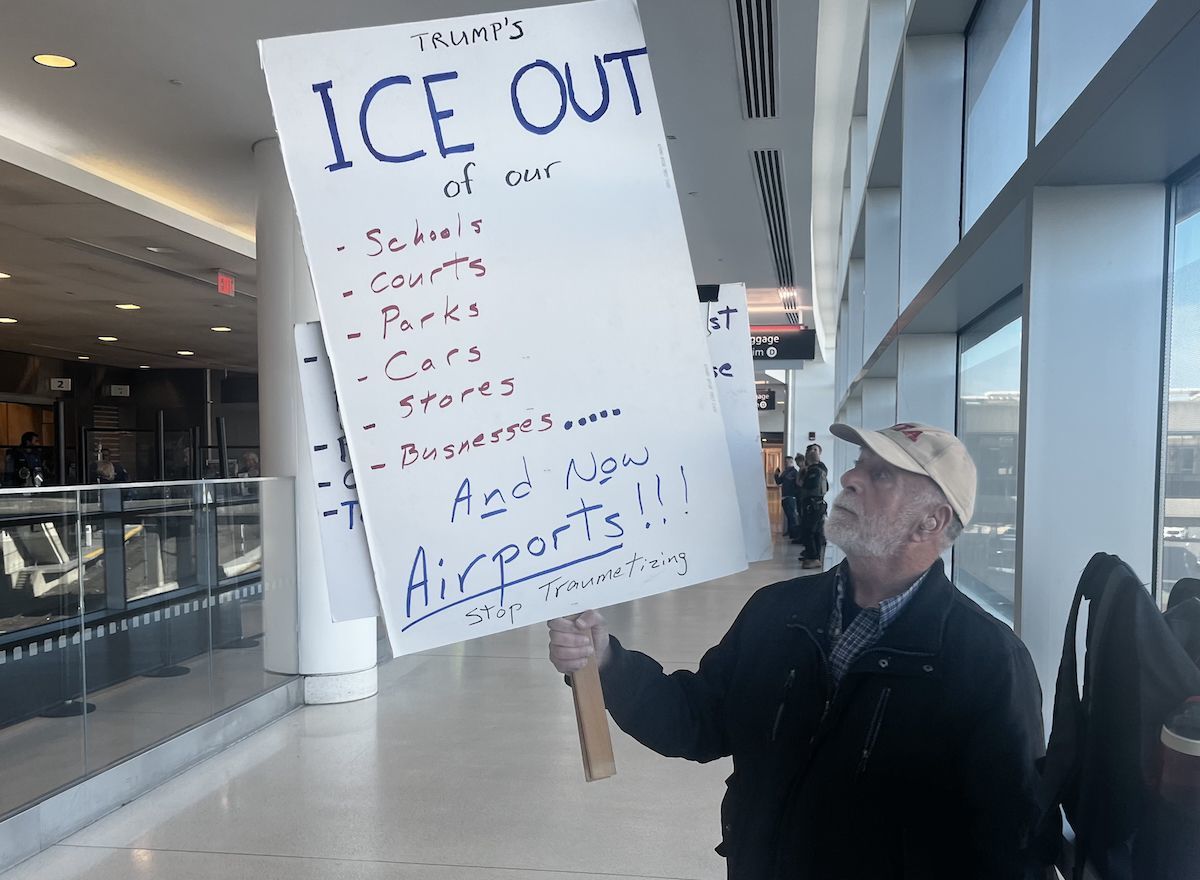
    She questioned why that property would not be subject to Philadelphia’s recent “ICE Out” legislation, which bars U.S. Immigration and Customs Enforcement from conducting operations on city-owned lands and bans access to city-owned spaces, absent a judicial warrant.

    Steve Papelian, 73, drove more than an hour from Nazareth, Pa. to the Philadelphia International Airport to protest the deployment of ICE agents to international airports across the U.S. on March 24. The former school teacher believes that ICE should target criminal activity, not “moms and pops with kids,” he said.Henry Savage / Staff

    Sam Scavuzzo, chief of staff for the city law department, said in a statement that “federal law enforcement access to particular areas of the airport is governed by federal law.”

    A spokesperson for the Department of Homeland Security said airport arrests are occurring because the Trump administration “reversed the horrendous Biden-era policy that allowed aliens in our country illegally to jet around our country.”

    “Under President Trump, DHS will no longer tolerate this. This administration is working diligently to ensure that aliens in our country illegally can no longer fly unless it is out of our country to self-deport.”

    The department said “being in detention is a choice,” and the federal government is offering people who are here without permission a $2,600 payment and a free flight home.

    Self-deportation can preserve the right to later come back to the U.S., absent the penalties that accompany a government deportation.

    DHS said people who do not leave voluntarily “will be arrested and deported without a chance to return.”

    On July 11, what started out as a fun soccer trip for a South Philadelphia babysitter ended with her being arrested and ultimately moved across the country to an ICE detention center in New Mexico.

    Steven Melchiorre, 35, a health worker, said that at 7 a.m. that day he dropped off his girlfriend, Iliana Lick, 30, to fly to Kansas City. Originally from Buenos Aires, she planned to see the Argentina national team play in the World Cup.

    On July 11, what started out as a fun soccer trip for a Philadelphia babysitter ended with her being arrested and ultimately moved across the country to an ICE detention center in New Mexico. Iliana Lick legally entered the U.S. in 2023, though her visa later expired. She cares for the children of two South Philadelphia families.Courtesy of Steven Melchiorre

    She texted Melchiorre from inside the airport to say the line was short, then did not answer his reply.

    After a while, he said, Lick phoned, crying, to say she had been arrested by ICE. She was moved from Philadelphia to the Cambria County prison, which holds prisoners for the agency in south-central Pennsylvania, and in the following days was transferred to ICE facilities in Louisiana, Texas, and New Mexico.

    Late Friday afternoon, an immigration judge in New Mexico set bond for Lick at $10,000, according to her boyfriend. He immediately began working to post that bond and bring her home. It was not clear how quickly Lick might be released.

    DHS said Lick was arrested during a targeted operation, having overstayed her visa.

    The department noted that work authorization or a pending application for immigration relief, both of which Lick has, do not confer legal status to be in the United States.

    ICE began to deploy agents at U.S. airports in March, and the move was announced as a way to assist at checkpoint lines during a partial government shutdown.

    The deployment quickly proved controversial, as travelers and labor unions objected, saying the agents were intimidating and lacked aviation training.

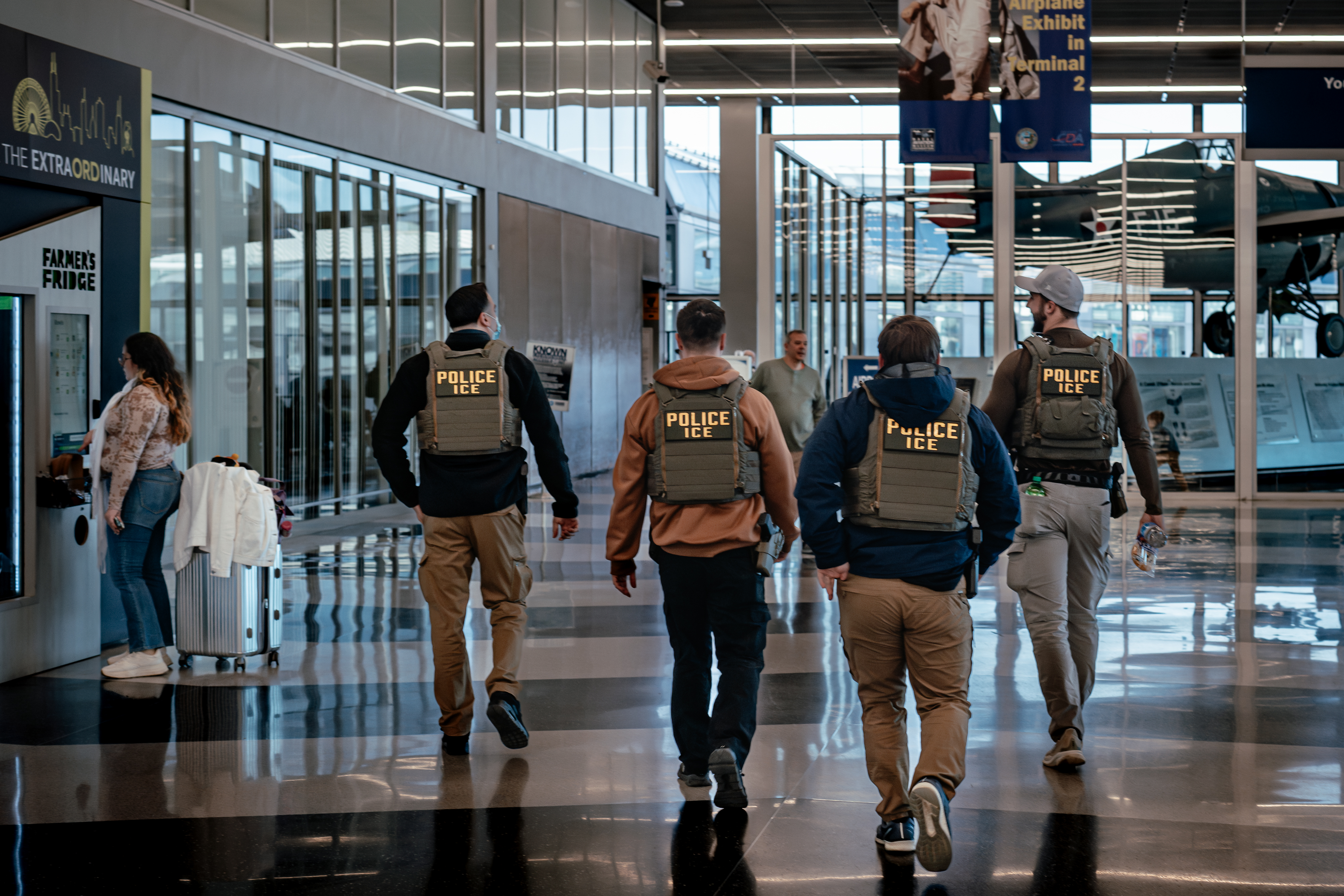
    A group of federal immigration officers walk through O’Hare International Airport in Chicago on March 23, 2026. From large cities like Chicago and Las Vegas to small suburbs outside Milwaukee and San Antonio, immigrants have been picked up and detained at courthouses, ICE check-ins and traffic stops, with daily arrests doubling in the last week of June and continuing to climb.JAMIE KELTER DAVIS

    Airports rank among the most sensitive public spaces in the country, traversed by millions of people, including U.S. citizens, noncitizens, and mixed-status families, California immigration lawyer Andrew Neitor wrote for the American Immigration Lawyers Association, a legal group.

    The introduction of ICE agents, he said, blurs critical lines between airport security and immigration enforcement, around what authority is being exercised and by whom, and over the legal protections due to people who may be arrested.

    “ICE was not intended to be omnipresent in daily civic life,” Neitor said. “Yet its footprint has expanded from courthouses to neighborhoods, workplaces, and even parking lots, shifting from targeted enforcement to visible, normalized presence.”

    Last year, the Transportation Security Administration and ICE signed a memorandum of agreement that outlined how ICE would share information with TSA to identify people in whom ICE was interested, according to the memo, obtained through the Freedom of Information Act by the watchdog group American Oversight. The agreement said sharing the data would enhance national security, transportation safety, and immigration management.

    On Tuesday, U.S. Rep. Rashida Tlaib of Michigan introduced a bill, the No TSA Data for ICE Act, that would bar the agencies from coordinating to conduct what her office called “a dramatic violation of privacy rights.”

    The bill would ban TSA from sharing passenger names, birth dates, and other data that enable ICE to target immigrants who are in the process of changing status, including those awaiting visa extensions or who recently married U.S. citizens.

    “TSA is readily offering up our immigrant residents to suffer at the hands of ICE agents so they can fulfill their daily arrest quota,” Tlaib said in a statement. “Immigrants should be able to safely fly in this country without the fear of arrest or deportation.”

    Today ICE is making record numbers of arrests across the country, not only at airports but also at places that were once considered off-limits, including routine immigration check-ins.

    A hat belonging to Iliana Lick sits on a table in the home she shares with her partner, Steven Melchiorre, in the Point Breeze neighborhood of Philadelphia on Tuesday, Aug. 4. Lick has remained in ICE custody since her detention at Philadelphia International Airport on July 11, 2026.Erin Blewett / For The Inquirer

    In June in Philadelphia, a 36-year-old survivor of slavery who had fled Mauritania, a mostly desert land in West Africa, filed suit in federal court over the issue. He accused ICE of having unlawfully rescinded a policy that generally allowed immigrants to pursue their cases without fear of arrest.

    Nationally, the rate of ICE arrests topped 1,300 a day in June, and grew again to a record 1,474 a day during the first 11 days of July, Syracuse University professor and immigration-data analyst Austin Kocher reported.

    Some of those being arrested at airports had legally entered the United States, then stayed after their visas expired. That includes some, like Lick, who were seeking to legally change their immigration status while in the U.S.

    Lick, now of Point Breeze, legally entered the country in 2023. She held and extended a visa, and holds work authorization and a REAL ID driver’s license, her boyfriend said. She was trying to adjust her status before her visa expired and continued to do so afterward, Melchiorre said.

    Lick works taking care of three children for two South Philadelphia families.

    Britni Zahodnick and her husband, Zane Schultz, have employed Lick as a babysitter for their two young children, ages 4 and 1, for more than a year. They described her as soft-spoken, kind, attentive, funny, thoughtful, and a good listener.

    “She was very quickly thought of as family,” Schultz said.

    Trust does not come easily for any parent preparing to place their children in another’s hands, but Lick won theirs, the couple said.

    “All the things you would look for in a caretaker for your kids,” Zahodnick said.

    Illiana Lick with partner Steven Melchiorre in New York City. On July 11, what started out as a fun soccer trip for a Philadelphia babysitter ended with her being arrested and ultimately moved across the country to an ICE detention center in New Mexico. Iliana Lick legally entered the U.S. in 2023, though her visa later expired. She cares for the children of two South Philadelphia families.Courtesy of Steven Melchiorre

    Melchiorre acknowledged that ICE had legal authority to detain Lick. He said people should follow immigration laws — but the couple thought Lick was doing so. They did not know domestic flights were in question, having flown in the past without incident.

    Melchiorre has started a support group on Facebook and a GoFundMe page that has so far raised nearly $17,000. All funds will be used for Lick’s immigration case.

    Melchiorre said he was surprised and frustrated by her arrest, “because Iliana has not committed any crime, hasn’t missed any fees, hasn’t missed any court dates. She wasn’t trying to dodge immigration. Being detained, it’s similar to how criminals are treated.”

  • A routine voter roll update in Pa. prompted misinformation from conservative activists

    A routine voter roll update in Pa. prompted misinformation from conservative activists

    It is routine for election officials throughout the country to inspect their voter rolls to ensure people who have moved, died, or not cast a ballot in a while do not linger for years in the data.

    But that has not stopped right-wing activists, Republican U.S. senators, and the richest man in the world from suggesting Pennsylvania’s latest update to its voter rolls Monday was a mass expulsion of potentially fraudulent voters as the high-stakes midterm elections approach.

    “The Pennsylvania Department of State just conducted one of its biggest purges ever,” MAGA influencer and grassroots Republican voter registration activist Scott Presler wrote on X, and “Democrats lost TENS of thousands of voters.”

    Presler, who six years ago led a two-day demonstration in Harrisburg over the 2020 election results, claimed the numbers showed his effort to “clean the voter rolls is actually working.”

    Elon Musk, the billionaire who was the biggest donor in the 2024 presidential election, elevated Presler’s post, adding on Musk’s own X platform, “Nice work.”

    And U.S. Sen. Dave McCormick, Pennsylvania’s highest-ranking Republican, praised Presler for “leading the charge.”

    The reality of Monday’s update is that both parties saw voters moved from active to inactive status (meaning they have not voted in a while).

    Among Democrats, 55,241 were moved to inactive status on Monday, while 23,832 Republicans also became inactive.

    Those voters have not actually been removed from the rolls and can still vote in November, despite Presler’s claims of a purge. Being inactive is not the same as being ineligible.

    “Updating these voter records is not a ‘purge’ of voters and does not mean that they were on the rolls improperly,” said Geoff Morrow, a spokesperson for the Pennsylvania Department of State.

    Morrow called the update a reflection of county election offices’ diligence in their duty to regularly perform maintenance to their lists.

    “There are many reasons people come off the voter list, most likely they moved, and this is all part of the normal process,” said Montgomery County Commissioner Neil Makhija, a Democrat who serves on the county’s election board. “There’s nothing particularly special or unusual about this.”

    What is happening?

    Counties across Pennsylvania have been updating their voter lists, as required under the National Voter Registration Act of 1993. This update must occur no later than 90 days before a federal election. The midterm elections, which will feature the Pennsylvania governor’s race and several competitive congressional contests, are Nov. 3.

    As part of the maintenance process, voters who have not participated in five years are moved from active to inactive status. Inactive voters are still registered and can still vote, just like an active voter.

    A voter who cast a ballot in 2020 but sat out the following elections, for example, would be considered inactive.

    This practice is standard, said Philadelphia City Commissioner Seth Bluestein, the Republican member of the three-person board that oversees the city’s elections.

    “Philadelphia conducts regular list maintenance activities in compliance with federal and state laws to determine whether a voter should be marked as ‘inactive’ or removed from the registration rolls,” he said on X.

    Voters may also be categorized as inactive if they have submitted a USPS mail-forwarding request or registered to vote in another state, or when a mailing to their registered address is returned as undeliverable.

    Montgomery County Commissioner Neil Makhija speaks during a March board meeting. Alejandro A. Alvarez / Staff Photographer

    Becoming an inactive voter is the first step on the path to being removed, which is done if the inactive voter does not participate in the next two federal elections.

    “What we’re seeing here is an example of our current process for voter roll maintenance playing out, and it works,” Makhija said. “It’s designed to actually protect people’s registration because it gives them a chance to respond if we mark them as inactive, and it also keeps them on the rolls if they do respond.”

    In addition to tracking whether voters are active, Morrow said, election officials in the state regularly review death records, U.S. Postal Service address changes, and other reliable sources “to identify records that may require updating” when a voter dies or moves.

    Can inactive voters cast a ballot in November?

    Yes. Voters who are inactive can change their status simply by voting. Those who have been removed can reregister, too. Registration must be done 15 days prior to an election, which is Oct. 19 this year.

    “Voters with an ‘inactive’ status are still eligible to vote and can be moved back to ‘active’ status if they take an action to update their record or vote before the passage of two federal general elections,” Bluestein said.

    To vote in Pennsylvania, you must be a U.S. citizen, a resident of the state for 30 days, and 18 years old by Election Day. It is possible that someone who is eligible to vote has become inactive after years of sitting out elections.

    Does this have anything to do with noncitizen voters, like those found in New Jersey?

    Presler, who said he “won’t stop until all 67 counties comply,” posted a cartoon image of himself pressing a light switch as cockroaches — labeled with phrases like “illegal voter” and “dead voter” — scurry away.

    Presler did not respond to requests from The Inquirer to answer questions about his posts, which appear to conflate inactive voters with ineligible voters.

    The posts come after President Donald Trump’s administration claimed Pennsylvania was one of four Democratic-led states with thousands of noncitizens on its voter rolls, a claim state officials say the federal government has not provided evidence for.

    MAGA influencer Scott Presler energizes people attending a Republican event at the Newtown Athletic Club ahead of the 2024 election. Elizabeth Robertson / Staff Photographer

    But a change in a voter’s status from active to inactive is not related to citizenship or other issues of eligibility.

    Noncitizens would actually be removed from rolls under Pennsylvania law and face potential prosecution and deportation if they had cast a ballot — as the Pennsylvania Department of State noted in a Friday report from WHP on an apparent case of a noncitizen voting in Lancaster County.

    Pennsylvania Secretary of State Al Schmidt, a Republican appointed by Democratic Gov. Josh Shapiro, has said noncitizen voting “is extremely rare across the country, including in Pennsylvania.”

    New Jersey last month revealed 6,600 people — a number later reduced to roughly 4,600 — who were not citizens were improperly registered to vote over a yearlong span ahead of the 2024 election because of a software error in New Jersey’s motor vehicle system.

    Schmidt had identified a similar glitch in Pennsylvania in 2017 as Philadelphia’s Republican city commissioner, identifying 168 noncitizens on the city’s voter rolls at the time. They were removed from the rolls and the glitch was fixed.

    Why are Elon Musk and senators from other states posting about routine maintenance?

    Prominent Republicans who elevated Presler’s post tied it to their efforts to pass the SAVE America Act, a sweeping national voting overhaul that has been championed by Trump ahead of the midterms.

    “In light of what Scott Presler has uncovered, who could still think we don’t need the SAVE America Act?” Sen. Mike Lee, a Utah Republican and Trump ally, posted Monday.

    The act would require proof of citizenship to register to vote and mandate all voters show photo identification at the polls, something some conservatives say would prevent noncitizens from voting.

    But the legislation has faced significant pushback, including from some elected Republicans, over concerns that it would make it tougher for many Americans, especially married people whose last names may no longer match their birth certificate, to vote.

    How do party registrations compare?

    According to state data as of Monday, Democrats have more than 3.4 million active voters and Republicans are not far behind, trailing by only 25,811 active voters.

    But each party also has hundreds of thousands of inactive voters — 437,330 in the case of Democrats and 256,711 for Republicans — who could potentially vote in November.

    Can we say anything about party odds in the midterms?

    The Pennsylvania Republican Party celebrated the news of the narrowing gap in active voters as a milestone its “ultimate mission of turning Pennsylvania into a permanent red state.”

    Both parties want to win the registration war, but party registrations alone will not predict victory in November.

    Just because someone is registered as a Democrat or Republican does not mean he or she will necessarily vote for every candidate in that party on the ballot.

    And there are also nearly 1.5 million unaffiliated voters — including inactive registrants — who could sway the state’s elections.

    Staff writer Joe Yerardi contributed to this article.

  • Why Pennsylvania quietly repealed its 1929 midwifery law — and is now getting sued for it

    Why Pennsylvania quietly repealed its 1929 midwifery law — and is now getting sued for it

    HARRISBURG — Hidden deep in more than 600 pages of state budget documents, Pennsylvania lawmakers last month quietly repealed an unenforced 1929 law that allowed traditional midwives, the main group of midwives delivering home births, to practice.

    Now, traditional midwives — who differ from midwives usually found in hospitals, are not medically trained, and often serve religious minorities like the Amish — are worried they have no legal standing to work in Pennsylvania and are challenging the repeal and a new law in state court.

    The 1929 law had been on the books for nearly a century, asking traditional midwives to submit a paper application and a $10 fee to get a state certificate. But it had not been enforced for decades, and Pennsylvania, which has one of the highest rates of home births in the nation, was counted as one of 13 states that did not regulate the practice at all.

    Meanwhile, other forms of midwifery — such as nurse midwives and certified midwives, who are medically trained and are formally affiliated with a doctor or health system — are highly regulated by the state and its medical board. But these affiliations often prevent nurse midwives and certified midwives from offering home births, as the health systems see them as possible risks for medical malpractice lawsuits.

    The practice of traditional midwifery dates back to the Old Testament and has lived on through centuries of community knowledge and traditions. It can include Amish and Mennonite midwives, who are limited in the amount of education they are allowed to receive, as well as other unlicensed midwives who say they take only low-risk pregnancies.

    Some Pennsylvania traditional midwives say their practice is more necessary than ever, citing the United States’ maternal mortality and morbidity rate and cesarean section rates that outpace most of the rest of the Western world. They see their work as more holistic and personal than the American medical system, offering more personalized care to the new parent and baby for weeks after birth, as well as an answer to maternity care deserts as more hospitals and birth centers close.

    Medically trained midwives and physicians, who receive licenses from the state, argue the practice of traditional midwifery is potentially unsafe for mothers and babies, and requires little to no oversight in comparison to their medical training and licensure.

    A new law, and legal uncertainty

    There is no state law regulating home births — which are chosen by a variety of families for different reasons, from Amish who have religious beliefs about delivering at home to Black and brown women who have felt underserved or discriminated against by the modern healthcare system. But if traditional midwives — the primary group delivering babies in home births — cannot practice, some argue, home births will become inaccessible.

    The legal fight over midwifery began earlier this year, when the General Assembly approved changes to a separate law to include another class of midwife: certified midwives, who have all the same education training as nurse midwives except the nursing degree. To receive a certification from the Pennsylvania Board of Medicine, nurse midwives and certified midwives must provide proof of education and a collaborative agreement with a physician or medical institution.

    The law, the Midwife Modernization Act, was written to protect traditional midwives’ ability to practice, its author, Sen. Rosemary Brown (R., Monroe), said in a statement.

    Kate McHugh, a nurse midwife who has worked for a decade with lawmakers on updates to midwife regulations, said stakeholders approached traditional midwives during earlier iterations of the bill to see how they would like to be regulated. The different groups of traditional midwives could not agree, so the nurse midwives and certified midwives moved forward on their own.

    But the changes to Pennsylvania’s laws created a legal gray area, some midwives argued in a lawsuit filed last month.

    An anonymous group of two traditional midwives, a nurse midwife, and an Amish man whose family utilizes traditional midwifery filed a lawsuit in a state appellate court, challenging Brown’s law as unclear about their ability to practice, and asking the state to enforce the 1929 law already on the books.

    After the lawsuit was filed, legislators repealed the 1929 law as part of an overall state budget deal, creating more uncertainty for traditional midwives, according to their amended filing. Some lawmakers said they did not know they had voted to repeal the law, as the state budget is drafted in closed-door meetings among top leaders and fast-tracked through the legislative process with little time for rank-and-file members to review what they are voting on.

    The law was repealed as part of a request by Democratic Gov. Josh Shapiro’s administration, according to a source briefed on budget conversations. The administration works closely on legal matters with Republican Attorney General Dave Sunday’s office, which is defending the state in the case. Shapiro’s office declined to comment.

    “It’s not fair the way [the budget] is done,” said Rep. Dave Zimmerman (R., Lancaster), who said he unknowingly voted in support of the bill that repealed the 1929 law in an omnibus bill. “It concerns me a little bit that we repeal something in the fiscal code rather than right up front where it’s transparent.”

    “You have people in the Amish and Mennonite community that this is what they do. We have midwives that have been doing this for 30 and 40 years, They’re probably as good as anyone else doing it, certified or not,” Zimmerman added.

    The lawsuit

    The group of traditional midwives filed the lawsuit anonymously out of fear of retribution from the state for continuing to practice, said the group’s attorney, Jonathan Goldman, of the Goldman Law Team, based in Fort Washington. The midwives spoke with The Inquirer on the condition of anonymity for the same reason.

    One of the midwives, who serves south-central Pennsylvania with a largely Amish and Mennonite clientele, said she has delivered 1,600 home births over 38 years. She had practiced traditional midwifery in other states, before similar certifications were required there. At one point, she said, she was arrested and charged with a misdemeanor for continuing to practice home births in New York.

    Unlike medically trained nurse midwives and certified midwives, traditional midwives are prohibited from practicing medicine, which could mean dispensing medication or conducting medical procedures as simple as stitches. They have historically been investigated by state boards of medicine if this is called into question, making the group even more distrustful of state oversight.

    One of the anonymous traditional midwives, who has delivered an estimated 600 births around eastern parts of Pennsylvania, said her clients are often religious and want traditional models of care, such as no lab work and one ultrasound — a very hands-off approach compared to the highly surveilled pregnancies in modern medicine.

    The midwife, who delivered four of her 10 children in the hospital before finding an interest in home births, said her faith as a born-again Christian drew her to the “completely different model of care” that does not rely on pharmaceuticals, with a comfortable home setting and few restrictions like in a hospital.

    “In the hospital, it’s a fractured system. There are several midwives and physicians, you never know who you’re going to get, who is going to be on call,” said the midwife, who works with Amish and Mennonite populations in south-central Pennsylvania. “We are the community midwives. We know the secrets, we know the stories, we know what kind of care works. We know the family intimately. And it improves outcomes because knowing them intimately and emotionally allows us to provide that kind of specialized care.”

    Sunday’s office, defending the state in the suit, said in a July 24 filing that the midwives’ claims are a “misreading and misunderstanding of the current law,” and that traditional midwives “can continue to practice as lay midwives without certificates.” Sunday’s office did not respond to a request for comment.

    The case is scheduled for a preliminary injunction hearing to block the law from going into effect on Wednesday, where Brown and other lawmakers may be called to testify and a judge is expected to rule whether current laws prevent traditional midwives from practicing.

    Outside the medical system’s framework

    Obstetricians in hospitals and birth centers routinely work with certified midwives, who have an advanced degree in midwifery, and nurse midwives, who have a nursing degree in addition to specialized midwifery training.

    “As an OB-GYN physician, I absolutely respect somebody’s right to make a medically informed decision about how they take care of themselves in their pregnancy, and who they request assistance from in birth, and where they give birth to their babies,” said Holly Cummings, an OB-GYN in Philadelphia and chair of the Pennsylvania section of the American College of Obstetrics and Gynecology, a leading physician organization. “But I do also believe a hospital or an accredited birth center is the safest place to give birth. I don’t think in the U.S. in 2026 we can currently safely, uniformly support home birth.”

    ACOG does not support traditional midwives, who can also be known as lay midwives.

    But traditional midwives maintain they should be able to continue their work outside the medical system’s framework, citing it as a religious tradition and safe practice, and hope the judge rules in their favor.

    “Pennsylvania has a rich history of midwifery,” said the midwife listed in the lawsuit who serves parts of eastern Pennsylvania. “We have some of the highest home-birth numbers in the country. … It would be sad to see Pennsylvania not acknowledge the heritage in midwifery that we have here.”

    Staff writer Sarah Gantz contributed to this article.

  • Four Cheltenham High School football coaches, six players charged in assaults on teammate

    Four Cheltenham High School football coaches, six players charged in assaults on teammate

    Four Cheltenham High School football coaches and six players have been charged in connection with two assaults in the school’s locker room that injured a 15-year-old player and led to the cancellation of two football seasons, Montgomery County prosecutors said Wednesday.

    In two violent assaults, District Attorney Kevin Steele said, multiple football players attacked a sophomore on the team, stomped on his chest and groin while wearing cleats, and used a broomstick to poke at his buttocks.

    “The assaults on this victim were not typical goofing around by teammates, or horseplay, as some of the coaches in this case called it,” Steele said at a news conference Wednesday. “They were crimes.”

    After the attacks, which took place last August and September, Steele said, coaches tried to cover them up.

    Head coach Terence Tolbert, 55; associate head coach Darian McFadden, 42; assistant coach Benjamin Johnson III, 45; and volunteer coach Ralph Burnley, 60, have been charged with endangering the welfare of a child and conspiracy. The coaches are no longer with the district.

    Two football players, Isaiah Simpson, and Josiah Peeler, both 18, have been charged as adults — Simpson with conspiracy to commit aggravated assault, simple assault, reckless endangerment, and related crimes for his role in the September assault, and Peeler with false swearing for being untruthful to police. The two were 18, Steele said, when the crimes they are charged with took place.

    The four other players have been charged as juveniles, and were not identified by prosecutors or named in court records. Two of them face charges of conspiracy to commit aggravated assault and related crimes, because authorities say they took part in the attacks. The other two players are charged with false swearing.

    Tolbert, McFadden, Johnson, and Peeler were released on $5,000 unsecured bail. The two other adults had not been arraigned as of Wednesday afternoon. Only two of the defendants, Johnson and Peeler, had attorneys listed in court records.

    Johnson’s attorney, Richard J. Fuschino, said his client “has been humiliated by what occurred and absolutely had nothing to do with it.”

    “I do believe there is a cover-up, and I absolutely do not believe Benjamin Johnson had anything to do with it,” he said. “In fact, quite the opposite: He went out of the way to cooperate with every investigator.”
    Peeler’s attorney, Jessica Mann, did not respond to a request for comment. Attempts to reach the other defendants were not successful Wednesday.

    Cheltenham Superintendent Brian Scriven said Wednesday that the district appreciated prosecutors’ work on the case and the filing of criminal charges. “While no legal outcome can erase the harm that was experienced,” he said, “we appreciate that after nearly a year, charges have been announced and those responsible are being held accountable through the criminal justice system.”

    Prosecutors say coaches wanted incident ‘kept quiet’

    Steele said the charges followed a grand jury investigation in which witnesses described two violent assaults.

    The coaches are criminally liable for the assaults, Steele said, because, while they were not present, they learned of the September incident and encouraged the victim not to tell his parents.

    Montgomery County District Attorney Kevin Steele at a press conference Wednesday.Tom Gralish / Staff Photographer

    Privately, the coaches sent incriminating text messages to one another, Steele said, expressing concern that the incident “has to be handled and kept quiet.”

    McFadden, the former assistant coach, wrote “if this gets out we are [expletive]. They will cancel the whole season,” according to the grand jury presentment.

    The incidents did lead the district to cancel last year’s football season in October, citing hazing allegations. And in May, it announced the forthcoming season would be canceled as well.

    The assaults occurred Aug. 15, after a preseason practice, and Sept. 3, Steele said. He said video footage of the August incident showed several students restraining the victim, while another student poked at his legs and buttocks with a broomstick.

    Players are laughing and yelling in the video, and “at least one player is chanting, ‘broomstick him,’” Steele said.

    A football player who witnessed the assault, but is not charged in the case, told the grand jury that the use of a broomstick was an apparent reference to a TikTok video featuring a Meek Mill song with the lyrics “broomstick all in his butt, tell him take that,” according to the grand jury presentment.

    Steele said there was no evidence that it constituted sexual assault.

    Players didn’t take the incidents seriously

    Several football players who testified before the grand jury characterized the behavior as “horseplay” and said they did not take it that seriously. Others said the victim had a difficult relationship with his teammates and was viewed by them as “someone who did not follow the rules during practices.”

    The Sept. 3 assault, witnesses said, happened after the teen took a pair of shoulder pads from another player’s locker after misplacing his own, an infraction for which the entire team had to do extra conditioning as punishment.

    Steele said that investigators did not have a video of the Sept. 3 assault but that multiple players, including Simpson and two of the juvenile defendants, kicked and stomped the victim.

    The teen reported told investigators that his teammates were “trying to poke him in the butt with the broomstick,” and that they made contact with his buttocks, Steele said. He said the assault broke up when school buses arrived, and teammates left to board them.

    Burnley, one of the coaches, drove the victim home after the attack, and the teen broke down in tears, telling the assistant coach he had been jumped by teammates, the district attorney said.

    Burnley then texted coaches in a group chat and called Tolbert, Steele said. McFadden and Tolbert called the teen and “told him not to tell his mother about the incident because they would handle it,” Steele said.

    He said the coaches were deliberate and calculating in their decision not to report the assault.

    ‘Serious concerns about the response’

    The incident came to light four days later, when the teen’s mother said he told her he had been jumped by teammates and had pain in his genitals. She said she took her son to an urgent care center and texted the high school’s assistant principal, who called her later that day.

    A front view of Cheltenham High School in Wyncote.Tom Gralish / Staff Photographer

    The teen did not tell his mom that his teammates used a broomstick in the attack. He was embarrassed and reluctant to share that detail, the mother said in an interview with The Inquirer in which she spoke on the condition of anonymity to protect the identity of her son.

    She said her son told her that his teammates had tried “to mess with his manhood.”

    She learned about the broomstick later in September, when Cheltenham Township police called to tell her that someone had called Pennsylvania’s Safe2Say hotline to anonymously report that students had used a broomstick during the attack, according to the teen’s lawyers, Alan Yatvin and Gabrielle Turley.

    Sometime in October, the district obtained a video that had been circulating in the community and depicted an assault of the student with a broomstick, the lawyers said.

    Investigators initially believed that footage was from the Sept. 3 assault. It was discovered during grand jury testimony in January that the assault was from August, prosecutors said. The teen, who said he was not shown the video until this spring, also identified it as being from August, revealing for the first time that he had been assaulted more than once, according to the lawyers.

    “Our client and his family are grateful to the Montgomery County District Attorney’s Office, law enforcement investigators, and the grand jury for their careful and thorough work in bringing these deeply troubling events to light and pursuing charges,” Yatvin said in a statement Wednesday. He added that the grand jury investigation “also raises serious concerns about the response by some within the Cheltenham High School community.”

    District accused of failing victim

    The school district said in January that an outside investigator had confirmed that a “student-on-student assault” had taken place in the locker room on Sept. 3. The assault was witnessed by nearly 20 students, according to the district, which did not provide details of the attack.

    The district faulted inadequate supervision in the locker room, “a failure to prioritize student safety” by coaches and volunteers, and “a toxic and negative culture” within the football program.

    District officials have said a Title IX investigation, required by law when sexual assault or harassment is alleged, is ongoing.

    Scriven, the superintendent, said in a statement Wednesday that “every report brought to the district’s attention was addressed based on the information available at the time.” He noted that law enforcement and the grand jury had the power to issue search warrants and compel testimony, which “brought information to light.”

    In April, the district approved separation agreements with Tolbert and McFadden. Officials say none of the coaches from last season is still affiliated with the district.

    The victim, who switched to virtual school after being harassed by peers after the attacks, has continued to struggle, according to his mother. She said he avoids going outside because he fears being taunted about what happened.

    During Wednesday’s news conference, Steele criticized the school district and said it had failed the victim.

    In its report, the grand jurors noted that they — not the school district’s Title IX investigator — discovered that two separate assaults had taken place.

    “I believe the Cheltenham School District has taken the position that they don’t want police in their schools or school resource officers, and so it’s on them to address these issues,” Steele said. “So the grand jury took care of what the school did not.”

    Montgomery County District Attorney Kevin Steele arrives at a press conference Wednesday to announce multiple charges in connection with two assaults in a Cheltenham High School locker room.Tom Gralish / Staff Photographer

    In addition to recommending criminal charges against the players and coaches involved in the case, the grand jury filed a separate report calling for a change in state law that would require teachers and coaches to report incidents of hazing as a form of child abuse.

    “While the school district claims to ‘protect and prioritize safety and well being,’ their actions in this case say otherwise,” the grand jury report said. “The administration carried out three school-led investigations that were so flawed they failed to even identify that two separate instances of hazing occurred in the locker room.”

    News researcher Ryan W. Briggs contributed to this article.

  • He was assaulted by teammates in Cheltenham High’s locker room. Nearly a year later, his mom says he ‘can’t escape the situation.’

    He was assaulted by teammates in Cheltenham High’s locker room. Nearly a year later, his mom says he ‘can’t escape the situation.’

    The mother knew something was wrong the night her son came home from football practice last September and quietly went to his room.

    Four days later, she took him to the doctor after he told her his teammates had jumped him inside the Cheltenham High School locker room after that practice, injuring his genitals.

    It was not until she got a call from police later that month that the mother learned that teammates had used a broomstick in the alleged attack, an act his lawyers described as attempted sexual assault.

    Her son, who was 15 at the time, told her teammates had tried “to mess with his manhood,” the mother said.

    He told her that the school’s football coaches, who knew that his teammates had jumped him, had called him that night and told him not to tell his parents.

    “He didn’t want to talk about it,” said the mother, who spoke to The Inquirer on the condition of anonymity to protect her son’s identity. Her son, she said, “was trying to put it in the back of his head. He was traumatized.”

    Cheltenham abruptly canceled its football season last October, citing hazing allegations. In January, the district said it had confirmed that a “student-on-student assault” took place in its football locker room on Sept. 3, and that nearly 20 students had watched without trying to stop it.

    A video of a locker room attack that investigators thought matched the student’s description of the alleged attack in September surfaced in the fall and was obtained by the district. The teammates who assaulted the student are identifiable in the video, said Gabrielle Turley, a lawyer representing the student. She said the student provided their names to Cheltenham police.

    But this spring, detectives determined the footage actually had been taken in August, according to the student’s lawyers — prompting the student to reveal he had been assaulted more than once.

    Eleven months later, no charges have been filed. A spokesperson for the Montgomery County District Attorney’s Office said it is still investigating but declined to comment further.

    The incidents have reverberated throughout the suburban community, even as the school district has provided few specifics about what happened in the locker room.

    The district announced in May it was canceling the forthcoming football season for the Panthers, but has not disciplined any students.

    A Title IX investigation — which schools are required by federal law to conduct into sexual misconduct allegations — is ongoing. “Unfortunately, the district received extremely limited cooperation from students,” Superintendent Brian Scriven said in a statement in response to questions from The Inquirer about the assaults. Any discipline for students will be imposed once the investigation is done, Scriven said.

    The district in April approved a separation agreement with the team’s head coach, Terence Tolbert, who had been Cheltenham’s top football coach since June 2025.

    Scriven noted that the district also in April approved a separation agreement with another football coach, Darian McFadden. None of the coaches from the 2025-26 season are still affiliated with the district, the superintendent said.

    Scriven declined to address specific questions about the alleged assaults, saying the district attorney’s office had asked school officials not to comment.

    Brian Scriven, superintendent of the Cheltenham School District.Courtesy of Cheltenham School District

    As the new school year approaches, some football players and their families have criticized the district’s cancellation of another season as unfair punishment for a situation they had no part in.

    But students who participated in or witnessed the alleged assaults have been able to move on with their lives, graduating from the 1,450-student Wyncote school or transferring to other schools, the mother of the victim said. Her son has not.

    He was taunted by peers after the September assault and switched to virtual school in the district, where he struggled and was isolated, his mother said. After getting harassed by kids at his local basketball court, he avoids going outside, she said.

    “He can’t escape the situation,” she said.

    Inside the locker room

    Video footage from the August incident after a football training camp at Cheltenham High School shows the student being dragged by his shirt on the floor of the locker room, according to his lawyers.

    About “seven or eight students are making physical contact” with him, while other students are standing by lockers, some with their phones out, said Alan Yatvin, one of the lawyers.

    The video shows one young man holding a broomstick, which is being “poked or thrust at [the student’s] genitals and backside,” Yatvin said.

    Turley, the other lawyer representing the student, said the video shows teammates trying to pick the student up by his shirt, which is ripped, while the student tries to remain seated on the floor.

    “There’s no other reason to be in that area, unless you’re trying to sexually assault somebody,” Turley said of the broomstick she saw in the video of the alleged attack.

    The student did not tell anyone about the August incident because he was embarrassed, his lawyers said.

    But then on Sept. 3, he was assaulted again. The student had taken someone’s shoulder pads because his were missing. Coaches made players run as a punishment, and they blamed the student, the lawyers said.

    Yatvin said that as the student tried to leave the locker room, he was thrown on the floor and punched and kicked in the head and testicles. He said the student reported there were “three main people hitting him.”

    The altercation lasted about five minutes, and the student heard someone say, “‘Get the broomstick,’” Yatvin said. He said the student tried to ball up on the ground and “sat in such a way to avoid the broomstick being stuck in him.”

    A couple of teammates intervened, and the fight broke up, Yatvin said. He said one player went to get a trainer, while another got the student ice.

    A volunteer coach drove the student home. That same night, three coaches, including then-head coach Tolbert, called the student, according to Yatvin.

    “They told him that he shouldn’t tell his mom, because they would handle it. He believed that,” Yatvin said.

    Reached by phone earlier this month, Tolbert declined to comment.

    A mother pushes for answers

    The student’s mother recalls taking her son to an urgent care center four days after the Sept. 3 incident because he was “complaining his pee was burning a little bit,” she said.

    She texted the vice principal, Mark Hoff, to let him know what had happened. “I was very upset,” the mother said. Hoff called her; the school opened an investigation the next day, Yatvin said.

    It was about 12 days later when Cheltenham police called her about a tip that had been submitted through the state’s anonymous Safe2Say line, about a broomstick being used during an assault.

    “I know that’s like a sexual assault — trying to sodomize somebody,” the mother said, noting she works at a prison. “What was going through my mind was, ‘Where did these kids get this from?’”

    At the end of September, lawyers said, the district contacted the mother to ask if she wanted to open a Title IX investigation, given the sexual nature of the allegations. She said yes.

    At the time, the mother did not know her son had been attacked more than once.

    No one had shown her and her son the video of the alleged assault that the district obtained — which had circulated through the school community, Yatvin said — until the spring. Had they seen it earlier, he said, they would have known it was from August, based on the student’s hairstyle at the time.

    The mother said her son was “scared to come forward.”

    “He didn’t want to go through none of this,” she said. “But I kind of pushed the issue.”

    Waiting for accountability

    On Oct. 17, a Friday, Cheltenham announced that it was postponing that night’s football game.

    “Today, the district received anonymous information regarding allegations of hazing in the football program,” Scriven said in a statement. The season was temporarily suspended, he said, and the district had “engaged an external investigator.”

    By that Sunday, Scriven had announced that the season was canceled. The district had received a report “approximately three weeks ago” of a locker room assault, he said in the announcement, and that Friday, it “received additional information, including reports indicating multiple team members engaged in hazing through physical contact.”

    Asked why it took until Oct. 17 for the district to suspend the season when the mother had reported the assault Sept. 7, Scriven drew a distinction between hazing and a “singular incident of assault.”

    The district’s external investigation, which was completed in January, determined there was insufficient supervision in the locker room and “a failure to prioritize student safety by the coaching staff and/or adult volunteers,” as well as a “a toxic and negative culture within the current football program.”

    Scriven said he expected the Title IX investigation to be completed “in the near future.”

    Yatvin believes more students know what happened to his client than have come forward.

    “If all the necessary information was available, there probably would have been something happening with the school’s investigation, and something happening with the district attorney’s investigation,” he said.

    The student’s mother, who is considering filing a lawsuit, said she wants people held accountable for what happened to her son. No one from his school has called and checked on his well-being, she said.

    “You’ve got parents on the news, worrying about their football team, but not necessarily worried about what happened,” she said. “Nobody is focused on what happened to him.”

  • The Philadelphia Museum of Art is running record deficits. The next few years look rocky.

    The Philadelphia Museum of Art is running record deficits. The next few years look rocky.

    When art world veteran Daniel H. Weiss took over the Philadelphia Museum of Art in December, he quickly recruited a new team, including a chief financial officer and chief fundraiser. That team has begun to assess the museum’s financial condition and what can be done about it.

    The picture that is emerging is not a pretty one.

    Preliminary figures seen by The Inquirer show that the museum ran a deficit of about $10 million on a budget of $76.5 million for the fiscal year that ended June 30.

    That is on top of a deficit of $5.4 million for the year before, and leaders say the outlook does not promise to improve soon. For the fiscal year that has just begun, the museum anticipates the deficit will be comparable to last year’s $10 million, but in planning the budget the museum has outlined the possibility that it could be as high as $15.9 million.

    The shortfalls are the museum’s largest in recent history, leaders say.

    Weiss said the museum’s financial situation is “substantial, but solvable.”

    “I have no doubt that we will have a balanced budget in about three years,” he said, “but we have real work to do to get there.”

    Financial pressures are not threatening the museum’s ability to remain open, but the run of red ink cannot continue. The museum is covering the deficits by drawing on a pool of money that includes cash and reserves — sometimes referred to as quasi-endowment — whose use was not restricted by donors for any specific purpose.

    “The way I would describe it is, we have a savings account for rainy days. We’re spending it,” Weiss said. “We need to stop doing that.”

    Daniel H. Weiss, director and CEO of the Philadelphia Museum of Art, at the museum in January.Tom Gralish / Staff Photographer

    The museum’s struggle to right its finances comes as it faces some urgent needs and considers the fate of key projects. Among the unsettled questions is how to pay for deferred maintenance to both the main building and the Perelman building, the annex to the north that was closed to the public during the pandemic and never reopened.

    The combined cost of work on the two buildings has a preliminary price tag of around $300 million.

    As for a much sexier project, the museum’s much-trumpeted expansion envisioned by architect Frank Gehry: That will have to wait. Given the current challenges, the ambitious idea of carving out new spaces beneath the east terrace continues to be on hold; the timeline is uncertain.

    “It is not, at this time, appropriate for us to be evaluating the feasibility of a very substantial new capital project which would be required to implement the Gehry plan,” Weiss said. “We need to determine the priorities and sequencing of capital work that needs to be done. And over the long term, we need to figure out what this institution can afford in a sustainable way.”

    The famed architect died late last year.

    The priority now is ringing the alarm that all is not well at one of the city’s two largest arts groups (the other being the Philadelphia Orchestra and Ensemble Arts) and rallying support around a rescue plan.

    Weiss said:

    “We want to be transparent and we want to be accessible to people, and they have a right to know — it’s their institution. But we don’t want to do it in a way that turns people away. It’s just an institution that needs repair. So how to tell that story is part of what we have to work on.”

    The polychrome high-relief sculpture on the north pediment of the Philadelphia Museum of Art. The high-relief sculpture depicts 13 figures from classical mythology.Aidan T. Gallo / Staff Photographer

    Ambitions despite deficit

    The pool of money is finite, and the museum would like to stop tapping its reserves as quickly as possible. Instead of funding the deficit, it could be helping grow the nest egg.

    Referring to what is being spent this year alone to cover the deficit, Weiss said:

    “That’s $10 million of assets earning at least 5% a year till the end of time we’re foregoing. We’ll never get that back.”

    And yet the museum does not expect to balance its budget this year or next.

    “We anticipate getting within shouting distance of a balanced budget within three years. We don’t have the luxury of taking longer,” Weiss said.

    Even as it struggles, the museum has not shelved ambitious projects. The idea of creating a new learning and engagement center on the north side of the museum is still very much in play, Weiss said. Design development for the facility could begin within a year.

    Blockbuster exhibitions like the 1982 show of Nigerian art seen by 197,000 visitors or the Cézanne retrospective in 1996 that drew 548,741 are hard to come by, but the museum is working on a number of shows that it believes would draw 100,000-plus visitors each.

    “We will have exhibitions that will be of very significant public interest that will draw large numbers that will be exciting and powerful,” said Weiss, who declined to give specifics on the exhibits.

    The Perelman building, an annex to the Philadelphia Museum of Art containing exhibition galleries, offices, conservation labs, and the museum library.Aidan T. Gallo / Staff Photographer

    About the future of the nearby Perelman building, Weiss said the museum is searching for ideas.

    On the one hand, the highly decorated art deco structure contains the library, art conservation studios, and administrative offices for which there is no space in the main building. On the other, the costs of operating and maintaining it are high. It is more building than is needed, and the location across two busy streets limits the number of visitors who will make the trip to reach it.

    A revenue stream that’s been flat

    The museum’s new leadership has analyzed finances from the last 10 to 12 years — a period that includes the pandemic, plus the periods before and after — and determined that the deficit is the result of a revenue stream that has not grown much, while expenses have.

    “Functional revenue — contributions, admissions, membership, and earned revenue — has grown by only 0.3%, effectively flat,” said Mitchell Wein, the museum’s executive vice president and chief financial and operating officer.

    The museum has not fully yet developed a plan for reversing the trend, but is “modeling lots of scenarios and coming up with the best approach on how to do that,” Wein said.

    “Part of this process is evaluating everything. Everything is on the table,” Weiss said.

    Reducing expenses in some areas will be considered, but that cannot be the only answer.

    “We also know we need to focus on revenue generation and supporting the museum for the long term,” Wein said.

    But revenue from where?

    ‘Miners’ Wives’ (right) by Ben Shahn and ‘The End of the War, Starting Home’ by Horace Pippin in the ‘A Nation of Artists’ show at the Philadelphia Museum of Art.Tom Gralish / Staff Photographer

    Six keys to securing solvency

    Ticket sales is one obvious place to look, but a big boost from admission is probably not in the cards. The museum once aspired to attract a million visitors a year, but that goal was floated before the pandemic, and the museum has not yet recovered its pre-COVID numbers.

    This past fiscal year, the forecast called for 731,000 visitors; 672,753 showed up.

    So the goal for next year has been adjusted down to 705,000, which the museum feels is more realistic. Attendance was 773,511 in the last full year before the pandemic.

    The museum’s difficulty in coming back from the pandemic is not unusual. Over half (55%) of U.S. museums of all kinds were reporting lower attendance in 2025 than in 2019, according to a report from the American Alliance of Museums.

    Daniel H. Weiss, director and CEO of the Philadelphia Museum of Art, looking out onto the museum’s east terrace.Tom Gralish / Staff Photographer

    Weiss says the museum needs to focus on six key areas to achieve solvency:

    • Optimizing endowment income.
    • Boosting earned revenue, including income from retail, restaurants, special events and membership, and admissions. “Each of those needs to be examined to determine what’s possible,” he said.
    • Evaluating how much can be brought in through philanthropy.
    • Working toward more city and state government support. “We want to try to make the case to them that a larger investment in these facilities is in everybody’s best interests, and that’s a work in progress.”
    • Reviewing the operating budget. “The operating budget can be improved, but there’s not a ton of opportunity for us, for example, to lay people off. Our staffing levels are already down. We don’t think that’s the answer. But there are certain things we can cut and manage better or maybe outsource or streamline to improve the operating budget.”
    • Assessing programs, such as making better and more economical use of the Perelman building.

    “If you add all of those things up and we do all of those things — even if we don’t also find a private equity guy who falls in love with us who’s going to give us $100 million — we’re going to balance our budget,” Weiss said.

    Hundred million-dollar gifts may or may not be in the future, but the suggestion raises a salient question being pondered by leaders: What is the fundraising capacity of the museum?

    “How much can that be, how much can we raise? I don’t know,” Weiss said. “What is this city set up to do? Most of the people who give money to an institution like this are local. So what is the philanthropic opportunity for one of the leading cultural institutions in this city?”

    What Weiss is sure of is that fundraising depends on resetting the profile of an institution known more recently for organizational turmoil than for success.

    “People who invest in an organization at lower levels as members, at higher levels as donors or major philanthropists, they always invest in winning organizations, and they rarely invest money to remediate problems. And one legacy I would like to leave is that we become an organization that’s known for being really good at what we do.

    “The positive is a world-class institution with a great collection. If we can’t figure this out, then we’re the wrong people. It’s just not that hard.”