Tag: Donald Trump

  • The Supreme Court again rebuffed Trump’s push to toss out the $5 million verdict in the E. Jean Carroll defamation case

    The Supreme Court again rebuffed Trump’s push to toss out the $5 million verdict in the E. Jean Carroll defamation case

    WASHINGTON — The Supreme Court on Monday again rebuffed President Donald Trump’s push to throw out a jury’s $5 million finding that he sexually abused the writer E. Jean Carroll at a New York City department store in the mid-1990s and later defamed her.

    The Republican president’s lawyers had asked the justices to reconsider their refusal to hear his appeal. The court denied Trump’s petition along with several others.

    It’s unusual — although not unheard of — for the court to grant such requests. Trump paid the judgment shortly after the court declined to take up his appeal in June.

    President Donald Trump boards Air Force One on Sunday, Aug. 16, 2026, in Morristown, N.J. Julia Demaree Nikhinson

    Trump and the Justice Department are also asking the high court to toss out a second Carroll verdict totaling $83 million. They argue he’s immune from being sued over comments he made about her in 2019, when he was president. The court has not yet acted on that appeal.

    Carroll is a longtime advice columnist and former TV talk show host. She testified at a 2023 trial that Trump turned a friendly 1990s encounter into a violent attack in the dressing room at Bergdorf Goodman, a luxury retailer across the street from Trump Tower in Manhattan. The jury found Trump liable for defaming Carroll when he denied her allegation in 2022.

    Trump has denied any wrongdoing.

    The Associated Press does not identify people who say they have been sexually assaulted unless they come forward publicly, as Carroll has done.

  • Will Donald Trump and national Republicans help Stacy Garrity’s campaign from falling flat against Josh Shapiro?

    Will Donald Trump and national Republicans help Stacy Garrity’s campaign from falling flat against Josh Shapiro?

    Seated behind his desk in the Oval Office earlier this month, President Donald Trump spoke directly to the camera in front of him. He turned to his right and looked up at the Pennsylvania Republican who, as he had indicated just a few weeks earlier, might very well lose her race for governor this fall.

    “I think you can win,” he said this time, extending his hand to Stacy Garrity. It was a change in tune for Trump, who last month at an event in Pennsylvania said Garrity’s opponent, Democratic Gov. Josh Shapiro, was “expected to” and might win.

    The president’s confidence in Garrity — and whether his support will extend beyond a handshake and a 17-second video with her at the White House — has become a critical question in the final stretch of the Pennsylvania governor’s race.

    Down in the polls and lagging behind Shapiro’s unprecedented fundraising, Garrity has cultivated the president’s support and the potential boost, both financially and in Republican enthusiasm, that could come with it.

    It is a risky strategy for a swing-state candidate whose party holds the White House, and particularly as polls show Trump becoming increasingly unpopular. Shapiro and his allies have enthusiastically promoted instances when Garrity, the twice-elected state treasurer, has leaned into Trump’s agenda and brand of politics.

    But with less than three months before Election Day, it is not clear to what extent Trump or other key national Republicans will pitch in on her campaign.

    State Treasurer and Republican candidate for governor Stacy Garrity holds a rally in Bucks County at the Newtown Sports & Events Center in this 2025 photo. Tom Gralish / Staff Photographer

    Trump has not yet stumped in any significant way for Garrity in Pennsylvania, a swing state where he was a near-constant presence during his winning 2024 campaign. And he has not lent his vast political resources — including a Trump-aligned super PAC flush with $400 million — to Garrity or other Republican candidates as his party faces tough campaigns across the country in the midterm elections that will determine control of Congress.

    Several gubernatorial races around the country are considered competitive, a reality that also pits Garrity against GOP nominees who polling suggests have better shots of success. The same circumstances have doomed the most recent other Trump-endorsed Pennsylvania Republican nominees for governor — former State Sen. Scott Wagner in 2018 and State Sen. Doug Mastriano in 2022 — who never ended up with national support and lost by double digits.

    Campaigns typically heat up after Labor Day, and there is still time for Garrity’s national allies to converge to boost her. But observers say the political reality is also evident.

    “The president kind of looks toward two things,” said Samuel Chen, an Allentown-based Republican strategist who is not affiliated with Garrity and who previously worked for Tom Corbett, Pennsylvania’s most recent GOP governor.

    “One is loyalty to him. Garrity has been loyal, but has not necessarily been as vocal as some others have. The other side of it is he likes winners. He wants to endorse people who win,” Chen said. “Everyone in Trump’s orbit knows that Garrity has a very uphill climb.”

    Not supporting ‘lost causes’?

    The level of involvement from groups like the Republican Governors Association has been a key indicator of whether the party believes its nominee has a chance at winning recent gubernatorial elections in Pennsylvania.

    The RGA is made up of GOP governors who collectively support one another’s agendas and campaigns. Democratic governors have a similar alliance.

    In 2010 — the last time a Republican won the governor’s mansion in Harrisburg — the group was the largest donor to then-Attorney General Corbett’s gubernatorial campaign, giving him $6 million starting in August of that year. Four years later and helmed by then-New Jersey Gov. Chris Christie, the RGA was once again Corbett’s biggest donor. It donated more than $5.8 million as Corbett became the first sitting Pennsylvania governor in decades to lose a reelection bid. Christie, preparing to run for president in 2016, stumped with Corbett multiple times.

    The picture was starkly different in 2018 and 2022, when Republican voters nominated two candidates closely associated with Trump. Neither Wagner’s campaign against Democratic Gov. Tom Wolf nor Mastriano’s campaign against Shapiro ever became highly competitive — and the RGA and other national groups decided to sit out.

    “We’re watching Pennsylvania very closely,” Arizona Gov. Doug Ducey, then the chair of the RGA, said in September 2022. He added that the group would not support “lost causes” or “landslides.”

    The RGA would spend nothing in the state that year, even with Mastriano and former Trump lawyer Jenna Ellis pleading for assistance. Shapiro went on to trounce Mastriano by nearly 15 percentage points.

    This year, RGA chair and Montana Gov. Greg Gianforte has not publicly weighed in on Garrity’s chances since issuing a brief, generic statement congratulating her after her unchallenged primary in May.

    And the competitive landscape Republicans are facing across the country may mean Pennsylvania’s GOP nominee once again gets the short end of the stick. The RGA did not respond to requests for comment.

    Even with Pennsylvania’s status as a preeminent swing state that went for Trump two years ago, there are nearly a dozen more competitive gubernatorial races across the country this fall, according to the Cook Political Report, a nonpartisan group that provides election analysis.

    Georgia, Iowa, Nevada, Ohio, and Wisconsin — some of which voted overwhelmingly for Trump just two years ago — are all considered toss-ups. Four other states with Democratic governors — Oregon, Arizona, Michigan, and Kansas — are also considered more competitive than Pennsylvania, which is ranked as “solid Democratic,” according to Cook, despite Republicans like Garrity and Trump having won statewide two years ago.

    The RGA, according to its most recent filing with the Federal Election Commission, had less than $1.7 million in its RGA Right Direction super PAC after spending about $16 million so far in the current election cycle.

    Its recent spending has focused on Iowa, where Democrats are attempting to capture the governor’s office for the first time in two decades, and Kansas, where the RGA launched an ad this month.

    “There’s always competition for limited resources,” Charlie Gerow, a longtime Harrisburg-based Republican strategist who also ran for governor in 2022, said of the intraparty competition for donors. “There’s only so much campaign funding to go around as everybody’s trying to get a piece of it.”

    Trump hosted a fundraiser for Garrity in March at his Mar-a-Lago estate in Florida. He has also visited Pennsylvania twice this summer, though not for events specifically with Garrity — and in one in case he did not mention her among a list of candidates he was supporting.

    In July, Shapiro’s campaign announced he had raised $50 million since January 2025. The next financial filing deadline for statewide candidates is in September, but as of the last reporting cycle, he had outraised Garrity 10-1.

    President Donald Trump brings U.S. Rep. Ryan Mackenzie (right) to the stage as he holds an event in Mackenzie’s Lehigh Valley district at Mack Trucks in Macungie Tuesday, June 23, 2026.Tom Gralish / Staff Photographer

    But Matthew Beynon, a spokesperson for Garrity’s campaign, said she “does not expect, nor does she need, to go dollar-for-dollar with Josh Shapiro.” Instead, he said, she “just needs the resources to prosecute her case against Josh Shapiro … and she is on pace to be able to do so.”

    Garrity looks forward to “continued support” from the RGA, he said.

    Other national attention on Pennsylvania

    After Mastriano’s disastrous performance in 2022, Republicans coalesced around Garrity — whose 3.5 million votes in 2024 were the most ever for a statewide candidate in Pennsylvania — as their best shot at defeating Shapiro.

    But in the year since she received the party’s endorsement, Garrity has barely moved the needle. A Quinnipiac University poll in July found Shapiro leading Garrity 53% to 40% among registered Pennsylvania voters. Trump saw even lower scores: Just 39% of those polled approved of the president’s job performance.

    A poll from a Republican-leaning firm promoted by Garrity showed her down, 50% to 43%.

    Across Pennsylvania, she has also competed for attention and resources as her party prioritizes other major election battles this fall.

    Four Republican-held congressional districts — based in Bucks County, the Lehigh Valley, Scranton, and Harrisburg — are seeing a rush of national attention and money as their outcomes could decide control of the narrowly divided U.S. House.

    Shapiro has also invested heavily in trying to flip the state Senate to Democratic control for the first time in three decades, putting Republicans further on their heels. The $3.3 million that Shapiro committed to the effort is more than Garrity has raised in her entire campaign.

    Pennsylvania Gov. Josh Shapiro addresses the audience during a rally for Democratic congressional candidate Bob Brooks at the United Steelworkers Union Hall in Bethlehem, Pa. on Sunday, July 26, 2026.David Maialetti / Staff Photographer

    On the other side of the aisle, Pennsylvania’s top elected Republican — U.S. Sen. Dave McCormick — has endorsed Garrity but has not appeared to join in her public campaign efforts so far. A Trump ally and former hedge fund leader, McCormick has raised millions since his election in 2024, and political action committees associated with him have donated to other PACs working to elect Pennsylvania Republicans in Congress.

    McCormick has hosted events and campaigned for Garrity, and he “will keep doing everything he can to help her win,” said Mike DeVanney, a spokesperson for the senator.

    “He believes she demonstrates the kind of leadership we need and the kind that President Trump and many others have recognized as one that can move our commonwealth forward,” DeVanney said.

    Gerow said McCormick undoubtedly could help Garrity down the stretch.

    “He’s a prolific fundraiser. He has the connections, and he has the personality to raise large amounts of money. And he can be very, very helpful with the Garrity campaign if he weighs in with full weight,” Gerow said.

    Garrity’s campaign said McCormick has been an “incredible supporter,” including with his early endorsement and connections to supporters.

    Shapiro has also cultivated across-the-aisle relationships with some Pennsylvania Republicans who would be expected to promote Garrity.

    In an April interview with Punchbowl News, U.S. Rep. Brian Fitzpatrick, a Bucks County Republican running for reelection in the nationally watched 1st Congressional District, said he thought Shapiro would win his reelection contest and should run for president, adding: “I think Josh is very, very smart.”

    And during his 2022 run, Shapiro collected endorsements from other prominent Republicans, including Jim Schultz, a former Trump White House lawyer, and former Republican U.S. Rep. Charlie Dent.

    The final stretch

    Though the November election is less than three months away, that is still plenty of time in politics. Most ad spending does not start until September, and ground game efforts — door knocking, phone banking, and get-out-the-vote campaigns — get underway in the fall.

    Winning Pennsylvania is a priority for Trump in the midterms, and Garrity’s campaign said she is “grateful” for his continued support.

    On the state level, James Markley, a spokesperson for the Pennsylvania GOP, said the party is “fully invested” in helping Garrity beat Shapiro. Those efforts include training “thousands” of volunteers and working on education programs around early voting and casting mail-in ballots.

    “The more Pennsylvania voters learn about Stacy Garrity, the more they love her,” he said in a statement. “The more Pennsylvania voters learn about Josh Shapiro, they realize he has no record to stand on.”

    Gerow said Garrity’s challenge, with limited funds compared with Shapiro, is whether she has enough money to get her message out.

    “The major concern for her immediately is to be able to tell her story,” Gerow said. “She doesn’t have the resources to tell that story effectively right now, and she has a great story.”

    Buttons for State Treasurer Stacy Garrity and President Trump are left on a table following a VIP reception before a Garrity rally in Bucks County Thursday, Sept. 25, 2025. Tom Gralish / Staff Photographer

    Throughout her campaign, Garrity has hammered Shapiro on several issues she said reveal his lack of transparency as a public official. She has held roundtable discussions blasting Shapiro for his early embrace of data centers, a position he has since distanced himself from after calling for new guidelines for their development. Her campaign released a video series online that questions his handling of criminal investigations. And she has repeatedly insisted that Shapiro, who is widely rumored to be running for president in 2028, is “more interested in Pennsylvania Avenue than helping Pennsylvania families.”

    Samantha Reposa, a spokesperson for Shapiro’s campaign, disputed Garrity’s framing and emphasized that she has stood in lockstep with Trump on most of his positions.

    “Garrity is now running to be nothing more than a rubber stamp for Trump and his agenda that’s hurting Pennsylvania families — and we will continue to hold her accountable,” Reposa said.

    A new ad from Shapiro’s campaign paints her as “100% MAGA,” highlighting her support for Trump’s tariffs.

    Given Garrity’s fundraising deficit, Chen said, he would advise her to focus on meeting individual people in the community, if he were running her campaign.

    “Forget the GOP dinners. Start going to fairs. Start going to places that Republicans don’t show up. Start retail politics, and start introducing yourself to the state outside of Donald Trump, outside of modern Republicanism,” he said. “Tell the state what you’ve done for them and what you would do differently [as governor].”

    Staff writer Joe Yerardi contributed to this article.

  • The tale of Trump’s food cart escape in Ankara explains why he is losing in Iran

    The tale of Trump’s food cart escape in Ankara explains why he is losing in Iran

    The jokes about Donald Trump’s secret escape from Turkey last month via an airport catering truck are still flooding the internet. Typical mockery included AI-generated images of the president hunched inside the truck gorging himself on bags of McDonald’s fries, while making his furtive getaway.

    The jests about Trump’s transfer from Air Force One to a smaller plane via the truck — after Israeli intelligence warned a dubious CIA of a possible shoulder-fired missile attack by Iranians — may be funny. But Trump’s clandestine feint, even if it was more Maxwell Smart than James Bond, should be taken seriously.

    It serves as a chilling metaphor for why Trump’s misbegotten Iran war has gone so wrong.

    “If you’re hiding in a catering truck when you control the most powerful military in the world, you aren’t winning,” posted Ron Filipkowski, editor-in-chief of the progressive MeidasTouch Network, who wasn’t above making fun of Trump before nailing the bitter truth.

    It is mind-boggling that an American president, who flies in one of the most highly protected planes in the world, had to be smuggled onto a different aircraft because the U.S. military couldn’t guarantee his safety. It’s all the more astonishing since the old Air Force One, on which POTUS was originally departing Ankara, had a defensive system designed to defeat such heat-seeking missiles (which Trump’s preferred luxury plane gifted to him by Qatar still doesn’t).

    You may recall that it was ragged, barefoot Afghans who drove the then-mighty Soviet military out of Afghanistan in the 1980s by using shoulder-fired missiles — known as MANPADS — to take down powerful Russian attack helicopters. That’s called asymmetrical warfare, in which the weaker party uses unconventional means to offset the conventional might of the opponent.

    Ukraine is waging a complex version of asymmetrical war against Moscow, having pioneered a staggering array of drones that can destroy tanks, ships, air defenses, and military infrastructure deep inside Russia.

    Yet, Trump refuses to grasp how radically the nature of warfare has changed, enabling weaker countries to hold off stronger ones using robots, long-range air drones, and sea drones — or even updated shoulder-fired missiles.

    Trump and his secretary of defense, Pete Hegseth, seem to envision war either as a throwback to World War II, or through the blurred lens of the U.S. kidnapping of Venezuelan President Nicolás Maduro. Either you crush the enemy with massive air power, ships, and male troops brimming with testosterone, or you do a quick, one-off beheading of the enemy, bringing them under your heel.

    Neither model applies to the war on Iran.

    Trump’s original goal was supposedly to halt Iran’s nuclear program. In the 12-day Israel-U.S. war on Tehran in June 2025, Iran’s nuclear sites were hit heavily. After that, the U.S. could have tracked any rebuilding of those sites by satellite and taken necessary action while negotiating a nuclear deal. The Strait of Hormuz, then wide open to global shipping, was not an issue.

    Instead, the president abandoned promising nuclear negotiations to join a cockamamie regime change scheme proposed by Israeli Prime Minister Benjamin Netanyahu in February. Jerusalem assassinated Iran’s grand ayatollah and planned to swiftly replace him with a former Iranian president who had constantly called for the destruction of Israel.

    I once had the stamina-draining opportunity to listen up close in a small room as said former leader, Mahmoud Ahmadinejad, ranted for two hours. I can tell you that anyone who knew anything about Iran, or who listened to advisers who did, knew this plan was deeply delusional.

    Catering trucks are parked at Air Force One on the tarmac as the motorcade carrying U.S. President Donald Trump arrives to depart following the NATO summit at Ankara International Airport in Ankara, Turkey, on July 8.Alex Brandon

    Trump was clearly suffering from Maduro Derangement Syndrome, mistaking Iran for Venezuela. As Gen. Dan Caine, chairman of the Joint Chiefs of Staff, warned at the time, a prolonged Iran war risked swallowing the bulk of America’s long-range missile arsenal. Indeed, these weapons, which cost millions of dollars each, were wasted chasing cheap Iranian drones.

    Most dangerously, Russia, China, and North Korea have now seen that Trump’s manly U.S. Army is woefully unprepared for the wars of the future. His staggering request to Congress for a $1.5 trillion budget, an increase of 42% over the past year, doesn’t even include tens of billions in additional funding that he wants for the endless Iran war.

    Yet, that budget is clogged with massive funding of legacy items and vanity projects unsuited for future warfare but protected by members of Congress, defense companies, and Trump cronies who benefit from the projects.

    Prime among them is the 15-ship, Trump-class nuclear-powered battleship program, costing $275 billion over a 30-year span. Not only is Trump’s extravagance not needed by the Navy, but his “golden fleet” will be easy targets for the constantly evolving armada of unmanned anti-ship drones.

    You might think the painful Iran experience would have awakened Trump to the urgent need to prepare the army for drone warfare. He and his showman secretary of war talk a big game, but neither he nor the Pentagon has yet grasped the lessons of the Iran — or Ukraine — wars.

    Trump still rejects Kyiv’s offer to share drones and technology and to jointly produce the scarce Patriot interceptors. Private U.S. companies simply can’t gear up fast enough to meet the immediate need. Private U.S. investors are rushing to Ukraine to check out their innovations, but the Pentagon’s budget is still stuck in the past.

    The result is clear: As the Wall Street Journal just reported, in military exercises in Germany, Ukrainian drone units once more defeated U.S. troops and armored vehicles.

    The U.S. military knows about its continued vulnerability to drones, and how essential they are to modern warfare — and understands the value of pairing with Ukraine, the world’s leader in the technology. “You can’t get training like this in the United States,” NATO’s top military leader, Air Force Gen. Alexus Grynkewich, told the Journal.

    But Trump is still fixated on traditional military might as the road to quick victories — unlike U.S. adversaries in Tehran, Moscow, Beijing, and North Korea. Sharing technology with each other, they are advancing in the use of unmanned and unconventional weapons, leaving the U.S. behind.

    Even as he absconded in a food cart, Trump was still declaring victory in Iran, and claiming Wednesday that he has “total control over the Strait of Hormuz.” Wrong. Iran now controls that vital waterway via drone and missile attacks.

    Trump’s current “strategy” is to wait Iran out while blockading its ships, or those loading up at Iranian ports, from exiting Hormuz. Never mind the cost to the global economy or to U.S. military readiness or to American consumers at the pump.

    POTUS has few options. Lacking munitions, the U.S. can’t launch a ground war against Tehran (thank goodness). And renewed bombing will only cause Iran to bomb energy production sites in Arab Gulf states, which will drive oil prices to new heights.

    What a president with a coherent mind and any rational strategy would do is squeeze the Pentagon to reorient U.S. military production. That, however, would involve a new defense secretary and a full-court press to reorient spending toward the future. Most of all, it would require making the most of all the hard-won drone wisdom Ukraine is so willing to share.

    For that, the U.S. would need a very different person than the man in the White House. It would also require a Congress willing to challenge the president if he refused.

    And so, pending midterm elections, I believe that all the food cart jokes ricocheting around the world convey the sad reality. My favorite was one that asked, “What was the name of the operation that lured Trump into the catering truck?” The answer: “Operation Orange Chicken.”

    That’s a good punch line, but here’s the grim reality: Trump is unwilling to face the truth of his failures and incapable of devising a strategy that will keep Americans safe.

  • A newly formed nonprofit is trying to shut down a Gayborhood bar, claiming it’s a ‘public nuisance’

    A newly formed nonprofit is trying to shut down a Gayborhood bar, claiming it’s a ‘public nuisance’

    Editor’s note: This story was updated to include information from an interview conducted with Michael van der Veen and William Brennan after the story was published. van der Veen, Brennan, and their attorney, George Bochetto, did not responded to multiple interview requests in the days leading up to publication.

    A newly formed local group sued the Gayborhood’s Bar X this month, alleging it is a public nuisance. The group wants to shutter the decade-old business, whose clientele is largely Black.

    The lawsuit asks a Philadelphia Common Pleas Court judge to order the Camac Street bar to cease operations. It arrives at a time of increased police presence on the nightlife strip and heightened tension between the city’s Black LGBTQ+ community and police.

    Bar X has “repeatedly generated excessive noise, disorderly conduct, disturbances, violence, public intoxication” and requires a constant police presence, the complaint says. It also claimed neighbors have observed “public displays of drunkenness and sexual activity” outside the bar.

    The city failed by maintaining the establishment’s business license, the suit says, urging a judge to revoke it.

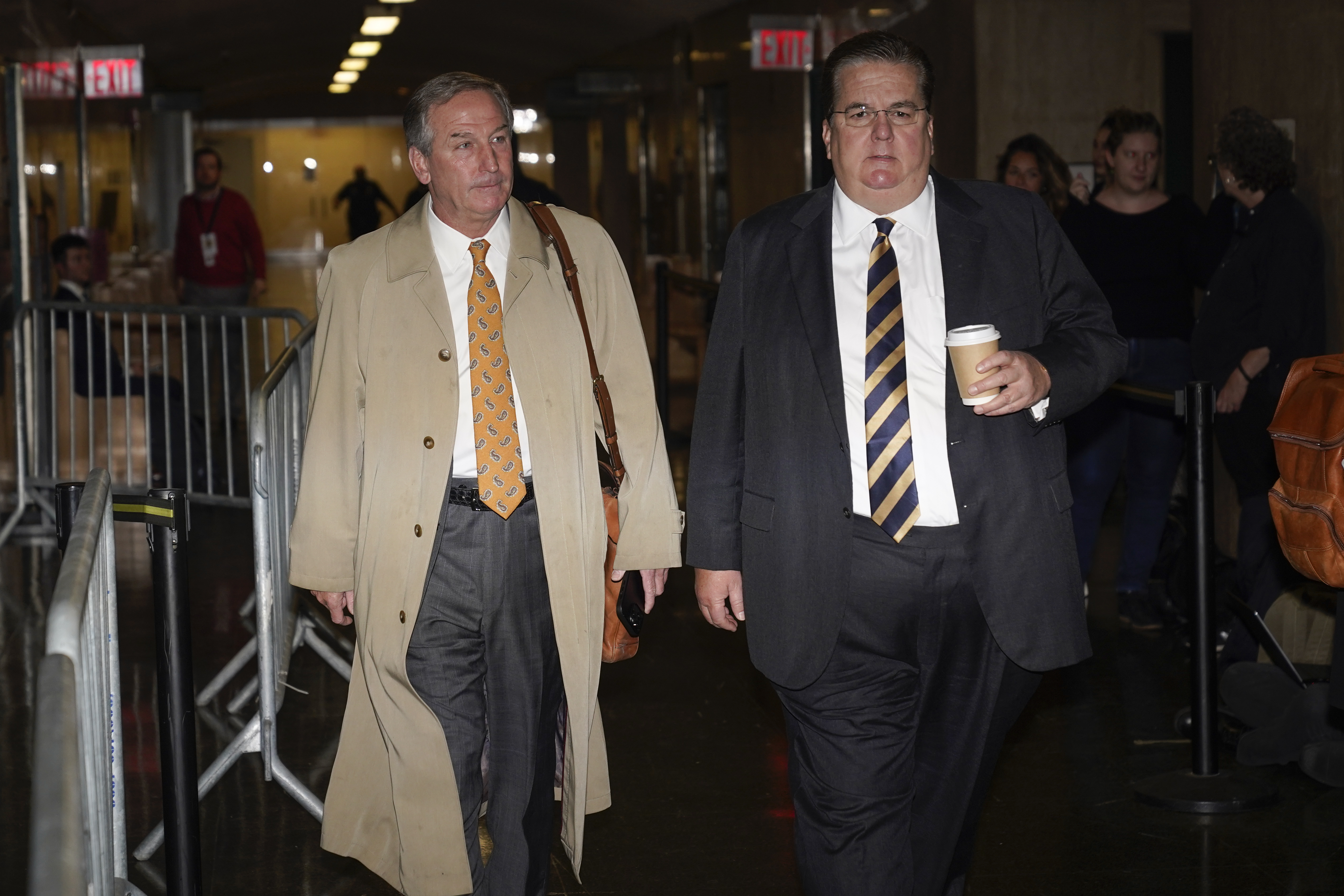
    Behind the lawsuit is Michael van der Veen, a 62-year-old high-profile Center City lawyer whose office is in the building across from Bar X on Camac Street.

    The bar has been using the office’s parking spot for years, van der Veen said, despite repeated requests to remain off the lawyer’s private property.

    But things escalated in July when, according to van der Veen, he was assaulted while leaving his office around 9 p.m. at night.

    “When I got jumped from behind and got coldcocked, I was done,” he said.

    Days later, veteran criminal defense lawyer William Brennan incorporated Save Our Neighborhood for Tomorrow Inc., the group that filed the lawsuit against “the dive bar of the Gayborhood,” as Bar X pitches itself.

    “This changed when passive-aggressive behavior became assaultive-aggressive behavior,” Brennan said. “It can’t be tolerated.”

    Brennan and van der Veen have previously worked on high-profile cases together, including on President Donald Trump’s defense team during his second impeachment in 2021.

    The duo also represented the Trump Organization in a 2022 tax-fraud trial in New York City.

    Save Our Neighborhood for Tomorrow does not appear to have a website or social media presence.

    Defense attorneys Michael van der Veen, left, and William Brennan arrive to criminal court in New York in 2022 for Trump’s tax fraud case. Seth Wenig

    George Bochetto, the attorney who filed the lawsuit on behalf of the newly formed group, did not respond to repeated requests for an interview. Bochetto is also representing a different group of Pine Street and Spruce Street residents who won an injunction to pause safety upgrades to bike lanes.

    The lawsuit against Bar X names owner Tony Tsang, business entities associated with the bar, the city, and the commissioner of the Philadelphia Department of Licenses and Inspections, Bridget Collins-Greenwald. The city did not respond to requests for comment.

    Tsang disputed the allegations of public drunkenness and sexual activity and said the bar is a longtime fixture of the block.

    “You don’t like it, you like it quieter, how come you don’t move out of the city?” Tsang, 59, said in a recent interview at the bar. “One block, three bars, how come they’re only complaining about us?”

    A ‘very homey’ gay bar

    Bar X sits between Locust and Spruce on Camac, a narrow, 200-year-old street that is home to two other gay bars, Tavern on Camac and UBar. It is also around the corner from the bar 254, which replaced Tabu. Those three bars are all owned by the Tavern Group.

    Tsang said the majority of his clientele is Black and suggested that the lawsuit had more to do with his identity and that of his patrons than the noise or disturbance allegations.

    “To me, it’s the color. I’m Asian. My English isn’t too good. They want to play a game with me,” Tsang said.

    Tsang opened his bar in 2016, naming it Bar X so it would be easy for people to remember. The bar’s exterior features a rainbow mural of tropical leaves; inside Tsang hung Ikea posters of Audrey Hepburn and James Dean. He said he stocks the bar himself, buying whatever club soda is on sale at the supermarket.

    The bar has a large dance floor and a DJ booth that abuts the alley.

    Bar X occupies the former location of the Venture Inn, a landmark institution that opened in the 1930s and transformed over the decades from a gay-friendly bar to a gay bar in the 1970s. The property was sold in late 2015 and the Venture Inn closed.

    Joseph Ward, a part-time bartender at Bar X who also runs its social media and marketing, said the bar stands out because it’s “very homey,” with Taco Tuesdays and twice-weekly karaoke. (There’s also a male revue every Thursday night.)

    Bar X owner Tony Tsang said he stocks the bar himself with whatever club soda is on sale at the supermarket.Elizabeth Robertson / Staff Photographer

    “You [can] just chill and not have to worry about the hustle and bustle of a nightclub,” Ward, 36, said. He said the bar is one of the last minority-owned clubs in the Gayborhood and hosts a largely nonwhite crowd.

    The lawsuit cites negative Google reviews from people purporting to be Bar X customers, including accounts of stolen phones and allegations that a bartender gave patrons drinks containing sedatives.

    The remedy to the situation, the suit says, is for the city to shut down the bar.

    Ward said that rumors of drugged drinks at the bar had gained traction online earlier this year, but that staff had not been able to verify any crimes, despite reaching out to those making the accusations. In response, the bar ordered covers for customers’ drinks.

    “We take pride in it being a safe place in the Gayborhood,” Ward said, “so we obviously want to keep it that way.”

    A new police deployment

    Bar X’s block has seen an increase in crime incidents this year, according to Philadelphia Police Department public data.

    The lawsuit claims that since last summer there have been nearly 70 crime incidents at the property, including “multiple reports of a person with weapons, assaults, robbery, and disorderly conduct.”

    <iframe title="Crime Incidents On Bar X's Block" aria-label="Column Chart" id="datawrapper-chart-LCiYX" src="https://datawrapper.dwcdn.net/LCiYX/1/" scrolling="no" frameborder="0" style="width: 0; min-width: 100% !important; border: none;" height="477" data-external="1"></iframe><script type="text/javascript">(function(){function e(){window.addEventListener(`message`,function(e){if(e.data[`datawrapper-height`]!==void 0){var t=document.querySelectorAll(`iframe`);for(var n in e.data[`datawrapper-height`])for(var r=0,i;i=t[r];r++)if(i.contentWindow===e.source){var a=e.data[`datawrapper-height`][n]+`px`;i.style.height=a}}})}e()})();</script>

    In April, the Washington Square West Civic Association hosted a meeting with residents, city officials, and Tsang in an attempt to address neighborhood complaints. Councilmember Mark Squilla, who represents the area and attended the meeting, estimated that more than 40 people attended.

    In response, the city experimented with one-off street cleanings of Camac to address litter, Squilla said. Police also began clearing the street of people on weekend nights after 2 a.m., when the bar closes.

    “We’ll continue to work on compliance and whatever else is needed there,” Squilla said.

    A Philadelphia Police Department spokesperson confirmed there is currently a “bar/nightclub” deployment in the bar’s general area. The department has used similar deployments throughout the city for decades to respond to community concerns and public safety needs, Sgt. Eric Gripp said in a statement.

    Allegations of aggressive crowd control

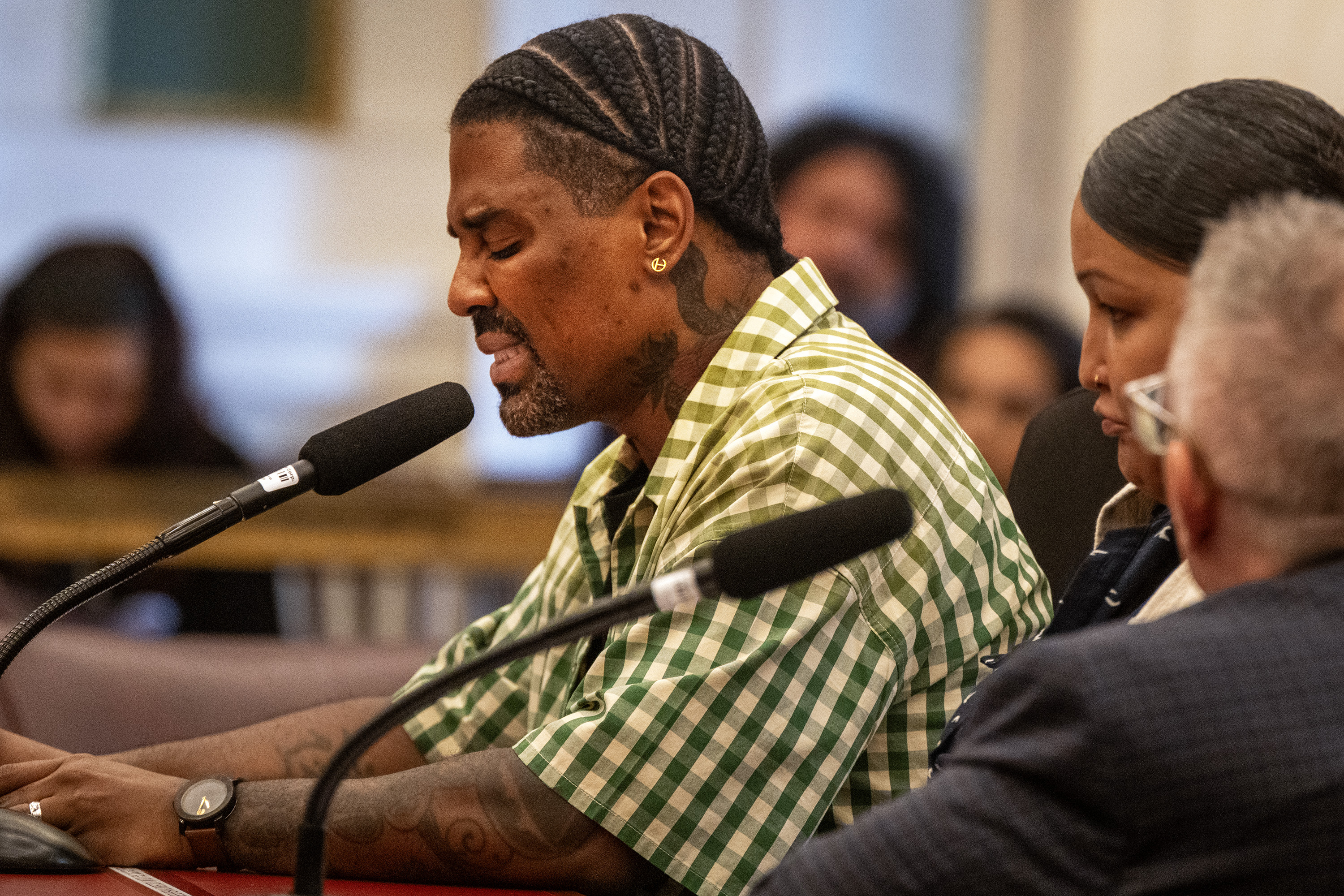
    The enhanced law enforcement presence there comes at a time of high tension between the city’s LGBTQ+ community and police. Earlier this month, City Council members grilled Police Commissioner Kevin Bethel over the department’s response during Pride festivities in June. Pride attendees testified at the hearing that the most aggressive crowd-control tactics were used on crowds of Black celebrators.

    Jacen Bowman, president of Philly Black Pride, testified earlier this month at a City Council Committee on Legislative Oversight hearing into the Philadelphia Police tactics used during Pride celebrations in June.Tom Gralish / Staff Photographer

    “Black and brown LGBTQ+ people are watched differently. We are approached differently. We are policed differently,” Jacen Bowman of Philly Black Pride said at the hearing. “Too often we are made to feel like visitors in a neighborhood that is promoted as the heart of Philadelphia’s LGBTQ+ community.”

  • Owner of Zena’s American Mediterranean Cuisine in Collingswood released on bond from ICE detention

    Owner of Zena’s American Mediterranean Cuisine in Collingswood released on bond from ICE detention

    Iemad Saifo, the 65-year-old owner of Zena’s American Mediterranean Cuisine in Collingswood, has been released after spending two weeks in ICE detention at Delaney Hall in Newark, N.J.

    Saifo emigrated to the United States from Syria in 2002 on a business visa and later sought asylum after the outbreak of the Syrian civil war. He was detained during a routine ICE check-in July 31.

    Saifo is the primary caregiver for his 12-year-old son, who has autism. The elder Saifo also has spasmodic dysphonia, a rare condition that makes it difficult for him to speak, as well as chronic kidney disease.

    Dozens of Collingswood-area community members wrote letters and signed a petition urging the court to keep him in South Jersey with his family.

    As President Donald Trump pushes his mass deportation agenda, routine check-ins have become increasingly risky for immigrants. Immigration advocates say many of those who have been arrested at ICE check-ins were simply following government protocols.

    Last week, New Jersey Attorney General Jennifer Davenport announced her office was investigating Delaney Hall after multiple detainees died there during the last year, raising concerns about the facility’s conditions and medical negligence. The privately operated detention center under contract with ICE has been the scene of fierce protests and political fights between the Trump administration and Democrats since its May 2025 reopening.

    U.S. Immigration and Customs Enforcement said in a statement that Iemad Saifo was arrested both because he does not have permanent status and because of a 2018 case in which he was indicted and found guilty of witness tampering and sentenced to five years’ probation.

    “Under President Trump and Secretary Mullin, ICE is targeting the worst of the worst,” a Department of Homeland Security spokesperson wrote. “Nearly 70% of ICE arrests are of illegal aliens charged or convicted of a crime in the U.S.”

    One of Saifo’s attorneys, Fiona Powell, credited the 150 notarized letters from community members testifying to his character with helping secure his release.

    “This was an outpouring of community support like I’ve never seen before,” she said.

    Those letters were authored last weekend during an event that friends, family, and community organizers hosted at his restaurant.

    Many in South Jersey know Iemad Saifo from his restaurant, which opened in 2011, and from the nearly 10 years he previously spent working at a local 7-Eleven, said his 27-year-old daughter, Zena Saifo, for whom the restaurant is named.

    Zena Saifo said she, her mother, and one of her brothers were granted asylum after the war began. Her father never heard back from the Department of Homeland Security on his asylum application, she said, so he later applied for permanent residency through his younger son, who was born in the United States.

    “He’s always willing to help people, to give,” Zena Saifo said of her father. “People are really enraged and disgusted by what’s happening and doing everything they can to support him.”

    Zena Saifo is still reeling from the day of his detention, she said, when she, her brother, and lawyers arrived at the Mount Laurel ICE office for the check-in around 7:30 a.m. and were made to wait until past noon. The Saifos’ lawyer notified Zena her father would be detained. She tearfully pleaded with the ICE officer to let her say goodbye to him but was denied, she said.

    “‘Was this the last time I saw my father?’” Zena Saifo recalled wondering in the moment. “It was just really, really devastating.”

    In the period since Iemad Saifo’s detention, two of his sons, ages 24 and 26, have taken over the restaurant. His wife has stayed at home and taken care of the youngest. He turned 12 last weekend without his father present.

    Zena Saifo said her father’s two requests of her in his absence were to water the family fig tree and to host a big celebration for her brother’s birthday.

    On Friday morning, the family was en route to pay the $7,500 bond and pick Iemad Saifo up from Delaney Hall, Powell said.

    The 2018 charge was brought up during the bond review, she said, but “in the end the judge was able to see that he’s an older man with a family who needs him and strong community ties and that he deserves to be home with his family.”

    Going forward, Iemad Saifo’s legal team will do all it can to secure permanent residency for him. In the interim, Powell said, immigrants are always at risk of detention regardless of their circumstances. The Trump administration has issued 46,000 orders of removal or voluntary deportation since the start of last year in Pennsylvania, New Jersey, and Delaware, more than in the entirety of former President Joe Biden’s term. In New Jersey’s courts, orders of removal or voluntary departure rose 47% just between May and June, from 2,348 to 3,446.

    However, to legally detain Iemad Saifo again, the government would need to show something about his situation has changed.

    “It could take potentially months or years more in order to get him permanent status here, but we will continue doing everything we can to keep him here,” Powell said.

  • Data centers are good business but bad politics. Josh Shapiro tries to thread the needle. | Shackamaxon

    In this week’s Shackamaxon, the race for City Council kicks off, SEPTA police officers step in front of the cameras, and a Big Tech reckoning comes for the Ambitious Abingtonian.

    Councilmember Jeffery “Jay” Young Jr. during the Barber’s Hall community legacy celebration on Aug. 1.Yong Kim / Staff Photographer

    Contrarian challenge

    In political circles, the legislative lineage of Philadelphia’s 5th Council District is one of the city’s most esteemed and iconic. The first person to represent the residents of the 5th in City Council was Raymond Pace Alexander, the civil rights leader who was later appointed as the first African American judge on the Court of Common Pleas. The seat has also been held by Cecil B. Moore, Ethel Allen, and John Street. Few other districts can boast such an impressive list of luminaries.

    Today, its occupant is someone very different, Council’s quarrelsome contrarian, Jeffery “Jay” Young Jr.

    Of course, there’s nothing wrong with “good trouble” or sticking out from the crowd. Moore himself was famously pugnacious, with the former Marine once quoted as saying that “The imported Gandhi philosophy of nonviolence that still exists in the South will not be accepted in Philadelphia, where we believe in self-help and self-defense.” Allen was also a maverick, styling herself as a “B.F.R. — a Black, female Republican, an entity as rare as a Black elephant and just as smart.”

    Moore and Allen, however, were quarrelsome on behalf of the people they represented, and contrarians at a time when Black Philadelphians were mostly excluded from the halls of power.

    Moore successfully desegregated Girard College, paving the way for Young himself to attend decades later.

    Allen broke barriers, too, becoming the first Black woman to hold a seat on City Council, and served the community directly as a physician.

    Young, however, starts fights that help nobody. Worse, no one seems to understand why he’s fighting in the first place.

    From delaying repairs at the Cecil B. Moore Library to blocking popular housing proposals, Young’s actions frequently bring him in conflict, rather than concert, with the community he was elected to represent.

    It is unsurprising, then, to see that he’s already attracted a declared challenger for his seat, months before election season kicks off in earnest.

    Jalon Alexander has a big advantage over the opponents Young (almost) faced in the past: He’s managed to successfully get onto the ballot before, during the 2023 City Council at-large election.

    While he brings his own ideas to the table, Alexander is also clearly running in opposition to Young’s choices. The cybersecurity attorney grew up in Strawberry Mansion, and still lives there, but is running a campaign built to find support across the district’s geographic and political spectrum.

    Kellan White, at this point a potential candidate, presents another strong alternative. White managed Rebecca Rhynhart’s 2023 mayoral campaign, which was successful across much of the 5th District. He has a deep knowledge of city politics and policy, and a Rolodex of contacts that any political journalist would be jealous of. Unlike Young, both Alexander and White are willing to answer the phone to talk to reporters, community leaders, and their constituents.

    At this point, even if a dozen candidates run against him and split the opposition vote, Young may still face an uphill battle.

    When I’ve criticized other Council members, I always get calls or emails from constituents who defend their choices. In nearly three years writing about Young, not a single person has offered a defense.

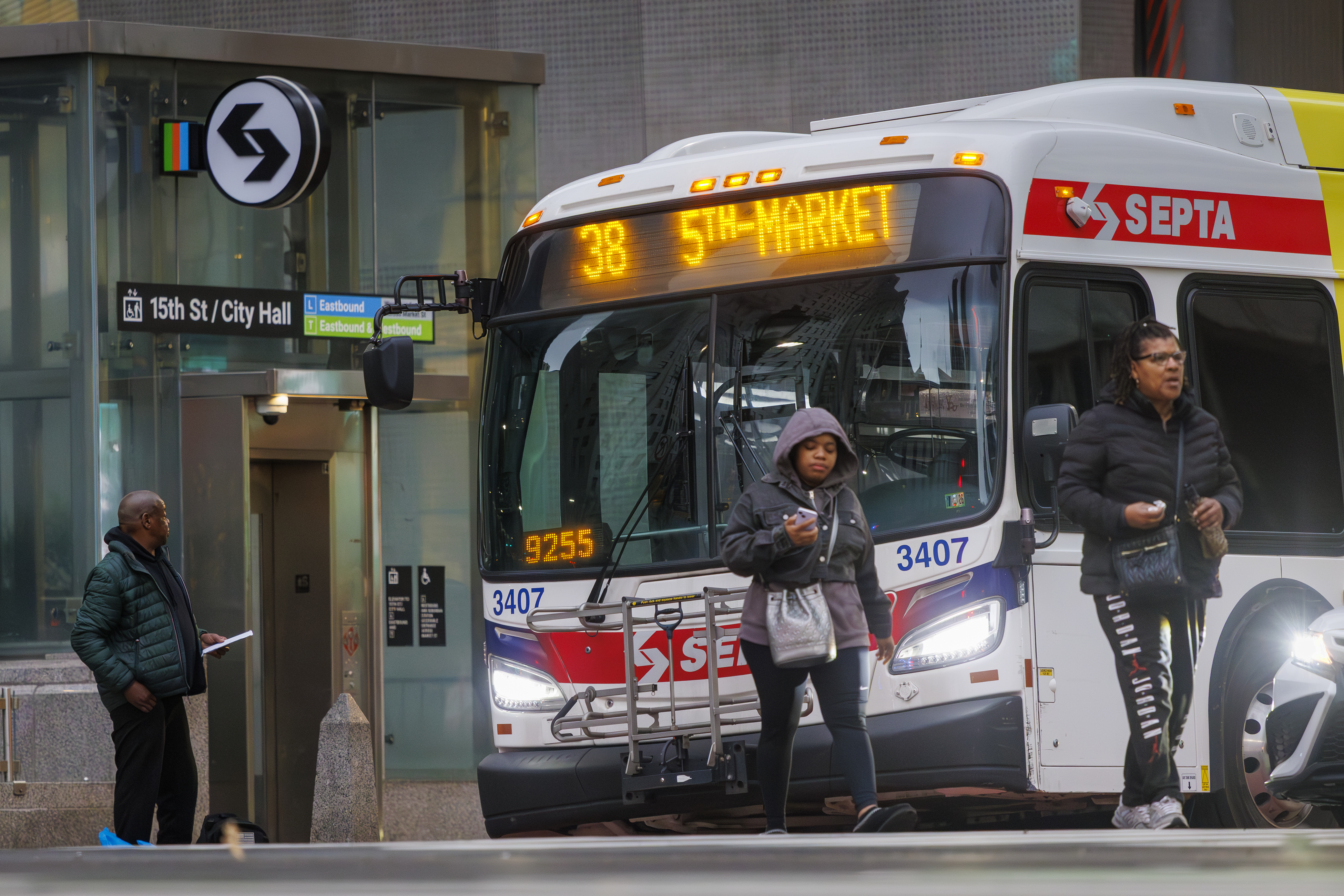
    A SEPTA Route 38 bus at 15th and Market Streets in May.Alejandro A. Alvarez / Staff Photographer

    Spotlight on SEPTA

    A few readers have asked me about film crews they’ve seen following SEPTA police around stations and transit vehicles recently. Media Relations Director Andrew Busch confirmed that the A&E Network is filming a docuseries, which will be broadcast next year.

    Personally, I’m looking forward to watching it. SEPTA’s roughly 250-strong police force is charged with patrolling more than 285 train and trolley stations, and nearly 3,000 vehicles. They are also in the midst of substantial declines in serious crime, which occurred alongside a crackdown on fare evasion and a surge in enforcement for quality-of-life issues. That’s a story worth showing.

    Less worthwhile would be a series focused on Kensington and the city’s drug epidemic. That’s a real part of SEPTA’s policing duties, but is often exploitative when told by outsiders.

    Gov. Josh Shapiro announces a $20 billion investment by Amazon in Pennsylvania data centers in Salem and Falls Townships in 2025.Commonwealth Media Services

    Data-driven

    Ever since the creation of the first computer, there have been concerns about its role in the future. It doesn’t help matters that many tech CEOs, like OpenAI’s Sam Altman, regularly express a kind of contemptuous attitude toward humanity and human needs. At one point, Altman said that artificial intelligence would “lead to the end of the world.” How inspiring!

    This has put public officials in a tough position over their support of data centers.

    For generations, states and cities have competed to attract investment. But these days, cash is flowing into an industry opposed by 74% of voters. Seeing an opportunity, challengers from across the political spectrum are using data centers in their political attack ads, while incumbents are scrambling to explain themselves.

    This isn’t run-of-the-mill NIMBYism, either. According to one report, only 8% of data center opponents live near one.

    Gov. Josh Shapiro, the Ambitious Abingtonian, exemplifies this conundrum. He was an early advocate for embracing data centers, but with polls tightening for his reelection efforts, he’s been forced to adapt.

    Of course, there’s a certain opportunism to state Treasurer Stacy Garrity’s embrace of the techlash.

    Her own party has been quite supportive of data centers. President Donald Trump has called them “tremendous.” Pennsylvania state Senate Majority Leader Joe Pittman has long advocated for the centers, which represent a particular opportunity for his own community, which has, in his words, “a long and storied history when it comes to the production of electricity.” U.S. Sen. Dave McCormick, the highest-ranking Republican in Pennsylvania, is married to Meta executive Dina Powell McCormick. Meta is one of the four companies investing a total of $1.5 trillion in new data centers.

    Pennsylvania Senate Republicans declined to pursue Shapiro’s proposed “GRID” initiative, which would have required the centers to produce their own electricity, conform to environmental standards, and make community benefits agreements in exchange for permitting assistance.

    Many of the current pitchfork-wielding politicos may themselves be forced to pivot when in office. Voters may hate data centers, but they also hate tax increases and service cuts.

    Loudoun County, Va., which is known as data center alley, has averted both. Local authorities have cut property tax rates by nearly 30% over the last decade, and the centers pay roughly half of the county’s property tax revenue. Given the increasing share of Pennsylvania’s budget that is paid through the extractive gambling industry, the need to invest more in schools and transportation, and the continuing structural deficit, it is no surprise politicians initially saw the AI boom as an opportunity.

    Now, state leaders will have to pick their poison.

    If they pursue data centers, they’ll face voter backlash. If they continue to embrace gambling, they’ll contribute to the impoverishment of their own constituents. If they stop investing in education or allow transit agencies to fail, they’ll weaken the commonwealth’s economy going forward. If they raise taxes, they’ll take the blame for that, too.

    While the data center surge may seem sudden to many, it is also a response to demand. Both businesses and individuals are increasingly using AI in daily life.

    Ironically, many social media posts about data centers include AI-generated text and images. It is a bit like if the Women’s Christian Temperance Union had fundraised with a booze cruise.

  • Pa. says vaccine guidelines won’t change over Trump’s executive order

    Pa. says vaccine guidelines won’t change over Trump’s executive order

    Pennsylvania will not change its immunization guidelines in response to President Donald Trump’s executive order this week calling for states to reduce the number of recommended childhood vaccinations and separate a combination shot protecting against measles, mumps, and rubella (MMR).

    Gov. Josh Shapiro, a Democrat, said his administration will “continue to give Pennsylvanians clear public health guidance based on science and facts.”

    “President Donald Trump and [Health and Human Services Secretary Robert F. Kennedy, Jr.] are screwing around with the childhood vaccine schedule — ignoring decades of science, sowing chaos and confusion, and spreading dangerous misinformation that put kids and families at risk,” Shapiro said.

    States set vaccination mandates for schoolchildren, not the federal government.

    The order signed by Trump on Monday asks states to “consider updating” laws to require fewer vaccinations for all schoolchildren.

    The order also recommends that children receive all vaccinations at separate appointments, which experts say can delay children’s protection against serious diseases.

    And it gives Kennedy, a longtime anti-vaccine activist, 90 days to present Trump with a plan for a number of vaccine policy changes. Changes could include splitting the MMR vaccine into separate shots for each disease. There are currently no individual vaccines for measles, mumps, or rubella licensed in the United States.

    “Splitting up combination immunizations, like the MMR vaccine, creates unnecessary hurdles for parents, needlessly extends the window of risk for our youngest residents, and doesn’t follow the results of the many studies that went into developing the previous vaccine schedules,” Pennsylvania Secretary of Health Debra Bogen said in a statement.

    Trump’s earlier attempt to reduce the number of recommended vaccinations was blocked in federal court.

    White House spokesperson Kush Desai did not comment directly on Pennsylvania officials’ decision to keep its original vaccine recommendations.

    He said in a statement that Trump has pledged to reduce the vaccines recommended for all children, and the “administration is committed to delivering with Gold Standard Science and every lever of executive authority.”

    “The countless parents whose questions and concerns about America’s vaccine schedule have been ignored if not mocked finally have a true champion in President Trump,” he said.

    Vaccine politics under Trump

    The new executive order is not binding, experts say, and states are free to ignore it.

    Several states, including Pennsylvania, have already balked at Trump’s repeated attempts to upend longstanding childhood vaccination schedules.

    In February, Pennsylvania and 14 other states sued to block changes to the childhood vaccination schedule.

    And last year, when the Trump administration did not approve COVID-19 vaccinations for certain groups, Pennsylvania changed state policy to allow pharmacists to dispense vaccines based on recommendations from a number of professional medical organizations, including the American Academy of Pediatrics and the American Academy of Family Physicians.

    Previously, pharmacists were asked to dispense vaccinations based solely on recommendations from a Centers for Disease Control and Prevention committee. Kennedy fired the entire committee and replaced them with hand-picked appointees last year, some of whom included vaccination skeptics. That action is also the subject of a court battle.

    “The way to handle this is to ignore it,” said Paul Offit, the director of the Vaccine Education Center at the Children’s Hospital of Philadelphia and a prominent Kennedy critic.

    “It’s not science based, it doesn’t make vaccines safer or more effective,” he said. “All it does is put children in harm’s way.”

    He noted that despite longstanding concerns by anti-vaccination activists that children receive too many vaccinations, breaking up combination vaccinations like MMR would result in children getting more shots. “Kids would need six shots instead of two,” he said.

    Logistics uncertain

    Changing the kinds of vaccines available in the United States would take years, said Ana Santos Rutschman, a professor specializing in health law at Villanova University.

    Trump could ask the Food and Drug Administration to approve separate measles, mumps, and rubella vaccinations, which would require extensive clinical trials and a long approval process, she said. And vaccine manufacturers may not attempt to develop new shots if Republicans lose control of the White House in 2028, she added.

    “Right now, it’s unlikely anyone will reshift their operations,” she said. “It’s feasible — it’s just expensive, and the payoff is very small.”

    The FDA could revoke licensing for the current combination MMR vaccines, but that would likely invite court challenges, Santos Rutschman added.

    In the short term, she’s concerned that Trump’s repeated attempts to change longstanding vaccine policy will only confuse parents and providers who have relied on consistent recommendations from the federal government.

    “Suddenly, you have our top regulators saying there’s a reason to hop to a different set of products. This is inherently confusing,” she said.

  • Immigration courts in Pa., N.J., and Del. issued record number of deportation orders in June

    Immigration courts in Pa., N.J., and Del. issued record number of deportation orders in June

    Immigration courts in Pennsylvania, New Jersey, and Delaware are ordering people removed from the country in numbers not seen in at least a quarter century.

    At the Philadelphia immigration court — which hears cases for most Pennsylvania and Delaware residents — orders of removal or voluntary departure rose 71%, from 1,230 in May to 2,105 in June. At New Jersey’s courts, orders rose 47%, from 2,348 to 3,446.

    The figures are the highest since at least late 1997.

    “We’re definitely seeing an increase in removal orders where we may not have seen them in the past,” said Emma Tuohy, a partner at Philadelphia’s Simon, Choi & Tuohy and a past president of the American Immigration Lawyers Association’s Philadelphia chapter. “Cases are getting more difficult to win.”

    June’s cases bring to more than 46,000 the number of removal and voluntary deportation orders courts across the three states have issued since President Donald Trump’s return to office — slightly more than the total issued over the entirety of former President Joe Biden’s term.

    (function(){function e(){window.addEventListener(`message`,function(e){if(e.data[`datawrapper-height`]!==void 0){var t=document.querySelectorAll(`iframe`);for(var n in e.data[`datawrapper-height`])for(var r=0,i;i=t[r];r++)if(i.contentWindow===e.source){var a=e.data[`datawrapper-height`][n]+`px`;i.style.height=a}}})}e()})();

    (A voluntary departure order requires an individual to leave the country but, unlike a removal order, does not legally bar them from returning.)

    Local immigration attorneys say the surge in such orders reflects the Trump administration’s success in transforming immigration courts from independent arbiters of the law into components of a larger deportation machine. Immigration judges, they say, now often work in concert with government agents and attorneys to remove the maximum number of people from the country as quickly as possible, sometimes violating the due process rights of people who find themselves caught up in the system.

    Lilah Thompson, chief of immigration in the Community Defense Unit at the Defender Association of Philadelphia, has seen the trend in her own practice.

    “The immigration judges are on the same side as ICE and DHS, which is not supposed to be the case. They’re supposed to be neutral arbiters of the law,” Thompson said. “But that is not how it actually plays out.”

    Unlike typical federal judges, immigration court judges are not independent judicial branch officials but executive branch employees within the Executive Office for Immigration Review (EOIR), the agency responsible for overseeing the nation’s immigration courts system.

    EOIR officials declined an interview request for this article. In a statement, a Department of Justice spokesperson said: “The Justice Department is restoring integrity to our immigration system by hearing cases fairly, expeditiously, and uniformly, in accordance with the law.”

    The states’ record high figures and sharp month-over-month increases match the trend nationwide, as the country saw such orders rise by a third, to nearly 87,000. Nationally, more than 960,000 of these orders have been issued since Trump returned to office.

    June’s increases reflect a steady rise in such orders since then.

    Compared with January 2025, removal and voluntary departure orders were up nearly 300% in Pennsylvania and Delaware, and more than 280% in New Jersey. Nationally, removal orders were up almost 160%.

    The data were published by the Transactional Records Access Clearinghouse (TRAC), a data gathering and research organization that regularly acquires and analyzes such data from EOIR.

    Faster cases, more deportations

    As the number of deportation orders has reached all-time highs, such orders have also come to represent the vast majority of deportation case outcomes.

    In June, 90% of Pennsylvania and Delaware cases ended with an order of removal or voluntary departure. In New Jersey, 94% did. Nationally, about 89% of cases ended with such an order.

    Since the start of Trump’s second term, more than 85% of cases have ended with such orders. Under Biden, about 44% did. About two-thirds of cases ended in a removal or voluntary departure order during Trump’s first term.

    Rosina Stambaugh, a York-based immigration attorney, pointed to the faster pace of recent deportation cases as a major factor.

    “They’re scheduling a final hearing in like two weeks. Before, we’d have at least a month to prepare,” Stambaugh said. “To prepare for a final hearing in just two weeks is insane. We used to have at least 30, sometimes 45 to 60, days to prepare for a hearing.”

    (function(){function e(){window.addEventListener(`message`,function(e){if(e.data[`datawrapper-height`]!==void 0){var t=document.querySelectorAll(`iframe`);for(var n in e.data[`datawrapper-height`])for(var r=0,i;i=t[r];r++)if(i.contentWindow===e.source){var a=e.data[`datawrapper-height`][n]+`px`;i.style.height=a}}})}e()})();

    The faster pace is in part the result of judges refusing to offer continuances, lawyers say. Before, it was ordinary for a judge to delay a hearing so an attorney had more time to prepare. That is no longer the case.

    The change follows a series of rulings from the Board of Immigration Appeals (BIA) — the highest administrative body for interpreting immigration laws. One such ruling largely prohibited judges from extending cases based on future eligibility for relief.

    Stambaugh offered a client of hers as an example.

    After the man was arrested in an ICE sweep, his fiancée, an American citizen, raced to file marriage paperwork. The couple were scheduled to get married the day after his hearing. Stambaugh asked the judge to delay issuing a ruling, as the impending marriage would have granted new grounds for protection from deportation. The judge refused and the man accepted a voluntary departure.

    Tuohy pointed to another set of BIA decisions that has sped up cases — and made them harder to win.

    Those rulings instruct judges to order someone removed before providing them with an opportunity for a full hearing of their case in some circumstances.

    “So before anyone’s even had a chance to dive into the meat of the case — to really prepare evidence and prepare for the case — the judges are predetermining that the case is without merit and [removing] them,” Tuohy said.

    More people detained while facing deportation, the vast majority with no criminal record

    The increasing number of detained individuals is another factor fueling the surge in deportations, according to lawyers.

    In June, more than 11% of people receiving orders of removal or voluntary departure in Pennsylvania, New Jersey, and Delaware were in detention. That is up from 7% in January 2025. Since Trump returned to office, about one in four people in the three states was detained, compared with about 7% during the Biden administration and 29% during Trump’s first term.

    (function(){function e(){window.addEventListener(`message`,function(e){if(e.data[`datawrapper-height`]!==void 0){var t=document.querySelectorAll(`iframe`);for(var n in e.data[`datawrapper-height`])for(var r=0,i;i=t[r];r++)if(i.contentWindow===e.source){var a=e.data[`datawrapper-height`][n]+`px`;i.style.height=a}}})}e()})();

    Stambaugh said that in the past, when Immigration and Customs Enforcement agents encountered someone without legal status who did not have a criminal record, they would usually just issue a notice to appear before a judge or even let them go after advising them to seek legal status. That has changed.

    “It is 100% that ICE officers no longer have discretion in who they can detain,” Stambaugh said. “Now, if you come in contact with ICE and you’re not a lawful permanent resident or U.S. citizen, you’re detained.”

    As more people are detained during deportation proceedings, a smaller share of them have a criminal record.

    In June, just 1% of cases in Pennsylvania, New Jersey, and Delaware ending in an order of removal or voluntary departure were brought on grounds alleging a criminal violation, matching the share nationally. The last time more than 5% of cases ending in an order of removal or voluntary departure were brought under a criminal charge was December 2024, the month before Trump took office for his second term.

    “They’re trying to remove as many people as possible, and they’re going to go for low-hanging fruit, which is individuals out in the community who are doing nothing wrong,” Thompson said, referencing collateral arrests and those that have occurred during individuals’ ICE check-ins.

    A series of BIA rulings last year have also led to a growing detained population, lawyers say. In the most consequential of those, the board prohibited immigration judges from granting bond to people who entered the country without permission — regardless of the length of time they had lived in the United States or whether they had a criminal record.

    Previously, attorneys say they had adequate time to prepare cases. That is no longer true.

    “When you have to do these cases in two weeks, you don’t really have much to work with because the main person who has to get you evidence is stuck in detention,” Stambaugh said. “That’s what makes these cases a lot harder.”

    Share of people without legal representation increasing

    People with legal representation are far more likely to avoid an order of removal or voluntary departure. In June, 73% of such individuals in Pennsylvania, New Jersey, and Delaware courts had their cases end in removal vs. 98% of those who lacked legal representation, similar to national figures and long-standing trends.

    At the same time, the share of people without legal representation has steadily climbed in recent years.

    In June, a little under 24% of individuals in deportation cases in Pennsylvania, New Jersey, and Delaware had a lawyer. That is down from about 57% in January 2025. Since Trump returned to office, about one in three people in the three states had a lawyer, as compared with about 57% during the Biden administration and 52% during Trump’s first term.

    (function(){function e(){window.addEventListener(`message`,function(e){if(e.data[`datawrapper-height`]!==void 0){var t=document.querySelectorAll(`iframe`);for(var n in e.data[`datawrapper-height`])for(var r=0,i;i=t[r];r++)if(i.contentWindow===e.source){var a=e.data[`datawrapper-height`][n]+`px`;i.style.height=a}}})}e()})();

    Thompson, of the Defender Association of Philadelphia, said several factors were at play.

    First, the demand for attorneys has increased alongside the volume of cases, swamping supply.

    Second, cases both move more quickly and are more complex, limiting the number of cases attorneys can juggle at once.

    “Our ability to take on cases is so much less now because what a case requires now is so much more,” she said.

    And unlike Thompson and her colleagues, who offer their services at no charge, private lawyers are expensive and their fees reflect the increasing complexity of cases, meaning fewer people can afford them.

    Tuohy suggested the increase in detention is likely also making it more difficult for people to afford legal services.

    “You’re not working anymore if you’re in detention, right?” Tuohy said. “So then you’re asking your family to foot the bill, and that consideration [to hire an attorney] becomes even more difficult.”

    Stambaugh suggested an additional factor: The flurry of policy changes has led to immigration courts so stacked in the government’s favor that many immigrants may regard hiring an attorney as a waste of money since they will likely face deportation no matter the strength of their case.

    She has begun advising potential clients that their best option may be to keep their money and instead accept voluntary deportation.

    “In my opinion, you’re going to have to go back [to your home country], so you might as well keep your money and go find somewhere to live,” Stambaugh said.


  • Violence by extremist Israeli settlers against Palestinian civilians on the West Bank threatens new Mideast flash point

    Violence by extremist Israeli settlers against Palestinian civilians on the West Bank threatens new Mideast flash point

    While the world is focused on the failures of Donald Trump’s warmongering in Iran and “peacemaking” in Gaza, too little attention is being paid to a potential new Mideast flash point sparked by messianic Israeli settlers on the occupied West Bank.

    Escalating settler violence against Palestinians — attacking their villages, farms, and even homes — is unchecked and often assisted by Israeli military forces. It is also chilling because it is fully supported by extremists in Prime Minister Benjamin Netanyahu’s government who have his full backing.

    I have witnessed such settler violence during reporting trips over the years, but it is reaching unprecedented heights (or depths) as Bibi courts right-wing votes before Israeli elections in October.

    Far-right extremists are even encouraging Jewish-Arab violence atop the Temple Mount, the most sacred site in Judaism and the third holiest in Islam, which could ignite anti-Israel religious violence and terrorism in the region.

    The extremists’ goal — as clearly spelled out in a “Decisive Plan” by current Finance Minister Bezalel Smotrich, who also oversees administration of the West Bank — is to present the Palestinians with three choices: legalized apartheid and repression, massive ethnic cleansing (labeled “voluntary emigration”) from the West Bank, or death if Palestinians resist.

    The plan’s goals have extended to Gaza.

    The quibble over language that feeds debate over Israel in the United States — as in whether to call what’s happening in Gaza “genocide” — only distracts from the central problem. When Palestinians are offered nothing — meaning no political future or rights — they have nothing to lose. Unfettered occupation and ethnic cleansing will provoke resistance and terror attacks. It will be untenable in the long run.

    What is more likely to happen is a third uprising on the West Bank, followed by massive bloodshed between Palestinians and settlers. It would guarantee a disastrous end to Trump’s Gaza project and to his Abraham Accords, which were meant to advance peace between Israel and Gulf Arab states. Yet, the president is clearly blind to how quickly his Mideast peace efforts are sliding toward disaster.

    In desperation, 600 retired Israel Defense Forces generals and colonels, as well as retired intelligence and foreign service officers, recently wrote to Trump urging him to press Bibi to halt the West Bank violence.

    I spoke to one of the group’s organizers, Nimrod Novik, a senior adviser to former Prime Minister Shimon Peres, a deeply experienced negotiator and distinguished fellow at the Israel Policy Forum, about his fears for the future if Israel’s policy toward Palestinians doesn’t change.

    “What we will see in the West Bank in the next 90 days [before the Israeli election], you haven’t seen ever,” he warned. “The whole ideological right-wing extremist group, helped by the government, fears this is their last opportunity [to advance Smotrich’s goals]. If the Netanyahu government is ousted, the next government would deal harshly with Jewish terrorism.”

    President Donald Trump listens as Israel’s Prime Minister Benjamin Netanyahu speaks at President Donald Trump’s Mar-a-Lago club, Dec. 29, 2025, in Palm Beach, Fla.Alex Brandon

    I would add a caveat: It isn’t clear how much a coalition of opposition parties, even if they were able to push Bibi out, would change policy toward Palestinians. The two largest opposition parties are against any future Palestinian state alongside Israel. But a new Israeli prime minister would likely try to reassert Israeli army control over army reserve units that support extremist settlers who regularly attack Palestinian civilians. And he might have less patience with radical groups of settler youths who roam unchallenged and even attack Israeli soldiers who try to block their violence.

    Novik had a stark warning about what could happen if the violent settlers were allowed to continue their rampage. In certain security circles, he told me, “They think the settlers want to provoke a security crisis, and the West Bank might be the best opportunity.” He believes Jewish settler terrorism will produce revenge-seeking by Palestinians who are defending their families. Israeli security agencies, he added, are worried about a possible effort to provoke large-scale violence on the Temple Mount.

    I still recall how a 1982 plot by Jewish religious terrorists to blow up the third holiest mosque in Islam atop the Temple Mount was discovered only at the last minute. “Even if they don’t bomb the mosque,” Novik pointed out, violence could still explode. Only recently, “one thousand Israelis in one day violated the status quo by praying on the mount.”

    The status quo between Israel and Arab states, in place since the 1967 war, prohibits such praying, which is also banned by Israel’s rabbinate for religious reasons. Palestinians fear it indicates an imminent takeover of the holy site by Israeli Jews.

    Unless a new Israeli government reestablishes central military control over settler military units and armed extremist youths, unless it stops these youths from destroying Palestinian villages and homes, there is bound to be violence.

    And unless a newly elected leadership permits the rebuilding of the West Bank’s Palestinian Authority, the body which technically governed Palestinians, there is no authority to counter Hamas. Bibi did everything he could to destroy and bankrupt the Palestinian Authority. What would happen with a new government is unclear.

    What is clear is that Bibi’s tolerance of Jewish terror is leading to a clash in the West Bank, and is aimed at driving the population of Gaza out into the Sinai Desert by keeping two million Palestinians underfed, without schools or medicine, and living in tents.

    Even liberal Israelis are still traumatized by Hamas’ Oct. 7, 2023, slaughter, and a new government will still tilt rightward. But a recent Israeli survey by the Israeli Democracy Institute shows that the largest share of respondents — among left, center, and even center-right — said authorities treat violence by Jews against Palestinians in the West Bank too leniently, with perpetrators rarely arrested and hardly ever punished.

    Whether or not that poll hints at a particular voter response is also unclear.

    However, Trump has a chance to stop his being labeled a complete loser in the Mideast by backing the opposition to Bibi, which may still carry weight with many Israeli voters. Yet no one should rely on Trump’s awakening to reality.

    It will be up to Israeli voters to decide whether or not they accept Smotrich’s vision — and the consequences that are bound to follow if they do.

  • Colin Kaepernick, ‘Black August,’ and the legacy of Black athlete activism

    Colin Kaepernick, ‘Black August,’ and the legacy of Black athlete activism

    It’s been said that a social movement can start with the smallest gestures. Ten years ago this month, a simple act by Colin Kaepernick sparked a movement. He chose to protest the playing of the national anthem by sitting and later kneeling, breaking with the norm of showing respect and pride by standing. On Aug. 26, 2016, during a preseason game, Kaepernick was photographed sitting on the bench as the anthem was being played. When questioned by reporters, Kaepernick explained:

    “I am not going to stand up to show pride in a flag for a country that oppresses Black people and people of color … To me, this is bigger than football, and it would be selfish on my part to look the other way. There are bodies in the street and people getting paid leave and getting away with murder.”

    Numerous professional athletes joined in his protest and spoke out to call attention to the history of anti-Blackness in the United States. African Americans were inspired to continue organizing and protesting — specifically around a series of high-profile killings of Black people, including Trayvon Martin in 2012, Michael Brown in 2014, and Freddie Gray in 2015.

    In this Oct. 2, 2016, file photo, (from left) San Francisco 49ers outside linebacker Eli Harold, quarterback Colin Kaepernick, and safety Eric Reid kneel during the national anthem before an NFL football game against the Dallas Cowboys in Santa Clara, Calif.Marcio Jose Sanchez

    However, a poll conducted during that season labeled him the most disliked player in the NFL. Kaepernick became an easy target of political conservatives, including Donald Trump, who said, “Wouldn’t you love to see one of these NFL owners — when somebody disrespects our flag — to say, ‘Get that son of a bitch off the field right now, out, he’s fired.’”

    It shouldn’t be lost on anyone that Kaepernick’s protest began in August. Among many activists, August is referred to as “Black August” — a nod to numerous historical milestones in our community, from the arrival of the first enslaved Africans in America in August 1619, to the March on Washington in August 1963, to the assassinations of members of the Black Panthers in California prisons in August of 1970 and 1971.

    One social justice group describes the month as being “a celebration of freedom fighters past and present.” It is also meant to honor the lives and sacrifices of Black political prisoners and martyrs of the Black Freedom Struggle while calling attention to the plight of African Americans, particularly those in prisons — a recognition that Black people remain incarcerated at disproportionately high rates. The efforts of these freedom fighters are a modern rendering of the Black radical tradition.

    The same is true for many Black athletes whose protests came at a cost to their careers and livelihoods.

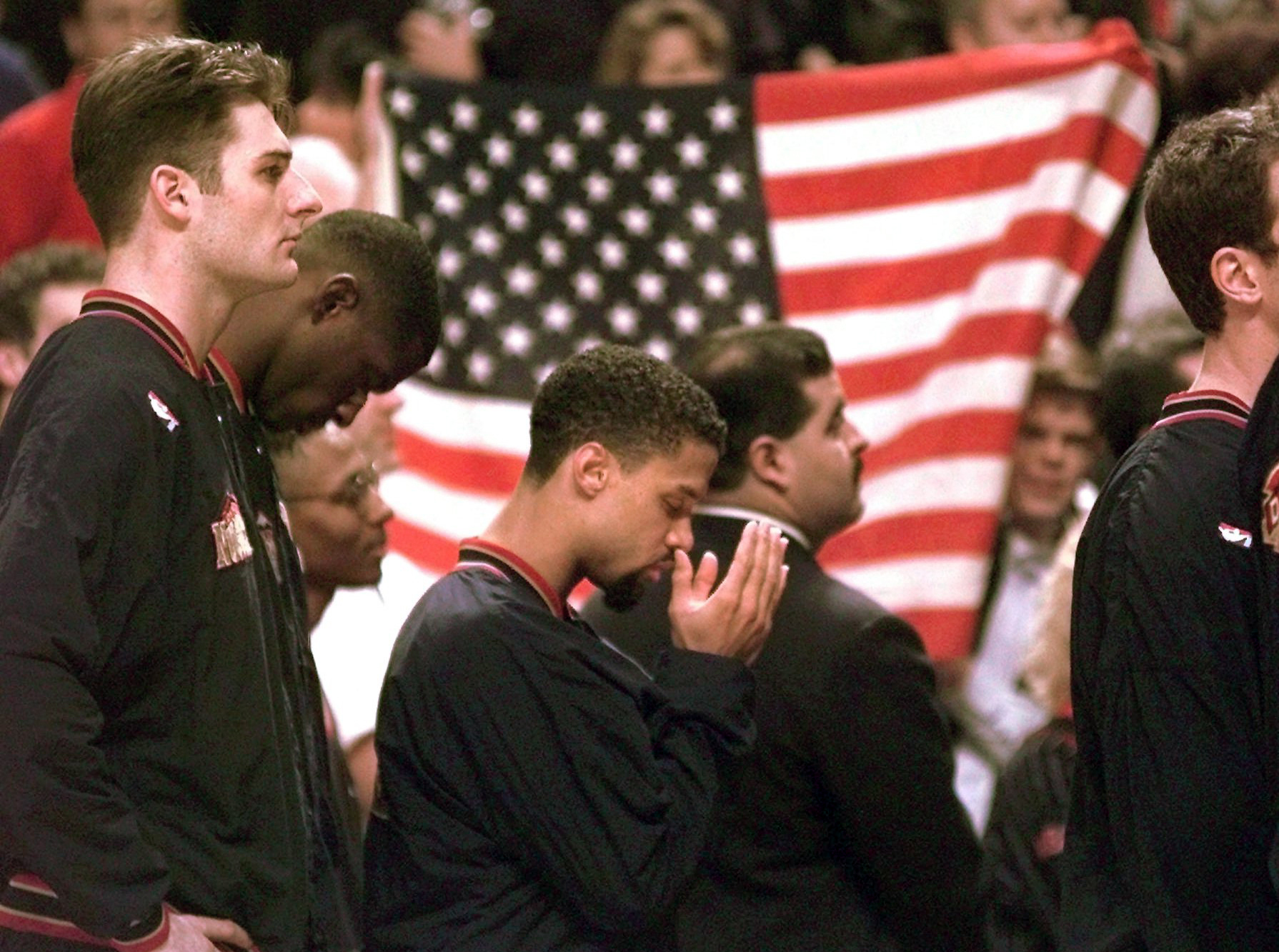
    Mahmoud Abdul-Rauf was suspended for one game during the 1995-96 season for refusing to stand during the national anthem. Former NBA commissioner David Stern was the one who made the call.AP FILE

    Folks like Mahmoud Abdul-Rauf, whose NBA career was cut short for protesting the anthem.

    Or Muhammad Ali, who lost his prime earning years and was stripped of his heavyweight title when he refused to fight in the Vietnam War.

    Or Paul Robeson, whose career and freedom were derailed not only for naming anti-Black racism, but for organizing against it — and Jackie Robinson, of all people, played a role in discrediting him.

    Kaepernick experienced a version of all of the above, too — months after he started his protest, he opted out of his contract, became a free agent, and was not signed by another NFL team. He later alleged in a lawsuit that the league’s owners colluded to keep him out of the game; that suit was settled in 2019.

    That is the role of the freedom fighter: to advocate on behalf of oppressed people everywhere in ways that disrupt the status quo. Their advocacy marks the line of demarcation between those who fight for freedom no matter the cost, or work to continue the legacy of global oppression and exploitation.

    Colin Kaepernick made that already divided line even more stark.

    Inarguably, Kaepernick’s legacy is that he inspired others, athletes included, to find their voice in advocating for social justice.

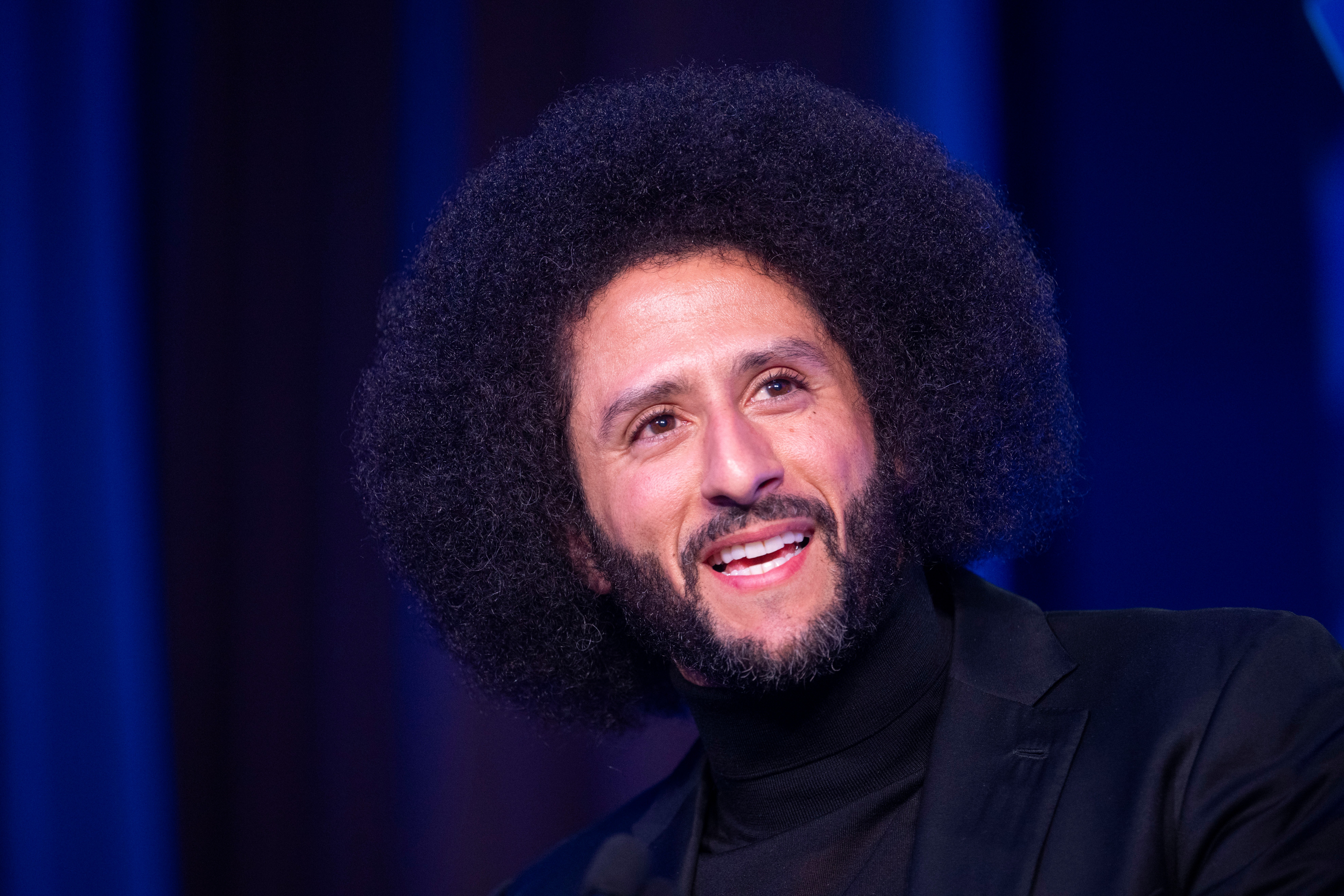
    Colin Kaepernick is presented with the American Civil Liberties Union’s Ralph Ellison Award for Defenders of Civil Rights and Civil Liberties in the Arts, Business, Science, and Sports by Deborah Archer at the ACLU’s 2026 Biennial Leadership Conference on July 24 in Washington.Kevin Wolf

    Kaepernick, who now works as a civil rights activist, joined the aforementioned athletes as part of what sports writer Howard Bryant calls “the heritage”: the tradition of Black athletes using their public visibility and star power to speak out against racial injustice, even at professional and personal cost.

    These athletes throughout history have made their positions clear. Whether we’re talking about Black lives in America, lives in Palestine, Congo, Sudan, Haiti, or Cuba, you’re either working on the side of empowering or exploiting. Kaepernick made clear where he stood 10 years ago.

    To sufficiently honor his costly protest — and the protests of so many others — during Black August, we must ask ourselves if we can say the same.

    Rann Miller is an educator and freelance writer based in Southern New Jersey. His “Urban Education Mixtape” blog supports urban educators and parents of children attending urban schools. urbanedmixtape.com @UrbanEdDJ