Tag: Democrats

  • Pennsylvania parents will soon have easy access to school-level vaccination data to see measles risk

    Pennsylvania families will gain access to detailed information about vaccination rates in their schools before the new academic year, when the state health department launches a new online database to better inform the public.

    More than 200 Philadelphia-area schools with kindergarten classrooms — roughly one in three — have measles vaccination rates insufficient to protect against an outbreak, The Inquirer found earlier this year in an analysis that identified pockets of vulnerability hiding in plain sight at schools across the Philadelphia region.

    The Pennsylvania Department of Health routinely releases county-level data about childhood immunizations, which for the Philadelphia region shows only overall higher rates of measles protection.

    The highly contagious disease, which can linger in the air for two hours and infect nine in 10 unvaccinated people exposed to it, was once considered nearly eradicated after years of vaccination.

    But as more families opt out of vaccines required for school attendance through religious and philosophical exemptions, cases are on the rise. Pennsylvania has reported a total of 66 measles cases so far this year — the highest number in three decades and more than four times the total cases in 2025.

    The new data initiative follows a drumbeat of reporting by The Inquirer and the Pittsburgh Post-Gazette revealing the declining vaccination rates within communities across the state. Families are often in the dark about the risk because local data are not readily available.

    The joint effort between the state’s health and education departments stems from Gov. Josh Shapiro’s executive order last fall to improve access to vaccines, and from intense media scrutiny of vaccination efforts locally and nationally, said Debra Bogen, Pennsylvania’s health secretary.

    “We’re following the same instincts that you all were following,” Bogen said. “There is a huge interest among the public in this information.”

    The new initiative will offer a closer look at childhood vaccination rates, similar to an interactive school lookup tool published by The Inquirer with the latest available data from last school year.

    With the new online tool, the state wants to make people more aware of risks within their community and encourage schools to do more to improve access to vaccines.

    (function () {window.addEventListener(‘message’, function (e) { var message = e.data; var els = document.querySelectorAll(‘iframe[src*=”‘ + message.id + ‘”]’); els.forEach(function(el) { el.style.height = message.height + ‘px’; }); }, false); })();

    Better access to local vaccine data

    Pennsylvania law requires schools to report vaccination data for students in kindergarten, seventh grade, and 12th grade. Kindergarten rates, in particular, are seen as a bellwether for a community’s attitudes toward vaccination, as parents are deciding whether to get the shots required to attend school.

    Families will be able to use the database to find vaccine information by school, county, and grade. It will allow people to search by vaccine and exemption type, and determine what portion of students in a school are attending unvaccinated without an approved exemption.

    The database will not include schools with fewer than 20 students in kindergarten, a privacy protection.

    In a joint letter to school administrators and nurses last week, state officials said the move was aimed at increasing transparency around vaccination rates. “We want to help ensure that parents, guardians, students, and community members have accurate, science-backed information to make immunization decisions for their family,” the letter read.

    As of Tuesday, the department had not received feedback from schools. Bogen hopes that schools will become more aware of potential vaccination challenges and work closely with local health providers to coordinate clinics.

    “We don’t want lack of access to be the barrier,” Bogen said. “That’s what public health does best — bring access to the resources.”

    Joshua Good, the head of a Lancaster County school where two students developed measles earlier this year, said he has no issues with the state’s new initiative, but does not expect it will negatively affect enrollment at schools like his.

    Fewer than half of the 27 students in the kindergarten class at Good’s Ephrata Mennonite School are vaccinated against the measles, and many people in his community have opted against vaccination in the last decade.

    He thinks parents at Ephrata Mennonite and other private Anabaptist (part of a Christian denomination that includes Amish and Mennonite churches) schools are already aware of vaccination rates there.

    “Information is always good, so that folks can make their best decisions,” he wrote in an email.

    More informed vaccine decisions

    In Delaware County, which has some of the Philadelphia region’s lowest kindergarten measles vaccination rates, public health leaders see an opportunity to help families make decisions about vaccinating their children.

    “Making this transparent at the school level helps parents, helps schools, helps all of us,” said Lora Siegmann Werner, director of Delaware County’s health department.

    At Chester Community Charter School, for instance, 66% of kindergartners were vaccinated against measles in 2024 — well below the 95% vaccination rate scientists say is necessary to prevent the disease from spreading.

    A majority of those students did not have a signed exemption form or a plan for getting vaccinated, according to The Inquirer’s analysis.

    Public health experts say that high rates of so-called noncompliant but attending students can indicate that the community struggles with access to healthcare.

    The county health department launched a mobile health clinic earlier this month to improve healthcare access and provide vaccine education in a region where the leading hospital, Crozer-Chester Medical Center, closed last year.

    Dr. Gifty Key, administrator for the Delaware County Health Department, gives a tour this month of the new mobile health clinic, meant to help with public health education, vaccinations, and health services.Allie Ippolito / For The Inquirer

    Werner said she hopes the new state database will help her staff show families why it is important to get vaccinated, and encourage more schools to host vaccine clinics.

    Pennsylvania’s lax rules

    Pennsylvania’s vaccine exemption rules are among the loosest in the country, with the state among 15 that allow families to opt out for medical, religious, or philosophical reasons.

    With the resurgence of measles, some states, including New York and California, have updated their rules to allow only medical exemptions. Many more states allow medical or religious exemptions.

    Any future legislation proposing to tighten Pennsylvania’s rules would likely meet resistance in its split legislature, where Democrats narrowly control the House and Republicans control the Senate.

    Many GOP members broadly believe that parents should be free to decide whether their children are vaccinated.

    “Parents know what’s best for their kids,” State Rep. Robert Leadbeter (R., Columbia), chair of the House Freedom Caucus, told The Inquirer earlier this month. He did not respond to a request for comment for this story.

    Nearly a decade ago, State Rep. Michael Schlossberg (D., Lehigh), the majority whip, introduced unsuccessful legislation to tighten Pennsylvania’s rules.

    Now the state’s greater data transparency will “allow the public to hold school leaders accountable for enforcing Pennsylvania’s important vaccination requirements,” Schlossberg said in a statement.

    Improving access to information could help families make more informed decisions, he said.

    “Parents, students, and teachers deserve to know whether public health is at risk in our classrooms,” Schlossberg said.

  • JD Vance can never become president | Will Bunch Newsletter

    One of my many New Year’s resolutions back in January was never to write what I call “Captain Obvious columns” about the Donald Trump scandal du jour that’s all over your social media feed. So you’ll have to imagine the column I didn’t write about Trump’s tacky UFC cage match that desecrated the White House, and the role of bread and circuses (or just circuses…where’s the bread?) in the inevitable decline and fall of decrepit empires.

    If someone forwarded you this email, sign up for free here.

    A ‘President JD Vance’ would be a different kind of dictator. The scary kind.

    They say you never get a second chance to make a first impression — unless your name is JD Vance, or it becomes JD Vance after a few false starts. In 2016, a then utterly unknown Yale Law grad introduced himself to America with a No. 1 bestseller, Hillbilly Elegy, that used his (sort-of) Appalachian family’s hardscrabble story to come off as an empathetic horse whisperer for the white working class.

    He cemented that first impression when we learned he’d privately described Trump as a kind of a demagogue feeding off the pathologies he’d written about in Elegy — someone he feared might become “America’s Hitler.”

    But Trump’s victory coupled with some exposure to the ketamine-fueled paranoia of Silicon Valley’s billionaires gave the former James Donald Bowman yet another shot at reinvention — now embracing extreme right-wingers and crackpot conspiracy theories all the way to his election, at age 40, as the 50th vice president of the United States.

    Today, less than two weeks before the 10th anniversary of Hillbilly Elegy’s publication, Trump has become America’s…Mussolini, a strutting yet sometimes buffoonish strongman and a hopelessly corrupt invader of faraway lands.

    It’s Vance who could actually become America’s Hitler, if he gets that chance…a very real possibility.

    That’s a strong statement, but it’s also perhaps the most powerful takeaway from the heavily promoted, about-to-be-published book from all-access New York Times reporters Maggie Haberman and Jonathan Swan, Regime Change. It portrays the vice president as eager to go much further than Trump in crushing domestic dissent.

    In book excerpts published Monday, Haberman and Swan depicted Vance — in a tag-team alliance with Trump’s ruthless mass-deportation guru Stephen Miller — as calling for the radical step of invoking the Insurrection Act to send in troops to put down protests by everyday Americans in Minnesota who were enraged by masked goon squads snatching their immigrant neighbors and the killing of two U.S. citizens.

    Describing a White House meeting of senior aides — but not Trump — in late January after Renee Good and Alex Pretti were gunned down, the Times reported that “Vance got to the point. They needed to invoke the Insurrection Act, swiftly, to crush the unrest in Minnesota. It would be painful in the short term, he said, but the message it would send — that paid agitators could not get away with disrupting ICE operations — would make sure no one tried it again.”

    There are many problems with Vance’s anti-democratic impulses. As Haberman and Swan reported, even most of the Trump aides in the room agreed that invoking the 1807 law in this circumstance would be both a significant expansion of presidential power and a public-relations nightmare. Even worse, the nation’s No. 2 official was urging this would-be abuse of power based on a right-wing internet lie — the falsehood that Minnesota’s angry neighbors were “paid protesters.”

    The deeply reported episode isn’t the only disturbing glimpse of Vance’s governing philosophy in recent months, but it’s the most revealing, and most damning: a true believer in the worst conspiracy theories about the left, with the inclination to wield dictatorial powers against them.

    Earlier this month, Vance — arguably the regime’s top cheerleader for Europe’s extreme far-right political parties — stunned the United Kingdom’s center-left government by weighing in on growing unrest over the stabbing death of an 18-year-old English college student by a Sikh migrant. He sounded more like a wannabe X influencer than a top official of the U.K.’s historic American ally. As racist hate mobs prowled streets in England and Northern Ireland, Vance said the murder of Henry Nowak proved that “European elites” had failed to oppose the “politics of self-hatred and the mass invasion of migrants.”

    One thing is clear: Vance is not on the side of calm, which is problematic when what the world needs now is love, sweet love.

    Increasingly, Vance seems to disappear for longer stretches of time, and when he reemerges he is bathed in the stench of the social media sewers where he seems to spend much of his time.

    That’s certainly appears to be the case with his main mission in 2026; rooting out fraud, which isn’t targeted at the nation’s biggest scam — the multi-dollar enrichment of the president’s family — but at alleged schemes by Somali immigrants and other heirs to Ronald Reagan’s racially coded “welfare queen.” A recent Washington Post report found many claims by a Vance-led task force are misleading or overhyped, and that legitimate business have been swept up in its wide net.

    Ten years ago, Vance wrote a book seeking your empathy because that served his true purpose: ruthless ambition. In that context, it was no moral conflict at all to pull a 180 and support a victorious Trump, or to leverage his rising fame into a hookup with Silicon Valley types like his billionaire patron Peter Thiel — people who believe in building private cities to protect them from the masses and the government, and who are more prone to conspiracy theories than your 79-year-old uncle on Facebook.

    Thiel and the other tech billionaires have programmed Vance into a true believer of whatever nonsense they believe, and lined him up next in the queue for power. That makes him even more dangerous than Trump, who believes in nothing beyond himself.

    Ever since Trump first claimed victory on Nov. 8, 2016, I’ve worried that the next guy would be even worse — chasing American autocracy with a real plan, not clown-car narcissism. Vance is the one I was worried about, and he is only an 80-year-old, Big Mac-infused heartbeat away from the presidency for the next 31 months.

    I’ve made clear my disgust at political violence, and the possibility of a Vance succession is another reason why I shudder to think what would happen if an attack killed or disabled the 47th president someday. If Vance was willing to send troops to Minneapolis to stomp down soccer moms and baristas with whistles, his militaristic power grab against the left after an assassination would end any last hope for our bedridden democracy.

    It’s one more item on the pro-democracy checklist. It may be the proverbial lost cause worth fighting for, but we should try to ensure that JD Vance does not become the 48th president of the United States.

    If Democrats stay on track to retake the House and possibly the Senate, they should hold hearings not only on Trump’s high crimes and misdemeanors but on the vice president’s involvement — and, based on that evidence, his possible impeachment. It may prove impossible to remove Vance from office, but hearings will help to establish a record that will end his dreams — and those of his billionaire buddies — about 2028.

    It’s past time for the next transition for this American chameleon who calls himself JD Vance: back to private citizen.

    Yo, do this!

    • The World Cup’s return to North America has gone much as I expected it would: Marred by its runaway commercialism and the U.S. immigration hassles that kept too many fans and a world-class referee from Somalia at home, but with a focus on joy on the pitch and in the stands now that the games have begun. Here in Philadelphia, the essence of everything good about the World Cup has been the FIFA Fan Festival at Lemon Hill, the city greenspace on the hill behind the Art Museum on the Schuylkill. It’s been a daily gathering post for thousands of fans to watch the matches on a 60-foot screen, imbibe from a beer garden, and load up on official merch. It’s free but ticketed; learn how to gain access and how to get there here.
    • Some 51 years after Jaws, filmmaker Steven Spielberg is still finding ways to get us out to the multiplex for a summer blockbuster. His new the-aliens-are-here epic, Disclosure Day, merges nostalgia for his greatest hits like E.T. with our 21st century anxieties about artificial intelligence, outsiders, space, and what it means to be human in our modern world. It’s getting excellent, but not perfect, reviews, and I’m looking forward to seeing it for myself.

    Ask me anything

    Question: What is your favorite fast food joint? — @funkndonuts.bsky.social via Bluesky

    Answer: Most of this week’s questions were in this lighthearted mode; it feels like the good sports excitement of the World Cup and the NBA finals has provided us a calm eye in the hurricane. Anyway, as an apparent donut lover you’ll be glad to know that my modern family runs on Dunkin coffee. As a kid, my barely-evolved-from-hillbillies family had low-brow tastes that I now appreciate in hindsight, and on our yearly road trips to the ancestral home of Peoria, I fell in love with the greasy pizza — later augmented by greasy fried chicken — at Shakey’s. The chain has shrunk to a few West Coast outlets and I haven’t been in decades. Probably for the best.

    What you’re saying about…

    Last week’s question about what the next, hopefully normal U.S. president should do about the ballroom monstrosity rising on the east side of Donald Trump’s White House drew a good array of responses. Although a couple of you wanted to see the project repurposed for community gardens or housing for D.C.’s homeless, others believe any Trump creation must be expunged in dramatic fashion. “Provide Pulaskis (fire axes) and sledgehammers and a good crew of competent supervisors and let we the people come and pay five bucks for the privilege of fifteen minutes of smashing it up,” wrote Linda Nafziger-Meiser. “Hell, I’ll bring my own Pulaski.” But architect Larry Weintraub thinks the White House needs a ballroom, as long as it meets historical and architectural standards. “Hopefully, the new design will be understated but appropriate and subordinate to the majesty of the White House,” he wrote.

    📮 This week’s question: In a recent column, I announced that I’ve deleted Elon Musk’s social-media app X, which once thrived as Twitter. I saw that as a way to protest Musk’s racism, and his obscene wealth. Should governments and corporations continue to use X for communications? Are you still on X or have you left, and why? Please email me your answer and please put the exact phrase “Deleting X” in the subject line.

    Backstory on the birthright citizen who’s a U.S. hero

    Folarin Balogun, now 24, grew up in London, which is where one of the world’s top clubs, Arsenal, spotted him as a potential soccer star at age 8. His parents are Nigerian. He currently plays club soccer in Monaco. So how was it that Balogun found himself last Friday wearing the red, white, and blue jersey of the United States in front of 70,000 delirious Americans on the pitch near Los Angeles, mixing skillful footwork with an aura of glee as he scored two goals in a 4-1 World Cup opener win over Paraguay?

    Credit the 14th Amendment — or maybe blame it, if you’re one of the reactionaries who believe that people like Balogun should not be U.S. citizens, soccer gods be damned.

    Even if for some weird reason you’re not yet a soccer fan, you’ve probably followed the heated debate over birthright citizenship. The notion that anyone born on U.S. soil is automatically an American citizen — an idea enshrined after the Civil War to remove any potential doubts about the citizenship of formerly enslaved African Americans — is disputed by the Donald Trump regime. The president’s executive order seeking to undo the longstanding interpretation of the 1868 14th Amendment, and strip citizenship from millions of people born here to immigrant, non-citizen parents, is currently before the U.S. Supreme Court. Trump’s xenophobic MAGA supporters have long slurred children of undocumented migrants with the epithet, “anchor babies.”

    It turns out that Balogun, when he’s not lighting up the back of the net, is a law-school case study of the immigration debate roiling his accidental country. In the summer of 2001, Balogun’s future mom, who was seven months pregnant, and dad decided to vacation in the United States. When the couple attempted to fly home to London, an unnamed airline worker who would change the course of soccer history told Florence Balogun she was too pregnant to safely fly. So she stayed in Brooklyn, gave birth to her son, and the family left America after two months.

    As he developed into a world-class striker on European soil, Balogun came to understand that his U.S. citizenship offered a much better shot at competing in the World Cup than the other two nations where he was also eligible, England or Nigeria. For his mom, Balogun’s fate was sealed in the summer of 2001. “Even when he wasn’t even thinking of making an international decision, I’d already made up my mind that he is going to play for America,” Florence Balogun said.

    They say that the Supreme Court, despite all the blather about “calling balls and strikes,” is in reality always aware of the political zeitgeist. Even a right-wing justice who happens to also be a long-suffering Phillies fan in Samuel Alito probably sees on some level that stripping citizenship from the breakout star of U.S. men’s soccer would be highly unpopular. The World Cup — the idea, and not its capitalist corruption by FIFA — imagines a society that abhors exclusion, where it takes every kind of people to make what life’s about. I dream of an America that can run with France and Argentina on the pitch, and that welcomes human beings like Balogun, even ones who’ve never kicked a soccer ball in their lives.

    What I wrote on this date in 2019

    This newsletter goes out Tuesday on the 11th anniversary of the day that changed America forever: Donald Trump’s gilded Trump Tower journey down an escalator to join the 2016 presidential race, as Neil Young’s “Rockin’ in the Free World” blared behind him. In 2019, I used that date to reflect how much we’d fallen in just four years since June 16, 2015. I wrote: “The president’s “shocking” tweet or statement of the day still sparked hours and hours of cable TV blather, including a parade of congressional Democrats who were concerned or saddened or what not. They called Trump’s worst acts impeachable offenses, but then nobody impeached him. They said Trump was unpresidential, but the next day he was still president.” Read the rest: “4 years since Trump came down that escalator and the cycle of empty outrage has become unbearable.”

    Recommended Inquirer reading

    • Last week I focused on the little people who’ve been crushed by the return of Donald Trump, and the big guys getting obscenely rich. In my Sunday column, I looked at the agonizing fate of Tuan Van Bui, an Amerasian born in Saigon at the height of the Vietnam War who was welcomed to Philadelphia in 1990 under a government-approved visa. Why was he violently arrested by U.S. Immigration and Customs Enforcement, and what is the truth about his April death behind bars in Indiana, at age 55? Over the weekend, I voiced my outrage over Elon Musk, who in just one week used his massive platform on X to whip up race riots in Belfast, and was rewarded by Wall Street as the world’s first trillionaire. I looked at how we enable this situation, and announced my small step in fighting back by deleting the X app.
    • One depressingly constant story in the 21st century is the way that supposedly liberal blue states and big cities still fall back on oppressive, militarized policing to crack down on protesters. Progressive activists in New Jersey took to The Inquirer this week to express their lingering disappointment in first-year Gov. Mikie Sherrill — a Democrat that many of them had worked to elect in 2025 — and her state police’s aggressive handling of demonstrations outside the ICE detention center in Newark, Delaney Hall. They would have found an amen chorus here in Philadelphia’s LGBTQ+ community, where city cops showed up at the annual Gayborhood Pride festival in riot gear and arrested 15 of the revelers. The backlash against the police actions has already triggered a City Council investigation. Journalists are typically society’s first line of defense against police misconduct. You support that mission when you subscribe to The Inquirer.

    By submitting your written, visual, and/or audio contributions, you agree to The Inquirer’s Terms of Use, including the grant of rights in Section 10.

  • Bob Brady has chaired Philly’s Democratic Party since 1986. Ward leaders just gave him four more years.

    Bob Brady has chaired Philly’s Democratic Party since 1986. Ward leaders just gave him four more years.

    Since 1986, Philadelphia has had six different mayors and five City Council presidents. But over those four decades, the city’s Democratic Party has known only one leader: Robert A. Brady.

    And he’s not done yet.

    Brady, 82, on Monday night won an 11th term as chair of the Democratic City Committee, continuing an astonishing run as the top official in the local party despite growing tensions between the local Democratic establishment and progressive insurgents.

    Fresh off democratic socialist Chris Rabb’s victory in last month’s Democratic primary for an open Philly congressional seat, District Attorney Larry Krasner called on Brady to resign, and progressive activists hoped to shake up the local party they blame for Philly Democrats’ lackluster turnout in recent federal elections.

    But following last week’s ward leader elections — in which left-leaning candidates notched at least five victories but came up well short of the numbers needed to seriously threaten Brady and his allies — the writing was on the wall.

    No challenger stepped forward during Monday night’s leadership elections at the party’s headquarters, the Robert A. Brady Office Building on Spring Garden Street, and the incumbent won another four-year term.

    “It‘s pretty nice to get it unanimous — nobody complains at all, no problems whatsoever, and that’s the way I like to have it,” Brady told reporters after his reelection, in which the ward leaders approved his slate of party officers in a unanimous voice vote.

    He added that he believes the party’s factions can overcome their differences.

    “They know that my heart’s in the right place,” Brady said of the party’s left-leaning critics. “I want to go in the right direction, and it might be the direction that they want to go.”

    Mayor Cherelle L. Parker, who leads the 50th Ward, addressed party officials during the election meeting, telling them she is a “progressive with a capital P — because if you want to be a progressive, you got to make some progress.”

    “People want results,” Parker said in an interview afterward. “They don’t want to see fighting. They don’t want to see finger-pointing. Let’s focus on an agenda and not try to eat our own.”

    Also Monday, the party elected several new officers to serve alongside Brady and ordered reruns of three ward leader elections with contested outcomes.

    Those include Mount Airy’s 22nd Ward, in which City Councilmember Cindy Bass controversially declared herself the winner after a contested voice vote.

    All three reruns will take place Wednesday night.

    Soup to nuts in Democratic politics

    Brady lives in Overbook, where he is the 34th Ward leader.

    His mother was a committeeperson, and he worked as a union carpenter before his mentor, the late City Council President George X. Schwartz, got him a patronage job as a Council sergeant-at-arms. (Schwartz later went to jail after being convicted on corruption charges as part of the Abscam scandal in the 1980s.)

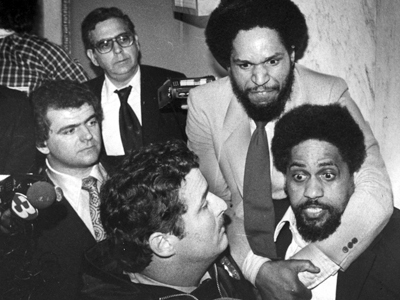
    City Council Sergeant-at-Arms Bob Brady, left, looks on as Councilmember John F. Street, top, and State Rep. Milton Street, right, take part in a near-riot in Council chambers. (Daily News File Photo)

    Brady was elected to Congress in a 1998 special election, and eventually chaired the House Administration Committee, which handles behind-the-scenes tasks such as assigning office space to lawmakers.

    While in Congress, he ran unsuccessfully for mayor in 2007, losing to Michael A. Nutter, who ran on an anti-corruption campaign.

    In 2017, news broke that Brady’s congressional campaign was the subject of a federal investigation over an alleged scheme in which a would-be challenger accepted $90,000 to withdraw from running against Brady in a 2012 primary.

    Two of Brady’s aides served prison time, but Brady never admitted wrongdoing. He chose not to run for reelection the following cycle, in 2018.

    A modern political ‘boss’

    While Brady is often referred to as Philly’s “party boss,“ leading the Democratic City Committee is not the same job as it was in the heyday of big-city machine politics.

    Thanks to civil service reforms in the 1950s, there are far fewer patronage jobs to hand out. And Brady’s time is more often spent attempting to maintain peace among the various political organizations around the city, rather than telling them what to do.

    “It really isn’t all that easy, you know, keeping everybody together,” Brady said Monday night. “You got all kinds of factions, all kinds of egos, and I try to do the best I can to keep together, like we did tonight.”

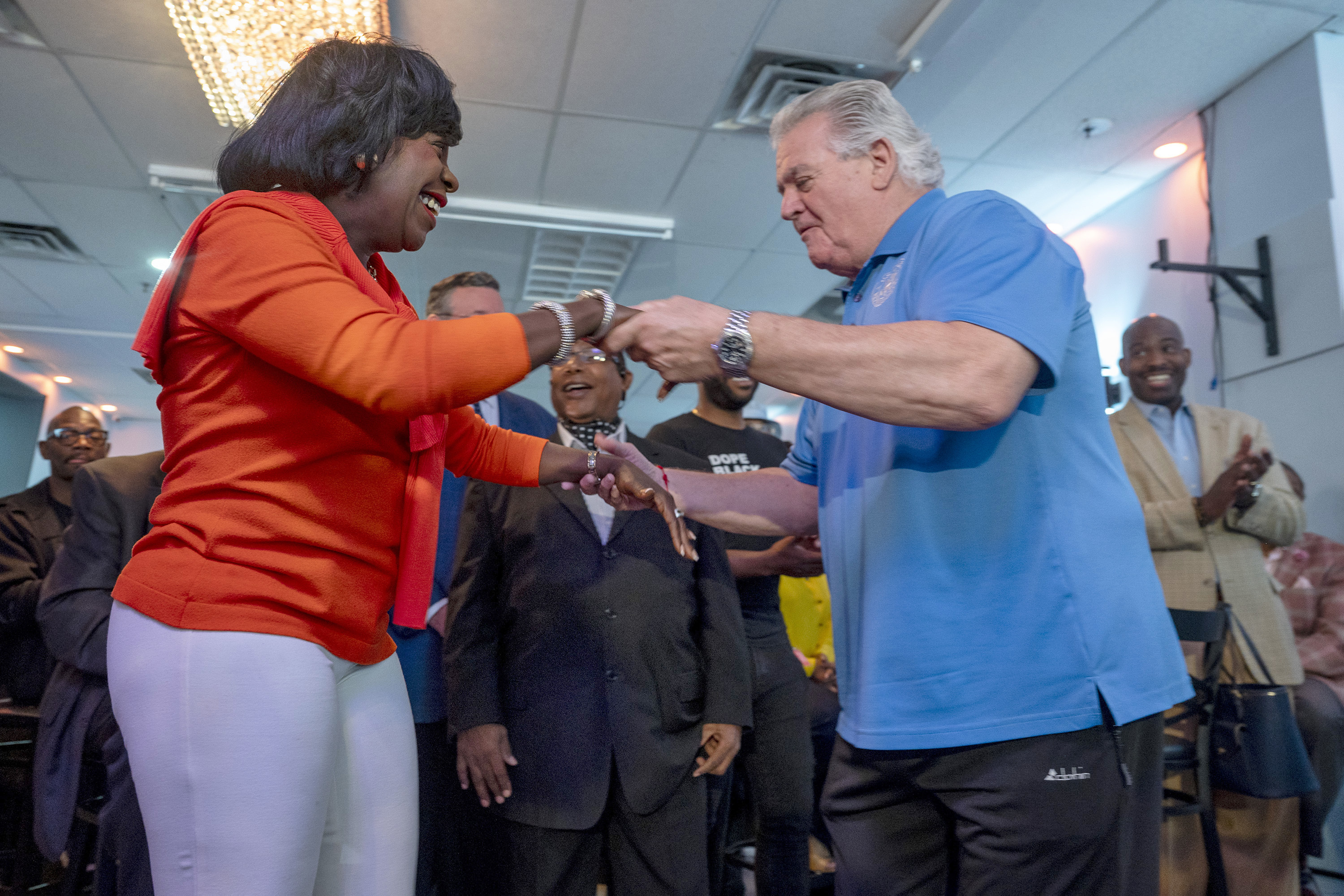
    Bob Brady, right, chair of the Philadelphia Democratic City Committee, dances with Cherelle L. Parker at a “unity breakfast” following her victory in the 2023 Democratic mayoral primary. Tom Gralish / Staff Photographer

    One area where today’s party does resemble the machine politics of old is local judicial elections. Party-endorsed candidates almost always win seats on the local Municipal Court and Common Pleas Court benches, and many of their staffs are in turn filled with people connected to the local party.

    Brady and party leaders have no qualms about admitting what it takes to win their approval: doing favors and free legal work for the city committee, ward leaders, and their constituents.

    Philly Democrats’ new No. 2

    Although the Democratic City Committee does not have a new chair, ward leaders on Monday elected a new No. 2.

    Former Councilmember Sharon Vaughn, who leads the 49th Ward, will be the new first chair of the party, replacing former Councilmember Jannie Blackwell, who did not run for reelection as 46th Ward leader.

    Vaughn, who is also a secretary of the Pennsylvania Democratic Party, would temporarily become city committee chair if Brady were to step aside. Brady said Monday he would support her to one day hold the position on a permanent basis as well.

    “She’s a great world leader, a former Council person, a hard worker,” Brady said. “What you see is what you get, straight shooter, and she’ll tell you just what it is. And she’s a loyal lady.”

    Lauren Rinaldi, the 18th Ward leader who is seen as having relationships with both the progressive and establishment wings of the party, became the second vice chair. She replaces Bass, who has now lost out on her citywide party leadership post regardless of how Wednesday’s 22nd Ward election redo shakes out.

    Rinaldi said Monday night she understands her election to leadership was partially an olive branch to the left wing of the party.

    “I‘m sure that’s part of it, definitely,” Rinaldi said in an interview. “But I am seeing my role as an advocate — advocating for reform to strengthen the party and modernize the way we do some things and bring more people in instead of shut them out. Basically to rebuild trust with voters.”

    The third vice chair remains 7th Ward leader Angel Cruz, and 63rd Ward leader Brian Eddis has replaced Bill Dolbow as fourth vice chair.

    Former City Controller Jonathan Saidel will stay on as the party’s treasurer, with John Brady, who is not related to the chair, serving as assistant treasurer.

    And 6th Ward leader Pete Wilson was retained as secretary, with 8th Ward leader Elaine Petrossian elected as assistant secretary.

    Back-to-back-to-back reruns

    The party on Monday ordered the results of three contested ward leader races voided. They will be rerun on Wednesday at the Brady building, with a committee of other ward leaders overseeing the results.

    In all three instances, the ward elections were found to have violated the party’s procedures.

    The redo for the 14th Ward, in which incumbent Arthur Green lost to Valerie Williams, will take place at 6 p.m.

    City Councilmember Cindy Bass, left, speaks with a reporter about her contested 22nd Ward leader election. Aidan T. Gallo / Staff Photographer

    That will be followed by a 7 p.m. rerun of the 17th Ward election, which was an open seat in which Tyrone Barge defeated Michelle Schley.

    And finally, the 22nd Ward redo will take place at 8 p.m., with progressive challenger Octavius Price taking on Bass.

    In all three races, the party will allow submission of “proxy votes” from committeepeople who cannot attend if they are accompanied by notarized affidavits.

    Brady said the decision to redo the 22nd Ward vote was an easy one after he saw a video published by The Inquirer showing Bass, who chaired her own reelection meeting, shutting down requests for a roll-call vote that could have clarified the results.

    “I don’t think anybody that saw that … was supportive of it,” Brady said. “One ward is one ward, and there’s 68 others, and we’re all going to fix that on Wednesday night.”

  • In major decision, Pa. Supreme Court rules ‘skill games’ are slot machines

    In major decision, Pa. Supreme Court rules ‘skill games’ are slot machines

    HARRISBURG — So-called skill games, the slot machine look-alikes that have proliferated by the tens of thousands around Pennsylvania bars and corner stores, are slot machine devices and should be regulated as such, the state’s highest court ruled Monday.

    The Pennsylvania Supreme Court ruling clears the way for widespread taxation and regulation by the state, as well as limits on where the machines are available, as a majority of justices ruled that both gambling law and the criminal code apply to the machines.

    “The device is a ‘slot machine,’” wrote the newly independent Justice David Wecht in the majority opinion.

    The majority recognized that the ruling could cause a “potential disturbance” for “business owners and other good-faith participants in the industry,” so the ruling will take effect after a 120-day “safe harbor” period. And if lawmakers in Harrisburg disagree with the opinion, the General Assembly “remains free at any time to take whatever legislative action it may deem appropriate.”

    Pennsylvania’s gambling industry is highly regulated and taxed. If state law is unchanged after the 120-day waiting period, the estimated 70,000 skill game machines available across the state would need to be regulated and confined to specific locations like casinos that have the proper licenses.

    Chief Justice Debra Todd and Justice Daniel McCaffery, both Democrats, joined the opinion in full, while Republican Justices Sallie Updyke Mundy and Kevin Brobson concurred with most of the majority’s reasoning but wrote a short dissent.

    Justice Christine Donohue, a Democrat, wrote a concurring decision.

    “Because chance predominates both the player’s eligibility for winnings and the magnitude of those winnings, the [skill games] device is a gambling device,” Donohue wrote.

    Justice Kevin Dougherty, a Philadelphia Democrat, sat out the long-awaited decision.

    Skill game operators have evaded taxation and regulation for more than a decade, operating in a legal gray area after lower courts ruled that the machines require a level of skill not necessary to play games of chance like slot machines.

    The most influential player in the skill games industry, Georgia-based operator Pace-O-Matic, has asked the state on multiple occasions to regulate and tax the machines — but at a rate much lower than slot machines, arguing that their technology helps small businesses with small margins stay afloat as prices rise.

    In a statement, Pace-O-Matic said it was disappointed by Monday’s ruling, which it said would have “far-reaching consequences” on Pennsylvania’s small businesses and fraternal organizations.

    “[Small businesses] are now potentially left facing an impossible choice: cease operating these games and lose an important source of revenue, or endure a legislative solution that could bring excessive regulation and crippling taxation, which will force them to cease operating these games and lose an important source of revenue,” a spokesperson for Pace-O-Matic added.

    Gov. Josh Shapiro, a first-term Democrat, has proposed regulating and taxing skill games at 52% — the same rate currently levied on slot machines and most other games of chance. He estimated taxing and regulating the machines could bring in $765.9 million for the state in new revenue in its first year, as part of his $53.2 billion February budget pitch.

    Lawmakers have been waiting for the state Supreme Court to rule whether the machines are legally slot machines or not, as the split legislature considers whether to and how much to tax them as a way to create a much-needed new revenue stream.

    Top legislators and Shapiro have convened over the last few weeks in closed-door meetings to finalize a state budget deal ahead of a June 30 deadline. Now, with the decision in hand, Senate President Pro Tempore Kim Ward (R., Westmoreland) and Majority Leader Joe Pittman (R., Indiana) said in a statement they believe gaming reform is a “critical piece of resolving this year’s budget.”

    In Philadelphia, City Council banned skill games in 2023 over concerns that they attract crime, but a lower court blocked enforcement of the ban while several cases worked their way to the state Supreme Court.

    A Philadelphia jury ordered Pace-O-Matic to pay $15.3 million last year to the estate of Ashokkumar Patel, a Hazleton store clerk killed during a 2020 robbery. And a Philadelphia store clerk shot last year during an armed robbery of Philly Market in Frankford, Ahmedine Maham, sued Banilla Gaming, a North Carolina-based skills game manufacturer, for enticing his assailants.

    At the end of the 120-day waiting period, the machines will be subject to regulations like slot machines and restricted to specific locations licensed to house slot machines — unless lawmakers decide to change the law.

    Pace-O-Matic, in its statement Monday, urged lawmakers to approve bipartisan proposals backed by rural GOP members and Philadelphia Democrats that would charge a $500 fee per skill game machine and would not restrict the machines to licensed slot machine locations, such as casinos.

    In a statement, Pennsylvania Attorney General Dave Sunday, a Republican, praised the Supreme Court’s decision as a “significant victory for consumers, taxpayers, and the rule of law.”

    “The Supreme Court recognized what our office has argued from the beginning — these machines operate as gambling devices and cannot legally exist without the same oversight, regulation and accountability as other forms of legalized gaming in the commonwealth,“ Sunday added. ”Pennsylvanians deserve protections that ensure games are fair, transparent and operated within the bounds of the law.”

  • ‘He makes it about himself,’ Philly Dem says after Trump announces plans to transform July 4 fireworks in D.C. into rally

    The Philadelphia Democrat whose district includes Independence Hall accused President Donald Trump of trying to transform the 250th anniversary into a celebration of himself rather than the country.

    Trump announced on Truth Social Monday that a Trump rally will now take place in Washington on July 4, absorbing the long-planned 250th anniversary fireworks celebration at the Lincoln Memorial, the Washington Post reported.

    The move has prompted criticism, including from U.S. Rep. Brendan Boyle, whose district was the site where the Declaration of Independence was debated and signed.

    “Our nation’s 250th anniversary should be an opportunity to bring us together as Americans,” Boyle wrote in a statement. “Any previous president — from either party — would make this event about our nation. But not Trump. He makes it about himself. Because he only cares about himself.”

    Boyle is one of several Democratic lawmakers to criticize Trump’s expanding role in the celebrations.

    “We are going to host the most spectacular TRUMP RALLY of them all, a ‘TRIBUTE TO AMERICA,’ Trump wrote on Truth Social, his social media platform. “This HUGE Celebration will honor our Country’s People, Spirit, Strength, Resolve, and Triumphs.”

    Trump said in the post that the event will include air shows, patriotic music — from Trump’s own playlist — a fireworks show, and a keynote speech from him.

    “To conclude the program, and commemorate this Historic Occasion, I will be launching, what will be, the LARGEST FIREWORKS SHOW IN HISTORY,” Trump wrote.

    The rally is just the latest in a string of controversial choices by Trump ahead of the 250th. The president announced the rally a day after he hosted a controversial Freedom 250 UFC event at the White House for his 80th birthday.

    Sen. Andy Kim (D., N.J.) criticized the decision to hold the UFC event at the White House, noting on X that Trump holds shares in the company and that UFC CEO Dana White donated $1 million to a pro-Trump super PAC.

    “This isn’t a celebration of America 250,” Kim posted on Sunday. “This is corruption on full display on the White House lawn.”

    The event drew further controversy when fighter Josh Hokit made offensive comments about former first lady Michelle Obama in his postfight interview.

    The Trump administration says the events are a way to inspire and excite Americans, the Washington Post reported.

    “Fight for freedom,” the Department of Homeland Security, headed by former MMA fighter Markwayne Mullin, posted on Facebook. “Fight for our way of life. Fight for America.”

  • No Philly mayor has lost reelection in modern history. So does Mayor Parker have anything to worry about?

    No Philly mayor has lost reelection in modern history. So does Mayor Parker have anything to worry about?

    Through much of Mayor Cherelle L. Parker’s first two years in office, most political insiders in Philadelphia assumed she would cruise to reelection.

    After all, no mayor in the last eight decades in the deep-blue city has lost a bid for a second term. And Parker is backed by the city’s long-powerful Democratic establishment, contributing to the foregone conclusion that their allied mayor would win again.

    Even some of Parker’s staunchest critics on the left admitted privately that they were resigned to her serving eight years in office.

    Then last month, conventional wisdom started to crack.

    State Rep. Chris Rabb — a democratic socialist and an anti-establishment firebrand — won a tightly contested battle for an open seat in Congress, prevailing over Parker’s endorsed candidate and even carrying the 50th Ward in Northwest Philadelphia, where Parker is ward leader.

    Now some of the activists who lead the city’s largest left-leaning organizations think that race showed that Philadelphians are ready to pick a progressive over the Democratic establishment. And they are looking at next year’s mayor’s race again, asking the question: Is Parker vulnerable?

    “We would love to have a progressive challenger in this race,” said Sergio Cea, political director of the progressive group Reclaim Philadelphia. “The establishment was really defeated on all fronts this election cycle.”

    In a little more than 10 months, Parker, a centrist Democrat and the city’s first female mayor, will be up for reelection. She has not officially announced a campaign — doing so would trigger strict fundraising rules and limits — but all signs indicate she intends to run again, including an already huge campaign war chest.

    Any challenger to Parker would be considered a significant underdog. The mayor has the power of incumbency, and can point to progress on her 2023 campaign promises to make the city safer and cleaner, not the least of which is a historically low homicide rate. Thousands of residents are getting their trash picked up twice a week, and polls consistently show that more Philadelphians say they think that the city is heading in the right direction now than when Parker took office.

    She even seemed to recover politically after one of her lowest moments: the eight-day municipal worker strike last year that left so much garbage piling up that it became colloquially known as “the trash strike.” Parker, through her signature unyielding negotiating style, muscled her way to an agreement with the union.

    Today, she is supported by most of the city’s elected officials and powerful organized labor groups. Ryan N. Boyer, the head of a coalition of deep-pocketed building trades unions, said recently that any challenger to Parker would face “annihilation.”

    “This is Philadelphia, there are always people who want to run for mayor. But mayoral elections are decided on whether people think their city is moving in the right direction,” said Aren Platt, executive director of People for Parker, the mayor’s political campaign arm. “Mayor Parker has been underestimated her entire career, and she has a habit of proving people wrong.”

    Mayor Cherelle L. Parker raises a finger with her call-and-response “One Philly, A United City” mantra ending her speech during a ceremonial meeting of the Pennsylvania Senate at the National Constitution Center across the mall from Independence Hall on May 5.Tom Gralish / Staff Photographer

    However, some on the left see a coalescence of forces that could bolster their chances: national frustration with the Democratic establishment that has manifested in leftist wins, a widespread anti-incumbent sentiment, and liberal rage toward President Donald Trump, whom Parker has largely avoided maligning publicly.

    They also see potential signs of Parker’s power waning, including her recent budget battle during which she could not get Democrats in Harrisburg and City Hall on board with her tax plans.

    “If you just have the right candidates that are able to speak to the dissatisfaction of Democratic voters in Philadelphia,” Cea said, “I do think [Parker] is in trouble.”

    But the biggest question for Philadelphia progressives in the approaching mayoral race remains: Who could be their candidate?

    The potential challengers

    Jack Inacker, a Democratic strategist based in Philadelphia, said there are few, if any, challengers to Parker who could pull off a win in 2027.

    “The progressive infrastructure now has built up in a way where, if you squint really hard, you can see a path to a progressive challenger,” Inacker said. “The problem is that [Parker] is one big mistake away from being beatable, but she’s not beatable yet. And people know that.”

    Candidates have plenty of time to decide. Paperwork to get on the ballot likely would not be due until March.

    Perhaps the most talked-about potential challenger so far is District Attorney Larry Krasner, the city’s most prominent progressive. He has not ruled out a run for mayor, and he has recently publicly criticized Parker and some of her closest allies.

    Last week, he invited media to walk along with him while he hand-delivered a letter to the mayor’s suite in City Hall to express dissatisfaction with his office’s budget. Parker called the move “stunting.”

    Platt, in a thinly veiled shot at Krasner, said in a statement that “what we’ve seen recently is too many politicians focused on generating headlines rather than solving problems: manufacturing controversy, looking for someone else to blame, and confusing political theater with leadership.”

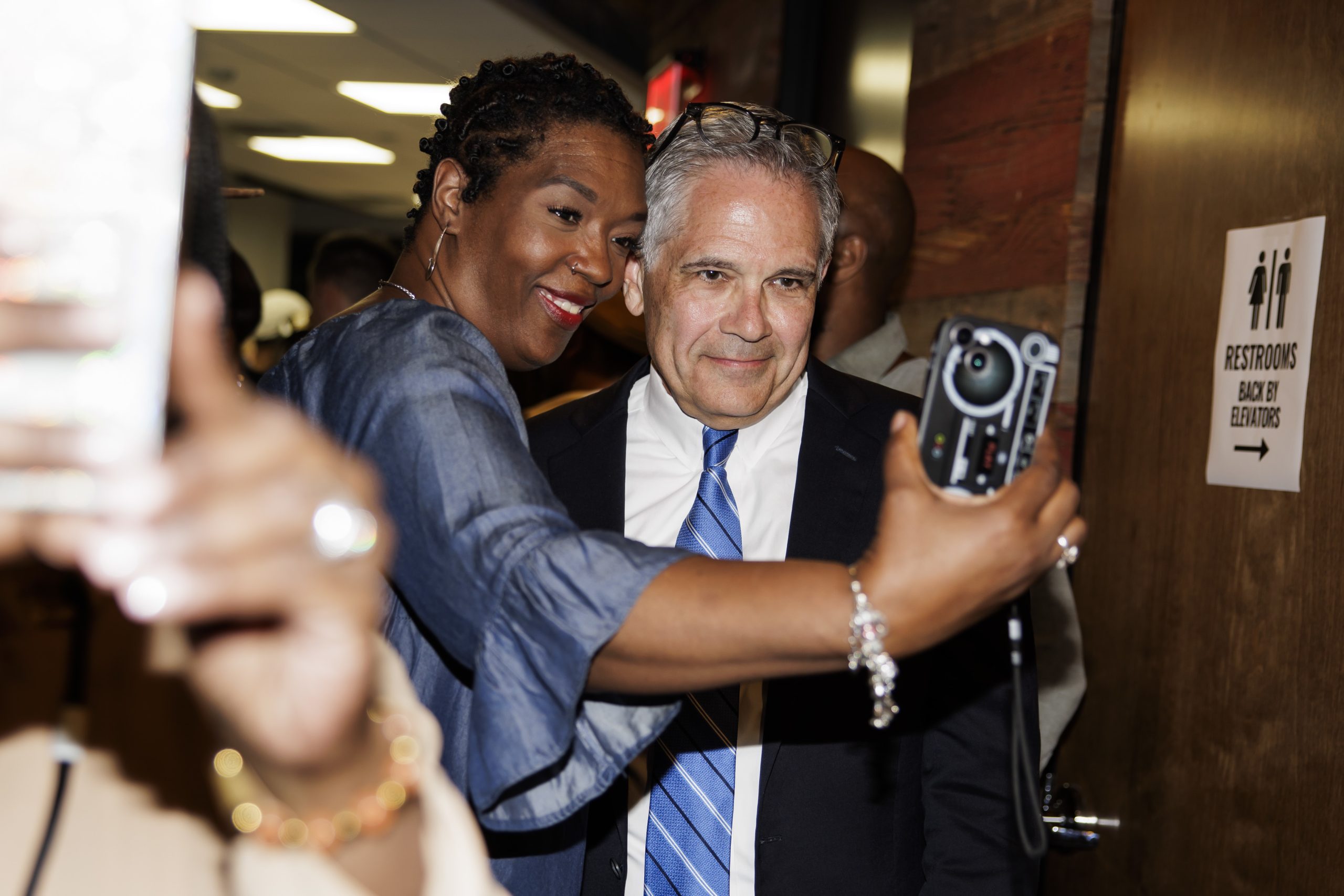
    District Attorney Larry Krasner greets supporters during his election night party at the Pipeline Philly coworking space on May 20, 2025, in Philadelphia. Krasner defeated challenger Patrick Dugan both in the Democratic primary and in the general election.Monica Herndon / Staff Photographer

    Krasner has won citywide election three times, twice winning reelection in landslide fashion. He is one of the nation’s most well-known progressive prosecutors and one of the city’s most polarizing figures. His base of support includes the city’s left, as well as a large swath of Black voters and elected officials.

    But it was Parker’s political family — the vaunted Northwest Coalition of the some of the city’s most storied Black politicians — that was key to Krasner’s political ascent. Challenging Parker could be seen as a betrayal by some in the voter-rich northwest corner of the city, and his base there could fracture.

    Krasner has also in the past struggled to keep up with his opponents in fundraising. Any challenger to Parker would likely need to bring in well over a million dollars, a sum of money that Krasner has never raised before.

    Several other elected officials are seen as potential challengers to Parker, including several sitting members of City Council.

    Councilmember Isaiah Thomas, who represents the city at-large, has long been rumored to have ambitions for higher office. He has been elected citywide twice, and recently was among the most vocal opponents of the Philadelphia School District’s controversial plan to close 17 schools.

    And he has allies both on the left and in the city’s business community, the latter of which has been frustrated with a Parker administration policy shift that increased the tax burden on small businesses.

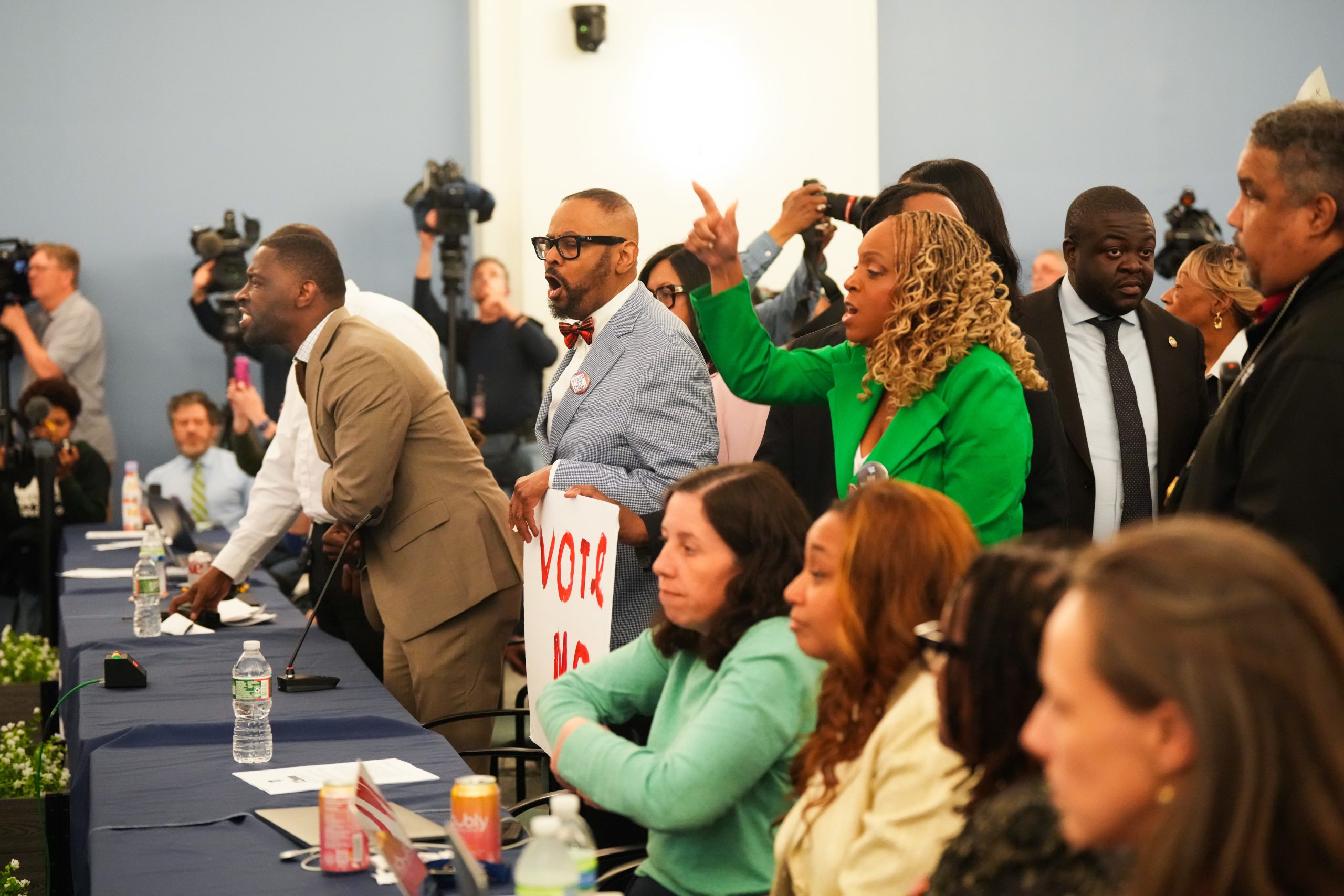
    Councilmembers Isaiah Thomas (from left), Curtis Jones Jr., and Jamie Gauthier protest at an April school board meeting as the board prepared to vote on the facilities plan.Jessica Griffin / Staff Photographer

    Thomas said last week that he is focused on his job in City Council.

    “That job right now is hard enough, looking at the affordability crisis, the crisis around public education, and other issues that we’re facing,” he said.

    There’s also two-term Councilmember Jamie Gauthier, who represents parts of West Philadelphia and has positioned herself as one of Council’s chief critics of the Parker administration. She said earlier this year that running for mayor “could be interesting one day,” but that she would not run if she did not see a clear path to victory.

    She said in a statement that her focus is “finishing what we started on City Council, especially building affordable housing.”

    Gauthier added: “But it’s clear Philadelphians are hungry for leaders who will put working families above big business.”

    And there is Councilmember Kendra Brooks, the de facto leader of the city’s left-leaning coalition and a member of the progressive Working Families Party. Brooks, who represents the city at-large, has twice campaigned and won citywide.

    A political adviser to Brooks said she is focused on her work in City Hall and running for reelection to Council, as well as “building Black progressive political power through the WFP.”

    What do progressive gains mean for the 2027 mayor’s race?

    Parker’s camp sees strength in her numbers.

    In March, the mayor’s political arm commissioned a poll that found that 60% of respondents approve of the job Parker is doing as mayor, while 33% disapprove. Her approval rating was even higher among Black voters, older voters, and residents of Northwest Philadelphia — one of the highest-turnout areas of the city.

    Mayor Cherelle L. Parker (right) hugs Rachel O’Neal, executive of the Friends Childcare Center, at the unveiling of a new playful learning hub at Sisters Cities Park on Thursday.Jessica Griffin / Staff Photographer

    Cornell Belcher, one of the top Democratic pollsters in the nation, has conducted polling for Parker dating back to her mayoral campaign. He said that a key indicator of voter attitude toward an incumbent mayor is the number of residents who think the city is heading in the right direction.

    The results this spring, he noted, were “dramatically different” from when Parker was first campaigning for the office. In April 2023, Belcher measured that 66% of Democratic primary voters in the city were dissatisfied with the direction of Philadelphia.

    Today, he said, 62% are satisfied.

    Still, other polls have shown potential warning signs for Parker.

    In three polls that were conducted this spring in the 3rd Congressional District and obtained by The Inquirer, an average of 48% of Democratic primary voters said they had a favorable view of Parker and 41% had an unfavorable view. The polls, which measured voter attitudes in roughly half the city, were conducted by three different firms, and they were commissioned by different campaigns and organizations.

    Approval and favorability ratings are not apples-to-apples. An approval rating is often considered a more reliable data point for an incumbent executive, because it measures attitudes about job performance, not reputation.

    Belcher, who founded his polling firm 25 years ago and polled for former President Barack Obama, said he would not draw conclusions from polls of a congressional district that includes only half the city and was taken in a different election year. And he questioned other pollsters’ methodology in Philadelphia, a city that is tricky to survey.

    “A city like Philadelphia, with all its different racial and ethnic groups, getting that right is hard,” Belcher said. “The more diverse an area is, the more work you have to put into getting it right.”

    Chris Rabb greets supporters on election day. He is arriving to his polling place to vote, Grace Epiphany Episcopal Church, on May 19.Alejandro A. Alvarez / Staff Photographer

    The results of last month’s congressional race energized progressives, in part because Rabb performed well in parts of the city that Parker carried when she won the crowded open Democratic mayoral primary in 2023. An Inquirer analysis found that more than a quarter of Rabb’s votes came from divisions that voted for Parker in 2023.

    Rabb won his Democratic primary in a race that included three front-runners. But mayoral reelection battles in Philadelphia have historically been head-to-head, meaning the winner will look to reach 50% of the vote, a more challenging proposition for an ideological candidate.

    Platt said he would caution against concluding that Parker is politically vulnerable based on the outcome of the congressional race.

    And he said Rabb’s win in Parker’s 50th Ward is not a sign of cracks in the mayor’s base. He noted that the ward’s Democratic committeepeople last week unanimously reelected Parker as ward leader.

    “The mayor is organized, and her coalition across Philadelphia is strong,” Platt said. “They may not be active on Reddit, but they’re there, and they believe in what she’s doing because they can see the results in their neighborhoods.”

  • As a Black voter, Graham Platner’s ethics don’t bother me — my people can’t afford to wait for a perfect candidate

    As a Black voter, Graham Platner’s ethics don’t bother me — my people can’t afford to wait for a perfect candidate

    As a lifelong Democrat, I’m often exhausted by my party’s hand-wringing when it comes to the question of ethics.

    I certainly believe moral clarity is important. We should all seek to embrace a firm set of values. However, when it comes to politics, morality is often a mirage, and Democrats spend far too much time pretending it’s not.

    Perhaps that’s why I was encouraged by Graham Platner’s win in the Maine Democratic Senate primary. Platner presented himself as a rugged everyman who happened to be a progressive. However, a series of disclosures exposed Platner’s dark side.

    He wore a tattoo that resembled a Nazi death’s head symbol, but claimed he didn’t know what it represented.

    He sent sexually charged text messages to women, a fact his campaign confirmed.

    Several ex-girlfriends accused him of disturbing behavior, including one who said he forcefully grabbed her more than once. In response, Platner described himself as a “bad boyfriend,” but denied physically abusing women.

    These allegations, along with old Reddit posts that some described as racist and sexist, were not enough to cost him the election, and in my view, that’s a good thing.

    As a Black man in Trump’s America, I can’t afford to wait for the perfect candidate. Nor can I expect politicians to live on a higher moral plane. My people are being targeted by an administration that seems hell-bent on returning us to the age of Jim Crow, and at a time like this, we cannot waste a second playing holier than thou.

    We are literally watching a president with 34 criminal convictions treat the U.S. Constitution as a suggestion, so we don’t need choirboys. We need U.S. senators and representatives who will stand up to Donald Trump.

    For that reason, Platner’s background is less important to me than his ability to fight against racist policies. Could he turn out to be a John Fetterman — pretending to support Democrats while voting with Trump on important issues? Yes, he could, but while Platner might target Black people, Republicans are already doing so.

    With Trump in the White House and GOP majorities in the House, the Senate, and the U.S. Supreme Court, anti-diversity efforts are raging. Black congressional districts are being eliminated, and the Trump administration is using antidiscrimination laws against the very people they were meant to protect.

    In my view, MAGA was never solely about stopping undocumented immigrants from entering the country, because, contrary to right-wing conspiracy theories, undocumented people cannot vote.

    African Americans, however, are among the Democratic Party’s most loyal demographics. We have the power to sway national elections, and we tend to use that power against Trump.

    In 2016, 94% of Black voters cast ballots against Trump, according to the Pew Research Center. In 2020, 92% voted against him. In 2024, 83% voted against him.

    Some pundits say the shift means Trump is making inroads with Black voters. I believe the opposite is true. Democrats are losing us.

    When Black people come face-to-face with bread-and-butter issues like food insecurity and unaffordable healthcare, we don’t want to hear about studies by Ivy League scholars. We don’t want a doctoral thesis on poverty. We want solutions, and Democrats spend far too much time explaining problems rather than solving them.

    Even worse, my party is frequently consumed with constructing ethical obstacle courses that few candidates can navigate. Maybe that was cute back in the day, when you could lose the election and still count on guardrails to restrain the other side. Those guardrails are gone now, and while my party’s white elites can afford to theorize about the link between government and racism, I can’t.

    Racism is not a theory for Black people. It is a daily reality, and it plays out through systems that flourish when conservatives take power.

    Therefore, we must not bind ourselves by seeking perfect candidates. Instead, we must seek to free ourselves by uniting and fighting to win.

  • Trump is losing in courts, Congress, and the polls. Be more worried, not less. | Editorial

    Donald Trump continues to inflict historic damage on the United States through his corruption, incompetence, and cruelty. But amid the daily chaos and nightly fury, Trump has suffered significant losses that should give citizens who support the Constitution and democracy a glimmer of hope.

    He’s lost in Congress, the court of public opinion, and courtrooms across the country. Even the Iran war has turned into a no-win situation. Adding to the indignity, Trump was roundly booed in his hometown by Knicks fans when he made an appearance at an NBA Finals game at New York’s Madison Square Garden on Monday.

    But here’s the thing about Trump: He’s never more dangerous than when he’s losing.

    He continues to dismantle democracy even as the country prepares to celebrate 250 years since the adoption of the Declaration of Independence. And he still wields immense power over his MAGA base.

    But fissures abound.

    Just look at Congress. After largely serving as lapdogs, (some) Republicans who control the House and Senate have begun to push back.

    The Senate shelved Trump’s brazen scheme to create a $1.8 billion fund to reward loyal lackeys prosecuted and convicted of crimes, including the Jan. 6, 2021, insurrection — but passed on reining in his tax audit chicanery.

    Senate Republicans also dropped $1 billion in security funding for Trump’s ballroom — an obscene waste of tax dollars that keeps growing in price and size as many Americans struggle to make ends meet.

    In a rare rebuke, four GOP House members — including U.S. Rep. Brian Fitzpatrick (R., Pa.) — joined with Democratic lawmakers to pass a war powers resolution that called for ending the conflict in Iran that is costing taxpayers $2 billion a day and sent oil prices soaring.

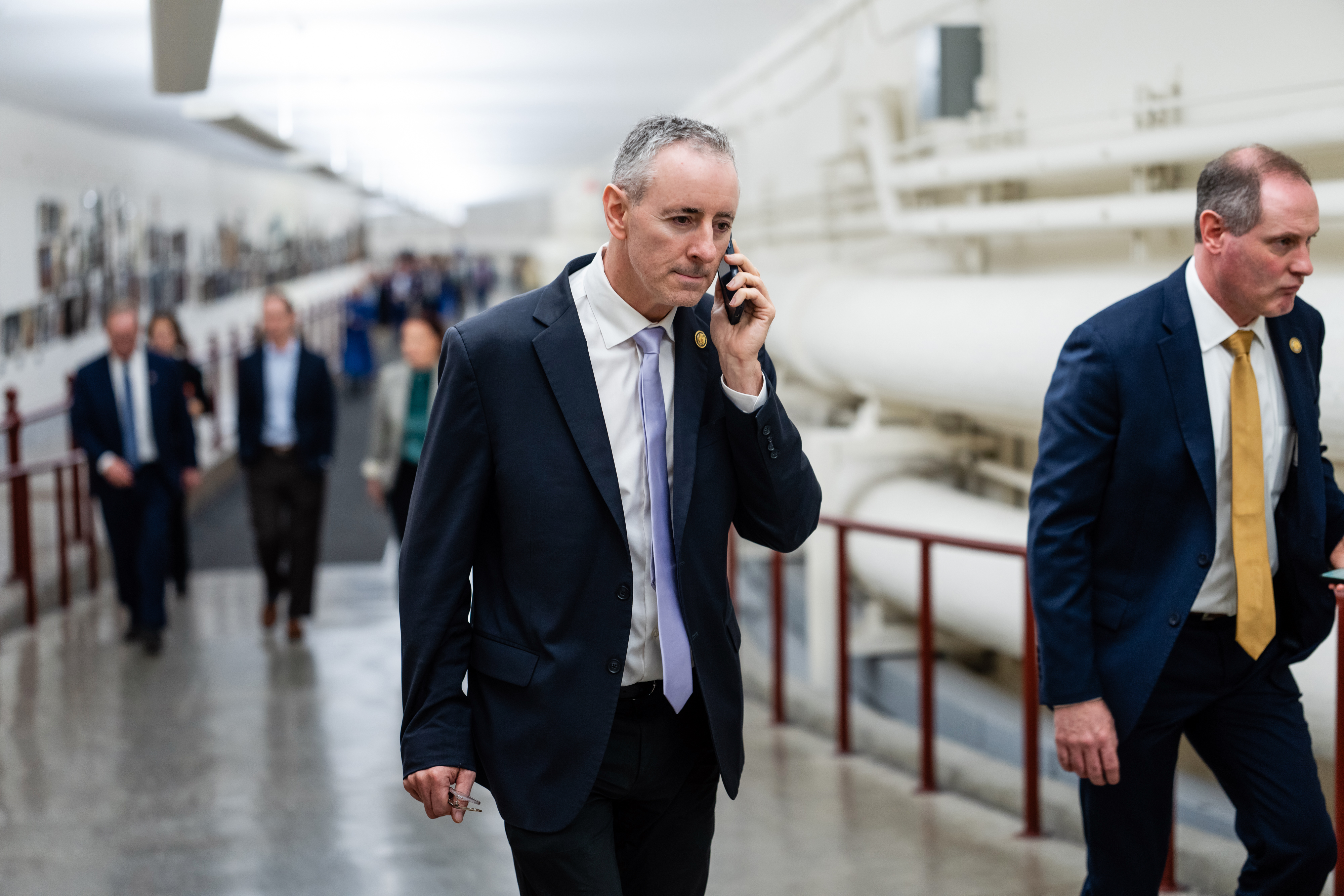
    U.S. Rep. Brian Fitzpatrick (R., Pa.) was one of four GOP House members who joined with Democratic lawmakers to pass a war powers resolution.Eric Lee

    In defiance of Trump’s refusal to help Ukraine, 18 House Republicans joined Democrats to pass a measure to provide more than $1 billion in aid and impose new sanctions on Russia. (Recall how Trump repeatedly said he would end that war within 24 hours after returning to office.)

    U.S. Rep. Don Bacon (R., Neb.) called Trump’s continued deference to Russian leader Vladimir Putin a “moral blindness” that “communicates weakness.”

    The sudden turn against Trump by some GOP lawmakers is likely driven more by the looming midterm elections than any allegiance to their constitutional oath.

    Trump’s poll numbers are sinking. There are even cracks among white working-class voters without a college degree who now disapprove of the president’s handling of the economy. They could tolerate Trump’s lies, corruption, and incompetence, but not $5-a-gallon gasoline.

    At the same time, Trump — who has spent a lifetime litigating thousands of grievances — is losing in many courtrooms on issues big and small.

    On Monday, a judge voided “in its entirety” Trump’s scheme to impose $100,000 fees on employers seeking visas for skilled foreign workers — one in a series of misguided moves by the administration to target immigrants, which hurts all Americans.

    Earlier this year, the U.S. Supreme Court struck down Trump’s cockamamie plan to impose tariffs on countries in a way best described as willy-nilly. Beyond being fiscally stupid, the court found Trump’s signature economic policy was unconstitutional.

    The Supreme Court will soon rule on Trump’s signature immigration policy to end birthright citizenship for babies born in the U.S. to undocumented immigrants or those on temporary visas.

    Most legal experts believe Trump will lose this case because birthright citizenship is guaranteed under the 14th Amendment. Even Trump predicted the court would “probably rule against me.” As it should, since the law is not on his side.

    A federal judge ruled that Trump’s name must come off the John F. Kennedy Center for the Performing Arts. The judge said the law is “crystal clear,” and that only Congress can change the name.

    After beating four criminal indictments, Trump is still subject to the law.

    In fact, the Trump administration has lost 70% of the more than 600 lawsuits it has faced over the past year or so. The record of futility underscores Trump’s overreach, since the federal government traditionally prevails in court.

    Judges and grand juries have rejected many of the slapdash legal arguments from the Trump administration. The U.S. Department of Justice has parted ways with thousands of career prosecutors and is forfeiting its credibility with the bench.

    The losses are real. And they matter. But democracy doesn’t survive on court rulings and poll numbers alone — it survives because people keep showing up.

    Trump’s losing streak obscures the harder truth that he continues to trample the rule of law, attack countries, install lackeys, line his pockets, and upend the economy — moves that systematically weaken the U.S. at home and abroad.

    It is, after all, a reminder that the arc of the moral universe can bend toward justice — even in these “dark, disturbing, and dangerous times.” The bending, though, is up to us: follow the Constitution, hold wrongdoers accountable, and vote.

  • Why we should listen to Robert Coles — and to each other

    Why we should listen to Robert Coles — and to each other

    In the spring of 1983, my wife graduated from Williams College. We weren’t married — yet — but I was already in love with her. So I was in the audience on a warm May morning to watch her receive her diploma.

    That’s also where I first encountered Robert Coles.

    Coles, who died June 4, was the commencement speaker. I’m embarrassed to admit that I didn’t know anything about Coles, perhaps the most influential psychiatrist in modern America. But as soon as he started talking, I was transfixed.

    He spent his life listening to children and their parents, particularly during moments of trauma or crisis. And he urged the rest of us to listen, too.

    When you listen closely, Coles discovered, every individual you meet becomes exactly that: an individual. They’re no longer a category or a caricature. They’re a human being, trying to make sense of the world. Just like you, and like me.

    That’s why Time magazine, in a 1972 cover story about Coles, congratulated him for “breaking the American stereotypes.” Wherever Coles looked, he saw people distorting — and demeaning — each other. The only antidote for that was conversation, which would “depolarize a divided society” (Time predicted) by allowing us to recognize the humanity in everyone.

    It’s easy to assume we have lost that spirit in America, which seems even more divided than it was a half-century ago. You can hear it in our heated political rhetoric, so full of anger and recrimination. She supports Democrats, so she’s a libtard. He votes Republican? Must be a fascist.

    But Coles reminded us that we can move beyond the vituperation and name-calling. Show compassion and curiosity toward everyone, he insisted. And listen to them before you judge them.

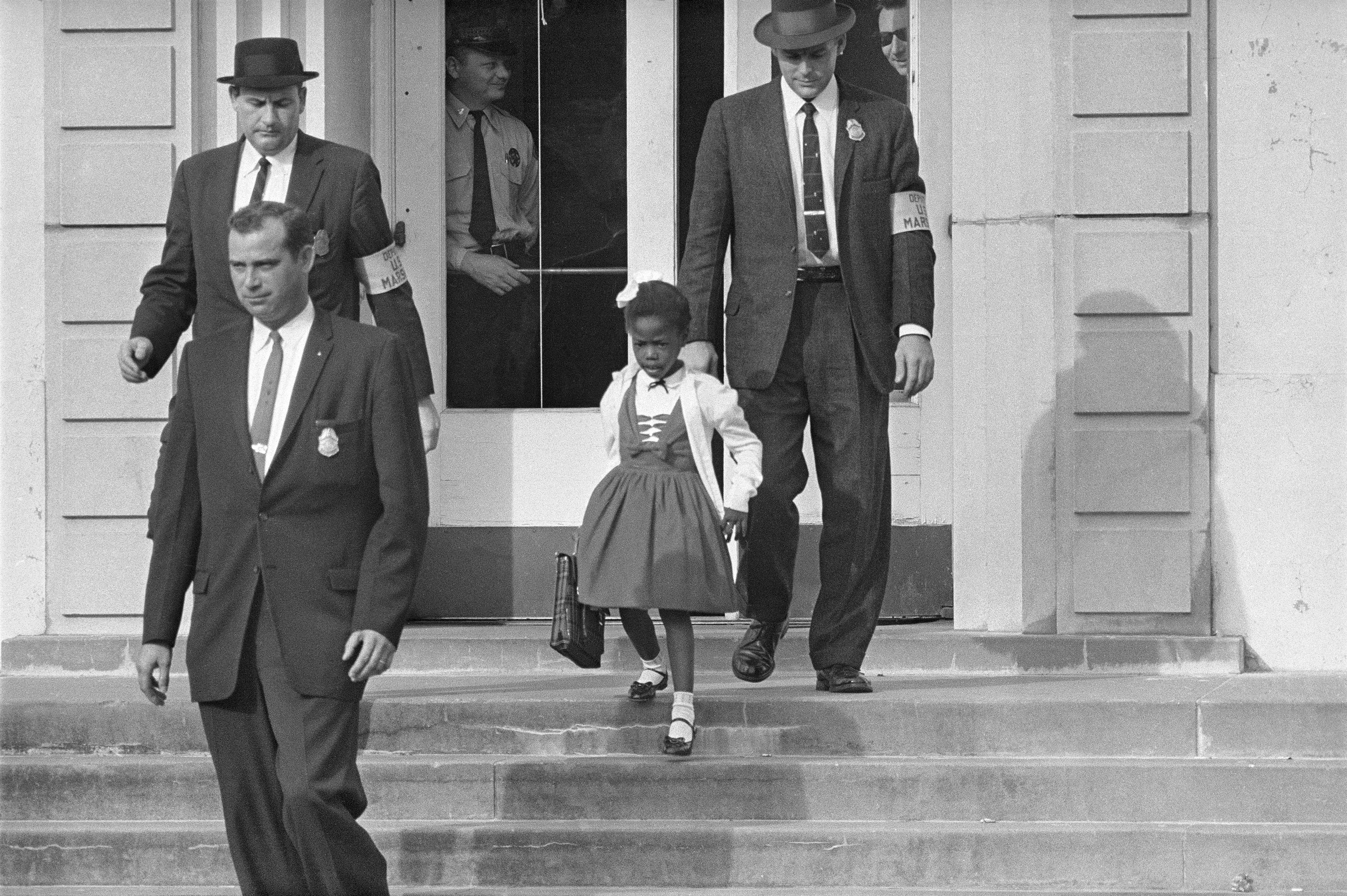
    Coles was best known for his interviews with Black children like Ruby Bridges, the 6-year-old girl who faced a mob of white racists in 1960 while integrating an elementary school in New Orleans. But he also warned against imagining Black people as noble victims, or Southern whites — including opponents of integration — as ignorant bigots.

    “Policemen are not pigs, white Southerners are not rednecks, and Blacks are not all suffering in exotic misery,” his Harvard colleague David Riesman told Time, summarizing Coles’ approach. “What he is saying is ‘People are more complicated, more varied, more interesting, have more resiliency and more survivability than you might think.’”

    Coles’ conversations with poor and right-wing whites confused his liberal friends, who wondered why he would spend so much time with “awful, vulgar, reactionary people,” Coles noted. The reason was both simple and profound: He wanted to understand them.

    “I don’t look upon them as good or bad,” Coles explained. “I look upon them as human beings, strong and sensible, weak and full of faults.” He readily acknowledged “the blindness, the distortions, the racism, the meanness” among them. But he refused to reduce them to that.

    You could find the same negative qualities in any group, Coles insisted. And working people “bore the brunt of change in American society,” he added. Dismissing them as racist was itself an unjust act, committed by people who imagined themselves as agents of social justice.

    In academia, meanwhile, these same tribunes of justice often wrote in impenetrable jargon that only their fellow professors could understand. Coles didn’t do that, either. He used ordinary language, just like the people he interviewed.

    Federal marshals escort 6-year-old Ruby Bridges from William Frantz Elementary School in New Orleans, in November 1960.Uncredited

    That spawned skepticism among some of Coles’ colleagues, who disparaged him as “unscientific” or — heaven forbid — a “popularizer.” But what’s the point of writing something that nobody — other than a small set of specialists — will ever read?

    Coles made a difference in the world precisely because his work was accessible to so many people. At the Williams graduation, he told us Bridges had been moving her lips as she walked past the mob protesting her for desegregating an all-white school. Later, Coles asked her what she had been saying.

    “I was talking for God and praying for the people in the street,” she replied. “I always pray the same thing. ‘Please, dear God, forgive them, because they don’t know what they’re doing.’”

    Bridges’ courage and compassion inspired Norman Rockwell’s famous painting, The Problem We All Live With, which appeared on the cover of Look magazine in 1964. And it inspired Coles to spend his life talking to people about how they experienced the challenges and contradictions of their world. In over 50 books and hundreds of articles, he taught us that everyone — especially children — had something important to say.

    We just have to listen to them. And, I hope, to Robert Coles.

    Jonathan Zimmerman teaches history and education at the University of Pennsylvania. He is the author of “Whose America?: Culture Wars in the Public Schools.”

  • Pennsylvania is working to fill a spot in Trump’s ‘Great American State Fair’ as other Democratic-led states boycott

    Pennsylvania is set to have a presence at an upcoming two-week “Great American State Fair” on the National Mall, one of the signature 250th anniversary events hosted by President Donald Trump celebrating America’s founding.

    What that presence will look like for Pennsylvania — the state where the nation’s independence was declared — is still up in the air.

    All 50 states and six U.S. territories are expected to be represented with booths showcasing aspects of their culture and history. Some blue states, however, are opting out of sending their own staff to participate, citing a partisan tilt to the event and the cost to participate.

    Pennsylvania, a quintessential swing state led by Democratic Gov. Josh Shapiro, is still preparing to participate in an exhibit, according to a person familiar with the planning. But state officials have struggled to find a Pennsylvania business that wants to associate with the Trump-affiliated event.

    The Great American State Fair has hit numerous roadblocks in its planning in recent weeks. More than half of the acts announced to perform at a Semiquincentennial concert series withdrew shortly after its announcement over concerns the nation’s birthday planners were politically motivated. Trump then replaced the concert series with a political rally, which he will headline on June 24 and he billed as “A Rally to end all Rallies!” in a Truth Social post.

    Freedom 250, the nonprofit organization behind the 16-day event kicking off June 24, has deemed it a “first-of-its-kind world’s fair” while some Democratic officials have railed against it as a waste of taxpayer money.

    Unlike other states, Pennsylvania’s state government did not commit to sponsoring a booth. But Shapiro’s office has been trying to connect Freedom 250 with organizations and companies that could represent the state, according to federal and state sources familiar with the planning.

    It was not clear what type of Keystone State company or group would fill the gap.

    Freedom 250 was still finalizing plans with several states’ tourism boards, cultural and heritage groups, and other organizations as of Friday — less than two weeks before Trump was scheduled to headline the fair’s “kick-off celebration.”

    The event is set to include remarks by Trump and members of his cabinet, fighter jet flyovers, and a performance of “God Bless the USA” by Lee Greenwood, a staple of Trump’s major campaign events over the years. Each day of the fair from June 25 through July 10 will have a theme — including “land & prosperity,” “military & veterans appreciation day,” “faith, values and inspiration” and “MAHA Monday.”

    At least a half-dozen states have opted not to participate, according to NOTUS and other news outlets.

    “He invited all the states to participate and wants to charge us. Charge us to go down and put something on his exhibit, whatever he’s creating for Freedom 250. It’s just ridiculous,” Democratic Gov. Maura Healey, of Massachusetts, said in a Boston Public Radio interview earlier this month.

    Shapiro — a Democrat who’s also frequently challenged Trump and is widely considered a potential contender in the 2028 race to succeed him — has not similarly criticized the fair. The governor has been involved in other 250-focused events in Pennsylvania, such as the Commonwealth Concert Series that includes concerts in five cities across the state.

    Pennsylvania Gov. Josh Shapiro speaks during a Visit PA pep rally Tuesday, March 31, 2026, ahead of the nation’s 250th anniversary and other major events in the state. Jose F. Moreno / Staff Photographer

    Freedom 250 has pushed back against the idea that the fair and other anniversary celebrations are partisan.

    “The idea that a president’s presence at America’s 250th birthday is somehow a political act is not a serious argument — and frankly, it is not serious journalism to treat it as one,” Freedom 250 spokesperson Rachel Reisner said. “No one suggested the Biden-Harris administration would have kept the president away from this moment, nor should they have. We proudly welcome President Trump, who has shown genuine enthusiasm for celebrating America and its patriotic traditions, just as we would have welcomed any sitting president. Freedom 250 looks forward to celebrating America together and hosting once-in-a-generation events.”

    The organization has announced several pieces of the program, including “classic state fair” elements like livestock competitions and interactive experiences with companies such as John Deere and Northrop Grumman, the aerospace and defense company.

    It has not detailed the focus of each state’s designated section on the mall.

    An instructional pamphlet directed to state officials explains that every state and territory can “tell its own story” by “presenting a pavilion that reflects their history, culture, and contributions to the nation.” It does not include pricing, though a source familiar with the planning said states or organizations are only responsible for covering the cost to fill the space.

    Some states are sponsoring their exhibits directly through their state agriculture or tourism departments. For example, Arizona and Colorado are planning interactive experiences that highlight their states’ scenic outdoors, and New York’s “I Love NY” tourism campaign will showcase the state’s vacation areas, according to USA Today.

    The Freedom 250 pamphlet suggests other ways states can celebrate the Semiquincentennial — through flags and signage, or “projection experiences” to light up buildings like a state Capitol. It recommends governors issue official proclamations to recognize the moment, as well as foster civic and educational opportunities like student art contests and field trips.

    “The true power of this anniversary will not come from Washington alone,” Freedom 250 CEO Keith Krach wrote to state and local officials in the document. “It will come from you.”