Tag: Democrats

  • A new bipartisan housing law was on track to bring Pennsylvania’s home-repair program nationwide. Then Trump refused to sign the bill.

    A new bipartisan housing law was on track to bring Pennsylvania’s home-repair program nationwide. Then Trump refused to sign the bill.

    WASHINGTON — A Pennsylvania program that assists homeowners and small landlords by financing repairs was on track Wednesday to expand nationwide, after Congress this week passed a bill that both Republicans and Democrats are celebrating as the first major federal housing law in decades.

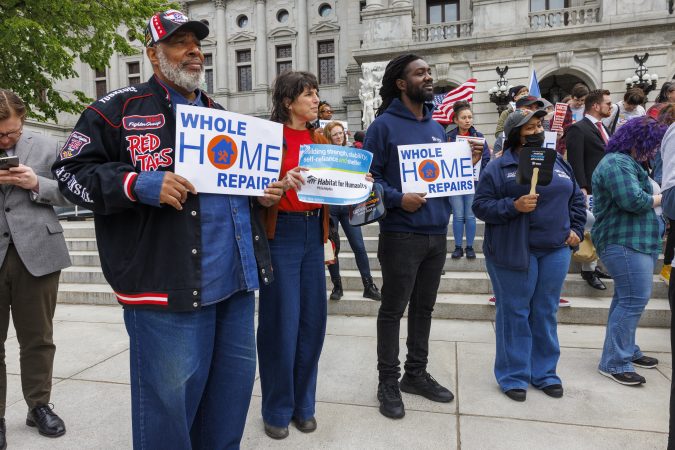
    Tucked into the 374-page omnibus legislation is a pilot version of a federally backed Whole-Home Repairs program — an idea that was originally sponsored by State Sen. Nikil Saval (D., Philadelphia) and passed in Pennsylvania in 2022.

    The program offers grants or loans to address safety, habitability, and efficiency concerns.

    But despite wide bipartisan support for the program and dozens of other housing reforms in the larger bill, final approval was derailed on Wednesday when President Donald Trump canceled the bill-signing ceremony in an attempt to force Congress to first pass more restrictive voter-ID laws.

    Democrats and some Republicans quickly rebuked the president, who still made a rare appearance on Capitol Hill to meet with Senate Republicans. The intraparty meeting turned contentious, according to multiple reports, while Democrats noted they had enough votes to overturn Trump’s veto if he holds out long enough.

    “It’s a mess,” said U.S. Sen. Andy Kim (D., N.J.). “Finally, we’re doing something that the American people want. We got bipartisanship. We worked on it forever. … Then he just parachutes in and just blows it all up here at the end.”

    The 21st Century ROAD to Housing Act aims to incentivize housing construction, restrict large institutional investors from buying single-family homes, improve financial literacy, and more.

    More than a year in the making, it includes a separate stand-alone Whole-Home Repairs Act that U.S. Sen. John Fetterman (D., Pa.) had introduced in each of the last two sessions of Congress. Fetterman’s bill merged last year into the larger bill while keeping many of the same provisions as the Pennsylvania-level program.

    Households that earn less than 80% of the area median income are eligible for grants, while small landlords with affordable units can access loans, including forgivable loans.

    Funded with more than $120 million in COVID-era federal stimulus money, the program has been limited amid high demand, with as many as 18,000 homes on the waiting list.

    Saval said he expects the national version to also reflect that level of “immense demand” — particularly as the program starts small and as homeowners across the country face higher costs to maintain their residences.

    “This is a huge issue. There are some 200,000 homes in Pennsylvania alone that have moderate to severe deficiencies,” Saval said. “Everyone is dealing with rising energy costs. Everyone’s dealing with the cost of materials and labor and the inability to pay for all that.”

    Addressing those kinds of affordability concerns, which have become a top-of-mind political issue during this year’s high-stakes midterm elections, is a rare bipartisan effort to emerge from the U.S. Capitol.

    Philadelphia-area lawmakers on both sides of the aisle had spent months advocating for the bill.

    U.S. Sens. Dave McCormick (R., Pa.) and Lisa Blunt Rochester (D., Del.) — members of the Senate committee that advanced the legislation — both celebrated the final passage by talking about its impacts on affordability and “cutting red tape.” Kim called it a “historic” move to bring costs down.

    “This package comes at a critical moment,” Blunt Rochester said in a statement, noting a nationwide housing shortage of as many as 7 million units. Five bills she separately sponsored — to accelerate building, increase investment in community development projects, develop zoning and land-use policies, and more — were featured in the final law.

    The Whole-Home Repairs provision of the legislation was not a guarantee as negotiations developed over the last year. House Republicans were generally skeptical of creating a new government program, and specifically critical of the policy’s tenant protections, according to a source familiar with the negotiations. But their counterparts in the Senate, and Democrats in both chambers, helped keep it in the larger bill.

    Fetterman said in a statement that Whole-Home Repairs “ensures families can stay in their homes” and that passing it had been a priority since he entered the Senate in 2023.

    “I’ve consistently maintained that our housing crisis needs real solutions that help address the problems at the center,” Fetterman said.

    Saval, who said he made multiple trips to Capitol Hill to work with sponsors and lobby for Whole-Home Repairs, said he was “thrilled” by the inclusion of a program that he and the coalition of advocates who helped push the idea had always envisioned as a model that could be replicated.

    He said he expects the pilot program to prove successful in “a few states” where it is able to launch. Unlike previous version of the federal bill that would have allocated $30 million to the pilot, there is no specific funding number for Whole-Home Repairs in the 21st Century ROAD to Housing Act.

    The legislation calls for the secretary of the U.S. Department of Housing and Urban Development to identify between two and 10 “implementing organizations” every year during the pilot, which is set to run through October 2031. The organizations will be local or state governments that administer the programs.

    Saval said that no matter how much funding is allocated, it “will undoubtedly fall short of the need,” but that its effectiveness will spur further investment.

    “It repays itself,” Saval said. “It repays itself in stabilized communities. It repays itself in stabilized property values, in people remaining in their homes rather than in unsafe or unhealthy homes, or rather than abandoning them.”

    Staff writer Jake Blumgart contributed to this article.

  • In Harrisburg, Philadelphia Mayor Parker asks lawmakers to double school renovation fund to $250 million

    In Harrisburg, Philadelphia Mayor Parker asks lawmakers to double school renovation fund to $250 million

    HARRISBURG — Philadelphia Mayor Cherelle L. Parker called on Pennsylvania’s General Assembly to double what it sets aside for school districts to update their aging facilities, as the Philadelphia School District embarks on a $3.3 billion plan to modernize 169 school buildings.

    Parker hosted a two-hour news conference at the state Capitol on Monday, asking Pennsylvania’s split legislature and Gov. Josh Shapiro to increase the amount of money available for school facility renovations from its current $125 million to $250 million as part of this year’s state budget, which is due at the end of the month.

    The school district is on track to close 17 schools as part of the larger modernization efforts, following months of protest and controversy over the facilities plan.

    Parker appeared alongside City Council President Kenyatta Johnson, Philadelphia School Superintendent Tony B. Watlington Sr., and school board president Reginald L. Streater, following several weeks of tensions with state and city legislative leaders over her proposed tax plans to raise revenue for the city and the school district, which ultimately failed.

    But on Monday, the city leaders appeared as a united front in Harrisburg, showcasing their commitment to “rightsizing” Pennsylvania’s largest school district, which is the ninth-largest in the nation.

    “We are here united to let you know that we are proud that the City of Philadelphia has some skin in the game, and we are not coming here simply with our hat in hand, asking the Commonwealth of Pennsylvania to come save the School District of Philadelphia,” Parker said, noting that the city was able to stave off classroom cuts.

    “It is the General Assembly who told us last year we will not give additional funding until you come back with a facilities plan. So we went to work,” Johnson said during the news conference Monday.

    Now it is on the state to set aside additional funding to help school districts update their facilities, Parker and Johnson said.

    Shapiro, a first-term Democrat, proposed keeping the pot of money at $125 million for the coming fiscal year, as part of his $53.2 billion budget proposal.

    Pennsylvania is facing its own budget problems, as the state is on track to spend more than it brings in in revenue this year and in future years. Shapiro’s budget proposal would spend $4.3 billion more than the state’s projected revenue for the coming fiscal year, meaning Parker’s funding increase request faces an uphill battle.

    The event highlighted a coalition of advocates, from labor leaders to recent graduates to public education advocates — all calling on the state to increase the state’s capital fund, in addition to continuing to increase the city’s adequacy funding.

    The school district is facing a $300 million structural deficit and had planned to cut more than 300 school-based positions before city officials cut a deal to keep funding the positions with a yet-to-be-determined revenue source.

    Several of the speakers recalled recent times when their young children did not have access to bathrooms, or instances when schools had to shift to virtual learning because the buildings are unequipped to handle cold or hot weather.

    The speakers, including Parker, emphasized that the issue of aging school buildings is not exclusive to Philadelphia. It is an issue faced by school districts around Pennsylvania, including rural and suburban ones.

    “So goes the decision-making in this building, so goes the future of rural, urban, and suburban Pennsylvania, and all of our children,” Parker said.

    In a letter sent Monday to members of the General Assembly, top leaders from the Pennsylvania League of Urban Schools and the Pennsylvania Association of Rural and Small Schools echoed the calls.

    “Safe, modern school buildings should not depend on a community’s zip code, and we stand with Mayor Parker in calling for Harrisburg to make that needed commitment to students in every corner of the Commonwealth,” the letter said.

    In a letter to Shapiro in January, ahead of his annual budget pitch, Parker requested that the state double the amount available for school facility improvements, and she sought a revision to the guidelines to allow a single district to receive up to 25% of the total grant funding in a given year. That would open approximately $50 million to $60 million annually for the district to tap into to improve school buildings, according to the letter.

    Parker, who served as a state representative for 10 years before joining City Council and her election as mayor, received a major blow to her tax plans from Harrisburg in the final days of city budget negotiations. Three sources with knowledge of the closed-door state budget talks told The Inquirer then that lawmakers would not approve increases to the city’s hotel and long-term rental taxes she requested to help expand the city’s homelessness services.

    Only one state lawmaker joined the mayor’s event: Sen. Art Haywood (D., Philadelphia/Montgomery). Parker met separately in a private meeting with Philadelphia’s House delegation to Harrisburg.

  • Brian Fitzpatrick ties the knot with Fox News’ Jacqui Heinrich in NYC wedding

    Brian Fitzpatrick ties the knot with Fox News’ Jacqui Heinrich in NYC wedding

    U.S. Rep. Brian Fitzpatrick (R., Pa.), who represents Bucks County, and Fox News senior White House correspondent Jacqui Heinrich got married Saturday in New York City.

    The wedding was attended by high-profile figures in politics and media and featured a nighttime cruise around the Statue of Liberty.

    The celebrations for the newlyweds and their 302 guests included a ceremony at St. Patrick’s Cathedral and a reception on a yacht called Horizon’s Edge, with a 10-piece brass band and the toasts of former GOP House Speaker Kevin McCarthy and former Sen. Joe Manchin (I., W. Va.), People magazine reported.

    The nuptials of Fitzpatrick, 52, and Heinrich, 37, comes almost a year after their engagement and amid the Republican’s high-stakes reelection campaign to represent Pennsylvania’s 1st Congressional District against Democratic challenger Bob Harvie.

    Fitzpatrick and Heinrich said they chose New York for their wedding because of its significance in jumpstarting their respective careers as an FBI agent and a network news reporter and its connection to their families’ immigration journey, People reported. It was also a central meeting point for the couple’s families from New England and Pennsylvania.

    The reception featured other nods to family — Heinrich’s parents got married on a chartered cruise and the couple’s cake-cutting song was an “Irish tune,” People reported, written by Fitzpatrick’s great-uncle, an NYPD officer who was killed in the line of duty, according to People.

    Former Sen. Joe Manchin (I, W.Va) and former GOP House Speaker Kevin McCarthy (right) give a toast to U.S. Rep. Brian Fitzpatrick and Fox News reporter Jacqui Heinrich’s nuptials.Charming Images

    Guests took to social media to congratulate the newlyweds including Heinrich’s Fox News colleagues, U.S. Rep. Don Bacon (R., Neb.), and President Donald Trump’s former Labor Secretary Lori Chavez-DeRemer.

    Pennsylvania Gov. Josh Shapiro was invited to the wedding, but the Democrat was unable to attend.

    Fitzpatrick and Heinrich met in Washington when Heinrich was a correspondent on Capitol Hill. After she switched beats to cover the White House, Fitzpatrick asked her on a date to the Kennedy Center Honors.

    Heinrich’s LinkedIn page shows she began working as Fox News’ White House correspondent in May 2021 during former President Joe Biden’s term.

    They are one of the most high-profile couples on Capitol Hill, sometimes earning the ire of Trump.

    Last month, after Fitzpatrick won his GOP primary unopposed, Trump threatened Fitzpatrick, without saying his name, when asked a question by Heinrich, who is vice president of the White House Correspondents Association.

    “Her husband votes against me all the time. Can you imagine? I don’t know what’s with him,” Trump said. “You better ask what’s with him. She’s married to a certain congressman. He likes voting against Trump, You know what happens with that? It doesn’t work out well.”

  • A Philly woman pleaded guilty to voting twice in the 2024 presidential election

    A Philly woman pleaded guilty to voting twice in the 2024 presidential election

    A Philadelphia woman pleaded guilty Monday to voting twice in the 2024 election — first in northern New Jersey, then in the city.

    Miya Pack, 40, said little beyond responding to routine legal questions as she pleaded guilty to a charge of voter fraud before U.S. District Judge Joshua D. Wolson.

    Pack has been registered to vote since 2004 in Bergen County, N.J., prosecutors said in court documents, and she’s also been registered to vote in Philadelphia since 2016. She is not affiliated with any political party, voter records show.

    On Oct. 26, 2024, prosecutors said, Pack cast a ballot in that year’s presidential election in Bergen County. Then, 10 days later, prosecutors said, she cast a ballot in the same contest in Philadelphia on Election Day.

    They did not say whom she voted for, and she declined to comment as she left the courtroom Monday.

    President Donald Trump has repeatedly made questionable or false statements about the prevalence of voter fraud, particularly in places like Philadelphia, where Democrats heavily outnumber Republicans. Election officials and experts who study the issue generally agree that voter fraud has not historically occurred at widespread rates.

    Pack was charged by federal prosecutors last September. Prosecutors announced her indictment alongside the indictment of another man, Matthew Laiss, who was separately charged with voting twice in the 2020 election.

    Laiss later said in court documents that he voted twice for Trump, and unsuccessfully sought to claim that his actions were covered by pardons Trump extended to people who tried to help him overturn the results of the 2020 election.

    Laiss was convicted of voter fraud earlier this year at trial and is awaiting sentencing.

    Pack is scheduled to be sentenced in October. She faces the possibility of prison time, although prosecutors said in court that federal guidelines suggest a term of no jail time to six months.

  • Trump to visit Pa. on Tuesday as the battle for control of Congress heats up in the Lehigh Valley

    Trump to visit Pa. on Tuesday as the battle for control of Congress heats up in the Lehigh Valley

    President Donald Trump is scheduled to speak Tuesday at a truck manufacturing facility in the Lehigh Valley, where a competitive race for Congress this year could determine which party controls the U.S. House for the second half of his term.

    Trump will deliver remarks at Mack Trucks in Macungie in Lehigh County, according to the White House and two local members of Congress.

    The visit will mark Trump’s fourth Pennsylvania appearance in his second term and his first this year ahead of November’s high-stakes midterm elections.

    Pennsylvania has four competitive U.S. House districts — the most of any state — and the Lehigh Valley-based 7th District is widely considered one of the most likely in the nation to flip from Republican to Democrat.

    GOP U.S. Rep. Ryan Mackenzie won that seat by 1 percentage point in 2024 as Trump defeated Democrat Kamala Harris statewide. Bob Brooks, a union leader and retired firefighter whom many prominent Democrats rallied behind before last month’s competitive primary, is facing Mackenzie in November.

    The event Tuesday is scheduled as an official White House event, not a campaign event, and it could be the first of several trips by the president to the region and across Pennsylvania in the coming months.

    “We’re looking forward to joining President Trump at Mack Trucks — one of our nation’s most iconic manufacturers,” Mackenzie wrote on social media.

    “By investing in American workers and supporting domestic manufacturing, President Trump and Republicans in Congress have helped to put the Lehigh Valley and the Poconos at the forefront of our nation’s industrial revitalization. We appreciate President Trump coming to the region to help us highlight the work we’ve done together to support American workers, families, and industries.”

    Mackenzie spoke Friday at a different Mack facility outside of Allentown to highlight part of a contract the company won from the U.S. Army last year to produce heavy dump trucks. The deal is worth up to $221.8 million, and Mack Defense said it received $47 million in the latest Department of Defense appropriations act.

    A White House spokesperson said Trump will “stand with the American workers he has fought for” during his visit.

    “Under the President’s leadership, key domestic industries are being revitalized, historic investments are pouring back into communities like Macungie, and families across the country are securing new, high-paying jobs,” Liz Huston said. “Pennsylvanians placed their trust in President Trump, and he has delivered for them.”

    Former President Joe Biden visited the same Mack facility in 2021 for a speech focused on supporting American manufacturing.

    Trump last appeared in Pennsylvania in December for a rally at the Mount Airy Casino Resort in Mount Pocono, which is in the neighboring 8th Congressional District where another freshman Republican is looking to fend off a Democratic challenger. Pitched as a speech to address voters’ concerns about affordability, the president repeatedly veered off script and called affordability concerns a “hoax.”

    Some of the president’s former supporters in the region have since said they regretted voting for him, and national Democrats have made the area a priority as they look to win back a seat that Mackenzie flipped two years ago. Brooks, the Democratic nominee, has leaned into his working-class background while saying he understands voters’ financial concerns.

    U.S. Rep. Dan Meuser, a Republican who represents a different neighboring district, said Trump’s visit signals the president’s support for workers.

    “Mack Trucks are a symbol of America’s manufacturing strength,” Meuser said on social media. “Their Lehigh Valley operations are a pillar of the local economy, employing Pennsylvania workers and driving the nation’s trucking industry. Thank you, President Trump, for supporting American workers.”

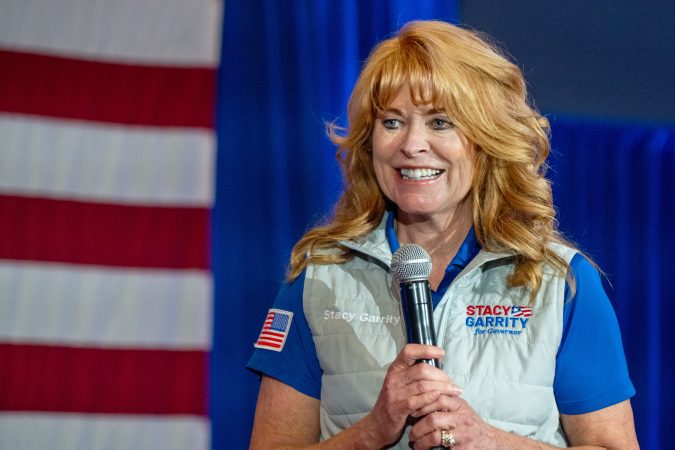
  • Stacy Garrity on potentially being the first female governor of Pennsylvania: ‘It’s my least favorite thing to talk about’

    Stacy Garrity on potentially being the first female governor of Pennsylvania: ‘It’s my least favorite thing to talk about’

    If elected in November, Stacy Garrity would become Pennsylvania’s first female governor in the state’s 238-year history.

    Even now, she is one of only two women in history to receive the Republican Party’s nomination for the job.

    The state has never had a woman as its governor; no woman has been elected as U.S. senator; and both times a woman ran for president, she lost the state. Over the last two centuries, Pennsylvania’s political glass ceiling has proven stubbornly resistant to cracks.

    But on the campaign trail against Democratic Gov. Josh Shapiro, Garrity, 62, said she doesn’t give that too much thought.

    “It’s my least favorite thing to talk about,” she said. “I was the oldest of four daughters, and we were just told that we were expected to work hard.”

    Navigating gender dynamics in politics can prove to be a particularly fine balance. Republicans, in particular, often emphasize that candidates should rise on their skills and talent, not personal identity.

    Garrity emphasized her attention is on issues like the power grid, education, and reining in spending, though she recognizes the historic significance of a potential win.

    “Republicans, for the most part, are based on merit, and that’s how I was raised,” said Garrity, who spent decades serving in the Army Reserve and as an executive in the manufacturing industry before becoming state treasurer. When she was reelected in 2024, she broke the record in Pennsylvania for the most number of votes cast in her favor for a statewide office, a distinction formerly held by Shapiro.

    In addition to taking on centuries of male-dominated leadership, Garrity will face other challenges in November.

    She is a Republican who has aligned herself closely with President Donald Trump — including campaigning at his Mar-A-Lago Club in Florida — at a time when Trump has been experiencing historic dissatisfaction among voters and the national political environment favors Democrats.

    And she is running against Shapiro, a Democratic incumbent with a rising national star who is popular even among independents. He has $38 million banked as of May, vastly outpacing Garrity’s $2.8 million. Shapiro is also counting on a strong showing in the midterms to help Democrats win the majority in the U.S. House.

    “I think [voters] are excited to have a first female governor, but I don’t think that is the reason anybody would vote for me,” she said.

    In Pennsylvania and 16 other states

    It is hard to be what you can’t see. And for voters who have never experienced a woman at the top of the hierarchy, it is difficult to imagine what that could look like, experts said.

    It has been 300 years since a woman led Pennsylvania — before it was a state.

    Hannah Callowhill Penn led the colony of Pennsylvania, governing first while her husband, William Penn, suffered several strokes, and then alongside a group of trustees after he died. Over 14 years, she settled boundary disputes, appointed and replaced government officials, and navigated relations with the monarchy in England.

    Other Pennsylvania women made attempts to break gender barriers but came up short. Barbara Hafer ran as a Republican against Democratic incumbent Bob Casey Sr. in the 1990 governor’s race, but lost with just 32% of the vote.

    Former U.S. Rep. Allyson Schwartz lost to Tom Wolf during the Democratic primary for governor in 2014, and Laura Ellsworth was defeated by Scott Wagner in the 2018 Republican gubernatorial primary.

    “It could just be a coincidence, but also it’s very hard to break political traditions, and one of those traditions in Pennsylvania, unfortunately, is male leadership,” said Nichola Gutgold, a professor at Pennsylvania State University’s Lehigh Valley campus, who has researched women in politics.

    Pennsylvania, however, is not alone. There are 17 states that have never had a female senator, and 17 states have never had a female governor, according to the Pew Research Center. That distinction spans geographic ranges and party control.

    Still, Pennsylvania is one of just four states that has never had either, along with Idaho, Indiana, and Colorado. Among them, only Colorado went for Democrats Hillary Clinton and Kamala Harris for president.

    “We have certain variables at play in the Commonwealth of Pennsylvania that make it more challenging for women to run for elected office,” said Dana Brown, executive director of the Pennsylvania Center for Women and Politics.

    The role of the parties on the state and county levels means they have a strong influence on recruiting candidates and pushing them up through the pipeline. Historically, recruiting tended to come from more masculine bases — such as fire stations or township supervisor positions.

    Now, though, “both sides of the aisle recognize that women can win here in Pennsylvania, and so Republicans and Democrats have been purposely recruiting more women,” she said.

    Women have made strides in other Pennsylvania elected offices.

    In Harrisburg, State Rep. Joanna McClinton (D., Philadelphia) is the first woman and second Black person to serve as speaker of the Pennsylvania House. Republican State Sen. Kim Ward of Westmoreland County is the first woman in Pennsylvania history to serve as Senate president pro tempore and Senate majority leader.

    When former Democratic U.S. Rep. Susan Wild, the first woman to represent the Lehigh Valley in Congress, was elected in 2018, “it took a real concentrated effort from [political action committees] and from groups that really wanted to see a woman win to make that happen,” Gutgold said.

    In other cases, as in neighboring New Jersey or Virginia, women have ascended with a combination of fortunate timing, skill, experience, and deft campaigning.

    When Gov. Mikie Sherrill last year became the second woman elected to lead New Jersey, Brown said, “it was a change election for New Jersey, and it was a sign of pushing back against what the federal government is doing with ICE and immigration and also with the economy.”

    Even though Sherrill, a Democrat, shares the same party as her predecessor, Phil Murphy, New Jersey’s vote for a woman represents change, Brown said. “She also worked really, really hard for it, as most women do,” she added.

    Sometimes, female candidates succeed by pushing against expected norms for women by emphasizing military experience or work in male-dominated trades, Gutgold said. Garrity has emphasized her military and business experience on the campaign trail, holding a Veterans for Garrity rally last week.

    “I think that, rhetorically speaking, it would be easier to elect a woman who appears to hold more conservative views, because of the way we, the electorate, still views women’s role in society,” Gutgold said.

    Republican women have scored victories in the Deep South by upholding conservative values such as opposition to abortion and support of gun rights. Kay Ivey holds the governor’s mansion in Alabama, and Nikki Haley previously led South Carolina for two terms. In Tennessee, U.S. Sen. Marsha Blackburn has represented the state since 2018 and publicly repudiated gender-specific titles, such as congresswoman vs. congressman.

    Garrity, on the campaign trail, has also vowed to clean up the “boys will be boys” culture in Harrisburg and has criticized Shapiro’s handling of a sexual harassment case involving a longtime aide.

    The aide, Mike Vereb, abruptly stepped down in 2023, while the administration quietly agreed to pay $295,000 to settle claims from an employee in the governor’s office that Vereb had made repeated sexual advances toward her, and made lewd claims about her and other women.

    “We don’t need to settle for a governor who will sweep sexual harassment and abuse charges under the rug. We don’t need to accept that our state government is a cesspool where intimidation is the norm and public employees fear retribution,” Garrity said during a news conference this year.

    Manuel Bonder, a spokesperson for Shapiro, rejected those accusations.

    “Governor Shapiro has a track record of taking on powerful institutions, exposing sexual abuse, and putting predators behind bars — and he continues to fight to deliver real accountability and justice for survivors here in Pennsylvania,” he said.

    Could Pa. women give Garrity a boost?

    Nationally, women voters tend to lean more toward the Democratic Party, Pew Research Center data show, so it’s unlikely that the Republican Party will attract a huge turnover — even with a female candidate on the top of the ticket.

    Sometimes, however, the gender divide can become even more entrenched. In 2024, for example, when the candidates were broadly polling neck-and-neck, Harris saw a 17-point advantage with Pennsylvania women, while Trump led with men in the state by 11 points, according to a Philadelphia Inquirer/New York Times/Siena College poll.

    Garrity said she is putting together agendas that speak to various coalitions of voters, such as veterans, Latinos, and small-business owners.

    “I don’t think we’ve done specifically females, but that might be a good idea,” she said. A campaign spokesperson added that Garrity would be rolling out women-focused events in the coming weeks.

    Campaigns can target women by speaking directly to certain issues. Democrats have often focused their message on support for reproductive access and abortion rights, especially since the 2022 Supreme Court decision overturning Roe v. Wade.

    According to a Pew Research Center report in March, 64% of women and 55% of men say abortion should be legal in all or most cases. But Garrity has been inconsistent on the issue. She said “Roe was wrong from the beginning” on the day the ruling came out and sold T-shirts on her campaign website that opposed abortion. But in an interview last September, Garrity said she would “respect” Pennsylvania’s current abortion law and would not support a state ban.

    Republicans, meanwhile, often promote public safety and have sought to make women’s sports a wedge issue in recent elections by pushing restrictions on the participation of transgender athletes.

    It is a tactic Garrity will use against Shapiro, who has called attempts to silo transgender athletes discriminatory.

    “A lot of people think that he’s moderate because he likes to be all things to all people, and they don’t understand, he is really for boys competing against girls in sports,” Garrity said.

    There are other issues women candidates are often seen as more trusted on, such as education, healthcare, and children’s needs, Gutgold said.

    Amy Widestrom, executive director of the League of Women Voters of Pennsylvania, said top of mind for members of her organization right now is the right to vote. She said some women have expressed concern that requiring documentary proof of citizenship, which Republicans say is meant to ensure immigrants in the country illegally do not vote, could affect those who change their legal name and do not have matching identification records.

    Appealing to women on these issues can pay off, as they represent a significant voting bloc. Among registered voters in Pennsylvania, 52% are female. Of registered Democrats, 59% are female, and 47% of registered Republicans are female. Roughly 40% of unaffiliated voters are female, according to Widestrom, via voter data.

    But Macy Charles of Concerned Women for America, a socially conservative political nonprofit focused on women, said candidates should speak more expansively when courting women voters.

    “It’s pretty offensive to assume that when we’re talking about issues women care about, it’s only women’s specific issues, like abortion,” said Charles, a legislative strategist. “Women care about the economy, women care about the U.S. borders. Because they have maternal instincts, they care about their families, they care about the well-being of America’s future.”

    Rather than leaning into identity, Charles said, Garrity is reinforcing her reputation of competence.

    “More than just her identity as a woman, she is willing to stand up for common sense and truth and really put families first,” she said.

    Still, Garrity recognizes the achievement her potential victory could bring.

    To be Pennsylvania’s first female governor, “I think it would be great,” she said, “but I think it will be because I am absolutely the best candidate.”
  • New Pa. poll shows Shapiro leading handily against Garrity, trouncing Trump in popularity

    New Pa. poll shows Shapiro leading handily against Garrity, trouncing Trump in popularity

    Democratic Gov. Josh Shapiro has a commanding lead against his Republican rival Stacy Garrity in a head-to-head matchup, and he maintains steady job approval ratings five months ahead of the November election, according to a new poll of Pennsylvania voters from Franklin and Marshall College.

    Shapiro leads Garrity 50% to 28% in the 2026 governor’s race, a crushing advantage well outside of the survey’s margin of error of 5.1 percentage points. It is the first major poll released since both candidates officially secured their parties’ nominations in uncontested primaries last month.

    The survey, conducted June 8-14 by the Center for Opinion Research on behalf of Franklin and Marshall, involved 546 registered Pennsylvania voters. Roughly 42% were Democrats, about the same percentage were Republicans, and about 16% were independents.

    Shapiro won almost half of independents and just over a quarter of Republicans, who rated his performance as excellent or good.

    (function(){function e(){window.addEventListener(`message`,function(e){if(e.data[`datawrapper-height`]!==void 0){var t=document.querySelectorAll(`iframe`);for(var n in e.data[`datawrapper-height`])for(var r=0,i;i=t[r];r++)if(i.contentWindow===e.source){var a=e.data[`datawrapper-height`][n]+`px`;i.style.height=a}}})}e()})();

    About an equal proportion of all voters — 48% — said Shapiro is doing an excellent or good job as governor as those who said he is doing a fair or poor job.

    Shapiro’s approval comes as he continues building a national profile, likely with ambitions for higher office.

    He also boasts relative popularity despite voters’ deep concern with their personal finances and the state of the economy, the top issue among every partisan group.

    “The big concern that people face is economic, and even though that’s the problem that we see facing us, the blame goes outside of Pennsylvania,” said Berwood Yost, the director of the Center for Opinion Research. “People don’t see [Shapiro] as being responsible for the economic concerns that they have.”

    But people do blame President Donald Trump.

    Just 29% of voters said Trump is doing an excellent or good job, while 71% said he is doing a fair or poor job. It marked a 10-percentage-point drop from March, when his positive approval rating was 39%.

    While 63% of Republican voters gave Trump positive reviews in the new poll, that number was almost 80% in March.

    Just under half of respondents said they are “worse off” financially than one year ago, and 35% of voters said the economy, including unemployment, housing and real estate costs, and higher gas and utility prices, is the most important problem facing the state.

    “Pennsylvania should be doing so much better,” Garrity said in a previous interview with The Inquirer. “[Voters] know we’re falling behind. They know that we have a governor who’s more interested in Pennsylvania Avenue than helping Pennsylvania families. They’re very worried about utility prices because their electric bills are going up, up, up. Groceries are expensive.”

    But among those who mention economic problems, voters in the poll trust Democrats over Republicans, 42% to 24%, as the party that can best handle the issue.

    Shapiro’s campaign released a new TV and digital ad Tuesday focusing on his expansion of workforce opportunities, such as apprenticeships in trades like welding.

    “Governor Shapiro bet on workers like me. I’m proof that bet’s paying off,” said Ryan, a worker in Western Pennsylvania, in the ad.

    (function(){function e(){window.addEventListener(`message`,function(e){if(e.data[`datawrapper-height`]!==void 0){var t=document.querySelectorAll(`iframe`);for(var n in e.data[`datawrapper-height`])for(var r=0,i;i=t[r];r++)if(i.contentWindow===e.source){var a=e.data[`datawrapper-height`][n]+`px`;i.style.height=a}}})}e()})();

    Yost said Garrity is a “high-quality candidate” with a great resume that may keep down-ballot Republicans afloat, but she is competing against a popular incumbent in a year where Democrats are poised to win seats.

    “It’s rough to be a Republican at the moment,” he said. “You’re facing those headwinds, no matter what office you’re running.”

    On the economy, the issue voters care most about, a mere 17% of voters approve of how Trump’s administration is handling inflation.

    “The concerns about personal financial circumstances, the economy, and the cost of living — they’re paramount in people’s minds, and they’ve become more pronounced since March,“ Yost said. “That’s had an effect on the president’s job approval ratings in the state, which have declined pretty substantially.”

    In the last four gubernatorial races, the average margin of victory has been about 13 percentage points, Yost said, while presidential races tend to be much tighter — about 2.2 points.

    “What’s essential to understand is that these races happen in a different context than the presidential races. There are a lot of things different about them, and typically incumbent governors have a real advantage,” he said.

    State issues show more consensus

    Many of Shapiro’s budget priorities, such as restricting cell phones in schools and taxing skill games, have widespread public support.

    Almost nine out of 10 people support limiting access to cell phones in classrooms, which follows Shapiro’s urge for legislation to “get distractions out of the classroom and create a healthier environment in our schools.”

    And 71% of registered voters favor regulating and taxing so-called skill games, the slot machine look-alikes around Pennsylvania — an 11-percentage-point increase compared with previous F&M polling in 2024.

    The Pennsylvania Supreme Court ruled Monday the skill games are, in fact, slot machines and should be regulated as such, clearing the way for the state to place new rules on the devices. The decision was celebrated by Democrats who view the machines as “predatory.”

    Most voters, 70%, also support having an independent redistricting commission to draw state legislative districts, and 59% oppose mid-decade redistricting.

    Texas redrew its congressional maps last August at Trump’s urging, shifting five seats to lean more heavily Republican. California voters approved a constitutional amendment in November to permit the adoption of replacement maps that would favor Democrats. Other states have also voluntarily redrawn or created new maps following litigation.

    Shapiro said he also opposes mid-decade redistricting, telling reporters last August: “It’s not on the table here in Pennsylvania.”

    As parties compete for control of the U.S. House of Representatives this midterm election season, the poll found that voters prefer Democrats over Republicans by 12 points, 47% to 35%. Shapiro has personally backed several candidates and is hoping to use his influence to help Democrats win the majority this November.

  • Activist offered money to committeeperson and asked him to vote against Councilmember Cindy Bass in Northwest Philly ward, videos show

    Activist offered money to committeeperson and asked him to vote against Councilmember Cindy Bass in Northwest Philly ward, videos show

    A progressive activist on Wednesday offered money to a Democratic committeeperson while attempting to convince that person to vote against City Councilmember Cindy Bass in Wednesday night’s 22nd Ward leader election, videos obtained by The Inquirer show.

    The activist, Nate Holt, is a former 22nd Ward committeeperson working to support progressive candidate Octavius Price’s bid to unseat Bass from the party leadership post.

    The 22nd Ward leader election has already generated considerable controversy. Wednesday night’s vote will be a redo of the contested initial election, which was last Monday.

    The Inquirer last week published a separate video in which Bass declared herself the winner of the first election following a contested voice vote. That prompted the Democratic City Committee to order the vote being held at party quarters Wednesday night.

    Both sides have been working to win over committeepeople in advance of the rerun.

    In the new videos, Holt is standing on the porch of committeeperson James Harrison. Holt knocks, but Harrison doesn’t immediately come to the door. Holt then appears to shout to Harrison through a window.

    “James, this is Nate. Nate Holt, tall white boy. I got your money, man,” Holt says in the videos, which are filmed from a car parked on the street outside the home. “Yo, you know me.”

    Holt, who is not a committeeperson, at one point tells Harrison he’s “from the committee.”

    Harrison eventually comes to the door.

    “Yeah, so you know about this vote tonight? I have some money for you from the previous election,” Holt says in part. “We’re trying to get Cindy Bass out. … Were you going to attend tonight, or do you want to sign a form so that somebody else can vote for you?”

    It was not clear what previous election Holt was referencing.

    At one point, Harrison says, “Where the money at?”

    “Look, I’m going to give you 30 right now,” Holt responds in part.

    The audio then becomes difficult to discern as the person shooting the videos — a 12th Ward Democratic committeeperson supporting Bass named Earl Graham — gets out of the car and ends the recording.

    Graham confirmed he took the videos and said he went to Harrison’s house while also trying to win his support in Wednesday night’s election.

    “I saw somebody at his house banging on the door saying, ‘Hey, I got some money for you,’” Graham said. “I just pulled over and just recorded.”

    In a statement, Holt confirmed he “visited the house of a 22nd ward committeeperson” on Wednesday morning and encountered a Bass supporter.

    He emphasized that he acted alone and did not approach committeepeople at the direction of any candidate.

    Holt did not respond to questions about the money he referenced in the videos.

    Bass and other Democratic leaders respond

    Ward leaders and the committeepeople that elect them are the neighborhood-based front line soldiers of the Democratic Party, working to get out the vote for party-endorsed candidates and field constituent services requests.

    Bass was heavily criticized for her handling of the initial vote, in which she declared herself the victor after a contested voice vote and refused to honor requests for a roll-call vote that could have clarified the results.

    Now Bass is saying it is her opponents who are using underhanded tactics.

    “It’s very clear what the intent was of this transaction or attempted transaction, and I don’t even know what to say. I’m flabbergasted,” Bass said in an interview after viewing the videos Wednesday.

    She added that the videos have been shared with the district attorney’s office election integrity unit.

    Spokesperson Marisa Palmer said that, under the office’s policy, she could neither confirm nor deny the existence of an investigation.

    “The Philadelphia DAO takes seriously the democratic rights of the residents of Philadelphia and protects those rights even-handedly,” Palmer said.

    At his house Friday evening, Harrison on Friday evening declined to talk at length about the ordeal but said Holt did not give him any money.

    “He ain’t give me nothing,” Harrison said. “He came asking me to sign for somebody else. … Everybody wants me to do what they want.”

    Price on Wednesday said he was “saddened and outraged today when I learned of the video showing community member Nate Holt knocking on a [committeeperson’s] door, and offering him money in an attempt to get him to come to the door and participate in tonight’s election whether in person or by proxy.”

    “I did not, nor did anyone on my campaign, advise Nate Holt to offer any committee person money in exchange for their support,” Price said in a statement. “We had no knowledge of his plan to do so. Nate Holt is not a committee person and we have since cut all ties with him. ”

    Price also said his “resolve remains stronger than ever … to give voice to all those doing the work to build a stronger and more effective Democratic Party.”

    The election will take place at party headquarters on Spring Garden Street, but committeepeople can vote by proxy if they sign affidavits giving their support to one side.

    Democratic City Committee chair Brady said the committee had already planned to independently verify all proxies submitted at the meeting before the videos surfaced.

    “Any effort to improperly influence these elections, financially or otherwise, is an affront to our democracy and our values in the party,” Brady said in a statement.

    Holt’s history with Bass

    In a statement, Holt confirmed he “visited the house of a 22nd ward committeeperson” on Wednesday morning and encountered a Bass supporter.

    He emphasized that he is not a committeeperson and was not at the moment attempting to get Harrison to sign a proxy voting affidavit.

    “I did not coordinate this visit to the committeeperson with anyone else, neither other committeepeople, nor any candidates for ward offices,” Holt said. “I acted alone. I am not currently a committeeperson. I am not voting in any ward election, and I have not collected any proxy votes for any candidate, nor handled any proxy vote forms either physically or digitally.”

    But in the videos, Holt at one point explains proxy-voting to Harrison.

    “You don’t have to go. You can just sign the form, and somebody else can vote for you,” Holt tells Harrison. “I can get you that form.”

    Holt and Bass have history.

    Bass in 2024 had the party remove Holt and several others as 22nd Ward committeepeople for allegedly backing Working Families Party candidates for Council. Party bylaws prohibit committeepeople from backing non-Democrats.

    Holt has previously worked on a State House campaign for State Rep. Chris Rabb, a progressive who won last month’s high-profile race for Pennsylvania’s 3rd Congressional District race.

    Rabb said he was unaware of the incident Wednesday and declined to comment.

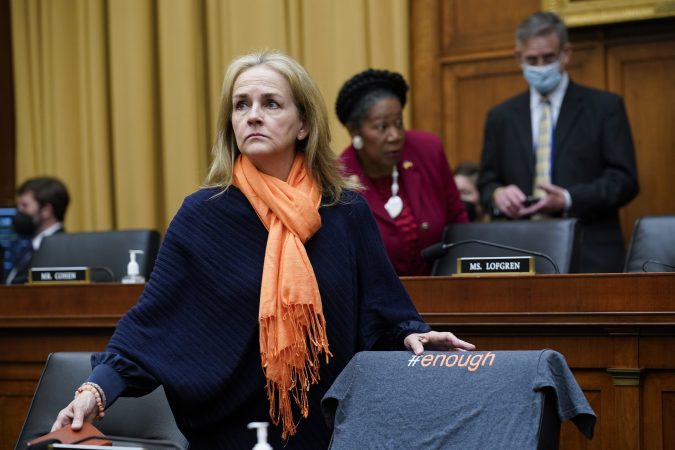
  • Rep. Madeleine Dean says she was blocked from speaking to detainees during oversight visit to Pennsylvania’s largest ICE detention center

    Rep. Madeleine Dean says she was blocked from speaking to detainees during oversight visit to Pennsylvania’s largest ICE detention center

    Three weeks after members of Congress listened to and then publicly shared concerns from inside Pennsylvania’s largest immigrant detention center for the first time, U.S. Rep. Madeleine Dean said she was blocked from speaking with detainees while visiting the same facility on Wednesday.

    Dean (D., Montgomery) said she was given “a relatively complete tour” and gathered information at the Moshannon Valley Processing Center — a 1,900-bed facility in Clearfield County that is the largest of its kind across the entire Northeast.

    But while attempting to speak with detainees, as she has done during other oversight visits, Dean said, she was told that required advance permission from the detainees themselves.

    Dean questioned the credibility of that prohibition — especially, she said, after she had informed the facility of her plans ahead of time, and after two of her colleagues were recently permitted to speak with detainees during a similar, but unannounced, oversight trip.

    “Let’s put it this way, I got a scoop of the BS,” Dean said in an interview.

    The four-term lawmaker’s fact-finding trip came after several weeks of escalating tensions around the conditions facing undocumented immigrants in detention centers such as Moshannon Valley and Delaney Hall in Newark, N.J. Both facilities are privately run by the same company, GEO Group, and have faced allegations of providing inadequate medical care and nutrition while allowing little outside oversight.

    U.S. Reps. Summer Lee and Chris Deluzio, both Pittsburgh-area Democrats, said they heard “real concerns” after emerging from Moshannon Valley on May 28.

    Their roughly two-hour tour and discussion with detainees was the first time any member of Congress had successfully entered the facility since President Donald Trump took office. It also followed reports of both poor medical care and a hunger strike led by detainees to protest the food.

    Lee and Deluzio said women in particular approached them to say they had not received proper prenatal care. At least one told them she had been sexually assaulted at the center. And watching lunches of chicken, rice, and beans being served did not make them less concerned about the quality of the food, the lawmakers said.

    A spokesperson for the Department of Homeland Security, which oversees Immigration and Customs Enforcement, later said that ICE “welcomes congressional oversight” and that it provides all detainees with comprehensive medical care as well as proper meals and living conditions.

    Dean said Moshannon Valley appeared to be clean and spacious during her trip Wednesday. The medical unit was active — unlike a larger facility in Dilley, Texas, that, after she visited earlier this year, she called “inhumane” for its lacking treatment of both adults and children.

    But Dean said she questioned what the facility would have looked like if she had not announced her visit ahead of time, and she was not dissuaded from her position that the facility should be closed.

    “This administration has just so successfully, cancerously dehumanized certain populations that we warehouse them now,” Dean said. “And we allow others to profit from it using our taxpayer dollars.”

    GEO Group referred a request for comment to ICE, which did not immediately respond.

    Dean said she was particularly alarmed that the GEO Group’s contract with ICE, as well as Republican-sponsored federal budget language, appears to incentivize filling detention center beds rather than targeting those charged with violent crimes, as Trump pledged to do. She said a copy of the contract she obtained Wednesday explained GEO Group is paid $10 per individual every day they are detained, up to the first 800 detainees. The cost goes up to $40 per individual per day for every additional person detained, she said.

    “It is so perverse. It says nothing about need, nothing about detaining the worst of the worst,” Dean said. “It says pick up as many people as you can, regardless of what they have done or haven’t done, so that every bed is charging and collecting from U.S. taxpayers to keep these people in that population.”

    With Clearfield County commissioners expected to vote in September on whether to renew the contract with ICE and GEO, Dean said she hopes the commissioners choose not to extend the facility and instead shut it down.

    Lee, who has gone further than other Pennsylvania Democrats by calling for the elimination of ICE entirely, also said last month she hoped the Moshannon Valley facility would close. One of the three Clearfield County commissioners, meanwhile, said he was inappropriately denied entry to the facility and said he does not believe the county should be part of the contract, WJAC reported.

    Shutting down immigrant detention centers, however, is rare and difficult. More than 200 centers hold about 60,000 people, and Trump has been determined to increase capacity rather than reduce it.

    Dean said there were 1,666 individuals detained at Moshannon Valley on Wednesday, which is more than the 1,417 that Deluzio reported on May 28. According to Deluzio, about 1,100 of those were classified as “low security.”

  • Pennsylvania parents will soon have easy access to school-level vaccination data to see measles risk

    Pennsylvania families will gain access to detailed information about vaccination rates in their schools before the new academic year, when the state health department launches a new online database to better inform the public.

    More than 200 Philadelphia-area schools with kindergarten classrooms — roughly one in three — have measles vaccination rates insufficient to protect against an outbreak, The Inquirer found earlier this year in an analysis that identified pockets of vulnerability hiding in plain sight at schools across the Philadelphia region.

    The Pennsylvania Department of Health routinely releases county-level data about childhood immunizations, which for the Philadelphia region shows only overall higher rates of measles protection.

    The highly contagious disease, which can linger in the air for two hours and infect nine in 10 unvaccinated people exposed to it, was once considered nearly eradicated after years of vaccination.

    But as more families opt out of vaccines required for school attendance through religious and philosophical exemptions, cases are on the rise. Pennsylvania has reported a total of 66 measles cases so far this year — the highest number in three decades and more than four times the total cases in 2025.

    The new data initiative follows a drumbeat of reporting by The Inquirer and the Pittsburgh Post-Gazette revealing the declining vaccination rates within communities across the state. Families are often in the dark about the risk because local data are not readily available.

    The joint effort between the state’s health and education departments stems from Gov. Josh Shapiro’s executive order last fall to improve access to vaccines, and from intense media scrutiny of vaccination efforts locally and nationally, said Debra Bogen, Pennsylvania’s health secretary.

    “We’re following the same instincts that you all were following,” Bogen said. “There is a huge interest among the public in this information.”

    The new initiative will offer a closer look at childhood vaccination rates, similar to an interactive school lookup tool published by The Inquirer with the latest available data from last school year.

    With the new online tool, the state wants to make people more aware of risks within their community and encourage schools to do more to improve access to vaccines.

    (function () {window.addEventListener(‘message’, function (e) { var message = e.data; var els = document.querySelectorAll(‘iframe[src*=”‘ + message.id + ‘”]’); els.forEach(function(el) { el.style.height = message.height + ‘px’; }); }, false); })();

    Better access to local vaccine data

    Pennsylvania law requires schools to report vaccination data for students in kindergarten, seventh grade, and 12th grade. Kindergarten rates, in particular, are seen as a bellwether for a community’s attitudes toward vaccination, as parents are deciding whether to get the shots required to attend school.

    Families will be able to use the database to find vaccine information by school, county, and grade. It will allow people to search by vaccine and exemption type, and determine what portion of students in a school are attending unvaccinated without an approved exemption.

    The database will not include schools with fewer than 20 students in kindergarten, a privacy protection.

    In a joint letter to school administrators and nurses last week, state officials said the move was aimed at increasing transparency around vaccination rates. “We want to help ensure that parents, guardians, students, and community members have accurate, science-backed information to make immunization decisions for their family,” the letter read.

    As of Tuesday, the department had not received feedback from schools. Bogen hopes that schools will become more aware of potential vaccination challenges and work closely with local health providers to coordinate clinics.

    “We don’t want lack of access to be the barrier,” Bogen said. “That’s what public health does best — bring access to the resources.”

    Joshua Good, the head of a Lancaster County school where two students developed measles earlier this year, said he has no issues with the state’s new initiative, but does not expect it will negatively affect enrollment at schools like his.

    Fewer than half of the 27 students in the kindergarten class at Good’s Ephrata Mennonite School are vaccinated against the measles, and many people in his community have opted against vaccination in the last decade.

    He thinks parents at Ephrata Mennonite and other private Anabaptist (part of a Christian denomination that includes Amish and Mennonite churches) schools are already aware of vaccination rates there.

    “Information is always good, so that folks can make their best decisions,” he wrote in an email.

    More informed vaccine decisions

    In Delaware County, which has some of the Philadelphia region’s lowest kindergarten measles vaccination rates, public health leaders see an opportunity to help families make decisions about vaccinating their children.

    “Making this transparent at the school level helps parents, helps schools, helps all of us,” said Lora Siegmann Werner, director of Delaware County’s health department.

    At Chester Community Charter School, for instance, 66% of kindergartners were vaccinated against measles in 2024 — well below the 95% vaccination rate scientists say is necessary to prevent the disease from spreading.

    A majority of those students did not have a signed exemption form or a plan for getting vaccinated, according to The Inquirer’s analysis.

    Public health experts say that high rates of so-called noncompliant but attending students can indicate that the community struggles with access to healthcare.

    The county health department launched a mobile health clinic earlier this month to improve healthcare access and provide vaccine education in a region where the leading hospital, Crozer-Chester Medical Center, closed last year.

    Dr. Gifty Key, administrator for the Delaware County Health Department, gives a tour this month of the new mobile health clinic, meant to help with public health education, vaccinations, and health services.Allie Ippolito / For The Inquirer

    Werner said she hopes the new state database will help her staff show families why it is important to get vaccinated, and encourage more schools to host vaccine clinics.

    Pennsylvania’s lax rules

    Pennsylvania’s vaccine exemption rules are among the loosest in the country, with the state among 15 that allow families to opt out for medical, religious, or philosophical reasons.

    With the resurgence of measles, some states, including New York and California, have updated their rules to allow only medical exemptions. Many more states allow medical or religious exemptions.

    Any future legislation proposing to tighten Pennsylvania’s rules would likely meet resistance in its split legislature, where Democrats narrowly control the House and Republicans control the Senate.

    Many GOP members broadly believe that parents should be free to decide whether their children are vaccinated.

    “Parents know what’s best for their kids,” State Rep. Robert Leadbeter (R., Columbia), chair of the House Freedom Caucus, told The Inquirer earlier this month. He did not respond to a request for comment for this story.

    Nearly a decade ago, State Rep. Michael Schlossberg (D., Lehigh), the majority whip, introduced unsuccessful legislation to tighten Pennsylvania’s rules.

    Now the state’s greater data transparency will “allow the public to hold school leaders accountable for enforcing Pennsylvania’s important vaccination requirements,” Schlossberg said in a statement.

    Improving access to information could help families make more informed decisions, he said.

    “Parents, students, and teachers deserve to know whether public health is at risk in our classrooms,” Schlossberg said.