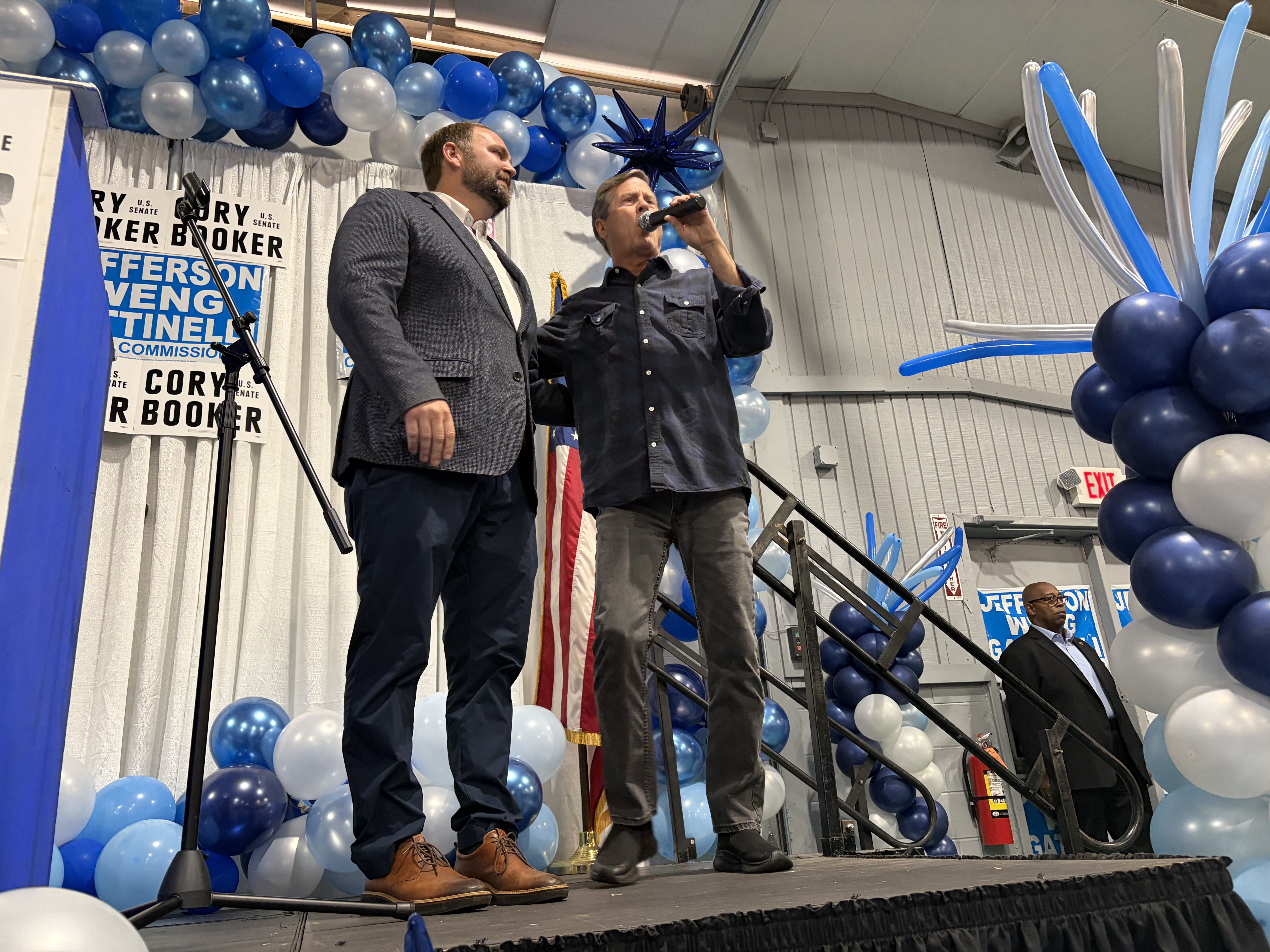
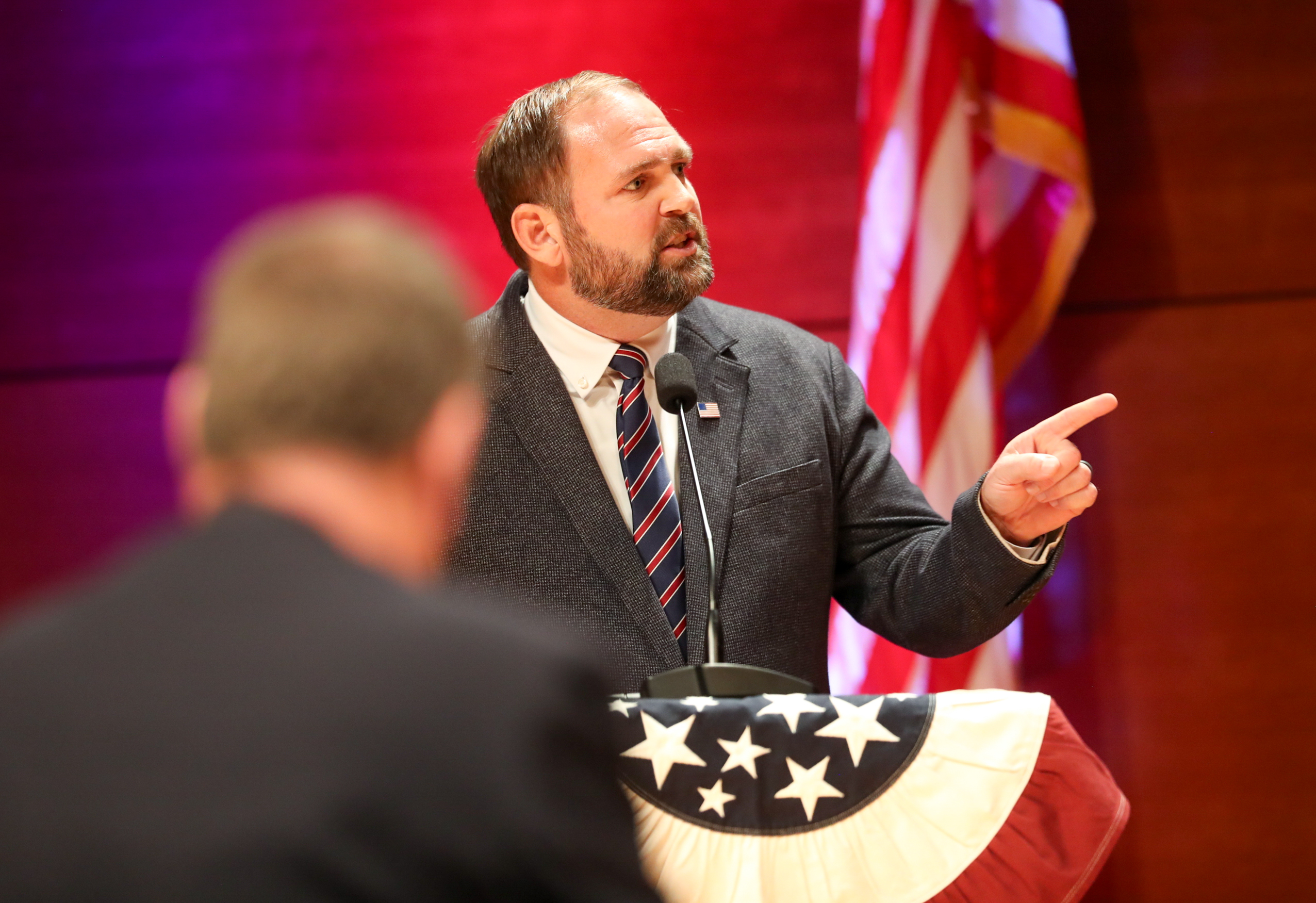
U.S. Rep. Donald Norcross (D., N.J.) compared his South Jersey Republican colleague U.S. Rep. Jeff Van Drew to Adolf Hitler while mocking him during a Saturday get-out-the-vote rally in Gloucester County.
After being reached by The Inquirer, Norcross apologized to Van Drew and said he went “too far” earlier that day.
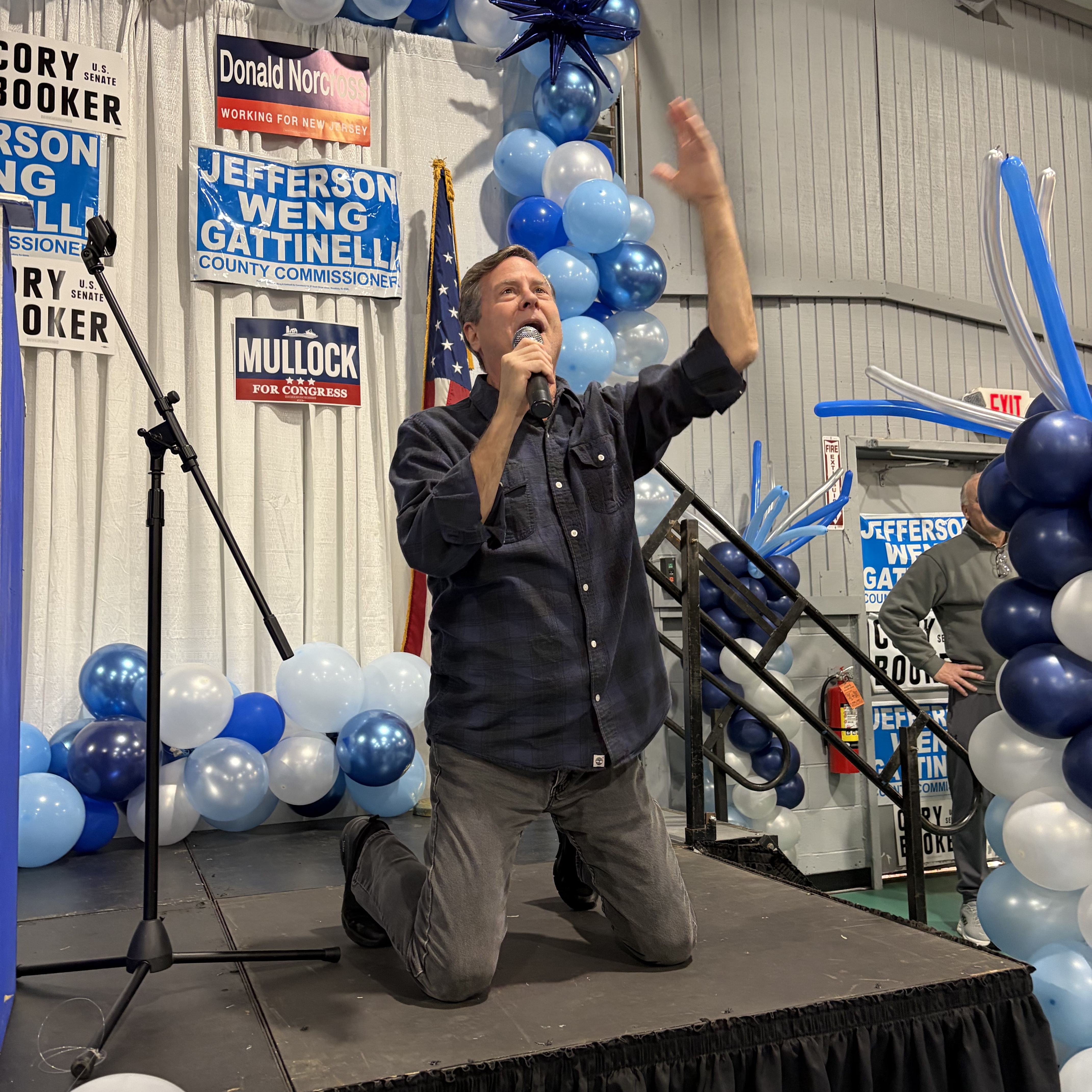
“Donald, my undying, I pledge to you!” Norcross cried out after getting down on his knees in front of a crowd of roughly 200 Democratic supporters at the Deptford Eventure Center in Westville, referencing Van Drew’s support for President Donald Trump.
Snapping out of character, he said: “Jesus Christ! Oh my God! You remember thatbulls—? A guy from Jersey on his knee? That’s disgusting.”
Norcross — whose district includes all of Camden County, much of Gloucester County, and parts of Burlington County — is facing a long shot challenge from Republican Damon Galdo, a West Deptford podcaster who works in construction. But he focused his attention Saturday more on Van Drew, who represents a sprawling neighboring South Jersey district that spans from parts of Gloucester County down to Cape May.
U.S. Rep. Donald Norcross got on his knees to mock U.S. Rep. Jeff Van Drew’s support for President Donald Trump at a Gloucester County rally on Saturday.Aliya Schneider / Staff
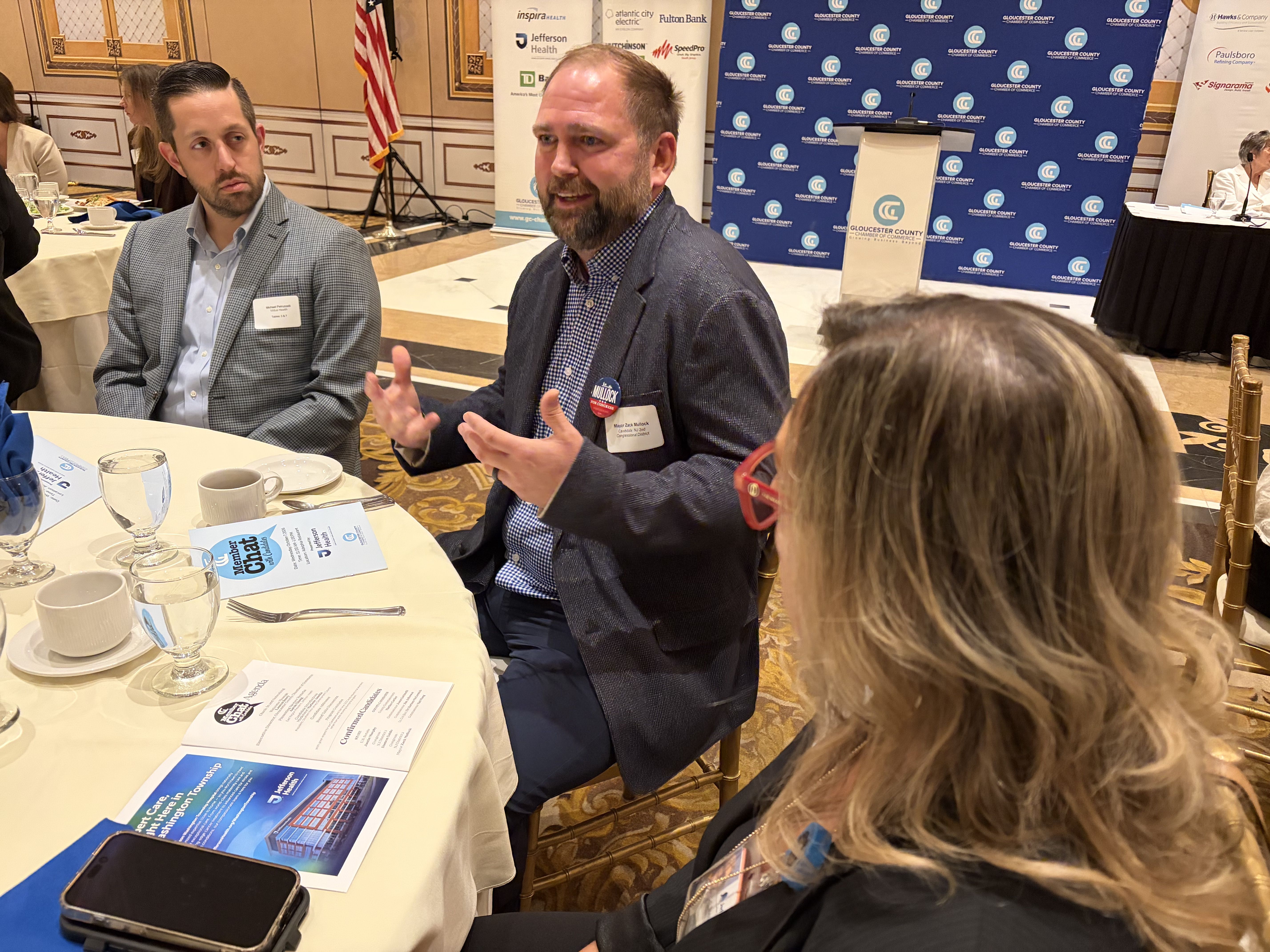
Norcross was joined by fellow Democrats U.S. Sen. Cory Booker and Cape May Mayor Zack Mullock, who is challenging Van Drew, for a rally to energize supporters 10 days ahead of the midterms.
Mullock did not comment on Norcross’ speech Saturday.
Three Gloucester County Democratic commissioners who are running for reelection — Jim Jefferson, Joann Gattinelli, and Matthew Weng — and U.S. Sen. Angela Alsobrooks, a Democrat representing Maryland, also made appearances.
Democrats are particularly sour on Van Drew, who served in local and state positions for years and was elected to Congress as a Democrat in 2018 before switching to the Republican Party and vowing his “undying support” to Trump a year later. Van Drew has warded off challengers ever since, but the race has attracted increasing national attention in recent weeks as Democrats anticipate a blue wave.
Norcross said onstage he knew Van Drew leaned conservative even before they got to Congress.
“He called himself a Democrat,” Norcross said. He bemoaned Van Drew’s opposition to raising the state’s minimum wage while they served in the state legislature together.
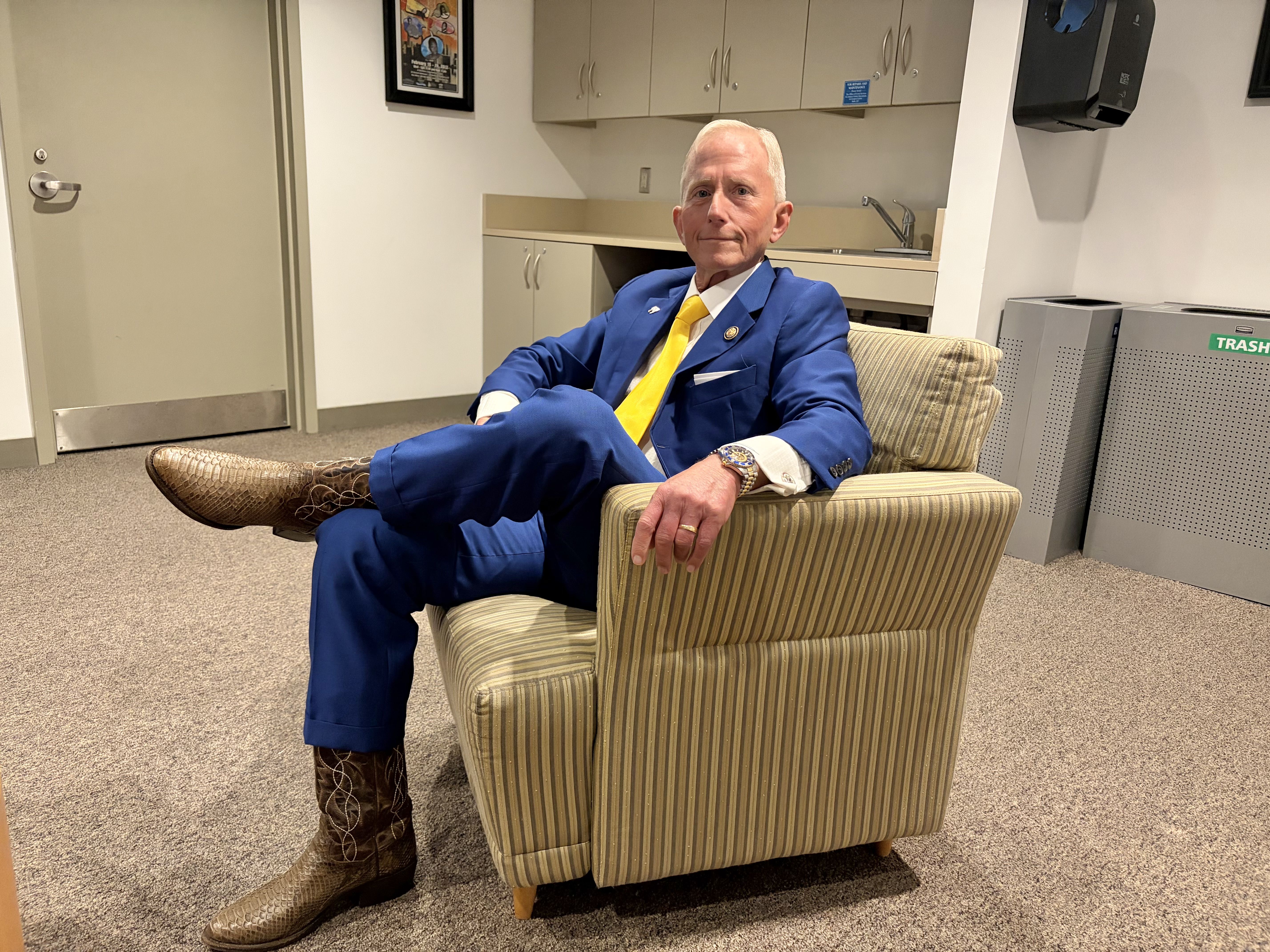
Norcross also made fun of Van Drew’s shoes, saying “now he wears them pointy boots that you can’t kill cockroaches on ‘em. Ah, the guy’s losing!” before commenting on his hair. Norcross also referred to a white handkerchief that Van Drew used to wear in his jacket pockets, which was folded to show a series of peaks.
U.S. Rep. Jeff Van Drew sits backstage after his debate with his Democratic challenger Cape May Mayor Zack Mullock at Stockton University on Thursday.Aliya Schneider / Staff
“That haircut: If it was darker, that’s Hitler’s haircut. That tells you who he really is. And those things he used to wear in his pocket, those three things. … The Klan hats he used to wear there, remember that? This is the real Jeff Van Drew.”
Norcross called Van Drew to apologize after The Inquirer asked about the remarks.
“Whatever implications there were from my comments, I did not mean them that way. I went too far,” Norcross said through a spokesperson.
After Norcross apologized to him, Van Drew said on the phone that he was “profoundly disappointed” by his colleague’s remarks, which he called “rough and inappropriate for a congressman.”
“I think he agrees,” Van Drew added. “I think he knows it now. I guess he got caught up in the moment.”
Van Drew said he accepted Norcross’ apology, he’s glad he called, and that it’s time to move on.
“Hopefully he has learned a lesson from it,” the Republican added.
When asked for comment on Norcross’ remarks before the apology, Van Drew’s spokesperson Ron Filan said the Republican lawmaker is praying for his Democratic colleague.
“When Congressman Norcross was in the hospital last year, Congressman Van Drew reached out to see how he was doing and prayed for him,” Filan said. “He will continue to pray for him especially considering what he has just said and done. That tells you everything you need to know about who Jeff Van Drew really is.”
At the rally, Norcross, all fired up, also used a swear word when talking about high gas prices amid Trump’s war in Iran, and was met with cheers.
“I’m not going to say anything today that we didn’t say with that one second to go in the Eagles game. … So forgive me, I’m an electrician,” he joked onstage.
Steve Sweeney, the former longtime state senator who now works as the Gloucester County administrator and chairs the county’s Democratic committee, also referenced Van Drew’s decision to support Trump with a graphic metaphor at the rally.
“You saw when Jeff got down on his knee and kissed Donald Trump’s ass in front of the whole world. We’re gonna get rid of him real soon,” Sweeney said, which he later said he stood by “1,000%.”
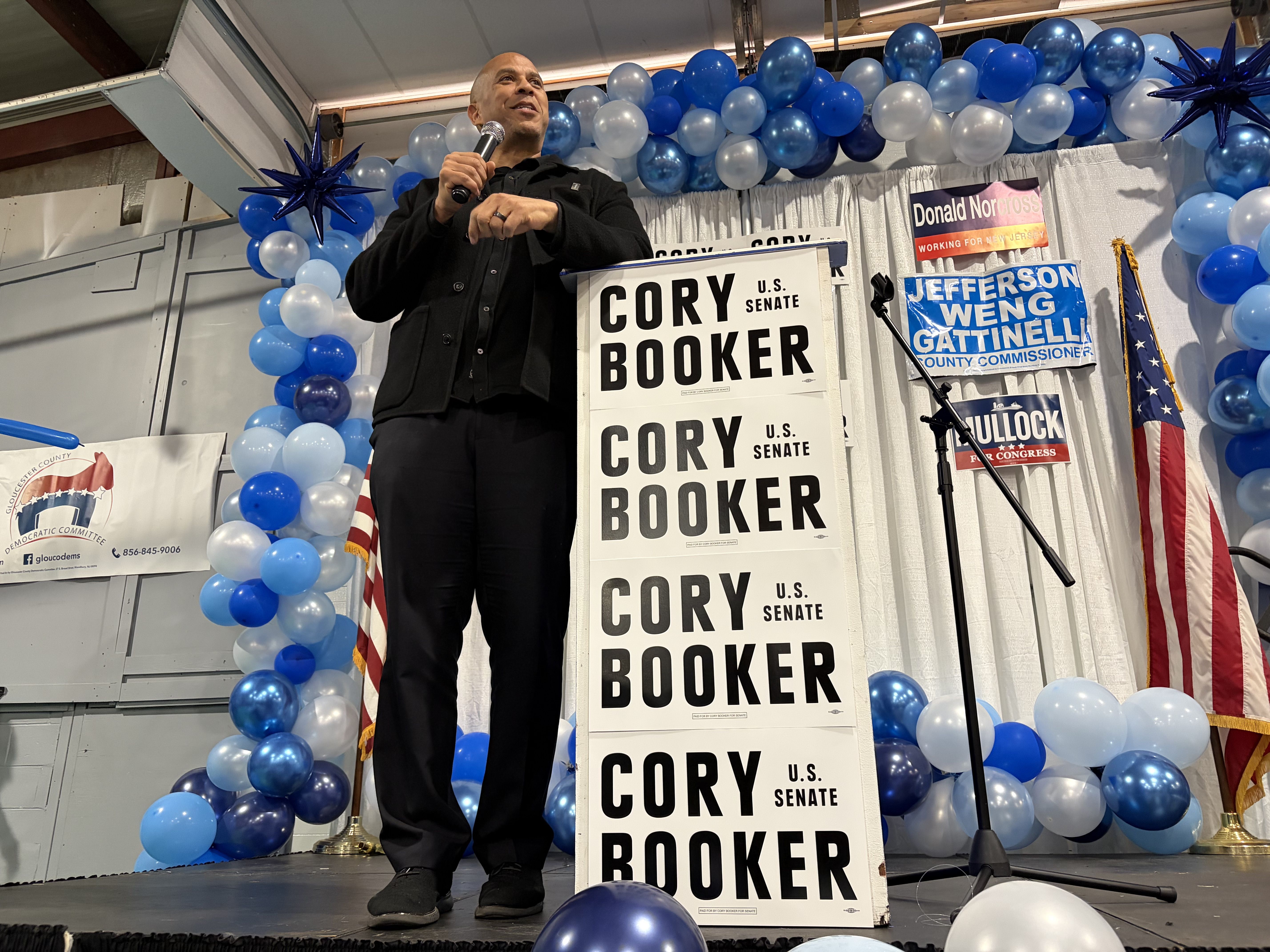
Sen. Cory Booker at a campaign rally hosted by the Gloucester County Democratic Committee on Saturday.Aliya Schneider / Staff
Sweeney, a longtime friend of Norcross, said before Norcross’ apology that he is “not going to criticize Donald for his opinion” when asked if the lawmaker’s comparisons went too far. He expressed that he also isn’t a fan of Van Drew’s hairstyle — or policies.
At the rally, Norcross introduced Mullock as the “Jeff Van Drew slayer.” The Jersey Shore mayor’s voice was strained, completely shot from his many speeches on the campaign trail — and likely his tense debate with Van Drew two days earlier.
Mullock criticized Van Drew’s vote for the One Big Beautiful Bill Act, which made cuts to federal healthcare programs, and noted, “I know I sound like I’m a person who really needs some good healthcare right now.”
Booker joked that Mullock “may have a weak voice” but “has a strong heart.”
“When we elect him to the House of Representatives, you can turn off the TV, because you know we will have taken back the House,” the senator said. “You can turn off the TV because you know that that is going to shock the nation. That even the president of the United States will get the message. And any of the remaining Republicans in Congress, we’re going to say, ‘I’m not going to hitch my wagon to that guy.’ We have so much power in this county.”
If the polls are accurate, Gov. Josh Shapiro, who was twice elected Pennsylvania’s attorney general, should cruise to his fourth statewide election on Nov. 3.
In these divided political times, in one of the most evenly split states in the country, that says a lot about Shapiro’s ability to appeal to a broad swath of voters across the commonwealth.
While the two political extremes on the right and left generate the most noise, Shapiro sits in the moderate middle. That rankles many on the far left and the right, but it is smart politics in Pennsylvania.
While Shapiro is pragmatic, he is also tough and empathetic. He takes public service seriously but is also a regular guy from Abington who is passionate about Philly sports. He is welcome in boardrooms, Black churches, and even red counties.
Shapiro surrounds himself with competent people and prides himself on getting stuff done. His administration has been largely free of drama and major scandals — a stark difference from the chaos, corruption, and incompetence coming from the Trump administration.
As state attorney general and governor, Shapiro repeatedly stood up to Donald Trump. He went 43-0 defending flimsy lawsuits Trump filed to overturn the results of the 2020 presidential election. Shapiro also brought some accountability to opioid companies, racist mortgage lenders, and decades of sexual abuse within the Roman Catholic Church.
As governor, Shapiro has sued the Trump administration two dozen times, opposing efforts to slash federal funding for Pennsylvania and roll back environmental regulations. Shapiro — and Al Schmidt, the Republican he appointed to run state elections — are ready to defend against Trump’s efforts to subvert the 2026 election.
As democracy teeters, Shapiro’s legal bulwark against Trump is reason enough to keep him in the governor’s mansion. But his commonsense policies, willingness to stand up for what is right, and ability to work across the aisle cements the case for why The Inquirer Editorial Board endorses Josh Shapiro for a second term as governor.
This was not a difficult decision, because his opponent, Stacy Garrity, the Republican state treasurer from Bradford County, has a slim record. Even worse, she supports Trump’s disastrous MAGA agenda as well as data centers and sleazy skill games — three big strikes.
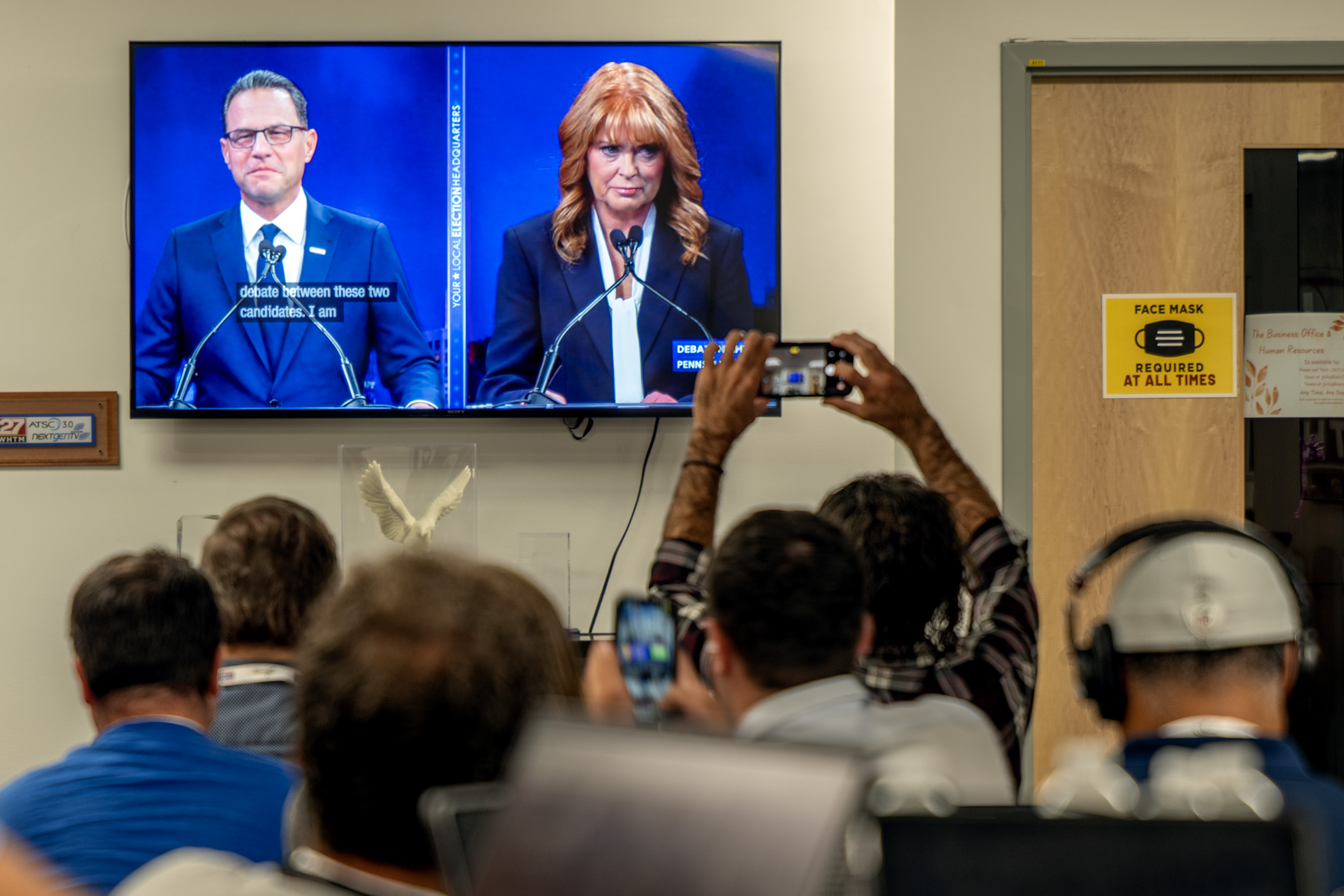
Gov. Josh Shapiro and Republican challenger Stacy Garrity at the WHTM-TV studios in Harrisburg, Oct. 7, during their lone debate ahead of next month’s gubernatorial election.Kaylee Lindenmuth / WHTM
Garrity’s main accomplishment as treasurer has been returning unclaimed property to Pennsylvanians and hundreds of unclaimed military decorations to veterans. That constitutes a practical, down-to-earth baseline for her role to be sure, but Garrity’s resumé lacks the kind of expansive, broad-based signature achievement to suggest that she would bring a truly transformational approach to governing. Her biggest donor is Robert Asher, a longtime GOP power broker from Montgomery County who was convicted of bribery in 1986.
Garrity’s best argument may be that she is not Doug Mastriano, the GOP’s 2022 gubernatorial nominee, who dressed up in Confederate garb and helped plan Trump’s Jan. 6, 2021, coup attempt.
The Editorial Board invited Garrity to advocate for her candidacy, but she did not respond to multiple requests to meet. Shapiro, on the other hand, has a compelling case to make, which explains his commanding lead in the polls.
Shapiro’s most high-profile accomplishment was rebuilding the stretch of I-95 that collapsed in Northeast Philadelphia after a tanker truck fire in 2023. The highway closure along the main artery connecting the Northeast trucking corridor was expected to take many months to fix.
But Shapiro mobilized federal, state, and local officials, used accelerated emergency contracting rules, and hired a Philadelphia-based construction firm that worked round the clock to reopen the highway in 12 days.
Under Shapiro, the commonwealth has lowered taxes for some, increased public safety, and pushed policies to make housing more affordable. Unlike Trump’s relentless efforts to restrict voting, the governor expanded voter registration by making it automatic for eligible voters when they renew or receive a driver’s license or ID at driver and photo license centers.
Gov. Josh Shapiro visits Vare-Washington Elementary School in July.
Shapiro has also increased funding for public education by hundreds of millions of dollars. Pennsylvania remains far below adequate funding levels, even after a state court found in 2023 that the state’s funding system was unconstitutional.
Shapiro’s efforts to close the education funding gap faced opposition from the Republican-controlled state Senate. The recalcitrant GOP has stymied other efforts to adequately fund mass transit, increase the minimum wage, and tax skill games at the same rate as slots.
But it is not due to a lack of effort by Shapiro. The divided legislature makes Harrisburg largely ungovernable. That is why Shapiro is working to help Democrats flip at least two seats to win control of the state Senate and maintain their thin majority in the state House.
The last time Democrats controlled all three chambers of government was in 1993. As a result of the chronic stalemate, a lot hasn’t happened in Harrisburg beyond keeping lobbyists employed and lawmakers in power. Just getting the budget passed is an annual ordeal.
If Shapiro’s coattails can power Democrats to control of the House and Senate, the first bill he plans to sign will be to increase the minimum wage to $15 an hour. Other major initiatives on Shapiro’s to-do list include increasing mass transit funding and codifying abortion and LGBTQ rights.
“I’ve got a lot more to do, which is why I’m running again,” Shapiro told the Editorial Board.
Of course, the governor is far from perfect. He was for data centers before he was against them. (But he listened to voters and adjusted.) He supports legalizing and taxing skill games — which are more predatory than slot machines — rather than banning them as Kentucky did.
Gov. Josh Shapiro announces a $20 billion investment by Amazon in Pennsylvania data centers in Salem Township and Falls Township.
Shapiro has been largely mum on efforts to reform or better yet repeal Act 12, which has allowed for-profit companies to buy public water and sewer utilities, and jack up rates for residents. (He did force Peco to withdraw a double-digit rate-hike request.)
Shapiro helped attract thousands of new jobs to Pennsylvania, often dangling financial incentives like the ones used to lure the Burlington Stores headquarters and a Chobani facility to Philadelphia. Another pricey deal that included more than $600 million in state and federal money combined is expected to add 6,000 jobs at the Philadelphia Port. (Attracting jobs is nice, though there is an argument to be made as to whether the state should use tax dollars to pick winners.)
It is widely assumed Shapiro will run for president in 2028. That campaign will begin early next year, raising concern if Shapiro enters the race that he may be distracted from his day job while campaigning in South Carolina, Iowa, New Hampshire, and beyond.
Since the road to the White House leads through Pennsylvania, Shapiro may be uniquely positioned to clean up Trump’s mess. But a White House win means Shapiro would not complete his gubernatorial term. Though two years of Shapiro is certainly better than four of Garrity.
When asked about running for president, Shapiro told the Editorial Board, “The only thing I’m running for is governor.” (Check back in a few months and see how well that quote ages.)
During recent campaign events with students at the University of Pennsylvania and at an event at a Black church in Abington, Shapiro looked beyond his own reelection and painted a picture of what could happen if Democrats take control of the state Senate and the House in Washington.
“You have the power to make a difference,” Shapiro told the Penn students.
At Salem Baptist Church, Shapiro told the crowd of mostly Black women their votes could give hourly workers a raise, increase funding for mass transit, and protect reproductive rights.
Shapiro’s reelection could bring positive change across Pennsylvania — and maybe propel the governor to new heights.
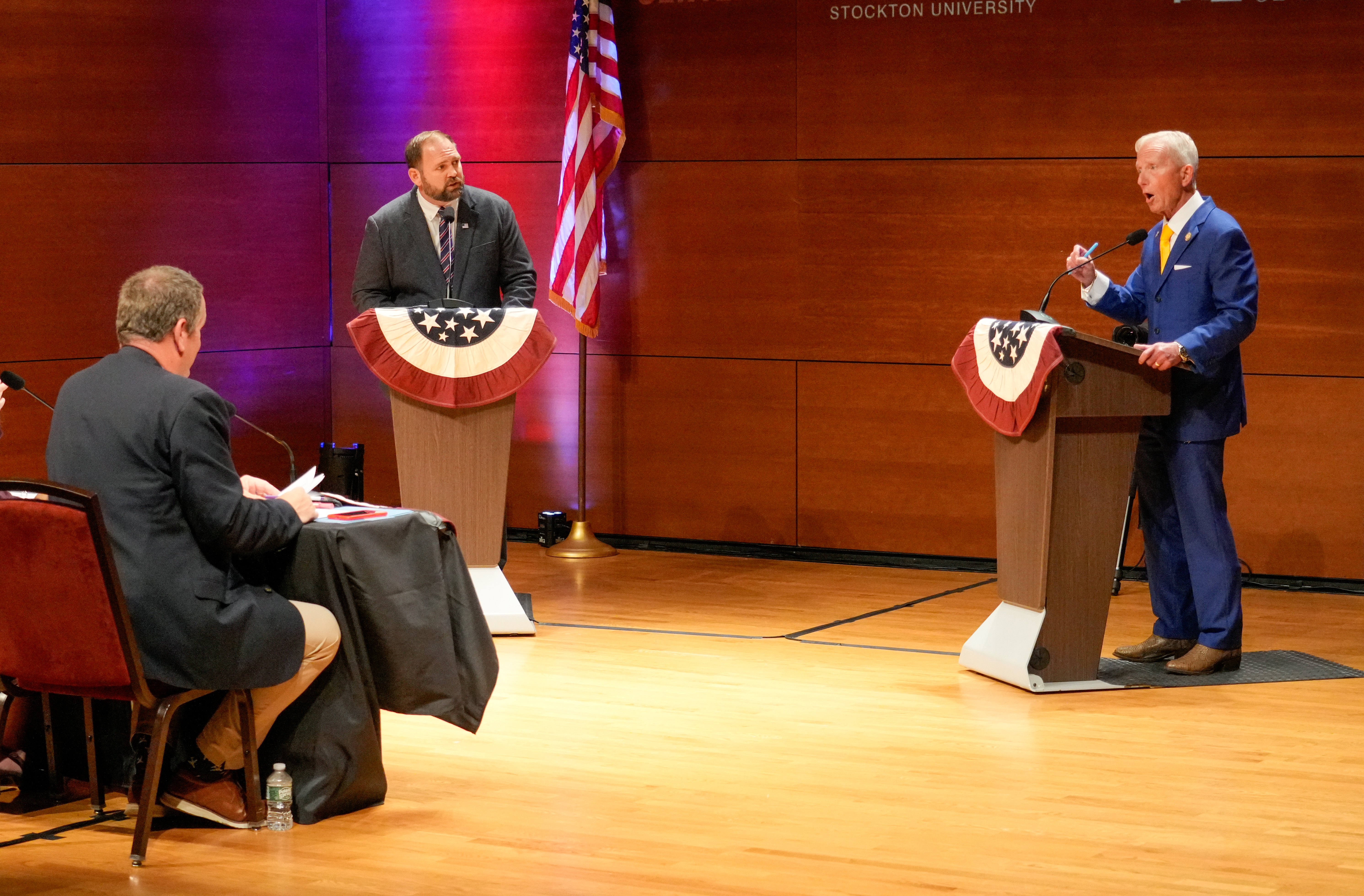
U.S. Rep. Jeff Van Drew and Democratic challenger Zack Mullock fought over a slew of local and national issues impacting South Jerseyans in a tense debate Thursday night as their once sleepy race sees increasing national attention and spending in the final days before the midterm.
Despite a ramped-up focus on the race, the two candidates squared off in a mostly empty theater at Stockton University with the debate only open to journalists andthe sound of cameras shuttering the only noise heard in the absence of an audience.Mullock,the mayor of Cape May, said he wanted a live audience, but Van Drew wouldn’t agree.
In an interview with The Inquirer after the debate, the incumbent Republican said it was a safety concern — the same reason he doesn’t hold open in-person town halls, which Mullock criticized.
Throughout the debate, Mullock interrupted Van Drew and accused him of tellingfalsehoods. Van Drew, meanwhile, derided his challenger as “Mr. Pinocchio.”
The sprawling 2nd Congressional District stretches from Gloucester County to the Jersey Shore. National Democrats added the district to a growing list of target races earlier this month, but it’s less likely to flip than some other seats in New Jersey and Pennsylvania.
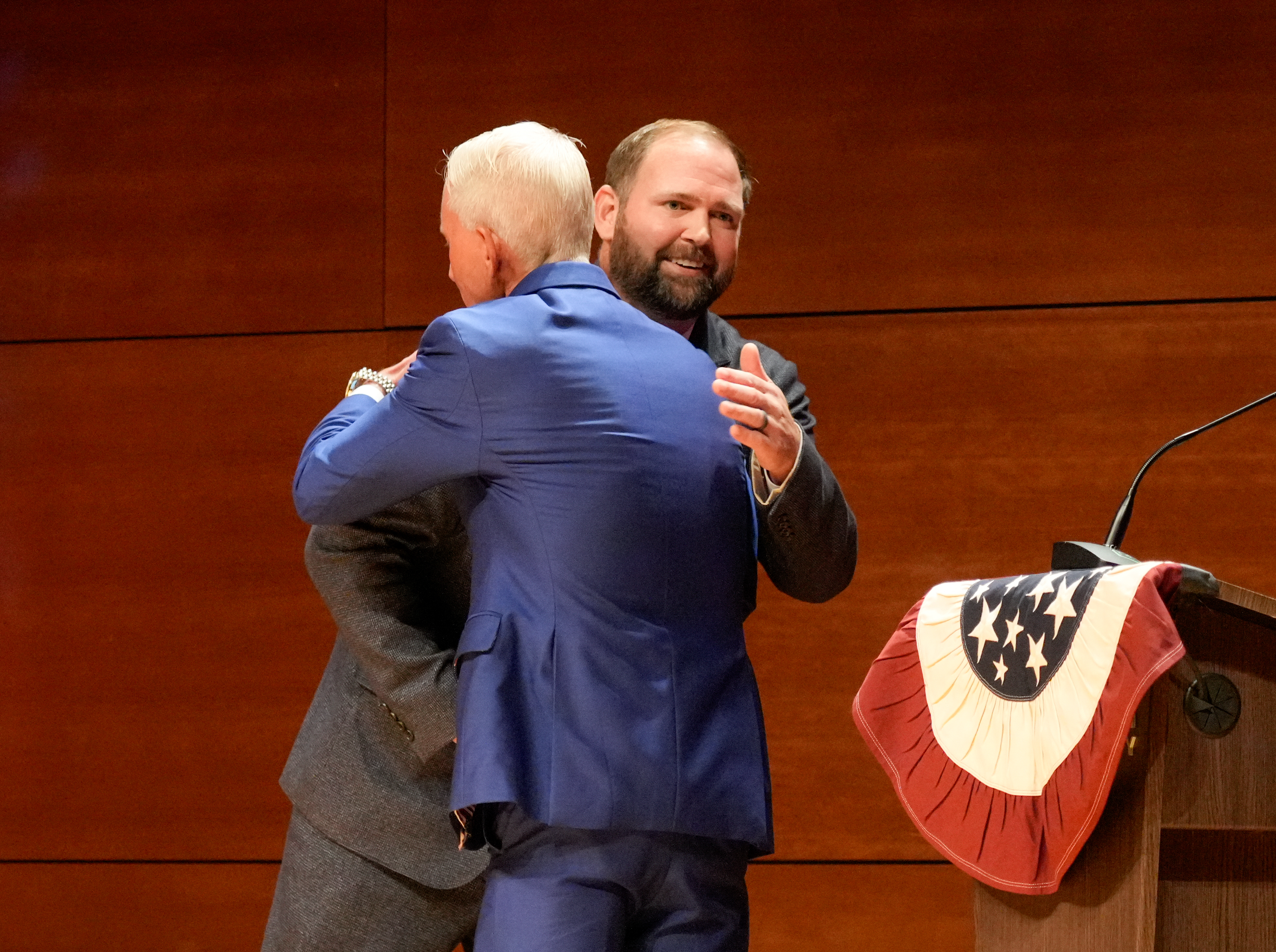
U.S. Rep. Jeff Van Drew, right, and Democrat Zack Mullock exchanger a quick hug after a tense debate in the Campus Center Theatre at Stockton University, Thursday, Oct. 22, 2026.Tim Hawk / For The Inquirer
Here are the highlights from the debate:
Where Van Drew disagrees with Trump, and Mullock disagrees with Democrats
Van Drew, 73, won the seat in 2018 as a Democrat before switching parties to become a Republican a year later and vowing his “undying support” to Trump.
Mullock, 41, said Thursday that Van Drew “looks up to the president like a child” and follows his “daddy Trump.”
When asked what issues he disagrees with his party on, Van Drew said he believed Republicans should have extended Obamacare subsidies — though he opposed a Democratic-led effort to extend the subsidies for three years.
As for Trump, Van Drew said he opposed the president’s past desire for offshore oil leases in New Jersey and his resistance to releasing the Epstein files.
Mullock pointed out that Van Drew was not among the Republicans who tried to force a floor vote on the files.
“He knew that some girls as young as 14 had been sexually assaulted, and he refused to sign the discharge petition. … When the victims needed him, he didn’t vote for it,” Mullock said.
Van Drew said he didn’t want to send the bill to the floor without going through the committee process and that he was a sponsor of a bill calling for the files’ release before Trump expressed his approval upon realizing he lacked support within his own party to keep the files under wraps.
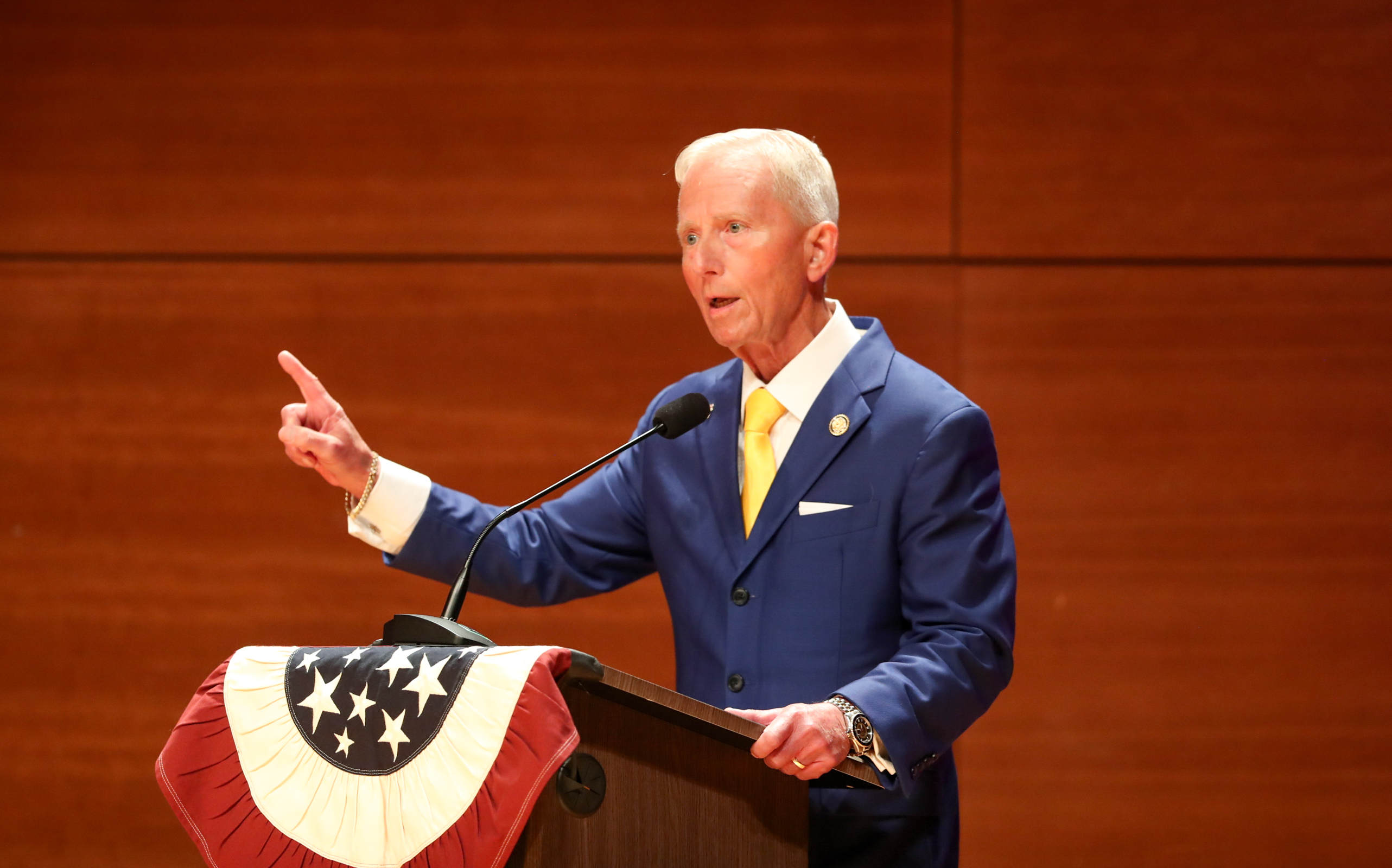
U.S. Rep. Jeff Van Drew answers a question during a debate with Cape May Mayor Zack Mullock, in the Campus Center Theatre at Stockton University, Thursday, Oct. 22, 2026.Tim Hawk / For The Inquirer
Mullock said he has plenty of experience working across the aisle in his nonpartisan local government and said he’s hired Republican city managers. He also said he thought Democrats “did a bad job on the border.”
At another point in the debate, Mullock said farms and restaurants in the district rely on immigrants who haven’t broken the law and deserve a path to citizenship. He said he supports having “a strong border” and getting “rid of violent criminals” but that ICE sweeps under Trump are “terrorizing communities and scaring school children.”
Van Drew criticized Democratic policies in the state that limit local law enforcement’s cooperation with ICE as well as a legal-defense fund for undocumented immigrants.
He also called Mullock a “democratic socialist.” When asked about the label after the debate, Van Drew said Mullock supported the 2016 presidential campaign of Sen. Bernie Sanders of Vermont, who has long used the label.
The Cape May mayor, who donated $3 to Sanders’ 2016 presidential run, said he supported some of Sanders’ economic policies but does not identify with that term.
War in Iran
Mullock accused Van Drew of voting for the war in Iran six times, in reference to House resolutions seeking to restrict Trump’s power to continue the war without congressional approval. Trump launched the war in coordination with Israel in February and went past the deadline for approval in May.
Van Drew disputed Mullock’s characterization. “There was never a vote for the war in Iran,” Van Drew said.
“I did vote not to end hostilities absolutely immediately because it would have endangered our troops,” he added.
Democrat Zack Mullock points to U.S. Rep. Jeff Van Drew during a debate in the Campus Center Theatre at Stockton University, Thursday, Oct. 22, 2026.Tim Hawk / For The Inquirer
Mullock called it a “war of stupidity” and questioned what the war has done to help South Jerseyans, pointing to the high price of gas at the pump and diesel for farmerssince the war stressed the global oil supply chain.
“Ronald Reagan is rolling in his grave right now,” Mullock said, contending the Republican who oversaw the late stages of the Cold War would disapprove of Trump’s deal to purchase fuel from Russia to control costs.
“You had a chance to stop it, and you didn’t,” Mullock said to Van Drew.
After the debate, Van Drew said in an interview that he believes there will be an opportunity to leave Iran “soon.”
“I think this next Congress, regardless of whoever has control, is going to say, ‘OK, what’s the end game here?’” He said he supported Trump’s decision to start the war to go after nuclear enrichment and long-range ballistic missiles, but that it “does need to end” with a safe exit strategy.
Construction at the Data One data center in Vineland, N.J. in June. Tom Gralish / Staff Photographer
Data centers
Mullock said Van Drew’s campaign is “sponsored by data centers,” in reference to campaign donations from John Ruga, who leads a concrete company that helped develop the controversial Vinelanddata center. Ruga has said that Van Drew’s support for the project was “critical.”
Mullock also pointed to Van Drew’s vote for the One Big Beautiful Bill Act, which he said gave money to data centers while cutting Medicaid. According to Politifact, the law let companies with data centers write off equipment costs quicker than before.
“It is no coincidence that the poorest county in the state is being taken advantage of right now, and you’re letting it happen,” Mullock said in reference to the massive Cumberland County data center, which was recently hit with a $1 million fine from the state.
Van Drew said he’s known the concrete contractor, who has worked on various projects in the area, for years. He pointed to a bipartisan bill he supported last month that seeks to put guardrails on energy costs caused by data centers.
“I never met the data center people,” Van Drew said. “I don’t know who they are.”
He won’t flinch when you do. No jutted lip, no flicker of emotion. No fiddling with his wedding band or smart ring, one on each hand.
He’s been preparing for this kind of thing for decades.
Shapiro, 53, of Abington Township, has been rumored to have his sights set on the White House dating back to his time as a state representative, as a Montgomery County commissioner, as the state attorney general, and now as Pennsylvania’s governor. And while other 2028 Democratic presidential hopefuls are more outward with their ambitions, hosting fundraisers and making themselves known in early primary states, Shapiro — a disciplined and careful communicator — has led a calculated balancing act as he runs for reelection to the state’s top post, hoping to carry the rest of the Pennsylvania ballot with him.
Are you running for president in 2028?
“I’m going to give you the same answer that I’ve given everyone,” Shapiro told the moderators at a debate earlier this month against his Republican opponent, Stacy Garrity. “The only thing I am focused on is running for reelection as governor, and I’m focused on these midterms in trying to generate the kind of turnout and support the kind of candidates who will push back on the chaos, the cruelty, and the corruption of Donald Trump.”
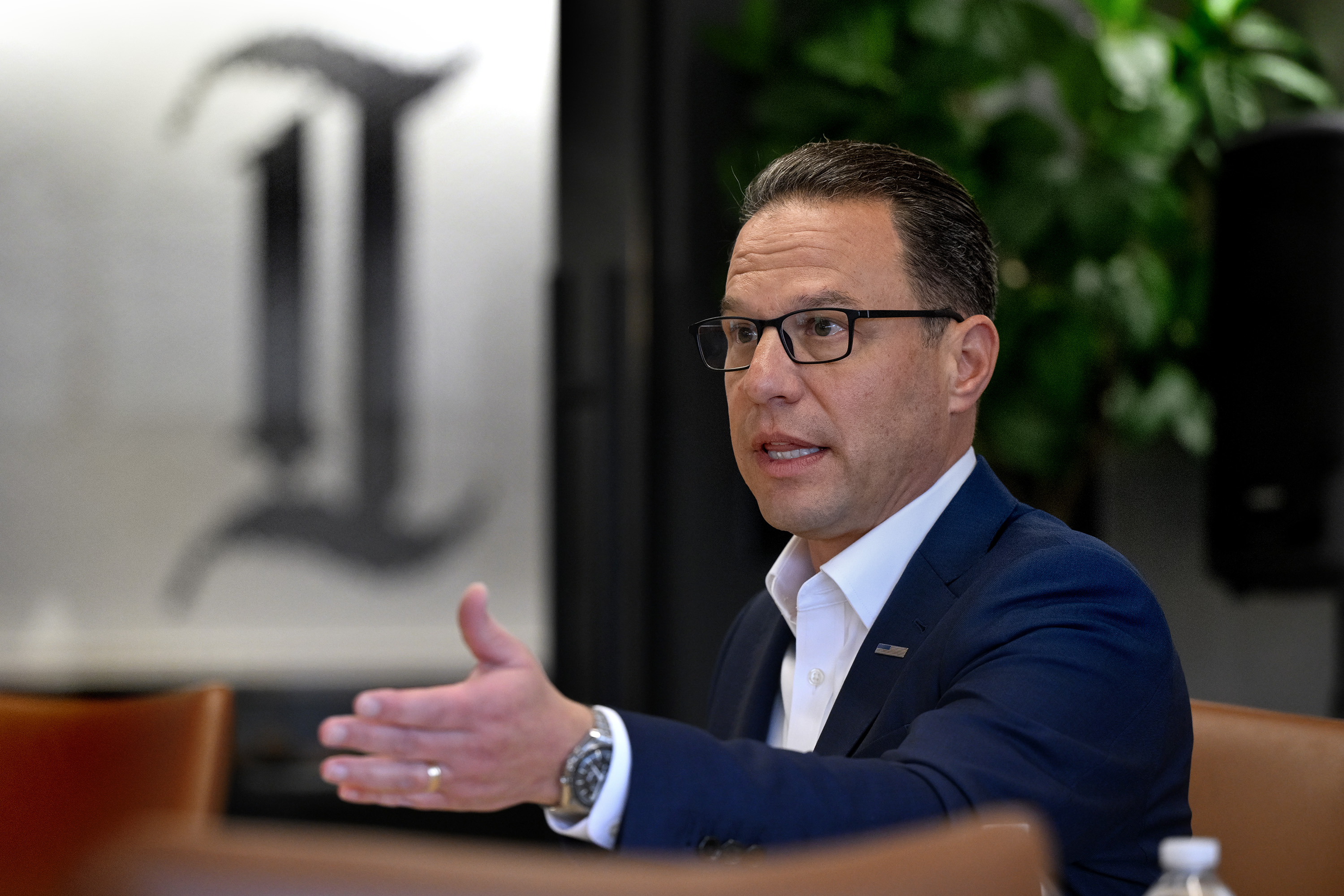
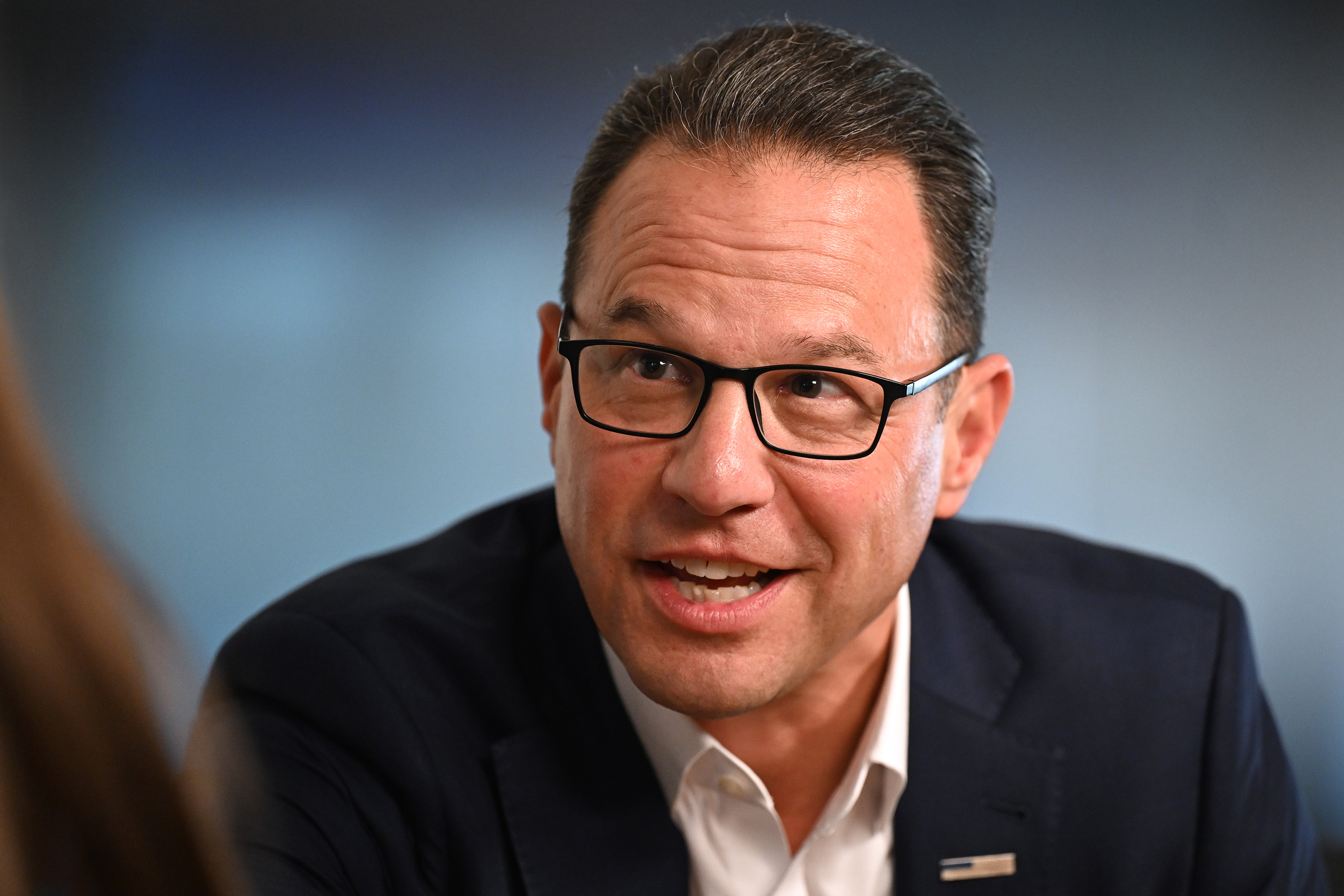
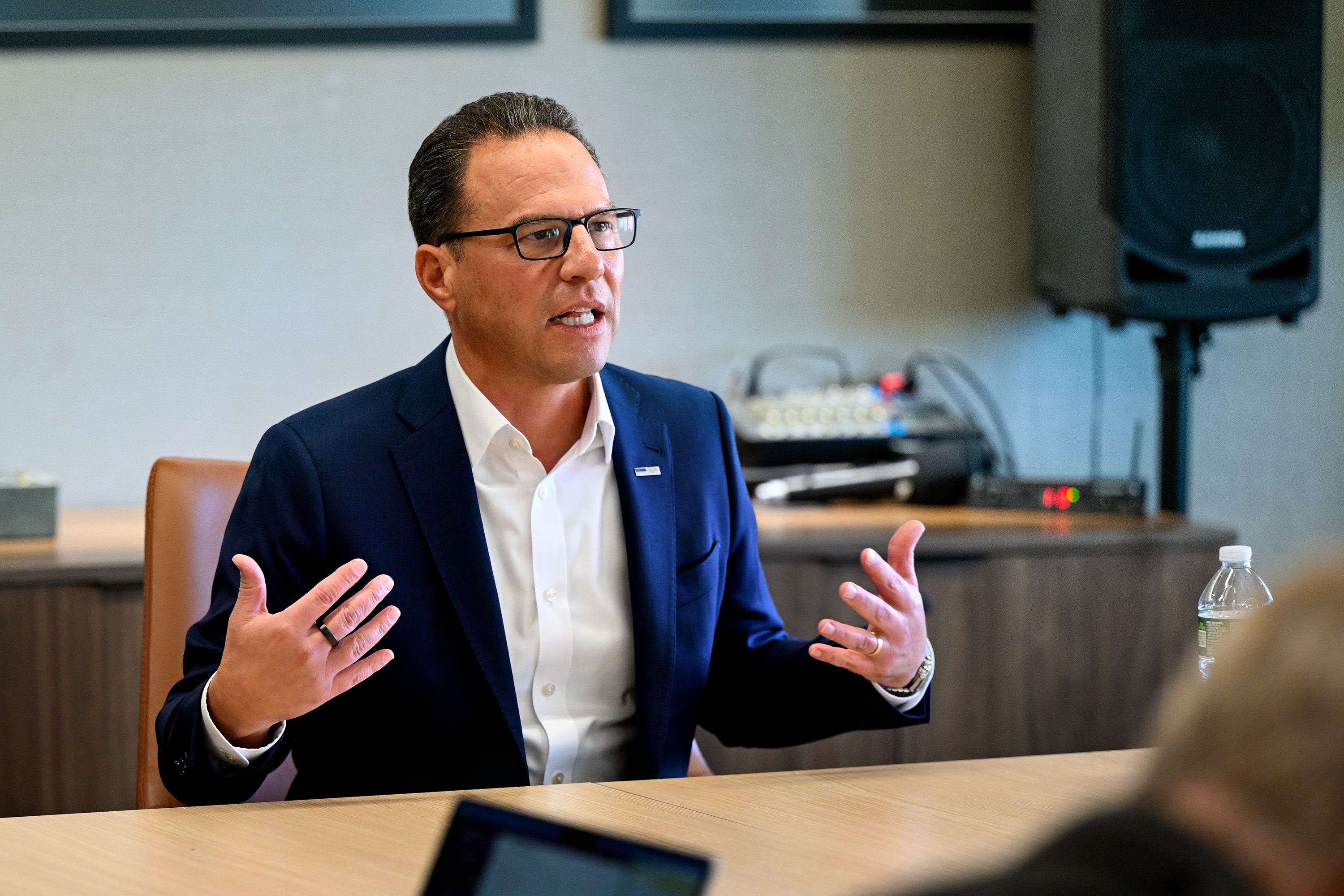
The first-term governor — wearing his daily uniform of a navy blue suit, bright white dress shirt with no tie, white tennis shoes, andblack-framed glasses — does the same again earlier this month in a set of interviews in The Inquirer’s newsroom across from Independence Hall; he smoothly sidesteps the question of whether he’ll promise to fulfill another four-year term if reelected.
Instead, he boasts his administration’s “get stuff done” motto, citing some of his proudest accomplishments as the leader of Pennsylvania, such as reopening I-95 in 12 days, speeding up the state’s process to get licenses or permits to do work, utility rate caps, and new pathways to careers in the trades. In the run-up to the Nov. 3 election, those triumphs have blanketed the state’s TVs, social media and mailboxes, as his campaign tops $42.3 million in ad buys, according to media tracker AdImpact.
Nearby, his campaign staffer sports a pin featuring the number 48. Shapiro is Pennsylvania’s 48th governor. If he runs in 2028, he’d be vying to become the nation’s 48th president.
Nowadays, there’s a noticeable shift in the Democrat who has long prided himself in his willingness to work across the aisle, but who has struggled as a dealmaker in the state’s split legislature as he goes all-in on flipping the Senate in hopes of more easily achieving his goals.
At the same time,he’s become more willing to directly challenge Trump in the state that helped boost the president to a second term just two years ago, as Trump’s approval ratings continue to decline — and national Democrats are looking for a strong leader to carry them into 2028.
“When he’s going to do something to hurt Pennsylvanians, I’m going to stand up to him, and when I stand up to him, I win every single time,” Shapiro said earlier this month.
The shift — and the sharper edge — may be strategic as Shapiro readies himself for a White House run, said Christopher Borick, a political-science professor and pollster at Lehigh University.
“He is more willing to express his animosity toward Republicans, toward Republican policies, and of course, the president,” Borick added. “He’s been more vocal than you may have thought he would be, given his brand.”
‘Straight down the middle’
When Shapiro sat down for an interview at The Inquirer’s offices earlier this month, he studied where he should sit before answering the question himself.
“How’s this, straight down the middle?” the moderate Democrat suggested with a grin, setting himself up at the center of the table.
Gov. Josh Shapiro at The Inquirer’s office on Monday, Oct. 12, 2026.Tom Gralish / Staff Photographer
Shapiro’s brand as a centrist has been tested over the last few years, as he governs one of the only states in the country with a politically split legislature. An early misstep in Shapiro’s first budget negotiations in 2023 over school vouchers tarnished his relationship with the state’s Senate Republicans, a wound that has never fully healed. Republicans accused Shapiro of reneging on their handshake deal to create a new school voucher program. At the time, Shapiro said the move was necessary to avoid a protracted budget impasse.
Still, for the past four years, Shapiro and top state negotiators have struggled to agree on a state budget before the constitutionallyrequired deadline, as Pennsylvania faces worsening fiscal conditions and spends more money than it collects in revenue.
He’s had some major wins, too. State lawmakers have approved $3 billion in funding increases and created a new funding system for public education, after a state appellate court ruled that Pennsylvania’s previous system was unconstitutional. He has celebrated increases to the state’s property tax and rent rebate programs for seniors, a new state tax credit for working families, and a pension bump for retired teachers, police officers, and firefighters. He boasts significant reductions in wait times for business licenses and environmental permits and continued cuts to the state’s corporate net income tax, as part of his cut-red-tape approach.
Shapiro has faced criticism throughout his tenure as governor from top Republican leaders, who say he lacks conviction on the issues he says he cares about and instead changes his stances to reflect what’s popular.
“He was for helping kids out of failing schools, then he was against it,” Senate President Pro Tempore Kim Ward (R., Westmoreland), the top Republican in the state Senate, said last month. “He was for data centers, then he was against them.”
On school choice, he said this month he still supports the creation of a new school voucher program if House Democrats and Senate Republicans can agree on it. And he has defended himself on his recent reversal on increasingly unpopular data center development, which became a political flashpoint that threatened Shapiro’s popularity. He has said his change in position was a direct response to constituent concerns.
Garrity’s campaign has capitalized on the perceived flip-flops, calling Shapiro in a statement a “career politician whose policy failures have left Pennsylvania families struggling.”
His first term as governor also saw the resignation of a longtime top aide, former Rep. Mike Vereb (R. Montgomery), who was accused of sexual harassment by another staffer in the governor’s office that resulted in the state paying the accuser a $295,000 settlement.
Shapiro, previously largely untested on the national stage, also came under scrutiny when he was being considered by Vice President Kamala Harris to be her running mate in 2024. She ultimately passed him over, and he later said he didn’t want the job. But the consideration significantly boosted Shapiro’s rising national profile, and he later retold the story in his memoir, Where We Keep the Light, released earlier this year.
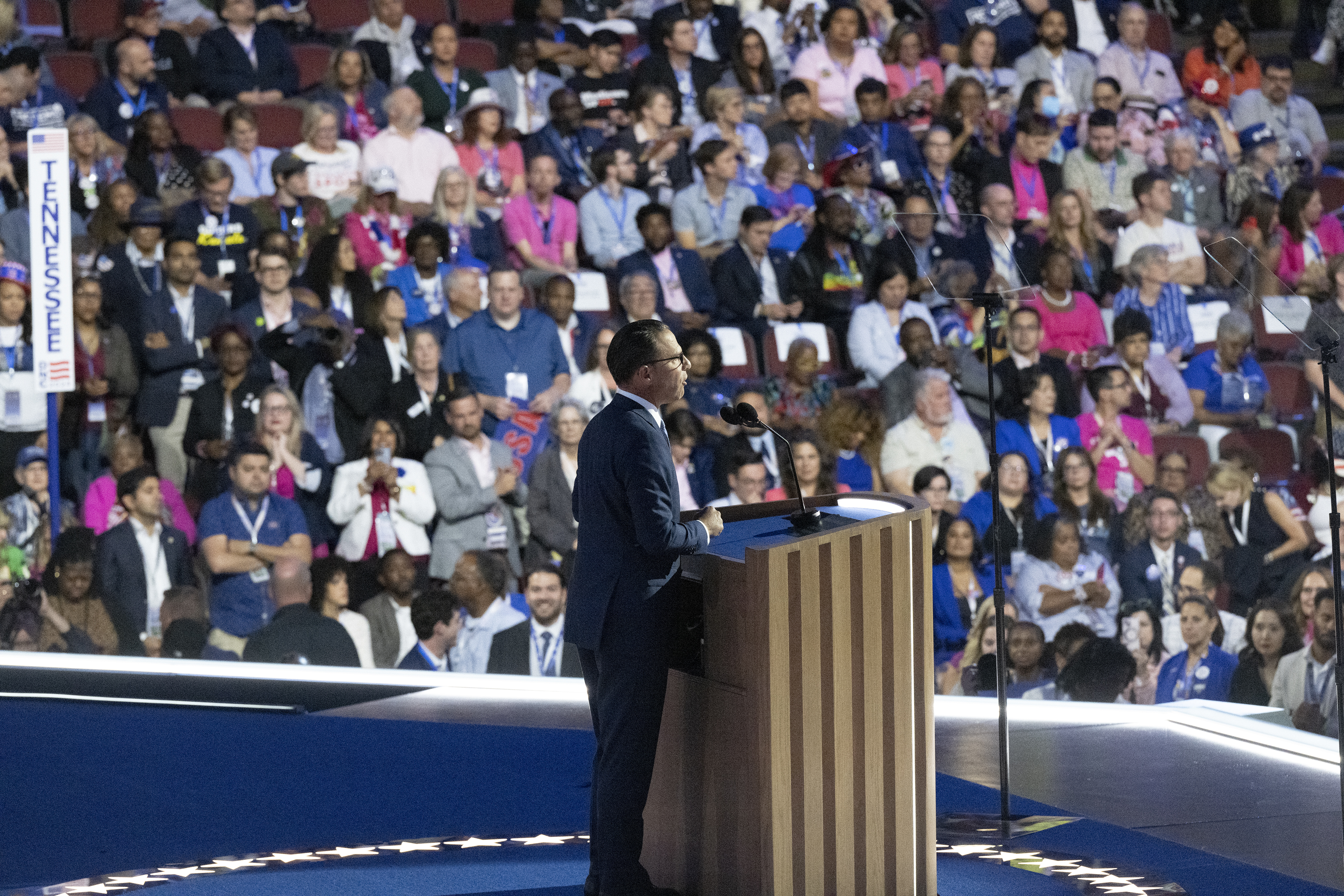
Pennsylvania Gov. Josh Shapiro speaks during the Democratic National Convention on Aug. 21, 2024, in Chicago.Jose F. Moreno / Staff Photographer
And most recently, he’s faced the state’s worst measles outbreak in more than three decades, which the state says has led to the deaths of six Pennsylvania residents. The surge in measles cases, which now tops 1,317 cases in Pennsylvania, led to a public clash with Health and Human Services Secretary Robert F. Kennedy Jr. As of Thursday, the Centers for Disease Control stillrefused to recognize three of the measles-related deaths as caused by the preventable disease.
“There’s a whole bunch we’ve been able to get done by bringing people together, and then there’s some things that I view as quite common-sense that I haven’t been able to convince the Senate to move on — raising the minimum wage to 15 bucks an hour, funding mass transit — even though it helps their communities,” Shapiro told The Inquirer’s Editorial Board this month. “I’m frustrated I haven’t been able to get that done, but again, that’s why I’m still working at this. That’s why I’m still going forward.”
(The Editorial Board, which runs The Inquirer’s opinion pages and decides endorsements, operates independently from the newsroom. Newsroom editors and reporters — including two reporters who attended the Editorial Board meeting as observers — have no role in endorsements, and opinion staffers have no role in news coverage.)
Monitor at the WHTM-TV studios in Harrisburg on Oct. 7, 2026, during the lone debate between Gov. Josh Shapiro and Republican challenger Stacy Garrity.Tom Gralish / Staff Photographer
Shapiro has maintained widespread popularity throughout his first term, including among some Trump supporters, recent polls of likely Pennsylvania voters show. Shapiro’s job approval topped 63% in a Quinnipiac University poll released Oct. 7, and he led Garrity in the poll by 25 points. A poll released Thursday by Franklin and Marshall College had similar findings, including a 22-point lead for Shapiro over Garrity.
“If you can be as popular as he is with divided government and the dysfunction in our Senate… that’s a pretty damn good comment on what he’s been able to accomplish,” said House Majority Leader Matt Bradford (D., Montgomery).
’A responsibility and pride’
These days, Shapiro can’t go to the store or take a walk with his wife, Lori, and their dogs, Bo and Bentley, without a state police detail present and careful coordination.
As Shapiro, one of the nation’s most prominent Jewish politicians, seeks reelection and eyes a presidential run, the impacts of his high-profile, public-facing office have weighed on him, he said. At least six people have been charged in the last nine months with making terroristic threats or ethnic intimidation in regard to the governor, he said.
“If I ever got to the point where I was afraid to go out, or afraid to do my job, or unwilling to do something because I was fearful, that would be the day I would hang it up,” he said. “I don’t feel that way. I feel a lot of purpose in my work, and I feel unafraid when I’m doing it.”
Shapiro said he believes many of the threats he’s received have stemmed from the open practice of his Jewish faith, and he wrote in his memoir that since Hamas’ Oct. 7, 2023, attack on Israel, he and his family “feel both a responsibility and pride demonstrating our faith and living it out loud.”
Pennsylvania Gov. Josh Shapiro stands with his family as he listens to remarks at the Philly Stands With Israel Rally outside a Jewish community center in Wynnewood on Oct. 9, 2023.Steven M. Falk / Staff Photographer
For Shapiro, Israel is“a place that’s meant a lot to me and my family,” he said. It’s where he proposed to his wife, and is a country he said he loves — which has been complicated by Prime Minister Benjamin Netanyahu’s actions during the war in Gaza that he sees as weakening Israel’s position globally. He supports a two-state solution, with Palestinians having a state and living side-by-side with Israel, and said he hopes Israeli voters will select a new leader in its Oct. 27 election.
“Unfortunately, we’re in a time where there are people who are calling into question whether the very country has the right to exist,” he said.
None of these positions, Shapiro points out, have much to do with his role as governor.
But they could be key in the 2028 Democratic primary as debate over the United States’ relationship with Israel continues to fracture the party. According to a September Inquirer/Times/Siena poll of likely Pennsylvania voters, 63% of Democrats said they would support a candidate who opposed aid to Israel.
“Josh is very religious and proud of it, and he has learned about the religion, and it made him a better person,” said former Gov. Ed Rendell, Pennsylvania’s second Jewish governor. But, Rendell raised: “Does it make it harder for him to go further in politics?”
“It’s a tough time for Josh if he’s thinking about launching a national campaign,” Rendell, a Democrat who also served as Philadelphia mayor, said, but “one thing Josh has convinced me of is that anything he wants to do, he’s going to have a good chance of succeeding at.”
Growing impatient
When Trump returned to office in 2025, Shapiro vowed to work alongside the president — as long as it didn’t compromise Pennsylvanians. He joined lawsuits on Pennsylvania’s behalf as Trump threatened to slash federal funding.
His tone has since changed. As Trump’s approval numbers continue to decline, Shapiro has begun to moredirectly instigate Trump, often repeating that Trump has caused “chaos, cruelty, and corruption” in Washington.
He has also put his reputation on the line to flip the U.S. House, endorsing, campaigning and fundraising for four Democratic challengers in competitive congressional districts across Pennsylvania in hopestheywin and take control of the chamber.
In Harrisburg, he has poured more than $10 million in total into the state Democratic Party and the House and Senate Democrats’ campaign arms, his campaign said Thursday.
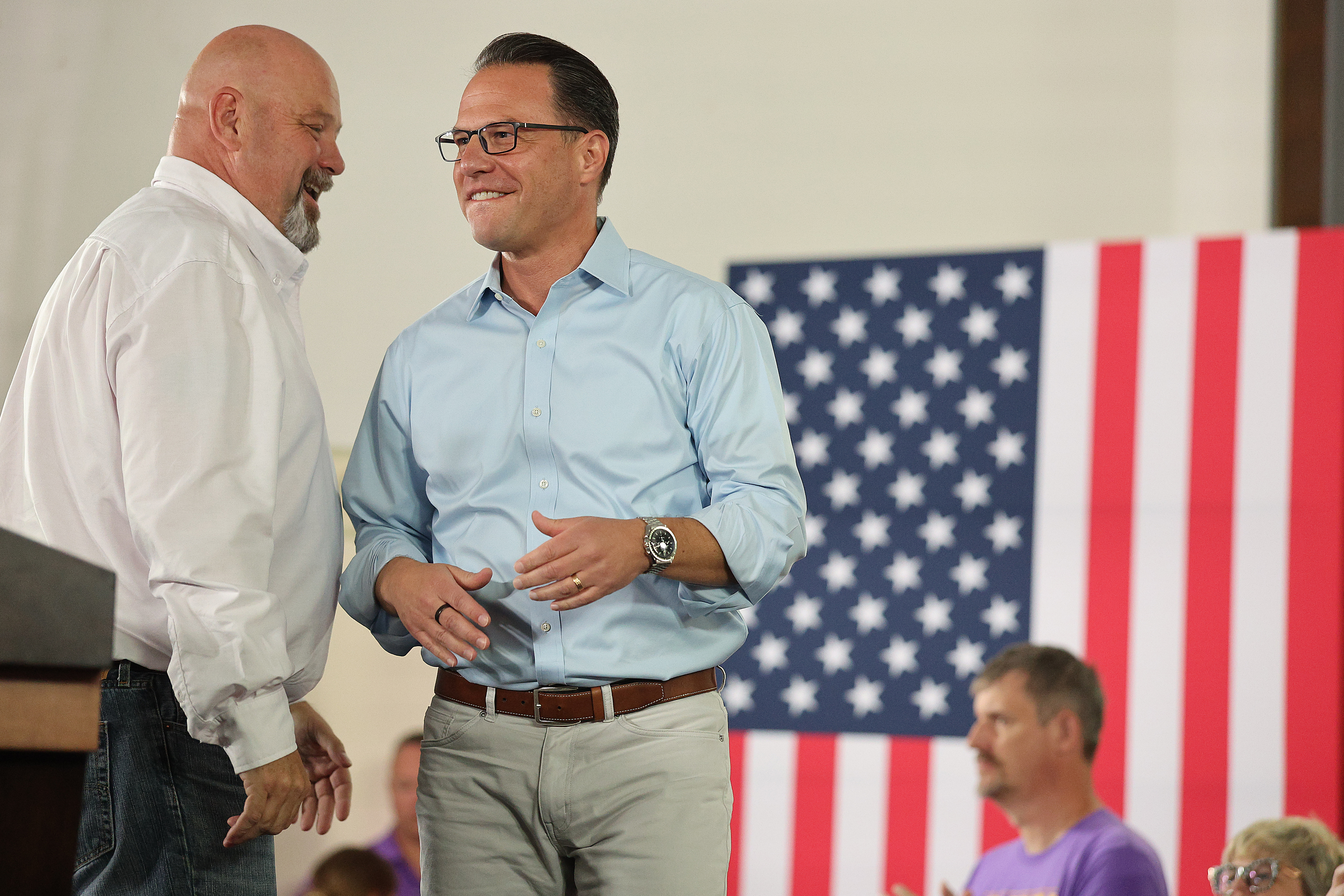
Bob Brooks (left), who is running for Pennsylvania’s 7th Congressional District, and Pa. Gov. Josh Shapiro (right) exchange greetings on the stage during a July 26 rally at the United Steelworkers Union Hall in Bethlehem, Pa.David Maialetti / Staff Photographer
And after he struggled to break through gridlock with Senate Republicans, he went all in on winning full Democratic control in Harrisburg for the first time since 1993.
That move is an example of Shapiro as a pragmatic leader, said Bradford, who has known Shapiro for decades. He wanted to find common ground with Republicans, Bradford said, but when he couldn’t, he found a new solution: winning a trifecta.
“His ideology is competence,” Bradford said. “He’s not an ideologue, and I say that as a proud progressive. … It’s also a recognition that at times he is stymied by a Senate that is incapable of governing.”
Shapiro has been strengthening his grip on the state’s Democratic Party, too, since the fallout of the 2024 election, when Democrats failed to deliver Pennsylvania for Harris. He installed a former top aide as the party’s executive director. The state party has since turned around its declining voter registration numbers.
Still, Shapiro said finding common ground is the most necessary strategy to being a good elected official.
“The people make their choice, and if you’re privileged like I am to be elected, then you’ve got a responsibility when you’re in the room to govern,” he added.
‘Campaign 101′
A lot is on the line this November for Shapiro. If he successfully helps flip control of the U.S. House and gains a trifecta in Harrisburg for the first time in decades, he will have “a great resumé in America’s premier swing state,” Borick said, giving him a leg up among other 2028 contenders.
“That’s a great result that you can bring out on the campaign trail if you so choose to run in 2028,” Borick added.
But if he doesn’t meet expectations, “there may be some questions” about his viability for a presidential run, Borick said.
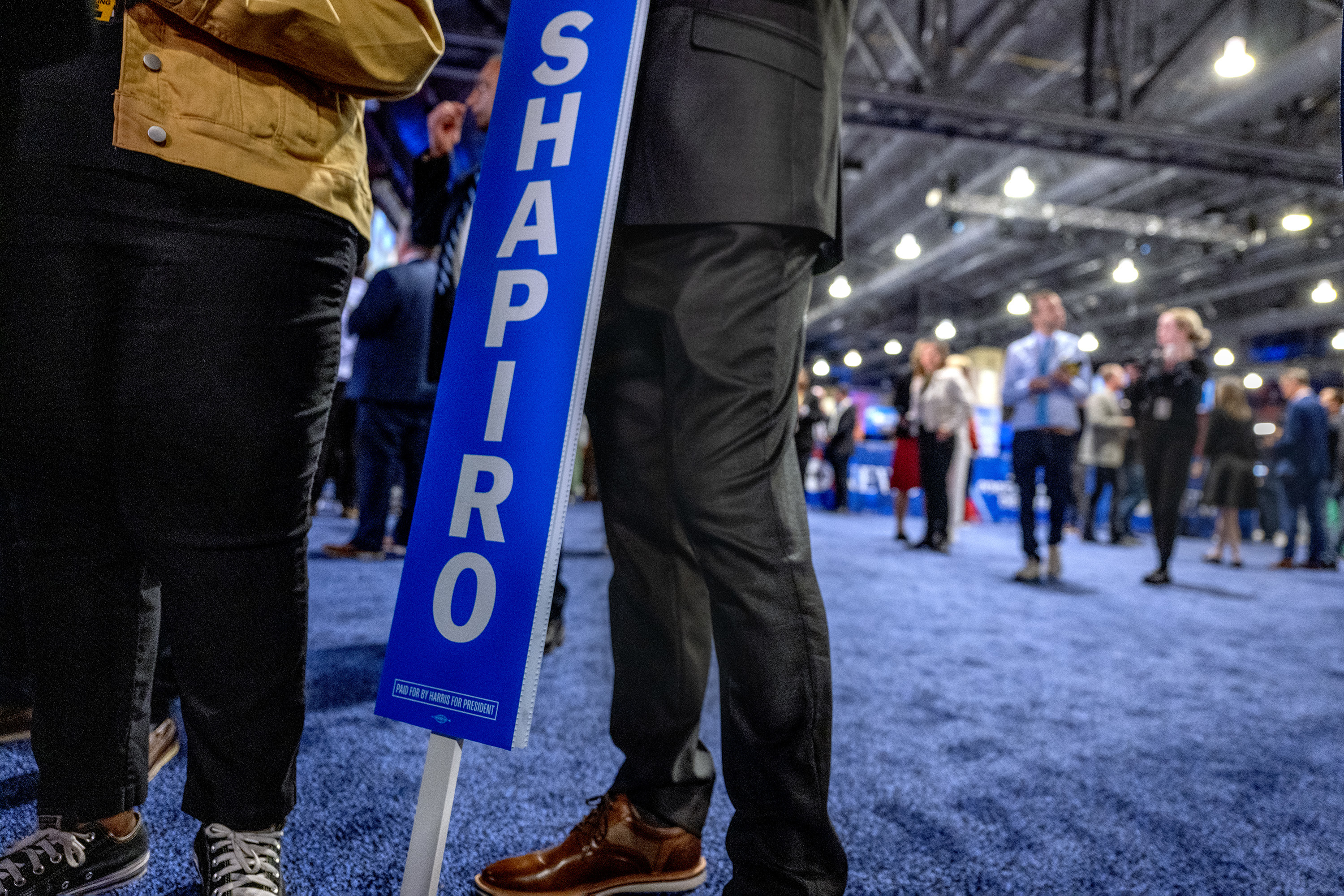
A staffer holds name sign for Gov. Josh Shapiro, a surrogate for Vice President Kamala Harris in the spin room at the Convention Center on Sept. 10, 2024, after her debate with former President Donald Trump at the National Constitution Center.Tom Gralish / Staff Photographer
That may help explain why Shapiro has never publicly said he’s considering a run, as he needs to win reelection first, Borick said.
“You don’t want to get hit at all for looking like you’re thinking ahead and not focused on the race before you,” Borick said. “That’s Campaign 101.”
Still, he’s left a breadcrumb trail for a 2028 run: writing a book, a national media tour, and, earlier this month, creating a federal political action committee, which he could use in the future to finance a White House run.
(His campaign has stressed he is using the PAC to contribute financially to the four Pennsylvania Democrats vying to flip the U.S. House.)
State Sen. Greg Rothman (R., Cumberland), who chairs the state Republican Party, said he believes Shapiro is running for president in 2028. “And I read his book,” he added.
He had some advice for the potential presidential hopeful: Improve your debate performance.
“I’ve been alive for 20-plus presidential debates. He’s gonna need work if he’s gonna compete on a national stage,” he said.
Manuel Bonder, a spokesperson for Shapiro’s campaign, said in response that he appreciates Rothman “taking a break from overseeing this disastrous, flailing Republican campaign for governor to offer unsolicited advice,” adding that Shapiro is only focused on electing Democrats down ballot.
Rothman said he’s still hopeful for a “huge upset” against Shapiro, citing past examples where the expected winner ultimately lost the election, including most recently former U.S. Sen. Bob Casey’s loss to U.S. Sen. Dave McCormick in 2024, without mentioning Garrity. The state party has given no financial support to the state treasurer’s gubernatorial campaign, according to her September campaign finance filings.
“We are a state known for huge upsets,” Rothman added.
Shapiro has also cultivated allies from across the country and ideological spectrum. After conservative influencer Charlie Kirk was murdered while on a Utah campus, Shapiro forged a strong relationship with Republican Utah Gov. Spencer Cox to speak out against political violence. And earlier this month, U.S. Sen. Elizabeth Warren (D., Mass.), who ran for president in 2020 as a progressive,headlined a fundraiser with him in Delaware County, introducing Shapiro as “a man who has the right values.”
“Winning Pennsylvania makes a great argument” for Shapiro’s chances as a prospective 2028 candidate, U.S. Sen. Chris Coons (D., Del.) said. “If you win Pennsylvania, you win the whole presidency.”
But no Pennsylvania governor has ever won the presidency.
(James Buchanan represented the state in the U.S. Senate a decade prior to his election to the presidency in 1856, and Scranton-born Joe Biden’s political career was forged in Delaware.)
Former Govs. Milton Shapp, a Democrat and Pennsylvania’s first Jewish governor, and William Scranton, a Republican, sought their parties’ nominations in 1976 and 1964, respectively. Other popular governors, like Rendell, Bob Casey Sr., and Tom Ridge also considered runs for the nation’s highest office, Borick said, but didn’t pursue them.
Shapiro, he said, is the most poised Pennsylvania governor to be considered seriously for a presidential run in modern history.
Bradford, a top state Democrat who has negotiated the last several state budgets alongside Shapiro, said Shapiro should “absolutely” run for president in 2028. He cited the governor’s popularity and his “record of accomplishment that is rewarded in not just the polls, but by the people.
“And I think that’ll show on Election Day on Nov. 3,” he added.
Correction: A previous version of this story stated the incorrect amount spent on upgrades to Shapiro’s personal home. The state spent $1 million on those upgrades.
Three members of Congress on Thursday expanded their scrutiny of VIP gambler benefits by demanding answers about the scope of rewards programs offered by a half dozen companies, including DraftKings and Fanatics, and the prediction markets Kalshi and Polymarket.
“As repeated stories from exploited gamblers and media reports have vividly documented, VIP programs are driving the gambling industry’s most susceptible customers into debt and addiction through rewards tied to waging ever increasing amounts of money,” the lawmakers — U.S. Sen. Richard Blumenthal (D., Conn.) and U.S. Reps. Paul D. Tonko (D., N.Y.) and Valerie P. Foushee (D., N.C.) — wrote in letters to the companies, which also included BetMGM and Caesars.
The Democrats asked company officials, including Fanatics chief executive officer Michael Rubin, a former co-owner of the 76ers, to disclose by Nov. 5 how much revenue they derive from VIP customers, the types of perks and services they offer to those gamblers, and whether artificial intelligence is used to shape promotional offers to individual gamblers.
“Fanatics Betting and Gaming received the request today and will respond in due course,” a spokesperson for the company said. “We appreciate the Members’ interest and welcome the opportunity to share information on the ways in which we work to protect our customers.”
A DraftKings spokesperson said the company would “respond accordingly once we have had a chance to review” the letter from Blumenthal, Tonko, and Foushee.
DraftKings said it would respond to the Congress members’ inquiry. Tiffany Hagler-Geard
In an email, Kalshi sought to differentiate its prediction market from traditional gambling entities.
“Unlike sportsbooks and casinos, we manage our top traders by volume; we don’t take their wins and losses into account,” a spokesperson wrote. “By definition, a VIP at a sportsbook or casino is a losing customer or someone they expect to lose. That’s because the gaming industry only makes money when people lose. We don’t do targeted promotions, offers, or bonuses when customers lose. We also do proactive outreach to clients when they join about how to use our responsible trading tools.”
Representatives for BetMGM and Caesars could not be reached for comment.
Since early August, the members of Congress have pressured another sportsbook, FanDuel, about its VIP program, citing reporting from The Inquirer that showed a FanDuel VIP account manager had sent a personalized video of Phillies star Bryce Harper to a gambler in the Philadelphia suburbs who had an addiction.
Harper in July said that he had been paid to record the message through the video service Cameo, but that he did not know FanDuel would use it to reward a VIP bettor.
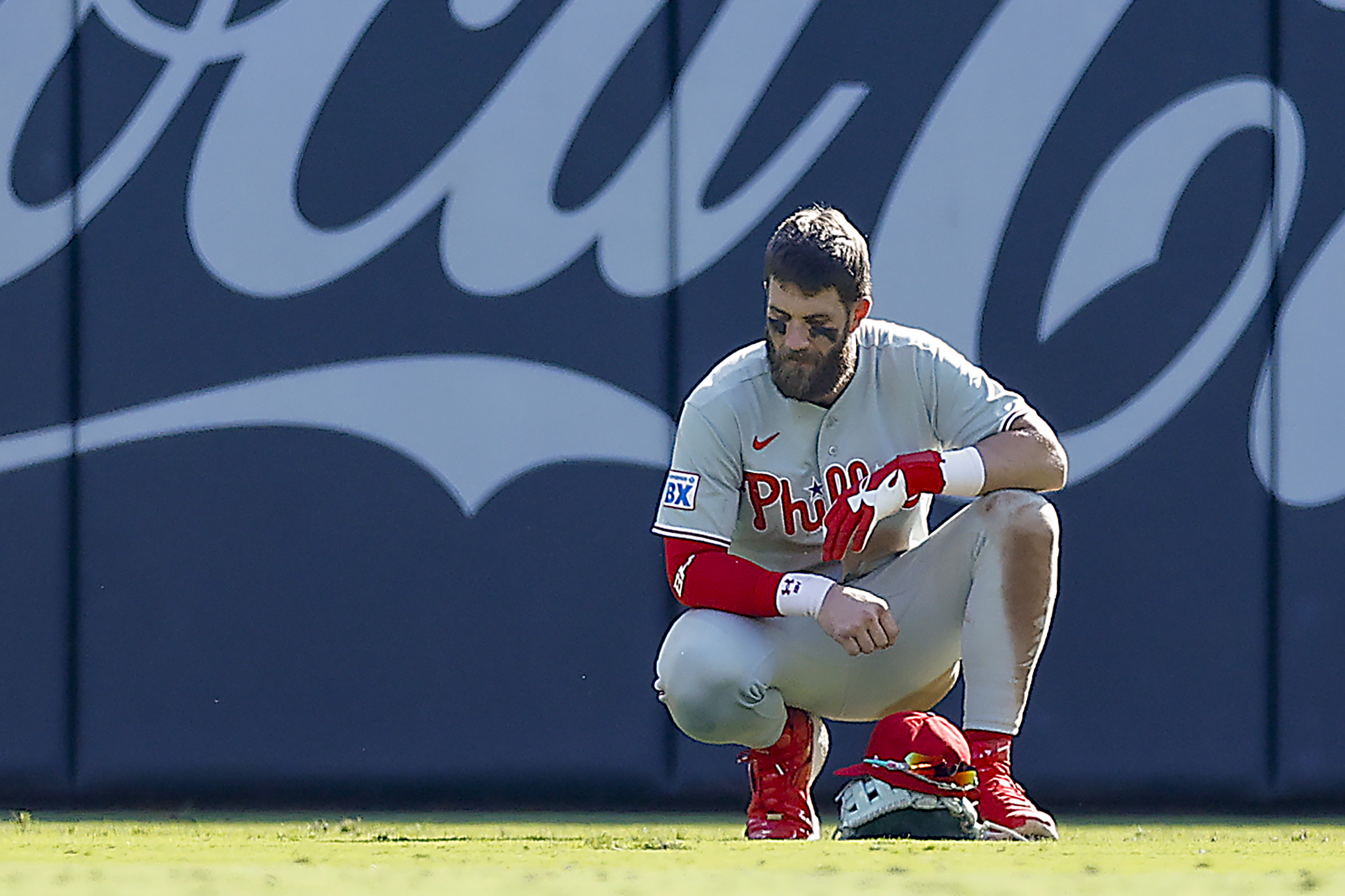
In July, Bryce Harper wrote on Instagram that he had recorded a short video message for a FanDuel VIP gambler through the pay service Cameo, but didn’t know the man had an addiction.Yong Kim / Staff Photographer
In response to the elected officials’ inquiries, a FanDuel executive in September said that the company had sent about 30 personalized videos of athletes and entertainers to its customers during the last two years. The company has declined to disclose further details about the videos.
FanDuel has said that it will not eliminate its rewards program and that its VIP managers are trained to recognize and report signs of problem gambling. The Major League Baseball Players Association said it would support prohibiting players from promoting VIP programs in the future.
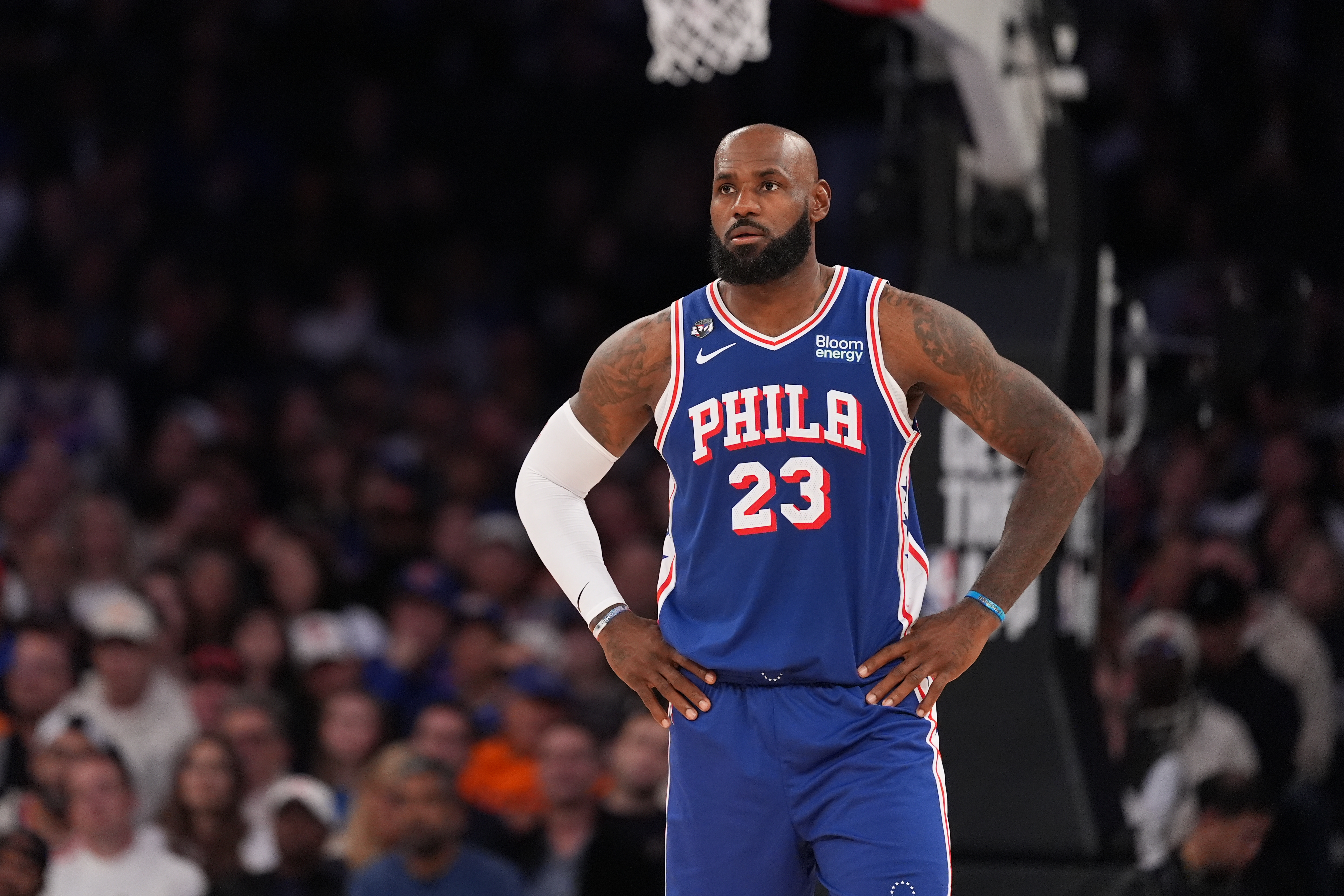
Some of the sportsbooks and prediction markets contacted by Congress have separately figured into controversy surrounding new Sixers star LeBron James, who has previously promoted football bets for DraftKings, and in September signed a $15 million endorsement deal with Polymarket, prompting criticism from fans and fellow NBA players.
James also sometimes commutes from New York to Philadelphia in a Fanatics-owned helicopter as part of a trading card partnership he has with the company. (NBA Commissioner Adam Silver said the helicopter arrangement is “perfectly appropriate.”)
LeBron James in September signed a $15 million sponsorship deal with Polymarket, nearly quadruple his $4 million salary with the Sixers.Frank Franklin II
Sportsbooks like DraftKings and FanDuel have been regulated by individual states since a 2018 U.S. Supreme Court ruling overturned a long-standing ban on sports betting.
Prediction markets like Kalshi and Polymarket, however, are regulated by the federal Commodity Futures Trading Commission and are available in 50 states. The companies have insisted that their products are not gambling apps but rather a financial product similar to the stock exchange.
The lawmakers’ letters note that the prediction markets do not refer to their customer rewards as VIP programs: Kalshi’s is known as Kalshi Platinum, while Polymarket’s has “maker” and “taker” rebate programs.
In early September, New Jersey Attorney General Jennifer Davenport petitioned the Supreme Court to decide whether states should have the authority to regulate prediction markets as they do gambling.
The federal lawmakers claimed that “prediction markets are actively flouting safeguards established by state gambling authorities and offering their products in states where sports betting is not legal.”
The Inquirer will continue to report on issues related to the growth of gambling addiction — among teens and adults — across Pennsylvania. If you, or someone you know, would like to speak with a reporter, please contact David Gambacorta or William Bender at dgambacorta@inquirer.com and wbender@inquirer.com
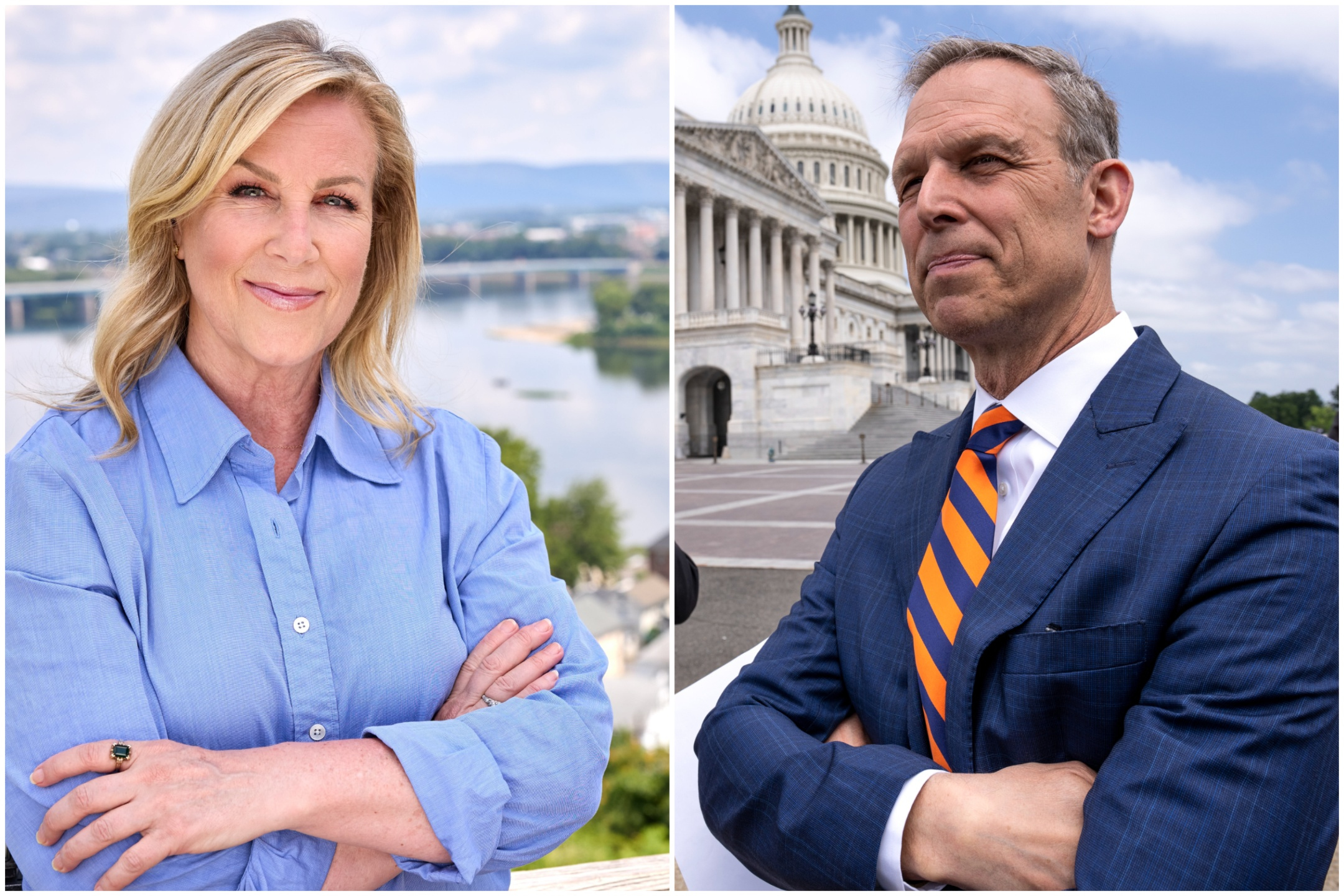
A new attack ad from Republican U.S. Rep. Scott Perry’scampaign accuses his Democratic challenger, Janelle Stelson, of exposing her naked body to a neighbor’s grandchild.
The ad, which begins with Perry saying that he has approved the message, ends with an announcer intoning that Stelson is “not fit to serve.”
It was released Monday and swiftly denounced as false by Stelson.
The ad, based on the neighbor’s unsubstantiated claim, comes as the rematch race between Perry and Stelson in central Pennsylvania heats up entering the final stretch. Both parties view Perry’s seat as one of the most competitive in the country. It is one of four in the state that could determine control of the U.S. House, drawing in a flood of national money.
Stelson’s campaign manager, Alma Baker, said Wednesday that Stelson is considering filing a defamation lawsuit against the incumbent Republican.
“This false accusation is a pathetic, desperate attempt by Scott Perry to rescue his failing campaign, with easily disproven lies,” Baker said in a statement.
Baker added that as a former TV anchor, Stelson “had been a victim of stalking and harassment” over the years.
Many Republicans joined Democrats in criticizing the ad.
“We are seeing Republicans across the country run despicable, blatantly false ads in the closing days of this election because they know they’re about to lose,” Eli Cousin, a spokesperson for the Democratic Congressional Campaign Committee, said in a statement to The Inquirer on Wednesday.
When asked for comment about Perry’s ad, campaign spokesperson Matt Beynon said the campaign would let “Ms. Stelson’s neighbor’s statement speak for itself” and sent The Inquirer a statement from Sharon Orr, the neighbor whose claims are the basis of the 30-second ad now roiling the race.
Orr’s statement was written under a heading of “Affadavit,” a misspelling of affidavit. It was not clear whether it was a legal document.
A lieutenant in the East Pennsboro Township police confirmed Wednesday in an interview that there was a call for police to be dispatched to Stelson’s home in the summer.
Orr claimed that in August, Stelson had been “walking around outdoors in the public sphere” outside herhouse, “with her breasts and buttocks fully exposed and in plain sight of my minor age grandchild who lives with me.”
Orr said she took a photograph and called police.
The photo Orr said she took was not pictured in the ad, and Beynon said Wednesday that he has never seen a copy of it.
PennLive, which first covered the ad, reported that Orr is a Perry supporter.
Orralso said that earlier in the summer, Stelson appeared outside her home “in a shirt and undergarments.” Orr said these sightings concerned her because of potential “effects on my grandchild who is on the autism spectrum and mirrors behaviors and actions.”
According to PennLive, one of Stelson’s neighbors, Steve Dillon, said he found the entire accusation implausible. He said that the account of Stelson being entirely naked outside her home “would not be in character with what I’ve gotten to know of her.”
Neither Orr nor her neighbors returned calls for comment.
East Pennsboro Township has not released internal documentsabout the incident and denied a right-to-know request for the documents from Perry’s campaign, according to a police response shared by Beynon.
Perry, who has represented the Harrisburg area for seven terms, narrowly defeated Stelson two years ago and slightly trailed her in a September poll from Franklin and Marshall College.
Republican U.S. Rep. Brian Fitzpatrick said he would be willing to put Elon Musk,the world’s richest person, under federal oath to investigate potential violations of law related to national security in Ukraine.
“We got to call the witnesses, to to bring them in, put them under oath, and get to the bottom of it because this is a very, very serious matter. It cannot be glossed over,” Fitzpatrick told CNN’s Kaitlan Collins Tuesday night.
Starshield, the military-grade version of Starlink, connects with Ukrainian hardware to power drones that can intercept attacks. But the tech billionaire reportedly capped the speeds connecting the hardware to the satellite-based network, rendering the drones “virtually useless,” according to the Journal.
“If it is in fact Mr. Musk that ordered this, that is likely a violation of the law because he has authority and decision-making authority over Starlink, the civilian commercial product, but not Starshield,which is a military-grade national security tool,” Fitzpatrick said on CNN. “No individual civilian should have any decision-making authority on how that’s deployed. So that’s what we need to get to the bottom of.”
It’s unclear the extent of involvement President Donald Trump had in Musk’s reported decision, the Journal said.
Fitzpatrick said he has spoken to several lawmakers in both parties about ensuring accountability for Musk’s reported actions.
However, Fitzpatrick is the only swing-district Republican in the state who has yet to receive support fromMusk’s political action committee, America PAC. The PAC had spent about $1.4 million, as of last week, supporting Republican incumbents in the three other Pennsylvania districts being targeted by both parties.
Fitzpatrick has consistently supported Ukraine since Russia invaded the country more than four years ago. He and 18 other Republicans voted this summer alongside Democrats to provide billions in military aid to Ukraine and impose new sanctions on Russian industries and had promised even before that to back the effort.
He also wrote a post on X last year defending Ukrainian President Volodymyr Zelensky hours after Trump called Zelensky a “terrible leader” — without directly mentioning Trump.
“President Volodymyr Zelensky need not, and must not, have any deal forced upon him by any outside nation that does not guarantee the security and the sovereignty of the Ukrainian people,” Fitzpatrick had said in a statement on X in February 2025.
More recently, Fitzpatrick rallied a bipartisan group of lawmakers to urge Homeland Security Secretary Markwayne Mullin to allow Ukrainian nationals to temporarily live and work in the United States while conditions remain unsafe. Temporary protected status for Ukrainians was extended Monday, the day protections had been set to expire.
While voters are rightly aggrieved over Donald Trump’s war of choice in Iran, they need to recognize that the president is ready to inflict an even greater foreign policy disaster on our country.
Having dropped his threadbare pretense of U.S. neutrality on ending the Ukraine war, Trump is now effectively helping Moscow pummel defenseless Ukrainian civilians with drones and bombs. He is trying to force Kyiv to surrender its independence and submit to Vladimir Putin’s draconian terms.
Meantime, the president is denying Russia’s extensive help to Iran and ignoring its increasing drone attacks on NATO allies. The Kremlin is positively gleeful. Moscow’s chief negotiator on Ukraine, businessman Kirill Dmitriev, reposted on X a picture of a Russian bear and a U.S. eagle geared up for battle against a British lion and a European Union flag.
But take a deep breath, because Trump is leading the country toward even greater foreign policy degradation.
This week he acquiesced to Putin’s proposal to hold a three-way summit with Xi Jinping in China to resolve the war on Moscow’s terms. European allies — and Ukraine itself — would be excluded.
In other words, a Republican president who decries Democrats as “communists” seeks to ally with communist China and the ex-Communist, still Soviet-minded KGB killer Putin. Trump wants to join them in undermining European democracies and dividing the world into three spheres of influence. (In reality, the two dictators believe the U.S. president is weak and are playing America’s wannabe despot like a fiddle.)
Here is the question that Americans face when they make their choices at the polls in two weeks: Do they want to support a GOP that has so far capitulated to a leader who is eager to partner with Putin and Xi as they help Iran and seek to undermine America around the world?
Victoria Deineko, her husband Ievhen Deineko and their daughter Mia look at a multi-story residential building damaged in a Russian missile strike in Kyiv, Ukraine, Oct. 13.Evgeniy Maloletka
Aid for Putin
Trump’s claims that his waving of Russia sanctions — lifting restrictions on Russian export of diesel to the world — are necessary to keep Russia at the bargaining table are false. The diesel amounts are too small to matter, and Russia has never been willing to bargain, still insisting on the complete capitulation of Ukraine.
Yet in his eagerness for a “deal,” any deal, Trump insisted that “Russia has been fine on Ukraine” even as Moscow continued to bombard urban apartment blocks, children in playgrounds, and an infant in a stroller. He consistently excuses Russia’s massive attacks on Ukrainian civilians.
Most heinous, Trump is refusing to let Europeans send Patriot missiles they have paid for to Ukraine, leaving Kyiv totally unable to stop Putin’s ballistic missiles. Moreover, the administration degraded U.S. Starlink and Starshield connections to Ukraine over the weekend, which still haven’t been restored fully. They are vital to intercepting Moscow’s turbojet drones and giving Ukraine advance warning of missile attacks.
Even as Ukraine proposes a mutual ceasefire on striking energy production sites — which Putin refuses — POTUS is aiding Russian efforts to bombard Ukraine into submission.
Most despicable, the U.S. president and his team are lying when they deny they had anything to do with the intelligence and Starlink-Starshield cuts. Elon Musk (who undoubtably knows the truth, and bears culpability) said Trump would have hadthe last word on any such cuts.
On Sunday Trump insisted “Russia is doing very little, if anything, to help the Islamic Republic of Iran,” saying, “I want to keep it that way” as an excuse for his series of concessions to Moscow. He ignores or denies well-documented Russian intelligence and technology support to Tehran, which has helped the Iranians kill U.S. troops in the Middle East.
On Monday, Russian Foreign Minister Sergey Lavrov reaffirmed Russia’s full support for Tehran.“I am confident that Iran’s cause, like Russia’s, is a just cause,” said Lavrov, standing next to the Iranian foreign minister Abbas Araghchi at a news conference in Tehran. Yet Trump has aligned himself with Putin’s “just cause.”
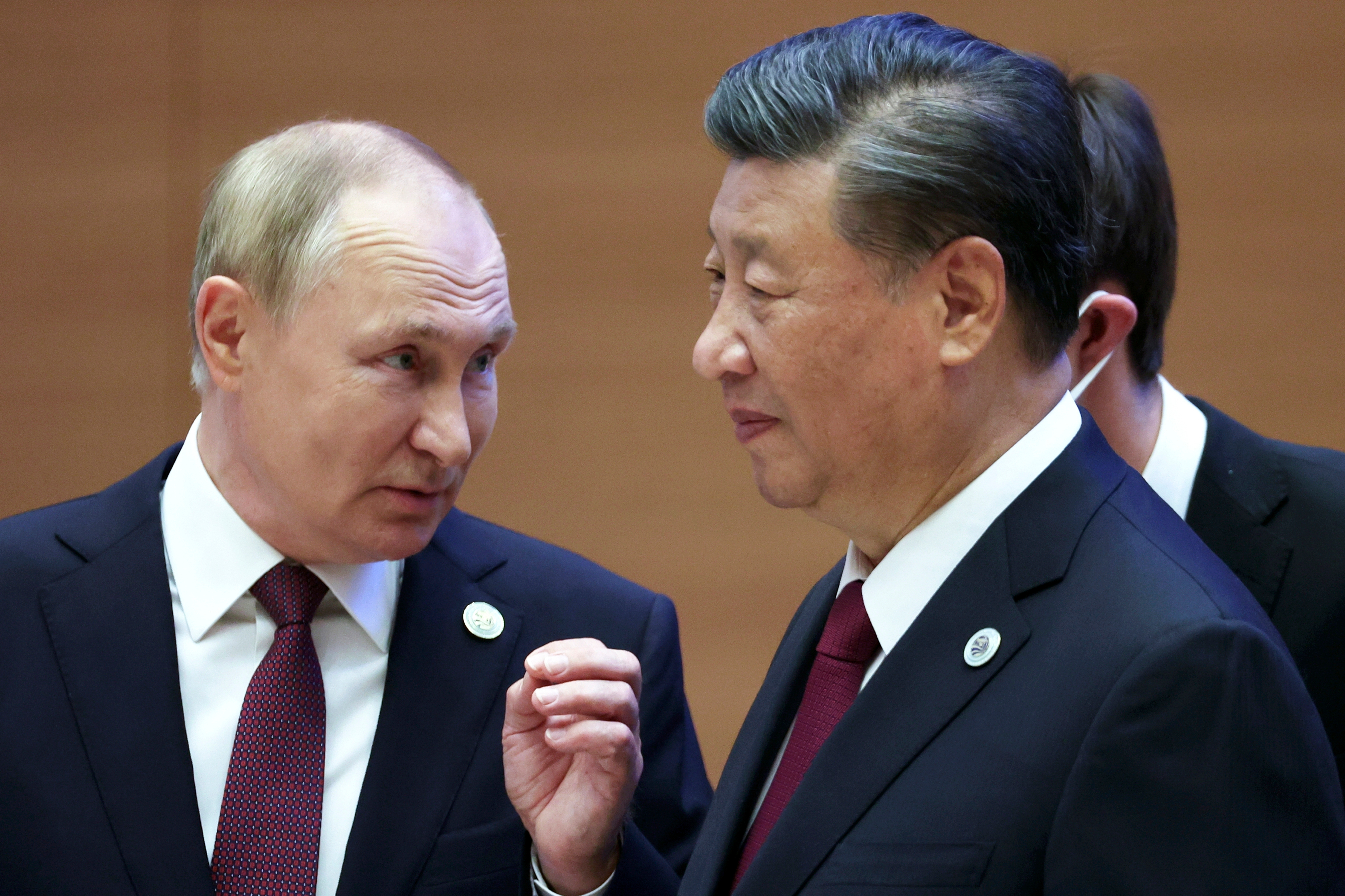
Russian President Vladimir Putin, left, gestures while speaking to Chinese President Xi Jinping during the Shanghai Cooperation Organization (SCO) summit in Samarkand, Uzbekistan, in 2022.Sergei Bobylev
Misbegotten alliance
Putin reportedly views his proposal for a three-way summit on Ukraine’s future as a way to elevate Russia’s global standing and divide the world into spheres of influence dominated by the United States, Russia, and China.
This plays into Trump’s long expressed eagerness for such a status quo, harking back to centuries ago when nondemocratic emperors, kings, and dictators gathered to divide the global spoils.
It would also be reminiscent of the World War II Yalta Conference held in February 1945 in the Soviet Union, when the “Big Three” leaders of the allies — President Franklin Delano Roosevelt, Soviet Premier Josef Stalin, and British Prime Minister Winston Churchill — gathered to reshape the postwar world.
The two democratic leaders at Yalta prevented Stalin from totally dominating Europe, although they acquiesced in his takeover of Eastern Europe, which condemned those countries to remain behind the Iron Curtain until 1989.
Starry-eyed Trump, who envisions himself as smarter than Putin or Xi, ignores Putin’s expressed desire to reestablish domination of the former subject countries of the Soviet Union, including Ukraine. He ignores Putin’s current military and financial efforts to fragment the European Union, which amount to a shadow war.
POTUS seems oblivious to the fact that Russia and China believe he is weak and that the United States is on the way down, and both want to hasten that decline. He clearly never reads the speeches of Putin and Xi that make that intent clear and never listens to intelligence briefings. Trump’s megalomania convinces him he will be top dog of the troika when in reality he is too willfully blind to recognize how he is being played.
So, dear voters, you are confronted with a leader unlike any in U.S. history, who, to promote his own personal interests, is ready to partner with adversaries who wish our nation ill.
This president is too blind to see that America needs its democratic allies in Europe and Asia to stand up against the dictators with whom he seeks to bond. He is ready to cut those alliances and leave the Europeans to stand alone against Putin, and our Asian allies, including Taiwan, to deal alone with Xi. He is ready to sacrifice Ukraine and its people to Russian domination so he can declare a “win.”
True, Trump is not on the ballot in November, but his Republican Party has not challenged his traitorous sacrifice of U.S. security and alliances in service of his whims. The only hope of stopping him from this madness is electing a Congress that will confront and resist his delusions.
In two weeks, we will see if Americans recognize the dire historical foreign policy turning point at which this country has arrived.
Editor’s Note: An earlier version of this column misstated the date of the Yalta Conference; it was in February 1945.
Susan Coll-Guedes was baffled when she saw a photo of U.S. Rep. Jeff Van Drew, a Cape May County Republican, smiling with scissors at a ribbon-cutting ceremony for a group home provider agency.
“He cut Medicaid, which is the funding for group homes for people with disabilities,” said Coll-Guedes, whoseadult son has Down syndrome and is on Medicaid.
The Galloway resident is a self-proclaimed “Mom for Mullock,” who supports Democrat Zack Mullock, the Cape May mayor who is challenging Van Drew in the Nov. 3 midterm election. She wasn’t interested in politics until President Donald Trump’s One Big Beautiful Bill Act made major changes to Medicaid eligibility and decreased federal funding for the program.
While the cuts don’t directly target her son, she’s concernedthe changes will have a domino effect on the program as a whole, she said in interviews this month.
Back in August, behind the red barn of Independent Spirits Distillery, a small business along farmland in Gloucester County’s Woolwich, Mullock told an audience of about 75 people that he gets “daily reminders” from South Jersey residents who are scared about the law’s cuts to social programs like Medicaid, whichprovides health coverage for low-income people and people with disabilities, including tens of thousands of people in the district.
Cape May Mayor Zack Mullock speaks to an audience at Independent Spirits Distillery in Woolwich on Aug. 11.Aliya Schneider / Staff
Mullock is among the many Democrats across the country attacking Republican incumbents for slashing social safety net funding to help pay for Trump’s policy priorities — including tax breaks for the wealthy — while still adding $3.4 trillion to the national deficit.
“I cannot fathom cutting for the very poorest to give to the very wealthiest,” Mullock said to the receptive audience brought together by the Woolwich Democrats. “It’s absolutely insane, and that’s exactly what Jeff Van Drew did when he voted for the Big Beautiful Bill. It was passed by one vote. One vote. And that tells you just how important these elections are.”
“If I was in his shoes, that bill would not have passed,” he added.
Van Drew was first elected as a Democrat in 2018 before changing parties and vowing his loyalty to Trump one year later. He’s been reelected three times since then with his closest challenger still falling nearly 6 points behind him in 2020.
On Tuesday, the University of Virginia’s Center for Politics’ Sabato’s Crystal Ball shifted the district’s rating from “safe Republican” to “likely Republican,”meaning Van Drew remains favored to win but less comfortably than before.
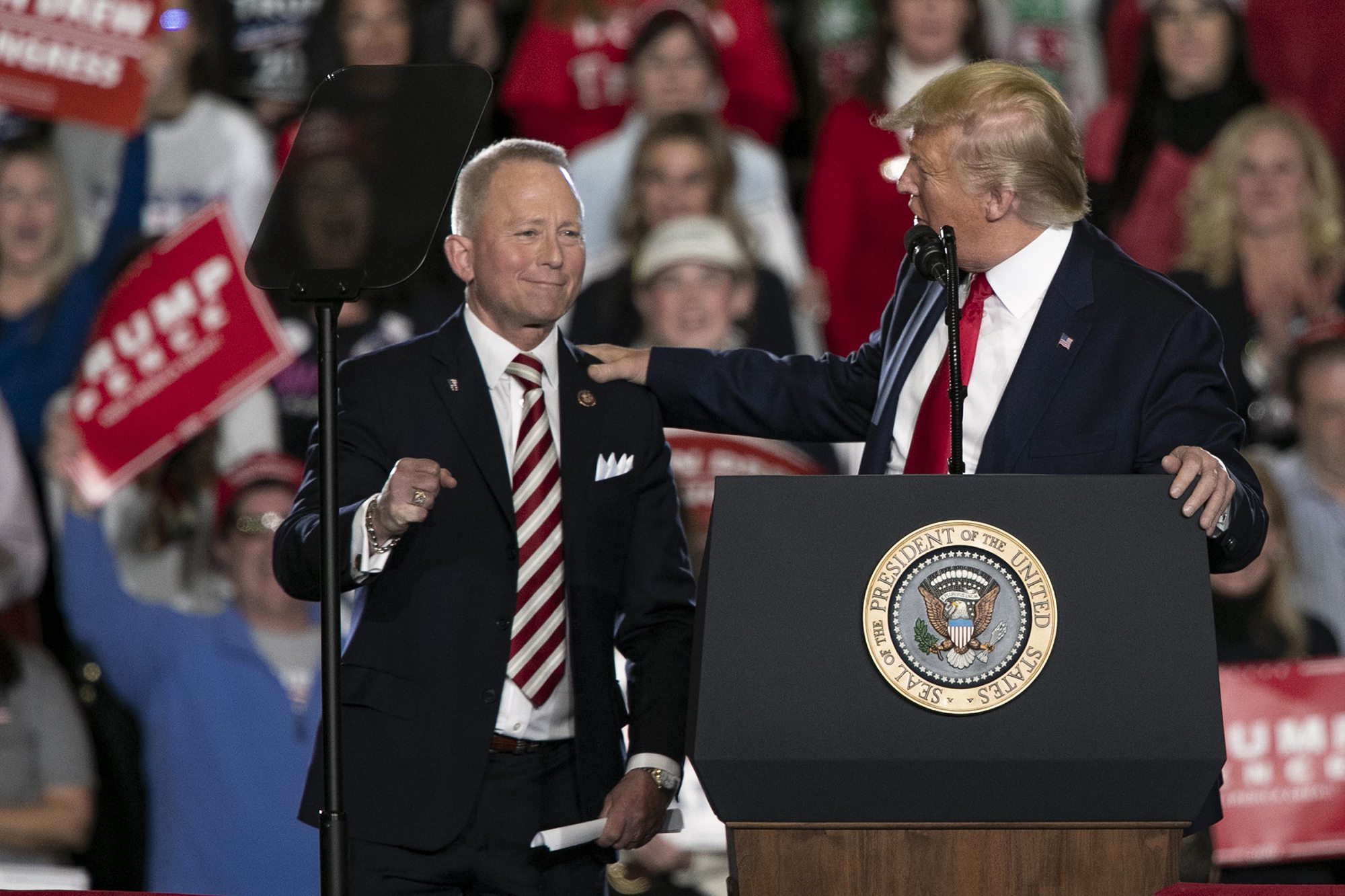
U.S. Rep. Jeff Van Drew with President Donald Trump at a campaign rally in Wildwood in 2021.Heather Khalifa / MCT
Mullock is hoping dissatisfaction with the impacts of Trump’s policies will help himpull off an upset in the district, which stretches from Gloucester County to the Jersey Shore.
How Trump’s law will impact Medicaid
Prior to his vote for Trump’s lawlast year, Van Drew was adamant that he would not vote for legislation that impacts Medicaid or Medicare unless the cuts are “specifically aimed at reducing waste, fraud, or abuse.”
That’s exactly how the Trump administration has framed the new changes, along with saying that the cuts willhelp preserve the programs in the long term.
“I was on the forefront of saying that we shouldn’t hurt seniors, we shouldn’t hurt children, we shouldn’t hurt the disabled, that we shouldn’t be harming those folks,” Van Drew said at a recent candidate forum held by the Gloucester County Chamber of Commerce after Mullock criticized his vote at the same event.
Cuts to SNAP have already taken effect but Medicaid cuts won’t be fully implemented until after the midterms in January 2027. Democrats are pledging to reverse them if they take control of Congress.
Van Drew defended the changes, particularly a new requirement for Medicaid recipients ages 19 to 64 to file paperwork every six months to show they work, volunteer, or take academic classes 20 hours a week to qualify for the program, unless they meet exemptions carved out for people with disabilities.
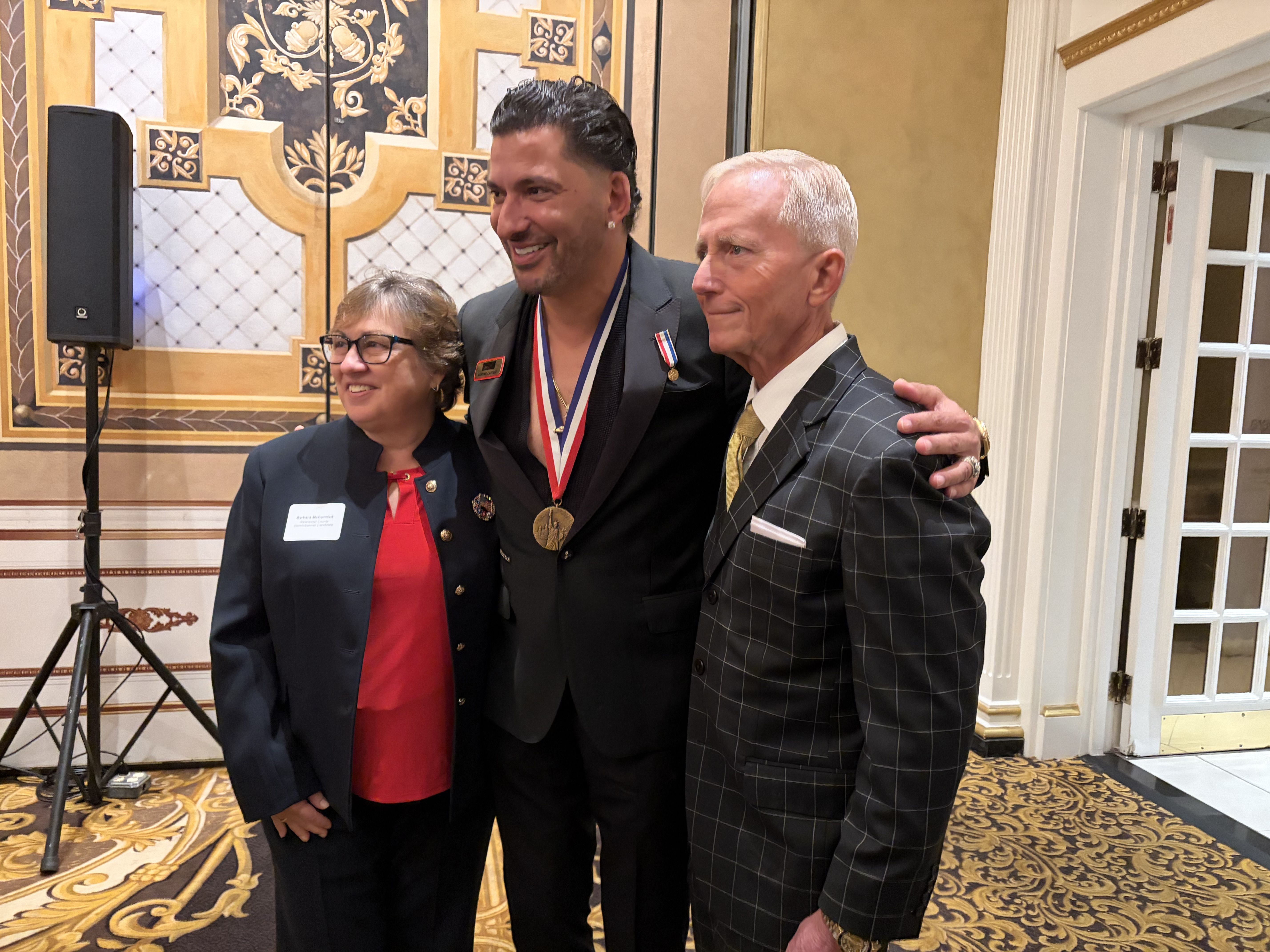
U.S. Rep. Jeff Van Drew (right) poses for a photo at a Gloucester County Chamber of Commerce candidate forum with Barbara McCormick and Martino Cartier, Republican candidates for Gloucester County Commission, on Oct. 7.Aliya Schneider / Staff
“If you are able-bodied and you don’t have children, and aren’t planning on it, and aren’t a senior citizen, and don’t want to work … you could pet dogs at the Humane Society, help senior citizens, or you could go and learn a trade, or you could even go back to college. You still would get your Medicaid,” Van Drew said at the forum.
“But if you’re healthy and you are young and you don’t want to work at all and you’re not willing to do any of those things … you’re not going to get it,”he said to claps from his supporters.
The law is slated to cut Medicaid spending over 10 years by approximately $911 billion, including approximately $29 billion in New Jersey, according to a KFF analysis using data from the nonpartisan Congressional Budget Office.
The changes to Medicaid are expected to lead to 7.5 million people becoming uninsuredby2034, including approximately 240,000 people in New Jersey.
Opponents of the requirement argue that since most adults receiving Medicaid already work, the extra paperwork will cause people who qualify to lose coverage anyway.
The 2nd Congressional District includes all of Atlantic, Cape May, Cumberland, and Salem Counties, and parts of Ocean and Gloucester Counties. These counties all together have 365,666 people enrolled in Medicaid as of August.
Mullock made the case at the forum that the cuts will have a disproportionate impact on the district because Cumberland, Atlantic, and Salem Counties are among those with the lowest incomes and highest poverty rates in the state.
“When you are driving all around and meeting with people and seeing the real poverty that exists here in CD-2, if your heart doesn’t break, you’re not a human,” Mullock said in an interview.
Another provision will also boot immigrants off the program who have legal status but aren’t permanent residents, such as refugees of war, asylum seekers fleeing persecution, and victims of sex trafficking and domestic violence. New Jersey’s Department of Human Services estimated that between 15,000 and 25,000 immigrants with legal status will lose coverage.
Van Drew introduced a “No Medicaid for Illegals Act” last year and said the program should only benefit American citizens.
Does the One Big Beautiful Bill touch Medicare?
While the law takes primary aim at Medicaid, Mullock has spoken about the cuts in tandem with Medicare, the federal healthcare program for people ages 65 and older. His campaign website says he supports Medicare for All funded by “fairer corporate taxes and a fair tax on the top 5%.”
And at the Gloucester County forum, Mullock claimed that the law cut $1.5 trillion in Medicare and Medicaid.
To get to that figure, Mullock said he was combining the nearly $1 trillion in Medicaid with a $491 billion figure that the Congressional Budget Office said could hit Medicare from 2027—2034 if Congress doesn’t act. That figure comes from the Pay‑As‑You‑Go Act of 2010, which forces cuts to prevent federal deficit increases. But legislators can override that obligation, and that’s exactly what they did as part of the November 2025 law that reopened the government after a record-breaking 43-day shutdown.
Meanwhile, Van Drew retorted during his own remarks that Medicare “never came up for a vote.”
“There wasn’t even a vote on Medicare,” he added. “Not one dollar has been cut from Medicare.”
While most of the law’s healthcare provisions affectMedicaid, the law does make some changes to Medicare.
Changes to eligibility for groups of legally present immigrants will leave 100,000 more people without health insurance and decrease federal Medicare spending by $5.1 billion by 2034, according to Congressional Budget Office data.
Another provision of the law blocks a policy enacted under former President Joe Biden that tried to make it easier for low-income Medicare recipients to access Medicaid financial assistance. The Congressional Budget Office projected this change will decrease dual enrollees by 800,000 people and decrease spending by $66 billion by 2034. While these people aren’t expected to stop getting Medicare, higher out of pocket costs would likely cause them to seek less care, the budget office predicted.
The six counties the district touches had a total of 378,833 people enrolled in Medicare in 2025.
Twelve billion — the number of political ad views in the Philadelphia metropolitan area this year alone. That’s according to AdImpact, a service that monitors political advertisements on both traditional broadcast and streaming services on smart TVs.
To reach that many eyeballs requires spending a lot of money. In the Philadelphia area alone, Democratic candidates have spent $32 million this year to air their ads. Republicans have been a little more frugal, spending just $20 million.
“Money isn’t decisive, but it helps,” explained J.J. Balaban, an admaker for multiple Democratic candidates for Congress. “You have to raise enough to be competitive. If a [candidate] is being outspent 10-1, it’s probably not going to work out.”
The most expensive local race is Pennsylvania’s 7th Congressional District, a closely contested swing seat in the Lehigh Valley, representing over a quarter of total spend on political ads in the Philadelphia area. Incumbent U.S. Rep Ryan Mackenzie is behind in the polls to Democrat Bob Brooks, despite Mackenzie outspending Brooks 2-1.
These are just a few ads representing the Pennsylvania governor’s race as Gov. Josh Shapiro campaigns for reelection and Republican Stacy Garrity campaigns to unseat him. Their campaigns spent the second most for a single race: a combined $8.6 million.
And the breakdown of that spend is staggeringly lopsided. Shapiro’s $8.5 million outlay on airing ads far eclipses Garrity’s $76,000. Garrity has stated “the cavalry will be coming” but with weeks left before Election Day, there is no sign of a rebound.
$1.2 million was spent on airing this Shapiro ad that has seen an estimated 443 million times – the most viewed ad in this race.
On the other hand, Garrity has broadcast only four ads seen by a combined 4.9 million viewers. They are all attack ads on Shapiro’s platform, including this ad about data centers.
A recent Pew Research survey found that a majority of Americans oppose data centers and political campaigns have rushed to reflect that. According to AdImpact, 79 ads shown in the Philadelphia area have data centers as a prominent theme. Most ads that mention data centers are for Democratic campaigns, making up 60 of the 79.
This is most relevant in districts that cover Montgomery and Chester Counties, where according to Data Center Tracker, 13 data centers have been proposed or built. For example, they dominate the debate in the 24th Pa. State Senate district – where 15 of 18 unique ads mention data centers.
more midterm ads after this ad
This ad for Chris Thomas, the Democratic challenger, states that Thomas will “make darn sure these data centers stop raising our utility bills.”
Thomas’ rival and incumbent, State Sen. Tracy Pennycuick aired her own ad about data centers. This 15-second ad – the most seen in the Philadelphia area – focuses on Thomas' relationship with developers who have built data centers while donating to his campaign.
However, data centers are just one of many concerns addressed in ads this year. The most common issues are taxation, data centers, Donald Trump, and healthcare, according to AdImpact’s analysis.
Democrats are running more ads than Republicans that mention artificial intelligence, trade, and education.
While Republicans are running more ads that mention social security, crime, and corruption than Democrats.
more midterm ads after this ad
Even if a campaign ad focuses on an issue voters care about, it might still fall flat. To stick the landing, tone matters just as much, if not more.
“Voters aren’t issue calculators. They don’t sum up ‘I agree with this candidate on 60% of the issues.’ That’s not how human beings make decisions,” argues Balaban. “It’s very driven by emotion and TV is intrinsically an emotional medium. Sometimes my party [Democrats] make the mistake of making ads aimed for the head more than the heart.”
The science agrees. Our emotions impact what we remember, according to Michael Platt, a professor of neuroscience and marketing at the University of Pennsylania, and being a memorable candidate matters on Election Day.
“You have to make [voters] feel something,” said Platt. “Social status, fear, and threat are really good emotions to make [advertisements] memorable and sticky with the viewer.”
An Inquirer analysis of transcripts illustrates these tropes. When ads talk directly to the viewer, for example, they can tap into fear. “You” was mentioned 295 times while “your” was said 185 times.
Belonging and shared values were also a common theme in campaign ads, suggested by use of “our” (438), “us,” (253) and “we” (126).
“There’s an unfortunate feature/bug of our brains to feel a sense of togetherness, and we need to have an out group,” Platt said. “This potentially engages oxytocin signaling in the brain, which is a peptide for group bonding. This would create a stronger connection with that candidate.”
That’s why attack ads are likely here to stay. “Normal human beings will say they don’t like attack ads, but they also remember them,” Balaban said.
Whether these ads are resonating with viewers will ultimately be decided on Nov. 3 in the voting booth. According to Balaban, the real measure of a successful ad campaign is “does the candidate win or not?”
Methodology
The starting dataset of political ads comes from AdImpact’s AdMo+ dashboard. We exported data from the dashboard for ads shown in the Philadelphia media market only. That list was then further refined by:
Filtering for ads aired between Jan. 1, 2026 and Oct. 14, 2026.
Removing ads for 2025 races that were accidentally shown in 2026
Removed ads for races outside of Pa. and N.J. that were inadvertently shown in the Philadelphia area
Removed any ads that AdImpact deemed as political in nature but weren’t attached to a single race or campaign
We used AdImpact’s tagging of the issues in our analysis. We grouped ads by tags, and removed issues with less than 10 unique ads and less than $1 million spend.
Analysis of word count uses AdImpact’s transcriptions. Filler words – such as “to”, “and”, “the”, and “for” – were filtered out.
Staff Contributors
Design, Development, Data, and Reporting: Sam Morris
Editing: Charmaine Runes and Ariella Cohen
Copy Editing: Brian Leighton
Subscribe to The Philadelphia Inquirer
Our reporting is directly supported by reader subscriptions. If you want more journalism like this story, please subscribe today