Tag: Democrats

  • Three Philly City Council districts emerge as key battlegrounds in the 2027 election

    Three Philly City Council districts emerge as key battlegrounds in the 2027 election

    Philadelphia City Council is already looking to 2027. And with all 17 seats on the ballot next spring, the elections are shaping up to be a pivotal test of whether the city’s established politicians can withstand a rising tide of frustration with the party among Democratic voters.

    All of the incumbents have said they intend to run for reelection, and several are likely to face serious challenges from new candidates focused on grassroots organizing and progressive groups — hoping to seize the opportunity presented by a nationwide leftward shift amid President Donald Trump’s second term.

    Three districts have emerged as key battlegrounds.

    In the North Philadelphia-based 5th District, at least four people are considering challenging Councilmember Jeffery Young Jr., a freshman lawmaker who has championed controversial legislation and at times publicly clashed with constituents.

    And the city’s progressive organizations, emboldened by a series of wins locally and nationally, are targeting two other districts: the 1st, which stretches from South Philadelphia to Fishtown and is represented by Councilmember Mark Squilla, and the 8th, which includes parts of North and Northwest Philadelphia and is represented by Councilmember Cindy Bass.

    “We’re definitely feeling confident,” said Robert Saleem Holbrook, executive director of the progressive advocacy group Straight Ahead. “Anyone who is going to be running under a progressive banner or a progressive movement is going to have to be running against the establishment, not toward it.”

    A competitive race also appears to be taking shape for the seven Council seats that represent the city at-large.

    Five of those seats are all but certain to be won by Democrats, making the May 2027 primary the key election in deep-blue Philadelphia.

    The other two at-large seats — set aside for Council members outside the majority party under the city’s Home Rule Charter — will be decided in the November 2027 general election. Currently, the two minority party seats are held by Councilmembers Kendra Brooks and Nicolas O’Rourke of the left-leaning Working Families Party.

    Several insiders said one bold-faced name is considering a run for a Democratic seat: Jane Golden, the well-known founder and executive director of Mural Arts Philadelphia, who is stepping down from her full-time role later this month.
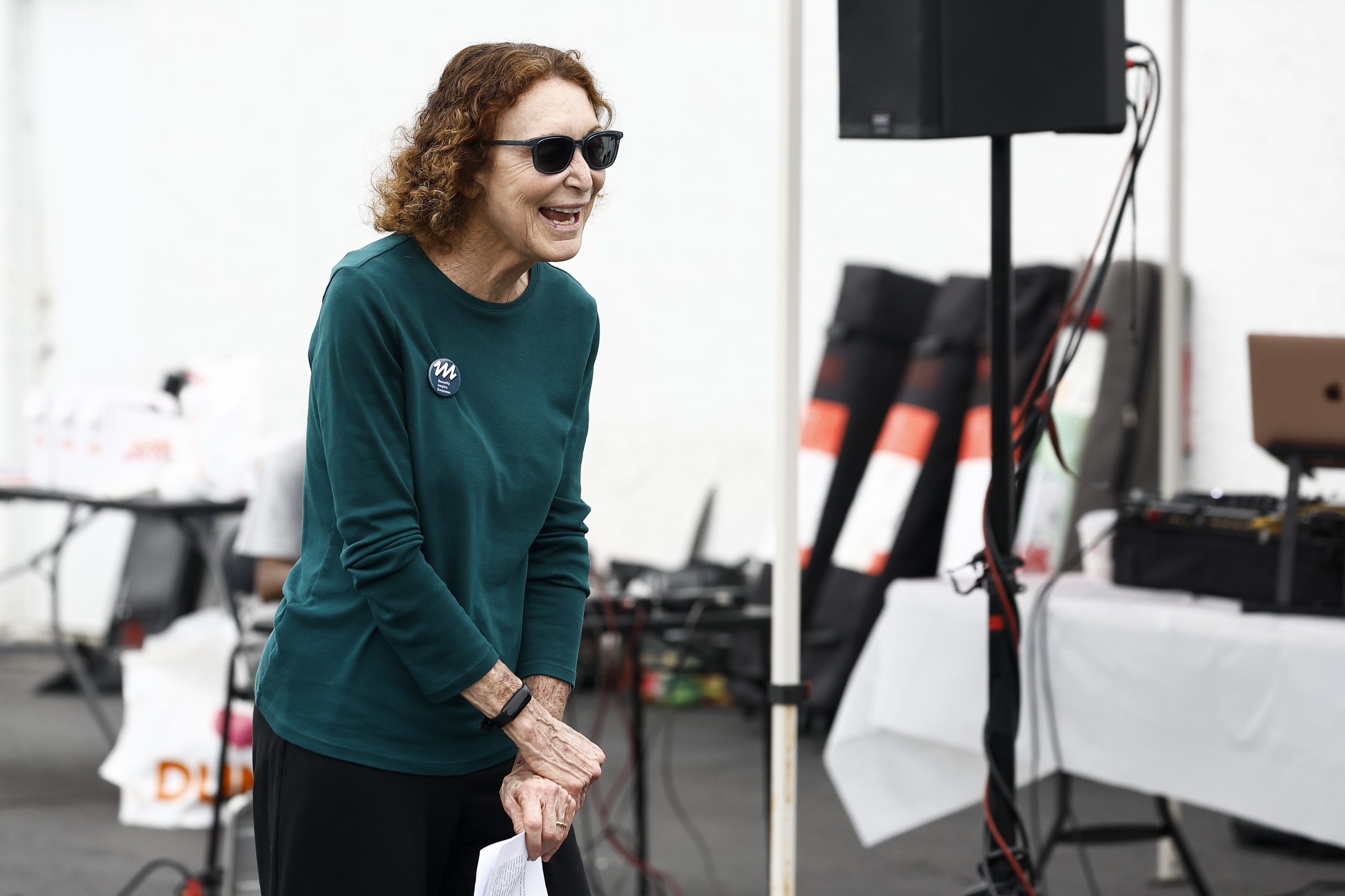
    Jane Golden, founder and executive director of Mural Arts Philadelphia, takes the stage during the dedication of the Super Bowl LIX mural at Spike’s Trophies on June 17, 2025 in Philadelphia.Monica Herndon / Staff Photographer

    Golden, 73, said last week that she is not currently running for Council, but acknowledged she has thought about it for years.

    “It’s always something that is tempting to me, because I just love the city so much,” she said. “I feel honored that people even think of me.”

    Progressives eye Bass’ North Philly seat

    Philadelphia’s progressive activists this year see two key opportunities to expand the loosely organized left-leaning bloc on Council, which currently consists of four members. Winning additional seats could also grow their influence by enticing more moderate members to vote alongside them if they believe primary voters are moving left.

    Progressives have in the last year authored some of the most high-profile legislation to come out of Council, including one package of bills by Brooks and Councilmember Rue Landau meant to set limits on federal immigration enforcement in the city and another by O’Rourke that codified new rights for renters.

    Leftists have notched high-profile wins in Democratic primaries across the country this year, including in Philadelphia, where democratic socialist State Rep. Chris Rabb (D., Philadelphia) bested more moderate candidates for a seat in Congress representing about half of the city. The district is one of the most Democratic in the nation.

    Next on progressives’ wish list: ousting Bass and Squilla, two more centrist Democrats who have both been on Council since 2012.

    In Bass’ 8th District, longtime labor organizer Seth Anderson-Oberman may challenge Bass for a second time after losing to her in 2023 by just 423 votes.

    Anderson-Oberman, 55, the executive director of the progressive group Reclaim Philadelphia, said last week that he is “leaning” toward taking another swing.

    “We’re in a moment in this country and this city where people have had enough,” he said. “People are looking for new answers. … Cindy represents the old way of doing things.”
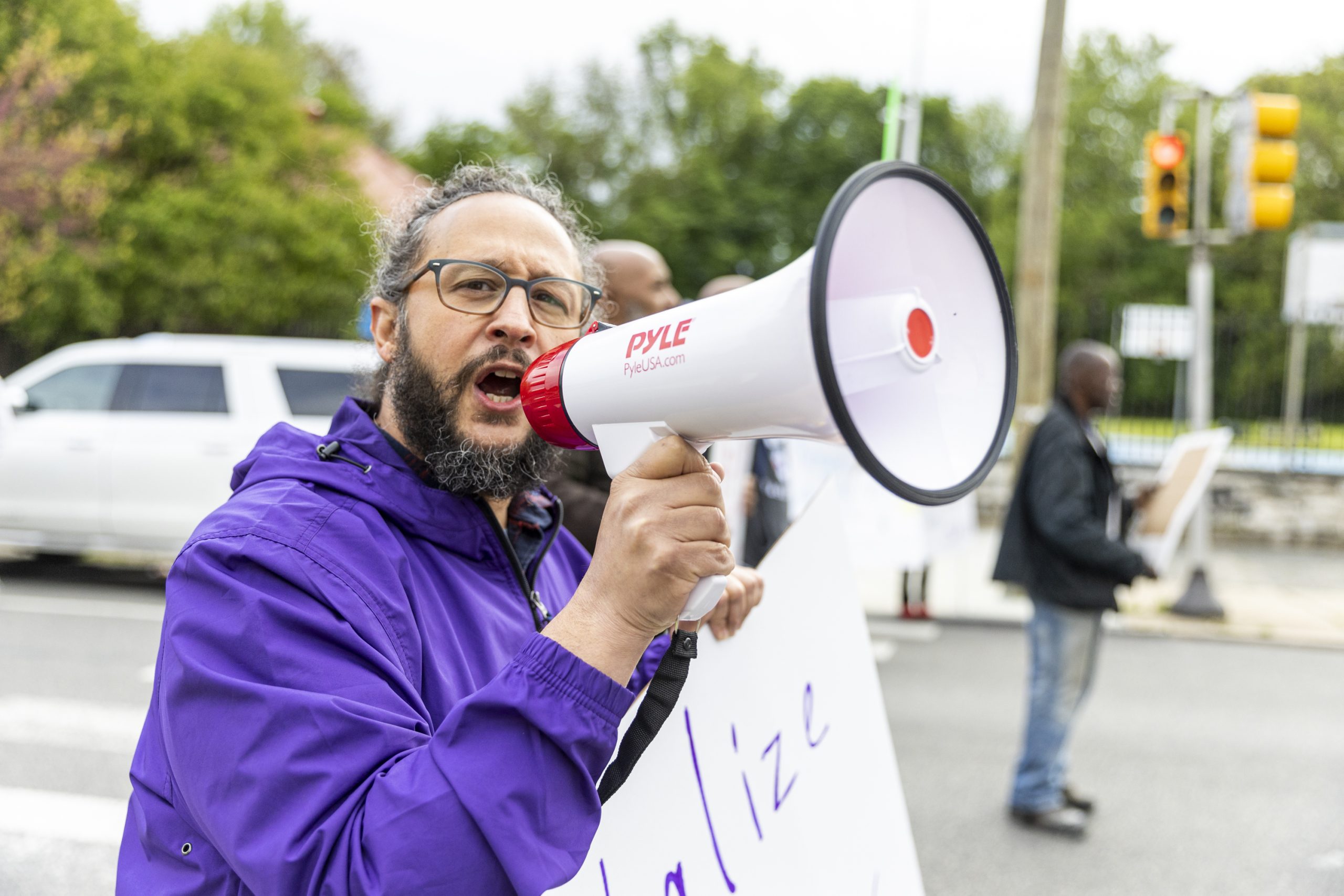
    Union organizer Seth Anderson-Oberman, running for 8th District City Council, joins in a small rally with community and Happy Hollow Advisory Board members along Wayne Avenue at Happy Hollow Playground in Philadelphia on April 2, 2023.Tyger Williams / Staff Photographer

    Another Council run by Anderson-Oberman may test how far progressive momentum can go in Philadelphia. He was a member of the Communist Party USA in his 20s, and has said he is proud of that experience.

    Bass, 58, said she is ready for the race no matter who her opponent is.

    In June, she survived a contentious fight for another four-year term as Democratic leader of Mount Airy’s 22nd Ward. She was criticized for her handling of the process, and the party ordered a redo of the election.

    She and her progressive opponent, Octavius Price, tied, then struck a power-sharing agreement. Through it all, Bass said, longtime residents stuck by her — and she is confident voters will do the same next year.

    “My voters are people who are based in this community, committed to this community, intend to stay in the communities that they are in,” she said.
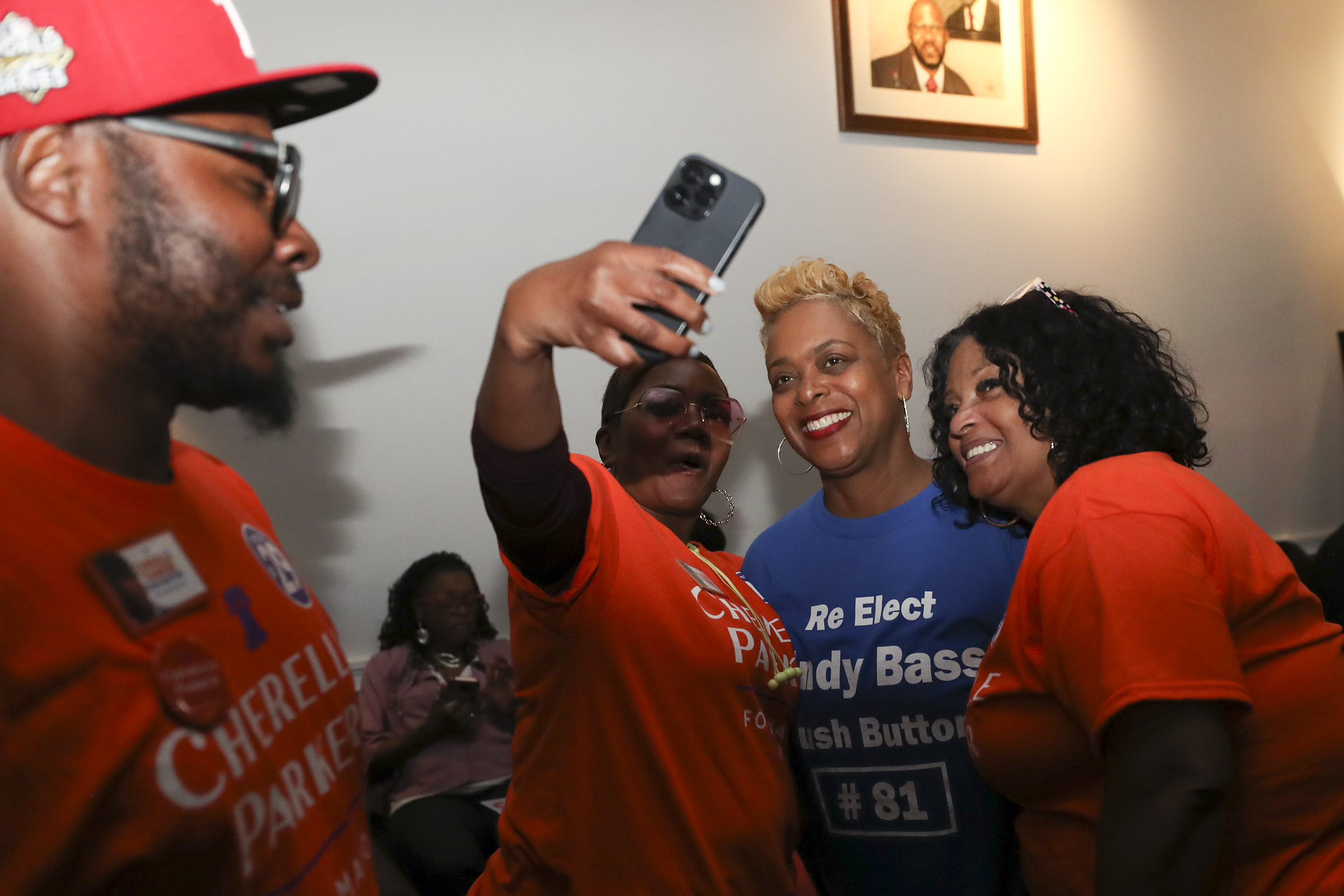
    City Councilmember Cindy Bass (center) attends the watch party for Democratic candidate for mayor Cherelle L. Parker at Laborers 332 in Philadelphia on May 16, 2023.Heather Khalifa / Staff Photographer

    Jeff Jones, a community leader and social justice advocate from Germantown, has also said he intends to run in the 8th District.

    “I want to bring that new vision and a new voice to the 8th District, where residents and children and families can know that their voice matters, their concerns will be heard, and their challenges will be met,” said Jones, 61, a first-time political candidate.

    Squilla could see a lefty challenger

    Leftists are also eying Squilla’s seat, which represents the area along the Delaware River from Pennsport to Kensington. Since Squilla took office in 2012, the district has transformed from a bastion of working-class white voters to one of the most progressive swaths of the city.

    Squilla, 63, who has strong labor ties and is one of the most pro-development district Council members, said being a centrist has likely put a target on his back in the 2027 election.

    Another contributing factor may be Squilla’s support for controversial legislation in 2024 to approve the 76ers’ since-abandoned plan to build a new arena in Center City. The project, which would have been in Squilla’s 1st District, was opposed by advocates for Chinatown, which the arena would have bordered.
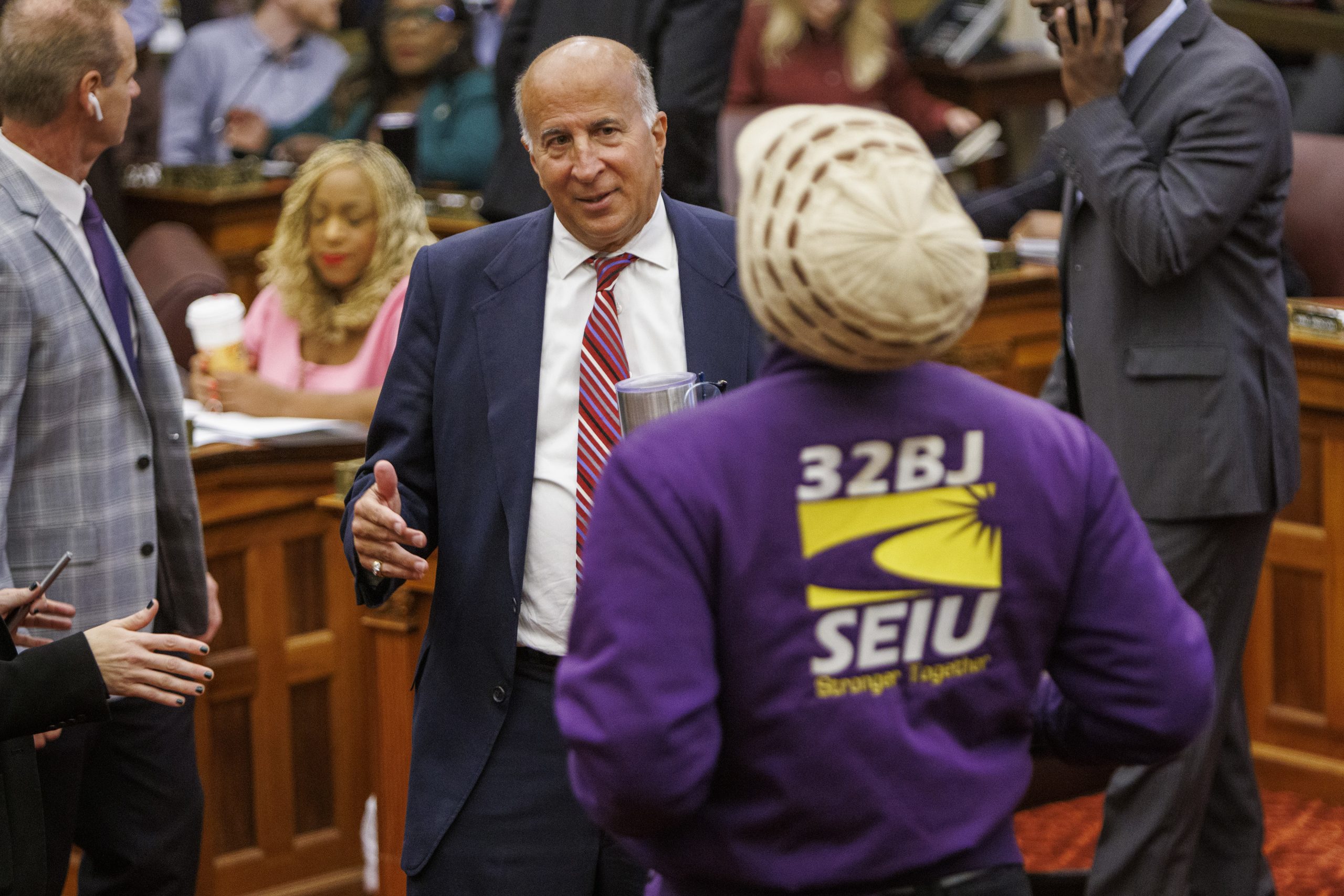
    Councilmember Mark Squilla arrives in Council chambers on Nov. 12, 2024, before the start of a public hearing on a proposed Sixers arena.Alejandro A. Alvarez / Staff Photographer

    Despite the fierce objections, Council approved the project with Mayor Cherelle L. Parker’s support in December 2024. Weeks later, the basketball team announced it was abandoning its Center City plan and would instead build its next arena in South Philly.

    Squilla said he is prepared to defend his actions, noting that he worked to ensure any arena deal would benefit his district and that many of those promises are moving forward despite the 76ers withdrawing their proposal.

    “The goal as an elected official, and also as a leader, is not always to make the popular decision,” he said. “The goal is to have a process to make the decision that would be best for the people around it.”

    One prominent opponent of the Center City arena plan was Will Gross, the owner of Ox Coffee in Queen Village and a progressive who is the Democratic leader of the 2nd Ward. He is seen by political insiders and progressive organizations as the most likely candidate to take on Squilla.

    Gross declined to comment.
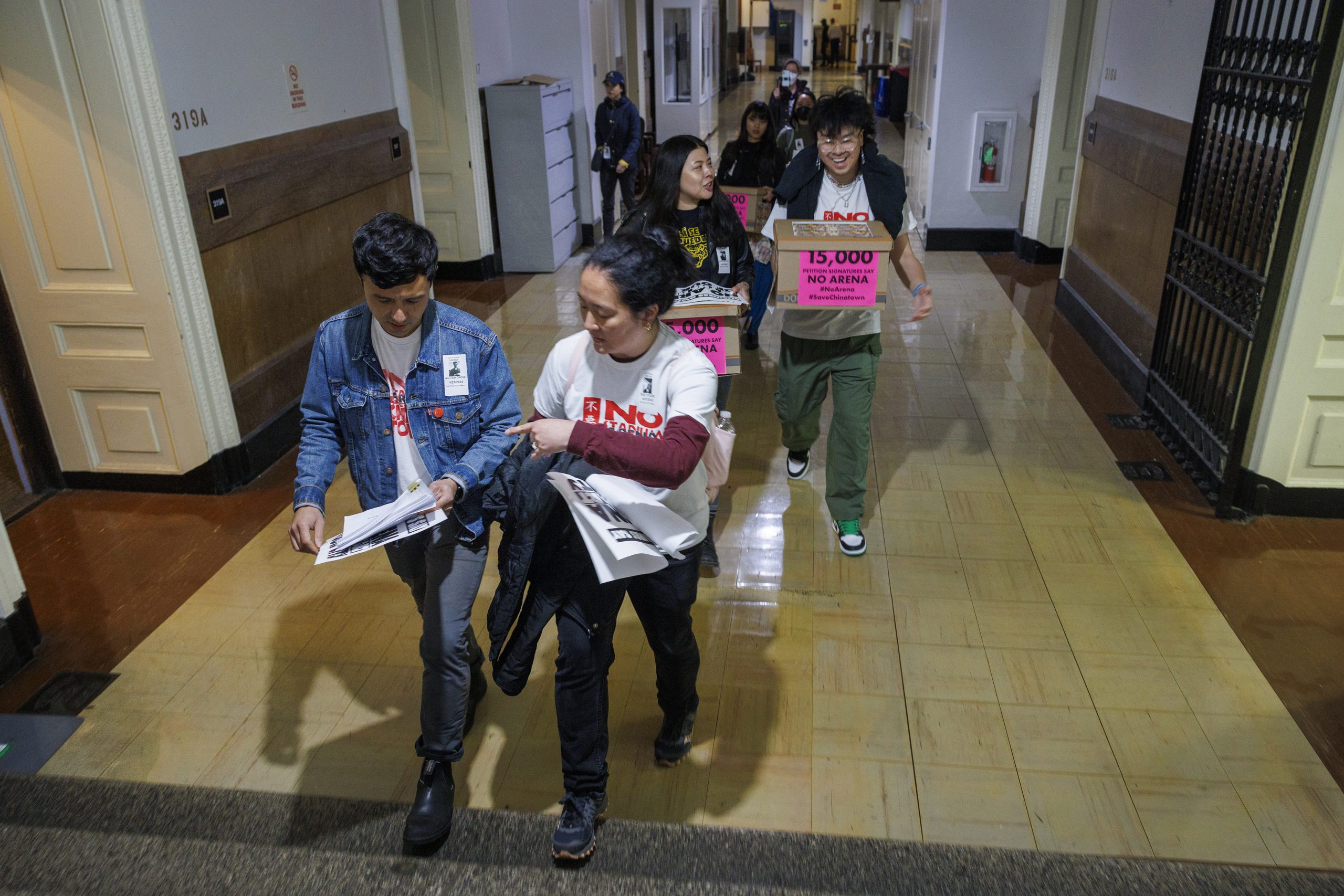
    In this 2023 file photo, Will Gross and Kay Yoon, of the No Arena in Chinatown group, deliver petitions to Councilmember Mark Squilla. Alejandro A. Alvarez / Staff Photographer

    A progressive challenger may also emerge in the North Philly and Kensington-based 7th District, which is represented by Councilmember Quetcy Lozada.

    In 2023, Lozada, Council’s only Latina member, won decisively over social worker Andres Celin, who argued for a more social services-driven response to address longstanding issues in the beleaguered district.

    Some insiders have speculated that Celin may run again. He declined to comment.

    Lozada, 55, said she “can’t focus” on potential challengers.

    “If I spend my time listening to the buzz about who is running,” she said, “we won’t get any work done.”

    A battle takes shape in the 5th District

    In the 5th District, a seat that represents parts of North Philadelphia and Center City, a handful of Democratic challengers are lining up to take on Young, 40, who is seen as one of Council’s most vulnerable members.

    That is in part because of the unusual way in which he was elected in 2023. He ended up being the only Democrat on the ballot after several others, including party officials’ preferred candidates, were removed amid legal challenges.
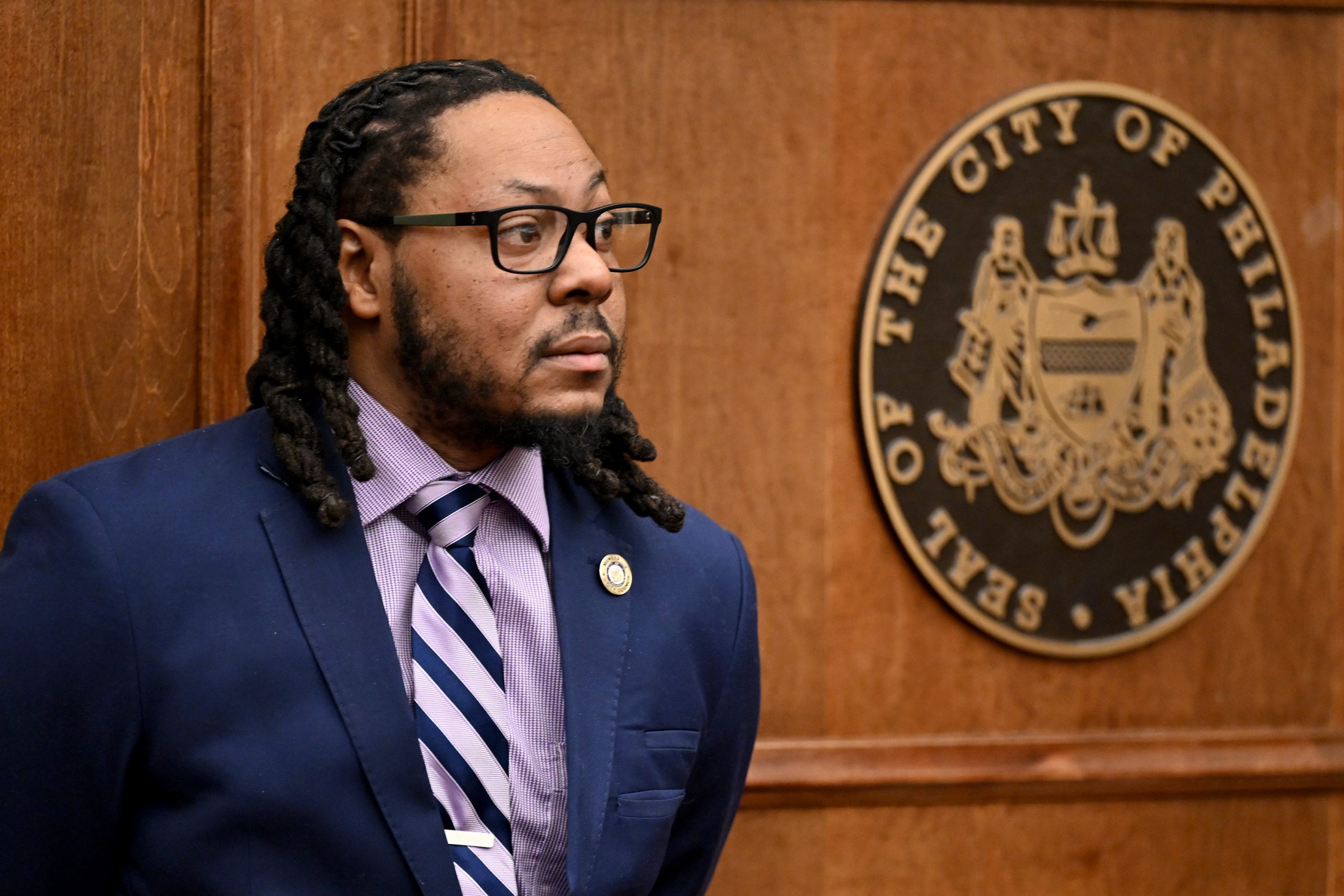
    Councilmember Jeffery Young Jr. in chambers as City Council meets Dec. 11, 2025.Tom Gralish / Staff Photographer

    One of those candidates was Curtis Wilkerson, who was chief of staff to former City Council President Darrell L. Clarke. Two sources, who spoke on condition of anonymity because they were not authorized to discuss the campaign dynamics, said Wilkerson is considering running for the seat again next year. He did not respond to a request for comment.

    Also likely to run is Jalon Alexander, an attorney who unsuccessfully ran for an at-large seat on Council in 2023. Alexander, 33, formed an exploratory committee last year and is expected to formally declare his candidacy later this summer.

    Two others are also considering running.

    Dustin Dove, a lawyer and the president of the Fairmount Civic Association, said neighbors and community leaders have encouraged him to get in the Council race, and he is “taking the possibility of running seriously.”

    “I think our city government should work for everyone by keeping our neighborhoods safe and streets walkable, making housing affordable, and ensuring fairness and access in public services,” Dove, 38, said last week.
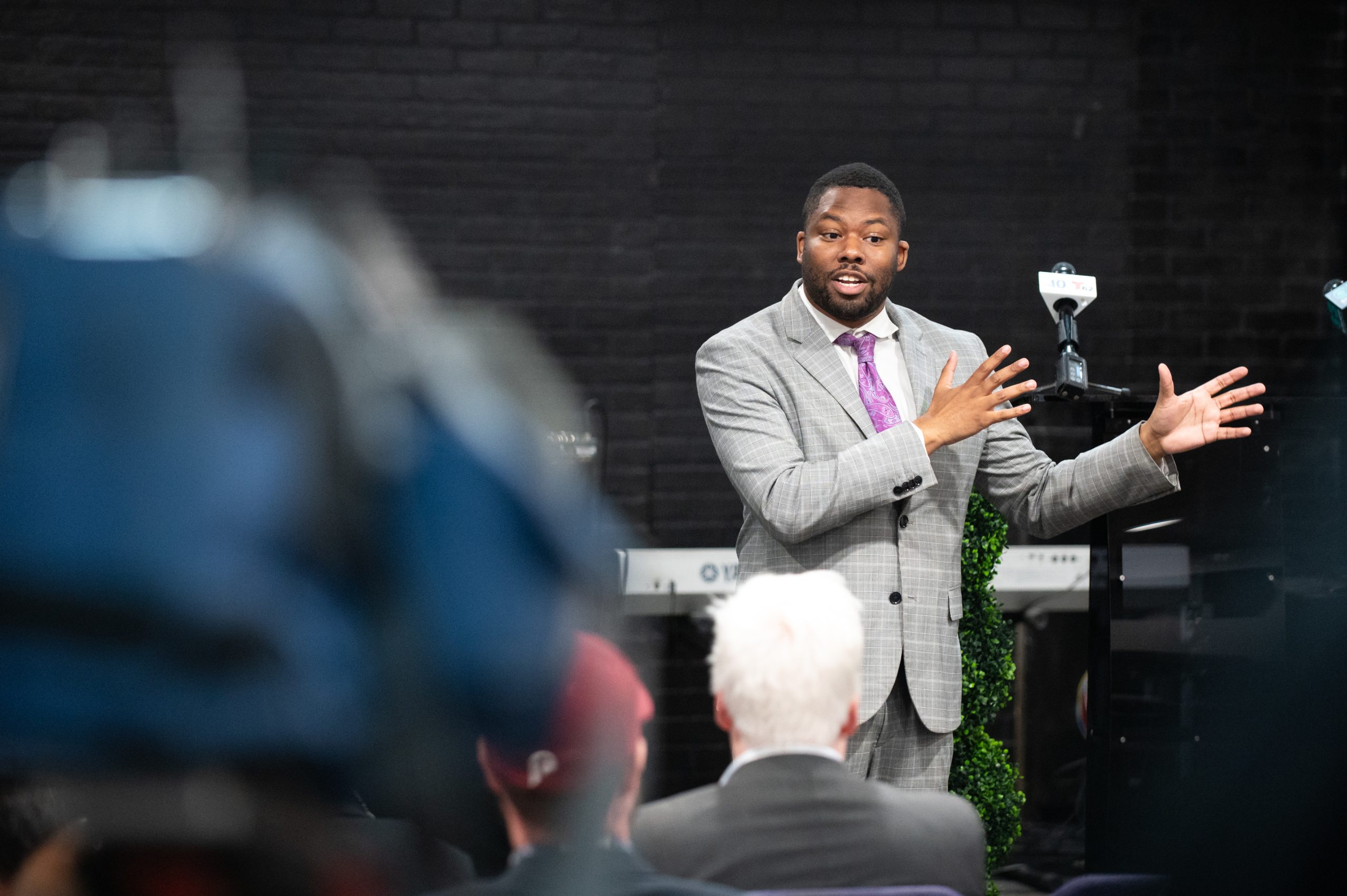
    Jalon Alexander, an attorney and community advocate, speaks to attendees at a meeting about potential SEPTA budget cuts hosted at Garden of Prayer Church in Strawberry Mansion on June 9, 2025.Erin Blewett / For The Inquirer

    And Max Tuttleman, 37, a philanthropist who unsuccessfully ran for an at-large seat in 2023, said he “cares deeply about the 5th District and would never close the door to serving Philadelphia.”

    He added that “Center City and the neighborhoods around it should be growing faster than they are.”

    That was a subtle dig at Young, who critics say has been too hostile to development in his district by opposing some residential projects.

    Young said in an interview last week that he intends to run for reelection, but that challengers are not his focus.

    “I‘m focused on serving my constituency, serving my community,” he said. “The work that we’ve been doing will hopefully earn the support of the residents of the 5th District.”

    A smaller, but competitive, at-large field

    Over the last several election cycles, dozens of candidates lined up to run for at-large seats during a time of immense turnover in Council.

    But with seven incumbents all looking toward reelection in 2027, there may be fewer challengers who line up to take them on. So far, only Golden and a handful of others have emerged as possible contenders.

    David Alexander Jenkins, a cultural strategist known for delivering impassioned speeches during Council’s public comment section, said he is considering a run, encouraged by fellow community members.

    “When the community that is around you constantly pushes you to intercede on their behalf, then it’s because they have trusted you to do what it is that you do best,” Jenkins, 39, said. “I think it would be incredibly unwise to ignore that.”

    And Jude Husein, 28, a Palestinian-born community activist who was raised in North Philly, has already launched her campaign. If her bid is successful, Husein, a former staffer for State Sen. Art Haywood, would be the first member of Gen Z on Council.
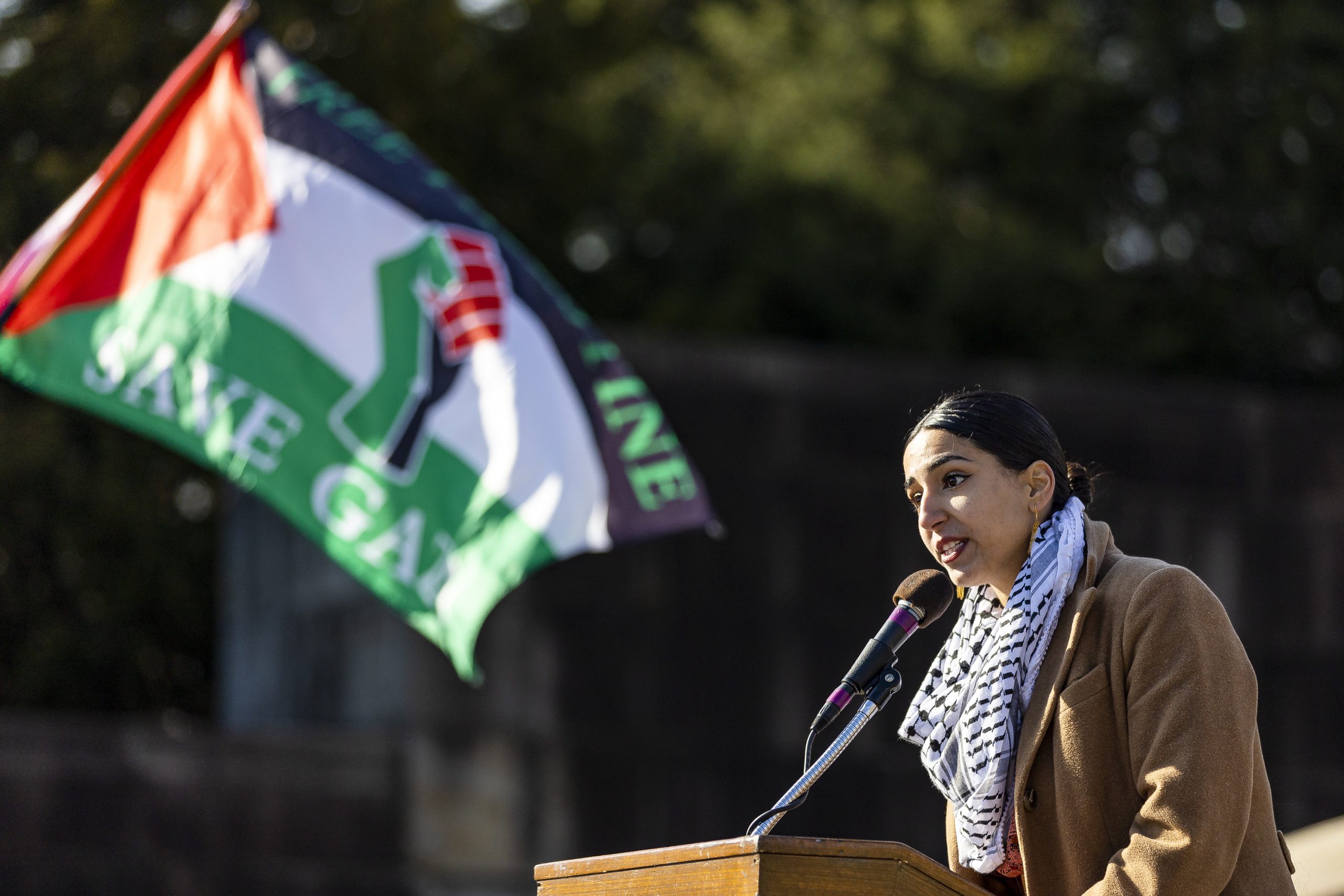
    In this 2023 file photo, Jude Husein, of North Philadelphia, speaks at a rally for a Day of Solidarity event at the Art Museum steps.Tyger Williams / Staff Photographer

    Leaders of progressive organizations said they are closely watching her candidacy. However, Husein is not exactly running as a leftist. She said that her policy positions are varied and that she will seek endorsements from any institution that is “values-aligned.”

    “I’m running because I think government should work for the people who pay for it, and should make neighborhoods affordable and safer,” she said.

    Also in the running for Council at-large seats are Billy McCann, 46, a former teacher who lives in Port Richmond, and Isaiah T. Martin, 26, who lives in West Philly and leads a community development nonprofit. The pair, who both said they are progressive, have established something of a slate with Jones, who is challenging Bass in the 8th District.

    They said they would prioritize public education, affordability, housing assistance, and government accountability, and they argued that establishment Democrats are failing to connect with voters.

    “A new day is coming,” said Martin, another member of Gen Z who would make history on Council if elected. “It’s time we get people who are going to do the actual work and not just sit here and talk about it.”
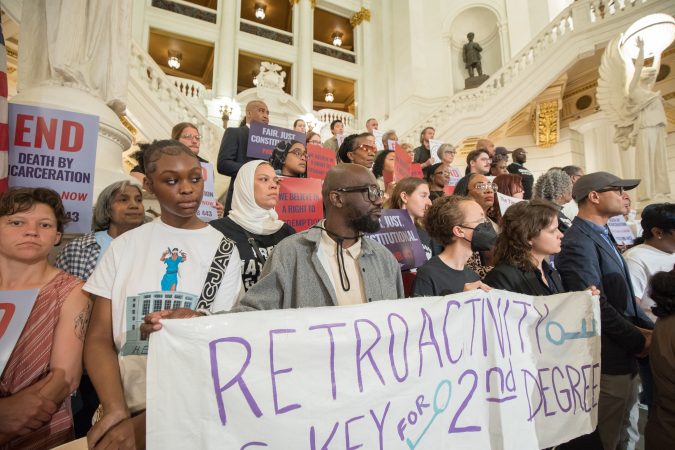
  • Pa. lawmakers have only days to set sentencing guidelines for felony murder cases. Hundreds of cases are on the line.

    Pa. lawmakers have only days to set sentencing guidelines for felony murder cases. Hundreds of cases are on the line.

    State lawmakers left Harrisburg on Sunday without approving a new sentencing structure for second-degree murder convictions, all but ensuring Pennsylvania will miss a court-imposed deadline to replace a law the state’s highest court struck down as unconstitutional because it barred judges from weighing individual culpability.

    The legislature’s failure makes it exceedingly likely that judges across Pennsylvania will soon have to sentence people convicted of second-degree murder without a legislatively enacted sentencing range to guide them. It also sets the stage for what is expected to be years of litigation over the roughly 1,100 people already serving mandatory life-without-parole sentences.

    The political stalemate leaves thousands of people — incarcerated Pennsylvanians, victims’ families, and attorneys — waiting to learn what happens next.

    “In the absence of a law, there’s going to be a lot of chaos and a lot of confusion,” said Sean Damon, director of strategic partnerships for Straight Ahead, a decarceration advocacy organization.

    Gov. Josh Shapiro said Sunday that he agreed with the Supreme Court’s decision striking down the mandatory sentencing law as unconstitutional, but had hoped lawmakers would reach a compromise before leaving Harrisburg.

    Shapiro said he spent much of the final two days of session trying to bridge the divide between House Democrats and Senate Republicans. Though no agreement emerged, he said that House procedural maneuvering left a legislative vehicle available should negotiators eventually strike a deal before a July 24 deadline to rewrite the law.

    “I’d like to see the legislature act on this and not just leave it up to every individual county to act,” Shapiro said.

    ‘Someone’s going to need to act’

    Until the Pennsylvania Supreme Court ruling in March, the state was one of only two that still required life without parole for every second-degree murder conviction — a category of homicide that generally applies to deaths committed during certain felonies, including cases in which a defendant played a role in the crime that led to the death.

    In their decision, the justices said courts must consider the facts of each case and the defendant’s culpability before deciding on a punishment.

    But the high court stopped short of deciding whether its ruling applies retroactively to people already serving those sentences. And it delayed implementing its decision for 120 days to give lawmakers time to rewrite the law.

    Since March, judges across the state have postponed sentencing defendants convicted of second-degree murder while awaiting action from the General Assembly.

    That action never came.

    Lawmakers adjourned for the summer with 12 days remaining before the Supreme Court’s stay expires and with no realistic path toward a compromise. Republicans and Democrats spent months advancing competing visions for replacing the unconstitutional law but failed to bridge deep disagreements.

    Senate Republicans twice approved legislation that would replace the mandatory sentence with a minimum term of 35 years to life, allowing parole eligibility after 35 years — or after 20 years for prisoners at least 70 years old.

    House Democrats backed legislation that would cap future second-degree murder sentences at 50 years while allowing many people already serving mandatory life-without-parole sentences to seek parole after 25 years. The proposal, supported by the Philadelphia Bar Association, the Defender Association of Philadelphia, and District Attorney Larry Krasner, never advanced to a vote in the House.

    House Majority Leader Matt Bradford (D., Montgomery) said Sunday that Democrats have a legislative path prepared, so when they reach an agreement they can swiftly pass it and send it to Shapiro’s desk.

    Asked whether that could happen before July 24 despite no additional voting days currently scheduled, Bradford replied: “We’re hoping to get something accomplished.”

    Republican Attorney General Dave Sunday urged lawmakers this weekend to reach an agreement before the deadline, warning that failing to enact a new sentencing law would leave courts without clear guidance and could allow some people now serving life-without-parole sentences to become immediately eligible for release.

    “It is dangerously inadequate for the House to allow the deadline to pass without a substantive and realistic proposal that includes sensible sentencing ranges with the option of a life sentence for the most serious offenders and protections for the victims of these horrible crimes,” Sunday said.

    Sen. Wayne Langerholc (R., Cambria) voiced similar concerns during a committee meeting Saturday.

    “Someone’s going to need to act in the House, or else this risks 1,100 violent offenders being released onto the streets of our commonwealth that we cannot afford to have,” he said.

    A ‘free-for-all in the courts’

    The Supreme Court cannot create a new sentencing range itself because establishing criminal penalties is the legislature’s responsibility. But advocates say Pennsylvania has already faced a similar situation.

    After the U.S. Supreme Court ruled in 2012 that mandatory life-without-parole sentences for juveniles were unconstitutional, Pennsylvania enacted a new sentencing law that applied only to future cases. Four years later, when the high court ruled that decision applied retroactively, judges had to resentence hundreds of incarcerated people without legislative guidance.

    Many attorneys expect a similar pattern after July 24. Judges will continue sentencing people convicted of second-degree murder on a case-by-case basis until lawmakers or appellate courts provide clearer direction. At the same time, attorneys representing people already serving mandatory life-without-parole sentences are expected to begin seeking new sentencing hearings.

    Because the Pennsylvania Supreme Court did not decide whether the decision applies retroactively, that question is also expected to return to the justices.

    “We reasonably believe that if this matter is brought to them [the justices] again, they will mandate mass resentencing,” said Damon, of Straight Ahead.

    Some criminal justice advocates argue that individualized sentencing hearings before judges are preferable to replacing one mandatory sentencing scheme with another because judges are better positioned to weigh a person’s role in a crime, rehabilitation while incarcerated, and risk to public safety.

    “Even though it will be a free-for-all in the courts,” said Celeste Trusty, a consultant for criminal legal reform organizations and former state legislative affairs director of FAMM, “people serving the now-unconstitutional mandatory life-without-parole sentences would also likely fare better” under individualized resentencing than under the failed bill.

    Even so, the absence of a statewide framework is likely to place enormous demands on courts, prosecutors, and public defenders, particularly in Philadelphia, where more than 500 people are serving mandatory life-without-parole sentences for second-degree murder — about half the statewide total.

    Keisha Hudson, chief defender of the Defender Association of Philadelphia, estimated each resentencing would require about $40,000 in attorney time, investigators, mitigation specialists, and other resources — roughly $24 million if every potentially eligible Philadelphia case returned to court.

    She said defenders are expected to shoulder much of that work but lack the resources to handle the oldest cases, including about 30 that predate the creation of the office’s homicide unit in 1993.

    Philadelphia District Attorney Larry Krasner did not respond to an interview request.

  • Here’s what’s in — and not in — Pennsylvania’s $50.8 billion state budget

    Here’s what’s in — and not in — Pennsylvania’s $50.8 billion state budget

    HARRISBURG — Pennsylvania’s new $50.8 billion state budget was sprawled across more than 600 pages of legislation and signed into law on Sunday. New data center regulations, education funding, and more were approved in the wide-ranging spending package.

    But some of the most pressing issues facing the General Assembly were noticeably absent from the final deal, as Gov. Josh Shapiro and lawmakers in the split legislature were unable to reach a compromise — or did not want to touch the contentious issues until after they are up for election in November, sidelining some of Shapiro’s top budget priorities.

    Here’s a look at what is in — and what was left out of — the 2026-27 Pennsylvania state budget.

    In: Education funding increases

    Pennsylvania took another jump toward filling a multibillion-dollar funding gap between wealthy and poor school districts, after a court found that the state’s old system of funding education was unconstitutional. Since 2024, when the state first implemented new adequacy and tax equity formulas in efforts to fill the $4.5 billion “adequacy gap,” lawmakers have put nearly $1.9 billion toward funding lower-income districts, with plans to fill it by 2032.

    “It keeps our promise to our school districts,” said State Rep. Jordan Harris (D., Philadelphia), who serves on the powerful appropriations committee responsible for allocating state dollars, in remarks on the House floor Sunday.

    The latest installment of adequacy and tax equity payments — $565 million — will largely go to low-income districts that already have high property taxes. The Philadelphia School District, Pennsylvania’s largest district and the only one in the state that is unable to raise its own revenue, will get $136 million of that funding increase.

    Out: Revenue generators

    Shapiro proposed generating new revenue streams to help the state fix its multibillion-dollar structural deficit in his last four budget addresses. But the ways he wants to raise that cash have drawn resistance from Senate Republicans, who argue they are not policies that will improve the state’s economic standing — or cannot reach agreement within their caucus on how to address the issues.

    Shapiro this year did not get the hefty minimum wage increase he asked for, seeking to raise the hourly rate from $7.25 to $15 — and counting on the higher wage for $80 million in higher income tax revenues. Nor was he able to get the General Assembly, where Democrats control the House and Republicans lead the Senate, to approve adult-use cannabis, which his office estimated would bring in $729.4 million in its first year, largely through licensing. (House Democrats have approved plans for a minimum wage increase and recreational marijuana legalization, but the Senate has not voted on the bills.)

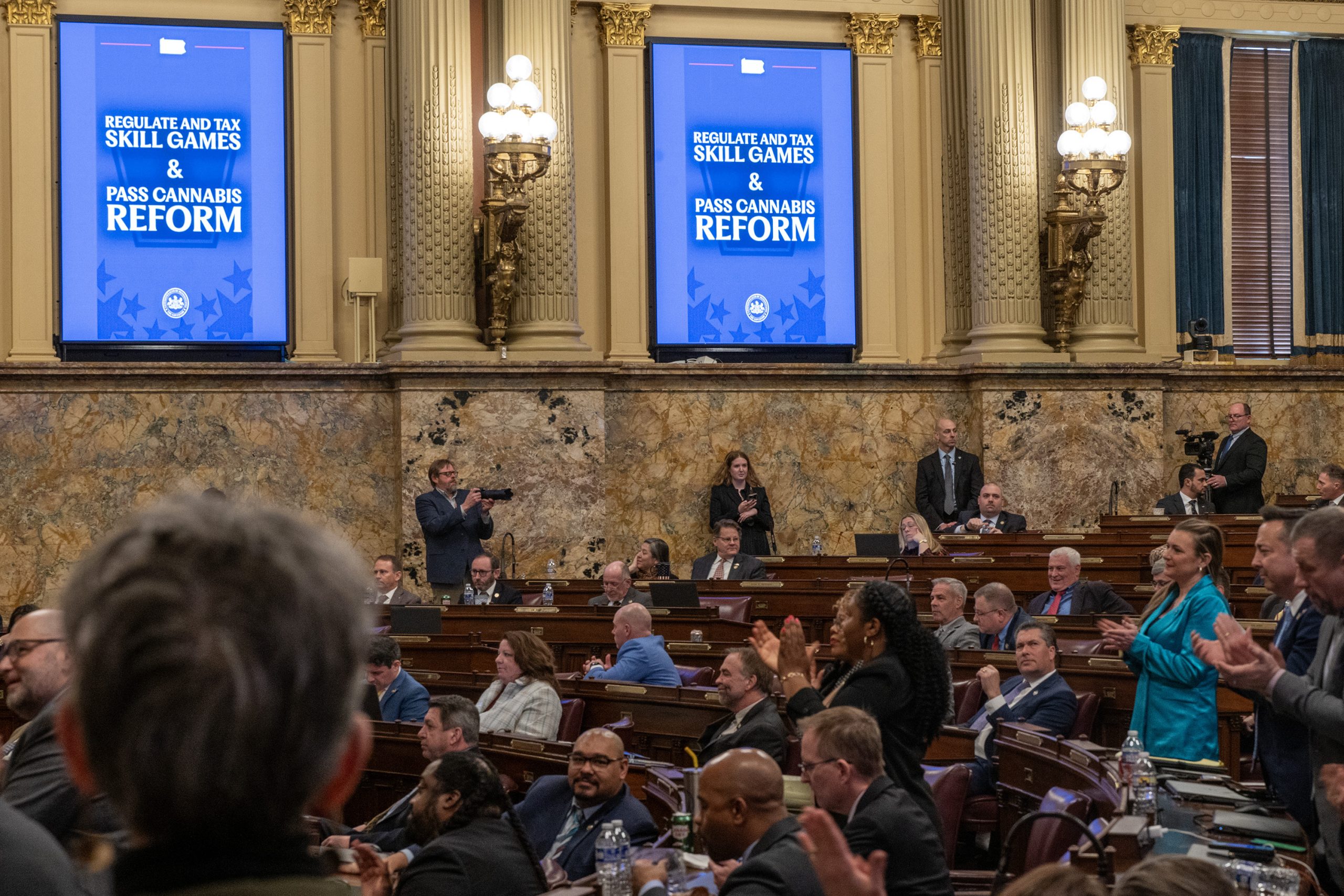
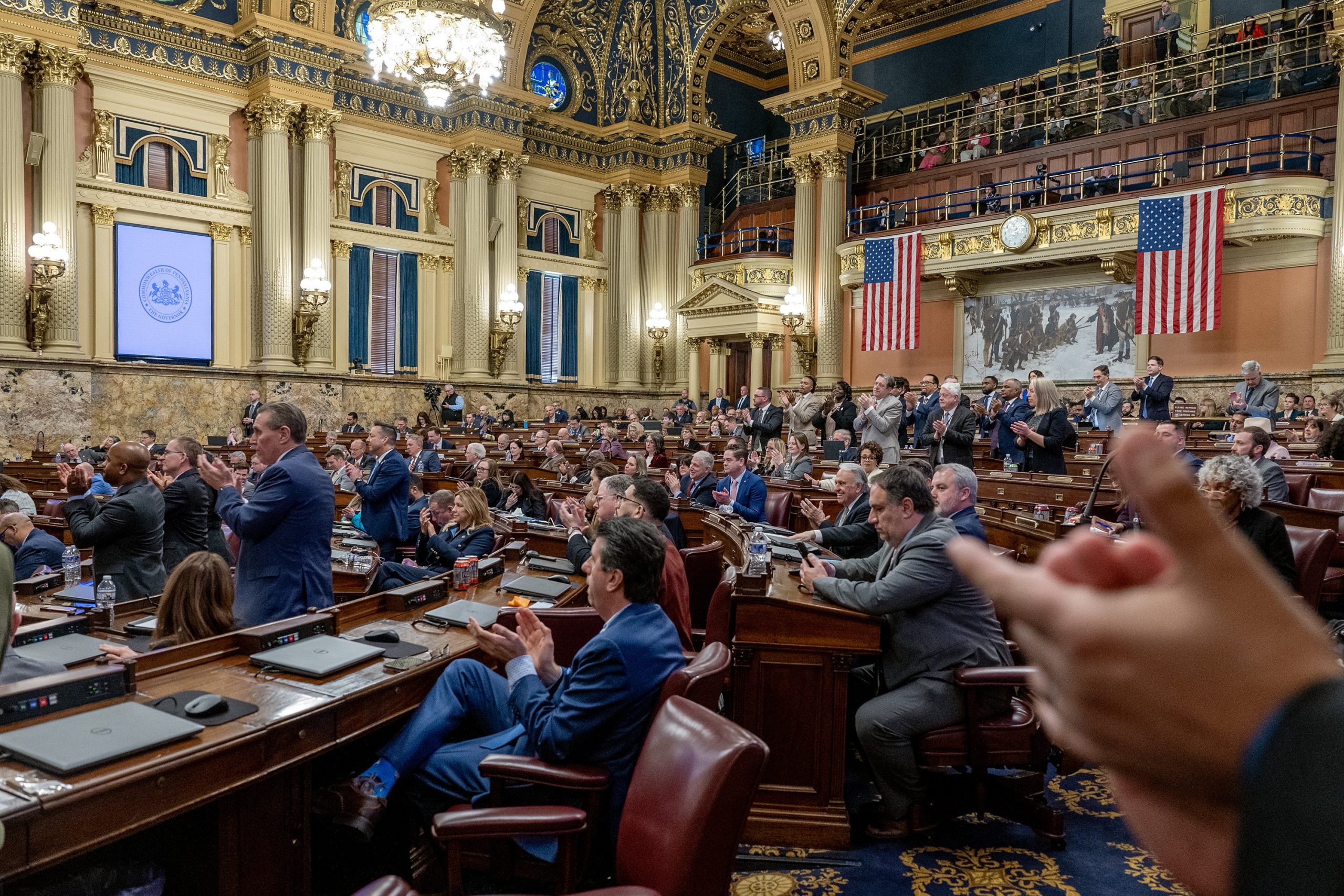
    Screen shows skill games and cannabis regulation and reform as Gov. Josh Shapiro makes his annual budget proposal in the state House chamber in Harrisburg Tuesday, Feb. 3, 2026.Tom Gralish / Staff Photographer

    Shapiro, in his February budget proposal, also called on the General Assembly to regulate and tax skill games at the same rate as casinos, a move that he has estimated could generate nearly $800 million in revenue in its first year. But any regulation of skill games — slot machine look-alikes that the state Supreme Court ruled last month are a form of gambling — was left out of the budget.

    Lawmakers have until October to decide whether skill games will be taxed and regulated, under a grace period in the high court’s ruling. Otherwise, the devices found in many corner stores, gas stations, and bars will become illegal gambling machines. The issue has been the target of more than $8 million in lobbying and $9 million in campaign spending in Harrisburg, mostly funded by one company.

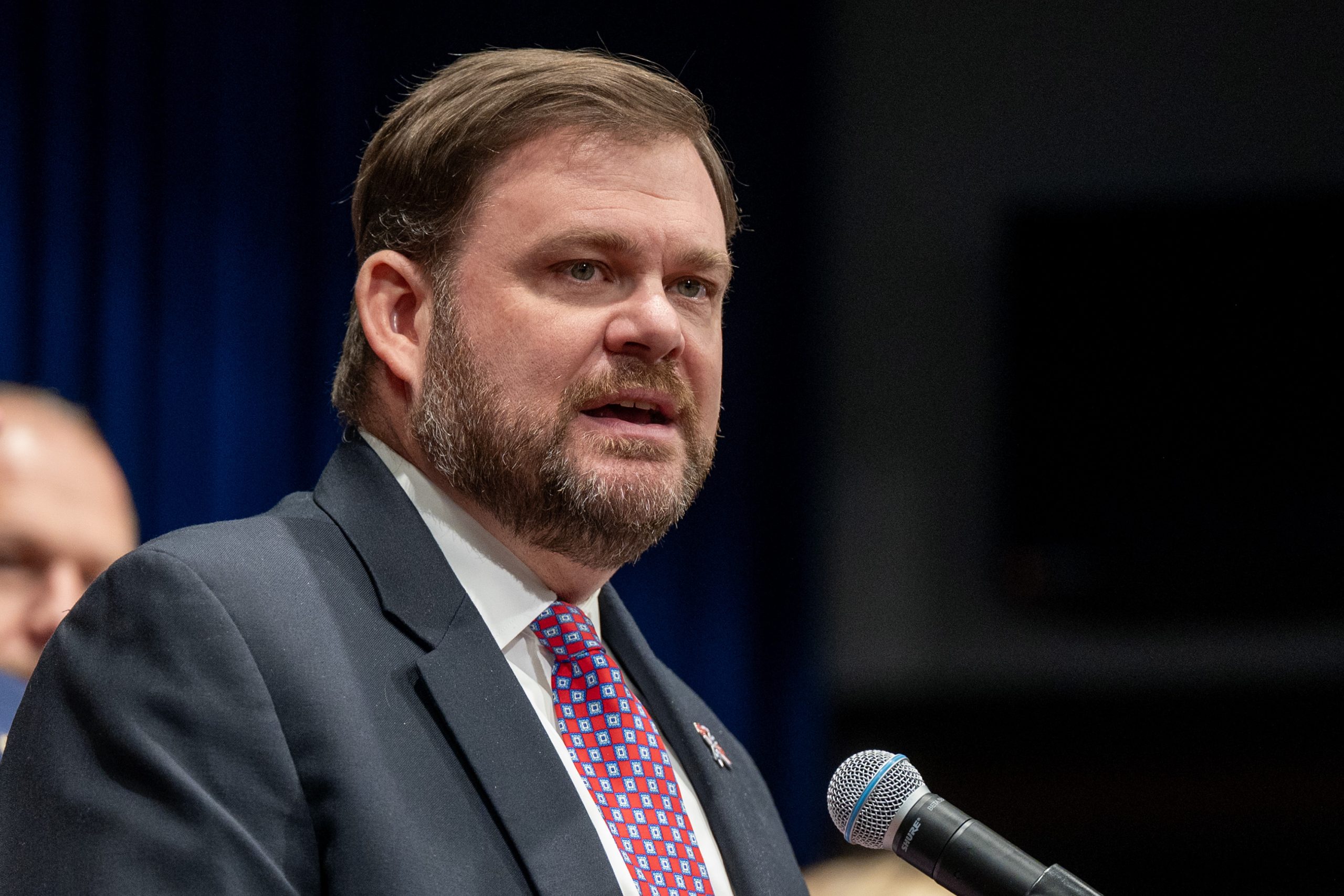
    State Senate Majority Leader Joe Pittman (R., Indiana) during a press conference at the Capitol in Harrisburg Feb. 3, 2026.Tom Gralish / Staff Photographer

    “We can act within the 120 days; we can act after the 120 days,” Senate Majority Leader Joe Pittman (R., Indiana) said Sunday. “But the choice is now quite simple. These machines are illegal, and in less than 120 days, they will be leaving the marketplace.”

    In: Data center reporting requirements

    Data centers — which are seeing a boom in Pennsylvania as artificial intelligence usage increases and communities push back on where the centers are being built — will be required to submit information about their energy and water usage.

    Beginning next summer, data centers in the state with a peak energy demand greater than 10 megawatts will be required to submit information annually to the Pennsylvania Department of Environmental Protection.

    Outlined as part of this year’s fiscal code, those reports will be publicly accessible. Data centers that do not submit information about their resource usage will be fined $10,000 a day.

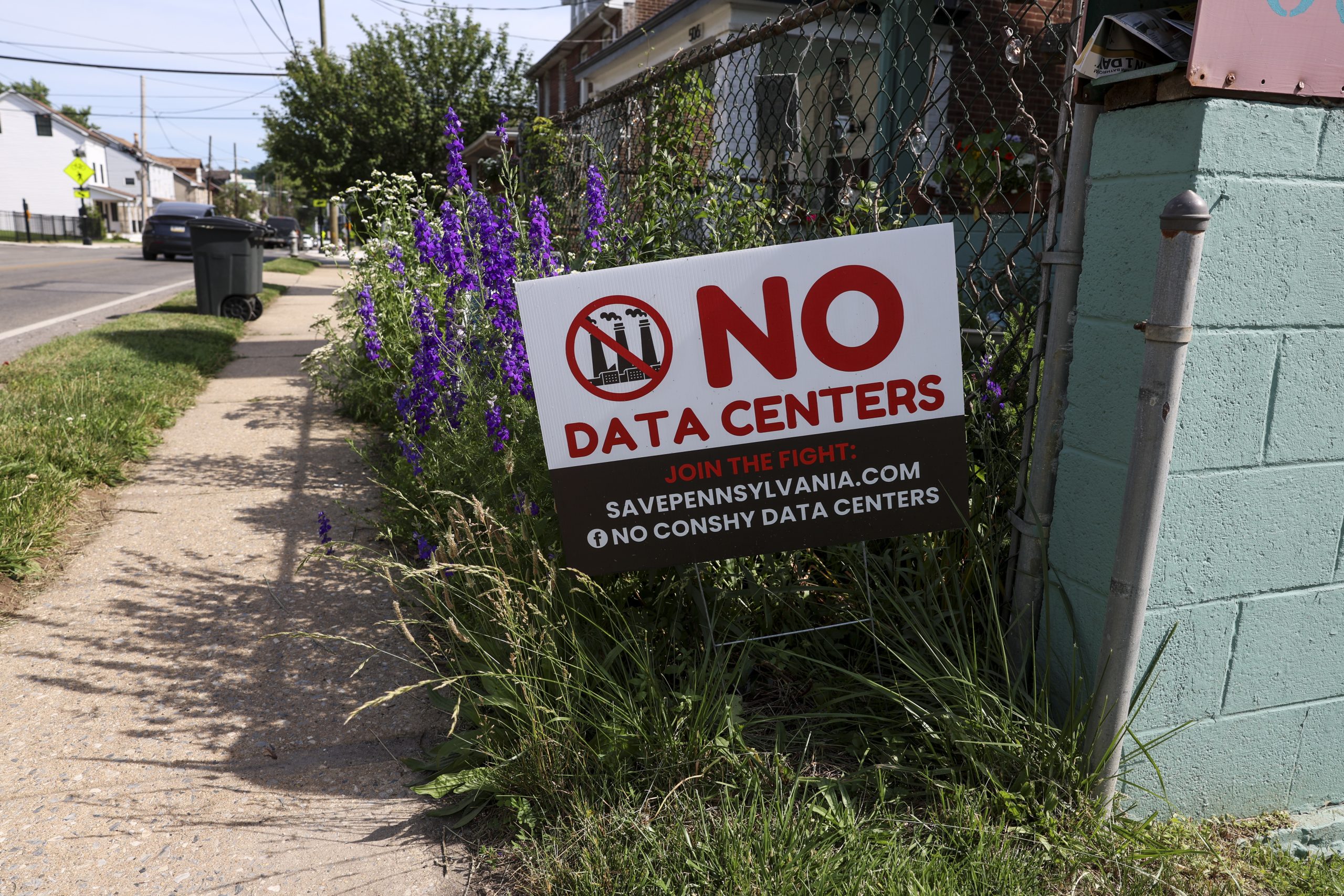
    A yard sign protests the proposed data center on New Elm Street near the Closed Cleveland-Cliffs steel mill photographed on Thursday, June 4, 2026 in Conshohocken, Pa.Monica Herndon / Staff Photographer

    Out: Data center regulations

    A data center regulation bill, which would have limited state benefits for data center developers and was championed by Shapiro, was not included in the final budget deal. The governor called for limiting a sales and use tax exemption and expediting permitting to projects that comply with a set of transparency and environmental standards.

    And several other data center regulation efforts that have received bipartisan support in recent weeks were also absent from the final spending package.

    Those included efforts to repeal the sales tax exemption afforded to data center developers and attempts to enact a local or statewide moratorium on new data center development.

    Both chambers passed language repealing the tax exemption and advanced differing bills to freeze development. One Democratic-sponsored bill would have given municipalities the option to implement a 180-day moratorium on new centers. The other, a Republican-sponsored measure, would allow for local moratoriums of up to 18 months.

    In: Compromise

    Compromise was the word of the day around the Capitol on Sunday, when the legislature swiftly passed the more than 600-page budget deal hashed out behind closed doors by Shapiro, Pittman, and House Majority Leader Matt Bradford (D., Montgomery) and passed with bipartisan support in both chambers.

    The legislative leaders and Shapiro emphasized that they did not get exactly what they wanted in the budget, as a symptom of dealing with divided government. And leaders were proud to have reached the deal less than two weeks after their July 1 deadline, rather than the nearly five months it took to hash out an agreement last year.

    House Majority Leader Matt Bradford (D., Montgomery) speaks on Tuesday, Jan. 7, 2025.Tom Gralish / Staff Photographer

    Lawmakers had agreed to work over the weekend to hurriedly approve the budget deal, with members of the Senate coming in on Saturday night to begin advancing parts of the budget deal and the House joining them Sunday afternoon. By 6:15 p.m. Sunday, Shapiro had signed it.

    Among the inspirations for the weekend of productivity, Bradford said: making it to the MLB All-Star Game in Philadelphia, for which he had tickets.

    Out: Typical budget math

    Leaders returned to some old accounting maneuvers to address the state’s multibillion-dollar structural deficit and avoid pulling from the state’s emergency savings account.

    They spent down unused and underused dedicated funds, and rolled some of the state’s Medicaid payments totaling $1.3 billion to the next fiscal year, a move lawmakers typically resorted to before the state saw an influx of federal dollars during the COVID-19 pandemic.

    Without those delayed payments, the state budget would total closer to $52.1 billion, and several GOP members criticized the total as being disingenuous.

    In: Cost-of-living bumps for pensioned workers

    More than 80,000 retired public-sector employees will receive a cost-of-living adjustment to their pensions, something advocates have sought for years.

    Public school teachers and other state employees who retired before July 1, 2002, will receive a tiered monthly payment based on the date of their retirement. Similarly, police officers and firefighters who retired more than five years ago will receive monthly payments ranging from $50 to $300, depending on how long they have been retired.

    Lawmakers from both parties had called for the cost-of-living increase.

    In: Closing Philly’s sales tax loophole

    Legislators also agreed to close a loophole that allowed online sellers to avoid paying Philadelphia’s local 2% sales tax on purchases made in the city.

    Mayor Cherelle L. Parker had asked the General Assembly to close it as part of her own city budget pitch in a move estimated to bring an additional $1.5 million to Philadelphia.

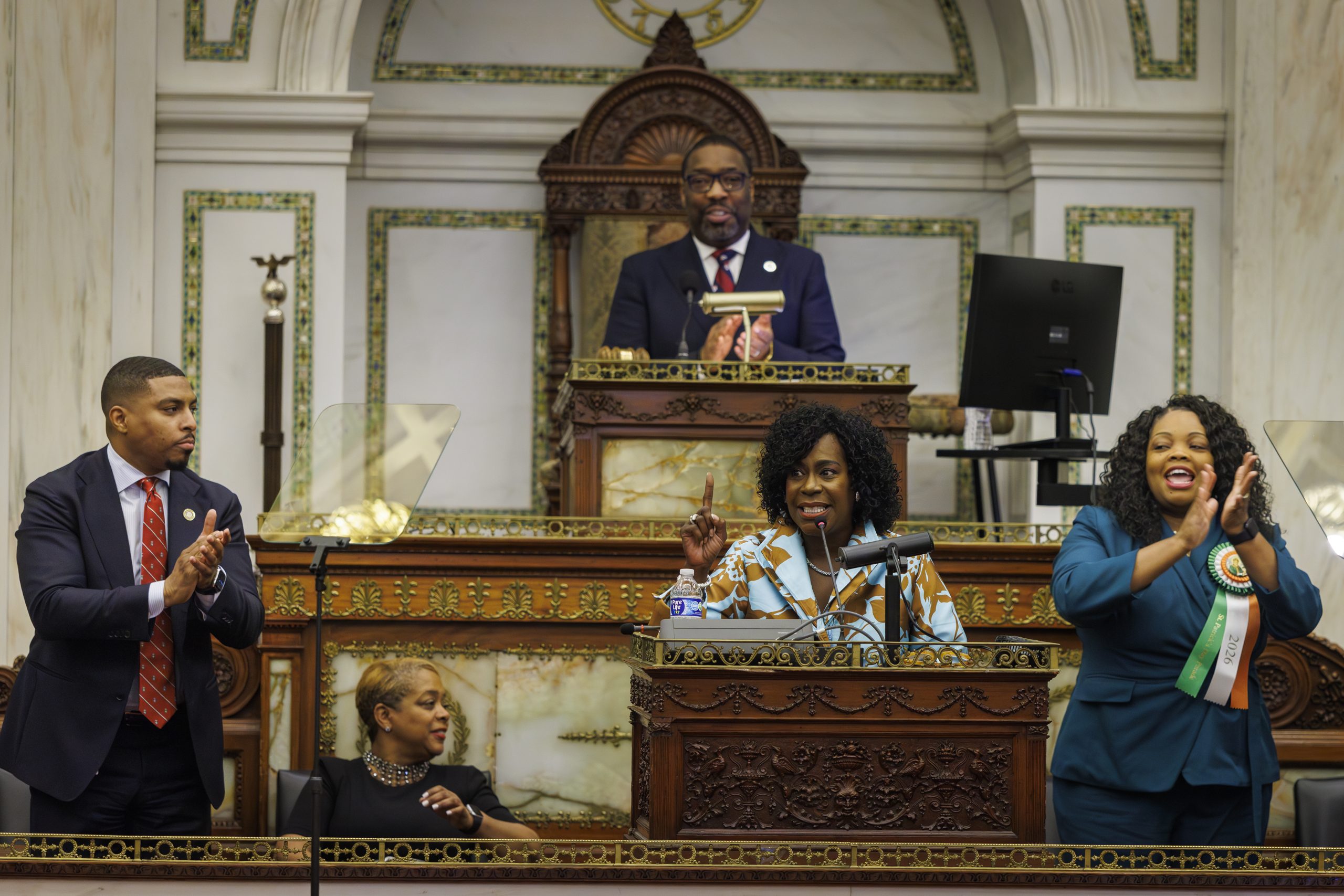
    Philadelphia Mayor Cherelle L. Parker is cheered by members of Philadelphia City Council at conclusion of her budget address, Thursday, March 12, 2026.Alejandro A. Alvarez / Staff Photographer

    Out: Banning cell phones in schools

    Twenty-nine states have bell-to-bell cell phone bans. This year, Pennsylvania will not join them, despite the passage of two separate phone ban bills — one in each chamber of the legislature.

    In: Mandatory recess for students K-5

    Recess is now law in Pennsylvania.

    Another education policy change championed by Shapiro, a mandatory, 30-minute recess for students in kindergarten through fifth grade was established in this year’s budget as a way to improve learning outcomes.

    Out: Addressing looming problems — with looming deadlines

    Several Pennsylvania funding issues that have gone years without being addressed were left out of the latest budget, some with more pressing deadlines than others.

    Lawmakers did not address a need for mass transit funding — which led to last year’s bitter budget stalemate among legislators — but are expected to identify a long-term funding stream for the transit agencies next year when a two-year fail-safe runs out.

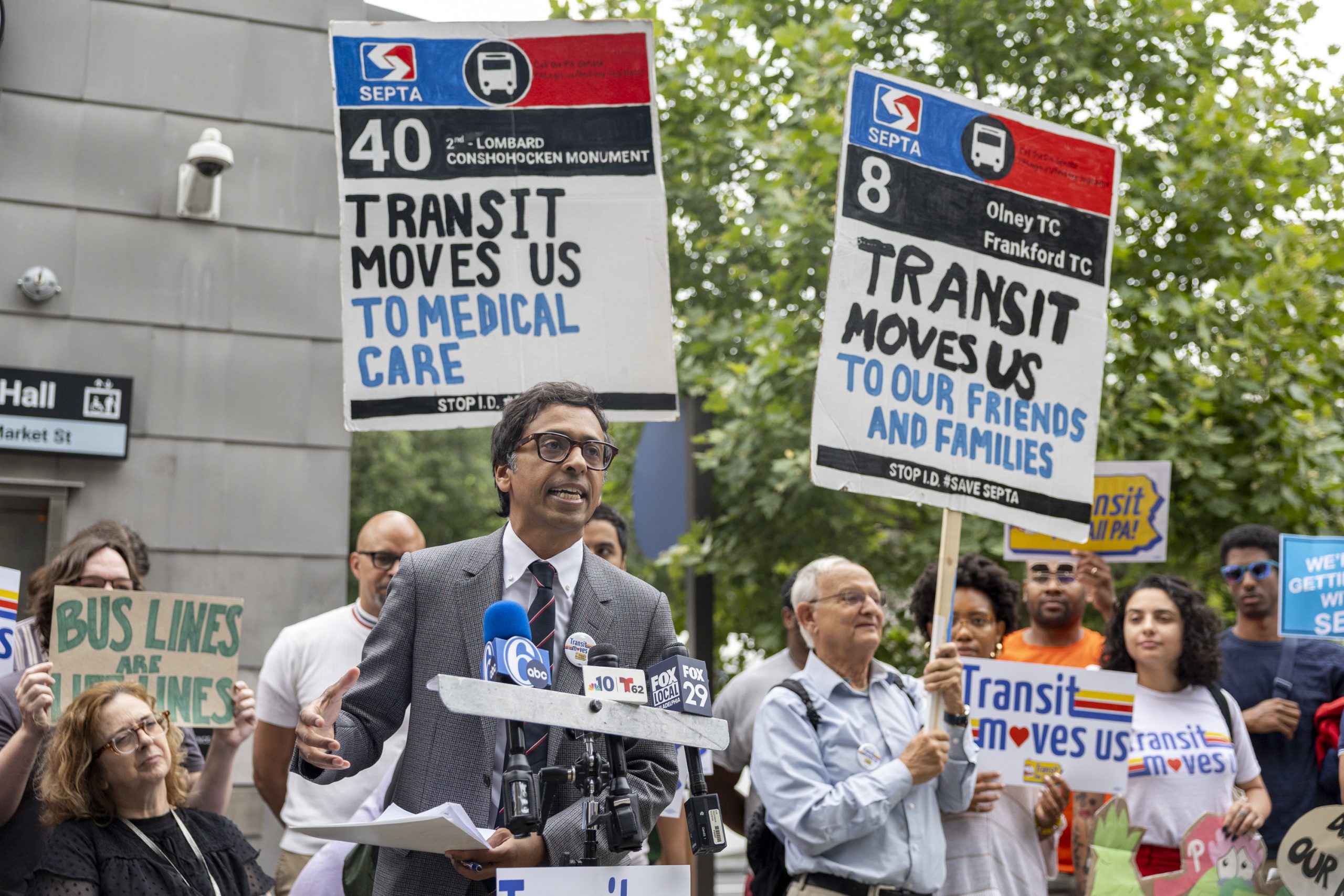
    Senator Nikil Saval, speaks at a press conference calling for more SEPTA funding from the state at Independence Hall in Philadelphia, Pa., on Friday, June 26, 2026.Tyger Williams / Staff Photographer

    Other local governments and service providers said their needs are more pressing.

    The County Commissioners Association of Pennsylvania released an urgent plea after the state budget was signed, noting that counties still have not received the critical mental health funding they need, or a surcharge increase used to fund 911 call systems. Home-health service providers also continued their calls for increased state funding they say is needed, as the industry faces serious staffing issues due to low state reimbursement rates.

    In: More funding for rape crisis centers

    Rape crisis centers got a much-needed funding increase, from $12 million to just over $24 million.

    Philadelphia’s only rape crisis center had to lay off its employees and rely on volunteer work during last year’s monthslong state budget impasse.

    Republican and Democratic lawmakers championed the organizations in this budget, making it the largest single-year increase for the critical services in state history, according to the Pennsylvania Coalition to Advance Respect.

    “Today marks a turning point for survivors and rape crisis centers across Pennsylvania,” said Joyce Lukima, the organization’s coalition director, in a news release.

    Ethan Young is an intern with the Pennsylvania Legislative Correspondents’ Association.

  • In the national debate around affordability, the politics are personal for Chester County’s U.S. Rep. Chrissy Houlahan

    In the national debate around affordability, the politics are personal for Chester County’s U.S. Rep. Chrissy Houlahan

    In the back of a classroom where she had just read to 20 attentive preschool kids, U.S. Rep. Chrissy Houlahan was concerned about what the staff of the West Chester YMCA was telling her.

    Nearly a third of the families who rely on the facility’s childcare programs — in the richest county in Pennsylvania, and one of the wealthiest in the country — receive financial assistance to cover the $1,900 monthly cost, the staffers said.

    Houlahan, a Democrat who is soft-spoken when she is not grilling President Donald Trump’s cabinet secretaries or House Speaker Mike Johnson (R., La.) on Capitol Hill, asked about the income qualifications for financial aid. At a certain point, the YMCA staff told her, some parents have a disincentive to earn more, lest they become disqualified and then stuck with a higher bill.

    “It’s terrible, no matter how you do the math,” Houlahan said a few hours later at a Malvern restaurant, relaying the story to her daughter, Molly Rosa Houlahan, and daughter-in-law, Kristen Rosa Houlahan.

    The YMCA’s fee was about the same amount the couple were paying for their 18-month-old, Lucy. With another child due in September, it is also an amount they still are unsure how to afford twice over.

    “We’re very fortunate in our jobs, and we’re both trying to get promotions in order to be able to afford a second daycare,” said Molly Rosa Houlahan, 33, a local theater director and producer. “But we are not in that position yet. I don’t totally know what will happen when this second child arrives.”

    From childcare to healthcare, groceries to gas prices, affordability concerns have remained top of mind for Americans this year — dominating discussions on Capitol Hill ahead of the high-stakes midterm elections.

    Republicans, who control Congress and the White House, say they have made real progress in raising wages and lowering costs. They marked the first anniversary of Trump’s One Big Beautiful Bill Act — since rebranded by Republicans as the Working Families Tax Cut Act — this month by celebrating the law’s more generous tax refunds and other benefits, like new investment savings accounts for children under 18.

    Democrats have pointed to the bill’s simultaneous cuts to Medicaid spending and food assistance for low-income families. They say Trump signaled he has no interest in lowering costs when he refused to sign a bipartisan housing bill and said he doesn’t “think about Americans’ financial situation” when handling the war in Iran.

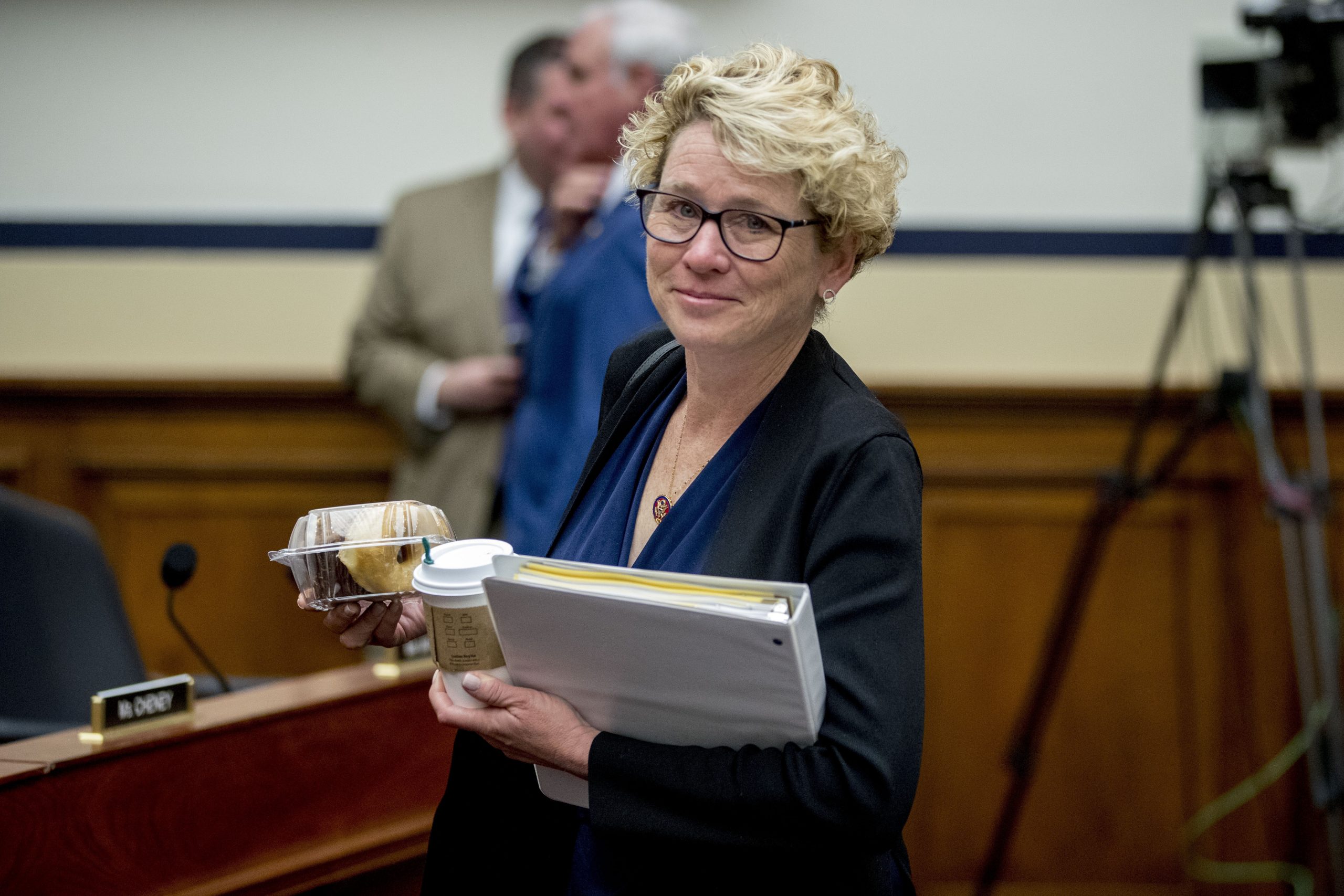
    In this 2019 file photo, U.S. Rep. Chrissy Houlahan (D., Pa.) arrives for a House Armed Services Committee budget hearing for the Departments of the Army and Air Force on Capitol Hill in Washington.Andrew Harnik

    Houlahan, who has represented most of Chester and Berks Counties since 2019, routinely highlights the broader scope of cost-of-living issues alongside her colleagues. She has taken a leading role among centrist House Democrats to help craft a detailed “affordability agenda.”

    Whether her party can advance any of those policies in Washington, even if it wins control of one or both chambers of Congress in November, remains an open question as Trump remains in office and the International Monetary Fund warns of a worsening global economy.

    But as the fight drags out, it has also become increasingly personal for Houlahan and her family.

    In addition to occasionally helping fill the gaps in their granddaughter’s care, Houlahan and her husband’s own home in Devon, Chester County, has transformed into a version of a so-called sandwich generation household within the last year. The couple’s other adult daughter, her husband, and both of Houlahan’s parents, who are 80 and 84, have all moved in.

    The underlying circumstances for the multigenerational home, as they would be for any family, are various and personal. And Houlahan emphasized across multiple interviews that she is fortunate to have the means to welcome her family under her roof. (Houlahan is an Air Force veteran and a former executive at the athletic apparel company AND1. Her husband, Bart, is a partner at an investment research firm.)

    But the larger realities — like skyrocketing costs for childcare and senior living — have also now played a role in her own life. Her mother has a Parkinson’s diagnosis, and her parents were unable to find a one-floor living space that was affordable and fit their other needs as they looked to move closer to their family.

    “We’re having these conversations, and you know people all over our community are having these conversations,” she said. “It’s an acute issue for families in our area: How do you balance all of this?”

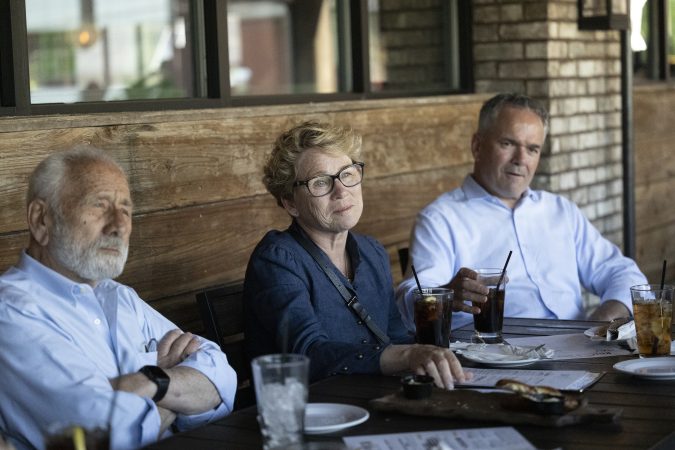
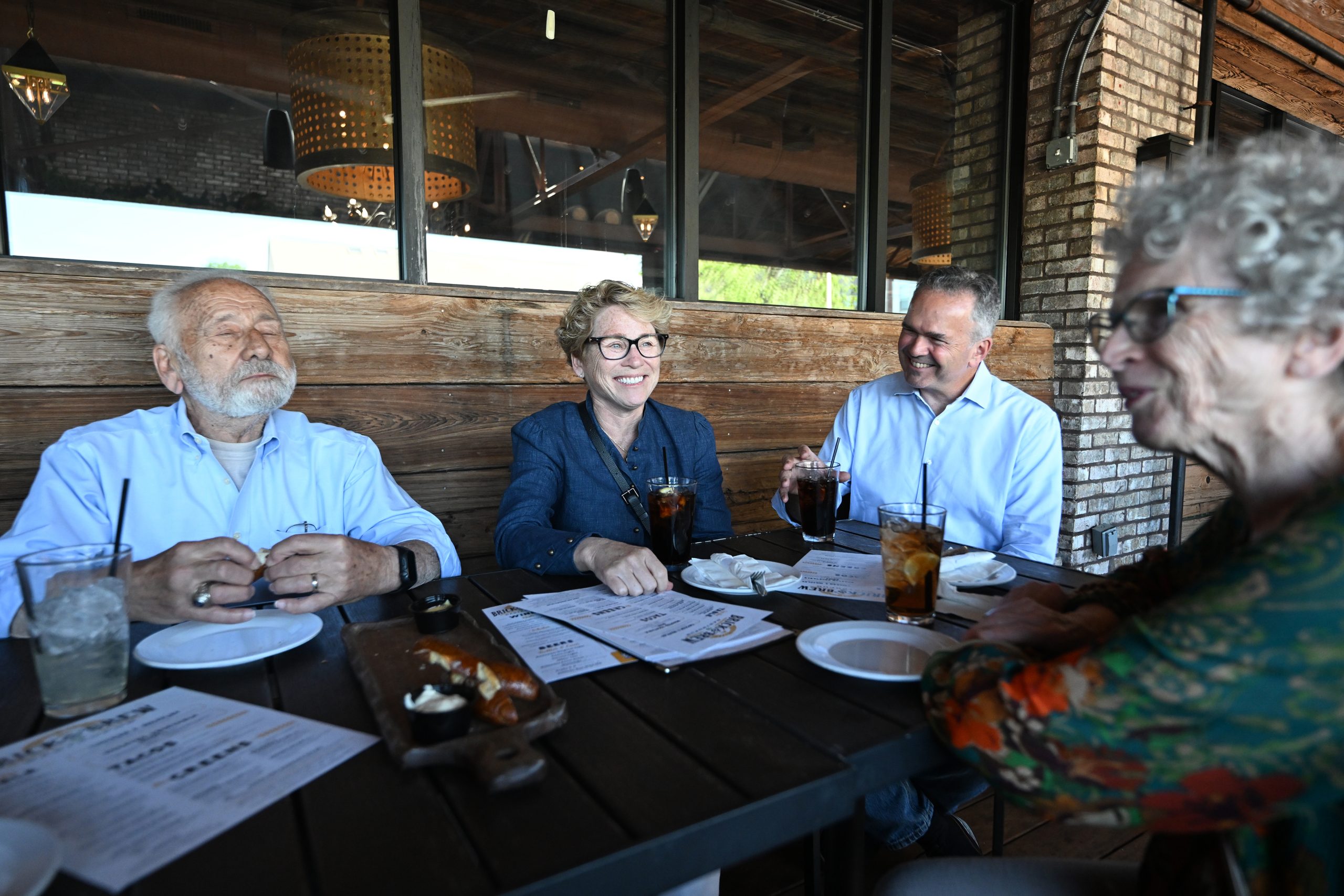
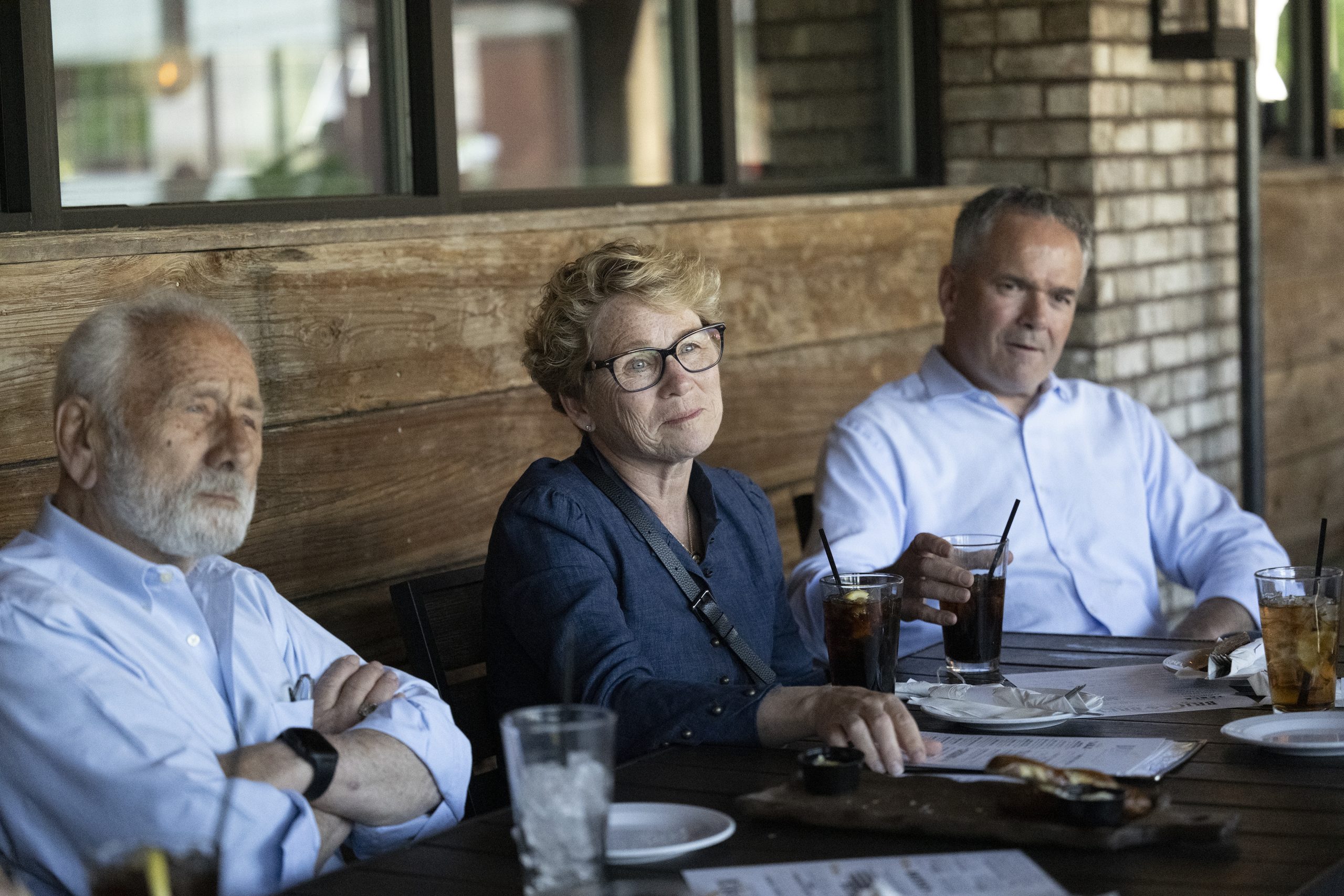
    U.S. Rep. Chrissy Houlahan (center) has dinner with her family at Brick & Brew in Malvern, including her father, Andy Jampoler (left), her husband, Bart Houlahan, and her mother, Suzy Jampoler.Jose F. Moreno / Staff Photographer

    ‘A big balancing act’

    Houlahan has shared parts of her family’s story as she has traveled her district this year — prioritizing events and meetings that aim for a deeper understanding of an affordability crisis that has not spared her home county, where the median household income is about $131,000, or 40% more than the statewide average.

    On back-to-back days this spring, that meant a focus on the kinds of childcare and senior-care issues she has become familiar with.

    “We call it ‘from zero to Edna,’” Laura Schoefield-Pierson, executive director of the YMCA of Greater Brandywine, said of the facility’s programs aimed at all ages, from infants to seniors.

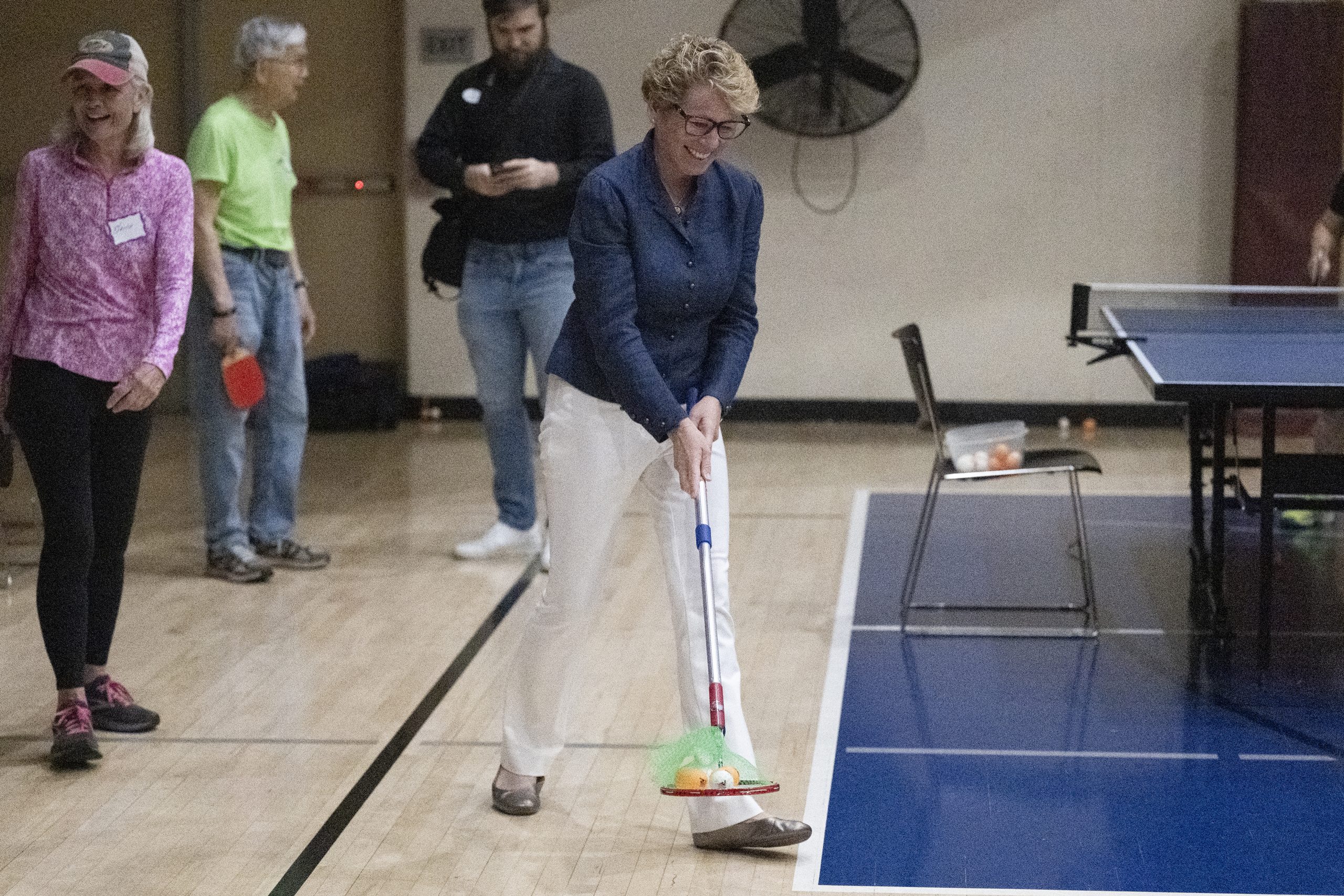
    Walking Houlahan through the pre-K classes and a gym with a dozen seniors playing table tennis, Schoefield-Pierson spoke about the organization’s exercise programs aimed at offsetting symptoms of Alzheimer’s or Parkinson’s, and about the complexities of providing assistance for families with young children.

    In addition to the “many children” whose care is subsidized through the state’s Child Care Works program — set for families earning 200% or less of the federal poverty level, or $66,000 for a family of four — others receive aid through the YMCA, Schoefield-Pierson said. The facility’s fundraising goal this year is $237,000, she said. On the day of Houlahan’s visit, Schoefield-Pierson said “the kiddos” were writing thank-you notes to donors.

    U.S. Rep. Chrissy Houlahan (D., Pa.) interacts with teachers and children at a childcare center at the YMCA in West Chester.Jose F. Moreno / Staff Photographer

    Though the U.S. Department of Health and Human Services recommends childcare should not exceed 7% of household income, Houlahan said she was surprised to learn a family would have to earn $327,000 to meet that benchmark at the YMCA for one child.

    Nationally, the average annual cost of childcare in 2024 was $13,128, an increase of 29% over the previous five years and far exceeding the national recommendation for the average household’s budget.

    “It’s crazy how much healthcare and childcare plays into your family planning,” said Helena Cordoba, a 35-year-old mother of two who said at a roundtable hosted by Houlahan that she had been hoping to grow her family.

    A Colombian immigrant who owns Café Com Leite in Phoenixville, Cordoba said she thought she had been living the American dream. But a recent miscarriage and the rising costs of both childcare and healthcare, which she does not currently have, have made her rethink her family’s plans.

    “I never thought I was going to say, ‘Maybe the miscarriage is a blessing.’ That thought on its own is very saddening,” Cordoba said. “I don’t know if we were going to be able to afford another baby. Our life would have been completely turned upside down.”

    Others voiced similar struggles while Houlahan sympathized and shared her daughter’s own experience with a $2,000 monthly daycare bill.

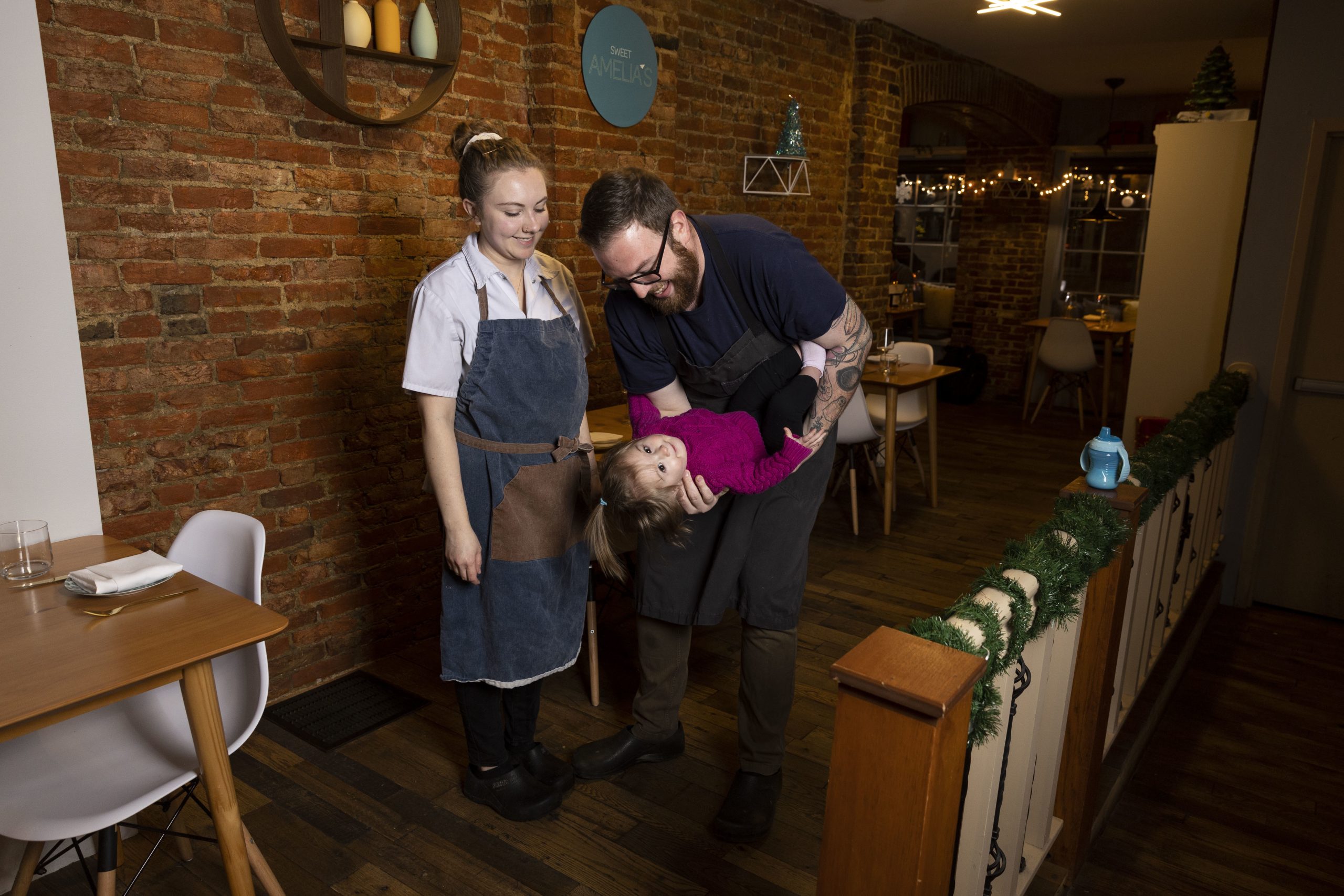
    Karessa, Amelia, and Zack Hathaway, pictured here in 2023, at Sweet Amelia’s in Kennett Square.Monica Herndon / Staff Photographer

    Zack Hathaway, who owns the restaurant Sweet Amelia’s in Kennett Square with his wife, Karessa, said their business “makes just enough” to cover the $700 to $800 weekly cost for their babysitter amid a demanding restaurant schedule. Thomas Smith, who works at the Cleveland-Cliffs steel plate production facility in Coatesville, said he makes too much to qualify for subsidies for his grandchildren but still struggles to cover the cost.

    “It’s like a big balancing act to be able to put your kids in a place that you want to feel comfortable with them being and with being able to afford it,” said Amarte Grove, another Cleveland-Cliffs employee and a father of five daughters.

    In another tour focused on the other end of the age spectrum, Houlahan peppered staffers at Brandywine Valley Active Aging in Downingtown about their work to offer free meals, housing services, and activities to about 120 seniors daily.

    According to the organization, Chester County’s homeless population has decreased in recent years — from 916 in 2023 to 747 in 2025. But the percentage of that population that is over 60 has increased from 9% in 2023 to 14% in 2026. About 45 older adults in the county were homeless as of early May, according to the organization, which works alongside other independent and government groups to connect seniors with stable housing.

    “It is really difficult to live in Chester County,” said Jen Manthey, BVAA’s director of information and assistance. “It takes a long time for them to get out of homelessness, partly because it takes a long time for us to build the trust with them and get that rapport — that they trust what we’re saying, and there aren’t $400 room rentals out there that we’re just hiding from you.”

    U.S. Rep. Chrissy Houlahan (D. Pa.) visits with senior citizens at the YMCA in West Chester. She shares the burden of the “sandwich generation” caring for her elderly parents, opening her home to her adult daughter and son-in-law, and helping to care for her other daughter’s toddler.Jose F. Moreno / Staff Photographer

    Nick Popov, BVAA’s chief operating officer, said demand remains high for the 5,000 free lunches the organization provides every month to individuals age 60 and older. The cost for those meals is reimbursed through the Pennsylvania Department of Aging, though the organization raises most of its funding in total, he said.

    “The services are out there. We’re doing everything we can to provide them,” Popov said. “But it’s always a struggle to kind of balance the bottom line between our goals and what we can actually affordably accomplish.”

    Houlahan’s parents said they had never expected to move in with their daughter. Even as they looked to move closer to their family and could not find a spot that fit their financial and physical needs, it took some convincing, mostly from their son-in-law, Bart Houlahan.

    “It was an inspiration that permits us to enter old age — serious old age, not just the kid stuff right now — with greater confidence that our health will be sustained,” said Andy Jampoler, Houlahan’s father, a Holocaust survivor born in German-occupied Poland in 1942.

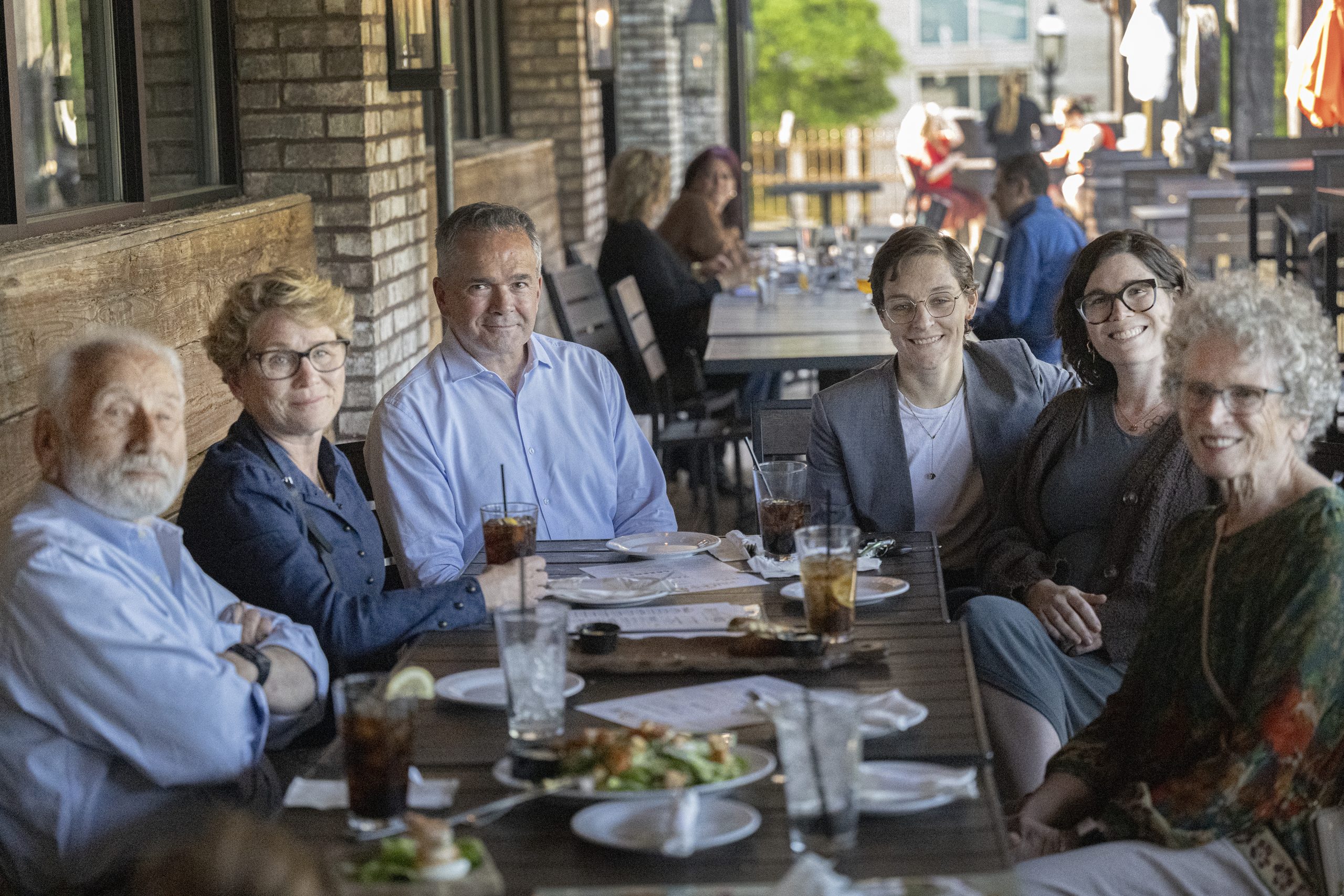
    U.S. Rep. Chrissy Houlahan poses at a family during dinner at Brick & Brew in Malvern, including her father, Andy Jampoler (left), her husband, Bart Houlahan, daughter Molly Rosa Houlahan, daughter-in-law Kristen Rosa Houlahan, and Houlahan’s mother, Suzy Jampoler.Jose F. Moreno / Staff Photographer

    Turning experience into policy

    In May, Houlahan introduced legislation that would require the federal government to collect data on the sandwich generation, a step she said is critical to creating better policies for an “undervalued role in the nation’s economy.”

    It would require at least one federal survey to ask whether individuals provide unpaid care to both children and older adults. U.S. Sen. Andy Kim (D., N.J.), who has two young sons and cares for his father with Alzheimer’s, sponsored a companion bill in the Senate.

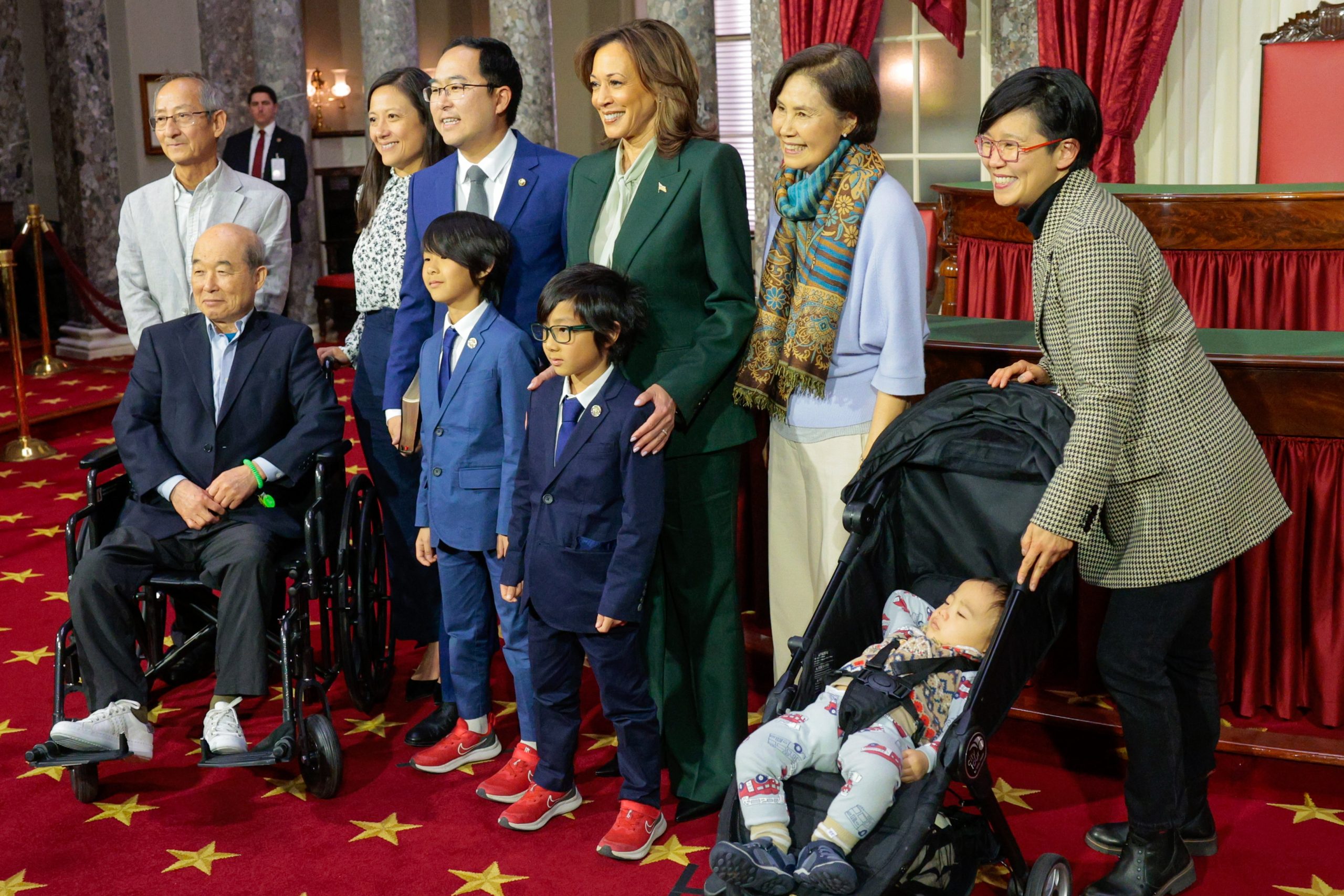
    Sen. Andy Kim (D., N.J.) poses with his family and Vice President Kamala Harris after taking the ceremonial oath of office in the old Senate chamber on Jan. 3, 2025, in Washington.Steven M. Falk / Staff Photographer

    Houlahan is also the chair of an “economic growth and cost of living” working group within the New Democrat Coalition, a group of self-described centrist Democrats that includes about half of the entire caucus. The group rolled out an “affordability agenda” earlier this year that is considered a framework for how Democrats would tackle housing, healthcare, energy, paid family leave, and much more if they win control of the House.

    U.S. Rep. Brad Schneider (D., Ill.), chair of the New Democrat Coalition, credited Houlahan for her leadership with the agenda, describing her as having a “quiet wisdom that focuses on the core of a problem” while bringing her own life experience to the work.

    “Everyone’s experience is unique, but her experience shares many of the aspects of what people across the country are facing,” Schneider said. “The sandwich generation, taking care of kids and parents, for whatever circumstance, while at the same time seeing the cost of just everyday living … is putting a burden on families.”

    Houlahan said she has been aggravated by the pace of progress in Washington, including Trump’s decision to not sign the bipartisan 21st Century ROAD to Housing Act in an attempt to force a vote on stricter voter-ID laws.

    The legislation aims to incentivize housing construction, restrict large investors from buying single-family homes, help families with home repairs, and more. The president reiterated Friday that he would not sign it, allowing the bill to become law without his signature.

    In her Capitol Hill office about an hour after Trump canceled that bill signing late last month, Houlahan described the president as “so obtuse that he can’t see in front of him that this is something that the people want.” After spending much of the last year calling out Johnson, the House speaker, for not standing up to Trump, she said there should be “counterinsurgents” and an “uprising” in the Republican Party.

    At the same time, she expressed some hope. The housing bill may have been a rare moment of bipartisanship, but it was also a sign that Congress can still act on affordability even before the end of the year, she said.

    “We don’t have time, for all of this stuff, to wait until somebody else is in charge,” Houlahan said. “We can do this ourselves.”

    U.S. Rep. Chrissy Houlahan (D., Pa.) sits between her father, Andy Jampoler, and her husband, Bart Houlahan, at Brick & Brew in Malvern. Houlahan’s parents recently moved in with her. Jose F. Moreno / Staff Photographer
  • Pa. lawmakers and Gov. Josh Shapiro have approved a $50.8 billion state budget, delaying action on key issues

    Pa. lawmakers and Gov. Josh Shapiro have approved a $50.8 billion state budget, delaying action on key issues

    HARRISBURG — Gov. Josh Shapiro signed a $50.8 billion state budget on Sunday following the rushed passage of the overall deal by the General Assembly that lawmakers said helps address the state’s affordability crisis but delays action on some of the most significant issues before the legislature.

    The agreement, which was due at the beginning of the month, marks an improvement from last year’s nearly five-month budget impasse in the split legislature that required school districts, counties, and social service providers to take out expensive loans or close altogether.

    “We managed, as the [vote count] indicates, to find compromise without compromising our core values,” Shapiro said during a news conference Sunday evening, before signing his fourth budget as Pennsylvania’s governor.

    The deal was hashed out over weeks in closed-door meetings among top leaders and includes new transparency requirements for data centers, publicly funded housing projects, and public transit agencies. Lawmakers also agreed to a long-sought cost-of-living adjustment totaling approximately $168 million per year for some Pennsylvania retired teachers, police officers, and firefighters — some of whom have not seen an increase to their monthly pension payments in more than 20 years.

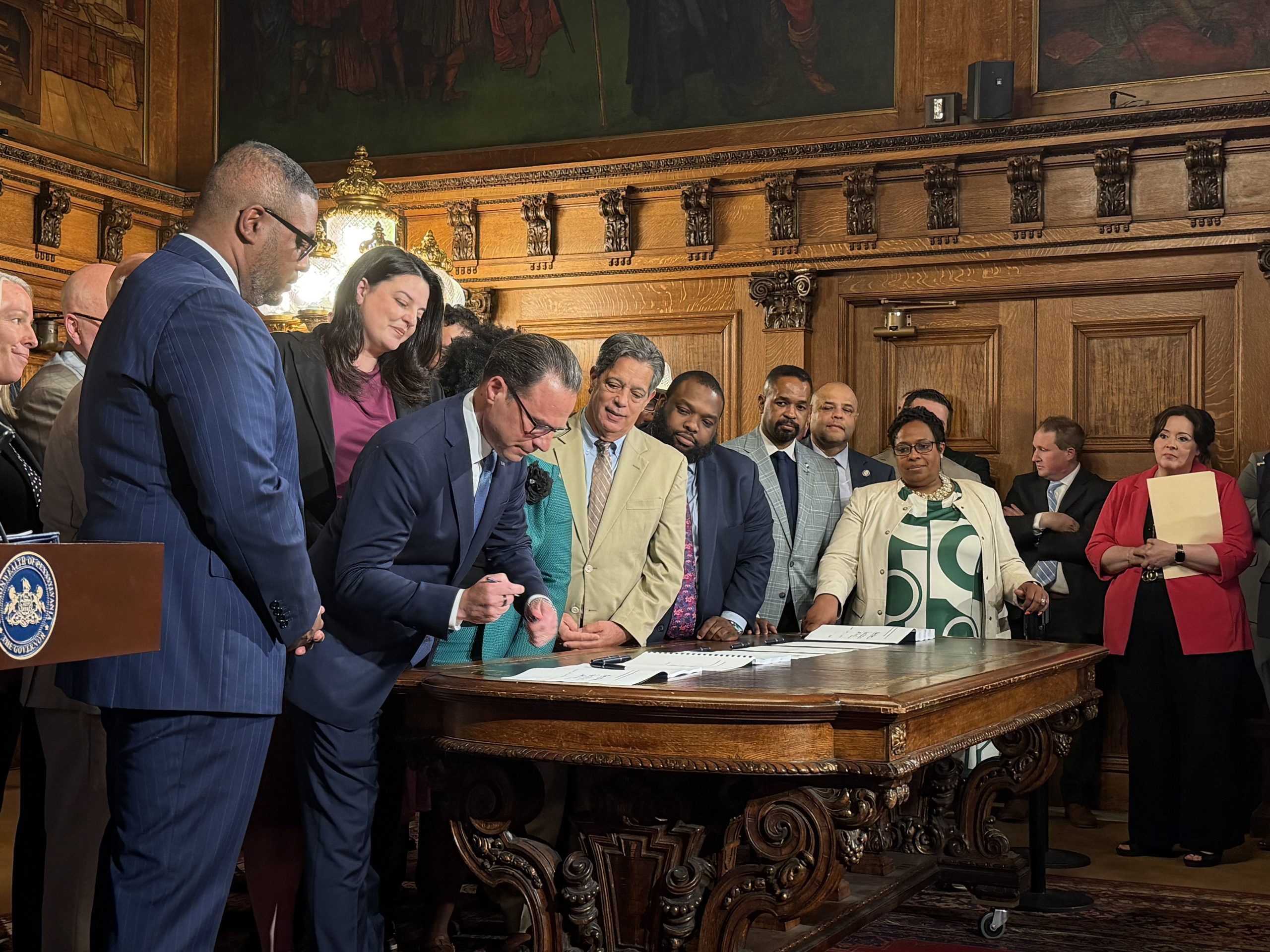
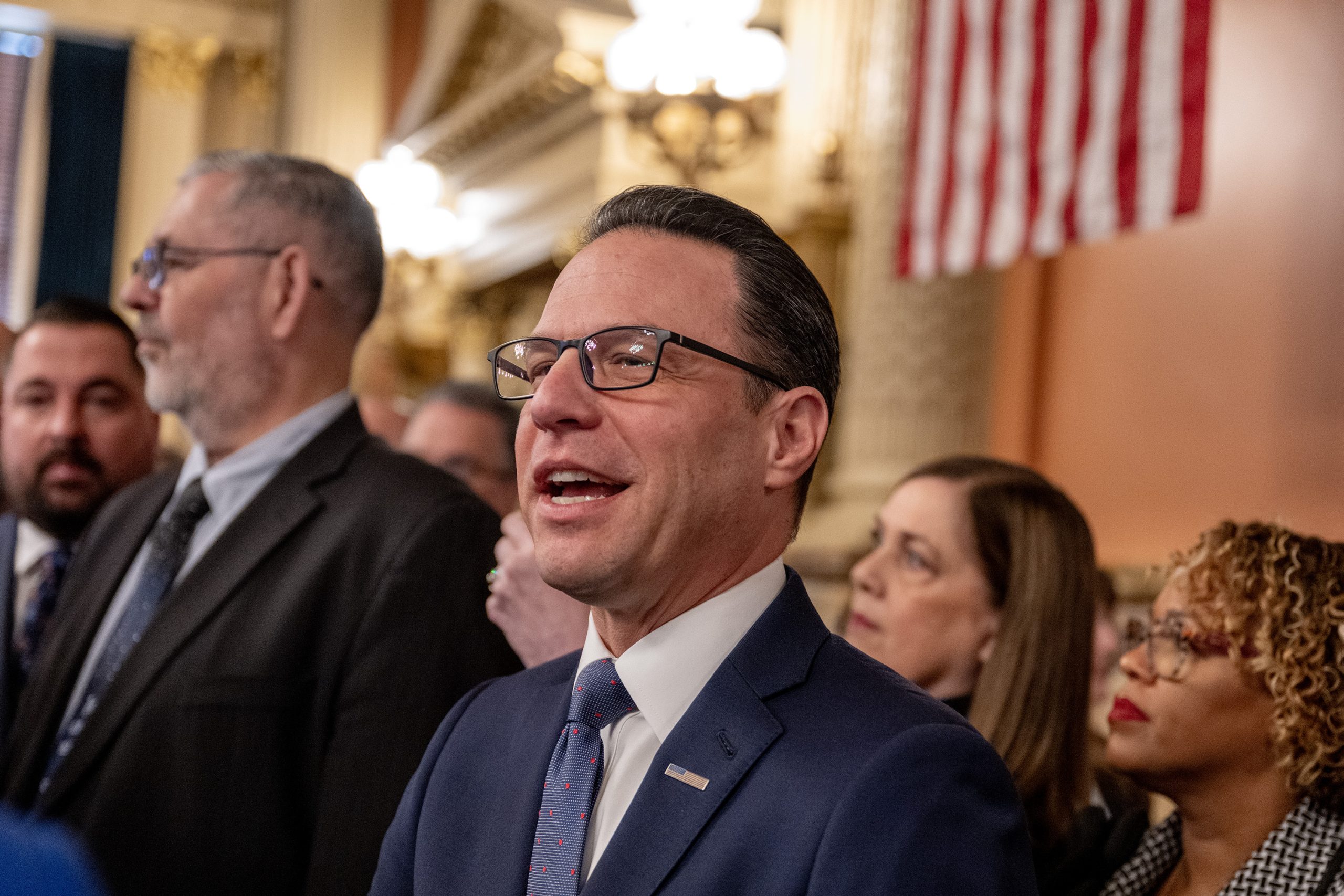
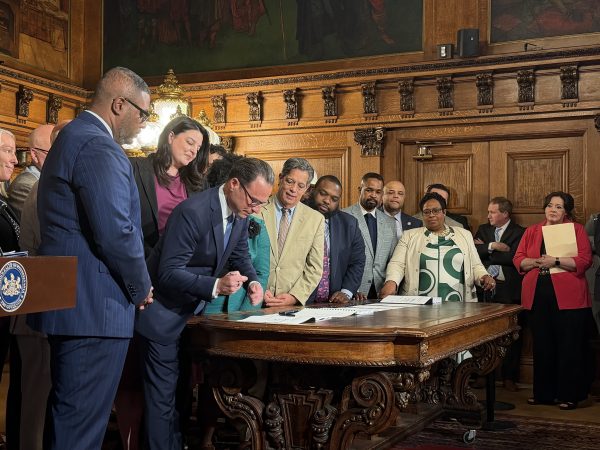
    Gov. Josh Shapiro, flanked by fellow state Democrats, signs the 2026-27 Pennsylvania state budget in Harrisburg, Pa. on Sunday, July 12, 2026.Gillian McGoldrick / Staff

    More education funding, data center requirements

    Pennsylvania will have invested nearly $2 billion in new school funding through its adequacy and tax equity formulas since 2024. That’s when lawmakers first employed the new calculations to close a $4 billion “adequacy gap” after a landmark court ruling that found the state was illegally underfunding students in low-income districts. This year’s installment of adequacy funding topped $565 million, as part of an effort to prevent districts from having to raise property taxes on already low-income residents. The additional investment sends $136 million more this year to the School District of Philadelphia.

    Legislative leaders failed to agree in the final budget on other issues that have seen broad support in both chambers, such as repealing a sales tax exemption for data center projects, allowing local moratoriums on data center projects, or banning cell phones in K-12 schools. They may revisit the issues during the fall legislative session.

    Instead, they approved a new reporting requirement that will force data centers to submit annual reports detailing their water and energy usage. The companies will face a $10,000-a-day fine for failing to submit their reports.

    The General Assembly also voted to close a sales-tax loophole that allowed online sellers to avoid paying Philadelphia’s local 2% sales tax on items sold in the city. Mayor Cherelle L. Parker had requested that the loophole be closed as part of her own budget pitch in a move estimated to bring an additional $1.5 million to the city.

    No decision on skill games

    But the budget does not address some of the most pressing issues before the General Assembly, including whether to tax and regulate skill games or allow the more than 70,000 gambling machines in Pennsylvania bars, corner stores and fraternal organizations to become illegal come October. The state has until then to decide how to approach the machines after the state’s Supreme Court last month determined that skill games, which have for years operated in a legal gray area, are slot machines and should be regulated as such. They also punted on finding a long-term funding solution to fund mass transit until next year, when a two-year fail-safe runs out.

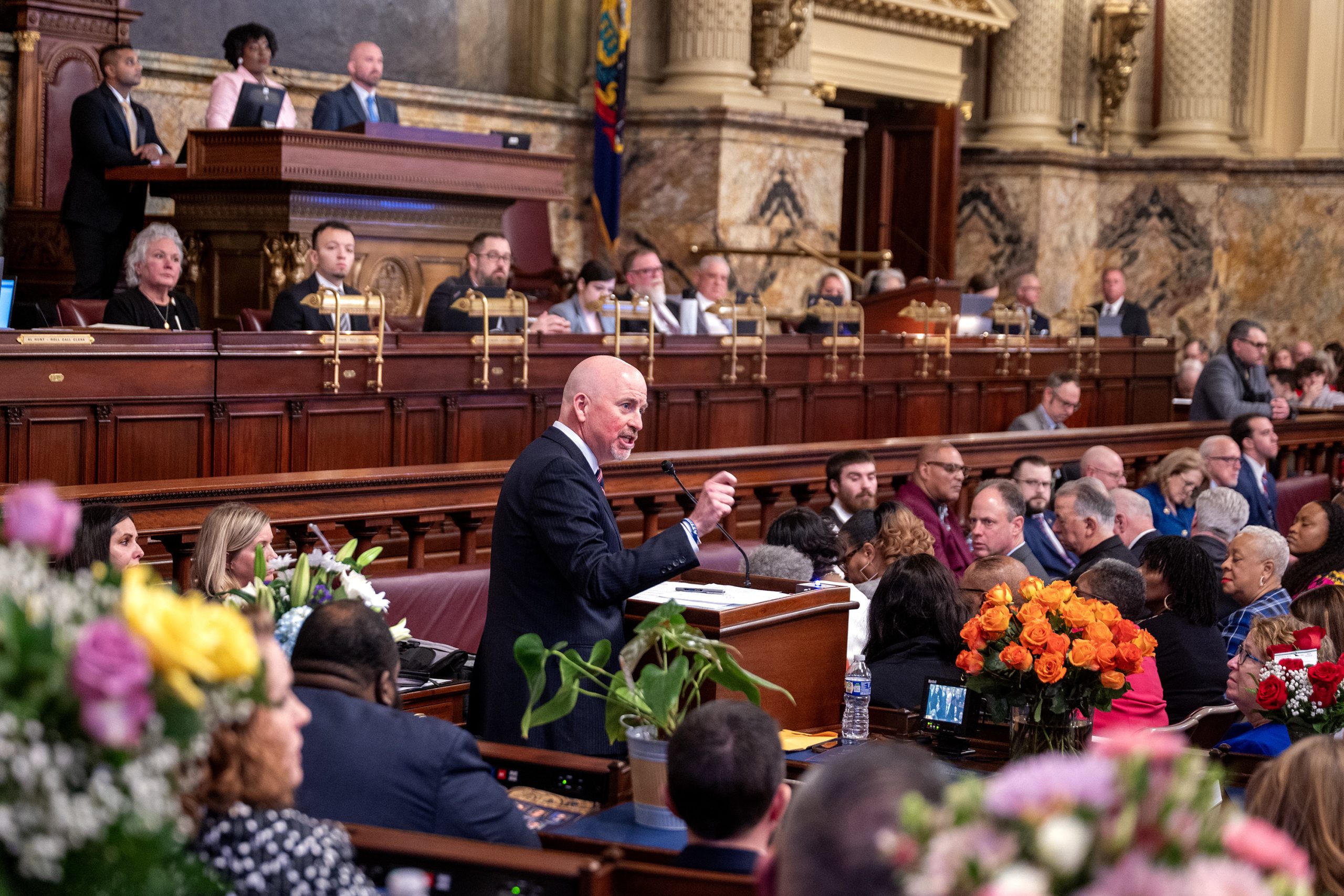
    The state House chamber as Gov. Josh Shapiro makes his annual budget proposal in Harrisburg Tuesday, Feb. 3, 2026.Tom Gralish / Staff Photographer

    Shapiro, a first-term Democrat facing reelection this year, proposed a $53.3 budget in February that for a fourth time emphasized top Democratic initiatives such as raising the state minimum wage to $15 per hour or legalizing recreational marijuana. He also proposed other initiatives, such as a $1 billion critical infrastructure fund to help the state drive out public dollars to build more housing and energy generation, which did not see funding in the final budget deal.

    State Sen. Nikil Saval (D., Philadelphia) was among the two Democrats who opposed the state budget, in part because it did not make the ambitious investments needed to address the state’s limited affordable housing stock.

    “We cannot defer at this moment,” added Saval, the chair of the Philadelphia delegation in the Senate, in his floor remarks before the vote.

    Lawmakers also declined to create any new generators of revenue for Pennsylvania, and deferred addressing the state’s multibillion dollar structural deficit until future years.

    ‘Met in the middle’

    The overall deal passed with bipartisan support in the GOP-controlled Senate, 44-6, and in the House, where Democrats hold a narrow majority, 167-35.

    “We have met in the middle,” said Senate Majority Leader Joe Pittman (R., Indiana). “I am proud of this product, despite what some naysayers may say.”

    The 2026-27 budget, which is a 1.4% increase in spending over the prior fiscal year, has no widespread tax increases. It also largely relies on accounting maneuvers like spending down unused or underused dedicated funds to address the structural deficit instead of pulling from the state’s emergency savings account.

    One of the accounting moves to balance Pennsylvania’s budget includes delaying two months of payments totaling $1.3 billion to insurance companies that fulfill the state’s ballooning Medicaid programs until the next fiscal year. Without those delayed payments, the budget would total closer to $52.1 billion.

    Several GOP House members opposed the budget, arguing it is unbalanced and only postpones tax increases to future years if spending isn’t cut.

    State Rep. Brad Roae (R., Crawford), called the final budget a “fake number.” State Rep. Charity Grimm Krupa (R., Fayette) called it “voodoo math.” And State Rep. Marc Anderson (R., York) said the state was “cooking the books.”

    But broadly, both Democratic and Republican members called the budget a reasonable compromise, acknowledging that they will have additional work to do in the fall legislative session and during next year’s budget negotiations to balance the state’s finances. During speeches on the Senate floor, several Republican senators quoted The Rolling Stones’ song “You Can’t Always Get What You Want,” emphasizing the second half of the refrain: “You might find you get what you need.”

    State Rep. Jordan Harris (D., Philadelphia) also turned to music to represent his position on the budget deal, paraphrasing Anthony Hamilton’s “Do You Feel Me” as a response to his constituents’ concerns about affordability by sending more state dollars to school districts to help them avoid property tax increases and raising monthly pension payments for retirees.

    “I am glad to stand today to support it, to let the people of Pennsylvania know, baby, the message is getting through,” Harris added.

    Pennsylvania Legislative Correspondents’ Association Intern Ethan Young contributed to this article.

  • Top Pennsylvania leaders have reached a $50.8 billion state budget deal, sources say

    Top Pennsylvania leaders have reached a $50.8 billion state budget deal, sources say

    HARRISBURG — Pennsylvania’s top legislative leaders and Gov. Josh Shapiro have reached a $50.8 billion budget deal, more than a week after a new state budget was due at the start of the fiscal year, according to two sources briefed on the closed-door conversations.

    Details of the contents of the overall budget deal were not immediately available on Saturday, as lawmakers are expected to begin reviewing the bills in the coming days and a final budget is expected to reach Shapiro’s desk by early next week. The state Senate was scheduled to advance parts of the budget on Saturday evening, and the House was scheduled to do the same on Sunday afternoon.

    Though the deal comes more than a week past due, the agreement on the state budget framework among Pennsylvania’s Democratic-controlled House, Republican-led Senate, and Democratic governor marks an improvement from last year’s nearly five-month budget impasse that required school districts, counties, and social service providers to take out expensive loans or close altogether.

    But budget negotiations were less contentious this year, with several major issues taken off the table, including whether the state will tax and regulate skill games, whether the state should create additional school choice programs for students in low-income school districts, and how Pennsylvania will fund mass transit when a two-year fail-safe runs out next year.

    Half of the state Senate and all 203 state representatives are up for reelection this year, and many are eager to approve a state budget and return to their districts to campaign. Many of the more contentious issues before the legislators appear to have been kicked to the General Assembly’s fall legislative session or will resurface in budget talks next year, when lawmakers are not scheduled to face voters. Shapiro, too, is up for reelection this year; his Republican challenger is State Treasurer Stacy Garrity.

    Pennsylvania’s budget deal was crafted largely in secret over weeks of closed-door meetings involving top legislative staff and leaders including Shapiro, House Majority Leader Matt Bradford (D., Montgomery), and Senate Majority Leader Joe Pittman (R., Indiana).

    The overall budget deal presented to the General Assembly will feature a state spending plan, in addition to some policy changes as part of horse-trading of legislative priorities by top leaders.

    One major policy change that appeared to be advancing as part of the overall deal on Saturday evening is a bill to allow local municipalities to pass ordinances placing a moratorium on data center development for no longer than 18 months. That bill, Senate Bill 1345, sponsored by Sen. Jarret Coleman (R., Bucks/Lehigh), was scheduled for a committee vote Saturday evening, when amendments to the bill were possible.

    Gov. Josh Shapiro arrives on the state House chamber to make his annual budget proposal in Harrisburg Tuesday, Feb. 3, 2026.Tom Gralish / Staff Photographer

    Shapiro hinted that a deal was near on Thursday at a news conference in Altoona, saying, “You’re going to see a lot of activity in the Capitol this weekend.”

    “We’ve been working hard, really hard, to bring both sides together, to bring together Democrats and Republicans, and I think you’re going to see a result that benefits the good people of Pennsylvania really soon,” Shapiro added.

    It was not immediately clear how legislative leaders and Shapiro agreed to fill the state’s billion-dollar structural deficit without creating any new revenue streams as part of the 2026-27 fiscal year budget. Even if lawmakers did not increase spending this year — which they are expected to do — the state would need to make up $1.2 billion to balance the budget.

    The deal’s 1.4% increase over last year’s $50.1 billion budget does not allow much room for new spending, unless other existing programs have been cut.

    In new spending, the deal appeared to include an increase to the state’s funding for public education through its adequacy and tax equity formulas, which were designed by lawmakers in 2024 to close a $4 billion “adequacy gap” following a landmark court ruling that found Pennsylvania was illegally underfunding students in low-income districts.

    “If the adequacy number was not agreed to, we wouldn’t be having this conversation,” said State Sen. Vincent Hughes (D., Philadelphia), who is the minority chair of the powerful Senate Appropriations Committee, on Friday evening. “I think the adequacy number will be consistent with what the governor proposed.”

    Shapiro proposed a $53.2 billion budget in February, which included a $565 million increase to adequacy funding for public schools. He also included new potential revenue generators from taxing and regulating skill games, legalizing recreational marijuana, and increasing the state’s minimum wage to $15 per hour. None of these potential revenue generators appeared to make it into the final deal.

    Screens shows skill games and cannabis regulation and reform as Gov. Josh Shapiro makes his annual budget proposal in the state House chamber in Harrisburg Tuesday, Feb. 3, 2026.Tom Gralish / Staff Photographer

    The state is on track to bring in $48.9 billion this year in revenue, according to the Pennsylvania Independent Fiscal Office’s latest projections. Pennsylvania also maintains a $7.7 billion Rainy Day Fund that Senate Republicans have tried to prevent the state from tapping into. It is unclear whether lawmakers will agree to access some of the reserve dollars as many Pennsylvanians face an affordability crisis. Tapping into the Rainy Day Fund requires a two-thirds majority vote by both chambers.

    The state budget topped $50 billion for the first time last year and has increased by 25% — approximately $10 billion — over a five-year period.

    Pennsylvania Legislative Correspondents’ Association intern Ethan Young contributed to this article.

  • Philly Democrats call Trump-promoted Freedom Fuel stations a ‘PR stunt’ that won’t solve high gas prices

    Philly Democrats call Trump-promoted Freedom Fuel stations a ‘PR stunt’ that won’t solve high gas prices

    Philadelphia-area Democrats criticized President Donald Trump’s recent promotion of Freedom Fuel gas stations in Pennsylvania and New Jersey as an effort to fool people about the high price of fuel rather than a long-term solution to the problem.

    “This appears to be a PR stunt of some sort, which is designed to distract people from the fact that gas prices have gone up because the president started a war against Iran,” said Democratic U.S. Rep. Mary Gay Scanlon, who represents Delaware County and parts of South Philadelphia.

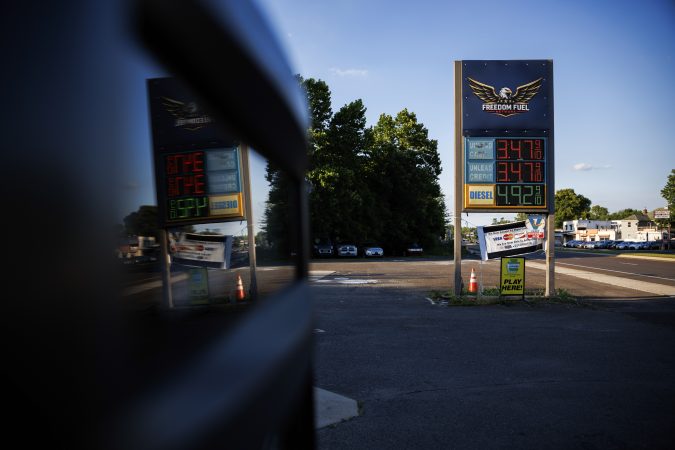
    Questions still abound about who is behind the Freedom Fuel Network, which popped up around the region earlier this month with 25 gas stations sporting the branding.

    No entity is registered in Pennsylvania or New Jersey with the name, but an application for a trademark was filed in Delaware on July 1, two days before the July 3 launch that was heavily promoted by the White House.

    Trump was posting about it on Truth Social ahead of the launch, praising the retailer’s patriotism and promising that gas prices nationally would soon fall after they surged following his decision to attack Iran earlier this year.

    “This Retailer is taking the lead, and others should follow. They are doing this because they love the U.S.A. We are proud to celebrate America’s 250th Birthday in the Great Commonwealth of Pennsylvania, the Birthplace of our very special, one-of-a-kind Declaration of Independence, and where I won BIG in the Presidential Election!” Trump said on Truth Social on July 1.

    The stations started selling gas at $3.47 a gallon on July 3, with the price a nod to the 47th president, according to the White House. Scanlon said that when she stopped by Friday morning, prices were already going up just seven days later.

    “I actually went to one this morning just to get a sense of what was going on,” Scanlon said. ”They may have started with a price of $3.47, but it’s already going up; this one was at $3.57,″ she added, without identifying the location.

    U.S. Rep. Brendan Boyle, a Democrat who represents Philadelphia, said these stations are too little, too late for constituents who have been feeling squeezed by gas prices.

    “Gas was $2.98 a gallon before Trump’s disastrous Iran War. Prices then jumped 50% — the biggest jump in gas prices in American history. These few discounted gas stations are a band-aid on a gunshot wound,” Boyle said in a statement to The Inquirer.

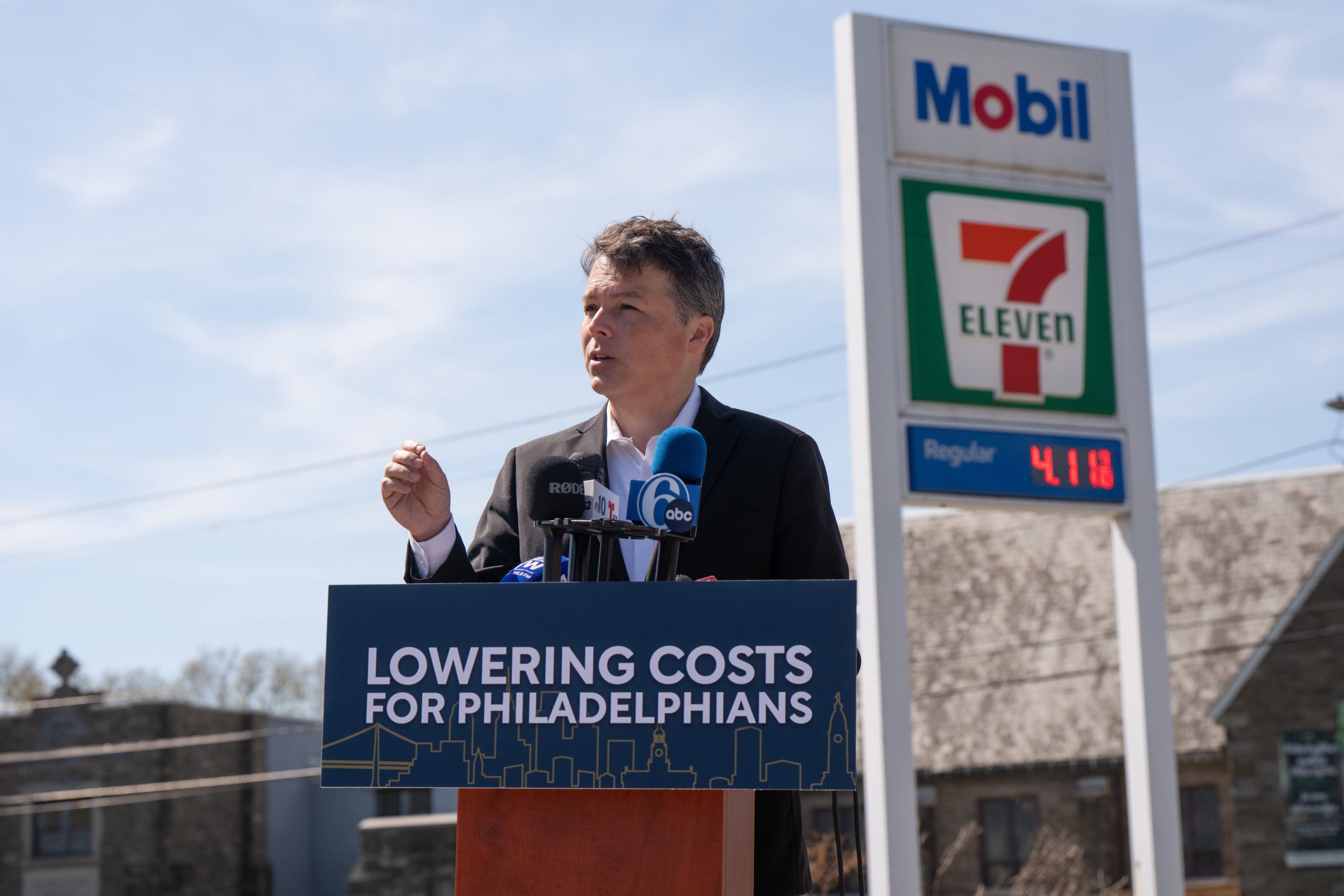
    U.S. Rep. Brendan F. Boyle holds a news conference at a Philadelphia gas station to announce legislation to suspend the federal gas tax whenever the national average price of gasoline exceeds $4.00 per gallon.Jessica Griffin / Staff Photographer

    Boyle has been outspoken about gas prices while in office. In April, he announced a bill to suspend the federal gas tax when gas prices exceed $4 per gallon.

    The average gas price in Philadelphia as of Saturday was $3.99 per gallon, about 11 cents above the national average, according to AAA’s fuel price tracker.

    Gas prices peaked in May but have remained volatile because of the ongoing conflict with Iran. Following U.S. attacks, Iran closed the Strait of Hormuz — an essential trading route — causing gas prices to spike. Recently, the U.S. and Iran resumed attacks, marking the end of a three-week ceasefire.

    “In no uncertain terms, the Cease Fire is OVER!” Trump posted on Truth Social on Friday.

    U.S. Rep. Dwight Evans, a retiring Philadelphia Democrat, said that ending the war in Iran would be the long-term solution for lowering gas prices.

    “As of now, it [the Freedom Fuel Network] doesn’t sound like a long-term solution,” Evans said. “Gas prices are high because Trump has been more focused on vanity projects like a ballroom than on ending his over-four-month illegal war of choice — a war which both houses of Congress have now voted to stop.”

    According to the White House, Freedom Fuel is an independent company that the Trump administration does not fund, and it says the company was not buying gas at a discounted price.

    But the White House has been heavily promoting the effort. It posted a video to social media Tuesday featuring patrons at Freedom Fuel gas stations crediting Trump.

    “I thought gas was more expensive, but it’s not. So thanks Trump for saving me some money!” a man says in the opening of the video, which touts the prices as being 50 cents lower than the Pennsylvania average.

    Scanlon said that identifying the people funding the initiative would make clear the motive for the low prices and whether they would be there to stay.

    “Someone is making it worthwhile for these independent stations to rebrand themselves and sell at under market rates,” she said. “I mean, they’ve got to be making up that money somehow. So the question just is, who is doing it and why? Although it seems there can be no other reason than to prop up the president’s faltering poll numbers.”

  • This Philly-based political firm is at the center of the Graham Platner fallout

    This Philly-based political firm is at the center of the Graham Platner fallout

    As Democrats grapple with the fallout from Graham Platner’s scandal-plagued and ultimately canceled bid for U.S. Senate in Maine, a political consulting firm that worked on his race and that’s been heavily involved in Pennsylvania politics is at the center of many of the party’s frustrations.

    FIGHT — a firm whose operatives were credited with helping elect U.S. Sen. John Fetterman in 2022 and that has worked on a pair of high-profile U.S. House races in Pennsylvania this year — has received a barrage of criticism as revelations about Platner’s past came to light in recent months.

    Members of the firm weren’t the only ones advising Platner’s campaign. National operatives such as Daniel Moraff, who has also worked in Pennsylvania, have also fielded criticism for recruiting and not thoroughly vetting Platner, an unknown political outsider.

    But both before and after the allegations of sexual assault that led to Platner’s exit from the race this week, other Democratic consultants and political observers blamed FIGHT for continuing to support him through multiple public setbacks.

    Platner’s issues have also reignited anger about and drawn parallels to Fetterman, another candidate who ran as a working-class progressive. The Pennsylvania Democrat has lost much of the support from the base that elected him as he’s more frequently sided with Republicans in ways that some have described as a betrayal. He has not been accused of the same types of issues that plagued Platner’s run.

    “I supported Graham at the beginning, despite the nagging voice in my head that kept saying ‘this feels familiar,’” Adam Jentleson, Fetterman’s first chief of staff who has become a staunch critic of the Pennsylvania Democrat, wrote on social media.

    Jentleson was among those who questioned the FIGHT agency and the rest of the Platner team’s work and its handling of the collapse.

    When Morris Katz, the FIGHT strategist on Platner’s campaign, said on social media that his team advised to end the campaign immediately after hearing the allegations Platner had raped a former girlfriend, Jentleson replied that the argument “strains credulity.” Platner and his team had continued to deny the allegations, Jentleson and others noted.

    “Shading a narrative toward the positive is standard, lying is not,” Jentleson wrote, comparing the experience to working with Fetterman.

    Fetterman, for his part, has heavily criticized Platner in recent months and celebrated his downfall this week.

    “You will only be remembered as the accused rapist that got pushed out of your election. … Go back under the rock that you came from,” Fetterman said Wednesday on Fox News.

    The Democratic Socialists of America, in a letter that mentioned the FIGHT staff’s work for Fetterman, called on candidates to refuse to work with Katz, The Intercept reported Friday.

    FIGHT declined to comment for this story.

    As Democrats look to regain their footing in this year’s midterm elections, the Platner saga and FIGHT’s role has also touched on the party’s broader goals of cultivating candidates who can win over the kinds of working-class voters President Donald Trump captured in recent years.

    Platner, an oyster farmer and former bartender who suffered PTSD after serving in the U.S. Marines, pitched himself as deeply in-tune with working class voters in Maine. It was the type of profile, many Democrats hoped, would lead to a victory over longtime Republican incumbent U.S. Sen. Susan Collins and help the party win control of the U.S. Senate.

    Democrats in Pennsylvania have taken a similar approach.

    In a Lehigh Valley-based congressional district considered one of the likeliest seats in the country to flip from Republican to Democrat, the party has rallied behind Bob Brooks, a union leader and retired firefighter who coaches high school baseball and drives a snowplow.

    “When you look at Brooks, one of the reasons he was recruited into this race and why Democrats have rallied around him is that there’s a belief that he might capture some of the [working-class Democratic] energy,” said Chris Borick, an adjunct professor of politics at Lehigh University.

    The FIGHT agency, which primarily makes candidates’ television ads, has worked on Brooks’ campaign as well as the campaign of Paige Cognetti, the Scranton mayor and Democratic nominee in the Scranton-based 8th Congressional District.

    There are no signs that Brooks or Cognetti are being advised by Katz, who has primarily worked on Platner’s campaign. In response to requests for comment Friday, Brooks’ campaign only confirmed that FIGHT makes its ads, and Cognetti’s campaign said, “Paige is glad Platner dropped out of the race.”

    The Pennsylvania candidates have not faced the same type of intense criticism for parts of their personal histories as Platner did throughout his 10-month campaign.

    Brooks’ opponents in the 7th Congressional District primary criticized him for old social media posts that, for instance, downplayed the role of guns in a mass shooting. Brooks said the posts were “silly, maybe stupid.” He, like Platner, also faced accusations that he could be “another John Fetterman,” given his background and similar appearance.

    Mike Mikus, a Pittsburgh-based Democratic strategist who has long opposed Fetterman, said Brooks was “the real deal” at a time when Democrats are “desperate” to correct their problem with white, working-class voters. Platner, on the other hand, appeared to be an “overcorrection” that involved consultants dismissing “obvious red flags,” Mikus said.

    He said FIGHT may lose some future clients because of the misstep, which he largely blamed on Moraff, a consultant who does not work for FIGHT and has also been widely criticized for recruiting Platner.

    “Everybody’s looking for authenticity,” Mikus said. “And you can’t workshop somebody into something they’re not.”

    Created after Trump and the Republican Party’s sweeping victories in 2024, the FIGHT agency’s pitch since its launch has focused on authenticity. Its candidates have reflected not just voters’ desires for candidates outside the traditional political establishment, but campaigns intent on fighting Trump and advancing economic populism. Zohran Mamdani, the Democratic socialist who won New York’s mayoral race in 2025, has marked their largest success to date.

    “Among progressives there’s a sense that the party has not been effective in trying to counter Trump … and we have to fight this battle internally in order to resist Trump,” said Stephen Medvic, an associate professor of government at Franklin and Marshall College. “So you’re getting groups in the last couple of years, like FIGHT Agency, being put together to try to tip the balance in their direction.”

    But their approach — finding someone who meets the profile and aligns with their ideology — may not necessarily always produce a winning formula. Limitations may depend on the type of assessment and vetting that goes into recruitment, he said.

    “You might get an AOC, but … you might get a Platner,” Medvic said. “A lot of Democrats are now regretting that they were so excited about Fetterman because he turned out to be something so different.”

  • Democrat John Fetterman launches cross-aisle fundraising committee with Republican Dave McCormick

    Democrat John Fetterman launches cross-aisle fundraising committee with Republican Dave McCormick

    In a rare move, Pennsylvania’s two senators have created a joint fundraising committee that would allow them to split money from donors who want to give to both of their campaigns, despite being members of different parties.

    Democratic Sen. John Fetterman’s decision to join Republican Sen. Dave McCormick in the fundraising collaboration comes as he has repeatedly dismissed speculation that he could switch parties after siding with Republicans on several key votes.

    As polls have shown him losing support among Democratic voters, he has also reported raising significantly fewer campaign funds on his own and has not said if he will run for a second term in 2028.

    Common Ground PA, which filed paperwork with the Federal Election Commission Monday, lists four beneficiaries for the joint fund: Fetterman for PA; Friends of Dave McCormick; Every Vote PAC, which lists Fetterman as the PAC sponsor; and Pennsylvania Honor, which lists McCormick as the leadership PAC sponsor.

    A joint fundraising committee, first enabled by the FEC in 1977, allows two or more candidates, PACs, or party committees to coordinate fundraising efforts to share donations and expenses.

    A donor can abide by federal contribution limits while still giving one check that can be allocated to multiple campaigns. But since these groups typically involve party committees, it is rare for these joint ventures to be bipartisan.

    Katie Terry, who is listed as the treasurer for Team McCormick, is also the treasurer for Common Ground PA. She did not respond to a request from The Inquirer for comment.

    Mike DeVanney, a spokesperson for McCormick’s campaign, called the PAC a donor-driven effort.

    “This group of donors value the collaboration exhibited by Senators McCormick and Fetterman for Pennsylvania and want to support both of them,” he said in a statement.

    The joint fundraising committee was first reported by Politico.

    The two senators have spoken often about their cross-aisle friendship since McCormick took office in 2025, and they have repeatedly teamed up in recent months.

    They appeared alongside each other last week in Philadelphia to promote Trump Accounts, the new federally backed savings accounts for kids that became law with President Donald Trump’s signature One Big Beautiful Bill Act.

    And they joined forces to fill Pennsylvania’s empty spot at the Great American State Fair in Washington after Gov. Josh Shapiro said state officials could not find a Pennsylvania business to sponsor the state’s booth.

    Fetterman has routinely criticized his own party, feuding with progressives on a range of issues, including Israel and immigration enforcement.

    In a fundraising email sent in May, McCormick referred to Fetterman as one of his “closest working partners,” a realization that he said surprised even him.

    In that drive, which asked donors to support his efforts to “work across the aisle to get results for the people of Pennsylvania,” McCormick praised his Democratic colleague.

    “Senator John Fetterman and I couldn’t look more different. We don’t agree on everything. But we both grew up in Pennsylvania. We both know what it means to fight for working families who feel like Washington forgot them. And we both refuse to let politics get in the way of getting things done,” he wrote.

    McCormick told reporters in May his friendship with Fetterman is the most frequent topic of conversation he hears, and he gets positive feedback from it.

    “We look for ways to work together. I think people want that,” he said.

    Individuals could donate to Fetterman or McCormick separately. But joint fundraising committees, which are used widely by both parties, pull in large checks from donors and split the money across multiple committees using a formula that adheres to federal contribution limits, according to an analysis from the watchdog group OpenSecrets.

    Typically, though, campaigns jointly fundraise with their party.

    Common Ground PA is among the few coordinated efforts across the aisle. A former PAC, the Problem Solvers Patriots, raised funds for members of both parties in previous election cycles.

    Fetterman, who polls poorly with Pennsylvania Democrats, is likely to face a primary challenge if he runs for another term.

    Former U.S. Rep. Conor Lamb, who lost the Senate primary to Fetterman in 2022 and has not ruled out a run in 2028, blasted the move online as “Another betrayal from Fetterman.”

    U.S. Rep. Chris Deluzio, a Western Pennsylvania Democrat who says he has received “a lot of encouragement” to run for Fetterman’s seat, also questioned the creation of the PAC.

    “Helping the Republicans raise money to spend against Democrats is bad, right?” Deluzio said on X.

    However, Fetterman has been notching strong approval from Republicans, and Pennsylvania Republicans along with Trump himself said he could receive GOP support if he switched parties.

    Fetterman’s Republican support has also been growing at the bank with contributions from prominent GOP donors, particularly through his other joint fundraising committee and leadership PAC. At the same time, his fundraising has plummeted overall, raising less than half his previous annual totals in 2025.

    Staff writers Gillian McGoldrick and Sam Janesch contributed to this article.

  • Delco man arrested after antisemitic tirade and threats against Gov. Josh Shapiro, state police say

    Delco man arrested after antisemitic tirade and threats against Gov. Josh Shapiro, state police say

    A Delaware County man was charged Wednesday after allegedly making threats against Gov. Josh Shapiro during a visit to a state representative’s office, including a threat to “burn down … [Shapiro’s] mansion with him in it,” Pennsylvania State Police said.

    Police said the threats occurred when Richard John Franklin, 65, of Brookhaven, visited State Rep. Leanne Krueger’s legislative office in Brookhaven alongside his brother on Tuesday to dispute and request help with an unanticipated and unpaid tax bill totaling $19, according to the criminal complaint. When a staffer tried to assist Franklin in completing a form to waive the taxes, Franklin “became irate and crumbled up the paper,” police said.

    Franklin then began making threats the staffer believed were “threatening, harassing, and antisemitic in nature,” according to the complaint, including: “I guess I’ll pay that Jew. That Jew needs the money more than me” and “I’d like to burn down his [expletive] mansion with him in it.” Police said Franklin repeatedly referred to Shapiro as a “‘Jew’ multiple times in a negative manner.”

    State law enforcement officers charged Franklin with felony levels of terroristic threats and ethnic intimidation, in addition to lower-level charges of harassment and disorderly conduct.

    Shapiro, a Democrat who is among the most prominent Jewish officials in the country, has faced multiple threats of violence since becoming Pennsylvania’s top executive. In April 2025, a man broke into the state-owned governor’s mansion on the first night of Passover with a hammer and set several firebombs inside while Shapiro and his family were sleeping in a different part of the residence. The man, Cody Balmer, later pleaded guilty to attempted murder and was sentenced to 25 to 50 years in prison.

    Pennsylvania Gov. Josh Shapiro pauses during a news conference at the governor’s official residence discussing the alleged arson that forced him, his family and guests to flee in the middle of the night on the Jewish holiday of Passover, Sunday, Apr. 13, 2025, in Harrisburg, Pa.AP Photo/Marc Levy

    Early Wednesday, investigators from the state police political violence threat unit visited Franklin at his Brookhaven home, where he provided conflicting accounts of what occurred at Krueger’s office before ultimately admitting to “calling the Governor a ‘Jew’ in a negative manner” and added that his “brother told him he should not have made the statement,” according to the criminal complaint. Franklin denied making any threats toward Shapiro, but admitted to referring to the previous arson attempt at the governor’s residence during the outburst, police said.

    State police said they arrested Franklin without incident.

    Franklin’s brother, who witnessed the events at Krueger’s office, disputed the state police account and said his brother never threatened the governor.

    Leroy Franklin, 72, of Chester, said his brother visited the state representative’s office seeking information about a tax bill he had received, despite paying his state taxes through an accountant this year.

    After the brothers spoke to a staffer who did not have answers for them, Richard Franklin became upset and raised his voice, Leroy Franklin said.

    In a phone interview Wednesday, Leroy Franklin recalled his younger brother saying something to the effect of: “I’ve been on disability for 15 years, but I guess the state needs my money more than I do.”

    The two were together at Krueger’s office the entire time, Leroy Franklin said, adding that he did not hear his brother use an antisemitic slur. He also disputed that his brother threatened arson.

    “Anybody who said he did is lying,” Leroy Franklin said.

    Around 2 a.m. Wednesday, Leroy Franklin said, he received a call from his younger brother. Richard Franklin told him that police were at his apartment and he was not sure where they were going to take him, Leroy Franklin recounted.

    When the two spoke on the phone again later that morning, Leroy Franklin said, he learned police were taking his brother to jail.

    “I don’t know what the heck anyone is talking about,” Leroy Franklin said Wednesday. “This is a bit extreme, to put it mildly.”

    Richard Franklin was being held at the Delaware County prison with bail set at $100,000, according to court records. A preliminary hearing is scheduled for July 16, according to court documents. A lawyer for Franklin was not listed on court records.

    Franklin is a registered Democrat, Pennsylvania voting records show. He has no prior convictions in Pennsylvania.

    Shapiro’s office referred requests for comment about the incident to state police.

    In a statement Wednesday, State Police Sgt. Logan Brouse said the agency “takes threats against the lives of public officials seriously,” noting the state police political violence threat unit was created “to address the growing amount of ideologically motivated violence against elected officials.”

    The unit was created in May, after a Lebanon County man allegedly posted a “hit list” to social media targeting 20 state Democratic lawmakers. Adam Berryhill, 42, was arrested on May 6, after he was connected to an X account that posted a potential plan to attack the legislators. Some of the lawmakers named on the list said they had not been alerted to the threats against them, prompting state police leaders to update their communication protocols and create the investigations unit.

    Krueger (D., Delaware) referred a request for comment to a spokesperson for House Democrats.

    Nicole Reigelman, a spokesperson for House Speaker Joanna McClinton (D., Philadelphia), said in a statement that threats of political violence are becoming commonplace, “and every incident must be treated with the seriousness it deserves.”

    “Healthy democracies depend on robust debate and respectful disagreement — not threats, intimidation, or violence,“ Reigelman added. ”Political violence has no place in our communities, and Pennsylvanians must unite in condemning it whenever and wherever it occurs.”