Tag: Democrats

  • Gov. Josh Shapiro’s admin consulted with Amazon and data centers on his marquee protections, records show

    Gov. Josh Shapiro’s admin consulted with Amazon and data centers on his marquee protections, records show

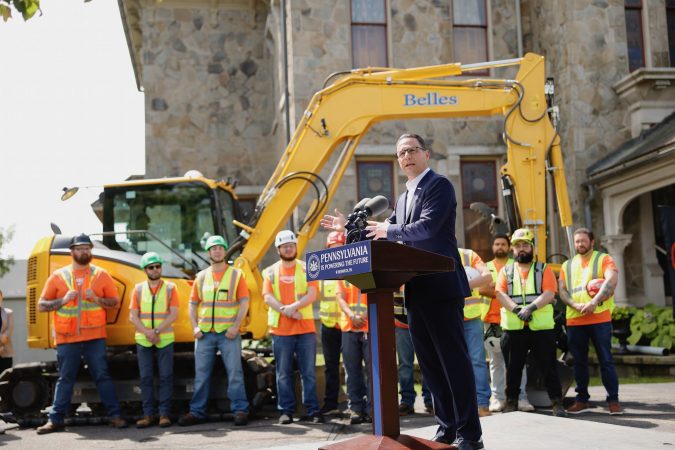
    Gov. Josh Shapiro spent months preparing a set of standards he promised would “hold data center developers accountable.”

    But behind the scenes, top Shapiro administration aides were drafting the framework with the input of Amazon and the powerful data center lobby and sharing early drafts with company officials before making them public, records show.

    The emails, first reported by climate change media outlet HeatMap earlier this year and obtained by an anti-data center activist in Montour County through the state’s open records law, show a cozy relationship between Shapiro’s administration and data center developers. But they also show the role the technology giants played in influencing the final version of Shapiro’s guardrails — though that influence only went so far.

    Shapiro in May introduced the initiative as the Governor’s Responsible Infrastructure Development, or GRID, which are a set of transparency and environmental standards data center developers would need to meet to access state tax breaks and other incentives Shapiro asked the General Assembly to write into law. The Democratic-controlled state House approved these standards, but it’s stalled in the GOP-controlled Senate, as legislators struggle to find common ground on one of the most hot-button issues facing them today.

    A spokesperson for Shapiro said the administration consulted numerous stakeholders as part of the drafting of the policies, including the Pennsylvania Building & Construction Trades Council, the Pennsylvania Environmental Council, the Natural Resources Defense Council, and more. Data center development is supported by many building trade unions across the state, which are likely to benefit from the major projects.

    Environmental groups broadly support Shapiro’s proposal and want stronger regulations on data center projects. Some groups want to ensure the provisions are mandatory, instead of voluntary, as Shapiro proposed.

    “As finalized, the Governor’s GRID standards set firm guardrails to protect Pennsylvania communities and hold data center developers accountable to strict standards requiring them to take additional action to ensure Pennsylvania communities benefit — and are not harmed — by these projects,” said Rosie Lapowsky, Shapiro’s press secretary, in a statement.

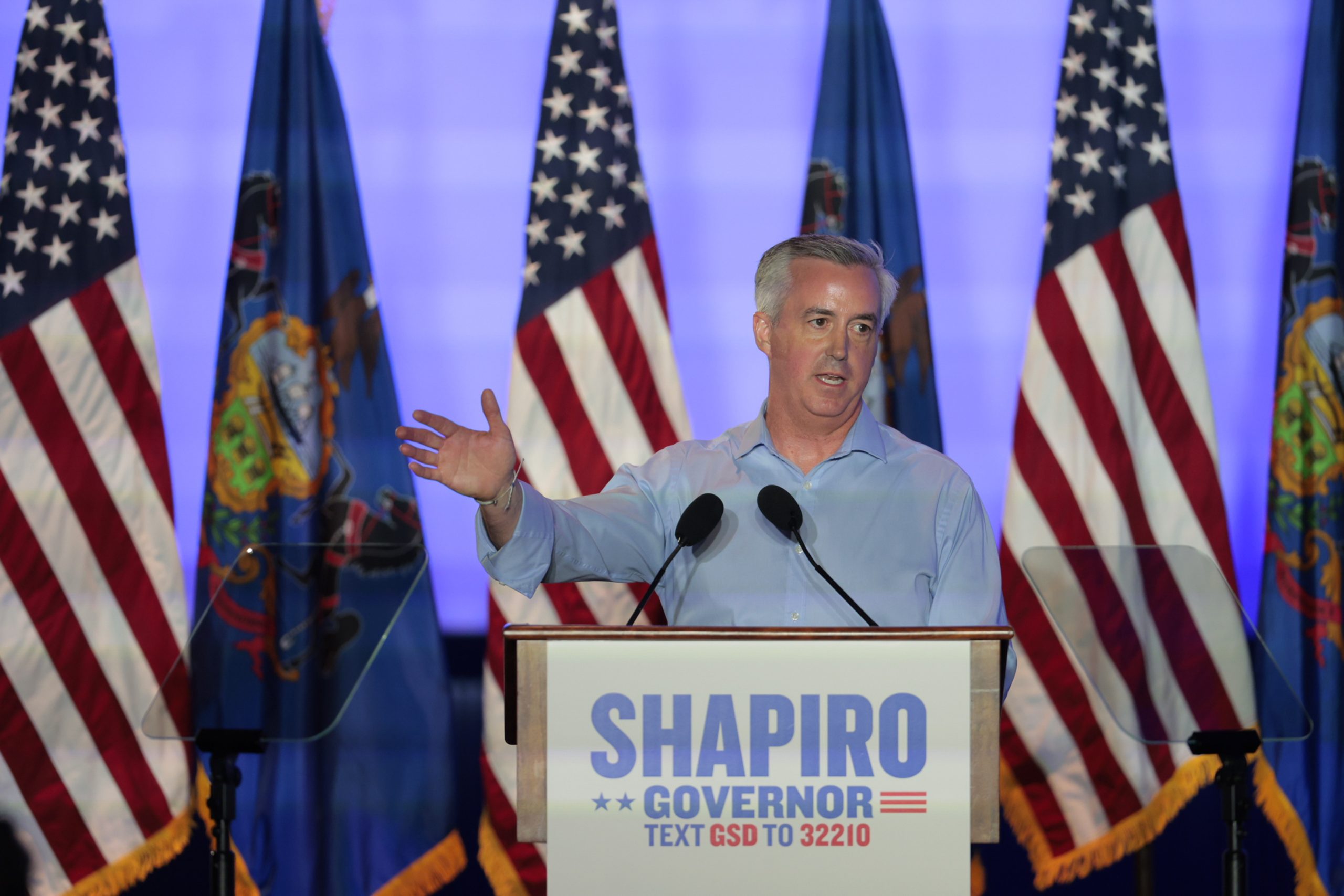
    Shapiro, a Democrat seeking reelection this year and a possible 2028 presidential contender, has remained data-center friendly and emphasized that Pennsylvania should play a core role in the “battle for AI supremacy.”

    But he has sharpened his rhetoric in recent months, citing his own personal evolution on the issue, as public opinion has also shifted with roughly 76% of Pennsylvanians across party lines opposing the projects.

    “Too many of these projects have been shrouded in secrecy, with local communities left in the dark about who is coming in and what they’re building,” Shapiro said in his budget address in February.

    Yet as other states like New York have put moratoriums on data center development, Shapiro has chosen to fast-track permits and support tax breaks to incentivize the massive projects, though he now believes they should meet certain voluntary standards.

    Amazon has already committed to a $20 billion investment in Pennsylvania — the biggest investment in state history — to build two data center campuses in Luzerne and Bucks counties and will access the state’s sales tax exemption for data centers as approved by the General Assembly in 2021.

    The Data Center Coalition — the powerful industry group made up of data center developers like Amazon, Google, Anthropic, OpenAI, and Microsoft — shared feedback on several drafts of Shapiro’s GRID principles and approved of most of its measures. But the industry still has “some significant concerns” with the voluntary program, including its clean energy provisions requiring certain percentages of its power to be from low- or zero-carbon sources.

    Dan Diorio, the Data Center Coalition’s executive vice president of state policy and government affairs, described the proposed GRID program’s requirements to access tax breaks as “extensive” compared to the 37 other states that offer sales tax exemptions.

    “We look forward to continuing to work with the legislature and the governor’s office on outlining what would ensure Pennsylvania remains a strong and competitive data center market,” Diorio said.

    Fengqi You, an energy systems engineering professor at Cornell University and data center expert, said it’s best practice for governments to consult all stakeholders, including industry leaders. But data center developers and local communities have opposing viewpoints that must be balanced, he said.

    “The right model, in my view, is to consult widely all the stakeholders, decide independently, and disclose transparently,” You said. “The standards are only as strong as the conditions and the consequences.”

    But some of the conditions should not be voluntary incentives, like Shapiro proposed, You said. This has been echoed by some environmental and anti-data center groups, which argue that the provisions don’t go far enough if compliance is ultimately voluntary for the tech giants.

    “It’s a useful starting point, but the incentive conditions should not substitute a minimum public protection for all,” You said. “If a company is receiving a tax exemption, then the state should have every reason to attach some very strong public interest conditions.”

    ‘Not ban or discourage data centers’

    Ahead of Shapiro announcing his plans for GRID as part of the state budget address, Shapiro administration officials went further in their efforts to reassure companies like Amazon, which they’ve courted for years, records show.

    In a Feb. 3 email, Department of Community and Economic Development Secretary Rick Siger wrote to Amazon Web Services staff that Shapiro would not “ban or even discourage data centers” and that “this new approach will not look back at projects or agreements already in place.”

    Other emails, sent in March by Sam Robinson, a deputy chief of staff to Shapiro, request that Amazon and the Data Center Coalition submit their feedback and mark up drafts. Shapiro’s administration declined to share those earlier feedback drafts.

    Legislators in Pennsylvania’s split General Assembly did not write Shapiro’s GRID proposal into law as part of this year’s $50.8 billion budget deal, and only enacted one new data center requirement despite near-unanimous support to repeal tax breaks for the projects. Shapiro now says he’s “considering all executive actions” he can do without the legislature.

    Colby Wesner, a pediatrician in Montour County, received troves of emails from top Shapiro administration officials, top Amazon staff, and more as part of several Right-to-Know Law requests he submitted to find out more about a now-blocked project near his home.

    “It’s a really insincere attempt,” Wesner said of the GRID principles. “It’s a public relations stunt.”

    Now that Shapiro is considering acting on his own, Wesner said he wants to know whether Shapiro will add restrictions or continue to welcome the projects into Pennsylvania.

    “Maybe he is listening to constituents and an executive action will demonstrate that he is listening to citizens,” Wesner added. “If it is, then great for him. But to date, everything he has done has been pro-data center industry.”

    Amazon , for its part, declined to comment on its role in the drafting of the GRID principles, which, if approved, would not apply to their ongoing projects. Becky Ford, a principal for global infrastructure expansion at Amazon Web Services, replied to Robinson on March 18 that they “look forward to providing feedback.”

    “We’re committed to being good neighbors in the communities where we build and operate, and will continue working with state and local leaders to invest responsibly and to keep creating good jobs across the Commonwealth,” an Amazon spokesperson said in a statement.
  • Pa. lawmakers can’t agree on how to sentence second-degree murder cases. The state Supreme Court may extend their deadline.

    Pa. lawmakers can’t agree on how to sentence second-degree murder cases. The state Supreme Court may extend their deadline.

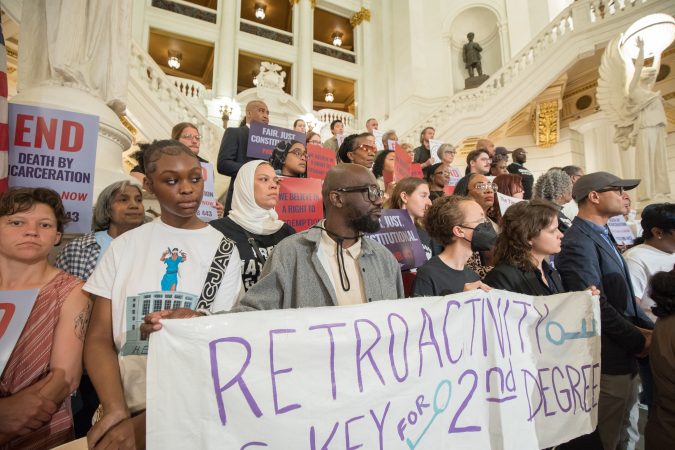
    HARRISBURG — As state legislators failed to reach an agreement on a new sentencing structure for second-degree murder convictions on the eve of a deadline imposed by Pennsylvania’s highest court, the Allegheny County district attorney has asked the Pennsylvania Supreme Court to extend its deadline 120 days.

    Unless the court agrees, the state’s divided legislature is all but guaranteed to not reach a deal by the Friday evening deadline set by the court, which ruled in March that mandatory life sentences for crimes of that category were ruled unconstitutional.

    That means that judges would begin to sentence individuals across the state without legislative guidance — and likely tees up about 1,100 individuals already serving life sentences for lengthy litigation over what comes next.

    In a filing with the court Thursday afternoon, Stephen Zappala, the Allegheny County district attorney, requested that the judges give the General Assembly the ability to continue debating new sentencing guidelines when they return in September from summer recess.

    Lawmakers were not due back to Harrisburg until the fall, but Senate and House Republicans lambasted House Democrats for failing to pass any legislation on second-degree murder. The House returned to the Capitol for a special session Thursday to vote on a Democrat-backed plan for second-degree murder sentencing.

    The passage of that bill, however, did not bring lawmakers closer to a deal.

    “We still want to have a legislative solution, we believe it is going to be the most equitable way statewide to address the issue of people who are currently serving unconstitutional sentences,” said Roxanne Horrell, the legislative director for Straight Ahead, a decarceration advocacy organization. “We are ready and willing to come to the negotiating table.”

    The House-advanced plan, which passed 102-100, would allow individuals who have already been convicted of second-degree murder to seek parole after serving 30 years. A decision on new sentencing guidelines would be left to the state’s Sentencing Commission.

    In a brief statement to reporters, House Majority Leader Matt Bradford (D., Montgomery) said that bill “is a real attempt in the House to meet the Senate more than halfway.”

    In floor arguments that at times grew heated, House Republicans took issue with the outlining no minimum sentence for future cases and instead placing that decision in the hands of the Sentencing Commission.

    Republicans also criticized Democratic leadership for not taking a vote on the Senate-passed plan.

    That bill — which several Senate Democrats voted for — creates a sentencing minimum of 35 years to life for future cases. Individuals would be eligible for parole after serving 35 years, or after serving 20 years for those older than 70.

    “This is one of those issues that requires a great deal of thought, and it requires bringing in some of the stakeholders that we are hearing from that was opposed to this legislation today,” House Minority Leader Jesse Topper (R., Bedford) said. “Those are people who need to be in a room to come up with a solution, and unfortunately, that’s not what happened.”

    He called for party leaders, the state’s Fraternal Order of Police, Gov. Josh Shapiro, and Attorney General Dave Sunday to come together and reach an agreement instead of shuttling bills back and forth between both chambers.

    “When you don’t have that kind of collaboration to deal with an issue such as this,” Topper said, “nothing will be done.”

    Horrell said the decarceration organization would support discussions that include their input.

    In a letter on Thursday, the attorney general urged state representatives to vote against the plan backed by House Democrats.

    “This approach does not foster appropriate and thoughtful re-entry initiatives or put individuals on a path to success,” wrote Sunday, a Republican. “Thoughtful re-entry initiatives are necessary and important, and I support those initiatives. But not this approach, which ultimately fails to hold dangerous offenders accountable.”

    The plan advanced Thursday is the latest development in months of back and forth between Republicans and Democrats who have advanced differing visions for what the new sentencing parameters should be.

    Lawmakers were unable to reach a deal as part of budget negotiations that concluded earlier this month.

    “Today, the House took important action prior to the court-imposed deadline by passing a package to address this issue and it’s time for Senate Republicans to return to Harrisburg and bring this matter to conclusion rather than grandstand,” Shapiro said in a statement.

    The House-passed bill also expands the state’s compassionate release program. Under existing law, incarcerated individuals can only be candidates for release if doctors determine that they have less than a year to live.

    The bill would allow for an individual to be released if they have been diagnosed by a doctor with a terminal or life-threatening illness, or if a physician diagnoses them with an illness that could be treated better outside of a correctional facility.

    Democratic Rep. Rick Krajewski, who represents West Philadelphia, said that the program is designed for incarcerated individuals who are facing serious illnesses “that require real, complex medical care” that can’t be provided while an individual is serving out their sentence.

    “I am glad that the House was able to put a vision forward about how to fulfill our constitutional mandate and reform our carceral system generally,” he added.

    Several Republicans had supported Krajewski’s initial bill, which passed the house 111-92. The program is estimated to save $15 million a year in healthcare costs for incarcerated individuals, he said.

    Now that both the House and Senate have passed a bill, either could be amended and voted on by both chambers in a single day.

    “Instead of allowing a vote on either of the bipartisan bills passed by the Senate, [House Democrats] chose to engage in political theater and failed to produce any feasible product to protect our communities and victims’ families,” Senate Republican leaders wrote in a statement.

    A spokesperson for Senate Republican leadership did not respond to a request for comment on whether the chamber planned to return for a vote Friday.

    On Thursday morning, Topper morning said that he hoped the legislature could come to an agreement in the coming weeks if an agreement could not be reached by the deadline.

    However, speaking to reporters after the House adjourned, Topper said the decision to advance the House bill without a vote on the Senate bill on Thursday “sets things back considerably.”

    Ethan Young is an intern with the Pennsylvania Legislative Correspondents’ Association. He can be reached at ethanmyoung@gmail.com.

  • Josh Shapiro joins lawsuit against Trump administration’s plan to withhold disaster aid to pressure states on voter data

    Josh Shapiro joins lawsuit against Trump administration’s plan to withhold disaster aid to pressure states on voter data

    Pennsylvania Gov. Josh Shapiro was one of 26 Democratic officials from across the nation to join a lawsuit challenging President Donald Trump’s administration over its efforts to compel states into sharing raw voter data by threatening federal funding for natural disasters.

    “Withholding this funding will make our communities less safe and would be dangerous under any circumstance, but doing this in an attempt to undermine states’ authority over elections is reckless and unconstitutional,” Shapiro in a statement Thursday.

    New Jersey and Delaware are among the other states on the Illinois-led lawsuit. The complaint, filed in U.S. District Court in Rhode Island, comes amid escalating tensions between Democratic-run states and the federal government over how best to ensure noncitizens are not voting in any elections — a situation these states say happens extremely rarely.

    But New Jersey’s admission Tuesday that about 6,600 noncitizens were inadvertently added to the state’s voter rolls, due to a system error in the state’s department of motor vehicles voter registration program, has thrust the issue into the national spotlight as these efforts were already underway.

    The Department of Homeland Security announced earlier this month that the Federal Emergency Management Agency would require states to hand over their unredacted voter rolls and adhere to significant changes in their election administration in order to receive funding for preparation and recovery from catastrophic disasters, such as major storms.

    The policy puts nearly $6 million in federal aid at jeopardy for Pennsylvania, according to Shapiro.

    Shapiro has routinely signed on to lawsuits against the Trump’s administration, particularly when federal funding to the state has come under threat.

    Pennsylvania election officials have repeatedly declined to hand over unredacted voter rolls to the Trump administration, citing privacy concerns.

    New Jersey has also refused to provide voter roll data to the Trump administration, though the federal government is using the state’s registration mishap to justify its request.

    “We are not in the practice of turning this kind of personally identifying data over to the federal government because we have seen them weaponize it … and they don’t have a reputation for keeping it private, either,” New Jersey Gov. Mikie Sherrill said after a news conference Thursday.

    As for the FEMA funding, New Jersey Attorney General Jennifer Davenport said in a social media post Thursday that the Trump administration “threatens our safety when it plays politics with these funds.”

    While most of the plaintiffs are attorneys general, Shapiro was one of two governors to join the complaint, along with Kentucky Gov. Andy Beshear, another potential 2028 presidential contender who also leads a state with a Republican attorney general.

    In a prime-time address last week, Trump called for an overhaul of U.S. election administration and ticked through old debunked claims about his 2020 election loss.

    Pennsylvania and New Jersey are among four states — along with California and Nevada, which also joined the suit — that the Trump administration is targeting for additional scrutiny over their voter rolls, according to a document posted to the White House website last week. The one-pager claimed widespread instances of noncitizen voting, much broader than what New Jersey said it uncovered, though election experts have suggested caution when examining these numbers.

    “The Trump Administration is holding critical funding for homeland security and disaster response hostage in their latest attempt to take over our elections and perpetuate baseless conspiracy theories,” Shapiro said in his statement Thursday.

  • U.S. intelligence agency quietly cut about 200 jobs since June 1

    U.S. intelligence agency quietly cut about 200 jobs since June 1

    The Office of the Director of National Intelligence has shrunk more than is publicly known in recent weeks, losing about 200 personnel to firings and reassignments since June 1, according to data the Trump administration shared with Congress this week.

    The cuts are the latest to hit ODNI, which was created to oversee and coordinate all U.S. spy agencies but has been targeted by President Donald Trump and many Republicans in Congress. They, and some former U.S. intelligence officials, say it has expanded far beyond what lawmakers intended when it was created two decades ago. The ODNI had about 2,000 employees at the start of Trump’s second term. It is now little more than half that size, according to congressional aides.

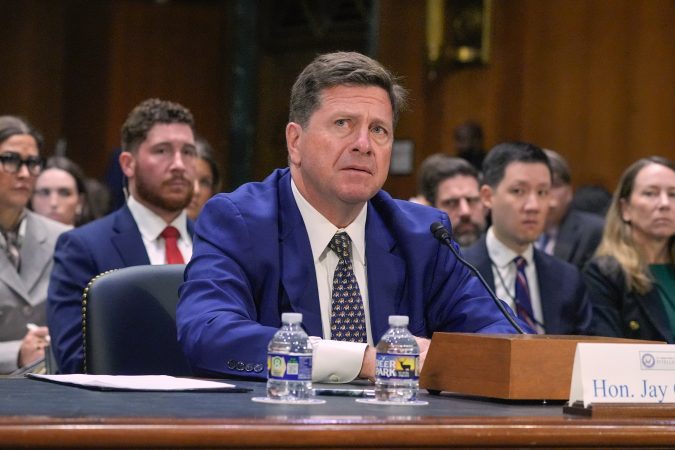
    The staffing reductions mean that Trump’s nominee for intelligence czar, Jay Clayton, if confirmed by the Senate as expected, while inherit a shrunken organization that has experienced steady upheaval over the last 18 months.

    The president in early June tapped federal mortgage regulator Bill Pulte, a political ally with no prior national security experience, to be acting director of national intelligence. Trump said at the time that he wanted Pulte to “start the process” of eliminating some workers.

    Trump has often maintained a hostile posture toward professional intelligence personnel and their agencies, claiming they tried to undermine him in his first term, particularly with the compiling of reports on Russia’s interference in the 2016 presidential election to aid his campaign. The president has dismissed intelligence analysis on a range of issues, from North Korea’s nuclear policy to Iran’s likely reaction to the attacks the U.S. and Israel launched in February.

    Neither Pulte nor the White House has publicly detailed what cuts they have made recently at ODNI, which houses the National Counterterrorism Center and was established to fix U.S. intelligence agencies’ failure to share threat information prior to the September 2001 terrorist attacks.

    The latest personnel cuts were confirmed by a congressional staff member and another person familiar with the matter. They spoke on the condition of anonymity to discuss nonpublic information.

    ODNI did not respond to requests for comment.

    The cuts include some firings, as well as a larger number of intelligence officers who were ordered back to their home agencies, the person familiar with the matter said. Much of ODNI’s workforce consists of personnel detailed from the CIA and other intelligence organizations.

    The counterterrorism center has not been affected significantly, officials have said. But there has been a whole-scale hollowing out of the National Intelligence Council, a prestigious analytic body that conducts intelligence community-wide assessments on key topics such as COVID-19’s origins and foreign interference in U.S. elections.

    The Washington Post previously reported that about 20 intelligence council personnel have been removed or have chosen to leave, including senior officers who oversaw the production of analysis on Russia, China, and Europe. The top official who oversaw the council was placed on administrative leave.

    Neither Clayton nor the Trump administration has articulated a vision of what ODNI should look like or focus on “other than it should be smaller,” said Julia Curlee, who served as a director for intelligence programs in Trump’s White House until last year and recently resigned from the CIA after 20 years as an analyst. “It seems like DNI was just a fat target to punish the ‘deep state.’”

    “Morale is pretty terrible, as you would imagine,” Curlee said.

    It is unclear how many of the 200 personnel were let go under Pulte, who became acting director of national intelligence on June 19, and how many were let go under his predecessor, Tulsi Gabbard, who left the administration after her husband became ill.

    The Trump administration and its allies in Congress have not publicly acknowledged the extent to which ODNI has been shrunk.

    “U.S. National Intelligence is operating more efficiently and effectively than ever before, and today, we started a third round of reducing redundant, or noncritical, personnel,” Pulte posted on X on July 10, without revealing details.

    Senate Intelligence Committee Chairman Tom Cotton (R., Ark.) said shortly after Pulte took over that the acting DNI had told him that “a small handful of front-office personnel” were leaving. “Around 45 or 50 career officers” were returning to their home agencies, Cotton said. Cotton’s office did not respond to requests for comment.

    The precise size of the workforce at ODNI and other U.S. intelligence agencies is classified. By the time Gabbard departed in mid-June, the workforce had shrunk from about 2,000 in January 2025 to about 1,300.

    Clayton was mauled in his Senate Intelligence Committee confirmation hearing by Democrats who decried what they said was his failure to unequivocally state that Joe Biden won the 2020 presidential election, which Trump denies. The Republican-led committee approved his nomination Tuesday on a 9-8 vote, and a full Senate vote is expected next week.

  • Why labor unions are sticking with two Pa. Republicans, even as control of the U.S. House hangs in the balance

    Why labor unions are sticking with two Pa. Republicans, even as control of the U.S. House hangs in the balance

    Early on in his tenure, U.S. Rep. Brian Fitzpatrick proved himself to the largest federal employees union in the United States.

    In 2017, President Donald Trump signed a law to improve whistleblower protections and set guidelines for employee misconduct at the Department of Veterans Affairs. But the American Federation of Government Employees began noticing some adverse effects.

    As Phil Glover, a national vice president for AFGE, tells it, veterans, including those with disabilities, and lower-level employees were being targeted instead.

    AFGE officials went to Fitzpatrick with their concerns, and the Bucks County Republican introduced his own bill repealing and adjusting certain provisions.

    That move, Glover said, was an inflection point in solidifying a long-lasting partnership with Fitzpatrick — one that gives the union a rare ally in the Republican caucus and Fitzpatrick a consistent endorsement from a powerful organization as he has repeatedly won reelection in a narrowly divided district.

    “He’s carried a lot of water for us within the Republican Party, within the caucus, whether they were in the minority or majority,” said Glover, whose jurisdiction includes Pennsylvania.

    In the high-stakes midterm elections this year, union endorsements behind Fitzpatrick and U.S. Rep. Rob Bresnahan, a freshman Republican trying to hold onto his seat in Northeastern Pennsylvania, are shaping up to be a potentially critical factor in these two swing districts that could help determine which party controls the U.S. House.

    “They all reached out. I didn’t even have to call them. They reached out to me right away and said we are 10,000% with you,” Fitzpatrick said, describing his relationship with the unions as “beyond advocacy” and “like family.”

    Organized labor has traditionally backed Democratic candidates in the state — and that remains mostly true this year.

    Fitzpatrick was the only Republican congressional candidate to get an endorsement Wednesday from the Pennsylvania AFL-CIO, which is also backing popular Pennsylvania Democratic Gov. Josh Shapiro.

    In two other swing-seat districts centered on Harrisburg and the Lehigh Valley, unions have coalesced behind the Democratic nominees, including by spending big to help union leader Bob Brooks win his primary in May.

    But the splintering of their endorsements in both Fitzpatrick’s Bucks County-based 1st Congressional District and Bresnahan’s Scranton-based 8th Congressional District seat has been a striking departure — underscoring some unions’ willingness to reward incumbents’ loyalty to give labor a voice in a Republican caucus that may not always work in their interests.

    The disparity has become particularly pronounced in Fitzpatrick’s race against Democratic Bucks County Commissioner Bob Harvie. Though he is widely considered to be his party’s best shot at defeating the Republican in years, Harvie has lagged in fundraising and watched as Fitzpatrick received more than three dozen labor endorsements.

    Last week, the Pennsylvania State Education Association — the largest union for teachers or any other labor organization in the state — backed Fitzpatrick even though Harvie, a former social studies teacher at Bucks County Technical High School, was previously a member.

    How those endorsements move the needle in the election is still an open question.

    But in a district with independent-minded voters who have shown a willingness to cross party lines, some observers say, the labor endorsements could make a difference — both in the get-out-the-vote and fundraising support that unions sometimes provide, and in appealing to swing voters.

    “It suggests to an independent voter or even a moderate Democratic voter that this candidate isn’t a far-right candidate, that this candidate is somebody who will work with workers and work with unions,” said Paul Frymer, a politics professor at Princeton University who studies organized labor.

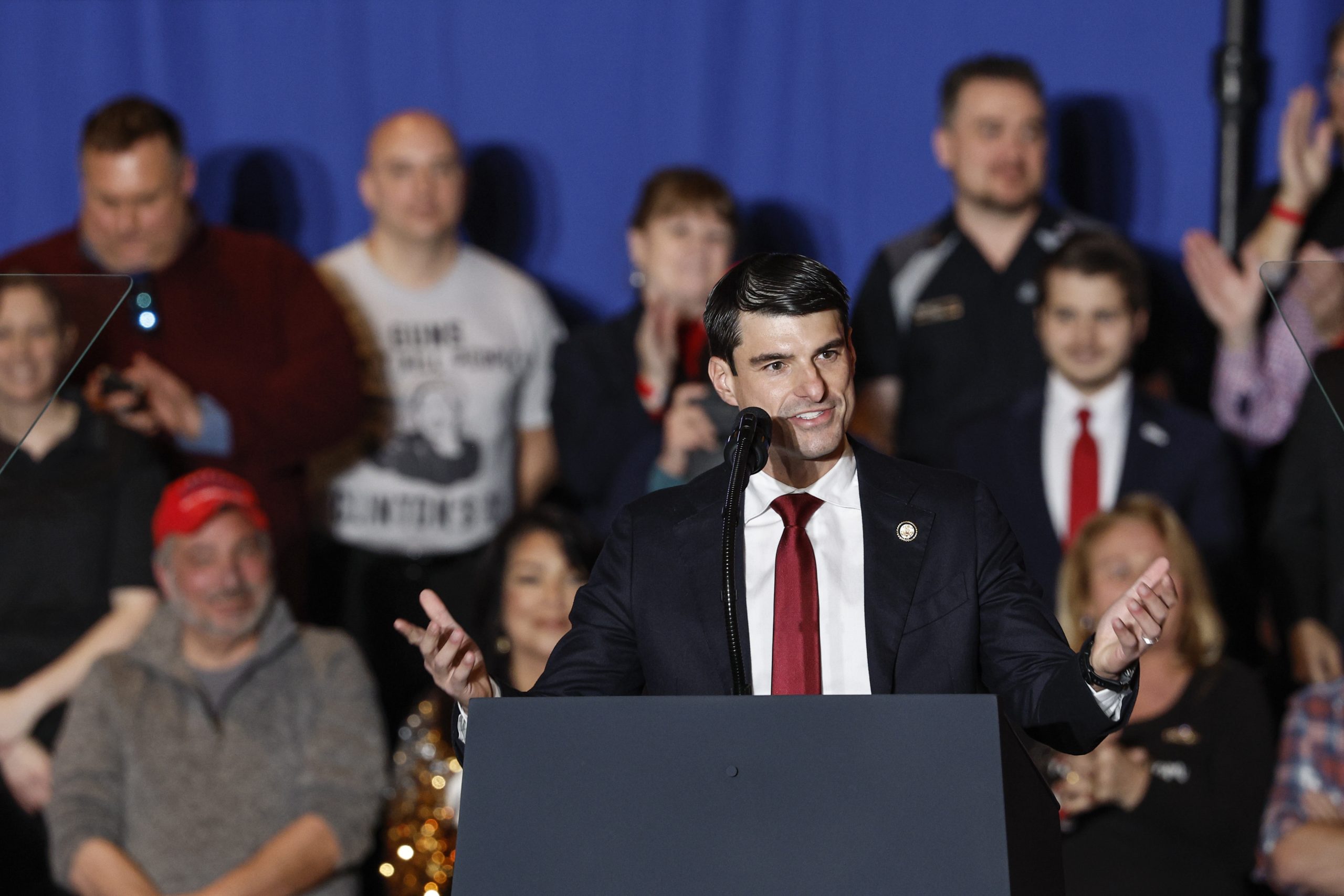
    U.S. Rep. Rob Bresnahan introduced before remarks from President Donald Trump in Mt. Pocono, Pa., in December. Steven M. Falk / For The Inquirer

    ‘We consider them our friends’

    With Trump in office and Republicans in control of Congress, Fitzpatrick and Bresnahan have won some union support by backing policies their own party leadership opposes.

    In December, they were among 20 Republicans to join 211 Democrats to force a successful vote on the Protect America’s Workforce Act, which aimed to reverse a Trump executive order to strip collective bargaining rights from federal workers. In June, they were again among 20 Republicans — and the only ones from Pennsylvania — to vote for the Faster Labor Contracts Act, an effort to speed up bargaining negotiations.

    Glover, of AFGE, has commended Fitzpatrick’s various legislative priorities on labor, even as Trump unleashed multipronged attacks against the federal workforce.

    And Bresnahan’s decision-making, as a freshman going against the White House, “had some guts to it,” Glover said. He said his group “didn’t entertain” endorsing Democrat Paige Cognetti, the Scranton mayor running against Bresnahan, or Harvie in the Bucks County race.

    Angela Ferrito, president of the 700,000-member Pennsylvania AFL-CIO, which endorsed Fitzpatrick on Wednesday, said that while he has not always sided with labor, he has become the kind of Republican who will “sometimes almost put their neck out.”

    Still, the union’s own public scorecard shows Fitzpatrick has aligned with its priorities far less often than Democrats — about 46% of the time in the current session of Congress. Bresnahan, who did not secure the union’s endorsement Wednesday, voted with the AFL-CIO just once — on the Protect America’s Workforce Act — to give him an 8% score.

    Ferrito said the organization supports candidates who “support us and stand up when it matters.”

    “Pennsylvania has always been unique in that way, where we do have moderate Republicans who will support unions and the rights of union workers. And so in those circumstances that we consider them, we consider them our friends,” she said.

    State of play

    As both of their districts draw national attention, Fitzpatrick has touted more than 40 labor-centered recommendations or formal shows of support and Bresnahan has highlighted about a dozen.

    Fitzpatrick’s labor endorsements have ranged from local building trade affiliates — such as the Boilermakers Local 13 and the deep-pocketed International Brotherhood of Electrical Workers Local 98 — to national labor organizations, like the Transport Workers Union of America and the National Air Traffic Controllers Association.

    The SEIU Pennsylvania State Council, which represents employees in public services, healthcare, and property services, backed him for the first time after a decade of either endorsing against him or staying neutral. But the council’s perspective changed after Fitzpatrick publicly supported reforms for U.S. Immigration and Customs Enforcement and was only one of two Republicans to vote against his party’s cuts to Medicaid in the One Big Beautiful Bill Act.

    “For us, that means something,” said Matt Yarnell, president of SEIU Healthcare Pennsylvania and the state council, “if someone’s down to both organize and fight and stand up and speak out against your own party.”

    Fitzpatrick said his “unique” role as a labor-friendly Republican has made him a “pivotal voice” in Congress — largely because of the hyperpartisan nature of politics that he has railed against, he said.

    “That’s unfortunate,” Fitzpatrick said. “If we did away with the political parties and we just had people form coalitions around ideas, you would see so much support, so much more support for commonsense measures, like supporting labor.”

    Bresnahan said he made it a personal mission to cultivate strong relationships with organized labor when he entered Congress last year after having had collective bargaining agreements as the CEO of his family’s electrical contracting business.

    As a freshman Republican, he said, he had to prove himself. He got up to speed on the roughly 10,000 federal jobs in his district and made visits to a high-security federal prison with “serious staffing shortages” at the same time as Trump was laying off thousands of federal workers.

    “I absolutely encourage my Republican colleagues to take another look at this and find a way to support the people that support us each and every day,” said Bresnahan, who narrowly defeated six-term Democratic U.S. Rep. Matt Cartwright in 2024.

    Bucks County Commissioner Bob Harvie addresses supporters after winning the May 19 Democratic primary. Steven M. Falk / For The Inquirer

    Harvie, the Democrat challenging Fitzpatrick, grew up in a union household and has received the backing of two unions: the American Federation of Teachers Pennsylvania and Transport Workers Union Local 234, which represents SEPTA employees. His campaign said conversations are ongoing with labor and believes more support is in the works.

    Harvie said Fitzpatrick’s endorsements have in some ways been a “reward for doing the bare minimum” while his own track record as a former Falls Township supervisor and as a twice-elected county commissioner proves he would be a steadfast supporter of labor in Congress.

    He said he was “anxious to get the support of the rank-and-file workers,” who are bearing the brunt of cost-of-living issues.

    “They’re the ones who are really going through all the pain right now with higher gas prices, higher grocery prices, higher energy prices, concerns about their healthcare,” Harvie said.

    Cognetti, meanwhile, has credited her endorsements from nearly a dozen local labor unions to her record in Scranton, including increasing the number of jobs and wages for public workers. Endorsements from AFSCME, which represents municipal employees, and others that she announced this month underscore that support, she said.

    She also said she would support more labor priorities than Bresnahan, including the PRO Act — a major effort to expand workers rights that Bresnahan has not endorsed — and repealing parts of the One Big Beautiful Bill Act, which Bresnahan voted for.

    “It’s very important that you look at the whole picture of someone’s votes. It’s very easy to sign on to a letter and try to make yourself a hero,” Cognetti said.

    In one unusual instance, Cognetti appeared to receive the endorsement of the Pennsylvania Conference of Teamsters with a voice vote during an April meeting, but the organization released a statement endorsing Bresnahan in June. But conference president Bill Hamilton, who had called for the vote at the April meeting, said in the June statement that Bresnahan “has always had our backs,” including through his vote for the Faster Labor Relations Act.

    Bresnahan, in an interview, also referenced that bill and stressed his relationship with Sean O’Brien, the national Teamsters leader whose podcast Bresnahan appeared on in January.

    The state and national Teamsters organizations did not respond to multiple requests for comment about the situation.

    “Democrats just can’t take unions for granted anymore,” Bresnahan said.

    Scranton Mayor Paige Gebhardt Cognetti hosts the national summer meeting of the Mayors Innovation Project in Scranton in 2023. Tom Gralish / Staff Photographer

    ‘Stick with them no matter what’

    The union endorsements in the 1st and 8th Congressional Districts have been a sharp contrast to other swing-seat districts that have arguably already shown the power of labor as a political force.

    In the Lehigh Valley district where Brooks, a statewide union leader and retired firefighter, is running against freshman Republican U.S. Rep. Ryan Mackenzie, high-profile Democrats recruited and rallied around the Democrat largely because of his union bona fides. And when opponents unleashed a last-minute ad campaign against him in the May primary, another political action committee padded with organized labor donations spent nearly $1.8 million to push back and help give Brooks the win.

    It is not yet clear whether unions will similarly spend heavily to elect Fitzpatrick or Bresnahan — especially as they mostly look to elect Democrats elsewhere in Pennsylvania and across the country.

    TJ Lepera, political director of IBEW Local 98, said he believed a Democratic blue wave would be highly favorable to labor interests. But his union has also backed Fitzpatrick, who “knows our issues, and that could be helpful in trying to calm down a lot of the crazy rhetoric that comes out of the Republican side, sometimes, on the attacks of labor,” Lepera said.

    “If somebody has a great voting record with us and has been loyal to Local 98 and the way that we see legislation, we typically stick with them no matter what,” Lepera said.

    That emphasis on loyalty was echoed by other unions, even if their political calculus led them to go the other direction.

    “We were not going to support anything that would possibly turn the House or the Senate red,” said Joe Coccio, secretary-treasurer and political coordinator from TWU Local 234, which has endorsed Harvie. “If they were a good candidate by us … once we endorse a candidate, unless they break the law or do wrong by us, we continue to endorse them until they move up or move on.”

    Coccio said Harvie had proved his appreciation for SEPTA employees when he served on the transit agency’s board. He is also accessible and pro-union, and has valuable experience as a teacher and county commissioner during the COVID-19 pandemic, Coccio said.

    AFT Pennsylvania, which is backing Harvie, did not respond to multiple interview requests.

    As November inches closer, unions backing both Fitzpatrick and Harvie are planning out their financial and ground-game support.

    “For us, is it strategic? Yeah, it’s very strategic,” said Lepera, whose Local 98 has a long history as a political power broker in Philadelphia and statewide. “We want to have a voice on the other side of the aisle.”

  • Josh Shapiro may be the biggest fundraising juggernaut Pennsylvania politics has ever produced

    Josh Shapiro may be the biggest fundraising juggernaut Pennsylvania politics has ever produced

    The Rev. Ed Stafford first donated to Josh Shapiro in August 2024, sending the Pennsylvania governor $10 through the Democratic fundraising platform ActBlue. A few weeks later, he gave him $5. And then he made two more $5 contributions on the same day toward the end of the month.

    He would go on to make 105 separate contributions to Shapiro between that August day two years ago and early June, an average of one donation every 16 days.

    “I’ve been getting a lot of text solicitations, and his [Shapiro’s] have come by rapidly and frequently, and that’s how I got to get to know him,” said Stafford, a priest at the Diocese of Youngstown, Ohio. He was particularly impressed with Shapiro’s handling as attorney general of the Catholic Church child sex abuse scandal in the state.

    Stafford’s donations, totaling just under $1,200 over the last two years, form a microscopic share of the $60 million Shapiro has raised since the current fundraising cycle began in 2023. But smaller, repeat contributions from dedicated donors like him are one piece of a strategy — along with eye-popping checks from wealthy donors and a nationalized fundraising network — that has allowed the governor to shatter state fundraising records as he looks beyond this November’s race to a prospective presidential run in 2028.

    Blowing past prior candidates

    Between the start of 2023 and June 8, Shapiro raised more than $60 million, 56% more than the $39 million he raised at this point four years ago when adjusted for inflation.

    That figure is nearly double that of the second-best fundraiser: former Democratic Gov. Tom Wolf, who had raised an inflation-adjusted $31 million at this point in his successful 2018 reelection campaign.

    Shapiro raised the eye-popping amount from roughly 22,000 unique individuals, about 44% more than the 16,000 who had given to his campaign at this point last cycle. That is more than triple the number of donors for the closest comparison, former Republican Gov. Tom Corbett in 2014, who had only about 6,000 donors at this point in his unsuccessful reelection campaign.

    That figure does not include contributions from donors who gave $50 or less in a campaign finance reporting period, as campaigns are not required to disclose information on those individuals. When including that group, Shapiro’s campaign said, it has more than 120,000 unique contributors. The campaign declined to comment on the rest of this article.

    Perhaps most staggering, Shapiro’s current campaign has raised nearly one in every five dollars collected by every major party gubernatorial candidate since the 2010 cycle.

    (function(){function e(){window.addEventListener(`message`,function(e){if(e.data[`datawrapper-height`]!==void 0){var t=document.querySelectorAll(`iframe`);for(var n in e.data[`datawrapper-height`])for(var r=0,i;i=t[r];r++)if(i.contentWindow===e.source){var a=e.data[`datawrapper-height`][n]+`px`;i.style.height=a}}})}e()})();

    Robin Kolodny, a political science professor at Temple University, said Shapiro is benefiting from a strong personal brand, a weak GOP opponent in State Treasurer Stacy Garrity, and a favorable national environment with an unpopular president of the opposing party dragging down GOP candidates across the country.

    “This is what happens when you have a highly popular incumbent running for reelection,” Kolodny said.

    Differing motivations for large and small donors

    Shapiro has raised about $2.5 million from donors who have given $50 or less in any given campaign finance reporting period — more than any prior candidate since 2010. That is about 4.3% of his total fundraising. Garrity has raised about $530,000 — 9.6% of her funds — from such small donors.

    Among Pennsylvania gubernatorial candidates who raised at least $1 million, Shapiro’s percentage is relatively high. Only Garrity; Shapiro’s 2022 opponent, State Sen. Doug Mastriano; and 2010 GOP candidate for governor Samuel Rohrer raised a higher share from small-dollar donors. Shapiro’s 2026 run is also pulling in a slightly smaller percentage of small-dollar givers than his 2022 campaign.

    Kolodny suggested that improvements in technology have likely aided Shapiro’s hunt for smaller-dollar donors.

    “It’s so much easier to reach somebody on their phone with an Instagram post or whatever and get them to Venmo me 10 bucks, while it was definitely more steps in earlier elections,” Kolodny said.

    Stafford, whose most common contribution was for $10, agreed.

    “They make it real fast and easy to donate,” Stafford said of the multiple daily text messages he gets from ActBlue. “You gotta watch [that] you’re not pressing the button too quickly if you don’t want to let go of all your money,” he added with a laugh.

    (function(){function e(){window.addEventListener(`message`,function(e){if(e.data[`datawrapper-height`]!==void 0){var t=document.querySelectorAll(`iframe`);for(var n in e.data[`datawrapper-height`])for(var r=0,i;i=t[r];r++)if(i.contentWindow===e.source){var a=e.data[`datawrapper-height`][n]+`px`;i.style.height=a}}})}e()})();

    Dan Mallinson, an associate professor of public policy and administration at Pennsylvania State University’s Harrisburg campus, suggested an additional factor: National politics has filtered down to state politics in ways it had not in the past.

    “[Pennsylvania] voters don’t have a presidential candidate on this ballot to express support or anger [about],” Mallinson said. “So that gets translated into these other races, and Shapiro’s is obviously the most high-profile.”

    On the flip side, Shapiro has raised more than $33 million from donors who have given $100,000 or more in aggregate. That figure is vastly greater than any prior candidate for the office since 2010 and accounts for about 58% of his total funds raised. Garrity, by contrast, has raised about 21.3% of her money from such mega donors.

    Kolodny said big donors’ motivations can differ from those of more modest givers.

    For some donors, it’s practical: They want access to the halls of power in case their business interests intersect with government policy — regardless of the party in charge.

    With such donors likely viewing Shapiro’s reelection as a sure thing, Kolodny suggested their money has one place to go.

    “There’s no reason for a lot of these donors to even think, ‘Well, just in case, I should give some money to Garrity,’” Kolodny said. “There’s only one horse to bet on.”

    For other donors, it’s ideological: They share Shapiro’s moderate views and want to demonstrate their support.

    A national fundraising network

    More than two-thirds of Shapiro’s money has come from donors who live outside Pennsylvania. That figure is vastly higher than any prior candidate for governor since 2010. Only 6.4% of Garrity’s money has come from outside the state.

    Mallinson pointed out that Shapiro finds himself in a unique position among the state’s recent crop of gubernatorial candidates.

    “This is the first time Pennsylvania’s really had a governor who’s attracting the national attention that Shapiro’s gotten,” Mallinson said, referring to the widespread expectation that he will run for president in 2028. “So if we’re comparing across governors, it makes sense he’d be attracting more outside [the state] money.”

    Among the $33 million Shapiro has raised from donors who have given at least $100,000 or more over the course of the campaign, nearly 70% has come from outside Pennsylvania, with California accounting for about 29% of the money and New York accounting for a little over 18%.

    (function(){function e(){window.addEventListener(`message`,function(e){if(e.data[`datawrapper-height`]!==void 0){var t=document.querySelectorAll(`iframe`);for(var n in e.data[`datawrapper-height`])for(var r=0,i;i=t[r];r++)if(i.contentWindow===e.source){var a=e.data[`datawrapper-height`][n]+`px`;i.style.height=a}}})}e()})();

    Here, too, changes in media and technology likely play a role.

    “At an earlier point in time, we didn’t have that much information about people representing other areas that shared a characteristic or a position similar to me as the donor, but now, this is easy information to find,” Kolodny said.

    Shapiro, for example, has repeatedly emphasized the impact his Jewish faith has had on his political values and how those values are shared among adherents of many religions. That sort of openness about his identity can be appealing to donors of all faiths.

    As he learned more about the governor, Stafford, a devotee of Catholic social teaching, came to believe the two men shared similar values.

    “He’s a good, just man — a good, holy man — set on serving people, especially people who’ve been hurt and victimized, and those are the kind of leaders we need more than ever.”

    Staff writer Michelle Baruchman contributed to this article.

  • How 6,600 noncitizens were registered to vote in New Jersey and what happens next

    How 6,600 noncitizens were registered to vote in New Jersey and what happens next

    New Jersey Gov. Mikie Sherrill was handed an election security crisis that took place under her predecessor just days after President Donald Trump’s administration pushed out claims of widespread noncitizen voting.

    Sherrill revealed Tuesday that about 6,600 noncitizens had been illegally registered as voters in New Jersey due to a system error in the state’s department of motor vehicle voter registration program under former Gov. Phil Murphy.

    The governor said fewer than 400 of those people had voted. There is no evidence that their ballots changed any election outcomes, but the news has thrust the Garden State into the middle of the national debate over election security.

    “This failure didn’t occur on my watch, but accountability starts now,” she said at a news conference Tuesday.

    Here is what to know about what happened and how, and what the fallout could be — both in Trenton and in Washington.

    How many noncitizens got registered in New Jersey and how many voted?

    About 6,600 people who identified themselves as noncitizens were registered to vote in New Jersey between June 2023 and June 2024 “through no fault of their own” due to the glitch, though fewer than 400 cast a ballot, Sherrill said.

    Sherrill said at a news conference that the error “was caught and stopped in 2024” but that her administration is now working to remove those hundreds of voters from the rolls. She said they could have voted in any elections since then but there is no evidence at this time that they could have swayed any results. She said they were registered as Democrats, Republicans, and mostly unaffiliated, and scattered throughout the state.

    She said her team is “taking a hard look at the process failures that occurred under the previous administration and the guardrails we can put down for the future.” Through a spokesperson, Murphy declined to comment.

    Sherrill, a former member of Congress who began her term in January, campaigned on changing the culture in Trenton and distanced herself from Murphy on the campaign trail but remained cordial with him. Her tone sharply changed this week.

    “This entire situation is unacceptable,” she said. “It’s unacceptable that the vendor released software with such a glaring error. It’s unacceptable that the MVC [Motor Vehicle Commission] took a year to get this fixed, and it’s unacceptable that no one in the previous administration brought this to light, demanded accountability, or took action when it happened years ago.”

    How did this happen?

    Sherrill called the issue a “serious software error in New Jersey’s motor vehicle system.”

    New Jersey began automatic voter registration in 2018, which allows citizens to be automatically registered to vote when they get an ID at the MVC unless they opt out.

    The noncitizens who were improperly registered had answered “no” when asked on a keypad at the MVC whether they were a U.S. citizen, Sherrill said. But she said the system registered them anyway “through no fault of their own.” She said the error could put those individuals’ immigration status at risk. It would be hypocritical for the state to charge the individuals and she wants to protect them, she said, but she “would not put it past” the federal government to charge them.

    U.S. Rep. Josh Gottheimer, a North Jersey Democrat who unsuccessfully ran for governor last year, called for a national audit into IDEMIA, the vendor whose software was used for the registrations.

    But IDEMIA pointed a finger at the New Jersey Department of State, noting that while the vendor’s role is to transmit information between the motor vehicle and state departments, it is ultimately the state department’s responsibility to verify voter eligibility.

    “Information submitted by IDEMIA must still be validated and adjudicated by the Division of Elections,” the company said in a statement.

    When did Gov. Sherrill find out?

    Sherrill said she learned about the error last Wednesday, the day before Trump’s speech. She announced the discovery on Tuesday.

    What is Gov. Sherrill doing about it?

    Sherrill said she immediately ordered an investigation when she learned about the issue and ordered the removal of the noncitizens from the voter rolls. She said that Rosalie Johnson, whom Sherrill appointed as New Jersey Motor Vehicle Commission administrator this year, had already begun replacing the system vendor.

    The governor said her administration hired an independent firm, CSG Law, to conduct the investigation. She said “they will be moving very quickly” and had already found the figures she has been citing. She said she will “present the findings” of the investigation to the public.

    Johnson said she expects to launch the new vendor next year and is working on creating additional safeguards to regularly review information before sending it to the elections division.

    Sherrill said her administration is looking at ways to make the state’s elections more secure and vowed to hold any government workers accountable.

    “Should there be anyone that is identified that is still working in this space that has not done the right thing, I will hold them personally accountable for this,” she said.

    How is the Trump administration responding?

    The Trump administration and other prominent Republicans are using the issue to call for the passage of the SAVE Act, a federal bill that Republicans say would improve election security but Democrats warn would suppress millions of voters.

    Assistant Attorney General Harmeet Dhillon said in a post on X that the Civil Rights Division of the Department of Justice “is investigating this unlawful dilution of American votes.”

    Additionally, the department argued in a letter that the incident justifies the Trump administration’s efforts to obtain the state’s unredacted voter rolls.

    Vice President JD Vance called on New Jersey U.S. Sens. Cory Booker and Andy Kim, both Democrats, to support the legislation in a post on X, given the issue in their home state.

    “If only there was a way to stop this type of ‘software error’ that allowed non citizens to vote in our elections,” Vance said in the tongue-in-cheek post.

    Booker said he trusts the Sherrill administration to solve the problem and criticized “those who will choose to weaponize this issue.” Kim declined to comment on the matter.

    Why is the timing beneficial for the president?

    The news came at an opportune time for Trump, just days after his speech in which he reignited conspiracy theories about his 2020 election loss. The same day, the White House shared claims of widespread noncitizen voting, including in New Jersey.

    DHS Secretary Markwayne Mullin claimed that more than 35,000 noncitizens could be registered in New Jersey. The department has not shared how it arrived at that number, and experts cautioned it could include new citizens who have not been updated in a system meant to check work eligibility.

    Sherrill said her administration received a letter with that 35,000 figure after Trump’s speech — which was also after she said she had learned about the 6,600 noncitizen voters.

    “We have asked them for any evidence of this, where they got that number, who this is,” she said. “We’ve received nothing back yet.”

    Sherrill said that the president “knows that if he provides us any credible information we will of course investigate it” but that he has “zero credibility on the issue of election integrity.”

    “For the past 10 years he’s cried wolf and peddled bizarre conspiracy theories about fraud with no evidence,” she said.

    Trump called for the passage of a national proof of citizenship requirement Wednesday during a speech in Georgia, but he did not directly reference New Jersey.

    How will New Jersey lawmakers respond?

    State Sen. Anthony Bucco of North Jersey, the Senate Republican leader, said the state should “at the very least” suspend the automatic voter registration program until a full investigation is complete and next steps are made clear.

    He also called on the state to enact a voter identification requirement.

    New Jersey requires identification or a Social Security number to register to vote, and first-time voters who registered to vote by mail may need to provide ID at the polls. But overall, most voters do not need to show ID at the polls in New Jersey.

    Republican-led efforts to enact legislation following this incident are unlikely to succeed in Trenton because Democrats hold a supermajority in the Assembly and a majority in the Senate.

    Sherrill said at the Tuesday news conference that the problem is not with the state’s laws, but rather with how the state government has been operating — further pushing blame on her predecessor.

    “I see no reason why our state cannot run our election system well and have a computer program that can operate well, and should any problem occur it should be caught quickly … it’s a problem with accountability,” she said. “It’s a problem with making sure government is effective and running well, and it really is a lack of responsibility.”

    Has this happened before?

    In 2017 Pennsylvania Secretary of State Al Schmidt, a Republican city commissioner in Philadelphia at the time, uncovered and resolved a similar glitch at the Pennsylvania Department of Transportation in which all Pennsylvania drivers were asked if they wanted to be registered to vote regardless of citizenship status.

    Schmidt said at the time that the glitch led to 168 noncitizens registering to vote in Philadelphia but that just 44 ballots were cast in the city as a result.

    Schmidt has since said that noncitizen voting is rare and that the threat has been exaggerated.

    Staff writers Michelle Baruchman and Abraham Gutman contributed to this article.

  • Pa. state lawmakers found common ground on this data center policy — but still couldn’t reach a deal

    Pa. state lawmakers found common ground on this data center policy — but still couldn’t reach a deal

    HARRISBURG — Democratic and Republican lawmakers in Pennsylvania’s divided state government rarely agree.

    But this month, there was one issue upon which nearly all of them found common ground: ending tax breaks for data centers.

    Despite the rare consensus as Harrisburg looks to add guardrails to the state’s data center boom, no legislation was passed to end the favorable tax treatment for the projects. After approving the $50.8 billion state budget last week, Pennsylvania’s lawmakers went home for the summer, each blaming the other party for the inaction.

    But new regulations could be coming soon, Gov. Josh Shapiro said.

    The governor — who has adamantly stood by his proposal to condition tax breaks for data center projects based on their compliance with environmental and transparency standards — said he plans to take executive action on regulating Pennsylvania data centers in the coming weeks.

    “I am now exploring everything I can through executive authority since the Senate Republicans refused to act,” Shapiro said Tuesday at an unrelated event in Philadelphia, declining to share details or a timeline for his plans.

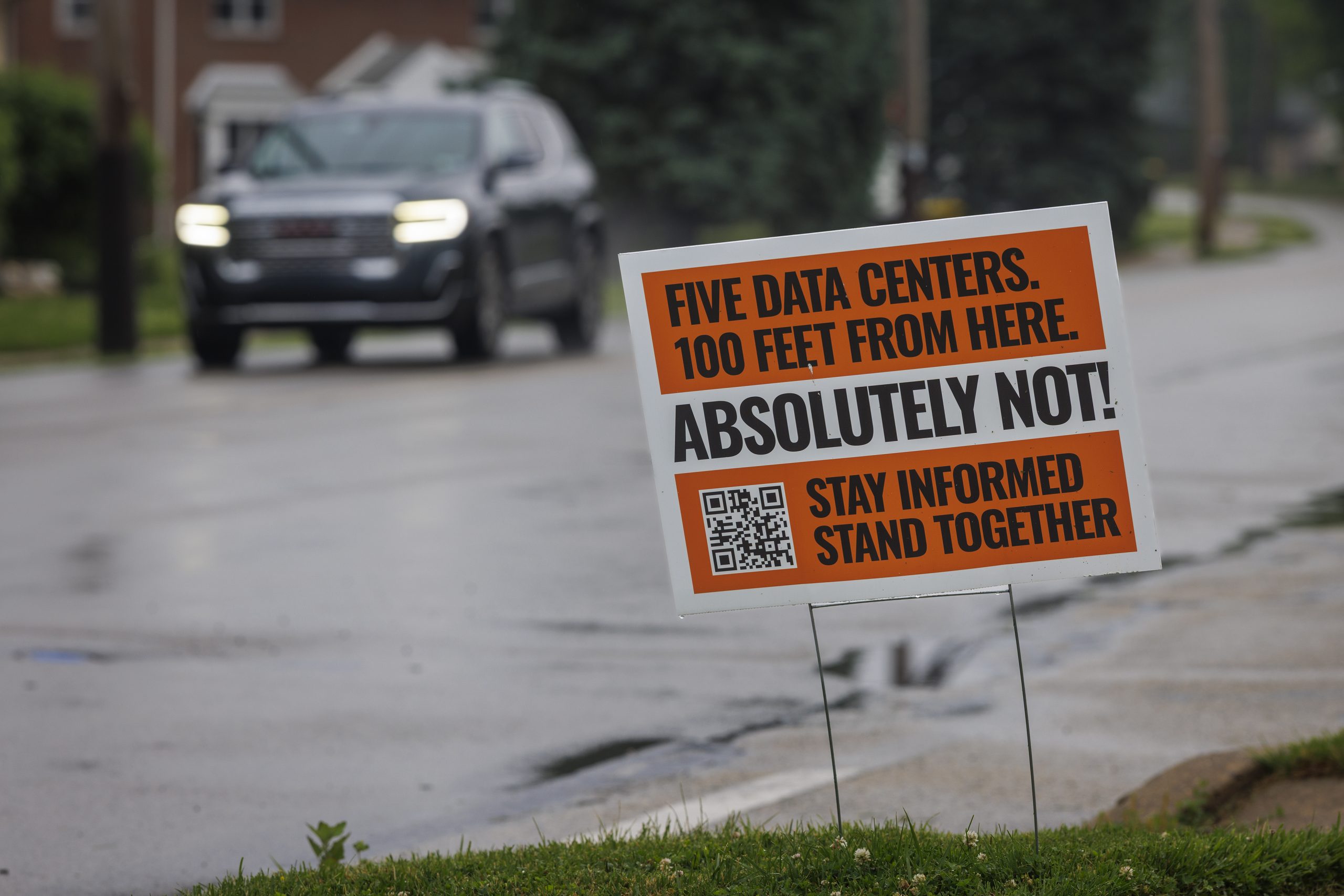
    Lawn sign along Crooked Lane in King of Prussia, Wednesday, May 27, 2026. Some residents are standing in opposition to building a data center in their community.Alejandro A. Alvarez / Staff Photographer

    The state’s current tax incentive for data center development is projected to cost Pennsylvania nearly $2 billion in lost revenue over the next five years.

    The current benefit was approved by the legislature in 2021. Developers who generate a certain dollar value of investment are exempt from the state sales tax rate of 6% for equipment, including materials used to construct the data center building.

    According to a February report from the state, 12 projects currently receive the exemption.

    Proponents of the tax break have said it helps keep Pennsylvania economically competitive. Opponents say such a benefit is no longer necessary for an industry that is expanding rapidly.

    “I am not going to get into hypotheticals,” Shapiro said Tuesday when asked whether he would sign a bill that would eliminate the tax benefit, something industry groups have loudly opposed.

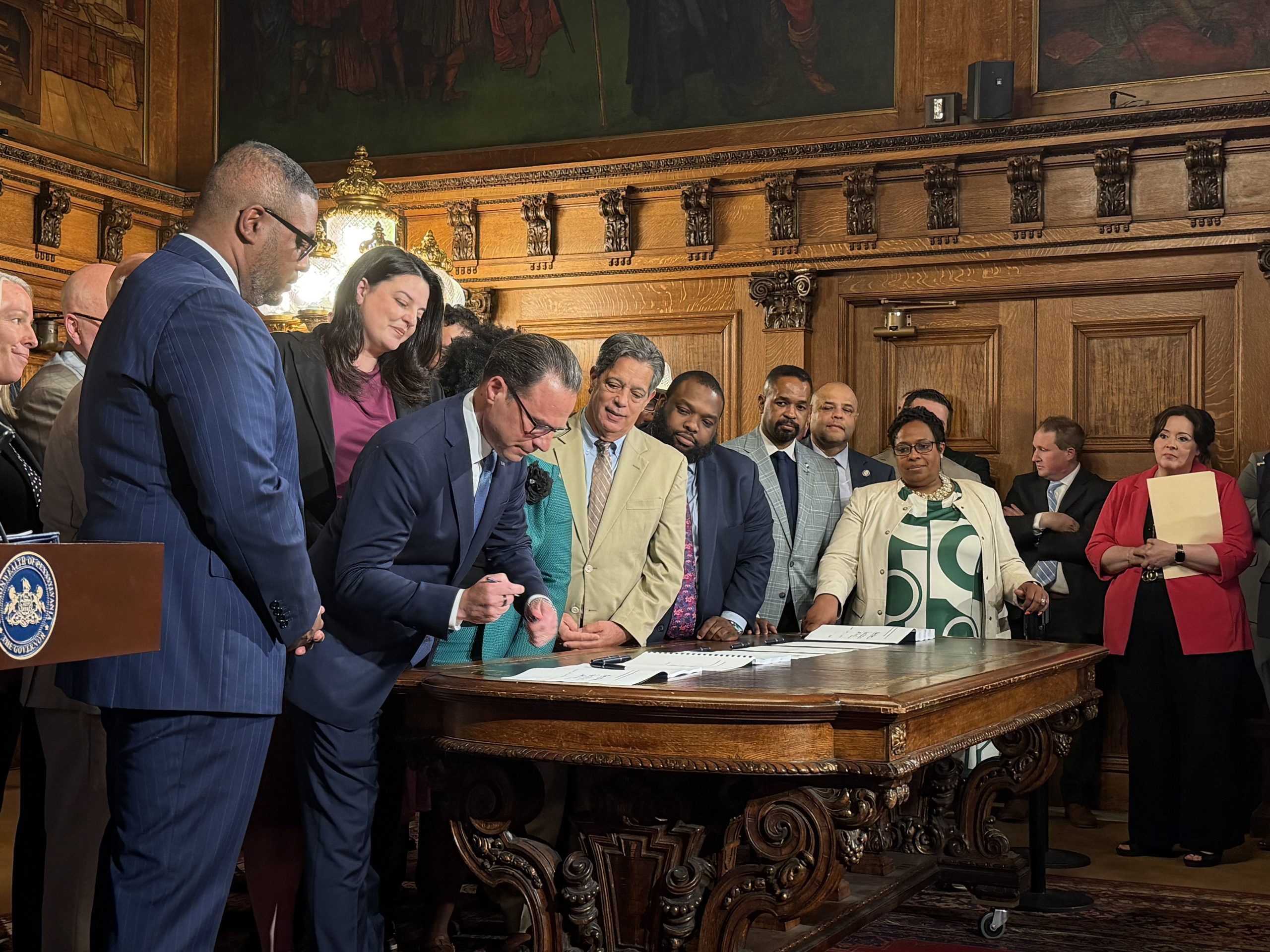
    Gov. Josh Shapiro, flanked by fellow state Democrats, signs the 2026-2027 Pennsylvania state budget in Harrisburg, Pa. on Sunday, July 12, 2026.Gillian McGoldrick / Staff

    Shapiro has championed his proposal for data centers, which incentivizes tax breaks for projects that adhere to a series of requirements. He has not publicly endorsed other data center regulation bills passed by the Democratic-controlled House. The governor’s plan passed the House in June with a vote of 134-68, but was not put up for a vote in the Republican-controlled Senate.

    And as public opinion has soured on data center development, lawmakers in Harrisburg have become more skeptical. This year, all but five Pennsylvania state legislators expressed support for bills that would remove tax breaks for data centers.

    According to an Inquirer review, 197 out of 202 House members voted for a bill that would have repealed the tax benefit. In the Senate, 44 out of 50 members voted in favor of a bill that included a provision to eliminate the tax exemption. The remaining six senators expressed support in interviews for getting rid of the tax break, though they said they voted against the bill because of unrelated provisions included within the legislation, including an expansion of the Educational Improvement Tax Credit Program.

    Though the state’s final budget took no action on the tax exemption, it included a provision requiring data centers with electric outputs larger than 10 megawatts to submit information about their energy and water usage to the state.

    Several other data center regulations that received bipartisan support in recent weeks were also absent from the final spending package, including attempts to enact a local or statewide moratorium on new development.

    State Senate Majority Leader Joe Pittman (R., Indiana) during a press conference at the Capitol in Harrisburg Feb. 3, 2026.Tom Gralish / Staff Photographer

    House Democrats and Senate Republicans were quick to blame each other for failing to reach a deal on removing the tax exemption.

    During separate news conferences after the budget passed, Senate Majority Leader Joe Pittman (R., Indiana) and House Majority Leader Matt Bradford (D., Montgomery) each said it was the other party’s fault that a tax benefit repeal was left out.

    Pittman said that Democrats “shredded” a Republican-backed bill into “something that nobody could recognize,” adding in an email that Senate Republicans would also “continue to examine” the proposal backed by Shapiro.

    Bradford, placing the blame on Pittman, said he is “obviously unbelievably disappointed by the Republican leader in the Senate stating that he has no interest in doing anything on data centers,” adding that he was proud of the state House for advancing a number of data center regulation proposals.

    Beth Rementer, a spokesperson for the House Democrats, said in a statement that “Senate Republicans still have an opportunity outside the budget negotiation process to vote on all the bills we passed to hold big tech accountable.”

    State Rep. Matt Bradford (D., Montgomery County) during a press conference at the Capitol in Harrisburg Feb. 3, 2026.Tom Gralish / Staff Photographer

    The Pennsylvania Chamber of Business and Industry and the Pittsburgh Building Trades Council lobbied legislators to keep the tax break. In a June memo to state House members, the Pennsylvania chamber wrote that a repeal of the tax benefit “threatens to place Pennsylvania at a competitive disadvantage and sends a troubling signal to current and prospective investors that the Commonwealth is willing to change the rules after the fact.”

    The legislature quietly deferred action on other topics, like funding mass transit and regulating skill games, as part of this year’s budget negotiations. But the data center debate spilled into the public arena.

    In an interview, State Sen. Katie Muth (D., Montgomery) — one of four senators who voted against approving the original tax exemption in 2021 — said she suspected the legislative back-and-forth about the tax break gave lawmakers a chance to record their vote on a hot-button issue among their constituents.

    She said that many legislators who voted to repeal the tax break did so for “show, so everybody can send out mailers.” In addition to Shapiro, half the state Senate and all members of the state House are up for election in November.

    Lawmakers could revisit the topic come fall when they reconvene. And Shapiro said it is on his agenda, too.

    “I think the legislature should have acted,” Shapiro said. “Given the fact that the legislature refuses to act, we’re going to look at our executive authority and determine what the best steps are.”

    Ethan Young is an intern with the Pennsylvania Legislative Correspondents’ Association. He can be reached at ethanmyoung@gmail.com.

  • New Jersey reveals glitch allowed 6,600 noncitizens to register to vote ahead of 2024 election

    New Jersey reveals glitch allowed 6,600 noncitizens to register to vote ahead of 2024 election

    Roughly 6,600 people who were not citizens were improperly registered to vote over a yearlong span ahead of the 2024 election because of a software error in New Jersey’s motor vehicle system, New Jersey Gov. Mikie Sherrill disclosed Tuesday.

    The revelation came just days after President Donald Trump’s administration targeted New Jersey as one of four states that the Department of Homeland Security claimed had noncitizens on its voter rolls, along with neighboring Pennsylvania. The White House said the announcement from New Jersey underscored the need for Trump’s proposed national overhaul of elections.

    Among the noncitizens, who were wrongly registered between June 2023 and June 2024, fewer than 400 cast a ballot, Sherrill said.

    The voters were scattered across the state and registered as Democrats, Republicans, and unaffiliated voters, though the office did not provide percentage breakdowns.

    Sherrill, a Democrat who took office in January, pointed a finger at her predecessor, noting that the wrongful registrations took place under former Democratic Gov. Phil Murphy. She said that she “immediately ordered” her chief counsel to investigate the issue and that the individuals erroneously added to the voter rolls be removed “before the next election,” which will be the November midterms that will determine control of Congress. The individuals have been notified of their planned removal.

    “As a military veteran who swore an oath to defend our Constitution, and as a former federal prosecutor, I believe the integrity of our elections is fundamental to our democracy. I am appalled by the reckless failures that allowed this to happen and the lack of transparency shown by those in charge at the time,” Sherrill said in a statement.

    Sherrill, at a news conference Tuesday afternoon, said the investigation would determine which elections the noncitizens’ votes were cast in — and whether they included the 2025 gubernatorial race in New Jersey, which Sherrill won, or the 2024 presidential election, when the state went for Vice President Kamala Harris — but neither contest’s outcome would have been changed by these ballots cast.

    The glitch occurred when individuals were applying for driver’s licenses and identification cards in New Jersey. Although they answered “no” when asked on a keypad whether they were a U.S. citizen, “through no fault of their own, the system registered them anyway,” Sherrill’s office said.

    Trump last Thursday delivered a prime-time address in which he, amid conspiracy theories about his 2020 election loss, claimed the Department of Homeland Security had identified more than 250,000 noncitizens registered to vote across four Democratic-led states — New Jersey, Pennsylvania, California, and Nevada — according to a document the White House posted online during Trump’s speech.

    DHS Secretary Markwayne Mullin claimed Tuesday on X that more than 35,000 noncitizens could be registered in New Jersey. However, the department has not shared the methodology it used to arrive at that number, and experts have cautioned it could include new citizens who have not been updated in a system meant to check work eligibility.

    “Just ONE illegal vote cancels out the vote of a U.S. citizen,” Mullin said.

    He said he appreciated Sherrill’s announcement, but “this should’ve been done a LONG time ago.”

    Pennsylvania election officials have disputed DHS claims of noncitizen registrations, but the timing of the New Jersey disclosure is sure to fuel scrutiny of the four states.

    Sherrill said she learned of the error last Wednesday, the day before Trump’s address.

    White House, Republicans call for changes to voting laws

    Trump’s administration has been pushing states to hand over unredacted voter rolls and threatening legal consequences for election officials, but New Jersey and Pennsylvania have resisted, saying doing so could put voters’ personal information at risk.

    “As the Trump Administration tries to weaponize elections for political gain, I am ensuring we protect our elections. Let me be clear: Donald Trump has zero credibility on the issue of election integrity,” Sherrill said in her statement.

    The White House argued that the New Jersey disclosure helped make the case for the SAVE Act, which would require prospective voters to prove their citizenship in order to register to vote.

    “Democrats and their media allies have repeatedly said it is impossible for noncitizens to register to vote, let alone cast a ballot. Time and again, they have been proven wrong. As President Trump has said, there is nothing more important than the integrity of our elections,” said Abigail Jackson, a spokesperson for the White House.

    The legislation has stalled in the Senate, but the New Jersey announcement will likely renew a push for it ahead of the midterms.

    “This is why we must confirm citizenship before anyone registers. Only US citizens should vote in our elections,” U.S. Sen. Dave McCormick (R., Pa.) said on X in response to the Garden State’s news.

    The senator has yet to weigh in on Pennsylvania’s inclusion on the White House’s list.

    U.S. Sen. Cory Booker (D., N.J.) called the failure of the registration software “not acceptable.” But he said he trusts Sherrill and the state to solve the problem and criticized “those who will choose to weaponize this issue” as attempting to undermine confidence in elections.

    “I have full confidence in New Jersey’s ability to administer voter registration and elections accurately and securely, and to ensure every legal ballot is counted,” Booker said.

    U.S. Sen. Andy Kim, a South Jersey Democrat who criticized Trump’s speech last week, declined to comment.

    New Jersey Republicans called for a bipartisan investigation and chastised Democrats for dismissing the issue in the past.

    “We believe this issue is not isolated to this one-year time frame or a software glitch. The system and verification process must be improved in order to safeguard our elections,” said Christine Giordano Hanlon, chair of the New Jersey GOP. “The public also deserves to know why this was covered up and who was responsible for keeping this critical information from the public.”

    U.S. Rep. Jeff Van Drew, a South Jersey Republican facing a challenge from Cape May Mayor Zack Mullock this fall, said the state should end automatic registration through the New Jersey Motor Vehicle Commission and require proof of citizenship to register.

    “We have had extremely close elections in New Jersey, and God knows how many other ineligible voters may still be on the rolls or how many ballots have been cast without ever being identified,” Van Drew said in a statement. “It is unacceptable.”

    The National Voter Registration Act of 1993, commonly known as the motor voter law, requires states to enable people to register to vote through departments of motor vehicles when they are getting a driver’s license. Twenty-three states, including New Jersey and Pennsylvania, provide automatic voter registration through the DMV, according to the National Conference of State Legislatures.

    Micah Rasmussen, the director of the nonpartisan Rebovich Institute for New Jersey Politics at Rider University in Mercer County, said the wrongful registrations were a small slice of the state’s 6.6 million voters.

    “It’s got to be dealt with,” he said. “The administration is dealing with it, but it’s also something well short of systemic.”

    He said that the DMV has long been a weak link in motor vehicle voter registration and that it is worth looking into replacing the vendor that runs the registration software.

    “On Election Day, when voters can go and argue and plead their case before a judge because they’re not registered and they thought that they were, invariably, it surprises nobody when DMV winds up being the problem,” he said.

    This is not the first time a state’s motor vehicle system has incorrectly registered noncitizens.

    Pennsylvania Secretary of State Al Schmidt uncovered a similar glitch in 2017 while he was serving as a Philadelphia city commissioner, discovering that a Pennsylvania Department of Transportation error had allowed 168 noncitizens to register to vote in the city, and likely a couple of hundred statewide.

    The state’s voter rolls were updated in 2018, and Schmidt has emphasized that noncitizen voting remains incredibly rare.

    In a statement, Schmidt said Pennsylvania’s automatic voter registration system, which was implemented in 2023, permits only eligible applicants — American citizens — to register to vote.

    “AVR has allowed hundreds of thousands of eligible Pennsylvanians to register to vote while safeguarding the integrity of our voter rolls,” he said in the statement.

    Sherrill said that she is exploring options to rectify the problem, and that the vendor behind the error will be replaced. Individuals responsible for the error will be held accountable, she said.

    “We’re open to suggestions that make our elections more safe,” she said. “The investigation will have findings on what occurred. We will be looking carefully at what we can do to make sure it doesn’t occur again.”

  • Sen. Andy Kim pitches MediKids, universal healthcare for children and young adults

    Sen. Andy Kim pitches MediKids, universal healthcare for children and young adults

    WASHINGTON — U.S. Sen. Andy Kim (D., N.J.) is introducing a plan to provide free healthcare to every child in the country, an idea he thinks could become a strategic step toward universal healthcare while addressing the urgent needs of an estimated — and likely undercounted — 4.6 million uninsured children.

    Enrollment in MediKids, as he calls it, would be automatic at birth and extend until age 26. It aims to provide comprehensive benefits to uninsured children and young adults while also tackling the larger affordability crisis and the healthcare cuts under President Donald Trump that are expected to lead to further disenrollment in the coming years.

    Strategically, Kim said, he also hopes the idea will be a politically popular jumping-off point as his party prepares to regain some level of control in Washington during the midterm elections this year and then fight for the White House in 2028.

    “It really kind of brings that debate about healthcare to its core essence,” Kim said. “Who is going to stand in the way? Who could possibly say that we shouldn’t provide healthcare to every child in this country?”

    Kim, speaking to reporters in his office on Capitol Hill last week, said he was in the early stages of figuring out and advocating for the program. He also said he was clear-eyed about the “political realities” that will make it difficult to pass.

    Republicans who control both chambers of Congress and the presidency rolled back future Medicaid spending in Trump’s One Big Beautiful Bill Act last year. They also declined to extend COVID-era subsidies to keep premiums low for individuals getting their insurance through the Affordable Care Act, a move that raised costs and has led to about 160,000 fewer people being insured through the marketplace in Pennsylvania this year.

    Even if Democrats win control of the House and Senate this year, finding a bipartisan agreement with Trump during the remaining two years of his term would be an uphill battle.

    Beyond that, Democrats have had their own internal debates on the issue — symbolized by Joe Biden’s opposition to Medicare for All during his 2020 campaign as progressives like U.S. Sen. Bernie Sanders (Ind., Vt.) championed the idea.

    Kim said he sees MediKids as a steppingstone toward universal government-backed healthcare, which he expects to be part of his party’s debates again heading into the 2028 presidential election. He said he introduced it now because of the “urgency” of the affordability crisis and a “hunger for ideas” that he hears from voters in New Jersey and elsewhere.

    Critically, he said, it is also a personal issue for him and his family. Trump’s attempt to roll back the ACA during his first term coincided with the birth of Kim’s son, who had immediate medical needs.

    “I would not be here in Congress had it not been for that experience,” Kim said. “No parent should have to experience what I had to, and what many parents right now have to, which is worry about whether or not they’re going to be able to get healthcare for their kid if they lose a job, or change jobs, or any number of other issues.”

    MediKids as introduced would operate as an extension of Medicaid, which currently covers about 35.5 million kids, including through the Children’s Health Insurance Program. It would provide access to comprehensive screening and early treatment benefits that experts say improve overall health outcomes for children.

    Kim said he did not have even a rough estimate of what it would cost to extend the benefits to every child and young adult through age 26. Though the price tag is likely to be significant — and play a role in the program’s ability to gain political support in Washington — he said the long-term investment in healthier kids will have “real savings over time.” Identifying a funding source would come later as Democrats figure out how to pay for a long list of priorities if they win control of Congress and the presidency, he said.

    “When you think of our healthcare system, writ large, children are very inexpensive,” said Joan Alker, a research professor and executive director of the Center for Children and Families at the Georgetown McCourt School of Public Policy.

    Alker said research has shown that providing healthcare for kids creates a “great return on investment, both from the perspective of taxpayer dollars and, more importantly, from the perspective of having children who are going to grow and thrive.”

    MediKids, she said, would be an effective and in some ways novel way of tackling an “extraordinarily worrying” trend.

    After steady declines in the number of uninsured children both before and after the passage of the Affordable Care Act in 2010, the figures have fluctuated in the last decade. The 4.6 million children without insurance in 2024 represented about 6% of all children, an increase from about 5.1% in 2022. That period coincided with changes in Medicaid after the pandemic, a period known as the unwinding.

    But child enrollment in Medicaid and CHIP has also decreased dramatically since Trump took office again in January 2025 — declining by more than 2 million through May of this year, according to the center at Georgetown.

    Enrollment has decreased in Pennsylvania by about 130,000, or 4.1%, and in New Jersey by about 28,000, or 1.5%. Indiana has seen the worst fallout, with about 360,500, or about 20%, fewer children enrolled.

    Alker said most children remain eligible. The drop-offs are due to a variety of reasons, including families with mixed immigration statuses being less willing to participate in federal government programs under Trump, less outreach by the federal government to connect individuals with healthcare options, and more administrative red tape for Medicaid, she said.

    “I think this is a harbinger of what’s to come next year,” Alker said, referring to the changes to Medicaid eligibility that were passed in the One Big Beautiful Bill Act and will begin to be implemented after the midterm elections.

    “There’s a lot of conversation about children being protected,” she said. “But when you start cutting off parents and other adults, when you start adding red tape, then children are going to be impacted.”

    According to the Kaiser Family Foundation, a nonprofit healthcare-focused think tank, about 26.7 million people — adults and children — were uninsured in 2024. That is about the same amount as in 2016, which marked a high-water mark after the Affordable Care Act passed.

    Kim said he set the upper eligibility limit for MediKids at age 26 because of the popular piece of the ACA that allows young adults to stay on their parents’ insurance until that age. He said he is still working through all aspects of the program, though, and his priority remains on the growing number of children who are uninsured.

    “That should be unacceptable for everybody,” Kim said. “I honestly did not realize the number was that high when I first set out to do this. But it’s shocking in the richest, most powerful country in the world that we have that level of problem that is out there right now.”