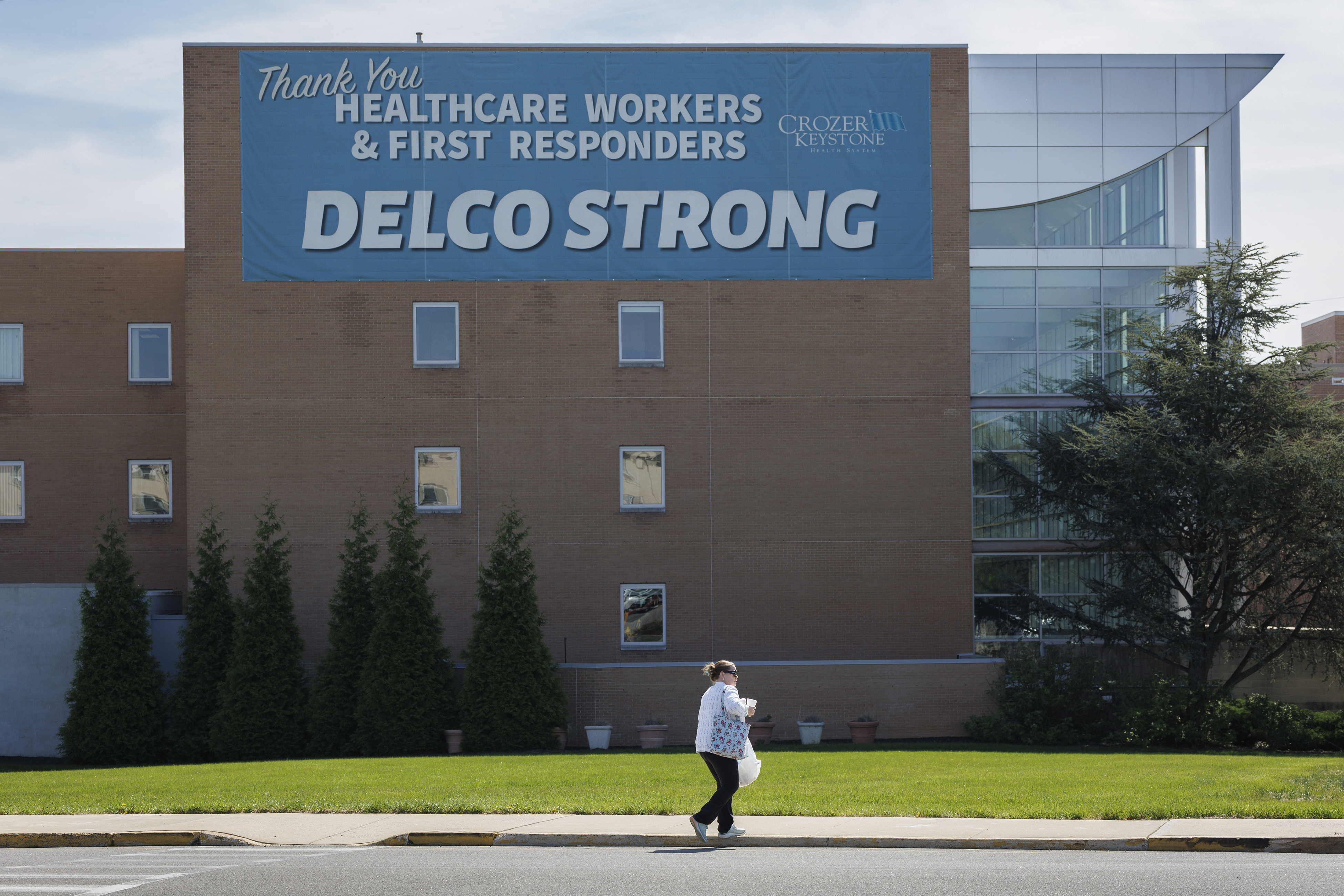
The company trying to restore healthcare services to the former Crozer-Chester Medical Center campus in Delaware County expects to know in the first quarter of next year if it will succeed.
That’s when Chariot Allaire, the for-profit partnership that bought the campus out ofbankruptcy last year for $10 million, anticipates knowing if it can enlista healthcare system to anchor services and secure needed state financial support.
“We cannot promise any outcome, but our hope is to have more clarity on this process,” Yoel Polack, Chariot Allaire’s CEO, said Wednesday evening during an online community meeting. “We are doing our part, but it requires partnership from other organizations.”
During an April community meeting at Widener University in Chester, Polack had said he expected to have secured a partner by now. The Crozer health system had served as the largest healthcare system in Delaware County, providing critical safety net services to a community with limited alternatives.
Officials at the University of Pennsylvania Health System have been helping Chariot Allaire assess what services are needed and financially sustainable in the low-income community, Polack said Wednesday.
“Restoring sustainable access to healthcare services at this site is important, and deserves thoughtful, serious attention,” Penn said in an email. ”Penn Medicine is not operating the site.”
At the April meeting, Polack presented what he called an “aspirational” plan to open an emergency department, a small hospital above the ED, outpatient services, and a behavioral health hospital on the 64-acre campus.
None of that will happen, however, without outside organizations willing to provide the services.
The hospital closed in May 2025, less than four months after California-based Prospect Medical Holdings filed for bankruptcy protection, culminating months of efforts by government and local nonprofits health systems to form a consortium to continue offering services there.
Challenging time for the project
Health systems nationally are going through an extraordinarily difficult time, Chariot Allaire’s chief medical adviser Arthur Klein noted Wednesday.
“Supply costs for hospitals are going up between 8% and 12% a year. Labor costs are going up 8% a year,” he said.
Plus, major reductions in Medicaid coverage are expected next year under a federal spending plan with new requirements for staying enrolled in the joint federal and state insurance program for low-income individuals and people with disabilities.
Medical staffing especially concerns Klein, a pediatric cardiologist and nonprofit healthcare executive from New York.
Chariot’sgoal ofthe best possible emergency department will remain impossible without enough “board-certified emergency physicians that want to work, that believe in our mission, that believe in what we need to accomplish,” he said.
In addition to emergency services, Chariot Allaire and Penn have analyzed ways to offer cardiology, oncology, neurology, and neuroscience services at the shuttered hospital.
Neumann University plans to open a primary-care clinic that will also serve a training site for its nurses, if it receives a grant it applied for from the Independence Blue Cross Foundation.
Theadults who arrive at Penn State Lancaster Medical Center with measles have symptoms far more severe than the virus’ hallmark cough, fever, and rash.
They are weak and disoriented with meningitis, sepsis, or pneumonia. Some have bacterial infections in their blood, kidney failure, or hepatitis.
“To see that in otherwise young healthy patients is very unusual,” said Fahmida McGann, an infectious disease physician at the hospital.
Pennsylvania’s measles outbreak is defying epidemiologists’ expectations and historical trends: Adults account for about two-thirds of the 1,300 cases reported by the state in the largest outbreak the country has seen in decades.
Until now, measles was rarely seen among adults. The virus is so contagious that virtually no one made it out of childhood without getting sick prior to the advent of a vaccine in the 1960s. Recent major outbreaks in Texas and South Carolina primarily affected children, with adults accounting for about a third of cases.
Pennsylvania’s outbreak is also sending people to the hospital at almost twice the rate seen in other recent outbreaks. Six people diagnosed with measles — four of them adults — have died, according to state health officials and local coroners. An infant, born with the disease after his mother was sick during pregnancy, was among the deaths.
The toll showcases how adults over age 20 are among the groups at greatest risk for serious complications, given that they are more likely than children to have underlying medical conditions that make it harder to recover.
Pennsylvania is seeing the highest hospitalization rate among children under 4 years old. They represent one in three of those admitted to the hospital, according to the state health department.
Doctors say adults who waited to seek medical attention until they were too sick to carry out their home and work responsibilities could also be contributing to the high hospitalization rate.
And just this week, health providers received a state-issued alert about congenital measles, which occurs when a pregnant woman passes on measles to her newborn infant. Cases are so rare that standard tracking is non-existent, and little is known about its long-term implications.
Pennsylvania’s measles outbreak is a phenomenon decades in the making, experts say. The virus appears to be spreading widely in communities, such as Amish enclaves across the state, where some have skipped vaccines for a generation or more.
“You have to have individuals who aren’t getting vaccinated, but who also aren’t being exposed to measles for decades,” said William Moss, a professor of epidemiology and international health at the Johns Hopkins Bloomberg School of Public Health.
A yearslong decline in vaccination rates amid rising politicization and misinformation has left any unvaccinated individual — infant, child, or adult — vulnerable to the disease now ripping through the state.
Children under 5 and people with compromised immune systems are also at high risk for severe illness.
Adults between ages 25 and 49 have been hardest hit by Pennsylvania’s measles outbreak, state data shows, followed by adults between the ages of 18 and 24. Combined, they represent about 60% of cases.
About 20% of all measles patients in Pennsylvania require hospital treatment. Adults older than 50 are the second most likely to be hospitalized, representing more than one-fourth of hospitalizations.
Both trends are unusual, medical experts say.
The outbreak’s path in Pennsylvania is nearly a mirror opposite of how measles has typically spread:
Last year in west Texas, adults accounted for about a third of cases in an outbreak that originated in a Mennonite community. Roughly 13% of all patients were hospitalized, and two people, both children, died.
In South Carolina, school-age children were at the center of an outbreak that sickened 997 this year and last. There were no deaths.
Between 1990 and 1991, more than 1,500 measles cases were reported in Philadelphia, amid a national resurgence of the disease. Here and nationally, children under 5 were more likely to get sick.
So far this year in Pennsylvania, about 870 adults and 440 children have contracted measles. The state’s tally is likely an undercount, since not all measles patients get tested or visit doctors. Adults with more serious cases may be more likely to get reported than mild cases among school-age children, experts say.
(function() { var l = function() { new pym.Parent( ‘measles-age__graphic’, ‘https://media.inquirer.com/storage/inquirer/ai2html/measles-age/index.html’); }; if(typeof(pym) === ‘undefined’) { var h = document.getElementsByTagName(‘head’)[0], s = document.createElement(‘script’); s.type = ‘text/javascript’; s.src = ‘https://pym.nprapps.org/pym.v1.min.js’; s.onload = l; h.appendChild(s); } else { l(); } })();
Glen Wheeler, a primary care doctor working at the center of the statewide outbreak in Lancaster County, had never seen a measles case in his 56-year career until this year.
At his clinic in Smoketown, he sees a lot of lacerations, eye injuries, burns, and other problems that arise from the hard work of farm life. He knows his patients — mostly Amish and Mennonite families — typically seek care only when they are too sick to work.
In recent weeks, between six and 10 adults are showing up daily, sleep deprived and dehydrated from trying to push through measles.
“They’re having diarrhea or vomiting, they can’t keep liquids down, and they’re coughing so hard they can’t sleep or can’t breathe,” said Wheeler.
Wheeler takes many to a private room cordoned off from the rest of the clinic and hooks them up to an IV with electrolytes, to help them hydrate. Some go through multiple IV bags before leaving.
Treatments focus on minimizing symptoms, because there is no cure or specific therapy for measles. Some patients are so sick Wheeler refers them to the hospital.
Many measles patients who arrive at Lancaster Medical Center can be treated in the emergency department and sent home to recover. But some must be admitted for more advanced care, said McGann, who treats adults at the hospital.
Patients are generally “not coming in super early,” but rather days after developing a rash, which typically appears three to five days after the first symptoms, McGann said.
The vast majority of measles cases involve mild-to-moderate flulike symptoms that improve within two weeks, and don’t require hospital care. McGann suspects that some of the patients arriving with advanced illness assumed they, too, would be able to recover at home.
“It’s not a benign disease,” McGann said.
Congenital measles emerges
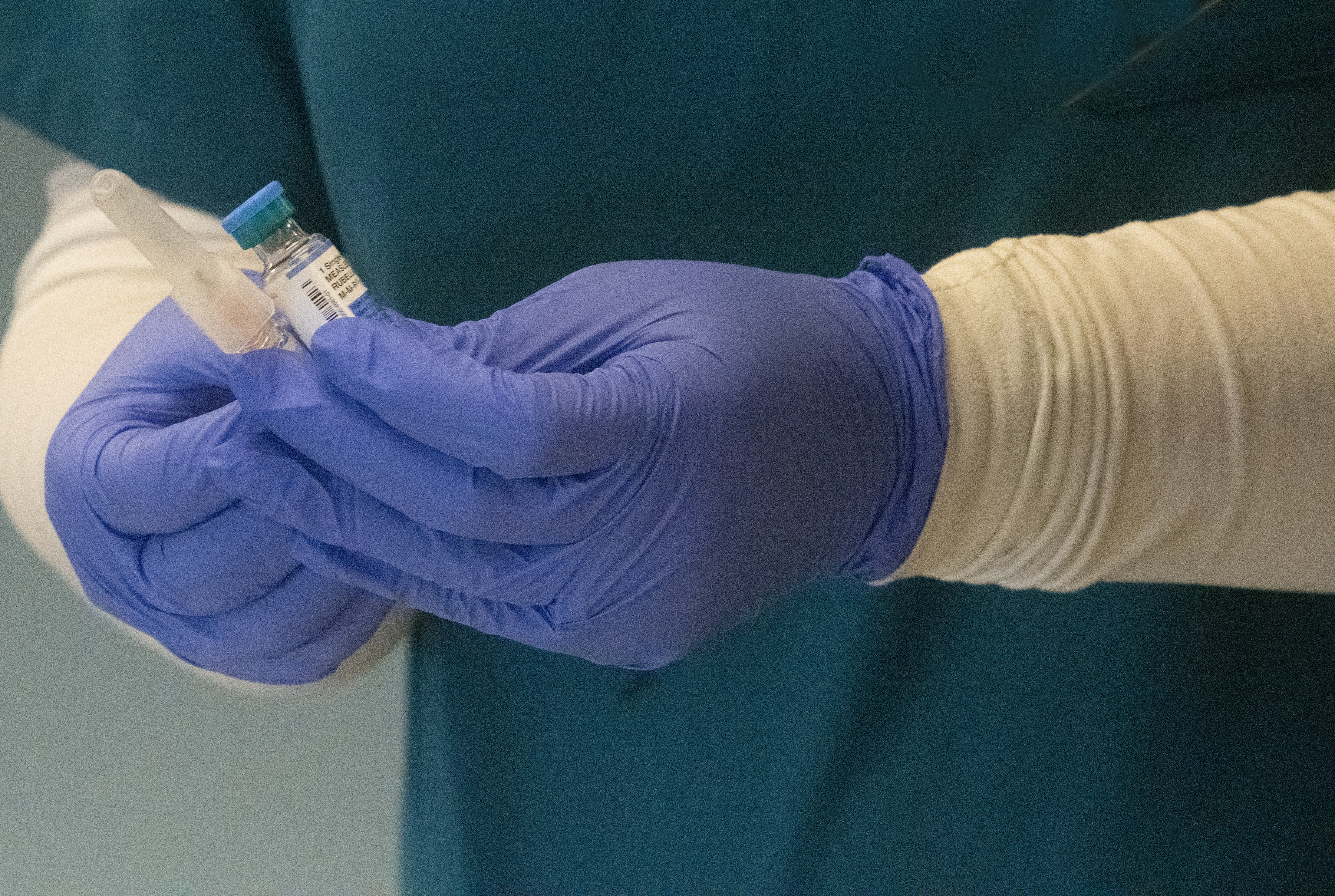
In an outbreak spreading among adults, unvaccinated pregnant women are particularly vulnerable, because they cannot receive the measles, mumps, and rubella vaccine, which contains a live, weakened version of the virus.
The state has reported 64 measles cases among pregnant people. A measles infection raises the risk of premature delivery and complications for the infant after birth.
“When there’s a widespread outbreak in a community, it’s next to impossible for an [unvaccinated pregnant woman] to not be exposed,” said John Goldman, an infectious disease specialist at the University of Pittsburgh Medical Center.
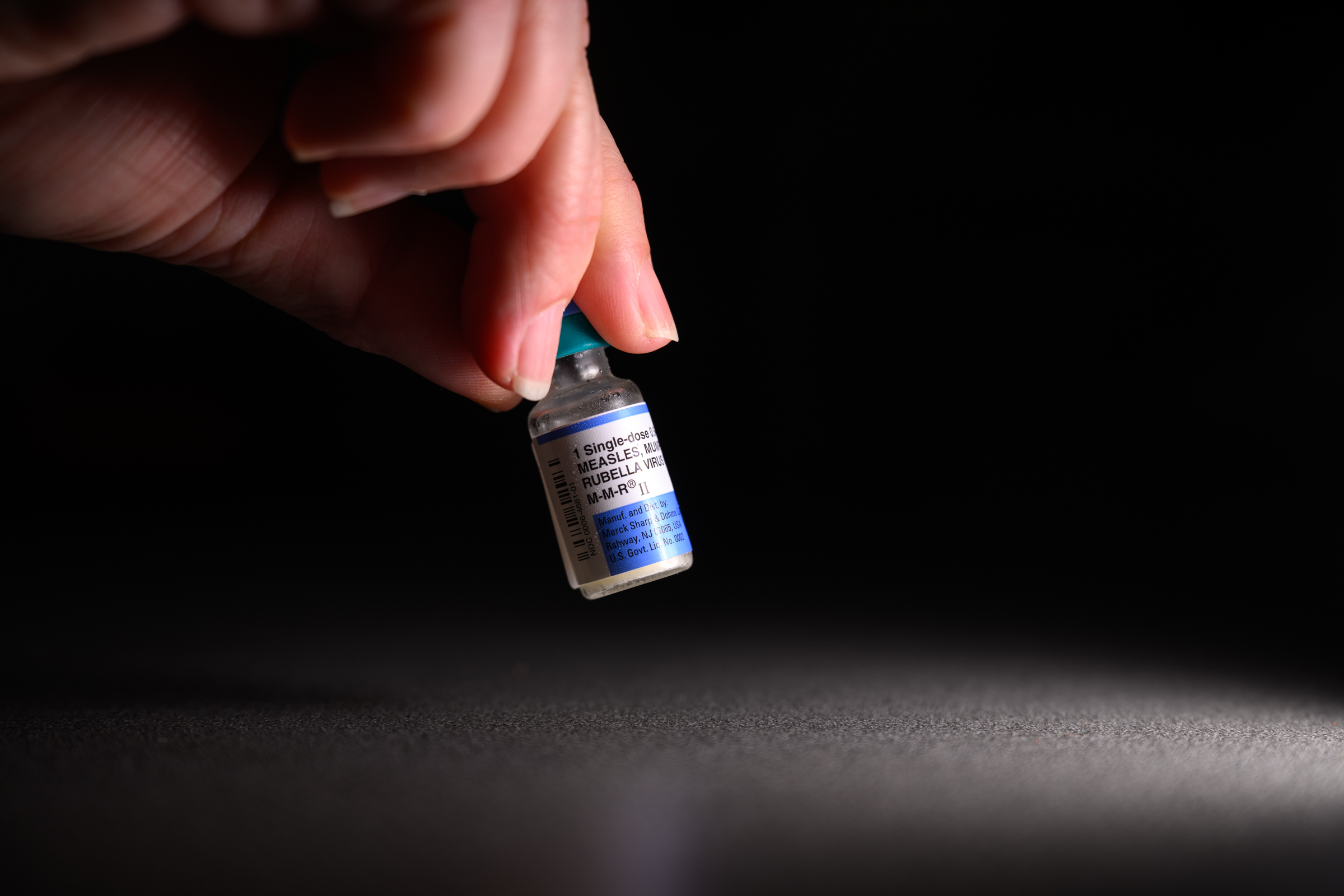
The measles, mumps, and rubella (MMR) vaccine is 93% effective after one dose and 97% effective after two doses. Kriston Jae Bethel / For the Inquirer
The state is working with the Centers for Disease Control and Prevention to develop tools to track cases of infants with congenital measles. In the past, there was little need: Most women had already acquired measles or were immunized by childbearing age and were unlikely to pass it to their newborn.
The death of an infant in Lancaster County drew wide attention to the risks of measles during pregnancy.
The mother contracted measles shortly before she gave birth prematurely to a baby who also tested positive for measles. After his death, Lancaster County’s coroner told reporters that he did not believe the child died from measles, but of a lacerated spleen. Other physicians have questioned this conclusion, noting that measles can weaken the spleen, making it more likely to rupture.
State officials have maintained the infant’s death was associated with measles.
Earlier this week, state health officials issued a health alert for physicians with advice on how to treat measles during pregnancy and after birth.
Women who have measles around the time they give birth can pass on the virus to their newborn, putting them at risk for potentially fatal complications, such as brain swelling and a rare complication called subacute sclerosing panencephalitis, a brain disorder that develops years after a child recovers from the disease.
Goldman said he’s aware of “a couple” cases of congenital measles treated in his health system, mostly at UPMC Lititz in Lancaster County, but could not provide an exact number.
As in adults, treating congenital measles involves working to ease symptoms. Exposed pregnant women and babies can receive immune globulin, an antibody treatment that can offersome protection against measles and other illnesses, or at least prevent severe disease, Goldman said.
“We can do our best to predict what these babies may struggle with, but we just don’t have a whole lot of experience to pull from,” said Alexandra Medoro, the medical director of CHOP’s congenital and perinatal infections program.
Shifting public health response
In smaller measles outbreaks in recent years in Pennsylvania and nationally, tried-and-true messaging targeted parents with vulnerable children.
The mantra of public health leaders: Get your children vaccinated. Pediatric offices, urgent care centers, and hospitals were advised that flulike symptoms could be the early signs of measles that appear before the telltale red rash. They also were given photos of the rash on the arms, backs, and faces of children.
But as Pennsylvania’s outbreak logs more adult patients, public health leaders and hospitals are revising the playbook.
Another local hospital at the outbreak’s epicenter, Penn Medicine Lancaster General Hospital, has updated its electronic medical record to prompt intake staff to ask all patients if they have had flulike symptoms and if they are vaccinated against measles, said Nitin Patel, an infectious disease doctor at the hospital.
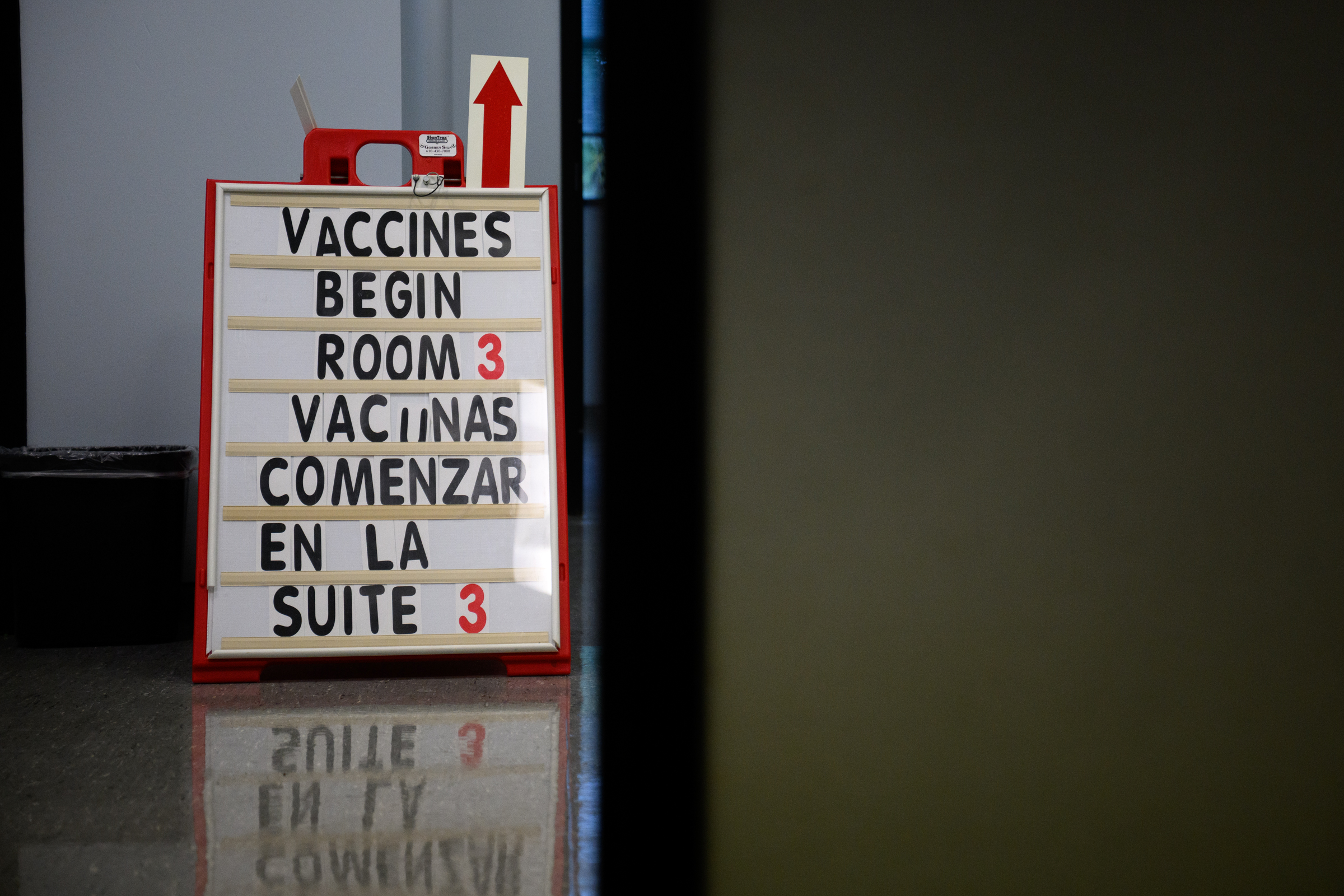
Vaccines are available at state and county health centers, as well as pop-up clinics scheduled in outbreak areas. Kriston Jae Bethel / For the Inquirer
Pennsylvania’s Department of Health has scheduled dozens of pop-up clinics in rural communities, where some entire families come to get vaccinated. The measles vaccine is 93% effective after the first of two recommended doses.
Nurses employed by Chester County, which has the third-highest number of cases in Pennsylvania, make house calls to Amish and Mennonite families who don’t use cars.
Messaging has emphasized that anyone can get measles, said Jeanne Franklin, Chester County’s health director.
“The disease doesn’t know how old you are,” Franklin said. “This is not a childhood disease — you can get it at any point in your life if you’re unvaccinated.”
Sarah Hart was 21 when she met Gamal and the other horses that high dived into a 10-foot pool of water several times a day at Steel Pier in Atlantic City.
Gamal, she told the Courier-Post in 1998, liked to leap off the 40-foot-high platform without a second thought. Other horses, she said, “would take five minutes before they’d jump.”
It was 1957, and Mrs. Hart, already a skilled diver and college swimmer, knew about the horse-diving grand finale at Steel Pier’s water circus. “It was a little bit spectacular to see this huge horse flying through the air,” she told the Courier-Post. “The motion was beautiful. A young girl brave enough to ride the horse added to it.”
That summer, Mrs. Hart became one of those brave girls. She outperformed 100 other applicants and, until 1962, rode Gamal and his counterparts off the platform and into the water below.
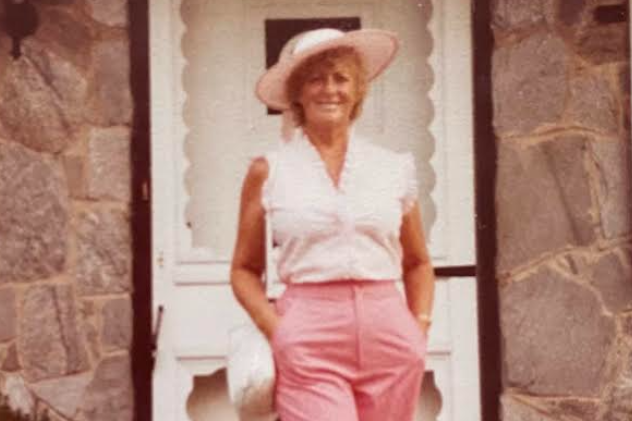
Mrs. Hart was equally comfortable riding horses into pools of water and frolicking with dolphins.Courtesy of the family
“What you have to do is just simply get on the horse and hang on tight, and go along for the ride,” she told the Courier-Post in 1993. In 1998, she said: “It was the easiest thing I ever did.”
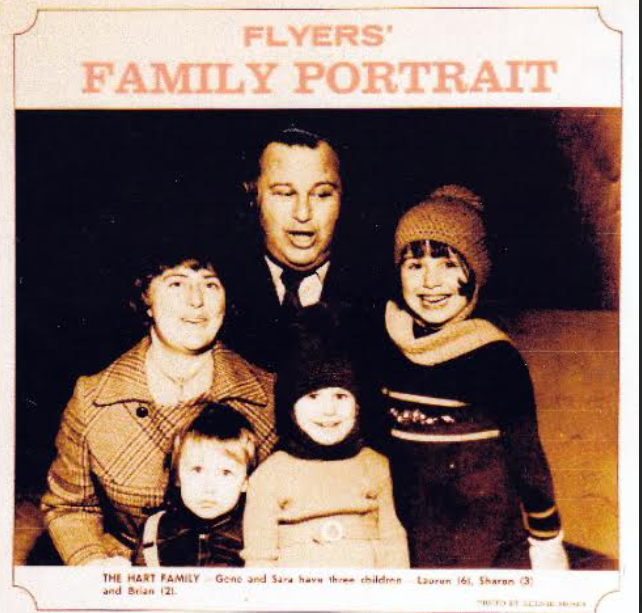
On Tuesday, Oct. 13, Mrs. Hart, also a longtime South Jersey teacher, an environmentalist, and the wife of Gene Hart, the longtime Flyers broadcaster, died of heart failure at her home in Gladwyne. She was 90.
“She was a free spirit,” her daughter Lauren said. “She did a little bit of everything.”
Born in Chester, Mrs. Hart grew up on and around the Boardwalk in Atlantic City. She went to schools in Pleasantville and worked at Boardwalk carnival games as a teenager. For years, she told a story about beating future Hall of Famer Wilt Chamberlain in the old shoot-the-basketball game.
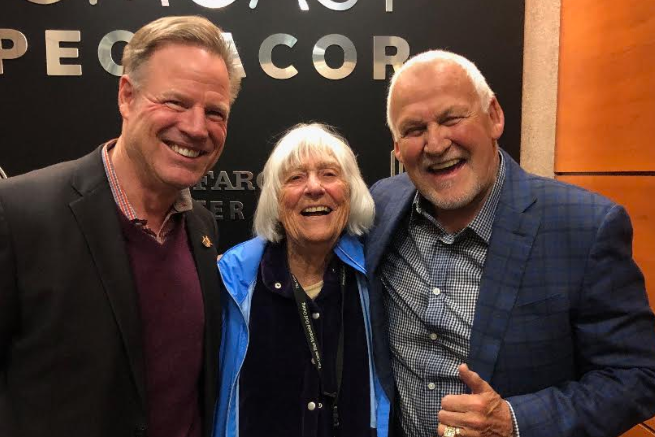
Mrs. Hart, left below, was a lifelong Flyers fan. Courtesy of the family
She performed with synchronized swimming teams at the University of Florida after high school and at the 1958 World’s Fair in Brussels, Belgium. She met the Flying Wallendas, singer Tony Bennett, and other entertainers at Steel Pier, and swam with the dolphins at the old Aquarama Aquarium Theater of the Sea in South Philadelphia in the 1960s.
She met her husband, Gene, at Steel Pier, and they married in 1963. His mother had ridden the high-diving horses at Steel Pier in the 1930s, and he was a comic diver and announcer for the water circus.
They had daughters Laurenand Sharon and a son, Brian, and lived in Cherry Hill. Her husband died in 1999, and she moved to Gladwyne during the COVID-19 pandemic.
Mrs. Hart taught English as a second language for decades at schools in the Lenape Regional High School District and later as a general substitute. She ran unsuccessfully for Cherry Hill Township Council in 1981 and was active with the Cherry Hill Environmental Board and the Pinelands Preservation Alliance. She was a longtimeelection worker at voting polls in South Jersey.
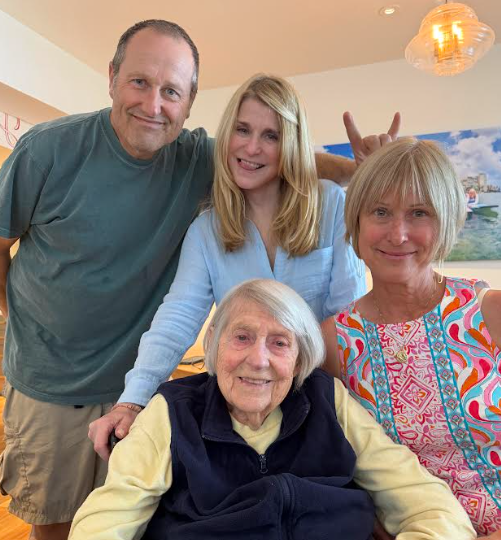
Mrs. Hart, front above and left below, enjoyed time with her family. Courtesy of the family
She graduated from high school in Florida, returned to South Jersey after two years of premed classes at the University of Florida, and earned a bachelor’s degree in English with honors at what is now Rowan University.
“A more kind and generous spirit you will never find,” a former teaching colleague said in a Facebook tribute, “and what a great advocate for students and their needs.” A longtime friend said: “There was no sweeter, more considerate, or kinder soul on the face of the Earth.”
Sarah Gregg Detwiler was born Aug. 2, 1936. She enjoyed dancing, nature, and animals as a girl, and even flew small airplanes out of the Atlantic City airport. Her family moved to Apopka, Fla., 20 miles northwest of Orlando, before her senior year of high school.
Later, she and her husband traveled the world together, sharing fine art, classical music, opera, and the theater. For years, Monday night was date night at the Metropolitan Opera House in New York.
Mrs. Hart, second from left below, was popular wherever she went. Courtesy of the family
She stabled her own horse near their home for a time and landscaped the entire property, in-ground pool and all, when they moved to Tampa Avenue in Cherry Hill in 1971. “There wasn’t a tree in the yard when we moved in,” Gene Hart told The Inquirer in 1981.
Mrs. Hart especially liked roses and said: “I’m an outdoor person, and we all love the water.” Of course, she was a lifelong Flyers fan.
“She was known above all for her warmheartedness and egalitarian spirit,” her family said in a tribute. Her daughter Lauren said: “She was kind and always working in the service of others. She was a giver.”
In addition to her children, Mrs. Hart is survived by five grandchildren, two sisters, and other relatives. A sister and three brothers died earlier.
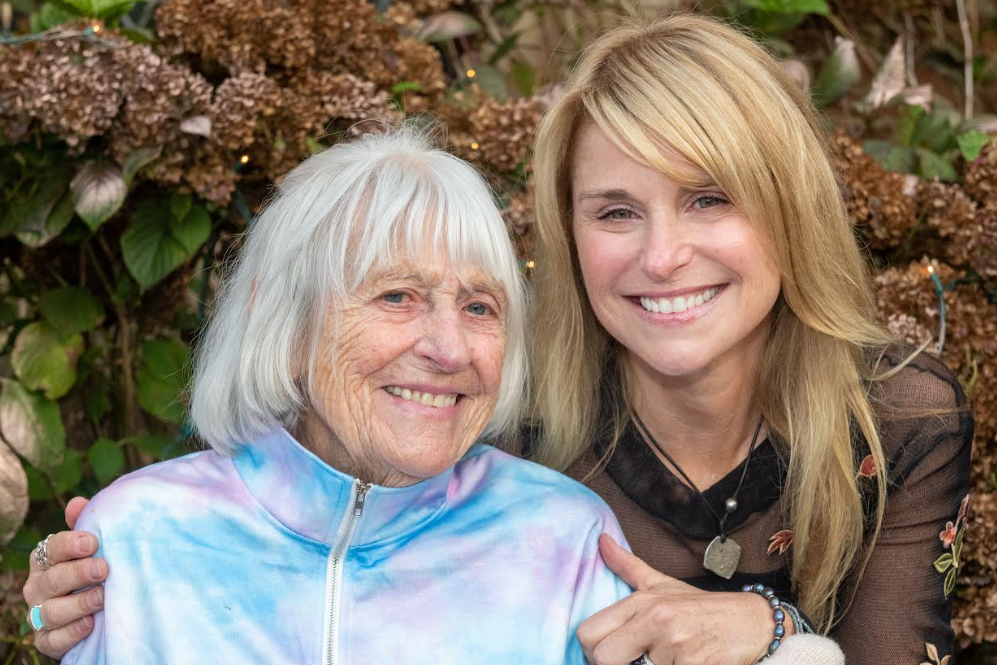
Mrs. Hart “was known above all for her warmheartedness and egalitarian spirit,” her family said in a tribute. Courtesy of the family
Beth and David Mark have lived in their Narberth home for 37 years. They love the house and neighborhood and would like to stay there as long as possible.
But when Mark got into a cycling accident that left him with several broken bones in 2016, they realized that as they age, navigating the stairs to their second-floor bedroom could become challenging. So last year, they built a first-floor addition that included a primary bedroom suite.
They prioritized building with solid materials and systems that would be long-lasting, low-maintenance, and environmentally friendly. Re:Vision, a sustainable architecture firm based in Manayunk, designed the addition, which also included a laundry room, closet, mudroom with an additional entrance, and screened-in-porch.
The addition is clad in durable cedar, which is more rot- and insect-resistant than many other sidings. The screened-in porch also has cedar ceilings, floors, and walls. Above-code insulation provides longer-lasting thermal comfort and lower energy bills. A large window and skylight allow natural light to pour into the space.
The screened-in porch on Beth and David Mark’s addition utilized cedar, which is durable and resistant to insects and rot.Joe Lamberti / For The Inquirer
House transformations are top of mind for many homeowners, with three in five saying they had undertaken a renovation project, according to the 2026 U.S. Houzz & Home Study. But these aren’t just room makeovers — plumbing, electrical upgrades, heating, automation, and cooling systems were some of the top areas survey respondents were looking to improve.
The end goal: creating a home they can stay in for life, that will be adaptable as its inhabitants age, and won’t need to be fixed all the time.
“The push for long-term livability reshapes how homeowners evaluate materials, maintenance, and overall build quality alongside their spatial layouts,” said Mitchell Parker, Houzz home design trends expert.
If you’re looking to do the same, here’s how to invest your home improvement budget.
Choose materials and layouts for the long-term
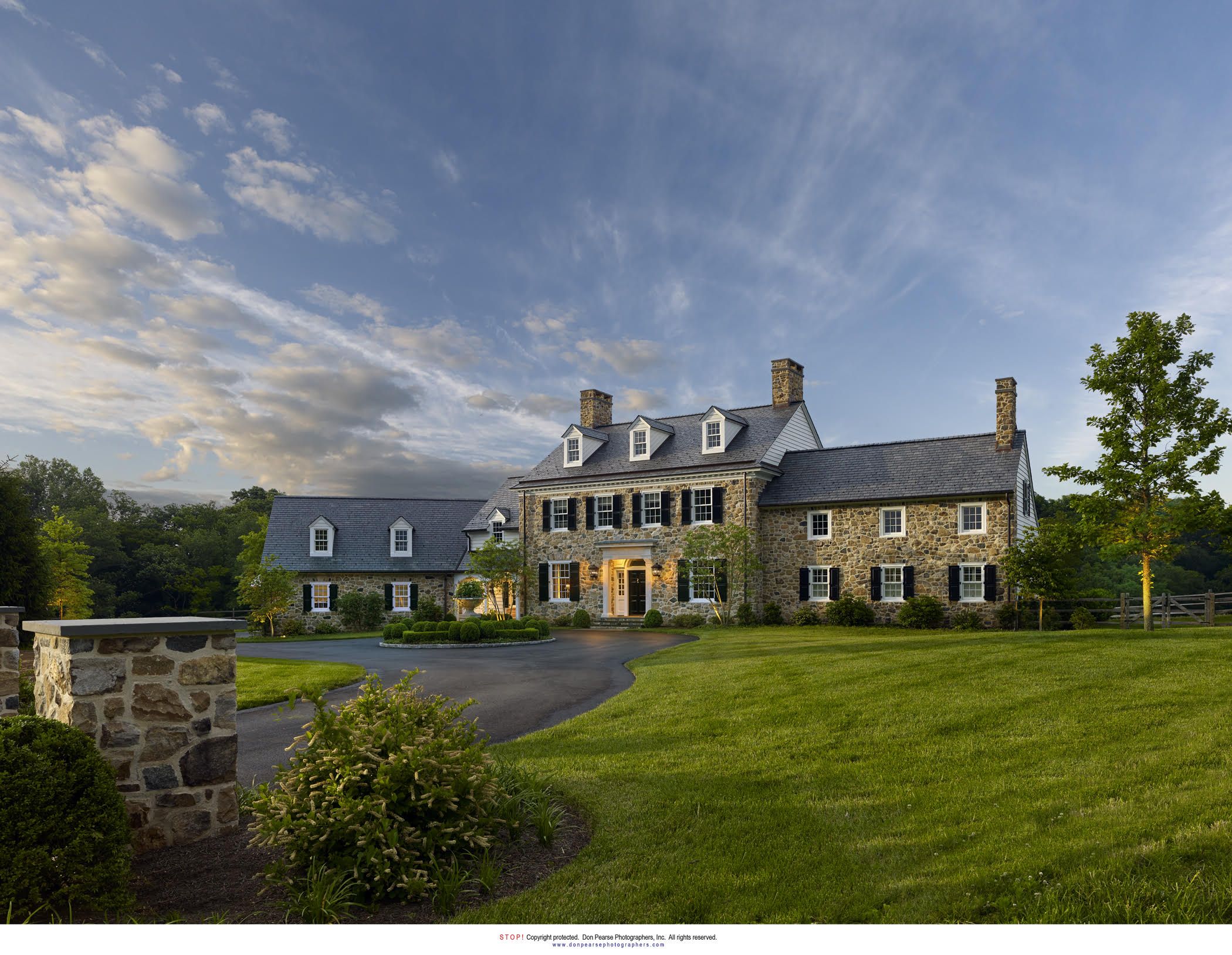
When Lee and Susan Zoeller built their house in Villanova in 2017, they turned to architects Archer & Buchanan. The plan included a first-floor primary bedroom suite and a separate apartment above the garage which could one day accommodate a caregiver.
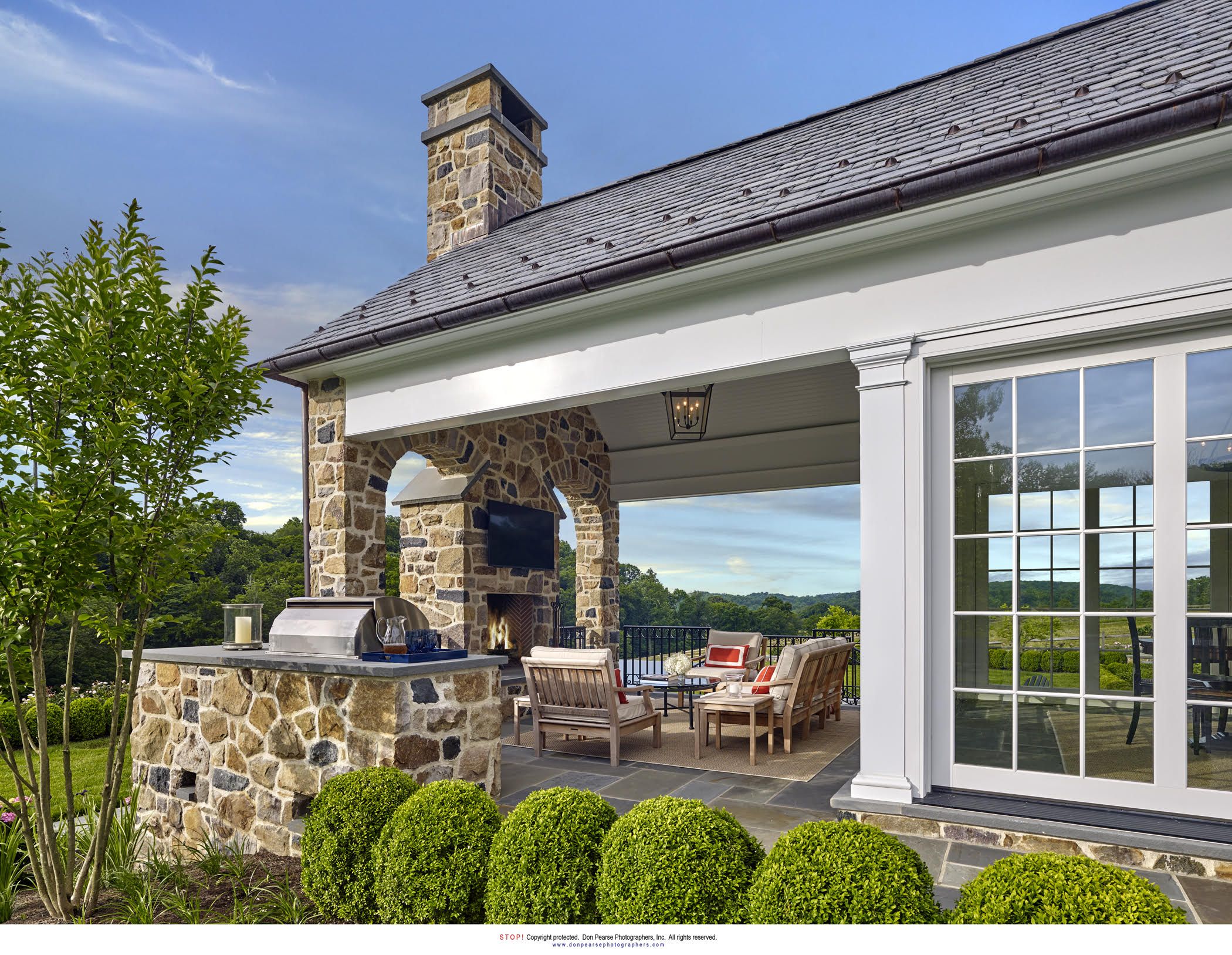
Durable materials, including stone for the exterior and a slate roof instead of wood shingles, will last for many years. A shingle roof, for example, may last 20 or 25 years where one made of clay tiles or slate should last 50 to 100 years.
Lee and Susan Zoeller chose stone for the exterior and a slate roof when building their house in Villanova, with long-term durability in mind. Pohlig Builders and Archer & Buchanan Architecture worked on the home.Photo by Don Pearse
“Though the cost was more, the length of time the roof will last was double,” Lee said. “It seemed like a good investment for the long-term. The intention is that this house will remain in the Zoeller family for generations to come.”
They designed the home without a formal living room or dining room. A large great room that flows into the kitchen better reflects how they live and entertain.
Homeowners should prioritize quality and time over scale and grandeur, said Richard Buchanan, partner at West Chester-based Archer & Buchanan.
Think about how your needs today may change in the years ahead. If the kids will be off to college in five years, will the six-bedroom house with a rec room and music room eventually feel overwhelming?
Buchanan recommends including a bedroom suite on the first floor. If there comes a time that steps become difficult to manage, the first-floor bedroom can be converted into a primary suite. Until then, it could also serve as a guest room or office.
Keep good maintenance habits to avoid costly breakdowns
Zoeller is a stickler about maintaining his systems. That includes twice-a-year HVAC tune-ups, regular filter changes, kitchen appliance tune-ups, and fireplace cleanings.
“I don’t like to have things break down,” he said. “And in the long run it saves you money because your appliances and HVAC last longer when you maintain them well.”
The exterior of Lee and Susan Zoeller’s Villanova home, built with Pohlig Builders and Archer & Buchanan Architecture. They included a first-floor primary bedroom suite and an apartment that could one day accommodate a caregiver.Photo by Don Pearse
More than 60% of homeowners said they had done maintenance in the previous month, according to Angi’s State of Home Spending Report. This habit “will save you from bigger problems down the road and dollars in your energy bills every month,” said Angie Hicks, co-founder of home services website Angi.
HVAC systems need a tune-up every six months and filter replacements according to the manufacturer’s instructions. Check weather stripping around doors and windows and be sure windows aren’t leaking air. Hicks suggests moving a lit candle along doors and windows. If it flickers, that means air is coming in.
A home energy audit will identify potential problems, such as poor insulation quality, air leaks, and drafts, and issues with your HVAC system. Check with your local energy supplier, as many provide the service free of charge.
Periodically look for plumbing leaks under sinks, and around toilets, showers, and the hot water heater.
“Water is your home’s worst enemy,” said Hicks. “A little bit of water can cause a lot of damage over time.”
Invest in sustainable design to save money later
Whether designing and building a new house or renovating an existing one, sustainability starts with optimizing the home’s square footage, said Drew Lavine, partner and director of design at Re:Vision.
An important question to ask is: “How can we utilize the same square foot in multiple ways?” Lavine noted. “Reducing the size of the home by just 10% will impact the financial and environmental bottom line. The greenest square foot is the one you don’t build.”
Take advantage of natural resources that exist on the property, such as deciduous trees. They shade the house during the summer to reduce the cooling demand, then, when the trees drop their leaves in the winter, the sunlight shining through provides heat.
Building enclosures, including the walls, roof, and foundation, should be properly and optimally insulated. Install and seal windows and doors to prevent air leaks, and use quality HVAC systems combined with ventilation for better quality air.
A ceiling fan helps keep the screened-in porch cool at the Marks’ home.Joe Lamberti / For The Inquirer
“It’s an investment you make upfront that pays dividends over the very long term in both thermal comfort and energy costs,” said Lavine.
It’s difficult to predict exactly how much more homeowners spend on energy-efficient materials and systems — and how quickly those investments will pay off — because heating and cooling use varies widely from household to household.
“You might spend 10 to 15% more in construction costs, but you will see a 15% reduction in energy costs,” said Robyn Oliver, associate and senior architect at Re:Vision.
The Marks love their new addition and look forward to spending many more years there comfortably. The project won Lower Merion’s 2026 Green Design and Development Award.
“We’re honored to receive the award, but we’re even happier that it gave us a chance to share our project and hopefully inspire others to think about what’s possible with sustainable design.”
Lynn April has seen chatter on social media from parents in her community, expressing hesitancy about giving their children vaccines.
But she was shocked to hear that numerous elementary schools in the West Chester Area School District had seen crucial immunizationrates fall, as a vaccine-preventablemeasles outbreak expands into Chester County.
“I would think the majority of parents I am associated with would also find that pretty horrifying,” said April, who has a third grader and a fifth grader at East Goshen Elementary.
The suburban district reflects a trend worrying health experts: Fewer families are choosing to vaccinate their kids. In West Chester, five of the district’s 11 elementary schools reportedkindergarten measles, mumps, and rubella vaccination rates last school year below 95% — the threshold long considered necessary to ensure community protection.
(function(){function e(){window.addEventListener(`message`,function(e){if(e.data[`datawrapper-height`]!==void 0){var t=document.querySelectorAll(`iframe`);for(var n in e.data[`datawrapper-height`])for(var r=0,i;i=t[r];r++)if(i.contentWindow===e.source){var a=e.data[`datawrapper-height`][n]+`px`;i.style.height=a}}})}e()})();
One school, Penn Wood Elementary, appeared especially high risk, with only 87.5% vaccinated. Three private schools in or on the border of the district also reported concerningly low kindergarten MMR vaccination rates.
Yet school leaders in West Chester have not issued community messages highlighting the risk of the current measles outbreak. Nor are they sharing school-by-school vaccination data that indicate risky pockets within a district of about 12,000 studentsthat touts an overall high vaccination rate.
West Chester Superintendent David Christopher questioned whether his community remains as exposed as state data collected last school yearsuggest. District nurses have called families that didn’t have vaccination records on file, Christopher said, and accounting for all grade levels, every school campus has a vaccination rate above 95%.
“We’re really talking about a pretty small percentage of students in the district,” Christopher said in an interview.
Even small declines in vaccination rates within a grade level, however, can increase community risk, health experts said.
With the nation’s largest measles outbreak in decades spreading across the state, René Najera, director of public health at the College of Physicians of Philadelphia,says a high vaccination rate no longer creates a comfort zone.
“It’s some comfort, but it’s not enough, especially in an epidemic situation,” Najera said. “You could have a population with 96% vaccinated, and still have a roaring infection go through.”
Christopher said he’s aware the ongoing measles outbreak could bring significant disruption: Earlier this month, a reported measles case led Oxford Area High School to shut down for a day to verify vaccination records for staff members.
“The nature of it — you could have one student in a building, and the entire building exposed — is concerning,” Christopher said.
Kindergarten vaccination rates are considered a bellwether for a community’s attitudes toward vaccination, as parents are deciding whether to get the shots required by law to attend school.
And increasingly, families are refusing vaccines. Pennsylvania has some of the loosest vaccine exemption policies in the nation, broadly allowing families to pass on immunizations required for school entry by claiming religious, philosophical, or medical objections.
At West Chester’s Penn Wood Elementary, MMR vaccination rates among kindergartners fell 8 percentage points last year, with 56 out of 64 kindergartners vaccinated.
Five students had philosophical exemptions to the vaccine, according to state data. (Another four were “noncompliant but attending,” a term the state uses for children who haven’t submitted exemption records but are in school.)
At Westtown-Thornbury, MMR vaccinations dropped from 100% of kindergartners two years agoto under 92% last year — seemingly because of seven students claiming religious exemptions to vaccination.
Sue Gramling, the president of Westtown-Thornbury’s parent-teacher organization, declined to comment about the school’s rate, saying in a message that she didn’t want to speak on behalf of the PTO “since this is such a hot topic right now.”
Two other West Chester elementaries with kindergarten MMR rates below the 95% threshold, Glen Acres and East Goshen, also recorded declines in the past year.
Christopher said those rates are dated. Nurseslatercalled families who hadn’t submitted vaccination paperwork, more provided records, and some additional students have been vaccinated, he said.
Asked whether nurses had called families who opted out through legal exemptions, Christopher said in an email that “the connections have been to ensure that families are educated to make informed decisions about vaccines.”
“We understand that there are a variety of reasons that families may make this decision, and it is not our intention to pressure families, but to make sure they are informed,” he said.
David Christopher, superintendent of the West Chester Area School DistrictCourtesy of the West Chester Area School District
As community organizations, schools have a responsibility to help disseminate information that affects their students and staff, said Holley Wilkin, an associate professor of communications at Georgia State University who specializes in health communication.
“With something like measles, it’s affecting their students and they should be playing that role,” she said.
To help communities understand their risk, Pennsylvania’s health department published school-level vaccination data this summer for the first time.
But schools appear reluctant to talk about measles planning.Of 12 Chester County school districts contacted by The Inquirer about their preparations, only West Chester agreed to an interview.
In the Downingtown Area School District — where two schools last year reported kindergarten MMR vaccination rates last year below herd immunity levels — spokesperson Jenn Shealy said the district had communicated with staff about possible quarantines.
“Our nurses have also individually reached out to the small number of families of students for whom we do not have current vaccination records,” Shealy said in an email.
The Kennett Consolidated School District has “communicated with families and staff that immunizations for measles are a protective measure for all,” spokesperson Lisa Palmarini said in an email.
Some area school leaders who faced backlash over pandemic restrictions acknowledged tension around communicating about measles.
Marc Bertrando, superintendent of the Garnet Valley School District in Delaware County, said he wanted to make sure the district communicated with medically fragile students about the outbreak. But he didn’t want to be seen as dictating medical decisions.
“We’re just going to stick to, ‘Everybody makes their own health choices, but these are the facts,’” Bertrando said in an interview last month.
Wilkin, the communications expert, said schools that ignore their role as public health messengers also run the risk of angering parents of children who can’t be vaccinated — and rely on so-called herd immunity to keep them safe.
“There’s going to be potentially some parents upset at you no matter which way you go,” she said.
Questions around preparation
In the event of a measles case reported in a school building, Chester County health officials say all exposed students and staff who can’t prove vaccination will have to stay home for 21 days.
West Chester has created a secure portal for staff to upload vaccination records, Christopher said.
“The hard part is just finding those records,” Christopher said. He said the “vast majority” of staff had been vaccinated, but couldn’t provide an estimate of how many staff had provided documentation.
The president of the district’s teachers union, Michele Curay-Cramer, declined to comment on measles preparations.
April, the East Goshen elementary parent, was surprised to hear about possible 21-day quarantines. “That’s a long time to have a teacher out,” she said.
In the Oxford Area School District, the decision to shut down the high school Oct. 9 also surprised community members. Somesaid they wanted more information about why the district had closed the school but not called off a high school football game.
“I’m a bit taken aback,” said Joe Maida, whose 5-year-old granddaughter attends a district elementary school. But “I’m not giving it much energy.”
Christopher said he isn’t sure how many resources to devote to preparing for an outbreak that may not deeply impact his district.
But “if we’re fully unprepared, there will be questions,” he said.
Inquirer staff writers Lizzie Mulvey, Brooke Schultz, and Aubrey Whelan contributed to this article.
No one in sports likes to say they’re tired. But they’re all humans, and so are we, the people who watch them.
Those of us who don’t do all the running, jumping, shooting, and tackling might be able to notice when a team looks low on gas. In the Union’s case, they have every right to be.
All of Major League Soccer does, in fact, because of how crowded the calendar has been since the World Cup break. There were 15 rounds of league games in three months before the tournament, and there will have been 19 more matches in three and a half months (plus the Leagues Cup) since play resumed (in the Union’s case) on July 22, until the regular-season finale on Nov. 7.
Then, of course, add in the players who played in the World Cup, so didn’t get as much of the summer off. And while the recent FIFA window gave some a breather, it wasn’t much. On top of the many MLS players who spent that four-game stretch with their countries, the league played a full round of games during the window because it was out of room elsewhere.
Union’s Indiana Vassilev makes a centering pass in front of Charlotte FC’s # 14 Nathan Byrne in the second half of the Union vs. Charlotte FC soccer match at Subaru Park in Chester on Saturday, October 17, 2026.Elizabeth Robertson / Staff PhotographerUnion’s Cavan Sullivan reacts when his second half goal was called off during the Union vs. Charlotte FC soccer match at Subaru Park in Chester on Saturday, October 17, 2026.Elizabeth Robertson / Staff PhotographerUnion’s Kai Wagner watches the replay of the go ahead goal that Charlotte FC had just scored in the second half of the Union vs. Charlotte FC soccer match at Subaru Park in Chester on Saturday, October 17, 2026.Elizabeth Robertson / Staff PhotographerUnion’s # 4 Jovan Lukic and Chaerlotte FC # 17 Luca de la Torre battle for the ball during the second half of the Union vs. Charlotte FC soccer match at Subaru Park in Chester on Saturday, October 17, 2026.Elizabeth Robertson / Staff PhotographerUnion’s # 21 Danley Jean Jacques runs with the ball after stealing it from Charlotte FC in. the second half of the Union vs. Charlotte FC soccer match at Subaru Park in Chester on Saturday, October 17, 2026.Elizabeth Robertson / Staff PhotographerUnion’s # 10 Milan Iloski looks like he will take a shot but will pass to Cavan Sullivan instead in the second half of the Union vs. Charlotte FC soccer match at Subaru Park in Chester on Saturday, October 17, 2026.Elizabeth Robertson / Staff PhotographerUnion’s goalkeeper Andre Blake clears the ball in front of Charlotte FC’S # 9 Idan Toklomati during the Union vs. Charlotte FC soccer match at Subaru Park in Chester on Saturday, October 17, 2026.Elizabeth Robertson / Staff PhotographerUnion’s Cavan Sullivan reacts to a missed scoring opportunity in the second half of the Union vs. Charlotte FC soccer match at Subaru Park in Chester on Saturday, October 17, 2026.Elizabeth Robertson / Staff PhotographerUnion’s Bruno Damiani (center) celebrates his goal that tied the game at two in the second half of the Union vs. Charlotte FC soccer match at Subaru Park in Chester on Saturday, October 17, 2026.Elizabeth Robertson / Staff Photographer
Union goalkeeper Andre Blake has played 11 games between his club and Jamaica since the start of September, and Danley Jean Jacques has played 10 between the Union and Haiti. Cavan Sullivan, Neil Pierre, and Frankie Westfield also have a lot in their legs. While they’re young, the FIFA window was their first time not just playing at that level, but also flying all over the country to do so.
When they returned to the field in Chester on Oct. 8, it was two days after the U.S.-Mexico game in Glendale, Ariz., and two days before the Union’s game against Real Salt Lake. Four days later, they were at Chicago, and three days after that, they were at Subaru Park to face Charlotte on Saturday.
Add all that up, and it makes sense that the Union felt a step slower than usual in the 2-2 tie.
That doesn’t excuse Nathan Harriel being in the middle of both Charlotte goals, or Milan Iloski hitting the bar from the doorstep on a shot that would have given the Union a lead – a miss he promptly acknowledged after the game.
It just means a bit of common sense is in order, as the Union finally now get a midweek without a game before Saturday’s big home contest against the New England Revolution (7:30 p.m., Apple TV).
“Of course we’re going to be tired,” Iloski said. “We have a good group, so we’re doing everything we can, and we’re doing all the treatments and stuff to recover to the best of our ability. But it’s a seven-point week with some tough games, so we’ll take it and we’ll move on. … Now we have a normal week, so get back to resting and get back to as close to 100% as we can.”
It’s a test for interim manager Ryan Richter, too. He knows lineup rotation is in order, but he’s down a defensive midfielder after Jesús Bueno suffered a hamstring injury in Chicago. So while Jean Jacques returned Saturday from his own brief absence with a foot issue, Richter had to hope Jean Jacques made it the whole game.
“You’re constantly checking with guys individually who you think might be feeling something, but you’re also just assessing how they’re playing,” Richter said. “Are they continuing to make the recovery runs? Are we continuing to be dynamic in the attack? For the most part, I think our guys held up, and they looked like they were continuing to push for for the third goal.”
As such, he said, he felt “we had to trust the guys that were on the field.”
So he did, making just two substitutions on Saturday, fewer than usual.
Between the Union and Haiti’s national team, Danley Jean Jacques (center) has had an especially busy year.Elizabeth Robertson / Staff Photographer
Iloski nears another milestone
Though Milan Iloski is best known to many fans for his time with San Diego FC and the Union, some recall his previous playing days with Orange County SC of the second-tier USL Championship from 2022-24.
After Iloski converted his penalty kick during Saturday’s game, one of the USL’s spokespeople sent over a note with an interesting stat. The striker is now one goal away from becoming the first player to score 20 goals in a league season in MLS and 20 goals in the USL Championship division.
That will be a nice title for Iloski to have if he can get it, and there’s every reason to think he will. It’s also a reminder that the 27-year-old’s journey in the sport has not been a straight line.
After college at UCLA, he was drafted by Real Salt Lake in 2020, but he played only two games for the first team there. So he went to the USL’s Orange County SC in 2022, and that’s where he started to take off.
He tallied 43 goals and 11 assists in 70 games there, including 22 in his first season. Two years later, he earned a move to Denmark’s FC Nordsjælland, which shares ownership with San Diego. That led to a loan to his hometown club, where he succeeded but couldn’t come to terms on a new contract. That’s how the door opened for him to join the Union.
Now there’s a milestone in sight, and Iloski appreciates its symbolism.
“It says a lot, I think,” Iloski said. “I didn’t have the easiest run as a young player, and Orange County gave me a great opportunity to just play games and have fun and get back to scoring goals, and I’ve kind of just ran from there. Now I’m back in MLS and doing it at a higher level, but showing I can still keep that same productivity. So for me, it’s a big deal, and it’s a pretty cool stat.”
Richter appreciates Iloski’s career path. He spent most of his seven pro seasons in lower leagues, earning stints with the Union and Toronto FC but not playing much at either.
“It keeps that chip on your shoulder that you always have something to prove, because people didn’t believe in you the way that the people here believe in him,” Richter said. “It’s great to see this kind of story of someone who, yeah, it doesn’t just go perfect from the beginning, but they’re still able to to get to a really high level and operate at a really high level. That speaks to his character, his work ethic, his determination, his resilience. We’re happy for him, for the season that he’s having, and we’re happy to have him in our team.”
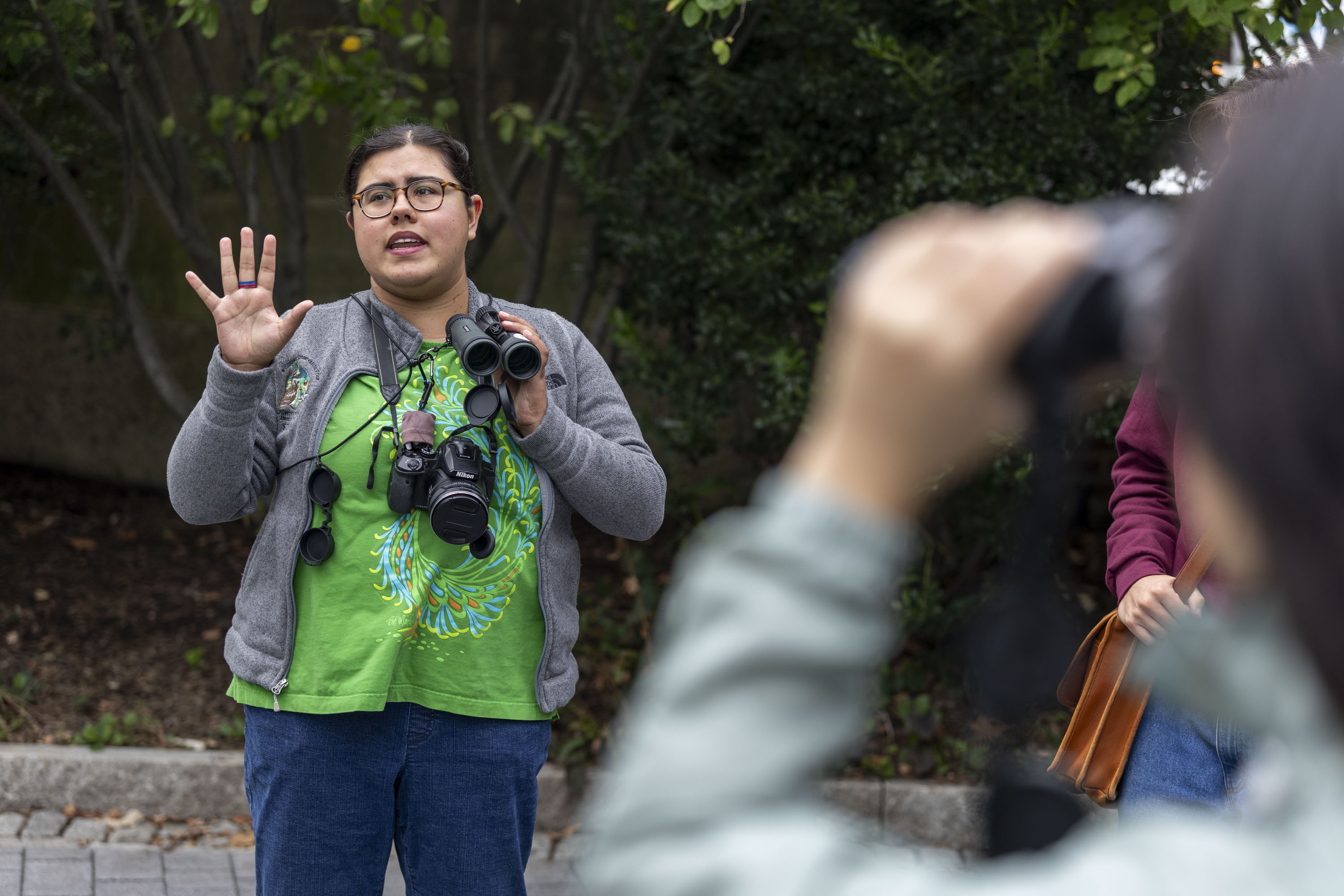
Victoria Sindlinger led a six-member flock from the Quackers Bird Club across the University of Pennsylvania campus, peering into hundreds of trees and shrubs along the way.
Binoculars dangling, the crew navigated past Franklin Field, traversed a steel bridge, skirted past tennis courts, and ducked into a pocket park.
For two hours on a recent walk they tracked a northern mockingbird tucked into a willow oak, caught a yellow warbler mid-hunt, pinpointed a monarch butterfly resting on goldenrod, and observed other flora and fauna, including a giant hornet nest.
Sindlinger, a 22-year-old senior environmental science major from West Philadelphia, launched the club during her freshman year, pitching itto a small group chat of classmates. The group has grown to 120 members and is an official university organization.
The Quackers are part of an expanding wave of young, city-dwelling birders reshaping the hobby with a distinct urban tilt. While regional sanctuaries like Cape May and Berks County’s Hawk Mountain draw international recognition, the popularity ofurban birding across Philadelphia and its dense suburbs is soaring, according to some of the region’s most enthusiastic bird-watchers.
“I think there’s been more interest in birds and more research and more activity around birds here in the Philly area than any other place in the Western Hemisphere,” said Keith Russell, program manager for urban conservation at Audubon Mid-Atlantic.
Victoria Sindlinger, founder of the Quackers Bird Club at the University of Pennsylvania, leads a birding walk across campus.Tyger Williams / Staff PhotographerA northern mockingbird spotted in a tree next to Franklin Field during a Quackers Bird Club outing at the University of Pennsylvania.Tyger Williams / Staff Photographer
The convergence of COVID-19 isolation and modern nature applicationshelped trigger a surge in urban birding. Campus clubs are multiplying, groups of like-minded people are gathering, and loose local networks are banding together through informal meetups.
“The really nice thing about birding in general — and running a bird club — is that it’s actually pretty easy to do,” Sindlinger said. Her club takes excursions by SEPTA, via rented car, or even by foot.
“The birds are out there. Especially on Penn’s campus, which is so beautifully green.”
<iframe title="The number of eBird users in Pennsylvania, New Jersey grew by nearly 50% after 2020" aria-label="Line chart" id="datawrapper-chart-1KZr7" src="https://datawrapper.dwcdn.net/1KZr7/1/" scrolling="no" frameborder="0" style="width: 0; min-width: 100% !important; border: none;" height="498" data-external="1"></iframe><script type="text/javascript">(function(){function e(){window.addEventListener(`message`,function(e){if(e.data[`datawrapper-height`]!==void 0){var t=document.querySelectorAll(`iframe`);for(var n in e.data[`datawrapper-height`])for(var r=0,i;i=t[r];r++)if(i.contentWindow===e.source){var a=e.data[`datawrapper-height`][n]+`px`;i.style.height=a}}})}e()})();</script>
Indeed, the growth of birding in the region, and particularly Philadelphia, has been extraordinary, according to data from eBird, a citizen-science project by Cornell University’s Lab of Ornithology that allows birders to log the species they see and the locations.
Consider:
In 2020, Pennsylvania had 9,559 eBird users. In 2025, it had 15,830, a 66% increase.
New Jersey had 6,098 users in 2020. It had 11,082 by the end of last year, an 82% increase.
And Philadelphia went from 1,035 eBird users in 2020 to 2,754 last year — a 166% increase.
Add to that, the growth of Philly Birding Weekend, which celebrated its fifth year on Oct. 10 and 11. About 140 people registered for 10 trips. Birders spotted 36 species during one of those outings at the Discovery Center in Fairmount Park.
Video: Birding finds a new flock of enthusiasts in PhiladelphiaTyger Williams
A tech-fueled birding boom
For Russell, of Audubon Mid-Atlantic, urban birding should rarely require a personal vehicle, trips to remote coastal reserves, or thousands of dollars in camera gear.
“When I was a kid here in Philly, I couldn’t drive. I had to walk, so I had to just go in my neighborhood,” Russell said.
He champions unheralded urban pockets, like a stormwater retention pond off 51st Street near Bartram’s Garden, accessible by public transit. That single basin routinely attracts rare shorebirds, including red knots, phalaropes, and Baird’s sandpipers.
“Studies show that people who observe birds become healthier, happier, and more content,” Russell said. “We live in a very stressful time and a very stressful world.”
The Delaware Valley Ornithological Club, founded in 1890, helps link birding groups in the region through its jam-packed calendar of walks and events.
Services like eBird lower the entry bar, opening direct channels to the natural world. eBird, launched in 2002, lets users tap a global database.
Merlin, an app also developed by the Cornell ornithology lab, helps users identify birds. Merlin introduced photo identification in 2014 and audio identification in 2021.
Pennsylvanians logged 32,000 checklists — digital records of birds spotted during field trips — into eBird in August alone, said Kathi Borgmann, a spokesperson for the Cornelllab.
“We are seeing month-over-month growth of 10% to 20%,” Borgmann said of the service.
Though Cornell does not officially track user demographics, Borgmann added, “We see all these young people on social media talking about eBird and Merlin.”
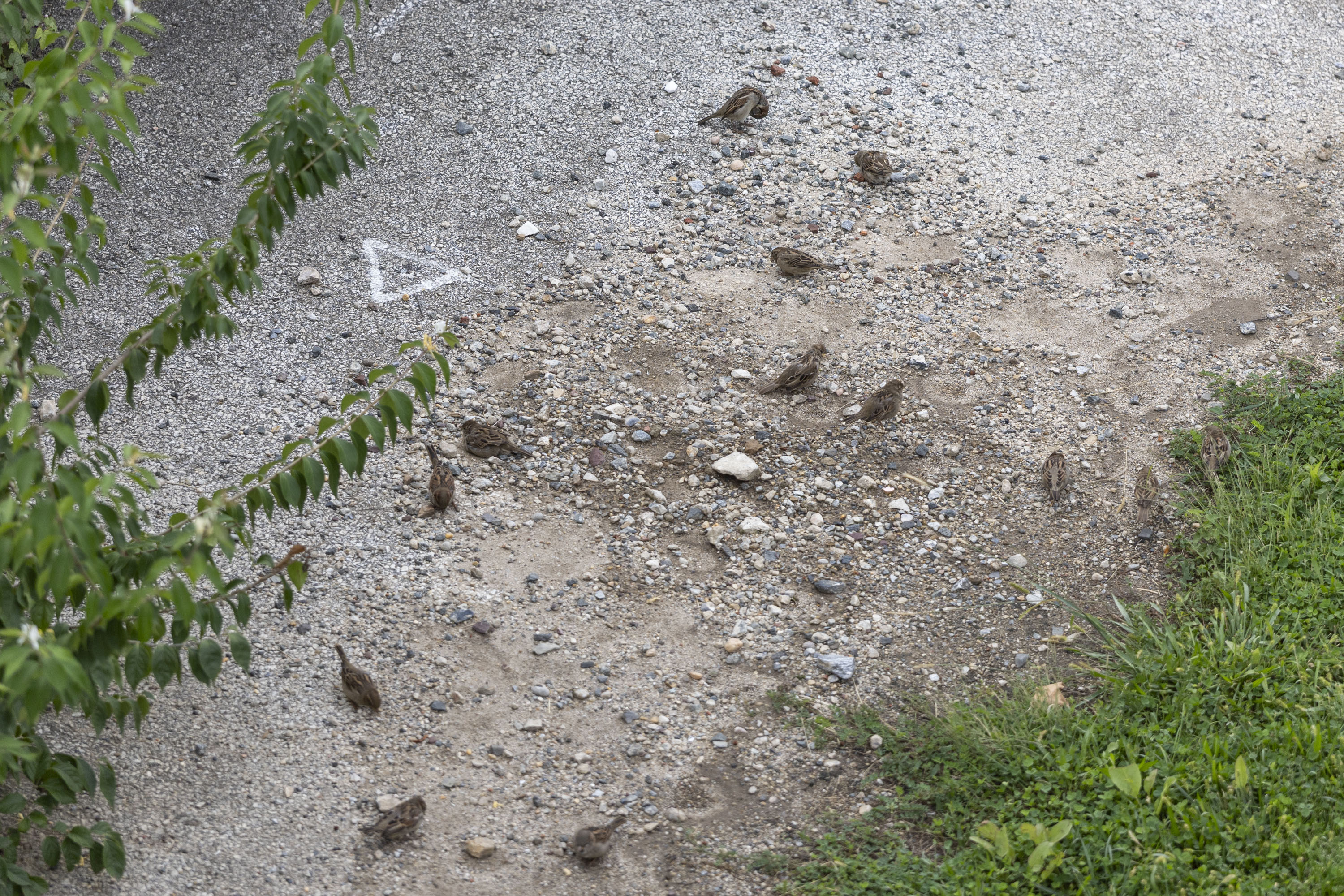
House sparrows on the University of Pennsylvania campus during a Quackers Bird Club outing.Tyger Williams / Staff Photographer
Driven by curiosity
For Katrina Clark, a 47-year-old literacy specialist from Cobbs Creek, eBird helped draw her to the urban birding scene.
Shefirst picked up binoculars during the 2020 lockdowns. Strolling through her neighborhood, a friend pointed out a gray catbird, a species Clark assumed belonged in a zoo, not a neighborhood of concrete.
Driven by curiosity, she checked eBird, studied local maps, and eventually joined the board of the In Color Birding Club, a groupfounded in 2020 to cultivate a safe, inclusive environment for Black birders.
“I did not think about birds except that they were far away, not connected to the city,” Clark said.
While large sanctuaries like the John Heinz National Wildlife Refuge offer massive species tallies, Clark finds equal satisfaction watching a downy woodpecker work a solitary tree along Cobbs Creek while city trolleys rattle past.
A house sparrow nestled in a tree on the University of Pennsylvania campus during a Quackers Bird Club outing.Tyger Williams / Staff Photographer
Finding community
Elise Greenberg, 35, founded Philly Queer Birders in 2021 to merge her background in biology with a desire for community during the pandemic.
“I wanted to get outside, I wanted to be around other people, and I was missing the queer community and missing birding,” Greenberg said.
What began as a small outing quickly exploded. Today, her informal walks draw up to 100 people, backed by an Instagram community of over 7,000 followers. Her group draws an intergenerational mix that leans heavily toward young adults and young families.
Greenberg focuses the itinerary on transit-accessible locations like the Woodlands and the Discovery Center, with occasional trips out to Chanticleer Garden or Tyler Arboretum.
Unusual sightings often spark massive interest. When a rare tundra bean goose landed near Fairmount Park along the Schuylkill in 2021, birders from across the region flooded the riverbanks.
“The joy they found seeing it provided a spark,” Greenberg recalled.
It is a sentiment shared by other bird-watchers.
Manchi Wang, of Shanghai, China, on the lookout during a Quackers Bird Club outing on the University of Pennsylvania campus.Tyger Williams / Staff Photographer
‘Outlets that bring us together’
Jonah Perelman, a 22-year-old biophysics major at Penn, moved from suburban New Jersey to Philadelphia, assuming his passion for birding would be put on hold. But a poster hung by Sindlinger in a dining hall pointed him toward the Quackers.
Now he helps coordinate the group’s outings to locations such as Cape May, Middle Creek Wildlife Management Area in Lancaster County, and an owl-banding site in Chester County.
Yet their core routine includes one distinctly local stop: the campus Biopond at James G. Kaskey Memorial Park.
For a generation raised on screens, Perelman views birding as a vital offline sanctuary.
“We are now really one of the first generations who grew up with iPhones and iPads,” Perelman said. “A lot of us realize we don’t want to be so technologically plugged in. We want outlets that bring us together and offer new ways to connect with the world.”
Data editor Stephen Stirling contributed to this article.
Pennsylvania will accept help from a “disease detective” sent by the Centers for Disease Control and Prevention to curb the worst measles outbreak in the country, the state’s top health official said Friday, while repeating a demand for federal acknowledgment of measles-associated deaths here.
More than 1,200 people have been sickened and the state has confirmed five deaths linked to Pennsylvania’s worst measles outbreak in 35 years. Officials are also investigating a sixth death reported earlier this week by a local coroner.
But the state and federal response to the outbreak has been complicated by a highly politicized dispute over how the deaths are reported. The CDC has acknowledged only two measles deaths on its data dashboard that tracks nationwide measles cases, and has not specified where they occurred.
On Monday, the CDC will send an Epidemic Intelligence Service officer, part of its Epi-Aid program, state officials said. They are looking to the CDC’s expertise to help understand how measles is spreading in the state and the true extent of the outbreak. For months, experts have warned that many measles cases are likely going unreported to the state.
In a letter to CDC Director Erica Schwartz on Friday, Health Secretary Debra Bogen wrote that the state also wants all the deaths reported in Pennsylvania acknowledged — and is asking for answers on how the CDC has been tracking measles deaths.
“By not acknowledging the deaths, the CDC obscures the seriousness of this disease and the toll of measles across the U.S,” Bogen wrote.
Since the first deaths in Pennsylvania were announced in August, Democratic Gov. Josh Shapiro and President Donald Trump’s Health and Human Services secretary, Robert F. Kennedy Jr., have sparred over the response to the outbreak.
Shapiro has criticized Kennedy’s long history of anti-vaccine advocacy, saying that Kennedy had spread misinformation that contributed to lower vaccine rates and a spiraling outbreak in Pennsylvania.
At an unrelated media event in Chester County on Friday, he called Kennedy a “grifter” who “continues to sow doubt, continues to lie about what’s happening here in the commonwealth of Pennsylvania, and continues to play games.”
Kennedy, for his part, has suggested that Shapiro’s staff “fabricated” at least one of two measles-related deaths first reported by the state,after a county coroner said that he believed a Lancaster County infant’s death was due to a lacerated spleen, not measles. (Prominent physicians have noted that measles can weaken a spleen, making it vulnerable to rupture.)
State officials have maintained that all five deaths confirmed by the state fit its definition of a “measles-associated death” — one that occurs within 30 days of symptom onset in a person with clinical evidence of infection and a positive laboratory test, and who did not die of another unrelated cause, like a car crash.
Kennedy has also repeatedly noted, as recently as Thursday in remarks to reporters, that the state had not requested help from the CDC’s Epi-Aid program, which sends staffers to provide technical assistance to a state for one to three weeks. He said that Pennsylvania has “suffered” because of that decision.
State officials say they are already working with CDC staff remotely and meet every other week to review cases and discuss the outbreak response.
On Oct. 7, state officials submitted a formal request for Epi-Aid, which they had previously said they could accept only with acknowledgment of the state-reported deaths.
In her Friday letter to Schwartz, Bogen again asked the CDC to acknowledge the deaths and update its website accordingly.
She said the agency is creating “unnecessary and harmful distrust between state and federal agencies and sowing uncertainty among the public.”
“The Department must have confidence that CDC leadership is operating in good faith before we can request any further formal Epi Aid assistance from the CDC, and reporting these deaths is a critical step toward rebuilding that trust,” she wrote.
And she noted that the state health department reported deaths through that new process several weeks ago. “Why has it taken so long for CDC to report these deaths on its website?” she wrote.
HHS officials did not immediately respond to a request for comment.
Pennsylvania health officials on Friday reported that the state has logged 1,260 measles cases for the year, with 121 cases reported in the last week.
The outbreak has now reached 43 of the state’s 67 counties, with Lancaster County reporting 452 cases and Mifflin County, in central Pennsylvania, nearing 200 cases. Chester County, in the Philadelphia suburbs, has reported 91 cases.
State officials said that about 300 health department staffers, including 60 “disease detectives,” have been responding to the measles outbreak in the state.
In recent months, they said, healthcare providers across Pennsylvania have doubled the number of measles, mumps, and rubella vaccinations that they typically give out.
Shapiro touted those statistics on Friday.
“People are listening to actual medical experts, not people who are spewing nonsense in Washington, D.C. And as a result of that, we’re giving ourselves a fighting chance to be able to get through this and protect our citizens, protect our neighbors, protect the people around us,” he said.
“I just want to say thank you to the good people of Pennsylvania for doing what I respectfully asked of them.”
Staff writer Frank Kummer contributed to this article.
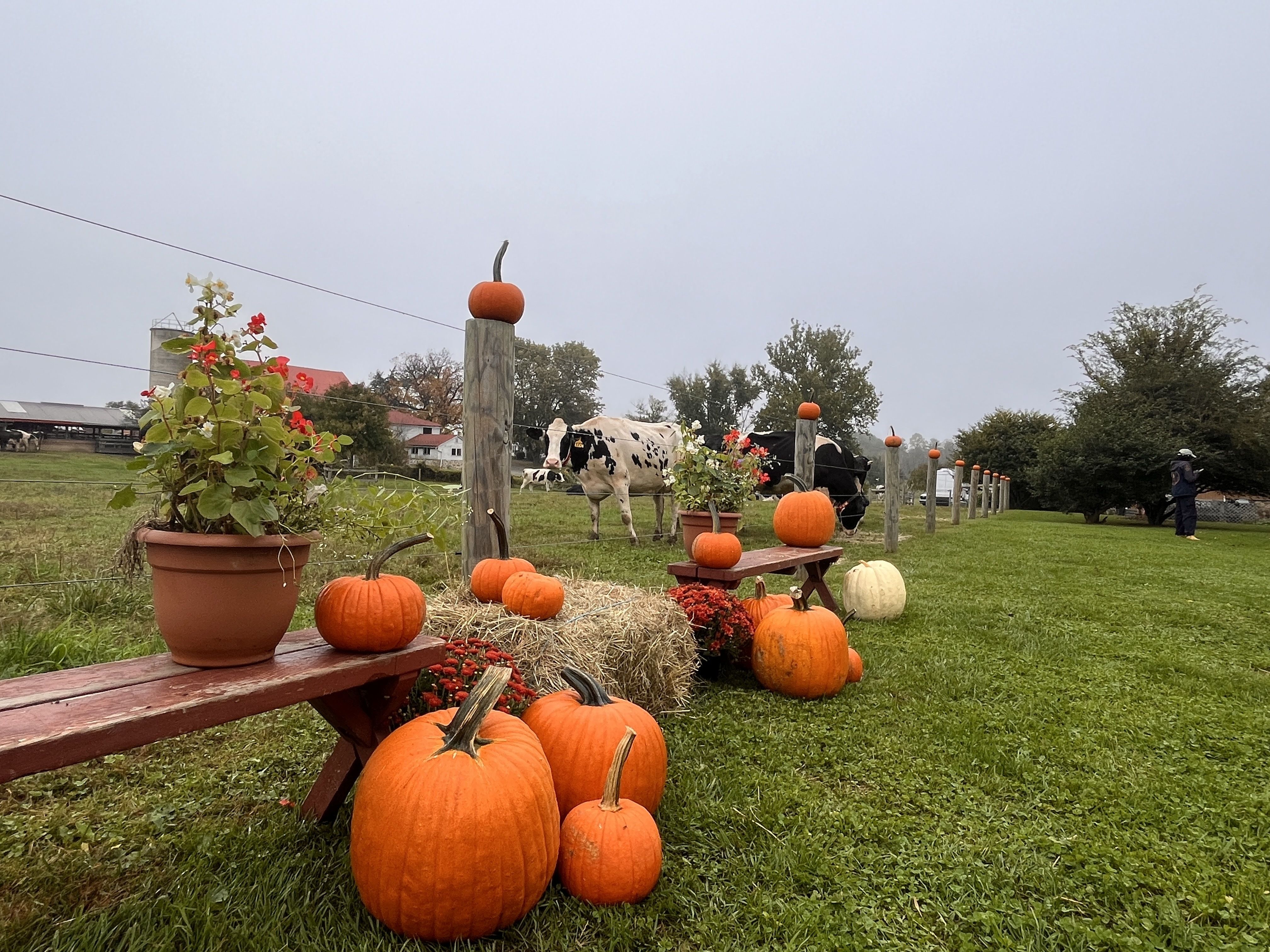
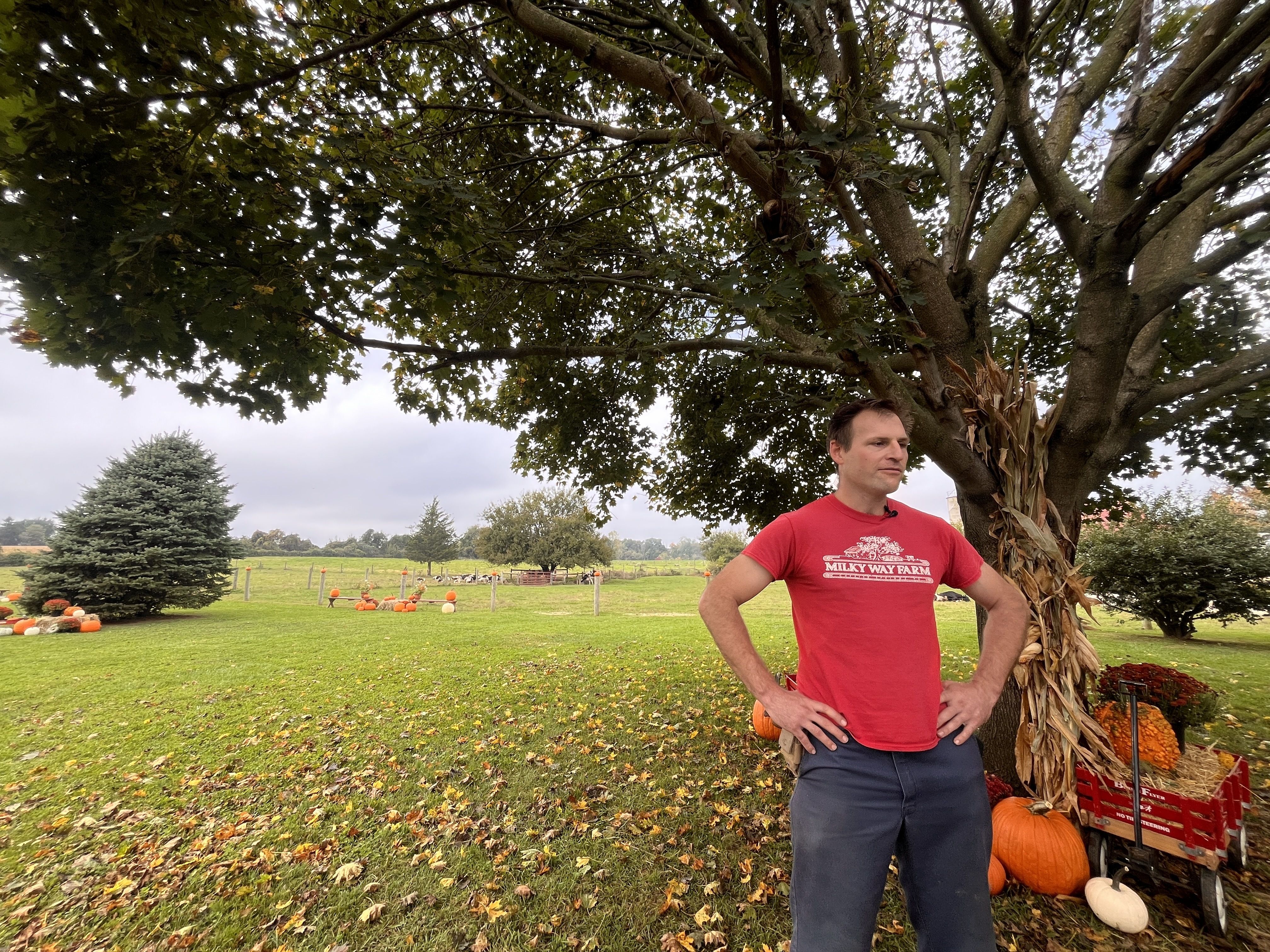
Historic Milky Way Farm, set on 103 rolling acres in Chester Springs, has been run by the Matthews family for generations.
Thomas Matthews says the farm — actively cultivated for 300 years — faces economic hurdles such as high fuel, fertilizer, and operational costs, as well as development pressure.
“We are really passionate about connecting with the community and educating people aboutwhere their food comes from,” Matthews said.
On Friday, Gov. Josh Shapiro and other officials announced Pennsylvania’s first strategic plan for agriculture in an attempt to help farms like Milky Way survive.
Pennsylvania lost 17% of its farms and 8% of its acreage between 2012 and 2022, according tothe most recent agricultural census. That is twice the national rate, according to the plan.
Much of that loss comes from high land values and development pressure.
“I believe that when you succeed, Pennsylvania succeeds,” Shapiro said of farmers. “The future of the Commonwealth of Pennsylvania looks bright, and it runs right through our Pennsylvania farmlands.”
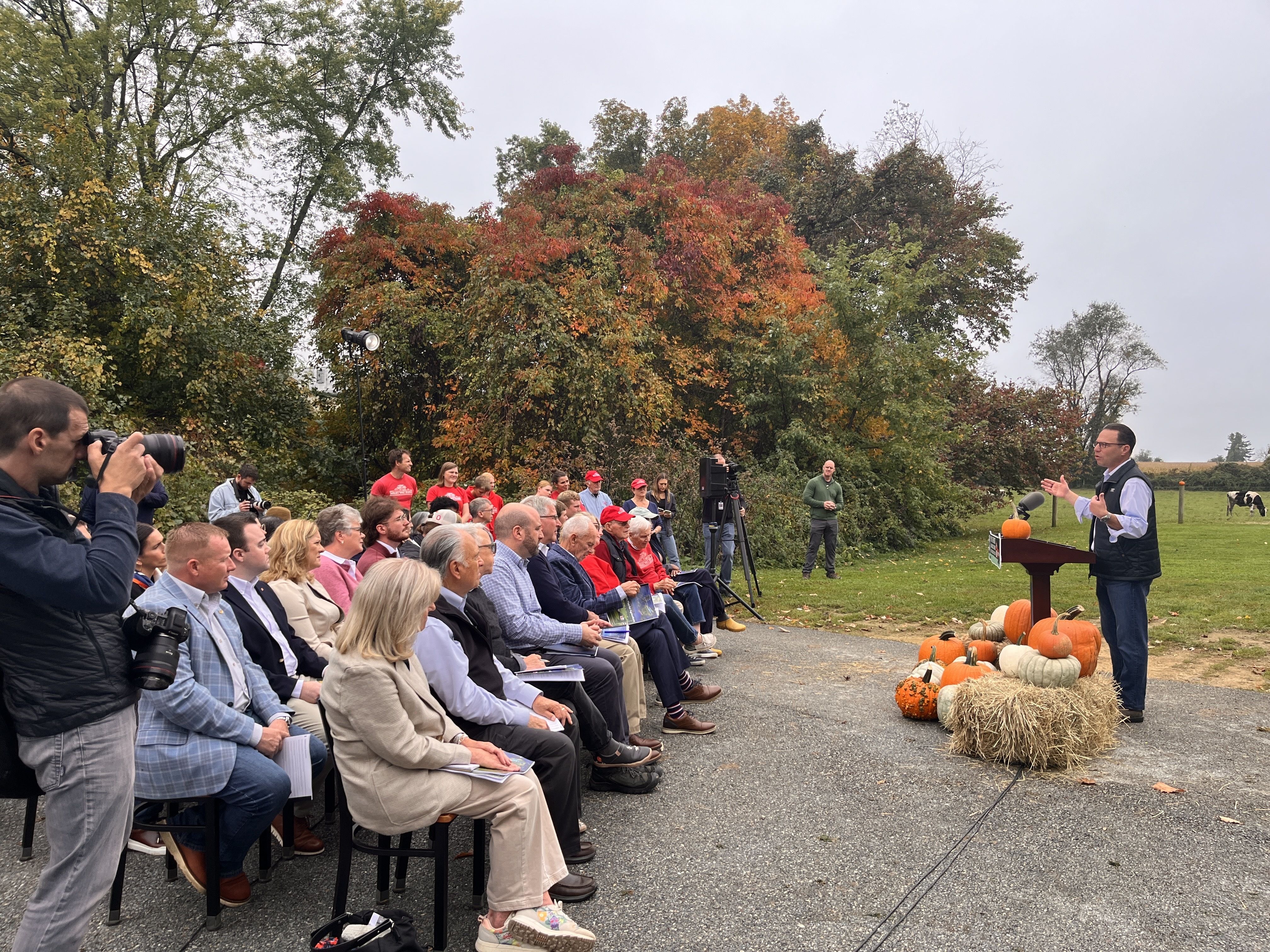
Shapiro announced the 10-year plan from the Milky Way Farm, which has 50 milking cows and a creamery, and also raises crops such as pumpkins.
Gov. Josh Shapiro and other state officials announced the state’s first strategic plan for agriculture at the Milky Way Farm.Frank Kummer
The plan sets out to establish a blueprint for the state’s $153 billion agricultural economy, which includes 48,000 farms and over 600,000 workers statewide.
Shapiro outlined five pillars of the plan:
Support agricultural careers by expanding apprenticeship programs, education, and workplace support.
Embrace innovation and modernization by providing grants for equipment, upgrades, automation, and research.
Increase market access by growing the “PA Preferred” brand, and expand organic markets.
Protect current farmland though preservation, farm succession plans, and land-use planning.
Better coordinate the state’s support network for farmers and provide more resources.
As an example of driving technological adoption, Shapiro highlighted the state’s first Agriculture InnovationGrant, which has already distributed $20 million in grants to help farmersadopt precision equipment, water conservation tools, and modern facilities.
“The launch of this plan is certainly a milestone, but it’s not a finish line,” said Russell Redding, the state’s agricultural secretary. “It’s a starting point for the work that we do.”
Redding said the plan was crafted through feedback from over 200 participants across 40 counties at regional listening sessions.
The plan’s primary role, he said, is to create opportunities for people to remain in agriculture.
Thomas Matthews on his family’s Milky Way Farm, shortly after Pennsylvania Gov. Josh Shapiro and other state officials announced the state’s first strategic plan for agriculture. Frank Kummer
He and Shapiro both acknowledged current political and economic headwinds, such as volatile diesel prices, high fertilizer costs, and labor issues that are pressuring farmers.
Shapiro put the blame for many of farmers’ current issues at the feet of the Trump administration.
He said Pennsylvania farmers are “getting crushed” by soaring operational costs, which he attributed the spike in fuel prices from the war in Iran, disruption of trade routes, and tariffs.
The Milky Way Farm is preserved through Chester County’s land-preservation program, Matthews said. He strongly supported the new 10-year plan because of its broad vision and specific support for family farms.
He said most family farms are focused on immediate tasks. Having Shapiro and state leaders provide a road map takes some of the burden off their backs, he said.
For example, providing grants to help farmers adopt modern technologies will make their businesses more competitive and help pass farms down to the next generation, he said.
“Often, as farmers, it’s easy to focus only on the chores of today and get lost in what are we building toward.”
LeBron James hasn’t been in Philly that long, between his move and shuttling back and forth to New York City by helicopter. But he’s apparently hoping to spend time in Philly restaurants, at least according to his social media.
On Sunday, King James posted a plea to his Instagram stories: “Philly fam!! Where do I go for seafood potato greens??” He was asking on behalf of his wife, Savannah James, and added “she like all suggestions. Obvi the best ones.”
Mr. James, perhaps The Inquirer may be of service.
First, to respond to the befuddled commenters, we’re talking about seafood potato greens — which is a West African stew, and not three separate foods of “seafood, potato, and greens.” It’s served with white or brown rice and it’s a hearty, nourishing one-pot meal.
The dish has gone viral in recent weeks, as influencers have posted about trying it from restaurants in Newark and also preparing their own versions.
Given Philadelphia’s robust West African food scene, James has numerous options, and most will offer different versions of “potato greens,” made with various proteins with a base of sweet potato leaves. Seafood potato greens are especially rich, packed with shellfish like crab or shrimp, and sometimes meat or poultry.
Seafood potato greens from Fatim’s Kitchen in Chester.Kiki Aranita /
Fatim’s Kitchen in Chester has seafood potato greens featuring a whole langoustine emerging from the stew, along with shrimp and crab. The greens are sublimely velvety, cooked down until they dissolve upon contact with your lips.
Potato greens from Le Mandingue on Sept. 19, 2024.Caean Couto / For The Inquirer
Our restaurant critic, Craig LaBan, is a fan of Le Mandingue African Restaurant on Woodland Avenue, which serves seafood potato greens. LaBan called chef-owner Fanta Fofana’s sweet potato greens the best thing he had eaten one week in March.
“Rich red palm oil is most commonly used to sauté the greens in Liberia’s small villages,” according to Fofana, “while city chefs tend toward more neutral white oils,” he wrote. “Fofana strikes a compromise by blending the two. She also pulls no punches when it comes to adding flavor from chile spice and mixed proteins, like the rustic savor of smoked turkey and hunks of chicken and beef. While the greens are luxuriously soft when cooked, they also have a remarkable ability to absorb and magnify every ounce of bold flavor in their tender leaves.”
In fact, Le Mandingue posted an enticing video of their seafood potato greens just last week.
And should you like a particularly spicy version of sweet potato greens laced around beef bones, might we recommend Emma’s Liberian Kitchen? Theirs are cooked in palm oil and have a long, lingering heat.
Potato greens and fish with spicy rice from Emma’s Liberian Kitchen.Kiki Aranita /
In any case, we hope to run into James at any of the above establishments. Or perhaps even in Chinatown.