Tag: Chester

  • Pa. measles outbreak is nation’s worst, echoing deadly 1991 Philadelphia epidemic

    Pa. measles outbreak is nation’s worst, echoing deadly 1991 Philadelphia epidemic

    The child gasped for air, sitting alone in front of an upstairs television, near death inside her Northeast Philadelphia home.

    As a measles outbreak ravaged the city, Philadelphia’s deputy health commissioner, Robert Ross, used the home phone to call a judge for a court order to treat the girl. Her family worshiped at Faith Tabernacle Congregation, a fundamentalist Christian church at the center of the outbreak. Many members were refusing all medical care, including vaccinations.

    The 1991 outbreak would eventually sicken 1,400 people across Philadelphia and kill nine children. It spurred the city to pursue the nation’s first and only court-compelled vaccinations. Some parents at Faith Tabernacle were ordered, against their wishes, to vaccinate their children against measles.

    The girl in the house in Northeast Philadelphia was about 9 years old and “minutes, maybe an hour, away from respiratory failure,” Ross recalled. And when he tried to call for medical care, her grandmother tried to block him from the phone.

    The child ended up on a ventilator at St. Christopher’s Hospital for Children and ultimately survived. Her story became a defining moment in the public health response to the state’s last major measles outbreak, part of a nationwide surge between 1989 and 1991 that sickened tens of thousands of people and led to at least 166 deaths.

    Three decades later, Pennsylvania is again contending with the nation’s worst measles outbreak, with more than 1,000 cases and five measles-related deaths reported this year.

    Then and now, the highly contagious disease spread in communities with low vaccination rates, but for different reasons. The 1991 outbreak spread in a community that rejected vaccines — and across a city with limited access to vaccination even for those open to them. Now, vaccines are easier to access — but too many people don’t want them.

    So far, Philadelphia has been spared as measles actively spreads in the region’s western suburbs of Chester County and just beyond in Lancaster County, whose 401 reported cases lead the state.

    Ross and other physicians who treated children in Philadelphia in 1991 lament the return of measles, which tops the list of vaccine-preventable diseases once common during childhood.

    “I would have said there was no chance this would ever happen again,” said Ross, who went on to spend decades as a public health administrator in California. “We were looking forward to decades of measles-free, whooping cough-free, polio-free livelihoods for children.”

    In 1991, parents flocked to vaccine clinics organized around the city. At one event that May, doctors handed out shots to 60 children — with Nerf balls and a DJ on hand to make the medicine go down — in Fishtown and South Kensington, then without full-time pediatricians to routinely provide vaccines. Another vaccination effort immunized 6,000 children over a weekend, with help from the Phillie Phanatic.

    Today, families increasingly are opting out of vaccines, often by taking advantage of religious and philosophical exemptions that provide legal outs from immunizations otherwise required to enter school. And vaccine skeptics once relegated to the fringes of public discourse now are setting the federal health agenda under President Donald Trump.

    Years of declining vaccination rates have left not only children but also many unvaccinated adults vulnerable. Where only children died in 1991, three of five deaths in the current outbreak appear to have occurred in adults.

    “It felt like a more winnable battle in ’90, ’91, than right now,” Ross said.

    ‘You just knew that an outbreak was imminent’

    In the spring of 1989, an R.E.M. concert led to Philadelphia’s first reported cases, involving concertgoers at the Spectrum. The city health department interviewed teenagers exposed at the show, ramped up vaccinations, and braced for the worst.

    Pennsylvania laws requiring vaccinations for school admission were still relatively new — on the books for less than a decade — and federal health officials had only just begun recommending a second dose of measles, mumps, and rubella vaccines for children.

    Tens of thousands of preschoolers had not received even one dose of the MMR vaccine, the Daily News reported when the first cases emerged. Nearly two-thirds of Hispanic toddlers in North Philadelphia had not received the one dose recommended by age 2, The Inquirer noted at the time.

    The virus started spreading: 89 cases were reported in the city in 1989, followed by more than 200 the next year.

    The numbers followed a nationwide trend: By December 1990, measles had infected more than 25,000 people across the country, a 68% increase over the year before.

    At Philadelphia’s children’s hospitals, St. Christopher’s was receiving three to four measles cases a day in city neighborhoods with high poverty and low access to medical care. Children’s Hospital of Philadelphia was handling one to two at its main campus in West Philadelphia, where at least half of preschoolers had received their recommended shots.

    In 1991, officials told The Inquirer that roughly 60% of preschoolers citywide were vaccinated against measles, well below the 95% threshold that scientists now say is necessary to prevent the virus from spreading in a community.

    In part, this reflected access challenges. The federal government had reduced public health funding under President Ronald Reagan, a Republican, as rising poverty contributed to a growing uninsured population. The illicit drug use that defined the crack epidemic also meant some parents neglected to seek medical care for their kids, Ross said. All contributed to “a toxic brew” that kept kids from getting immunized, he said.

    “You just knew that an outbreak was imminent,” Ross said.

    Deaths mount

    In January 1991, Philadelphia recorded its first measles death in 20 years — an unvaccinated 18-month-old who developed pneumonia after contracting measles.

    The next month, two unvaccinated girls involved with Faith Tabernacle died from measles. Church members told the Daily News their views required rejecting medical care: Only God could cure illness. “They effectively had a ban not just on vaccines but on all medical care,” Ross said.
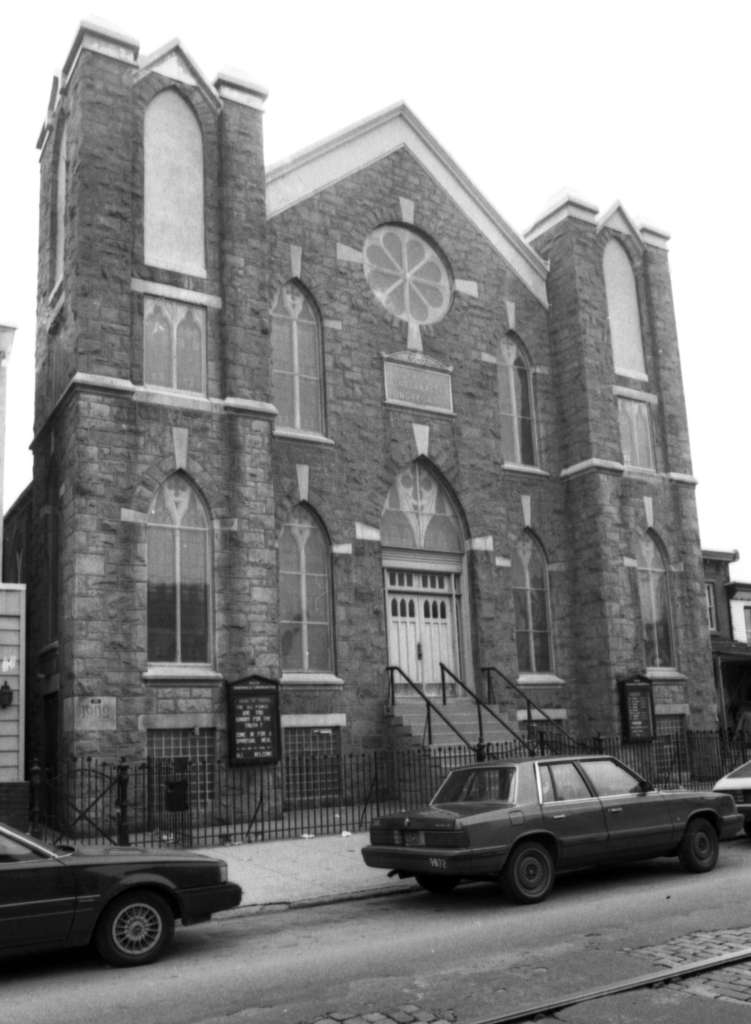
    Faith Tabernacle Church at Fifth and Erie Streets in 1991. Children from the congregation died in a measles outbreak that year.File Photograph

    Some church members refused to call a doctor or visit a hospital even as their children lay dying. Other parents associated with the church, however, did take their children to the hospital as their conditions deteriorated.

    Sarah Long, then an infectious-disease physician at St. Christopher’s, remembers the first child with measles she treated in 1991 — a 2-year-old with a high fever and rapid breathing, characteristic of a case of pneumonia.

    But with a classic case of pneumonia, “the child is hyperalert and anxious,” Long said.

    “These children — they were not able to sit up. Not able to take fluids. They’re just lying there, incapacitated,” she recalled.

    She was stunned by the consequences of a disease avoidable through immunization since the 1960s. “This was a completely preventable problem,” Long said.

    After a third death, of a Cheltenham girl whose family attended the church, Ross and other health department workers grew concerned that phone calls with the church’s members were not producing accurate information.

    With a judge on call to order medical treatment if necessary, Ross and others knocked on congregants’ doors.

    At the house where he discovered the girl gasping for breath upstairs, Ross met eight other children recovering from measles infections, the virus’ characteristic rash fading from their faces.

    Hundreds of children not affiliated with the church also fell ill. Six of the nine children who died were church members.

    Reached by phone, Faith Tabernacle’s pastor said news reports over the years had “misconstrued the truth” about the church’s experience during the outbreak.

    Declining to give his name, and noting that he was not its leader at the time, he said the church supports personal choices about medical care. “We’re not a cult. We present the word. It’s up to the individual,” he said. “We trust the Lord for our healings.”

    ‘We had to resort to it’

    In March 1991, after another child died, several judges upheld a Common Pleas Court ruling that ordered five Faith Tabernacle parents to vaccinate their children. Their parents cried as they brought their children to court for the shots.

    “We had to resort to it,” Ross said. ”We just had nothing else available to us to protect those kids.”

    Such a ruling is unlikely to happen again in the current political landscape, said Paul Offit, a vaccination expert who heads CHOP’s Vaccine Education Center and worked at the hospital during the 1991 outbreak.

    The 1991 court rulings were much more stringent than typical vaccine requirements for schools or employment, Offit said. Under a vaccine mandate, for example, a person might face a penalty for not being vaccinated — like not being able to work a specific job — but can still decline a vaccine.

    Philadelphia courts compelled Faith Tabernacle parents to vaccinate their children — with no way to opt out.

    By the time courts were compelling parents to vaccinate their children, the city’s large-scale vaccine drives helped ensure that few children still lacked immunity to measles, he said.

    The arrival of spring and summer — measles traditionally spreads in the fall and winter — also helped quell the outbreak. So did a wave of media coverage that raised awareness about the virus and spurred many parents to vaccinate.

    Offit published a book, Bad Faith, in 2015 about religious objections to vaccination, including Faith Tabernacle’s experience.

    In 1991, immunization rates came up as shots were made more widely available.

    Now, stricter vaccine mandates for school entry could help reduce measles transmission — but that is politically unviable, Offit said.

    Pennsylvania has some of that nation’s most permissive exemption laws, requiring only that parents indicate a religious or philosophical objection to vaccinations on a form before sending unvaccinated kids to school.

    An Inquirer analysis found a 15% increase in the use of these exemptions in the last two years, reflecting increasing public mistrust in vaccines.

    In the state’s current outbreak, Health Secretary Robert F. Kennedy Jr. has spent years stoking skepticism of the vaccine, although he recently said the MMR vaccine is effective.

    Downplaying the dangers of the state’s measles outbreak, he has accused Pennsylvania Gov. Josh Shapiro, a Democrat, of politicizing the outbreak and said his administration may have “fabricated” the first reports of measles-related deaths.

    Kennedy later acknowledged that one of the deaths was caused by measles. Yet the Centers for Disease Control and Prevention website currently lists two measles-related death across the nation this year, despite Pennsylvania’s reports of five deaths.

    Now local physicians and health systems have limited options to combat anti-vaccination sentiment to increase immunization rates.

    “We have two tools: quarantine and vaccine mandates,” Offit said, “and there’s been an erosion in both because people like RFK Jr. say you can’t trust medical experts. I am worried we’re going to be seeing this for years.”
  • Immigration boosts the Philly region’s population and helps support STEM, Welcoming Center study finds

    Immigration boosts the Philly region’s population and helps support STEM, Welcoming Center study finds

    The Philadelphia region benefits from immigration in myriad ways, a new Welcoming Center study says, as people who come here from other lands boost local populations, add brain power, and hold and create jobs.

    The report looked at changes and growth across the five-county area of Philadelphia, Montgomery, Delaware, Chester, and Bucks, and in some cases compared those places to Pennsylvania as a whole.

    The study, Building Collective Prosperity: Immigrant Impact in the Philadelphia Region, was released Tuesday during an event and panel discussion at WHYY in Center City. It looked at immigrants and their contributions without regard to immigration status.

    It took on a broad array of topics, from investment, to innovation, to spending power, to labor.

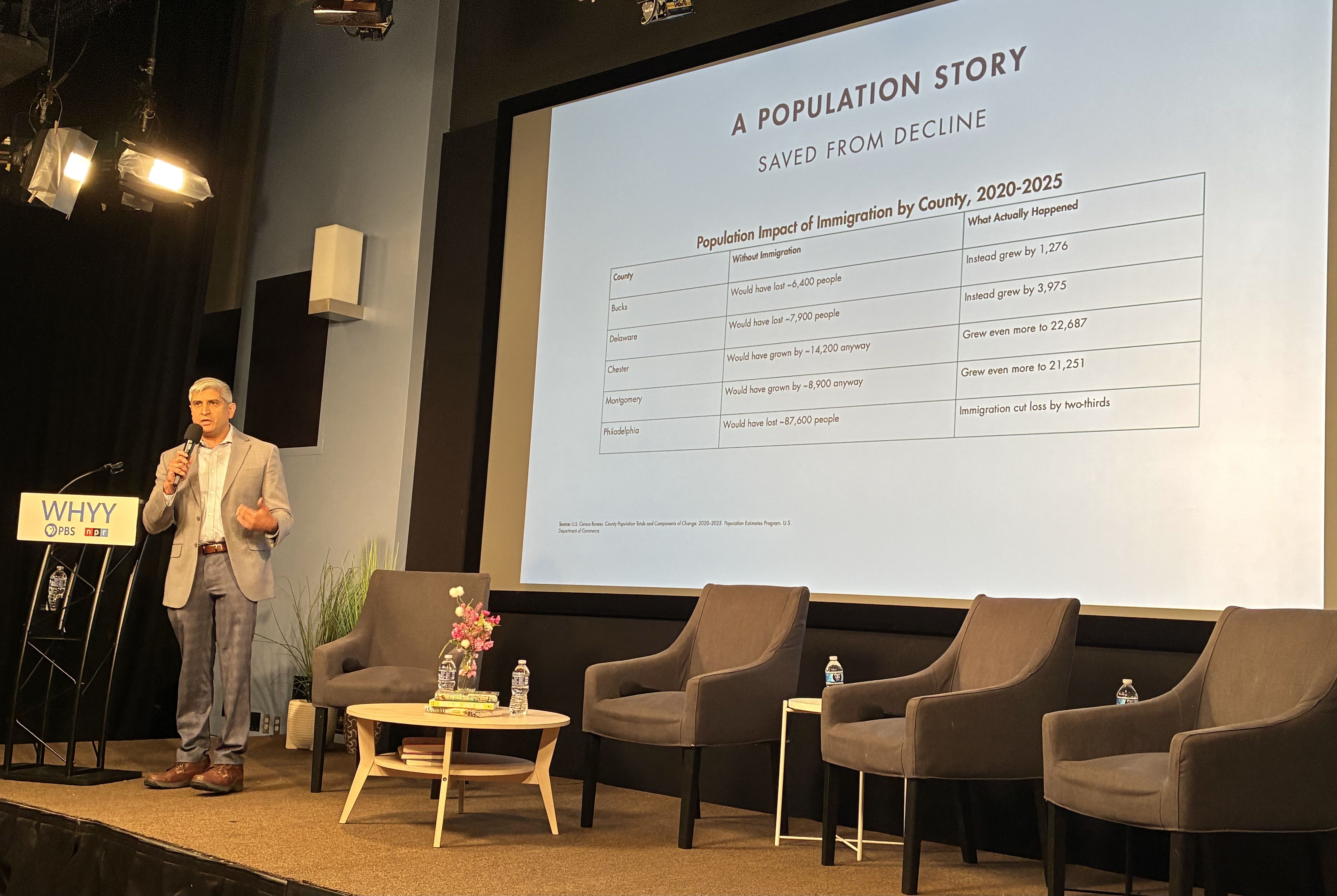
    It showed how immigrants stopped or slowed population decline in the region.

    For instance, between 2020 and 2025, the study said, Bucks County would have lost about 6,400 people without immigration. Instead its population grew by 1,276. Delaware County would have shrunk but grew instead. Chester and Montgomery Counties would have grown anyway, but grew even more.

    Immigrants are almost the entire reason the state population has grown since 1990, the study said.

    “Ask yourself this question,” Anuj Gupta, president and CEO of the Welcoming Center, told a crowd that gathered for the report’s release. “If we continue down a path where we are pulling people out of our communities, and making it impossible for people to come here, what does that mean for us? … Managing decline is not a posture you should elect to aim for.”

    The Welcoming Center is a Philadelphia-based nonprofit that works to strengthen communities by creating opportunities for immigrants of all backgrounds, education, and skills. It offers core programs in English and digital skills, work readiness, entrepreneurship, and community leadership.

    Some other study highlights:

    Housing:

    • The home-ownership gap between native-born and foreign-born residents has nearly closed in Philadelphia. Nearly 52% of each group owns homes.
    • Immigrant households across the five-county region have built nearly $60 billion in home equity, almost double since 2015.

    H-1B Visas:

    An H-1B is a temporary, employer-sponsored work visa that allows companies to hire foreign professionals in specialized fields.

    • Philadelphia and Chester County together account for two-thirds of the region’s H-1B certified positions. The overwhelming majority of H-1B roles are in computing and tech.
    • H-1B certifications in the region declined from 2025 to 2026 across every county but Delaware, which saw an increase of two.

    STEM:

    • Immigrants make up 16% of the state’s STEM workforce, nearly double their share of the overall population.
    • In Chester County, almost one in three STEM workers is an immigrant, despite immigrants being only one of eight in the county’s total workforce.
  • Trump’s fixation on Nixon is also a warning | Will Bunch Newsletter

    Trump’s fixation on Nixon is also a warning | Will Bunch Newsletter

    I guess this is the reason they call autumn “the fall.” Here in Greater Philadelphia, the mornings are crisper, the nights are longer, and the sports fans are apoplectic, to the extent we can even rouse ourselves from bed. It’s a bad week for the good guys when a 7-0 opening-night loss for the Flyers didn’t make the list of worst things that happened — not when the Phillies crashed and burned while the Eagles are failing to launch. Cavan Sullivan, our city turns its lonely eyes to you.

    If someone forwarded you this email, sign up for free here.

    Why Nixon still stands in the way of Trump’s dictator dreams

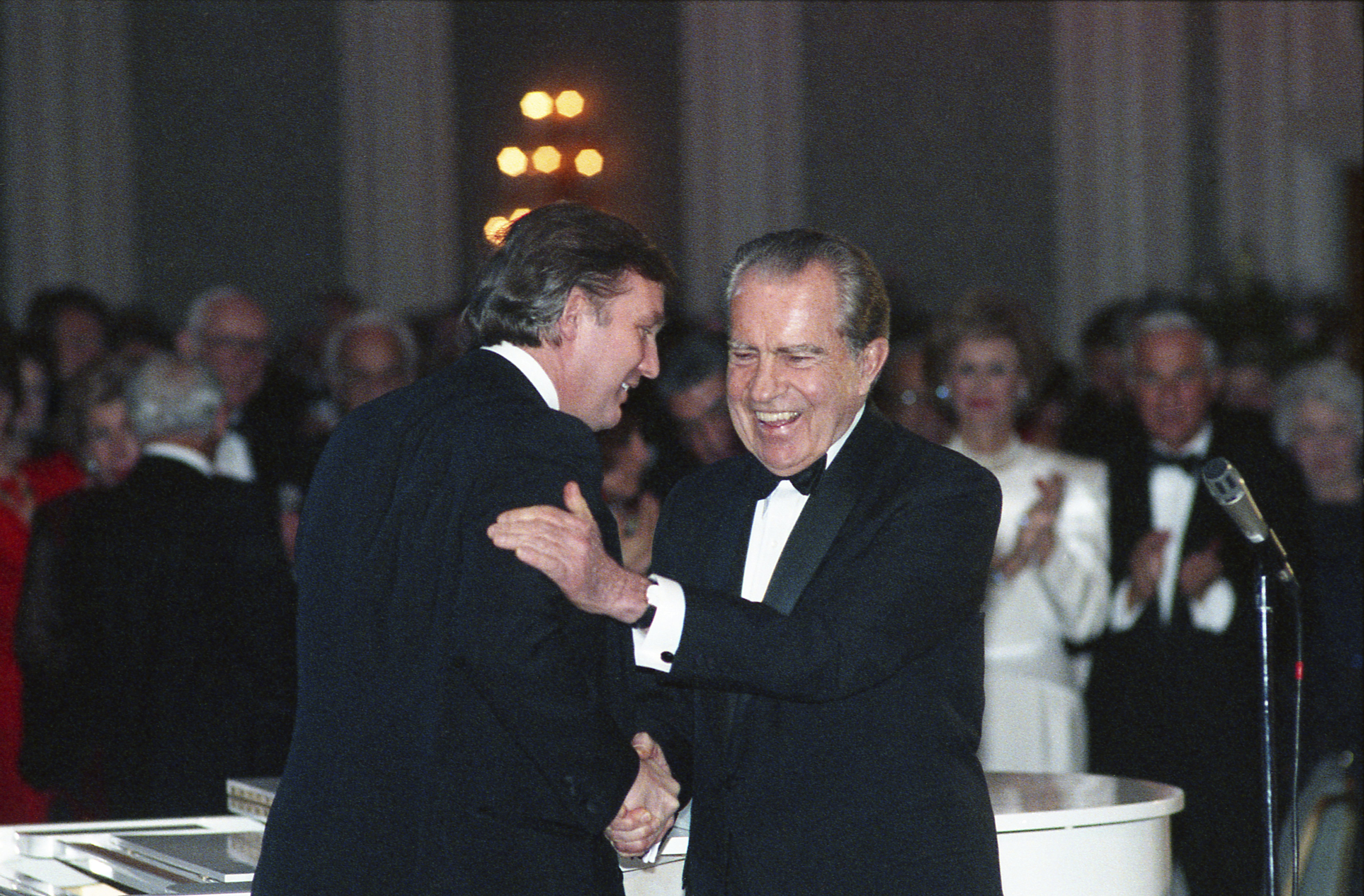
    In this photo from March 1989, Donald Trump (left) shakes hands with former President Richard Nixon at a tribute gala to Nellie Connally at the Westin Galleria ballroom in Houston.Richard Carson

    Although he later pretended it was not so when it came up in his first GOP primary debates, Donald Trump was never a fan of his party’s golden idol, Ronald Reagan. Most famously, the Manhattan developer at the peak of his 1980s fame surge lashed out at the Gipper as weak on defense policy, adding that late in Reagan’s second term, “people are beginning to question whether there’s anything beneath that smile.”

    No, Trump always liked bad boys. No wonder the ex-president he had a crush on back then was Richard Nixon.

    “You are a great man, and I have had and always will have the utmost respect and admiration for you,” Trump wrote the 37th president in 1993, nearly two decades after Nixon became the only president to resign, leaving the White House in the disgrace of the Watergate scandal. “I am proud to know you.”

    The former president and the future felon had been exchanging letters for more than a decade by that point, as they shared their resentment over perceived media persecution. Nixon died in 1994, but after Trump’s first impeachment trial in 2020, he said in an interview that “I think of Nixon more than anybody else.”

    All that said, one has to think it was a little more than merely a mutual admiration thing when the bizarre news broke last week that — more than a half century after the Watergate prosecutions scored 41 criminal convictions and a grand jury named Nixon as a coconspirator in the cover-up — the U.S. Department of Justice is weighing reopening the case. Their theory: Tricky Dick and all the president’s men got a raw deal.

    The Wall Street Journal reported that Trump’s DOJ is in the early stages of a probe into the early 1970s special prosecutor’s office that investigated Watergate, presumably in an effort to prove that its judicial assault on Nixon and his underlings was an overreach, perhaps with the goal of a written condemnation.

    There are a couple of very different ways to look at this. The MAGA era in American politics has produced more than its share of out-there people with at least slightly kooky causes who are able to capture the ear of a Trump regime that is populated by fellow conspiracy theorists.

    In this case, the out-there gentleman is Geoff Shepard, a lesser-known aide to Nixon who now bills himself as a revisionist historian with a theory that the so-called deep state — lifers in the CIA and FBI, corrupt judges, the liberal news media, etc., etc. — conspired against his former boss. Shepard has crafted a two-hour presentation called “Watergate as Lawfare” — meaning Nixon’s “enemies” (and he had so many that he kept a list!) twisted the law to accomplish what they failed to achieve at the ballot box in the 1968 and 1972 elections.

    It’s an interesting theory as long as you’re willing to forget that Nixon’s White House created a team of “plumbers” who — financed by illegal campaign contributions — conducted unlawful break-ins and wiretapping of the president’s foes, and that Nixon oversaw a hush-money operation to silence the burglars once they got caught, and also commanded the CIA to obstruct justice.

    Of course, the Trump regime is willing not only to forget the basic facts of Watergate, but laugh them off. Most famously, Vice President JD Vance told an audience back in June that the scandal that provoked Nixon’s resignation would be “like a 12-hour news story” today, adding, “The idea that it would have taken down a presidency is crazy.”

    Which is exactly what this renewed interest in Watergate is all about. They seek a new American reality in which the notion that a presidency can become a criminal enterprise, and — more importantly — that there could be consequences for doing that is, well, “crazy.” That a POTUS cannot fail, but he can only be failed by the permanent “deep state.”

    What’s crazy is that, as terrible as Nixon was — and make no mistake, Nixon was terrible — there is no comparison between his cut-and-dried high crimes and misdemeanors and the far worse ones committed by Trump. For example, it was a mini-scandal that Nixon increased his net worth during his first term … by $700,000. Trump increased his net worth in just one year, 2025, by an estimated $2.2 billion. Nixon has an enemies list, but Trump has sought — and occasionally received — invented felony indictments against his political rivals.

    The Justice Department scheme to reopen Watergate might not be the most nefarious thing that’s taking place right now, but it is part of a much bigger mosaic of actions that all aim to show Trump can govern with total impunity — that he is untouchable.

    This road to perdition started even before Trump’s second inauguration, when the U.S. Supreme Court in 2024 granted a president sweeping immunity for “official acts” — in essence, confirming Nixon’s famous interview comment to David Frost that “when the president does it, that means it is not illegal.”

    Since returning to office nearly 21 months ago, Trump has been road testing his newly granted imperial powers. In the waters off South America, drone strikes on fishing boats ordered by Trump’s Pentagon have murdered at least 238 people, without any due process, in attacks that independent experts have labeled a war crime. That’s just one of the numerous examples of the Trump White House testing the outer limits of defying Congress, or the courts, or the rule of law.

    Yet, just as important to the president’s agenda is the implied notion that there is a straight line from 1973 to today, in the existence of an unelected “deep state” that wields the real power in America, or at least until Trump arrived to smash its hegemony.

    This is why the Trump regime’s obsession with Nixon and Watergate is more than just a trivial matter. On one hand, Nixon’s full pardon from Gerald Ford unfortunately muddied the waters about whether or not the president is above the law. On the other hand, the overall message from Watergate was that most of the nation’s big institutions — Congress, the courts, the news media — have a role in preserving democracy when the White House is breaking bad.

    The reality that the system still worked when Nixon boarded that helicopter in August 1974 is the history the Trump regime wants to toss down the memory hole. Indeed, they are working on all cylinders to control the past so Trump can control the future.

    Watergate remains an increasingly faint beacon of hope that America is not a dictatorship, and that a rogue president can be sanctioned for wrongdoing. That’s why Vance ridicules Watergate. That’s why Trump wants to erase it. Because the criminality that’s likely to come after Republicans go down in flames in November’s midterm election will probably make Watergate look like candy-store shoplifting.

    Honestly, we should all reinvestigate Watergate — as the road map for 90% of what we need to do when our president is a crook. Then we should cover the remaining 10% of that ground and make it perfectly clear that Nixon was wrong about one more thing: that when a president does it, and when it’s against the law, that means it is illegal.

    Yo, do this!

    • Autumn is peak season for foliage, for sports (well, quantity if not quality), for movies, and for books. It’s been hard to keep up with all the excellent tomes coming out — including the new one by Astra Taylor (who has appeared in this space as a fierce critic of the student-debt crisis) and the acclaimed left-wing author Naomi Klein, End Times Fascism: And the Fight for the Living World. The two made a riveting appearance on one of my favorite podcasts, Know Your Enemy, to discuss how the political right wing and Silicon Valley billionaires have found common cause in a frightening, apocalyptic vision of the future. But their book also promises hope and potential solutions, so I look forward to reading it after I whittle down the current pile.
    • We all need hope in these troubled times, which is why my new North Star is Cavan Sullivan, the straight-outta-Northeast Philly soccer phenom who just turned 17 about 10 days ago and has fans of the world’s greatest sport dreaming he can a) finally deliver an MLS Cup to the beleaguered Philadelphia Union before he leaves us in roughly a year for England’s (now scandal-plagued) Manchester City and b) help the U.S. men’s squad compete for the 2030 World Cup, when he’ll still be too young to legally drink at age 20. Check out his highlight reel goals for the Union and the USMNT, and then catch him twice this week: Tuesday night for the Americans against our archrival Canada (8 p.m., TNT) and then back with the Union here in Chester on Saturday night against Real Salt Lake (7:30, Apple TV).

    Ask me anything

    Question: What do you think will happen at the midterms? — @dbottinick.bysky.social via Bluesky

    Answer: That’s a more general question than I usually answer, but it’s clearly what’s on everybody’s mind. Of course, there are two layers here. On the voting that wraps up Nov. 3, the Democrats seem to be consolidating their gains, with taking the Senate along with the House (which is a slam dunk) looking increasingly likely. In a normal year, I’d expect a GOP recovery in the home stretch, especially with all their billionaire cash. But this is not a normal year, or a normal president. The bigger layer of uncertainty is what happens after Nov. 3 when Donald Trump doesn’t like the results. Some shocking attempt to reverse the outcome — in Congress, or the courts, or the streets — is a given. Are we ready for this level of dictatorial tomfoolery?

    What you’re saying about …

    I need to remember more often that it’s the simplest questions that bring the most impassioned responses. A lot of you wanted to weigh in on a proposal from Major League Baseball that initially drew interest from the Trump regime: building a new Field of Dreams to stage an MLB game in a national park, such as scenic Grand Teton. And the outrage — echoing the framing of my question, that it would be “a crime against Mother Nature” — was pretty much unanimous. “It’s maddening,” Rosann McGinley wrote. “What the Trump regime is doing to our parks is bad enough without MLB adding insult to injury.” Stephen LoRusso speculated that “Trump will insist if they name the [ballpark] after him, and erect a statue of him, he will approve it.” But you know who else realized this was a dumb idea? MLB. It dropped the plan after all the bad publicity.

    📮 This week’s question: Thinking (still) about Cavan Sullivan made me wonder: What from the cultural world — like a TV series or a favorite musician — is getting you through these otherwise troubled times? Please email me your answer and put the exact phrase “Cultural escape” in the subject line.

    Backstory on what’s so bad about Texas Senate ads during an Eagles game

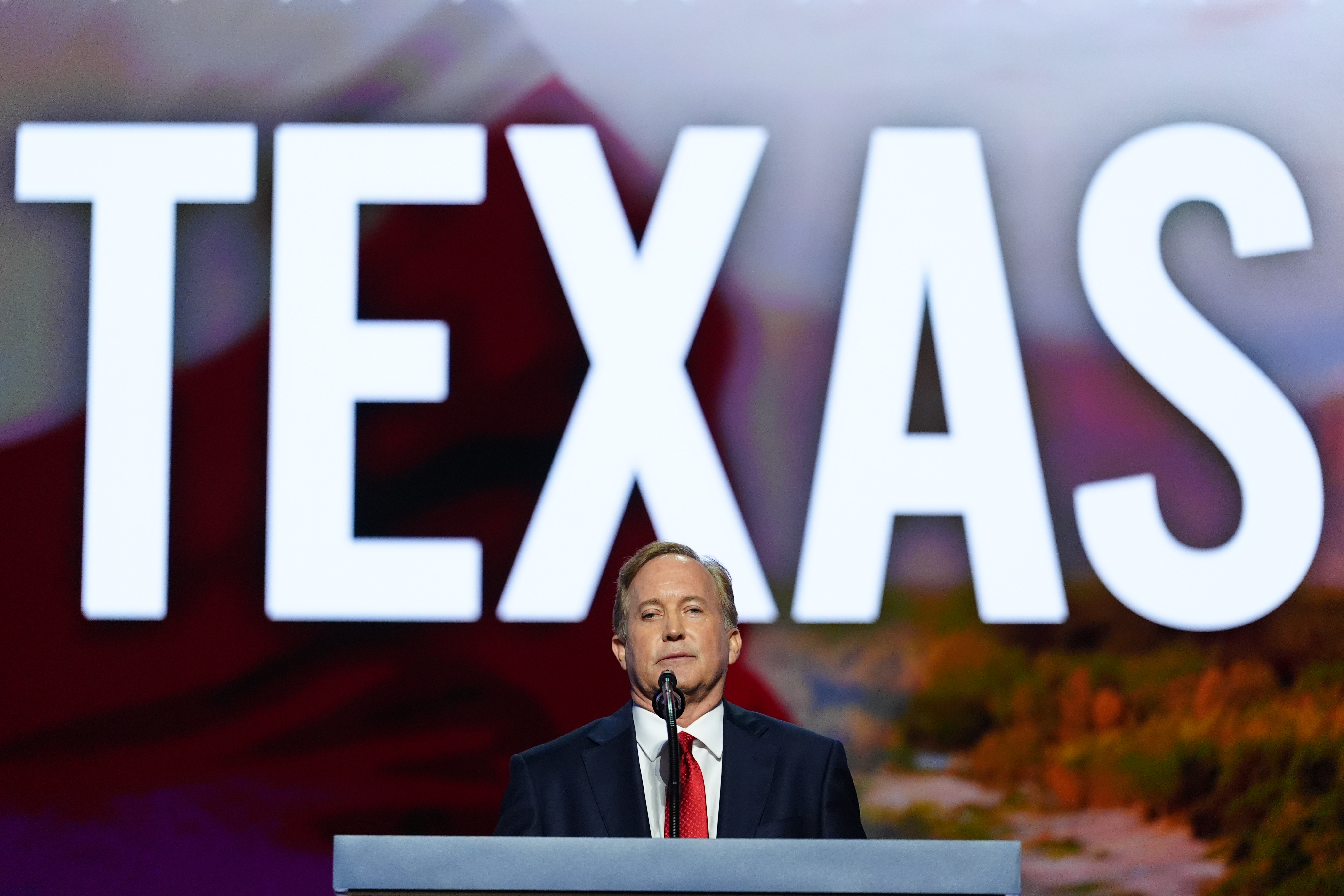
    Republican U.S. Senate candidate Texas Attorney General Ken Paxton speaks at the Republican convention in September in Dallas. Julia Demaree Nikhinson

    If you’re one of the folks who tortured themselves for three hours by watching the Eagles’ excruciating loss to the Los Angeles Rams, you witnessed many head-scratching things. But while head coach Nick Sirianni’s decision to go for it on fourth-and-goal from the two-yard line instead of taking three much-needed points on a field goal was baffling, it made more sense than something else on your TV screen: the several expensive ads that aired for the Texas GOP U.S. Senate candidate Ken Paxton, in a game that was played some 1,662 miles northeast of the Austin city limits.

    Football fans hoping for three hours of escape from the existential dread of modern America not only got a lousy game, from the Philly perspective, but had to watch a vicious smear job falsely claiming that Paxton’s opponent, Democratic Texas State Sen. James Talarico, had supported using taxpayer dollars for gender-assignment surgeries. That was followed by a second commercial supporting the current Texas attorney general’s Senate bid, in which Paxton’s soon-to-be ex-wife, who happens to also be a Texas state senator, urged voters to ignore the stench of scandal and vote a straight Republican ticket.

    The ads appeared not just during the Fox telecast of the Eagles-Rams matchup, but on NFL games from coast to coast — the first time I can remember in a lifetime of obsessing over politics that I witnessed ads for a statewide race on a national telecast. The weirdest part? The ads appeared at the same time Texas’ two NFL teams, the Dallas Cowboys and the Houston Texans, were playing each other, so how many registered Texas voters were even watching the out-of-town games?

    The appearance of the ads prompted several outlets, including The Inquirer, to write news articles noting that many fans were not just annoyed but angered by the spots, and speculating why they ran at all. Some noted the quirks of political advertising may have made it cheaper to buy a national spot than the high local ad rates in Dallas, Houston, or Austin. Or maybe the target audience was potential small donors, as campaigns like Paxton’s increasingly bombard Joe Sixpack with emails, seeking $5 donations from folks jacked up about national politics. But does that make sense? Spending a fortune on ads in Philly to raise money so you can buy ads in Texas? Why not just advertise in the Lone Star State with the first batch of cash?

    No, I think the real answer is the alarming state of money and power in America right now. Those Paxton ads were funded by billionaires who want everyday voters to know they have money to burn on foolish political ad placement, because they will spend anything and everything to retain control of Capitol Hill.

    Specifically, the pro-Paxton, anti-Talarico ads were paid for by a political action committee called the Texas PAC, which is currently pumping a whopping $131 million into the neck-and-neck Senate race. The actual source of those dollars comes through a separate PAC supported by the GOP Senate leadership committee, creating a series of nesting dolls to obscure who the actual donors are. That opaqueness is a feature of American campaign finance, not a bug.

    Reporters have found that the Top 10 billionaire donors have so far donated a stunning $734 million toward the November election, with more to come, and that 16 of the Top 20 donors are supporting Republicans. Among the filthy rich supporting the GOP Senate candidates, including Paxton, are Silicon Valley’s Marc Andreessen ($115.3 million), the richest Pennsylvanian, Jeff Yass ($93.8 million), casino heiress Miriam Adelson ($67.6 million), and many more.

    The oligarchy’s financing of Texas ads from Seattle to Jacksonville, Fla., is a raw power play, pure and simple. They are projecting an air of omnipotence — total domination of the U.S. body politic. In a moment when all the things voters actually care about — affording groceries or the rent, and staying out of dumb wars and our immigrant neighbors’ backyard — are going badly for the billionaires’ preferred Republican Party, the ads are a show of dominance. But will it work in November? In a democracy, it should be better to have the people on your side than the money.

    What I wrote on this date in 2020

    Every so often, it pops into my mind that Pennsylvania used to have a U.S. senator named Pat Toomey, and I think: Wow, that was weird. The pangs of regret I felt for not writing more columns about everything that was wrong about the conservative Republican ex-Wall Streeter before his 2016 reelection exploded into a series of pieces over the next few years, including multiple columns about the large protests outside his Philly office called Tuesdays with Toomey. When the senator shocked the political world six years ago by announcing he would not run for a third term, I hailed the demonstrators. “Protests, marches, calling your representative, writing letters to the editor, sending postcards and knocking on doors — all of it matters, in ways that are sometimes clear but often intangible.” I wrote. “What Tuesdays with Toomey has done is your living proof.”

    Read the rest from Oct. 6, 2020: “Think protest doesn’t work? Ask Pat Toomey.”

    Recommended Inquirer reading

    • Only one column this week as I continue to toil on a major project, coming in a few days. In that column, I took a step back to look at the shocking Cornell University gang-rape allegations from a wider lens. With campus sex crimes depressingly common, why did this case break through? I argued that the roots are found in rage over elite impunity, in a world where a man with multiple misconduct allegations can get elected president, or get a second chance as an NFL quarterback. People see the same instinct to protect the privileged in the minimal punishments for Ivy League boys, and they are furious.
    • Those of you who read this newsletter from out of town have probably come to learn that here in Philly, we hang a lot of our identity — as well as our mental health — on our sports teams. Now we’re discovering that — on top of the bottomless pit of losses — there’s another downside to our city’s sports mania: a propensity for gambling addiction. I told you recently about the amazing scoop by my friend and Inquirer colleague David Gambacorta, who revealed that FanDuel solicited a paid Cameo video from Phillies superstar Bryce Harper that it used to buck up an addicted local gambler while he accumulated $1.5 million in debt. That piece triggered a congressional hearing and more revelations, but it also hinted at a much bigger problem. This weekend, Gambacorta and William Bender (yay, Daily News alums!) did a deep dive into Pennsylvania’s bet-addiction crisis, backed by some stunning stats. The Keystone State is now the largest online gambling market in the United States, and the whopping $3.46 billion in revenue here is up 27% year over year. The article looked at the shattered lives behind the numbers, and this saga is only beginning. This is in-depth reporting you can’t read anywhere else, and it only happens with your support. Please consider subscribing to The Inquirer.

    By submitting your written, visual, and/or audio contributions, you agree to The Inquirer’s Terms of Use, including the grant of rights in Section 10.

  • Wawa is once again tied with Sheetz for second-best convenience store chain in national survey

    Wawa is once again tied with Sheetz for second-best convenience store chain in national survey

    Wawa and Sheetz customers across the country are equally satisfied for the second year in a row, according to a new survey.

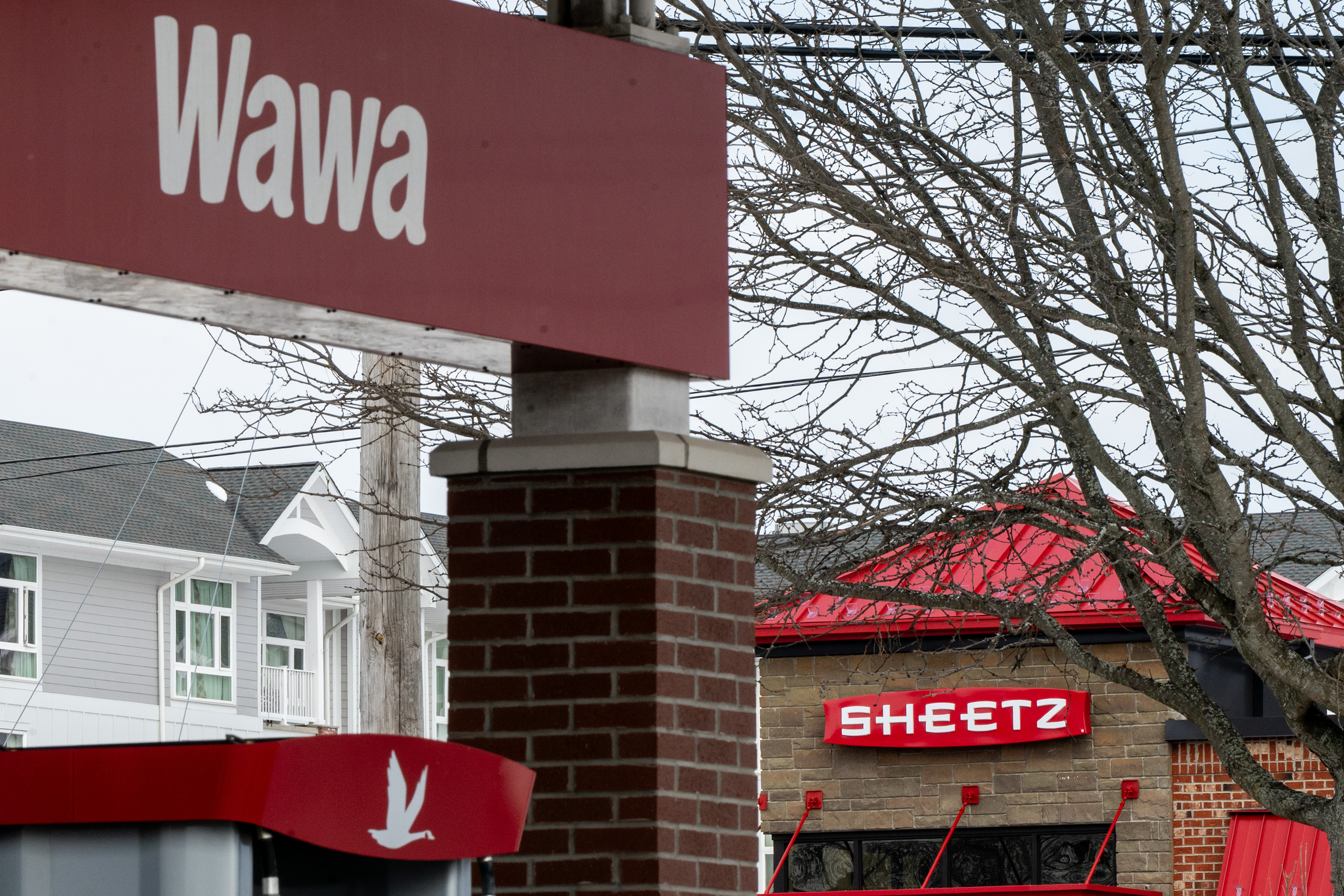
    But Wawa did gain an edge in the Northeast region — which includes Pennsylvania and New Jersey — where it narrowly beat out Sheetz for the top spot. Last year, Wawa and Sheetz tied for first place in the region. In the latest survey, Sheetz tied BP and Shell for second place in the area.

    Nationwide, Delaware County-based Wawa, Altoona-based Sheetz, and Oklahoma-based Quiktrip tied for second place in the third-annual American Customer Satisfaction Index (ACSI) Convenience Store Study, released Tuesday.

    All three chains received a score of 80 out of 100, two points behind Meijer, the Michigan-based chain that held sole possession of the top spot. Both Wawa and Sheetz dropped two points since last year, when they also tied for second place.

    Sheetz ranked no. 1 in the Midwest, while Wawa once again claimed first place in the South, just above Sheetz, Texas-based Buc-ee’s, and Quiktrip. Wawa was the only chain to take the top spot in two regions.

    “We appreciate being included in the list and are proud of the role that Wawa and other convenience store brands play in consumers’ daily lives,” Wawa spokesperson Lori Bruce said Monday in a statement.

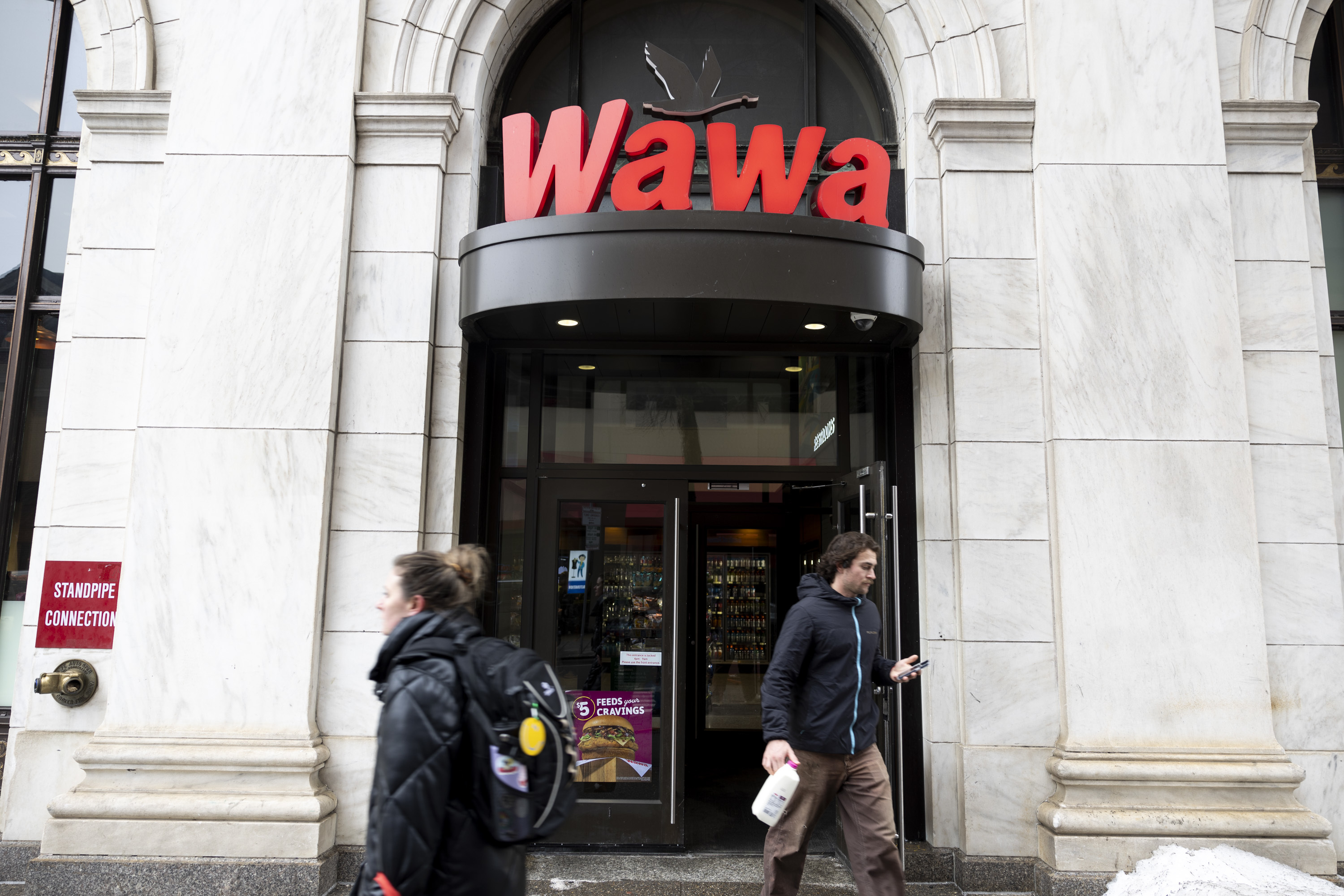
    Wawa, which has this store on Independence Mall, was the only chain to rank no. 1 in two regions in the latest ACSI Convenience Store study.Tyger Williams / Staff Photographer

    A Sheetz spokesperson did not return a request for comment on Monday.

    Among all convenience stores in 2026, the study found the average customer-satisfaction rating dropped 1% amid slight declines in mobile-app quality, as well as layout and store cleanliness.

    “Convenience stores are asking customers to do more inside the store and more on the app than ever before. Order ahead, scan loyalty cards, redeem offers, pick up food,” Forrest Morgeson, Michigan State University marketing professor and director of research emeritus at the ACSI, said in a statement. “But every new capability is a new expectation.”

    “When the app is clunky, the bathroom is neglected, or the store feels disorganized, that shapes how customers judge the entire visit,” Morgeson added. “The industry has figured out what to sell. Now the experience of buying it has to catch up.”

    Inside convenience stores, food service now accounts for more than 28% of sales and nearly 40% of gross profit, the study’s authors noted, citing industry data. And, they added, about 15% of customers picking up prepared foods at convenience stores chose to do so over stopping at a quick-service restaurant.

    Overall, fuel accounts for 65% of sales at convenience stores, according to industry data, and 39% of gross profit.

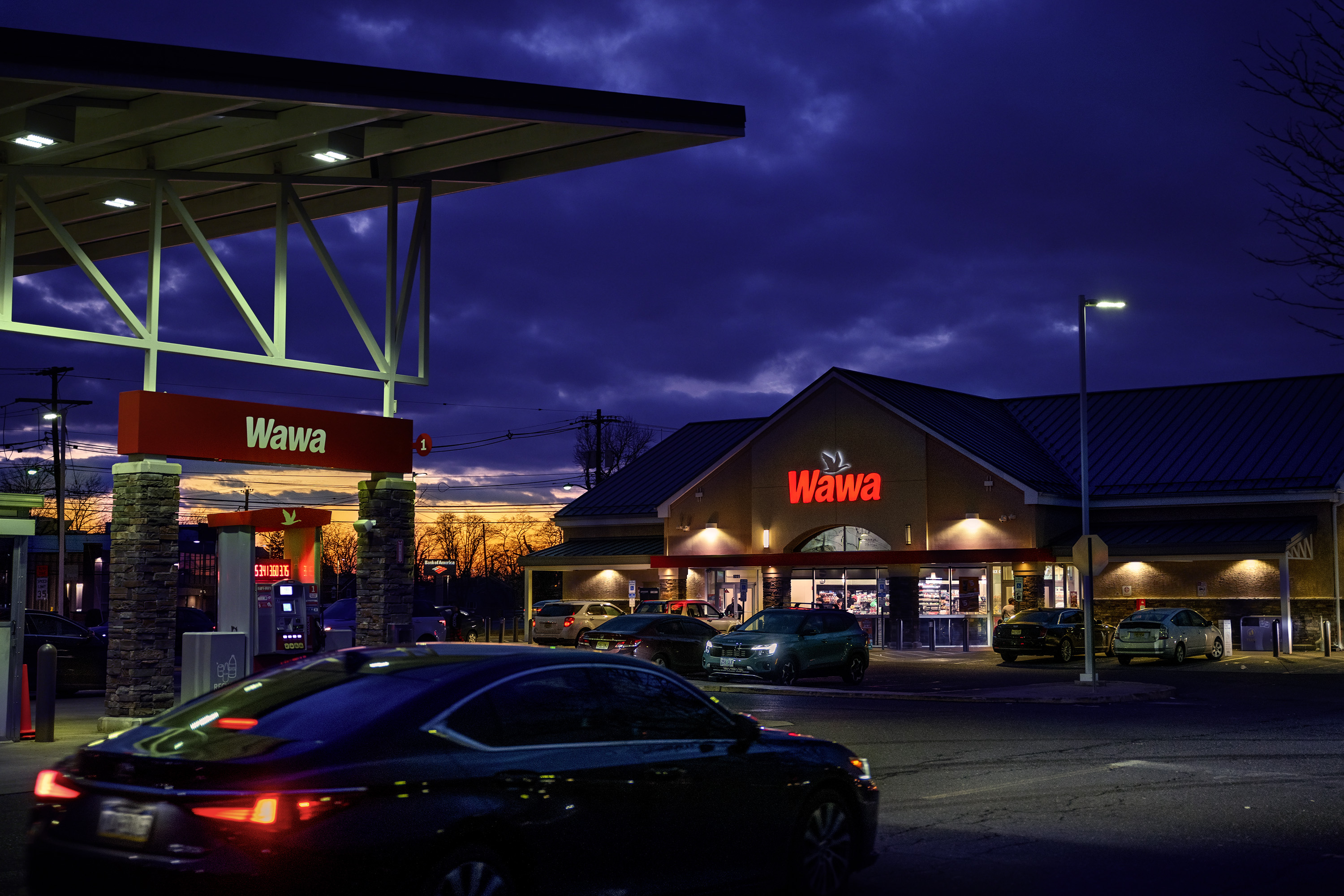
    Customers say they are drawn to chains with convenient hours. Many Wawas are open 24/7. Tom Gralish / Staff Photographer

    Consumers are drawn most to stores with accessible locations, convenient hours, dependable food and beverages, and quick service, the study found.

    Earlier this year, Wawa CEO Chris Gheysens said the homegrown company excels in all those categories.

    “For a lot of people, it’s their daily routine,” Gheysens said. “It becomes a part of their neighborhood. It’s a relationship that’s built on consistency, on trust” — and on getting customers out the door in five minutes or less, depending on the time of day.

    Wawa has about 1,200 stores in 13 states and Washington, D.C., and has expanded as far as Florida and Kentucky. Sheetz has about 800 stores in seven states.

    In Pennsylvania, the chains’ footprints — Sheetz’s in Western and central Pennsylvania and Wawa’s closer to Philly — have increasingly overlapped in recent years. Wawa opened its first central Pennsylvania location within eyesight of a Sheetz in 2024, and has since added more stores in the region.

    Sheetz opened its first Philly-area outpost in Montgomery County earlier this year, and has expressed interest in building stores in Delaware and Chester Counties.

    A customer orders at the first Philly-area Sheetz in Limerick Township, Montgomery County, in February.Tom Gralish / Staff Photographer

    The ACSI Convenience Store Study was based on 9,475 email surveys completed by a random selection of U.S. consumers between October 2025 and September 2026. Recipients were asked to evaluate their recent store experiences, as well as their perceptions of quality and value.

    Wisconsin-based Kwik Trip, which beat out Wawa and Sheetz for last year’s No. 1 spot, fell five points in this year’s survey, tying Arkansas-based Murphy USA for third place.

  • SEC plans to end limits on campaign donor practice that fed pension corruption

    SEC plans to end limits on campaign donor practice that fed pension corruption

    The Securities and Exchange Commission board plans to rescind a rule that said Wall Street money managers who gave money to state and local campaigns were barred from collecting fees for managing state and local-government dollars, for two years after they donated.

    The board, currently reduced to two members and three vacant seats, is giving Americans until Nov. 9 to comment on the proposal.

    The SEC rule, created in 2010, had special resonance in Pennsylvania, which is home to nearly one-third of the nation’s 5,000 public pension funds. Before then, private money managers had donated relentlessly to the politicians whose pension investment boards hired them.

    The proposal would end the limit on political contributions and stop requiring investment advisers to keep detailed political-contribution records.

    “The SEC is not the nation’s elections regulator,” SEC chairman Paul S. Atkins, wrote in a public letter accompanying his September proposal to ease the rule. Acknowledging the rule he wants to gut “was intended to deter fraud” by barring donors from getting paid to manage public money, Atkins wrote that the rule instead “resulted in the suppression of free speech,” pushing extra-careful firms to ban all political donations, and reducing Wall Street funding for political candidates.

    Fraud is already illegal; leave policing money managers’ influence-buying to state and local law and federal election rules, Atkins urged.

    But some money managers, including Pennsylvania fund managers, expressed concern about the scale of the federal rollback.

    The 2010 SEC rule was “an objective, preventive restraint,” to prevent corruption, Christopher Tobe, a former Kentucky state pension trustee, said in a summary of his comments to the SEC.

    By contrast, state and local antifraud laws are typically applied only “after misconduct and harm have occurred,” added Tobe, a critic of private investments in public funds, who features in the public-pension documentary Pension Fight Club.

    The first civil case brought under the SEC rule, in 2011, resulted in then-Pennsylvania Gov. Tom Corbett and Philadelphia Mayor Michael Nutter returning campaign contributions to TL Ventures. The state and city pension boards had hired this money-losing Chester County firm in a failed attempt to cash in on the dot-com boom. TL agreed to return nearly $300,000 in fees and interest, which the SEC said the firm had wrongly collected after donating to the campaigns of top state city and state officeholders.

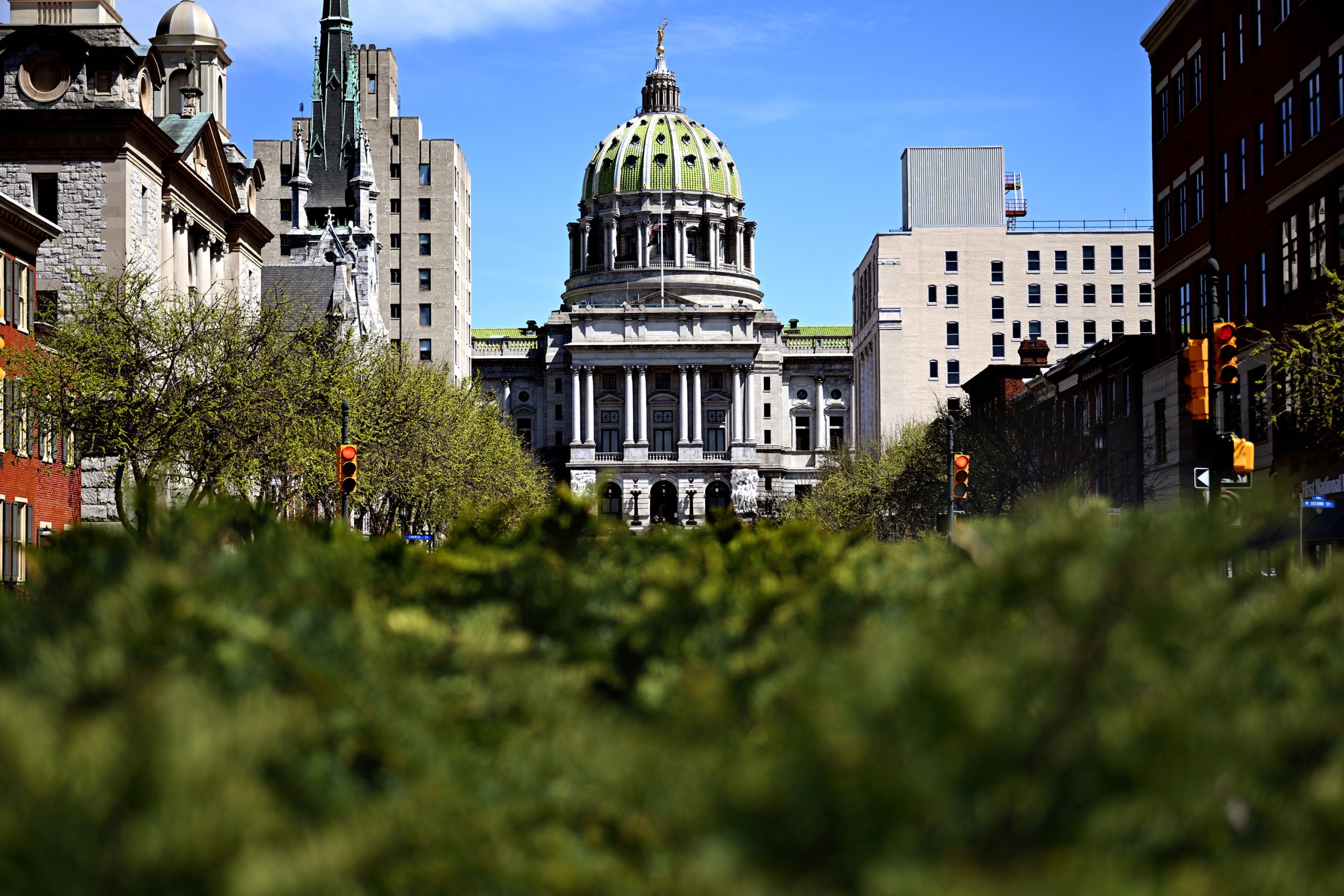
    The Pennsylvania State Capitol in Harrisburg. A rolled-back SEC rule could loosen restrictions on state-elected officials taking campaign donations from money managers who work for the government.

    Politicians were convicted over investment-firm donations

    The SEC rule limiting pay-to-play was enacted amid a string of pay-to-play scandals.

    In the late 2000s, a string of mostly Democratic state and city politicians went to prison for receiving or demanding bribes in exchange for hiring professional investors to manage public pension money. In 2010, California pension chief Fred Buenrostro and New York State Comptroller Alan Hevesi were each convicted of corruption charges for taking campaign cash from investment contractors, and sentenced to prison.

    The political contributors cited in Buenrostro’s case, portrayed by prosecutors as victims of public officials’ extortion, included Apollo Global Management. Apollo was then headed by Leon Black, who later lost the job over his relationship with disgraced financier and sex offender Jeffrey Epstein. Apollo is now the largest private-equity fund and its clients include Pennsylvania’s state pension funds.

    In Pennsylvania, elected state treasurers Rob McCord in 2015 and Barbara Hafer in 2017 pleaded guilty to criminal violations related to their handling of campaign contributions from money managers.

    McCord, who had been a tireless political fundraiser for governors and his own campaigns, was sentenced to federal prison; he was released early. He didn’t return calls seeking comment.

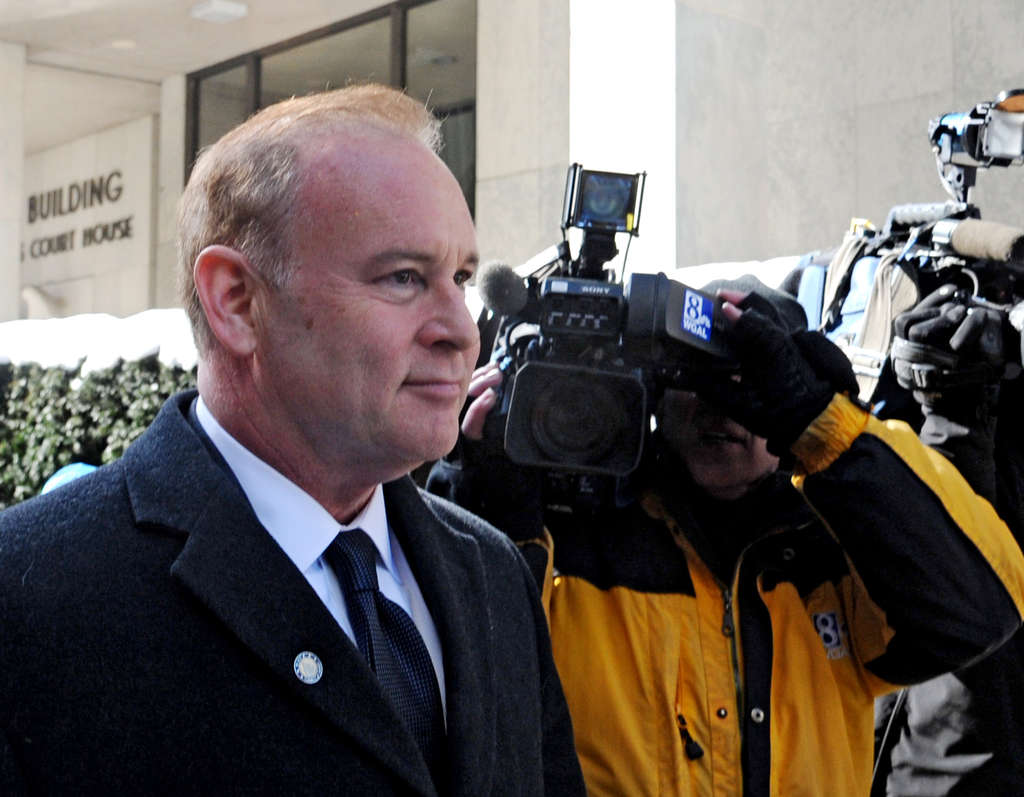
    Rob McCord, former state treasurer, leaves Federal Court in Harrisburg after pleading guilty to two counts of attempted extortion of an investor seeking contracts to manage state funds, in 2015. CLEM MURRAY / File Photograph

    Hafer, who got probation and a fine, died last year.

    Prior to the SEC rule, it was a common practice for money managers to fund Pennsylvania campaigns for governor, treasurer, and legislators. “Not only do they give me money, I hope they vote for me,” Hafer told The Inquirer in 2002.

    Political contributions continued

    Still, the rule didn’t stop political contributions altogether.

    On Sept. 14, 2020, the state officials, teachers’ union local officers, and school board reps who formed the state school pension (PSERS) board met in secret to approve a $100 million investment. The target, code-named Project Newton, was a proposal by Pittsburgh tycoon and Steelers co-owner Thomas Tull.

    Two days later, The Inquirer reported, Tull gave $711,000 to campaign funds backing Joe Biden, who was running for president, and $750,000 to a national super PAC for U.S. Senate Republicans. “There is no connection,” Tull said of the timing, so soon after the state’s secret investment. That investment, in hospital-wear maker Figs, later proved profitable.

    Indeed, the SEC rule didn’t stop investment managers from donating to national politicians or even out-of-state races.

    Still, Tull and national Democrats promised to recover $10,000 of Tull’s money after The Inquirer noted that those funds had been passed to Pennsylvania Democrats, whose leaders included pension board members. The SEC filed no complaint.

    What money managers say

    “I thought the rule had it right,” said Michael DiPiano, founder of NewSpring Capital, a $3.5 billion private investment fund group in Radnor, whose clients have included the Pennsylvania state and New York City pension funds.

    “Limiting or eliminating pay-to-play took donor pressure off of [private-investment fund managers] and leveled the playing field,” so larger firms that could afford the biggest donations wouldn’t crowd out smaller firms, DiPiano said.

    “Tighter pay-to-play restrictions should lead to a more objective-based approach” for picking money managers, he added.

    Richard Vague, the former banker and Pennsylvania Secretary of Banking who chairs the PSERS pension board, says SEC limits might fairly be eased in some details but “an outright rescinding goes far beyond.”

    The rule came after Wall Street “corruption” was exposed in the late 2000s, with the pension fraud cases, he noted. “Protective regulations, laws, and other safeguards get put in place in the aftermath of a major crisis,” Vague added.

    It’s not surprising that money managers and their Washington allies chip away at those rules, but with too much trimming, “those safeguards largely disappear,” Vague concluded.

    “That makes a subsequent crisis all the more likely.”

  • Chester County has more measles cases than most entire states in the country

    Chester County has more measles cases than most entire states in the country

    In late June, Chester County reported two cases of measles, as an outbreak in bordering Lancaster County crossed into the farmlands that blend into the suburban sprawl of Philadelphia’s collar communities.

    Case numbers grew tenfold in July, and by late August, three dozen people had gotten sick up and down the county’s western border.

    The latest numbers now show 83 measles cases in Chester County, more than most entire states have seen all year, making it a locus in Pennsylvania’s largest measles outbreak in more than three decades.

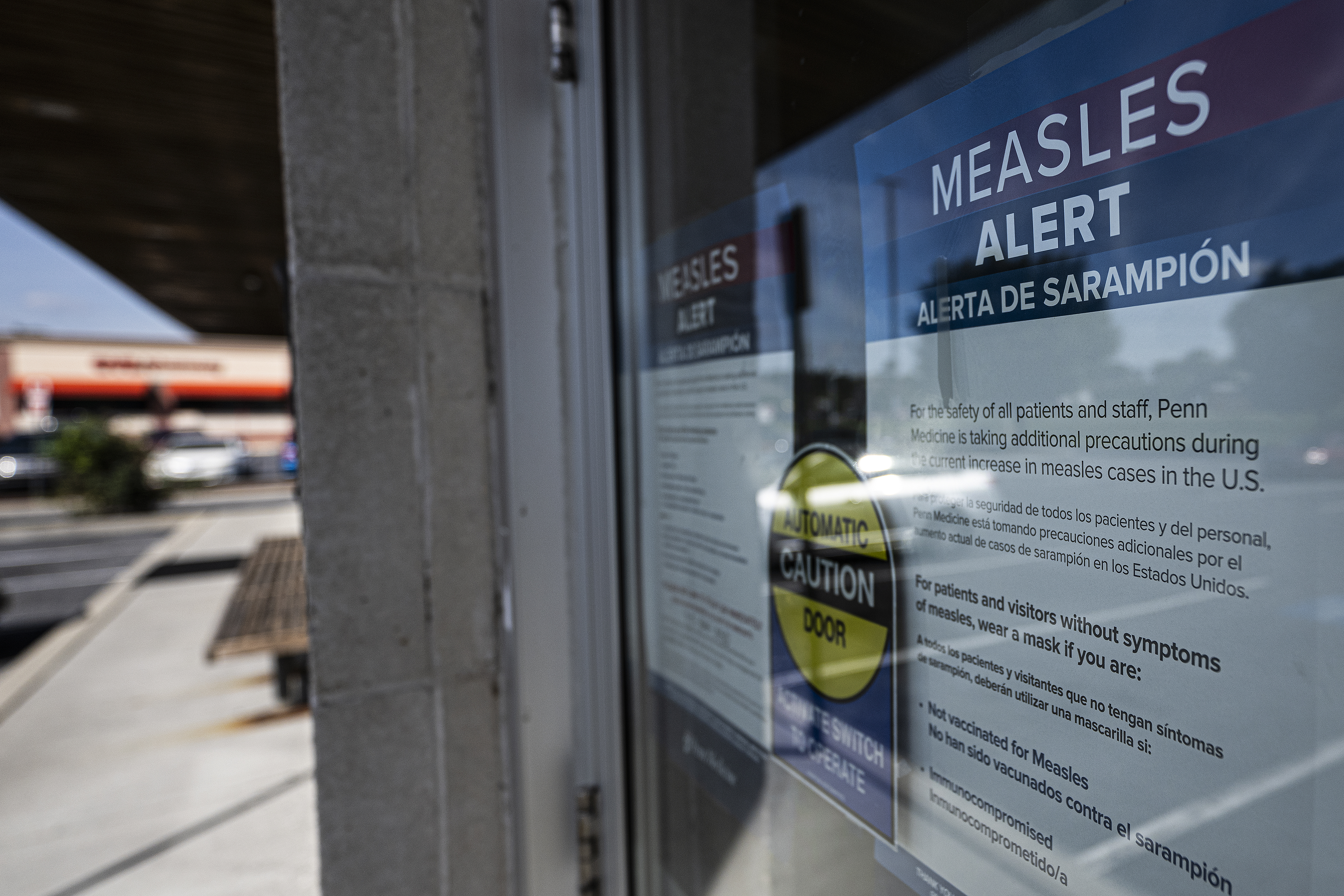
    Chester is the first county in the Philadelphia region to grapple with wide circulation of a highly contagious virus that could spread like wildfire if it reaches other under-vaccinated communities, especially densely populated ones closer to the city.

    As cases rise in Chester County, public health officials are ramping up educational outreach, scheduling pop-up clinics, and even bringing doses of the vaccine to people’s homes, all in an effort to contain known hot spots in the outbreak.

    At Chester County’s schools, homecoming parades, and grocery stores, many families say they are aware of the outbreak, but are not deeply concerned. Those who are vaccinated worry more that their social and school lives may be disrupted, as they were during the COVID-19 pandemic, if the virus continues to spread.

    Anne Nemeth, who lives in Paradise in Lancaster County, feels only a little worried, given that her two sons are vaccinated.

    At a time of declining vaccination rates, she isn’t sure whether some of her closest neighbors, who the family regularly gets together with, are vaccinated.

    They are Amish, and she has read that many of the people getting sick in her area were part of the Plain community. Two Amish infants in Lancaster County died in August after contracting measles in the state’s first deaths linked to the outbreak.

    “I’m hoping they would tell us if they were sick,” she said. “It’s a lot of trust.”

    Pennsylvania has reported five deaths associated with measles. A 20-year-old Amish woman who died lived just over the Chester border in Lancaster County. She wanted the vaccine after her parents and eight siblings got sick, but couldn’t get it because she was being treated for leukemia.

    Close to 1,000 people statewide have been sickened by the virus, marking one of the most robust outbreaks the United States has seen in years. And experts say the cases that have been reported are likely an undercount, as many people do not seek medical care for their symptoms and some have been reluctant to speak with the health department.

    “Public health is now in a race with the disease,” said Dale Weiser, the clinical services supervisor for Chester County’s health department. “It’s going to either burn through all the susceptible people, or we’re going to make fewer people susceptible through vaccination. That’s the only way it ends.”

    (function(){function e(){window.addEventListener(`message`,function(e){if(e.data[`datawrapper-height`]!==void 0){var t=document.querySelectorAll(`iframe`);for(var n in e.data[`datawrapper-height`])for(var r=0,i;i=t[r];r++)if(i.contentWindow===e.source){var a=e.data[`datawrapper-height`][n]+`px`;i.style.height=a}}})}e()})();

    Measles spreads in Chester County

    Measles is so contagious that nine out of 10 unvaccinated individuals who come in contact with the disease will get sick.

    That’s how a county like Chester, with one of the highest vaccination rates in the state, has also come to log the third-most cases in the outbreak.

    Chester County’s kindergarten measles vaccination rate falls just below the 95% threshold that scientists say is necessary to keep the virus from spreading widely. Kindergarten vaccination offers a view into a community’s protection because the vaccines are required for school attendance.

    But the county — like the rest of the Philadelphia region — is pockmarked with areas where vaccination has dropped well below the so-called herd immunity threshold, leaving families vulnerable to severe illness.

    In eastern Chester County, for instance, five elementary schools in West Chester had kindergarten measles vaccination rates below 95% — one of the vulnerable areas in the region identified by an Inquirer analysis of 2025-26 school-level data.

    Farther east, Chester City in Delaware County, and neighborhoods in West and North Philadelphia have also similarly seen measles vaccination rates drop below so-called herd immunity.

    In Chester County, the health department seeks to limit the virus from spreading from west to east across the county, where it would reach more densely populated communities, said Jeanne Franklin, Chester County’s health director.

    “If it finds that pocket of unvaccinated individuals, it’s going to popcorn until it finds no one left,” Franklin said.

    (function(){function e(){window.addEventListener(`message`,function(e){if(e.data[`datawrapper-height`]!==void 0){var t=document.querySelectorAll(`iframe`);for(var n in e.data[`datawrapper-height`])for(var r=0,i;i=t[r];r++)if(i.contentWindow===e.source){var a=e.data[`datawrapper-height`][n]+`px`;i.style.height=a}}})}e()})();

    The health department began reaching out to hospitals and schools months before Chester County reported its first cases, because public health leaders knew it was likely only a matter of time before the virus spread from Lancaster County, Franklin said.

    Hospitals were asked to develop a measles screening protocol, if they didn’t have it already, so that early symptoms, such as fever, cough, and runny nose, wouldn’t be dismissed as seasonal illnesses.

    Schools were urged to start tracking vaccine status among staff. When a school identifies a measles case, the county requires any student or staff member who is unvaccinated or does not have proof of vaccination to stay home for 21 days, Franklin said. Since many adults don’t have their vaccination records handy, that could create a major staffing disruption.

    As case counts in Chester County grow, pop-up vaccine clinics have been scheduled across the county.

    The health department has administered more than 500 doses of the measles, mumps, and rubella (MMR) vaccine so far this year, most of them since the outbreak began in April.

    The health department’s nurses will bring doses of the vaccine to homes and farms of residents who don’t travel. Vaccines are also available at the county’s health clinics.

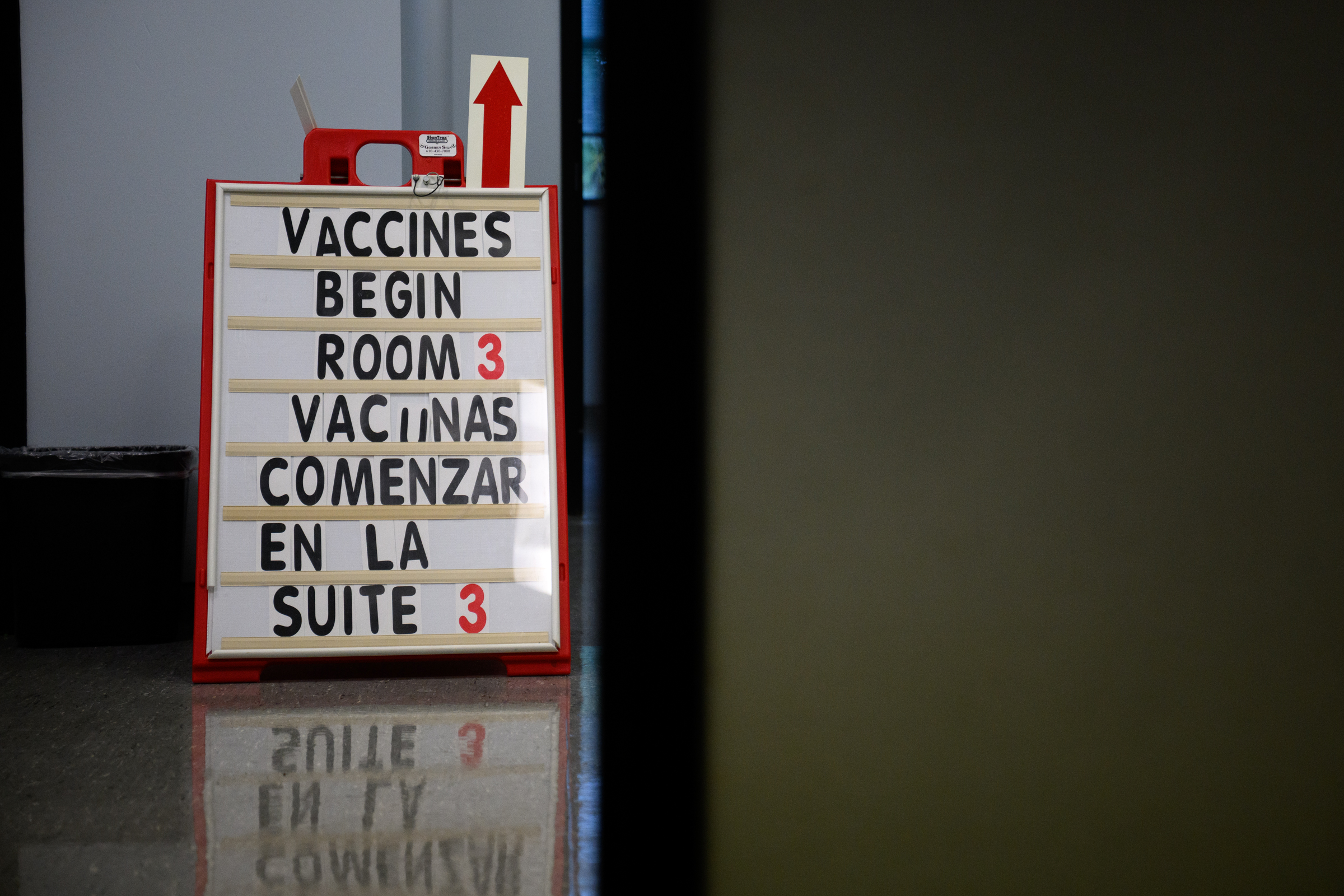
    A sign for vaccinations directs visitors at the Chester County Health Department in West Chester.Kriston Jae Bethel / For the Inquirer

    Debunking vaccine myths

    Many of the parents lined up along Atglen’s Main Street last week for the local school district’s homecoming parade said they did not feel a reason to be deeply concerned about the outbreak because their families are vaccinated.

    “I guess I have the same level of concern as I have for all sickness with kids in public schools,” said Sandi Wrigley, a Cochranville mother whose children, ages 9 and 11, are vaccinated. “If we take the time to worry about that, it’ll be an endless worry.”

    Until recently, measles was considered eradicated in the United States, and despite declining vaccination rates, most families are still choosing to vaccinate their children.

    Some were angry that measles is even a conversation.

    Michael Lavender, from Parkesburg, said vaccinating his 12-year-old daughter was an “easy decision.”

    “I really feel like there should be no reason to even talk about it,” he said.

    On the other side of the county, families lined up inside the Great Valley Middle School gymnasium in Malvern for flu and COVID-19 vaccines.

    Kevin Wrabley, of Malvern, doesn’t worry about his 11-year-old son contracting measles because he is vaccinated. But he does worry about other children and adults who aren’t able to get vaccinated.

    “It’s discouraging, things we thought were safely behind us are coming back,” he said.

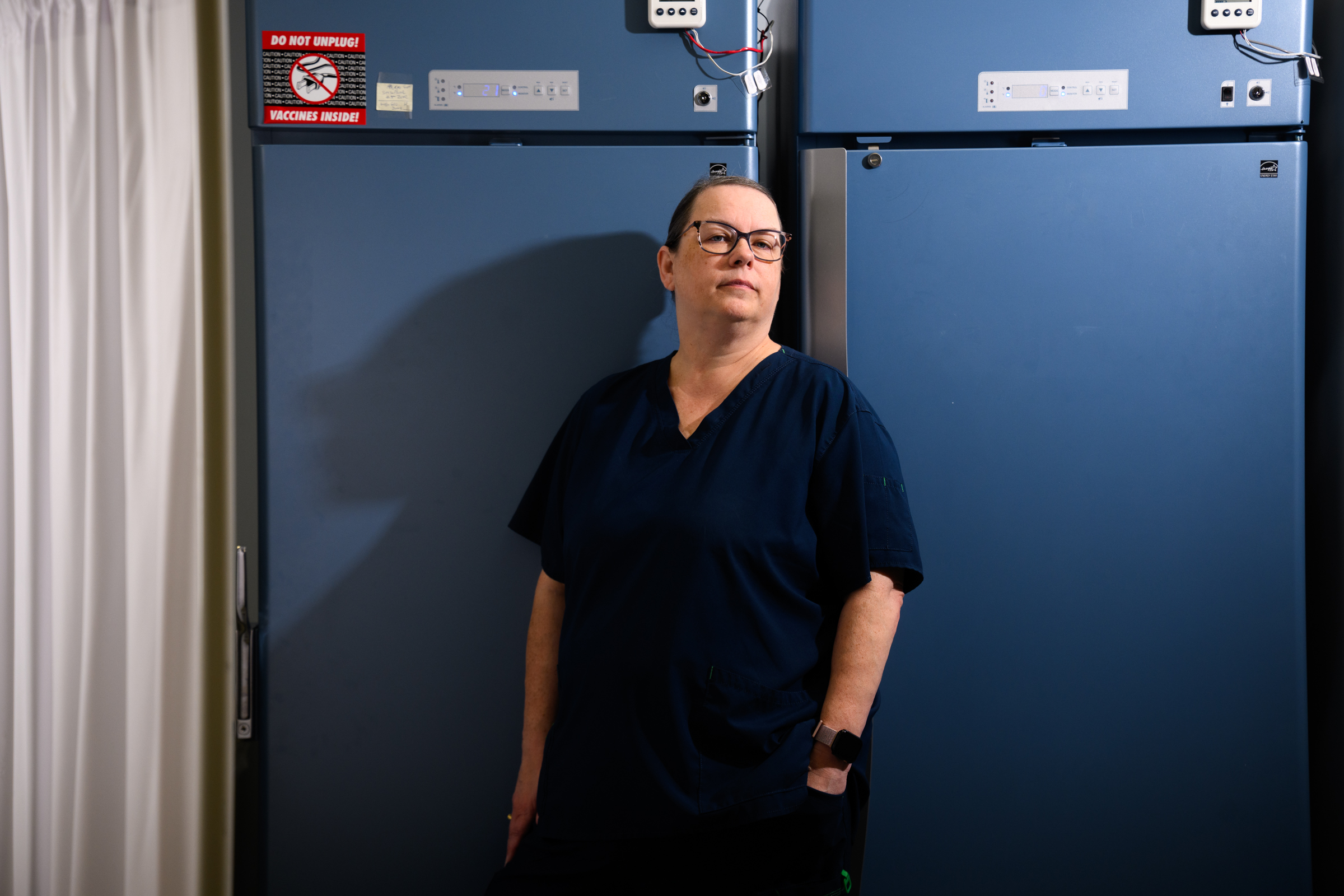
    Dale Weiser, clinical services supervisor at the Chester County Health Department, stands in front of freezers storing vaccines at the department’s office in West Chester.Kriston Jae Bethel / For the Inquirer

    In Chester County, public health educators have the task of trying to untangle the myriad reasons people are opting out of a vaccination. Many have little to do with science: Two doses of the measles vaccine provide 97% protection — better than most vaccines.

    The MMR vaccine is among those long required to attend school in Pennsylvania and every other state. But families here have increasingly been deciding against vaccination for religious and philosophical reasons, as state law permits, often by simply printing and signing a form noting their objection.

    Some fluctuations in kindergarten vaccination rates are typical from year to year, but the rise of anti-vaccine rhetoric in federal leadership and a growing distrust in public health authorities has exacerbated fears about vaccination.

    On measles awareness flyers posted on social media and in public spaces, Chester County advertises its public health hotline, where people can call to talk to a nurse. Weiser and her colleagues work to dispel worries from callers over misinformation that the vaccine contains tracking chips, heavy metals, and can cause people to become sterile.

    Some call back multiple times, with new questions. Weiser answers them all, without judgment and without pushing people to get vaccinated.

    “We have a way to prevent this,” Weiser said. “There is no reason that any child, adolescent or adult in this country should be suffering with measles.”

    Personalized measles outreach

    Standard public health messaging — get vaccinated to protect yourself and your family — may not resonate in the area’s rural farming communities that overlap with Lancaster County.

    The area has a large concentration of Amish and Mennonite families who are not necessarily opposed to vaccines, but have gone without most traditional medicine for generations.

    Anabaptist religions emphasize self-sacrifice for the betterment of others, said Kevin Ressler, CEO of Alliance for Health Equity, a healthcare nonprofit in Chester County.

    Instead of vaccinating, families may isolate themselves at the earliest signs of illness to keep anyone else from getting sick, said Ressler, who is Mennonite and has served as a pastor.

    Outside New Holland, Gina King self-quarantined when she and her eight children got sick with measles in June. King was vaccinated, but she and her husband chose not to vaccinate the children.

    Her 14-year-old son was briefly hospitalized for breathing difficulty, but he and his siblings all recovered. King, who spoke with The Inquirer in July, later drafted a tip sheet for other families in her Plain community based on their experience, such as stocking up on groceries to avoid going out in the community while contagious.

    “If you made the choice to not vaccinate, you knew there was a risk of getting sick,” King wrote. “We should care about others enough to be willing to make some sacrifices to protect vulnerable people.”

    Ressler thinks public health messaging may need to be more direct: You are hurting other people by not getting vaccinated.

    Measles symptoms may not develop for days or even weeks after exposure, meaning many more people could be exposed before a family decides to quarantine.

    Public health nurses say they have had the most success with face-to-face conversations, at people’s homes.

    Nurses employed by Chester County and local nonprofit organizations often take doses of the MMR vaccine directly to people’s homes in rural parts of the region. Kriston Jae Bethel / For the Inquirer

    Over the last 15 years, Union Community Care, a public health nonprofit in Lancaster County, has developed a route for its mobile clinic with stops at homes, farms, and churches through Lancaster and western Chester Counties.

    The program’s nurse practitioner diagnoses earaches and eye infections, gives general physicals, and can administer vaccines.

    The program, called Plain Healthy, depends on hard-earned trust that the nurse will come every 10 days for anyone who needs help. It has spread by word of mouth, adding several more stops in Chester County since the outbreak began, said Alisa Jones, CEO of Union Community Care.

    “The most important thing is it is community led,” Jones said. “We are invited to these homes and farms. We do not invite ourselves.”

  • Joining the Eagles parking lot ‘church’ at 3 a.m. | Mike Newall

    Joining the Eagles parking lot ‘church’ at 3 a.m. | Mike Newall

    Every Sunday, Mike Newall brings you a preview of the big stories defining Philly this week and an inside look at how we got there.

    Big Carm couldn’t believe it. It wasn’t even 3:30 a.m., and already the Lincoln Financial Field parking guys were already giving Green Beard grief.

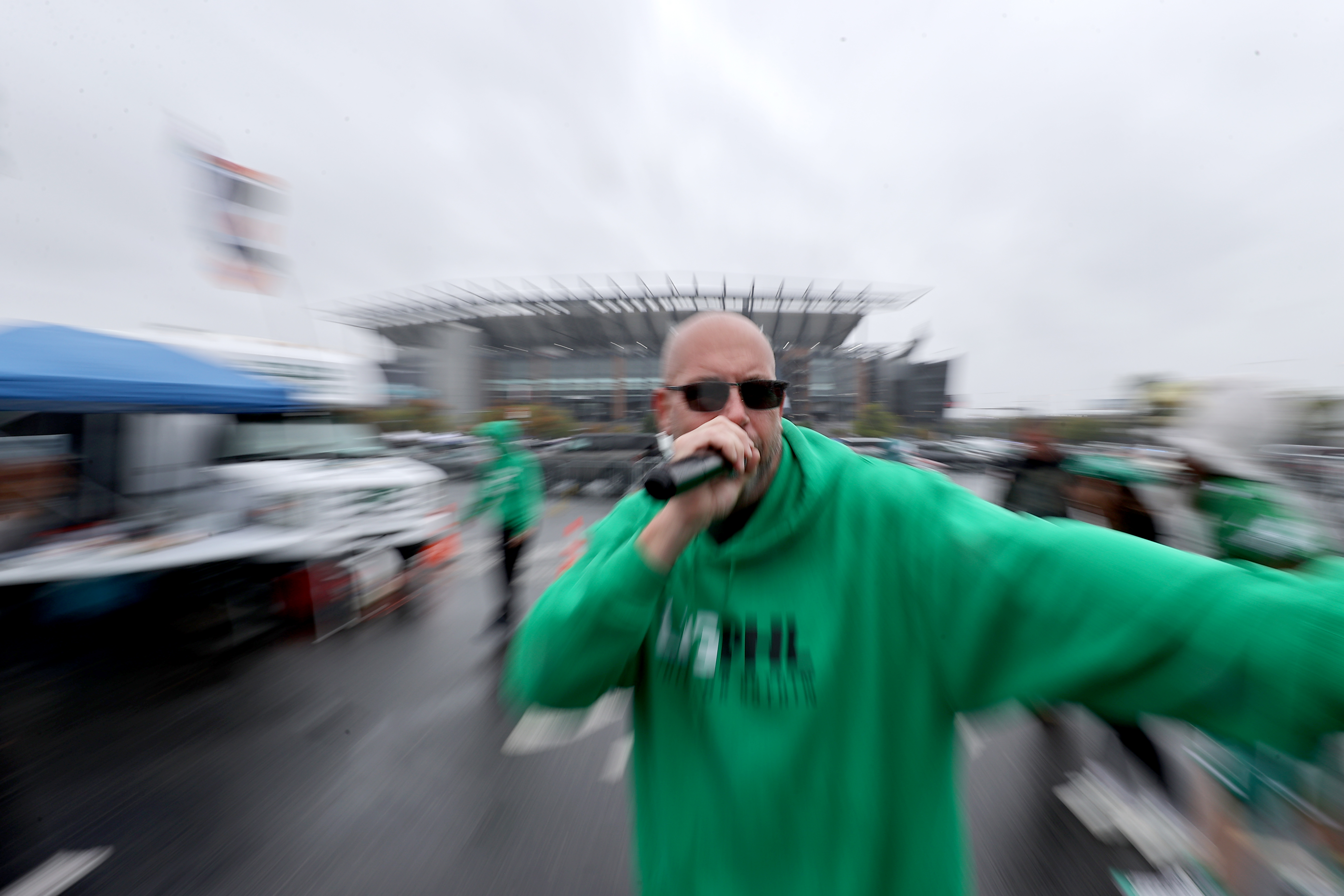
    Ten hours before kickoff today, Carmen “Big Carm” Conti was taking his responsibilities as president of the newly-formed Philadelphia Association of Tailgaters as serious as fourth and inches in the Super Bowl.

    If you haven’t been following the drama in Parking Lot F, my colleagues Ariel Simpson and Conor Smith have the play by play. In short, longtime tailgaters fumed last month when Comcast Spectator and Sports Complex parking management officials announced new restrictions and extra parking fees for oversized vehicles and said tailgaters could no longer play savesies with their favorite spots in key lots. The new rules were set for Sunday’s home game against the Rams. It was all for traffic flow and safety, the team explained.

    Philadelphia tailgating culture is doomed, tailgaters argued. By limiting space and directing tailgaters to new space, the rules would threaten larger tailgate bashes like Conti’s, which have become a gameday staple.

    Conti, 48, a DJ and dad of four from Washington Township, and a longtime tailgater who organizes a regular 100-person gameday bash, recognized his moment, and met it.

    “Our goal is to get a seat at the table where tailgating is discussed,” Conti wrote in a Sept. 22 Facebook post. By last week, the tailgaters had an attorney, official letterhead, and a closed-door meeting with stadium bigwigs.

    On Friday, Comcast Spectator buckled, announcing concessions and promising more during a joint stadium press conference. Flanked at the podium by Comcast Spectacor chief operating officer Phil Laws and Swoop the Eagles mascot, Conti wore a giant, dangling, custom-made Acrylic Eagles necklace. He sported a game-winning grin.

    Sunday would be the test, he said.

    I had to see for myself.

    Forgoing his usual 3 a.m. stadium setup time, Conti camped out overnight in his Eagles-logo wrapped Dodge. First in line, as always. 11th Street was eerily quiet. Crickets. Opossums the size of poodles. And a growing line of antsy tailgaters.

    Big Carm’s tailgating dream had grown from few friends into a pregame happening with rotating DJs, pop-up bars, sponsors, and visitors from all over.

    He wrote about all of it in a 42-page fan memoir he self-published, entitled, The Ultimate Fan Experience: Big Carm’s Tailgate.

    “It’s not just food and drinks — its identity,” he wrote.

    The parking lot is essentially church for them. And Comcast Spectator is playing fast and loose with that sacred space. What I find so charming about Conti is that his devotion seems rooted in a basic tenet of Philadelphia pride: an utter and total refusal to see ourselves the way mostly everyone else sees us. The world may see brutes in green. But Big Carm and his crew are proud of the welcoming subculture they’ve created. Comcast should be too.

    “I call it a neighborhood,” Conti said, of his tailgating community.

    There in the darkness, his phone lit up. A text from Green Beard, who had parked his SUV trailing a custom smoker further down 11th Street. He was preparing a pork belly breakfast for his fellow tailgaters, when a parking lot official in a golf cart told him under the new rules he would have to move.

    “I’m just telling you,” the parking lot official said, before eventually relenting.

    Conti had come prepared, with a motorized scooter he could ride to monitor stadium lots for emergencies like this. He excused himself and scooted into the darkness to help his pal Green Beard. He had tailgaters who needed him.

    At 6 a.m., the gates finally opened. Things went slower than usual. And there were some rough patches that would need to be addressed with the team this week, ahead of the Eagles next Oct. 18 home game, Conti would tell me later Sunday morning.

    “Not happy, but content,” he said. But the tailgaters survived.

    Data deep dive

    With the state likely to surpass 1000 cases next week — and a fifth confirmed measles-associated death — Pennsylvania has the largest measles outbreak in the United States. And officials believe cases are likely being undercounted. Inquirer health reporter Aubrey Whelan has been all over the outbreak since the first cases hit Lancaster County this winter and then began surging in Chester County this summer. Here’s what to know, in her words:

    • This is the state’s biggest measles outbreak since 1991 — and certainly the deadliest.
    • Measles is an extraordinarily contagious disease. Nine out of 10 people who are unvaccinated and exposed to it will get it. So scientists say you have to vaccinate at least 95% of the population to prevent it from spreading.
    • Measles was effectively eradicated in the U.S. in 2000 because of herd immunity. Now large amounts of people are not vaccinated in certain communities. Public health experts will say it’s because vaccination rates are declining across Pennsylvania.
    • More parents are opting to forgo vaccinations for religious and philosophical reasons — and that’s really easy to do in Pennsylvania.
    • There are pockets of vulnerability in Pennsylvania. There are measles outbreaks elsewhere in the country. But we are ground zero.

    (function(){function e(){window.addEventListener(`message`,function(e){if(e.data[`datawrapper-height`]!==void 0){var t=document.querySelectorAll(`iframe`);for(var n in e.data[`datawrapper-height`])for(var r=0,i;i=t[r];r++)if(i.contentWindow===e.source){var a=e.data[`datawrapper-height`][n]+`px`;i.style.height=a}}})}e()})();

    The state has been setting up vaccination clinics in hard hit areas — and health providers are giving out more shots than usual. Parents in the Philly area should talk to their providers about their recommendations on how to protect their children, Whelan advises.

    The state is encouraging parents to vaccinate infants as young as six months in affected counties and to speed up vaccines for older kids. The Inquirer also has a handy database where you can look up vaccination rates at your children’s schools — and better understand vaccine coverage in your community.

    A look ahead

  • Josh Shapiro will be in Bucks County this weekend to campaign for Democrats in key races

    Josh Shapiro will be in Bucks County this weekend to campaign for Democrats in key races

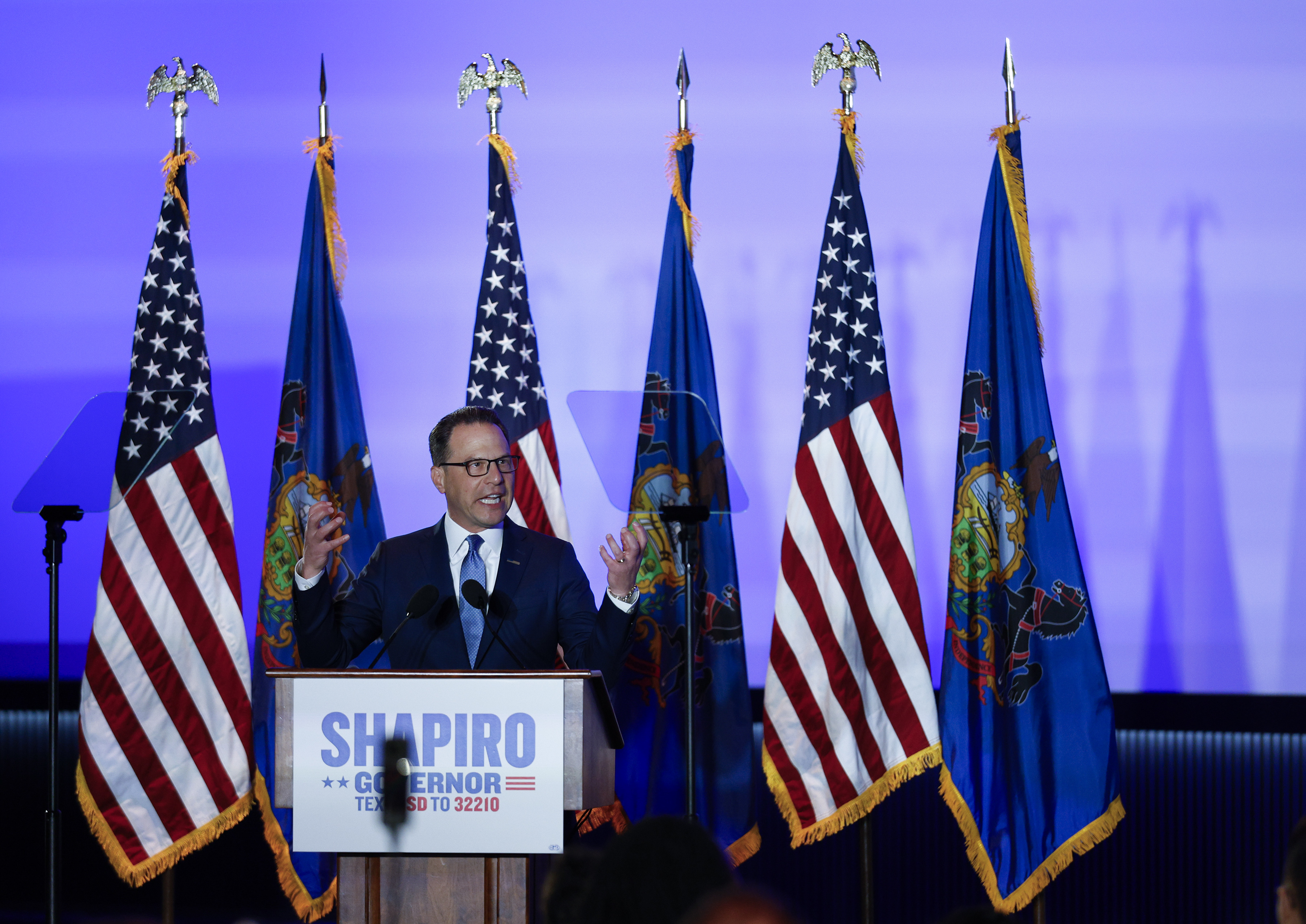
    Gov. Josh Shapiro will be in Bucks County on Saturday to campaign for Democrats up and down the ballot in the key swing county.

    Shapiro, who kicked off Democrats’ general election campaigns at a space centrifuge in Warminster this past spring, is returning to Bucks, emphasizing the important role that the perennially purple county will play in November’s midterms with competitive contests for Congress and state Senate on the ballot.

    The governor will appear at a canvass launch in Langhorne organized by Planned Parenthood PA PAC, the organization’s state-level political action committee. The PAC has endorsed Bucks County Democrat Eileen Hartnett Albillar, who is running for state Senate in the 6th District, a crucial seat for the party, and state House candidates Bryan Allen, Kristin Egan, and Monica Weninger.

    Shapiro will also appear alongside Democratic County Commissioner Bob Harvie, who is challenging GOP U.S. Rep. Brian Fitzpatrick in the Bucks-based 1st Congressional District — one of four seats in the state being targeted by both parties. Harvie is endorsed by Shapiro and Planned Parenthood’s federal PAC.

    Democratic U.S. Reps. Madeleine Dean, of Montgomery County, and Mary Gay Scanlon, of Delaware County, will also be in attendance.

    Democrats are hoping to win control of the state Senate — which they haven’t had for 33 years. The GOP currently holds 27 seats in the 50-member state Senate.

    To take control of the chamber with the lieutenant governor’s tie-breaking vote, Democrats would need to flip at least two seats and maintain control of the governor’s office. With a trifecta in Harrisburg, Democrats hope to advance legislation on issues that haven’t gained support in the Republican-controlled Senate, like codifying abortion protections.

    The Shapiro-endorsed candidates have an opportunity, if successful in November, to give Democrats more governing power, whether that’s winning party control in the U.S. House, the state Senate, or giving Democrats an expanded majority in the state’s lower chamber.

    Shapiro is running for a second term as governor, but he’s spending much of his time using his political prowess to bolster other Democrats ahead of the midterms. Recently, he was in Philadelphia with Democratic Michigan Gov. Gretchen Whitmer to energize volunteers. Earlier this month, he was in Montgomery and Chester Counties campaigning for down-ballot candidates.

    Shapiro has invested more than $5.7 million in the state party since fall 2025, his campaign said last month.

    Gov. Josh Shapiro poses with Democratic Pa. Senate candidate Chris Thomas (left) and his supporters after a rally in Towamencin, Montgomery County before heading out to canvass Sunday, Sept. 29, 2026.Tom Gralish / Staff Photographer

    In July, he launched an effort — “Rise Up Pennsylvania” — that is aimed at pooling donations to fund campaign resources for key state Senate and U.S. congressional races.

    Abortion protections remain a key piece of the party’s platform, even as Democrats have refocused their messaging on affordability ahead of November.

    “Bucks County will be critical to building a pro–sexual and reproductive health care trifecta in Pennsylvania,” Signe Espinoza, executive director of Planned Parenthood PA PAC, said in a statement Friday.

    “We endorsed these candidates because we know they will stand up to fight to protect every Pennsylvanian’s freedom to make their own decisions about their body, health and future.”

  • The second Delco 10 Miler is bigger than last year and will close some county roads. Here’s what to know.

    The second Delco 10 Miler is bigger than last year and will close some county roads. Here’s what to know.

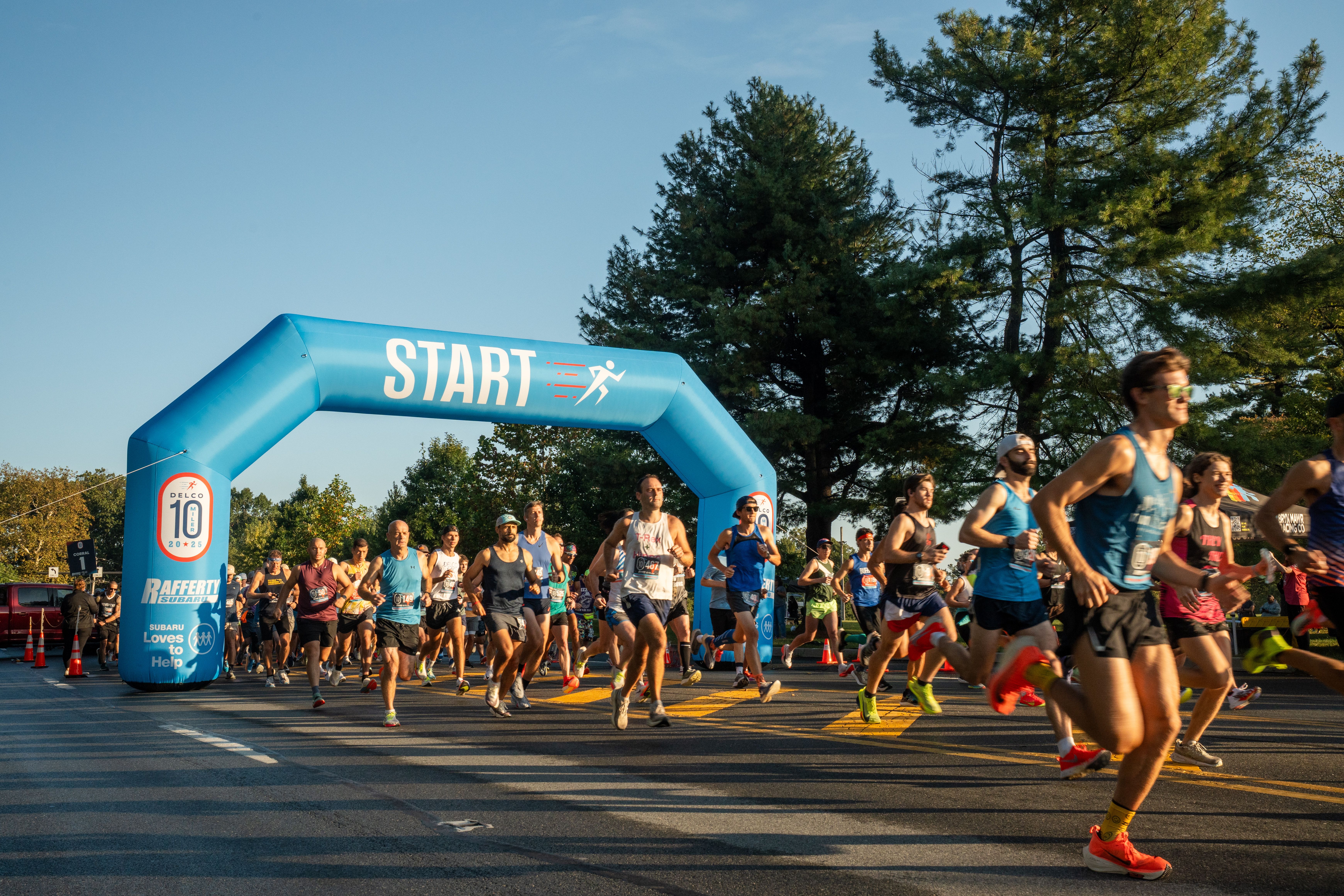
    The Delco 10 Miler will take off again Sunday, cutting a partially different path across the county that organizers hope is safer, more driver-friendly, and more fun for participants.

    In addition to a new course, the race will host up to 2,500 runners, up from 1,200 last year, and benefit some new groups in the community.

    Here’s what to know about the second Delco 10 Miler.

    The Delco 10 Miler’s new course

    Last year’s race followed a mostly straight line down Providence Road from Rose Tree Park before taking a few turns on Widener University’s campus, crossing I-95, and then carrying on through Chester toward Subaru Park.

    The start and end are the same this year, but organizers made a few improvements. Runners will turn off Providence Road at West Rose Valley Road and take a few turns through neighborhoods in Nether Providence. There, the route will meet up with its original course on Widener’s campus.

    This change will free up more of Providence Road to drivers and will make it easier for parishioners to attend church services along the route. It is also more runner-friendly, said Diana Shacklock, director of special projects at Visit Delco, the race’s organizer.

    Last year’s course brought runners to a spot where they could see the finish line, but made them run several blocks past it before looping back, Shacklock said. Some runners commented on it after the race, so the loop was eliminated.

    “It is no longer an ugly finish,” race director Kevin Nolan said.

    (function() {
    var l2 = function() {
    new pym.Parent(‘delco_10_miler_2026’,
    ‘https://media.inquirer.com/storage/inquirer/projects/innovation/arcgis_iframe/delco_10_miler_2026.html’);
    };
    if (typeof(pym) === ‘undefined’) {
    var h = document.getElementsByTagName(‘head’)[0],
    s = document.createElement(‘script’);
    s.type = ‘text/javascript’;
    s.src = ‘https://pym.nprapps.org/pym.v1.min.js’;
    s.onload = l2;
    h.appendChild(s);
    } else {
    l2();
    }
    })();

    Road closures for the race

    Roads along the route will be closed between 7:30 and 10 a.m. Police will have rolling openings and closings, meaning some roads will be open before runners reach that part of the course and after they pass.

    The ramps from the Route 1 Media Bypass to Providence Road/Route 252 will be closed at 7:30 a.m.

    Organizers asked for patience and recommended planning ahead if you need to travel along the route.

    What runners need to know

    Organizers recommend parking at Subaru Park lot G before the race and taking the shuttle from Subaru Park to the starting line. Shuttles run between 5:30 and 6:30 a.m. Runners can also be dropped off at Springton Lake Middle School near the starting line, but any cars left there will be ticketed and towed, Shacklock said.

    Runners can stow their items in mobile lockers, which will be delivered to the finish line. Unwanted clothing can be donated.

    The first group of runners will take off at 8 a.m. and the rest will be staggered over three- to five-minute intervals. Runners pushing wheelchairs will be able to leave a few minutes before the first corral.

    Runners will be treated to refreshments from Delco Steaks and 2SP Brewing at the finish line.

    What groups are partnering with the Delco 10 Miler this year?

    The race will benefit the HEADstrong Foundation, the Riddle HealthCare Foundation, Mercy Fitzgerald Hospital, the Greenhouse Project, and Delco Volunteers.

    Delco Volunteers was created as an effort to give back during America’s 250th, and funding from the race is intended to help the group continue beyond 2026, organizers said.

    There will be a simultaneous festival at Wallingford Elementary School, with food, games, and a station where attendees can make signs for runners, who will pass directly in front of the school. The school is working with the Kyle Pease Foundation and accepting donations at givebutter.com/wes-loves-pease. Proceeds will go toward making the school’s playground inclusive for children with disabilities.

    This suburban content is produced with support from the Leslie Miller and Richard Worley Foundation and The Lenfest Institute for Journalism. Editorial content is created independently of the project donors. Gifts to support The Inquirer’s high-impact journalism can be made at inquirer.com/donate. A list of Lenfest Institute donors can be found at lenfestinstitute.org/supporters.

  • Pennsylvania confirms a fifth death associated with widening measles outbreak

    Pennsylvania confirms a fifth death associated with widening measles outbreak

    A fifth person has died amid Pennsylvania’s growing measles outbreak, state health officials confirmed on Wednesday.

    The Pennsylvania Department of Health said in a news release that an unvaccinated resident of Lancaster County tested positive for measles and has died.

    Health officials said they would not release any additional identifying details about the person who died, citing state privacy laws.

    The state has confirmed two other measles-associated deaths this year in Lancaster County residents, both involving infants in the Amish community.

    Mifflin and Jefferson Counties have also reported two measles-associated deaths involving an 18-year-old and a 40-year-old, respectively.

    The announcement came as confirmed measles cases in Pennsylvania reached 943 so far this year, the largest outbreak in the state in three decades and the highest case count nationwide this year. The state has confirmed 40 new cases in the last two days.

    The outbreak is centered in Lancaster, where nearly 400 people have been sickened so far this year, but also expanding in other counties, including Chester County in suburban Philadelphia, which had reported 83 cases as of Wednesday, the third-highest countywide case count in the state.

    (function(){function e(){window.addEventListener(`message`,function(e){if(e.data[`datawrapper-height`]!==void 0){var t=document.querySelectorAll(`iframe`);for(var n in e.data[`datawrapper-height`])for(var r=0,i;i=t[r];r++)if(i.contentWindow===e.source){var a=e.data[`datawrapper-height`][n]+`px`;i.style.height=a}}})}e()})();

    The death toll reported in Pennsylvania is also the nation’s highest since 1992, but state and federal officials have clashed over how to characterize the four previous deaths reported in the state, all in people who were unvaccinated and confirmed to have measles infections.

    The CDC’s public tracking of the toll of measles outbreaks nationally currently only shows two deaths from measles, reflecting decisions made under the leadership of President Donald Trump’s Health Secretary Robert F. Kennedy, Jr., a longtime anti-vaccine activist. The CDC’s website does not say where the two deaths occurred.

    Gov. Josh Shapiro, a Democrat, has accused Kennedy of spreading misinformation about the safety of the measles vaccine, contributing to declining vaccination rates statewide. Kennedy has faulted Shapiro for politicizing the deaths and initially said his administration may have “fabricated” two deaths.

    Pennsylvania officials said the latest death also fits the criteria for the state’s definition of a measles-associated death: One that occurred within 30 days of symptom onset in a person with clinical evidence of a measles infection and a positive lab test, that wasn’t due to an unrelated cause, like a car crash.

    In confirming measles-associated deaths, the state also considers medical records and whether the person was exposed to measles before their death.

    Statewide, nearly one in five people with reported cases have been hospitalized.

    About a third of confirmed measles cases have occurred in children under 18.

    Physicians and local officials in affected counties have warned that there are likely far more cases than have been officially reported.

    Nearly all of the confirmed cases of measles have been in unvaccinated people, state officials said. The state confirmed four cases involving extremely rare “breakthrough” infections in people who were vaccinated, less than 1% of the total cases reported.

    (function(){function e(){window.addEventListener(`message`,function(e){if(e.data[`datawrapper-height`]!==void 0){var t=document.querySelectorAll(`iframe`);for(var n in e.data[`datawrapper-height`])for(var r=0,i;i=t[r];r++)if(i.contentWindow===e.source){var a=e.data[`datawrapper-height`][n]+`px`;i.style.height=a}}})}e()})();

    Lancaster County coroner Stephen Diamantoni said state officials called him Wednesday to inform him of the latest measles-associated death, but provided no additional information on the case.

    He said his office had not handled any recent deaths involving a person who tested positive for measles.

    State officials have noted that not all deaths are referred to a coroner. They did not specify whether the latest death occurred in Lancaster County.

    Diamantoni, an elected Republican who is also a physician, had questioned the state’s conclusions about an earlier death in Lancaster County, in an infant who tested positive for a measles infection acquired before birth.

    The baby died shortly after birth from a lacerated spleen, Diamantoni said, adding that he did not believe the child’s death was caused by measles.

    State officials have said that the baby’s death fits their definition of a measles-associated death, and physicians have noted that measles can weaken the spleen, putting it at risk for rupture.

    Diamantoni also investigated the death of a second infant, which was not initially reported to his office. The six-week-old had a fatal genetic condition that made her particularly vulnerable to respiratory illnesses. That death was caused by measles, Diamantoni said.

    The other two deaths, in Mifflin and Jefferson Counties, involved an 18-year-old who died from a rare neurological complication of measles and a 40-year-old woman with serious respiratory issues that also put her at higher risk of death from measles.