Tag: Business of health care

  • AmeriHealth Caritas to invest $15M in a company that serves people with intellectual and developmental disabilities

    AmeriHealth Caritas, a Medicaid insurer based in Delaware County, has agreed to invest $15 million in Deon Health, a Michigan start-up that works with states and insurers to improve care for people with intellectual and developmental disabilities, the two companies announced Friday.

    Deon was founded in 2024 to work with local providers to help people with intellectual and developmental disabilities (I/DD) overcome the silos that make it hard to coordinate primary care, specialty services, behavioral health, and long-term supports needed to allow individuals to live in community settings.

    “We built Deon Health to create a better way to organize care around people with I/DD, their families and the professionals who support them every day,” Sara Ratner, chief executive of Deon Health, said in a news release. “AmeriHealth Caritas brings deep Medicaid experience and shares our commitment to a model built around strong local relationships.”

    Other investors in Deon include Town Hall Ventures, First Trust Capital Partners, and Difference Partners.

    Independence Health Group, the parent company of Independence Blue Cross, is the majority owner of AmeriHealth Caritas. Independence’s partner in the business is Blue Cross Blue Shield of Michigan. Among the nation’s largest Medicaid insurers, AmeriHealth Caritas has contracts in 13 states and Washington D.C.

  • Better communication skills and ethical use of AI: How NBME’s new CEO sees the future of medicine

    Better communication skills and ethical use of AI: How NBME’s new CEO sees the future of medicine

    The National Board of Medical Examiners has named Suzanne Anderson the next CEO of the Philadelphia-based nonprofit that develops exams for medical licensing.

    She will succeed Peter Katsufrakis, who has led the organization since 2017, the board announced Monday.

    Anderson, who starts in October, will help steer the organization as the skills and competencies needed to practice medicine evolve. The organization creates the United States Medical Licensing Examination and other tests for medical students and resident physicians.

    Anderson anticipates greater emphasis on communication skills, the ethical use of AI, and what happens outside of the clinic setting.

    “Without having these assessments that ensure that people are developing the skills that they need, we wouldn’t have as high-quality a workforce as what we want in healthcare,” Anderson said.

    Anderson most recently served as regional president of SSM Health Wisconsin, a not-for-profit health system. She has also been involved in the National Board of Medical Examiners for the last 20 years, chairing the board and volunteering on committees.

    The Inquirer spoke to Anderson about the future of medicine in an interview lightly edited for length and clarity.

    What is your vision as the incoming CEO?

    My entire career, I’ve been really focused on the patient experience, quality and safety, and effective operations. The priorities for NBME will be to continue to innovate — because things are changing so rapidly — in order to continue to meet the needs of health professionals.

    That’ll mean focusing on competencies in addition to medical knowledge. Things like critical reasoning, communication, professionalism, and other competencies ensure that we have high-quality healthcare professionals.

    How have the exams evolved?

    Communication skills, as an example, are something that NBME is focused on and has new assessments to address. The goal is to help people have better communication with their patients and families.

    There are specific components of communication skills, in terms of creating a connection to the individual that you’re communicating with and communicating clearly in language that everyone can understand. It’s empathy.

    Are there any other trends that you’re seeing in how future doctors are tested and trained?

    One obvious trend is how AI will inform the development and assessment of skills. NBME has focused a lot on how we can use AI to support the human actions involved in providing human-centric care, as well as on the ethical use of AI.

    When professionals are presented with information from AI, how do they evaluate it critically and ensure that they’re getting the right information to support particular circumstances? And then, also, how can NBME use AI to help streamline the examination development process?

    What does the future of medicine look like?

    The future of medicine is going to be highly collaborative, with health professionals across all disciplines working together to meet people’s needs. There’ll also be more focus on what happens in the home.

    How do we help professionals work with patients outside of the normal office setting or hospital setting? You see it on the consumer side with wearables and having much more information at your fingertips that can help support the care that’s provided to you in more formal settings.

    How do you feel about becoming the next CEO?

    It’s an organization that is already performing at a very high level, and I’m just excited to be able to continue to help advance the mission.

  • Tower Health reported $8.5 million in operating profit for fiscal 2026

    Tower Health reported an $8.5 million operating profit in the year that ended June 30, compared to a $20.6 million loss the year before.

    The fiscal 2026 profit will be Tower’s first in eight years, if the result holds in its audited financial.

    In the Berks County nonprofit’s preliminary financial report to bond investors Friday, Tower management called the result “an important milestone in Tower Health’s ongoing journey toward sustained financial strength.”

    Recent moves by Tower to become financially stable included creating a clinical alliance with Jefferson Health, with the goal of bringing more advanced care to Tower’s markets, and laying off 160 workers — or 22% of the workforce — at Pottstown Hospital.

    In addition to Pottstown, Tower owns Phoenixville Hospital and Reading Hospital in West Reading, and half of St. Christopher’s Hospital for Children in North Philadelphia in a joint venture with Drexel University.

    Here are more details:

    Revenue: Tower reported a 2% increase in revenue, to $2.07 billion from $2.03 billion. Reading Hospital in West Reading logged an 11% increase in revenue, while the combined revenue of Phoenixville and Pottstown Hospitals fell 8%.

    Patient volumes: Pottstown saw an 11% decrease in hospital admissions, likely because Tower closed the hospital’s intensive care unit at the beginning of the this year. Phoenixville had a small gain of 0.7% in admissions, while Reading was flat. Total surgeries across the system were flat.

    Notable: A year ago, Tower reported a preliminary operating profit of $5.9 million for fiscal 2025, thanks to a gain on the sale of the former Brandywine Hospital. That would have been the system’s first profit in seven years, but it turned into a $20.6 million loss in Tower’s audited financial statements. Auditors from KPMG decided that Tower needed to boost medical malpractice reserves and give up on collecting millions owed by patients.

    In an email to The Inquirer, Tower CEO Michael Stern expressed confidence this year’s audit will uphold the preliminary result, giving Tower its first profitable year since 2017.

  • Aramark forged a partnership with Penn Medicine for more affordable employee health benefits

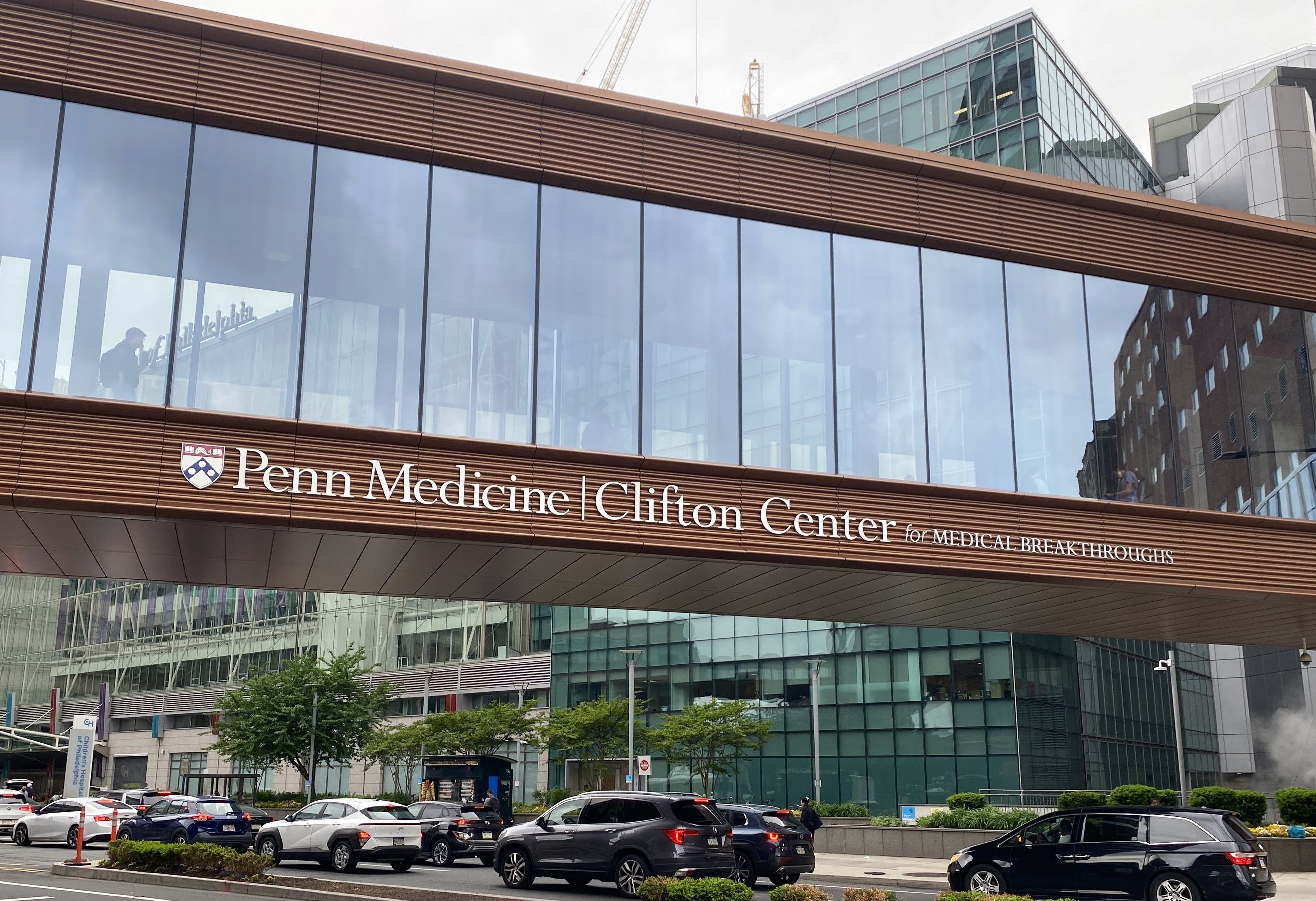
    Aramark and the University of Pennsylvania Health System launched a partnership this year to offer the food service giant’s Philadelphia-area employees healthcare in a test of a new model for reducing costs.

    Aramark employees who choose the benefit option, called the Penn Medicine Premier Plan, face no deductibles and lower copays when they and their dependents use Penn doctors and facilities.

    The move by Aramark into what is called direct contracting comes as employers are contending with years of surging healthcare costs. It’s an example of experimentation designed to slow spending growth in spending and perhaps improve quality, experts said.

    “We certainly would like to save money on the model, but its primary focus is to make benefits more affordable” by getting lower prices than it would get by going through an insurer, said James Startare, Aramark’s vice president for benefits.

    The model is called direct contracting because Aramark negotiated prices and other terms of the contract directly with Penn, instead of relying on an insurer to negotiate prices.

    It’s Penn’s first such contract and the first large-scale direct contract in the Philadelphia region. Aramark talked with other systems in the area, but Penn emerged as the partner willing to enter into the experimental contract. Penn described the deal as a multiyear contract ultimately expected to roll over from year to year.

    Aramark didn’t provide details on savings, but its goal was to negotiate prices that are lower than those it would pay though a benefits administrator, such as Aetna.

    By eliminating deductibles that function as a barrier to care, the plan is expected to encourage primary care visits. This could reduce long-term costs by catching patients’ health problems early.

    For health systems like Penn, such contracts offer a chance to increase market share, streamline payments, and hone their ability to manage the health of a population.

    The Penn Medicine Premier Plan features no deductibles and lower copays when Aramark employees and their dependents use Penn doctors and facilities. Harold Brubaker / Staff

    Aramark’s move into direct contracting

    Penn is Aramark’s third major direct contracting partner.

    Employers, even those like Aramark that are self-insured, typically rely on an insurer’s negotiated prices.

    With the new direct contract, an Aetna administrative unit still processes the claims for Aramark, and patients who go outside Penn for care use the Aetna network.

    Aramark launched its first such contract in 2024 in Dallas and expanded to Chicago last year, each time getting a strong employee enrollment, though it took two years in Chicago, Startare said.

    In the Philadelphia region, 35% of eligible employees (those who work 30-plus hours a week on average) have chosen the Penn plan, which took effect Jan. 1, Startare said. That amounts to 800 employees.

    Coincidentally, the health contract started at the same time as Aramark’s contract to manage food and other services at Penn Medicine facilities, but the two deals were not linked.

    Employees who were moving to Aramark with the food services contract were worried about losing their Penn benefits, said Megan Lieberman, a patient services manager at Chester County Hospital who was among those who became an Aramark employee.

    But the Penn Premier Plan was very similar to what they were used to. “It was definitely a huge relief to know that we got to hang on to those benefits,” Lieberman said.

    A separate contract covers pediatric services at Children’s Hospital of Philadelphia for Aramark employees and their families.

    Next year, Aramark plans to take direct contracting into central New Jersey, but did not name the system it’s using there.

    What’s in it for Penn

    The Aramark contract is an opportunity to focus on “chronic disease management, preventive care, cancer screenings, things like that” for a specific group of 1,400 patients who are motivated to stay within the Penn system, said Mark Angelo, Penn’s chief medical officer for population health.

    A key goal is to reduce the deductibles, copays, and prior authorizations that can slow access to preventive care. The model is designed to take care of people before they end up in high-cost places like the emergency department or hospital, Angelo said.

    Keeping more patients within Penn is expected to result in savings because of better care coordination and fewer repeated tests, Angelo said. Penn Premier plan members can seek care outside of Penn, but it will cost them more out-of-pocket.

    As it is, the typical Penn patient also uses other health systems for some services, said Roy Schwartz, Penn’s vice president for payer strategy.

    “Sometimes it’s the right choice, sometimes it can fragment their care,” Schwartz said. “There should be savings just simply coming from having integrated, coordinated care at a place like Penn.”

    Penn does not yet have much of its own data on Aramark employees, but indications from Aramark are that the plan’s members were using more Penn services in the first six months, Schwartz said. “It was not just patients who were using Penn anyway for pretty much everything.”

    Penn and Aramark officials plan to meet regularly to review results and consider modifications. “We’re hoping this works out well for everybody because we’d love to do some more of these,” Schwartz said.

    Momentum behind direct contracting

    Employers nationally have long contracted directly with doctors and health systems for specific procedures, like joint replacements, cancer care, and heart surgery. For years, they’ve also paid directly for primary care through on-site clinics.

    Aramark’s move to an all-encompassing healthcare plan with a single provider fits into a newer trend gaining momentum nationally. Investors have created platforms like Cost Plus Wellness, Mishe Health, Nomi, and Transcarent to help health systems implement direct contracts.

    Northwell Health, a major health system in New York and Connecticut, started a for-profit subsidiary called Northwell Direct and now has more than 70 contracts that cover more than 300,000 people.

    Northwell Direct’s biggest contract covers 100,000 building service workers in the New York area and their dependents. It took effect this year and is expected to save 20% in the first year.

    Big savings to start are not guaranteed.

    “They may not go into it with a lower cost, but they’re going to go into it with better access, better quality for their employees, and what they’re finding is eventually those lower costs will come,” said Jenny Goins, chief of staff at the National Alliance of Healthcare Purchaser Coalitions.

    The Washington nonprofit is putting together a direct contracting advisory council to help more employers to do what Aramark is doing, Goins said.

    The model is not expected to replace traditional coverage anytime soon in the Philadelphia region.

    “It is not for everyone, and it does take effort and coordination on the part of the employer,” said Tom Belmont, CEO of the Greater Philadelphia Business Coalition on Health. “Also, some health systems are ready for the discussion, while others are not.”

  • Jefferson Health reported a $181.5 million operating loss in fiscal 2026

    Jefferson Health reported a $181.5 million operating loss in fiscal 2026

    Thomas Jefferson University and Jefferson Health posted an operating loss of $181.5 million in the year that ended June 30, an improvement over last year’s $208 million loss. In both years, the loss was concentrated in Jefferson’s insurance business.

    The fiscal 2026 results, reported to bondholders Friday, included $112 million in costs for layoffs and other moves designed to put the Philadelphia region’s largest health system on firmer financial ground.

    Jefferson highlighted in its preliminary report to investors that results improved each quarter of fiscal 2026 — from an operating loss of $103.8 million in the first quarter to a $71.1 million operating profit in the fourth quarter.

    “We’ve made significant progress strengthening Jefferson’s financial performance, yet those gains are increasingly threatened by the actions of commercial insurers in Pennsylvania,” Jefferson’s chief financial officer, Michael Harrington, said in an email.

    Jefferson sued Independence Blue Cross last month over policy changes that the health system says amount to back-door price cuts.

    “Despite already paying some of the lowest reimbursement rates in the nation, certain payers are now attempting to unilaterally rewrite or reinterpret existing contract terms to further reduce payments and improve their own margins at the expense of providers and the patients they serve,” he said.

    Separately, Jefferson sued Aetna in April over a policy that reduces payments for hospital stays for Medicare Advantage patients that Aetna decides aren’t sick enough to qualify for full payment.

    Insurers are under pressure from employers to slow healthcare expense growth. Independence said in response to the lawsuit that it acts in the best interest of its customers. Aetna said its policies comply with federal laws and regulations.

    Here are more details on Jefferson’s results:

    Revenue: Jefferson’s revenue reached $17.7 billion, up from $15.8 billion the year before. Fiscal 2025 included just 11 months of Lehigh Valley Health Network results. Jefferson completed that acquisition on Aug. 1, 2024, expanding its reach into Northeastern Pennsylvania and giving the nonprofit more than 30 hospitals.

    Jefferson Health Plans: Jefferson’s insurance arm had a $130.3 million loss in fiscal 2026, an improvement over a $169.9 million loss the year before. The insurance arm had 415,172 members on June 30, up from 366,780 the year before. The plan is diversifying away from Medicaid as it increases enrollment in Medicare Advantage and the Affordable Care Act markets. The percentage of membership in Medicaid fell to 75% this year from 87% last year.

    Notable: The fourth quarter of fiscal 2026 was Jefferson’s first profitable quarter in at least four years, according to Inquirer calculations that exclude investment income. Unlike other local health systems, Jefferson follows accounting rules for higher education, allowing it to include a portion of investment income in revenue.

  • Bonds for sale of South Jersey’s Advantage Behavioral Health failed to attract investors

    The nearly $600 million in tax-free bond issue meant to finance the sale of South Jersey’s Advantage Behavioral Health failed to attract enough investors last week, leading investment bankers to put the transaction on hold, Bond Buyer reported.

    Despite the extremely high investment yield as high as 8.25%, portfolio managers were troubled by the heavy debt load that would have been placed on a company with a short track record and few hard assets backing it up, according to the trade publication.

    Bond Buyer said that KeyBanc Capital Markets is working on restructuring the deal to salvage the sale of Advantage Behavioral by a private equity firm to a nonprofit called QCF Advantage LLC, which was created in April for the acquisition.

    Representatives of the private equity firm, Connecticut-based Clearview Capital, and QCF Advantage, whose parent company is based in Houston, did not respond to requests for comment Tuesday. Officials at Marlton-based Advantage could not be reached for comment.

    Clearview took control of Advantage in April 2025, which means a successful sale would be a quick turnover by private equity standards.

    The proposed sale was notable not just because it would have increased Advantage’s debt by 12 times, according to Bloomberg Law, but also because of the structure that would have left Clearview and current executives as owners of a for-profit entity that would manage Advantage.

    The proposed sale price was about $520 million, according preliminary bond documents. That price included $80 million being held back to see if Advantage hits profit targets after the sale. The company had $141.6 million in revenue in the 12 months that ended May 31.

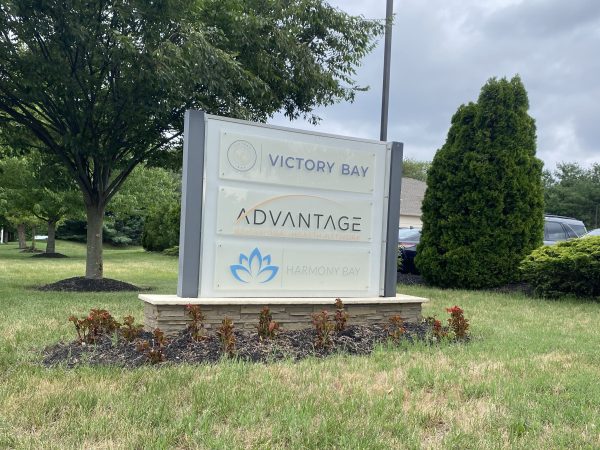
    Founded in 2017 in Camden County, Advantage also operates in Pennsylvania and six additional states. It offers intensive outpatient therapy through a business called Victory Bay and telehealth services through Harmony Bay. It also operates 17 sober-living houses under its Dignity Hall brand in Blackwood, Laurel Springs, Sicklerville, and several other South Jersey towns.

  • Tower Health and Jefferson Health have formed a clinical affiliation

    Tower Health and Jefferson Health have formed a clinical affiliation

    Tower Health and Jefferson Health announced Friday that they have formed a clinical affiliation that would expand access to advanced treatments in Tower’s markets northwest of Philadelphia.

    The two nonprofit organizations said Jefferson is not acquiring Tower, which is the biggest healthcare provider in Berks County and also owns two hospitals in Chester and Montgomery Counties.

    “Healthcare organizations today face unprecedented challenges, including inadequate reimbursement, rising costs, workforce shortages, and increasing competition,” Tower’s CEO Michael Stern said in an announcement to employees.

    “History teaches us that when an organization is confronted by challenges on multiple fronts, success depends on finding the right ally — one that shares our values, respects our strengths, and is committed to the same mission,” Stern’s note said.

    Jefferson said it routinely works with other health systems to provide high-level specialty care throughout the region it serves.

    “As part of that commitment, we are working with Tower Health to enhance access to advanced tertiary and quaternary services, bringing more specialized expertise, innovative treatment options, and coordinated care closer to the communities we serve,” Jefferson said.

    Details of the arrangement with Tower will worked out in the next few months.

    Jefferson is also among the Philadelphia-area health systems exploring a clinical alliance to support financially struggling St. Christopher’s Hospital for Children, which Tower manages and owns in a 50-50 joint venture with Drexel University.

    Turnabout for Tower

    For Tower Health, the potential collaboration with Jefferson represents a turnabout from a decade ago when the system based in West Reading plotted a move into the Philadelphia market. Tower spent $423 million for the acquisition of five community hospitals in Southeastern Pennsylvania from Community Health Systems Inc. in 2017.

    The idea then was that the health system’s anchor, Reading Hospital, would draw patients for the most advanced care to Berks County from the Philadelphia region. That deal led to massive losses as the anticipated patients didn’t materialize in Reading and then COVID-19 crushed health system finances nationwide.

    Tower sold or closed three of the five acquired hospitals, but remains saddled with a huge debt load. The interest payments leave the system with little money left over to invest in the new facilities and services. Last year, Tower instituted significant service cuts and layoffs at Pottstown Hospital.

    Jefferson has expanded through acquisitions from three hospitals to 33 since 2015. The most recent acquisition was Lehigh Valley Health Network two years ago, creating a network that stretches from South Jersey to near Scranton. The system has been losing money for years as management attempts to make the hospitals it acquired work as a financially sustainable system.

    This week, Jefferson sued Independence Blue Cross, claiming a series of five payment policy changes cost it nearly $100 million this year.

  • Jefferson Health sued IBX, claiming payment changes cost it nearly $100 million this year

    Jefferson Health sued IBX, claiming payment changes cost it nearly $100 million this year

    Jefferson Health says it has incurred nearly $100 million in financial losses this year because of policy changes by Independence Blue Cross in a lawsuit filed this week.

    The lawsuit, submitted Wednesday in Philadelphia Court of Common Pleas, detailed five policy shifts — including two impacting when IBX pays higher inpatient rates for hospital stays — that Jefferson says amount to breaches of the current contract between the region’s largest health system and its largest insurer.

    “IBX has attempted to use policy changes to — over time — effectively rewrite the contract” and pay less than agreed to in the contract, Jefferson’s lawsuit said.

    The suit comes less than six months before its IBX contract expires Dec. 31, adding pressure to negotiations over a new deal. Jefferson said it cared for more than 300,000 people with IBX insurance last year.

    In the last year, the nonprofit health system has shown its willingness to challenge major insurers at a time of increasing financial strain on both insurers and healthcare providers nationally.

    IBX introduced a series of payment changes impacting both commercial and private Medicare plans this year as it faces intense pressure from employers to slow the growth of healthcare expenses and from the federal government, which is trying to trim spending in Medicare Advantage plans.

    Independence declined in an email to comment on the claims in the lawsuit: “We value our provider partners, honor our contractual commitments with them, and regularly discuss any issues. It’s unfortunate that Jefferson chooses to do this in the public arena but if you’ve kept up with the news you can see this is typical of their playbook.”

    A series of reimbursement shifts

    The biggest financial impact came from IBX’s requirement, effective June 1, that certain procedures be performed in lower-cost freestanding ambulatory surgery centers, rather than in hospital outpatient departments, which often get paid twice as much for the same work.

    Jefferson estimated damages from the ambulatory surgery center rule at $35.4 million.

    Two policies affecting when IBX pays inpatient rates cost Jefferson a combined $35.5 million, according to the complaint.

    Jefferson sued Aetna in April over a similar policy that reduces payments for Medicare Advantage plans if Aetna considers patients not sick enough to qualify for full payment.

    The complaint says a policy that eliminated payment for hospital readmissions up to 30 days after discharge cost Jefferson $18.3 million. Since 2017, Penn Medicine has had a contract with IBX that does not pay Penn when patients return to the hospital within a month of being discharged.

    Finally, Jefferson said IBX has failed to pay more than $7.2 million owed under a controversial federal drug discount program known as 340B.

    “After trying to work directly with Independence Blue Cross to resolve these breaches of contract, we have been forced to take this action on behalf of our patients,” Jefferson’s vice president for payer relations, Allison Yudt, said in an email. “This action is the result of a pattern that has repeated itself time and again.”

    IBX said in its statement that it “acts in the best interest of our customers and members and protects their access to high quality affordable care.”

    Jefferson’s harder line with insurers

    Jefferson has expanded through acquisitions from three hospitals to 33 since 2015. The most recent acquisition was Lehigh Valley Health Network two years ago, creating a network that stretches from South Jersey to near Scranton.

    Amid significant losses in recent years, Jefferson has been taking an aggressive approach with insurers when it believes they are paying it less than contractually required.

    This year, Jefferson’s Lehigh Valley Health went out-of-network with UnitedHealthcare for commercial and Medicare Advantage plans. Last year, Jefferson went out-of-network with Cigna for a few weeks before reaching a deal.

  • Monell Chemical Senses Center is relocating within University City after 55 years on Market Street

    Monell Chemical Senses Center is relocating within University City after 55 years on Market Street

    Monell Chemical Senses Center is relocating to a new facility in University City to expand its operations and evolve its science, officials announced Wednesday.

    The nonprofit research institute dedicated to studying taste and smell signed a 20-year lease at One uCity Square, a 13-story research hub, that will include more than $30 million worth of new infrastructure and facility improvements.

    The new location at 25 N. 38th Street is a roughly seven-minute walk from the current home at 3500 Market St., where Monell has resided since 1971.

    Monell plans to finish moving into the new space in early 2027.

    “We’re just at capacity. We don’t have the facilities that are going to push us forward into the future,” said Benjamin Smith, Monell’s executive director and president.

    The move has been a long time coming, as the center’s more than 150 scientists and staff have outgrown its space over the last 50-plus years.

    For example, more scientists have wanted to use newer research methods, such as organoids — miniature versions of organs grown in the lab, he said. However, the current building has limited cell culture space and imaging capabilities.

    “Our people are excited because we’re moving to facilities that are going to help them do more of the work that they want to do,” Smith said.

    Benjamin Smith is the executive director and president of Monell.Courtesy of Monell Chemical Senses Center

    More shared space, room for growth

    The new space, which spans 64,000-square feet across three floors, is technically smaller than Monell’s current building. However, the design will allow for more efficient use of lab space.

    The modern facility has an open layout filled with shared spaces, “as opposed to the old sort of academic lab where you were in one corner of a basement or one corner of a building and you locked your door,” Smith said.

    He hopes this will encourage collaborations and interactions between scientists. That includes both within Monell and with other groups in the building.

    Its neighbors within One uCity will include Dispatch Bio, Century Therapeutics, Penn NSF AIRFoundry, among other research and biotech companies. The office building opened in 2023 and is now roughly 90% occupied.

    Monell’s iconic “Face Fragment” sculpture, perched outside its current building, will move, too. The giant nose and mouth will be featured at the front of the One uCity building, looking out at the lawn.

    “We’re making sure that we don’t lose that legacy,” Smith said. “We take our culture and we move it into the new building and we grow it.”

  • $617 million in tax-free bonds for sale of South Jersey’s Advantage Behavioral Health blur private equity, nonprofit lines

    $617 million in tax-free bonds for sale of South Jersey’s Advantage Behavioral Health blur private equity, nonprofit lines

    A newly created nonprofit wants to borrow $617 million through tax-free bonds to buy Advantage Behavioral Health, a fast-growing South Jersey behavioral health company.

    The current owner, a Connecticut private equity firm called Clearview Capital, isn’t walking away from Advantage, which it bought 15 months ago.

    Clearview Capital and current executives will continue to own the for-profit entity that manages Marlton-based Advantage, according to a preliminary bond offering statement filed late last month.

    Advantage’s proposed sale to a nonprofit called QCF Advantage LLC is noteworthy for mixing for-profit and nonprofit business interests. It would make a private-equity company a key partner in a nonprofit organization with financing from the tax-exempt municipal bond market.

    Advantage’s sale price is about $520 million. That price includes $80 million being held back to see if Advantage hits profit targets after the sale. The company had $141.6 million in revenue in the 12 months that ended May 31. Most of the remaining money from the bond sale will go into reserve funds.

    Like many other mental health service providers, Advantage does not accept Medicare or Medicaid. Taking only private insurance and out-of-pocket payments helps Advantage register strong profit margins amid growing demand for mental health and addiction services.

    The transition to nonprofit ownership creates “a structure that’s designed for long term stability, reinvestment, and patient care,” James D. Golden, CEO of QCF’s parent company, told prospective investors in a recorded presentation.

    “We can provide an efficient exit to private capital,” he said in the recording, published June 30 on a website that tracks documents related to the municipal bond market. “Tax-exempt financing is really the mechanism that makes all that possible.”

    That financing will leave Advantage with an extraordinarily large debt load, said Robert Q. Kreider, a former nonprofit CEO who has no ties to Advantage. He noted that debt of that size requires continued strong growth to make the debt payments and have enough money to continue growing.

    “The bondholders are getting such a juicy rate, they’re willing to accept the risk,” said Kreider, a consultant and former CEO of Devereux Advanced Behavioral Health.

    Officials at Clearview Capital, Advantage, and QCF Advantage did not respond to requests for interviews.

    Advantage’s founding and growth

    Advantage has expanded to Pennsylvania and six additional states beyond New Jersey since its founding in 2017.

    It initially provided intensive outpatient therapy through a business called Victory Bay in Laurel Springs.

    It launched a telehealth version of its services, called Harmony Bay, in 2020. Outside of New Jersey, Advantage uses Harmony Bay as a way to build a presence in a new state, before introducing in-person services through Victory Bay.

    (function(){function e(){window.addEventListener(`message`,function(e){if(e.data[`datawrapper-height`]!==void 0){var t=document.querySelectorAll(`iframe`);for(var n in e.data[`datawrapper-height`])for(var r=0,i;i=t[r];r++)if(i.contentWindow===e.source){var a=e.data[`datawrapper-height`][n]+`px`;i.style.height=a}}})}e()})();

    Advantage also operates 17 sober-living houses under its Dignity Hall brand in Blackwood, Laurel Springs, Sicklerville, and several other South Jersey towns.

    The average daily census of patients at Victory Bay has soared over the last five years to 805 in the three months that ended June 30, from 81 in the first quarter of 2021, according to data in the bond disclosures. The company employs more than 700.

    Despite the expansion to Massachusetts, Florida, Indiana, Maryland, Ohio, and California, the services provided in a string of buildings along Chews Landing Road in Laurel Springs accounted for 55% of revenue, most of the company’s cash flow last year.

    The parking lots at several of those buildings were packed last Thursday. As part of the bond financing, 20 New Jersey properties valued at $14.4 million are being mortgaged.

    New projects are under development in Absecon and Pine Brook, N.J.; Scranton, Pa.; and Lancaster, Ohio, the bond prospectus said.

    A nonprofit buyer as a vehicle for private equity sales

    QCF Advantage was created in April to acquire Advantage.

    Owner QCF/I Inc., a tax-exempt organization based in Houston, acquires healthcare facilities that can be paid for with tax-exempt financing, according to its 990 tax form. Founded in 1997, QCF stands for Quality Care Foundation.

    “We’re a nonprofit focused on improving the quality of care in the behavioral health industry. We believe mental health is one of the most persistent, complex, and costly challenges in our country today,” Golden told prospective bond investors.

    QCF/I’s niche is buying for-profit businesses, often from private equity firms, while giving the sellers the option to keep managing the business, he said.

    In the Advantage arrangement, QCF/I will collect 2.25% of revenue for administrative services — to be paid before bondholders.

    Clearview Capital, the current private equity owner, will stay involved through an existing management entity that will collect 5% of monthly revenue under an initial 15-year contract.

    Golden and Richard T. Needham together form QCF’s board. They have a background in private equity at a Houston private equity firm called Domain Capital Partners that is not related to Clearview. The phone number on the 990 led to a voicemail box that was full. A voicemail at Domain Capital got no reply.

    QCF’s other businesses include a psychiatric hospital in Las Vegas and an addiction treatment center in North Jersey.

    Surging debt load

    Advantage had about $6 million in long-term debt at the end of 2024, three months before its sale to Clearview for an undisclosed price.

    A year later, the debt totaled $52.5 million, not including a $10 million line of credit.

    If the bond sale happens as expected, the company’s long-term debt would skyrocket to $604 million at the end of this year, according to the bond document.

    That large debt means the success of QCF Advantage depends on continued dramatic growth in revenue and profits, according to a deal summary from Stacy DiStefano, CEO of Consulting for Human Services, a Philadelphia-based advisory firm.

    Advantage’s projected annual interest expense is $42.7 million. For context, that’s about the same as the combined $42.2 million in interest paid last year by three large unrelated health systems in the same South Jersey market, Cooper University Health Care, Inspira Health Network, and Virtua Health.

    Colin Studwell, Advantage’s CEO, said during the investor presentation available on Munios.com that the company is well-positioned for strong growth. He credited the management entity, known as a management services organization, or MSO, that Clearview and executives, including Studwell, already own.

    Studwell will continue to run the MSO, which handles operations support, billing, collections, human resources, information technology, and everything else it takes to run the business.

    “Our MSO capabilities are the engine which allow us to continue to scale our services and treat more patients without any decay in clinical or operational efficiency,” Studwell said.