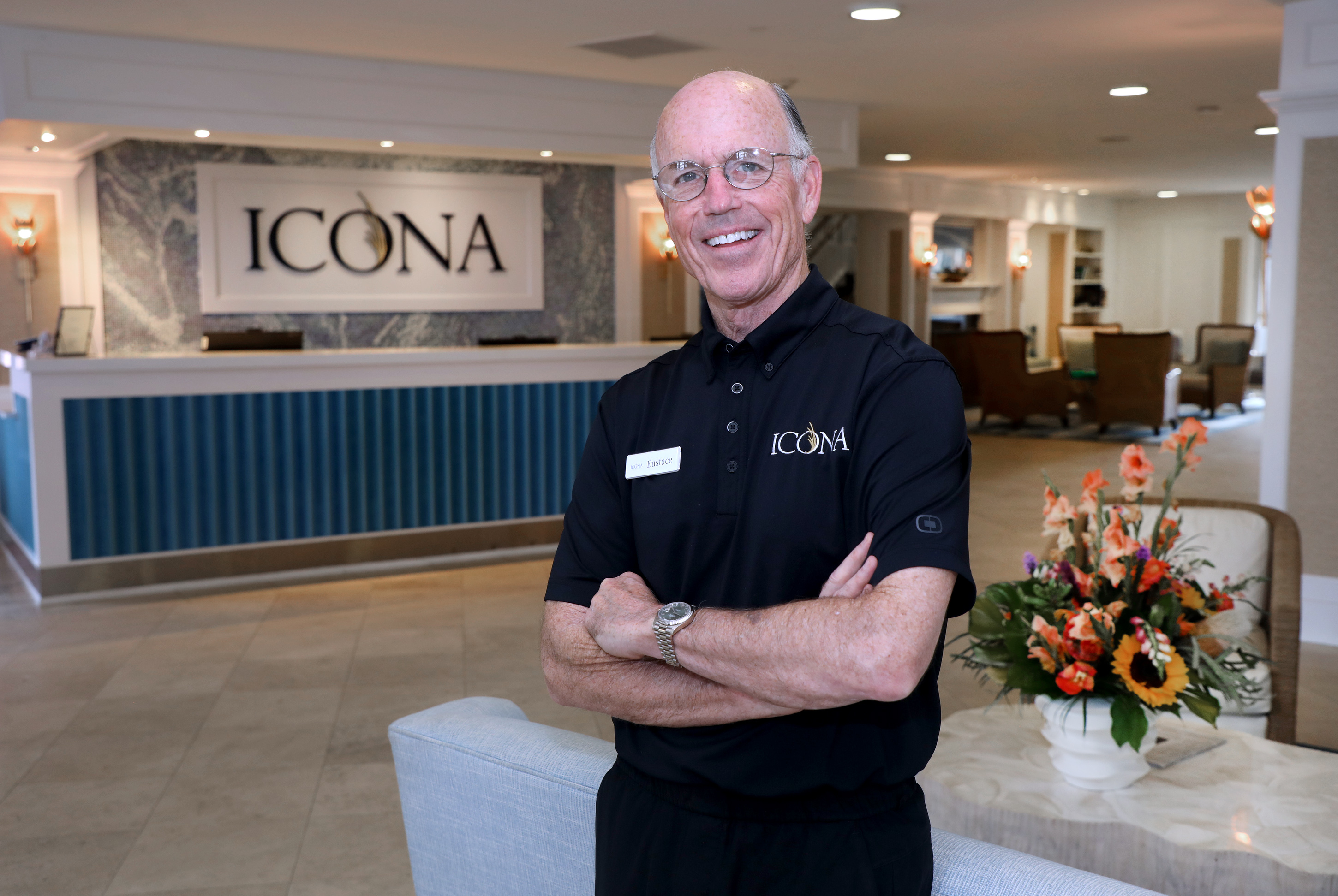
Icona Resorts founder Eustace Mita says he didn’t set out to change the Jersey Shore.
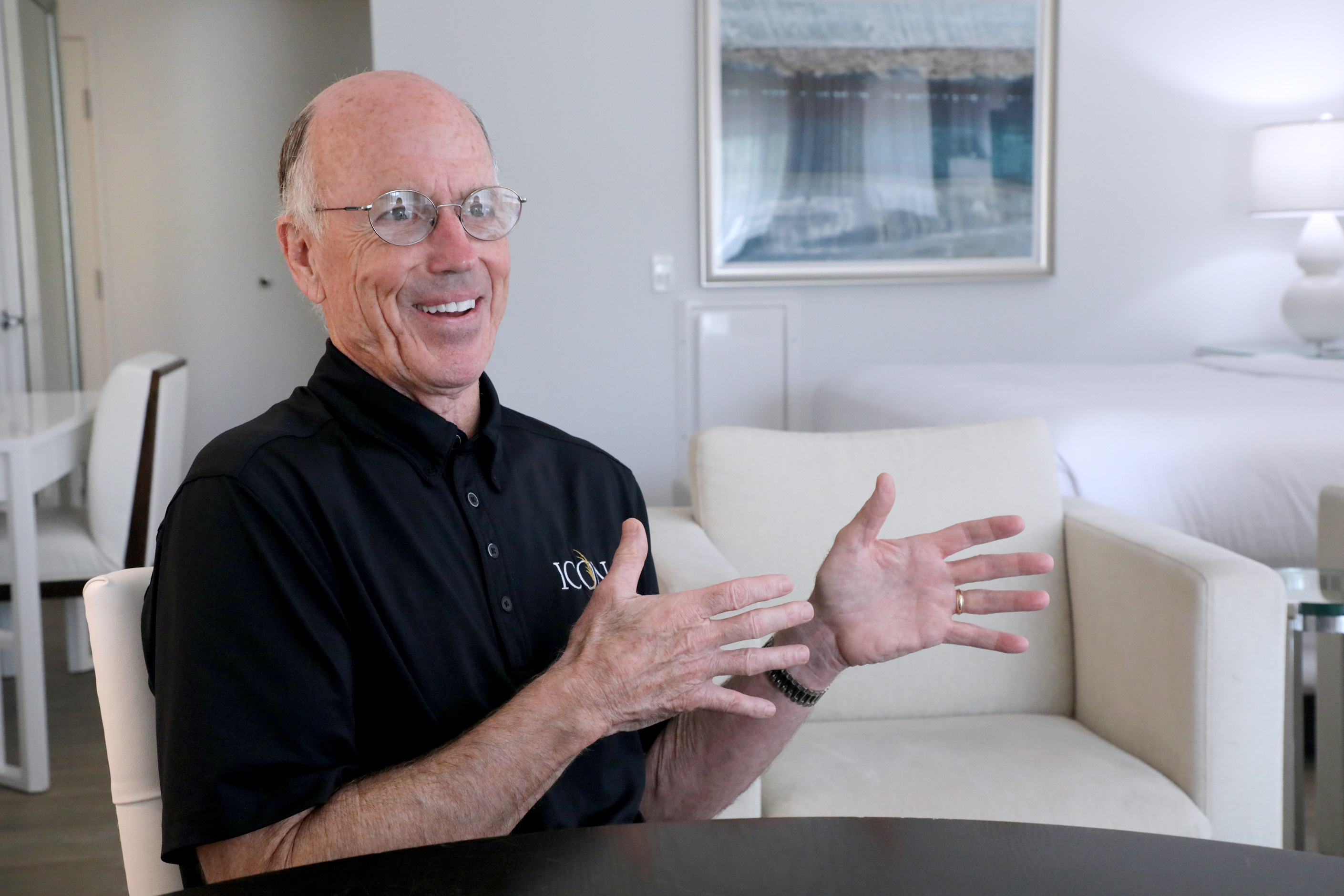
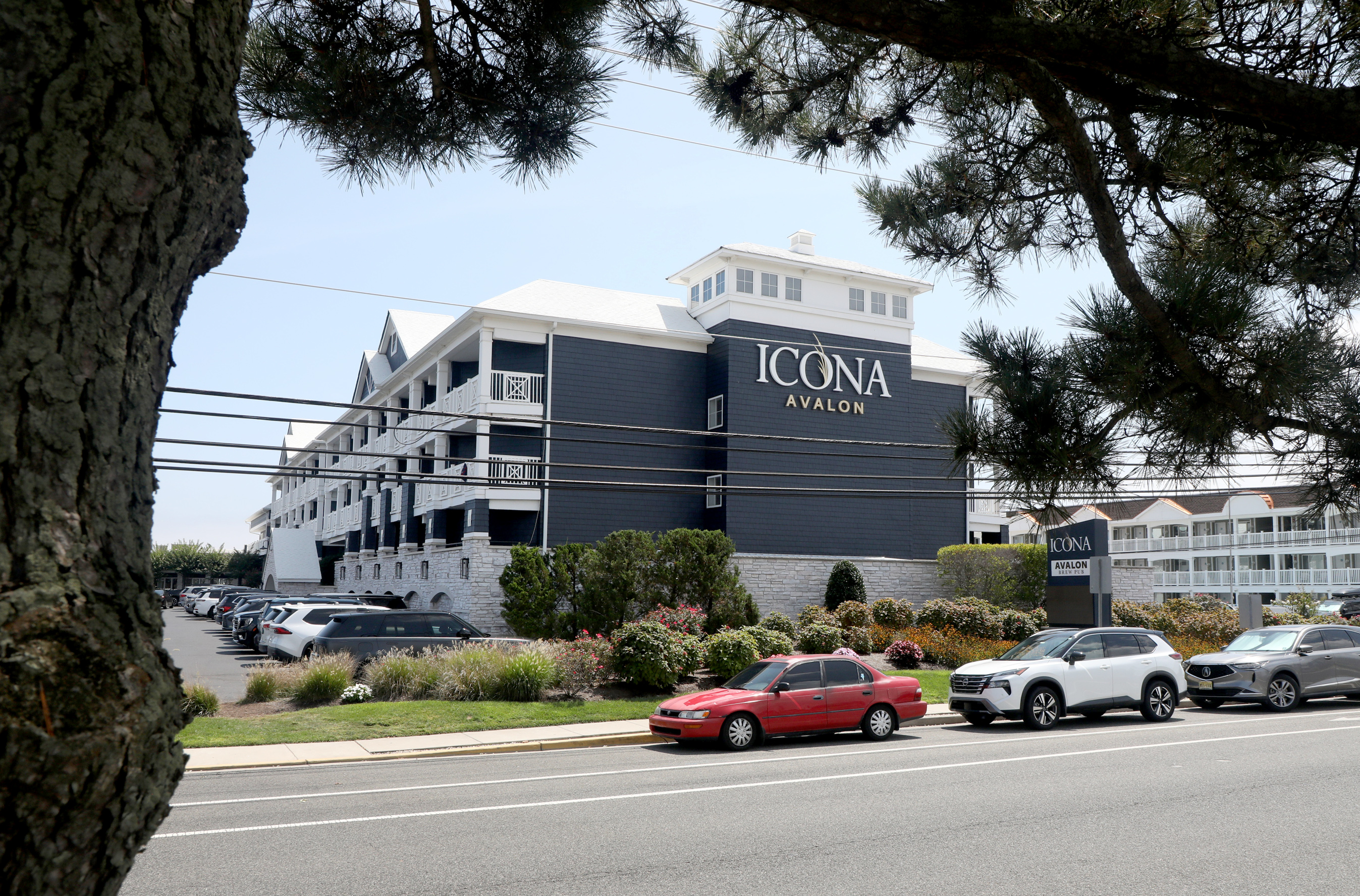
Sitting in a corner room at the Icona Avalon, the largest of Mita’s seven luxury hotels, the 72-year-old said it was the Shore, his lifelong “happy place,” that transformed him.
As Mita looked out onto the dunes, he recalled his baptism at St. Paul Catholic Church in Stone Harbor and his summer job as a teenage busboy and server at the Princeton Bar & Grill in Avalon.
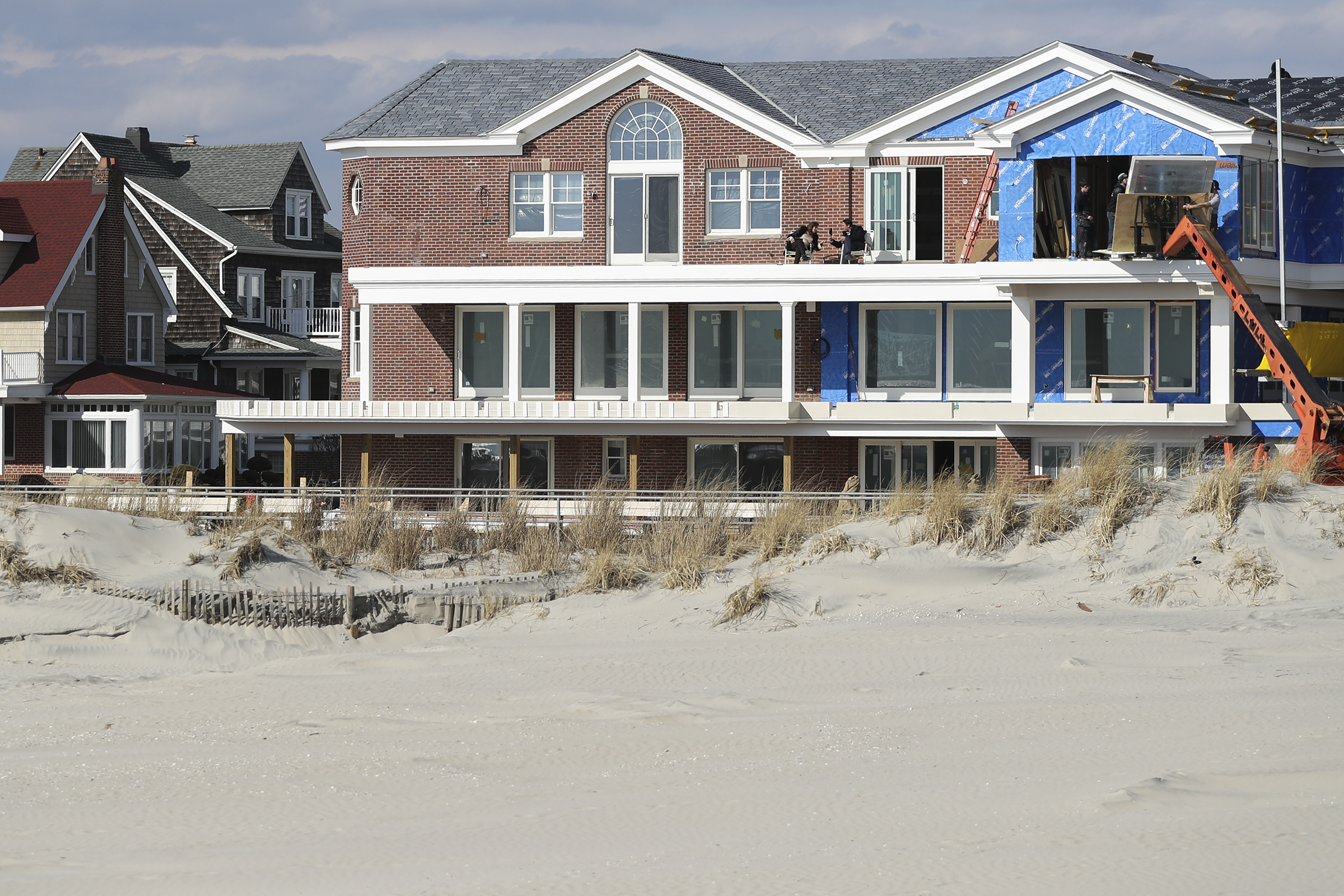
Decades later, Mita leads both Icona Resorts and Achristavest homebuilders, which constructs multimillion-dollar waterfront homes — including a controversial 18,000-square-foot mansion that would be the largest in Avalon. Built on spec, it will likely sell for several tens of millions.
His for-profit companies are all about luxury. At the same time, they are imbued with Mita’s faith: The names, Icona and Achristavest, were inspired by spiritual experiences and words, and he displays 18-inch statues of the Blessed Mother in the hotel lobbies.
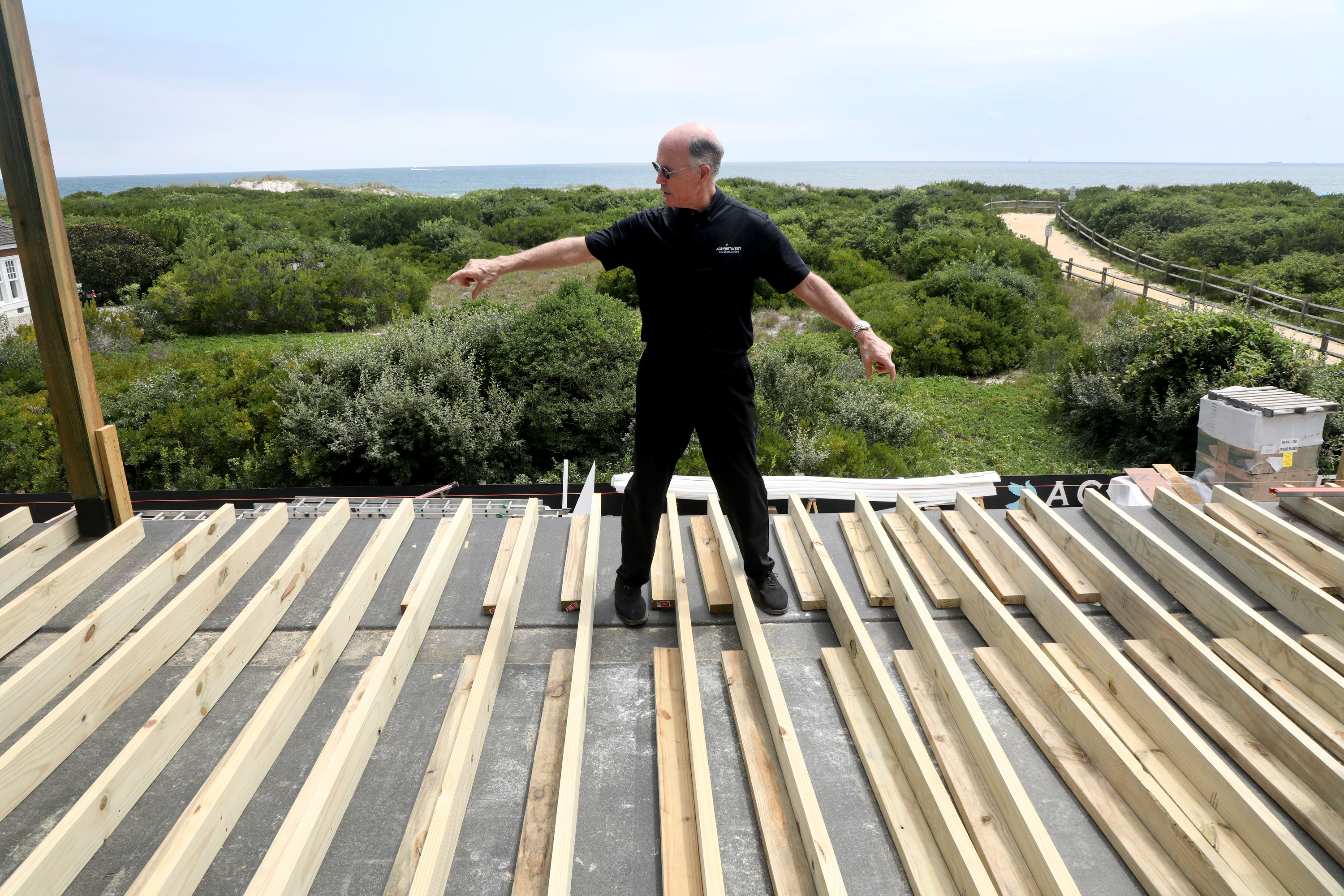
On a recent August day,he greeted employees by name and chatted with guests as he walked through Icona Avalon and neighboring Icona Windrift. Later, he visited under-construction homes, rattling off details about each project and staring in awe at the ocean views, as if seeing them for the first time.
Eustace Mita takes in the view from an under-construction Achristavest home on 77th Street in Avalon.Vernon Ogrodnek / For The Inquirer
“Do what you love and the money will come,” Mita said, referencing a lesson he learned from his grandfather, Eustace Wolfington, who owned Avalon’s first beachfront hotel, the Puritan, later renamed the Whitebrier. “That has been so true in my life.”
Mita declined to share how much his companies, which are privately held,are worth, or how much he’s invested in the Shore, saying only that it’s “hundreds and hundreds of millions of dollars” — and counting.
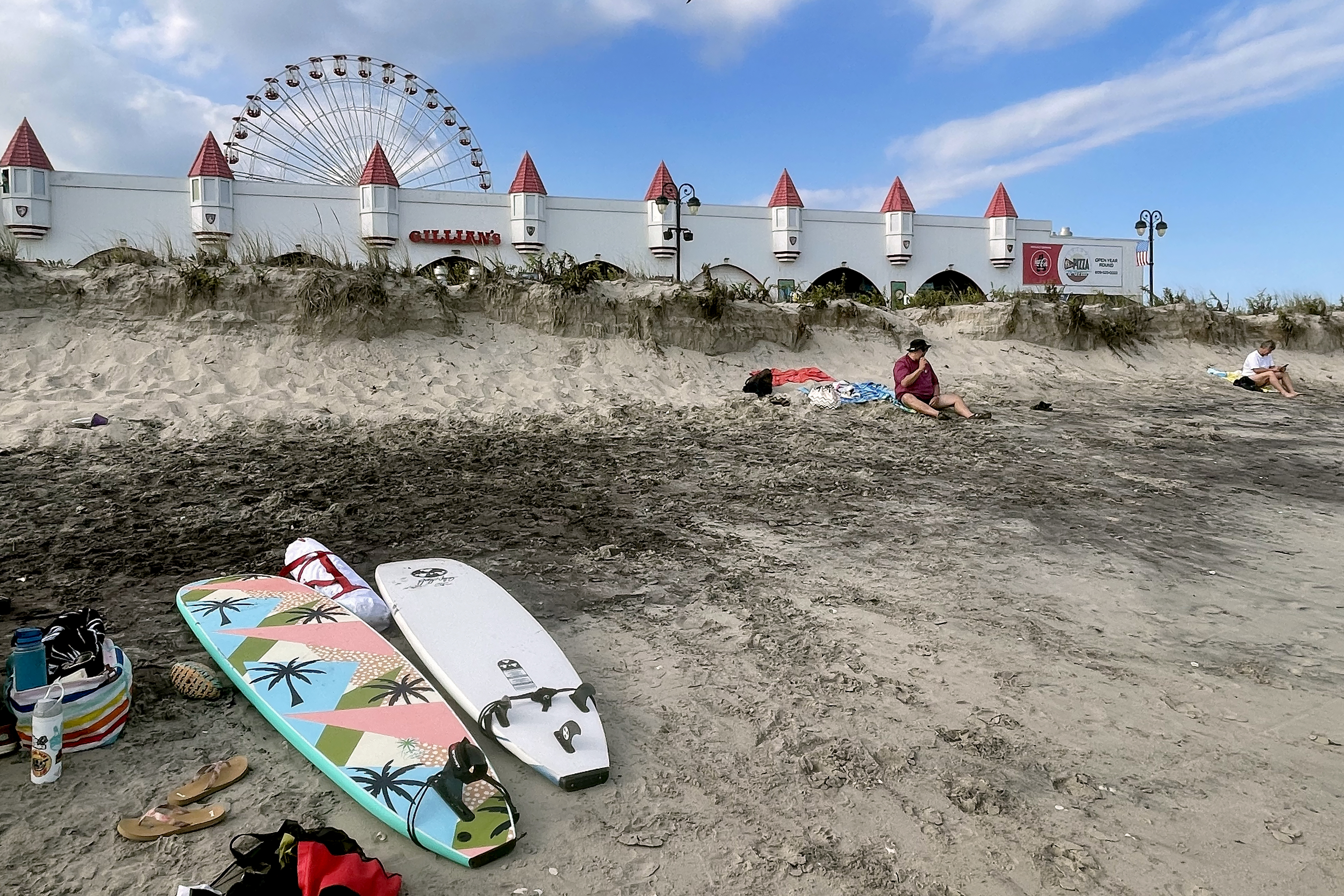
The now-closed Gillian’s Wonderland Pier rose above the dunes at Sixth Street and the Boardwalk in Ocean City during its final weekend in September 2024.Tom Gralish / Staff Photographer
For five years since he boughtthe now-shuttered Gillian’s Wonderland Pier, Mita says he has faced roadblocks and pushback, most recently from community groups who sued Ocean City and its council asking to void the site’s “in need of rehabilitation” designation. The designation allowed council to start talks with Mita about his plans to redevelop the former amusement park.
In a statement announcing the lawsuit, Jack Gutenkunst of Plaza Place Civic Association, one of the neighborhood-group plaintiffs, called the designation “deeply flawed” and said it “seeks to improperly strip away important planning protections that residents have long relied upon.”
“We have [millions] worth of real estate right here that would be degraded by this hotel, and our way of life would be degraded,” said Marie Crawford, who lives behind the pier.
Mita said the project, which has been downsized from the original proposal, would be an asset to Ocean City. The town calls itself “America’s Greatest Family Resort,” he added, but has not opened a new hotel in more than 50 years. He noted that several business owners on the boardwalk and elsewhere have spoken in favor of the project.
“We’re on the pathway now to being able to build Icona Ocean City, but we’ll see,” Mita said. “I don’t take anything for granted.”
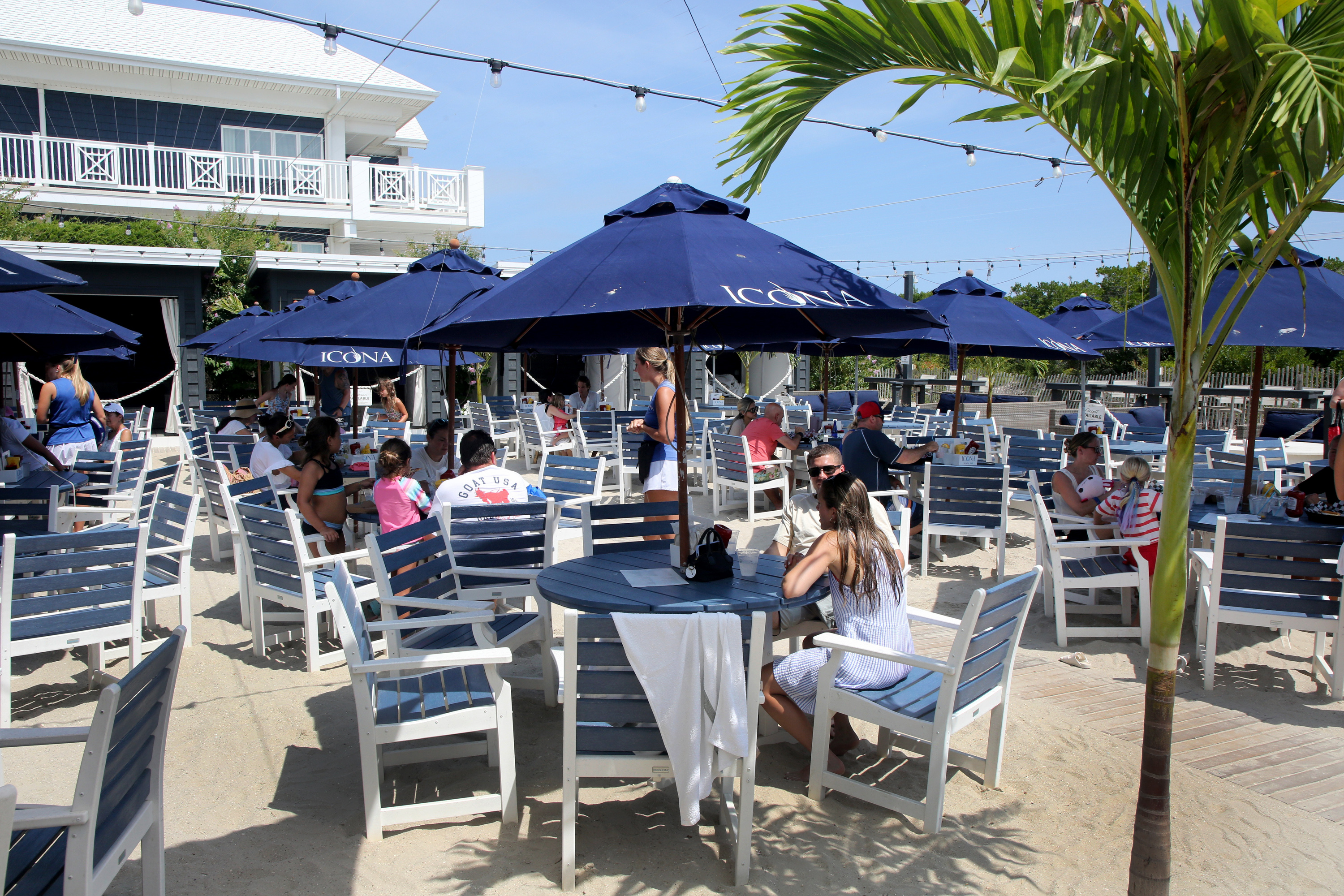
Guests eat lunch at Icona Avalon’s Beach Bar on a weekday in August.Vernon Ogrodnek / For The Inquirer
He has his sights on two other potential hotel properties, one in Cape May County, though he wasn’t ready to share details.
Despite many offers, Mita has no interest in selling Icona Resorts. He has told his five grown children that they could do so someday — as long as they don’t sell the prime beachfront real estate where his hotels sit.
For now, his answer to the near-constant acquisition proposals is polite but firm: “Thank you, we’re not interested.”
But, he added with a laugh, “we’ll sell you a house.”
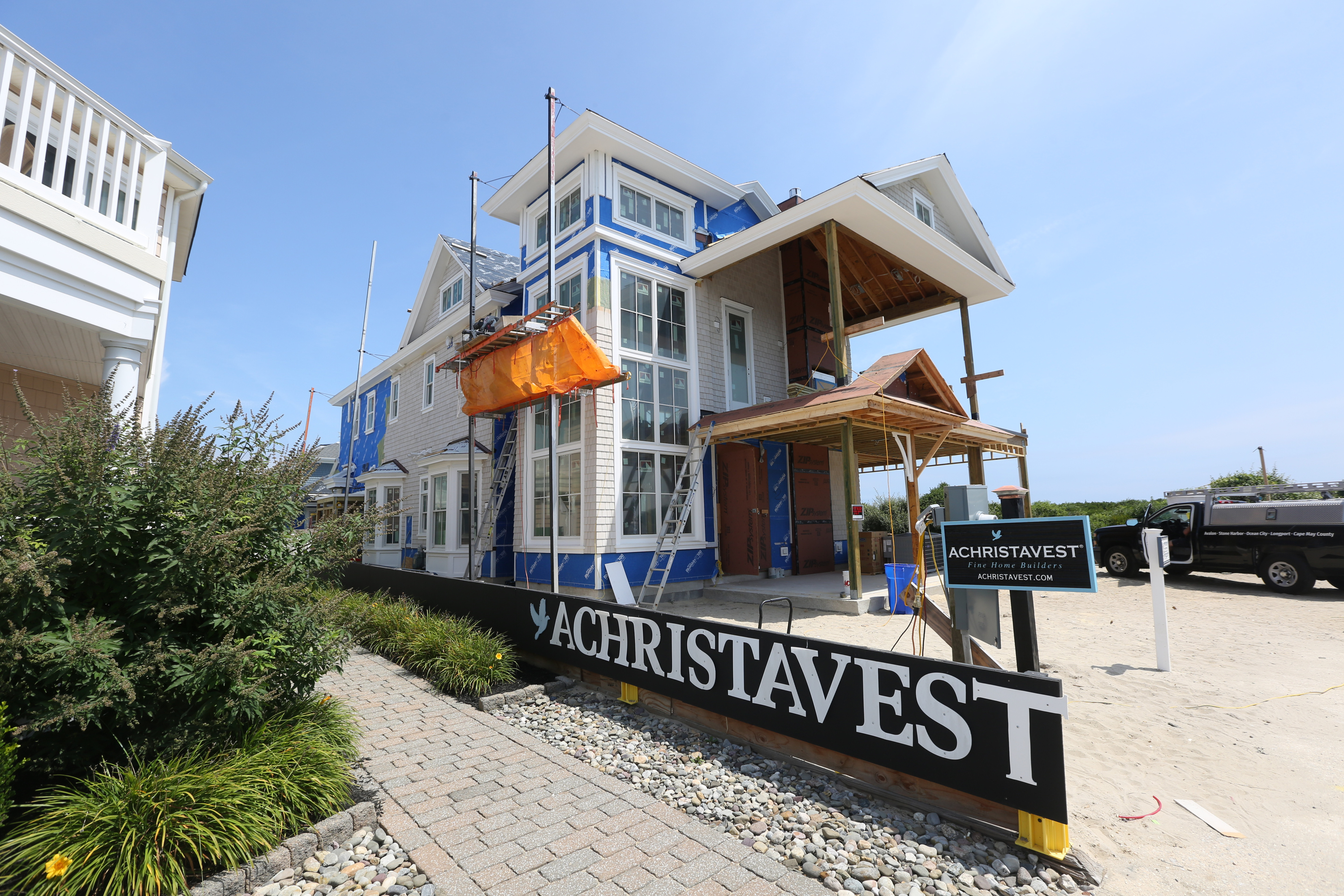
An Achristavest home is under construction on 116th Street in Stone Harbor.Vernon Ogrodnek / For The Inquirer
Mixing faith and luxury down the Shore
In a conference room off the Icona Avalon ballroom, dozens of hotel employees — many of them international workers on J-1 visas — sit facing a projection screen and white board where the company’s guiding principles are about to be reinforced.
Wearing a black Icona polo, black pants, and an unwavering smile, Mita slips into the morning meeting with little fanfare.
A manager kicks off a regular exercise: Stand, introduce yourself, and greet coworkers on either side of you by name. Seated in the back, Mita is among the last to participate, standing ramrod straight and speaking with a joyful lilt.
Randel Davis, general manager of Icona Avalon, leads an employee meeting.Vernon Ogrodnek / For The Inquirer
Whenever possible, managers remind the employees, they should call guests by their names, too.
“The sweetest sound to a person’s ears is the sound of their own name,” Mita said, referencing How to Win Friends and Influence People by Dale Carnegie, one of many books that influenced Mita’s leadership style. The most instrumental, he said, was Greatest Salesman in the World by Christian writer Og Mandino.
Eustace Mita talks about his business and life philosophy in a guest room at Icona Avalon.Vernon Ogrodnek / For The Inquirer
When Mita first placed Blessed Mother statues in his hotels, he said, some suggested it could be “a little too religious.” But he stood by it, saying the Blessed Mother is the matriarch of all people, not just Catholics.
“If you don’t like Mom,” he said, “you don’t have to stay with us.”
More often, Mita said guests compliment the statues. He sees some passersby bless themselves and say a silent prayer.
“We don’t apologize for that,” he said of the iconography. “But we honor all faiths.”
A statue of the Blessed Mother overlooks the pool at Icona Windrift.Vernon Ogrodnek / For The Inquirer
How Icona Resorts were built
In his pursuit of hotels, Mita was particularly motivated by scroll three of Mandino’s work: “I will persist until I succeed.”
After graduating from Archbishop John Carroll High School in 1973and studying for three years at Drexel University, Mita worked in the auto industry. In the 1980s, he founded Mita Leasing, then ran Half-a-Car, a lease-training company, with his uncle, Eustace Wolfington II.
Mita said he “backed into” the hotel industry around the time of the 2008 financial crisis, during which he lost about three-quarters of his net worth.
Back then, Mita’s Achristavest real estate company was knocking down small Shore hotels and building condo complexes, including the Grand at Diamond Beach, which sits between Wildwood Crest and Cape May.
Achristavest acquired the Grand’s neighbor, the Pier 6600 hotel, for $12 million in 2006, Mita said. Then, “Armageddon hit” with the recession.
Home construction at an Archistavest home in Stone Harbor in AugustVernon Ogrodnek / For The Inquirer
“Our homebuilding business didn’t slow down; it literally stopped,” Mita said. When you’re building second homes, “everybody wants one, but they don’t need one.”
While demand for Shore homes remained low, Mita said he found that families were flocking to the hotel for short beach vacations at lower prices. So he went all in on resorts.
The Pier 6600 became Icona Diamond Beach in 2012. Mita has spent $30 million renovating it, he said, including the addition of a third-floor ballroom for its thriving wedding business.
Eustace Mita bought Icona Avalon from the former owners of the Golden Inn in 2015. Vernon Ogrodnek / For The Inquirer
Then, after 16 years of knocking on the door at the Golden Inn in Avalon, Mita acquired the iconic beachfront property for $25 million, which in 2015 was the largest hotel transaction in Cape May County history, he said.
Mita renamed it Icona Avalon. He said he has spent $35 million to remodel it.
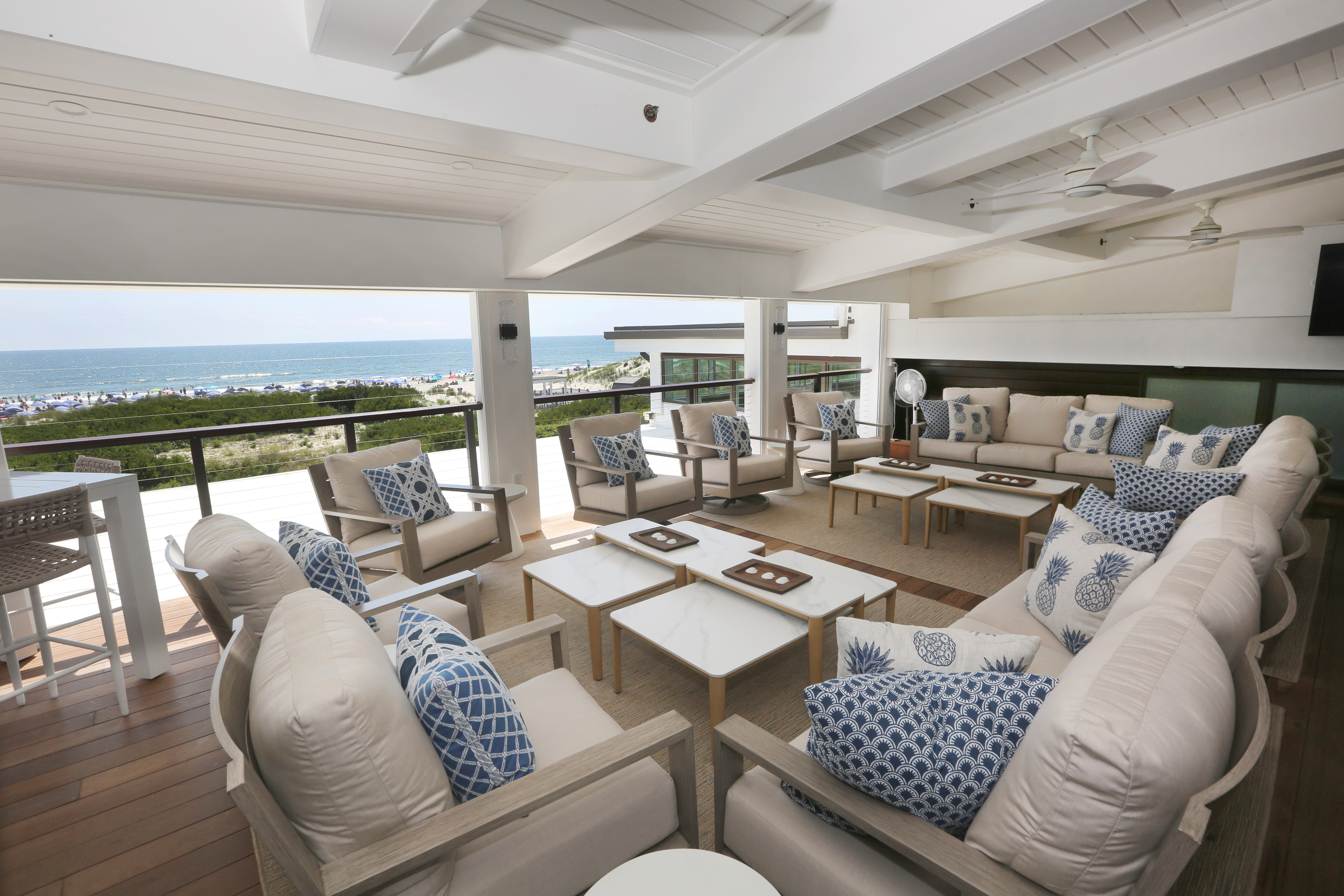
A few years later, he purchased the Windrift hotel next door for more than $30 million and spent $27 million on renovations there, which include the new Avalon Prime steakhouse and a private third-floor “sky lounge.”
The Icona Windrift in Avalon, which Eustace Mita has spent $27 million renovating since he purchased it five years agoVernon Ogrodnek / For The Inquirer
Icona Yacht & Beach Club members, who pay a $7,000 initiation fee plus $5,000 a year, can access the sky lounge, the Icona yacht, private beach service, and shuttle service.
They number about 25 now, Mita said, and he plans to cap membership at around 200 people.
It’s a similar setup as the Union League. The historic club, headquartered on South Broad Street, recently bought Avalon’s iconic Whitebrier for $23 million and last summer made it members-only. The move sparked debate over whether the Shore town was becoming too exclusive for even its wealthy homeowners.
The members-only Sky Bar at Icona Windrift in Avalon sits on the highest point on Seven Mile Beach, according to Eustace Mita.Vernon Ogrodnek / For The Inquirer
The Jersey Shore experience, elevated
While middle-class families have increasingly been priced out of the Shore, Mita said he doesn’t believe his hotels are contributing to the trend.
“We don’t cater to the wealthy,” Mita said, adding that Icona has opened two “select-service” hotels — Mahalo Diamond Beach and Mahalo Cape May — which have fewer amenities and sometimes lower prices.
Rooms there are about $200 a night on shoulder-season weekdays but can cost $500 to $700 on a summer weekend.
At Icona’s full-service resorts in Avalon and Diamond Beach, and its boutique hotel in Cape May, rooms start around $700 a night on peak summer weekends.
A corner guest room at the Icona Avalon.Vernon Ogrodnek / For The Inquirer
Outside South Jersey, Icona’s Grand Victorian boutique hotel in Spring Lake, Monmouth County, has slightly lower rates.
Icona is not the first brand to bring luxe hotel accommodations to Seven Mile Island, which contains Avalon and Stone Harbor.
The Reeds at Shelter Haven, a year-round resort in downtown Stone Harbor, opened a couple years before Icona Avalon. Rooms there start around $600 a night on midsummer weekends.
“It’s great to have healthy competition, right?” the Reeds’ general manager Carmen Russo said. “We always look at them and see what they’re doing, just as they look at us and see what we’re doing.”
Eustace Mita rattles off details about the construction of this Achristavest home on 116th Street in Stone Harbor.Vernon Ogrodnek / For The Inquirer
As for Mita’s home-building business, Achristavest builds on the beach and bay from Cape May to Longport, with properties starting at $5 million. By comparison, the median listing price for all homes — not only waterfront ones — in Stone Harbor is just under $4.7 million.
Achristavest homes being built on spec in Avalon and Stone Harbor will likely sell for $15 million to $25 million.
“I tell my children rent in Delaware County and buy in Cape May County,” said Mita, who grew up in Bala Cynwyd and now has homes in Malvern and Ocean City.
What’s ahead for Icona and Achristavest
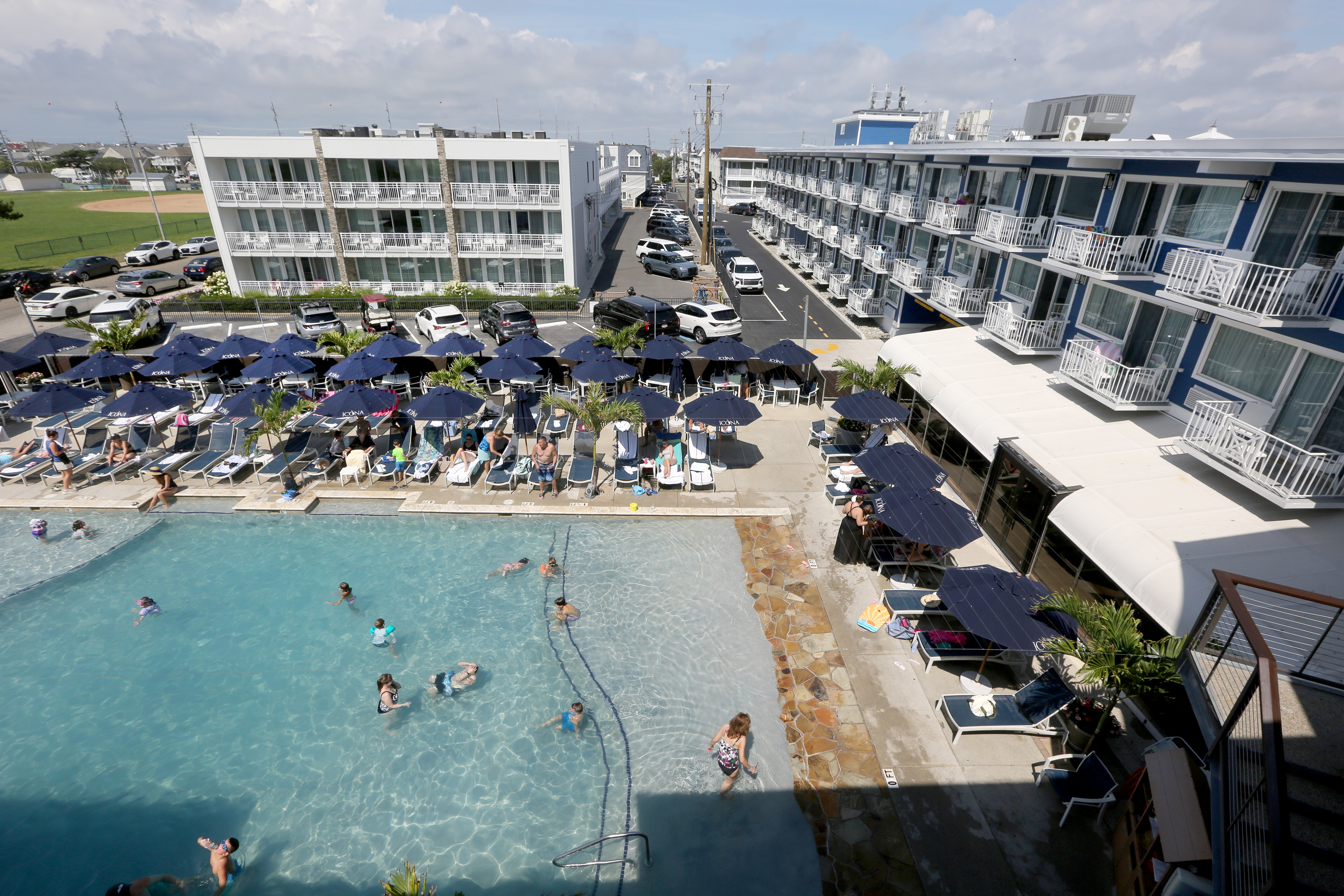
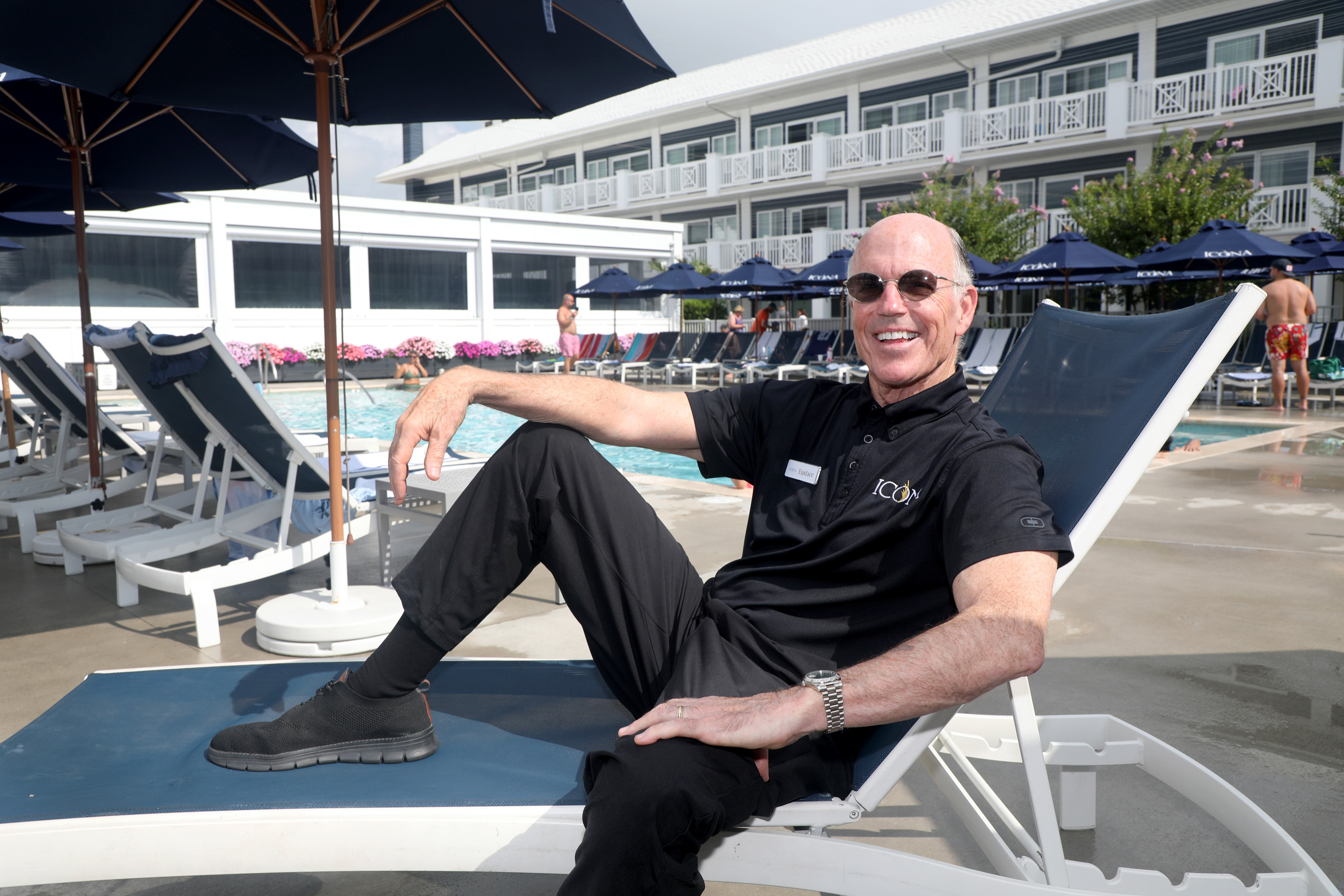
Eustace Mita, Icona’s chairman, poses by the pool at Icona Avalon.Vernon Ogrodnek / For The Inquirer
Mita speaks often of his legacy.
“I’ll be dead and gone, but imagine the next generation and then the next generation,” Mita said. “Everything we’ve built is built to last.”
And he said he hopes the lessons he instilled in employees are just as permanent.
One employee, Rob LaScala, worked at Mita Leasing and then went on to found LaScala Restaurant Group, which has dozens of locations across the region. In just a couple years working together, LaScala said, Mita left a mark.
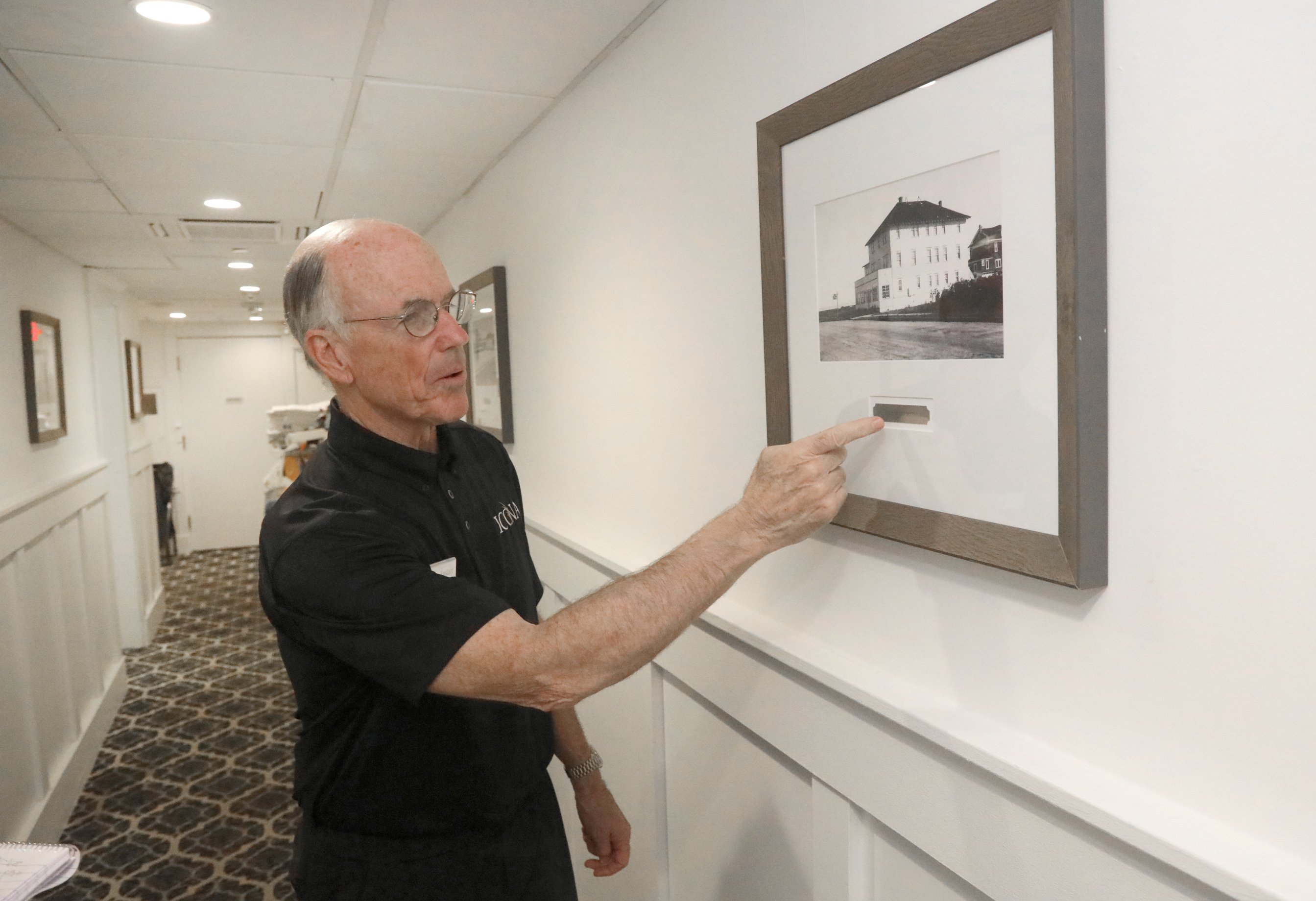
At his Icona Avalon hotel, Eustace Mita points to a black-and-white photo of the Puritan, Avalon’s first beachfront hotel that was founded by his grandfather, Eustace Wolfington.Vernon Ogrodnek / For The Inquirer
Mita is “just a make-you-feel-good type of person,” LaScala said. “I over the years have tried to emulate him” and create a company culture that transcends business.
Mita refers to his 1,100 employees as family but said he works to prioritize time with his actual family. He spends summer weekends with his wife, Susie, and some combination of their five children and 18 grandchildren. His oldest son, Euse, was recently named Icona’s president and CEO.
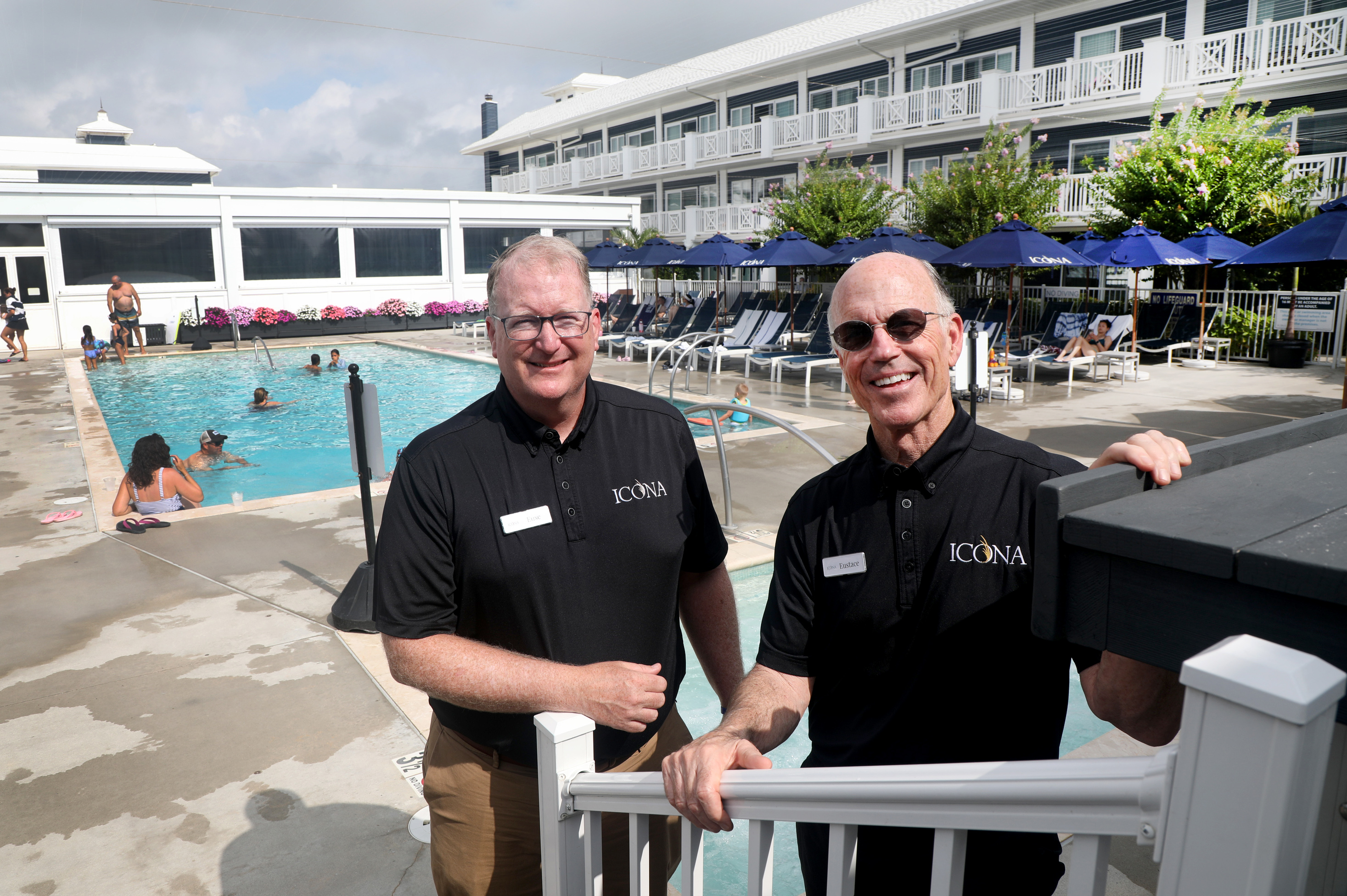
Eustace Mita (right), founder and chairman of Icona, with his son Euse, who was recently named president and CEO.Vernon Ogrodnek / For The Inquirer
But, of course, he said, work sometimes calls. On a recent weekend, with many summer staffers back at college, Mita helped clear tables at Icona Avalon while Euse was a fill-in valet.
Said Mita: “There’s no reason just because I’m a leader that I can’t bus tables, that I can’t sweep floors.”
The Jersey Shore is like the old joke: Nobody goes there anymore, and also, it’s more crowded than ever.
It is true that many Shore stalwarts have been priced, or annoyed, off the beach. And that towns feel busier and sometimes tenser than ever: more cars, not enough parking, canopy-to-canopy beaches, prohibitive housing costs, that occasional rudeness.
Not to mention rising sea levels, nuisance flooding, and seemingly regular tornado watches.
To move from complaining to solutions, we racked our brains, asked experts, and solicited ideas from our readers for ways to improve the Shore experience for everyone.
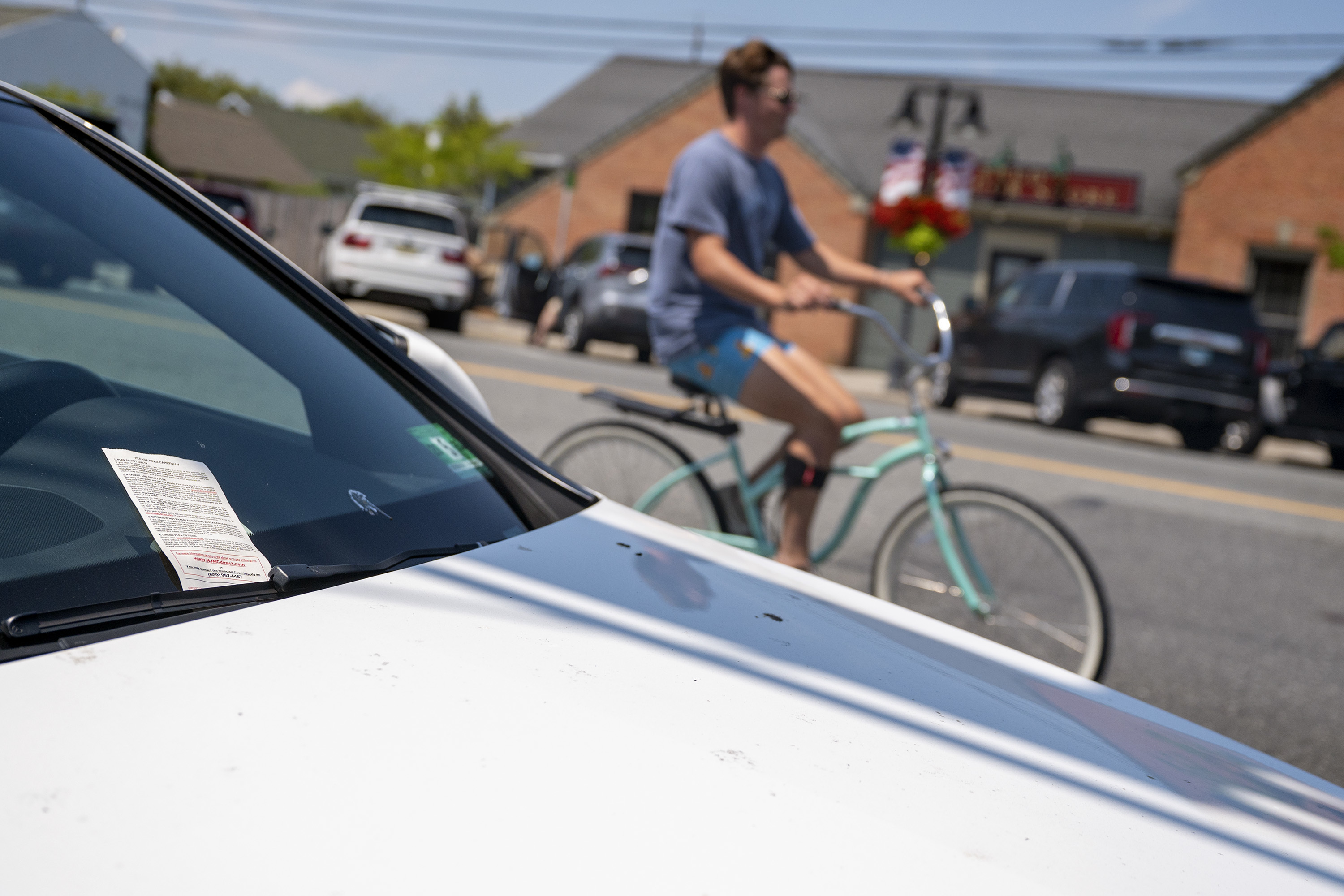
A car with a parking ticket on 96th Street, the main shopping and dining street in downtown Stone Harbor on July 12, 2023.Tom Gralish / Staff Photographer
Leave the cars off the island
So many of the suggestions had to do with reducing traffic and the sheer number of cars in beach towns during the summer.
Wrote one reader: “We need fewer cars on the island so bikers can safely travel — need to open lots on parkway and run shuttles.”
This reader proposed giving every homeowner two parking passes. “I live in Sea Isle,” the reader said. “Too many cars.”
Kara Cumiskey said that tenants brought seven cars to her four-bedroom rental in Ocean City.
“I think that there should be a ‘beach tag’ for cars,“ Cumiskey wrote to us. “Or some type of ‘congestion pricing’ for bringing your car onto the island. Something that gives people some pause for bringing a car for every person.”
While a mandatory ban or limit on cars seems unlikely, giving people the option of leaving their cars off the island and shuttling or Jitney Guy-ing into paradise seems like an interesting idea. The golf cart and e-bike rental business would definitely pick up. Fewer turtles would be squashed.
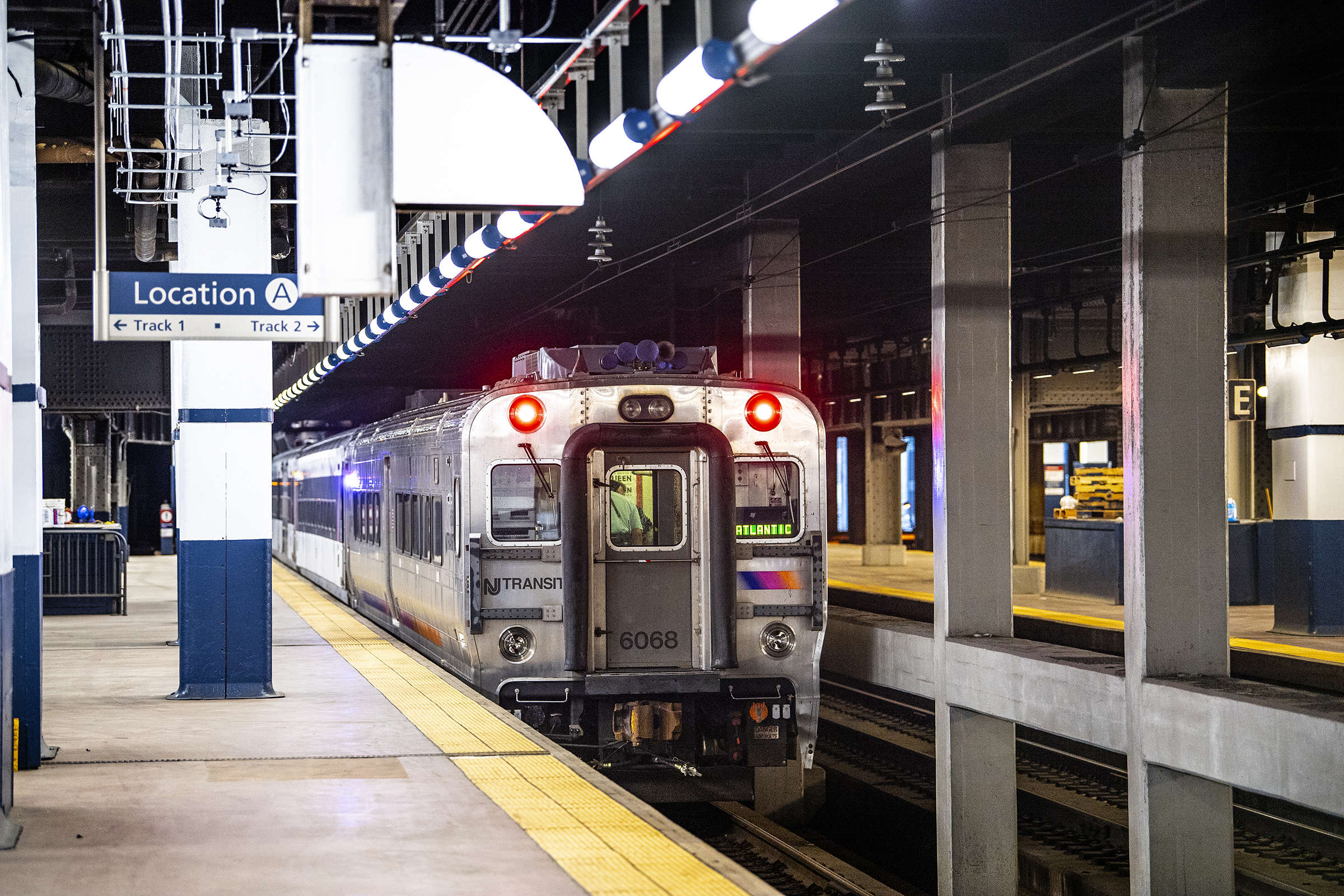
A NJ Transit train en route to Atlantic City is shown at 30th Street Station in Philadelphia on May 12, 2019.JOSE F. MORENO / Staff Photograp
We need more trains
Relatedly, there were calls to increase and improve public transportation to the Shore. The current NJ Transit train is fantastic to take (and from the Shore end, NJ Transit riders can park their car for free at the A.C. Convention Center), but man, is it slow.
An hour and 34 minutes at best between 30th Street Station and Atlantic City? Two hours between trains? Connections to the PATCO high-speed line only help a little. Still, I’ve noticed a lightness in the steps of the people who get off in Atlantic City with their suitcases and sunglasses. They’re onto something.
Others noted that train service once ran down to various towns in Cape May County. Wouldn’t that be lovely.
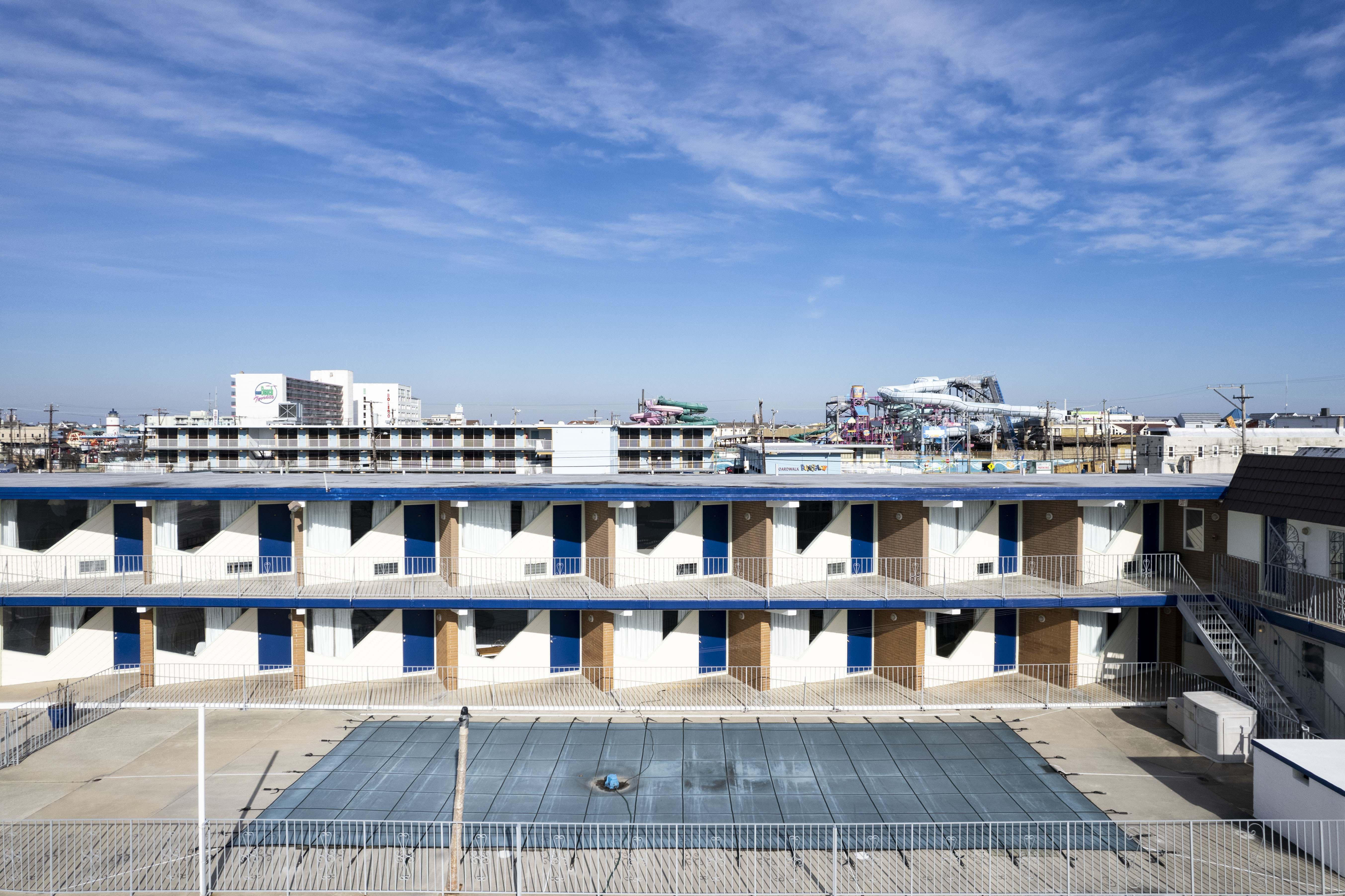
The Ocean Sands Motel at 3710 Ocean Ave. in Wildwood, N.J., on Tuesday, Jan. 24, 2023.Monica Herndon / Staff Photographer
Convert old motels to affordable housing
Ariela Rutbeck-Goldman, senior staff attorney at Fair Share Housing Center, says the Shore’s housing crisis is “increasingly a threat not just to affordability, but to the Shore economy itself.”
“The Jersey Shore can’t remain a place where the people who work in restaurants, hotels, shops, and other local businesses can’t afford to live,” she said.
Belmar, for instance, is “repurposing dilapidated motels and other underutilized properties to increase their housing supply,” she said.
“The goal shouldn’t simply be to create “employee housing,” so that workers can make it through the summer,” she said. “The Shore needs enough homes that teachers, nurses, service workers, young families, seniors, and other people who make these communities work can afford to live there year-round.”
A shore home is under construction along the boardwalk by the Ventnor City Fishing Pier in the Jersey Shore town of Ventnor City, N.J., on Friday, Jan. 22, 2021.HEATHER KHALIFA / Staff Photographer
‘Stop the monster houses’
As one reader wrote, “Stop the monster houses being built. The charm of the shore is getting bulldozed one lot at a time. These new builds are ugly!”
Another noted the homogeneity of the new construction, in particular the white boxes with the black roofs and trim. In a lot of Shore towns, this ship has sailed. Sea Isle City, for example, is almost totally built out. But there is some hope for others, where the old Shore houses, whether they are the big turn-of-the-century Dutch colonials or the small ranchers of the Wildwoods, are hanging in there.
Fair Share Housing is advocating for programs that help nonprofits acquire and preserve older homes to protect housing for year-round residents, as well as expanding tenant protections to prevent evictions.
“Monmouth Beach, one of the Shore’s wealthiest communities, recently authorized the purchase of a two-bedroom condominium that will be deed-restricted and sold to an income-qualified household,” said Rutbeck-Goldman. “That’s a relatively small investment, but it demonstrates that municipalities don’t have to wait for a large development project to create affordable homes.”
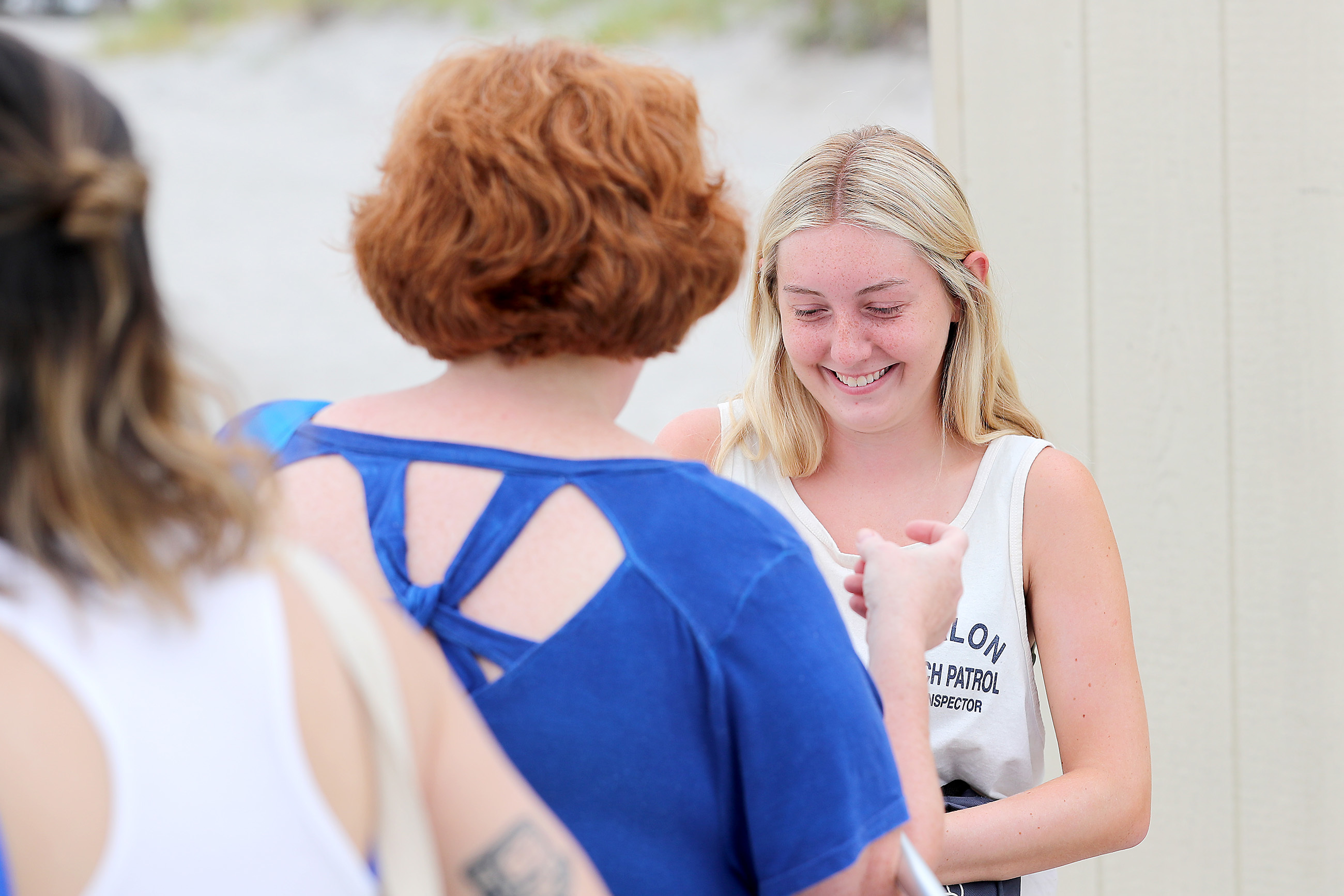
Shanna Killion, of Northeast Philly, works as a beach tag inspector in Avalon, N.J., on Sunday, Aug. 14, 2022. Killion said among the interesting items she has seen people carrying to the beach was an inflatable bed.DAVID MAIALETTI / Staff Photographer
Eliminate beach tags (or at least make them reciprocal)
Lots of people urged New Jersey beach towns to do away with beach tags. Dream on. Strathmere, one of the last three free beaches in the Philly area of the Jersey Shore, just voted to start charging $10 a day, $45 a season, or $30 if you buy a tag before Presidents’ Day. That leaves just Atlantic City and the Wildwoods beach-tag free.
One interesting idea was to make the beach tags reciprocal to other towns. Some towns, like Ventnor and Margate, do have reciprocity, but readers imagined a Cape May County beach tag, for instance, that would encourage exploring.
Related, a bill that would require towns to be transparent about where their beach tag revenue is actually going has stalled in the New Jersey legislature.
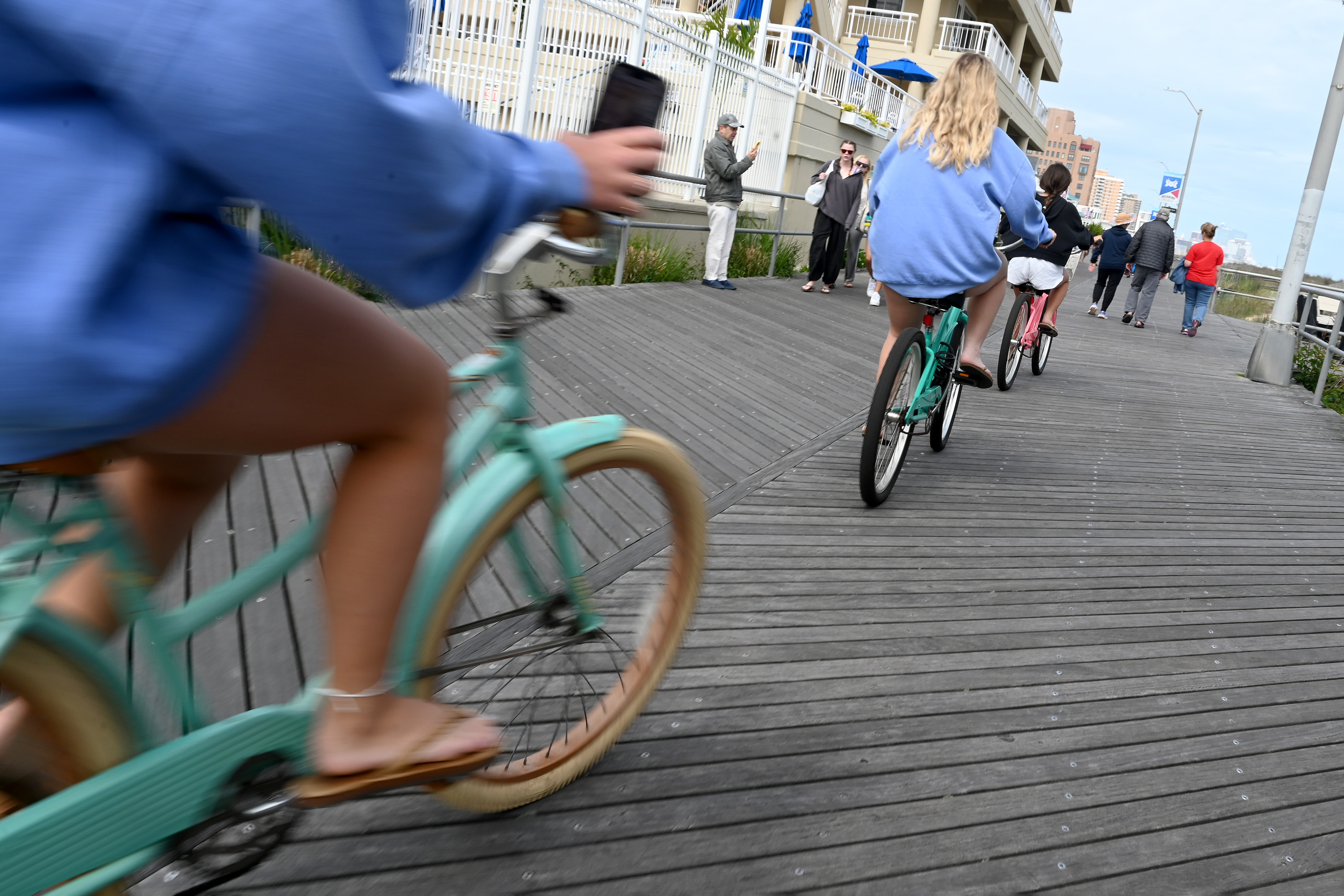
Bike riders on the promenade boardwalk in Sea Isle City at the Jersey Shore on May 24, 2023.Tom Gralish / Staff Photographer
Make the Shore better for bikers and pedestrians
Many towns have expanded bike lanes and redesigned roads to calm traffic. More of this, please! No matter the pedestrian laws, the reality is, it’s still a miracle if the cars stop for you as you start to cross, or if the bike lane isn’t clogged with runners going in the opposite direction.
Roads one block from the beach should be one lane in each direction, with traffic calming measures like flashing pedestrian lights and bright flags for the pedestrians to carry across. It will require a lot more patience than Jersey is known for. It’s OK! There should be a safe way to commute to jobs by bicycle and return home at night.
A flight at Behr Brewing in Cape May in 2023.Jenn Ladd / Staff
Let Ocean City BYOB already
I know this is not going to happen. But what a wonderful restaurant renaissance might follow! A mini Cape May! As one reader wrote, “I have had a place in OC for 25 years and other than [Ocean City Yacht Club], have never eaten dinner in OC because can’t even have a glass of wine!”
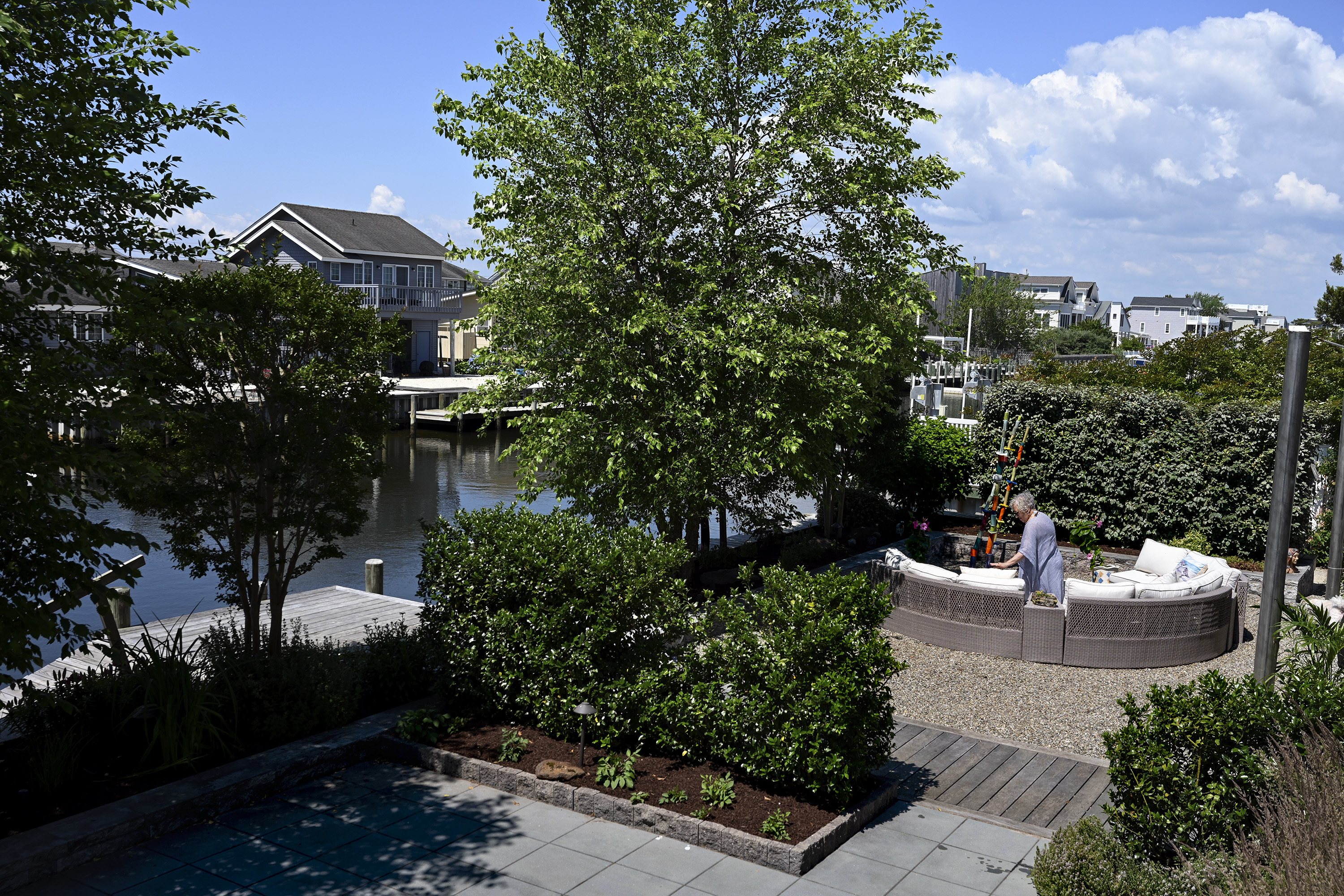
A backyard with access to the bay, at a Beach Haven, Long Beach Island home on June 13, 2024.Tom Gralish / Staff Photographer
Embrace ‘coastal naturalization’
Cindy Zipf, executive director of Clean Ocean Action, worries that the entire Jersey Shore is becoming more high-end resort, less natural coastline.
Zipf advocates a concept known as “coastal naturalization” and says residents and visitors must rally against the “overdevelopment and citification” of Shore towns. That includes expanding parks with native plants and trees, which Zipf says will increase both quality of life and resilience to storms.
Zipf advocates an end to “the unchecked paving and urbanization that erodes community character while contributing to increased flooding, polluted runoff, and litter.”
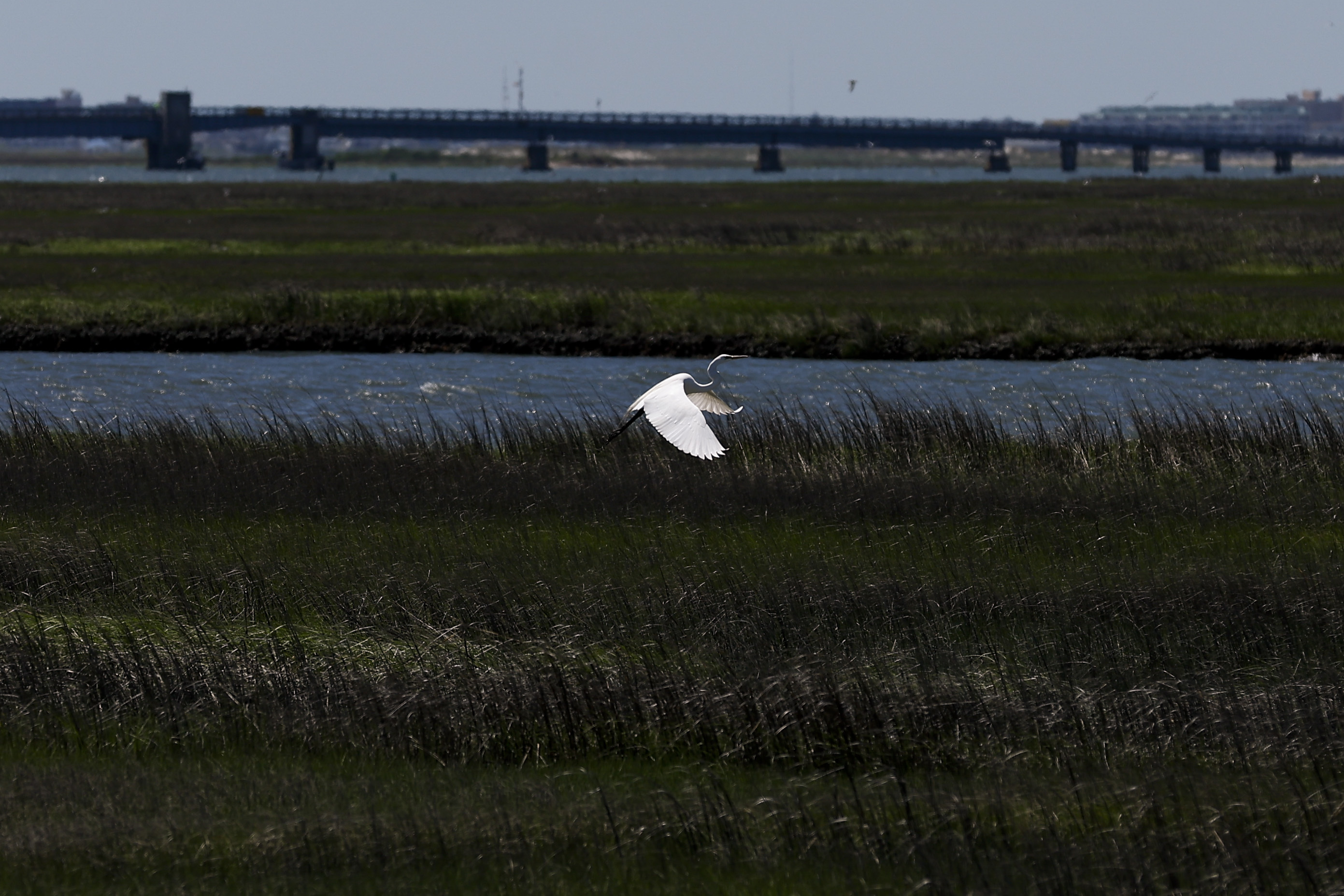
A snowy egret flies over the salt marsh at the Wetlands Institute on May 19, 2025, in Stone Harbor, N.J. Dredged material was used to raise the height of the marsh in the Scotch Bonnet Island project.Monica Herndon / Staff Photographer
Increased marsh restoration and flooding mitigation measures
Speaking of increased flooding: The Wetlands Institute announced that it’s temporarily retreating from its half-century headquarters on the Stone Harbor Causeway to rebuild its trails and building because of increased flooding.
The institute focuses on coastal resilience and marsh restoration, with nature-based solutions. It is elevating and widening its Salt Marsh Trail and creating a new high marsh designed for diamondback terrapin nesting and coastal birds.
Lenore Tedesco, the institute’s executive director, says marsh rescue is critical for storm-risk reduction.
“By elevating the Salt Marsh Trail, we are also creating a barrier to storm waves but unlike many coastal protection features that wall off people and wildlife, we are doing it in a way that benefits marshes and wildlife,” she said.
The Wetlands Institute is hoping other coastal communities learn from the approach.
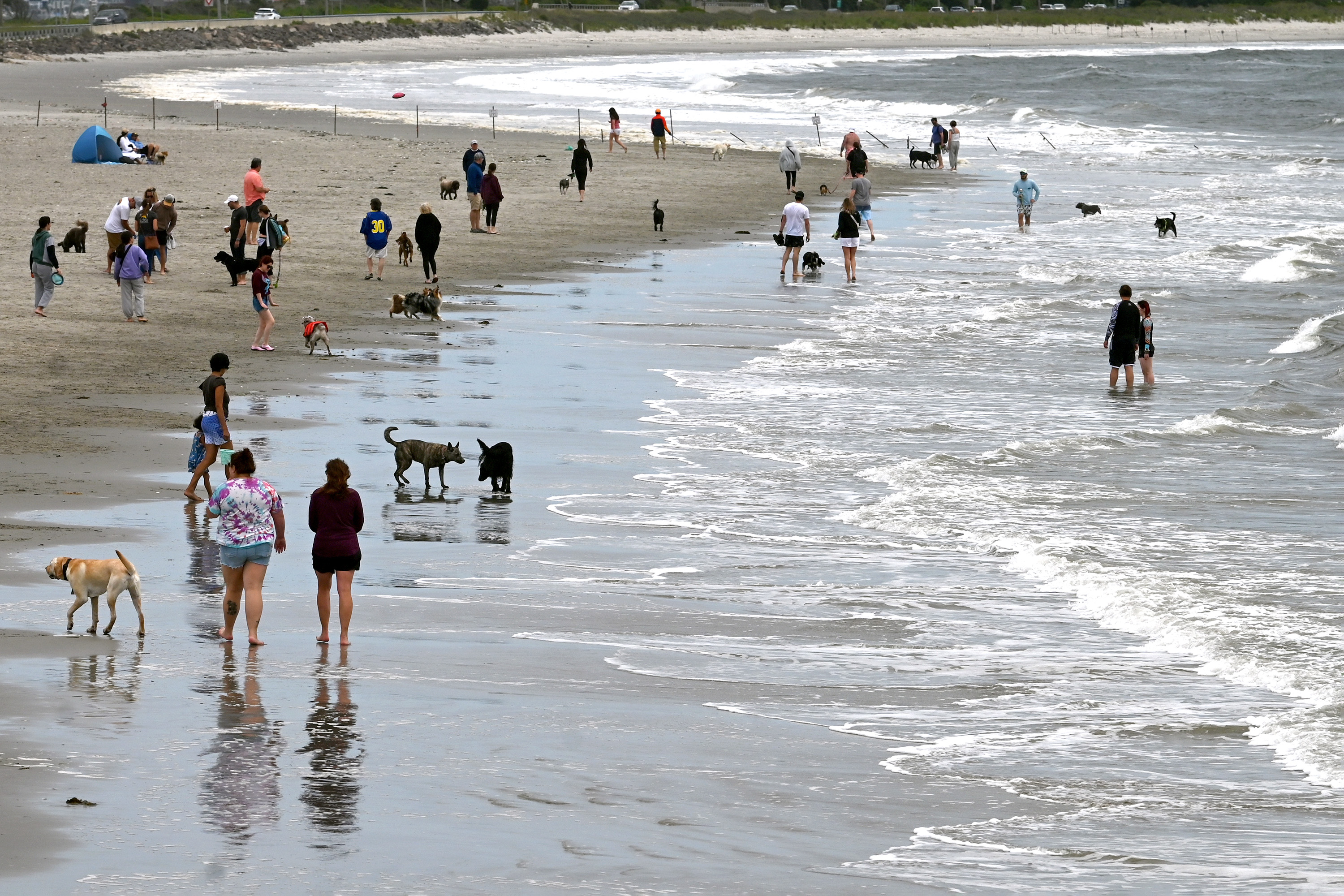
Dogs and their owners enjoy the sand and water at the Malibu Beach Wildlife Management area in Egg Harbor Township at the Shore during the Memorial Day weekend, on May 28, 2023.Tom Gralish / Staff Photographer
More dog beaches and dog hours
Are dogs so bad? What if every town, or every island, had a beach dedicated to dogs and their owners? What if there were dog hours … on the boardwalks? What if all the towns allowed dogs to run free on the beach before, say, 8 a.m. in the summer? As Bob Dylan wrote, “In harmony with the cosmic sea / True love needs no company / It can cure the soul, it can make it whole / If dogs run free.”
Fans pack the beach for blocks as Phish performs a beach concert in Atlantic City, Friday, Aug. 13, 2021.VERNON OGRODNEK / For The Inquirer
Fully fund A.C. concerts
There’s been a welcome uptick in big-name acts booked to A.C.’s estimable Boardwalk Hall, including Shakira, Phish, and Goose (also, Disney on Ice). Rüfüs du Sol performed on the beach this year. But the sophisticated and intimate Thursday night jazz concerts on the Atlantic City Boardwalk only started in August this year. In previous years, this popular tradition ran all summer long. There were a few A.C. beach concerts this summer and a couple jazz nights at Gardener’s Basin, but nothing like in past years.
On the upside, there is a robust food truck scene at the A.C. Seawall and at O’Donnell Park, and new housing construction projects in places that have long been vacant. And no beach tags. But the city is under increased pressure from expected job losses due to New York casinos. Will Atlantic City put the pieces together?
Have more ideas? Email us at downtheshore@inquirer.com!
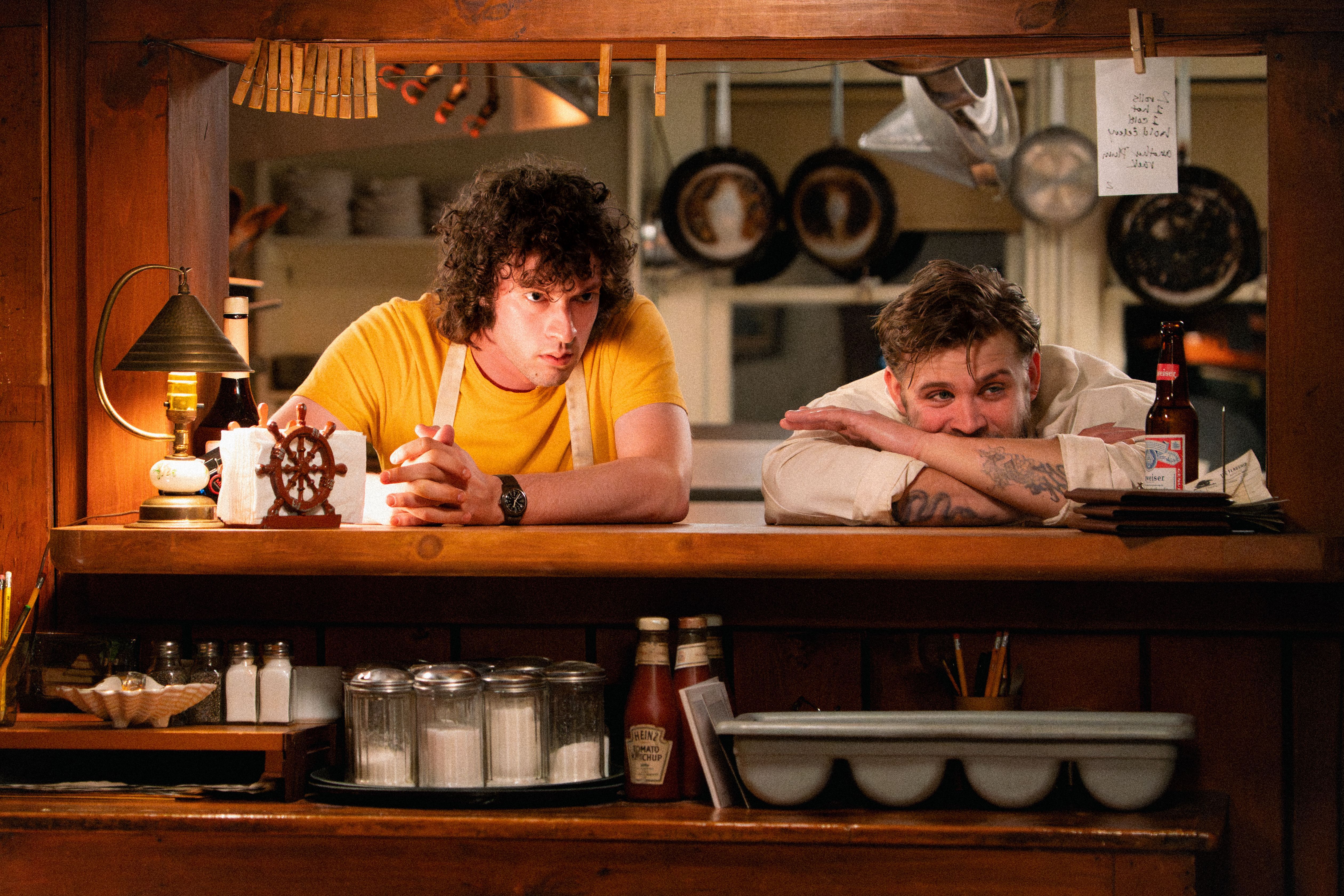
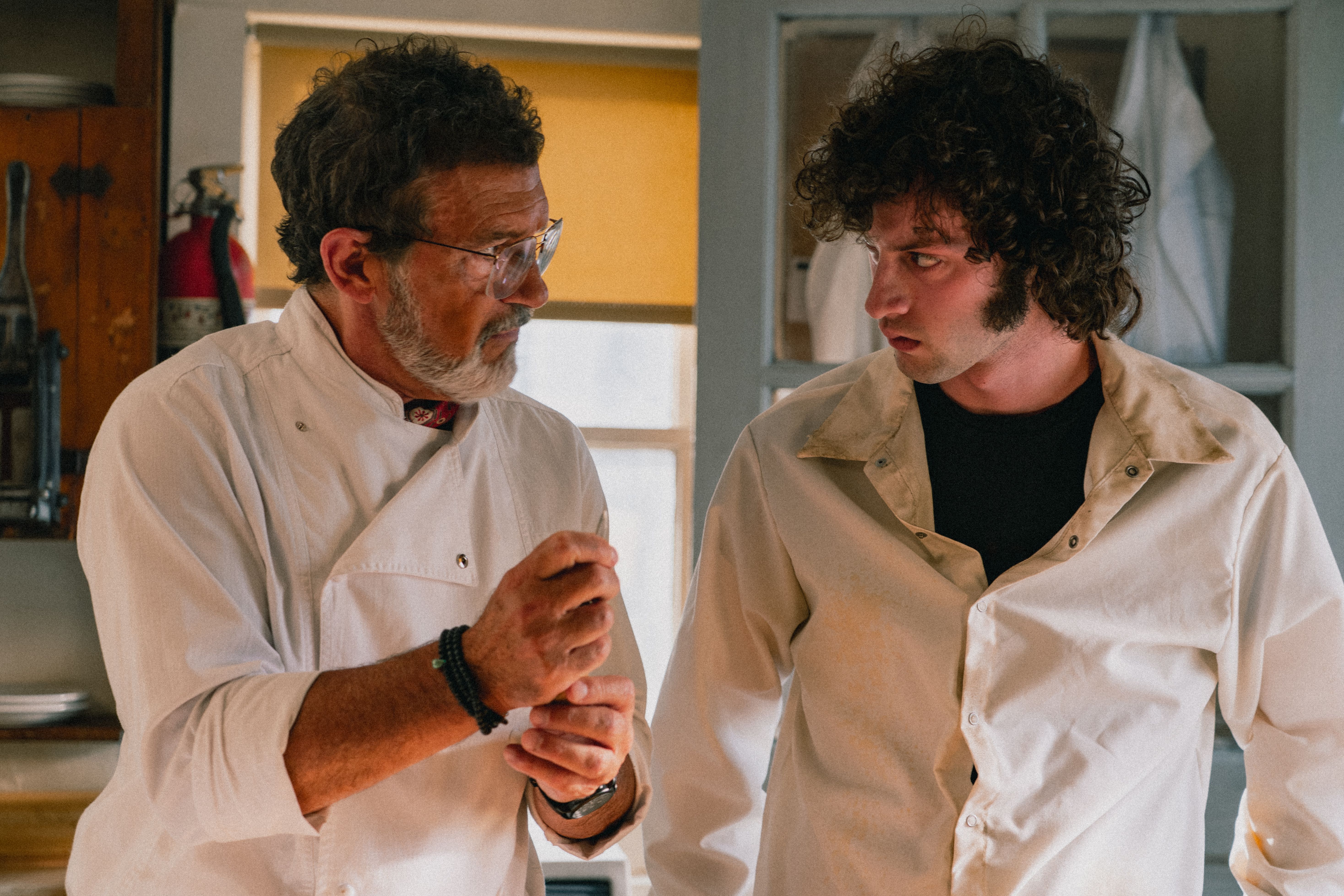
Dominic Sessa (left) as Anthony Bourdain with Leo Woodall as a renegade cook in “Tony.”A24
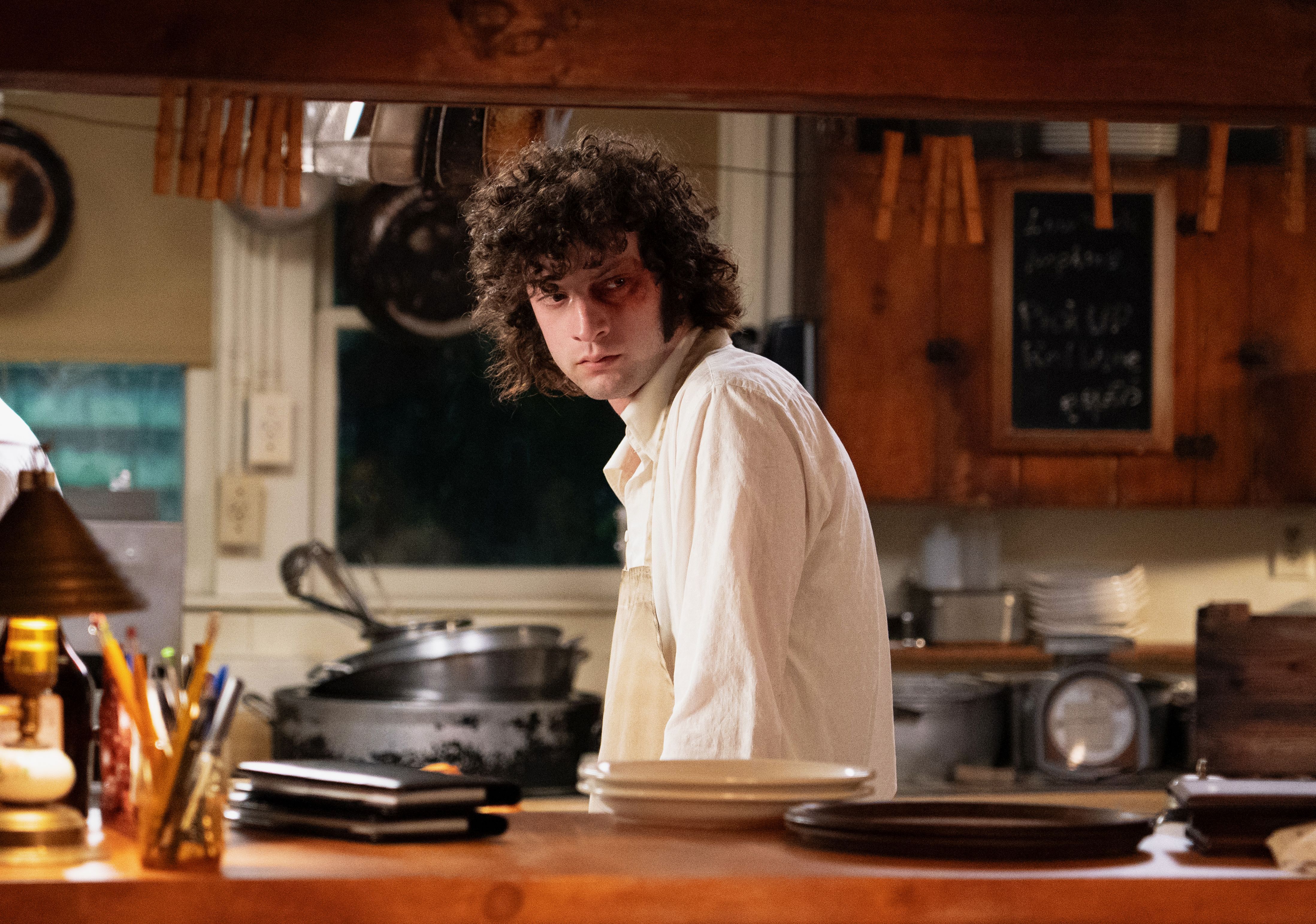
In the film, Sessa portrays a 19-year-old Bourdain in the summer of 1973, when he found himself in Provincetown, Mass., desperate to get his would-be wife, Nancy Putkoski (Emilia Jones), to fall in love with him after losing out on a writing fellowship. A tough-yet-kind chef (Anthony Banderas) gives Bourdain a job as a dishwasher at the Flagship, a no-nonsense seafood shack where Bourdain grows from bumbling dishwasher into something resembling a cook.
The film draws heavily on chapters of Bourdain’s best-selling memoir Kitchen Confidential, in which Bourdain romanticized a crew of talented, if aimless, line cooks and their exploits.
“They drank everything in sight, stole whatever wasn’t nailed down, and screwed their way through floor staff, bar customers, and casual visitors like nothing I’d ever seen or imagined,” Bourdain wrotewith palpable admiration.
When Sessa startedas a dishwasher there in 2016, he was 13. By the time he worked his last shift in 2019, he had worked his way up to full-fledged baker, responsible for opening the shop and preparing batches of Cathy’s famous powdered and cream-filled doughnuts from scratch.
“I’ve hired a lot of great kids, but there are some who don’t get it,” said Cathy Greene, the bakery’s owner. Sessa “was really a natural.”
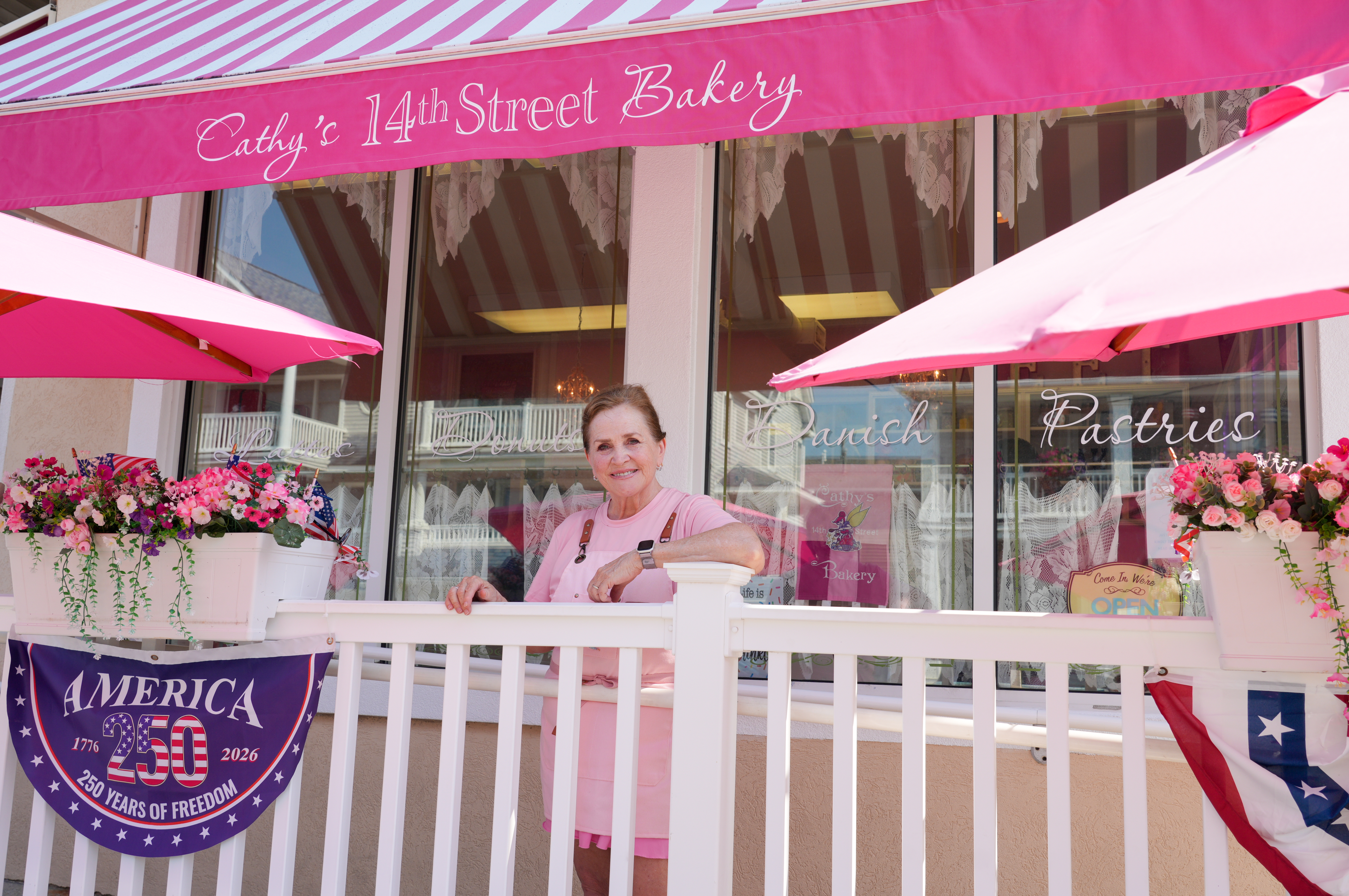
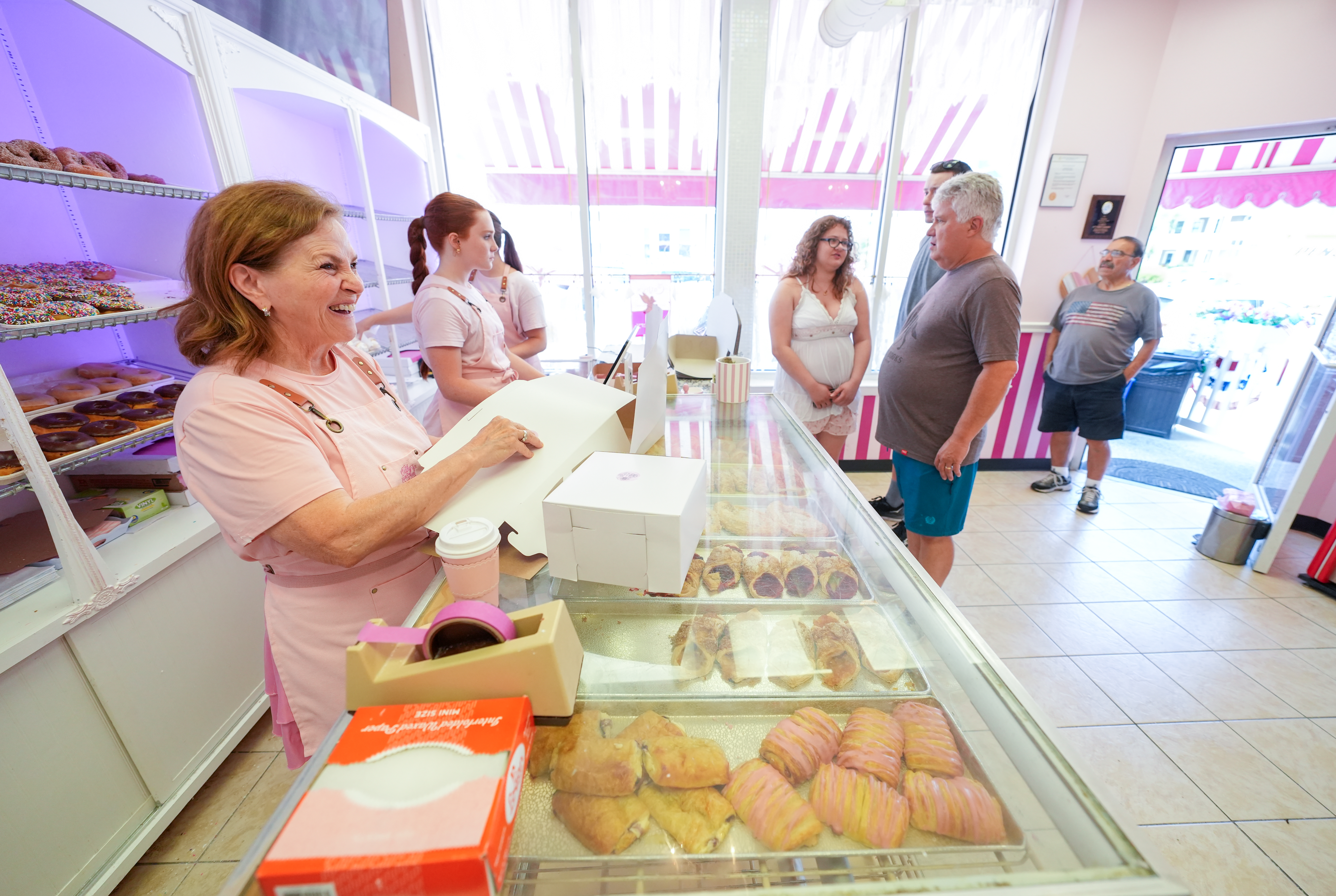
Cathy Greene, owner of Cathy’s 14th Street Bakery in Ocean City, N.J., fills a box with doughnuts for a customer on Aug. 13, 2026. Former Cathy’s dishwasher and junior baker Dominic Sessa plays Anthony Bourdain in the new A24 biopic “Tony.”Tim Hawk / For The Inquirer
Sessa doesn’t remember taking to it so easily. And yet, like Bourdain, he kept coming back.
“When I first started there, it was miserable — especially at that age, waking up super-early and making batches of dough. I was just lazy and didn’t feel like finding another job,” Sessa told The Inquirer. “But every summer I’d come back and Cathy would teach me something new … The experience was one of the things that taught me how to work hard.”
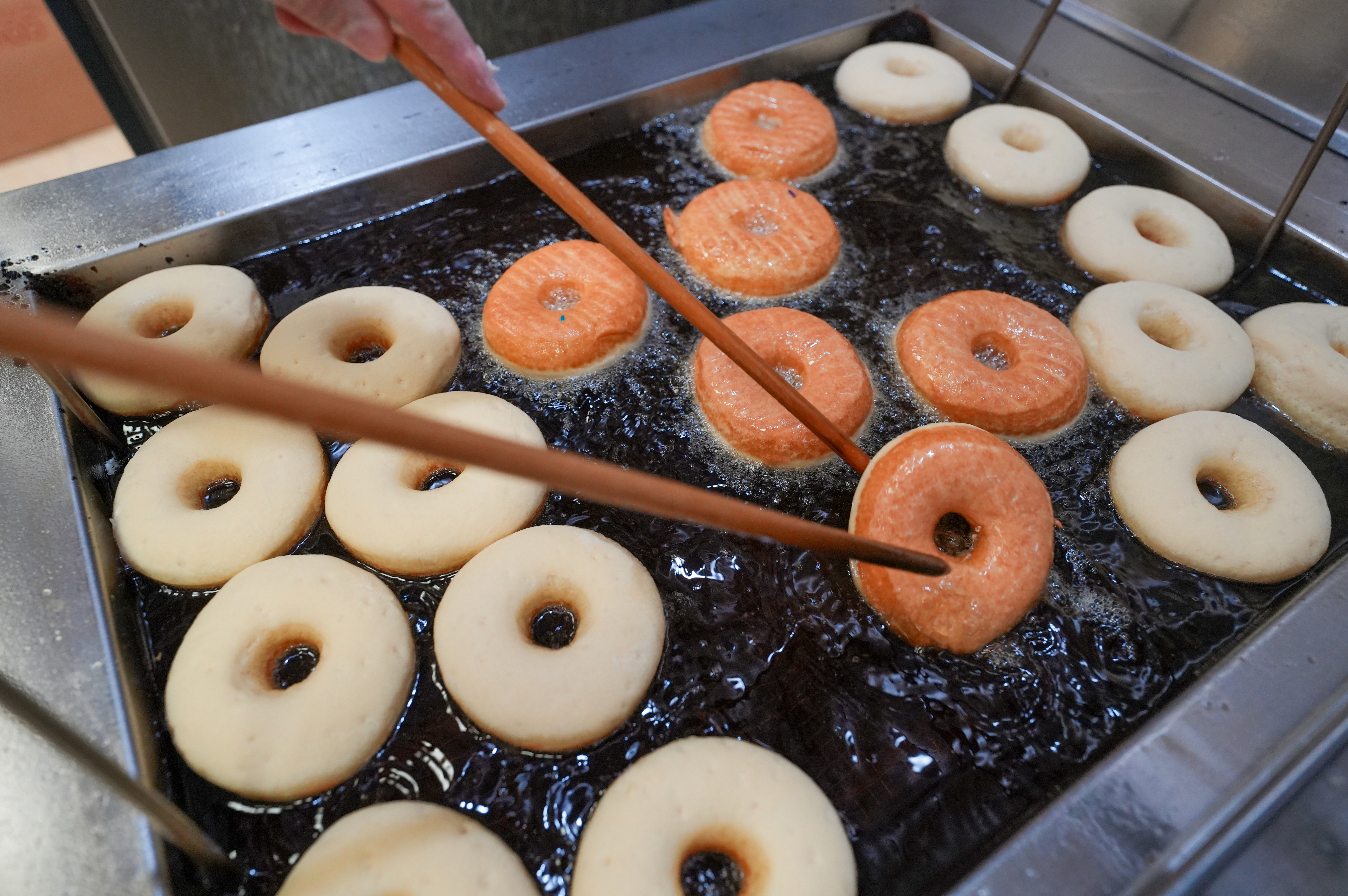
Tyler Greene, Cathy’s son, flips doughnuts in a deep fryer at Cathy’s 14th Street Bakery in Ocean City, N.J., on Aug. 13, 2026. Tim Hawk / For The Inquirer
Doughnut summers
Admittedly, frying doughnuts at a family-run bakery did not entirely prep Sessa for the fictional kitchen he’d step into as a teenage Bourdain. In Tony, the Flagship is full of cocaine, dirty jokes, and smashed dishes. Cathy’s, by contrast, was basically Disney World.
Still, Sessa said the job helped him understand what motivates chefs to endure grueling hours and nonstop kitchen injuries. Like Bourdain, the actor was a self-styled troublemaker, nearly getting kicked out of his South Jersey high school before earning a hockey scholarship to Massachusetts’ prestigious Deerfield Academy, where he would eventually be discovered by director Alexander Payne and land his breakout role as a boarding school kid in 2023 Christmas comedy The Holdovers.
Cathy’s kept him disciplined.
Sessa used to clock in atthe bakery at 4:30 a.m. to prep the day’s first doughnuts, rolling out and aerating one batch of dough while minding another batch as it proofed. In between, he’d fry up a third.
Tyler Greene rolls out the dough for donuts at Cathy’s 14th Street Bakery in Ocean City, N.J., on Aug. 13, 2026. Former Cathy’s dishwasher and junior baker Dominic Sessa plays Anthony Bourdain in the new A24 biopic “Tony.”Tim Hawk / For The InquirerA variety of doughnuts are for sale at Cathy’s 14th Street Bakery in Ocean City, N.J., on Aug. 13, 2026. Former Cathy’s dishwasher and junior baker Dominic Sessa plays Anthony Bourdain in the new A24 biopic “Tony.”Tim Hawk / For The Inquirer
At its busiest, Greene said, Cathy’s sells between 1,200 and 1,400 doughnuts a day. Sessa drew on the rush — and the high stakes — while acting in Tony.
“I related to the integrity working in a kitchen demands,” he said. “If I didn’t show up on time, everything would be messed up, and everyone would know it was [because of] me.” Plus, there was “something so gratifying” about placing doughnuts in the display case and watching customerssnap them up.
Antonio Banderas (left) as a chef-mentor with Dominic Sessa as Anthony Bourdain in “Tony.”A24
Greene said Sessa shined when it came to the rhythm of baking and could manage the flow of the stationabout as well as she could. When they’d roll out dough side by side, Greene would quiz him on three-digit by three-digit multiplication. Sessa, she said, always answered correctly “off the top of his head.”
“He was a real smart kid,” Greene said.
Things didn’t always run smoothly. Once, Sessa recalled, he nearly ruined the bakery’s trash cans by throwing out a batch of dough with too much yeast in it. He had gotten away with the mistake — until the dough proceeded to nearly quintuple in size. “It was billowing out of the cans, on the ground, seeping into the kitchen,” said Greene. “It was pretty funny.”
The stress of the job didn’t detract from Sessa’s favorite part: small-town notoriety.
Passersby love to peer into Cathy’s kitchen from the street. “Kids were always interested in watching the guy who rolls the doughnuts out,” Sessa said. “It made me feel like a celebrity.”
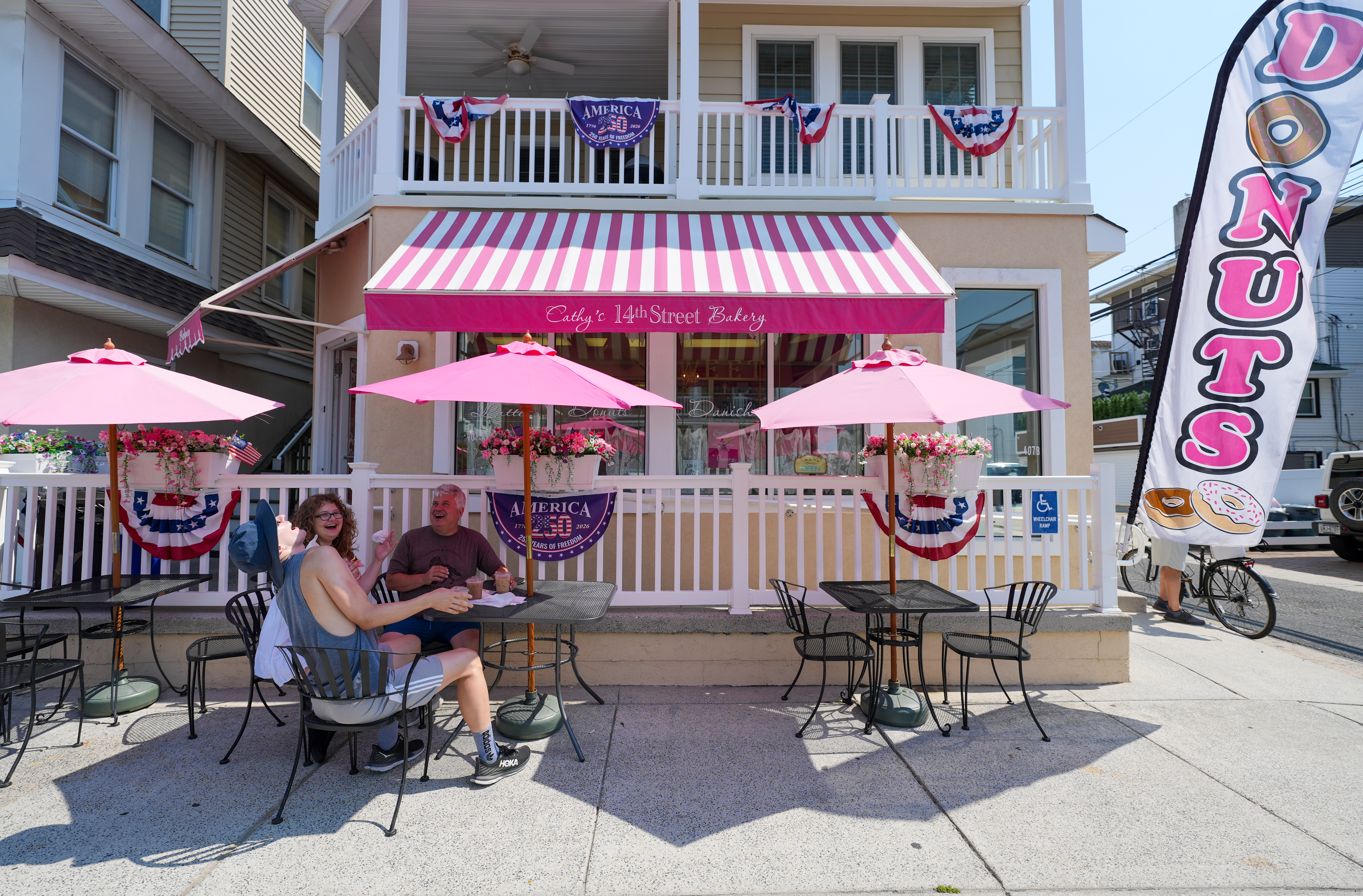
The outside of Cathy’s 14th Street Bakery in Ocean City, N.J., on Aug. 13, 2026. Former Cathy’s dishwasher and junior baker Dominic Sessa plays Anthony Bourdain in the new A24 biopic “Tony.”Tim Hawk / For The Inquirer
Drinking on the beach and baking hungover
As much as Tony spins a hero’s journey for a young Bourdain (who ends the movie — spoiler — by enrolling in culinary school), it also foreshadows his struggle with substance use.
Dominic Sessa as Anthony Bourdain in “Tony.”A24
Bourdain, who died from suicide in 2018 at 61, had spoken candidly about his addiction to heroin and cocaine before getting sober in the 1980s. In Tony, we see the fledging chef try cocaine for the first time at his dishwashing station at Flagship with Sal(Leo Woodhall), a hard-partying coworker who relishes in showing Bourdain his favorite vices.
Sessa’s Ocean City summers followed a similar pattern. Before The Holdovers, the actor was crossing the causeway to buy booze at Circle Liquors in Somers Point.
“All of my friends were doing the same thing” as Bourdain in Tony, Sessa said. “We would just work so we could get paid enough to buy alcohol, drink on the beach all night, go into work hungover, sleep it off after our shift, and do it all over again the next day.”
“We were all under 18 so we felt invincible,” Sessa said. ”It was paradise.”
Cathy Greene, owner of Cathy’s 14th Street Bakery in Ocean City, N.J., fills a box with donuts for a customer, on Aug. 13, 2026. Former Cathy’s dishwasher and junior baker Dominic Sessa plays Anthony Bourdain in the new A24 biopic “Tony.”Tim Hawk / For The Inquirer
Antics aside, Greene is proud of the role her bakery played in helping Sessa get into character (even if she hasn’t seen Tony yet). She just isn’t sure about cashing in on his star power. “I don’t want to be the one who is like, ‘Oh, I had Dominic Sessa here,’” Greene said. “But it’s pretty cool.”
Within minutes of waking up, I can’t help but reach for it. The iPhone on my nightstand has a gravitational pull.
I swipe through my Instagram feed before my eyes have even adjusted to daylight. Of course, there is nothing urgent in this sea of vacation pictures, pregnancy announcements, adorable dog videos, and ads for products I Googled the day before.
Yet I can’t stop scrolling.
Last month, I became hyperaware of my dependence on this unhealthy habit when I deleted Instagram — my millennial social media of choice — for two weeks. It was for “work purposes,” I told myself, and would inform this story about how much time and money some consumers have spent trying to pull themselves from their screens.
I ended up deleting Facebook, too, after a day spent filling Instagram’s absence with rambling posts from neighborhood groups.
After my experiment, I see why people are willing to pay to unplug from social media.
Chen Wang, an associate professor of marketing at Drexel University’s LeBow College of Business, said she gets it, too. Not only because she observes the habits of her Gen-Z students, but also because she researches consumer technology and self-regulation.
The human-smartphone relationship, Wang said, has become “a paradox.”
“It makes our life so convenient. We can do almost everything on our phone,” Wang said. “At the same time, we’re also wishing we could use it less.”
Why some pay to unplug
Someone scrolls on their phone in this 2019 file photo.Heather Khalifa / Staff Photographer
As consumers have become increasingly aware of how social media and screen time affects their mental health, a cottage industry of social-media-detox businesses has emerged.
And an array of phone applications — ironically — block other apps. Some of those app-blockers are free. Others offer paid tiers from $40 to $100 a year.
Others struggling with social media overuse have spent hundreds of dollars on wellness retreats, where screen time is limited. In May, Cristen DeDomenico, a Philly-based bartender and therapist-in-training, spent about $1,300 to attend a weeklong retreat at the Kripalu center in Massachusetts.
“It definitely involved turning off and stepping away” from the digital world, said DeDomenico, 35, who felt less tempted to scroll social media in the retreat environment. “No one else was on their phone, so you didn’t feel the urge to be on yours.”
Closer to home, for a nominal fee, community leaders and small-business owners around the Philly area have been organizing social gatherings and workshops where attendees have to put their phones away.
Glenside educator Charlie Price started her digital-detox and wellness business, Time and Space, during the pandemic, when she noticed her own bad phone habits while stuck at home. Price, 36, said she’d often scroll Instagram for more than 30 minutes at a time.
Now, Price hosts regular events, including hikes and art workshops, for which people pay between $5 and $25 per person. Attendees abide by an honor system: Keep phones out of sight.
The focus, Price said, is “getting together in person and in nature … getting out IRL,” — in real life, in internet parlance.
What works best for reducing screen time
A man looks at his phone while walking his dogs.David Zalubowski
At its core, the solution to our scrolling problem is free: We all could just turn off, hide, or simply walk away from our devices.
DeDomenico said she learned that when she returned from her retreat. For the first few weeks, she was more present in her daily life, she said, but then old habits crept back in — and her post-work scroll got longer.
I’ve found this, too, since redownloading Instagram. Grabbing my phone to check the weather or pull up a photo can quickly turn into a waste of 15 minutes or more on mindless swiping.
I don’t think going cold turkey is the answer. I do enjoy those adorable dog videos and the funny reels, and the photo dumps from people I haven’t seen since grade school.
After Wang’s reassurance about the effectiveness of external motivators, I’ve been reading more articles about the best app-blockers — and even toying with the idea of investing in one of them.
Peace of mind is probably worth at least $50, right?
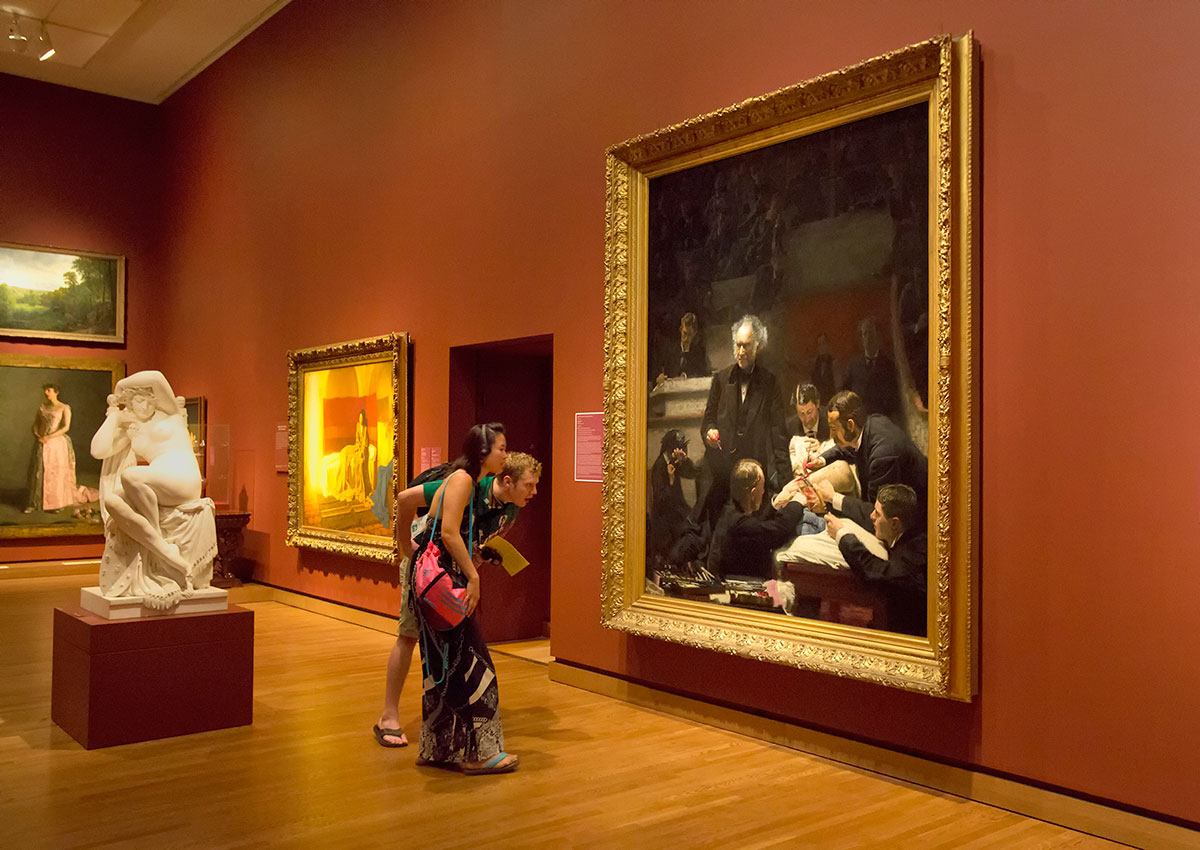
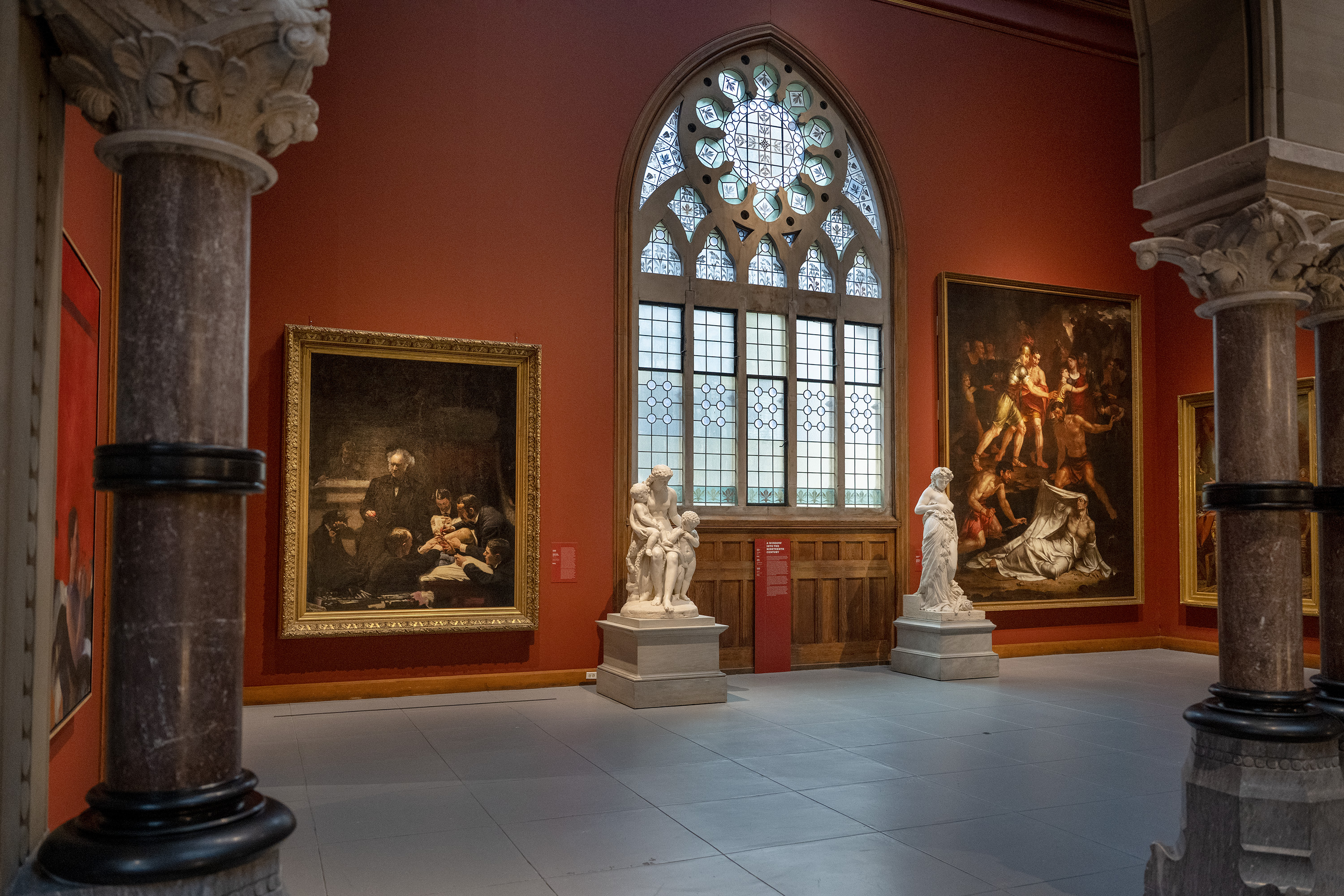
One painting stands out among the stately portraits, vast landscapes, and elaborate tableaux of figures in the Philadelphia Museum of Art’s early American art galleries.
And not just for its size.
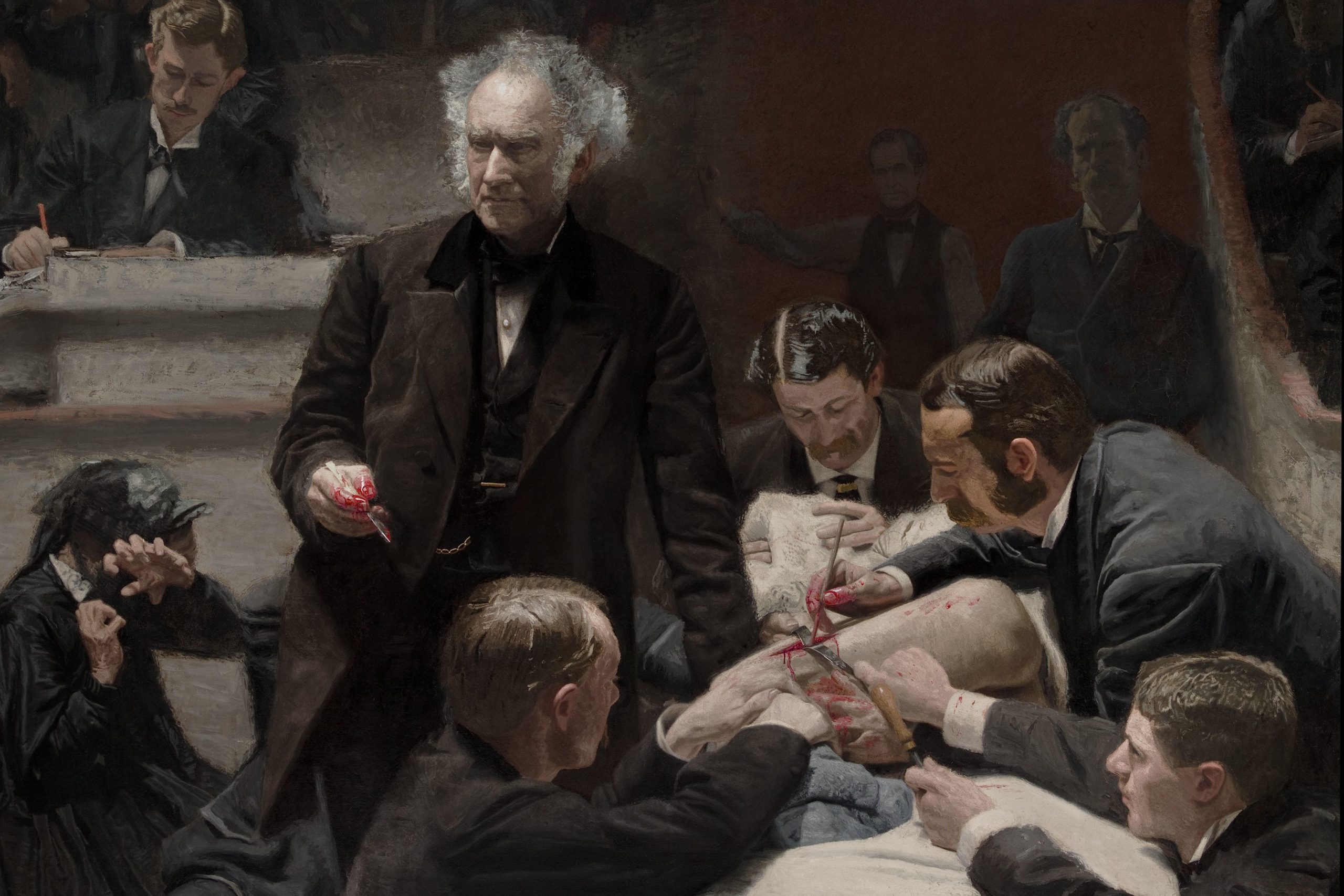
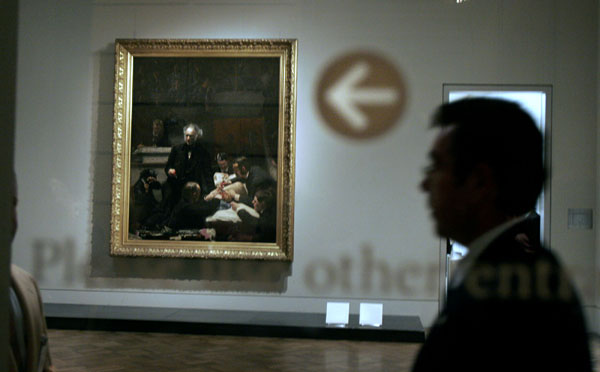
In the 8-by-6.5-foot oil painting, a stern-looking man with fluffy gray hair stands next to an operating table. A crowded amphitheater watches him and a group of doctors operate on a boy’s leg. The wound, their hands, and their scalpels are covered in bright red blood.
A detail from “The Gross Clinic.” Courtesy the Philadelphia Museum of Art and the Pennsylvania Academy of the Fine Arts
The painting is currently owned jointly by the PMA and the Pennsylvania Academy of the Fine Arts (PAFA), where Eakins studied.
But the story of the journey to that ownership is not a simple one.
In 2006, after 128 years of displaying the painting at Jefferson, the university sold it in a surprise deal. Local institutions had 45 days to match the price: $68 million.
PMA and PAFA started a public fundraiser, and Philadelphians took swift action — no one was going to take their painting away from them.
Twenty years ago, Philadelphia almost lost The Gross Clinic forever. Almost.
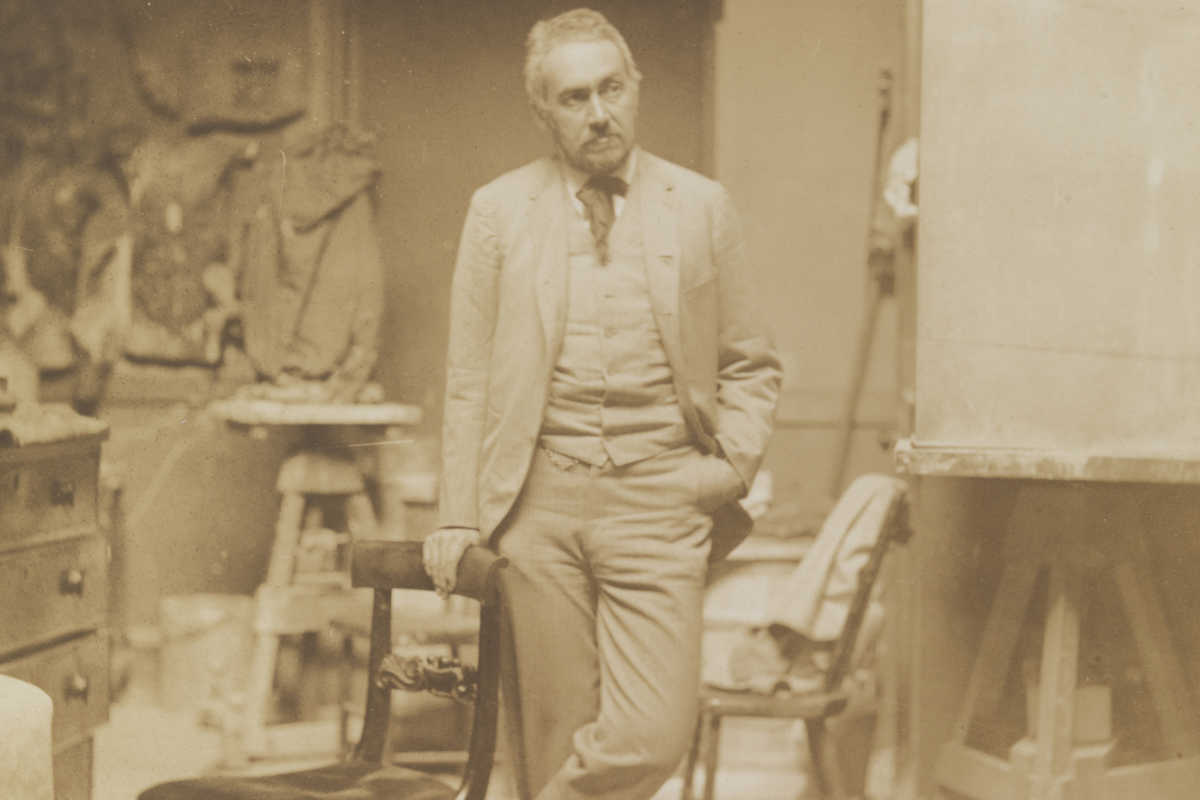
Thomas Eakins in his Chestnut Street studio.Photo taken by Samuel Murray.
The slow burn of ‘The Gross Clinic’
Eakins was incredibly passionate about the medical profession. So much so that while studying at PAFA, he also enrolled in anatomy and dissection courses at Jefferson, where Gross was teaching.
“He was very obsessed with the accuracy of the body because as a painter, knowing the human body and depicting it is the highest skill level to attain,” said Reisa Mukamal, a PMA museum guide.
In The Gross Clinic, Gross is operating on an adolescent boy with osteomyelitis, a bone infection that had previously been treated with amputation. The painting depicts the doctors performing a newer procedure for the disease involving removing the damaged bone tissue rather than cutting off the limb — a stunning medical advancement.
Works in the newly renovated Furness and Hewitt building at the Pennsylvania Academy of the Fine Arts, including “Portrait of Dr. Samuel D. Gross (The Gross Clinic)” by Thomas Eakins.Tom Gralish / Staff Photographer
“The light is shining off Dr. Gross’ head and it’s almost like your eye goes there. It’s a dark painting, and then your eye goes to his forehead, sort of symbolizing his intellect. … This is a live surgery, which was a brand new thing to paint,” said Mukamal.
Eakins was excited to show off The Gross Clinic at the 1876 World’s Fair in Fairmount Park, which doubled as a Centennial celebration and exhibition.
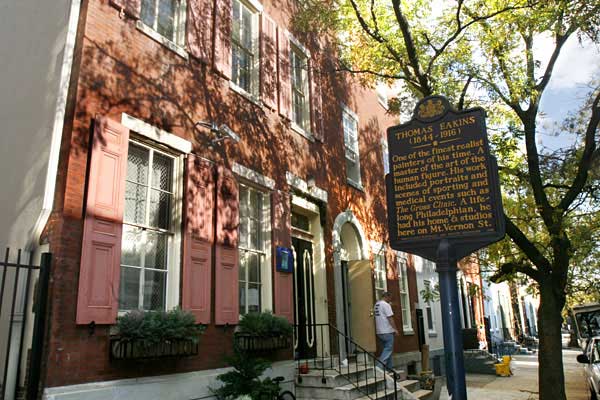
Thomas Eakins lived virtually his entire life in Philadelphia, including at 1729 Mount Vernon St. He was a student and later a teacher at the Pennsylvania Academy of the Fine Arts.Gerald S. Williams / Staff Photographer
Unfortunately for the young artist, it was perceived as too disturbing for the art jury. The painting was moved to the fair’s U.S. Army field hospital exhibition due to its medical nature. Jefferson alumni gifted it to the university two years later.
‘It belonged here’
But 128 years after receiving that gift, Jefferson made a shocking announcement. On Nov. 11, 2006, university officials said The Gross Clinic was to be sold to a museum partnership between the National Gallery in Washington and the Crystal Bridges Museum of American Art in Arkansas, for $68 million.
The money from the sale would help finance an ambitious expansion plan for the medical school.
“This is a big undertaking, a transformational undertaking, and it requires a redirection of our assets,” said Robert L. Barchi, Jefferson’s president, in a November 2006 interview with The Inquirer’s Stephan Salisbury.
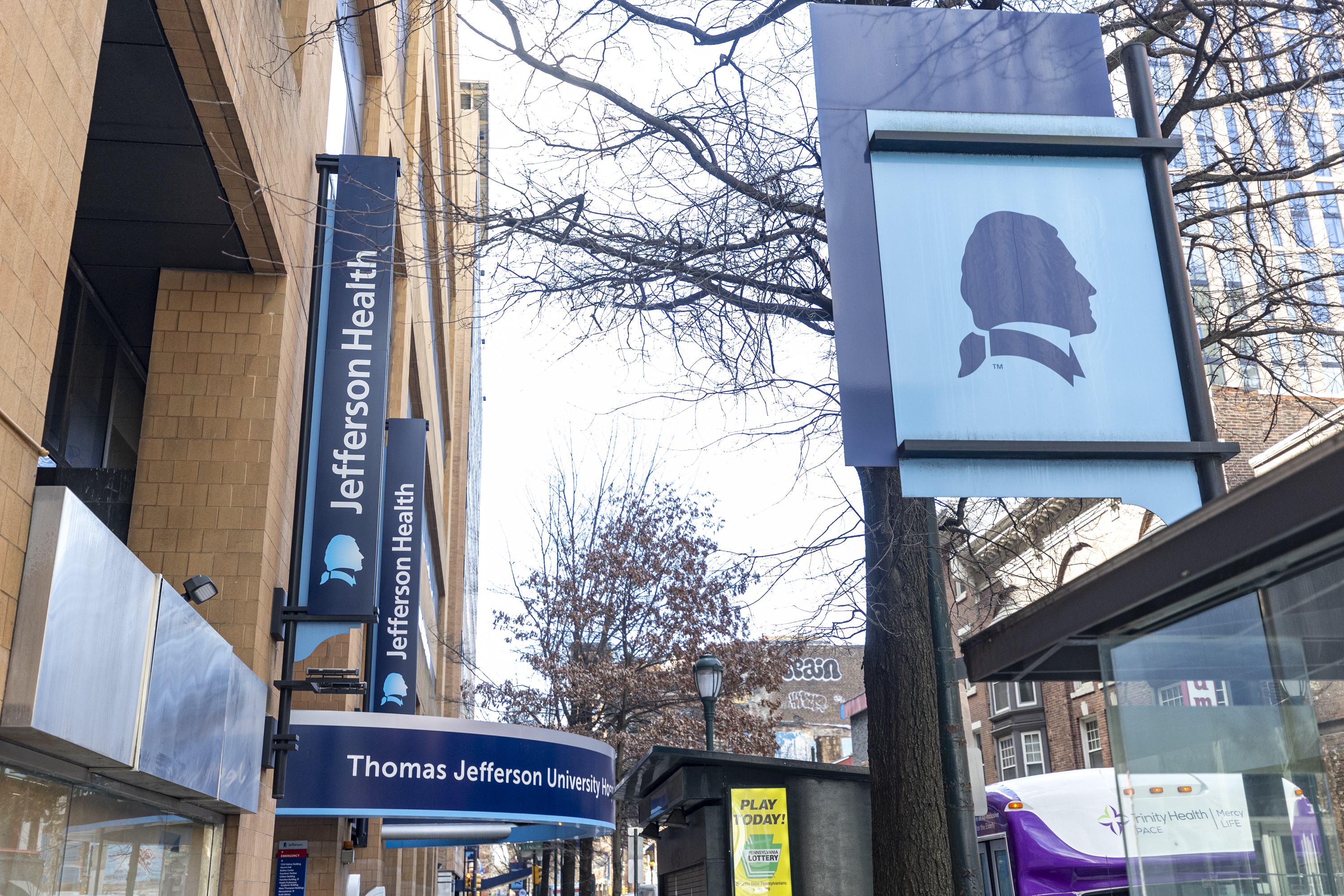
Thomas Jefferson University Hospital entrance at 11th Street in Philadelphia.Tyger Williams / Staff Photographer
“We’re not a museum. We’re not in the business of art education,” he added.
Jefferson’s chairman of the board, Brian Harrison, said, “Our first obligation as trustees of the university, if we are going to release an asset like this, is to maximize value.” He acknowledged the “importance of the painting” to Philadelphia and noted that “the [Jefferson] alumni revered” it.
Once the deal brokered by the auction house Christie’s was struck, an additional clause was added to the agreement. It allowed Philadelphia to keep the painting if it could match the sale price. Jefferson gave the city 45 days to do so — a month and a half to raise the largest amount ever paid for a pre-World War II American painting up until that point.
“There’s no museum, in fact I can think of no nonprofit in the U.S., that can raise $68 million in 45 days,” said Kathleen Foster, senior curator and director of the Center for American Art at the Philadelphia Museum of Art. “There wasn’t really time to twiddle our thumbs, we had to just dive in.”
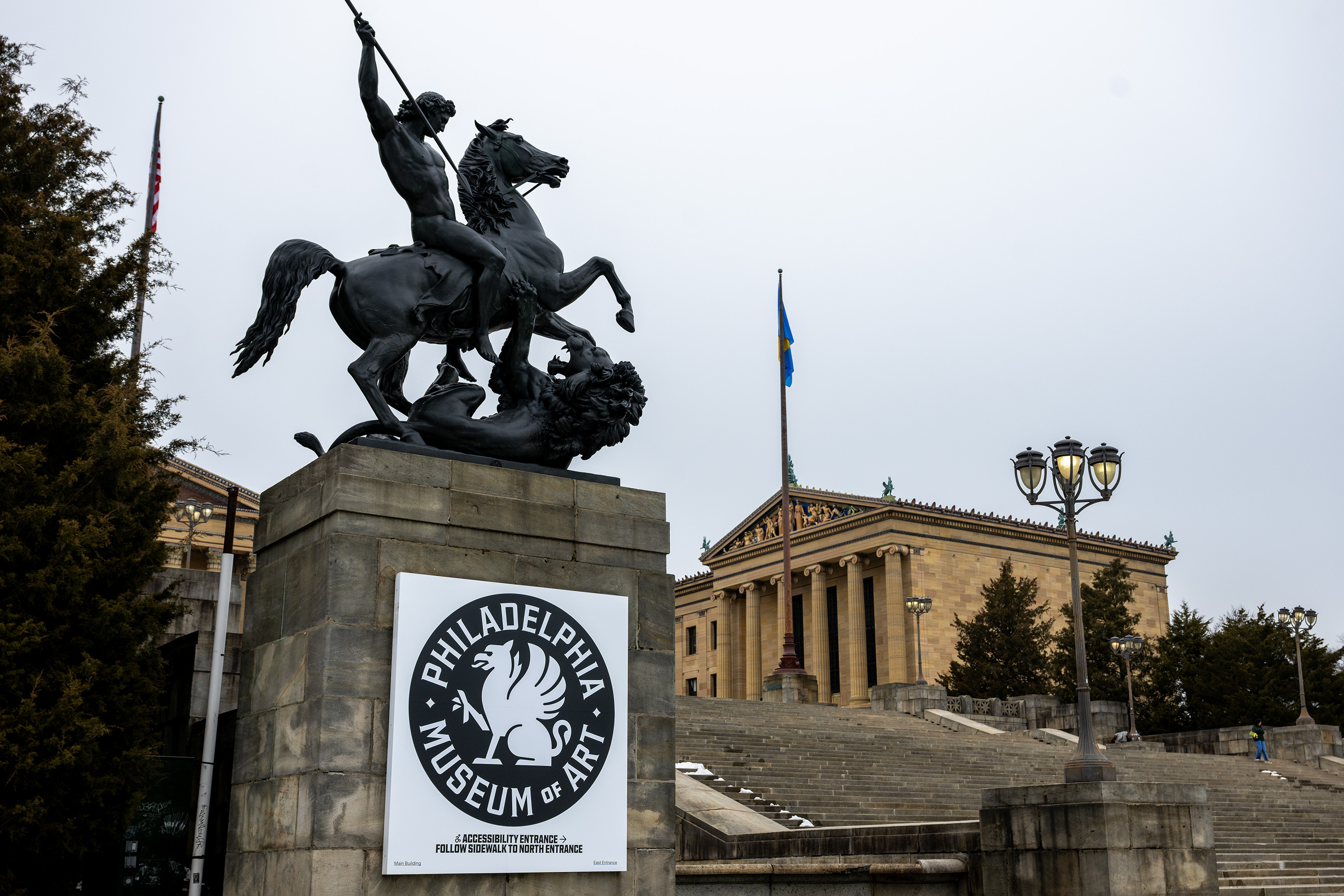
One of the newly installed signs at the Philadelphia Museum of Art.Tom Gralish / Staff Photographer
Anne d’Harnoncourt, the director and CEO of PMA at the time, “was never ever dissuaded,” Foster said. She started a fundraising campaign and immediately put the museum staff on phones calling government officials. She had them giving talks to the public, updating them on the campaign, and she suggested partnering with PAFA.
The museums met with bankers and coordinated to receive donations from Philadelphia-based philanthropists. The Annenberg Foundation, Gerry Lenfest, Pew Charitable Trusts, Nicholas and Athena Karabots, and Joe Neubauer all pledged donations in the millions, making up about a third of the funds raised.
Joe Neubauer, chair of the Neubauer Family Foundation.Jose F. Moreno / Staff Photographer
Neubauer, formerly CEO of Aramark, has supported several institutions through his family foundation, including the Pew Research Center, Brandeis University, the Jewish Theological Seminary, and Calder Gardens.
“I like challenges. This seemed to me to be in the essence of Philadelphia,” said Neubauer, who donated $3 million to the cause. “An artist, who was the greatest artist in Philadelphia in his period, this was his greatest piece that he had ever done. It’s been in Philadelphia from the beginning. He lived in Philadelphia, worked in Philadelphia, went to art school in Philadelphia, went to Central High School. It belonged here and to take it out seemed to be just not fair.”
A few Eakinses for an Eakins
Both the PMA and PAFA parted ways with several of Eakins’ other paintings they owned via a process called deaccessioning — selling work from the collection and using those funds to keep The Gross Clinic.
Among Eakins’ paintings that the PMA sold was one of a cowboy playing the banjo. Several Dakota landscape paintings went to a Western art collection in Denver. PAFA had to sell a more beloved Eakins piece, called The Cello Player, to a private collector.
The Pennsylvania Academy of the Fine Arts’ Frank Furness-designed building on North Broad Street.Tom Gralish / Staff Photographer
“That was sort of a necessary tragedy. Because it’s a private collector, they could come up with money fast, and the academy could get the money quickly,” said Foster. “For the museum it was a happier ending because the paintings [it deaccessioned] went on view to the public. For the academy it was sadder because the painting has basically disappeared, gone underground.”
As PMA and PAFA acquired big-name donors and sold beloved artwork, the story of the campaign reached the public. Civic outrage ensued.
‘Hopping mad’ Philadelphians
Steven Conn, a history professor at Miami University of Ohio, was invited to discuss the matter on a local AM talk radio show, then known as The Big Talker, after he criticized the sale of the painting on NPR.
“I had expected to defend the idea that we should care at all about the sale of this painting and was caught off-guard when I realized that not only the host but several of the callers were hopping mad about it too,” Conn wrote in the 2012 essay “Local Hero: The Gross Clinic and Our Sense of Civic Identity.”
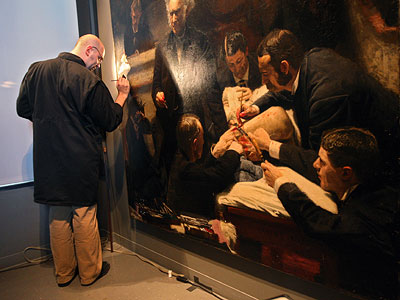
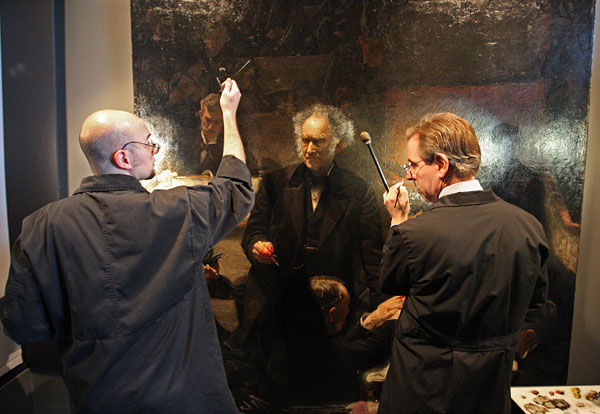
Allen Kosanovich, a Mellon Fellow in Conservation, works on restoring the part of the “Gross Clinic” painting where the gallery is watching the surgery.Michael Bryant / Staff Photographer
Kathleen Foster recalls that even Conn’s taxi driver, who picked him up at the airport, became “incensed” when Conn brought up the possible sale of The Gross Clinic. The public was angry, and so were public officials.
“I had to give this talk and in the front row, there was Ed Rendell leaning forward in his chair, drinking up every word I was saying. Who knows whether he had any idea who Thomas Eakins was before he got this pep talk,” said Foster.
Rendell was governor of Pennsylvania at the time, and had previously served as the mayor of Philadelphia.
Hugh C. Long of Wachovia’s MidAtlantic Banking Group, with Art Museum director Anne d’Harnoncourt (center) and Rebecca Rimel, president and CEO of the Pew Charitable Trusts. (MICHAEL BRYANT / Inquirer Staff Photographer)
“He called up the director of the National Gallery and screamed at him,”said Foster. “Hejust said, ‘How dare you take this away from Pennsylvania? For shame!’ I heard the director had to hold the phone away because he was being yelled at by the governor of Pennsylvania. That kind of energy I think is pride that this is a gem for our city and for the state.”
But more important than how angry they were was how willing people were to donate. Before Reisa Mukamal was a PMA guide, she was living in Swarthmore, raising four children and working as a synagogue teacher and writing tutor. When she heard about the campaign, she knew she had to donate.
“I must’ve read about it in the news,” she said. “I didn’t contribute a lot, it was a modest amount of money. But there was no way I was going pass that up and it seemed like a once-in-a-lifetime story.”
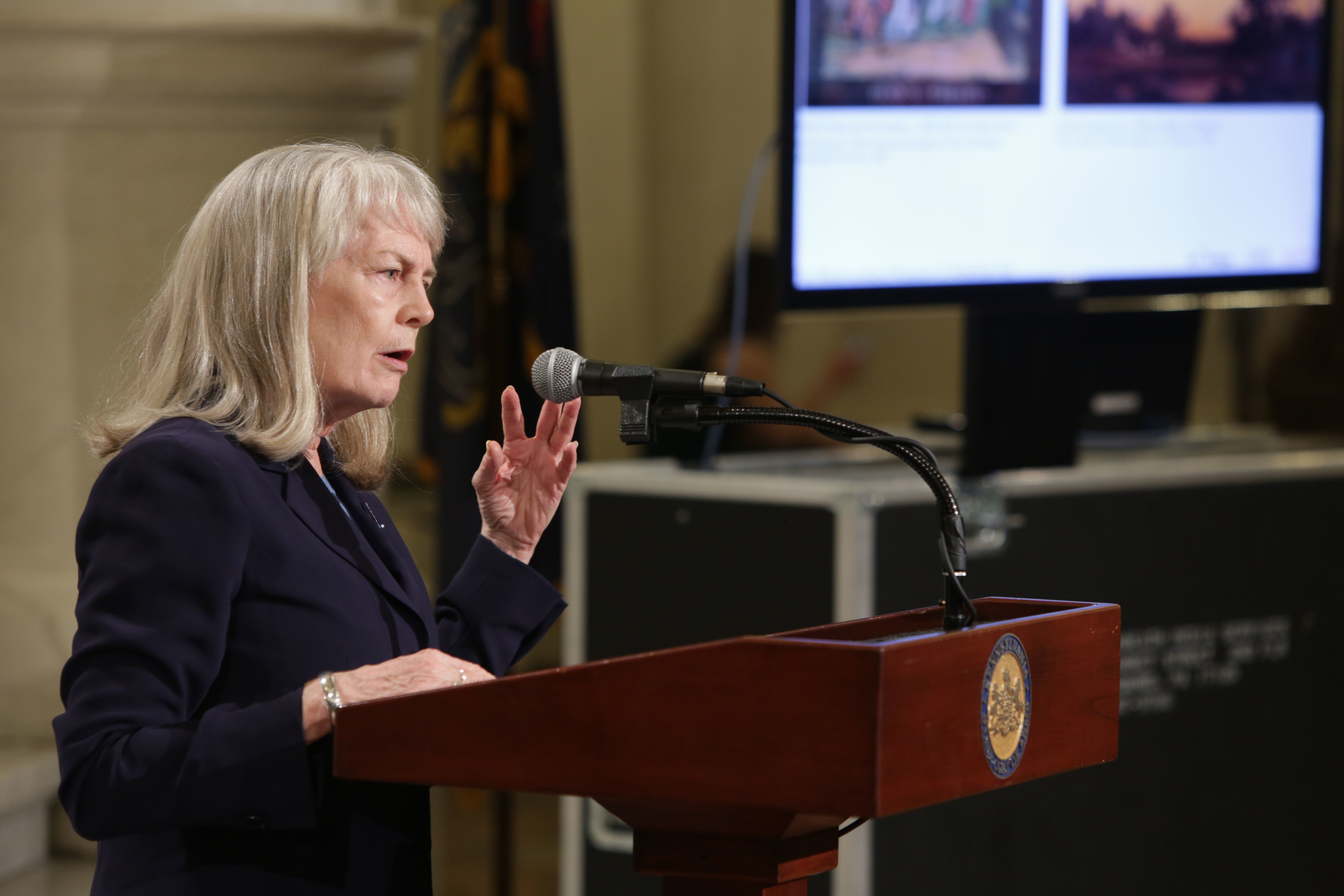
Kathleen Foster, senior curator and director of the Center for American Art at the Philadelphia Museum of Art, discusses the art-sharing initiative during a press conference at the Pennsylvania Capitol, on April 29, 2019.GK Visual
‘Why would we want to let a cherished piece of art leave the community?’
Foster’s favorite story is of a little boy who donated $2.46 (his piggy bank savings) to the cause after watching his grandfather become infuriated after hearing about the story on television.
“It’s that kind of anecdote that just was so heartwarming that we just had Philadelphians at home in their living rooms listening to the television, maybe reading stuff from Stephan Salisbury in The Inquirer, and being outraged. We had this torrent of small gifts that were so adorable. Students, people with no money, and then there were the Annenbergs of the world giving a million dollars. We had this amazing spectrum of people.”
In Salisbury’s original coverage in The Inquirer, he reported that “a woman in Wyoming sent in $25 because her daughter, who lives in Philadelphia, said she wanted a ‘donation to this fund’ as a Christmas present” and “a woman from Philadelphia sent in $100 and noted that she had taken her whole family to see The Gross Clinic over the Thanksgiving holiday.”
Faculty members at PAFA started selling buttons at the foot of the Rocky steps for a dollar; they said “Keep ‘Gross’ in Philadelphia.” From time to time, they’d bring their jar of dollars into the PMA to donate toward the fundraiser.
Former Mayor Ed Rendell during opening night of 1776: The Musical at the Philadelphia High School for Creative and Performing Arts on Wednesday, June 24, 2026.Elizabeth Robertson / Staff Photographer
“It’s amazing to me that people hear about things in the news, whether they read it or watch it somewhere, and all of a sudden, $10, $15 dollars, $5, $1,” said Neubauer. “Contributions now are much more easily made than writing a check and putting it in an envelope and putting a stamp on it. It caught the spirit of the people. Philadelphians are proud of their city, and this was a pride in the city. Why would we want to let a cherished piece of art leave the community?”
The PMA and PAFA say the campaign received money from between 3,400 and 3,600 donors from across the nation.
A last-minute fundraising drive kept “The Gross Clinic” in Philadelphia and staved off its sale to two out-of-town museums.Eric Mencher / Staff Photographer
“I hope people appreciate that it’s not contemporary art, it’s 19th-century art. When I was younger I always marveled at cave drawings. Why did people draw in the caves? Because it was important to them to show what nature was,” said Neubauer.
The PMA and PAFA raised enough money by the Dec. 26 deadline to keep The Gross Clinic at their institutions indefinitely.
“I think it’s very important for people in Philadelphia to go see it and understand that it was done in Philadelphia by Philadelphians for Philadelphia,” said Neubauer.
Supporters packed into the PMA’s Great Stair Hall to cheer on this victory for the Philadelphia art world.
Conservators Allen Kosanovich (left) and Mark S. Tucker work on Thomas Eakins’ “The Gross Clinic.”Michael Bryant / Staff Photographer
“Ed Rendell came to the microphone, put his arms up like Rocky, and just bellowed in triumph over the acquisition of this painting,” said Foster. “This cheer goes up from the room, I thought the roof was going to lift. It was like we had won the Super Bowl.”
“The Gross Clinic” is currently on display in the Historic Landmark Building at the Pennsylvania Academy of the Fine Arts, 118-128 N. Broad St., Philadelphia, Pa. 19102.
[Editor’s note: Morgan Ritter is The Inquirer’s first recipient of the Stephan Salisbury Internship for Arts Journalism. Salisbury died in 2024, after a long career as an arts and culture reporter for The Inquirer — including his reporting on the proposed sale of “The Gross Clinic.” ]
NOTE: This article covers sensitive topics, including drug use and violence against women. Some people spoke with reporters on condition of anonymity to discuss illegal activity or out of fear of reputational harm. Quotes attributed to Raymond Horsch are drawn from a 2013 interview on the Rialto Report, a podcast about the adult film industry; a Q&A in 2014 during his art exhibit at the Papermill in Philadelphia; and undated profiles that were published on his now-defunct erotic website.
Fentanyl and crack cocaine held Krista Killen hostage, and she did whatever she could to stave off withdrawal. Sometimes that required satisfying the whims of dangerous men prowling Kensington Avenue, who looked to take advantage of women like her in the heart of Philadelphia’s notorious open-air drug market.
Raymond “R.C.” Horsch seemed different. He had a three-story brick twin in Olney, a working-class neighborhood about three miles north of Kensington. There, he gave Killen a roof over her head. A sense of stability. And drugs.
In exchange, she agreed to pose nude for Raymond’s erotic photos and videos, some simulating brutality or death. Raymond had made similar arrangements with dozens of other women in his decades-long career as an artistic provocateur.
For Killen, who was estranged from her family, the Olney house was a sanctuary from the buckled sidewalks under Kensington’s rumbling El. Yes, Raymond was exploiting her addiction. But she told friends that he was never violent and that she cared deeply about him. She viewed him as her protector.
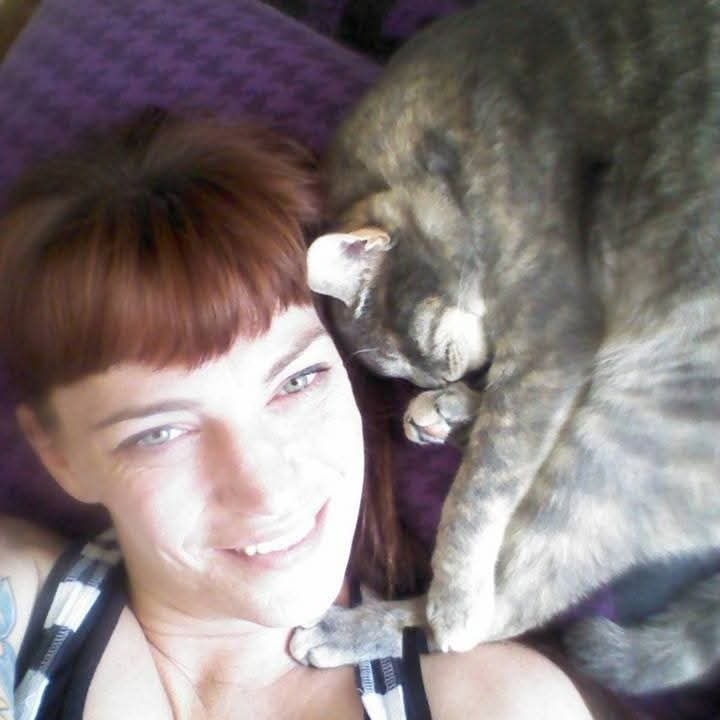
Krista Killen and BabyCat, her beloved tabby, in an image she posted to her Facebook page.Krista Killen's Facebook pages
His son, Eugene, was a different story.
Eugene scared her.
She told friends he was prone to drug-fueled bouts of rage, and he carried around knives and guns.
One night, about two years ago, she was asleep in the dark, dank basement of the Olney home. Beside her slept her beloved tabby, BabyCat.
She awoke to an earsplitting crash as Eugene shattered the lock on her door. He burst into the room, armed with a gun, screaming that he was going to kill her, according to two of Killen’s friends. Raymond, then feeble and 80 years old, had to pull his son away.
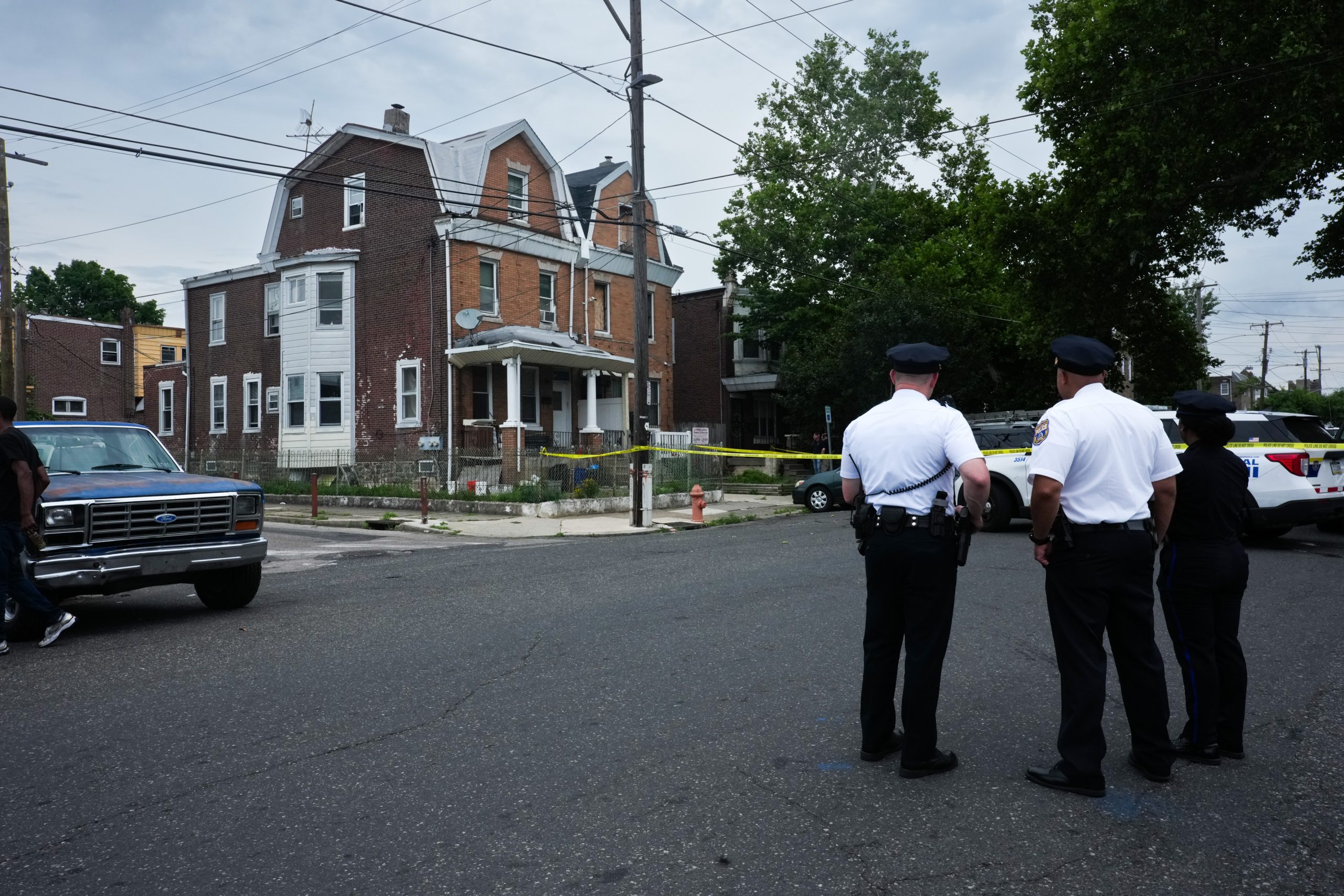
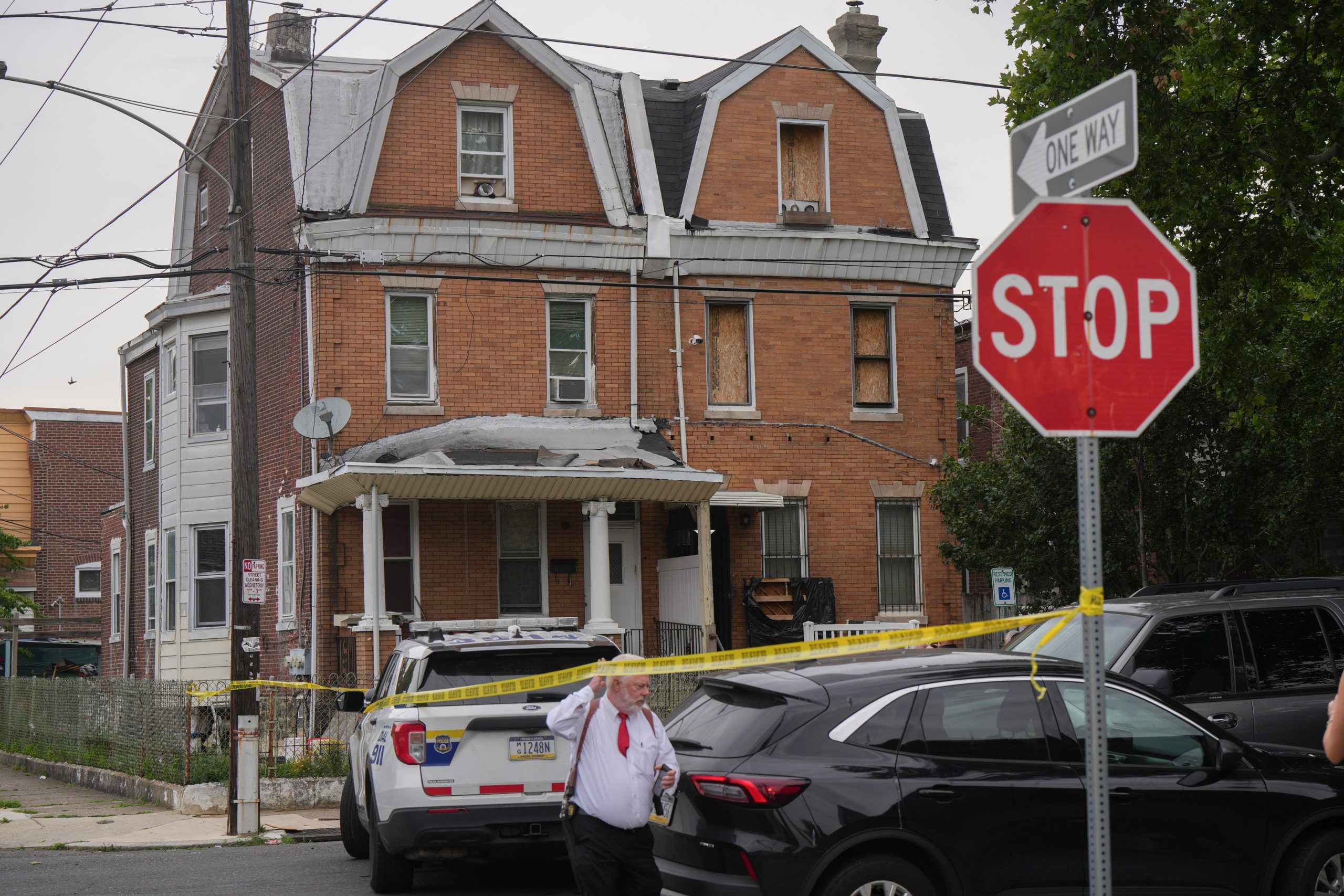
The scene of the ongoing investigation at Eugene Albert Horsch’s home at 417 W Chew Ave, in Philadelphia’s Olney neighborhood, on June 26, 2026. The home has been linked to the disappearance of two women.Jessica Griffin / Staff Photographer
The Horsch home had long been a curious spectacle on West Chew Avenue. A steady stream of women came and went, sometimes in the company of an elderly man wearing an eye patch. The house had caught fire, leaving a hole in the roof and boarded-up windows on the top two floors. Police had raided the place for drugs.
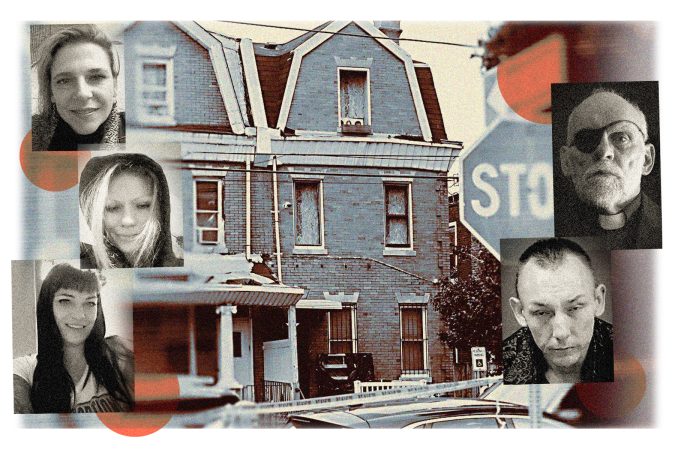
Now, the three-story property has become the center of a sprawling, macabre investigation into the disappearance of at least two women.
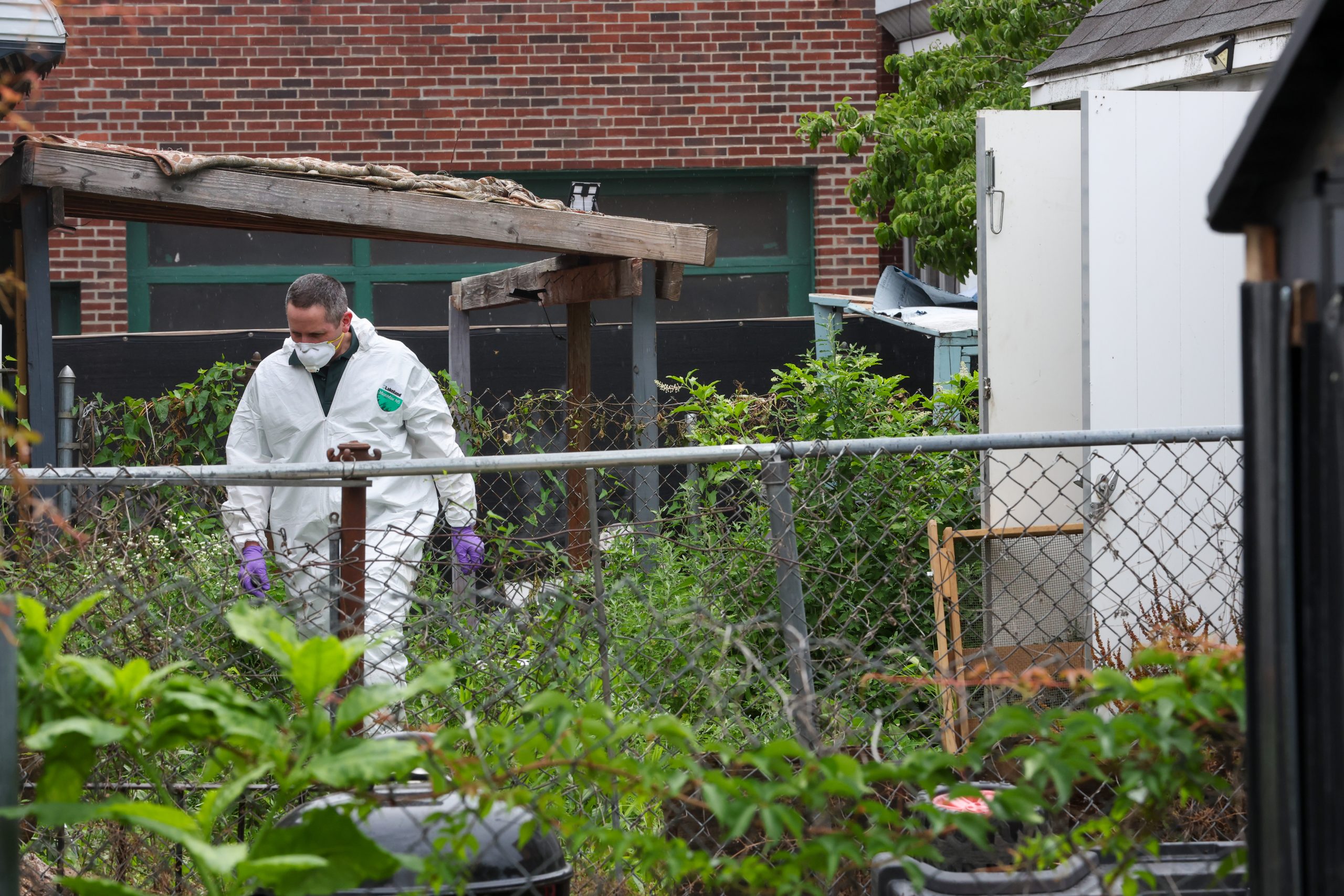
The quiet residential street in Olney has been cordoned off, as hazmat teams and excavation crews scour the house and dig up the property for clues. Federal and local investigators are interviewing people who knew the missing women and delving into their dealings with Raymond and Eugene Horsch.
The investigation began in June, after Eugene was arrested near Independence Hall in a black BMW containing weapons, drugs, and a phony drug enforcement officer badge. With him was a frightened, seemingly drug-addled woman flashing an ID in the name of Blair Tonzelli.
Police discovered that it was a fake. The real Tonzelli had been missing for three years and was reportedly last seen at the Horsch home in Olney. The revelation renewed old questions about Raymond’s ex-wife, Amy McHale, who was reported missing in 2016 and was also last seen at the same address.
Eugene remains in jail on illegal gun and drug charges. He has not been accused of any violent crimes connected to the missing women and had been incarcerated at the time of McHale’s disappearance. Raymond died from a lung condition last year at the age of 82.
Detectives initially said they might have found a “significant amount” of blood inside the Olney house. But forensic tests determined it was not blood, and neither Tonzelli’s nor McHale’s DNA was found on the items tested, according to law enforcement sources who spoke on the condition of anonymity to discuss an ongoing probe.
But other developments have raised concern about the fates of the missing women.
An early search of the house uncovered a handwritten note that describes hurting people and makes references to serial killer Ted Bundy. And one woman told investigators that Eugene claimed to know how to dispose of human bodies with chemicals.
Raymond’s body of work as a shock-seeking pornographer has clouded the significance of those findings.
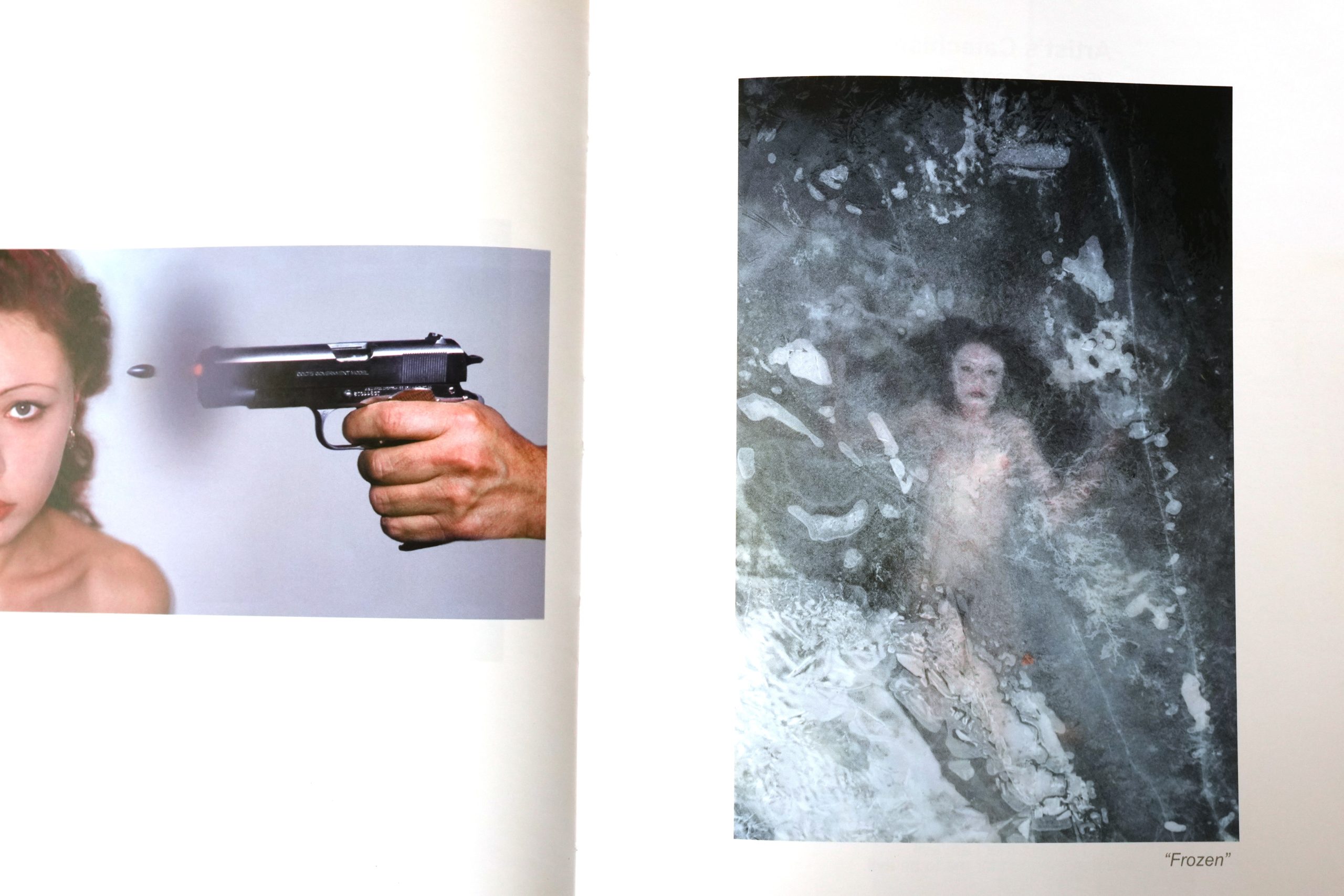
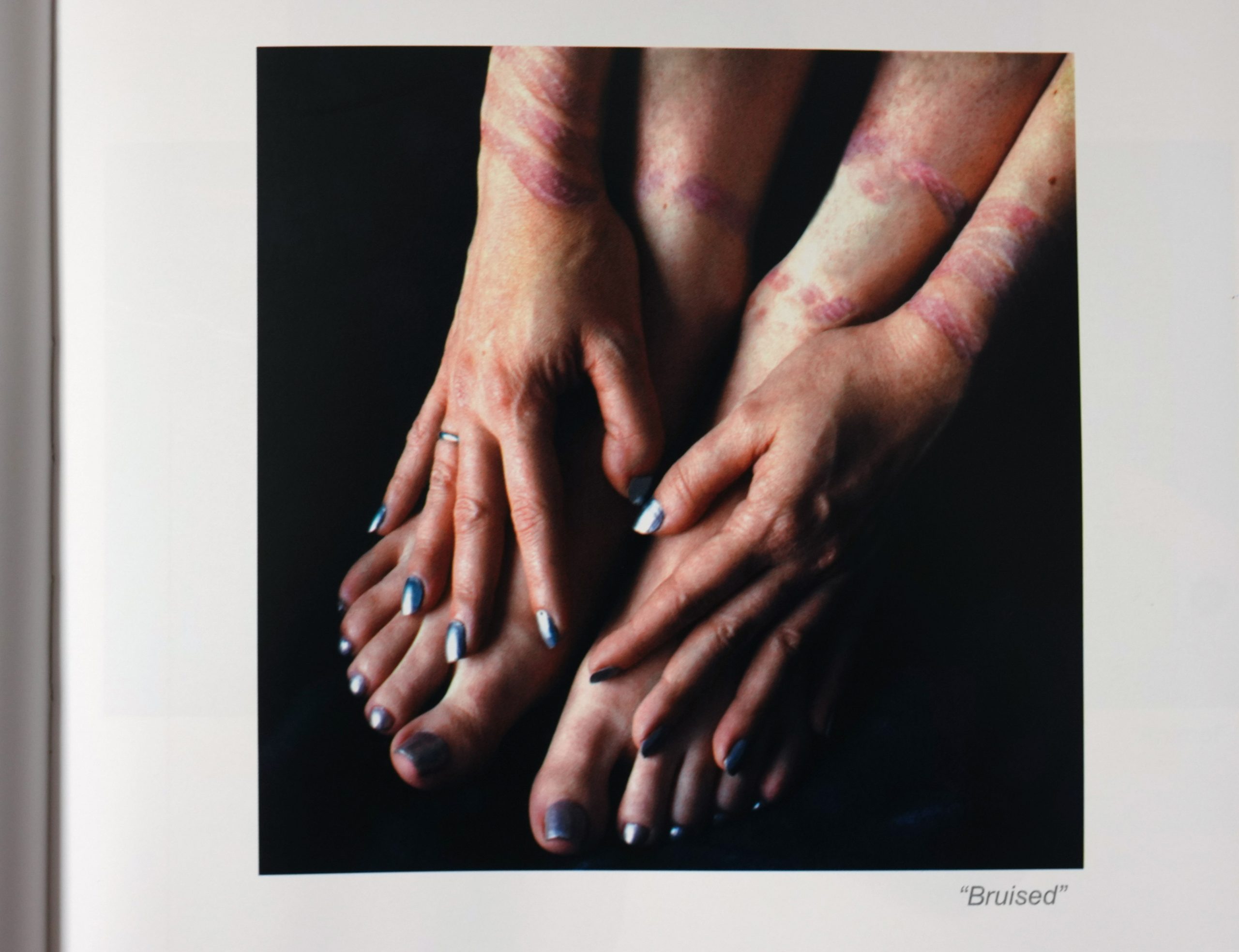
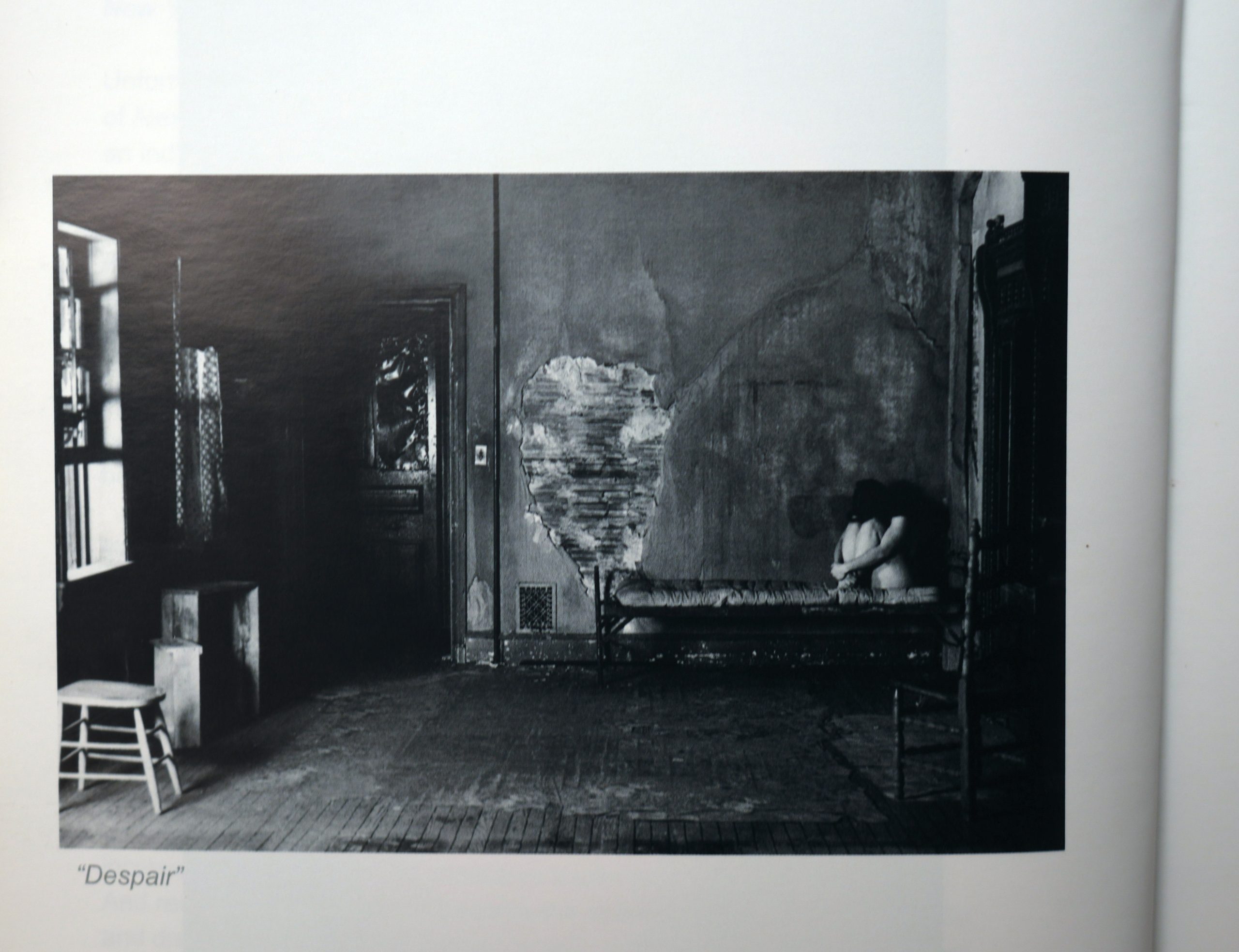
Pages from Raymond Horsch’s 2003 two-volume photobook “Eroto~ To The Prurient Interest” showing an unidentified woman, whom Raymond Horsch introduced as his “wife” Anna, depicted in multiple staged “deaths.”Obtained by The Inquirer
In a dozen films, novels, and photo books, Raymond used women suffering from addiction as props for his violent fantasies, subjecting them to simulated strangulation and drowning. He adopted the persona of an “empathetic” serial killer who murdered addicts to end their pain. And he claimed his writings were autobiographical, yet laced with threads of fiction — toying with his audiences by leaving them to discern what was real.
Meanwhile, Raymond’s sensationalistic art is overshadowed by his almost implausible life story.
An Inquirer review of hundreds of pages of police and court records, newspaper clippings, Raymond’s artistic portfolio, and interviews with more than 30 people has uncovered the saga of a thrill-seeking criminal artist and his troubled son.
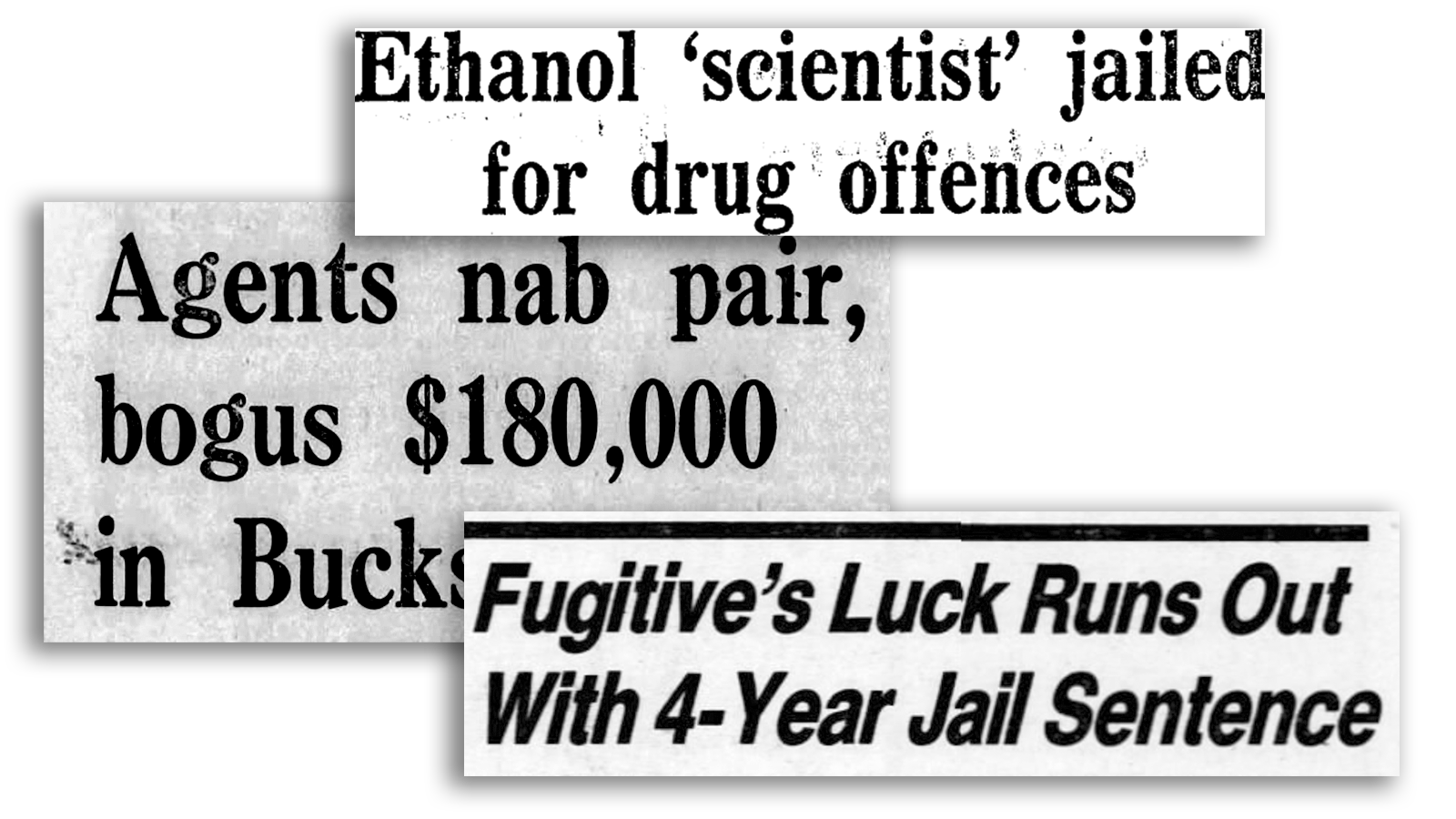
Various newspapers chronicled Raymond Horsch’s exploits, including (top) the Press of Christchurch, New Zealand, in 1985 about Horsch’s arrest in the U.S. after he was revealed to be an imposter; (middle) the Allentown Morning Call from December 1974 about the bust of his Doylestown-based counterfeiting operation; and Daily News in 1985 about Horsch’s sentencing on drug manufacturing charges.Obtained by The Inquirer
Raymond’s humble beginnings in rural Pennsylvania gave way to a career as a drug manufacturer, an identity thief, and an international fugitive in seaside New Zealand. He returned to Pennsylvania to raise Eugene and continue pursuing his dreams as a pornographic artist, luring heroin-addicted sex workers off the streets of Kensington.
At least five women connected to Raymond ultimately died of accidental drug overdoses. Among them is Killen, who overdosed last year at the age of 47, according to the city medical examiner. Eugene would later tell people close to Killen that she had died just outside his Olney house, or shortly after he took her to the hospital.
Those close to McHale and Tonzelli remain tormented by the lack of any such closure. McHale’s mom, Gloria McHale, said she always suspected that Raymond was somehow involved.
“A long time ago, before she even married him, she told me if anything ever happens to her, that he was the one,” McHale said.
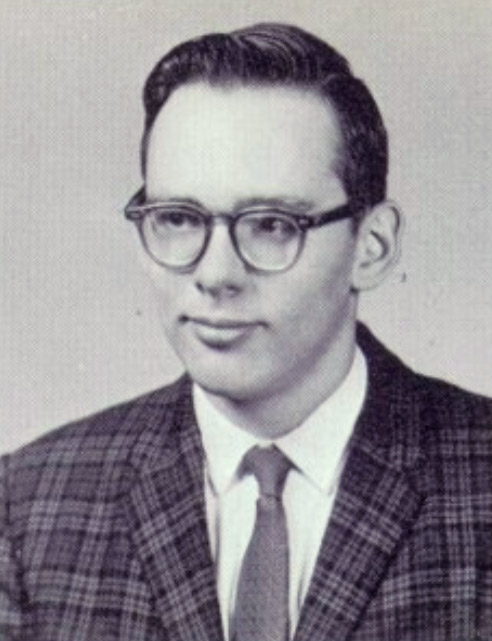
Raymond Horsch was born in 1943, the son of a World War II glider pilot, and grew up on a farm in East Stroudsburg, Pa. His parents relocated to Chalfont, in Bucks County, where he graduated in 1961 from Central Bucks High School as editor of a school magazine and a National Merit Scholar.
In yearbook photos, his dark hair is cut short, and he wears a tie and glasses with a thick black frame. He would later call his younger self a “totally asexual nerd.”
He married his 19-year-old high school sweetheart in 1964, and the couple moved to Rittenhouse Square in Philadelphia. Raymond worked commercial film and photo jobs while his wife taught public school.
Raymond C. Horsch in his 1961 Central Bucks High School yearbook.Obtained by The Inquirer
He was ill-suited for domestic life, someone who, when he watched Westerns as a kid, did not identify with heroes in white hats.
“I came out of the theater wanting to be the villain,” he said. “I certainly became a villain later in life.”
As the 1960s counterculture movement swept the city, Raymond ran the avant-garde Underground Cinema 16 — later the Roxy — on Sansom Street, then a beatnik mecca. He joined the Pennsylvania National Guard but deserted after he was moved toward active service in Vietnam. Instead of going to war, he traveled to New York City to work in film and showcase his own hyper-sexualized photography in Greenwich Village, alongside contemporaries like Robert Mapplethorpe.
His wife left him in 1970 after finding a women’s nightgown on their bed. In an interview with The Inquirer, in which she agreed to be quoted on the condition of anonymity, she said Raymond was never violent but was an “emotionally abusive” philanderer with an oppressive ego.
“Raymond really thought he was smarter than anybody,” said the 81-year-old Pennsylvania resident. “And he thought that he could get away with anything.”
During the so-called Golden Age of Porn in the early 1970s, when movies like Deep Throat crossed into the mainstream, Raymond worked odd jobs as a crewman on porn shoots. But he dreamed of making his own erotic movies.
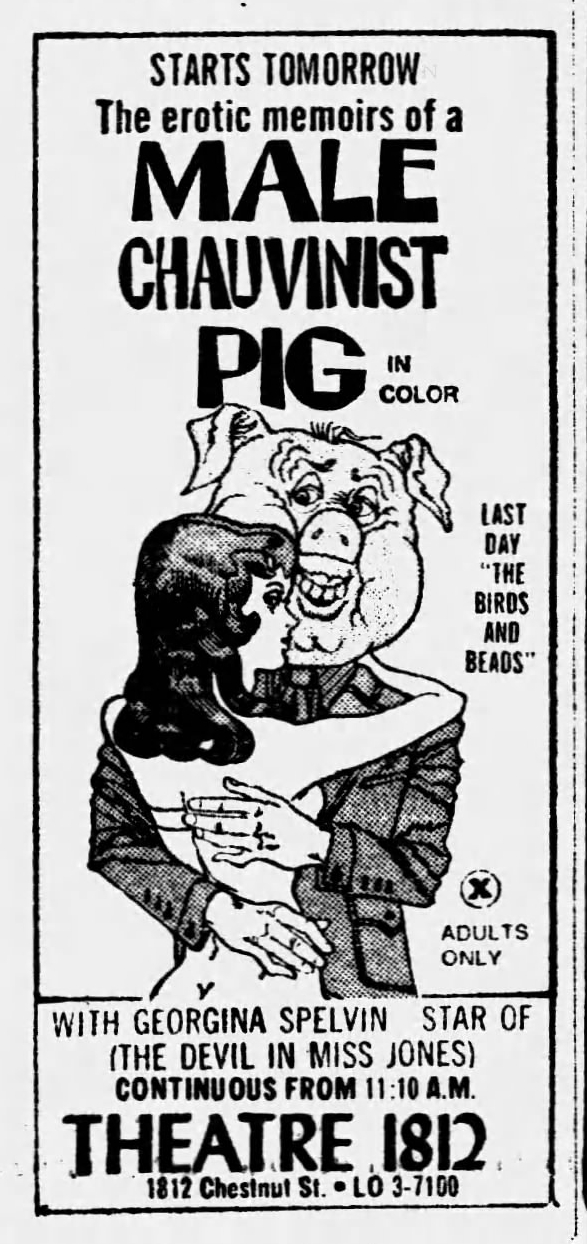
An advertisement in a 1974 edition of the Inquirer for a screening of Horsch’s cinematic debut, “The Erotic Memoirs of a Male Chauvinist Pig.”The Philadelphia Inquirer archives
He got his chance after befriending the Philly tavern owner and mob associate Salvatore “Sam the Barber” La Russa at his long-gone Bag of Nails bar at 13th and Locust. La Russa, who died of a heart attack in 1996, helped Raymond produce The Erotic Memoirs of a Male Chauvinist Pig, which featured Georgina Spelvin, the star of the well-known erotic film The Devil in Miss Jones.
Raymond’s film premiered in 1973 at the 1812 Theater on Chestnut Street. It was a low-budget effort that depicted rape, bondage, underage sex, and the titular character’s violent relationship with a drug-addicted woman — a “sweet comedy,” Raymond later joked.
Raymond’s movie did not experience the same cultural, critical, and financial success of the better-known erotic films of that era. But his mob-backed dream of becoming an auteur was soon interrupted by his other passion: crime.
In 1974, the U.S. Secret Service busted the homegrown counterfeiting operation Raymond ran in Doylestown, seizing the equivalent of over $1 million in phony $10 bills. He served two years in prison.
After he got out, authorities busted him again in 1977 for operating a methamphetamine lab in Philadelphia.
Facing more prison time, Raymond skipped bail and went on the run.
Raymond fled to the West Coast with his longtime girlfriend, Myroslawa Anna Ferkuniak, whom he met sometime after she was arrested in an LSD raid at a house near Temple University. He assumed the identity of Dr. Stanley Eugene Stokowski, a real-life chemist in California with a doctorate from Stanford University.
In 1980, Raymond married Ferkuniak in Nevada using the Stokowski alias. They boarded a plane for New Zealand to evade federal investigators.
They settled in the sleepy port city of Timaru. Raymond, whose years as an illicit drug maker had made him a skilled chemist, boasted that he had a doctorate and got a job with an alternative fuels company with a fraudulent academic transcript under Stokowski’s name. He launched a facility that converted whey into ethanol fuel.
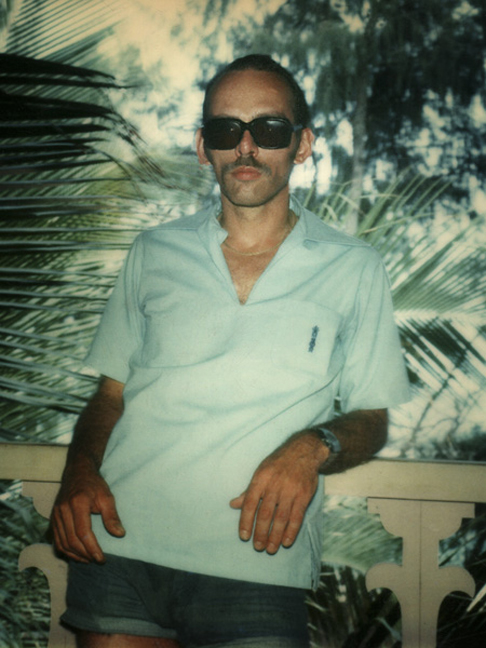
Horsch at an unspecified location in the 1980s.Obtained by The Inquirer
In 1981, Eugene was born, entering the world against the backdrop of his father’s deceit.
Raymond traveled back to the United States multiple times using different aliases. But in 1984, he was caught reentering New Zealand with five fake passports, according to news reports. The incident sparked national inquiries in New Zealand into how a fugitive impostor had managed to get work as a prominent chemist.
Raymond did not stick around for more questioning. He allegedly broke into a house, stole another passport, and fled to America before he could be charged. He left Anna and Eugene behind, and they returned to America later.
The FBI caught up with him in Orlando and extradited him to Philadelphia in 1985. A psychologist, in a court-ordered exam, noted that Raymond had an IQ of 140 but suffered from “deep-rooted emotional problems.”
A federal judge sentenced him to four years. Raymond expressed no regrets.
“I loved being a fugitive,” he would later say. “It was always exciting, always thinking, ‘Who am I going to be today?’”
After an early release from prison in 1987, Raymond moved his family to Northeast Philadelphia and got a job as an IT director. His wife, Anna, found work cleaning houses.
Although Raymond claimed he never took drugs, he watched Anna fall into addiction.
She died in 1989, at the age of 39. She was sitting in their living room and accidentally overdosed on glutethimide and codeine, a dangerous heroin alternative prone to abuse when combined. Eugene, then just 7 years old, was in the room at the time.
Raymond, in a later interview, expressed resentment about his wife “killing herself.”
“All the while things were bad, she held it together,” he said. “Then when things were good, she fell apart. My basic reaction was anger, because she bailed out and left me with a kid to raise.”
Raymond and Eugene moved to a three-bedroom home in Chalfont, close to family. He opened a barbecue restaurant with a colleague from the adult film industry, pursued his art, and raised Eugene as a single father.
In 1994, he directed and starred in Lovers, which was produced by Femme Distribution Co., a feminist porn studio. One reviewer described it as a moody feature that intercut scenes of rape and bondage with “thought-provoking dialogue.”
But Raymond was facing the reality that his attempt to blend pornography and cinema was a commercial failure.
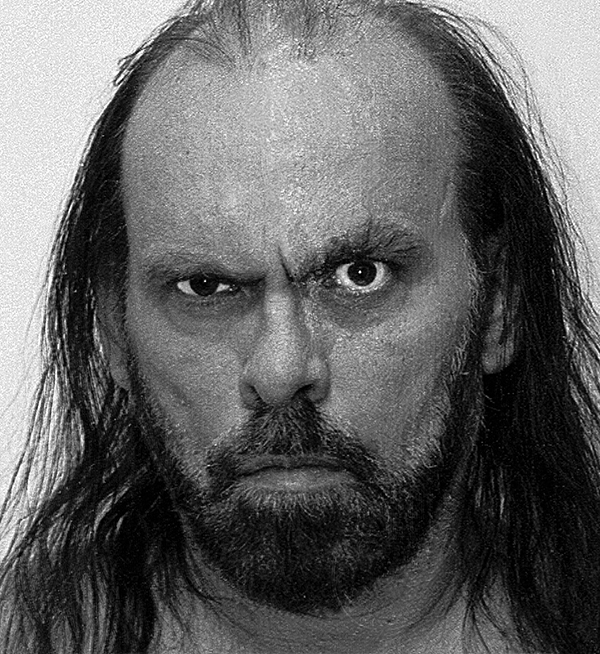
Raymond “R.C.” Horsch in 1999.S. E. Stokowski / Wikimedia
Now well into his 50s, he wallowed in an artistic gutter. He performed in at least eight pornographic films, primarily low-budget exhibitionist features called Streets of New York that were shot in the dumpster-packed alleys of Manhattan.
He also began photographing sex workers, using Kensington Avenue as his casting room. He would shoot photos of women working corners, often without permission, and earned a reputation under the El tracks as a lurker who offered cash or drugs in exchange for nude film shoots.
He launched a now-defunct personal website, Eroto.com, in the late ’90s. Paid subscribers could access his photos and videos depicting sexual violence and women who appeared to be shooting heroin.
Raymond saw himself as a feminist and critic of modern society, but he was unapologetic about exploiting drug-addicted women. He likened himself to the snake in a parable about a woman who cares for a serpent, only to be bitten once it reaches maturity.
“The woman asks, ‘Why?’ And the snake says, ‘Because it’s my nature.’”
Although he had a young son, Raymond didn’t let that stop him from bringing his work home.
In the early ’90s, Raymond placed an ad for a housekeeper and hired a teenage girl, 33 years younger than he was and addicted to heroin. She “looked like a child,” her mother, Charlotte Ring, said. “I think he just wanted to use her for porn.”
They applied for a marriage license in June 1999 but never tied the knot. Ring said she could not persuade her daughter to return to their nearby home in Chalfont until she eventually went into rehab.
Eugene, meanwhile, was a straight-A student, just like his dad had been, at Central Bucks West High School. But his father’s career was a source of embarrassment, according to Eugene’s former classmates, who found Raymond “creepy.”
It was no secret that Eugene’s dad worked in porn. Hanging on a wall of their home was a huge photograph of Raymond — with thinning hair and a ponytail — receiving oral sex from a woman while she held a knife to his head.
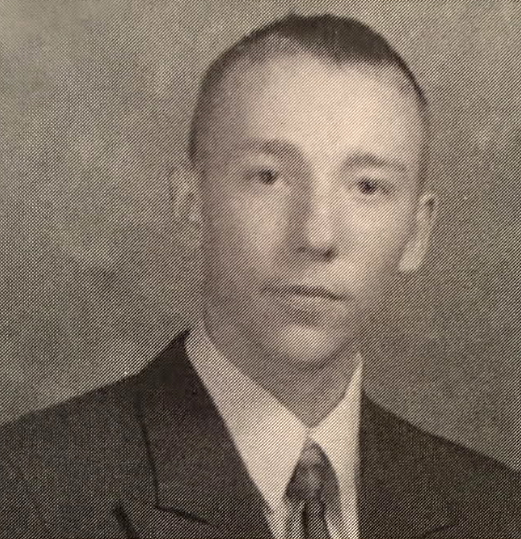
Eugene Horsch’s graduation photo in the 1999 Central Bucks West High School yearbook.Obtained by The Inquirer
Yet friends said Eugene shared many of his father’s other interests: chemistry, forgery, and eluding capture. He once swiped a lawnmower from Home Depot and wheeled it home. When his dad gave him money to go buy groceries at Giant, Eugene preferred to steal them.
“It was like a thrill for him,” one friend recalled.
Eugene’s friends called him “Gizza,” after the Wu-Tang Clan rapper “GZA.” In a trailer in Eugene’s backyard, they smoked weed lifted from Raymond’s grow operation, listened to Wu-Tang, and skateboarded on a halfpipe. According to two former classmates, Eugene sometimes smoked crack cocaine and “wet” — marijuana laced with PCP.
He had an older cousin who was a role model and one of his best friends. But when Eugene was in high school, his cousin, at age 19, crashed a convertible and died.
The loss devastated Eugene.
“When his mother died and his cousin died, he had no moral anchor,” said one relative, who asked not to be identified out of privacy concerns. Eugene “didn’t stand a chance.”
Despite their conflicted relationship, Eugene acknowledged the role his father had played in his life. In a 1999 yearbook graduation photo, Eugene eulogized his cousin and ended with a note to his father: “Thank you Dad, for all you have done for me.”
Eugene never officially graduated from Central Bucks West, according to school administrators. A friend said he forged his diploma, showing off the fake document in his bedroom. It is not clear if he completed his high school education elsewhere, but Drexel University confirmed Eugene enrolled there between 1999 and 2003.
His academic career ended in 2003, following a night of drinking at a Northeast Philly bar. Eugene blew a red light and T-boned another car. The driver suffered a catastrophic brain injury and spent 16 years in a vegetative state before dying.
In 2004, Eugene pleaded guilty to driving under the influence and aggravated assault. He was sentenced to two to four years in prison.
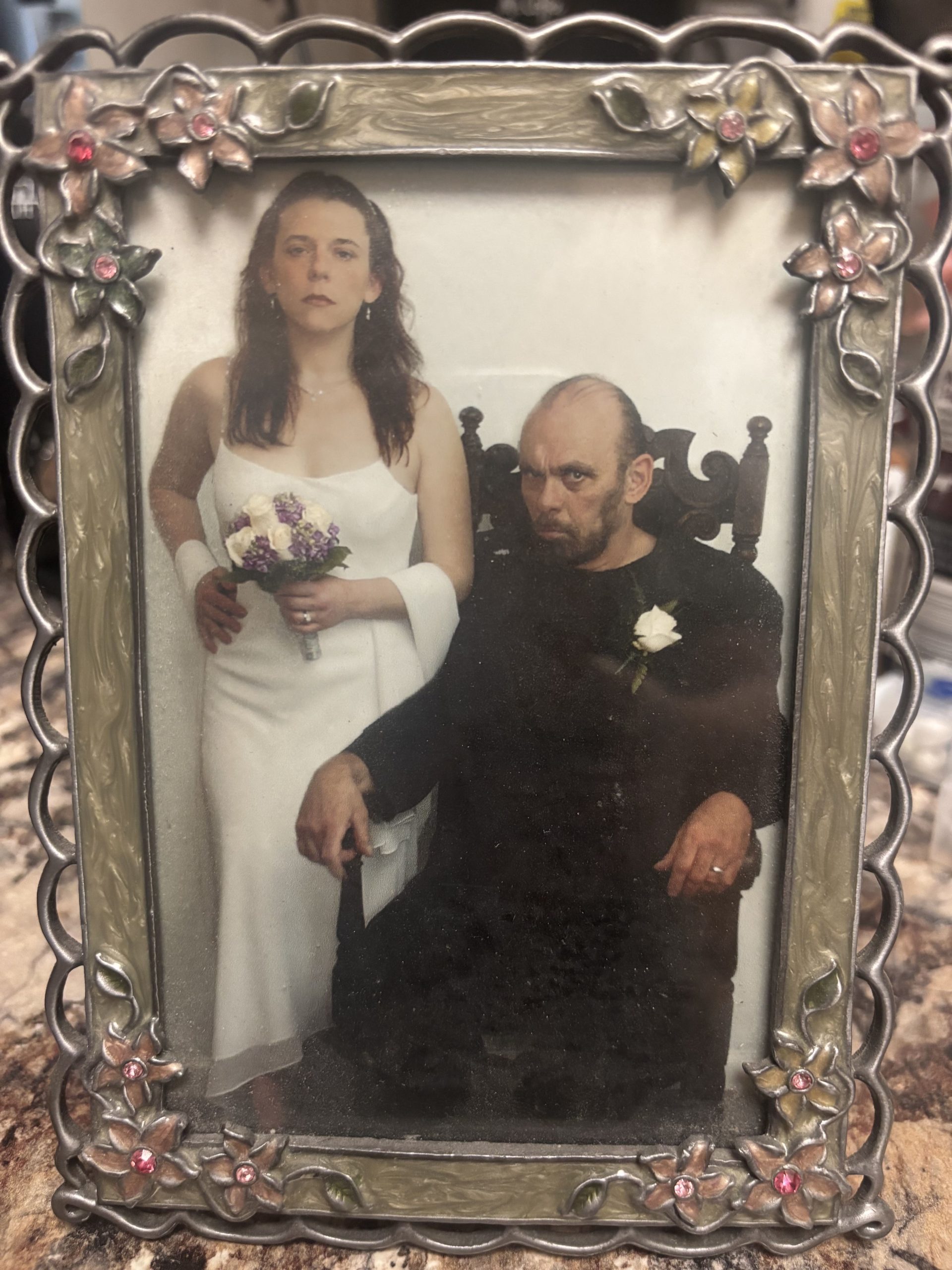
A wedding photo of Amy McHale and Raymond Horsch in 2004, taken during a small ceremony at his residence in Chalfont. The couple divorced a few years later. McHale was last seen at Horsch’s Olney home in 2016.Courtesy of the family of Amy McHale
Raymond was always looking for new women — particularly those who resembled his deceased wife, Anna.
He once asked one of Eugene’s high school friends, who was working at a car wash, if she wanted to star in his films. Another woman heard about him from a cellmate when she was locked up in a Bucks County jail on a drug charge. She later agreed to be photographed nude at his studio for money and drugs. He said she reminded him of Anna and asked her to star in Slaves, a 2003 film he was producing.
Raymond met Amy McHale in Kensington. She was struggling with mental health issues and drug and alcohol addiction, and she came to view Raymond as her savior after he got her off the streets. She costarred with him in a pornographic film.
McHale, 30 years Raymond’s junior, later married him beside a greenhouse in the backyard of his Chalfont home in September 2004, not long after Eugene pleaded guilty to DUI.
That same year, Raymond inherited the Olney house from his aunt. In two self-published photo books — featuring women recruited from Kensington in sexual bondage — a few pictures appear to be staged there.
Eugene got out of prison in 2006. Raymond remained in Chalfont, and he transferred the Olney property into his son’s name.
Three years later, a “highly intoxicated” 21-year-old woman called 911 to report a burglar in Raymond’s Chalfont residence. Responding officers found no evidence of an intruder, but they did find 455 marijuana plants in the basement and two shotguns.
The feds seized the Chalfont home.
After pleading guilty to three felonies and receiving a 54-month sentence, Raymond spent his time in prison writing a series of novels about serial killers and sexual deviants that he later self-published.
In 2013, when he was released from prison at the age of 70, Raymond and Eugene were together again in Olney, living in the aging family home-turned-porn studio.
Raymond described himself as a frustrated, aging porn star.
“I walk down the street seeing all these beautiful, breathtaking women who are now totally inaccessible to me. Totally off-limits now,” he said. “If I stay away from mirrors, I can still convince myself that I’m 18 years old.”
Raymond “R.C.” Horsch in character for a film role, 2014.S. E. Stokowski / Wikimedia
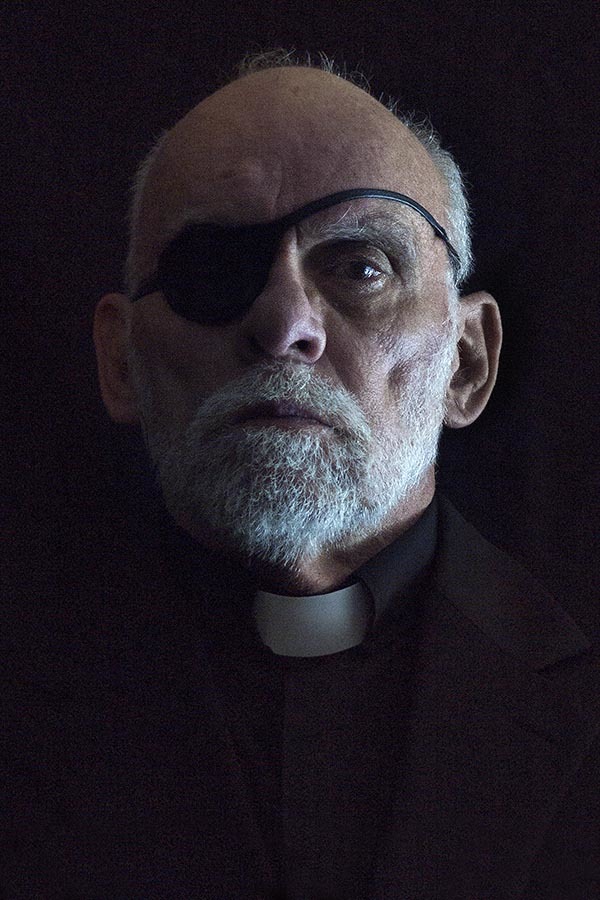
Raymond started wearing an eye patch, although friends were unsure if it was for medical reasons or simply to bolster his villainous persona. His art found a few admirers, including in Europe, and some of his photos appeared in an anthology of erotic art in New York City, prefaced by the prominent critic Camille Paglia.
But Raymond seemed resigned to obscurity, noting that few galleries wanted photographs of “wasted emaciated heroin junkies.”
From Raymond Horsch’s photobook “Eroto~ To The Prurient Interest”: Ligature marks on the arms and legs of an unidentified woman, and an unidentified woman in what appears to be Horsch’s Olney bedroom.Obtained by The Inquirer
He landed a 2014 show at the Papermill artist studios in Kensington. Raymond set up a slideshow photo gallery in a warehouse surrounded by needle-littered railroad tracks. The series began with photos of naked women, who became more gaunt and sickly as heroin took its toll. Several shots showed syringes dangling from arms pocked with bruises and sores.
As a finale, Raymond played a video showing the body of a naked woman. Raymond claimed she had died of a drug overdose after he had paid her for sex. The video shows her body being loaded into an oven and cremated.
Some of the attendees were shocked and disgusted. One of them, local audio-visual technician Justin Roman, recalled that Raymond was “totally shameless” when confronted.
“He was doing it all because he wants to have sex with women who are addicted to heroin,” Roman said. “And he seemed very self-aware that he could not stop this compulsion.”
Amy McHale, who married and divorced Raymond, was last seen at the Olney house and reported missing in 2016.Courtesy of the family of Amy McHale
McHale and Raymond divorced in 2008, but she kept returning to visit after he moved to Olney.
She was at the Chew Avenue home on June 13, 2016, when she called her mom to tell her she was coming home. She sounded drunk, so her mother told her to stay.
Early the next morning, McHale — a strawberry blond 44-year-old grandmother of three — left a voicemail with her daughter saying she was OK.
She was never heard from again.
McHale would sometimes be gone for a couple of days, but never much longer. Her daughter, Amanda Stofer, said McHale had been looking forward to Stofer’s forthcoming wedding.
“My mom had her struggles with addiction,” said Stofer, 38. “But my mom would not want to disappear in my life.”
Raymond told police and the McHale family the same story: She was drinking vodka and he went to bed. When he woke up, she was gone.
Eugene Horsch, in a June 5, 2017 photo. He was still in prison at the time of McHale’s disappearance.Pennsylvania Department of Corrections
At the time, Eugene was back in prison for drugs and would not be released until a month after McHale’s reported disappearance.
Detectives were suspicious of Raymond, McHale and Stofer said, but they did not have probable cause to obtain a search warrant. Eventually, Raymond stopped reaching out to her family.
“When she would disappear before, Raymond would always keep calling me,” McHale said. “After this, I never heard from him.”
Years later, Raymond, now in his late 70s, frequented a onetime crackhouse on Wensley Street in Kensington.
He would come there to “pick up [drugs] and grab the girls” for video shoots, said Anna Marie Reveron, 58, who was something akin to a grandmother for the drug-addicted women who lived there.
One of the women Raymond picked up was Blair Tonzelli. She was estranged from her family in Northeast Philadelphia and had been in and out of prison. Friends recalled her as loyal, someone who would “literally give you her last $2.”
Blair Tonzelli, in a photo she posted on Facebook.Facebook account of Blair Tonzelli
It was not unusual for Tonzelli to stay for long stretches at the house in Olney, where Raymond claimed she worked as his home health aide.
David McCarty, 72, said he stopped hearing from Tonzelli entirely in August 2022. The last time she posted on her Facebook account was Aug. 17 of that year.
Fearing the worst, two of Tonzelli’s friends reported her missing in February 2023. One told police she was last seen at Raymond’s house on Chew Avenue.
Another woman who spent time at the home described overdose deaths as a grim reality — but not mysterious cases where bodies vanish.
“I’ve lost probably six to seven friends who overdosed — on the street, in abandoned houses, in cars,” said the woman, a 37 year-old friend of Krista Killen’s who lived at the Olney house last year. “And their bodies are always found. Always.”
Krista Killen under the El tracks, as featured in Raymond Horsch’s 2017 documentary “Whore!”Obtained by The Inquirer
While an array of different women cycled through the Olney property, often for brief stretches, Killen was an old-timer.
She first appeared in Raymond’s 2003 movie Slaves and watched him eat a raw steak and drink prop blood out of a wine glass for one scene.
Years later, in Raymond’s 2017 documentary, Whore!, hefilmed Killen using drugs and describing her own behavior as “slow suicide.” Killen reflected back on her scene with Raymond in Slaves and said she had wondered: “Is he gonna f— kill me?”
“This is a movie,” he reassured her. “I don’t want you to be scared.”
Killen lived off and on in the Olney house while continuing to perform risky sex work. She ran errands for Raymond when his eyesight deteriorated, driving him around in an aging Chrysler luxury sedan.
He would get upset when she left. He once posted on Facebook a photo of Killen in withdrawal, doubled over on a toilet — just to “get back” at her, according to a friend.
Killen never feared Raymond would harm her. But she worried about what might happen if she was left alone in the house with Eugene.
“Krista was always fearful that if something happened to Ray or he passed away, Eugene would not know what to do and not know how to control himself,” said Danielle Wynne, 46, a longtime friend of Killen’s.
Krista Killen lived at the Horsch home off and on since 2016 until her death last year.Krista Killen's Facebook pages
In late 2024, after a yearslong infection in Killen’s leg, doctors had to amputate it above the knee. A month later, BabyCat died of a brain tumor. Raymond’s health was also in decline, and after he died in May 2025, Killen was suddenly alone in the house with Eugene.
Three days after Raymond’s death, a lit cigarette sparked a fire in Killen’s second-floor bedroom, where she had moved after losing part of her leg. The blaze destroyed most of her belongings, leaving charred bricks and boarded-up windows.
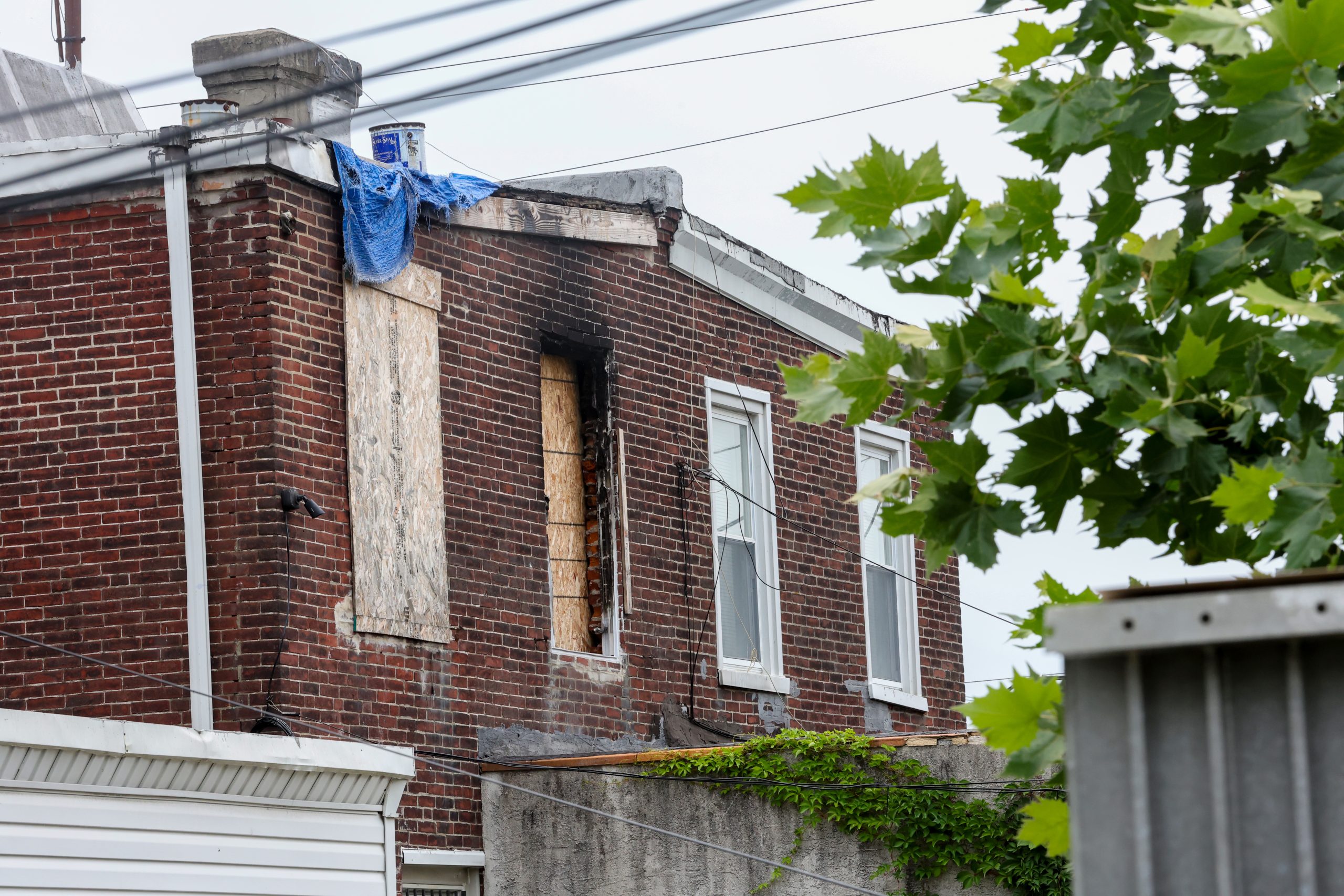
The back of Horsch’s Olney home on June 27, 2026, showing damage from a fire that occurred last summer and led investigators to a weed growing operation and a cache of illegal weapons.Aidan T. Gallo / Staff Photographer
The fire led to police finding guns and a marijuana grow operation inside the property. Eugene was jailed again.
The fire had torn a gash in the roof, and rain pelted into the kitchen, the dining room, and Killen’s bedroom. On Aug. 16, 2025, three months after Raymond passed, she died of a drug overdose.
Eugene announced Killen’s death on her own Facebook page.
“Please let everyone know we were in love and we were going to get married,” Eugene wrote.
Her friends said neither of those things was true.
Eugene’s life continued to unravel in the wake of his father’s death.
Neighbors said they saw him outside, quiet and jittery, often obsessively washing his black BMW. He would be dressed in a nice shirt, as if he were heading to an office, although his only means of income appeared to be selling drugs.
He was arrested again this year in March after he stabbed a man in the stomach during an apparent dispute over a woman at Eighth and Market Streets. The case was withdrawn when the victim failed to appear in court, and Eugene was released from jail in May.
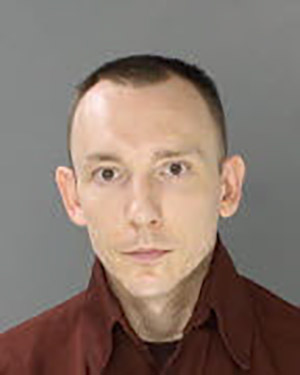
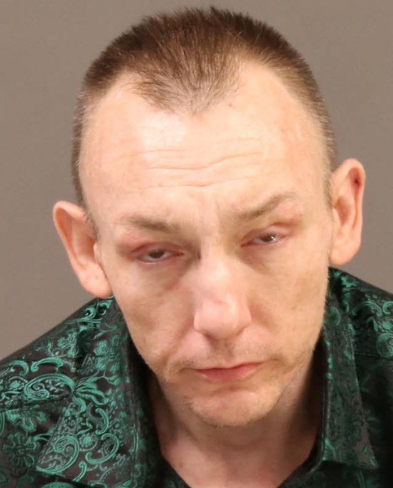
Eugene Albert Horsch, 44, of Philadelphia.Courtesy of Philadelphia police
Just a few weeks later, on the morning of June 19, a U.S. Park Police ranger approached Eugene’s BMW parked near Sixth and Market. A woman inside sounded distraught.
As the ranger got closer, the woman in the back seat said to Eugene, “You’re going to hurt me.”
Inside the car, officers found narcotics, two firearms with obliterated serial numbers, and other weapons — along with a fake U.S. Drug Enforcement badge with Eugene’s photograph under the name “Eugene Frederick Steiner.”
Police called real DEA agents to the scene, who turned their attention to the woman in the car.
The 39-year-old woman told police her name was Blair Tonzelli. She showed officers an ID card bearing her photo, but with Tonzelli’s name. It did not take long to determine she was lying.
She told investigators that she did not know Tonzelli and was not aware that she was missing.
“But I think something bad may have happened to her,” she said.
She said she was afraid to enter the basement of the Olney house because Eugene told her he had hurt people there. He had never been violent toward her, she said, but he was obsessive and would sometimes sit for 24 hours outside her house. She said he had told her he knew which chemicals are needed to reduce a human body so it could be flushed down a toilet.
An investigator searches the backyard of Horsch’s home in Philadelphia, on June 27, 2026.Aidan T. Gallo / Staff Photographer
Authorities, including FBI forensic experts in hazmat suits, searched Eugene’s home. They found bank cards in Tonzelli’s name, Killen’s death certificate, and five urns containing plastic bags of unidentifiable cremains. One bore the name Raymond Charles Horsch.
Other findings only deepened the mystery of what had been happening at the house: hidden compartments, including one in a hollowed-out stair; vats filled with chemicals; and a 55-gallon drum with connections to water lines leading into a hole in the ground.
The note mentioning Ted Bundy included confessions for acts of violence, such as having “a 2ft zip tie in my pocket and a drum set up.”
“I had been ready and waiting and I damn sure showed no hesitation,” the note states. “And it was fun.”
Investigators are reviewing Raymond’s films and reading his novels for clues — giving his work the attention in death that he always hoped to achieve in life.
His books describe ways to murder women. One scene depicts a body being dissolved with chemicals in a bathtub.
That same book includes tales of Raymond’s bizarre life story, interspersed with passages that he concedes are complete fiction.
But he leaves the reader guessing.
“Would it surprise you,” he wrote, “to learn that I’m lying?”
Staff writer Michelle Myers contributed to this article.
A detective at the crime scene on Horsch’s property in Philadelphia on June 26, 2026.Jessica Griffin / Staff Photographer
On the last Thursday of July, during Manayunk’s summertime Stroll After Hours event, throngs of young families pushing strollers and couples walking dogs roamed the business corridor.
Some stopped at art vendors with frames sprawled across the sidewalk, while others meandered down Grape Street to grab a bite from a food truck or claim a seat at the outdoor screening of Toy Story.
On such an evening, Main Street Manayunk’s evolution is on full display.
The riverside neighborhood in Northwest Philadelphia has seen many eras, from textile mills in the 19th century to chain retailers in the 1990s, to today’s collection of local upstarts.
“It’s the best it’s ever been,” said Jen Wankoff, 51, of Roxborough, who turned out to Stroll After Hours with her friend, Jen Filip, 50.
“It used to be a lot more commercial. There was a Banana Republic, a Pottery Barn, but then once one left, they all left,” said Filip, who has lived in Roxborough since the early 2000s. “Now it’s all small businesses.”
More changes are coming to Manayunk. Even as apartment development has slowed in much of Philadelphia, over 1,800 new residential units are proposed along or adjacent to Main Street. All that additional population stokes neighborhood anxiety about traffic and parking, but retailers expect it will be good for business.
Kim Albanowski of Philadelphia pushes her dog, Koda, across Main Street in “his chariot” as Jason Pepin looks on.Elizabeth Robertson / Staff Photographer
“There’s probably going to be 1,600 new people living in those units, and they’re all going to come to Main Street to shop and eat,” said Dan Neducsin, 83, who has long been the largest property owner on Main Street and helped shape the identity of the corridor.
“The restaurant scene has been strong [since the 1990s], and now I think it’s even going to get stronger,” said Neducsin, who has sold 12 of his properties in recent years to long-term tenants and small-business owners like Tim Spinner, owner of Taqueria Amor.
“I just want to see the people who I have in there now do well, and my tenants have welcomed the opportunity,” said Neducsin, who emphasized that his company is not closing or selling all its holdings. But “it does make sense now for some new people to come in and take advantage of what’s here.”
Manayunk’s Main Street appeal
In the past two years, 12 new businesses opened along Main Street.
One of them is Riptide Tavern, opened in June by Spinner, who also owns Taqueria Amor next door.
Spinner said he wanted to open a neighborhood bar with creative cocktails and a cheap beer menu — much like a dream restaurant he conceived for a culinary school project years ago.
“I wanted to be in the Caribbean or down the Shore, but along the Schuylkill River with the canal back there is close enough,” Spinner said.
The Riptide Tavern in Manayunk is packed on a Thursday during Stroll After Hours.Elizabeth Robertson / Staff Photographer
Eleanor’s Consignment is set to open on Main Street in October. Owner Emily Mannix, aformer paralegal who has lived in Manayunk for two years, named the consignment store after her late mother, who died in 2023. They shared a love of secondhand-shopping.
“This has been something that has been on my mind for the past four years,” Mannix said. “Life is short, and I might as well jump in and try.”
It’s not a bad place to do that. Realtor Christine Ertz notes that while rent is not low, it’s more affordable than in areas like South Street and Queen Village.
“Manayunk has the demographic businesses want,” said Ertz. “It has the younger folks, but also the more mature folks that have expendable income, and we’ve got the 27-to-35-year-olds that really enjoy the niche, smaller stores.”
The apartment boom in Manayunk promises to add even more. Many of the new developments have smaller units, which are likely to attract single people or younger couples. The price points of the new rentals, while lower than Center City or Northern Liberties, also suggest that tenants will have disposable income.
Those changes haven’t been without controversy. The Manayunk Neighborhood Council has pushed back against development it deems as out of scale with the community, and that’s often lacking new commercial space, affordable housing, and parking while being weighted to small apartments.
John Hunter, an architect and zoning chair of the Manayunk Neighborhood Council, says few of the new buildings have commercial space to add to the neighborhood’s daytime vitality. He disagrees with the idea that the apartment boom will boost local businesses.
“We have heard that misrepresentation for years now — that new apartments will generate pedestrian traffic along Main Street,” Hunter said. “Fifteen years of those promises has proved that is not the case.”
But some neighborhood observers see the development interest along Main Street as a concrete example of the area’s ability to attract people and investors.
“We’re seeing a diverse group of experienced, well-regarded developers all making independent decisions to put their capital and time into Manayunk,” said Veronica Blum, a retail broker with MPN Realty who has been working with Neduscin on leasing and sales.
“When that many smart people come to the same conclusion about a neighborhood, it says a lot,” said Blum. “It’s a real vote of confidence in Manayunk’s future, and I think we’re just beginning to see what’s possible.”
Nervous Nikki and the Chill Pills perform during the Stroll After Hours event on July 30.Elizabeth Robertson / Staff Photographer
The cost of staying open
Still, the commercial corridor has seen turnover and closures.
Pizza Jawn closed andKismet Bagels came in its place — Pizza Jawn’s owner bought the former Manayunk Tavern down the street, which became Bar Jawn. Smiley’s closed and Blu Zone Cafe moved in; and Iron Works Fitness opened up in the former Kismet Cowork.
A large restaurant space sat empty for months after Winnie’s closed last November. But, two Roxborough natives recently leased the space for a new “punk French” restaurant, planned to open in late fall.
Joan Boroff Denenberg, who does marketing and retail strategy for the Manayunk Development Corp. (MDC), said a few storefronts remain empty because the property owners aren’t local and are backed up with other projects throughout the country.
Neduscin says he isn’t struck by an unusual number of vacancies along Main Street. But maybe that’s because when he began buying properties there in the late 1980s, much of the commercial strip was vacant to the southeast of Cotton Street.
“Anytime I saw a property that was available in Manayunk I ended up buying it because I thought if I owned enough properties, I could kind of set the direction of the street,” Neduscin said. “I got to handpick who my potential tenants would be. I tried to bring tenants that I thought would bring additional people here.”
Insomnia Cookies is one of the few remaining chains with a presence on Main Street in Manayunk.Elizabeth Robertson / Staff Photographer
The bustle of Main Street now extends all the way down to Shurs Lane, roughly double its occupied length when he started.
Neduscin also says he really tried to find independent entrepreneurs to lease to — “I didn’t want a McDonald’s on Main Street” — and those restaurateurs and small-business owners gave Main Street a unique identity.
More than 30 years later, that’s why he wanted to sell some properties to one-time tenants like Spinner.
Still, business owners say myriad challenges remain. The permitting process is notoriously slow, especially if a trip to the Zoning Board of Adjustment is necessitated. That can leave business owners paying rent without being able to open their doors as they wait for permission.
“When it takes longer, you have to have deeper pockets, and I think that does scare some prospective businesses,” Neduscin said.
Further, owners on Main Street face the macro challenges affecting small businesses throughout the region. Brandy Deieso, who opened the gift boutique the Little Apple in 2010, said the cost of goods has increased due to tariffs, shipping costs, and rising gas prices.
“Being a street full of locally owned small businesses is great,” said Melissa Walter, co-owner of Love City Brewing, which just opened a second location in Manayunk. “But as we all know, running a small business is really hard.”
Building a business community
The bubblegum pink Cupid’s Bookshop storefront has built a following and even attracted customers from Baltimore and New York since opening last year. Now, it’s upgrading to a bigger location on Main Street.
“The growth we’ve had, it’s been amazing,” said owner Tina Long.
Cupid’s capitalized on the insatiable demand for bodice rippers and love stories, and Long says the bookshop benefited immensely from the MDC’s incubator program. Cupid’s was the first participant.
The program allowed Long to lease a storefront at 106 Grape St., owned by the business association, for a below-market monthly rent of $1,000 for up to three years, and the MDC provided guidance and support. With her new storefront opening in August and a five-year lease, she’s graduating from the incubator space early.
The “Welcome to Main Street” sign hangs over Main Street at Ridge Avenue in Manayunk.Michael Klein / Staff
“We loved the idea, but it turned out beyond our wildest dreams,” MDC executive director Gwen Mccauley said. “She’s now becoming part of the fabric of our district.”
Baby Face Studio also ended up on Main Street in part because of the MDC.
Artist and owner Kim Canefield in 2022 applied for the MDC’s emerging artist tent at the Manayunk Arts Festival, where she could set up shop for $100 instead of operating a $500 tent on Main Street. The festival draws over 300 artists and 150,000 visitors each June, McCauley said.
She set up a full-time vendor tent at the next three Arts Festivals. Each time, she was stationed in front of an art gallery, not knowing that the same space would eventually become Baby Face Studio.
“I just kept looking at it, and peeking through the window,” Canefield said. “The whole time I was staring at the future of what the studio was going to be.”
Love City Brewing already has a foothold in Callowhill, but saw Manayunk as a place to grow. Its second spot opened in the former Fat Lady Brewing. When searching for a new location, co-owner Walter was attracted to Main Street’s critical mass of small, independent businesses.
“Seeing them succeed, we thought: ‘Oh, we’re a small, local Philly business too,’” Walter said. “We can make it work there.”
INTERCOURSE, Pa. — A young Amish woman stood barefoot in the back right corner of a grassy volleyball court, spinning a ball in her hands.
She wore a simple green dress with a black apron, and when she leapt and hammered a serve over the net with a grunt, her prayer covering looked as white as the passing clouds.
On this beautiful afternoon in late June, the coed competitors were among the hundreds of young Amish players from Pennsylvania, Ohio, and other states who converged on Intercourse Community Park, about 60 miles west of Philadelphia, in Lancaster County, for the annual volleyball tournament. Hundreds gathered around the courts in lawn chairs to watch, including Amish men with long beards alongside “English” children in sneakers and sports jerseys.
Teams high-five each other after a volleyball match during the first day of the Heritage Days Volleyball Tournament at Intercourse Community Park in Gordonville, Pa., on June 19.Elizabeth Robertson / Staff Photographer
The Amish in Pennsylvania, for reasons few could fully explain, love competitive volleyball. Some simply shrugged their shoulders when asked why. Others said they play volleyball because previous generations played too, a skill they learned just by watching, much the same as shoeing buggy horses or baking whoopie pies.
“I guess it’s just part of our culture,” said Ray Beiler, the tournament’s organizer. ”Competition-wise, though, it’s slow-pitch and volleyball, but volleyball is probably the biggest.”
The Amish also dabble in ice hockey when ponds freeze, Beiler said, and, in Indiana, they play basketball, of course. In Intercourse, the sharp pop of pickleball paddles on this Friday afternoon revealed another growing sport among the Amish.
Volleyball, it seems, has always been there, some said.
Ray Beiler updates the scores and standings during the Intercourse Heritage Days and Heritage Days Volleyball Tournament at Intercourse Community Park in Gordonville, Pa., on June 19.Elizabeth Robertson / Staff Photographer
“I grew up with it,” said competitor Irv Beiler, 18, of Christiana, Lancaster County. “It’s a team game.”
One older Amish man said he grew up playing softball, but reckoned volleyball was a new phenomenon. When asked his name, the man spoke to his wife in Pennsylvania Dutch, and declined to answer.
The Amish do have a traditional game called cornerball, or “eck balle” in Pennsylvania Dutch, that looks like a cross between baseball and dodgeball, but is played in a cow pen. According to AmishAmerica.com, the sport was originally played with homemade balls made by “wrapping a quarter-sized steel nut in twine and covering it with black tire tape.”
According to the website, eck balle is a disappearing sport.
Erik Wesner, founder of AmishAmerica.com, said the purpose of volleyball and other sports in Amish communities is mostly about socialization, not competition.
“This is a game that’s played commonly at the Sunday youth group gatherings or meetings at church members’ houses for dinner,” he said. “It’s a way for teens and young adults to interact.”
Older Amish in Intercourse didn’t know much about the rise in popularity, but, ever efficient and resourceful, said volleyball takes up little room, compared to say, soccer, and can keep a lot of children busy at a gathering.
Irv Beiler serves the ball during the Heritage Days Volleyball Tournament at Intercourse Community Park in Gordonville, Pa., on June 19.Elizabeth Robertson / Staff Photographer
John Lapp, 51, of Gap, Lancaster County, said there are “volleyball barns” in the area where the more serious players gather in the winter.
“I played softball,” he said. “Volleyball was just a sport that took hold, I suppose.”
There doesn’t appear to be much trash talk in the competitive world of Amish volleyball, unless you understand Pennsylvania Dutch, but the talent is plain as day. That makes sense, locals said, if you consider the day-to-day life of Amish youth. They’re wrangling calves, riding kick scooters, and lifting hay, building muscle and balance the whole time.
“I used to play too,” said Simon Stoltzfus. “I just can’t jump as high as I could or stay up there as long.”
Wesner said sports tend to be more prevalent in progressive Amish communities, like in Lancaster County, and less so in more conservative areas, like Mifflin and Clearfield Counties.
Serious play during the Heritage Days Volleyball Tournament at Intercourse Community Park in Gordonville, Pa., on June 19.Elizabeth Robertson / Staff Photographer
Last year, The Inquirer spoke to Melvin Byler, who grew up Amish in Western Pennsylvania, after he won the Professional Bull Riding event in Reading. Byler had to leave his Amish community to pursue bull riding as a profession.
“I didn’t even see bull riding until I was 14, and when I told my parents I wanted to do it, they said it was a phase,” Byler said.
Steven Nolt, an Elizabethtown College professor who has researched and written about the Amish extensively, said situations like Byler’s are rare. Ray Beiler said a college coach came to one of the Intercourse tournaments and said many of the competitors could play at higher levels, but Nolt said it’s unlikely that even the most talented volleyball players would pursue the sport more competitively.
“It would be hard to imagine,” Nolt said. “They’d be making a choice not to join the Amish.”
Chris Haley oversaw the pickleball tournament at the Intercourse Heritage Days, where there are new courts. He said the Amish quickly took up that sport, too, and some have makeshift courts at their house.
“They are talented and determined,” Haley said.
They compete in sports for the fun of it, not for the prospects of future scholarships, and, at a tournament as big as Intercourse, the socializing was front and center. Young Amish slipped off their black leather boots and Crocs for sneakers or went barefoot, dozens chatting up one another in both English and Pennsylvania Dutch.
“This tournament is most definitely for the fun of it,” said Wilmer Stoltzfus, 20.
Friends and family watch the play during the Heritage Days Volleyball Tournament at Intercourse Community Park in Gordonville, Pa., on June 19.Elizabeth Robertson / Staff Photographer
The players took big gulps from jugs of water and walked onto one of several courts spread out over several acres in the park. Some of the men wore thick, black work pants with suspenders, but others wore shorts. When one young Amish man dove for a dig and missed, his teammates rushed to help him up.
“Good job,” they said.
By Saturday night, only one net would remain, and a few thousand spectators would be crowding the court for the finals. The winners would get tall trophies housed in an exhibition room, with silver and gold volleyballs fastened to the tops.
They’d also get bragging rights until next year, maybe.
“Not bragging, no,” said Wilmer Stoltzfus. “We don’t really brag.”
Serious play during day one of the Heritage Days Volleyball Tournament at Intercourse Community Park in Gordonville, Pa., on June 19.Elizabeth Robertson / Staff Photographer
The trolleys stopped running at midnight, so Tom Hoover waited outside the Philadelphia Warriors locker room for a lift back to Villanova. He was a teenage college student and his ride after sitting in the stands at Convention Hall was the passenger seat of Wilt Chamberlain’s purple Cadillac El Dorado.
A 40-minute drive, Hoover said, became a 10-minute sprint as Chamberlain burned rubber before dropping his buddy off at the dorm.
“Dippy had a heavy foot,” Hoover said. “Back then, you didn’t pay attention. You were just talking and riding. But you would be like ‘Damn, how’d we get here so fast?’ It was one of those kinds of things.”
Chamberlain then jumped on the turnpike and headed for New York, as he lived in the 1960s in an apartment overlooking Central Park while playing in Philadelphia.
He maintained a residence in Philly but spent most nights in New York, from which he’d commute for games and practices while owning a popular club in Harlem. Chamberlain even hitched a ride from Hershey back to New York in 1962 with Knicks players after his 100-point game.
“He would do 90 to 100 [mph] all the way up the turnpike,” Hoover said of Chamberlain, who died in 1999. “And if he got stopped. ‘Oh, it’s Wilt Chamberlain. Can I get your autograph?’ Back then it was a different time. It was really different.”
Fans and teammates rush onto the court to congratulate Wilt Chamberlain after his 100-point game in 1962 in Hershey, Pa. He hitched a ride back to New York with Knicks players after the game.PAUL VATHIS / AP
Chamberlain’s commute could be copied this season as several NBA insiders reported last month about the possibility of LeBron James living in New York while playing for the Sixers. James, one report suggested, could use a helicopter to get to games and practices. Not even Chamberlain’s heavy foot could keep pace with that.
“I was thinking LeBron might do the same thing,” said Hoover, who played for the Knicks after leaving Villanova and now lives in Manhattan. “Philly is not his kind of town. And that’s not a knock against Philadelphia. But I just think he’s a New York City kind of guy after living in L.A. That kind of lifestyle. So I can see him living in New York and making that trip back and forth.”
A New York ‘magnet’
Chamberlain purchased Smalls Paradise in 1959, spent $200,000 to renovate the club on Seventh Avenue and 135th Street, and renamed it Big Wilt’s Smalls Paradise. It became the spot.
“Oh, that was jumping, man. You kidding me?” Hoover said. “That was just a wonderful time in my life and a wonderful time to be growing up as 20-some years old, living in New York, and hanging in that place.”
Chamberlain told Ebony magazine that he spent 18 hours a day at Smalls to learn everything about owning a bar. Sammy Davis Jr. played Smalls, as did King Curtis, Jerry Butler, The Coasters, and Willis “Gator” Jackson. James Brown would perform at the Apollo Theater and then stop by Smalls.
“Dip was a magnet for everyone,” Hoover said. “People just wanted to be around him. They would come in there and just look at him. They had never seen a guy who could dress like that and looked like that. He was a 7-foot athlete who wasn’t gangly and uncoordinated. Plus, that big diamond he wore on his finger. They never saw anything like that.”
The club was a hub for Black entertainers, drawing “everybody who was anybody.”
Wilt Chamberlain “was a magnet for everyone,” said his friend Tom Hoover. “They had never seen a guy who could dress like that and looked like that.”Harry Benson/Express/Hulton Arch
“My mother always tells the story that she met Sidney Poitier at the club,” said Gloria Miller, whose father, Vince, was Chamberlain’s childhood best friend and often drove with him back to Philly.
Chamberlain’s Manhattan apartment was on the top floor of Park West Village, then a ritzy high-rise near Central Park. The apartment had a terrace and windows that overlooked the park with a view downtown of the Empire State Building.
Kareem Abdul-Jabbar — who hung there as a high schooler still named Lew Alcindor — described the apartment as “the ultimate bachelor pad.”
“A two-bedroom place done up in antique gold finish with a big couch in the living room, paintings on the walls, good stereo, great record collection,” Abdul-Jabbar wrote in his autobiography Giant Steps. “Wilt was known for his expensive taste, and the place showed it. I walked in and I clammed right up tight. I didn’t know what cool was, but I knew very strongly that I didn’t want to be uncool.”
Abdul-Jabbar played “Dirty Hearts” at Chamberlain’s dining room table with Chamberlain, Hoover, and Cal Ramsey. Chamberlain’s crew used to close Smalls at 4 a.m. and then play cards at the apartment. Abdul-Jabbar called them “hearts junkies.”
They ate sandwiches and swapped stories: What did Bill Russell say? What was Elgin Baylor complaining about? What’s up with Oscar Robertson? The loser of the card game had to chug a quart of water.
“But he would never drink,” Hoover said. “So it was like a wrestling match with that big guy.”
Kareem Abdul-Jabbar (left) is congratulated by Wilt Chamberlain in 1984 after Abdul-Jabbar passed Chamberlain’s NBA all-time scoring record. LeBron James has since passed Abdul-Jabbar’s record.Mark Avery
Living in Elkins Park
The Sixers traded for Chamberlain in February 1965, bringing him back to Philadelphia after the Warriors had moved three years earlier to San Francisco. There were a few weeks left in the regular season, and Sixers owner Ike Richman didn’t want Chamberlain spending nights in New York.
“He had a driver who he used to pay to take him up to New York,” said Richman’s son, David. “My father used to pay him under the table to not drive him to New York.”
Richman instructed Chamberlain to live at his home in Elkins Park for the rest of the season.
“I came home from Cheltenham High School and my mother, with our domestic helper, was putting my twin beds together and doing all this stuff to my room,” Michael Richman said. “I said, ‘What are you doing?’ She said, ‘Wilt’s moving in. Daddy’s making him.’”
Chamberlain shot baskets in Richman’s driveway, hung out with the kids, and ate dinner with the family. Richman and Chamberlain usually drove together to Convention Hall, but once Richman had to be there early for a playoff game against Cincinnati. So he asked David — who had just earned his driver’s license — to drive Chamberlain.
The 16-year-old usually drove a 1959 Austin-Healey Sprite, but that wouldn’t be big enough for Chamberlain. Neither would the Pontiac Tempest. So the teenager drove his dad’s Cadillac.
“He used to sit in the back seat of the car and hang his body over the front seat,” Richman said. “It was like having a cobra in the car. He was in the back, but his head and body was in the front seat.”
Gloria Miller as a child standing in front of Wilt Chamberlain’s powder blue Bentley.Gloria Miller
The season ended that April when the Sixers lost to Boston in seven games. Chamberlain shared an apartment the next season with Miller on the Benjamin Franklin Parkway but spent most of his time in New York. He often commuted by train or driving to Philly with Miller in a powder blue Bentley that was delivered to his Manhattan apartment.
The press ripped Chamberlain every time he missed a practice and chided him for living in another city. He once shoved a reporter into a locker after the writer kept asking him after a playoff defeat — in which Chamberlain scored 46 points — if he would have made more free throws had he not missed practice that week.
“He wasn’t kidding when he played. He really meant it,” said Richman. “Whether he was going up to New York to party or whatever, when it came to game time, he was never half-hearted about it. He was really into it. When it was time to play ball, this wasn’t a game to him. It was a war.”
Family in Philly
Chamberlain drove after each season to Los Angeles, where he had built a beautiful house off Mulholland Drive in Bel Air.
“He used to jump in his Bentley and drive for three days straight without stopping,” Richman said. “He didn’t need to sleep. Then he would get there. He was basically an insomniac.”
The powder blue Bentley was there in the 1970s when the Millers — who lived in South Jersey — visited Chamberlain.
“He called my father ‘Miller’ so he would call me ‘Little Miller’,” said Miller, whose father worked as a scout for the Sixers. “My mom was going to make dinner so we had to go to the store. He said, ‘Come on, Little Miller. Come to the store with me.’ I was getting my shoes on and he had no patience. He said, ‘You don’t need shoes. Come on.’ We got in the Bentley and we’re riding down the freeway and I’m like, ‘Why are they all looking at us?’ I didn’t realize I’m in a beautiful Bentley with Wilt Chamberlain. But it fit him.”
Chamberlain retired in 1973 and spent most of his time in L.A. but still kept close ties to Philly. He was the best man in Miller’s wedding and became Gloria Miller’s godfather. The basketball icon kept a tight circle of friends from his childhood. Chamberlain, just like when he lived in New York, was always close to Philadelphia.
“He was family,” Miller said. “He never forgot where he came from. Whenever Wilt came to town, he would come to my parents’ house and my mother would make him fried chicken and cobbler. Wilt and I would pick up the cobbler pieces together. It was just home. It was family.”
Wilt Chamberlain visiting the Miller family in Philadelphia in the 1970s.Gloria Miller
Hoover said he never thought much about Chamberlain living in New York while playing in Philly. The 7-footer belonged in the big city. And Hoover wouldn’t blame James for thinking the same.
Hoover met Chamberlain when he was playing a summer game in New York — “Wilt Chamberlain knows my name,” Hoover thought after Chamberlain watched him play — and they soon became friends. Chamberlain dropped him off at his dorm and sped to New York. Hoover said no one even noticed the basketball superstar dropping off the college kid. It was normal.
“Nobody saw me. It wasn’t necessary,” Hoover said. “The key to having relationships with guys is just having relationships. Not taking pictures, getting autographs, and jumping out saying, ‘Look who I’m with.’ That kind of thing makes you have lasting relationships with guys. If you’re always in front and always going to be out front with them, then that relationship is not going to last at all.”
Baseball’s lax food policies have long been viewed as a way to keep America’s pastime accessible, especially as ticket and concession prices continue to rise. Generally, most fans keep it simple: sandwiches, chips, fruit, or a bag of precooked glizzies.
But in Philly, the Bank’s spaghetti policy has taken on new life as Phillies fans redefine what’s considered acceptable ballpark food, smells and food safety be damned. For some, smuggling in tiramisu or seafood is a sign of dedication. For others, it’s about committing to a bit.
Regardless, Philly wouldn’t have it any other way.
“As much I as love ballpark food, I don’t want to miss anything because I’m waiting in line” at concessions, said Laura Bider, a season ticket holder who prefers to tote a fanny pack full of meatballs and what she called “pocket pickles.”
(function() { var l = function() { new pym.Parent( ‘cbp-meatballs3__graphic’, ‘https://media.inquirer.com/storage/inquirer/ai2html/cbp-meatballs3/index.html’); }; if(typeof(pym) === ‘undefined’) { var h = document.getElementsByTagName(‘head’)[0], s = document.createElement(‘script’); s.type = ‘text/javascript’; s.src = ‘https://pym.nprapps.org/pym.v1.min.js’; s.onload = l; h.appendChild(s); } else { l(); } })();
At the start of this year’s baseball season, we asked Phillies fans to tell us about the best food they’ve taken inside the ballpark. We fully expectedto hear about supermarket rotisserie chicken, booze-soaked fruit, and the best BYO condiments.
We did. But we also received 100-plus submissions of the most outlandish things we’d ever heard: fresh mussels, hard-boiled eggs, racks of ribs, and oysters tucked inside hoagie rolls, among others. (We don’t judge, we just listen.)
“Bring whatever feels lucky to you, whatever is going to pack you with enough protein and joy to get you through a game,” said Sarah Dlugos, 28, of Graduate Hospital. She believes her curried tuna salad helped the Phillies sail to the National League Championship in 2023. She also had a retort for skeptics:“It’s none of anybody else’s business.”
Actually, it’s our business. Here are the wildest foodspeople have taken inside Citizens Bank Park, for better or worse.
Seafood, apparently?
Ideally, a baseball game is like an airplane: You respect legroom, and never, ever eat smellyfood that spoils easily.
Not here. In Philly, fish and mollusks are totally acceptable ballpark fare.
Dlugos packed a tuna salad sandwich on untoasted whole wheat bread to all eight Phillies games she attended during the 2023 season. And while theflavorings ranged from dill to sriracha and sesame,the outcome remained the same: Every time Dlugos bit into her mushy, slightly warm sandwich, the Phils won.
(function() { var l = function() { new pym.Parent( ‘cbp-sardines__graphic’, ‘https://media.inquirer.com/storage/inquirer/ai2html/cbp-sardines/index.html’); }; if(typeof(pym) === ‘undefined’) { var h = document.getElementsByTagName(‘head’)[0], s = document.createElement(‘script’); s.type = ‘text/javascript’; s.src = ‘https://pym.nprapps.org/pym.v1.min.js’; s.onload = l; h.appendChild(s); } else { l(); } })();
“I even had tuna salad for game two of the NLCS when the Phillies beat the [Arizona] Diamondbacks 10-0,” she said. “Lucky tuna.”
Dlugos assured us that she downed her sandwiches quickly, to limit any odor, and she recommends copycats eat their tuna before the third inning at the latest.After all, her sandwiches had already survived several Broad Street Line stops before making it to the stands.
Haters, she suggested politely, can go kick rocks. “Whatever you do is between you and the tuna,” said Dlugos.
Not everyone is so lucky.
It was June 2012 when Jersey resident Dom Ellis walked into Citizens Bank Park with a bag of fresh mussels taped to his back and a dream: for Chickie’s & Pete’s to steam his shellfish and top them with a drizzle of their cheese dip.
(function() { var l = function() { new pym.Parent( ‘cbp-mussels2__graphic’, ‘https://media.inquirer.com/storage/inquirer/ai2html/cbp-mussels2/index.html’); }; if(typeof(pym) === ‘undefined’) { var h = document.getElementsByTagName(‘head’)[0], s = document.createElement(‘script’); s.type = ‘text/javascript’; s.src = ‘https://pym.nprapps.org/pym.v1.min.js’; s.onload = l; h.appendChild(s); } else { l(); } })();
“For some reason that popped into my head, and I thought it sounded really good,” said Ellis, now 34, of Pennsauken.
His hopes were dashed when the Chickie’s & Pete’s staff in section 126 refused to so much as touch the mollusks. “I remember the lady looking at me like I had three heads,” Ellis recalled. “The manager was like, ‘Do you think anyone here knows how to cook mussels?’”
Ellis said he would’ve paid at least $50 for cheesy ballpark mussels. Instead, he dumped them in the trash. To date, Ellis is so scarred that he refuses to bring food inside any ballpark.
“A lot of people lost that day,” Ellis said. “I lost. The Phillies lost.”
More recently, someone did succeed in getting shellfish to the stands.
Last year, Ty, alocal influencer who goes by “the Hippie Meathead,” smuggled 60 oysters inside the Bank by stuffing them in hoagie rolls, shells and all. He wrapped the rolls in tinfoil to avoid any interrogation. (The 25-year-old Rittenhouse resident declined to share his last name out of fear that his seafood habits could hurt his career.)
Once inside,Ty put the oysters on ice that he retrieved from concessions and shucked them with a screwdriver. He slurped some straight, while others topped hot dogs and pizza slices that were shared with strangers. A few went into a beer bat filled with Yuengling. Ty chugged it like an oversize shooter.
“It tasted like the ocean,” he said. “Oh, and victory.”
The home cook special
Forget peanuts and Cracker Jack: The new frontier of baseball fandom is bringing elaborate spreads to the ballpark. Dozens of Inquirer readers responded to our survey with tales of dinners spread across several innings.
A reader from Point Breeze prepped a full steak with potatoes and shrimp scampi for night games. Another wrote via Reddit that they managed to get a full barbecue spread — smoked brisket, mac and cheese, cornbread, and baked beans — inside for a World Series game.
Kevin Kilroy’s most memorable Phillies game involved eating lasagna and tiramisu in the stands for a birthday party. It wasn’t exactly a five-star meal: The cold lasagna was “just edible.” The tiramisu, a family recipe, was a toppled mess. Not that Kilroy minded.
(function() { var l = function() { new pym.Parent( ‘cbp-tiramisu2__graphic’, ‘https://media.inquirer.com/storage/inquirer/ai2html/cbp-tiramisu2/index.html’); }; if(typeof(pym) === ‘undefined’) { var h = document.getElementsByTagName(‘head’)[0], s = document.createElement(‘script’); s.type = ‘text/javascript’; s.src = ‘https://pym.nprapps.org/pym.v1.min.js’; s.onload = l; h.appendChild(s); } else { l(); } })();
“Each Phillies game is special because of the people I’m with,” said the 33-year-old Olde Kensington resident. “The food is a way to celebrate that.”
First-time season ticket holder Alex DiDonato,28, has already built a reputation in section 317 for bringing ornate dinners: a rack of ribs, crab cake sandwiches with homemade aioli and grilled corn, a charcuterie board, and, more recently, a DIY taco kit with ground beef, guacamole, shredded cheese, and lettuce.
(function() { var l = function() { new pym.Parent( ‘cbp-tacos__graphic’, ‘https://media.inquirer.com/storage/inquirer/ai2html/cbp-tacos/index.html’); }; if(typeof(pym) === ‘undefined’) { var h = document.getElementsByTagName(‘head’)[0], s = document.createElement(‘script’); s.type = ‘text/javascript’; s.src = ‘https://pym.nprapps.org/pym.v1.min.js’; s.onload = l; h.appendChild(s); } else { l(); } })();
The new tradition started as a way for her to make each game feel special. The Spring Garden resident hasn’t had a single miss yet, she said, and has plans to bring a tray of baked ziti next. The only downside: her seats.
“We sit at the edge of our section, so every time someone comes into our [row], we have to stand up and take all of our food and dips and drinks with us,” DiDonato said. “It’s a bit of a problem.”
Bider, with her meatball-filled fanny pack and back-pocket pickles, isn’t into all the flash. The 46-year-old from Swedesboro just wants the Phils to make the playoffs.
(function() { var l = function() { new pym.Parent( ‘cbp-pickels__graphic’, ‘https://media.inquirer.com/storage/inquirer/ai2html/cbp-pickels/index.html’); }; if(typeof(pym) === ‘undefined’) { var h = document.getElementsByTagName(‘head’)[0], s = document.createElement(‘script’); s.type = ‘text/javascript’; s.src = ‘https://pym.nprapps.org/pym.v1.min.js’; s.onload = l; h.appendChild(s); } else { l(); } })();
The one time she splurged on a stadium hot dog and an ice cream helmet last year, the Phillies lost to the Los Angeles Dodgers in the first game of the division series, Bider said.
“It was all my fault,” she said. “And, no offense to the stadium, the food was nasty.”