Tynan knew she wanted to retire back in 2020, when she signed her last contract with the station, which will end next month just as her youngest daughter heads off to college.
Since then, it had been something of an open secret inside the 6abc newsroom that Tynan’s time at the station was coming to an end. Any chance of her extending her contract ended a few years ago, when she experienced a short but intense bout of vertigo.
“For most of the day I couldn’t do anything, and I thought this must be what it’s like to be really old and infirm,” Tynan said. “I didn’t want to work all the way up to get to that stage, so it kind of sealed the deal.
“I’m 57, which is relatively young, I guess, for retiring,” Tynan added. “But I wanted to retire while I’m healthy and active.”
So rather than stick around 6abc or move up the national ladder, Tynan and her husband, Greg, plan to split time between their homes in Delaware County and Florida after her last day, Aug. 31. She even turned down a chance to come back to host Philadelphia’s Thanksgiving Day parade, something she has done for close to 25 years. But the idea of being able to cook Thanksgiving dinner for her family for the first time won out.
“My children have never spent the night before Thanksgiving in their own home. We’ve always been in a hotel by the parade route, and I’ve never actually cooked,” Tynan said. “I’ve always picked it up from Whole Foods and reheated it.”
Tynan discussed her decision to retire, what’s next, and the best and worst weather events she has covered in her three decades at 6abc. This conversation has been edited for length and clarity.
How do you plan on filling your retirement? Is it just going to be water-skiing and enjoying life?
That sounds pretty great!
That’s definitely a big part of it. That and visiting and watching all my daughters’ cross-country and track meets. I do want to stay active in animal rescue. … I’ve been really active with Providence Animal Center. I’m not sure exactly how I’ll do it, but I would definitely still want to be involved in that.
And I’d like to be able to go to bed at a decent hour.
What do you make of the reaction to your decision to retire?
I’ve been talking about it for months with my personal friends and they’d be like, “Philadelphia’s gonna freak,” and I’m like, “No, everyone’s gonna be fine.” I get it because I’ve been here for almost 31 years, so for a lot of people it seems like they’ve been watching me their whole lifetime. I think that Philadelphians have a special relationship with Action News that you don’t see in a lot of other cities or stations.
Are there any on-air memories that stand out?
One fun moment was when my earring fell off, and Jim Gardner got up. I saw him stand up and take off his microphone, and there was a frenzy behind the scenes, like, “Jim’s on the move. Traveler’s on the move.”
I tried to ignore it, and then I saw this white thing go behind my head, which I thought was a cloud animation. Then I realized it was his hair. It was hilarious and then it went viral — it was on Live With Regis and Kelly the next day and stuff, and that was fun.
Another one was when I was on the morning show with Monica [Malpass] and Rick [Williams], I would always try to crack them up by dancing off camera.
One time Rick told the director, “Record Cecily when she’s dancing.” I dance like Elaine from Seinfeld, but worse. And so they aired that.
Is there a reason you stayed in Philadelphia vs. moving to national television?
I was born and raised in Newtown, Conn., so I always watched the New York stations.
I thought I would work here a few years and then go to New York. Then I had I had some opportunities early in my career to go up. I filled in on Good Morning America for a full week with Charlie Gibson and Diane Sawyer, which was a great experience. Gibson gave me a bottle of champagne when the week was over.
I talked about going to New York with Tom Kane, who was the general manager of WABC and was the GM when I came to Channel 6. … But then I spent the rest of my week there and was like, “Man, I want to get back to Philadelphia.”
Philadelphia felt like home. … Even when I walked in for my interview, I felt really at home with everyone and they were all nice and welcoming. No backstabbing at all.
Also, once you have children, that really grounds you. Your children are growing up in a community, and you don’t want to uproot them and leave.
What are the best weather events to cover, and what are the worst?
The worst are tornado warnings because we get a lot of those nowadays, because we have more advanced radar … and we do have a warmer climate. But tornado warnings freak people out, because I’m telling them to get in their basement.
I was at the airport back in the spring … and the people in front of me recognized me and thanked me. They live in Mullica Hill, and they were there when they had the tornado warning and I told them to get in their basement. They said they got their kids and their pets down there … and when they got out of the basement, their house was destroyed. But they were OK. … That really hit home about the importance of our job. I kind of teared up.
I’m sure you hear the other side, too, when the weather shifts and your forecast might be off.
Oh, yeah. The whole saying, “Oh, I wish I had a job where I could be wrong 90% of the time and still keep my job.” I get that all the time. Anybody who says that doesn’t really understand the complexities of the atmosphere. … But I feel like when you’re in the public eye, you do have to grow a thick skin. Especially in Philly. They’re going to tell you what they really think, so they’re not going to sugarcoat it.
Is there a weather thing people still get confused by?
One thing I think people really don’t understand is tornado watch vs. warning.
When a tornado watch is issued, it usually means there’s like a 2% chance of a tornado happening in your neighborhood. It’s pretty low.
I think a lot of people think when there’s a tornado watch it means warning, which it doesn’t. It just means heads up. The warning is when you have to go to your basement.
When art world veteran Daniel H. Weiss took over the Philadelphia Museum of Art in December, he quickly recruited a new team, including a chief financial officer and chief fundraiser. That team has begun to assess the museum’s financial condition and what can be done about it.
The picture that is emerging is not a pretty one.
Preliminary figures seen by The Inquirer show that the museum ran a deficit of about $10 million on a budget of $76.5 million for the fiscal year that ended June 30.
That is on top of a deficit of $5.4 million for the year before, and leaders say the outlook does not promise to improve soon. For the fiscal year that has just begun, the museum anticipates the deficit will be comparable to last year’s $10 million, but in planning the budget the museum has outlined the possibility that it could be as high as $15.9 million.
The shortfalls are the museum’s largest in recent history, leaders say.
Weiss said the museum’s financial situation is “substantial, but solvable.”
“I have no doubt that we will have a balanced budget in about three years,” he said, “but we have real work to do to get there.”
Financial pressures are not threatening the museum’s ability to remain open, but the run of red ink cannot continue. The museum is covering the deficits by drawing on a pool of money that includes cash and reserves — sometimes referred to as quasi-endowment — whose use was not restricted by donors for any specific purpose.
“The way I would describe it is, we have a savings account for rainy days. We’re spending it,” Weiss said. “We need to stop doing that.”
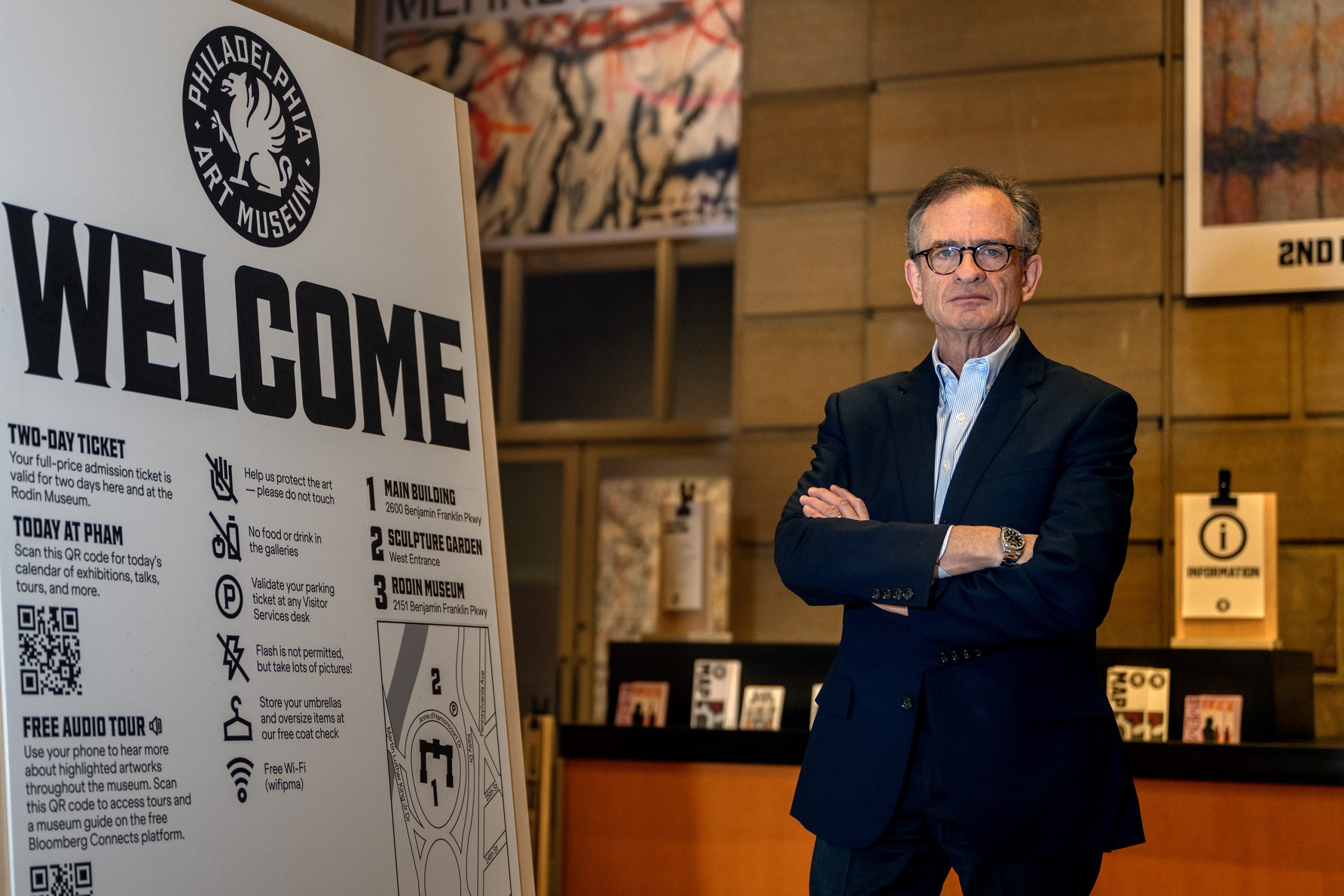
Daniel H. Weiss, director and CEO of the Philadelphia Museum of Art, at the museum in January.Tom Gralish / Staff Photographer
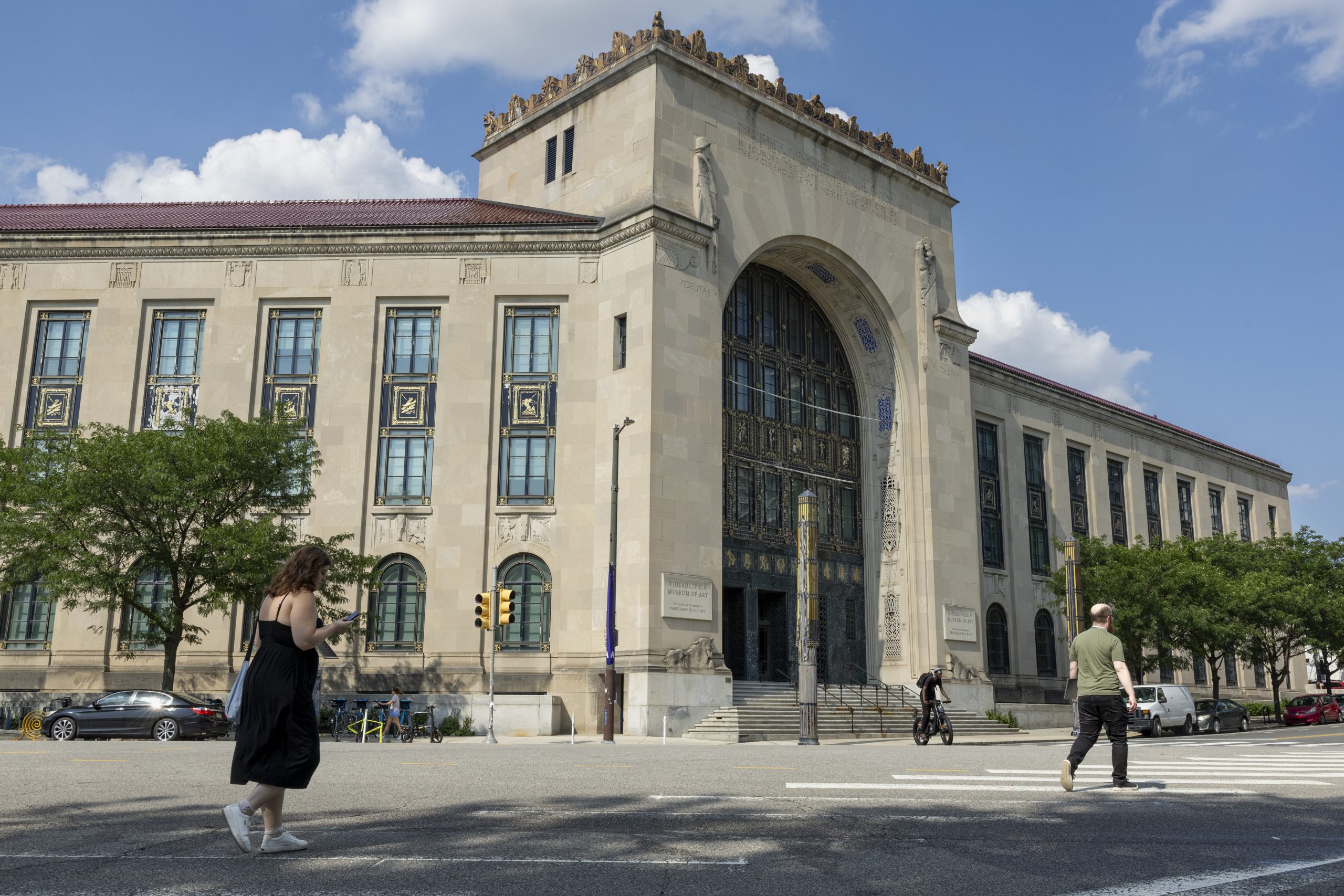
The museum’s struggle to right its finances comes as it faces some urgent needs and considers the fate of key projects. Among the unsettled questions is how to pay for deferred maintenance to both the main building and the Perelman building, the annex to the north that was closed to the public during the pandemic and never reopened.
The combined cost of work on the two buildings has a preliminary price tag of around $300 million.
As for a much sexier project, the museum’s much-trumpeted expansion envisioned by architect Frank Gehry: That will have to wait. Given the current challenges, the ambitious idea of carving out new spaces beneath the east terrace continues to be on hold; the timeline is uncertain.
“It is not, at this time, appropriate for us to be evaluating the feasibility of a very substantial new capital project which would be required to implement the Gehry plan,” Weiss said. “We need to determine the priorities and sequencing of capital work that needs to be done. And over the long term, we need to figure out what this institution can afford in a sustainable way.”
The famed architect died late last year.
The priority now is ringing the alarm that all is not well at one of the city’s two largest arts groups (the other being the Philadelphia Orchestra and Ensemble Arts) and rallying support around a rescue plan.
Weiss said:
“We want to be transparent and we want to be accessible to people, and they have a right to know — it’s their institution. But we don’t want to do it in a way that turns people away. It’s just an institution that needs repair. So how to tell that story is part of what we have to work on.”
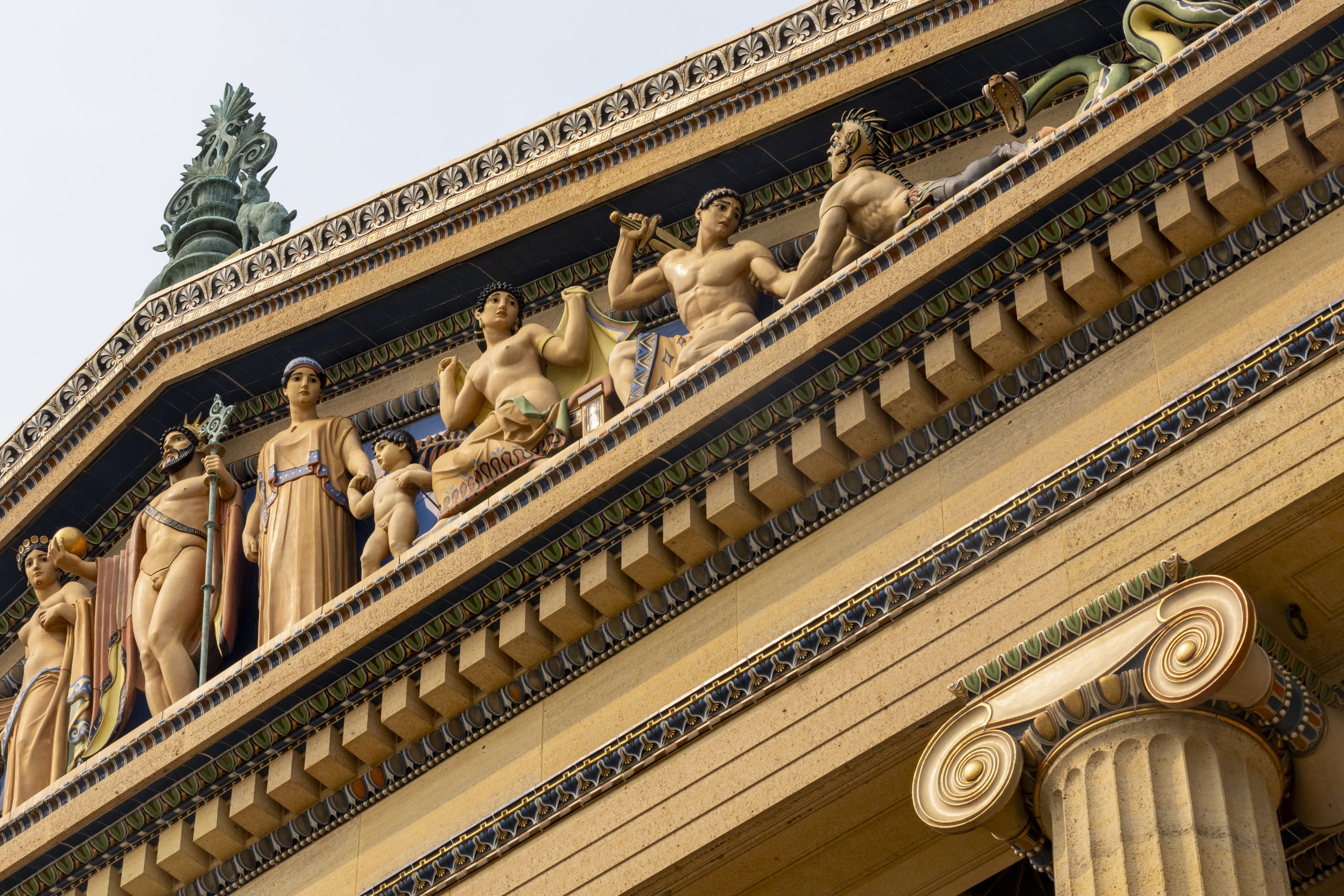
The polychrome high-relief sculpture on the north pediment of the Philadelphia Museum of Art. The high-relief sculpture depicts 13 figures from classical mythology.Aidan T. Gallo / Staff Photographer
Ambitions despite deficit
The pool of money is finite, and the museum would like to stop tapping its reserves as quickly as possible. Instead of funding the deficit, it could be helping grow the nest egg.
Referring to what is being spent this year alone to cover the deficit, Weiss said:
“That’s $10 million of assets earning at least 5% a year till the end of time we’re foregoing. We’ll never get that back.”
And yet the museum does not expect to balance its budget this year or next.
“We anticipate getting within shouting distance of a balanced budget within three years. We don’t have the luxury of taking longer,” Weiss said.
Even as it struggles, the museum has not shelved ambitious projects. The idea of creating a new learning and engagement center on the north side of the museum is still very much in play, Weiss said. Design development for the facility could begin within a year.
Blockbuster exhibitions like the 1982 show of Nigerian art seen by 197,000 visitors or the Cézanne retrospective in 1996 that drew 548,741 are hard to come by, but the museum is working on a number of shows that it believes would draw 100,000-plus visitors each.
“We will have exhibitions that will be of very significant public interest that will draw large numbers that will be exciting and powerful,” said Weiss, who declined to give specifics on the exhibits.
The Perelman building, an annex to the Philadelphia Museum of Art containing exhibition galleries, offices, conservation labs, and the museum library.Aidan T. Gallo / Staff Photographer
About the future of the nearby Perelman building, Weiss said the museum is searching for ideas.
On the one hand, the highly decorated art deco structure contains the library, art conservation studios, and administrative offices for which there is no space in the main building. On the other, the costs of operating and maintaining it are high. It is more building than is needed, and the location across two busy streets limits the number of visitors who will make the trip to reach it.
A revenue stream that’s been flat
The museum’s new leadership has analyzed finances from the last 10 to 12 years — a period that includes the pandemic, plus the periods before and after — and determined that the deficit is the result of a revenue stream that has not grown much, while expenses have.
“Functional revenue — contributions, admissions, membership, and earned revenue — has grown by only 0.3%, effectively flat,” said Mitchell Wein, the museum’s executive vice president and chief financial and operating officer.
The museum has not fully yet developed a plan for reversing the trend, but is “modeling lots of scenarios and coming up with the best approach on how to do that,” Wein said.
“Part of this process is evaluating everything. Everything is on the table,” Weiss said.
Reducing expenses in some areas will be considered, but that cannot be the only answer.
“We also know we need to focus on revenue generation and supporting the museum for the long term,” Wein said.
But revenue from where?
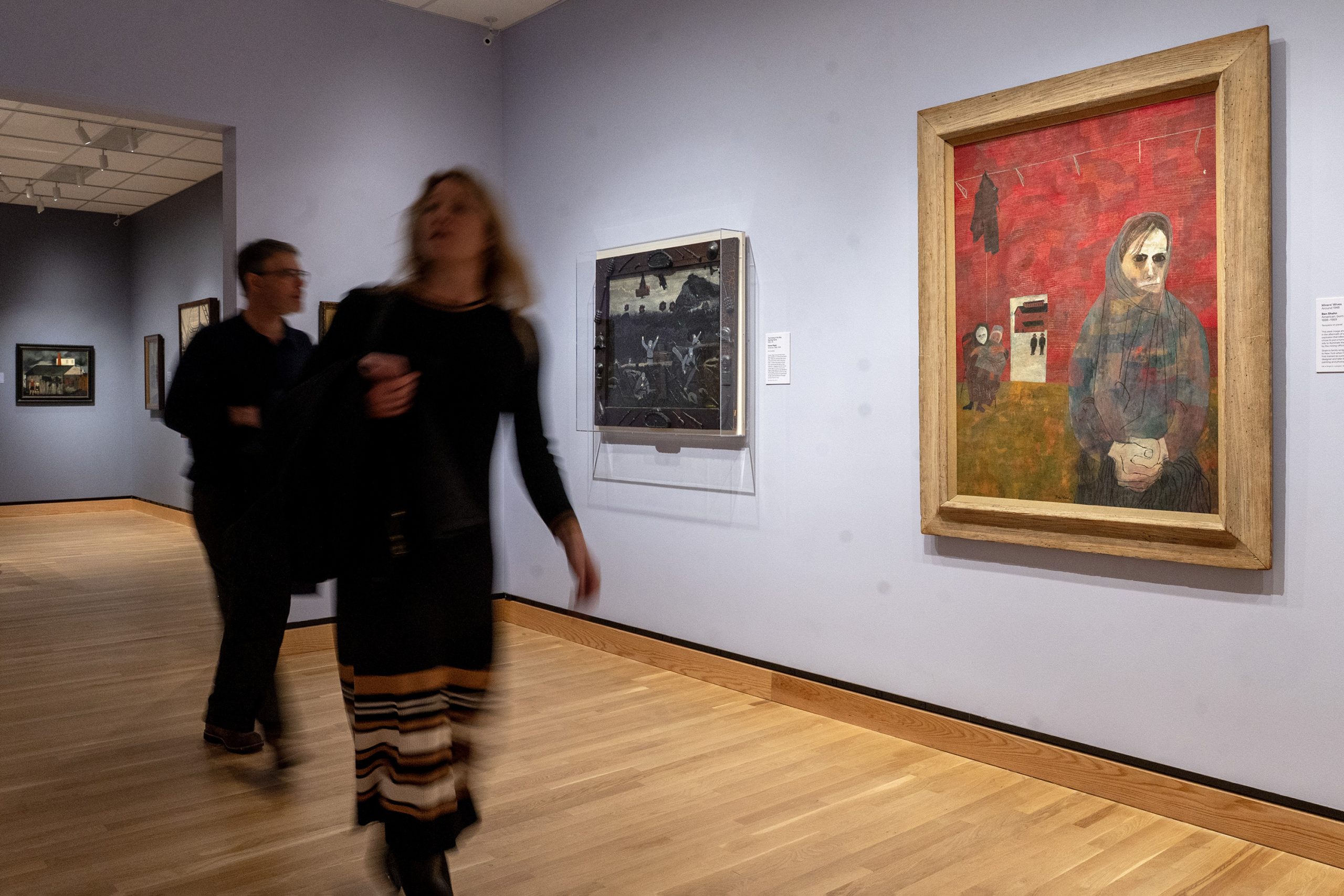
‘Miners’ Wives’ (right) by Ben Shahn and ‘The End of the War, Starting Home’ by Horace Pippin in the ‘A Nation of Artists’ show at the Philadelphia Museum of Art.Tom Gralish / Staff Photographer
Six keys to securing solvency
Ticket sales is one obvious place to look, but a big boost from admission is probably not in the cards. The museum once aspired to attract a million visitors a year, but that goal was floated before the pandemic, and the museum has not yet recovered its pre-COVID numbers.
This past fiscal year, the forecast called for 731,000 visitors; 672,753 showed up.
So the goal for next year has been adjusted down to 705,000, which the museum feels is more realistic. Attendance was 773,511 in the last full year before the pandemic.
The museum’s difficulty in coming back from the pandemic is not unusual. Over half (55%) of U.S. museums of all kinds were reporting lower attendance in 2025 than in 2019, according to a report from the American Alliance of Museums.
Daniel H. Weiss, director and CEO of the Philadelphia Museum of Art, looking out onto the museum’s east terrace.Tom Gralish / Staff Photographer
Weiss says the museum needs to focus on six key areas to achieve solvency:
Optimizing endowment income.
Boosting earned revenue, including income from retail, restaurants, special events and membership, and admissions. “Each of those needs to be examined to determine what’s possible,” he said.
Evaluating how much can be brought in through philanthropy.
Working toward more city and state government support. “We want to try to make the case to them that a larger investment in these facilities is in everybody’s best interests, and that’s a work in progress.”
Reviewing the operating budget. “The operating budget can be improved, but there’s not a ton of opportunity for us, for example, to lay people off. Our staffing levels are already down. We don’t think that’s the answer. But there are certain things we can cut and manage better or maybe outsource or streamline to improve the operating budget.”
Assessing programs, such as making better and more economical use of the Perelman building.
“If you add all of those things up and we do all of those things — even if we don’t also find a private equity guy who falls in love with us who’s going to give us $100 million — we’re going to balance our budget,” Weiss said.
Hundred million-dollar gifts may or may not be in the future, but the suggestion raises a salient question being pondered by leaders: What is the fundraising capacity of the museum?
“How much can that be, how much can we raise? I don’t know,” Weiss said. “What is this city set up to do? Most of the people who give money to an institution like this are local. So what is the philanthropic opportunity for one of the leading cultural institutions in this city?”
What Weiss is sure of is that fundraising depends on resetting the profile of an institution known more recently for organizational turmoil than for success.
“People who invest in an organization at lower levels as members, at higher levels as donors or major philanthropists, they always invest in winning organizations, and they rarely invest money to remediate problems. And one legacy I would like to leave is that we become an organization that’s known for being really good at what we do.
“The positive is a world-class institution with a great collection. If we can’t figure this out, then we’re the wrong people. It’s just not that hard.”
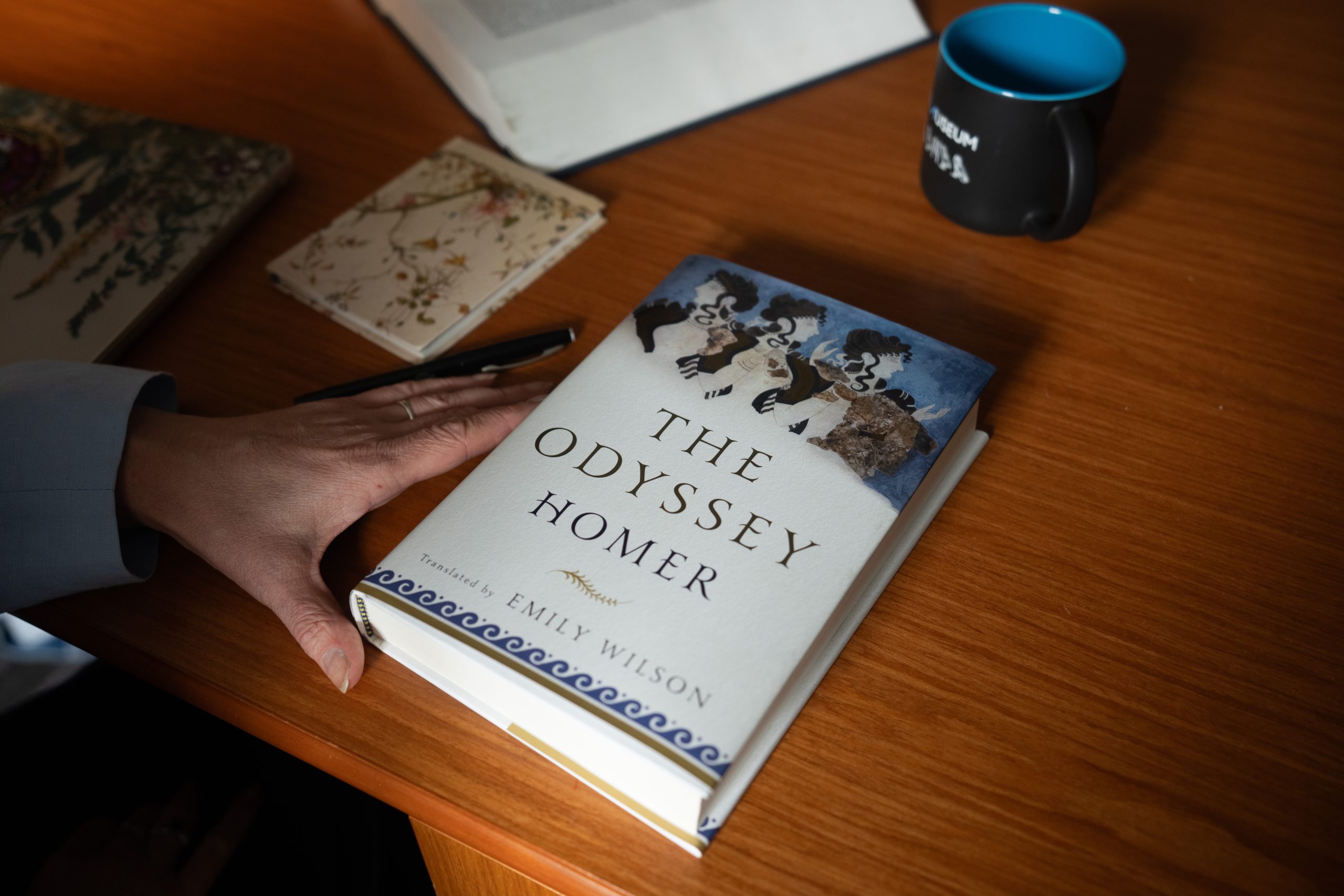
Classics scholar Emily Wilson was in Greece’s Costa Navarino last year when she heard the news that would change her life: Filmmaker Christopher Nolan was planning to release a star-studded adaptation of The Odyssey, the epic poem that Wilson had spent years painstakingly translating from Homeric Greek into English.
Nolan’s film crew, Wilson learned, had just left the Greek town where she was now staying. As she walked along the beach, the University of Pennsylvania professor imagined what scenes of adventure had been conjured on the ground where she stood.
The seductively scary sirens calling out to Odysseus? The giant Cyclops who eats his men? (Spoiler alert: It was the latter, shot at Nestor’s Cave in nearby Messenia.)
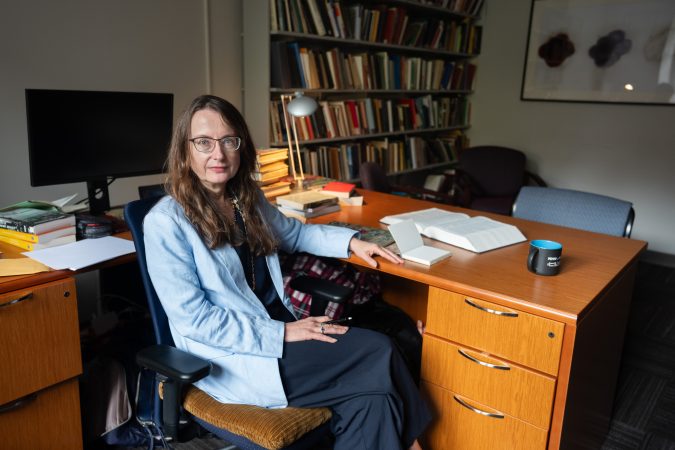
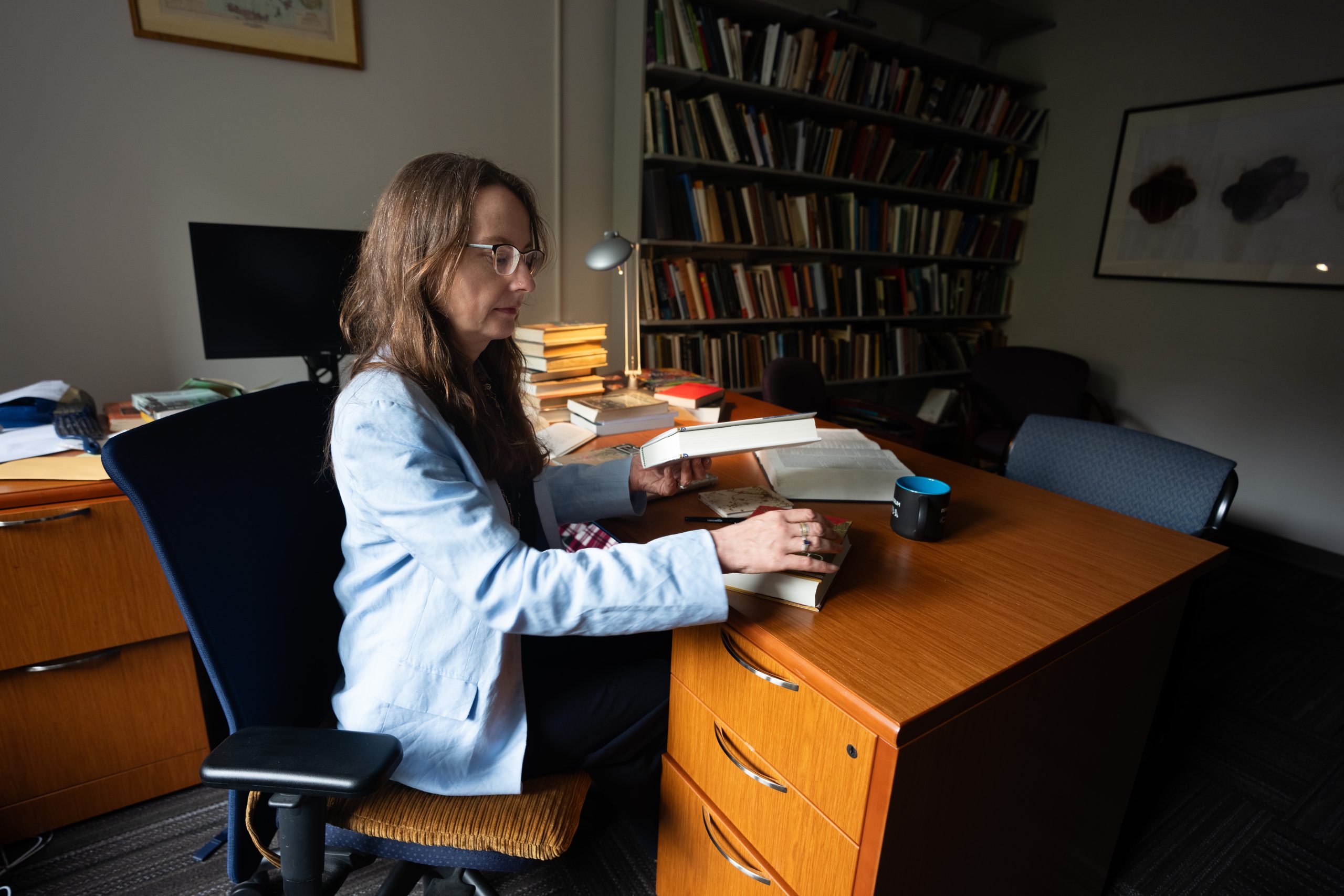
Professor Emily Wilson, in her office at the University of Pennsylvania, in Philadelphia, July 4, 2026.Jessica Griffin / Staff Photographer
Nolan’s film was a thrilling prospect for the classicist who made her name penning a quick-paced and strikingly contemporary translation of the nearly 2,700-year-old story for modern audiences. While the Oppenheimer director wrote his own version for the big screen, along with partner-collaborator Emma Thomas, he has cited several translations, including Wilson’s, as references.
“It’s great that there’s going to be a whole new wave of people who may not have thought much about The Odyssey, may not even be familiar with the narrative, who may then get excited about it, because Christopher Nolan is a big name,” said Wilson, who lives in West Philly with her partner, David Foreman, a Swarthmore College administrator, her two younger daughters, Psyche and Freya, their cats, Pumpkin and Spice, and their dog, Pepper. (Her eldest daughter, Imogen, just graduated from Temple University.)
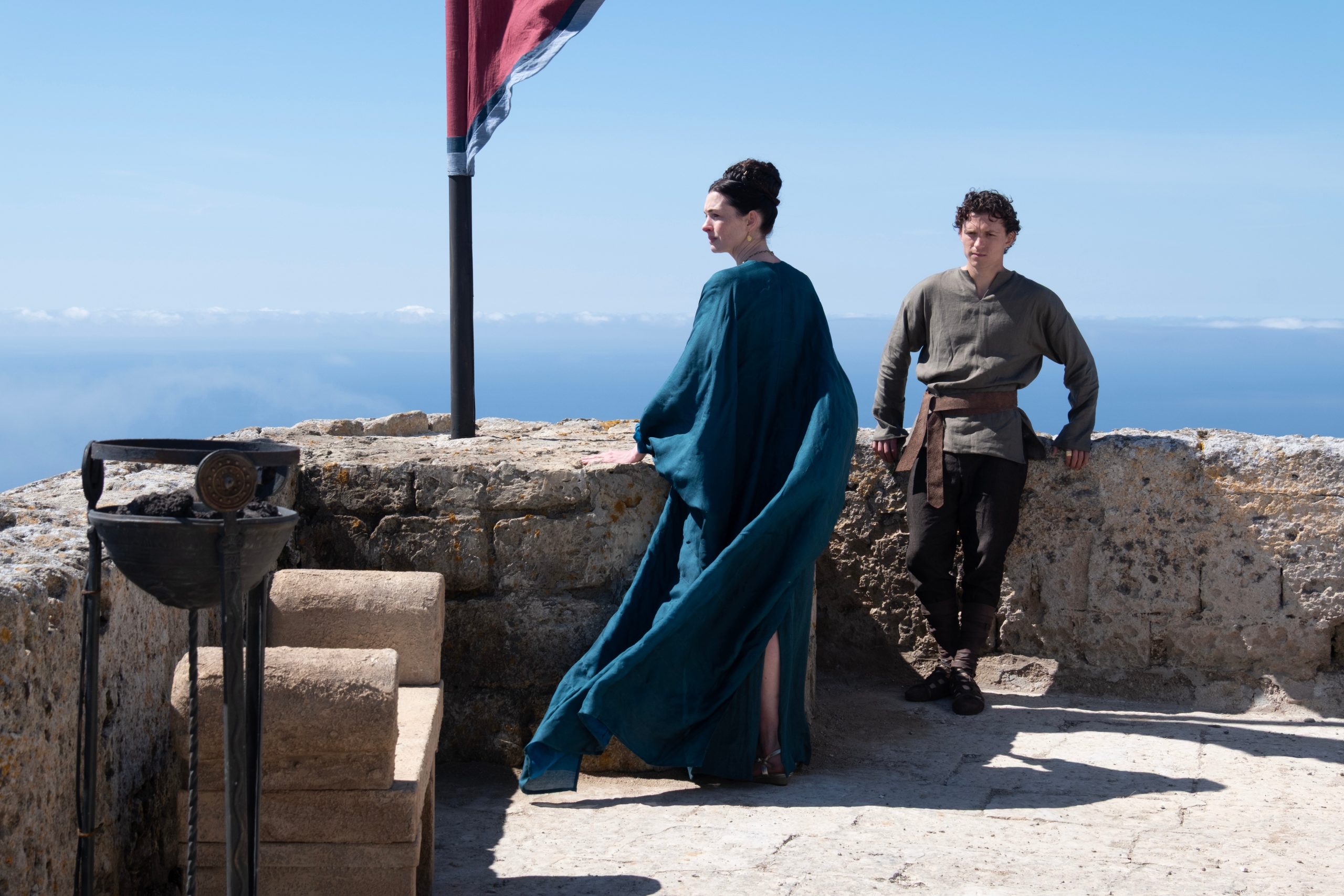
This image released by Universal Pictures shows, from left, Anne Hathaway as Penelope, and Tom Holland as Telemachus, in a scene from “The Odyssey.” (Melinda Sue Gordon/Universal Pictures via AP)Melinda Sue Gordon
The Nolan bump is already in effect: The Odyssey made $263.7 million globally on opening weekend, and it has been hailed as a total triumph for the filmmaker behind Inception and Interstellar. The cast features Nolan regulars like Matt Damon (Odysseus), Anne Hathaway (Penelope), Robert Pattinson (Antinous), and Elliot Page (Sinon), as well as Tom Holland (Telemachus, son of Odysseus and Penelope), Zendaya (Athena), John Leguizamo (Eumaeus), and Lupita Nyong’o (Helen of Troy/Clytemnestra).
But even before the red carpets and glitzy media tours, Wilson saw a surge of interest in her 2017 translation. Last year saw a significant increase in book sales following the film announcement, and those numbers have continued to rise into 2026, said Louise Brockett, head of communications at W.W. Norton & Co., Wilson’s publisher.
Professor Emily Wilson, in her office at the University of Pennsylvania, in Philadelphia, July 4, 2026.Jessica Griffin / Staff Photographer
As of July 2 this year, total sales reached a major milestone: “In 2026, notably, domestic sales across all formats surpassed 1,000,000 copies,” Brockett wrote in an email.
For Wilson, the overwhelming response has been stunning to witness. Long before The Odyssey again seized the zeitgeist, she took on the project with rather low expectations of readership.
“I remember being very much aware that most retranslations maybe sell 1,000 copies if you’re lucky … you’re going to work very, very hard on it for five years, and then maybe a tiny number of people will read it — and of course I thought it was still worthwhile,” said Wilson, who first became enamored with Greek mythology as a child growing up in Oxford, England.
Her book was a success, lauded for its compelling storytelling and accessible, modern language; it led to her being named a prestigious MacArthur “genius” fellow. With its release, Wilson also earned special recognition that initially surprised her: She was the first woman to publish an English translation of The Odyssey.
This image released by Universal Pictures shows director Christopher Nolan on set of “The Odyssey.” (Melinda Sue Gordon/Universal Pictures via AP)Melinda Sue Gordon
“I used lots of translations of Homer in my teaching, and it hadn’t actually occurred to me that they were all by men. It was only once that became the headline about my translation that I then looked back at it, and realized how there is a pattern here,” she said.
But that distinction does not quite resonate with her. While classical studies still tend to be male-dominated, Wilson said, literary studies feature many women scholars in classics who have made major strides in scholarship across generations before her.
“So I guess I partly want to push back against the idea that it’s completely unique to be a woman in classics, because it certainly isn’t,” she said. “There are many other women classicists, and I don’t want the headlines to serve as a way of erasing their work. It makes me really uncomfortable.”
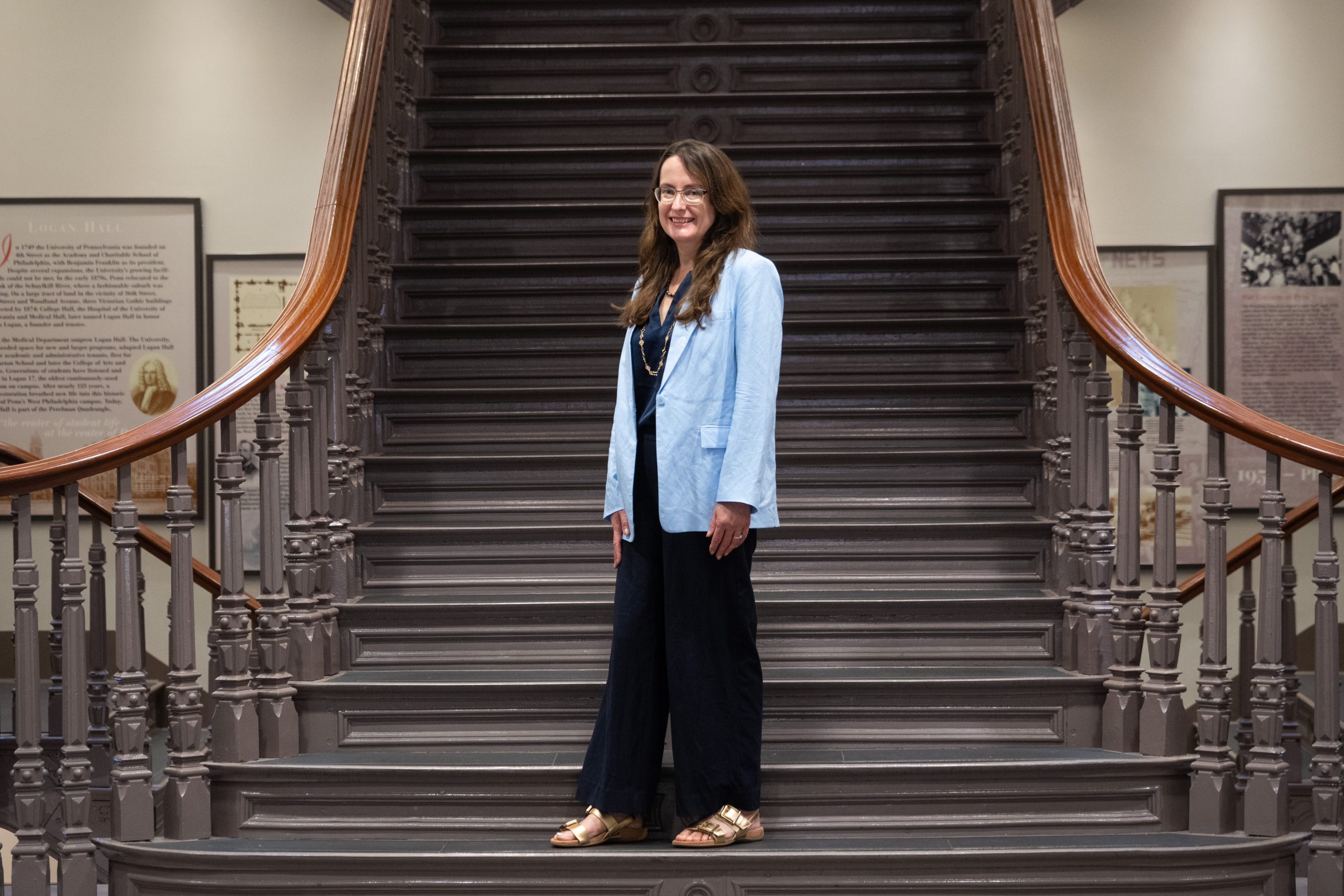
Professor Emily Wilson, at the University of Pennsylvania, in Philadelphia, July 4, 2026.Jessica Griffin / Staff Photographer
She doesn’t think her translation is inherently feminist because she has earned the title of “first.” A better example of a feminist retelling, for her, is Circe, Madeline Miller’s popular fantasy novel adaptation of several Greek myths, including The Odyssey. (Miller’s bookfocuses on the perspective of the eponymous witch who turns men into animals, played by a chilling Samantha Morton in the Nolan film.)
Still, Wilson’s translation provided new language that stripped away some of the previous translators’ gendered biases: For instance, when the poem mentions the servant women in Ithaca who cater to Penelope’s suitors, other translators called them “sluts” and “whores,” but Wilson eschewed those derogatory terms and instead opted for “slaves” and “house girls.”
That nuance, however, was lost when Nolan’s Odyssey became a proxy for culture wars on the internet. Scores of mostly male critics decried Nolan’s casting decisions as inaccurate for racist and transphobic reasons (many claim Helen of Troy, portrayed by Nyong’o, cannot be a Black woman).
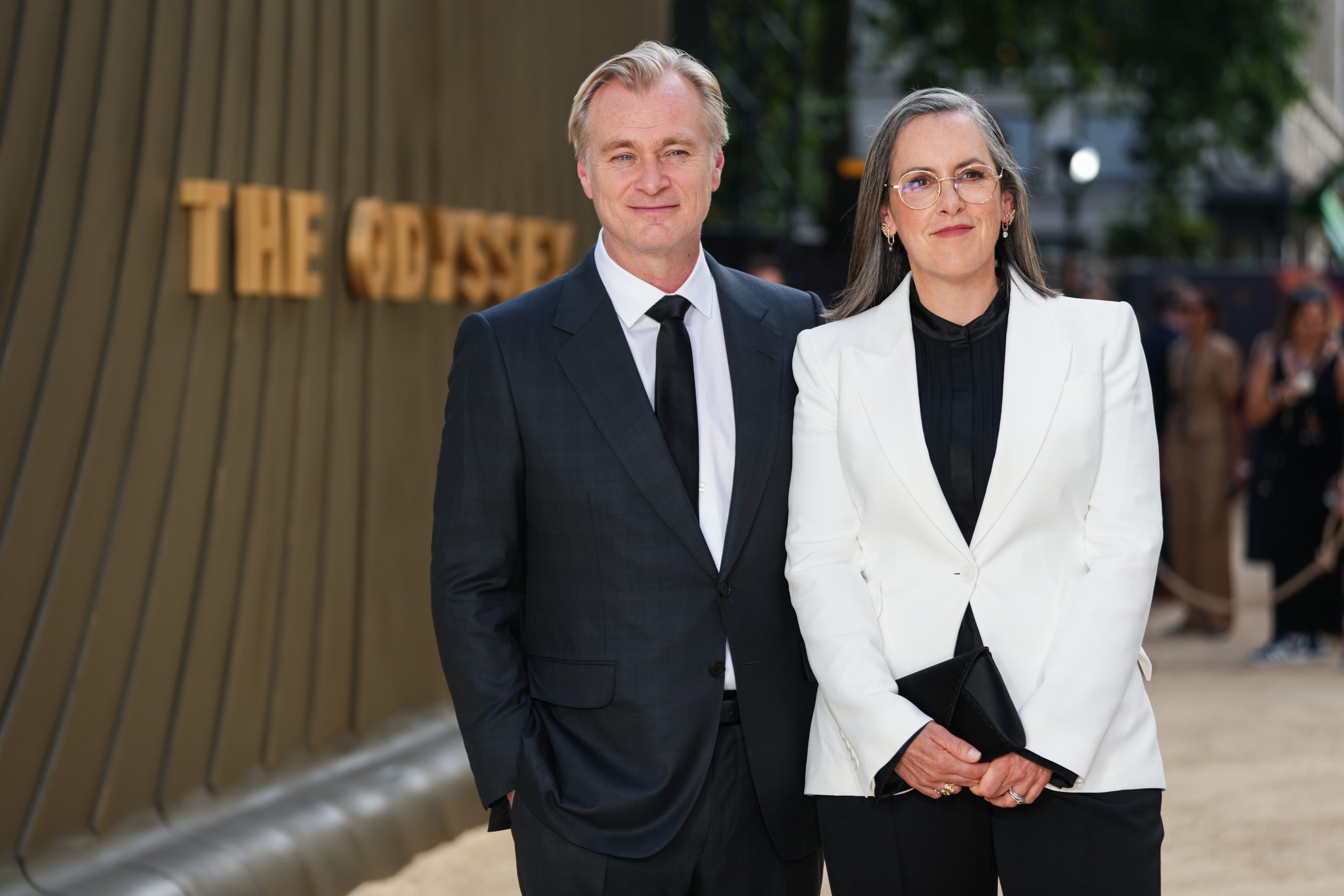
Director Christopher Nolan, left, and Emma Thomas pose for photographers upon arrival at the premiere of the film ‘The Odyssey’ on Monday, July 6, 2026, in London. (Photo by Scott A Garfitt/Invision/AP)Scott A Garfitt
Wilson herself has become a target for much of the outrage, too — so much so that she added a contact form to her website specifically marked for “misogynistic trolling” alongside the other button for “kind words and praise.”
She has brushed off the noise, though, and kept working at her craft with little regard for the haters who believe The Odyssey is meant to portray only one demographic.
From more than two decades of teaching, she knows they are simply wrong because these myths hold universal power.
“It is really exciting to see just how many young people, especially young women, are fired up about ancient literature and classics in a new way,” she said. “It’s a whole wave of current classical scholarship and books for the general public that are showing that these texts are not just for men, not just for white people, not just for any particular modern demographic. … This is a subject that anyone from any background can engage with.”
Wilson’s teen daughters have been swept up in the Nolan excitement, too. After Zendaya was pictured holding her book, Wilson’s daughters were thrilled.
“There’s nobody cooler than Zendaya, obviously, so now I’ve made it,” she said, laughing.
Beyond all the film news, Wilson is now hard at work on another translation of The Odyssey with different parameters than her first; primarily that it will be longer. Maybe Nolan’s film will spark some new ideas.
Her next release, Crossing the Wine-Dark Sea: Journeys Through Ancient Literature, comes out this fall. It is a series of essays about her translation process and the work of connecting modern audiences with ancient literature.
It can serve as a blueprint for anyone else eager, like her and Nolan, to take on an epic challenge.
The headline and the article were updated to reflect updated information from the publishing house. The book’s all-time sales surpassed 1 million in 2026.
SEA ISLE CITY, N.J. — This is not the same old Sea Isle.
Jason and Kylie Kelce are mired in a four-year wait for membership to the Sea Isle City Yacht Club. They are currently No. 78 of 251, up from last year’s 149.
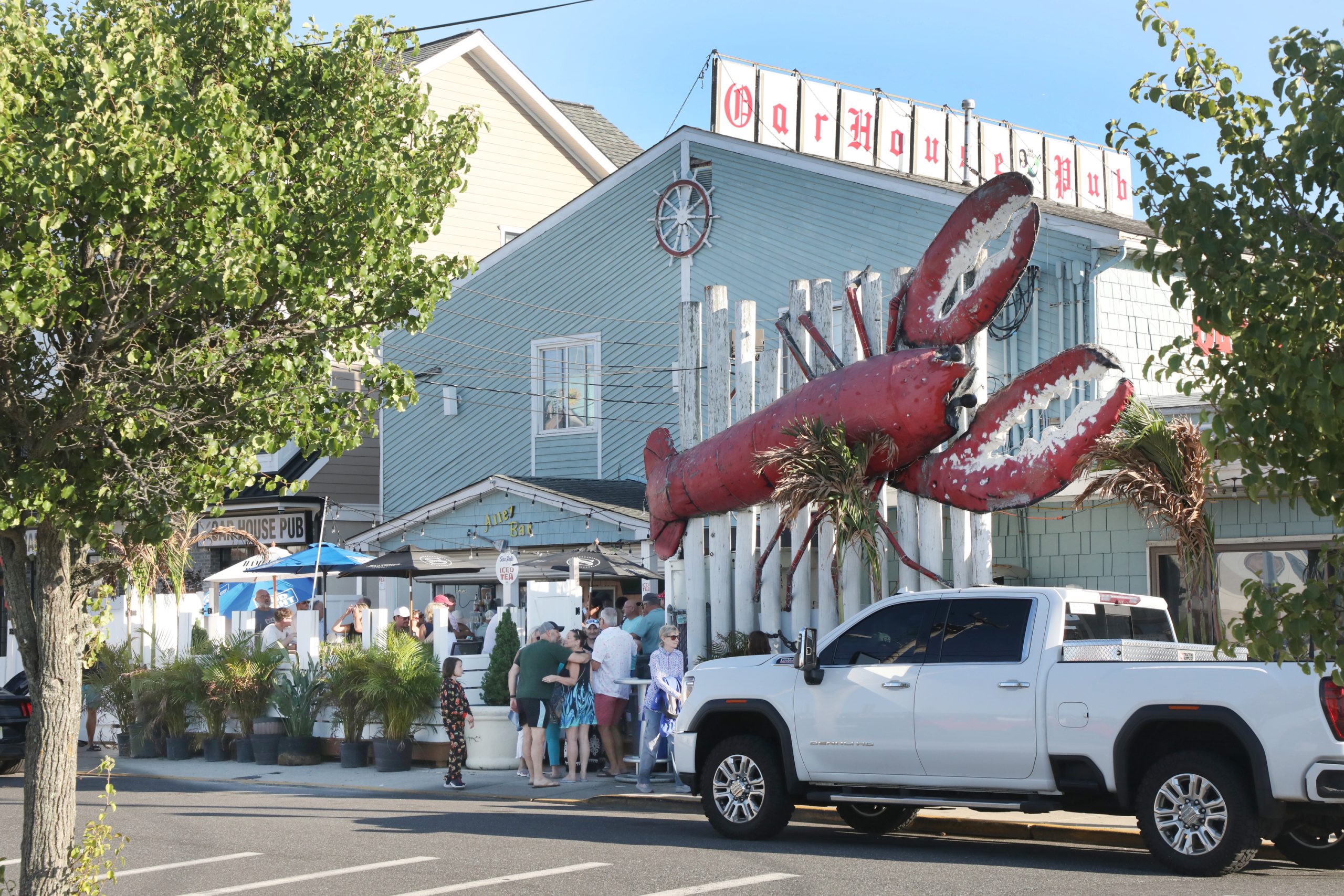
Neighbors are fighting over noise from the Oar House Pub, which expanded this year into two nearby buildings.
Prices in this Shore town have skyrocketed: The median home sale price for the three months ending in May 2026 was $1.8 million, according to Redfin, up 27% from the year before. For May alone, it was $2.2 million.
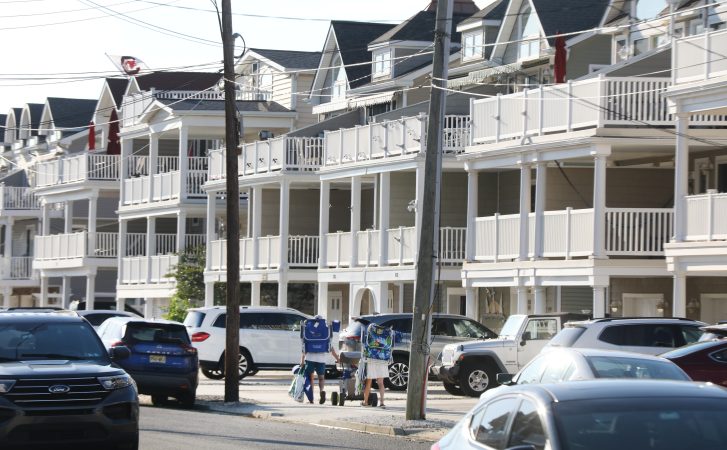
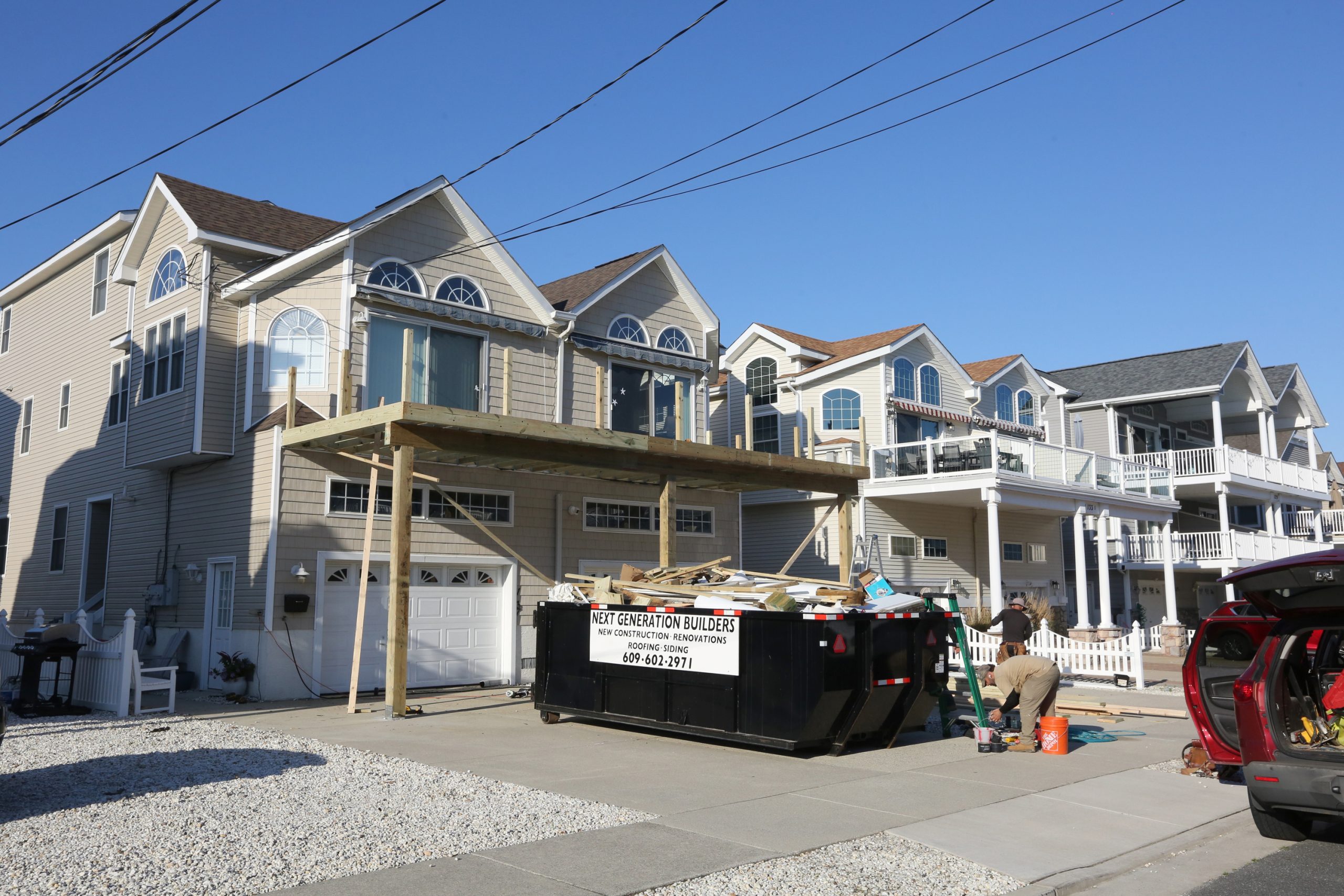
Blocks in Sea Isle are stuffed with new, side-by-side construction, multiple SUVs in pebbled front yards, with few trees or backyards. People sunbathe in their driveways. Silverados have near-collisions with Audis in the Acme parking lot, as golf carts idle out front.
Is it still pleasant on Pleasure Avenue?
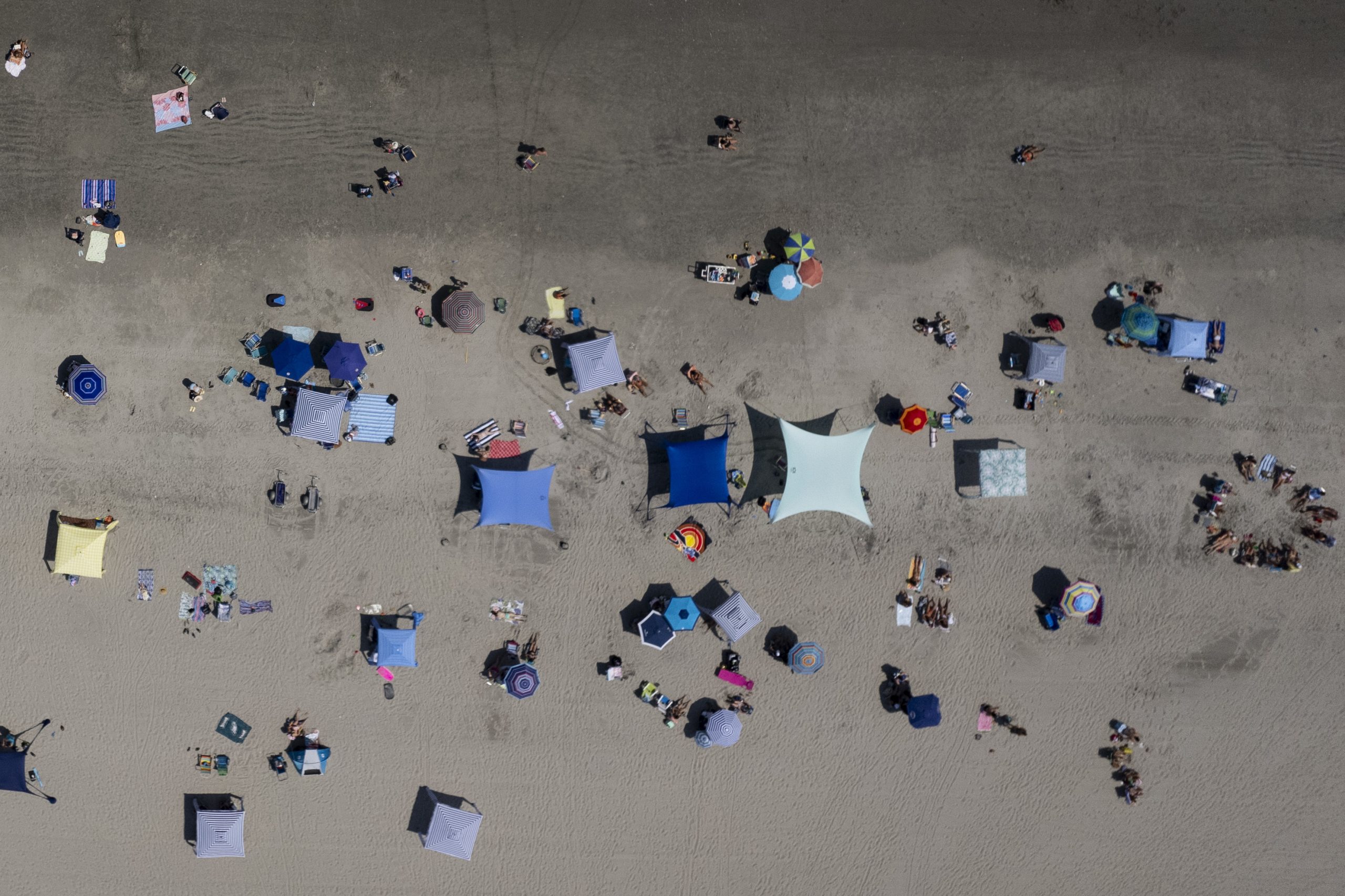
People line the beach in Sea Isle City on Wednesday, June 25, 2025 in Sea Isle City, NJ.Monica Herndon / Staff Photographer
Depends on whom you ask. For some, the changes feel more like a maturing of Sea Isle, certainly an upscaling, from the beloved Shore town’s raucous old party days. Houses cost too much to risk renting to the rowdy Shore house crews of years past, homeowners say.
But for others, the town’s rash of new construction, the pricing out of old blue-collar regulars, the impossible parking, even the price of an entree at a restaurant all feel like a betrayal.
Workingman’s beach
Colin Ratner, 53, of Fairmount, global director of sales at a medical software company, raves about Sea Isle’s enduring charms, a place where his daughters have found a sense of freedom they don’t have in Philadelphia, riding their bikes barefoot and playing outdoor basketball games to cheering crowds.
“In Philly, they’re not leaving the street without us knowing where they’re going,” he said. “Here, it’s like ‘Come back before we go to sleep.’ I call Sea Isle Middle America.”
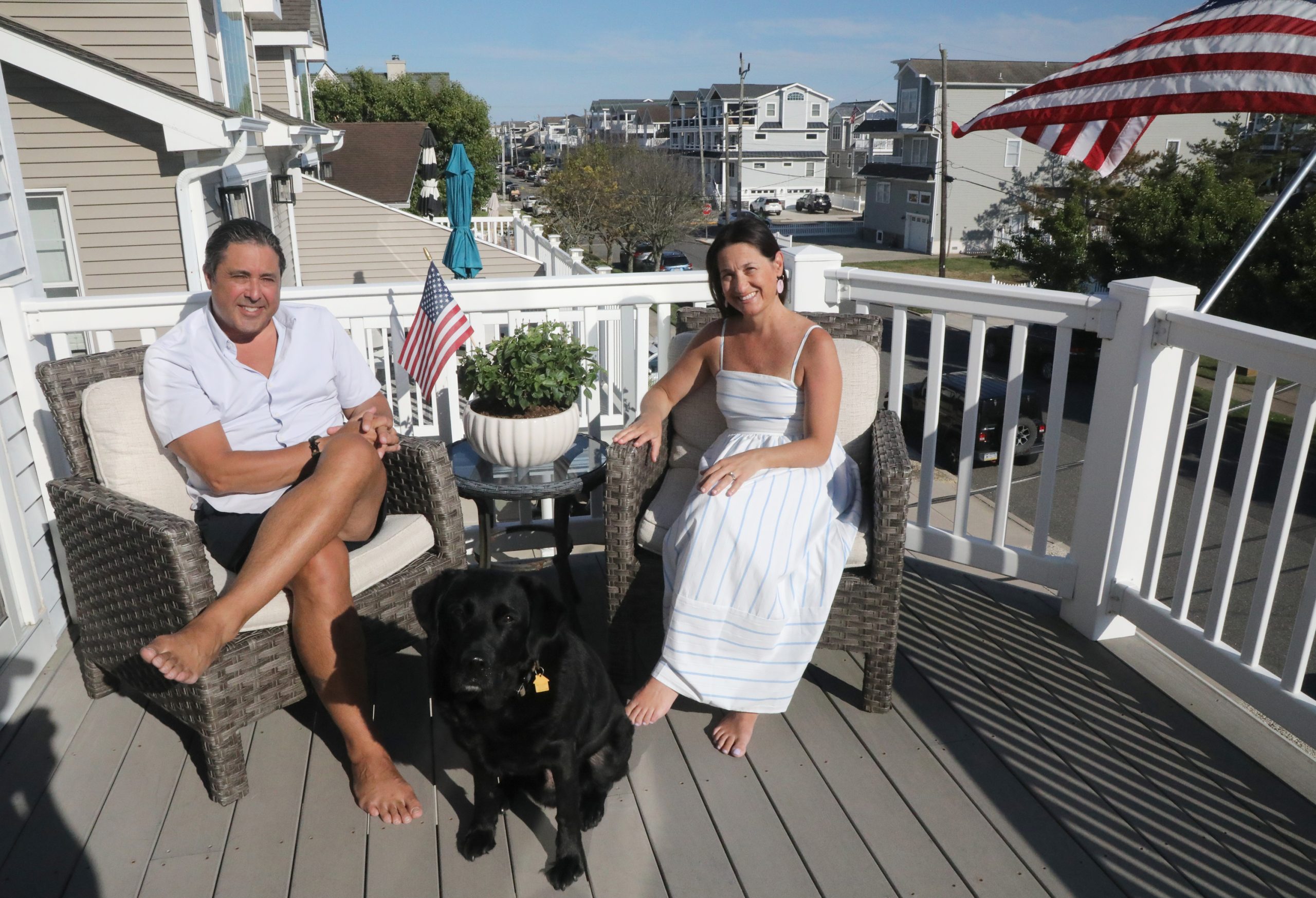
Colin Ratner and his wife, Cindi, of Center City, at their home in Sea Isle City for the summer think the town has matured in a good way, Wednesday, June 24, 2026.Vernon Ogrodnek / For The Inquirer
A rowhouse dweller in Philly, he is not bothered by the density or the parking crunch. “Our property[value] has more than doubled since 2018,” he said. “I’m seeing less renters, and more people using their property, less of the crazy house parties. It’s really kind of settled down.”
Jo Ferenchak bought in 2017 and rents out to cover costs. Her parents bought their Sea Isle house in 1977, she said, for $20,000.
“When my parents bought their house, it was called the Working Man’s Beach,” she said via Facebook message. “No more!”
In a sign of the times, she said her children and grandchildren love to go mini golfing, “but we go to Pirate Island in Avalon because it is so hard to find parking at Pirate Island in Sea Isle.”
‘Saturation point’
It has been more than a decade since a town survey found that 62% of responders said traffic was a problem. The survey, taken for a master plan, drew comments that included “Feeling of too much density and congestion,” “Seashore feeling is being lost,” and “We’ve reached a saturation point.”
Things are more overstuffed than ever, many residents, summer and year-round, say.
Sea Isle’s year-round population is 2,019, fairly stable despite some declines in the years after Hurricane Sandy and some increases after COVID-19. But it can swell to 70,000 on a busy summer weekend.
The change in the housing stock is more dramatic. Between 1990 and 2020, there were about 17% more units created, mostly for seasonal residents, according to the city’s data. Although some old bungalows remain, the town is essentially built out, city officials say.
Sea Isle even proposed partnering with a mainland town to essentially outsource its required share of affordable housing units as required by New Jersey law, but that was not allowed.
New construction off 57th Street, in Sea Isle City, Wednesday, June 24, 2026.Vernon Ogrodnek / For The Inquirer
In a town long known for its rowdy bar scene, there is less tolerance than ever for the spillover effects in dense neighborhoods.
In June, a dispute erupted between the Oar House Pub and its neighbors, including Mike’s Seafood owner Mike Monachetti, a prominent figure around town and a pal of the Kelces’.
Monachetti told the city council that the noise from the pub was regularly so loud “the water cups were vibrating on the tables” at his place.
“Think about what you’re doing,” he scolded the council. “My neighbors suffer from noise, loud noise, smoke going right up into their properties, and, yes, people out on the streets, beer cans on my property. Please, look at your own laws and ordinances. You are putting an alcohol license closer to a church, as well as underneath a residence that was never intended to be a bar.”
Council President Michael Jargowsky, 64, says with the town nearly entirely built out, there is not much to do in terms of stemming overdevelopment.
The city is always looking at adding parking, he said, though he notes that not everyone wants to cross the causeway and see a multistory parking garage.
“Our town has changed a lot physically,” said Jargowsky, a former city police officer who grew up in Sea Isle and paid $205,000 in 1995 for a century-old bungalow. “A lot of single-family bungalows and Victorian homes are now the side-by-sides: three bedrooms went to a combined 14 bedrooms in some places.”
The increase in property value has brought new revenue to the town, and a robust capital project agenda, including a new community center. Longtime residents who sold, or whose children sold, did very well, he noted.
Some things about the town have stayed the same.
“You still see a lot of banners for Delco,” he said.
The Oar House Pub, off 42nd Place, at right, would like to expand to the empty lot adjacent to it, and found itself in a controversy with neighbors over the noise, in Sea Isle City, Wednesday, June 24, 2026.Vernon Ogrodnek / For The Inquirer
‘Like a bad AI-generated image’
Rick Kane, who worked at a family friend’s business for eight years in Sea Isle and lives just on the mainland, said the town is a shell of its former self.
“Many of the affordable family restaurants and cheap bars are gone, replaced by high-dollar places,” Kane said. “Sea Isle has lost its charm and personality. It’s now like a bad AI-generated image of a ‘Shore town.’”
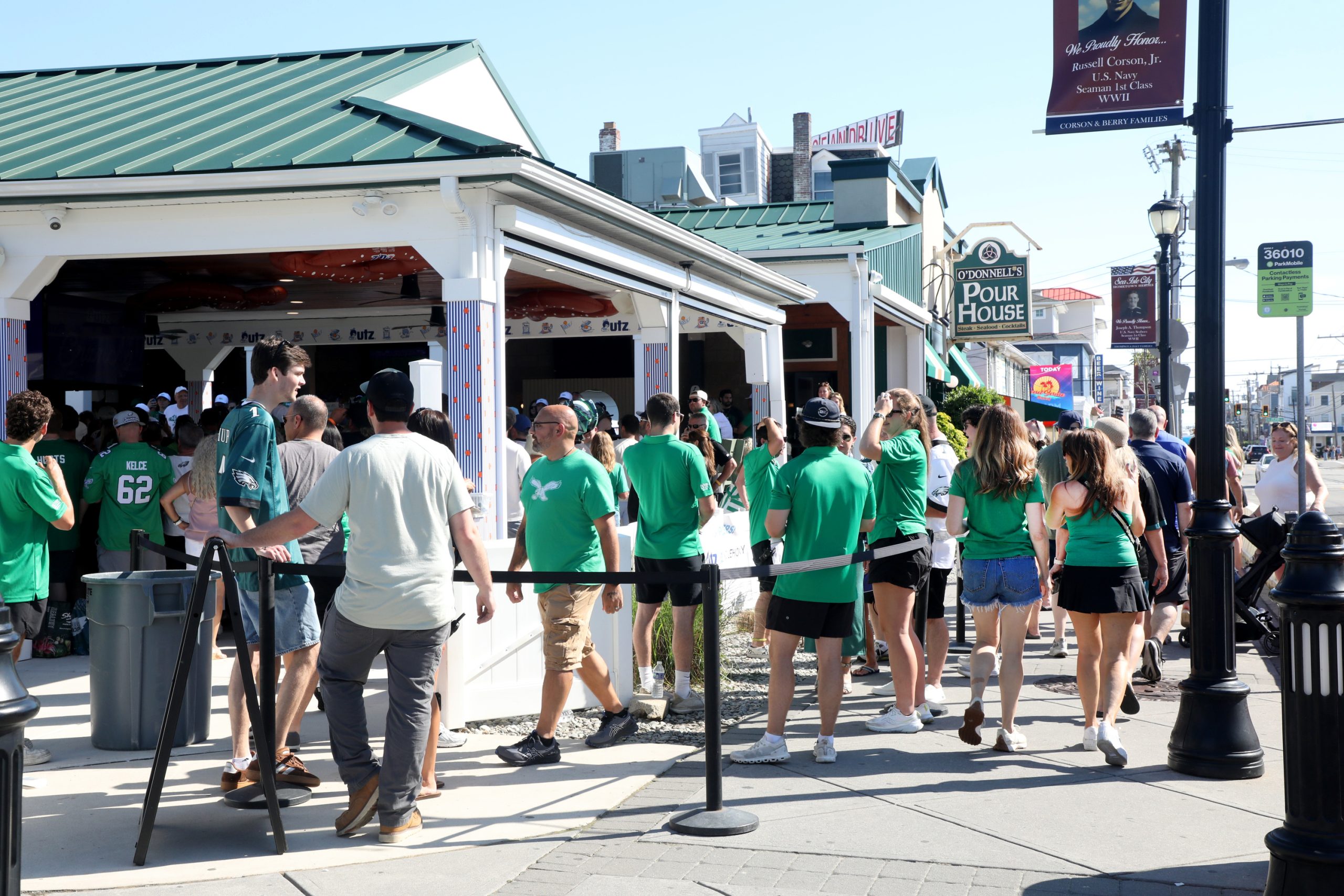
Eagles cornerback Cooper DeJean signs autographs for fans as a celebrity bartender at former Eagle Jason Kelce’s annual Team 62 fundraising event for the Eagles Autism Foundation at the outdoor Paddy’s Green in Sea Isle City, Wednesday, June 24, 2026.Vernon Ogrodnek / For The Inquirer
Christopher Capuzzi, 42, a New York City capital markets attorney originally from Delaware County, said he bought on Long Beach Island even though his extended family gathers in Sea Isle and continues to own houses there.
Capuzzi said he paid $2.8 million in 2022 for a 3,500-square-foot house on LBI, one house from the ocean.
On LBI, he said, “My money’s stretched a lot further, and we actually have trees.”
“When it came time for me to buy, I just felt like Sea Isle has gotten so overdeveloped, the way they cram homes in, every home is basically a side-by-side. The garages don’t fit a single car in them. Parking has become a nightmare.”
Some things haven’t changed
For some diehards, like the 165 members of the extended Mannion family of West Chester and other Philly burbs that for a half-century has rented a half-dozen houses in Sea Isle for the last two weeks in June, the Sea Isle memories compound every year, albeit as the rents, along with all the new construction, go up.
It is a destination they wouldn’t change for anything, family members say.
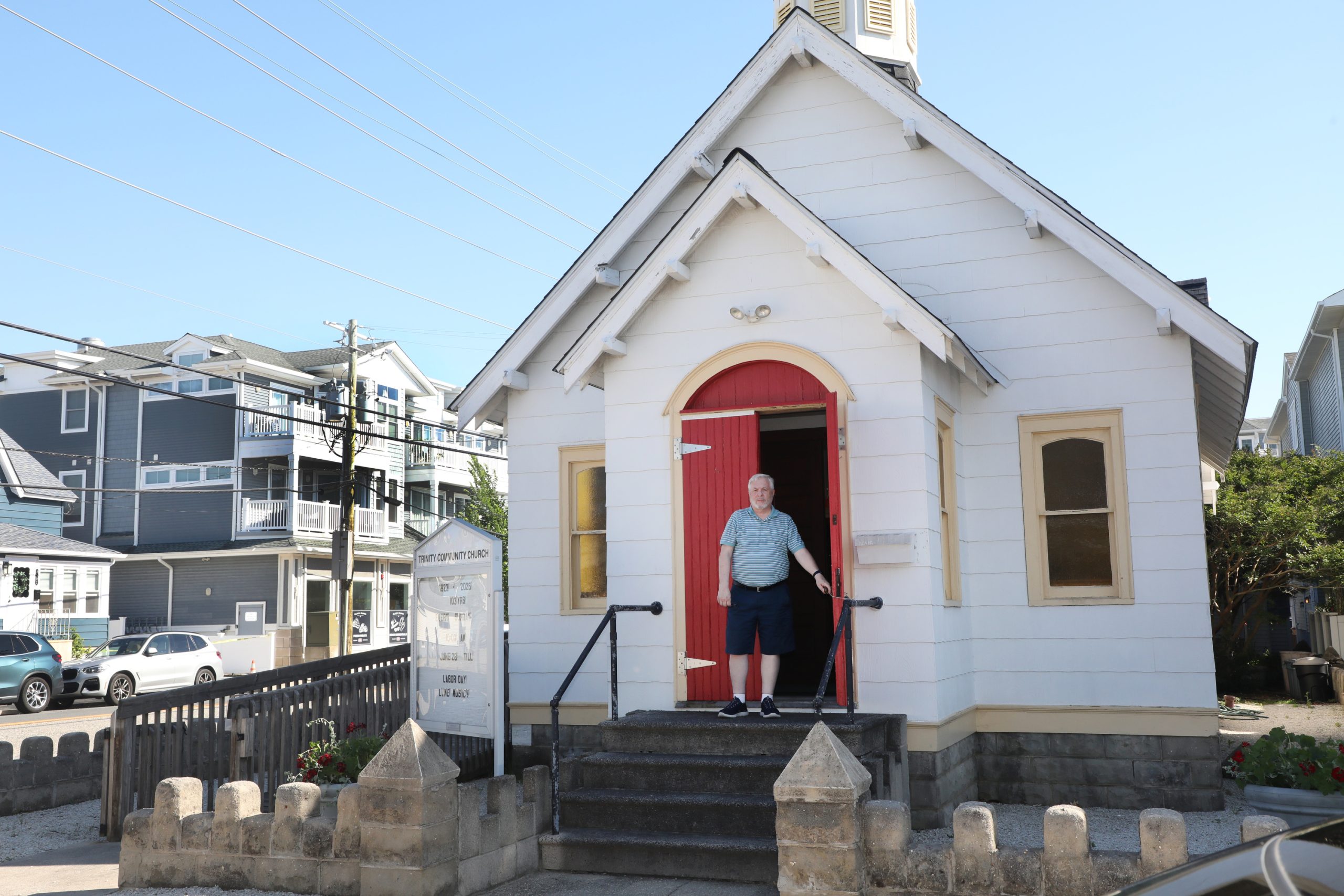
Over at Trinity Community Church of Sea Isle City, pastor Chuck Swanson says his church has been a constant amid all the changes. A seasonal nondenominational place of worship, the church has been at 85th and Landis for 103 summers.
Chuck Swanson, pastor of the historic Trinity Community Church, off 85th Street and Landis Avenue, in Sea Isle City, says the resort town has significantly changed in that the old character of the town has been fundamentally altered, but the change is mostly good and the city is preparing for the future, Wednesday, June 24, 2026.Vernon Ogrodnek / For The Inquirer
“Sea Isle City has changed a lot of late,” Swanson said. “Lots of destruction of older homes and construction of new ones … the old character of the town has been fundamentally changed. Change is mostly good and the city is preparing for the future.
“One thing that hasn’t changed is our church.”
Jim Albright of Bordentown, whose family has owned a house in Sea Isle since 1998, said the town is no longer affordable for most people.
“My dad was an electrician for GM and my mom was an elementary school teacher in Trenton, and on their salaries they were able to buy this house,” he said. “They would absolutely be priced out now.”
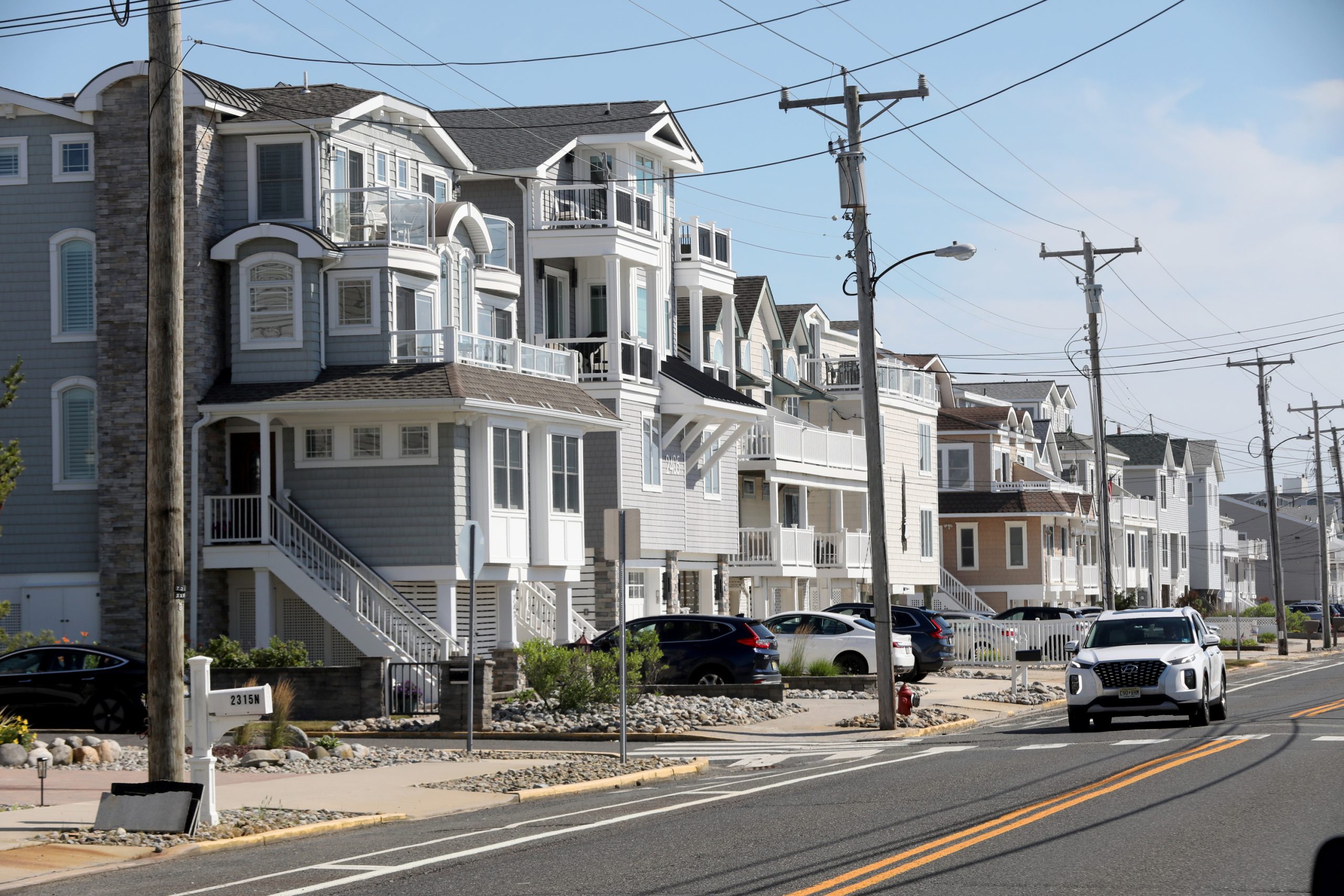
Homes along Landis Avenue, here near 23rd Street, have grown higher as the summer bungalows are replaced with more elaborate, and expensive, contruction in Sea Isle City, Wednesday, June 24, 2026.Vernon Ogrodnek / For The Inquirer
The Kelces can still make Sea Isle the center of the party universe when they hold the Eagles Autism Foundation fundraising days every year in June, but Albright and others see a vibe shift.
“There’s been a massive influx of money. You can tell even by looking at the cars being driven around town,” Albright said.
Regina Lewallen lived full time in Sea Isle from 2020 to 2025. “We loved how friendly everyone was,” she said.
But in those five years, the town transformed, she said. “Many houses were torn down, more people bought homes, parking became scarce, and it was obvious that the powers that be didn’t have a specific plan for what Sea Isle City could be,” she said.
Former Eagle Jason Kelce draws large crowds when he hosts his annual Team 62 fundraising event for the Eagles Autism Foundation at the outdoor Paddy’s Green in Sea Isle City, Wednesday, June 24, 2026. The two-day event features celebrity bartending and a Beer Bowl, drawing thousands of fans and raising hundreds of thousands of dollars for the cause.Vernon Ogrodnek / For The Inquirer
Jen DiMartino, 54, of West Chester, has been going down to Sea Isle for more than 50 years, to 36th and Pleasure Avenue, the third generation of her family to call Sea Isle its summer home.
She says she misses the “ma and pa shops and everyone knowing who you are,” but says there is still pleasure to be found.
Kurt Vile’s love of Philly — and Philadelphia’s affection for Kurt Vile — has never been in question.
For the cover of Constant Hitmaker, the 2008 album that announced his arrival, Vile posed in front of a blown out wall “that looks like a Rauschenberg painting” at the corner of Frankford and Norris, he recalls. “That stuff’s beautiful, you know?”
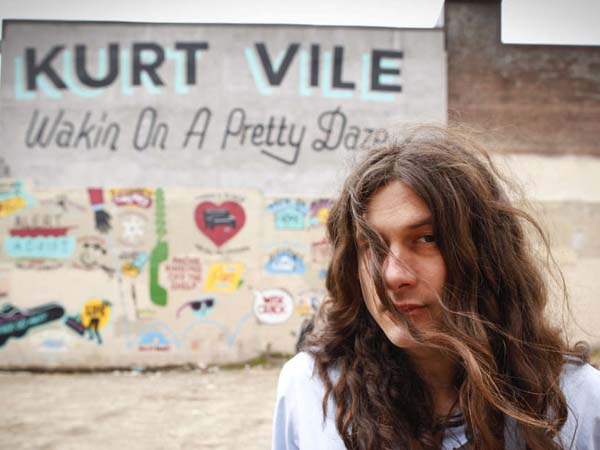
Since 2012, a Steve “ESPO” Powers mural that doubles as the cover for Vile’s 2013 album Wakin On A Pretty Daze has adorned a wall at Front and Master Streets in Northern Liberties, visible to travelers headed north on the Market-Frankford El.
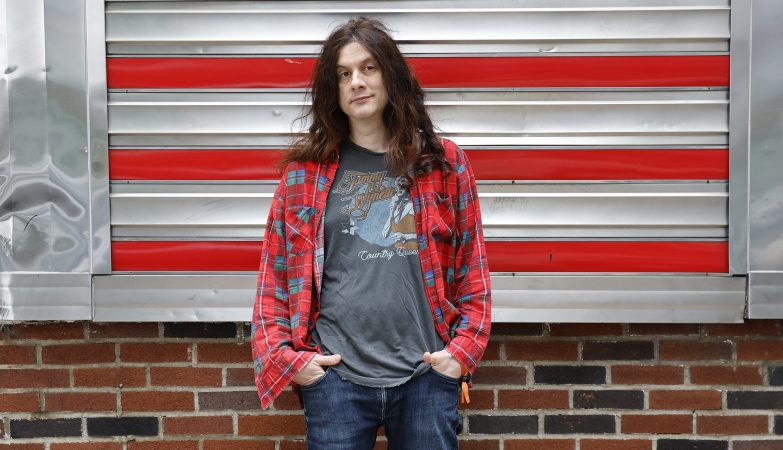
With his signature mane and quizzical expression, Vile, who grew up in Lansdowne in Delaware County, has been the face of Philly’s reign as the capital city of 21st century indie rock.
Kurt Vile stands in front of a mural by Steve “ESPO” Powers on March 27, 2013. Michael S. Wirtz / Staff Photographer
The city is embedded in Vile’s music at every turn, from the “I park for free!” boast on the 2018 song “Loading Zones” to the cover of 2022’s Watch My Moves, which pictures the Dad rock king wearing a crocodile mask in Wissahickon Valley Park, flanked by daughters Awilda and Delphine.
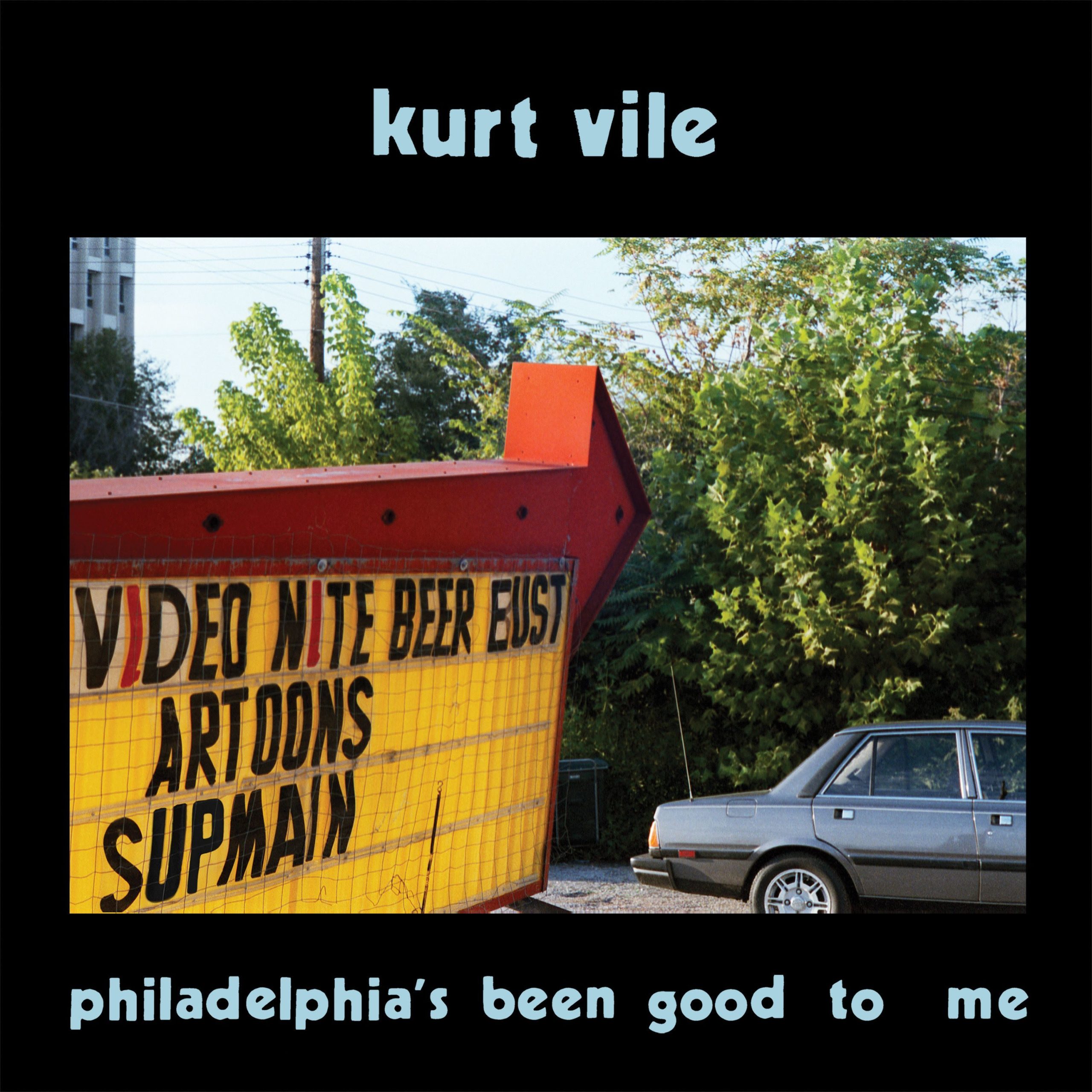
But Vile has never repped his hometown so hard as on his new album, Philadelphia’s Been Good To Me, released in May. It includes shout-outs to Lincoln Drive, the Schuylkill, and Sun Ra, and an infectious single “Chance to Bleed” that features Philadelphia gangsta rap pioneer Schoolly D in a video shot at Kung Fu Necktie.
Philadelphia’s Been Good To Me even includes a playful taunt at two of Vile’s classic rock favorites who dared to record songs with the word Philadelphia in the title.
“A couple of my heroes wrote a song,” Vile talk-sings in “You Don’t Know Cuz It’s My Life.” “But that ain’t where they’re from, so hey you don’t know / But I still love you, Neil and the Boss.”
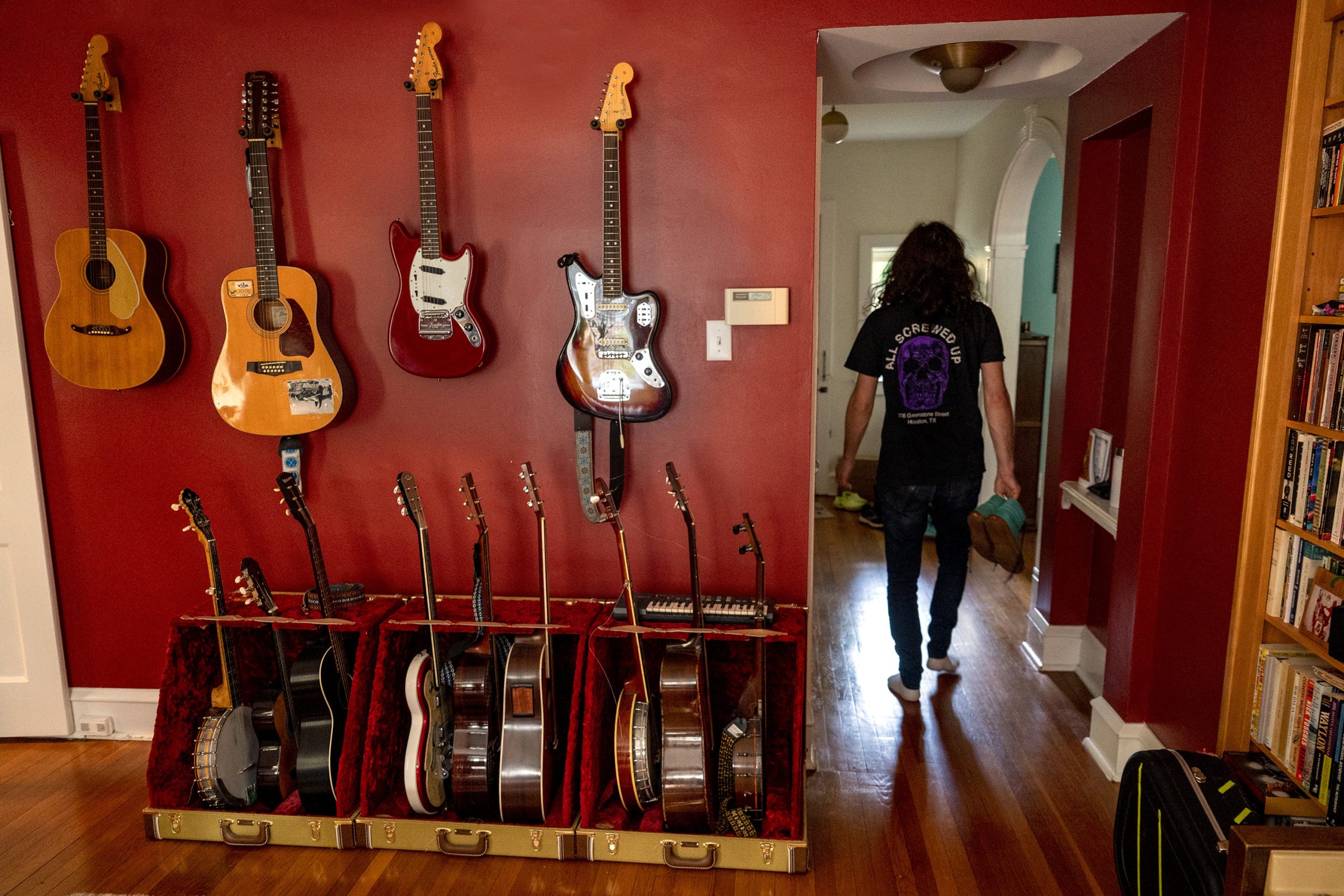
Working in the wee hours in his basement OKV studio — which stands for “Overnight Kurt Vile” — in his fieldstone house in Mount Airy, Vile recalls, “I was singing along to this keyboard track I had laid down, and that thought came to me.”
Kurt Vile in his basement studio at his home in Mount Airy June 13, 2022, with his daughter Delphine.Tom Gralish / Staff Photographer
Vile, who had (legally) parked his Prius in a nearby loading zone, was talking at the Silk City Diner on the Sunday night of Memorial Day weekend where he would realize a long-held ambition: sitting in with centenarian saxophonist Marshall Allen and members of the Sun Ra Arkestra.
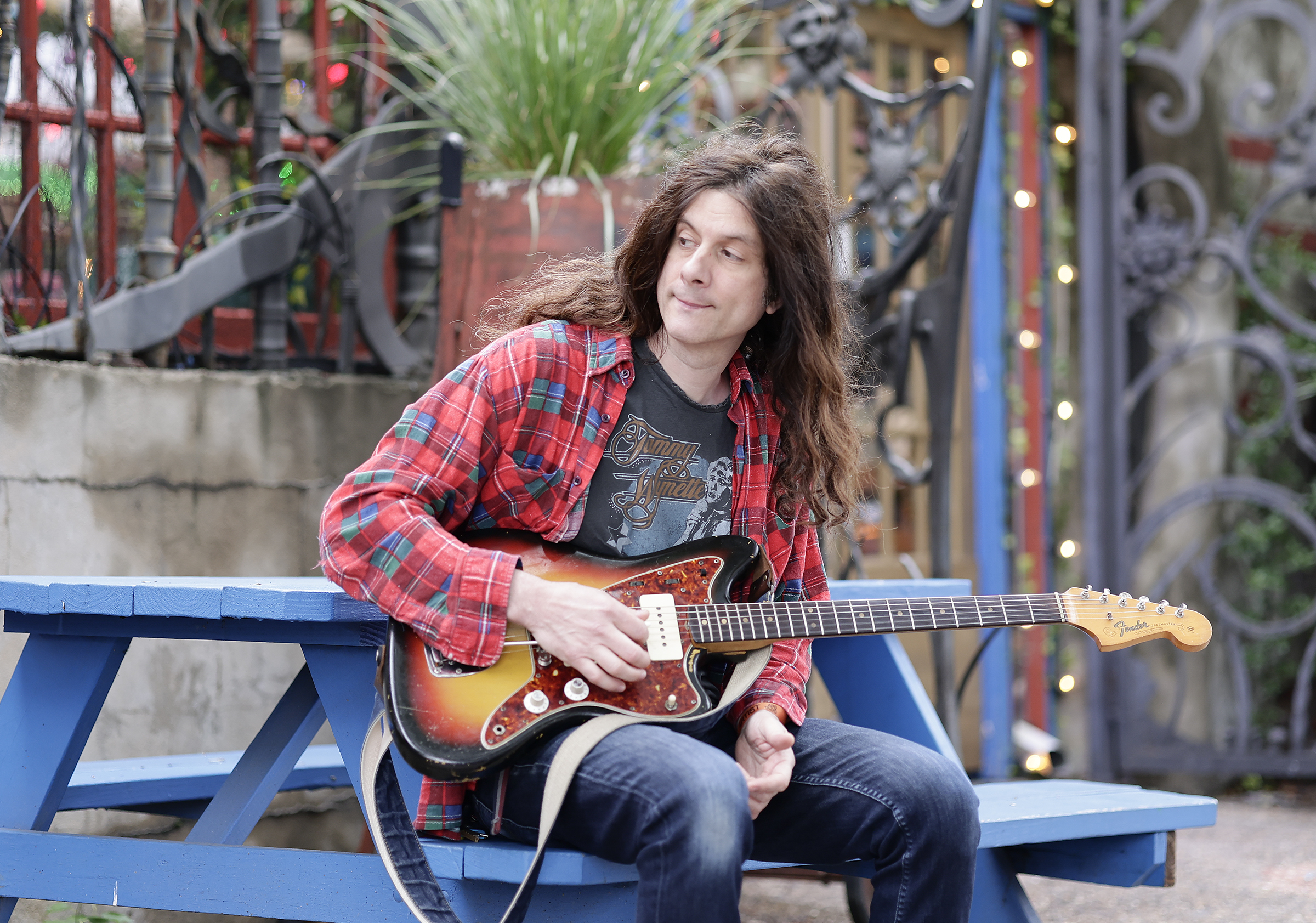
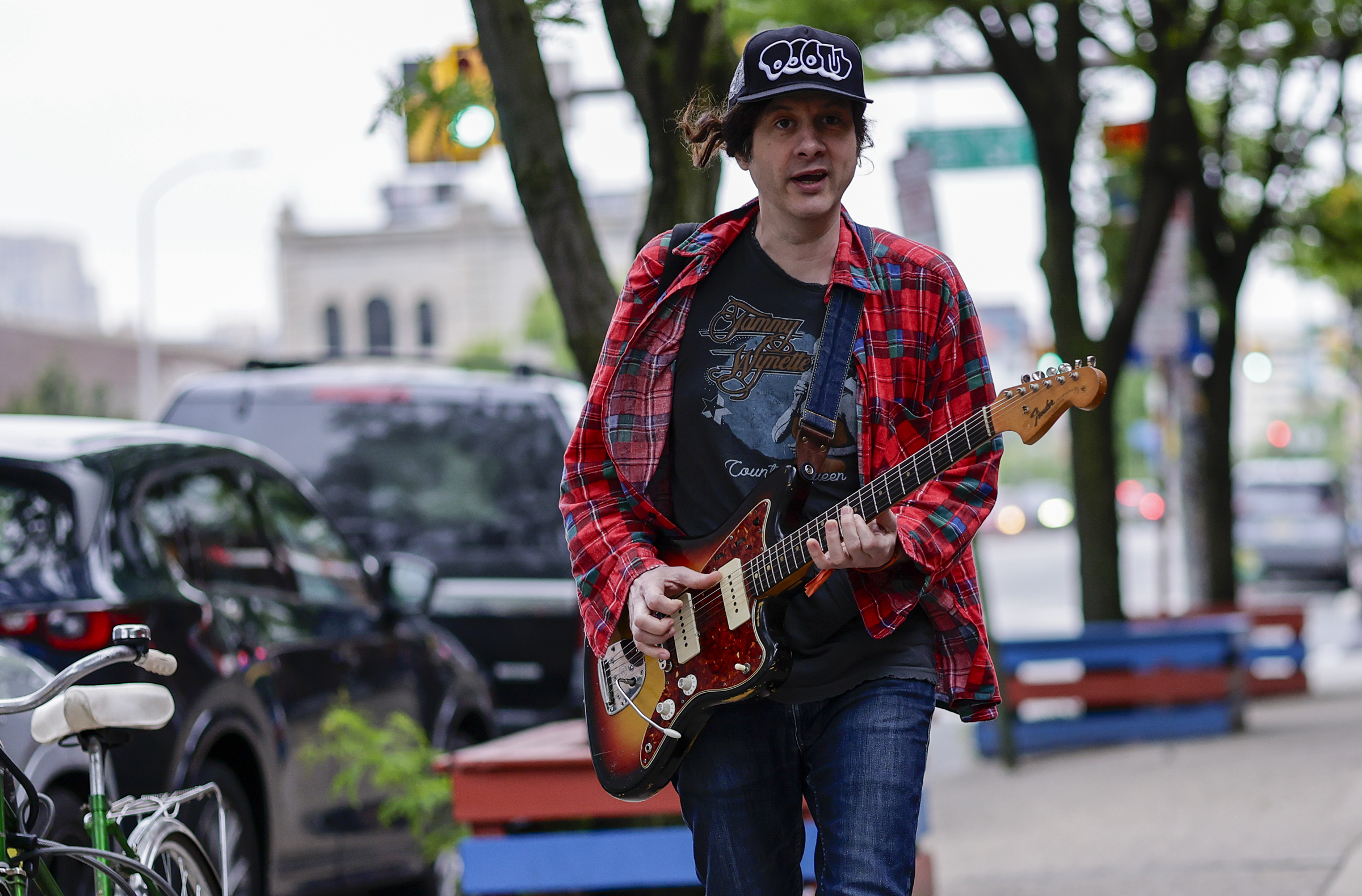
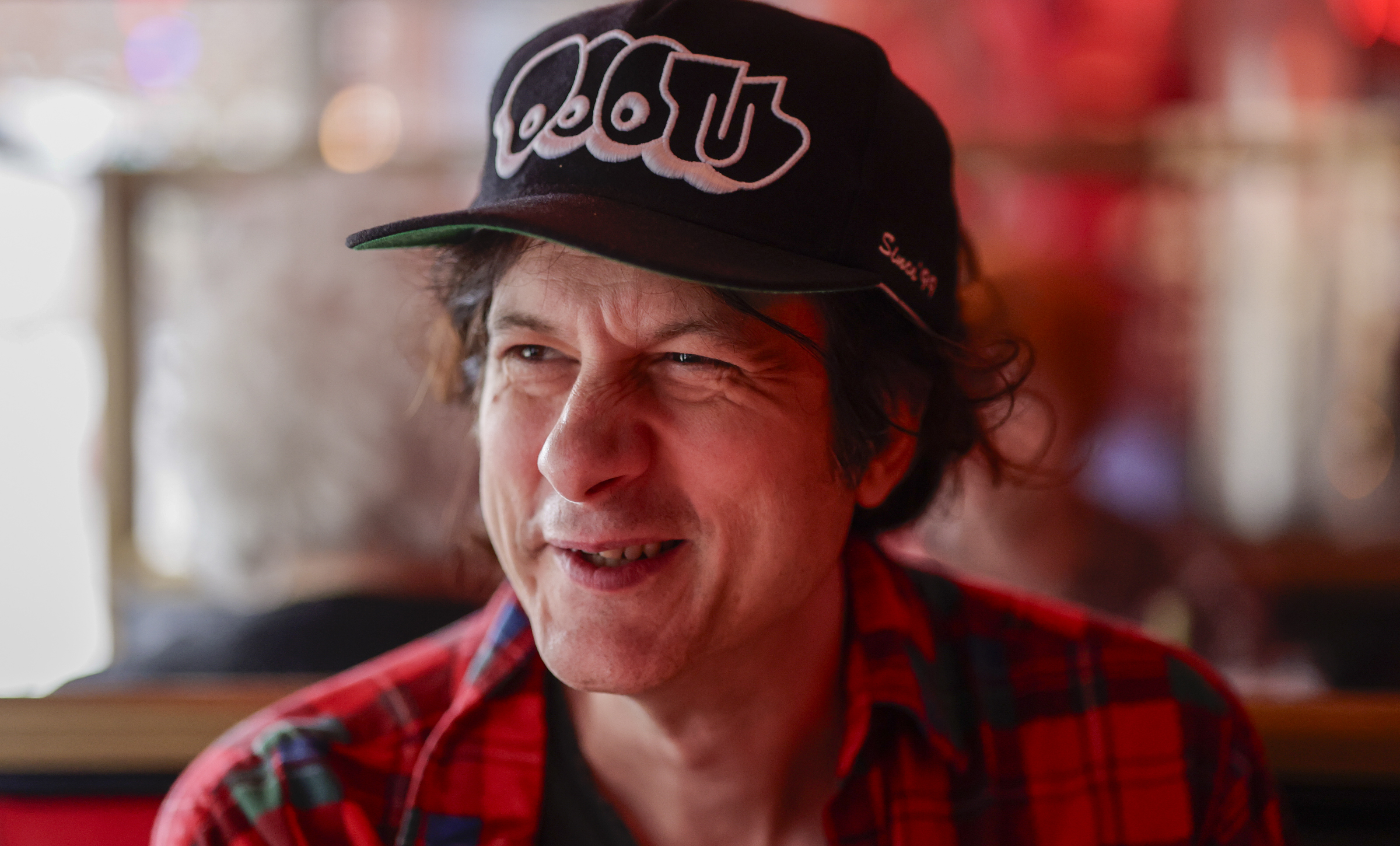
Vile — who was wearing a Tammy Wynette T-shirt and MF Doom trucker’s hat, with his 1965 Fender Jazzmaster Sunburst in the booth beside him (without a case) — explainedhis unique position in Philadelphia music history while dining on an Impossible Burger and Korean fried cauliflower.
“Springsteen wrote the song ‘Streets of Philadelphia’ and Neil wrote ‘Philadelphia,’ and they’re both on the soundtrack to Philadelphia, right?” he says, referring to Jonathan Demme’s 1993 AIDS drama.
“I get where they’re coming from, but it’s still an assignment. They’re singing about a city they don’t know that well. I’m proud of the city that I’m from, and I’m also lucky that I’m from here.
“It’s like my friend Mary Lattimore, who plays the harp.” (And has given lessons to Vile’s daughters, who also both play guitar.) “She’s not from Philly, but she lived here forever, so it feels like home to her, even though she’s in LA now.”
The album cover of Kurt Vile’s ‘Philadelphia’s Been Good To Me,’ which features a photo by Memphis photographer William Eggleston.Verve
Adam Granduciel of the War on Drugs, with whom Vile frequently teamed up when both were aspiring artists in the 2000s, also grew up elsewhere and now lives in Los Angeles.
“They’re two of my oldest friends that were in the Philly scene forever, but they don’t have the extended history that I do.”
Kurt Vile with his father, Charlie, and his daughters Delphine (left) and Awilda, who posed with him on the cover of his latest album, at his home in Mount Airy on June 13, 2022.Tom Gralish / Staff Photographer
The Philly fixture
Vile — who is the oldest boy among the 10 children of his SEPTA train operator father Charlie and stay-at-home mother Donna — is Philly-area born and bred.
“I’m the OG,” he says. “That’s what I’m proud about. It’s like Questlove, or something,” though for all the Philly repping the Roots drummer does, he doesn’t live here either.
Vile, by contrast, is a Philadelphia fixture. When artists like country rebel Margo Price, Australian rocker Courtney Barnett, and North African desert blues band Tinariwen have come to town, there was one way to know for sure they were in Philadelphia: Kurt Vile was standing next to them onstage.
Vile plays the Dell Music Center with his band the Violators on July 25 as part of Connor Barwin’s Make The World Better Concert Weekend. He played Barwin’s first MTWB Foundation benefit in 2014, which raised money to build playgrounds and rec centers throughout the city.
“I don’t follow football and I didn’t know who he was,” Vile says, recalling meeting Barwin at a show. “He walked in and he looked amazing. He was so tall, like a [expletive] Eagle. He was just a genuine fan. I love reconnecting with Connor and watching him do his thing.”
Vile’s July 25 show is the second of two MTWB nights at the Dell. The first-night headliners are 1990s alt-rock heroes Pavement.
“Pavement was my gateway drug to indie rock,” Vile says. “Stephen Malkmus was my hero. I got my first job as a busboy at the Blue Comet on Baltimore Pike and I would spend all my money on Pavement CDs.”
Now, Vile is friends with Malkmus, and was stoked when he found out they were both playing the MTWB weekend — until he realized that he has a gig in Boston the night Pavement is playing. “I’m missing Pavement by a day,” he says. “Which I’m not happy about.”
Vile, 46, has spent his entire life living in the Philly area, save for 2002-03 when he followed his wife Suzanne Lang to Boston while she got a master’s degree at Emerson College.
Philly alt-rock star Kurt Vile outside the Silk City Diner on Sunday, May 24, 2026 in Philadelphia.Yong Kim / Staff Photographer
He worked as a forklift operator for an air freight company. “The most ball bustin’ blue-collar job there is,” he says. Before he mastered the machinery, “I got made fun of a lot my first year. But then I got really good at it.”
Returning to Philly and moving to Northern Liberties, he went to work for Philadelphia Brewing Company, where he was hired by future pizza sensei Joe Beddia who was roommates with Granduciel. “They were all blown away by my forklift skills,” recalls Vile. “And that’s how I met Adam.”
At PBC, Vile met Jack Rose, the late Philadelphia guitarist who, like Vile, was a fan of influential American Primitive guitarist John Fahey.
Asked to name his top five Philadelphia artists, Vile starts with Rose. He then adds Purling Hiss guitarist Mike Polizze, and psychedelic folk singer Meg Baird, Petty Bunco label head and singer Richie Charles, along with Schoolly D.
“Is that five?” It is, but Vile has a couple more: Marshall Allen-slash-Sun Ra, and rockin’ country band Florry. “They’re so fun and excitable and young,” Vile says.
Kurt Vile in the music room in his home in Mt. Airy June 13, 2022 (this is not the basement studio)TOM GRALISH / Staff Photographer
“I love Mount Airy and Germantown,” he says. “There’s still so much old-school Philly in Germantown. And Mount Airy really saved my life. I love that there’s forest, and I have room to think.
Kurt Vile at his home in Mount Airy June 13, 2022, with his daughters Awilda (left) and Delphine, who posed with him on the cover of his latest album.Tom Gralish / Staff Photographer
“But I can still go to the city any time, and it’s so quick,” driving his Prius down Lincoln and Kelly Drives. “You go in through the Art Museum, and it’s a classy way to go in, you know?”
Over 10 albums, Vile has continued to develop a raw, unhurried signature sound. He often seems to be talking to himself in a bemused drawl over patient jams that turn out to be transfixing.
What country star Keith Urban once said of Vile’s 2015 hit “Pretty Pimpin’” in naming it as one of five songs he wished he’d written applies to Vile’s songwriting in general: “I don’t know how he wrote it, but it sounds like pure stream of consciousness.”
Philly alt-rock star Kurt Vile walking outside the Silk City Diner on Sunday, May 24, 2026 in Philadelphia.Yong Kim / Staff Photographer
‘Philadelphia’s Been Good To Me’
On Philadelphia’s Been Good To Me — whose cover features a photo by Memphis photographer William Eggleston — that deft, uncanny approach is evident on tracks like “99th Song,” an ode to a loop pedal that turns out to be a paean to domestic bliss.
“Stoned on music, well, the best kind of high,” he sings. “Got love in my life, and three girls by my side.” Later, the album includes a more straightforward love song: “Every Time I Look At You,” which begins: “Every time I look at you, sparks fly from my eyes.”
At Allen’s birthday party, Vile took a seat next to guitarist DM Hotep at the rear of the stage. “I was playing spacey, bendy Sonic Youth-hybrid leads,” he said afterward. “I felt really calm up there.”
A few days after that party, Vile celebrated the release of Philadelphia’s Been Good To Me at the Triangle Tavern in South Philly, where 200-plus fans lined up to purchase the album and receive a free vegan cheesesteak as a bonus.
Vile headed out with the Violators in June, and checked inbefore a sold-out show at San Francisco’s Castro Theatre this month.
“I’m a little discombobulated today,” he says, ordering a late afternoon large coffee and glazed doughnut. “It was a late night.”
The night before, Vile enjoyed a day off at Festa, a beloved San Fran karaoke bar closing this year he wanted to visit one last time. “I’m shy at first, but then everybody sings and I get up, too.” His go-to is “Stand Back” by Stevie Nicks.
The tour, Vile says, “is going good, man.” This trek has made him rethink the streaming era. He’s a fan of physical media, and feels “the past was more simple and honest.”
Philly alt-rock star Kurt Vile at the Silk City Diner on Sunday, May 24, 2026 in Philadelphia. Yong Kim / Staff Photographer
“But now the way people can consume your catalog from streaming, the younger people can binge my catalog like Netflix, and I can tell that they know all of my music. I just feel that people are connected.
“This is my 10th record, and I’ve accumulated all these songs that have emotional qualities combined with a dreamy, pretty, hypnotic thing, and then it rocks live with my electric guitar. It just keeps evolving. The songs are simple enough, but the possibilities are endless.”
On the bus, Vile has been keeping Philly — and Delco — close to his heart.
Kurt Vile in concert at the Union Transfer, Friday, June 3, 2022Steven M. Falk / Staff Photographer
“I’m watching Mare of Easttown,” he says. “I never saw it, and now I’m obsessed, just watching all the Delaware County locations and hearing Kate Winslet say a sentence half-Delco, half-British.” He slips into a Winslet impression: “I’m hoping for an an-swer,” and chuckles to himself.
“But it’s my favorite show in a long time,” says Vile, who has Task cued up next. “And it’s got Mannequin Pussy in it. Does the director not know who I am?” he wonders. “I guess I’ve got to get in touch.”
“The timing is interesting, ‘cause I’ve been spending a lot of time in Delco lately,” says Vile, who’s been hanging with his parents and recently dropped in at his old haunt Paul Revere Pizza in Lansdowne. “Now I’m traveling, and I’m touring my Philly record, and I’m loving it. I’m loving being somewhere else and not in Philly every night. But I’m watching Mare of Easttown. And I know I’m gonna love it when I come home.”
Kurt Vile & the Violators with They Are Gutting A Body of Water and Twisted Teens at the Dell Music Center, 2400 Strawberry Mansion Dr. at 7:30 p.m. July 25th, dellmusiccenter.com.
It’s possible that nobody knows the stretch of Brandywine River that meanders through the heart of Wilmington better than Missy Morrissey.
Since her sister Susan’s battered body was discovered there nearly seven years ago, the West Chester native regularly returns to its banks, mulling a question:
How exactly did the 50-year-old Delaware County schoolteacher arrive in the shallows more than three miles downriver from where her car was found abandoned early on a July morning in 2019 in what authorities said was a homicide?
And how, she wonders, has the crime gone unsolved for all these years?
Susan Morrissey, who had been sipping wine and texting with friends into the early morning hours, left her Wilmington home just after 3 a.m. for reasons unknown, authorities said, and turned up dead in the river hours later.
Surveillance cameras captured Morrissey’s black Honda Civic as it left her home and headed to the gates of a nearby office building, where it was parked haphazardly and left unlocked with her cell phone and purse inside.
It was not until about four hours later that a construction worker discovered Morrissey’s body floating in the water miles away near the Northeast Boulevard bridge. She had died from blunt force trauma and drowning, the medical examiner found.
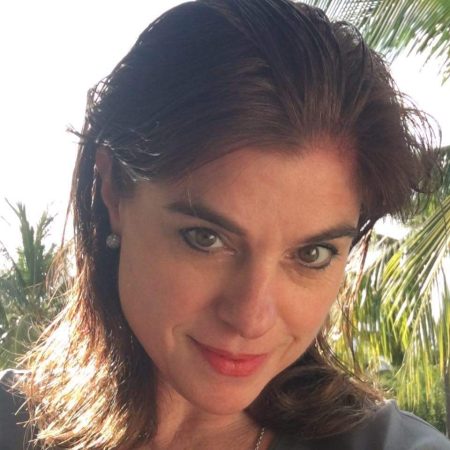
A photo of Susan Morrissey.Missy Morrissey
Investigators can’t say for sure how Morrissey’s body made it to the opposite side of town, though they believe she was alive when she entered the river and that she did not do so near where her car was parked.
“A friend refers to it as ‘the magic carpet ride,’” Missy Morrissey said of the distance between her sister’s car and where her body was discovered. “We just can’t figure anything out.”
It’s a puzzle that brings Missy Morrissey, the oldest of four siblings, back to the Brandywine each year, where she lays a bouquet of roses to honor her sister’s memory.
But this year, as yet another anniversary of Morrissey’s July 23 death nears, her family has begun to wonder whether after years of efforts to uncover the truth, her killer may never be found.
“On the first anniversary in 2020, I couldn’t have imagined that we would be sitting here in 2026 talking about this,” said Meg Morrissey Heinicke, the second-youngest of Susan’s siblings. “I would say time doesn’t heal all wounds. It is just as painful this year as the first year, the second year, the third year.”
Homicide detectives with the Delaware State Police say the investigation continues, but they have no suspects or motive, and there are no new developments in a crime that has divided the Wilmington and Chester County communities and drawn attention from true-crime podcasts and amateur sleuths across the country.
Missy Morrissey appreciates that people have taken an interest in her sister’s death long after it faded from the headlines.
Still, she and her family just want the crime solved.
A sister with flair
Susan Morrissey did just about everything with flair, her siblings said.
She grew up around West Chester and Wilmington and attended the city’s prestigious Tatnall School before heading to Georgetown University and later to San Francisco State, where she earned a master’s degree and began her career as an educator at a public school in a low-income Bay Area neighborhood.
Morrissey volunteered often, her siblings said, working with young people at a juvenile detention facility and devoting hours to an animal rescue, where she combed frigid Northern California beaches for stranded sea lions.
She was the first to read up on far-flung conflicts and the world’s injustices, and she loved sitting with a book on the beach in Stone Harbor.
It was she who recommended Noam Chomsky tomes and George Carlin stand-up specials to her less-enlightened siblings, they said. Everything from her CD collection to her handwriting oozed taste and personality.
The Morrissey siblings (from left: John, Meg, Missy, Susan).Missy Morrissey
“I don’t know how many people feel this way, but I kind of felt like the coolest person in the world happened to be in my family,” said John Morrissey Jr., the youngest of the siblings.
Morrissey eventually returned east and, after a disappointing stint of online dating in her 40s, reconnected with a former schoolmate, Ben Ledyard, an investment consultant and a regular on the Wilmington social scene.
The two soon wed, and each weekday morning, Morrissey drove to Pennsylvania to teach English at Academy Park High School in Sharon Hill, Delaware County, where she worked for 13 years until her death on July 23, 2019.
Her brother now lives in Virginia but regularly returns home to the Brandywine Valley, where visits have begun to trouble him.
With each crossing of a bridge, each riverside drive, he said, a reminder of his sister’s killing lurks beneath the river’s surface.
“Susan liked true crime,” he said, “especially local crime.”
The mystery of her death, he said, is “exactly the kind of case that Susan would have been interested in.”
A body in the water
Even after all these years, Missy Morrissey still has the texts saved to her phone.
It was 12:29 a.m., she said, and the sisters casually exchanged messages while Susan Morrissey relaxed with a glass of wine on the back porch of her Riverview Avenue home.
She was a night owl, her sister said, and often stayed up late chatting with family or friends, especially during her summer break from school. Morrissey, she said, had been looking forward to attending a Rolling Stones concert with her husband at Lincoln Financial Field the next evening.
Phone records showed that Morrissey texted with friends and updated her storefront on Poshmark, an e-commerce site for secondhand fashion, until 2:45 a.m.
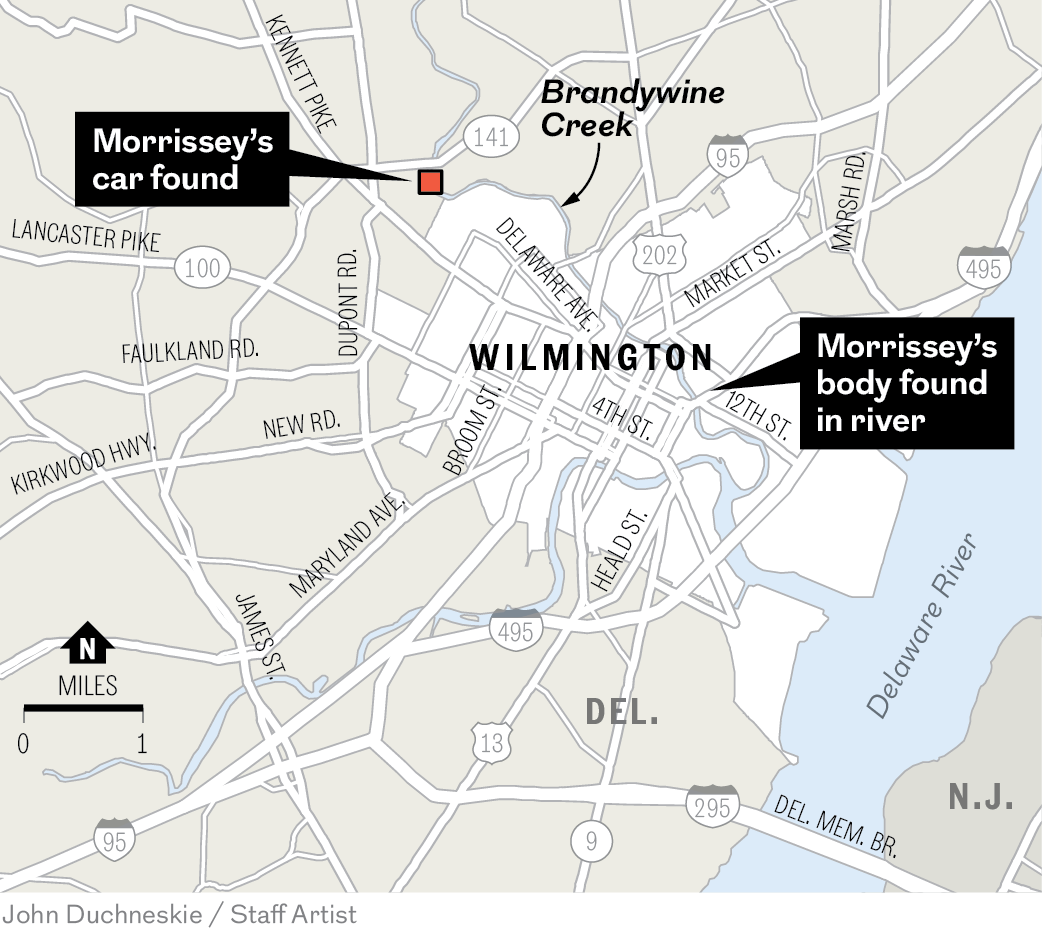
Then at 3:02 a.m., a nearby security camera captured Morrissey’s car leaving her driveway, according to Delaware State Police. It traveled around a mile through Wilmington to Walker’s Mill, a historic riverside property that had been converted into offices.
In the dark of night, however, detectives who later reviewed the footage could not determine who drove the vehicle to Walker’s Mill or see who left the car after it was parked.
Map of Wilmington, Del., showing locations in the death of Susan Morrissey, whose death seven years ago remains unsolved.John Duchneskie
What happened in the nearly five hours between the car’s arrival at Walker’s Mill and the discovery of Morrissey’s body downriver remains a mystery. Investigators say they have not determined why Morrissey would have entered the water that morning.
“She got her injuries close in time to when she died, and she died close in time to when her body was found” at 7:39 a.m., said Detective Daniel Grassi of the Delaware State Police.
He believes she may have entered the river anywhere from the Brandywine Zoo to the 16th Street Bridge, more than two miles downriver from her vehicle.
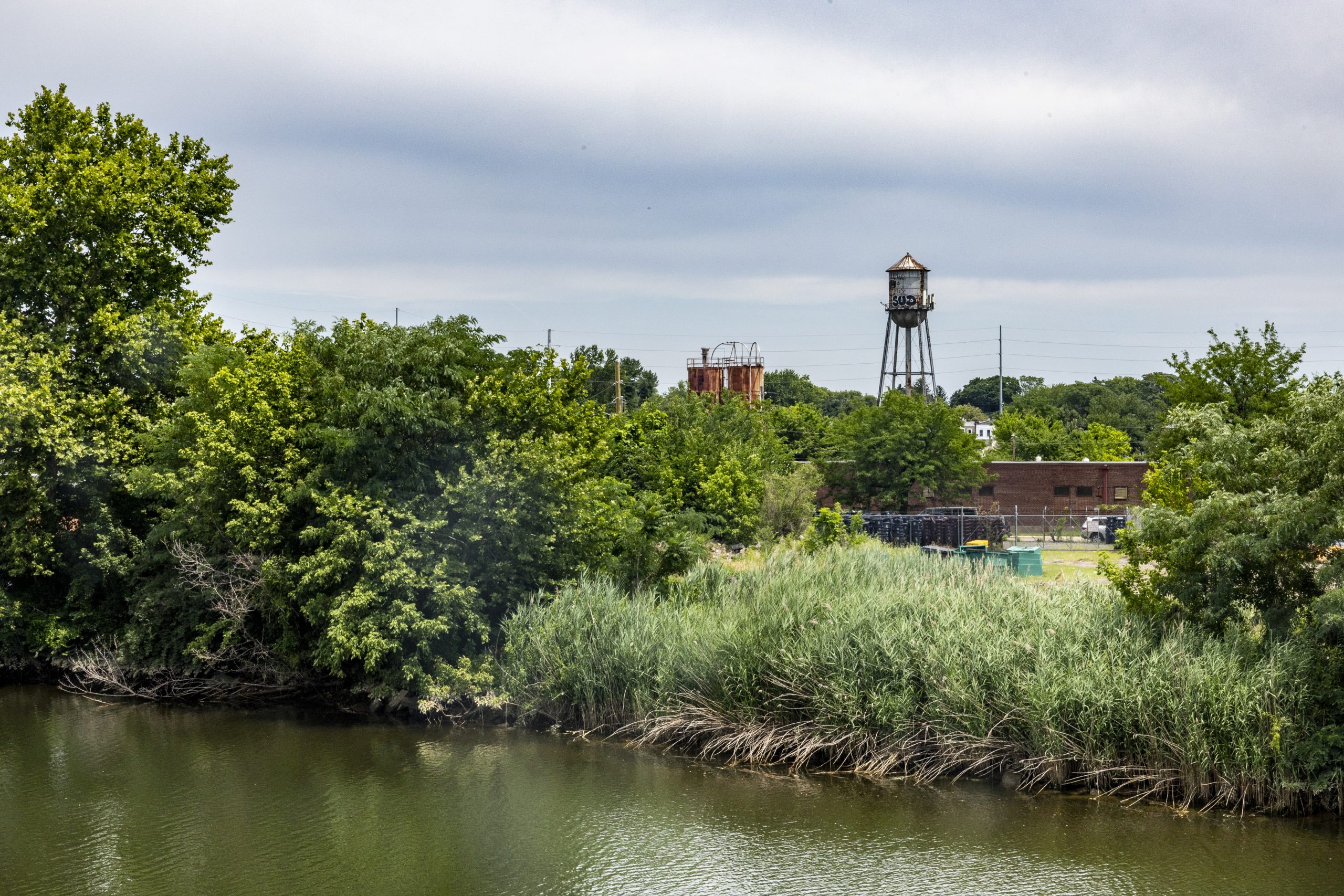
A water tower is seen from the top of the Northeast Boulevard Bridge in Wilmington, Del., on Friday, June 26, 2026. Susan Morrissey, a schoolteacher in Delaware County, was killed in Wilmington, Del., seven years ago this summer. Her body was found in the Brandywine River near the Northeast Boulevard Bridge.Aidan T. Gallo / Staff Photographer
Using data from Morrissey’s Fitbit device, investigators have pieced together the barest of timelines from that morning.
The tracker did not record Morrissey’s GPS location, so investigators cannot trace her movements, but they know she walked about a mile within an hour of her vehicle arriving at Walker’s Mill.
And at 7 a.m., the device stopped recording her heartbeat.
“I don’t know why she left the house at 3 a.m., and I don’t know what she was doing between 3 and 7,” Grassi said. “That four-and-a-half hour gap is a major issue with the investigation.”
What happened to Susan?
At her West Chester home, Missy Morrissey, 58, keeps hundreds of pages of notes and documents related to her sister’s case, making her something of an in-house historian of the family’s tragedy.
Since 2019, she has studied the river’s edge between Walker’s Mill and the Northeast Boulevard Bridge, poring over maps, interviewing store owners and strangers, and posting flyers seeking information about the killing near where Susan Morrissey may have been.
It is not only the lack of a suspect that vexes her. Police have not detailed the cause or extent of Morrissey’s injuries, beyond saying that they were traumatic.
Morrissey had been home alone that evening while her husband attended a screening of a documentary about the jam band Phish along with a friend. When he came home, Ledyard told investigators, he and Morrissey sharedhalf a bottle of wine before he took a sleep aid and went to bed around 11 p.m.
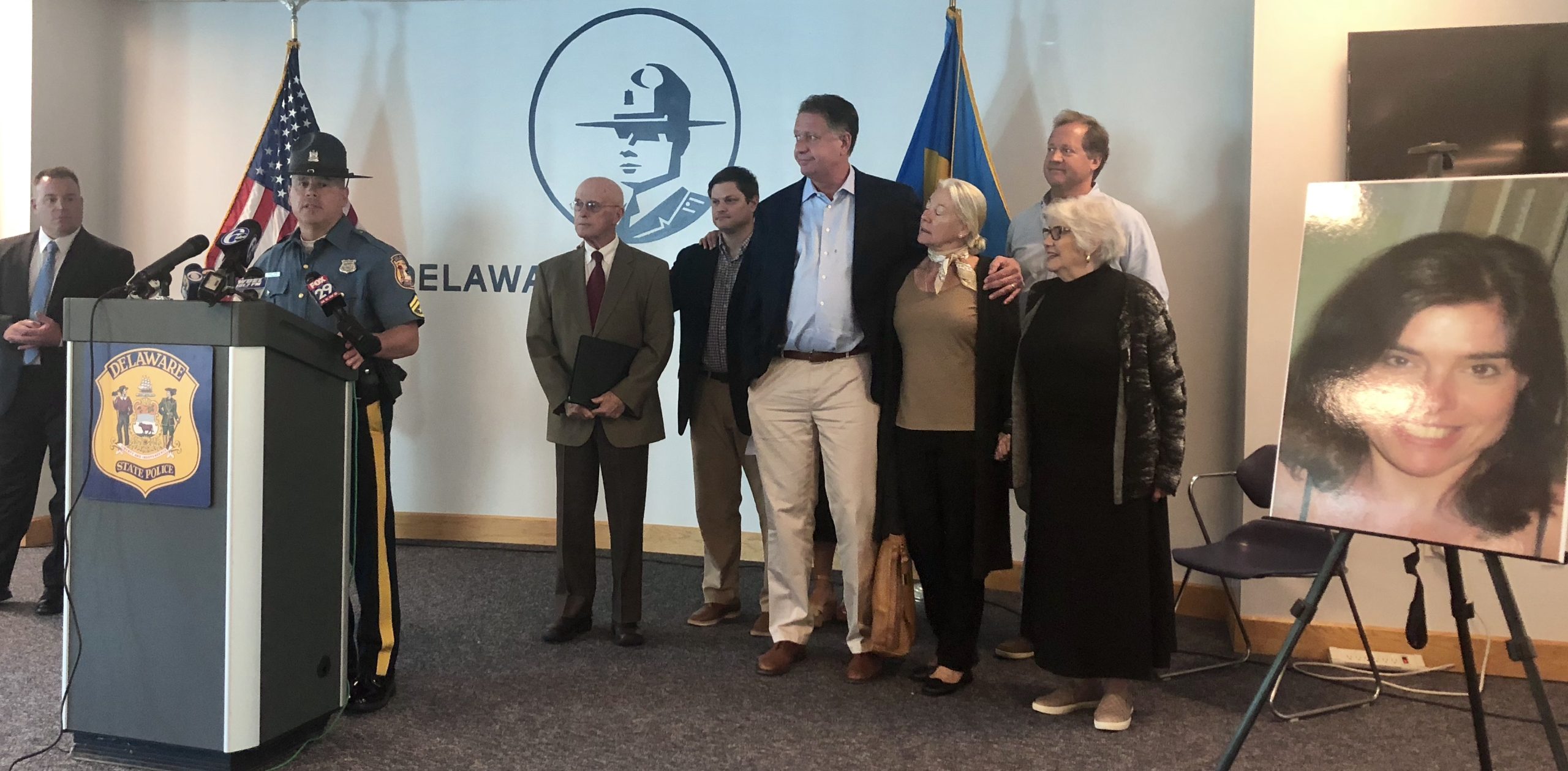
Delaware State Police Master Cpl. Michael Austin speaks in 2019 to brief reporters about updates in the death of Susan Morrissey Ledyard. With him were her brother, John (second to left), and husband, Ben (third from left).Katie Park/Staff
He said he had no idea what happened to his wife — a woman he told reporters was “the love of my life, my best friend” — until police came to the house around 9:30 the next morning to tell him she was dead.
Ledyard could not be reached for comment.
Two years after Morrissey’s death, Ledyard remarried, and in 2023 he was charged with assault for attacking his wife with a marble figurine and smashing her head into the floor after she asked him to turn down loud music on New Year’s Day.
He pleaded guilty to second-degree assault and was sentenced to two years in prison.
The charges brought fresh attention to the Morrissey case and fueled internet speculation that he could have harmed his former wife.
But police say he is not a suspect in the homicide and has cooperated fully with law enforcement.
‘A hope you desperately cling to’
Morrissey’s parents, Serena and John, died last year at 89 and 91 — without learning what happened to their daughter and without seeing anyone brought to justice for the crime.
John Morrissey’s death from advanced dementia came just two days after the anniversary of his daughter’s death.
“It’s been a tough year for our family,” said Meg Morrissey Heinicke, who lives in San Francisco. “This year’s anniversary feels particularly sad and painful.”
Yet there remains “a hope that you desperately cling to” that the case will be solved, she said.
Susan Morrissey with her nieces and nephew. Missy Morrissey
In honor of their sister, the siblings started the Susan Morrissey Foundation, which awards an annual scholarship to an Academy Park student for excellence in English, a small way of keeping her memory and love of the written word alive.
In their quest for answers, the family has promised a $50,000 reward for information leading to an arrest.
“I just want us to have some answers,” Missy Morrissey said of the family’s ongoing grief. “I don’t think that any of us can really process, or go on, without knowing.”
Anyone with information about the case is encouraged to call detectives with the Delaware State Police at 302-365-8441 or email daniel.grassi@delaware.gov.
Hidden deep in the Orange Crush heart of the Jersey Shore, there’s a beloved dive bar near West Wildwood’s bay that ignores all the common rules of commerce and good cooking. And yet its ceiling is covered in money and its unlikely hit sandwich is a Reuben made with … scallops?!
Not far away in Cape May, a new Italian restaurant is also doing things differently, crafting extraordinary meals from the highest quality ingredients ― with eye-popping prices to match. At the other end of the dining spectrum, there’s a destination-worthy cutlet sandwich in Sea Isle City and a hot new cheesesteak stand on the Wildwood boardwalk where the crowds come in hopes of glimpsing the owner, an alleged former mob boss who’s refashioned himself as a South Philly sandwich king. A very different kind of celebrity in the making — a giant seagull mascot — is aiming to energize a lively new outdoor restaurant and bar in Avalon and give fresh meaning to “Go Birds!”
Such eating adventures across the southern end of the Jersey Shore this summer were an exploration of dining culture extremes, but never dull and frequently delicious.
These 11 places from Cape May to Ocean City are the ones I’ll remember most.
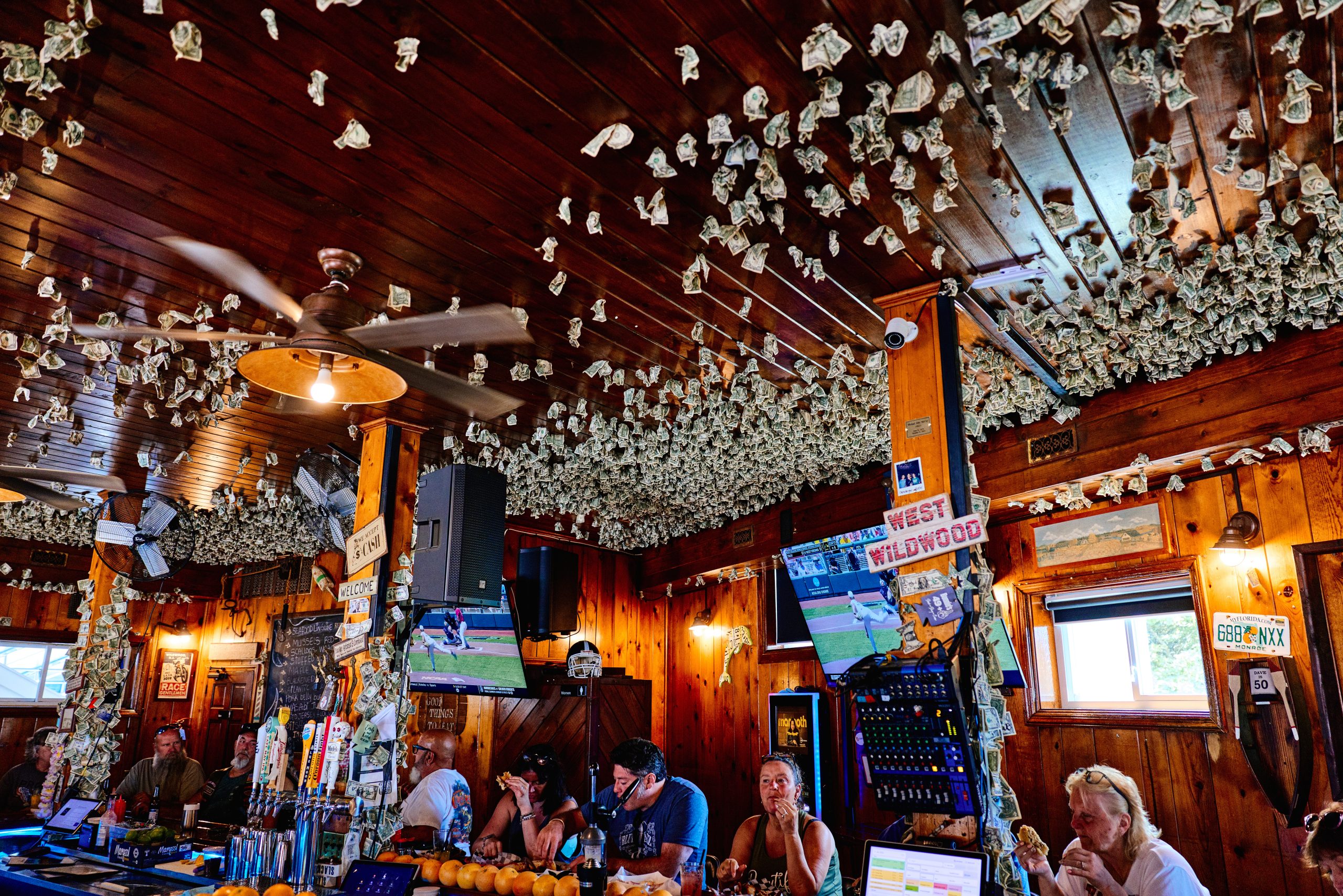
Dollars hanging from the ceiling at Westside Saloon in West Wildwood, N.J. Ted Nghiem / For The Inquirer
WEST WILDWOOD
Westside Saloon
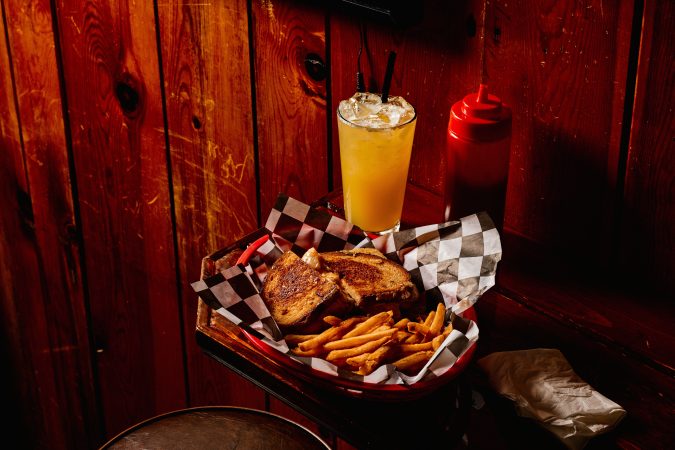
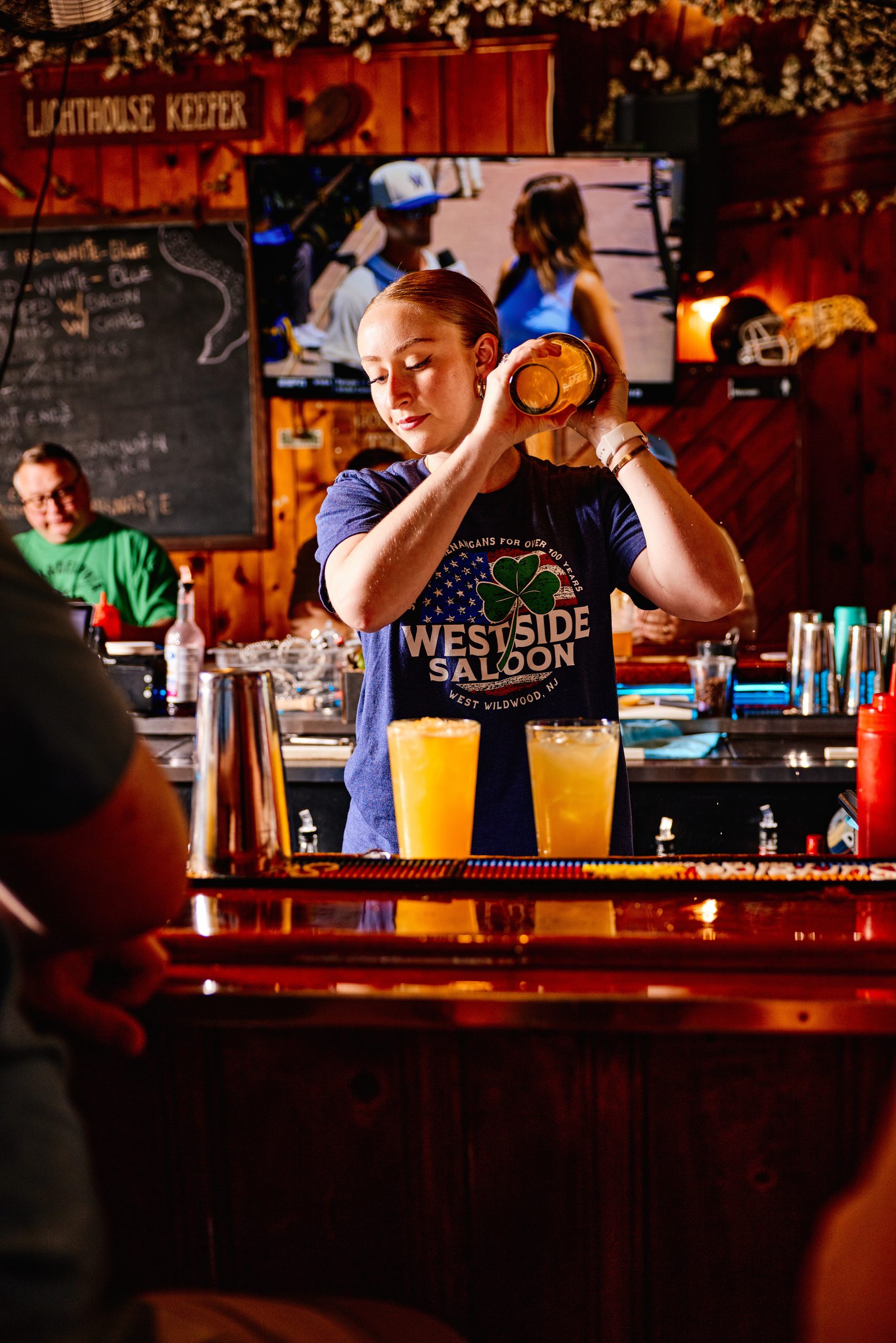
Everyone talks about the dollar bills tacked to the ceiling of the Westside Saloon like Monopoly money confetti, the result of a barroom challenge that’s added a distinctive dive bar quirkiness to this venerable tavern on the tiny isle of West Wildwood. To me, however, those bills are the least intriguing aspect of the Westside Saloon, as this watering hole — which dates to Prohibition and was once known as the Bridge Cafe — was renamed in 2003. My eyes are drawn to the crates of ripe fruit stacked near the front door, set to be juiced daily for the lineup of dangerously smooth crush cocktails made with all-natural ingredients — orange, grapefruit, pineapple, watermelon — shaken with vodka (or tequila) and seltzer. “My mother always told me that drinking would get me nowhere,” says the bar’s manager and chef, Billy Scott, 52. “But it’s worked out pretty well for me here. These drinks are my babies. They make people smile, and I’m definitely the King of the Crush now.”
The saloon is owned by the McCoy and Keating families, but Scott, a family friend, is also the culinary mind responsible for the strokes of whimsy — or cheese crimes against seafood, depending on your perspective — that have prompted the Westside Saloon to tout itself as a “five-star dive bar” that’s booming despite an independent streak with its hours (“We open when we feel like it; we close when we feel like it”) and a published phone number that’s never answered because they ripped the phone off the wall 15 years ago. (“It wouldn’t stop ringing.”)
A bartender making crush cocktails at the Westside Saloon in West Wildwood.Ted Nghiem / For The Inquirer
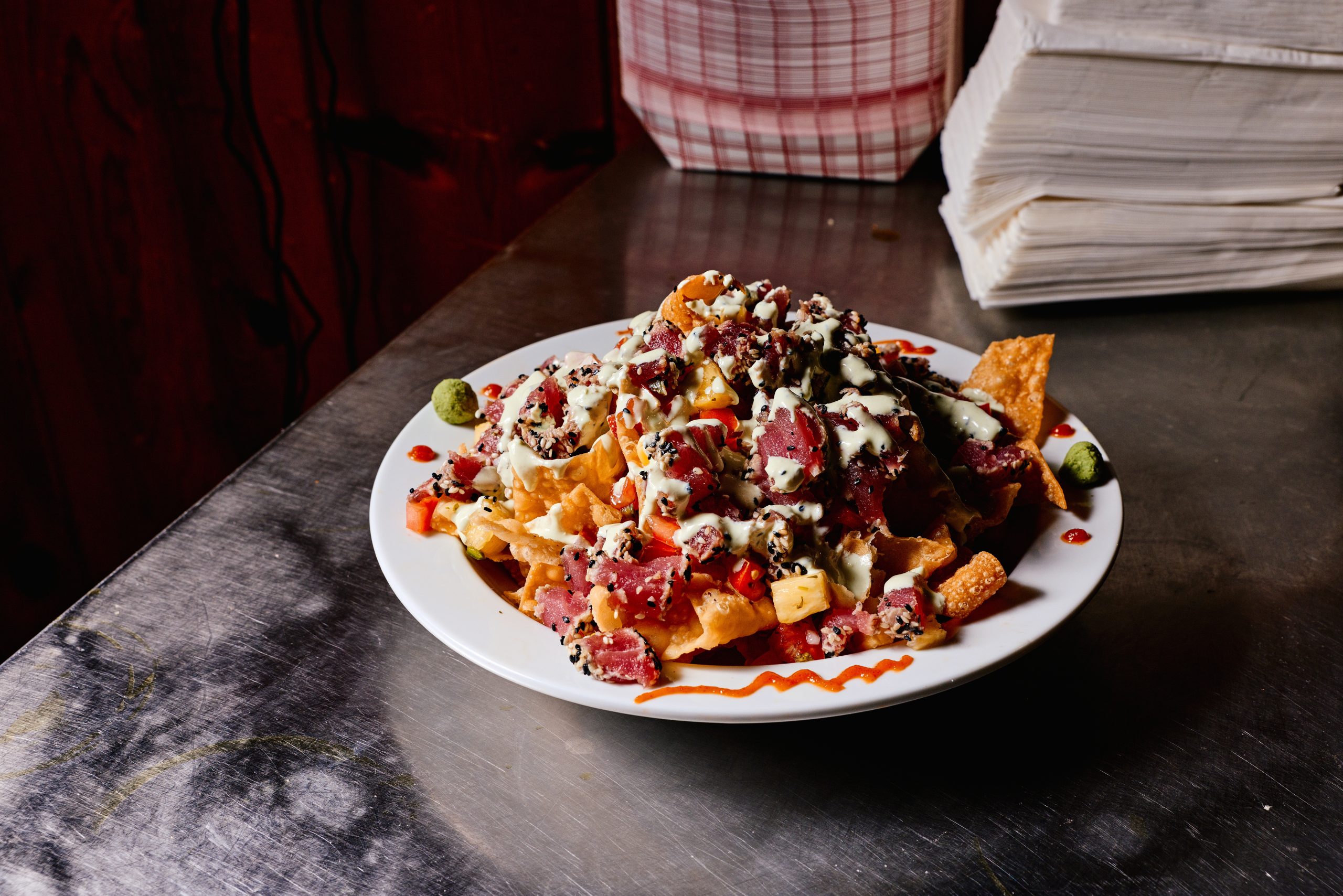
That reclusive attitude hasn’t slowed the crowds that wander into this trapezoid-shaped building for one of the 28 seats at the trapezoid-shaped bar (or 40 outdoor seats) to listen to live music and indulge in one of the Shore’s most unusual seafood menus, headlined by the iconic scallop Reuben. It’s an odd combination that by most conventions should not work, but Scott has access to some of the best ingredients on the East Coast through nearby Dock Street Seafood. The plump Jersey scallops offer a meaty alternative to corned beef, with a briny sweetness that harmonizes with the tangy sauerkraut, piquant Swiss cheese, and butter-toasted rye. It’s not Scott’s only seafood and dairy gambit. The stuffed long hot pepper is exploding with fresh crab and provolone, a prosciutto wrap, and a Gorgonzola finish. There’s so much crustacean in the she-crab soup that our spoon nearly stood up straight. (If it had been hotter, it would have been perfect.) Sesame-seared local tuna comes piled over crisped wonton chips for Asian nachos. But Scott’s most audacious creation is the option to order your seafood “blue,” a marinara sauce blended with Gorgonzola that added an unexpectedly appealing cave-aged funk to our bountiful seafood pasta.
Seared tuna nachos at the Westside Saloon in West Wildwood, N.J.Ted Nghiem / For The Inquirer
For those averse to seafood spectacles, the Westside’s chicken wings and “volcanic eruption” burger (a cheese-stuffed patty topped with bacon and long hots) also have fans. But what surprised me most was that the saloon makes its own desserts, including a towering key lime pie and an Oreo-encrusted cheesecake we could not stop eating. This won’t be news to anyone who knows how much passion Scott and his crew, who also recently bought a bakery, have put into making this iconoclastic institution so much more than a random dive bar.
“The only thing artificial here are my initials — B.S.,” says Scott. “When you come to the Westside Saloon, everything else is real.”
Westside Saloon, 770 W. Glenwood Ave., West Wildwood, N.J. 08260, no phone; on Facebook
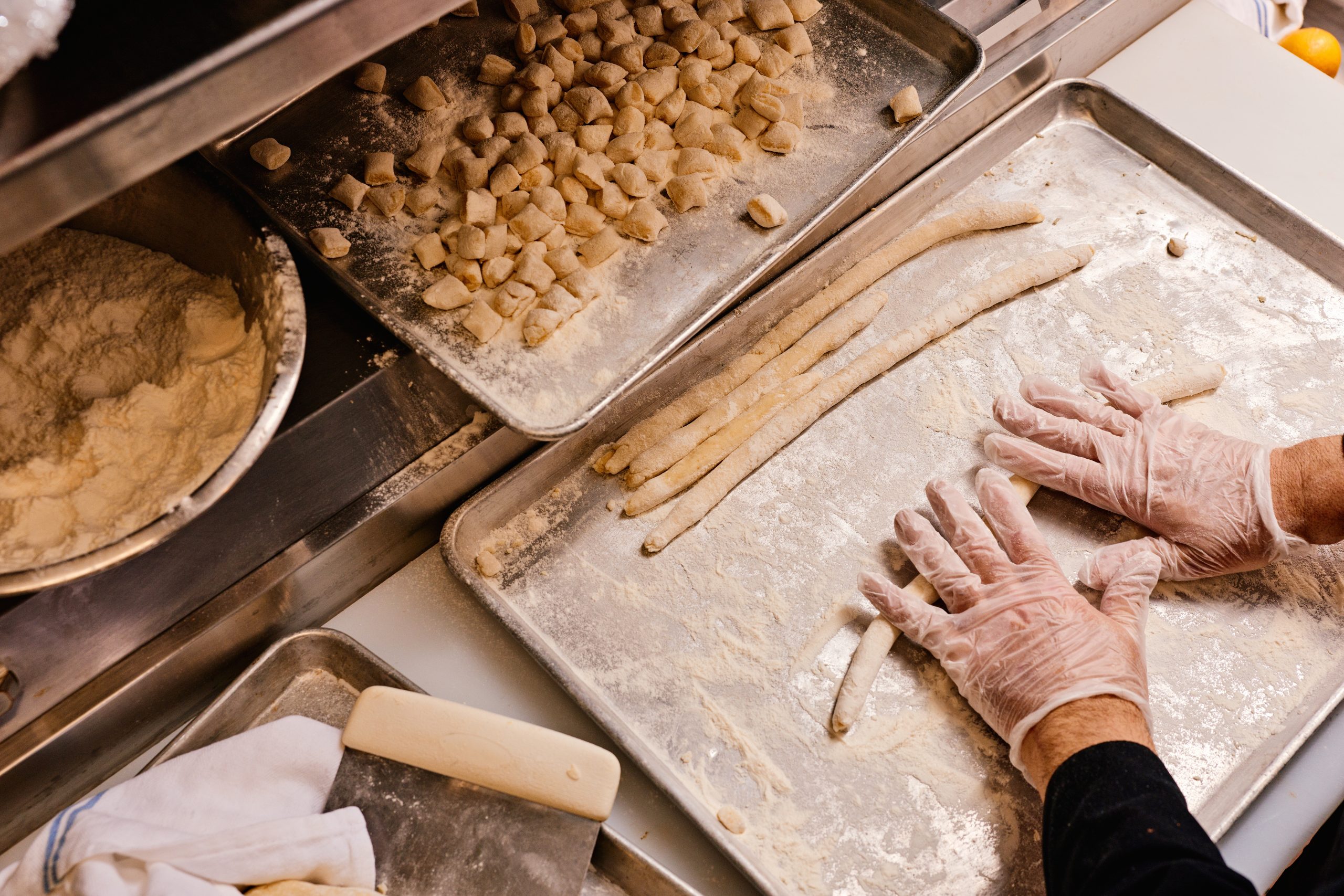
Chef Alfredo Dapi rolls out pasta for pistachio gnocchi in the kitchen at Il Riccio in Cape May, N.J. Ted Nghiem / For The Inquirer
CAPE MAY
Il Riccio
There are so many Italian restaurants at the Jersey Shore, I was not particularly excited about the prospect of yet another, especially considering the newcomer most recommended to me this offseason by my local sources was located in a turnstile Cape May address where I’ve reviewed three different restaurants since 2003.
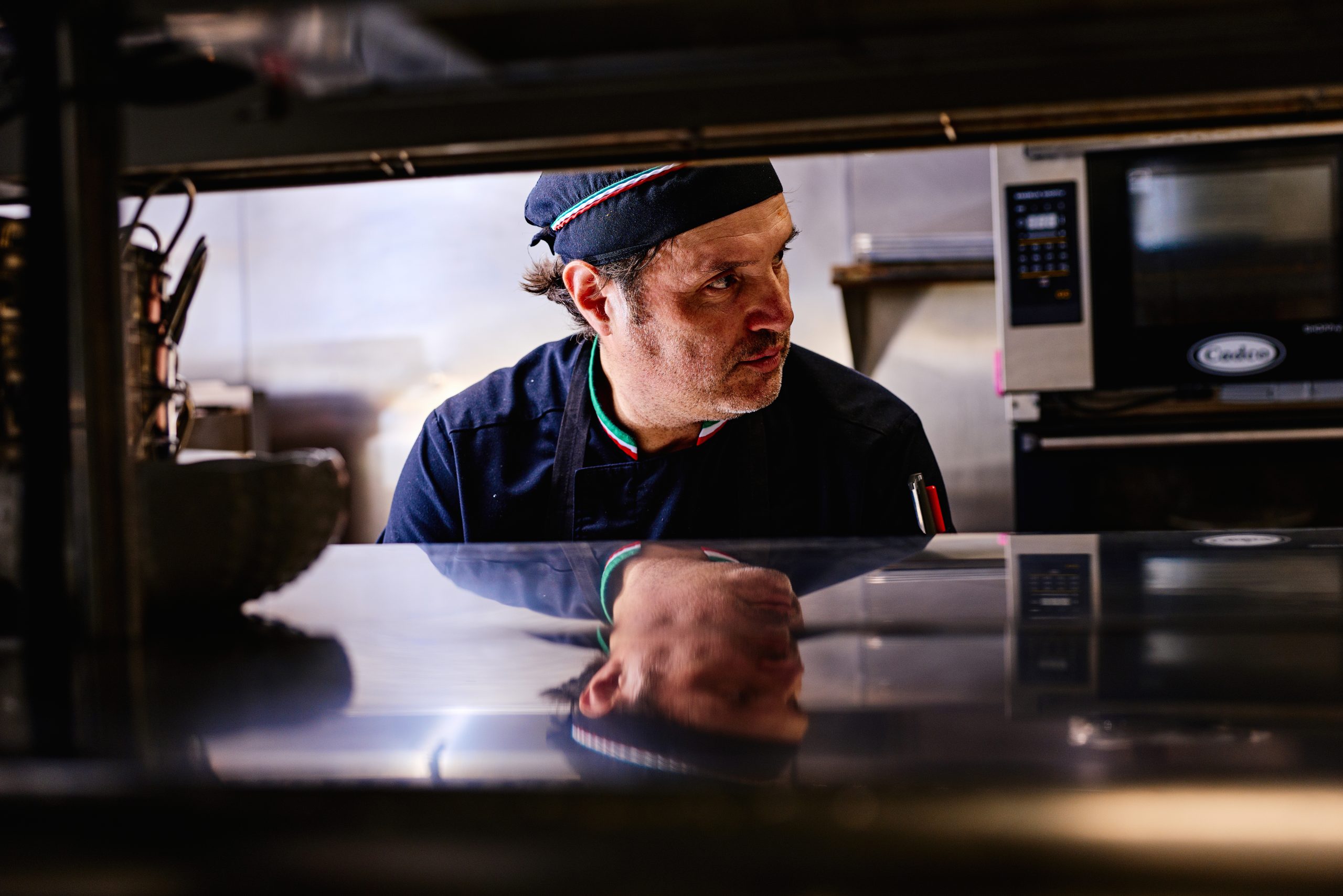
Chef Alfredo Dapi pauses while making pistachio gnocchi in the kitchen at Il Riccio in Cape May.Ted Nghiem / For The Inquirer
Number four — Il Riccio — turns out to be anything but ordinary, and not simply because the lofty prices, with dinner entrees ranging from $38 to triple digits, will make you wonder if the food is gilded. In fact, it is. But the shimmering stamps of 24-karat gold hovering above the cacio e pepe risotto are not the prime reason this showstopper dinner indulgence costs $99. That would be the quarter-pound of meltingly rich A5 Wagyu tenderloin from Hokkaido that comes seared on top, as well as the raisiny sweet swirls of reduced Amarone wine, not to mention the coveted seven-year-old aged Acquerello rice that’s cooked to al dente perfection by chef Alfredo Dapi for 19 minutes on the dot, adding the imported butter from Parma and pecorino cheese only at the end to keep it light.
“We wanted a dish that touched all the senses — sweet, salty, sour, and bitter,” says Il Riccio’s gregarious co-owner Luca Cimmarotta, 52, a Tuscan winemaker, olive oil producer, and importer who, since his earlier days as a sommelier for both Aldo Lamberti and Georges Perrier, has always wanted to open an Italian restaurant that made no compromises when it came to quality.
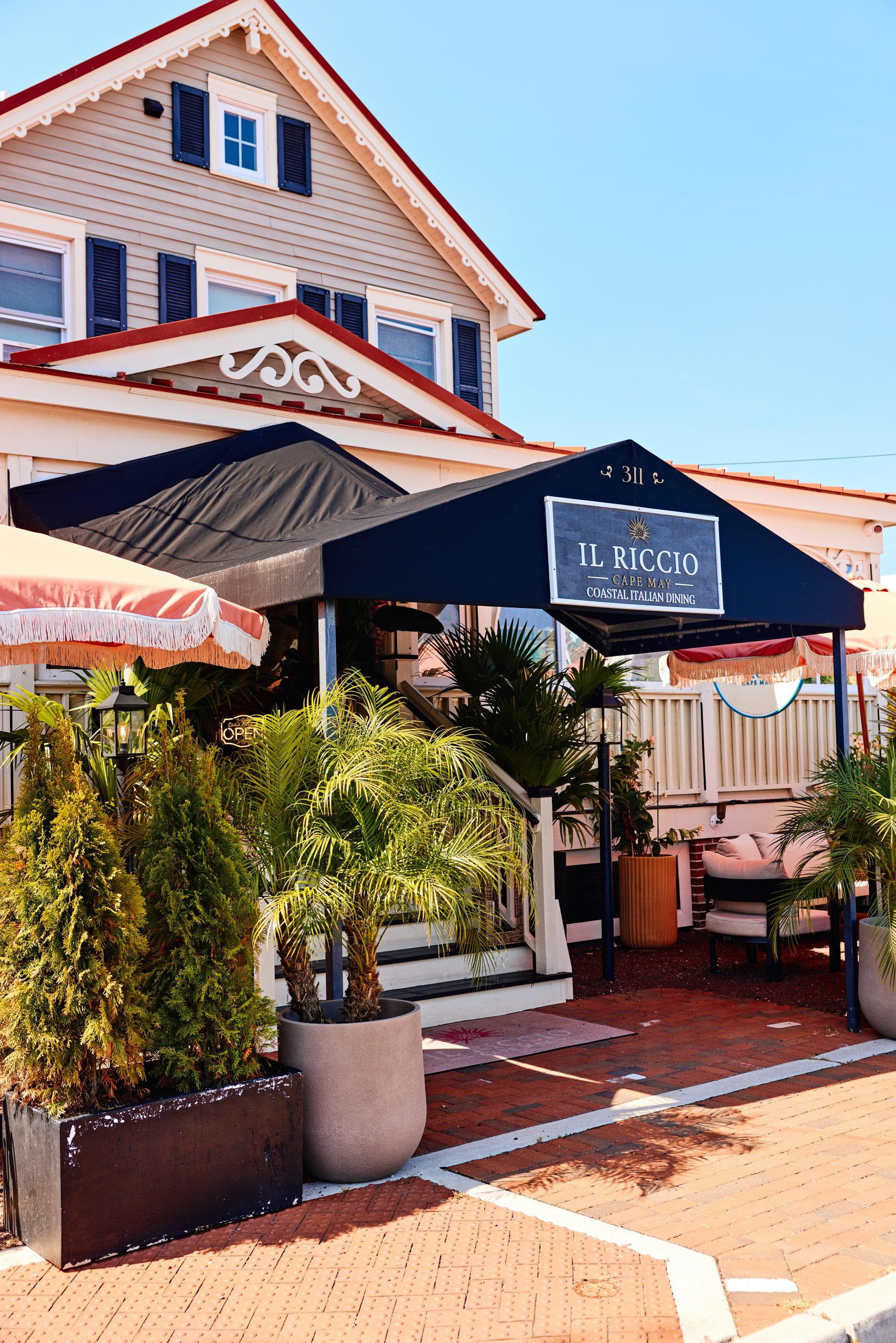
Il Riccio in Cape May, N.J.Ted Nghiem / For The InquirerPistachio gnocchi at Il Riccio in Cape May, N.J. Ted Nghiem / For The Inquirer
That is exactly what he’s done at Il Riccio (“the sea urchin” in Italian), the posh 50-seat BYOB he opened a year ago in a Victorian bungalow beside Collier’s Liquors with his wife, Stefania Chiaro, 46, who works in the kitchen, and their son, Michele Cimmarotta, 21, who charms the dining room as lead server.
Our night, he was offering a wild fresh Holland Dover sole whose beguilingly firm texture, delicate flavor, and roe sack (a bonus!) were expertly deboned tableside, and tasted clearly superior to the more common farm-raised and prefrozen sole found elsewhere for a third of Il Riccio’s $135 price. That includes a side of spaghetti alla chitarra laced with Cimmarotta’s own olive oil and colatura di Alici (Italian fish sauce), and easily feeds two.
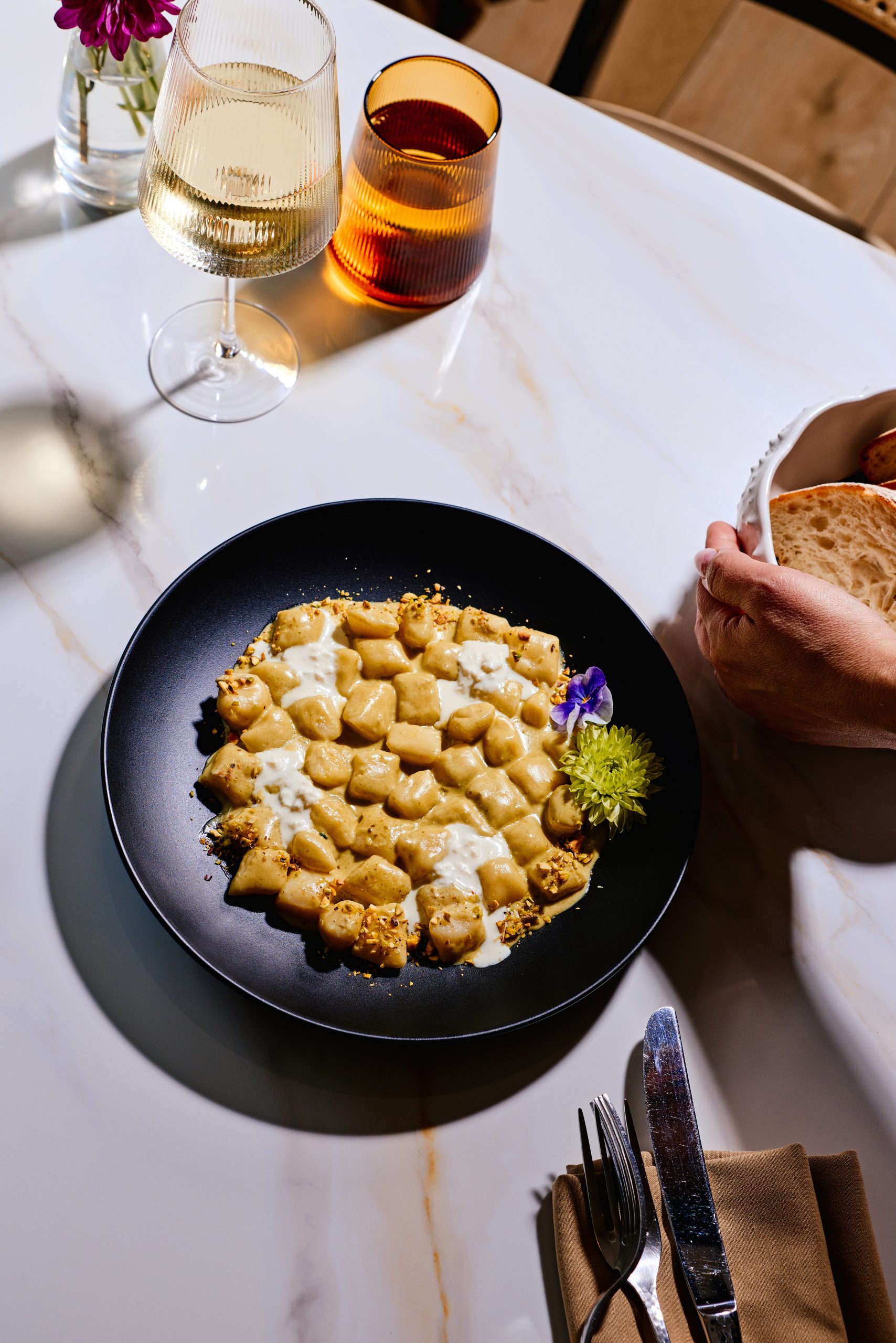
Cured ham aficionados will also find rare treasures here, from the acorn-fed Spanish Ibérico ham Cimmarotta slices from a rolling cart in the dining room to the multiple varieties of Italian culatello available with truffled sottocenere cheese. The lunch menu is slightly more affordable, when you can order that risotto minus the Wagyu for $39. You can also still taste the restaurant’s signature baby octopus, a pom-pom of grilled tentacles posed over spicy broccoli rabe. I’d also suggest the soulfully stewed beef braciole stuffed with pecorino. One dish that should not be missed is Dapi’s amazing gnocchi, ethereal dumpling clouds floated across a pool of a creamy Gorgonzola turned pastel green with blended pistachios.
Nutella gelato affogato at Il Riccio in Cape May, N.J.Ted Nghiem / For The Inquirer
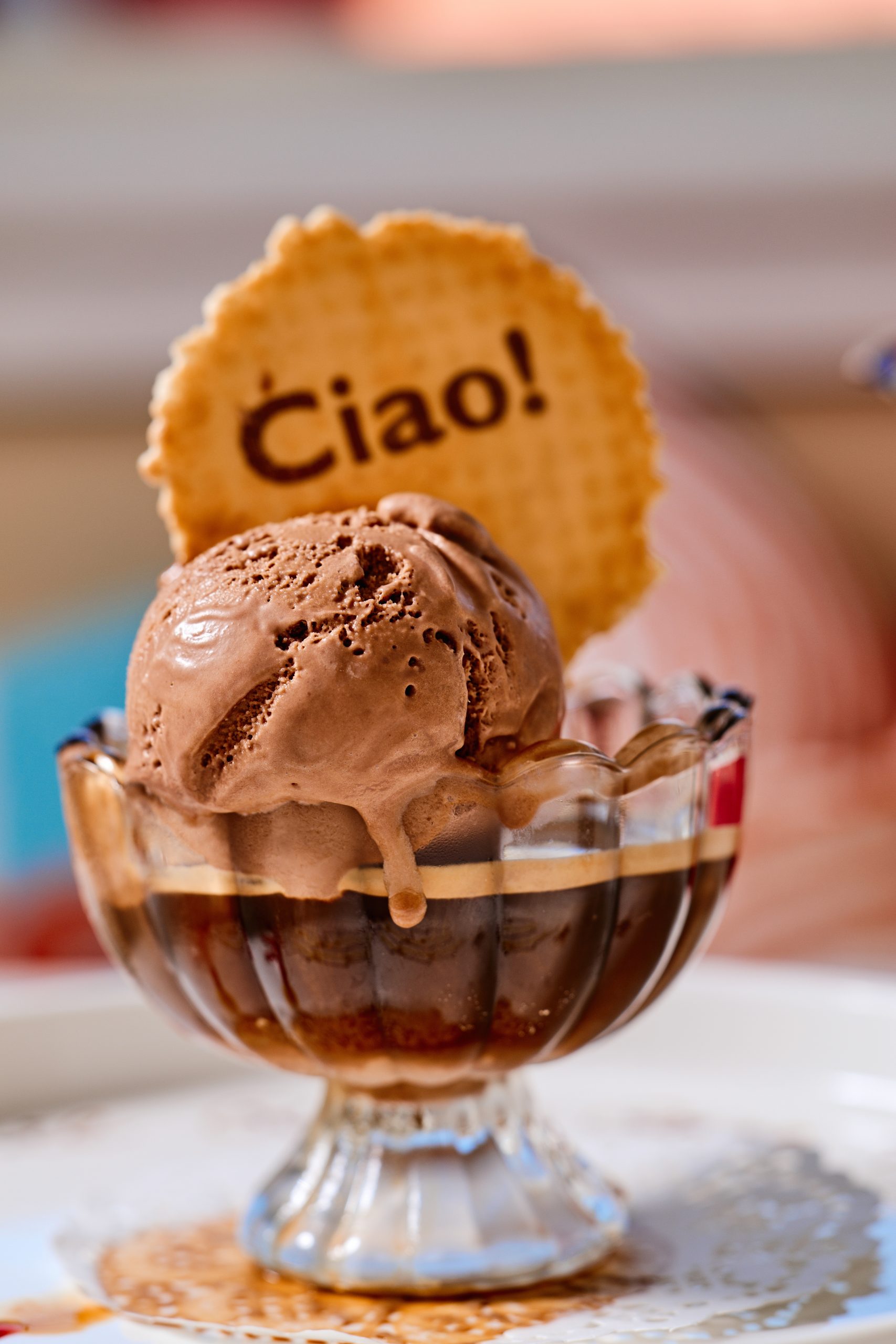
For dessert, ignore the more ubiquitous options and head straight for the affogato. A silky Nutella gelato is topped tableside with dark and roasty Caffé Toraldo espresso from Naples poured from a gorgeous little red moka pot designed by Dolce & Gabbana. Like everything else at Il Riccio, it brings luxury, design, quality, and flavor all together into a special fine-dining experience that actually delivers exactly what you pay for.
Il Riccio, 311 Mansion St., Cape May, N.J. 08204, 609-554-3165; ilricciocapemay.com
Mediterrano
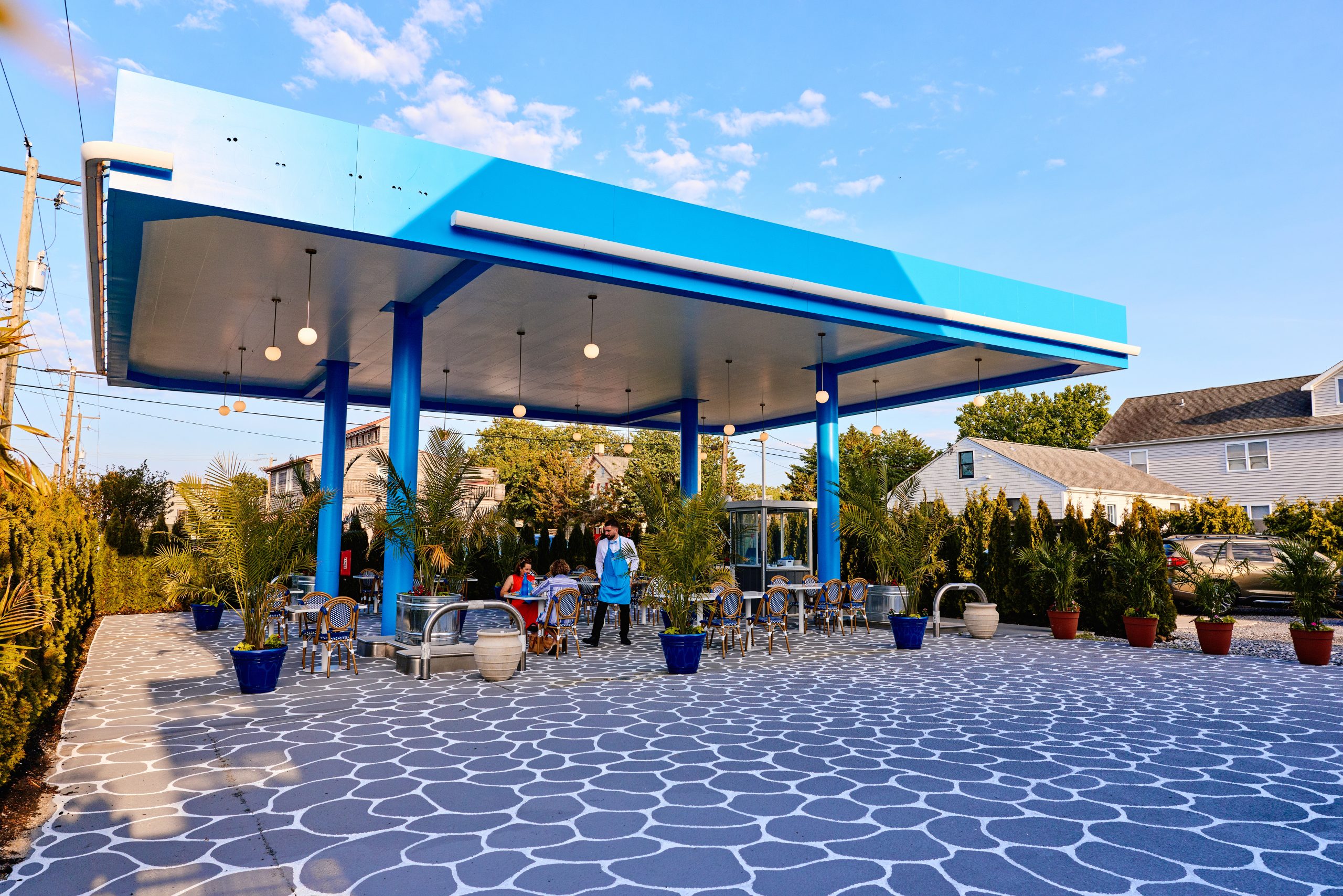
The demise of the Exit Zero Filling Station has left a kraken squid curry-sized hole in Cape May’s funky fusion dining scene. But its unique location — a soaring dining hall fronted by a former gas station pump turned breezy al fresco patio — has been salvaged and retransformed into a vision of Greece. Cue the potted palms, painted faux-cobblestones, and cerulean blue paint job for the old filling station portico that is now a BYOB called Mediterrano. New owner Florian Furxhiu has used his playbook from Santorini, the popular Greek haunt he owns in Wildwood.
Exterior view of Mediterrano in Cape May, N.J.Ted Nghiem / For The Inquirer
A statue of Hebe, the daughter of Zeus, presides over the columned fireplace of this handsomely renovated dining room lined with blooming fake bougainvillea vines, while Santorini’s former co-chef, Caesar Jeromino, and Alban Presheva, newly arrived from Albania, turn out one Greek standard after the next.
Considering their experience, my meal was more inconsistent than I’d hoped for. The Greek meatballs in tomato sauce were unyieldingly dense. The single-serving moussaka built à la minute over a solo eggplant lacked the satisfaction of the traditional large-format casserole.
The big lamb shank, however, was impressively tender, and the butterflied whole branzino, a favorite at Santorini, was as good as ever, its flaky white flesh glazed in lemony butter sauce and capers. I have little doubt Furxhiu’s time-tested team will level up to fine-tune the rest of these dishes as summer progresses. With Ionian-like breezes whistling off the nearby Atlantic through this unique patio and the goddess Hebe casting her magic powers, one can only hope.
The remarkable reinvention of Joseph “Skinny Joey” Merlino from infamous wiseguy to cheesesteak mogul has been well-documented by my colleague Michael Klein. But the arrival of his popular South Philly sandwich stand at a satellite on the Wildwood boardwalk still begs a clear-eyed review, especially with his partner Joe “Lil Snuff” Perri Jr. perpetually hyping the project on social media. It’s a great story, but does that mean it’s also a tasty lunch?
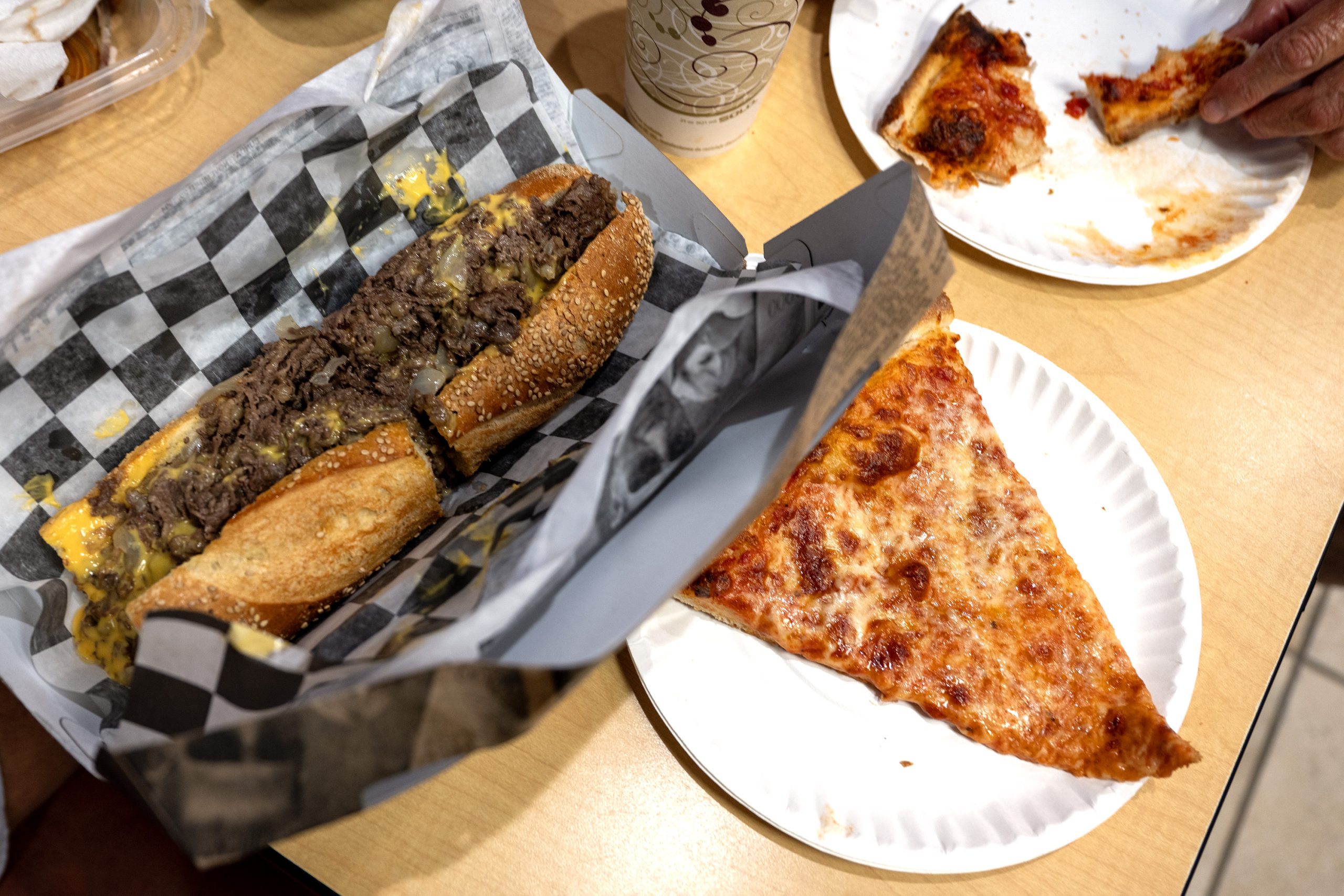
Cheessteak and pizza at Joseph “Skinny Joey” Merlino’s new Skinny Joey’s Cheesesteaks during a soft opening of his new location on the boardwalk in Wildwood.Tom Gralish / Staff Photographer
I admit an initial pause of disappointment that the best sandwich from OG Skinny Joey’s — the roast pork sandwich — did not make it to the beach. But the marquee cheesesteaks are consistent with the original, bountifully portioned and ever-cheesy with molten Cooper Sharp on a seeded roll. It’s overall better than I anticipated given the marketing bluster, but not quite elite (I worked through a clump of gristle amid the otherwise tender chopped meat; the coarse-cut, barely cooked onions also need more love).
The gloriously messy Buffalo chicken is the true steak star here. Skinny Joey’s also does pizza in Wildwood, unlike the original, and while the round pies are average, the strombolis are fantastic. They take extra time to make, because they’re baked to order. They’re also perfectly sized to fit into the slender holster of a cardboard cheesesteak box to go. Or, eat it on-site in Skinny Joey’s pleasantly cool indoor dining room, which has the rare boardwalk perk of a private bathroom, plus the opportunity to buy lots of branded merch.
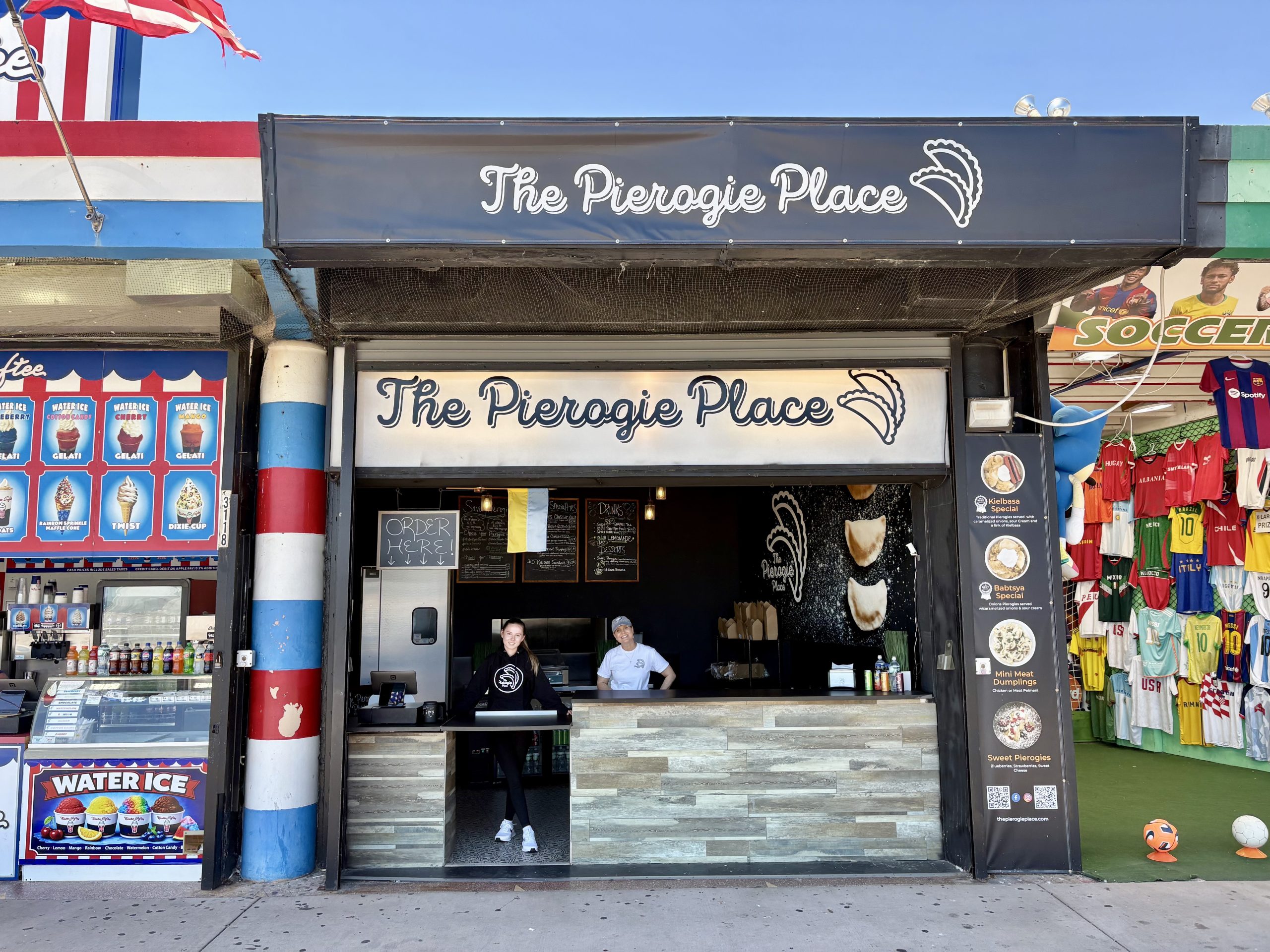
You can get pierogi and all sorts of other Eastern European treats on the boardwalk at Brooklyn’s Brighton Beach, famed for its Slavic community. A notable counterpart to be found at the Jersey Shore is the Pierogie Place, which has two separate stands on the Wildwood boardwalk. It has such a loyal following that a customer who sidled up to the register beside my family swore it was always her first stop when she arrived at the Jersey Shore (“we actually come daily”), not to mention when she visits Lincoln Financial Field, where Pierogie Place founders Liz and Bohdan Kulchyckyj also operate a location of their six-year-old comfort food tribute to Ukraine, where they lived for two decades as expats.
The Pierogie Place has two storefronts on the boardwalk in Wildwood. Pictured behind the counter at the 3116 Boardwalk location are employee Anastasiia Oleska (left) and co-owner Liz Kulchyckyj.Craig LaBan / Staff
The draw are the pierogi (or “vareniki,” as they’re called in Ukraine) offered in a variety of fillings and served with deeply caramelized onions and a dollop of sour cream. I enjoyed the potato and farmer’s cheese filling best, with the jalapeño-cheddar stuffing following close behind — even better crowned with a snappy link of kielbasa. The tortellini-like dumplings filled with pork and veal known as pelmeni are also irresistible. But don’t miss dessert of sweet cheese dumplings topped with strawberries, blueberries, or both and a cloud of whipped cream. Mingling with the aroma of salty sea air, this Slavic carnival in a box tastes particularly sweet.
The Pierogie Place, 3116 Boardwalk and 4302 Boardwalk, Wildwood; thepierogieplace.com
STONE HARBOR
Mother’s Market & Bakery
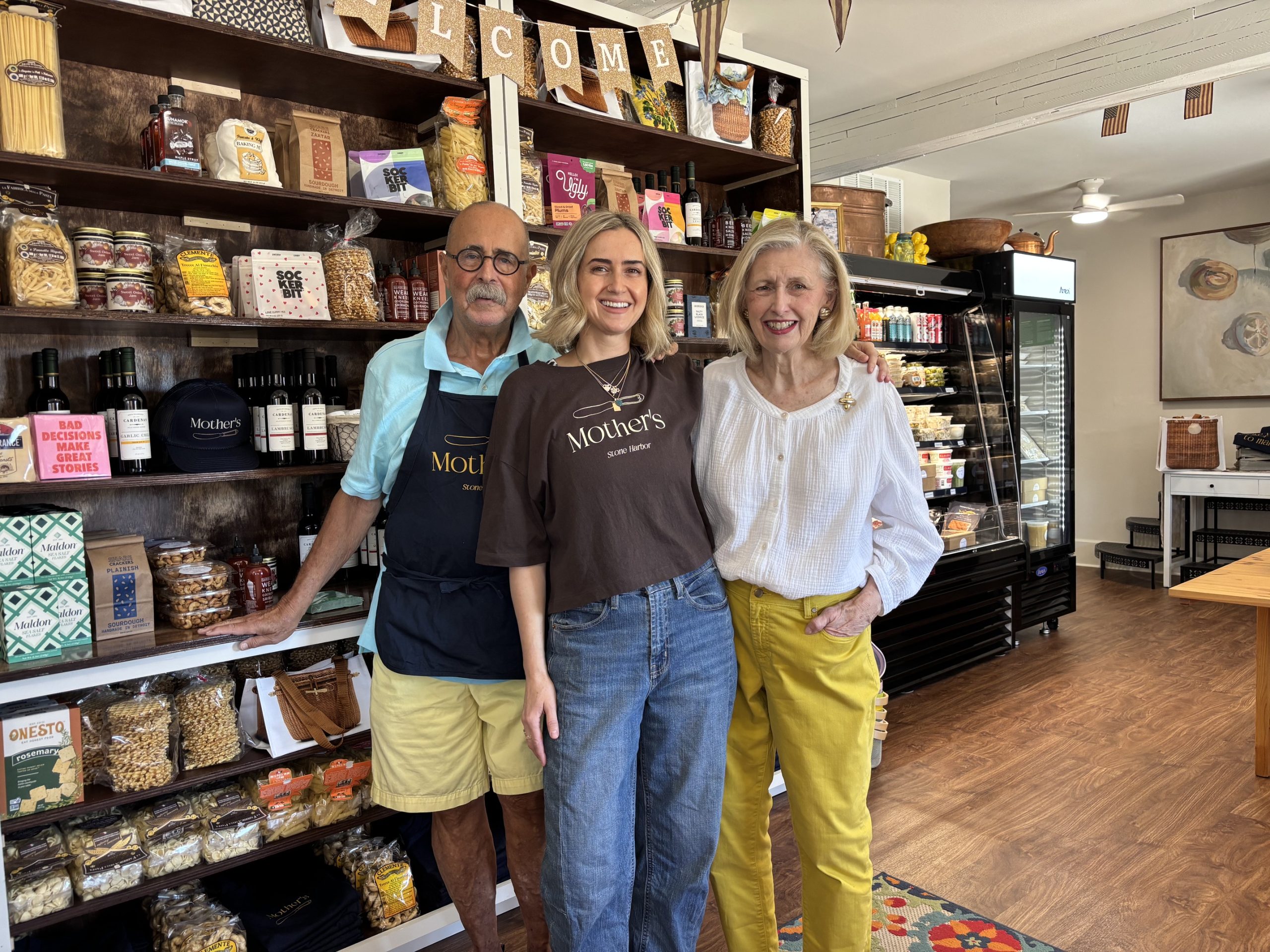
Mother’s Market & Bakery in Stone Harbor is a family affair, operated by Jennie Mopsik (center), her father, Eugene Mopsik (left) and mother, Helen Mopsik.Courtesy Mother's Market & Bakery / Eugene Mopsik
This charming new prepared foods shop in Stone Harbor checks a longtime bucket list wish for Jennie Mopsik to work alongside her parents in the Shore town where they’ve long summered together, and where she now lives year-round. This storefront market with patio seating was inspired by the home entertaining she saw her parents, Eugene and Helen Mopsik, refine over the years. So, while the shelves are stocked with well-chosen products, from top-notch pasta to Samaki smoked fish and frozen pierogi brought in from Port Richmond’s Czerw’s Polish Kielbasa, the real gems here are the specials cooked daily by her dad, a retired photographer who became known as the “Philly Loxsmith” in his tenure at Biederman’s, where he rediscovered a love of cooking. At Mother’s you’ll find him whipping up homey daily soups (cream of asparagus, gazpacho, matzo ball), fresh quiches, muffins, and excellent grab-and-go salads, including his legendary whitefish salad and a farmer’s cheese spread blended with labneh, shallots, and dill that’s my new favorite bagel schmear (not to mention Helen’s favorite happy hour snack). Jennie Mopsik is involved with the baking, too, but her talent and former business for flower arranging is also on display with custom hand-tied bouquets and orchid arrangements that she says will bloom all summer long.
Mother’s Market & Bakery, 8307 Third Ave., 1st Flr., Stone Harbor, N.J. 08247; on Instagram
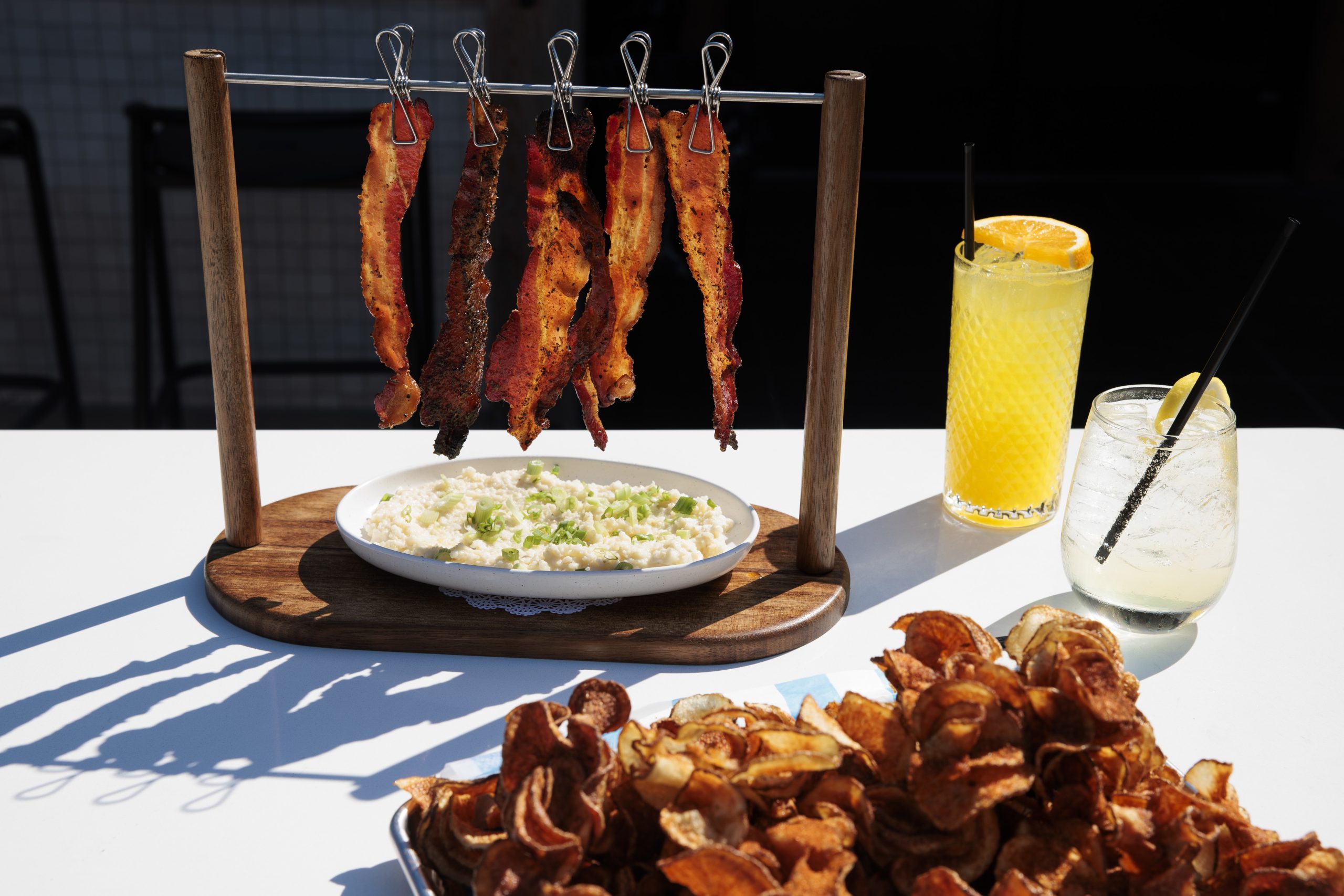
Hanging candied bacon served over grits and Gully’s Blooming Potato at Gully’s in Avalon, N.J.Monica Herndon / Staff Photographer
AVALON
Gully’s
When I was little, the notion of a human-size seagull flapping its wings at my table might have scared me right out of my swim trunks. But the team behind Gully’s is betting on the “sassy but good-natured” energy of its friendly weekend-only mascot, Gully, along with competitive Monday minnow races and updated American pub fare to bring some “old-school beachy vibes” to their makeover of the pergola-wrapped al fresco resto-bar in Avalon that was previously Black Cactus. And … it just might work?
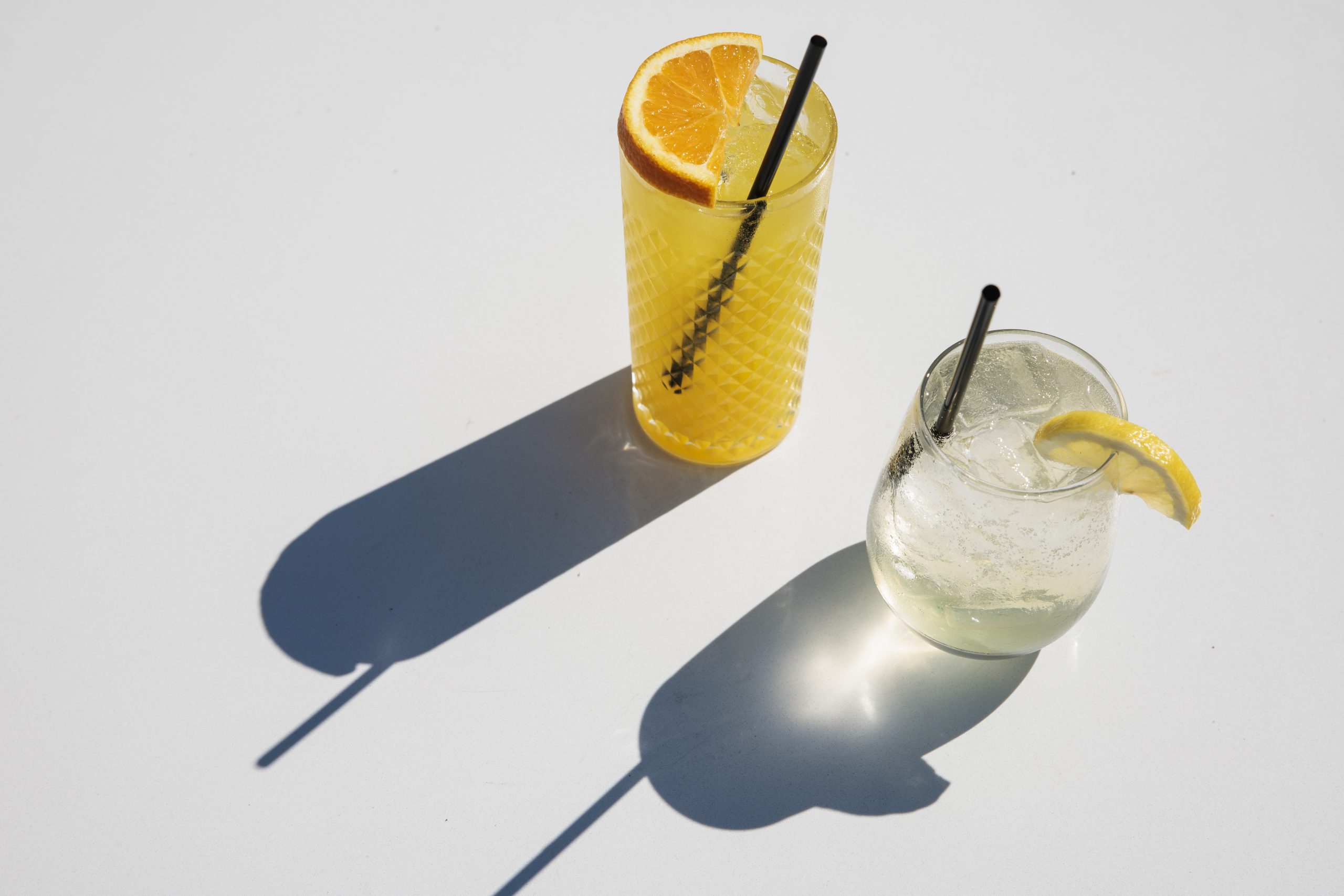
Gully’s is more affordable than its predecessor and the diner-plus menu has a lower success bar to clear. But the food is also a notch better than it has to be, with fresh figs scattered over balsamic and a creamy hunk of burrata with prosciutto, a well-built chicken Caesar wrap, plump shrimp for the feta-dusted Mediterranean salad, and “skinny” crushes made with fresh juice and seltzer (not soda) to wash it down.
The Orange Crush and Super Spritz cocktails at Gully’s in Avalon, N.J.Monica Herndon / Staff Photographer
A bland and creamy “peri peri” chicken entree was one disappointment for a sauce that should have been spicy. But stick with the menu’s less challenging top half and you should be fine, especially with a tray of spiralized “blooming potato” chips and a clothesline of candied bacon that dangles over a tasty plate of grits — not an original idea, but delicious. They’re so good, I was thinking Gully’s mascot should actually be a human-size piece of bacon just as our outdoor table was suddenly attacked by a relentless swarm of dune gnats. The service team stepped up when a cheerful manager appeared to offer guests some bug spray. (“BYO-bug spray next time?” he joked.) Of course, seagulls eat bugs, too, so Gully the mascot may, in fact, be just the hero we’ve been waiting for. Go Birds!
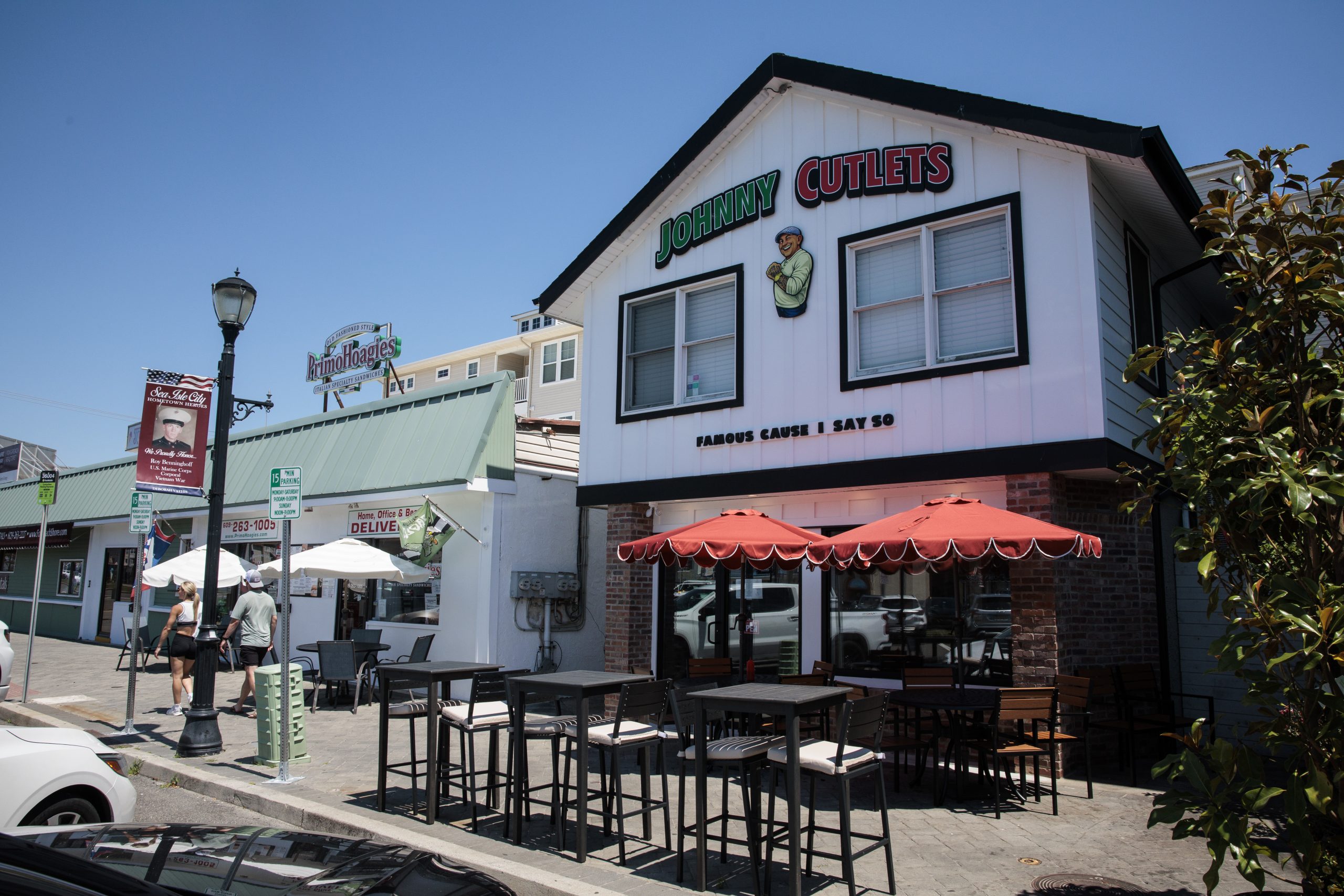
The exterior of Johnny Cutlets in Sea Isle City, N.J.Monica Herndon / Staff Photographer
SEA ISLE CITY
Johnny Cutlets
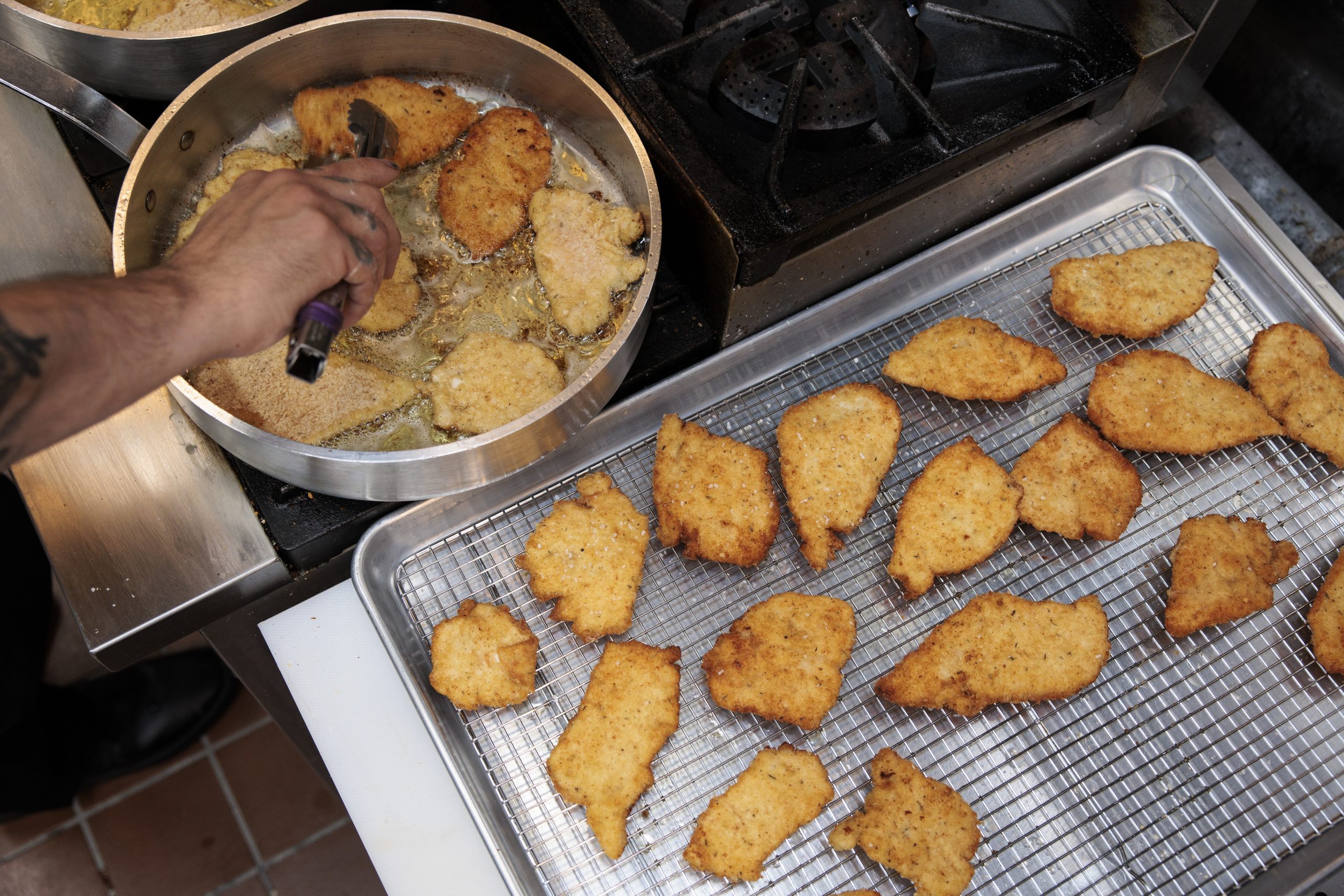
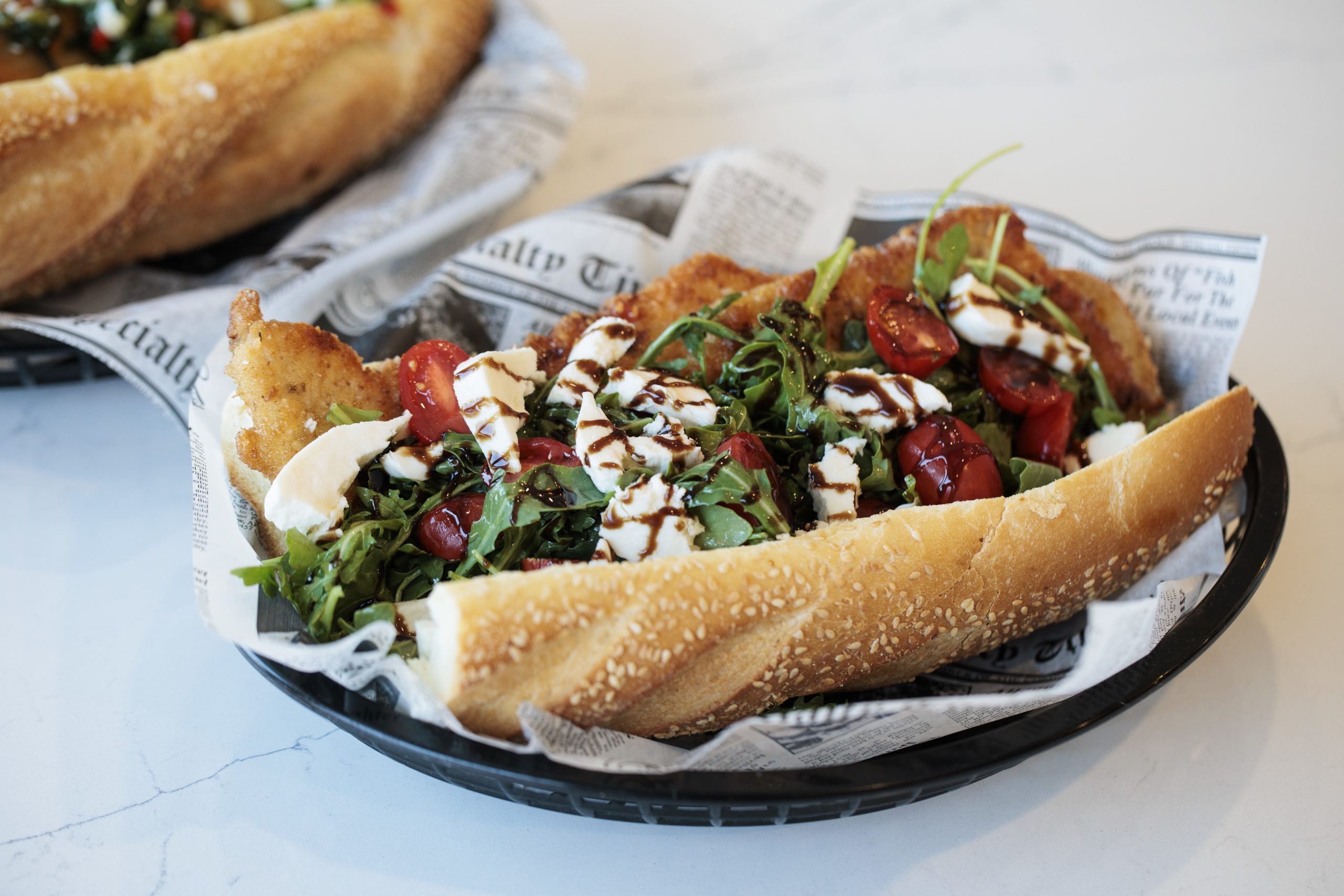
The old Steve’s Grilled Cheese is out. The crispy new swagger of Johnny Cutlets is in. And this smartly revamped Sea Isle City shop is already making a serious bid to join the elite ranks of the Jersey Shore’s sandwich derby. The cutlets are the main event, hand-breaded with two kinds of crumbs, Parmesan and herbes de Provence for a soft herbal note, then fried daily at a lower-than-usual temperature to try to maintain the juicy tenderness of a home-cooked cutlet. I was impressed, especially with its South Philly-style signature served with sharp provolone, broccoli rabe, and a long hot pepper draped over the top of a seeded Aversa’s roll. The Drunken Johnny with vodka sauce and the MJ with fresh mozz and balsamic are also popular cutlet options, but don’t sleep on Johnny’s steaks. They’re more manageably portioned than the overstuffed, overly cheesed steaks currently trending on social media, but I admired the balance of quality ingredients here.
Chef Shawn (no last name given), fries cutlets at Johnny Cutlets in Sea Isle City, NJ.Monica Herndon / Staff PhotographerThe MJ features a chicken cutlet with mozzarella, arugula, cherry tomatoes, hot honey, and balsamic glaze at Johnny Cutlets in Sea Isle City, N.J.Monica Herndon / Staff Photographer
This project is a collaboration between Steve’s former owners, twins Stephen and Fred Freda, and their new partner, “Johnny Cutlets” Markulics, who concluded that fried chicken and cheesesteaks have more “healthy living” appeal than grilled cheese. That’s probably not a scientific conclusion. But if early sales are an indication — selling up to 400 sandwiches a day — the theory wins a popularity contest. It’s just as likely that rebranding with Markulics front and center was also key. An AI-generated portrait of the vividly tattooed body shop owner, whose look Stephen Freda affectionately characterizes as “a friendly, semiscary face,” became the shop’s logo and sign, along with the bold catch phrase, “famous ‘cause I say so.” It’s a bravado this feisty little sandwich shop might actually live up to.
Johnny Cutlets, 27 John F. Kennedy Blvd., Sea Isle City, N.J. 08243, 609-486-6003; johnnycutletssic.com
Dylan Bear, owner of Alex’s Pizza, at 1214 Boardwalk, Ocean City, N.J.Alejandro A. Alvarez / Staff Photographer
OCEAN CITY
Alex’s Pizza
A smash burger with onions and cheese is one of the specialties at the new boardwalk location in Ocean City for Alex’s Pizza from Roxborough.Craig LaBan / Staff
The best part of opening a Jersey Shore branch of a classic Philly pizzeria is that you have a built-in loyal clientele. The bad news is that loyal clientele. They know your pies better than anyone, and if it doesn’t measure up then … well, meet Michele B., a lifelong Roxborough resident seated beside me who grew up eating at Alex’s Pizza, a standby at Pechin and Leverington since the 1960s. She traveled to the Ocean City location specifically to taste a slice of her youth, and while these thin-crusted rounds looked the part, with a signature swirl of red sauce spiraled across the top, there wasn’t nearly enough of it: “It’s too dry!” said Michele bluntly. “Not enough sauce.” To his credit, the manager of this new boardwalk venture was eager for feedback, since he’d never eaten at the Roxborough original himself. An experimental pie with sauerkraut and hot dogs had more pizzazz, albeit a niche audience (me). But Alex’s does one thing especially well: smash burgers. The patties on my double stack were swiftly griddled to an impressively crisp and lacy skirt, then layered with onions and oozy cheese that trapped all of its juices. While Alex’s may indeed one day offer an upgrade to the multitude of boardwalk pizza mediocrity, the local burger competition is considerably more scarce. And this one’s worth the trip.
Alex’s Pizza, 1214 Boardwalk, Ocean City, N.J. 08226; 609-862-0062; alexspizzaocnj.com
Kyma
The Beach Baklava yogurt topped with chunks of the Greek pastry, chocolate sauce, and pistachios is one of the highlights at Kyma, a new Greek yogurt cafe in Ocean City.Craig LaBan / Staff
When it comes to island refreshments, Greece has a historic head start of a few thousand years on the Jersey Shore. So I was excited that the Siganos family behind Ocean City’s classic Greek diner, Yianni’s Cafe, opened a frozen treat destination nearby on Asbury Avenue with something different from the norm. Kyma serves Greek-style frozen yogurt that carries a refreshing tartness absent in most standard soft-serve, but its elaborately composed bowls are what caught my eye, especially the “Beach Baklava,” a swirling tower of frozen yogurt drizzled with chocolate, pistachios, berries, and flaky hunks of baklava pastry. There’s another bowl scattered with crunchy kataifi, almonds, and honey and another trendy Dubai-themed bowl drenched in green pistachio sauce and chocolate. There are some more familiar offerings — smoothies, açaí bowls — for maximum audience appeal. But the other prime bonus for me is the bold punch of one of the world’s original iced coffees: frappé, a Greek specialty invented in 1957 that whips instant Nescafé with sugar, water, and milk into a stiff peak that gets shaken with ice into a powerfully caffeinated foam.
Kyma, 838 B Asbury Ave., Ocean City, N.J. 08226, 609-545-2290; kymaoc.com
Island Grill
Crab imperial is one of the classic standards at Island Grill in Ocean City.Craig LaBan / Staff
The last time I visited Island Grill in 2021, the chowder and coconut shrimp were being delivered by Peanut the robot, on lease by the restaurant’s owners to cope with a severe pandemic labor shortage. Peanut is gone from Island Grill now, even if food service robots are now everywhere else. But this standby on the island’s northern end is once again humming full steam ahead for walk-in crowds that pack the nautical-themed space, now in its 30th year cooking fresh seafood from its retail market. The vast menu offers classics like fried or broiled fish platters from its extensive fresh catch board, fish tacos, and a broiled crab imperial glazed in zesty sauce that showcased the bounty of sweet meat. What’s also laudable about Island Grill is an extensive selection of gluten-free offerings that are carefully made to avoid cross contamination, from the pecan-crusted salmon to a gf key lime pie and twin crab cakes that were so good my celiac daughter questioned whether she’d received the wrong order. She had not. The kitchen also offers traditional crab cakes, but the gluten-free variety is convincingly bound with rice.
Island Grill, 100 Atlantic Ave., Ocean City, N.J. 08226, 609-391-9616; ocnjislandgrill.com
If you’re a regular visitor to the Jersey Shore, catching up with your longtime favorite foods, chefs, and restaurants can often tell a wider story about what’s been happening in your favorite beach towns. The economic pressure of rising real estate prices has made the arrival of a sweet little BYOB like Joy & Salt on Long Beach Island a test case for the future of the small operator. The saga of ongoing attempts to revitalize Atlantic City’s Tennessee Avenue development? It just got a fresh boost from the comeback of a talented local chef. A new gem for stellar soul food, a growing audience for deep-crusted pizza, the rise of fancy iced coffee (with everything but the taste of coffee), and sage advice on how to choose the right pasta shape all added a tasty helping of color to this week’s fresh batch of restaurant reports from LBI to Margate.
The burrata with fresh basil and plain cheese pie at Queen City Crust in Beach Haven, N.J., on Thursday, June 18, 2026.Tyger Williams / Staff Photographer
I also delve into the Ventnorian controversy over a classic sub shop that’s been remade into an artisan sourdough bakery and touched a nerve with locals who fear their community is becoming too bourgeois. Then again, when something is as good as Florida Cuts is, perhaps it’s not simply change for the sake of trends but actual progress.
Next week: new options from Cape May to Ocean City.
The outside of Queen City Crust in Beach Haven, N.J., on Thursday, June 18, 2026.Tyger Williams / Staff Photographer
LONG BEACH ISLAND
Joy & Salt Cafe
With a temporary sign, and an understated location at an intersection near the ocean where drivers slingshot on and off the causeway to Long Beach Island, you could easily miss Joy & Salt Cafe. But it’s worth a stop at this low-key newcomer to Ship Bottom, a collaboration between two veteran chefs hoping to claim one of the few remaining corners of the island and make what partner Jordan Miller says is “a last-ditch effort for the charm of an old-school BYOB.”
Miller and his business partner and co-chef, Jimi Savianeso, make up for the understated location with genuine hospitality and hands-on scratch cooking. The duo met cooking on the line years ago at local favorite Black-Eyed Susans. With years of fine dining experience behind them, they are opting for a more casual approach to this diner-space and channeling good local ingredients into food they simply like to eat.
James Savianeso, chef and co-owner of Joy & Salt Cafe, working in the kitchen in Ship Bottom, N.J., on Thursday, June 18, 2026.Tyger Williams / Staff PhotographerThe grilled ahi tuna sandwich at Joy & Salt Cafe in Ship Bottom, N.J., on June 18, 2026.Tyger Williams / Staff Photographer
That could mean a flavorful chowder made from just-dug whole clams, a slice of locally fished grilled tuna on brioche glossed in house-made Japanese barbecue sauce, or a bountiful chilled shrimp cocktail tossed in a saucy Mexican-style marinade (the secret? fresh tomato juice and orange soda). The duo routinely cook fresh-off-the-boat seafood specials for dinner sourced from the nearby docks, but the menu’s default is a homey Italian touch that comes natural to Savianeso, whose North Jersey upbringing imbues his red sauce and sausage and peppers with a nonna-esque magic. That is especially evident at lunch, where Savianeso’s chicken cutlet parm drenched in super-creamy vodka sauce may well become LBI’s sandwich of the summer.
Joy & Salt Cafe, 816 Long Beach Blvd., Ship Bottom, N.J. 08008; 609-342-0794; joysaltkitchen.com
Ellis’ Chicken & Crab Cakes
Takeout can be tricky when determined diners are waiting in lines up to two hours for a seat at one of the Tide Table Group’s roster of popular restaurants on Long Beach Island (Parker’s Garage, Bird & Betty’s, Black Whale, Ship Bottom Shellfish) and in Manahawkin (Mud City Crab House, the Old Causeway Steak & Oyster House). They’ve addressed that conundrum with the creation of Ellis’ Chicken & Crab Cakes, a convenient destination for some of their greatest hits, collected in the fast-casual confines of a crisply rehabbed former antiques shop in Beach Haven that doubles as a boardinghouse for many of the company’s summer workers.
The name offers a good clue as to the specialties: the fried chicken is the same crackle-crusted, buttermilk fried bird from Parker’s Garage. The crab cakes comes in two styles, the somewhat bready OG cakes from Mud City or the baked variation from Parker’s which I far preferred, not only because they’re gluten-free, with tapioca starch for binding, but because they’re made from sweet lump crab bound with a béarnaise sauce flavored with tarragon and Old Bay. The super-plump peel-and-eat shrimp offer a worthy, non-fried option. But this kitchen’s best assets are all about the crisp. Don’t leave without a side of deep-fried green tomato tots covered in creamy drizzles of zesty pimento cheese.
Ellis’ Chicken & Crab Cakes, 208 N. Bay Ave., Beach Haven, N.J. 08008; 609-342-1100; ellislbi.com
Queen City Crust
Jersey Shore pizza has been trending toward thicker crusts in recent years, rising from the cardboard-thin rounds that have long been the boardwalk prototype to heartier, pan-baked pies with flavorful slow-fermented doughs and borders that snap with crispy cheese edges. Bakeria 1010 and Squares & Fare are two outstanding examples I’ve enjoyed in Ocean City and Somers Point, respectively. Long Beach Island has also gotten into the Detroit-style pie action with Queen City Crust, a former pop-up sensation that is now in its third year as a standalone storefront in Beach Haven.
Hot honey pepperoni pie Queen City Crust in Beach Haven, N.J., on Thursday, June 18, 2026.Tyger Williams / Staff Photographer
Owner Troy Sambalino, who spends his offseason running the service pass at Jean-Georges in Manhattan, says the Detroit style, which involves a slower, lower-temp prebake followed by a hot flash to finish pies to order, is ideal for beach locations with the technical limitations of a standard oven. But he still manages to crank out 200 pies on a busy Friday night, good enough to earn him the No. 1 spot in a 2025 ranking of 55 Shore pizzerias by NJ.com.
Sambalino has a patient approach to his dough, which, after a two-day cold ferment, has both an impressively airy interior and a bottom that forms a delicate crisp against the olive oil-lined pan. Mozzarella and tangy cheddar are his cheese combo of choice, with the cheddar tucked near the edges forming a toasty crisp. One 10-by-13-inch pan can easily feed two to four people, but I appreciate that Queen City also sells its pies by the slice so you can taste a variety of toppings. From the cup-and-char pepperoni drizzled with hot honey to sausage with crunchy banana peppers, basil-topped puddles of milky burrata laced with bright tomato sauce, or a fusion pie of breaded chicken bits streaked with spicy Asian barbecue sauce, these pies offer hearty satisfaction when your teeth sink into their crusts.
Queen City Crust, 13504 Long Beach Blvd., Beach Haven, N.J. 08008; 609-661-7769; queencitycrust.com
Guapo’s Coffee House
As I steadily caffeinated during my restaurant research missions up-and-down the Jersey Shore, my encounters with confectionary-sounding coffee drinks that included “dulce de leche, “dot cake,” and “banana bread” in the titles made it clear that running a cafe in 2026 is as much about thinking like a pastry chef as a barista.
The Salty Dog iced coffee at Guapo’s Coffee House in Beach Haven blends salted caramel-sweetend espresso with whipped cream turned blue with spirulina. It’s become a viral hit.Craig LaBan / Staff
In general, I’m not a dessert coffee fan. But the reason I returned multiple times to Guapo’s in Long Beach Island is because their specialty drinks still taste like they also actually include coffee. Even owner Sammy Jo Alvarez’s most viral and colorful drink, the Salty Dog (named for her pup Guapo), still delivers a toasty undertow of the house blend of Ethiopian and Colombian beans, roasted to a medium hue by Yellow Dog Roasters in nearby Manahawkin. The secret to making creatively flavored drinks that still have coffee integrity, says Alvarez, a longtime local bartender before launching her roof deck-topped cafe in Beach Haven four years ago, is balance and focusing on natural ingredients. All the add-in ingredients here are made in-house, from the sea salted caramel syrup to the top layer of fresh whipped cream (aka “cold foam”) that she turns sky blue with organic spirulina. “Basically, it looks like a day at the beach inside a cup — and people love it.”
Guapo’s Coffee House, 106 N. Bay Ave., Beach Haven, N.J. 08008, 609-661-3504; guaposcoffee.com
The gochujang carbonara and Oaxacan meatballs at the Iron Room in Atlantic City, N.J. The Iron Room is hidden behind a door at Bar 32.Monica Herndon / Staff Photographer
ATLANTIC CITY
Nana’s Good Eats
If there’s a 20 minute-plus wait for your food at Nana’s Good Eats, it’s for a good reason: nothing hits the fryer before you order from this cheerful soul food hub, located on the pedestrian pavilion of Atlantic City’s Tanger Outlet mall. The wait is absolutely worth it, because Nana’s serves up some of the most delicious fried whiting I’ve had in recent memory, a huge portion of plump and lemon-scented fresh fillets sealed inside a delicate cornmeal crust, just as owner Samantha Prescott’s grandpa Dennis McDowell, a professional chef, taught her as a little girl. (“Most parents lead with how to tie your shoe, but my grandpa started by teaching me how to stir a pot of grits so it doesn’t stick to the bottom.”) Prescott’s cooking chops are also evident in her succulent fried jumbo shrimp, as well as every side I sampled. The mac and cheese retained the almost fluffy texture of perfectly cooked cavatappi while a balanced five-cheese sauce remained creamy, not broken or greasy. The tender braised collards were infused with the whiff of smoked turkey wings and a perky finishing tang.
The OG banana pudding at Nana’s Good Eats in Atlantic City, N.J.Monica Herndon / Staff PhotographerOwners Rahman and Samantha Prescott at Nana’s Good Eats in Atlantic City, N.J.Monica Herndon / Staff Photographer
Prescott’s talent as an entrepreneur, meanwhile, answers all that savory goodness with the sweet indulgence of her first endeavor, Nana’s Good Puddin’. Prescott brought the customization concept of Cold Stone ice cream to the world of pudding in a popular dessert business she opened in 2020 in the Hamilton Mall, which she has since closed and merged into the Atlantic City Good Eats location. The build-your-own options here are vast, with 30 different base puddings (from classic flavors to white chocolate, pistachio, or Oreo cream), crunchy cookie add-ins and various different crumbles. I chose the OG banana pudding and was impressed by its banana-flavored intensity, but also by the meticulous manner in which it was constructed to order, with multiple layers of creamy pudding, crunch and vanilla wafer cookies being patiently added until, at last, it was finally handed over and I dove in spoon first.
Nana’s Good Eats, 122 N. Michigan Ave., Atlantic City, N.J. 08401; on Facebook
The Iron Room
Do you believe in do-overs? The reboot of chef Kevin Cronin’s Iron Room, Atlantic City’s favorite hidden gastropub — now in its third incarnation and second location — might be the spark that finally gives the Tennessee Avenue development some momentum. First, you have to find it. True to its speakeasy roots (the original Iron Room was located behind a liquor store) this restaurant is tucked into an enclosed back alley patio accessed through the rear door of another establishment, Bar 32 Chocolate & Cocktails. A tall green wall on one side of the 50-seat al fresco space faces an awning-covered bar where some of the best cocktails I sipped this summer — a smooth but potent Manhattan; the mezcal-washed Storm Queen — are served in antique crystal coupes inherited from Cronin’s grandmother while a retro acoustic soundtrack sets a mellow mood.
The Oaxacan meatballs at the Iron Room on Thursday, June 11, 2026 in Atlantic City, NJ. The Iron Room is hidden behind a door at Bar 32.Monica Herndon / Staff Photographer
The small plates emerging from the shipping container kitchen are pure fusion fun, with bold flavors that resurrect some established Iron Room hits, including a thick-cut hunk of candied Nueski’s bacon, truffled udon mac and cheese, and a tamari-charred hanger steak fanned over brussels sprouts. Cronin’s new creations are equally bold. The spicy Oaxacan chorizo meatballs glazed in red salsa and shavings of Bar 32 chocolate were a favorite, along with the barbecue sauced boneless Korean-fried chicken and a rich pasta carbonara blushing with Korean gochujang spice. I would have loved the shrimp toast had the top layer of crustacean paste not been turned an unappetizing gray by the addition of black garlic. Next time, I’d consider preordering one of the menu’s large-format specials: a spatchcocked whole barbecue chicken with sides; a “big ass whole snapper” with tostones, or the Ron Swanson special (a rib eye, deviled eggs, and a flight of Lagavulin) that was also an old Iron Room “iykyk” draw. Hopefully, this time it will take.
The Iron Room, 121 S. Tennessee Ave., Atlantic City (enter through Bar32 Chocolate, and head to back alley through back door); instagram.com/ironroom_ac
Bar 32 Chocolate & Cocktails
There’s no dessert served at the Iron Room by design. The separate and independent bar that fronts it has that course covered. Nicole Callazzo’s revamp of the project formerly known as Made Atlantic City Chocolate Bar has kept the original concept’s ambitious bean-to-bar chocolate production in place as the anchor for the chocolate-themed sweets menu. While there are more sophisticated chocolatiers in the region, the quality of Callazzo’s small batch chocolates made from ethically sourced cacao, which can take up to five days to make, is satisfying in a straightforward way. You can sample a little bit of several specialties on a tiered platter, which brings multiple shades of chocolate bars, double fudge brownies, chocolate mousse, and various bonbons. Try it while sipping a martini infused with the bar’s own 60% cocoa chocolate. The baked-to-order brown butter cookie skillet is also a popular choice here, if you have an extra 15 minutes to wait. But I’d return especially for one of the Bar 32 whiskey flights, which pair three different pours of Michter’s (or Whistle Pig) whiskey with different chocolates for $40. Considering the quality of the spirits, it’s a fair deal.
Bar 32 Chocolate & Cocktails, 121 S. Tennessee Ave., Atlantic City, N.J. 08401, 609-248-6960; bar32chocolate.com
“A little bit of everything” at Bar 32 on Thursday, June 11, 2026 in Atlantic City, NJ. Bar 32 offers bean-to-bar chocolate, handmade desserts, and craft cocktails.Monica Herndon / Staff Photographer
Moments at Scannicchio’s
Some places are all about the food. Others revel in quirky ambiance. You can get a bit of both at this Atlantic City sibling to Scannicchio’s, one of my favorite old-school Italian haunts in South Philly. The AC experience offers the split personality of two adjoined spaces: the charming intimacy of a dark corner barroom lit with Christmas lights, and a bright sports bar lounge next door where a DJ spins retro hits for a handful of dancers while spillover dinner crowds sup at high-tops in the glow of large TVs.
The corner dining room of Moments at Scanniccho’s in Atlantic City is darker and more intimate than the neighboring lounge.Craig LaBan / Staff
A tender and massive double-cut pork chop Siciliana buried beneath a zesty gravy of cherry peppers, onions, olives, and mushrooms was the hands-down highlight of our meal. The big menu also showcases several familiar favorites from the South Philly original (clams casino, a stuffed artichoke, the sausage and figs app), although it was not cooked with the same consistency and finesse. Even so, we enjoyed the experience. And I’ll especially treasure the moment our larger-than-life server (who had a bear hug for every one of the restaurant’s many regulars) offered a memorable logic for his general preference of pasta shape with entrees: “Why should I waste calories twirling spaghetti when I can just get straight to it with penne? Stab and eat! Stab and eat!” Such wisdom alone is worth the visit.
Moments at Scannicchio’s, 2647 Fairmount Ave., Atlantic City, N.J. 08401, 609-344-5338; momentsatscannicchios.com
The halibut entree at Rustico in Ventnor City, N.J., on Wednesday, June 10, 2026.Tyger Williams / Staff Photographer
VENTNOR
Rustico
Few restaurant couples have been able to create evocative dining experiences in small BYOB spaces through DIY design as deftly as Tanya and Petar Petrov. A veritable lemon grove on the ceiling of their debut Italian hit last year, Martina’s, conjured a glimpse of the Amalfi Coast on Atlantic Avenue. This year, they’ve turned to a closer source of marine inspiration — the bay beside their Ventnor home — for the makeover of Petar’s former Cafe Velo into Rustico, a naturalistic dinner cove that wraps diners in plastered wall montages of foraged driftwood, sea moss, and rocks. The menu is still decidedly Italian. While some Ventnorians have complained to me about menu overlap between the two restaurants, the fact that waiting lists can exceed 300 names for those hoping to get into 48-seat Martina’s means there is a legitimate demand for 80 more seats at Rustico (plus 28 more outside), where devotees can order the tried-and-true arancini, linguine with vongole, and chicken Parm.
The octopus dish at Rustico in Ventnor City, N.J., on Wednesday, June 10, 2026.Tyger Williams / Staff PhotographerThe inside of Rustico in Ventnor City, N.J., on Wednesday, June 10, 2026.Tyger Williams / Staff Photographer
The chicken Parm was the least compelling thing we ate at Rustico. An unconventional starter of grilled octopus curled over a platform of sweet potato turned out to be delicious, the potato’s soft sweetness contrasting the texture of the meat while balancing the savory tomato sauce. That dish is a legacy of Cafe Velo’s early days, when the tiny kitchen would cross-utilize ingredients between the popular breakfast and dinner menus. Rustico, which expanded both its dining rooms and kitchen, has capacity now to undertake ambitious specials like broiled lobster and linguine feasts for two (very limited nightly). A soulful short rib and shiitake ragù was a hearty winner over fresh pappardelle made by Haddon Township’s Severino, whose owner is the Petrovs’ neighbor.
Fresh seafood also remains a strength, with entrees like blackened ahi tuna with red bliss potato hash and hollandaise. A moist and meaty halibut set over two-toned purees of cauliflower and carrot was also fantastic, a special-turned-standby from chef de cuisine Lorenzo Hernandez. Of course, I ordered at the very moment this kitchen ran out of halibut. Luckily, Petar had a spare portion in the fridge at nearby Martina’s, and he retrieved it just in time for this busy kitchen not to miss a beat: “That’s the beauty of having two restaurants so close,” says Petar. “Stuff happens!”
Rustico, 6525 Ventnor Ave., Ventnor City, N.J. 08406, 609-727-0499;rusticoventnor.com
The inside of Florida Cuts in Ventnor City, N.J., on Wednesday, June 10, 2026.Tyger Williams / Staff Photographer
Florida Cuts
Cookie Till of Steve & Cookie’s bought the half-century-old Florida Cold Cuts & Liquors deli in 2022 and began to reshape it to her vision. What was a gradual makeover the first few years, most notably upgrading the sandwiches and bottle selection, became a wholesale change this spring when Till removed “cold” from the name and replaced the classic sub shop format with an artisan sourdough bakery turning out a lineup of grab-and-go sandwiches built on two kinds of focaccia and sesame-speckled semolina baguettes. The longtime tuna salad and Italian hoagie crowd is not pleased: “Cookie really took a good thing … and turned it into something nobody needed,” a reader wrote me in a direct message on social media.
The ham and butter baguette at Florida Cuts in Ventnor City, N.J., on Wednesday, June 10, 2026.Tyger Williams / Staff Photographer
I loved the old corner shop’s house-baked tavern ham sandwiches as much as anyone, but I disagree. What makes a smart restaurateur like Till so invaluable is her willingness and wherewithal to take risks to do things differently. Till has a track record of creating top-notch progressive concepts people simply didn’t realize they needed until she made it happen, from a craft coffee shop in Ventnor No. 7311 to an interactive organic farm with a philanthropic mission at Reed’s Farm. There are plenty of places to get a classic sub on Absecon Island, but there is nothing like the new Florida Cuts, where lead baker Santina Renzi (a longtime key contributor at Her Place Supper Club), consultant Jon Taus, and sourdough specialist Victoria McHugh are working with Till’s partner Kim Richmond to create stellar loaves made from flour milled from local grains that result in bread with integrity and flavor. They’re used for original sandwiches that are largely outstanding, from the minimalist focaccia laced with mortadella, ricotta, and pistachios (all crackly crust and lush stuffing richness), to the freshly house-roasted turkey layered with Steve & Cookie’s signature “ugly tomato salad,” Gorgonzola, and crispy shallots. The tuna salad fragrant with lemon zest and crunchy peperoncini rings is a sleeper hit, while the ham and butter on a sesame semolina loaf can compete with Philly’s best.
Owner Cookie Till at Florida Cuts in Ventnor City, N.J., on Wednesday, June 10, 2026.Tyger Williams / Staff PhotographerThe soft-serve sundae with Steve& Cookie’s blueberry pie at Florida Cuts in Ventnor City, N.J., on Wednesday, June 10, 2026.Tyger Williams / Staff Photographer
My one disappointment was the cutlet sandwich, which didn’t have nearly enough Caesar salad inside. But there were so many consolations: a fridge case stuffed with local farmstead cheeses; focaccia flatbread topped with butter-poached clams; warm rounds of fresh-baked sesame tahini cookies; shelves stocked with quality spirits and affordable natural wines. There’s also soft-serve now, offered as a sundae layered with Cookie’s famous blueberry pie. Now I definitely need that, even if I didn’t know it before I walked in the door.
Florida Cuts, 7301 Ventnor Ave., Ventnor City, N.J. 08406; floridacuts.com
MARGATE
Tideline
The scene at Tideline on the bay behind Margate City, where full restaurant service is offered on deck to 30 moored boats and 12 Jet Skis at a time, could make anyone have yacht envy. But this splashy yearling from the family behind Tomatoes — an unabashed gesture to the city’s ever more ritzy denizens — has room on its multifloor 240-seat bar complex for everyone else to linger, nibble, imbibe, and observe. One of the area’s most spectacular bay perches for sunset views is an undeniable bonus. Given the swanky setting, the food from chef Carlo Marsini’s kitchen is a notch better than it has to be, from the generously stuffed truffled cheesesteaks and chicken Italiano cutlet sandwiches to the shot glasses stuffed with fried soft-shell crab halves dunked into an avocado green crema sparked with poblanos.
The lobster Cobb salad at Tideline in Margate City, N.J., on Wednesday, June 10, 2026.Tyger Williams / Staff Photographer
I’d definitely return for the generous lobster Cobb salad and a Dockside cocktail of watermelon juice spiked with Tito’s. But don’t get too ambitious. The items we ordered from the large plate section, chicken kebabs and a $32 coffee-rubbed pork chop, were incinerated by the grill chef. The drink menu has a danger zone, too, with a cocktail called Liquid Asset. It’s made with trendy Clase Azul Gold tequila and a chile pepper but what’s spicy is the price tag of $1.1 million. That’s because this drink comes with a 39-foot speed boat. That may be the stuff yacht club dreams are made of for some, even if there’ve been no takers yet. But unsurprisingly, this land-loving mezcal fan wasn’t even tempted.
Tideline, 9317 Amherst Ave., Margate City, N.J. 08402; 609-350-6717; tidelinemargate.com
John Dunlap, 29, an immigrant from Northern Ireland who operates a printing shop at Second and High Streets, a short stroll from the Pennsylvania State House, where the rebels conspire, has watched with keen attention the epochal events of the preceding days.
A faded copy of a draft of the Declaration of Independence handwritten by Thomas Jefferson.Tom Gralish / Staff Photographer
The exultant patriots and curiosity seekers who braved suffocating summer heat to stand watch outside the State House on July 1, when the 56 delegates of the Second Continental Congress finally commence their locked-door debate on independence. The rapture that seems to ring out from every Philly tavern and tippling joint, coffee house, and street corner on July 2, when word that Congress voted to sever ties with King George III spreads through America’s largest and wealthiest city, like a bolt from one of Dr. Franklin’s electricity experiments. The joy. Hope.
And now, as an unusually mild morning gives way to rain-laden clouds, Philadelphia holds its breath upon the brink of a mighty happening.
Cloistered inside their chambers, the delegates fiercely debate and painstakingly parse Thomas Jefferson’s draft of America’s founding creed. Its passage will formalize independence.
The ink-stained Irishman with the whipcord build of a jockey prepares the shop for the Herculean task he knows is coming. The delegates will desire to thunder out the news of American independence before the iron gall ink even dries on the Dutch paper. John Hancock, 40, charismatic president of the Congress, will want as many broadsides as Dunlap can muster by dawn. Printing broadsides by hand in sweltering, trembling candlelight — meticulously setting the type, carefully rolling the ink, and pulling the heavy presses — is messy, demanding work, the hardened printer knows. He’ll plan to toil until morning’s light.
Outside, citizens collect in High Street. Soon, the print shop door pushes open. A man, his face obscured by the sun, darkens the doorway. He holds something close. A rag paper manuscript written in fine hand, still wet from fresh changes, and borne by delicate hand to the expectant printer. Words upon which a nation now rests. A declaration.
At the Second Street boarding house of Mrs. Sarah Yard, John Adams, 40, awakes before dawn. The unyielding lawyer and farmer from Massachusetts has become accustomed to the city’s morning clarion cry of crowing roosters, ringing bells, clanking ships, and cursing sailors. But not its heat.
Behold this atlas of independence at his breaking point. Exhausted. Homesick. Hot. Beyond cantankerous that any rational being could yet flinch at the surety and necessity of American independence. For weeks, Adams answers angry letters from citizens demanding to know why Congress stalls.
“The only question is concerning the proper time for making a specific declaration in words,” Adams writes, barely concealing his own impatience. “But remember you can’t make thirteen clocks strike precisely alike at the same second.”
John Adams and his cousin, Samuel, shared a boarding house near the City Tavern in July 1776. This reconstruction of the original tavern was built in 1975.Tom Gralish / Staff Photographer
For nearly two years, John Adams has fought for liberty like a bruising prizefighter, while his less refined older cousin, Samuel, 53, conducts a campaign of persuasion in the shadows. No one has done more than John Adams for independence. On this morning, John Adams dresses in the twilight, wishing that he had been blessed with the graces and gifts of ancient orators.
“This morning is assigned the greatest debate of all,” Adams writes before leaving for the State House. “A declaration, that these colonies are free and independent states, has been reported by a committee some weeks ago for that purpose, and this day or tomorrow is to determine its fate. May heaven prosper this newborn republic.”
At 9 a.m. on July 1, 1776, Andrew McNair, old and gray bellman of the State House, pulls shut the chamber’s heavy doors. Hancock gavels history to order.
In the silence, rises Pennsylvania’s reluctant rebel, John Dickinson. His writings once rallied American farmers against British taxes. Now, ghostly and gaunt from illness, he remains a dogged dissenter against independence. Summoning his strength, he abides his conscience, arguing America is not yet ready.
To proceed with a declaration during an uncertain struggle would be “to brave the storm in a skiff made of paper,” he tells his colleagues, before sitting.
Outside, the heat breaks. Rain beats against the chamber’s tall windows. Thunder booms. Lightning flashes.
Adams stands. He speaks over the stormy din. His precise words are lost to posterity. He speaks for two hours. John Adams moves men.
Adams speaks “with a power of thought and expression that moves us from our seats,” Jefferson, remaining characteristically mum at his table, will later recall.
Recreating the daily hub of the Revolutionary City in 1776. You can hear the cannons from the bell tower of the Pennsylvania State House at Sixth and Chestnut Streets, where the rebels conspire. Now, it’s Independence Hall, photographed April 14, 2026.Tom Gralish / Staff Photographer
A preliminary vote is taken by candlelight. Despite popular opinion, four colonies — including four members of Pennsylvania’s critical seven-man delegation — vote no.
Late into the night, at the City Tavern, the delegates drink upon tenterhooks.
July 2, 1776
The second day of debate begins with a prosperous portent. Caesar Rodney, of Delaware, mud-splattered boots and spurs, arms akimbo, bursts in before the doors to Congress close. The gravely ill delegate rode 80 miles through the tempest to cast his vote for independence.
Replica desks in the Assembly Room in Independence Hall, known as the Pennsylvania State House in 1776. This is the exact space where the Second Continental Congress met and the Declaration of Independence was adopted.Tom Gralish / Staff Photographer
Better still are the two conspicuously empty chairs at the Pennsylvania table. Unable to vote for independence, but unwilling to thwart unanimity, Dickinson and fellow delegate, Robert Morris, voluntarily abstain. Despite his feelings, Dickinson will soon join the rebel militia — to fight for his country.
The statue of Robert Morris in Independence National Historical Park on May 31, 2023. Alejandro A. Alvarez
Again, the skies open up, raindrops drumming upon the glass.
With New York abstaining — and Pennsylvania swinging toward independence — the vote goes quick.
It is done.
Independence.
July 3, 1776
The Congress continues without a break.
Days earlier, before handing in his draft of the Declaration of Independence, Thomas Jefferson turned to Benjamin Franklin for one last look.
A letter from Thomas Jefferson to “Doct. Franklyn” (Benjamin Franklin) in June 1776 asking for suggestions on the Declaration of Independence.Tom Gralish / Staff Photographer
“Will Doctr. Franklyn be so good as to peruse it and suggest such alterations as his more enlarged view of the subject will dictate?” Jefferson inquires, in a note delivered to the silver-haired statesman’s High Street home.
It’s Franklin, sly satirist, homespun philosopher — grand auteur of America’s self-made aura — who possibly suggests, the inspiring “self-evident” phrasing, replacing Jefferson’s initial “sacred and undeniable truths.”
And it is Franklin, 70, spectacled lion of liberty, sage of Philadelphia, tamer of lightning, dean of American charm and wit, wooer of women, broad of bow and frame, portly of paunch and plain of coat, a winsome spark dancing across his gray-blue eyes, who comforts the young writer as delegates slash away at his declaration. The winking newspaperman unspools a tale about an enterprising hatmaker who wishes to advertise his wares. By the time the hatter’s friends finish their edits, all that remains is the man’s name, and a photo of a hat, Franklin jokes.
The delegates trim Jefferson’s harsher language about King George. They excise completely his evisceration of the slave trade. Jefferson does not publicly protest.
July 4, 1776
At 11 a.m., debate is closed.
The moment will eventually be memorialized in painting. The towering trio — Adams, Jefferson, Franklin — presenting America’s credo for approval. Imagine them, these Founding Fathers. These imperfect men for the ages who hazard everything to chance a republic, and change a world.
There is little ceremony. Horseflies from a nearby stable buzz. One after another, a chorus of “Ayes.”
Delegates break the tension with gallows humor about whose necks will snap the swiftest.
History does not record the face of the man who darkens the doorway of John Dunlap’s print shop. Perhaps it was Adams, unable to yield his obsession even in its ultimate realization. Perhaps, it was Franklin, delivering the declaration with a deliciously wry aphorism. Or Jefferson, solemn and silent with the weight of his words.
Dunlap works all night to the thumping groan of the presses. By morning, roughly 200 broadsides start to spread America’s newly minted founding document far beyond Philadelphia. Breathless riders herald the news in town squares.
In the trenches in New York, Washington orders the declaration read aloud. Bells ring. Troops parade. Bonfires alight. Candles burn. Prayers are whispered, for those sons and fathers who will die in the bloody conflict ahead.
By July 6, the Pennsylvania Evening Post, a paper published near Dunlap’s shop, prints the declaration word for word. Its previous issue had been put to press too early to capture the momentous events.
Instead, the July 4, 1776 edition included usual fare.
“To be sold,” read one back-page ad. “A NEGRO BOY, about four or five years of age.”
Crowds pack the State House yard, where the rebels had long conspired. A military officer reads the manifesto to the hushed masses.
Words that birth the American experiment on an ideal — and the sin of slavery. Words that will endure Civil War and oppression. Words that beckon centuries of American promise and possibility, triumph and failure. Words that inspire new revolutions, new freedoms, new fights. Words that transform. Words that twist. Words that promise a pursuit of happiness — but withhold so much from so many. Words that stand tested still.
Words written in Philadelphia.
An original broadside copy of the Declaration of Independence printed by John Dunlap on display in the “Great Essentials” exhibit in the West Wing of Independence Hall on July 29, 2025.Tom Gralish / Staff Photographer
America stands on the brink. The ultimate question of independence hangs over Philadelphia.
And Thomas Jefferson has a declaration to draft.
His heart is in Virginia. His “country,” as he calls it. But here he is at Seventh and High Streets, 33 years old, living in two sweltering rooms, with his chance to make his mark on history.
Unlike his fellow delegates, lodged in rooms along Philadelphia’s booming riverfront, Jefferson takes quarters along the city’s rural western edge, two blocks from the Pennsylvania State House, where the rebels conspire. The orchards and pastures bordering the downtown of British America’s largest and wealthiest city offer an escape from Philadelphia’s stifling summer heat and foul smells. Its stinking creeks, rotting trash, and unchoked illness. The verdant outpost, elsewise occupied by a bricklayer and his family, provides “the Squire,” as his friends back home call him, some small semblance of his mountaintop mansion, Monticello.
Thomas Jefferson’s Philadelphia in 1776.Steve Madden
He is living out of leather-bound trunks. Fresh air and sunlight stream through a window overlooking High Street — Philadelphia’s main thoroughfare, busy even on the outskirts. Hinterland farmers’ wagons clatter over cobbles, headed for the market. The sweet scent of fresh loaves drifts from a shopfront bakery. Jefferson’s thoroughbred — Caractacus, perhaps, his favored bay stallion, whose regal appellation derives from a first-century British chieftain — nickers in a nearby stable.
Robert “Bob” Hemmings, Jefferson’s 14-year-old enslaved valet — and half brother of Jefferson’s future paramour, Sally — attends his every need in Philadelphia, sleeping in a garret off the writing parlor.
The Declaration House, 7th and Market Streets, in 1856.Free Library of Philadelphia
The rag paper resting on Jefferson’s mahogany travel desk — a small, portable lap device of his own design that the inveterate tinkerer had commissioned from a Chestnut Street cabinetmaker upon his arrival in Philadelphia a month earlier — remains blank. His quill is still. In the shadows, a grandfather clock ticks a stately rhythm.
Tick … tock … tick … tock.
The master of Monticello is working on a deadline.
Just weeks earlier, more than four thousand Philly patriots braved driving rains to gather in the brick-walled yard of the State House. Celebrating the Second Continental Congress’ decree to form new governments apart from King George III — the masterstroke of John Adams, 40 — the drenched Philly masses thunder for independence.
City Tavern Monday, June 15, 2026. The original building was demolished in 1854 and reconstructed in 1975.Tom Gralish / Staff Photographer
George Washington himself takes brief leave of his embattled army, digging in for an expected British assault on New York, to update the 56 congressional delegates in Philadelphia. The general’s tidings are lost to the centuries. But hear the lusty huzzahs that greet the stoic warrior at the representatives’ nightly repast at City Tavern, their unofficial headquarters.
“George Washington, and victory to the American arms!” goes the toast.
Inside the locked chamber, radicals like Adams and his older cousin, and backroom operator, Samuel, 53, lead the fight for liberty. Jefferson, whose resolve for popular government in America is unquestioned, but who detests public speaking, rarely rises.
In early June, it is Jefferson’s fellow Virginian, the passionate patriot Henry Lee, who delivers a decisive stroke, boldly uttering words hitherto unsaid in Congress: “That these United Colonies are, and of right ought to be, free and independent.”
The thunderclap is met by delay. Delegates from powerful colonies, including Pennsylvania’s own reluctant son of liberty, John Dickinson, are hesitant to cut the cord. Radicals work furiously to build unanimity.
Clock tower at Independence Hall (Pennsylvania State House) Monday, June 15, 2026.Tom Gralish / Staff Photographer
Philly headlines — in the same papers publishing fugitive slave ads and notices for the sale of Black children far younger than Bob Hemmings — decry “our mortal enemy the King of Great Britain.”
“The people wait for us to lead the way,” Jefferson will note.
During the delegates’ fiery, closed-door debates, his long legs folded underneath his desk, Jefferson stays mum.
But now the poet-philosopher and slaveholder, whose bright brilliance and dark contradictions mirror perfectly the promise and sins of the nation he seeks to author, must find all the words.
A renaissance figure among the rebels
It is John Adams, in characteristically gruff fashion, who appoints Jefferson first quill. The good gentleman from Virginia is but one of five men appointed to draft America’s creed — including Adams and Franklin, home sick with gout and other ailments — but Adams argues it is Jefferson, with his “peculiar felicity for expression,” who should do the writing.
“Reason first, you are a Virginian, and a Virginian ought to appear at the head of this business,” Adams recalls telling Jefferson in the committee’s first convocation. “Reason second, I am obnoxious, suspected, and unpopular. You are very much otherwise. Reason third, you can write 10 times better than I can.”
Adams is right.
Replica desks in the Assembly Room in Independence Hall (Pennsylvania State House) Monday, June 15, 2026.Tom Gralish / Staff Photographer
Both drawn to the flame of American independence — the noblest cause of their age, and any other, they believe — the freedom fighters cut an odd coupling.
Adams, short, plump, balding, cantankerous. Jefferson, tall, lean, formidable, a shock of copper hair, freckled in the Philly heat, his illusive eyes described as blue or hazel or light gray. The Southern planter and legislator who matriculated at the College of William & Mary is soft-spoken and painfully gracious and polite, charming, flirtatious. He abhors confrontation.
Behold this true renaissance figure among the rebels.
Monticello, the primary residence and plantation of Thomas Jefferson in Charlottesville, Virginia, April 22, 2026.Tom Gralish / Staff Photographer
A lover of food and wine and fine things, he studies art and history, philosophy and mathematics, science, botany, astronomy. He speaks four languages and can aptly read ancient Greek. He has been building his Palladian plantation house — situated on land more than five times bigger than the core of Philadelphia, the makeshift colonial capital city, and toiled by more than 100 chained souls — since the age of 14.
Adams, obsessive even in his sightseeing, catalogs and compares the marvels of Philadelphia — its spacious thoroughfares, leafy green spaces, commanding skyline, including Christ Church’s heaven-kissing steeple, the tallest structure Washington had ever laid eyes on, its booming ports, gleaming institutions, exotic foods, and bottomless wine, porter, and punch.
During his few hours free from the rigors of revolution, Jefferson shops.
With Bob touting bulging bundles, the Squire strolls Philadelphia’s abundant artisanal shops, buying maps and books across all his tastes — so many volumes, he commissions his favorite Philly cabinetmaker to make a specialized bookcase to ship them home — and tools for Monticello. He buys fine fabrics for his wife, Martha, whom he is heartsick for. An elegant doll for his 4-year-old daughter, Patsy. He buys a straw hat for himself, and shoes and socks for Bob. At a market stall, he pays a shilling to gaze upon a merchant’s exotic monkey.
Along with his compatriots, he sups at the City Tavern most nights, enjoying as many as three glasses of wine, but also favors the regal rusticity — and punch — of the Sign of the Conestoga Wagon Tavern on High Street.
A replica of the room where Thomas Jefferson wrote the Declaration of Independence, inside Declaration House (home of Jacob Graff, Jr.) Dec. 20, 2023.Tom Gralish / Staff Photographer
Envision him, this sun-freckled Moses of American history, in flesh and bone, a living, breathing man, donning a sun hat, whose first memory is being held on a pillow by an enslaved worker, and who will within days pen the most revolutionary, if fatally flawed, manifesto ever put to parchment, walking among, but set apart from, the working classes of Philadelphia. The laboring, the indentured, and the enslaved — all those he would conversely see lifted to the altar of democracy or sold at the auction block.
See this man. And understand America.
An expression of the American mind
He envisions his task to “place before mankind the common sense of the subject.” A justification for revolution, yes. A litany of proof that King George was a tyrant — and among other things, in an epic, and ultimately unsuccessful, act of blame-shifting, responsible for the entirety of the slave trade. But not a wholly original document. Rather, a soaring summation of the American revolutionary zeitgeist.
“Neither aiming at originality of principle or sentiment, nor yet copied from any particular and precious writing, it was intended to be an expression of the American mind, and to give to that expression the proper tone and spirit called for by the occasion,” he will later explain.
Statue of Thomas Jefferson at Monticello, his primary residence and plantation of in Charlottesville, Virginia, April 22, 2026.Tom Gralish / Staff Photographer
In his parlor, with the tall clock ticking and Bob tending to tea, Jefferson works fast, pulling from his own writing — including his recent draft for a new Virginia constitution — and also from a declaration of rights for Virginia, penned by pal George Mason. From the whirling stream of his intellect, he plucks at will the inspirations and ideals of the seminal works of enlightened thinkers like John Locke and David Hume, whose writings on natural rights and freedom (“Life, liberty, and property,” Locke wrote, before Jefferson amends it for the better) provide the bedrock for the revolution.
Quickly, he begins to find his words. The rag paper fills.
“We hold these truths to be self-evident,” writes the man from Monticello.
A faded copy of a draft of the Declaration of Independence handwritten by Thomas Jefferson, known as the “Fair Copy,” on display at the American Philosophical Society Monday, June 15, 2026.Tom Gralish / Staff Photographer
Dispatches from 1776, Part III will be published online on July Fourth. Read Part I here.
This historical sketch is based on interviews with Tyler Putman, manager of gallery interpretation at the Museum of the American Revolution, and Michael Idriss, manager of the African American interpretive program at the Museum of the American Revolution, as well as J.M. Duffin, assistant archivist at Penn Libraries, historian and author Michelle Craig McDonald, and Stephen Nepa, history professor at Pennsylvania State University’s Abington campus. The author also based this series on historical newspaper accounts and research from “John Adams,” by David McCullough (Simon & Schuster, 2001), “Declaration: The Nine Tumultuous Weeks When America Became Independent, May 1-July 4, 1776,” by William Hogeland (Simon & Schuster, 2010), “American Scripture: Making of the Declaration of Independence,” by Pauline Maier (Random House, 1997), “The Revolutionary: Samuel Adams,” by Stacy Schiff (Little, Brown & Co., 2022), “Cocked and Boozy: An Intoxicating History of the American Revolution,” by Brooke Barbier (Chicago Review Press, 2026), “Thomas Jefferson: The Art of Power,” by Jon Meacham (Random House, 2012), “Rum Punch and Revolution: Taverngoing and Public Life in Eighteenth Century Philadelphia,” by Peter Thompson (University of Pennsylvania Press, 1999), “The Thomas Paine Reader” (Penguin Books, 1987), and “1776,” by David McCullough (Simon & Schuster, 2005).