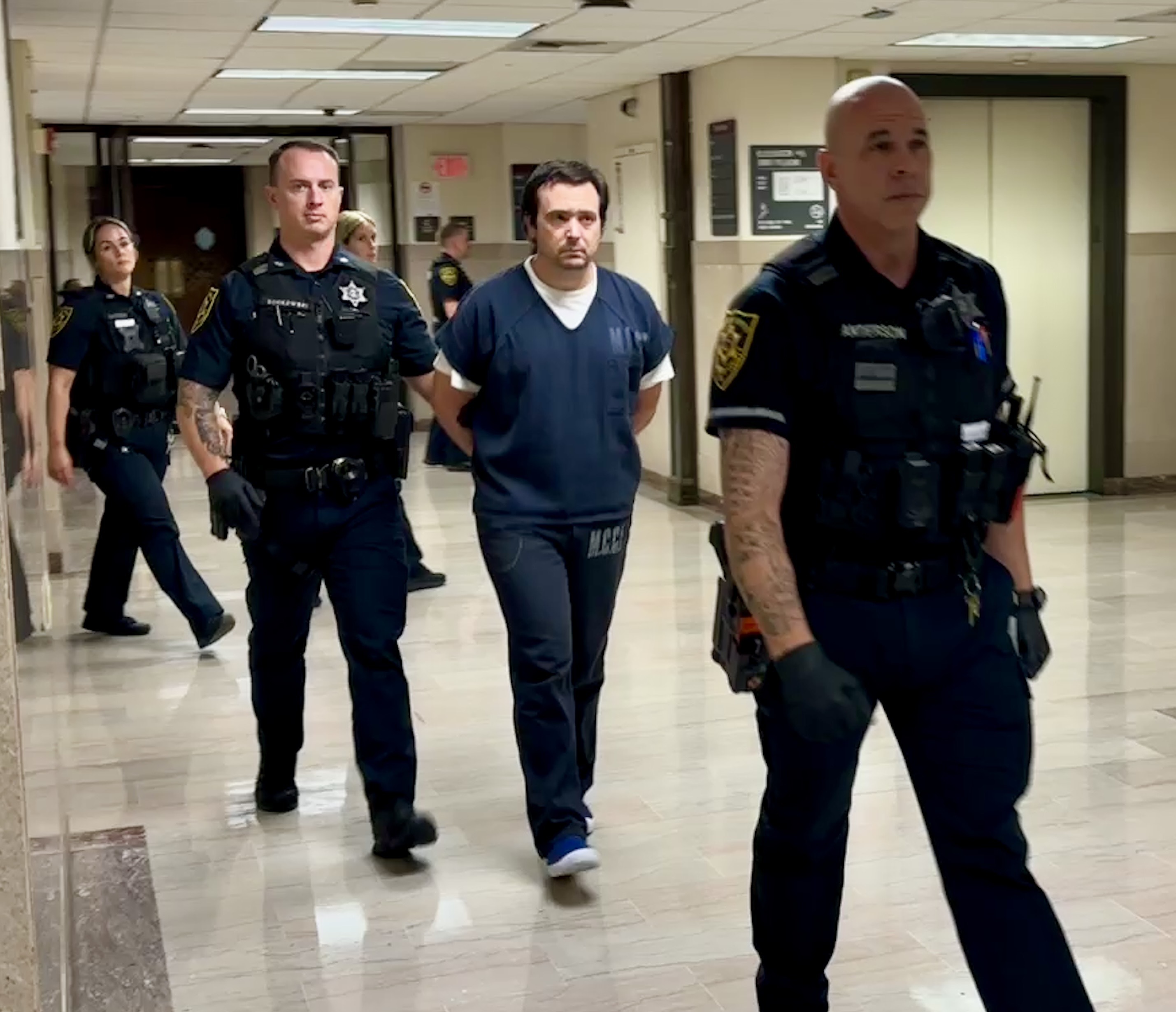
A former Skippack Township supervisor had been expected to plead guilty Wednesday to molesting a boy in his care, admitting to nearly a decade of abuse.
But at the last moment, Nicholas Fountain rejected the offer extended to him by prosecutors and chose instead to take the case to trial.
Fountain, 39, is charged with 10 counts of involuntary deviate sexual intercourse, as well as indecent assault and related crimes. The deal he negotiated with prosecutors would have allowed him to plead guilty to four counts of involuntary deviate sexual intercourse in exchange for a maximum sentence of 20 to 50 years in state prison.
Instead, Fountain opted to proceed to trial on all charges, including 10 counts that each carry a mandatory minimum of 10 years in prison upon conviction.
Fountain, who owns two daycare centers — Magnolia Enrichment Center in Skippack and Magnolia Children’s Academy in Gilbertsville — resigned from the board shortly after his arrest last year.
His attorneys, Matthew Brittenburg and Andrew Levin, declined to comment after Wednesday’s hearing.
The victim, now an adult, told police Fountain sexually abused him beginning when he was 9 years old and continuing until he was 16, according to the affidavit of probable cause for his arrest.
The abuse began in 2016, he said, and started when he and Fountain were wrestling and Fountain asked him to take off his shirt and, eventually, all of his clothing.
During subsequent assaults, he said, Fountain groped him, showed him pornography, and performed a sex act on him. Fountain later attempted to initiate other sexual contact, he said, but he refused.
Prosecutors learned of the abuse last year in an unrelated investigation by law enforcement in Maryland.
Authorities there charged Fountain with sexual solicitation of a minor and child pornography after they said he solicited nude photos from an undercover officer posing as a teenage boy on Reddit, and sent nude photos of himself in return.
In their conversations, Fountain identified himself to the undercover officer as a married man, and provided a picture of himself.
Fountain also sent the officer graphic descriptions of sex acts he wanted to engage in with someone he believed to be a teenage boy, the documents said.
The officer reviewed Fountain’s history of posting on Reddit, and wrote that the “posts all encompassed sexual content and all revolved around sex acts or looking for sex acts between older men/daddies and younger boys.”
That case is ongoing and will be prosecuted after his case in Montgomery County concludes, according to a spokesperson from the Harford County State’s Attorney’s Office.
During the course of the Maryland investigation, Pennsylvania State Police troopers interviewed people close to Fountain because of the daycare centers he owns.
No allegations of wrongdoing connected to the daycare centers emerged from that inquiry, investigators said, but through those interviews, they identified the victim in the Montgomery County case.
Yes, he’s an amazing talent. Yes, he already has enough marketing deals to make players twice his age blush, including one with Adidas that has set him up with superstars like Lionel Messi and Trinity Rodman.
No, those moments happened because of what got him on the field in the first place. Interim Union manager Ryan Richter described that part perfectly after the big win in San Diego earlier this month, when Sullivan’s backheel goal exploded online.
“He trains like an animal every single day,” Richter said. “His outstanding quality is the mentality that he has, and the way that he approaches every game and every day, and that’s what pushes him to get better and better.”
A few minutes later, Sullivan was told of those words, and was asked what it meant to hear them.
“I always appreciate when stuff like that’s acknowledged, so thank you to him,” he said. “I think that’s just sort of, like, my DNA in a way. I think it’s sort of how I’m wired. But always great to have people like him acknowledge it.”
There are moments when Sullivan comes across as an already-polished product of three generations of Philadelphia soccer royalty. But there are also still moments where you see the rawness of a 16-year-old, and this was one.
Comparisons to Freddy Adu aren’t fair
If Sullivan plays in any of the U.S. team’s four upcoming friendlies, he’ll become the youngest senior men’s national team player since Freddy Adu in 2006.
Around the soccer world, Sullivan gets compared to other young phenoms, such as Arsenal and England’s Max Dowman and Spain and Barcelona’s Lamine Yamal. (Not for nothing did Adidas, which markets all three of them, recently bring Sullivan and Dowman together for a photo shoot where Sullivan had one of the Union’s new third jerseys.)
📲 Cavan Sullivan (16) on Instagram, with Max Dowman (16). 🤝
⚠️ Sullivan, who plays for Philadelphia Union in MLS, will join Manchester City when he turns 18. 🇺🇸 pic.twitter.com/755pojRdKD
But for some people in this country, the most significant comparison goes in a less optimistic direction: to Adu.
In 2004, Adu arrived on the scene as a 14-year-old already crowned as destined to be the greatest American men’s player of all time. He took the field with D.C. United back then carrying the hopes of MLS at a time when it was desperate for any kind of recognition.
The recognition came, including a TV ad featuring Adu and Pelé. But the on-field accomplishments didn’t. Adu fell far short of his potential, despite seemingly countless opportunities over a 17-year career.
Looking back, we can now see why. It wasn’t just that he was swallowed up by the hype. It’s that so much of the infrastructure that has helped Sullivan grow didn’t exist in Adu’s teenage years.
MLS teams didn’t have youth academies back then, from the Union’s unparalleled scale — to frankly any scale. Fans might think about the first-team staff and sometimes the reserve-team coaches, but the dozens of youth team coaches and high school teachers that fill the club’s Chester complex who work outside the spotlight are immeasurable.
Adu didn’t have any of that when he grew up. He went straight into the first team at 14, and that was it. MLS could barely even accommodate a legal minor in some facilities back then, and its reserve league didn’t start until a year after Adu’s pro debut.
The Union reserve team’s facilities at the club’s training complex in Chester.Alejandro A. Alvarez / Staff Photographer
Now the league knows what it’s doing, with systems in place to accommodate what has become a years-long pipeline of elite young talent. Sullivan is just one example, and quite a few of them have made the current U.S. roster.
Few players know this more than one of the national team’s best, Tyler Adams. He rose through Red Bull New York’s youth and pro ranks, moved to Europe after three years in MLS, and now flies the flag for Americans in the English Premier League.
“Prospect is a great word, but they’re doing it at a high level right now,” he said. “And then for me, as a product of MLS and a kid that came through MLS, you have to respect the league and the level that they’re playing at, at such a young age, because you’re competing against grown men. … You just have to do things in the right order, and we’re giving them the best opportunity to do that now.”
Tyler Adams (center) at work during Wednesday’s U.S. men’s soccer team practice at the national training center in suburban Atlanta.Jonathan Tannenwald
Confident? Yes. Cocky? No.
There’s one more point to make about Sullivan. Outsiders call him cocky, and he can be: from stepover dribbles to the flashy outfits he wears at Subaru Park on game days. But what athlete doesn’t have an ego?
You have to have one to become elite in sports, whether Bryce Harper or LeBron James or Carli Lloyd.
Of course, Sullivan hasn’t yet achieved what those three have, and whether he will remains to be seen. But he has an outstanding support system that keeps him in check at the right times, from his family at home, including his older brother and teammate, Quinn Sullivan, to team captain Alejandro Bedoya, and Ryan Richter in the Union locker room. You can be sure they all got him ready for this week as best they could.
Beyond that, we can’t know how this Union season will end up, with a bunch of tough games coming next month; and it’s impossible to know what will happen when Cavan joins Manchester City at the end of next year.
Will he actually play for the English giant, or get loaned out repeatedly — the fate that past Americans suffered in England, including Downingtown’s Zack Steffen at City and Media’s Auston Trusty at Arsenal?
Zack Steffen played just 21 games for Manchester City in 4 1/2 years on the English Premier League giant’s books.Ian Walton
It’s easy to spend time and energy fretting about those questions. Right now, though, can be a moment to put them aside.
Just as Union fans have allowed themselves to simply enjoy the team’s renaissance, they can sit back and enjoy this national team window for Sullivan, Neil Pierre, and Frankie Westfield. The games are friendlies, so results matter less than seeing how the players handle their first steps on the senior national team stage.
The last word goes to Adams, since he delivered on this subject as well as he does with so many things.
“If anybody remembers me when I was 16, 17 years old, I came in and I wasn’t afraid to step on people’s toes, but I was very keen on doing the work and making sure that I could earn the respect of the older players,” he said. “That’s always super-important as you try to build this group out. We have a lot of bright talent here, but it’s important that we all work hard and help get the best growth out of all of them.”
Neil Pierre (second from left) working with former Union centerback Auston Trusty (left) and other players at Wednesday’s U.S. practice. Jonathan Tannenwald
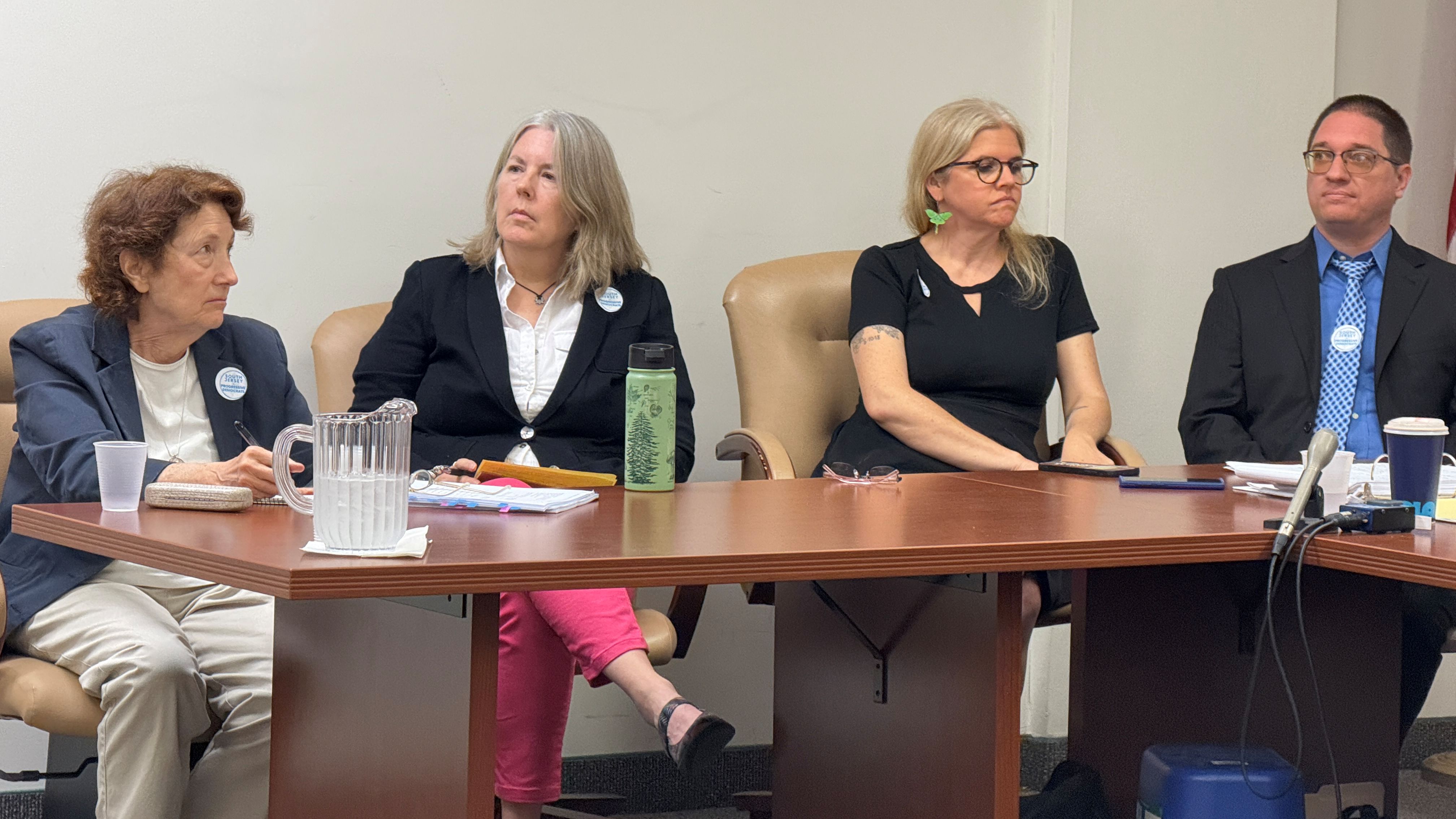
Efforts by Democrats led by George E. Norcross III to unseat a dissident faction from control of the Cherry Hill Democratic Committee will not be considered by New Jersey’s highest court.
The New Jersey Supreme Court on Sept. 16 denied a petition for certification filed by the Camden County Democratic Committee and committee chairman and State Sen. James Beach that would have challenged a state appellate court decision in April that allowed the South Jersey Progressive Democrats to name members of the committee.
Three Cherry Hill residents who are members of the South Jersey Progressive Democrats won the June 2025 primary, defeating the Norcross group, which ran with names for all 74 seats on the ballot. Voters voted once, either for the progressives or the Norcross group.
After their loss, the Camden County Democrats sued, challenging the progressives’ right to fill the 71 vacancies with members other than those who were listed in the losing group on the ballot.
Voters elected the progressives over the Norcross group by a vote of 5,547 to 3,350, or 62% of the votes cast.
At stake is control of the powerful Democratic Party in Cherry Hill, including candidate selection and choosing citizens to fill elected offices when they become open between elections. The Cherry Hill unit is also the largest single faction on the 522-member Camden County committee, which has even more power.
“Having read the appeals panel decision, I had complete confidence that the New Jersey Supreme Court would deny certification in our case, ending the Camden County Democratic Committee’s colossal waste of donors’ money attempting to overturn the will of Cherry Hill voters,” one of the three winners, Rena Margulis, said in an email on Wednesday. The other two winners were David Stahl and Susan Druckenbrod.
Margulis said that as of early September, the group has 47 Cherry Hill Democratic Committee members. She said Cherry Hill residents are being recruited to run in the Democratic primary next June.
A call to Camden County Democratic Party headquarters for comment on the decision was not returned.
70and73.com is a hyperlocal news site focused on South Jersey, including the communities of Cherry Hill, Evesham, Mount Laurel, Voorhees, Medford, Medford Lakes, and Moorestown.
The move comes as PHS prepares to mark its 200th anniversary next year.
PHS’s roughly 100 office-based employees have worked on a hybrid schedule since 2022, president Matt Rader said. The in-person cadence ranges from a couple days a week to a couple times a month, he said.
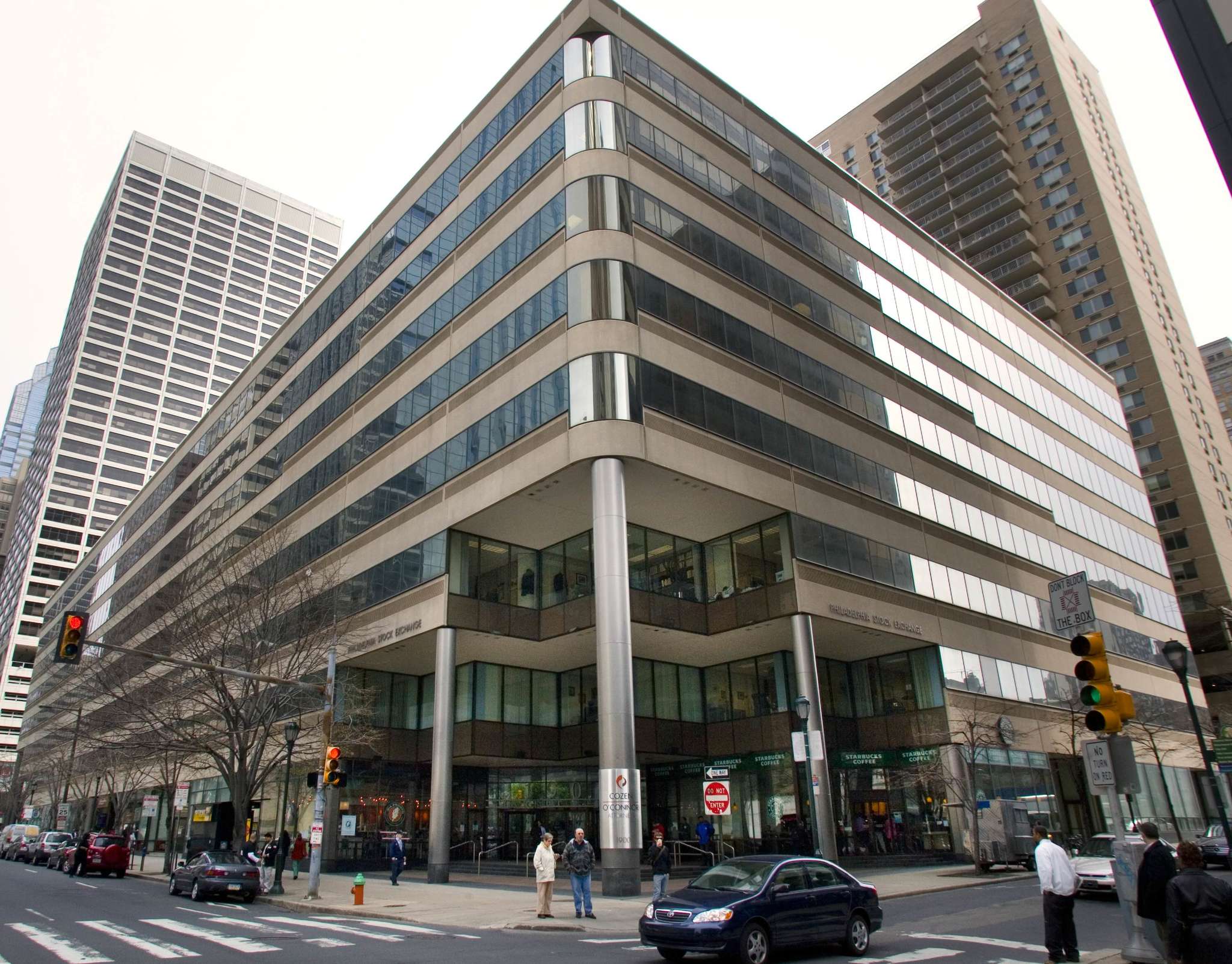
That will change starting in the spring at PHS’s new office at 1900 Market St., where the organization signed a 16-year lease. Rader said employees would be required to come into the office three days a week.
In its current building at 100 N. 20th St., PHS leases 31,000 square feet, subleasing two-thirds of that space to another tenant, Big Brothers Big Sisters. Its workforce is split into two suites on different floors. The new location, at the site of the former Philadelphia Stock Exchange building, is a single space spanning 18,000 square feet.
“Our current office space that we’re occupying is quite small because we’ve been on this largely hybrid model, and we wanted to move into a situation where we could have the team comfortably in-office three days a week and have everybody in one space,” Rader said.
Matt Rader, president of the Pennsylvania Horticultural Society, in 2024.Jessica Griffin / Staff Photographer
“PHS, despite being two centuries old, has the nimbleness of a start-up,” he said. “We’ve been in a significant chapter of growth, particularly in our neighborhood work. We do a lot of work around tree planting, community gardening, vacant land greening, small-business development, and job training across the city and region, and that work has grown significantly since 2019.”
Staying in Center City was an easy decision, Rader said.
“We believe very much in Center City,” he said. “We work in more than 230 city and suburban neighborhoods. So our PHS community of supporters, volunteers, staff is kind of everywhere.”
That means easy access to public transit is important, Rader said.
As for its 200th anniversary, PHS plans to double down on its neighborhood greening work, invest more in the annual Flower Show, and launch a new vision, Rader said: “Every person, every place, gardening for the greater good.”
“Our job is to scale up the places and people involved in using gardening to improve the health and well-being of the region, and we see this new headquarters office space as a great first step on that journey,” he said.
Radnor commissioners in July advanced a proposal to purchase the former office at 405 W. Wayne Ave. and convert the building into a local courthouse.
Radnor’s magisterial districtcourt — which typically handles preliminary criminal hearings, traffic and local ordinance violations, and small civil suits — has been located in Newtown Square for three years as Radnor has been unable to find a home for it in the township.
At a series of public meetings in recent weeks, residents pushed back against the West Wayne Avenue proposal, raising concerns that the courthouse would bring traffic and parking issues to the area and put individuals accused of crimes in proximity to the children who live and play in the neighborhood.
The township dropped the plan to purchase the veterinarian’s office earlier this month, citing resident concerns and a “thorough review of the site and vital feedback.”
With that site off the table, Commissioner Jack Larkin told residents during a Tuesday information session that the township is continuing to look, but has found no other suitable options for a local courthouse, leaving questions regarding whether the court will be able to find a home in Radnor at all.
Locating a new space for the court has been made difficult by a series of parameters from Delaware County and the Administrative Office of Pennsylvania Courts, Larkin said, including ADA accessibility, size, and parking. Delaware County, which is responsible for footing the bill for the building, has told Radnor it can pay between $20 and $30 per square foot for the space, a rate that is hard to come by in the township, Larkin said.
On top of the guidelines from the state and county, Larkin said, residents have made clear they do not want a court near a residential neighborhood, a needle that is difficult to thread in Radnor, he said,where many commercial districts abut residential areas.
At Tuesday’s meeting, a group of around 20 residents rebuked commissioners for what they described as poor planning and a lack of communication around the West Wayne Avenue acquisition proposal. Some said a lack of social media and email notification about the process made community members feel the commissioners were “sneaky.” One attendee said the court relocation effort is a “pet project” that residents have not asked for.Others rejected Larkin’s justification for why the court needs to move into Radnor at all.
Larkin, an attorney, has argued repeatedly that it is important for Radnor residents to elect their own local judge rather than be split between other districts, and that bringing the courthouse home will signal to Pennsylvania that Radnor cares about retaining its own judge come the state’s decennial court district realignment process.
“I just generally think that it’s good to have your judge in the community that he’s judging. That’s the way the system is supposed to work. The [magisterial district judge] is supposed to be in the magisterial district where he lives, where he works,” Larkin said.
Until three years ago, Radnor’s district court cases were split between Marple and Newtown Townships.
In response to questions about whether Radnor’s district courthouse being located outside the township’s bounds would affect the judicial realignment process, Stacey Witalec, director of communications for the Pennsylvania Judicial System, said “there are several courts within Delaware County which are co-located” and pointed to the court reestablishment procedures outlined in Pennsylvania statute.
This suburban content is produced with support from the Leslie Miller and Richard Worley Foundation and The Lenfest Institute for Journalism. Editorial content is created independently of the project donors. Gifts to support The Inquirer’s high-impact journalism can be made at inquirer.com/donate. A list of Lenfest Institute donors can be found at lenfestinstitute.org/supporters.
UNITED NATIONS — Ukrainian President Volodymyr Zelensky urged the world’s leaders Wednesday to keep choking Russia’s revenues and impede its war efforts, telling the U.N. General Assembly that “Russia’s revenues must remain a target.”
“When someone gives Russia more money through trade, they give this war more time. And that is exactly why we insist on limiting trade with the aggressor, and why we are burning Russia’s revenues ourselves,” he said in English, a language he often uses at the world body.
Russia gets its turn Saturday to address the assembly. President Vladimir Putin hasn’t traveled to the gathering in years, sending Foreign Minister Sergey Lavrov instead.
Lavrov told the U.N. Security Council on Wednesday that Russia is prepared to negotiate toward a lasting peace but won’t just “pause” the war. He argued that such a pause would just buy Ukraine and its backers time to line up more weapons.
Zelensky cast doubt on Russia’s interest in ending the fighting.
“Something always seems to stop Putin from saying, ‘That’s it. Enough. Peace,’” Zelensky said. “Can you even imagine him without war? He is ‘Patient Zero’, the one from whom war keeps spreading further. … ‘Patient Zero’ must be stopped.”
The war has reverberated across the planet
Russia invaded Ukraine more than 4½ years ago and says it’s out to protect its own security and the interests of Russians and Russian-speakers in parts of Ukraine. Western analysts estimate that over 500,000 Russian troops have been killed and that Ukraine has recorded more than 500,000 military casualties, including up to 140,000 deaths. Neither country discloses its own casualty totals.
The war has had global repercussions for fuel, fertilizer and grain shipments — and for geopolitics, widening divisions between Russia and the West.
With front-line positions in eastern and southern Ukraine largely unchanged since last year, Russia and Ukraine have intensified long-range attacks with drones and missiles.
Russian drones pounded the Ukrainian capital, Kyiv, in daylight attacks on Wednesday, killing two people and wounding 23; two others were injured by a strike that started a big fire at a shopping mall in the southern city of Zaporizhzhia.
Russia’s Defense Ministry said it struck Ukrainian military-industrial and energy facilities, logistics centers, and sea vessels overnight. The ministry said its air defenses intercepted more than 500 Ukrainian drones over multiple Russian regions and Crimea, as well as the Sea of Azov and the Black Sea. Crimea is the peninsula that Russia seized by force and illegally annexed in 2014.
Zelensky says ‘you can stand and survive’
Zelensky told the assembly that Russia has used 63,000 attack drones of different types against Ukraine so far this year alone. While celebrating that his own country “has proven that even against a much bigger enemy, you can stand and survive,” he implored world leaders to deny Putin money or foreign fighters.
“Limit his money. Limit his war,” the Ukrainian leader said.
Meanwhile, Ukraine has been looking for additional resources. Zelensky noted to reporters Tuesday that his country hasn’t yet gotten clear answers to its effort to acquire more U.S. Patriot air defense systems.
Zelensky met Tuesday with U.S. President Donald Trump on the U.N. sidelines.
In brief remarks to the media before the meeting, Trump reiterated that he believes “we’re going to make a deal” with Russia and Ukraine to quell the fighting. The president predicted on the 2024 campaign trail that he’d swiftly broker an end to the war but hasn’t succeeded so far. Zelensky said Tuesday he was hopeful.
“Sometimes, it may seem that Ukraine is focused, focused, only on war because we speak about weapons, we speak about defense and sanctions against the aggressor. But Ukrainians did not choose this war,” he told the assembly on Wednesday. “We choose not to die. …. We are defending ourselves.”
President Donald Trump’s administration cannot demand that Philadelphia officials assist his deportation agenda and enforce federal immigration law, the city told a judge Tuesday.
Attorneys for the city and local officials asked U.S. District Judge Chad F. Kenney to toss out the Department of Justice’s challenge to an ordinance that prohibits Philadelphia agencies and employees from honoring immigration detainers.
“The federal government cannot conscript City employees as its agents, including by ordering them to keep an individual in custody, solely to assist with federal immigration enforcement,” the city’s motion said.
The Trump administration’s position in the case runs afoul of the Tenth Amendment to the U.S. Constitution, which prevents the federal government from commandeering state and local governments to enforce federal laws, the city said.
And the Justice Department cannot point to any federal law “mandating” state and local officials assist with immigration enforcement, said the filing on behalf of Mayor Cherelle L. Parker, former City Solicitor Renee Garcia, and District Attorney Larry Krasner.
The city declined to comment on the ongoing litigation. Krasner and the Justice Department did not immediately respond to requests for comment.
That decision should have come as no surprise to Parker’s administration. Parker allowed the bill to become law without her signature, following Garcia’s advice that signing the measure “would send an inaccurate signal to the public that the Administration can legally and practically enforce” its provisions.
The Justice Department expanded its lawsuit in August to include a challenge to the bill that prohibits honoring immigration detainers, requests by U.S. Immigration and Customs Enforcement that a local law enforcement agency keep a person in custody long enough to be handed over to federal agents.
Parker did sign that legislation, which codified a long-standing city practice, along with five other “ICE Out” bills.
The ordinance makes it illegal for a city agency or employee to comply with a detainer by keeping people otherwise eligible for release in custody because of an immigration detainer, an administrative warrant, or suspicion that they violated immigration law.
The amended complaint does not mention Philadelphia’s history of not cooperating with ICE detainers. But with the local law, the city “foreclosed” the prospect of using the mechanism to deport people who were arrested, the suit says.
With oil and gasoline prices spiking amid President Donald Trump’s war with Iran, it was an awkward moment for optimism about the world’s energy situation.
But Energy Secretary Chris Wright brought a sunny message to Houston last week at a gathering of energy ministers from the Group of 20 nations. The Trump administration, he said, was ushering in an era of energy abundance by expanding oil and gas supplies in places like Alaska and Venezuela.
That pitch was often overshadowed by the effects of the conflict in the Middle East. Between lauding oil and gas deals, Wright fielded questions about a damaged Saudi oil pipeline and sparred on social media with Gov. Gavin Newsom of California, a Democrat, over surging gasoline costs.
Wright acknowledged some tension, though he insisted it was temporary.
“Everyone’s frustrated with higher energy prices,” he said of the mood at the meeting. “But I’ve not met one person who’s comfortable with a nuclear-armed Iran. So everyone gets what we’re doing and this is a critically important mission. It creates dislocations in the short term. But the only answer to short-term dislocations is the energy abundance agenda.”
The situation was familiar for Wright, 61, one of the most forceful defenders of Trump’s vision of “energy dominance.”
Over the past two years, the administration has dismantled efforts to tackle climate change and ended support for wind and solar power. Instead, officials have sought to expand the use of oil, gas, coal, and nuclear energy — sources they see as more reliable. The aim, they say, is to reduce consumer prices, increase U.S. fuel exports, and provide enough electricity to win the artificial intelligence race against China.
Wright, a former fracking executive, has been out front in articulating that shift.
Whereas Trump speaks bluntly about energy — chanting, “Drill, baby, drill”; calling wind turbines ugly; or claiming that global warming is a hoax — Wright gives his arguments an intellectual gloss.
He cites figures on how solar panels underperform during winter storms. Or he argues that global warming is not as big a problem as energy poverty, which he says can only be alleviated with more oil, gas, and coal, even if that means more planet-heating greenhouse gas emissions.
Administration allies say that has made Wright invaluable.
“He has been one of the most consequential picks for energy secretary I’ve seen,” said Thomas J. Pyle, president of the American Energy Alliance, a research group that promotes fossil fuels. “He’s very experienced, brings a lot of substance, and he articulates President Trump’s vision clearly.”
Critics say Wright’s approach ignores the real risks of climate change and dismisses two of the world’s fastest-growing power sources: wind and solar. They also point to rising energy costs — diesel prices have hit record highs, and electricity rates are still increasing faster than inflation — as evidence that the administration’s policies aren’t working.
During his Senate confirmation hearing last year, Wright appeared to reassure lawmakers that he supported all energy sources, including renewables. He cited his graduate work on solar power and called climate change a “global challenge that we need to solve.”
But since taking office, he has been more combative, deriding wind and solar power as a “parasite” on the grid, blasting Democratic-led states for environmental policies that have shut down coal and gas plants, and accusing Europe of being in thrall to a “climate cult” that is limiting economic growth.
The Energy Department infuriated Democrats in Congress last October by canceling nearly $8 billion in Biden-era clean energy grants located almost entirely in states that didn’t vote for Trump. Asked about the decision at a June congressional hearing, Wright said political considerations had nothing to do with the decisions.
But in court filings in July, administration officials conceded that the cancellations were targeted in states that were represented by Democrats and had voted for Kamala Harris, the party’s presidential nominee, in the 2024 election.
Energy Department officials have said that they recommended that grants be canceled in red and blue states alike but that the decisions on which terminations to announce were made by the White House.
Sen. Martin Heinrich of New Mexico was one of eight Democrats who voted to confirm Wright last year but has since become a vocal critic.
“Of all the Trump nominees, I am particularly disappointed in his conduct,” Heinrich said. “He obviously had an oil and gas history, but he also had a clean energy history. And he just threw all of that away to be a partisan mouthpiece.”
In response, Ben Dietderich, an Energy Department spokesperson, said in a statement, “Secretary Wright doesn’t have preferred energy sources. He just believes in being honest about math and energy security. Unfortunately, many in the climate lobby don’t like that. The Department is proud to have ended energy subtraction policies that lead to higher prices, less energy security and human impoverishment.”
Wright first gained prominence as the founder of Liberty Energy, a Denver-based oil-field services company that was heavily involved in the fracking boom.
Even among oil and gas executives, Wright stood out as an evangelist for fossil fuels. In 2021, as world leaders and even many oil companies were pledging to slash emissions, Wright published a 180-page report criticizing what he saw as a “myopic focus on climate change.”
He argued that people in developing countries still lacked enough energy to enjoy a decent standard of living and that renewables couldn’t replace oil, gas and coal to provide that power.
“At the height of this era when everyone was saying energy policy should just be about climate, Chris Wright was one of the few CEOs that ran oil and gas firms who clearly and vocally spoke out,” said Arjun Murti, a partner at the energy research firm Veriten.
Wright also had a flair for the dramatic. He once drank fracking fluid on video to show it was safe. In 2021, he rented billboards around Denver to heckle The North Face after the company declined to work with an oil firm.
He landed appearances on Fox News and won the job of energy secretary on the recommendation of Harold Hamm, a fellow fracking pioneer and major donor to Trump.
Wright quickly transformed the department. Out were programs to develop novel technologies to fight climate change, like green hydrogen or low-emissions steel. Instead, federal funds went to help utilities finance gas plants, nuclear reactors and transmission lines or upgrade older coal plants, which officials say are essential for meeting rising electricity demand.
Wright also lifted a Biden-era pause on expanding exports of liquefied natural gas, now the nation’s fastest-growing export, and has pressured Europe to ease rules on methane, a potent greenhouse gas, saying they could hurt U.S. exports.
“He brought a whole new attitude to the agency,” said Scott Segal, an energy lobbyist at Bracewell. “It’s all about how do we produce enough energy to support AI and economic growth.”
Some changes have attracted bipartisan support, such as Wright’s promotion of nuclear and geothermal energy, which don’t produce planet-warming emissions. His agency has dangled billions of dollars in loans to kick-start the largest expansion of nuclear power in a generation, while a program to help startups develop small reactors has moved faster than many expected.
Other moves have been more contentious.
To rescue the declining coal industry, an obsession of Trump’s, the Energy Department used emergency powers to keep plants running past their scheduled retirement dates, which could cost ratepayers billions. (This month, a federal judge struck down one such order, saying the agency had overstepped its authority.)
Last year, Wright picked five skeptics of mainstream climate science to write a report arguing that concerns about global warming were overblown. That report prompted furious pushback from hundreds of scientists, who denounced its findings as riddled with errors. A federal judge later ruled that Wright had acted unlawfully by secretly convening the authors.
Wright, who often criticizes wind and solar for not running at all hours, has cut renewable energy programs and renamed the National Renewable Energy Laboratory as the National Laboratory of the Rockies. While experts agree that the variability of wind and solar poses real challenges, many say it goes too far to call the sources “worthless.” Texas gets roughly one-third of its power from renewables and has kept costs low.
“It’s borderline petty how anti-renewable this Energy Department is,” said Samantha Gross, a director at the Brookings Institution. “Especially since we’re still building more renewables, particularly solar, than any other form of energy in the U.S. right now.”
Roughly 2,700 staff members have left the agency, which analysts and former employees said could make it difficult to carry out its mission.
Wright’s supporters say he has helped steer the country away from what they saw as the Biden administration’s unrealistic plans to rapidly phase out fossil fuels.
Some say the debate is shifting in his direction. Many states and businesses are backing off ambitious climate targets, and Democrats are less vocal nowadays about climate change. Tech companies are using more natural gas to meet exploding demand for data centers. The International Energy Agency, after some browbeating by Wright, is revising up its projections for how long fossil fuels will stick around.
“There’s been a real shift in how investors and others now talk about energy,” said Travis Fisher, a director of energy and environmental studies at the libertarian Cato Institute who worked with Wright to organize the agency’s climate report. “Climate has become a lot less salient.”
The administration’s strategy faces its biggest test yet with the Iran war. While The New York Times reported that Wright was excluded from the decision to launch the war, he has been busy managing the energy fallout. He often appears on television to discuss U.S. military escorts of oil tankers through the Strait of Hormuz. And he is quick to counter that Democratic-led states face high energy costs because of decisions to close refineries or oppose pipelines.
In the short term, the war and resulting energy shortages have benefited many U.S. suppliers, which are exporting more oil and gas than ever before. But in the long term, some experts and companies worry the chaos could hurt the market for fossil fuels as countries seek to reduce reliance on energy imports.
Wright, for his part, says fossil fuels are too useful to recede anytime soon.
“We will never, ever come remotely close to running out of hydrocarbons, which means you need better technology and innovations to eventually eat into their market share,” Wright said at a Cato event in May.
He said he was excited about recent breakthroughs in areas like fusion. But, he added, “the biggest innovations the rest of my lifetime in energy are almost certainly going to be in oil, gas and coal, because they are what matter.”
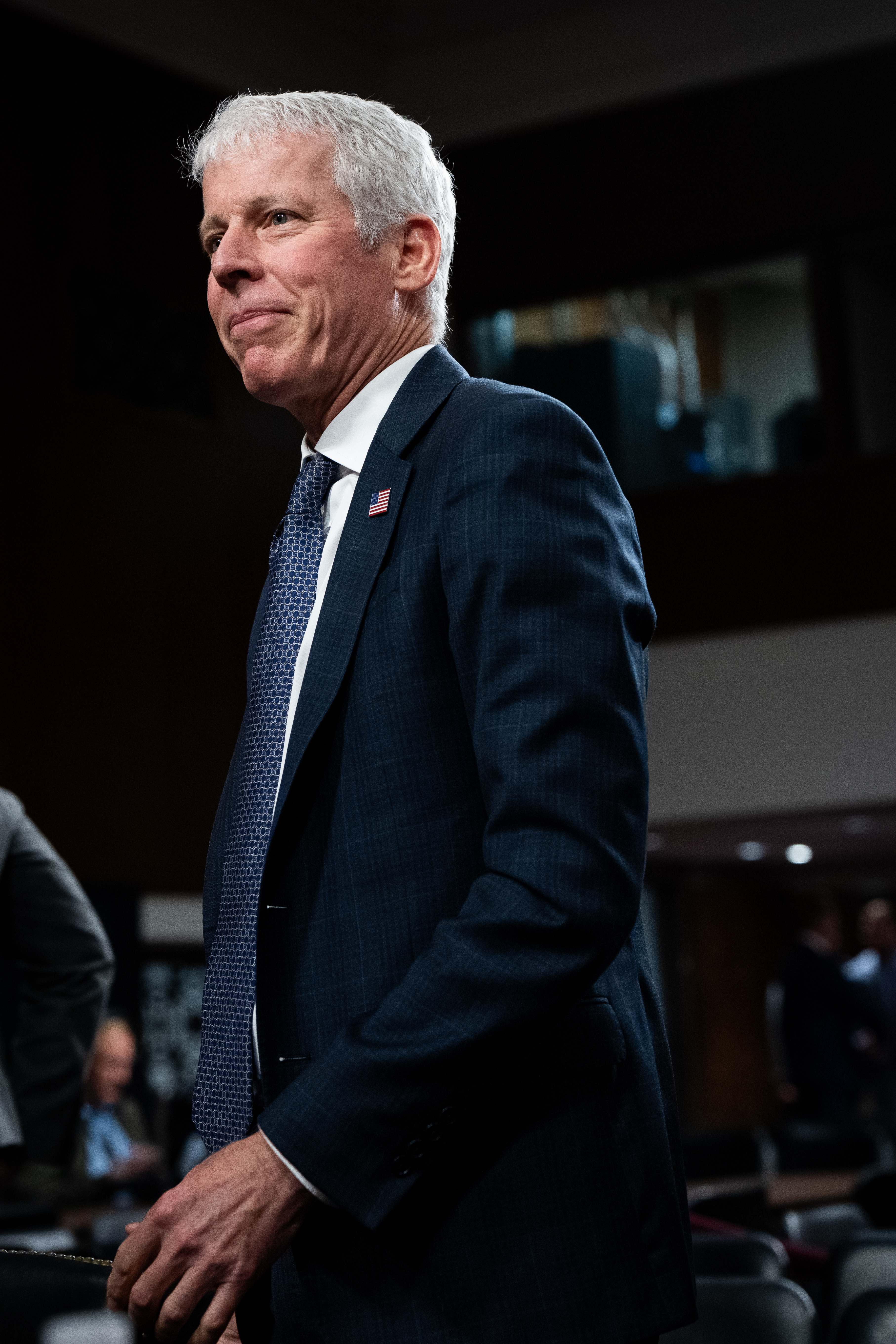
FILE — A monitor shows Chris Wright, the Trump administration’s Energy secretary, at a hearing on Capitol Hill on May 13, 2026. Wright, a former fracking executive, pitches a future of fossil fuel abundance. It hasn’t always been an easy sell as the war with Iran drags on and oil prices surge. (Haiyun Jiang/The New York Times)HAIYUN JIANG
WASHINGTON — The FBI said Wednesday it was investigating a criminal hacking group’s claims that it had stolen “very sensitive data” belonging to thousands of agents and applicants and that it had compromised the bureau’s jobs website.
“The FBI is aware of a cyber-criminal enterprise group claiming a compromise of the FBIJobs.gov portal and alleged impact to FBI employee personally identifiable information,” the FBI said in a statement. It said that while the “point of breach” was undetermined, “we are actively and aggressively investigating this matter and working closely with those third-party providers that support FBIJobs.gov to mitigate any and all risk.”
A message that circulated online from a hacking group known as ShinyHunters claimed responsibility for the hack. The jobs website, the main portal for prospective employees to learn about the FBI and initiate the application process, remained offline as of Wednesday afternoon.
“We have compromised the FBI. We hold very sensitive data on almost ALL FBI Agents and individuals who filed an application with the FBI for a job,” said the ShinyHunters message, which was directed to FBI Director Kash Patel and Brett Leatherman, the assistant director in charge of the bureau’s cyber division.
The claims could not immediately be verified. An email to an address associated with ShinyHunters was not immediately returned.
In its message, ShinyHunters said it would give the bureau one week to correct or remove what it says are false allegations contained in an FBI public advisory from May that described the organization as a “cyber criminal group specializing in large-scale data breaches and extortion.”
That public service announcement characterized ShinyHunters as “threat actors” who often “use their real or exaggerated claims of access to sensitive or personal information to prompt payment from victims,” commonly harass or threaten victims and “may falsely claim to have sensitive or compromising information, including embarrassing photographs or videos of victims, which frequently do not exist.”
ShinyHunters said in its message to the FBI that it was “offended” by those characterizations and demanded that the FBI remove those claims. It did not say what would happen if the FBI did not do so within a week.
“This is not a ransom, coercion, or extortion. Your federal policies do not apply here. This PSA is NOT financially motivated,” the hacking group’s message said.
The FBI, the nation’s premier federal law enforcement agency, has been a common hacking target.
In March, the FBI disclosed that it was investigating “suspicious activities” on an internal system that contains sensitive information related to surveillance operations and investigations. Also that month, a pro-Iranian hacking group claimed to have hacked an account of Patel’s and posted online what appear to be years-old photographs of him, along with a work resume and other personal documents dating back more than a decade.
The FBI described the compromised information as “historical in nature” and said it involved “no government information.”
The Jenkintown School District is cancelingthe rest ofits varsity football season over safety concerns from low participation, officials announced this week.
The high school team in Montgomery County’s smallest school district had played two games so far this season and was set to play Lower Moreland on Friday.
There were not enough players on the team, nor enough active participation, to safely play a whole season, high school principal Thomas Roller and athletic director Aubrie Breisblatt wrote in a letter to the school community Tuesday, and the team had already been forced to forfeit games.
“Continuing to compete under these circumstances would place significant physical demands on a limited number of players,” the school leaders wrote, adding that the decision had come at the head coach’s recommendation.
While the team will not play any more games this year, the program will continue to hold practices, and officials hope to rebuild the program in the future.
“Sports participation, especially at a school as small as Jenkintown, ebbs and flows over time depending on students’ interests,” school board president Carolyn Riley wrote in a text Wednesday.
”We remain very supportive of our students committed to playing football.”