President Donald Trump’s administration cannot demand that Philadelphia officials assist his deportation agenda and enforce federal immigration law, the city told a judge Tuesday.
Attorneys for the city and local officials asked U.S. District Judge Chad F. Kenney to toss out the Department of Justice’s challenge to an ordinance that prohibits Philadelphia agencies and employees from honoring immigration detainers.
“The federal government cannot conscript City employees as its agents, including by ordering them to keep an individual in custody, solely to assist with federal immigration enforcement,” the city’s motion said.
The Trump administration’s position in the case runs afoul of the Tenth Amendment to the U.S. Constitution, which prevents the federal government from commandeering state and local governments to enforce federal laws, the city said.
And the Justice Department cannot point to any federal law “mandating” state and local officials assist with immigration enforcement, said the filing on behalf of Mayor Cherelle L. Parker, former City Solicitor Renee Garcia, and District Attorney Larry Krasner.
The city declined to comment on the ongoing litigation. Krasner and the Justice Department did not immediately respond to requests for comment.
That decision should have come as no surprise to Parker’s administration. Parker allowed the bill to become law without her signature, following Garcia’s advice that signing the measure “would send an inaccurate signal to the public that the Administration can legally and practically enforce” its provisions.
The Justice Department expanded its lawsuit in August to include a challenge to the bill that prohibits honoring immigration detainers, requests by U.S. Immigration and Customs Enforcement that a local law enforcement agency keep a person in custody long enough to be handed over to federal agents.
Parker did sign that legislation, which codified a long-standing city practice, along with five other “ICE Out” bills.
The ordinance makes it illegal for a city agency or employee to comply with a detainer by keeping people otherwise eligible for release in custody because of an immigration detainer, an administrative warrant, or suspicion that they violated immigration law.
The amended complaint does not mention Philadelphia’s history of not cooperating with ICE detainers. But with the local law, the city “foreclosed” the prospect of using the mechanism to deport people who were arrested, the suit says.
With oil and gasoline prices spiking amid President Donald Trump’s war with Iran, it was an awkward moment for optimism about the world’s energy situation.
But Energy Secretary Chris Wright brought a sunny message to Houston last week at a gathering of energy ministers from the Group of 20 nations. The Trump administration, he said, was ushering in an era of energy abundance by expanding oil and gas supplies in places like Alaska and Venezuela.
That pitch was often overshadowed by the effects of the conflict in the Middle East. Between lauding oil and gas deals, Wright fielded questions about a damaged Saudi oil pipeline and sparred on social media with Gov. Gavin Newsom of California, a Democrat, over surging gasoline costs.
Wright acknowledged some tension, though he insisted it was temporary.
“Everyone’s frustrated with higher energy prices,” he said of the mood at the meeting. “But I’ve not met one person who’s comfortable with a nuclear-armed Iran. So everyone gets what we’re doing and this is a critically important mission. It creates dislocations in the short term. But the only answer to short-term dislocations is the energy abundance agenda.”
The situation was familiar for Wright, 61, one of the most forceful defenders of Trump’s vision of “energy dominance.”
Over the past two years, the administration has dismantled efforts to tackle climate change and ended support for wind and solar power. Instead, officials have sought to expand the use of oil, gas, coal, and nuclear energy — sources they see as more reliable. The aim, they say, is to reduce consumer prices, increase U.S. fuel exports, and provide enough electricity to win the artificial intelligence race against China.
Wright, a former fracking executive, has been out front in articulating that shift.
Whereas Trump speaks bluntly about energy — chanting, “Drill, baby, drill”; calling wind turbines ugly; or claiming that global warming is a hoax — Wright gives his arguments an intellectual gloss.
He cites figures on how solar panels underperform during winter storms. Or he argues that global warming is not as big a problem as energy poverty, which he says can only be alleviated with more oil, gas, and coal, even if that means more planet-heating greenhouse gas emissions.
Administration allies say that has made Wright invaluable.
“He has been one of the most consequential picks for energy secretary I’ve seen,” said Thomas J. Pyle, president of the American Energy Alliance, a research group that promotes fossil fuels. “He’s very experienced, brings a lot of substance, and he articulates President Trump’s vision clearly.”
Critics say Wright’s approach ignores the real risks of climate change and dismisses two of the world’s fastest-growing power sources: wind and solar. They also point to rising energy costs — diesel prices have hit record highs, and electricity rates are still increasing faster than inflation — as evidence that the administration’s policies aren’t working.
During his Senate confirmation hearing last year, Wright appeared to reassure lawmakers that he supported all energy sources, including renewables. He cited his graduate work on solar power and called climate change a “global challenge that we need to solve.”
But since taking office, he has been more combative, deriding wind and solar power as a “parasite” on the grid, blasting Democratic-led states for environmental policies that have shut down coal and gas plants, and accusing Europe of being in thrall to a “climate cult” that is limiting economic growth.
The Energy Department infuriated Democrats in Congress last October by canceling nearly $8 billion in Biden-era clean energy grants located almost entirely in states that didn’t vote for Trump. Asked about the decision at a June congressional hearing, Wright said political considerations had nothing to do with the decisions.
But in court filings in July, administration officials conceded that the cancellations were targeted in states that were represented by Democrats and had voted for Kamala Harris, the party’s presidential nominee, in the 2024 election.
Energy Department officials have said that they recommended that grants be canceled in red and blue states alike but that the decisions on which terminations to announce were made by the White House.
Sen. Martin Heinrich of New Mexico was one of eight Democrats who voted to confirm Wright last year but has since become a vocal critic.
“Of all the Trump nominees, I am particularly disappointed in his conduct,” Heinrich said. “He obviously had an oil and gas history, but he also had a clean energy history. And he just threw all of that away to be a partisan mouthpiece.”
In response, Ben Dietderich, an Energy Department spokesperson, said in a statement, “Secretary Wright doesn’t have preferred energy sources. He just believes in being honest about math and energy security. Unfortunately, many in the climate lobby don’t like that. The Department is proud to have ended energy subtraction policies that lead to higher prices, less energy security and human impoverishment.”
Wright first gained prominence as the founder of Liberty Energy, a Denver-based oil-field services company that was heavily involved in the fracking boom.
Even among oil and gas executives, Wright stood out as an evangelist for fossil fuels. In 2021, as world leaders and even many oil companies were pledging to slash emissions, Wright published a 180-page report criticizing what he saw as a “myopic focus on climate change.”
He argued that people in developing countries still lacked enough energy to enjoy a decent standard of living and that renewables couldn’t replace oil, gas and coal to provide that power.
“At the height of this era when everyone was saying energy policy should just be about climate, Chris Wright was one of the few CEOs that ran oil and gas firms who clearly and vocally spoke out,” said Arjun Murti, a partner at the energy research firm Veriten.
Wright also had a flair for the dramatic. He once drank fracking fluid on video to show it was safe. In 2021, he rented billboards around Denver to heckle The North Face after the company declined to work with an oil firm.
He landed appearances on Fox News and won the job of energy secretary on the recommendation of Harold Hamm, a fellow fracking pioneer and major donor to Trump.
Wright quickly transformed the department. Out were programs to develop novel technologies to fight climate change, like green hydrogen or low-emissions steel. Instead, federal funds went to help utilities finance gas plants, nuclear reactors and transmission lines or upgrade older coal plants, which officials say are essential for meeting rising electricity demand.
Wright also lifted a Biden-era pause on expanding exports of liquefied natural gas, now the nation’s fastest-growing export, and has pressured Europe to ease rules on methane, a potent greenhouse gas, saying they could hurt U.S. exports.
“He brought a whole new attitude to the agency,” said Scott Segal, an energy lobbyist at Bracewell. “It’s all about how do we produce enough energy to support AI and economic growth.”
Some changes have attracted bipartisan support, such as Wright’s promotion of nuclear and geothermal energy, which don’t produce planet-warming emissions. His agency has dangled billions of dollars in loans to kick-start the largest expansion of nuclear power in a generation, while a program to help startups develop small reactors has moved faster than many expected.
Other moves have been more contentious.
To rescue the declining coal industry, an obsession of Trump’s, the Energy Department used emergency powers to keep plants running past their scheduled retirement dates, which could cost ratepayers billions. (This month, a federal judge struck down one such order, saying the agency had overstepped its authority.)
Last year, Wright picked five skeptics of mainstream climate science to write a report arguing that concerns about global warming were overblown. That report prompted furious pushback from hundreds of scientists, who denounced its findings as riddled with errors. A federal judge later ruled that Wright had acted unlawfully by secretly convening the authors.
Wright, who often criticizes wind and solar for not running at all hours, has cut renewable energy programs and renamed the National Renewable Energy Laboratory as the National Laboratory of the Rockies. While experts agree that the variability of wind and solar poses real challenges, many say it goes too far to call the sources “worthless.” Texas gets roughly one-third of its power from renewables and has kept costs low.
“It’s borderline petty how anti-renewable this Energy Department is,” said Samantha Gross, a director at the Brookings Institution. “Especially since we’re still building more renewables, particularly solar, than any other form of energy in the U.S. right now.”
Roughly 2,700 staff members have left the agency, which analysts and former employees said could make it difficult to carry out its mission.
Wright’s supporters say he has helped steer the country away from what they saw as the Biden administration’s unrealistic plans to rapidly phase out fossil fuels.
Some say the debate is shifting in his direction. Many states and businesses are backing off ambitious climate targets, and Democrats are less vocal nowadays about climate change. Tech companies are using more natural gas to meet exploding demand for data centers. The International Energy Agency, after some browbeating by Wright, is revising up its projections for how long fossil fuels will stick around.
“There’s been a real shift in how investors and others now talk about energy,” said Travis Fisher, a director of energy and environmental studies at the libertarian Cato Institute who worked with Wright to organize the agency’s climate report. “Climate has become a lot less salient.”
The administration’s strategy faces its biggest test yet with the Iran war. While The New York Times reported that Wright was excluded from the decision to launch the war, he has been busy managing the energy fallout. He often appears on television to discuss U.S. military escorts of oil tankers through the Strait of Hormuz. And he is quick to counter that Democratic-led states face high energy costs because of decisions to close refineries or oppose pipelines.
In the short term, the war and resulting energy shortages have benefited many U.S. suppliers, which are exporting more oil and gas than ever before. But in the long term, some experts and companies worry the chaos could hurt the market for fossil fuels as countries seek to reduce reliance on energy imports.
Wright, for his part, says fossil fuels are too useful to recede anytime soon.
“We will never, ever come remotely close to running out of hydrocarbons, which means you need better technology and innovations to eventually eat into their market share,” Wright said at a Cato event in May.
He said he was excited about recent breakthroughs in areas like fusion. But, he added, “the biggest innovations the rest of my lifetime in energy are almost certainly going to be in oil, gas and coal, because they are what matter.”
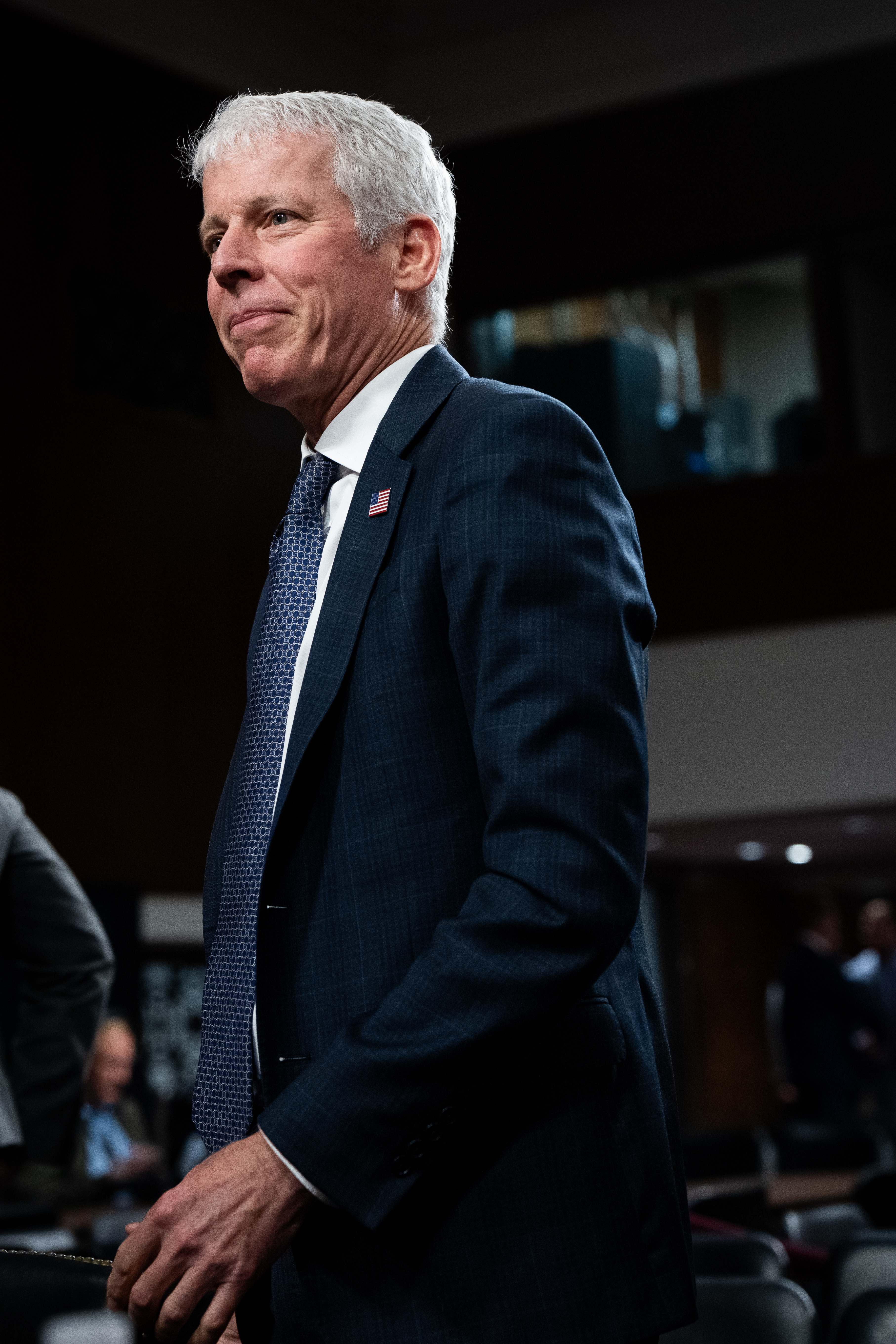
FILE — A monitor shows Chris Wright, the Trump administration’s Energy secretary, at a hearing on Capitol Hill on May 13, 2026. Wright, a former fracking executive, pitches a future of fossil fuel abundance. It hasn’t always been an easy sell as the war with Iran drags on and oil prices surge. (Haiyun Jiang/The New York Times)HAIYUN JIANG
WASHINGTON — The FBI said Wednesday it was investigating a criminal hacking group’s claims that it had stolen “very sensitive data” belonging to thousands of agents and applicants and that it had compromised the bureau’s jobs website.
“The FBI is aware of a cyber-criminal enterprise group claiming a compromise of the FBIJobs.gov portal and alleged impact to FBI employee personally identifiable information,” the FBI said in a statement. It said that while the “point of breach” was undetermined, “we are actively and aggressively investigating this matter and working closely with those third-party providers that support FBIJobs.gov to mitigate any and all risk.”
A message that circulated online from a hacking group known as ShinyHunters claimed responsibility for the hack. The jobs website, the main portal for prospective employees to learn about the FBI and initiate the application process, remained offline as of Wednesday afternoon.
“We have compromised the FBI. We hold very sensitive data on almost ALL FBI Agents and individuals who filed an application with the FBI for a job,” said the ShinyHunters message, which was directed to FBI Director Kash Patel and Brett Leatherman, the assistant director in charge of the bureau’s cyber division.
The claims could not immediately be verified. An email to an address associated with ShinyHunters was not immediately returned.
In its message, ShinyHunters said it would give the bureau one week to correct or remove what it says are false allegations contained in an FBI public advisory from May that described the organization as a “cyber criminal group specializing in large-scale data breaches and extortion.”
That public service announcement characterized ShinyHunters as “threat actors” who often “use their real or exaggerated claims of access to sensitive or personal information to prompt payment from victims,” commonly harass or threaten victims and “may falsely claim to have sensitive or compromising information, including embarrassing photographs or videos of victims, which frequently do not exist.”
ShinyHunters said in its message to the FBI that it was “offended” by those characterizations and demanded that the FBI remove those claims. It did not say what would happen if the FBI did not do so within a week.
“This is not a ransom, coercion, or extortion. Your federal policies do not apply here. This PSA is NOT financially motivated,” the hacking group’s message said.
The FBI, the nation’s premier federal law enforcement agency, has been a common hacking target.
In March, the FBI disclosed that it was investigating “suspicious activities” on an internal system that contains sensitive information related to surveillance operations and investigations. Also that month, a pro-Iranian hacking group claimed to have hacked an account of Patel’s and posted online what appear to be years-old photographs of him, along with a work resume and other personal documents dating back more than a decade.
The FBI described the compromised information as “historical in nature” and said it involved “no government information.”
The Jenkintown School District is cancelingthe rest ofits varsity football season over safety concerns from low participation, officials announced this week.
The high school team in Montgomery County’s smallest school district had played two games so far this season and was set to play Lower Moreland on Friday.
There were not enough players on the team, nor enough active participation, to safely play a whole season, high school principal Thomas Roller and athletic director Aubrie Breisblatt wrote in a letter to the school community Tuesday, and the team had already been forced to forfeit games.
“Continuing to compete under these circumstances would place significant physical demands on a limited number of players,” the school leaders wrote, adding that the decision had come at the head coach’s recommendation.
While the team will not play any more games this year, the program will continue to hold practices, and officials hope to rebuild the program in the future.
“Sports participation, especially at a school as small as Jenkintown, ebbs and flows over time depending on students’ interests,” school board president Carolyn Riley wrote in a text Wednesday.
”We remain very supportive of our students committed to playing football.”
Nursing homes would no longer be required to report each week how many residents were stricken by COVID-19 and other respiratory diseases, under a Trump administration plan to repeal a key public health response to thousands of pandemic deaths.
A draft summary of the proposed rule obtained by The New York Times outlines how the administration agrees with the industry’s objections to weekly reporting of viral caseloads, calling it burdensome. In its waning days, the Biden administration made COVID reporting rules permanent, adding influenza and respiratory syncytial virus to the list of threats that facilities also must track and record. The policy took effect in January 2025.
Advocates for nursing home residents reacted with dismay to the proposed rollback. Elderly, frail residents are especially vulnerable to infections, and they live in close quarters, where viruses can spread rapidly.
“That’s crazy,” said Sam Brooks, director of public policy at the nonprofit National Consumer Voice for Quality Long-Term Care. “We know, if anything, that respiratory disease has a disproportionate and deadly impact on nursing home residents.”
He said the Centers for Medicare and Medicaid Services, or CMS, which regulates nursing homes, would be blinding itself to an important method for tracking infection control and pinpointing problems.
The administration has cut back on data updates at other agencies, including the Centers for Disease Control and Prevention, where a study published this year found that databases related to vaccine and respiratory diseases had gone dormant.
Nursing home industry representatives declined to comment on specifics, because the changes have not been announced. They contend infection reporting consumes too much staff time and is duplicative, because infection data is reported to the federal government and states in other ways.
CMS, which drafted the plan, declined to discuss the proposal or disclose when it would be made public.
During the peak years of the pandemic, from early 2020 through early 2022, more than 200,000 nursing home residents and staff members died after being infected by coronavirus, according to KFF, an independent health policy organization, which cited CDC data.
The high death toll has been attributed in part to a lack of preparedness and weak infection controls. The Government Accountability Office said in 2020 that inspectors had cited 82% of nursing homes for infection control deficiencies from 2013 to 2017, and that half of those were found to be repeat violators.
In the internal document obtained by the Times, Dr. Mehmet Oz, the director of CMS, recommended to his boss, Health Secretary Robert F. Kennedy Jr., that the agency pursue steps to undo the mandate.
“The agency does not comment on purported internal or predecisional deliberative materials,” a CMS a spokesperson said in an email. He said the agency evaluated regulations to ensure they “allow providers to focus time and resources on delivering care rather than unnecessary administrative burden.”
The draft memo from Oz to Kennedy said CMS would reserve the power to reinstate weekly reporting if another public health emergency occurred.
The plan also would end a requirement that nursing home staffs be educated about COVID vaccines and offered the shots. Groups representing residents called the move unwise, pointing out that front-line caregivers were a key pathway for the coronavirus to enter nursing homes during the height of the pandemic. COVID vaccine rates among staff members in recent years have been below 10%, the CDC has reported.
The administration plan would continue to mandate that facilities offer the COVID vaccine to residents.
The nursing home industry has already achieved its biggest goal of President Donald Trump’s second term: After a heavy lobbying blitz, the administration last year scrapped Biden-era minimum staffing rules that were intended to improve resident care.
Biden officials, in pushing the staff minimums, had cited COVID deaths along with decades of concerns about poor care, including deaths from bedsores, falls and medication errors. But the Trump administration said too many nursing homes, especially in rural areas, could not find enough staff to satisfy the requirements. Many workers who care for the elderly are typically paid less than janitors and retail employees, and the work can be grueling.
With the proposed change on infection reporting, the administration anticipates favorable reaction from the industry, according to the draft memo.
Two main nursing home lobbying groups — the American Health Care Association and LeadingAge — reiterated their opposition to weekly respiratory infection reporting, saying that other government programs track COVID infections and that respiratory illnesses are reported to many local health departments.
“This outdated reporting requirement is only adding hours of unnecessary administrative tasks to caregivers each week” said Holly Harmon, the American Health Care Association’s senior vice president of quality, regulatory and clinical affairs. “It’s time to streamline public health reporting and put patients over paperwork.”
But industry critics contend that operators are failing to heed the lessons of the pandemic. With low staffing levels and high turnover, infection control efforts are most likely in line with the prepandemic patterns flagged by the GAO, said Toby Edelman, senior policy attorney at the Center for Medicare Advocacy.
“I don’t think there is any reason to believe they have beefed up what they are supposed to be doing,” Edelman said.
Ron Heller stepped out of the shower naked and took a boxing stance. Jerome Brown stood across from him in full pads. Mike Golic and the rest of the Eagles defensive line at the time dropped their helmets as offensive linemen began filing out of the showers.
After a training camp practice filled with fights, Golic thought the two lines might be about to have another.
Instead, everyone started laughing.
Golic revisited the locker room standoff Tuesday on ESPN’s This Is Football, recounting the practice that led to it and a confrontation involving Brown that had escalated to talk of guns.
During one-on-one pass-rushing drills, offensive lineman Ron Solt and Brown led a series of fights. But it was a fight “not just between the two players, but through the whole O-line and D-line,” Golic said, adding that it happened after six or seven consecutive plays.
According to Golic, Solt said he would go to his car for a gun. Brown replied, as Golic remembered it, “I’m going to beat you to my car and get my gun.” Neither player retrieved a weapon, Golic said, but the drill had spun out of control.
“You didn’t get a whole lot done in practice when you’re fighting that much,” Golic said.
The Eagles stopped the one-on-one session and moved to a two-minute drill, but another fight disrupted everyone’s work. After practice, the defensive linemen stayed on the field for extra drills while the offense headed inside.
Beloved Eagles defensive end Jerome Brown was one of the subjects in a wild story told this week by former Eagles teammate Mike Golic.
At West Chester University, where the Eagles held camp, the route to the defensive locker room passed the showers. Golic and his teammates were walking in still wearing their uniforms when Heller emerged. Heller had faced Golic when they played for Penn State and Notre Dame, respectively. Golic remembered him as one of the toughest opponents he had faced.
Heller stopped directly in front of Brown. In Golic’s telling, he tried to put the practice dispute behind them: “Hey, Jerome. All good. Practice, whatever.” Brown answered with expletives and made it clear he was still angry. Heller squared up as more offensive linemen came out of the showers.
“It was like West Side Story, but one group was naked,” Golic said.
Golic had considered what he might do if the groups fought.
“I would’ve used my cleats in a very, very bad way against a naked man,” he said.
No one got that far. The sight of one line in pads facing another fresh from the showers broke the tension. Golic said the players laughed, the defensive linemen went to their lockers, and the offensive linemen finished showering.
The stories offered a glimpse of the practices over which Buddy Ryan presided in Philadelphia. Ryan encouraged fighting, according to Golic, who joined the Eagles in 1987 partly because he wanted to play for a coach known for his defense. The roster included Reggie White, Clyde Simmons, and Brown up front; Seth Joyner at linebacker; and Eric Allen in the secondary.
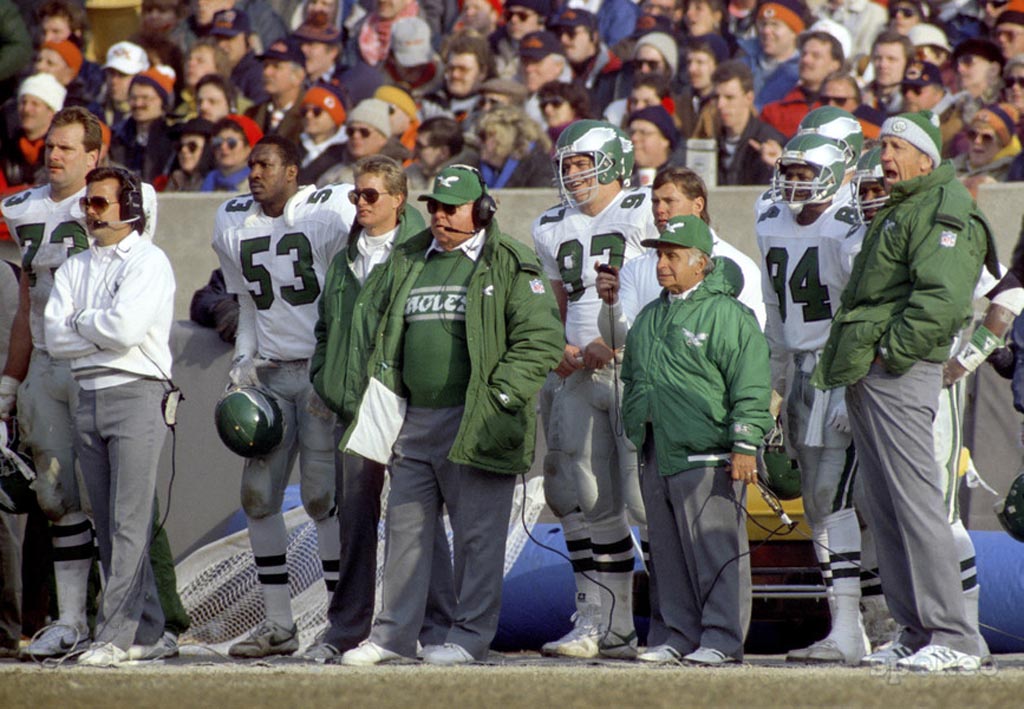
According to Golic, former Eagles coach Buddy Ryan (center) didn’t mind a scuffle every now and again.
Ryan later called a defensive front featuring White, Simmons, Brown, Mike Pitts, and Golic the best he had coached. He previously coordinated the Chicago Bears’ celebrated 1985 defense. His Eagles reached the playoffs three straight seasons from 1988 through 1990, though they never won a postseason game under him.
The defense continued to dominate after Ryan’s tenure ended. In 1991, the Eagles allowed the fewest total yards in the NFL. Brown earned the second of his two first-team All-Pro selections. He died in a car crash in June 1992 at age 27, and the Eagles later retired his No. 99 jersey.
Golic has told the shower story before. But on Tuesday, he also recalled the threat-filled fight between Solt and Brown that preceded it. That day’s work ended in a locker room full of players laughing at how close they had come to fighting again.
Sean Mannion knows his offense is still a work in progress.
There have been positive signs, no doubt — like the team’s strong third-down conversion rate (53%) — but their track record in one particular area ranks near the bottom of the league:
Early downs.
According to Sportradar, the Eagles have an offensive success rate of 37% on first and second downs, which ranks last in the NFL. They’ve converted a first down on first down just one time and they’re tied for the most negative plays on offense through two weeks.
So, what gives? Mannion tried to explain this bizarre early- vs. late-down stat discrepancy during his Wednesday news conference.
“There’s always going to be things to clean up each week,” the first-year offensive coordinator said. “We’re really close on a lot of our things on first and second down. Just some fundamental things to clean up, corrections to make. We’re always looking as a staff to put everyone in the best possible position to succeed. Not to make it coachspeak or anything like that, but I think we’re really close there.”
Improvement in the run game would be a big first step. Eagles running backs averaged just 3.7 yards per carry in the first two weeks. They averaged 2.8 yards per carry in the last-minute win at Tennessee last Sunday.
Coach Nick Sirianni didn’t offer much of an update Monday on Saquon Barkley, who missed the majority of the first half against the Titans, but he did finish the game so that could bode well for his Week 3 status. What does Mannion think of the current state of the run game?
“We’re close,” he said. “A few little things fundamentally, just some of the smaller details that, if we attack those, it’ll really come to life for us. But the guys are bought in. I think what we’re doing, being able to stay on schedule on first and second down, allows you to call more runs. You never know when those are about to pop … I feel that, moving forward, those are going to start to break through.”
Sean Mannion lauded Zach Ertz’s skills as a pass catcher. YONG KIM / Staff Photographer
What will Ertz’s role be?
The Eagles signed tight end Zach Ertz — who spent the first eight-plus years of his career in Philadelphia — to their practice squad Tuesday. The franchise legend will help fill the void left by Dallas Goedert, who is likely out several weeks due to a sprained MCL.
The offense Mannion runs leans heavily on tight ends. So how, exactly, does he plan on using the 35-year-old Ertz?
“He’s a very comfortable pass catcher,” Mannion said. “He’s had a really strong track record in that area. When you look at the tight end group, it’s really about the composite of everyone’s skill sets together. It’s what makes that position specifically unique — it’s about complementary skill sets and how they play off one another… We’ll use the week to evaluate and see what Zach’s role looks like.”
Video: Offensive coordinator Sean Mannion on how Zach Ertz will fit into the Eagles’ offense
With second-round pick Eli Stowers (quad/hamstring) and Grant Calcaterra (back) on injured reserve, Johnny Mundt and E.J. Jenkins are the only healthy tight ends on the Eagles roster. They’re both blocking tight ends. That could mean targets are coming Ertz’s way (he’s only 11 receptions shy of breaking Harold Carmichael’s franchise record of 589).
“We’ll use this practice week and see what it looks like moving forward with us,” Mannion said. “Excited to add him. I know [we’re] a little dinged up at the position… But Zach has a lot of history with the organization. Excited to bring him in and use the week to see what his role may or may not look like.”
Olivia Reiner and Jeff Neiburg break down the Eagles’ Week 3 Monday Night Football matchup against the Chicago Bears, discussing key storylines, matchups, injury updates, and what Philadelphia needs to do to stay undefeated.
UNITED NATIONS — Iran’s president said Wednesday that his people have been “victims of terrorism” by the United States, delivering a rare wartime speech at the U.N. General Assembly a day after President Donald Trump said he may “annihilate” the Islamic Republic if a deal isn’t reached soon to end the nearly seven-month war.
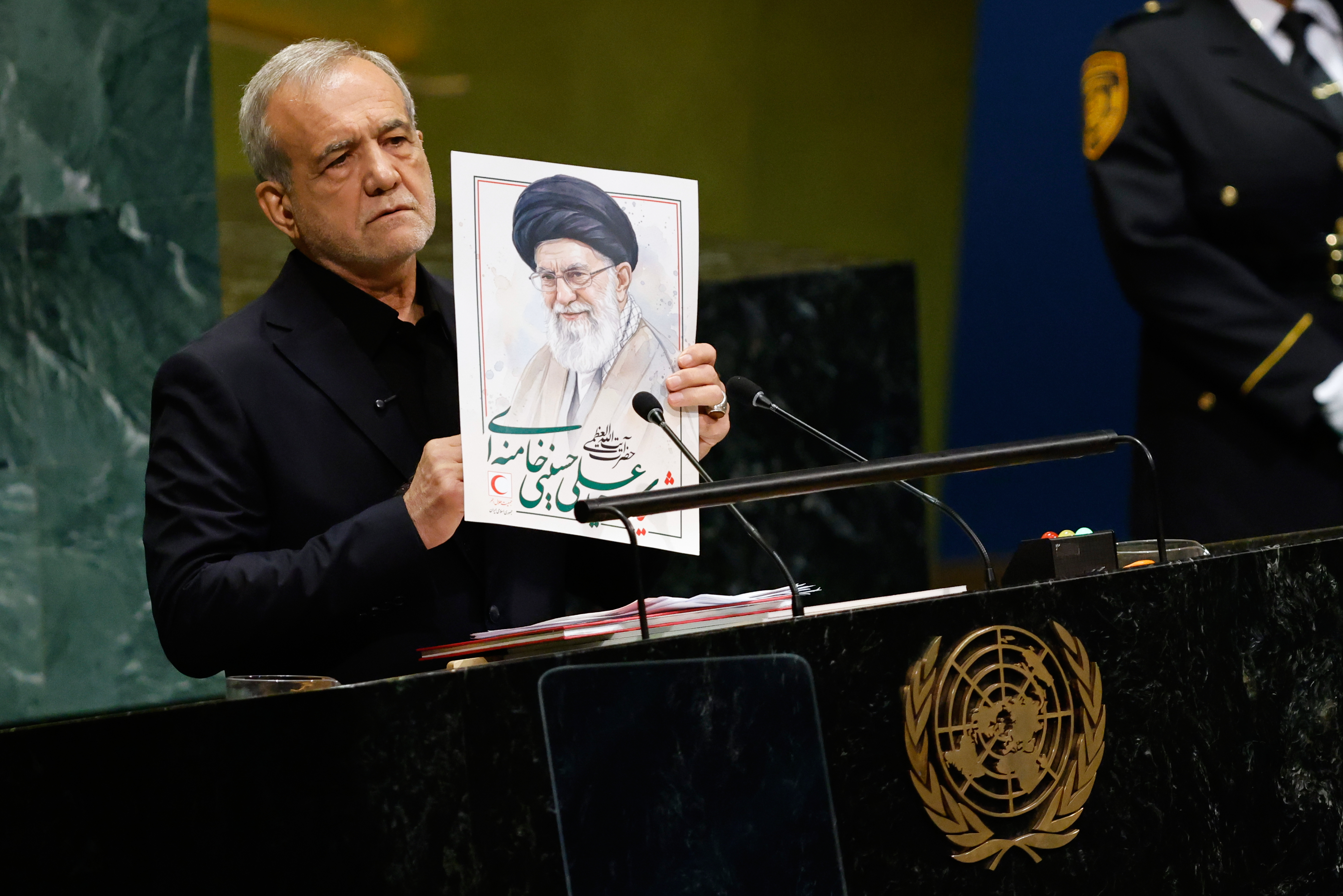
The defiant speech by President Masoud Pezeshkian marked a striking instance of a foreign leader addressing the world body while their country is at war with the host nation. While defending his country, Pezeshkian held up large photos of the late Supreme Leader Ali Khamenei and the more than 150 Iranian schoolchildren killed in the first days of the war.
“We have only defended ourselves. We are not terrorists,” Pezeshkian said at the General Assembly. “Our innocent people have been the targets of cowardly attacks and aggressions imposed upon our country. And we defended ourselves with utmost strength. America and Israel attacked us.”
He added of the United States: “Yes they did hit us, but we did not bend the knee.” Toward the end of his speech, Pezeshkian called out Trump by name.
“It must be understood by Mr. Trump and those who seek to bully us that we are ready for dialogue and diplomacy and negotiations without accepting the language of force,” he said.
Shortly after, both U.S. and Israeli officials blasted the speech, saying that it was hypocritical for the Islamic Republic to present itself as the victims of the world.
U.S. Secretary of State Marco Rubio told reporters: “I don’t know what standing Iran has to lecture anyone on human rights or the international system when they habitually violate it.”
A busy 24 hours for U.S.-Iran relations
Arriving in New York under heavy security and scrutiny, Pezeshkian — who, within Iran’s political landscape, is considered a moderate politician — addressed world leaders a day after Trump used the same stage to mull whether to massively escalate a war that has already spiraled out of control.
“I have a big decision to make,” Trump said in his wide-ranging address Tuesday. “Will a deal be made with Iran that lets them rebuild and create a far greater country than it ever was before, maybe one of the greatest in the Middle East or even the world. Or do I annihilate the Islamic Republic and do it quickly, never giving them a chance to kill and destroy people and countries again?”
Hours after those stunning threats, Trump told reporters that his chief envoys, Steve Witkoff and Jared Kushner, met for about three hours with the Iranian officials on the sidelines of the annual gathering. But he offered few details about how the discussions transpired or the substance of the exchange.
“It was a very good meeting,” Trump said. The president later added that the Iranian officials were “not the highest level, but it’s something.” Also on Tuesday, Rubio said Trump is open to meeting with Pezeshkian while he’s in New York.
But Tehran downplayed Tuesday’s unscheduled exchange, which were the first indirect talks between U.S. and Iranian officials since a June ceasefire unraveled. Esmail Baghaei, an Iranian Foreign Ministry spokesperson, maintained the country’s negotiating position in talks with U.S. officials, demanding that Washington end its blockade of Iranian ports and release frozen Iranian assets.
Baghaei said the talks — conducted indirectly through Qatari mediators — were “not anything new.”
Rubio echoed that sentiment Wednesday, saying that “it was a continuation of conversations that have occurred in the past.”
“If there’s an opportunity to exchange ideas and messages, we will. And that’s what largely yesterday was — it was positive in that regard,” he said. “But ultimately, I don’t want to mischaracterize this as a major breakthrough.”
More than a year of negotiations have taken place
Pezeshkian’s address elaborated on where Tehran stands as more than a year of start-stop negotiations between the two longtime adversaries have failed to produce a sustainable solution. His speech came as intermittent attacks continued in the Strait of Hormuz off Iran’s coast, where commercial shipping remained below prewar levels.
His address last year came months after the 12-day Israel-Iran war that saw the assassination of many of the Islamic Republic’s highest military and political leaders and once again broke down weeks of negotiations with the United States.
“Ladies and gentlemen, you all bore witness that this past June, my country was subjected to a savage aggression and flagrant contravention of the most elementary principles of international law,” Pezeshkian said at the time.
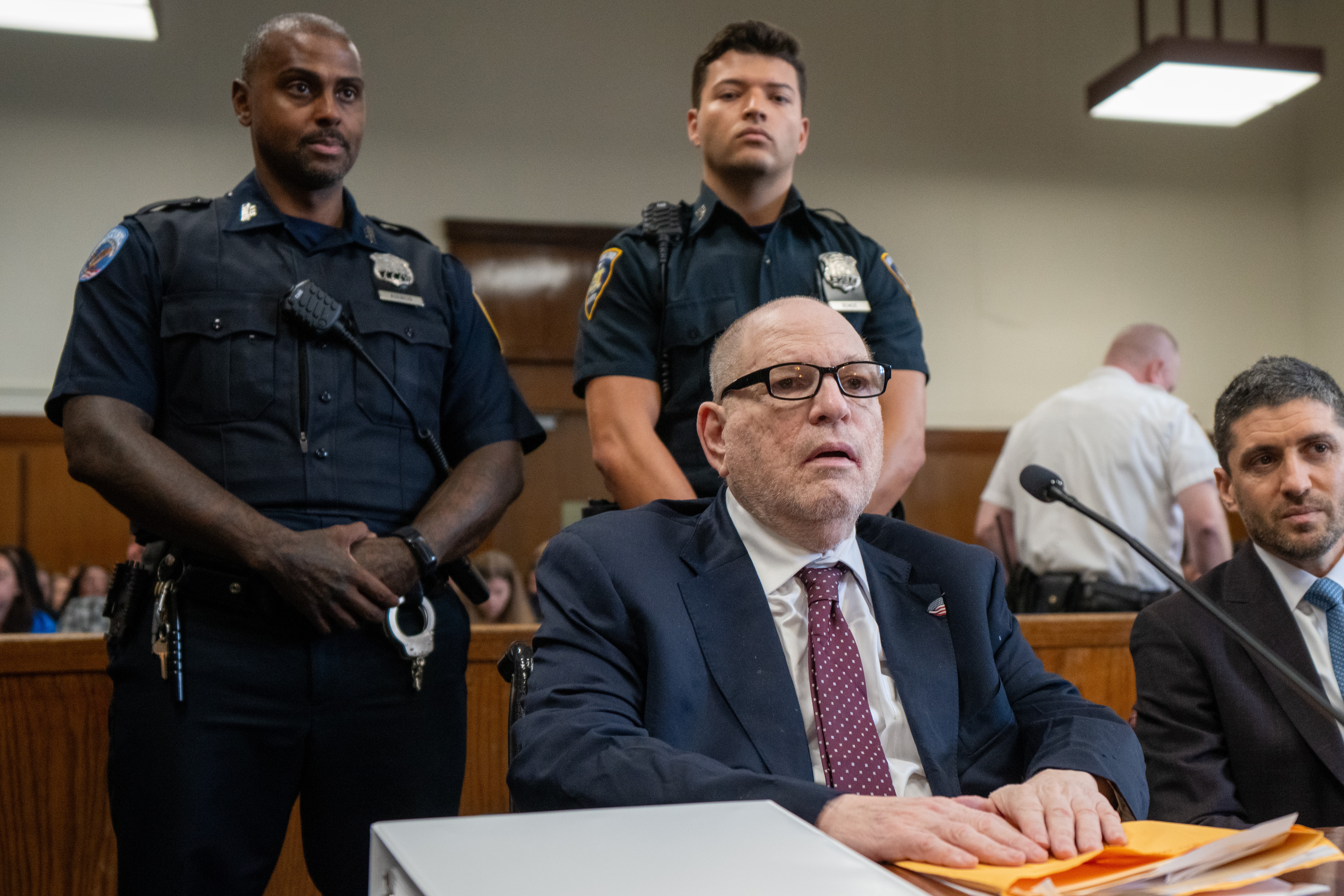
NEW YORK — Harvey Weinstein, the disgraced movie mogul, was sentenced in Manhattan to 15 years in prison Wednesday for a felony sex crime in another #MeToo reckoning.
Weinstein’s sentencing for sexually assaulting one-time TV production assistant Miriam Haley followed a legal odyssey spanning more than six years. His 2020 conviction was overturned by New York’s highest court. A second jury found Weinstein guilty again at a retrial last year.
Once among the most powerful figures in the entertainment industry, Weinstein was an Oscar-winning producer whose hits included Shakespeare in Love, Pulp Fiction and Chocolat. But his downfall came quickly after sexual assault allegations in 2017 set off the #MeToo movement.
Weinstein, 74, is expected to appeal and maintains that he never raped or sexually assaulted anyone. He is now likely to remain behind bars well into his 80s. Seated in a wheelchair, he was quickly moved out of the courtroom after the sentencing, while some of his accusers hugged and brushed away tears.
Weinstein and his victim both spoke in court
Weinstein faced up to 25 years in prison for sexually assaulting Haley at his Manhattan apartment in 2006. He has already served more than six years as his case cycled through the criminal justice system. Haley gave her account of the assault at two trials, and again addressed the court Wednesday.
“Having been sexually assaulted by Harvey Weinstein has had a devastating effect on my life and sense of security that may never go away. Making the decision to speak up will have me looking over my shoulder for years to come,” Haley said.
“It’s a life sentence for me,” she added.
Minutes later, Weinstein apologized while reiterating his innocence.
“Reflecting on all that has happened since 2017 has helped me recognize how my past conduct has negatively affected others. I live with many regrets and sincerely apologize to anyone I have affected with my actions,” he said.
Some of his accusers who were in court shook their heads while he spoke.
Weinstein is the face of MeToo, judge says
Judge Curtis Farber said Weinstein was once a king in the movie industry, “but recognition for these achievements will pale in comparison to what you did.”
He said Weinstein is now known as “a sexual predator, the literal face of the MeToo movement.”
The judge said Weinstein treated women as “mere objects to be played with and discarded” and still hasn’t accepted responsibility, portraying himself as a victim during jailhouse interviews.
Haley afterward said she was happy with the sentence, while saying it’s clear that Weinstein has not acknowledged what he did. “I think he still feels entitled, and that’s part of the problem,” she said.
Haley’s lawyer, the famed victims’ rights attorney Gloria Allred, rejected any suggestion that Weinstein’s sentencing means the MeToo era is over.
“Women are empowered in a way they have never been before,” she said.
Why Weinstein is being sentenced a second time
Weinstein was originally sentenced to 23 years in prison after a jury convicted him of assaulting Haley and raping an aspiring actress, Jessica Mann, in 2013.
Tried for a second time last year, he was again convicted of a first-degree criminal sex act for assaulting Haley, who has also gone by the name Mimi Haleyi. In a messy split verdict, the jury acquitted him of forcibly performing oral sex on another woman, Kaja Sokola, and could not reach a verdict on a rape charge involving Mann.
After another retrial ended in a hung jury in May, Manhattan prosecutors dropped the rape charge rather than pursue a fourth trial after Mann said she could not bear to testify again.
Weinstein’s health issues pushed the defense to ask for leniency
Defense lawyer Jacob Kaplan wanted three more years on top of the six years Weinstein already served, saying a longer sentence would make it more likely that Weinstein dies in prison.
Weinstein has been in the hospital six times since 2025, Kaplan said, while dealing with blood cancer, congestive heart failure, and kidney issues.
Weinstein is also awaiting resentencing in a separate rape case in Los Angeles. A California appeals court upheld the 2022 conviction but threw out his original 16-year sentence because the judge had considered his New York convictions — that were later thrown out — as an aggravating factor.
After shuffling between state prison, where he tested positive for COVID-19 early in the pandemic, and New York City’s notorious Rikers Island complex, Weinstein has been housed at a medical unit for inmates at Bellevue Hospital in Manhattan.
Haley describes the assault that led to Weinstein’s conviction
Haley, 49, is a former entertainment producer now working in advertising.
She said she met Weinstein through a mutual connection and worked briefly as a production assistant on Project Runway, a reality competition show that he produced.
Haley said she accepted an invitation to visit Weinstein’s apartment and after chatting briefly, he lunged to kiss her, she testified. She said she rebuffed him, but he grabbed her, forcibly backed her into a bedroom and sexually assaulted her, ignoring her pleas to stop.
She recalled Weinstein asking, “Don’t you think we’re much closer now?” after either the alleged assault or a subsequent occasion when she says she had unwanted, but not forced, sex with him.
She also recalled telling him after the second encounter, “You know you can’t keep doing this.”
The Associated Press does not typically identify people who say they are victims of sexual assault unless they grant permission, which Haley, Sokola and Mann have done.