Blog

  • Eagles wide receiver DeVonta Smith out for Rams contest with hamstring injury, expected to miss multiple games

    Eagles wide receiver DeVonta Smith out for Rams contest with hamstring injury, expected to miss multiple games

    The Eagles will be without their top wide receiver for Sunday’s matchup against the Los Angeles Rams — and potentially longer.

    DeVonta Smith (hamstring) was ruled out on the final injury report on Friday. He is expected to miss more than Sunday’s game with a lingering right hamstring injury that initially caused him to miss time during camp. He could be out two to three games, two league sources said.

    Zack Baun (concussion) and Marcus Epps (groin) also were ruled out against the Rams. Neither Smith nor Baun practiced in the aftermath of Monday night’s loss to the Chicago Bears.

    Smith, 27, also was on the injury report last week with the hamstring issue. He did not participate in practice last Thursday, was upgraded to limited on Friday, then participated in full on Saturday before playing against the Bears. He played all 50 offensive snaps and finished with six receptions on eight targets for 65 yards.

    DeVonta Smith (left) has been one of the NFL’s most targeted receivers through three weeks. Yong Kim / Staff Photographer

    The Eagles will have to distribute his ample targets elsewhere. Through three games this season, Smith has received 32.9% of the team’s targets, which is the second-highest rate in the NFL behind the Seattle Seahawks’ Jaxon Smith-Njigba (37.9%), according to Next Gen Stats. Extended through an entire season, that would be the highest single-season target share by an Eagles player since at least 2000.

    Dontayvion Wicks, the second-highest-targeted wide receiver on the Eagles offense, said Thursday that he was ready to step into an increased role if called upon in Smith’s absence.

    “If so, I’ve got to step up and be there for [Jalen Hurts],” Wicks said. “Be there for the team, the offense. And capitalize on the plays, opportunities Coach gives me.”

    This will be the first time Baun, 29, has missed an Eagles regular-season game because of injury. He played 91.7% of the defensive snaps against Chicago, and Jeremiah Trotter Jr. took his place on the final Bears possession. Baun spoke to reporters postgame, so it is unclear when he entered the concussion protocol.

    With Baun out, Trotter is expected to start alongside Jihaad Campbell. Trotter, the 2024 fifth-rounder out of Clemson, has yet to start in a non-preseason, non-Week 18 game.

    Eagles linebacker Zack Baun (right) is in concussion protocol and will miss Sunday’s game. Yong Kim / Staff Photographer

    Epps, the Eagles’ starter at safety alongside Andrew Mukuba, popped up on Thursday’s injury report with a groin injury and was a limited participant in practice. He did not participate in Friday’s practice.

    Last week against the Bears, the Eagles rotated Epps with Michael Carter II at safety throughout the game. Vic Fangio said this week that the plan was for both players to continue to man the position, but he may look to Carter to take it on full-time in the absence of Epps.

    The Eagles also signed veteran defensive back Kenny Moore II to the active roster on Tuesday, less than a week after adding him to the practice squad. Moore, 31, had mostly been a nickel cornerback throughout his nine-year career with the Indianapolis Colts, so it is unlikely that he would step in at safety immediately. Fangio said that move could be a “down-the-line possibility.”

    Fangio once again shot down the idea of moving Cooper DeJean to safety full-time.

    Additionally, Hollywood Brown (ankle), Dallas Goedert (knee), and Fred Johnson (knee) have been ruled out. Each player also was inactive against the Bears.

    The Rams have ruled out defensive tackle Aaron Donald, tight end Terrance Ferguson, and cornerback Jaylen Watson. Receiver Puka Nacua, who missed the Rams’ last two outings with a groin injury, is slated to return.

    Jalen Carter (left) has been playing with a soft cast on his right wrist. Yong Kim / Staff Photographer

    Carter in cast for ‘a couple more weeks’

    As he heals from a hairline fracture in his right wrist, Jalen Carter has been wearing a cast during games. But he doesn’t expect to wear it for much longer.

    Carter, the 25-year-old defensive tackle, said Friday that he likely will have to wear the cast for “a couple more weeks.” He acknowledged that wearing the cast has impacted his ability to use his hands, which can impact his technique. But he said his grip strength and mobility are beginning to improve.

    “It’s affected me a little bit, but I try not to think about it at the time, in the game,” Carter said. “I can’t make no excuses while I’m in there, so I try not to think about it and just keep pushing. I might feel a little ding, whatever. I can either get out, let it calm down, or just keep playing. Most times, I just keep going.”

    Carter has played 81% of the defensive snaps, despite his injury. He has one of the team’s three sacks this season, which he registered in Week 2 against the Tennessee Titans.

    Staff writer Jeff McLane contributed to this article.
  • Russia is planning its most powerful blow yet to try to freeze Ukraine

    Russia is planning its most powerful blow yet to try to freeze Ukraine

    KYIV, Ukraine — For months, Ukrainian officials have warned people to brace for what could be their hardest winter at war. Russia, they said, would use its ever more powerful weapons to try to cripple the country’s power grid. The first big strike was expected later this fall, with the first bite of cold.

    Russia did not wait that long. Before dawn on Wednesday, missiles and drones slammed into a large thermal power plant and other energy facilities, shaking the Ukrainian capital, Kyiv, with explosions. By morning, several neighborhoods were without power and water.

    The attack, Ukrainian officials said, marked the opening salvo of a new campaign to plunge Ukrainian cities into cold and darkness, with the ultimate goal of breaking people’s morale and crippling the war effort. Russia has waged similar campaigns each year, with mixed results, but it is approaching this winter armed with stocks of ballistic missiles and jet-powered drones that Ukraine has struggled to intercept.

    The scale of Russia’s ambition to freeze Ukrainians into submission is evident in a document that the Ukrainian energy minister, Denys Shmyhal, showed to European partners in Paris two weeks ago, according to two people familiar with his presentation.

    Shmyhal, the people said, described the document as an intercepted Russian plan to cause the energy system to collapse through methodical attacks. The plan, a copy of which the New York Times obtained, describes a campaign of strikes using up to 1,000 missiles, drones, and bombs. They would target a wide range of facilities, including electrical substations, hydroelectric and thermal power plants, and boiler houses.

    Most alarming, the document says that Russia intends to force Ukraine’s three operating nuclear plants — the backbone of its power infrastructure — to shut down by firing missiles at the electrical switchyards that connect them to the grid. The switchyards sit less than a mile from the reactors.

    The plan also says that Moscow will target Ukraine’s water system, including pumping stations and wastewater treatment facilities, with dozens of ballistic missiles and glide bombs. Russia has never attacked such sites on a large scale before. Ukrainian officials have privately expressed concern that the country has limited backup plans should it face severe water disruptions.

    Residents on Volodymyrska Hill in Kyiv, Ukraine. As winter nears, Ukrainian officials warn Russia may target key infrastructure to deprive cities of heat, power, and water.Jedrzej Nowicki

    The ultimate goal is to cut off major Ukrainian cities from power, heat and water, which could set off a humanitarian crisis. Kyiv, Kharkiv, and Odesa are highlighted as top targets, with plans to cut electricity supplies in those cities by 90%, reduce heating supplies by up to 90% and severely disrupt the sewage system.

    The New York Times had no way to independently authenticate the document, which is dated from August and written in Russian. But President Vladimir Putin of Russia has publicly stated that his forces will wage an extensive campaign this winter to knock out Ukraine’s energy infrastructure, framing it as retaliation for Ukrainian strikes on Russian oil refineries.

    Shmyhal spoke in vague terms about the document to the Ukrainian media a week ago, saying, “Our partners, like us, were struck by its cynicism, by this cold, terrorist calculation of how to destroy our energy sector.”

    Whether Russia will follow through on the strategy laid out in the document — and whether it will succeed if it does so — remains to be seen.

    Ukraine has spent the past several months preparing for the winter, building protective structures above critical facilities, such as substations that carry electricity across the country. Civilians, most of whom endured severe power and heating cuts last winter, have stocked up on batteries and small gas-powered heaters.

    Ukrainian authorities have spent hundreds of millions of dollars to repair power plants and substations, as well as to install smaller energy facilities like gas-powered turbines that are harder to strike. Ukraine has also invested in strengthening the grid to withstand cold-weather demand and reroute power when attacks knock out transmission lines.

    Energy experts caution that these measures can at best cushion the expected blow, not stop it. Olena Pavlenko, head of DiXi Group, a Ukrainian energy think tank, said that four winters of war had left the country’s power grid so weakened that getting through another would be like “running a marathon with only one lung.”

    Memories of last winter, by far the hardest of the war so far, in part because of particularly bitter temperatures, still loom large for Ukrainians and explain their dread of another Russian strike campaign.

    As Russia repeatedly hit power and heating plants, Kyiv residents regularly endured a dozen hours or more without electricity each day, according to data shared by DTEK, the country’s largest private energy company and the capital’s electricity distributor.

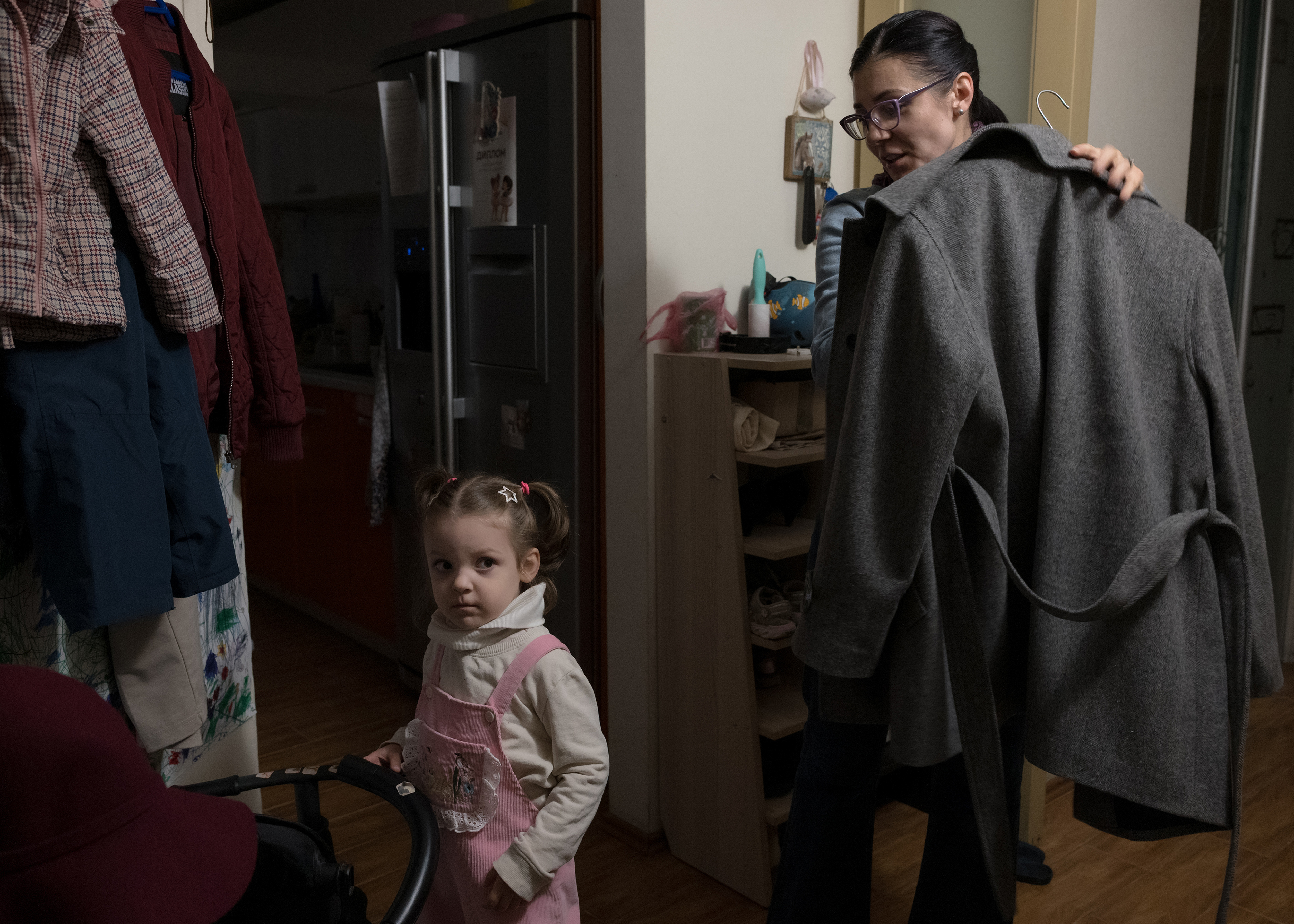
    Olha Skorokhod, 41, a resident of central Kyiv, said that last January she had to bathe her daughter Zoriana, 3, in cold water after losing heat for two weeks.Jedrzej Nowicki

    Olha Skorokhod, a resident of central Kyiv, said she lost heat for two weeks last January as temperatures outside fell well below freezing. She had to wash her 3-year-old daughter, Zoriana, in cold water, and worried that she might get sick as a result. Changing the child’s clothes was an ordeal as the cold nipped at her bare skin. At one point, Skorokhod tried to warm the apartment by heating bricks on a small gas stove. It barely made a difference.

    In high-rises across the capital, residents on the top floors often had no water because the pumps lost power. To get to their apartments, they had to climb flight after flight of stairs because the elevators were out of service. Even when the power returned for a few hours, some avoided the elevators, afraid of getting trapped during a sudden outage.

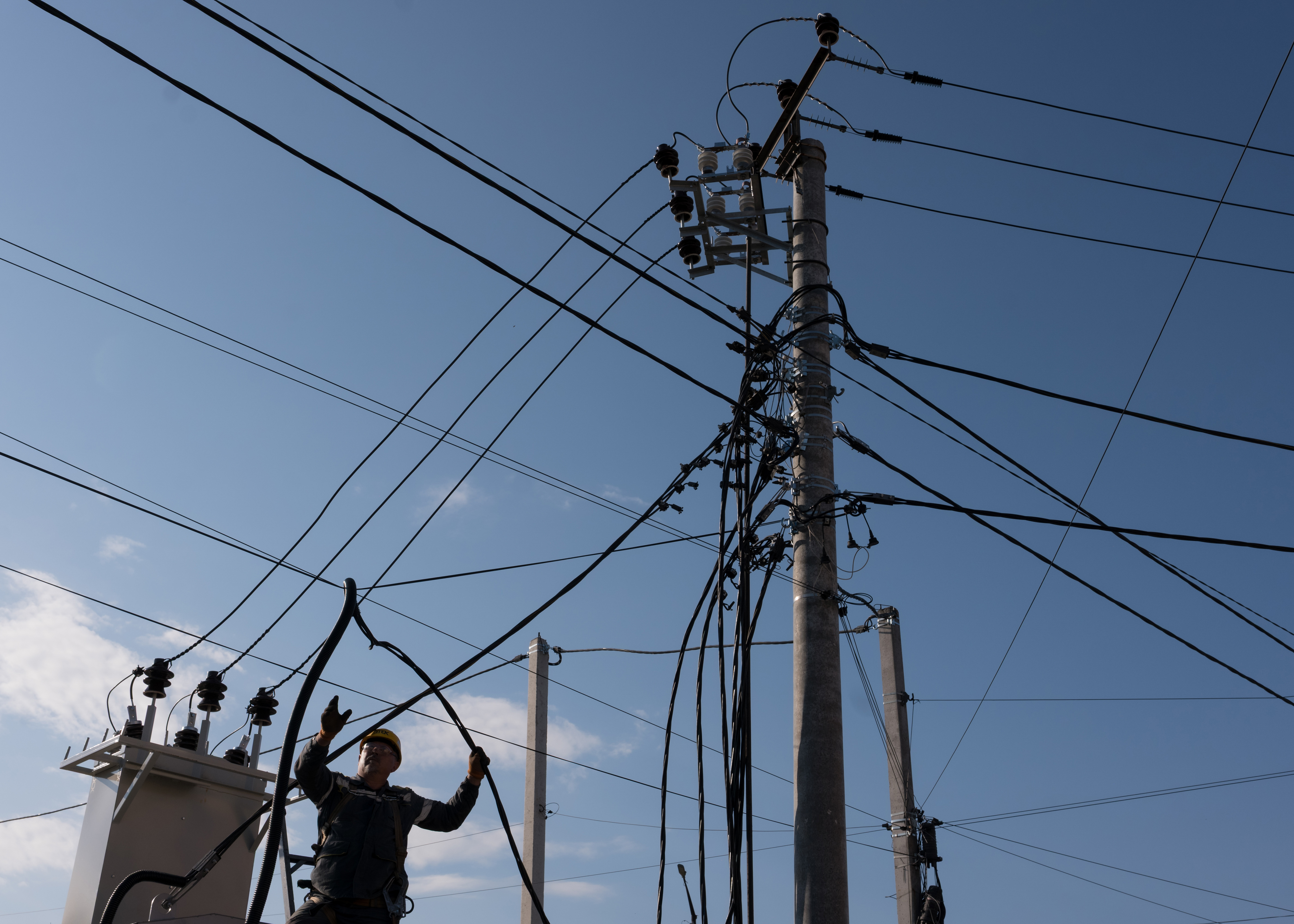
    To avoid a repeat this winter, power crews have been hard at work. On Monday, a repair team from DTEK was busy replacing an old transformer with a new one near Kyiv. They lifted the old unit off a pole and replaced it with a new transformer in a protective casing.

    “There’s old equipment that simply can’t handle the load anymore,” said the crew leader, Eduard Kashkov, 57. “Some of the equipment is as old as I am.”

    Last winter showed that local equipment can fail when power returns after an outage and large numbers of people plug in at once to charge batteries, Kashkov said. The new transformer, he added, was built to handle the surge in consumption.

    Speaking to parliament in August, Shmyhal expressed confidence that Ukraine would enter the winter well prepared. The country had about 15 gigawatts of available capacity, he said, and he expected it to grow to more than 21 gigawatts by year end. That would be enough to cover peak demand, which reached about 18 gigawatts last winter.

    But his projections did not account for attacks like Wednesday’s, which can undo months of repairs. Maria Tsaturian, an energy analyst at the research group Ukraine Facility Platform, said it could take only a few attacks to knock out the five gigawatts that Ukraine had restored in recent months. She pointed to the power outages after Wednesday’s strike as evidence of the grid’s fragility.

    Russia’s intercepted plan appears designed to collapse Ukraine’s already weakened grid.

    It lays out three stages of attacks. The first would knock out substations near Ukraine’s western borders, which import electricity from Europe. The second would take out hydroelectric power plants. The third would force Ukraine’s three operating nuclear plants offline. (A fourth nuclear plant, near the southern city of Zaporizhzhia, was captured by Russian forces early in the war and is not operating.)

    The goal of the attacks, the document says, is to eliminate nearly 15 gigawatts of generating capacity — as much as Ukraine had at the end of the summer.

    This article originally appeared in The New York Times.

  • These three Chester County voters have cast ballots in 50 consecutive November elections

    These three Chester County voters have cast ballots in 50 consecutive November elections

    Fifty November general elections have passed “in the blink of an eye,” said Rita Lese as she was inducted into the state’s Voter Hall of Fame on Friday.

    Lese has a long tradition of going to the polls, which started when she was a little girl, walking there with her parents. It felt like the “greatest thing” to go behind the curtain of the booth. That history continued as an adult, with her two daughters in tow on Election Day. Living in the same house for the last 50 years, just down the road from their polling place, she’d walk to cast her ballot in rain and sun.

    Lese, 77, was one of three Chester County residents — including her husband, Michael Lese, and Patricia Conroy — to be recognized for voting in 50 consecutive November elections during Chester County’s Board of Elections meeting Friday.

    Established in 1986, the Voter Hall of Fame was formed to encourage Pennsylvania residents to cast their ballots. In the four decades since, more than 25,000 voters statewide have been inducted. Voters are recognized in each of the counties; Friday’s celebration increases Chester County’s contribution to that tally to 118, officials said.

    “So there’s no excuse for the rest of us, is what you’re saying?” Josh Maxwell, the chairman of the county’s board of elections, asked Rita Lese.

    It appears no.

    It was a “a huge commitment and a tremendous accomplishment,” said Stephanie Reid, executive deputy secretary for the Pennsylvania Department of State.

    “There had to have been some Election Days when they were ill, or they were busy with pressing work, or commitments with their children, the weather was bad, any other challenge that comes up every day in our lives that would have made going to cast their ballot inconvenient,” she said during the ceremony Friday. “Yet they persevered.”

    But when Rita Lese thinks about what the suffragettes went through to secure some women’s right to vote in 1920, she can’t imagine not showing up to the polls each year; she thinks about it every year she does. Michael Lese, 78, who describes himself as an avid reader of history, said he feels similarly.

    “When I read all of those sacrifices that people made so that we have the right to vote, it just instilled in me the importance of what this means,” he said.

    The Leses’ civic engagement hasn’t stopped at casting their ballots, either. Rita always wanted to work the polls, but her career as a nurse made that pretty much impossible. In retirement, she thought maybe she’d have the opportunity. But Michael beat her to it: A longtime construction executive, he has spent essentially a second career at the polls. For 25 years, he has served as a clerk, a machine inspector and, for the last three, a judge of elections. He’s brought Rita in as an emergency poll worker when he’s low on poll workers.

    It’s never been just about the issues for the Leses, but just the importance of showing up.

    “It’s what you do,” Michael said in an interview.

    “It’s what you do,” Rita echoed. “It’s a circle on the calendar, and that’s the day you vote.”

    After half a century of voting, there are a few elections that stick out. The elections of presidents Jimmy Carter in 1976 and Barack Obama in 2008 felt particularly remarkable, they said. They’ve seen the evolution in voting: “from write-ins, to the styluses, to the little circles and different machines.”

    With a rise in mail ballots, the crowds haven’t been the same, they said. But as their daughters are avid voters by mail ballots, they hope that participation hasn’t declined either. (In 2024, 77% of Pennsylvania’s eligible voters cast a ballot in the November election, in numbers that have dipped and grown in the last 36 years, according to state data. That year saw some of the highest participation since 1988.)

    The Leses joked they’d hopefully go for another 25 years of consecutive elections.

    Meanwhile, inductee Patricia Conroy, 79, came to her own civic participation a little differently. Her father, a longtime mail carrier who raised her and her four siblings basically on his own, “cared a whole lot about voting,” she said.

    One Election Day, she remembers him coming home, remarking that someone told him they wouldn’t be voting: “Just imagine if everybody felt that way,” she recalls him saying.

    That stayed with her.

    “And so, I’ve been voting, all the time,” she said.

    Elections have become a significant part of her family’s life. Two of her siblings ran for local office, and her sister is also being inducted to the Voter Hall of Fame in Philadelphia, she said.

    A retired real estate agent, Conroy worked as a judge of elections, a Democratic committeeperson, and on campaigns. She also brought her sons with her to the polls. Both her and her husband — who met on the aptly patriotic Fourth of July as teenagers in 1966 — have early November birthdays. She remembers apologizing to him for missing his birthday in 1992 to celebrate President Bill Clinton’s win. (“I told him: You understand, we’re partying,” she said.)

    There are other memorable elections: Gov. Josh Shapiro’s election was a highlight, she said. And some others are notable for not going her way, she said.

    “Let’s just say we had a lot of laughs and a lot of tears on various election nights,” she said.

    U.S. Rep. Chrissy Houlahan, a Democrat who represents Chester County, called the three “exemplars of what model citizens should be.”

    “Elections and candidates have clearly changed over those 50 years,” she said. “Our country has changed, but throughout it, you have made your voice heard.”

    For those keen to start their long, storied voting history, voter registration closes Oct. 19.

    This suburban content is produced with support from the Leslie Miller and Richard Worley Foundation and The Lenfest Institute for Journalism. Editorial content is created independently of the project donors. Gifts to support The Inquirer’s high-impact journalism can be made at inquirer.com/donate. A list of Lenfest Institute donors can be found at lenfestinstitute.org/supporters.

  • Philly’s historic Wanamaker Building is getting a new $4 million event venue

    Philly’s historic Wanamaker Building is getting a new $4 million event venue

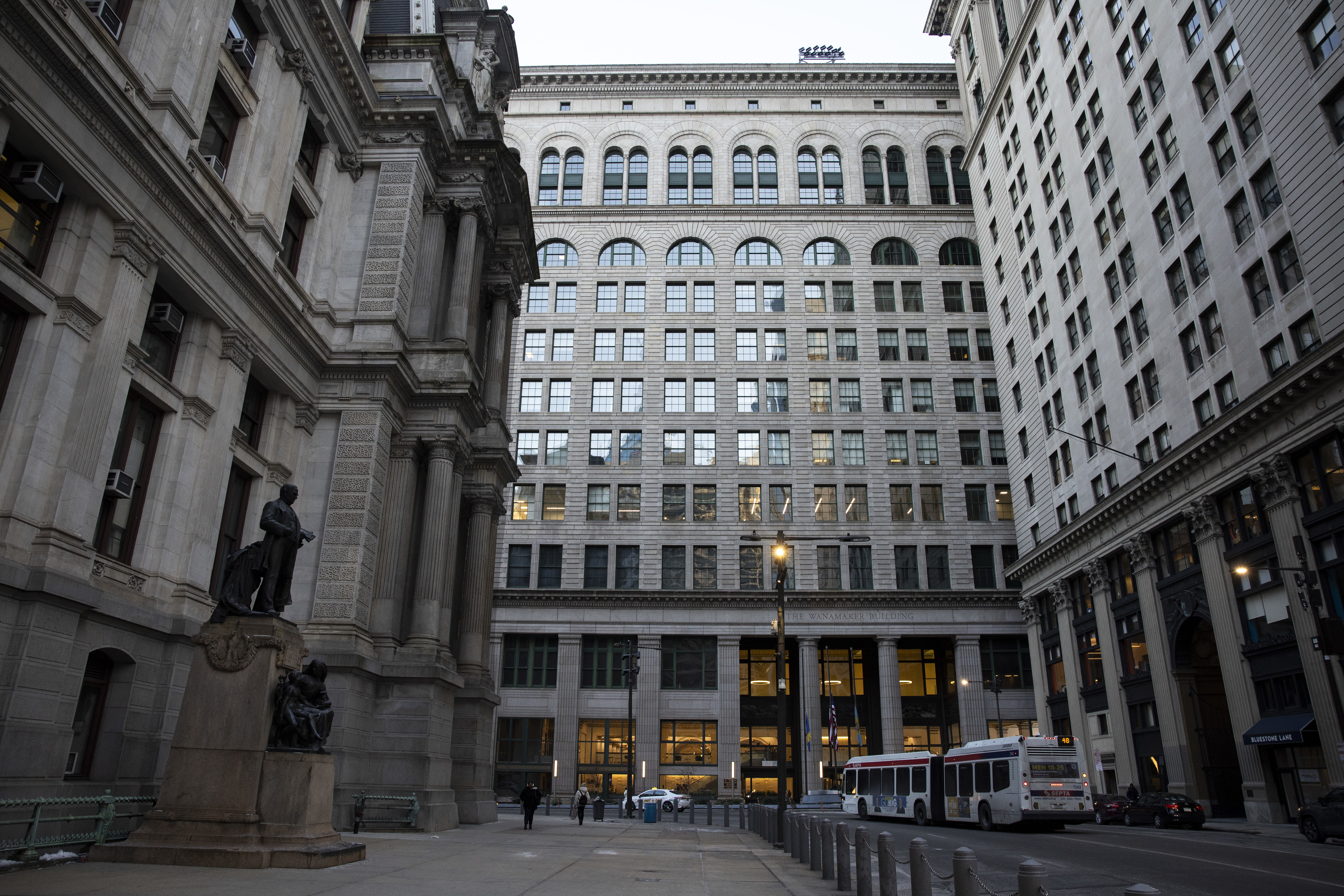
    The historic Wanamaker Building in Center City will soon be home to a new $4 million event space.

    The Wanamaker Room, the latest addition to the Finley Catering portfolio, will be able to serve as a standalone venue or an expansion of the Crystal Tea Room, where Finley has held weddings and banquets for 25 years.

    The new 5,000-square-foot space, on the same floor as the Crystal Tea Room, is currently under construction, according to the Finley team, and is set to open in early 2027.

    A rendering of the bar area in the Wanamaker Room at the Crystal Tea Room, which is set to be the latest venue in Finley Catering’s portfolio when it opens in 2027.Courtesy JKRP Archiects

    “The Wanamaker Room is an investment in the guest experience and in the future of this landmark space,” owner and CEO Steve Finley said in a statement. “We’re excited to give our clients new possibilities for their events while continuing to welcome people to the heart of Philadelphia.”

    With large windows overlooking City Hall, the Wanamaker Room will serve as the new cocktail-hour space for weddings at the Crystal Tea Room, a grand ballroom that can fit up to 1,200 people.

    The Wanamaker Room will also be available to book for independent events, such as corporate functions, rehearsal dinners, and cocktail receptions, with space for as many as 400 guests.

    A rendering of the “flex space” at the Wanamaker Room at the Crystal Tea Room, which is set to be the latest venue in Finley Catering’s portfolio when it opens in 2027.Courtesy JKRP Archiects

    The new addition marks the latest change for the Wanamaker Building. Last year, its iconic Macy’s closed after occupying the bottom floors for 19 years. Like many brick-and-mortar retailers, the 435,000-square-foot location had struggled since the pandemic, and the company deemed it “underproductive.”

    The nearly 1-million-square-foot office portion of the building also took a hit from the pandemic. Its new owners, New York-based TF Cornerstone, have plans to transform the space with renovated offices, loft-style apartments, and a rooftop pool.

    The company also wants to bring new retail, entertainment, and fitness outlets to the Macy’s shell, which it has owned since 2019. TF Cornerstone has said it sees the building being “a mixed-use anchor for Center City.”

    Finley Catering, a 50-year-old family-run business with roots in the Philly suburbs, leases its ninth-floor space in the Wanamaker Building, recently renewing for another 29 years.

    The company also operates the Ballroom at the Ben and Union Trust in the city, as well as two suburban venues, The Ivy at Ellis Preserve and The Ballroom at Ellis Preserve, both in Newtown Square.

  • Philadelphia Inquirer employees secure new union contract with raises and AI protections

    Philadelphia Inquirer employees secure new union contract with raises and AI protections

    Unionized journalists and product engineers at The Inquirer secured a new contract on Friday that includes AI protections, raises, and changes to healthcare coverage.

    The company reached a tentative deal with the News Guild of Greater Philadelphia Local 38010 on Sept. 15. Union members ratified the new contract by email vote this week.

    Of 238 eligible union members, 160 workers voted, with 156 in favor of the new contract.

    “AI is one of the biggest unknowns and new frontiers that is dramatically reshaping our entire industry right now, against the backdrop of ongoing cuts to local news,” said Guild President Max Marin, who is an investigative reporter at The Inquirer. “Many of our members viewed it as an existential threat, and we are incredibly proud of the agreement that we came to with management.”

    The union that represents Inquirer workers also includes employees of Spotlight PA, the News Journal in Wilmington, the Trentonian, and the Scranton-Times Tribune, and other local news outlets.

    The Inquirer’s last three-year union contract was set to expire Aug. 31, and was extended in negotiations through Sept. 15. The union and newsroom management reached a deal hours before that extended deadline.

    The new contract goes into effect immediately and will expire in 2029.

    Inquirer publisher and CEO, Lisa Hughes, said in a statement that reaching a new agreement with the union “is an important step forward for The Inquirer.”

    “This agreement provides meaningful enhancements to both wages and benefits, and it reflects The Inquirer’s continued commitment to investing in our most important resource: the people who work here,” she said.

    New AI policies

    Under the new deal, The Inquirer may not use any AI generated videos or images that appear realistic “for editorial purposes.” The contract bars The Inquirer from using AI to mimic employees without their explicit consent.

    Employees also have the right to have their byline removed from any content that is AI generated.

    Under the contract, Guild members must be included in developing, training, and maintaining AI tools. Union employees must be involved in creating or otherwise verifying any AI-generated content.

    The Inquirer will also put together an AI Advisory Committee in collaboration with the union, which will meet on a monthly basis. The group is expected to discuss “the implementation of AI-generated and AI-assisted editorial content, the implementation of AI tools for internal company purposes, and updates to the Employer’s AI usage policies.”

    Changes to pay and benefits

    Unionized Inquirer employees will receive a one-time $5,577 payment before taxes within 30 days of ratifying the contract. They will get a 4% wage increase and a $1,000 bonus in the second year, and another raise in year three.

    The amount of that last pay bump varies between 2.25% and 4%, with lower-paid members getting the higher rates.

    “This is our third consecutive contract with pay raises at The Inquirer, following a decade of layoffs and furloughs,” said Guild president Marin. “These are meaningful raises too.”

    Vacation time will also accrue more quickly, with new Guild employees starting with three weeks per year.

    Healthcare costs have been on the rise for many Americans, and under the Inquirer’s new union contract, members will see their weekly rates increase for the first time in 20 years, according to the union. Despite the increase, the union says it worked to keep rates low. Guild members’ contributions to their health plans will increase by $7.50 to $12.50 per week in year two of the contract.

  • Rams star Aaron Donald out for Eagles game, Puka Nacua set to return

    Rams star Aaron Donald out for Eagles game, Puka Nacua set to return

    LOS ANGELES — Aaron Donald will miss the Rams’ game against the Philadelphia Eagles on Sunday because of a sore back, while Puka Nacua will return after missing two games because of hip and groin injuries.

    Donald did not practice all week and coach Sean McVay officially ruled him out Friday. A three-time AP Defensive Player of the Year, Donald has four tackles, one tackle for loss and one quarterback hit in two games after ending his two-season retirement.

    McVay said the Rams (1-2) were erring on the side of caution with Donald and that the 35-year-old defensive tackle probably could have played through the injury if needed.

    “We have to protect him from him,” McVay said. “This guy will do everything (to play) and that much more.”

    Nacua had five receptions for 74 yards in the season opener against the 49ers but missed games versus the Giants and Broncos after hurting himself in practice on Sept. 17.

    “Just in some of the change of direction stuff, some of the stuff in my hip area just was not feeling great,” Nacua said. “It was causing me some pain and some restriction in some of my movements.”

    The Rams also ruled out tight end Terrance Ferguson (ankle) and cornerback Jaylen Watson (shoulder), while tight end Colby Parkinson (knee/shoulder) and linebacker Grant Stuard (groin), a key special teams contributor, are questionable.

    McVay also said wide receiver Alex Bachman will likely be called up off the practice squad to contribute on special teams after return specialist Xavier Smith was waived on Friday.

    The decision to move on from Smith came one day after special teams coordinator Bubba Ventrone was critical of Smith’s performance while also ruling out replacing the third-year wide receiver from Florida A&M. Smith’s status had been in question since he muffed a punt leading to a Seattle touchdown in the Seahawks’ 31-27 win over the Rams in the NFC championship last season.

    “We just need better production out of that position,” McVay said. “That’s exclusively what it was.”

    “We weren’t thinking about it when (Ventrone) talked to you guys yesterday. And as you get a chance to kind of take a step back, evaluate the totality of our group — what’s the best way to try to be able to put together all three phases? Did feel like that was in the best interest of the group, and that was kind of what went into it.”

  • Human remains found off Atlantic City 45 years ago identified as retired Coast Guard officer

    Human remains found off Atlantic City 45 years ago identified as retired Coast Guard officer

    New Jersey State Police have identified the remains of a man found off the coast of Atlantic City 45 years ago.

    Glen Napoleon Burbage, a retired U.S. Coast Guard officer from South Carolina, was last seen in March 1981. Burbage, who was 59 when he disappeared, had flown to Atlantic City that month, and was never heard from again, officials said in a statement.

    Two months later, on May 22, 1981, a group of boaters found a human body in the ocean about a mile off Raleigh Avenue in Atlantic City. At the time, investigators believed the man had died several weeks before his remains were recovered.

    Police, however, were unable to immediately identify the remains. Previous DNA testing did not reveal any matches in the Combined DNA Index System, a national, federally managed DNA profile database. And lacking further leads, the case went unsolved for decades.

    In April, authorities enlisted the help of Ramapo College’s Investigative Genetic Genealogy Center. Founded in 2022, the Mahwah center specializes in training students in an increasingly utilized field of DNA-based investigative technology that uses data from commercial genetic testing to identify previously unidentified victims and suspects.

    That month, the center said, it had undergraduate students and law enforcement officials attending a weeklong boot camp examine the then-unidentified body’s DNA. Students built family trees and examined genealogical records in an effort to identify the man.

    Following the boot camp’s end, they found a lead in Burbage, who had been missing since March 23, 1981. New Jersey State Police later conducted what they called a “one-to-one familial DNA comparison” with DNA collected from one of Burbage’s living children. South Carolina authorities also assisted in the case.

    “For 45 years, Glen Burbage had a name and a family, even though investigators did not yet know who he was,” said center director Cairenn Binder in a statement. “Investigative genetic genealogy gives us a way to revisit cases that once seemed to have reached the limits of available technology.”

    Burbage’s case is not the first solved with help from Ramapo’s center. Perhaps most notably, in June last year, it identified through similar means the remains of Henry Goodsell, the captain of a schooner that wrecked off the coast of Brigantine in December 1844.

    When it was solved, Goodsell’s case was among the oldest closed using investigative genetic genealogy, at more than 180 years old. Goodsell, having been unidentified for so long, and his remains discovered along a wide swath of the New Jersey coast, had become known colloquially as “Scattered Man John Doe.”

    Investigative genetic genealogy differs from traditional DNA testing in that it is more expansive, and is able to identify more distant relatives. Regular DNA testing, meanwhile, looks at relatively little DNA information, Binder told The Inquirer last year.

    With that additional information, genetic genealogists are able to reverse-engineer an unidentified person’s family tree to home in on the identity.

    That investigative technique became widely known in 2018, when it was used to identify the Golden State Killer in California. Since then, it has been employed in notable cold-case identifications locally, including in identifying the so-called “Boy in the Box” and the Fairmount Park rapist.

    Burbage’s death, however, remains under investigation, as authorities have not determined what led to his disappearance or demise. Officials have asked anyone with information about the case to contact the New Jersey State Police Missing Persons Unit at missingpinformation@njsp.gov.

  • Ex-Delco official convicted of indecent assault, harassment for treatment of two female subordinates

    Ex-Delco official convicted of indecent assault, harassment for treatment of two female subordinates

    Tim Boyce, the former director of Emergency Services for Delaware County, was convicted Friday of assaulting and harassing two of his female employees.

    Boyce, 63, was charged with indecent assault, simple assault, and harassment in 2024, after his former executive assistant told police he grabbed her buttocks and forcibly tried to kiss her.

    Weeks later, a second set of charges was filed when another woman Boyce hired and worked with for years, said he showed her pictures of his penis, lifted up her skirt to look at her genitals and once muted a Zoom call she was part of to ask her graphic questions about sexual positions she preferred.

    After about nine hours of deliberation, jurors convicted Boyce of all but one count, the simple assault charge.

    Boyce was taken into custody after the verdict was read and the judge set his bail at 10% of $50,000. He will be sentenced in December.

    His attorney, Andrew Edelberg, said afterward that he was disappointed with the verdict, but respected the jury‘s decision.

    County officials fired Boyce shortly before the criminal charges were filed, after the first woman filed a complaint with the Equal Employment Opportunity Commission.

    In his closing arguments, Edelberg told jurors that the case against his client was “botched, bungled, fumbled, messed up” by investigators who failed to find evidence corroborating the women’s allegations.

    He accused prosecutors of attempting to play on jurors’ emotions with the testimony of the two women, who he said offered unreliable testimony.

    “The Commonwealth wants so badly to convict Mr. Boyce, they’re desperately clinging to this story,” he said.

    The women’s true intention was money, he said, referring to potential settlements from lawsuits they both have filed against the county.

    But Deputy Attorney General Madelyn Abry, in her closing arguments, warned jurors not to be distracted by what she described as “filibustering by the defense.”

    “Mr. Boyce is upset, he’s sad, he was devastated because he was caught, because his actions have finally caught up with him,” she said. “And they did so because of these two brave women.”

    Abry told the jurors Boyce chose his victims intentionally: Both women were single mothers at the time, desperate for better-paying jobs that would provide health benefits for their families.

    Boyce took the stand during the trial and vigorously denied the women’s allegations.

    “I’m not making excuses because I have nothing to excuse myself for,” he said, calling the second woman’s assertions “absolutely a lie.”

    He became emotional under questioning by Edelberg, saying that he checked into a rehab facility in Arizona for treatment of suicidal ideation, and later sought treatment from a second facility in Pennsylvania.

    Edelberg, in his closing arguments, described Boyce as a hero who helped recover bodies from Ground Zero during the Sept. 11 attacks, and who once saved three children from a burning building as an Upper Darby firefighter.

    He noted that the second woman remained friendly with Boyce after the first alleged assault, which was in 2018. And she later invited him to her wedding, he said.

    “Why would you include a man who tells you these horrible, dirty jokes … and not tell anybody?” he asked jurors. “It’s the same theme, ladies and gentlemen: excuse after excuse.”

    During her testimony, the woman said she waited to report the first assault, and endured the subsequent ones, because of Boyce’s authority.

    “I’m nobody,” she said. “He’s the director in charge of all 911.”

    The first woman testified that she sent Boyce a text message after the assault, telling him he had degraded her and made her feel like a piece of meat.

    Boyce responded to that text, saying he was “sorry and not making excuses,” according to a copy of that text exchange displayed in court.

    When pressed by Abry about that text, Boyce, while denying the assault, said he apologized because he believed the woman was drunk while she was texting him and attempting to “set him up.”

    Abry noted that Boyce had a history of lying, and of flouting county employment guidelines: For six years, she said, he engaged in a consensual sexual relationship with another employee, one he admitted he hid from his wife and children.

    The assaults on the two victims, Abry said, took place after that relationship ended in 2023.

  • Ex-Philly fire department supervisor took bribes to approve $139,000 in bogus overtime, feds say

    Ex-Philly fire department supervisor took bribes to approve $139,000 in bogus overtime, feds say

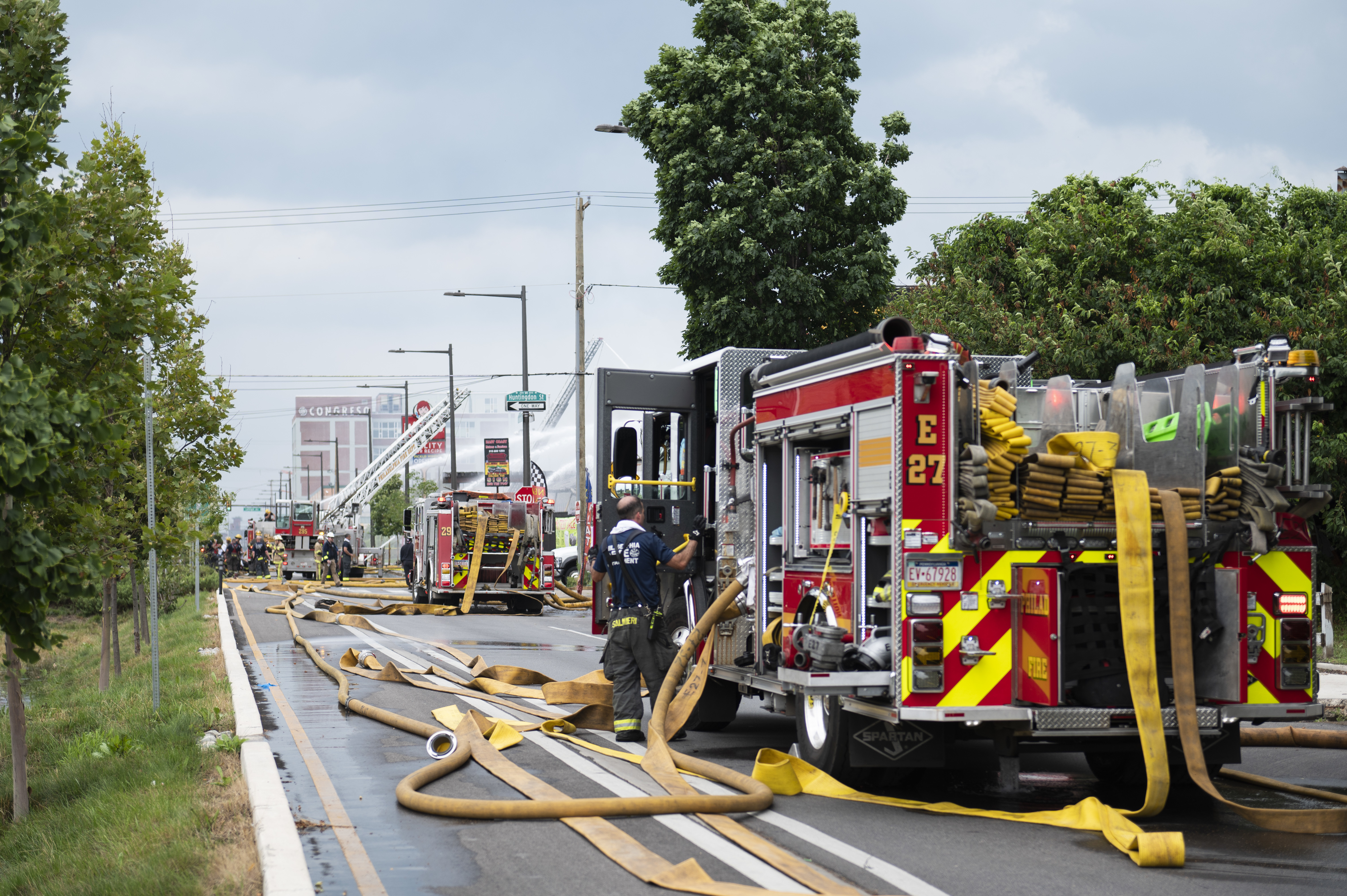
    Federal prosecutors this week charged a former Philadelphia Fire Department supervisor with bribery in connection with what investigators described as a brazen overtime abuse scheme that involved her accepting cash from a colleague in exchange for approving fraudulent time sheets.

    Marian Farris, 55, a former supervisor in the department’s payroll unit, faces one felony count of bribery and related theft charges. She was charged Tuesday by information, a process that is typically used when a defendant intends to plead guilty.

    Attorneys for Farris, who resigned from the department in March 2025, did not immediately respond to a request for comment on the charges.

    According to charging papers filed in the U.S. District Court of the Eastern District of Pennsylvania, Farris accepted multiple payments from a fire department employee that totaled more than $9,000 between 2023 and 2024. In exchange for those payments, prosecutors allege Farris made more than 300 fraudulent entries in the city’s payroll system amounting to more than $139,000 in payments to the employee.

    Some of the overtime claims, according to prosecutors, were logistically impossible. Prosecutors wrote that Farris on 16 occasions credited the employee — identified only as “J.M.” in charging papers — with working 22 to 24 hours of overtime in a single 24-hour period. On other occasions, prosecutors wrote, the employee was credited with working overtime while she was vacationing in Bermuda, Cancun, and Las Vegas.

    The Inquirer previously reported that Farris was under federal criminal investigation and that she was at the center of two tangled investigations into alleged misconduct at the fire department.

    The city’s Office of the Inspector General led one investigation into the overtime abuse and found that Farris conspired with former paramedic Jacqulyn Murphy to defraud the city by abusing the system.

    In a separate probe, the city retained a law firm to examine multiple sexual harassment allegations lodged by Murphy and other women against Anthony Hudgins, a former deputy commissioner and the department’s No. 2 in charge. According to court records, several women, including Murphy, told city investigators that Hudgins made sexual advances, including unwanted hugging and inappropriate comments.

    Hudgins claimed that the harassment reports were orchestrated by Murphy only after he discovered the overtime fraud. In January, Hudgins sued the city and the women saying that he was defamed and subjected to a “bad faith” investigation that resulted in a demotion and a $75,000 pay cut.

    Inspector General Alexander DeSantis had previously declined to publicly release the results of his investigation, citing an ongoing criminal investigation.

    But Hudgins’ attorneys included the report in court filings related to his lawsuit, and the OIG investigation appears to confirm Hudgins’ timeline. The report stated that Hudgins had already conducted an overtime review before a November 2024 discrimination complaint was filed against him.

    Those findings also align with a June 2025 report authored by attorneys at Campbell Durrant, the outside law firm that the city retained to investigate the sexual harassment claims. Hudgins’ attorneys included portions of that report in a recent court filing.

    In the report, investigators reviewed some of the allegations brought by Murphy and her wife, who was also a paramedic in the Philadelphia Fire Department. The women told investigators that Hudgins had openly discussed his desire to engage in sexual activities with other women.

    However, the conclusion of the report described the allegations brought by Murphy and her wife as “unsubstantiated” and lacking corroboration. It said that the “connection between the harassment complaints and the overtime investigation raises serious concerns about motive and credibility.”

    The report said that the primary concerns regarding Hudgins were that he “has a habit of hugging employees and enforcing policies that are sometimes unpopular.” The investigators recommended that Hudgins receive a formal warning and be required to undergo harassment training.

    A spokesperson for the city declined to release the full report on Friday, saying the city generally does not release reports of investigations into allegations of sexual harassment, and that the reports are only disseminated to the subjects of an investigation.

    In the fall of 2025, shortly after Campbell Durrant completed its report, Hudgins was demoted from his role as a deputy commissioner to deputy fire chief, and he was reassigned to the Incident Safety Office.

    Farris has not yet been scheduled to appear in court.

    Staff writer Abraham Gutman contributed to this article.

  • ‘Abbott Elementary’ teases sixth season changes

    ‘Abbott Elementary’ teases sixth season changes

    The new season of Abbott Elementary is nearly back in session. From the looks of it, there are some changes coming.

    In the Season 6 trailer, which dropped Wednesday, it’s revealed that Tyler James Williams’ Gregory will now be the school’s assistant principal in addition to his regular teaching duties, and Lisa Ann Walter’s Melissa is now a teachers’ union representative.

    Melissa (Lisa Ann Walter) wears a “Philadelphia’s lucky charm” T-shirt and Barbara (Sheryl Lee Ralph) sports a Kyle Schwarber jersey in an episode of “Abbott Elementary.”Disney/Gilles Mingasson

    Gregory’s new role will have him working more directly under Janelle James’ Ava, the hilariously self-absorbed principal of the fictional Philadelphia public school.

    “It’s going to be the best year yet,” Ava says in the trailer.

    Fresh into her union position, Melissa is at odds with guest star Katy Mixon, who plays a new staff member. “You’re not aware of the hierarchy around here,” Melissa says to Mixon’s character inside the break room. The newcomer retorts with, “I’m not going anywhere.”

    The rest of the trailer, which opened with Guns N’ Roses’ “Welcome to the Jungle,” foreshadows another season of chaos in and outside the classroom.

    Chris Perfetti’s Jacob is seen leading a PTA meeting line dance. Ava curses out fellow staff, and Gregory is startled by what appears to be an enraged parent.

    The teachers and principal of “Abbott Elementary” talk to the school district’s superintendent.Disney/Gilles Mingasson

    Of course, there are homages to the city that serves as the series’ backdrop, although the show is filmed in Los Angeles. Janine appears wearing a Penn sweater, Melissa dons a black Eagles sweat jacket, and Jacob tosses a basketball at two characters wearing Sixers jerseys.

    The new season follows an eventful Season 5, which hinted at upcoming drama, including a potential engagement between Janine and Gregory, an uptick in Abbott’s student intake due to multiple school closings, plus a power struggle between Ava and Gregory with his new role.

    The Season 6 premiere is set to air at 8:30 p.m. Oct. 7 on ABC. In the words of Janine: “Anything can happen.”