Philadelphia City Council voted Thursday to formally recognize Black Bottom, a predominantly Black neighborhood in West Philadelphia that was largely demolished in the 1960s to make room for a research park and other institutional development.
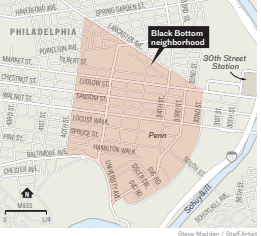
The resolution restores official recognition of a name that former residents have kept alive for decades, even as the area between 32nd and 40th Streets and University and Lancaster Avenues became known as University City. It also calls for future city communications and actions to acknowledge Black Bottom’s importance.
The Black Bottom neighborhood includes the area between 32nd and 40th Street and University Avenue and Lancaster Avenue.Steve Madden
The resolution acknowledges that displaced residents were excluded from the prosperity the new development created. But it does not provide compensation or establish a way for families to return. Councilmember Jamie Gauthier, whose district includes Black Bottom, introduced the legislation and described the resolution as a first step. “We still have much more work to do,” she said in an email, “but this is an important milestone in repairing the harm that the City and others inflicted here.”
Black Bottom emerged during the Great Migration, when Black Southerners moved to Philadelphia in search of work and opportunity. By the mid-20th century, it was a thriving community of homes, businesses, theaters, and clubs. But after the passage of the 1949 Federal Housing Act, the city deemed the neighborhood blighted and used federal urban renewal funds to demolish it, clearing homes and businesses for projects backed by the University of Pennsylvania and Drexel University. Thousands of Black residents were displaced as a result, forced to resettle in new parts of the city.
Those former residents and their descendants never forgot about Black Bottom, though. They have held annual reunions since 1974, while activists like Walter Palmer have spent decades documenting the neighborhood and organizing efforts to preserve its history.
A Black Bottom celebration and renaming ceremony will take place on Wednesday, Oct. 7, at the northwest corner of 36th and Market Streets.
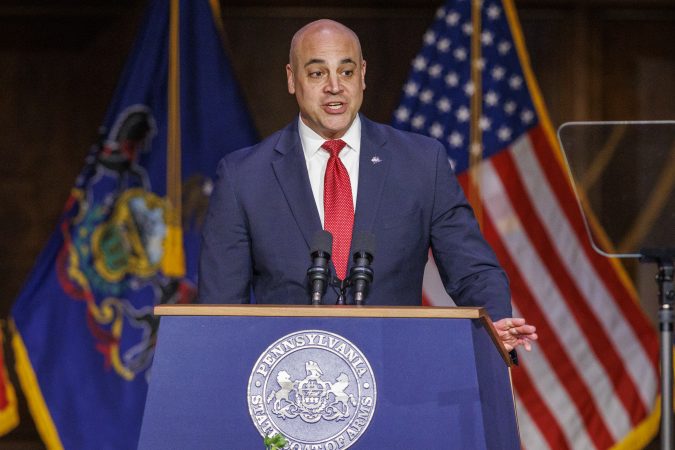
A 54-year-old Philadelphia man was convicted of leading a human trafficking ring out of his home in the city’s Lawndale section, state Attorney General Dave Sunday said Friday.
Following a one-day trial in Philadelphia, Terrance L. Jones, 54, was convicted Thursday by a judge of eight charges, Sunday said. Jones will be sentenced on Dec. 11.
Sunday said the trafficking operation generated hundreds of thousands of dollars a year and Jones employed drivers to transport the female victims to “dates.” Jones also posed as a woman to recruit sex workers, Sunday said.
Sunday said Jones ran the operation from his residence from 2012 through February 2023, luring vulnerable young women into working for the trafficking ring, then giving them drugs and forcing them to have sex with men across the region.
Multiple other people charged in the trafficking case also have been convicted, Sunday said.
“Human trafficking convictions are very challenging, and there was a long road to get to this point. I commend our partners with the Pennsylvania State Police for collaborating on a complex investigation that brought this long-running criminal enterprise to an end,” Sunday said in a statement.
Jones advertised his business, called “GFE” or “the Girlfriend Experience,” online and connected with young women in their 20s, investigators said.
Authorities learned about the ring in 2021 after a confidential informant contacted police and said they feared a friend was being trafficked.
After meeting with woman, authorities launched a three-year investigation.
A man who allegedly was trying to break into houses and may have been armed with a knife was fatally shot by police Friday afternoon during a physical confrontation in the Mayfair section of Philadelphia, police said.
Just before 2:30 p.m., police received a 911 call reporting that a man on the 4100 block of Tyson Avenue was trying to enter houses, Deputy Commissioner Frank Vanore said.
Officers responding to the call were flagged down by someone who pointed out the man on the 7000 block of Frankford Avenue, Vanore said.
The officers attempted to stop the man but he allegedly fled with the police in pursuit, Vanore said.
The chase ended in front of a store, where the man allegedly got into a physical confrontation with the officers before the video ends.
“At some point during that confrontation, both officers discharged a firearm,” Vanore said.
Medics pronounced the man dead at the scene. His identity was not released.
In a 12-second video obtained by The Inquirer, recorded by someone inside a car parked just feet away from the deadly shooting, one of the officers and the unidentified man can be seen struggling with each other.
The officer appears to be trying to hold the man’s hands or arms, then falls to the ground as the man breaks free.
A second officer then appears in the video. As the man steps away from that officer and into an open area of the building, the second officer fires multiple shots and the man falls.
The first officer is seen falling backward away from the man and a second gun can be heard firing before the video ends.
Vanore said the officers had their body cameras activated, and police were checking video from nearby cameras.
“We know there’s a knife on location here, right by the individual that’s shot,” Vanore said.
Under department policy, the shooting is under internal investigation and the officers who fired their weapons will be reassigned to administrative duty while the investigation is ongoing.
ALLENTOWN — When Ernie Els was living in London, his son, Ben, was diagnosed with autism at 3½ years old. The former world No. 1 golfer and Hall of Famer realized that many services his son needed were inaccessible to him in London, so he decided to relocate his family to South Florida
His son’s diagnosis sparked the idea for Els for Autism, which was founded in 2009. The foundation works to support the growth and learning of individuals with autism, along with their parents and caregivers, so they can live a fulfilling life.
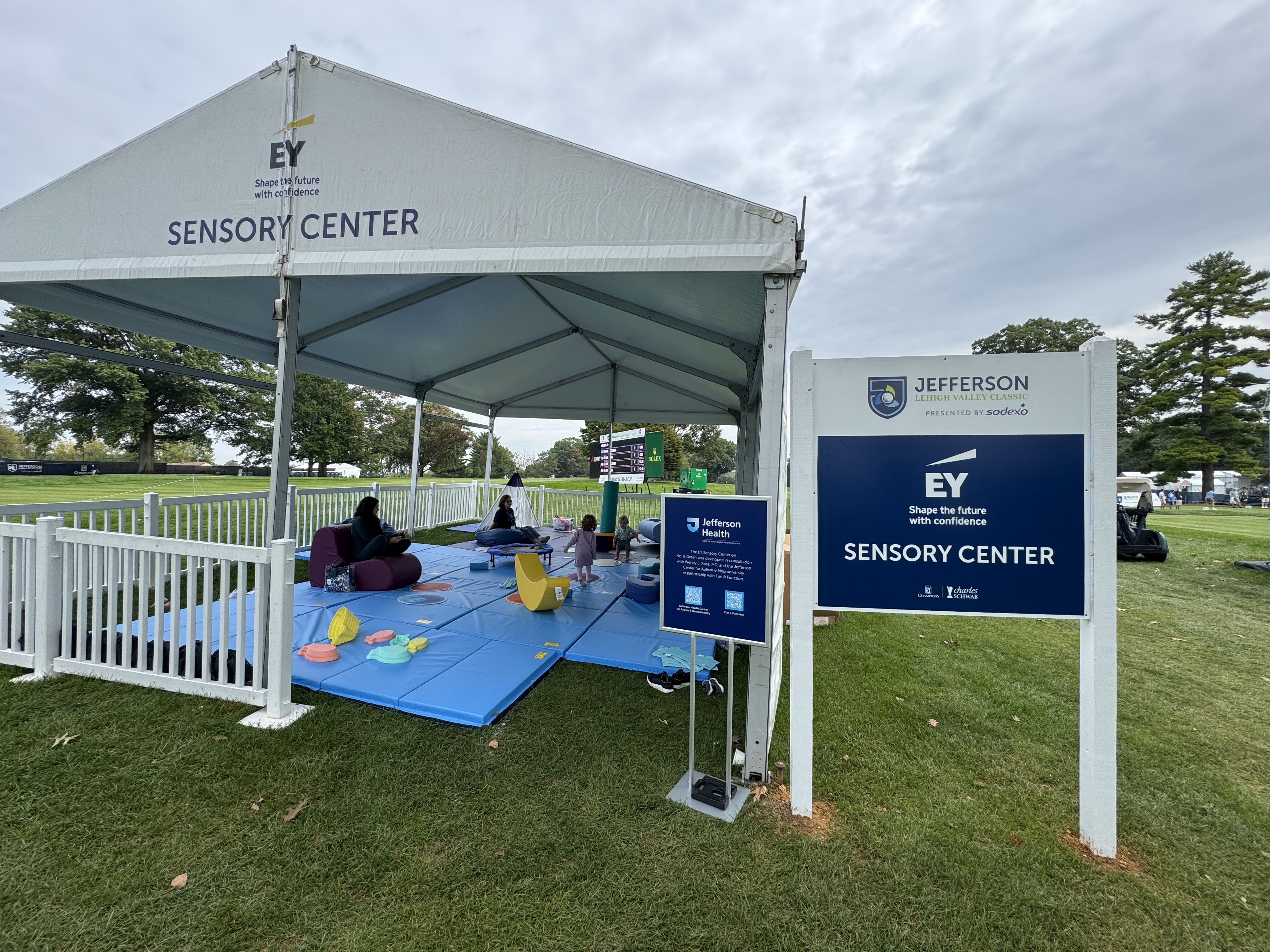
And EY, one of Els’ sponsors, hopes to make golf more accessible to neurodivergent fans at this weekend’s Jefferson Health Lehigh Valley Classic via the EY Sensory Center by Jefferson Health.
“There was a day when if you were different, you had to learn to accommodate to the world and now what we’re seeing much more is that the world is seeing that they also have a responsibility to the individual,” said Wendy Ross, the director of the center for autism and neurodiversity at Jefferson Health. “That’s an important statement for golf because it looks like it’s an individual sport, but it really is a team effort.
“If you just look at it superficially, you’ve got a lone golfer. But in reality, they have a team around them. They have a caddie, they have a coach, they have a place to play. This is a good metaphor for the work we are trying to do.”
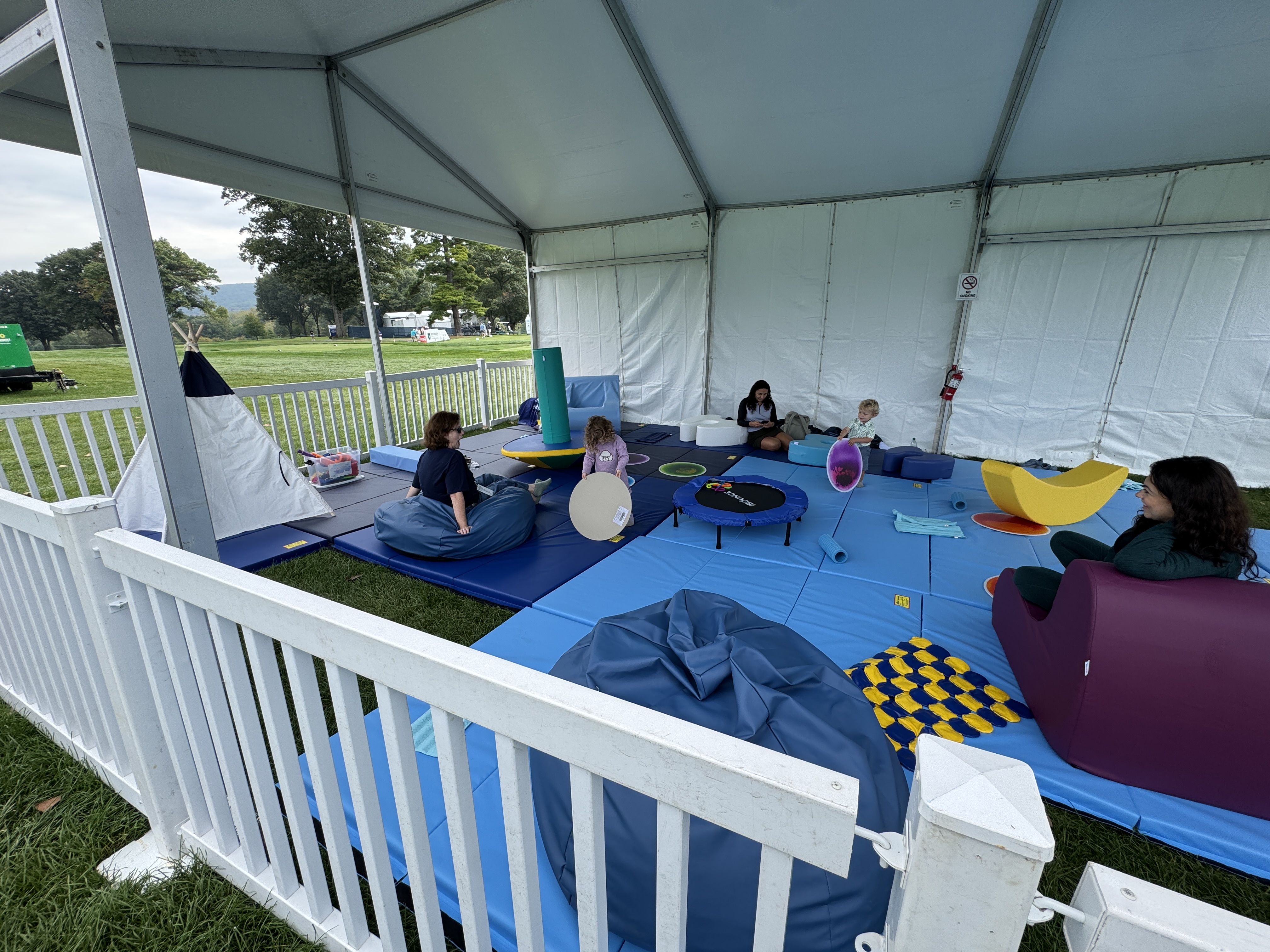
A boy plays at the EY Sensory Center at the Jefferson Lehigh Valley Classic in Allentown.Courtesy of Wendy Ross
The center, designed by Ross, is near the ninth green at Lehigh Country Club, where fans can catch some of the action while taking a break from the crowds.
“Not that the golf course is so loud, but the noises that happen are sudden and unexpected,” Ross said. “Autistic individuals and people with neurodivergence sometimes can get overwhelmed, and so they need a place to kind of cool off and reset. Sometimes they have sensory-seeking desires, and sometimes they are sensory avoidant, so we have a number of items that are both.”
Ross said that it may be challenging for a neurodivergent individual to experience a golf tournament for the first time because of the etiquette of watching the sport in person.
There is a sensory room at Lincoln Financial Field where people with autism, PTSD, Down syndrome, and other sensory processing needs can watch the game on a TV. The vibes at the PGA Tour Champions event aren’t quite the same as the Linc on an Eagles game day, and tournament director Tommy Sullivan said organizers intentionally put their sensory center outside, right near the action.
“You still can watch the golf right there,” Sullivan said. “You’re not taken away from the event. You’re still a part of the event, but it’s a nice, quiet space to decompress, so that was important to us.”
The EY Sensory Center is near the ninth green at the Jefferson Lehigh Valley Classic.Courtesy of Wendy Ross
Proceeds from the tournament will go to three charities, one of which is the Eagles Autism Foundation.
The center is the first on-course sensory zone at a PGA Tour-sanctioned event. It also is providing sensory bags to its visitors that include noise-reducing headphones, a fidget toy, and sunglasses.
As Els made his birdie putt on the ninth green on Friday during his first-round 1-over 71, he walked past the EY Sensory Center and smiled. Els currently is tied for 49th, while co-leaders Y.E. Yang, Richard Green, and Robert Karlsson are 6-under after each shooting a 64.
“We’re trying to make this tournament something that the whole community wants to be a part of, not just for the people that take golf seriously,” Sullivan said.
Because he grew up playing hockey with and against Johnny Gaudreau in their teenage years, Vincent Conanan talks about the late NHL star plenty. He gets chills when old text messages from Gaudreau show up when he’s searching his phone.
Conanan buys thoroughbred yearlings annually for his Next Level Stables, and after his young son kept asking about the player known as “Johnny Hockey,” he pledged to name a racehorse after Gaudreau. After going to school in the Columbus, Ohio, area where Gaudreau played his final two seasons with the Blue Jackets, Devon Bradley of Bradley Thoroughbreds had the same idea.
On Saturday, the horses — Johnny Hockey and Gaudreau — will run in the same race at Belmont Park.
“Is that not bananas?” Bradley said.
The winner out of the field of six in the Grade 1 Champagne qualifies for the Breeders’ Cup Juvenile for 2-year-olds, the championship race that sometimes provides a sneak peek at the Kentucky Derby contenders the following spring.
“Hopefully we can run 1-2 this weekend, either way,” Conanan said. “I know Johnny’s looking down and he sees it.”
Johnny Gaudreau becomes a namesake twice
These two colts were born roughly a month apart in the winter of 2024. Gaudreau and his brother, Matthew, died the night of Aug. 29, 2024, when they were struck riding their bicycles near their hometown in Salem County on the eve of their sister Katie’s wedding in a tragedy that transcended sports.
Bradley was moved by all the great things that people said about Johnny and registered the names Johnny Hockey and Gaudreau with the Jockey Club.
Watching U.S. players at the Olympics bring Gaudreau’s children onto the ice and skate around with his No. 13 jersey after winning gold in Milan was even more inspiration to use one of them. When she forgot to pay to re-up after a year and went to name the son of Nyquist — also a hockey connection for Swedish player Gustav Nyquist — and Free Cover, she saw that Johnny Hockey was already taken.
Salem County’s Johnny Gaudreau was a seven-time NHL All-Star before his tragic passing.Aaron Doster
So, she went with Gaudreau for the strapping horse Bradley Thoroughbreds owns along with Tanglewood Thoroughbreds, Thirty Year Racing, Rodeo Creek Racing, Laura Leigh Stable and Swift Thoroughbreds.
“We needed a strong name: We needed a name that has some meaning, something to kind of give your horse just an extra oomph,” Bradley said. “We just felt like it fit, and I guess the rest is history.”
Conanan asked the trainer at his farm in Ocala, Florida, which horse he liked best. The answer made it an easy call.
“He goes, ‘Vin, this horse always tries hard and has a big heart,’” Conanan recalled. “I was like, ‘You know what, I’ll name this one after Johnny.’ Because Johnny as a kid, he wasn’t the biggest player, but he had the biggest heart. So, I was, like, ‘This horse, I think he’s going to be the one.’”
Johnny Hockey and Gaudreau face off
Gaudreau won his debut Aug. 8 at Saratoga Race Course. The very next day at Monmouth Park on the Jersey Shore, Johnny Hockey picked up his first victory in his fifth try.
“My hopes are very high on the horse,” Conanan said. “[Trainer] Antonio Arriaga tells me, he goes: ‘The horse trains unbelievable. He just wants to keep going. He doesn’t stop. He wants to keep going around the track.’”
Gaudreau has Chad Brown, a five-time Eclipse Award-winning trainer, overseeing his career, with acclaimed jockey Flavien Prat riding. Based on pedigree and performance, the expectations are lofty after just one race.
“I’m thankful that this horse looks like he’s the real deal,” Bradley said. “Hopefully, it’ll bring light to, and kind of continue on, Johnny Gaudreau and Matthew Gaudreau’s legacies.”
Gaudreau opened as the second choice on the morning line for the Champagne at odds of 8-5, behind 3-5 favorite U.S.S. Valor. Johnny Hockey is a 30-1 long shot.
Conanan wants to invite Johnny and Matthew’s parents, Guy and Jane Gaudreau, to the Breeders’ Cup at Keeneland in Lexington, Kentucky, later this fall if his horse pulls off the upset.
“This horse is something special,” Conanan said. “I know he’ll go out there and do his best, the same way Johnny would.”
WASHINGTON — A federal court in Texas on Friday temporarily blocked the Trump administration from building a border wall and other infrastructure across the state’s Big Bend region, in a victory for opponents who have pushed back against a key campaign promise by President Donald Trump.
Landowners, businesses, and environmentalists in the region have united to oppose the planned projects, which are part of a $46 billion effort by the Trump administration to line the southern border with a mix of 30-foot-tall steel walls, vehicle barriers, roads, and surveillance technology.
Judge Kathleen Cardone said in her ruling that the plaintiffs were “likely to succeed on the merits of at least one of the claims in suit, that there is a likelihood that they will suffer serious, irreparable harm without an injunction, and that the balance of the equities and the public interest weigh in their favor.”
U.S. Customs and Border Protection defended the project in a statement Friday.
“We stand by our assessment and remain confident in our legal authorities to secure the border while preserving the unique landscape of the Big Bend region,” the agency said. “We are working with the Department of Justice on next steps.”
The Department of Homeland Security did not immediately respond to a request for comment.
The judge’s ruling includes Big Bend National Park, where opposition to the wall prompted the administration to briefly pause construction.
Opponents of the border wall project have argued that the Big Bend region of Texas is so remote and the landscape so rugged that it serves as its own deterrent to illegal immigration and that the administration violated the law when it issued a swath of waivers allowing it to bypass numerous regulations in order to speed up border wall infrastructure projects.
The lawsuit brought by an environmental organization, advocates for a historic church in Ruidosa and a river guide argued that the Department of Homeland Security was wrong to bypass regulations meant to protect the environment, culture, and archeology of regions like the Big Bend area.
Laiken Jordahl, with the Center of Biological Diversity that brought the suit, called Cardone’s ruling a “total victory.”
“The bulldozers are going to be sent packing until she rules on the merits,” Jordahl said. “This is such a historic day for Big Bend and for Texas and the Constitution.”
The court’s decision comes just weeks after the administration erected the first border wall panels in the Big Bend sector in mid-September.
The border wall project through the Big Bend sector has sparked bipartisan opposition.
Much of the opposition has been geared around Customs and Border Protection’s plans for inside the Big Bend National Park, which is prized for its beautiful landscapes, limestone cliffs, and crystal clear night sky views.
When bulldozers were spotted clearing land in the park in August, it sparked widespread opposition with both Republicans and Democrats calling for the administration to stop. Customs and Border Protection paused all activity there, but that pause expired on Sept. 30. The administration has said it’s reevaluating plans for the National Park but has not yet said what it will do there.
Advocates for the park on Friday said they were happy with the judge’s ruling but called on the administration to fix the damage already done to Big Bend National Park, come to the table to meet with local residents and develop alternative plans.
“Big Bend is no place for border barriers. It’s time for the administration to come to the table with the border communities that know Big Bend best, repair the damage from this ill-conceived project, and find new solutions,” said Tiernan Sittenfeld, National Parks Conservation Association President and CEO in a statement.
The judge’s ruling extends to areas up and downriver from the National Park, where Customs and Border Protection has planned a range of border infrastructure projects that would largely require building across privately owned land.
In those areas, the government has been working to obtain permission from local landowners to survey and build on their land, but in a recent court filing, it said it was prepared to refer some cases to the Justice Department where it hadn’t been able to secure permission from landowners.
The headstone had not yet been placed Thursday on the freshly dug grave where a 20-year-old Amish woman was buried this weekamid the rolling clover fields and dairy farms at the edge of suburban Philadelphia.
Newly wed, and receiving treatment for blood cancer, she was the last of nine siblings sickened when measles swept through her unvaccinated family’s home on a one-lane road in Lancaster County.
At first, the home remedies that eased their symptoms seemed to help her, too: Soothing the fever with bath soaks. Calming the rash with coconut or olive oil. Cloistering in a dark room to ease light sensitivity.
Then her fever spiked. She struggled to breathe and had to sleep sitting up in a recliner in the living room, her maternal grandmother recalled.
Her family does not operatecars, in keeping with Amish beliefs, so they hired a driver to take her to the emergency department at Hershey Medical Center about an hour away. She died about two weeks later in the intensive care unit there, her grandmother said.
Speaking on the porch of her stone farmhouse, the grandmother described the family’s experience with Pennsylvania’s largest measles outbreak in three decades, now the nation’s largest. At her request, The Inquirer withheld her name and that of her deceased granddaughter to protect the family’s privacy.
She said her granddaughter ultimately developed double pneumonia and died after the family decided to discontinue use of a ventilator.
The cancer made her especially vulnerable to a virus as contagious as measles, which will infect 9 in 10 unvaccinated people who are exposed.
“Her immune system wasn’t built up,” the grandmother said. “She just couldn’t take it with the measles.”
The Lancaster County borough where a 20-year-old Amish young woman died from pneumonia caused by measles is dotted with diary farms and grain silos.Wendy Ruderman
Pennsylvania reported on Wednesday its fifth measles-related death, revealing only that the latest fatality was an unvaccinated Lancaster County resident. Health officials did not provide further details, citing privacy laws.
But it appears from the grandmother’s account, along with other records and news reports, that three of the five deaths occurred in adults with measles. Other reported deaths included an 18-year-old Amish woman from Mifflin County and a 40-year-old from Jefferson County with severe respiratory conditions. Two Amish infants in Lancaster County who had confirmed measles cases also died. All five cases involved people who were unvaccinated, either by choice or because they were too young to receive vaccines.
The number of deaths in adults is striking, said Paul Offit, who heads the Vaccine Education Center at the Children’s Hospital of Philadelphia. Widespread childhood vaccinations had eradicated the disease in the United States, leaving mostly children too young to be vaccinated at high risk in recent decades. Now multiple generations of unvaccinated children are adults, exposing wider vulnerabilities across the state, Offit said.
“We’re aging out a population that was never vaccinated,” he said.
After learning the details of the 20-year-old’s death from The Inquirer, Offit explained that measles commonly leads to pneumonia.
“The measles virus reproduces itself in the lungs and can cause severe and occasionally fatal infection,” he said.
The Amish cemetery where the 20-year-old woman is buried.Wendy Ruderman
Too late to get vaccinated
The young woman, the second oldest in a line of nine siblings, ages 6 to 22, fearedgetting measles in the outbreak in Lancaster County, her grandmother said.
About two years ago, she was diagnosed with leukemia, a blood cancer, and began medical treatment with the help of an “English” neighbor — as Amish call outsiders — to drive her to her medical appointments.
The treatment regimen of chemo and steroids further weakened her immune system. She knew she was at risk of more severe sickness from a viral infection like measles, which started spreading throughout her family in the late summer.
Her eight siblings, her parents, and her new husband all got sick, the grandmother said.
Along with home remedies, family members drank extra fluids to stay hydrated, the grandmother said.
“They weren’t worried,” the grandmother said. “Measles just has to take its course.”
Although no one in the household was vaccinated, they are not opposed to the vaccine based on Amish beliefs. They believe it’s an individual choice, she said, and many Amish people opt not to get vaccinated because they “don’t know what’s in it.”
“We wouldn’t tell people not to get vaccinated,” the grandmother said. “It’s up to each person.”
As illness spread in her household, her granddaughter grewmore worried about getting the virus than about the vaccine that medical authorities have long considered safe and effective.
She asked her doctor if she could get a measles vaccination. Her doctor said no. “She wasn’t allowed to get the shot because she was on chemo,” the grandmother said.
The measles vaccine contains a live but weakened virus, and her granddaughter was already immunocompromised from the leukemia treatment.
After getting measles, her granddaughter began to feel better in early September. She picked vegetables from the family’s garden to make soup using tomato juice as the broth. She canned jars for the coming cold months, her grandmother said.
Then, in mid-September, she spiked a high fever, and her breathing became labored.
“She could hardly breath. Her lungs were just in bad shape,” she said.
The Amish typically only seek emergency hospital treatment until “sometimes we’re dying,” the grandmother said, recalling how her husband got chided by a doctor in 2018 for waiting too long to get the heart surgery he desperately needed.
“We do what we can at home,” she said. “We have so many natural things we can do.”
By Sept. 11, the family knew it was time to take her granddaughter for emergency care at Hershey Medical Center.
At Hershey’s ER, doctors gave her a chest X-Ray, but sent her home before reading it, the grandmother said.
“They wouldn’t do anything for her. They didn’t want her there,” shesaid. (A Hershey spokesperson did not reply to a request for comment on Friday.)
A Hershey provider later called and left a voicemail message asking the family to bring her back. Although the family has a phone in their house, the grandmother said they rarely use it. With the ringer off, all calls go to voicemail, she said.
A driver took them back to the hospital, where she was admitted on Sept. 14. An ultrasound showed fluid between the lining of her lungs and in her lungs. She was diagnosed with double pneumonia, her grandmother said.
Hospital staff hooked her up to supplemental oxygen.
“They had the oxygen up as far as they could and she still had to work to breathe,” the grandmother said.
About a week later, they moved her to the intensive care unit, where they sedated her so they could put her on a ventilator while intubated.
The hospital allowed two family members at a time to sit by her bed. Her granddaughter’s young husband and the girl’s mother sat vigil, the grandmother said.
As she continued to deteriorate, life support was the only remaining option, and it carried the risk of neurological complications, including brain death.
The family didn’t want that, the grandmother said. “They couldn’t do anything more,” she said.
They turned off the oxygen and shut off the ventilator, Family members, including her new husband’s parents, gathered around her bed.
She died with a breathing tube still in her mouth, the grandmother said.
A happy first year of marriage
More than 300 people came to the family’s home on Monday for the funeral service and viewing. She was buried in a cemetery near the family’s home, about a month before what would have been her first wedding anniversary.
Despite being ill with leukemia, her granddaughter’s trademark “rosy pink cheeks” and “beautiful smile” beamed on her wedding day, her grandmother recalled.
The November 2025 wedding, held at the family home, was a festive affair, with plates loaded up with chicken and vegetables, chicken and filling, pickled cabbage, and cooked celery.
She feels sorry for her granddaughter’s husband, who declined to be interviewed. “They had a good year together,” she said.
At the young woman’s home, two black dogs, with hay in their matted curly hair, greeted an Inquirer reporter on Thursday. Some of her family members were outside, unloading cornstalks from a horse-drawn wagon and feeding them into a John Deere harvesting machine.
They stopped working and spoke to one another in Pennsylvania Dutch, a centuries-old German dialect, before fetching the young woman’s father, who declined to be interviewed.
Staff writers Aubrey Whelan and Sarah Gantz contributed to this article.
MIAMI — A former Republican congressman and longtime friend of Secretary of State Marco Rubio received a 10-year prison sentence on Friday for concealing a $50 million lobbying campaign on Venezuela’s behalf during the first Trump administration.
David Rivera of Miami has been jailed since his conviction in May for conspiracy to commit money laundering and failing to register as a foreign agent for the government of Nicolás Maduro.
Rivera, 61, appeared stone-faced as Judge Melissa Damian denounced him for betraying his life’s mission. His many friends in Miami would surely judge him harshly had the millions of dollars come from Cuba’s communist regime instead of its allies in Caracas, she said.
“Nobody would accept that’s OK and I don’t think this is different,” the judge said. “There’s no dispute this money came from the Maduro regime.”
The case offered a rare glimpse into foreign influence campaigns aimed at shaping U.S. policy toward Latin America, highlighting Miami’s reputation as a magnet for both anti-communist crusaders and corruption among its sizable exile population.
President Donald Trump’s secretary of state, Rep. Pete Sessions of Texas and a top Washington lobbyist all testified, saying Rivera had never mentioned his mammoth consulting contract with a U.S.-based affiliate of Venezuela’s state oil company, PDVSA.
Rivera was charged in 2022, during President Joe Biden’s administration. Charges of illegal foreign lobbying have plunged since Trump returned to the White House. Rivera’s lawyers have applied for a presidential pardon, and plan to appeal while also defending him against a related foreign lobbying case in Washington, D.C. Still pending is Damian’s ruling on the government’s request that Rivera forfeit $20 million in criminal proceeds.
Prosecutors described how Rivera worked GOP connections for Delcy Rodríguez
As part of the charm offensive, Rivera and a co-defendant, political consultant Esther Nuhfer, sought to manipulate influential friends, including Rubio and Sessions. But they didn’t disclose the lobbying as required, fearing it would ruin Rivera’s reputation as an anti-communist stalwart, prosecutors argued at trial. Nuhfer received a five-year sentence.
“The United States and the public were the true victims of this fraud,” Assistant U.S. Attorney Roger Cruz said. “He used his position of trust — and betrayed it consistently and repeatedly.”
Rivera denied being a two-faced grifter. In an emotional 20-minute address, he traced his life’s journey from a childhood without a father in an immigrant Miami neighborhood to the halls of Congress — always “fighting the good cause,” he said. Holding back tears, he begged for leniency, telling the judge that it was tantamount to a “death sentence” due to his age and lingering effects from a battle with prostate cancer.
Prosecutors said betrayal featured coded figures — ‘Sombrero’ and ‘Miss Clairol’
Trial evidence showed how Rivera set up an encrypted chat group called MIA — for Miami — with his main conduit to the Maduro government: Venezuelan media tycoon Raúl Gorrín, who was subsequently charged in the U.S. with bribing top Venezuelan officials.
Group members used playful code words: Maduro was the “bus driver,” Sessions “Sombrero,” Rodríguez “The Lady in Red,” and their windfall payments “La Luz,” Spanish for “The Light,” according to copies of text messages presented to the jury. Rubio was known as “Miss Clairol,” because rubio means blond in Spanish.
Rivera’s attorneys argued again Friday that the former congressman believed he was under no disclosure requirement. They said the three-month, $50 million contract with Rivera’s one-man consulting firm was focused on luring oil giant ExxonMobil back to Venezuela — commercial work that is generally exempt from the Foreign Agents Registration Act.
“David Rivera does not deserve to die in prison because he failed to file a FARA registration,” defense attorney Ed Shohat said.
The judge strenuously disagreed. “This is a serious offense. It’s not about not filing a piece of paper.”
Wholly distinct from that consulting work, defense attorneys said, were Rivera’s meetings with Rubio and Sessions, which were focused on ushering in less hostile leadership in Venezuela, not unlike the Rodríguez government that took power after the U.S. ouster of Maduro in January.
Where did the money go? A luxury yacht, among other things
Prosecutors said Rivera used the contract with the Venezuelan oil giant’s affiliate, New York-based PDV USA, as cover for illegal lobbying, and tried to hide it by backdating documents and creating sham agreements, like one to justify a $3.75 million wire transfer to a South Florida company maintaining Gorrín’s luxury yacht.
The outreach quickly unraveled, however. Within six months of taking office, Trump sanctioned Maduro and labeled him a “dictator,” launching a “maximum pressure” campaign to unseat the president.
Rubio’s former housemate faced scandal before, but Cuban Americans support him
Before serving in Congress from 2011-2013, Rivera was a high-ranking Florida legislator and shared a Tallahassee home with Rubio, who eventually became the Florida House speaker.
Rivera faced earlier controversy, including allegations that he secretly funded a Democratic spoiler candidate in a 2012 congressional race — a case federal prosecutors eventually dropped after a sizable fine was thrown out on appeal. Rivera was also investigated — but never charged — for alleged campaign finance violations and a $1 million contract with a gambling company while serving in the Florida Legislature.
Despite all that, Rivera continues to have support among Miami’s Cuban American establishment and in circles of power beyond.
Friends of the former congressman, including the former president of Florida International University and Miami-Dade County’s supervisor of elections, packed the courtroom to show their support. Sessions also sent a letter seeking leniency, referring to his former congressional colleague as a devoted defender of democracy.
Jason Reding Quiñones, the U.S. attorney for the Southern District of Florida, is also a Cuban American and said he can’t explain why some in Miami still stand by Rivera.
“He sold his anti-communism to communists to fill his greed,” said Reding Quiñones in a news conference following the sentencing.
On the first day of 76ers training camp, Labaron Philon Jr. found himself backpedaling as LeBron James barreled toward him full-speed.
“That’s when the moment really hit,” Philon said. “I was like, ‘All right, it’s here now.’”
Consider it an early dose of “Welcome to the NBA” — and to the Sixers’ loaded roster — for the rookie point guard. But so far, Philon’s belief that he has been “able to stand [his] ground” against teammates with far more experience and established star power has been echoed by coach Nick Nurse. In these early practices, Nurse said he has been “super impressed” with Philon’s defensive competitiveness and ability to create offensively with the ball in his hands.
“He’s really talented,” Nurse said. “But the vision is, like, I think really special.”
Nurse’s early praise for Philon should not be dismissed as a preseason pump-up. Two years ago, Jared McCain was lauded as the Sixers’ best player during training camp, then became an early NBA Rookie of the Year frontrunner before tearing his meniscus. Last year, Nurse had zero hesitation about immediately inserting VJ Edgecombe into the starting lineup following a preseason that confirmed his maturity and versatility.
And it’s easy to forget that the Sixers’ wild offseason began when Philon slipped to them at No. 22 overall in the NBA draft.
In a strong class of lead ballhandlers, ESPN commentator and longtime coach Fran Fraschilla said Philon had the potential to be the best of the bunch. After Philon went from defensive stopper as a freshman at Alabama to top offensive option as a sophomore — he averaged 22 points on 39.9% shooting from three-point range, along with 4.9 assists, 3.6 rebounds, and 1.2 steals in 32 games in 2025-26 — Sixers president of basketball operations Mike Gansey and Nurse said on draft night that they expected the 20-year-old to instantly contend for a rotation role. He then flashed his crafty ballhalding and fearless shot-taking during Las Vegas Summer League.
“I think he’s going [up] quickly,” Nurse told a small group of reporters in Las Vegas in July. “I think he’s got some confidence to him that I don’t think he’ll be afraid. I think he’ll make the most of the opportunity.”
The Sixers picked Lebaron Philon Jr. 22nd overall in the NBA draft.Monica Herndon / Staff Photographer
That Las Vegas stint came amid the Sixers’ stunning roster transformation. They traded for All-NBA wing Jaylen Brown, then signed the legendary James. They also added fellow guard Anfernee Simons along with wings Dean Wade and Kentavious Caldwell-Pope as more proven role players.
Still, Philon’s comments Friday — along with the occasional video clip posted by the Sixers’ social media team — suggested that he has been working in practice with the Sixers’ second unit. He said he has been building chemistry with Ariel Hukporti, who is the backup center while Adem Bona nurses a knee injury.
The 6-foot-4, 176-pound Philon said his first on-court priority with this group is to be a “ball hawk,” in the right spot to swipe steals as part of Nurse’s aggressive defensive philosophy. On the offensive end, Philon credited Alabama coach Nate Oats’ NBA-style system with helping him arrive in Camden already comfortable enough to use his voice to direct older teammates and play “on the fly.” Though passing has always been one of Philon’s strengths, he emphasized the importance of making the “easiest” decisions.
“Right now, I don’t really need no ‘showtime’ or kind of flashy plays,” he said. “The position I’m in right now, it’s, like, making the right play every time.”
As Philon continues his NBA transition, he vowed to “have questions ready every day” for his more experienced teammates. He recently asked Brown about how he remains focused to hit tough fadeaway jumpers through the defender’s contest. He wants to learn all of James’ secrets for career longevity. He has gotten tidbits from Edgecombe his rookie experience and on shaping his prepractice routine. And he has engaged in one-on-one conversations with All-NBA point guard Tyrese Maxey about proper reads to make when the first option is not available.
“That takes a lot from everybody,” Philon said. “So I feel like I’ve been appreciating that, just being happy that those guys are here to help.”
There are bound to be more moments when Philon is caught backpedaling — figuratively and literally — during his rookie season on a Sixers team facing high pressure and expectations. But he already exudes the belief that he will continue standing his ground.
It’s a confidence Nurse and teammates share.
“Labaron’s good,” Simons matter-of-factly said at media day. “He’s good, for sure. … There are going to be times when, for sure, we’re going to need him.”
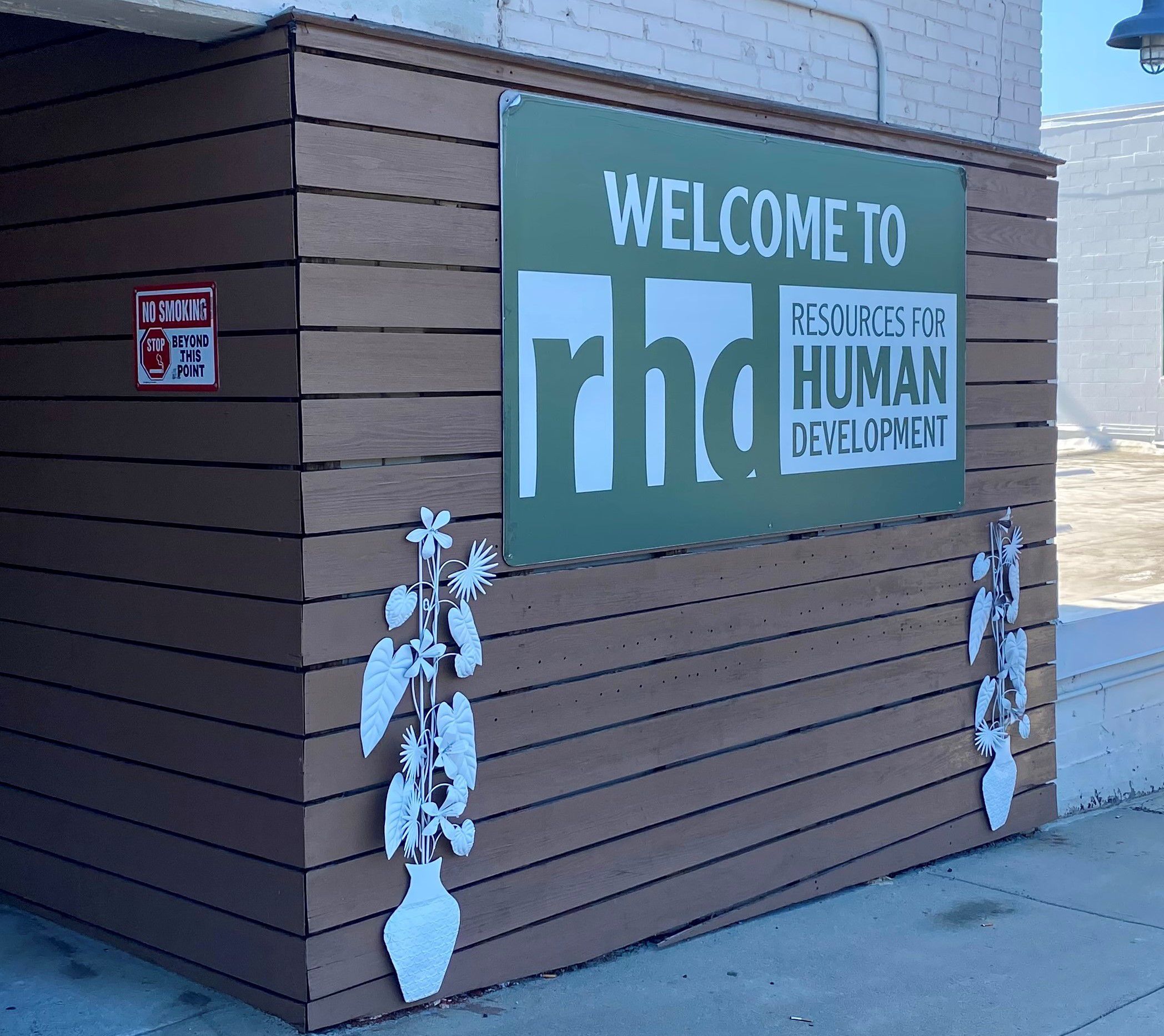
Pennsylvania regulators revoked Resources for Human Development’s license to operate homes for people with intellectual disabilities in Southeastern Pennsylvania after medical neglect led tothe February death of a Philadelphia resident, state officials confirmed Friday.
RHD, a Philadelphia-based human services provider with 91 homes in the region, has the right to appeal the revocation and to continuing operating during that process. The state, which will conduct moreunannounced inspections during the appeal, said RHD serves 136 residents in Southeastern Pennsylvania.
The Sept. 22revocation comes about two years after RHD was taken over by fast-growing Reading nonprofit Inperium Inc.
RHD it was on the verge of bankruptcy at the time. Inperium also owns Supportive Concepts for Families, a Reading nonprofit with services similar to RHD’s that has been operating under a revoked license since April 2025.
Officials at Inperium and RHD did not respond Friday to emails or voicemails requesting comment.
Investigators of the February death at anRHDhouse found “serious neglect and systemic failure by RHD to ensure health safety, timely medical intervention, and adherence to [individual support plan] requirements,” according to documents provided by the state Department of Human Services .
The redacted documents did not reveal details on what had happened to the individual, who was found dead on the morning of Feb. 23.
An assistant regional director had alerted RHD’s CEO and other top leaders in January to the individual’s need for therapeutic and behavioral support, but RHD did not seek a medical evaluation, the documents say.
RHD provides services in 12 states, employs 2,800 people, and had $280 million in revenue in the year that ended June 30, 2025, according to a recent bond offering statement. Fiscal 2026 financial results are not yet public.
Following the Philadelphia death, RHD management failed to submit an acceptable plan to correct regulatory violations, leading regulators to issue their own on Sept. 2. It’s not clear what happened in the period leading up to the revocation on Sept. 22.
Last year, state regulators revoked Supportive Concepts’ license following at least four deaths, 11 abuse incidents, and dozens of cases of neglect at Supportive Concepts’ homes in the year ended February 2025.
That revocation impacted operations in 15 northeastern Pennsylvania counties, including Berks. Under the terms of the revocation, the organization cannot open any new homes or accept new clients in existing properties.
Seventeen Supportive concepts facilities in western Pennsylvania have been operating under provisional license since February. The provisional status requires them to implement a correction plan. As of August 26, the homes were still operating under a provisional license.