Federal prosecutors this week charged a former Philadelphia Fire Department supervisor with bribery in connection with what investigators described as a brazen overtime abuse scheme that involved her accepting cash from a colleague in exchange for approving fraudulent time sheets.
Marian Farris, 55, a former supervisor in the department’s payroll unit, faces one felony count of bribery and related theft charges. She was charged Tuesday by information, a process that is typically used when a defendant intends to plead guilty.
Attorneys for Farris, who resigned from the department in March 2025, did not immediately respond to a request for comment on the charges.
According to charging papers filed in the U.S. District Court of the Eastern District of Pennsylvania, Farris accepted multiple payments from a fire department employee that totaled more than $9,000 between 2023 and 2024. In exchange for those payments, prosecutors allege Farris made more than 300 fraudulent entries in the city’s payroll system amounting to more than $139,000 in payments to the employee.
Some of the overtime claims, according to prosecutors, were logistically impossible. Prosecutors wrote that Farris on 16 occasions credited the employee — identified only as “J.M.” in charging papers — with working 22 to 24 hours of overtime in a single 24-hour period. On other occasions, prosecutors wrote, the employee was credited with working overtime while she was vacationing in Bermuda, Cancun, and Las Vegas.
The Inquirer previously reported that Farris was under federal criminal investigation and that she was at the center of two tangled investigations into alleged misconduct at the fire department.
The city’s Office of the Inspector General led one investigation into the overtime abuse and found that Farris conspired with former paramedic Jacqulyn Murphy to defraud the city by abusing the system.
In a separate probe, the city retained a law firm to examine multiple sexual harassment allegations lodged by Murphy and other women against Anthony Hudgins, a former deputy commissioner and the department’s No. 2 in charge. According to court records, several women, including Murphy, told city investigators that Hudgins made sexual advances, including unwanted hugging and inappropriate comments.
Hudgins claimed that the harassment reports were orchestrated by Murphy only after he discovered the overtime fraud. In January, Hudgins sued the city and the women saying that he was defamed and subjected to a “bad faith” investigation that resulted in a demotion and a $75,000 pay cut.
Inspector General Alexander DeSantis had previously declined to publicly release the results of his investigation, citing an ongoing criminal investigation.
But Hudgins’ attorneys included the report in court filings related to his lawsuit, and the OIG investigation appears to confirm Hudgins’ timeline. The report stated that Hudgins had already conducted an overtime review before a November 2024 discrimination complaint was filed against him.
Those findings also align with a June 2025 report authored by attorneys at Campbell Durrant, the outside law firm that the city retained to investigate the sexual harassment claims. Hudgins’ attorneys included portions of that report in a recent court filing.
In the report, investigators reviewed some of the allegations brought by Murphy and her wife, who was also a paramedic in the Philadelphia Fire Department. The women told investigators that Hudgins had openly discussed his desire to engage in sexual activities with other women.
However, the conclusion of the report described the allegations brought by Murphy and her wife as “unsubstantiated” and lacking corroboration. It said that the “connection between the harassment complaints and the overtime investigation raises serious concerns about motive and credibility.”
The report said that the primary concerns regarding Hudgins were that he “has a habit of hugging employees and enforcing policies that are sometimes unpopular.” The investigators recommended that Hudgins receive a formal warning and be required to undergo harassment training.
A spokesperson for the city declined to release the full report on Friday, saying the city generally does not release reports of investigations into allegations of sexual harassment, and that the reports are only disseminated to the subjects of an investigation.
In the fall of 2025, shortly after Campbell Durrant completed its report, Hudgins was demoted from his role as a deputy commissioner to deputy fire chief, and he was reassigned to the Incident Safety Office.
Farris has not yet been scheduled to appear in court.
Staff writer Abraham Gutman contributed to this article.
The new season of Abbott Elementary is nearly back in session. From the looks of it, there are some changes coming.
In the Season 6 trailer, which dropped Wednesday, it’s revealed that Tyler James Williams’ Gregory will now be the school’s assistant principal in addition to his regular teaching duties, and Lisa Ann Walter’s Melissa is now a teachers’ union representative.
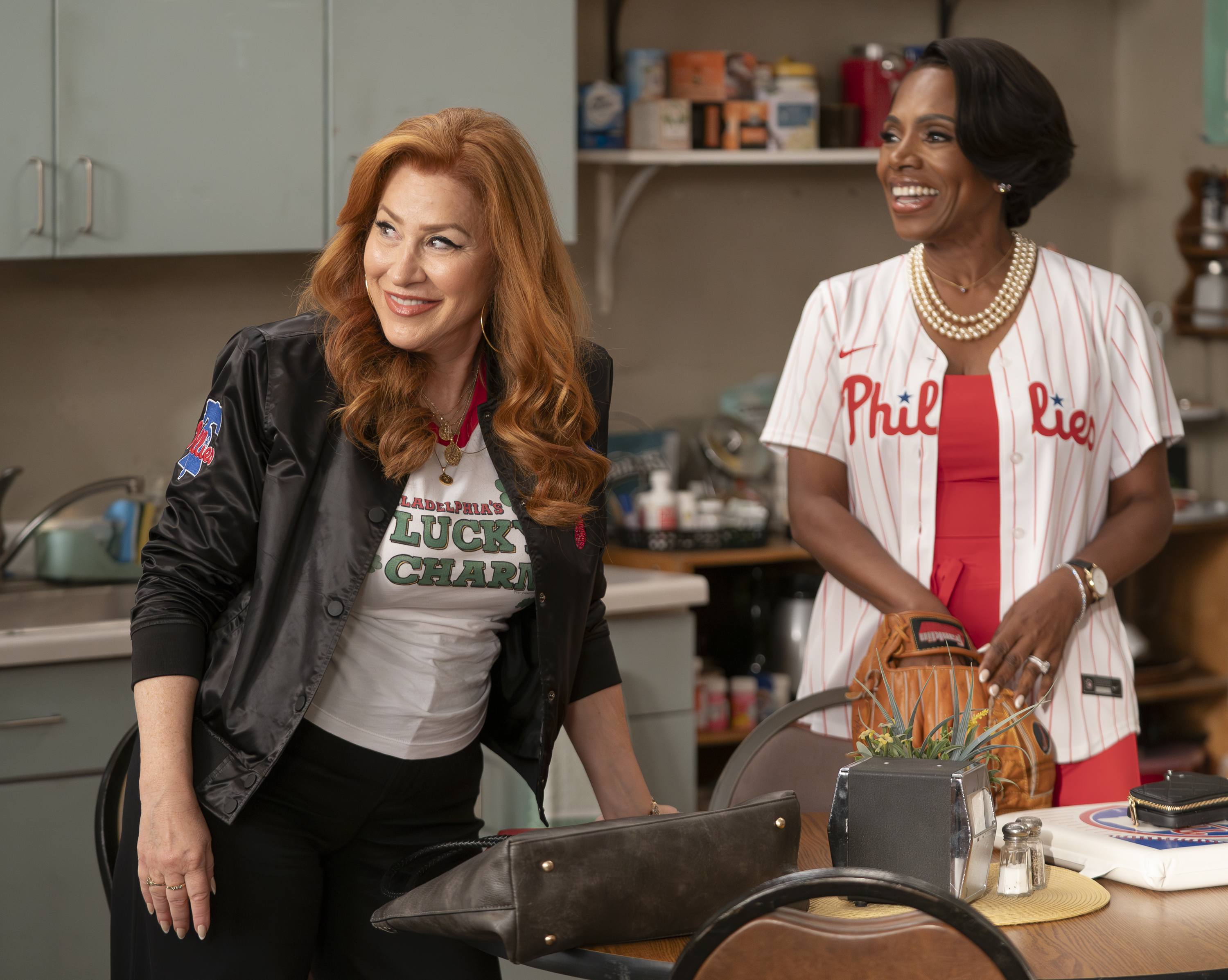
Melissa (Lisa Ann Walter) wears a “Philadelphia’s lucky charm” T-shirt and Barbara (Sheryl Lee Ralph) sports a Kyle Schwarber jersey in an episode of “Abbott Elementary.”Disney/Gilles Mingasson
Gregory’s new role will have him working more directly under Janelle James’ Ava, the hilariously self-absorbed principal of the fictional Philadelphia public school.
“It’s going to be the best year yet,” Ava says in the trailer.
Fresh into her union position, Melissa is at odds with guest star Katy Mixon, who plays a new staff member. “You’re not aware of the hierarchy around here,” Melissa says to Mixon’s character inside the break room. The newcomer retorts with, “I’m not going anywhere.”
The rest of the trailer, which opened with Guns N’ Roses’ “Welcome to the Jungle,” foreshadows another season of chaos in and outside the classroom.
Chris Perfetti’s Jacob is seen leading a PTA meeting line dance. Ava curses out fellow staff, and Gregory is startled by what appears to be an enraged parent.
The teachers and principal of “Abbott Elementary” talk to the school district’s superintendent.Disney/Gilles Mingasson
Of course, there are homages to the city that serves as the series’ backdrop, although the show is filmed in Los Angeles. Janine appears wearing a Penn sweater, Melissa dons a black Eagles sweat jacket, and Jacob tosses a basketball at two characters wearing Sixers jerseys.
The new season follows an eventful Season 5, which hinted at upcoming drama, including a potential engagement between Janine and Gregory, an uptick in Abbott’s student intake due to multiple school closings, plus a power struggle between Ava and Gregory with his new role.
The Season 6 premiere is set to air at 8:30 p.m. Oct. 7 on ABC. In the words of Janine: “Anything can happen.”
Just a few months ago, when Eagles training camp got underway, the defense drew rave reviews. The prevailing sentiment was that the unit was poised to dominate this year. So far through three games, Vic Fangio’s group has done anything but. From the lack of forced turnovers to missed coverage assignments, the Eagles have plenty of room for improvement. Can Fangio work his magic to get the defense on track in time for this week’s showdown with the high-powered LA Rams? The Philadelphia Inquirer’s Jeff McLane puts the defense under the microscope, and also answers listener questions in this week’s mailbag!
00:00 How a busted defensive play vs. Chicago signals a bigger issue
10:06 Is Jalen Carter catching too much criticism?
11:42 Could there be a change coming at back-up quarterback?
15:45 Week 4 mailbag! Pre-snap motion and three glaring flaws
unCovering the Birds is a production of The Philadelphia Inquirer and KYW Newsradio Original Podcasts. Look for new episodes throughout the season.
The Philadelphia Fringe Festival celebrated its 30th year with more than 338 productions across the city. Our reporters found shows that left us dazzled and confused, tearful but still laughing, and truly amazed by all the strange, weird, and delightful originality that artists from Philly (and beyond) had to offer.
These were some of our favorite performances, including solo shows, interactive experiences, immersive dance, otherworldly journeys, and incisive political explorations.
Most optimistic: ‘Lunar Retreat’
To enter this performance, you must prepare for take off: Grab a set of headphones specifically curated for your group (an audience of just a dozen or so, per entry time) and remove your shoes.
Past the doors lies a transformed Pearlstein Gallery, with different sections divided by flowing white curtains. The calm voice in your ears provides instructions, like a guided meditation for a winding path through a constellation of dancers before you arrive in a maze of tall, twisting cardboard adorned with twinkling lights and images of the moon’s various cycles.
After billions of years orbiting the earth, our moon has been slowly inching away from us, the disembodied voice explains. The show asks: What does it mean to enter someone’s orbit, to connect with another person, when we all drift apart eventually, inevitably? At its core, Lunar Retreat tackles grief, prompting the audience to imagine a loved one who is physically distant. What detail about this person do you never want to forget? After we write down our answers, we’re guided into the maze, where the answers from previous attendees dot the spiraling walls.
Fringe Fest regular Nichole Canuso’s dance company Branching Paths is renowned for immersive and interactive performances; here she worked with ocean explorer/artist Rebecca Rutstein, sound designer Bobby McElver, video designer Kate Freer, and set designer Anna Kiraly, among many collaborators. The projections were especially astounding: In one room, a dancer performed a series of moves in one place that were recorded and projected to the same location on a loop, allowing her to essentially dance with and embrace the projected version of herself. It was a mesmerizing collaboration between dance and technology.
Founder and artistic director of Nichole Canuso | Branching Paths, presented “Lunar Retreat” in the 2026 Philadelphia Fringe Festival.Theo Cote
At the end, the three audience groups gathered for the finale, when eight dancers (including the choreographer, Canuso) evoked ocean tides as they converged and separated, where they kept reaching for one another and then leaping apart. I was in awe not only of the performance itself but of my fellow audience members, who embraced the experience with open hearts and curious minds — leaving me surprisingly optimistic about the future of humanity.
— R.C.
Standout Solo Show: ‘Tuzluk’
This wildly inventive coming of age story follows Turkish Colombian American theatre artist izzy sazak as they deconstruct the heroes of their childhood. It’s a bold, imaginative examination of how we recontextualize the stories that we are told as kids. Throughout the piece, sazak examines their father, his Turkish heritage, and the Turkish mythos that they grew up instilled with. It is a magnificent look at the crossroads of culture, legacy, and family; while also being frankly honest about how many people idolize political figures.
sazak is an effortless performer, immediately engaging with the audience, establishing a welcome and safe feeling throughout the performance. They are also very adept at comedy: their timing is precise, and they can easily adapt and improvise.
izzy sazak in a promo image for their show “Tuzluk” in the 2026 Philadelphia Fringe Festival.Courtesy of subject
The word tuzluk is Turkish for “salt and pepper shakers,” but it is also a colloquial name for the folded paper toys that kids use to tell their futures. This item is used both as a literary device, as sazak unravels their future through the show, and also as set pieces.
Several tuzluks of varying sizes are arranged on the stage, and are utilized as props. The final moments of the show, when the last tuzluk is opened, is one of the most cathartic, community focused finales I’ve ever experienced in a theatre.
— F.S.
Best true story, retold: ‘Kramer/Fauci’
C-SPAN isn’t usually the place where one might find dramatic inspiration. But for director/creator Daniel Fish, one hour of a televised debate in 1993 provided an insightful window into a painful history that still resonates deeply. His innovative verbatim play follows a contentious conversation between Larry Kramer, the fierce activist/playwright who founded ACT UP, and Anthony Fauci, head of the National Institute of Allergy and Infectious Diseases at the time, about then-President Bill Clinton’s new task force to address the AIDS crisis.
On the sparse stage only four actors appear, playing the moderator (Greig Sargent), Fauci (Pete Simpson), Kramer (Thomas Jay Ryan), and the callers who dial into the TV segment (Jennifer Seastone). There are no cameras, no desks or green screens to evoke the monotony of C-SPAN’s regular programming; instead, the moderator is seated and his guests move around freely while Seastone spins around on roller skates, occasionally donning a chicken suit. The pared down production allows Kramer and Fauci’s sparring to take the spotlight (literally) but also creates a dynamic movement that keeps the audience engaged in their hot-and-cold ping-pong match without feeling like we’re watching a live podcast taping.
It’s far from boring, no matter how wonky the dialogue gets. Ryan’s Kramer erupts on a dime, shouting and throwing barbs and teasingly threatening to slap Fauci, who deflects and delivers defensive, boilerplate responses typical of a bureaucrat, knowing that his answers are dissatisfying. Kramer is fuming and defiant, demanding urgency from a government and a public whose inert response to the epidemic was a systemic, fatal failure on an unimaginable scale. When the callers chime in, many express sympathy, but one chilling, virulently homophobic standout accuses him of infecting the nation’s bloodline.
The most dramatic moment comes rather abruptly, when a towering bubble machine churns out a mass of suds that slowly takes over the stage. Kramer sits next to it, arms crossed, resigned as the machine whirs and the foam spreads.
Given the devastating subject matter, I didn’t expect to laugh so much. The pair at the center of the show hold profound respect for each other despite their disagreements and there’s a familiarity to their banter that underscores their shared goal; their debate is almost endearing to hear in retrospect today, if the reality wasn’t so infuriating. It ends with an epic line from Kramer when asked for his last word: “I want Bill Clinton to come out of the closet … and do something about this disease.”
— R.C.
A scene from “Returned, Iridescent,” part of the 2026 Philadelphia Fringe Festival.Seph McAndrew
Most Promising: ‘Returned, Iridescent’
There is a scarcity of narrative stories that showcase LGBTQ+ people growing up and living into old age. Oftentimes, these characters are burdened with struggle, defeat, and frequently, a tragic end; especially stories of trans people. Returned, Iridescent, the new work by playwright Rose Farrell, defies this trope by taking the audience on a beautifully poetic journey of two queer characters who constantly collide, combust, and separate, only to be drawn back together again and again. The text shifts between realism and poetry, allowing the characters to be both their true selves and romanticized versions. It is a beautiful story about finding yourself, loving yourself, and accepting the happiness that you deserve.
Breathtakingly nuanced performances from the two leads (Olive Gallagher & Gideon Caro McDonald) help ground this work in the moment. Watching the two of them effortlessly push, pull, and play with each other is a joy. I’m eager to see what these two talents do next. Strong design elements, with direction by Jack McManus, help this play to soar.
This play is an extremely timely one, given the current social and political discourse around trans people, which often serves to dehumanize or vilify them. I commend Theatre by Development for choosing to tell this story now, and hope that it is told many times more.
— F.S.
Nerdiest romance: ‘Wikipedilove’
A Newfoundland town called Dildo. The erotic novella A Billionaire Dinosaur Forced Me Gay. Eva Braun?
All are ripe for exploration at the love-and-sex-themed Wikipedilove, the lo-fi, musical PowerPoint presentation staged at West Philly Fringe hub Studio 34.
Writer, singer, and guitarist Noam Osmond — who moonlights as a “troubadour for hire” and can occasionally be spotted serenading strangers in Clark Park — and singer and accordionist Anna Apostolidis take the audience through a whirlwind of weird internet, told through screenshots, academic analysis, and cutesy folk songs.
In under an hour, we learn, for instance, that gray whales mate in threes (“#consensuwhale”) and that there’s a Wikipedia page of “List of sexually active popes,” among many other NSFW topics.
At the packed Friday night performance I attended, audience members were game to sing and sway along, emblematic of the participatory theatre that makes the Fringe Festival so special.
Two actors dressed as sparkly winged green and yellow bugs who appeared in the finale were a highlight of the show — luna moths, which live for just one week, solely to mate. Because who says science can’t be silly and sexy?
— J.Z.
A projection of a vinyl record on the domed screen of Fels Planetarium for “Utopian Hotline,” part of the 2026 Philadelphia Fringe Festival.Rosa Cartagena
Strangest existential journey: ‘Utopian Hotline’
A night at the museum is always a fun set up for a new adventure. This trip to the cosmos — courtesy of the theatermakers at Mitu, an experimental group based in Brooklyn — took place inside the Franklin Institute’s Fels Planetarium.
At the center of the room sat a round desk with a camera, turntable, microphones, and telephones. Audience members wore headphones and sat back as the domed screen above came alive with the trippy, philosophical show.
The titular hotline is real, inspired by the Golden Record that NASA sent to space that’s meant to represent earth, featuring sounds from voices to waterfalls to classical music. Mitu’s project imagines the messages we could send out into the universe if we created another record with people answering the prompt, “How do you imagine a more perfect future?”
Their respondents express variations of similar feelings: that it’s a hard question to answer, that it’s especially difficult to imagine a future when our current present time is so fraught, that we all want compassion and care and kindness no matter how far humanity travels from earth. (It’s an active hotline for anyone who’d like to add their voice.)
The show was part listening session (headphones required) and part strange story time as the performers at the center, akin to astronaut guides in matching gray suits, tinkered with the machines in front of them, sometimes taking over the mic to sing and other times recording with the camera so that their face would appear in the screen like a ghost. They posed existential questions about whether we’re alone in this universe or if we’ll ever truly understand the fickleness of time. The performance was somewhat disorienting, but the experience felt strikingly unique regardless of the occasional confusion, or maybe because of it.
— R.C.
Actor Justin Jain in “Bad Clay,” a show in the 2026 Philadelphia Fringe Festival.Wendi Van Horn
Most Thought-Provoking: ‘Bad Clay’
Justin Jain brings the audience to the cross section of sculptural ceramics and performance art in his original work Bad Clay. An experimental piece about migration, America, and sculpture, it delights in the way Fringe shows often do; by highlighting something new and unexpected. Entering the space, the audience is greeted by a series of ceramics laid around the room, all of which are made by Jain. Throughout the piece, Jain interacts with each ceramic, and also throws some clay on a wheel, creating live sculptures in front of the audience. Conspicuously, there is also a mannequin in the room; dressed as an ICE agent, and draped in an American flag. Ever present, this mannequin provides a feeling of unease that permeates the room, and when it is finally addressed and incorporated into the piece, it results in a truly harrowing moment.
What really stood out about this piece was the prologue. In a prerecorded monologue from Jain, he explains that the piece we’re about to see is an experiment. He goes on to explain how he has struggled to be presented by the Asian Arts Initiative directly, and also how he came to be in the space that the piece is taking place in … as it was not the space he wanted to present in. According to this prologue, he was looked over for various fellowships and grants, which led to having to present this piece as part of the “pay to play” aspect of the Festival. As a Philly artist of some notoriety, Jain still has struggled for financial and creative stability. It was an interesting breath of realism, and a frank conversation about the state of arts funding throughout the city. Additionally, it also offered audiences a “peek behind the curtain” as they heard firsthand about the hurdles of presenting a fringe show, and how it affects performers and producers.
Bad Clay is something I would be intrigued to see again, and to see what it would look like as Jain envisions it fully. It is a piece that raises interesting thoughts and questions, paired with honest reflection, and fully seeing it as the artist intended would be an exhilarating experience.
— F.S.
Shows we’re excited to seeing develop further post-Fringe
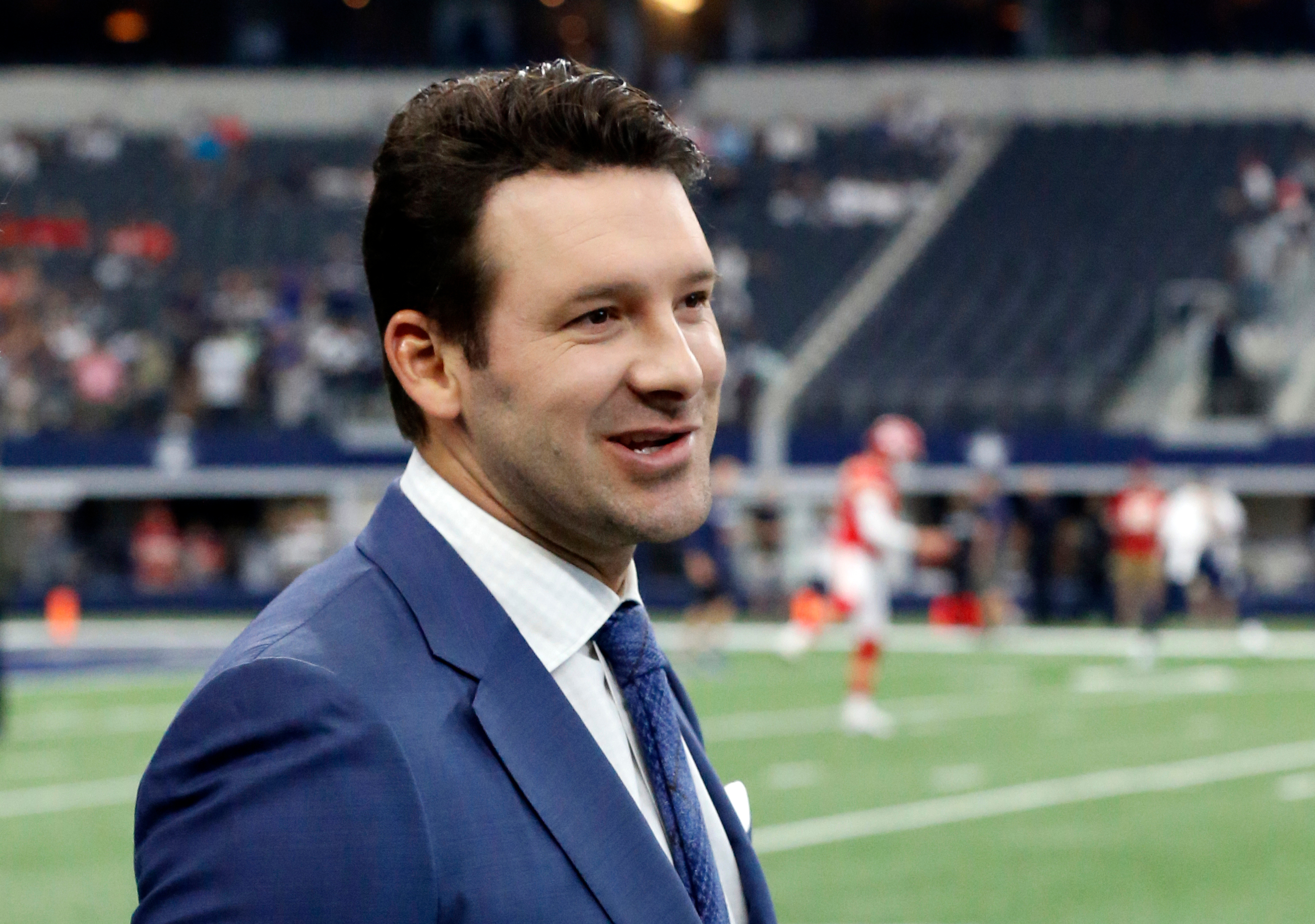
CBS Sports and Tony Romo have officially parted ways, one month after the former Dallas Cowboys quarterback pleaded no contest to charges of operating a vehicle while intoxicated.
“CBS Sports and Tony Romo have mutually agreed to part ways,” CBS Sports said Friday in a statement. “We thank Tony for his contributions over the past nine years and wish him the best moving forward.”
Analyst JJ Watt had joined play-by-play announcer Jim Nantz and sideline reporter Tracy Wolfson on CBS Sports’ lead NFL team during Romo’s absence. Watt will continue in that role now and all other CBS teams will remain the same.
Romo was arrested following a traffic stop as he was driving south on Interstate 43 in Wisconsin. He pleaded no contest to a charge of operating while intoxicated on Sept. 1 and issued a statement apologizing for the actions that led to his arrest.
According to Milwaukee County court records, Romo lost his driving privileges for six months and was ordered to complete an alcohol assessment program.
“The past month has been difficult, but it has also been personally significant,” Romo said Sept. 1 in a statement on Instagram. “It has required me to confront and own my mistakes fully — to the Lord, to myself, to my family and now to the public.”
Romo said the multiple back surgeries that led to his retirement as a player “left me with constant, debilitating pain.” He noted that the pain “led to a dependence on pain medication, and my efforts to get off those medications led to an over-reliance on alcohol.”
“None of this is an excuse,” Romo said. “These are my failures and I take responsibility for them.”
Romo said he is working with a team of doctors to address his health and “make the necessary changes.”
The 46-year-old Romo made four Pro Bowl appearances during a playing career that ran from 2004-16 and was spent entirely with Dallas.
NEW YORK — Amazon is investing more than $1 billion over the next five years into communities where it operates data centers for education, job training, water and energy preservation projects, and other local priorities as it reacts to a growing backlash from politicians and consumers to the tech industry’s rollout of the massive buildings.
According to a blog post on Friday by Matt Garman, Amazon’s CEO of its cloud computing arm, Amazon has already spent more than $1 billion in communities with a large data center presence over the past three years, including a 2-million-square-foot data center campus in Falls Township, Bucks County, that is nearing completion.
Garman also said that Amazon is no longer using nondisclosure agreements with government agencies it works with on its projects, and it said it hosts open houses in communities where it operates to share information about what it’s doing. He also warned against the spread of what he believes is misinformation about data centers’ impact on the environment and energy rates — and he cited the dangers of over 100 moratoriums against these centers being considered across the country.
“If these measures are enacted, the U.S. could be writing its own losing ticket to this race, and the consequences would last generations,” he wrote. “As a country, we can’t afford to find ourselves in that position. There is urgency to this data center build out because we aren’t the only country that sees the benefits of AI for the economy and national security.”
Garman’s pledge comes as data centers, which power artificial intelligence and cloud computing, have become a hot political issue heading into the midterms as tech giants race to invest more money in expanding these infrastructures.
Small, under-the-radar data centers have been around for decades. But the explosion of artificial intelligence chatbots has resulted in data centers that are bigger than anything just about any town has ever seen. Some of them dwarf football stadiums and factories and consume more energy than small cities.
By 2030, data centers will account for nearly 3% of the world’s projected electricity use, with 935 trillion watt-hours, according to a United Nations University report released in June on these buildings’ environmental footprint.
Amazon said in July that it now expects to spend $220 billion in capital expenditures in 2026, including on data centers and other technology investments. That’s up from its prior estimate of $200 billion.
President Donald Trump has embraced the building of more data centers, but there is growing wariness from voters. About 6 in 10 Americans support limiting the number of new data centers that can be built, including most Democrats and Republicans.
And a majority of Americans are “extremely” or “very” concerned about the impact of data centers on electricity prices or the water supply in the communities where they are built.
The auction for Chester County’s historic St. Peter’s Village — which put on offer roughly 80 acres, more than a hundred home sites, and the handful of businesses contained within the boundaries — ended before it began Wednesday.
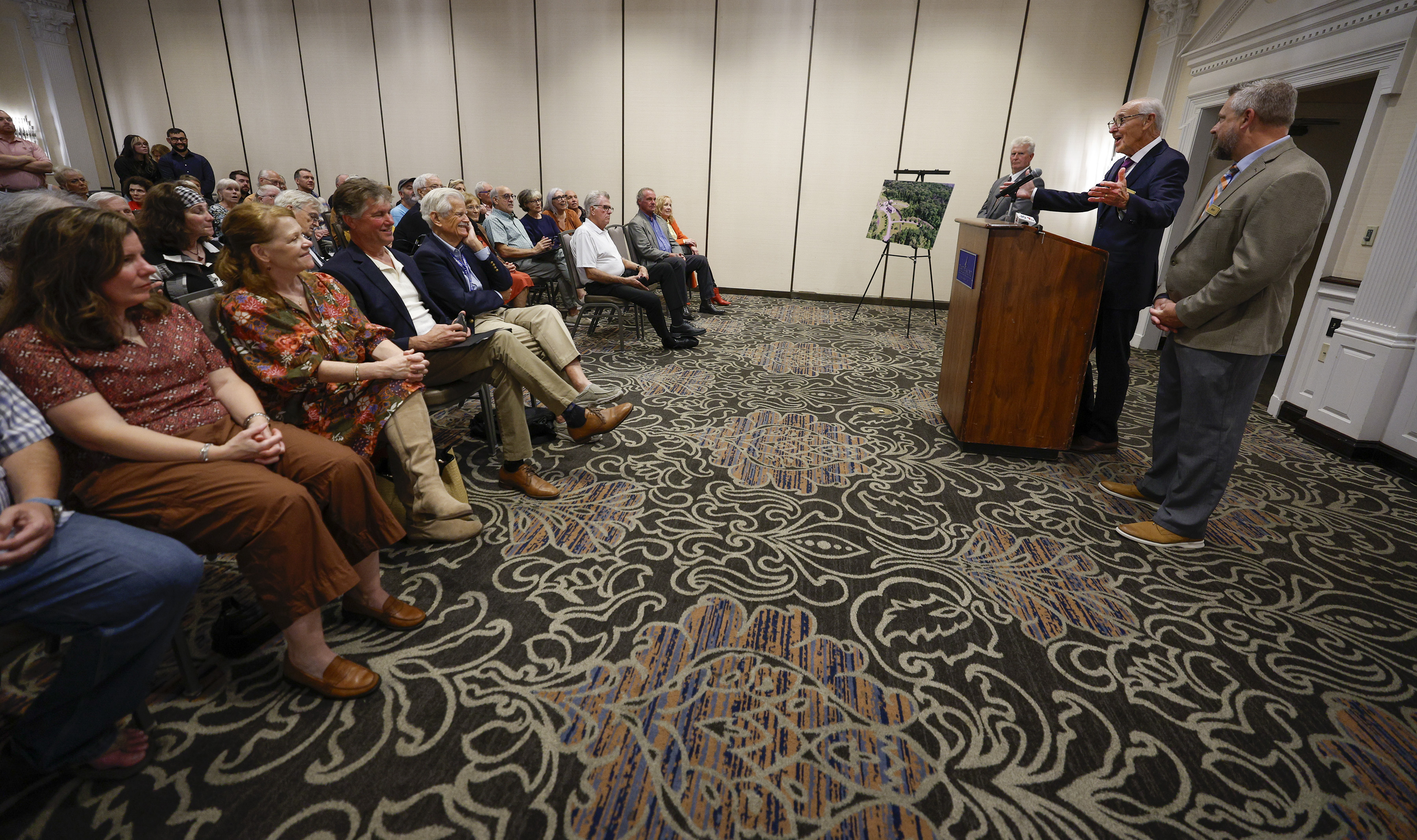
Speaking to a full house containing a large number of residents and business owners, auctioneer Doug Clemens informed attendees that it had been postponed — an announcement he acknowledged “could make you happy, maybe will make you sad.”
No date was immediately set.
A spokesperson for Piazza Management said on Friday, days after the auction, that “the auction was postponed due to technical electronic on line [sic] bidding issues and on site phone communication complications.”
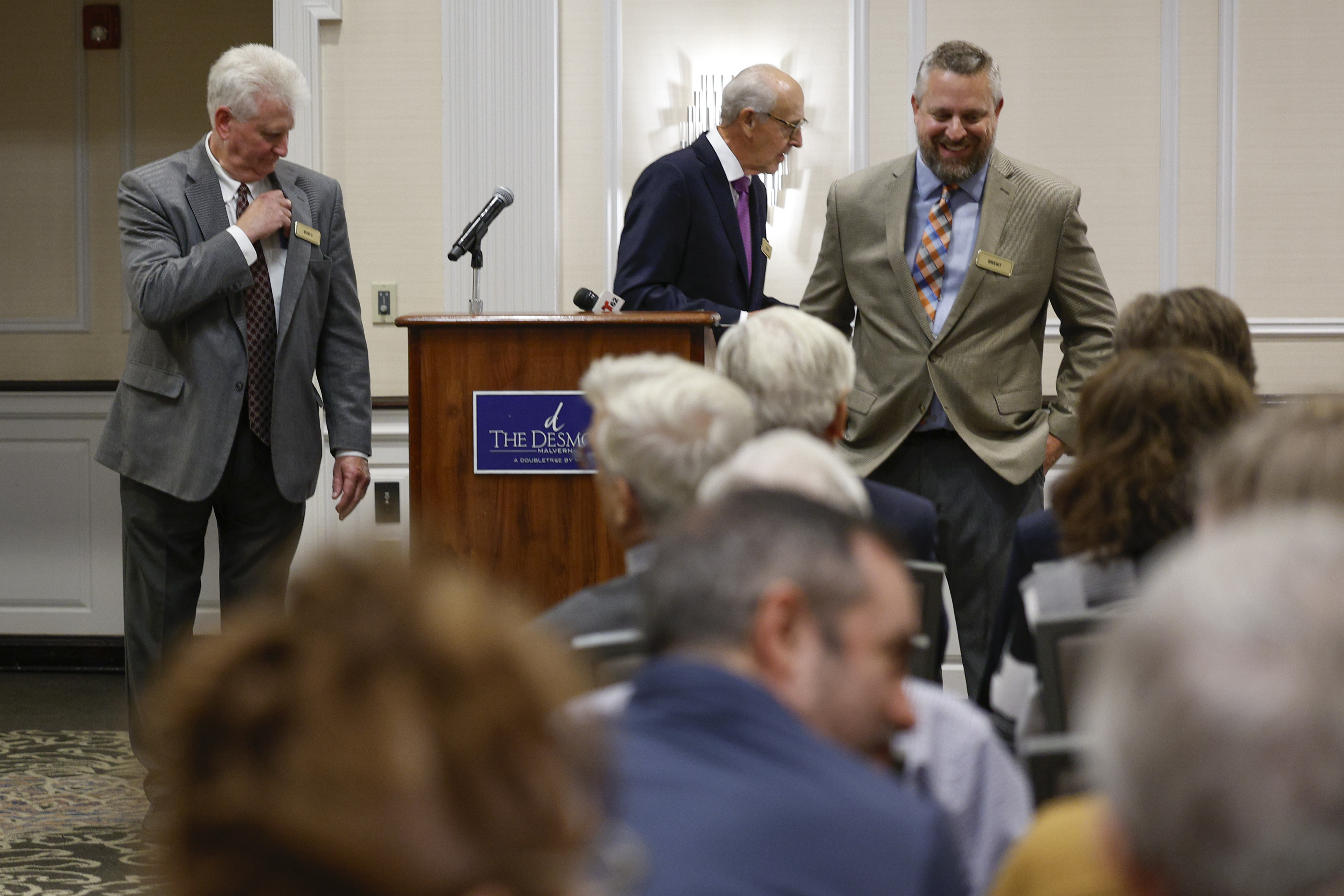
Auctioneer Doug Clemens, center, walked off after announcing that there would be no auction on Wednesday of St. Peter’s Village. The auction was held off-site at the Desmond Hotel Malvern only to find out at the last second, the auction was canceled.Steven M. Falk / For The Inquirer
It was not immediately clear how many people had shown up to bid on the property. Those interested in bidding on the land were told to bring, by a bank cashier’s check, $150,000.
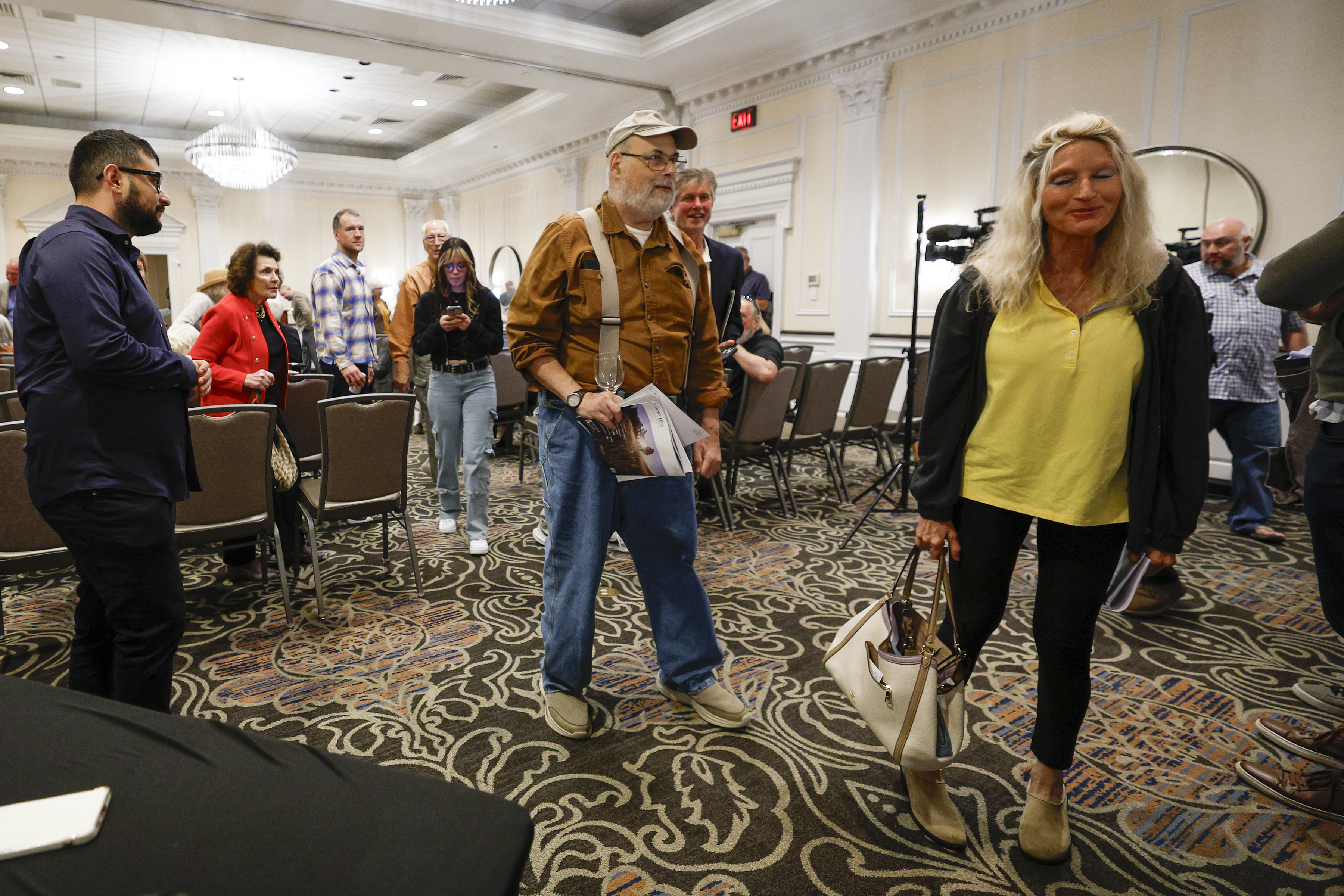
The public auction, held in Malvern, drew spectators and was a crowd of familiar faces for residents and business owners in the village. As they left the meeting room, they speculated over possible deals that could have arisen.
St. Peter’s Village, which grew around the French Creek and flourished in the Gilded Age due to its natural resources, became a place of recreation and leisure in the 1880s. Since then, it has continued to draw tourists to its quaint shops, rocky shores, and hiking trails. The village is nestled in Warwick Township, which has a population of roughly 2,600.
People walk out after the auction of St. Peter’s Village was canceled. The auction was held off-site at the Desmond Hotel Malvern only to find out at the last second, that auction was canceled.Steven M. Falk / For The Inquirer
The owners had planned two neighborhoods, totaling about 121 home sites, with a mix of densely populated housing and larger single-family homes. With the economic downturn in the early 2000s, that vision never fully materialized; several homes are unfinished. To see it through, a new buyer would have to improve the wastewater treatment plant included in the purchase.
Tom Tulley, a resident since 2009 who lives adjacent to the proposed development, has concerns about building out the land to the envisioned extent.
He has known development was inevitable, but if “they put another 150 homes with however many toilets and bathtubs and washing machines, I’m just concerned that the aquifer might not be able to support it,” he said.
Longtime business owners Christopher and Ashley Dilworth, who own Fox & Frog Apothecary, were excited that the Piazzas were set to turn it over so someone else could take the mantle and continue revitalizing the village. Christopher Dilworth acknowledged there “will be opinions on which way would be better, which way would be worse.”
But, Ashley Dilworth said, “I think all of the people in the village and everyone that came out would just be excited for anyone who had a big enough vision to move it to the next level.”
St. Peter’s Village was to be sold off to the highest bidder. The auction was held off-site at the Desmond Hotel Malvern only to find out at the last second, the auction was canceled,, September 30, 2026Steven M. Falk / For The Inquirer
It has had, over the last several years, a new life breathed into it, she said. With the help of social media, people from across the region — from New York to Delaware — have been discovering the town, which boasts everything from antique stores to modern jewelry to an antique arcade.
“People are staying in this little one-block town for a whole day,” Christopher Dilworth said. “There’s that much to do there and experience.”
Peter Melle and his wife, Melanie, who owned the bakery in town for about 15 years, were hoping to see someone pick up the project where it was left off.
“Everybody’s curious,” he said. “I think it’s a great project. … I think it’ll be a phenomenal location to build. But it’s about the money.”
Megan Reese, who lives in Malvern, has gone to St. Peter’s for a long time. She wanted to see someone purchase it who would take care of it and also “honor all the fun that’s occurring.”
“A lot of people love St. Peter’s, and it’s iconic. It’s been around for a very long time,” she said. “I really want it to be a heart project for somebody.”
This story has been updated to include a statement regarding the reason for the auction’s postponement.
This suburban content is produced with support from the Leslie Miller and Richard Worley Foundation and The Lenfest Institute for Journalism. Editorial content is created independently of the project donors. Gifts to support The Inquirer’s high-impact journalism can be made at inquirer.com/donate. A list of Lenfest Institute donors can be found at lenfestinstitute.org/supporters.
President Donald Trump is expected to name spy chief Jay Clayton as his new top adviser on artificial intelligence, according to three people familiar with the decision, a move that cements the administration’s handling of the new technology as a matter of national security.
Clayton, a former U.S. attorney and Securities and Exchange Commission chairman, was confirmed as the leader the Office of the Director of National Intelligence in July. He is expected to continue to hold that role, one of the people said. All three individuals spoke on the condition of anonymity to describe a personnel move that has yet to be publicly announced.
CBS News first reported that Trump was expected to choose Clayton for the position.
The appointment comes as the Trump administration recalibrates its approach to AI. The previous czar, the investor David Sacks, promoted a policy aimed at allowing the technology to develop as fast as possible. But in the months since Sacks left his post in March, officials have increasingly been grappling with cybersecurity threats posed by the latest generation of models and the danger posed by AI agents going rogue online. Sacks has continued to influence thinking within the administration as an informal adviser outside of the government and as co-chair of the President’s Council of Advisors on Science and Technology. Sacks and Clayton have a close relationship, according to one of the people briefed on the upcoming announcement.
A White House official said any personnel moves would be announced by the president. “Any reporting until then is baseless speculation,” the official said.
The administration has resisted calls in recent weeks by some in the industry and on Capitol Hill to slow down the pace of development and adopt new regulations. But on Tuesday it convened tech executives for a White House lunch that culminated in the leading AI companies signing a promise to develop new systems safely and bring in outside oversight firms. The following day, a Federal Trade Commission official said the panel had opened an investigation into AI companies Anthropic and OpenAI. (The Washington Post has a content partnership with OpenAI.)
Joel Thayer, a senior adviser for technology at the America First Policy Institute, a Trump-aligned think tank, said the developments showed how the administration’s handling of AI companies was “maturing.”
“These guys are under watch,” Thayer said. “The government has a spotlight on them.”
The industry executives’ pledge is voluntary and amounts to what Trump called “self-policing.” But it won the backing of figures who have bitterly clashed over how serious of a risk AI poses. Sacks, who attended the lunch, endorsed it. So did Jacob Coxon, a former Anthropic researcher who resigned last month, saying the technology could wipe out humanity and triggering a wave of panic in Washington.
The agreement means Clayton will step into his new role at a time of relative calm.
“Super intelligence is a national security issue,” Clayton said in a CNBC interview the day after the lunch, using Trump’s preferred name for AI. “That was something that was recognized yesterday by not just the industry leaders, but everybody in the room. The commitment there to the American people, and the safety and security of the American people was palpable throughout the meeting.”
Trump nominated Clayton, a loyal ally and regular golf partner of the president’s, to lead the intelligence office in June. Many Senate Democrats initially said they supported the choice. But he refused in his confirmation hearing to say definitively that Joe Biden had won the 2020 election, and the final vote fell along party lines.
The AI role will not require Senate confirmation.
The shifting thinking that led to Clayton’s appointment began months ago, when Anthropic said it had developed a new model called Mythos that it deemed too dangerous to publicly release. The company said it had new abilities to find vulnerabilities in computer code and help hackers exploit them.
Officials scrambled to understand the risks to government systems and critical sectors of the economy. Driven by alarm among banking industry leaders, Treasury Secretary Scott Bessent played a key role in shaping the administration’s response. Last week, Trump batted down reports that Bessent was in line to be the new AI czar.
In May, the White House settled on issuing an executive order calling on leading AI companies to voluntarily share their latest systems with the government ahead of their release, giving federal experts a chance to weigh security risks. Despite no longer holding an official government position, Sacks continued to wield influence and made a last-minute call to Trump that caused the order to be delayed and revised.
But even after the order was signed in June, new dangers continued to emerge. The following month, ChatGPT maker OpenAI disclosed that a swarm of agents created by its systems had broken free and breached another AI company. Other firms said they had suffered similar breakouts.
Then came Coxon’s resignation in September, which reignited a long-simmering debate in AI circles about whether a sufficiently powerful version of the technology would bring about humanity’s downfall.
Trump dismissed the fears a “hoax” in fiery social media posts. But he later said he would name a new czar and create an “AI Force.” The White House has not detailed what the force will do, but in an interview with Time magazine published this week, Trump described it as “a group of very smart people that understand it, who will be advising me.”
Cheltenham’s commissioners will consider terminating a controversial public pool contract at a special meeting Tuesday, the township announced Friday morning.
The commissioner board had approved the $4.5 million contract earlier this year as a ground lease to Melrose Pool LLC, a new business entity affiliated with a developer who’s building houses, shops, and a medical center at the former Melrose Country Club.
The ground lease was signed in July by the cofounder of BG Capital, which is developing the country club property, on behalf of Melrose Pool LLC. But no LLC under that name appears to have been registered with Pennsylvania until September, according to state records.
Resident Sam Thacker sued in July, arguing the ground lease is really a construction contract that should’ve been subject to bidding rules.
The special meeting announcement came as the township faces a Commonwealth Court appeal process that Thacker’s lawyer, Christopher McCabe, has estimated could take a year.
“The Special Meeting of the Board was called due to concerns that the delays already being caused by the litigation could ultimately prevent successful completion of the pool project under the agreed upon terms,” Cheltenham’s spokesperson Lauren Walter wrote in an email Friday.
It was not immediately clear whether the township would be on the hook for any money the developer has already spent toward constructing the Melrose pools.
The Melrose project would put three public pools next to the new development to replace Conklin Pool, which would close. The township says it would cost more than $4.5 million to sustainably replace Conklin.
“I’m encouraged that they are listening to their constituents in bringing the issue before the public,” Thacker texted Friday. “Terminating the lease and moving forward with a transparent bidding process would bring a welcome end to the costly legal proceedings.”
The meeting is scheduled for Oct. 6 at 5:30 p.m., online and at the township administration building.
This suburban content is produced with support from the Leslie Miller and Richard Worley Foundation and The Lenfest Institute for Journalism. Editorial content is created independently of the project donors. Gifts to support The Inquirer’s high-impact journalism can be made at inquirer.com/donate. A list of Lenfest Institute donors can be found at lenfestinstitute.org/supporters.
The Eagles are searching for ways to get back into the win column on Sunday when they take on the Los Angeles Rams, but there will be big things happening outside of Lincoln Financial Field as well.
New guidelines for oversized vehicles from the Sports Complex Parking Venture are being implemented starting Sunday, changing the way Philly fans have tailgated for years.
On Friday, after more than a week of fan pushback on the changes, the organization held a joint news conference with Comcast Spectacor and the newly formed Philadelphia Association of Tailgaters detailing the changes — including a few concessions granted after a meeting with the tailgaters.
“We’re trying to take everything we can to make the environment better for the Eagles and tailgaters,” Eagles chief operating officer Frank Gumienny said on Friday. “Our goal is to get everybody — 70,000 people — down here safe, park, have a great time, keep the culture, and fill up the Linc for kickoff on Sunday.”
Here’s what to know about modifications coming to the South Philadelphia Sports Complex parking areas for Eagles home games.
What are the new guidelines?
One of the biggest changes are regulations on oversized vehicles that typically accompany large tailgates. The new rules place them in a designated location in Lot D (inside the Xfinity Mobile Arena parking lots), the upper section of Lot N (facing 7th & Pattison Avenues), and lot P (inside the Citizens Bank Park parking lots). Lot P being added to the list of oversized lots was one of the concessions granted to tailgaters by the Eagles and Comcast Spectacor.
Oversized vehicle pass holders assigned to Lots E or H are allowed to park in those areas and assigned the standard four spots given to oversized vehicles.
Additionally, there will be “hand parking,” or being assigned parking locations by attendants so spots cannot be selected by tailgaters or saved by guests, meaning tailgaters with an allegiance to a certain lots or spots will have to change their plans under the new guidelines.
Carmen Conti, president of the Philadelphia Association of Tailgaters, was one of the leading voices of opposition to the Eagles initial proposal.Jose F. Moreno / Staff Photographer
One of the big updates to the original changes involves drop-offs by companion cars — additional vehicles that carry people and supplies. Drop-offs are now allowed, and companion cars can remain parked in the oversized lots for one hour after the lots open before moving to a different area. The allowance of drop-offs was announced during Friday’s news conference. The previous guidelines from the Sports Complex Parking Venture banned them.
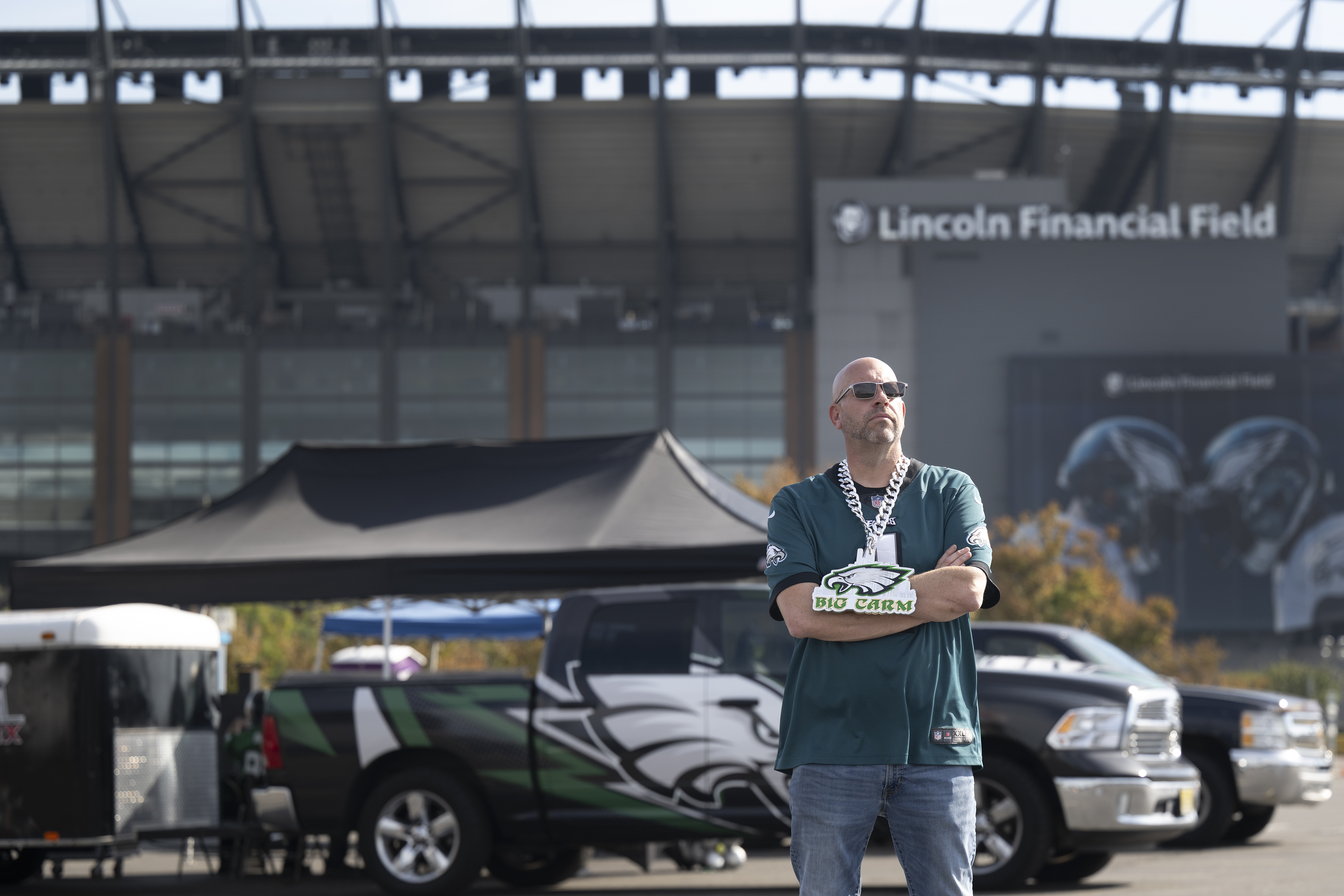
“We got leeway letting companion vehicles come in for an hour to help set up,” South Jersey native and tailgater Carmen “Big Carm” Conti said. “That’s a big, big help, especially with larger tailgates. … Instead of leaving the companion vehicles, some of them can park here in a single spots which is a big help because they don’t have to fight the traffic out to get into another lot.”
Other new rules require guests to remain within their respective parking area, with their vehicles, equipment, and activities also remaining in those areas.
What is the pricing for oversized vehicles?
Guests without a prepaid parking pass will pay the oversized vehicle parking rate of $200 for the standard four spots in the designated oversized lots.
Both tailgaters with and without a prepaid pass have the option to buy an additional two spots for $100 for a maximum of six spots per vehicle.
Donny Hoffman of South Philadelphia sits on top of a party bus during an Eagles home game. Buses of this size will have designated areas now, and have a standard parking rate of $200.Elizabeth Robertson / Staff Photographer
Why are these changes being made?
The guidelines were described as “an effort to provide a smoother, more convenient parking experience for guests,” in an email from the Sports Complex Parking Venture, which will help “ease traffic flow, keep lanes clear, and preserve parking availability for all guests.”
The changes, the email said, were based on feedback and collaboration with the City of Philadelphia and community stakeholders. Following pushback from tailgating groups, the final decision, announced Friday, also took their feedback into account.
“The whole crux of the matter is making sure that we have room for everybody that’s coming down to the games,” Comcast Spectacor chief operating officer Phil Laws said. “Whether they’re coming to [the game] for sure or they’re just coming to tailgate, we have room down here.”
Fans speculated online that the construction of a new arena in South Philadelphia prompted the changes. The arena, co-owned by Comcast Spectacor and Harris Blitzer Sports & Entertainment, is set to open in 2030 at the former site of the Spectrum, next to where Xfinity Mobile Arena sits. However, Laws told The Inquirer “that wasn’t a factor” in the timing of these changes.
“The Eagles and [Sports Complex Parking Venture] have been working on this for about a year, honestly, we’ve been talking about how we can make this work better,” Laws said. “I think as we got through the summer, we saw FIFA and some of the things that worked well [during the World Cup]. As we got into Week 1, we saw some of the things that really weren’t working well for the Eagles game.
Added Laws: “In terms of the [new] arena, we’ll have more the arena plan as we get into the fall. But listen, we built two stadiums here and we had the Vet standing at one point. There’s a lot of parking down here in the, in the complex. We just need to manage it and work together to make sure that we have the best venues in the world for our fans in Philadelphia.”