Blog

  • Philadelphia police and FBI to begin excavating Olney house in connection to missing women case

    Philadelphia police and FBI to begin excavating Olney house in connection to missing women case

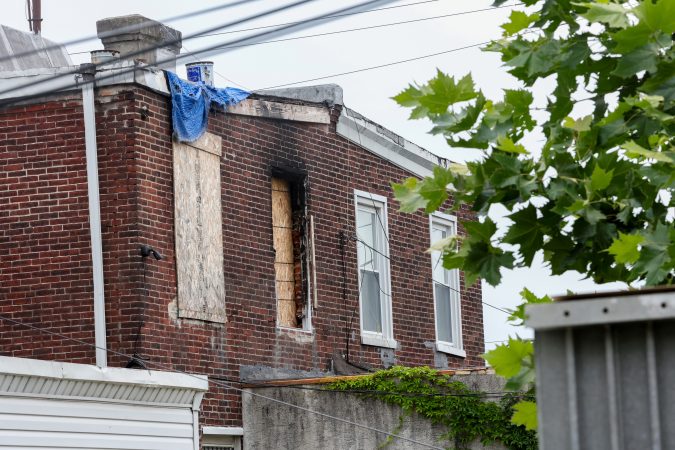
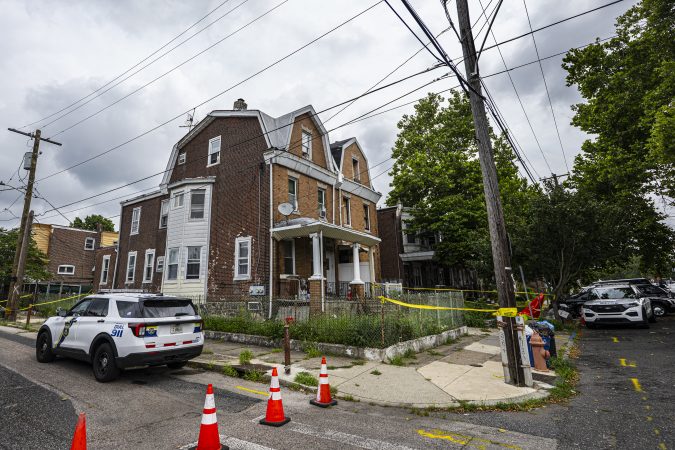
    The Philadelphia Police Department and the FBI are to begin excavating part of the Olney house that has been at the center of a monthlong investigation into at least two missing persons, law enforcement officials said Monday.

    Sgt. Eric Gripp, a police department spokesperson, confirmed that the Philadelphia Water Department would assist federal and local officials by unearthing a pipe under the property on the 400 block of West Chew Avenue as part of the widening probe.

    “The general scope of the dig is to excavate and remove a pipe that will be subsequently examined by FBI and PPD forensics for any evidence that may be present,” said Gripp, who declined to provide a timetable for the work.

    The excavation is the latest development in a case that has generated widespread interest since last month, when authorities connected the crumbling twin home to the disappearance of at least two women over the last decade.

    Federal prosecutors have charged the owner of the property, Eugene Albert Horsch, 44, with carrying illegal firearms and fake federal law enforcement credentials.

    Police apprehended Horsch on June 19 near Independence Mall with drugs, guns, and various other weapons, as well as a phony U.S. Drug Enforcement Administration badge. A woman who was with him at the time was carrying a fake ID in the name of Blair Tonzelli, a woman struggling with drug addiction who was last seen in 2022 at Horsch’s home.

    The monthlong search of Horsch’s property has turned up an array of evidence, authorities say: hidden compartments, vats filled with chemicals, a 55-gallon drum with connections to water lines in the basement, and what police sources described as “a significant amount” of blood.

    Forensic testing of the evidence found in the home remains ongoing, and police have yet to confirm whether the blood is human. Horsch has not been charged with any violent crimes in the current case.

    Investigators also found Tonzelli’s bank card, other fake IDs in her name, and an unsigned, handwritten letter that appeared to describe hurting people and referenced the serial killer Ted Bundy, according to the affidavit of probable cause to search the home that was obtained by The Inquirer.

    The probe grew more complicated when investigators learned that Amy McHale, the ex-wife of Horsch’s late father, Raymond Horsch, was also last seen at the Olney property in 2016, according to her family.

    And adding to complexity of the circumstances is Raymond Horsch’s unusual career as an erotic filmmaker and writer, whose work fixated on sadomasochist themes, serial killers, and women struggling with drug addiction. He died in August 2025.
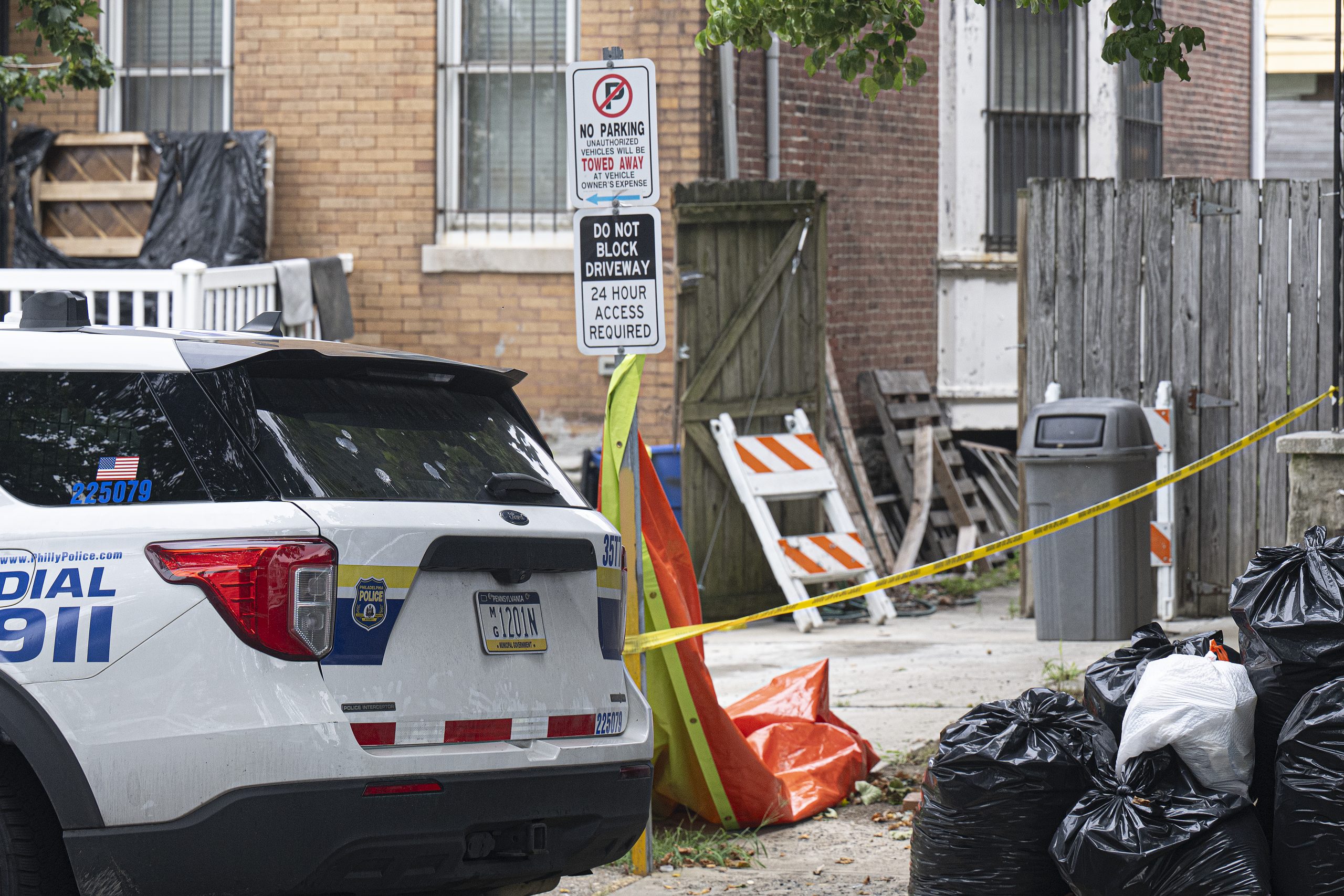
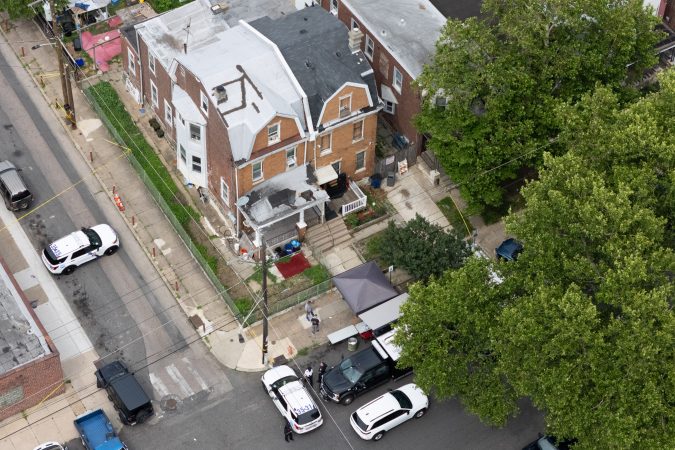
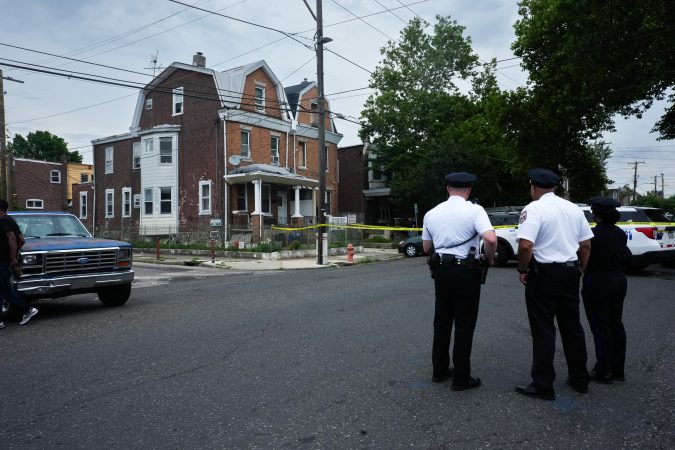
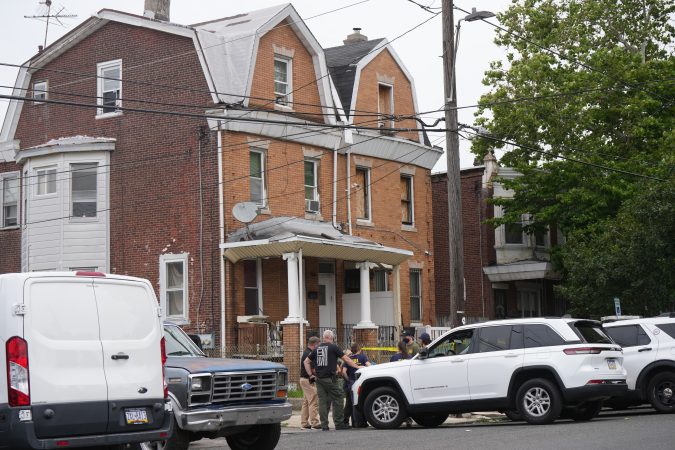
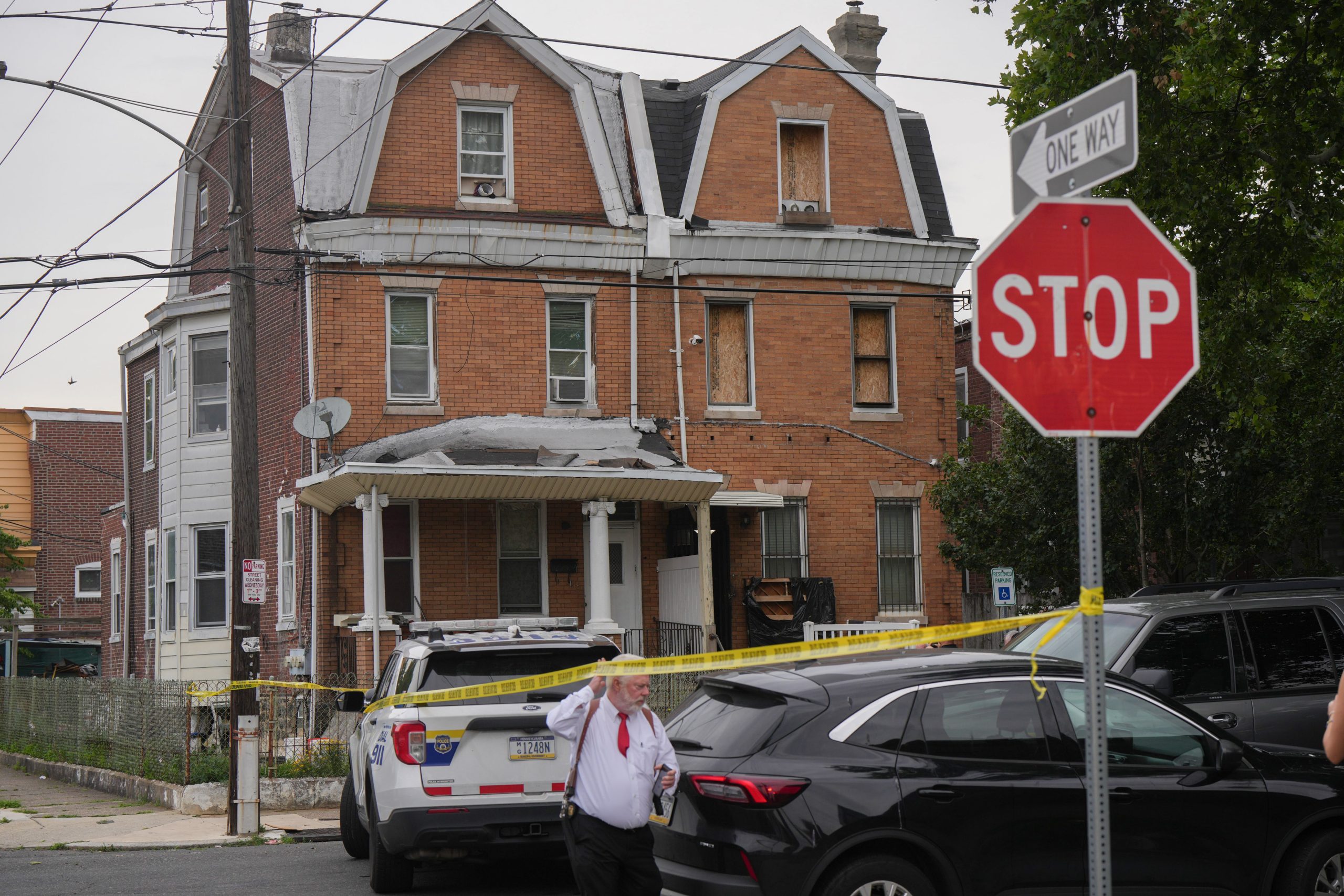
    Police maintain a presence outside the home of Eugene Albert Horsch on West Chew Avenue in the Olney section of Philadelphia Tuesday, July 21, 2026.Jose F. Moreno / Staff Photographer

    It remains unclear if authorities have linked any of the evidence in the house to foul play involving the missing women.

    Jerome Brown, a lawyer for the Horsch family, has denied any connection to McHale’s disappearance, saying that she had struggled with addiction and mental health issues. Eugene Horsch was incarcerated at the time of her 2016 disappearance, according to state prison officials.

    Eugene Horsch has a lengthy criminal background involving multiple drug convictions, including one linked to the discovery of a marijuana-growing operation after a house fire last year. After the latest search, investigators recovered numerous chemicals also suspected of being used in drug production.

    The department did not provide an estimated cost for the dig.

    Questions about the investigation have swelled among neighbors in Olney, as the probe continues in its second month. Two police cruisers have been stationed around the property 24-7 to prevent anyone from tampering with the active crime scene.

    At a crowded community meeting in the basement of an Olney billiards hall this month, 35th District Police Capt. Walter Burks tried to ease anxieties, refuting erroneous reports on social media that falsely claimed police had discovered multiple dead bodies in the property.

    Burks emphasized the house “does not pose a threat to the community” while acknowledging that he could not answer specific questions.

    “I know you all see the cars outside,” he said. “You know it’s something serious. It’s an active crime scene we have to protect.”
  • Mayor Parker moves to renew Philadelphia’s contract with controversial Chester incinerator

    Mayor Parker moves to renew Philadelphia’s contract with controversial Chester incinerator

    Philadelphia last week took a step toward renewing its contract with a controversial Chester trash incinerator after a high-profile bill to ban the city from doing so failed to garner enough support in City Council.

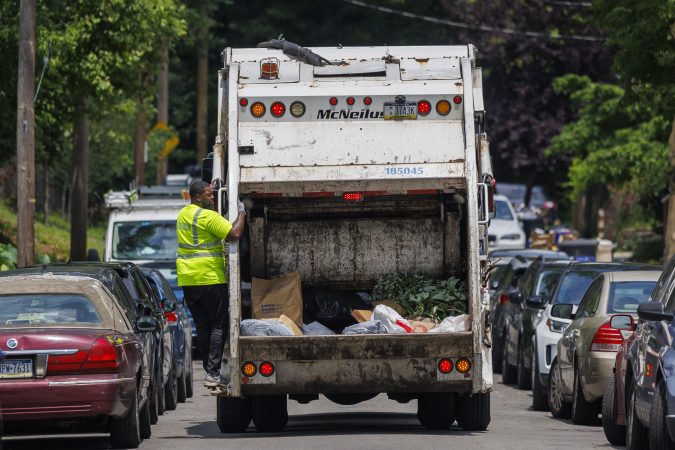
    Mayor Cherelle L. Parker’s administration issued a notice on Friday that it intends to enter into a new four-year contract for waste processing and disposal with Reworld, which operates a waste-to-energy facility in Chester. The city sends about a third of its garbage to the incinerator, the Delaware Valley Resource Recovery Facility.

    Carlton Williams, who leads Parker’s Office of Clean and Green Initiatives, said in a statement that the city’s contracting process resulted in a deal that is “financially sound, environmentally safe, and includes the best option for the city to explore alternative methods for disposal.”

    But advocates, local officials in Chester, and some City Council members have accused the company of severe pollution and environmental racism, saying it releases toxic chemicals into the air that cause adverse health effects in the majority-Black city that’s about 15 miles south of Philadelphia.

    The amount of money the city intends to pay Reworld was not immediately clear on Monday. Parker administration officials issued a notice that they intend to renew the city’s existing contract with the company, but did not publish the contract itself.

    Reworld was one of three companies selected to process and dispose of the city’s waste. The other two, Republic Services and Waste Management, operate landfills.

    Council will need to approve legislation to greenlight the new contract with Reworld. The next scheduled meeting is in September.

    It’s unclear what fate the bill might meet in Council. Last year, Councilmember Jamie Gauthier, a Democrat who represents parts of West Philadelphia, introduced the Stop Trashing Our Air act, which would have banned the city from entering into contracts with companies that burn trash or recyclables.

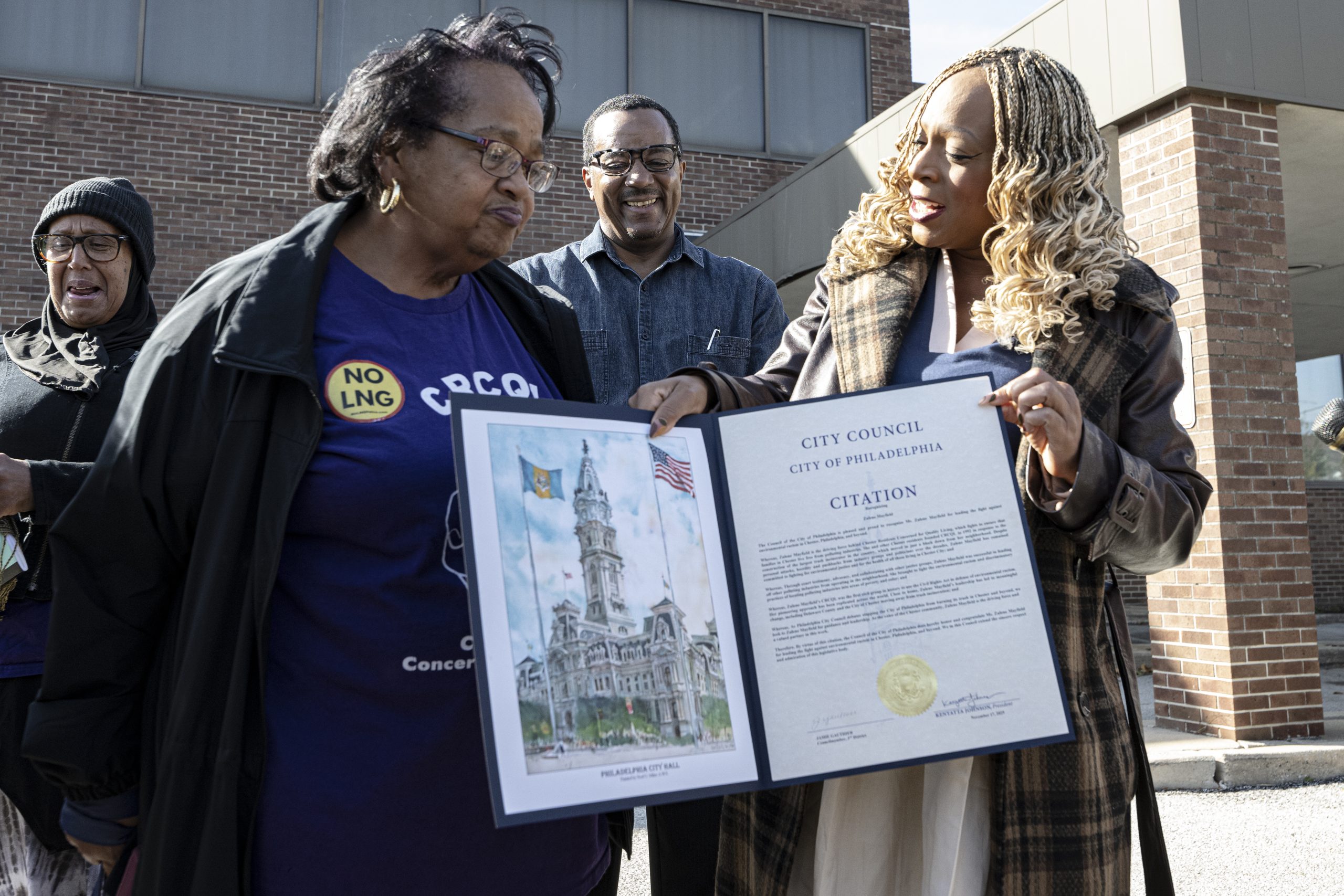
    Chester resident Zulene Mayfield (left), Philadelphia Councilmember Jamie Gauthier (right), and Chester Mayor Stefan Roots meet to discuss Gauthier’s “Stop Trashing Our Air Act,” which would ban the city from incinerating waste, during a visit with lawmakers and staff in Chester on Nov. 7, 2025.Jose F. Moreno / Staff Photographer

    But she never called the bill up for a vote, and ultimately put it on hold after it failed to garner support from a majority of the 17-member body.

    Gauthier said in a statement Monday that dirty air causes asthma and cancer, and that Parker’s administration is “condemning Philly and Chester to at least four more years of toxic air and ash.”

    “This is a choice. A choice that breaks Mayor Parker’s own campaign promise,” Gauthier said. “A choice that disproportionately harms Black and brown communities. A choice that makes every Philadelphian and Chester resident sicker.”

    The incinerator became something of a flashpoint when Parker ran for mayor in 2023. During a debate, one of her rivals, businessman Jeff Brown, made comments dismissive of complaints about the environmental impact of burning trash in Chester.

    Parker, who ran on a platform of making the city “safer, cleaner, and greener” seized on it and told Brown: “That response is the same way you treat the Black and brown community.”

    But Parker’s administration opposed Gauthier’s legislation, saying it would hamstring the city from being able to choose the best value waste disposal contractor through its typical competitive bidding process.

    That process, city officials said in a news release Friday, included considerations of cost, as well as impacts on transportation in the region and the environment. The administration hired two independent firms to conduct environmental impact analyses.

    The city previously held a seven-year contract with Reworld, which expired in June. Parker’s administration extended it for six months, ahead of selecting the company for a four-year renewal with the potential for three additional one-year extensions.

  • How Jefferson is Deepening its Community Ties to Improve Health Outcomes

    How Jefferson is Deepening its Community Ties to Improve Health Outcomes

    From the Poconos to Cherry Hill, Jefferson has become a familiar presence. As the largest academic health system in the Greater Philadelphia region, the nonprofit institution sees millions of patients each year across its 33 hospitals and more than 700 care sites spanning Pennsylvania and New Jersey. That reach, said Keith Leaphart, the executive vice president and Humana chief health equity and community impact officer at Jefferson, gives the organization a particular responsibility to its communities.

    “We are the primary safety net system here,” Leaphart, who also serves as vice chair of The Inquirer’s board of directors, said. “We’re serving a lot of people who are uninsured and underinsured, and we’re not turning them away.”

    Jefferson’s 2025 Community Impact Report, “Driven to Improve Lives,” explains how the anchor institution is using its unique model as an integrated health system that includes a university and a not-for-profit health plan to address the region’s needs. The report highlights more than $2.7 billion in community funding, including investments in access to care, health professionals’ education, and community-based services. It also offers a road map for Jefferson’s community partnerships and initiatives: building trust through neighborhood partnerships, expanding access to nutritious food, creating pathways into healthcare careers, and preparing the next generation of providers to meet people where they are. “At Jefferson, we believe our responsibility goes far beyond the walls of our hospitals,” Jefferson CEO Dr. Joseph Cacchione said.


    Building Bridges to Bring Healthcare to All

    Jefferson’s 2025 Community Impact Report that approach through investments in initiatives like the Community Health Worker Academy, a paid job-training program for new healthcare professionals who help their neighbors navigate health and social services.

    The program is an example of how Jefferson has been intentional about mobilizing health workers who come from the same communities that they serve and are often able to speak with patients in their preferred languages. Empowering community members to provide care creates a powerful access point for residents who may not otherwise connect with care systems. Community health workers also help build trust between their neighbors and health institutions.

    Similarly, Jefferson’s Inspire Network, which launched last November, partners with faith-based organizations across the region to empower faith leaders to help their congregants better understand the healthcare system. “When someone gets sick or they need care, they’re often going to a community of faith and asking for prayers and support and comfort and meal trains,” Leaphart, the Jefferson leader, said. By teaming up with faith leaders, Jefferson can help them meet their congregations’ needs directly. The health system also invites faith leaders to its quarterly Partners in Purpose events to foster relationships and collaborate on their work together. To date, Jefferson has partnered with more than 150 faith-based organizations to offer health services like screenings. The organization also hosts family-friendly events like Night at the Zoo, an annual visit to the Philadelphia Zoo that provides residents with access to affordable health options. Last year’s occasion drew 4,000 residents.

    To build on the success of partnerships like these and create opportunities for future collaborations, Jefferson recently launched a community engagement request form through which workers with community-based organizations can request a JeffCARES team visit to their place of worship or social event to provide free screenings and other health services.

    Cortney Reed, Jefferson Health’s director of Community Engagement, at the JeffCARES Community Food Pantry, which offers fresh food and recipes to support healthy eating, at Jefferson Einstein Philadelphia Hospital.Courtesy Jefferson Health

    A Recipe for Expanding Food Access

    Jefferson’s community-impact report also shines a light on the work the organization is doing to increase access to healthy meals in the Philadelphia region, where more than 600,000 people experience food insecurity. The health system partners with food banks like Philabundance and Second Harvest Food Bank of the Lehigh Valley and Northeast Pennsylvania and runs a number of community pantries, volunteer programs, and initiatives, including custom meal plans that support cancer patients undergoing treatment in Willow Grove.

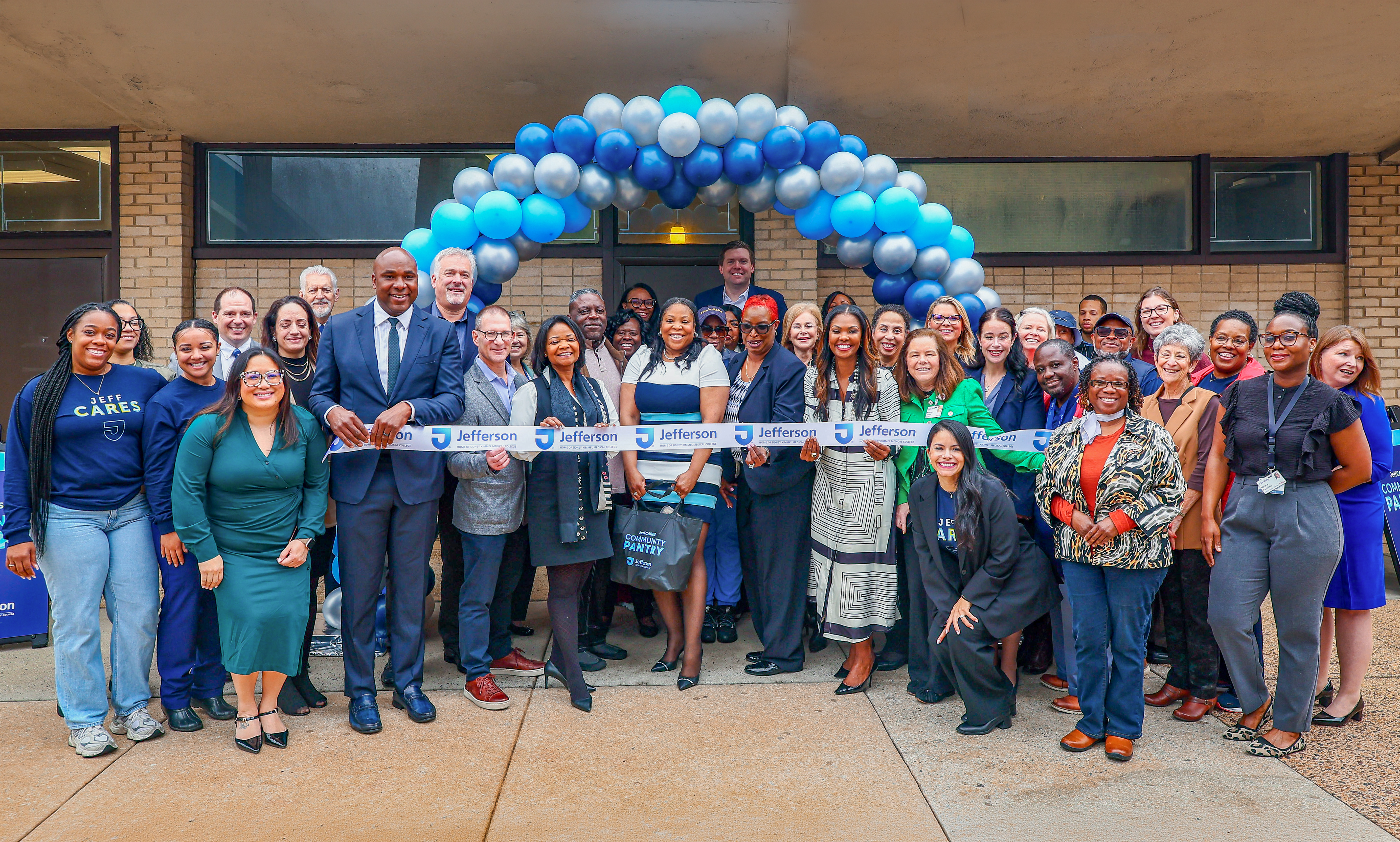
    One highlight from the report is the JeffCARES Community Food Pantry, the first Philabundance food pantry located within a hospital. It opened in April 2025 at Jefferson Einstein Philadelphia Hospital in North Philadelphia. “Philabundance has been a valued partner of ours for many years, but establishing a hospital-based site was something our community truly needed,” Dixie James, the president of Jefferson Health’s Central Region and the chair of the Philabundance Board of Directors, said.

    In addition to fresh dairy products, meat, and shelf-stable items, the pantry provides recipes for nutritious meals tailored to support a variety of health conditions, including diabetes. The pantry is open to patients, community members, and Jefferson colleagues.

    “Access to safe, healthy, nutritious foods, [and] fresh produce is something that we know is directly connected to overall better health. If you’re able to eat healthy, you’re going to have better health in general. We want to be at the center of that,” Leaphart said. “That doesn’t happen without partnerships.” Jefferson serves around 150 meals per week to families and has distributed about 6,700 bags of food so far this year.

    Jefferson’s $2.7 billion investment in community impact expands access to care and inspires future healthcare professionals through education and a school speaker series.Courtesy Jefferson Health

    Careers That Grow With Community Partnerships

    Another important part of Jefferson’s community-impact work, as detailed by the report, is career development. “One of the things that we’ve been really intentional about is building out pathway programs and pipeline programs for young people to be exposed really, really early to careers in medicine,” Leaphart said. The organization, which is the region’s largest employer with 65,000 employees, is getting kids interested in the healthcare industry by inviting staffers to visit classrooms to talk about their careers as Jefferson School Speakers.

    Jefferson has more than 20 programs across the enterprise engaging students from elementary to high school in career exploration, as well as pipeline initiatives with reputable workforce development organizations. Jefferson also runs dedicated programs for high school and college students through partnerships with educational institutions. “One that we’re really excited about is the Jefferson Workforce Development Program, a partnership between the School District of Philadelphia, North Philadelphia’s Esperanza College, and Jefferson Health,” Leaphart said. The program offers free training to high school students interested in careers as patient care technicians or medical assistants.

    Students who successfully complete the training are qualified to enter the healthcare industry as entry-level workers. Since launching the program last April, Jefferson has hired 27 students who earned their certification in the course.

    Community partnerships are also emphasized within Jefferson’s own academic institution. Students at Thomas Jefferson University, for instance, are encouraged to actively volunteer in the community. “Volunteering is core to everything that we do,” Susan Aldridge, Ph.D., the president of Thomas Jefferson University, said. “When you start here at Jefferson as an undergraduate student, within your first week, you’re volunteering in the local community, which is really unique and reflects the culture of our institution.”

    Many medical students with Sidney Kimmel Medical College volunteer with the student-run program JeffHOPE, through which they work alongside physicians to provide health screenings to vulnerable populations through a network of free drop-in clinics at homeless shelters — yet another example of how Jefferson is committed to expanding access to care. To date this year, Jefferson has hired 1,308 Thomas Jefferson University graduates.

    Community-First Leadership

    For Jefferson, improving access to health and education extends beyond hospital campuses and care sites into schools, shelters, food pantries, houses of worship, and community events — places where people feel comfortable and are already seeking support.

    “As a leading academic health system, we have both the reach and the obligation to improve health across entire communities — by expanding access, investing in people, and partnering in ways that create lasting impact,” Cacchione said. As the report makes clear, Jefferson’s mission to improve lives depends on building the partnerships, pathways, and trust that help communities thrive.


    Chloé Pantazi-Wolber is a writer and editor. Her work has appeared in Business Insider, Philadelphia Magazine, The Rooted Journal, Travel Bulletin, The Paris Review, and more.

  • Eugene Horsch indicted in federal court on firearms, fake credentials charges

    Eugene Horsch indicted in federal court on firearms, fake credentials charges

    Federal prosecutors on Thursday formally indicted Eugene Albert Horsch, the Olney man at the center of a widening investigation into the disappearance of at least two women, on charges that he illegally possessed firearms and fake federal law enforcement credentials.

    The two-count indictment accuses Horsch, 44, of possessing two loaded firearms despite having been convicted of a prior felony, which bars him from having guns. It also alleges that he had “fraudulent identification documents” that appeared to have been issued by the Drug Enforcement Administration and the Federal Bureau of Investigation, but that neither agency had produced.

    The indictment stems from Horsch’s arrest on June 19. On that day, U.S. Park Police officers recovered two loaded firearms — a .38 Special revolver with an obliterated serial number and a Taurus .40-caliber semiautomatic pistol — from beneath a front seat of his black BMW, which was parked in a restricted area near Independence Hall in Center City, according to court records.

    Officers said they also recovered counterfeit DEA credentials from the vehicle. And later, during a search of Horsch’s home in the 400 block of West Chew Avenue, federal and local authorities uncovered fraudulent FBI credentials and a desktop computer that may have been “used to facilitate” the fake documents, according to the indictment.

    Horsch has remained in federal custody since his initial appearance in U.S. District Court last month, after a magistrate judge ordered him detained pending a trial.

    Horsch’s attorney, Jerome Brown, said this week: “We believe Mr Horsch is innocent.”

    The federal case has unfolded alongside a broader investigation that began after Horsch’s arrest. Authorities searching his deteriorating twin home found another firearm, equipment used to grow marijuana, barrels of chemicals, ashes of least one relative, documents connected to two women who have been missing for years, and an unsigned, handwritten letter describing violence and referencing serial killer Ted Bundy, officials have said.

    Investigators have said they have not found human remains at the property, but found a “significant” amount of blood. They have continued examining evidence recovered from the home as they search for any possible links between Horsch and the disappearances of Blair Tonzelli, who was reported missing in 2023, and Amy McHale, his father’s former wife, who was last heard from at the Olney property in 2016.

    Brown previously said he did not believe his client had harmed either woman.

    “I’d be shocked if [police] found any harm related to those missing persons at that location,” Brown said after Horsch’s detention hearing.

    Staff writer Ryan W. Briggs contributed to this article.

  • A Chester couple will face a county judge on murder charges in the death of their 2-year-old son

    A Chester couple will face a county judge on murder charges in the death of their 2-year-old son

    Cynthia Robinson and Frank Walton Sr. won back custody of their son, Frank Jr., in May 2025, Delaware County prosecutors said Tuesday.

    Six months later, the 2-year-old was dead, and the bruises and cuts that covered his young body told the story of the abuse he had been dealt in the weeks leading up to his killing, according to First Assistant District Attorney Kristin Kemp.

    Robinson, 37, and Walton, 57, were held for trial on charges of murder, conspiracy, and related crimes after an hours-long preliminary hearing before District Judge Dawn L. Vann.

    An autopsy revealed that Frank died in November from a laceration to his liver that caused significant internal bleeding, as well as bleeding in his brain that a forensic examiner said Tuesday was caused by either blunt trauma or severely shaking the boy.

    Those injuries, Kemp said, were caused by Robinson, who has a documented history of abusing all four of her children, and who had been seen beating and striking Frank whenever he cried at the couple’s house in Chester.

    Kemp said though Robinson dealt the fatal injuries, Walton was just as culpable — he waited to call 911 until the boy had died, despite seeing his condition worsen in the hours after the beating.

    Walton also agreed to lie to police and attempt to blame his son’s injuries on his then-3-year-old daughter, whom Robinson claimed had pushed the boy down the stairs, Kemp said. The girl, according to testimony Tuesday, had spent the entire day with Walton and had not been home.

    “They were afraid of law enforcement and investigators seeing that every aspect of that child had been abused,” Kemp said. “Only one thing could’ve happened with that baby, and that was his death.”

    Robinson’s attorney, Michael Dugan, said that there was no evidence his client had intended to kill her son.

    “At the end of the day, who calls 911? Mom. Who does CPR? Mom,” Dugan said. “I don’t think either one of these parents knew this child was dying, and when they knew his extreme condition, they called for help.”

    Walton’s attorney, Wana Saadzoi, asserted that the charges against him should be dropped — he had never been seen abusing his son, and the mortal injuries took place when he was out working.

    “He couldn’t have prevented it from happening if he wasn’t present,” she said. “This was a tragic failure that he was unable to appreciate the seriousness of his injuries.”

    But Kemp doubted that theory of the case, saying Walton was well aware of Robinson’s history of child abuse and should have done more to protect the toddler.

    “As a parent, you don’t get to bury your head in the sand,” she said. “You have an affirmative duty to intervene and save your child.”

    Frank was born prematurely, according to the affidavit of probable cause for his parents’ arrests, and tested positive for cocaine and fentanyl. He was placed in foster care as a result, but was returned to his parents in May 2025.

    Robinson’s half brother, Jason Weldon, testified Tuesday that he saw her carry Frank down the stairs by his T-shirt and drop him onto his back from about waist height hours before the boy died.

    He said he saw Robinson slap Frank and forcibly cover his mouth when he cried, and heard her say she was going to “beat this little [expletive].”

    Weldon testified that he threatened to report Robinson to county officials, but that she begged him not to because she did not want the boy to be taken away again.

    He said he told Walton about the abuse and that he needed to protect his kids.

    “If I would’ve known [Frank Jr. would be killed], I would’ve done something about it,” Weldon said.

    Weldon said he woke up on the night Frank died to see Robinson frantically performing CPR on the boy. And he was in the room when she told police that her daughter had pushed Frank down the stairs, he said, but he “didn’t think it went down that way.”

    An autopsy revealed that the injuries the boy sustained, especially the laceration to his liver, required force only an adult could apply, according to testimony Tuesday.

  • Your guide to South Jersey’s mini golf courses

    Mini golf is an underrated nostalgic summer staple. The rainbow array of golf balls, the sun-bleached artificial turf, the tilting windmills, and fiberglass volcanoes will transport you right back to childhood, melting ice cream cones and all.

    It’s easy to find Putt-Putt courses dotted up and down the boardwalks of the Jersey Shore, but South Jersey has its fair share of miniature fareways, too. Many offer more than just mini golf, with homemade ice cream, arcade games, amusement park rides, and driving ranges for adults. Two courses are indoors, for big fun even when the sun isn’t shining.

    Tee up a great summer on these miniature links:

    Big Swing Golf Center

    Open year-round, weather permitting

    Big Swing boasts not one but two mini golf courses. (For the second, “Go left at the volcano,” the attendant tells me.) Both are light on props and heavy on banks, curves, hills, elevation gains, and drops, making for some genuinely tricky shots.

    Best hole: No. 8 on the waterfall course starts at the top of a hill, with three options to get to the bottom, including two mystery chutes — one that could land a hole in one, and another that spits out on a separate landing.

    Other amenities: Golf simulator, golf lessons, driving range

    Price: $7 per adult for both courses, $6 for children 12 and under

    📍312 Salina Rd., Sewell, N.J. 08080 📞 856-553-6723, 🌐 bigswinggolfcenter.com

    Monster Mini Golf

    Inside Monster Mini Golf in Cherry Hill, N.J.

    Year-round

    Don’t let a rainy day (or a brutally hot one) stop you from hitting the links. Monster Mini Golf offers 18 holes of spooky-themed, indoor, glow-in-the-dark golf, with locations in Cherry Hill and Turnersville. Black light illuminates the dark interior, which is decked out with weird Jersey scenes rendered in glowing paint, and monstrous animatronics that come to life as you move around the course.

    Best hole: Tie between hole No. 8, which is presided over by an enormous, glowing talking skull and No. 9, where players can spin a wheel to add a random, extra challenge to their turn, like playing with one arm behind their back or with their eyes closed.

    Other amenities: Arcade, mini bowling alley, laser maze, laser tag (at Turnersville location only)

    Price: $10-14 for mini golf

    📍2040 Springdale Rd., Suite 300, Cherry Hill, N.J. 08003, 📞 856-393-5500, 🌐 monsterminigolf.com/locations/us/nj/cherry-hill

    📍 1 Shoppers Lane, Blackwood, N.J. 08012, 📞 856-302-5240, 🌐 monsterminigolf.com/locations/us/nj/turnersville

    Pleasant Valley Miniature Golf

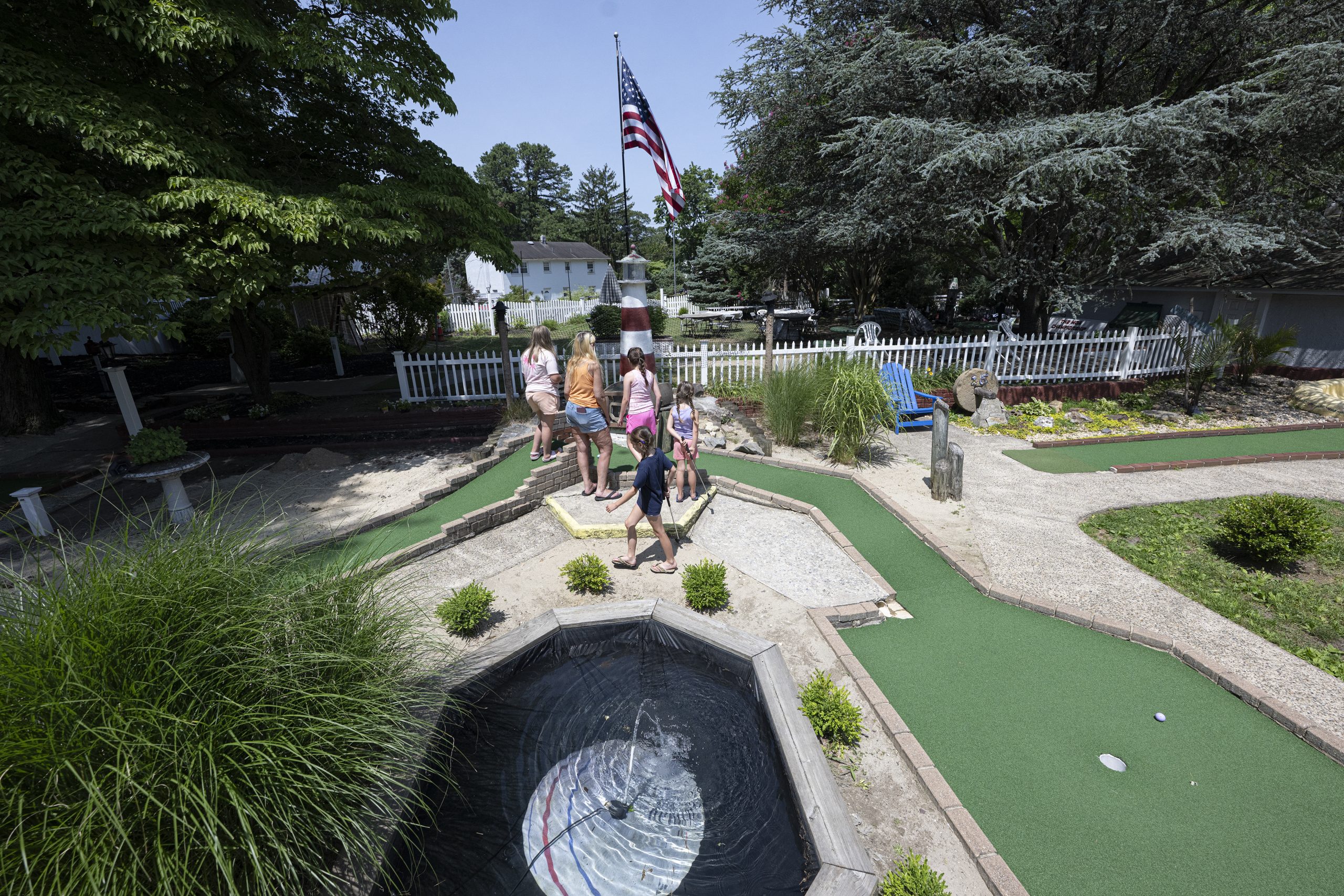
    Players play rounds at Pleasant Valley Miniature Golf on Route 73 in Voorhees on June 30, 2026.

    April 1 to Halloween

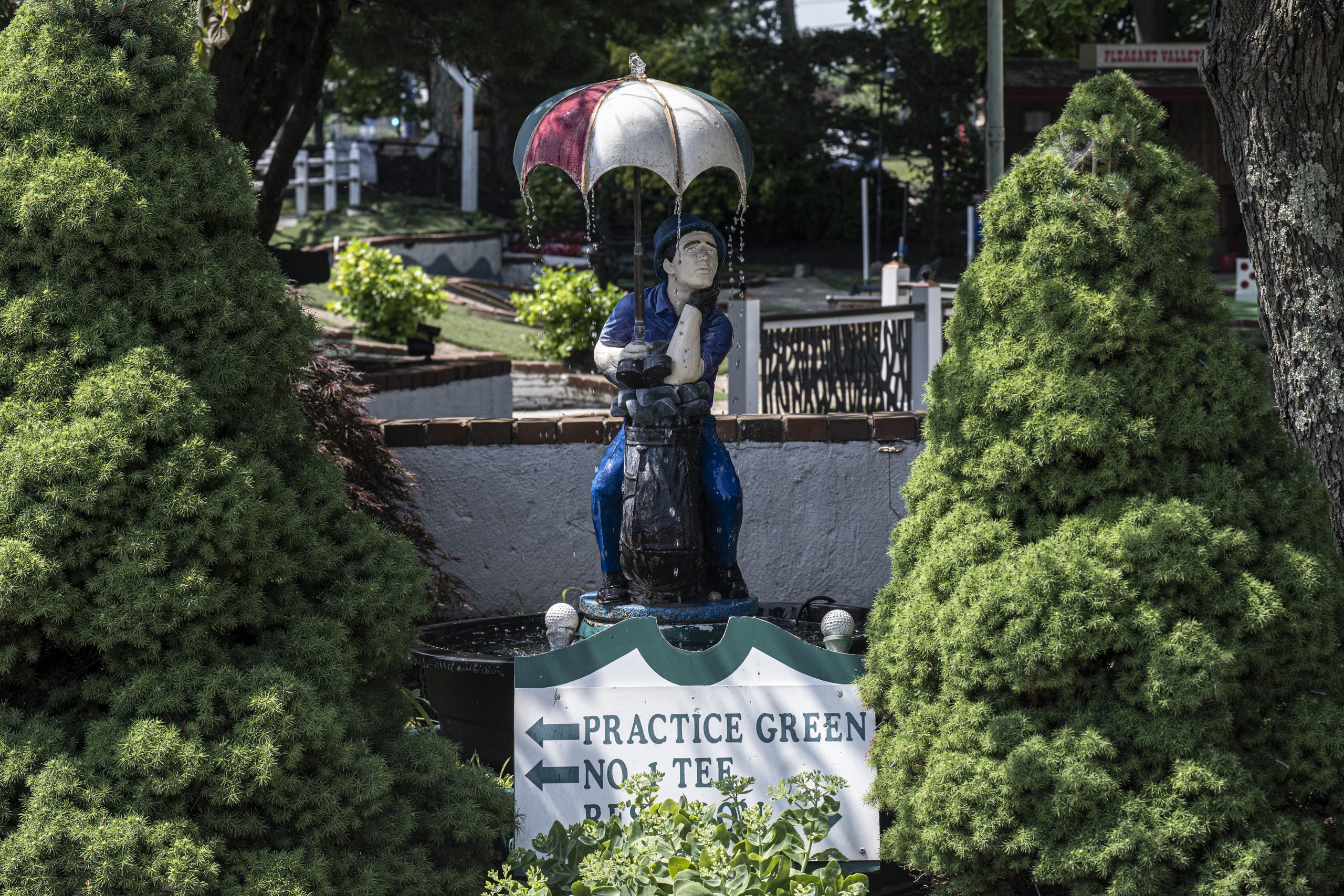
    Opened in 1972 and now run by the son of the original owner, Pleasant Valley is a throwback mini golf course with all the wacky obstacles you could dream of. The fiberglass Liberty Bell and giant sombrero, built by the owner, have been there since the 1970s. Guest-favorite hole No. 12 features three gophers driving classic cars in circles. Conveniently located on the way to Atlantic City, it’s got a classic charm you won’t find at every course.

    Best hole: “The sombrero,” owner Brian Whelan says. “It’s very difficult, very easy to have the ball fly out of the sombrero. Big risk, big reward there.”

    Other amenities: Ice cream and water ice

    Price: Before 6 p.m., $10 for adults, $9 for kids 10 and under and seniors; after 6 p.m., $12.50 for adults, $10 for kids and seniors

    📍 93 Rt. 73, Voorhees, N.J. 08043, 📞 609-314-1214, 🌐 pvminigolf.com

    Voorhees Golf Land

    March 1 to the weekend after Thanksgiving

    Previously known as the Golf Farm, Voorhees Golf Land reopened last year under new ownership after a yearlong closure. In addition to 18 holes of mini golf, Golf Land sports the region’s only pitch-and-putt course. That’s 18 holes of golf that are just 20 to 50 yards long, “not quite the size of a par three,” owner Diana Hennefer says, so it’s a great option for people who don’t have the time or mobility to play a full round of golf, or who just want to practice their short game.

    Best hole: No. 18 has a wishing well in the middle. “It’s probably the trickiest one,” Hennefer says. “It’s also the prettiest, most picturesque one.”

    Other amenities: Pitch-and-putt course

    Price: Mini golf: $8 for adults, $6 for kids; pitch and putt: $15 for adults, $10 for kids

    📍 801 Haddonfield Berlin Rd., Voorhees, N.J. 08043, 📞 856-630-0977, 🌐 voorheesgolfland.com

    Serene Custard and Miniature Golf

    A water feature at Serene Custard and Miniature Golf in Vineland, N.J.Courtesy Ari Dendrinos

    Come for the challenging, hilly course, and stay for the vintage custard stand serving homemade ice cream. Built in 1959, Serene Custard still boasts its original mid-century signage and is celebrating its 67th season this year. The 18-hole mini golf course is a newer addition, featuring tough terrains and lush landscaping. “You sort of don’t even feel like you’re in South Jersey when you’re on the course,” owner Ari Dendrinos says.

    Best hole: No. 9 takes place entirely within a huge man-made cave.

    Other amenities: Custard stand serving ice cream, water ice, and some savory snacks

    Price: $6 for children, $8 for adults

    📍 2336 N. West Blvd, Vineland, N.J. 08360, 📞 856-692-1104, 🌐 serenecustardandgolf.com

    The Funplex Mount Laurel

    Spring break to mid-October

    The Funplex at Mount Laurel has way more than just mini golf. There’s a waterpark, indoor and outdoor rides, a bowling alley, and more. But don’t sleep on the two mini golf courses, Adventure Cave and Lost Lagoon, both of which offer 18 holes of obstacles, including a few multilevel designs.

    Best hole: At No. 19, if you get a hole in one, your next game is free.

    Other amenities: Waterpark, indoor and outdoor rides, bowling, arcade games

    Price: $42 on weekdays and $49 on weekends for access to all attractions; $46 and $54 when purchasing at the gate

    📍 3320-24 NJ-38, Mount Laurel, N.J. 08054, 📞 856-273-9666, 🌐 thefunplex.com

    Jersey Devil Golf & Fun Center

    May to October, honor system year-round

    The Jersey Devil wants to ensure you never have to miss a mini golf fix. Despite the posted hours, this course operates on the honor system, making putters and golf balls available every day, all year round, so you can play even when no one is working. Just drop $5 in the box at the first hole to enjoy putting on these long greens, which provide a challenge to kids and adults alike.

    Best hole: Hole No. 12 features a sharp bend and splits in two before converging.

    Other amenities: Driving range, picnic area with cornhole, and firepits

    Price: $8 for adults, $7 for 6- to 16-year-olds, free for 5 and under

    📍 276 Rte 73 S, Hammonton, N.J. 08037, 📞 609-704-9007, 🌐 jerseydevilgolf.com

    Pleasant Valley Miniature Golf is shown on Route 73 in Voorhees, N.J. Tuesday, June 30, 2026.Jose F. Moreno / Staff Photographer
  • 🌮 Let’s talk ‘Walking Tacos’ | Down the Shore

    🌮 Let’s talk ‘Walking Tacos’ | Down the Shore

    Walk with me.

    You open the door to the rental and let in the roaring summer sun, and you’re fully prepared for a relaxing day on the beach: Toy Story-themed towel, Cherry Float Coke Zeros, and a thin layer of suntan spray coating everything in the canvas tote bag.

    But you could really use a snack.

    There’s a lot going on this holiday weekend, and it’s a mess. So the last thing you need is another one.

    What you’re looking for is a classic Jersey Shore treat, but ice cream isn’t built for travel and a slice of pizza has too many variables.

    You need a “Walking Taco.”

    Walking tacos are offered at the Wells Fargo Center.Michael Klein / Staff

    I’m Tommy Rowan, and I’m once again subbing in for Amy S. Rosenberg. I’m a lifelong Jersey Shore-goer who was raised on visits to the Ocean City boardwalk and Wonderland Pier. I spent my teenage years on the Wildwood boardwalk, my 20s in Sea Isle City, and nowadays I have family in North Wildwood. Maybe it’s because I’m within spitting distance of 40, or because places I once loved are being torn down, but I find myself wanting to cram in more of everything.

    Which brings us back to the food that moves.

    The “Walking Taco” is for people who want to walk and talk, and who want to fit in more and keep moving.

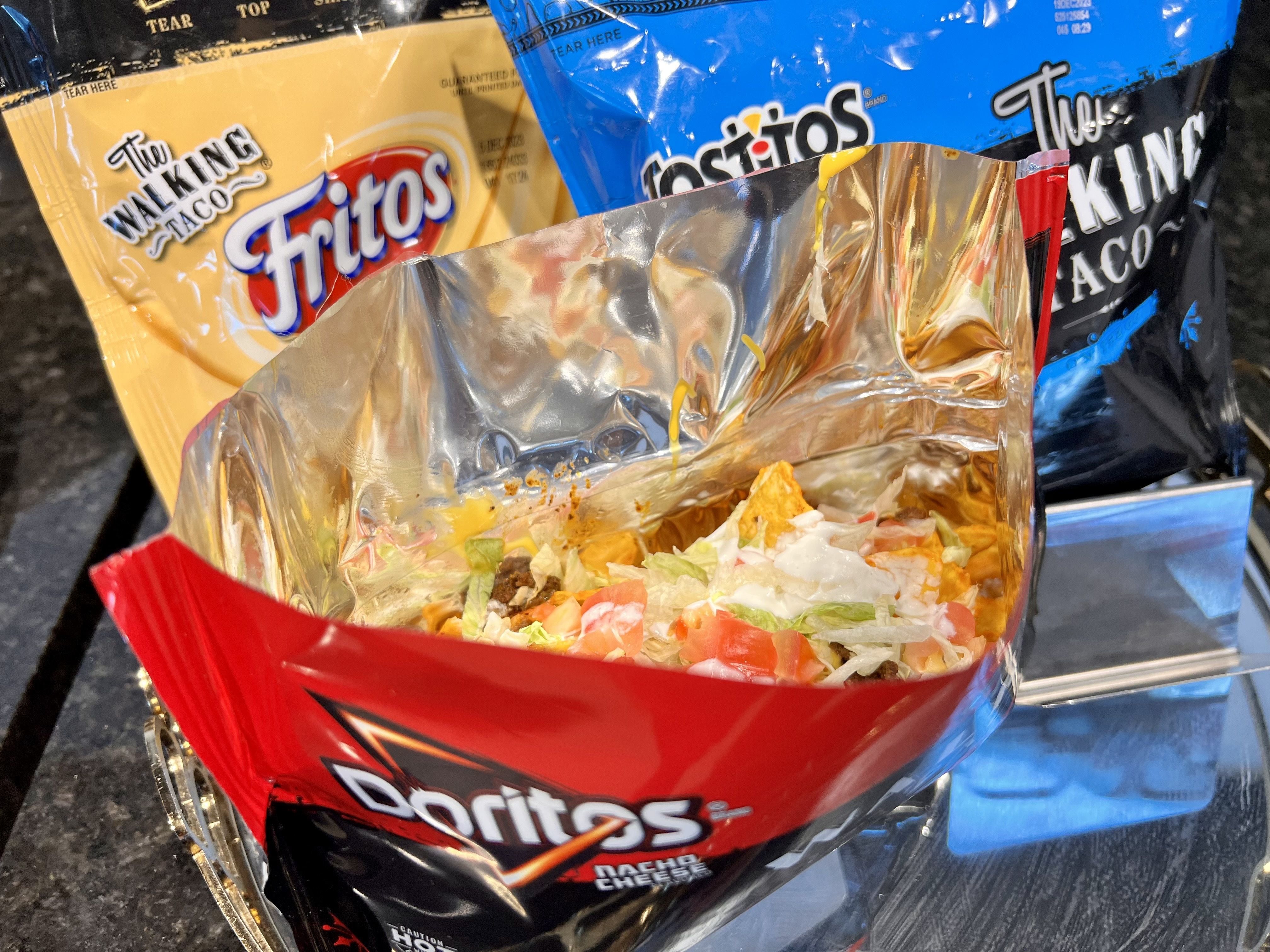
    It’s a snack-sized bag of Fritos that’s crushed into pieces, garnished with seasoned ground beef, shredded cheddar cheese, and homemade pico de gallo. It’s eaten with a plastic spoon.

    It encourages you to get your steps in, but it’s not quite fast food. That’s why they don’t call it a “Running Taco.”

    It’s best eaten on the walk to the beach, but if you’re a “save for later” kind of person, it still works: The bag is self-contained, and yet it’s protected from splashes of sand and saltwater. And it’s an easy disposal: Just crush the bag into a ball and toss it in a trash can.

    It’s salty and crunchy and cheesy, but it’s not a true overindulgence.

    A cheeky hot dog stand in Sea Isle City has unfound claims to “the original,” but the product can be found up and down the Philly-favored beach towns between Atlantic City and Cape May — and many swap out Fritos for Doritos.

    And, honestly, what better way to ring in the 250th anniversary of the Declaration of Independence than with a uniquely American product: a nonrecyclable bag of ultraprocessed salty particles, topped with chemically altered cheese strings, covered in oily animal fat, and topped with what can only be described as a “modern interpretation” of pico de gallo.

    It’s America in a fun-size.

    📮 What’s your favorite beach snack? And how do you feel about the “Walking Taco?” What are you eating this holiday weekend? Let me know what you think by replying to this email, and your most interesting responses may end up in a future newsletter. Have ideas or news tips about the Shore or this newsletter? Send them here.

    😡 We’re in for a dangerously hot holiday weekend. Remember to hydrate.

    — Tommy Rowan (🐦 Tweet me at @tommyrowan. 📧 Email me here.)

    If someone forwarded you this email, sign up for free here.

    Shore talk

    🏖️ Pumped up. Sand-pumping operations are expected to begin next week in Ocean City, while replenishment of the Seven Mile Island Beaches will reportedly begin toward the end of the summer. Avalon’s beaches are up first, with work scheduled to start in mid-August, followed by Stone Harbor in October.

    🛵 Take a number. A reminder that New Jersey is now taking appointments for e-riders to register their e-bikes, per a new state law (which doesn’t seem to affect visitors from Pennsylvania). We have a full look at the confusing law here.

    🎃 Halloween in July? Spirit Halloween is getting a head start on the spooky season and listing seasonal job openings on its website, including for pop-up stores at the Shore in May’s Landing, Rio Grande, and Egg Harbor Township.

    🗳️ The mayor is in. For a fifth time, Jay Gillian was sworn in as mayor of Ocean City. He won reelection in May.

    🏫 Stretching out. Dominique Dawes, a former Olympian who founded a chain of gymnastics schools, is planning to open a new location in South Jersey this fall. The new school is part of the former gold medalist’s expansion into the greater Philly region.

    What to eat/What to do

    🎆 Happy Fourth of July weekend! Check out this handy guide to the fireworks shows and festive celebrations happening across the region.

    🇺🇸 The Declaration. Two days before the country’s 250th anniversary, on July 2, Avalon is hosting a public reading of the Declaration of Independence. And then a few days after, on July 8, Cape May is planning its own public reading and reenactment. Both are worth checking out.

    👻🦀 Ghost crabs! Every Thursday between 8 and 9 p.m., the Nature Center hosts a ghost crab hunt on the beaches of Cape May. So grab a flashlight and watch the translucent crustaceans scurry in the spotlight. Preregistration is required.

    🌭 Hot Dog Tommy’s in Cape May. No. 1, fantastic name. No notes. And No. 2, helluva chili cheese dog.

    🎥 Beach movies. Catching a flick outdoors at the Shore is underrated. Ocean air, salty breezes, and overpriced ice cream cones coalesce to create the most perfect conditions to take in a picture. Cape May and Margate show movies on the beach, Sea Isle utilizes the Band Shell in Excursion Park, and Wildwood hosts at Byrne Plaza.

    🧢 Card show. If you’re looking for an escape from the heat this weekend, the Sports Card, Toy, Comic & Collectibles Show will be trading in childhood treasures and autographed memorabilia at the Wildwoods Convention Center on the boardwalk.

    🎸 Free tunes in Atlantic City. On Wednesday, Bayou Blues guitarist-vocalist Tab Benoit is playing Mardi Gras on the Boardwalk, a New Orleans-themed concert series at Kennedy Plaza. The free show starts at 7 p.m.

    🥡 Delicious takeout. Craig LaBan is a big fan of the General Tso’s at China Sea of Absecon. He went inland for his latest list of places to eat at the Shore.

    Shore snapshot

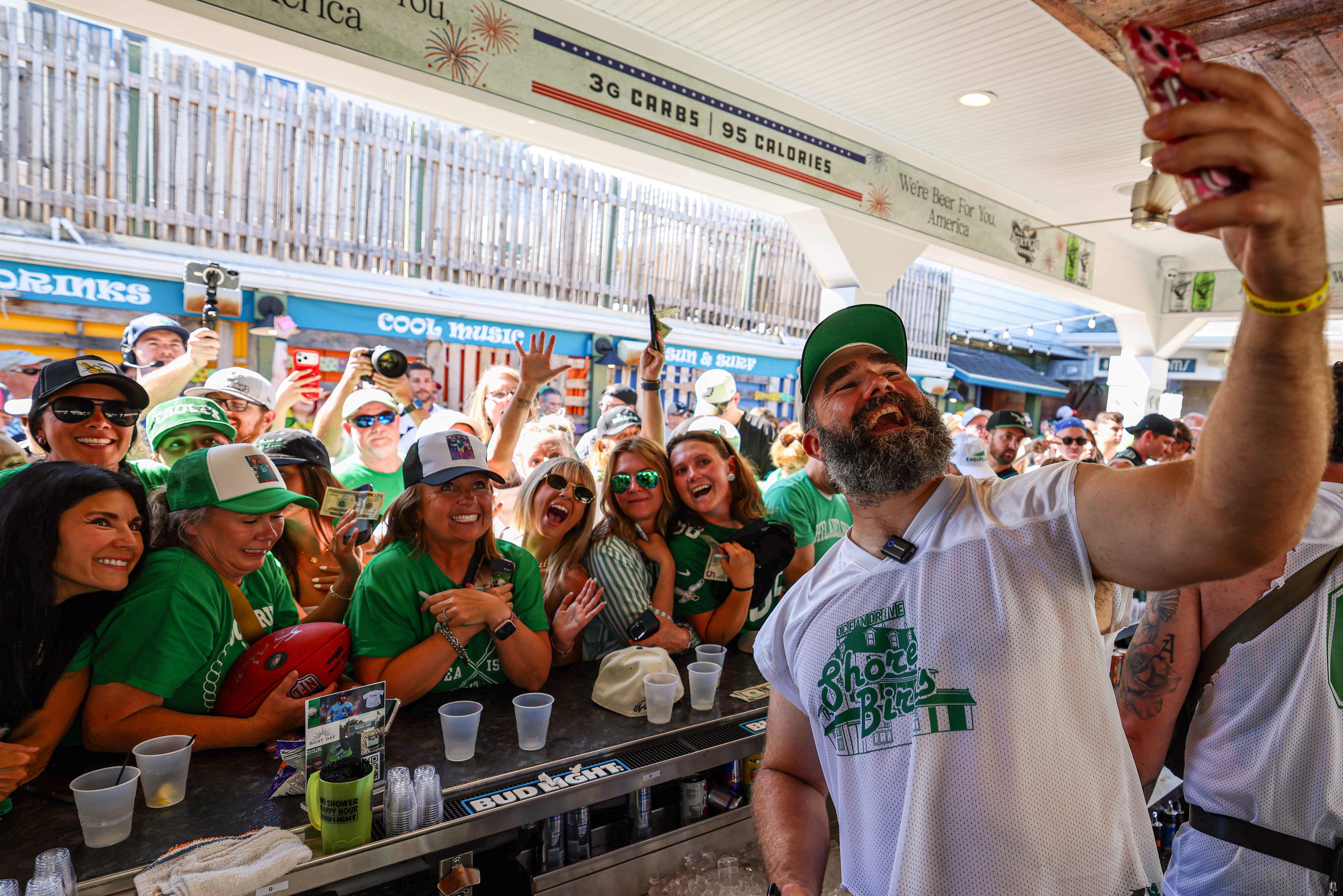
    Jason Kelce takes a selfie with fans at his annual fundraiser in Sea Isle City.Courtesy of the Philadelphia Eagles

    After starting last year’s fundraiser with tear-away shorts and a Speedo, Jason Kelce was comparatively reserved this year for his entrance at his and wife Kylie Kelce‘s sixth annual “Shore Birds” event at the Ocean Drive in Sea Isle City. The event benefits the Eagles Autism Foundation.

    Vocab lesson

    Semiquincentennial (noun)

    [semi-QUINN-cen-ten-knee-all]

    The 250th anniversary of the Declaration of Independence.

    I hope the next milestone after the Semiquincentennial is easier to pronounce and simpler to spell.

    🧠 Trivia time

    On June 27, 1958, this civil rights leader addressed a convention of Quakers in Cape May in a little remembered episode in this cultural icon’s extraordinary life.

    A. Nelson Mandela

    B. Thurgood Marshall

    C. Rev. Dr. Martin Luther King Jr.

    D. Gloria Steinem

    If you think you know the answer, click on this story to find out.

    Your Shore memory

    I’ve been thinking a lot lately about Wonderland Pier and the unmistakable value boardwalk rides bring to the Jersey Shore, which is what made Joseph Farley’s recent submission jump out.

    The station wagon seemed to bulge like in a Willie the Worm cartoon; where endless hordes of Mickey Mouse types invade a building. Our family of ten filled the seats with the baby on mom’s lap. It was 1955, the tires were near bald and Dad kept a gallon of water handy to feed the radiator should it geyser in heavy traffic. We left Cheltenham, PA for Wildwood already singing, “On the Way to Cape May.” My pockets bulged with the contents of my piggy bank, my life’s savings. It was a six-hour trip, four of them spent in Dorothy, a town on the Tuckahoe Road, enjoying lunch while Dad made repairs to the car.

    That night I choose to ride the “Salt & Pepper Shaker” on Morey’s Pier; a scary ride that took you into the stars. At the top, it flipped upside-down. All the coins in my pockets fell out, clanking off the girders to oblivion. This broke ten-year old, turned moocher, still had a glorious vacation. I returned home brown as a berry with a tale that became family lure, a “feel sorry for dad story” that still brings sympathetic sighs every time I tell it.

    Send us your Shore memory in 200 words! Tell us how the Shore taps into something deep for you, and we will publish them in this space during the summer.

    ✌️ That should do it. Amy’s back from vacation next week, so I’ll see ya at the rest stops.

    — Tommy


    By submitting your written, visual, and/or audio contributions, you agree to The Inquirer’s Terms of Use, including the grant of rights in Section 10.

  • Police searched Olney home last summer, but drugs — not missing women — were the focus

    Police searched Olney home last summer, but drugs — not missing women — were the focus

    About a year before police raided a crumbling Olney twin in connection to a missing woman last month, Philadelphia narcotics officers scoured Eugene Horsch’s basement and found telltale signs of a drug dealer.

    Firefighters had responded to a small blaze on the second floor of the property on May 18, 2025, alerting police to what they said was a sprawling marijuana grow operation. And when narcotics cops searched the home later that morning, court records show they recovered a modified fully automatic assault rifle with an obliterated serial number, a sawed-off shotgun, a pistol, and ammunition.

    The top floor was filled with cannabis plants, tents, and UV lights, with exposed wires running between the floors and into the basement, where vats of chemicals were stored, apparently to “cultivate marijuana,” the records said.

    The police report detailing the drug bust at the Olney house made no mention of missing women, despite the fact that concerned relatives and friends had told police years earlier that at least two women who stayed at the house had vanished.

    Now, the disappearance of one of those women, Blair Tonzelli, is central to an ongoing search at the property, where police found fake IDs and bank cards in her name, among other disturbing evidence.

    That law enforcement did not appear to connect the missing women to the search for drugs at the same address raises questions about whether the officers who searched the property last summer were aware of the two missing persons cases. The Philadelphia Police Department declined to comment, citing the ongoing investigation.

    Police began reexamining Tonzelli’s disappearance on June 19 after arresting Horsch, whose companion had a fake ID in her name. Investigators reinterviewed witnesses and viewed footage of a statement given in February 2023 by Tonzelli’s friend, who told officers Tonzelli was last seen at 417 W. Chew Ave. Police have also revisited the 2016 disappearance of Amy McHale — the ex-wife of Horsch’s father, erotic filmmaker Raymond C. Horsch — whose mother said she vanished from the Olney home.

    Gloria McHale, Amy’s mother, said she was surprised to learn that police had searched the property for drugs in 2025.

    “I wish they would have looked deeper,” she said.

    Police have not charged Horsch with any crimes linked to missing women. He has been jailed since his arrest last month on $500,000 bail for gun and drug charges, as federal and local police prepare to excavate the property in search of more evidence.

    His attorney, Jerome Brown, declined comment. Brown has previously said police had interviewed Raymond Horsch several times over the years about McHale’s disappearance.

    When local and federal law enforcement officers searched Horsch’s home last month in connection to the missing women, police said they again found guns, ammo, and drugs. More troubling, according to police records, is that they also found a “significant amount” of blood, a handwritten letter referencing serial killer Ted Bundy, and fake IDs and bank cards in Tonzelli’s name.

    The latest search began after police arrested Horsch in his black BMW with an array of weapons, drugs, and a woman donning a fake ID in Tonzelli’s name. A sworn affidavit to initiate the search includes witness testimony that suggested Horsch was a “sociopath” who knew how to dispose of human remains.

    But it was a fire that brought police to Horsch’s property one morning in May 2025.

    Eugene had been living in the twin with two other women, including his father’s longtime companion, Krista M. Killen. City firefighters said the small blaze was started by “careless smoking” on the second floor, according to Horsch’s arrest report. While extinguishing the fire, a fire marshal and police patrolman on the scene discovered a “marijuana grow operation” on the home’s third floor and basement.

    Officers with the PPD Narcotics Strike Force later searched the home and seized 26 pounds of marijuana, 131 grams of dried mushrooms, $1,200 worth of methamphetamine, $800 cash, and “numerous gold colored and silver” coins in a safe, records show.

    Police also recovered a BCI Defense AR-15 style rifle modified to be fully automatic, a 12-gauge Stevens Model 67 pump-action shotgun with a sawed-off barrel, a 9mm Girsan MC28 pistol and more than a hundred rounds of ammunition. The serial numbers had been destroyed on all three firearms, according to records.

    Horsch had previous felony convictions for drug manufacturing charges and was not legally allowed to own firearms. He was arrested and held on $750,000 bail for manufacturing drugs, illegal gun possession, and related crimes.

    Brown, the family attorney, told a judge that the weapons belonged to Horsch’s father, who had died just three days before the drug raid. Brown said Eugene Horsch was planning to properly dispose of the firearms, according to a spokesperson for District Attorney Larry Krasner.

    His health became a factor in determining an appropriate resolution to the case. Sources familiar with the case, who were granted anonymity because they are not authorized to discuss the details publicly, said Horsch appeared frail at the time of his 2025 arrest and could barely walk into court.

    Horsch pled guilty to manufacturing drugs, and prosecutors withdrew the additional gun charges. He received three years probation.

    Within months of his release from jail, Horsch would be locked up again.

    In March, police arrested Horsch and charged him with stabbing a man at Eighth and Market Streets. Prosecutors dropped the charges after a witness failed to appear in court, records show, and he was released from lockup in May.

    Three weeks later, U.S. Park Police stopped him in his car near Independence Mall, where they recovered a fake ID in Tonzelli’s name.

    The search of the Olney property continued Wednesday.

  • The Olney man being investigated for his connections to missing women will be held in federal custody

    The Olney man being investigated for his connections to missing women will be held in federal custody

    The Olney man at the center of a sprawling investigation into the disappearance of at least two women in recent years was taken into federal custody Tuesday and will be detained until trial.

    Eugene Albert Horsch, 44, was arraigned Tuesday on a federal firearms charge — a case that relates to his alleged actions on June 19, when a U.S. Park Police officer near Independence Hall reported seeing a black BMW parked in a restricted zone and next to a fire hydrant.

    The officer reported hearing a woman in the vehicle express fear of being injured and then seeing pairs of scissors in the front seat area. A search of the vehicle, in part based on Horsch’s actions, led to the discovery of a switchblade and a glass pipe in Horsch’s pants and two firearms under the car’s front seat.

    Horsch — who was not allowed to possess guns because of felony convictions — had been charged for that same conduct last week by the Philadelphia District Attorney’s Office and he was being held in a city jail on $500,000 bail. City prosecutors also charged him with having cocaine, heroin, and marijuana in his car.

    But the federal gun charge — and the decision by U.S. Magistrate Judge Pamela A. Carlos to detain him until trial — effectively ensures that Horsch will not be able to post bail or secure his release as his case proceeds. And that will give authorities time to continue investigating him in connection with questions potentially far more serious than illegally possessing guns.

    In the days after Horsch was arrested with the firearms in Center City, investigators who searched his decrepit rowhouse in Olney found another gun and materials to grow marijuana.

    But more concerning, they also discovered a variety of more unusual materials — including barrels of chemicals in the basement, urns holding the cremated remains of at least one of his relatives, documents tied to at least two women who have been missing for years, and a handwritten letter that described hurting people and mentioned the serial killer Ted Bundy.

    Officials have said police have not discovered any human remains in the house. But investigators did find a significant amount of blood inside, sources told The Inquirer this week, although it was not clear whether it was human blood. And authorities have been testing a variety of materials they’ve recovered from the house, such as the chemicals in vats stored in his basement.

    The probe is also seeking to learn more about potential connections between Horsch and at least two missing women with ties to his home.

    One is Blair Tonzelli, who might have worked there as a home health aide and who was reported missing in Kensington in 2023. Some of Tonzelli’s friends told police after she disappeared that they worried that something bad had happened to her and that they had told police that Horsch was a “sociopath,” according to police documents obtained by The Inquirer.

    In addition, when Horsch was arrested in Center City earlier this month, a woman who was with him falsely identified herself as Tonzelli and later told police that she did so because Horsch had given her a fake identification with Tonzelli’s name.

    The other missing woman is Amy McHale, the ex-wife of Horsch’s father, who was last heard from at the Olney property in 2016. Horsch’s father, Raymond “R.C.” Horsch — now deceased — was an erotic photographer and drug manufacturer who had published several works of fiction, including one described as an “autobiographical memoir of a caring, empathetic serial killer.”

    Eugene Horsch, during his brief appearance in federal court Tuesday, said little beyond responding to routine legal questions. He will likely be held at Philadelphia’s Federal Detention Center as his case proceeds toward trial.

    His attorney, Jerome Brown, said afterward that he didn’t believe Horsch had harmed any of the women at the center of the investigation.

    “As far as I know, I’d be shocked if [police] found any harm related to those missing persons at that location,” Brown said.

  • Police find ‘significant amount’ of blood inside Olney house linked to investigation of missing women, sources say

    Police find ‘significant amount’ of blood inside Olney house linked to investigation of missing women, sources say

    Philadelphia police found a “significant amount” of blood inside the decrepit Olney house linked to the investigation of at least two missing women, multiple law enforcement sources said.

    The sources, who spoke on the condition of anonymity to discuss an ongoing investigation, said forensic testing has not yet determined whose blood it is or whether it’s even human — a process that could take several weeks to complete. But, the sources said, police are prepared to excavate the front and backyards of the West Chew Avenue home in the coming weeks in search of potential human remains.

    Deputy Police Commissioner Frank Vanore declined to confirm or comment on the discovery Monday afternoon, citing the ongoing investigation. Vanore said Friday that police had not recovered any human remains from the home and were awaiting testing of the tubs of chemicals and other materials found in the basement.

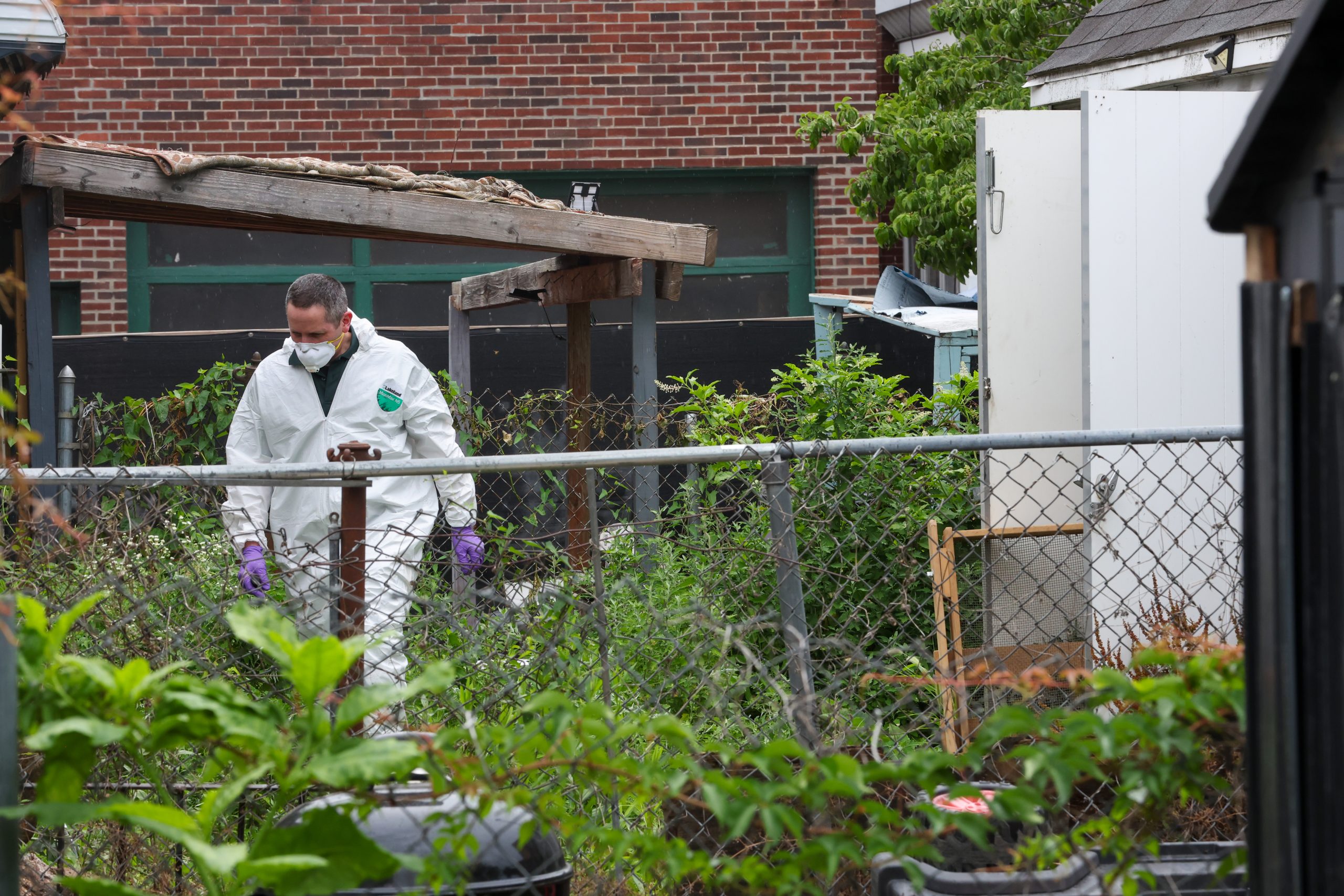
    Forensic investigators search the backyard of 417 W. Chew Ave. on June 27.Aidan T. Gallo / Staff Photographer

    The finding marks the latest development in an unusual saga that began after the arrest of Eugene Albert Horsch, 44, the owner of the Olney home now being searched by law enforcement for a second week in connection with the disappearance of at least two women who have been missing for years.

    Horsch was arrested June 19 after U.S. Park Police saw him parked in his black BMW near Sixth and Market Streets, acting suspiciously. When a ranger approached the car, police said, he heard a woman in the back seat say, “You’re going to hurt me” and saw drug paraphernalia.

    Police searched the car and reported recovering two guns with obliterated serial numbers, as well as cocaine, fentanyl, and marijuana, a cattle prod, switchblade knives, handcuffs, and a fake U.S. Drug Enforcement badge featuring Horsch’s photo.

    The woman with Horsch falsely identified herself to the officers as Blair Tonzelli, a 38-year-old woman who had been reported missing in Kensington in 2023, police said.

    The woman, 39, later told investigators that she gave Tonzelli’s name because she had open warrants for her arrest in ongoing drug cases and that Horsch had made her fake identification cards in that name and said she could use it if she was ever stopped and questioned by police, sources said.

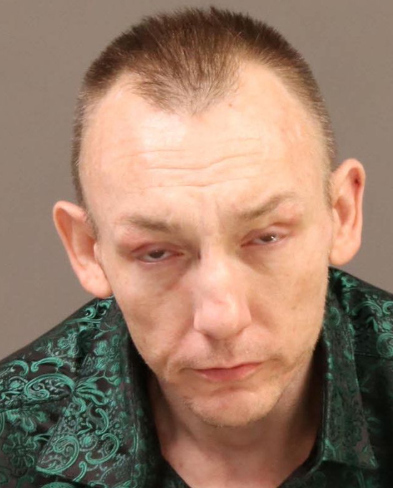
    Eugene Albert Horsch, 44, was arrested June 19 for illegal gun possession and drug crimes. Courtesy of Philadelphia police

    The woman said she did not know Tonzelli or even that she was missing — but the way Horsch spoke about her and other women made her feel like something bad had happened to her, the sources said.

    Philadelphia homicide detectives then began reviewing that missing woman’s case, and, alongside federal law enforcement, searched Horsch’s home at 417 W. Chew Ave. last week.

    That search produced a trove of bizarre discoveries: a basement with drums filled with chemicals, bottles of unknown substances, Tonzelli’s bank card, the death certificate of another woman, and what appeared to be urns holding at least one of Horsch’s relatives’ cremated remains.

    Investigators also found another handgun, materials used to grow marijuana, and a 55-gallon drum with connections to waterlines leading into a hole in the ground.

    Federal investigators also discovered a multipage, unsigned, handwritten letter that appeared to describe hurting people and referenced the serial killer Ted Bundy, according to the affidavit of probable cause to search the home that was obtained by The Inquirer.

    Eugene Horsch lived at 417 W. Chew Ave. with his father until he died last year. Jessica Griffin / Staff Photographer

    Law enforcement sources said police were working to determine whether the writings were part of a novel or screenplay. Horsch’s late father, Raymond “R.C.” Horsch was a known drug manufacturer and erotic filmmaker who had published several works of fiction with violent, masochistic themes, including one described as an “autobiographical memoir of a caring, empathetic serial killer.”

    The probe into the younger Horsch took another twist when investigators learned that Raymond Horsch’s ex-wife Amy McHale was last seen at the Olney property in 2016 and has not since be located. A lawyer for Eugene Horsch and his father said the two men had nothing to do with McHale’s disappearance and said she struggled with substance abuse and mental illness.

    Horsch has been charged with illegal gun possession and drug crimes by Philadelphia authorities.

    He is also facing a federal gun possession charge, court records show. The U.S. Attorney’s Office filed a complaint against Horsch on Friday, charging him with possession of a firearm by a felon and centering their allegations on the guns that park rangers found in his car during an encounter in Center City earlier this month.

    Horsch has not yet been arraigned in that matter, and he remained in a city jail, held on $500,000 bail as of Monday afternoon. But the case could give federal prosecutors an opportunity to argue to a judge that he remain in federal custody until trial.

    This is a developing story and will be updated.

    Staff writers Jesse Bunch, Max Marin, Barbara Laker, and Chris Palmer contributed to this article.