Blog

  • A woman missing since 2016 had close ties to the Olney house that’s now the target of a massive investigation

    A woman missing since 2016 had close ties to the Olney house that’s now the target of a massive investigation

    Amy McHale and Raymond “R.C.” Horsch met on the streets when she was battling pneumonia and needed medical care.

    She had long struggled with mental health issues and drug and alcohol addiction. She saw Horsch, an erotic photographer and filmmaker 30 years her senior, as her rock, said her mother, Gloria McHale.

    “He was like her savior.”

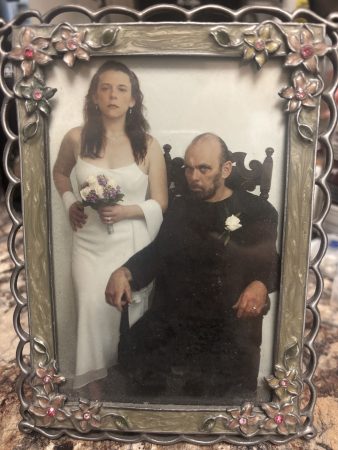
    They held their wedding reception beside a greenhouse in the sprawling, serene backyard of his Chalfont home in September 2004. The marriage lasted only a few years, but Amy McHale kept going back to Horsch after he moved to a house on West Chew Avenue in the Olney section of Philadelphia with his son, Eugene Albert Horsch.

    She was staying there on June 14, 2016, when she left a voicemail message for her daughter, Amanda Stofer, saying all was OK. At the time, Amy McHale was a 44-year-old mom and grandmother of three.

    She has been missing ever since.

    “She would never leave her daughter and grandchildren,” Gloria McHale, 79, said by phone after news broke this week that authorities had been combing through that house for days. “She loved them, adored them.”

    For more than a week, Philadelphia police and federal authorities have been searching the crumbling Horsch twin home to determine if there is any connection to the disappearance of Amy McHale and one other woman.

    R.C. Horsch was a controversial figure who had been convicted of forgery and drug manufacturing when he died in May 2025 of chronic obstructive pulmonary disease at age 82. Police have not named him as a person of interest in a missing-person investigation.

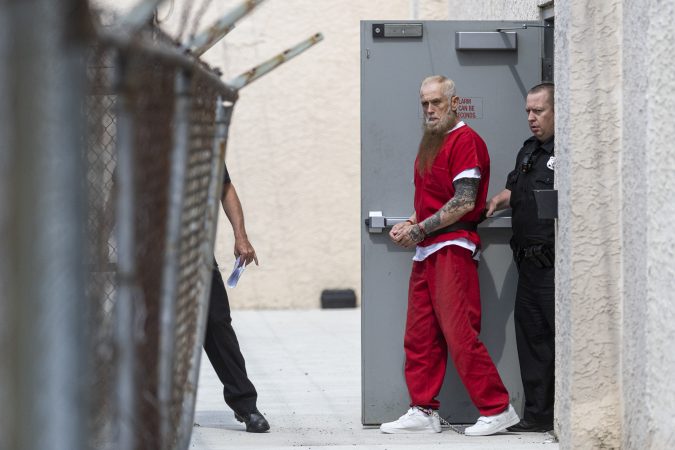
    His son, Eugene Albert Horsch, is being held on $500,000 bail at Curran-Fromhold Correctional Facility on charges of illegal gun possession and drug crimes. He had a criminal history that included at least 10 other arrests for drug possession, dealing, assault, and drunken driving when he was arrested earlier this month near Independence Hall after his actions drew the attention of U.S. Park Police.

    “This is much ado about nothing,” said Eugene Horsch’s attorney, Jerome Brown, of his client’s connection to any missing-person investigation. “They’re barking up the wrong tree.”

    When the news broke, McHale’s mother and daughter thought they might finally discover what happened.

    “But I don’t feel much closure, and today is an emotional low,” McHale’s daughter, Amanda Stofer, said Saturday. “I was hoping for some answers about my mother from the home, but I’m doubtful that will happen.

    “It just feels heavy and sad.”

    The case came to light under bizarre circumstances. U.S. Park Police stopped Horsch, 44, near Sixth and Market streets on June 19. In his black BMW, officers recovered two firearms with obliterated serial numbers and a phony drug enforcement badge with Horsch’s photograph under the name “Eugene Frederick Steiner.” He also had large amounts of cocaine, fentanyl, and marijuana, according to an affidavit of probable cause for his arrest.

    A woman with Horsch gave officers a false name, one that belonged to a 38-year-old woman who had been reported missing in Kensington in February 2023. Horsch’s passenger told investigators that he had made her fake ID cards with that name before and advised that if she was ever stopped by police, she could use them.
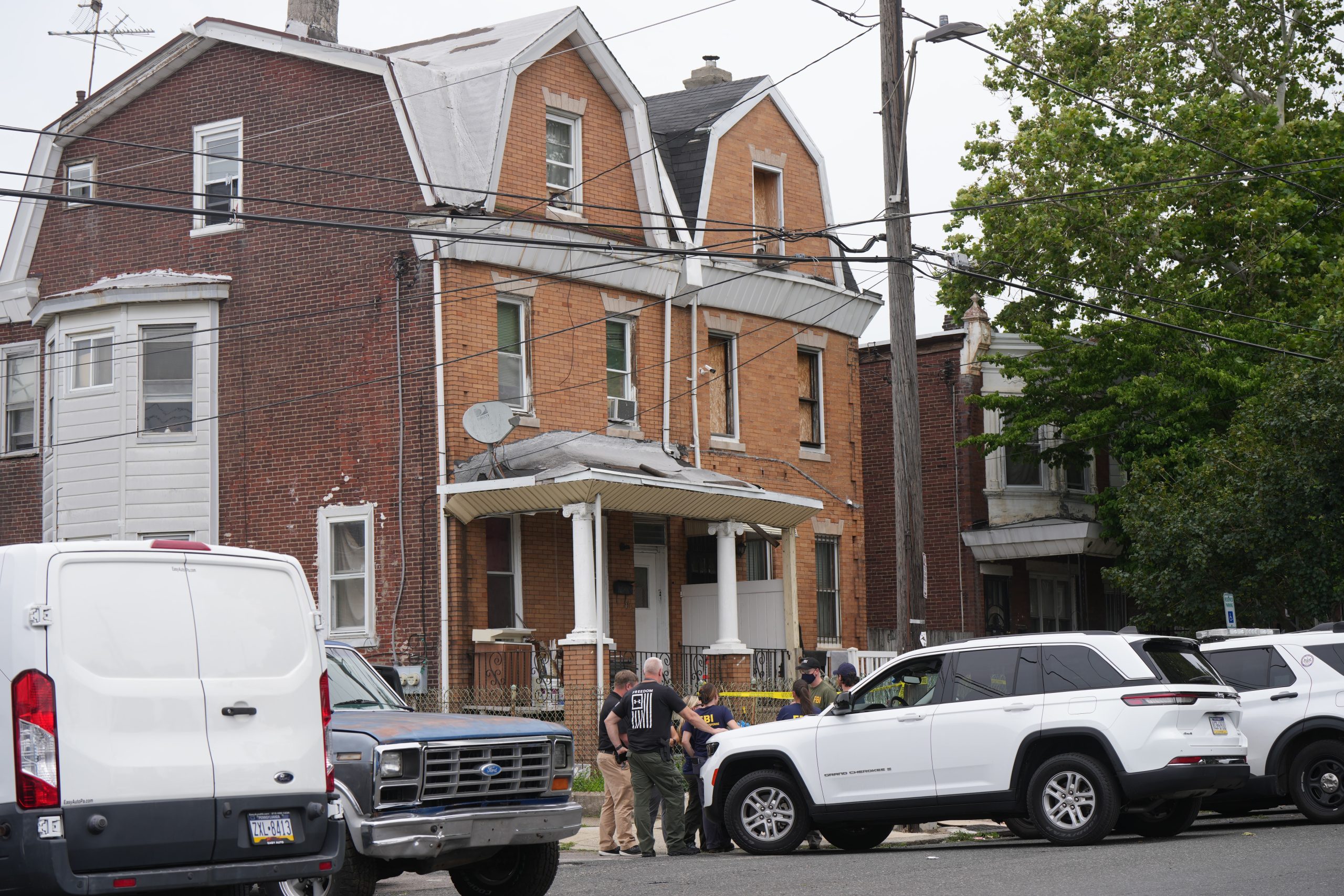
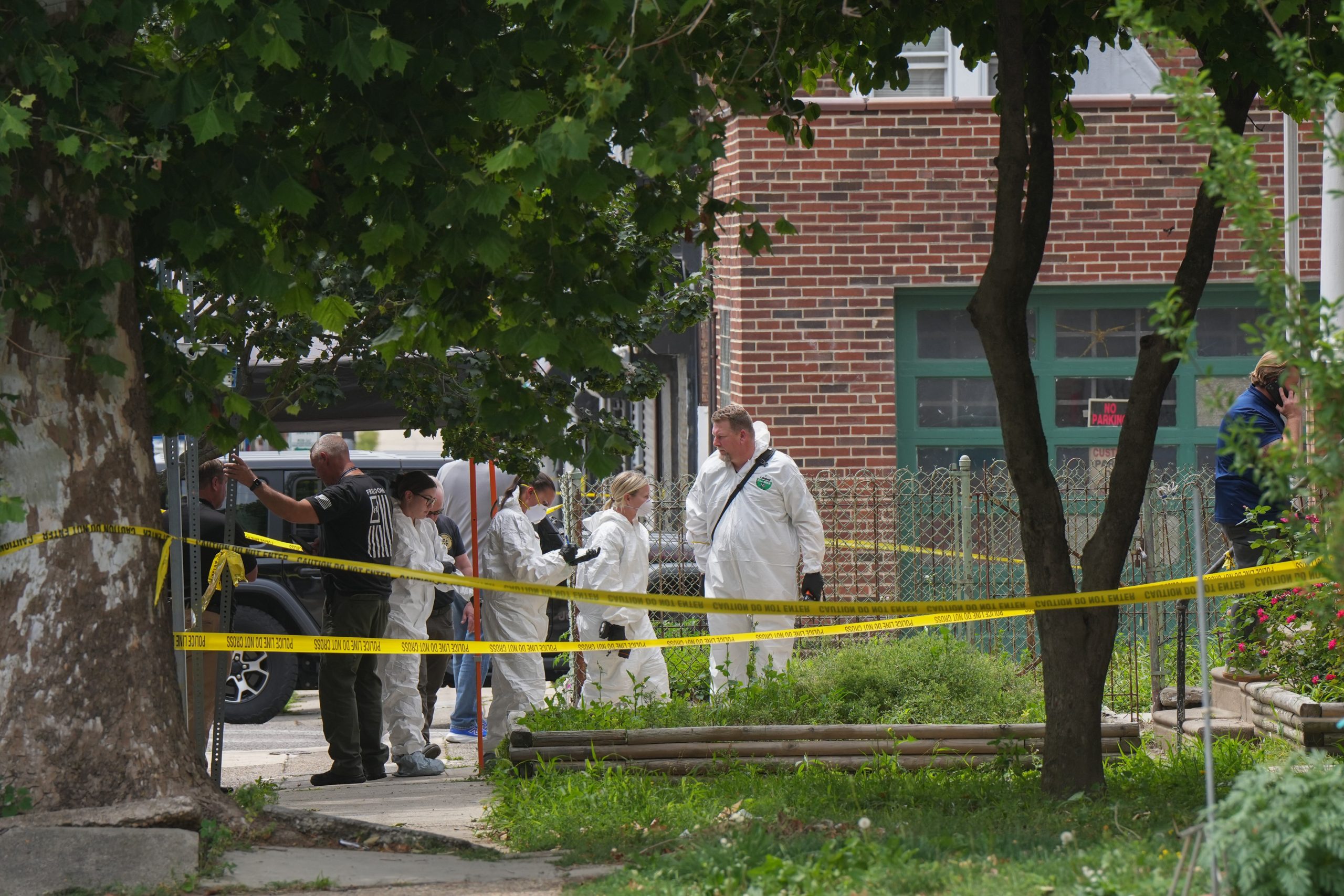
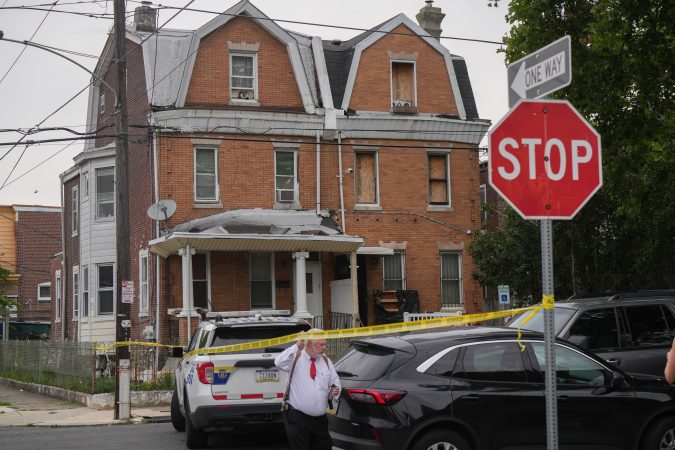
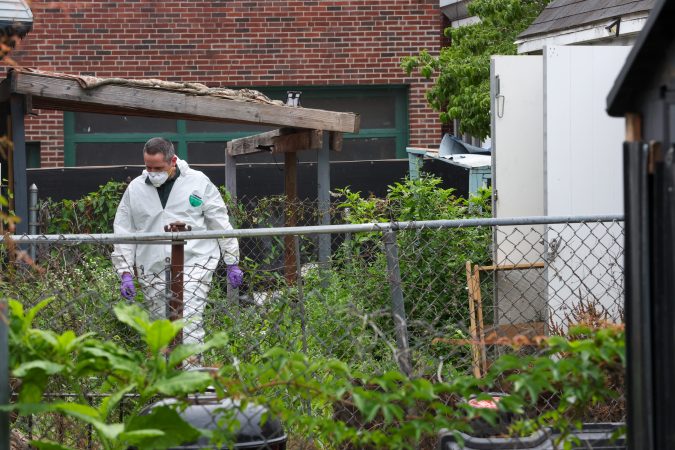
    Law enforcement wearing FBI clothing at the scene of an ongoing investigation in the 400 block of West Chew Avenue, searching a home in Olney.Jessica Griffin / Staff Photographer

    In Horsch’s dilapidated home, investigators found another handgun, hidden compartments, a 55-gallon drum with connections to water lines leading to a hole in the ground, and chemicals and bottles of liquid that forensics investigators are working to identify. There were also what appeared to be urns holding remains, one set of which was apparently his father’s. The basement resembled some sort of chemical lab.

    Federal investigators also found a unsigned and handwritten letter that referenced hurting unspecified people and the serial killer Ted Bundy, according to an affidavit of probable cause obtained by The Inquirer.

    Investigators are working to verify the authenticity of the letter, and whether it was meant to serve as a portion of a novel or screenplay.

    Under a gloomy sky Saturday, about 15 FBI agents, some wearing hazmat suits, streamed in and out of the boarded-up twin home. “They’ve begun processing the scene,” Philadelphia Deputy Police Commissioner Frank Vanore said. Forensic experts were determining what evidence had to be sent away for scientific analysis, he said. “It’s going to take some time.”

    Art and weed

    R.C. Horsch, who was born in East Stroudsburg, Monroe County, in 1943, is described in an author’s biography as “an artist, filmmaker, composer, writer, porn performer, drug smuggler, sometime political activist, art forger, counterfeiter, pot grower, air show pilot, army deserter, fugitive, sociopath, ex-convict and all-out villain.”

    Throughout his life, R.C. Horsch worked on avant-garde artwork and erotica, often focused on scantily clad women in sadomasochistic settings, including a book described as an “autobiographical memoir of a caring, empathetic serial killer.” He directed his first film, The Erotic Memoirs of a Male Chauvinist Pig, in 1973.

    A 1968 news report identified Horsch, then in his mid-20s, as the operator of a theater on the 2000 block of Sansom Street known as “Underground Cinema 16” — later the Roxy — which screened avant-garde films, including his own, but was shut down for operating without a license.

    Horsch was married at least three times. He married Anna Ferkuniak, a native of Nant-y-moel, Wales, who was Eugene Horsch’s mother. She died in 1989 at age 39 after a lengthy illness, according to her obituary.

    R.C. Horsch also had an extensive criminal history.

    He pleaded guilty to passing bad checks in North Carolina in 1973, and the following year the Secret Service charged him and another man in Doylestown with passing nearly $180,000 in fake 10-dollar bills and possessing phony driver’s licenses.

    In 1977, federal authorities raided what was described as his home laboratory, seizing equipment they alleged was meant to make methamphetamine. But Horsch left for New Zealand, later returning to California, according to court records, and operating under the alias “Richard Harris.”

    Eugene Horsch was born in 1981, while his father was still a fugitive.

    Authorities captured R.C. Horsch in Florida in 1985. A psychologist hired by his defense attorney claimed Horsch had a 140 IQ, according to court records, but had “deep rooted emotional problems.”

    He was sentenced to three years’ imprisonment, plus probation. He later settled in Chalfont but acquired the Chew Avenue house after his aunt died in 2004. In 2007, he used power of attorney to legally transfer ownership to his son for $1.

    In 2009, R.C. Horsch was indicted in Chalfont for growing “455 marijuana plants.” Investigators also confiscated two shotguns. The feds seized his suburban home and he was sentenced to 54 months in prison.

    Federal inmate records show he was released from prison in 2013, and later moved into the Chew Avenue property, where he would reside until his death. He authored several erotic novels in the 2010s, often focused on women battling substance abuse or mental health issues.

    Krista Marie Killen is credited as appearing in multiple erotic films that he directed, including one released as recently as 2021, and at times listed the Chew Avenue house as her residence.

    In 2025, a motorist sued R.C. Horsch, Killen, and an unidentified man, claiming the trio crashed their Chrysler 300 into her SUV near Adams Avenue and Montour Street in 2023. Court papers list Killen’s occupation as “caregiver” and the “adult in charge of residence.”

    She died the next month, according to an obituary, three months after Horsch.

    In searching the home recently, investigators found a death certificate for Killen. According to the affidavit of probable cause, the cause of death was drug intoxication.

    ‘People don’t vanish’

    R.C. Horsch and Amy McHale had become a couple in the 1990s.

    “I was a young kid when they started dating, and I want to say he had been around for at least 10 years by the time they got married,” Stofer recalled.

    They divorced after a few years and McHale moved in with her mother on South Hutchinson Street in Philadelphia. She went to Peirce College, became a paralegal, and was trying to get her life back on track, said Gloria McHale, 79.

    But she could not kick her drug and alcohol addiction, she said. She would periodically return to Horsch’s home on Chew Avenue.

    “They stayed friendly with each other,” Stofer said. “I’m sure it had something to do with the drugs and alcohol. I think he enabled her with things that weren’t really permitted in my grandmother’s house.”

    On June 13, 2016, she went to Horsch’s. She called her mom that night to tell her she was on her way home. “She was obviously very drunk and I told her to stay where she was, because to get home she would have to take the subway, and she was in no shape to take the subway.”

    The next day, she called Stofer and left a message. “She told me she was at Ray’s house and she was OK.”

    That’s the last they heard from her.

    Amy McHale would sometimes be gone for a couple of days, but never for much longer, they said. Stofer had three children, and her mother doted on them. Stofer was planning her September wedding.

    “My mom had her struggles with addiction,” said Stofer, 38. “But my mom would not want to disappear in my life. She would never do that. She always came back around. She never missed big things like my kid’s kindergarten graduation.”

    Gloria McHale searched all over for her daughter. “I put signs up all over Kensington,” she said.

    Detectives interviewed Horsch. He told police and the McHale family that she was drinking vodka and he went to bed. “He said when he woke up, she was gone,” McHale said.

    And Horsch stopped reaching out to her family.

    “When she would disappear before, Raymond would always keep calling me. ‘Did you hear from her?’ And after this I never heard from him.”

    McHale is hoping someone will come forward now with new information.

    “Somebody has to know something,” she said.

    “People don’t vanish into thin air.”
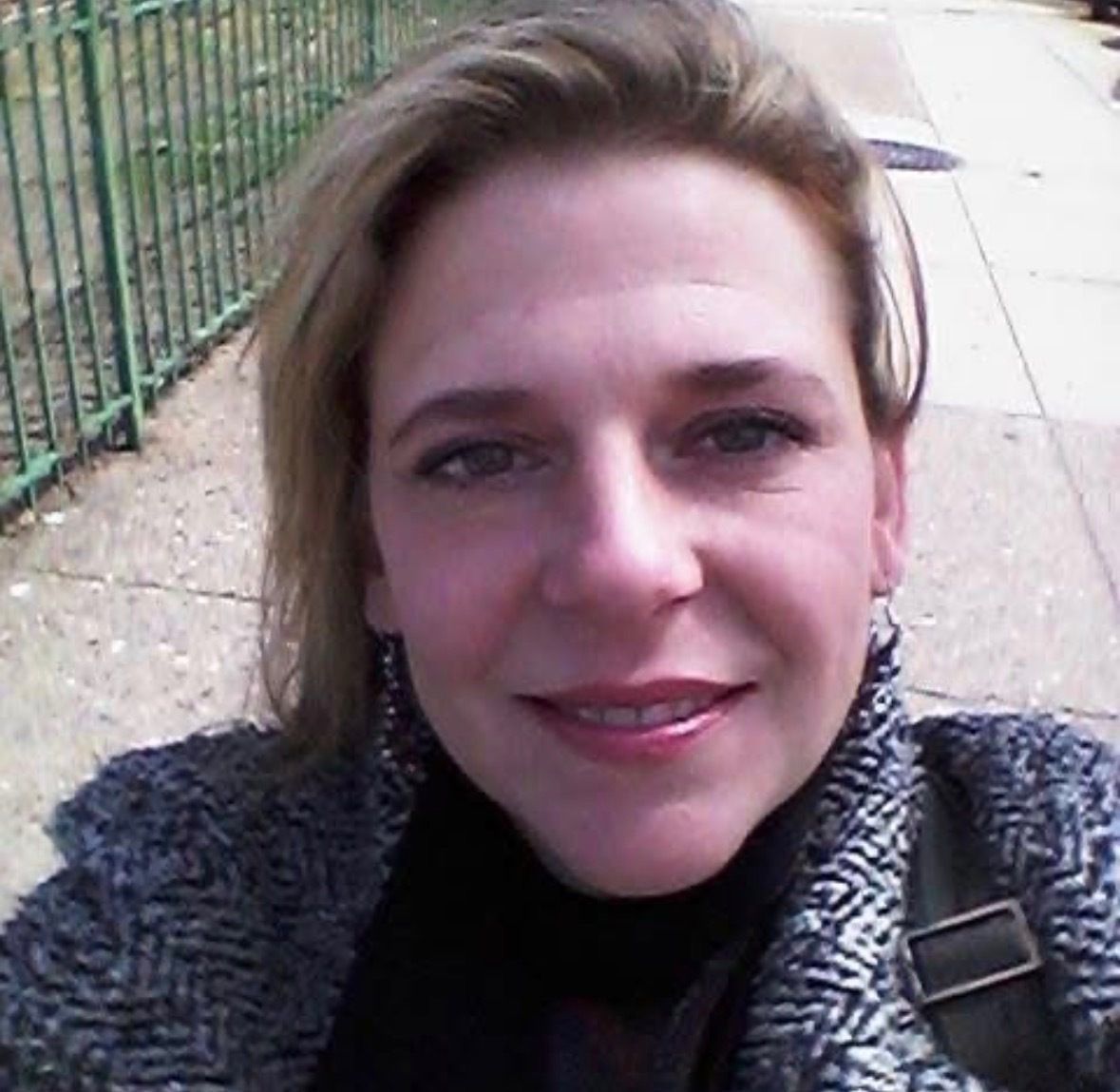
    Amy McHale.Courtesy of the family of Amy McHale

    Staff writers Brett Sholtis, Michelle Myers, and Isabel Maney contributed to this article.
  • What we know about the Olney investigation into missing women

    What we know about the Olney investigation into missing women

    A law enforcement search continued Saturday at a dilapidated three-story brick twin in Olney, where police are investigating the homeowner’s connection with at least two missing women.

    The house belongs to Eugene Albert Horsch, 44, who was arrested June 19 and charged with illegal gun possession and drug-related crimes.

    Horsch’s initial arrest sparked questions: Why did he have a fake ID showing himself to be a DEA agent? Why did a woman with Horsch identify herself as someone else who was reported missing in 2023?

    More questions unspooled as city police investigators and federal agents looked inside Horsch’s house, where they found hidden compartments, a 55-gallon drum, chemicals, unknown liquids, a woman’s death certificate, and a handwritten letter that seemed to describe hurting people.

    On Saturday, Philadelphia police closed off the block and FBI forensic experts entered the property in hazmat suits.

    In addition to these questions, there’s an older mystery — the June 2016 disappearance of Amy McHale.

    Here’s what we know so far.

    What prompted the investigation?

    The morning of Friday, June 19, a U.S. park ranger near Independence Hall in Old City heard “a disturbance” coming from a black BMW, Philadelphia Police Department Deputy Commissioner Frank Vanore said Friday.

    The ranger heard a woman say she was concerned that Horsch was going to hurt her, Vanore said.

    The woman gave the ranger an identification card bearing her photo but the name of another woman who had been reported missing, Vanore said.

    “And the park ranger felt that there was illegal drug activity going on inside the vehicle,” Vanore said.

    Other law enforcement officers in the area were called to the scene, he said. In the car, police found cocaine, fentanyl, marijuana, two firearms with serial numbers removed, a collapsible baton, a cattle prod, and switchblade knives, sources told The Inquirer Friday.

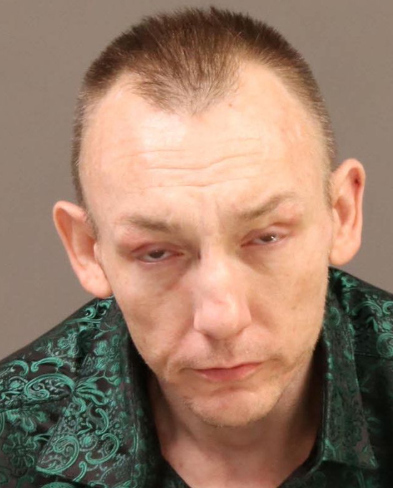
    Eugene Albert Horsch, 44, of Philadelphia.Courtesy of Philadelphia police

    Why did Horsch have fake DEA credentials?

    Law enforcement also found a fake U.S. Drug Enforcement Agency badge with Horsch’s photograph under the name “Eugene Frederick Steiner” in the car, sources told The Inquirer.

    Police haven’t spoken publicly about why they believe Horsch had the fake ID. However, they soon brought real DEA agents to the scene, Vanore noted.

    Soon, those agents were among those searching his Olney home.

    What did police find inside the Chew Avenue house?

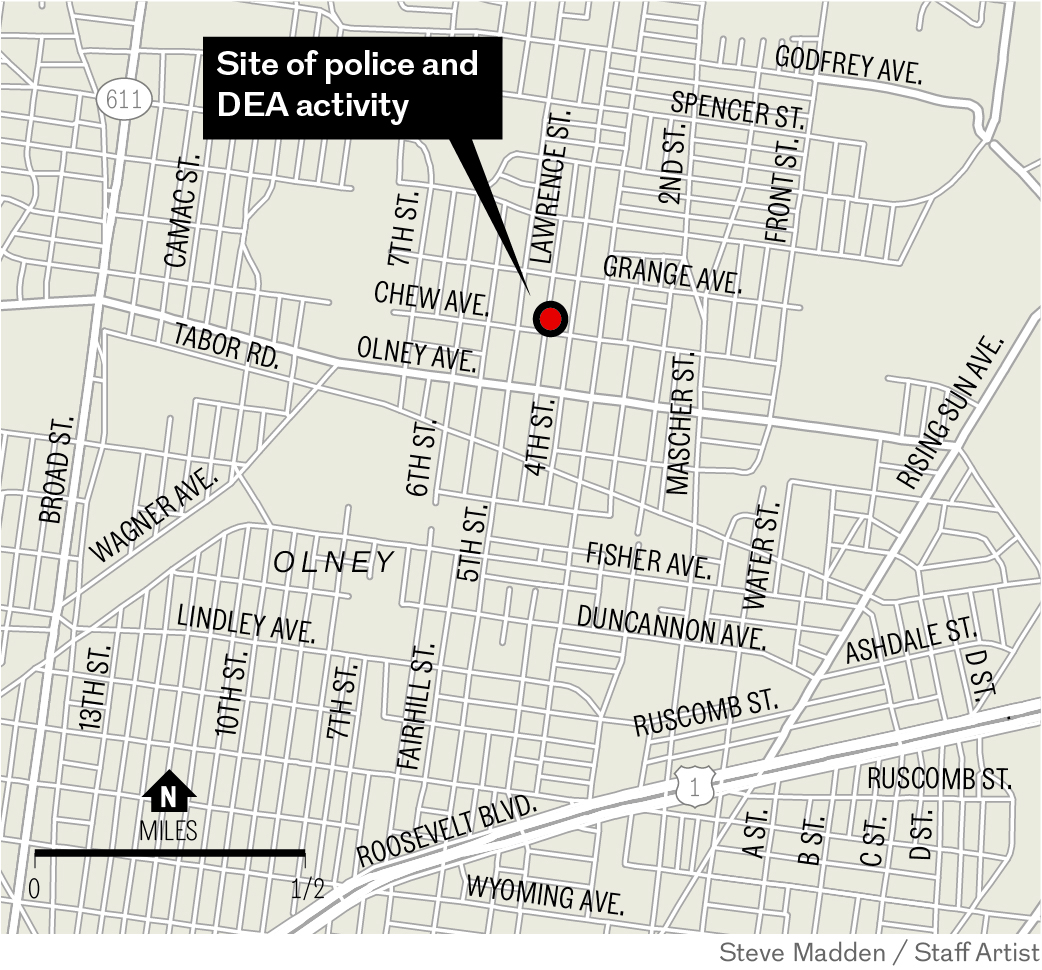
    Police searched Horsch’s home on the 400 block of West Chew Avenue, where they found a 9mm firearm, ammunition, and a marijuana grow operation on one of the floors, Vanore said.

    “The further search of this property produced some other things that we have a lot of questions about,” Vanore said.

    Police brought in homicide investigators — who are now leading the investigation with FBI assistance — due to their experience and because several urns, possibly from deceased family members, were found, Vanore said.

    Investigators found at least one more fake ID presenting someone as federal law enforcement, Vanore said, as well as “computer evidence” that the DEA took for analysis.

    They also found bank cards in the name of the woman who went missing in 2023, and recovered what appeared to be a death certificate for another woman who died last year, The Inquirer reported Friday.

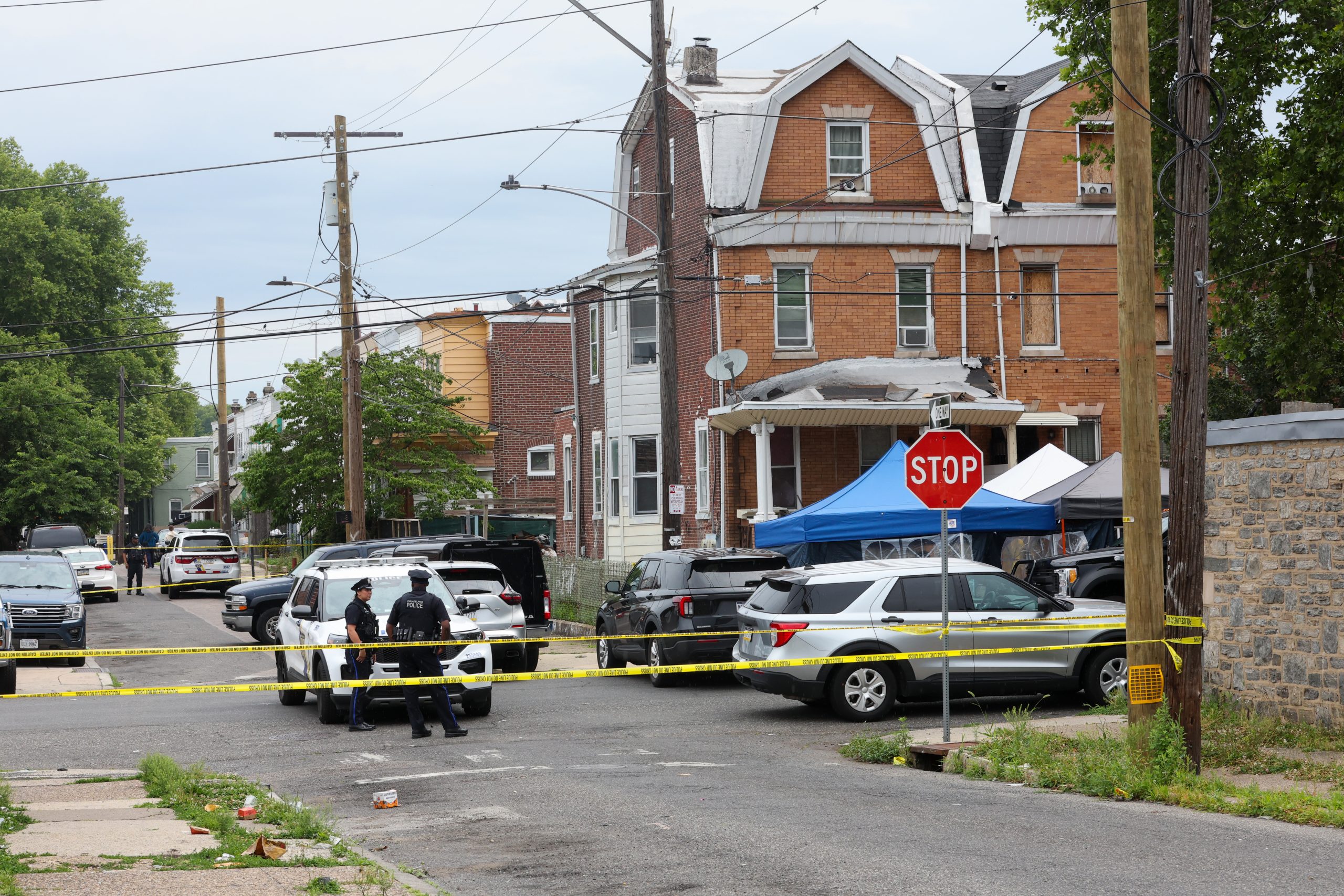
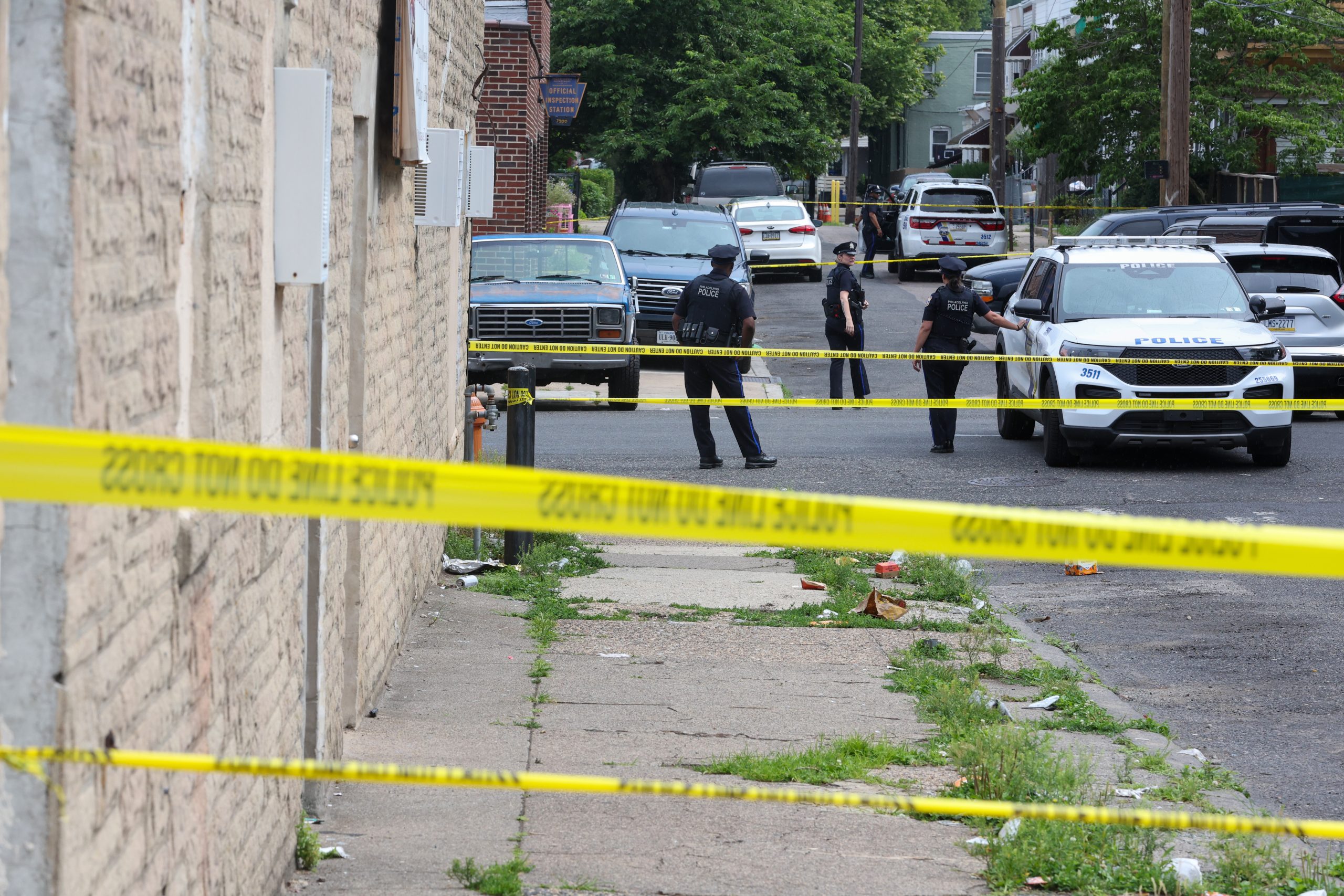
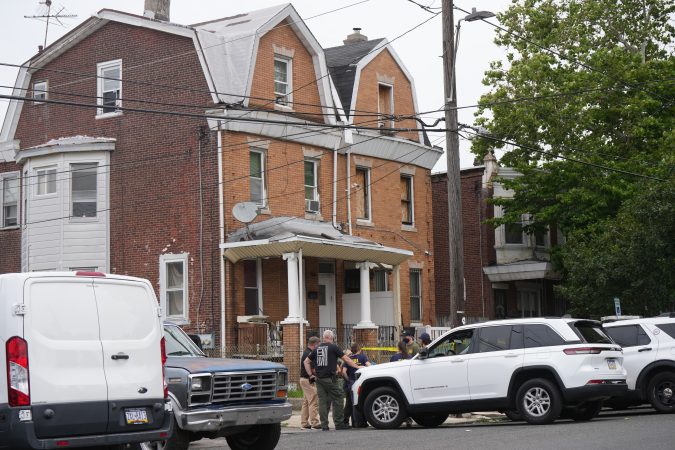
    Police have officially blocked off access to the street at 417 W Chew, in Olney home in Philadelphia, June 27, 2026. Residents in the area are unable to access the street since Saturday morning.Aidan T. Gallo / Staff Photographer

    Why is the FBI involved?

    Investigators also found hidden compartments, “hoses coming from barrels,” and bottles containing chemicals and unknown liquids, Vanore said.

    Some of the chemicals, if combined and ignited, could pose hazards, he said. The chemicals are what led investigators to ask for help from FBI experts, Vanore said.

    “There’s chemical work being done, but we just don’t know if he was trying to produce narcotics, or some other work,” Vanore said.

    What is the handwritten letter investigators found?

    Federal investigators also found an unsigned handwritten letter that described references to hurting unspecified people, and references to the serial killer Ted Bundy, The Inquirer reported Friday.

    “Acting on emotion is where problems occur. What I don’t think I told you was that the first time it was planned ahead of time. The threat was made before you know who came over and I already had a 2ft zip tie in my pocket and a drum set up,” the letter said.

    “I had been ready and waiting and I damn sure showed no hesitation. And it was fun,” the letter said, according to an affidavit of probable cause for a search of the home obtained by The Inquirer.

    Law enforcement sources said investigators were working to learn who wrote the letter and whether it may be part of a work of fiction.

    Have police found bodies at the house?

    Rumors spread quickly online Friday, with one of the most widespread ones being that human bodies or remains had been found at the house.

    Speaking to reporters, Vanore dismissed these rumors.

    “There’s no apparent bodies inside the house,” Vanore said. “Now, we’re going to further search. There’s a sump pump that looks like a hole in the ground, but there’s no bodies.”

    Who are the missing women?

    Police have not released the names of any missing women connected to Horsch.

    The woman whose name was on the fake ID went missing in February 2023 from the Kensington area, sources told The Inquirer Friday. The woman who was with Horsch when he was arrested told police she used the fake ID because she had outstanding arrest warrants. She didn’t know the missing woman, but feared that something bad happened to her.

    Vanore said he didn’t know if the missing woman had known Horsch.

    “I have nothing to say she was ever inside the house, but of course, that’s why we’re still holding it and we’re still going to look,” Vanore said.

    Vanore noted that Horsch had enough information about the missing woman to create a convincing fake ID.

    Another woman who disappeared was Amy McHale, of South Philadelphia, who went missing in June 2016. McHale was the ex-wife of Horsch’s father, R.C. Horsch. Police questioned R.C. Horsch about the disappearance at the time.

    Who is Eugene Albert Horsch?

    Horsch has a long criminal record including a May 2025 arrest for possession of marijuana and amphetamines, which got him three years’ probation.

    In March, he was charged with aggravated assault after police said he stabbed a man in the stomach at Eighth and Market Streets. Prosecutors withdrew the charges in May after a witness failed to appear in court, court records show.

    Horsch had at least 10 previous arrests for drug possession, dealing, assaults, and drunken driving. He was sentenced to four to eight years in prison after police discovered $1.9 million worth of cannabis inside the Chew Avenue home in 2013, court records show.

    Horsch appeared to be living at his house on Chew Avenue, despite its boarded-up windows and rundown look. Vanore said Friday that the woman who had the fake ID also was believed to have been staying there.

    What do we know about R.C. Horsch, Eugene Horsch’s father?

    R.C. Horsch, born Raymond C. Hoersch, was an erotic photographer and filmmaker who was convicted of forgery and drug manufacturing. R.C. Horsch changed the spelling of his last name.

    R.C. Horsch pleaded guilty to passing bad checks in South Carolina in 1973 and the following year was charged in Doylestown by the Secret Service with passing nearly $180,000 in fake 10-dollar bills and possessing phony drivers’ licenses.

    In 1977, federal agents raided what was described as R.C. Horsch’s home laboratory, seizing equipment they alleged was meant to manufacture and distribute methamphetamine. But R.C. Horsch absconded to New Zealand, later returning to California, and operating under the alias “Richard Harris.”

    Eugene Horsch was born in 1981, while his father was still a fugitive.

    R.C. Horsch was captured by authorities in Florida 1985. A psychologist hired by his defense attorney said he had an 140 IQ but had “deep rooted emotional problems.”

    He was sentenced to three years imprisonment, plus probation, and settled into a home in Chalfont, Bucks County.

    What was R.C. Horsch’s connection to the Chew Avenue house?

    R.C. Horsch acquired the Chew Avenue house after the death of his sister, Helen M. Hoersch, in 2004. In 2007, R.C. Horsch used power of attorney to legally transfer ownership of the property to his son for $1.

    In 2009, R.C Horsch was indicted in Chalfont for growing 455 marijuana plants. Investigators also seized two shotguns. The feds seized his suburban home and he was sentenced to 54 months in prison.

    Federal inmate records show he was released from prison in 2013.

    Are investigators examining R.C. Horsch’s role?

    R.C. Horsch died in 2025, and Vanore told reporters Friday that investigators were looking at a lot of different angles. Vanore declined to go into specifics about R.C. Horsch, and said he wasn’t going to name “other missing people” potentially connected to the house.

    “We’re certainly looking into the activities that went on at the house, even before he was there,” he said, referring to Eugene Horsch.

    Police have officially blocked off access to the street at 417 W Chew, in Olney home in Philadelphia, June 27, 2026. Residents in the area are unable to access the street since Saturday morning.Aidan T. Gallo / Staff Photographer

    What’s the latest from the investigation?

    Under a gloomy sky Saturday, about 15 FBI agents went in and out of the boarded-up home, some wearing protective suits.

    Next to the tent installed Friday outside Horsch’s home were four portable fabric shelters, with all sides shielded from public view.

    Neighbors walked around the sealed perimeter asking for information, while men in protective suits came and went from Horsch’s backyard shed.

    “They’ve begun processing the scene,” Vanore said Saturday. Forensic experts now are determining what evidence had to be sent away for scientific analysis, he said. “It’s going to take some time.”

    Inquirer staff writers Max Marin, Ellie Rushing, Barbara Laker, Michelle Myers, Chris Palmer, and Isabel Maney contributed to this article. For more details, read this story.
  • ‘A house from a scary movie’: Olney neighbors rattled amid rowhouse raid

    ‘A house from a scary movie’: Olney neighbors rattled amid rowhouse raid

    The 400 block of West Chew Avenue in Olney was largely shut down Friday afternoon as Philadelphia and federal law enforcement officials searched a home on the block to determine if its owner had connections to at least two missing women.

    Residents of the block had effectively been sealed in as caution tape and Philadelphia Police Department vehicles cordoned off the street. Some residents gathered on their porches or sidewalks as federal officials produced equipment from the back of a black, unmarked utility truck.

    “I have been living here all my life,” Larry Alosi, 56, said. “It used to be a safe place, but it changed with time.”

    Consisting largely of rowhouses and small businesses, the North Philadelphia neighborhood of Olney is among the city’s most diverse, with large Korean American and Latin American populations calling the area home.

    The search had been ongoing for nearly a week, and came after U.S. Park Police encountered Eugene Albert Horsch, 44, acting suspiciously in a black BMW near Sixth and Market Streets on June 19, police said. Investigators recovered two firearms with obliterated serial numbers from Horsch’s vehicle, as well as cocaine, fentanyl, and marijuana — along with a baton, a cattle prod device, a switchblade, and a falsified U.S. Drug Enforcement Administration badge with Horsch’s photograph depicting a falsified name.

    Officials took Horsch into custody following the stop, and charged him with illegal gun possession and drug crimes. Searches of his home began last week.

    Horsch was being held Friday at Curran-Fromhold Correctional Facility with bail set at $500,000.

    A passerby called the West Chew Avenue residence “a house from a scary movie,” with boarded-up windows on its second and third floors. A camera on the exterior points to the street. The windows on the first floor have bars from top to bottom. Pink flowers remain on the lawn, decorated with pieces of broken glass from the door.

    Neighbors on Horsch’s block said the area is a quiet one, though it occasionally has its issues. Fabin Ingram, an area resident, said he never saw anyone coming or going at the corner of West Chew near Horsch’s home, and he largely worked to avoid the intersection.

    “I’m big on energy and feelings,” Ingram said. “If I get an eerie feeling, I act on it.”

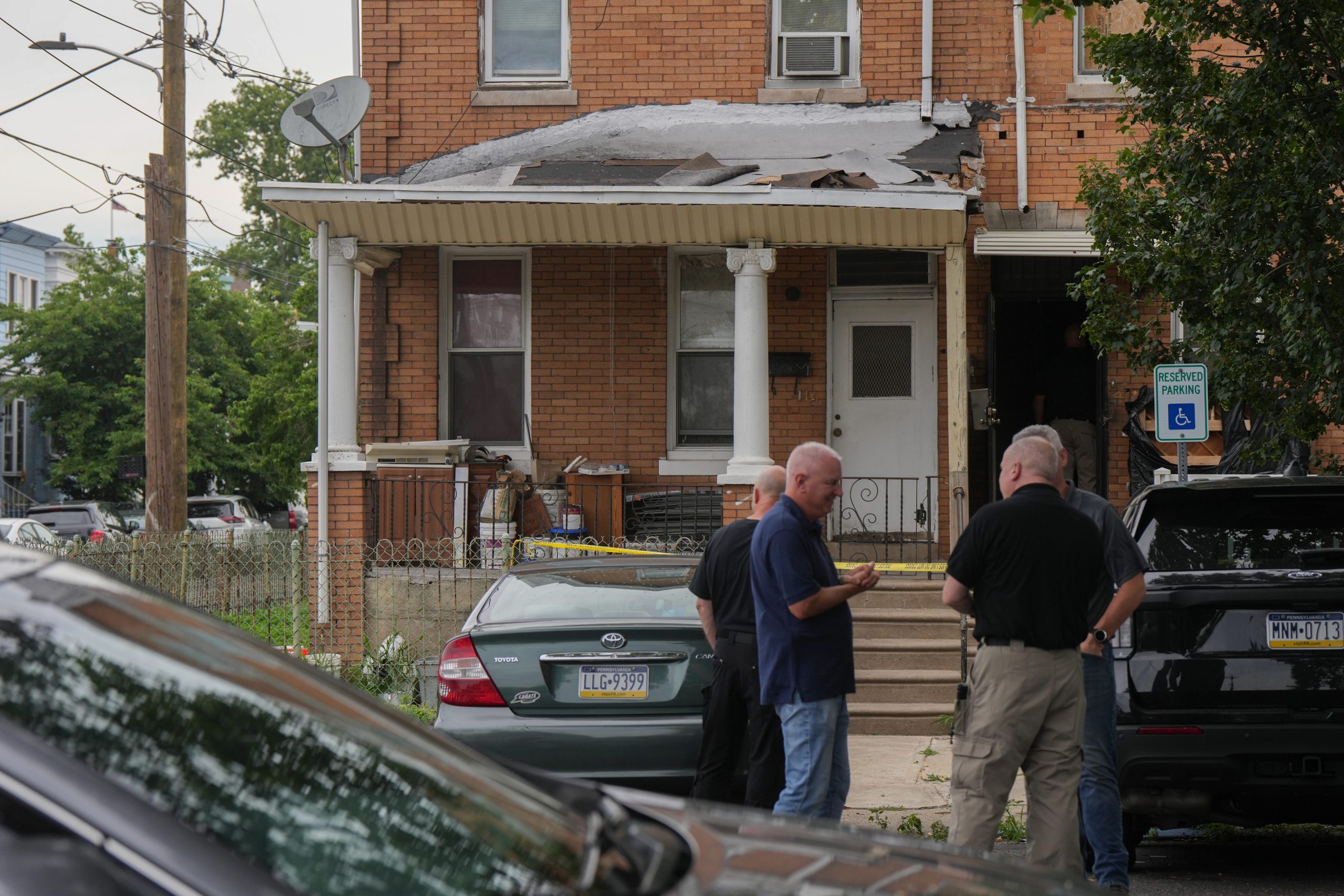
    Investigators at 417 W Chew, searching a home in Olney neighborhood in Philadelphia, June 26, 2026.Jessica Griffin / Staff Photographer

    One neighbor, Sid Brunson, who used to cut Horsch’s grass, described Horsch as a quiet, jittery man who “had a lot on his mind.” Brunson said that Horsch’s father, R.C. Horsch, a convicted drug manufacturer and erotic filmmaker, died in 2025, leaving a pall over the home.

    “You will never see a man other than him coming or leaving the house after that,” Brunson said. “If there was visitors at the home, it was always a female, never a male.”

    Another neighbor, who asked not to be identified for fear of reprisal, said Horsch was someone who got into disagreements with neighbors over parking and trash. He had long driven an impeccably maintained gold 1980s Lexus, and in recent years had started driving a new black BMW — and was often seen bringing women home with him, the neighbor said.

    The ongoing search of Horsch’s home this week was the latest in a series of odd developments at the property, with investigators saying that several urns had been found inside the home, including one that was labeled with the name of a deceased relative. Officials also discovered a 55-gallon drum with connections to water lines leading into a hole in the ground, as well as materials to grow marijuana, though it was not immediately clear if the items in the home were connected to drug manufacturing or more violent purposes.

    On Friday, law enforcement officials wearing hazmat suits were seen entering and exiting the property.

    During Horsch’s arrest last week, a woman falsely identified herself using the name of a 38-year-old woman who had been reported missing in Kensington in February 2023, sources told The Inquirer. Deputy Police Commissioner Frank Vanore declined to identify the woman who had been reported missing, but reports indicate that Horsch’s father had been questioned in the 2016 disappearance of his ex-wife, Amy McHale, of South Philadelphia.

    By late Friday afternoon, the investigation into Horsch’s home had not ceased, but a large FBI truck was spotted leaving the scene. Late in the day, the area had been largely left quiet, with the crime-scene tape on the home’s door serving as conspicuous evidence of the day’s events.

    Staff writer Andrea Padilla contributed to this article.
  • Olney house raid uncovers curious letter, drugs, chemicals, fake DEA badges — and possible links to two missing women

    Olney house raid uncovers curious letter, drugs, chemicals, fake DEA badges — and possible links to two missing women

    During a weeklong search of a crumbling Olney twin, federal agents and Philadelphia police found guns and drugs, tubs of chemicals, a curious unsigned letter, and fake law enforcement badges as they were investigating the homeowner’s connection to at least two women who have been missing for years.

    The unusual investigation began under similarly bizarre circumstances: U.S. Park Police encountered Eugene Albert Horsch, 44, acting suspiciously in his black BMW parked near Sixth and Market Streets on the morning of June 19, Deputy Police Commissioner Frank Vanore said.

    As the ranger approached the car, Vanore said, he heard a woman in the backseat say, “You’re going to hurt me.” The woman then falsely identified herself to the officers using the name of a 38-year-old woman who had been reported missing in Kensington in February 2023, said the sources, who spoke on the condition of anonymity to discuss an ongoing investigation.

    The woman, 39, later told investigators that she’d given the alias because she had open warrants for her arrest in ongoing drug cases, and that Horsch had previously made her fake identification cards in that name, telling her she could use it if she was ever stopped and questioned by police, the sources said.

    And later, the sources said, she told officials that she did not know that missing woman — but feared something bad may have happened to her.

    Eugene Albert Horsch, 44, of Philadelphia.Courtesy of Philadelphia police

    When police searched Horsch’s car outside Independence Hall, they recovered two firearms with obliterated serial numbers, as well as cocaine, fentanyl, and marijuana, according to an affidavit of probable cause for his arrest. What’s more, a source said, the car also contained a collapsible baton, a cattle prod, switchblade knives, and a fake U.S. Drug Enforcement badge with Horsch’s photograph under the name “Eugene Frederick Steiner.”

    Horsch was taken into custody and charged with illegal gun possession and drug crimes. He’s currently being held on $500,000 bail at Curran-Fromhold Correctional Facility.

    Officials with federal drug enforcement began searching Horsch’s home on the 400 block of West Chew Avenue alongside Philadelphia police on June 19.

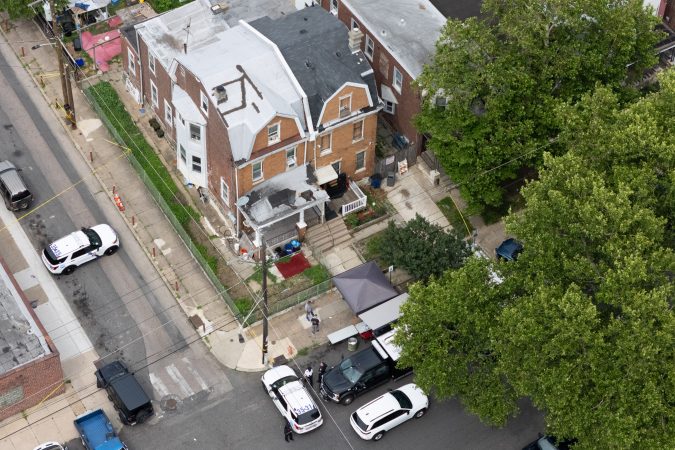
    The house at the 400 block of W. Chew Avenue in Olney being investigated.Steve Madden

    Vanore, in a news conference Friday, said the conditions of the boarded-up twin and materials recovered inside of it — including hidden compartments, drums filled with chemicals, and what appeared to be urns holding at least one of Horsch’s relatives’ cremated remains — only deepened the mysteries of the case.

    And investigators soon found themselves confronting a second concerning thread: Horsch’s late father, R.C. Horsch, a convicted drug manufacturer and erotic filmmaker, had an ex-wife who was last seen at the Olney property in 2016 and has never been found.

    Horsch’s attorney, Jerome Brown, said he did not have details about the ongoing police investigation.

    Brown said R.C Horsch, who died in 2025, had been questioned in the June 2016 disappearance of his ex-wife Amy McHale, of South Philadelphia. She suffered from mental health and substance abuse issues, he said.

    “This is much ado about nothing,” Brown said of the missing persons investigation. “They’re barking up the wrong tree.”

    Inside Horsch’s home, investigators found another handgun, chemicals and bottles of liquid that forensics investigators in white hazmat suits were still working to identify on Friday, Vanore said. There was also a 55-gallon drum with connections to waterlines leading into a hole in the ground, he said, and materials to grow marijuana upstairs.

    Federal investigators also found a multipage and unsigned handwritten letter that described references to hurting unspecified people, and references to the serial killer Ted Bundy, according to an affidavit of probable cause to search the home that was obtained by The Inquirer.

    “Acting on emotion is where problems occur. What I don’t think I told you was that the first time it was planned ahead of time. The threat was made before you know who came over and I already had a 2ft zip tie in my pocket and a drum set up,” the letter said, according to the affidavit.

    According to the warrant, it went on: “I had been ready and waiting and I damn sure showed no hesitation. And it was fun.”

    Law enforcement sources said investigators were working to verify the authenticity of the letter, who wrote it, and whether it was meant to serve as a portion of a novel or screenplay. Horsch’s father published several works of fiction with masochistic themes, including one described as an “autobiographical memoir of a caring, empathetic serial killer.”

    Police also found bank cards in the name of the woman who went missing in 2023, and also recovered what appeared to be a death certificate for another woman who died last year, the document stated.

    Vanore said no human remains were found inside the home.

    Forensic experts from the FBI are now analyzing the liquids and materials recovered in the home, he said.

    Vanore said it wasn’t clear whether the chemicals were intended for a drug manufacturing operation or another purpose.

    “We just don’t know what he’s doing, if he’s producing something, if he’s making something, if he’s irrigating something, we don’t know,” Vanore said. “I’m not a chemist, but from what I’ve been told … they could have been explosives.“

    And, he said, it was too early to say whether the evidence would speak to any of the missing person cases tied to the property. He declined to identify the woman who had been reported missing in 2023 and did not answer questions related to the ongoing investigation into McHale’s disappearance.

    “We’re certainly going to look into the activities that went on at that house,” he said.

    Investigators on W. Chew Avenue.Jessica Griffin / Staff Photographer

    News reports of the search of the Horsch home reopened wounds for McHale’s family. Gloria McHale said her daughter struggled with mental health issues and a drug addiction, and was married to R.C. Horsch for several years before disappearing June 14, 2016.

    In an interview Friday, she said when police questioned R.C. Horsch at the time of her daughter’s disappearance, he said he last saw McHale drinking vodka before he went to bed, and that when he woke up, she was gone.

    “I knew that wasn’t right,” McHale’s mother said. “She wouldn’t disappear. She had a daughter and grandkids. Her daughter was about to get married.”

    Prior to his arrest last week, Eugene Horsch had a criminal history that included at least 10 other arrests for drug possession, dealing, assaults and drunk driving. He was sentenced to four to eight years in prison after police discovered $1.9 million worth of cannabis inside the Chew Avenue home in 2013, court records show.

    He was arrested again in May 2025 for possession of marijuana and amphetamines and handed three years’ probation.

    Then, in March, he was charged with aggravated assault after police said he stabbed a man in the stomach at Eighth and Market Streets. Prosecutors withdrew the charges in May after a witness failed to appear in court, court records show.

    Since his release from jail, he appeared to be living back at his rundown home on Chew Avenue, a property that city inspectors cited as vacant and unsafe in recent years and that neighbors described as an increasingly off-putting presence on the block.

    On Friday morning, anxiety swirled along the typically quiet residential neighborhood, about a mile from the Montgomery County border.

    A security camera mounted on Horsch’s home between the boarded-up windows on the upper floors looked out over an overgrown yard where at least a dozen local and federal agents collected and tested evidence into the late afternoon.

    Sid Brunson, a construction worker who lives nearby and occasionally cut the grass in front of Horsch’s house, said Horsch often had women who appeared to use drugs at his property. A fire broke out on the upper floors of the property several months ago, he said, which led to plywood covering the windows.

    He described his neighbor as a “quiet” and “real jittery” man who kept to himself.

    “He always had a nice shirt on like he was going to the office,” Brunson said, “but he never gave you enough time to talk because he was always rushing.”

    Staff Writers Ryan W. Briggs, Samantha Melamed, Brett Sholtis, Michelle Myers, Isabel Maney, Andrea Padilla, and Jesse Bunch contributed to this article.
  • Knives, drugs, and guns: A police report obtained by The Inquirer shows what officers found inside Eugene Albert Horsch’s car

    Knives, drugs, and guns: A police report obtained by The Inquirer shows what officers found inside Eugene Albert Horsch’s car

    A U.S. park ranger last week conducted what seemed like a routine traffic stop near Independence National Historical Park, approaching a black BMW that was parked in front of a fire hydrant and asking to speak with the driver.

    But just moments into the encounter, the ranger discovered a series of alarming pieces of evidence inside the car, according to a police report obtained exclusively by The Inquirer: switchblade knives, drug materials, a cattle prod and, eventually, two loaded guns.

    The car’s occupants, too, were displaying troubling behavior, the report said — a woman inside said the driver was going to hurt her. And she then produced a fake identification that included her photo, but had the name of another woman who had been missing for three years.

    The episode kicked off what has since become a weeklong investigation into the car’s owner and a variety of unsettling materials police have since found in the man’s Olney rowhouse.

    And the probe has only intensified in recent days, growing to include Philadelphia homicide detectives, FBI agents specializing in chemical analysis, and unsubstantiated rumors spilling across social media about corpses being found in a basement.

    Officials said Friday that they had no indication that Eugene Albert Horsch, 44 — the man who owns the BMW and the home in Olney — had actually stored human remains in his house on the 400 block of West Chew Avenue. But Deputy Commissioner Frank Vanore cautioned that the investigation remained ongoing, and that law enforcement agents were examining a host of unusual evidence connected to Horsch and his home.

    Horsch, in the meantime, remains jailed on gun and weapons charges that were filed after his initial encounter with the park ranger last Friday.

    The police report obtained by the Inquirer, as well as the affidavit of probable cause for Horsch’s arrest, gave this account of how that episode unfolded:

    Around 8 a.m. on June 19, a park ranger patrolling the area noticed Horsch’s BMW stopped on Sixth Street in a restricted area, and the ranger walked up to the car to speak with the driver.

    When Horsch rolled down his window, the ranger heard a woman inside the car yell out that the man inside was going to hurt her. The ranger also noticed signs of potential drug use by the occupants of the car, including a butane lighter and tweezers, and he asked both people in the vehicle for identification.

    The woman then provided an ID that had her photo but the name and other details of a woman who had been reported missing several years ago.

    And when the ranger asked Horsch to step out of the car, he noticed Horsch had scissors, a switchblade knife, and a glass drug pipe. The ranger’s partner then searched the car and found more troubling signs under the floorboards: two loaded firearms.

    The rangers then handcuffed Horsch and the woman, but Horsch told police the guns were not hers. He also then said he had crack cocaine in a compartment near his steering wheel.

    Both Horsch and the woman — whom The Inquirer is not identifying because she has not been charged with a crime — then began hyperventilating, and were taken in separate vehicles to Jefferson Hospital.

    Officers continued searching Horsch’s car and found more apparent drug materials, a baton, a cattle prod, another knife, and fake credentials that purported to identify Horsch as an agent with the Drug Enforcement Administration.

    After being released from the hospital, Horsch and the woman were taken to DEA headquarters. Horsch declined to speak with investigators.

    The woman, however, said she’d met Horsch a few months ago, and provided enough details about their interactions at his house that investigators applied for a search warrant.

    Vanore, of the police department, said investigators were continuing to sort through a mix of guns, drugs, chemicals, and even urns they’d found inside — including during searches Friday.

    The possibilities of why such materials could have been on hand include drug manufacturing, explosive production, or other activities, he said, adding: “We’re certainly going to look into the activities that went on at that house.”

  • Liquid natural gas export facility planned for Eddystone provokes an environmental fight

    Liquid natural gas export facility planned for Eddystone provokes an environmental fight

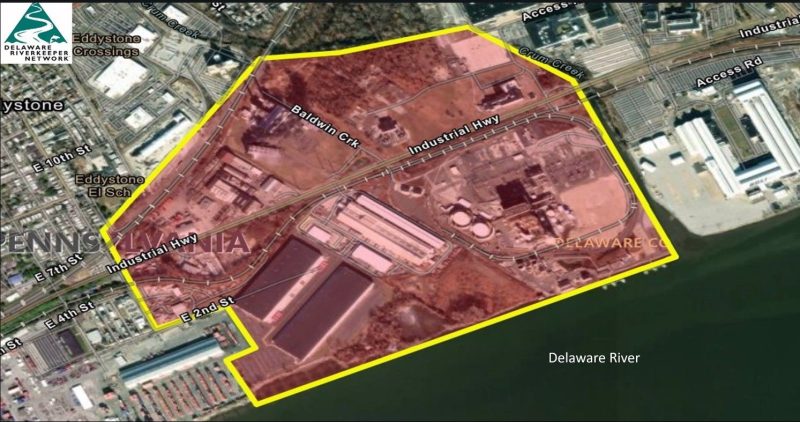
    Two environmental activist groups say they plan to organize resistance against a plan to build a liquefied natural gas (LNG) export facility in Eddystone, a small borough in Delaware County.

    They say the facility would threaten not only the environment, but also public safety.

    The Delaware Riverkeeper Network and Chester Residents Concerned for Quality Living (CRQL) said during an online meeting Wednesday that documents show negotiations have been happening behind closed doors for more than a year.

    They cited a newly released tranche of documents that show the plan has progressed with nondisclosure agreements (NDAs) with state officials.

    More than a year ago, U.S. Sen. David McCormick (R., Pa.) wrote an opinion piece in the Washington Times publicly announcing the $7 billion project by Penn America Energy to build the terminal along the Delaware River in Eddystone.

    Details have been scant, but nearby communities such as Media have stated opposition to the terminal.

    Tracy Carluccio, deputy director of the nonprofit Delaware Riverkeeper Network, said the documents show that the administration of Pennsylvania Gov. Josh Shapiro and Eddystone officials have been talking to, or in negotiations with, a developer for at least a year.

    (function(){function e(){window.addEventListener(`message`,function(e){if(e.data[`datawrapper-height`]!==void 0){var t=document.querySelectorAll(`iframe`);for(var n in e.data[`datawrapper-height`])for(var r=0,i;i=t[r];r++)if(i.contentWindow===e.source){var a=e.data[`datawrapper-height`][n]+`px`;i.style.height=a}}})}e()})();

    The environmental groups say Eddystone Borough officials initially denied open records requests about those negotiations, prompting a yearlong legal mediation.

    The planned facility aims to produce 7.2 million tons of LNG per year from Pennsylvania’s rich Marcellus Shale deposits, Carluccio said, based on a presentation by Penn America to Eddystone Borough on March 7 that was obtained through a records request.

    “There have been no public meetings or public disclosure about the proposed project,“ she said, adding that “the public knows nothing about this, and Eddystone Borough knows all about it.”

    Carluccio said nondisclosure agreements (NDAs) and confidential meetings involving high-level state and local officials have helped shield the project from public scrutiny.

    The Pennsylvania Department of Environmental protection said it had not had any pre-application meetings regarding a proposed LNG export facility and no permits for such a facility are under review.

    In a statement from Eddystone Borough, officials said they are aware of the “public discussion” regarding a potential LNG facility. The statement said that members of Borough Council met with representatives of the project last year “for informational” purposes.

    “Those meetings did not constitute approval or endorsement of any future development,” the statement said. “No approval action is currently before Borough Council.”

    If an application is submitted, the statement said, the borough would conduct a “thorough review” and that the process would be open to the public.

    Pa.’s drive toward LNG

    State, public utility, and elected officials, as well as unions, have been working toward locating an LNG facility in Southeastern Pennsylvania, although no site has been formally proposed.

    The Philadelphia LNG Task Force was created from legislation introduced in 2022 by State Rep. Martina White (R., Philadelphia) to explore the possibility of the first liquefied natural gas export facility along the Delaware River. Former Gov. Tom Wolf, a Democrat, signed the legislation to form the task force.

    Previously, state officials have hosted multiple public sessions on a potential facility, saying it would tap a European market hungry for energy.

    Eddystone deal

    Although McCormick noted Eddystone as a location, no official planning documents have been submitted to Eddystone or the Federal Energy Regulatory Commission (FERC).

    According to records obtained through Pennsylvania’s Right to Know Act, the Pennsylvania Department of Community and Economic Development (DCED) entered into a formalized nondisclosure agreement with Eddystone Energy LLC in October 2025.

    The DCED issued a statement to The Inquirer saying that it “routinely discusses potential projects with companies seeking to do business in the Commonwealth.”

    The agency said the discussions are confidential because they involve proprietary information from companies.

    “Maintaining confidentiality in such discussions is common practice in the business development industry across the country,” the statement said.

    A draft NDA was additionally distributed between Eddystone Borough Council and Penn America Energy Holdings, though it appears it was never officially finalized, Carlucci said.

    Advocates say that Franc James, CEO of the now-dissolved Penn America Holdings LLC, has been the primary figure driving the LNG project forward, alongside an array of state politicians.

    On Wednesday, Carluccio asserted James is behind Eddystone Energy LLC, a Delaware corporation formed in May 2025.

    Internal records reveal that meetings have involved representatives from the offices of Shapiro, State Sen. John Kane, McCormick, and State Rep. Dave Delloso, as well as Eddystone Borough officials.

    For example, a document from Shapiro’s office shows there was an hourlong meeting in February with Eddystone Mayor Ronald Hughes, Borough President William Stewart, Kane, James, multiple union representatives, and Technip Energies, an international energy infrastructure developer with a specialty in LNG.

    And James wrote an email dated July 11 to Samuel Robinson, Shapiro’s deputy chief of staff, stating that the “LNG Eddystone team” would attend the Pennsylvania Energy and Innovation Summit that same month in Pittsburgh. The summit was organized by McCormick.

    Community reaction

    An LNG facility along the Delaware River waterfront in Southeastern Pennsylvania has been discussed for years with James’ Penn America Energy Holdings, also referred to as Penn LNG.

    Though no location had been firmly named, it was initially believed Chester would be the host. However, that location received massive pushback from residents led by Zulene Mayfield, founder of the CRQL advocacy group, and resulted in a political turnover in the city. No project was ever formally proposed for Chester.

    The environmental advocates say the plan for Eddystone is well underway despite the lack of public input. Mayfield said she plans to organize Eddystone residents to oppose it.

    “This project is already rolling, that’s what we’re telling you,“ Mayfield said Wednesday in the webinar she hosted with Carluccio. ”The attempt is already being made to put it right in Eddystone.”

    Mayfield and Carluccio said the borough is too small to host a large LNG export facility, which typically span 1,000 acres. The borough is one-square mile.

    They also fear that an explosion or fire could not only reach neighboring towns but also stretch across the river to New Jersey.

  • Delaware County detected measles in wastewater samples, health officials say

    Delaware County detected measles in wastewater samples, health officials say

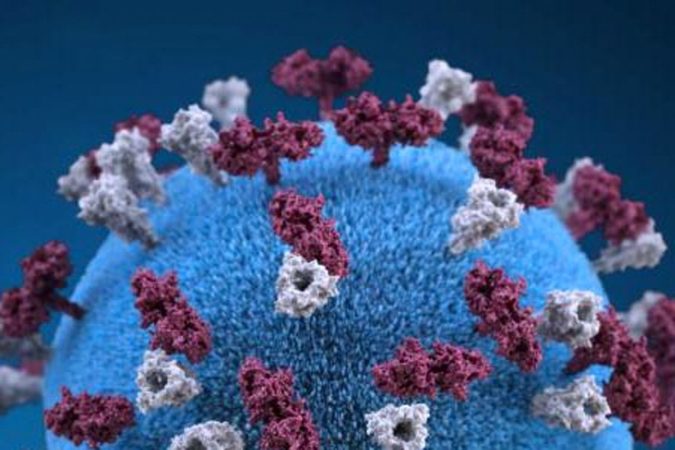
    Measles was detected in wastewater samples taken in Delaware County on two days last week, local health officials said Wednesday.

    This means someone infected with measles used a bathroom connected to the county’s public water supply, although no one in the county has been officially diagnosed with measles, said Lora Siegmann Werner, director of the county’s health department.

    Detecting the highly contagious disease in wastewater can serve as a reminder for parents to vaccinate their children, and for health providers to be on the lookout for people experiencing measles symptoms.

    “We’re not trying to scare people, but we thought it was a good opportunity to raise awareness,” she said.

    Health officials around the country regularly monitor wastewater for various diseases, including measles and COVID-19.

    The treatment plant where measles was detected in samples on June 9 and June 11, DELCORA Western Regional Treatment Plant in Chester, serves about 500,000 people in Delaware and Chester Counties.

    Health officials were able to determine the positive samples came from Delaware County, Siegmann Werner said. But it was impossible to tell whether that person was passing through the county or lives there.

    It was also unclear whether the infected person was connected to a measles outbreak in four counties west of Philadelphia, including Lancaster County, just over the border from Chester County.

    As of Wednesday, state health officials had identified 55 cases in that outbreak, with 32 in Lancaster County. Physicians there have said they fear more cases are circulating in the community among people who avoiding seeking medical care or notifying the state health department.

    “We’ve been tracking the outbreaks that occur, knowing it’s likely a matter of time before we have our own cases,” Siegmann Werner said.

    The county is engaging in planning exercises and reaching out to healthcare providers to prepare for potential cases in the area.

    Measles spreads through the air, lingering in a room for up to two hours after an infected person has left it. About nine in 10 unvaccinated people who come into contact with the virus will contract it themselves.

    Two doses of the measles, mumps, and rubella vaccine are 97% effective against the disease.

    The virus’ early symptoms include a fever, cough, runny nose, red and puffy eyes, and a rash. In serious cases, measles can lead to pneumonia, brain infections, and death.

    There is no evidence it is spread through contact with untreated wastewater, Delaware County health officials said.

    Without a confirmed measles case in Delaware County, Siegmann Werner said, the detection of measles in its wastewater will not trigger an investigation into its origin.

    “It’s really limited to saying there was someone who was ill” who either passed through the county or lives there, she said. “Please be vigilant and get vaccinated.”

  • The Philly bars that keep secret stashes of Chartreuse

    The Philly bars that keep secret stashes of Chartreuse

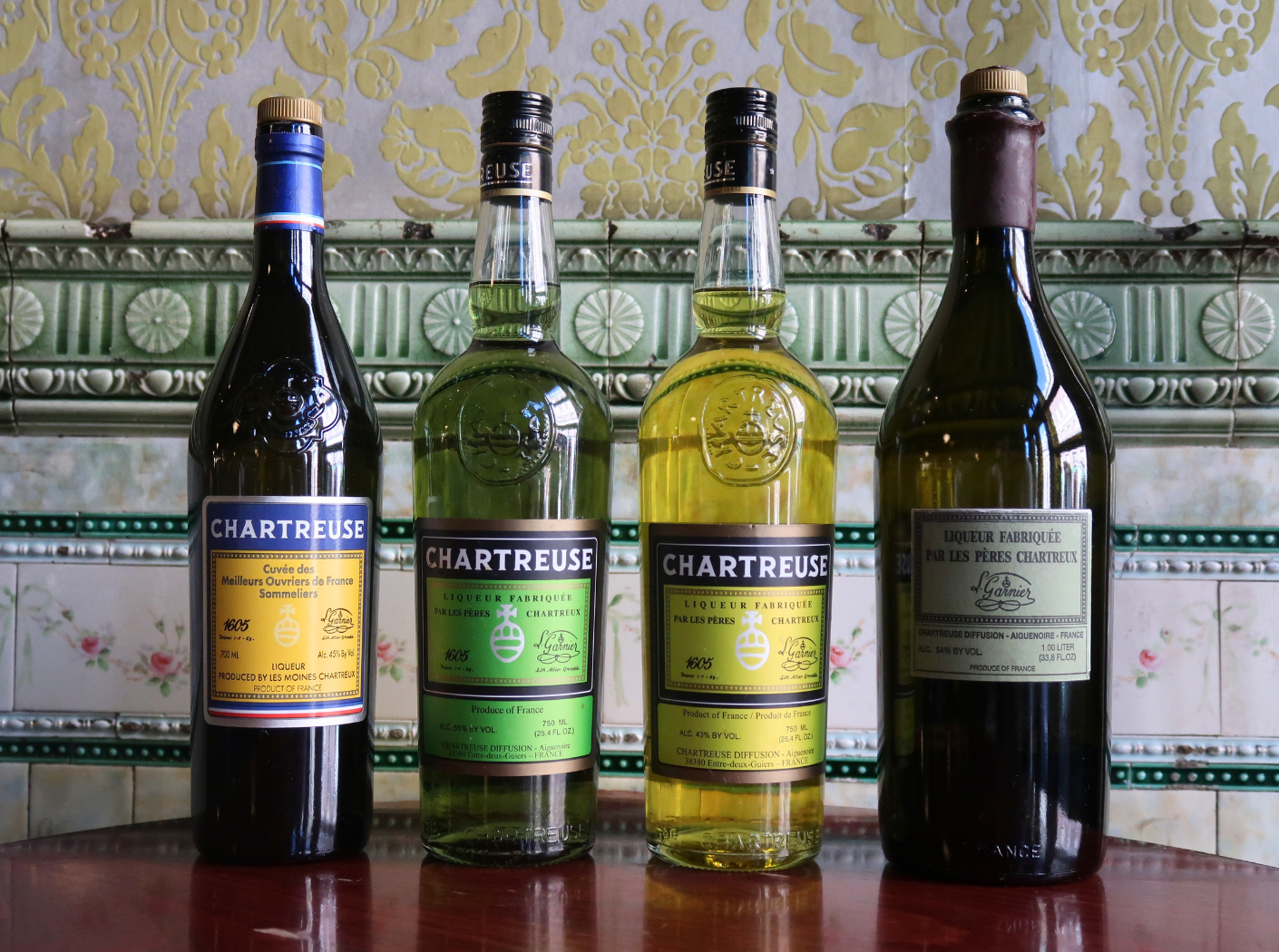
    As global supplies of Chartreuse dwindle, its mystique only deepens and its popularity increases. Philadelphia bars have not only concocted ways to get their hands on the spirit, a botanical liqueur produced by Carthusian monks in the Chartreuse Mountains in southeastern France, but one place is even crafting its own, Philadelphia-made version.

    In 2021, the monks of the Carthusian order, aRoman Catholic order founded by Saint Bruno of Cologne in 1084 who adhere to a life of absolute silence and solitude, announced a cap on the production of their cordial, which they had been making since the 18th century. The recipe is culled from an ancient manuscript on the “Elixir of Long Life.”

    The iconic green liqueur is made of 130 plants — there is also a Yellow Chartreuse that is milder and sweeter due to the inclusion of honey and saffron —and is the base for several famous cocktails, including the Prohibition-era Last Word and the Naked and Famous (a classic cocktail from New York’s Death & Co.). With robust alpine notes, it is also commonly served neat. It’s a favorite of bartenders and mixologists nationwide.

    “It adds depth and character to cocktails,” said Neill Laughlin, a partner and manager at Old City’s Sassafras.

    With the rise of the craft cocktail movement in the early 2000s and then drinking habits during the pandemic, which drove people to start shaking up more cocktails at home, Chartreuse has gotten more popular.

    The monks’ decision to limit their production has had a trickle-down effect for Philadelphia’s cocktail programs, like the one at Sassafras, run by Laughlin and Donal McCoy. Philadelphia’s bars already struggle with obtaining specialty liqueurs due to Pennsylvania’s Liquor Control Board restrictions.

    But Sassafras, which maintains its own long history (almost 50 years in business), has doubled down on Chartreuse-based cocktails, adding four to its new bar program (which changes quarterly). It’s no easy feat: A search of the PLCB’s Fine Wine and Good Spirits site shows no bottles of Chartreuse in stock.

    The Champs-Elysees ($16) at Sassafras, with St-Rémy VSOP, Green Chartreuse, lemon juice, and Angostura bitters.Sassafras

    “You need to have contacts within the PLCB,” explained Laughlin. “Certain [liquor] portfolios are broken down to different vendors and it’s a lot of homework to discover who has what products and how to get them. The liquor control board took it away from the stores and allocated Chartreuse to certain bars and restaurants — but you have to buy it in bulk.”

    And so, Sassafras has been stocking up on Chartreuse for years. Supply is never regular. “There’s no warning when the ship [from France] comes in and how much you’re going to get,” said Laughlin, who just two weeks ago, managed to obtain four cases each of Green and Yellow Chartreuse.

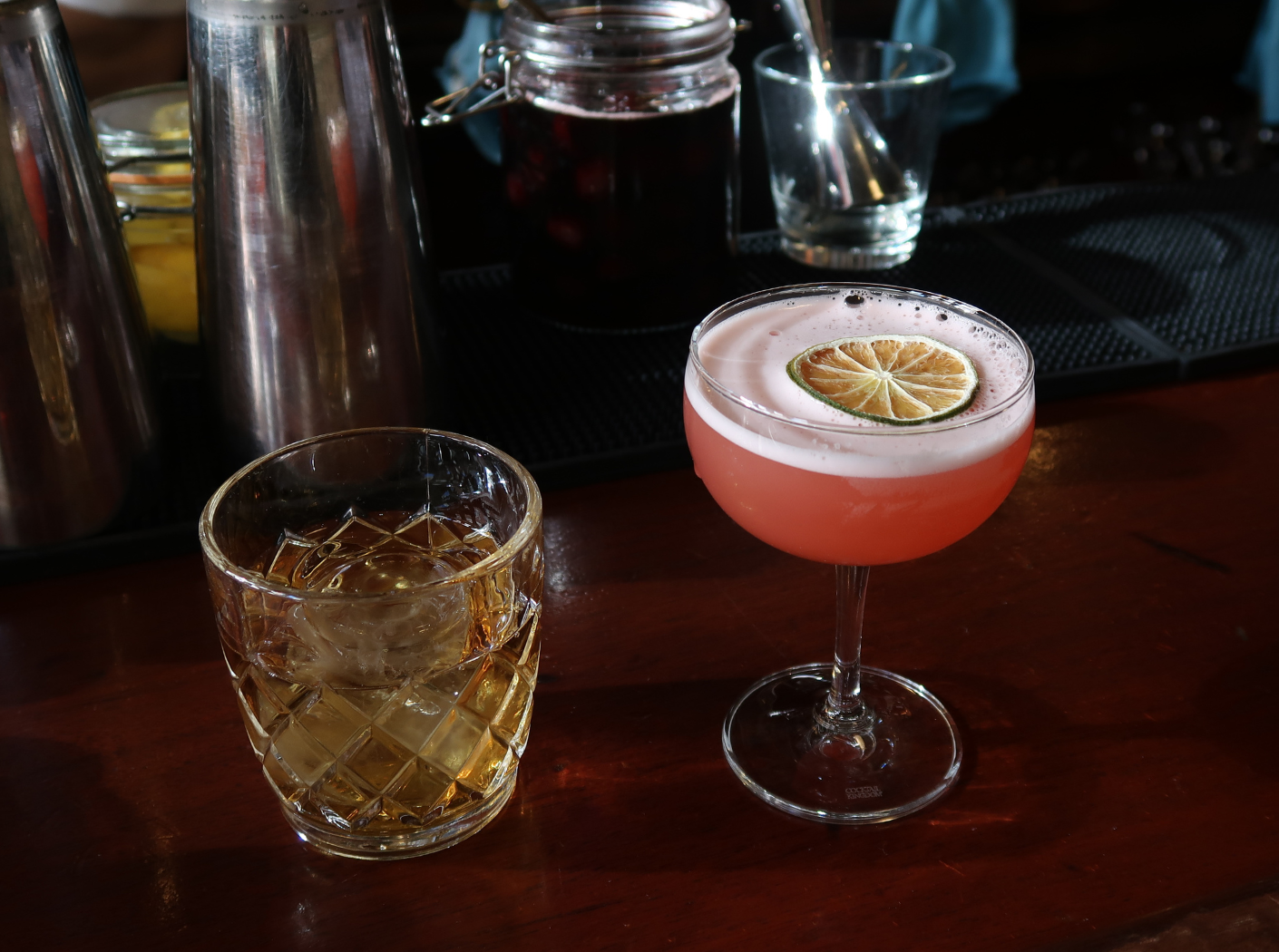
    “We’re comfortable offering six cocktails at Sassafras that use it,” said Laughlin. The newest cocktails at Sassafras include the 1904 ($65), featuring Yellow Spot Irish whiskey, Chartreuse VEP, and Antica Formula; Naked and Famous ($17), made with Catedral Espadin Mezcal, Aperol, Yellow Chartreuse, and lime juice; and the Champs-Elysees ($16), with St-Rémy VSOP, Green Chartreuse, lemon juice, and Angostura bitters.

    For high rollers, the bar has a $115 Chartreuse-based cocktail — the Àrd-Rìgh (Irish Gaelic title for “High King”) is crafted with the Macallan Rare Cask, alongside Chartreuse VEP and Chartreuse MOF — “two exceptionally rare and highly coveted expressions of the French liqueur,” said Laughlin.

    The Àrd-Rìgh (Irish Gaelic title meaning “High King”) at Sassafras is crafted with the Macallan Rare Cask, alongside Chartreuse VEP and Chartreuse MOF.Sassafras

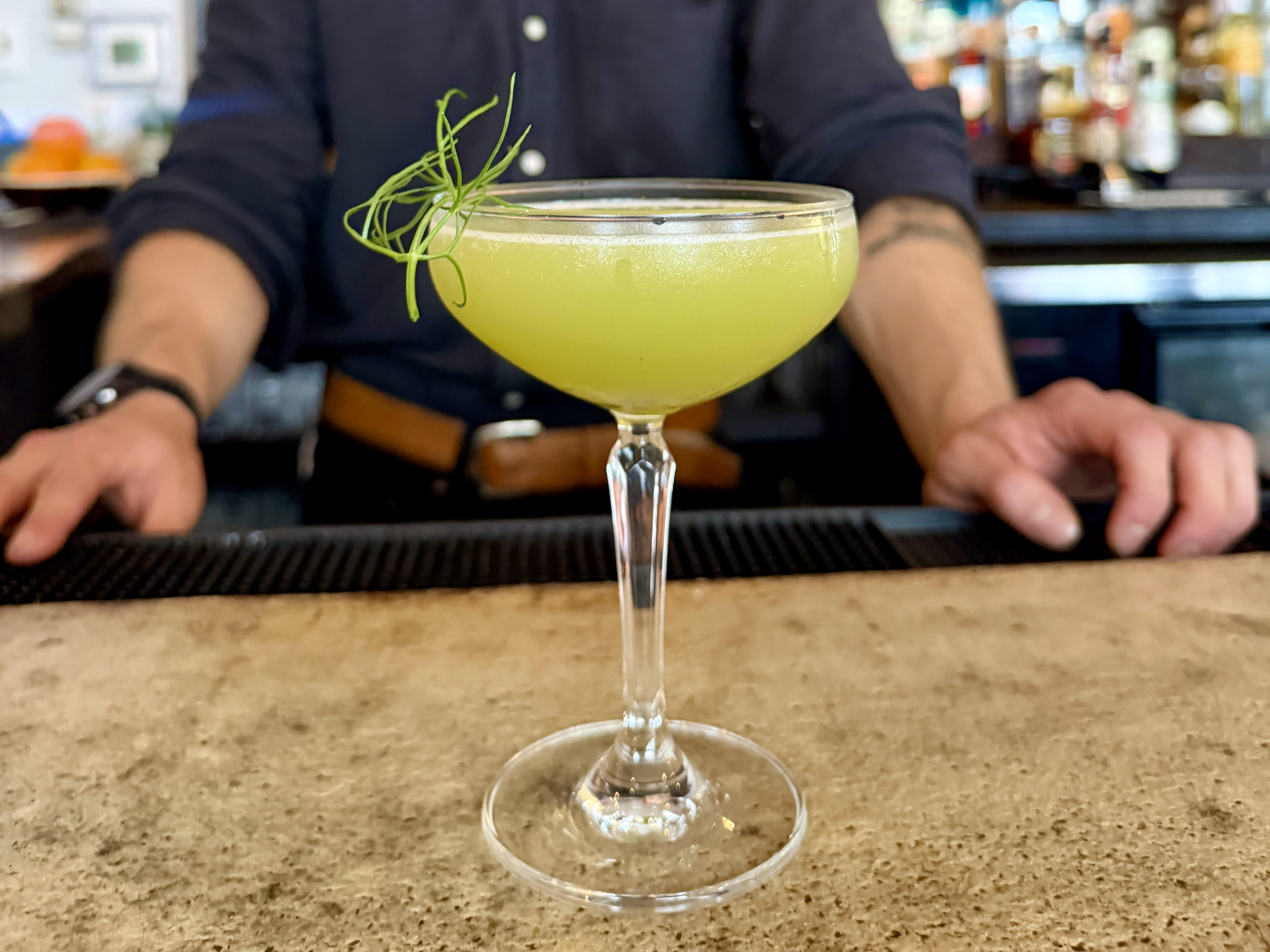
    Chartreuse has also entranced newer cocktail programs, like the one at chef Scott Calhoun’s Ember and Ash. Calhoun recently put a Chartreuse cocktail on his menu: “Our Herb Your Enthusiasm ($19) is a play on a gimlet with Green Chartreuse, gin, charred fennel and cucumber syrup, and lime,” he said.

    Herb Your Enthusiasm from Ember and Ash on East Passyunk. The cocktail is a play on a gimlet with Green Chartreuse, gin, charred fennel and cucumber syrup, and lime.Lulu Calhoun

    “When we start to get low on either and our purveyor is out, I scour the PLCB online system to have bottles shipped to my local store for pick up,” said Calhoun.

    The dearth of Chartreuse has also inspired Chris Fetfatzes of Grace and Proper and Sonny’s Cocktail Joint, establishments known for crafting their own spirits like amari.

    Fetfatzes’ liqueur, dubbed the “Green Monk,” is made with about 40 botanicals and is inspired by the 40 Kelpius monks of the Wissahickon, a doomsday cult that inhabited Wissahickon Valley Park in the 1690s.

    “Green Monk has a hint of chamomile, a hint of mint, and a hint of génépy with a little bit of a menthol burn,” said Fetfatzes.

    And given that it’s produced in Philadelphia and not by actual monks, a shortage is unlikely.

  • A Chester man who opened fire at his workplace, killing two people, is on trial for murder

    A Chester man who opened fire at his workplace, killing two people, is on trial for murder

    Two years after a Chester man stormed into his workplace with a gun and opened fire in a shooting that left two people dead, he is on trial for murder before a Delaware County judge.

    Wilbert Rosado-Ruiz screamed he was “tired of people f— with” him as he fired shots at nearly 50 of his coworkers at Delaware County Linen, injuring five of them, according to the affidavit of probable cause for his arrest.

    Rosado-Ruiz, 63, is charged with two counts of murder for killing brothers Leovanny Peña Peña, 30, and Giguenson Peña Peña, 26, after reporting for his early-morning shift at the industrial-laundry business.

    Three other people were shot during what prosecutors described as a rampage.

    Rosado-Ruiz’s attorney, Kevin O’Neill, has said his client fired the shots after feeling threatened during a confrontation with a group of his coworkers. His actions that day, O’Neill said, did not constitute murder.

    But Assistant District Attorney Sophia Polites said Rosado-Ruiz went to work that day with the specific intent to kill.

    Polites rested her case Thursday, but the trial is not over: O’Neill will present his defense in July. The delay, he said Thursday, was to accommodate members of Rosado-Ruiz’s family, who need to travel to Delaware County from Puerto Rico to testify on his behalf.

    Prosecutors have said Rosado-Ruiz intended to kill more people on the day of the shooting, and would have done so had the 9mm Remington R51 handgun he was carrying not jammed. Investigators recovered the weapon and traced it to Rosado-Ruiz after his DNA was found on it, according to testimony this week.

    Rosado-Ruiz’s coworkers told investigators he had a history of abusive, bullying behavior, including threatening people with his gun, in the 10 years he worked at Delaware County Linen before the shooting, according to court filings.

    Chester Police search for evidence after a shooting Delaware County Linen on May 22, 2024. Five people were shot in the incident, two of them fatally, according to prosecutors. Alejandro A. Alvarez / Staff Photographer

    On the day of the shooting, Rosado-Ruiz got into a verbal dispute with a coworker, Nilamarie Valdivieso.

    Valdivieso testified that Rosado-Ruiz “looked very mad” when he arrived at work, and exploded at her when she asked him what was bothering him.

    Later, after Valdivieso returned with two supervisors, along with Leovanny Peña Peña, she said, the conversation escalated, and Rosado-Ruiz pulled the 9mm handgun from his waistband.

    He shot Valdivieso once in the chest before chasing down and firing at the other victims as they ran and dived for cover, she said. The Peña Peña brothers were both shot multiple times trying to flee Rosado Ruiz, and were pronounced dead at the scene by medics.

    Another victim, Charles Doyle, testified that he was fixing an industrial washing machine when he heard several shots ring out in quick succession.

    He said he saw Rosado-Ruiz pull a second magazine from his pocket and reload his handgun. Doyle said he yelled out to distract the gunman so that his father, who also worked there, had time to flee.

    When Doyle turned to leave, he said, Rosado-Ruiz shot him three times in the back, shattering his right arm and causing severe internal damage to his organs.

    Doyle said he is unable to work because of nerve damage in his arms — he said moving his hands feels similar to trying to wiggle his ears.

    He testified that he did not see or hear anyone threatening Rosado-Ruiz before the gunfire rang out.

    Rosado-Ruiz fled after the shooting, which led police from surrounding departments to lock down streets around the business.

    He was taken into custody by an officer from Trainer, pulled over on the edge of Chester as he attempted to drive home. Inside the car, investigators found a backpack with a smaller bag containing additional 9mm bullets, authorities said.

  • Authorities arrested 25 people at a cockfight in Delco and rescued 52 live birds

    Law enforcement officials arrested 25 people and rescued more than 50 birds after breaking up a cockfight in Delaware County over the weekend.

    The Pennsylvania SPCA Animal Law Enforcement Team, along with local authorities including the Pennsylvania State Police and Central Delaware County Organized Crime Unit, interrupted the cockfight Saturday night at a home on the 500 block of Franklin Street in Chester, officials said. There, investigators removed 52 live birds and discovered three dead roosters while serving a search warrant on the property.

    “Cockfighting is one of the most brutal forms of animal cruelty; these birds are forced to fight to near death one cut at a time, suffering devastating injuries in the process,” Nicole Wilson, director of animal law enforcement and shelter operations at the PSPCA, said in a statement.

    PSPCA officials received a tip about the cockfight on Thursday, the organization said. Investigators went on to surveil the property, and noted a number of people entering and exiting it — some of whom were carrying “animal transport carriers,” the PSPCA said.

    After securing a warrant, PSPCA investigators received support in serving it from the Central Delaware County Organized Crime Unit because of the number of people involved in the cockfight.

    The animals rescued from the property were taken to the PSPCA’s Philadelphia headquarters, where they were to receive exams and medical care. The birds will remain in PSPCA custody until their owners surrender them, or a court case related to the incident is adjudicated, the organization said.

    Officials did not identify the people arrested.

    Cockfighting, the PSPCA said in its statement, is a felony in Pennsylvania. The investigation is continuing.

    The PSPCA asked that anyone with information contact its animal cruelty hotline at 866-601-SPCA (7722) or email cruelty@pspca.org. Tips may be left anonymously.